
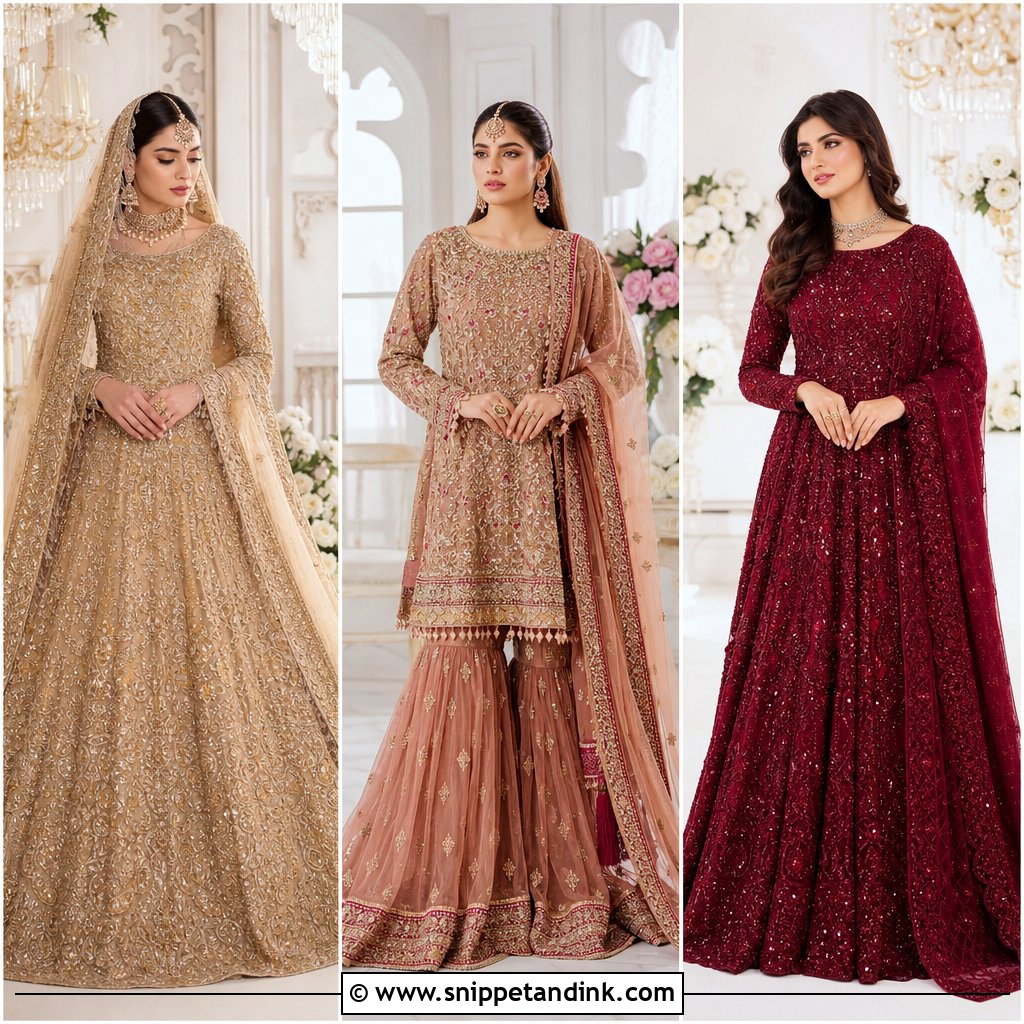
By the Valima, the bride has usually worn a heavy baraat outfit and sat through hours of photos, and the groom’s family is now hosting the reception. The outfit for this evening should still look formal and bridal, just lighter in weight and mood. That is why I tend to steer brides toward pastel lehengas, embellished gowns, shararas, ghararas, long maxis and jacket-style outfits, with delicate jewelry rather than the full bridal set. Blush, ivory, champagne, lavender, mint, powder blue and silver come up again and again. Guests have their own job, which is to look festive without competing with the bride. Here are 25 outfits for both, with notes on fabric, embroidery and how each one wears through a long evening.
How a Valima Outfit Should Differ From Your Baraat Look
Brides often order the Valima outfit as an afterthought, once the baraat lehenga is settled, and end up with two outfits that look too alike in photos. I plan them as a pair from the start. If the baraat is deep red with heavy gold work, the Valima can move to a pastel or ivory with silver or pearl embroidery so the albums tell two different evenings.
- Weight: aim for noticeably lighter fabric and embroidery. You will have done one long day already.
- Jewelry: swap the full bridal set for a choker or a statement necklace, and lighter earrings. A different metal than the baraat also helps the photos differ.
- Dupatta: one dupatta, usually sheer, rather than the double dupatta many brides wear on the baraat.
- Timing: custom bridal embroidery takes time, so order the Valima outfit at the same time as the baraat outfit, not weeks later.
1. Pastel Valima Lehenga
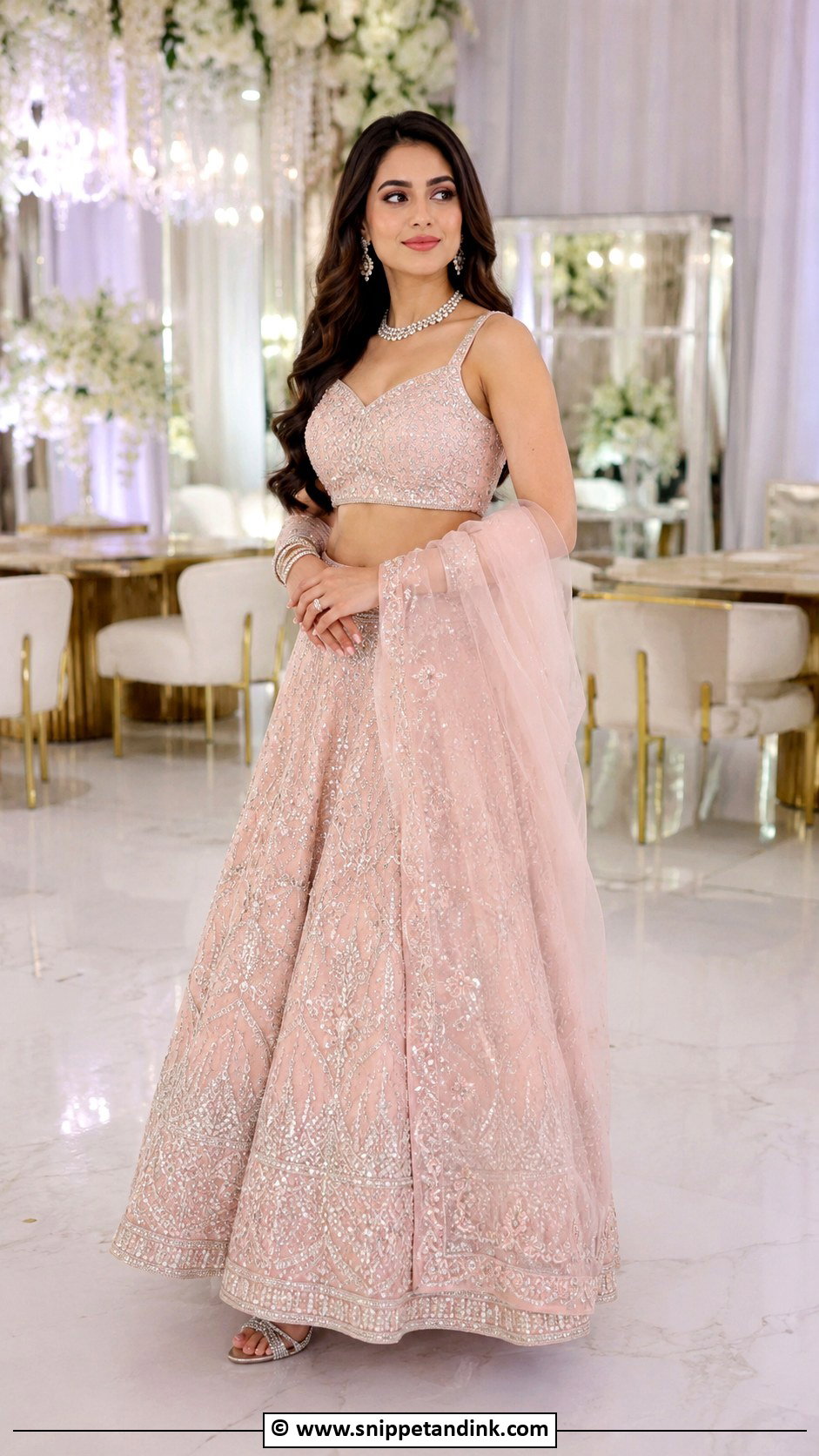
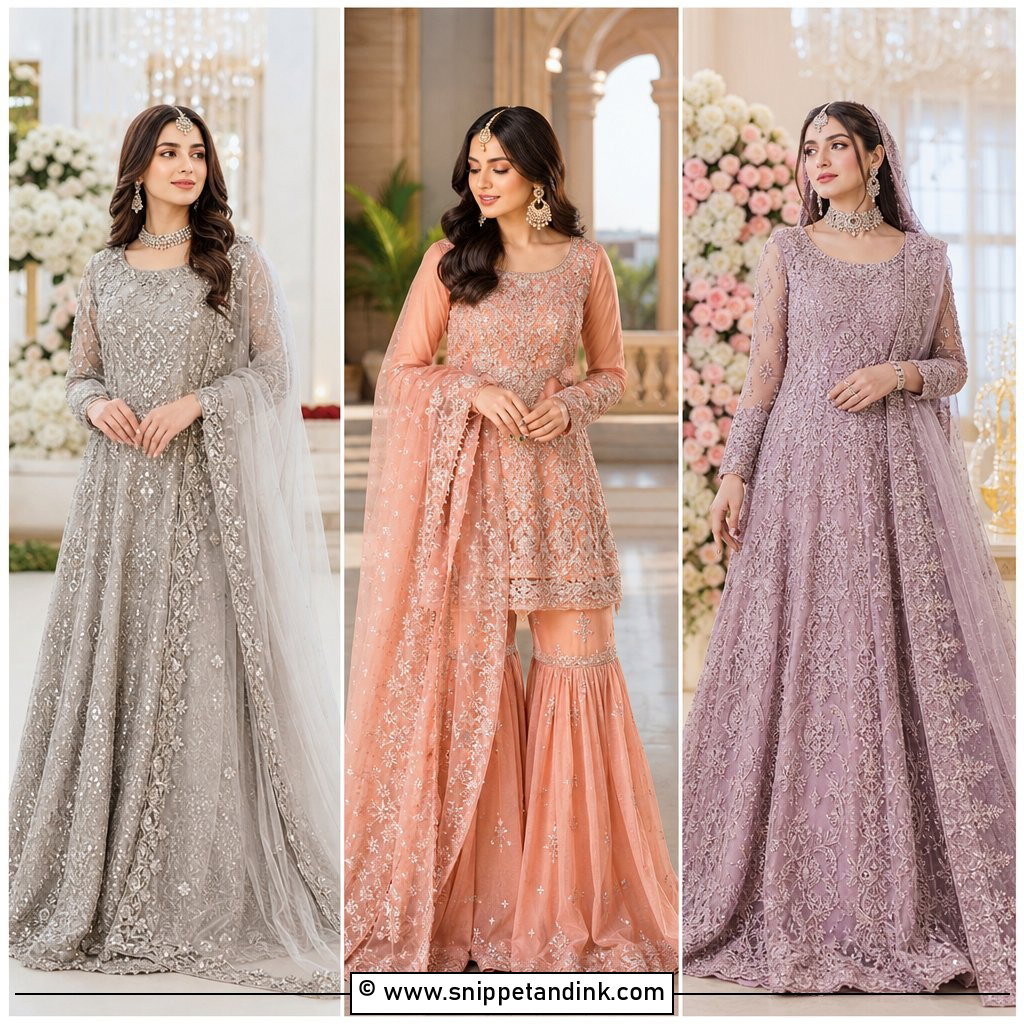
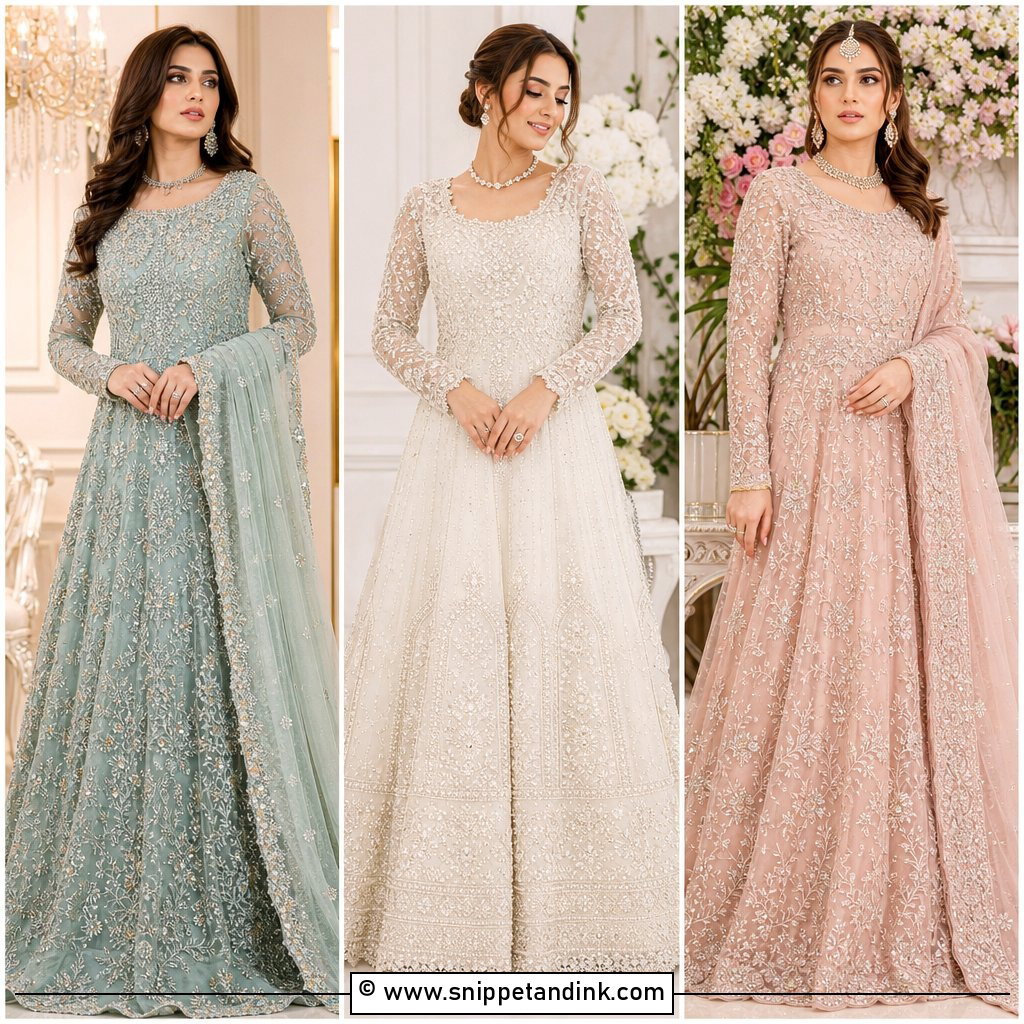
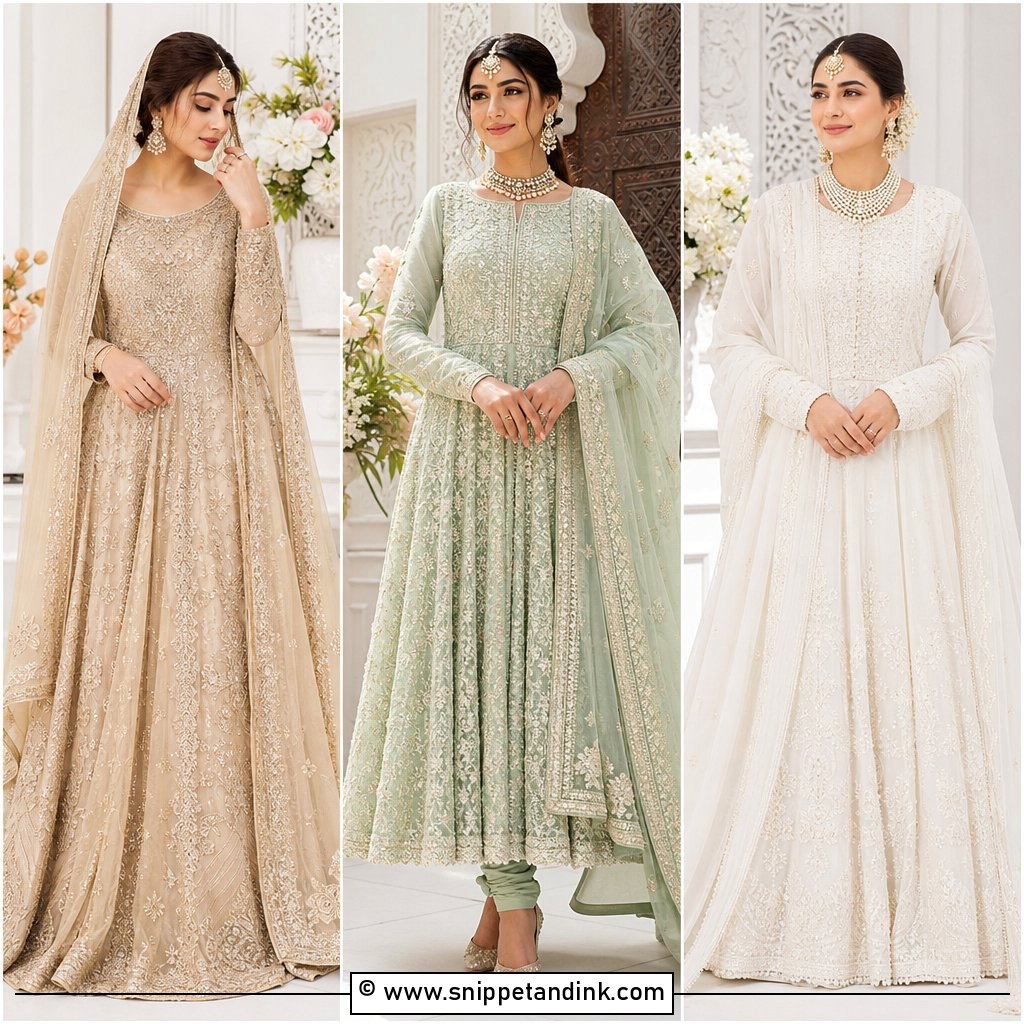
Pastels are the classic Valima move because they feel restful after the deep reds of the baraat. A pastel Valima lehenga in blush, powder blue, mint, lavender or champagne carries fine zardozi, sequins, pearls or threadwork beautifully. Weight is the thing I ask about first. A lehenga heavy with metal zardozi can be exhausting by the second hour on stage, so I suggest concentrating the dense work on the hem and blouse and keeping the upper skirt lighter. A fitted blouse, a sheer dupatta over one shoulder or pinned on the head, a choker, earrings and soft bangles complete it.
2. White Valima Gown
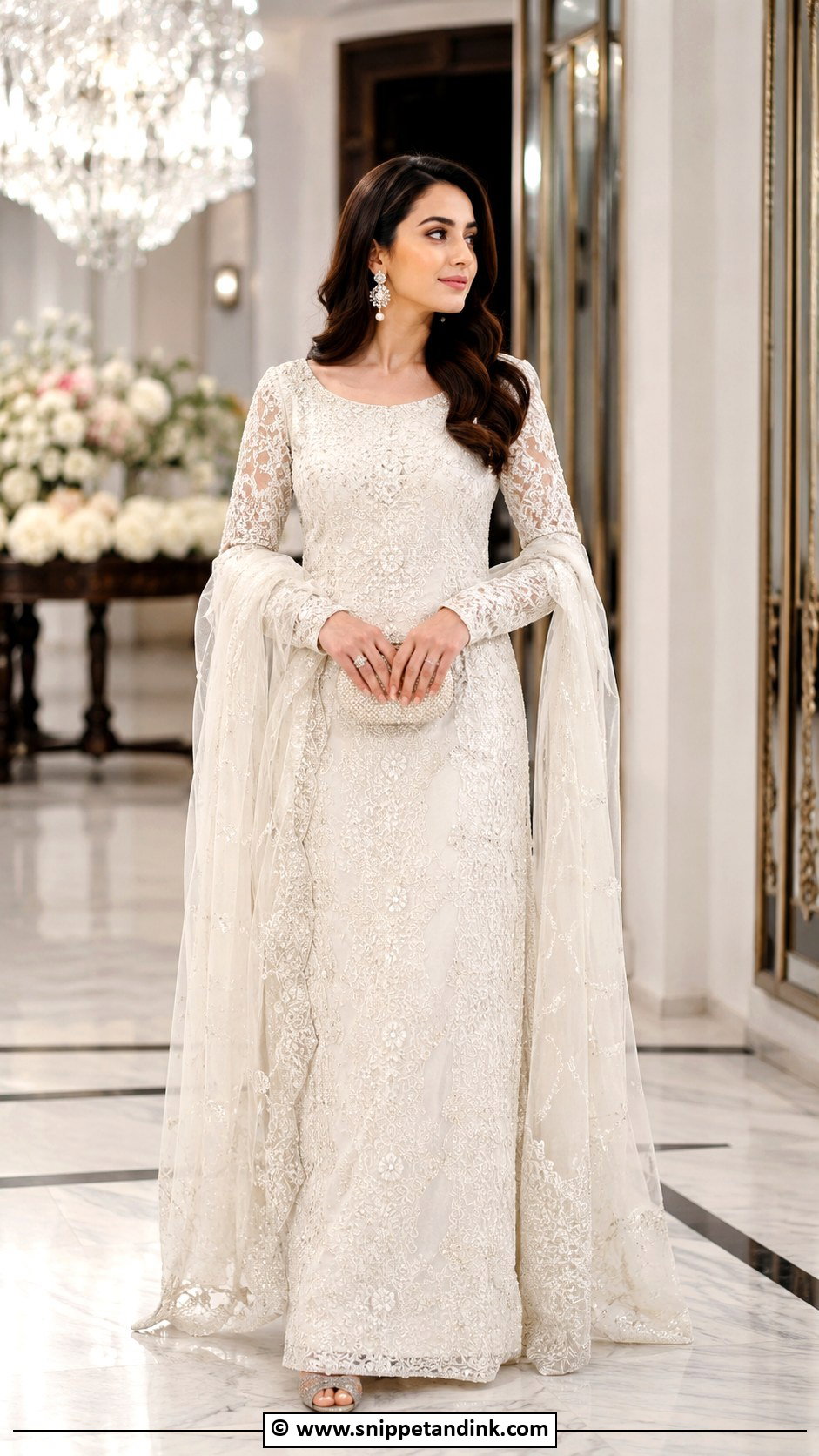
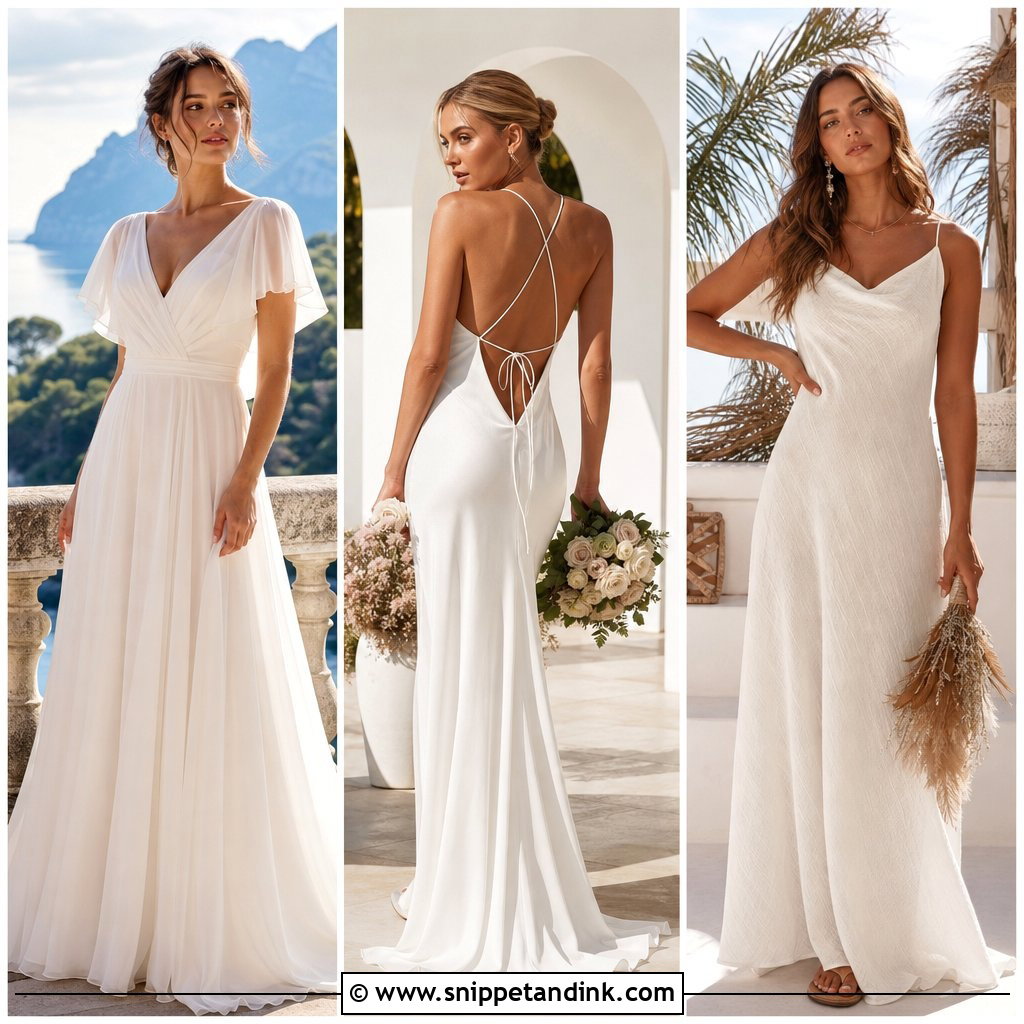
White reads regal and modern for a Valima, but it needs texture or it looks flat on camera. Tone-on-tone threadwork, pearls or a little crystal give the gown dimension. A modest neckline, long sleeves and a flowing skirt suit most figures, with a matching dupatta or veil-style drape for a traditional finish. Pearl earrings, a sleek bun and soft glam keep it refined. Stage lighting can make pure white glare in photos, so off-white or ivory is often kinder to skin than optical white.
3. Blush Pink Valima Dress
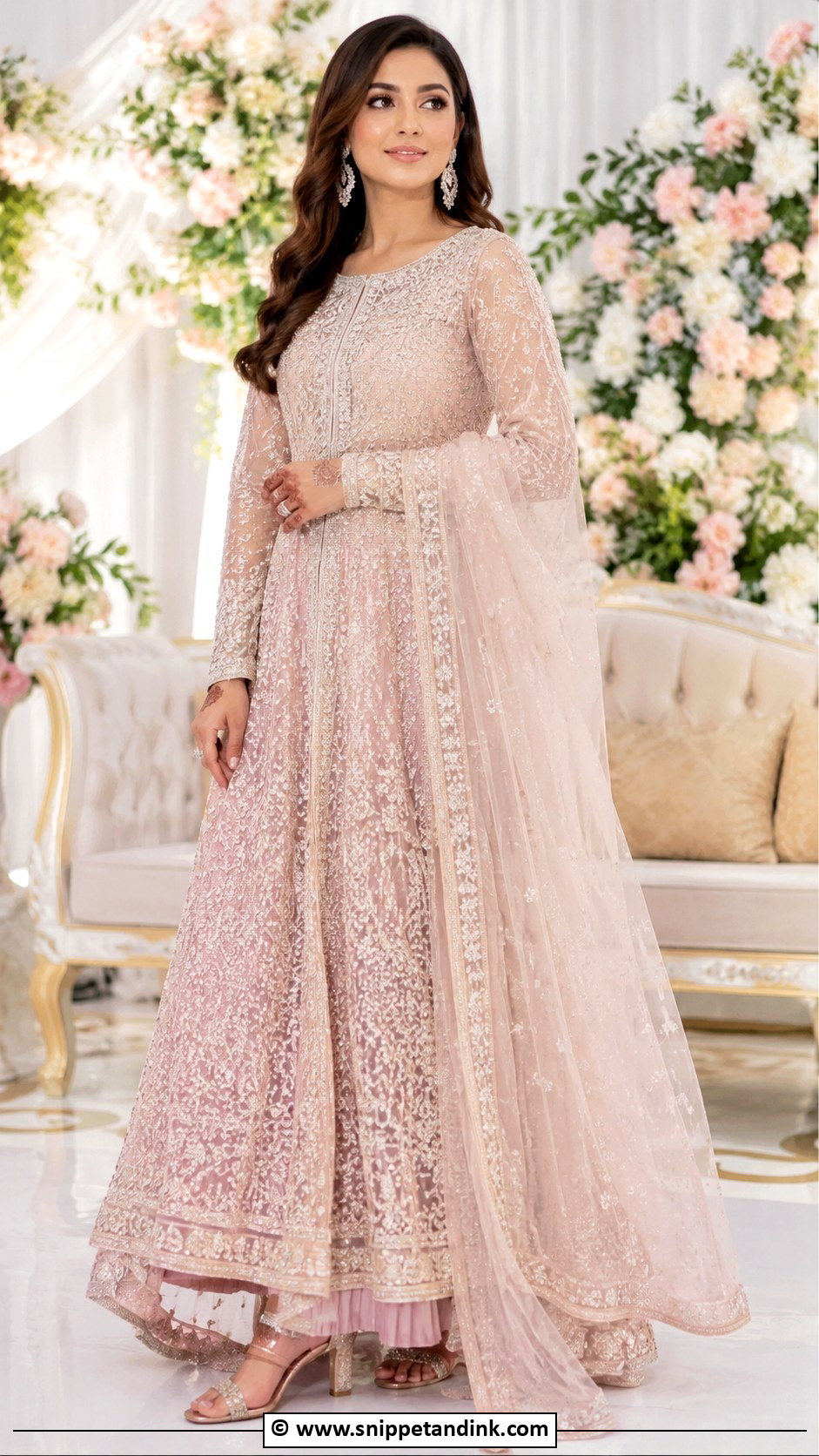
Blush photographs well under bright event lighting and is easy to style. A maxi, lehenga or long frock with silver, pearl or champagne embroidery suits it. Pair it with a sheer dupatta, crystal jewelry and rose-toned makeup, plus metallic heels in silver, nude or rose gold. Blush can wash out very fair or very cool skin, so hold the fabric near your face in daylight before ordering. A statement necklace is for the bride; guests should keep accessories lighter.
4. Champagne Valima Maxi
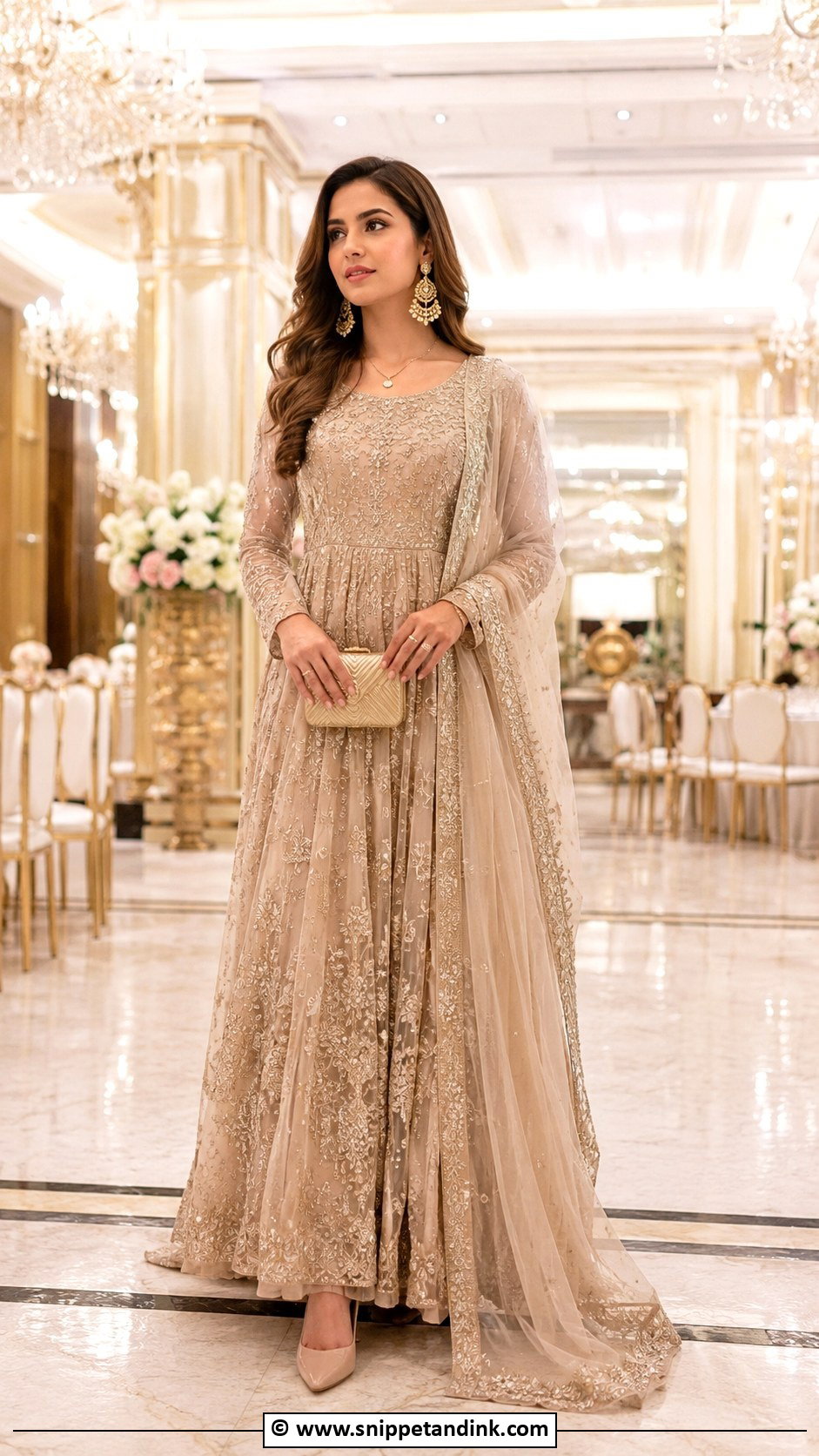
Champagne gives a soft glow without being loud, which is why mothers and close family pick it as often as brides. A long, flowing maxi with sequins, beadwork or light metallic detailing works, topped with a dupatta that has a thin embellished border. Nude heels, gold jewelry and a sleek clutch finish it. If the maxi feels shapeless, a lightly structured bodice or embroidered belt defines the waist. Check how close the shade sits to your skin tone; champagne that matches your skin too exactly can read as bare from a distance.
5. Silver Valima Lehenga
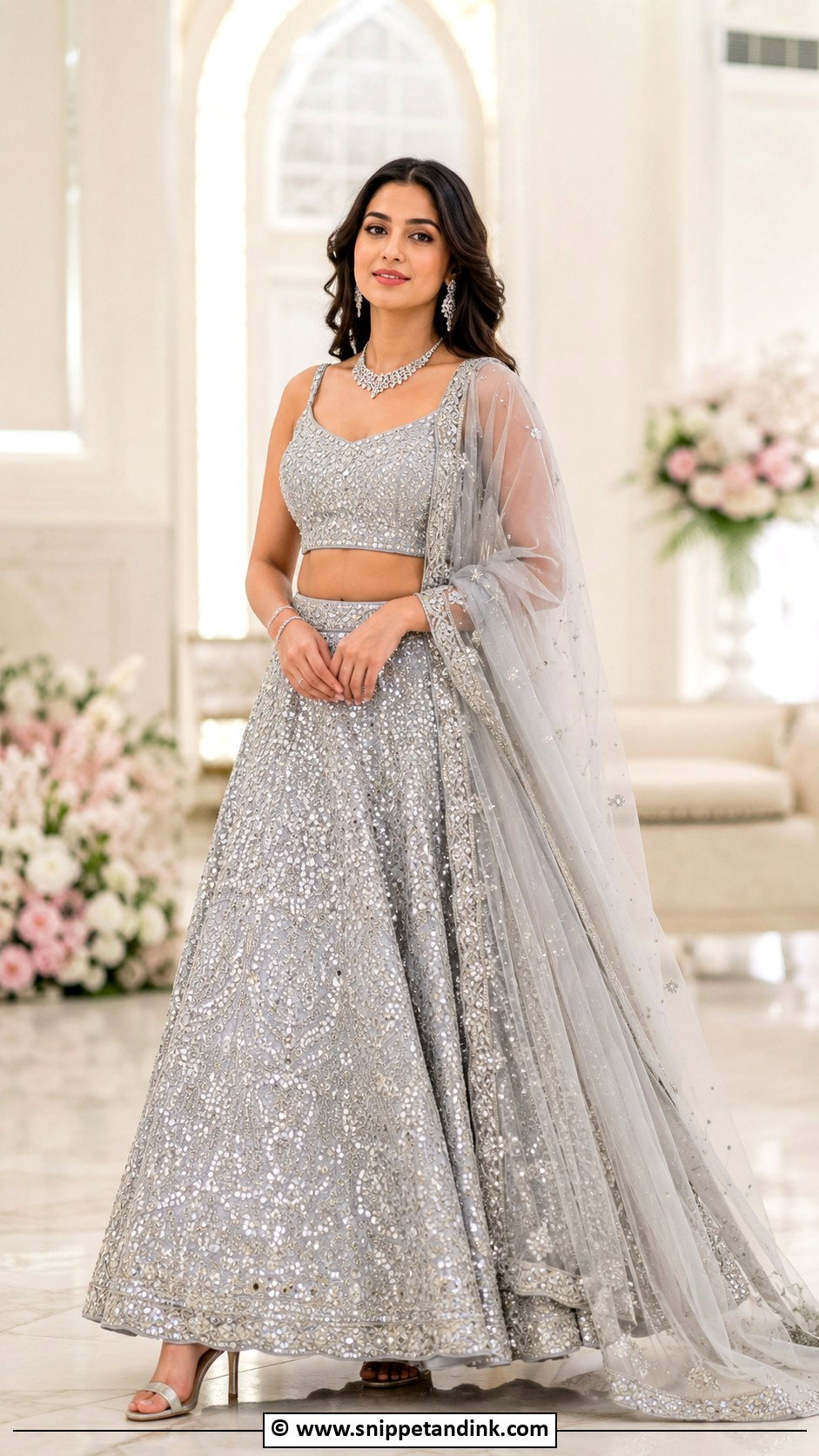
Silver work catches light, so a silver lehenga glows at evening receptions without relying on color. Mirror work, crystals, sequins and fine beads all suit it, balanced by a simple blouse and an airy dupatta. A bride can take a heavier skirt and statement jewelry; guests should choose lighter embroidery. Metallic heels, soft waves and cool-toned makeup complete it. Real mirror work is heavier and sharper-edged than sequins, so ask for a soft lining under the blouse so the edges do not scratch.
6. Lavender Valima Outfit
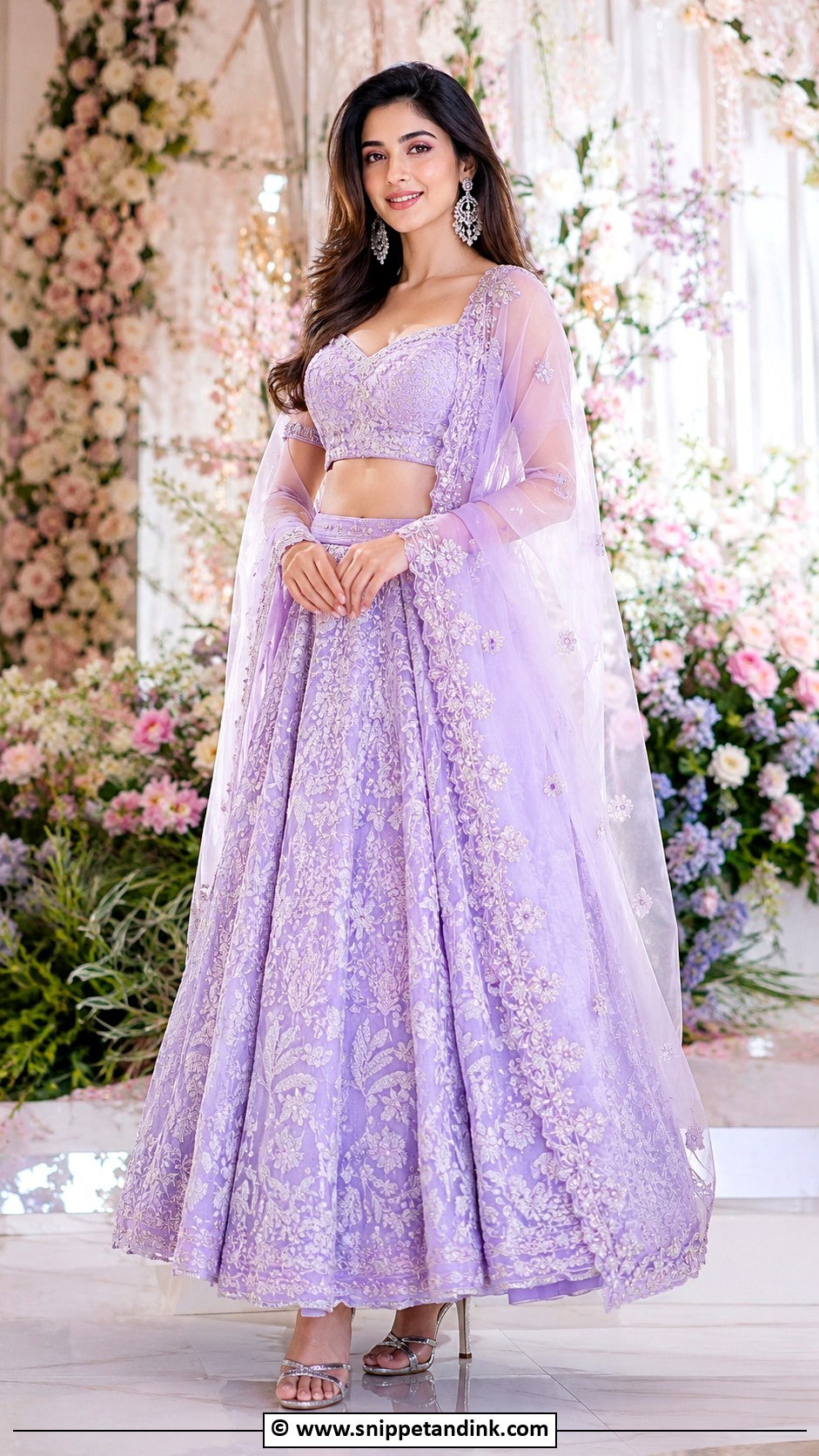
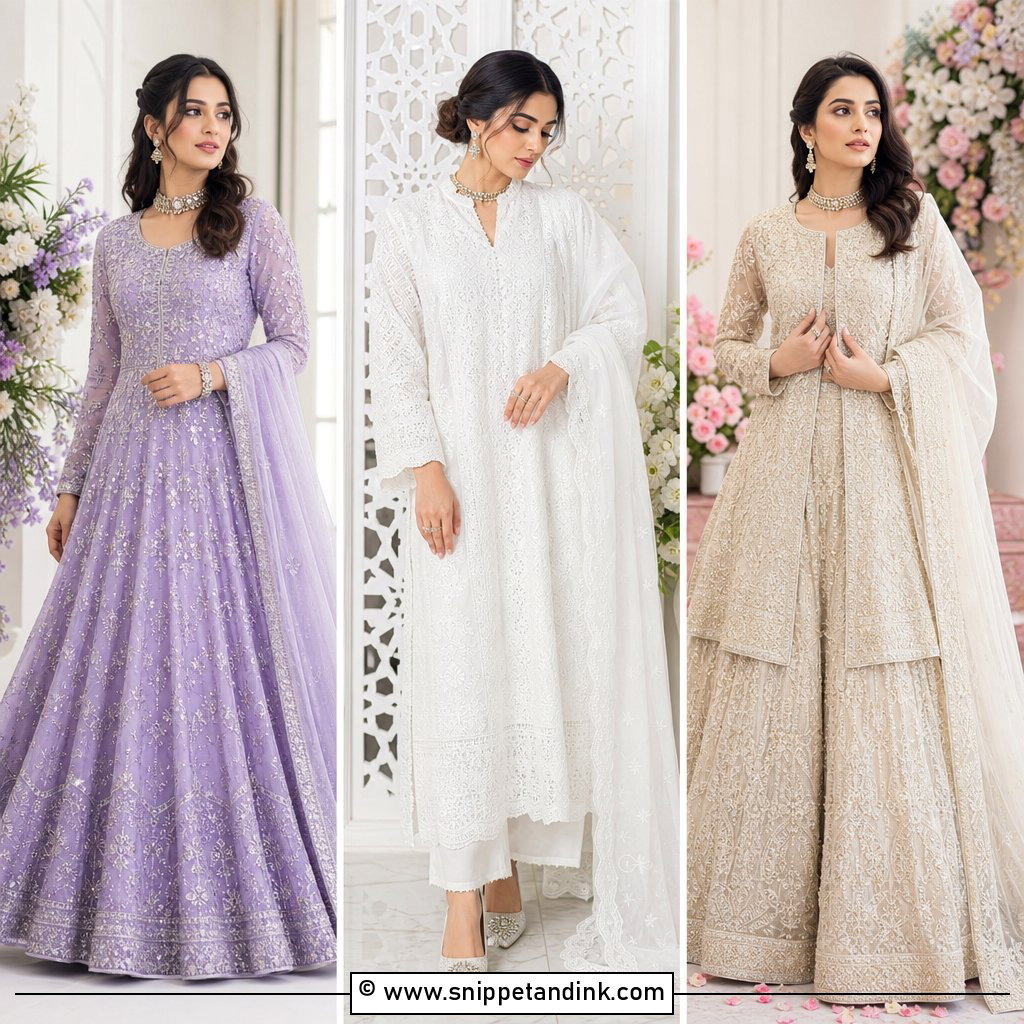
Lavender gives color without brightness, especially with silver, pearl or lilac embroidery and floral motifs. A lavender lehenga, sharara or long gown suits a bride, a sister or a guest. A sheer dupatta with light borders keeps it airy, with silver heels, crystal earrings and soft pink makeup. Lavender dyes vary from grey-lilac to pinkish mauve, and the difference shows under warm hall lighting, so see the fabric in the kind of light your venue uses.
7. Mint Green Valima Dress
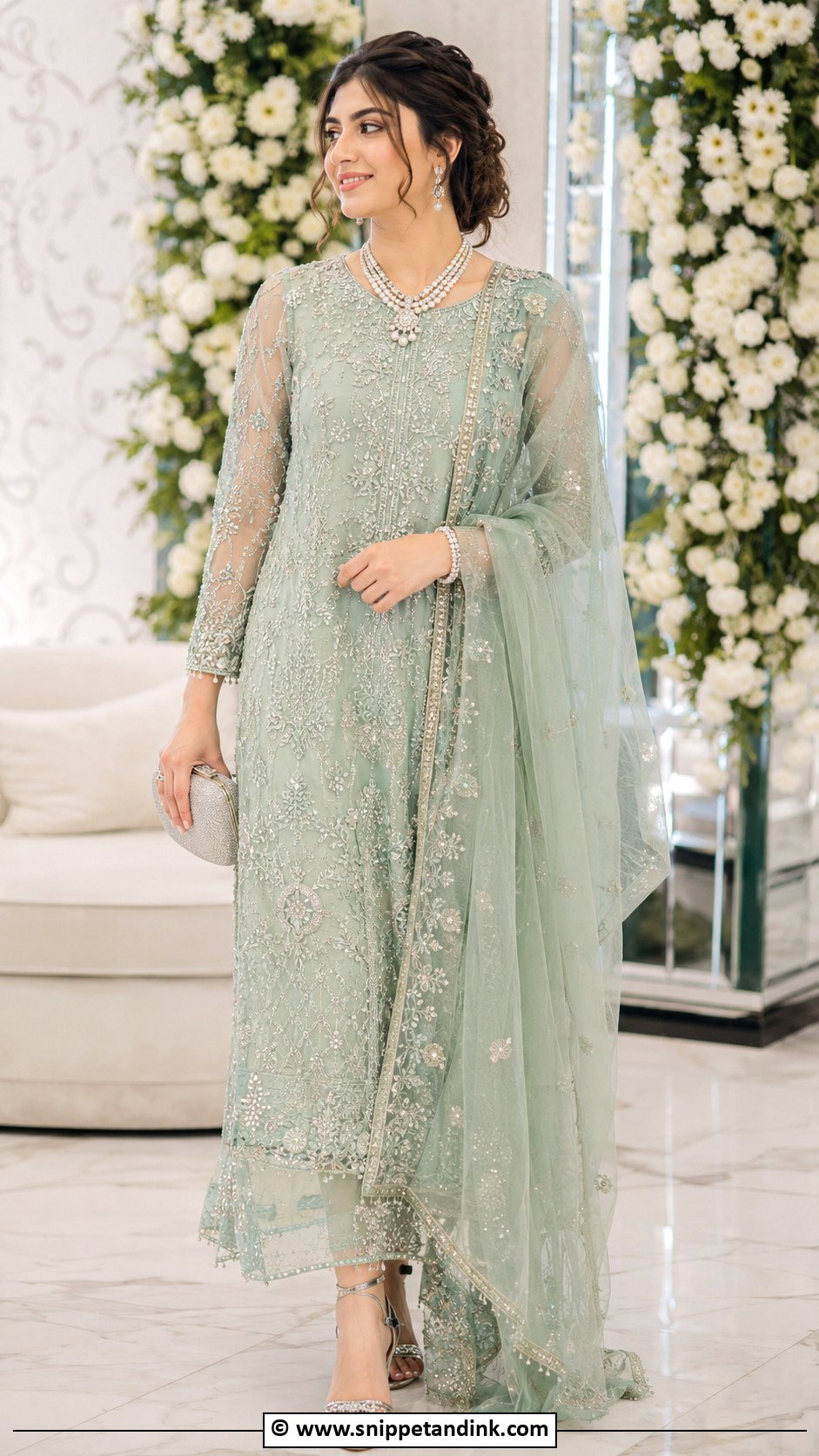
Softer than emerald and more distinctive than beige, a mint green Valima dress looks fresh in daylight and in bright reception halls. A lehenga, gown or angrakha with silver, ivory or pearl embroidery works, with a light net dupatta and a structured bodice. Silver heels, pearl jewelry and dewy makeup balance it. Mint tends to look slightly yellow next to gold decor, so if your stage is heavy on gold, choose silver embroidery to keep the green clean. Guests can wear a simpler mint suit or sharara.
8. Powder Blue Valima Lehenga
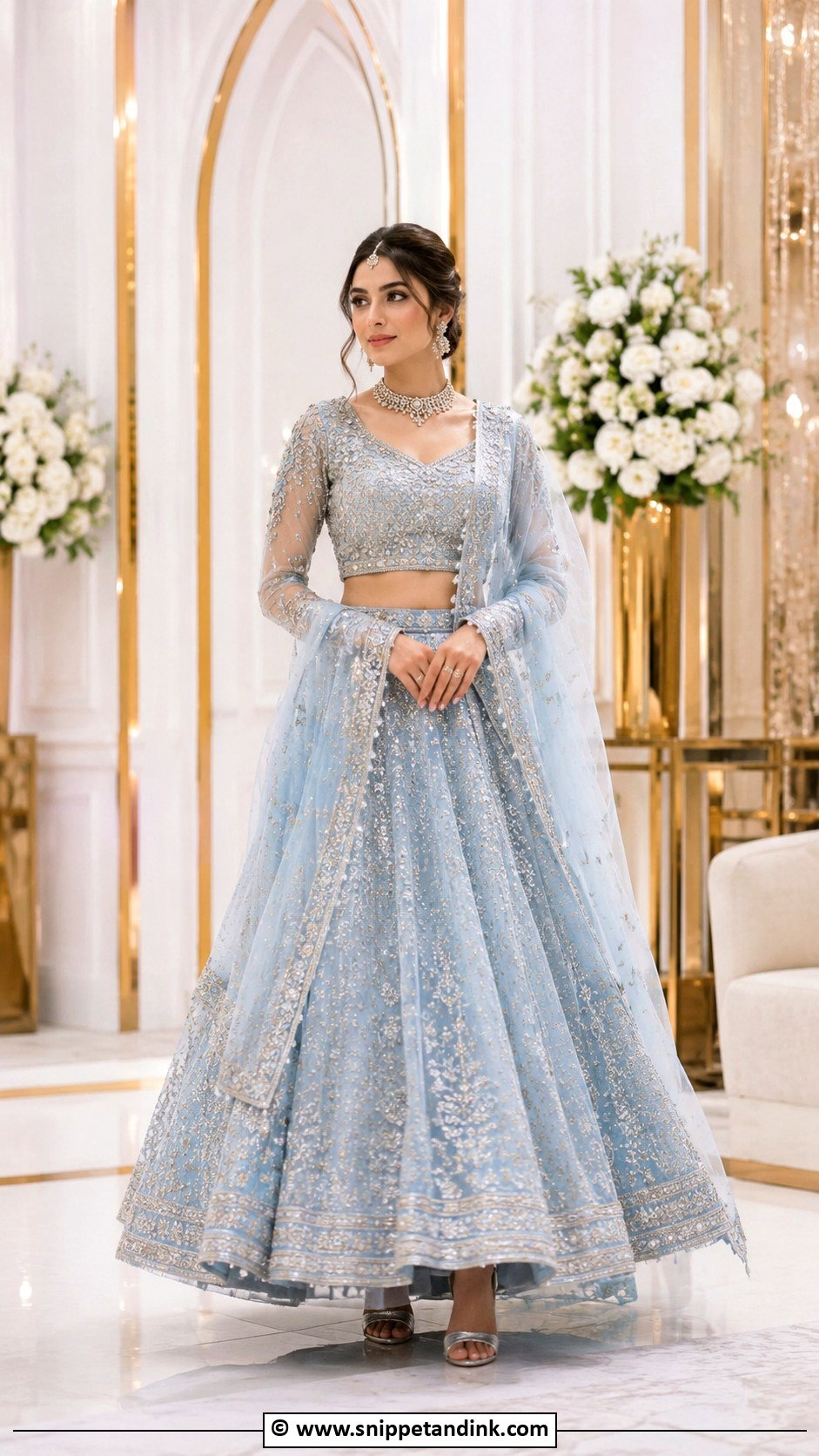
Cool tones suit brides who look better in blue than in pink. Powder blue with silver, white or crystal embroidery stays soft, and a long blouse, full skirt and sheer dupatta give a balanced traditional shape. For a modern version, try a structured blouse and a lighter dupatta drape. Silver heels, diamond-style jewelry and a soft smoky eye finish it. Powder blue sits well against white, gold and pastel decor, which makes it an easy match for most stage setups.
9. Ivory Valima Sharara
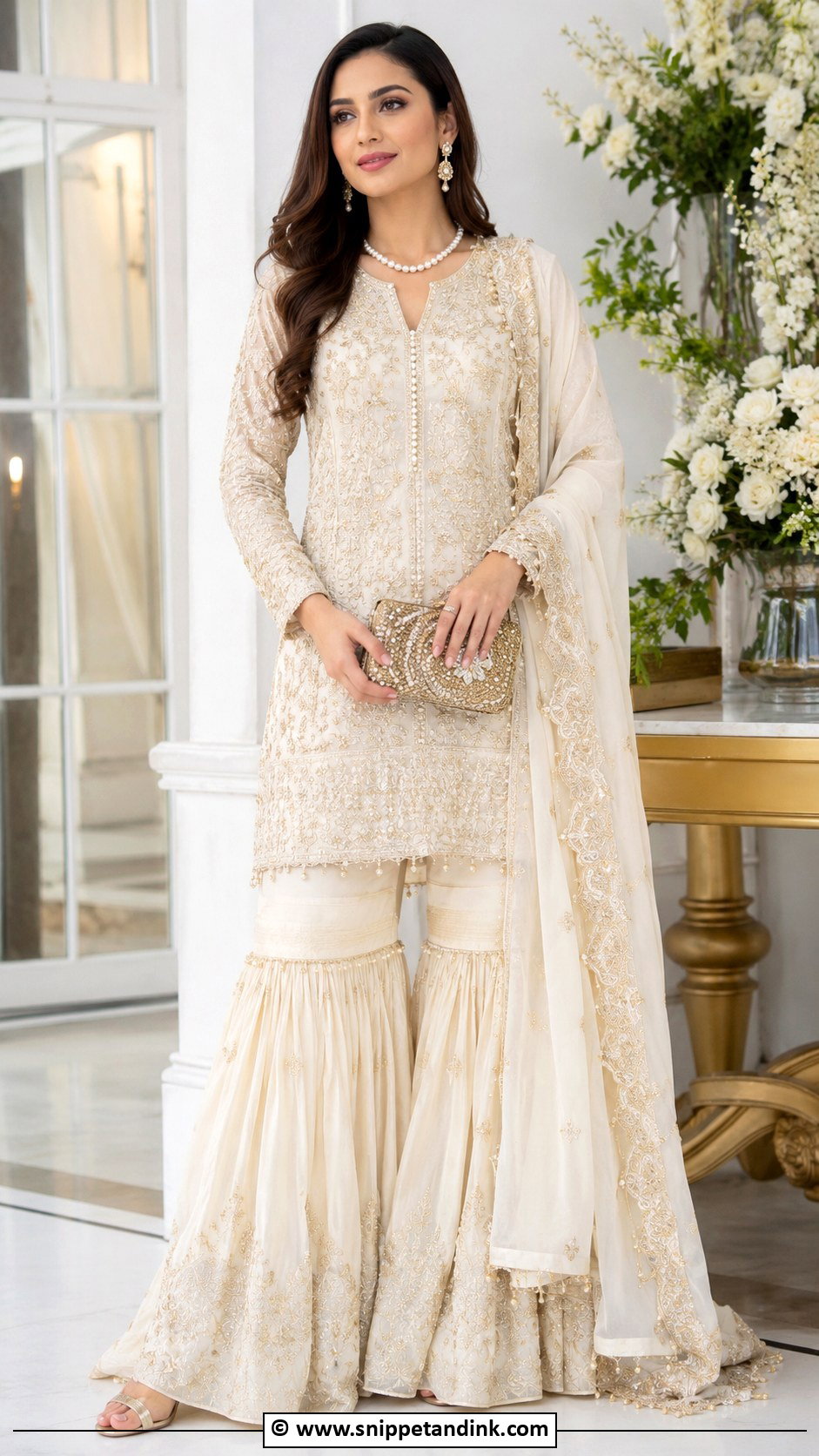
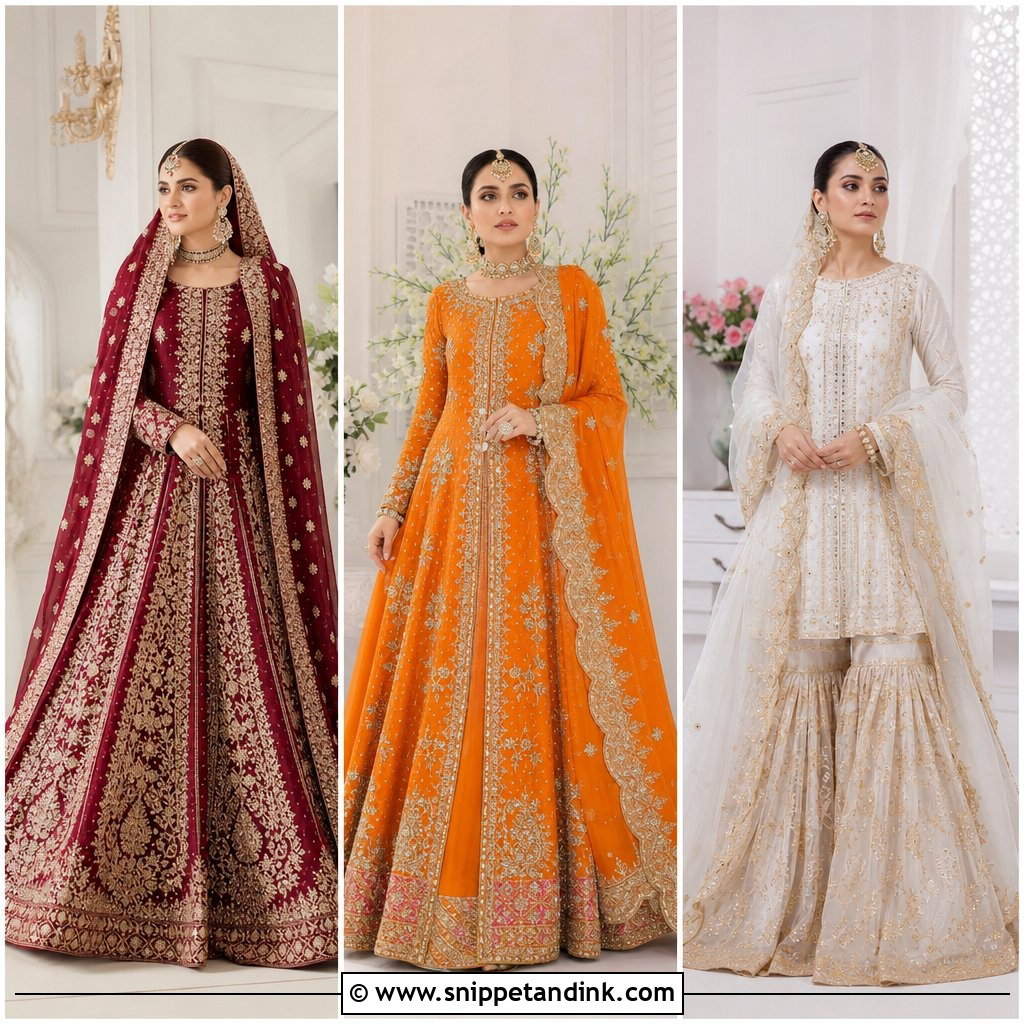
Flared pants give a sharara movement, and with a short or mid-length kameez the look stays classic. Ivory with gold, silver or pearl embroidery feels festive but calm. A heavily bordered dupatta makes it bridal; a lighter one keeps it right for a guest. Embellished heels, jhumkas and a gold or pearl clutch complete it. It is far easier to walk and sit in than a heavy lehenga, which is why I suggest it to brides worried about a long evening. Get the sharara length right with your heels on, since the flare drags and collects dirt if it touches the floor.
10. Peach Valima Gharara
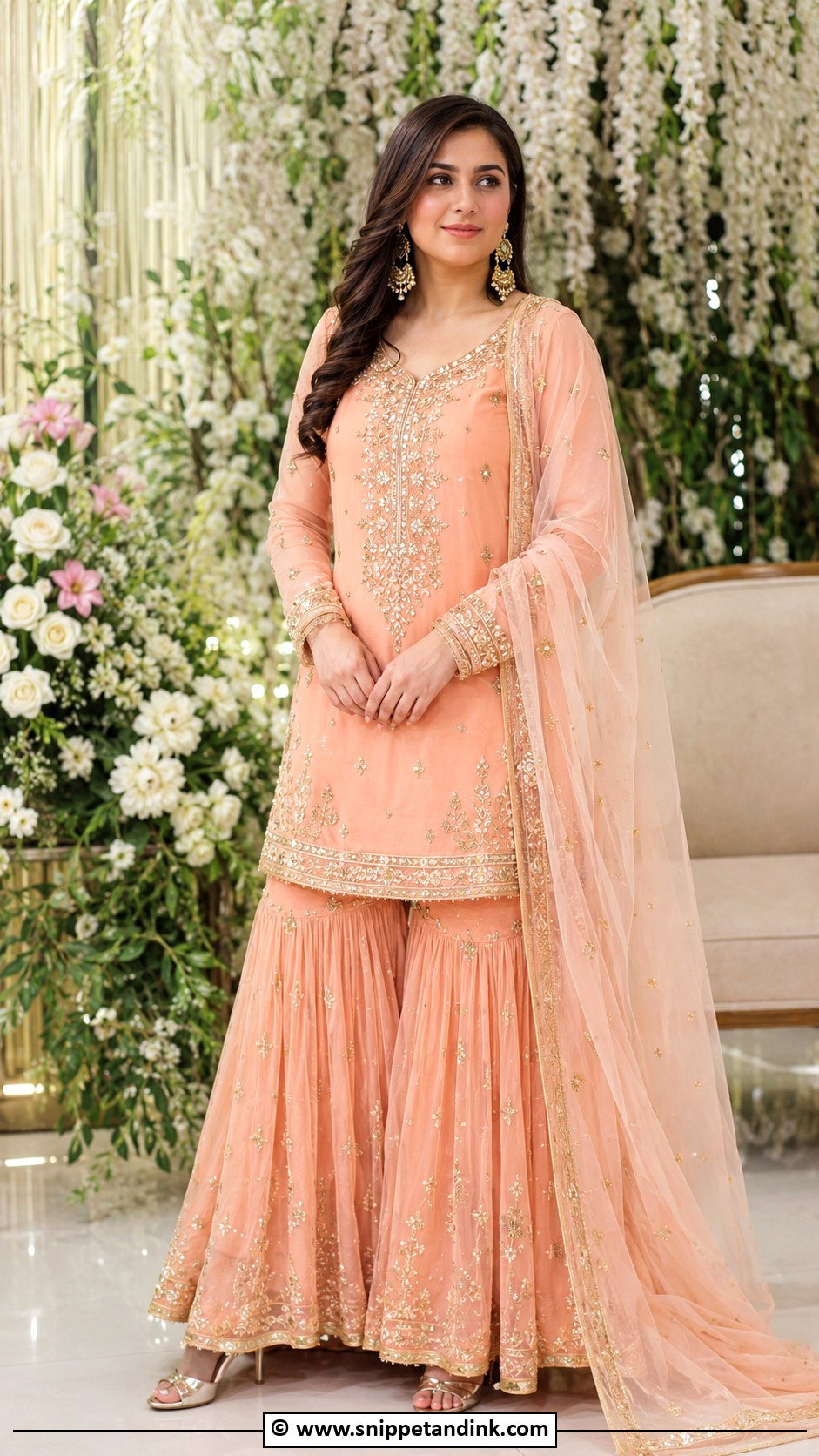
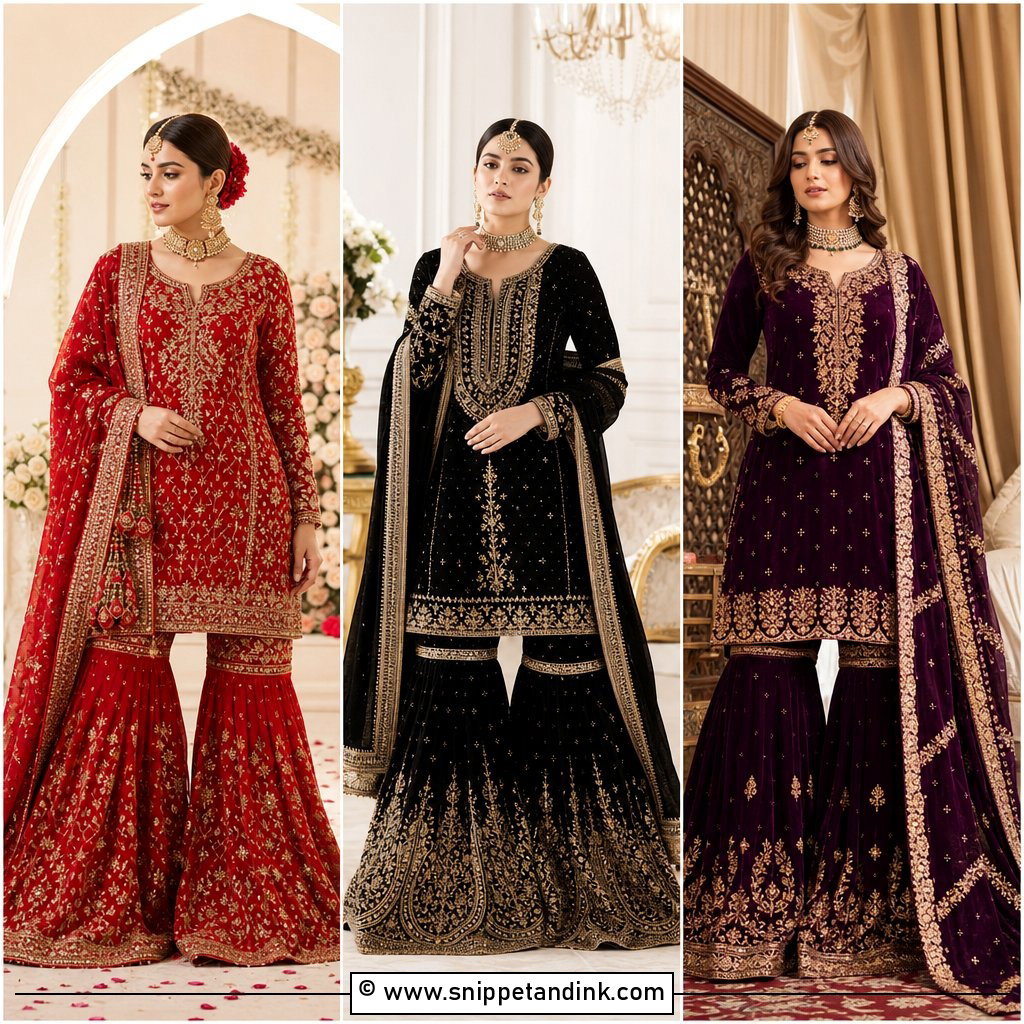
A gharara is joined at the knee, usually covered with a band of gota or embroidery, before it flares again, and that seam is what gives it its traditional shape. Peach keeps the look warm and gentle. Gold, champagne or pearl embroidery suits it, with a short kameez and a neat neckline to balance the wide lower half. Drape the dupatta over one shoulder or lightly over the head. Gold heels, kundan-style earrings and soft peach makeup finish it. Have the knee band set at your actual knee, not where the pattern says, or the flare starts in the wrong place when you walk.
11. Gold Valima Dress
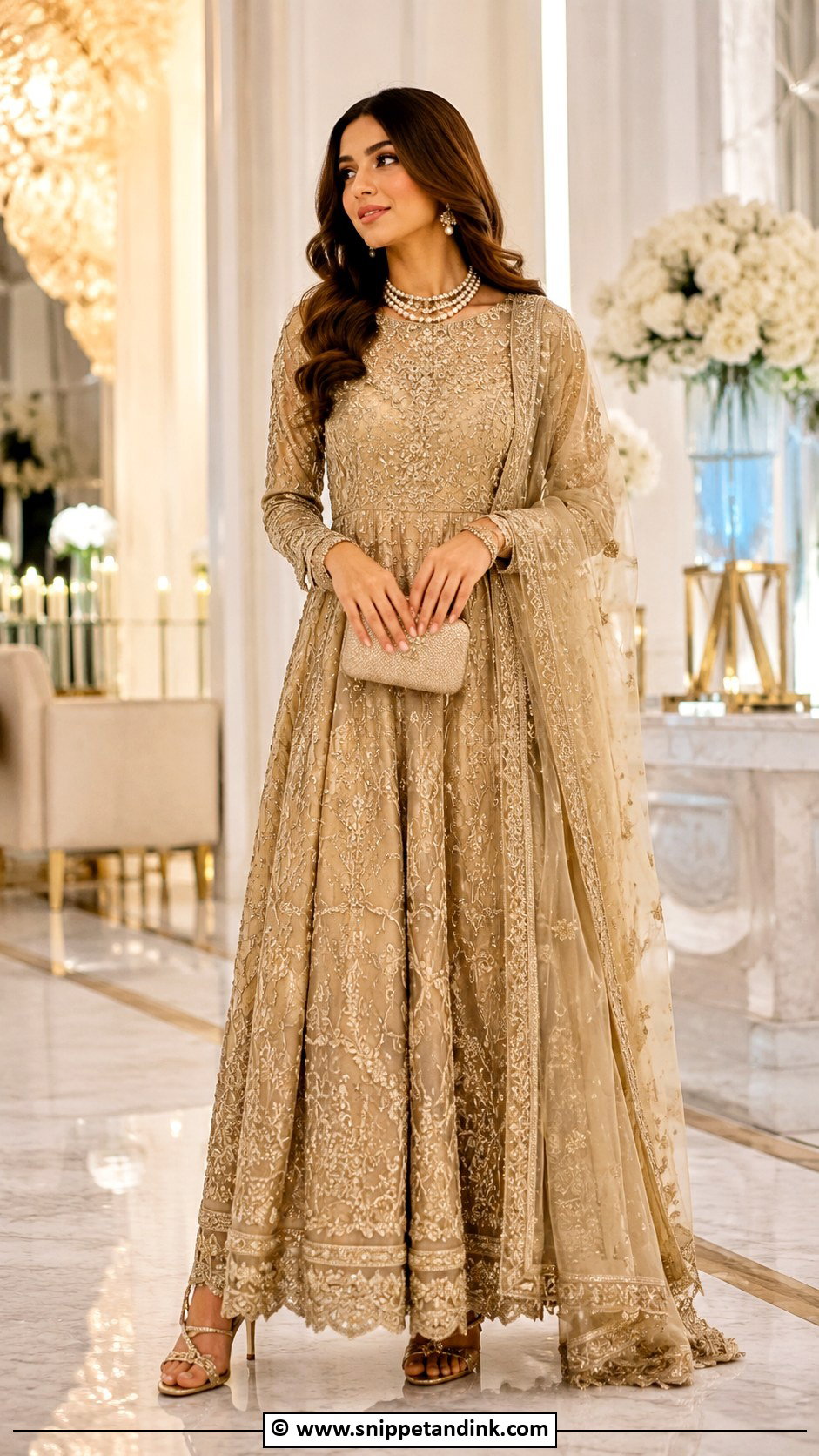
Gold looks celebratory, but bright yellow gold can feel more like a baraat than a Valima. I steer brides toward antique gold, champagne gold or muted metallic shades. A maxi, lehenga or sharara with fine embroidery stays rich without overwhelming, and a matching or slightly lighter dupatta softens the shine. Gold jewelry is natural; pearls make it more delicate. Nude or metallic heels finish it. Brides can carry heavier work, while guests should keep it lighter.
12. Dusty Rose Valima Maxi
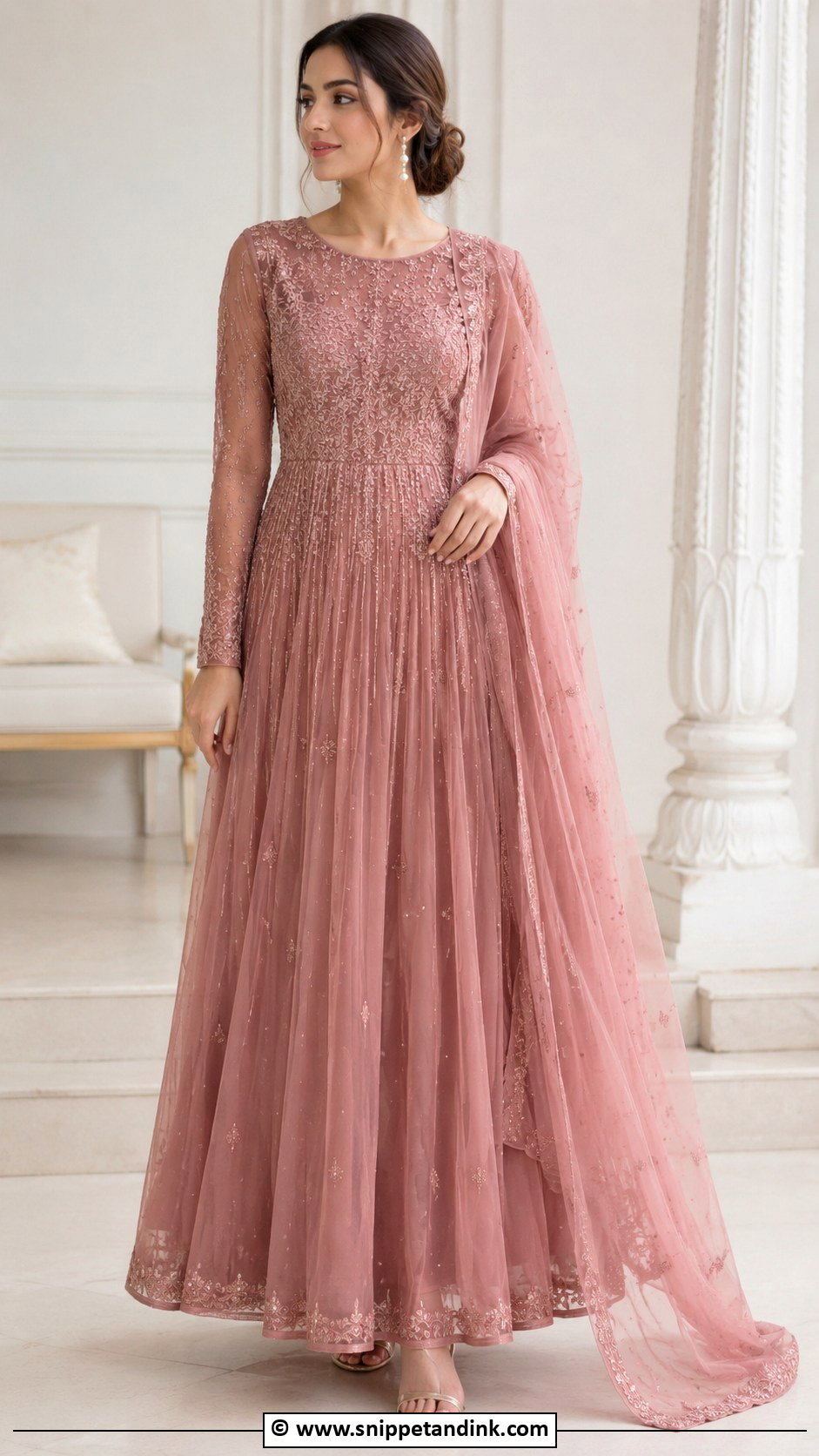
Muted and mature, dusty rose sits softer than deep pink and more elegant than bright rose. A flowing maxi with beadwork, sequins or tonal embroidery works, with a matching dupatta that has a thin border. Rose-gold heels, pearl earrings and a low bun complete it. It flatters a wide range of skin tones and holds its color in both daylight and evening lighting, which makes it a reliable pick for sisters and bridesmaids who will appear in many family photos.
13. Sage Green Valima Outfit
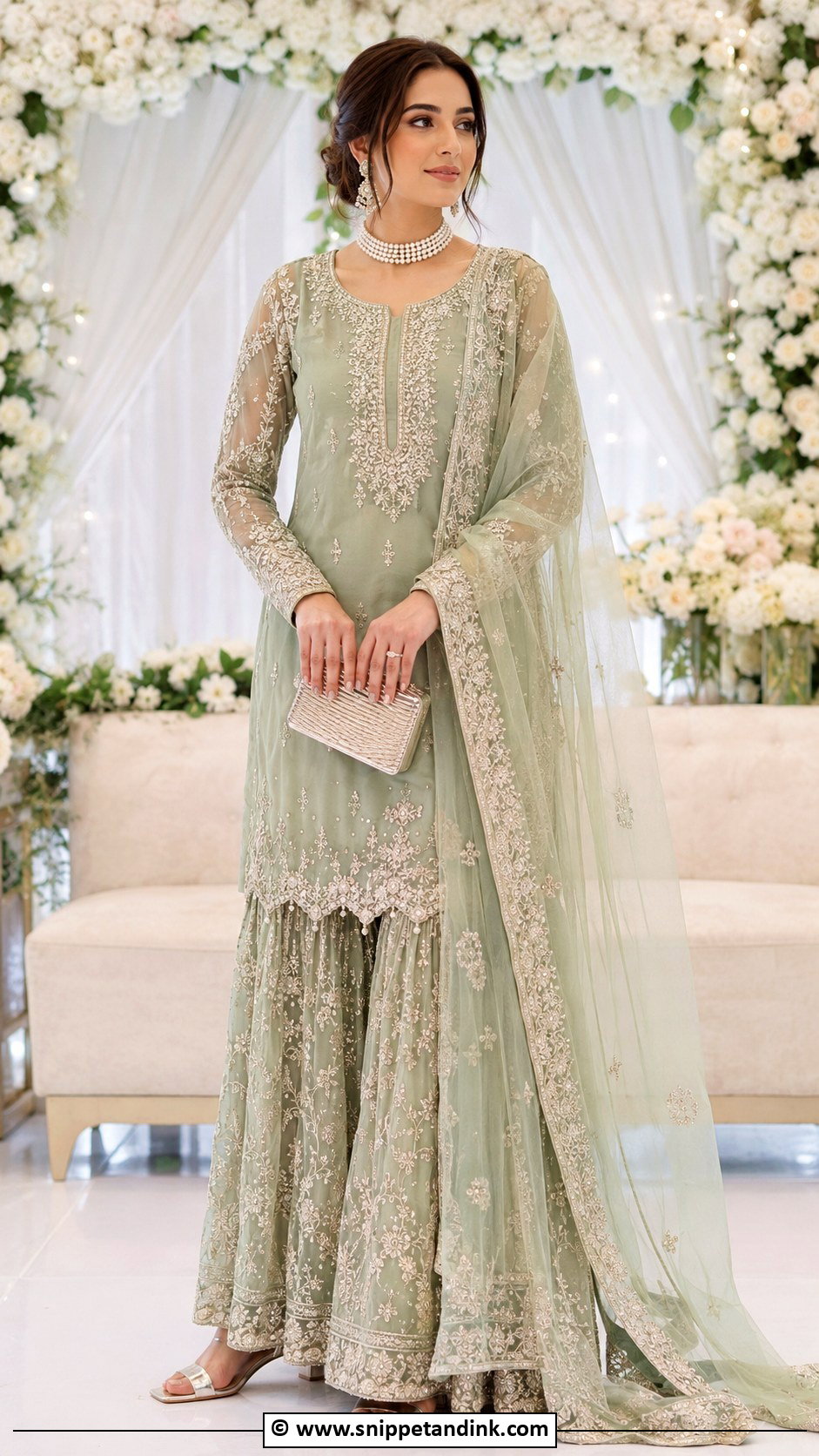
Sage is a muted green that feels modern and calm. A sage lehenga, long kameez with trousers or a sharara set with ivory, silver or antique gold embroidery all work, under a net dupatta to keep it light. Pearl jewelry, metallic sandals and natural makeup suit it, and an embellished clutch or statement ring adds formality. Sage can look grey under cool white lights, so lean toward warmer embroidery if the hall is brightly lit. It sits well against floral stages and greenery.
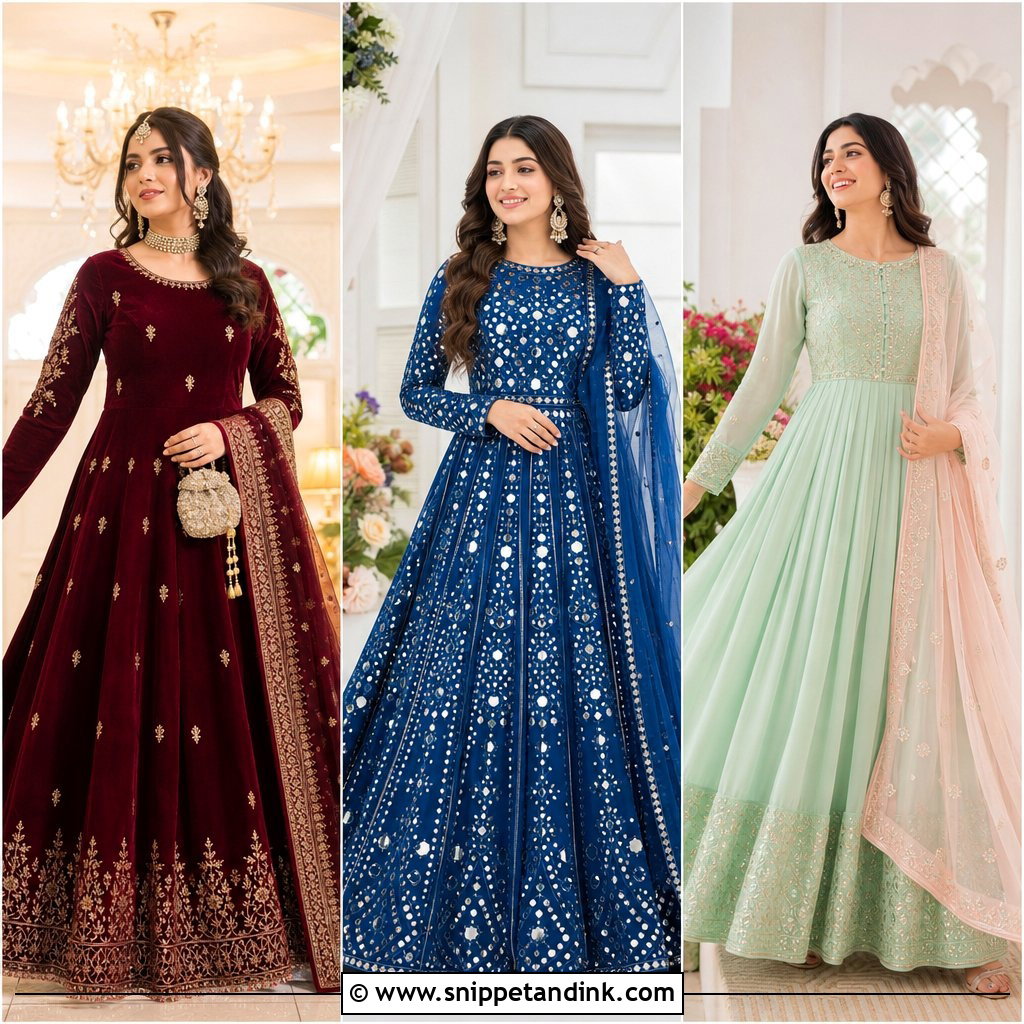
14. Long Shirt With Lehenga For Valima
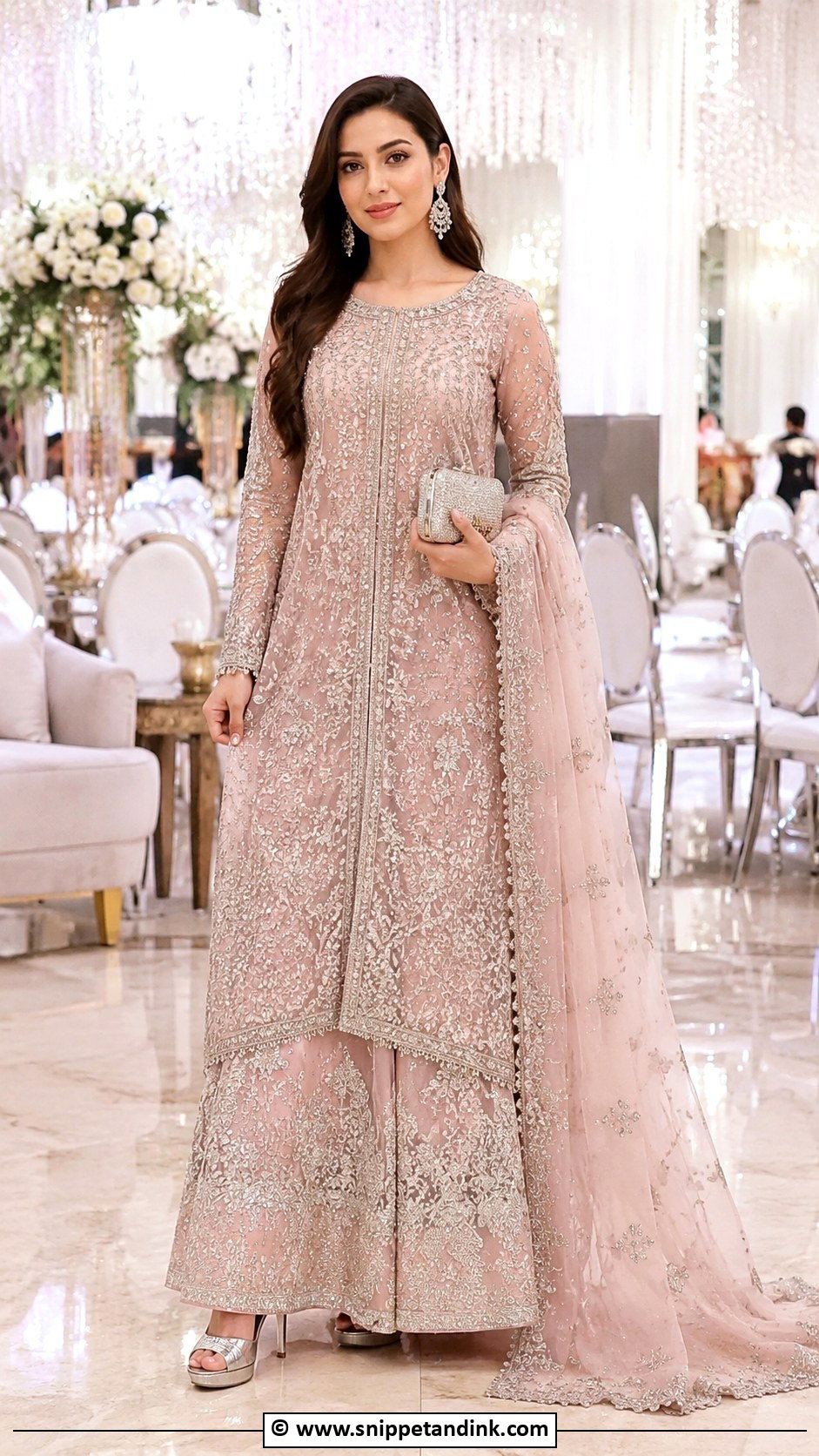
A long shirt with lehenga gives modest coverage with traditional volume. The longer kameez creates a sleek vertical line, while the skirt below adds celebration. Ivory, blush, mint or powder blue with embroidery at the neckline, sleeves and hem works well, with a dupatta whose border ties it together. The shirt length matters: ending just above the knee usually keeps the lehenga visible, while a longer shirt can hide the skirt work you paid for. Brides can choose heavier work and guests a simpler version.
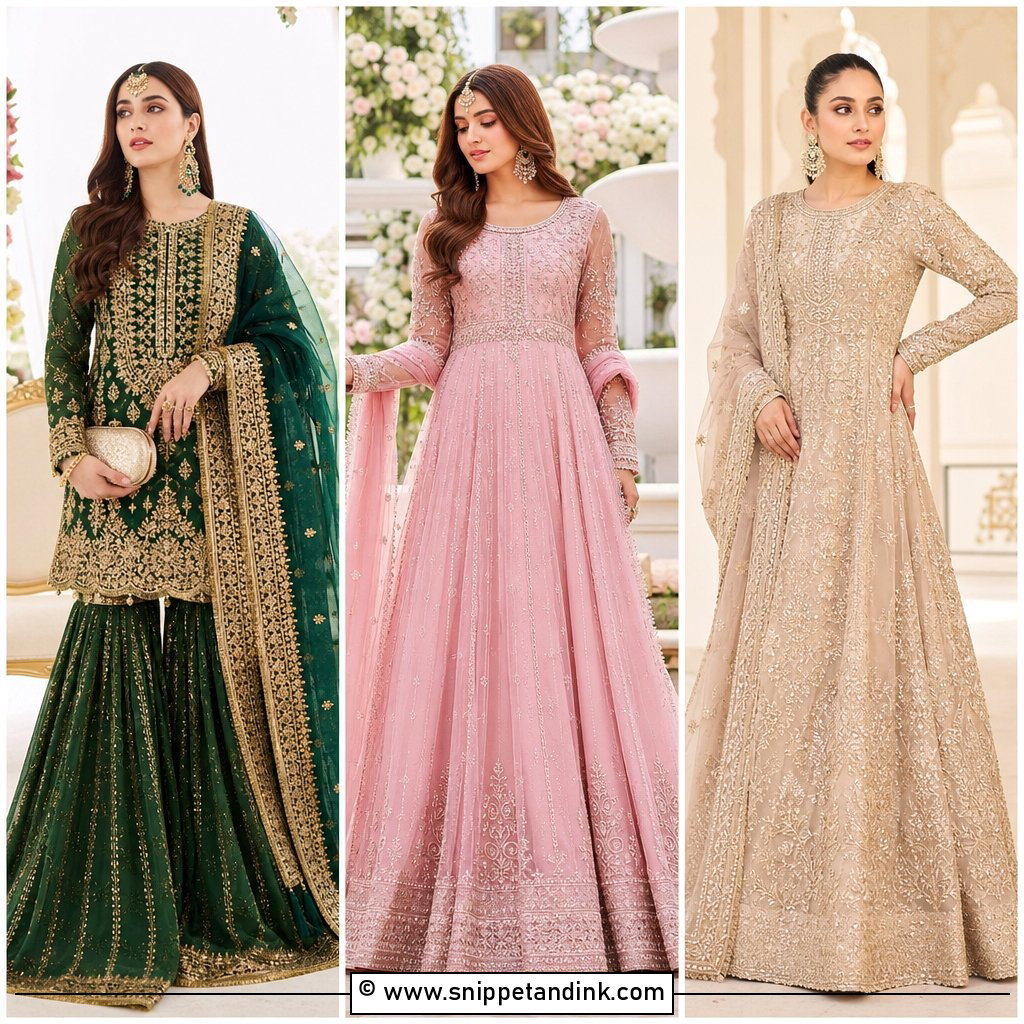
15. Peplum With Gharara For Valima
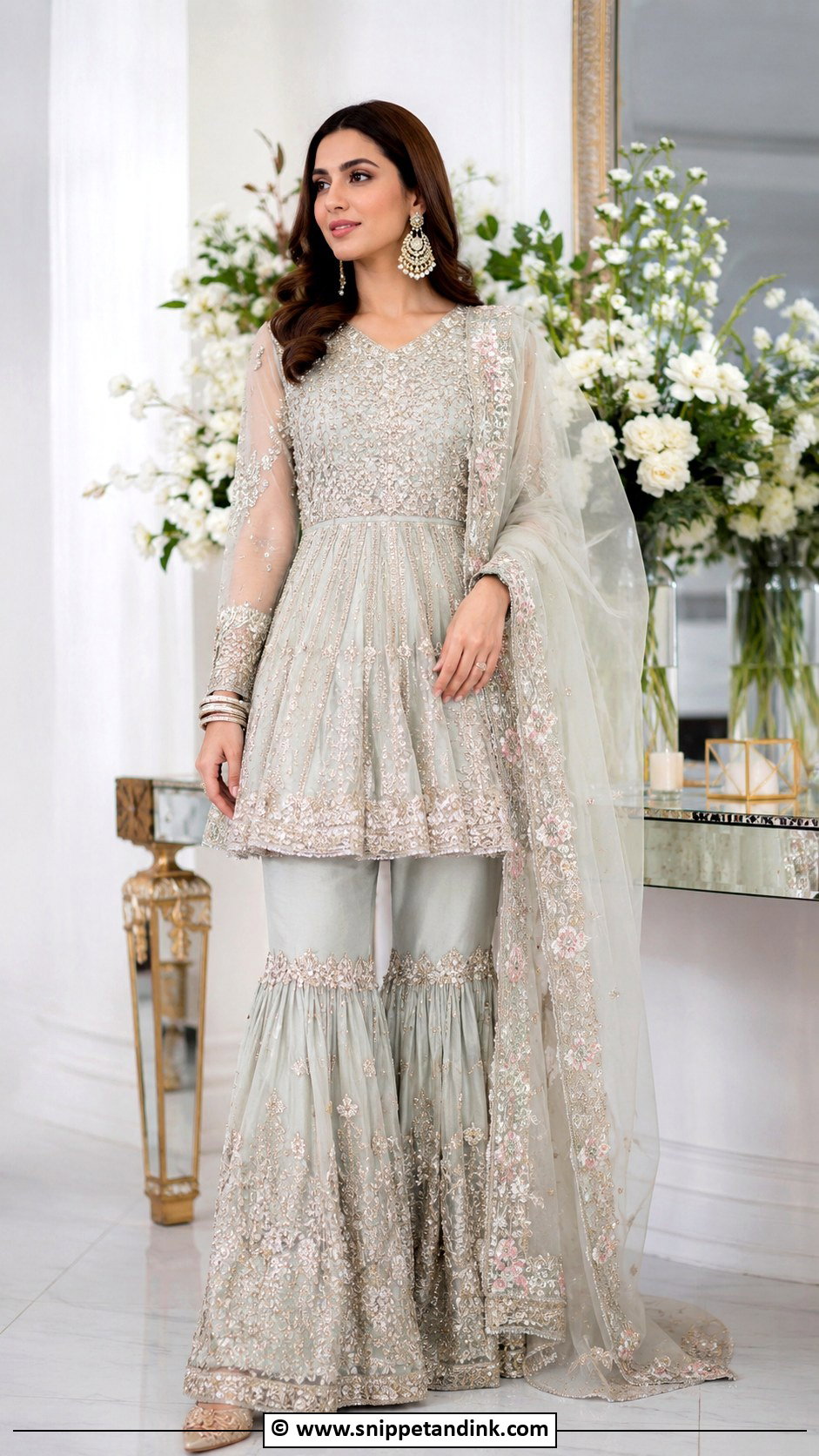
The peplum shapes the waist and the gharara supplies movement, a combination that dances well and moves easily between guests. Pastels with silver or pearl embellishment feel soft; champagne, gold or dusty rose feel richer. Pin the dupatta at the shoulder to keep it neat. Statement earrings, stacked bangles and embellished heels finish it. Peplums flare from wherever they are stitched, so the seam has to sit at your natural waist; set any lower and it widens the hips over the gharara.
16. Jacket Style Valima Dress
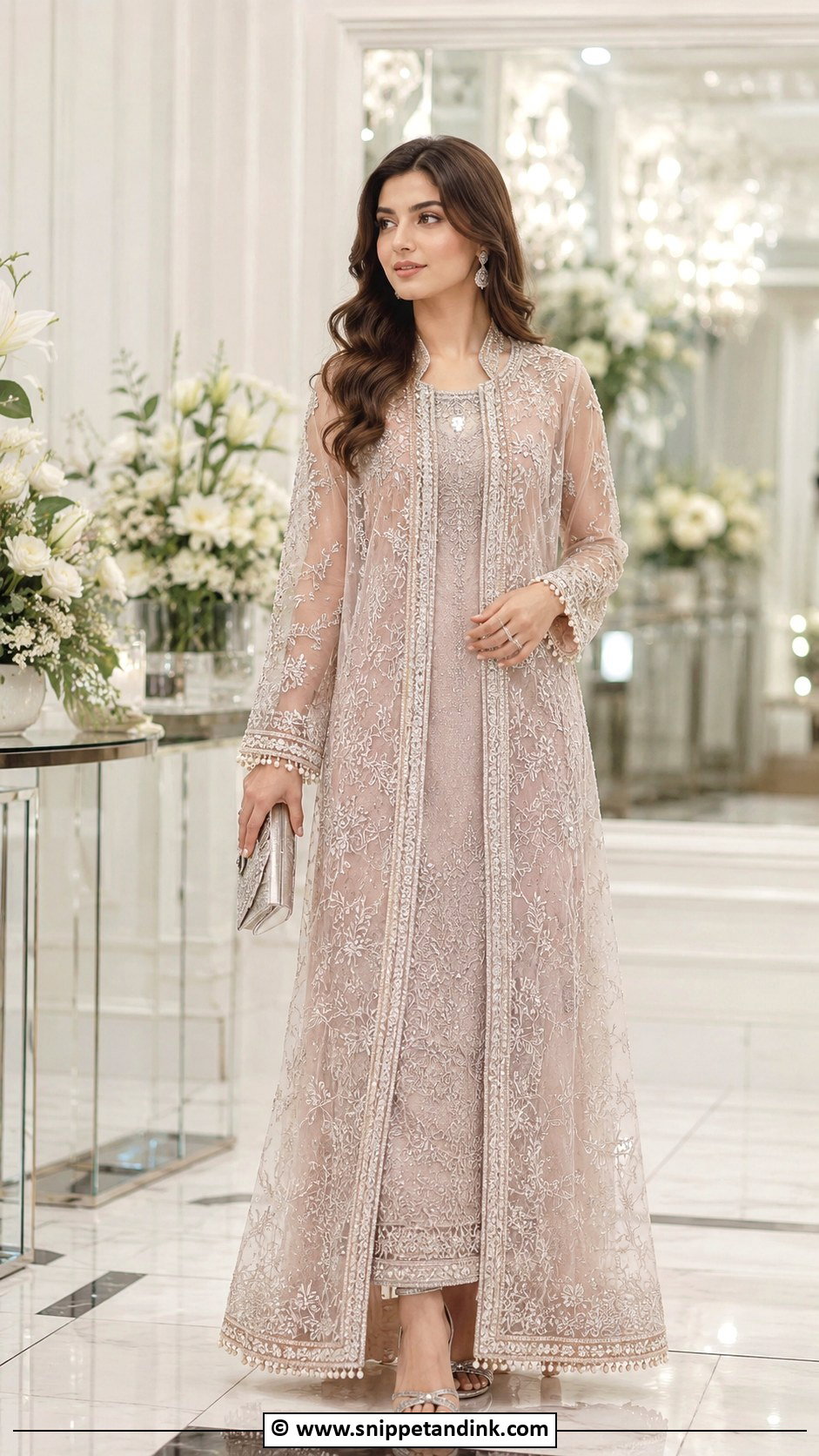
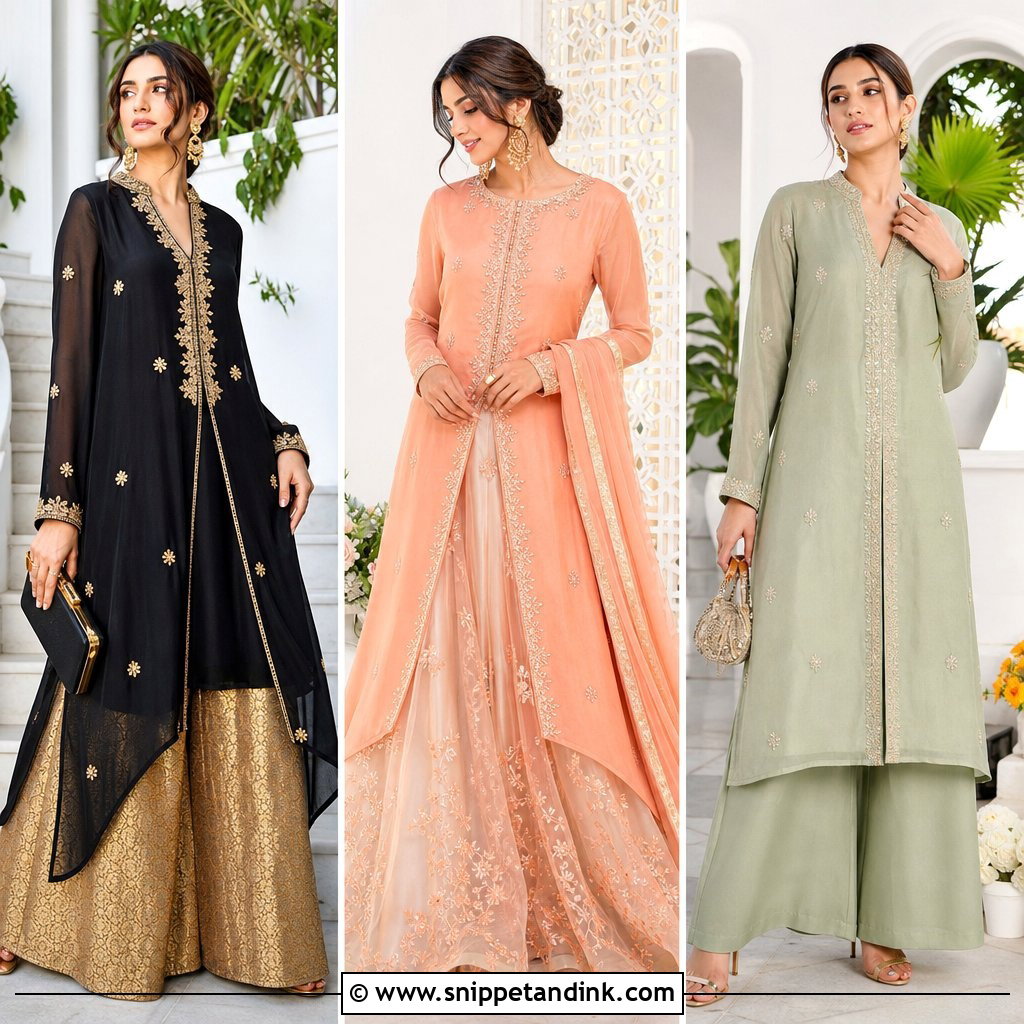
Long, sheer, embroidered or lightly structured, a jacket can go over a gown, a lehenga or straight pants, adding coverage and drama without a heavy dupatta. For a bride, a pastel gown under an embellished long jacket looks regal; for a guest, a light jacket over a silk dress or trousers feels practical. Keep jewelry simple if the jacket is heavily worked. Jackets with dense embroidery get warm under stage lights, so choose an unlined or net jacket for a summer Valima and save the heavier ones for winter.
17. Cape Style Valima Gown
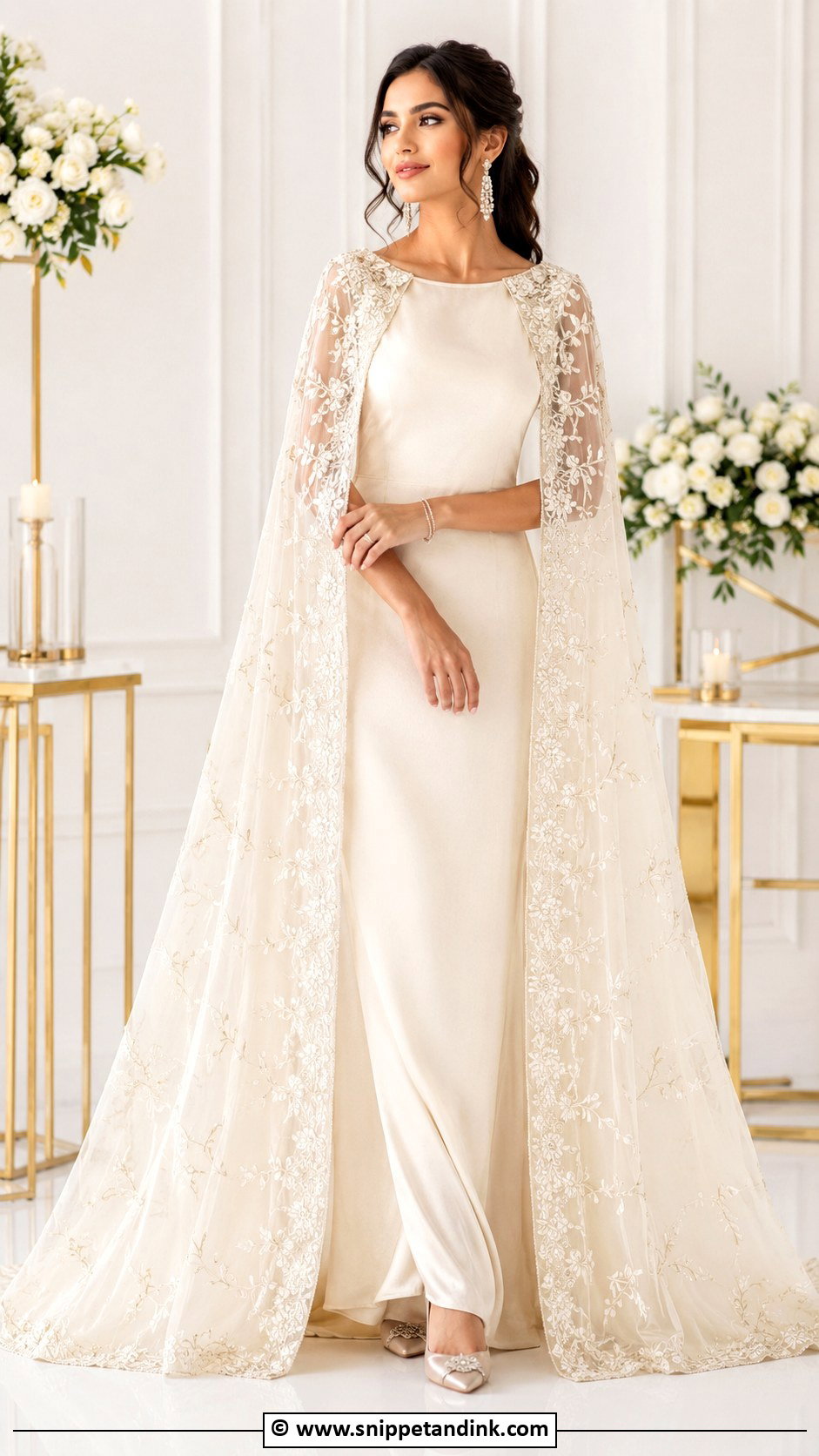
A cape gives reception dressing a soft modern twist and frees you from managing a dupatta all evening. Choose a floor-length gown in ivory, blush, lavender or champagne with delicate embroidery on the bodice and cape edges. A sheer cape feels light but still formal. Drop earrings, a bracelet and pointed heels complete it. Brides can choose a longer cape for drama and guests a shorter one. Where the cape attaches at the shoulders, the stitching takes all the weight, so ask for reinforced seams if it is embroidered.
18. Anarkali Valima Dress
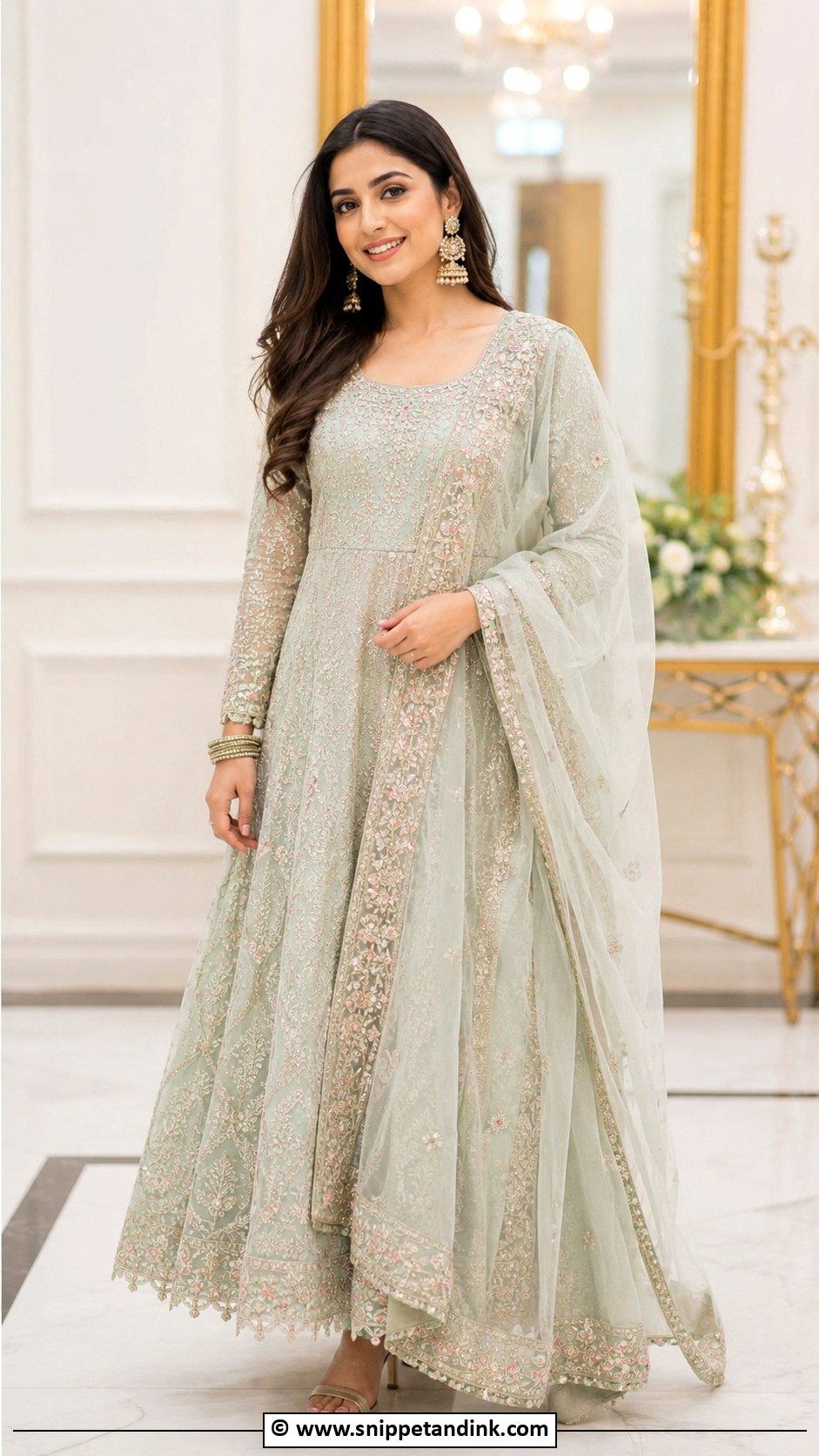
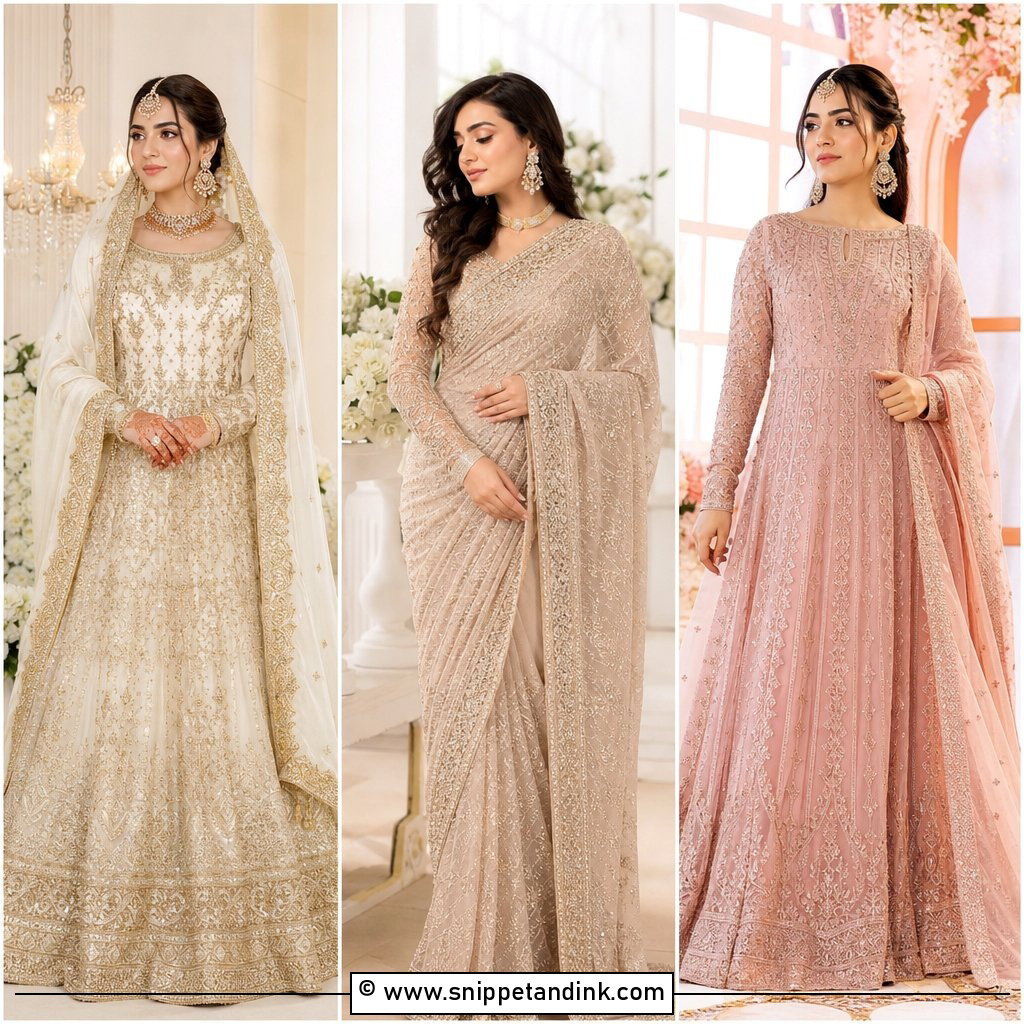
Few silhouettes suit as many ages and figures as the Anarkali: a fitted bodice that opens into a long flared skirt. Ivory, blush, mint, dusty blue or soft gold suit the Valima mood, with embroidery at the neckline, sleeves and hem. Drape a matching dupatta over both shoulders for a modest finish. Jhumkas, bangles and comfortable heels complete it. A full Anarkali uses a lot of fabric in the flare, so a lighter fabric like chiffon or georgette keeps it swinging rather than hanging heavy.
19. Embroidered Saree For Valima
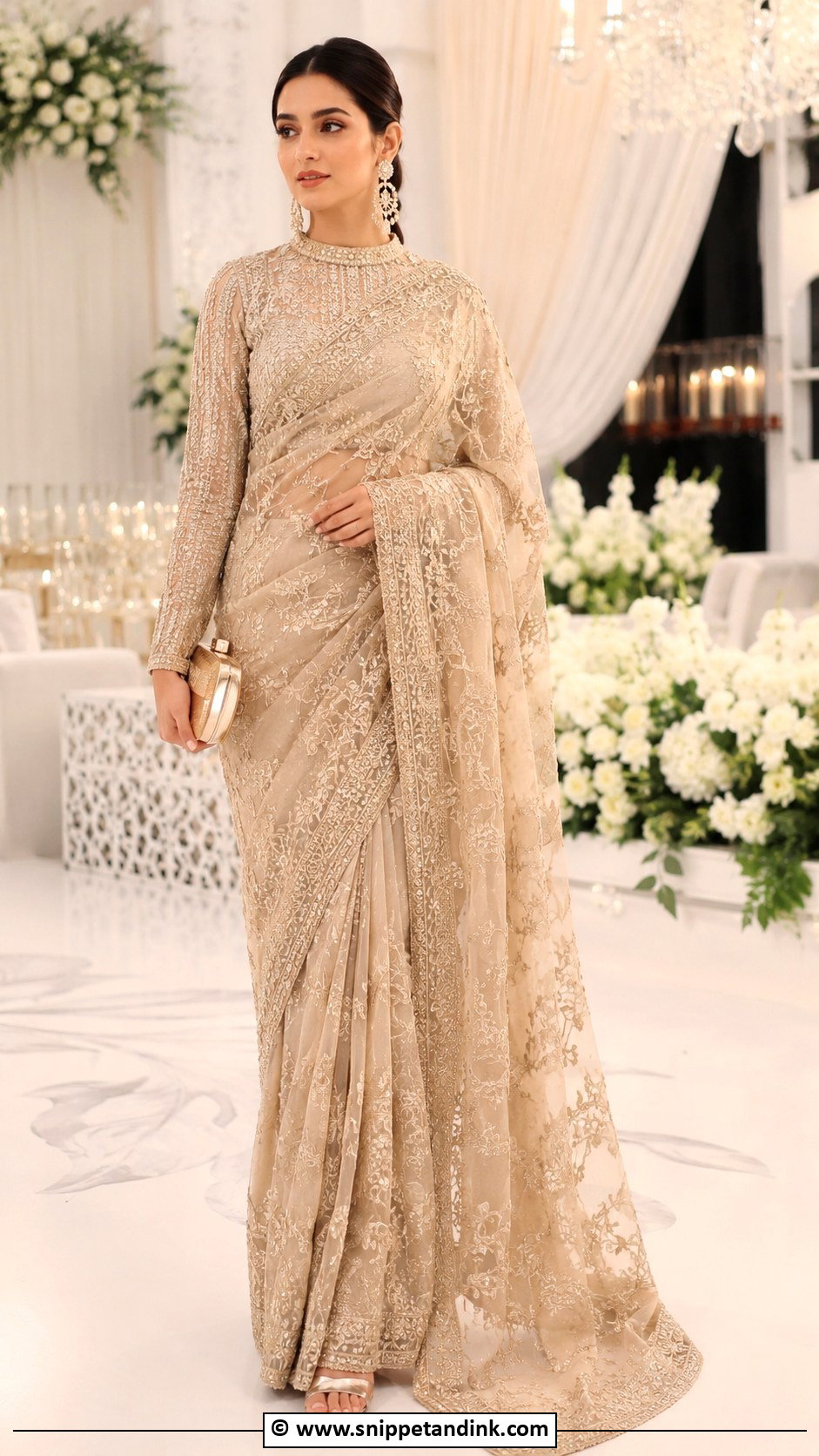
A saree sits slightly apart from the usual lehenga and sharara. Soft net, chiffon, silk or organza with delicate beads, sequins or threadwork suits the reception, in pastel, ivory, champagne or silver. Pair it with a modest blouse, statement earrings and a sleek clutch. Wear the heels you will actually wear when the saree is draped, because the pleats are set to that height and will drag or float if you change shoes. Brides can choose a heavier border and more jewelry.





20. Silk Maxi Dress For Valima
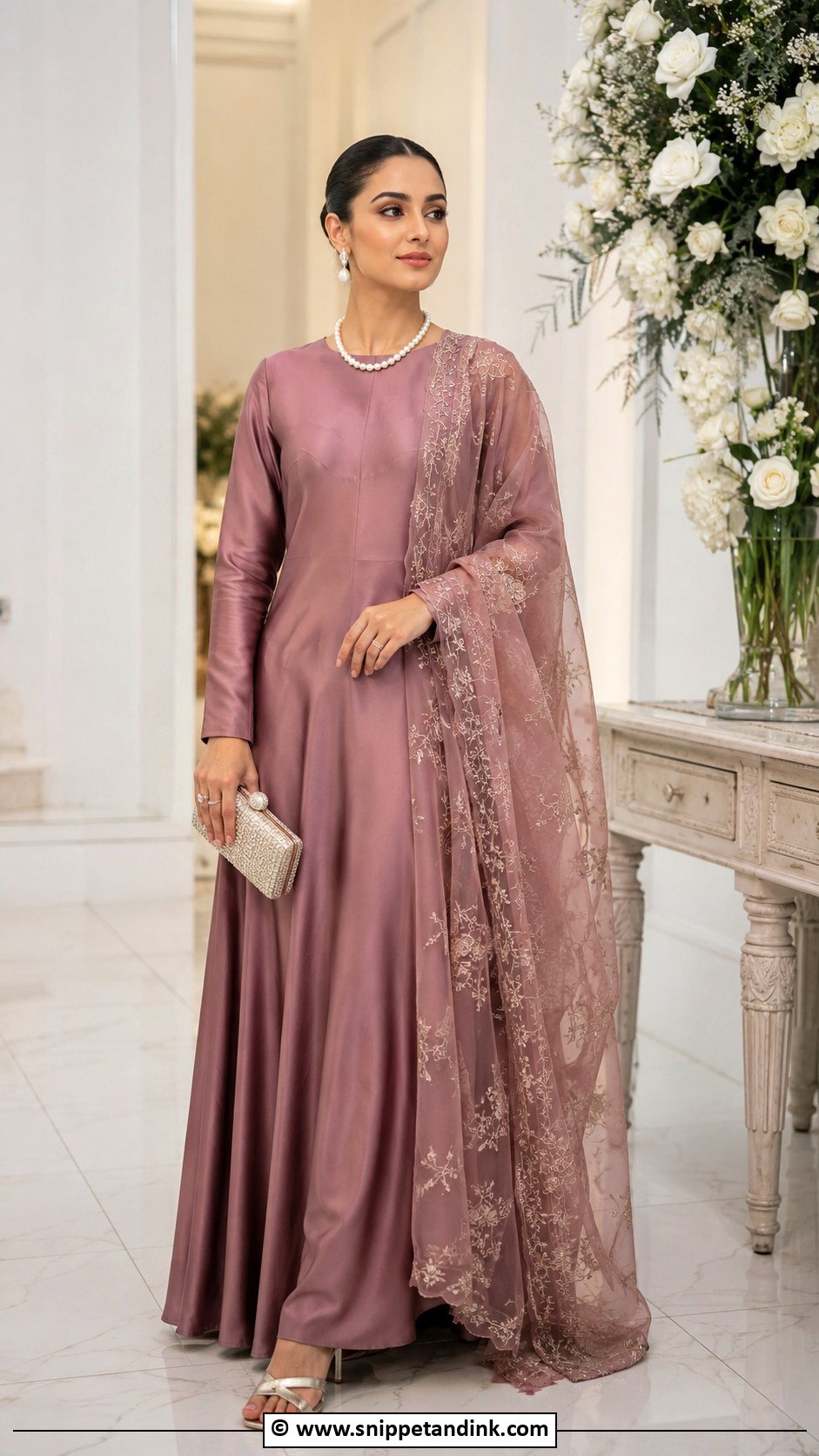
Silk carries a maxi on its own, so it needs little embroidery to look dressed up. Champagne, mauve, sage, powder blue or rose pink all work, with a lightly embroidered dupatta or organza stole for the traditional touch. Pearl jewelry, metallic heels and a structured clutch finish it. Silk marks easily with water and perfume, so spray fragrance before you dress, not after. It suits guests who want sophistication and brides who prefer quiet elegance, as long as the tailoring is clean.
21. Organza Valima Dress
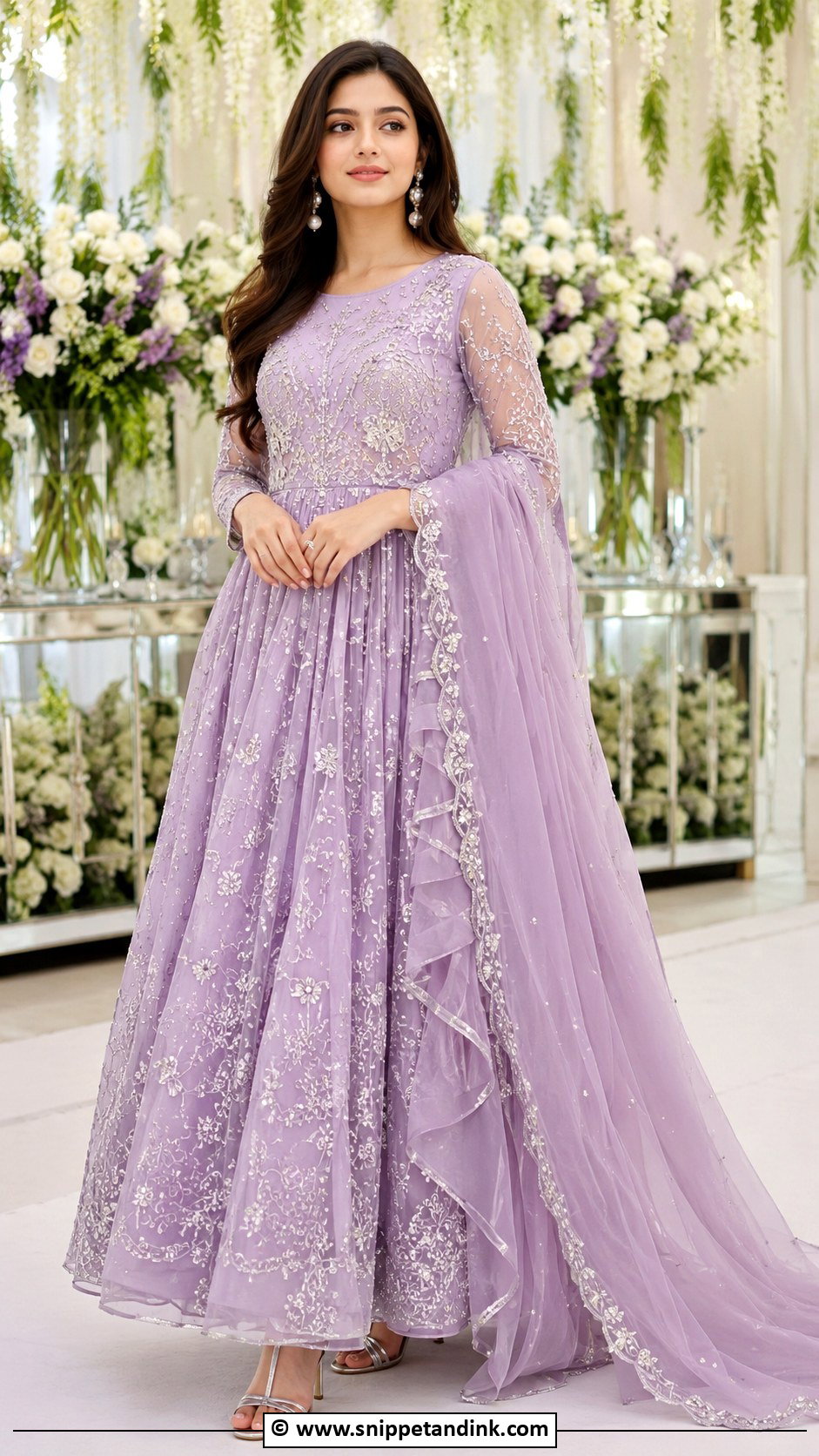
Organza is crisp and holds shape, which makes it ideal for flared maxis, lehengas and layered dupattas. Ivory, lilac, blush, mint or champagne with floral, pearl or light sequin embroidery keeps it delicate. Its natural volume needs a fitted bodice or clean neckline to balance it. Organza also creases sharply if it is folded in a suitcase, so hang it as soon as it arrives and steam it gently from the inside. Elegant heels, a small clutch and soft jewelry finish it.
22. Velvet Valima Outfit
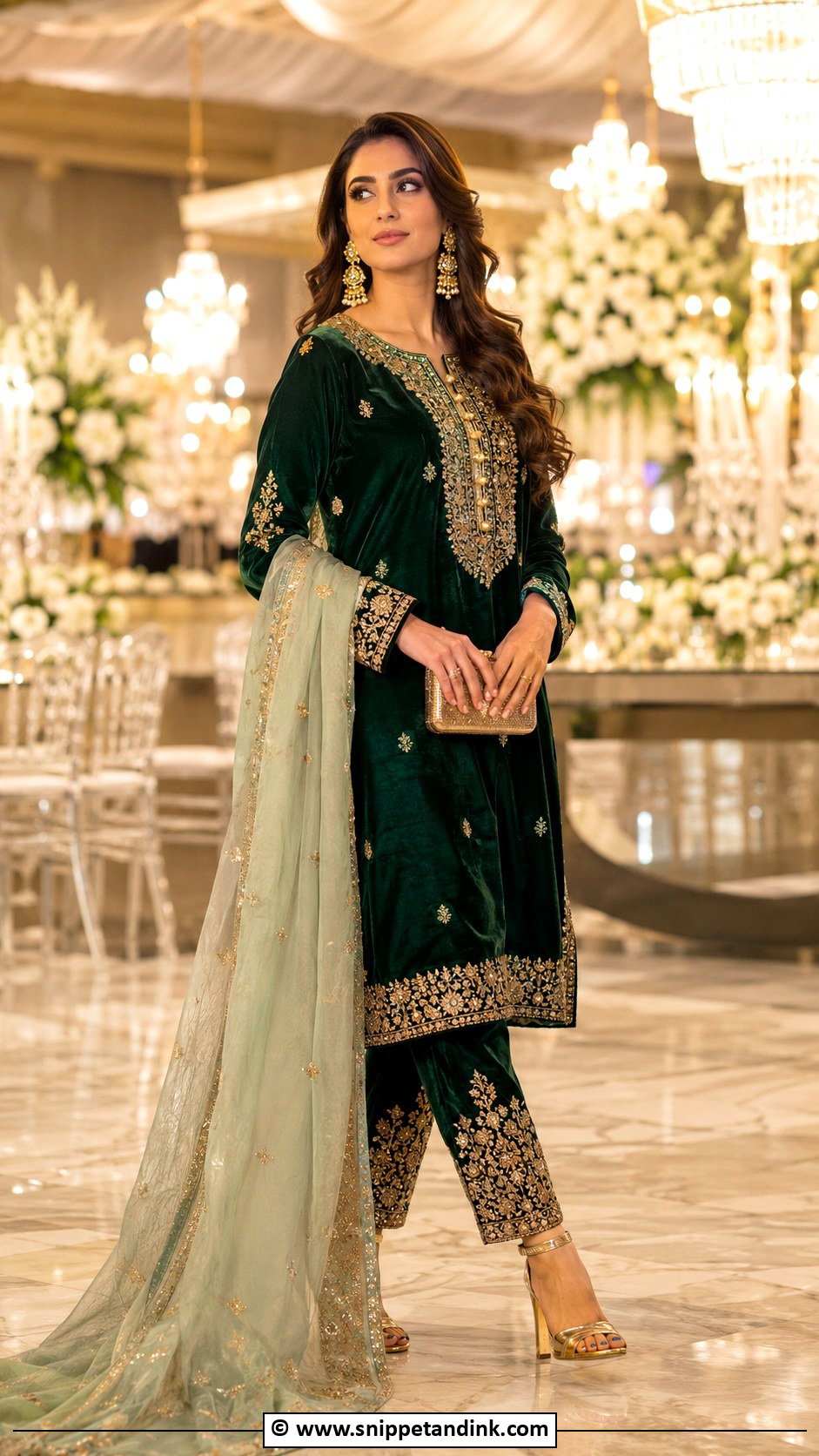
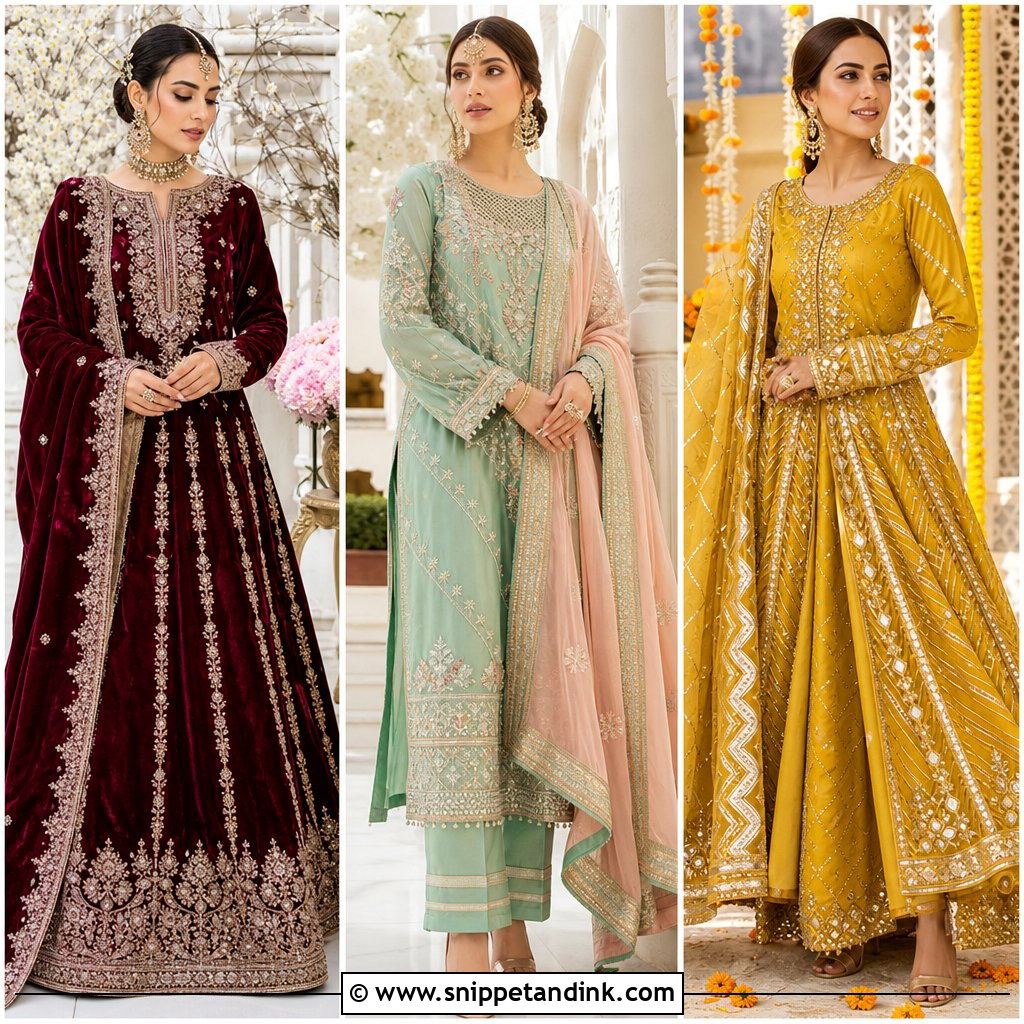
Velvet looks rich instantly, so it belongs at cold-weather and evening receptions. Deep shades like emerald, navy, plum, maroon or charcoal feel formal; brides can take softer velvet tones with gold or silver embroidery. Guests suit a velvet long shirt with trousers, a sharara or a maxi. Keep the dupatta light, in chiffon or net, so the whole outfit does not feel heavy. Velvet crushes where you sit and lean, so steam it rather than ironing, and never press the pile flat.
23. Sequin Valima Gown
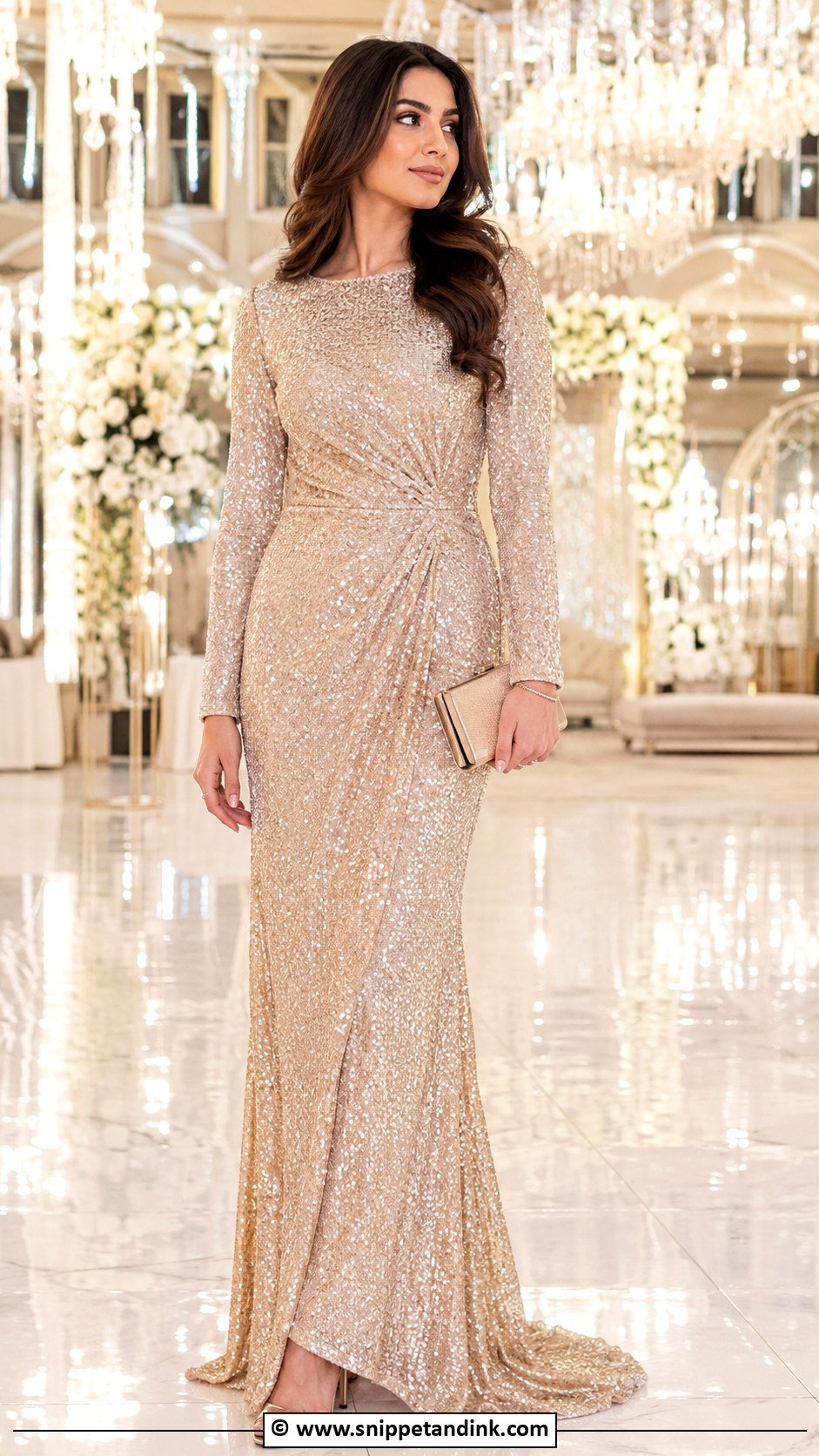
Sequins glow under hall lighting, which makes a sequin gown ideal for evening receptions. Silver, champagne, blush, ice blue or lavender keep it elegant. A fully sequined gown is dramatic, so balance it with a simple neckline, long sleeves or a clean silhouette, and guests should choose lighter sequin placement. Minimal jewelry, metallic heels and a neat clutch finish it. Sequins on the inner arm can rub and scratch over a long evening, so ask whether the sleeve undersides can be left plain.
24. Straight Shirt With Trousers For Valima
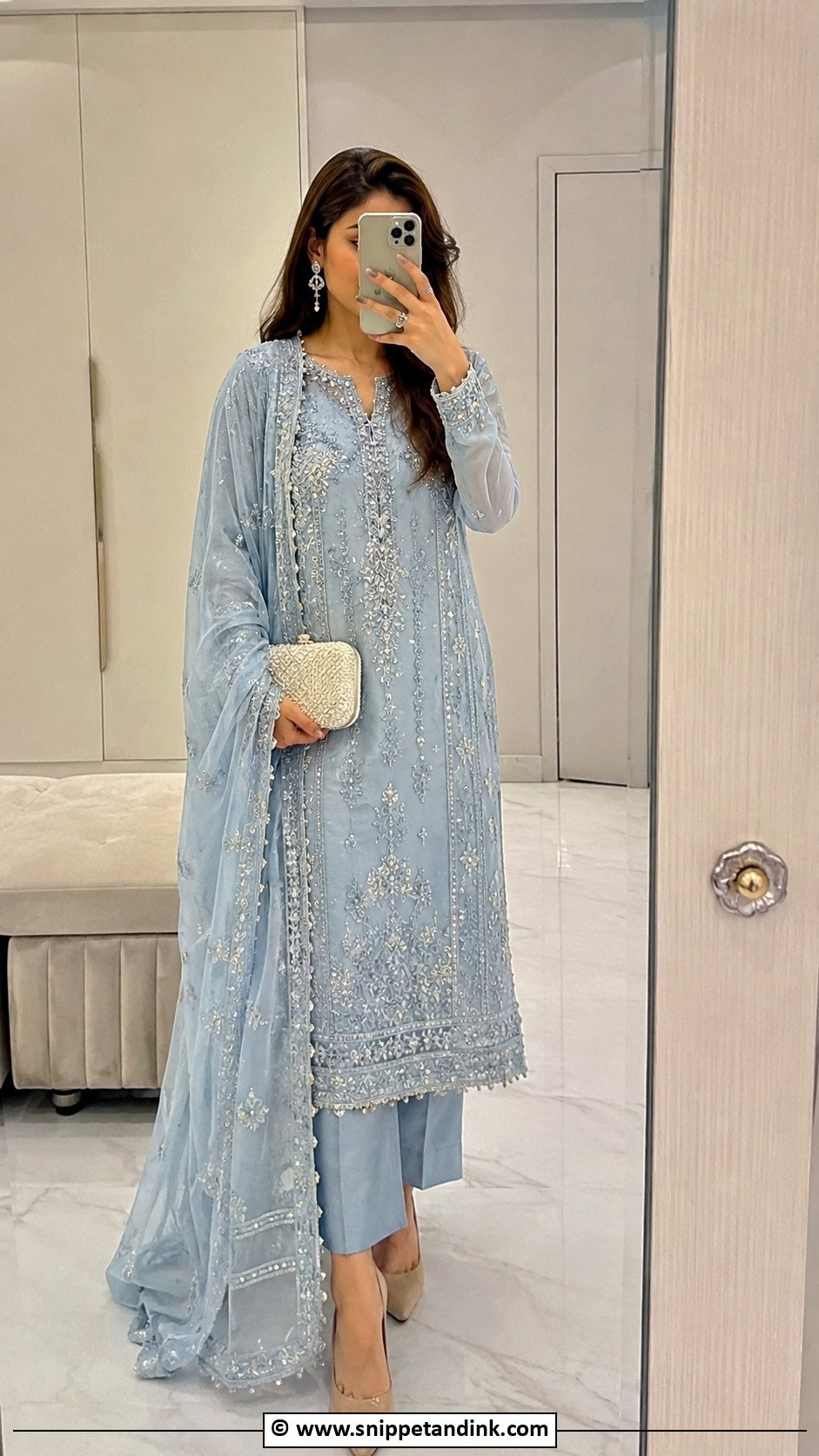
Comfort, modesty and elegance meet in a straight shirt with trousers, which is why so many close relatives and guests choose it. A long embroidered shirt in silk, chiffon, organza or net pairs with cigarette pants, wide-leg trousers or straight pants. Ivory, sage, mauve, powder blue and champagne work well, and a dupatta with a light border adds formality. Side slits on a long shirt should end above the knee for walking room, otherwise the shirt pulls across the thighs when you sit.
25. Fusion Valima Dress
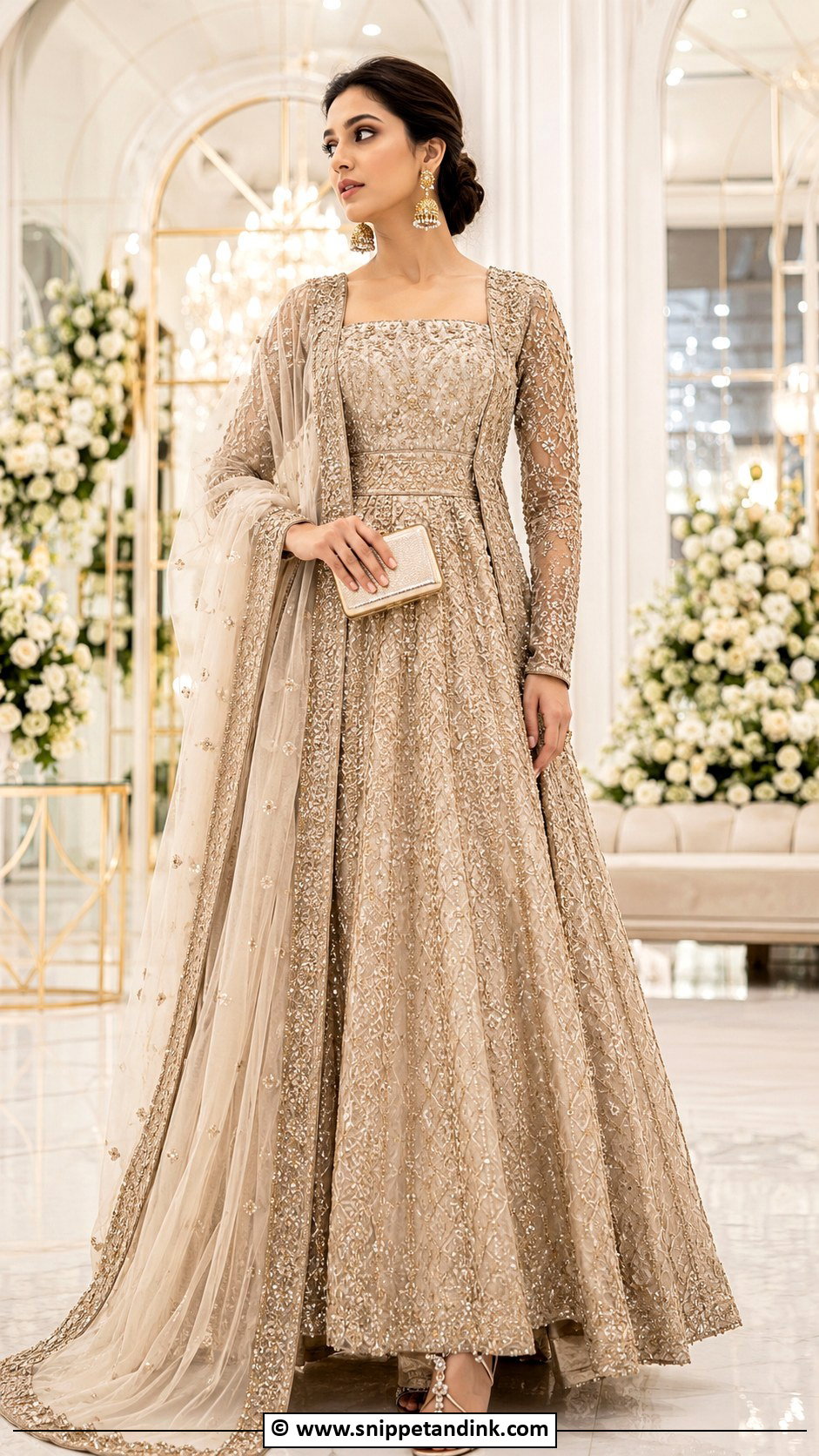
Fusion outfits blend modern cuts with traditional detail: a structured gown with South Asian embroidery, a lehenga with a corset-style blouse, or tailored trousers with a long embellished jacket. Keep it respectful and reception-appropriate with soft metallics, pastels or muted jewel tones. Add at least one traditional element, a dupatta, jhumkas, kundan jewelry or embroidered borders, so the outfit still belongs to the occasion. Corset blouses need proper boning and a fitting done in the jewelry you will wear, since a heavy necklace changes how the neckline sits.
Pinning a Net Dupatta So It Survives the Stage
Sheer net and chiffon dupattas slide the moment you turn your head, and the bride turns her head constantly on stage. The fix is to build a base before the dupatta goes on. A low bun or a small padded base at the back of the head gives the pins something to grip, and U-pins pushed in toward the bun hold better than straight bobby pins.
- Pin the dupatta at the back of the head first, through the bun, then at each side above the ears.
- Bring one side over the shoulder and pin it to the blouse at the shoulder seam with a small safety pin hidden under the embroidery.
- Leave the other side free so you can lift it when you eat or hug someone.
- Ask a sister or friend to check the back in every round of photos; it is the part you cannot see.
Dressing as a Guest Without Looking Like the Second Bride
If you are close family, ask what the bride is wearing before you buy. Pastels are popular for Valima guests too, and arriving in the same blush lehenga as the bride is awkward for everyone. A shade deeper or a different color family keeps you festive and clearly a guest. Skip a heavily worked dupatta draped over the head, which reads as bridal, and keep jewelry to one statement piece.
Lighter Than the Baraat, Still Clearly the Bride
Pastel lehengas, embroidered gowns, shararas, ghararas, maxis, sarees and jacket outfits all suit a Valima when the dupatta, jewelry and shoes are chosen with them. Brides can carry heavier embroidery in softer colors; guests should look festive without looking bridal. Weigh the outfit, sit in it and move in it before the day, because the Valima is a long evening of greeting and photos. The right outfit is the one you forget you are wearing by dessert.
You'll Like These Ideas:




Leave a Reply