
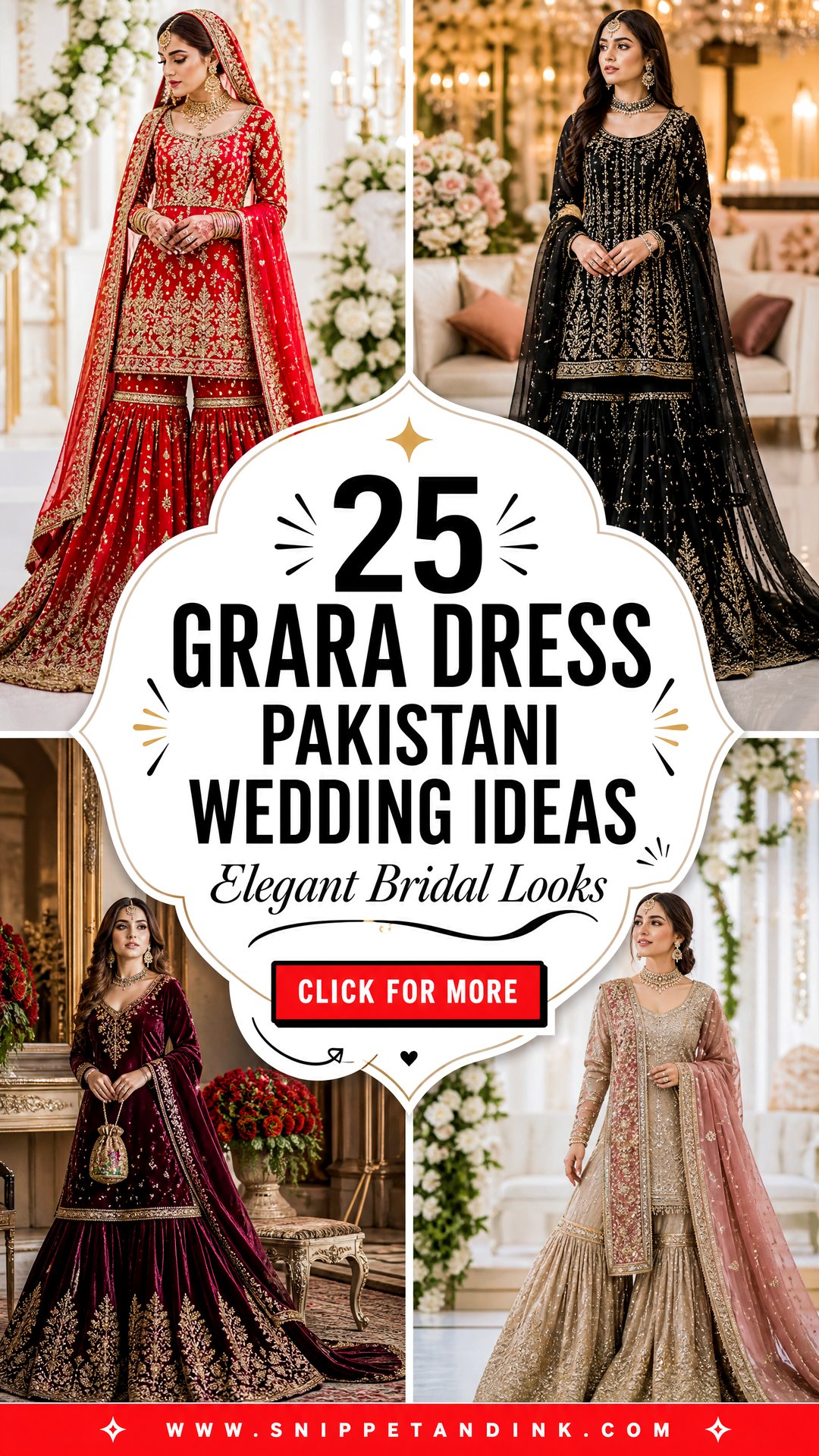
A gharara, often spelled grara, is the outfit I reach for when a family wants something that reads as unmistakably Pakistani yet still lets the wearer walk, sit on a stage and dance at the dholki. The shape is simple once you see how it is built: the leg stays fitted down to the knee, a band of gota or lace marks the joint, and the fabric below opens into a wide flare. That knee joint is what gives it the swing you see in photos. Below are bridal, family and guest versions for mehndi, nikkah, baraat and walima, each with the fabric, kameez length and styling I would actually suggest, plus where each one tends to go wrong.
Where the Knee Band Sits Decides How a Gharara Moves
Most gharara problems I see come from the stitching, not the design. The fitted upper leg and the flared lower half meet at a seam covered by a gota or lace band, and that joint has to sit at or just below the knee. Too high and the flare starts at mid-thigh and pulls when you walk; too low and you can’t bend your knees on the stage.
- Have your tailor measure the knee point while you stand, not sit, and mark it on both legs separately.
- Measure the final length while wearing the exact shoes for the event. A khussa and a three-inch heel need different hems.
- Ask how many panels (kalis) go into each flare. More panels give a fuller swing but add weight, which matters for anyone dancing at a mehndi.
- Choose a drawstring waist with a wide casing for heavy fabrics; elastic alone can roll under the weight of a worked gharara.
- Leave time for a fitting after the embroidery is done, because heavy work can shift how the fabric drops.
Bridal ghararas from designers usually need several months, while a tailor stitching from your own fabric often needs a few weeks, depending on the season. Wedding season fills workshops quickly, so I’d plan the bridal piece first and the guest outfits after.
1. Red Bridal Gharara Dress
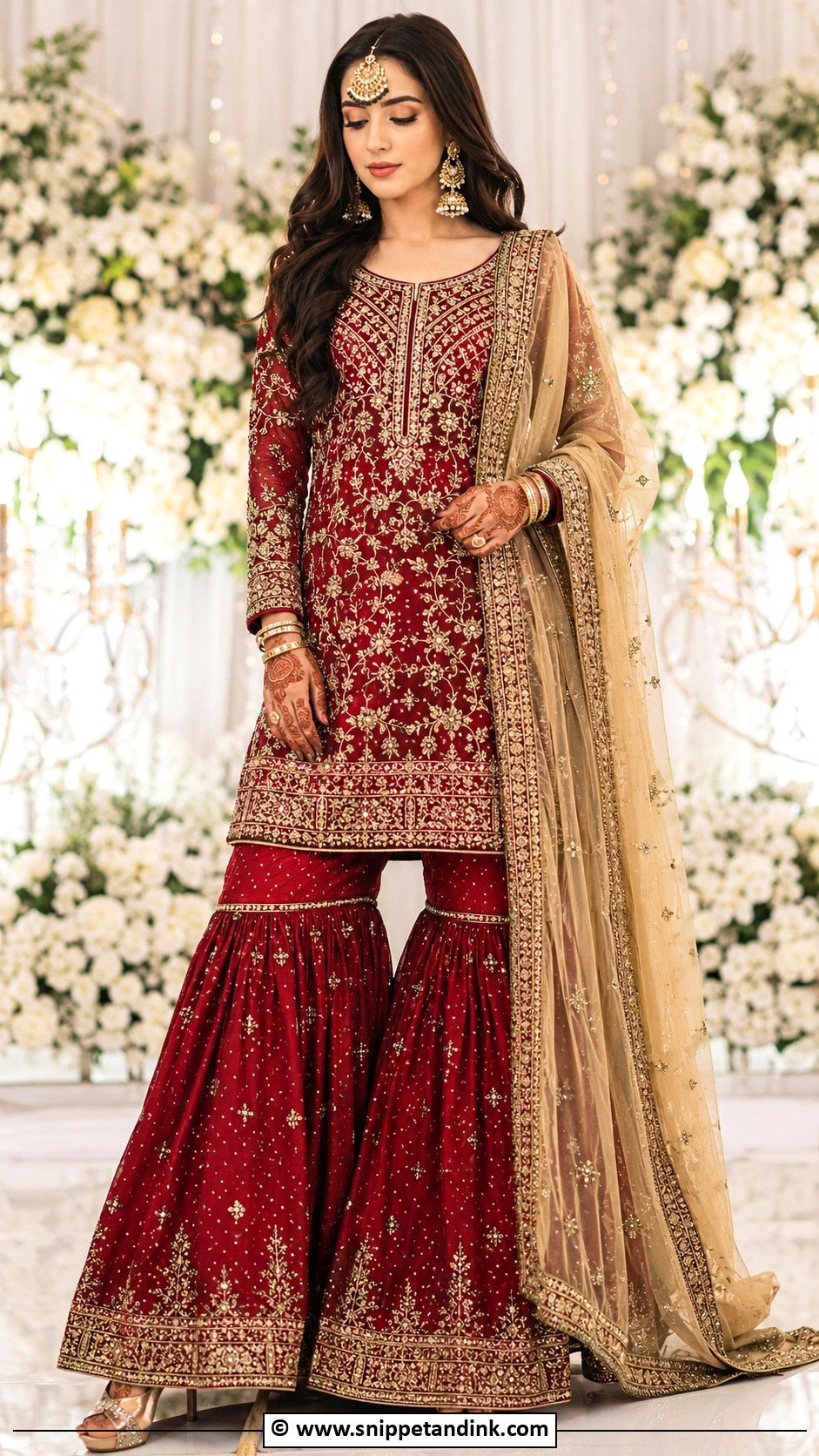
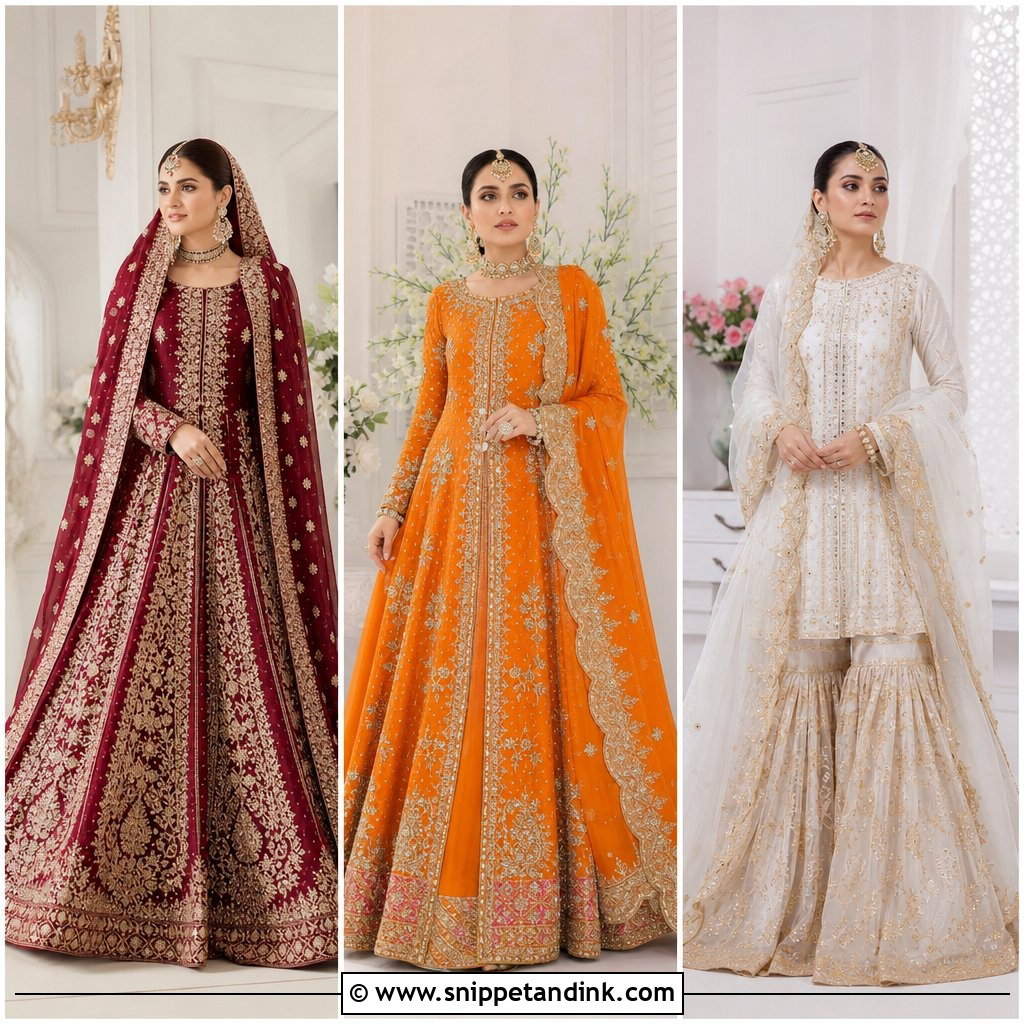
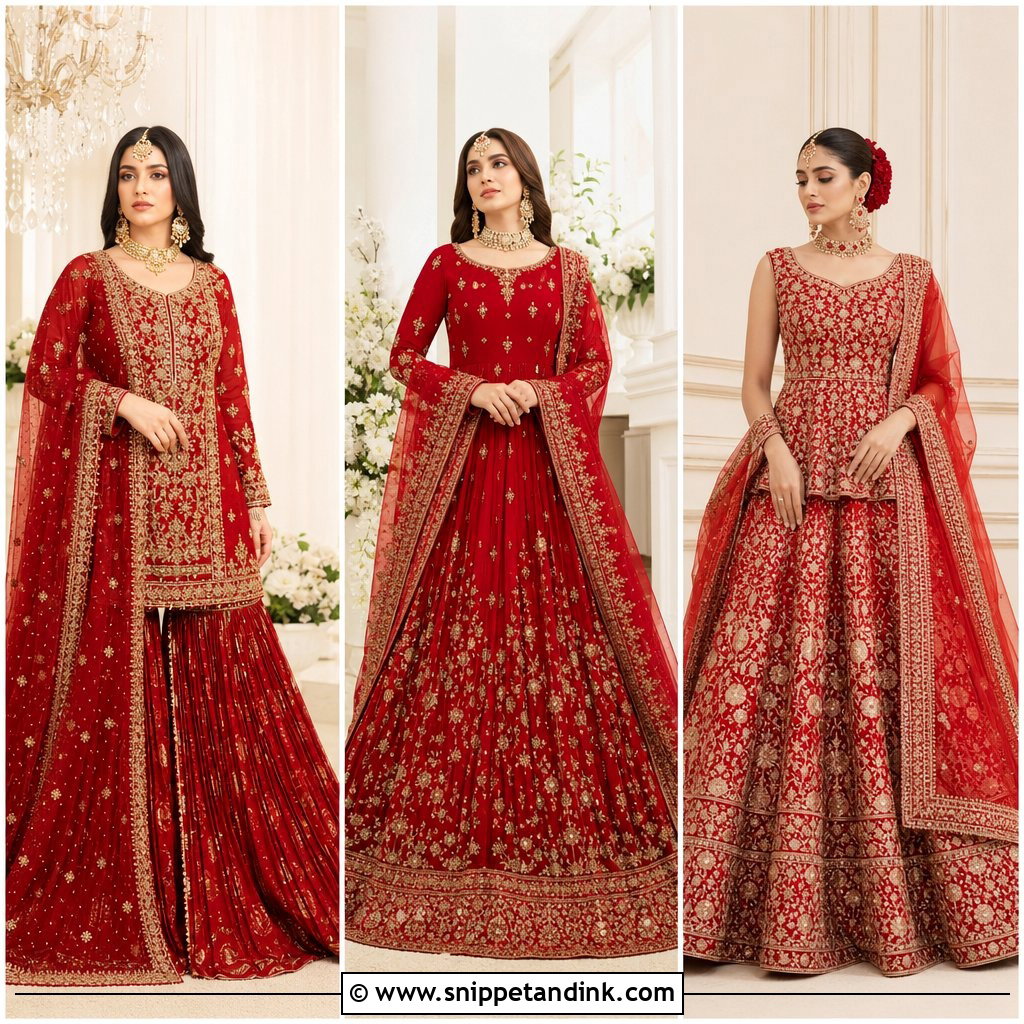
Red is still what most baraat brides come to me asking for, and the shade matters more than people expect. A deep, slightly blue-based red in raw silk or jamawar holds up under warm hall lighting, while an orange-leaning red can look flat next to gold. I pair it with a short, heavily worked kameez so the zari and dabka on the flare border are not hidden. With this much embroidery, I keep the dupatta pinned on one shoulder or over the head and let the matha patti, jhumkas and bangles do the rest. Block heels or embellished khussas are my default here; a heavy red outfit plus stilettos is a long night.
2. Ivory Nikkah Gharara Dress
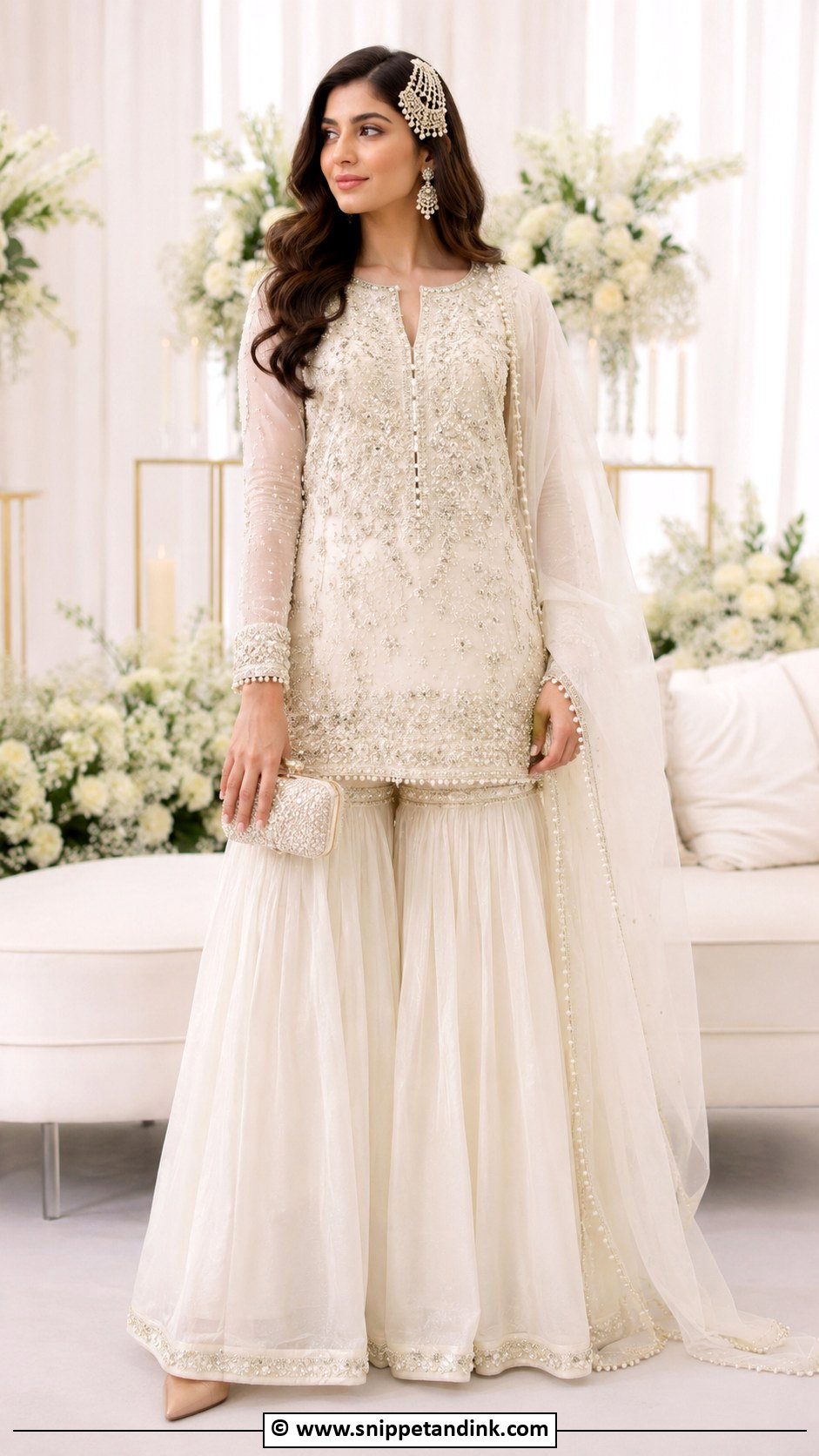
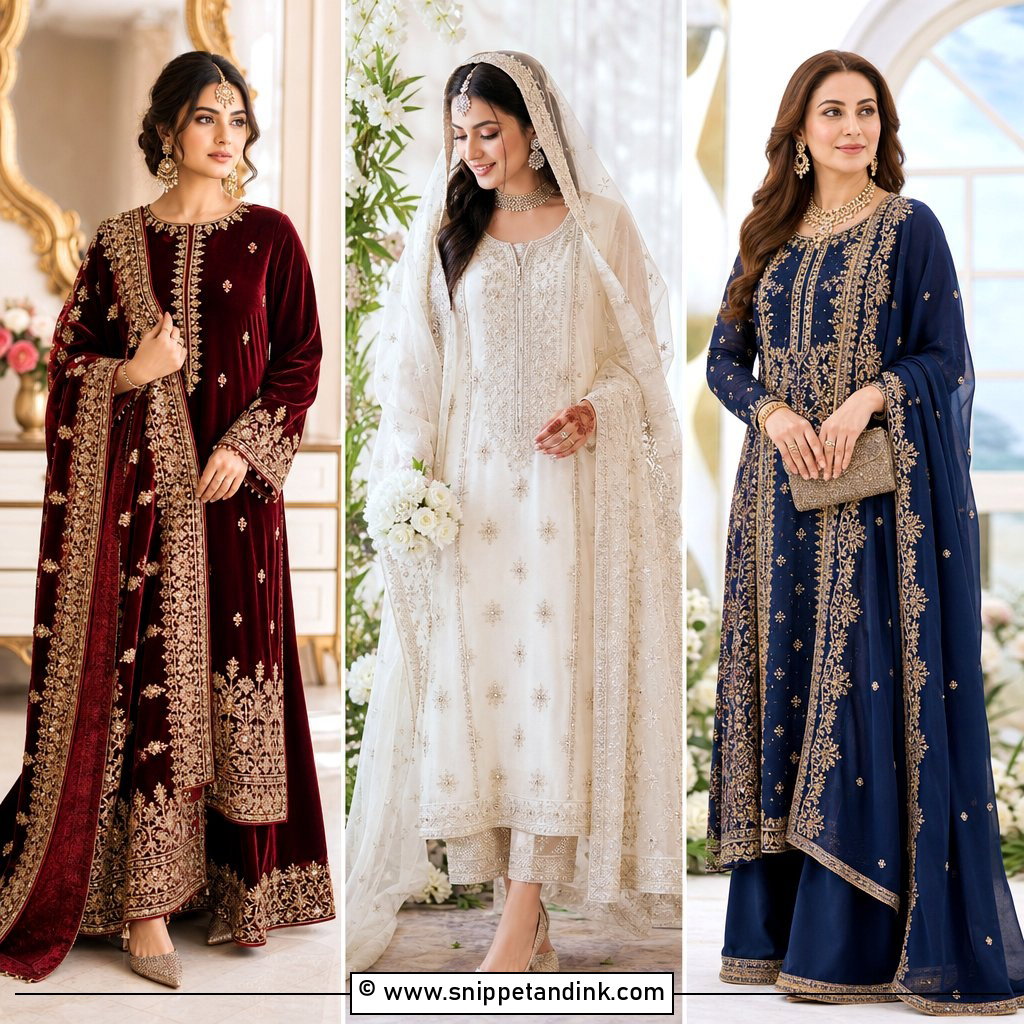
Ivory is my quiet favourite for a nikkah ceremony, because pearl work and silver thread read as rich without any colour shouting. The thing I check first is the undertone: a pure white can wash out olive or deeper skin, so I hold ivory, off-white and pearl next to the bride’s face in daylight before we commit. A sheer organza dupatta keeps it light. If the nikkah is formal, I switch to a longer shirt with side slits and a wider dupatta border, which adds presence without adding colour. Champagne heels, a delicate passa and rose-toned lips are all it needs.
3. Pastel Pink Gharara Dress
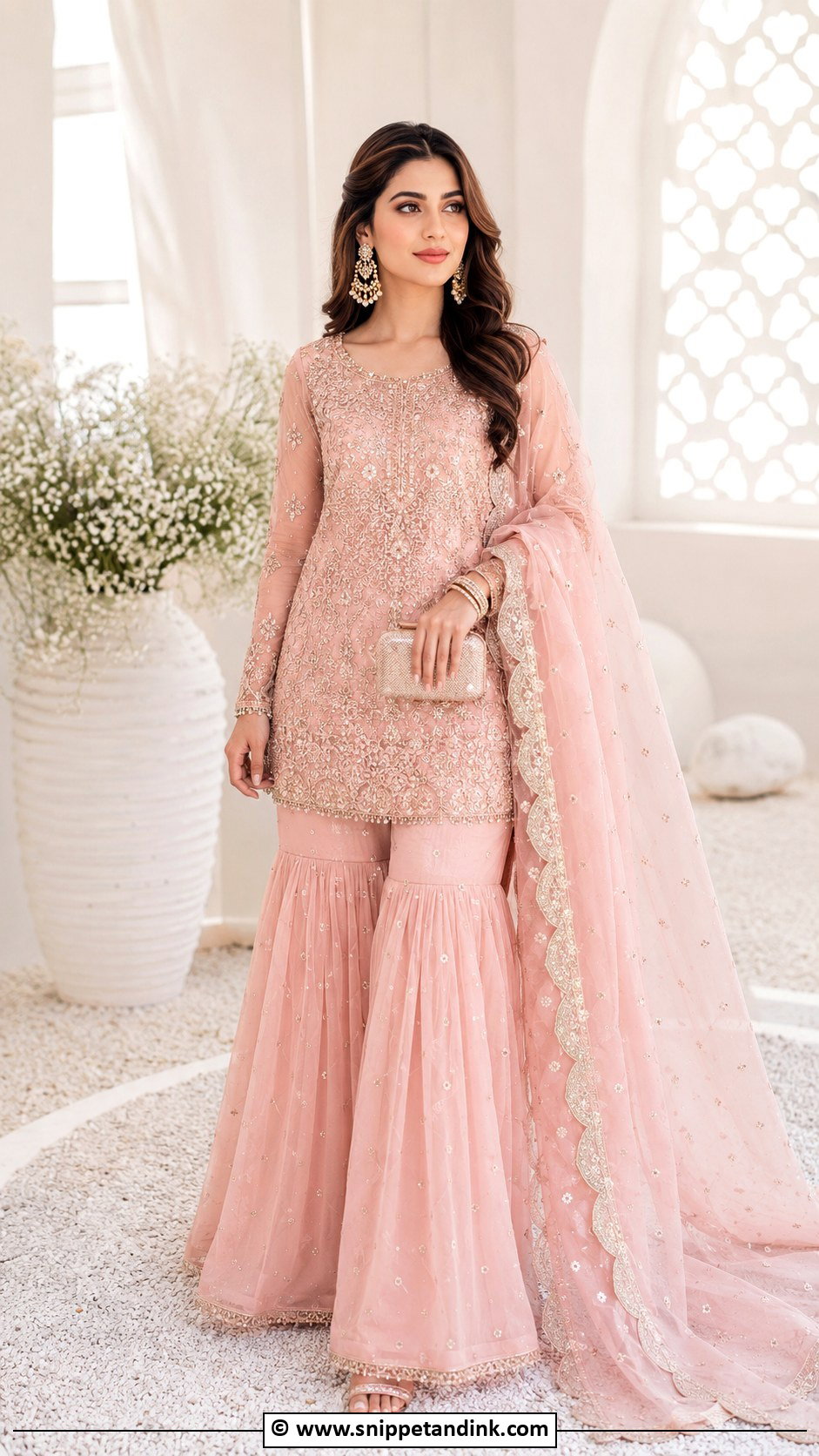
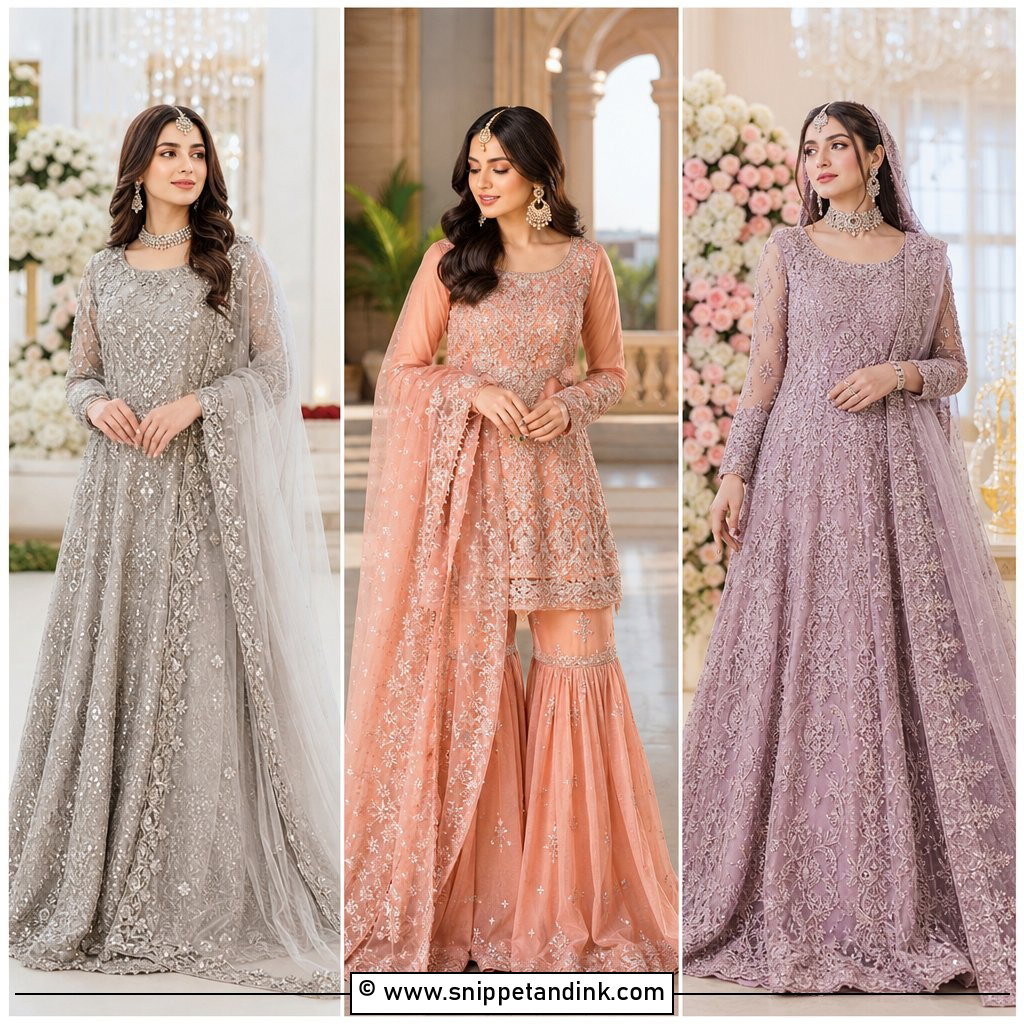
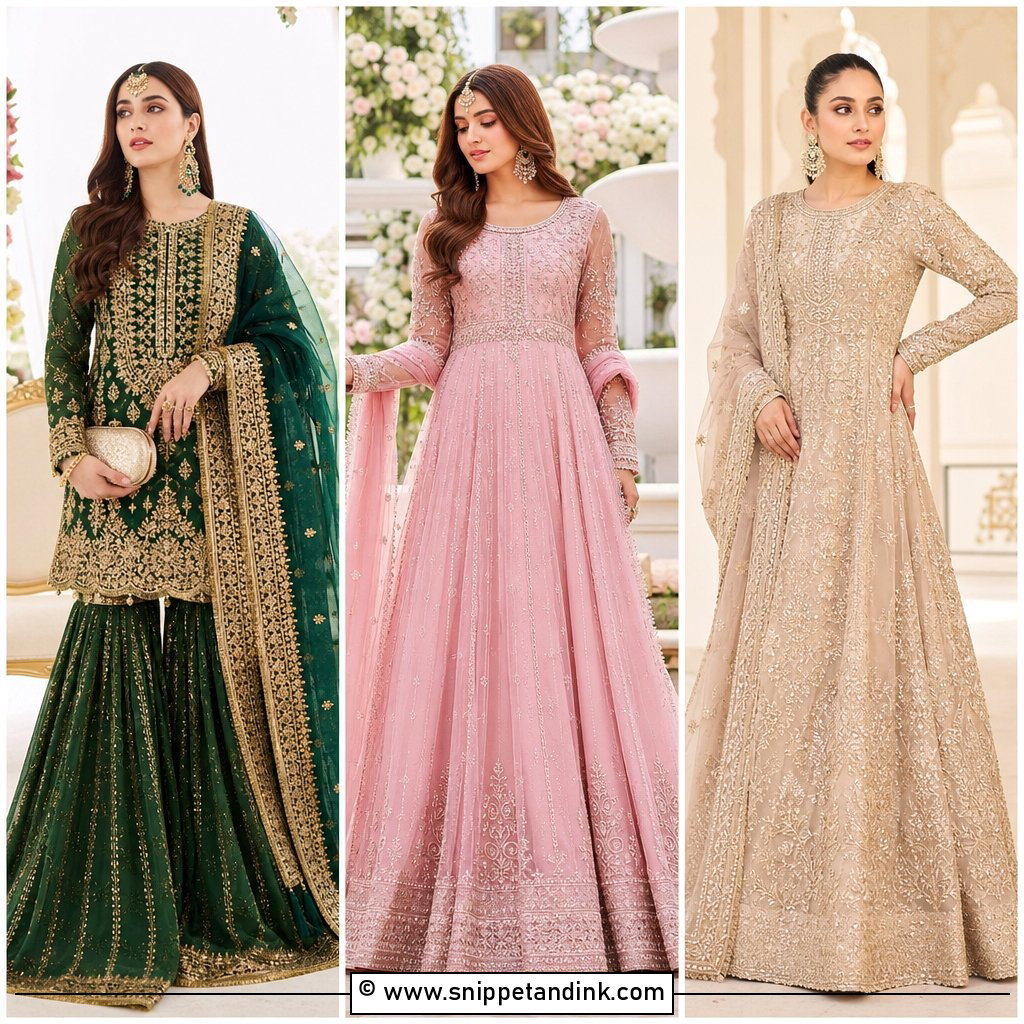
Blush pink works best in daylight. In chiffon or tissue it looks soft and dressy for an engagement or a daytime nikkah, but under yellow evening lights it can drift toward beige, so I steer brides to a slightly deeper rose if the event runs late. Pearl, gota and light sequins give it shine without weight. I like a scalloped dupatta edge here. It is also the colour I suggest most often for bridesmaids, since a row of blush ghararas sits calmly in group photos.
4. Green Mehndi Gharara Dress
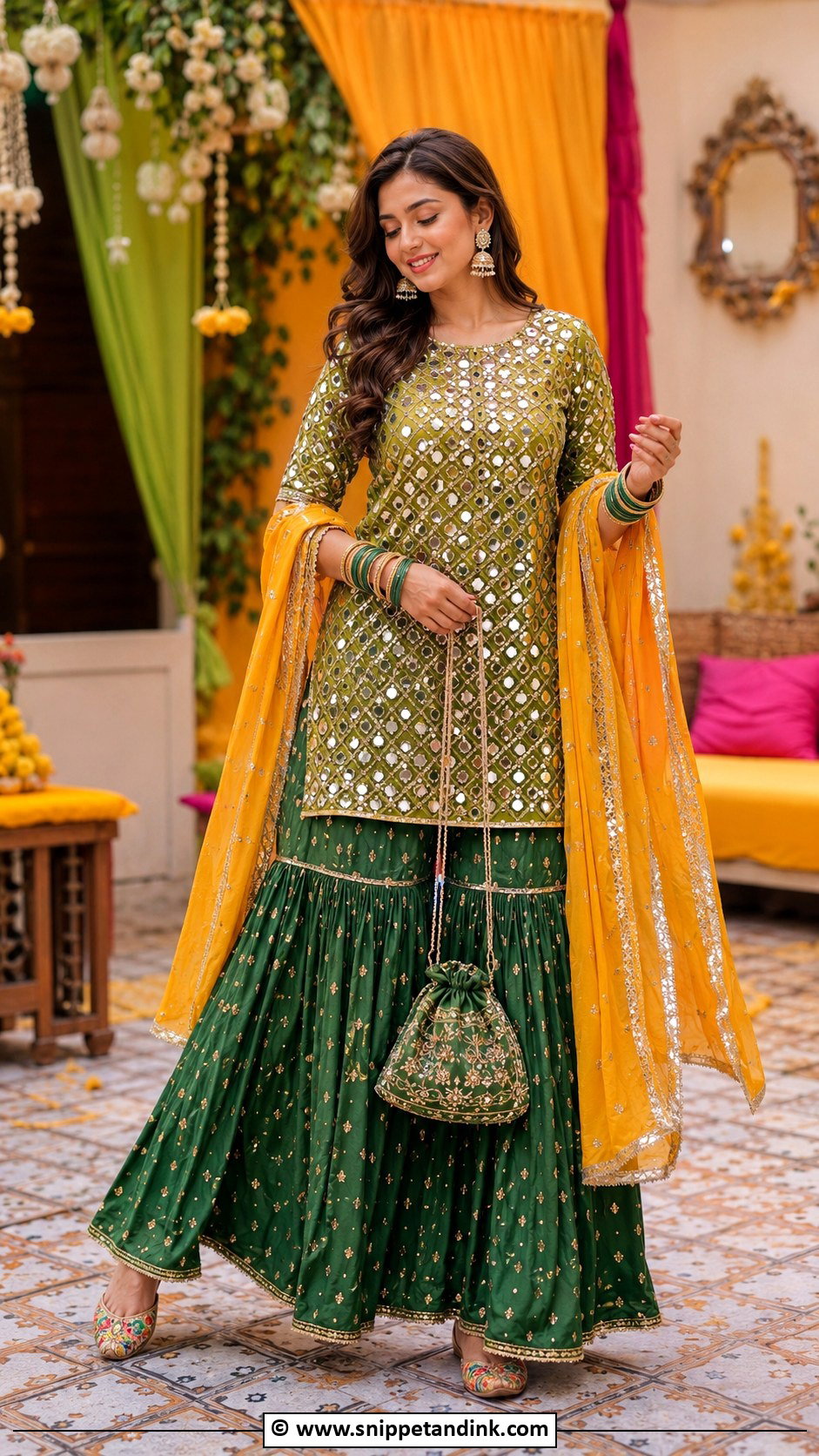
Green is the mehndi colour everyone expects, and a green mehndi gharara dress earns that reputation because mirror work and gota patti catch the light from every angle. My advice is to pick the green for the venue: parrot and mehndi green feel festive outdoors, while emerald and bottle green carry better indoors at night. A contrast dupatta in yellow, orange or pink is the traditional move. Keep the jewellery to jhumkas and glass bangles if the kurti already has mirrors, or the whole look starts to clatter. Fresh flowers in a braid will wilt by midnight, so I pin them in last.
5. Gold Walima Gharara Dress
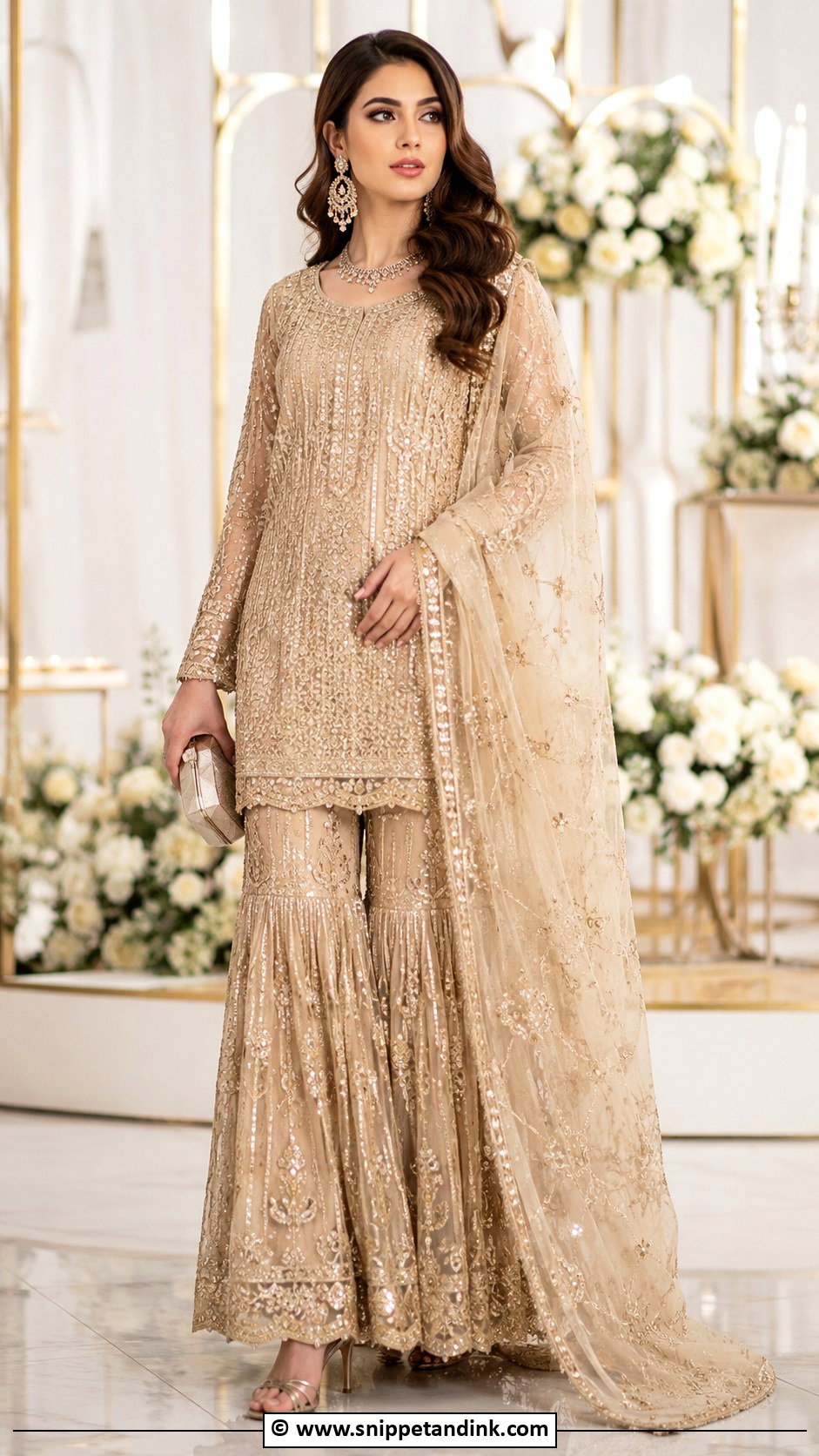
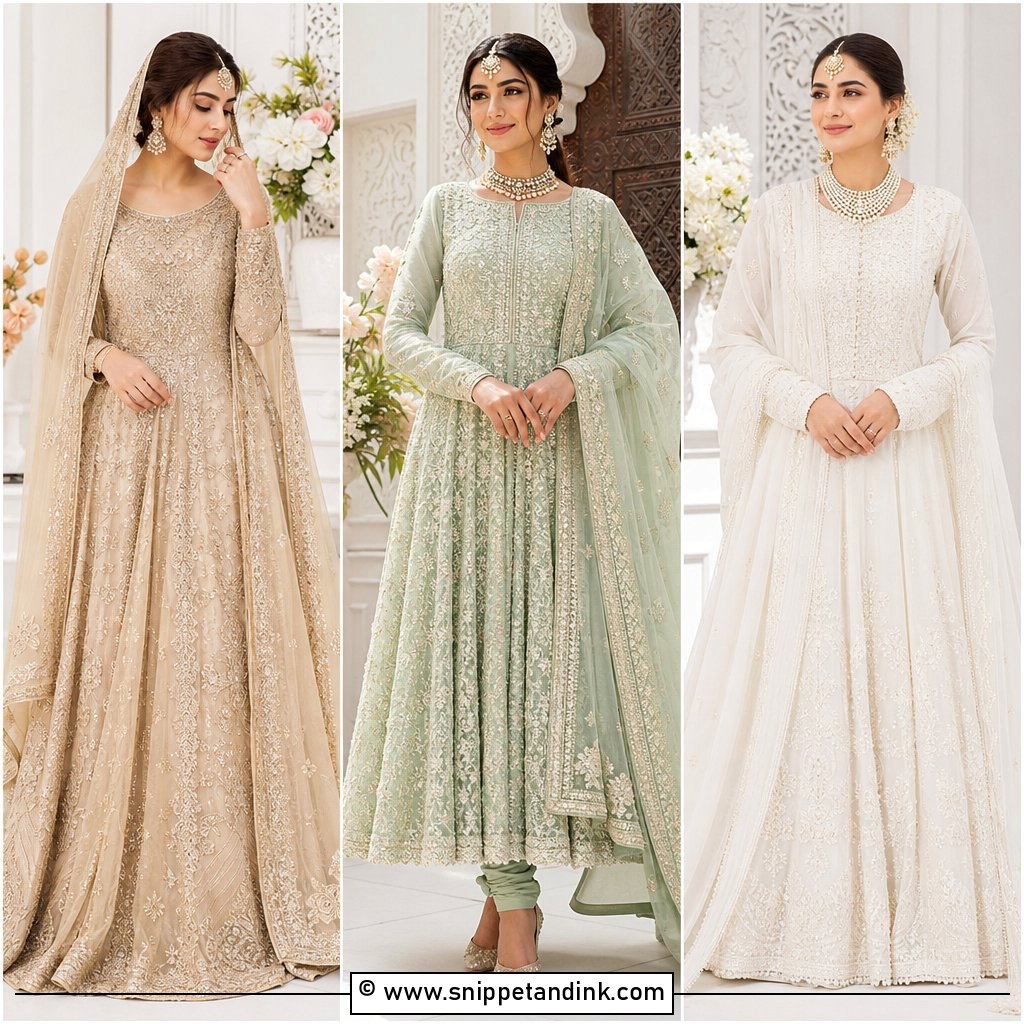
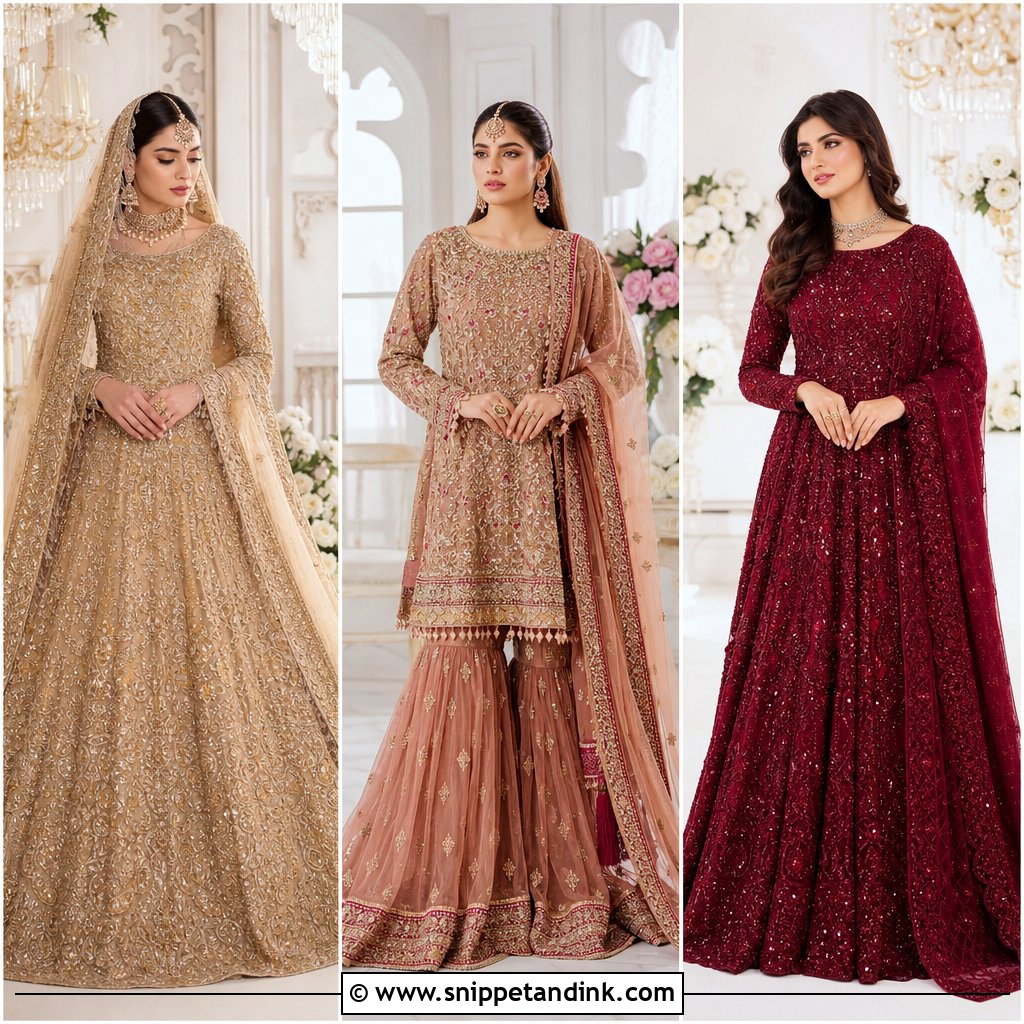
For a walima, I often talk brides out of a second heavy bridal outfit and into champagne gold instead. A long embellished shirt over a tissue or brocade gharara gives a reception shine, and a light net dupatta keeps the weight down after two big days of wearing heavy clothes. Crystal and pearl accents add depth without the stiffness of full zari. A choker or chandbalis, a smooth blowout or low bun, and metallic heels finish it. Sisters of the bride can wear the same palette with lighter work.
6. Maroon Gharara Dress
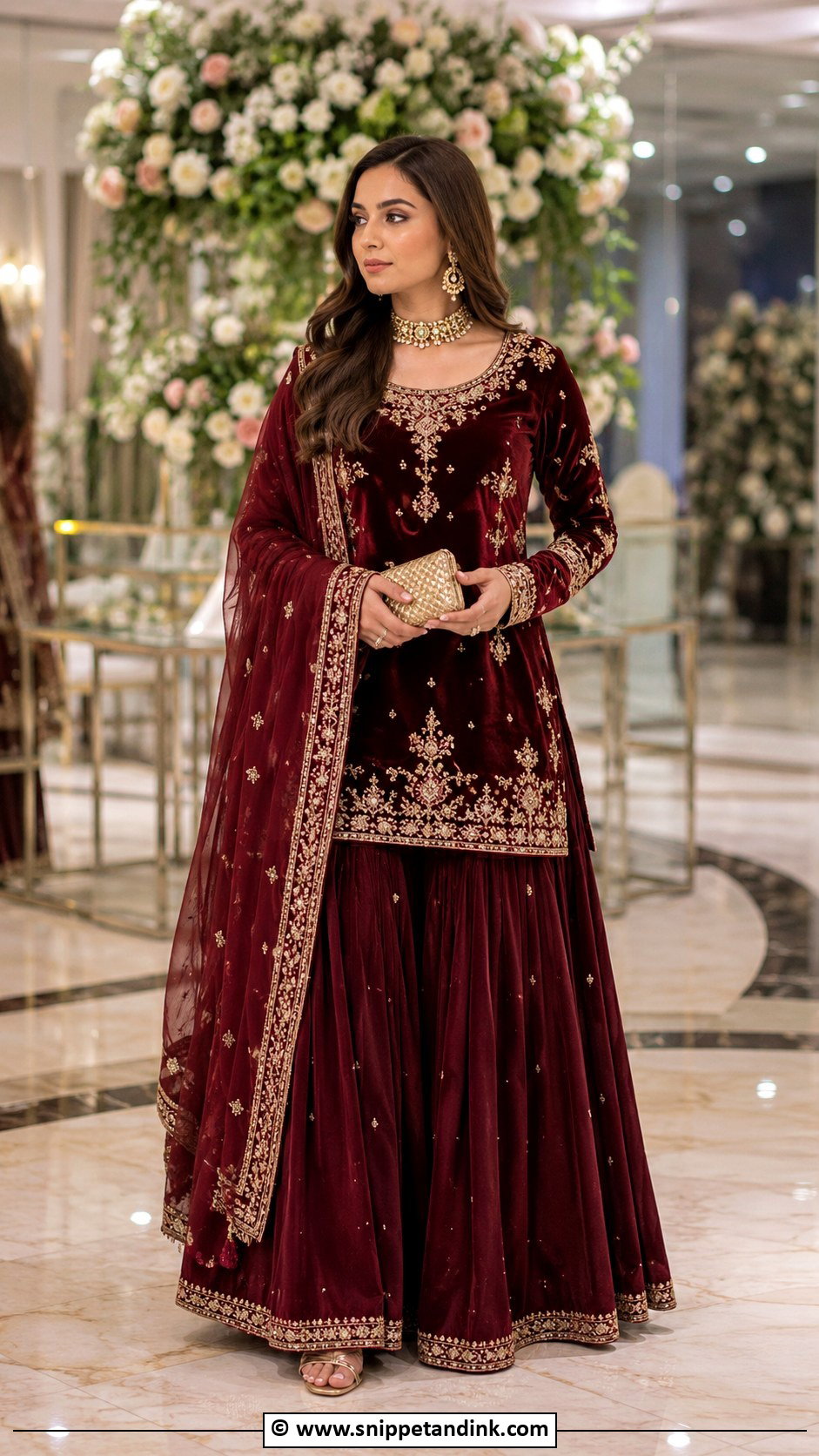
Maroon is the colour I suggest when a bride loves red but wants it a little quieter. With antique gold embroidery it looks traditional and settled rather than bright. Velvet makes sense from late autumn into winter, while raw silk works year-round and is far kinder in a warm hall. Because maroon soaks up light, heavy embroidery on a dark base can look muddy in photos unless the work has some metallic sheen, so I check the embroidery under the venue’s kind of lighting if I can. Keep the makeup clean: defined eyes and a warm lip.
7. Black Gharara Dress
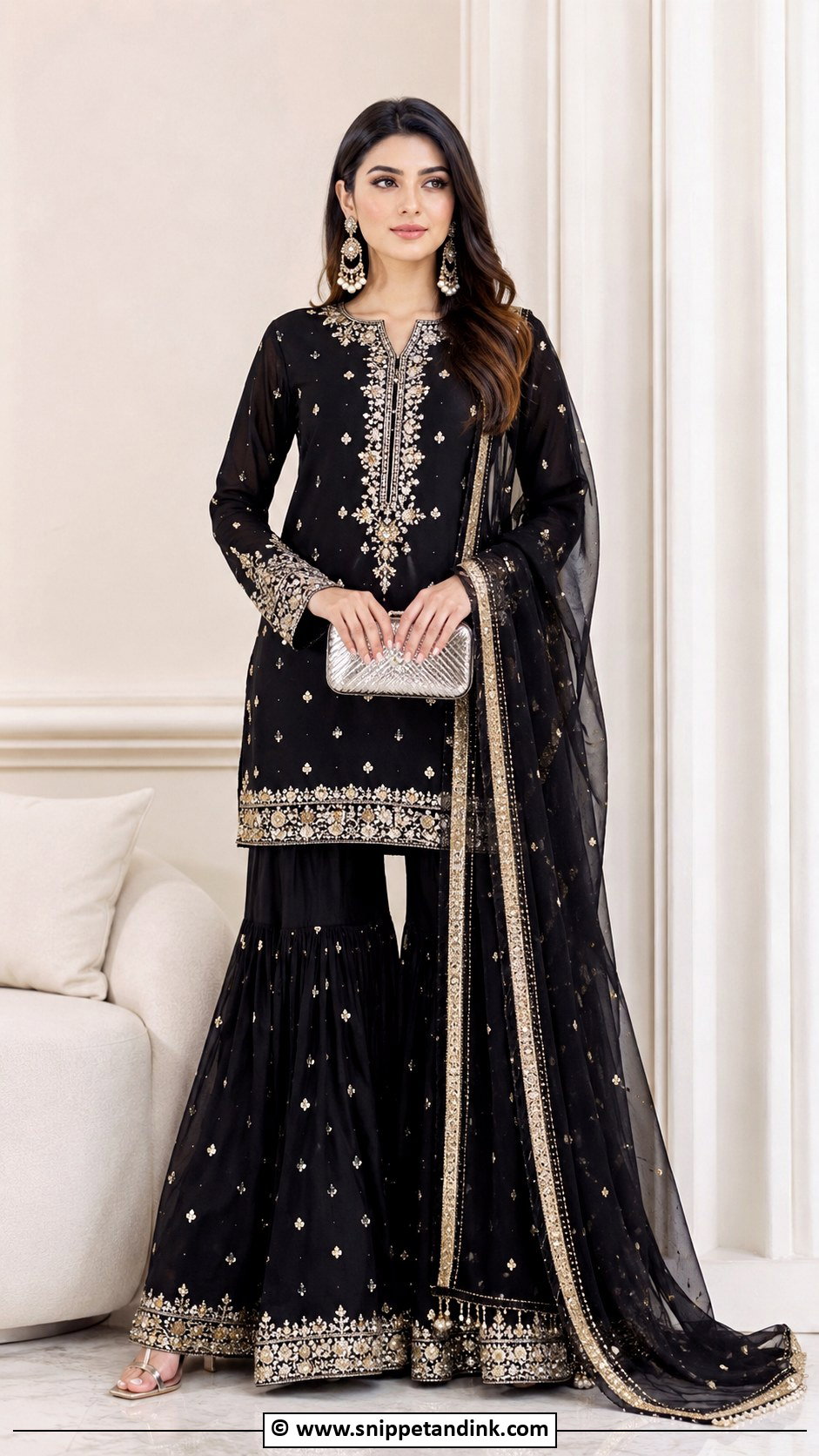
Black is a real option for an evening dholki or reception dinner, though some families still feel it is wrong for a wedding, so I always suggest checking with the hosts first. What makes it work is the embroidery: gold, copper or multicolour thread lifts black so it reads festive rather than formal office wear. A short kurti, a sheer dupatta and statement earrings keep the silhouette clean. If the black feels too stark, a dupatta with a coloured or pastel border softens it immediately. Guests like it because it is very hard to mistake for bridal.
8. Yellow Mehndi Gharara Dress
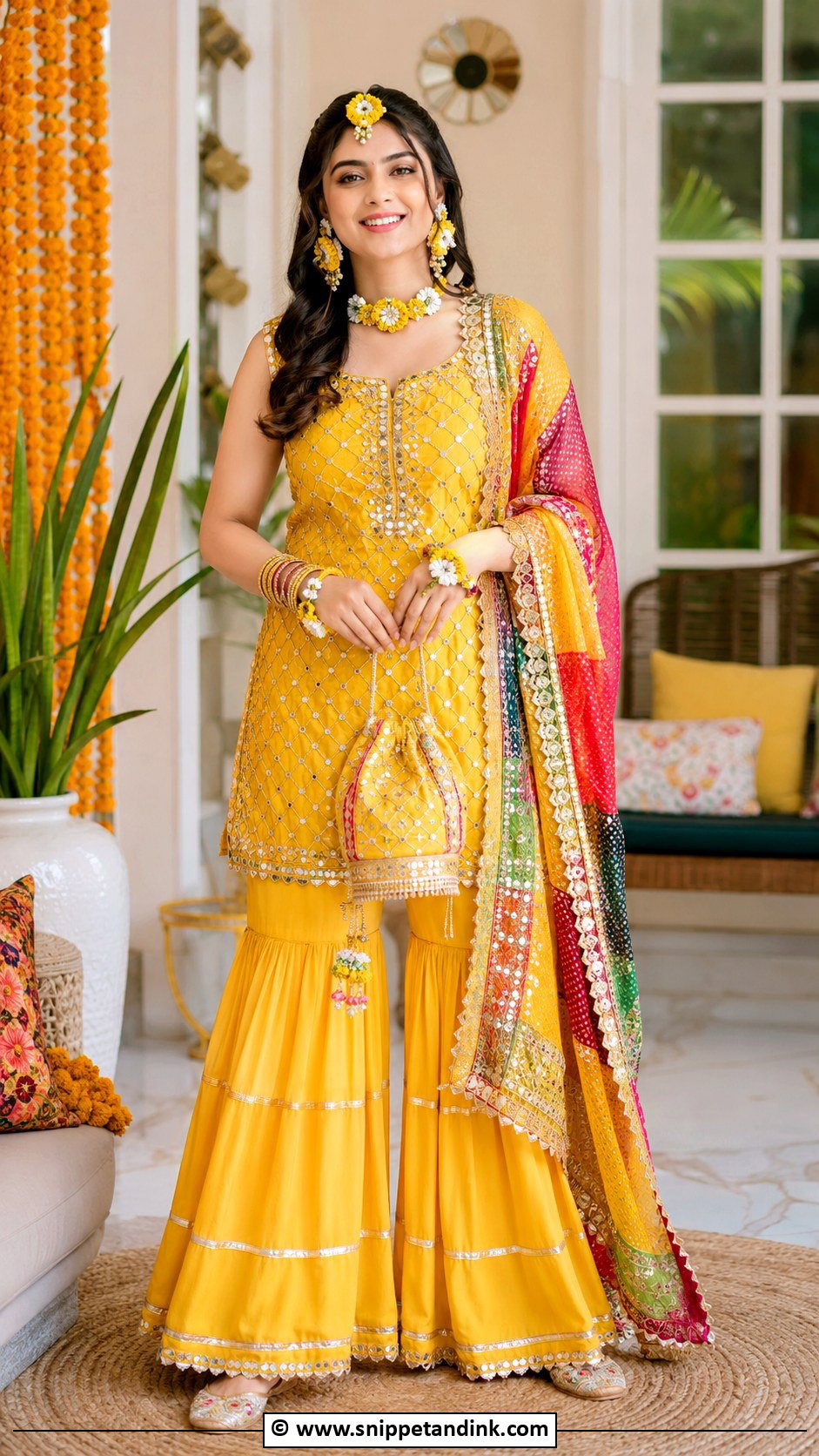
Yellow belongs to the mayun and mehndi, and the shade is where I spend my time with clients. Mustard flatters warm and deeper skin tones, lemon suits fair skin in daylight, and marigold sits between them. Gota borders and mirror detailing on a short kameez give the festive finish, with a colourful dupatta to break up all that yellow. I keep shoes to traditional khussas because these events usually involve sitting on the floor or a low stage. A side braid with floral pins stays put better than open waves when there is dancing.
9. Blue Gharara Dress
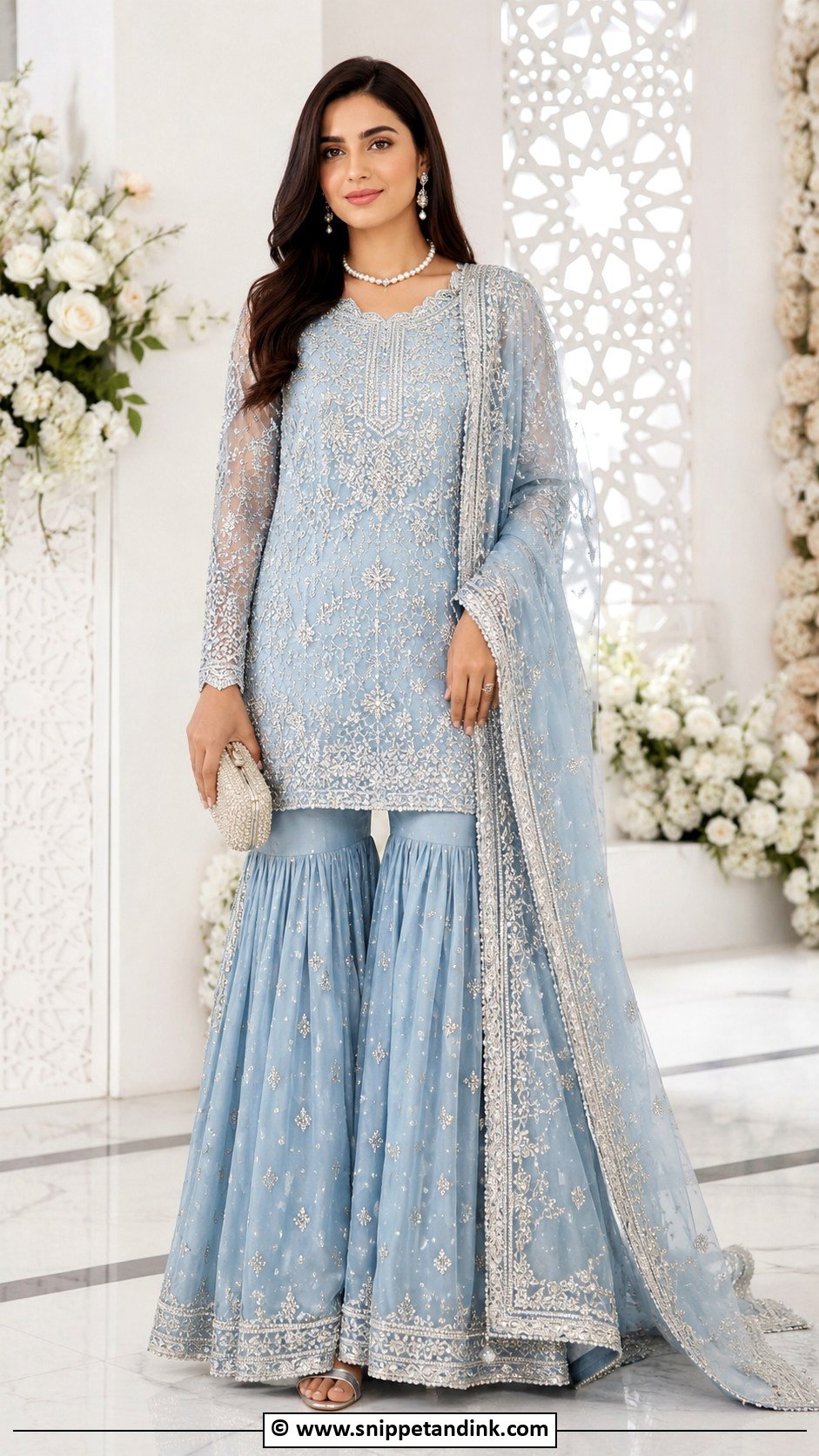
Blue is the colour I suggest to families tired of red, pink and green. Navy holds an evening reception well; powder blue suits a nikkah, engagement or walima in daylight. Silver threadwork and pearls look cleaner on blue than heavy gold does, which tends to turn brassy against it. A short embroidered shirt over a structured gharara keeps the line balanced. Because blue is easy to accessorise with silver, it is also a safe guest pick: festive enough, and not at all bridal.
10. White And Gold Gharara Dress
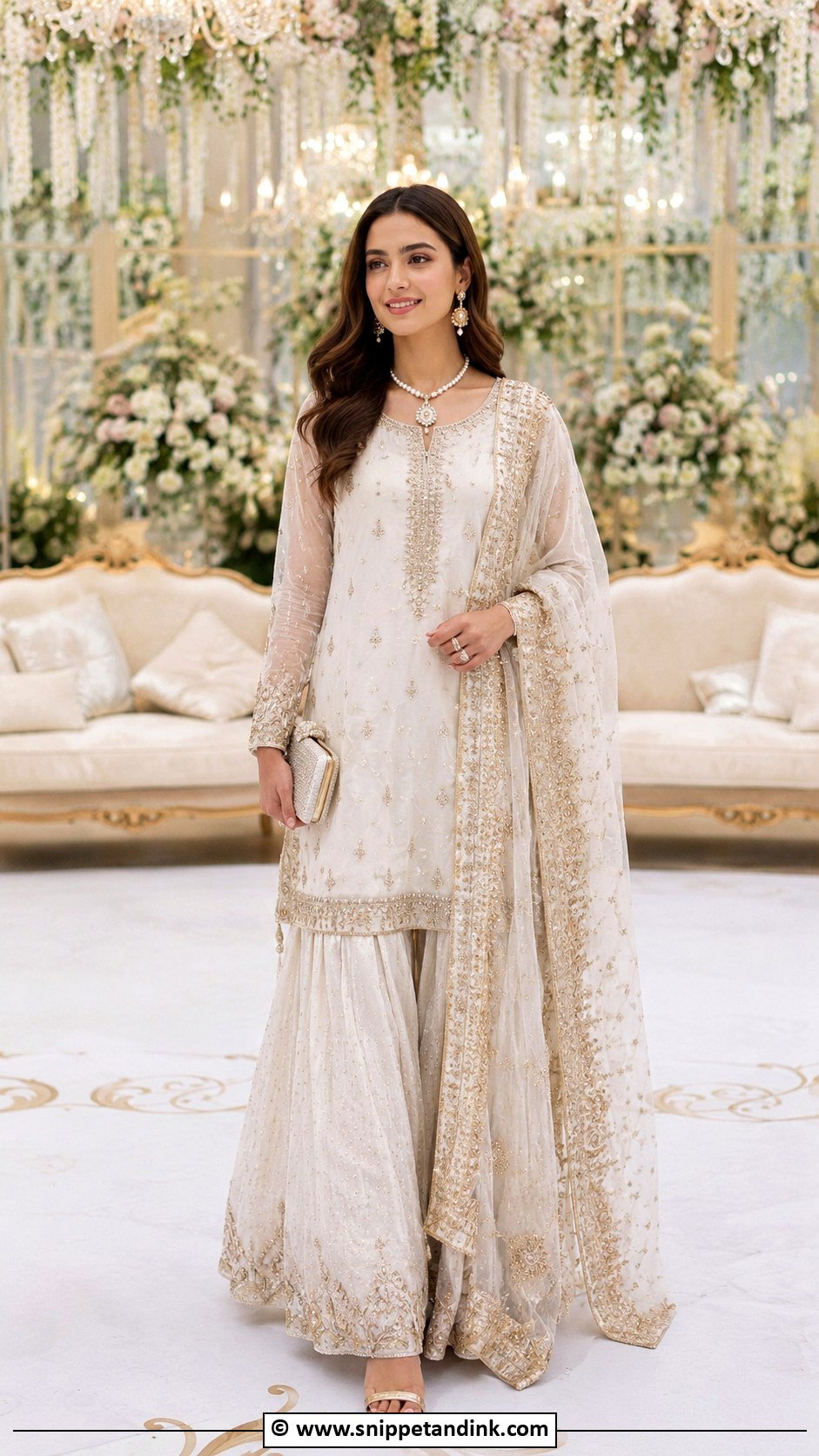
A white and gold gharara dress sits comfortably at a nikkah, walima or formal family event, but the balance between the two colours decides who should wear it. The base should be soft white, ivory or off-white, with gold that feels warm rather than yellow. A long kameez gives more coverage, and a short kurti shows off the gharara more. For guests, I keep the embellishment light so it never reads as the bride’s outfit. Brides can take the same palette and add heavier work and layered jewellery.
11. Short Kurti Gharara Dress
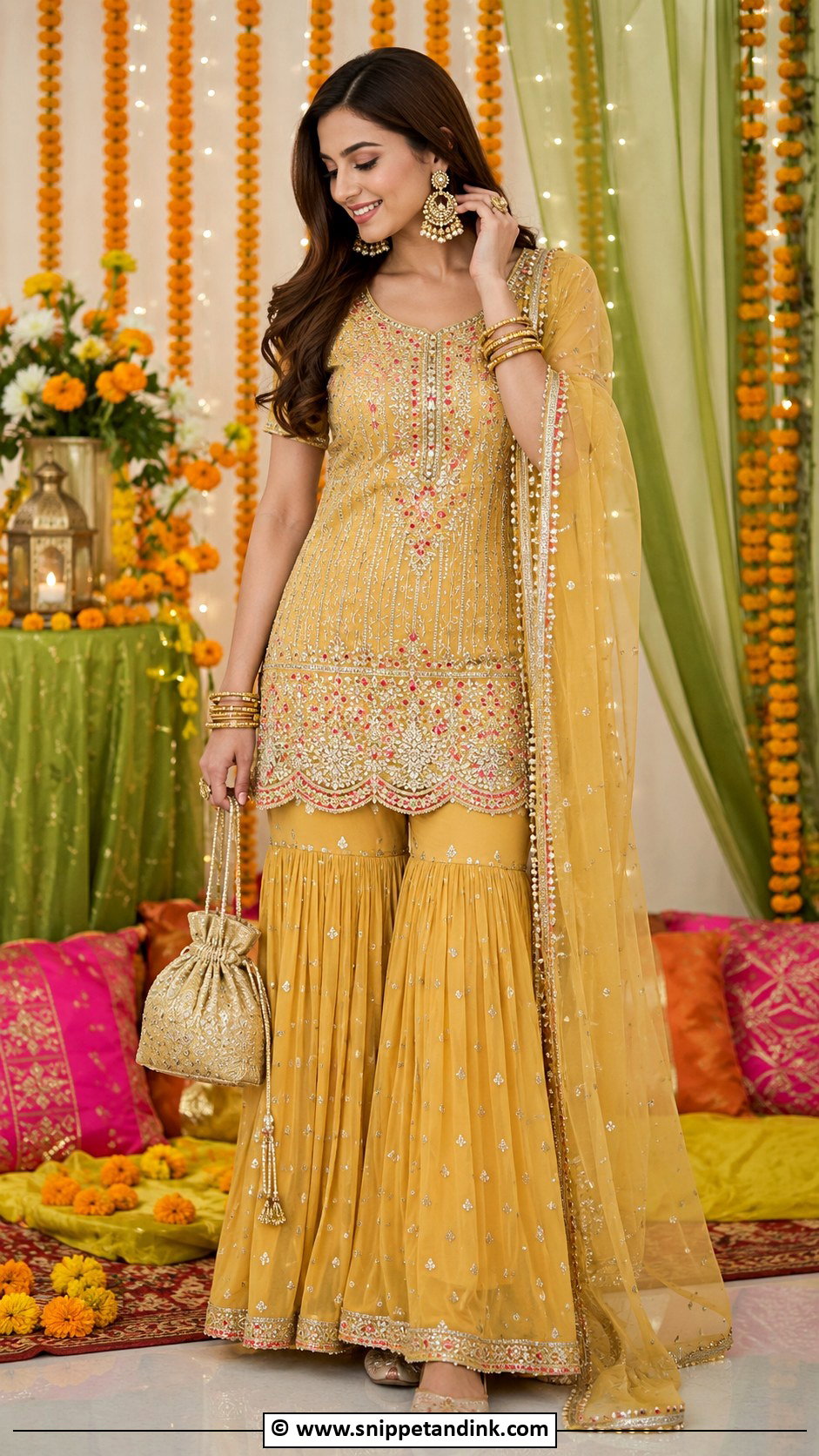
The short kurti is the classic gharara pairing for a reason: it ends around the hip, so the knee band and the flare stay fully visible. I check that the hem of the kurti and the knee joint are not fighting each other. If the kurti is too long on a petite wearer, the gota band disappears and the gharara looks like a plain flared trouser. Embroidery at the neckline, sleeves and hem is enough. Pastels with delicate work feel modern, while jewel tones with gota and zari carry a mehndi or engagement dinner.
12. Long Shirt Gharara Dress
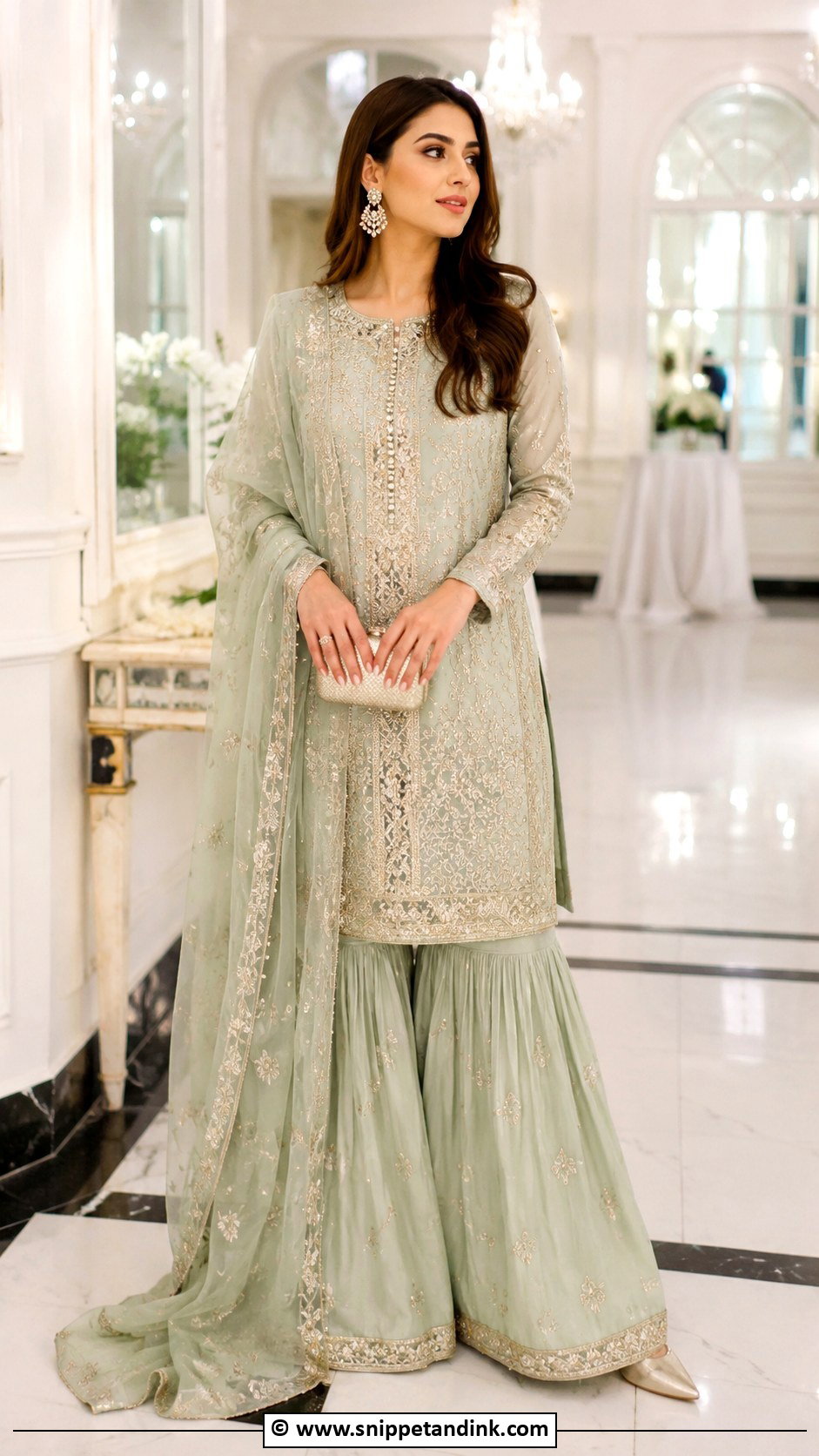
A long shirt changes the gharara from playful to formal and gives more coverage, which many nikkah brides want. The catch is that a long kameez can swallow the flare, so I insist on side slits high enough that the knee band shows when she walks. Work on the neckline, cuffs and side panels makes it feel complete. Tall women carry the length easily. On petite frames I take the shirt a few inches shorter and add a small heel, which keeps the proportions from looking dragged down.
13. Farshi Gharara Dress
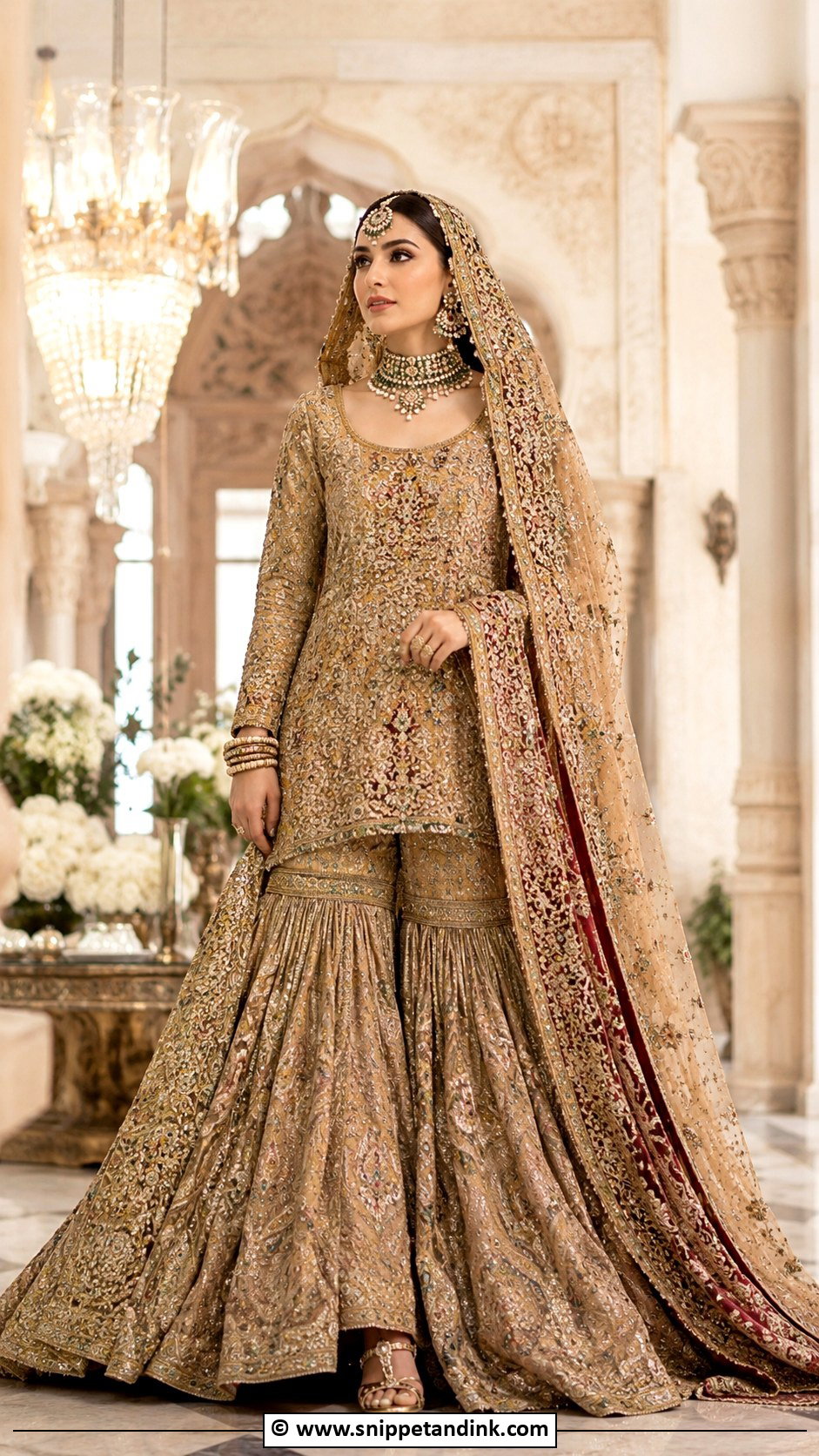
A farshi gharara dress is the grand, floor-sweeping version, and it needs fabric with body: jamawar, tissue, silk or brocade. It makes an entrance and photographs as pure tradition. It is also the hardest to wear. The hem trails, so the bride needs someone to lift it on stairs and when she sits down. I always do a walking test in the actual shoes before the final hem is cut, because an inch too long on a farshi means tripping on the stage steps. Keep the jewellery elegant and the shoes low.
14. Velvet Gharara Dress
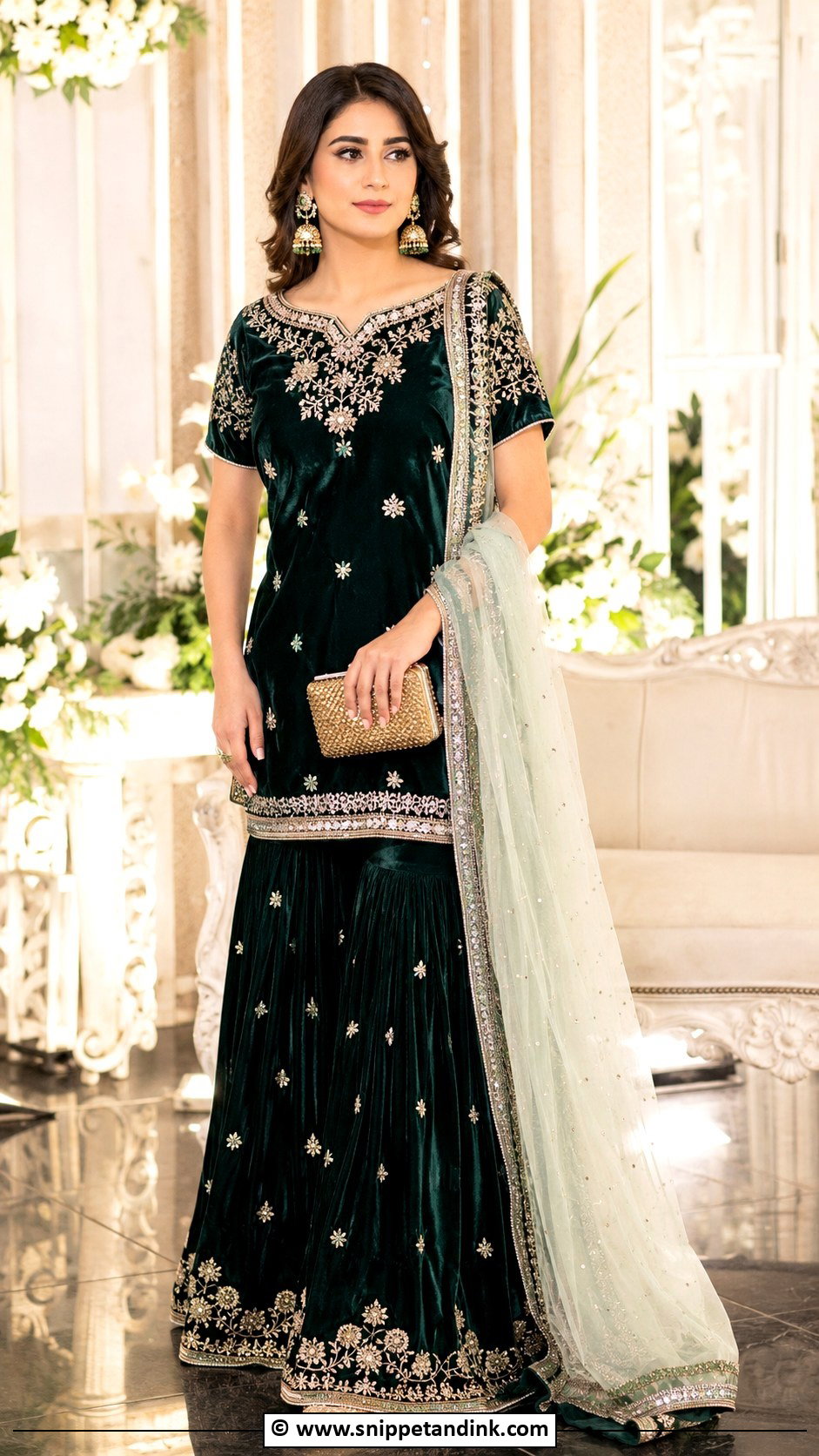
Velvet is a cold-weather fabric, plain and simple. In maroon, emerald, navy, plum or black it holds colour deeply, and zari, dabka and crystal look richer on its pile. It is also heavy, so I balance a velvet gharara with an organza or net dupatta instead of a second layer of velvet. One practical note: velvet crushes where you sit, so steam it on the hanger and avoid long car rides seated on the flare. Closed-toe heels and bold earrings are plenty; oversized accessories compete with the fabric.

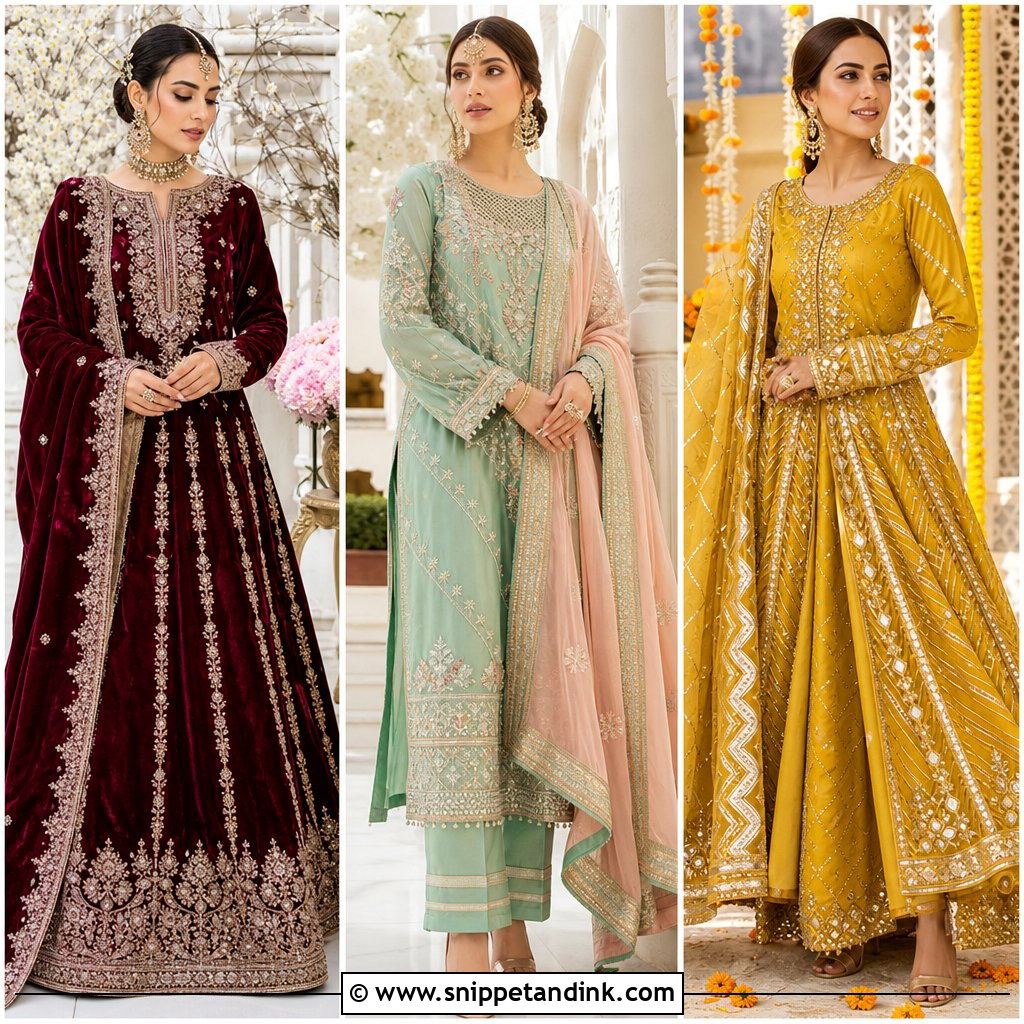
15. Chiffon Gharara Dress
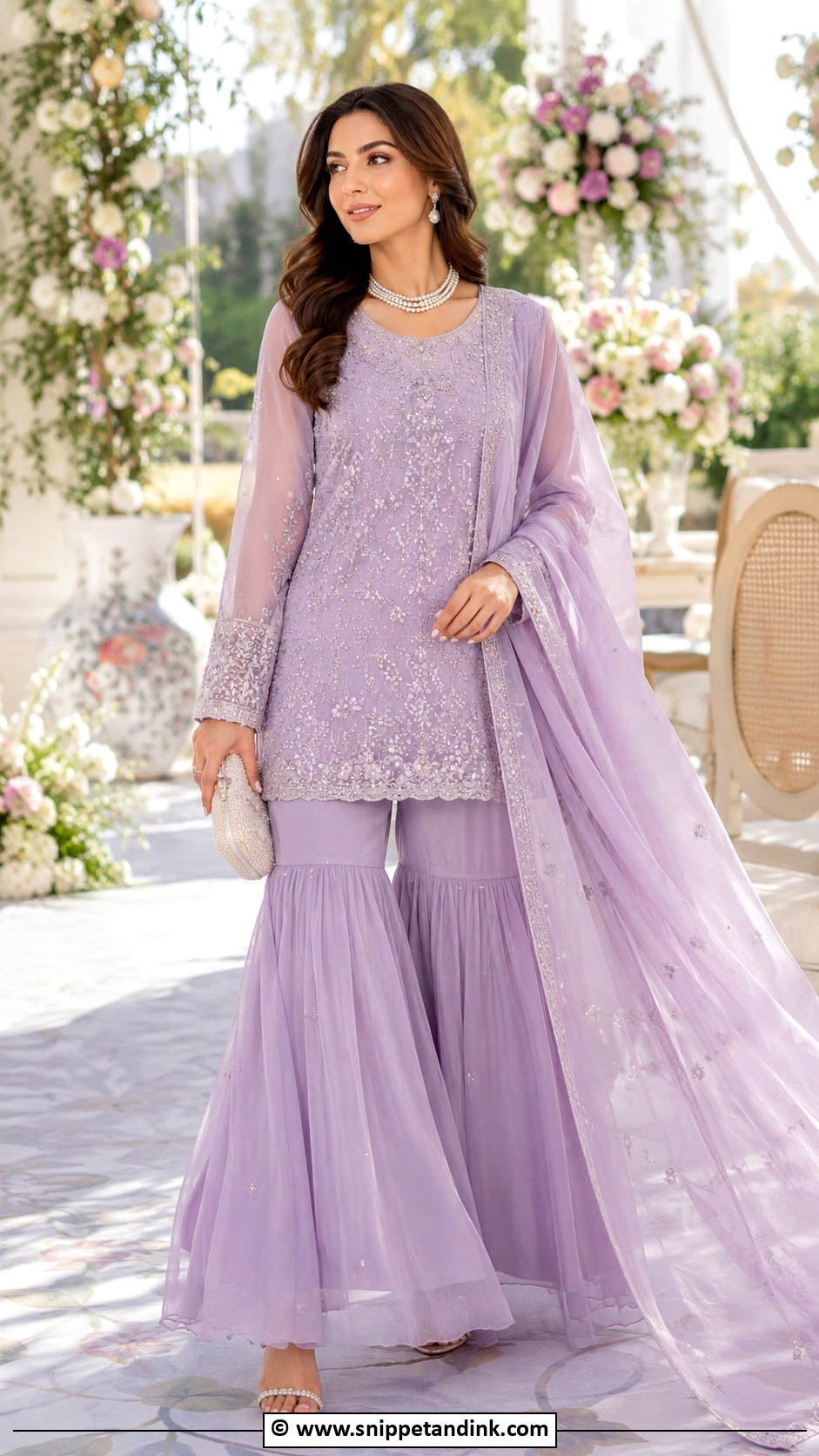
Chiffon is the fabric I recommend for long days and warm weather. It moves easily, weighs very little and suits guests, bridesmaids and brides who find silk too much. The thing to inspect is the lining: unlined or badly lined chiffon clings and looks limp, so a proper inner layer is non-negotiable. Pastels like mint, lavender, peach and powder blue sit well in chiffon. Pearl jewellery and slim heels are enough. Outdoors, the flare catches every breeze, which is exactly why people choose it.
16. Organza Gharara Dress
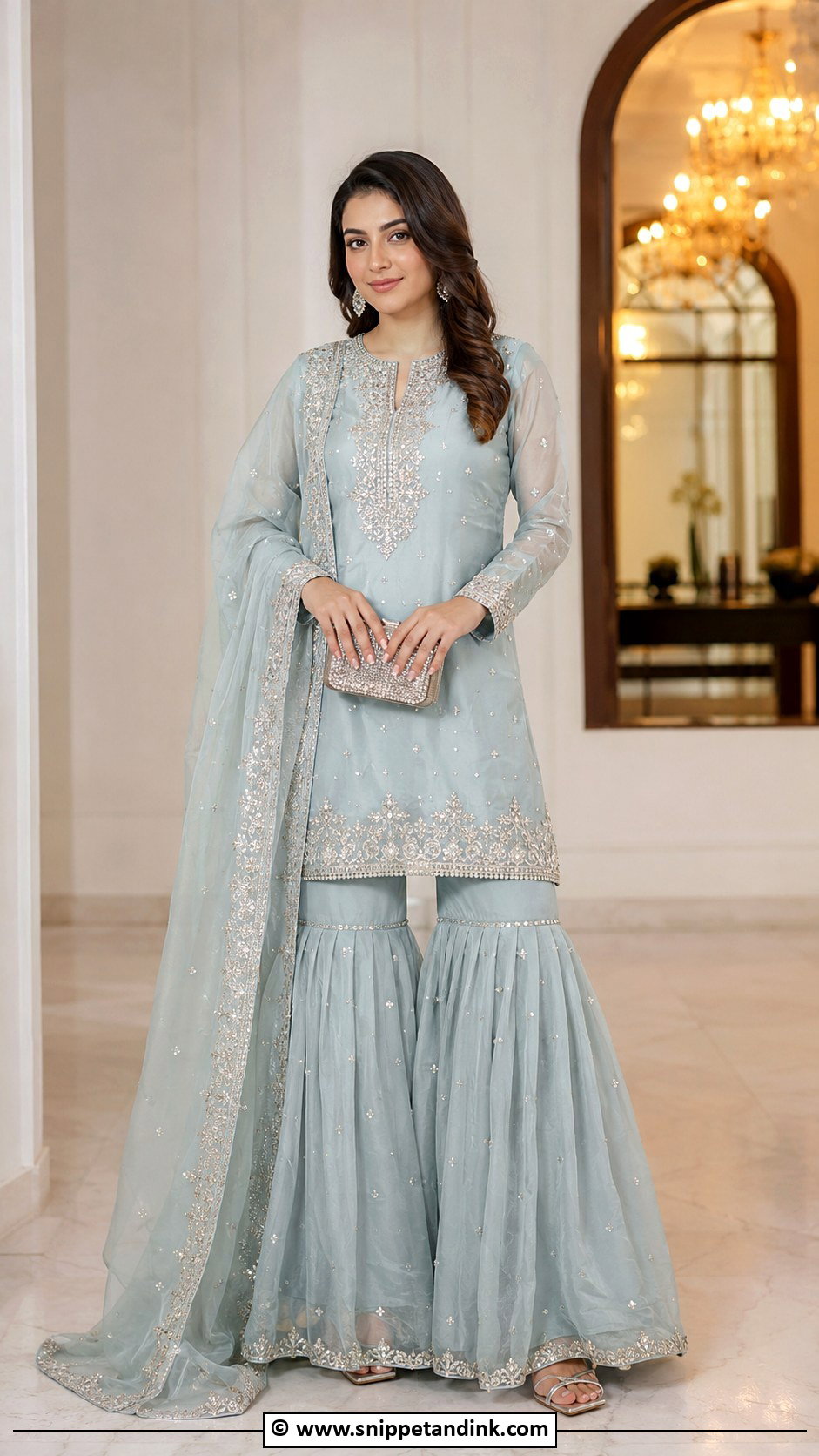
Organza has a slight stiffness that helps the flare stand away from the leg, which is why it looks crisp in daylight. Ice blue, blush, pistachio and lilac are the shades I see most for engagements and walimas. It can feel scratchy against skin, so I ask for a soft lining under any organza sleeves or kurti. Minimal jewellery and metallic heels keep it fresh. If a client wants more coverage, a lined shirt with organza sleeves gives the sheer look without exposure.
17. Mirror Work Gharara Dress
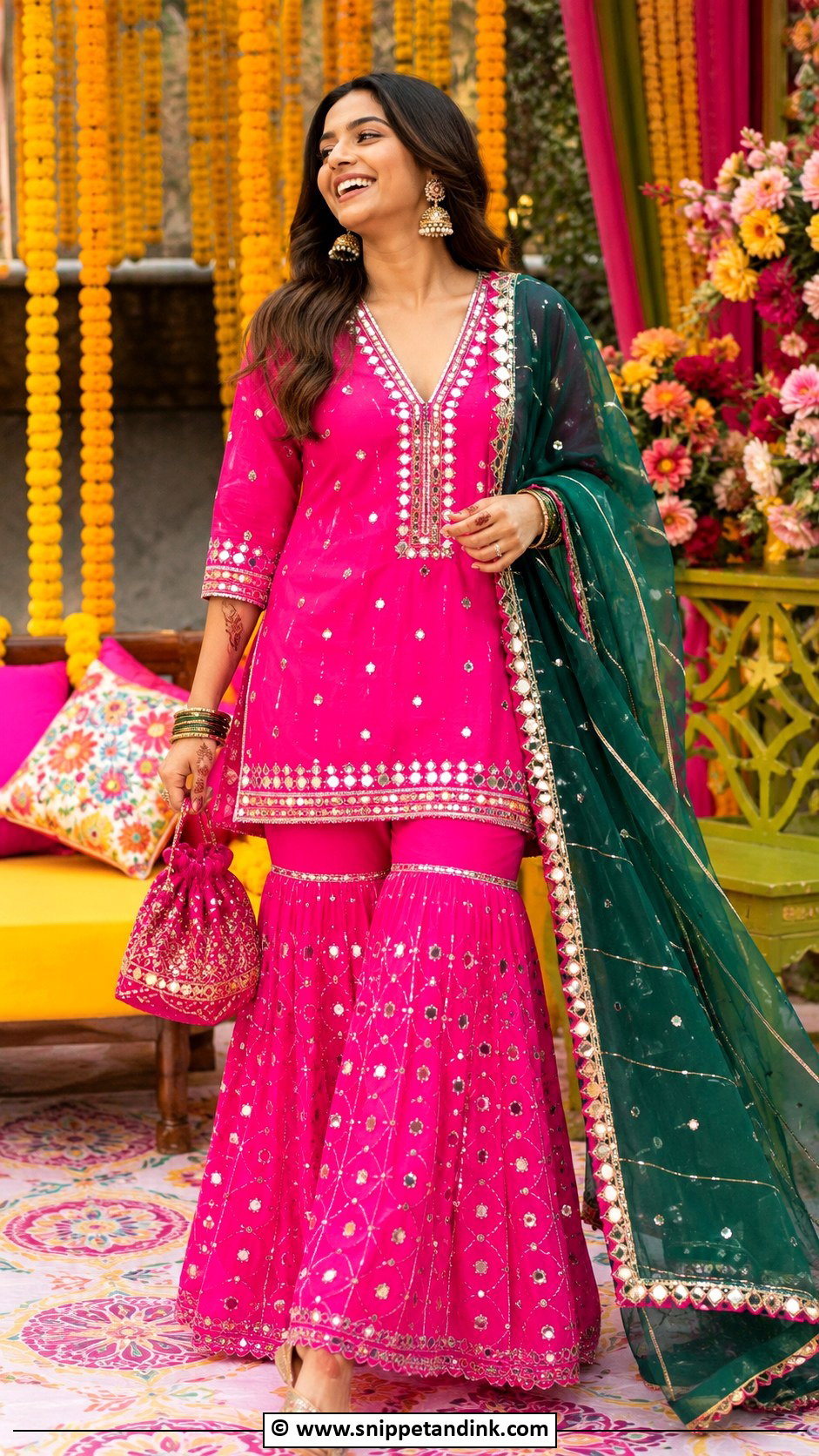
Mirror work is made for the mehndi. The small mirrors throw light around every time you move, so a mirror work kurti over a green, yellow, orange or hot pink gharara does most of the styling for you. I keep the necklace simple if the neckline is already covered. The warning I give is about weight: dense mirror work on heavy fabric gets stiff and can scratch the inner arm, so I suggest it on lighter fabric if she plans to dance for hours. Khussas, bangles and a potli bag finish it.
18. Gota Patti Gharara Dress
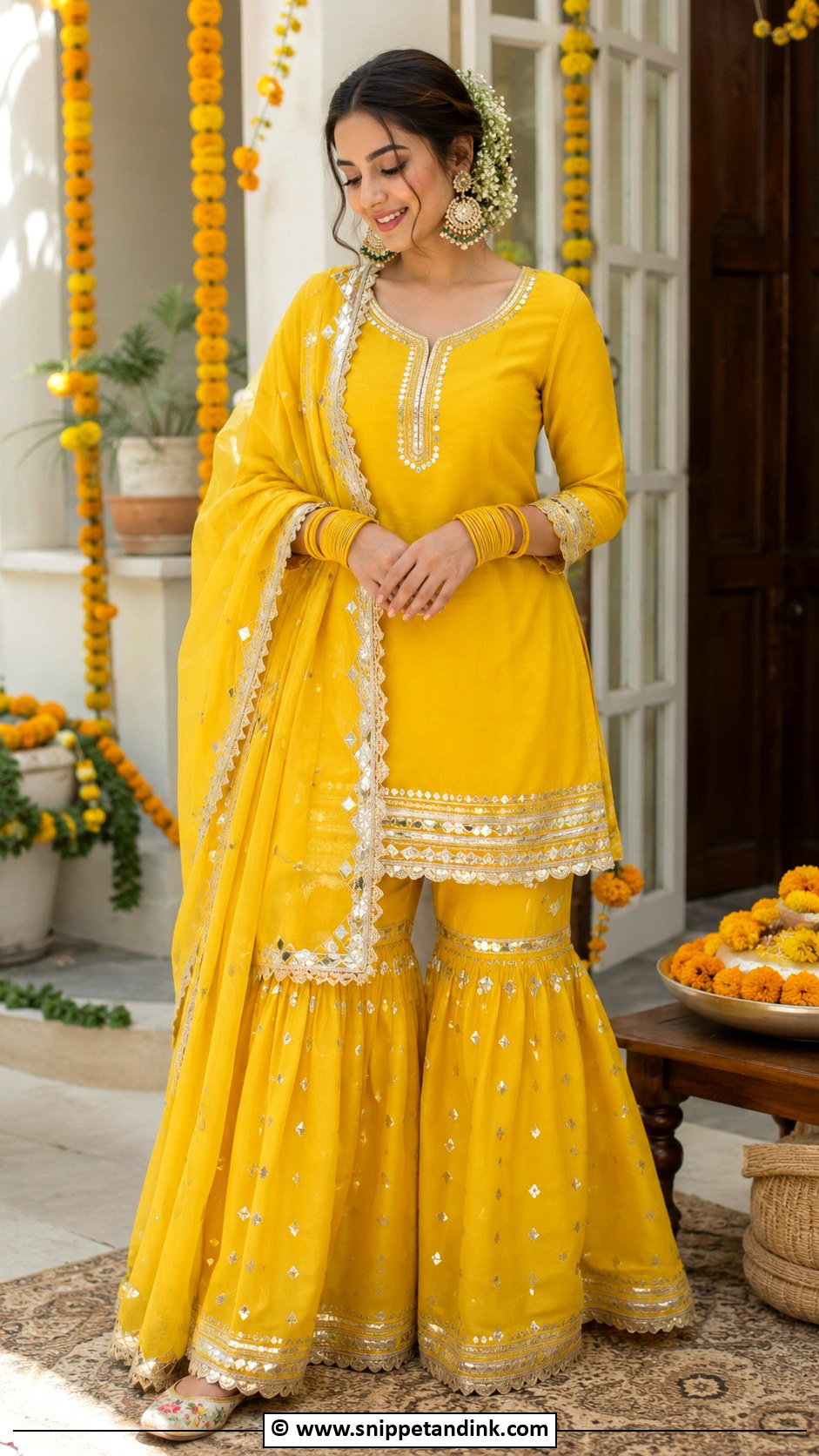
Gota patti is the trim I trust most for pre-wedding events because it adds sparkle without the formality of zari. A gota patti gharara dress in yellow, green, pink, orange or ivory suits a mehndi, mayun or dholki. I like gota on the kameez hem and sleeves with matching trim on the dupatta, so the pieces read as one set. Real metal gota can tarnish if it gets damp, so I keep it away from rose water and turmeric on the mayun day as much as possible. Stacked bangles and floral hair details are enough jewellery.
19. Heavy Embroidered Gharara Dress
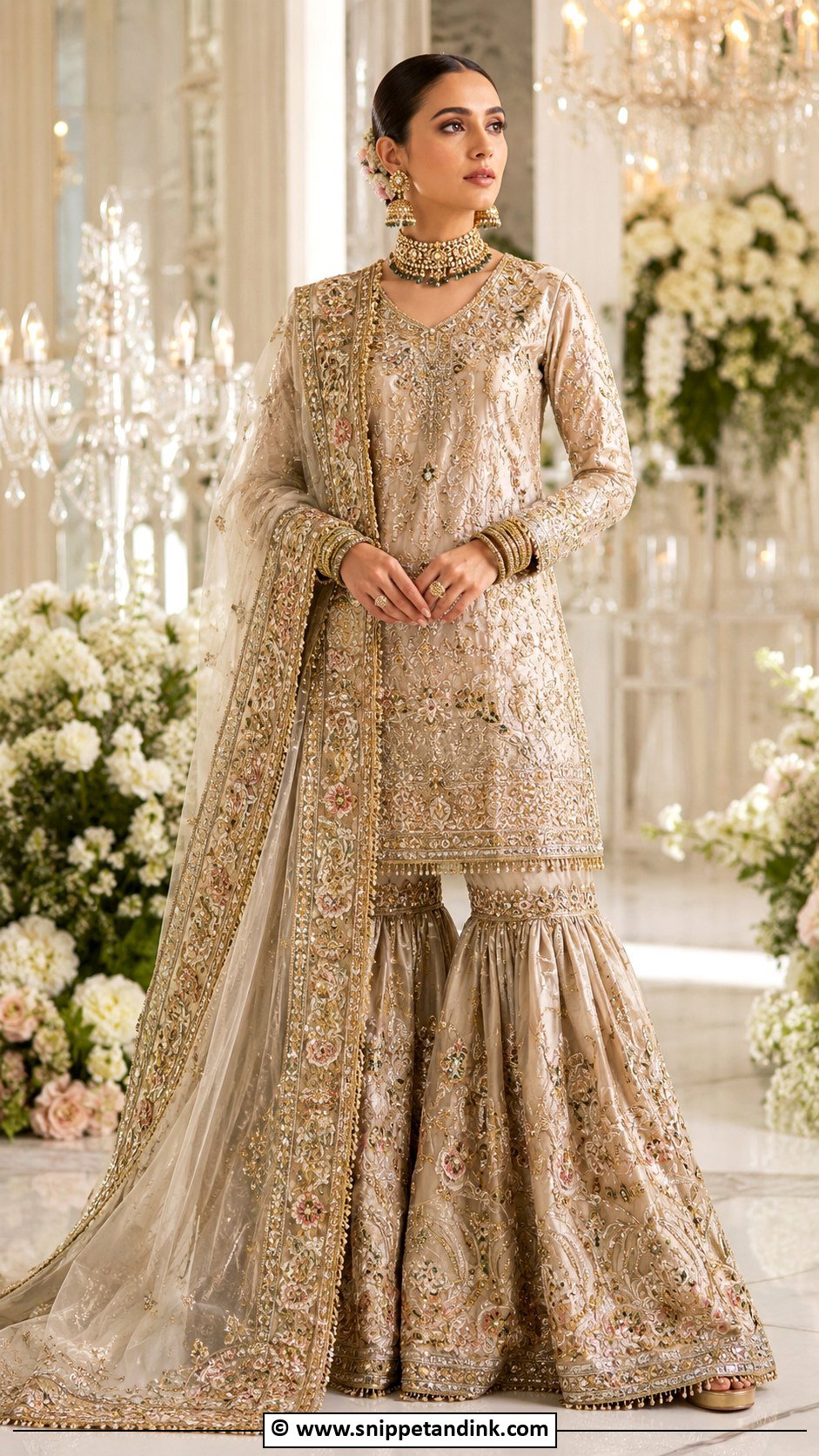
Heavy embroidery belongs to the bride, her sisters and close family who want a full ceremonial look. Raw silk, jamawar, net and tissue all carry dense zari, dabka, pearl and resham work across the shirt, gharara panels and dupatta. My rule is to let only two of the three pieces be heavy. If the shirt is loaded, the dupatta stays lighter; if the dupatta is fully worked, the shirt gets cleaner. That keeps it wearable for six or seven hours and stops the dupatta from dragging the shoulders down.
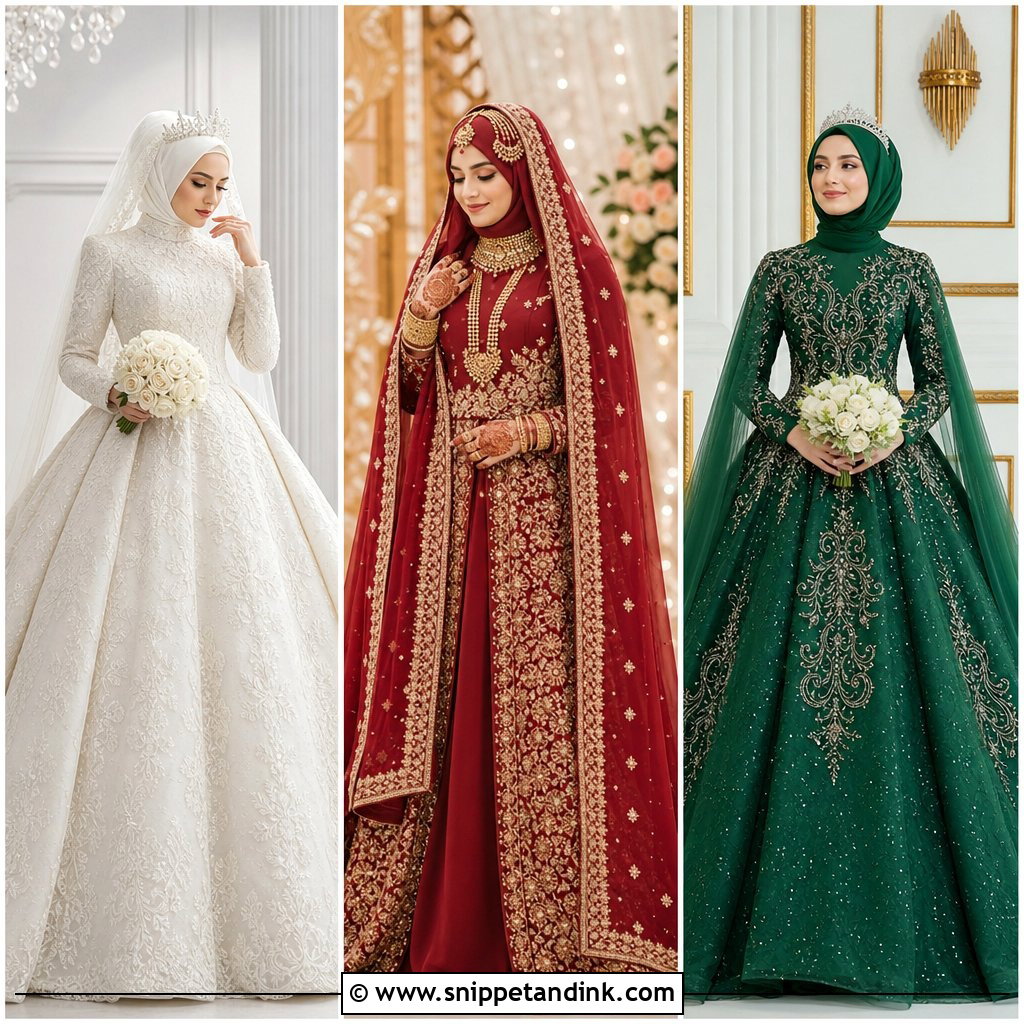


20. Light Embroidered Gharara Dress
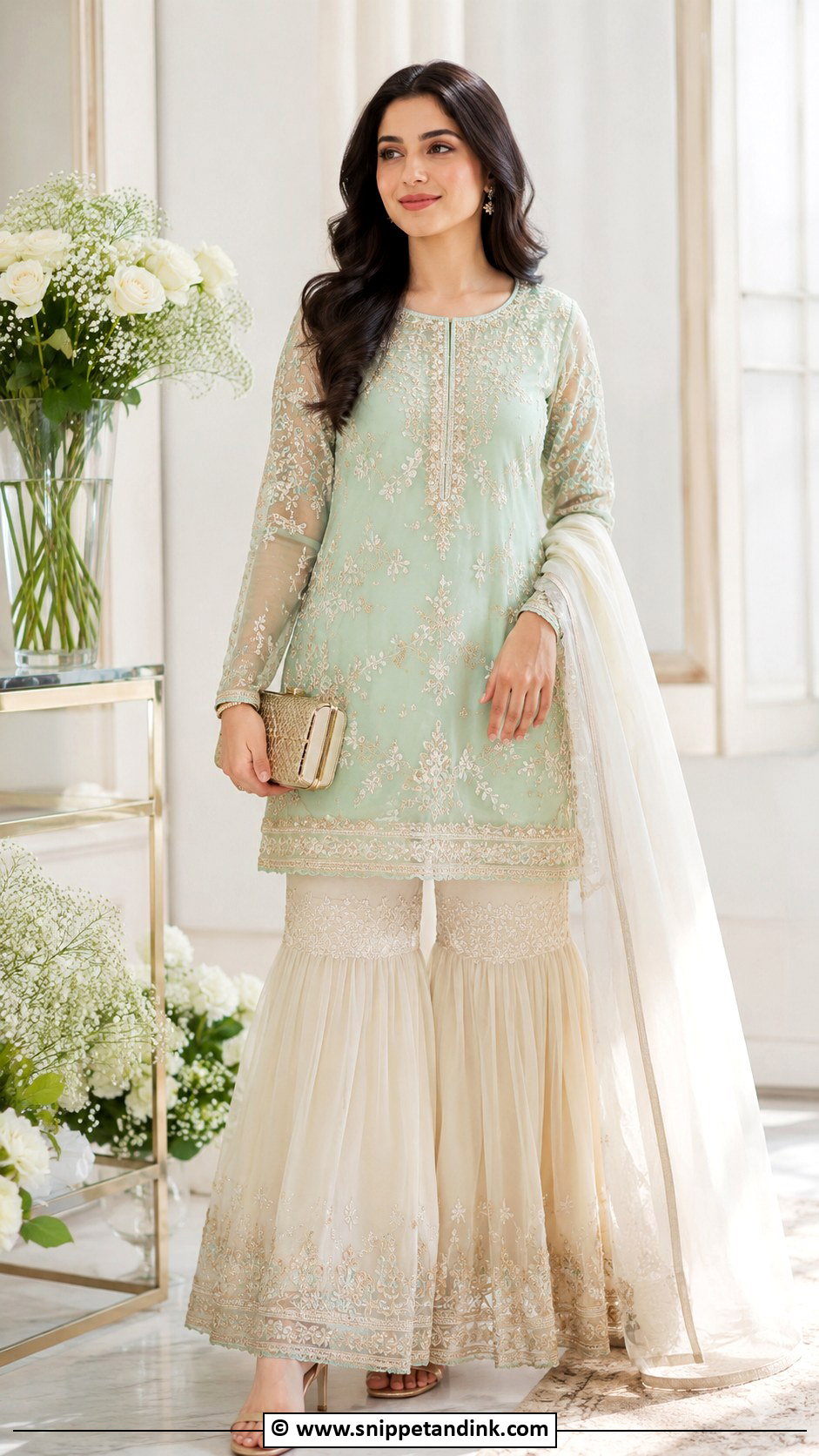
Lightly embroidered ghararas are what I suggest for guests who want to look dressed up without competing with the family. Work around the neckline, cuffs, gharara borders and dupatta edges is plenty. Peach, mint, lavender, beige, sky blue and dusty pink all feel current. They suit daytime nikkahs, engagements and smaller family functions. With so little embellishment, tailoring does all the work, so a light gharara that fits badly looks cheap far faster than a heavy one.
21. Floral Gharara Dress
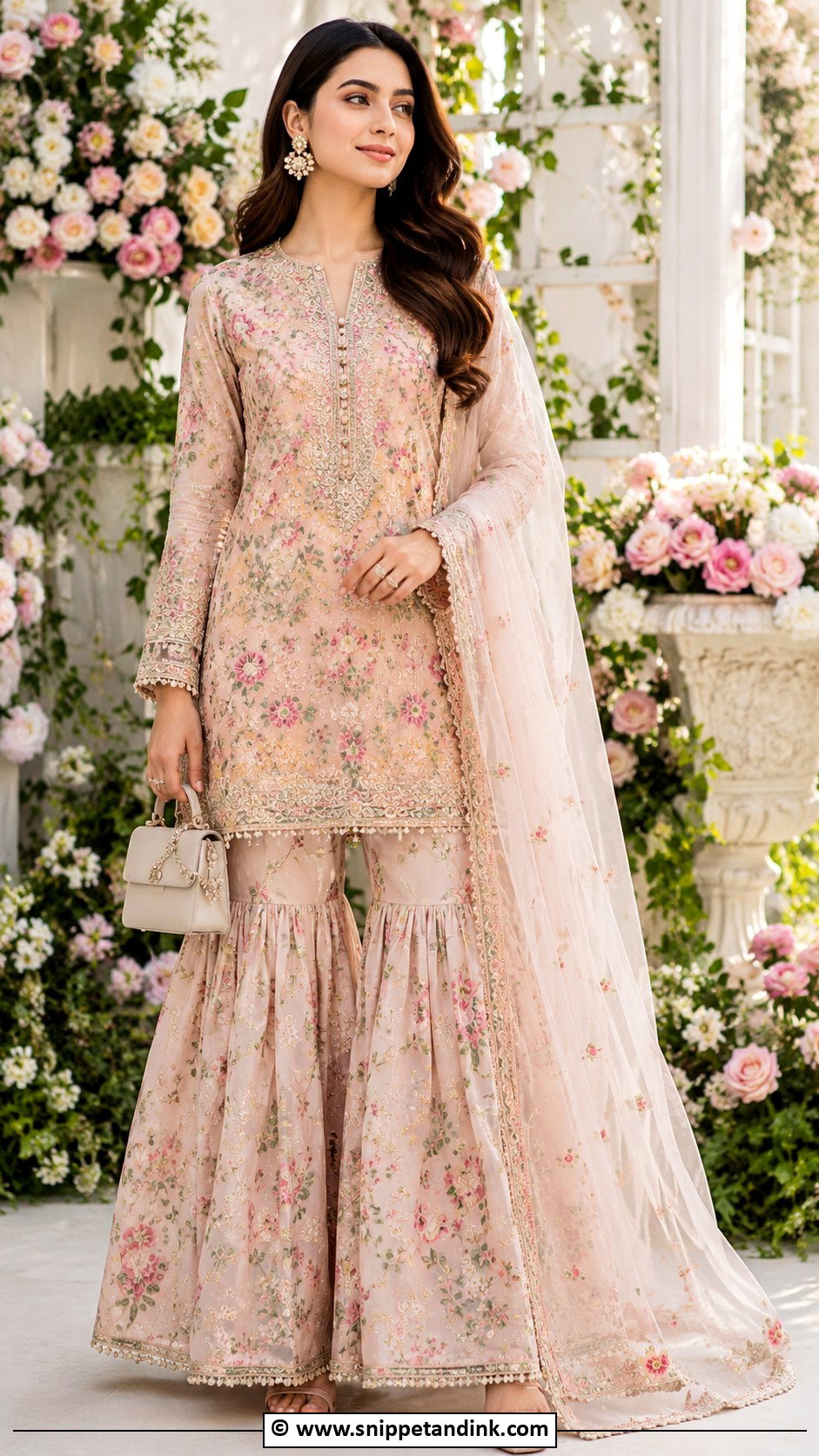
Florals belong to spring and summer. Instead of metallic work, look for printed florals, thread embroidery or small motifs on organza, lawn, chiffon or silk. A floral short kurti over a plain or lightly worked gharara keeps the print from becoming too busy. Lawn is cool but can look casual for evening, so I save it for daytime mehndi and brunch-style events. Adding pearls or sequins to floral embroidery lifts it for a more formal function.
22. Peplum Gharara Dress
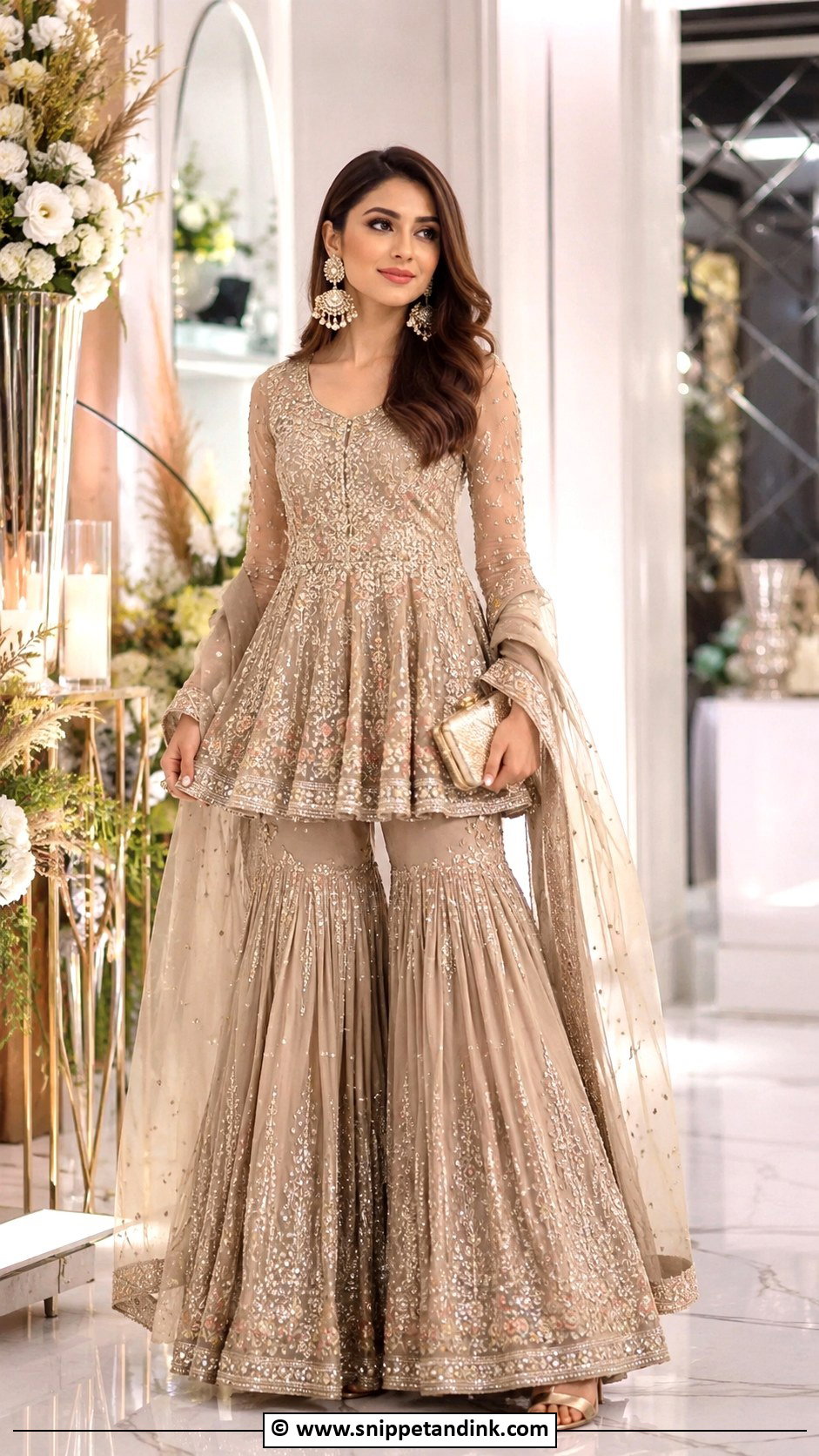
A peplum top over a gharara brings in a structured, modern waistline, which suits engagements, receptions and guest wear. The peplum defines the waist without needing a tight shirt, so it works for clients who dislike close fits through the middle. I watch where the peplum ends: if it flares out at the same height as the gharara’s knee band, the two flares look stacked. Pastels keep it soft. Jewel tones with gold or silver detailing make it more formal.
23. Jacket Gharara Dress
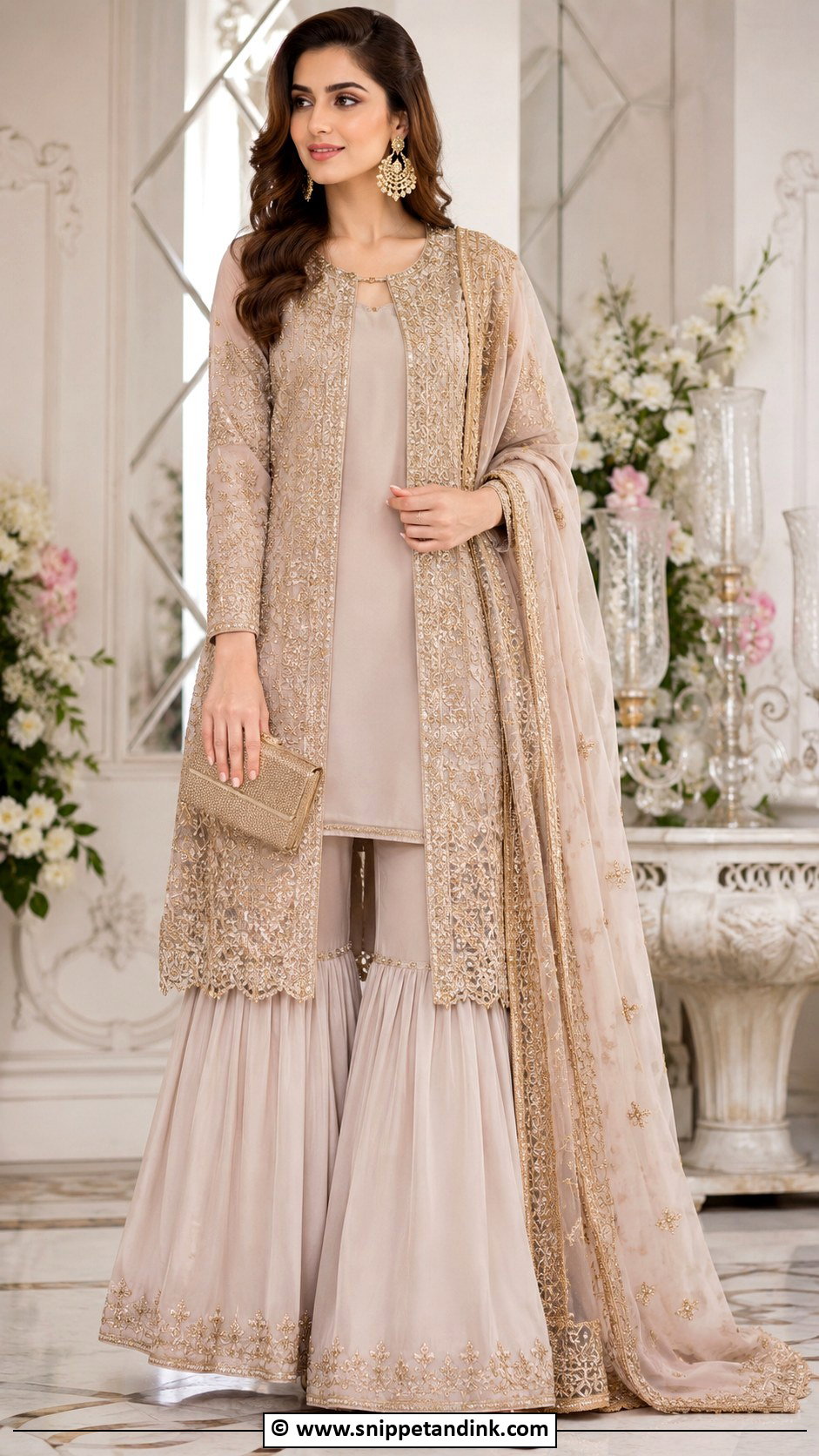
A jacket layer is the most practical choice for a winter wedding. The set usually has an inner blouse or kurti, a gharara and a short or long embroidered jacket. Sheer organza jackets feel light for indoor events; velvet ones handle cold venues and outdoor photos. If the jacket is heavily worked, I keep the inner layer plain so the neckline does not fight the jewellery. The biggest advantage: when the hall heats up, the jacket comes off and the outfit still looks finished.
24. Dupatta Draped Gharara Dress
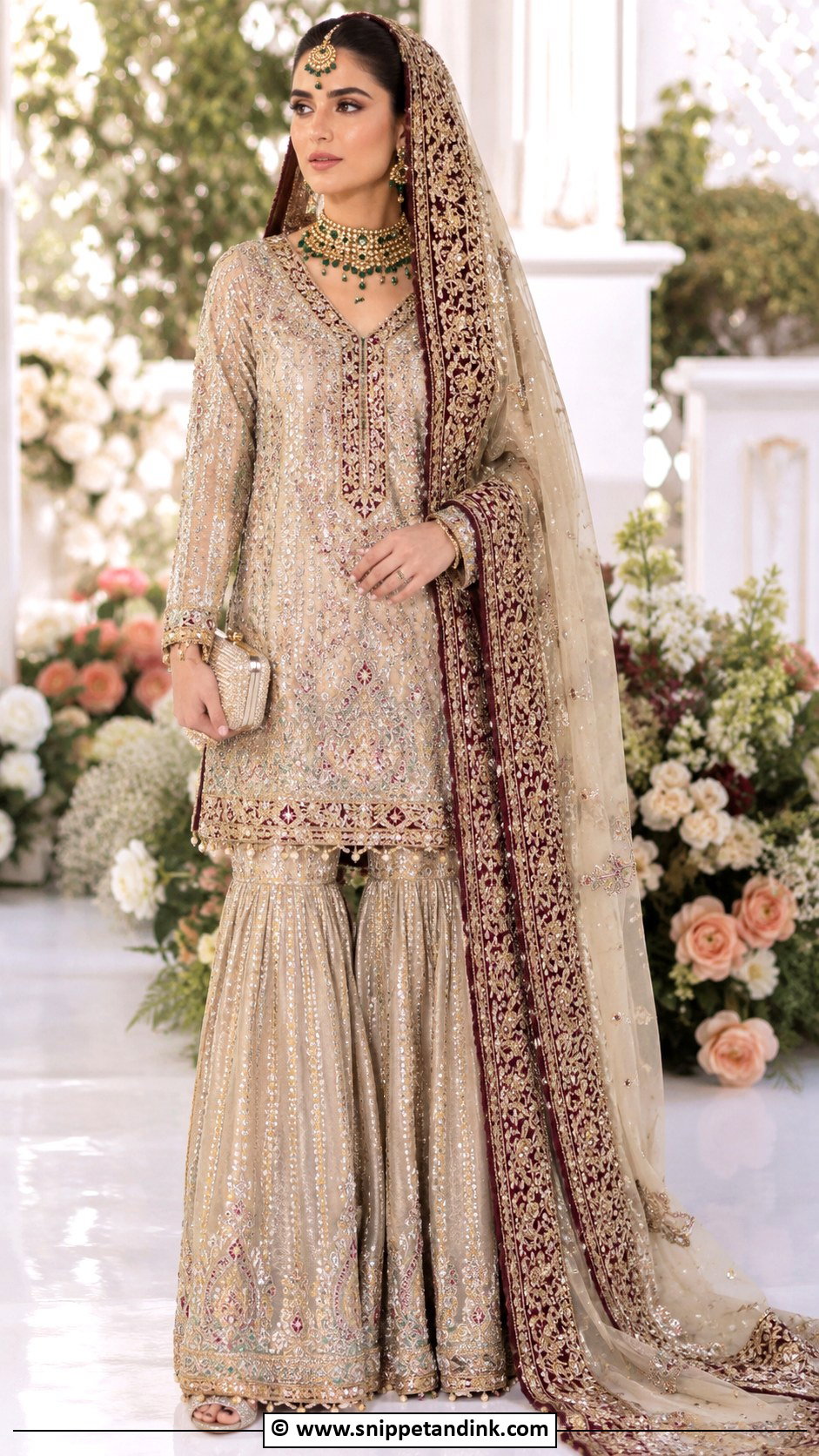
The dupatta drape can change the same gharara from guest to bride. For a bride, I pin it over the head and let one side fall across the shoulder; for a guest, across both shoulders or on one side so it does not trail. Net and organza hold a structured drape, while chiffon falls softer. I set pins at the crown and shoulder before jewellery goes on, using small safety pins hidden under the border so they don’t snag the work. Without proper pins, a heavy dupatta slides within the first hour.


25. Pakistani Wedding Guest Gharara Dress
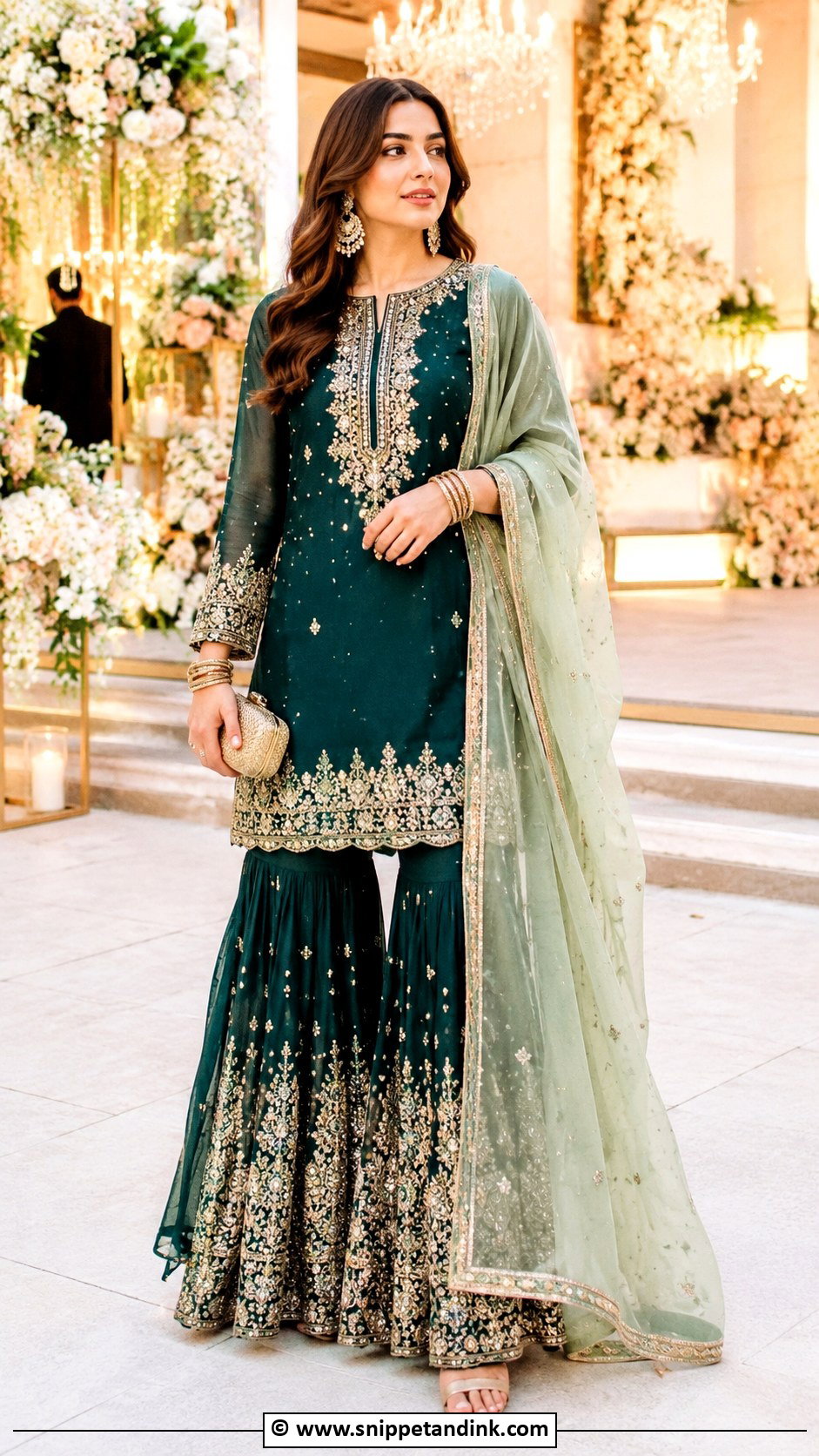
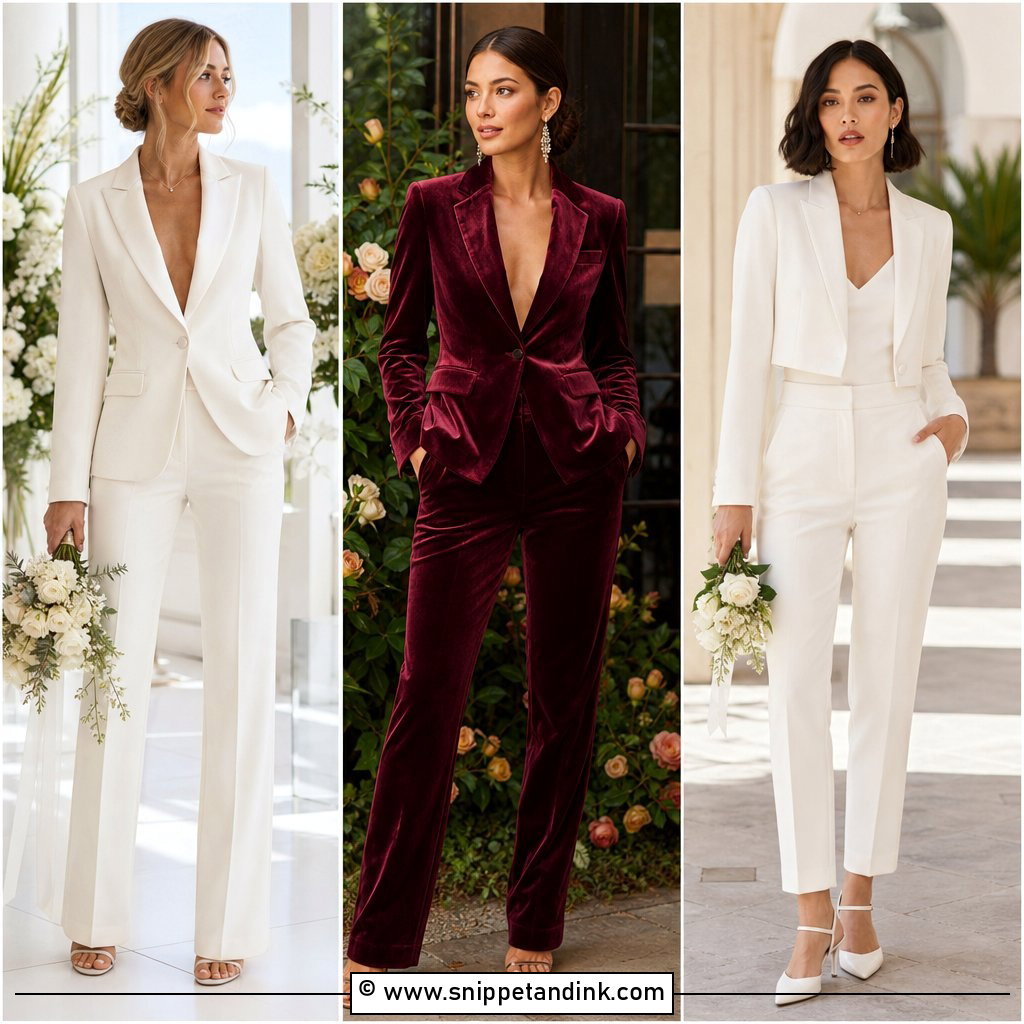
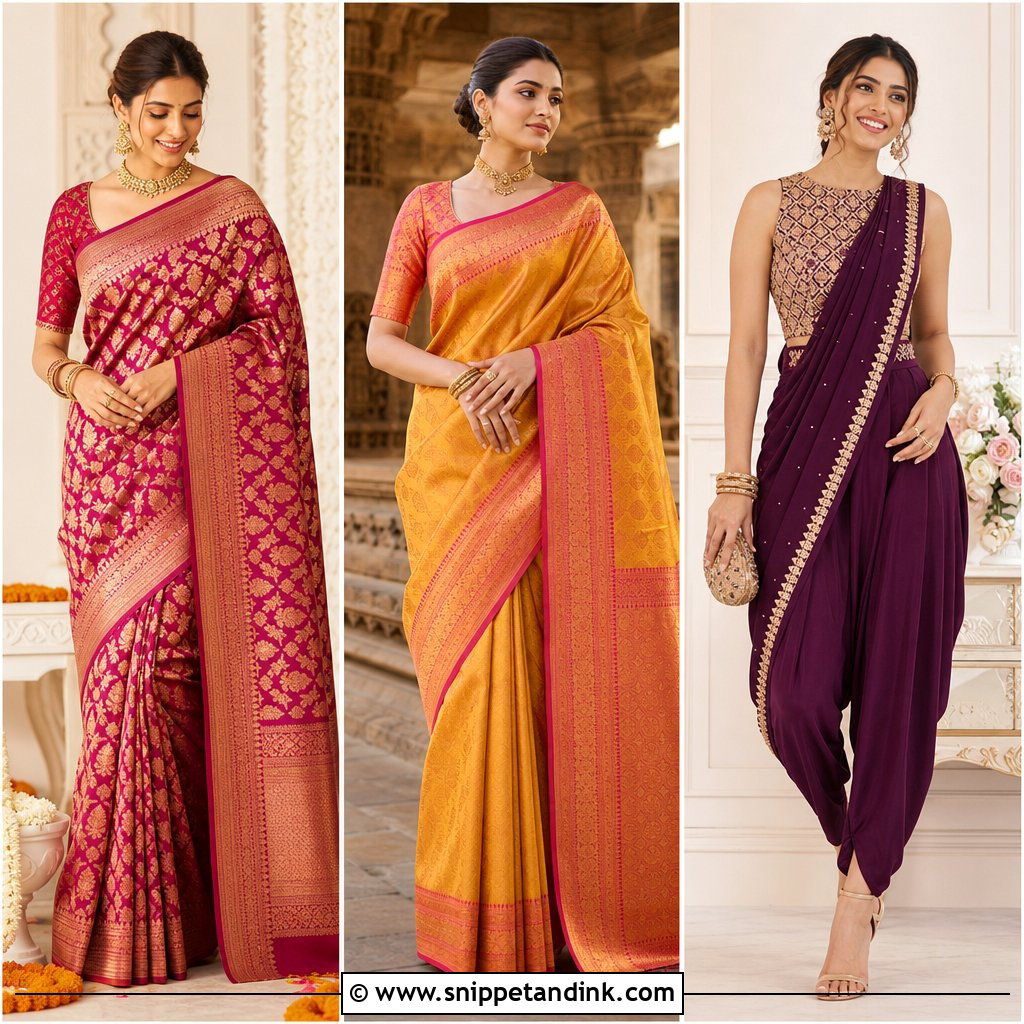
A Pakistani wedding guest gharara dress should match the function more than the trend. Pastels work for nikkah and walima, green, yellow, pink and orange for mehndi, and jewel tones with metallic work for baraat. The one rule I’d hold firm on is not looking bridal unless you are close family, so avoid deep red with heavy zari. A short or medium kurti, a light dupatta, khussas or heels, earrings and a clutch make a complete outfit. A well-fitted gharara will always look better than an overloaded one.
Stairs, Stage Sofas and Washroom Breaks in a Full Flare
A gharara looks graceful in a still photo, but the real test is the night itself. Before the event, I have brides practise lifting the flare by gathering the fabric at the knee band on both sides, not by grabbing the hem, so the embroidery doesn’t drag on the floor.
- On stage, sit on the front edge of the sofa and spread the flare forward and slightly to the side so it photographs open instead of bunched.
- Assign one sister or cousin to handle the dupatta and hem on stairs and during the rukhsati; heavy farshi hems really need a second pair of hands.
- Pack a small kit: safety pins, a few hooks, a needle with matching thread and double-sided fashion tape for a loose border.
- For washroom breaks, the drawstring waist is your friend; ask the tailor for a front-tie rather than a side-tie so you can manage it alone.
Putting a Worked Gharara Away After the Walima
Zari and dabka tarnish with moisture, and sequins and mirror work can crack when folded hard. Air the outfit for a day after the event, away from sunlight, so any perspiration dries out before it goes into storage.
I fold heavy ghararas loosely along the panel seams with soft muslin between the layers, then wrap the set in a cotton cloth rather than plastic, which traps humidity. Hanging a worked gharara by its waistband stretches the casing over time, so lay it flat. Refold it every few months along different lines to prevent permanent creases, and give stains to a dry cleaner who handles embroidered bridal wear rather than trying to spot-clean at home.
One Silhouette, Five Very Different Functions
A gharara changes its whole character with the fabric, colour and embroidery you choose, which is why the same silhouette works for a mayun, a nikkah and a walima. A red baraat set, an ivory nikkah outfit, a green mehndi gharara and a soft pastel guest look all rely on the same things: a knee band in the right place, a dupatta that stays put, shoes you can stand in for hours and jewellery that suits the neckline. Start with your role at the wedding and the function, then pick the fabric. The rest follows from there.
You'll Like These Ideas:





Leave a Reply