
Most brides walk into their first appointment with a picture of one dress and leave in a completely different shape. That’s normal, because a silhouette on a hanger tells you very little about how it sits on your body or moves in your venue. Right now I’m seeing basque and drop waists, sculptural necklines, bows, pearl details, separates, minis, suits and convertible pieces next to the classic lace and satin gowns. Below are the ideas I’d put in front of a bride, with what I look at when she tries each one on: venue, season, how she moves and what the fabric does after six hours.
Sample Sizes, Clamps and Underwear: Getting More From a Bridal Appointment
Shop samples come in a narrow size range, and consultants pin them with large clamps at the back. That means the dress you try on is almost never the fit you’ll get, and brides often rule out a silhouette because the sample gaped or pulled. I treat the appointment as a test of shapes, not of fit.
- Wear smooth, skin-tone underwear and bring a strapless bra, so you can judge necklines properly.
- Bring shoes close to the heel height you plan to wear. Hems and proportions look very different in flats.
- Try at least one silhouette you’re sure you won’t like. A shape you’d dismiss on a hanger sometimes surprises you.
- Keep the group small. Two or three people whose opinions you trust help more than a crowd.
- Ask the consultant to photograph you from the back and side as well as the front.
If a sample is too small to zip, ask the consultant to hold the back open with a panel so you can see the line from the front. It’s an honest way to judge a dress you can’t fully fasten.
1. Basque Waist Bridal Dress
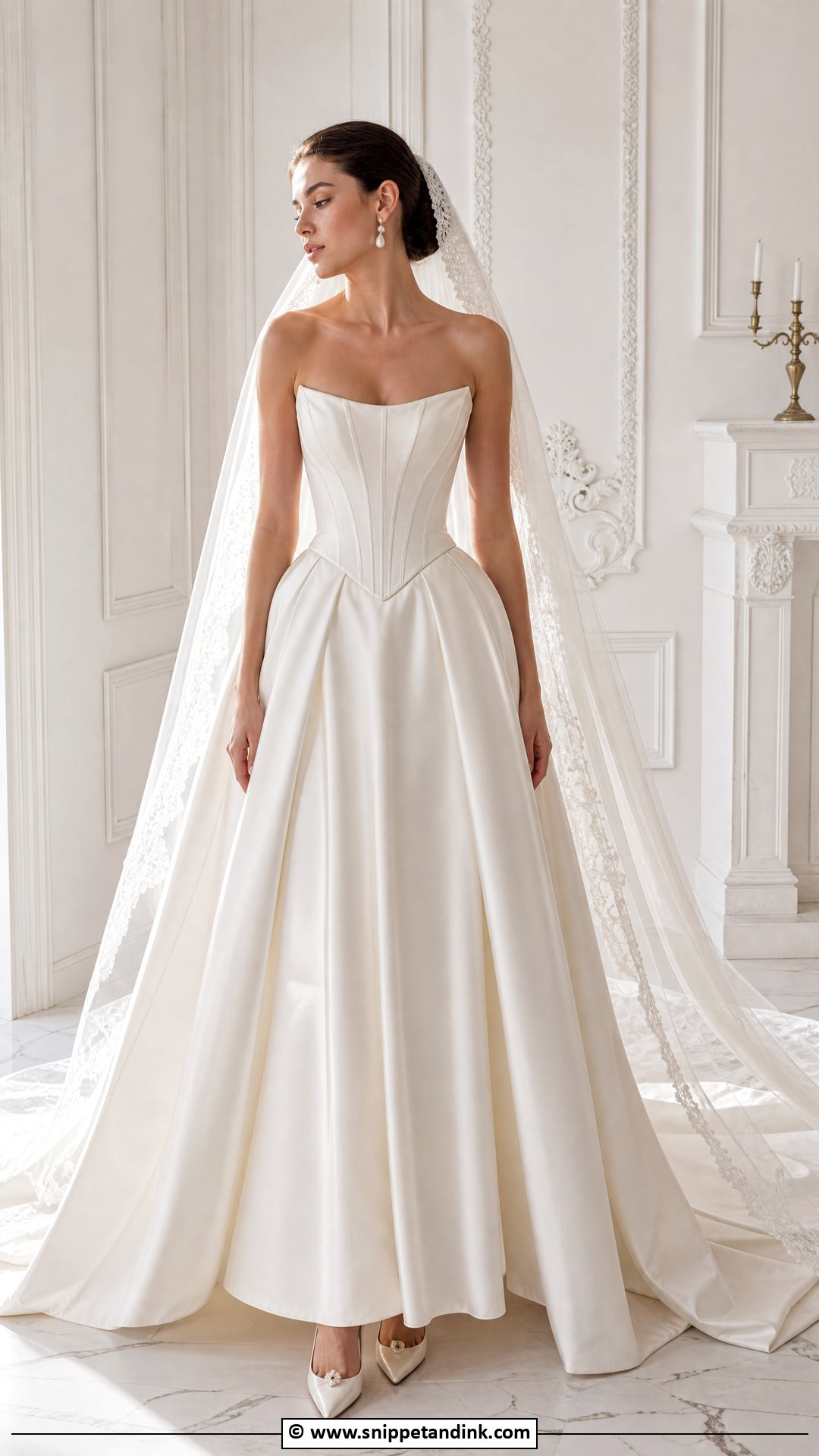
The basque waist dips into a V below the natural waist, which lengthens the torso and pulls the eye into an hourglass. Structured satin, lace or a full tulle skirt all suit it, as a dramatic ball gown or a softer A-line. The point of the V has to land in the right spot for your body; on a short torso a deep point can run into the hip bone and press when you sit. A cathedral veil, pearl earrings and pointed heels keep attention on the waist.
2. Drop Waist Bridal Dress
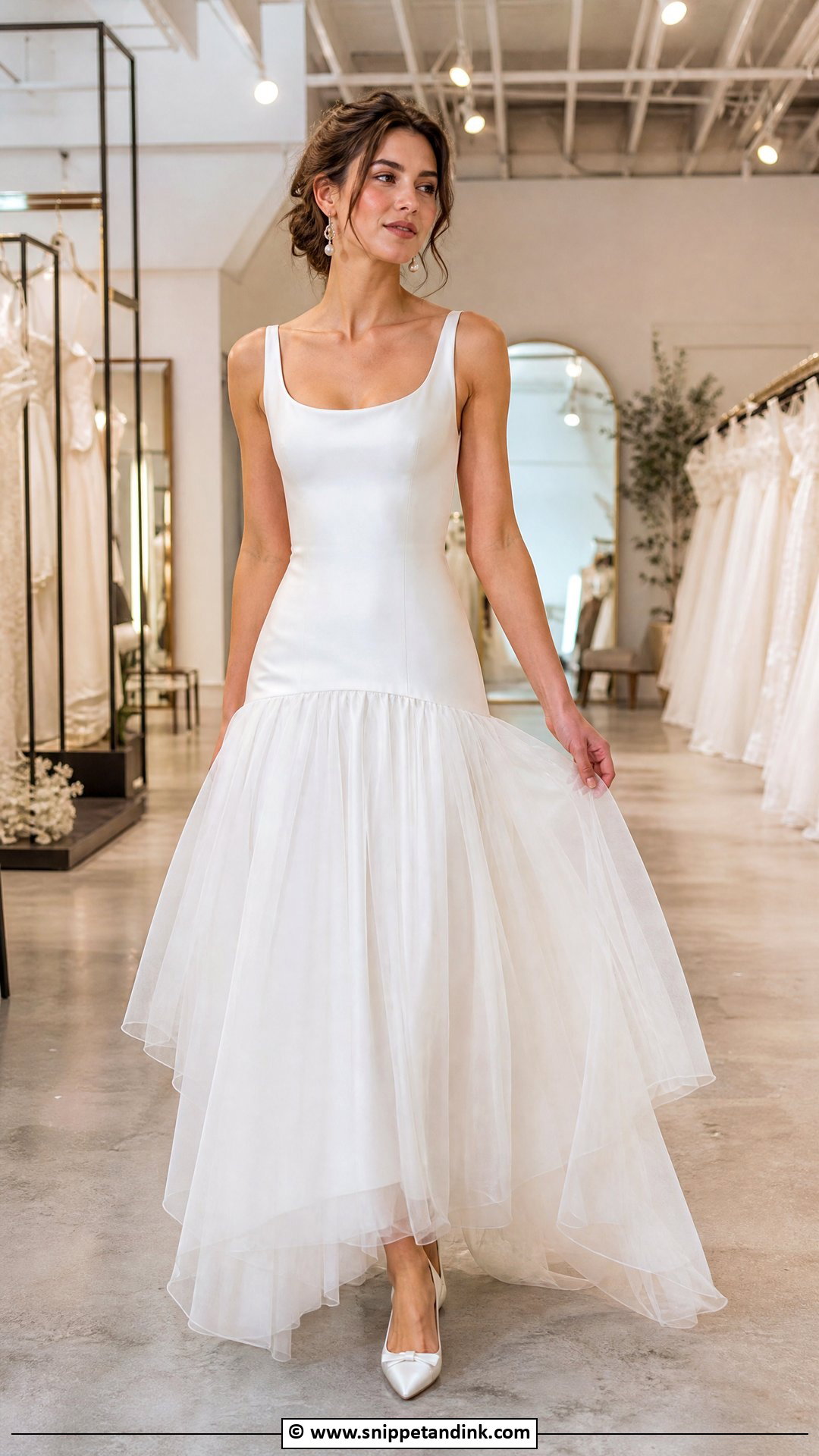
Drop waists run the fitted bodice below the natural waist before the skirt opens, creating a long line with a 1920s, 1990s or couture feel. Satin keeps it sleek, lace makes it romantic and layered tulle makes it playful. On petite brides I raise the drop a little so the legs don’t look shortened, which is the most common proportion mistake with this cut. Simple heels, a low bun and delicate earrings finish it.
3. Satin Slip Bridal Dress
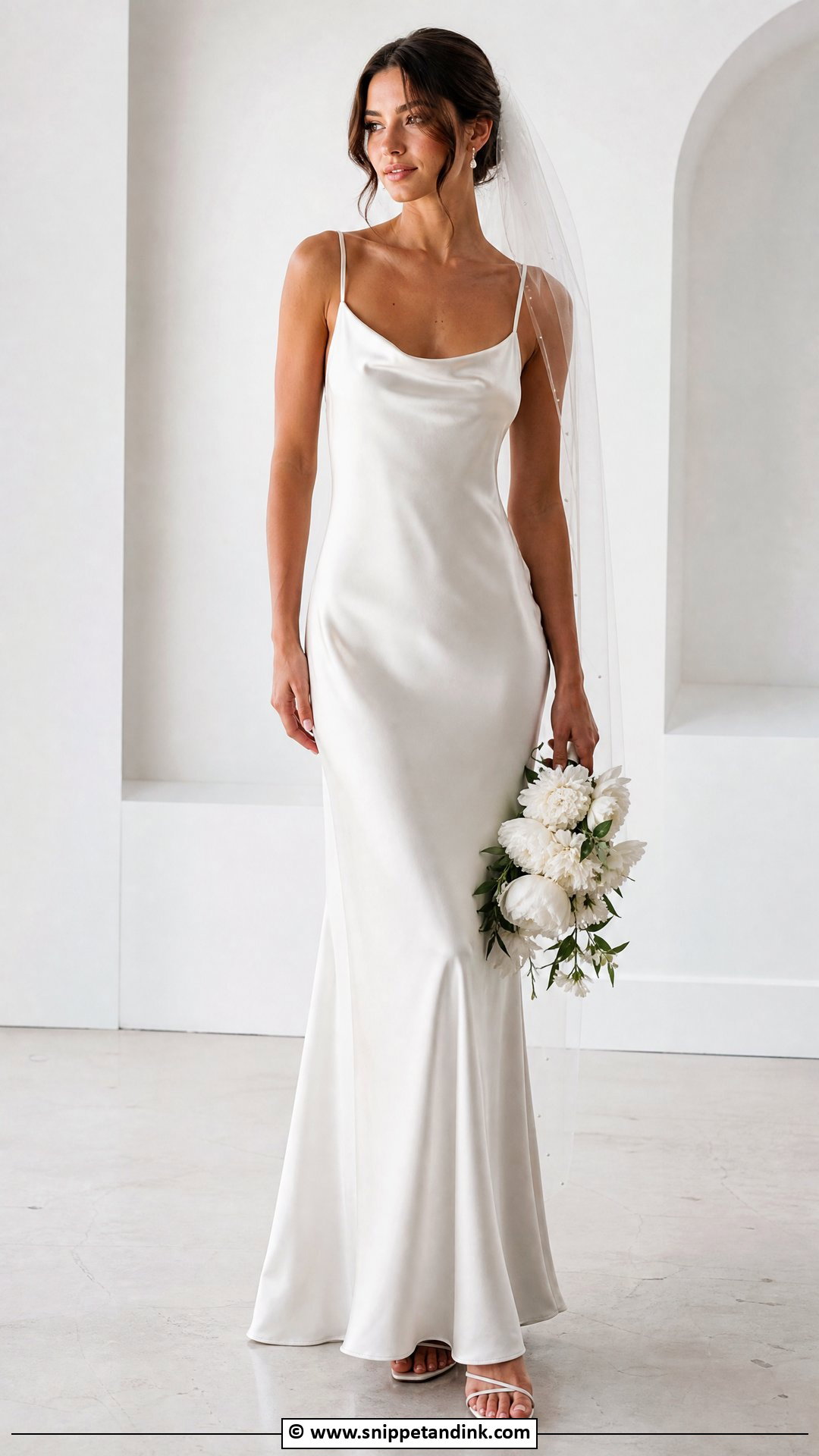
The satin slip skims rather than shapes, which is why it suits city weddings, beach ceremonies, elopements and small receptions. Bias-cut satin, a soft cowl or thin straps give that 1990s minimalism. Bias satin is honest to a fault: it shows every line underneath, so I fit it over the exact underwear you’ll wear on the day. Strappy heels, a smooth veil and understated jewelry suit it, with a sheer wrap or tailored blazer for coverage.
4. Lace A Line Bridal Dress
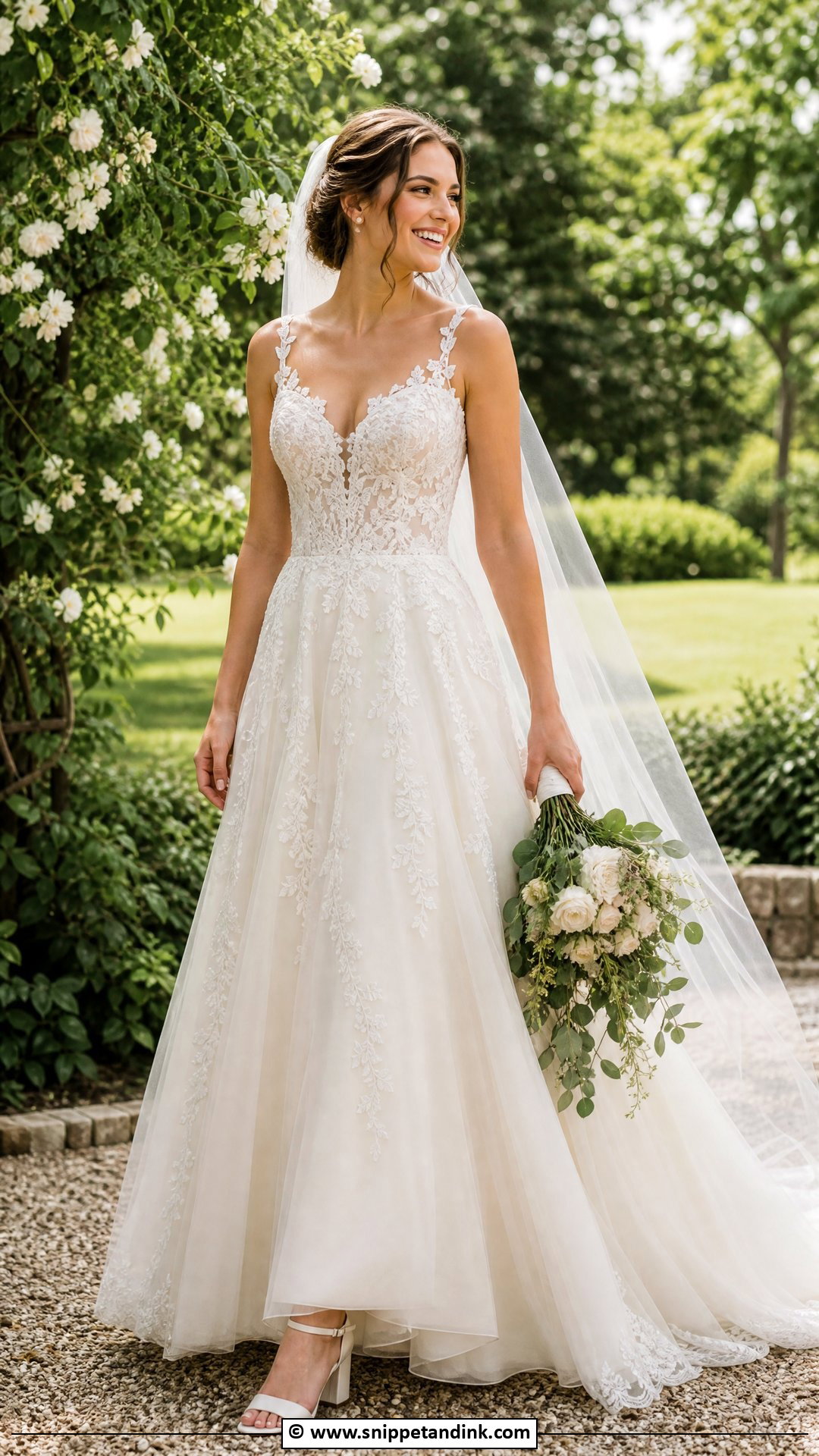
The lace A-line is the most wearable dress on this list. The bodice marks the waist and the skirt falls away from the hips, so it’s comfortable at a garden party, a ballroom or a church. Floral lace reads romantic; graphic lace looks modern. The lining colour changes everything: nude lining makes the lace pattern pop, ivory lining keeps it classic. Pearl studs, soft waves and block heels for grass finish it.
5. Strapless Ball Gown Bridal Dress
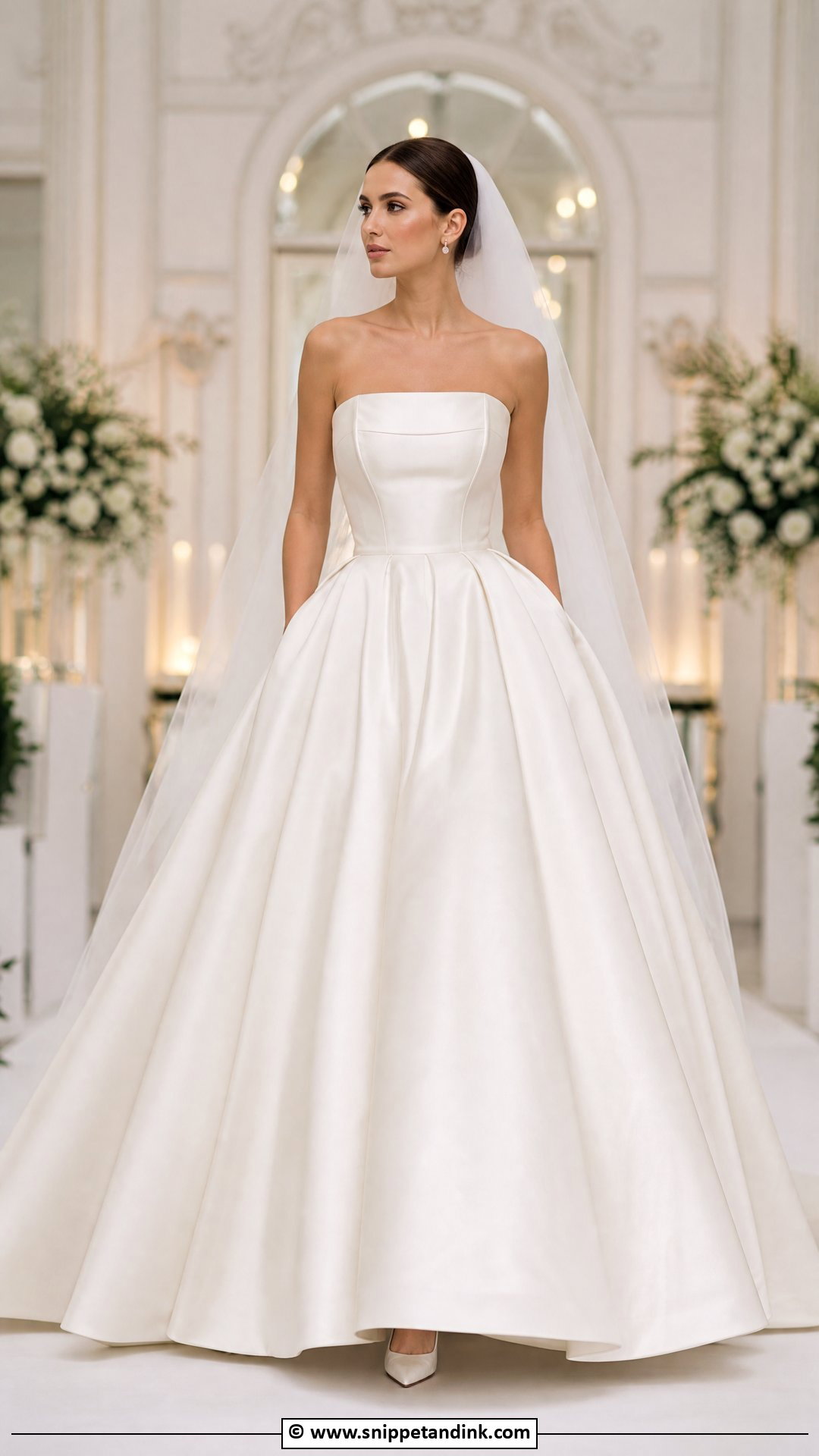
A strapless ball gown bridal dress is built for a grand entrance: a structured bodice on top of a full skirt in satin, mikado, organza or layered tulle. A straight neckline looks modern; a sweetheart softens it. A strapless bodice stays up because of the boning and the fit at the waist, not the bust, so if it needs hitching at the fitting, it needs taking in. Fuller busts may want built-in corsetry. A simple veil, classic pumps and a neat updo balance the volume.
6. Long Sleeve Lace Bridal Dress
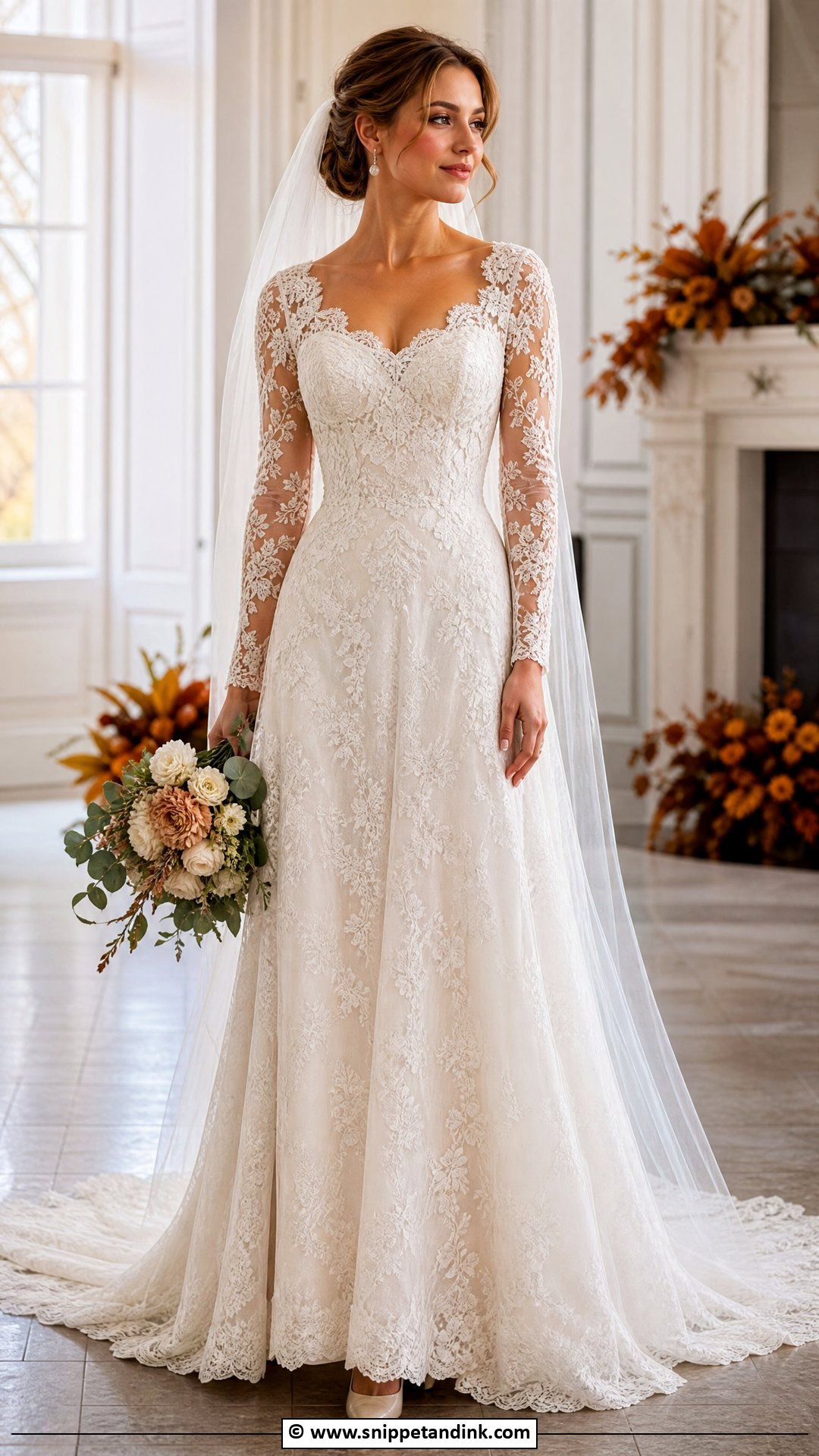
Long lace sleeves give coverage without losing softness, which suits autumn, winter, formal and garden weddings. Sheer sleeves feel delicate; lined sleeves look more modest. Lace sleeves are cut close, and I always ask a bride to cross her arms and reach forward, because tight lace at the elbow tears on the first hug. A fitted body or an A-line skirt both work. Skip heavy necklaces if the lace is detailed and let a long veil and pearl or diamond-style studs carry it.
7. Off Shoulder Bridal Dress
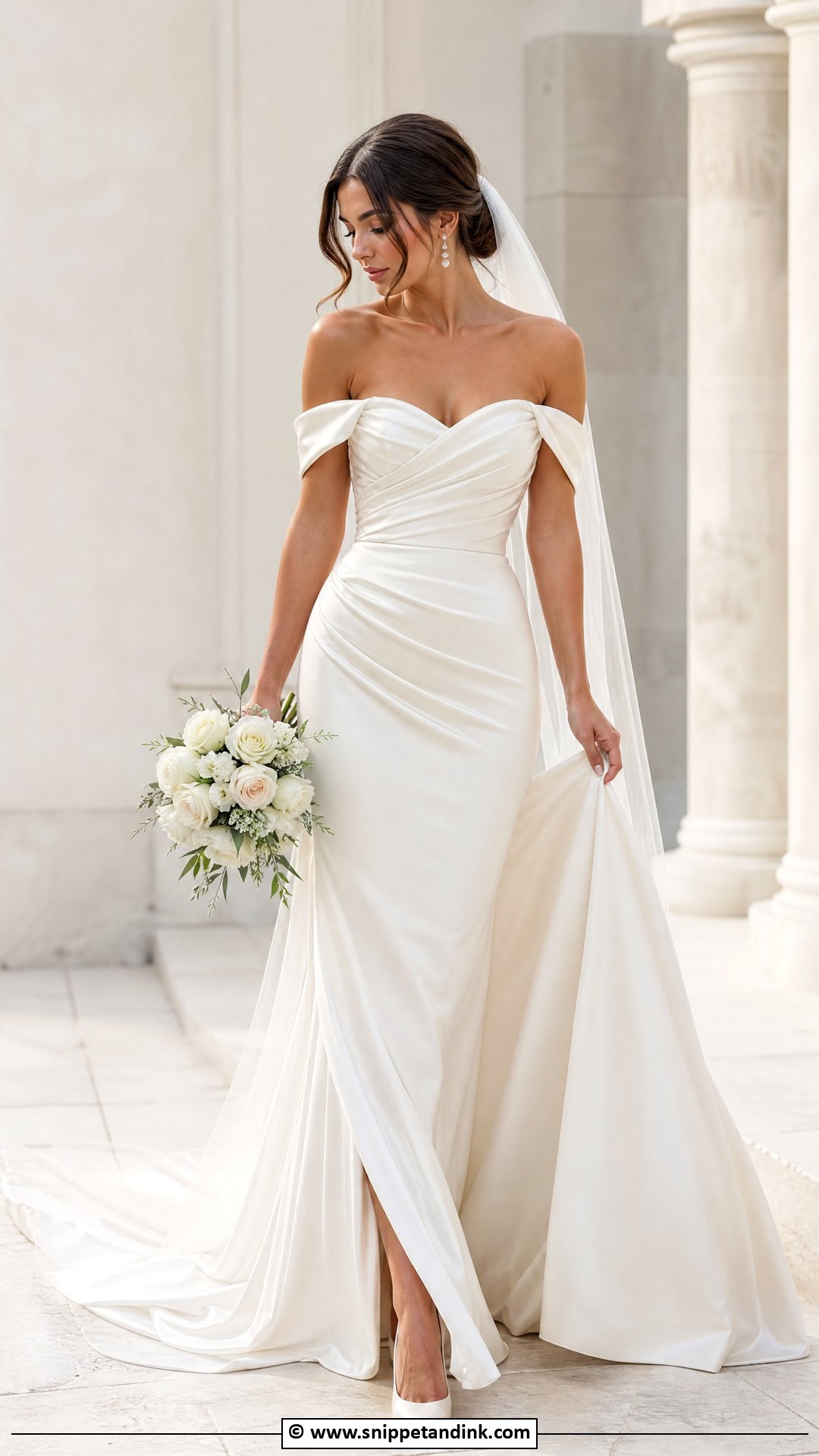
Off-shoulder necklines frame the collarbone and shoulders, romantic without being revealing. A fitted gown makes it glamorous; an A-line softens it. Satin, lace, crepe and tulle all hold the shape. The bodice has to be secure, because off-shoulder straps limit how high you can raise your arms, and a loose bodice slides every time you hug someone. Drop earrings, a clean updo and a veil tucked low in the hair complete it.
8. Square Neck Bridal Dress
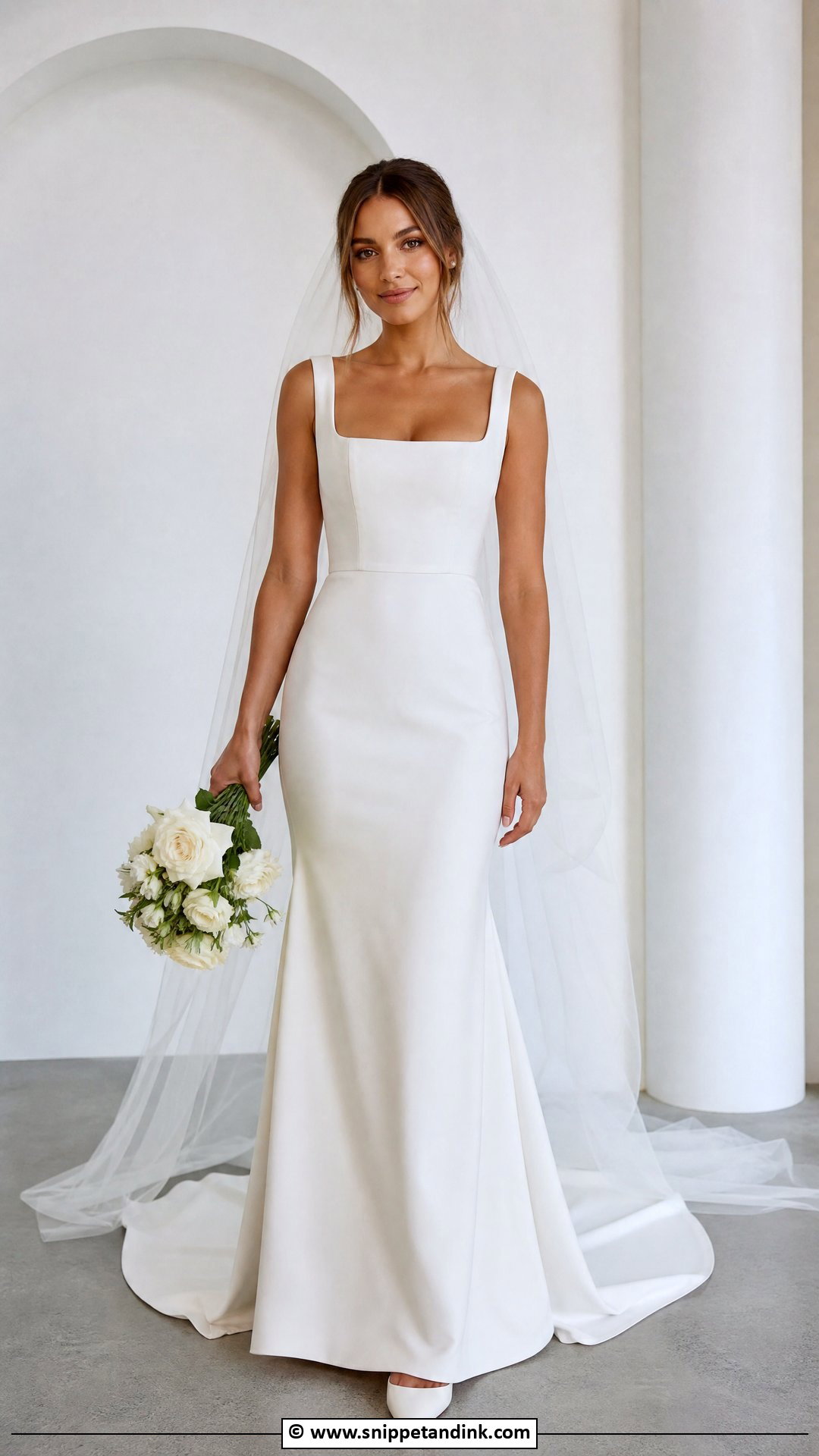
A square neck is clean and structured, and it works with straps, sleeves or a corset bodice. It gives support while still showing the collarbone. Crepe makes it minimal; lace or satin adds romance. Look at the corners in the mirror as you breathe: they should sit flat, and if they stand away from the skin, the bodice needs adjusting at the sides. Pearl earrings, pointed heels and a sleek veil keep it classic.
9. Corset Bodice Bridal Dress
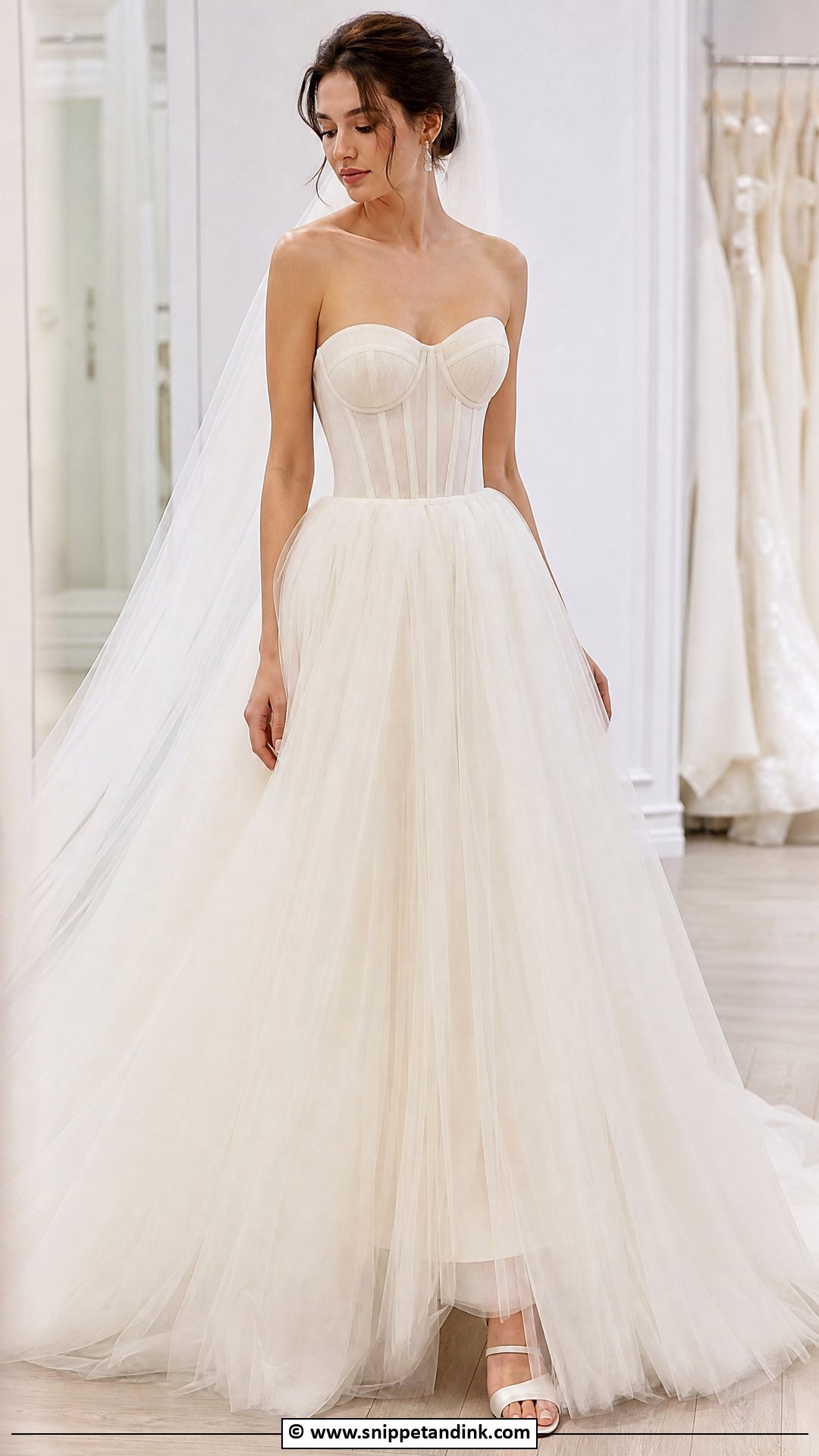
Corset bodices give structure and shape, romantic, vintage or modern depending on the fabric and skirt. Exposed boning looks fashion-forward; covered corsetry reads traditional. They pair with basque waists, full skirts, fitted gowns and detachable overskirts. Comfort is the real test, and the place it fails is the seated dinner, so sit down in it for a full ten minutes at a fitting. Simple jewelry and a veil that matches the gown’s mood finish it.
10. Minimal Crepe Bridal Dress
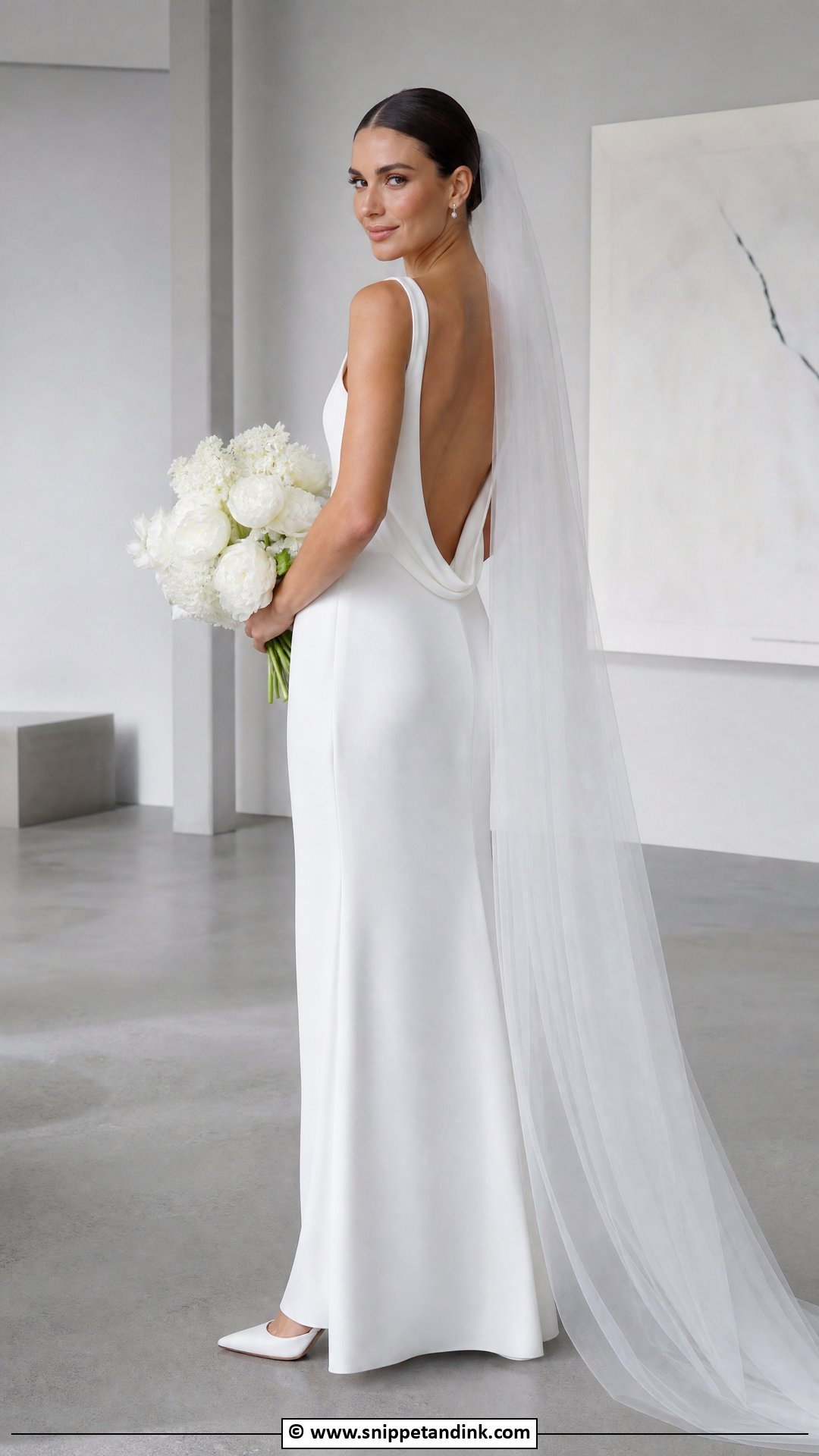
A minimal crepe bridal dress relies on tailoring rather than decoration. Crepe has a smooth, slightly weighted drape with little shine, and it suits sheath, fit-and-flare and column shapes. Because there’s nothing to distract the eye, a poorly placed seam or a dart that pulls shows immediately, so I’d budget for a skilled seamstress here before anything else. A sleek bun, small earrings and simple heels suit it, with a low back, long train or detachable cape for drama.
11. Floral Applique Bridal Dress
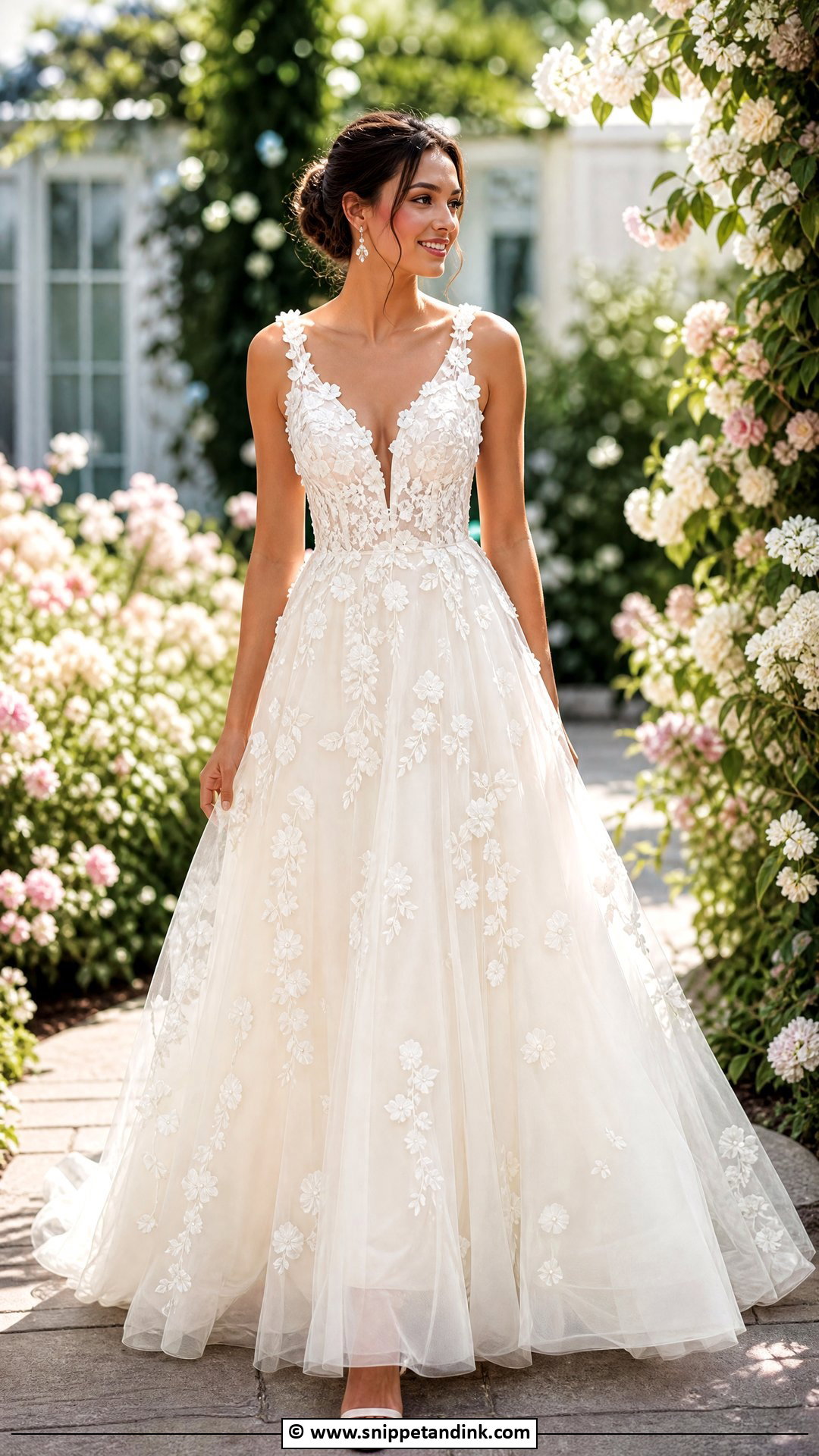
Floral appliques add dimension and texture, from delicate scattered petals to bold sculptural blooms. A fitted bodice with appliques over a soft tulle skirt feels dreamy; appliques on a slim gown feel modern. They suit spring and garden weddings and show up well in close-ups. Raised 3D flowers catch on veil tulle, so I check the veil’s edge against the bodice at the fitting. Keep jewelry light, with soft curls and simple heels.
12. Pearl Detail Bridal Dress
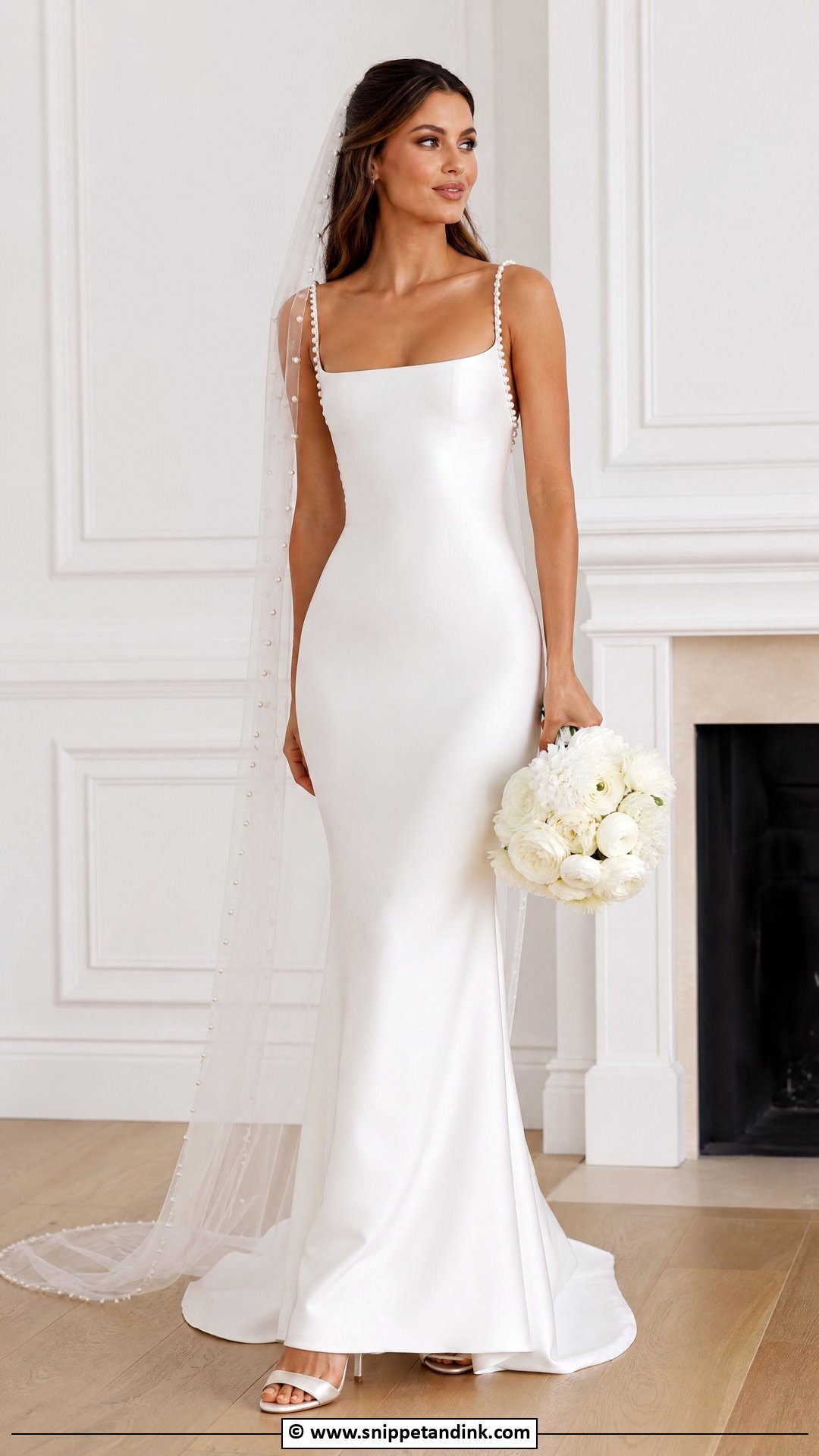
Pearls give a soft sheen instead of sparkle, on straps, sleeves, bodices, veils, gloves or along the neckline. They suit satin, crepe and tulle. My advice is one main pearl feature: a pearl-trimmed veil over a plain gown, or a pearl-beaded bodice with a smooth skirt, not both. Hand-sewn pearls hold through a long day while glued ones fall off where your arms brush the bodice. Pearl studs or small drops finish it.
13. Bow Back Bridal Dress
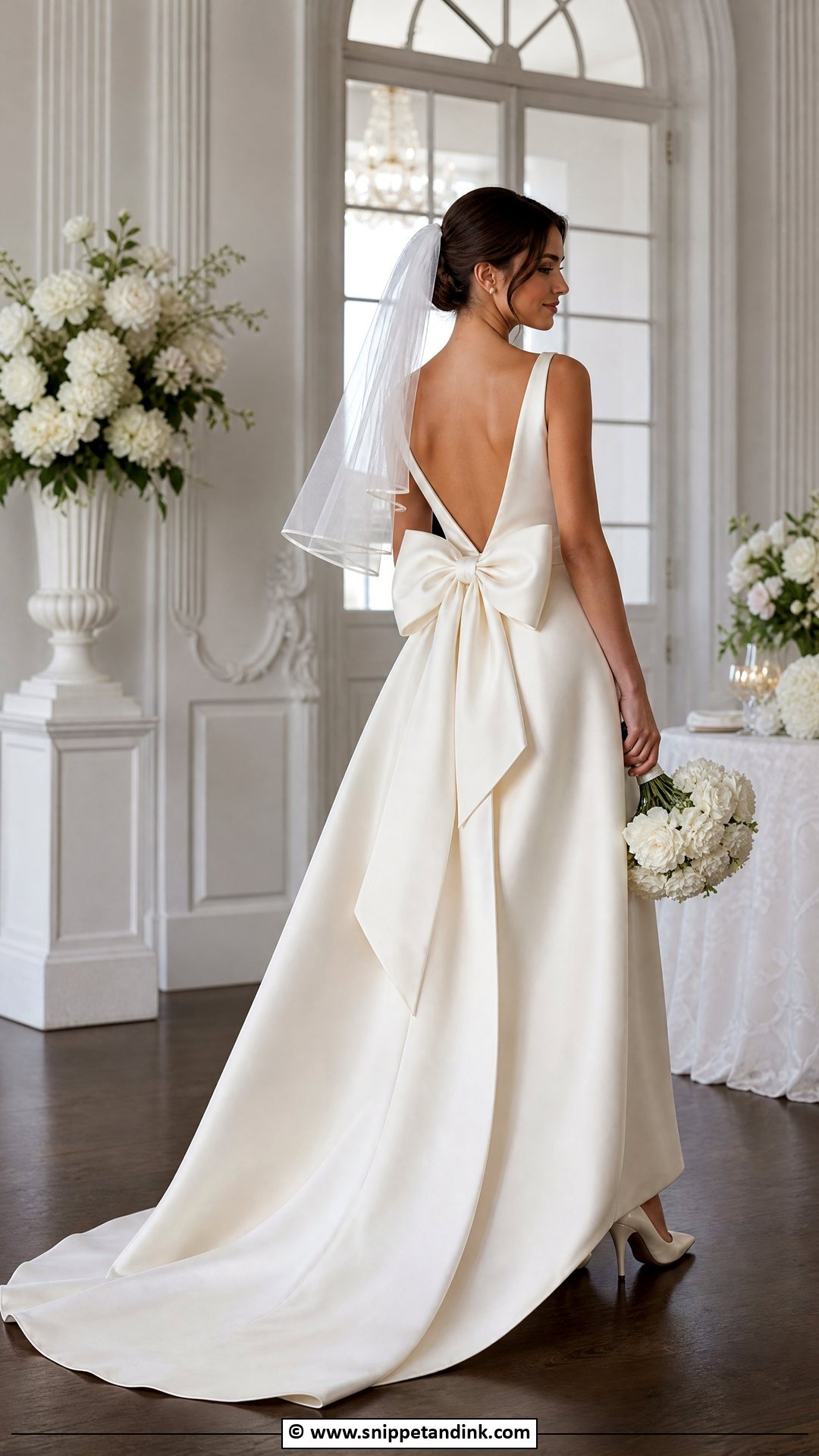
A bow at the back gives the ceremony and aisle photos a memorable detail from behind. It can be oversized or small. A large bow on a clean satin gown looks modern; bow accents on tulle feel softer. Big bows crush when you sit back in a chair or a car, so ask whether yours is stiffened with interfacing and plan to fluff it before photos. Keep the veil short or simple so it doesn’t cover the bow, with classic heels and minimal jewelry.
14. High Neck Bridal Dress
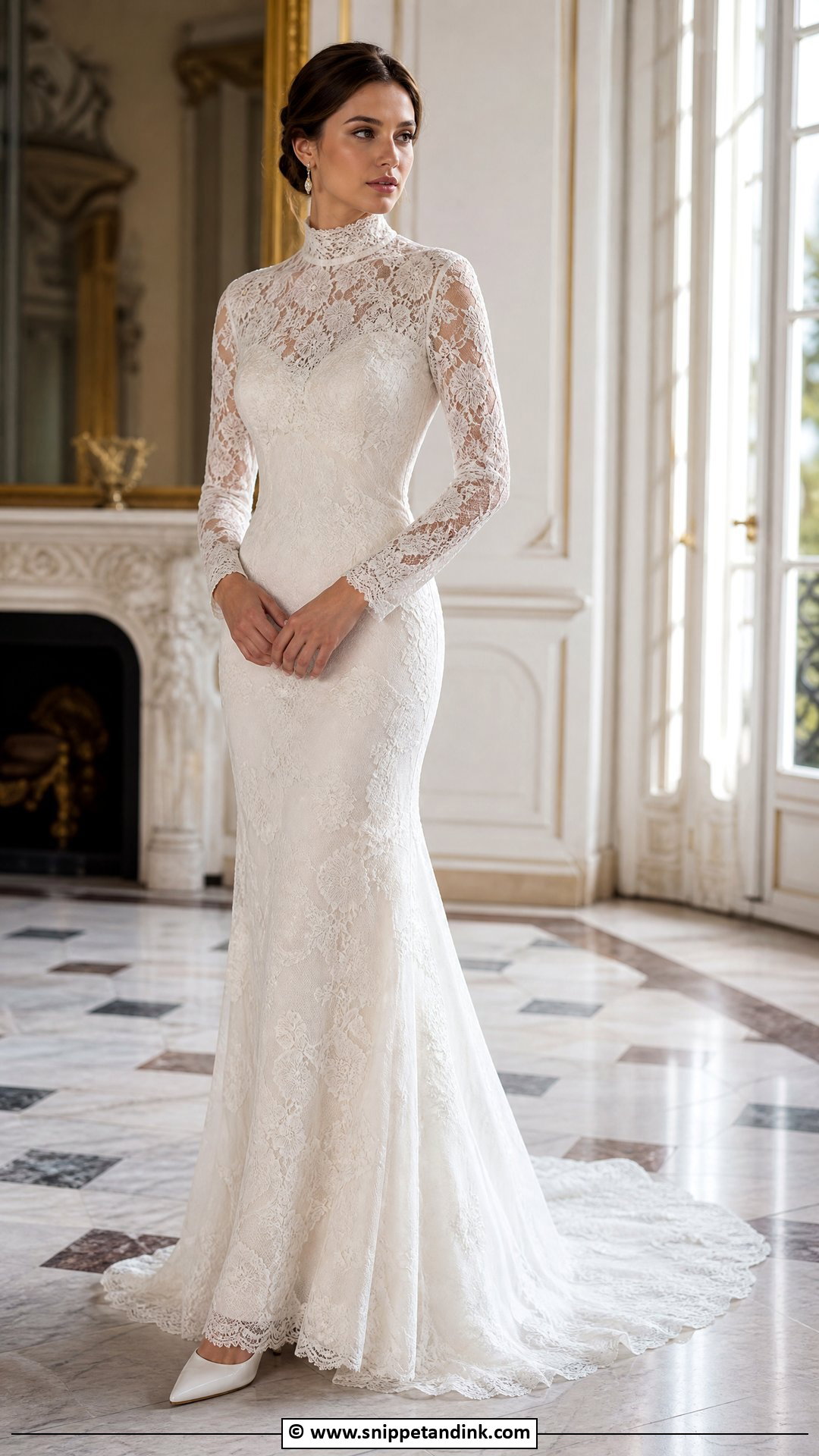
A high neck gives coverage and still looks striking, in lace for a vintage mood or in smooth satin or crepe for something editorial. It works with an updo because the neck area stays clean, and earrings replace a necklace. With long sleeves, I balance it with a defined waist or an open back so the dress doesn’t feel like a tunic. A high neck cut too tightly feels warm by evening, so check it after you’ve moved around for a while.
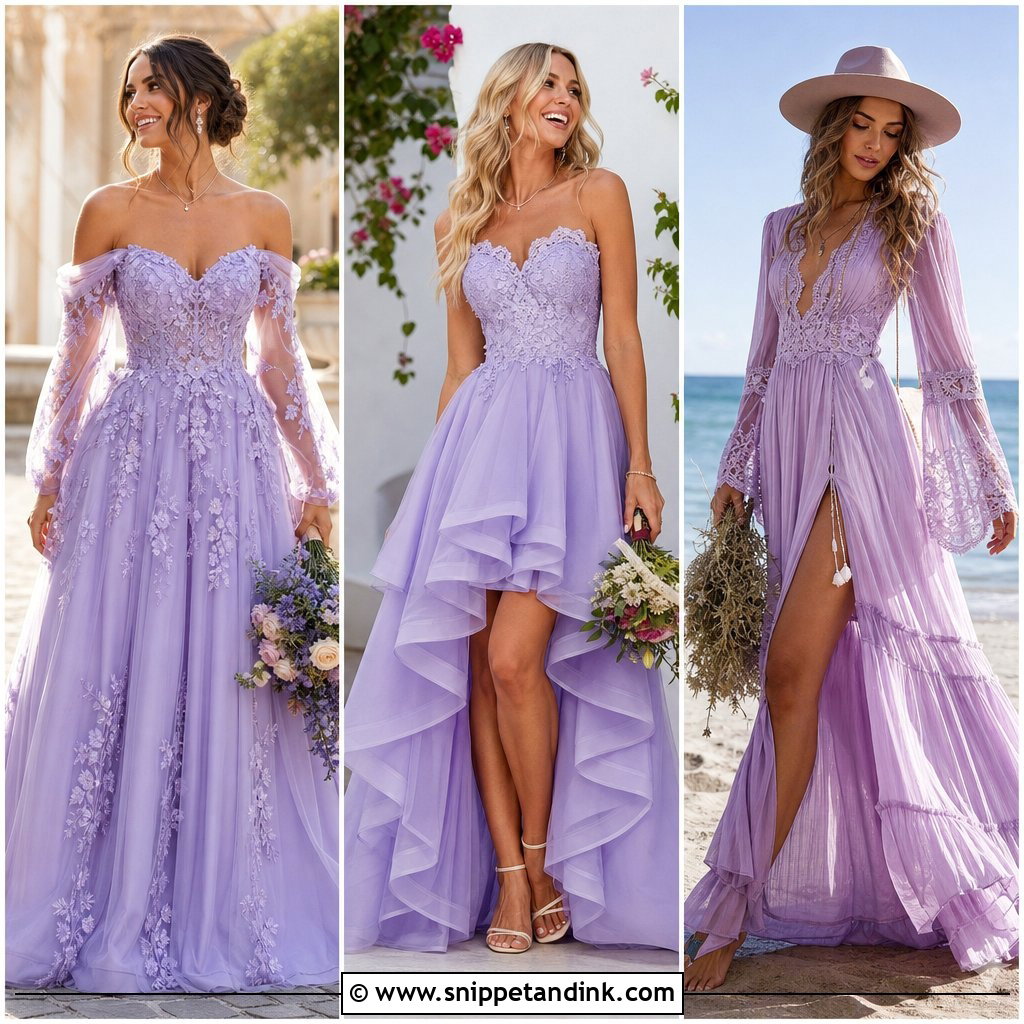
15. One Shoulder Bridal Dress
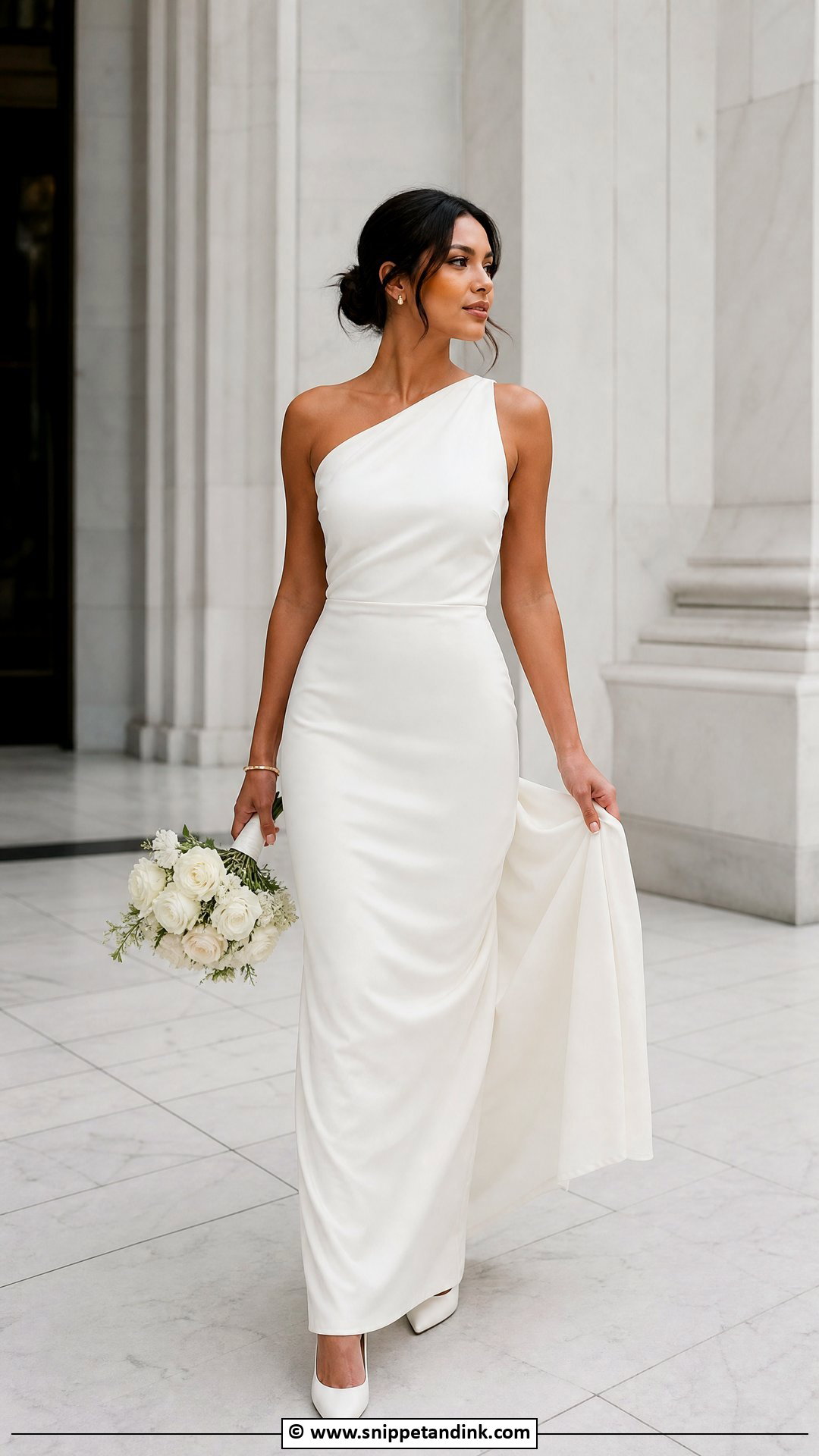
One-shoulder gowns give a modern twist with a clean sculptural line. Crepe, satin and mikado hold the angle well; softer fabrics tend to slip. Fitted versions look sleek, A-lines softer. The single strap carries weight, so the fit across the back must be snug or the strap drifts toward the arm all night. Keep jewelry simple and sweep your hair to the opposite side to balance the neckline.
16. Short Bridal Dress
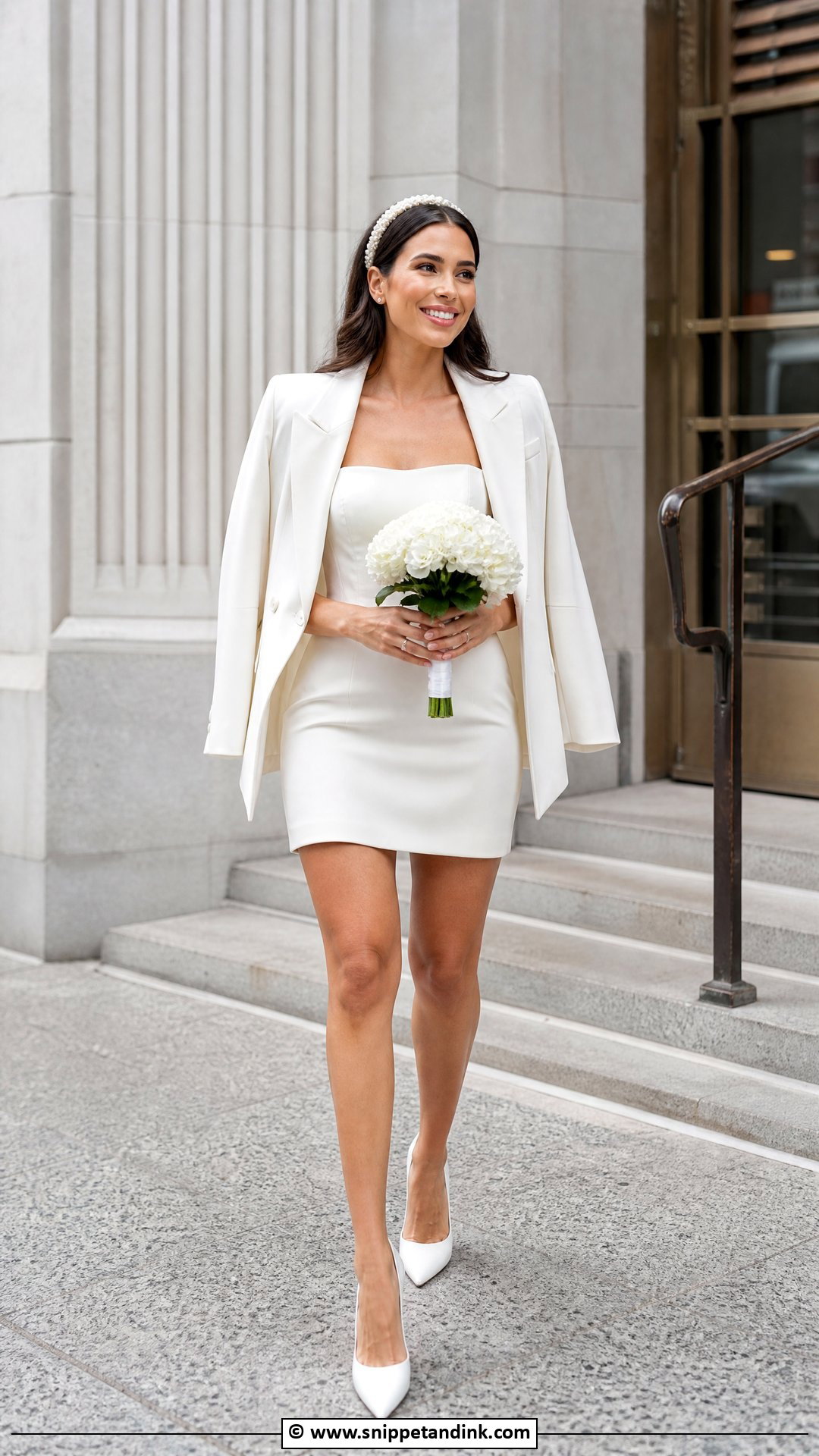
A short bridal dress suits civil ceremonies, receptions, after-parties, elopements and courthouse weddings, as a structured mini, a tea-length dress or a playful lace piece. The shoes become a feature, so white pumps, embellished flats or satin block heels deserve some thought. A birdcage veil, pearl headband or tailored blazer adds polish. Check the length while sitting down, since a mini rises a few inches on a chair, and dance in it before you buy.
17. Tea Length Bridal Dress
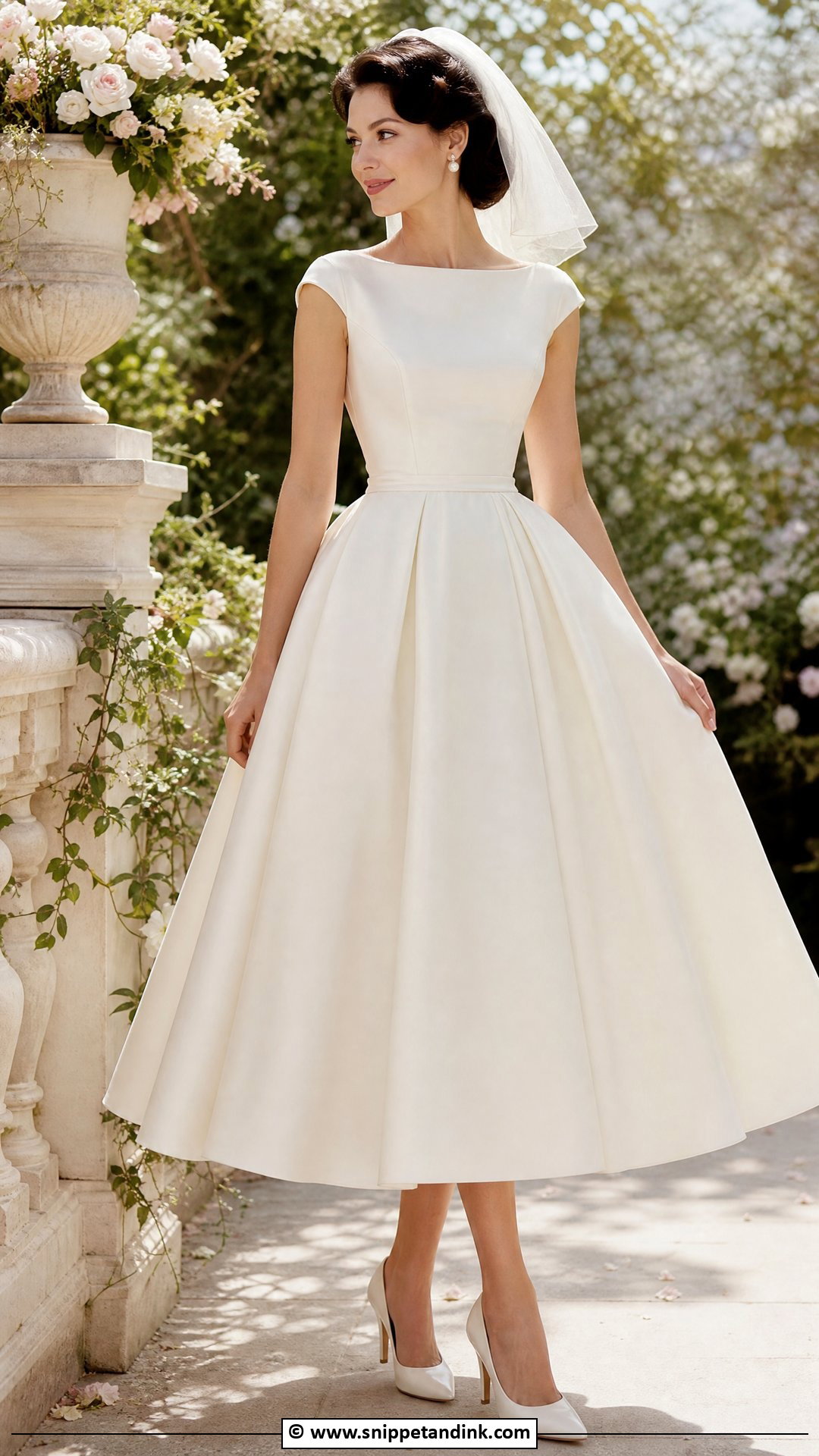
Tea length lands between knee and ankle and has a vintage charm with easy movement. A fitted bodice, full skirt and classic pumps suit it in lace, satin, organza or tulle. Because the hem shows the shoes, pick footwear before the hem is set, since even a small change in heel height shifts where the skirt falls. A short veil, pearl earrings and soft curls work well for courthouse weddings, garden parties and daytime ceremonies.
18. Bridal Jumpsuit
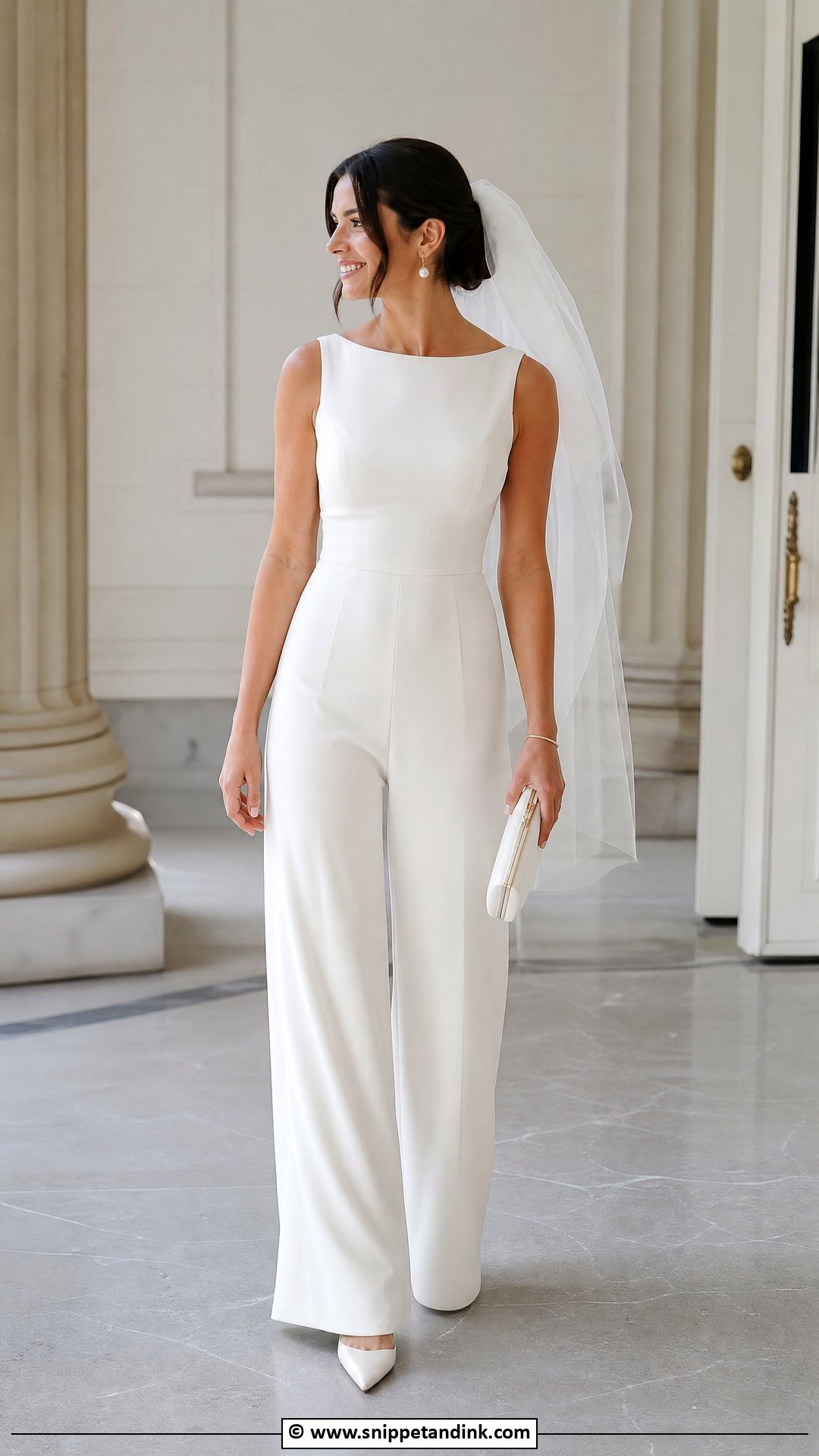
A jumpsuit is modern, comfortable and a little unexpected. Wide-leg crepe or satin gives the elegance of a gown with the ease of trousers, and a fitted bodice, cape sleeves, pearl buttons or a structured waist make it bridal. The trouser length should be hemmed for one specific pair of shoes, usually pointed heels that lengthen the leg. The thing nobody mentions is the bathroom, so look for a back zip you can manage. A veil still works for the ceremony.
19. Bridal Suit
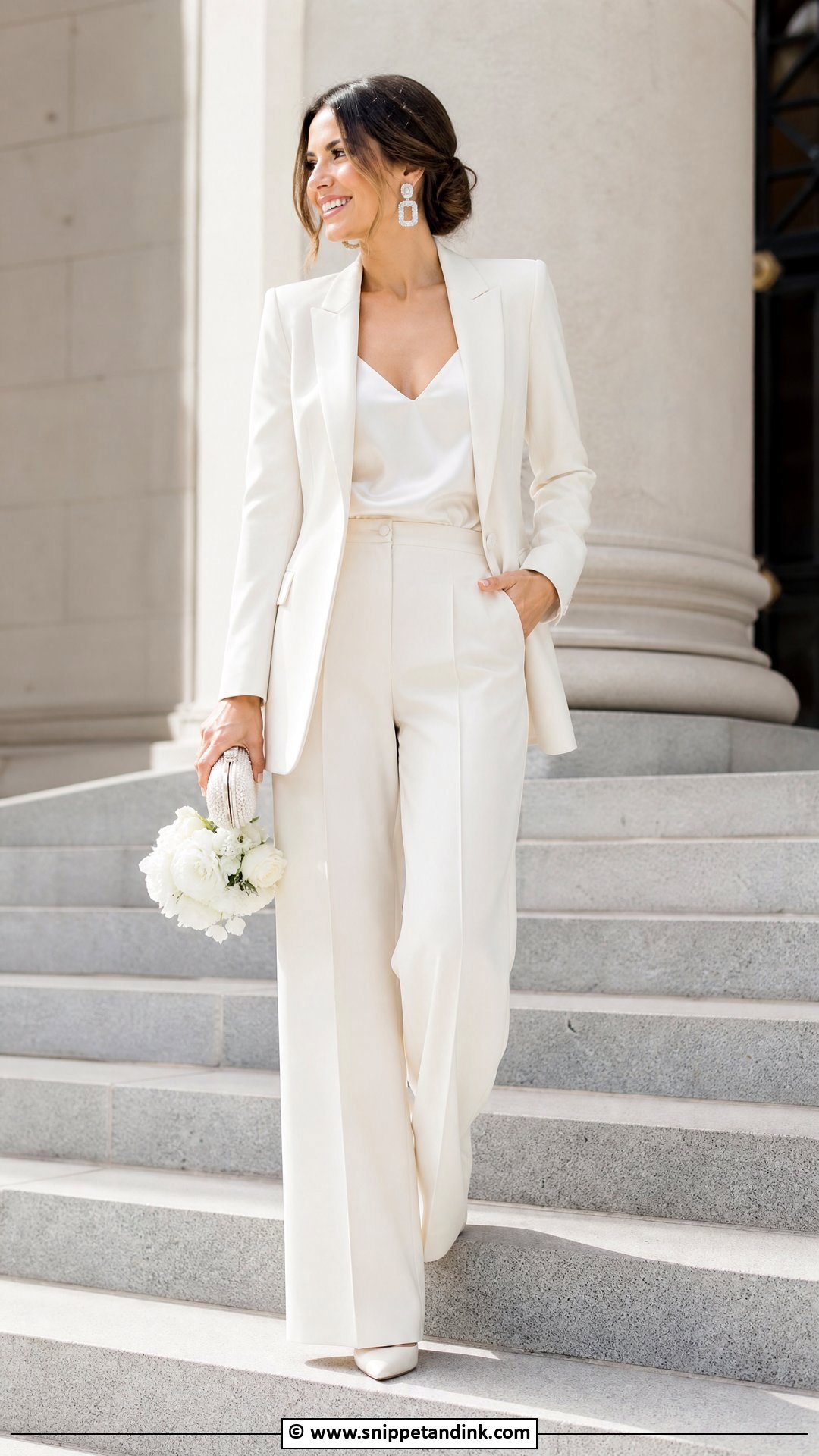
A bridal suit gives a sharp, personal look, and when the fit is right, a white or ivory blazer with tailored trousers feels as special as a gown. Satin lapels, pearl buttons, wide legs or a fitted vest add bridal detail. Ivory suiting shows makeup on the collar and lapel faster than anything, so I put a tissue at the collar when brides dress. Pointed pumps, statement earrings and a sleek clutch finish it, with a hat, veil or bow if it suits you.
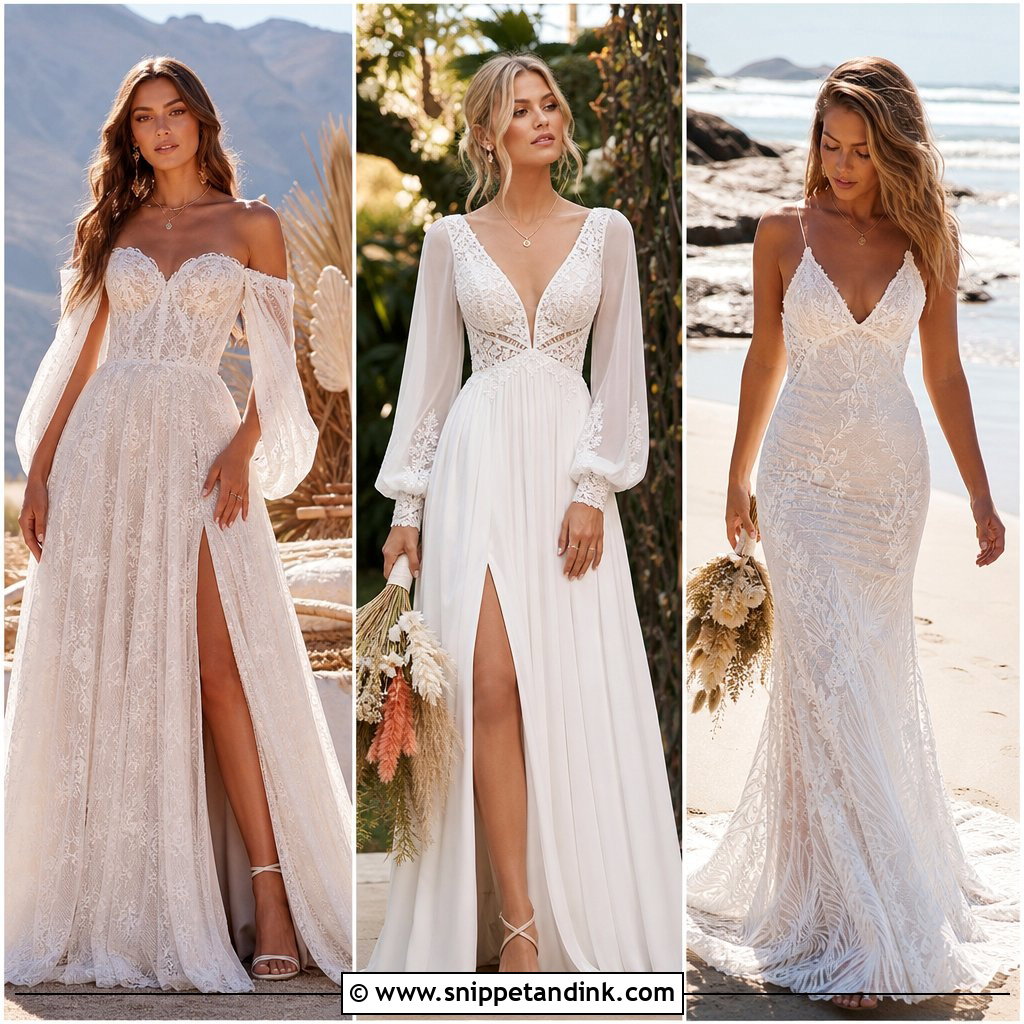
20. Two Piece Bridal Dress
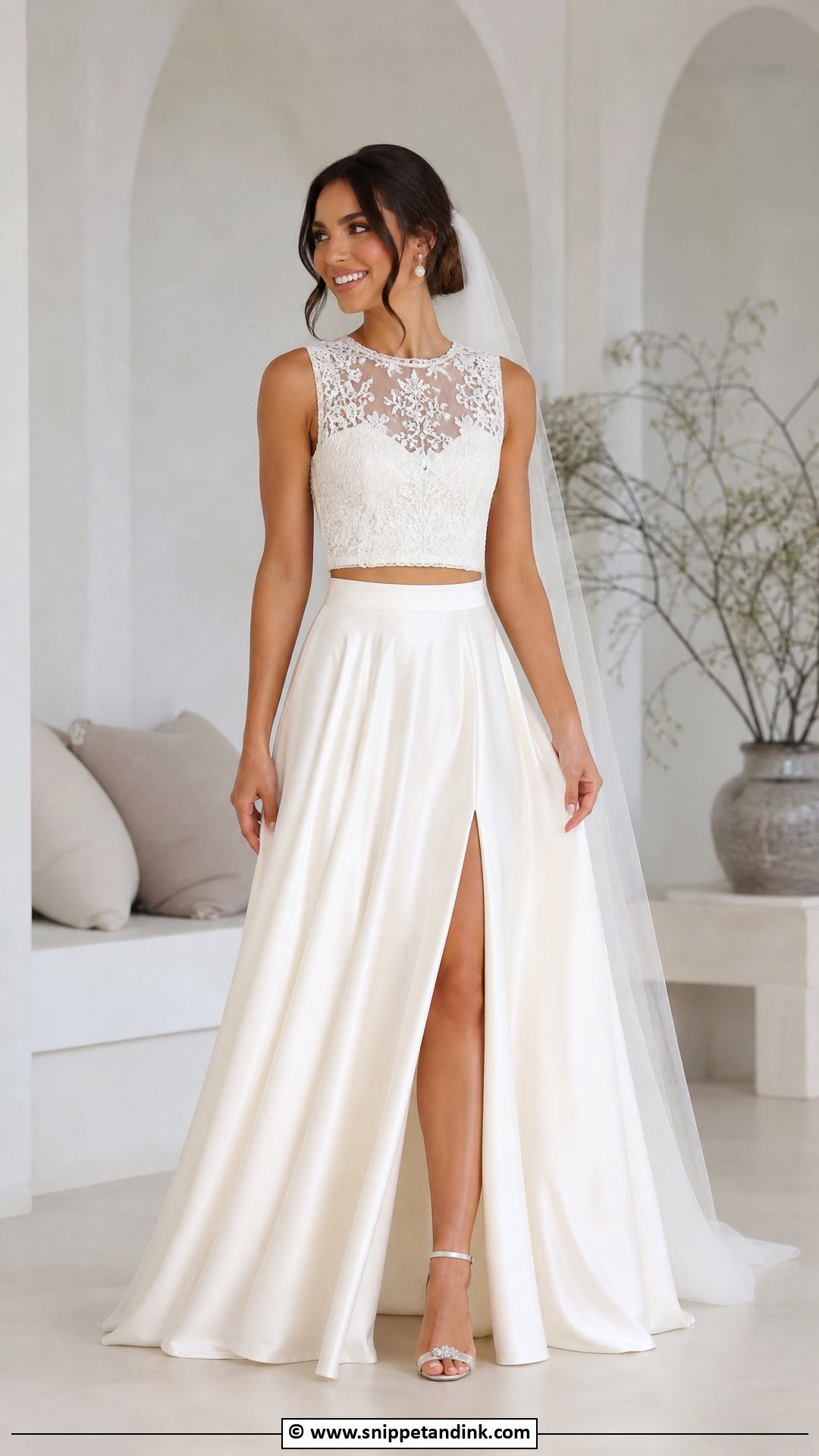
Two-piece sets give you flexibility: a lace corset with a satin skirt, or a sleek crop top with a full tulle skirt. They suit brides who want to mix textures, adjust proportions separately, or swap one piece for the reception. Whites from different fabrics rarely match perfectly, so I hold the top and skirt side by side in daylight before ordering. Simple heels, delicate earrings and a veil at the same formality finish it.
21. Detachable Overskirt Bridal Dress
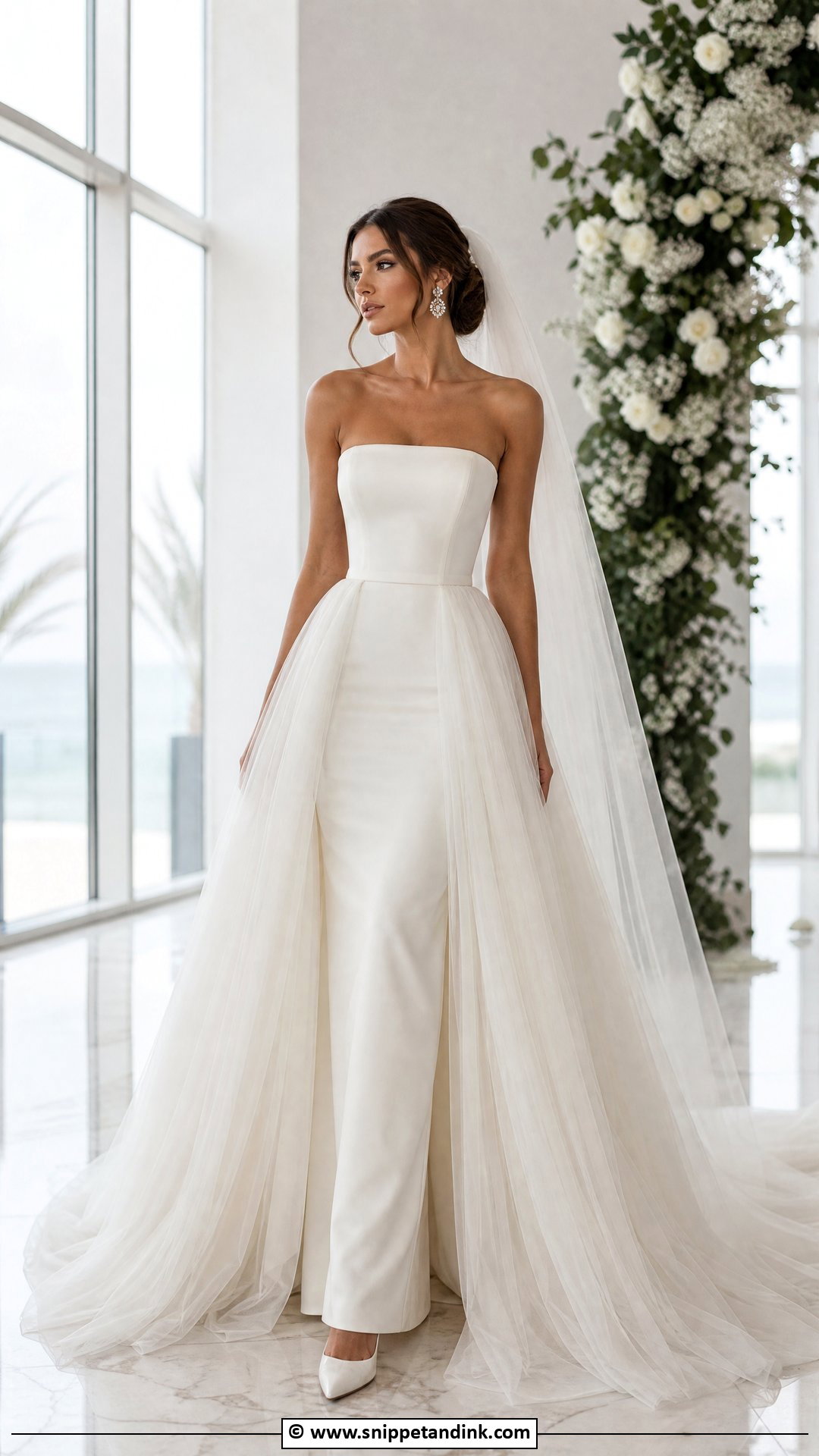
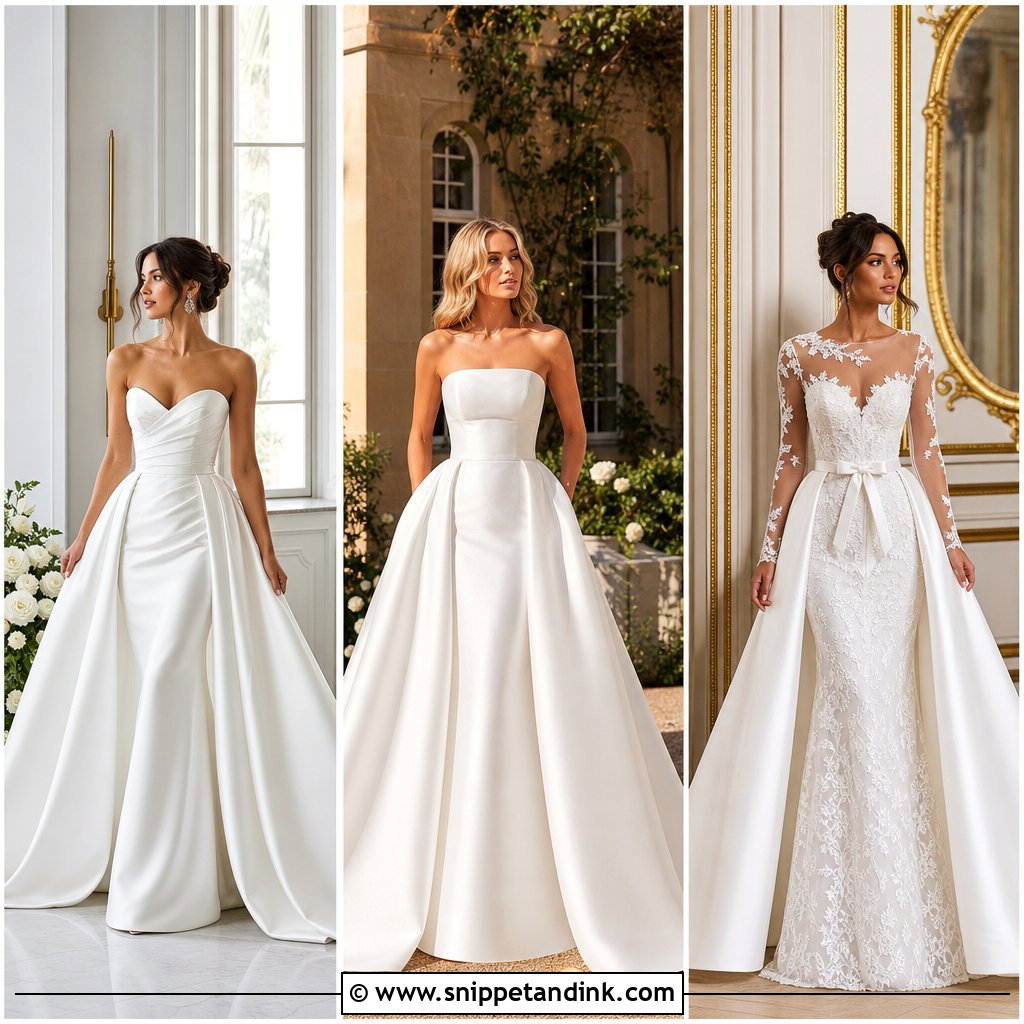
A detachable overskirt gives you a full ceremony silhouette and a lighter reception look underneath: a fitted gown, mini dress or jumpsuit. Tulle overskirts are romantic; satin or mikado ones are structured. The waist join is where it succeeds or fails, so make sure the attachment lies flat and doesn’t add bulk under the overskirt. Practise taking it off with the person who’ll help you on the day.
22. Convertible Bridal Dress
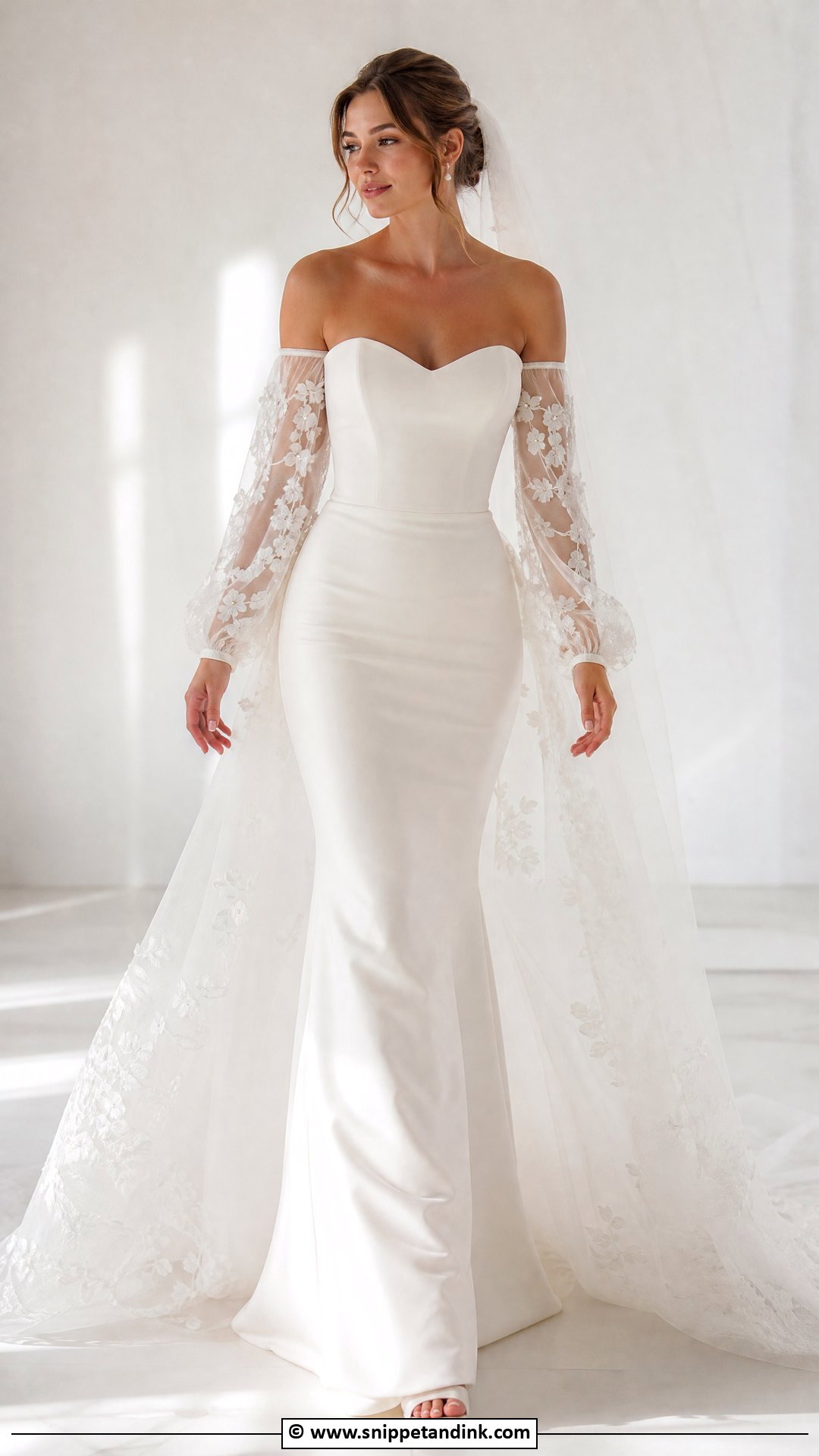
A convertible bridal dress is designed to change across the day with removable sleeves, a detachable train, a cape, an overskirt or straps that alter the neckline. It’s useful when the day moves from ceremony to dinner to dancing. A clean base dress works best so each added piece has room. At fittings, try every version and look at photos of each, since one configuration is usually clearly better than the others.
23. Sheer Sleeve Bridal Dress
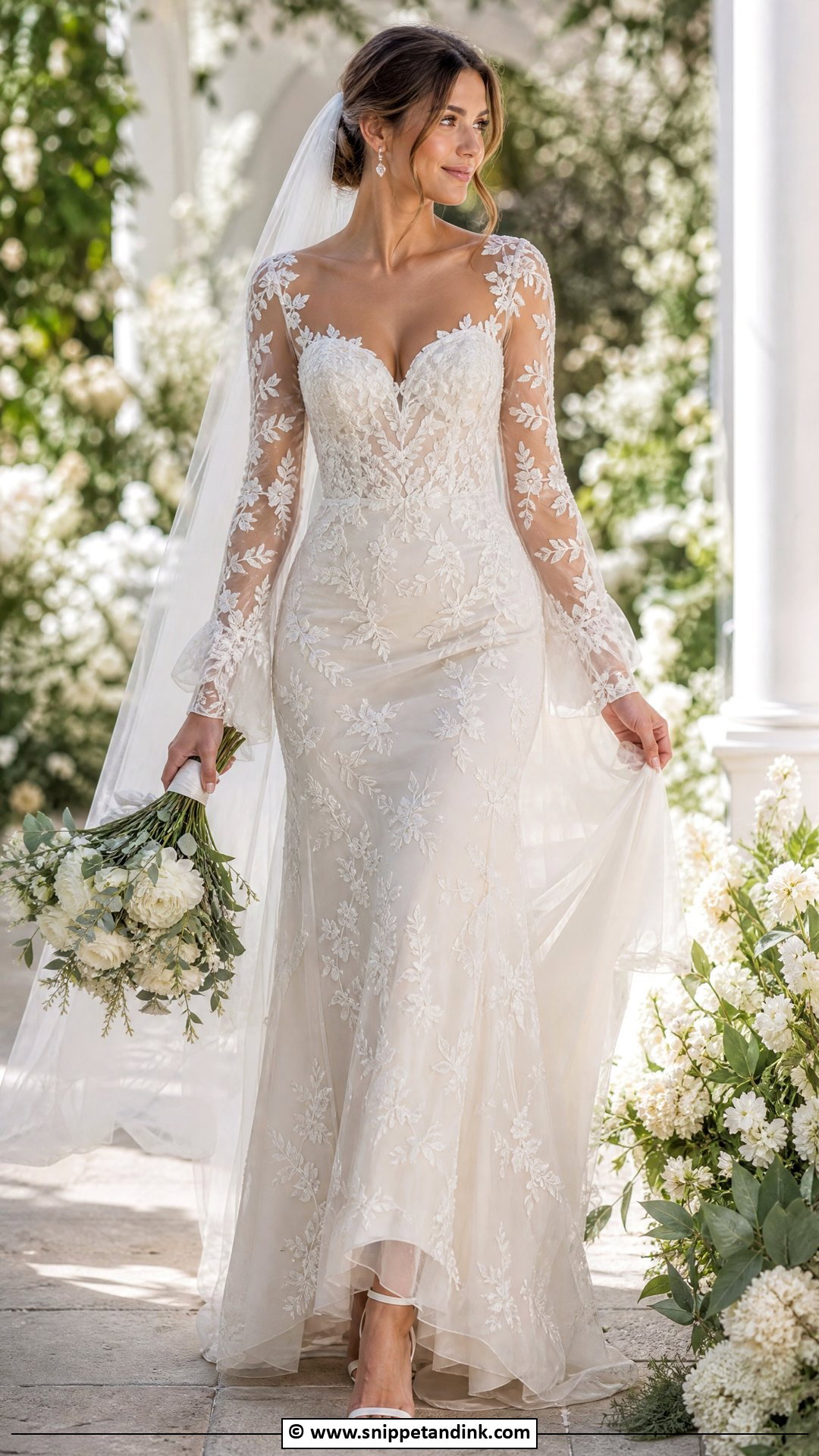
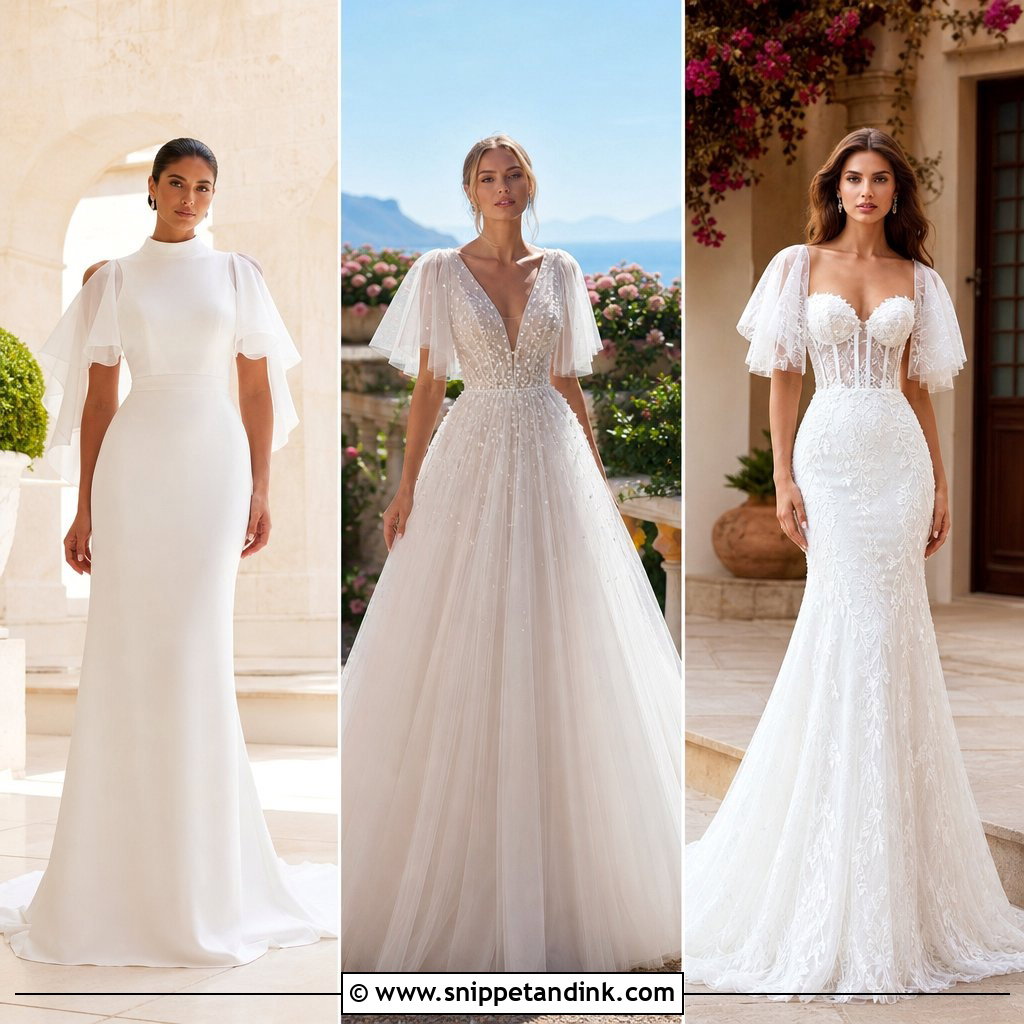
Sheer sleeves in tulle, lace, organza or illusion mesh give arm coverage without the weight of lined sleeves. Floral appliques, pearl accents or soft embroidery look especially good on them, and they work across seasons. Illusion mesh comes in several skin-tone shades, and the right one should vanish against your arm in daylight, so ask to compare them. A soft veil, simple earrings and minimal bracelets suit it.
24. Tulle Skirt Bridal Dress
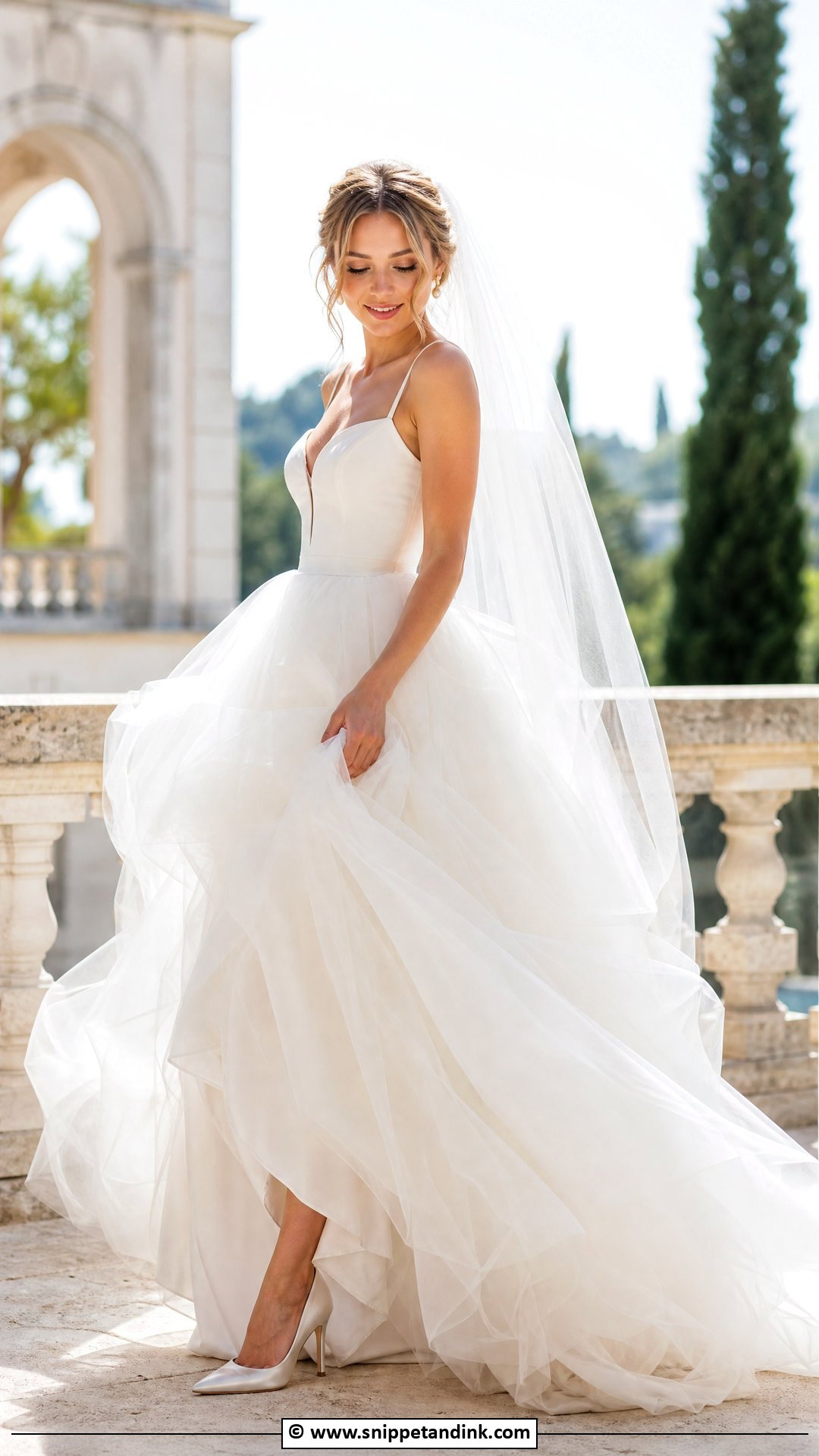
Tulle skirts give air and movement, understated in a few layers or dramatic in many. A fitted bodice balances the volume and a simple neckline keeps it modern. Tulle glows in natural light at outdoor and garden venues. A blush or ivory lining softens it; white or ivory layers keep it cleaner. Tulle catches on rough surfaces and heel straps, so I suggest closed or smooth heels with it.
25. Mermaid Bridal Dress
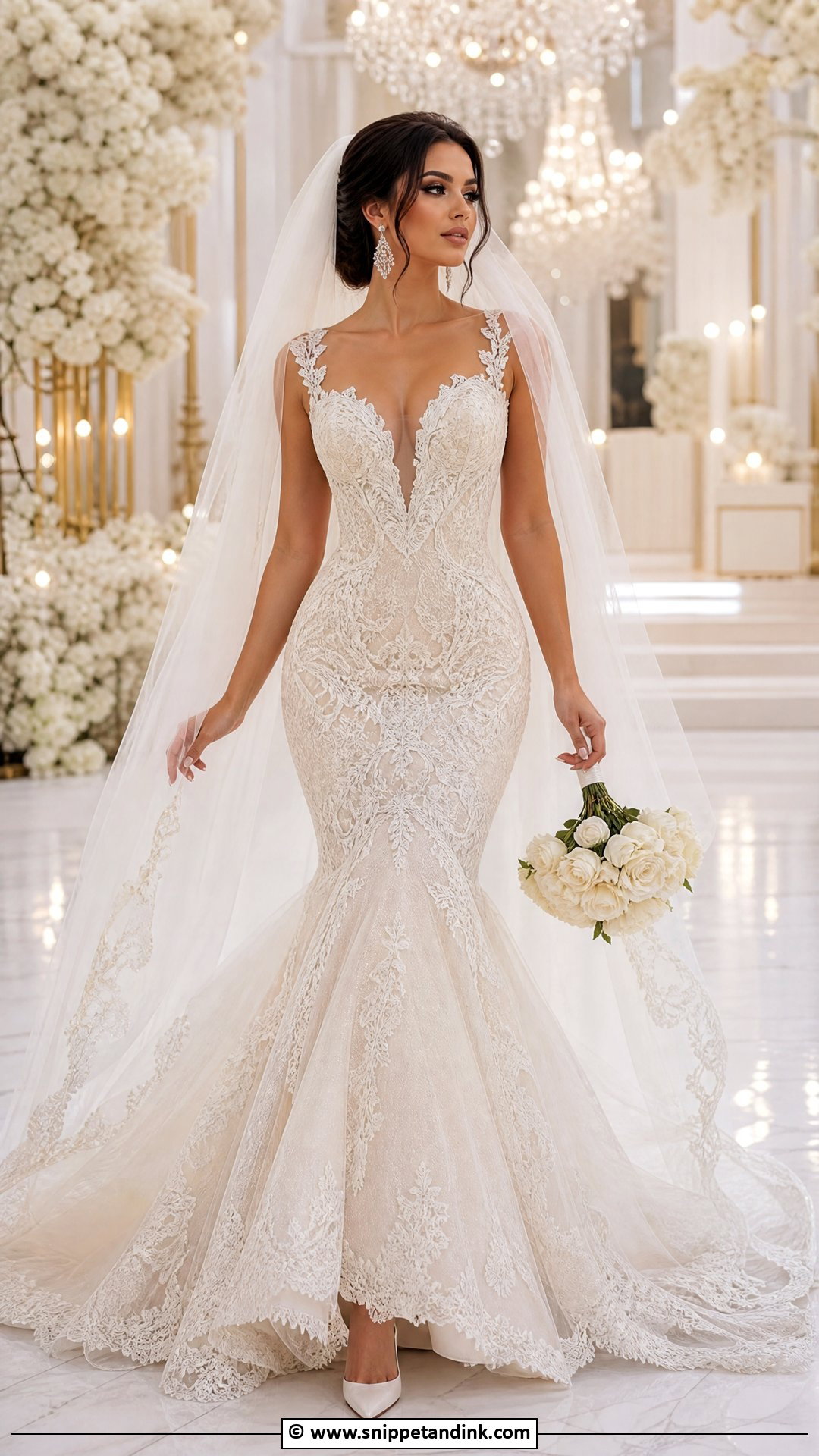
Mermaid gowns stay fitted through the bodice, waist, hips and thighs and flare near the knee. Crepe looks modern, satin shines and lace makes it romantic. Because it’s so fitted, sit, walk, climb a step and dance at every fitting. If the flare starts too low, you’ll shuffle all day, and the stairs to a church or stage become a real issue. A long veil, statement earrings and elegant heels complete it.
26. Fit And Flare Bridal Dress
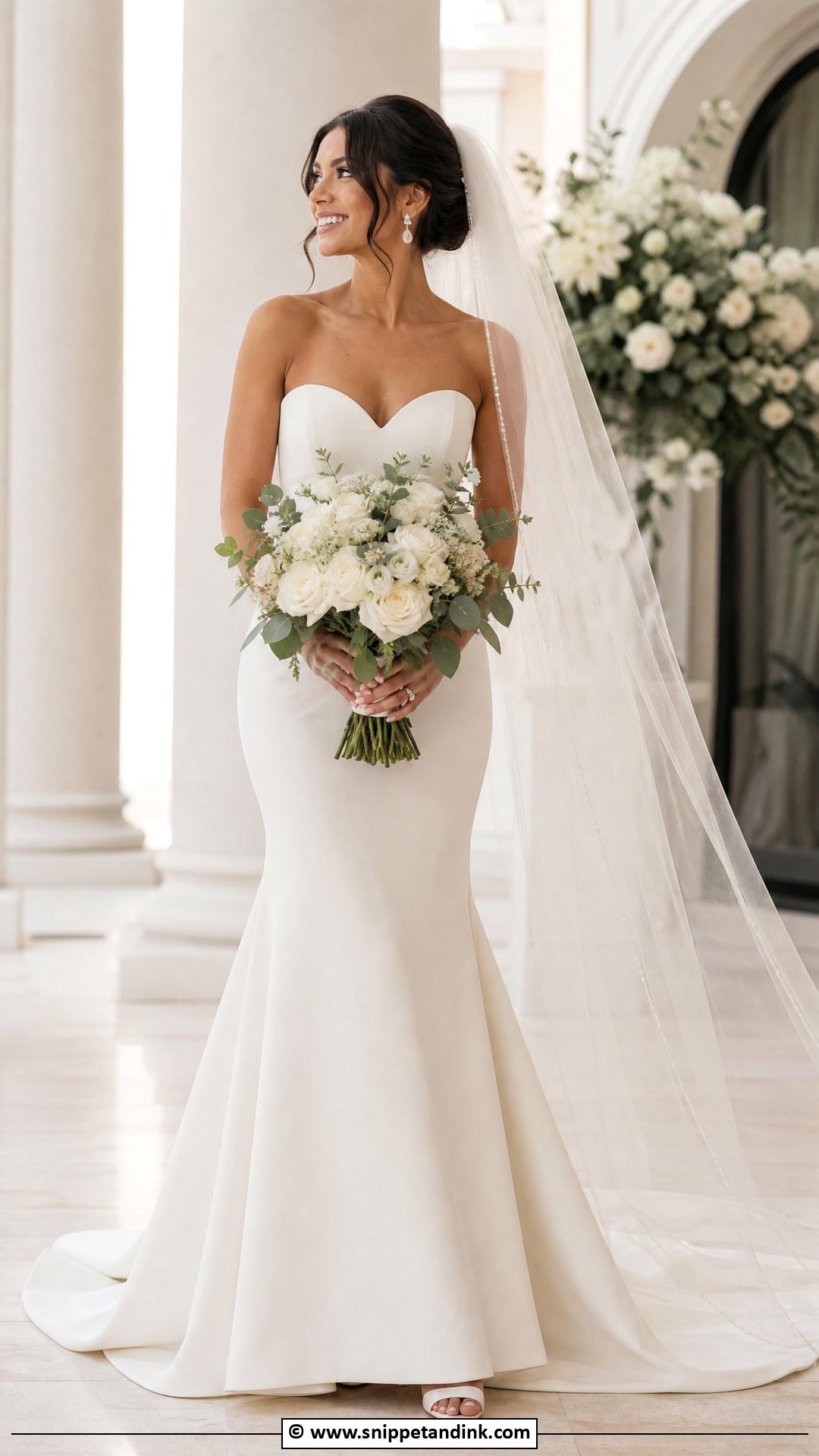
Fit-and-flare gives shape without the restriction of a full mermaid gown. It hugs the bodice and hips and widens around the lower thigh or knee, which is much easier to walk in. Lace, crepe, satin and beaded fabrics all suit it, with a sweetheart neck for romance or a square or strapless neck for something modern. When brides love the mermaid look but struggle to move in one, this is usually where we land. Match the veil to the train length.
27. Column Bridal Dress
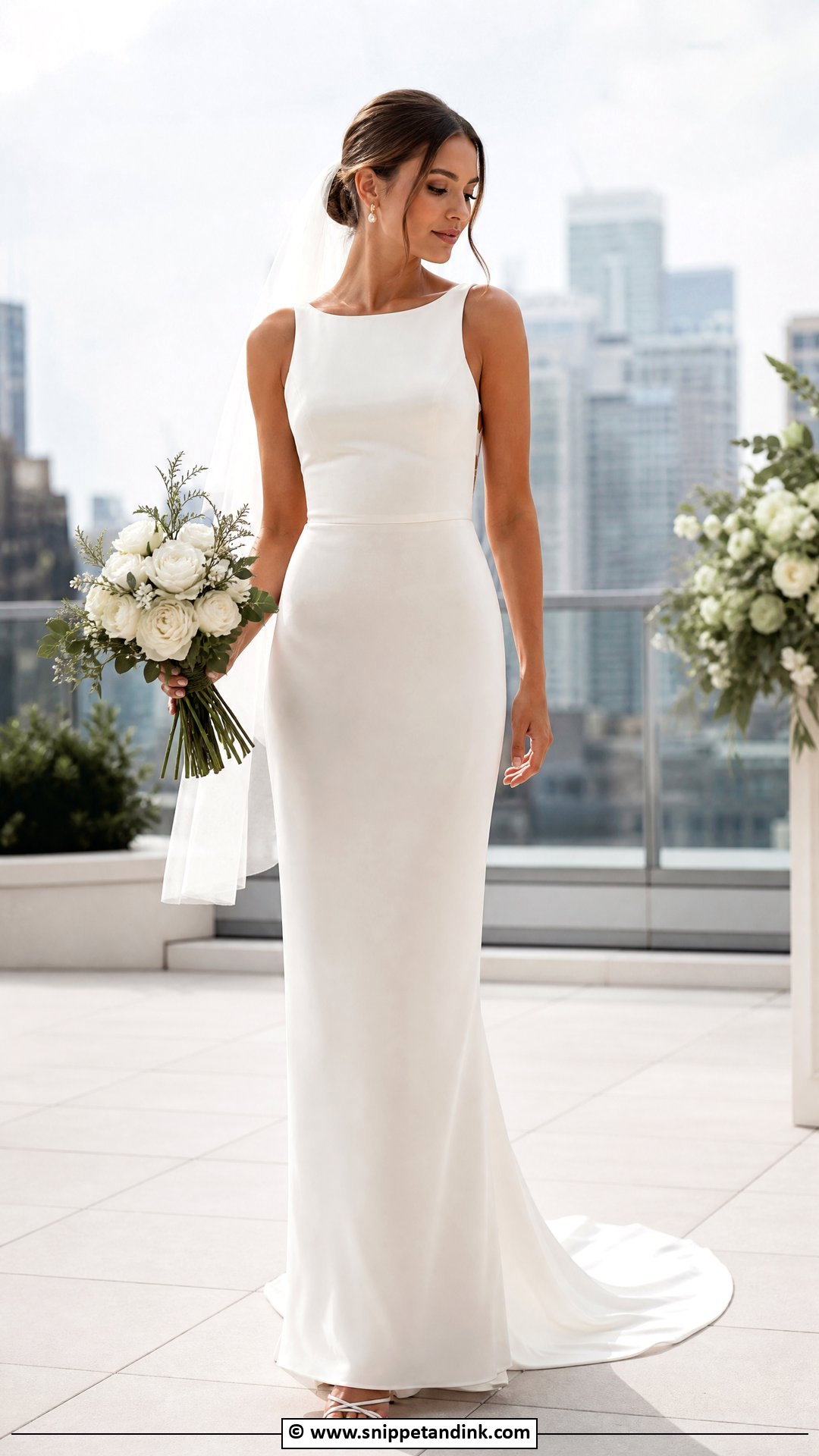
A column falls straight and narrow from the shoulders or waist, sleek and unfussy. Satin, crepe, silk and lightly beaded fabrics suit it best. With such a plain shape, details carry the dress: a neckline, low back, side slit or long train. A column without a slit or a kick pleat restricts your stride more than people expect, so walk the length of the shop in it. Minimal jewelry and polished hair suit modern venues, beaches and rooftops.
28. Empire Waist Bridal Dress
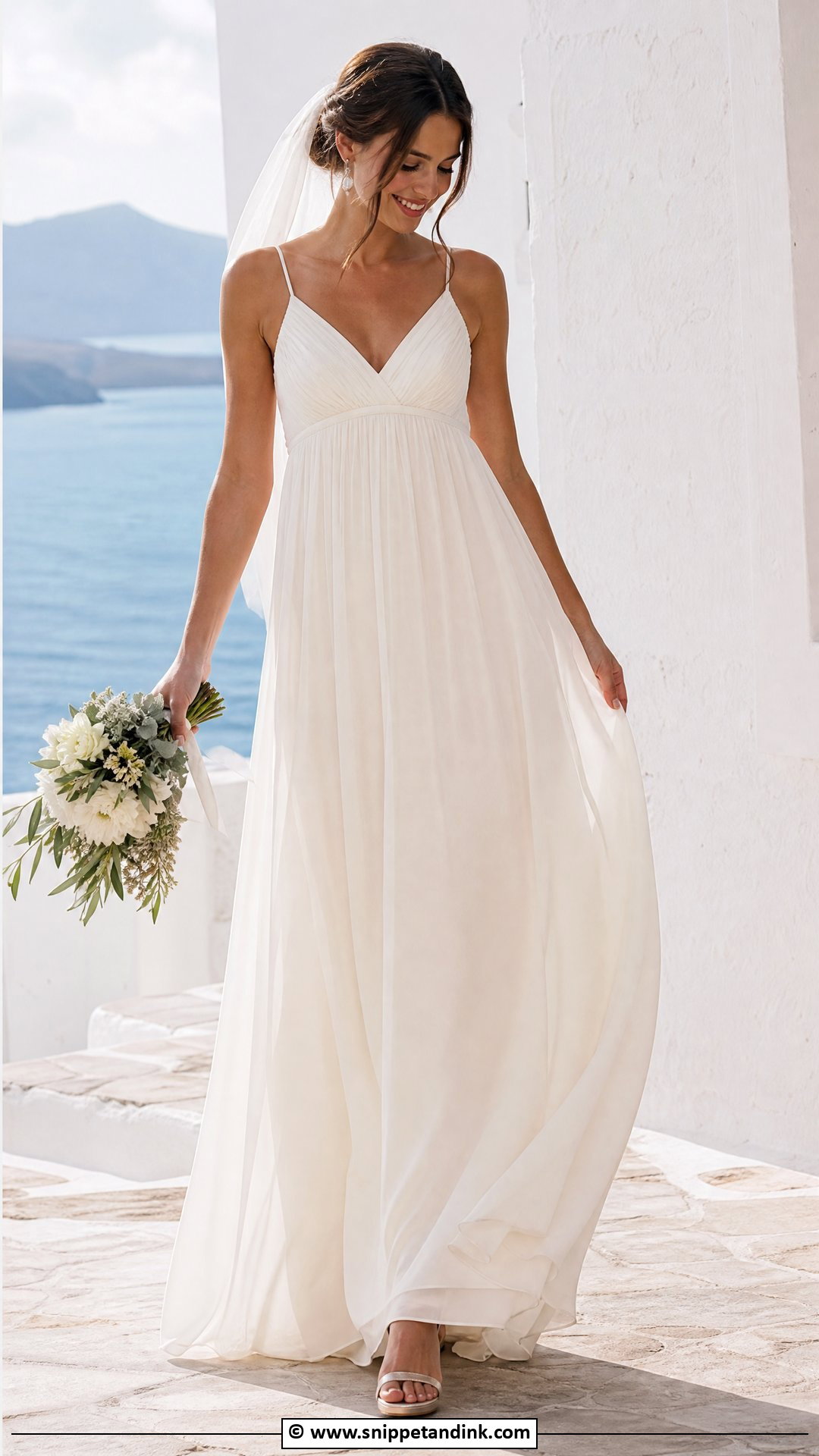
The empire waist sits just under the bust and lets the skirt flow down from there, light and comfortable at the stomach and hips. Chiffon, soft tulle and silk move easily with it. A square neck, flutter sleeve or delicate strap adds charm. Because there’s no waist seam to hold the bodice down, the band under the bust has to fit closely, or the bodice rides up when you raise your arms. Simple sandals and soft waves suit outdoor and destination weddings.
29. Blush Bridal Dress
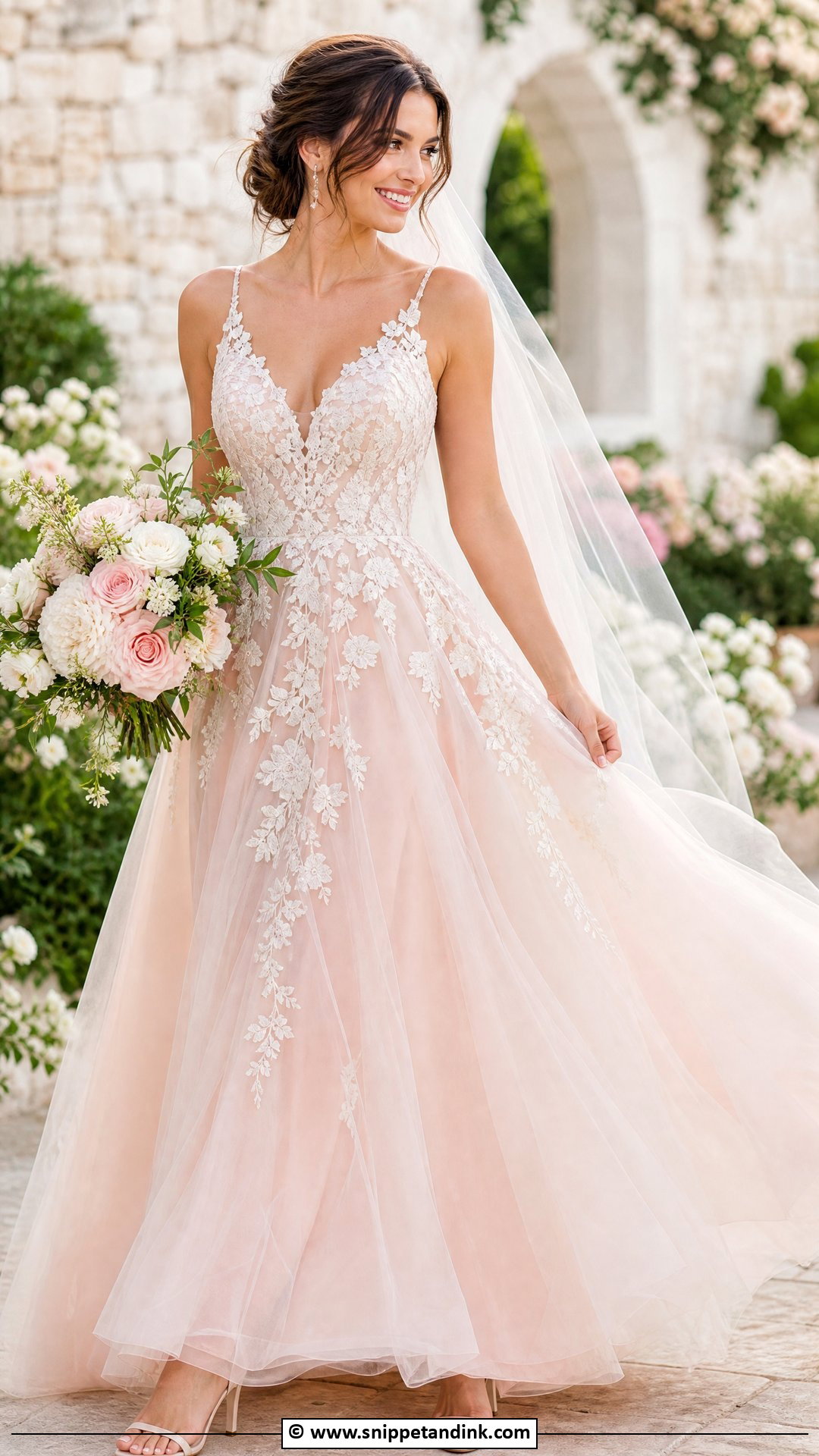
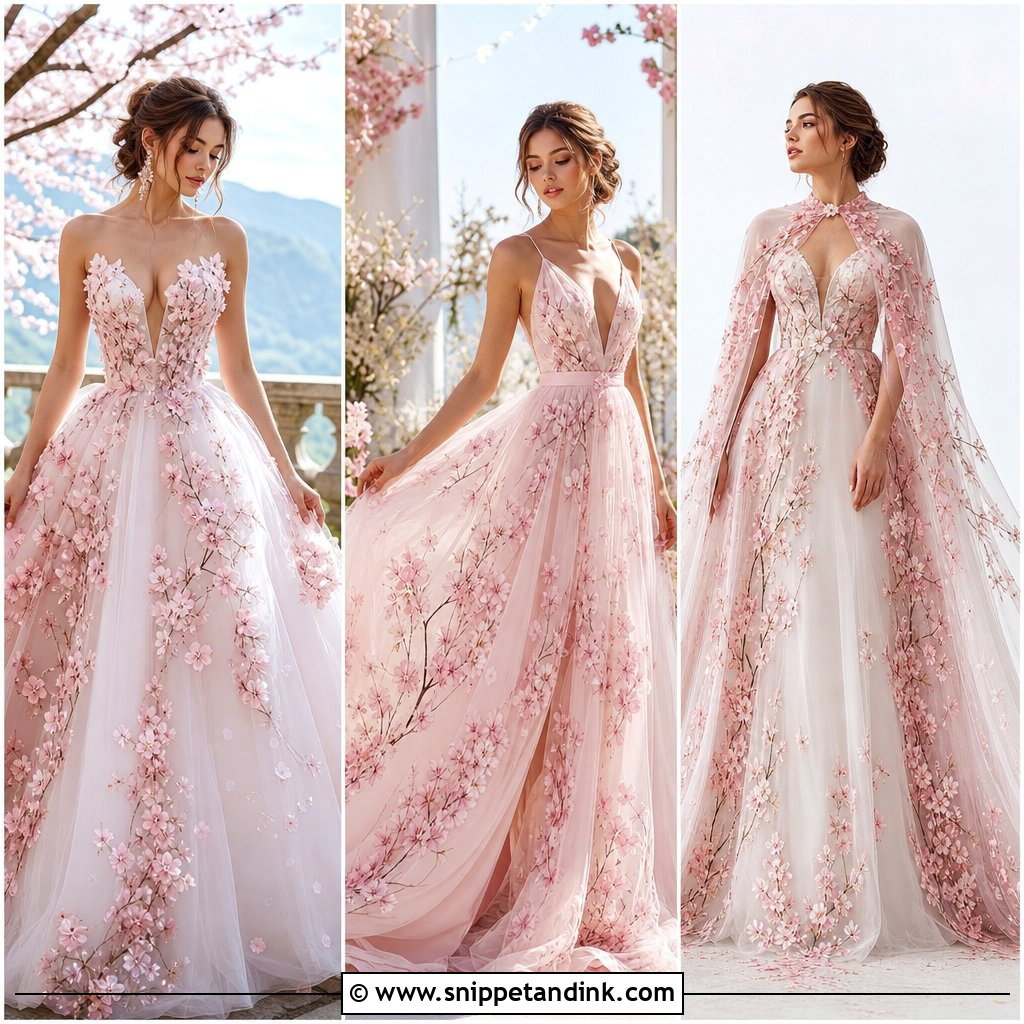
Blush gives colour while staying soft. Pale pink is flattering in photos and works with tulle, lace, floral appliques and layered skirts, or subtly as an underlay beneath ivory lace. Keep accessories in soft metals, ivory, pearl or clear crystal so the pink stays delicate. Blush shifts toward beige on some skin tones, so try it against your face in daylight. It suits garden, spring and evening weddings.
30. Blue Bridal Dress
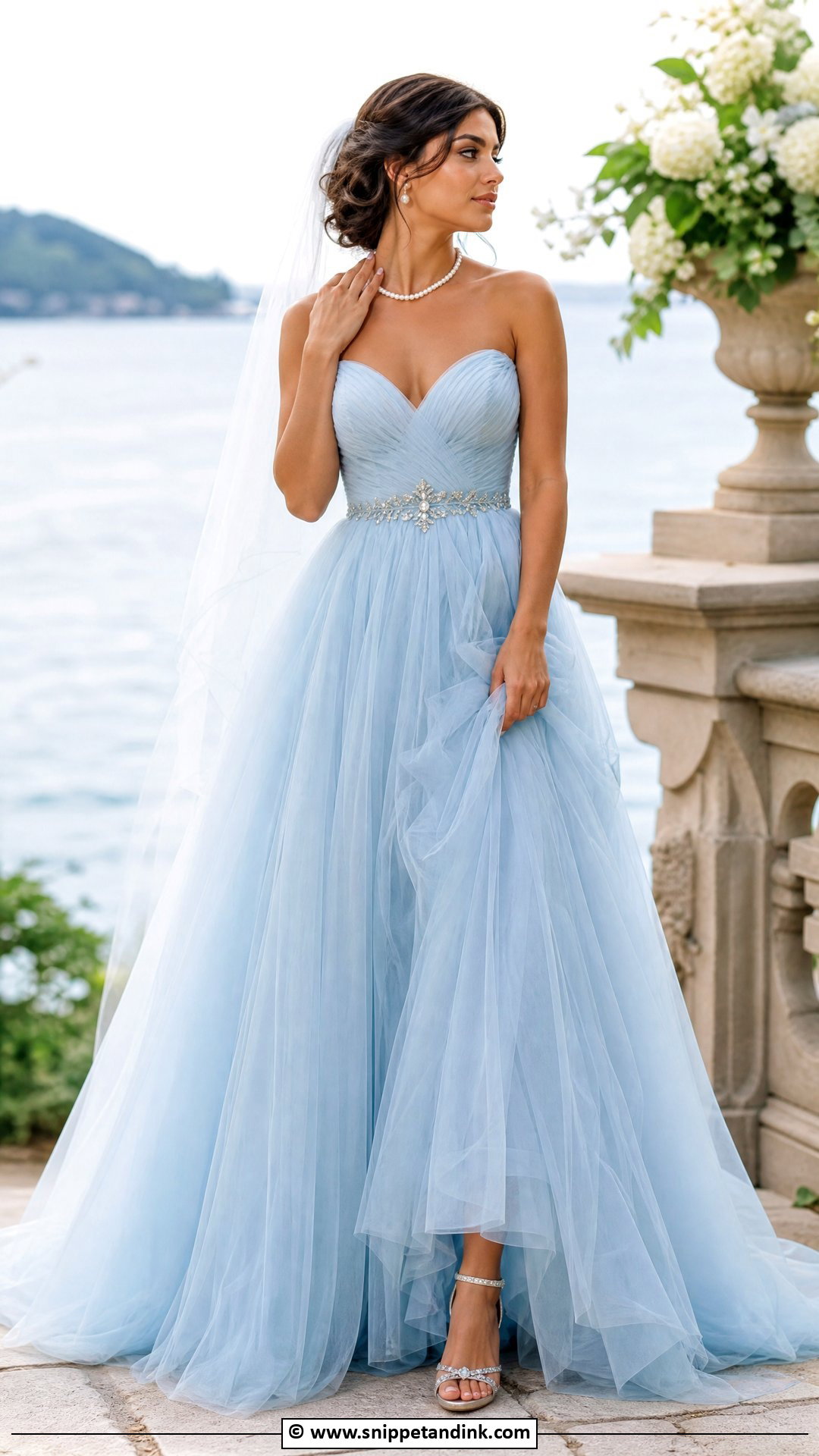
Blue feels fresh and personal. Pale, icy and powder blue are the easiest shades, in tulle, organza, satin or floral embroidery. It suits brides who want something different without going bold. Silver heels, pearl jewelry and a simple veil, or no veil, keep it modern. Pale blue can read as white under strong sun, which is something to know before you choose it for a midday beach ceremony.
31. Champagne Bridal Dress
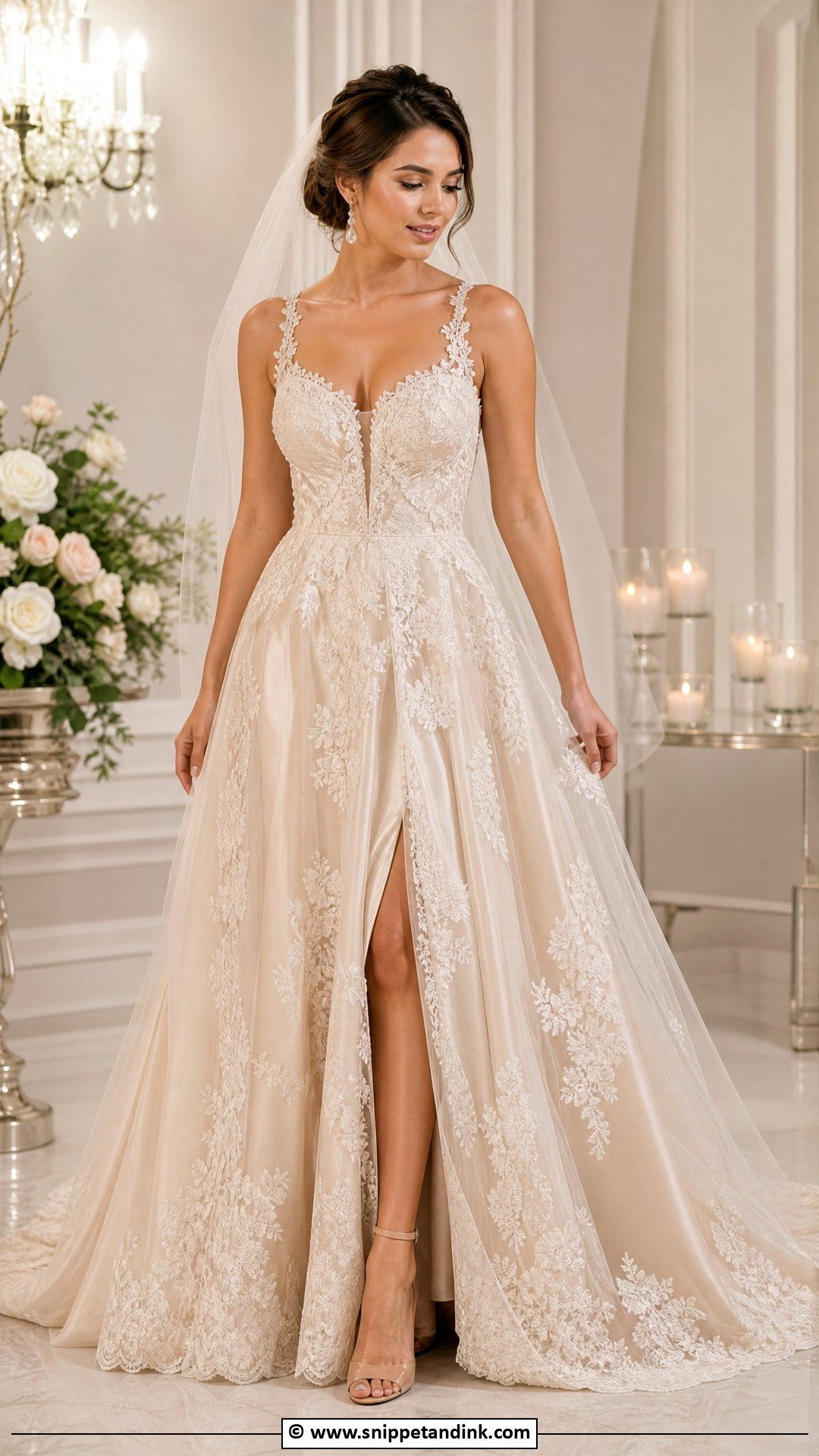
Champagne has a warm tone that feels rich without being loud, and it flatters skin that bright white makes look washed out. It looks good under lace, beading and sheer tulle, at evening weddings, historic venues and indoor settings. Ivory, gold, pearl or nude accessories keep it cohesive. Champagne satin feels sleek; champagne lace looks vintage. In some indoor light champagne looks almost nude, so if that concerns you, choose an ivory overlay on a champagne base.
32. Floral Print Bridal Dress
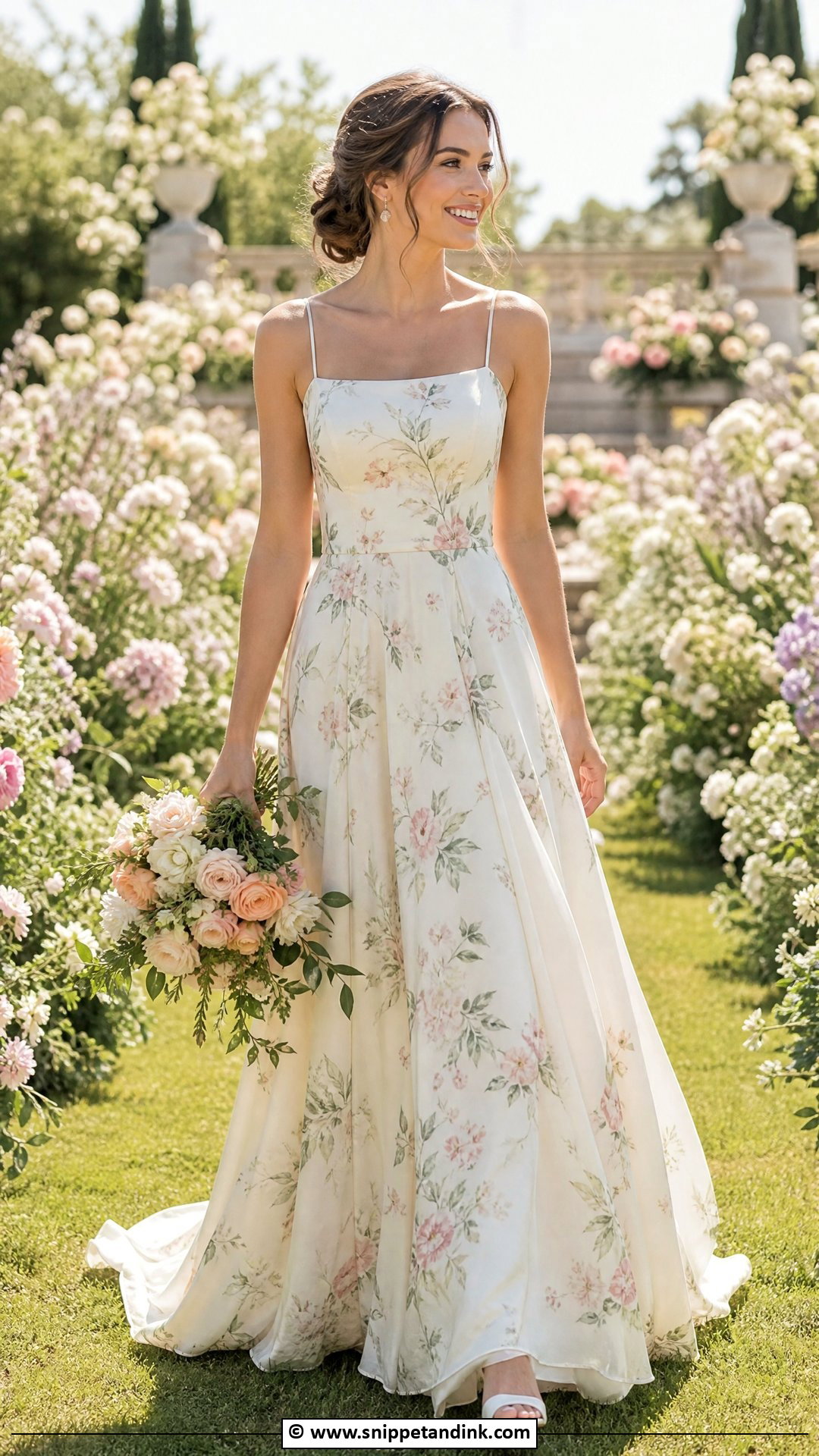
A floral print brings personality, either pale embroidered flowers on ivory or more visible watercolour blooms. It suits garden weddings, outdoor venues, spring ceremonies and creative celebrations. If the print is bold, keep the silhouette simple so the dress looks deliberate rather than busy. Soft heels, minimal jewelry and natural makeup suit it, with a plain veil or none at all. Hold the print against your bouquet colours early, since two different floral palettes can clash.
33. Cape Bridal Dress
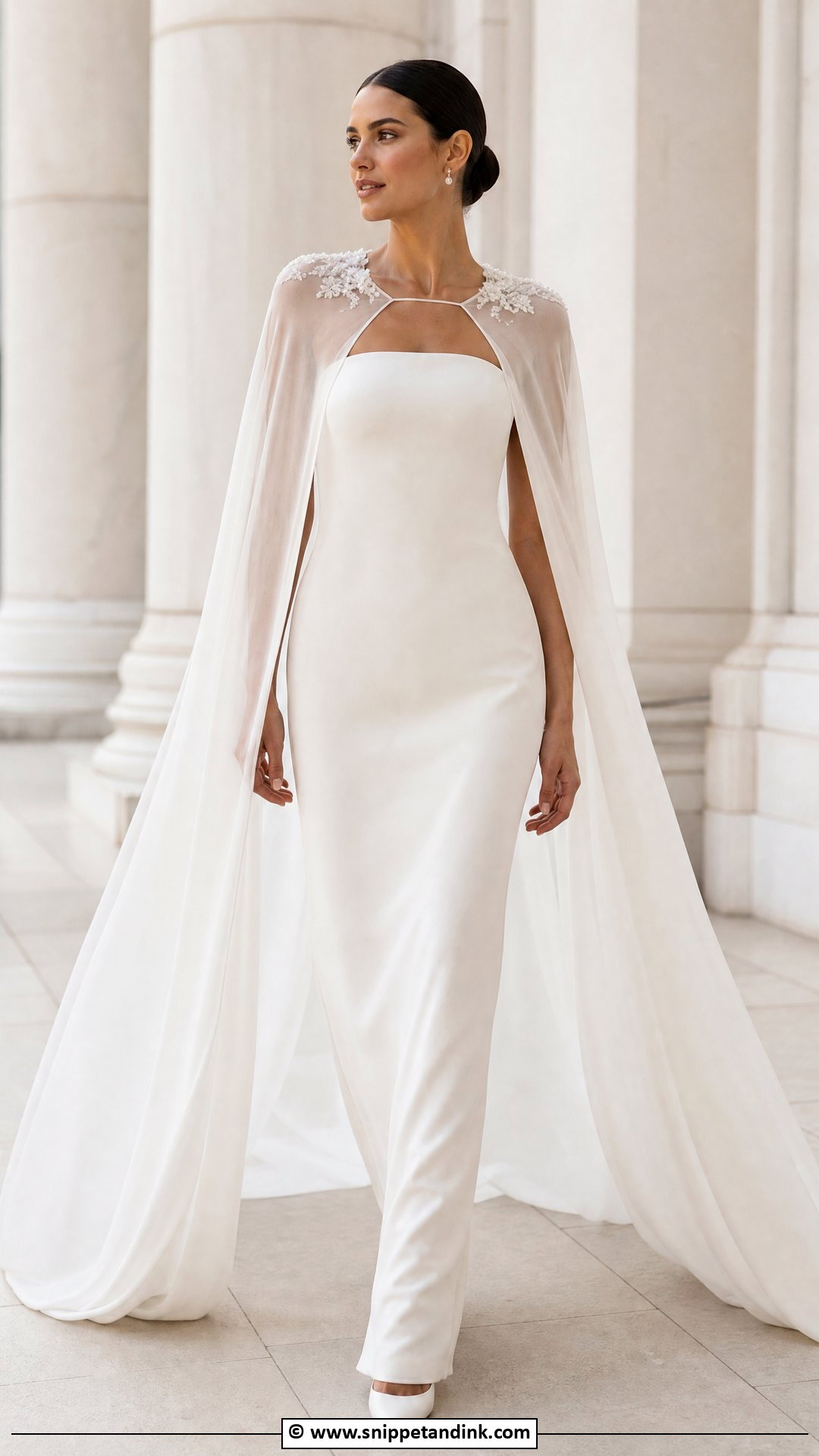
A cape gives drama without a traditional veil, sheer and delicate, structured, or covered with lace and pearls. It pairs with column gowns, jumpsuits, minimal dresses and fitted silhouettes and moves well in photos. A detachable cape gives you the option to take it off for the reception. Keep earrings and hair simple, since the cape already frames the upper body. Ask how it attaches; small snaps at the shoulder are fine, but a single hook will tear under the weight of a long cape.
34. Halter Neck Bridal Dress
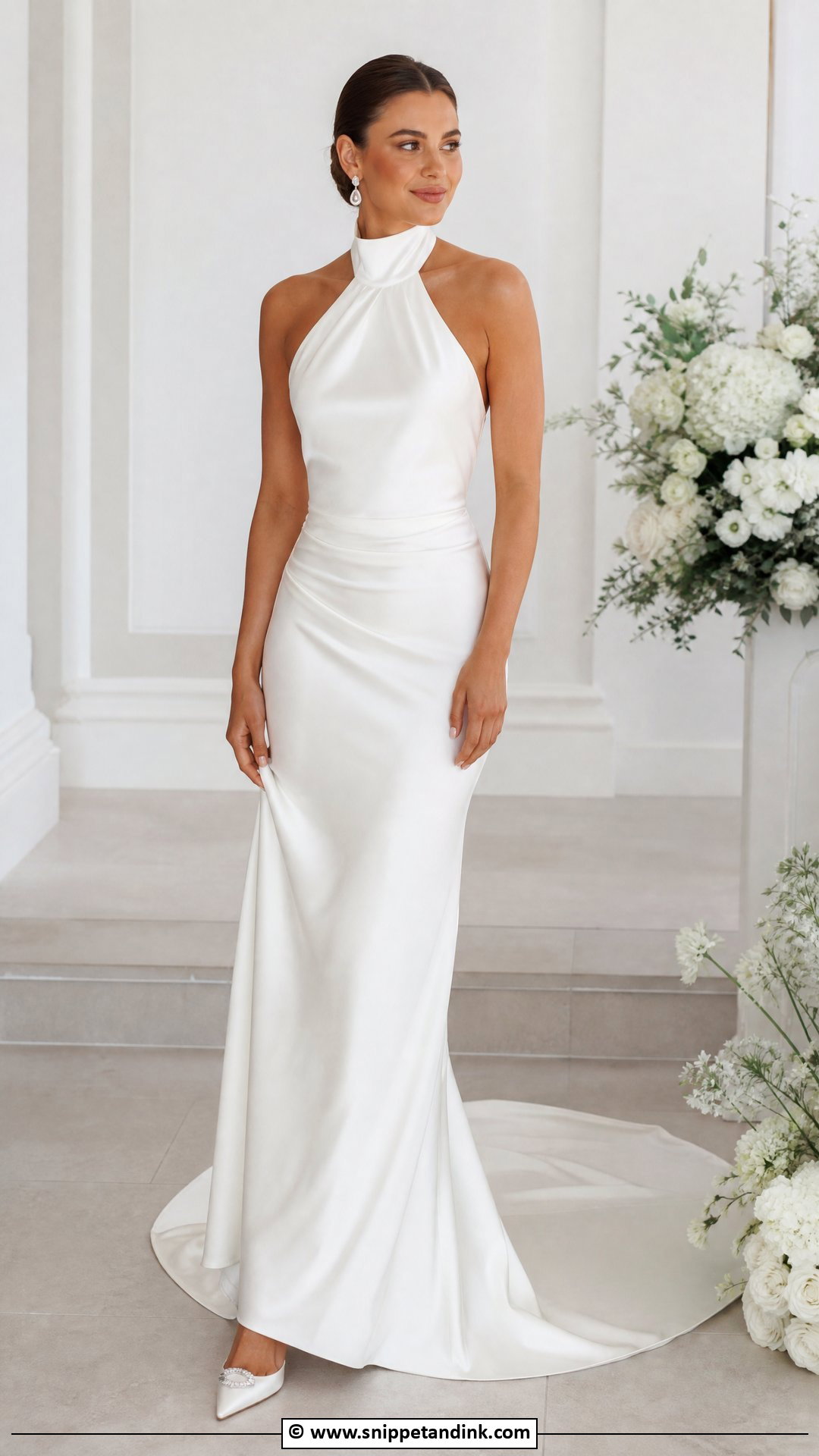
Halter necks highlight the shoulders and give support without traditional straps. Satin looks sleek, crepe relaxed, beading glamorous. A high halter is sophisticated; a plunging one more dramatic. Because the neckline draws attention upward, wear your hair up, in a ponytail or swept back, and skip the necklace. The neck clasp carries weight, so on heavier beaded fabric I add an inner strap across the back to take the strain off your neck.
35. Reception Bridal Dress
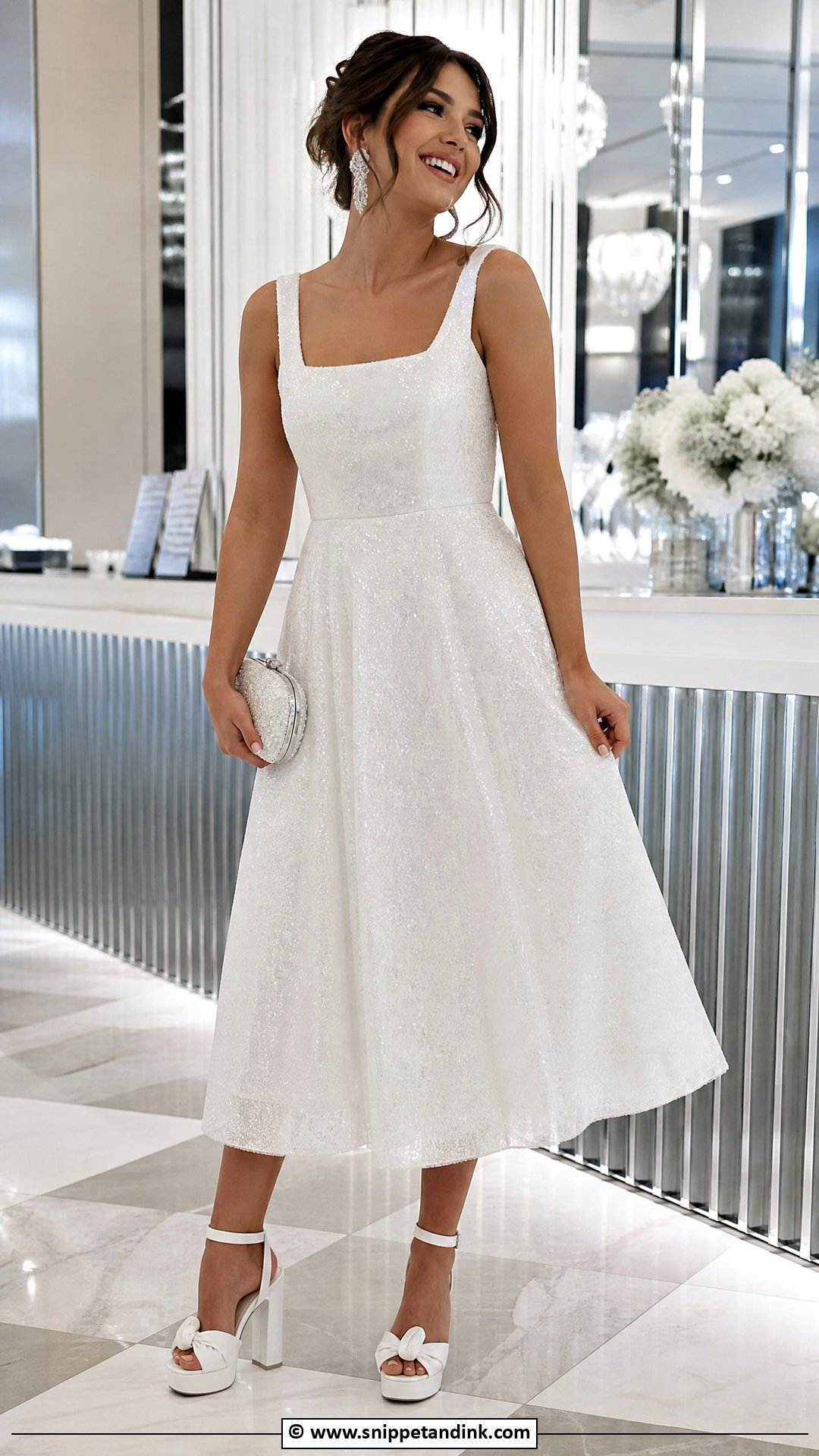
A reception dress is about movement and celebration. Brides often change into a shorter dress, sleek slip, feather-trim mini, fitted crepe gown or sparkly white midi after the ceremony. Choose one that matches the reception’s formality and feels lighter than the ceremony gown. Build twenty minutes into the timeline for the change, because hairpieces, veil and shoes usually swap too. Staying in the same colour family keeps the photos cohesive.
Nine Months From Order to Aisle
Most designer gowns are made after you order rather than taken from stock, and delivery can take several months, with rush options costing extra. Alterations need their own time on top. A schedule I suggest working back from:
- About eight to ten months out: start appointments, so there’s time to order without rush fees.
- Once ordered: ask for the expected arrival date in writing, plus what happens if it runs late.
- Around two to three months out: first alteration fitting, with your shoes and underwear.
- A month out: second fitting for the main adjustments.
- Two to three weeks out: final fitting and bustle lesson, then the dress stays with the shop or goes home in a breathable bag.
Teach the Bustle to the Person Who Will Do It
Long trains are lifted after the ceremony with hooks, buttons or ribbon ties hidden under the skirt. Brides learn the system at the final fitting and then forget it, while the person actually doing it on the day was never shown. Bring that person along, let them practise twice, and take a short video on their phone. Ask the seamstress to add an extra loop or two, because one tends to break during the dancing.
Move in It Before You Say Yes
There is no single way to look like a bride. A ball gown, a clean slip, a lace A-line, a tailored suit, a jumpsuit, a colourful dress or a convertible look can all be right. The right one suits your body, your venue and how comfortable you need to be for the whole day. Trends can give you ideas, but at every appointment, sit, walk and dance in each dress, and notice which one you stop thinking about.
You'll Like These Ideas:





Leave a Reply