
Most Filipino bridal dressing grows out of four garments: the terno, the Maria Clara, the baro’t saya and the barong Tagalog. What modern designers change is weight and wearability. Linings get lighter, skirts get cleaner, and layers become removable so a bride can dance in the same dress she married in. The butterfly sleeve is still the detail people recognize from across a room, and the fabrics underneath it, piña, jusi, lace, satin, embroidered organza, decide how that sleeve stands. A ballroom, a garden ceremony and a short civil wedding each ask for something different, and there’s a Filipiniana-inspired outfit for each of them. Below are twenty complete looks I’d actually style, with the accessories and fitting notes that make each one work on the day.
Ordering a Terno When the Fabric Is Handwoven
Handwoven piña and hand embroidery are slow. Weaving pineapple fiber is delicate work, and embroidery on a full bodice and two sleeves can take many weeks before a dressmaker even starts cutting. When a bride wants genuine piña, I tell her to start talking to a maker eight to twelve months out. Jusi, silk organza and machine-embroidered blends move faster, but good terno makers book up during the peak wedding months, so earlier is always safer.
At the first consultation, these are the things I settle before anyone talks about beading:
- Sleeve structure. A butterfly sleeve stands because of how it’s pleated and stiffened. Ask what holds it up (interfacing, horsehair, a pleated sleeve head) and how it behaves after a few hours in humidity.
- Lining. Piña and jusi are sheer. Decide on the lining color early, because nude, ivory and white all change how the outer fabric reads.
- Fitting count. Plan on at least three fittings, the last one about two weeks before the wedding, with your actual shoes and undergarments.
- Fabric samples in your light. Take swatches outside and under warm bulbs. Natural fibers vary from bolt to bolt.
If you’re marrying somewhere hot, tell your maker the venue. A terno for an air-conditioned ballroom can be built heavier than one for an afternoon garden ceremony, and the sleeve stiffening should change to match.
1. Classic Terno Wedding Dress
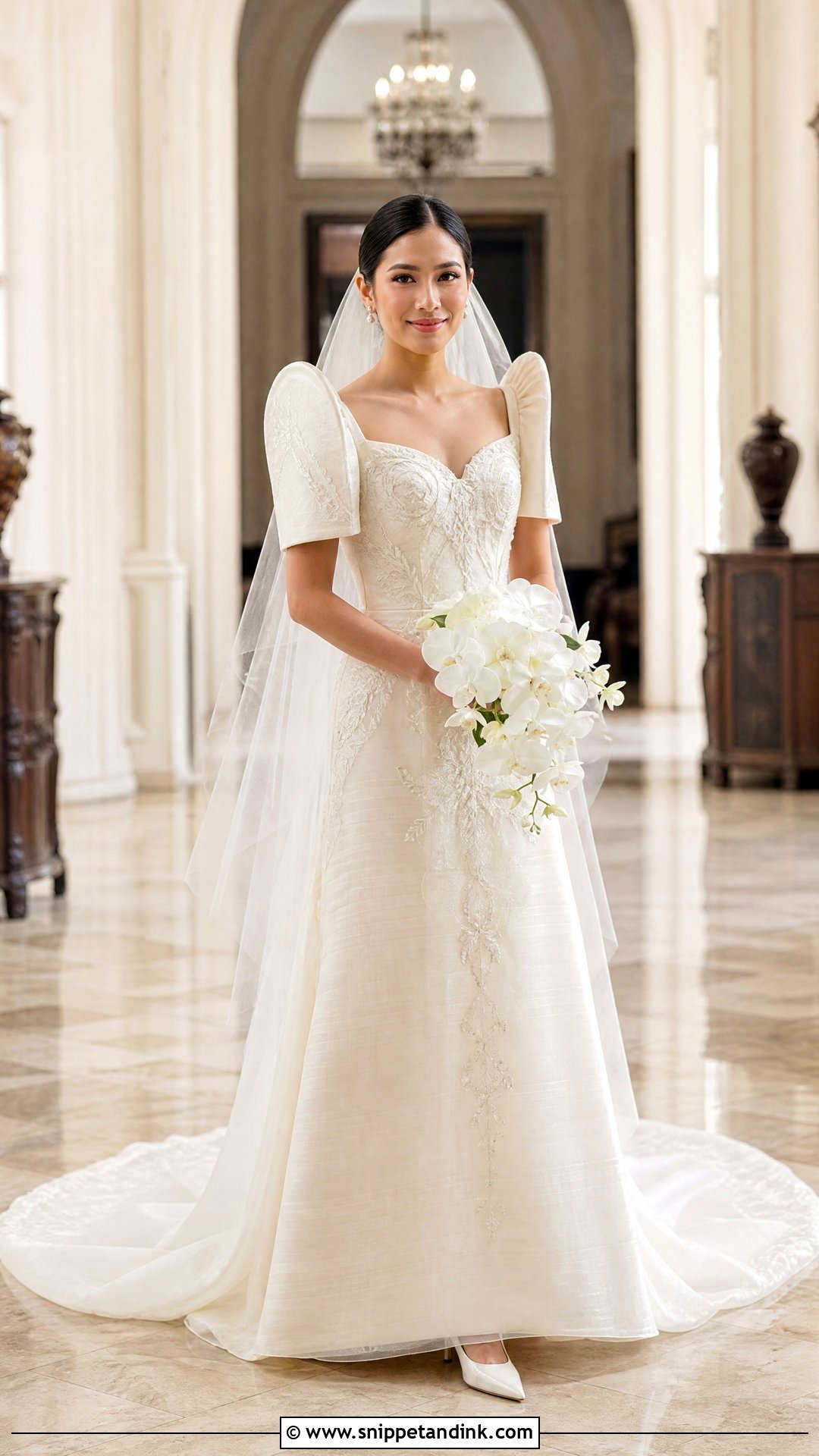
The classic terno looks regal because of its structure, not its decoration. Its defining butterfly sleeves frame the shoulders, the bodice is fitted and the skirt runs to the floor. Ivory piña, silk organza or embroidered jusi all give the traditional texture. The first thing I check at a fitting is sleeve height against the bride’s neck: on a petite frame, a sleeve that rises too far swallows the face, so I narrow it slightly; a tall bride can carry more lift and a longer train. Keep the veil chapel-length and pinned below a low bun so it falls behind the sleeves instead of flattening them. Pearl drops, pointed ivory pumps and a structured bouquet of white orchids or roses are all it needs.
2. Modern Minimalist Terno Wedding Dress
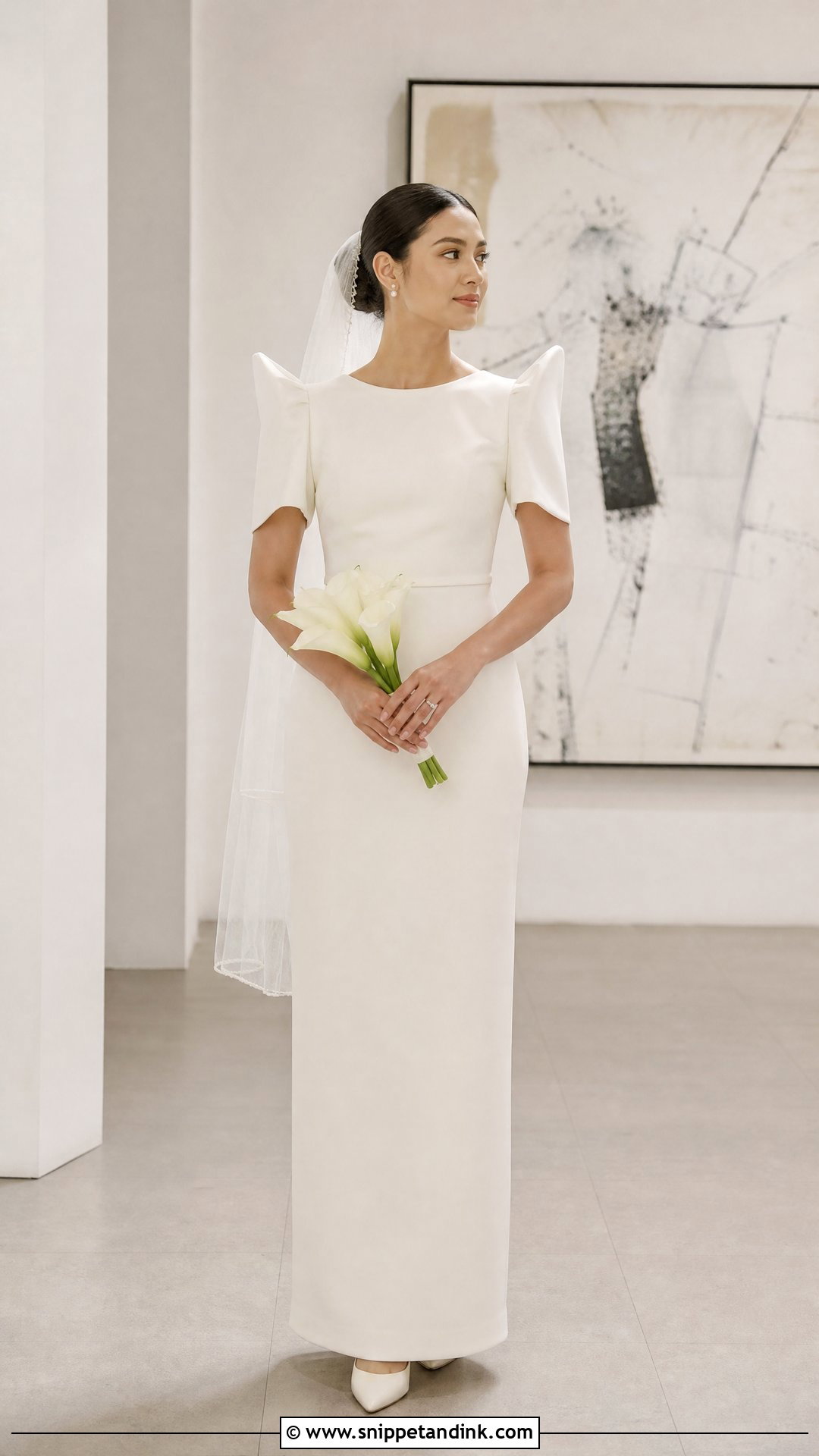
Strip the embroidery away and the sleeve becomes the architecture. I’d build this one in smooth ivory crepe or matte satin, with sculpted butterfly sleeves, a fitted waist and a plain column skirt. Crepe hides seams well, which matters here because there’s nothing to distract from a puckered join. Ask for a back slit, a soft lining and a little ease at the hip; a column with no give is miserable by the second hour of sitting. Pointed pumps, small pearl studs, an unbordered fingertip veil and a compact calla lily bouquet suit a hotel or gallery venue. Pair it with a center-parted low bun and natural makeup.
3. Maria Clara Wedding Dress
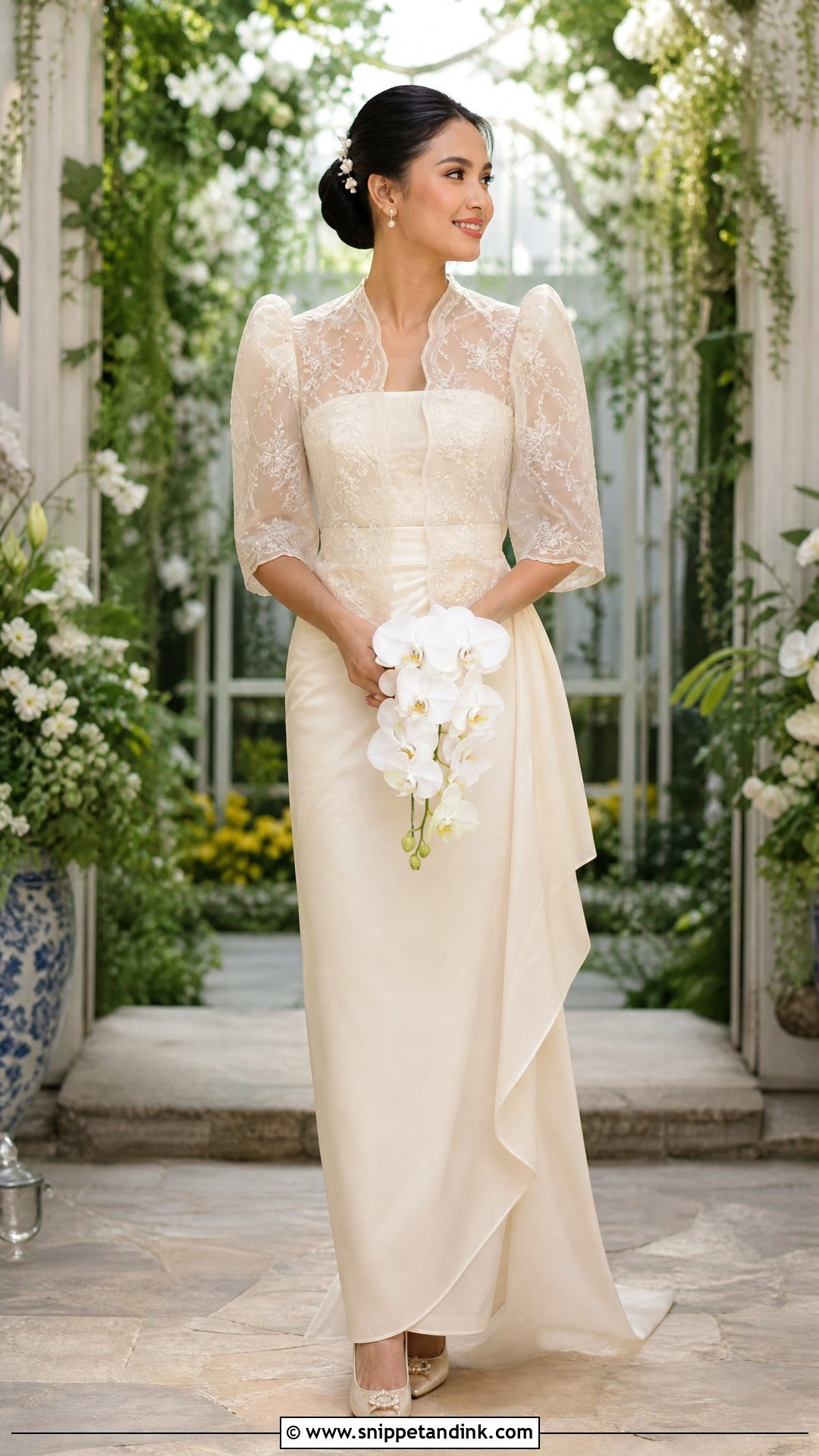
The Maria Clara wedding dress is a layered outfit: blouse, full skirt, overskirt and the pañuelo folded around the shoulders. For a bride I usually choose an embroidered ivory blouse with sheer sleeves over a fitted inner bodice, then a softly gathered skirt with a train. The pañuelo should pick up the blouse embroidery rather than introduce a second pattern. With four pieces, color is where it can go wrong. Ivories from different mills rarely match, so I hold every layer together by a window before anything is cut. Keep the extras quiet: pearl earrings, an antique-style comb, closed satin shoes, a lace-edged veil and a small bouquet of white sampaguita-like blooms with greenery.
4. Baro’t Saya Wedding Dress
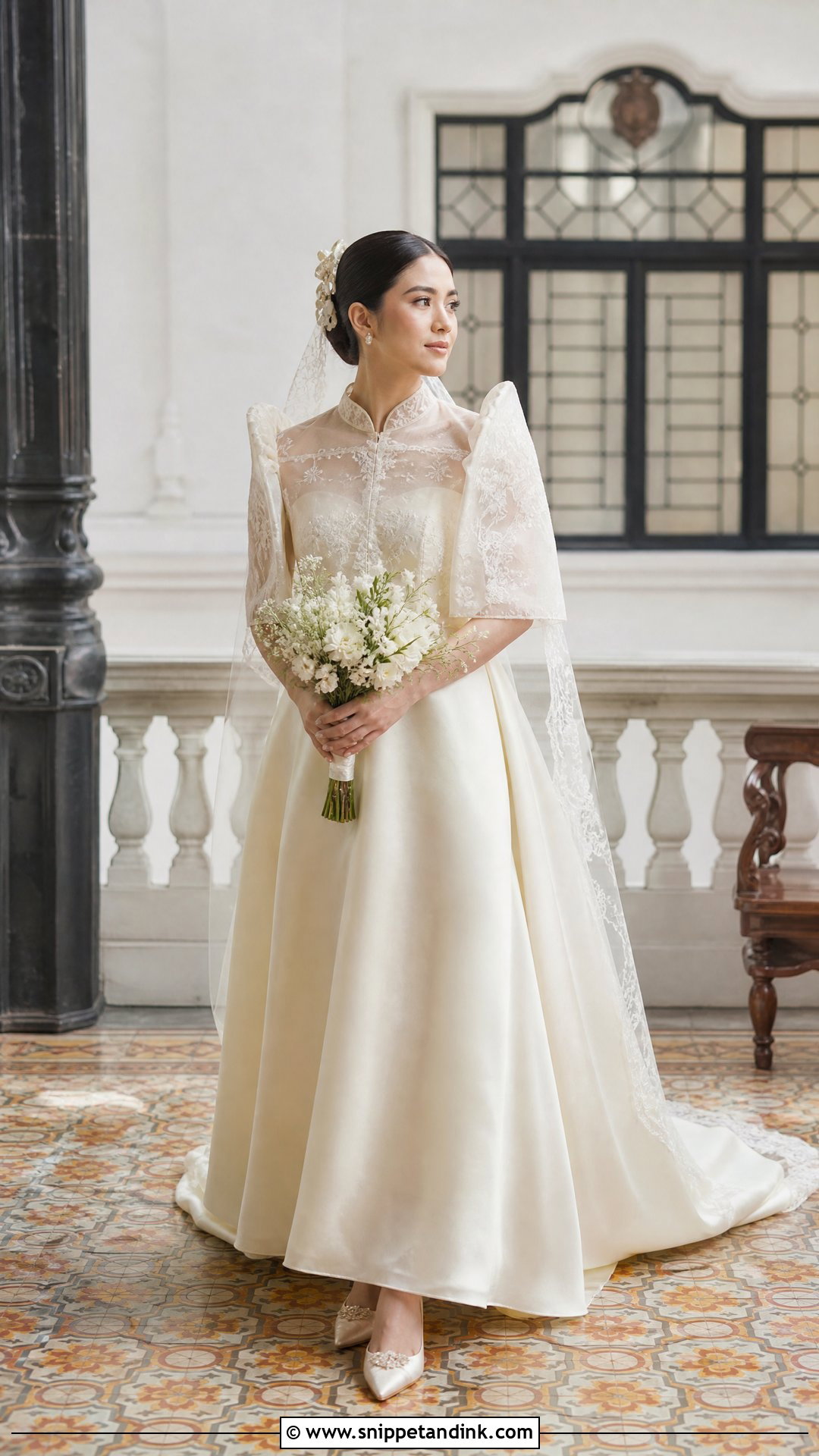
Could a separate bridal outfit feel as formal as a gown? A baro’t saya answers that. A sheer embroidered baro goes over a lined, corset-style camisole, with a high-waisted saya to the floor and a draped overskirt that defines the waist. In humid weather I lean toward piña-like fabric, silk or light organza, because the camisole is already a second layer against the skin. Brides wanting more coverage can ask for longer sleeves and a higher inner neckline. A neat low chignon keeps hair off the embroidery, where loose curls tend to snag. Add pearl hairpins, drop earrings, embroidered ivory heels and a small orchid bouquet for a heritage venue or family-centered ceremony.
5. Piña Terno Wedding Dress
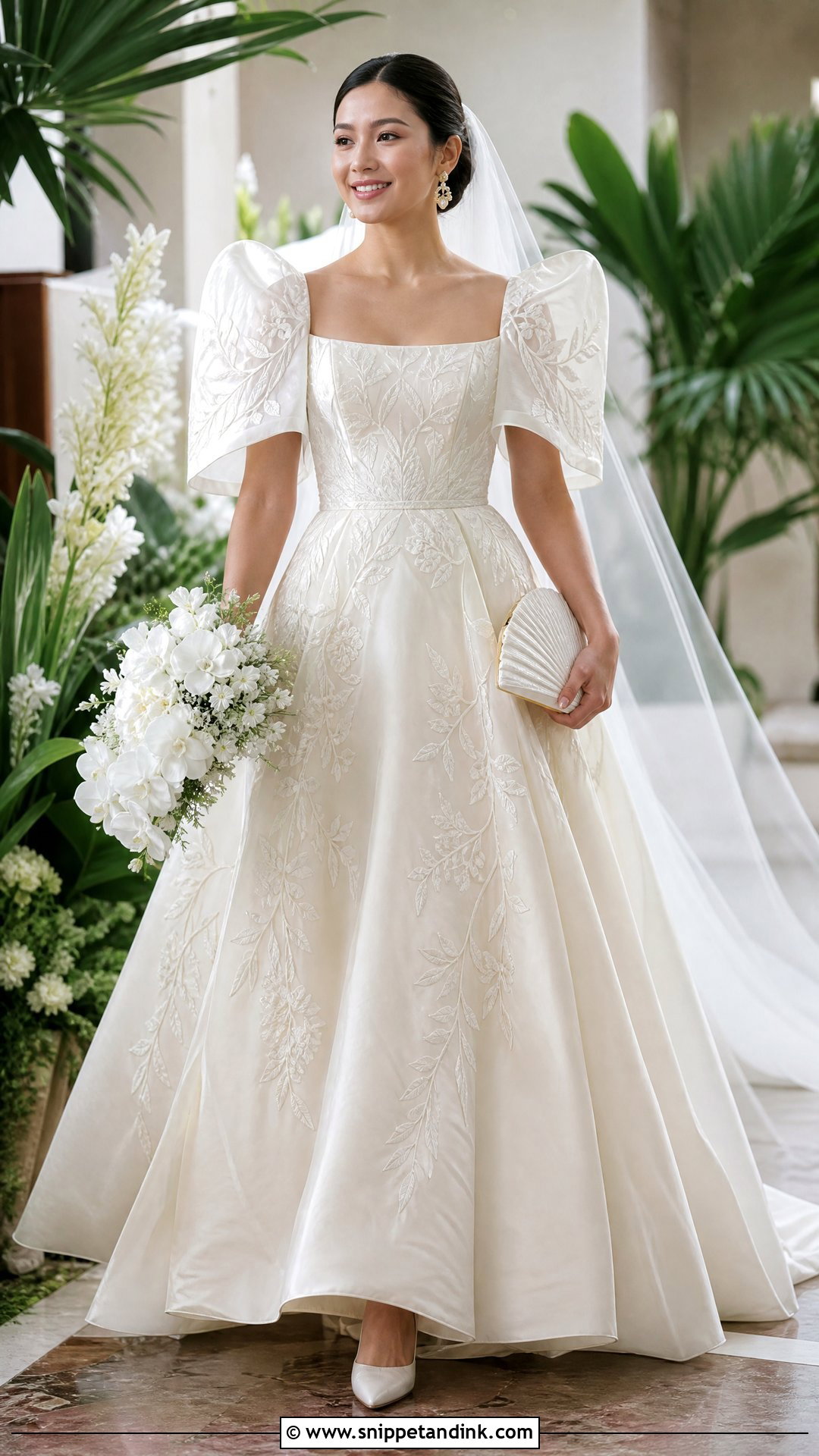
Piña is woven from pineapple leaf fiber, and you can tell: it has a glassy sheen and it’s slightly see-through. That’s why I use it for the sleeves, a bodice overlay or an outer layer over a supportive lining, never as the only layer. An A-line silk skirt below keeps the outfit from tipping into ornate. Embroidery is where personal meaning fits, local flowers, leaves or a quiet geometric border. Before signing off, I photograph the bride in daylight and under indoor bulbs; the translucency that looks airy in a shop can show lining seams and bra edges under a flash. A sheer cathedral veil, pearl-and-gold earrings, satin pumps and an ivory fan-shaped clutch finish it, with a smooth bun to keep the sleeves visible.
6. Jusi Embroidered Wedding Dress
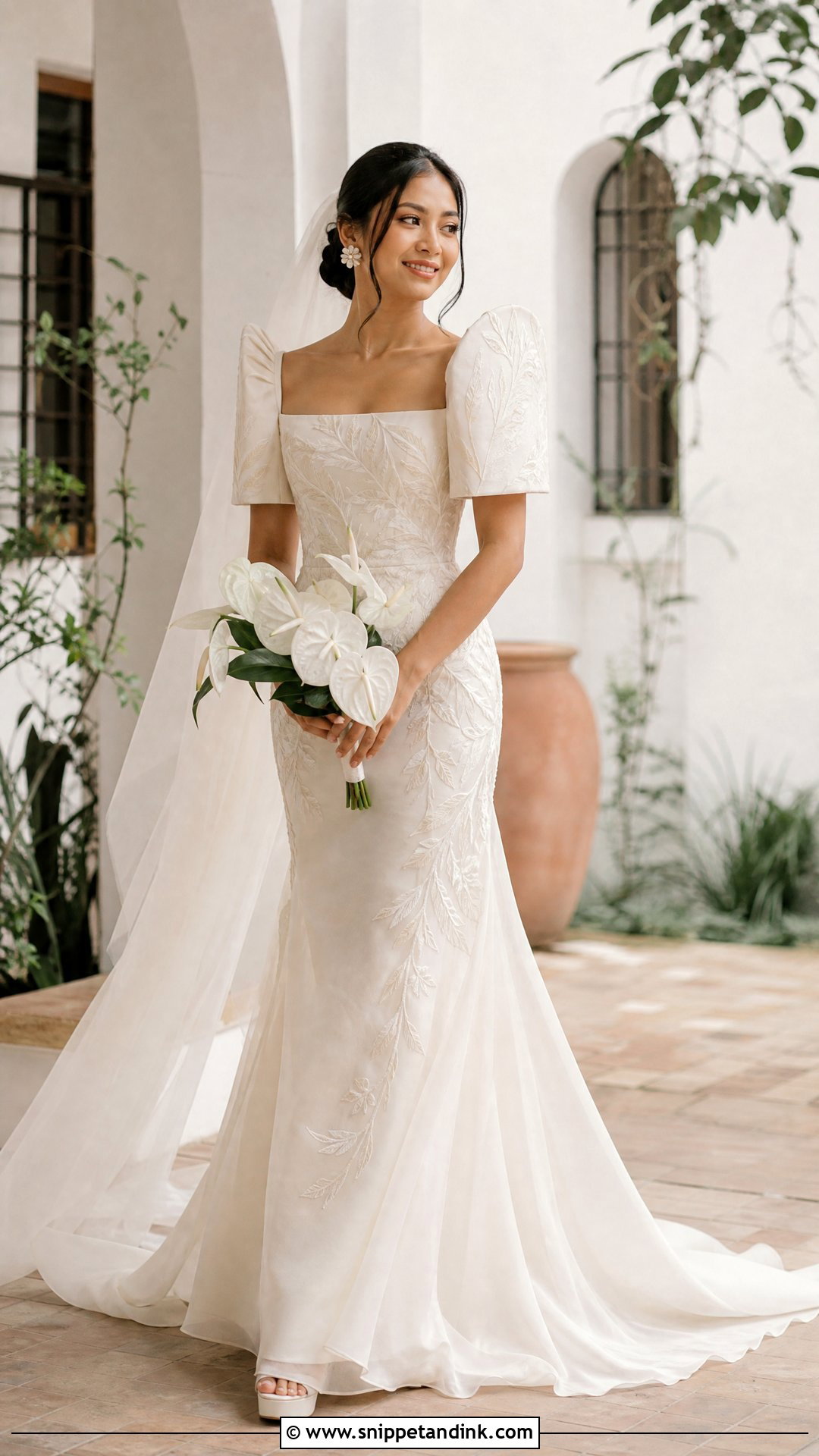
Jusi catches light on its own, so it doesn’t need crystals. I like it as a fitted terno bodice with botanical embroidery and structured sleeves, over a chiffon or organza skirt that moves. The contrast between the crisp top and the soft skirt is the whole design. Jusi can feel scratchy at the armholes and neckline, so I ask the maker to line those edges with something softer, and a defined waist seam helps the bodice sit flat. Keep the veil plain fingertip length so it doesn’t fight the embroidery. Pearl cluster earrings, a fine gold bracelet, ivory block heels and a bouquet of anthuriums and orchids carry it from an indoor ceremony to a courtyard reception.
7. Lace Terno Wedding Dress
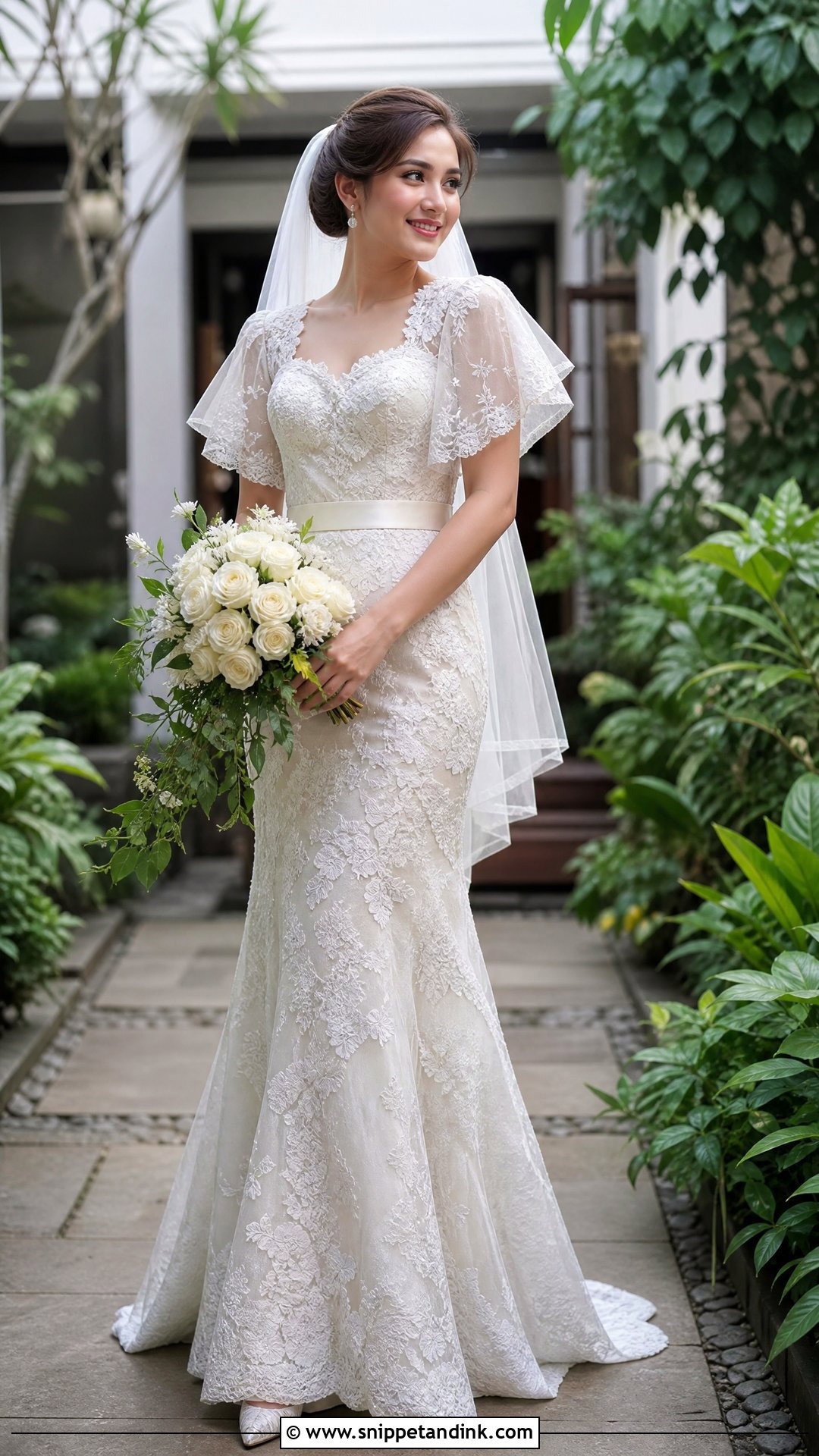
Lace takes the edge off the strong terno shoulder. Pick a floral lace with a clear repeat and lay it over a sweetheart or bateau bodice; sheer butterfly sleeves keep their shape without looking heavy. I often stop the lace partway down an A-line or fit-and-flare skirt and finish the hem in plain fabric, which lightens the dress noticeably when walking. If you’re self-conscious about your upper arms, ask for sleeves with flexible mesh panels; if you want crispness, reinforced sleeve edges hold up through dancing. Pearl earrings, lace-covered pumps, a narrow satin belt, a plain tulle veil and a loose low bun complete it, with a round bouquet of ivory roses and small orchids.
8. Satin Terno Wedding Dress
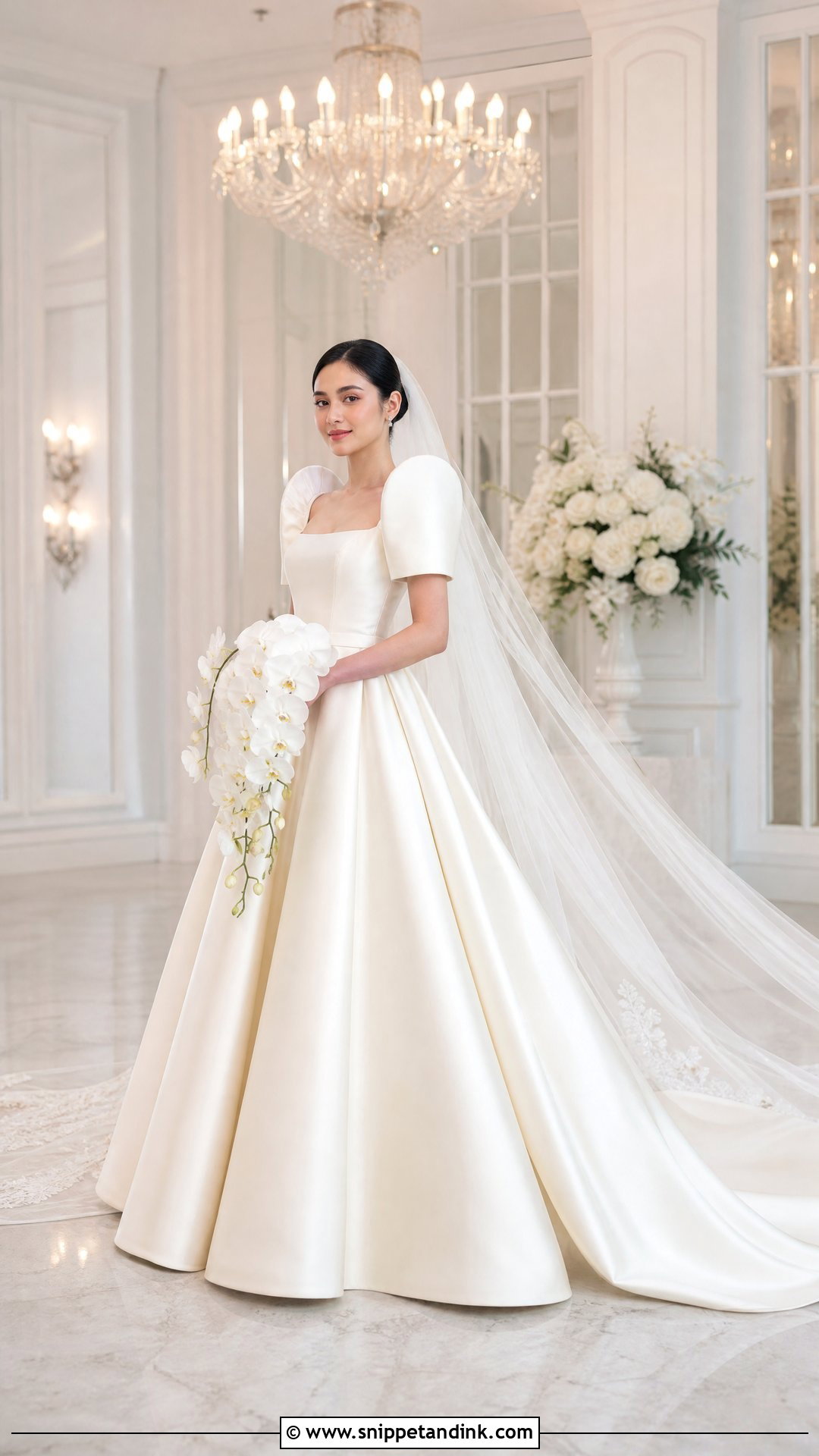
Satin gives the terno a polished glow, but it shows everything. A structured bodice with a square neckline, precise butterfly sleeves and a full satin skirt reads very formal, and covered buttons down the back are worth the extra fitting time. Satin creases where you sit, across the lap and behind the knees, so I steam the gown right before the ceremony and keep a handheld steamer in the getting-ready room. Because it reflects light strongly, I’d keep accessories to crystal studs, a small comb, pointed ivory pumps and a clean cathedral veil, with a cascading orchid bouquet. For warm weather choose a lighter satin with a breathable lining, and add a bustle so the train survives the reception. Hidden pockets are a bonus if the cut allows.
9. A-Line Terno Wedding Dress
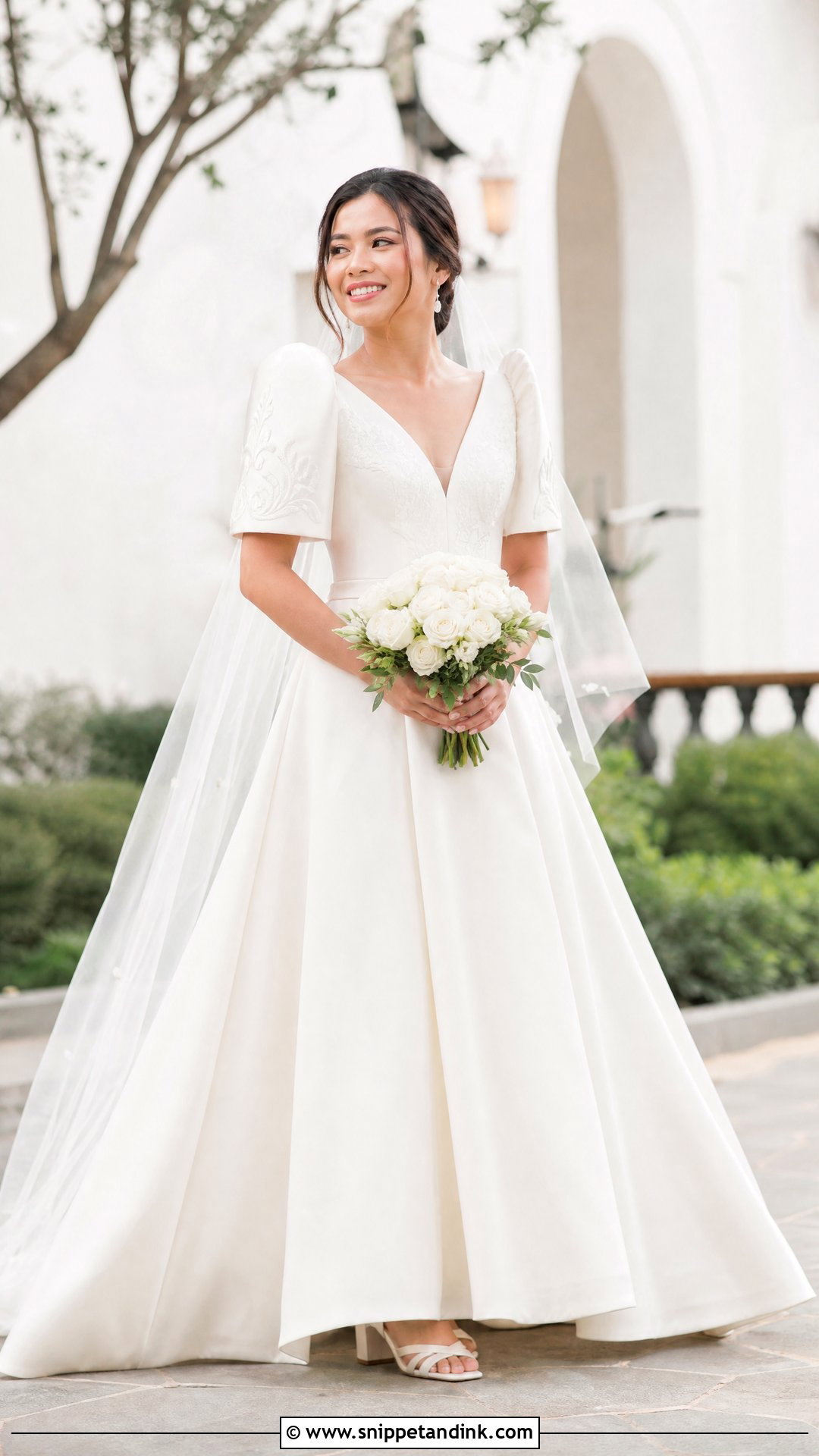
The A-line is the shape I suggest when a bride can’t decide, because it balances the sleeve and the skirt without the weight of a ball gown. Picture a gentle V-neck, lightly embroidered butterfly sleeves, a natural waist and a skirt that skims the hip before widening. An internal corset gives support without visible straps. On a petite bride I raise the waist slightly to lengthen the leg line; a tall bride can take vertical embroidery that runs the length of the skirt. A waist-length veil, pearl drops, low block heels hidden under the hem and a bouquet of white roses with fine greenery keep it fresh. It suits almost any venue.
10. Terno Ball Gown Wedding Dress
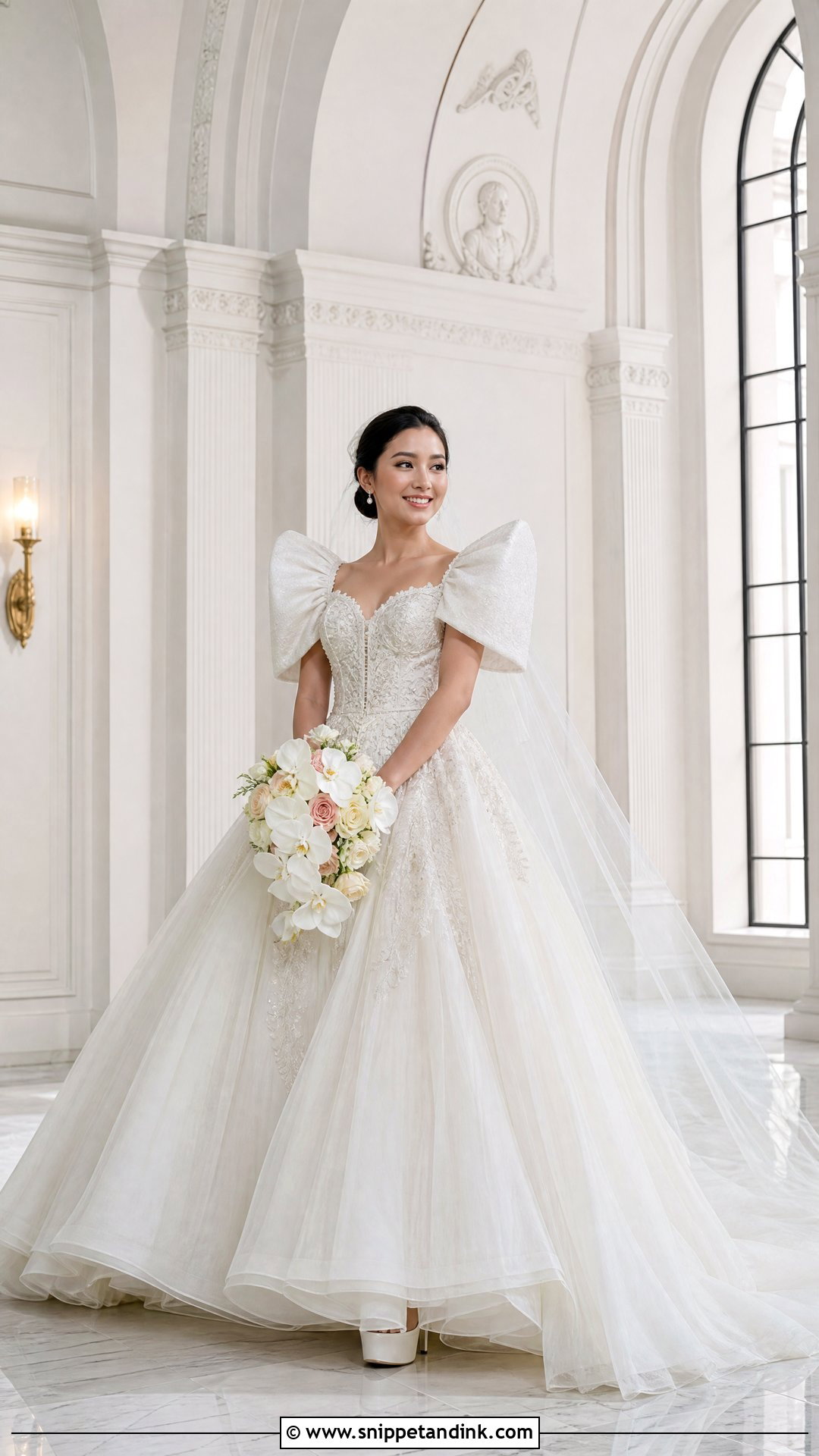
This is the grand-entrance version: dramatic sleeves over a layered tulle or organza skirt that starts at the natural waist, with a long train. The fabric is heavy, so I always ask for a removable petticoat and a secure bustle, and I have the bride practice walking and turning in it at the last fitting. Platform heels give height and stability under that much skirt. Balance the volume with a sleek bun, medium pearl earrings and a cathedral veil set behind the sleeves. The bouquet has to match the scale, orchids, roses and tropical leaves in a structured shape. Skip big necklaces; with the neckline, sleeves and veil all competing, one more element is too many.
11. Mermaid Terno Wedding Dress
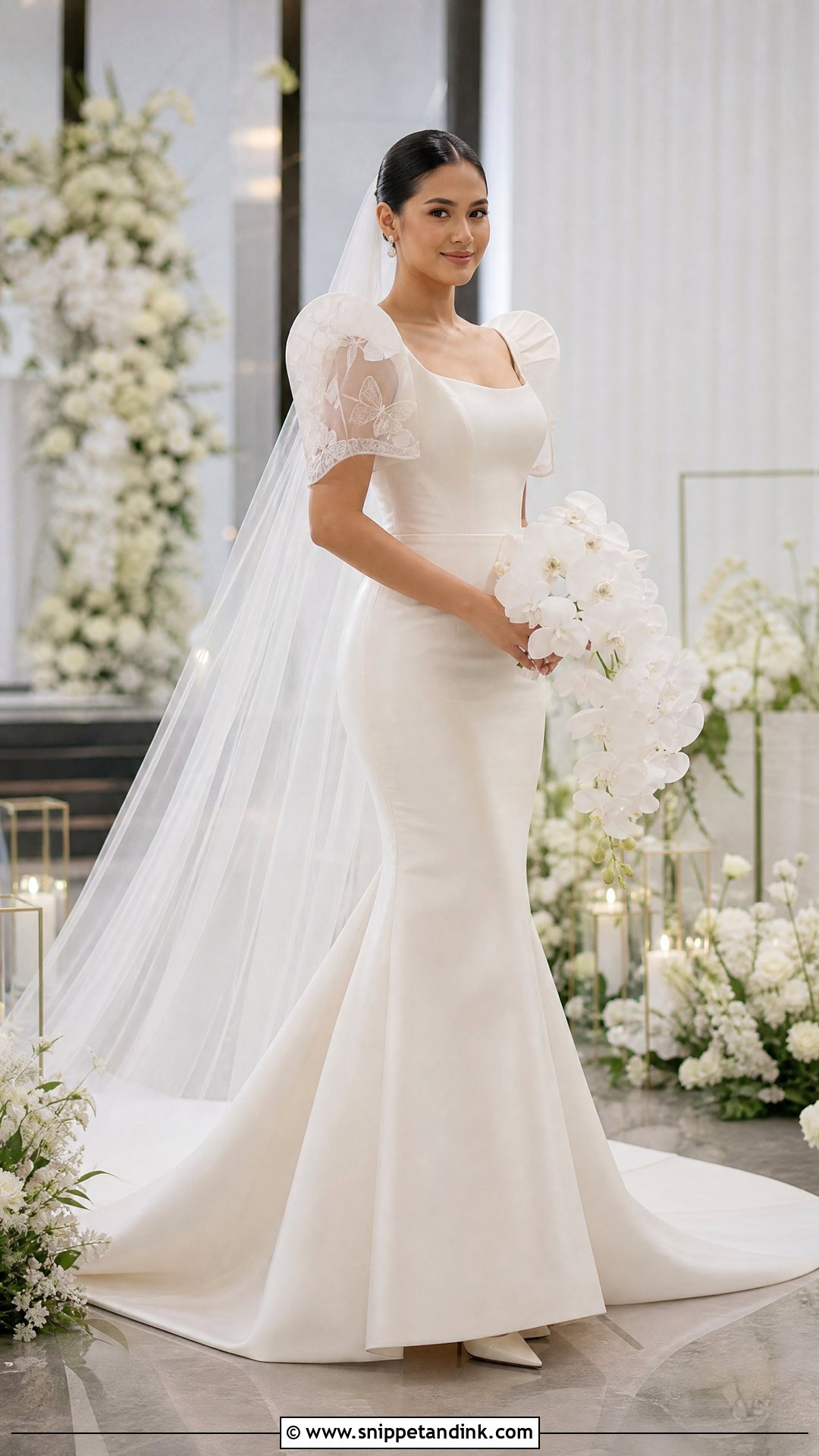
A mermaid terno pairs sculpted shoulders with a skirt that follows the body to the knee and then flares. The fabric has to be supportive, and I’d always ask for a stretch lining and enough room at the knee to climb steps. Sheer or lightly beaded satin sleeves keep the top half from overpowering. With this cut, fittings without your real shoes and shapewear are wasted, because a half-inch change in heel height moves the flare point. A detachable train gives drama at the ceremony and comes off for dinner. Drop earrings, a smooth low bun, pointed pumps, a narrow cathedral veil and a long, loose orchid bouquet suit the vertical line.
12. Column Terno Wedding Dress
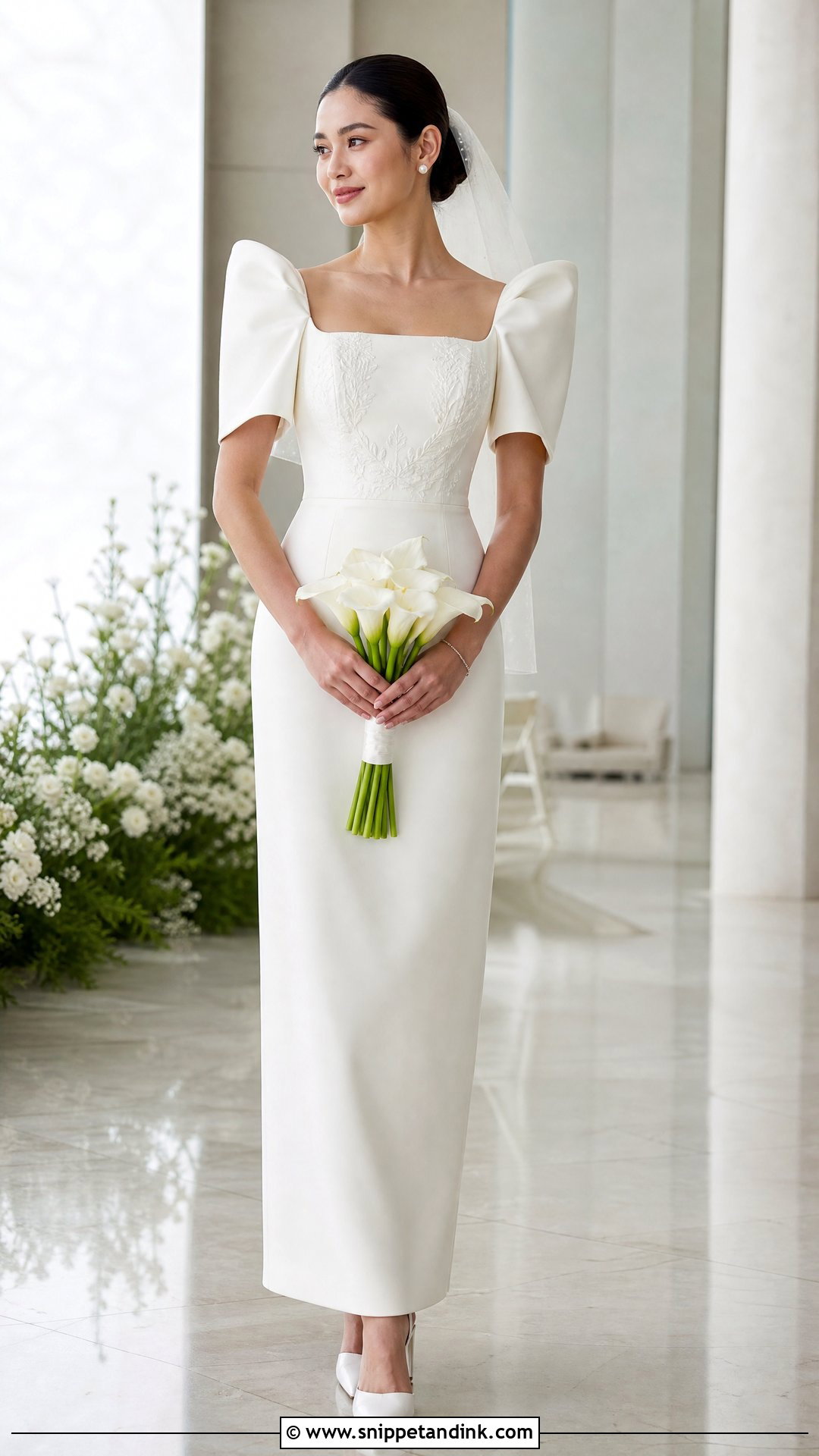
A column terno wedding dress works through restraint. The straight skirt makes one long line, and the butterfly sleeves are enough to say Filipiniana. Silk crepe, matte satin or a lightly textured piña blend all suit it, with only a touch of embroidery at the neckline and waist. I’d add a concealed back slit so you can walk normally, and a removable overskirt if you want more drama for the ceremony. Keep the veil short so the back stays visible, and the bouquet small, calla lilies or white orchids rather than a wide spray. Slingback heels, pearl studs, a slim bracelet and a center-parted bun or a smooth shoulder-length style finish it.
13. Detachable Sleeve Terno Wedding Dress
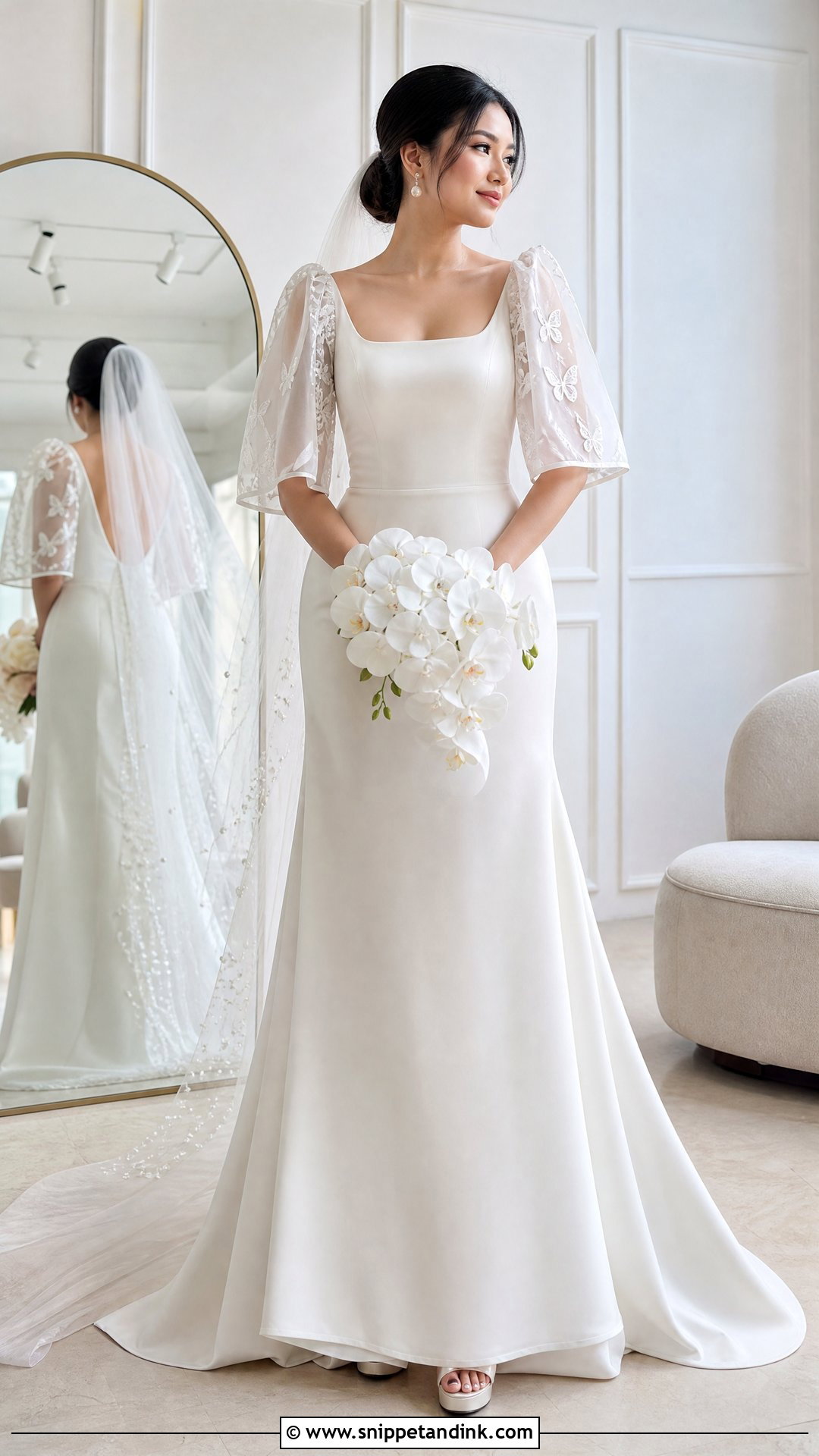
Detachable butterfly sleeves give you two outfits from one dress. Start with a fitted ivory gown in an A-line, column or mermaid cut, then add structured terno sleeves that attach at the armhole or shoulder for the ceremony. Afterward they come off and you have a clean sleeveless or cap-sleeve dress for the reception. The weak point is the attachment, so I ask the maker to hide snaps or hooks under embroidery or piping, and I have the bride raise her arms, hug someone and sit down while wearing them. Heavy sleeves pull the bodice down at the shoulder; light materials prevent that. Ceremony styling: long veil, pearls, formal orchid bouquet. Reception: veil off, jeweled comb, block heels.
14. Detachable Overskirt Terno Wedding Dress
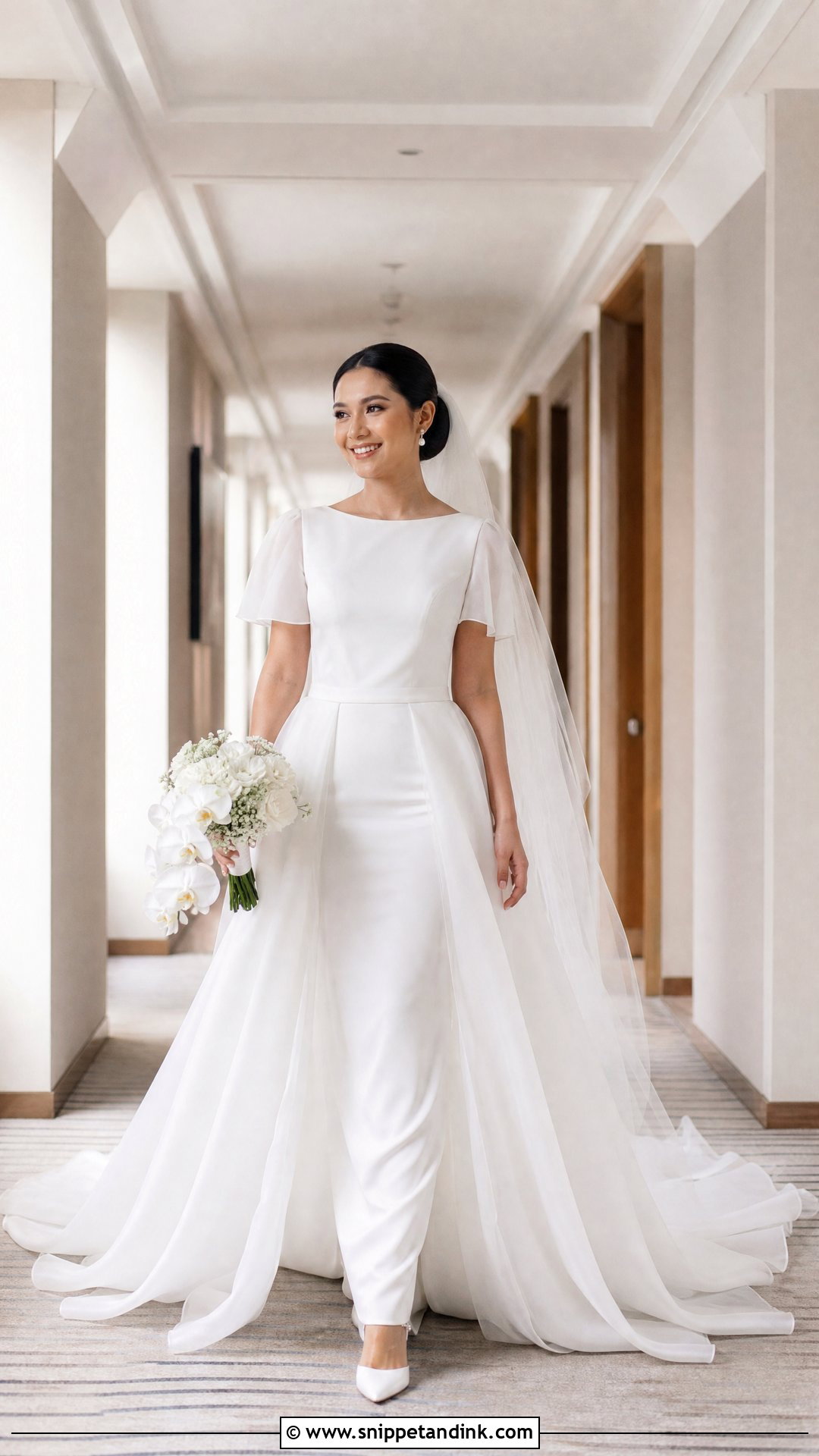
An overskirt gives you ball gown scale without committing to a ball gown all night. For the ceremony, a full organza or satin overskirt with a sweeping train goes over a fitted butterfly-sleeve gown, styled with a cathedral veil, pearl drops and satin heels. At the reception both come off and a column or mermaid dress is underneath, ready for a clutch and bolder earrings. The waistband is what I watch closely: it should close flat with no bulk showing at the back. Let the embroidery continue faintly across both layers so the pieces belong together. Assign one helper and one labeled garment bag for the overskirt, or it ends up on a chair under someone’s coat.


15. Barong-Inspired Wedding Dress
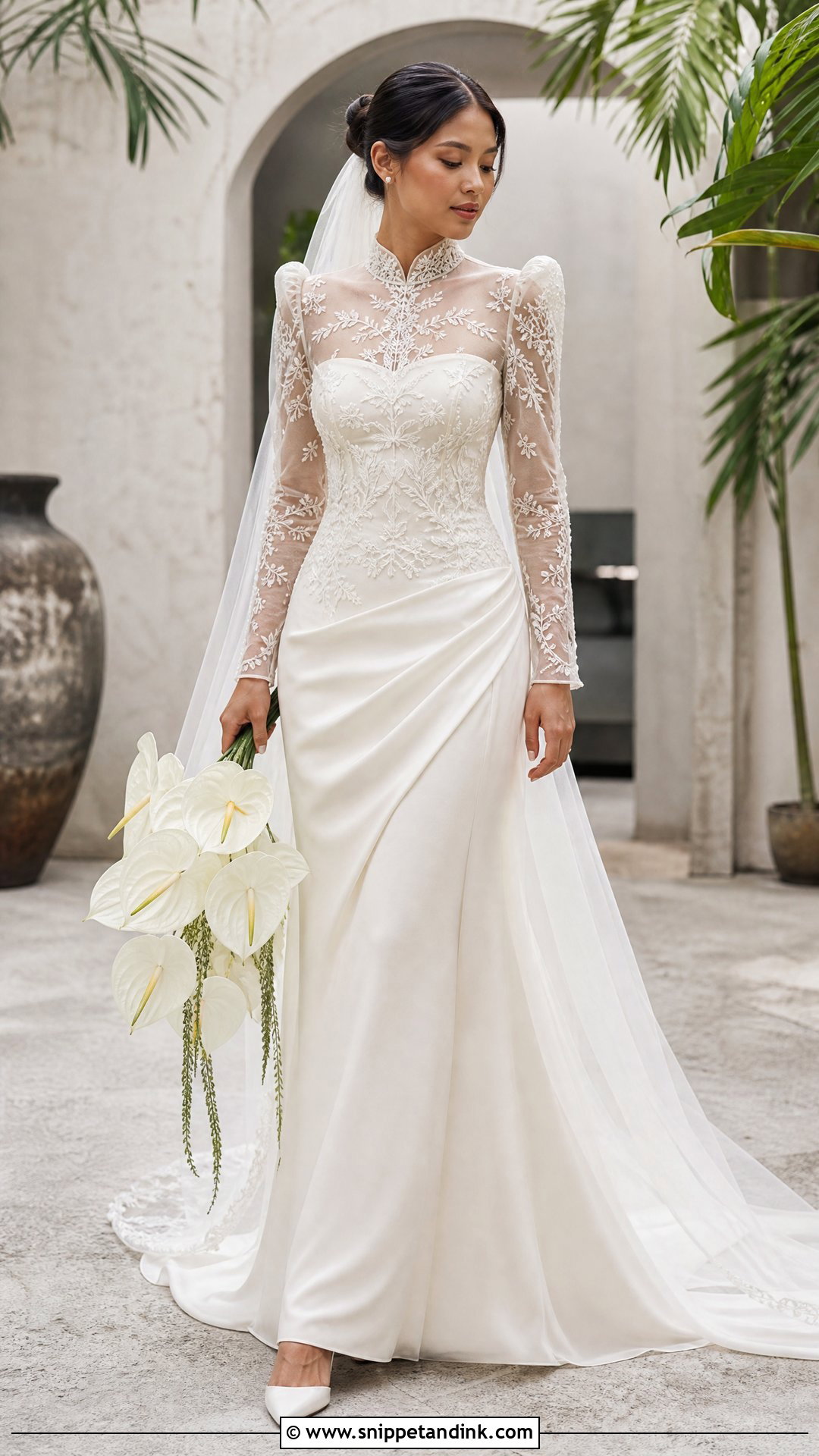
Barong embroidery adapts well to a bride. Take a sheer embroidered top with a high neckline and long bishop sleeves or softly shaped butterfly sleeves, worn over a fitted silk lining, and pair it with a flowing ivory skirt or a sleek tailored gown. Vertical leaf, flower or geometric motifs lengthen the body. If the top and skirt are separate pieces, I secure the waistband with a small hook or a few stitches so it can’t ride up when the arms lift. The layered construction breathes well in heat, as long as the inner lining feels smooth and gives reliable coverage. Pearl studs, a low bun, pointed pumps, a simple tulle veil and white anthuriums with greenery keep it clean and modern.
16. Two-Piece Filipiniana Wedding Dress
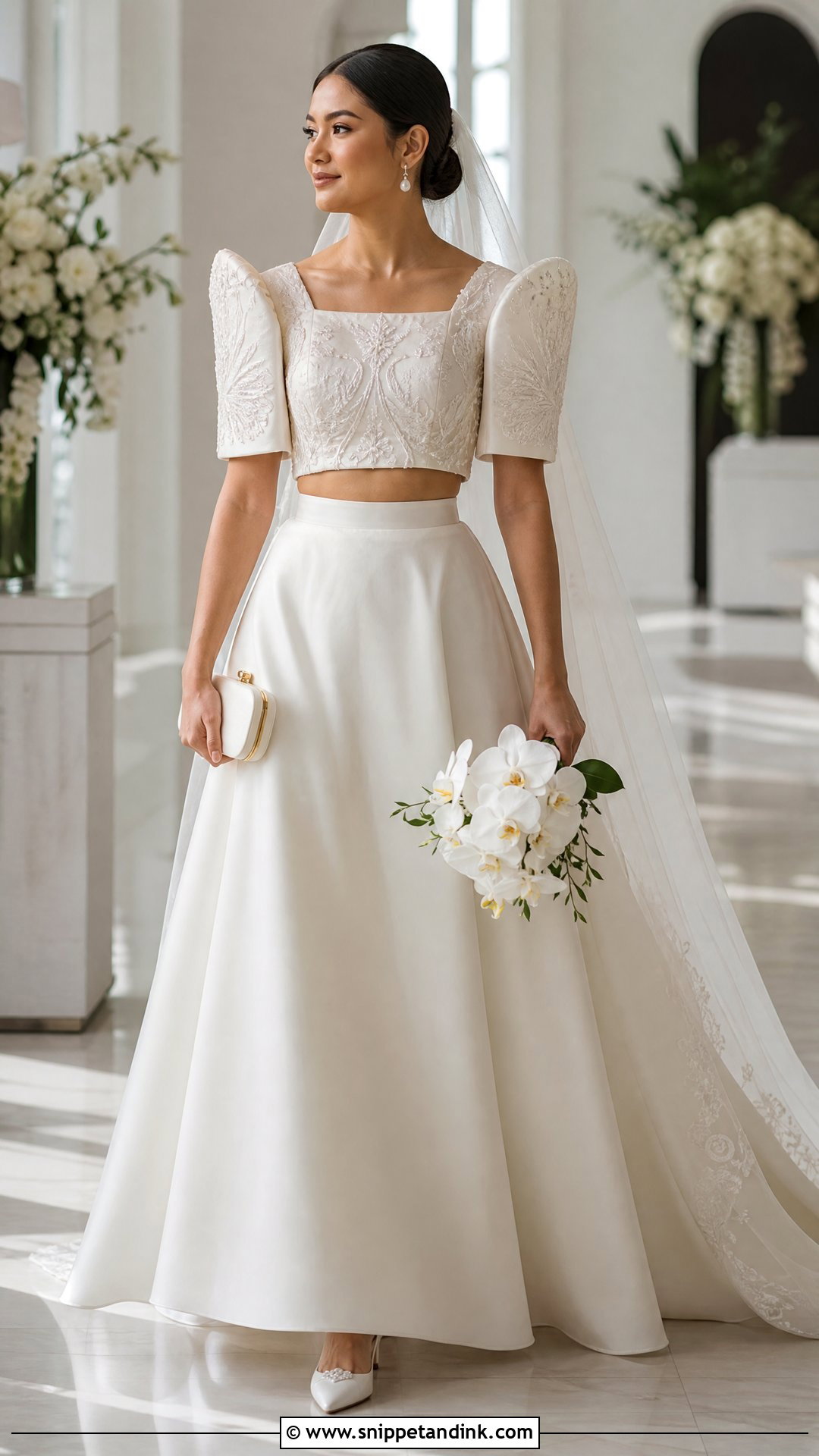
A two-piece Filipiniana gives you more freedom with fit, since the top and skirt can be sized separately. I pair a cropped terno blouse, embroidered sleeves and a clean bateau neck, with a high-waisted skirt so little or no skin shows between them. An A-line satin skirt is softer; a fitted crepe skirt is sharper. Check both whites together under bright light, since two ivories that match in the shop can split in photos. A concealed extension on the blouse keeps the midriff covered when you sit. Pearl earrings, an ivory clutch, low pointed heels and a fingertip veil in a sleek bun complete it, and each piece can be worn again on its own.
17. Terno Bridal Pantsuit
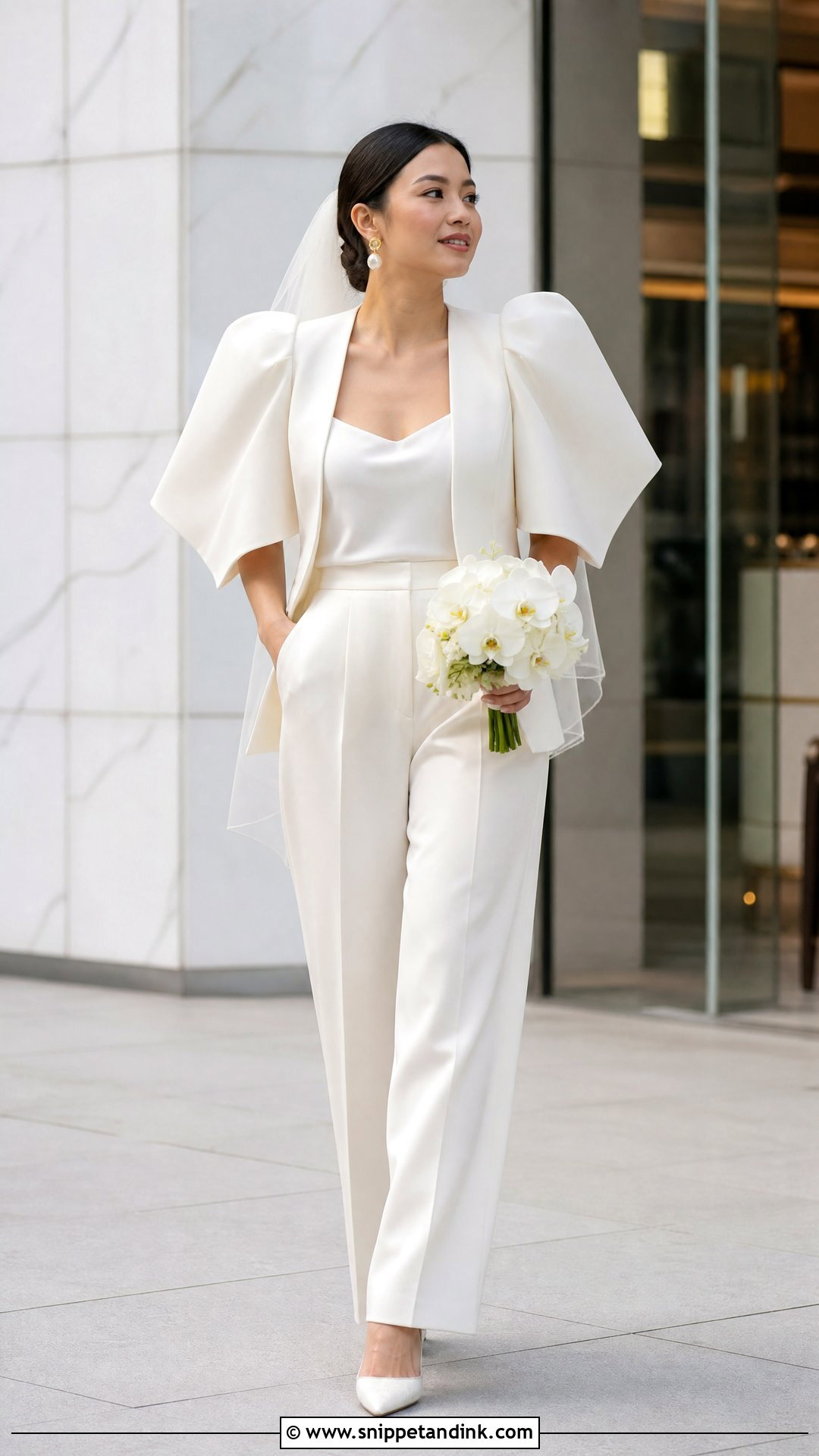
Not every bride wants a floor-length skirt. A terno bridal pantsuit keeps the Filipino details in a tailored jacket or structured blouse with butterfly sleeves, a defined waist and straight or wide-leg trousers, softened by a silk camisole. Trouser length is where suits go wrong. I hem them only with the actual wedding shoes on, so the break sits right when standing and doesn’t drag when walking. Choose light suiting fabric so it doesn’t stiffen, and make sure the shoulder construction keeps the sleeves crisp. A short tulle veil or a hair bow keeps the shoulders visible; pointed pumps, pearl-and-gold earrings, a small structured bag and white orchids finish it for a civil ceremony or a reception change.
18. Tea-Length Terno Wedding Dress
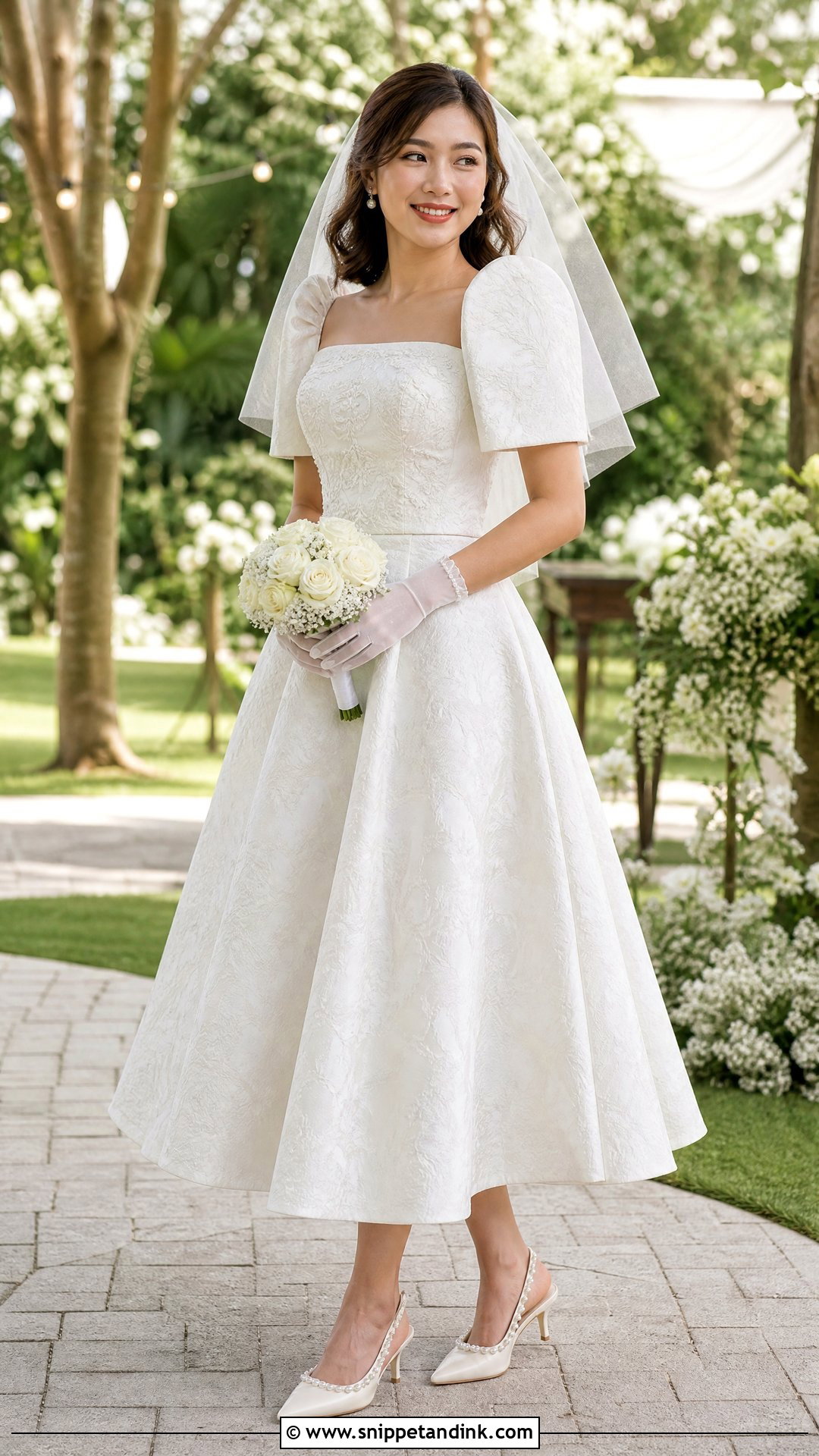
Tea length falls between knee and ankle, which means your shoes are now part of the outfit. A fitted bodice, moderate butterfly sleeves and a gently flared skirt in embroidered organza or jacquard hold their shape without heavy petticoats. I’d spend real money on the shoes here: slingbacks, pearl-trimmed pumps or ankle straps will be in nearly every full-length photo. Short gloves, pearl earrings and a shoulder-length veil give it a vintage feel, and a compact bouquet of white roses keeps the proportions right. It’s easy to move in for daytime, garden or civil ceremonies; ask for hidden pockets and a light lining if you plan to dance.
19. Terno Reception Mini Dress
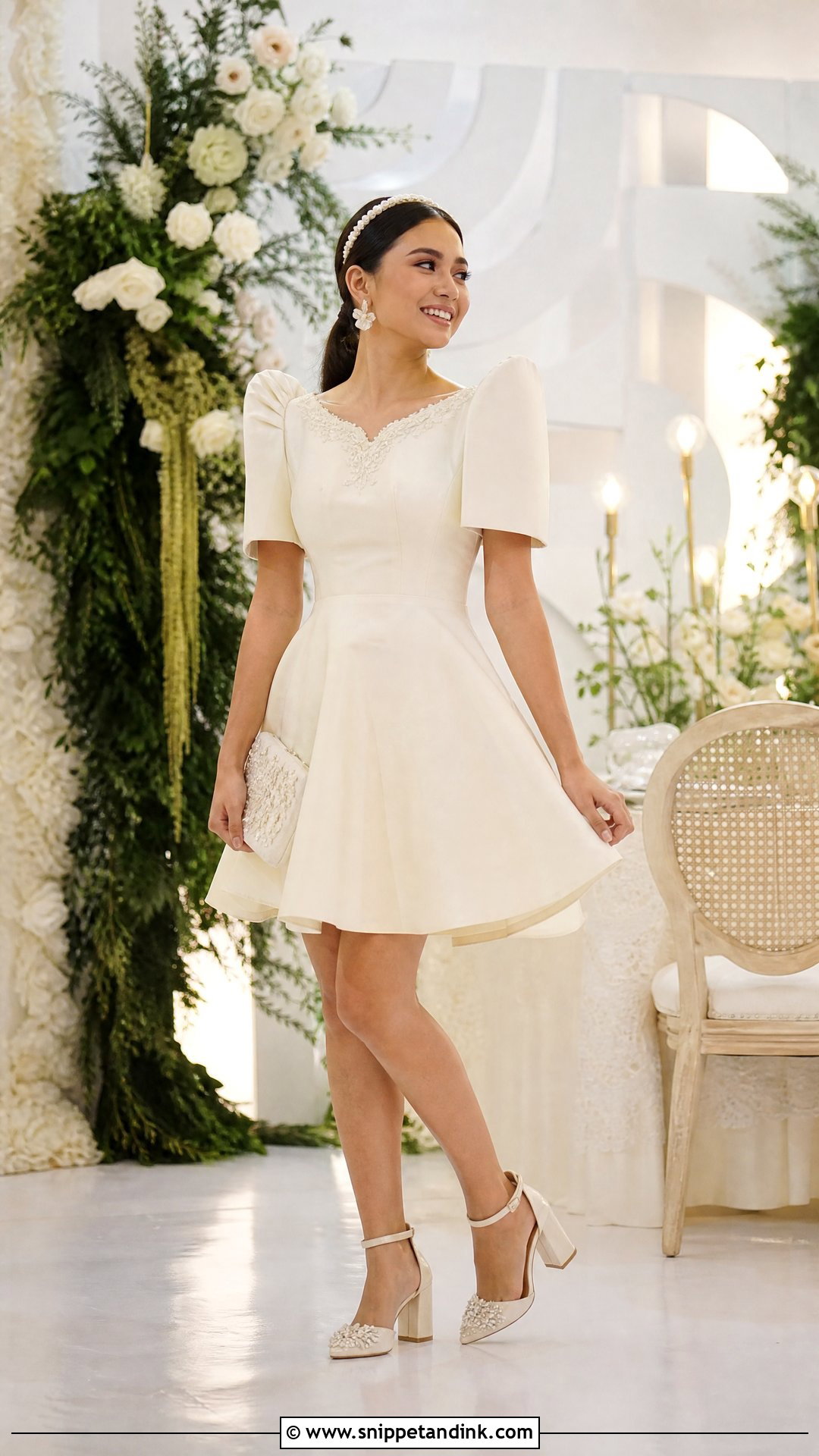
A mini terno is the second look I recommend when the ceremony gown is heavy. An ivory dress above the knee with crisp butterfly sleeves, a fitted waist and a little embroidery at the neckline still reads Filipino. Structured fabric keeps it formal; a small flare in the skirt lets you move. Swap the veil for a pearl headband, sculptural earrings or a sleek ponytail. Wear embellished block heels or pointed flats, since this is the dress you’ll stand and dance in for hours. If the hem feels too short, sheer tights or a knee-length version solve it. I like repeating one embroidery motif from the ceremony gown so the change looks planned in photos.

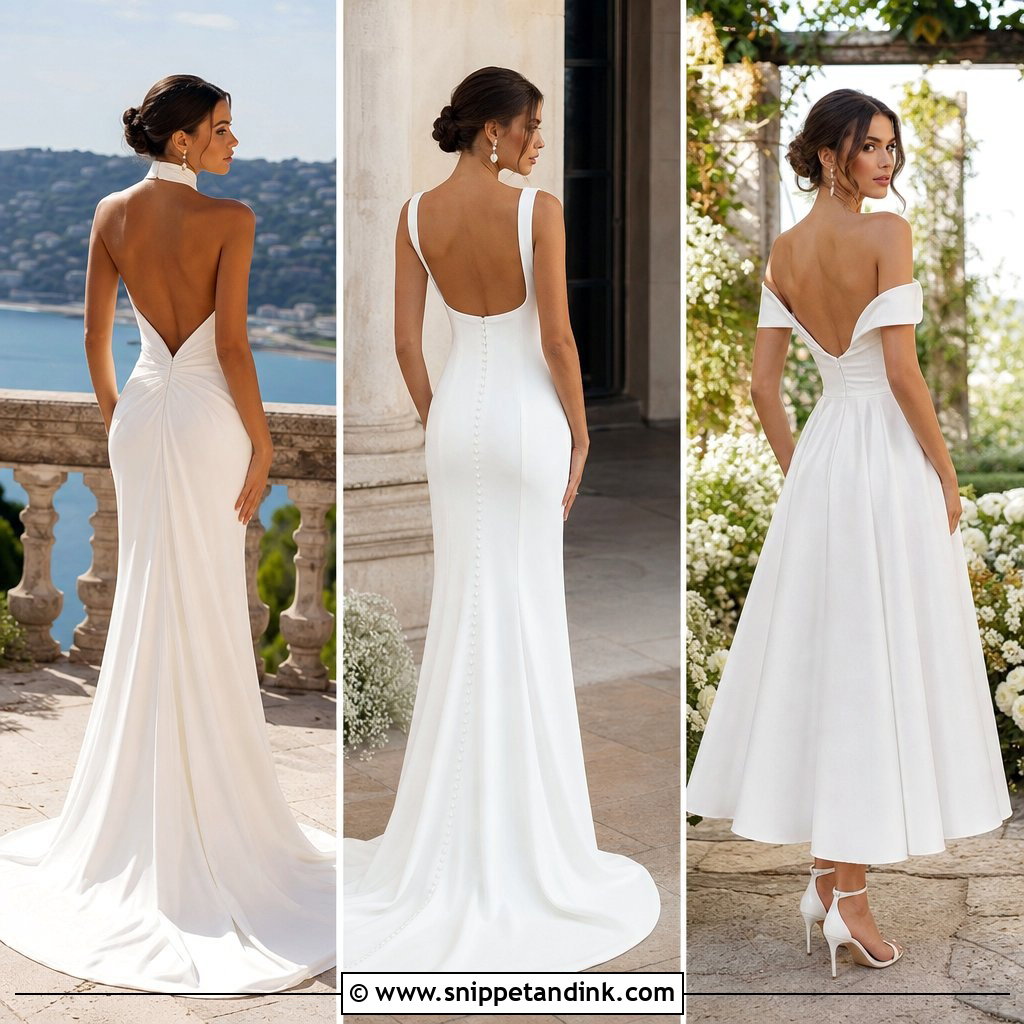
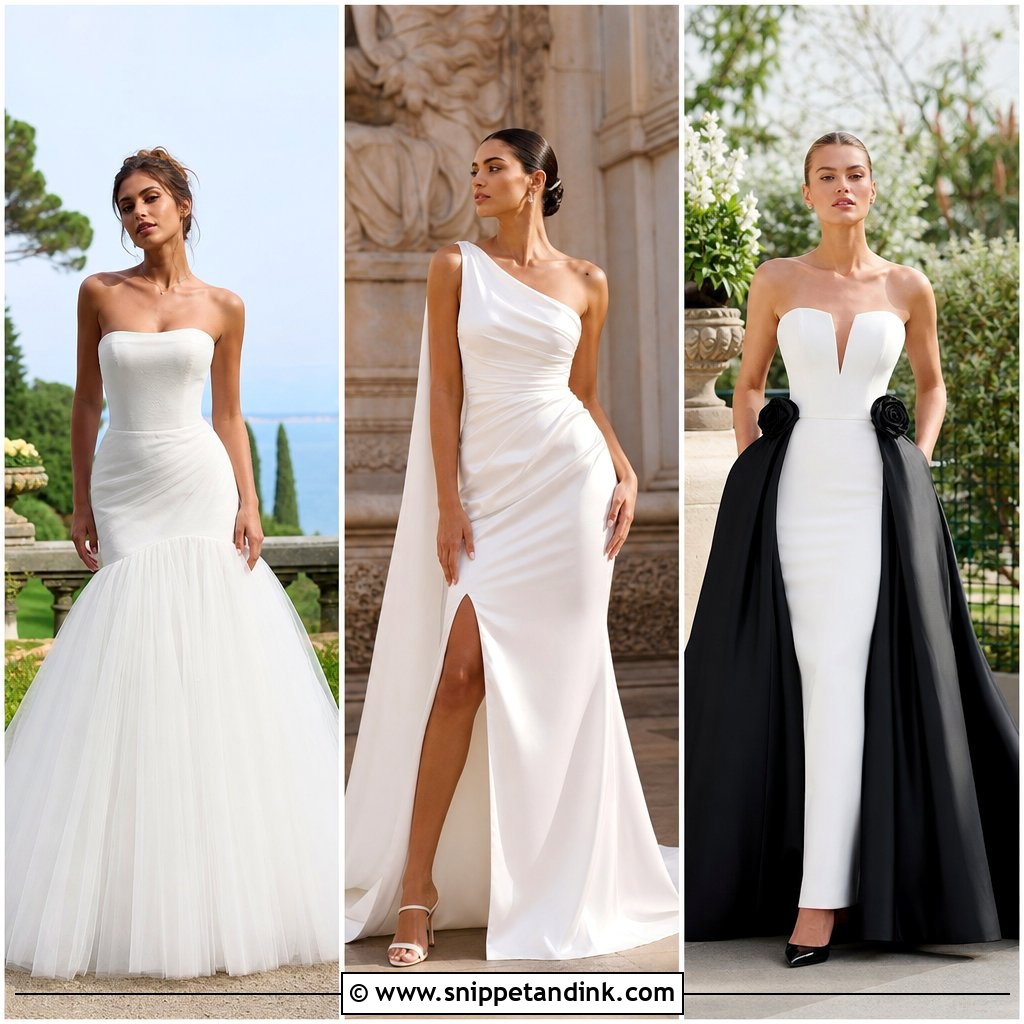
20. Gold Embroidered Terno Wedding Dress
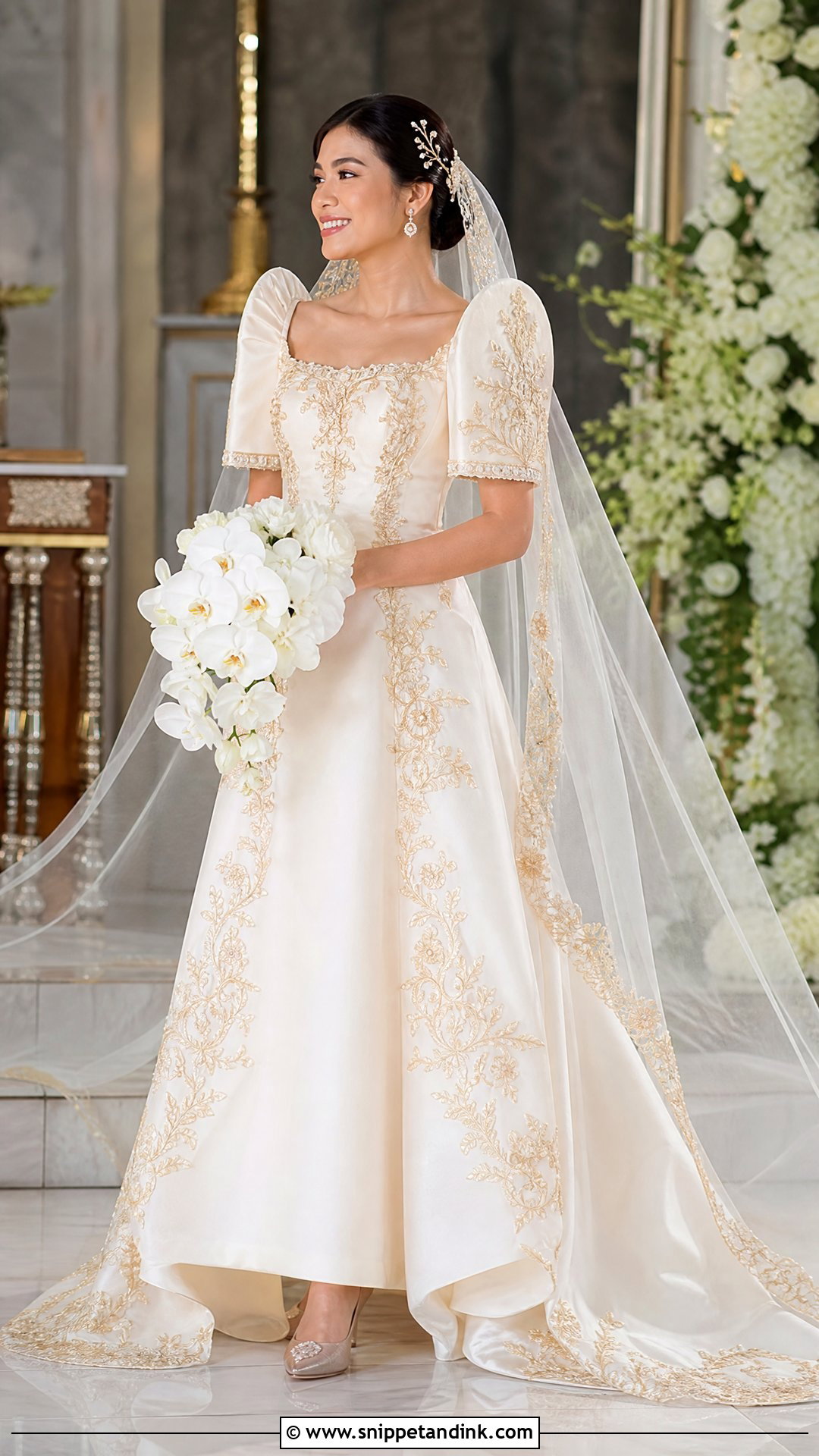
Gold thread warms ivory, but it’s easy to overdo. I place metallic embroidery only along the butterfly sleeves, bodice, waist and train, and keep the rest of an A-line silk skirt plain so the pattern has room. Metallic thread photographs very differently from one light to another, bright and coppery under warm bulbs and almost grey in shade, so I look at the gown in both at every fitting. Pearl-and-gold earrings, champagne pumps and an ivory veil with one narrow gold edge are plenty. Carry white orchids with muted greenery. On makeup, softly defined eyes and a neutral lip; adding shimmer next to gold embroidery makes the face look busy. A few gold hairpins tie it together.
Piña and Jusi Once the Wedding Is Over
These fibers outlast synthetic gowns when they’re stored properly, and they yellow or split when they aren’t. The first job, within a few weeks, is cleaning. Body oil and spilled drinks oxidize into brown marks over time even when you can’t see them yet. I send piña only to a cleaner who handles delicate natural fibers and hand embroidery, and I ask them to test a hidden seam first.
Folding, Not Hanging
Hanging a terno for years strains the shoulders and flattens the sleeves. I fold it loosely with acid-free tissue in every fold and stuffed gently into each sleeve, then lay it in an acid-free box. Plastic garment bags trap moisture, and in a humid climate that means mildew. Refold along different lines every few months so no crease sets permanently.
Pressing Embroidery Safely
If you wear it again or lend it to a sister, never put a hot iron straight onto the embroidery. Turn the piece inside out, lay it on a folded towel so the stitches sink in instead of flattening, and press through a cotton cloth on low heat. Steam is gentler for the sleeves; hold the steamer a hand’s width away so water doesn’t spot the fiber.
Heritage Shown Through Fabric and Proportion
A Filipino bridal outfit should reflect you as much as tradition. A classic terno or a layered Maria Clara makes a strong heritage statement, while a minimalist column, a detachable overskirt, a tea-length dress or a pantsuit takes a more contemporary route. Settle proportion, fabric weight, movement and climate before you think about embellishment, and let accessories support the sleeves and embroidery rather than compete with them. My one rule for every fitting: bring the real shoes, undergarments, veil and hairstyle plan. That is how the outfit ends up balanced from every angle, and comfortable enough that you forget you’re wearing it.
You'll Like These Ideas:






Leave a Reply