
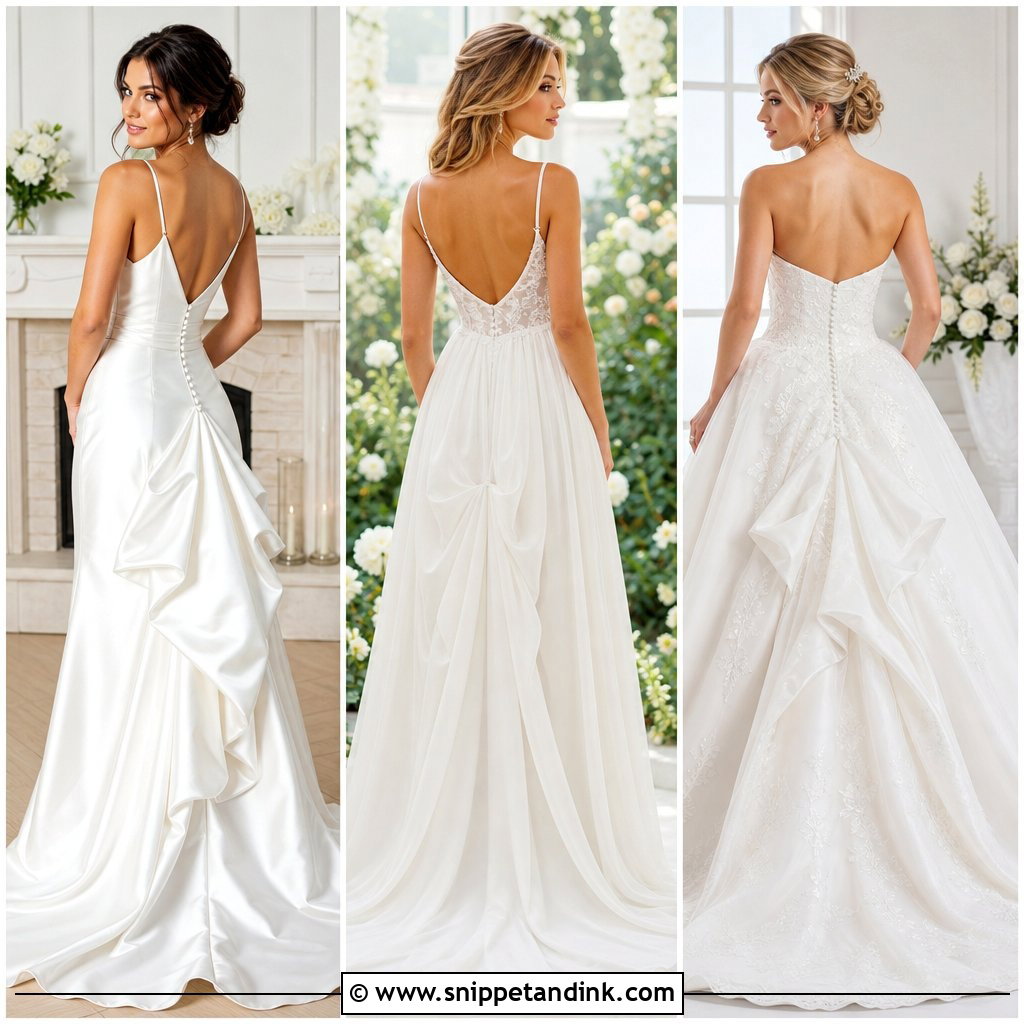
A bustle is the bit of engineering that lets you dance after the ceremony without someone stepping on your train. It lifts the extra fabric off the floor, and the way it does that changes how the back of your dress looks for the rest of the night. Some bustles show off the train in folds on the outside; others tuck it underneath so the gown looks floor-length. The names overlap a lot between shops, so read the ideas below as ways of handling a train rather than twenty fixed categories. Whatever you like the look of, the final system has to be built and tested on your own gown by an alterations specialist, and the person who will fasten it needs to practice before the day.
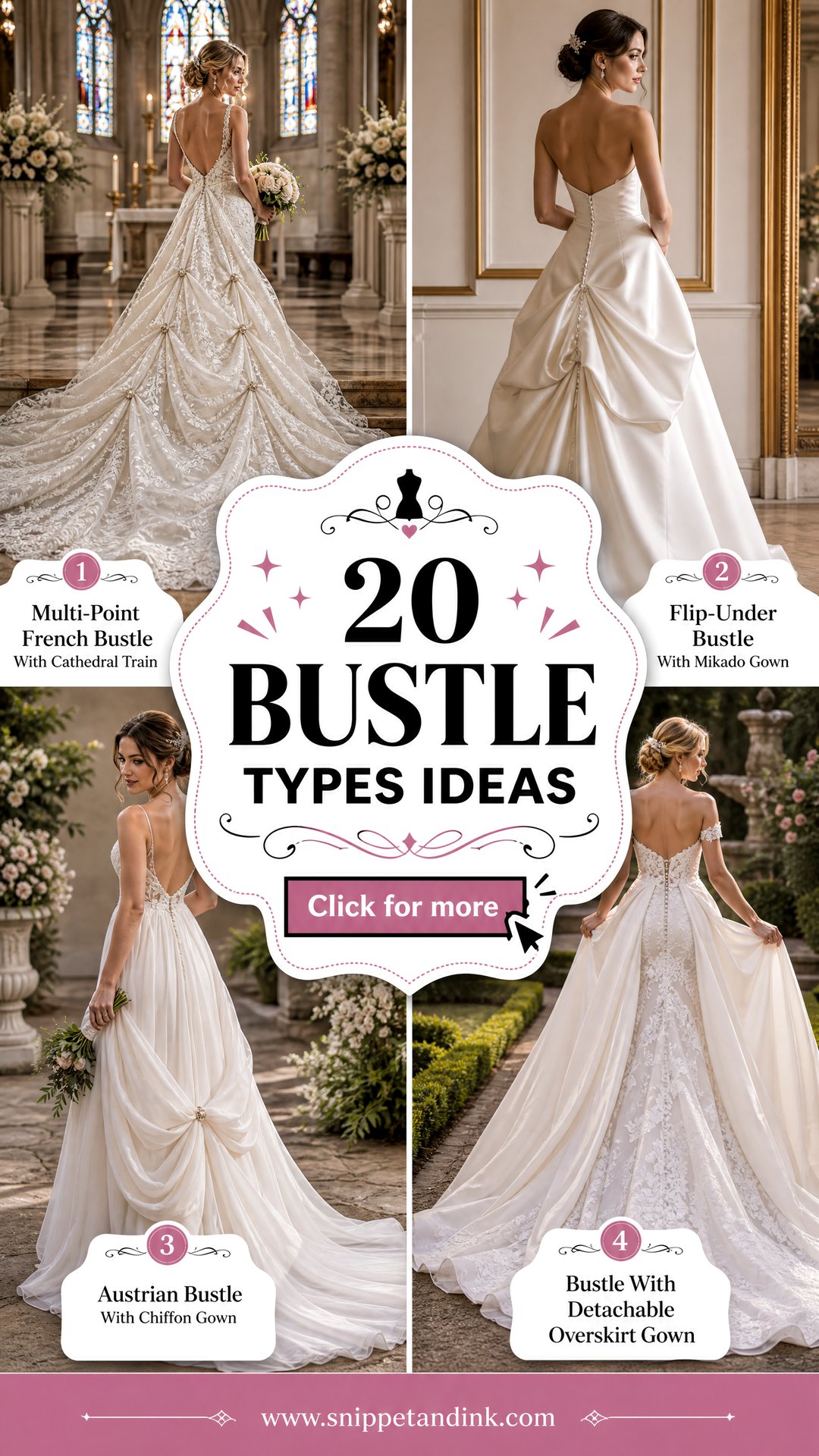
Over or Under? Read Your Fabric and Train Length First
Before I look at bustle styles with a bride, I pick up the hem of her train and feel the weight. That tells me more than any photo. Heavy satin and Mikado need several strong points and reinforced seams. Lace and tulle need attachments sewn into a solid layer underneath, never into the netting. Chiffon wants something soft, like an Austrian drawstring, because a stiff fold looks wrong on fluid fabric.
- Sweep or court train: one or two points, or a small under-bustle.
- Chapel train: three to five points, over or under depending on the back detail.
- Cathedral train: a multi-point French or American system, and plenty of practice.
- Detailed back (bow, appliqué, buttons): plan the bustle around it, usually as an under-bustle so the detail stays on show.
- Minimal crepe: ballroom or hidden under-bustle to keep the clean line.
Bring your exact wedding shoes to the bustle fitting. Hem height and bustle height are both measured from the floor, so a lower or higher heel later can leave the train dragging or the hem lifted too high.
1. American Bustle With A-Line Gown
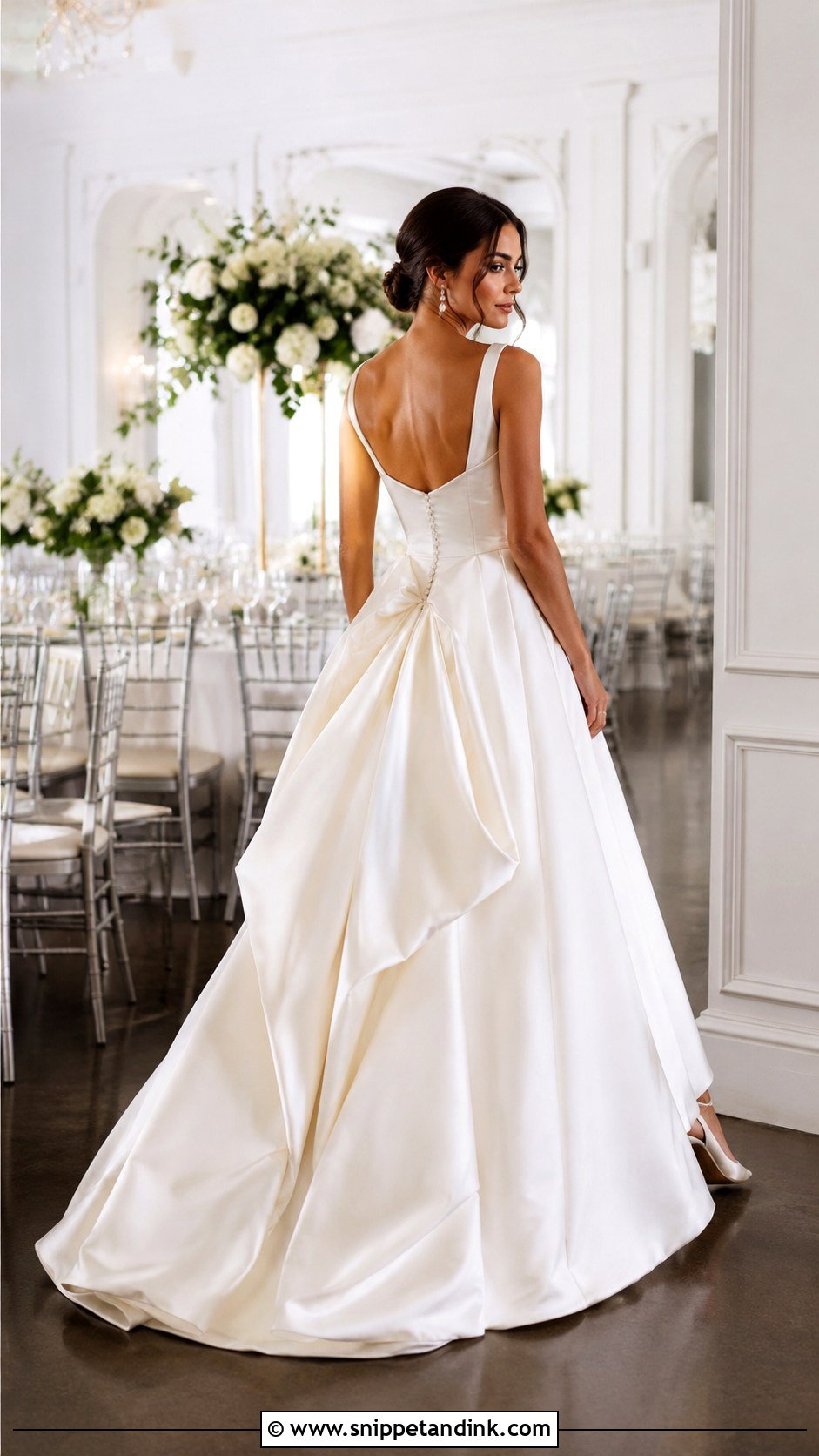
The American bustle, also called an over-bustle, lifts the train up over the skirt and hooks it near the waist with buttons, hooks or loops. On an A-line, one pickup point gives a simple drape; three or more spread the fabric more evenly. I usually suggest more than one point once a train passes chapel length, because a single hook carries all the weight and can pull the waist seam down. Satin or soft crepe suits it, with a fingertip veil you remove before bustling. The one thing to check at your fitting: with the bustle up, does the hem sit level all the way around?
2. Multi-Point American Bustle With Ball Gown
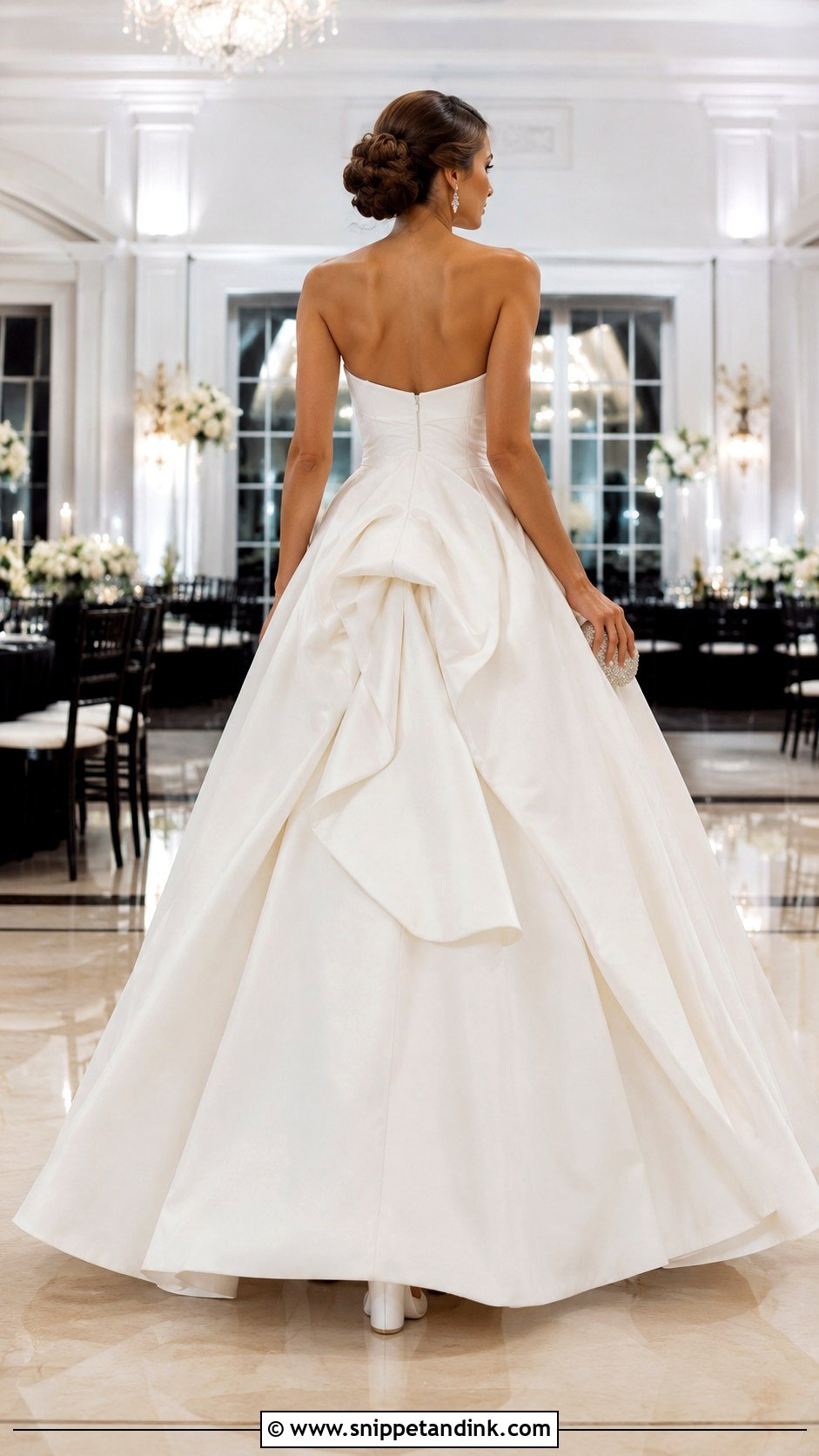
Ball gowns are heavy, and one little hook is not enough. A multi-point American bustle lifts the train at several spots, giving broad folds and spreading the weight of satin, Mikado or layered tulle. I like the pickup points hidden under seams, appliqués or covered buttons so the hardware never shows. Keep jewelry restrained, since the gathered back is now the focus. At the last fitting, fasten it and then walk, sit, turn and dance. Ten minutes of movement shows up weak points far better than standing still in front of a mirror.
3. Traditional Waistline Bustle With Satin Gown
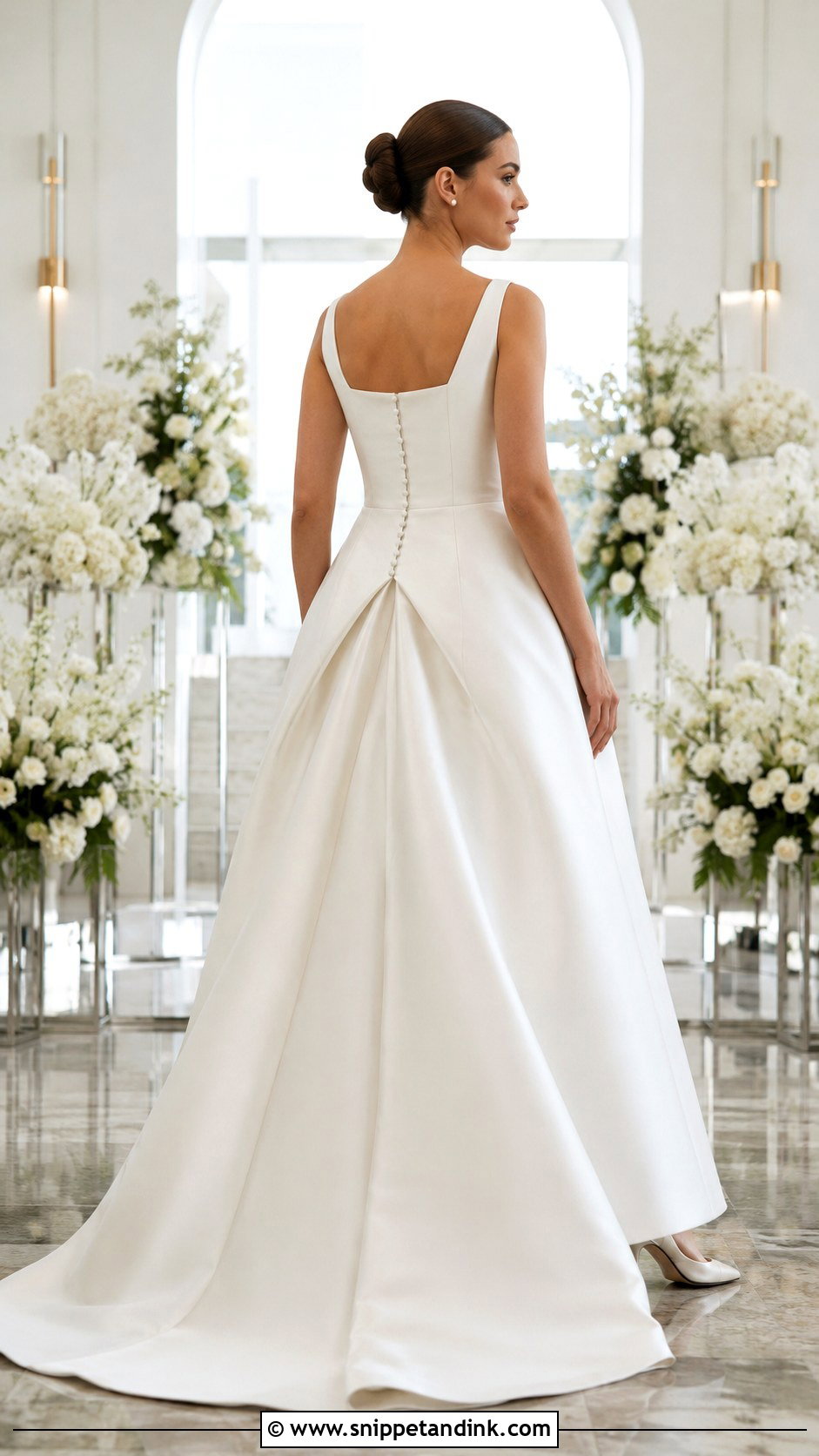
Satin shows every pull. That is the main thing to know about a traditional waistline bustle, which uses several attachments along the natural waist to form neat, controlled pleats, much like an American over-bustle. If one point sits even a little too high, you get a diagonal pucker across the back that every photo will catch. I ask the seamstress to space the points evenly and keep stress off the center seam. A square neckline, covered buttons and a sleek bun keep the back the focus once the veil is off. Ask for each loop to be marked discreetly; it saves time when your helper is working fast before the reception.
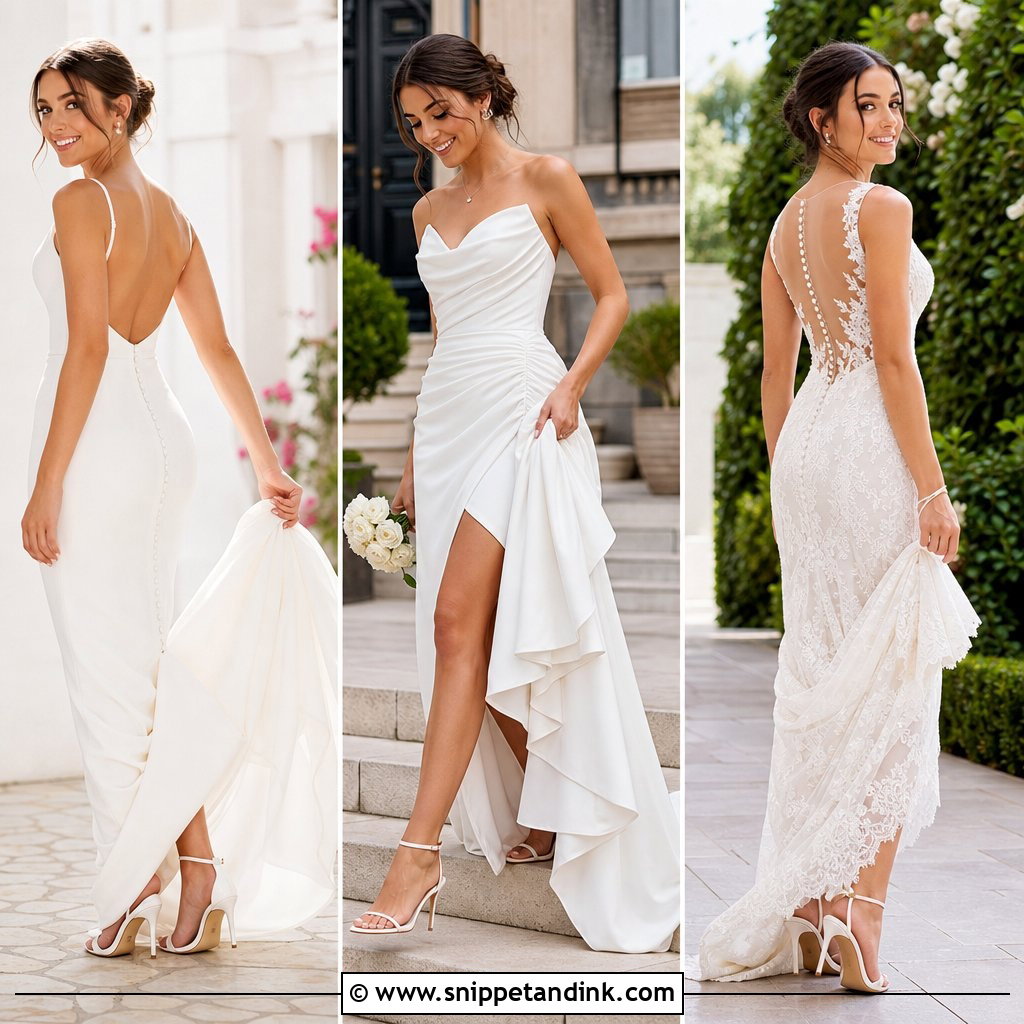
4. French Bustle With Lace Fit-And-Flare Gown
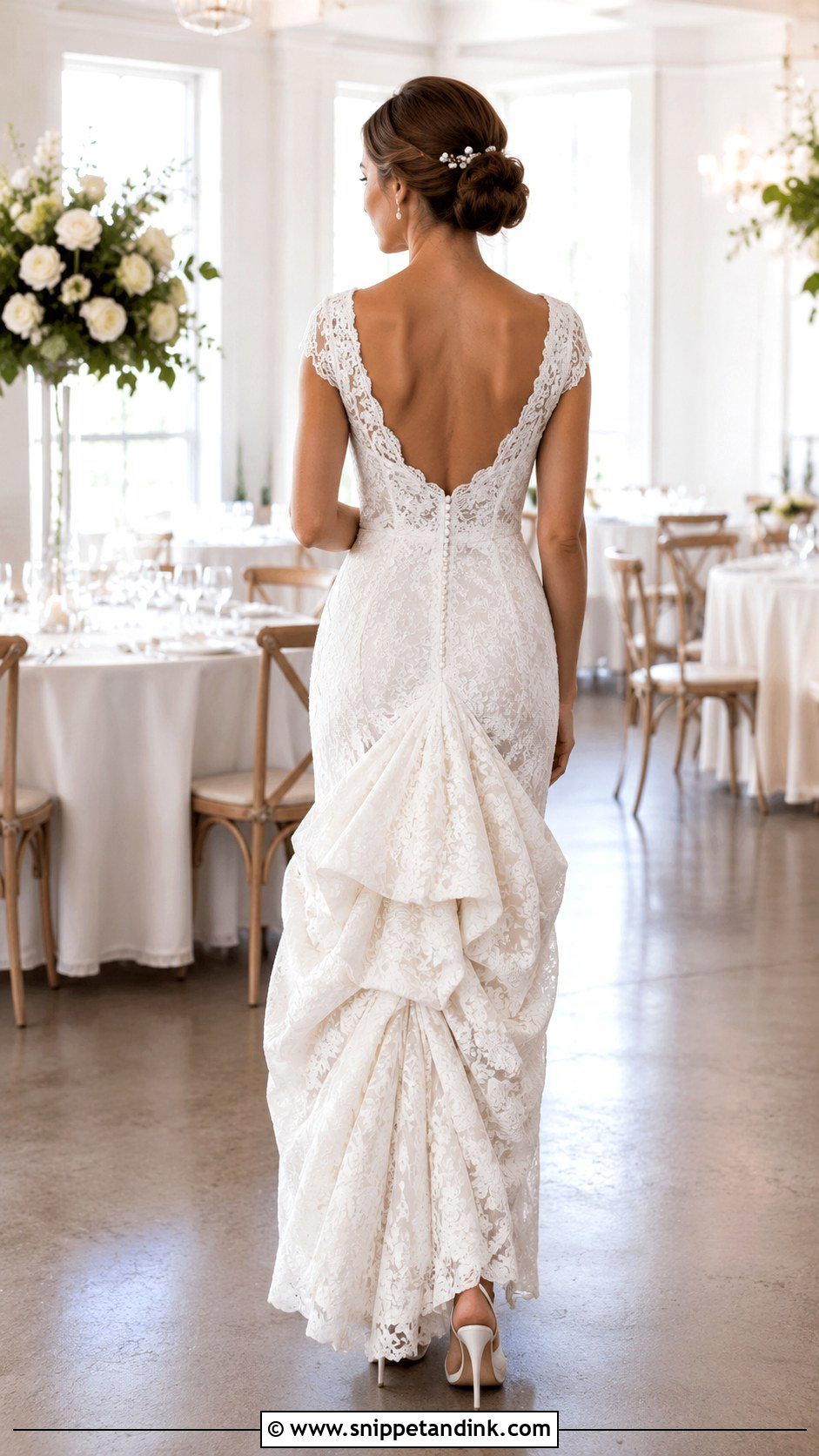
The French bustle, or under-bustle, folds the train beneath the skirt instead of over it. That makes it a natural match for a lace fit-and-flare: the back appliqués stay visible, and the layers form underneath. It uses ribbon ties, and I always want them numbered or color-coded, because tie seven connected to tie six gives you a twisted, lopsided hem. Expect it to take more practice than an over-bustle. Bring your helper to the final fitting and film the seamstress tying it, start to finish.
5. Multi-Point French Bustle With Cathedral Train
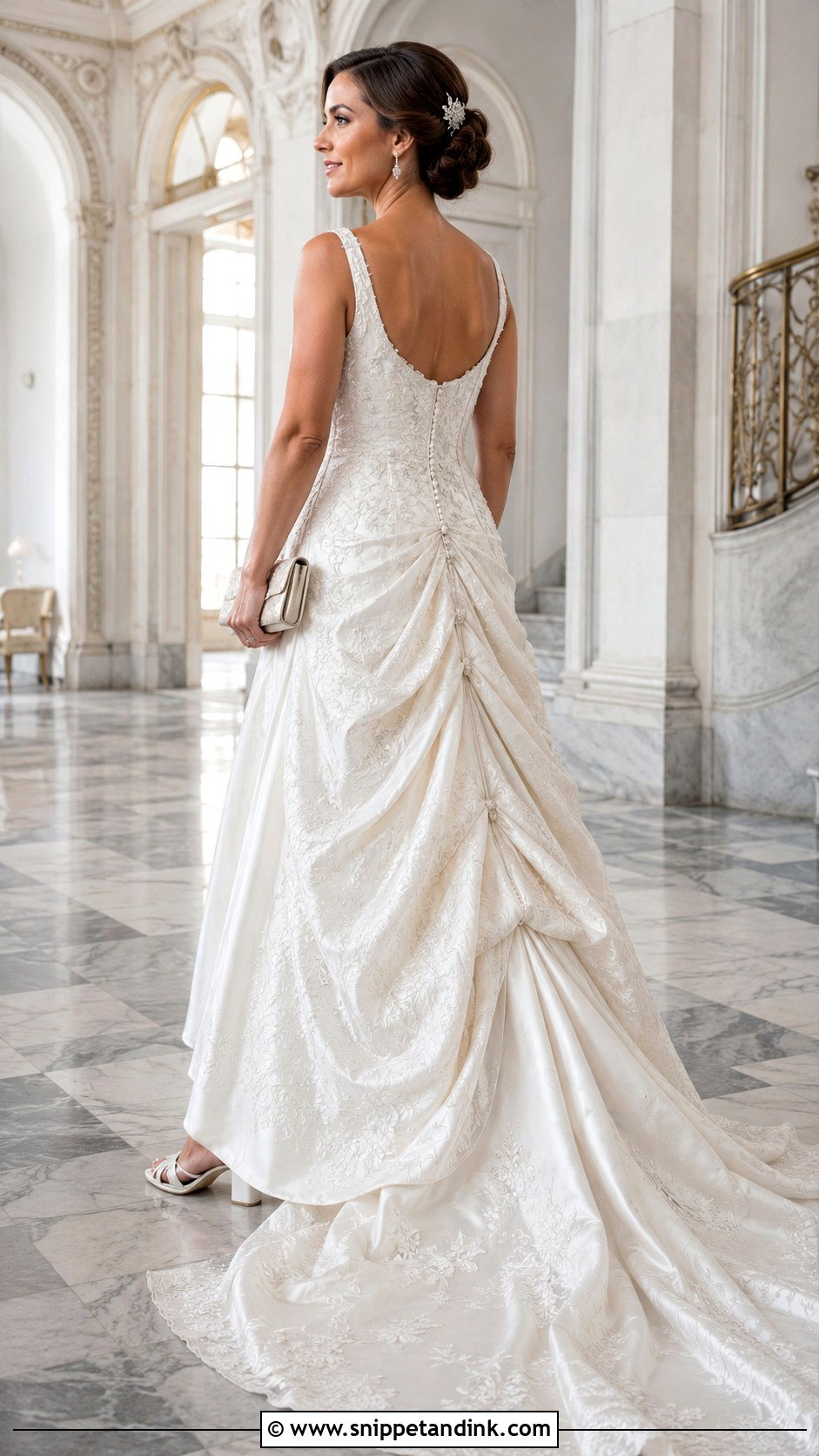
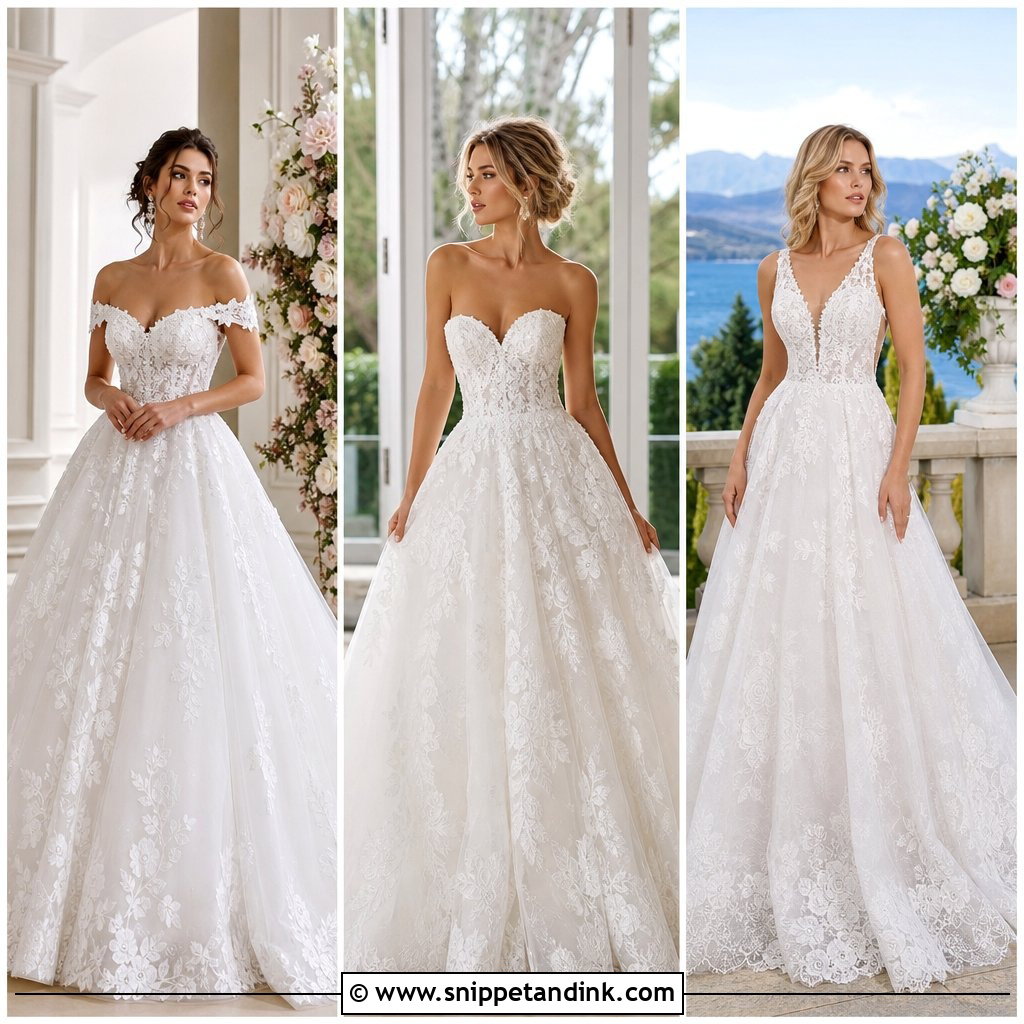
A cathedral train holds a lot of fabric, and a multi-point French bustle turns it into soft tiers rather than one heavy roll. Several hidden ribbons pull the train underneath at different heights. I find this works best on lace or embroidered A-lines with real substance in the skirt; on lighter fabric the tiers can collapse. Take the cathedral veil off first, so the back is clear. Long trains may need many ties, so the weight has to sit on reinforced seams, not delicate lace. Practice the order with your helper until it is quick.
6. Ballroom Bustle With Minimalist Crepe Gown
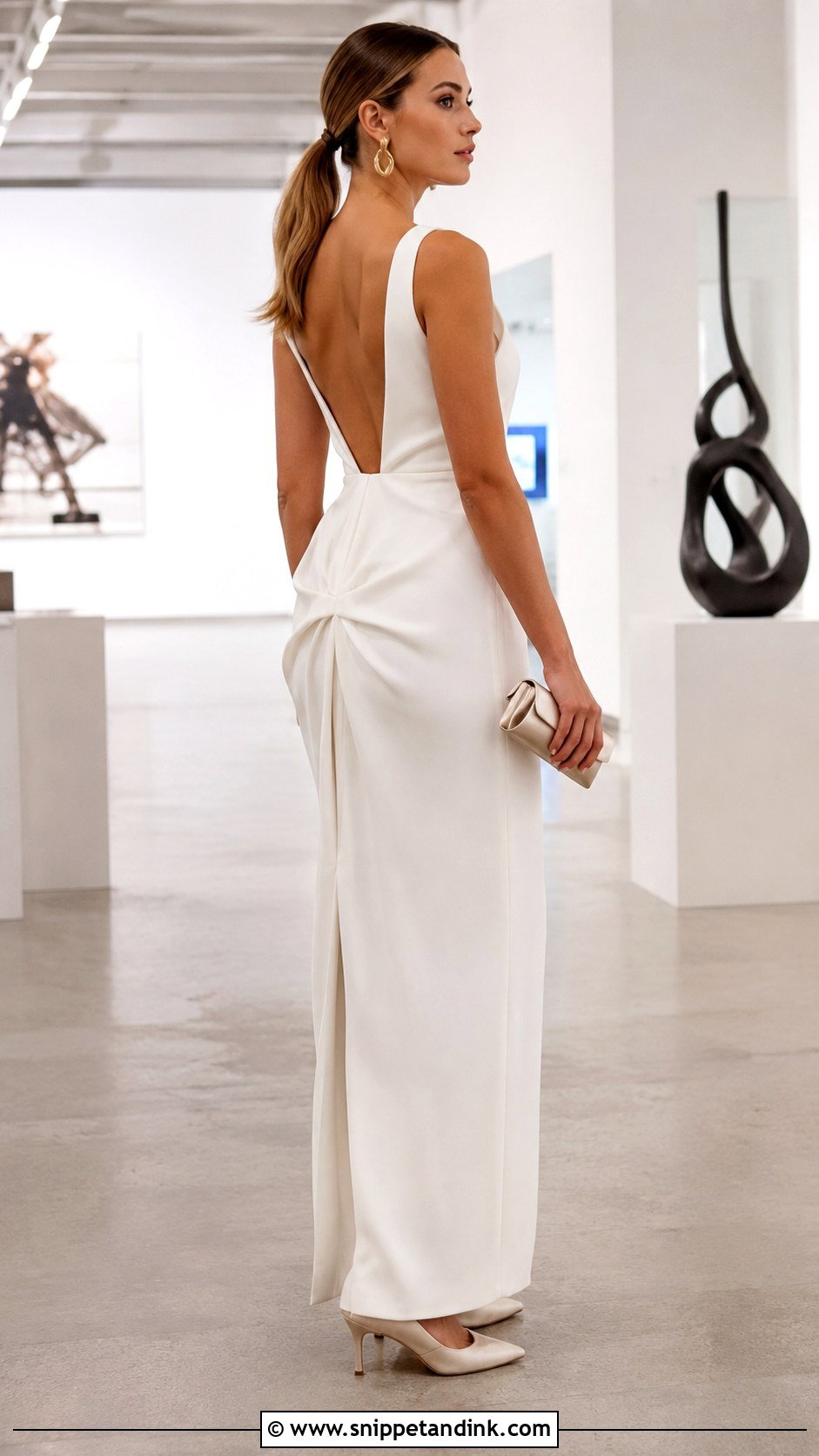
If you want the train to disappear entirely, the ballroom bustle is the one. Multiple hidden attachments fold the train under at the hem, so the dress looks like a plain floor-length gown. It suits a minimalist crepe A-line or fit-and-flare, since nothing interrupts the clean lines. A low ponytail and sculptural earrings keep the modern feel. The catch is that it has many internal connections, all of which need labels and reinforcement. Once it is fastened, I always do a slow circle around the bride to check the hem is level from the front, back and both sides.
7. Flip-Under Bustle With Mikado Gown
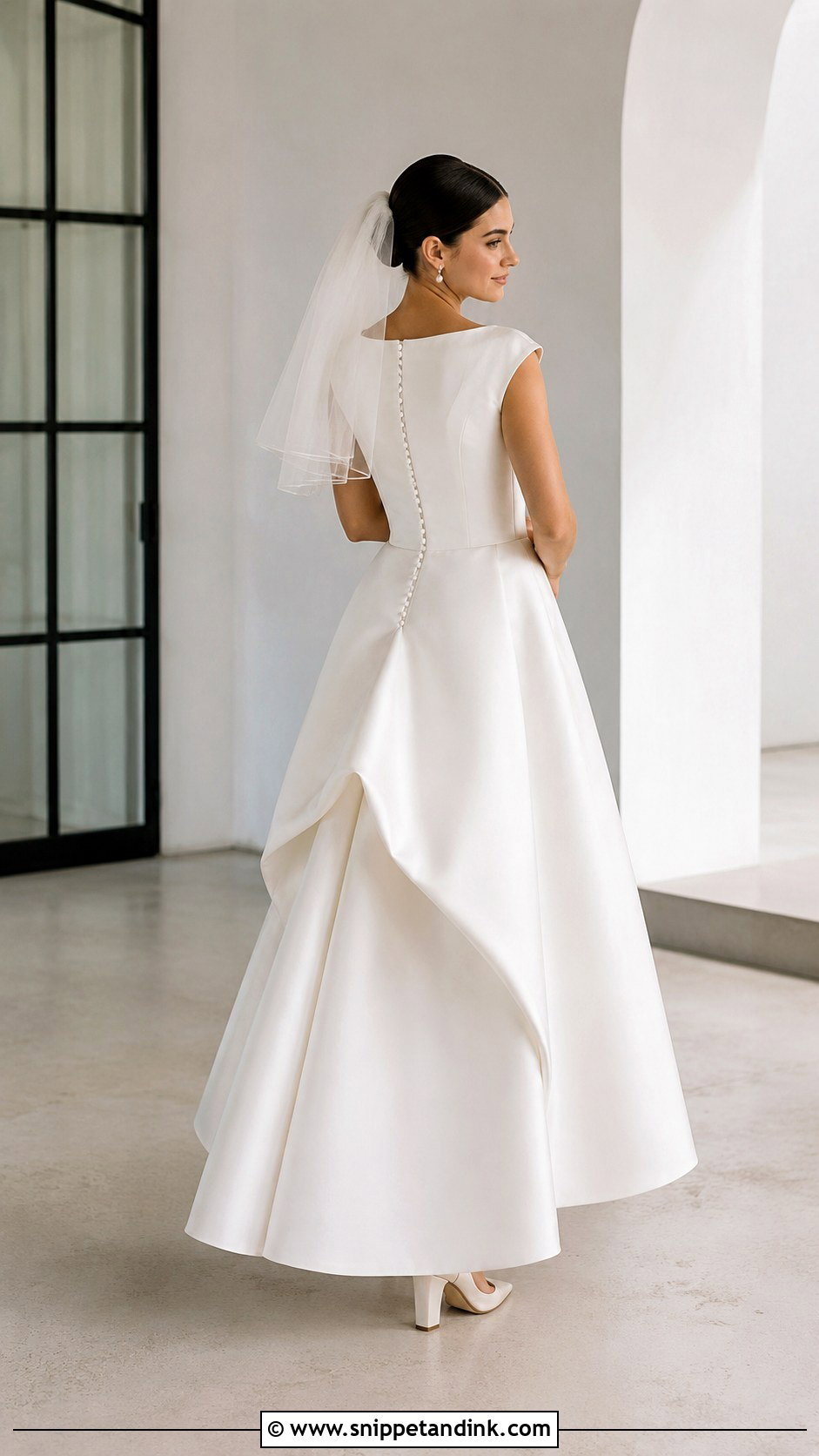
Mikado is crisp and holds its shape, which is good for structure and harsh on a badly placed bustle. With a flip-under bustle, sometimes grouped with hem or ballroom bustles, the train turns inward and fastens along the underside, giving a smooth hem. On a clean Mikado gown with a bateau neckline and covered-button back, poorly spaced anchors show as sharp angles in the skirt. I ask for the anchors to be reinforced and spaced close together. Your helper should work from one side to the other in the same order every time, then check the whole hem.
8. Austrian Bustle With Chiffon Gown
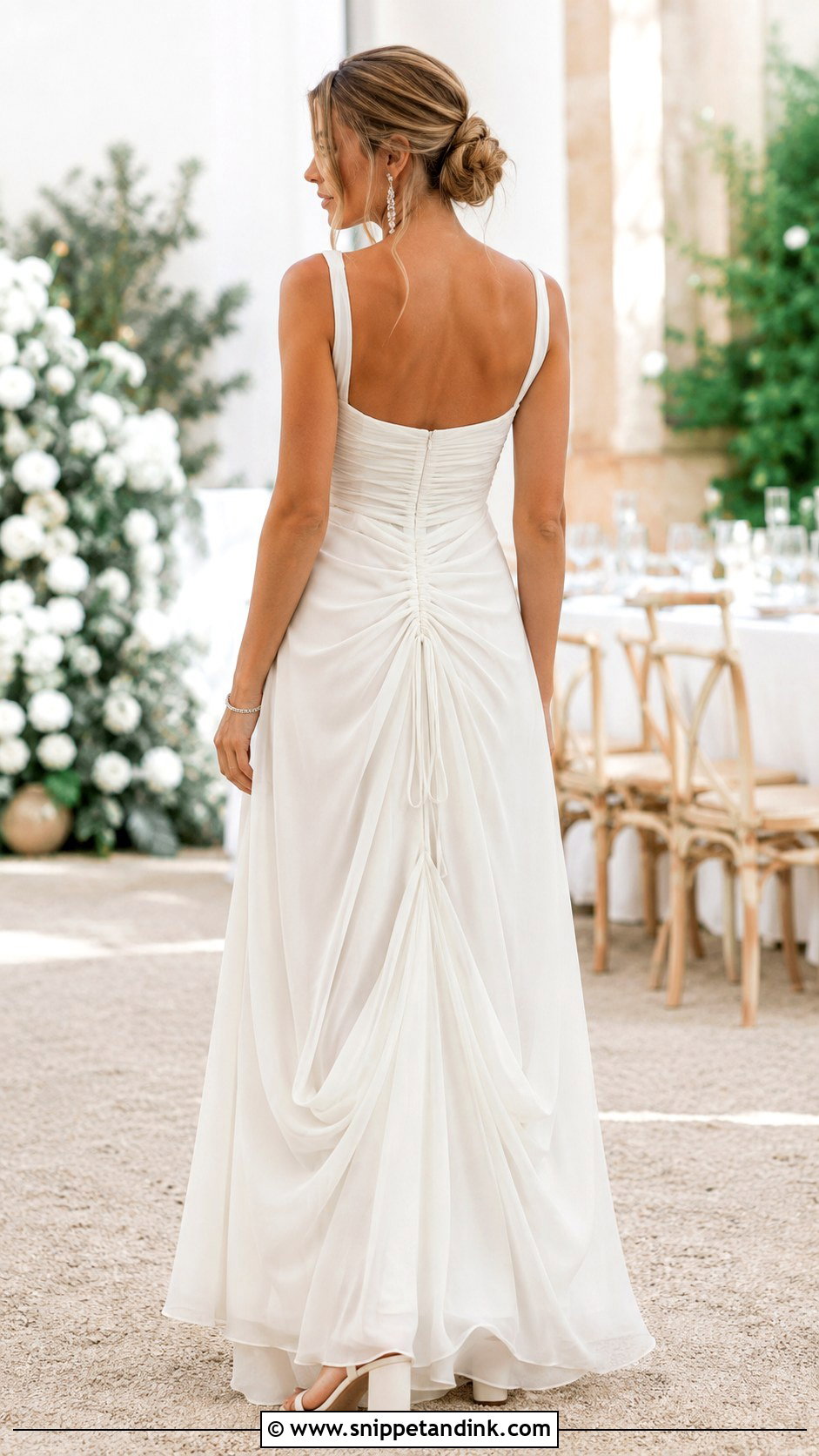
Chiffon is the fabric I most want to see in an Austrian bustle. It gathers the train through a center drawstring or ribbon channel into soft vertical ruching, and light chiffon collapses into delicate folds instead of stiff layers. The mechanism is easy to operate: pull, tie, done. It still needs proper reinforcement, though, because the cord pulls on a single channel. After tying, I arrange the ruching by hand so it sits centered, and I check the cord has not caught the outer fabric or dragged the waist.
9. Royal Bustle With Formal Ball Gown
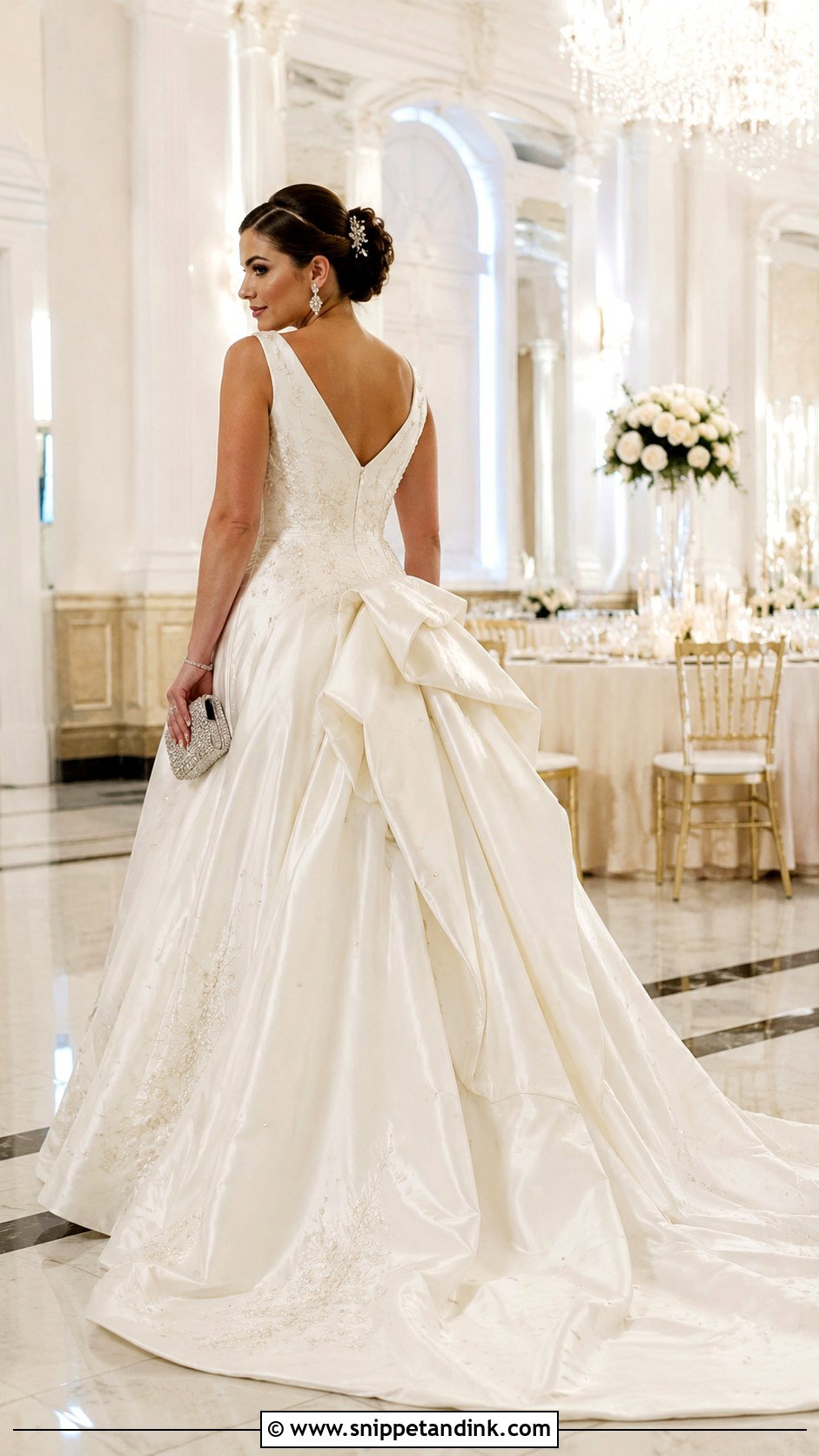
Royal bustles are about volume. They use one big pickup or several attachments placed across and down the skirt to build sculpted folds at the back of a formal ball gown. A fitted bodice, a full satin skirt and an elegant updo suit it, and closed-toe block heels give stability under the weight. Keep accessories at the front quiet. The more points there are, the slower the fastening, so I ask for every connection to be labeled and the heaviest areas reinforced. Then test it: walk, sit, turn.
10. Victorian Bustle With Embroidered Gown
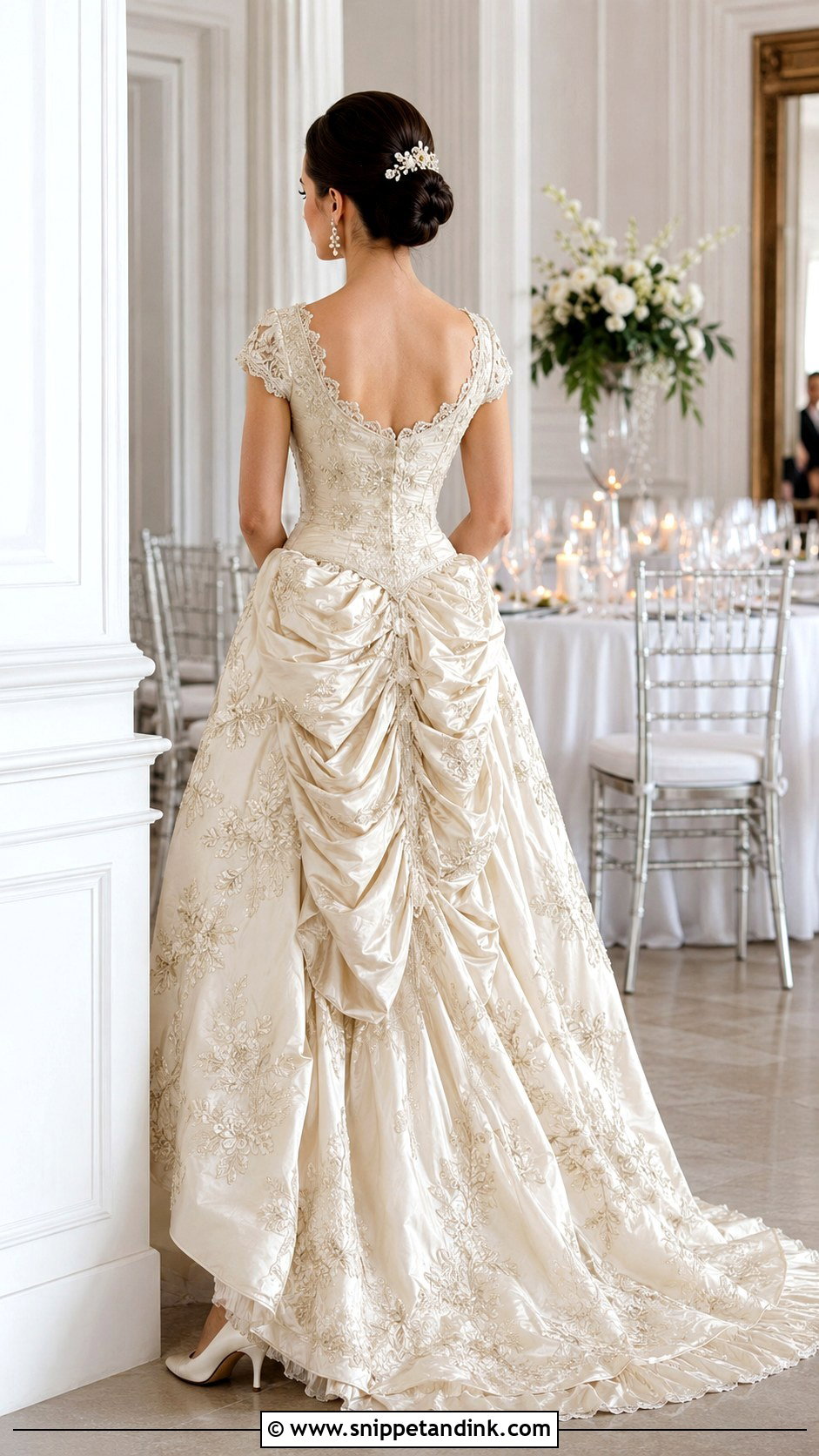
A Victorian bustle is often treated as another name for the royal bustle, and it shares the big folds and visible volume. I like it on embroidered gowns with a defined waist and an ornate back. The best versions follow the embroidery pattern, so the gathers look part of the design rather than added later. Never let hooks go straight through fragile appliqués unless the area underneath is reinforced. With several pickup points, your helper should have a simple labeled diagram, ideally a photo with numbers drawn on it.
11. Bow Bustle With Statement Back Gown
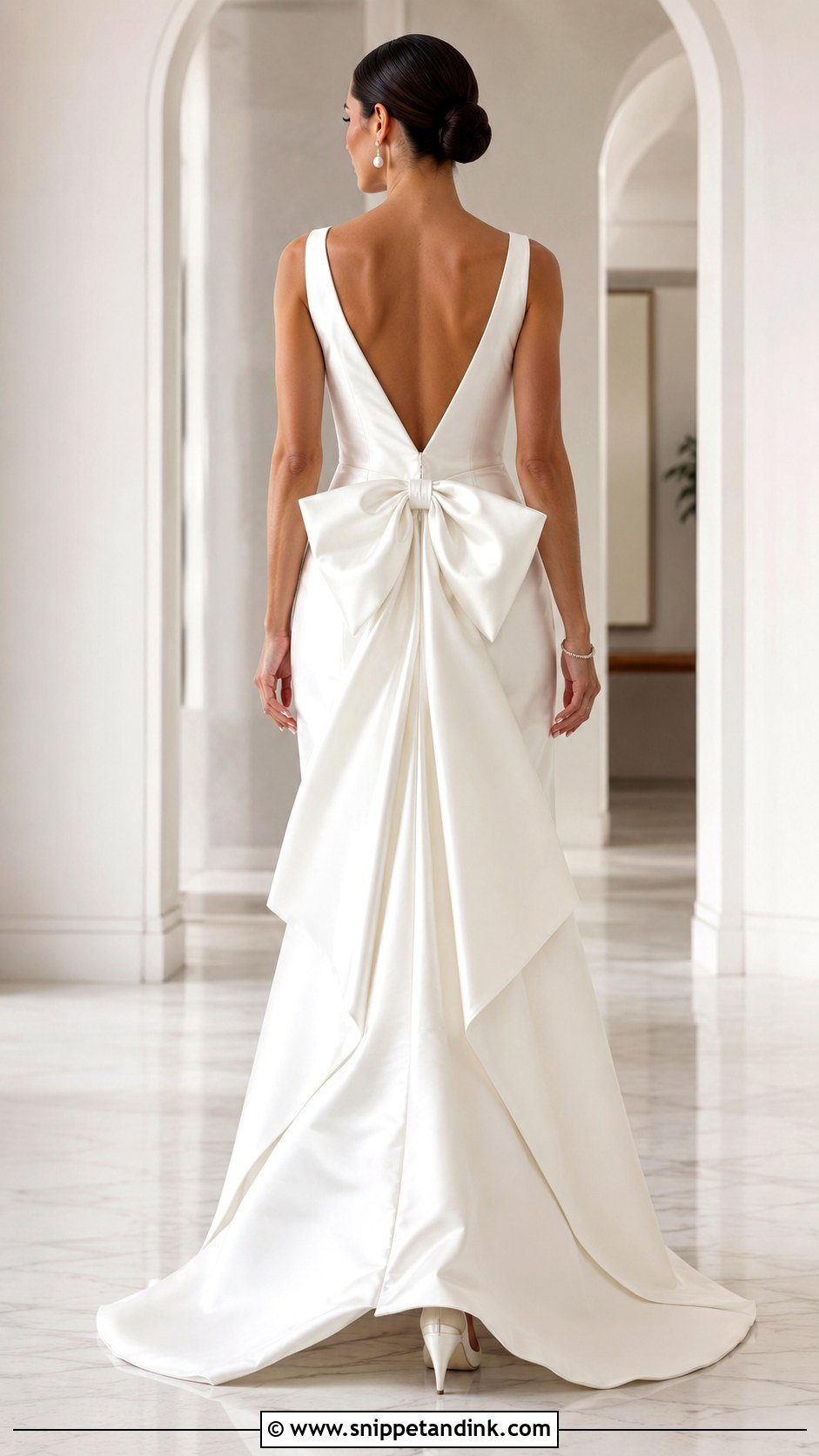
A big back bow needs a bustle planned around it, not one that hides it. With a bow bustle, the train lifts and fastens under or just beside the bow, so the fabric falls evenly from that point. The risk I watch for is weight: a heavy train hanging off the bow area can drag it downward and flatten its shape. Hidden ties or reinforced loops underneath fix that. Pair it with a clean satin gown, a square neckline and a sleek bun that keeps hair off the bow.
12. Waterfall Bustle With Mermaid Gown
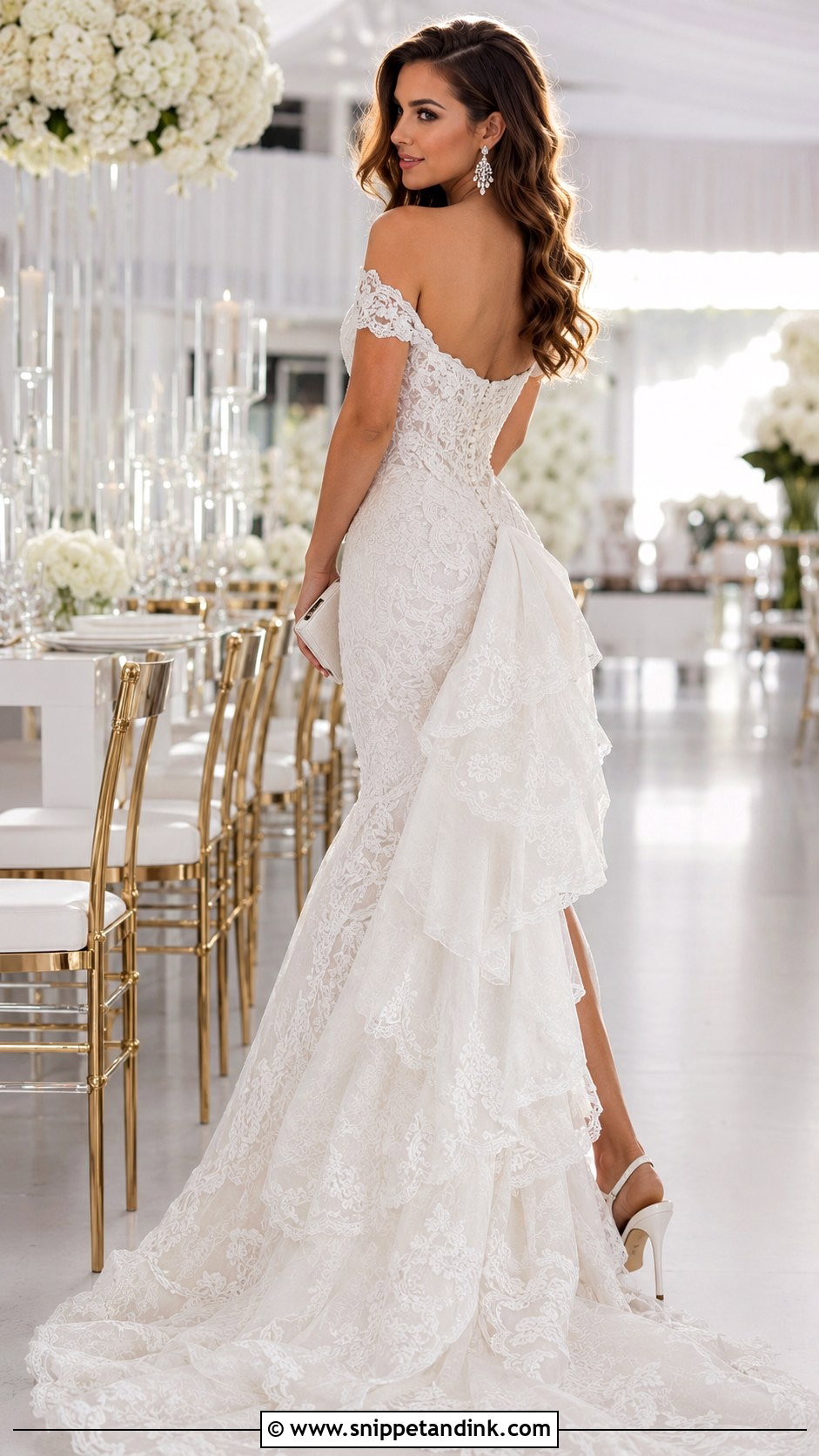
The waterfall bustle is a decorative multi-point over-bustle that sets the train into cascading layers. On a mermaid gown it carries the drama on below the fitted hips. Soft tulle, lace and light organza give fluid folds; heavy satin needs extra reinforcement. I ask for pickup points to sit on existing seams or appliqué lines. The lowest layer has to clear the floor, but if the seamstress pulls it too tight, the mermaid flare loses its shape. That balance is worth an extra fitting.
13. Pick-Up Bustle With Tulle Ball Gown
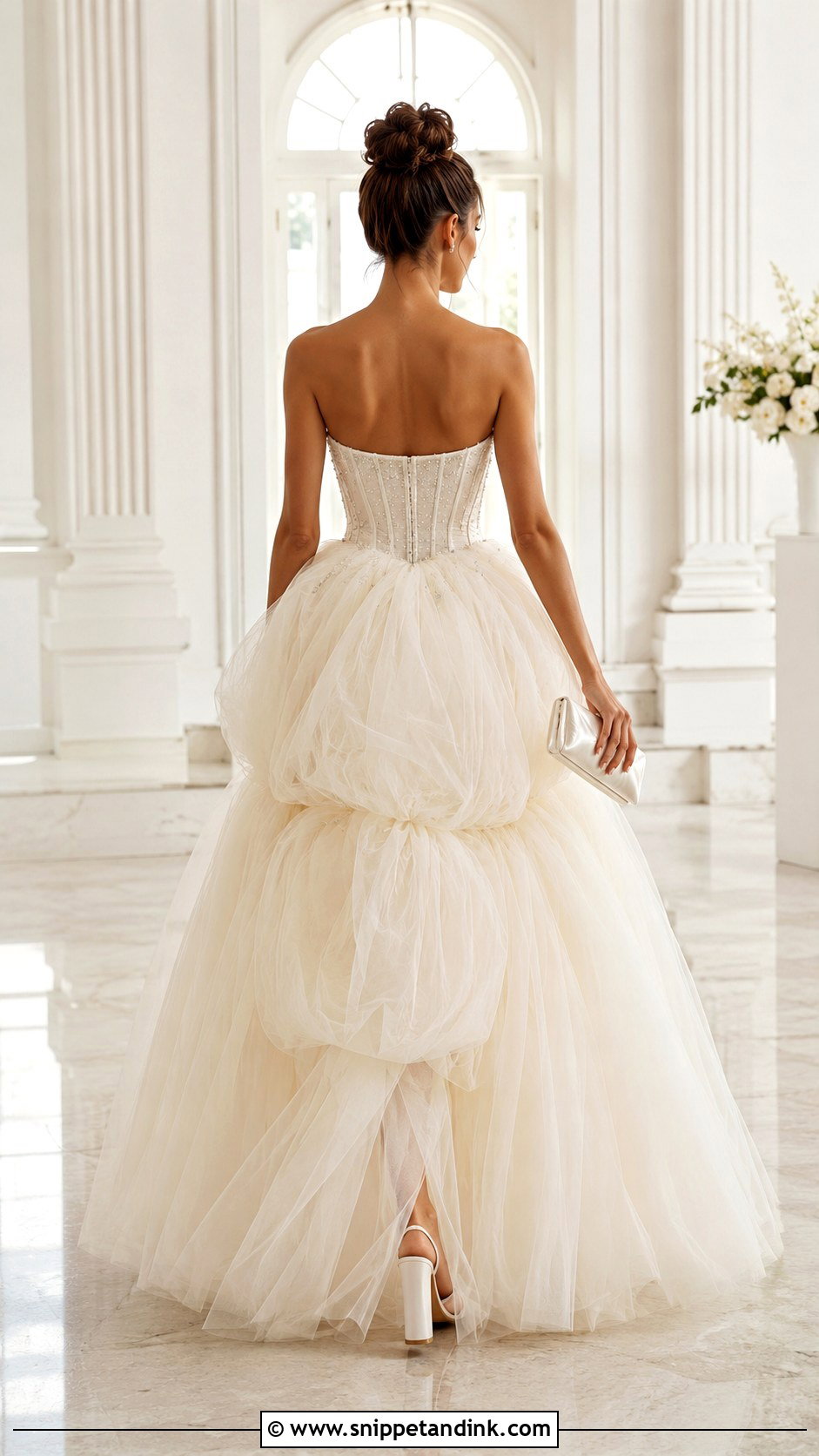
Tulle is light, but it snags and stretches, so a pick-up bustle on a tulle ball gown must attach to the structural layers, never to the netting alone. Done right, several loops lift the train into soft rounded sections, almost cloudlike. The seamstress should lift each section by the same amount so the skirt keeps its shape. After fastening, I gently separate and fluff the layers by hand; compressed tulle looks flat in photos.
14. Side Bustle With Asymmetrical Gown
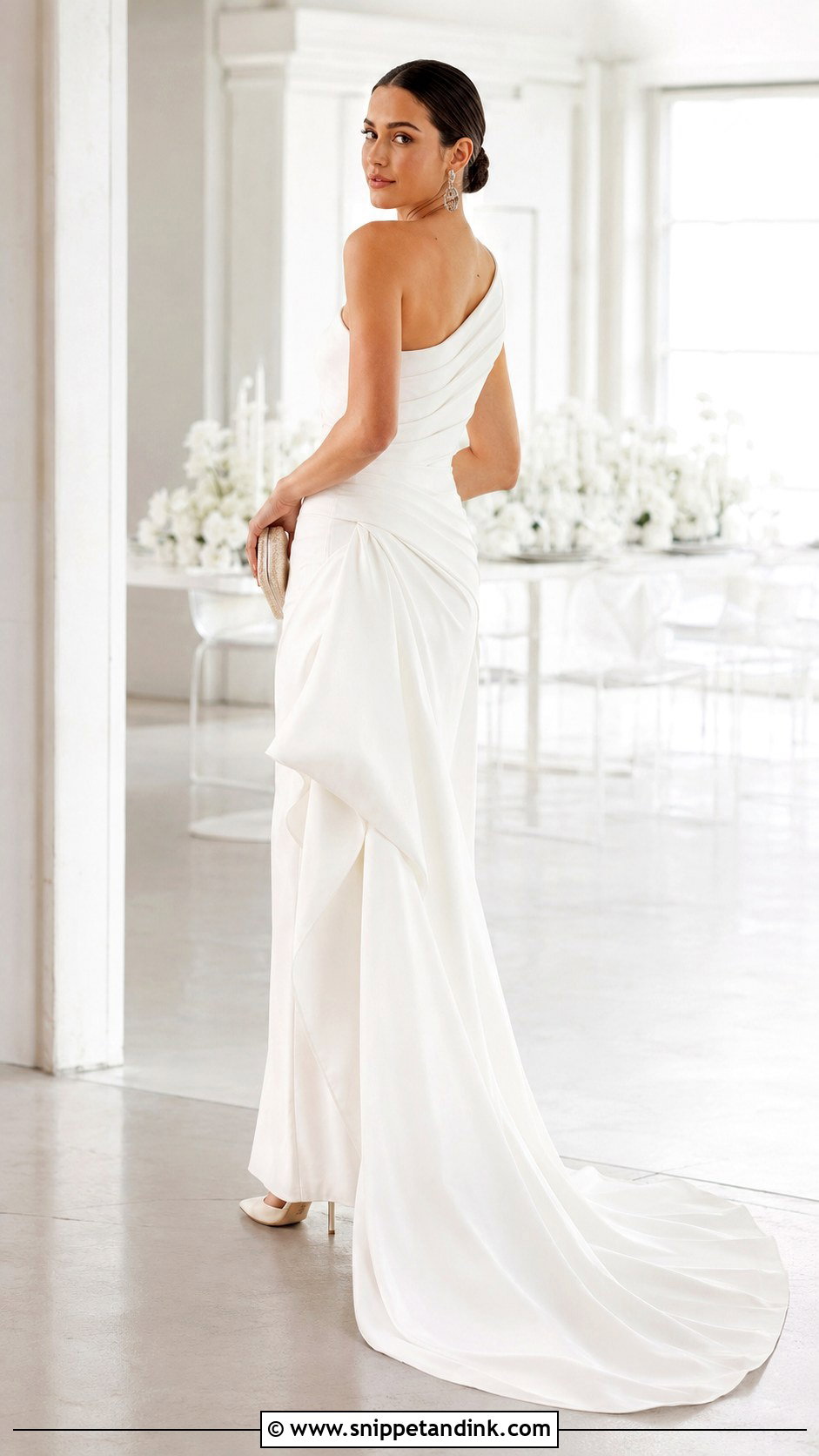
Asymmetrical gowns often look odd with a centered bustle, because the draping already moves to one side. A side bustle gathers the train toward that side, following the diagonal drape, a side ruffle or an offset seam. It is custom work, built for one dress, not a standard type. The goal is a train that looks swept on purpose rather than twisted by accident. I walk the bride several steps in each direction at the fitting, since off-center attachments carry uneven load and need strong internal reinforcement. Carry the clutch on the opposite side for balance.
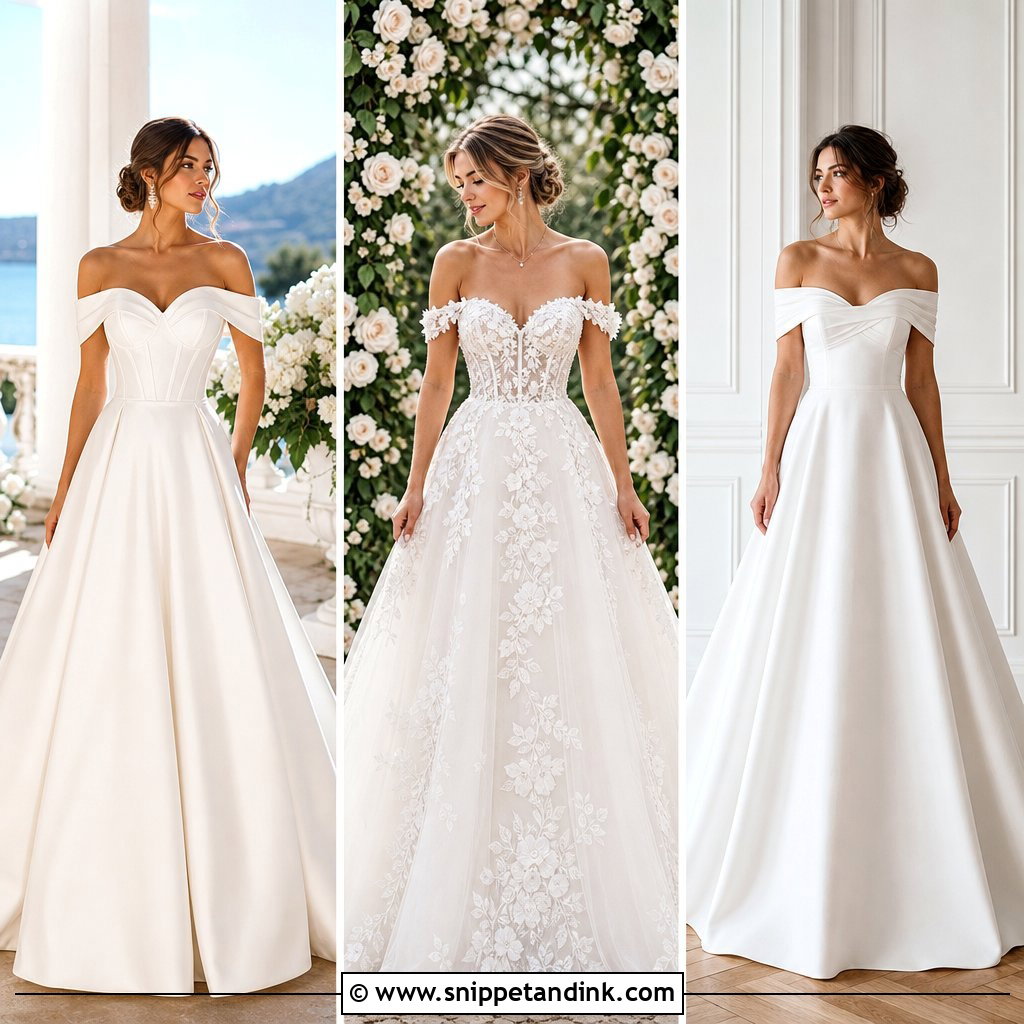
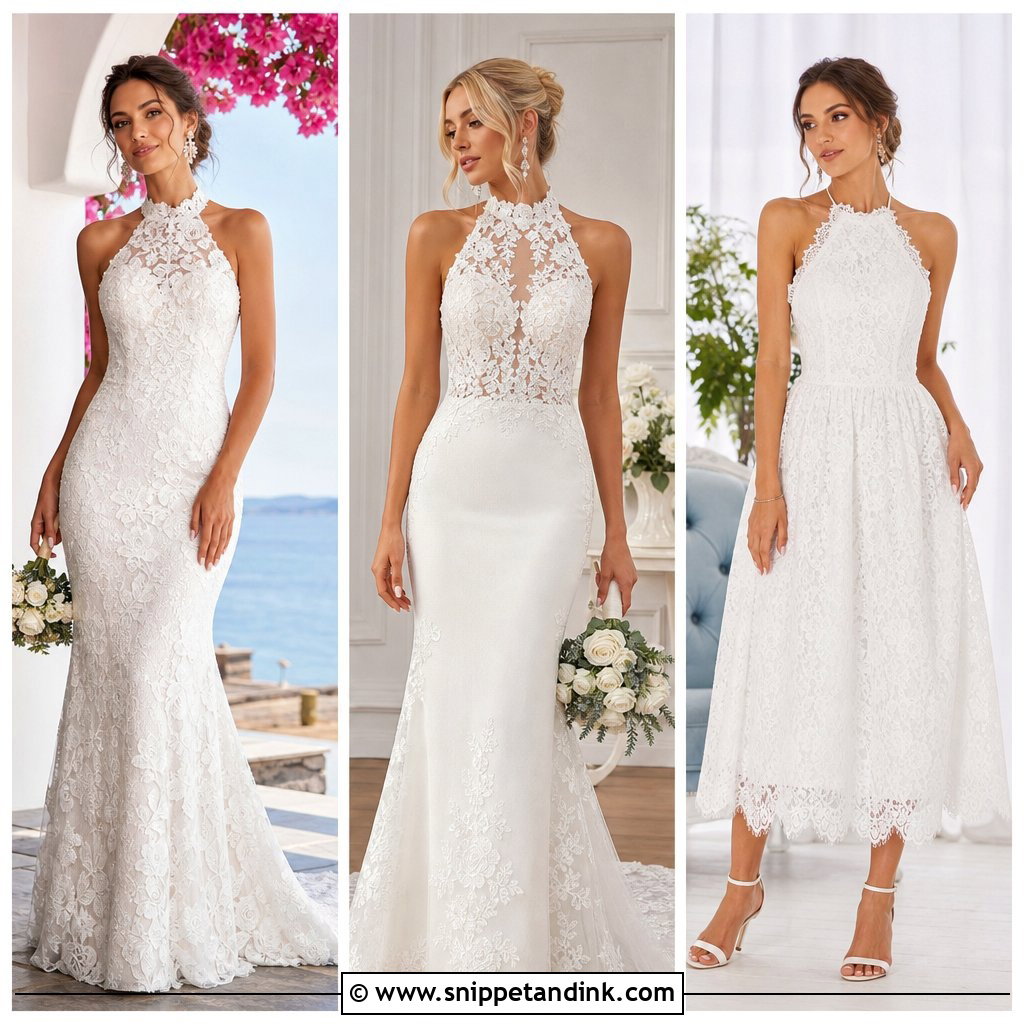
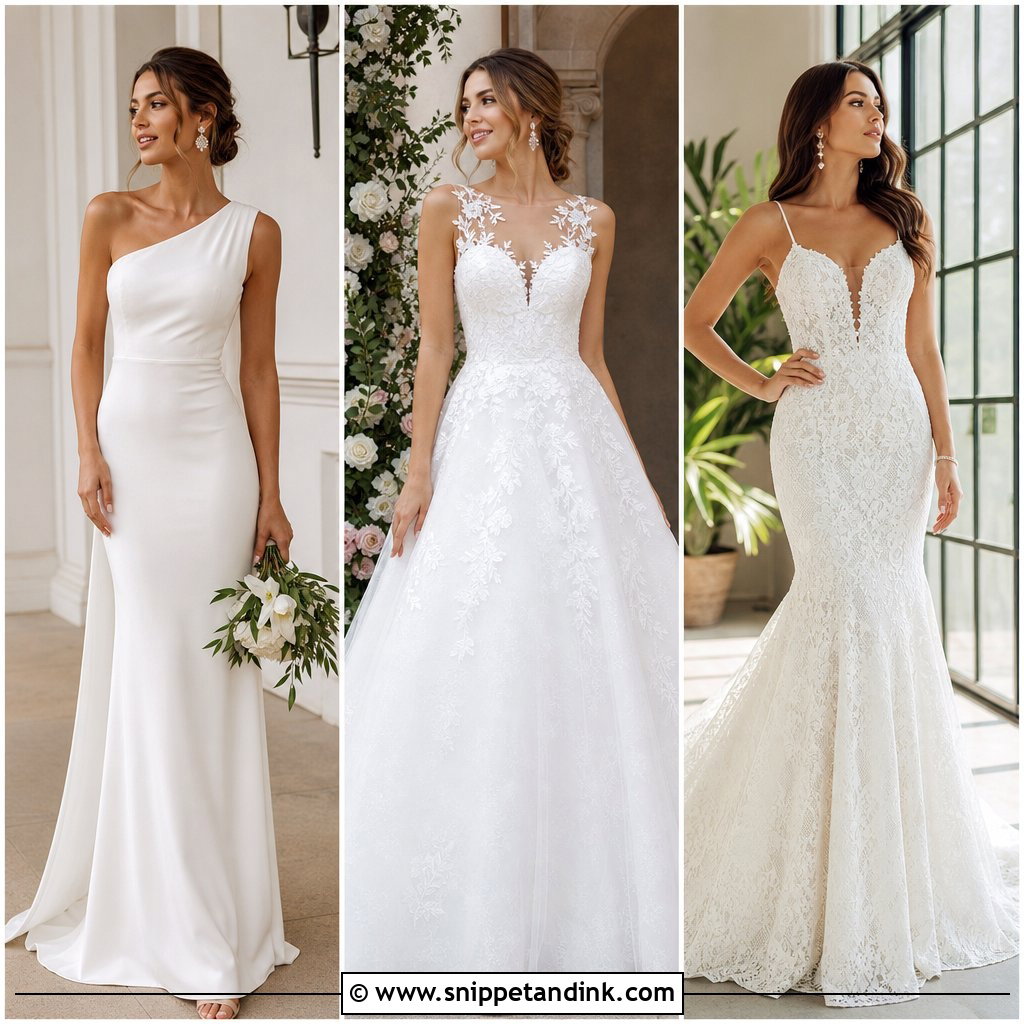
15. Three-Point Bustle With Trumpet Gown
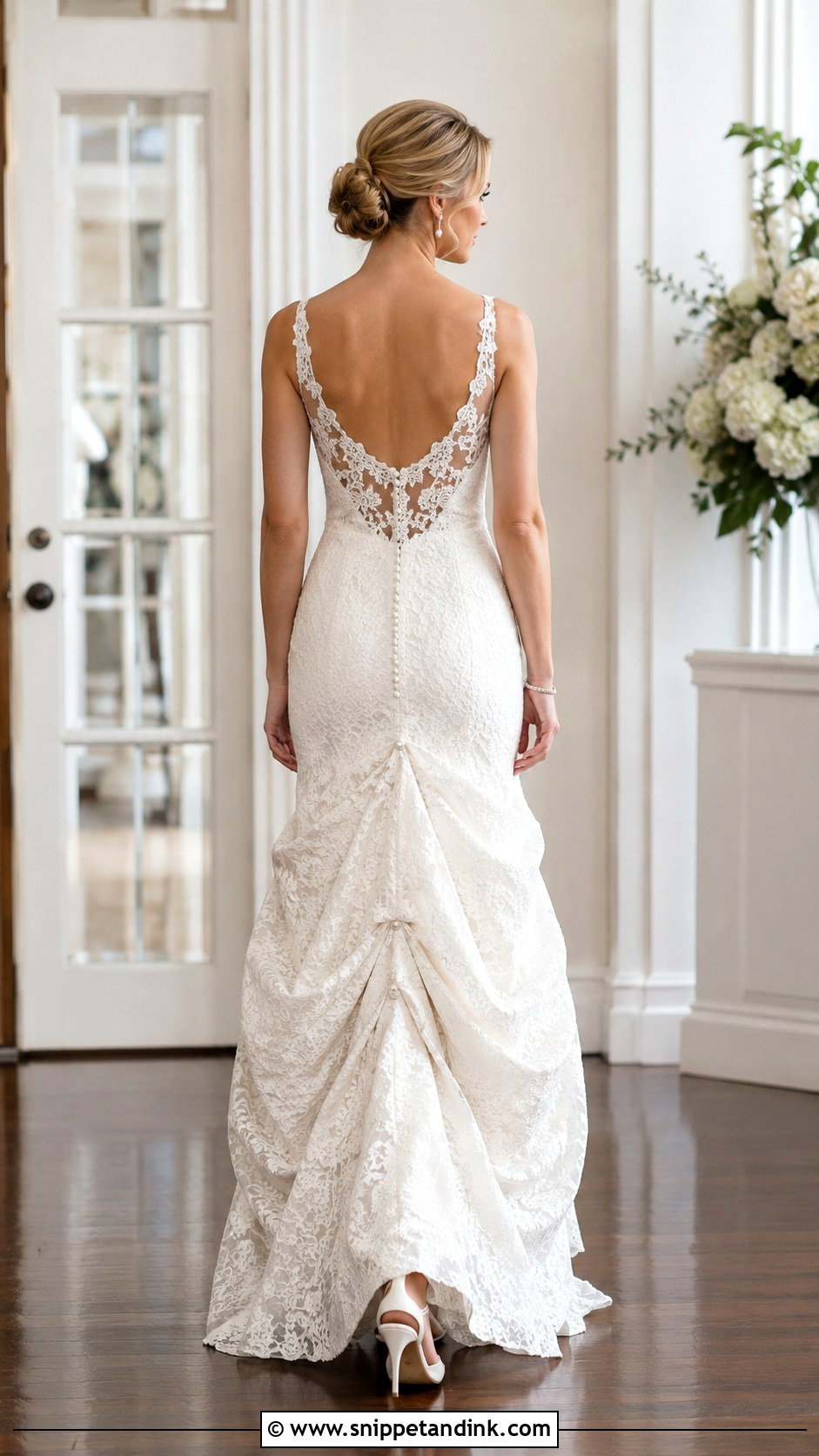
The three-point bustle sits nicely between one pickup and a complex system. On a trumpet gown, the center point lifts the main train and two side points stop the edges dragging. Get the heights wrong and the flare looks crooked, so I check the points sit level with each other and follow the seams or lace. The fastening order is simple: center first, then each side, then smooth the folds. A walk test confirms the hem clears the floor without pulling the fitted part of the skirt.
16. Five-Point Bustle With Chapel Train
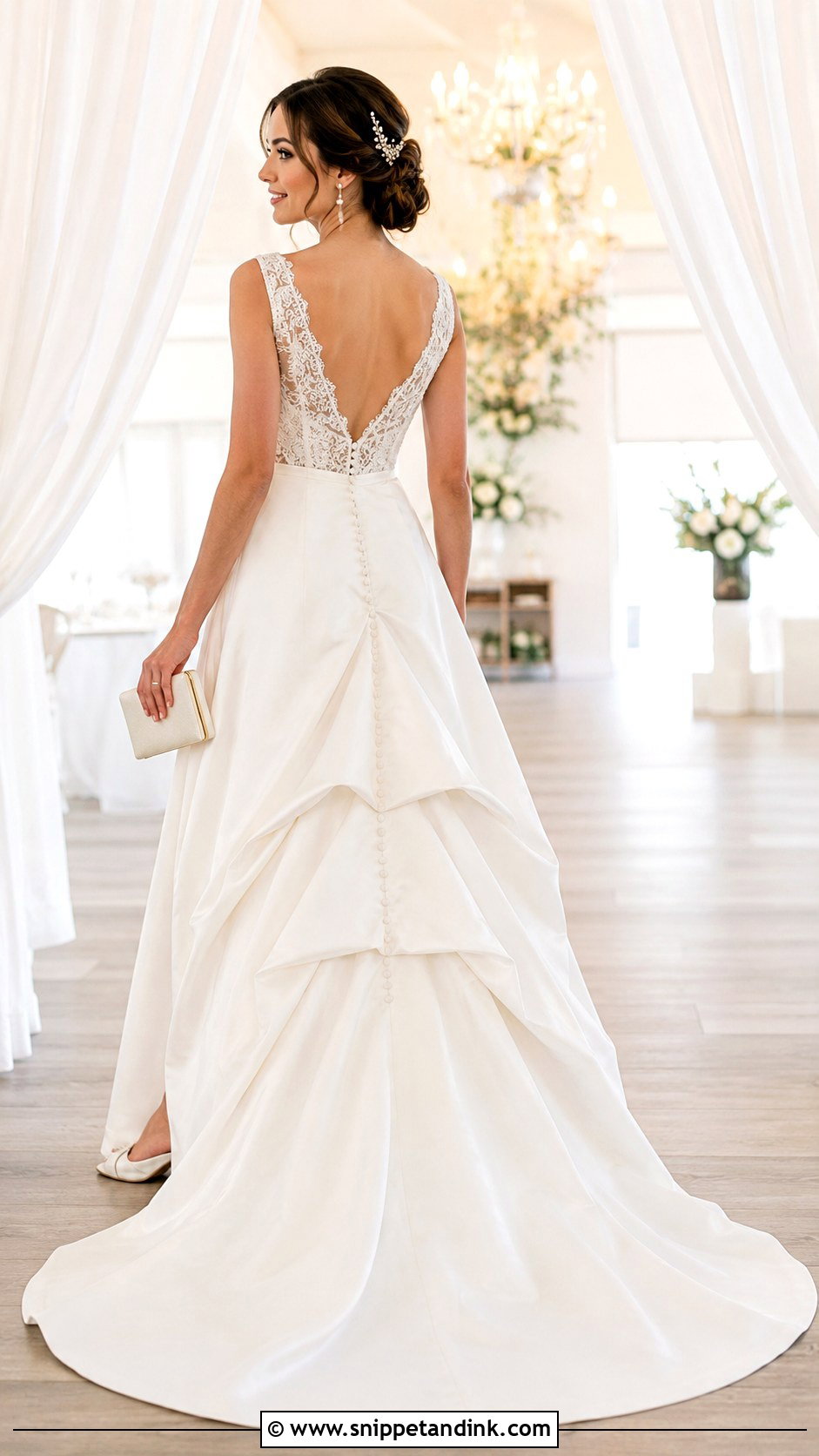
Chapel trains are where a five-point bustle earns its place. The center and the two outer edges all need support, and five points give an even cascade with the whole hem lifted. Spread the weight across sturdy seams. Take the veil off first so your helper can see every loop. Color-coded loops or a numbered sketch keep it quick. When everything is connected, I smooth the fabric outward from the center and look at the sides; neither should hang lower or form a pocket near the floor.
17. Hidden Under-Bustle With Sheath Gown
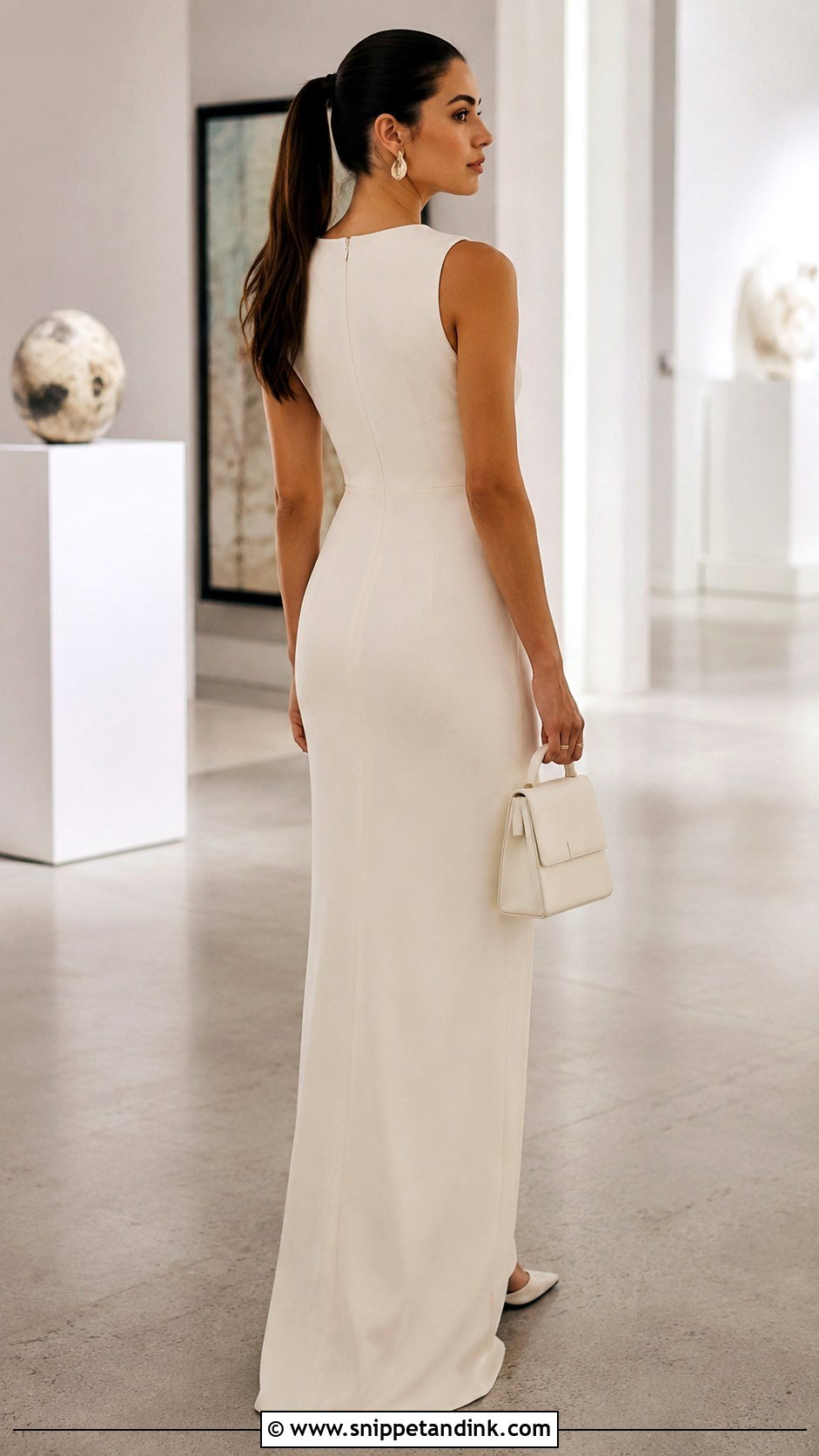
On a narrow sheath, the bustle must not add bulk at the hips. A small hidden under-bustle tucks a sweep or court train beneath the skirt and leaves the long line alone. Hardware has to be light, because heavy hooks show through smooth crepe. I ask for the connection on a reinforced seam and check the outside for puckering. Once fastened, walk slowly; a tucked train on a slim skirt can shorten your stride more than you expect.
18. Layered Bustle With Organza Gown
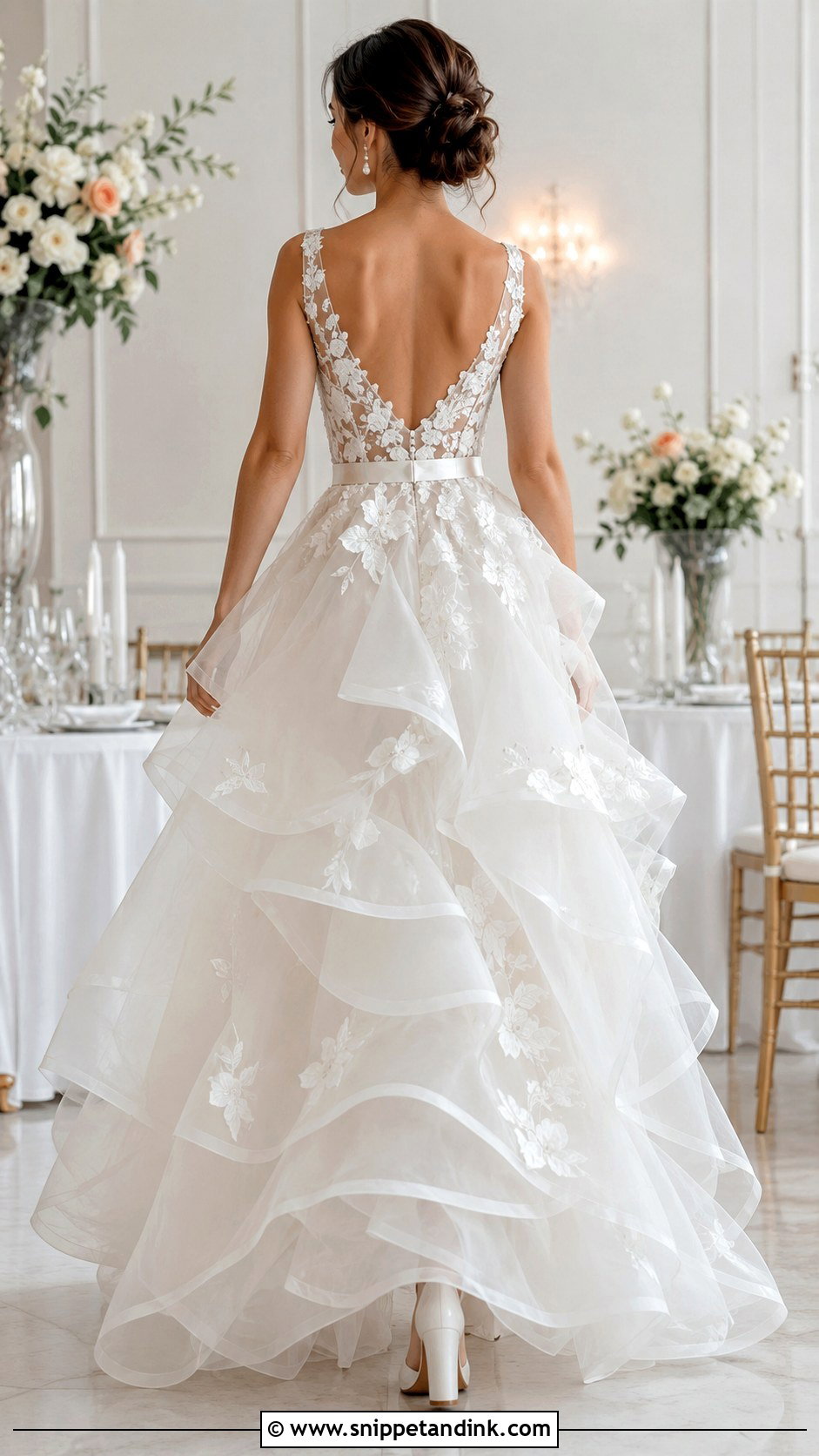
Organza catches light, and in a layered bustle its folds keep their shape without looking as heavy as satin. Several pickup points gather the train into airy layers. I line those points up with the skirt’s existing layers so the gathers look built in. Never attach hardware to a single sheer layer, because it can tear; reinforcement underneath is essential. After fastening, separate the layers gently and make sure any floral appliqués face outward rather than folding under. A narrow belt can define the waist, but skip it if the skirt is already embroidered.
19. Bustle With Detachable Overskirt Gown
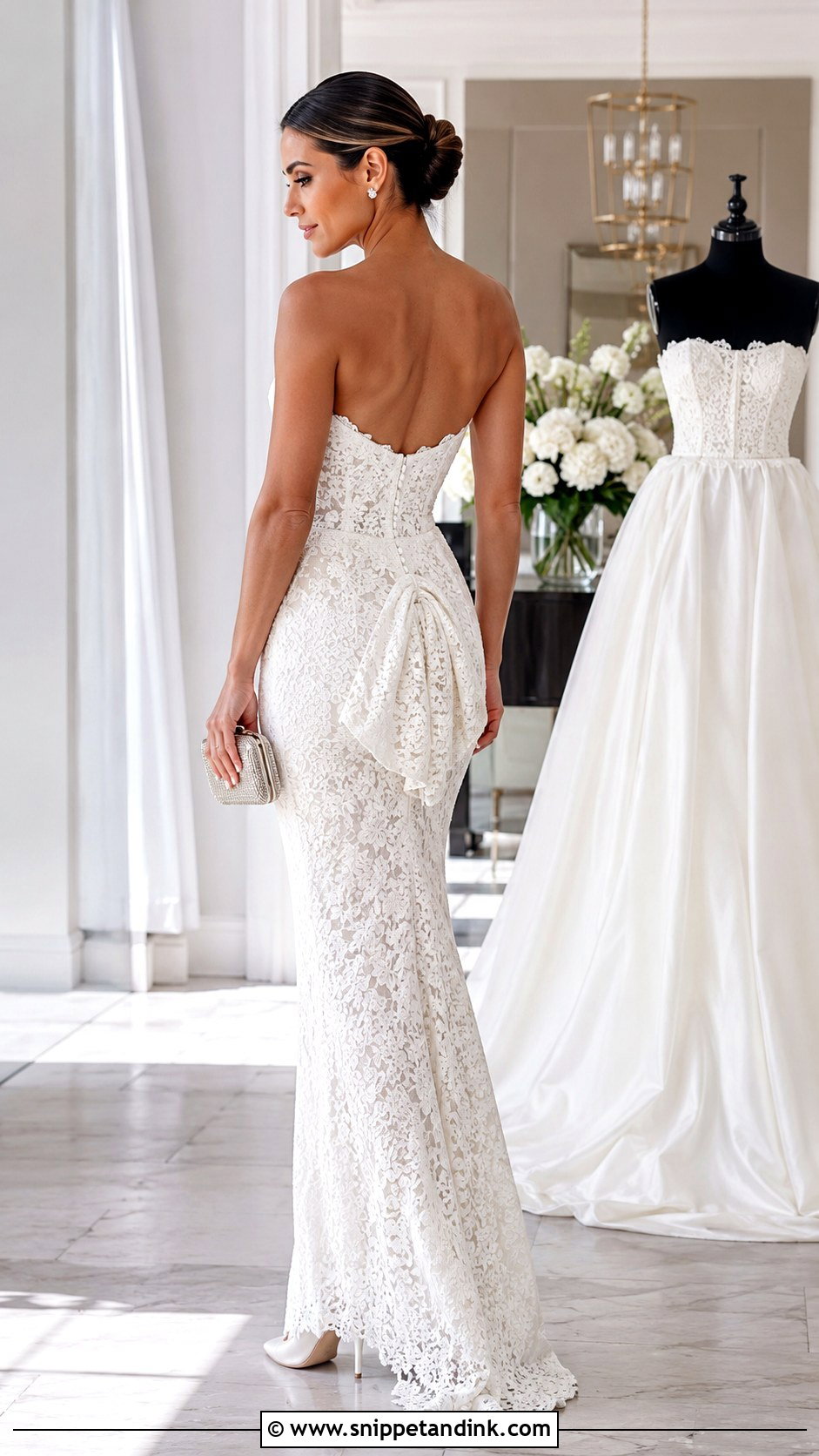
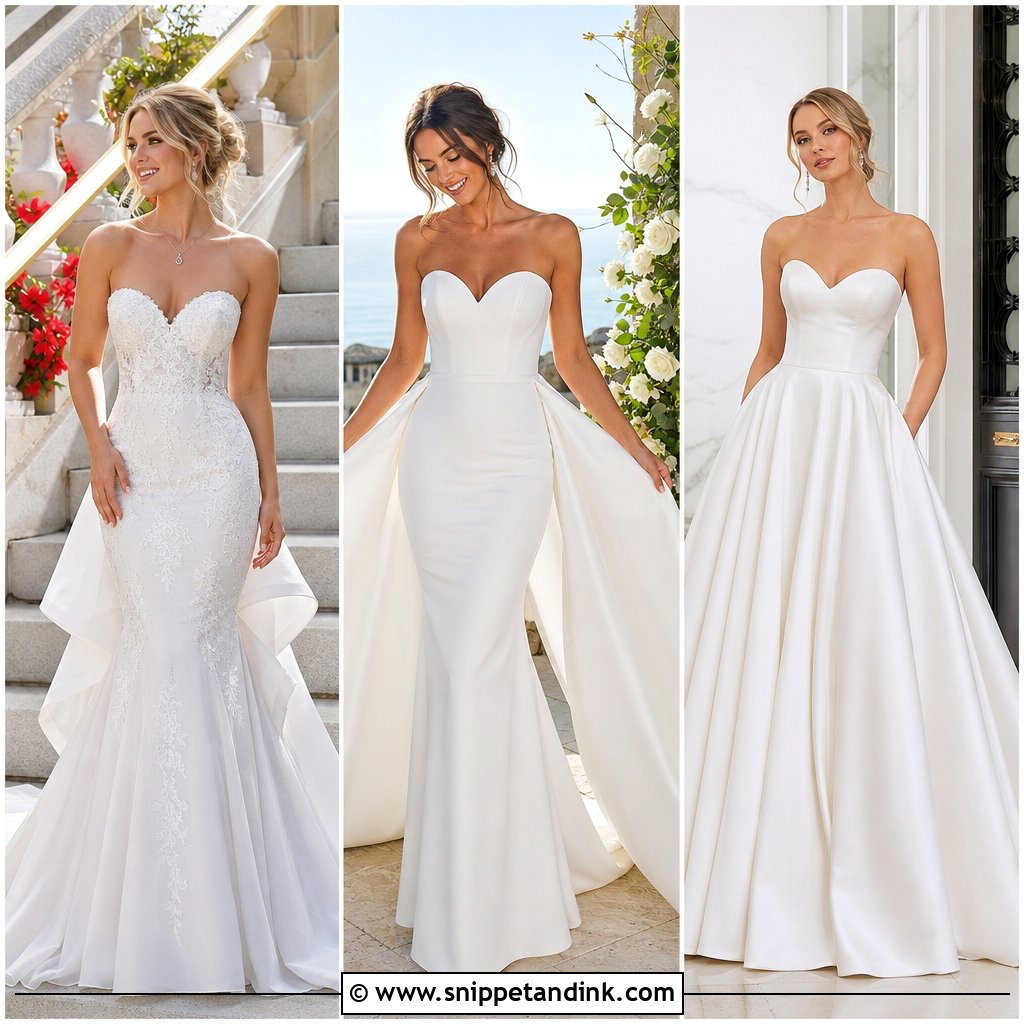
A detachable overskirt gives you two silhouettes, but the gown underneath may still have its own short train that needs a bustle. Think of a crepe or lace column with an organza overskirt for the ceremony. Before the reception, remove the overskirt, then fasten the shorter train with a small under-bustle or one-point over-bustle. I ask for the bustle hardware to stay hidden while the overskirt is on, and I practice both steps in order with the helper, since removing the outer layer can expose delicate closures. It saves buying a second dress.
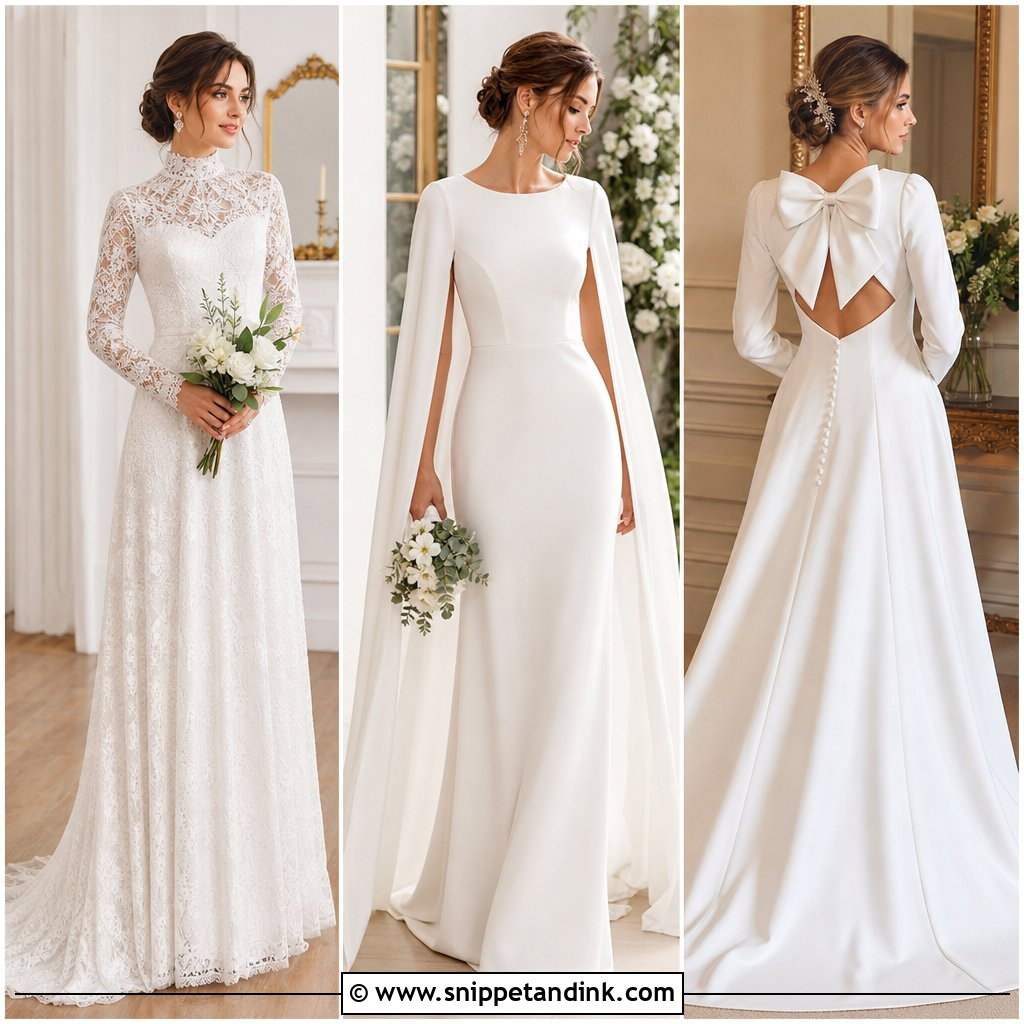
20. Wrist Loop Bustle Alternative With Short Train
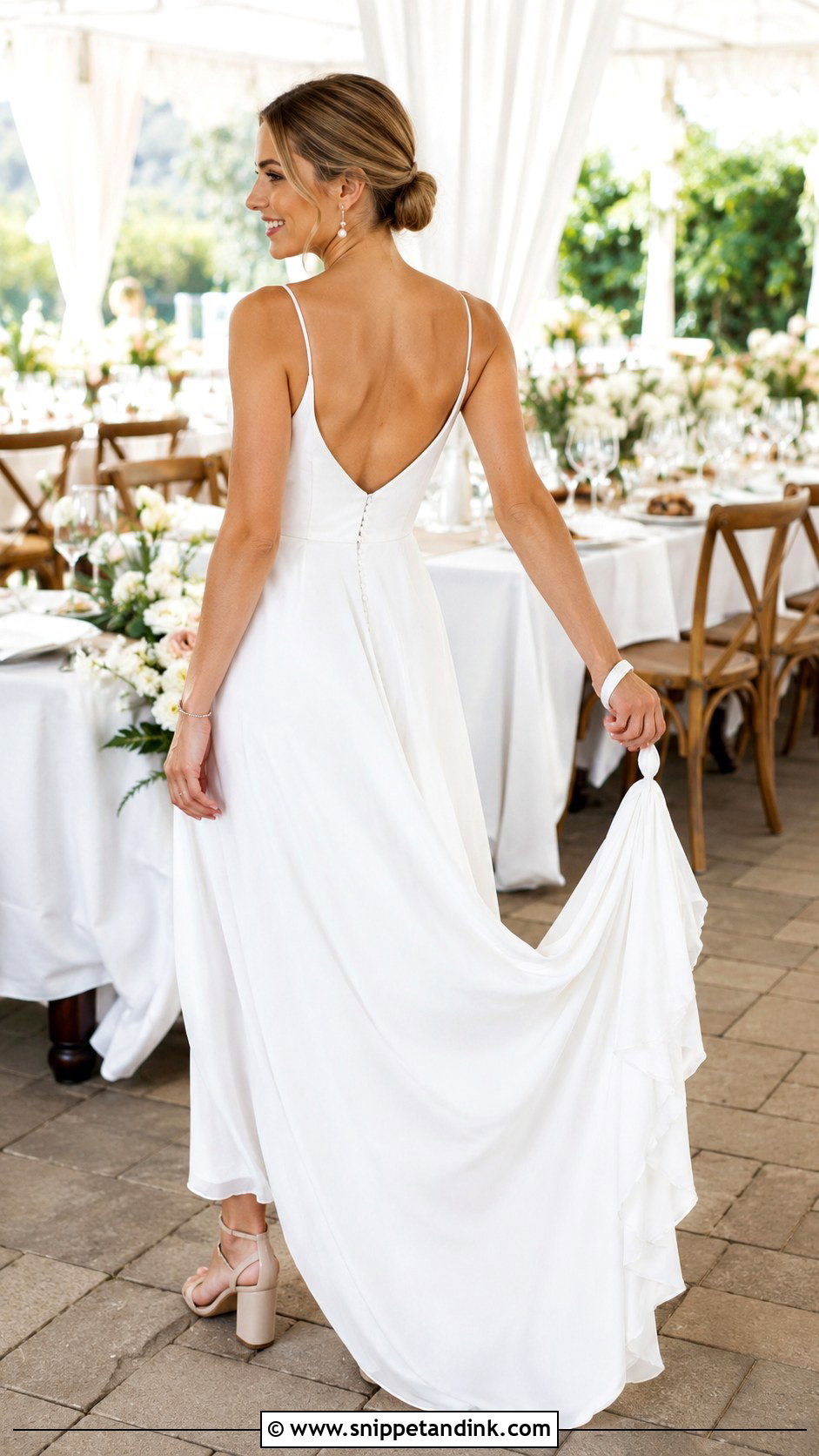
A wrist loop is the simplest fix: a loop near the hem that you slip over your wrist to lift a light train. I suggest it only after talking it through with an alterations professional, because it suits short sweep trains on fluid chiffon or crepe and very little else. Reinforce it and place it so the fabric hangs without twisting. Do not confuse it with the small hanger loops inside a gown, which were never built to carry a train. One hand stays busy, so it is fine for photos or short walks, but a proper bustle frees you for greeting guests and dancing.
Ten Minutes Between Ceremony and First Dance
Bustling usually happens right after the portraits or as guests move to the reception, and that window is short. A simple over-bustle can take a couple of minutes; a multi-point French bustle with a long train can take ten or more, especially with a nervous helper. I tell couples to plan it into the timeline rather than squeeze it in.
Picking and training the helper
Choose someone calm with steady hands who will be near you at that point in the day, not the maid of honor who is also giving a speech. Bring them to the final fitting, let them do it twice while the seamstress watches, and film it on their phone. A printed photo of the back of your gown with the points numbered is worth slipping into the emergency kit.
If a Bustle Point Breaks Mid-Reception
Hooks pull out and ribbons snap, usually on the dance floor when the train gets stepped on. It is fixable in the bathroom in a few minutes if you are ready.
- Pack large safety pins, a needle, and thread in your dress color.
- Pin the train to a strong seam, never through lace or delicate fabric.
- If several points fail, pin the train up evenly at the center and two sides and carry on; nobody will notice.
- Do not cut loose threads or ribbons in a hurry. Tie them off so the seamstress can repair them properly later.
What to Ask Your Seamstress Before the Bustle Is Sewn
A good bustle supports the train, suits the gown and lets you move without thinking about it. American, French, ballroom, Austrian, royal, bow and custom configurations all give a different finish. Let fabric weight, skirt shape, train length and where the embellishment sits guide you more than a photo you like. An experienced alterations specialist should build it. Bring your helper to the final fitting, label anything complicated, film the demo, and test the bustle walking and sitting. The ideas above help you name the look you want; good construction makes it last the night.
You'll Like These Ideas:


Leave a Reply