
Sleeves change how a silk gown behaves more than almost any other detail. They add coverage, but they also add seams at the shoulder and armhole, and silk shows every one of those seams. The range is wide: fitted long sleeves, romantic bishop sleeves, sleek capes and light flutters. The fabric matters just as much. Crepe is matte and quiet, mikado holds a shape, charmeuse pours, and organza floats. When a bride comes to me wanting sleeves, I ask about the season and how much she plans to dance before I show her a single sample. These are the combinations I’d consider, with notes on what to watch in each.
Raise Your Arms in the Fitting Room First
Sleeved gowns look perfect on a still bride in a mirror. The problems show up when she moves. Before I let anyone fall for a sleeved silk dress, I ask her to do the things she will do on the day, in this order:
- Hug someone properly. If the bodice lifts or the back seam pulls tight, the armhole is set too low or the sleeve cap is too narrow.
- Reach forward as if signing the register. The sleeve should not ride halfway up your forearm.
- Lift a glass to your mouth. Fitted sleeves need a little ease at the bicep; without it, your arm feels bound by the evening.
- Turn your head both ways. High necks and boat necks reveal their fit here.
- Sit down and put your hands in your lap. Long sleeves bunch at the elbow when you sit, and that is when you see whether the length is right.
Silk has very little natural stretch, unlike many lace or knit sleeves, so the room for movement has to be built into the pattern. A good seamstress can lower the sleeve cap, add a gusset under the arm or ease the bicep, but each of those takes time. I’d raise any of these issues at the first fitting, not the last.
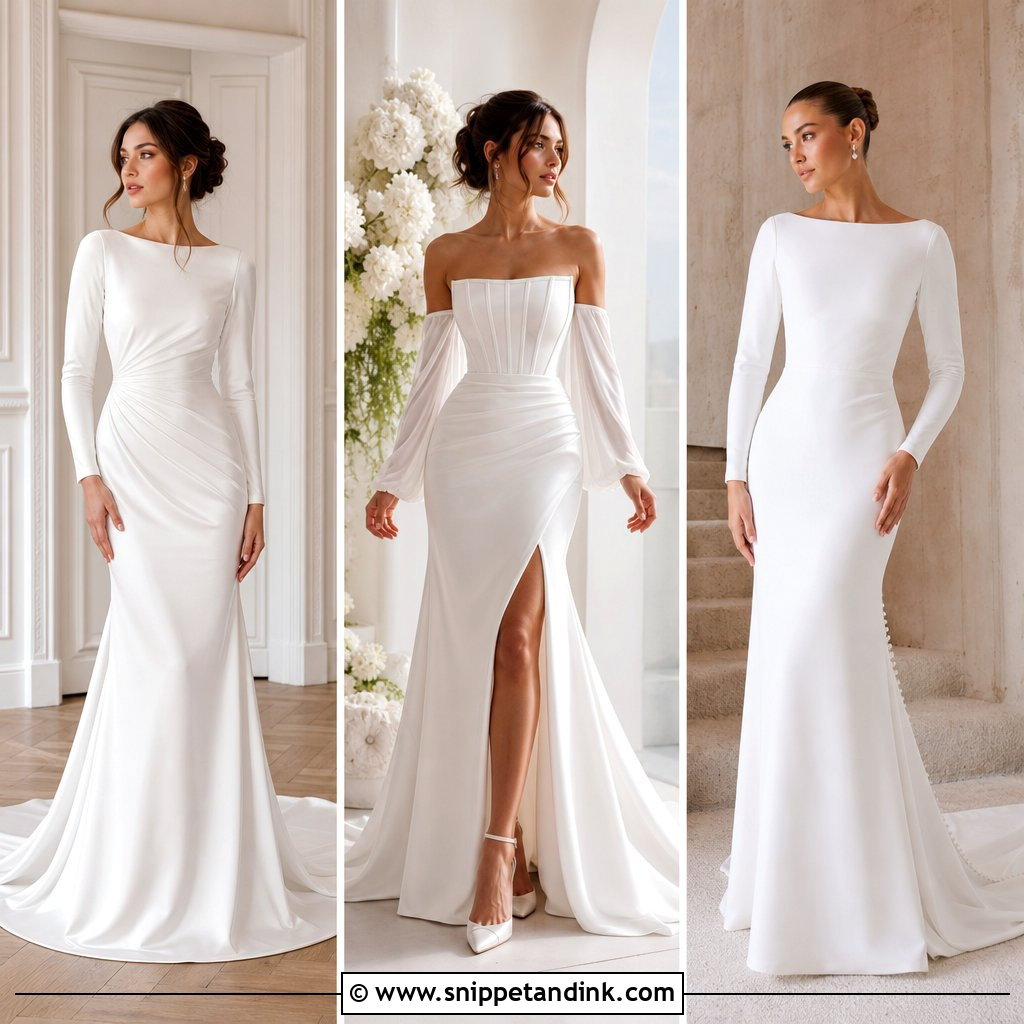
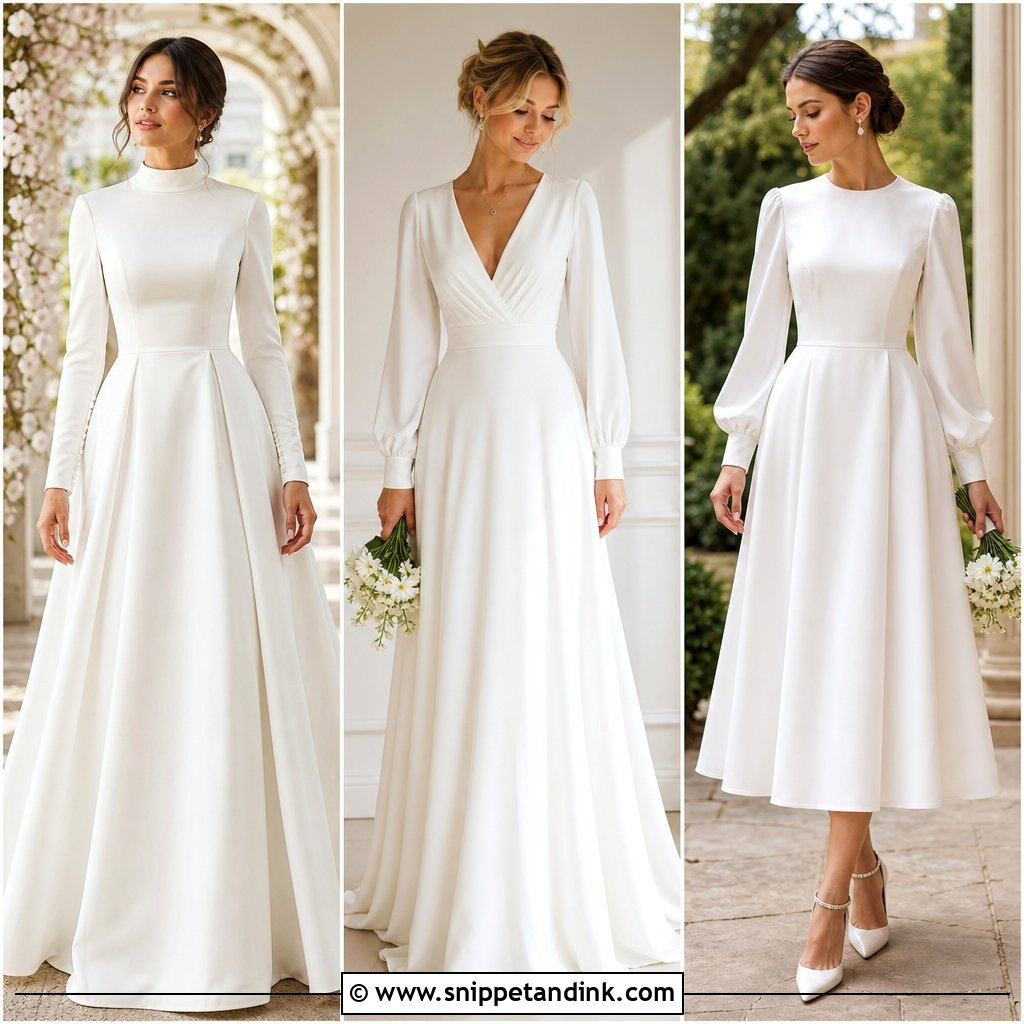
1. Long Sleeve Silk Wedding Dress
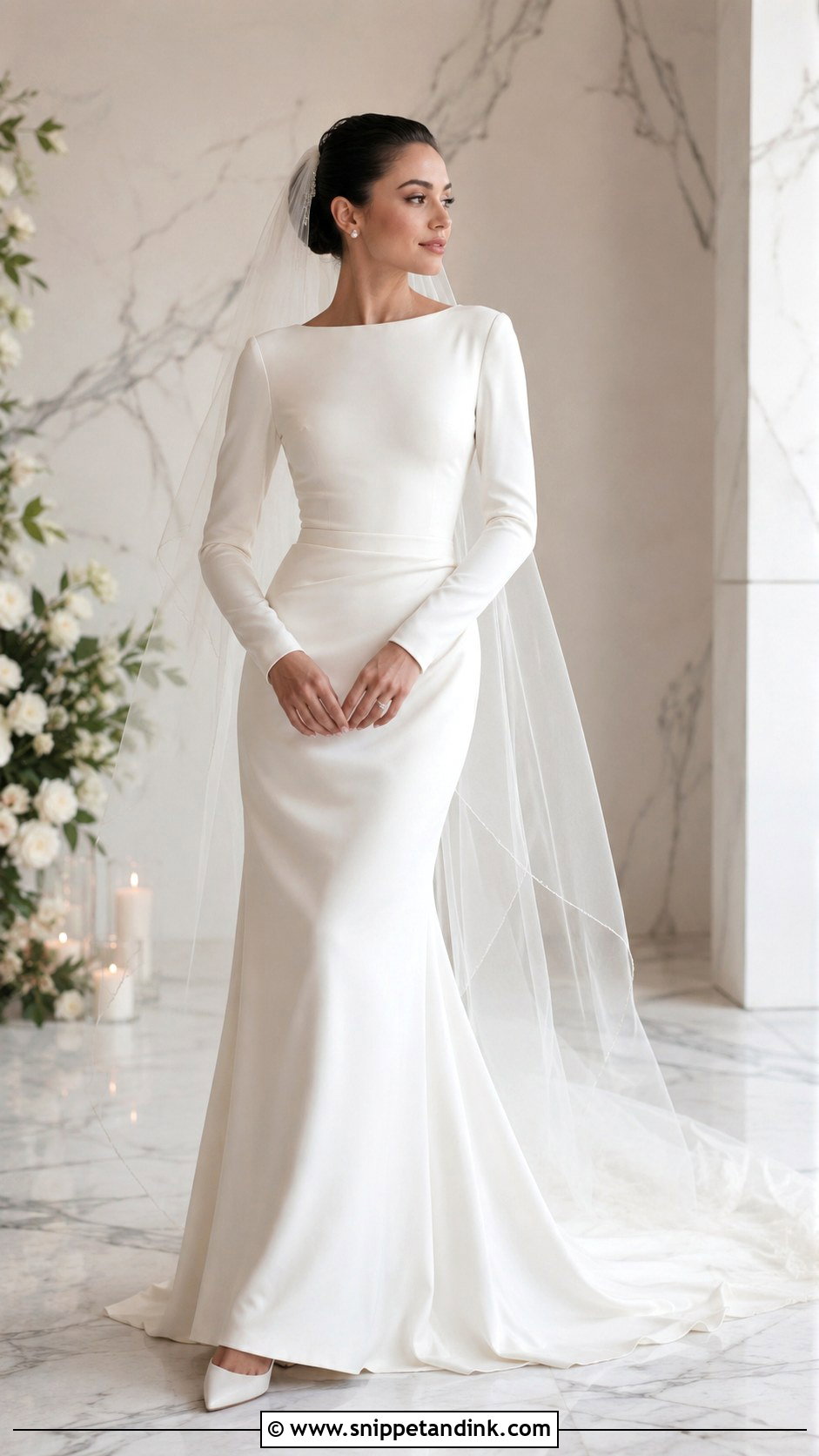
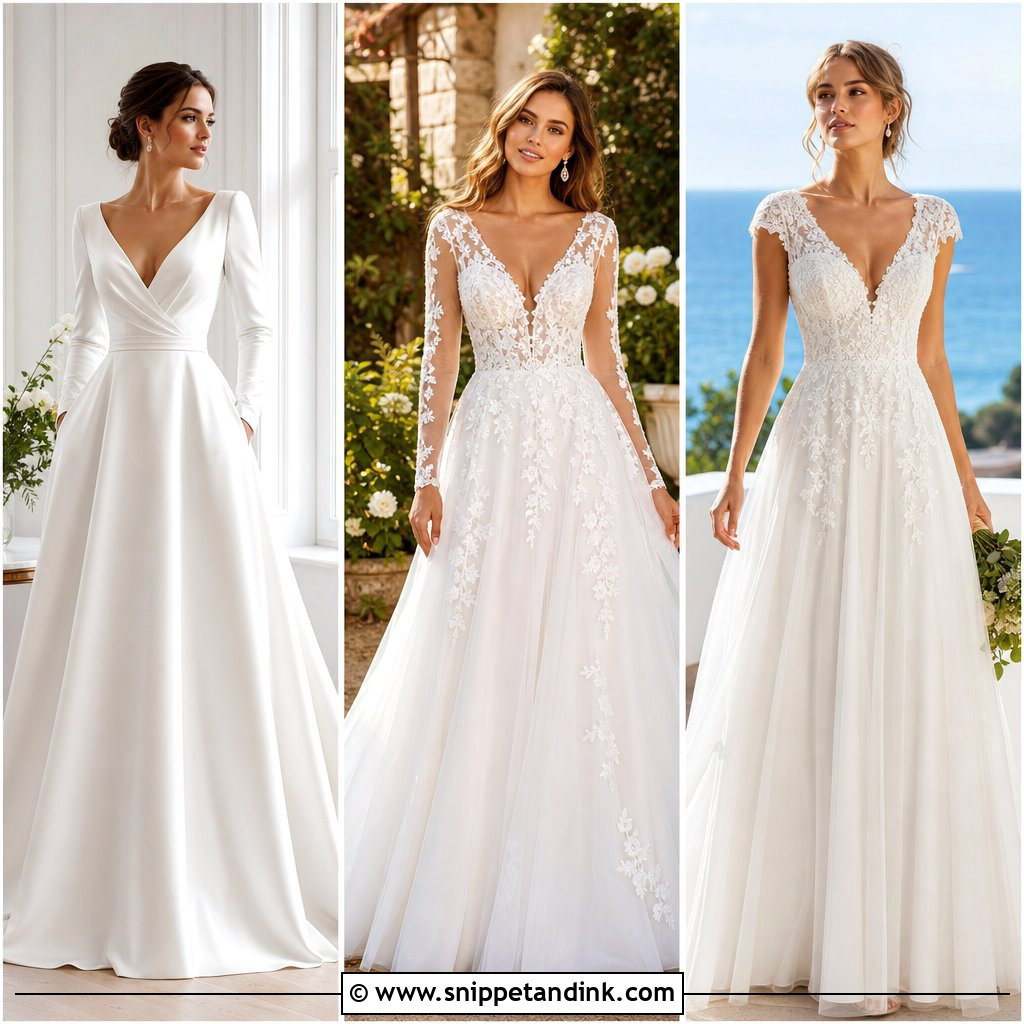
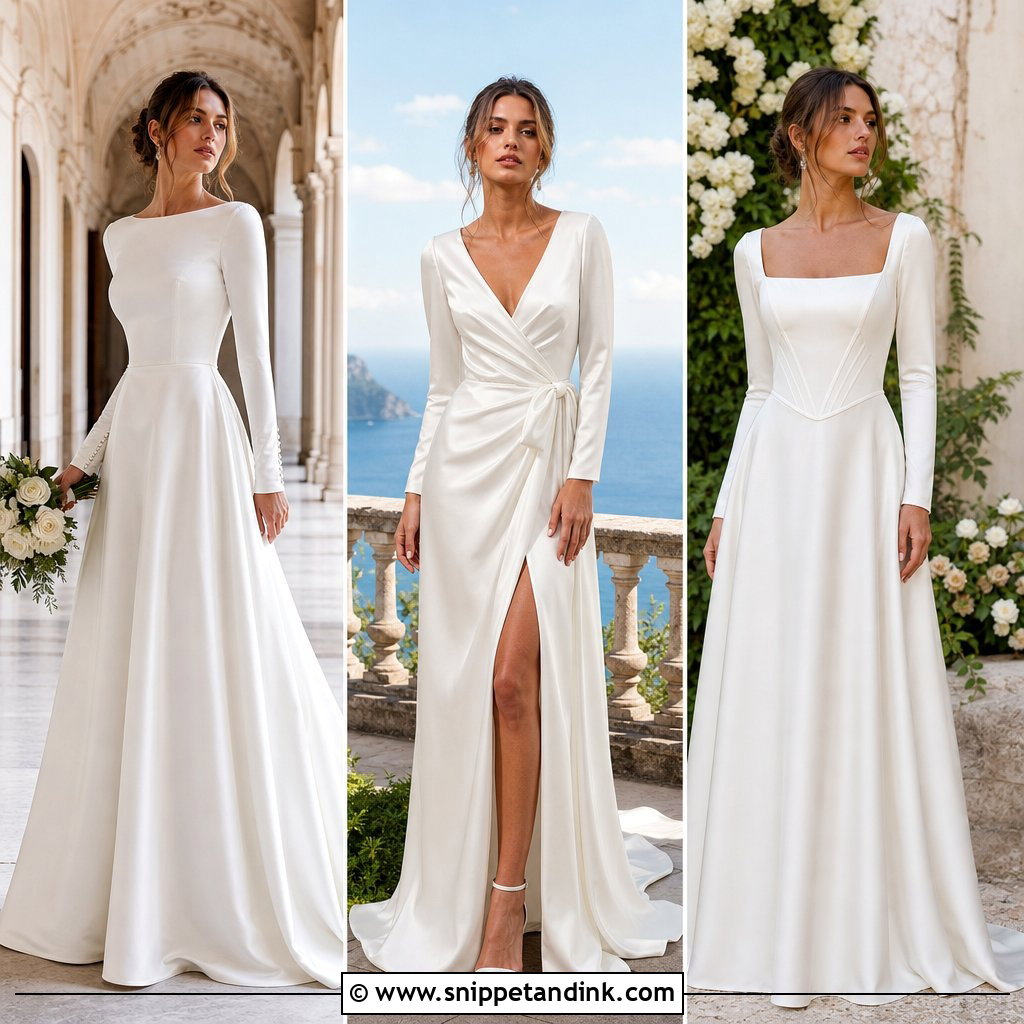
Long silk sleeves work in any season, but they’re the hardest to fit well. The sleeve has to be long enough to reach the wrist bone when your arms are bent, which means it looks a touch long when you stand still, and that is correct. Crepe gives a smooth column, satin a soft sheen, mikado a crisper outline. Pointed ivory heels, pearl studs and a fingertip or cathedral veil are enough, with a low bun or soft waves so the shoulder seam stays visible. On a very plain gown I add interest through covered buttons on the cuff or a small train rather than jewellery.
2. Silk A Line Wedding Dress With Sleeves
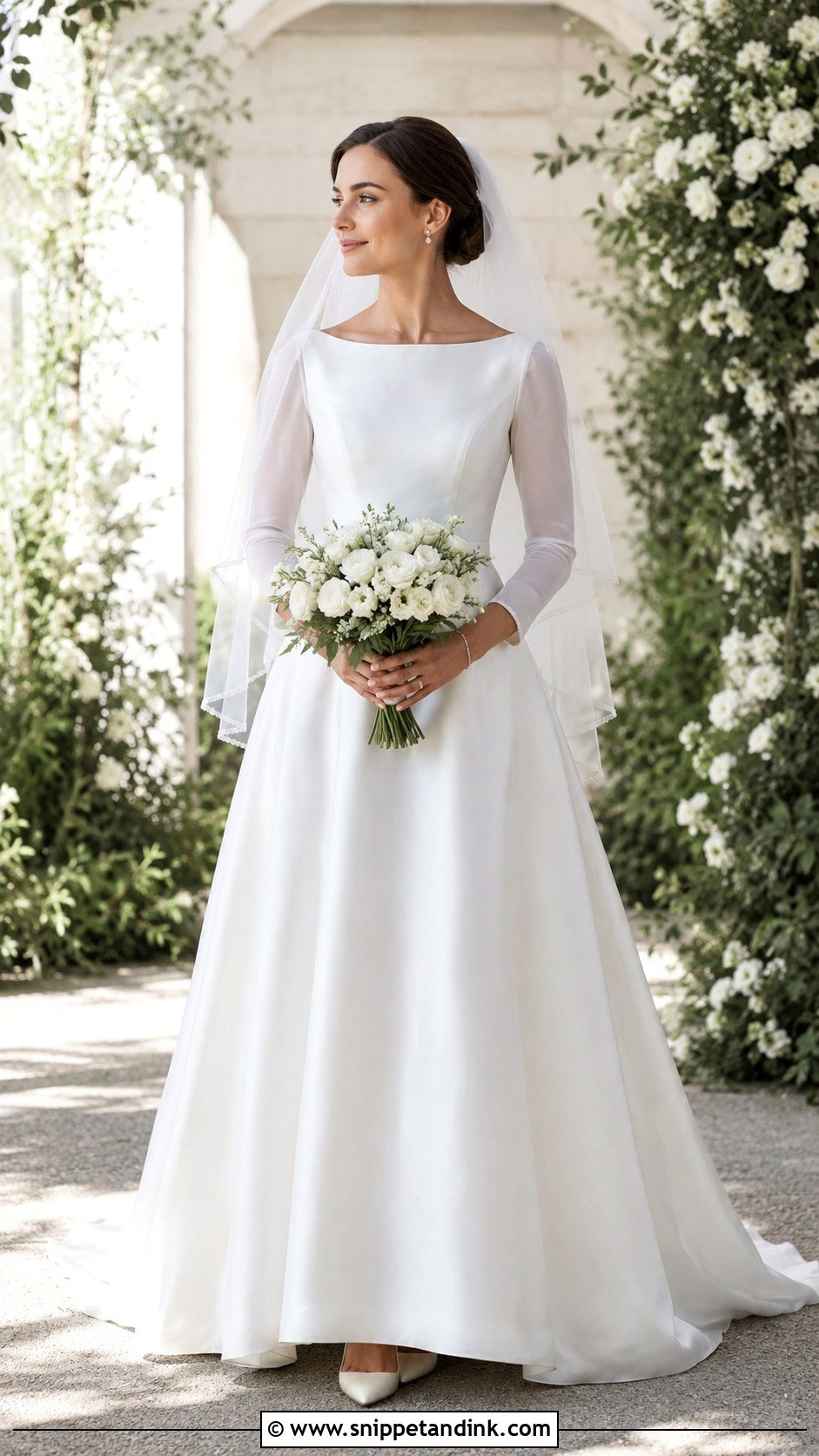
If a bride wants one gown she can wear from the first look to the last dance, I usually point her here. The fitted bodice gives shape and the skirt steps away from the body, so you can sit, walk and climb stairs without managing fabric. Fitted long sleeves read classic; sheer sleeves lighten it for warmer months. Block heels or satin pumps, a thin bracelet and a medium veil keep it bridal without drama. It also pairs easily with a loose, garden-style bouquet. The one thing I check is the armhole height; set too low, it stops you lifting your arms to hug anyone.
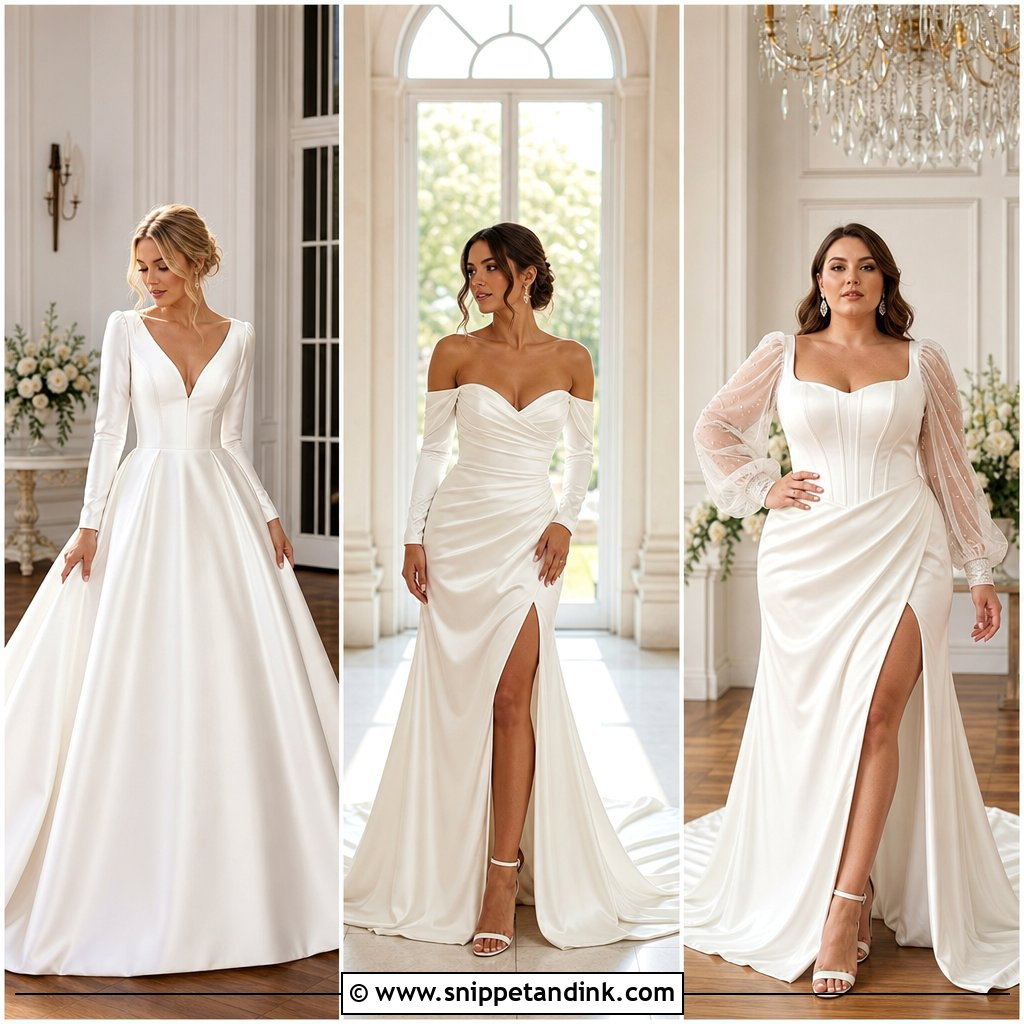
3. Silk Ball Gown Wedding Dress With Sleeves
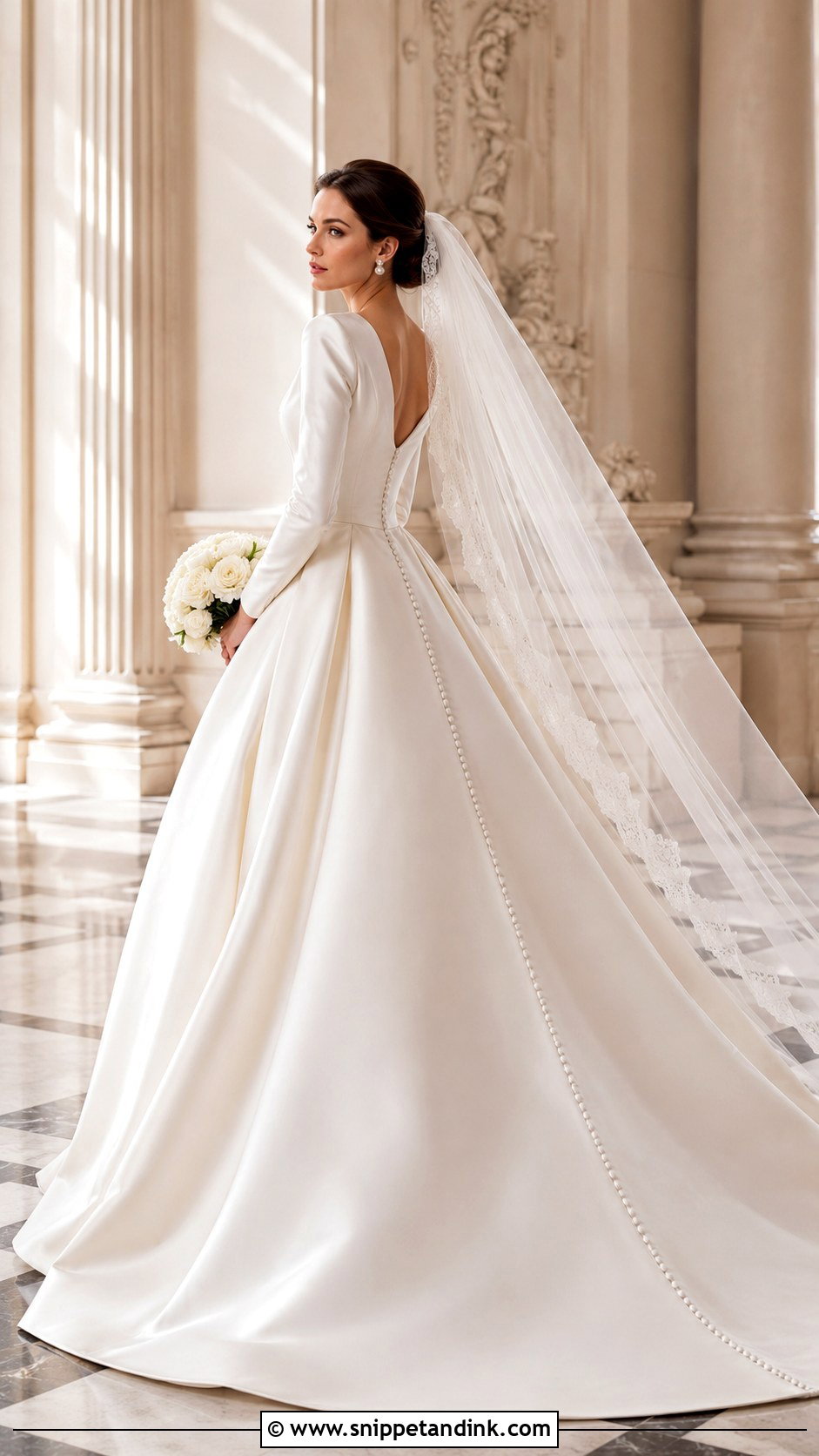
Mikado was practically made for this shape. It holds volume on its own, so a ball skirt needs fewer layers of tulle underneath and stays lighter to wear. Long sleeves stop all that skirt from looking top-light. Classic pumps, a long veil and small pearl or diamond earrings are plenty, and with a high or structured neckline I leave the necklace off. Grand rooms, historic buildings and evening receptions suit the scale. Ask for the bustle to be designed during alterations, not at the last fitting, because a heavy silk train needs several anchor points to stay lifted.
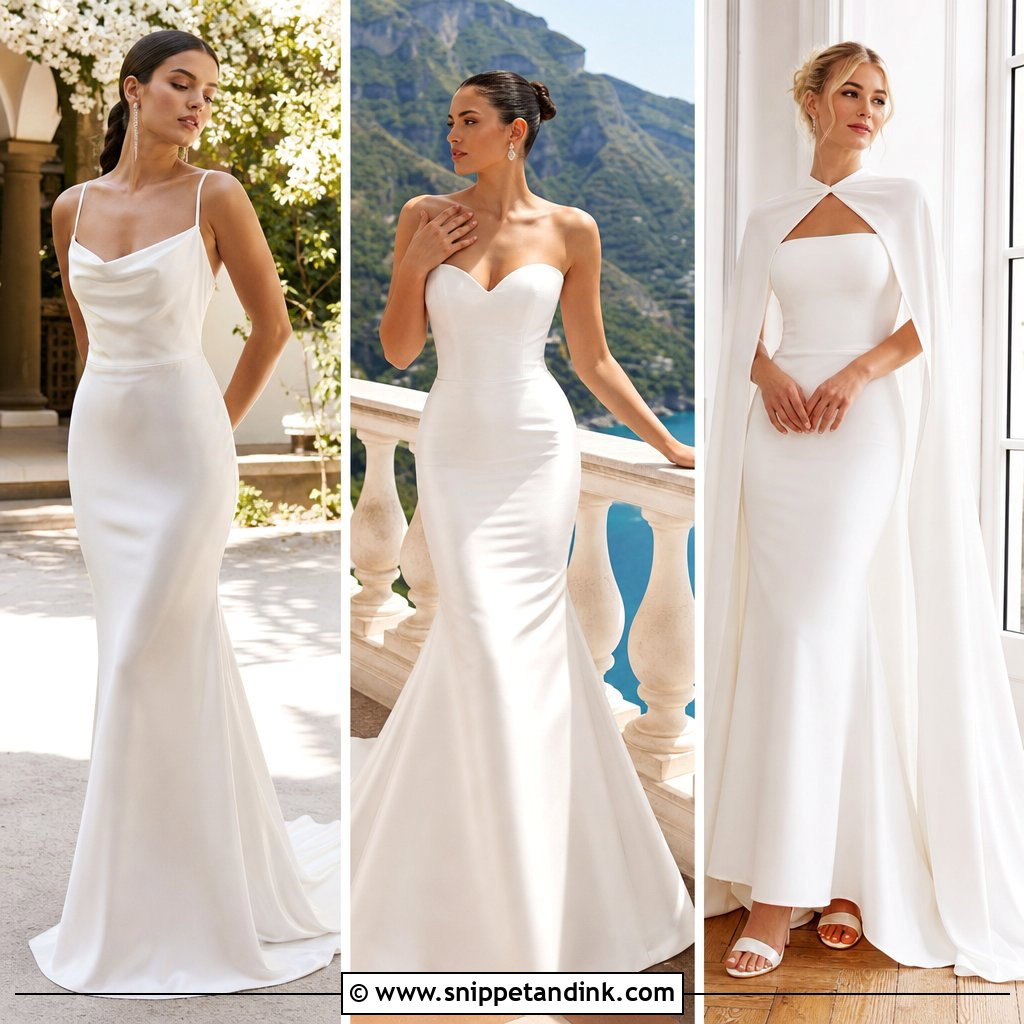
4. Silk Slip Wedding Dress With Sleeves
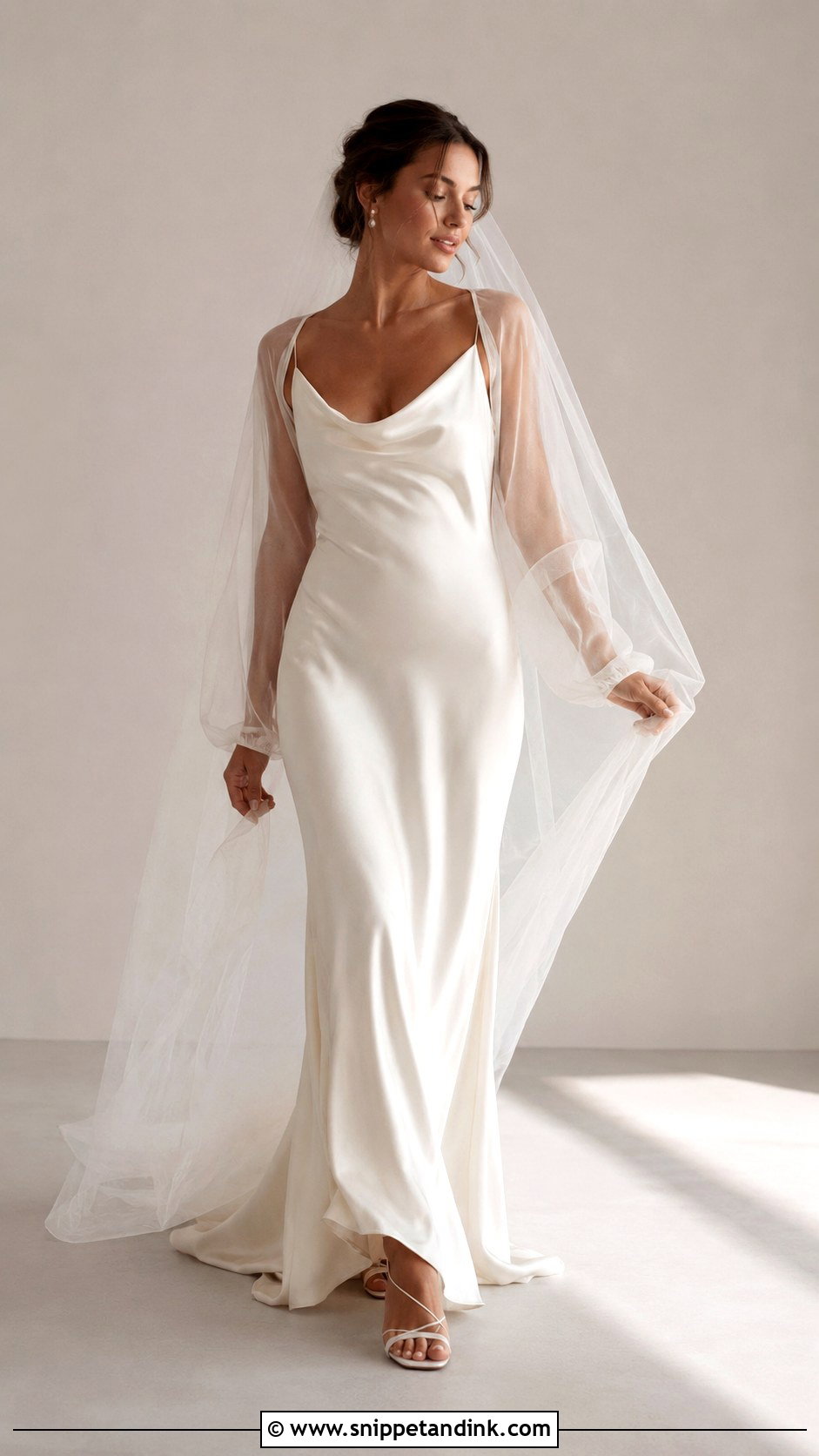
Slip gowns are cut on the bias, so they cling and swing in a way nothing else does. Adding sleeves changes that: a heavy sleeve can drag the neckline sideways. I prefer long sheer sleeves or detachable charmeuse ones that are light enough to leave the drape alone. Strappy low heels, tiny pearl earrings and a sheer veil keep the look easy, with soft waves or a sleek bun. Intimate weddings, beaches and gardens suit it. Smooth, seam-free undergarments are not optional with charmeuse; it shows every edge.
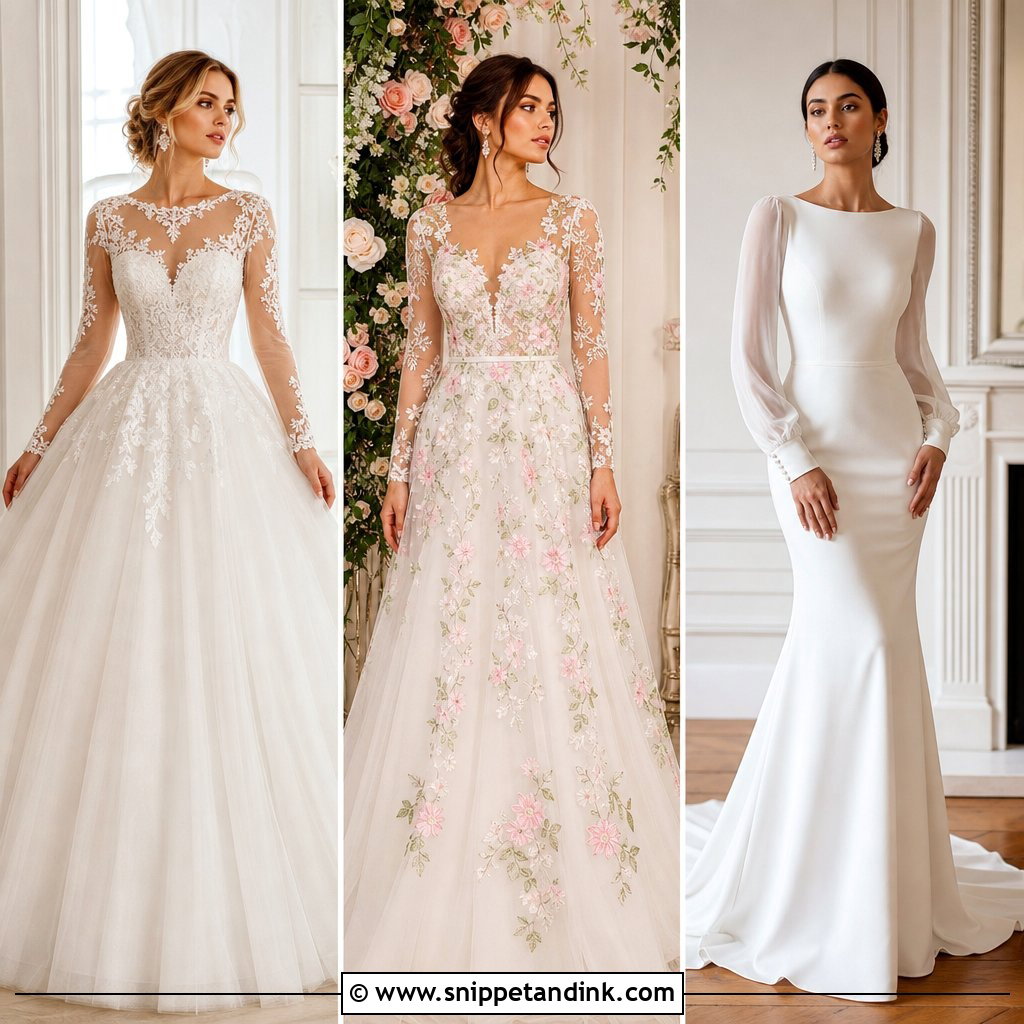
5. Silk Crepe Wedding Dress With Sleeves
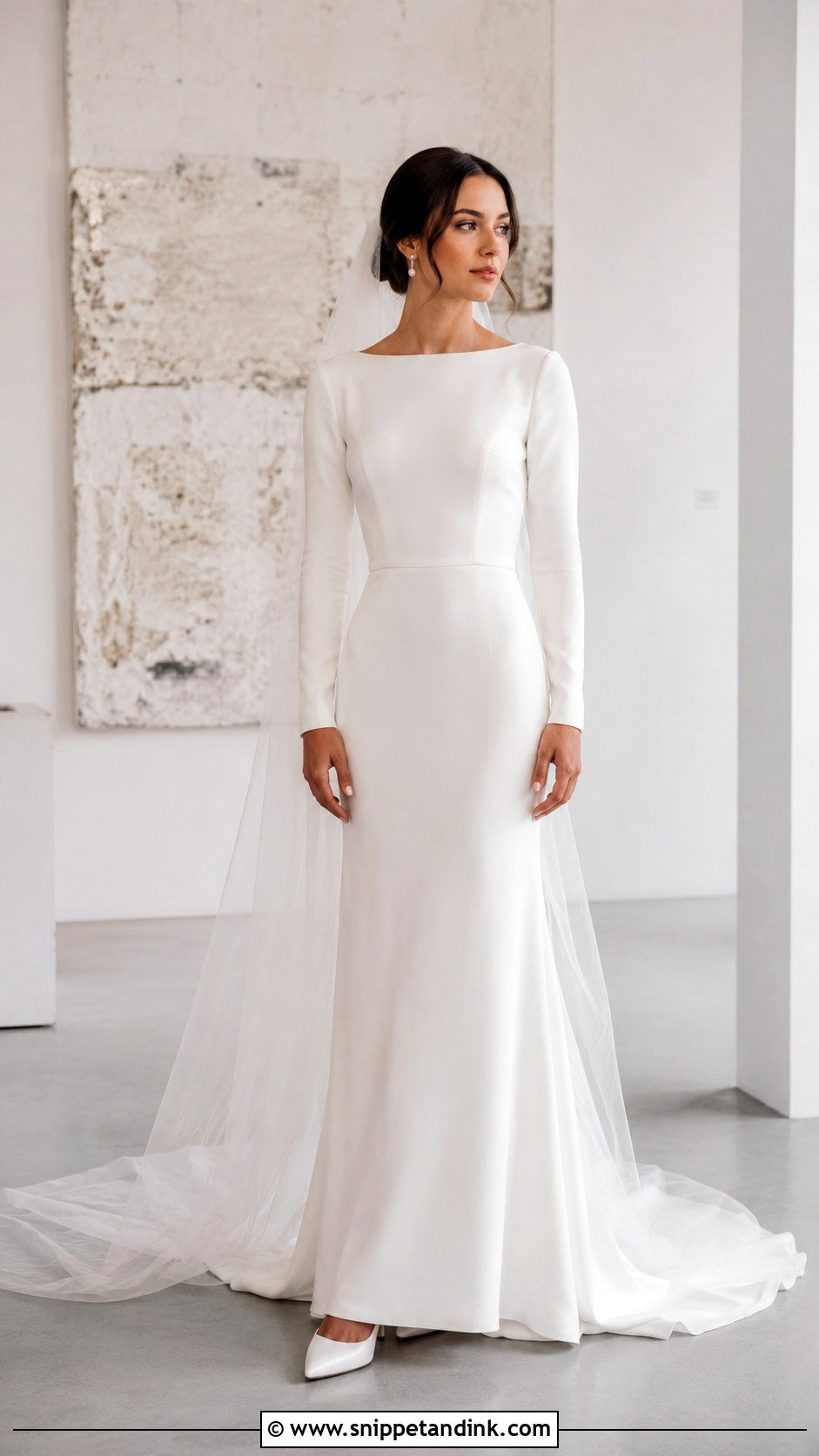
Crepe is the silk I trust most for clean tailoring. It has a matte surface and a slight grain that hides small creases, so it looks as sharp at the reception as it did at the ceremony. Fitted sleeves make it read tailored; a slight flare at the wrist gives it movement. Ivory pumps, a plain veil and simple drops suit it, and a structured bouquet adds shape without clutter. Courthouses, galleries, modern venues and formal ceremonies are all natural fits. If the label says quiet luxury, this is usually the fabric behind it.
6. Silk Satin Wedding Dress With Sleeves
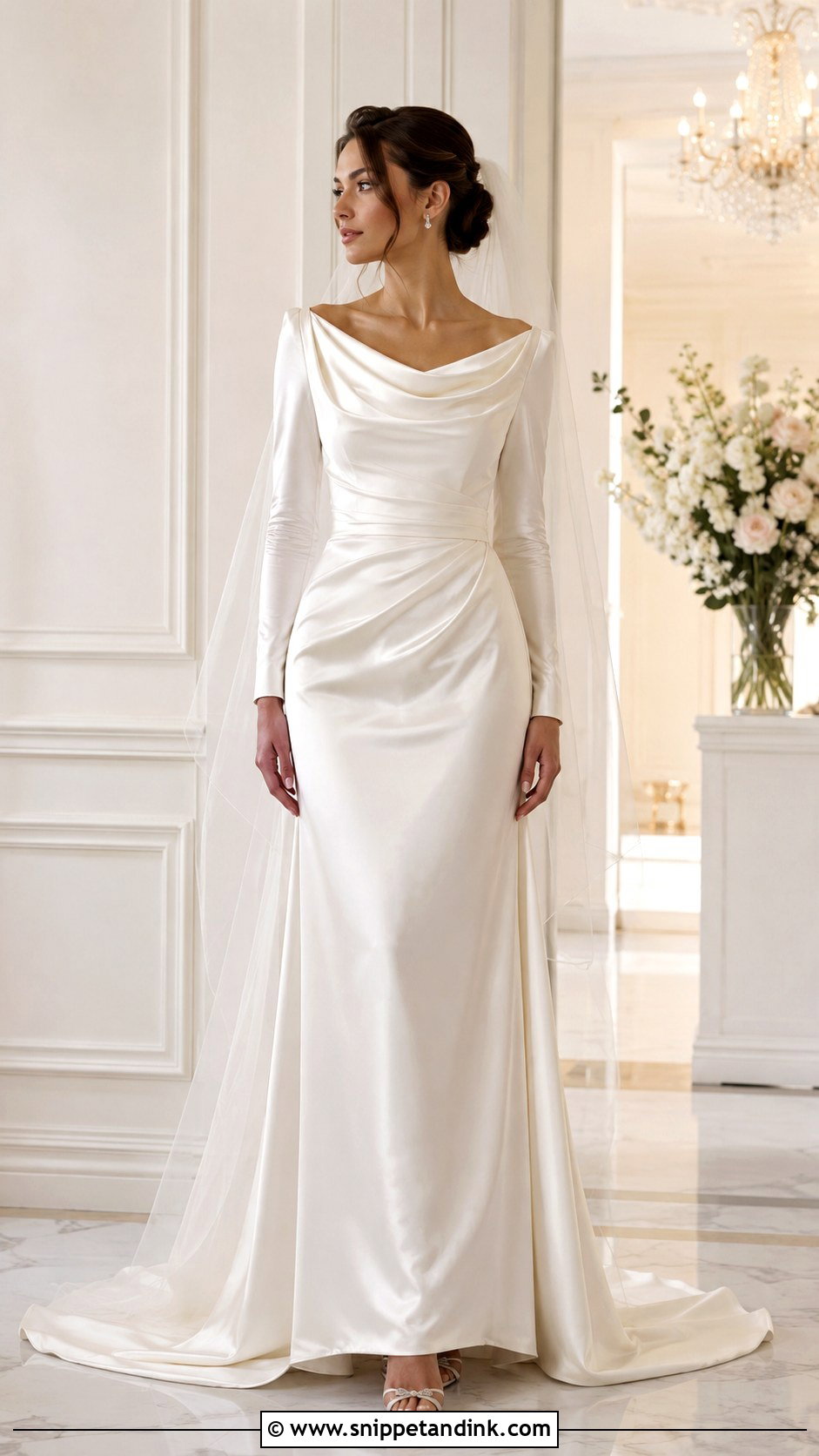
Satin already glows, so everything else should step back. Choose plain heels, a simple veil and jewellery with a soft shine rather than big sparkle. Sleeves cut from the same satin keep the line unbroken, while illusion sleeves lighten the whole dress. A draped bodice, cowl or bateau neckline suits the fabric. It’s an evening, hotel and ballroom gown at heart. Satin is unforgiving about fit, though: a sleeve twisted a few degrees off grain will ripple down the arm, so I always check the sleeve hang with the bride’s arms relaxed at her sides.
7. Silk Mikado Wedding Dress With Sleeves
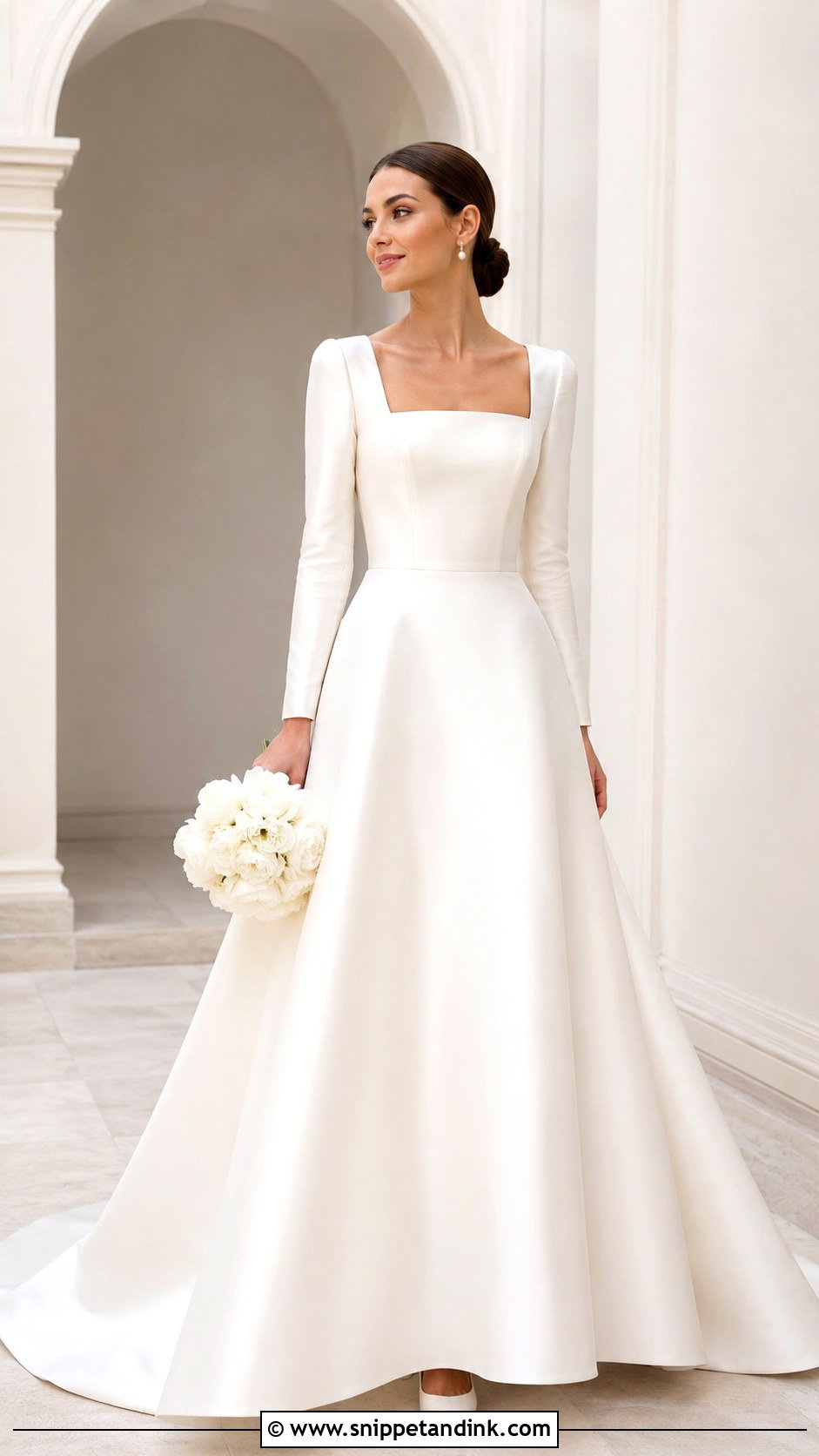
Mikado has body, which is why it holds a ball gown, an A-line or a fit-and-flare without much help underneath. It also means sleeves cut from it stand slightly away from the arm rather than clinging, which looks crisp and architectural. A square or bateau neckline balances that structure. Sleek heels, pearl earrings, a plain veil and a neat bun or polished ponytail keep it sharp. The trade-off is weight and warmth; in a hot summer marquee, mikado sleeves get uncomfortable by mid-afternoon. In cooler months, nothing holds its shape better for twelve hours.
8. Silk Organza Wedding Dress With Sleeves
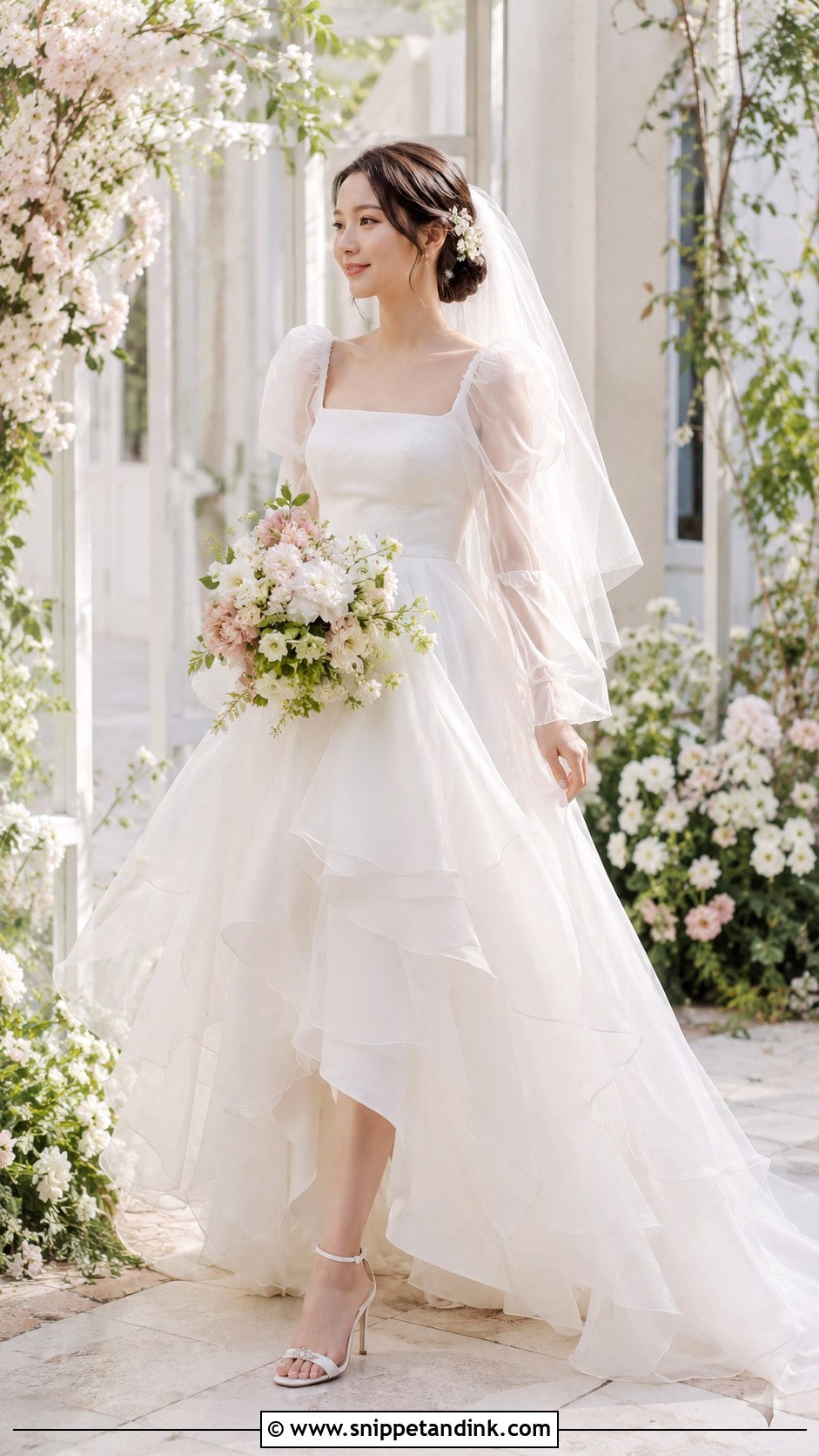
Organza is sheer and crisp at once, so it gives puff and bishop sleeves volume without much weight. That makes it the sleeve fabric I suggest for spring and summer brides who still want coverage. Layered skirts and soft overskirts in organza look airy rather than heavy. Delicate heels, a fine veil and small floral pins suit it; keep the jewellery light so the texture leads. One warning: organza crushes and holds a crease, so the sleeves need a gentle steam before you dress and careful packing in the car.
9. Silk Chiffon Wedding Dress With Sleeves
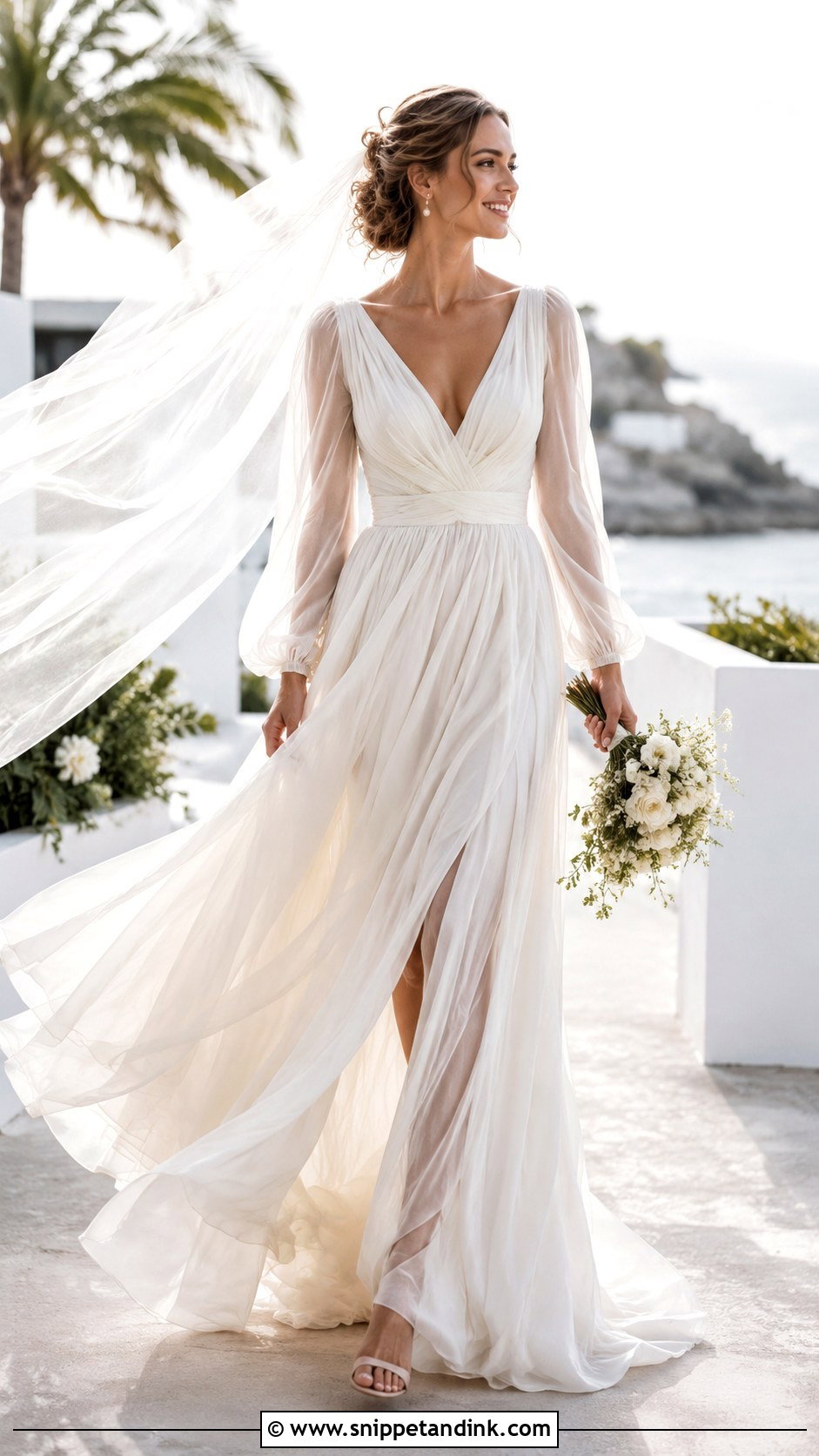
Chiffon floats, which is lovely outdoors and a little unpredictable in wind. Long chiffon sleeves feel weightless; flutter sleeves suit hot weather. Barely-there sandals, a soft veil and fine earrings go with it, and a loose updo or half-up hair keeps the mood relaxed. It’s a natural beach and garden fabric. Because chiffon is so fine, the lining underneath decides how it looks; a slip that is too heavy flattens the float, and one that is too light shows through in bright sun. I always check it outside, in daylight, before anyone signs off.
10. Silk Charmeuse Wedding Dress With Sleeves
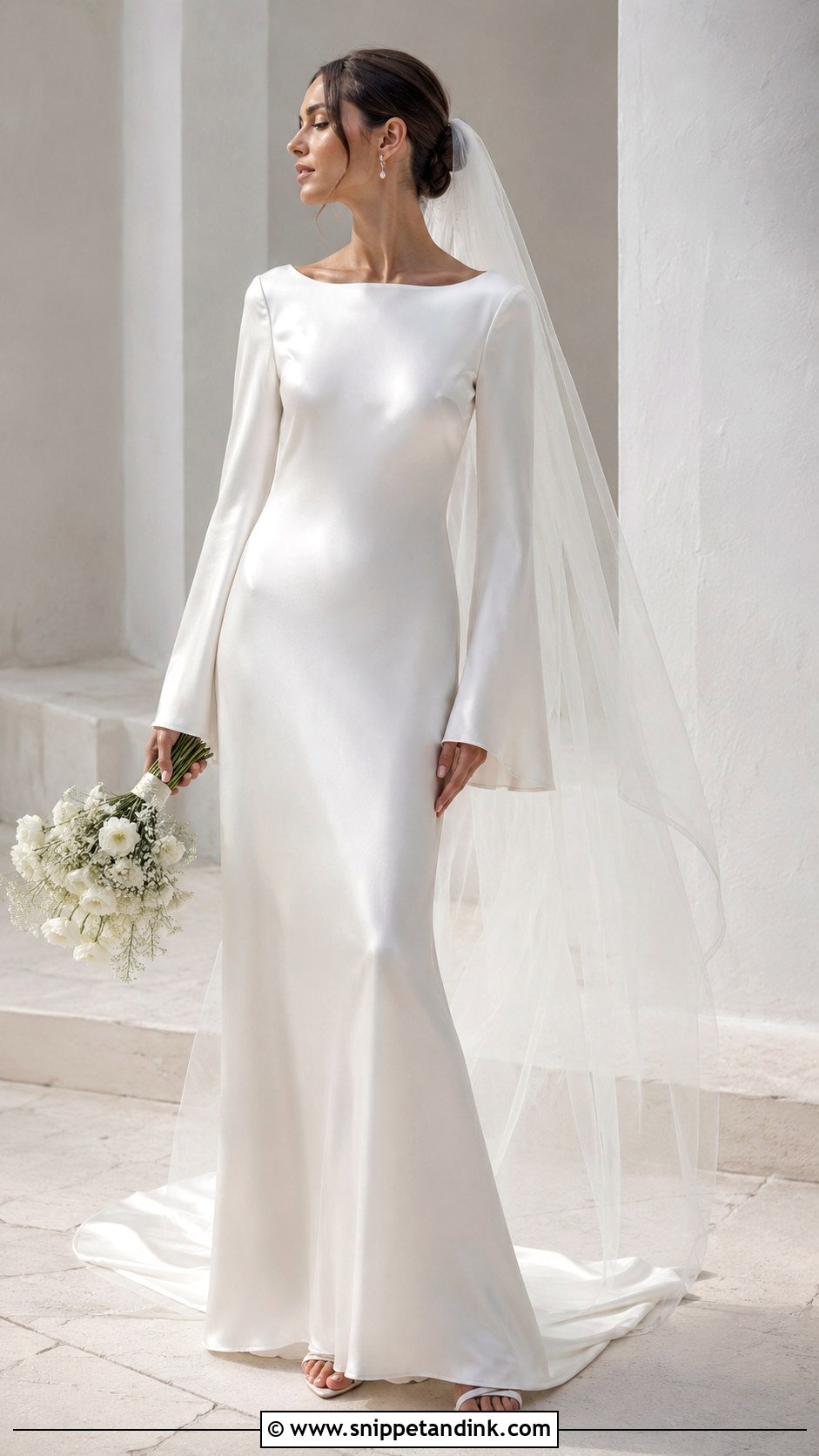
Charmeuse is fluid and shiny on one side, and it moves with the body rather than holding a shape. That is why it suits slips, columns and draped wrap gowns. Fitted, bell or detachable sleeves all work, as long as they’re cut light enough not to pull the drape. Slim heels, a low bun and small earrings let the fabric’s own glow do the work. Modern and destination weddings suit it. I’d steer away from it if you want structure, or if you’re anxious about every seam showing, because charmeuse hides nothing.
11. Silk Column Wedding Dress With Sleeves
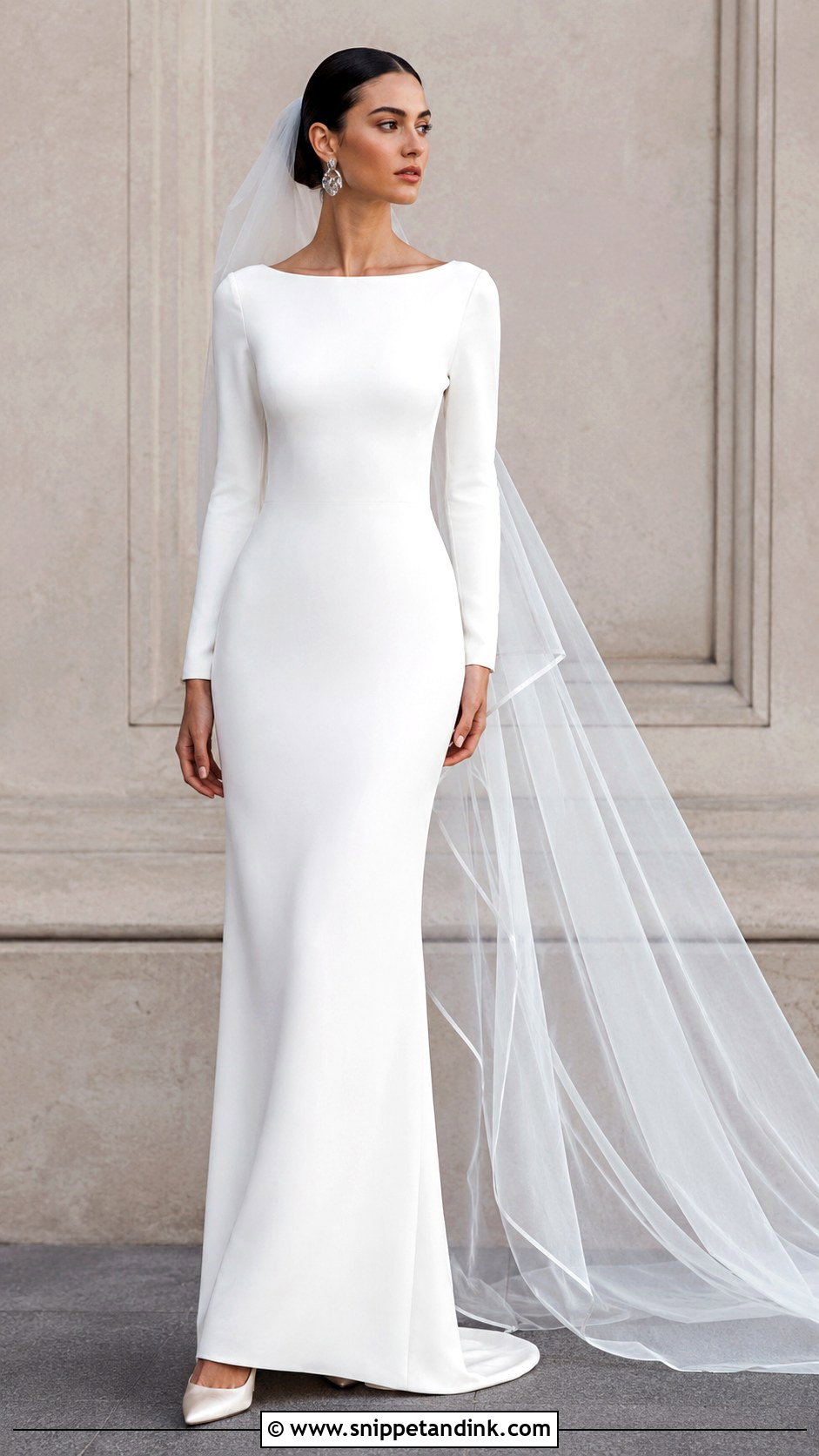
A column falls straight from the shoulder or waist, with no extra volume to hide behind. That makes the cut and the sleeve fit everything. Crepe gives a firmer column; satin and charmeuse make it more fluid. Pointed heels, a sleek veil and sculptural earrings suit the clean line, and a high neck, bateau neckline or open back all sit well on it. City weddings, galleries and minimalist venues are its natural home. Take a long stride at the fitting; narrow columns sometimes need a back slit or a kick pleat so you can actually walk.
12. Silk Mermaid Wedding Dress With Sleeves
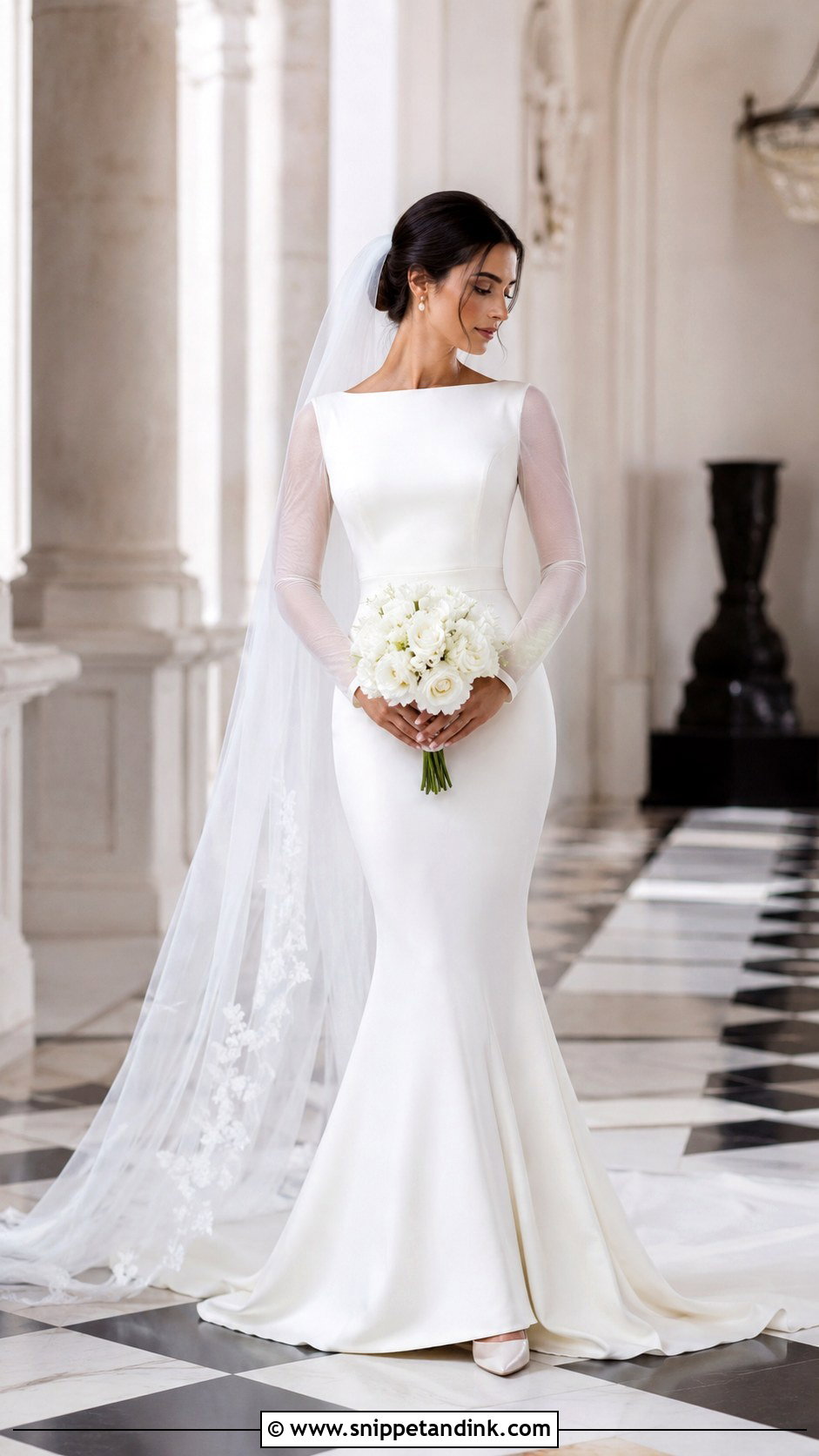
On a mermaid, sleeves earn their place by balancing the flare. Without them the gown can look heavy below the knee. The bodice and hips are fitted, then the skirt opens wide, so silk crepe gives a softer version and mikado a sculpted one. Slim heels, a long veil and simple jewellery keep attention on the shape. A sweetheart neckline with sheer sleeves or a square neck with fitted sleeves both suit it. Before alterations finish, sit down and climb a step; if you can’t, the flare point needs to drop.
13. Silk Fit And Flare Wedding Dress With Sleeves
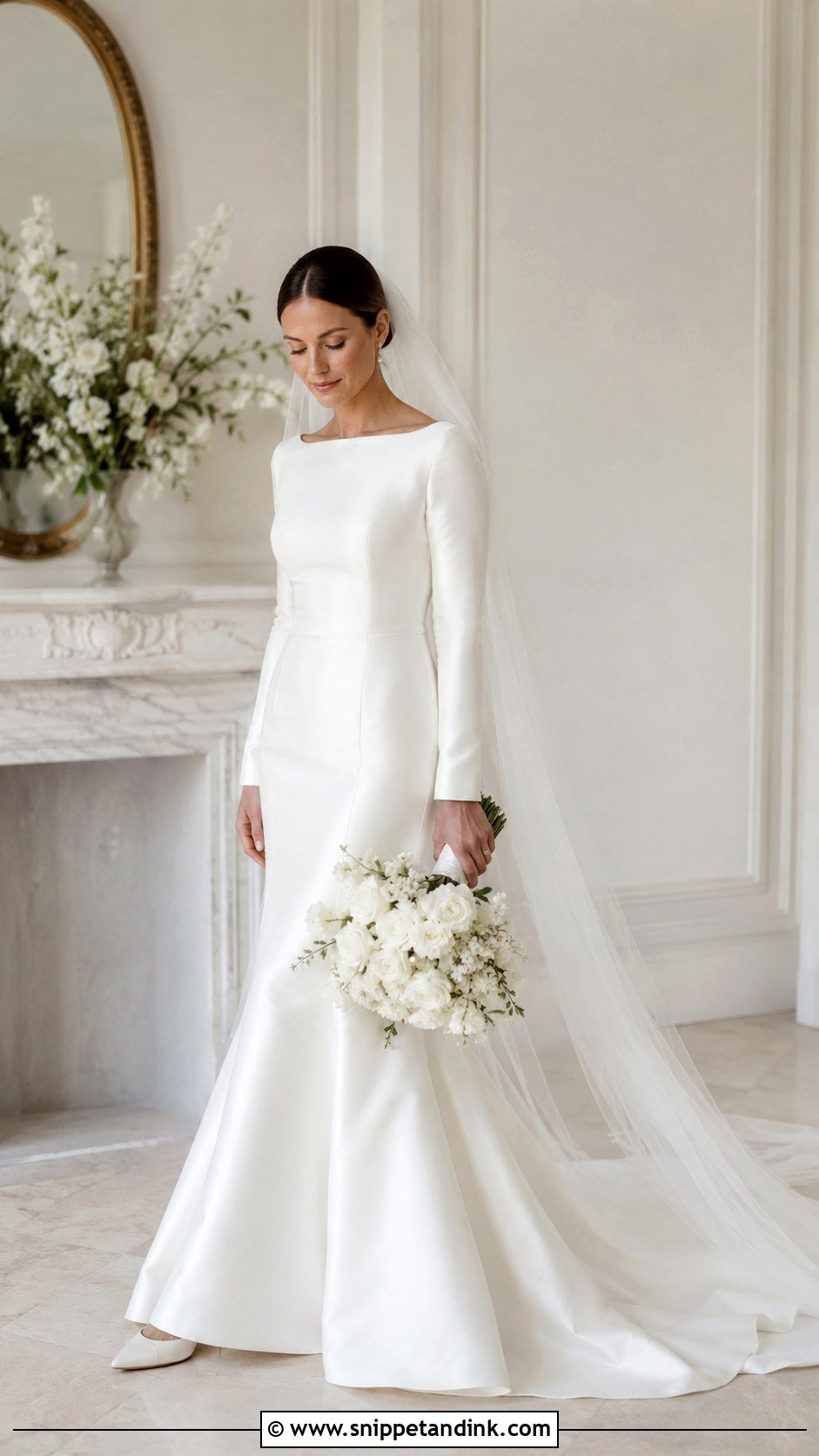
Fit-and-flare gives you the shape of a mermaid without its restrictions. The skirt opens higher, usually around mid-thigh, so walking and dancing feel normal. Crepe is my favourite fabric here because it has enough body to flare cleanly but doesn’t fight you when you sit. Fitted sleeves, a chapel veil, elegant pumps and small pearls or a thin bracelet are all it needs. Formal venues and estate weddings suit it. Brides who want a defined shape and still plan to dance for hours tend to settle here.
14. Silk Wrap Wedding Dress With Sleeves
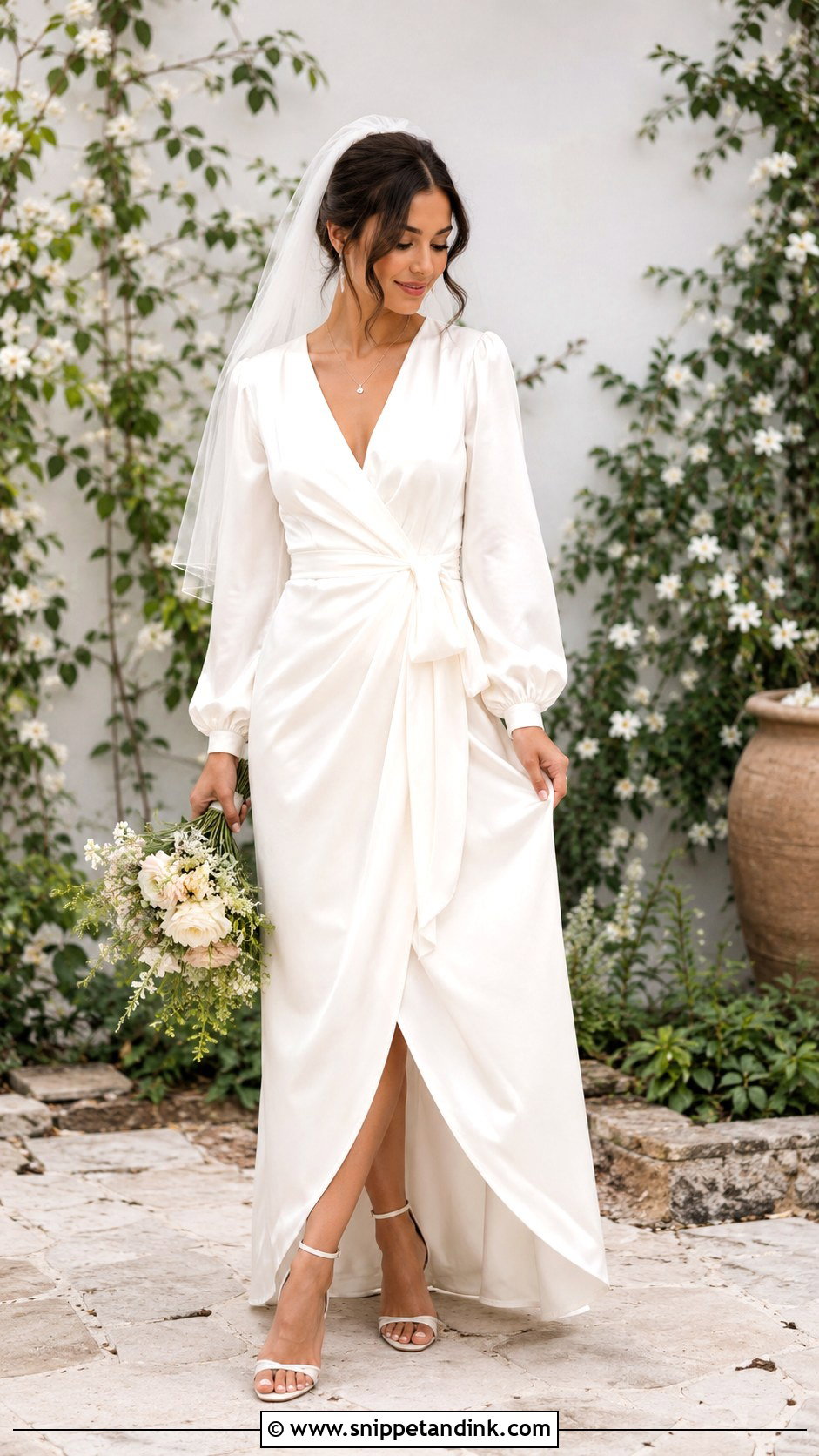
Wrap gowns define the waist and make a natural V neckline, and they adjust a little as you move, which helps on a long day. Satin, crepe and charmeuse all suit the shape. Long sleeves make it more formal; blouson sleeves relax it. Ankle-strap heels, a fine necklace and a plain veil complete it, and it feels right for intimate, garden and destination weddings. The detail I won’t skip is the hidden fastening: a wrap held only by a tie loosens through the evening, so ask for a concealed snap or hook at the cross-over point.
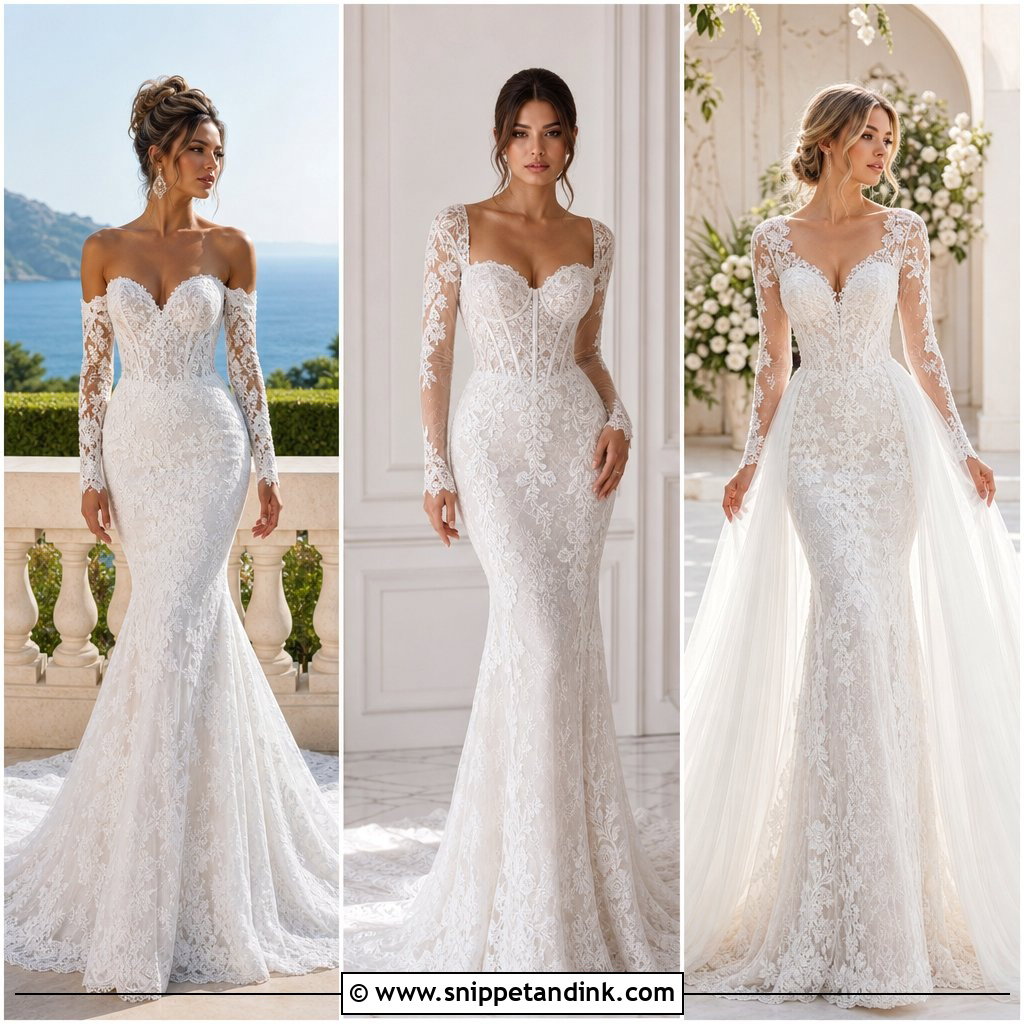

15. Silk High Neck Wedding Dress With Sleeves
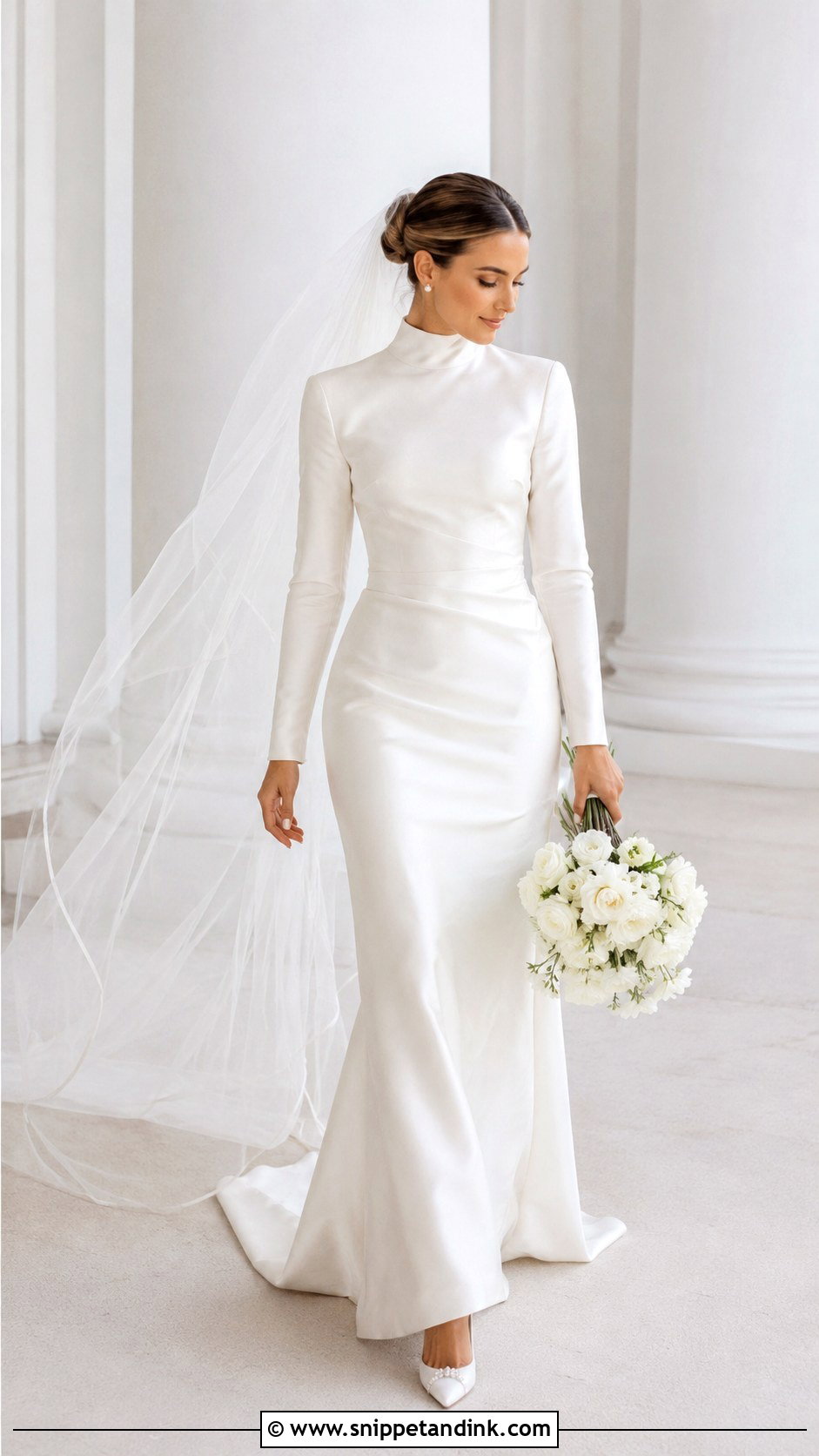
A high neck with long fitted sleeves gives full coverage and still looks very current, as long as the fit at the throat is right. Too snug and you feel it every time you swallow; too loose and it collapses. I have brides turn their heads fully both ways during fittings. A column or A-line skirt keeps the long line going. Keep accessories to pearl studs, a sleek bun and a long veil pinned low. Crepe gives a tailored finish and satin adds glow. It suits formal weddings, cooler months and anyone who wants coverage without looking old-fashioned.
16. Silk Square Neck Wedding Dress With Sleeves
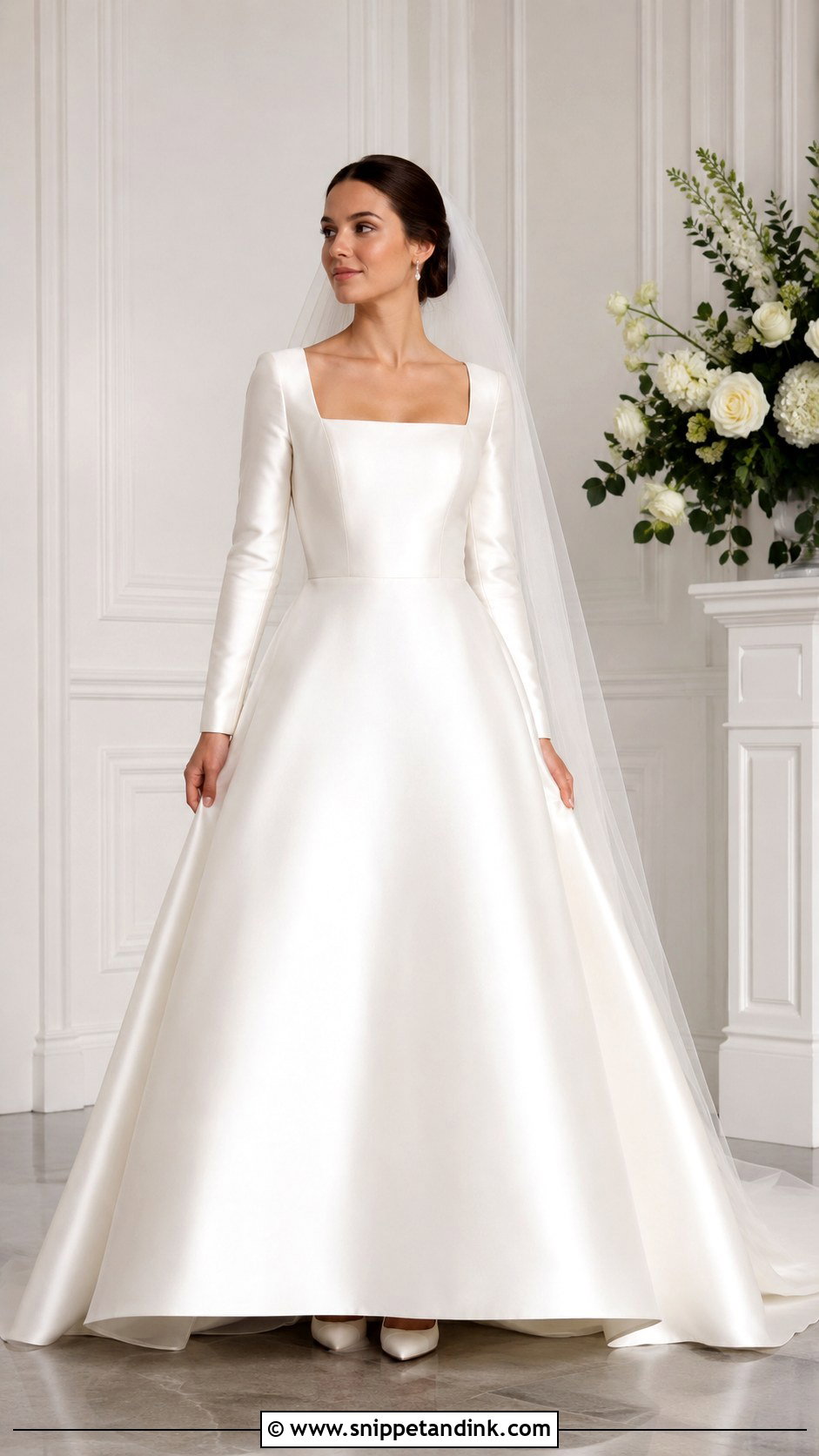
A square neckline opens the collarbone while sleeves add structure, and the straight lines read clean on an A-line, fit-and-flare or column. Mikado makes it crisp; crepe softens it. Pair it with a smooth veil, low heels or pumps and simple drops. A thin chain works if the neckline sits low enough to leave room for it. Watch the corners at the fitting; on square necks with sleeves, the corner near the shoulder can gape when you reach forward, and it’s an easy fix if caught early.
17. Silk V Neck Wedding Dress With Sleeves
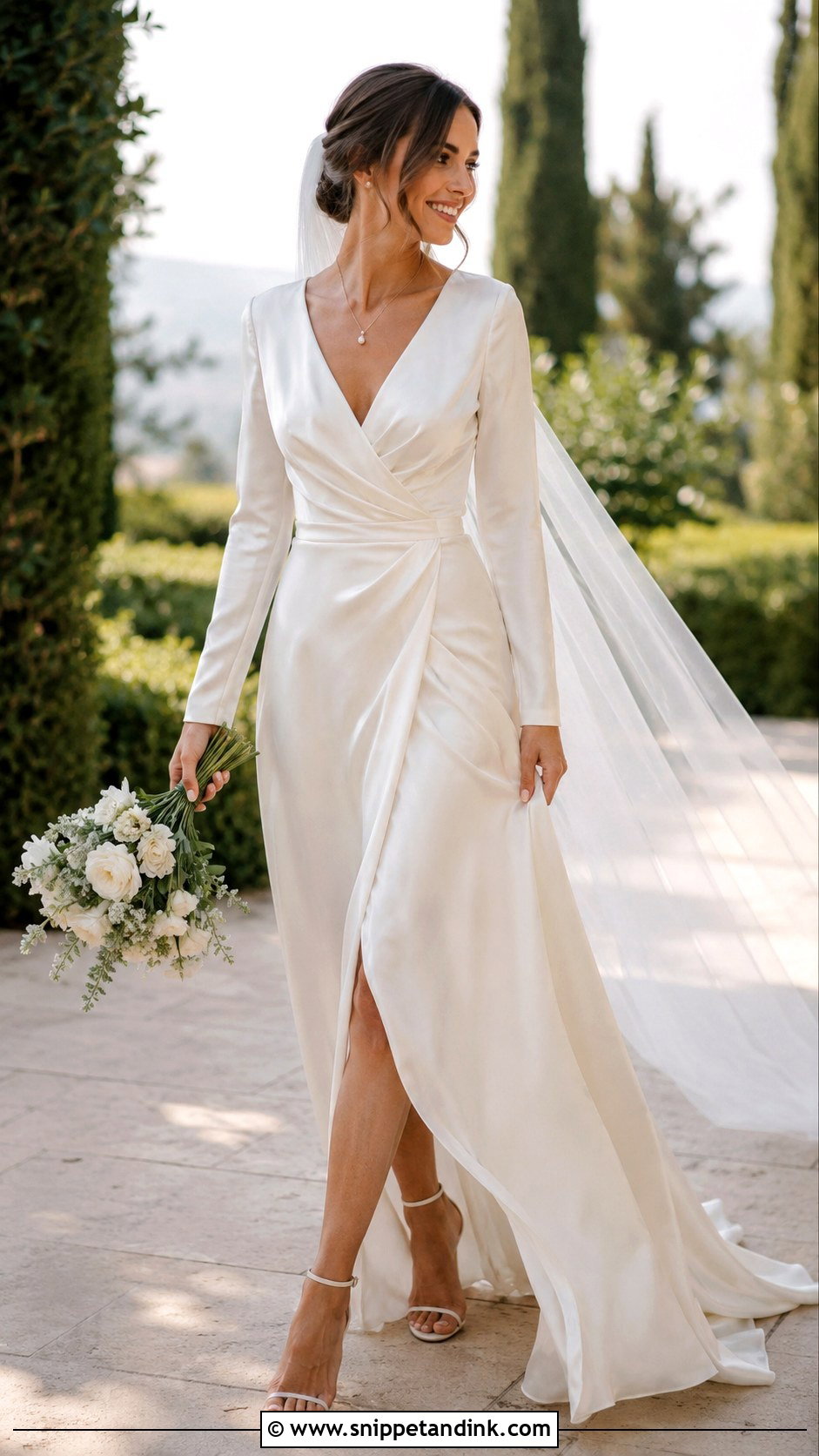
A V neckline lengthens the upper body, and sleeves bring back balance, so this is a combination that suits most brides. Long fitted sleeves with an A-line skirt stay classic. A silk wrap with blouson sleeves feels more relaxed. Slim heels, a pendant that sits just above the point of the V, and a simple veil keep it clean, and soft curls or a low chignon suit the neckline. It’s a practical choice if you want covered arms but dislike anything close to the throat. Ask how deep the V sits when you’re seated; it drops more than you’d expect.
18. Silk Off Shoulder Wedding Dress With Sleeves
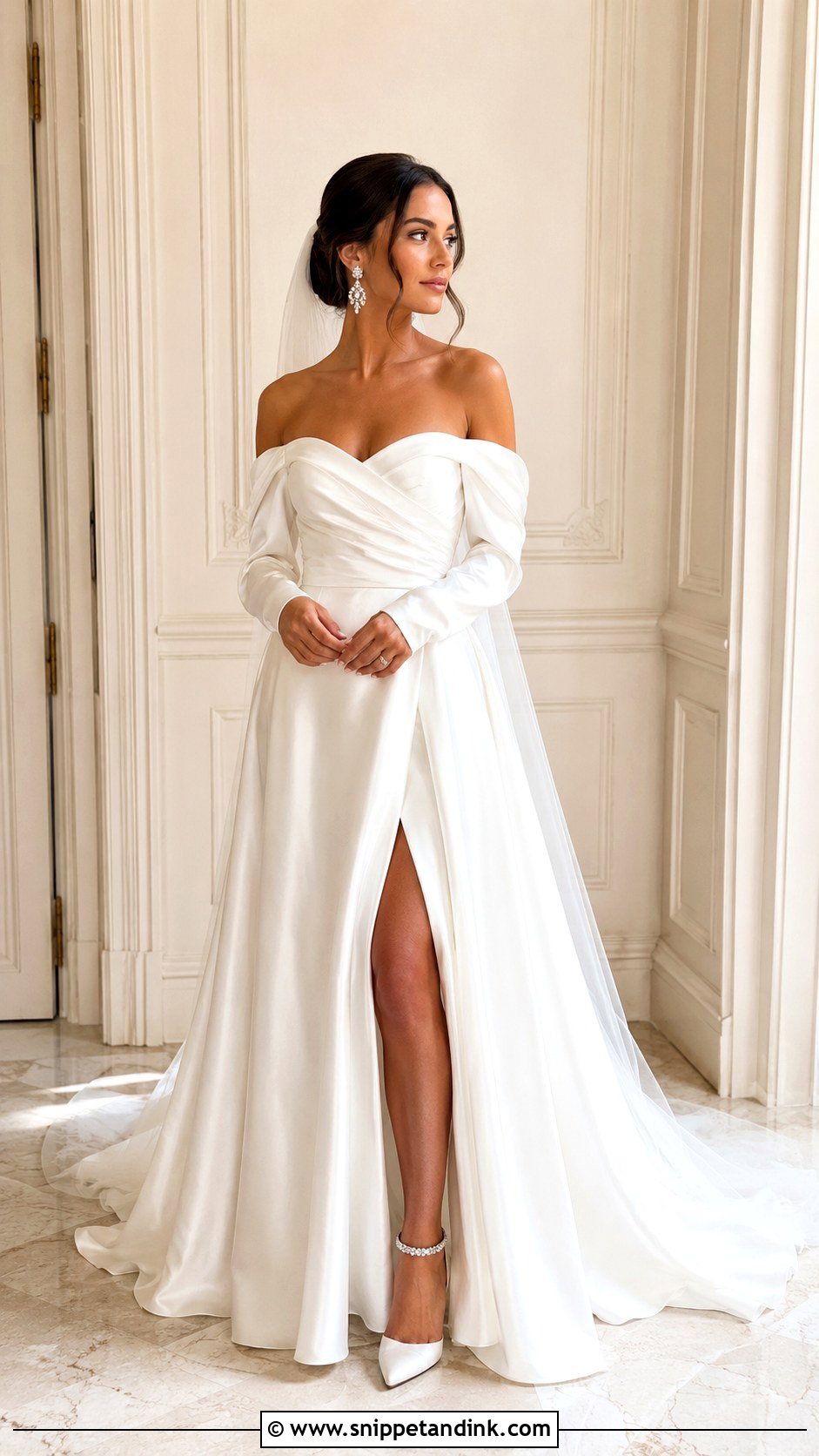
Off-the-shoulder sleeves look romantic, but they’re the style I test hardest for movement. The sleeves sit on the upper arm, so they limit how high you can lift your arms, and some designs make hugging awkward. Raise your arms and wrap them round someone during the fitting. Mikado holds a structured off-shoulder shape; satin or crepe gives a smoother line. Statement earrings, a simple veil and classic heels suit it, with no necklace if the neckline is already doing the work. Formal, garden and ballroom weddings are all good settings.
19. Silk Boat Neck Wedding Dress With Sleeves
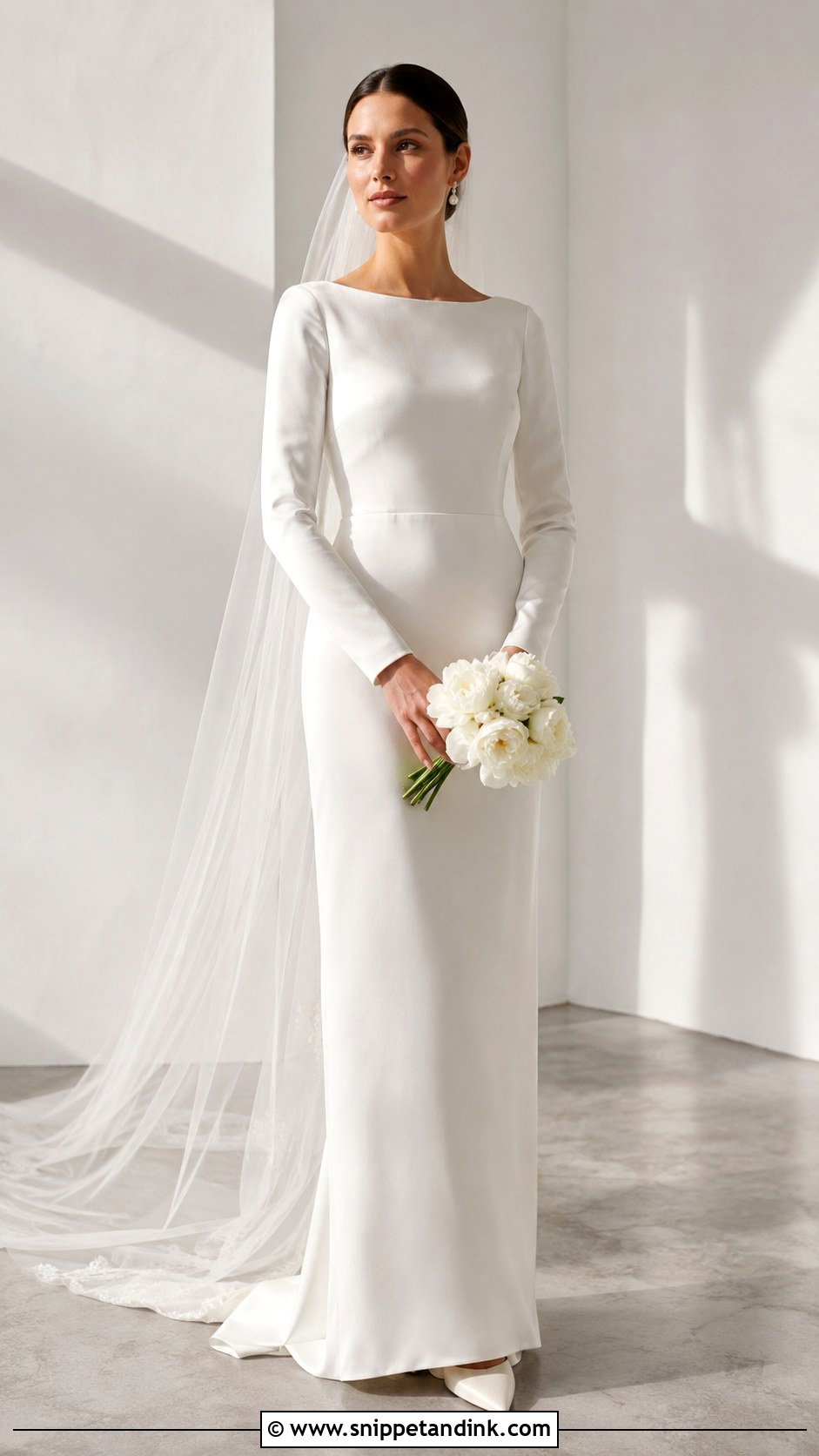
A silk boat neck wedding dress with sleeves is quiet in the best sense. The neckline runs straight across the collarbone and pairs easily with long fitted sleeves. It looks polished but not severe. Crepe or mikado keep the line clean, because a softer silk will let the neckline sag. A low bun, pearl earrings, pointed heels and a long veil finish it. Column, A-line and fit-and-flare skirts all work. Boat necks can slip toward one shoulder when you move; a small lingerie strap guard inside fixes that.
20. Silk Bishop Sleeve Wedding Dress
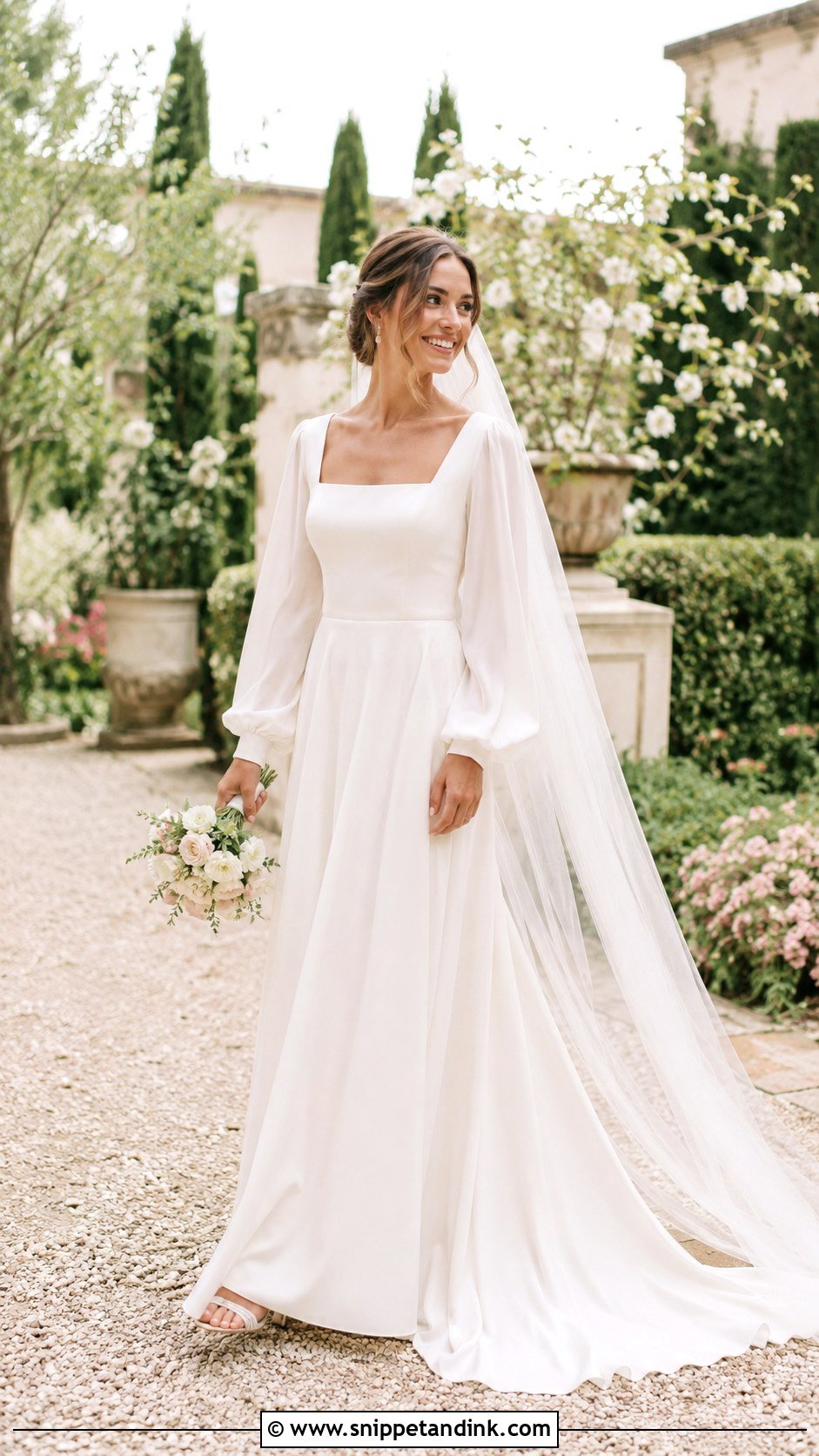
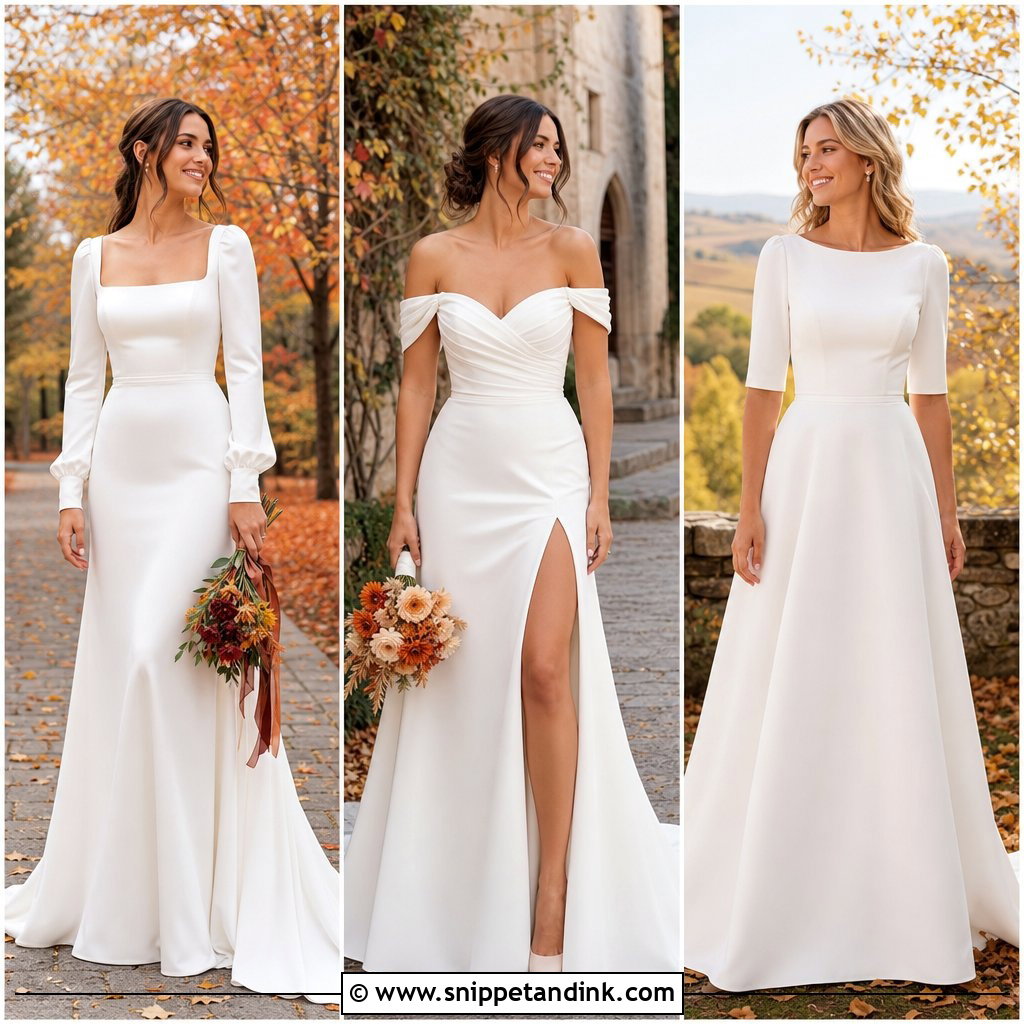
A silk bishop sleeve wedding dress puts volume at the arm and gathers it at the wrist, so the bodice and skirt should stay simple. Chiffon, organza and light satin all suit the shape; heavy silks make the sleeve droop. The cuff is where I spend time at fittings. It needs to close snugly enough that the gather holds, but not so tight that it marks your wrist by evening. Clean heels, small earrings and a soft veil are enough, with a simple bouquet. It suits outdoor and romantic weddings well.
21. Silk Puff Sleeve Wedding Dress
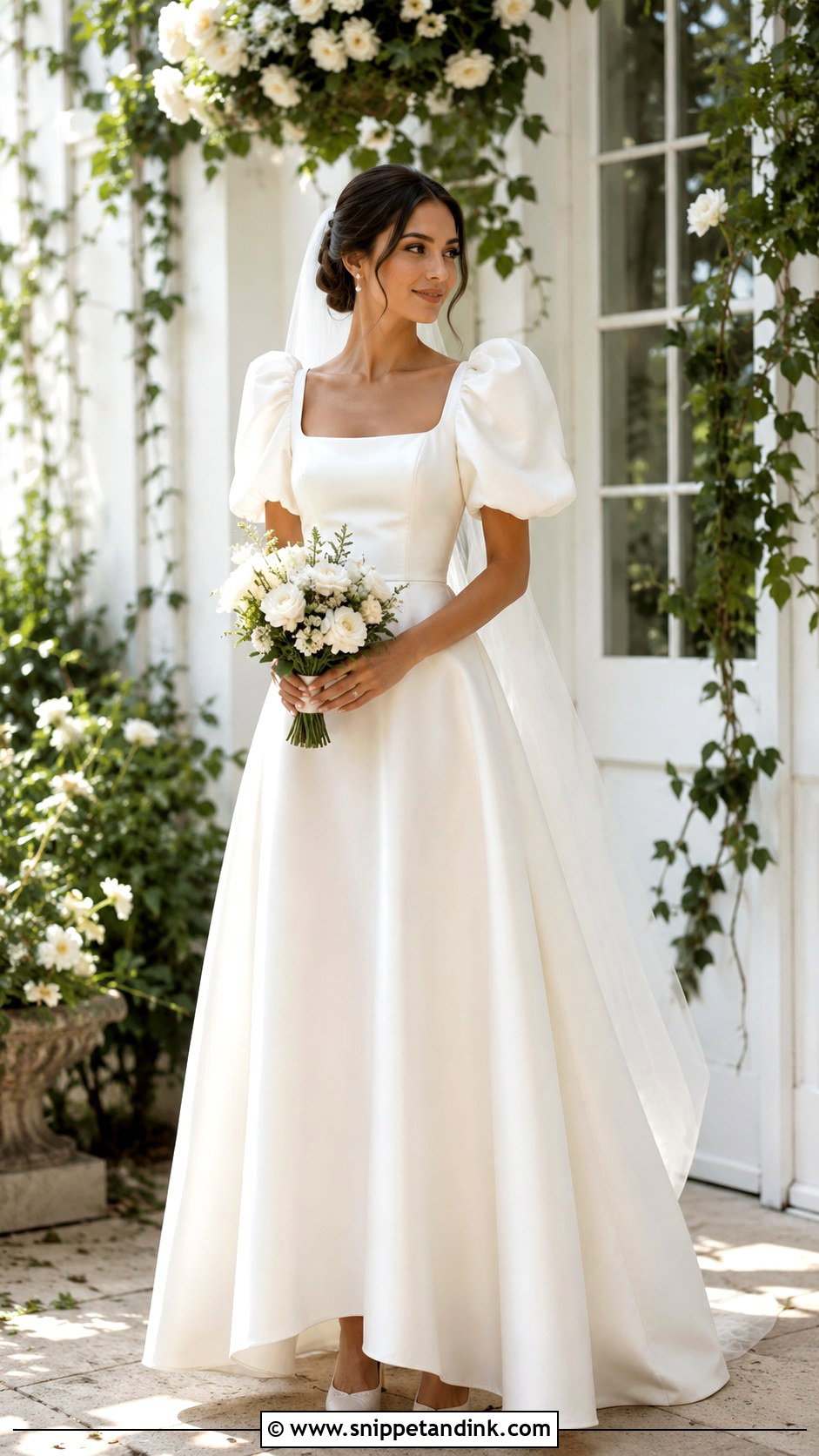
Puff sleeves need restraint everywhere else. Small puffs read subtle; full organza puffs read dramatic. A fitted bodice, square neckline and simple A-line skirt balance either. Classic pumps, small earrings and a plain veil keep the texture in check. Garden and estate weddings suit it. For petite brides I keep the puff narrower than the shoulder line, because an oversized sleeve can make a small frame look swamped in photographs.
22. Silk Bell Sleeve Wedding Dress
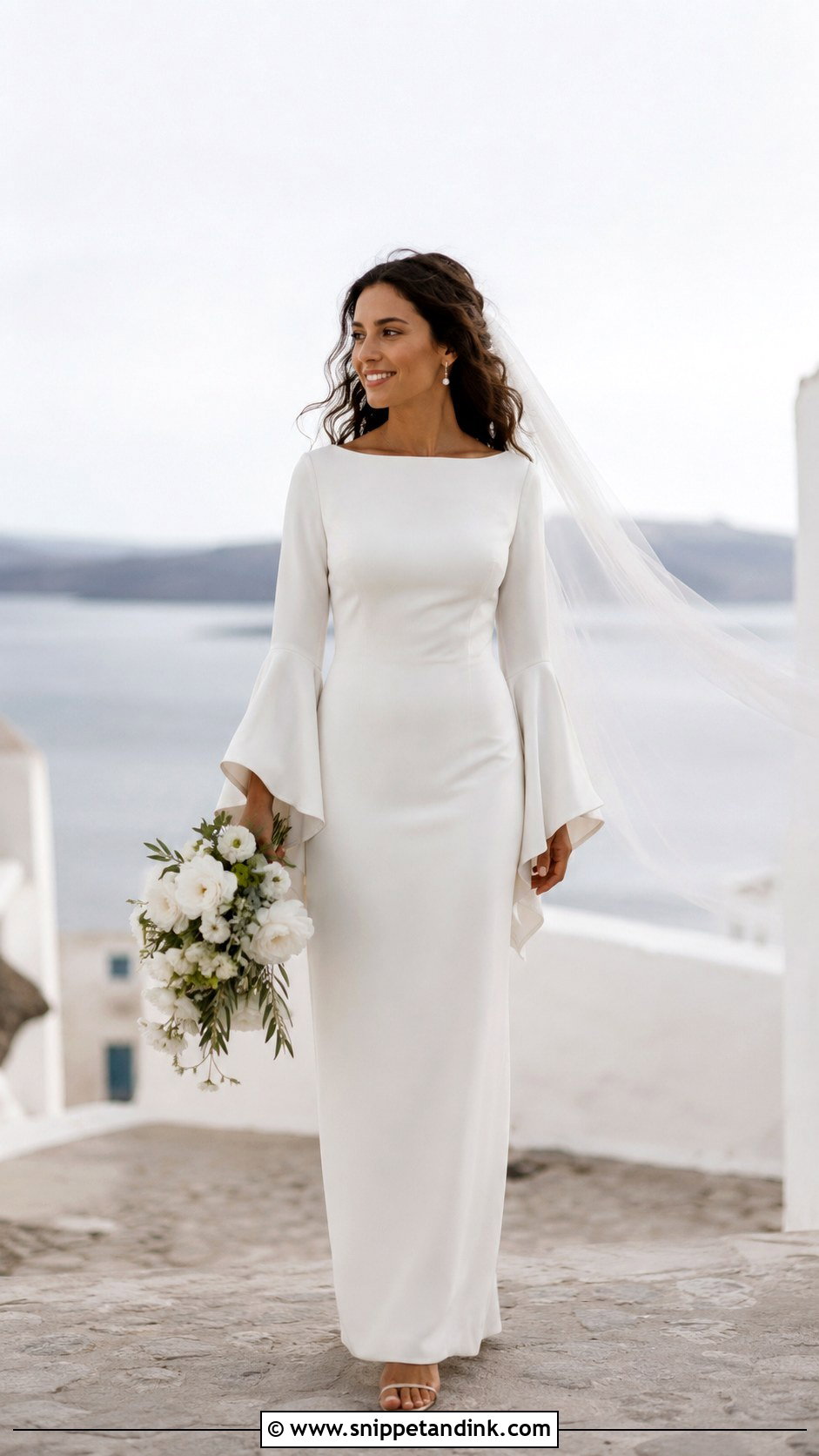
Bell sleeves widen toward the wrist and swing as you walk, which gives a relaxed mood that fitted sleeves can’t. Crepe, chiffon and charmeuse all hang well. Simple sandals or low heels, a soft veil and minimal jewellery suit it, with a centre part or loose waves. It’s a good outdoor and destination gown. One practical point: wide cuffs dip into everything, from the cake to the guest book ink, so practise eating with them during a trial and consider a slightly shorter sleeve.
23. Silk Detachable Sleeve Wedding Dress
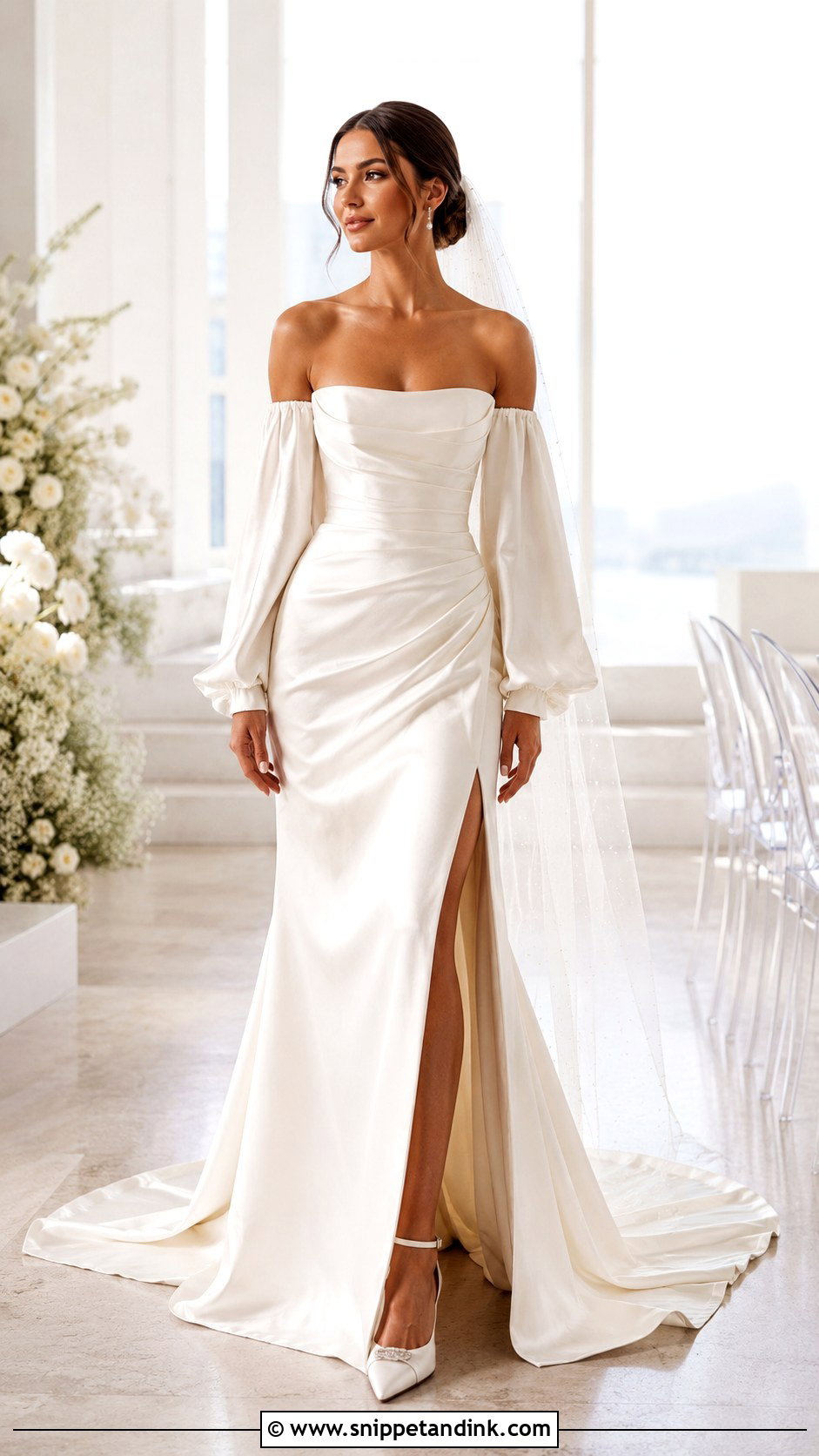
Detachable sleeves give you a covered ceremony look and a bare reception look in the same gown. Keep them on for the service, portraits or cooler hours, then take them off for dancing. They can be fitted, puffed, draped or off the shoulder. Wear elegant heels, a veil and simple earrings at first, then switch to bolder earrings or a new hair piece once the sleeves come off. Strapless, square-neck and plain silk gowns suit the idea best. Ask your seamstress for discreet snaps or loops that sit flat, and practise removing them with your helper.
24. Silk Cape Sleeve Wedding Dress
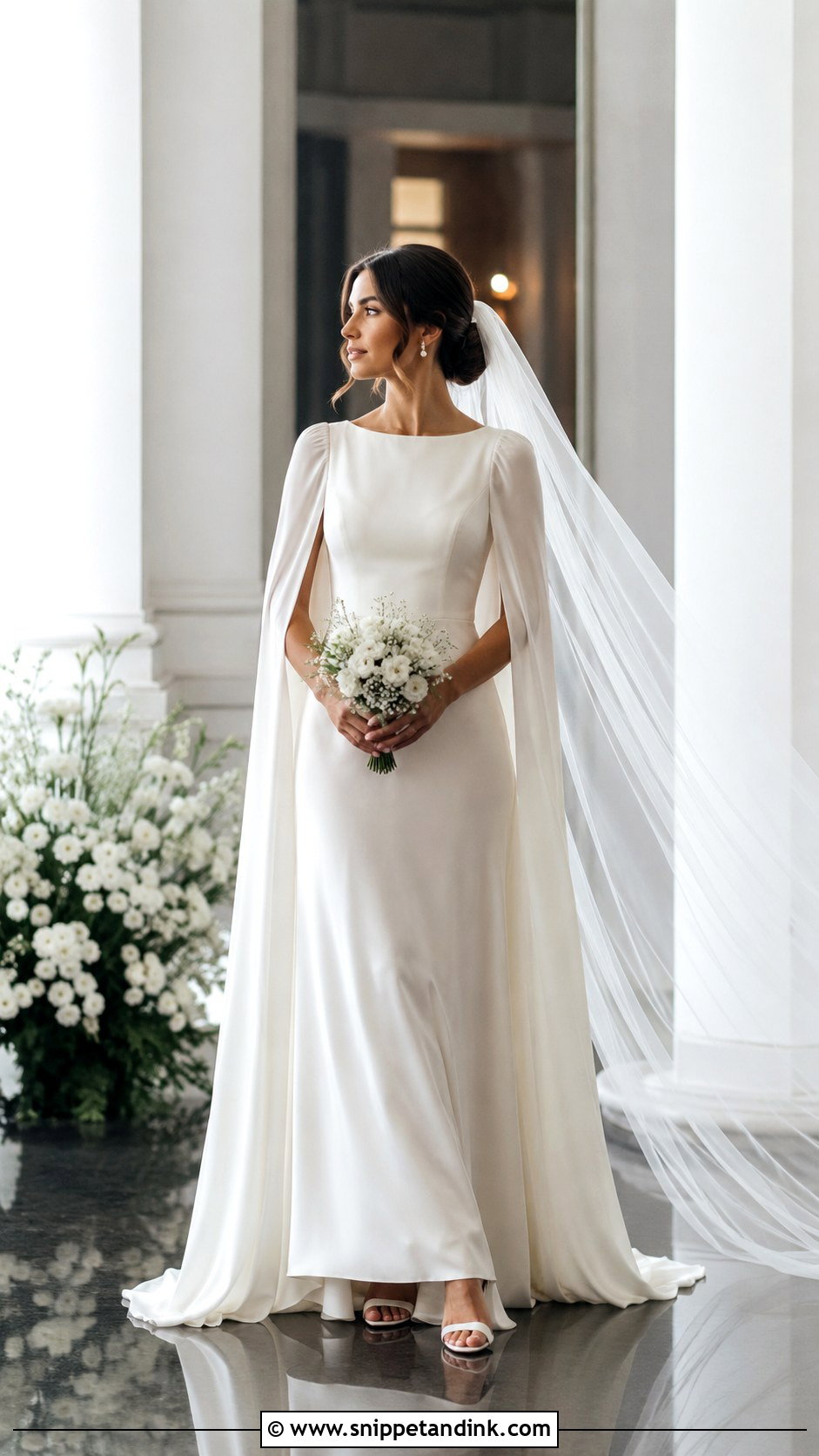
Cape sleeves give drama without the weight of a full cape or overskirt. They fall from the shoulder and move behind you with each step, so they look best walking away, down an aisle. Chiffon, organza and light crepe keep them fluid. Sleek heels, a low bun and small earrings let the detail lead. A column or A-line skirt keeps it modern. I’d skip a long veil with them; the two compete for the same space down the back.
25. Silk Wedding Dress With Lace Sleeves
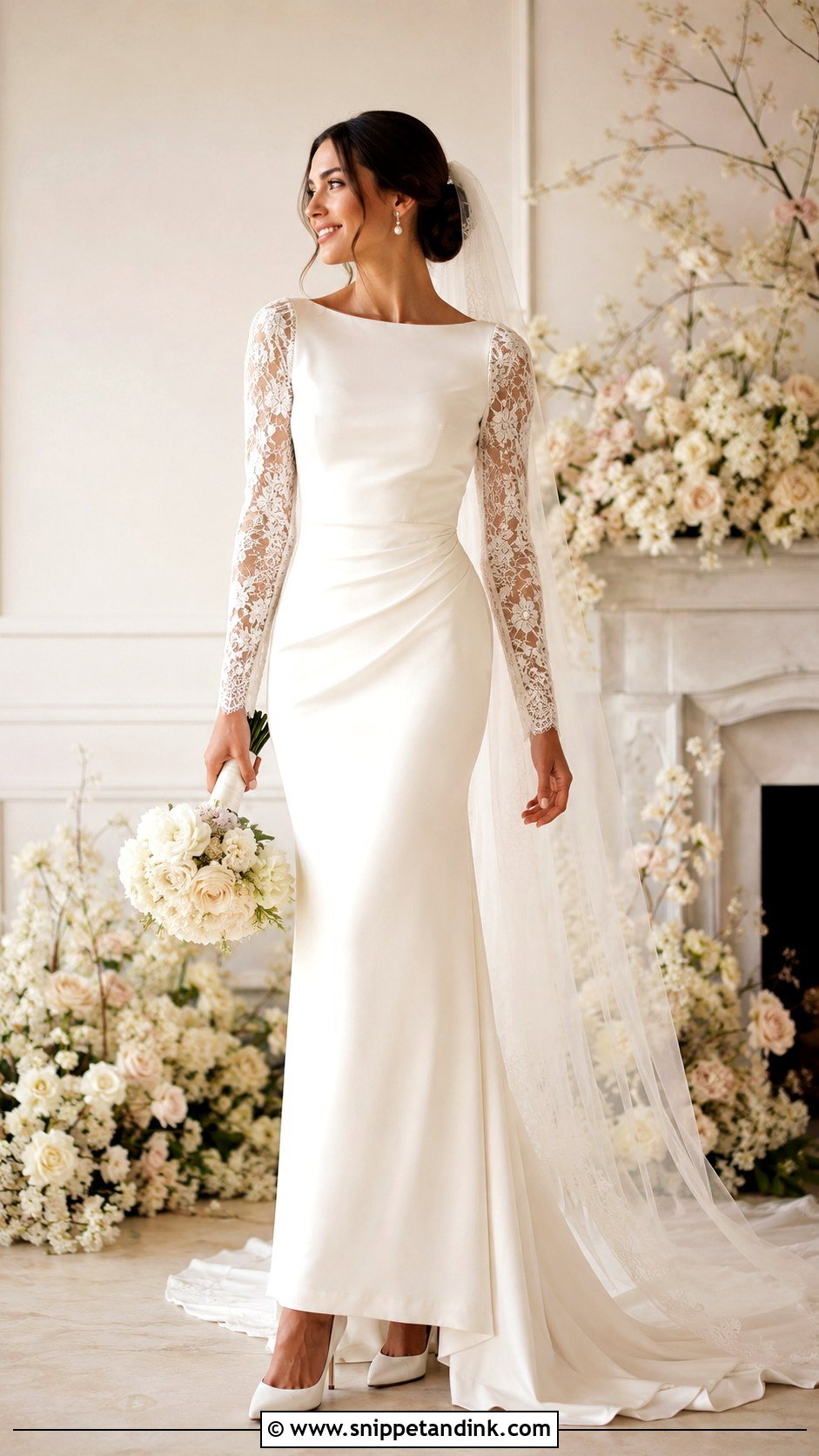
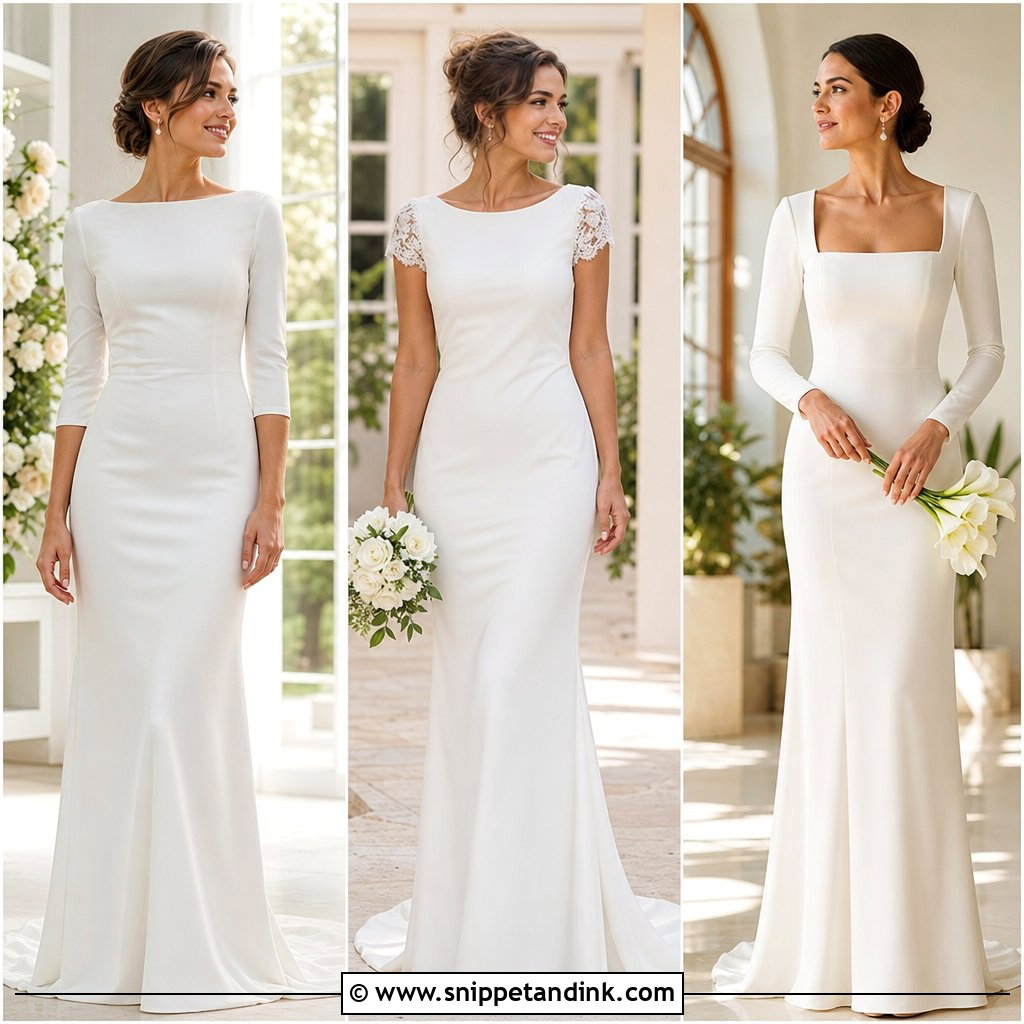
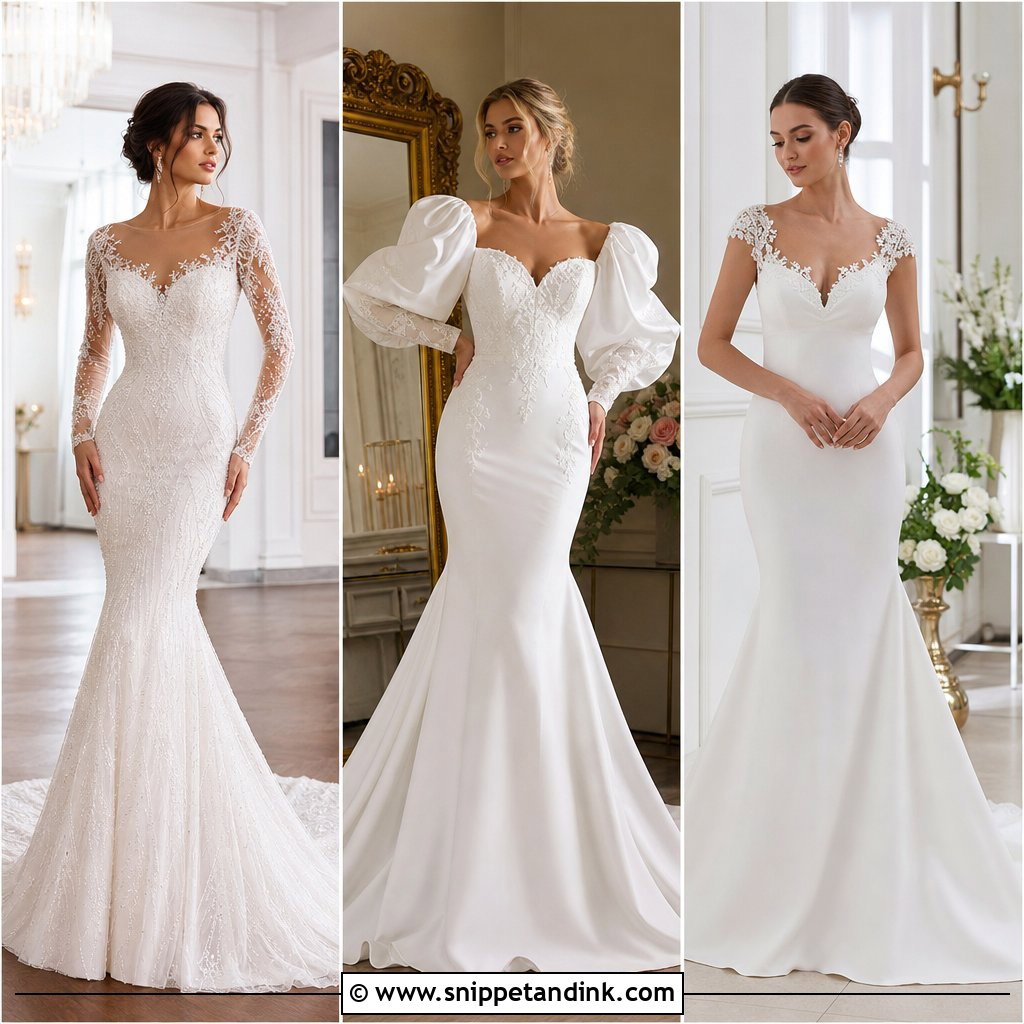
Lace sleeves on a silk body give texture without turning the whole gown ornate. Crepe or satin keeps the main dress refined. The tone match matters more than people expect: ivory lace against a brighter white silk looks grey in photos, so compare them in daylight. Pearl earrings, classic heels and a plain veil suit it, and heavy jewellery near a detailed lace neckline only crowds it. It works for formal venues and garden weddings alike.
Can Sleeves Be Added to a Gown You Already Love?
Often, yes. Many of my brides find a strapless or sleeveless silk gown they adore and want arms covered for a religious ceremony or a winter date. A skilled bridal seamstress can add sleeves, but a few things decide whether it looks built-in or bolted-on.
Matching the silk
Ivory silks vary a lot between mills, and even between dye lots from the same supplier. Ask the shop whether they can order extra fabric from the gown’s maker. If not, sheer sleeves in organza or tulle are more forgiving than solid silk, because a slight colour difference disappears in a translucent fabric.
Timing it
Adding sleeves is a bigger job than taking in seams. The bodice may need re-cutting at the armhole, and the sleeve itself is usually drafted and tested in a cheap fabric first. Raise it at your very first alterations appointment, ideally a few months before the date, so there’s room for a second try if the first version pulls. Detachable sleeves are a good middle ground if you’d like the option to go bare later in the evening.
Heat
Silk breathes better than polyester, but a lined long sleeve in July is still warm. For summer, I steer brides toward chiffon or organza sleeves left unlined, or toward three-quarter length, which keeps hands free and cool.
Let the Silk, the Sleeve and the Season Decide
It really comes down to three things: the silk, the sleeve, and the room you’ll be standing in. Crepe is sleek and modern, mikado is structured and formal, chiffon is light and soft, and charmeuse moves like water. Sleeves add coverage and balance, but only if they’re cut so you can move freely. The gown that works is the one that fits well, lets you lift your arms and suits the way you dress every other day. Get the alterations right, keep the accessories few, and let the silk carry the rest.
You'll Like These Ideas:






Leave a Reply