
Sleeves change a gown more than any other single detail. They decide how the shoulders read, how a big skirt balances, how warm you’ll be in a stone church and how freely you can hug people afterward. Which sleeve suits you depends far more on the neckline, the fabric, the season and how much you plan to move than on any body-shape chart, and I’d ignore any rule that tells you otherwise. Illusion lace is airy, fitted satin looks formal and exact, and detachable sleeves give you two looks from one dress. Below are twenty sleeve styles, each with styling and the fitting check I’d do before signing off.
Six Sleeve Fabrics and How Each One Moves
Two sleeves cut to the same pattern can feel completely different once you lift your arms, and the fabric is almost always the reason. This is how I explain it to brides at a first appointment.
- Stretch lace gives the most freedom in a fitted sleeve. It hugs without restricting, which is why it suits long and three-quarter styles.
- Illusion mesh weighs almost nothing and lets appliqués sit on the arm. It can snag on rings or bracelets, so I keep jewelry on the other wrist.
- Organza holds a sculpted shape, so puffs and balloons keep their volume. It also creases sharply if crushed in a garment bag.
- Chiffon falls and floats. It suits flutter, angel and draped sleeves, though it shows marks from makeup or fake tan easily.
- Satin looks smooth and formal but has little give. Fitted satin sleeves need generous room at the underarm.
- Crepe sits between satin and stretch lace: clean, matte and a bit more forgiving to move in.
Weight matters too. A heavily beaded sleeve pulls down on the shoulder seam all day, and you’ll notice it by evening. If you love an embellished sleeve, hold your arm out to the side for a full minute at the fitting and see how it feels.
1. Wedding Dress With Long Lace Sleeves
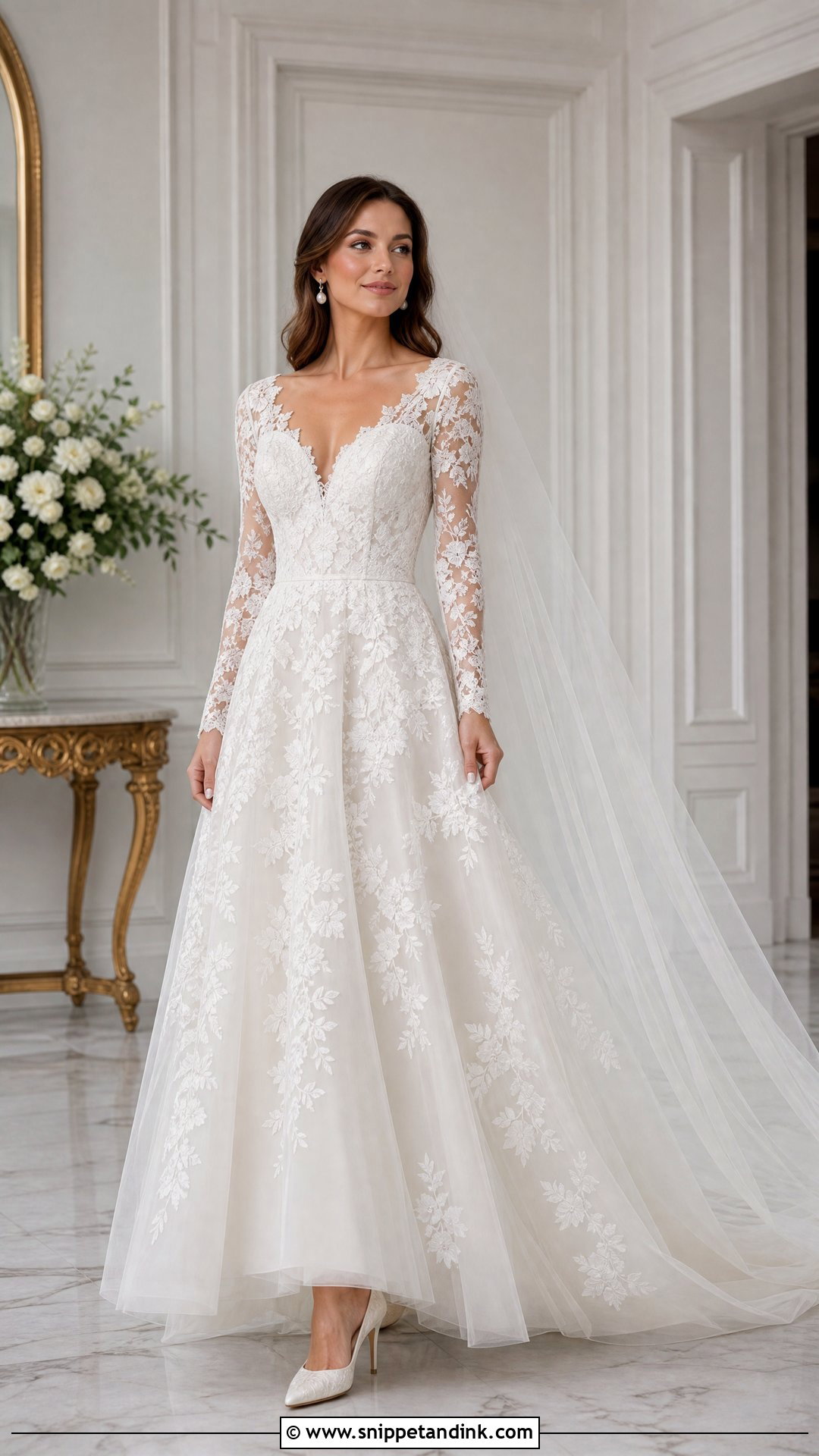
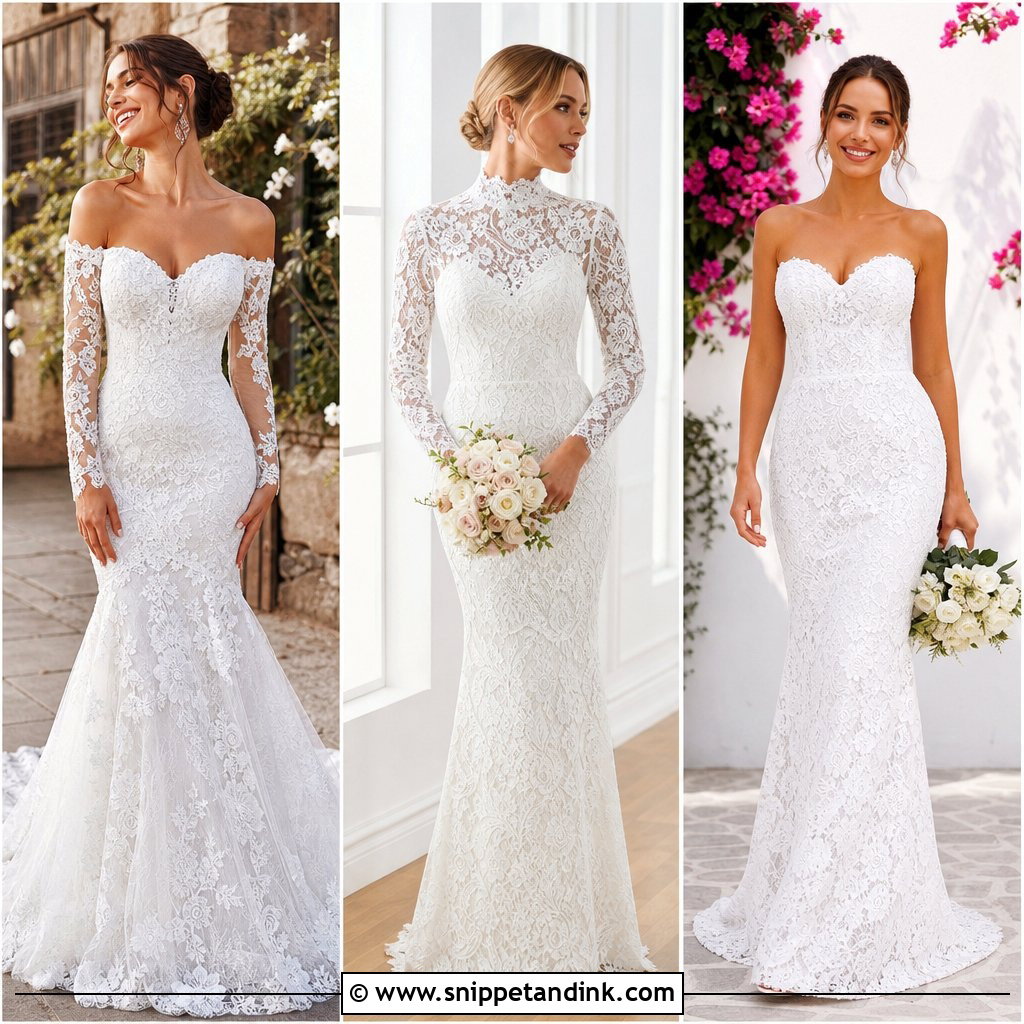
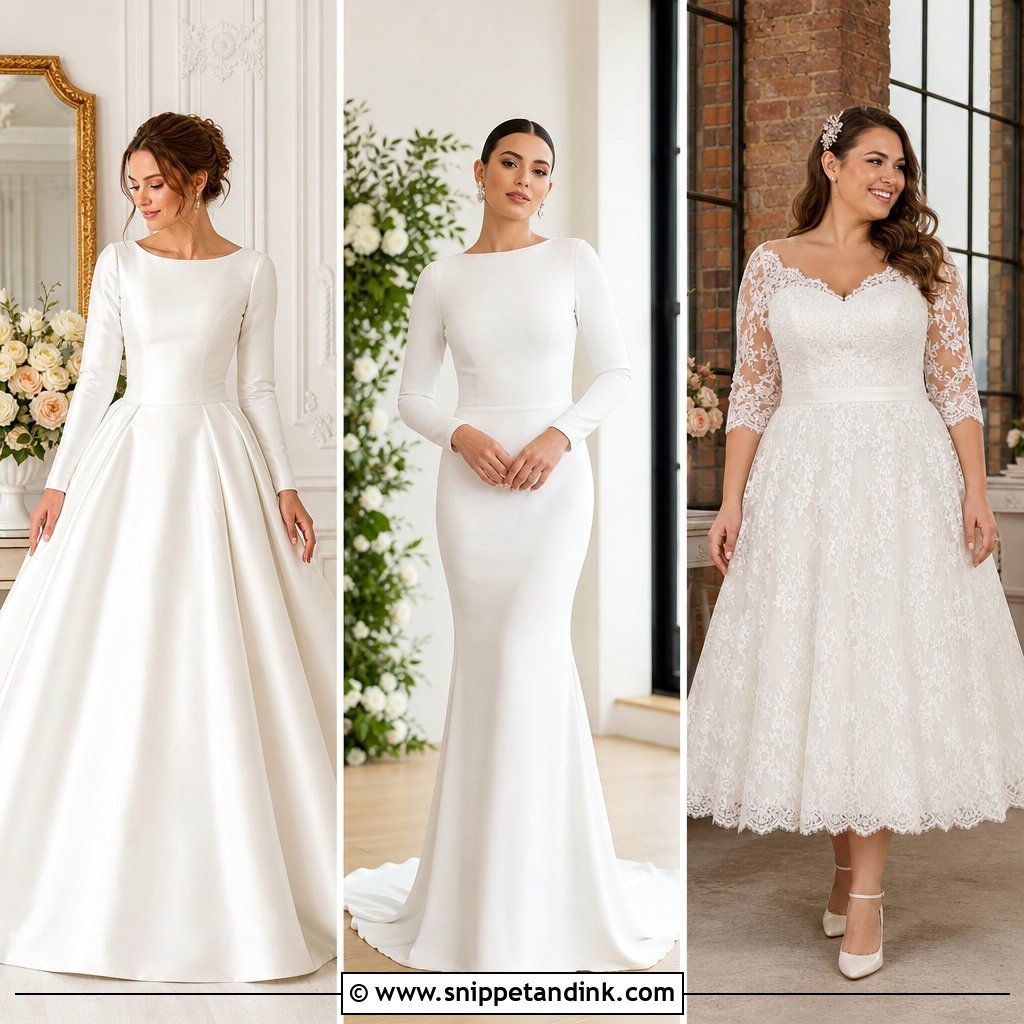
Long lace sleeves look best when the lace runs straight on from the bodice, with the motifs matched at the shoulder seam so the pattern doesn’t break. Floral appliqué gives depth; fine Chantilly is lighter and almost sheer. A-line, fit-and-flare and sheath shapes all carry them. I’d keep the veil plain so two lace patterns don’t fight, then add pointed ivory pumps and pearl earrings. The fitting test is simple: bend your elbows and reach forward. Non-stretch lace pulls across the back when the sleeves are too narrow, and the cuffs should sit snug without digging in. Cooler months and historic venues suit this one.
2. Wedding Dress With Illusion Sleeves
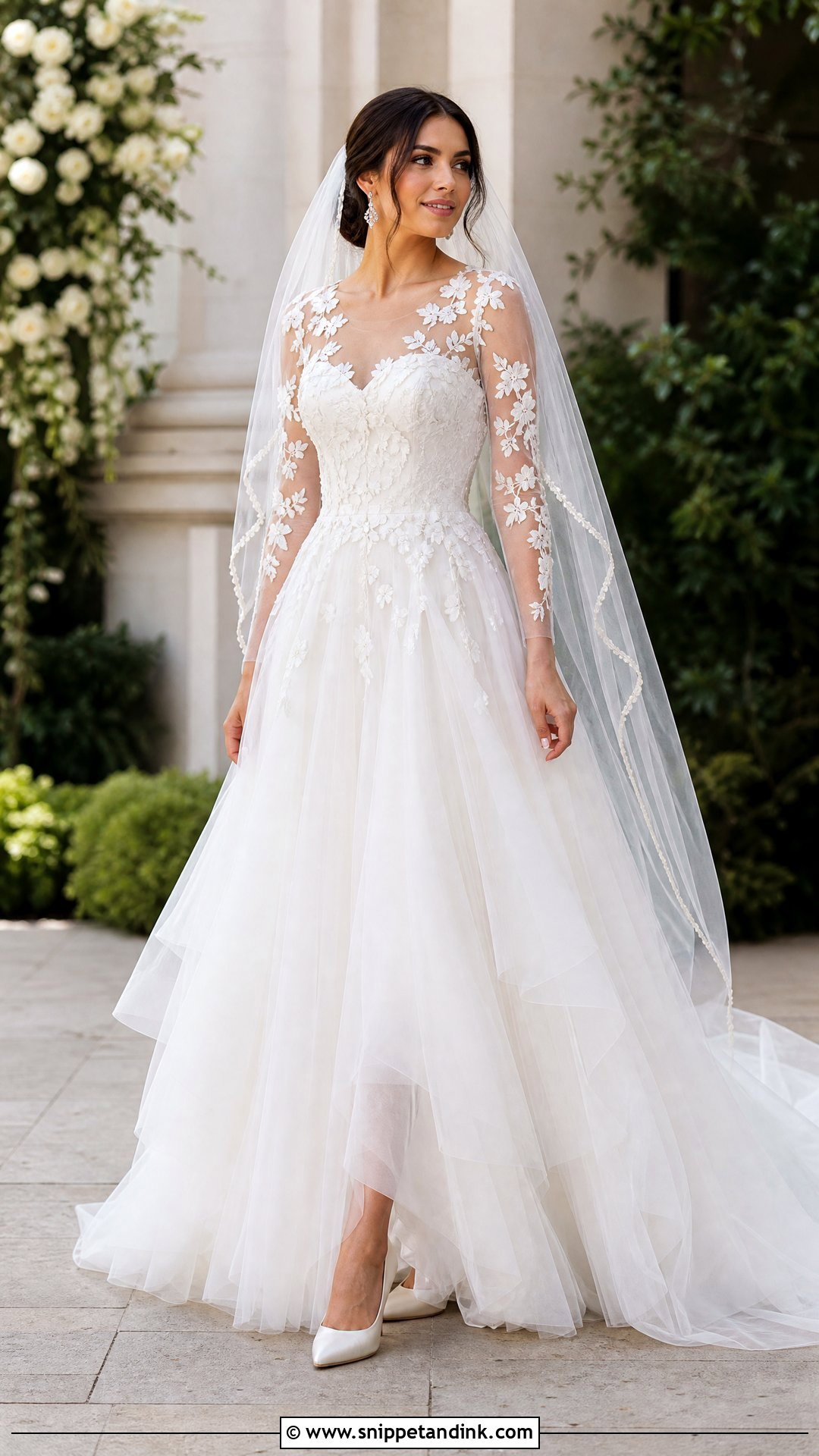
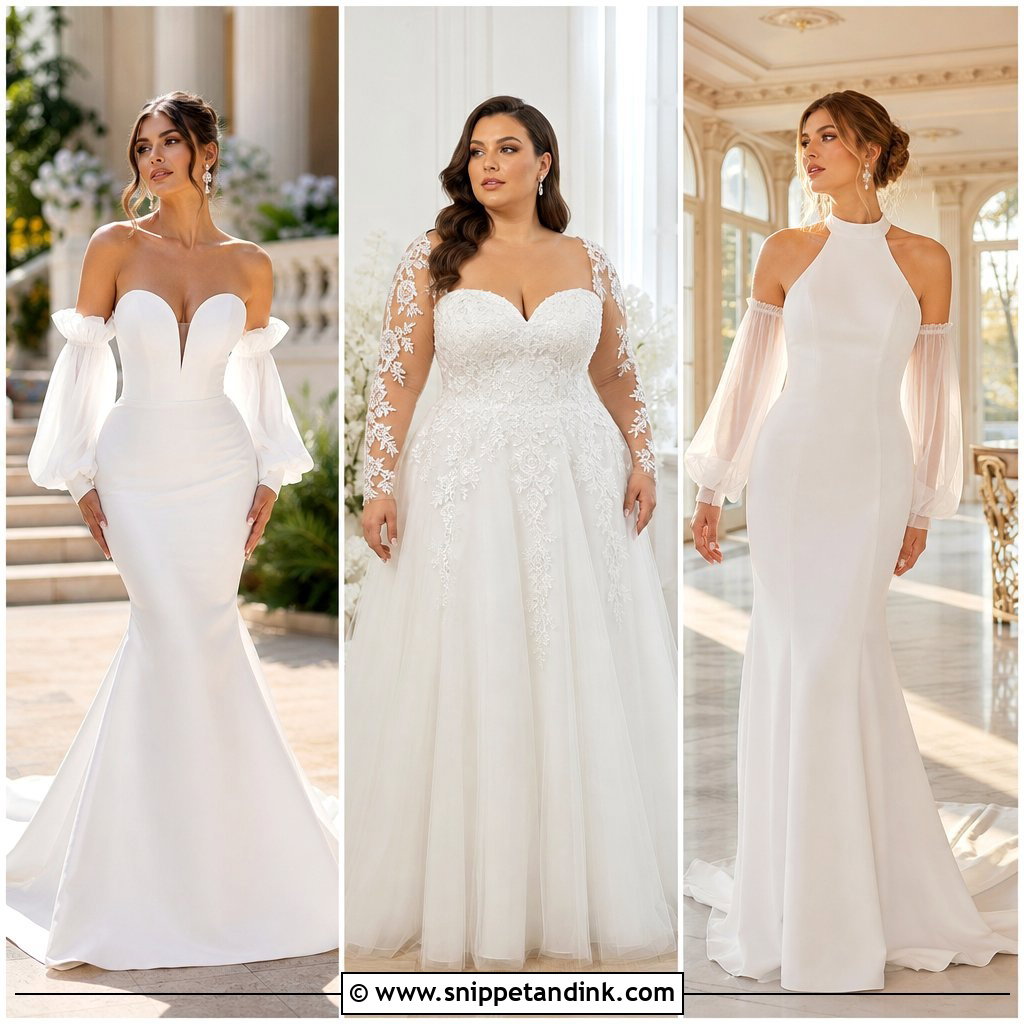
What if you want coverage that still feels light? Illusion sleeves use sheer mesh, scattered with lace, beads or pearls, so the decoration seems to float on your arms. That only works when the mesh shade is close to your skin, and many salons can order a few different tones, so ask rather than accepting a poor match. A fitted bodice with a tulle skirt balances them. Crystal earrings, a low bun, ivory heels and a fingertip veil leave the detail visible. I run a finger along the inside of each appliqué, because any scratchy edge on the inner arm will bother you by the first dance.
3. Wedding Dress With Bishop Sleeves
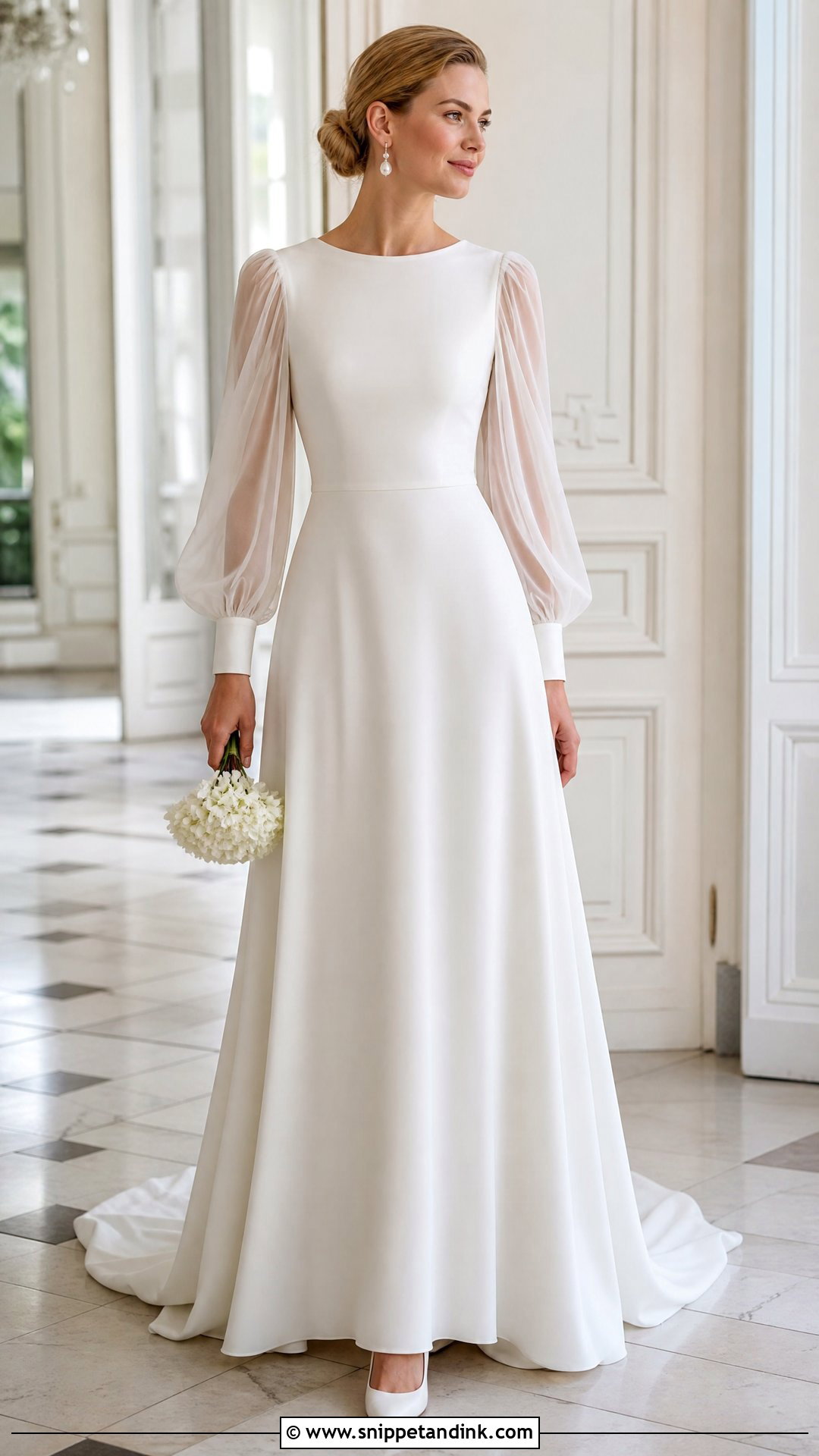
Bishop sleeves are gathered at the shoulder and again at the cuff, with the fabric billowing between. Chiffon, organza and light tulle hold that shape without weight. A fitted waist and simple A-line keep the arms from overwhelming the outline. For a modern take, I like a clean crepe bodice with sheer bishop sleeves and narrow buttoned cuffs. Pearl drops, sleek pumps and a low textured bun suit it, with a short veil so the sleeves stay visible in portraits. Before ordering, stretch your arms forward and overhead; the cuff length is set with the arm bent, or it’ll ride halfway up your forearm.
4. Wedding Dress With Balloon Sleeves
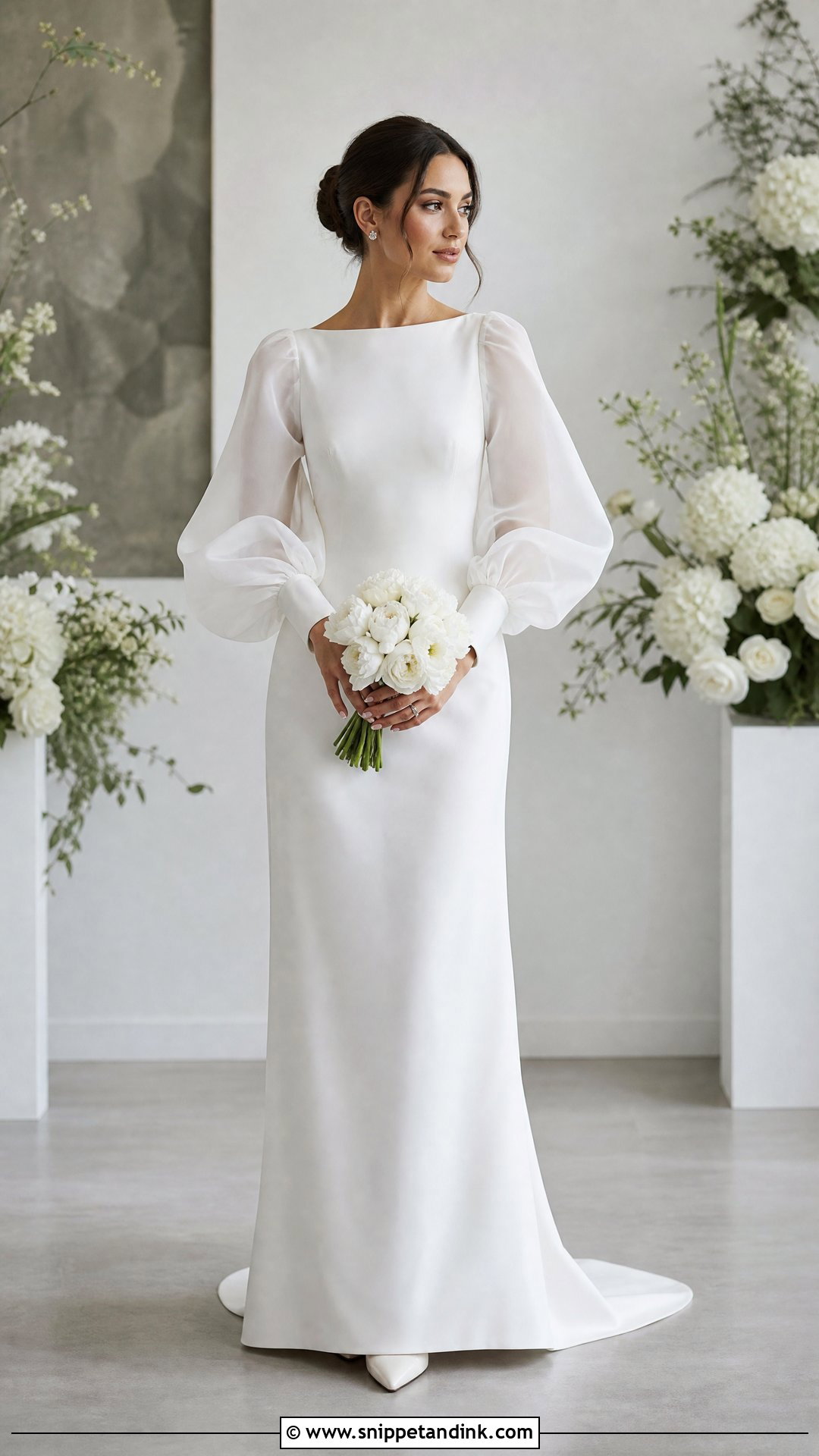
Balloon sleeves are fullest through the middle of the arm, then narrow at the cuff, which is what sets them apart from a puff. Light organza or tulle keeps the round shape without dragging the shoulder seam down. For noticeable volume with a polished finish, consider a wedding dress with balloon sleeves on a streamlined column, structured A-line or plain satin skirt. Keep the neckline simple. A sleek bun, small studs, pointed pumps and a compact bouquet are enough; avoid big jewelry or a heavily embellished veil. At the final fitting, hold the bouquet at waist height and pretend to eat, because wide sleeves can brush plates and crush flowers.
5. Wedding Dress With Puff Sleeves
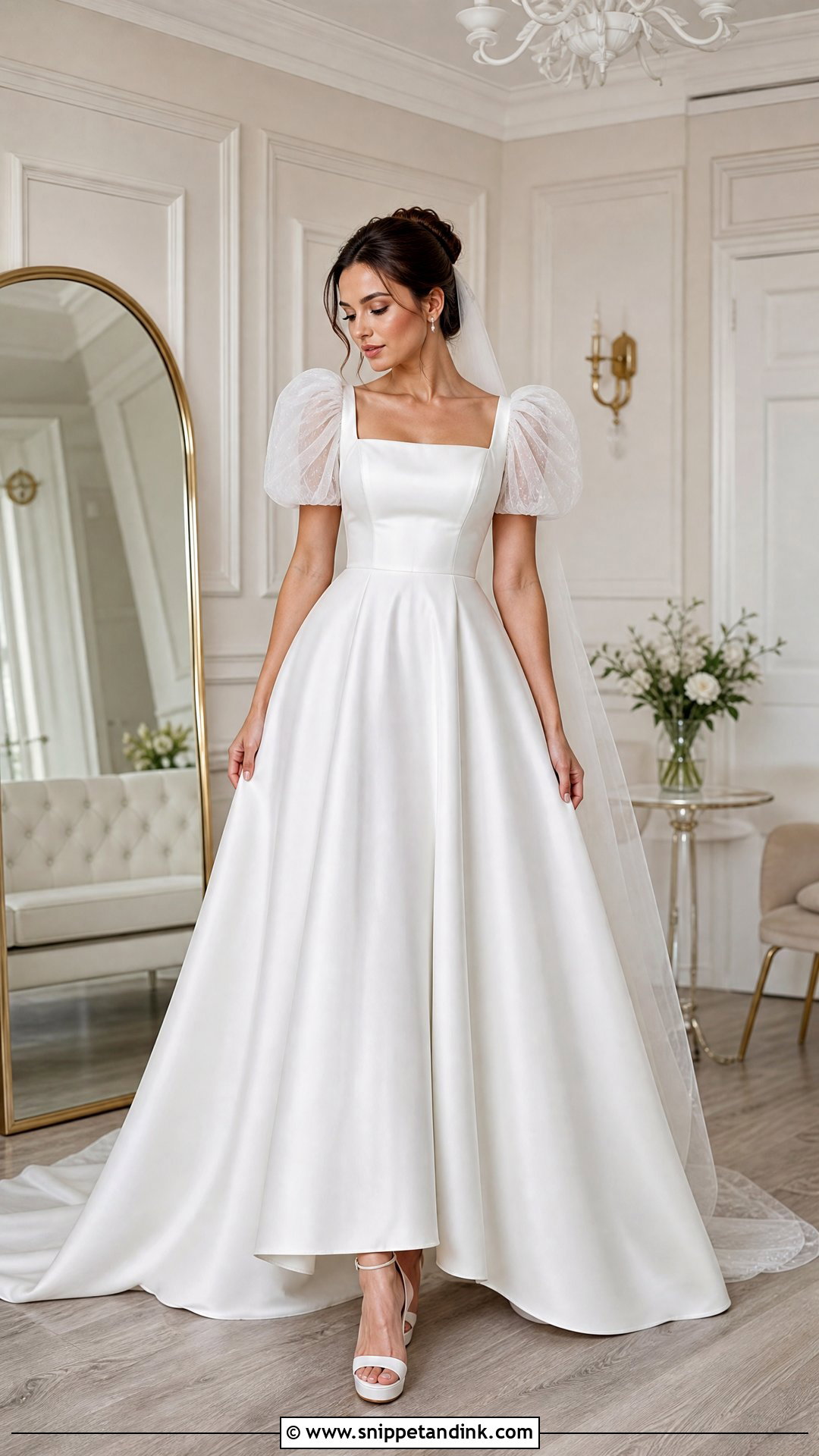
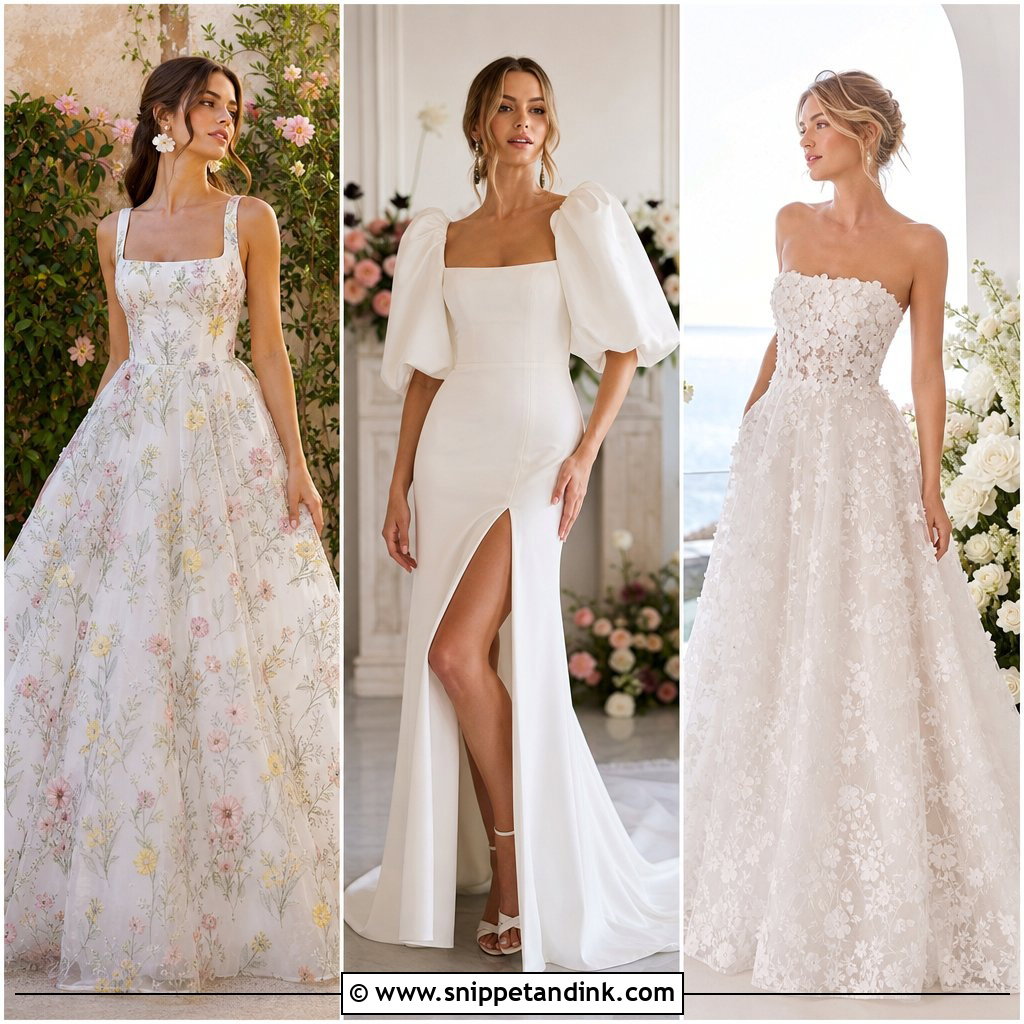
Puff sleeves put definition right at the shoulder. Small structured puffs read gently vintage, while oversized tulle is a much bigger statement. I balance them with a square neckline, a defined waist and an A-line skirt. Crisp organza puffs on satin feel modern; lace puffs are softer. Pearl studs, a polished updo, ivory block heels and a light veil below the bun keep the rest calm. The band underneath is what I test hardest. Elastic cut too tight leaves red marks on the upper arm that show in photos, and organza puffs can flatten in a garment bag, so they need a light steam on the morning.
6. Wedding Dress With Juliet Sleeves
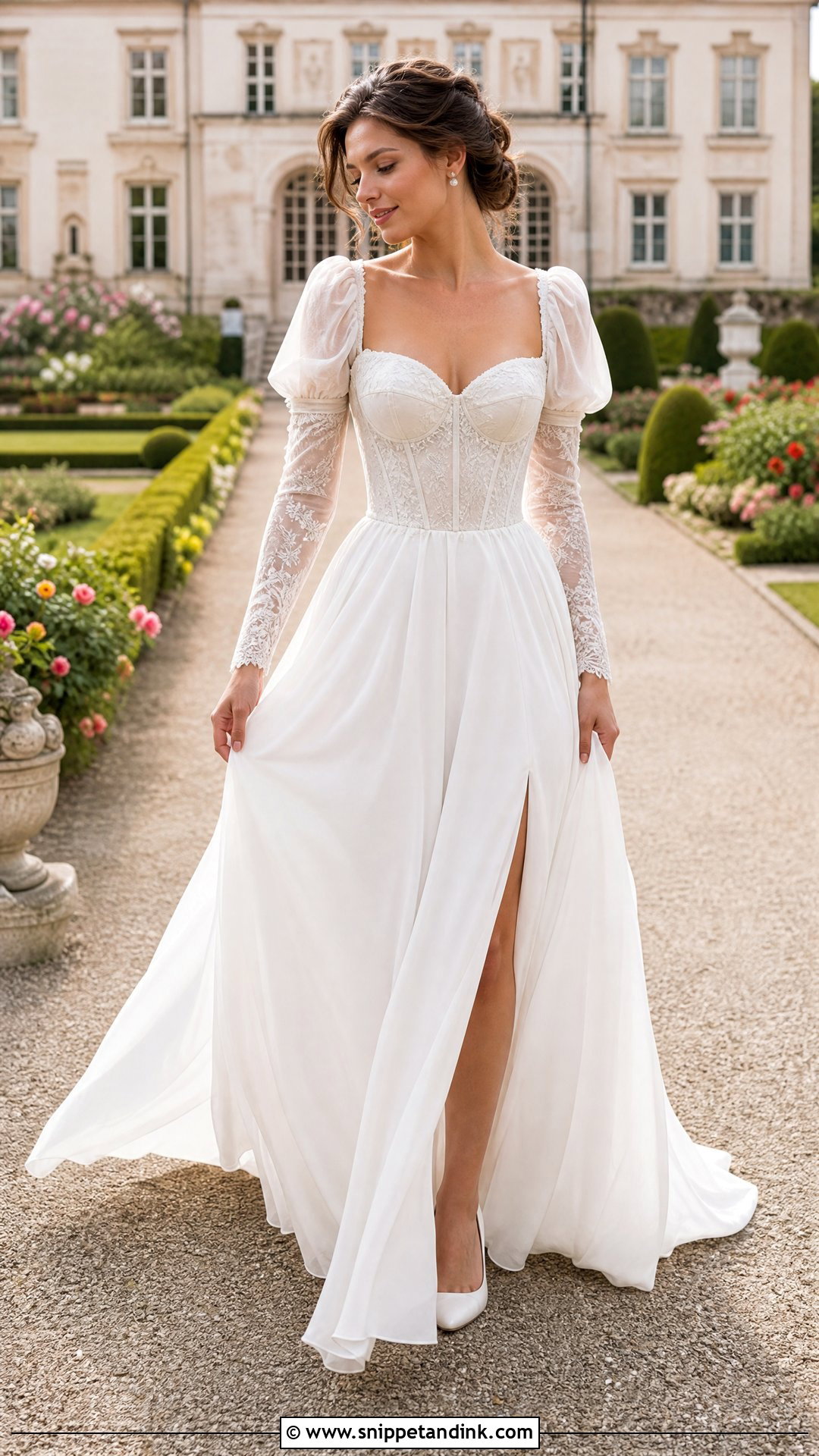
A Juliet sleeve pairs a rounded puff at the top of the arm with a fitted lower section to the wrist. The point where those two meet is the hardest part to tailor; if it lands above or below the natural bend of the arm, the sleeve looks borrowed. A corset-style bodice, soft scoop neckline and flowing skirt carry it well. Light lace or tulle keeps the puff delicate, and stretch crepe or lined lace gives a smoother lower sleeve. A ribbon-edged veil, pearl earrings, closed-toe pumps and softly pinned hair suit manor houses and formal gardens.
7. Wedding Dress With Bell Sleeves
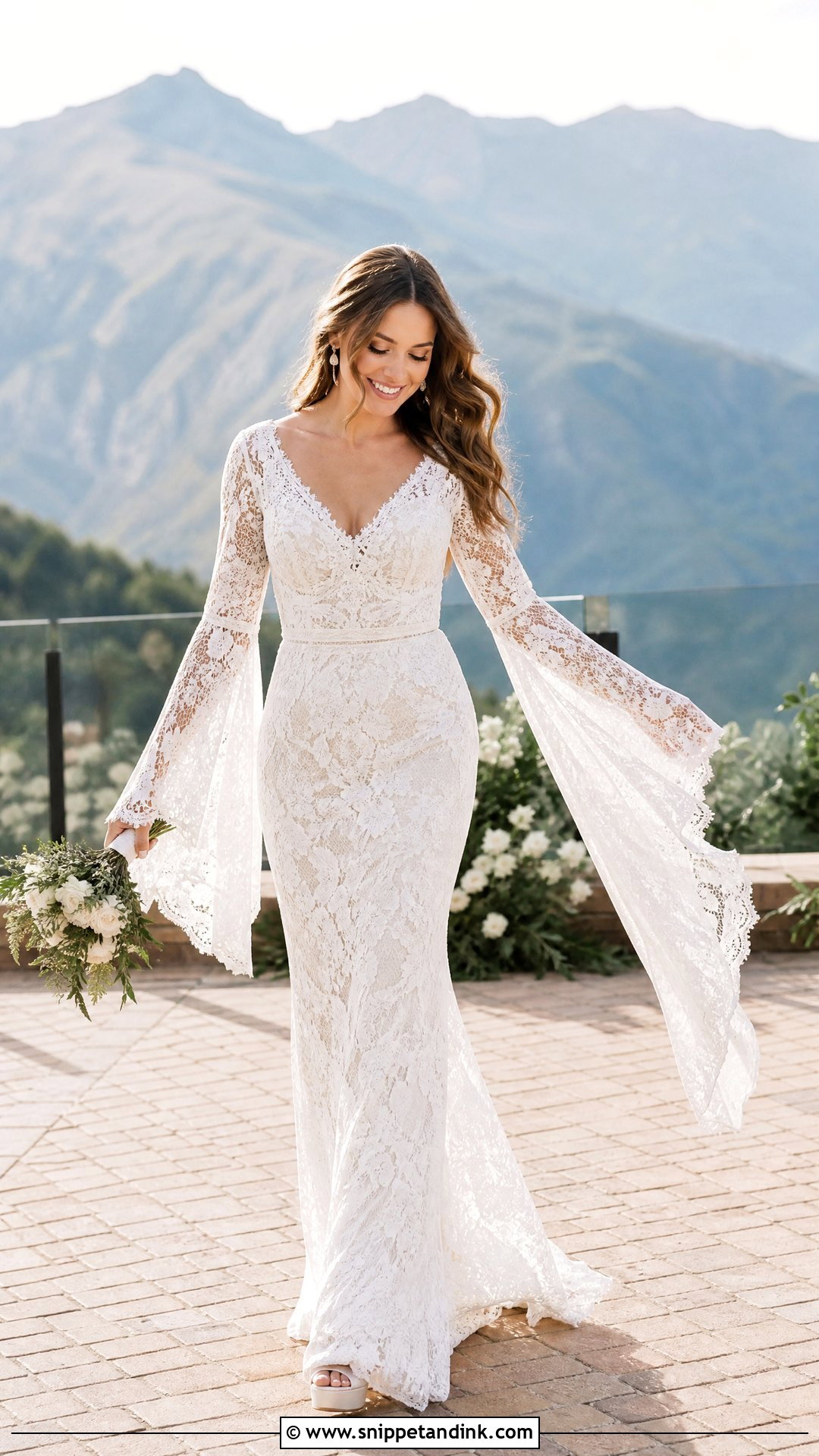
Bell sleeves are all about movement. Some flare from the shoulder; others stay fitted to the elbow before widening. Lace leans bohemian, and plain crepe looks cleaner. Pair dramatic bells with a sheath or softly fitted gown, otherwise the whole outfit turns into volume. Loose waves, small drops, platform heels and a simple bouquet finish it. Leave bracelets at home, since they disappear inside the flare or catch on it. I’d also check sleeve length with the bouquet in hand; a bell that covers the hands will drape over the stems. Coastal, mountain and other outdoor venues suit it.
8. Wedding Dress With Flutter Sleeves
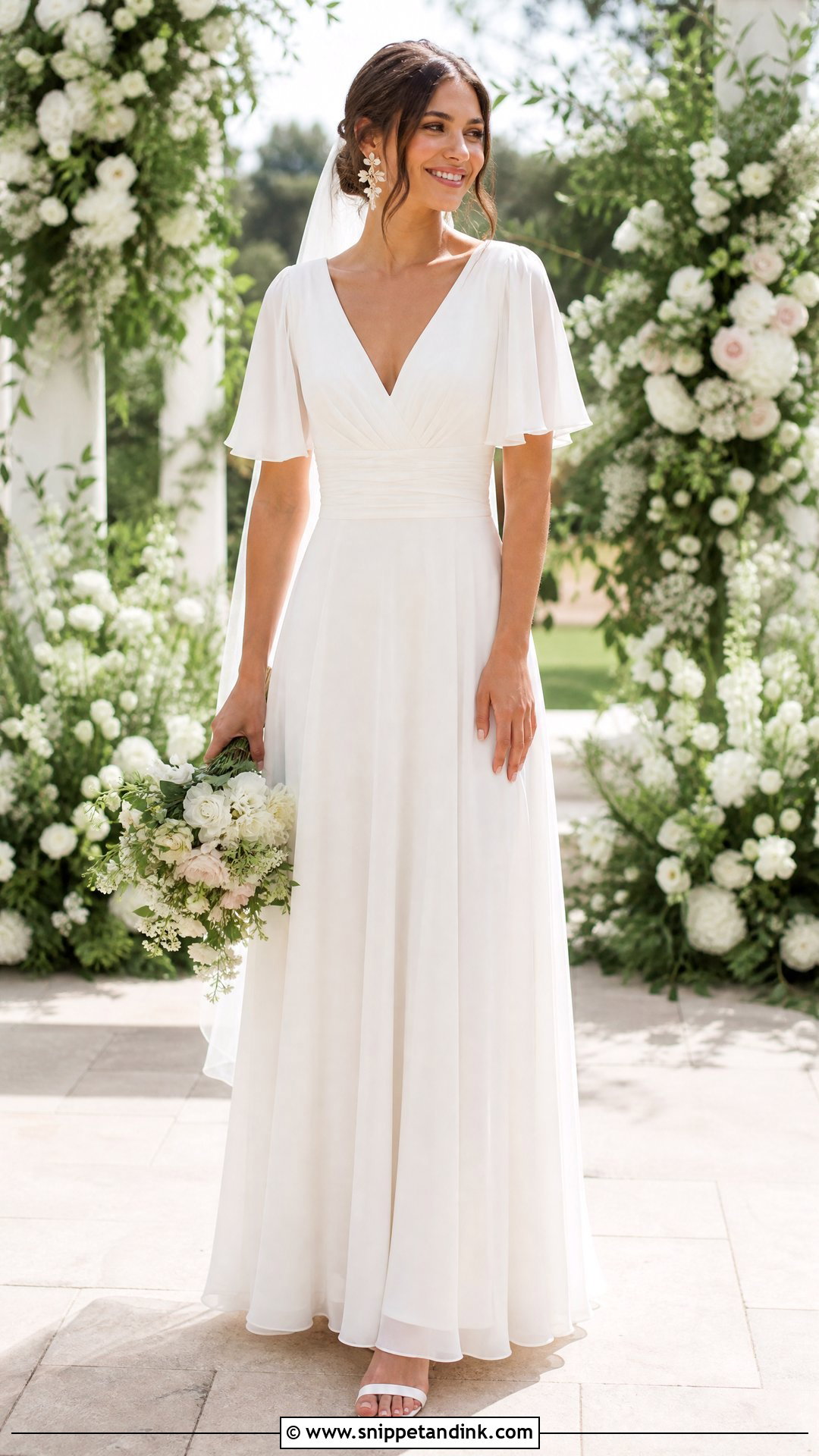
Flutter sleeves are loose panels of chiffon, tulle or fine lace that fall from the shoulder without hugging the arm. They give a little coverage and a lot of air, which makes them one of the most comfortable choices for summer. An empire waist, relaxed A-line or tea-length skirt keeps the same easy feel. Comfortable ivory sandals, floral earrings, a loose updo and a simple veil fit the mood, and a compact bouquet lets the sleeves show. Look at them from the side and back in the mirror. Panels that are too narrow or uneven can read as slipped straps rather than sleeves.
9. Wedding Dress With Cap Sleeves
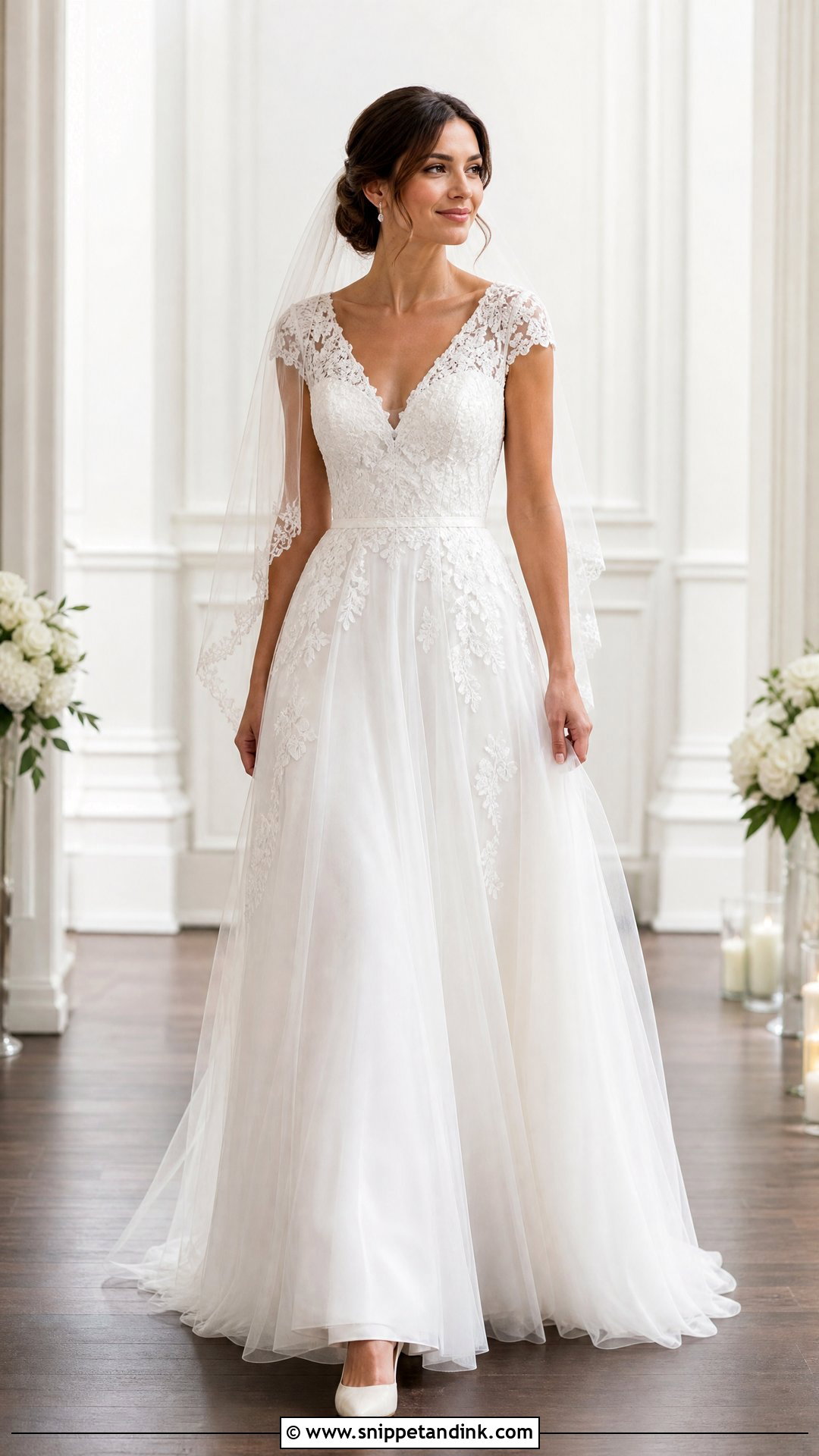
Cap sleeves sit just past the edge of the shoulder: more structure than straps, less coverage than a short sleeve. I like lace caps with a V-neck and a chiffon or tulle skirt, or smooth satin caps on a structured A-line. Delicate earrings, a fingertip veil, low ivory heels and a polished chignon complete it. The edge must lie flat on the shoulder. When it lifts or pinches, the armhole is usually the culprit, and a small adjustment there improves comfort and range of movement far more than people expect.
10. Wedding Dress With Short Sleeves
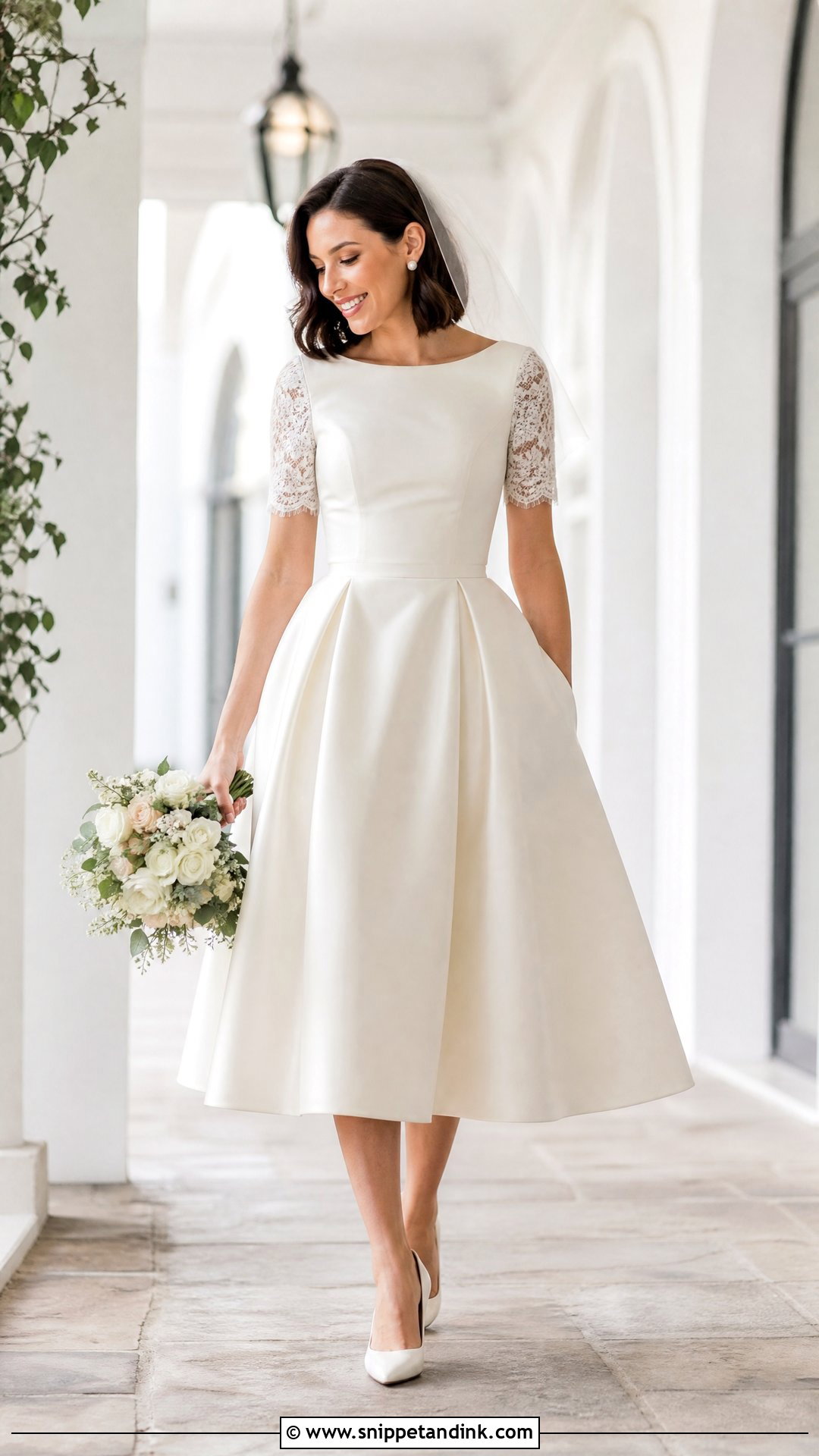
Short sleeves land around the middle of the upper arm and look fresh at both relaxed and traditional weddings. They can be fitted, softly gathered or lace. Fitted short sleeves with a tea-length skirt and classic pumps suit a daytime ceremony, while lace sleeves on a full A-line with pearls and a long veil read more formal. A structured handbag is useful for portraits and should be set down for the ceremony. The hem of a short sleeve tends to cut in when you hug, so I ask for a little ease there. Short sleeves also pair naturally with a removable overskirt or a decorative belt.
11. Wedding Dress With Three-Quarter Sleeves
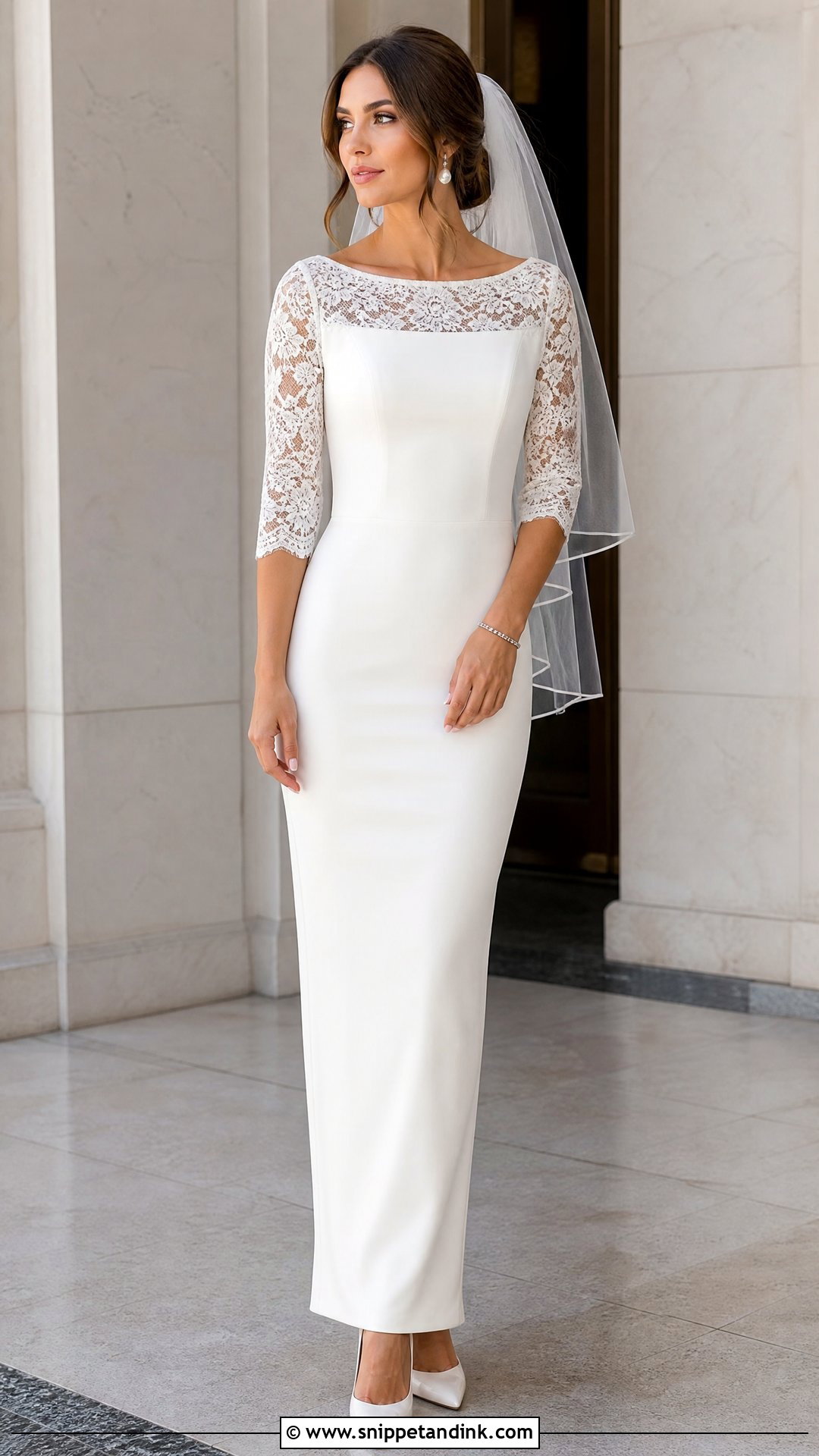
Three-quarter sleeves stop between elbow and wrist, giving real coverage while leaving the hands and lower arms free. I think they look most balanced on a tailored sheath, tea-length dress or classic A-line. Stretch lace moves easily; smooth crepe looks streamlined. A bateau neckline and defined waist keep the outfit polished. Pearl earrings, pointed pumps, a shoulder-length veil and a slim bracelet suit it, and the bracelet will actually be seen. Bend your arms repeatedly at the try-on. Fabric that bunches at the elbow or pulls across the upper back means the sleeve is cut too slim.
12. Wedding Dress With Off-the-Shoulder Sleeves
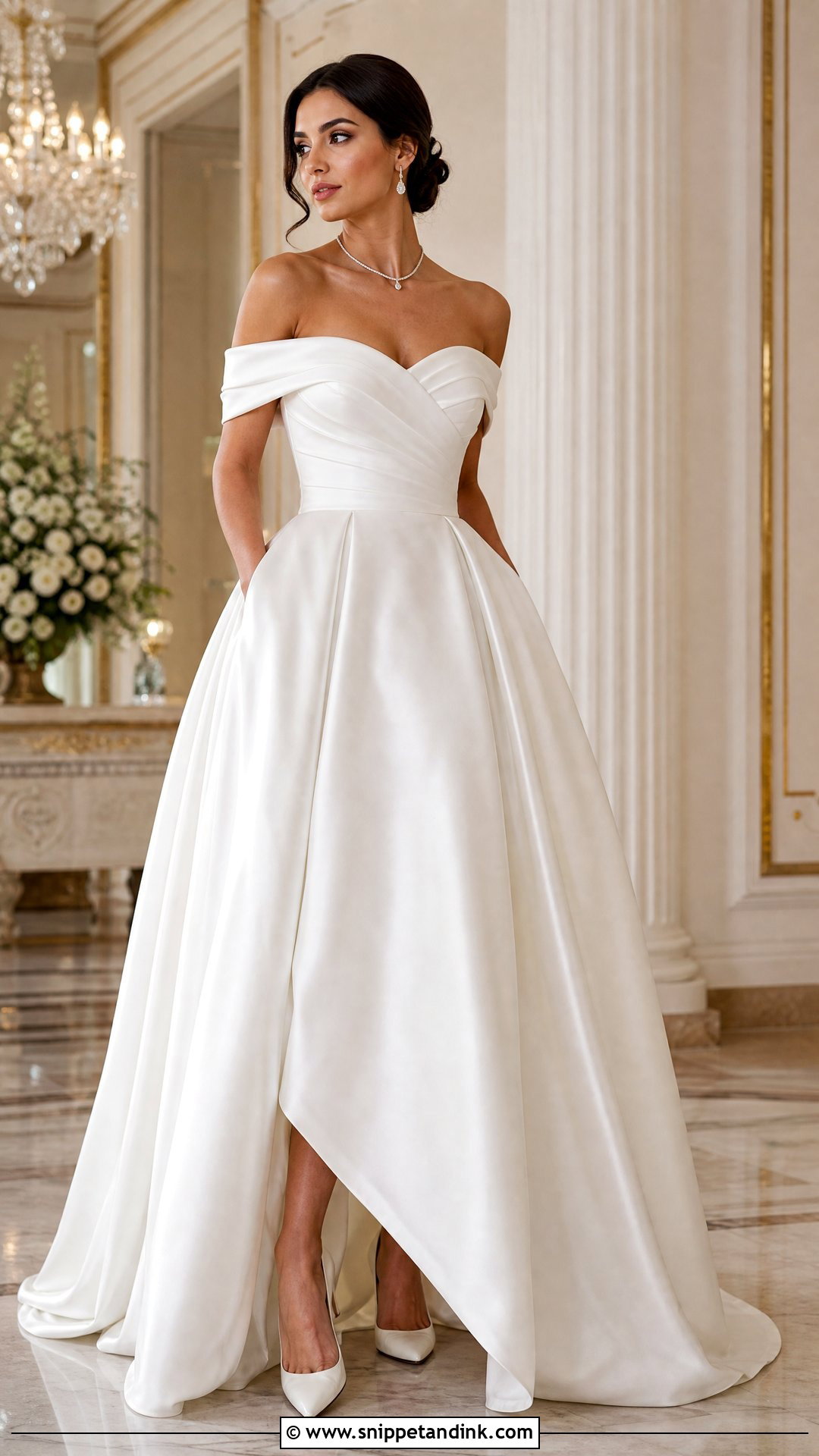
Off-the-shoulder sleeves frame the collarbone and wrap the upper arms. They can be fitted, draped, pleated or lace. A structured ball gown makes them formal, and fitted crepe makes them modern. A collarbone-length necklace, drop earrings, a low bun and pointed ivory heels suit the neckline, with the veil set below the hair so it doesn’t crowd the shoulders. This is the sleeve that restricts arm movement most. Practise lifting your arms, holding the bouquet and hugging before approving alterations. If it feels tight, a stretch back or detachable bands can keep the effect with more freedom.
13. Wedding Dress With Detachable Sleeves
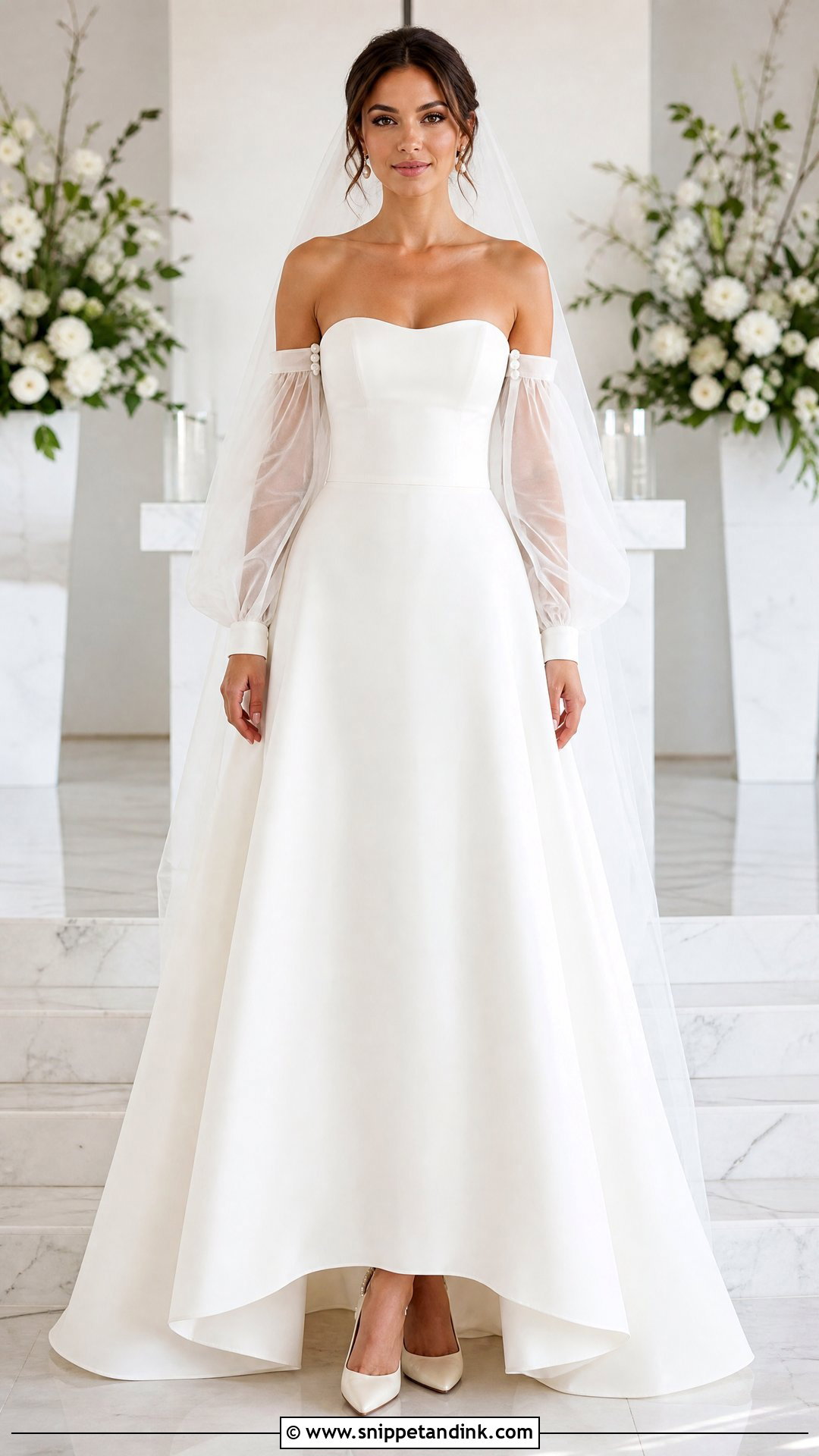
Detachable sleeves give you two looks from one dress: sleeves for the ceremony, bare arms for dancing. Fitted lace, off-shoulder bands, puffs and airy tulle versions all exist. The underlying gown should be a simple strapless or sleeveless style that looks finished without them. A long veil, pearl earrings and formal heels for the ceremony, then statement earrings and embellished flats later. I’d check that snaps or loops stay invisible and secure through movement. Have the person helping you practise taking them off and storing them flat, because lace sleeves stuffed into a bag come out creased.
14. Wedding Dress With Draped Sleeves
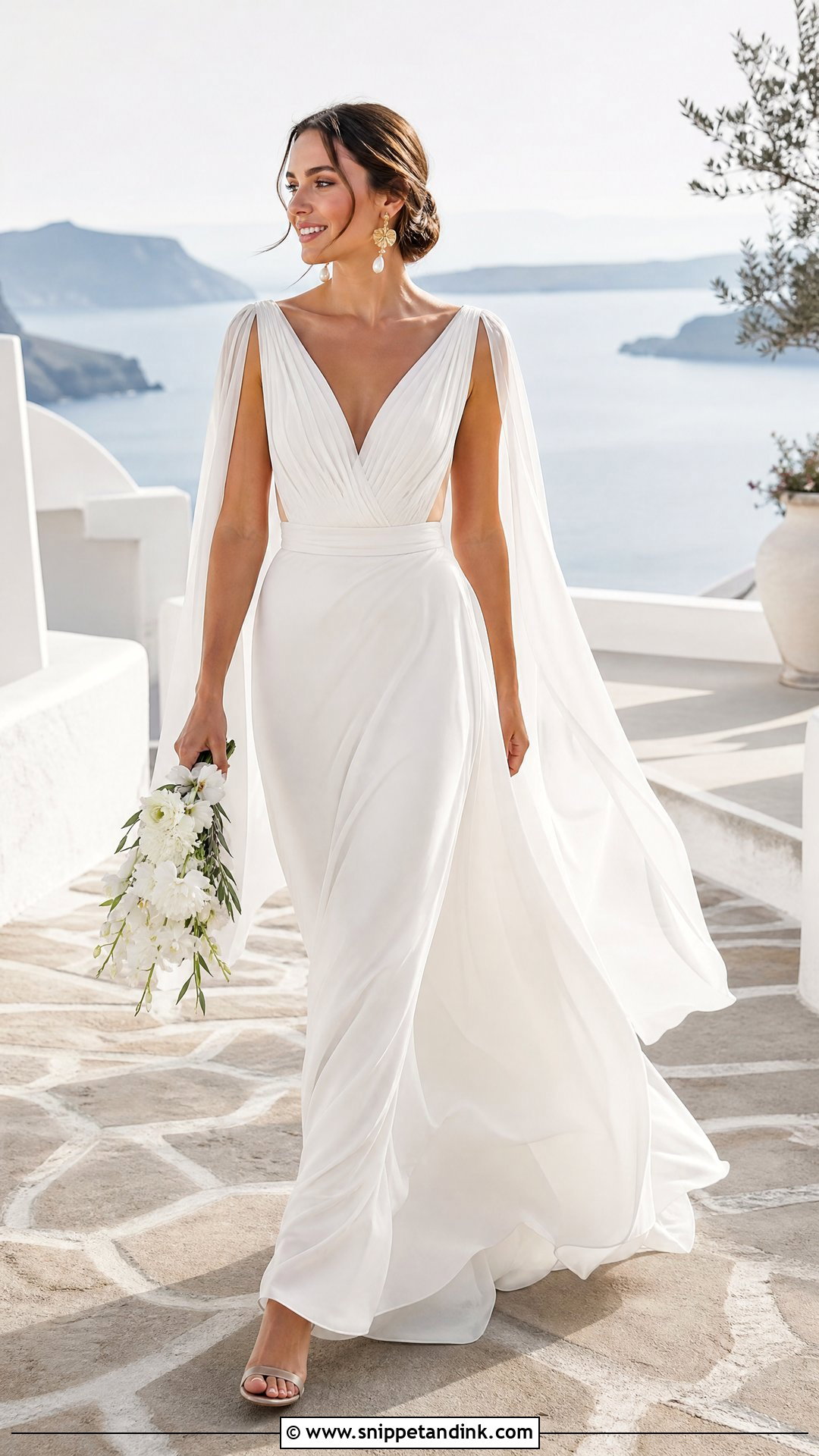
Draped sleeves fall loosely from the neckline or upper arm, more relaxed than tailored. They go naturally with a cowl neck, off-shoulder bodice or Grecian-style gown. Chiffon and soft crepe follow the body without stiffness. Delicate metallic earrings, swept-back hair, understated heels and a narrow bouquet are plenty; a detailed necklace would interrupt the drape. Drapes shift when you move, so I have brides walk, sit and dance at the fitting rather than standing still for pins. A discreet tack or two inside usually keeps the folds where they belong. Rooftop and coastal ceremonies suit the ease of it.


15. Wedding Dress With Cape Sleeves
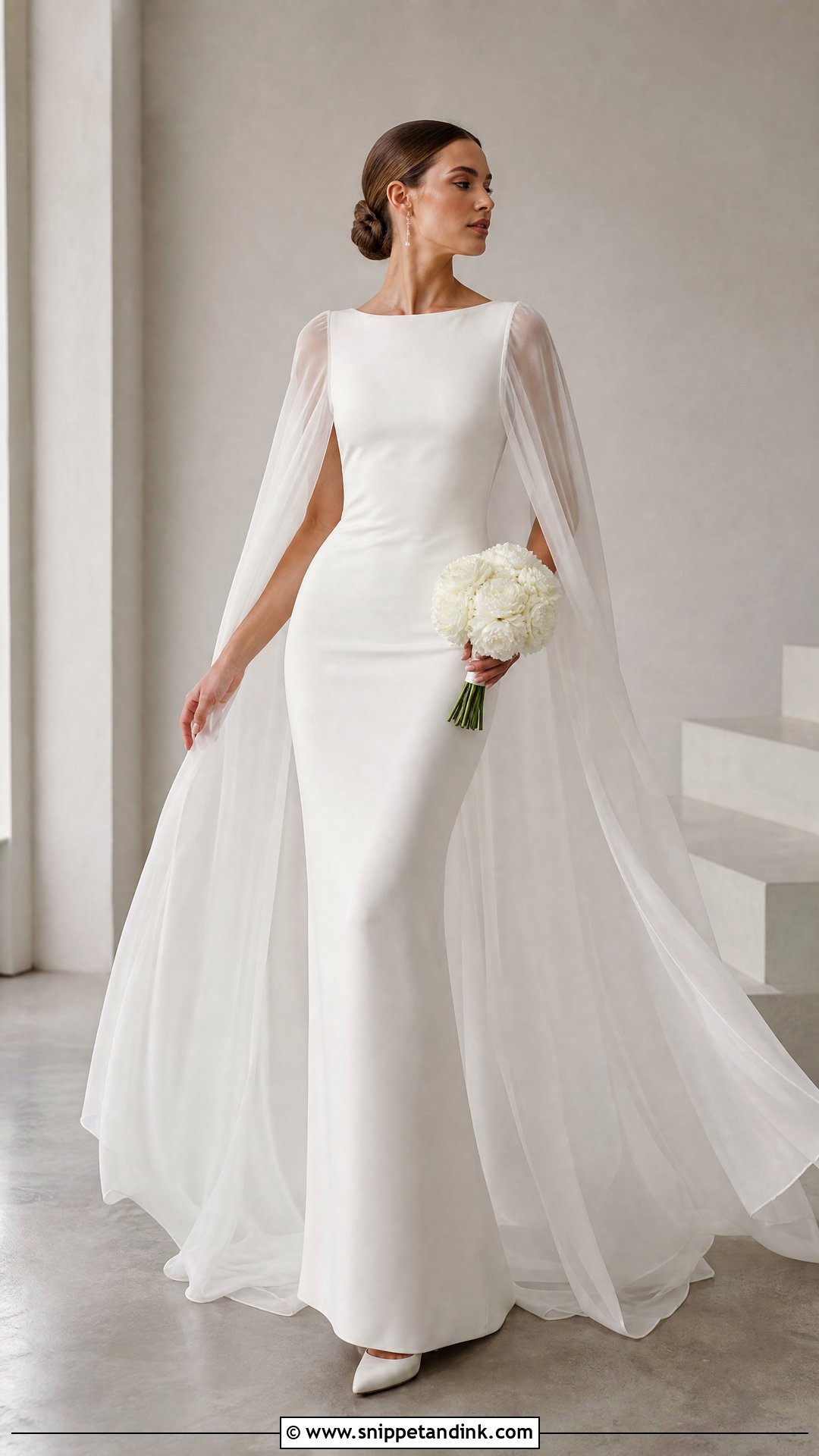
Cape sleeves are flowing panels from the shoulder, neckline or back, short and airy or long enough to act as a built-in cape. A sheer cape on a fitted sheath is balanced; structured satin panels on a minimalist A-line are bolder. The cape supplies all the movement, so keep accessories simple: sleek earrings, a smooth bun, classic pumps and a compact bouquet. A veil often isn’t needed, though a small comb adds a bridal touch. Check where the panels are attached and how long they are; a cape that’s too long catches under your arms, your heels or the back of a chair.
16. Wedding Dress With Poet Sleeves
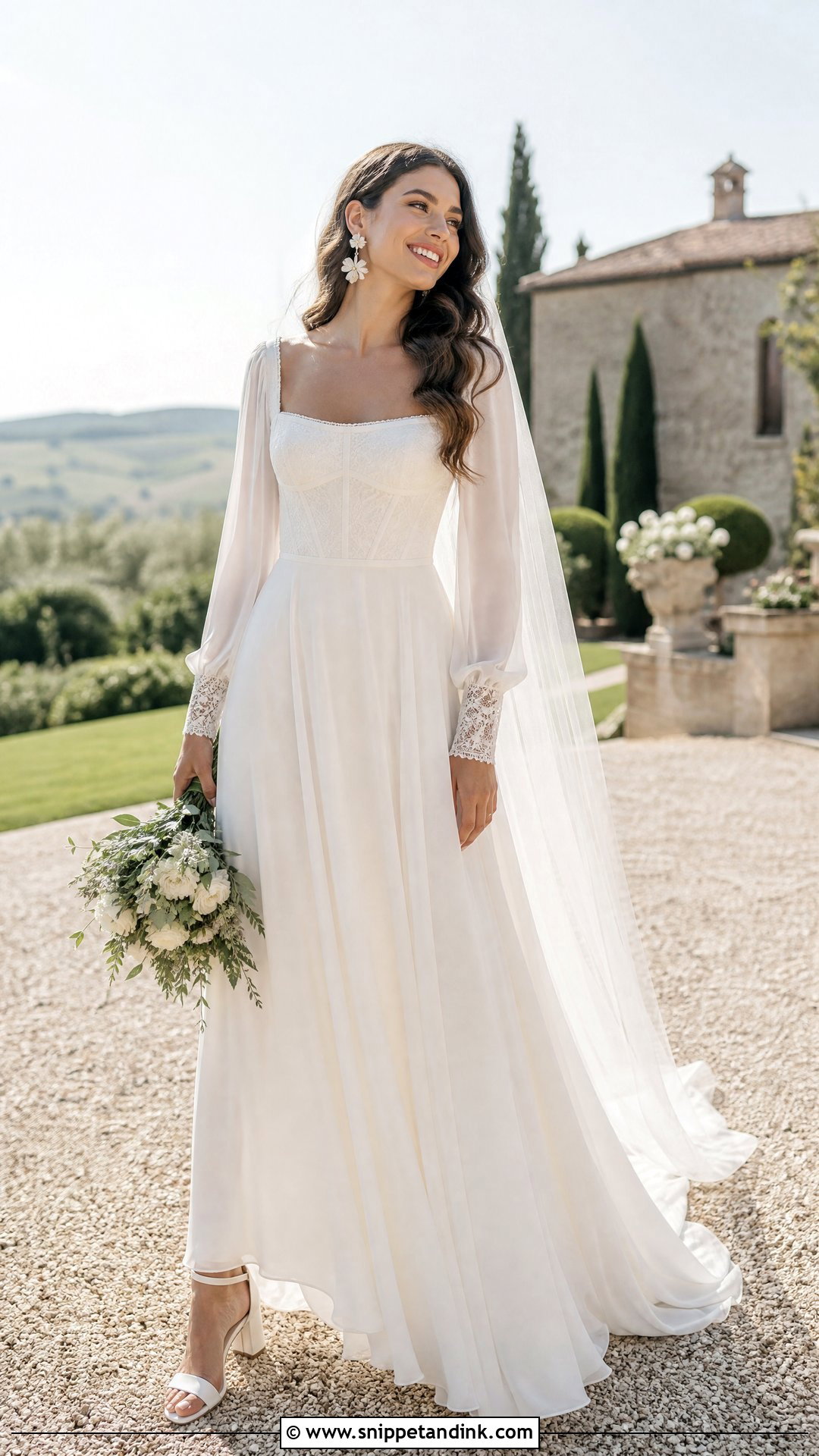
Poet sleeves are looser and softer than bishops, with generous fabric and a flowing gathered cuff. A fitted lace bodice and fluid chiffon skirt continue the movement, and a square or modest V-neck stops the dress feeling too covered. Loose waves, small floral earrings, block heels and a fingertip veil suit it. Practically, those cuffs travel. I warn brides about candles on the head table, sauces at dinner and pollen from the centerpieces, since a full cuff will drift into all three. Light fabrics fall naturally around the arm and look better in photos than stiff ones.
17. Wedding Dress With Petal Sleeves
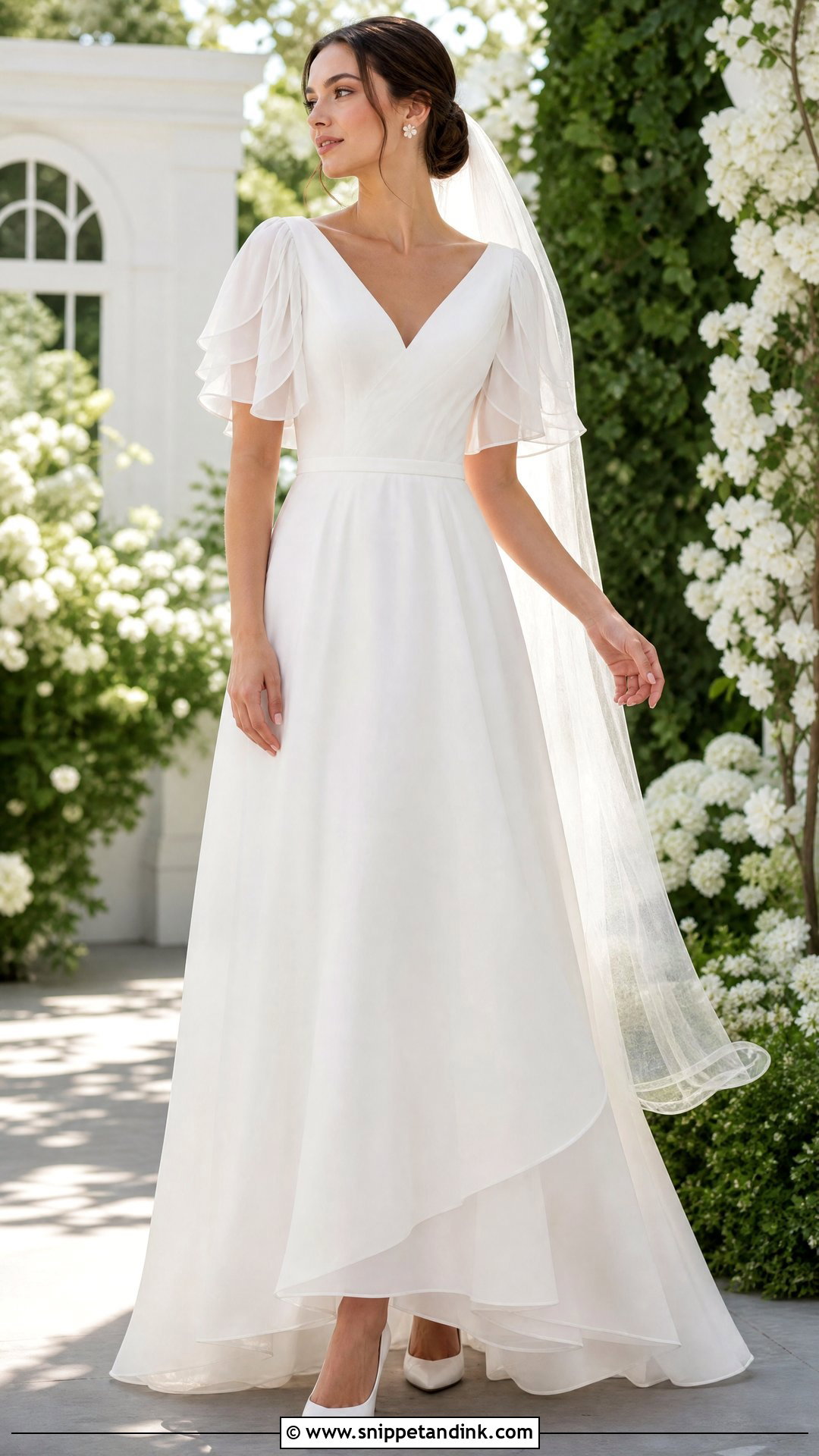
Petal sleeves are built from overlapping pieces that look like flower petals, more interesting than a plain cap but still light. A fitted bodice, natural waist and softly layered A-line suit them. Satin petals look architectural; lace-edged chiffon looks romantic. Floral studs, a neat low bun, ivory pumps and a light tulle veil are enough, and big shoulder jewelry would compete. At the fitting I check both sleeves sit at the same angle, because petals are often set by hand and one can sit higher than the other. Lift your arms and hold the bouquet to see that they stay smooth.
18. Wedding Dress With Angel Sleeves
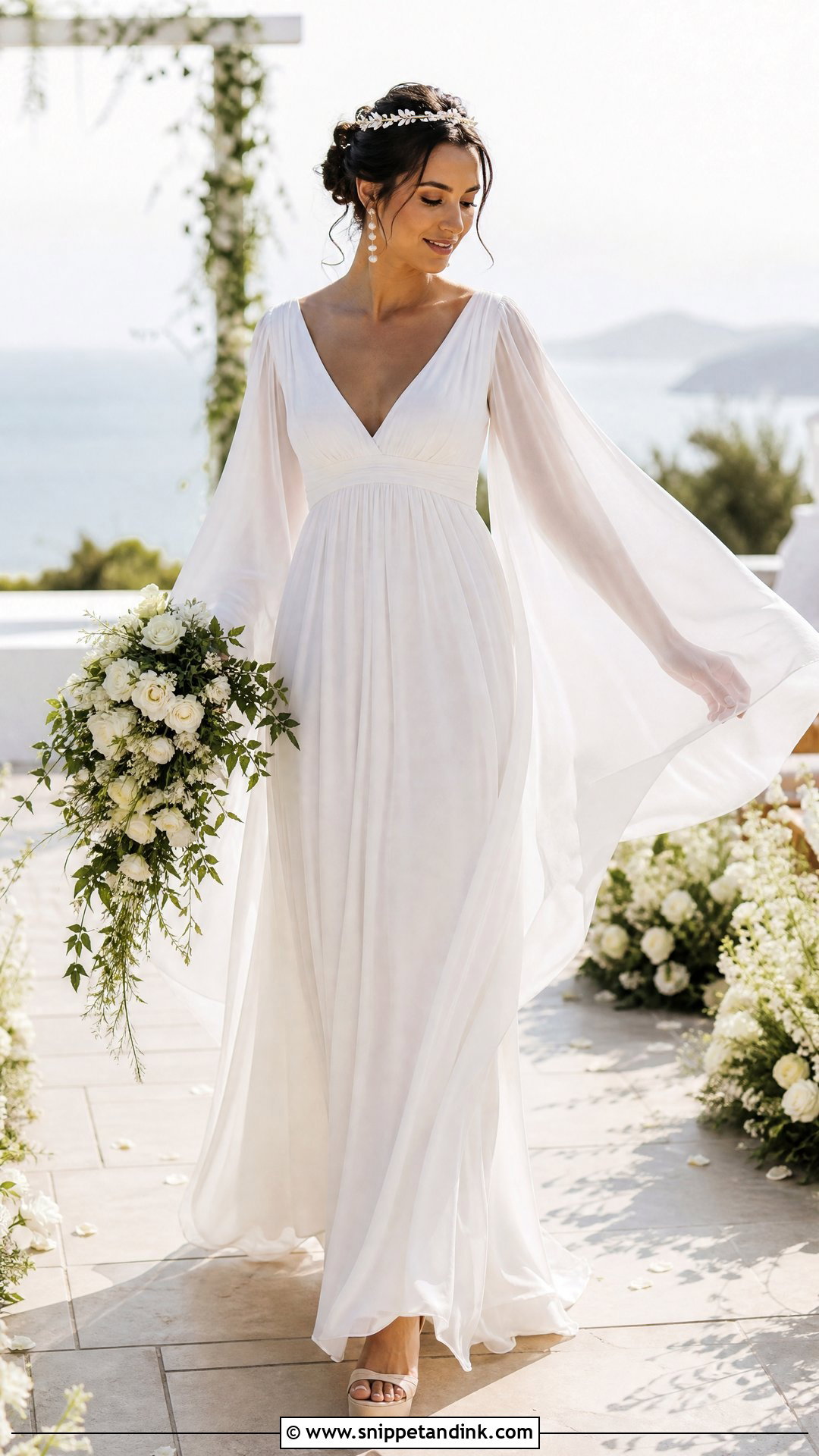
Angel sleeves fall wide from the shoulder like soft wings. Chiffon, lace or fine tulle gives drama without anything fitted around the arm. A simple column, empire waist or softly structured A-line keeps the flowing fabric from taking over. A delicate headpiece, drop earrings, platform sandals and a small cascading bouquet suit them. Skip an extra-wide veil, which tangles with the sleeves. If your ceremony is outdoors, test the gown outside, because light panels lift in wind. The sleeve length should also clear the floor and your shoes when your arms hang straight.
19. Wedding Dress With Elbow-Length Sleeves
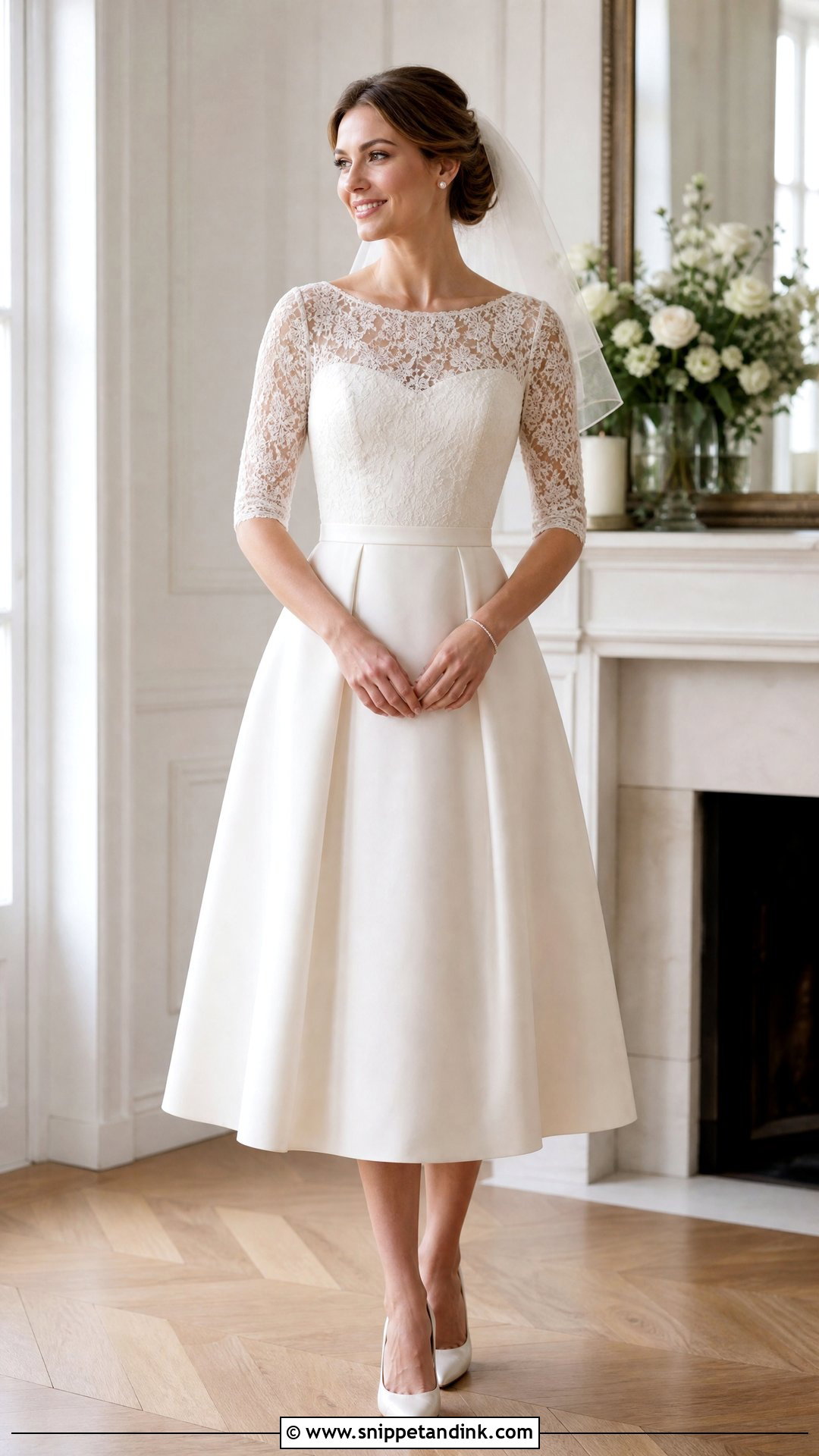
Elbow-length sleeves sit between short and three-quarter, covering the upper arm and leaving forearms free for jewelry and easy movement. They pair well with a tea-length dress, a tailored midi or a traditional A-line. Smooth satin is clean; floral lace adds texture. A slim bracelet, pearl studs, closed-toe pumps and a birdcage or shoulder-length veil finish it. The hem should end just above or below the elbow, never across the joint, where it will cut in every time you bend. Courthouse, daytime and restaurant weddings suit it.
20. Wedding Dress With Fitted Satin Sleeves
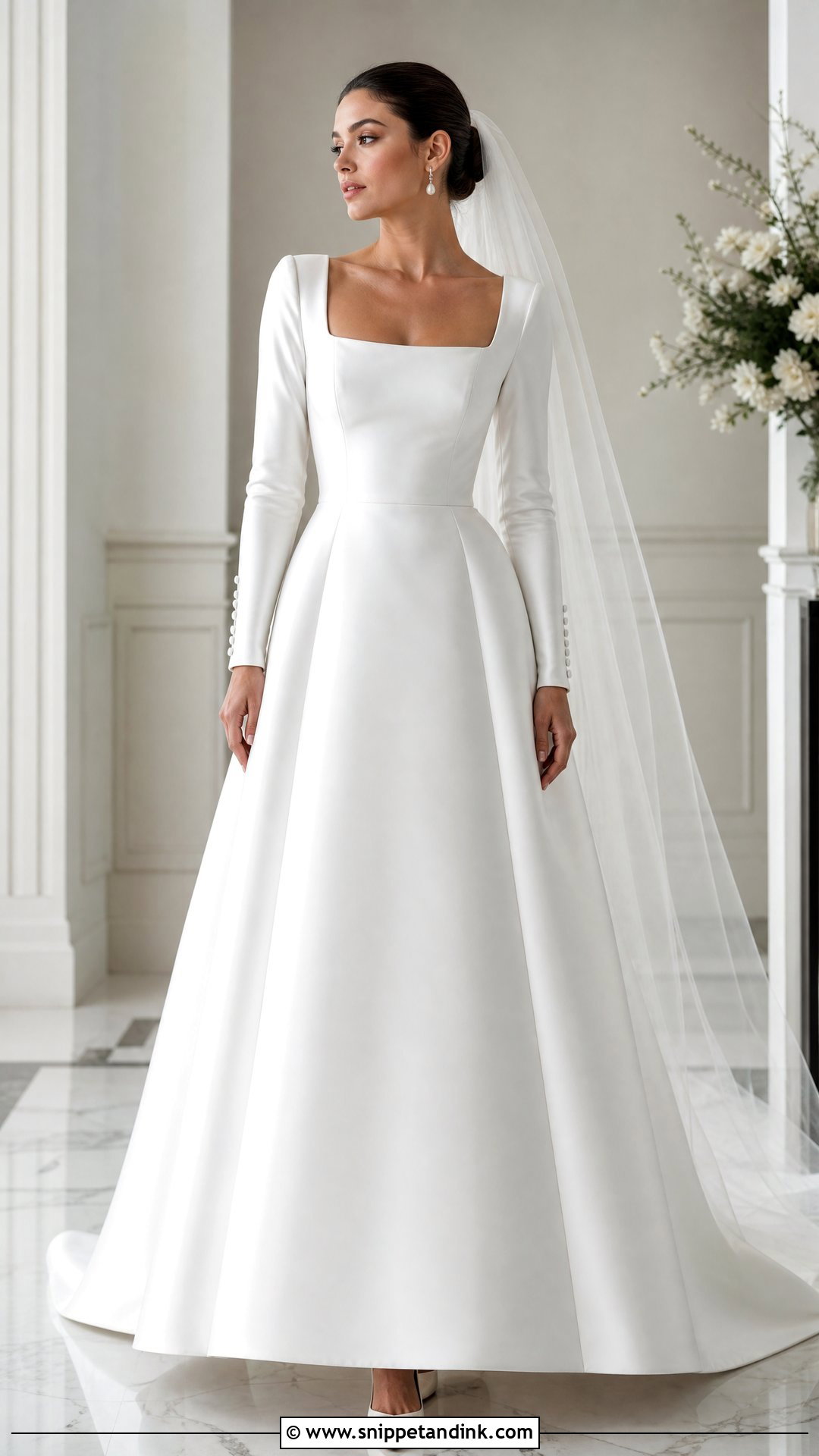
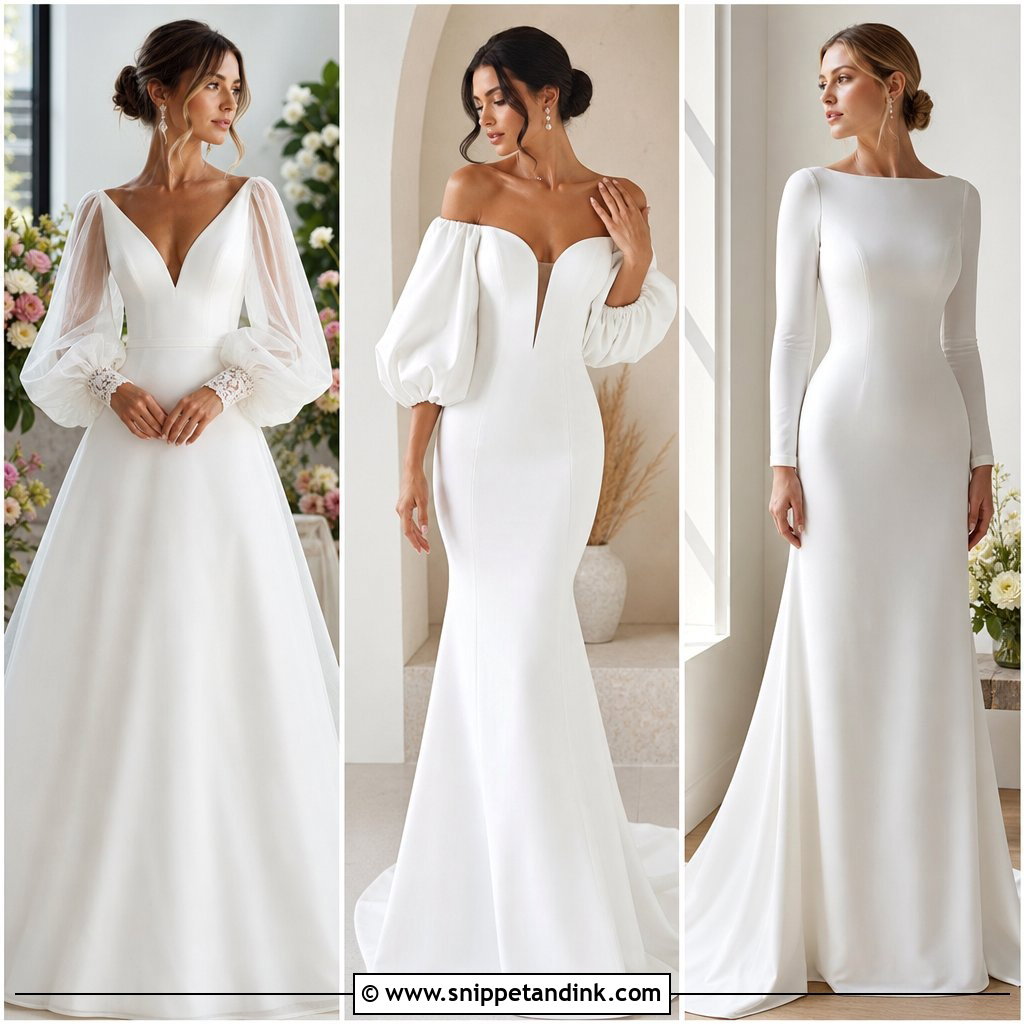
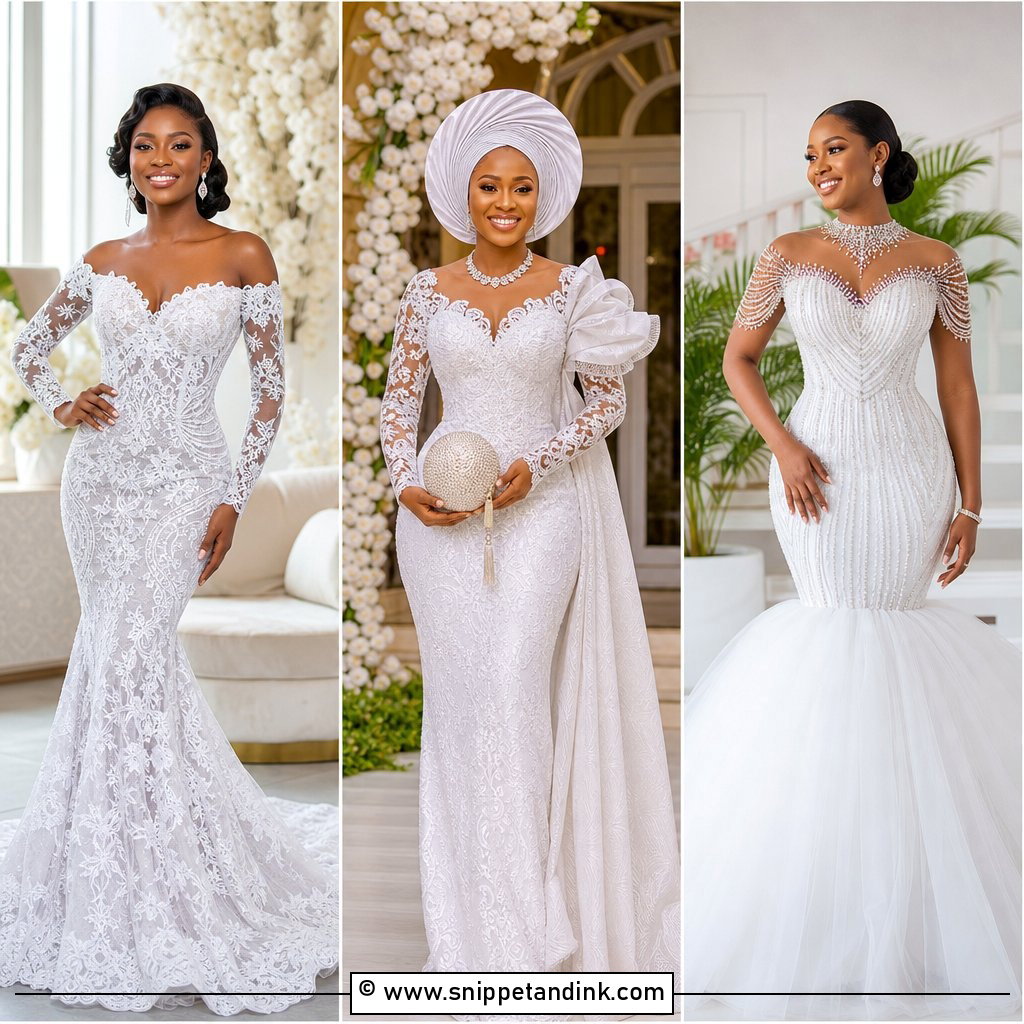
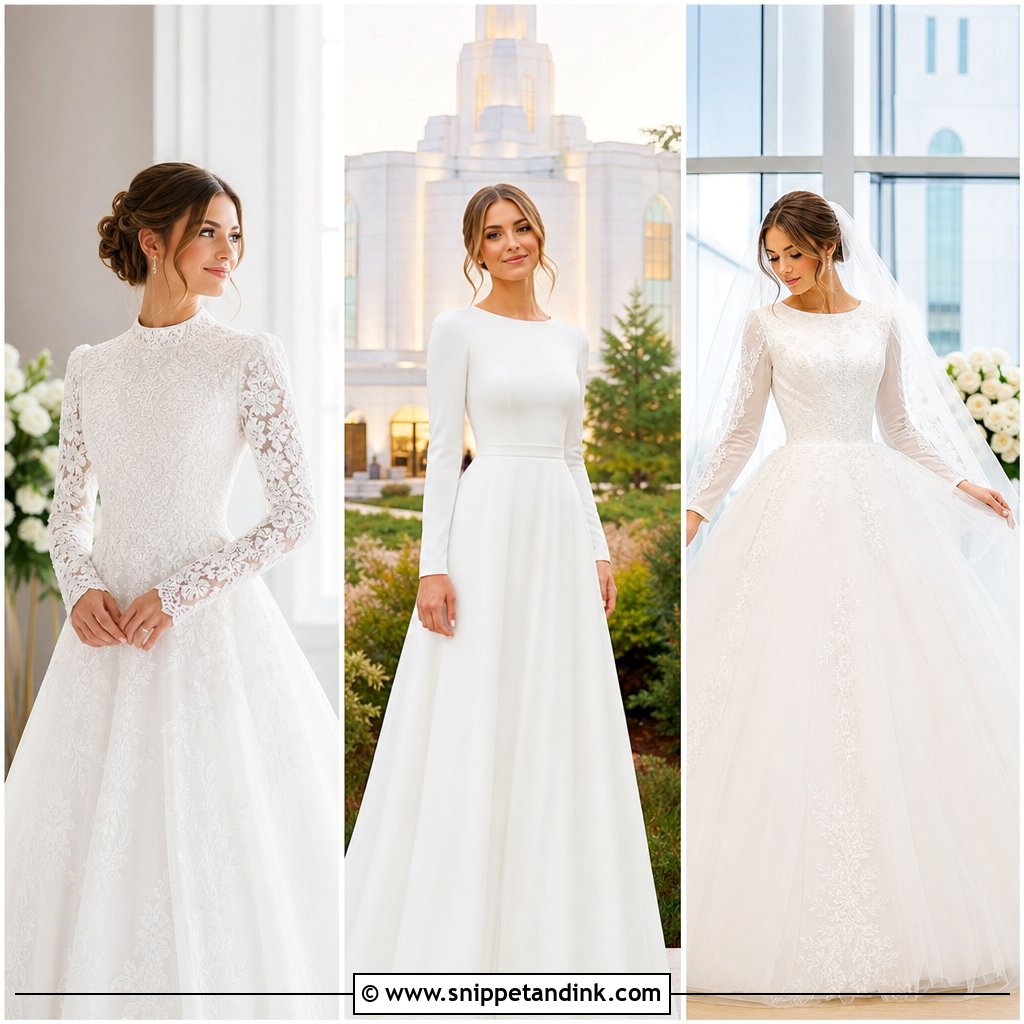
Fitted satin sleeves are the most formal, and the least forgiving. Satin has almost no give, so the sleeve must be cut with room through the upper arm and a precise underarm, or you’ll feel it the moment you reach for anything. The sleeve should match the bodice fabric for one clean line from shoulder to wrist. Bateau, square or high necklines suit it, with a structured A-line or column. Covered buttons at the cuff add detail. A sleek bun, pearl drops, pointed pumps and a long plain veil complete the look. A small gusset or a touch of stretch in the lining makes a big difference by the dancing.
Can a Seamstress Put Sleeves on the Gown You Already Love?
Often, yes. Plenty of brides fall for a strapless or sleeveless gown and then want sleeves, either for coverage at a religious ceremony or simply because they like the look. A skilled bridal seamstress can usually add them, but how well it works depends on the dress.
What makes it easier
- A gown with lace or tulle already in it. Matching material can often be ordered from the designer or sourced close enough to blend.
- A detachable design. Sleeves on a separate band or with hidden snaps avoid cutting into the bodice at all.
- Sheer or illusion styles, which are more forgiving if the ivory is a fraction off.
What makes it harder
Plain satin or crepe is tricky because a mismatch in shade or sheen is obvious. Heavily beaded bodices can make attaching at the armhole difficult. And a strapless bodice built to support itself may need restructuring once sleeves pull on it.
Raise the idea as early as possible. Adding sleeves takes extra fittings and costs more than standard alterations, with prices varying widely by seamstress and detail. Bring photos of the sleeve you want and ask to see a sample of the fabric against your gown in daylight.
Lift Your Arms Before You Say Yes to Any Sleeve
The right sleeve fits your style, your comfort and your venue. Long lace and illusion sleeves give refined coverage, while flutter, petal and cap sleeves feel lighter. Bishop, balloon, angel and bell sleeves bring movement; fitted satin and three-quarter sleeves look tailored. At every appointment, take photos from all sides and test each sleeve sitting, walking, hugging and reaching up. Ask whether the sleeves can be altered or made detachable. Skip restrictive body-type rules and go with the sleeve you forget you’re wearing by the reception.
You'll Like These Ideas:





Leave a Reply