
Cape sleeves fall from the shoulder like a short cloak instead of wrapping the arm, so they give coverage without the closed-in feel of a fitted sleeve. That single difference changes how a dress moves: the panels lift as you walk, swing when you turn and settle behind you when you stop. You will find them in airy chiffon, lace, sculptural satin, pearls and three-dimensional florals, and many come off. The fabric and length decide whether a cape suits a ballroom, a beach or a courthouse, and chosen carefully they can also rebalance your proportions. The twenty gowns below run from minimalist sheaths to full ball gowns, each with notes from the fitting room.
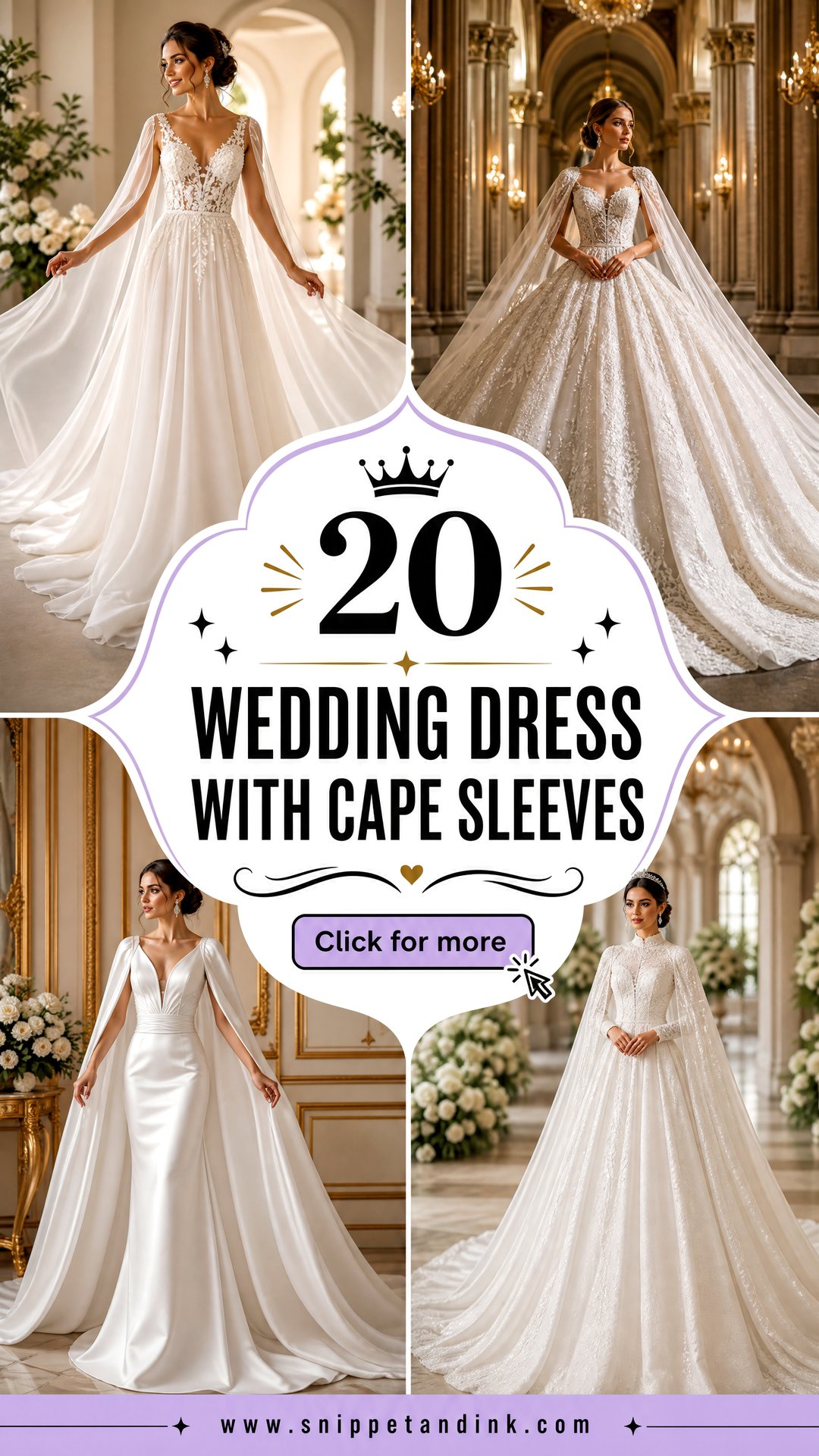
Where a Cape Sleeve Joins the Dress Changes How You Move
Cape sleeves are attached in one of three ways: along the shoulder seam, around the armhole like a loose sleeve with an open side, or on the upper arm below an off-shoulder neckline. Shoulder-attached capes swing freely and leave your arms completely free. Armhole capes stay put better but rise when you lift your arms. Upper-arm capes look delicate and make it hard to reach above chest height.
Before you commit, run through a short routine in the fitting room. It takes five minutes and shows you the dress as you will actually live in it.
- Hold something bouquet-sized at your waist for a full minute and watch whether the panels fall over the flowers.
- Hug someone, then lift a glass to shoulder height.
- Sit down and check whether you are sitting on the back of the cape.
- Walk briskly and turn quickly, the way you will when leaving the ceremony.
If the cape pulls the neckline backward during any of these, ask about a hidden loop at the wrist or a small weight in the hem to steady it.
1. A-Line Wedding Dress With Chiffon Cape Sleeves
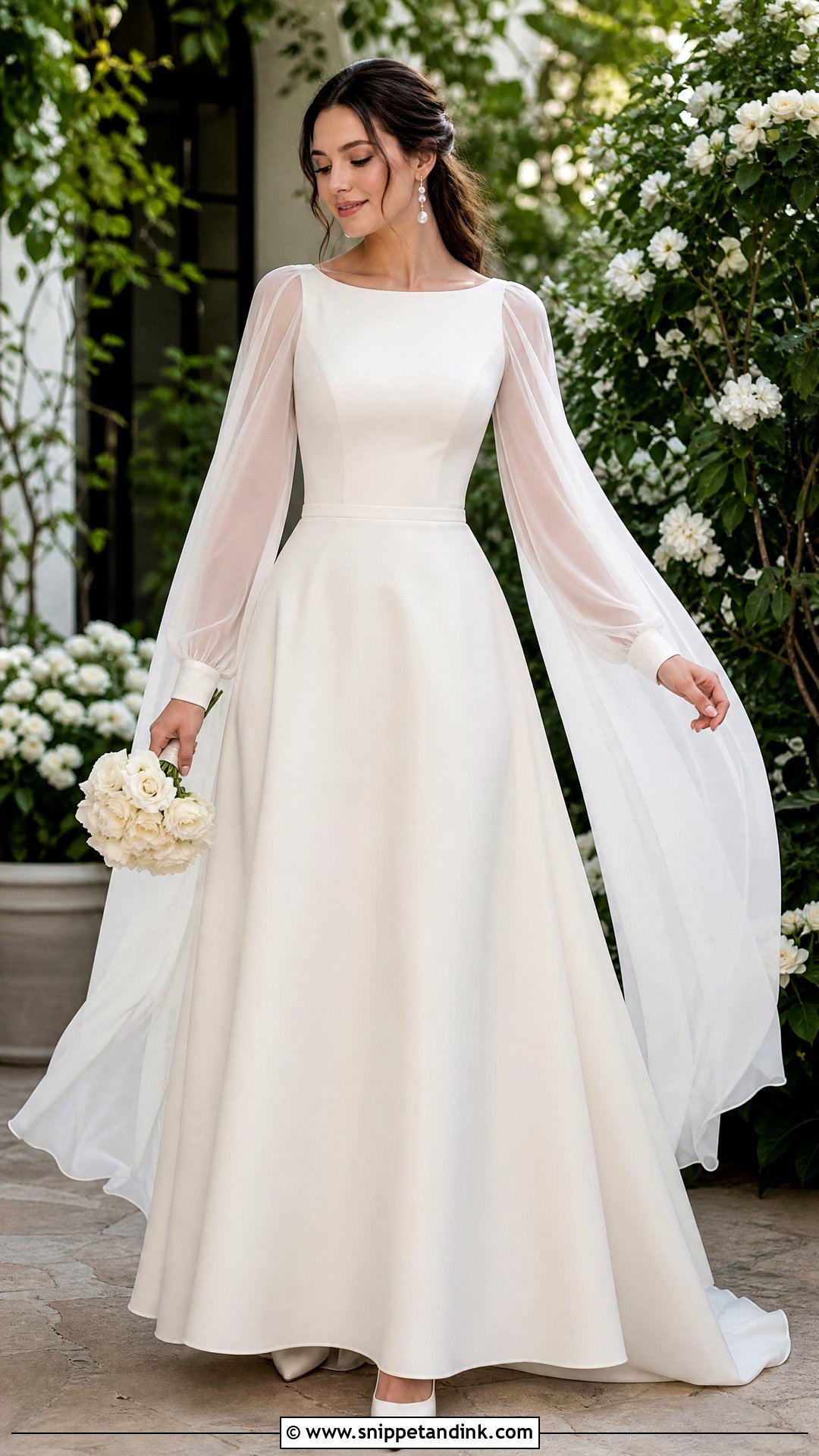
Chiffon is the easiest cape fabric to wear. It is light enough to float and soft enough not to stand away from the shoulder. On an A-line, sleeves falling to the elbow or wrist add movement without bulk. I prefer a sweetheart or gentle V-neckline underneath, which keeps the chest open so the chiffon does not crowd the face. A low bun shows where the sleeves join the bodice, and that join should be neat enough to photograph up close. Pearl drops and a small bouquet of white roses or seasonal greenery are all it needs.
2. Ball Gown Wedding Dress With Cathedral Cape Sleeves
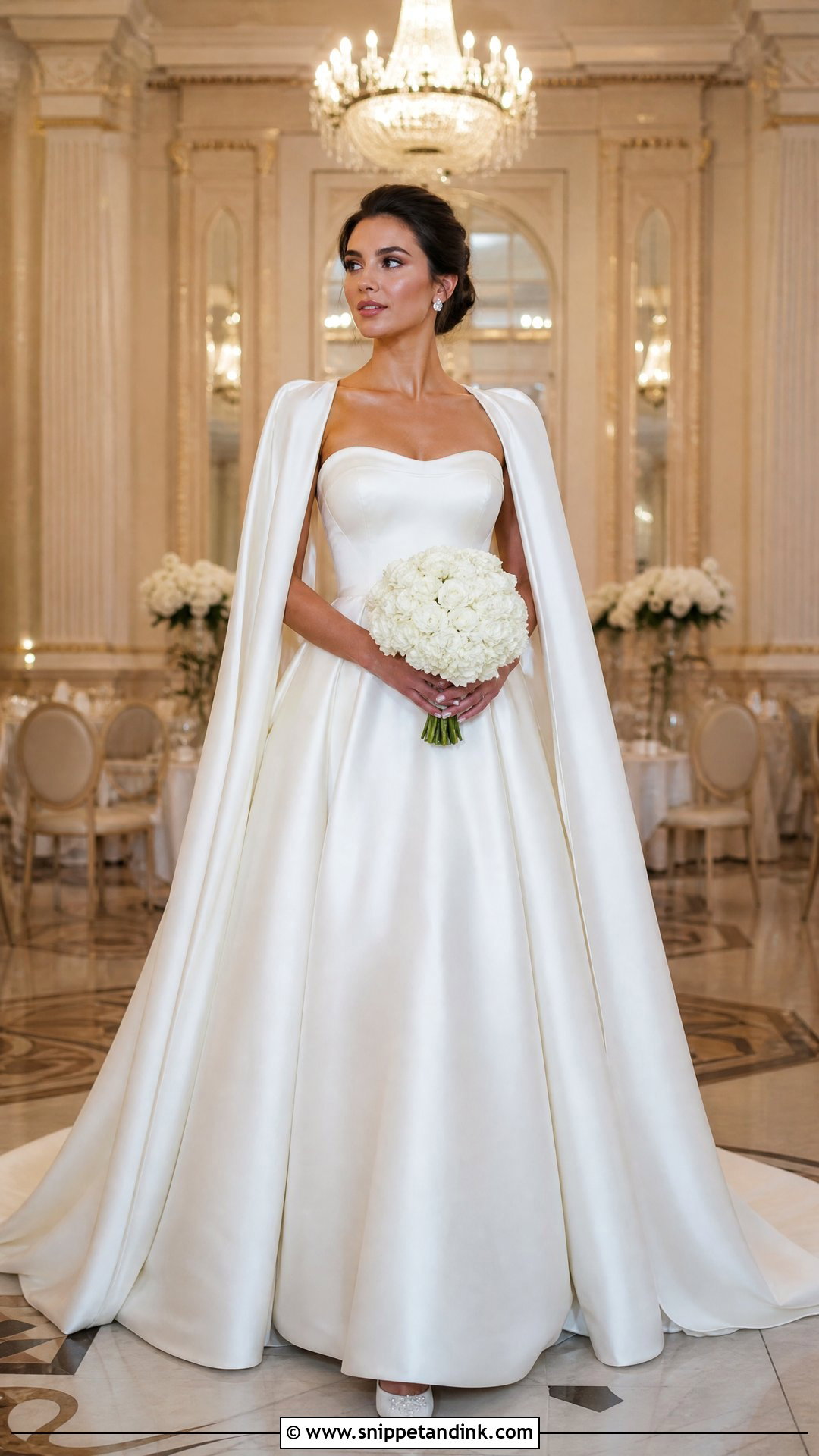
Cathedral-length cape panels effectively give you a second train, one that starts at the shoulders instead of the waist. All that weight hangs from your shoulder seams, and in satin it is considerable, so the bodice must be secure enough that the cape cannot drag the neckline backward. Layered tulle gives the same shape at a fraction of the weight. Keep the neckline simple, strapless or a soft scoop. Decide in advance who will lift the panels on stairs and through doorways. A ballroom or historic estate gives it room to move.
3. Lace Wedding Dress With Scalloped Cape Sleeves
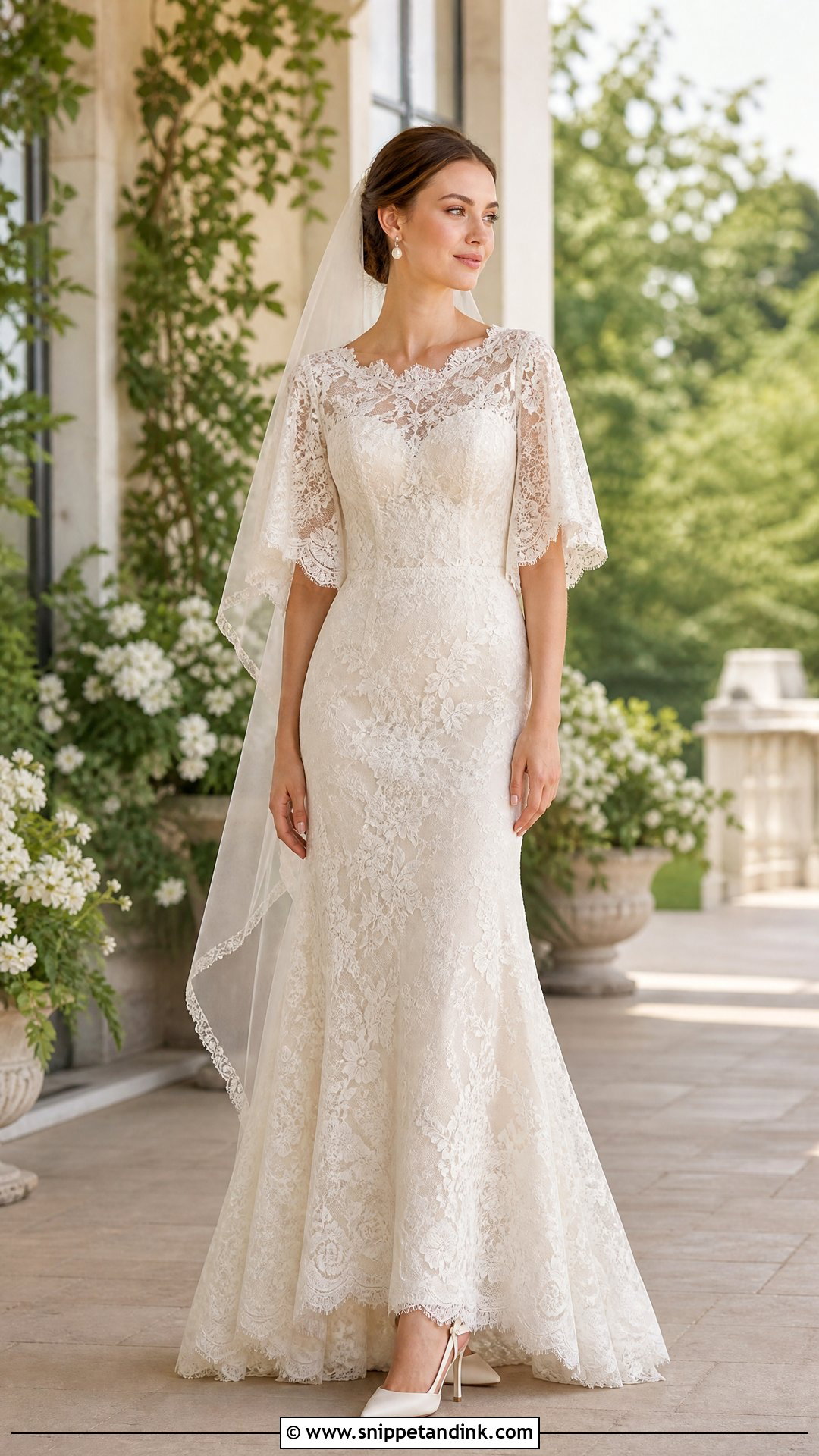
Scalloped edges give a lace cape a finished hem, which matters because the edge of a cape sleeve is always on show as it moves. Look for lace that continues from the bodice across the shoulder rather than starting abruptly at a seam. Floral lace reads romantic and geometric lace cleaner. A fitted waist and softly flared skirt balance the loose sleeves. Keep jewelry fine, and if the cape reaches the wrist, leave the bracelet off entirely, since it will snag the lace edging. A fingertip veil, or none, suits a garden or estate wedding.
4. Crepe Sheath Wedding Dress With Draped Cape Sleeves
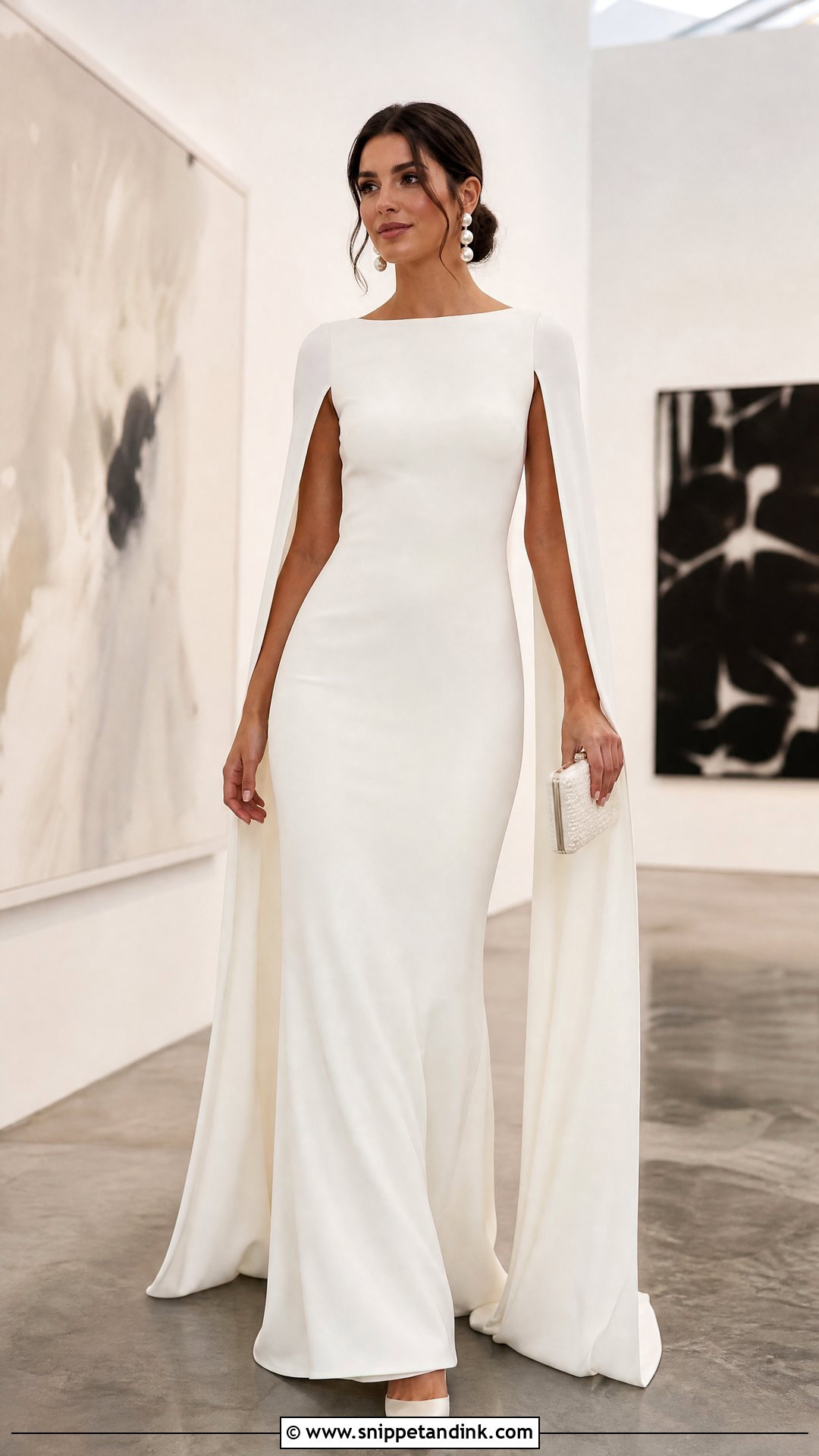
On a plain crepe sheath, the cape is the only movement in the outfit, so its length sets the mood: medium panels for a quiet effect, floor-length for a proper entrance. A bateau or high boat neckline gives the drape an architectural edge to fall from. Crepe shows construction clearly, which is why I am fussy about the tailoring through the waist and hips on this one. A sleek bun or ponytail keeps the shoulders clear, and sculptural earrings suit a gallery or city hotel.
5. Satin Wedding Dress With Basque Waist Cape Sleeves
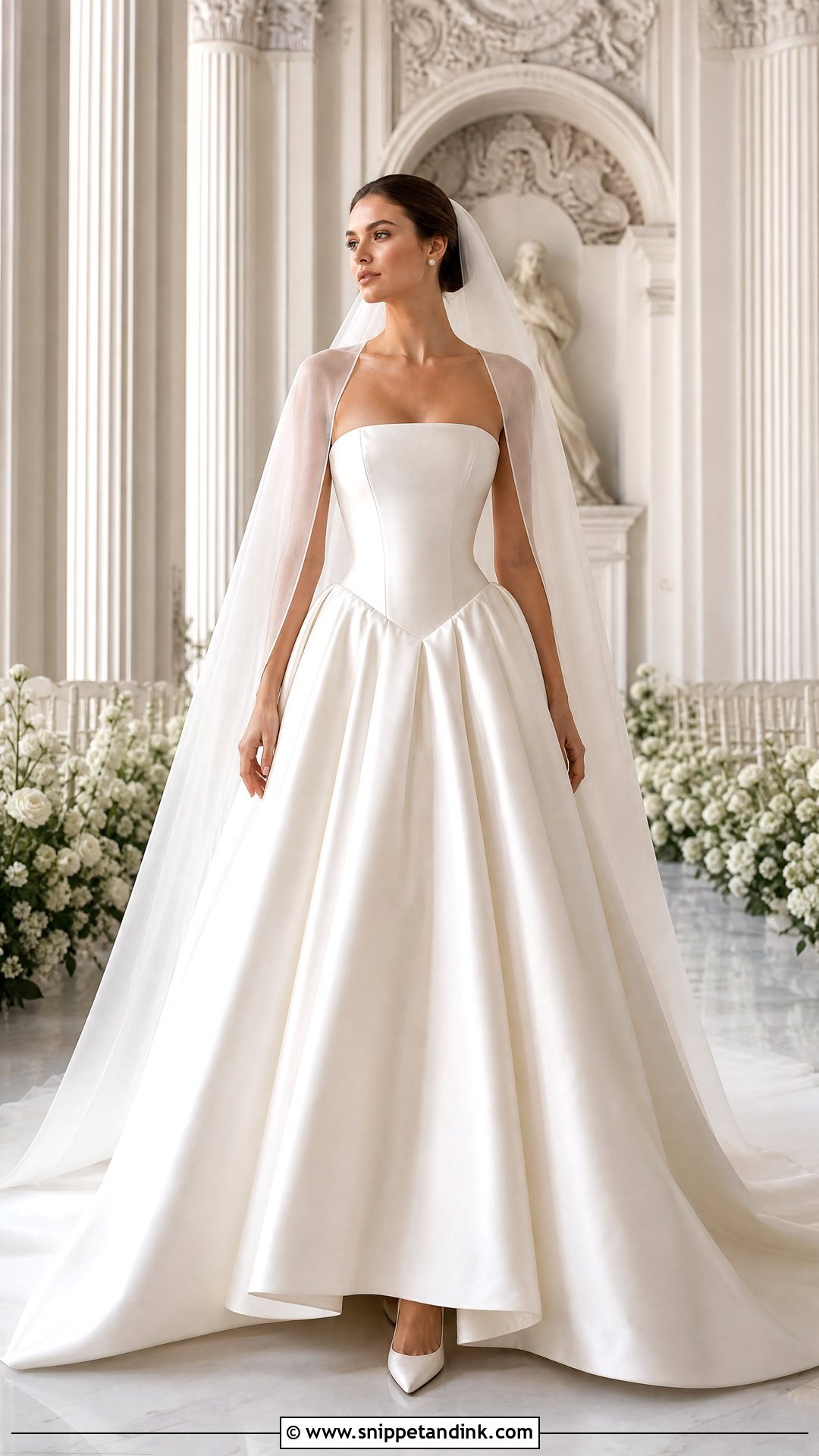
A basque waist and cape sleeves are both structural statements, so I would pick one fabric approach and commit to it. Matching satin sleeves look sculptural and bold; sheer organza ones soften the bodice and let the V-shaped waist do the talking. A strapless neckline lets both features show, while the lowered waist lengthens the torso before the skirt opens. A neat bun and a compact tonal bouquet keep it from looking busy. Formal indoor venues with a grand staircase give the cape somewhere to fall.
6. Boho Wedding Dress With Bell Cape Sleeves
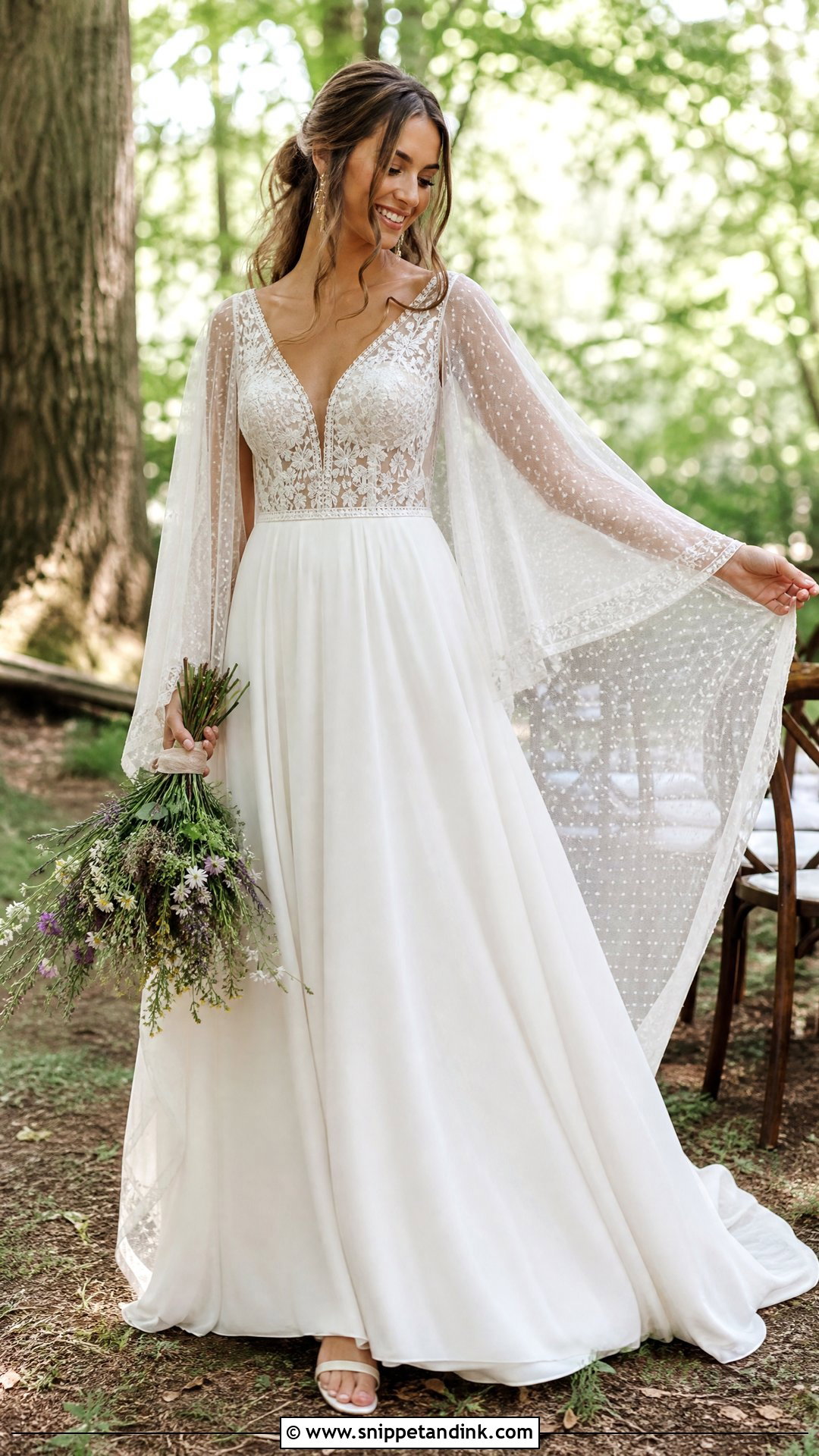
Bell cape sleeves open gradually from the upper arm and widen at the wrist, which gives a boho dress its loose swing. Lightweight lace, dotted tulle or chiffon keeps them airy. The catch is that wide wrists dip into things, so hold your bouquet at the fitting and see where the fabric lands. A fitted lace bodice over a flowing A-line keeps the shape easy. Soft waves or a textured braid suit it, and block-heel sandals cope with grass. Hold back on jewelry, since the sleeves already supply plenty of detail.
7. High-Neck Wedding Dress With Sheer Cape Sleeves
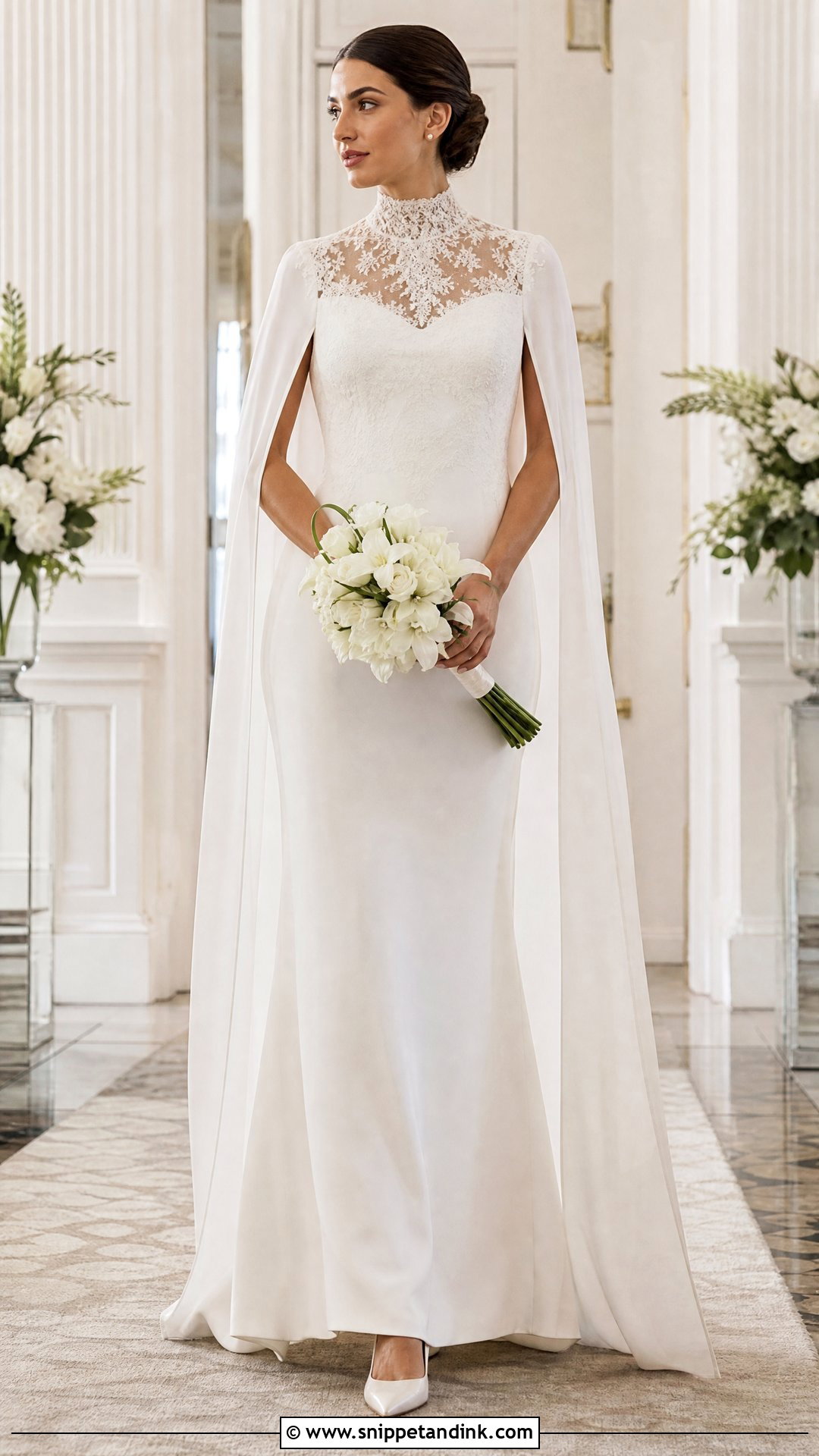
High necks can feel closed in, and sheer cape sleeves are the fix. Illusion tulle or fine lace lets skin show through while keeping the coverage, and subtle appliqués on the bodice add interest without weight. A column or narrow A-line skirt balances the extra fabric near the neck. Skip the necklace and wear studs. Hair in a low bun shows both the neckline and how the shoulder is built. A bouquet of long-stemmed white flowers echoes the vertical line, which suits a cool-season or modest wedding.
8. Off-Shoulder Wedding Dress With Tulle Cape Sleeves
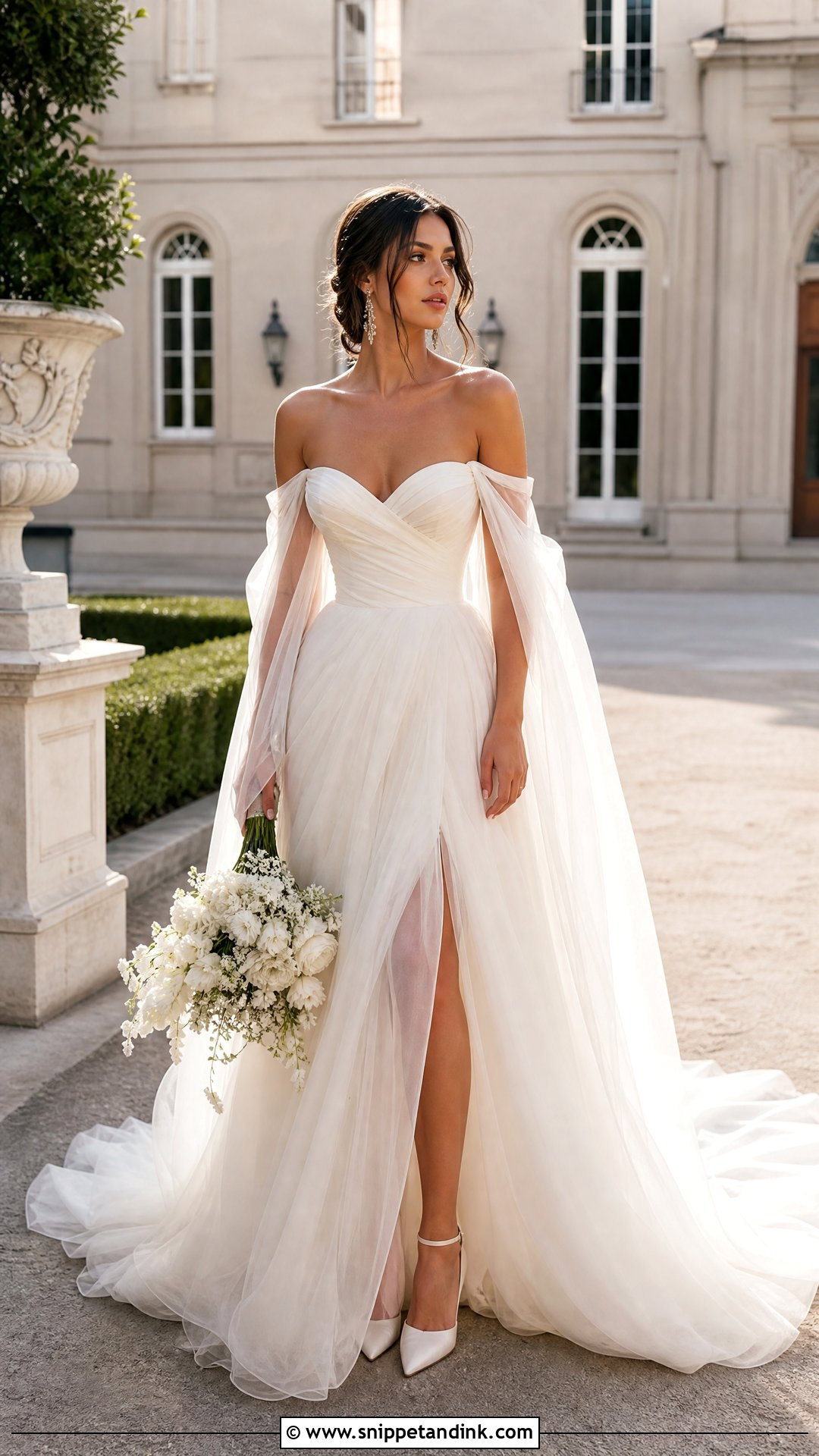
When cape sleeves hang from an off-shoulder neckline, they attach on the upper arm, so the bodice has to hold everything up by itself. A structured, boned bodice is essential, especially if the sleeves are detachable. The tulle then frames the collarbone and drifts beside the gown as you move. A fitted skirt looks glamorous and an A-line more romantic. Skip the necklace, keep any veil simpler than the sleeves, and pull a few face-framing pieces out of a low bun.
9. Strapless Wedding Dress With Detachable Cape Sleeves
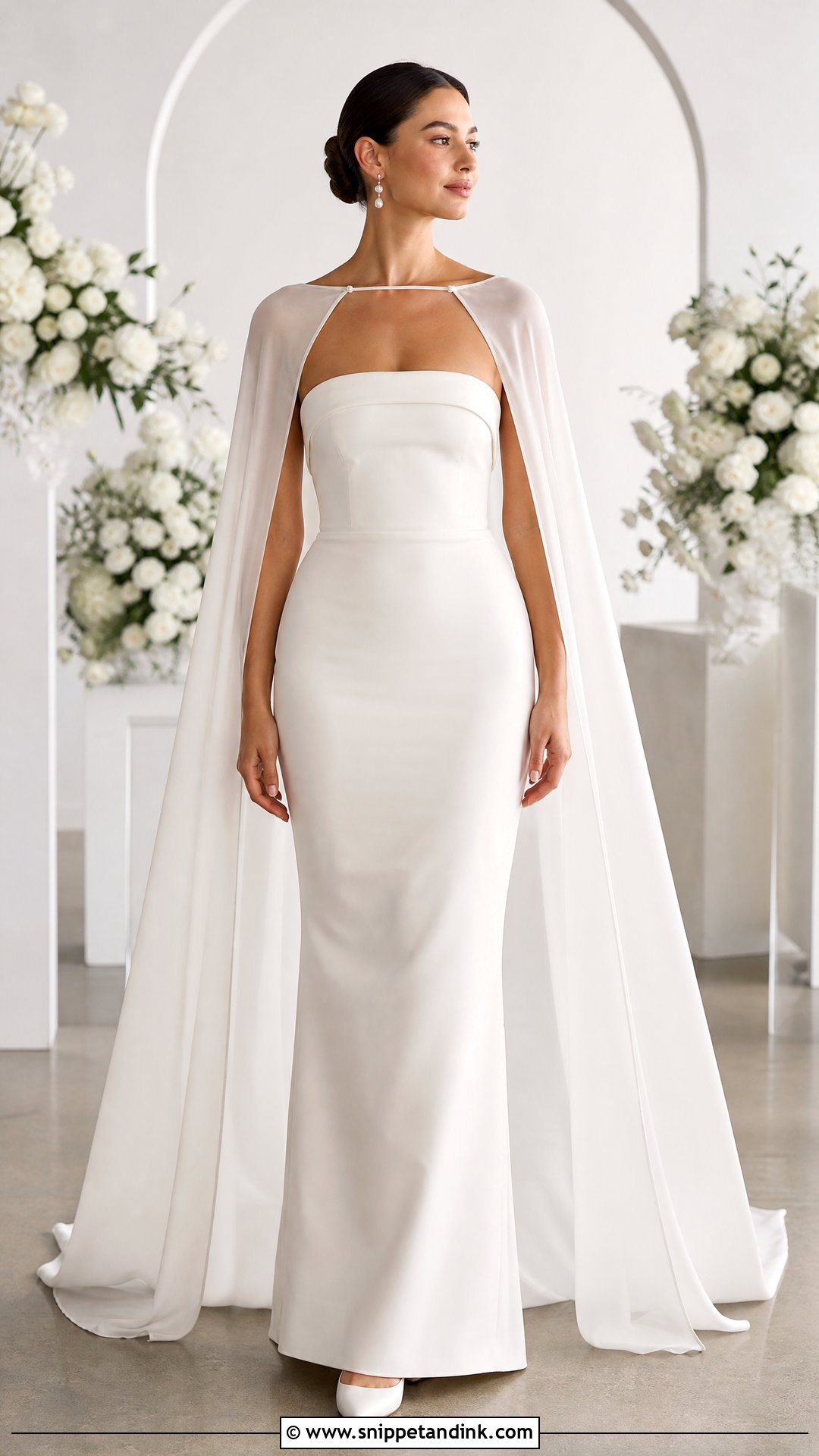
Detachable cape sleeves give you two looks in one gown: coverage and drama for the ceremony, bare shoulders for dancing. The attachment points are the part to examine closely. They should sit flat along the neckline, stay put when you lift your arms and leave no marks or loops on the bodice once the sleeves come off. Pair sheer sleeves with a light gown and satin sleeves with a structured one. Pearl earrings suit the ceremony; once the sleeves are off, bolder earrings or a bracelet change the mood for the party.
10. Square-Neck Wedding Dress With Lace Cape Sleeves
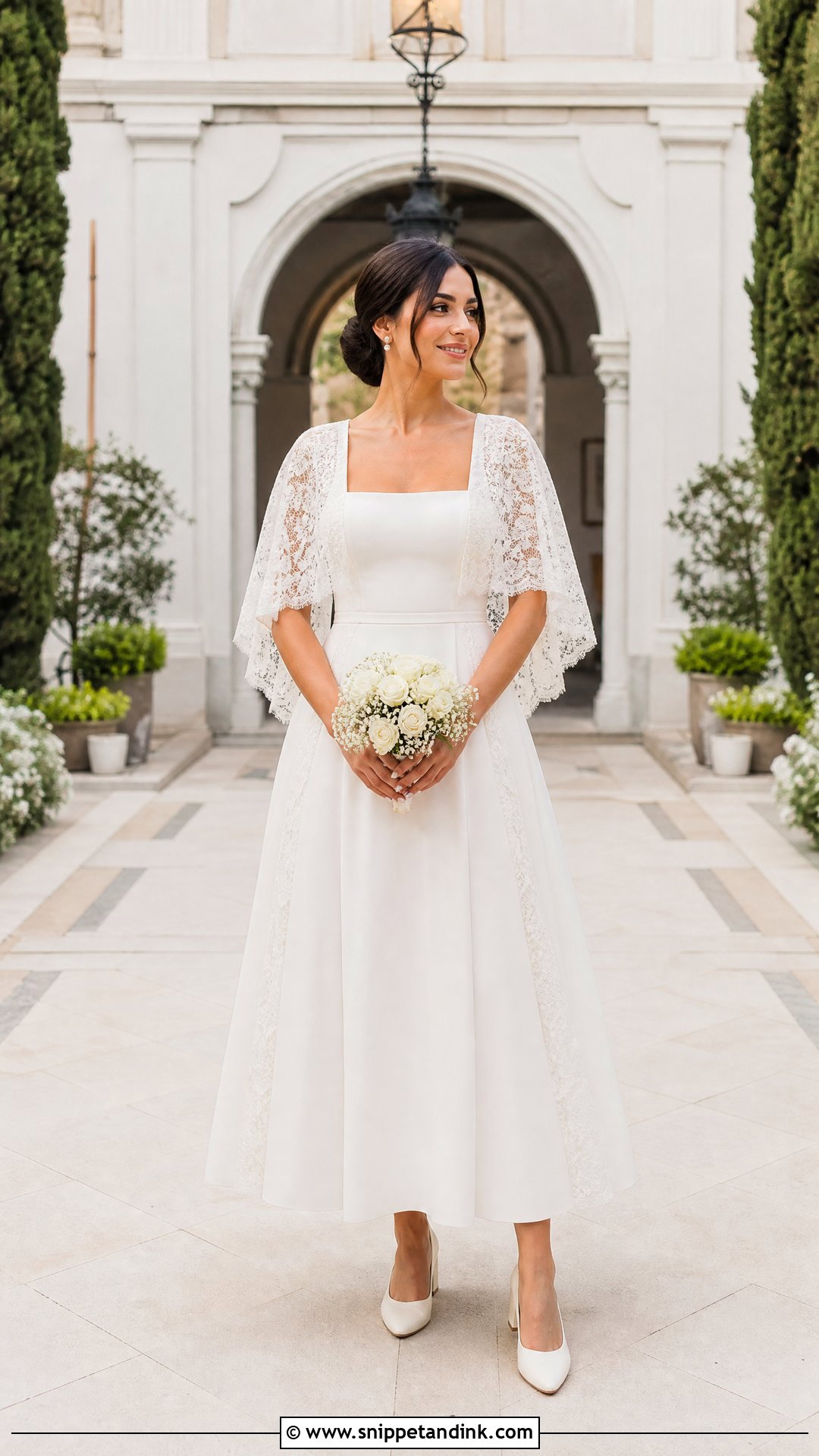
Straight lines at the neck and soft lace at the shoulders balance each other well. The square neckline frames the collarbone while the flowing sleeves take the hard edge off it. A fitted bodice over a straight or A-line skirt keeps the outline tidy, and lace edging on the sleeves can echo appliqués at the waist or hem. A center-parted low bun matches the symmetry. Keep the veil plain or choose a short blusher that will not hide the sleeve pattern.
11. Mermaid Wedding Dress With Floor-Length Cape Sleeves
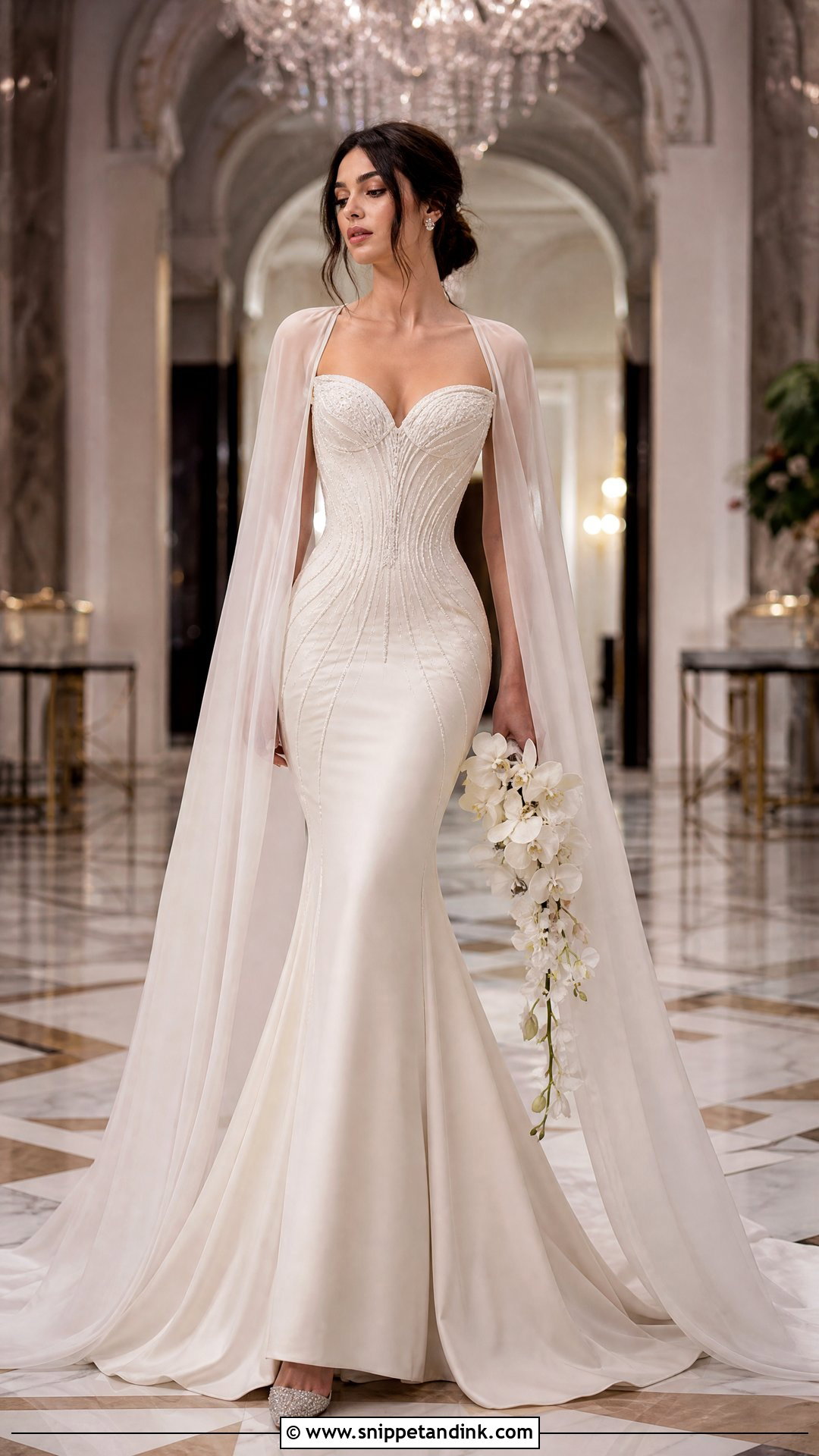
Floor-length panels on a mermaid gown set the fitted line of the dress against the loose fall of fabric. The risk is length. Panels that reach the floor get stepped on when you climb stairs or turn quickly, so I ask for them to finish just above the ground at the back, then have the bride practice turning in them. Sheer chiffon or tulle keeps the mermaid shape visible underneath. Keep embellishment to the bodice or sleeve edges. A sleek updo and a small cascading bouquet suit a black-tie venue with space to move.
12. Empire Waist Wedding Dress With Soft Cape Sleeves
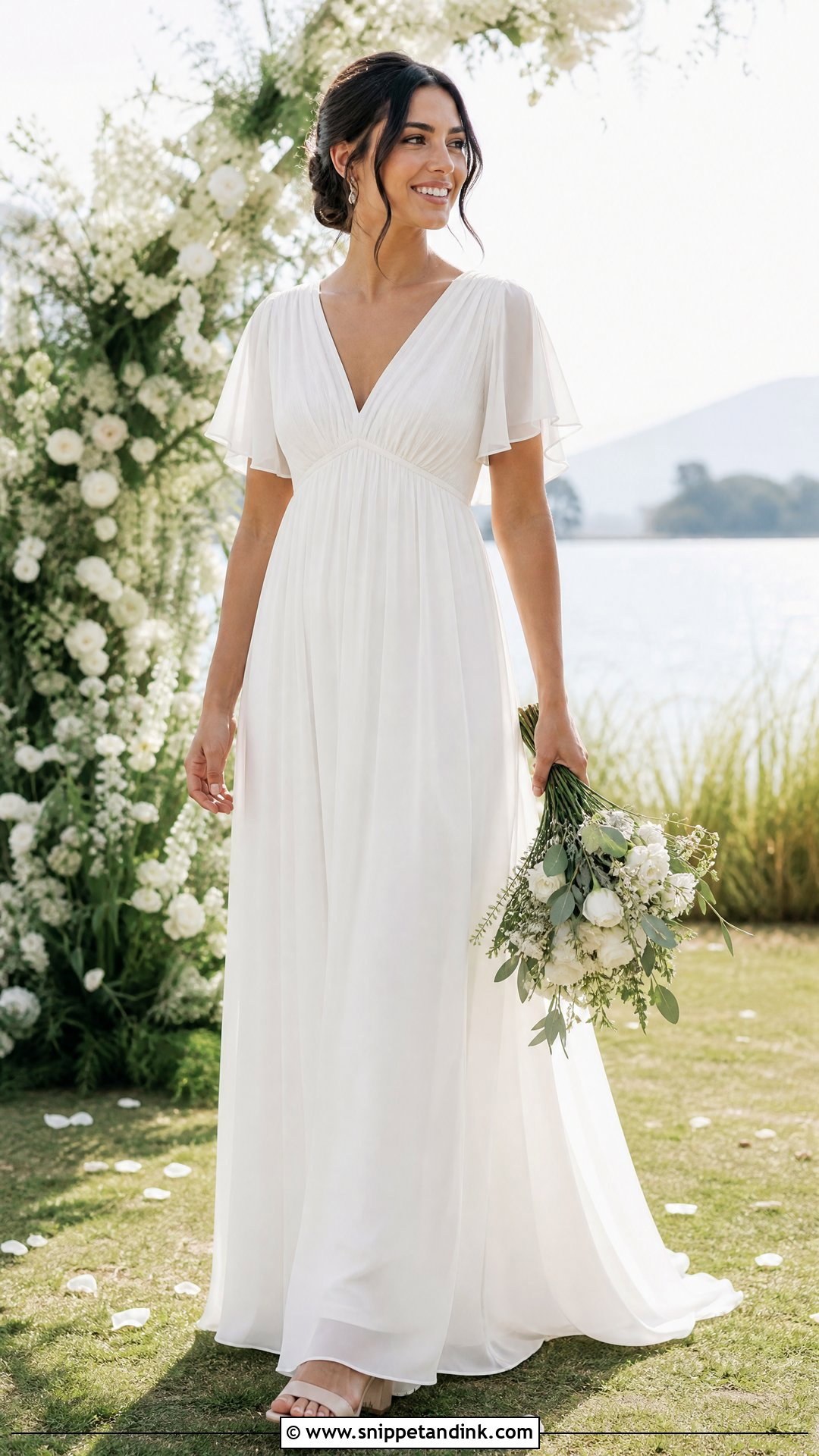
An empire waist wedding dress is the gentlest silhouette here, with the waist just below the bust and chiffon or georgette falling loosely from it. Short fluttering cape sleeves cover the shoulder without adding weight, and a V-neckline keeps it open. Light skirts catch on heels easily, so have it hemmed to the exact shoes you will wear. It suits beach and outdoor ceremonies and is a comfortable option for pregnant brides. Low block heels and a small floral comb are enough.
13. Plus-Size Wedding Dress With Structured Cape Sleeves
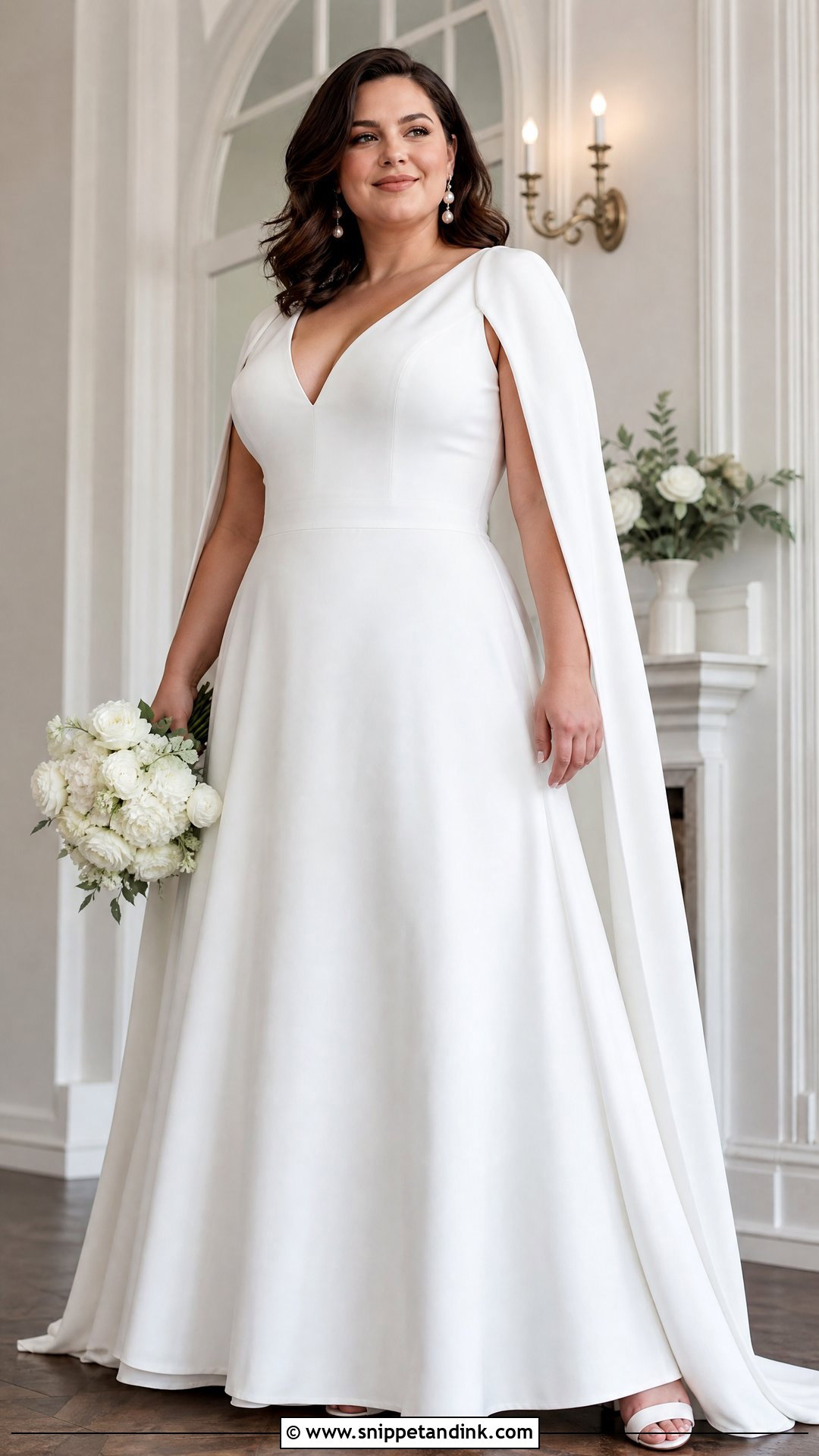
On a curvy frame, cape sleeves should fall cleanly from the shoulder rather than gathering bulk under the arm, so where the sleeve attaches is the fitting detail I watch most. Medium-weight crepe, satin or lined chiffon falls in controlled folds and will not cling. Start with a supportive A-line or fit-and-flare with secure internal structure, and a V-neck or square neckline to define the upper body. Ask the seamstress to test the sleeves while you sit, walk, hug and raise your arms. Tailoring matters far more than the size on the label.
14. Petite Wedding Dress With Short Cape Sleeves
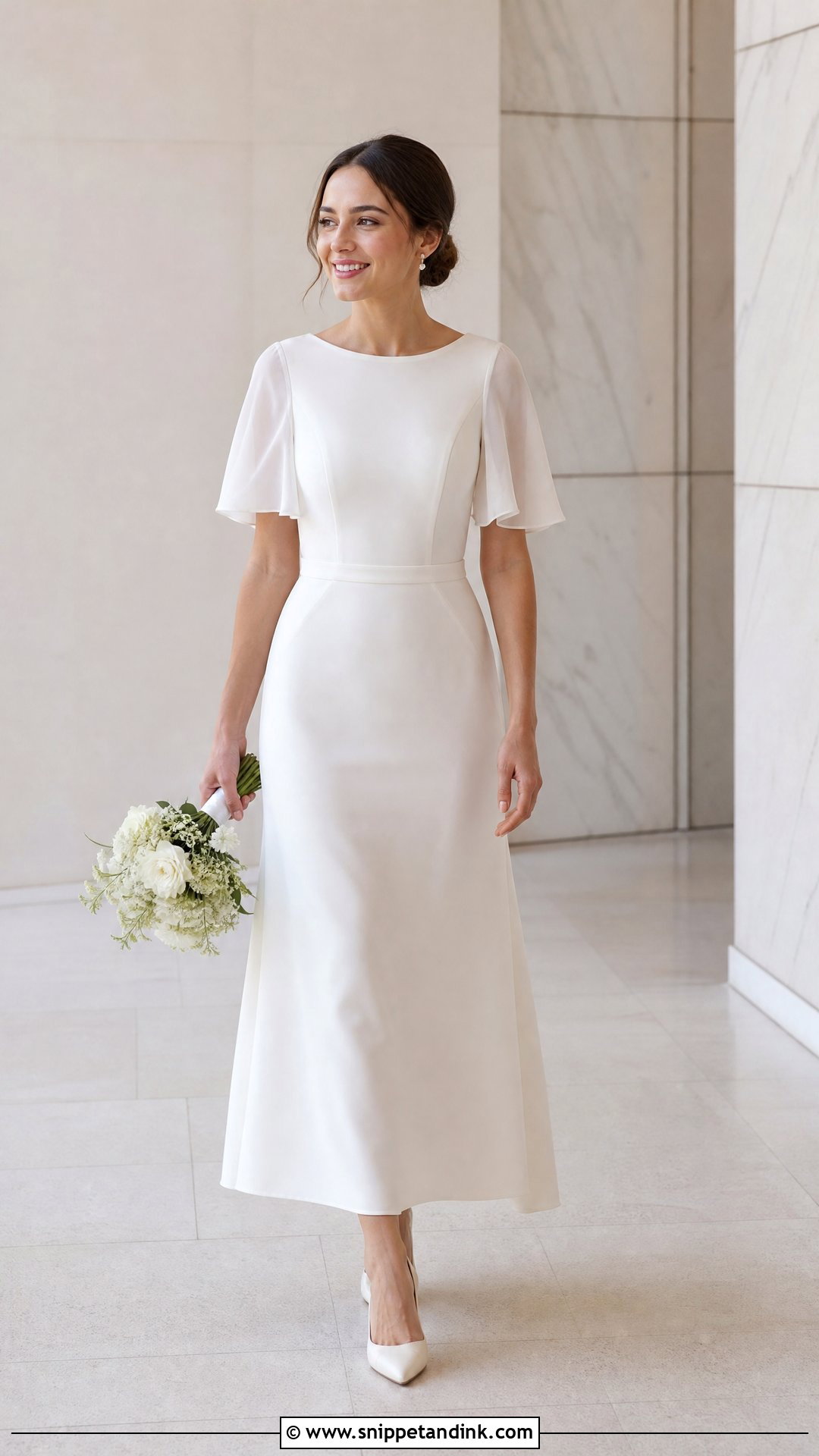
Short cape sleeves ending above the elbow add movement to a petite frame without shortening it. Wider or longer capes cut across the body and make a small bride look smaller still. Pair them with a column, sheath or narrow A-line, and keep the vertical seams uninterrupted. Pointed heels in a matching ivory extend the leg line, and a light chapel veil adds length if it stays simple. I have the sleeve width checked as carefully as the hem, because an extra inch at the shoulder looks like a lot on a small frame.

15. Modest Wedding Dress With Long Cape Sleeves
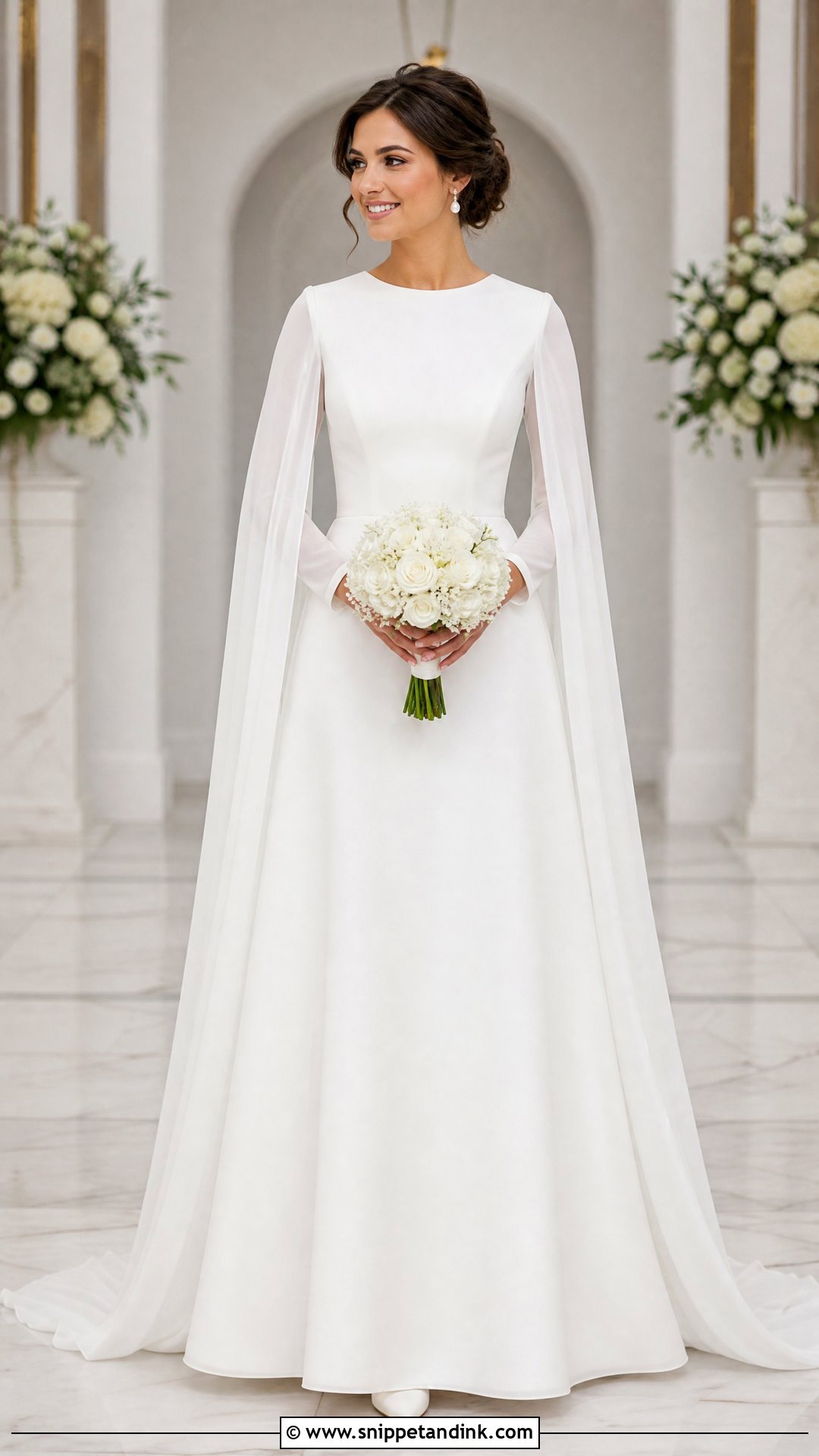
For modest coverage, the sleeve opening matters as much as the sleeve length. Cape sleeves are open at the side, so raising your arms can show more than you intended. Check this at the fitting and, if needed, ask for a sheer under-sleeve or a tacked point. A high boat neck or jewel neckline over a fully lined bodice gives the coverage you want. Chiffon sleeves feel airy; lace or crepe ones are more structured. A plain veil and a low bun keep the look calm.
16. Beach Wedding Dress With Chiffon Cape Sleeves
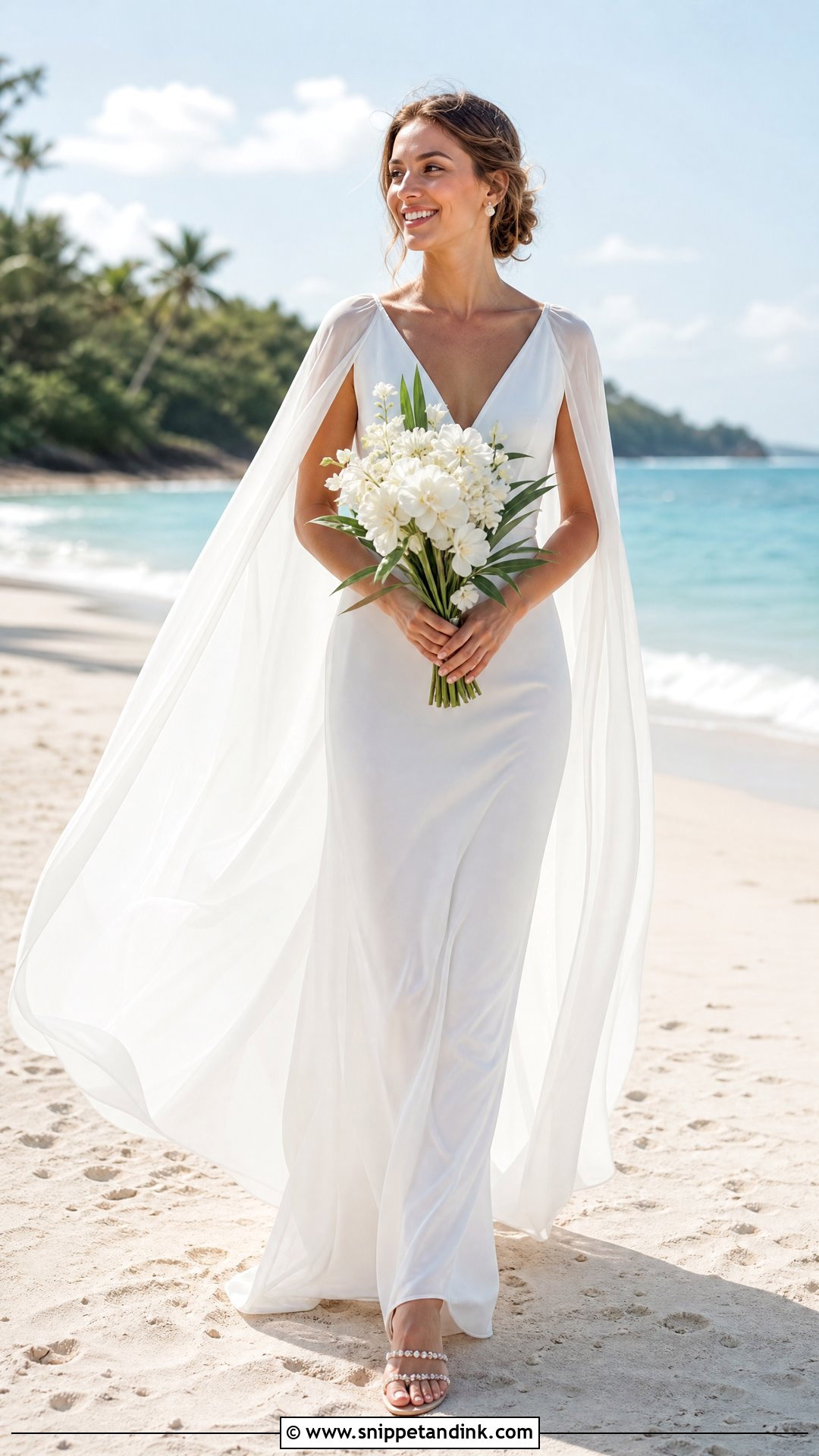
Sea air lifts chiffon cape sleeves beautifully, which makes them a natural match for a beach wedding dress. The same breeze blows them across your face, though, so keep the panels long enough to float but short enough not to drag through wet sand. A lightweight sheath or relaxed A-line moves easily on the beach. Flat embellished sandals are the realistic shoe. Skip a long veil, which will tangle with the cape in any wind, and carry a sturdy, compact bouquet.
17. Winter Wedding Dress With Velvet Cape Sleeves
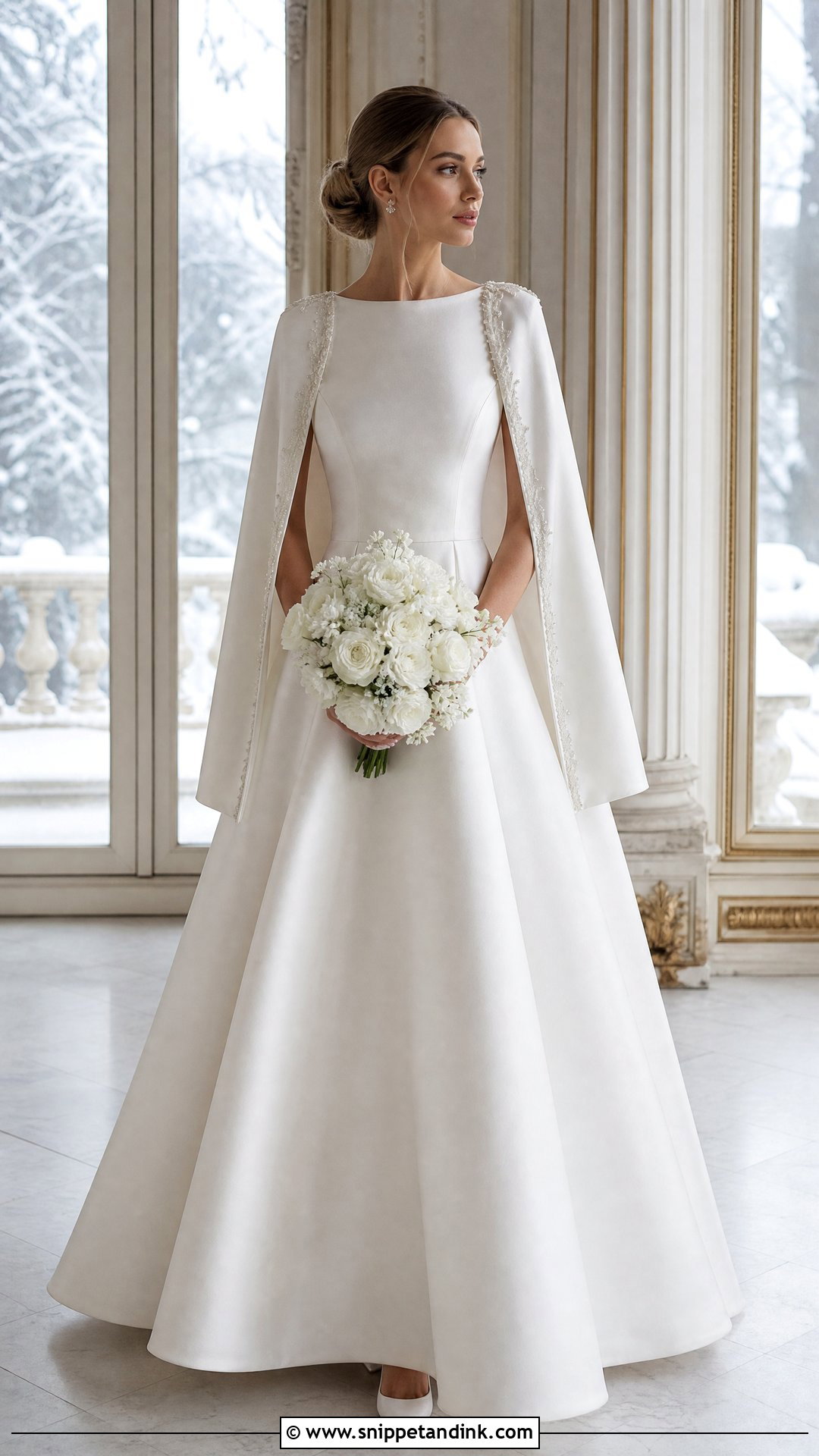
Velvet sleeves over a satin, crepe or mikado bodice add warmth and texture without the weight of an entire velvet gown. Velvet crushes, however. Its pile flattens wherever it is pressed, so the sleeves need to hang on their own rather than fold into the dress bag, and any steaming should be done from the back. A high neckline and full A-line make it formal, and a smooth bun keeps the heavier fabric off the shoulders. If warmth matters most, ask for a detachable lined cape that comes off for the reception.
18. Pearl Wedding Dress With Beaded Cape Sleeves
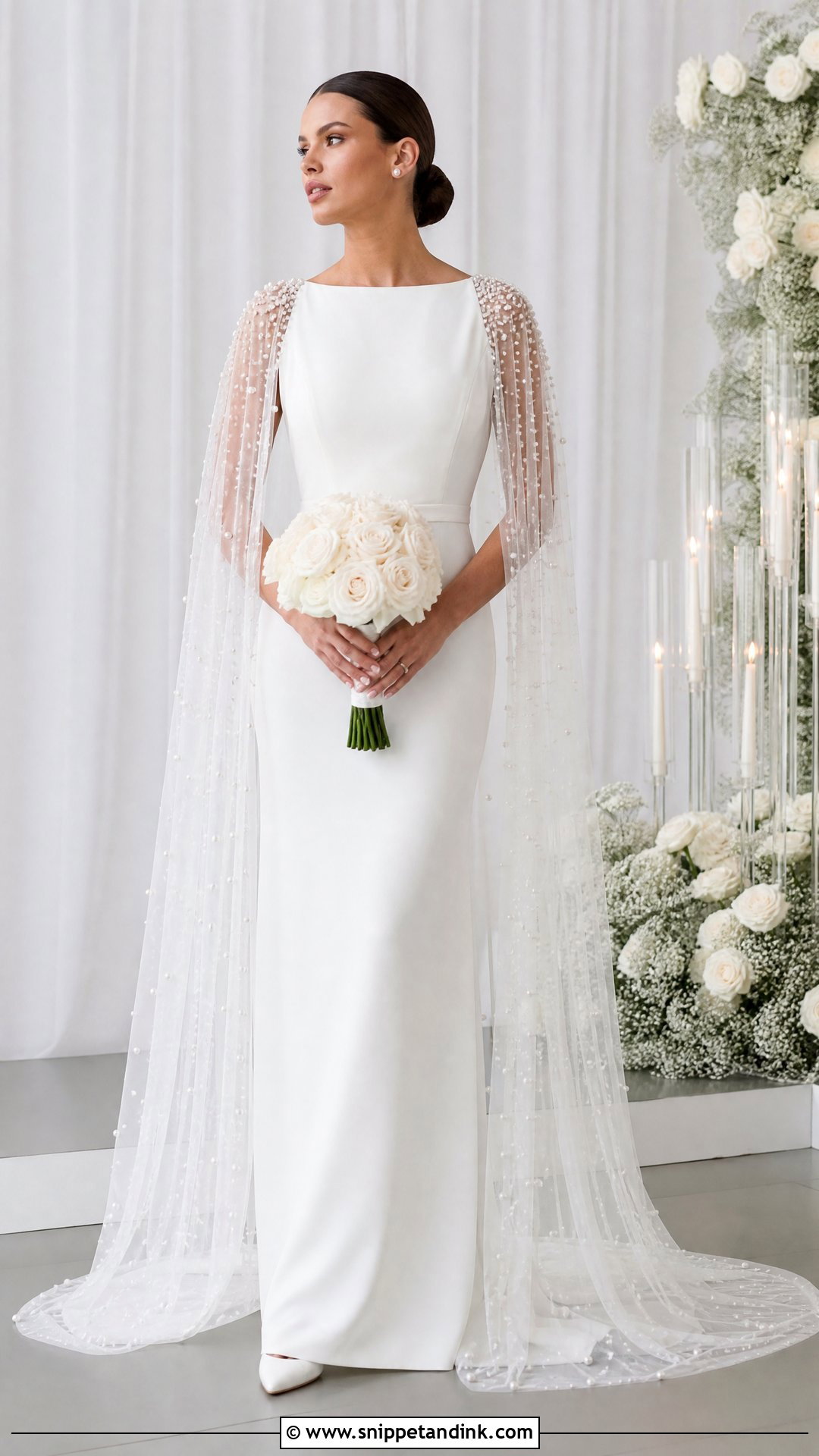
Pearl beading gives a cape real weight, and the underside matters as much as the outside. I turn each panel over and run a hand along it, feeling for rough threads or exposed settings that would scratch your arms all day. On smooth crepe or mikado, the beadwork stays visible. Pearls scattered over sheer tulle feel light, while dense patterns at the shoulders and cuffs look richer. Choose a clean strapless or square neckline. A decorated veil will catch on the beading, so keep yours plain.
19. Floral Wedding Dress With Appliqué Cape Sleeves
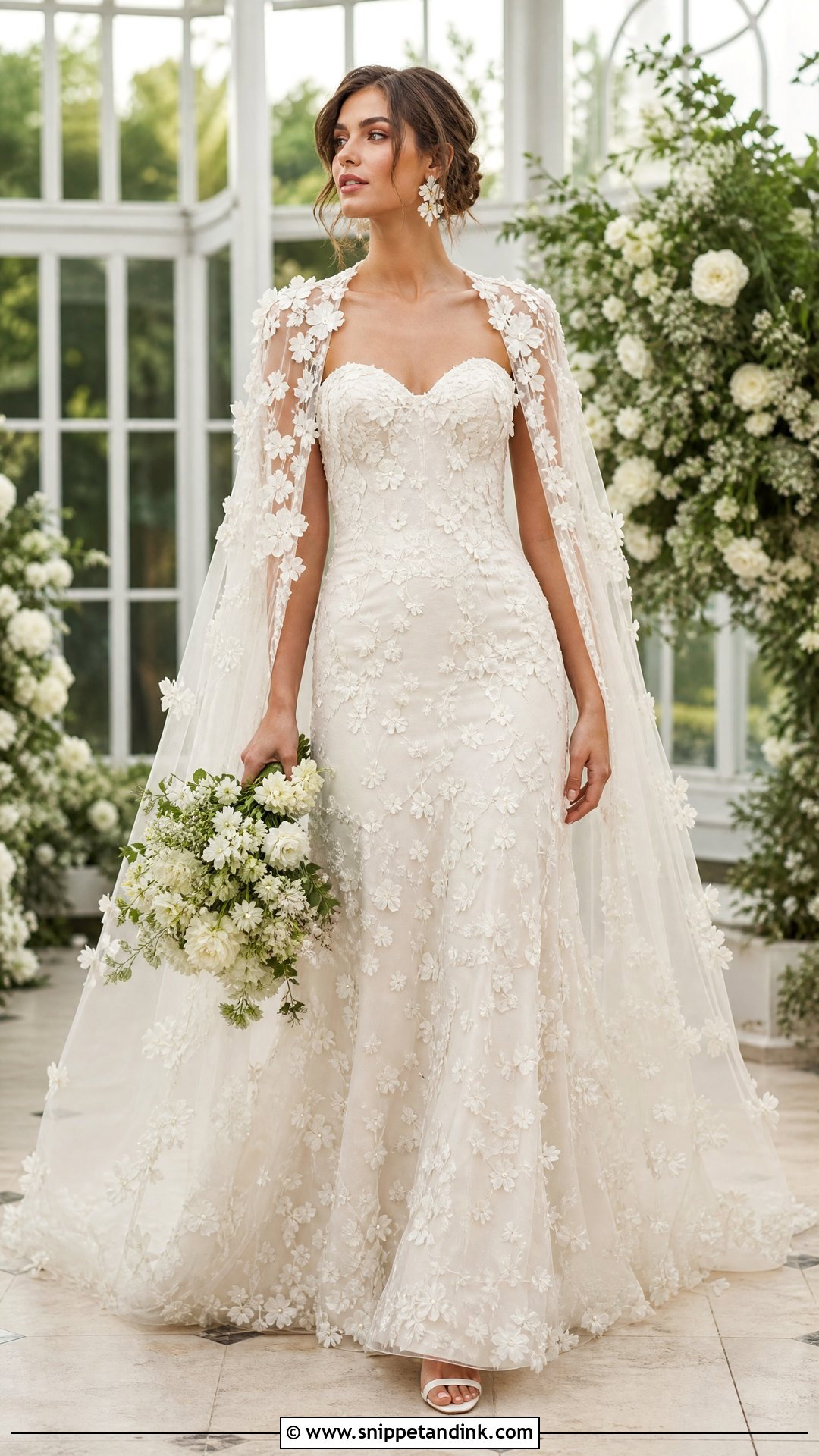
Appliqués that spread out toward the edge of the cape keep the sleeve light where it moves most. Tightly packed flowers at the hem make the fabric swing heavily, and the petals catch on one another. A fitted bodice and soft A-line skirt carry the decoration. Ivory or tonal flowers look cohesive; a hint of blush adds contrast. Check every appliqué is firmly attached before the day. One small floral pin in a textured updo is enough, and a crown would overdo it. Gardens and greenhouses suit this dress.
20. Reception Wedding Dress With Removable Cape Sleeves
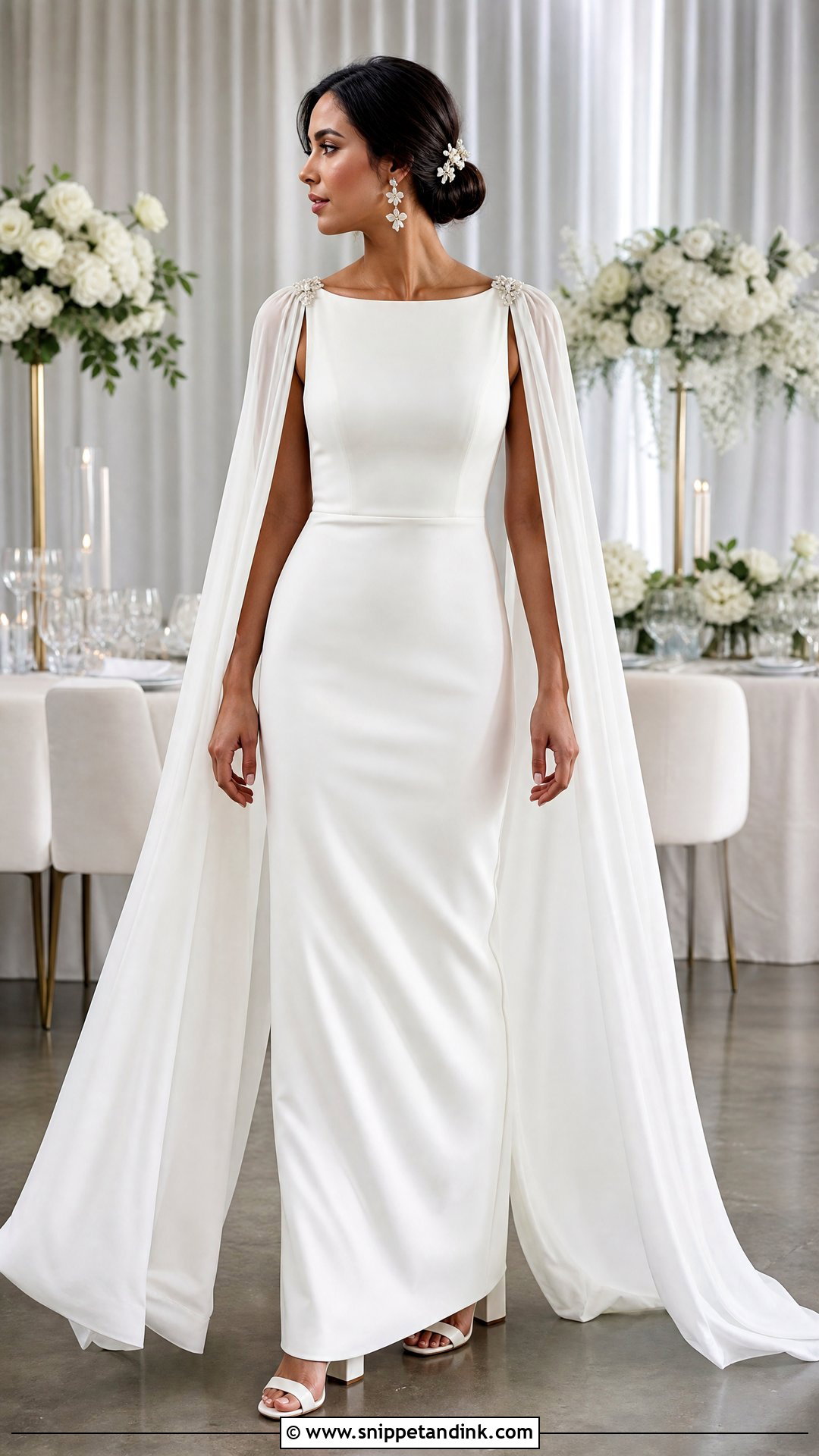
The base gown has to look finished without its sleeves, and that is the first thing I check before anyone buys a dress with removable capes. A satin column, crepe fit-and-flare or simple A-line all work. Hidden snaps, loops or covered buttons should match the bodice. For the ceremony, wear classic earrings and a veil; afterward, take off the cape and veil, swap into block heels and add statement earrings. Practice the change once and assign someone to look after the sleeves. It costs far less than a second dress.
What Long Cape Sleeves Run Into on the Day
Long, floaty panels look wonderful in motion and are vulnerable almost everywhere else. These are the situations that catch cape-sleeved brides out most often.
- Wind. Outdoors, chiffon blows across your face during the vows. A discreet wrist loop or small weights sewn into the hem keep it calmer.
- Candles. Sheer synthetic fabrics catch and melt quickly. Walk wide of candle-lined aisles and tabletop votives, and ask your planner to keep open flames away from your seat.
- Dinner. Long panels drift into plates and glasses. Drape them back over the chair, or take detachable sleeves off before the meal.
- Car doors. Gather the panels into one hand as you get into a car so they are not shut in the door.
None of this is a reason to avoid a cape. It is simply worth telling your maid of honor, because she will be the one gathering up fabric for you all day.
Test the Cape With Your Arms Up, Not Down
Cape sleeves can read romantic, modern, modest or formal depending on fabric and silhouette. Chiffon moves most, lace brings texture and satin gives sculpture, and length, neckline, venue and weather all change how they behave. At fittings, walk, sit, turn and raise your arms, and watch where the panels go each time. Detachable designs buy you freedom later in the night. Keep shoes, jewelry, hair and flowers quieter than the sleeves, and the cape will do what it does best, which is move when you move.
You'll Like These Ideas:








Leave a Reply