
A white gown with a single shot of color tells guests something about you before you’ve said a word. Embroidery, a tinted underlayer, a bow, beading or a detachable cape can each carry that color, and each behaves differently once you’re moving, sitting and hugging people for hours. When I style a bride in a colored-accent dress, I start by deciding where the eye should land first, then repeat that shade once or twice in shoes, flowers or earrings and stop there. Below are twenty dresses that do this well, from barely-there pastels to deep jewel tones, with notes on what each one asks of you on the day.
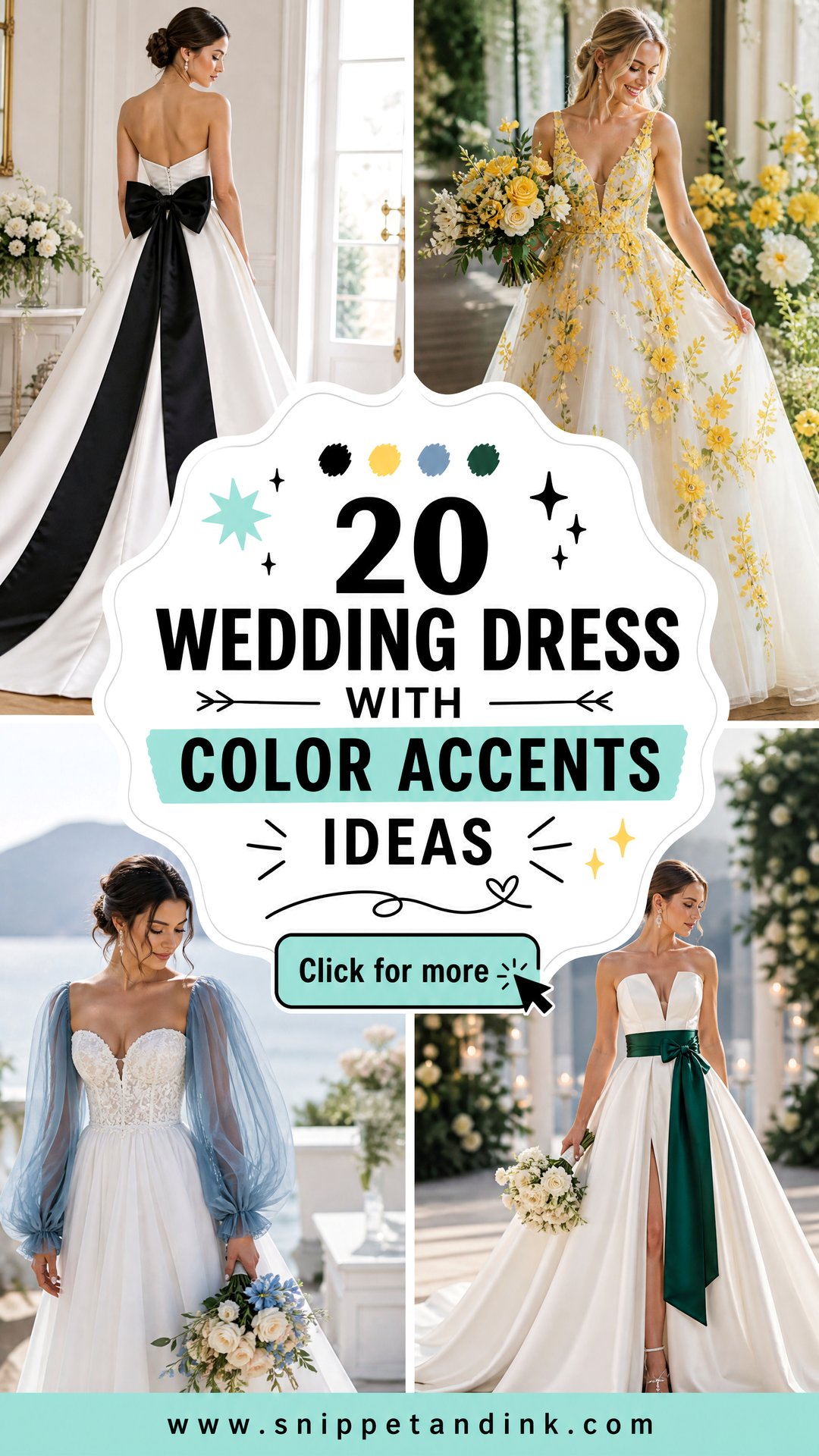
Deciding Where the Color Lives on the Gown
Before I pull a single dress for a bride who wants color, I ask where she wants people to look. Placement changes the shape of the whole outfit far more than the shade does.
- Bodice embroidery and sleeves bring color up toward your face, so the shade has to suit your skin. Hold the fabric under your chin in daylight before you commit.
- A sash, belt or bow draws a horizontal line. It defines the waist, but a wide one can shorten a petite frame.
- Hem and train details show mostly as you walk away and in full-length photos; they barely register while you’re seated at dinner.
- Underlays tint the whole dress softly, and the result depends on how many layers of tulle or lace sit above them.
- Detachable capes, sleeves and sashes are reversible, which makes them the safest choice if you might change your mind about color.
Then test the shade where it will actually be seen. Ask the shop for a swatch of the accent fabric and look at it beside the gown at a window, under warm bulbs and through your phone camera. Pastels that look clear in a fitting room can wash out in bright sun, and jewel tones can sink to nearly black in a dim evening room.
1. Blue Floral Embroidered Wedding Dress
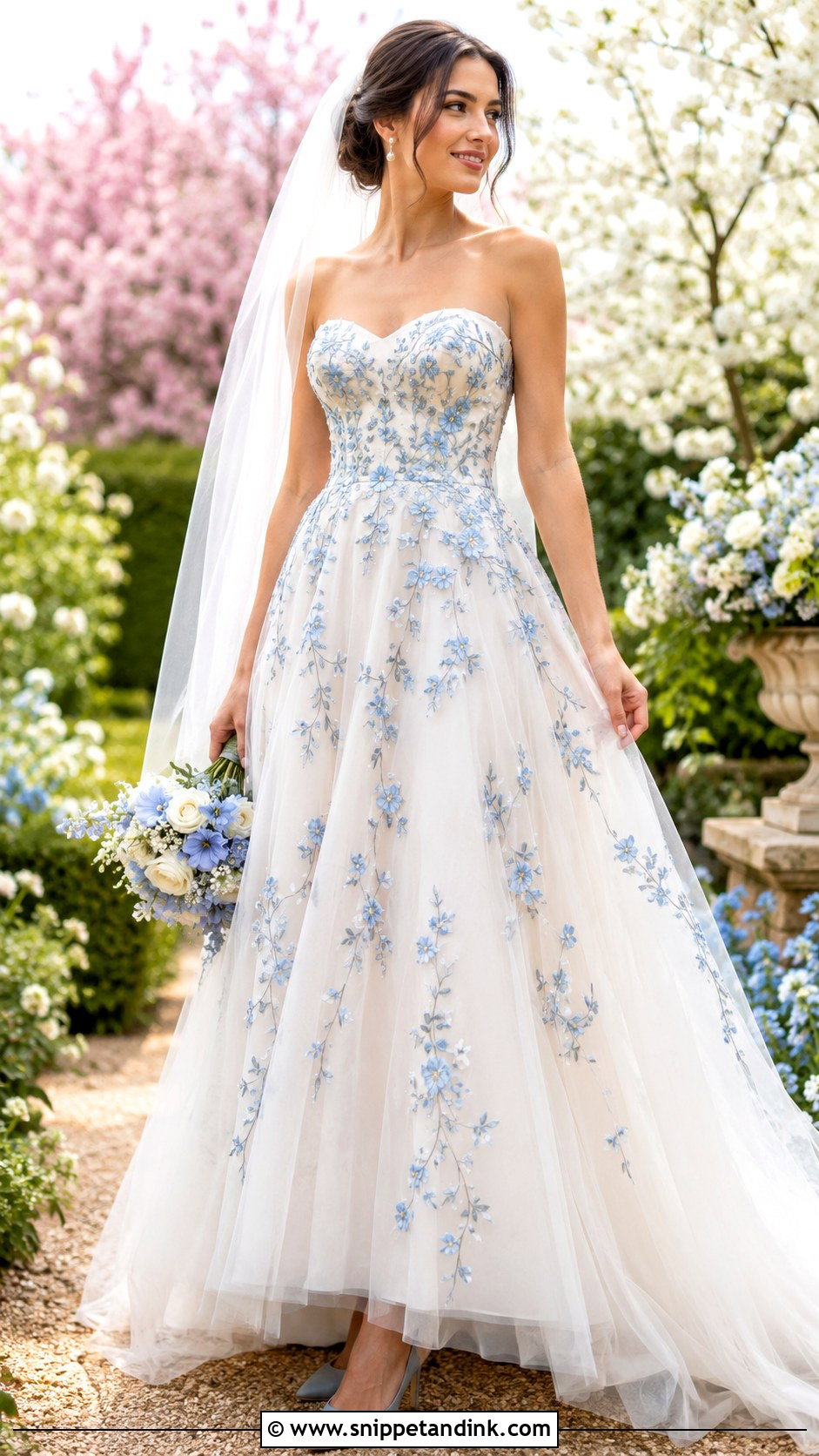
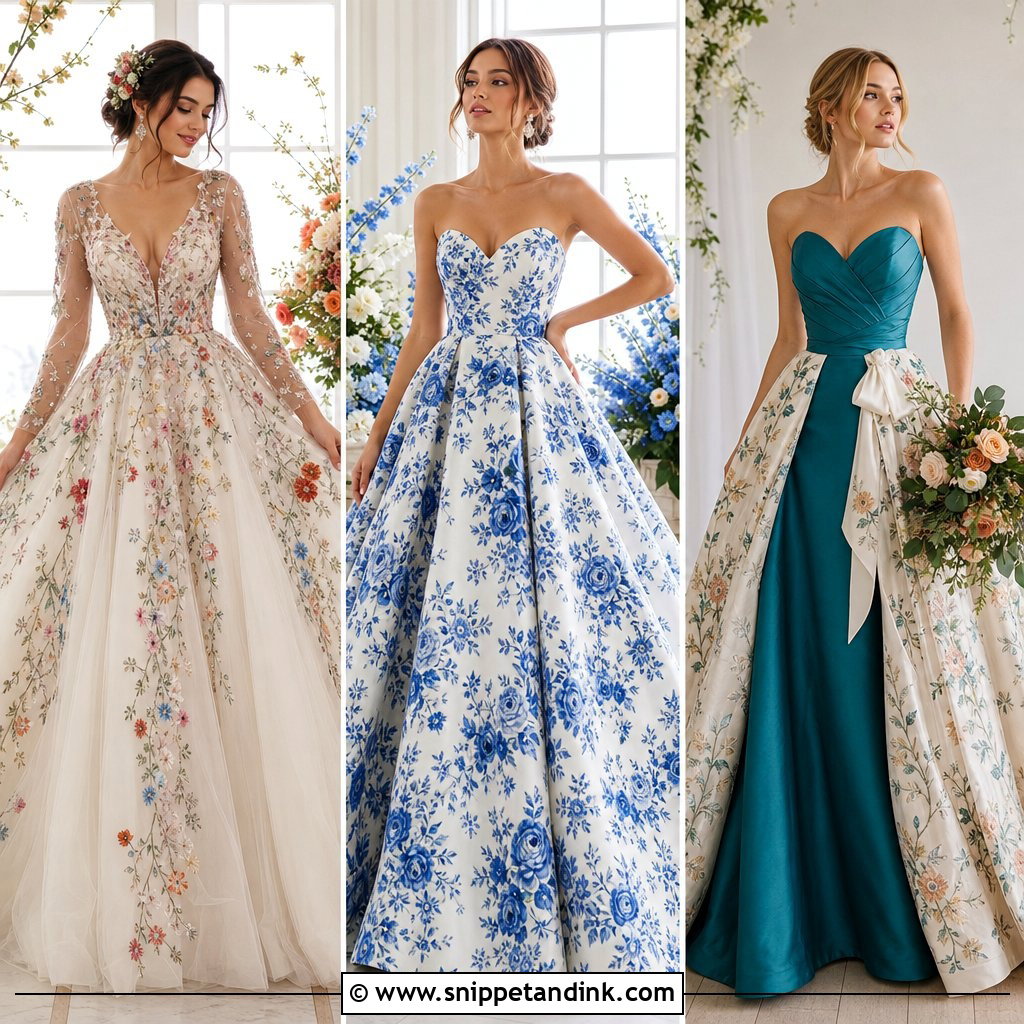
Blue embroidery that starts dense on the bodice and thins out over a tulle skirt is the gentlest way to wear your something blue. That gradient matters: it pulls focus to the waist, and the lighter skirt keeps the tulle floating instead of dragging. At fittings I check that the bodice embroidery isn’t backed so stiffly that it buckles when you sit; a good maker uses soft net, not heavy interfacing. Keep the sweetheart neckline and add pearl drops, a plain white veil and pale blue satin heels. White roses with blue delphinium tie it to the flowers, and a loose low bun suits it at a garden, estate or spring wedding.
2. Blush Underlay Lace Wedding Dress
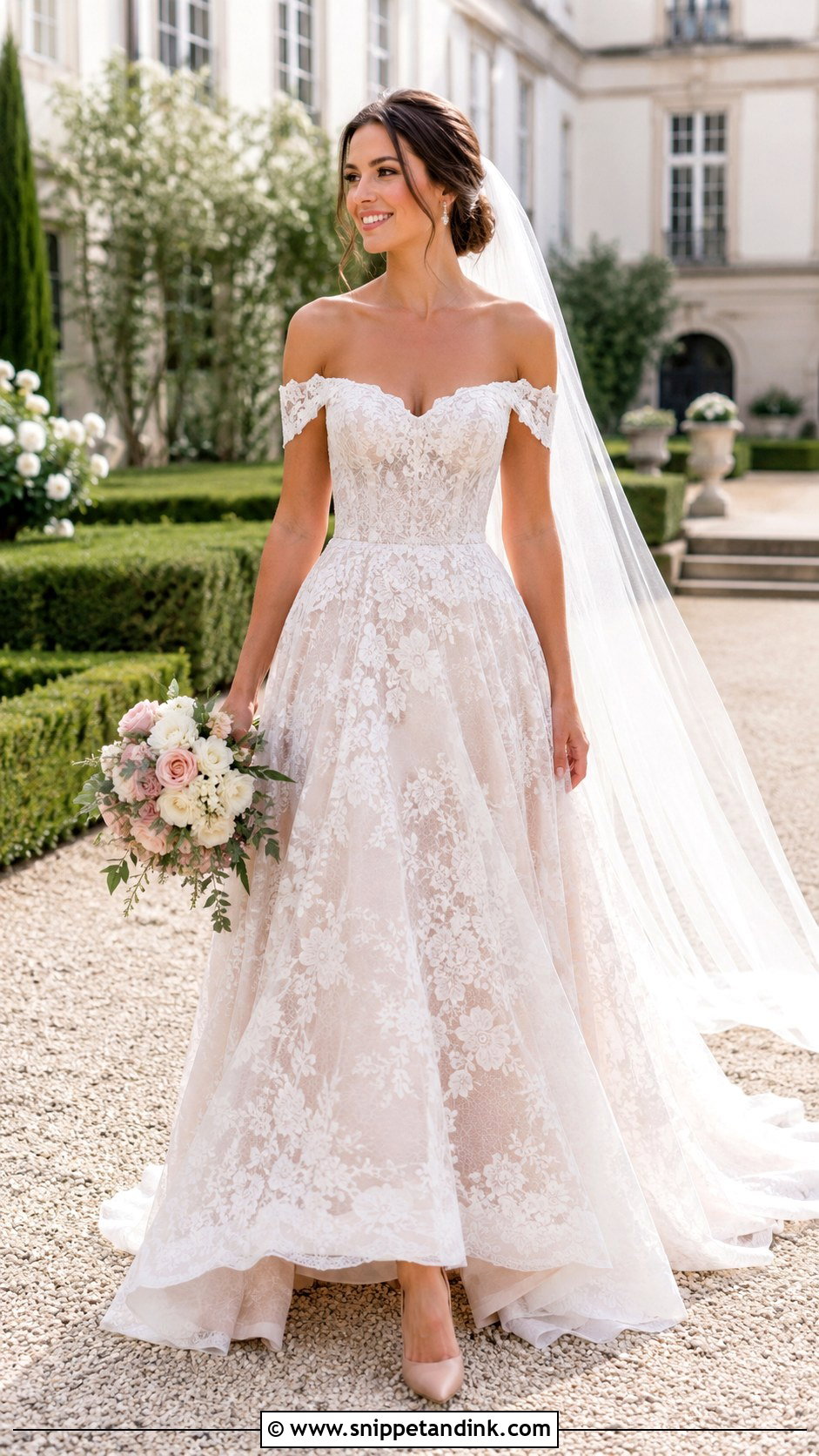
A blush underlay behind ivory lace does something clever: the warm layer shows through every gap in the motif, so the lace reads sharper than it would over white. The exact shade matters more than brides expect. Under warm afternoon light a pale blush can almost vanish, and under cool LED it can turn faintly grey, so I always ask to see the dress by a window as well as under shop lighting. An off-the-shoulder bodice, fitted waist and soft A-line skirt keep it easy to move in. Nude pointed pumps, rose gold earrings, a sheer unembellished veil and ivory peonies with pale pink roses finish it without matching too hard. It suits a ballroom, a vineyard or outdoor wedding settings with plenty of natural light.
3. Black Bow Satin Wedding Dress
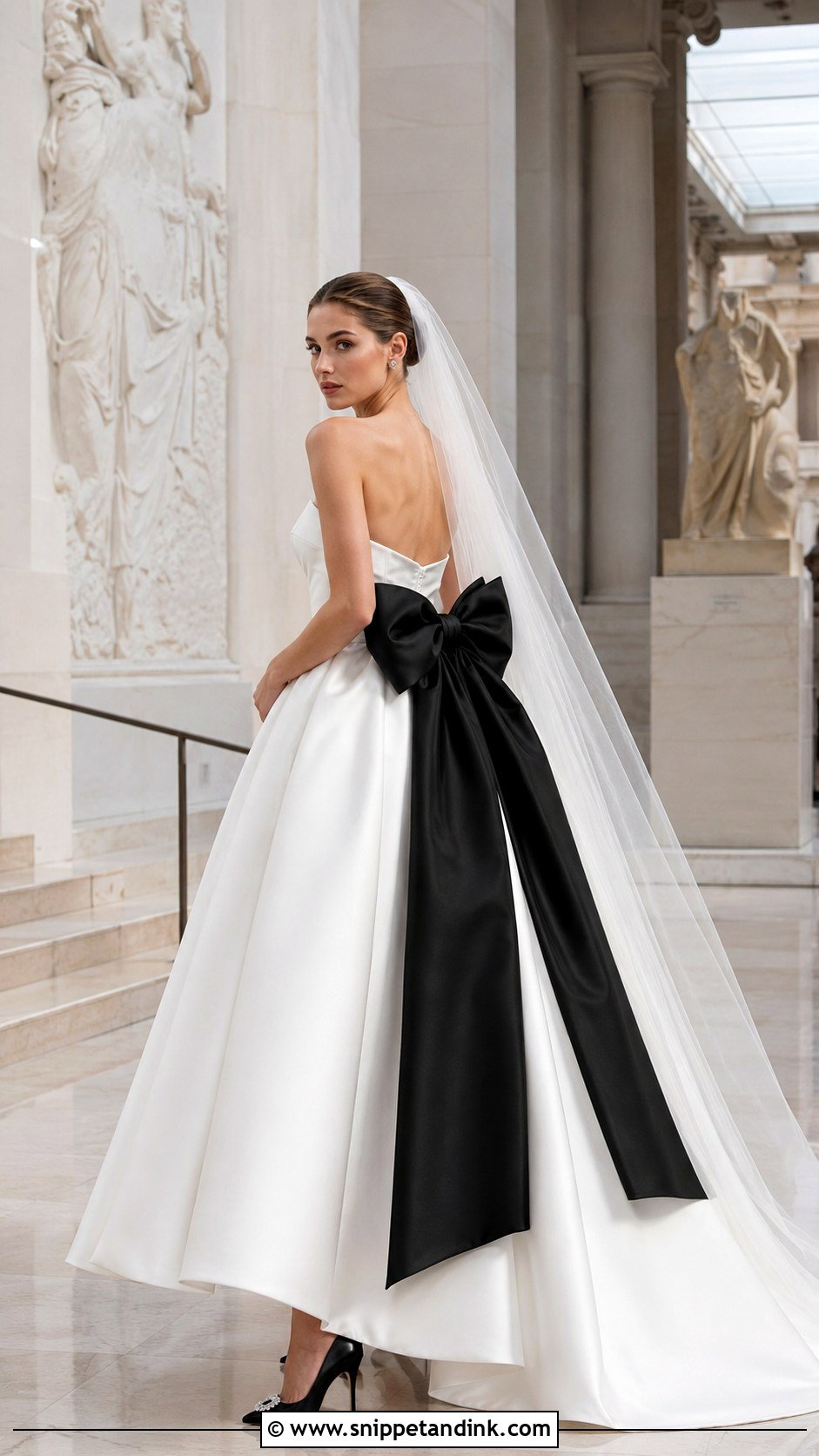
Black on white satin is the highest-contrast accent on this list, and that cuts both ways. An oversized bow at the back waist gives you a real moment as you walk away from guests, but it also shows every crease, so I ask for the bow to be interlined and hand-tacked in place, otherwise it slumps by the first dance. Dark dyed satin can also transfer onto white fabric with heat and friction, so have the seamstress test a hidden corner. Keep a clean strapless bodice and a structured ball skirt, then add black pointed heels, diamond studs and a sleek low bun. A plain cathedral veil softens the bow without hiding it, and white callas tied with black ribbon close the loop. This one was made for a formal hotel, a museum or a city wedding.
4. Colorful Wildflower Wedding Dress
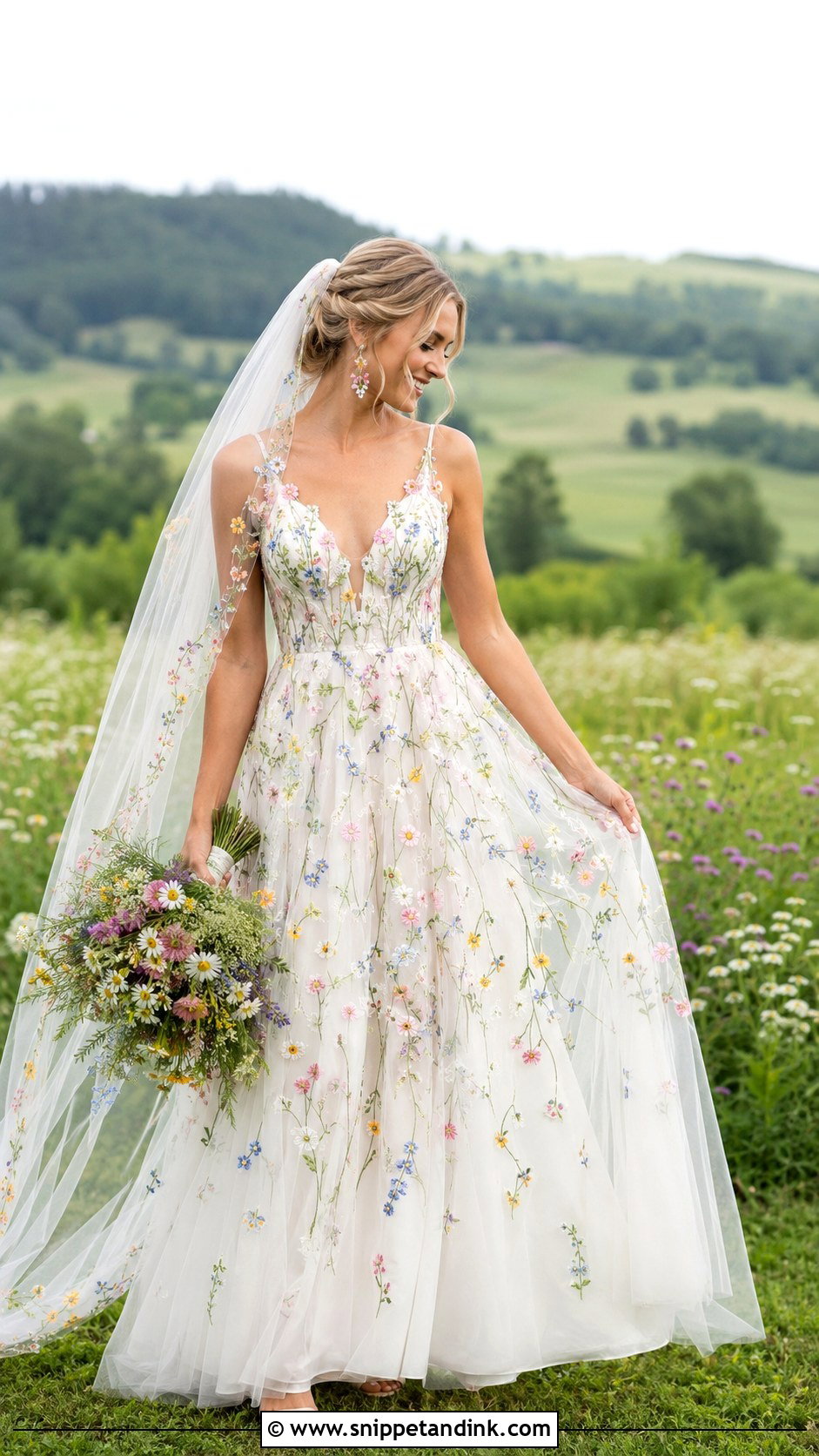
Scattered wildflower embroidery in pink, yellow, blue, lavender, and green only looks like a meadow if the placement is irregular. When motifs repeat in a neat grid, the skirt starts to look like printed fabric, so I look for clusters of different sizes with bare tulle between them. Slim straps and a fitted bodice keep the top light. Ivory block heels are the sensible call if the ceremony is on grass, since a stiletto sinks. Add small floral earrings, a fingertip veil edged with a few blooms, and a loose seasonal bouquet that borrows two or three of the dress colors rather than all five. Soft waves or a braided updo finish it for a garden or countryside day.
5. Blue Ombre Wedding Dress
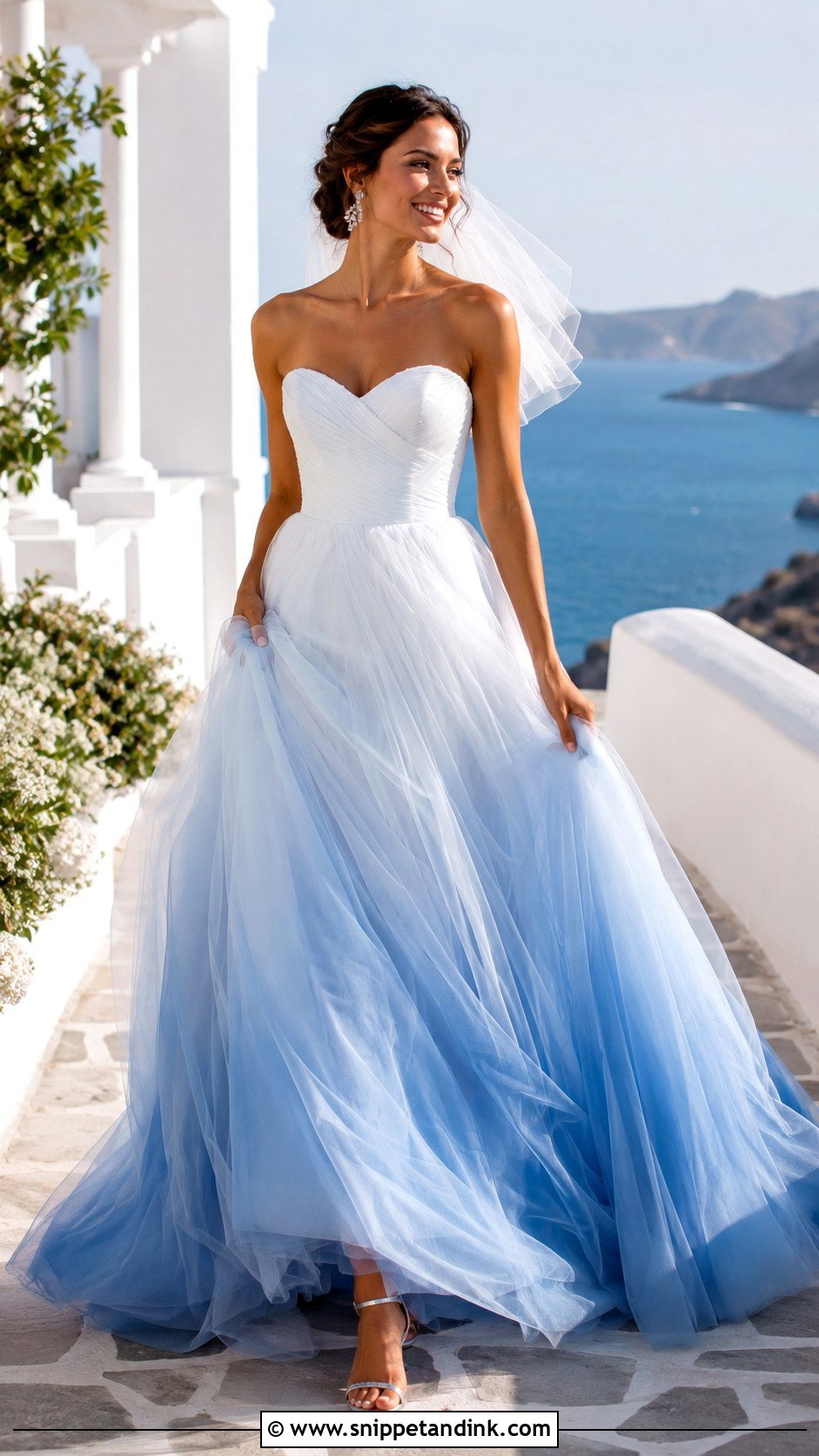
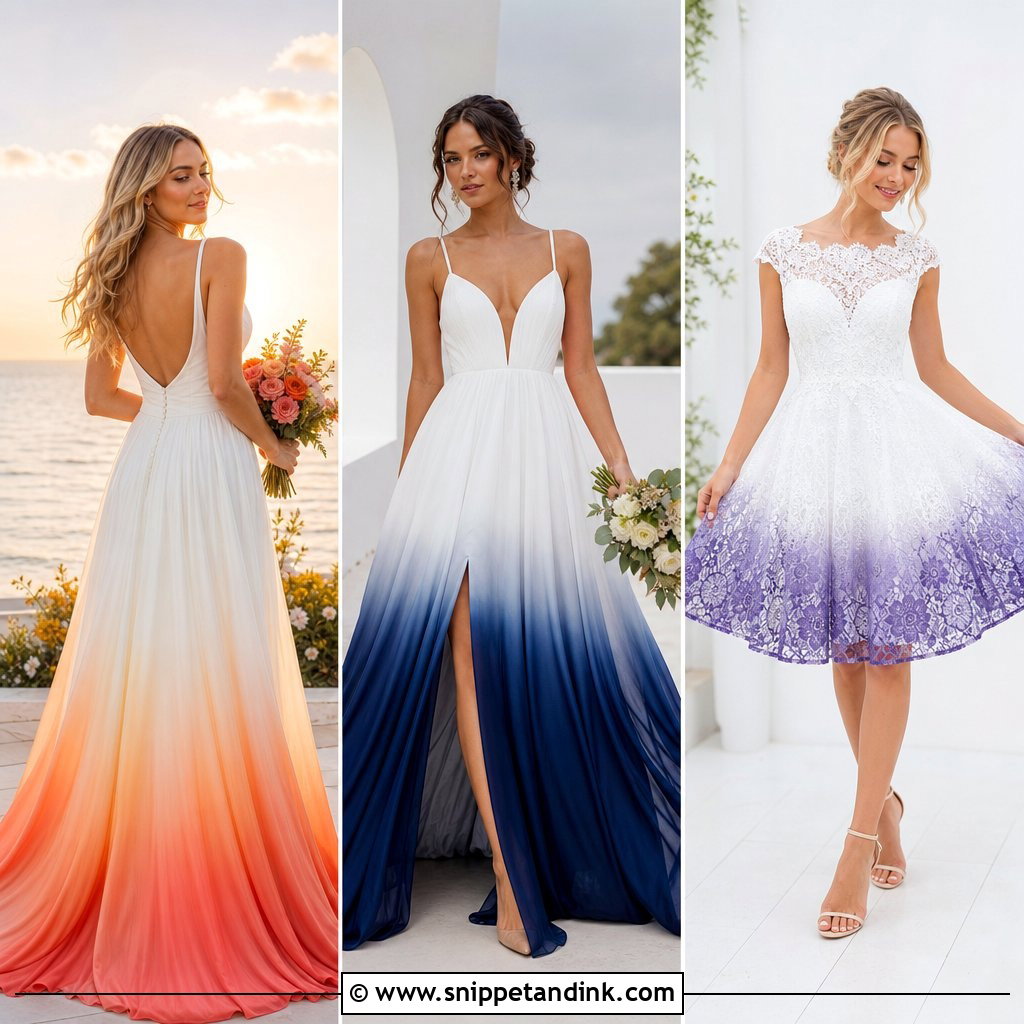
Ombre is harder to get right than it looks in a photo. The fade has to begin low enough that the bodice still reads bridal, and on layered tulle each layer is usually dyed to a slightly different depth, which is what gives the skirt its dimension. Ask whether the color was dyed before or after construction, because a gown dyed after sewing can show darker lines along the seams. A strapless scoop or subtle sweetheart keeps the top quiet. Silver sandals, crystal earrings and a white veil that stops above the deepest blue are all it needs, with a white bouquet carrying a few blue stems. Near water or in a bright modern room, the gradient really comes alive.
6. Champagne Gold Beaded Wedding Dress
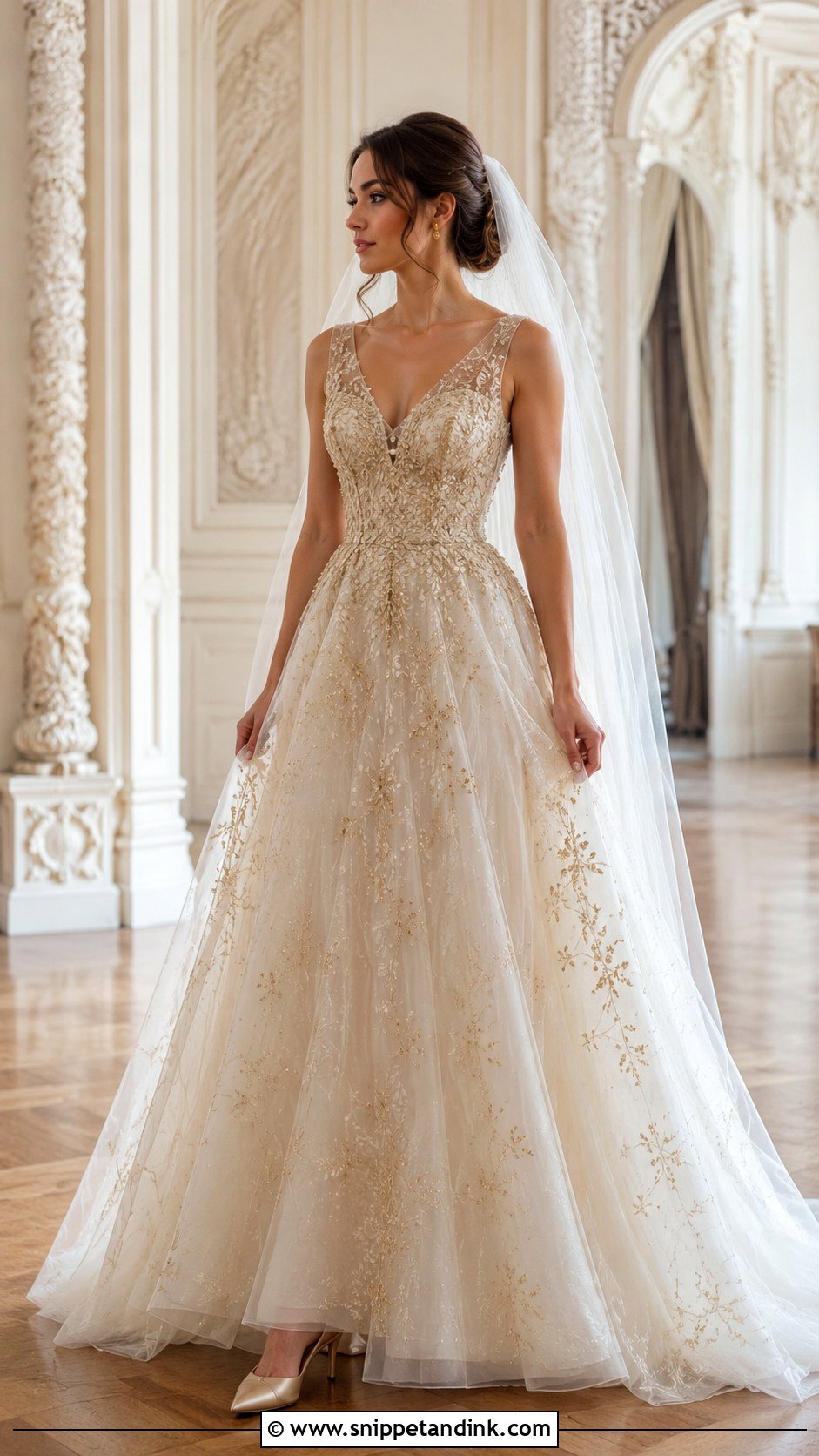
Gold beading over a champagne underlayer warms the whole gown, but beads add weight quickly. On a heavily beaded bodice I check that the straps or shoulder seams are reinforced, because the weight drags a neckline down over a long day. A soft V-neck with a sheath or A-line skirt keeps it from feeling like armor. Pair it with champagne satin pumps, small gold earrings and a sheer ivory veil tucked beneath a smooth bun, then carry white orchids or cream roses with very little greenery. Skip large metallic jewelry entirely; the dress is already doing the shimmer. Historic venues and candlelit evening receptions flatter gold far more than flat midday sun.
7. Sage Green Floral Wedding Dress
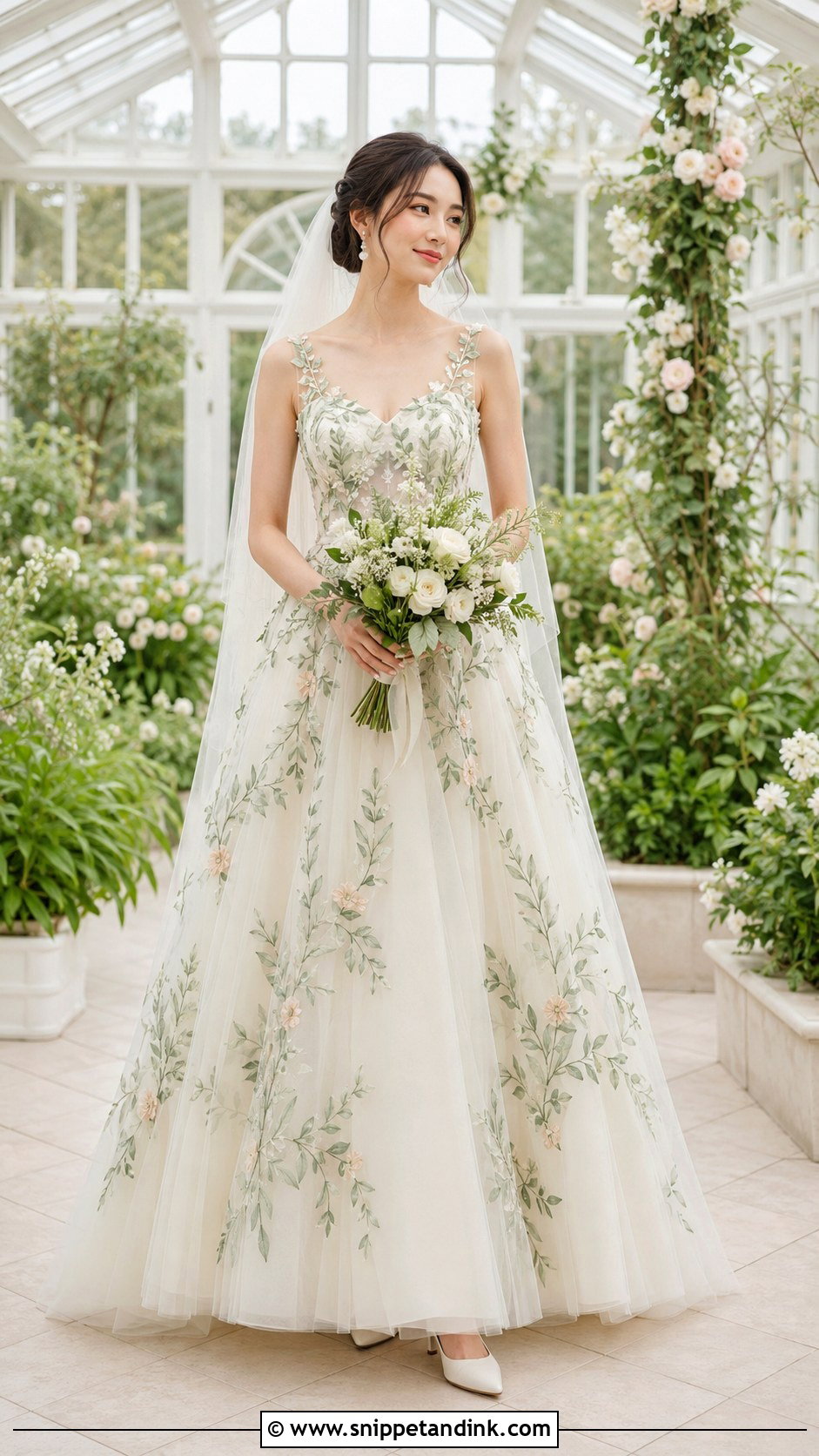
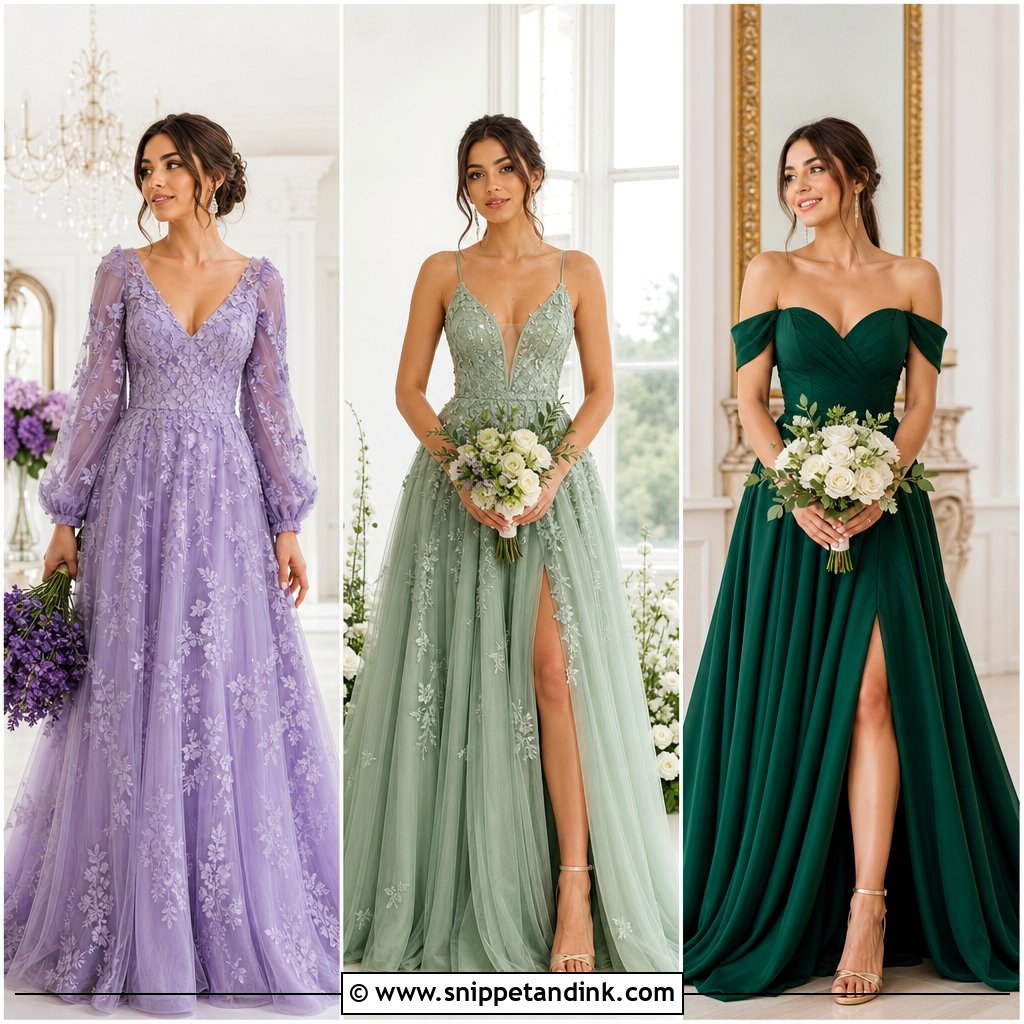
Sage green appliqués are the quietest accent here, and that’s their strength. Leafy embroidery framing the bodice and trailing onto the skirt, with a few white or blush fabric flowers tucked between the leaves, reads botanical without tipping into costume. Test the shade next to the base fabric: sage sits close to grey, and against a very bright white it can look dull, so ivory grounds usually suit it better. Ivory low heels, pearl earrings, a chapel-length veil and a loose bun with a couple of leaf pins keep the theme going. Sage also sits easily beside bridesmaid dresses and table linens, which makes coordinating a greenhouse, woodland or garden venue much simpler.
8. Lavender Sash Wedding Dress
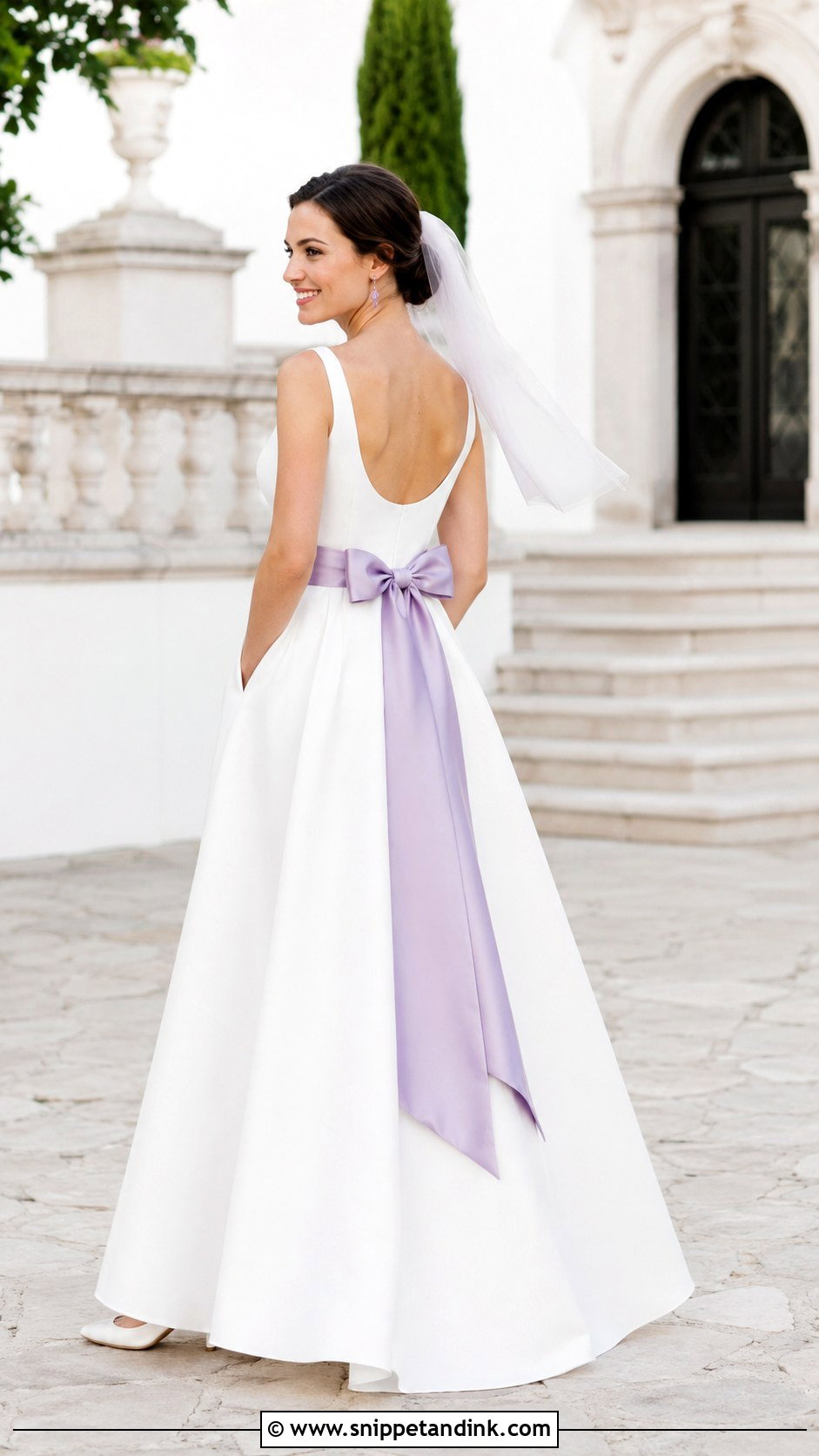
A sash is the accent I suggest most to brides who aren’t sure about color, because it comes off. Wrap a wide silk or satin sash at the natural waist of a plain A-line gown and finish it with a flat bow at the back. Flat matters: a puffy bow gets crushed the moment you lean back in a chair. I also have the seamstress add two thread loops at the side seams so the sash can’t creep upward while you dance. Ivory pumps, amethyst drops, a plain-edged veil and white roses mixed with lavender blooms carry the color. For an heirloom or minimalist dress it’s the kindest update there is, since nothing is cut or sewn permanently.
9. Pink Rose Wedding Dress
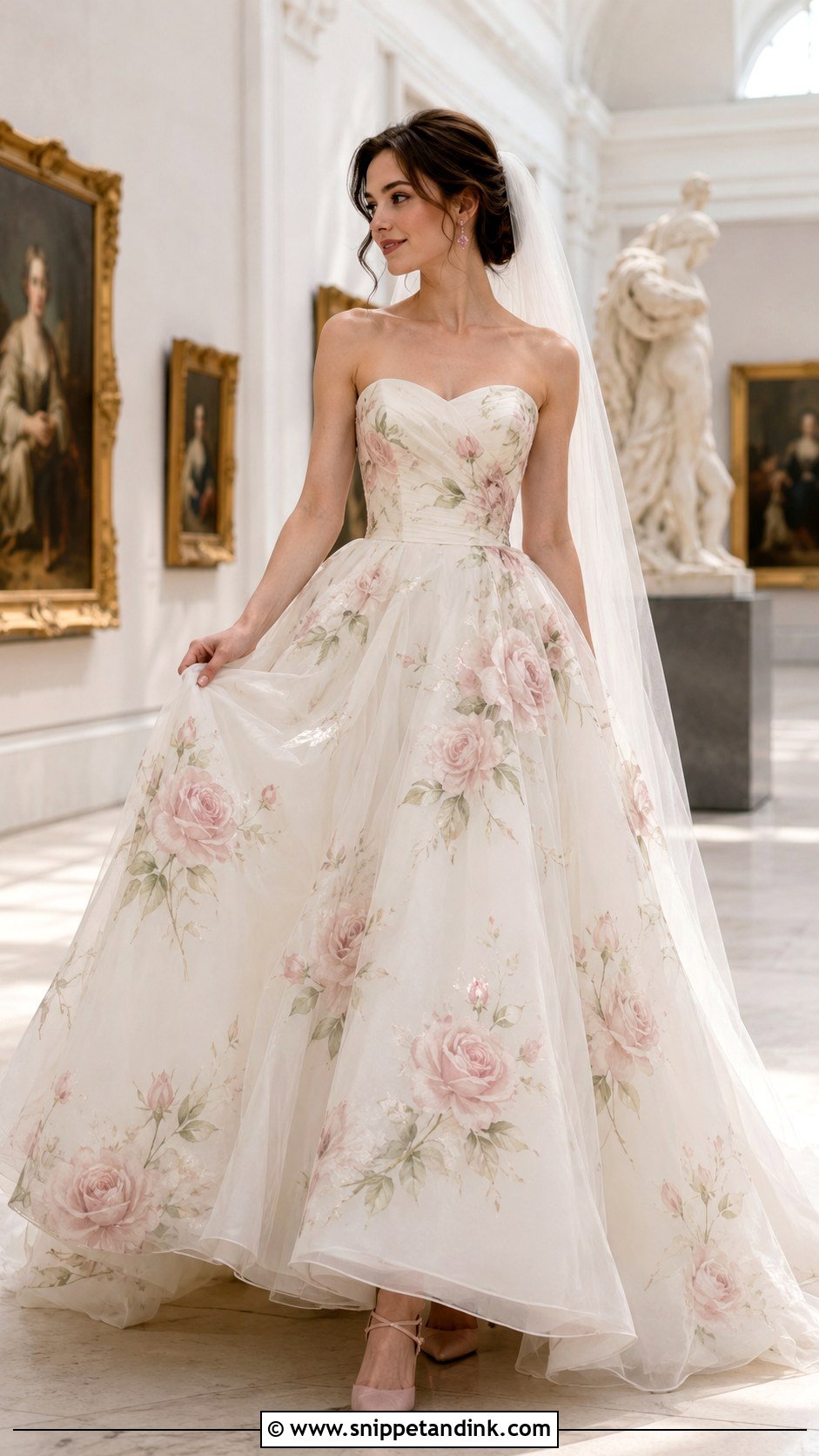
Hand-painted pink roses make a gown one of a kind, and they ask for restraint everywhere else. Gather the roses near the hem of an ivory organza ball gown, with only a few on the bodice and pale green leaves so the pink never turns sugary. Before anyone steams or spot cleans it, ask the artist what paint was used, as some fabric paints soften or bleed with heat and water. Keep the neckline a clean strapless line with no extra beading. Blush satin heels, pink gemstone studs, a plain ivory veil, a compact bouquet of white and pale pink roses and a soft updo with face-framing pieces round it out. A spring garden or an art-minded wedding is its natural home.
10. Burgundy Bow Wedding Dress
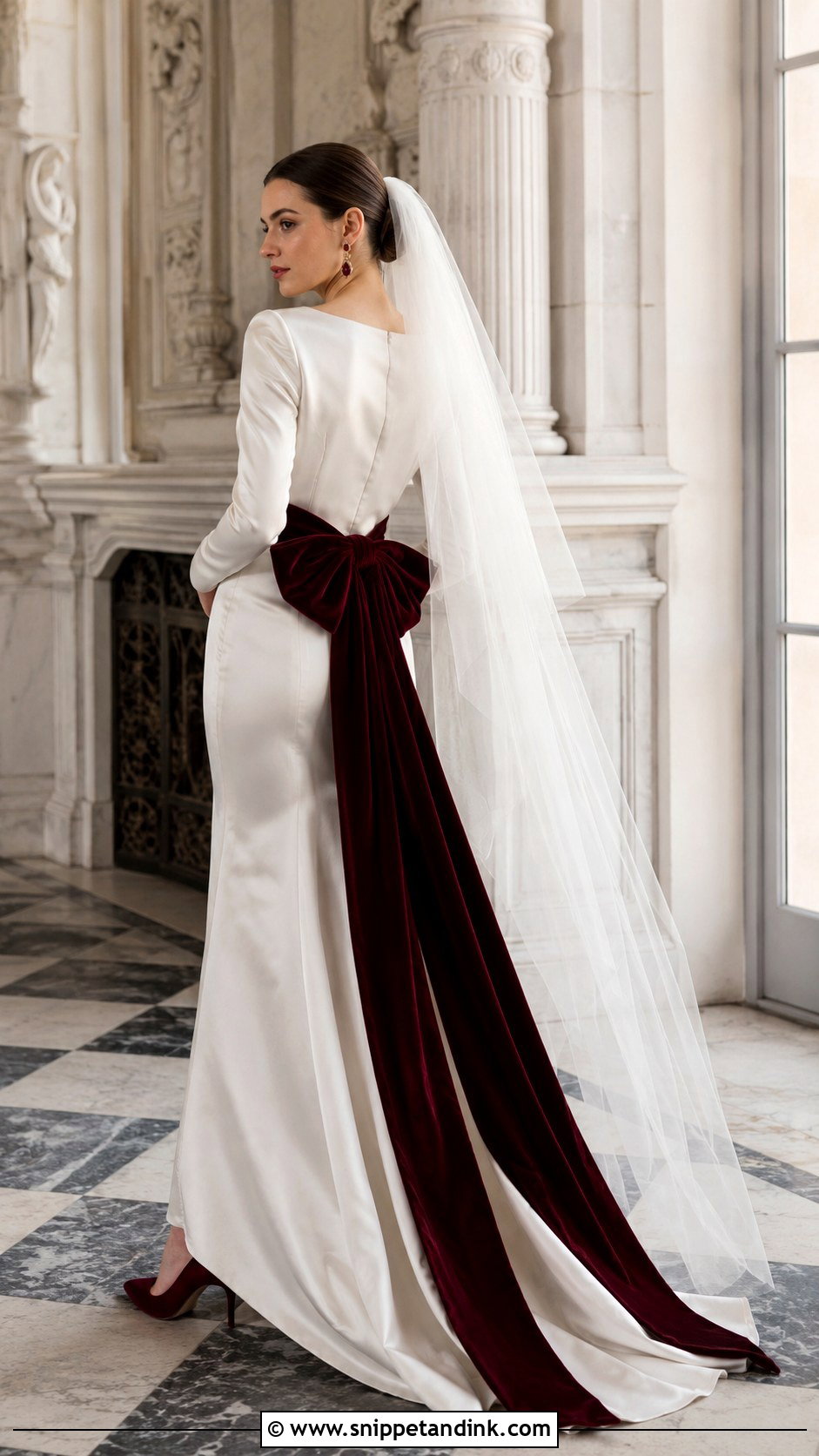
Burgundy velvet against ivory satin or crepe is a cold-weather pairing I keep coming back to, because velvet’s pile catches candlelight in a way flat satin can’t. Start with a long-sleeve gown, fitted bodice and full skirt, then add a structured velvet bow at the back waist with tails running partway down the train. Velvet marks when you sit on it, so I ask for tails light enough to lift aside before you take your seat. Burgundy pumps repeat the color under the hem. Add garnet earrings, a smooth chignon and a plain veil, with cream roses, deep red flowers and dark greenery in hand. Keep everything else bare. Autumn and winter weddings in historic or formal rooms are where it belongs.
11. Pastel Embroidered Wedding Dress
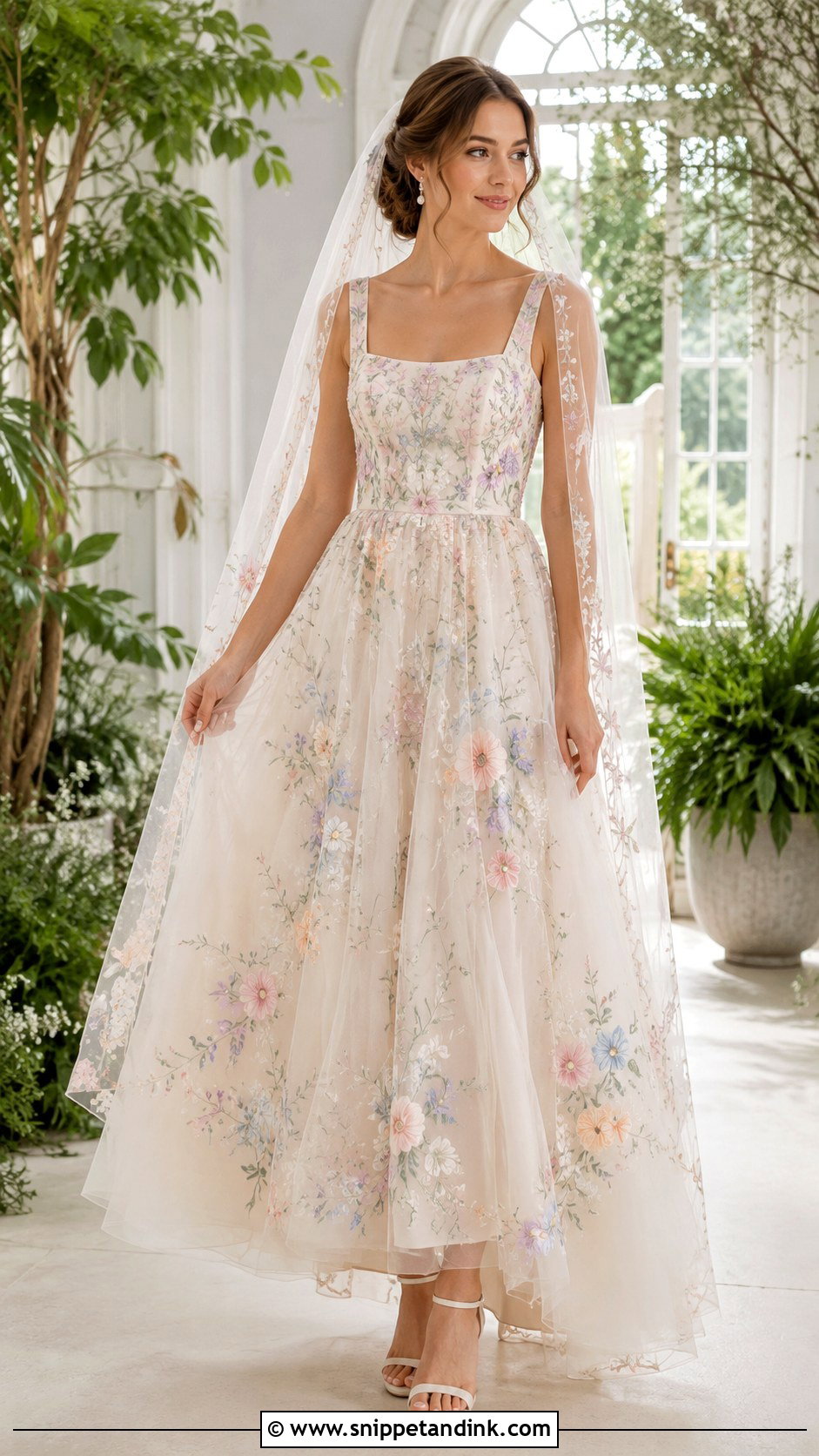
Five pastels on one dress can go two ways: coordinated, or confetti. The difference is scale and spacing. Small motifs in blush, powder blue, peach, lavender and pale green, starting at the neckline and spreading across the skirt, read soft when each flower is small and there’s breathing room around it. A square neckline and lightly gathered A-line skirt give the embroidery a calm frame. Ivory ankle-strap heels, pearl earrings and a veil with a narrow embroidered edge are enough. For flowers, I pull only two or three of the dress colors so the bouquet doesn’t argue with the skirt. Spring and summer gardens, conservatories and rooms with big windows suit it.
12. Blue Toile Wedding Dress
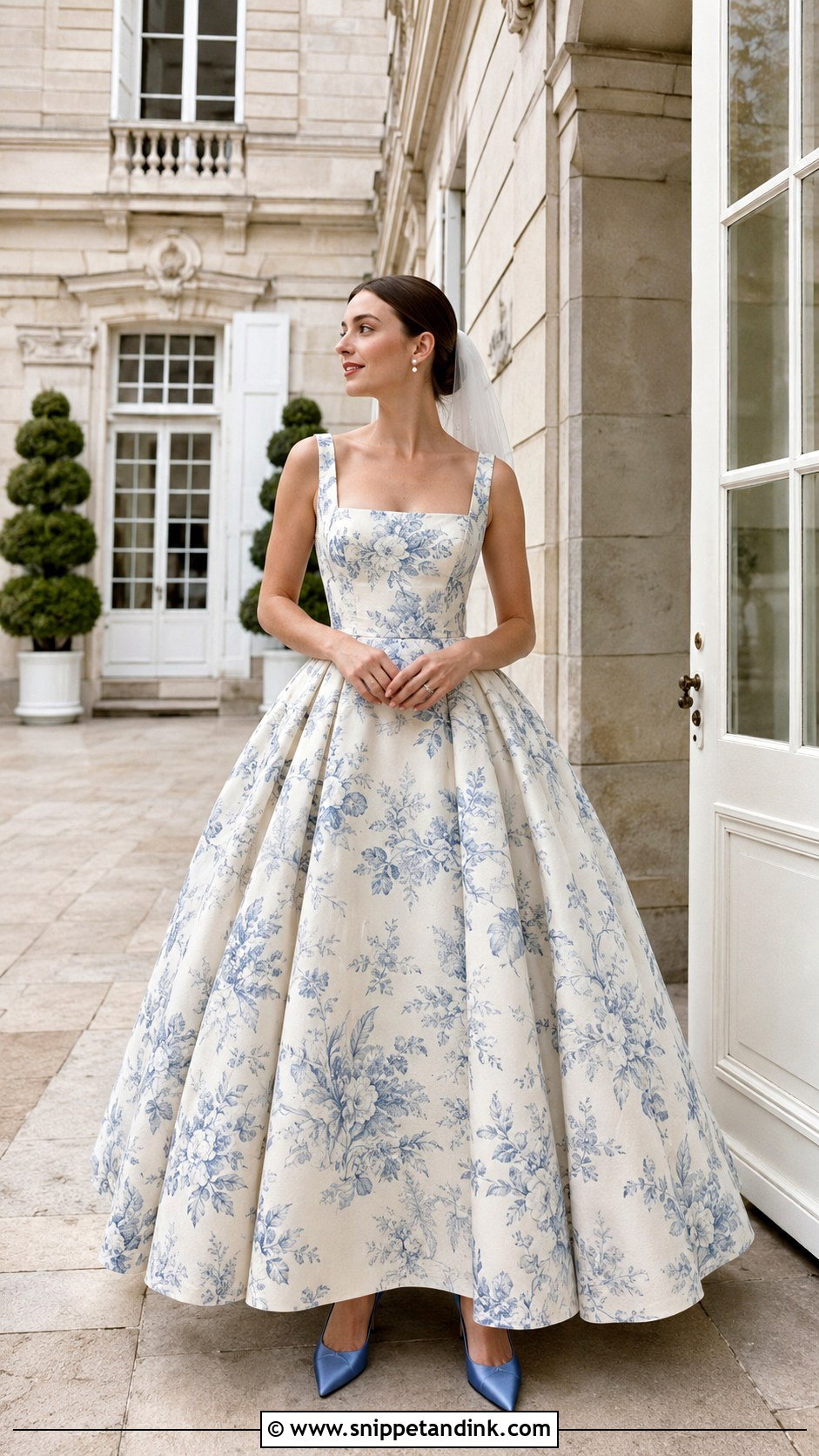
Toile comes from furnishing fabric, so on a gown it brings a slightly antique, storybook feel. The scenes need to stay crisp, which is why it works best on structured cotton blends, satin or organza that hold a clean line; on soft chiffon the print blurs into a smudge. I prefer the busier print on the skirt and a restrained one on the bodice so your face stays the focus. Blue satin pumps, pearl studs and a short plain veil that doesn’t hide the pattern. White roses with blue hydrangeas, and a sleek low bun or smooth half-up style. Estates, museums and country houses suit it best.
13. Red Floral Train Wedding Dress
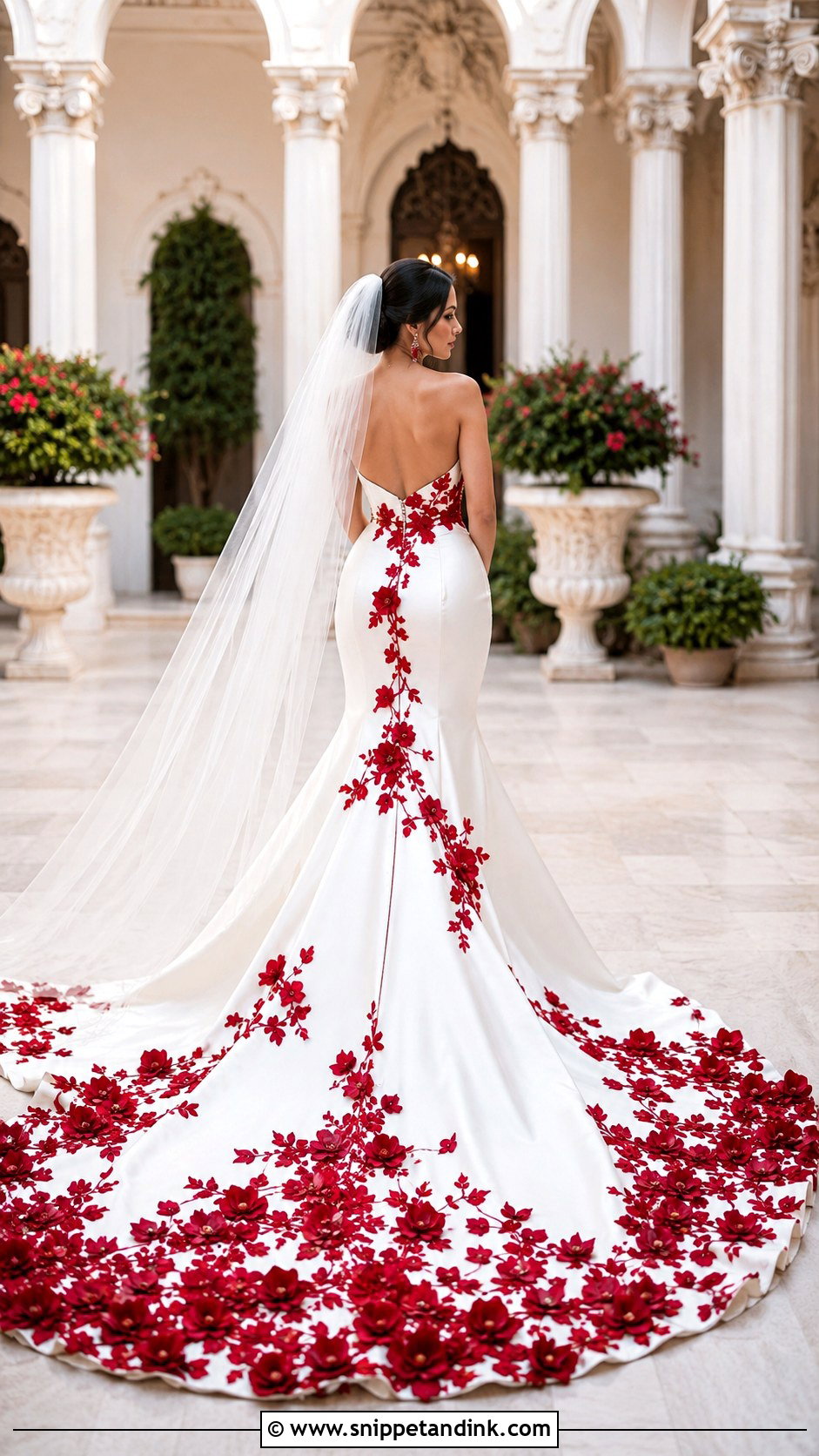
Putting the color on the train is a choreography decision as much as a style one: guests see plain ivory as you walk in and red blooms as you pass them. Dimensional appliqués on a smooth crepe or satin base give the clearest contrast, and a few flowers should climb toward the waist so the train never looks like an afterthought. Settle the bustle plan early, because the appliqués need to sit where the hooks won’t crush them once the train is lifted for the reception. Ivory heels, ruby studs, a sleek updo and a sheer veil that either stops above the flowers or clears the train entirely. A white bouquet with a few deep red blooms. Formal portraits are where this one earns its keep.
14. Peach Tulle Wedding Dress
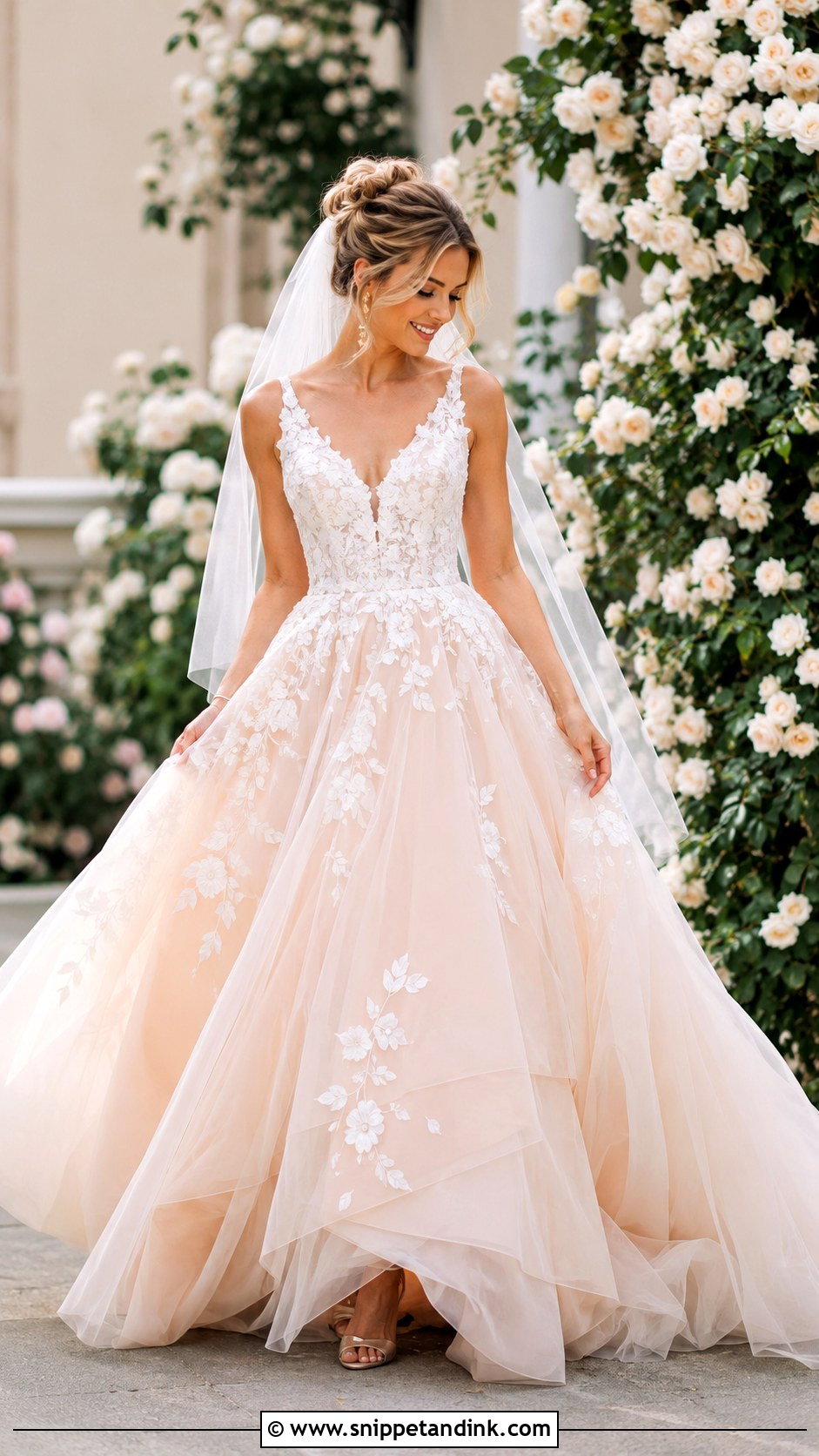
Peach under ivory is warmer than blush and more forgiving on olive and golden skin. A fitted ivory bodice sits over a layered skirt with a pale peach underlay, and ivory appliqués on top become more visible thanks to the gentle contrast. Where the peach sits in the layers matters: right beneath the top tulle it can read orange in direct sun, so I prefer it as the second or third layer down. Nude or champagne heels, delicate gold earrings and a sheer ivory veil. Cream, peach and light pink flowers, with peach blush and a neutral lip. Sunlit spring, summer or early fall days flatter it most.
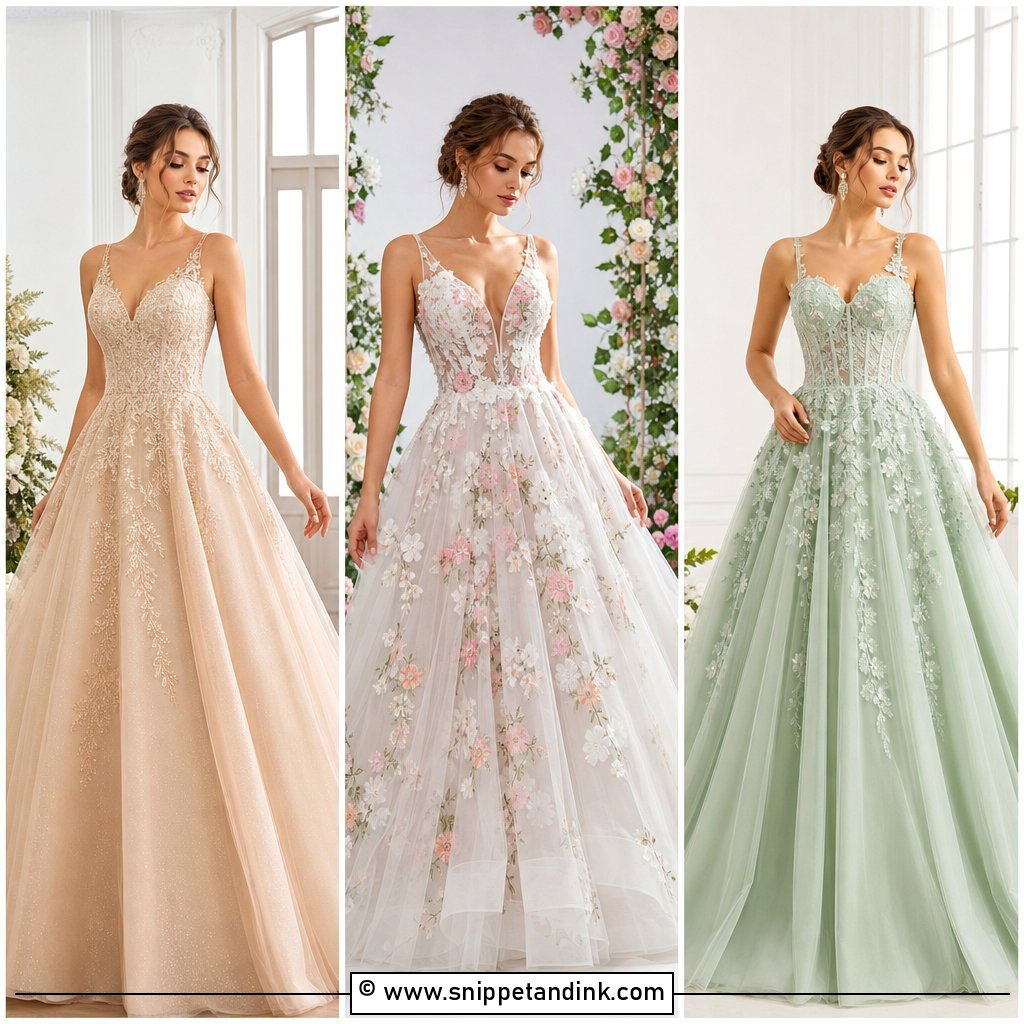

15. Silver Beaded Wedding Dress
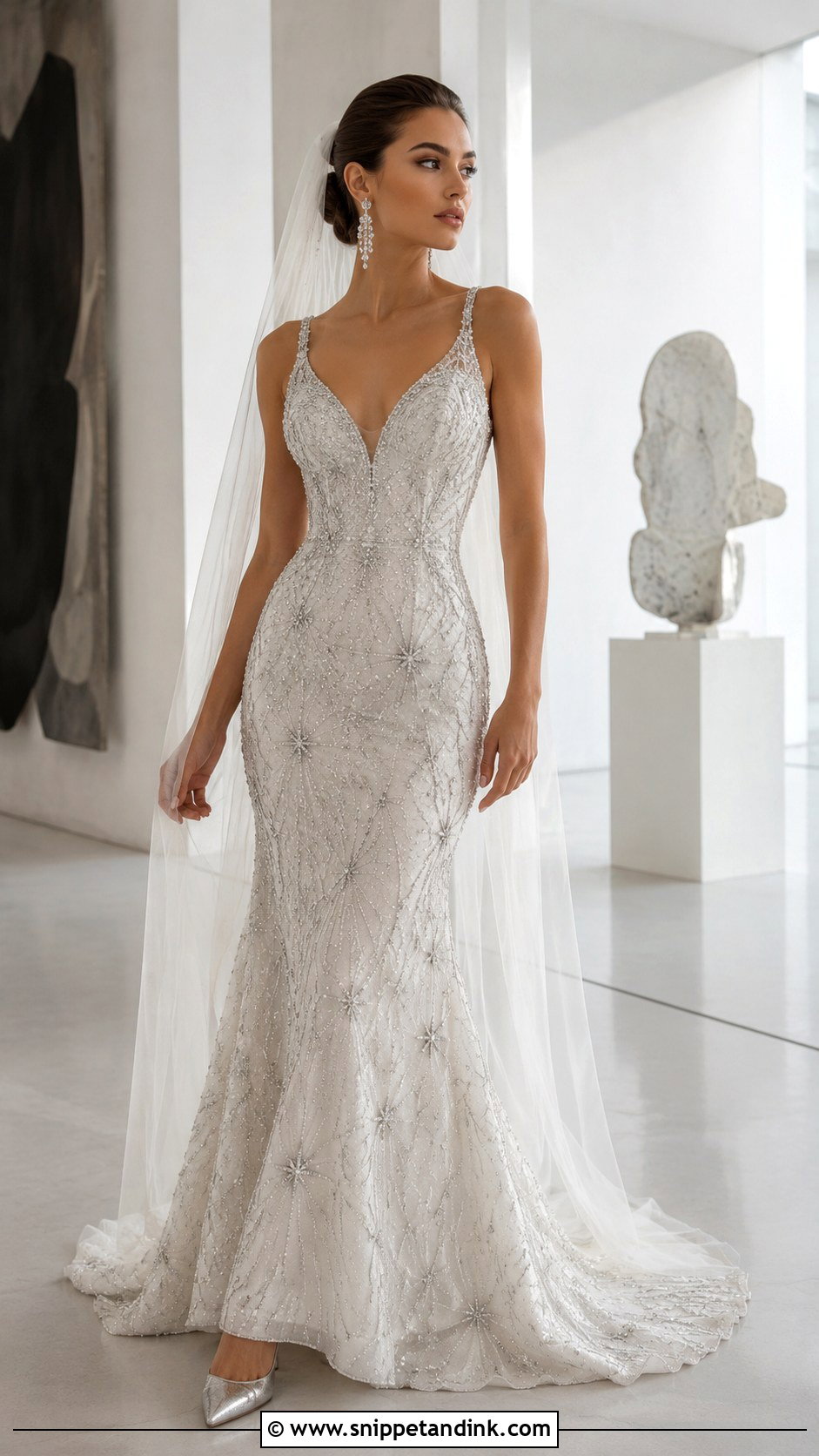
Silver beading gives color through light rather than pigment, a good route if you want something other than plain white but aren’t ready for a colored fabric. Look for stars, vines or geometric patterns on an ivory sheath or fit-and-flare, densest at the bodice and lighter on the skirt. Ask whether beads are sewn individually or in short runs; one long chain-stitched row can unravel along its whole length if a thread snags on a chair. Silver pointed heels, crystal drops and a plain tulle veil, with no jeweled headpiece competing. White orchids or callas. Bright indoor light at hotels, galleries and evening venues makes the beadwork glint in every frame.
16. Teal Cape Wedding Dress
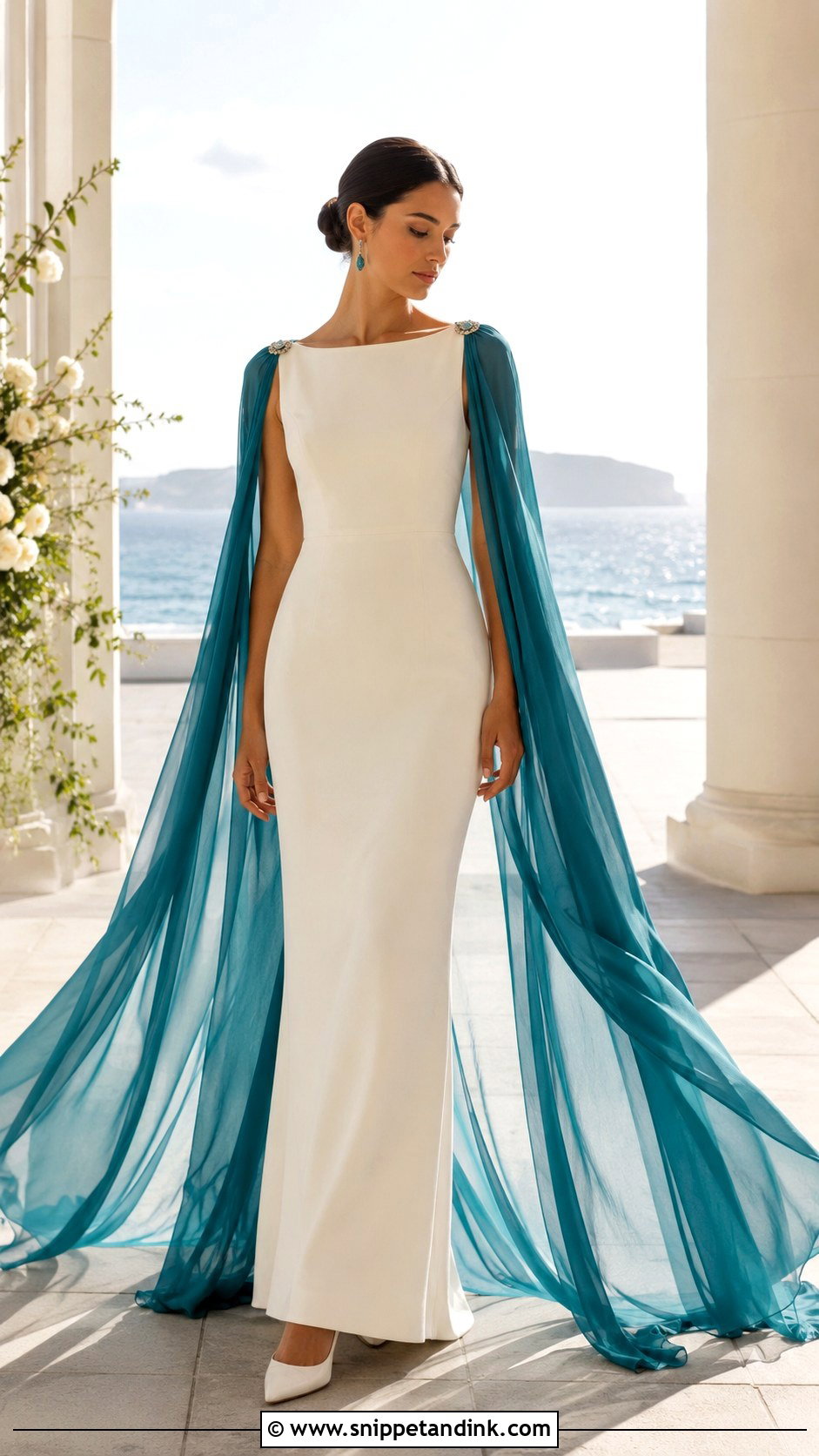
A detachable cape lets you wear two looks in one day. Begin with a clean column or A-line gown with minimal seams and a modest neckline, then add a sheer teal cape that fastens at the shoulders and falls to the floor. The fastening is where I spend the fitting time: hidden snaps or hooks on reinforced shoulder seams, never safety pins, because a floor-length cape pulls backward with every step. Take it off for the reception. Ivory heels, teal gemstone earrings and a sleek low ponytail or bun, with no veil so the cape shows from every side. White flowers with small blue-green accents link it to the bouquet. Architectural spaces, the coast and modern indoor venues suit it.
17. Yellow Floral Wedding Dress
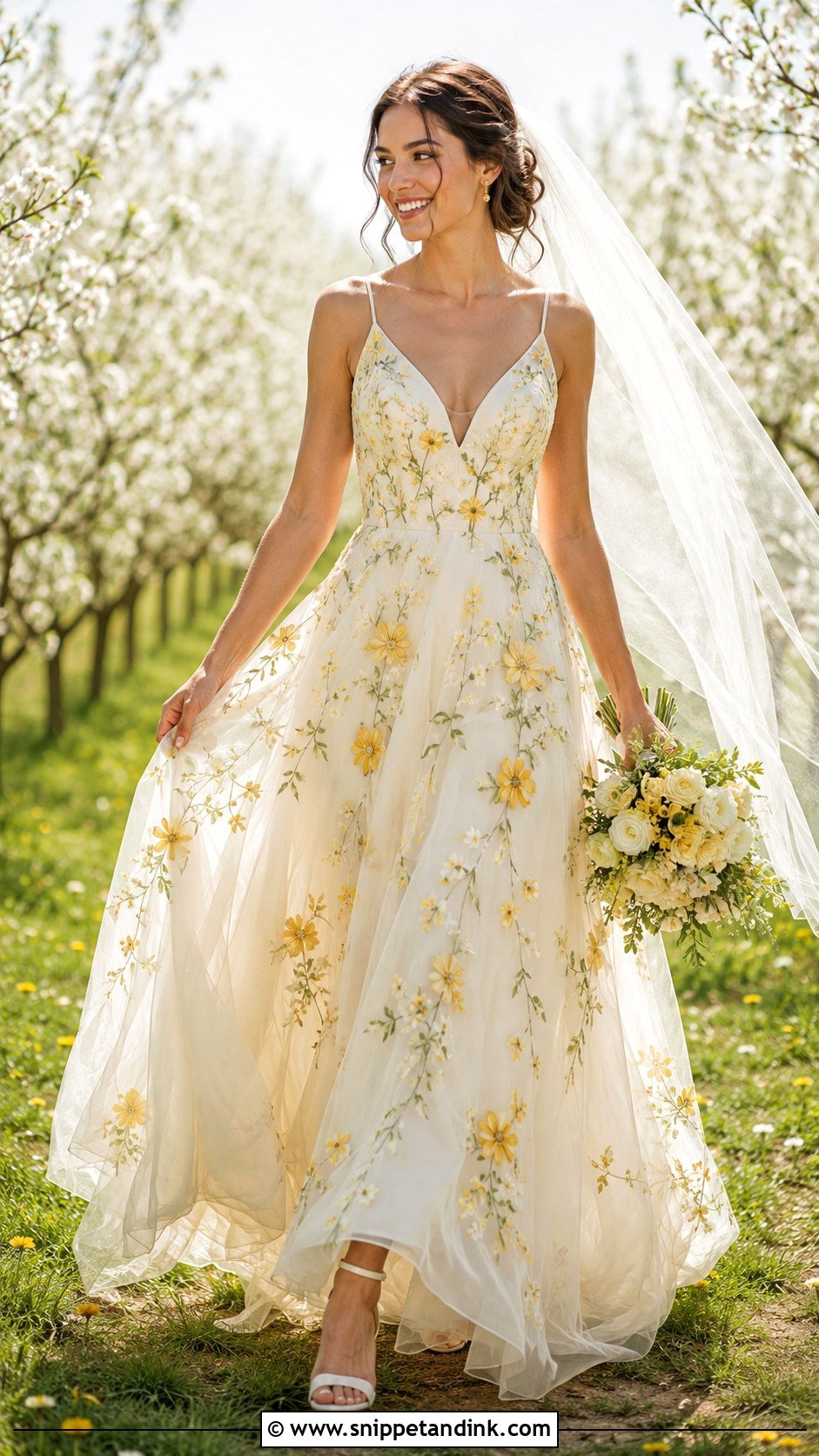
Yellow is the hardest accent to photograph against ivory. A strong lemon can make the gown look slightly dingy by comparison, while soft butter or pale primrose avoids that problem. Embroidered blossoms with green stems around the hem, waist and neckline of a light organza or tulle A-line, plus a few dimensional flowers for texture and plenty of open space between them. Ivory block heels, small gold earrings and a plain fingertip veil. White blooms with pale yellow ranunculus, and loose waves or a relaxed low bun. Bright spring and summer weddings in gardens, orchards and estates are its season.
18. Dusty Blue Sleeve Wedding Dress
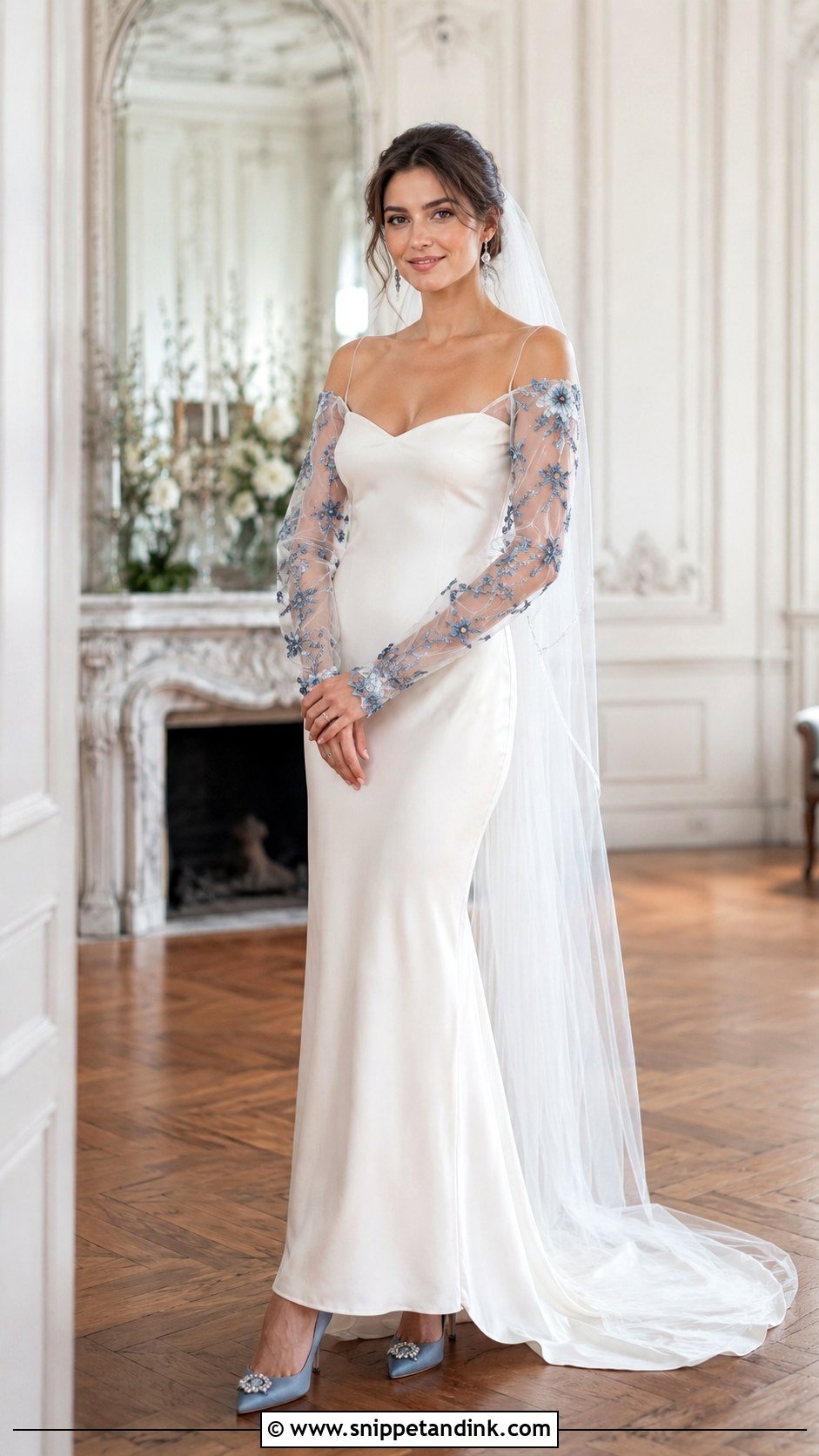
Color near the face is usually the most flattering place for it, which is why dusty blue sleeves work so well. Detachable sheer tulle sleeves embroidered with blue flowers or finished with blue cuffs leave the body of the gown traditionally ivory. Make sure they attach under the arm as well as at the shoulder, or they slide down the first time you raise your arms to dance. Dusty blue heels, silver earrings, a simple veil beneath a soft updo, and a mostly white bouquet with a few muted blue stems. If the sleeves are heavily embroidered, keep the neckline and bodice plain. Any season works, and they’re handy when the evening turns cold.
19. Emerald Belt Wedding Dress
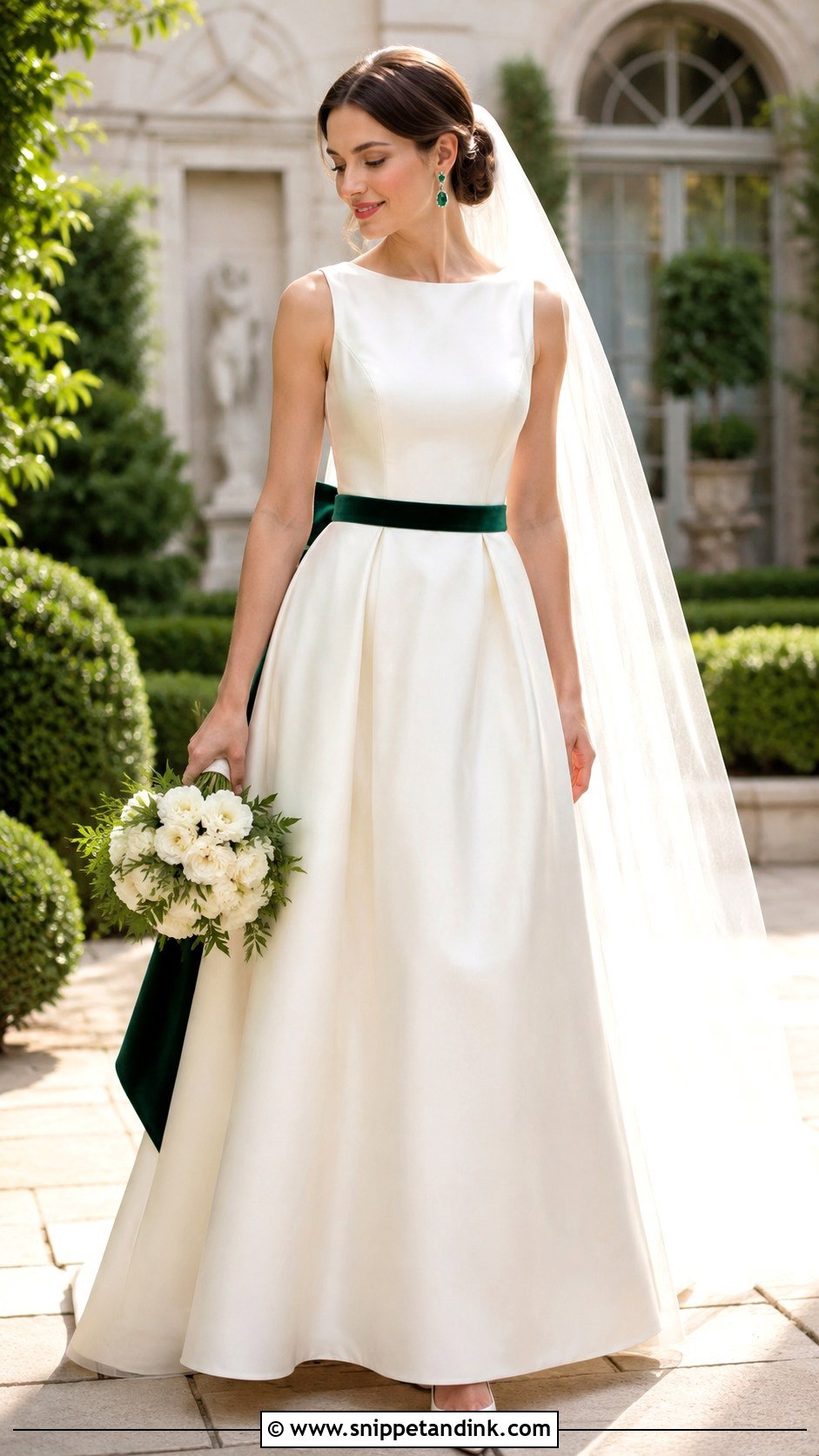
An emerald belt defines the waist and adds depth without changing the dress itself. A narrow velvet or satin belt stays subtle; a wider one with a structured back bow is more dramatic. Velvet can shed pile onto ivory crepe where it rubs, so I check that the inside of the belt is backed in satin. It looks most polished on a boat-neck or V-neck A-line in smooth satin or crepe. Emerald earrings, ivory pumps, a plain cathedral veil and white flowers with deep green foliage. Don’t stack green shoes, gloves and hair pieces on top; two coordinated accents are plenty for a formal celebration at any time of year.



20. Multicolor 3D Floral Wedding Dress
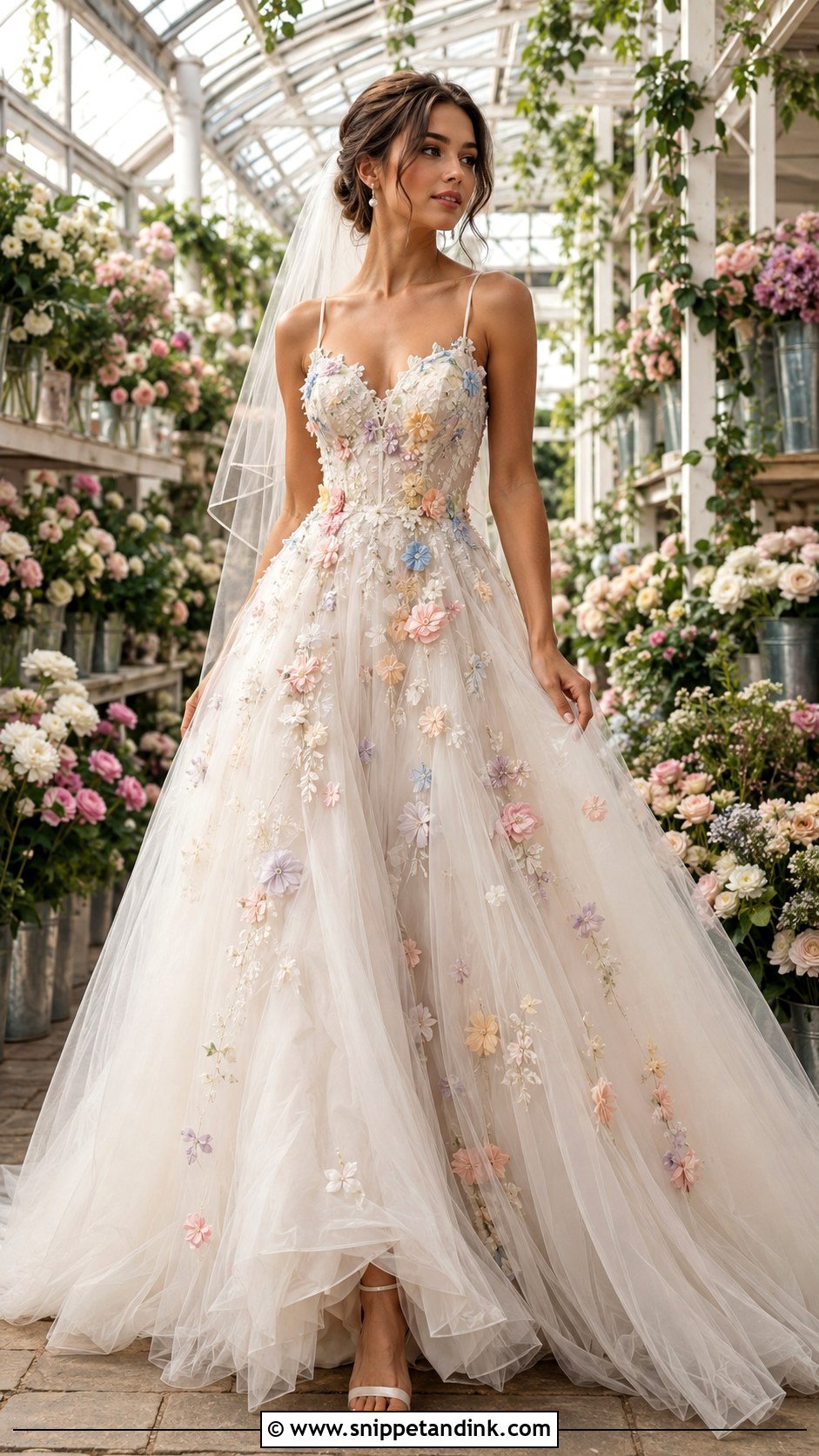
Dimensional flowers turn a white wedding dress into a colorful, textured centerpiece, and they’re the most fragile accent here. Picture a fitted bodice with 3D blossoms in pink, blue, lavender, peach and yellow, and smaller flowers scattered across a tulle skirt with clear spacing so nothing looks crowded. Layered organza petals flatten when packed tightly in a garment bag, so I hang this dress with tissue between the blooms and steam it lightly from the inside on the morning. Simple ivory sandals, small pearl earrings, a plain veil and a neat low bun keep the rest calm, with a mostly white bouquet. Garden, greenhouse and estate weddings already full of flowers suit it.
Colorfastness, Steaming and Storage for a Two-Tone Gown
Colored trim on a white dress needs more care than either fabric would alone, and most of the problems I see happen in the final week rather than on the day itself.
Before alterations and pressing
Ask your seamstress to test colorfastness on a hidden seam allowance or a spare scrap: a damp white cloth pressed against the colored fabric for a minute shows whether any dye lifts. Dark velvet, red and deep green are the shades most likely to transfer. Steam colored areas from the inside, and keep the iron away from appliqués and beading altogether.
On the wedding day
Keep colored sections well away from self-tanner, body shimmer and hand cream, and warn bridesmaids before the hugging starts. If something does mark a dyed area, blot with cold water on a white cloth and stop there. Rubbing or stain pens can spread the dye into the surrounding white, and that is much harder to fix than the original spot.
After the wedding
Tell the cleaner exactly which areas are dyed, painted or beaded, since that changes how they treat the gown. Store detachable capes, sashes and sleeves in their own acid-free tissue rather than folded against the dress, so no color can migrate onto the white during years in a box.
A Shade Worth Repeating Twice, Then Leaving Alone
Color lets a bridal gown carry your personality without giving up white or ivory. The dresses above run from quiet blush underlayers and pastel embroidery to a black bow, a teal cape and three-dimensional flowers. Whichever direction you go, place the color where it flatters your shape, repeat it in one or two accessories, and keep the rest simple. Check how detachable pieces fasten, how the shade looks in your venue’s light, and whether the trim is colorfast before any alteration. Then pick a color that means something to you, because that’s what still looks right in the photos years from now.
You'll Like These Ideas:



Leave a Reply