
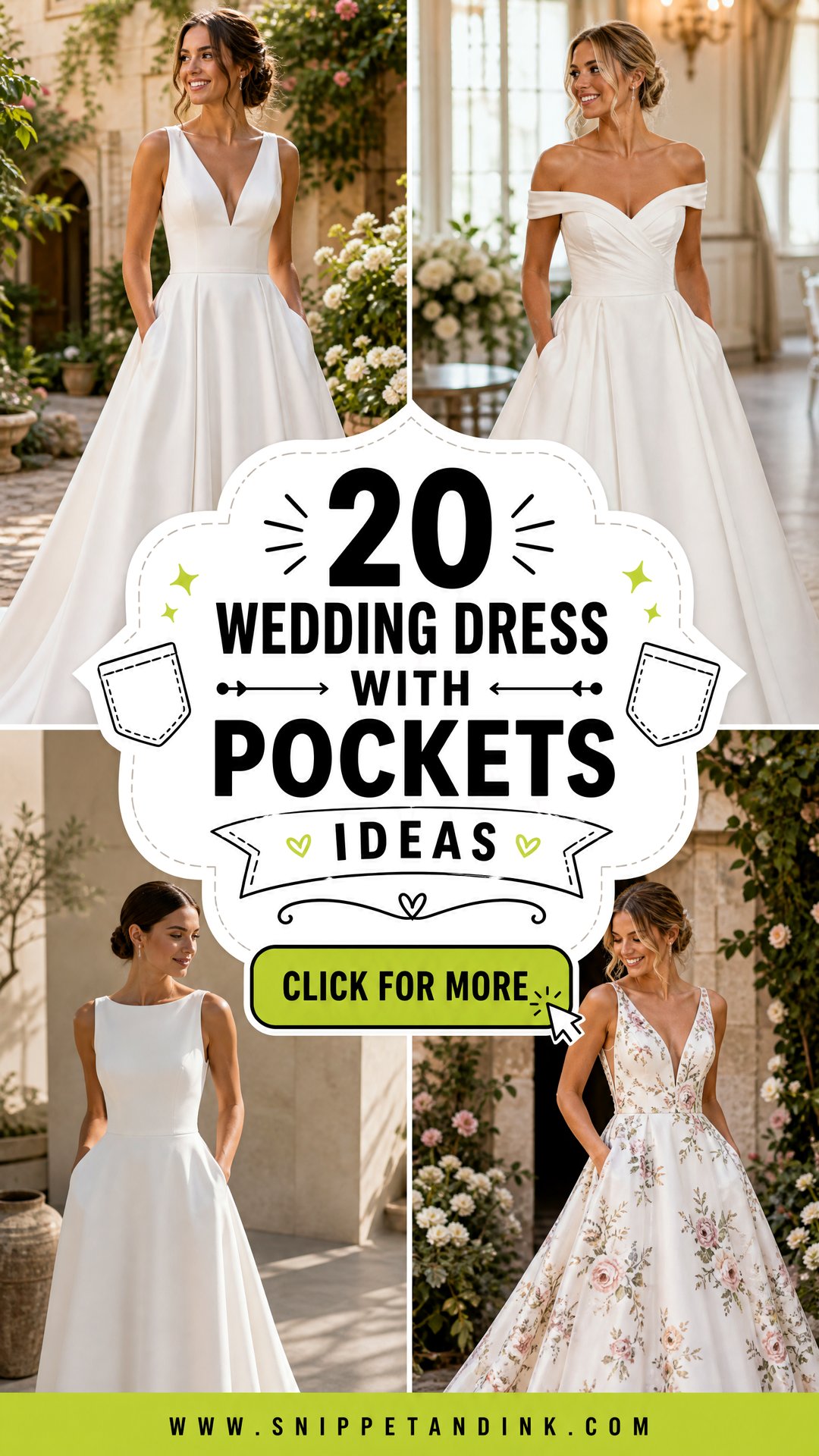
Almost every bride who discovers her dress has pockets puts her hands straight into them, and most keep them there for half the portraits. Pockets give your hands somewhere natural to go in photos and hold the small things you’d otherwise hand to a bridesmaid: a tissue, a lipstick, the folded card with your vows. They aren’t free, though. The skirt has to have enough body or volume to hide them, and the fabric has to be strong enough not to sag. Below are twenty dresses where pockets work, from satin ball gowns to tea-length and two-piece looks, with notes on where each one hides them well and where it doesn’t.
Can a Seamstress Add Pockets to Your Dress?
Often, yes. If you’ve found a dress you love without pockets, a skilled bridal seamstress can usually add in-seam pockets to a skirt that has side seams and some volume. She opens the side seam at hand height, sews in a pocket bag, usually cut from lining fabric so it’s soft and thin, and closes it so the opening hides in the seam.
It’s harder or not worth it in a few cases:
- Bias-cut slips and very fitted mermaid skirts, where any pocket bag shows as a lump.
- Skirts where the side seam runs through heavy beading or lace that would have to be unpicked.
- Very sheer layered skirts with no lining to anchor the pocket to.
Ask about it at your first alteration appointment, not your last, so the seamstress can plan it alongside hemming and taking in. Cost varies a lot by seamstress and dress, so get a quote first.
1. Satin Ball Gown Wedding Dress with Pockets
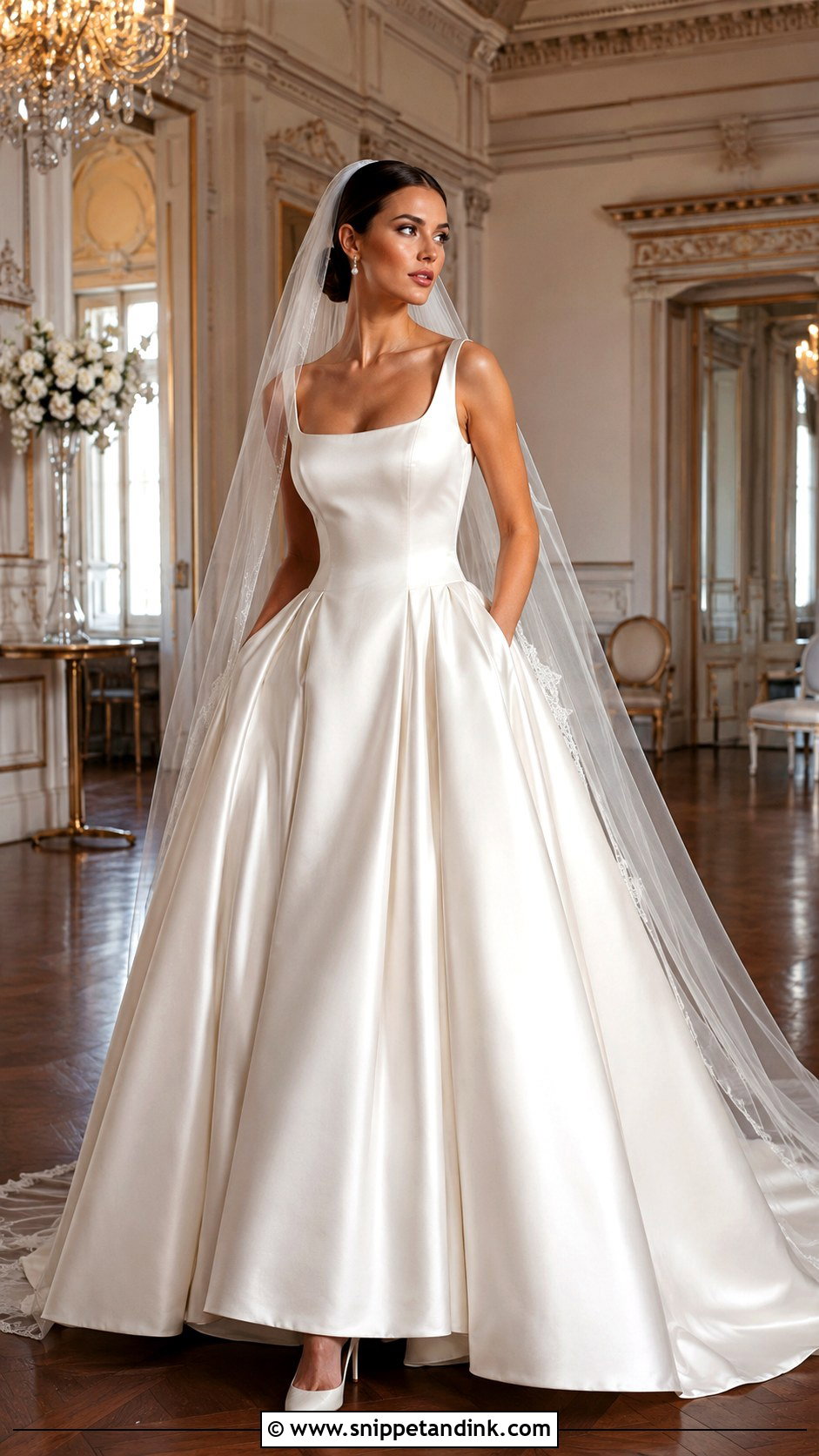
Ball gowns are the easiest place to hide a roomy pocket, because there’s so much skirt the opening disappears into the gathers. Structured matte satin or mikado holds the shape best. A fitted bodice and natural waist define your figure before the skirt opens out. At fittings, I put a lipstick in each pocket and watch the skirt from the side. If the pocket bag hangs below the hip line, it should be shortened and stitched to the lining so it can’t swing.
2. A-Line Wedding Dress with Pockets
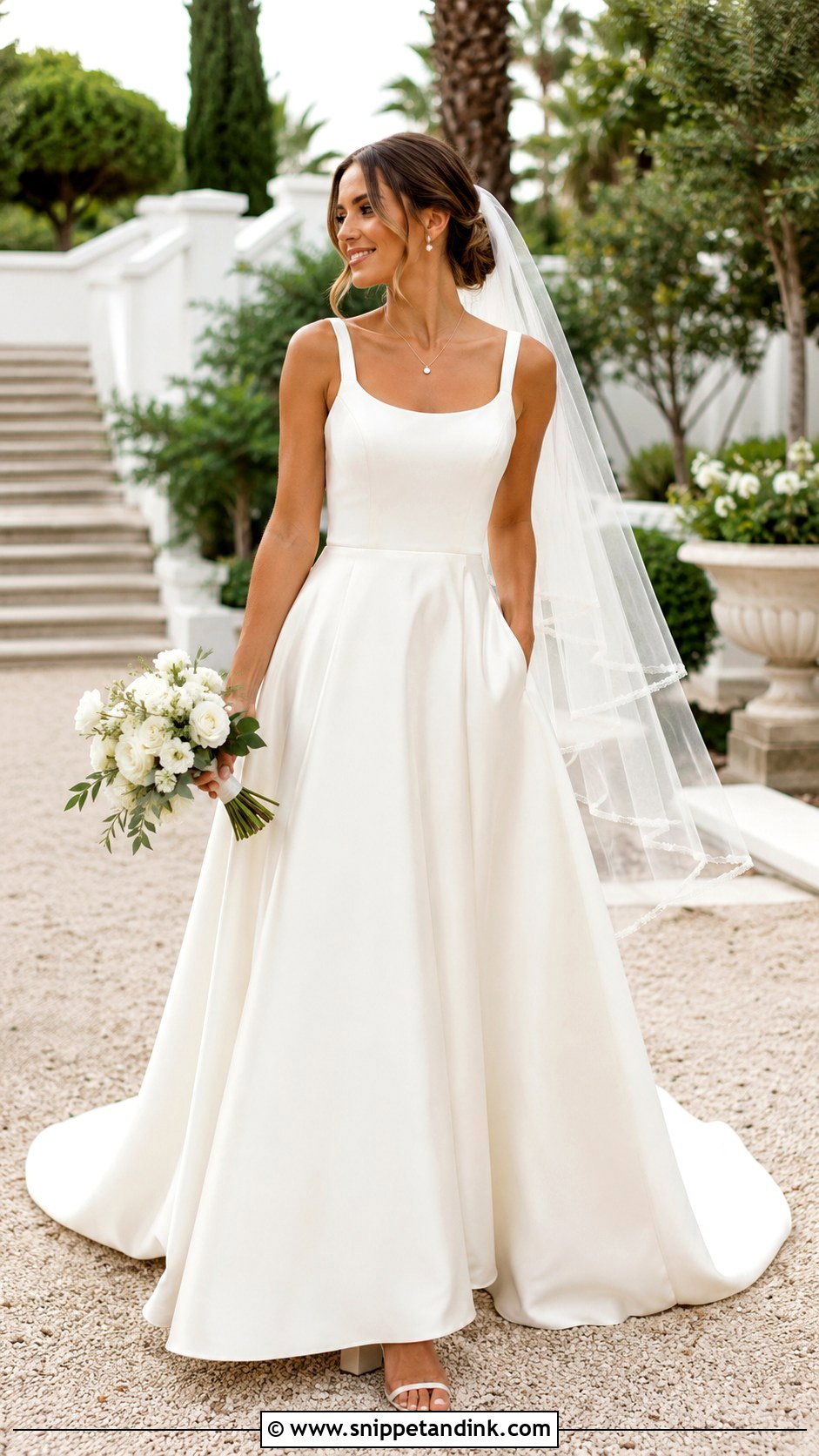
A-line with pockets is the dress I’d recommend to nearly anyone who wants them, since the gentle flare hides the pocket bag without adding volume. Satin, organza or crepe all work; crepe is the one where a stuffed pocket shows most. The openings should sit in the side seams, slightly forward, so your hand slides in without twisting your wrist. Have the tailor check the openings standing and seated. If they gape open when you sit, a small stay stitch at the top fixes it.
3. Strapless Wedding Dress with Pockets
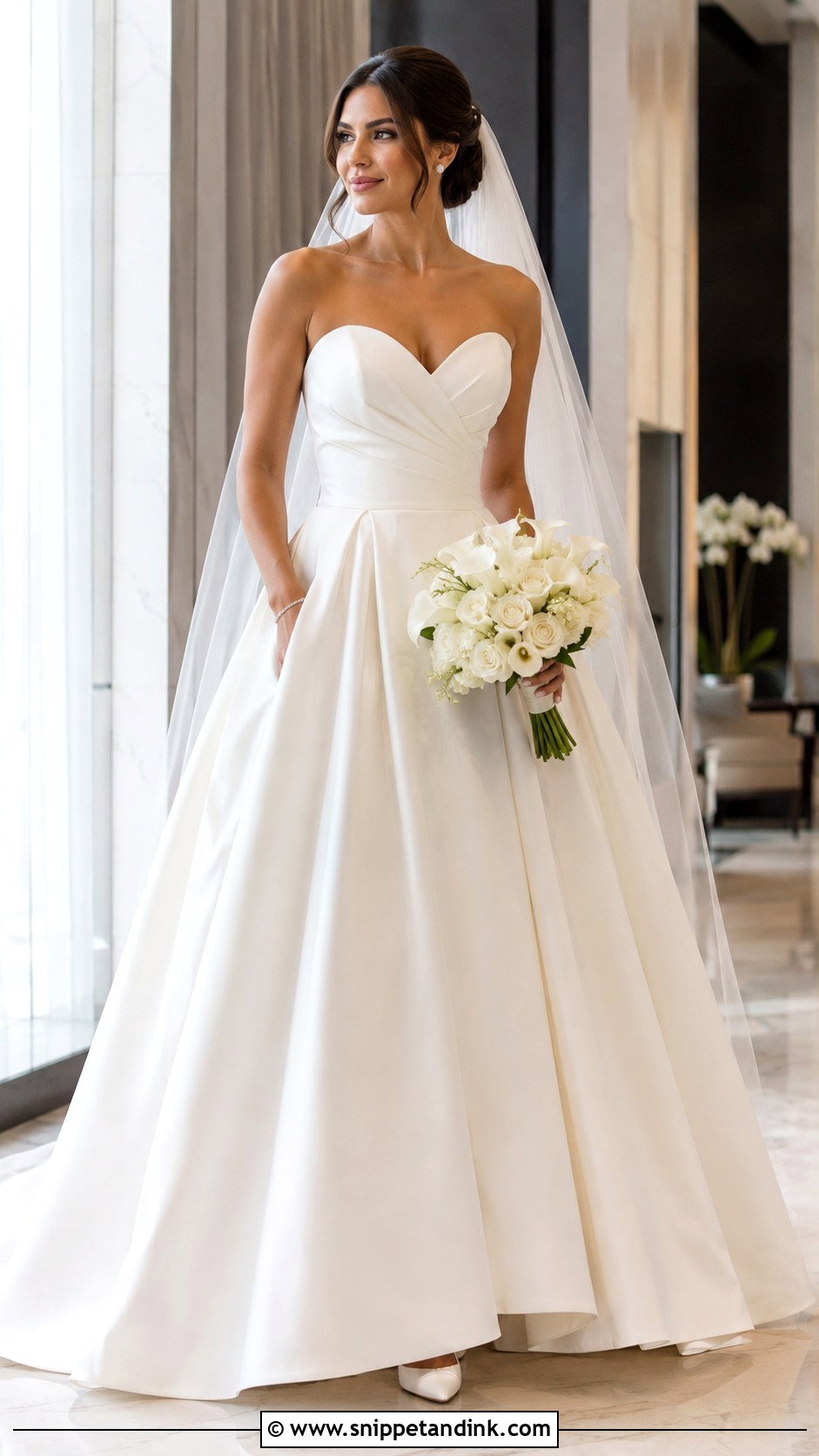
Strapless bodices and pockets have an awkward relationship: every time you push your hands down into a pocket, you pull the skirt and the bodice with it. That’s why the inside construction matters more than usual. Look for proper boning or a corset interior, and a waist stay, so the bodice is anchored at the waist rather than the bust. A pleated A-line or ball gown skirt gives the pockets room. Detachable sleeves or a light wrap give you a covered ceremony look and a bare reception look.
4. Long Sleeve Wedding Dress with Pockets
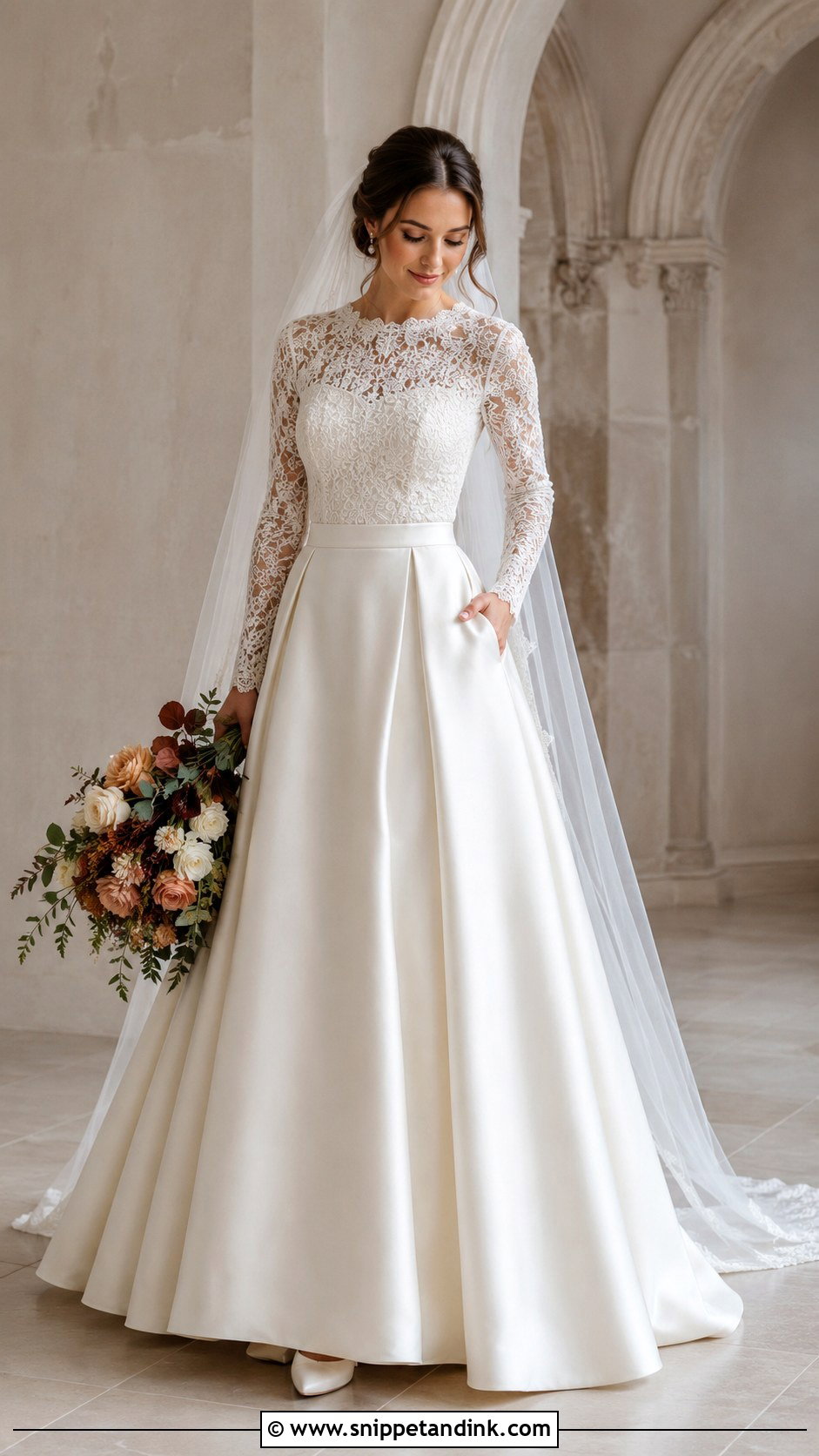
Long sleeves and pockets go well together in autumn and winter, when you’ll want to warm your hands anyway. Fitted lace sleeves are softer; plain crepe sleeves are sharper. Keep the skirt a structured A-line so the pockets stay hidden. The fit issue to watch is the sleeve. Fitted sleeves that are too tight at the upper arm make it awkward to reach down into a pocket. Do that motion at the fitting, along with lifting a bouquet.
5. Off-the-Shoulder Wedding Dress with Pockets
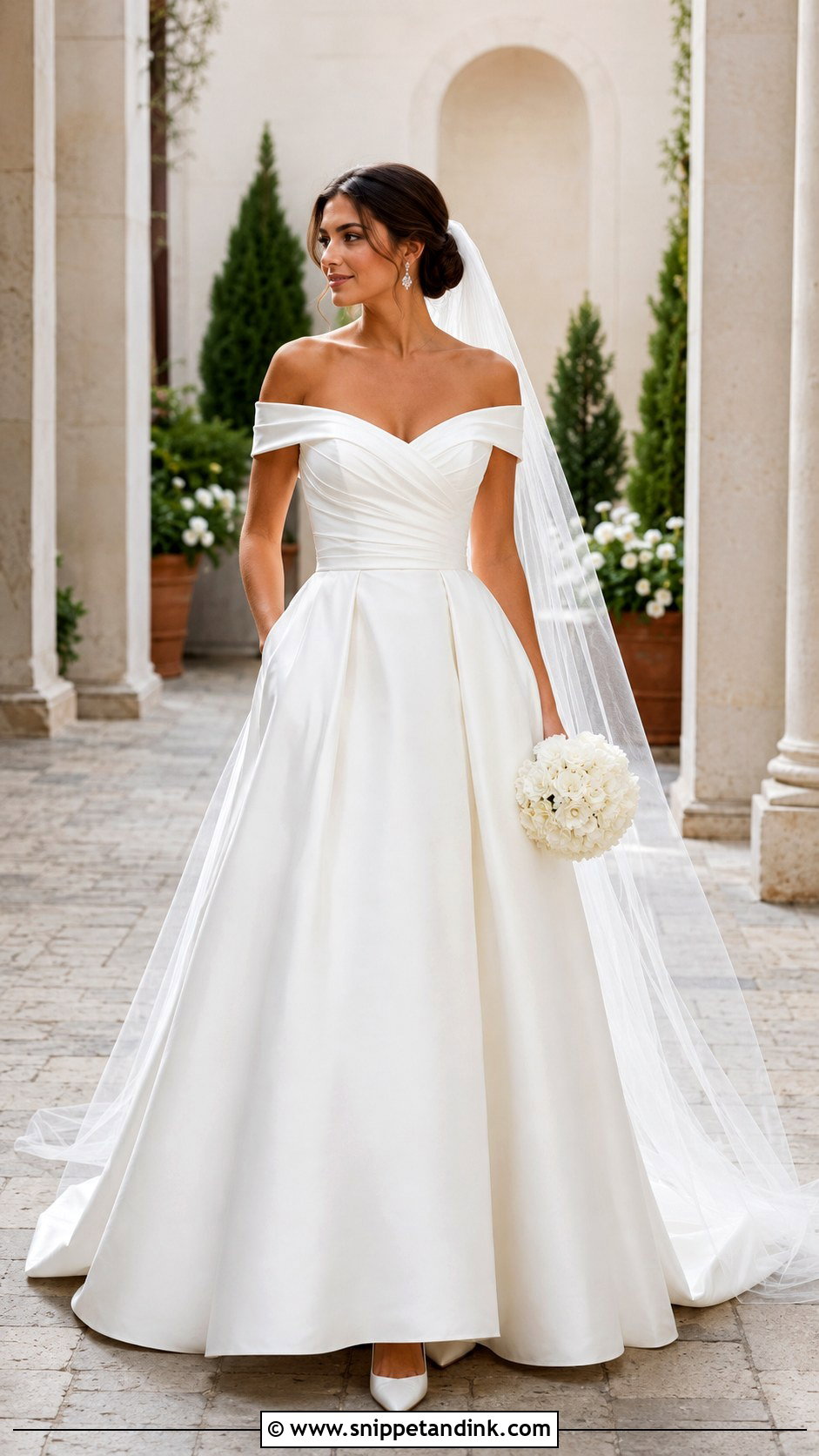
Off-the-shoulder bands look soft, but when you reach into a pocket they tighten across your upper arms. That’s the first thing I check. Choose a securely boned bodice so the bands don’t have to hold the dress up. A full satin or mikado skirt carries the pockets without changing its line. Pointed pumps for indoors, block heels for lawns. If the bands pinch when your hand is in the pocket, they need to sit slightly lower on the arm.
6. Lace Wedding Dress with Pockets
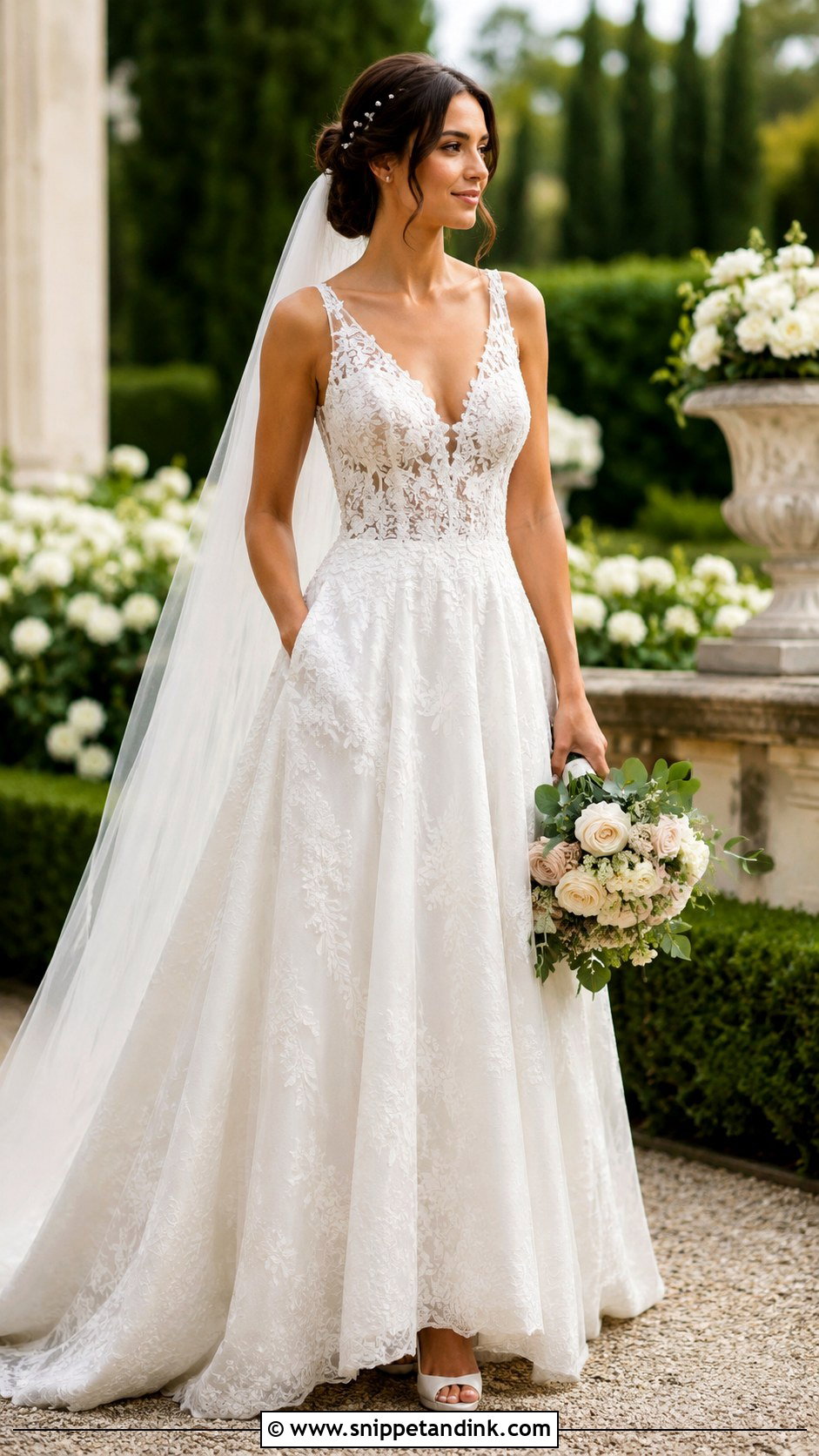
Lace dresses can have pockets, but the pocket belongs in the skirt beneath the lace, not in the lace itself. I look for appliqués over a supportive satin, crepe or organza base, with the openings hidden in the side seams. Keep the veil plain and the heels simple. Carry next to nothing: anything bulky stretches the lace layer and shows an outline, and keys or a phone can catch the threads when you pull them out.
7. Square Neck Wedding Dress with Pockets
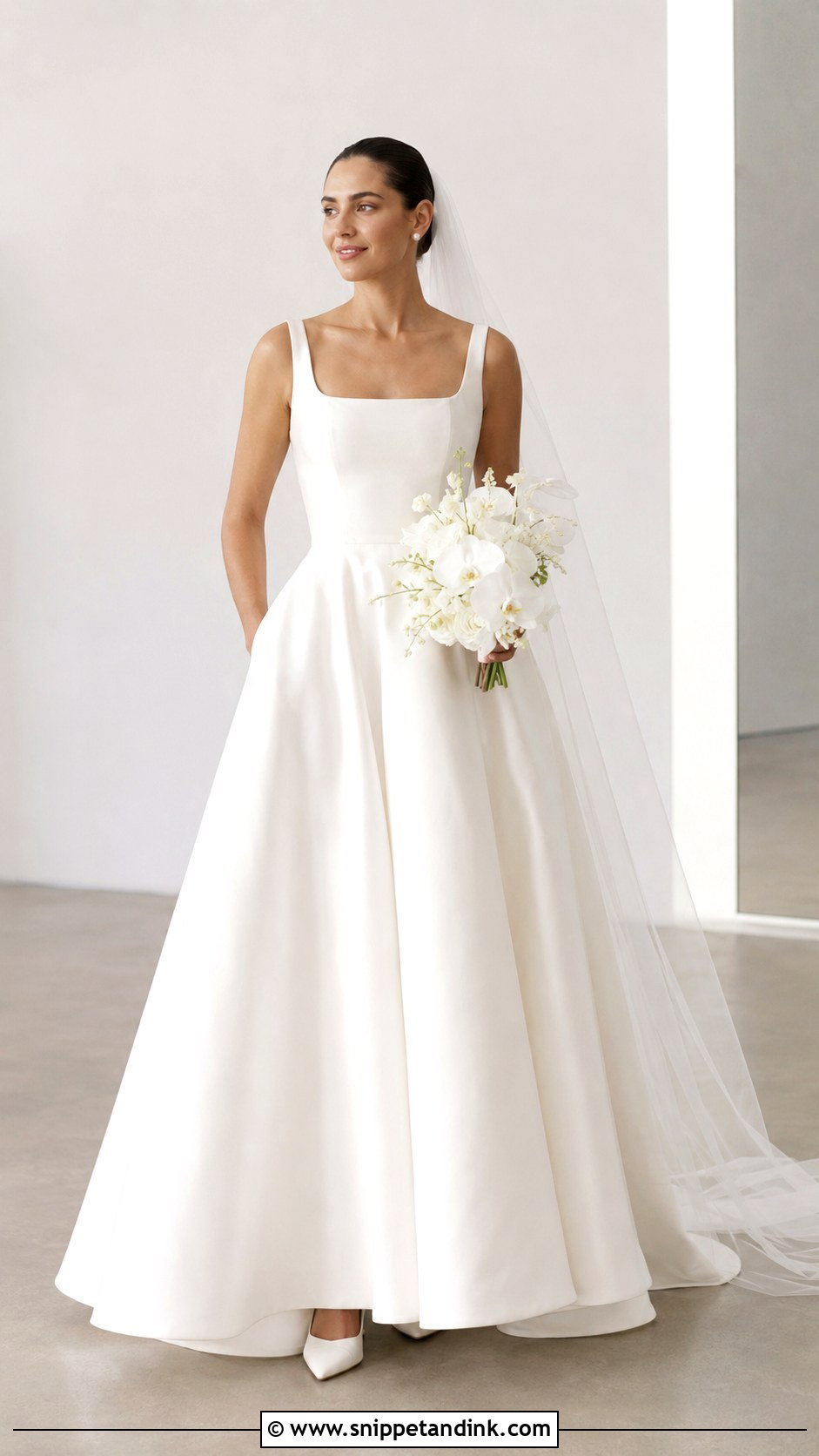
Square necks with wide straps sit more securely than strapless, so you can use the pockets freely without hitching up the bodice. Pair it with a structured satin or mikado A-line skirt where the pockets fold into the seams. Keep necklaces off, since the straight neckline does the job. A higher square or detachable fitted sleeves add coverage. This shape suits city venues and galleries particularly well.
8. V-Neck Wedding Dress with Pockets
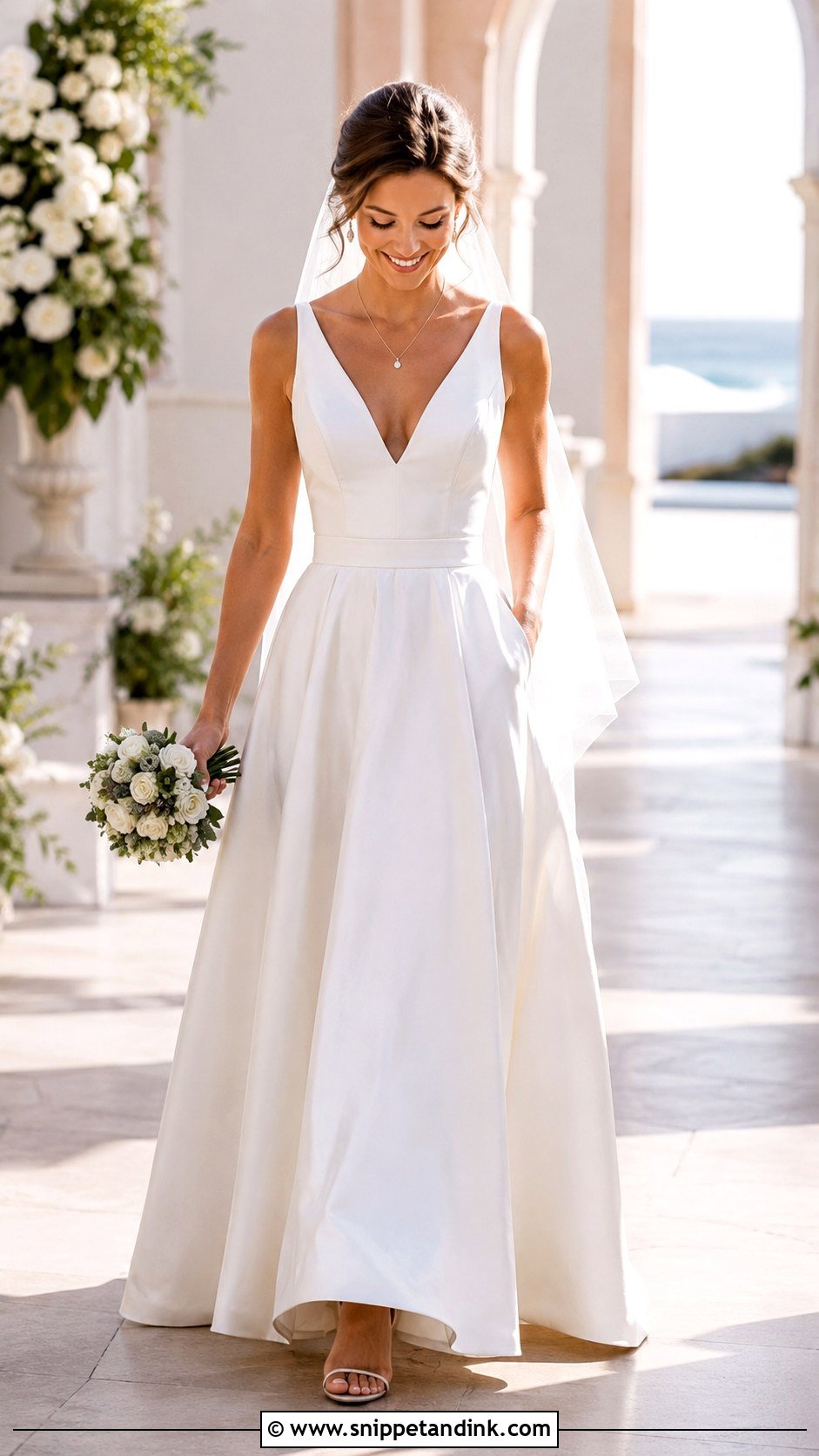
Pocket height makes or breaks a V-neck A-line. The V draws the eye down the body, so if the pockets sit at the widest point of your hip, they add width exactly where the line is heading. Ask for them just below the natural waist instead. A moderate V gives classic coverage; an illusion panel lets you go deeper with support. A wide waistband before the A-line skirt keeps the proportions.
9. Minimalist Wedding Dress with Pockets
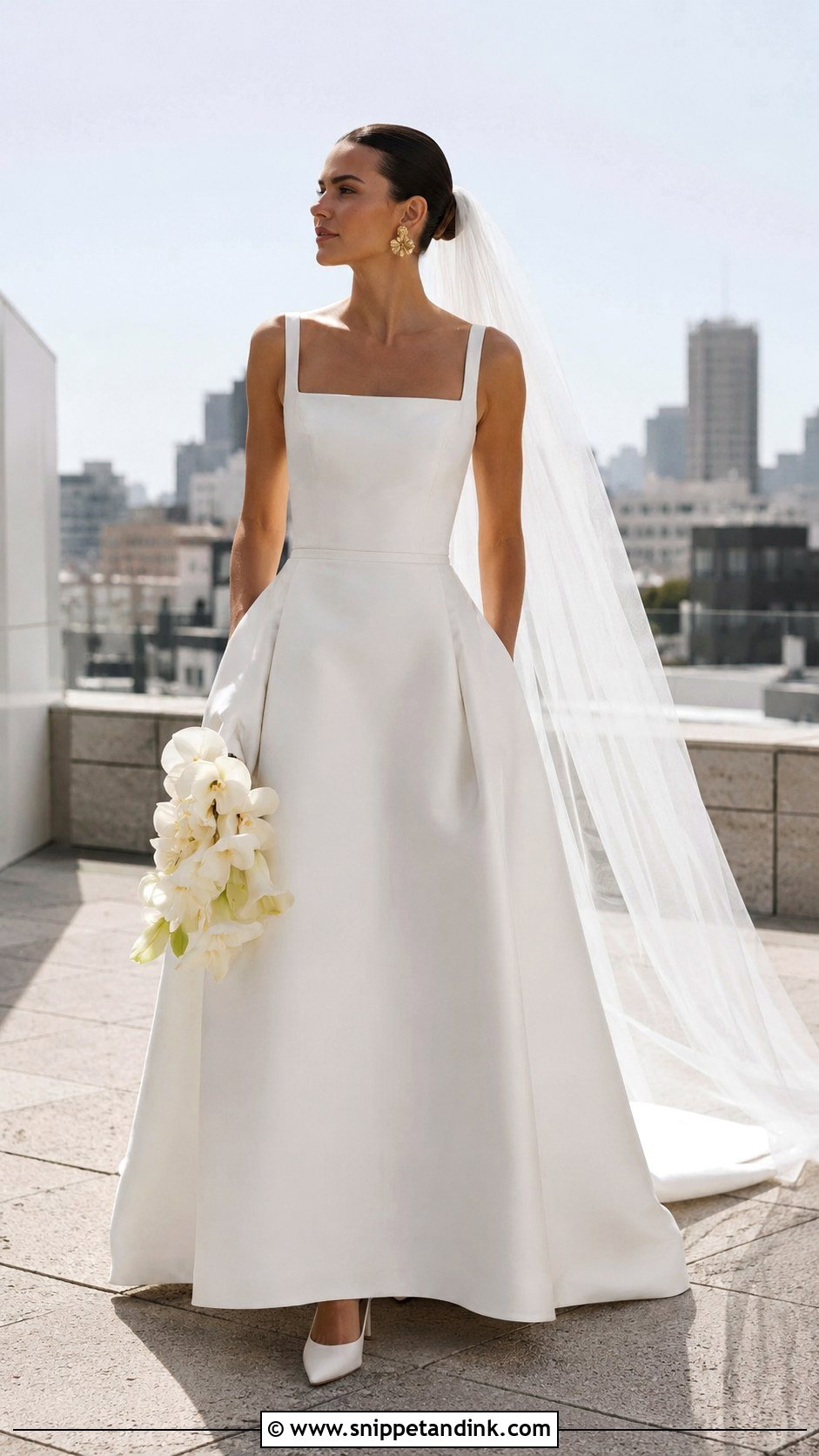
Minimalist dresses show everything, including a pocket that’s been set in badly. With no lace or beading to hide behind, every seam needs to be precise, so budget well for alterations. Smooth matte satin or crepe, a clean neckline, a defined waist and a gently structured skirt. I’d keep the pockets almost empty in this one: one lip balm. Sculptural earrings and a bouquet of one or two flower types are enough styling.

10. Boho Wedding Dress with Pockets
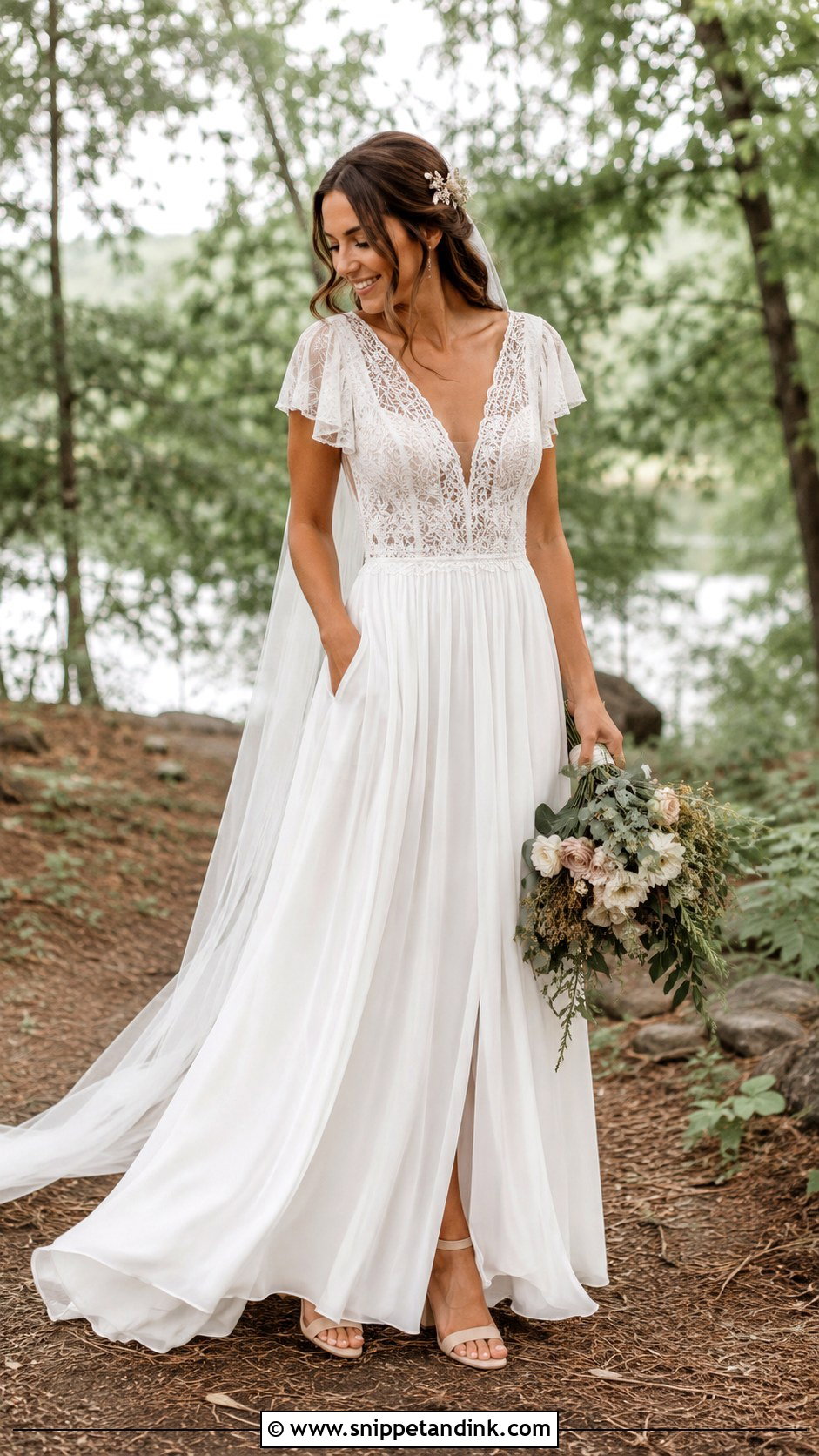
Boho dresses are the hardest to give pockets to, honestly, because light chiffon and tulle show every object you carry. If you love the shape, carry only flat things like a folded tissue. Choose a soft A-line with a lace bodice and a flowing skirt. Flutter sleeves, a low back or light embroidery add character. Ask the tailor to reinforce the pocket seams with a strip of lining fabric, because chiffon tears at stress points if you lean on your hands.
11. Tea-Length Wedding Dress with Pockets
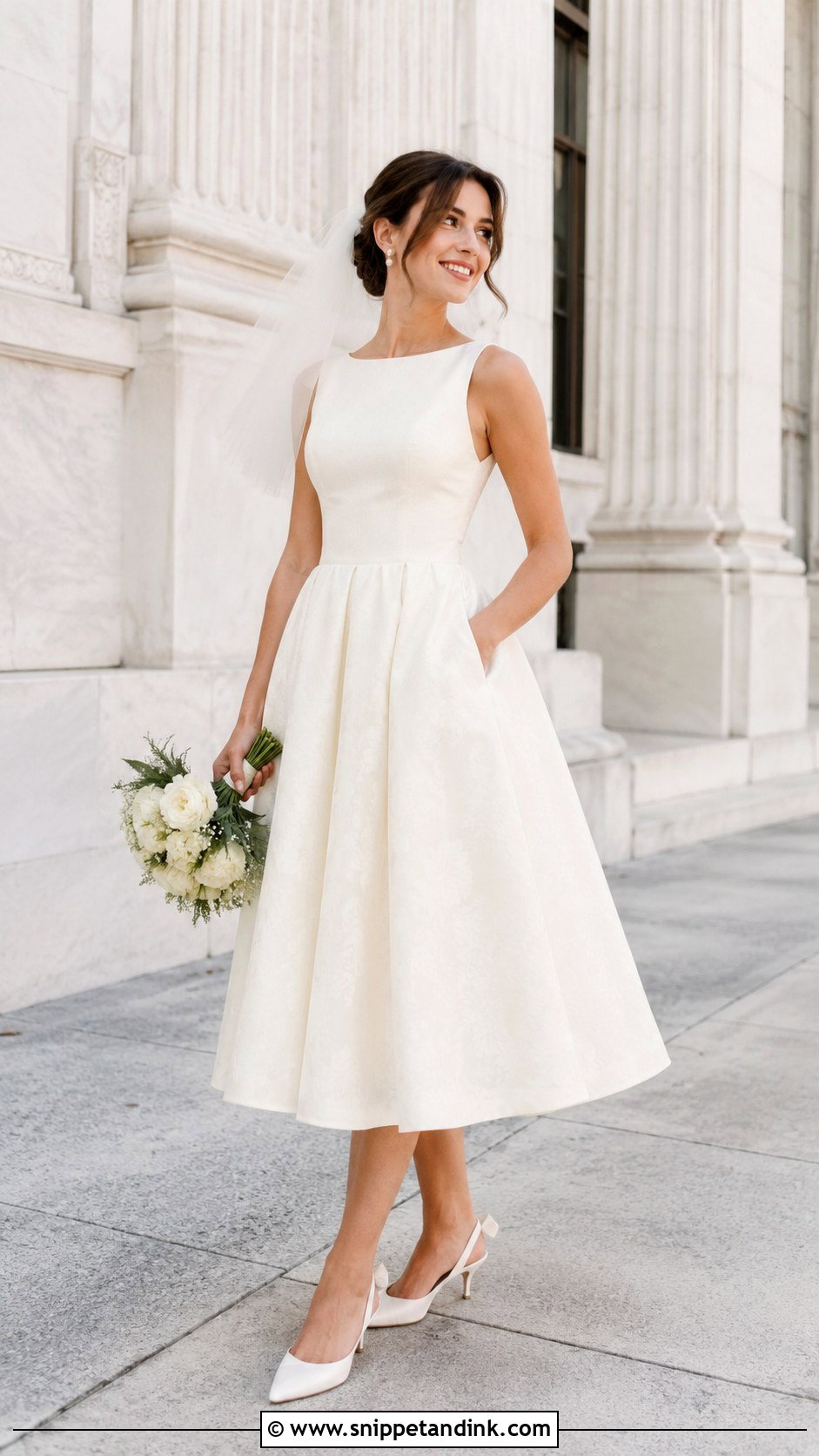
Tea-length skirts sit higher, so pockets sit higher too, and with things in them the shorter skirt can pull forward. Walk and sit at the fitting with your actual items inside. A fitted bodice and a structured satin, jacquard or lace-covered skirt with pockets in the pleats is the strongest version. Your shoes are now part of the outfit: pointed pumps, slingbacks or polished flats. Great for courthouse ceremonies and restaurant receptions.
12. Floral Wedding Dress with Pockets
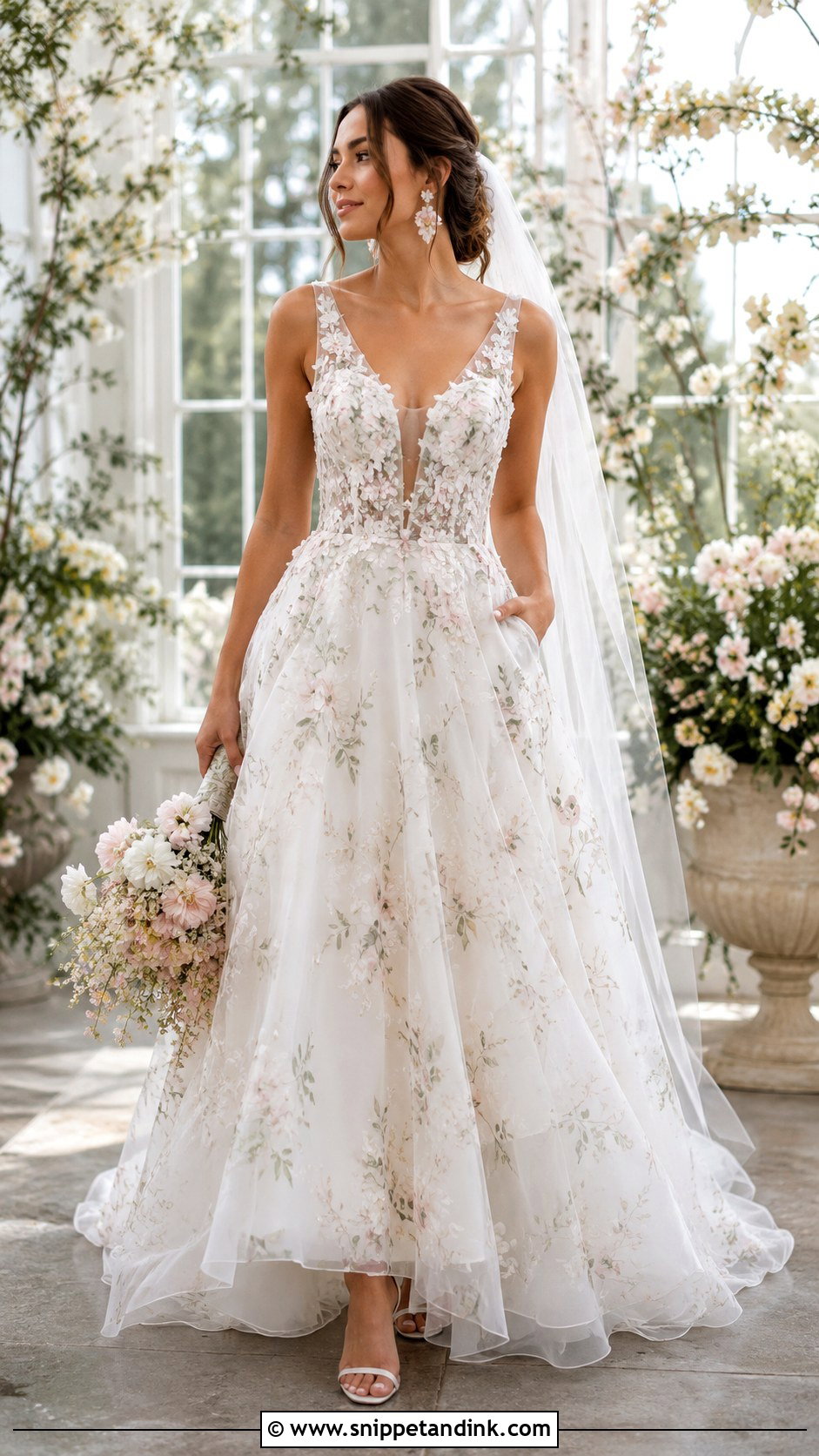
A dress covered in 3D flowers needs its pockets built into the lining, so the delicate outer layer of organza or tulle stays smooth. At alterations, check that no appliqué sits over the pocket opening, or you’ll crush it every time you reach in. Avoid keys and anything with sharp edges near embroidery. Keep the bouquet tonal and small so it doesn’t fight the flowers on the skirt. Spring and garden venues suit it best.
13. Jacquard Wedding Dress with Pockets
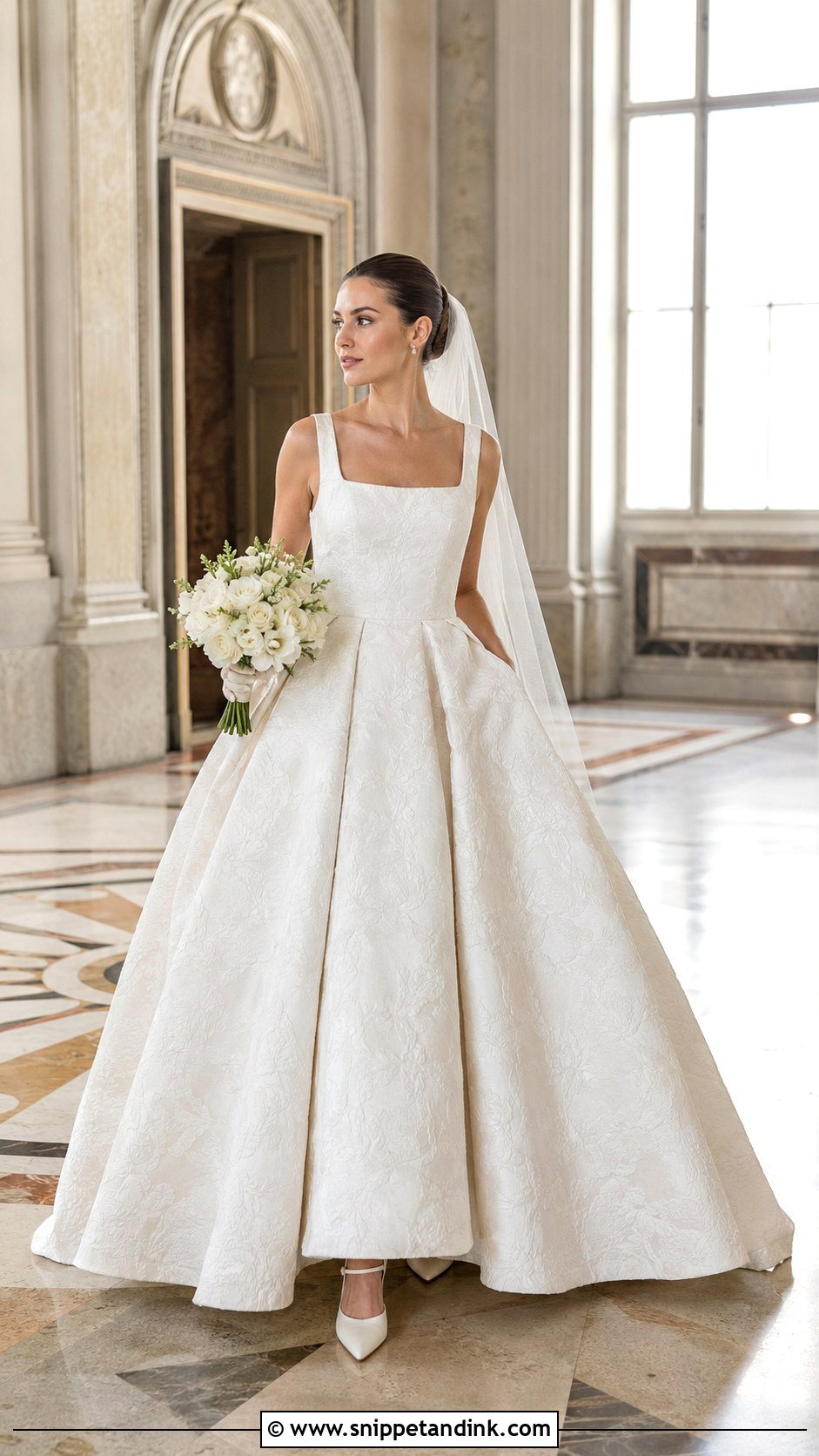
Jacquard is my favourite fabric for pockets. It has a woven pattern and enough body that a small object barely shows, and it doesn’t need beading to look rich. Floral, vine or abstract weaves on a structured A-line or ball gown. The fitting check is pattern alignment: the woven motif should line up across the pocket opening and centre seams, which takes skill from the seamstress. Keep the veil plain so it doesn’t compete with the weave.
14. Basque Waist Wedding Dress with Pockets
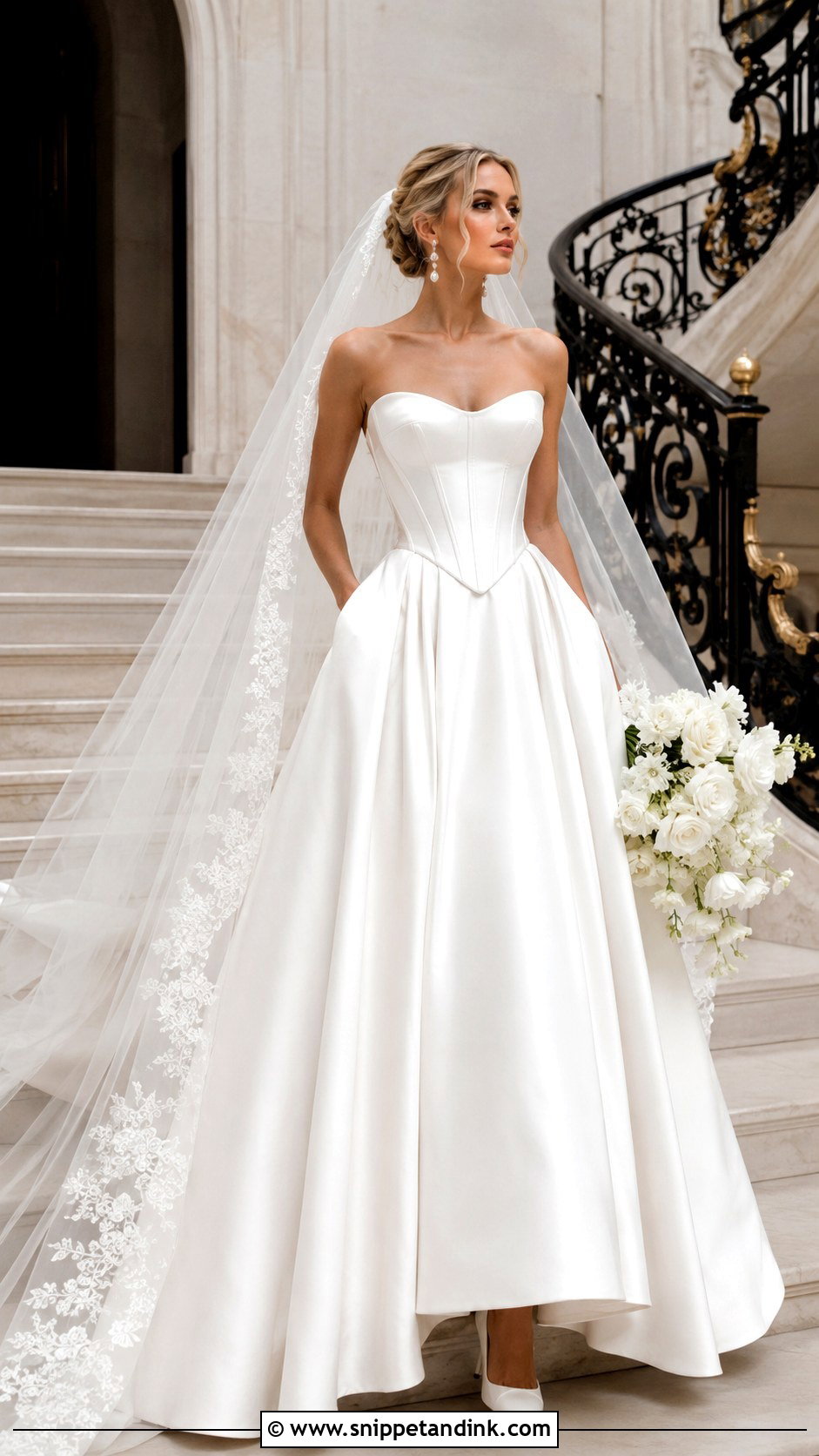
A basque waist wedding dress has a V-shaped bodice that dips below the natural waist, so standard pocket placement clashes with the point. Ask for pockets set a little lower, under the tip of the V. The point then flows into a full satin, mikado or tulle skirt. Check that the bodice doesn’t dig into your waist when you bend to reach a pocket; a well-built basque bodice should stay flat.


15. Plus Size Wedding Dress with Pockets
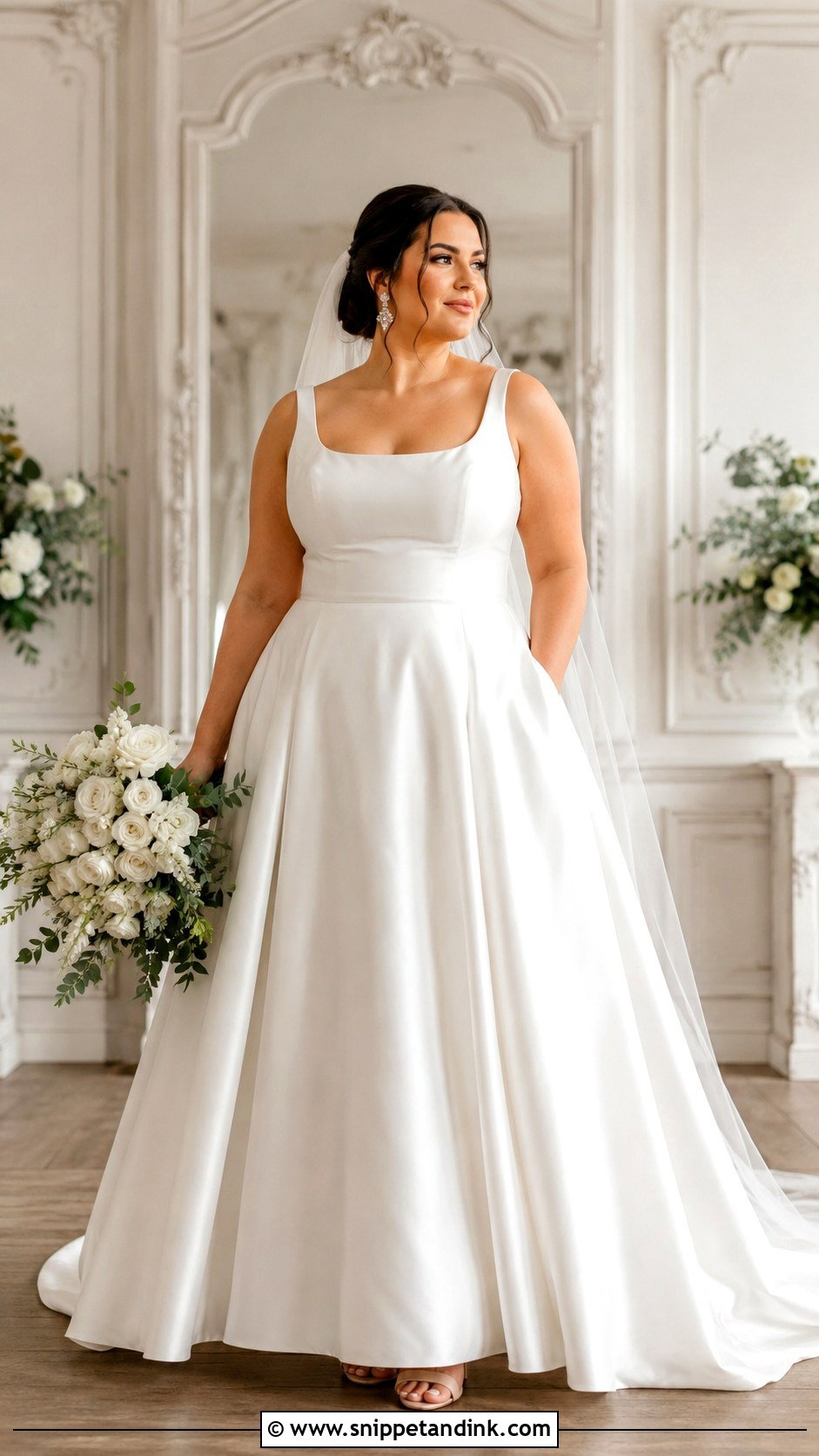
The best plus size wedding dress with pockets gives real support and lets the pockets lie flat over the hips without pulling. I look for a structured bodice, wide straps and an A-line or ball gown skirt with pockets set smoothly into the side seams. Matte satin and mikado hold their shape; lace panels add detail. Ask whether the sample in the shop is close to your size, since a pinned-back sample hides where pockets will actually sit. Bring your own undergarments to every fitting.
16. Modest Wedding Dress with Pockets
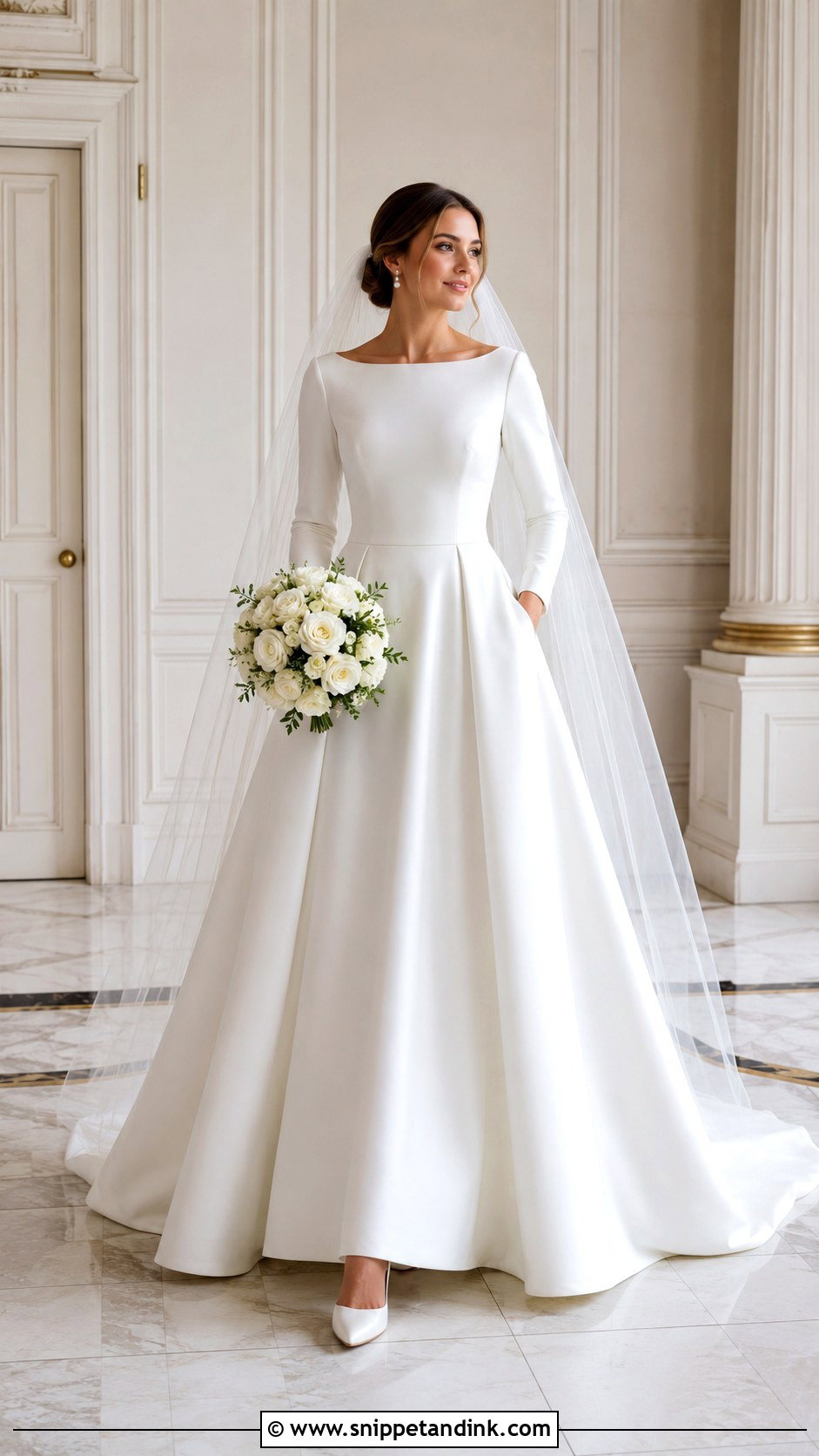
Modest dresses benefit from pockets because sleeves and covered necklines can feel formal, and having somewhere to rest your hands softens that. Bateau, high scoop or soft square necks with three-quarter or full sleeves, a defined waist and a structured A-line. Satin, crepe and lined lace keep the silhouette smooth. At fittings, raise your arms and sit down. Sleeves, bodice and pockets should all stay put.
17. Beach Wedding Dress with Pockets
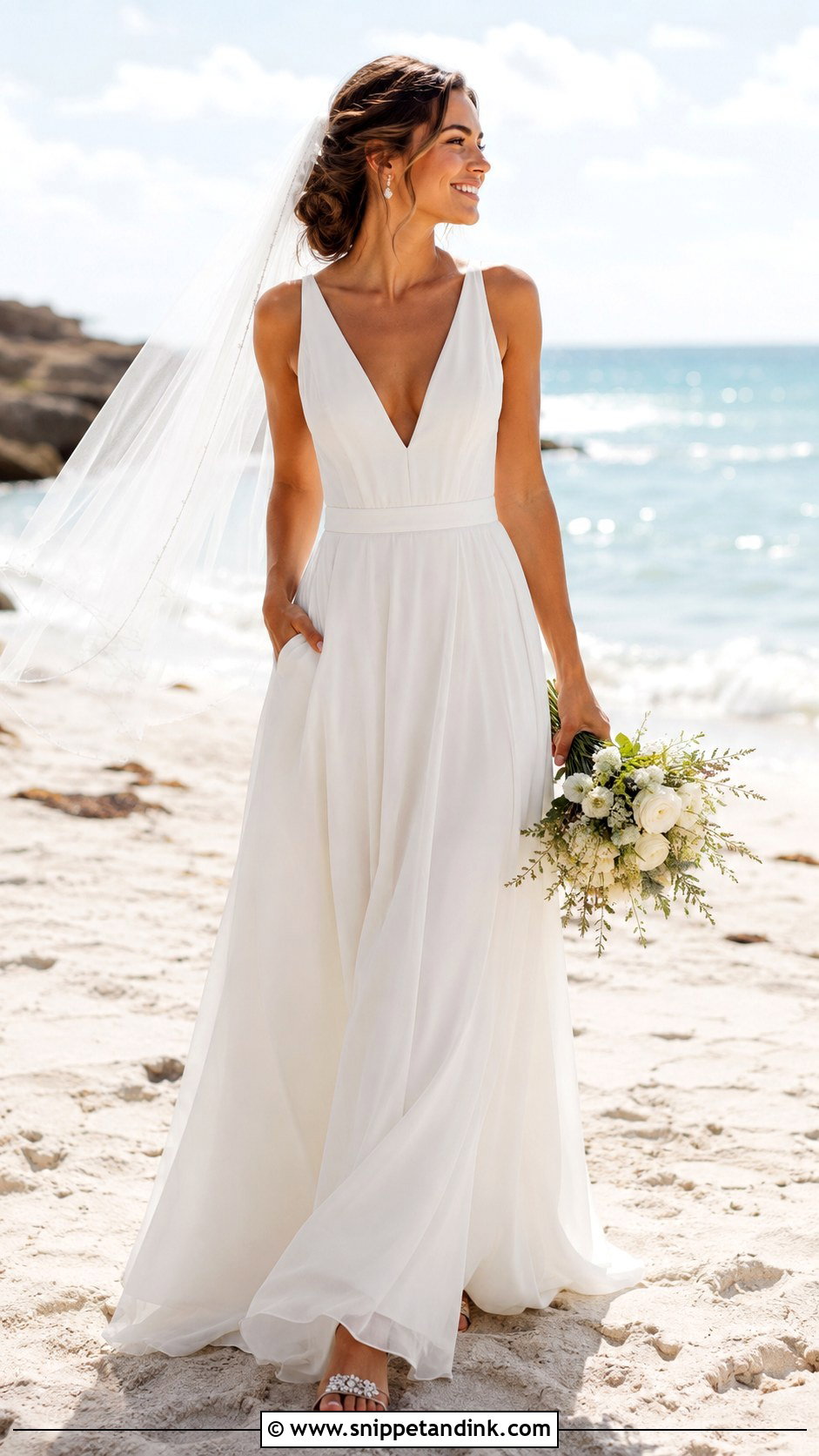
Beach gowns are light, so their pockets should be shallow and built into the lining. Choose a simple chiffon or soft organza A-line, with secure straps and a short train; a beach wedding dress with pockets should hold almost nothing, because sea wind presses the fabric against whatever is inside. Halter, V or square bodices all suit it. Ask for a wrist loop or bustle for the sand. Flat sandals.
18. Colored Wedding Dress with Pockets
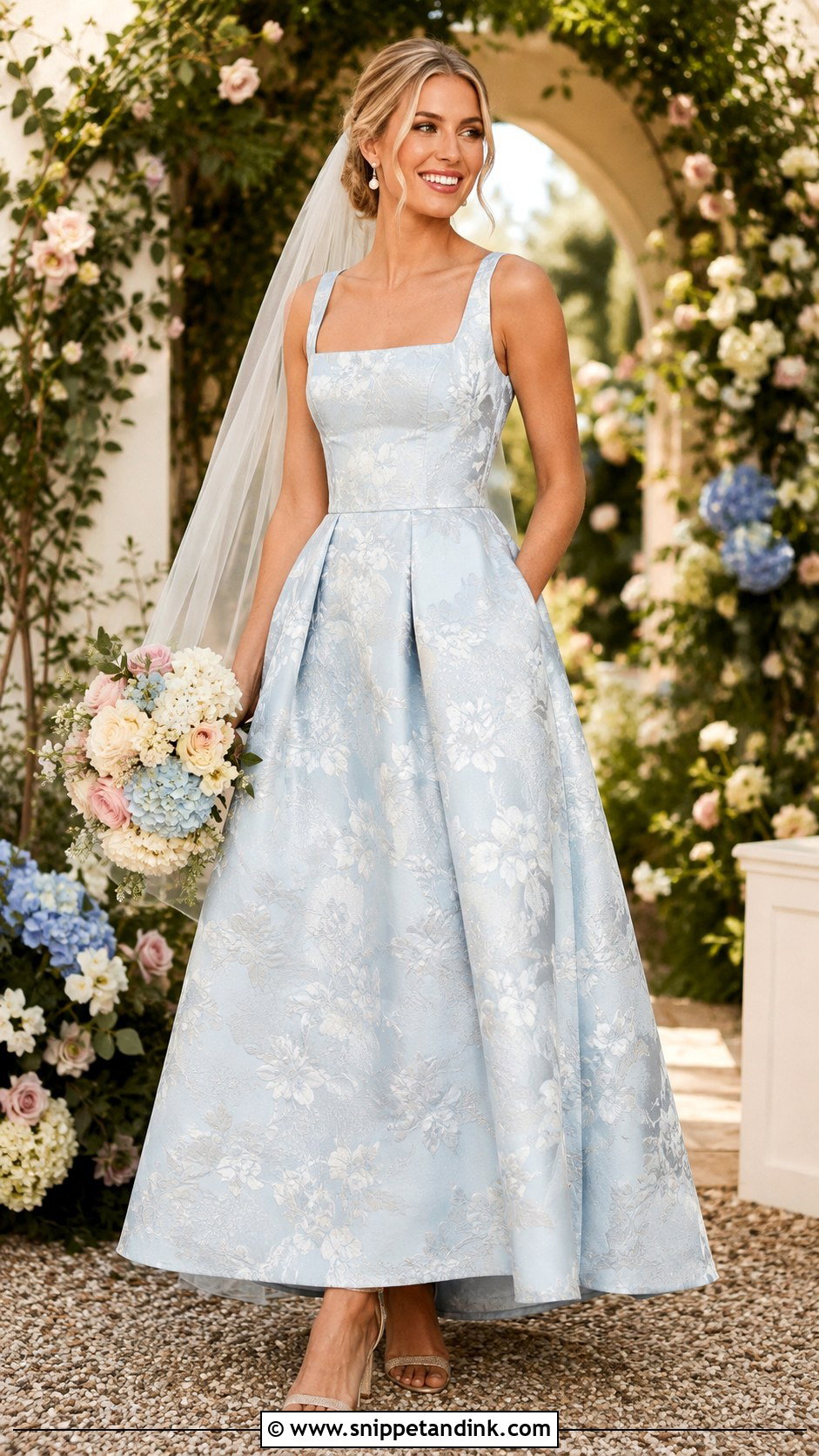
Coloured dresses are where pockets help most in photos. Blush, pale blue, champagne and silver gowns often get styled more casually, and hands-in-pockets poses suit that. Choose an A-line or ball gown with a structured skirt so pockets stay smooth. Match accessories to the dress undertone, not to bright white. Ask for swatches and view them in daylight and indoor light before ordering, since colour shifts a lot.
19. Black Wedding Dress with Pockets
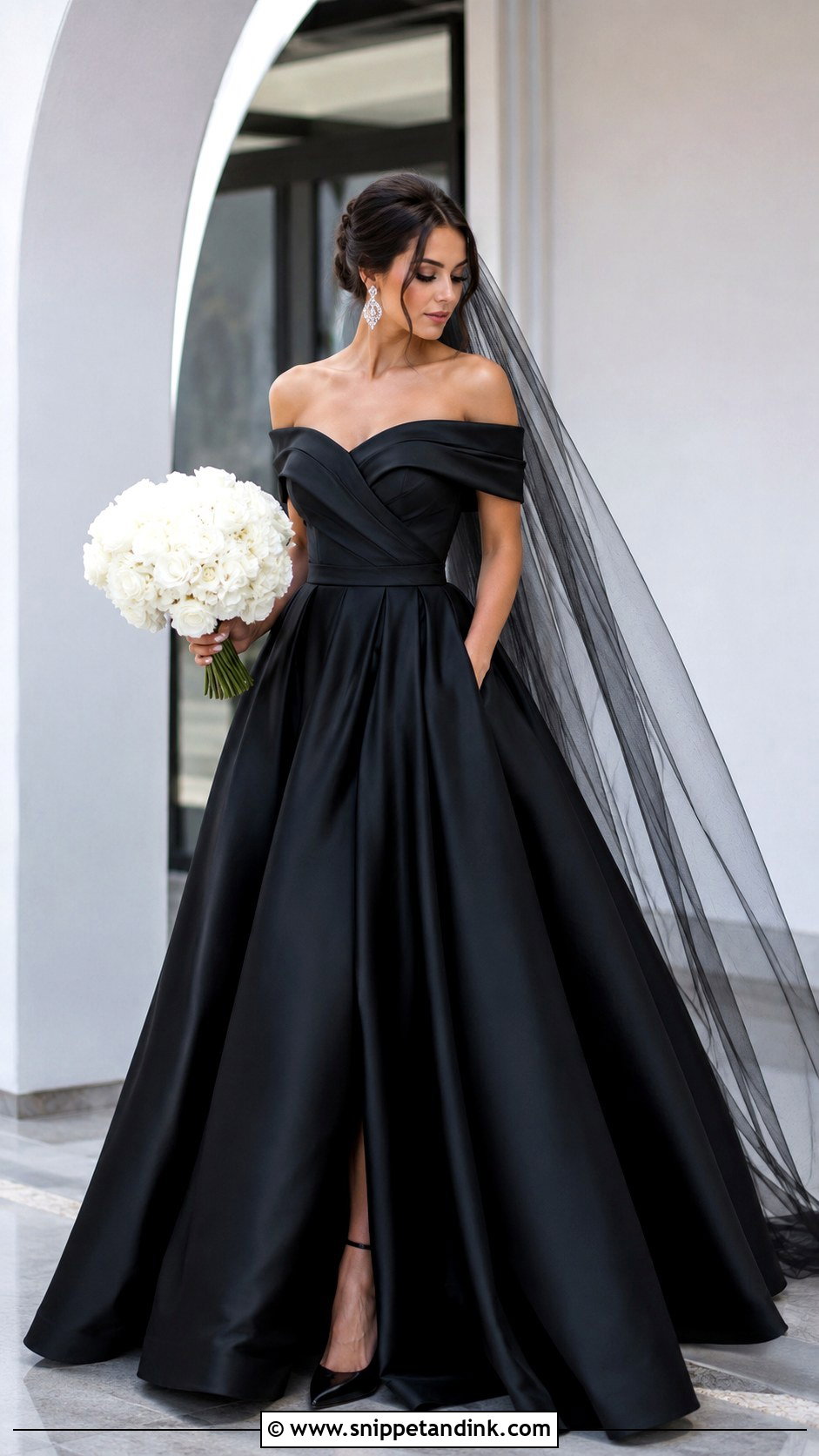
Black satin or mikado looks rich and gives the full skirt and pockets enough structure. Strapless, off-shoulder or square neck depending on how much coverage you want. A black veil commits fully; a sheer neutral veil gives contrast. Black is unforgiving about lint, dust and powder, and the pocket edges pick up makeup from your fingers. Carry a small fabric brush and wipe your hands before reaching in.

20. Two-Piece Wedding Dress with Pockets
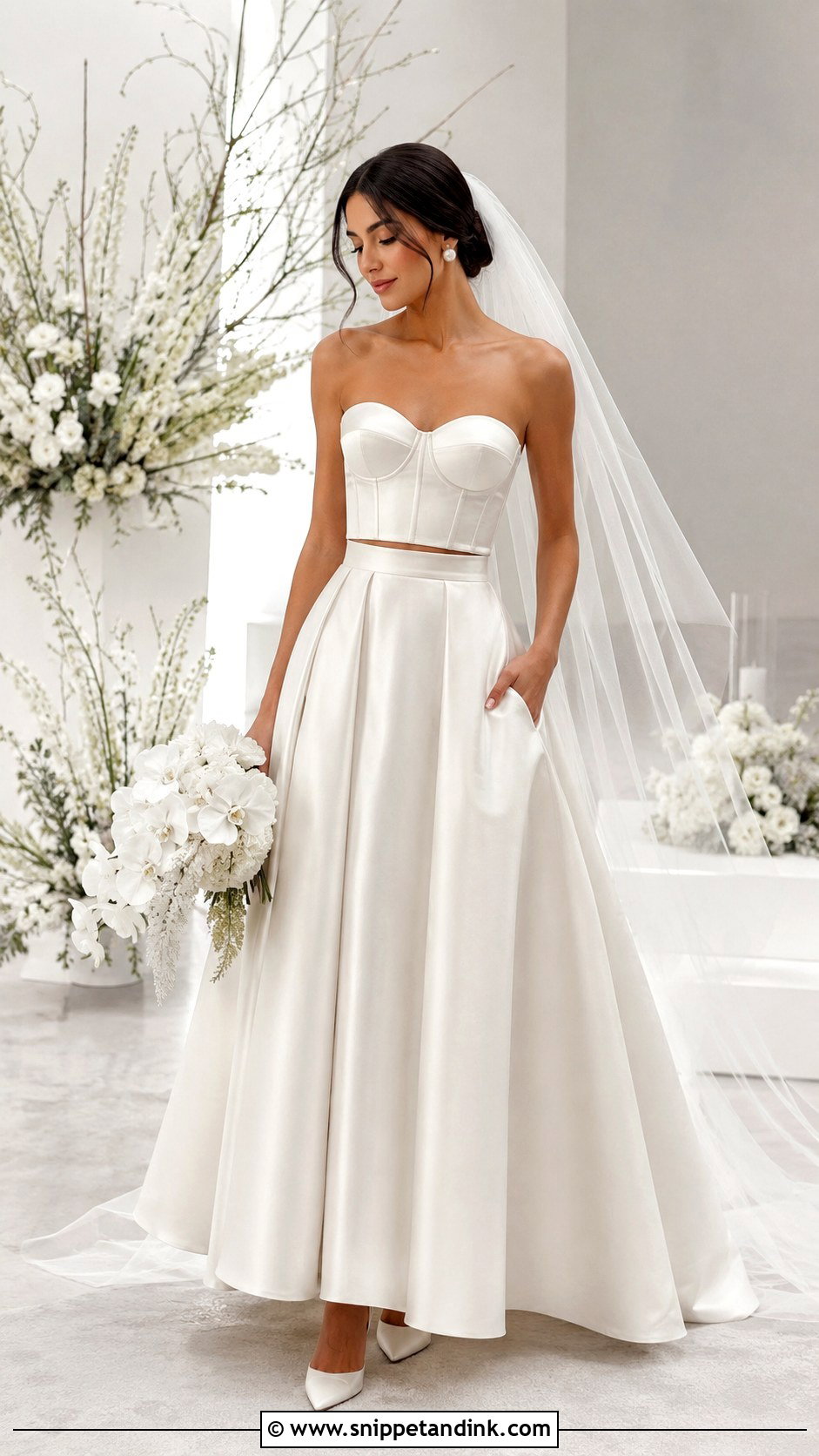
Two-piece looks let you change the skirt between ceremony and reception, and they solve fit problems when your top and bottom need different sizes. Pair a fitted satin corset top, lace blouse or square-neck bodice with a full A-line skirt with hidden side pockets. The join at the waist must be smooth so it reads as one outfit. Reaching into pockets tugs the skirt down, so check the top stays tucked or aligned while you sit, dance and use them.
Lipstick, Yes. Your Phone, Probably Not
Bridal pocket bags are small and made of lining, so they show weight quickly. On most dresses I’d carry a lipstick or lip balm, a folded tissue, a few blotting papers and your vows on a card. That’s about it.
A modern phone is heavy and rectangular; in satin or crepe it pulls the skirt down on one side and leaves a visible outline in photos. Give it to a bridesmaid. Same with the rings: hand them to whoever is responsible for them rather than carrying them yourself.
Using them in photos
Hands in pockets is a relaxed pose that photographers often like, and it solves the “what do I do with my hands” problem in portraits. Slide in just your fingers, thumbs out, rather than the whole hand, so the skirt doesn’t bunch at the hip. Empty the pockets before portraits so the line stays clean.
One more thing I ask for on any dress where the bride will really use her pockets: have the bottom of each pocket bag stitched twice or finished with a French seam. Lining is thin, and a pocket that gets hands pushed into it all day can split at the corner by the evening, which drops whatever was inside into the skirt.
Where the Pocket Sits Matters More Than Having One
Pockets work in nearly any dress shape, from satin ball gowns to two-piece looks, as long as the skirt has enough body and the pocket is placed for your hip, not the sample’s. Pay attention to placement, skirt structure, fabric weight and good alterations. Use them for light things and test them walking, sitting and posing at your fittings. Then put your hands in and enjoy them.
You'll Like These Ideas:












Leave a Reply