
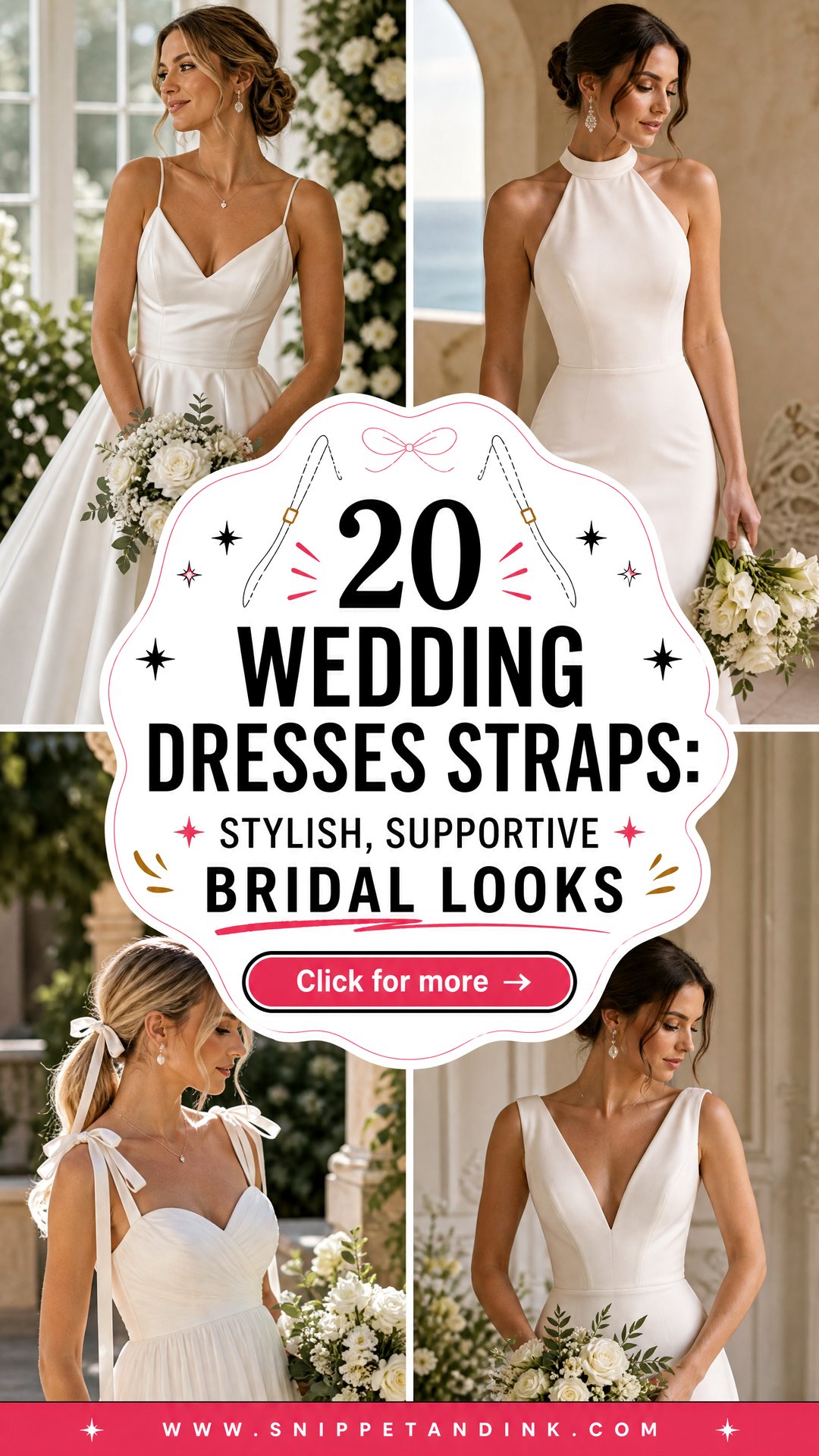
Straps decide more about a wedding dress than most brides expect. They carry part of the bodice, they set where the eye lands in portraits, and they are usually the first thing that starts to annoy you four hours into the reception. Below are twenty strap styles, from barely there spaghetti straps to wide supportive bands, lace, pearls, bows and asymmetric cuts, each shown as a full outfit with veil, jewelry and shoes. I’ve added what I look at in the fitting room for each one, because the strap you fall for on a hanger and the strap you can dance in are not always the same.
How Much Weight Should a Strap Carry? Matching Width to Your Bust
In a well-made wedding dress, the straps are mostly there to keep the bodice in place and shape the neckline. The real support comes from boning, a firm waist stay and, often, cups sewn into the lining. Knowing that changes how you shop. A delicate strap is fine on almost anyone if the bodice underneath is built properly; a wide strap on a flimsy bodice will still sag.
When a bride tells me she wants spaghetti straps but needs real lift, I look at the inside of the dress before I look at the straps. Here is roughly how I match them:
- Smaller bust, little support needed: spaghetti, pearl strands, ribbon ties and illusion straps all work, and a stick-on bra or sewn-in cups are usually enough.
- Medium bust: double straps, beaded straps and lace straps are comfortable as long as the bodice has boning to the waist.
- Fuller bust: wide straps, square necks and V-necks with wide bands give space to hide a supportive bra, and the bra can be stitched into the dress so nothing peeks out.
- Sloped shoulders: straps set slightly closer to the neck stay put; anything sitting at the edge of the shoulder will slide.
Bring the bra you plan to wear to your first fitting, not your third. Every adjustment to strap length depends on what is underneath, and changing your underwear late often means redoing the straps.
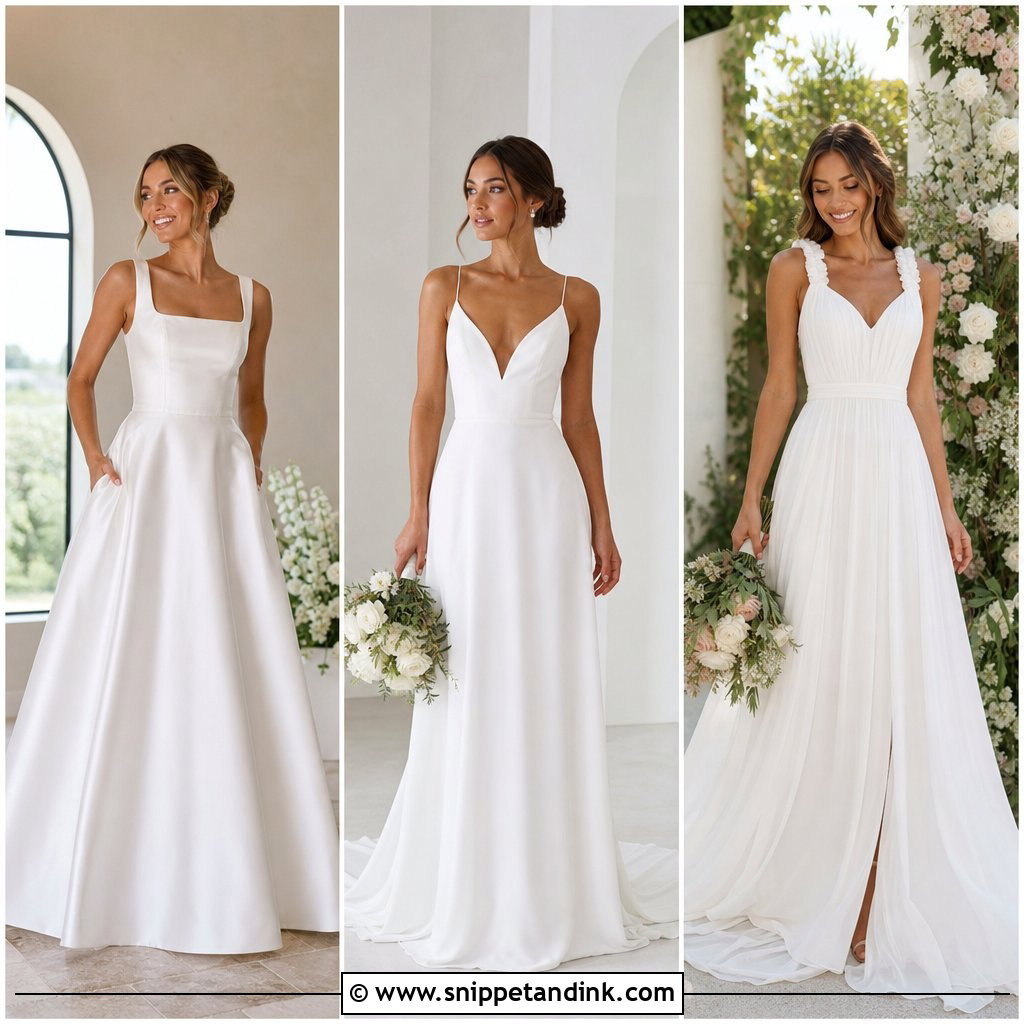
1. Spaghetti Strap Satin A-Line Wedding Dress
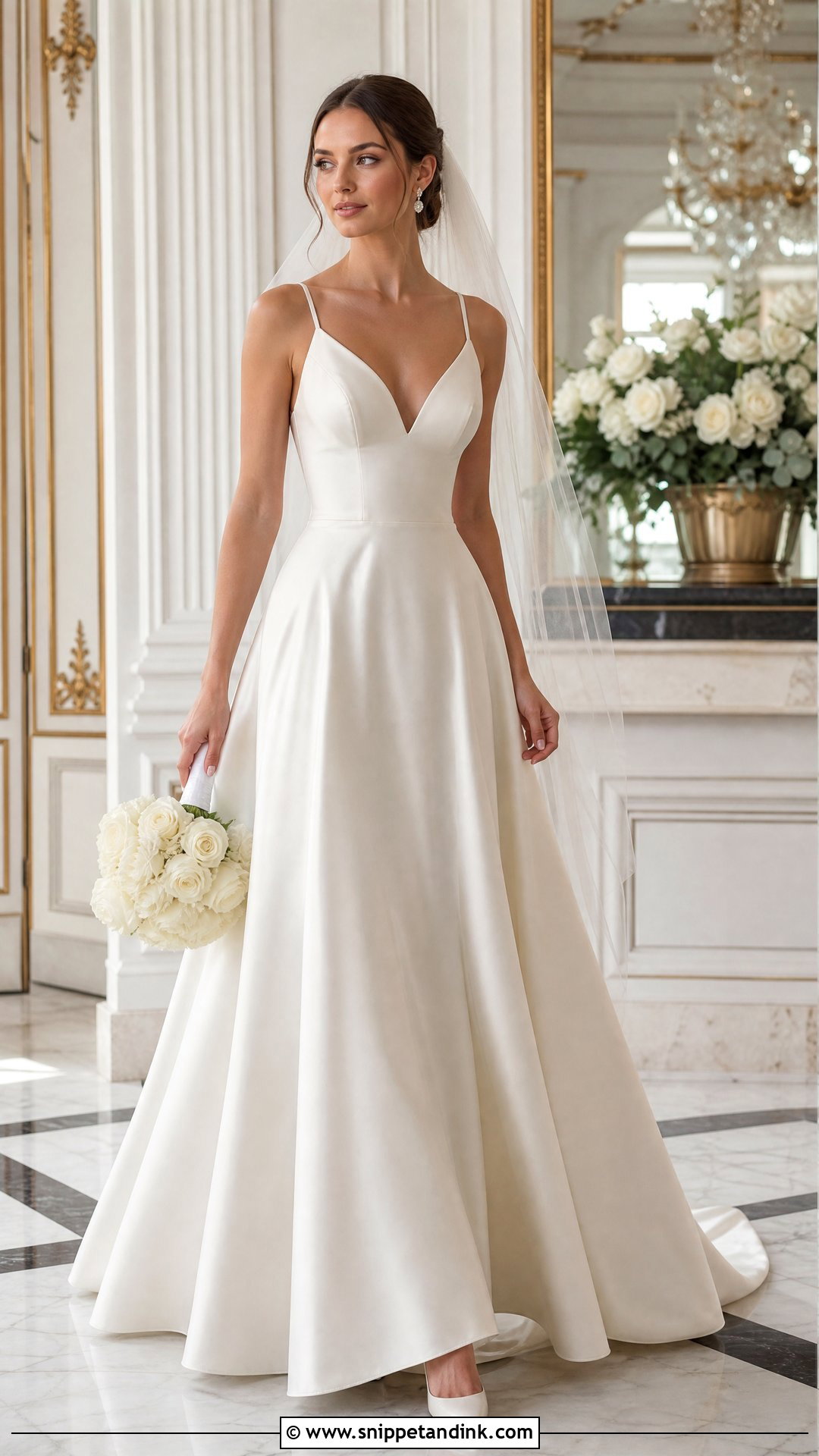
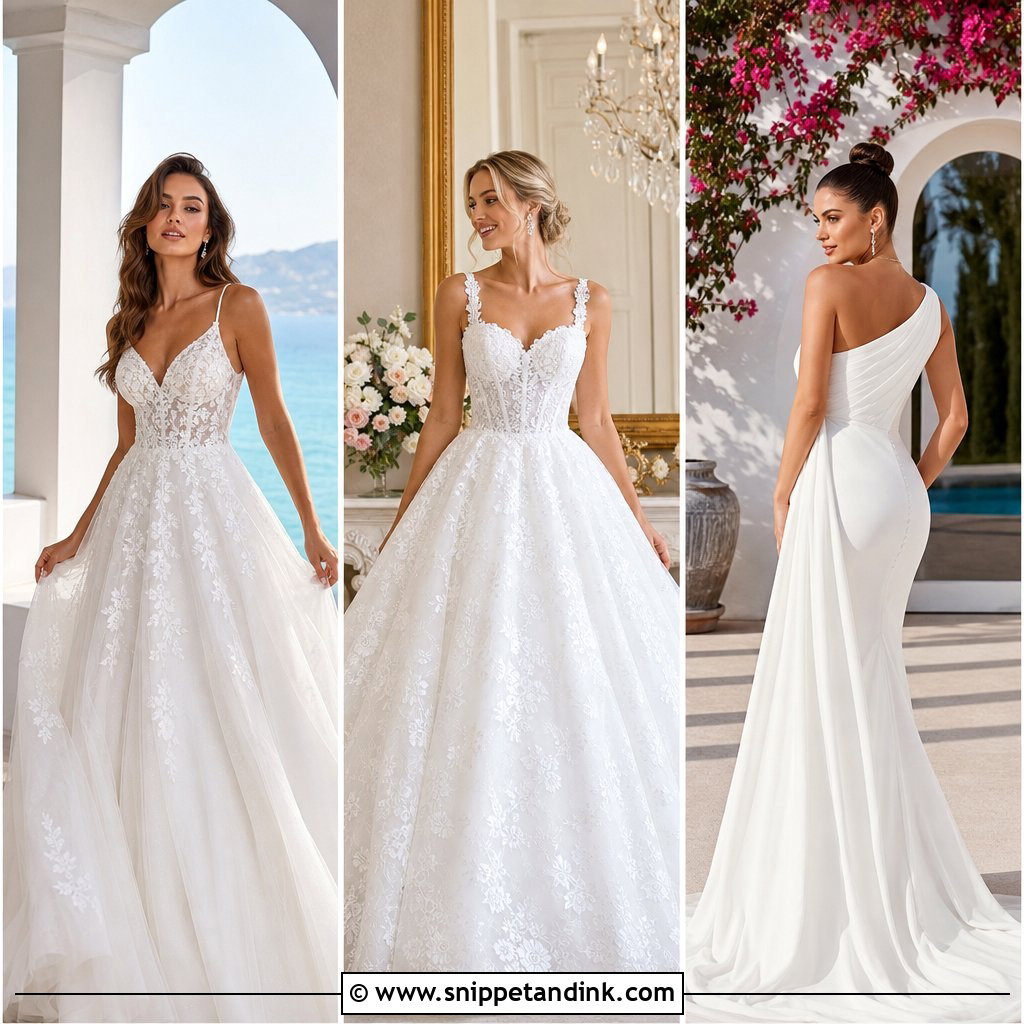
Satin is unforgiving, which is exactly why narrow spaghetti straps suit it: nothing competes with the sheen. A softly structured bodice matters here, because a spaghetti strap can’t hold any weight, so the boning and waist seam have to do the work. A subtle V lengthens the upper body. I’d keep accessories quiet: pointed ivory pumps, pearl drops, a fingertip veil with a cut edge, and a small posy of white roses. Hotel ballrooms and modern indoor venues suit it best. One thing I always ask the tailor: shorten each strap separately, since most people’s shoulders sit at slightly different heights.
2. Wide Strap Square Neck Wedding Dress
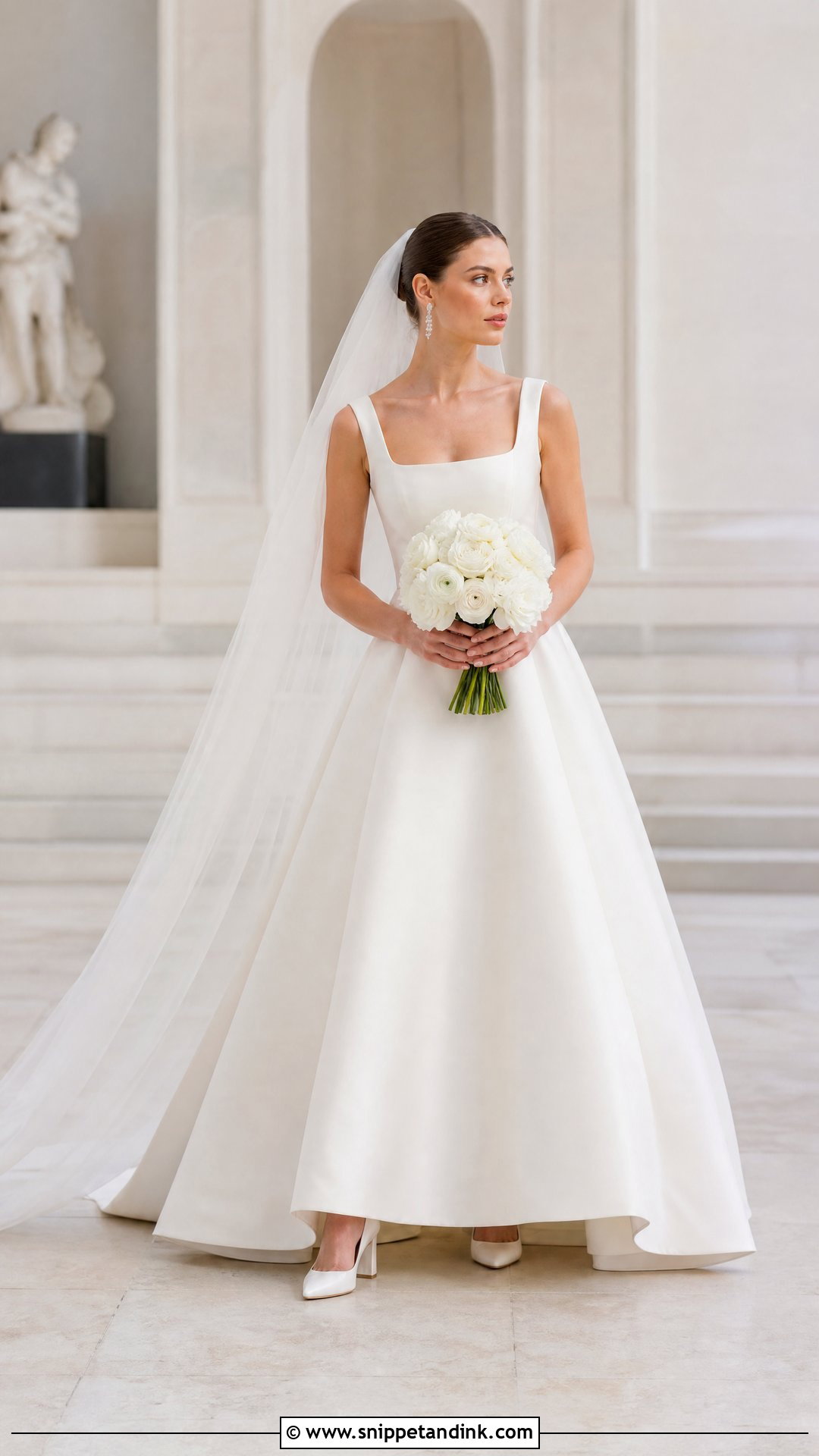
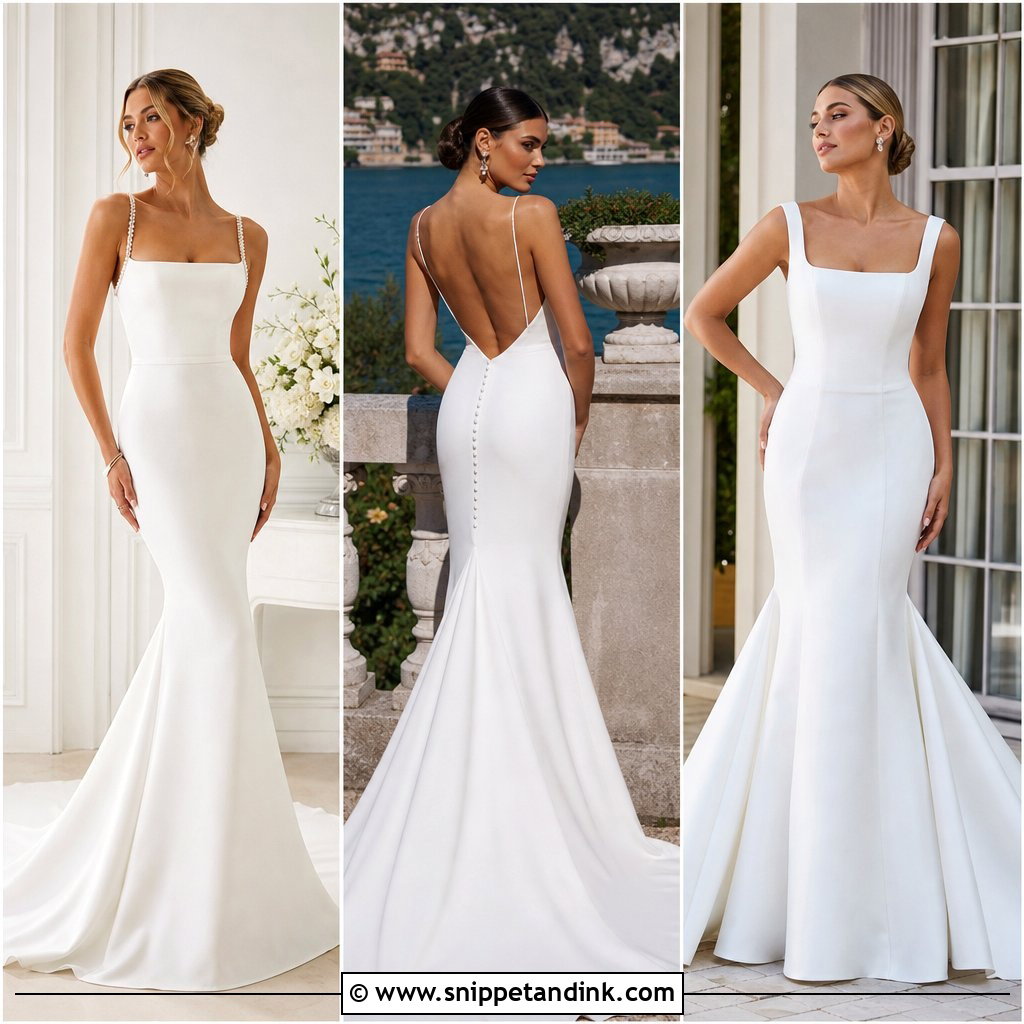
Wide straps on a square neck are the most forgiving combination on this list for a fuller bust. The width lets you wear a proper supportive bra or sewn-in cups underneath, and mikado or heavy satin holds the geometric line instead of collapsing. With a full A-line skirt it reads formal without trying hard. I’d style it with a sleek low bun, small crystal studs, block heels and a long plain veil, plus a tight white bouquet that echoes the straight neckline. Museums and city venues suit it. Skip the necklace; the square neck already frames the collarbones.
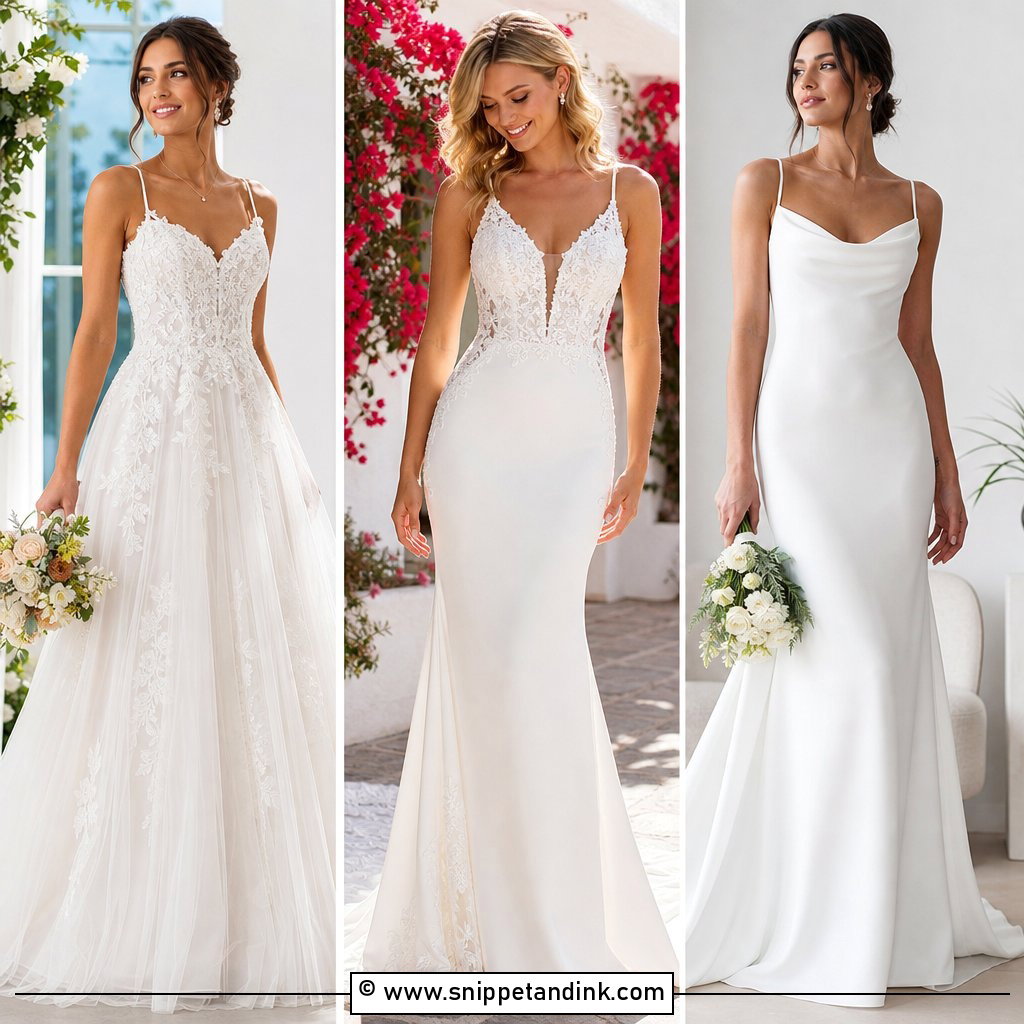
3. Lace Strap A-Line Wedding Dress
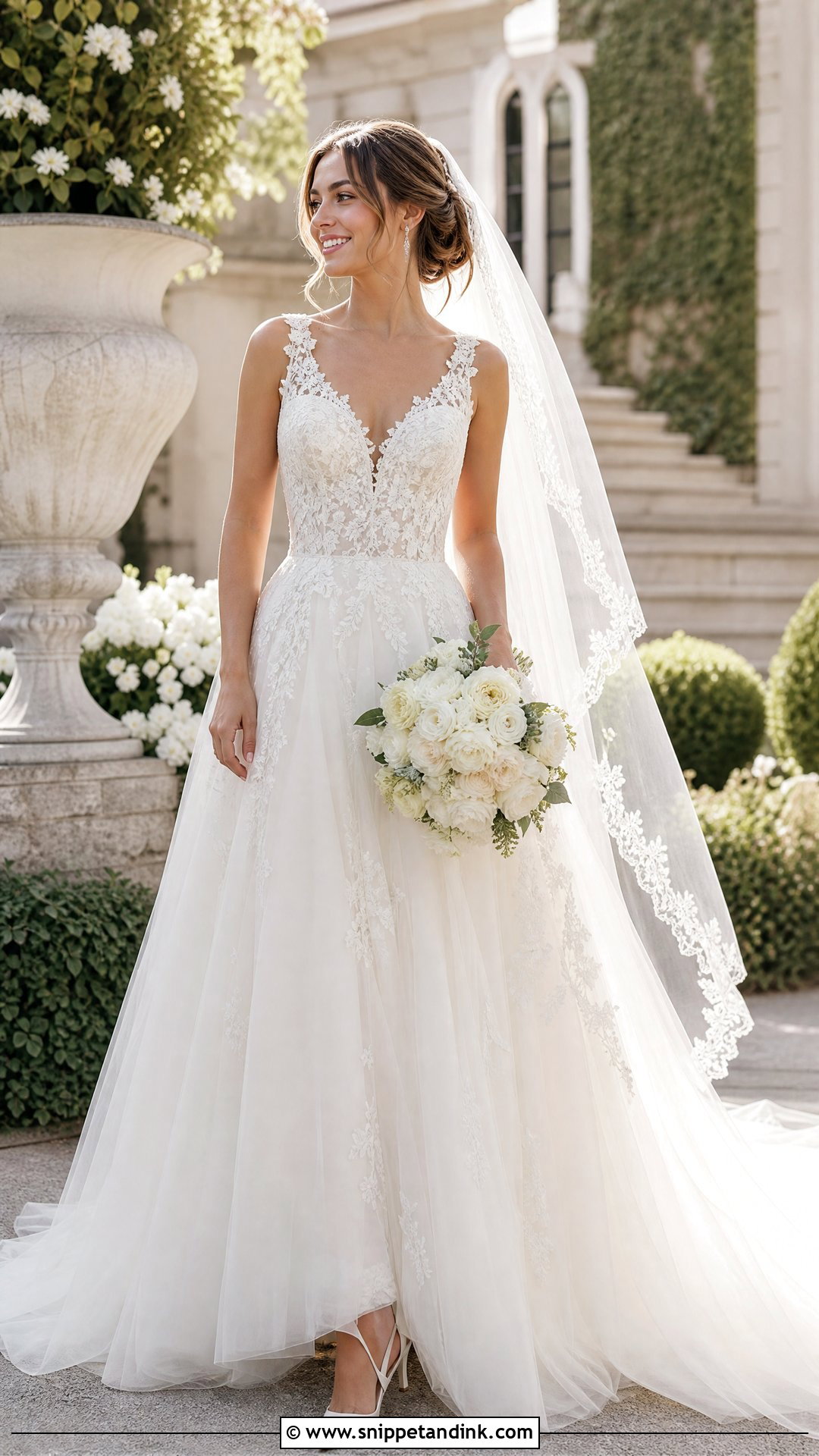
Lace straps look soft, but they need the most checking at alterations. Floral appliqué that runs from the shoulder across the bodice and fades into tulle or chiffon is the classic version, usually with a modest V and a lined bodice for coverage. The issue I see most often is the lace lifting at the shoulder seam once the strap is taken up, so I ask for it to be re-tacked by hand rather than run through a machine. Style it with ivory slingbacks, small studs, a chapel veil with matching lace edging and loose waves or a relaxed updo. Garden roses and pale greenery suit garden and estate venues.
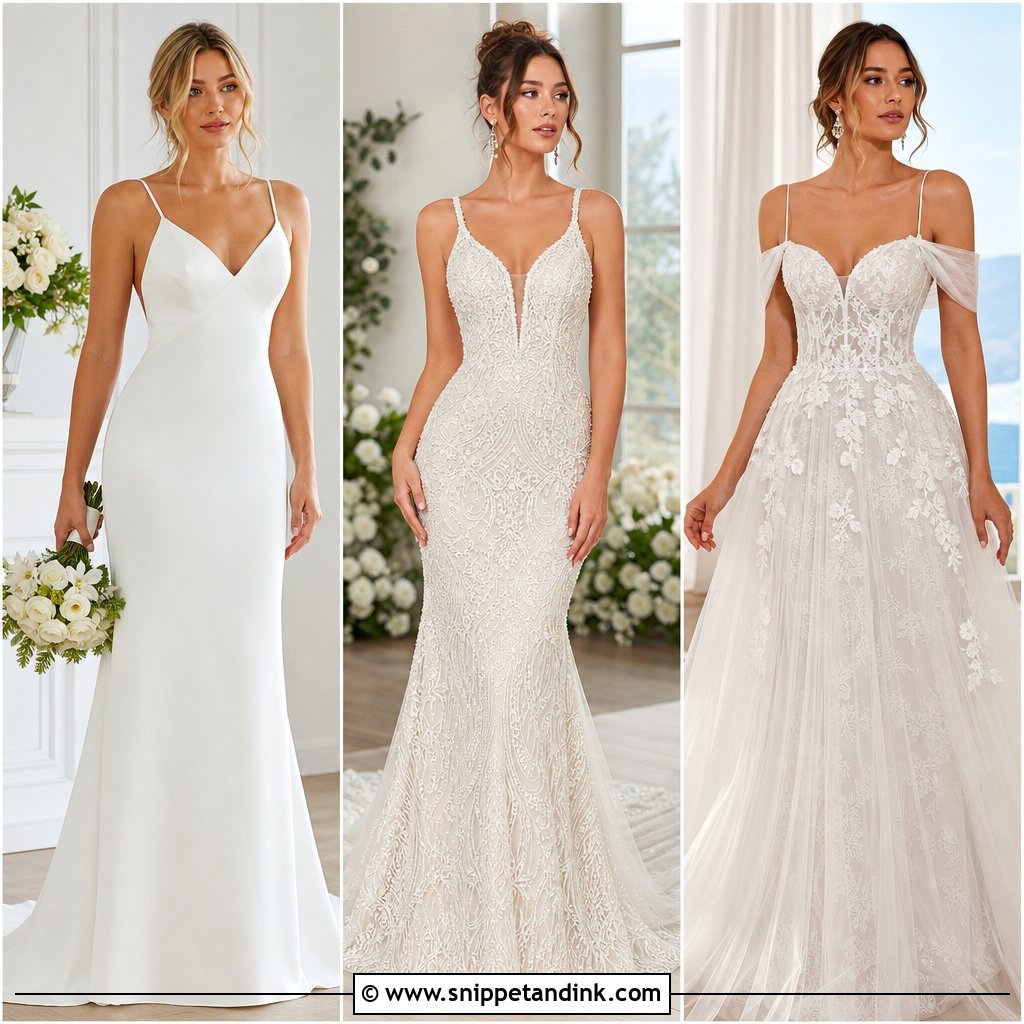
4. Beaded Strap Sheath Wedding Dress
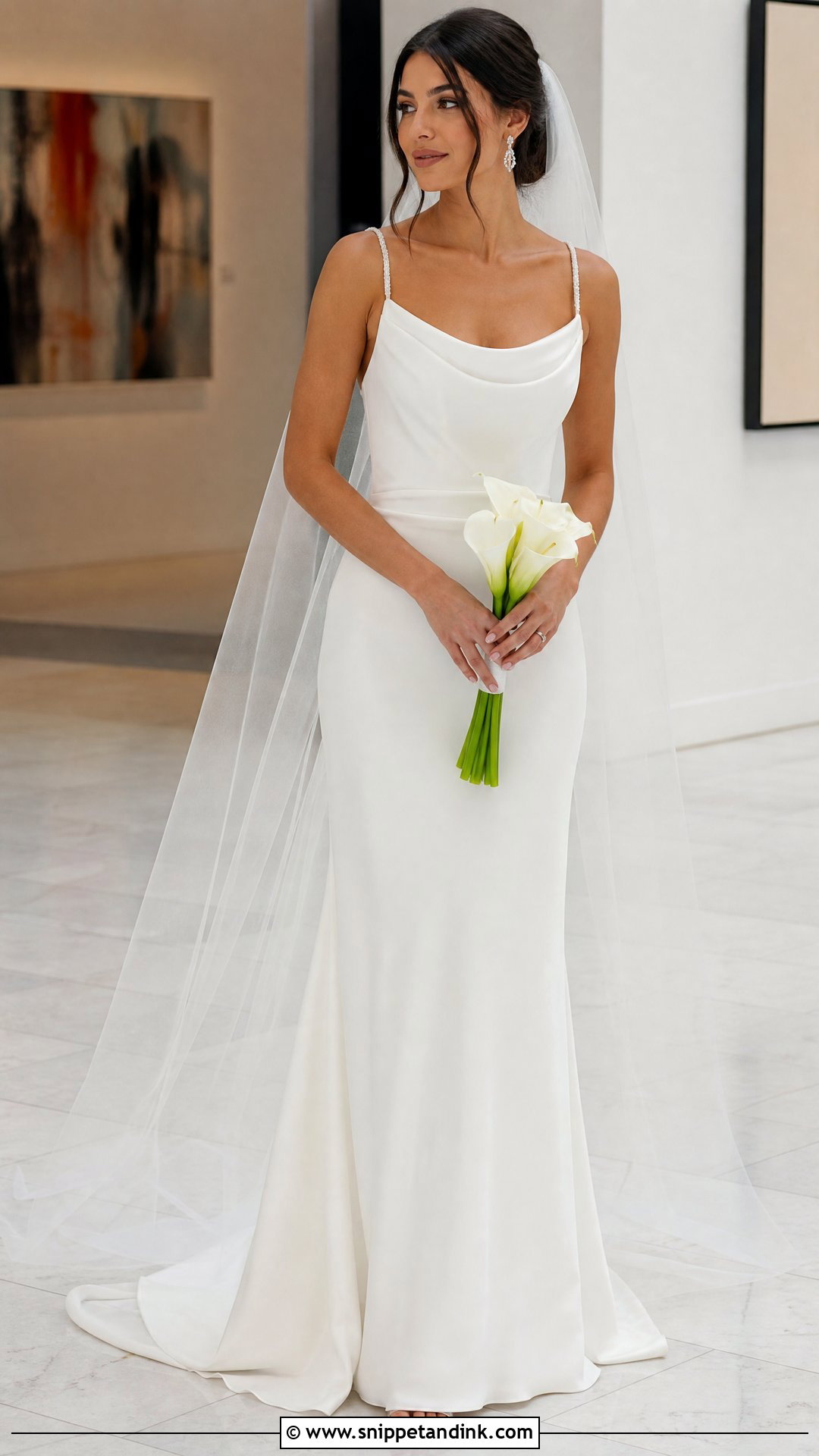
Beaded straps only come alive in low light, so this is really an evening dress. A fluid crepe sheath with a soft draped neckline and narrow jeweled straps keeps the sparkle concentrated in one place, which looks expensive rather than busy. Crystal drop earrings, metallic ivory sandals and an undecorated cathedral veil are enough; a smooth bun or side-parted waves keep the shoulders clear. Calla lilies suit the clean line. Before the final fitting I run my fingers along the underside of each strap: loose threads or rough settings will scratch bare skin within an hour.
5. Pearl Strap Mermaid Wedding Dress
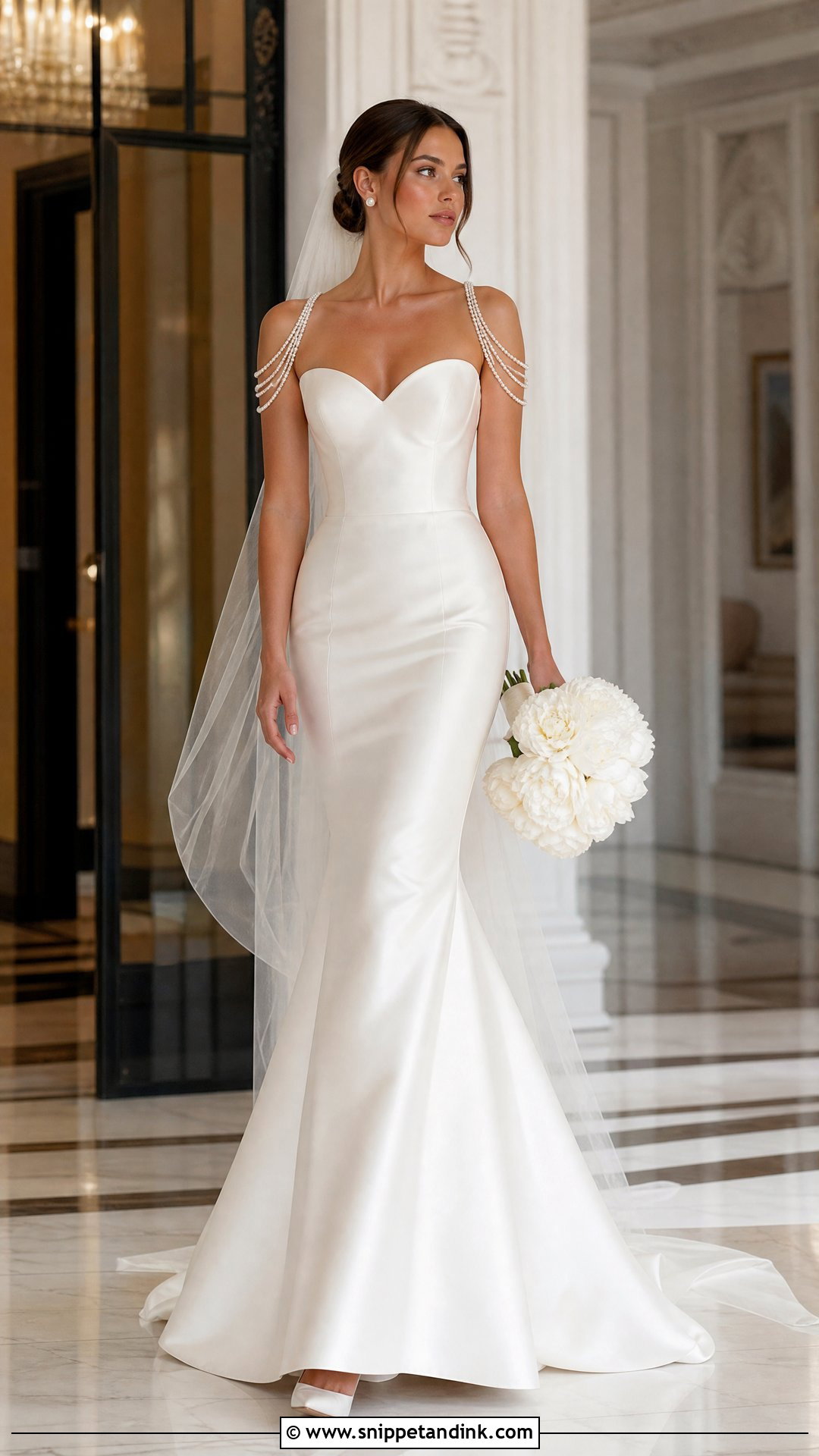
Strands of tiny pearls make a sweetheart mermaid feel classic instead of purely sculpted. The catch is that pearl strands are decorative, not structural. A mermaid bodice is heavy, and if the strands carry any of that weight they stretch, kink or snap, usually during the first dance. I ask for a hidden elastic or ribbon core and a bodice built to stand on its own. Satin or crepe keeps the silhouette crisp. Pearl studs, a plain tulle veil, pointed pumps, a polished chignon and soft peonies or roses balance the fitted shape.
6. Off-The-Shoulder Strap Ball Gown Wedding Dress
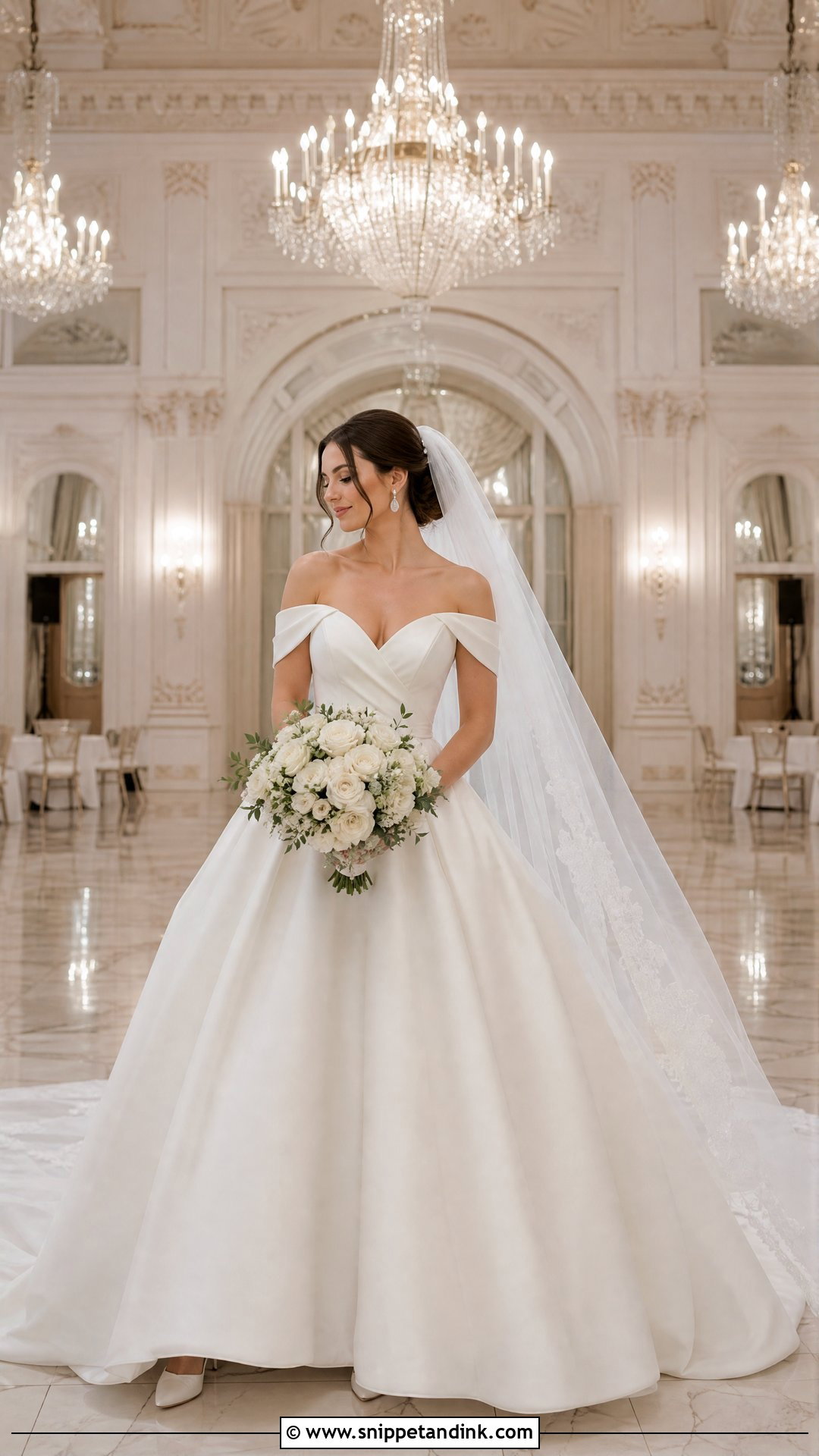
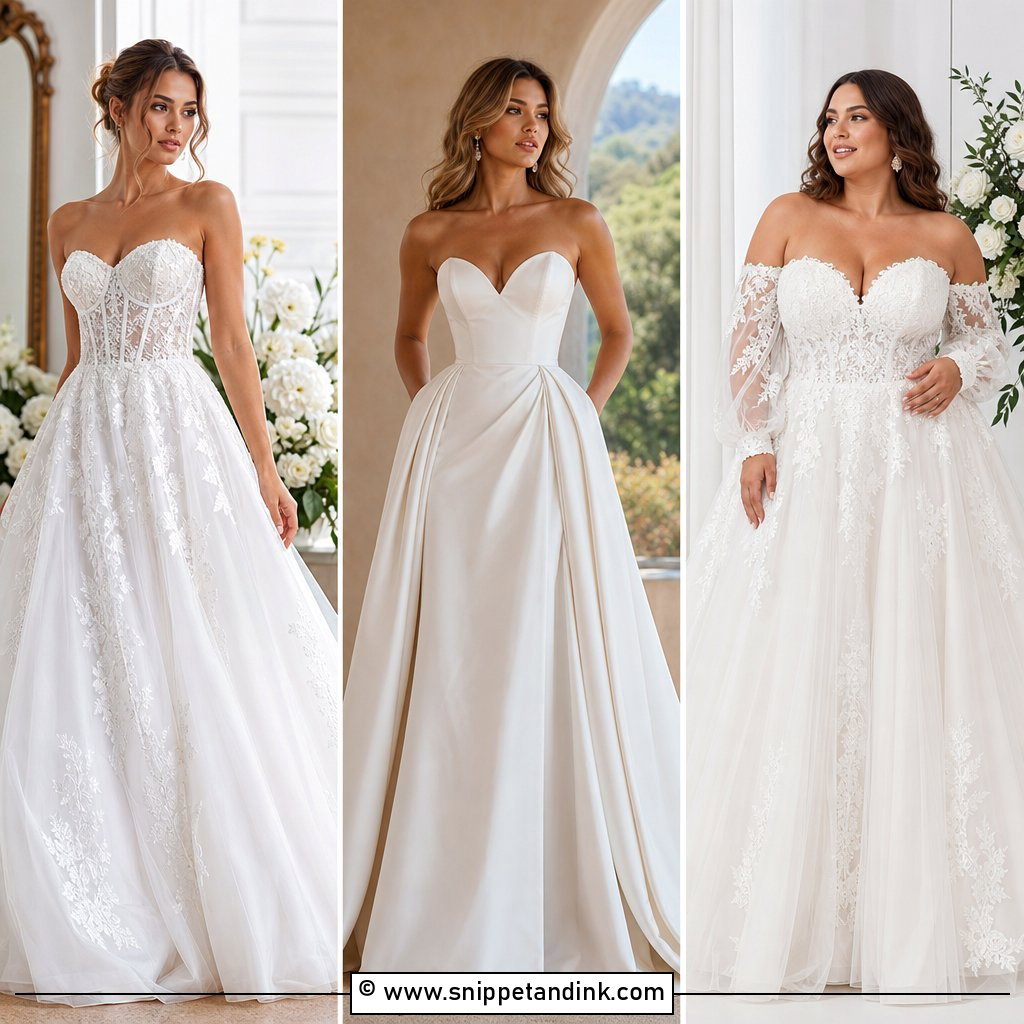
Off-the-shoulder straps frame the collarbones and keep all the drama of a full ball gown skirt. The fit question is how high you need to lift your arms. Straps that sit on the upper arm limit movement by design, so for a bride who plans to dance hard I’d look for a slightly stretchy strap or one cut a touch looser. Satin reads regal; lace or tulle softens it. A cathedral veil, teardrop earrings and low block heels hidden under the skirt are all it needs, with a full bouquet sized to the gown’s volume. Leave the necklace off.
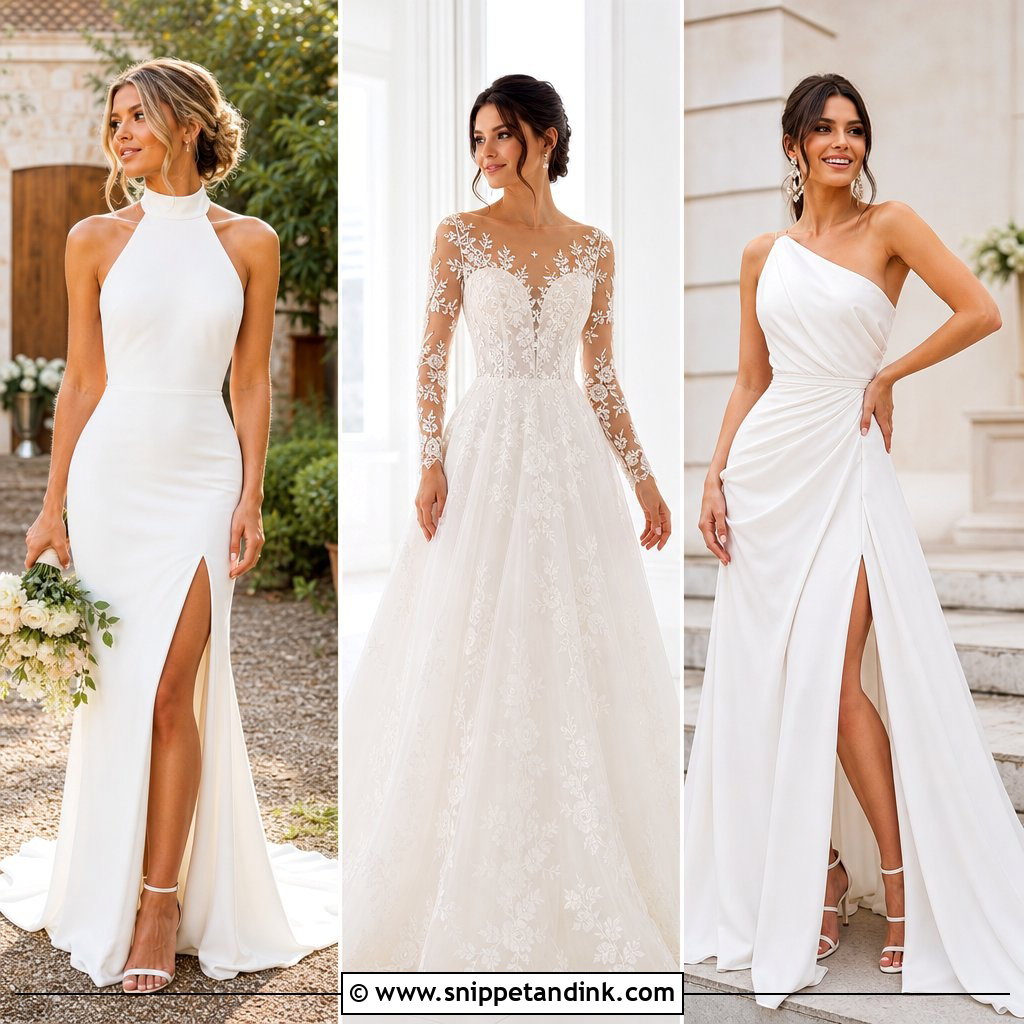
7. Halter Neck Crepe Wedding Dress
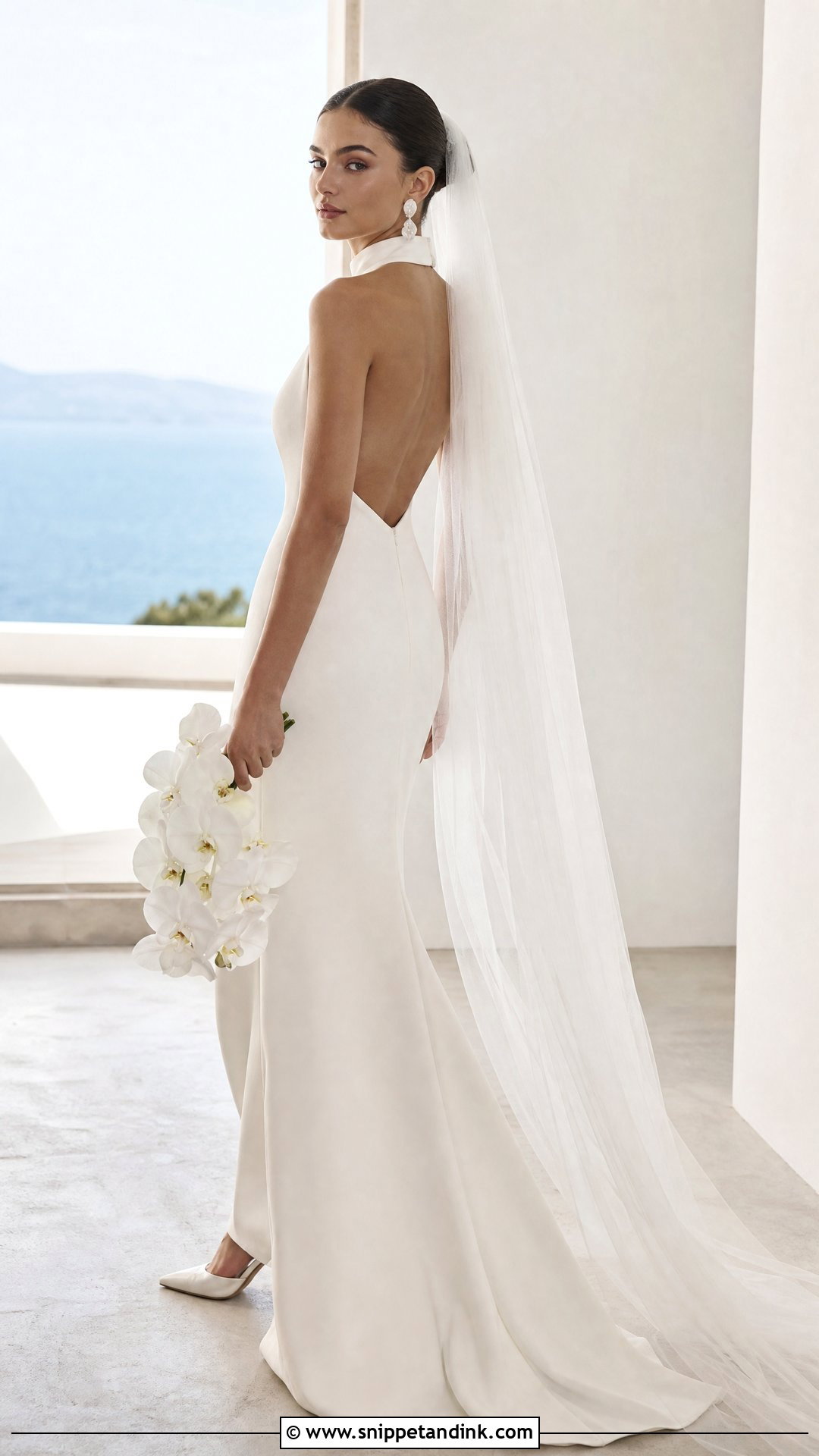
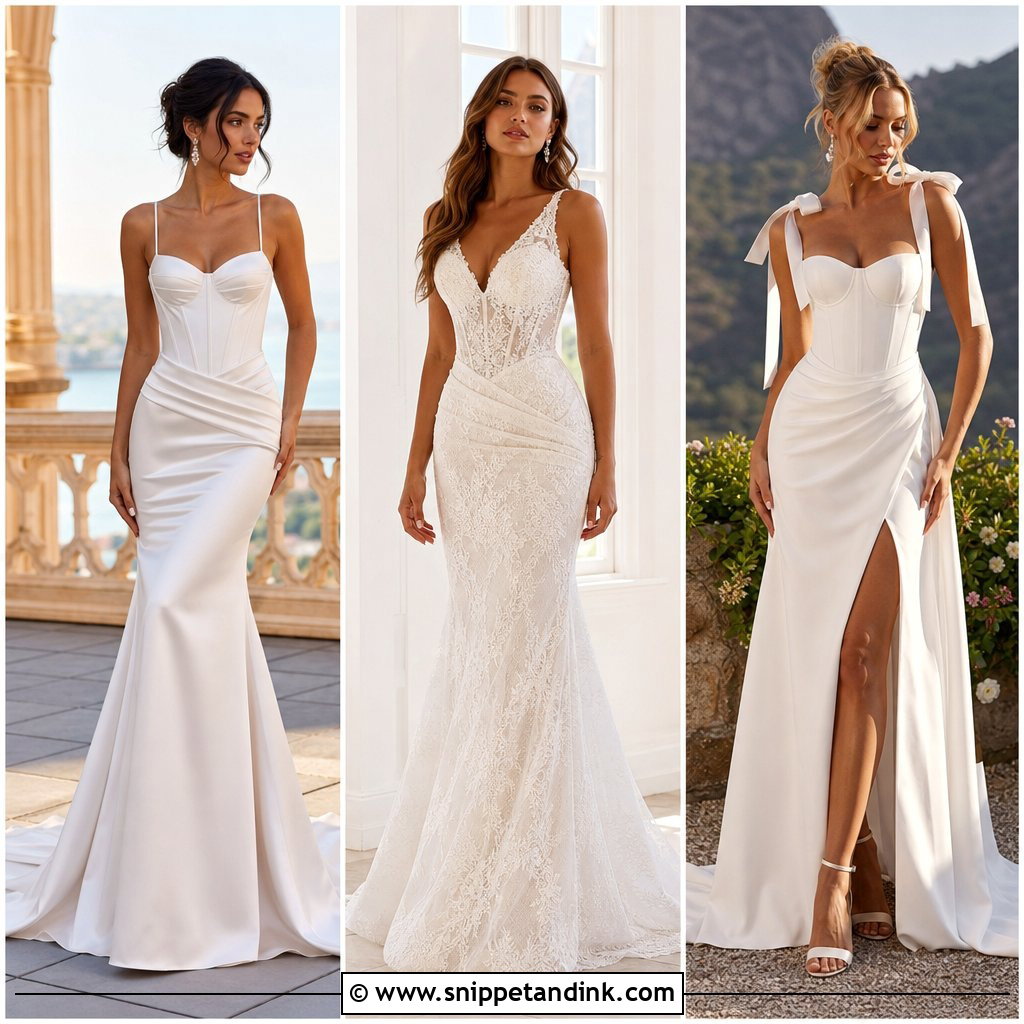
A halter puts all the support at the back of the neck, and that is the trade-off with this look. Crepe makes it sleek and long, either in a fitted sheath or a gentle fit-and-flare, and the open back gives a reason to turn around. If you get tension headaches or carry a heavier bust, I’d test it standing for half an hour at a fitting before committing. Style it with a high bun, sculptural earrings, pointed ivory heels and a narrow chapel veil set below the hair. Orchids or calla lilies fit coastal venues and sophisticated civil ceremonies. Ask the tailor to remove any slack fabric near the bust, which shows in side profile.
8. One-Shoulder Draped Wedding Dress
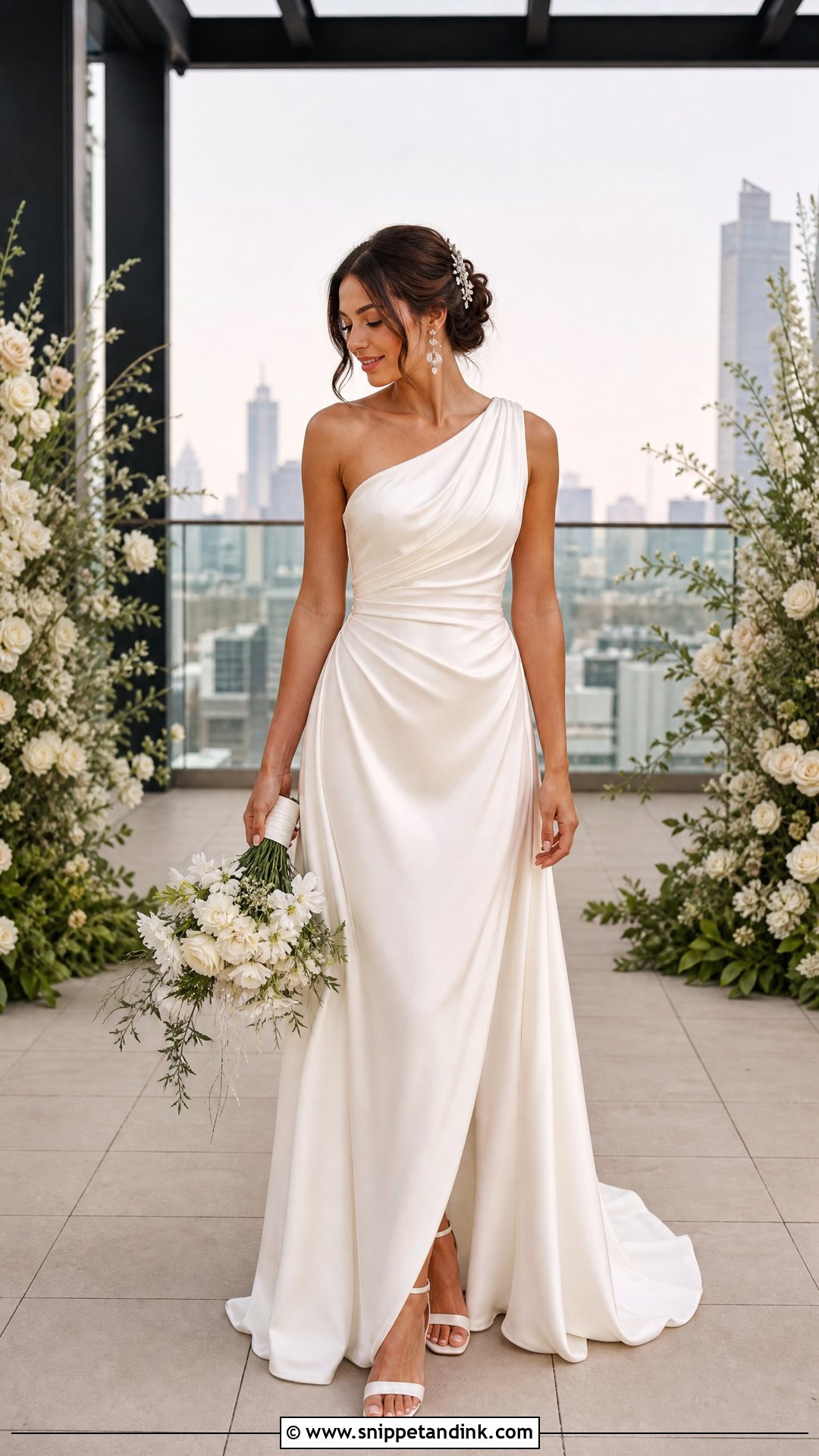
One shoulder is the strap style that most needs a level bodice. In softly draped chiffon or satin with a fitted waist and an A-line skirt, it looks modern and balanced, and light ruching defines the body without beading. The unsupported side is where things go wrong: if the bodice isn’t boned and gripped at the waist, it creeps down by the speeches. I check it from the front, both sides and in a seated position. Style it with a sleek ponytail or low bun, a single statement earring on the bare side, simple sandals and a short veil or comb, plus a loose white bouquet.
9. Illusion Strap Lace Wedding Dress
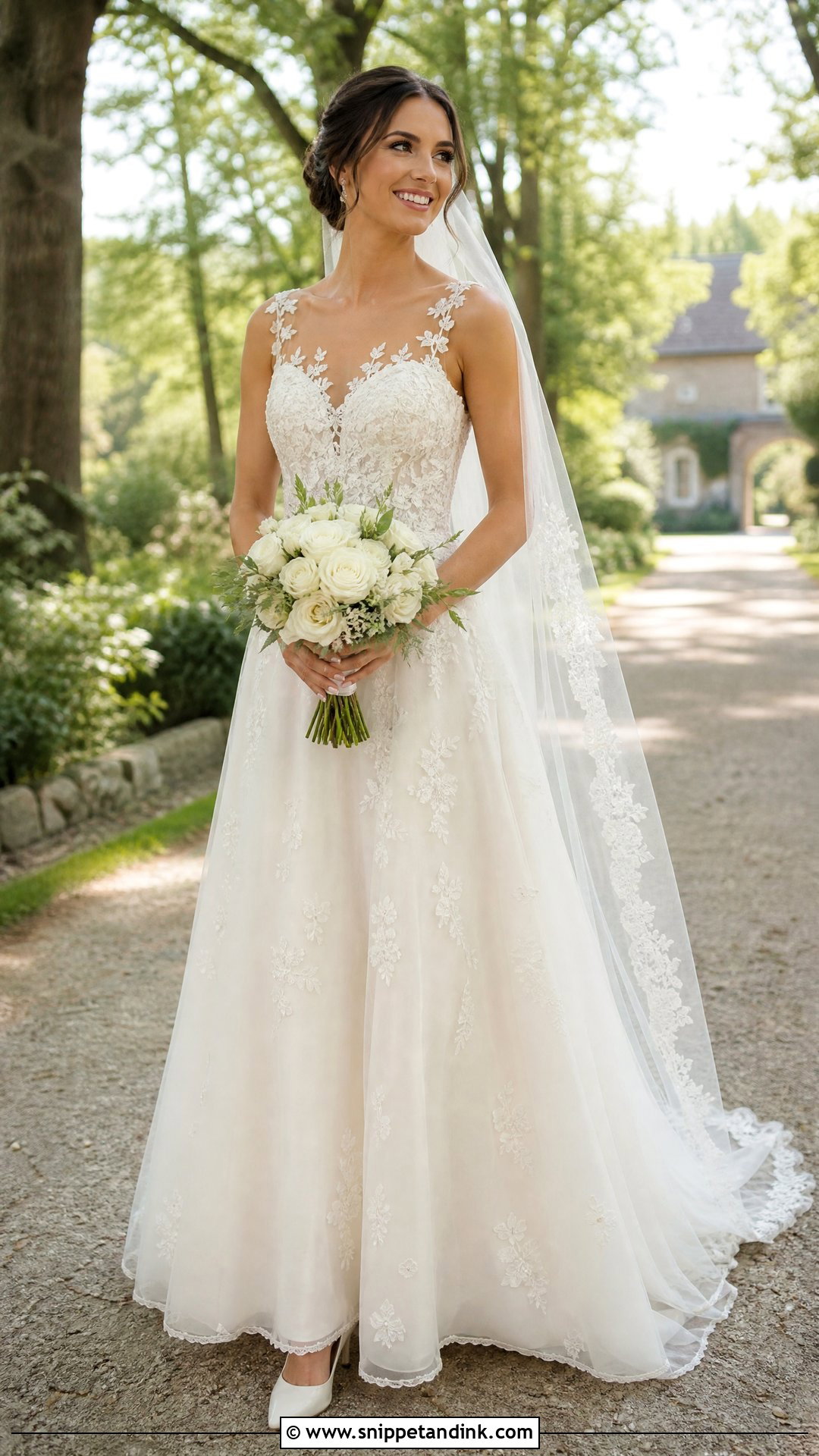
Illusion straps give coverage that barely registers, as long as the mesh matches your skin. Appliqués scattered over sheer tulle look as if they float on the shoulder, and continuing the lace through the bodice into an A-line or fit-and-flare skirt keeps it cohesive. I always check the tulle in daylight by a window, never only under shop lights, because a shade too pink or too grey shows as a visible line in photos. Nude or ivory pumps, small studs and a sheer veil with appliqués near the hem keep the focus on the lace; a textured low bun leaves the shoulders visible for woodland and estate settings.
10. Ribbon Tie Strap Wedding Dress
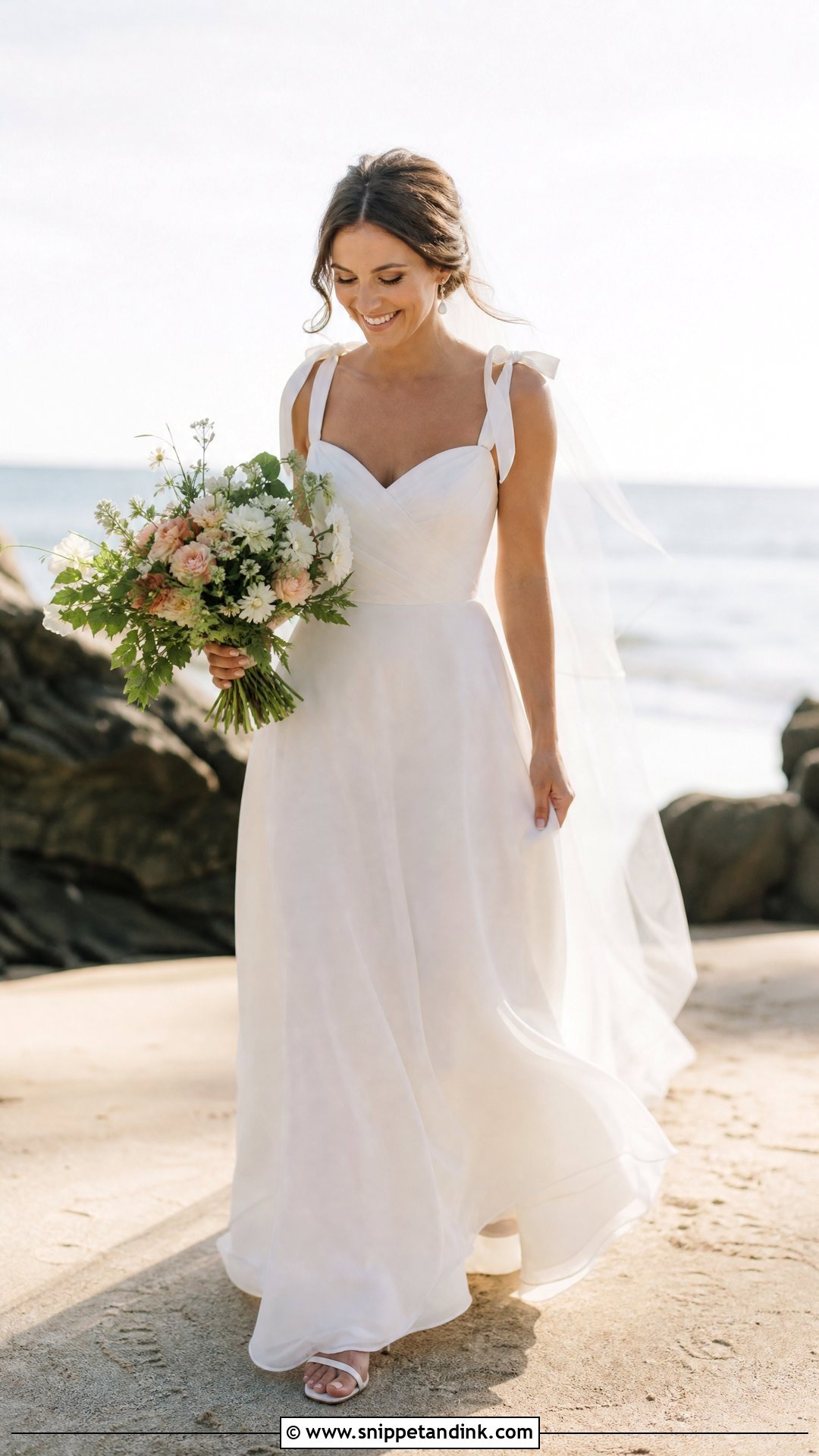
Ribbon ties are adjustable, which is charming right until a bow slips loose on the dance floor. In chiffon, organza or soft satin with a straight or gently curved neckline, the bows become the main detail, so they should be neat rather than floppy. Once you’ve found the right length at the fitting, have the tailor tack the knot from the inside with a few hidden stitches; it still looks hand-tied. Pearl earrings, low sandals, a fingertip veil or small floral piece and a loose daisy or rose bouquet suit beach and daytime weddings.
11. Bow Strap Tulle Wedding Dress
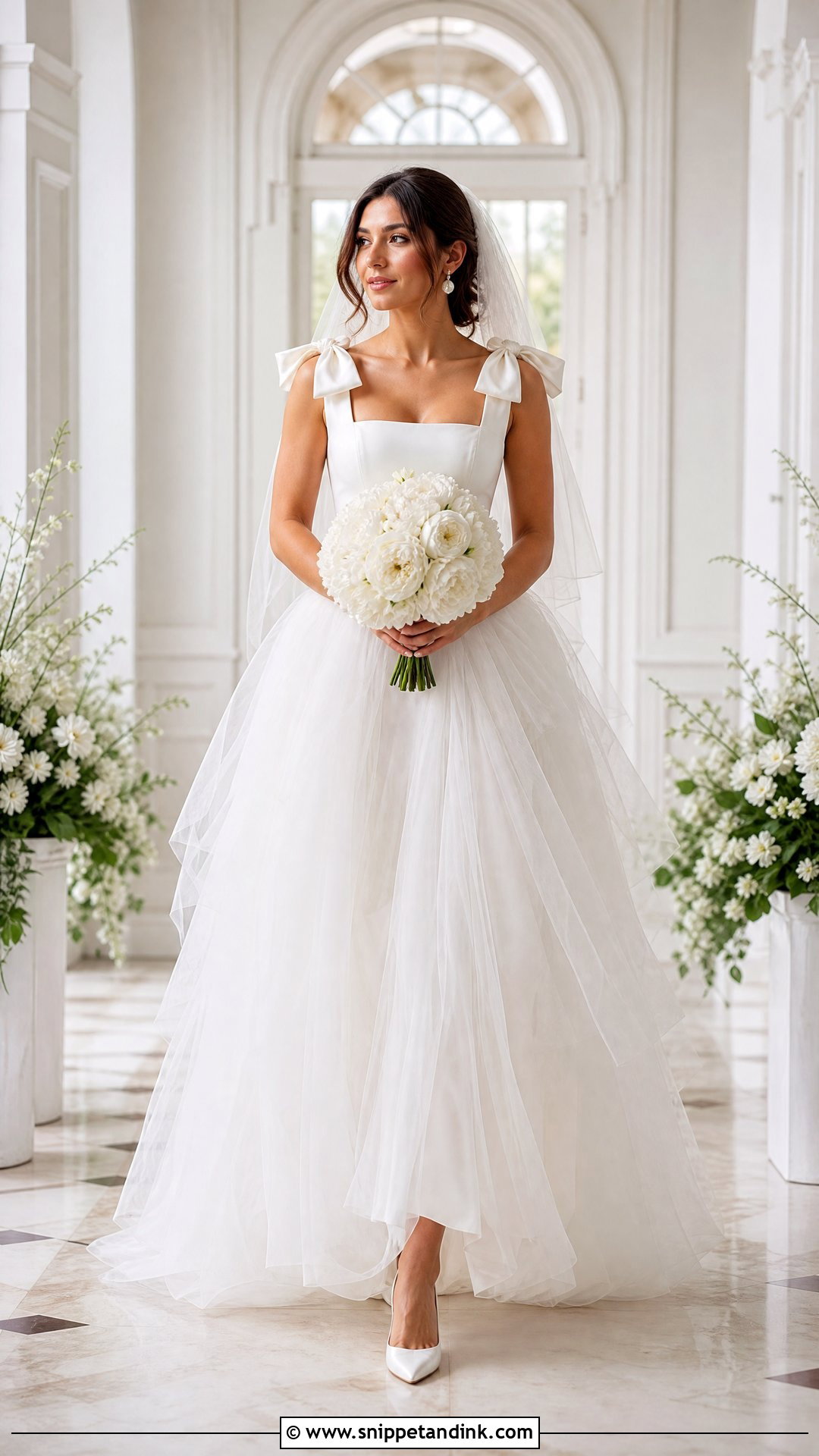
Bow straps are a little playful, so they need a polished base. A tulle gown with a fitted bodice, square neck and layered A-line skirt keeps them in check, with medium bows sitting right on top of the shoulder. Make them from the gown’s own fabric and ask for interfacing inside, otherwise they flatten after an hour of hugs. Satin pumps, tiny pearl earrings and a shoulder-length veil that doesn’t swallow the bows work well. A soft half-up style leaves them visible, and a compact round bouquet finishes it.
12. Crisscross Back Strap Wedding Dress
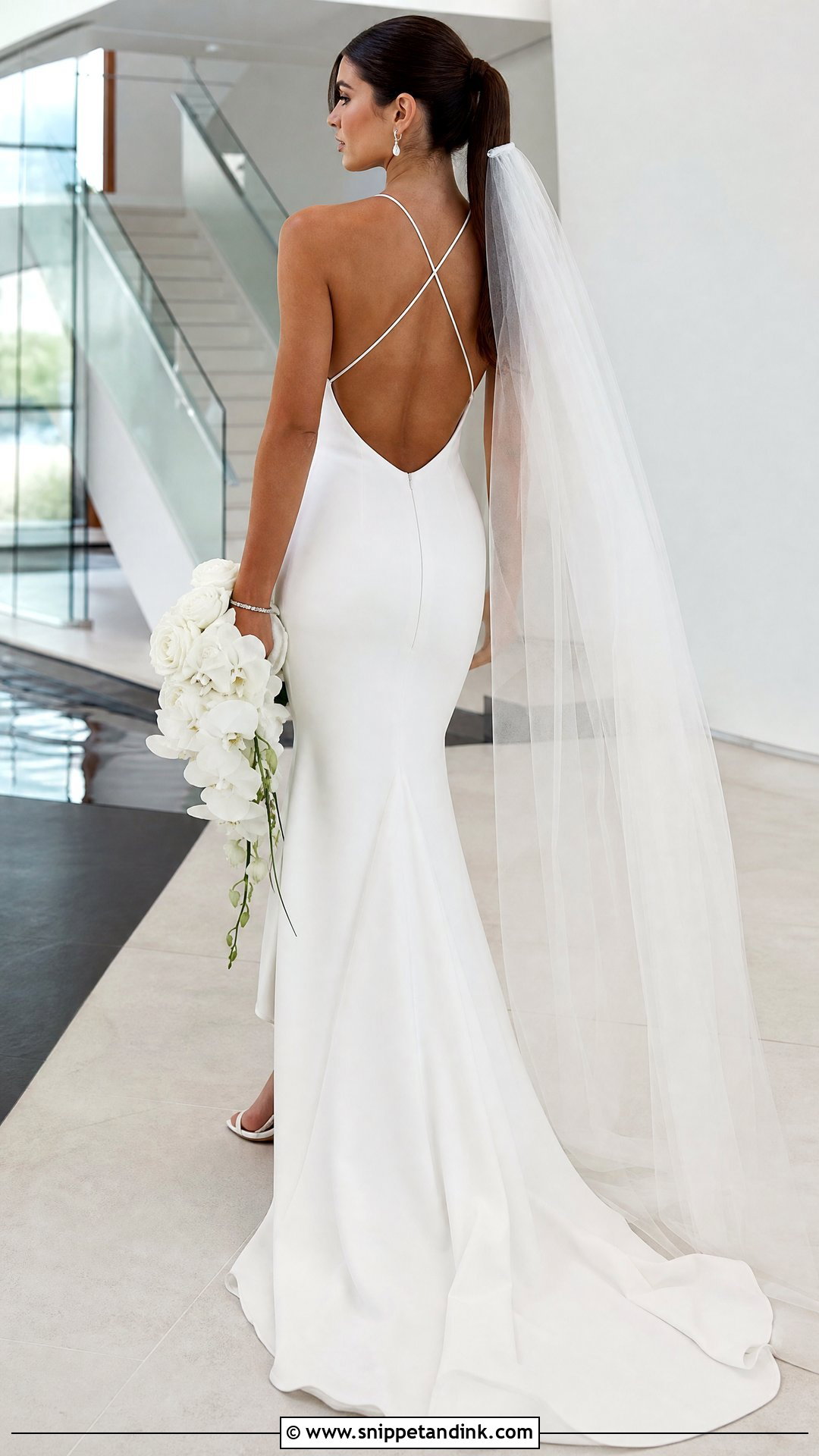
Turn around, and crisscross straps make the back as interesting as the front. Satin or crepe with a clean scoop neck, a fitted bodice and narrow crossed straps over an open back works in a sheath or a gentle fit-and-flare. Equal tension is everything here: if one strap is a few millimetres tighter, the bodice twists to that side and the back seam pulls off-centre. A low bun, a delicate back-drop chain, ivory heels and a removable sheer veil keep the back on show. Small earrings, no necklace, and a long narrow bouquet.
13. Double Strap Sweetheart Wedding Dress
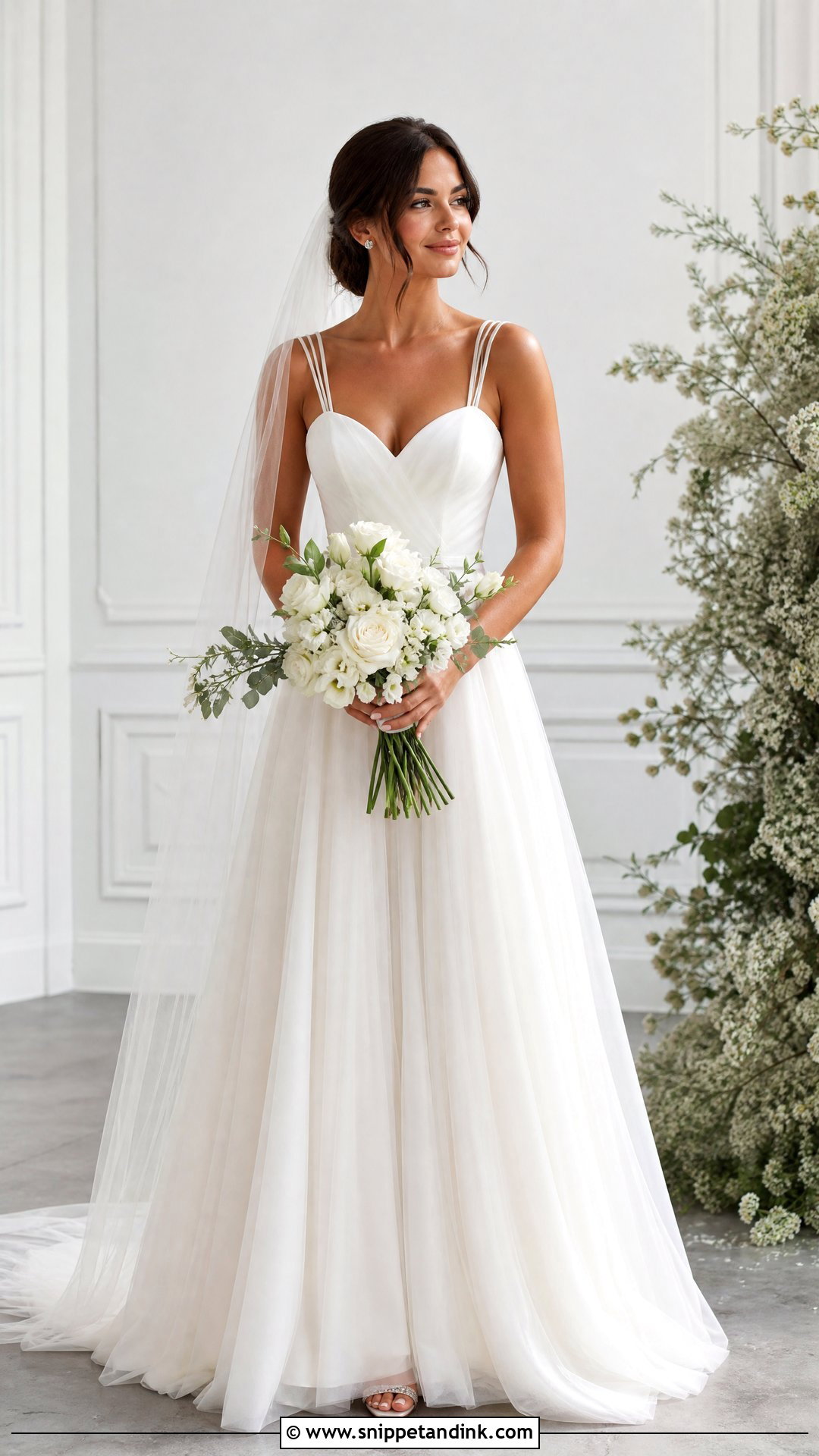
Two thin straps per shoulder look more modern than one and spread the visual weight, which helps on broader shoulders. A sweetheart bodice with a chiffon or tulle skirt keeps it light. The camera picks up every irregularity, so at the fitting I check that all four straps sit flat, run parallel and match in length; a few millimetres off is visible in close-ups. Crystal studs, slim heels, a clean-edged chapel veil and a soft updo that clears the neckline are enough. Long-stemmed white flowers suit the line.
14. Detachable Strap Satin Wedding Dress
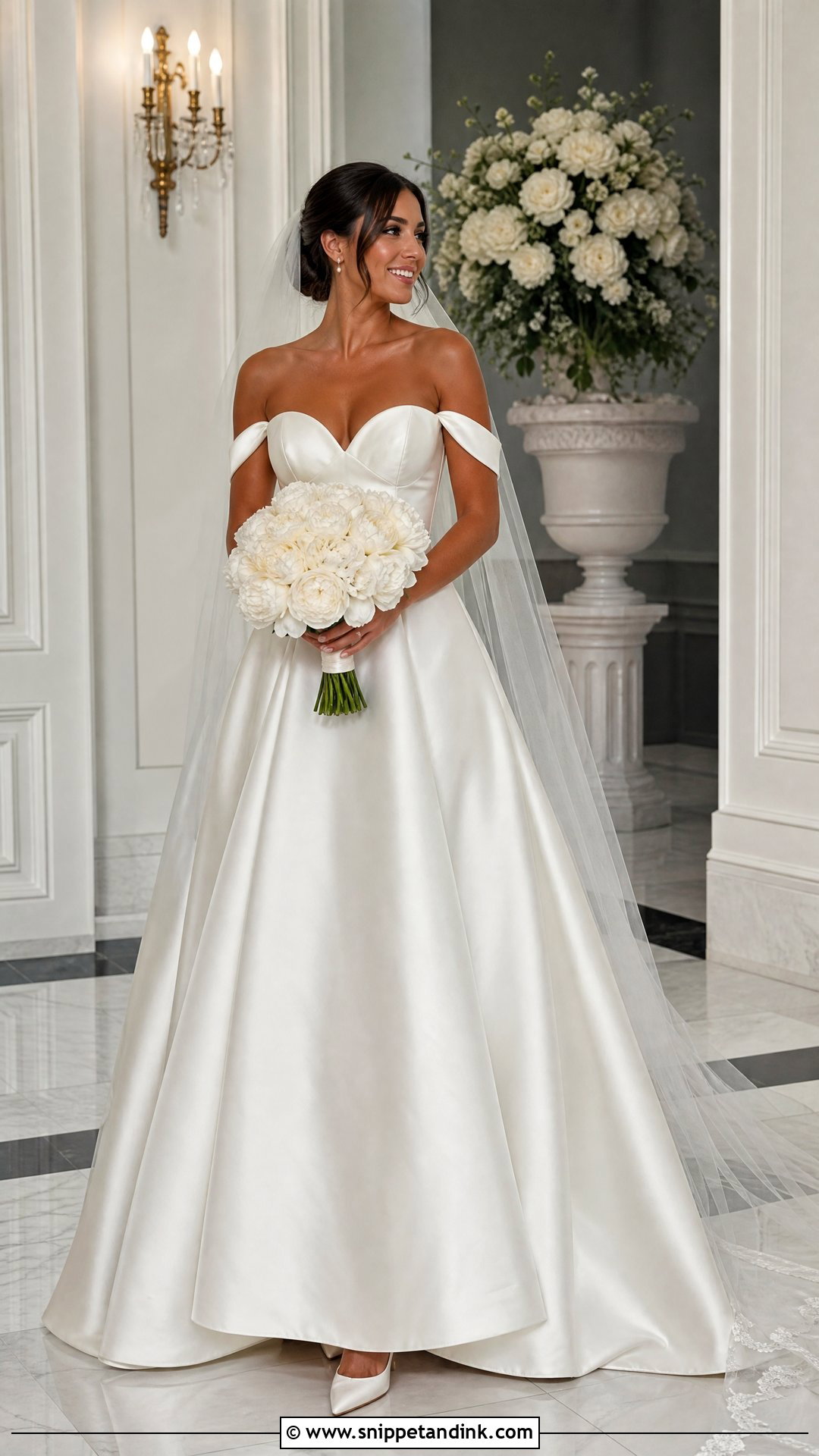
Detachable straps give you two dresses: one for the ceremony, one for the party. Start with wide or narrow straps on a structured sweetheart bodice, a cathedral veil, pearl earrings and pointed pumps, then unhook them after photos and switch to a shorter veil or jeweled comb. The bodice must fit securely strapless on its own, otherwise the straps were doing hidden work all morning. I’d also practise the swap twice at home, since hooks hidden inside a lining are fiddly with nervous hands and a crowd waiting.
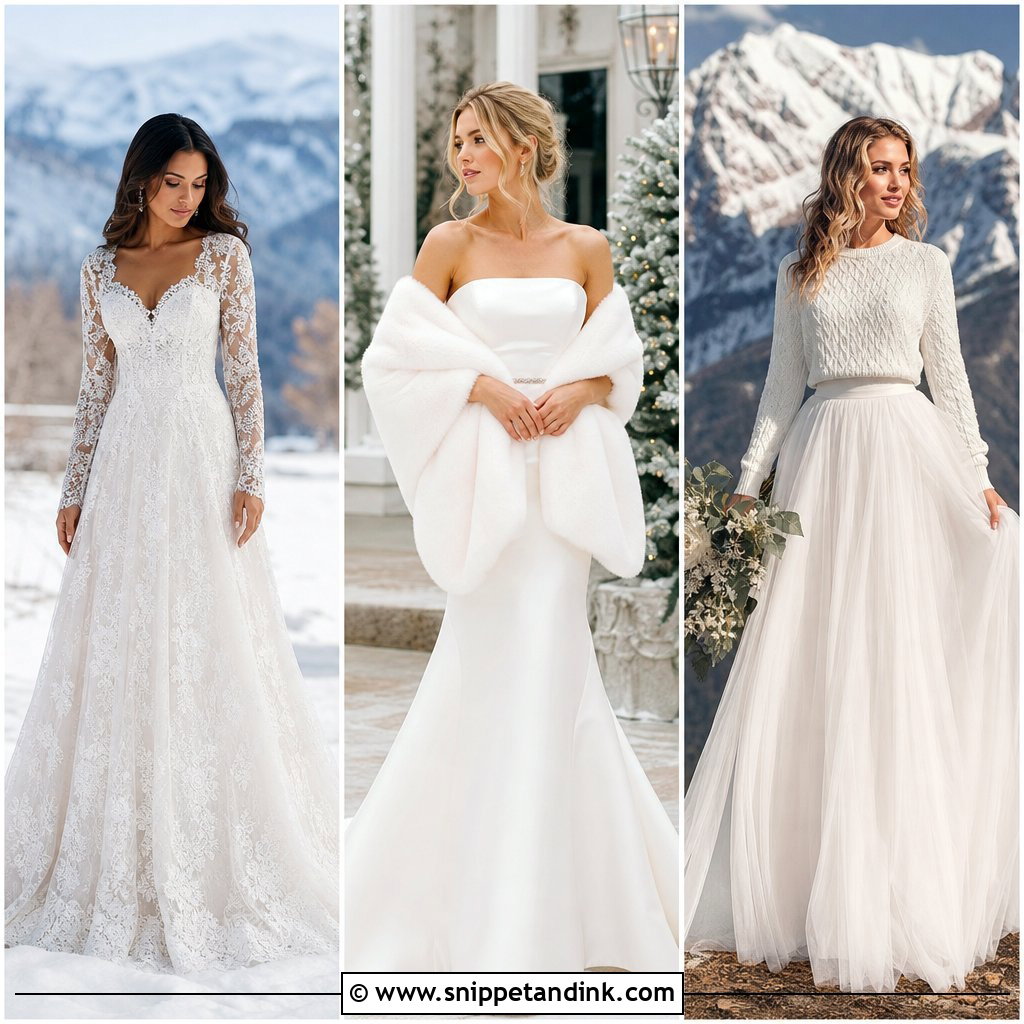
15. Floral Appliqué Strap Wedding Dress
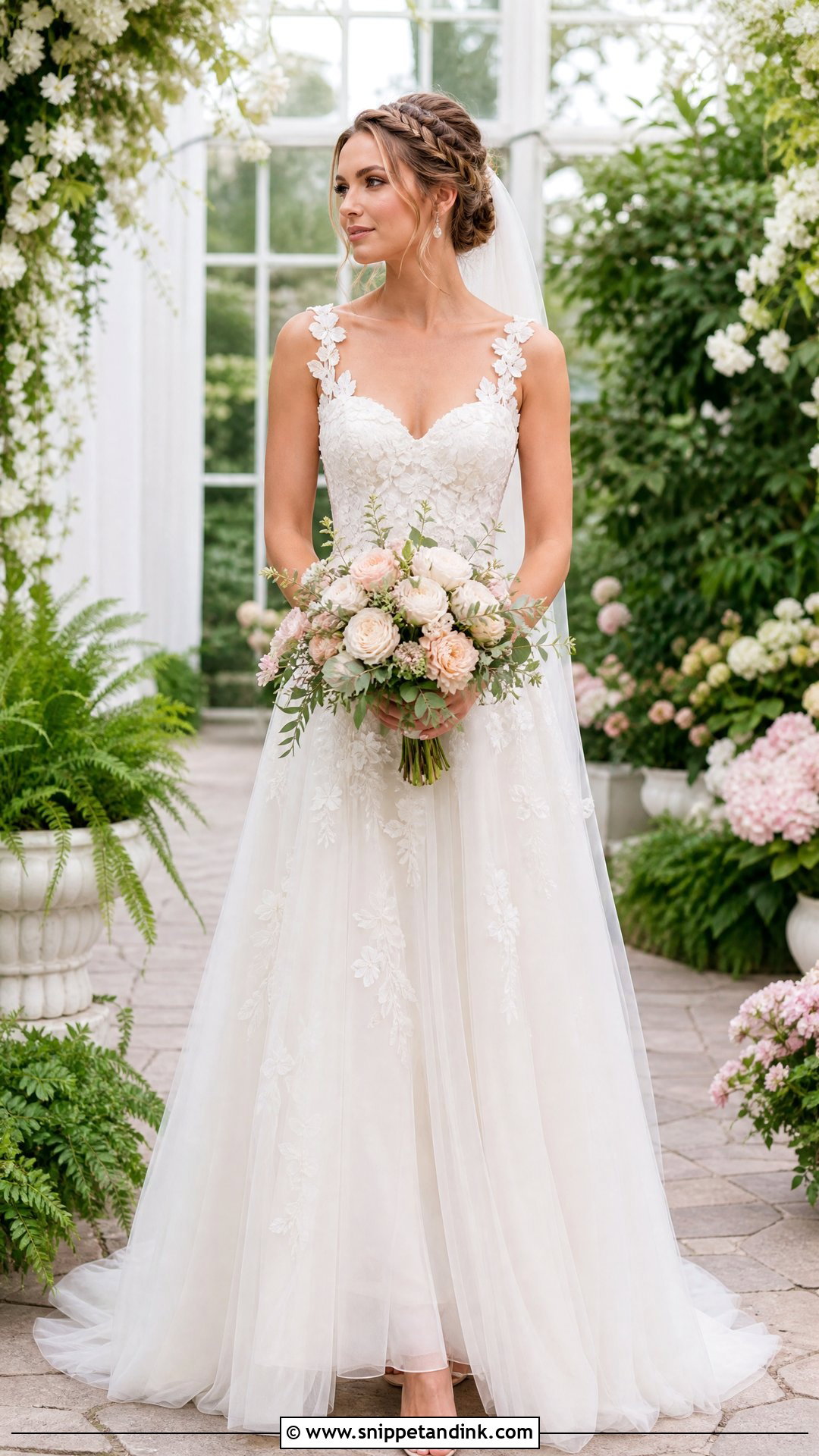
Three-dimensional petals on the straps turn a plain gown into something garden-like, as long as the rest of the dress stays light. A tulle A-line skirt stops the floral work feeling heavy, and the petals should flow into the bodice rather than stop abruptly. My usual concern is the inner edge: stiff appliqué against the neck scratches by mid-afternoon, so I ask for a soft facing behind it. Quiet earrings, pale heels, a plain veil and a soft braided updo, with a bouquet in similar flower shapes rather than an exact copy, suit conservatories and outdoor venues.
16. Pleated Strap Chiffon Wedding Dress
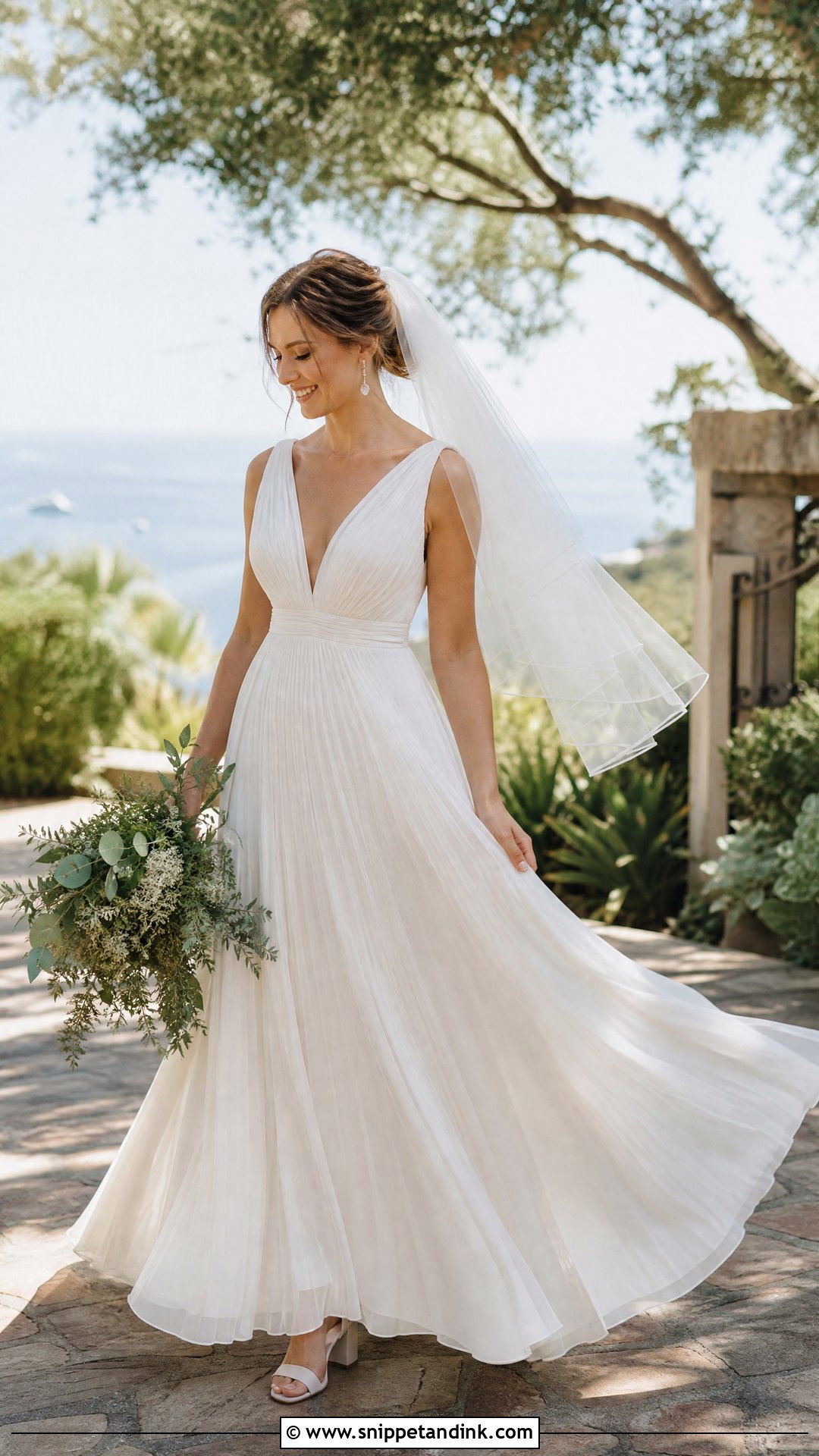
Pleated chiffon straps give coverage that feels soft rather than structured, and they are comfortable in heat. Gathered straps on a V-neck, an empire or natural waist and a light A-line skirt make a relaxed outfit that still reads bridal. The pleats have to be pressed and stitched down along their full length; otherwise they twist and the whole line looks crumpled in photos. Low block heels, pearl drops, a sheer fingertip veil, a loose bun and airy greenery suit beach and garden venues.
17. V-Neck Wide Strap Wedding Dress
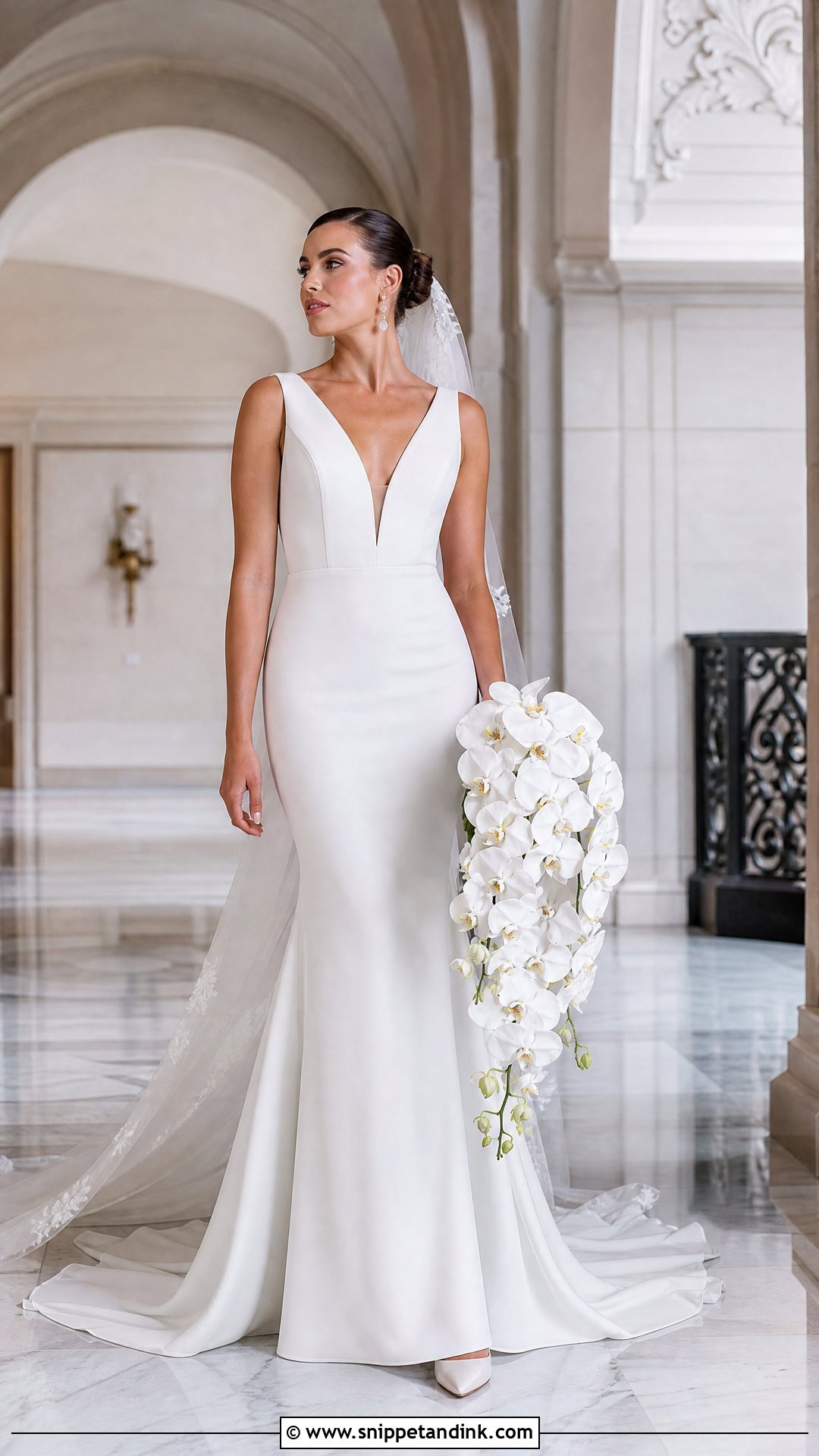
A deep V needs wide straps to feel secure, and this pairing gives real upper-body coverage despite the plunge. Straps that join cleanly into the side and back panels of a structured A-line or fit-and-flare do the holding; crepe keeps it minimal, lace softens it. Wide straps also leave room for tape or built-in support, and a discreet illusion inset is worth considering if the neckline is very low. My test is simple: bend forward and raise your arms in the mirror. If the neckline gaps, it gets adjusted. Drop earrings, pointed heels, a chapel veil under a low bun and a long orchid bouquet finish it.
18. Scalloped Lace Strap Wedding Dress
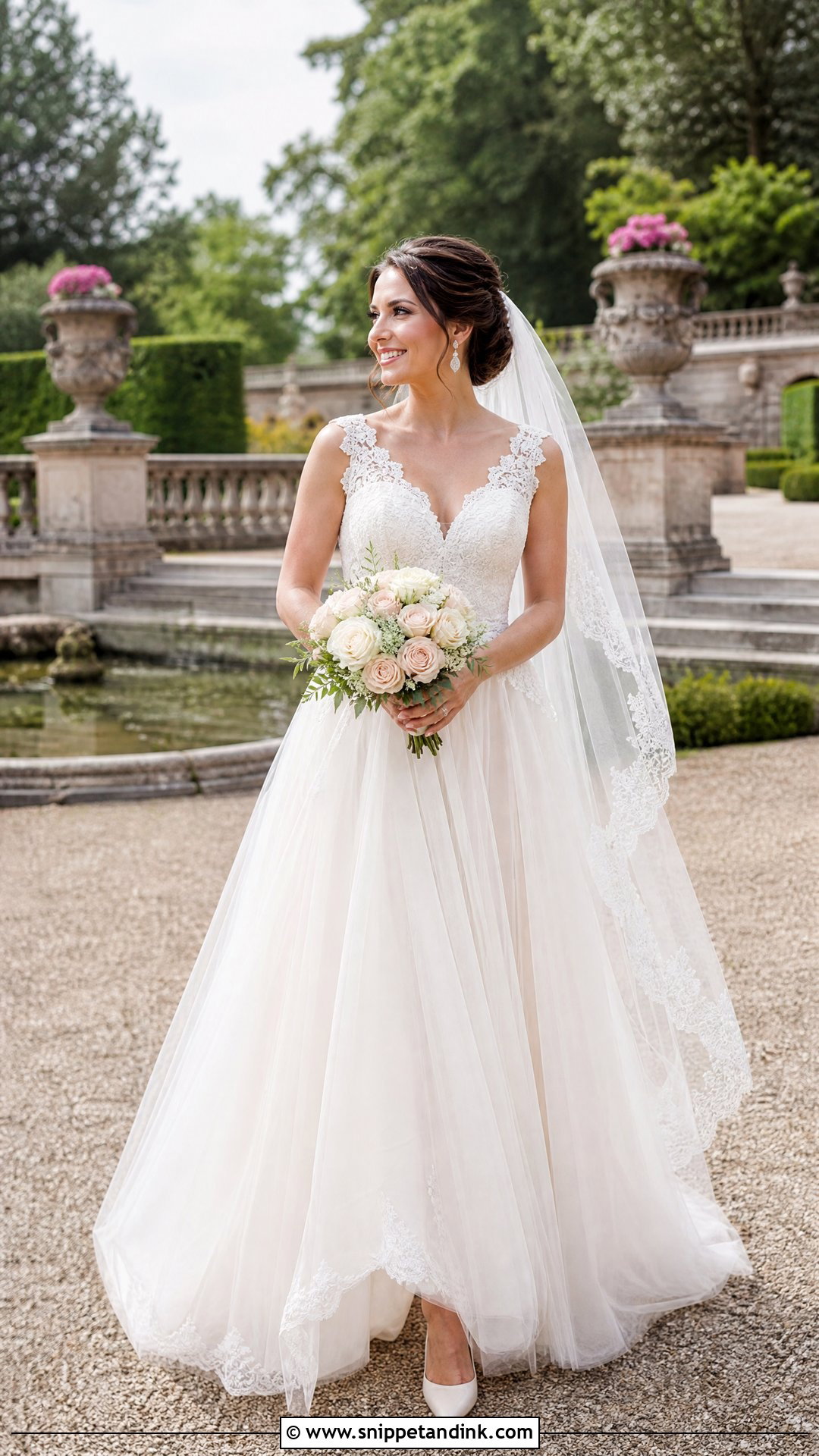
Scalloped lace gives a finished edge that plain lace straps don’t have. A soft scoop or V, a fitted lace bodice and a tulle skirt carry it, but the scallops must run evenly along the shoulder and into the back. If a tailor shortens the strap by cutting the lace, the scallop disappears, so I ask for alterations from the shoulder seam with the edge lifted and hand-placed back. Vintage-style earrings, ivory pumps, a lace-edged veil that echoes rather than copies the pattern, a low chignon and round white roses suit ballrooms and estates.
19. Jeweled Strap Fit-And-Flare Wedding Dress
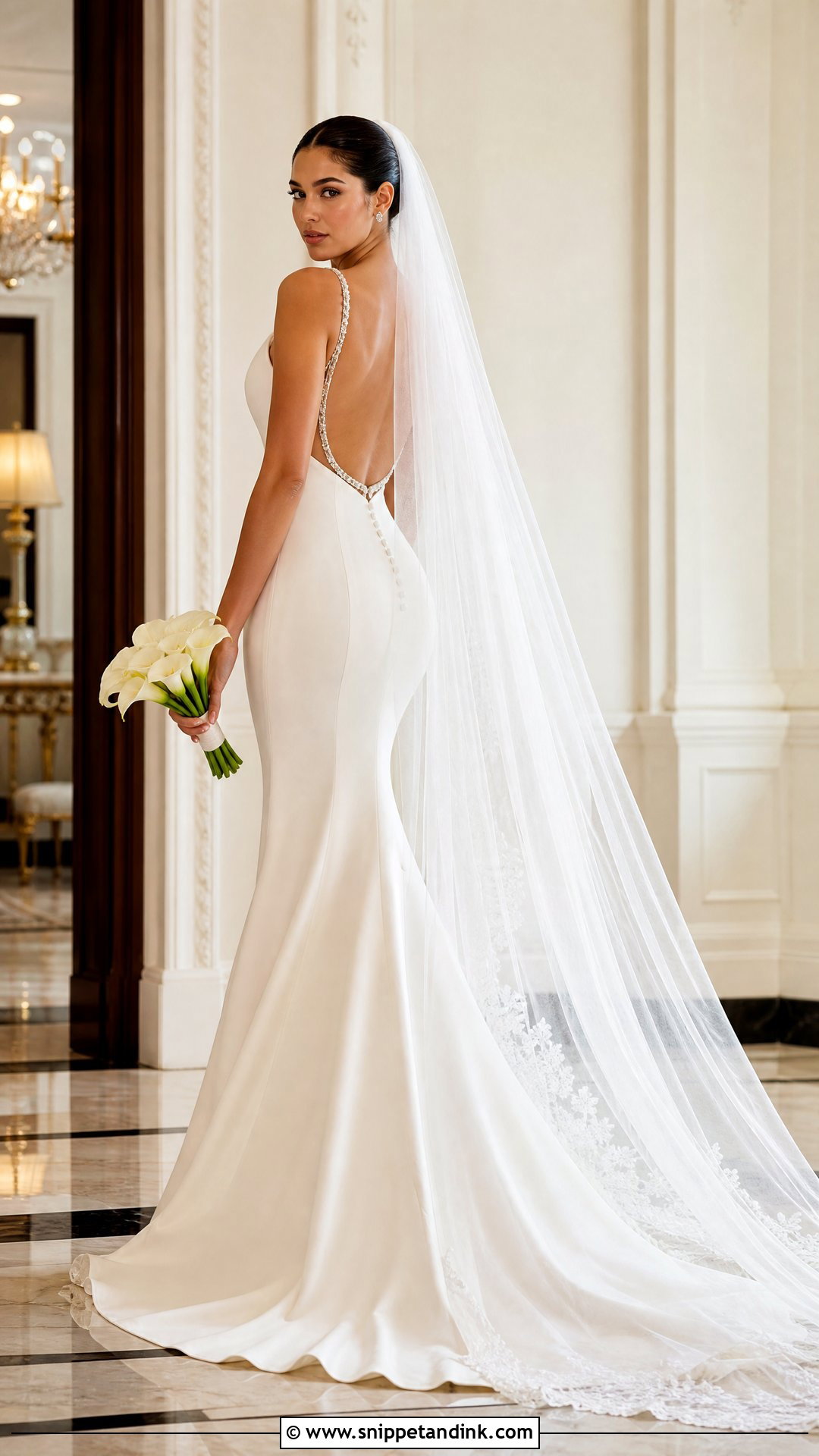
Jeweled straps put the sparkle in one controlled place instead of all over the gown. A smooth crepe or satin fit-and-flare with a simple neckline and crystal straps running to a low back is enough. Stones are heavy, though, and they pull down if the bodice isn’t carrying its own weight, so I check that the straps are anchored into boning, not just to the lining. Small earrings, metallic ivory heels, a plain cathedral veil and hair lifted or swept aside keep the straps visible. White roses or calla lilies suit an evening ceremony.
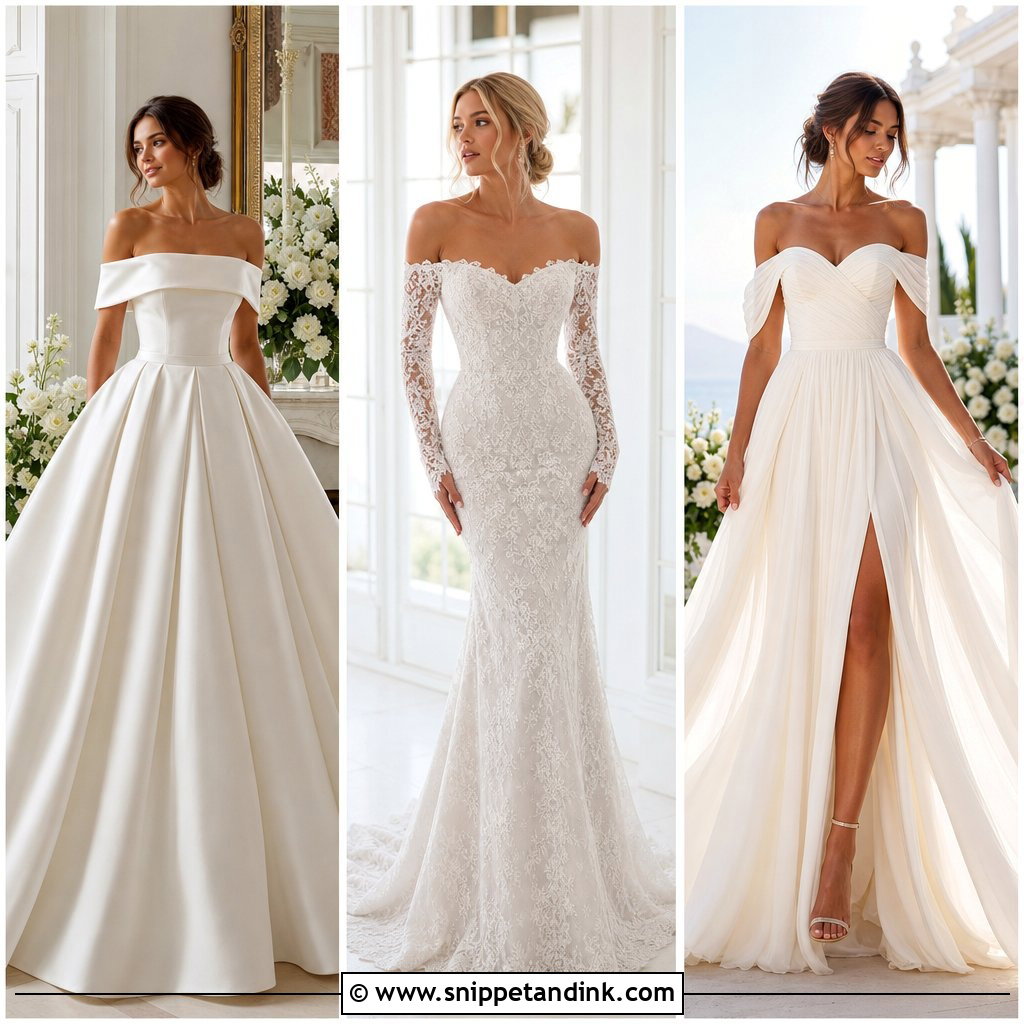

20. Ruched Strap Empire Waist Wedding Dress
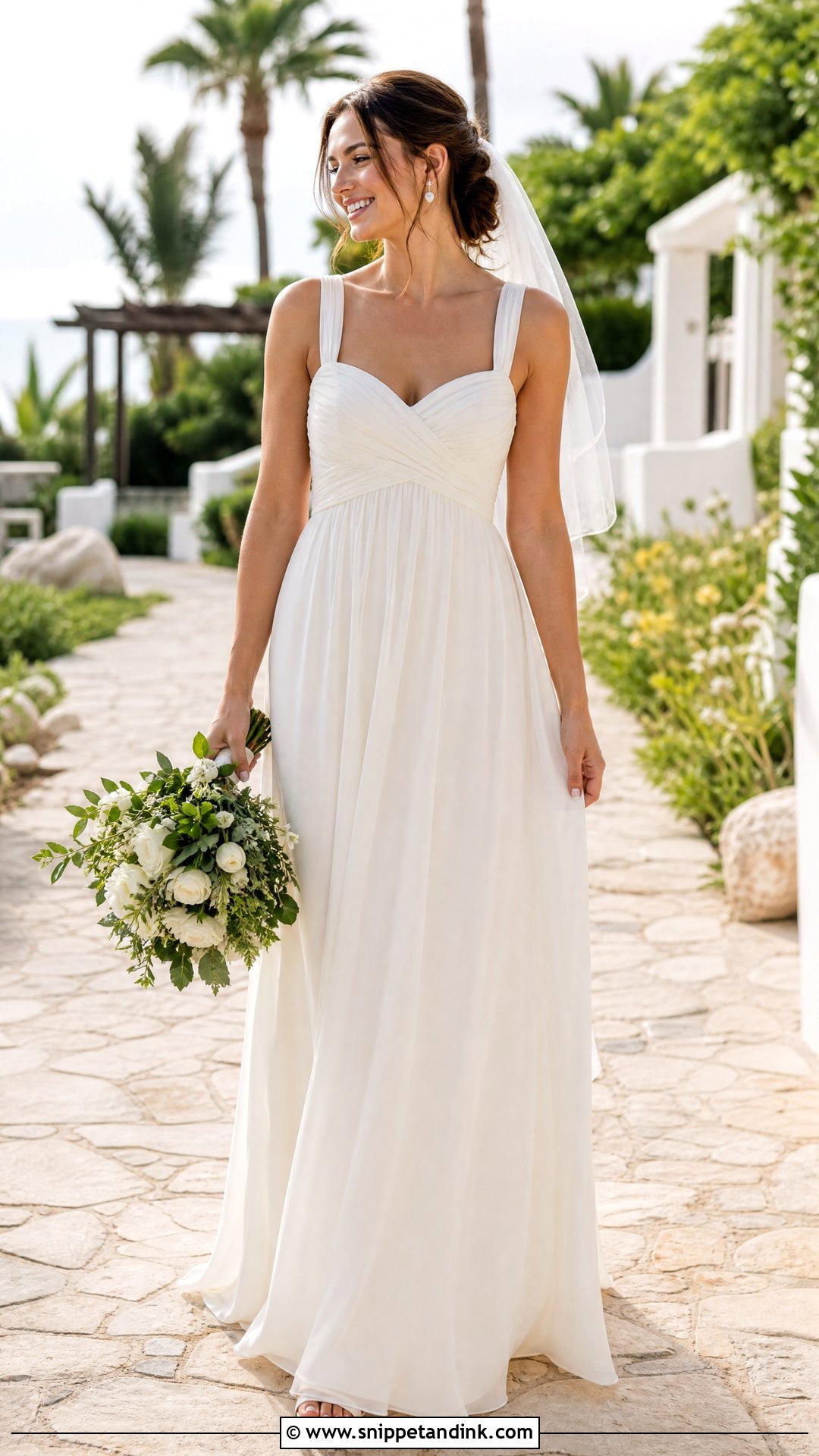
Gathered straps with an empire waist make one of the easiest dresses to wear all day. The fabric falls from just under the bust, so there’s nothing pressing at the natural waist, which suits many body shapes and anyone who dislikes structure. The risk is bulk: too much ruching on the straps widens the shoulders, so I ask for it to be redistributed evenly at the fitting. A soft lining helps the chiffon hang cleanly. Low sandals, delicate earrings, a light fingertip veil, half-up hair and an airy bouquet suit outdoor and daytime weddings.
Why Straps Slip by the Speeches, and the Small Fixes That Stop It
Most strap trouble shows up after a few hours: fabric relaxes with body heat, you sit for dinner, you hug a hundred people. These are the quiet fixes I ask tailors for, usually at the second or third fitting once the main shape is set.
Lingerie guards and strap keepers
A tiny loop of thread or ribbon with a snap, stitched inside the shoulder seam, holds a bra strap under the dress strap. It costs almost nothing and stops the most common photo problem: a bra strap peeking out during the first dance.
A grippy edge on narrow straps
Satin is slippery against skin. A thin strip of silicone tape or a velvet facing on the underside of a spaghetti strap gives it something to hold onto. On off-the-shoulder styles a light elastic inside the band does the same job.
Testing it the way you’ll actually wear it
At the last fitting, wear the dress for at least twenty minutes. Sit, reach across a table, hug someone, lift your arms as if you’re throwing the bouquet. If a strap slides, the fix is usually taking it up a little or moving it toward the neck. Pack fashion tape, a few safety pins and a needle threaded in the dress colour for the day; your maid of honour should know where they are.
The Strap You Forget You’re Wearing Is the Right One
The right straps are the ones you stop noticing after the first hour. Spaghetti straps feel light; wide, pleated or lace-covered styles give more coverage; pearls, crystals, bows and appliqué make the strap itself the detail. Whichever you lean toward, bring your actual shoes and underwear to every fitting, then walk, sit, lift your arms and dance a few steps in front of the mirror. A strap that slips or digs in will pull your attention all evening, and almost every one of those problems can be solved by a good tailor before the day, not on it.
You'll Like These Ideas:


Leave a Reply