
Solid fabric with no beading puts the whole job on silhouette, fit and a handful of accessories, and when those line up, a plain gown holds its own against anything sequined. The twenty designs below cover formal celebrations, daytime parties, dinners, graduations and wedding events, running from soft A-lines to fitted mermaids. Under each one I’ve noted what I’d watch for at a fitting: where the waist should land, how a sleeve needs to move, which shoes suit the hem. Take what fits your proportions, your comfort and the dress code, and leave the rest.
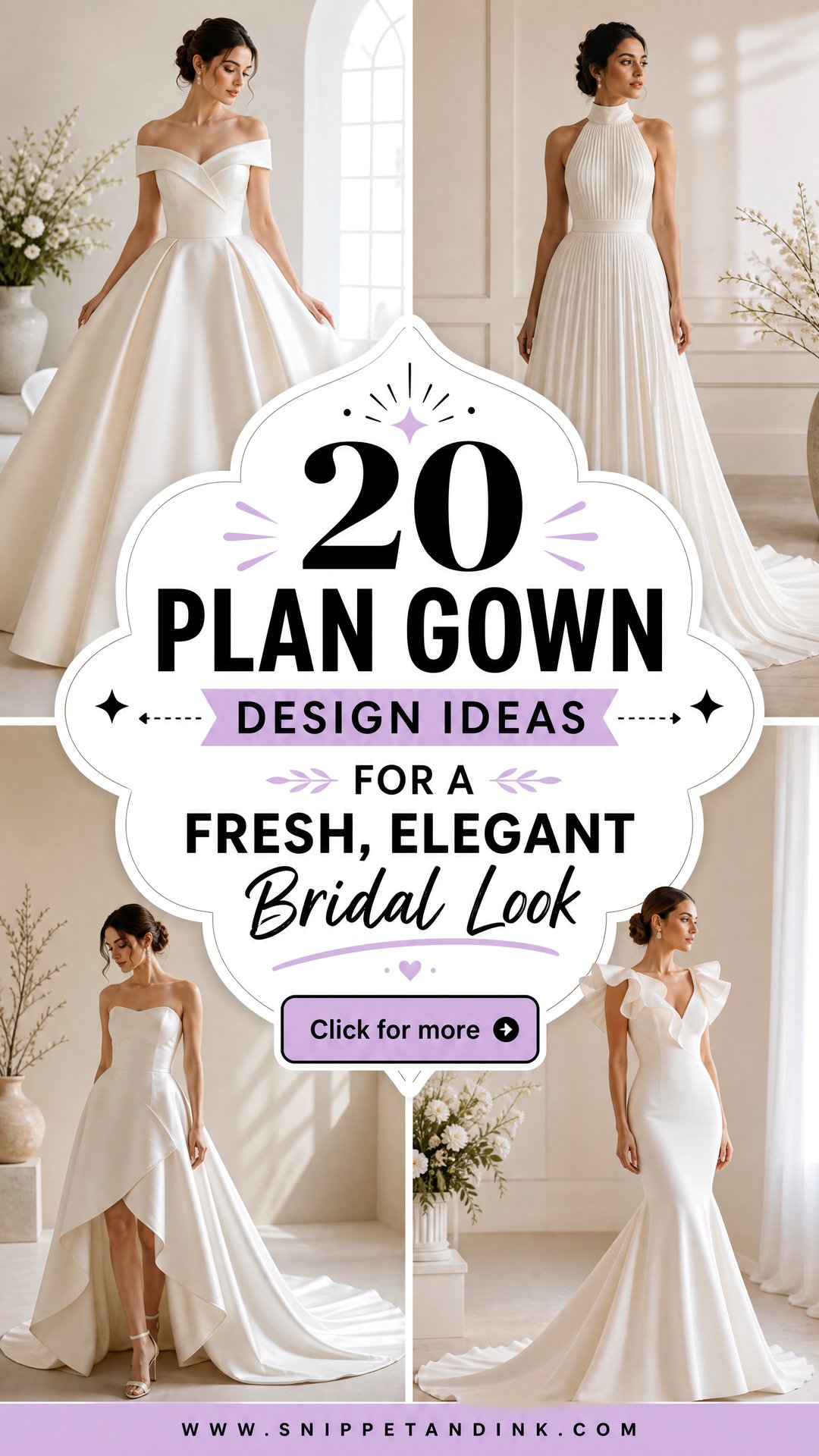
Having a Plain Gown Made to Order
Many of the designs below are as likely to be sewn to order as bought off a rail, and a plain design is easier to get wrong than it looks. With no surface decoration, every decision the dressmaker makes is visible. This is the order I’d work in:
- Bring two or three photographs of the exact silhouette, plus one of a neckline or sleeve you like on someone with a similar build.
- Choose fabric in person and take a swatch home. Look at it in daylight and under warm indoor light, then crush a corner in your fist to see how quickly it creases.
- For fitted designs such as the mermaid, corset or column, ask for a toile, a test version in inexpensive cotton. That’s where seam placement and the flare point get corrected before the good fabric is cut.
- Plan at least two fittings in the real fabric, wearing your event shoes and underwear.
- Leave a few weeks of buffer before the event, because custom timelines slip and hems are usually the last thing finished.
Lead times vary widely by maker and by season. Ask for the date of the final fitting, not only the delivery date, and you’ll know how much room you really have.
1. Plain A-Line Gown With Short Sleeves
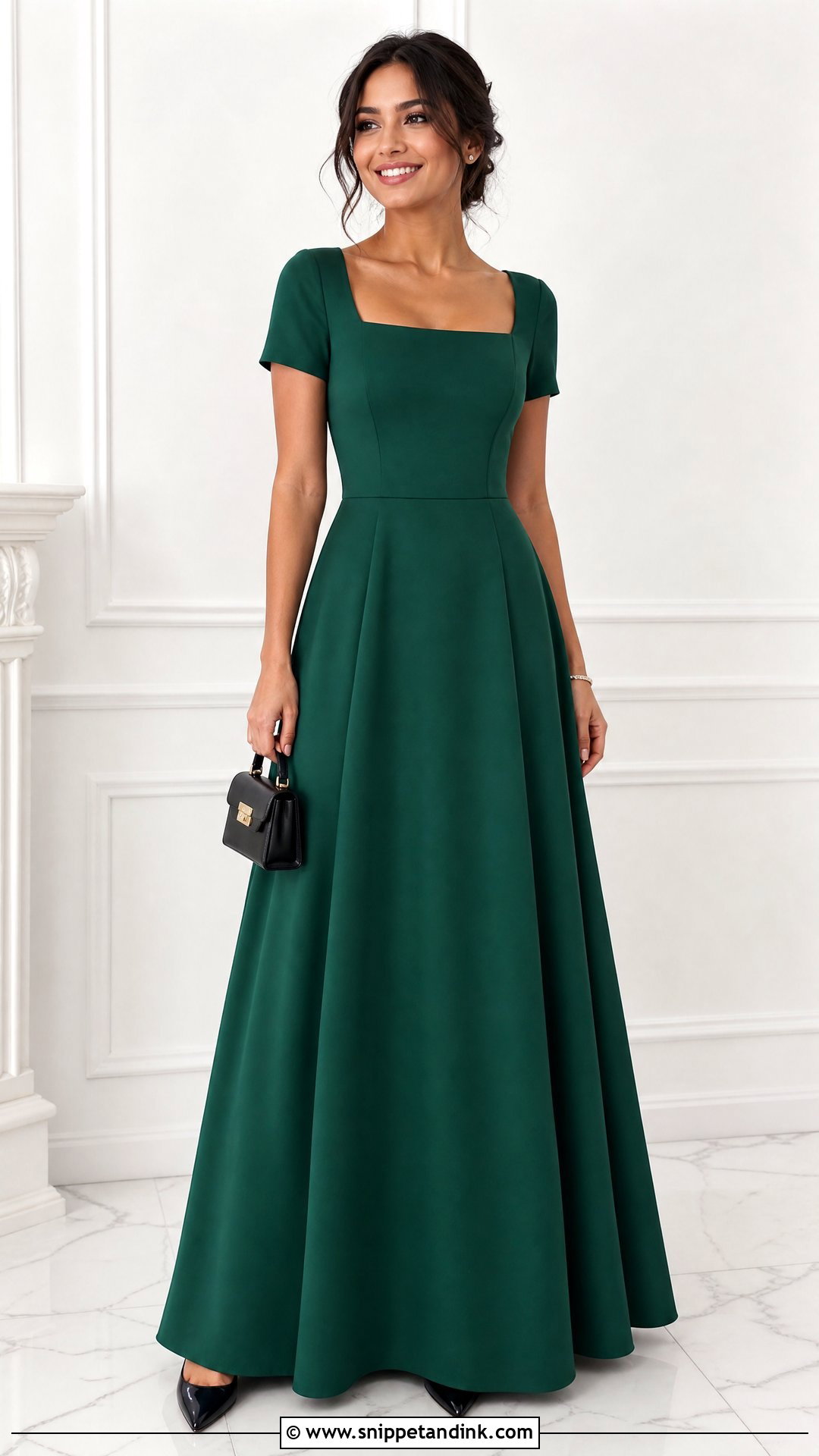
Short sleeves and an A-line skirt make the easiest gown on this list to wear all day, which is why I suggest it to mothers of the bride and graduates alike. The bodice defines the shoulders and waist, then the skirt widens gradually so nothing grips. Crepe or matte satin in emerald, burgundy, navy or dusty rose gives depth without much shine. Check that the sleeve ends at the narrowest point of the upper arm; a sleeve that stops at the widest point makes the arm look heavier than it is. A rounded or soft square neckline, pointed pumps, a structured mini bag, studs and a slim bracelet finish it. Petite? Raise the waist seam slightly and your legs will read longer.
2. Plain Long Sleeve Mermaid Gown
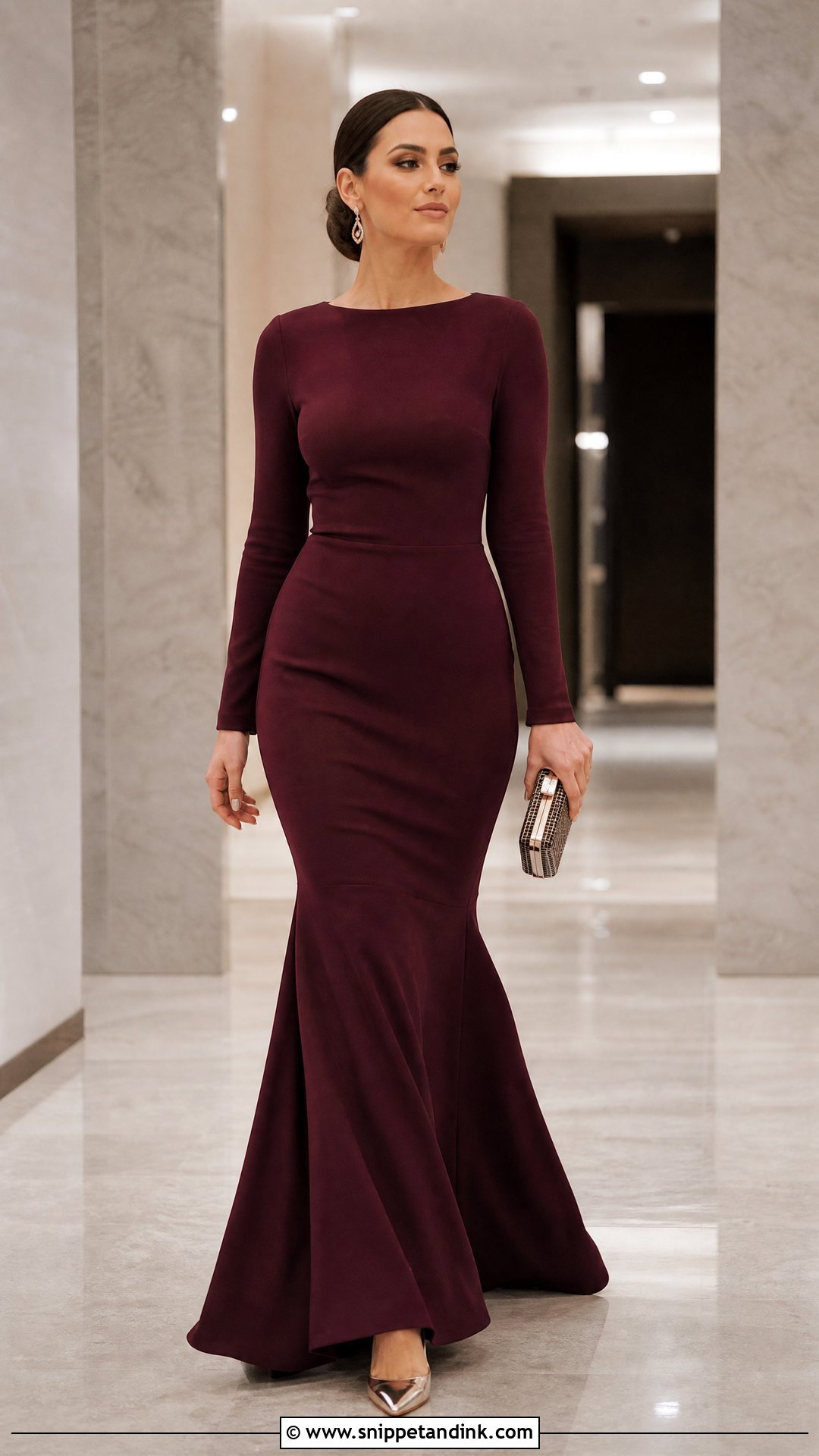
No sequins needed here. The shape does the work, following the waist and hips before flaring at the knee. Stretch crepe is what I’d specify, because it holds a clean line and still lets you climb steps. Long fitted sleeves and a high boat neck cover the top so the skirt stays the feature. Tailoring is everything: pulling across the hips or bunching at the knee breaks the silhouette instantly, and a fitted long sleeve needs enough ease that you can lift a glass. For a gentler version, ask for the flare to start just above the knee. Black, wine or deep green with metallic pumps, a compact clutch, drop earrings and a sleek low bun.
3. Plain Off-Shoulder Ball Gown
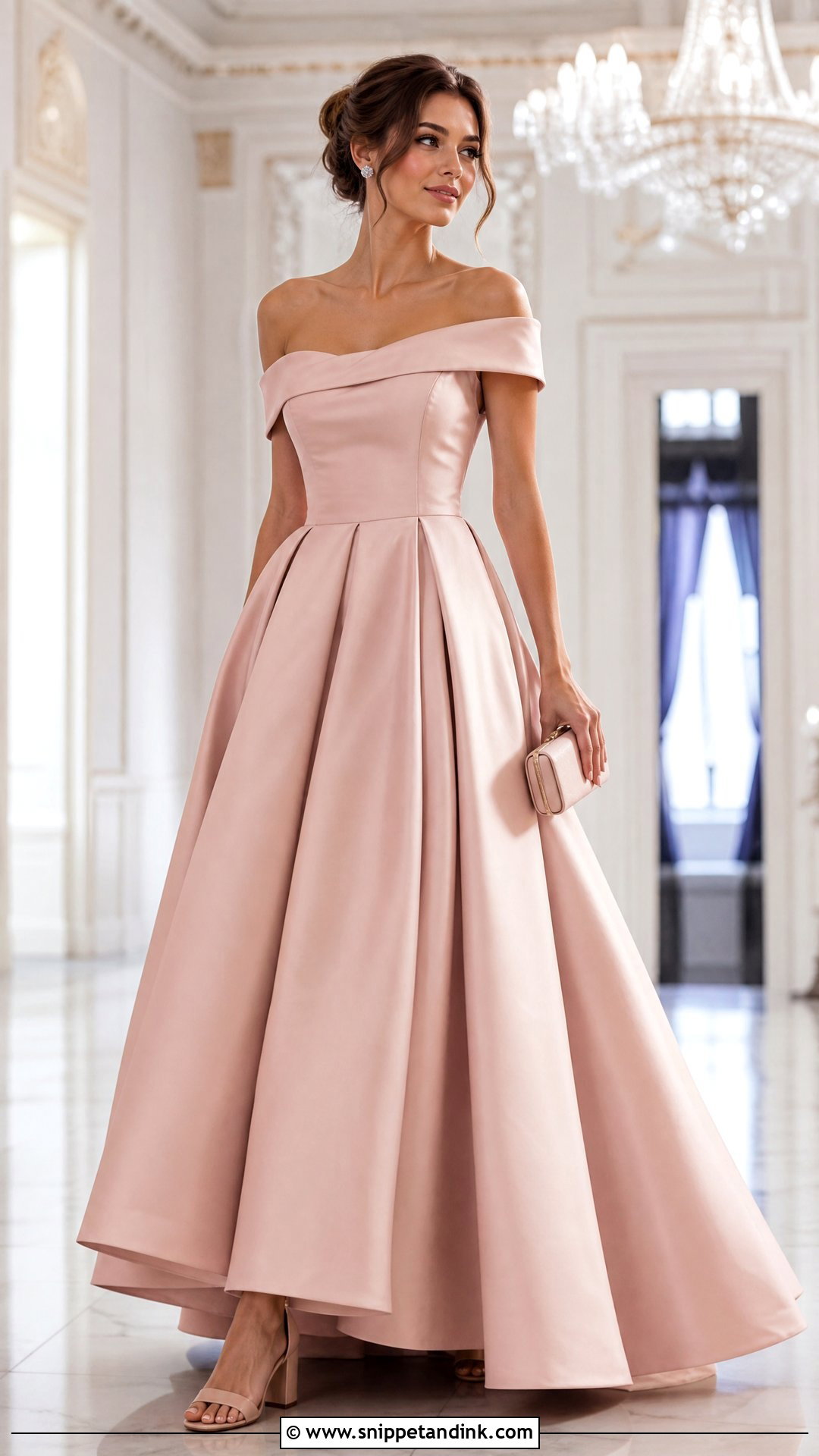
A defined bodice, bare shoulders and a full sweeping skirt feel regal without any decoration at all. Mikado, duchess satin or structured taffeta will hold the volume, while soft satin won’t. Jewel tones go formal; blush, lilac or powder blue feel gentler. The neckline needs an inner corset to stay up, because an off-shoulder band has nothing above it to hang from. I keep the jewelry small, just a fine necklace and crystal studs, plus a little satin clutch and block-heel sandals hidden under the skirt, which you’ll appreciate on a lawn. Sweep the hair back to show the shoulders. The skirt is already big, and anything more only crowds it.
4. Plain Empire Waist Chiffon Gown
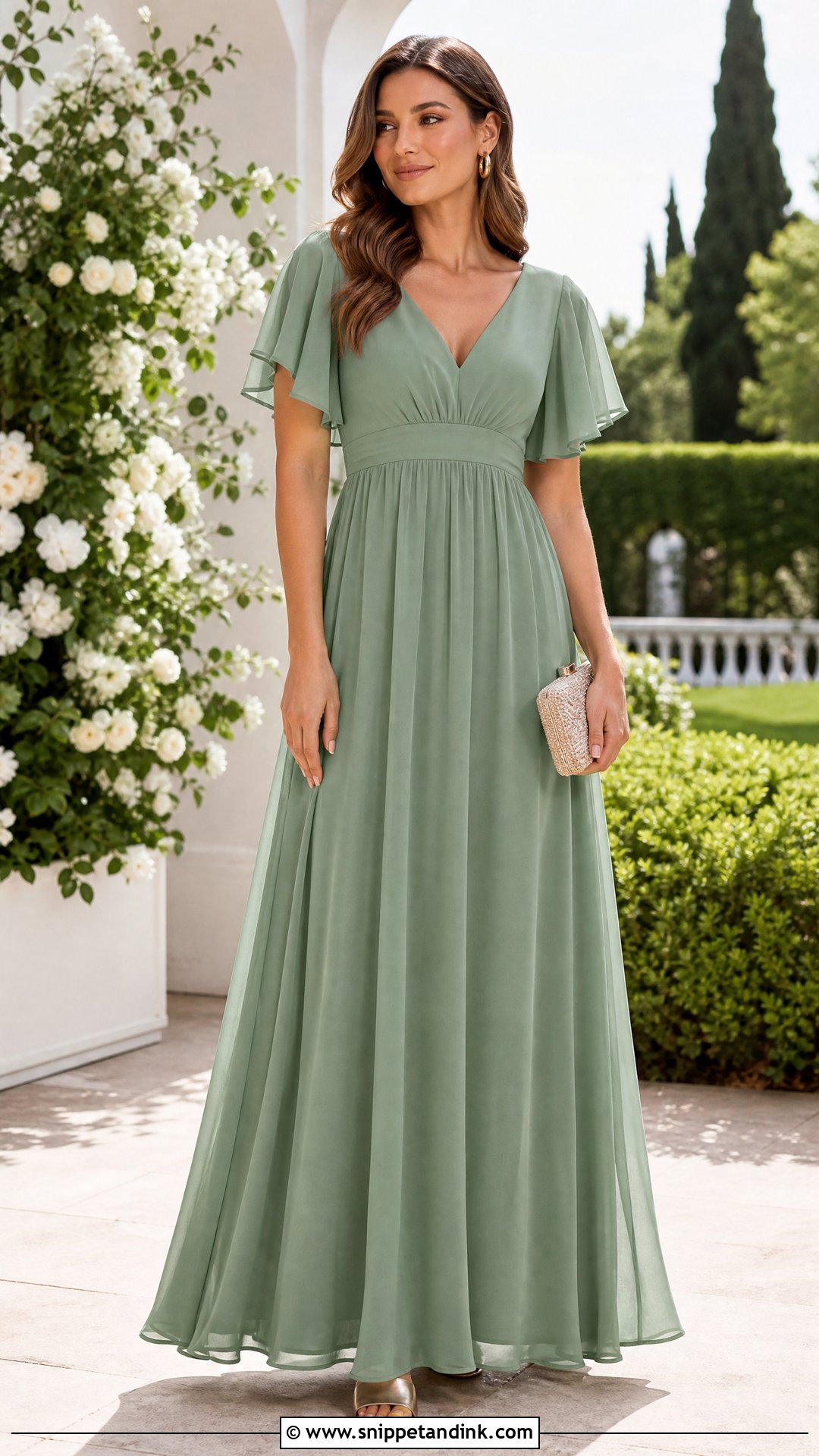
Chiffon moves with every breeze, so an empire waist gown in it suits warm weather and outdoor events. The bodice fits around the bust and the fabric falls loose from just below it, leaving room through the stomach and hips in one long line. Insist on a lining. Unlined chiffon in lavender, sage, coral or royal blue turns see-through the moment you stand in sunlight. Flutter sleeves and a modest V suit the soft movement, with low metallic heels, a beaded clutch, small hoops and a fine layered necklace. A loose updo or polished waves. Set the hem to just touch the top of your shoes, because chiffon that drags picks up grass and dirt within the hour.
5. Plain One-Shoulder Column Gown
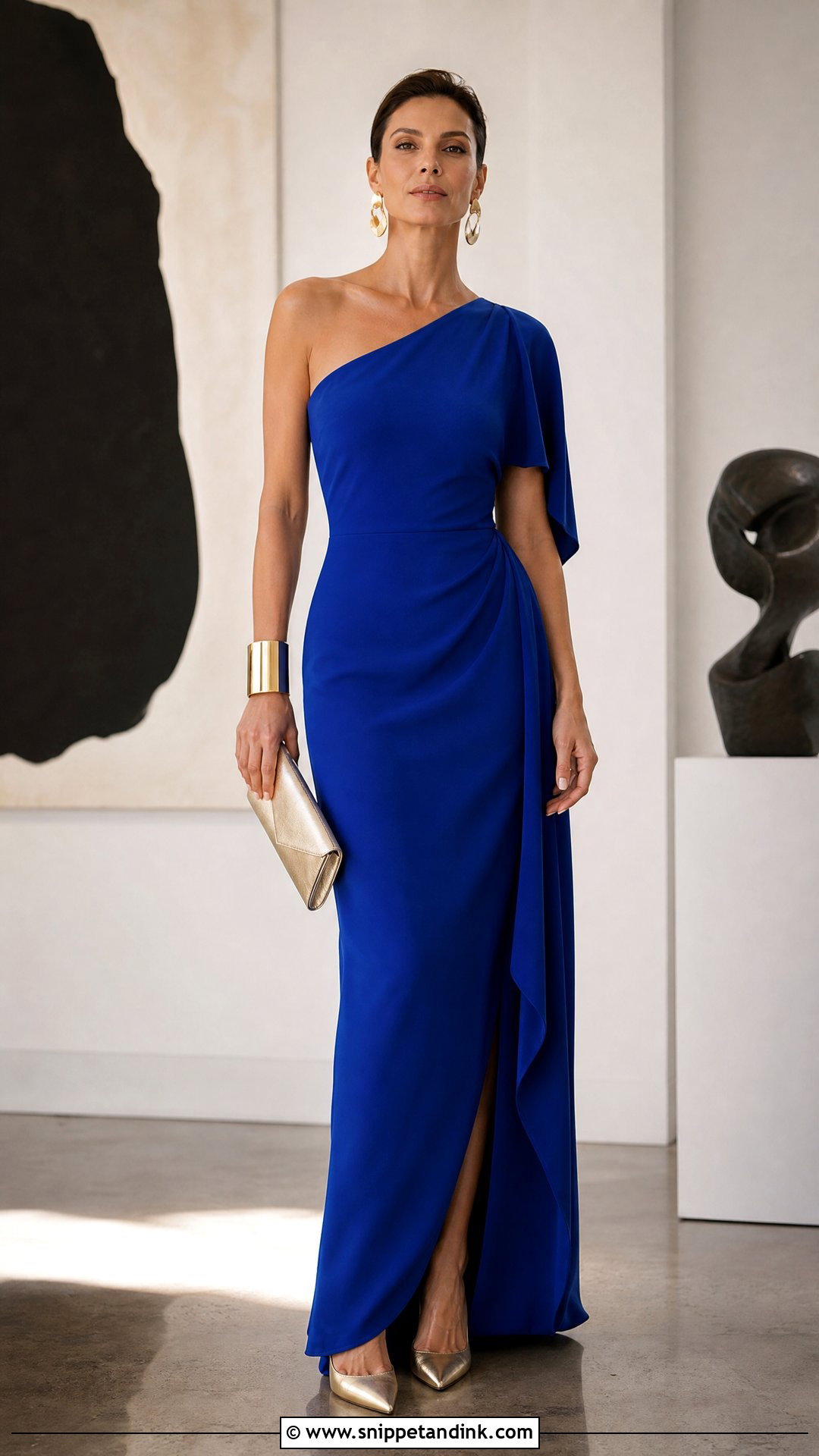
Asymmetry is what makes this one modern: one shoulder, one long straight line, in draped jersey, satin-backed crepe or anything with controlled movement. Cobalt, bright red, chocolate or black all look confident. The single shoulder can be a wide strap or a draped panel. I lean toward the strap for a fuller bust, since a draped panel alone rarely holds a bodice in place all night. Pointed metallic heels, a slim envelope clutch, statement earrings and one cuff on the bare arm. No necklace. Ask for an ankle or back slit, because a true column barely lets you walk.
6. Plain Wrap Gown With Bishop Sleeves
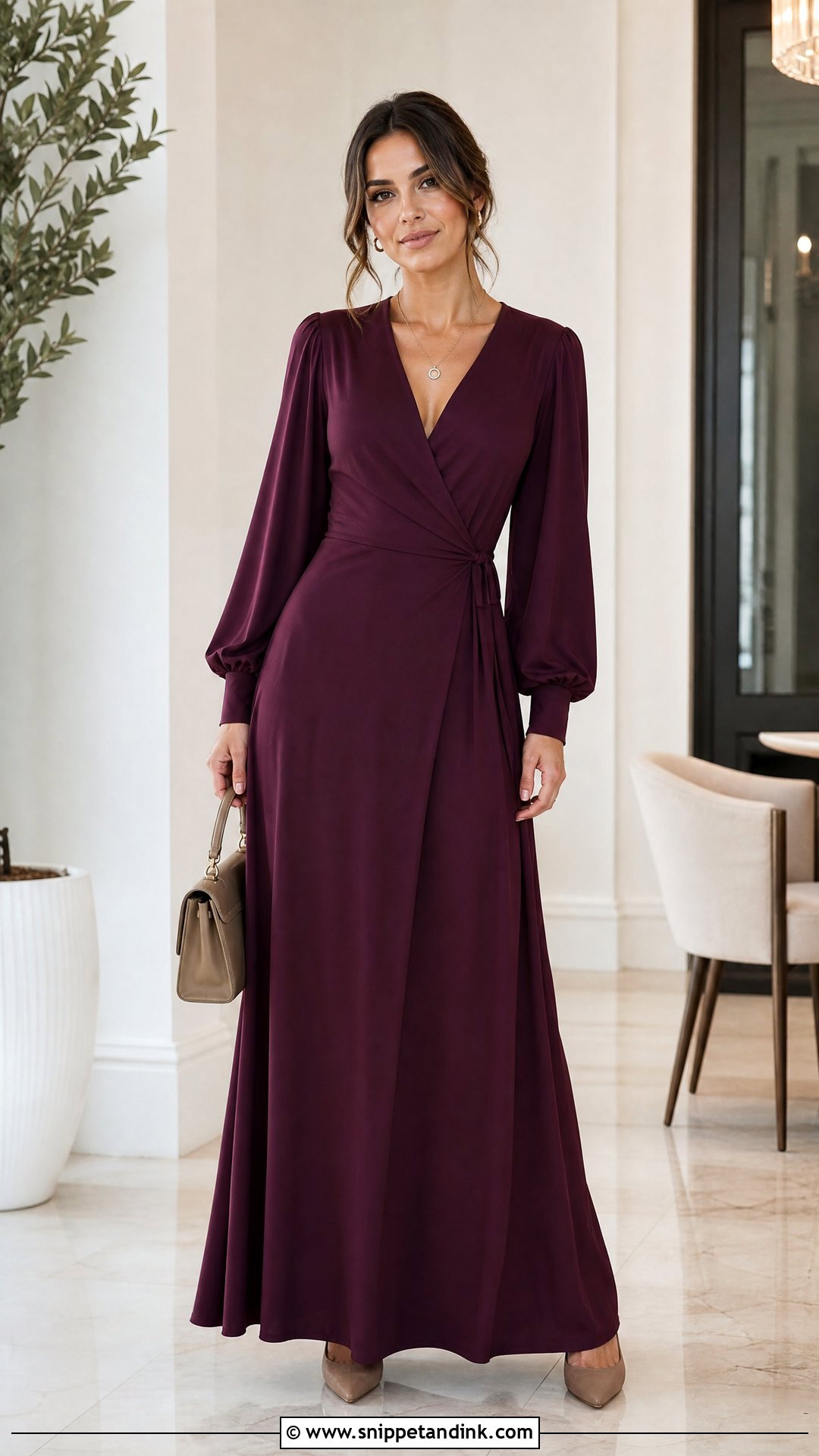
A wrap bodice gives plain fabric folds and a waist without adding anything. It can be a true wrap or a stitched faux-wrap, and for a long event I’d always choose faux, since a real wrap loosens as the evening goes on. Full bishop sleeves billow from the shoulder and gather into a cuff. Fluid crepe, matte jersey or light satin in plum, teal, rust or midnight blue, with a skirt that falls straight or eases into a slight A-line. Closed-toe heels, a top-handle bag, a pendant and small earrings. Sit down in it in front of a mirror before you buy. If the V opens, a hidden snap or fashion tape fixes it.
7. Plain Square Neck Gown With Puff Sleeves
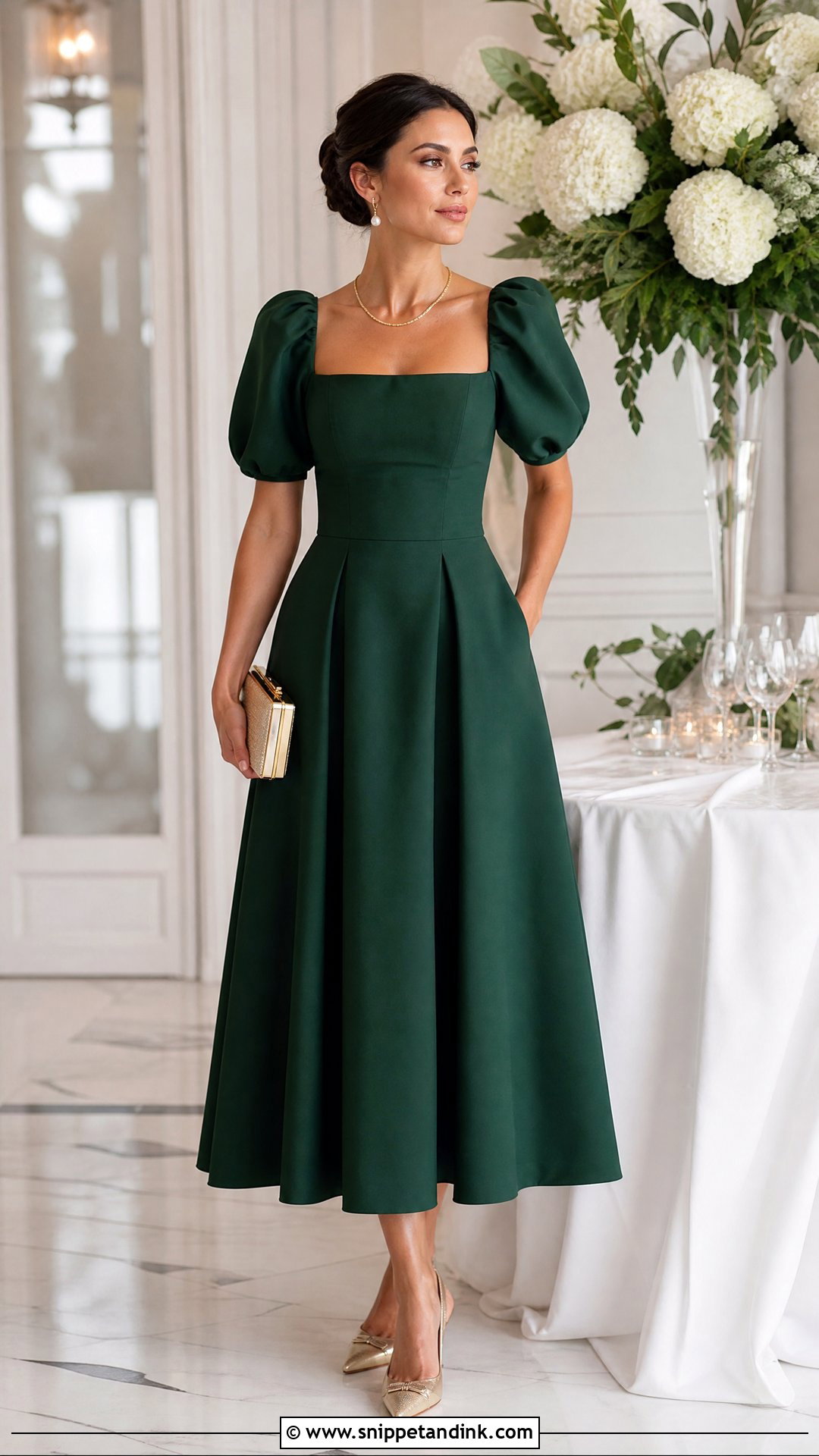
Crisp neckline, soft sleeves. The square neck frames the collarbone, and shaped seams through the bodice keep it close to the body. Keep the puff sleeves medium-sized; oversized ones date quickly and get crushed under a coat or a seatbelt. A full A-line skirt in cotton satin, structured crepe or faille finishes it, in raspberry, forest green, navy or terracotta. Neckline width matters most of all. It should land inside your shoulder points, or the straps will keep sliding off. Slingbacks, a box clutch, pearl earrings and a fine chain, with a smooth ponytail or low chignon.
8. Plain High Neck Pleated Gown
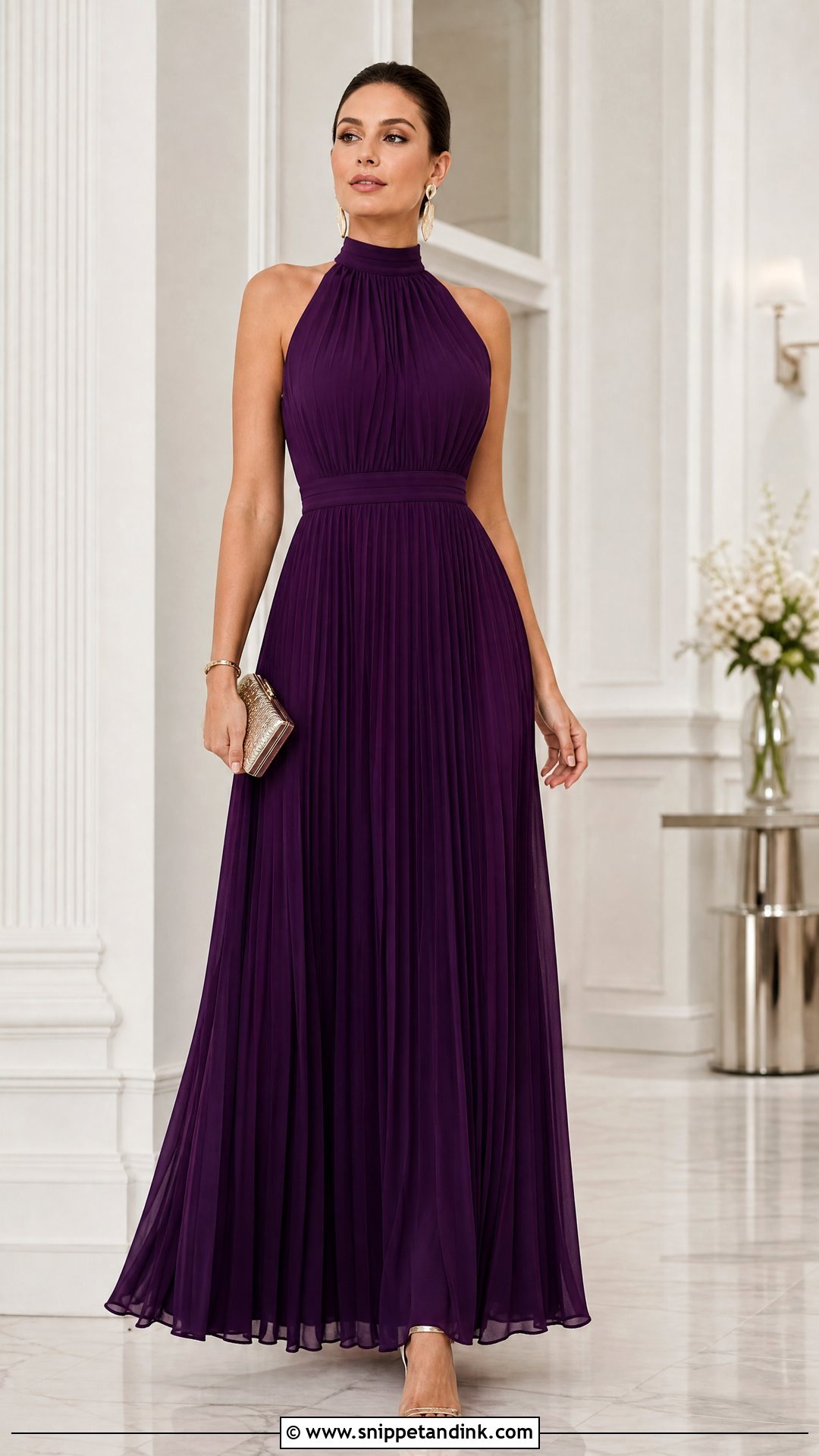
Fine vertical pleats add movement and length without a single bead. Look for a fitted waistband over a pleated skirt in chiffon, georgette or light crepe, with a bodice gathered softly at the neck. Deep purple, burnt orange, dark teal and soft gray all look considered. Pleats are only as good as their fit at the hip. If the skirt is even slightly tight, they spring open and the play of shadow between them disappears. They also need careful steaming, never flat pressing across them. Ankle-strap heels, a minimal clutch and sculptural earrings, with no necklace under that collar, and a low ponytail.
9. Plain Cape Sleeve Floor-Length Gown
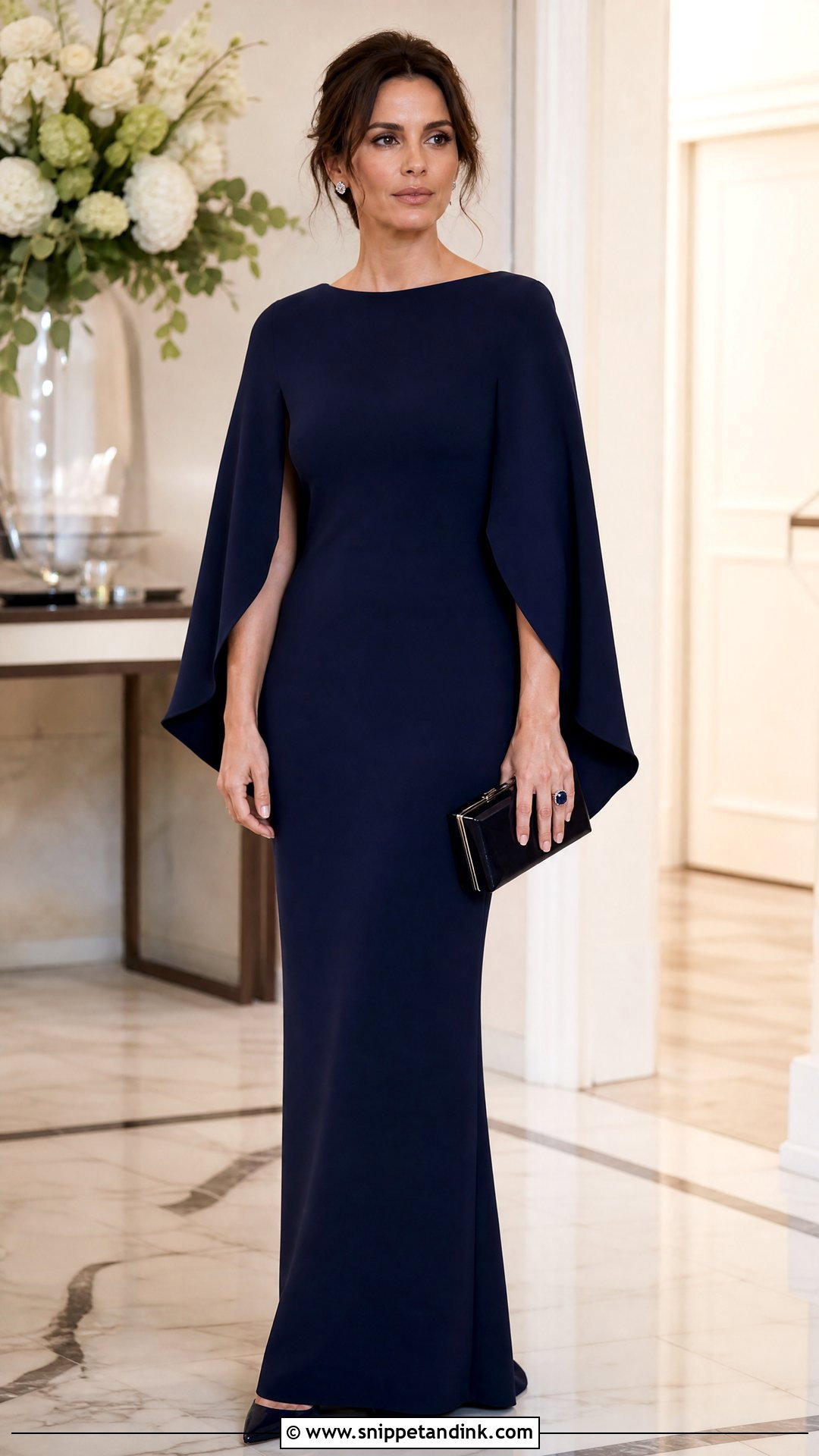
The cape gives coverage and movement while the gown underneath stays straight and simple. It can fall from shoulder to elbow or nearly to the floor. Keep the base gown slim, because a full cape over a full skirt becomes a lot of fabric very quickly. Matte crepe, chiffon or light satin in navy, maroon, ivory or deep emerald all work. Pointed pumps, a hard-shell clutch, sparkly studs and a bold cocktail ring that shows when your hand comes out from the cape. Wear your hair up so it doesn’t tangle with the cape at the shoulders. If you’re ordering or sewing one, check the arm openings: too small and the whole cape lifts every time you hug someone.
10. Plain Peplum Gown With Straight Skirt
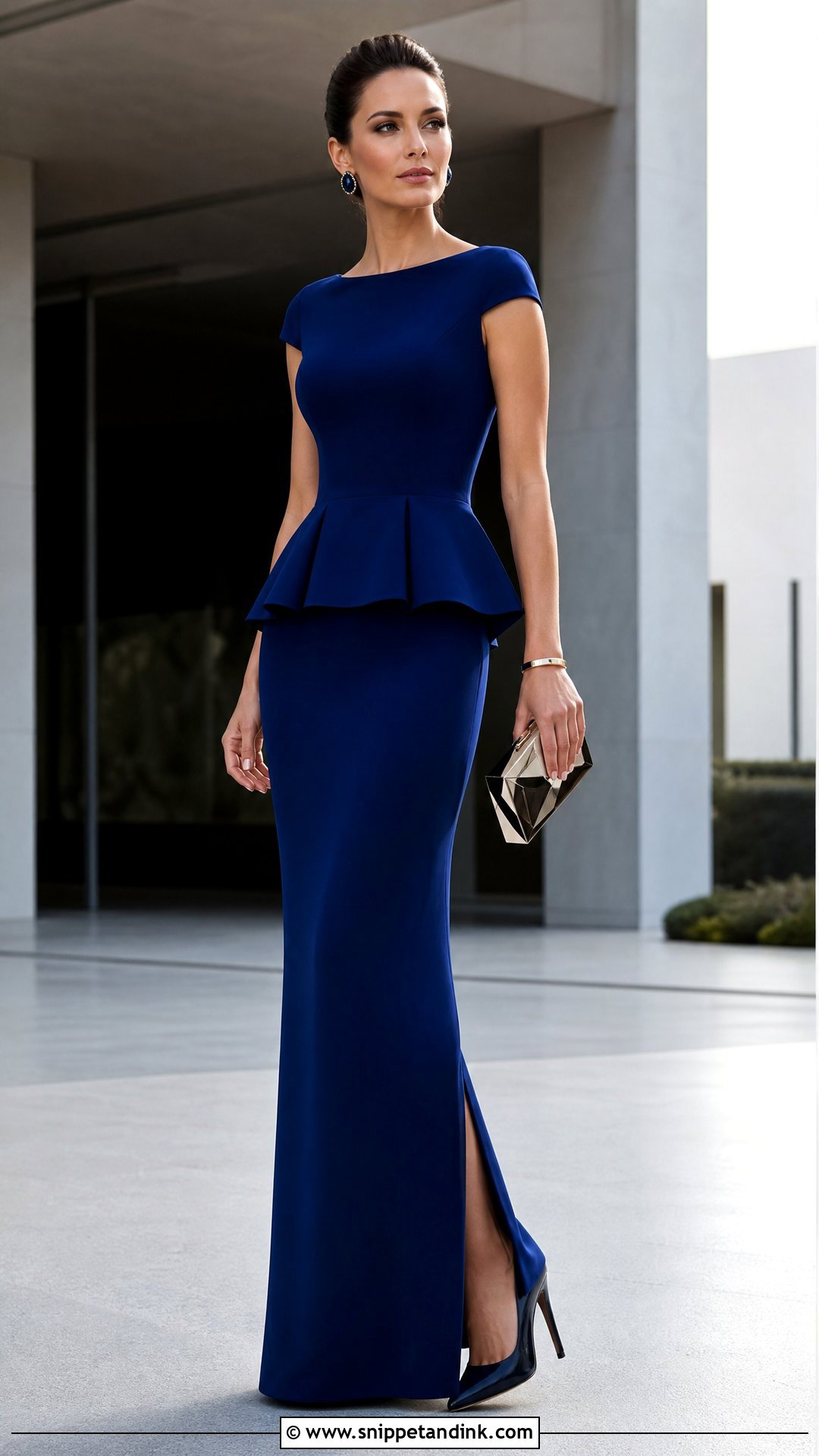
A plain peplum gown with a long straight skirt is structured and sharp. The peplum marks the waist and adds a little shape at the hip, while a bateau, V or square neck keeps the bodice tidy. Fabric decides whether it works. Firm crepe, scuba or satin with body will hold the peplum out; anything soft just droops. Rich red, sapphire, mustard or black. My main concern is scale, since a short, subtle peplum suits most frames and a deep one can cut a petite figure in half. Pointed heels, a geometric clutch, button earrings and one bracelet. Add a back slit, as a narrow floor-length skirt is hard to walk in.
11. Plain Halter Neck Satin Gown
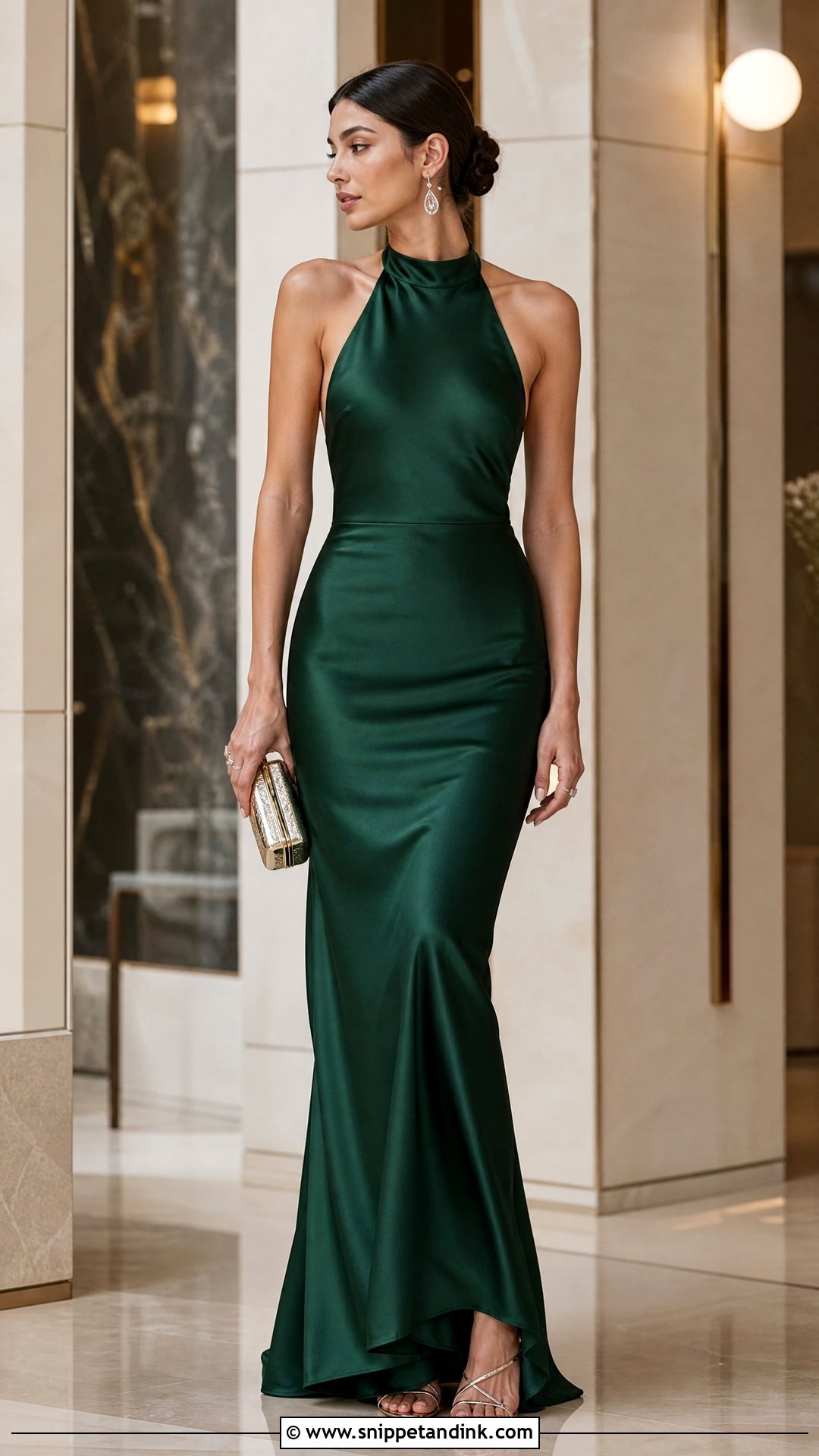
Satin’s gentle shine gives a halter an evening finish and shows off the shoulders. A soft drape or bias cut stops it looking stiff. Go for champagne, navy, dark green or berry in medium-weight satin that skims rather than clings, because lightweight satin shows every line of your underwear. Strappy heels, a small metallic clutch, drop earrings and stacked rings, and leave the neck bare. A bun, ponytail or short polished cut keeps the halter visible. Satin is honest about workmanship. Wrinkles, wavy seams and a poorly pressed hem all show, so have it professionally pressed the day before rather than attempting it yourself in a hotel room.
12. Plain Asymmetrical Hem Gown
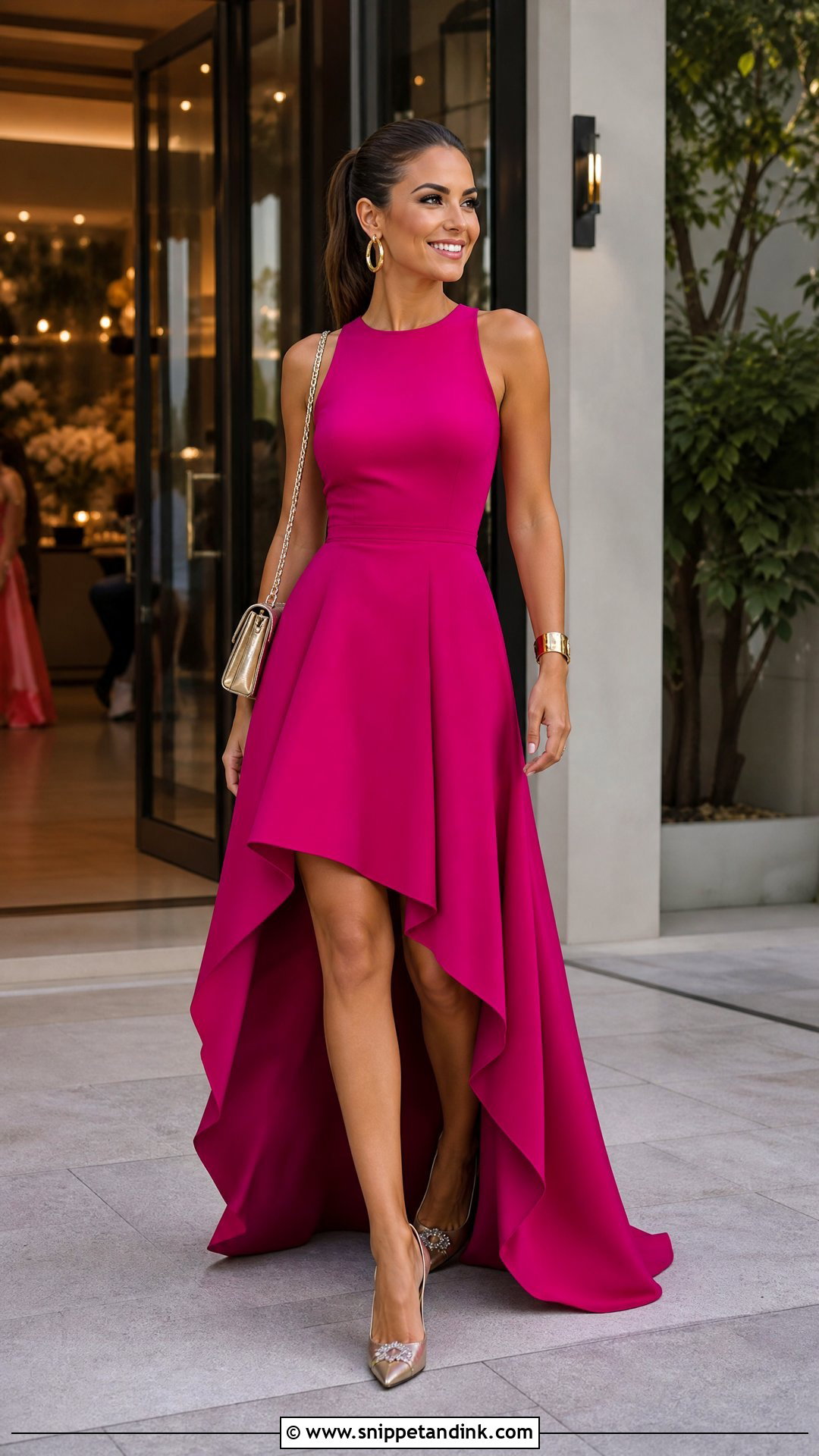
An uneven hem puts your shoes on show, so I treat them as part of the dress. The skirt can be short at the front and long at the back, or slope from one side to the other. Keep the bodice fitted and the neckline modest so the hem carries the interest. Structured chiffon, faille or crisp crepe will hold the shape, while soft fabric just looks uneven. Fuchsia, cobalt, green or deep plum suit a bold event, with embellished pumps, a compact shoulder bag, hoops and a cuff. Look at the shoes from every angle, back included. And check the shortest point while seated, since a high-low hem rides up when you sit.
13. Plain Tiered Maxi Gown With Flutter Sleeves
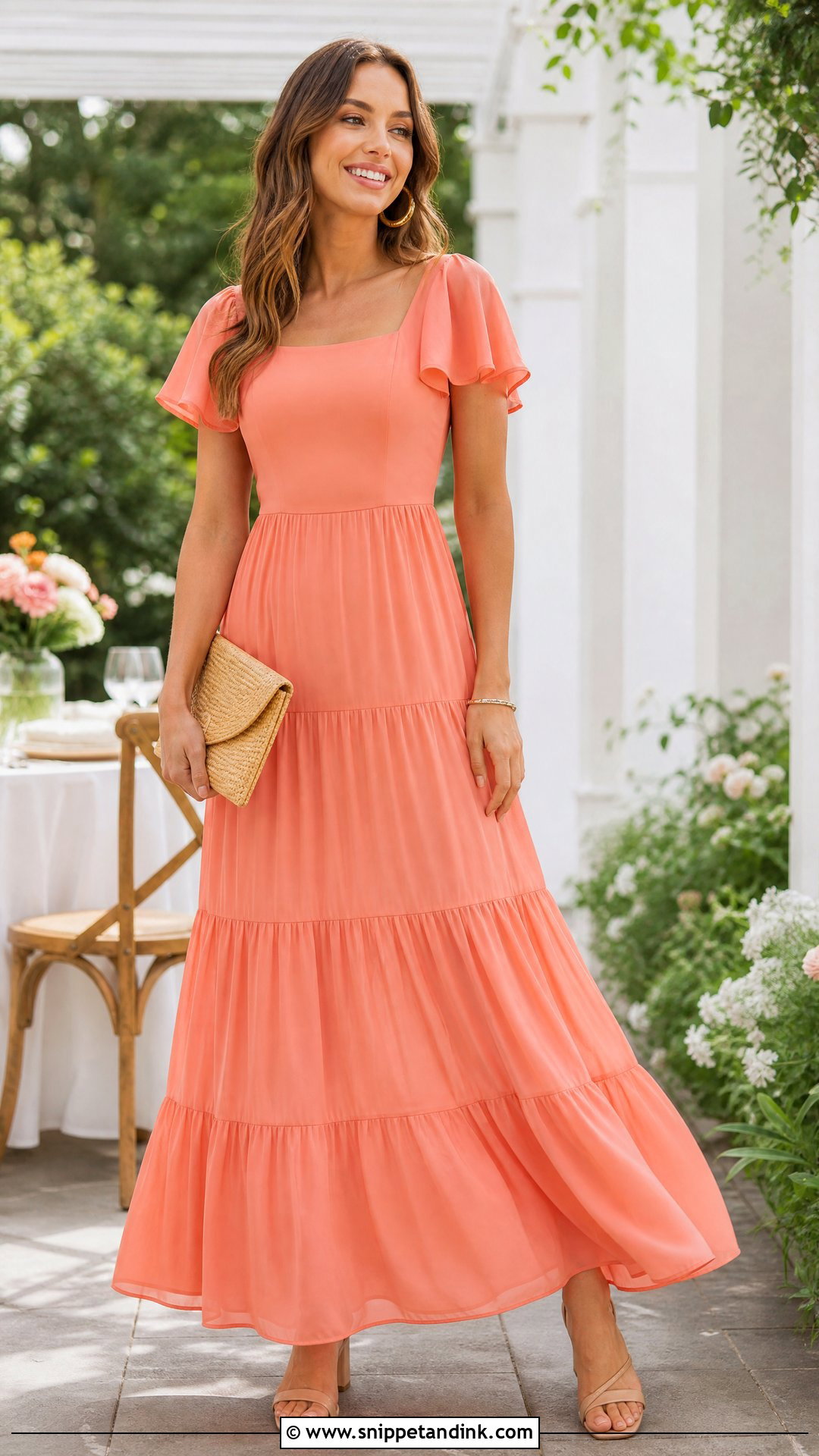
Tiers create volume and rhythm in a plain maxi gown with no print at all. A lightly fitted bodice stops the skirt swallowing you, and flutter sleeves echo its movement. Use breathable chiffon, georgette or cotton voile, fully lined, in muted coral, sky blue, olive or lilac for daytime, gardens and warm seasons. Where the first tier falls is the detail I’d check. Just below the natural waist is right; across the widest part of the hips adds width exactly where most people don’t want it. Smaller, evenly spaced tiers balance better than big ruffles. Block-heel sandals, a woven clutch, simple hoops, a fine bracelet and half-up hair.
14. Plain Corset Bodice A-Line Gown
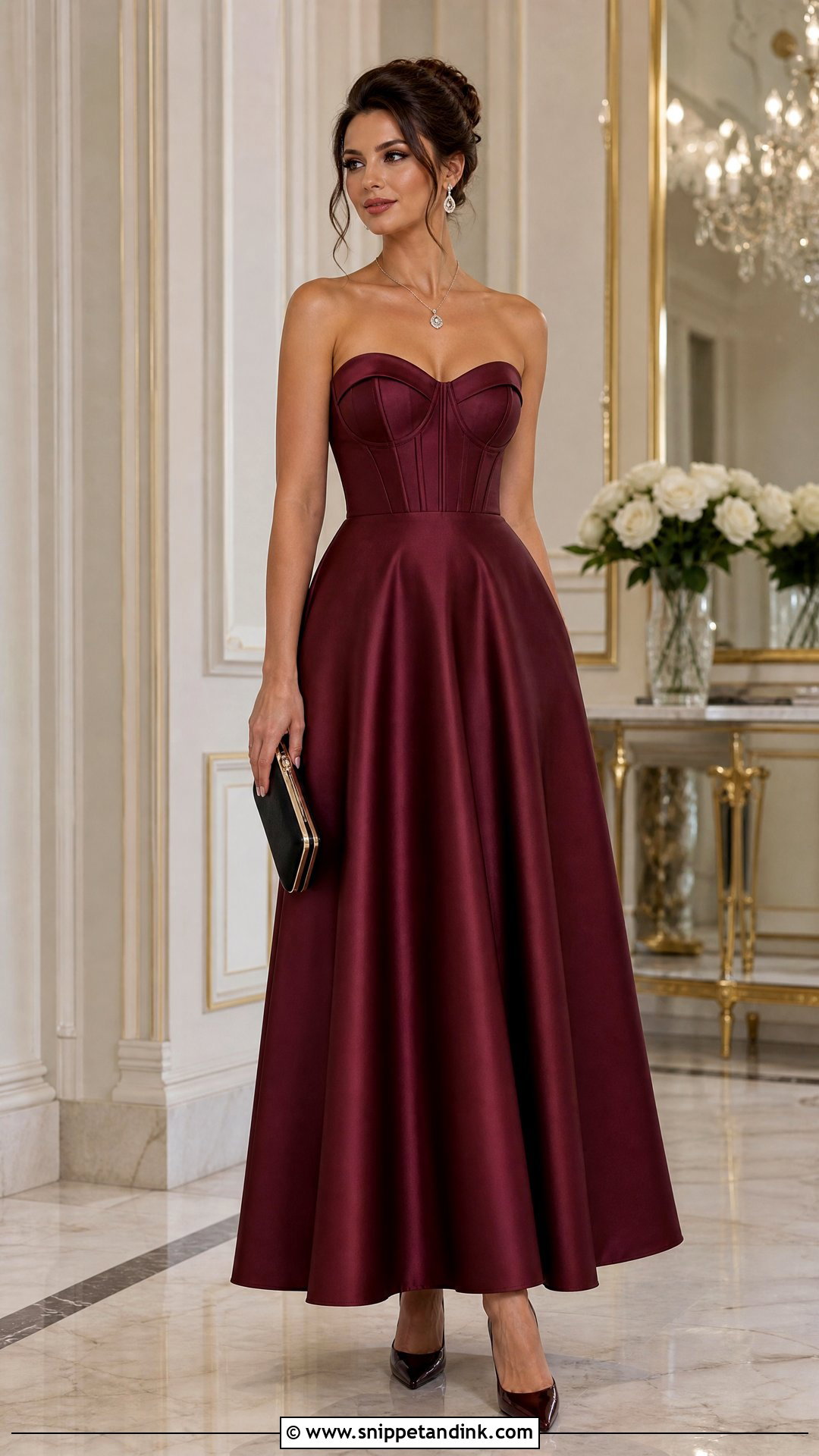
A corset bodice over an A-line skirt gives sharp definition up top and freedom below. Internal boning and shaped seams do the supporting, but a corset should never hurt. If you can’t take a full breath at the fitting, you won’t manage dinner. Straight, sweetheart or softly curved necklines change how much coverage you get. Satin, mikado or sturdy crepe in black, burgundy, dusty blue or deep purple. A lace-up back allows small adjustments on the day, which helps if your size shifts before the event; a concealed zip looks cleaner. Pointed pumps, a framed clutch, a short pendant, drop earrings and a sheer wrap. The skirt should skim the hips before widening.
15. Plain Kaftan Gown With Defined Waist
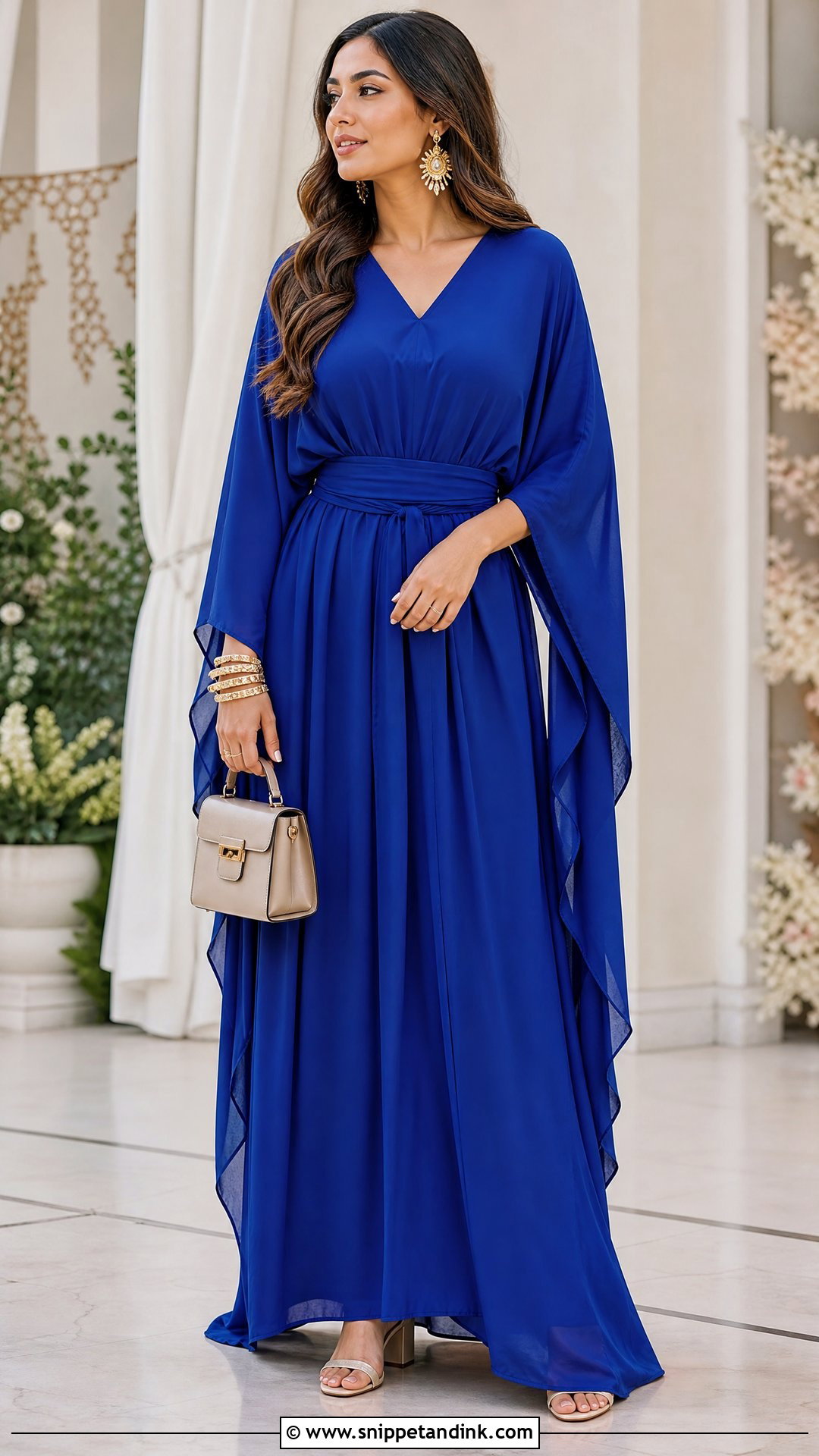
A kaftan gown is about the most comfortable formalwear there is, but without a defined waist it can look like a beach cover-up. Look for an inner tie, a narrow belt or gathers positioned at the waist. Wide sleeves and a V keep the kaftan character, and floor length makes it formal. Teal, plum, chocolate or royal blue in silk crepe, georgette or satin. Heavier fabric hangs better; thin georgette flaps around. Low block heels, a structured bag, statement earrings and stacked bangles, with no heavy trim at the neck. For more coverage, choose a full lining and narrower sleeve openings, and a slit below the knee makes walking easier.
16. Plain Drop Waist Gown With Full Skirt
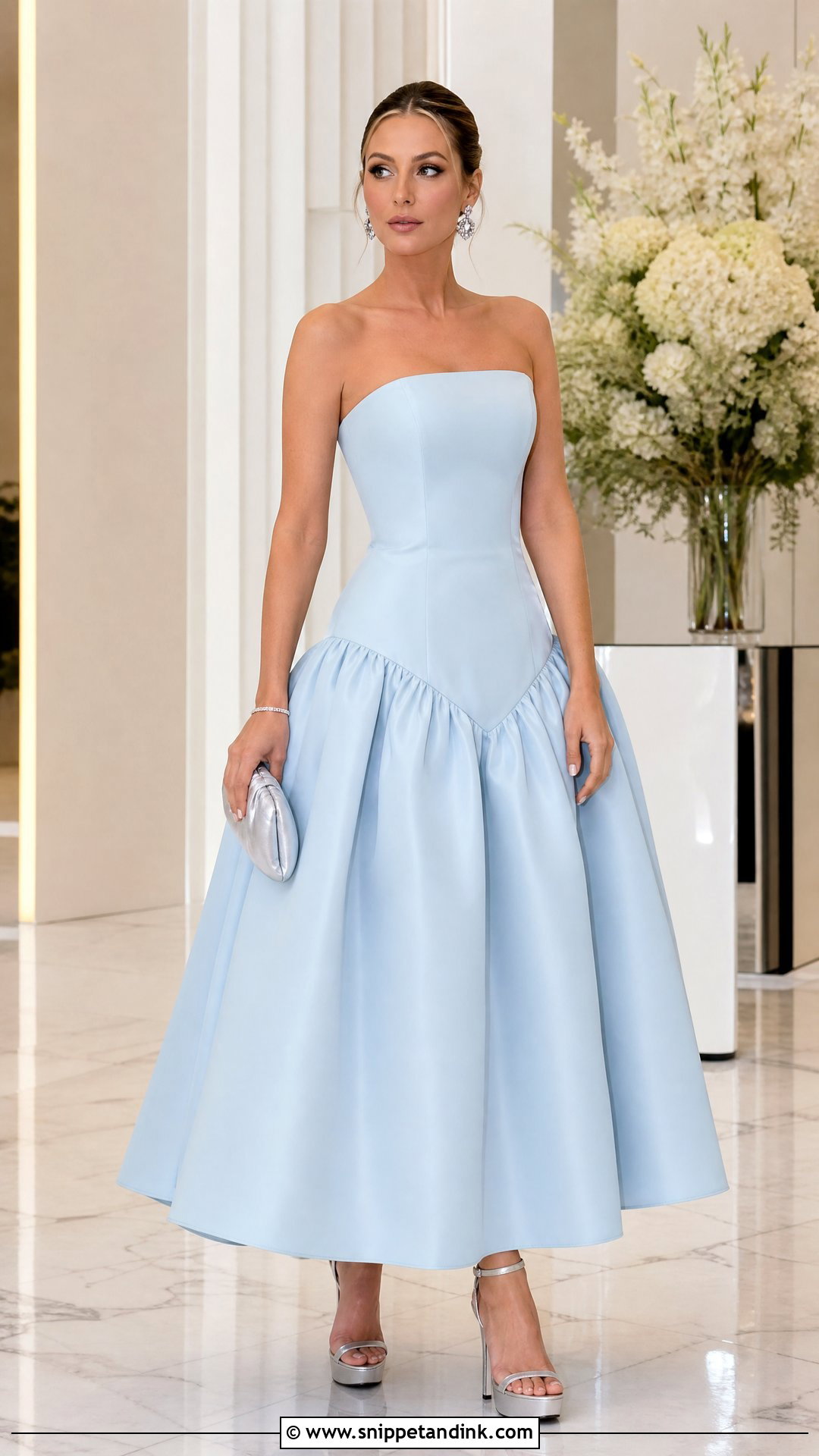
Lowering the waist seam to the upper hip gives a long torso and then a burst of skirt, a proportion that feels fashion-forward even in solid fabric. A fitted bodice with simple seams and a rounded or strapless neckline keeps it clean, and taffeta, mikado or firm satin holds the volume. Black, red, emerald or icy blue. Height matters most with this design. It lengthens the torso, which can make the legs look shorter on a petite frame, so try one on before ordering and be ready to move the seam up. The seam must sit smoothly too, never cutting across the hips. Platform heels, a satin clutch, crystal earrings and a short bracelet.
17. Plain Ruched Waist Gown With Side Slit
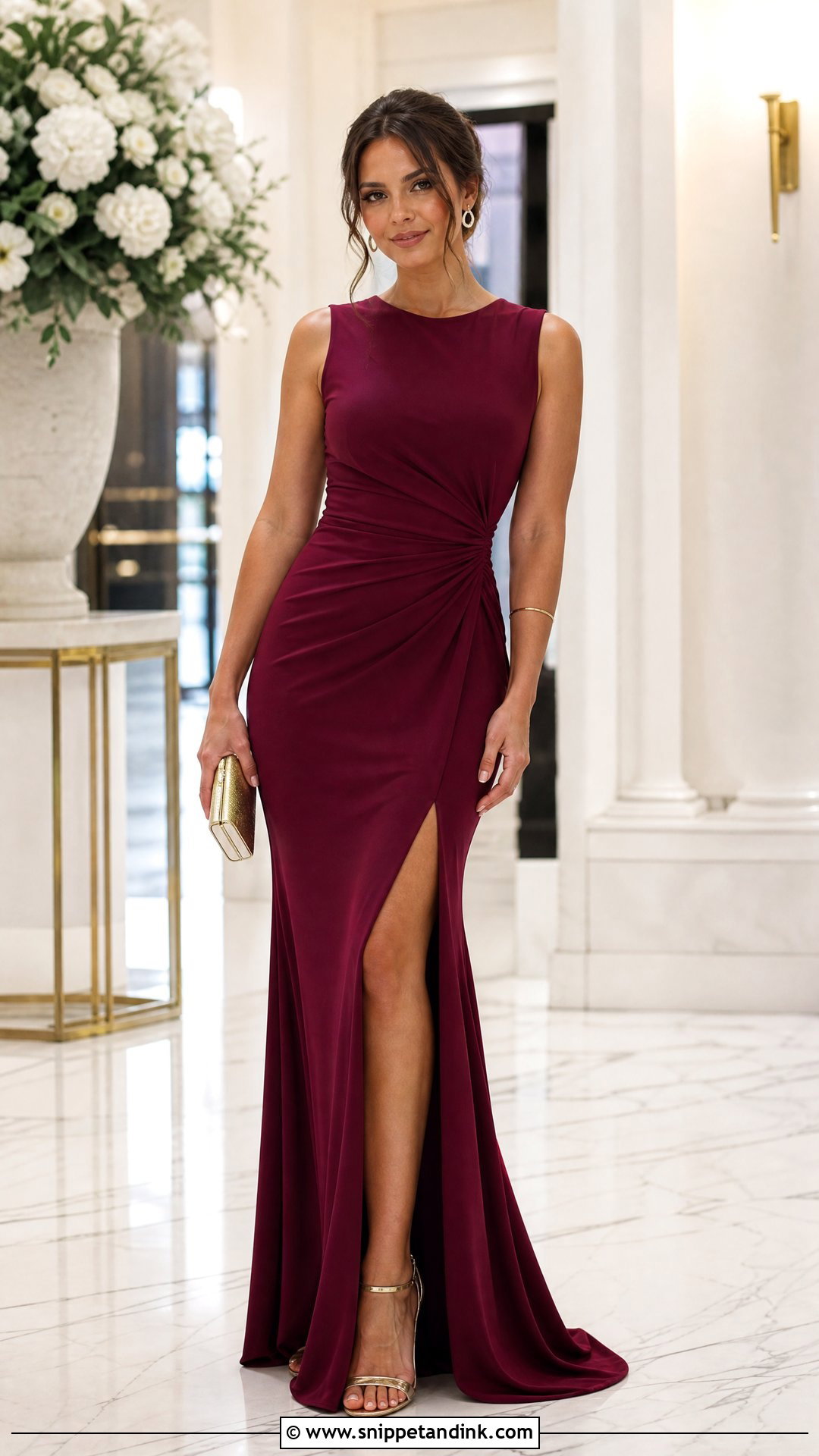
Ruching gathers fabric so it hugs and forgives at the same time. Here a fitted bodice flows into a straight or slightly flared skirt with a controlled side slit. Stretch crepe, jersey or soft satin let the gathers lie naturally; stiff fabric makes bulky ridges. Dark green, navy, berry or charcoal keep it understated. I prefer ruching along one side over a band across the whole stomach, which can add the bulk it’s meant to hide. Set the slit height while sitting, not standing, because slits climb. Sleek heeled sandals, a small clutch, medium earrings and a delicate cuff, and nothing extra on the dress itself.
18. Plain Two-Tone Panel Gown
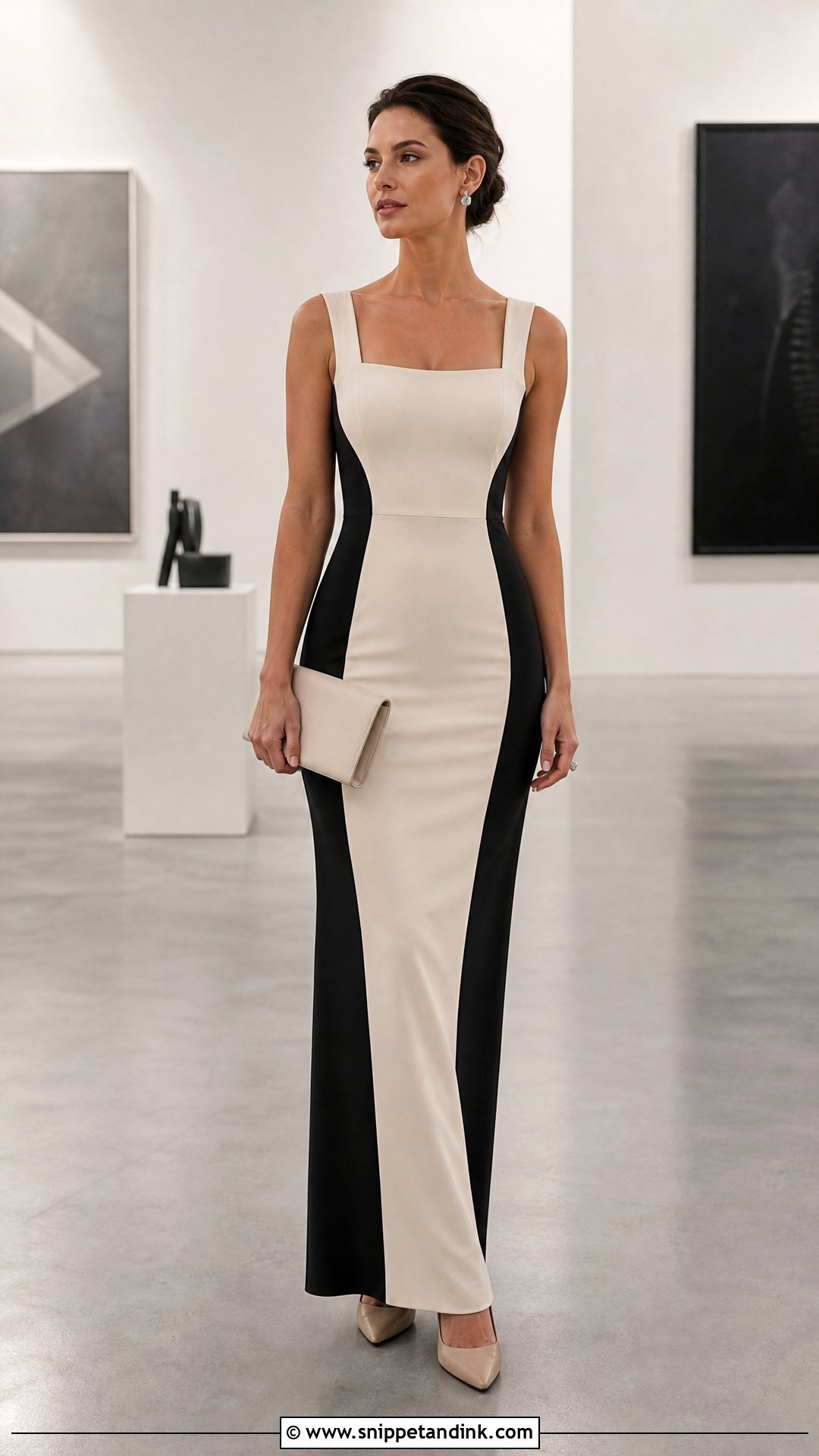
Two solid colors can build structure into a gown with no print. Darker side panels frame the body while a lighter center panel lengthens it, or a light bodice sits over a darker floor-length skirt. Keep the neckline, sleeves and seams plain so the color placement looks deliberate. Black and cream, navy and powder blue, burgundy and blush all pair well. Accessories stay neutral: pointed pumps, a structured clutch, small earrings and one ring that picks up either shade. On a custom piece, the panels have to meet at exactly the same point on both sides, because even a small mismatch shows when the colors contrast.
19. Plain Ruffle Shoulder Mermaid Gown
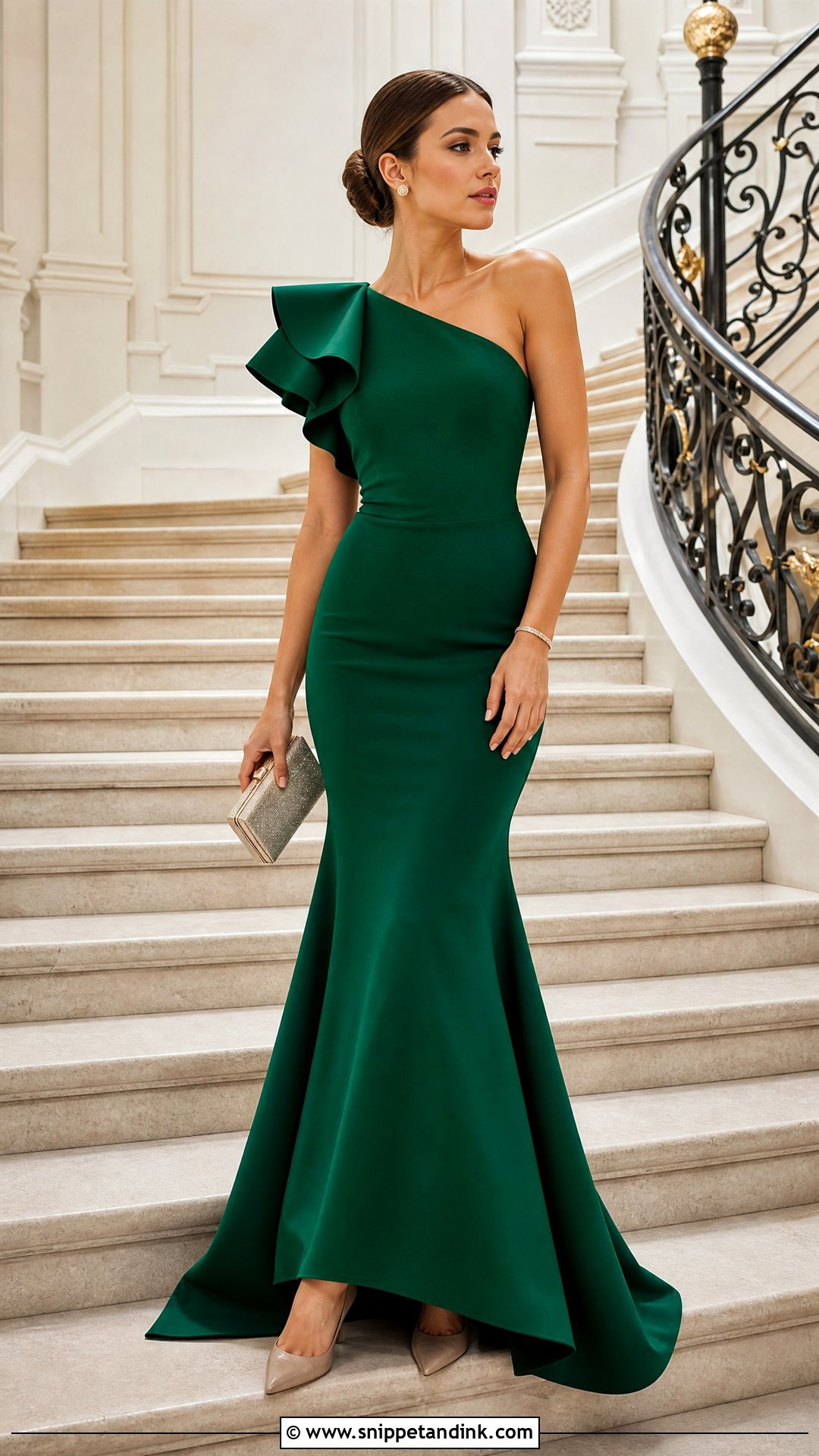
A single ruffle on one shoulder gives a mermaid gown its focal point, and the rest of the bodice has to stay smooth so that shoulder and the flared hem balance each other. Crepe, mikado or duchess satin in red, cobalt, emerald or black. The ruffle’s weight is what I check. If it’s heavy, it drags the bodice down on that side all night, so it should be cut light and stiffened instead of piled with fabric. A back zip and good internal support keep everything secure. Understated pumps, a slim clutch, studs and a simple bracelet, with the hair swept to the opposite side or in a bun.
20. Plain Shirt Gown With Matching Belt
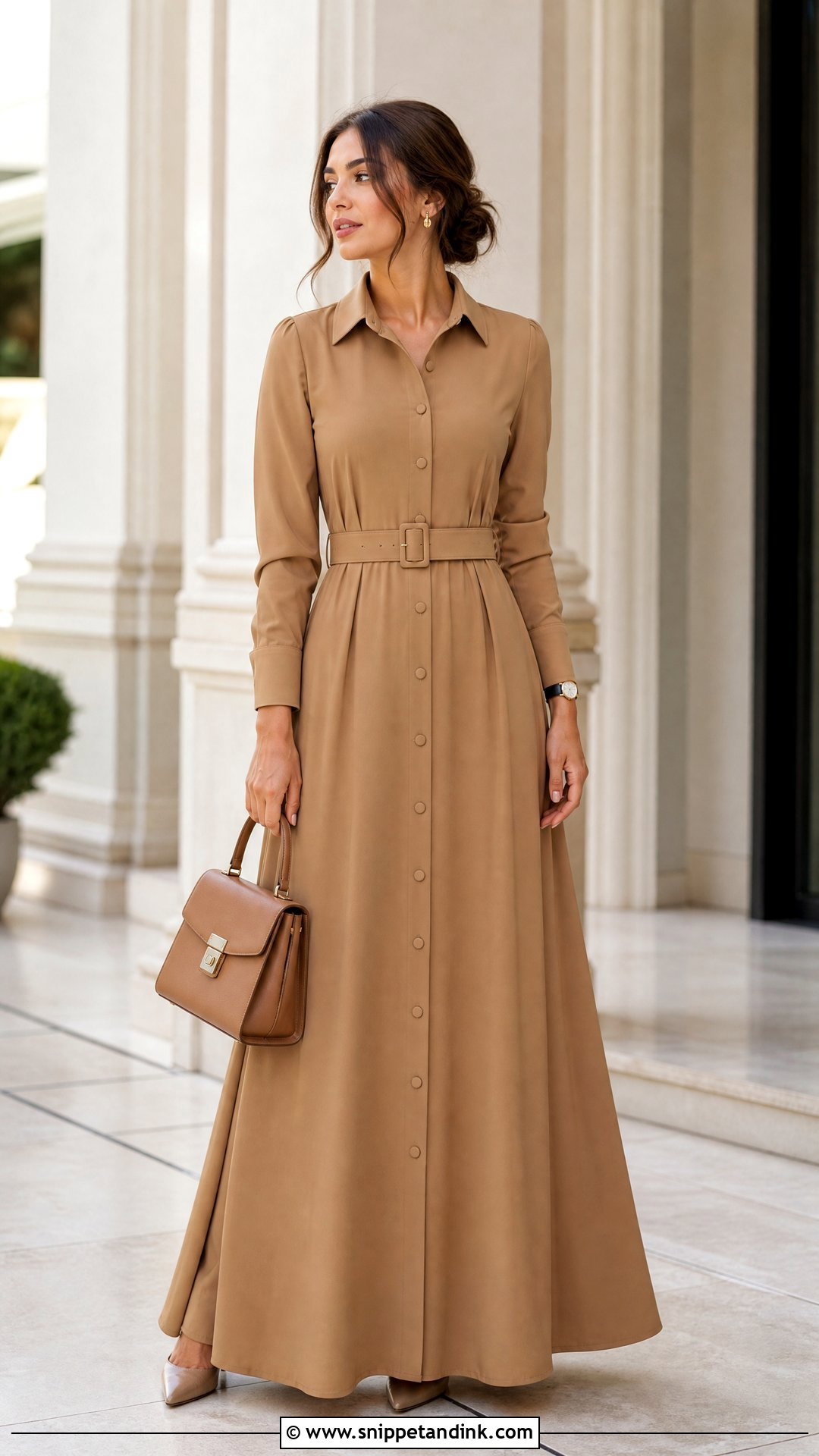
Collar, buttons and cuffs on a floor-length gown sound like workwear, yet in the right fabric it’s one of the most polished options here. Look for a pointed collar, a buttoned bodice, defined cuffs and a full or slightly flared skirt, tied with a matching fabric belt. Crepe, satin or light suiting in camel, navy, forest green, burgundy or ivory. Button plackets gape at the bust on almost everyone, so I ask for hidden snaps between the visible buttons. Covered buttons and fitted cuffs make it feel more refined. Leave just the top button or two open. Pointed heels, a top-handle bag, small gold earrings and a watch take it from daytime events to dinner.
Will Your Color Still Look Like Itself in Photographs?
Solid color hides nothing on camera, and the same gown can look quite different at a noon ceremony and under a reception’s warm lamps. These are the shifts I warn clients about.
Navy, plum and bottle green
Deep tones can read almost black indoors at night. If you want the color recognizable in evening photographs, go a shade brighter than your instinct, or pick a fabric with some sheen to catch the light.
Saturated reds and fuchsia
Very intense reds and pinks often lose their detail on camera, so folds and seams flatten into one block. Matte crepe keeps more definition in these shades than glossy satin does.
Pale pastels
Powder blue, lilac and blush can wash out against fair skin in strong sun. A deeper version of the same color, or one with a warmer undertone, usually solves it.
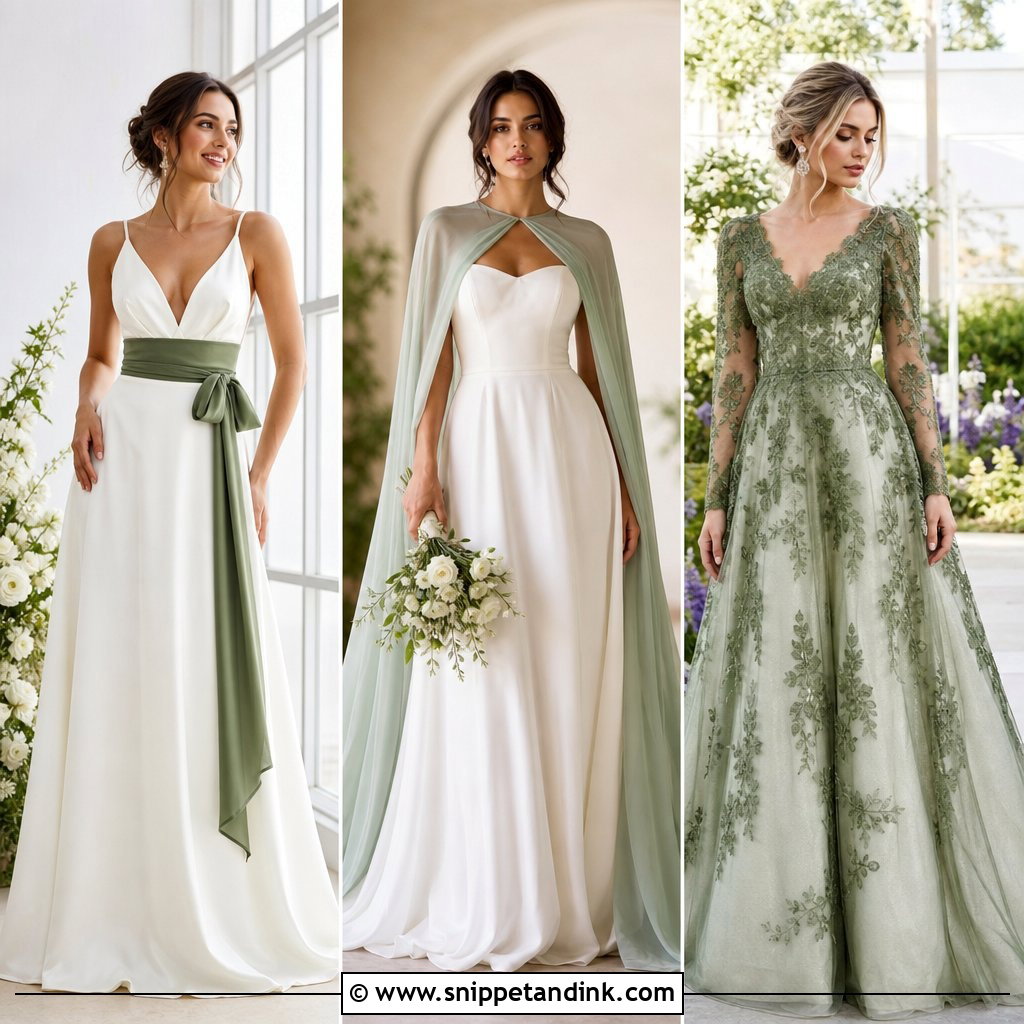
Check the wedding palette as well. Skip white and ivory unless the day is yours, and ask before wearing the exact shade the bridal party has been given.
Silhouette First, Then Everything Else
A plain gown works when the silhouette is deliberate, the fabric suits it, the tailoring is accurate and the accessories stay in a supporting role. A-line, mermaid, empire, kaftan, column, and ball gown shapes each answer different proportions, occasions and comfort levels. Before you commit, look at where the waist falls, how freely you can move and whether the fabric suits the season. Settle the shoe height before the hem is set, and keep jewelry from competing with the neckline. Then make the design yours through color, sleeve length, coverage and fit.
You'll Like These Ideas:





Leave a Reply