
Brides who ask me about straps are usually asking about something else: will I be able to stop hitching my bodice up all night? Straps answer that. They carry part of the bodice’s weight off the waist seam, which means less boning digging in and more freedom to hug and dance. They also change the neckline more than people expect. A thin strap opens up the collarbone, a wide one squares the shoulders, and a halter pulls attention to the arms and upper back. Below I’ve styled twenty-five strapped gowns as complete looks, with the shoes, veil and jewelry I’d actually pair with each.
Thin, Wide or Halter? Matching the Strap to Your Build
The strap is a structural decision before it’s a style decision. I start by asking how much support you need and how much you want to move, then pick the width.
- Spaghetti straps hold the dress in place but carry almost no weight. They suit smaller busts or gowns with sewn-in cups.
- Wide straps spread the load across the shoulder and suit fuller busts, heavier fabrics and long days on your feet.
- Halter straps lift and hold well but put weight on the back of the neck, so the fit at the nape is crucial.
- Off-the-shoulder straps frame the collarbone but restrict how high you can lift your arms.
- Crossed or open-back straps look lovely from behind but need a bra solution planned at the first fitting.
Shoulder shape matters as well. Sloped shoulders let thin straps slide off; a wider strap set slightly closer to the neck stays put. Broad shoulders look softer with a V or a scoop than with a straight square neckline. If you’re between two options in the shop, ask to try a sample with each, because a picture can’t show you how a strap sits when you breathe.
1. A Line Wedding Dress With Straps
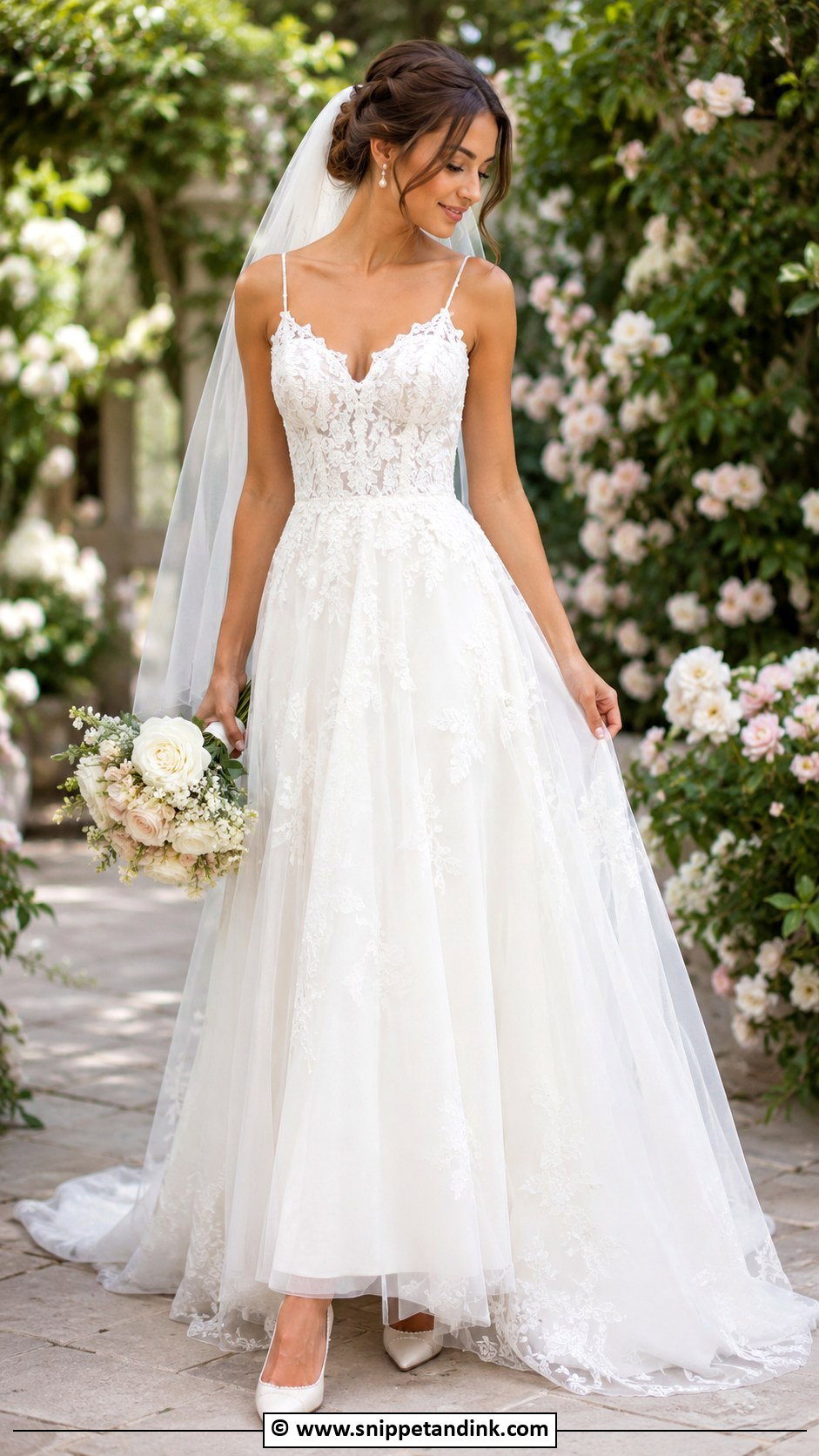
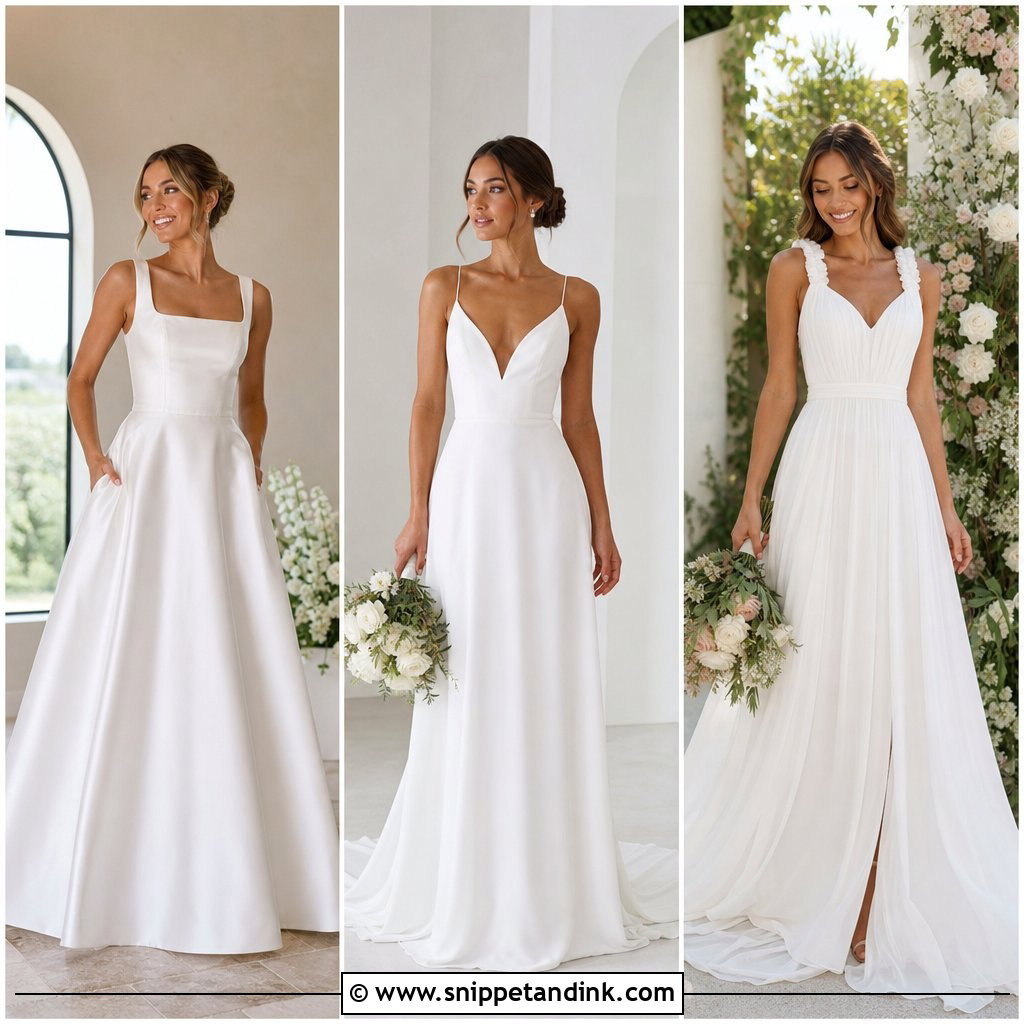
If you’re unsure where to start in a bridal shop, I’d pull an A-line with straps first. The skirt opens from the natural waist, so it skims the hips without clinging, and the straps take pressure off the bodice. A lace bodice with slim straps reads garden; satin straps with a plain skirt suit a ballroom. Pointed ivory heels, pearl drops and a fingertip veil keep the proportions even. Soft waves and a small bouquet finish it.
2. Satin Wedding Dress With Straps
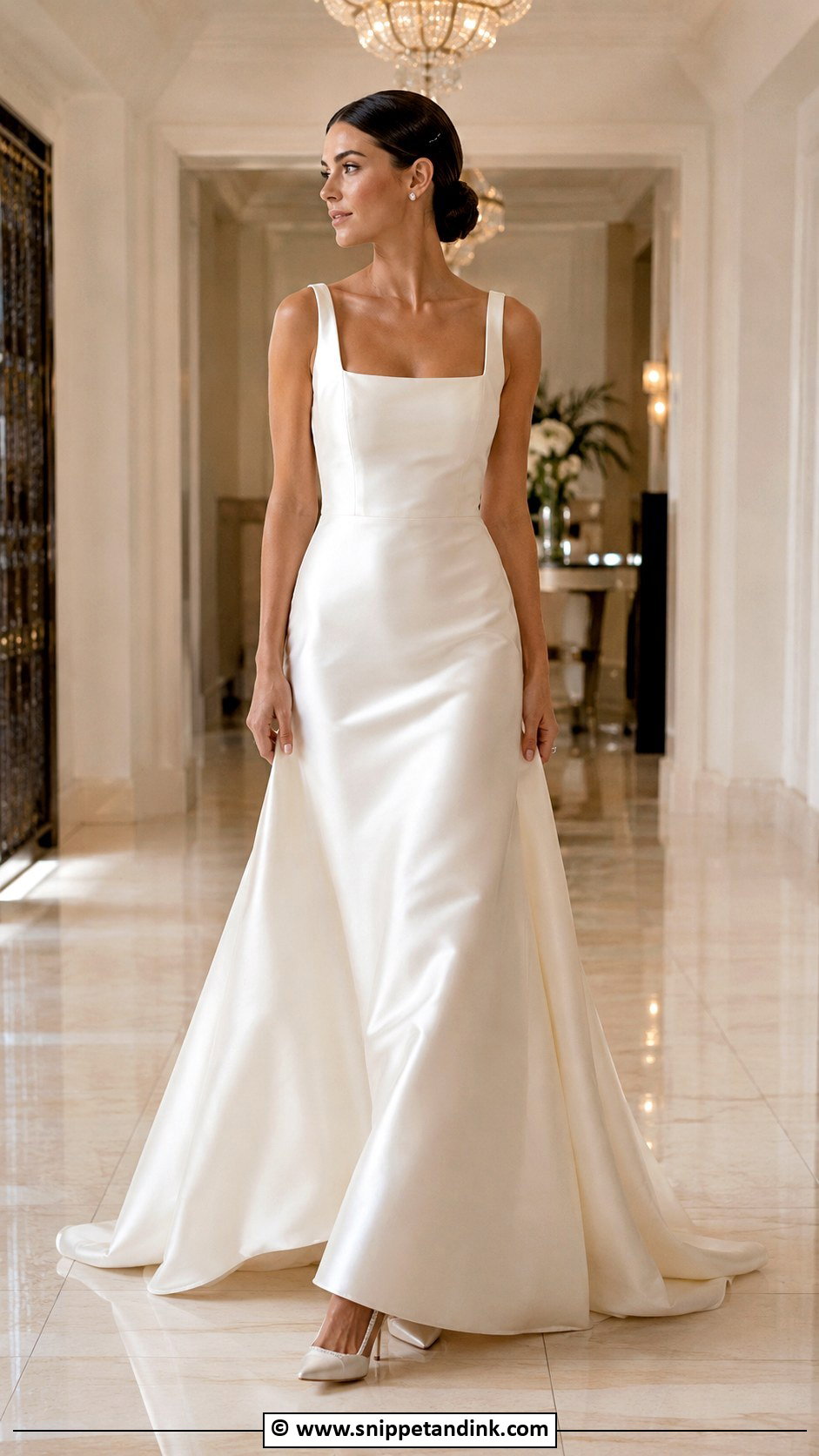
Satin shows everything, so the fit through the bodice has to be precise. Wide straps help here because they hold the neckline flat instead of letting it buckle when you move your arms. A square or low back and a slightly flared skirt give the fabric room to catch light. I keep the styling spare: slingback heels, a sleek bun, crystal studs. A long, plain veil adds length behind you without hiding the sheen, which suits a hotel or evening ceremony.
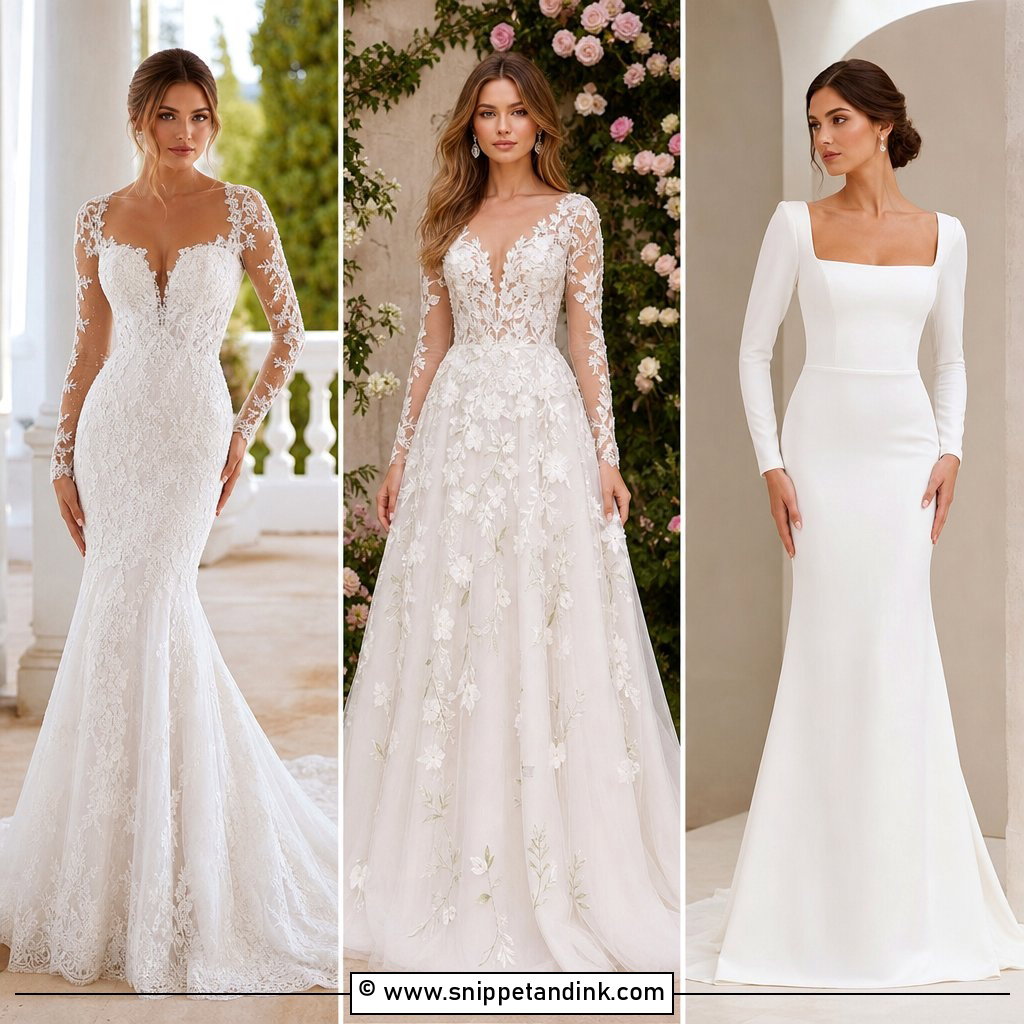
3. Lace Wedding Dress With Straps
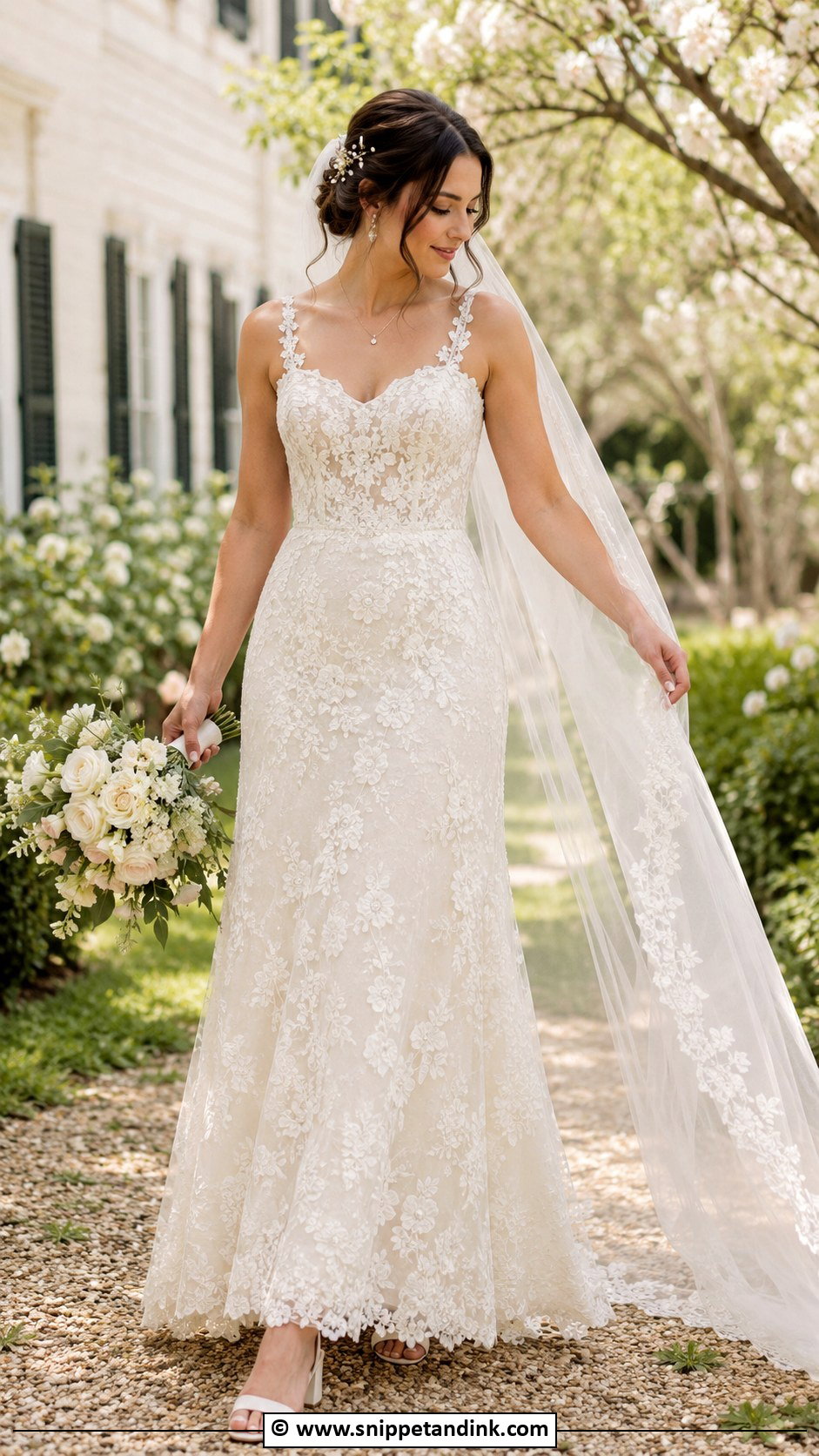
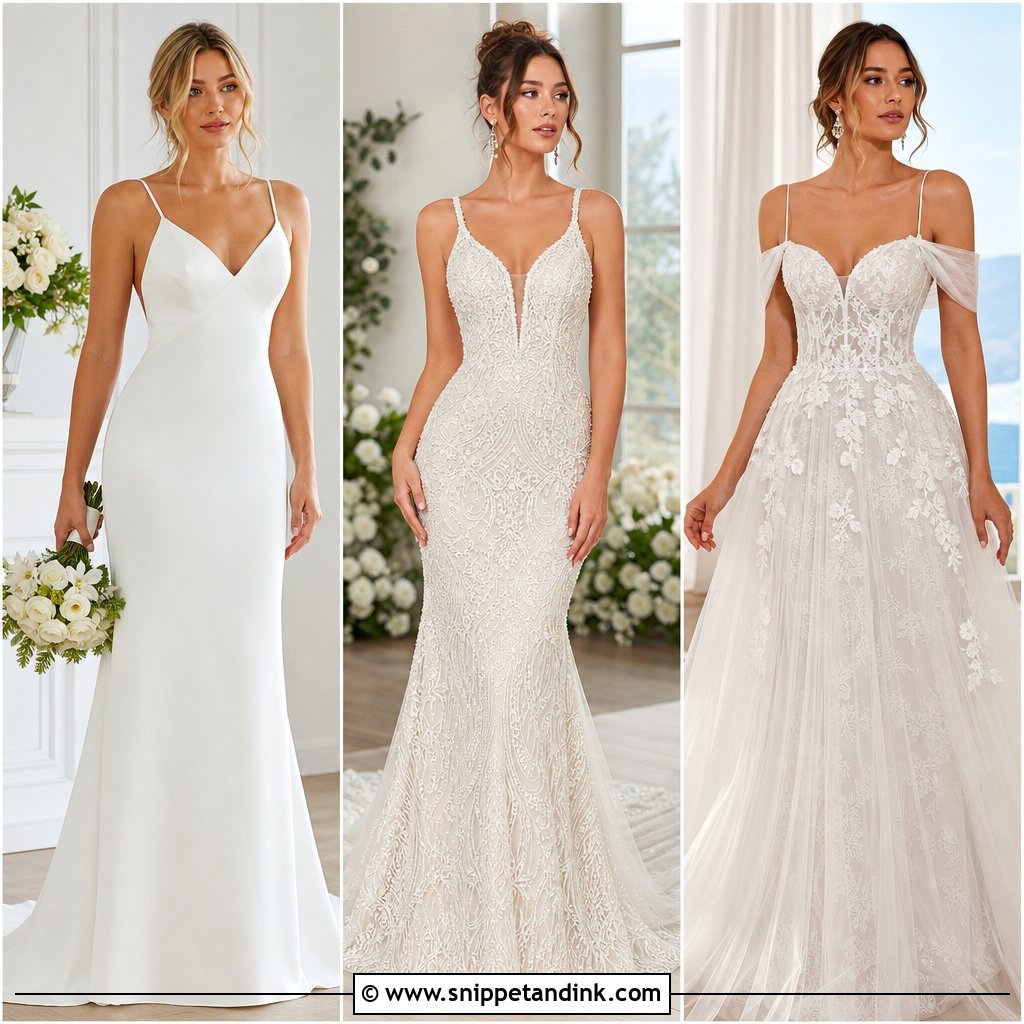
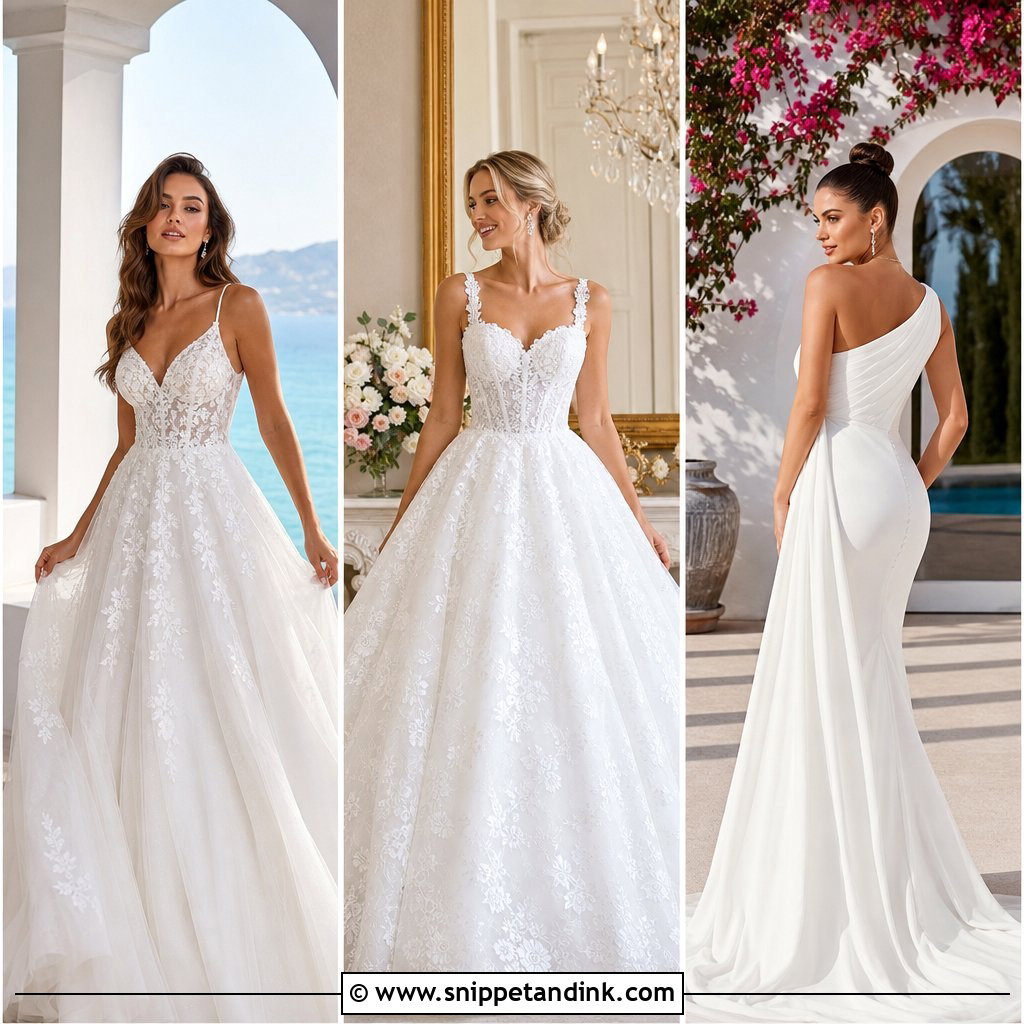
The scale of the lace decides the mood. Small floral Chantilly reads traditional; large, open guipure patterns feel more current. Thin lace straps sit nicely with a sweetheart neckline, but they can stretch over a long day, so I ask the seamstress to back them with a fine elastic or tulle. Wider lace straps give more support. Ivory block heels and pearl hair pins suit an estate or spring outdoor ceremony, and a veil with a light lace edge ties it together. Keep jewelry tiny so the lace isn’t fighting anything.
4. Spaghetti Strap Wedding Dress
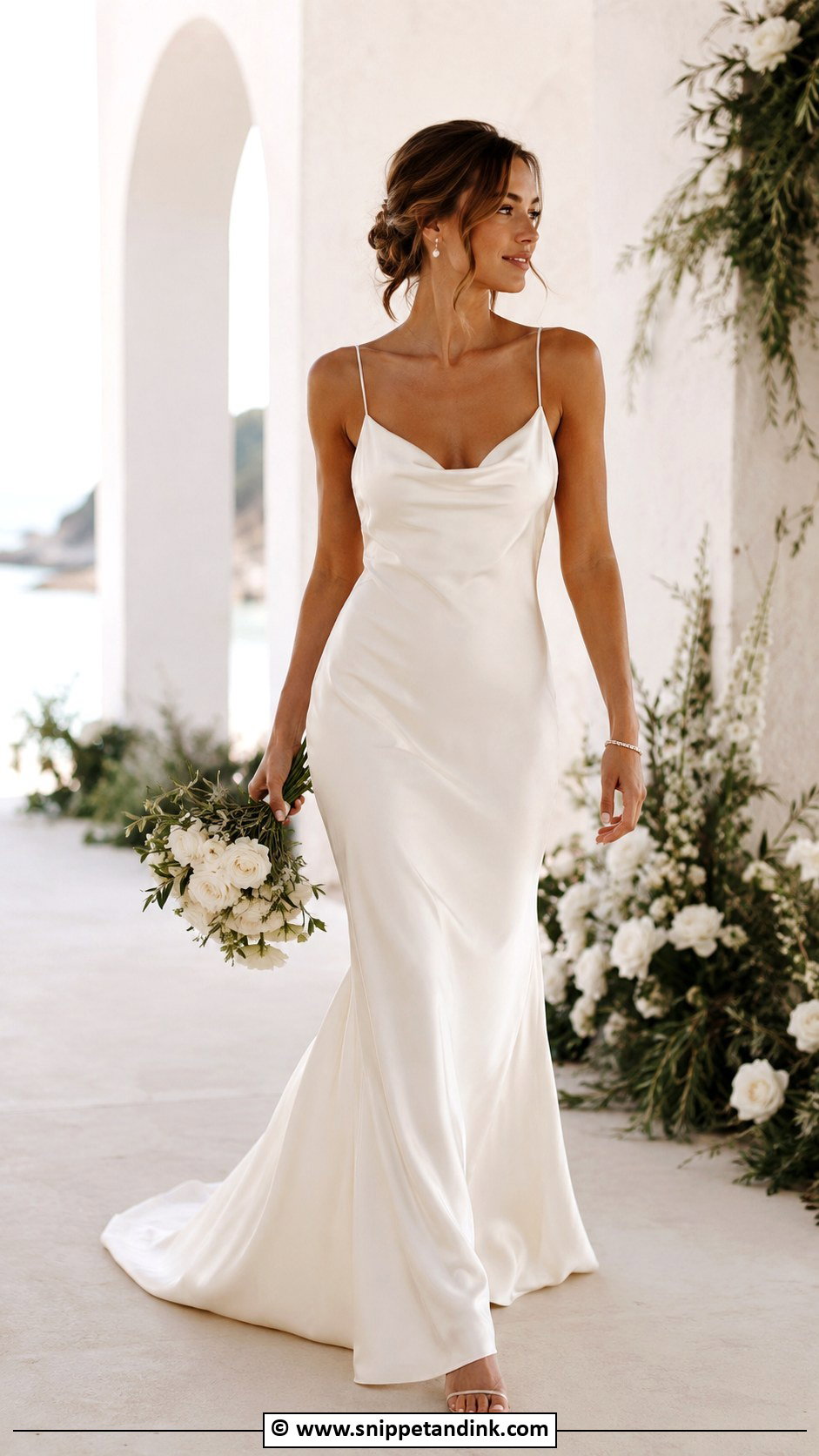
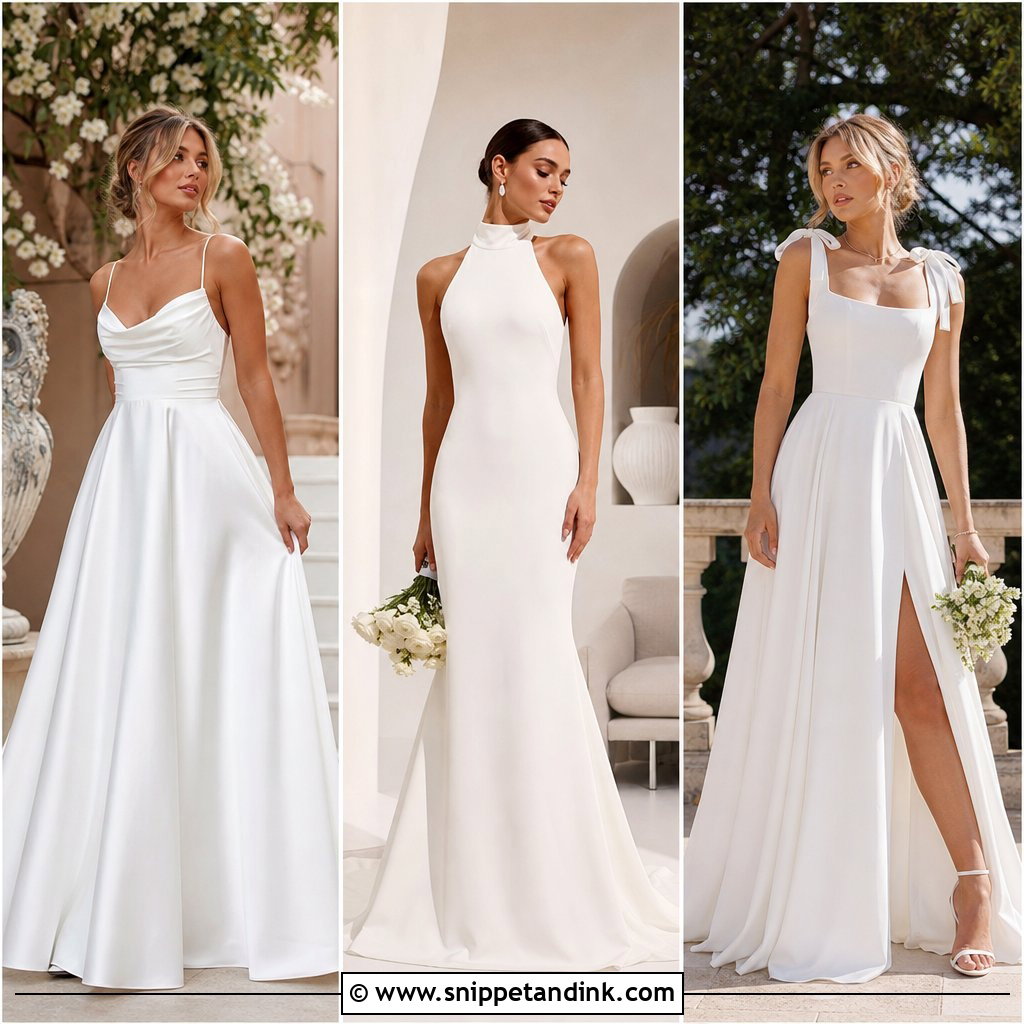
A spaghetti strap wedding dress works in a slip, a sheath or a soft A-line, but the thin straps offer almost no support. If you need a bra, this is the style where I’d have cups sewn in at the fitting. A cowl, a V or a square neckline all suit it. Barely-there sandals, a fine bracelet and small pearl earrings stay in scale. A loose low bun or polished waves keep it relaxed for a beach or city ceremony, and a sheer cape gives you movement in the portraits.
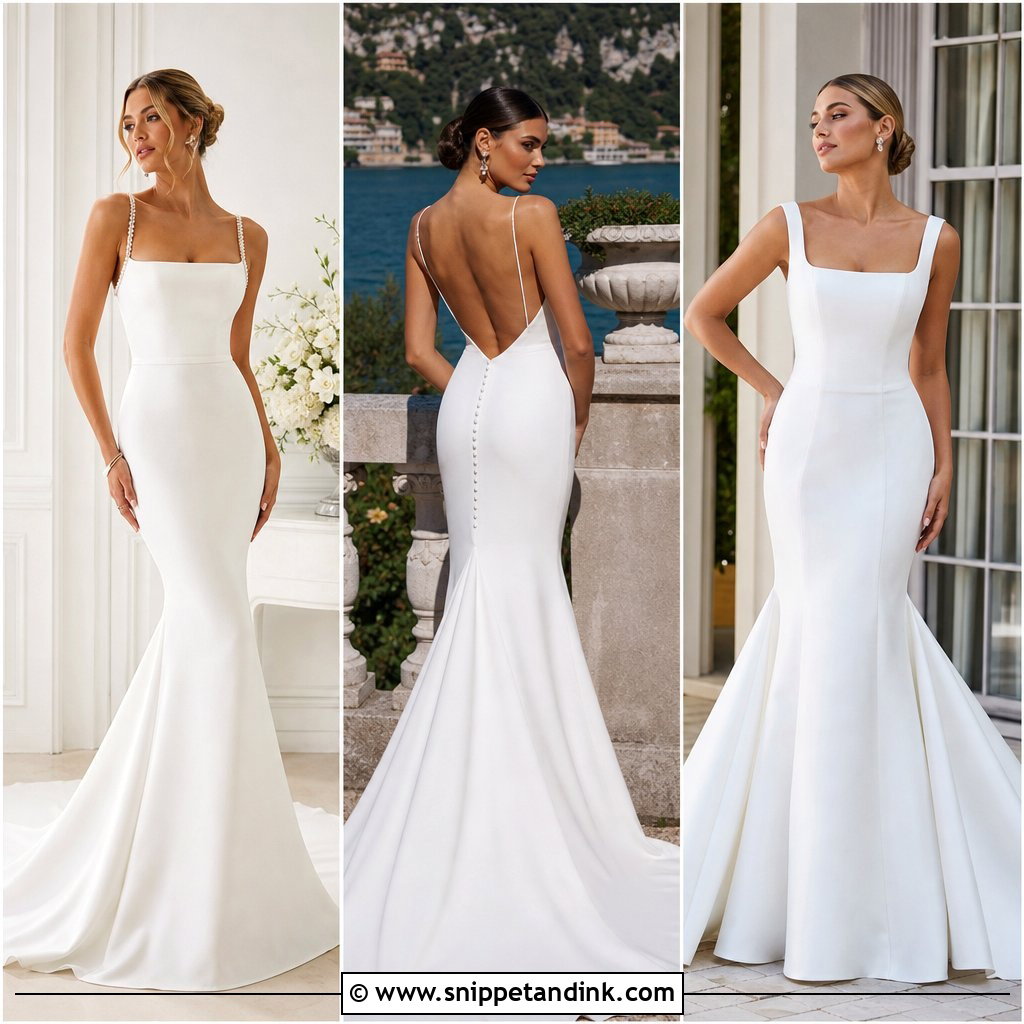
5. Square Neck Wedding Dress With Straps
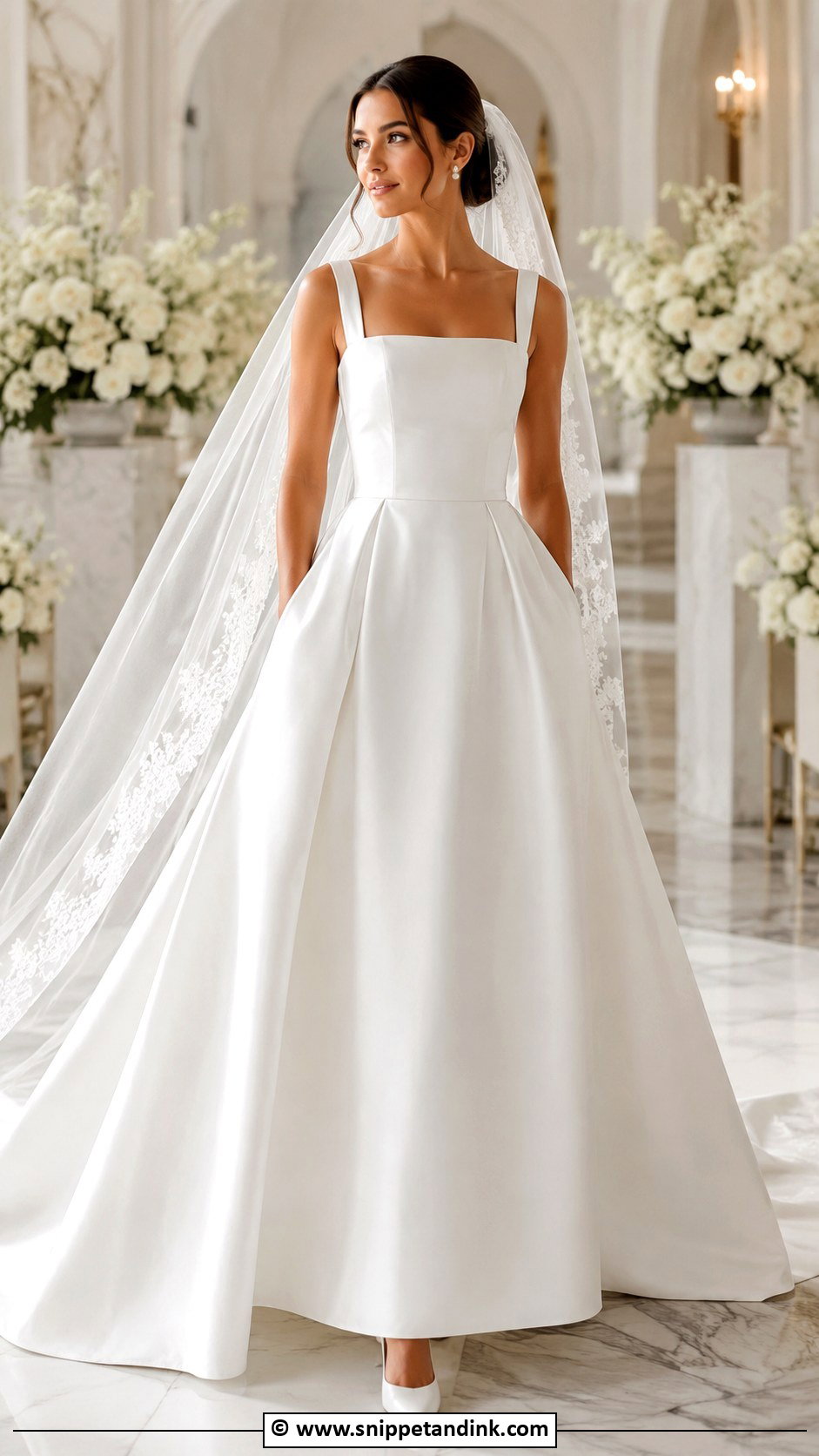
The square neckline is architectural, so it needs fabric with body. Structured crepe or satin holds that straight edge; soft lace can sag at the corners unless it’s lined well. The neckline frames the collarbone, which is why I’d skip a necklace and choose pearl or diamond studs and a smooth updo. A cathedral veil against such a clean neckline looks deliberate in a formal room. I’d point brides who find plain gowns too bare toward this one, since the shape itself is the detail.
6. V Neck Wedding Dress With Straps
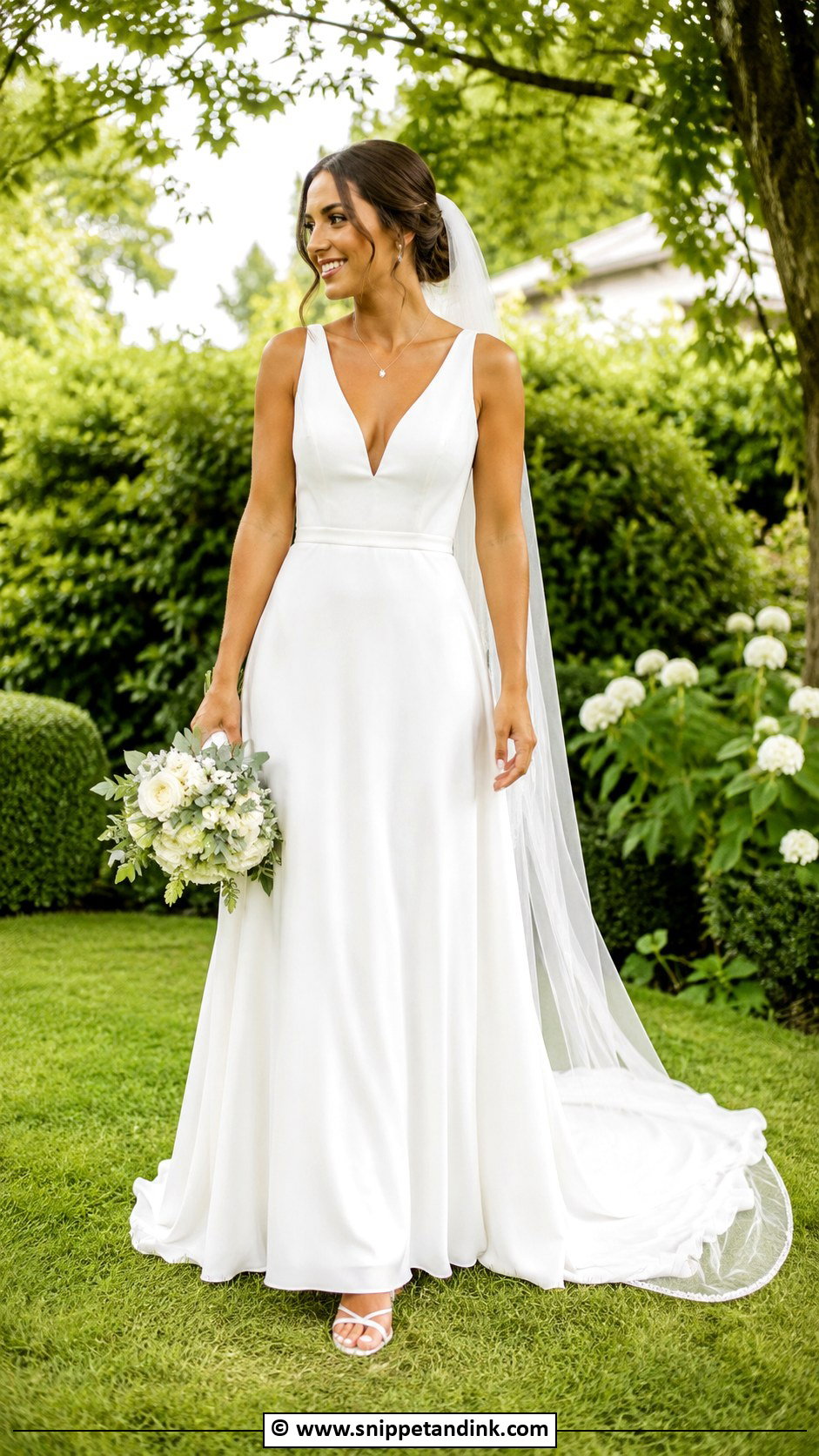
A V-neck breaks up the torso and makes it look longer, which is why it flatters so many builds. How deep it goes is the real question. A deep V needs either fashion tape or a nude mesh insert, and I’d test it by bending forward at the fitting. A soft A-line skirt keeps it romantic; a fitted crepe skirt makes it modern. Pair strappy ivory heels with a delicate pendant, and set the veil low at the back of the head so it doesn’t compete with the neckline.
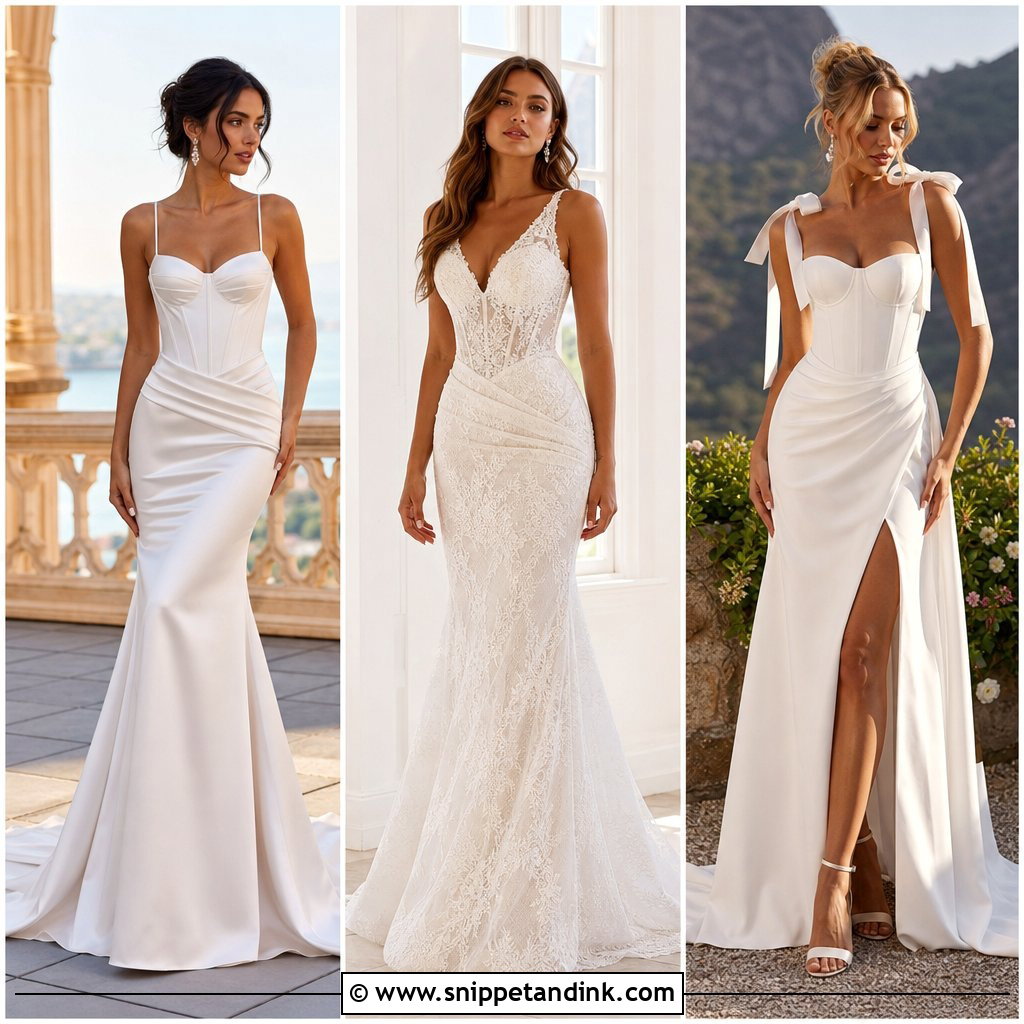
7. Sweetheart Wedding Dress With Straps
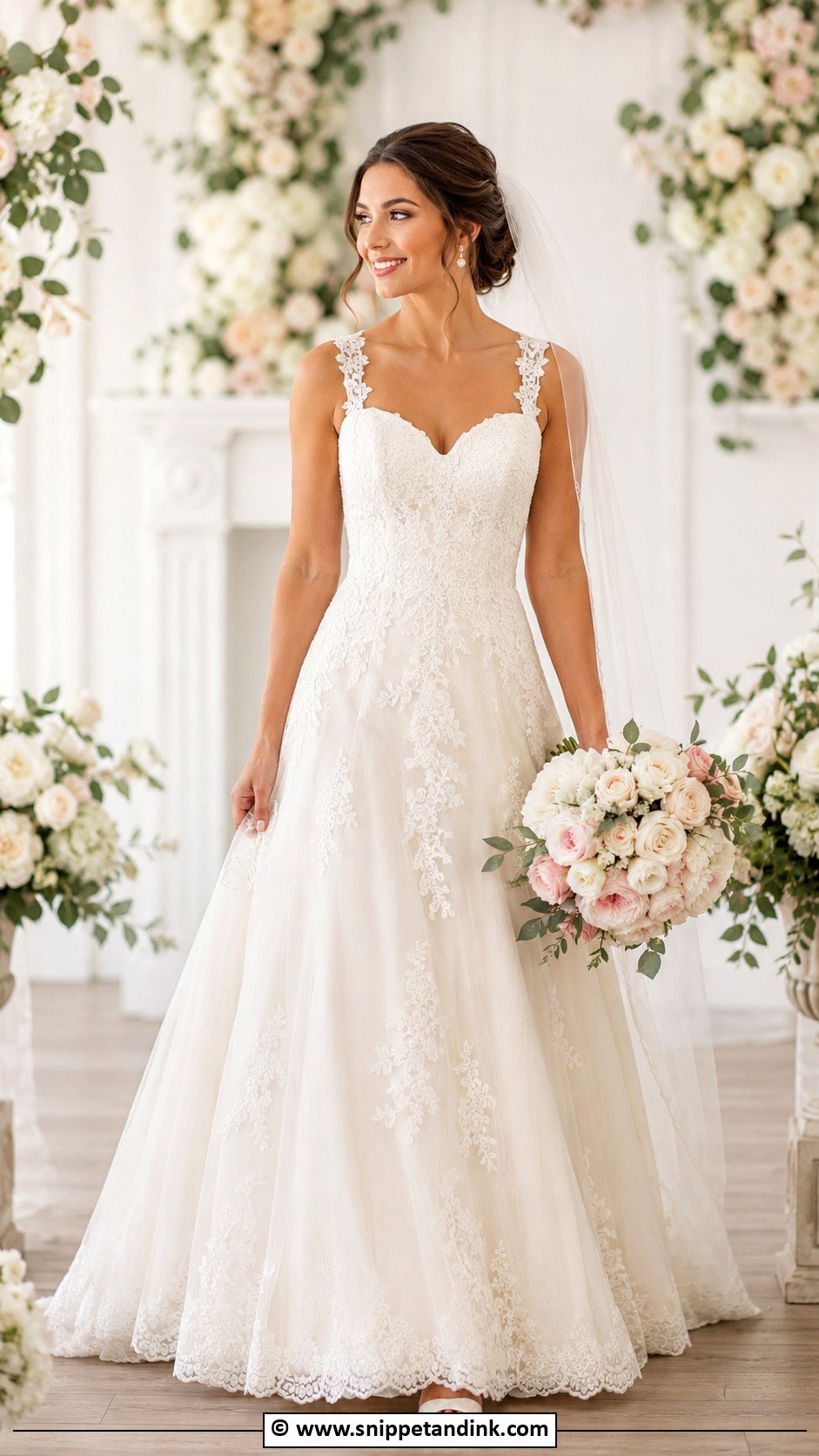
Sweetheart necklines and straps solve the classic strapless problem. You keep the curved neckline, and the bodice doesn’t slide down when you raise your arms. Lace straps keep it light; satin or beaded straps feel more formal. A fitted bodice into an A-line or full skirt gives the most balanced shape for the aisle. Style it with a tulle veil, pearl earrings and classic ivory heels, and the neckline does the rest.
8. Ball Gown Wedding Dress With Straps
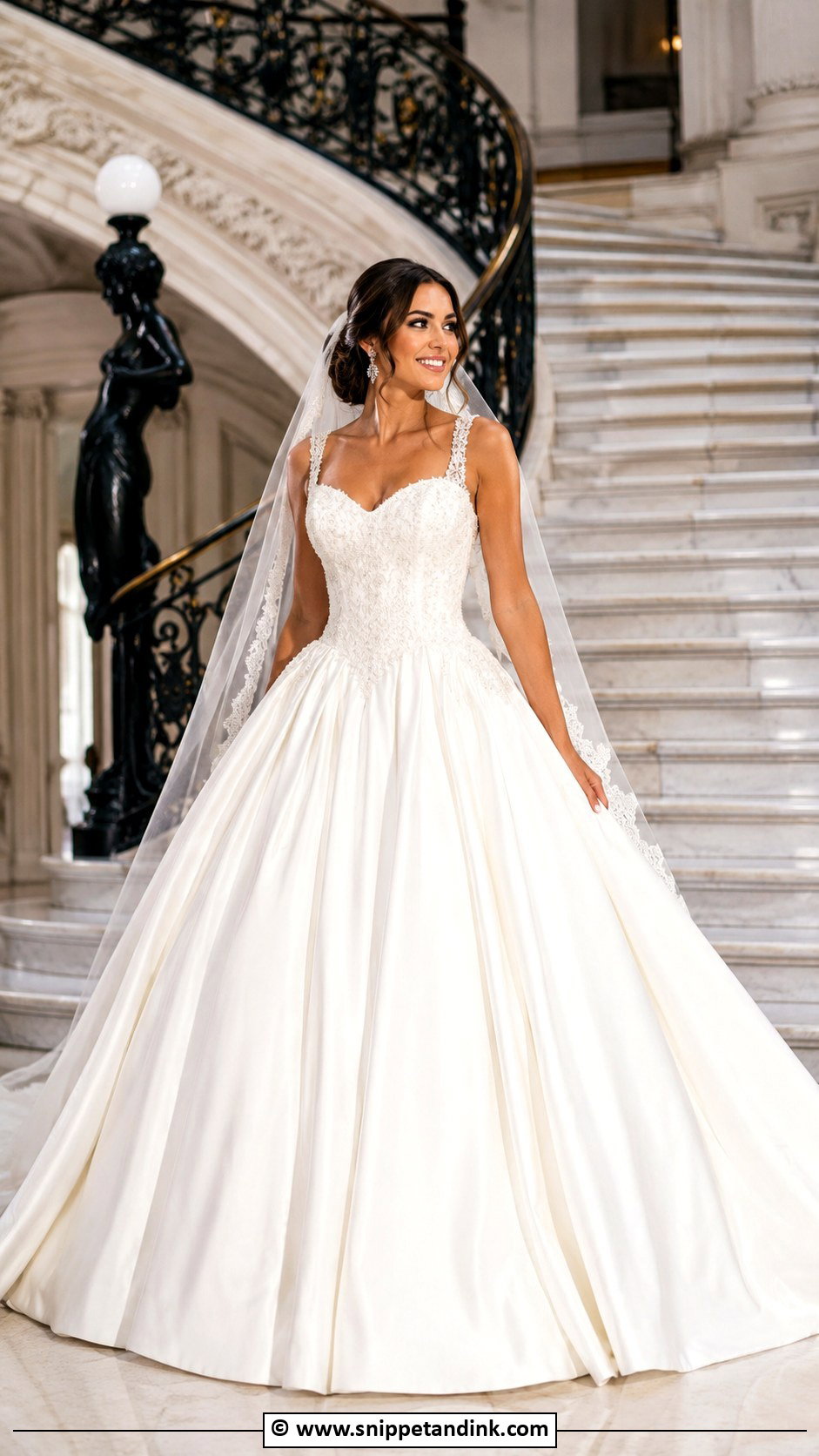
A ball gown wedding dress with straps is heavy, often heavier than brides expect, and the straps help spread that load across the shoulders. Beaded straps suit a ballroom; plain satin straps keep it cleaner. Wear hidden platform heels to lift the hem off the floor, and ask for a bustle that can carry the skirt’s weight at the reception. A neat, rounded bouquet keeps the volume from feeling crowded. Earrings should echo the dress beading, not add a new metal.
9. Mermaid Wedding Dress With Straps
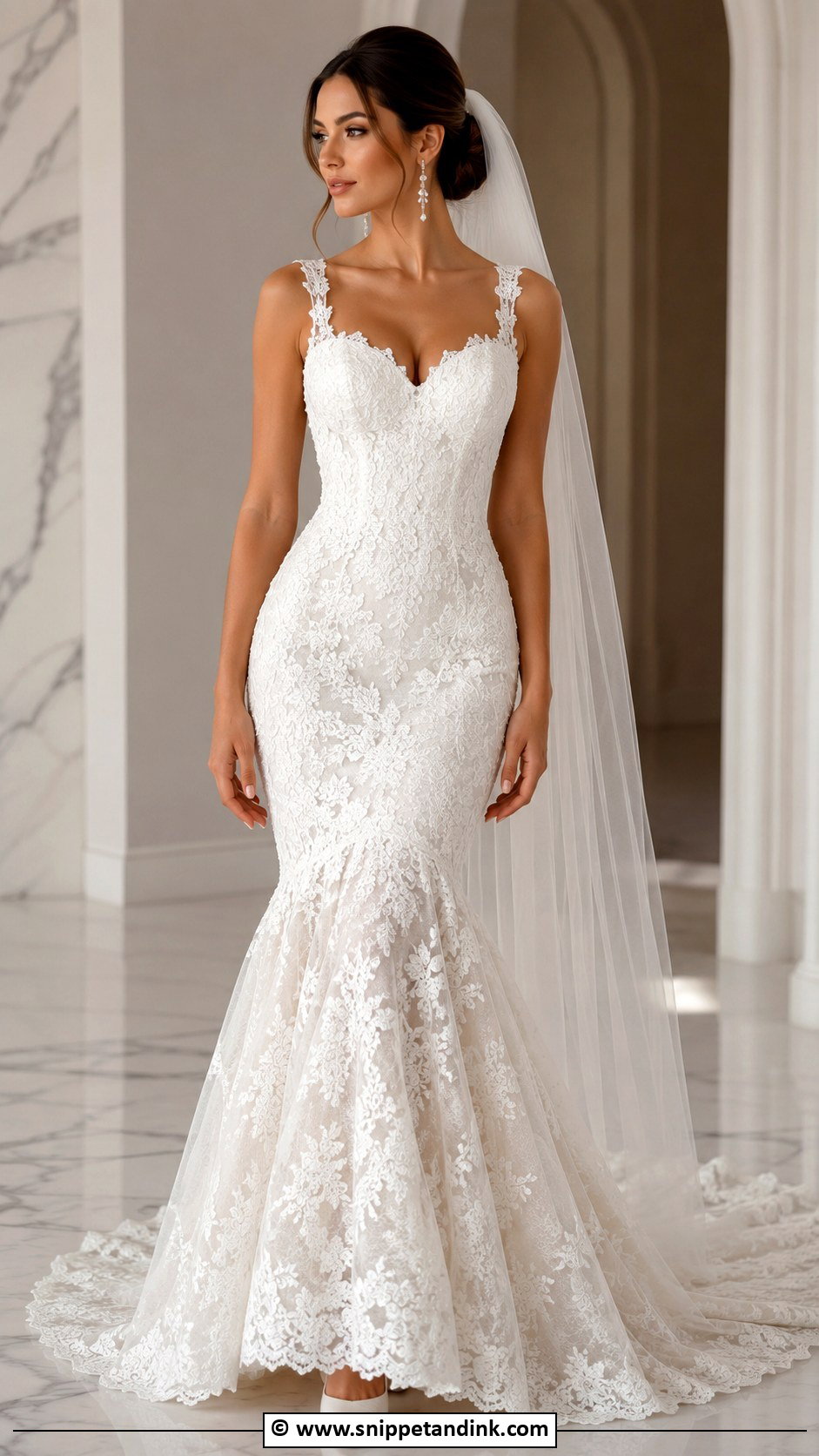
Mermaid gowns fit tightly to below the hips, and that means you’ll be walking with a shorter stride and sitting with care. Straps matter more here than on any other shape, because the bodice can’t rely on a loose skirt for balance. Lace feels romantic; smooth crepe is more modern and shows the shape cleanly. I’d do a full walk and sit test in your shoes before the final fitting. Pointed heels, drop earrings and a sleek veil keep the line uninterrupted for an evening venue.
10. Sheath Wedding Dress With Straps
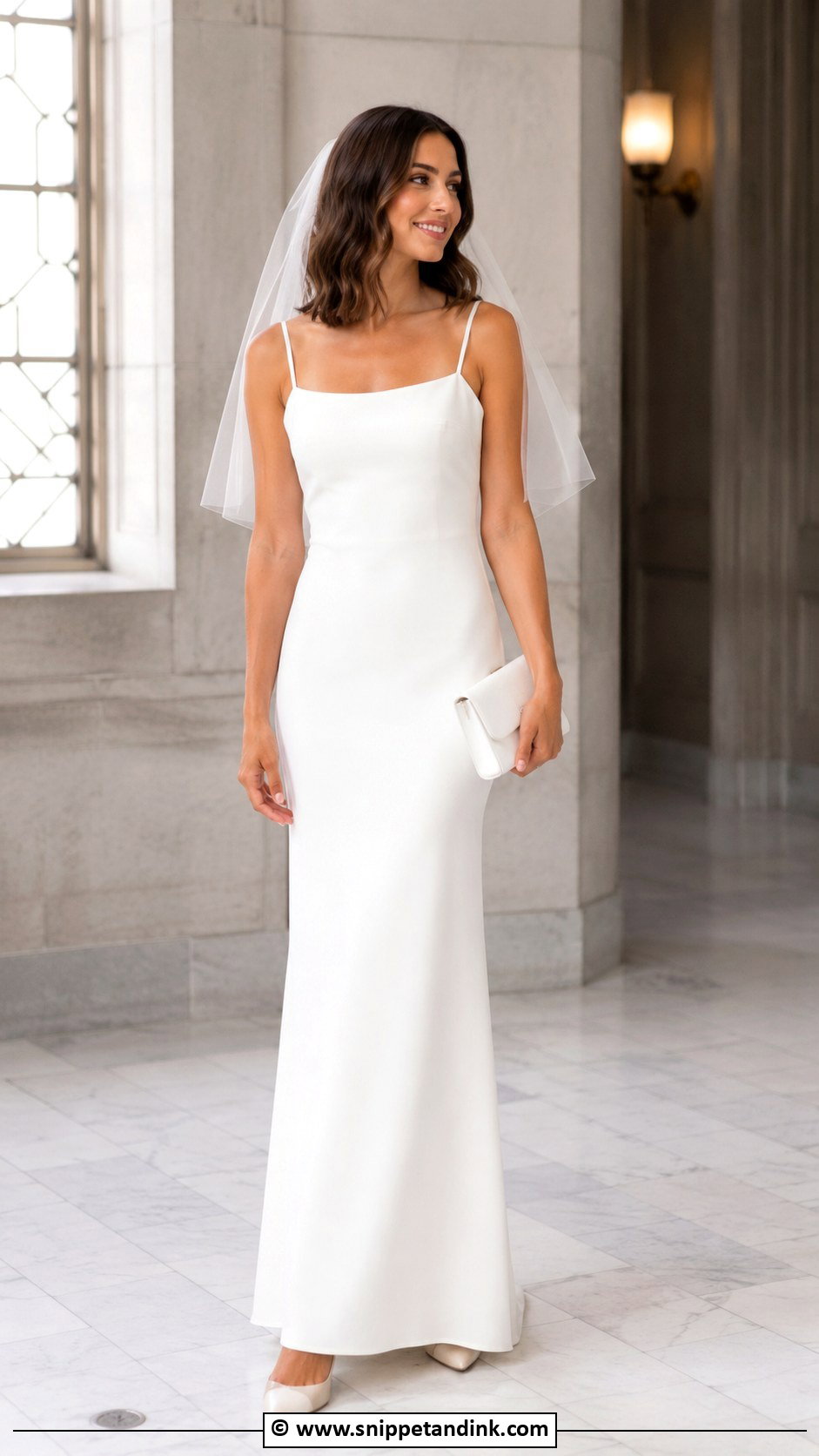
A sheath follows the body without much structure, so the fabric has to be good. Thin crepe or jersey shows every seam underneath. Try a crepe sheath with wide straps for a modern ceremony, or a lace sheath with thin straps if you want it softer. Low heels and a shoulder-length veil keep it light enough for a courthouse, a rooftop or a destination wedding. It’s the easiest gown to move in on this list.
11. Crepe Wedding Dress With Straps
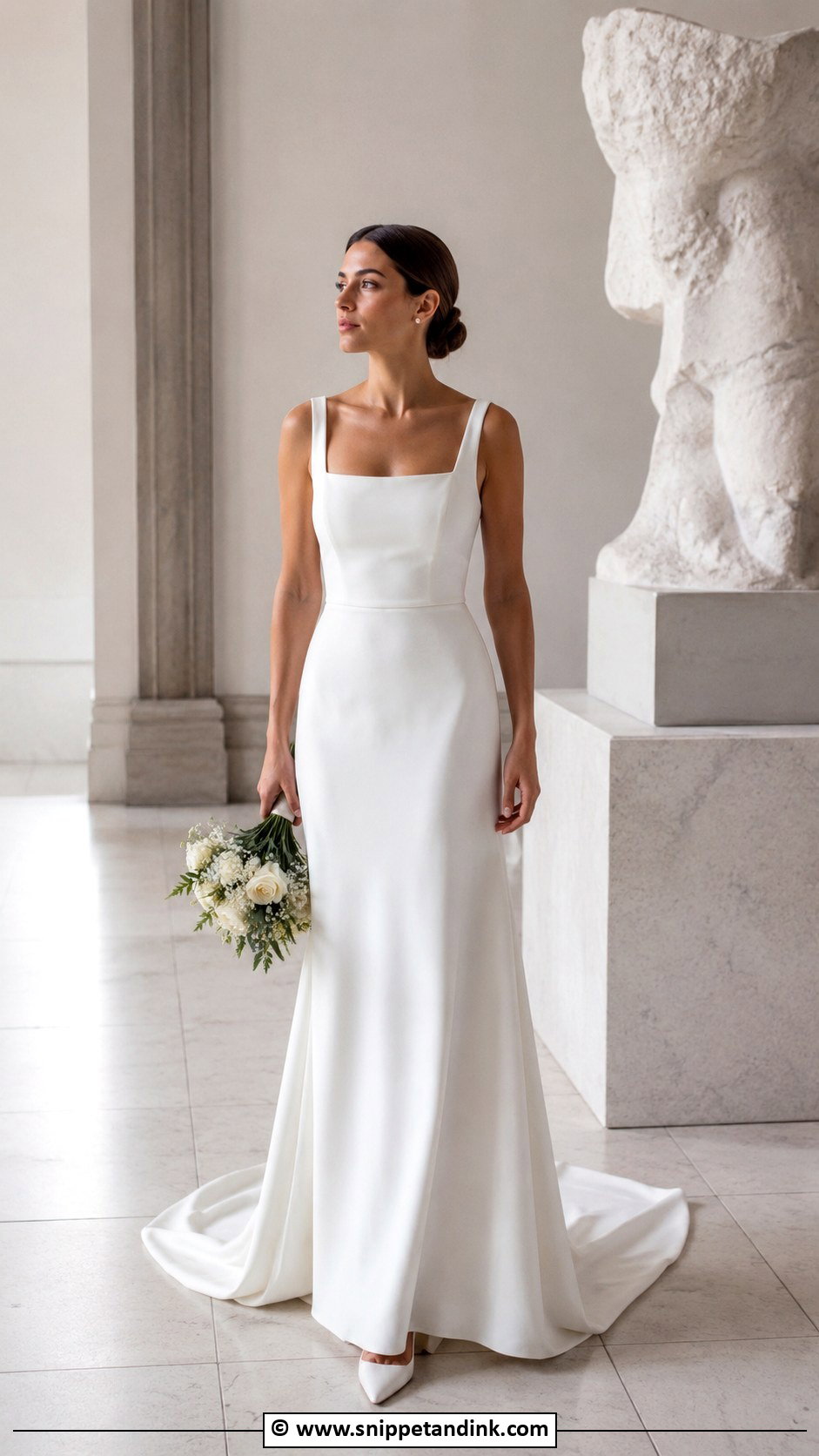
Crepe has enough weight to hang straight and skim the body, which makes it forgiving in a way satin isn’t. It also wrinkles less from sitting. A square or V bodice with wide straps gives it a tailored, almost suit-like crispness. I’d style it with pointed pumps, pearl studs and a sleek low bun, plus a plain or scarf-style veil. It suits city weddings and museum venues where heavy sparkle would feel out of place.
12. Tulle Wedding Dress With Straps
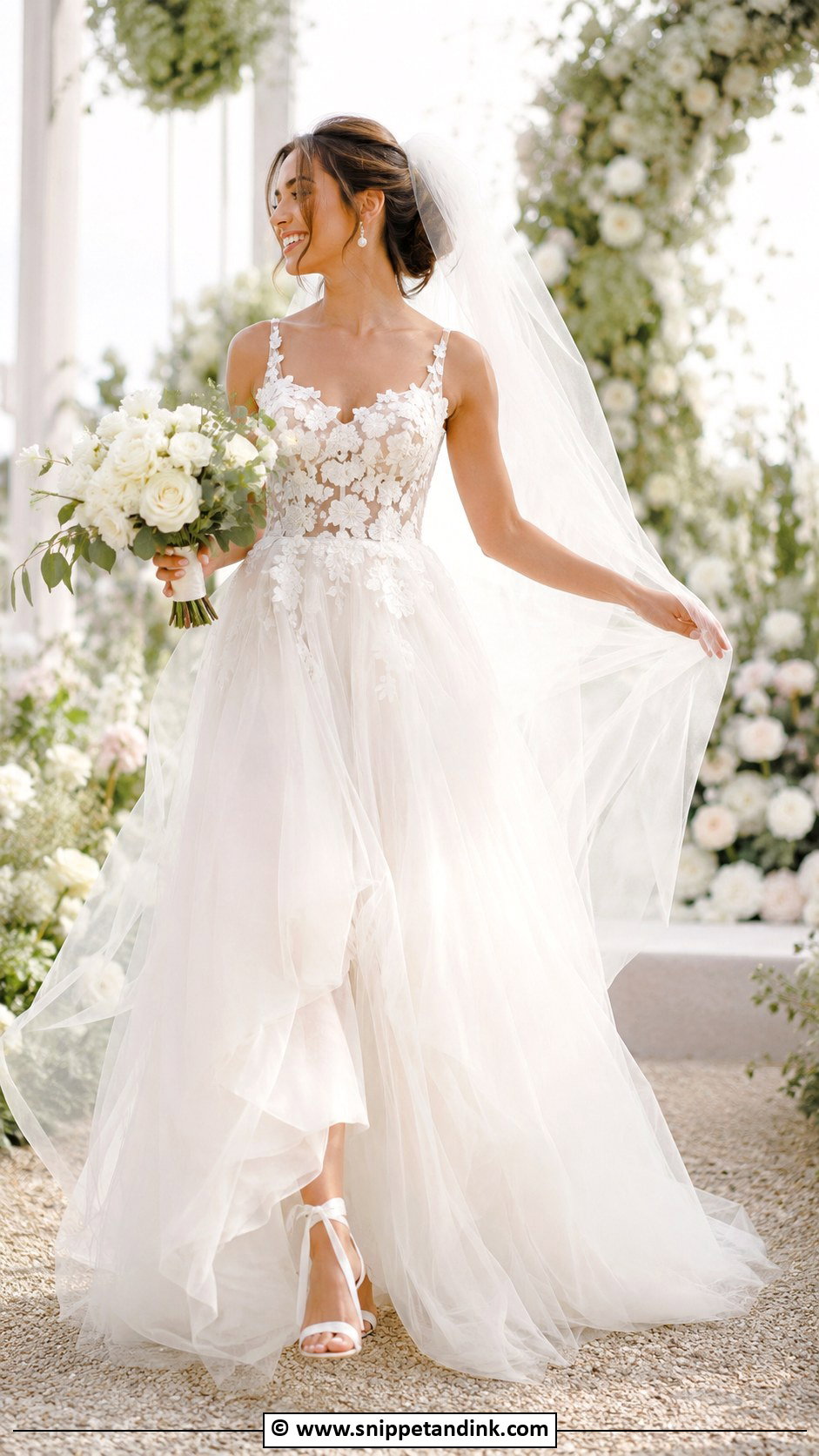
Tulle catches the light and moves even when you’re standing still, but layered tulle skirts snag on rough ground, brambles and jewelry clasps. Floral appliqué straps on a tulle A-line make sense for a garden ceremony, as long as you’re careful with the hem. Ballet-style heels, pearl earrings and a soft veil finish it. With a very full skirt, I keep jewelry minimal so the top half doesn’t look crowded.
13. Beaded Wedding Dress With Straps
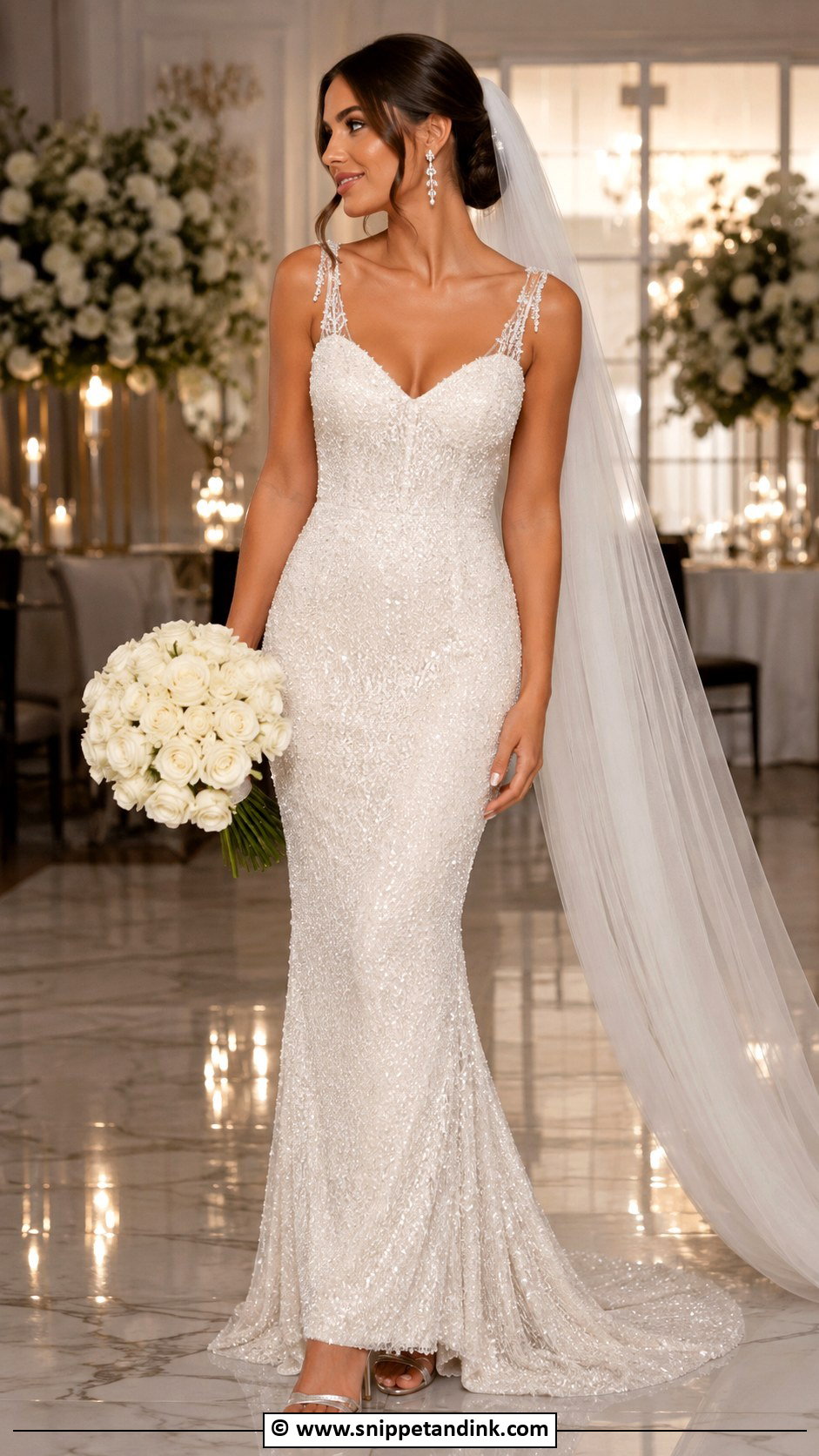
Beading adds real weight, sometimes a lot of it, and beaded straps can dig into the shoulder over a long day. I’d ask the seamstress to pad the underside of heavy straps. Because the dress is already busy, choose crystal earrings that match the bead color and a plain veil with no trim. A fitted or sheath shape lets the beadwork look refined. Under ballroom lighting the beads move with you, and that’s where this dress belongs.
14. Off The Shoulder Wedding Dress With Straps
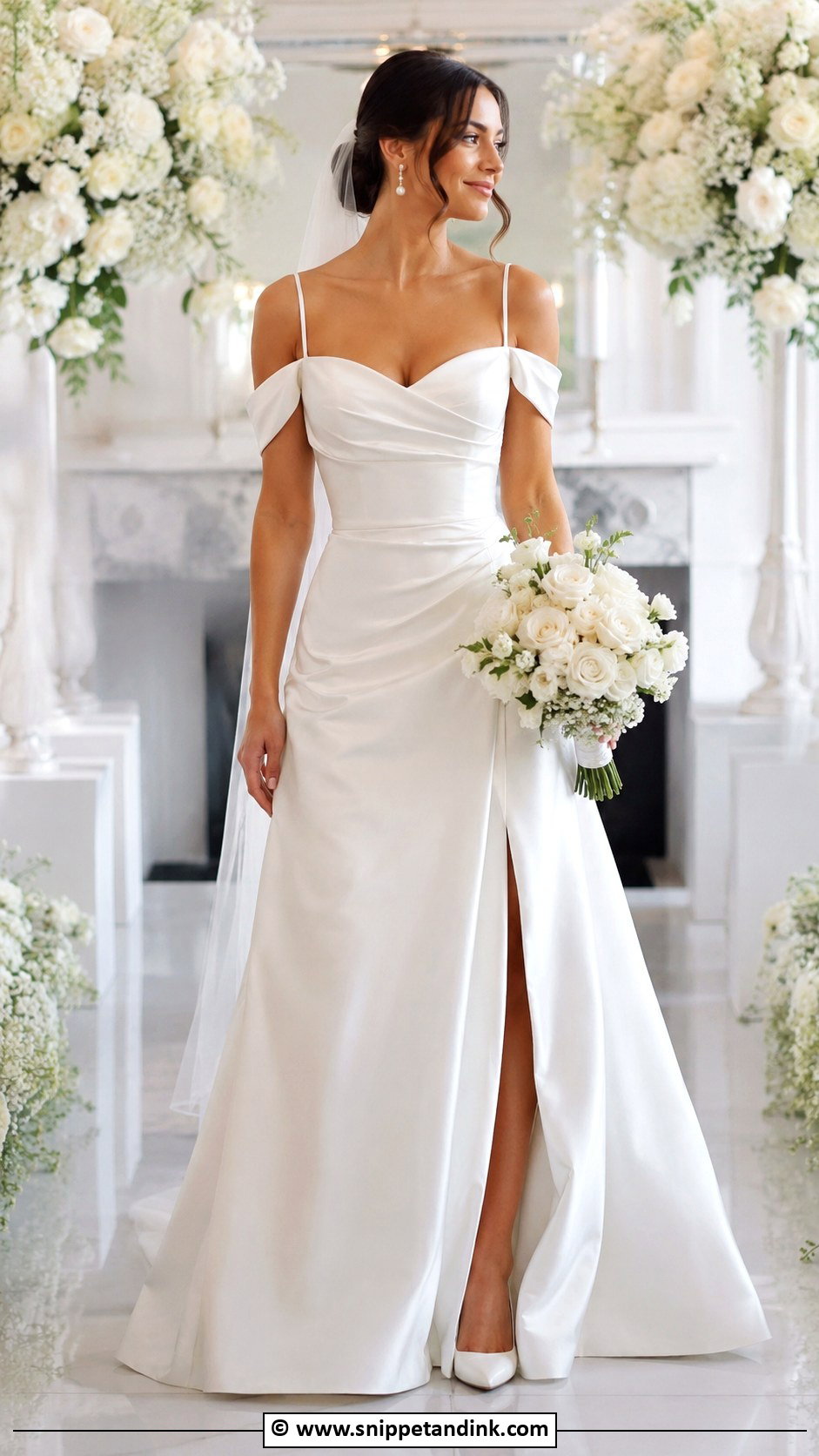
Off-the-shoulder straps sit on the upper arm, so they limit how high you can lift your arms. That’s the trade-off for the frame they create around the collarbone. Try hugging and raising a glass at your fitting. Satin, lace, crepe and tulle all work. A loose updo, pearl earrings and a veil attached low at the back keep the neckline visible. Comfortable heels matter because this is usually a formal gown you’ll be standing in for hours.

15. Halter Wedding Dress With Straps
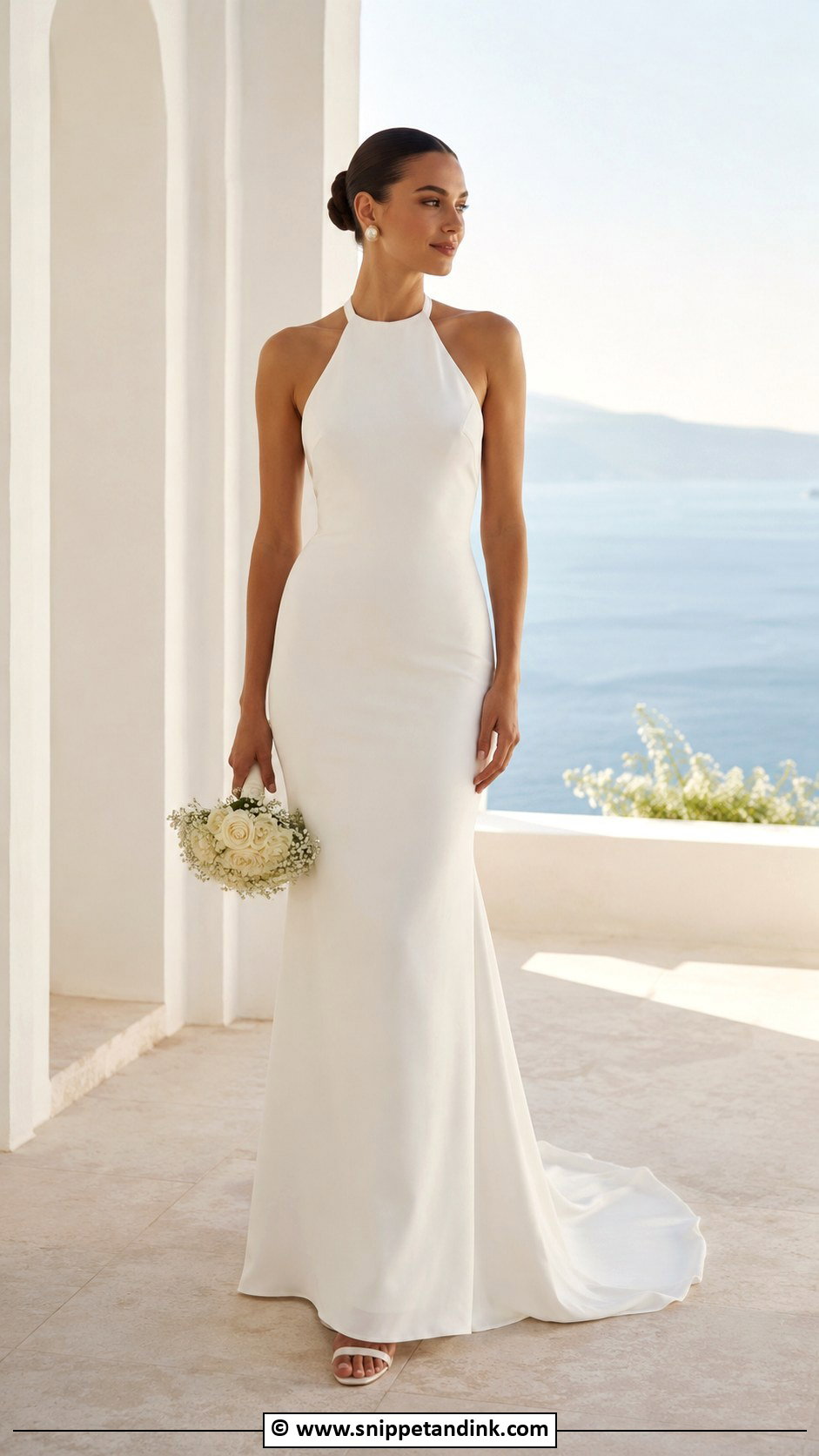
A halter puts the shoulders and upper back on show, so posture and skin prep count more than jewelry here. The neck strap carries weight; if it’s too tight it pulls at the back of the neck by the reception, so have it adjusted to sit flat rather than snug. Sleek crepe feels modern and lace feels softer. A smooth bun, statement studs and simple heels are all it needs, and no necklace. It’s a strong pick for a beach or contemporary venue.
16. High Neck Wedding Dress With Straps
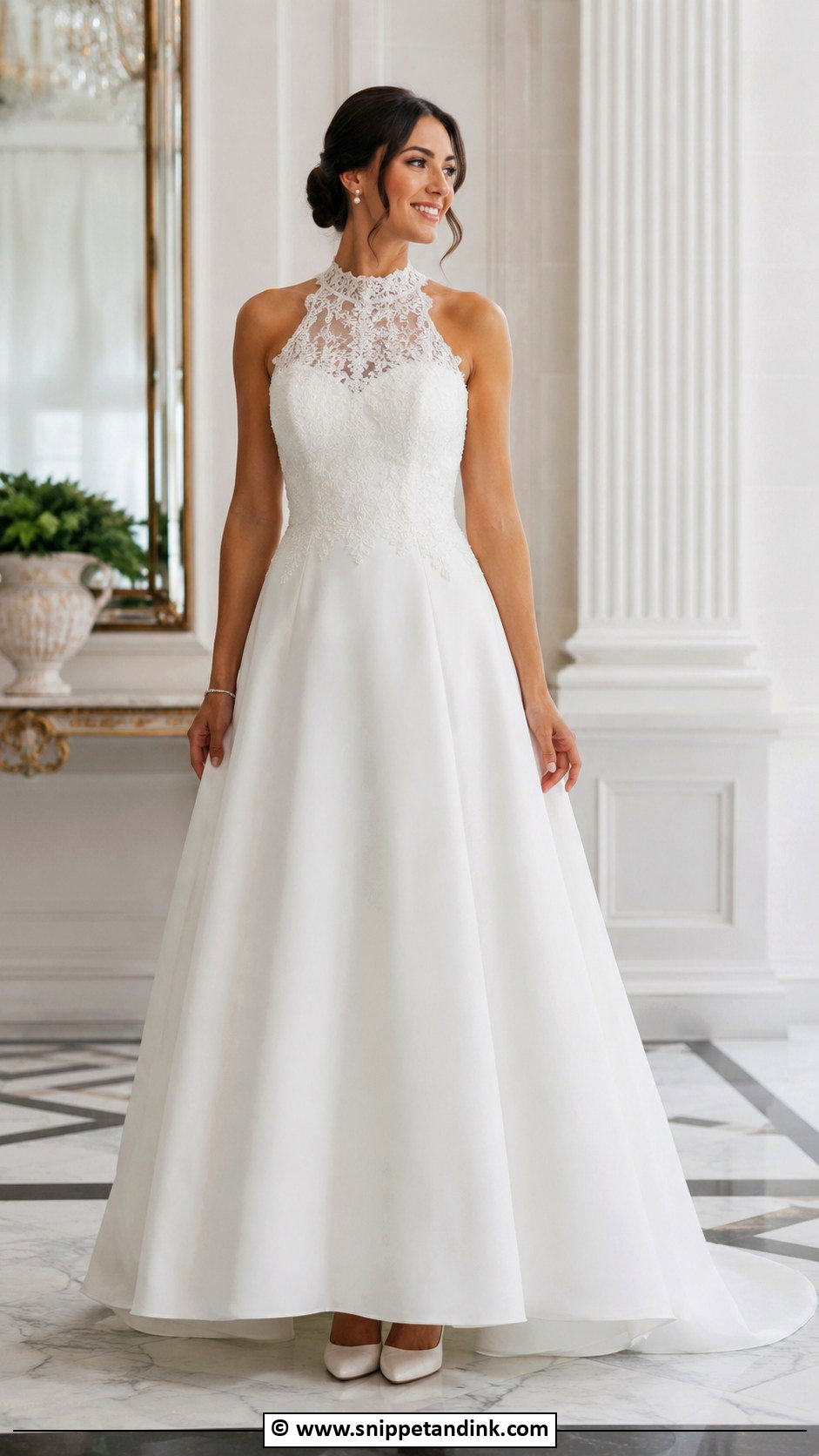
Covered necklines suit cooler weather and formal or religious venues, and lace or sheer illusion fabric keeps them from feeling heavy. The fit at the neck has to be checked with your head turned both ways; a high neck that’s too tight is noticed all day. An A-line skirt reads classic and a sheath reads modern. Pearl studs, a low bun and simple ivory heels keep the focus up top. Skip the necklace entirely and put the detail in earrings or a hair comb.
17. Open Back Wedding Dress With Straps
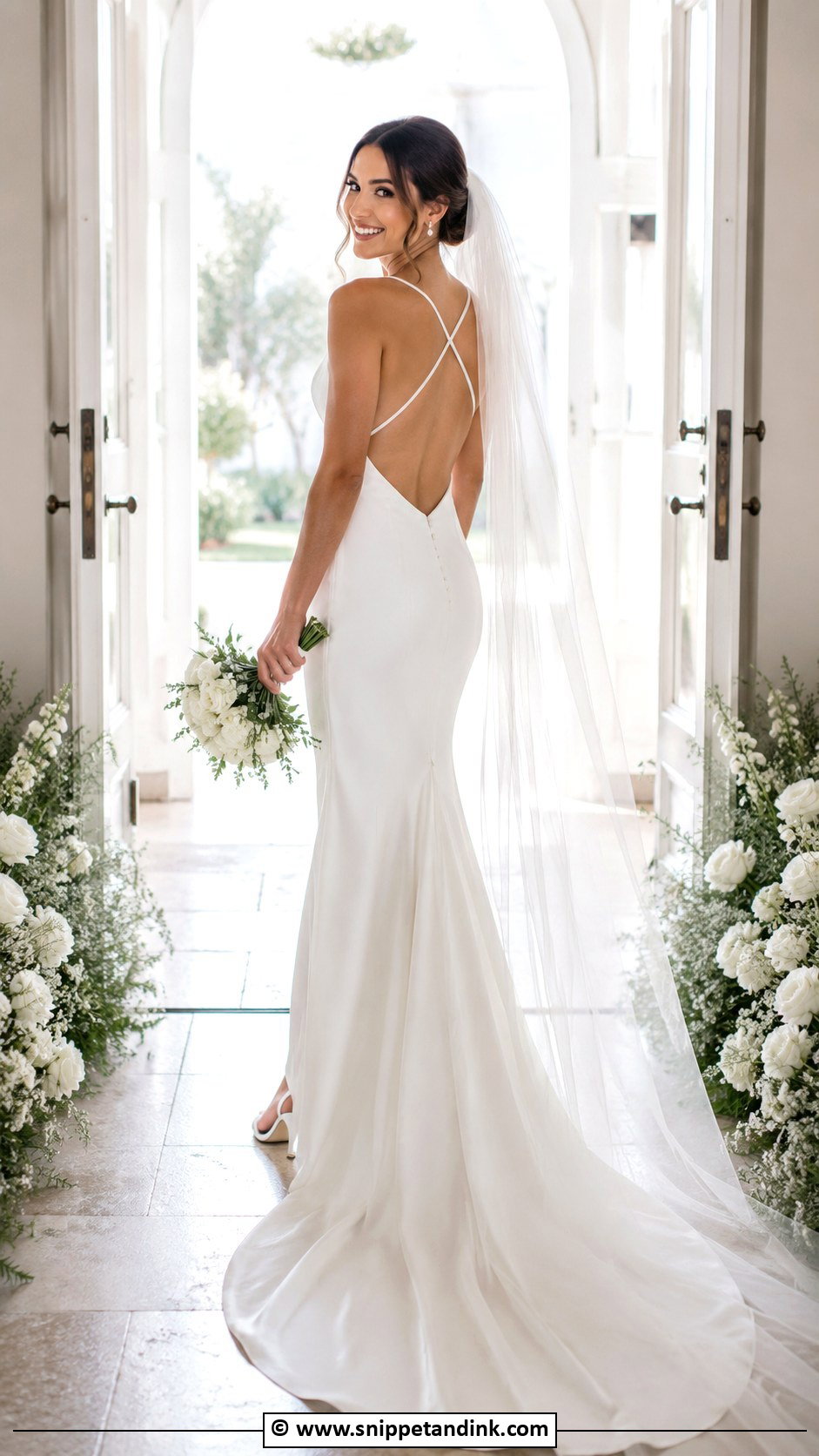
With an open back, the straps do all the structural work, and you’ll need a bra solution that doesn’t show. Sewn-in cups or an adhesive bra are the usual answers. Crossed or beaded straps add detail to the back view, and a plain front keeps the surprise for when you turn. Wear your hair up or swept to the side. A long veil reads well in the ceremony and can come off for the reception, which puts the back on show for the dancing.
18. Corset Wedding Dress With Straps
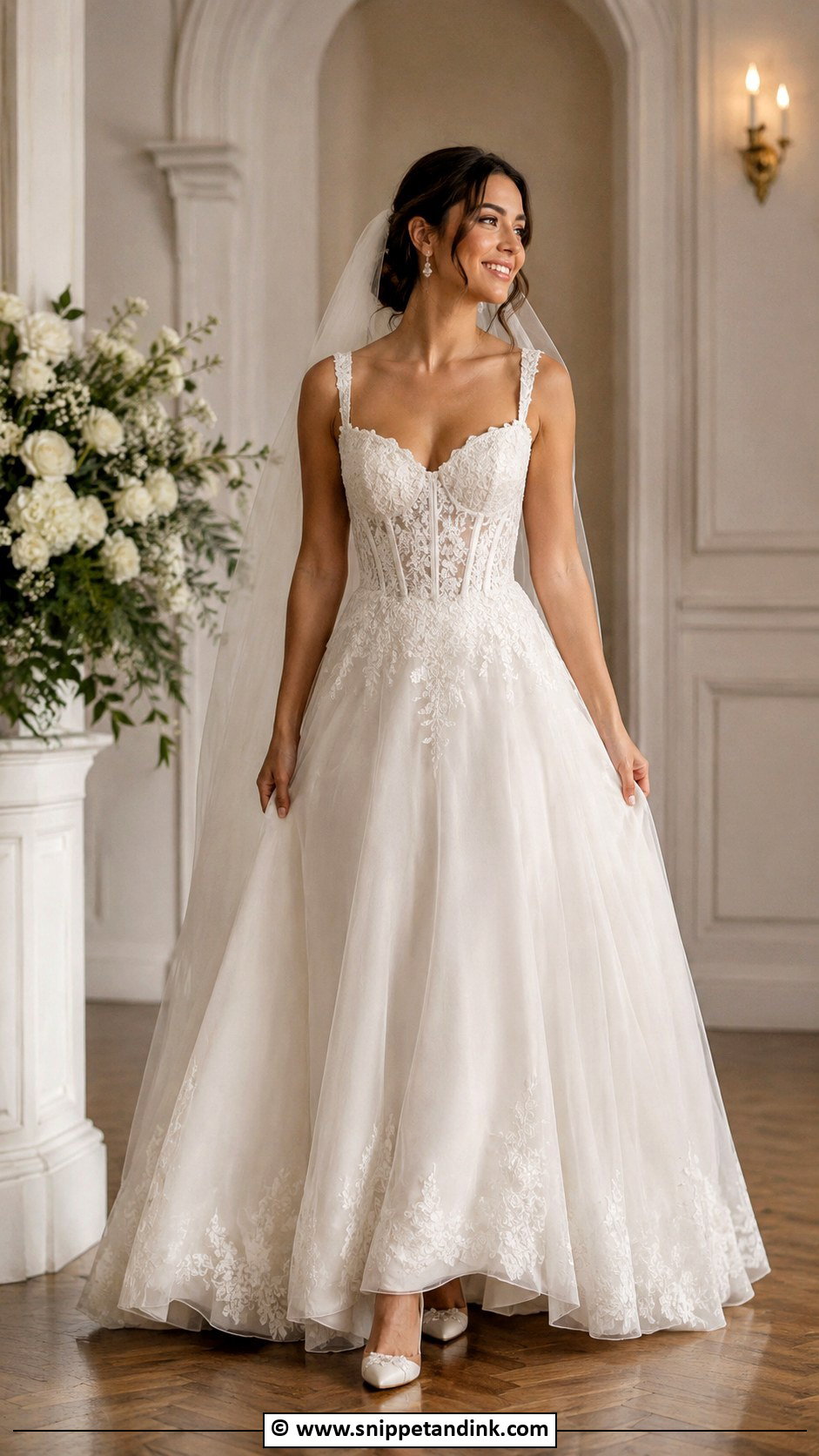
Boning shapes a corset, and straps keep it from pressing down into the hips when you sit. That combination is why corset bodices with straps are far more comfortable than strapless ones. Visible boning feels modern; lace panels or smooth satin feel classic. A corset pairs with an A-line, a full skirt or a fitted one. The real work is alterations: a good seamstress will fit the corset to your ribcage so you can breathe and eat at the reception. Classic heels and a soft veil keep the attention on the waist.
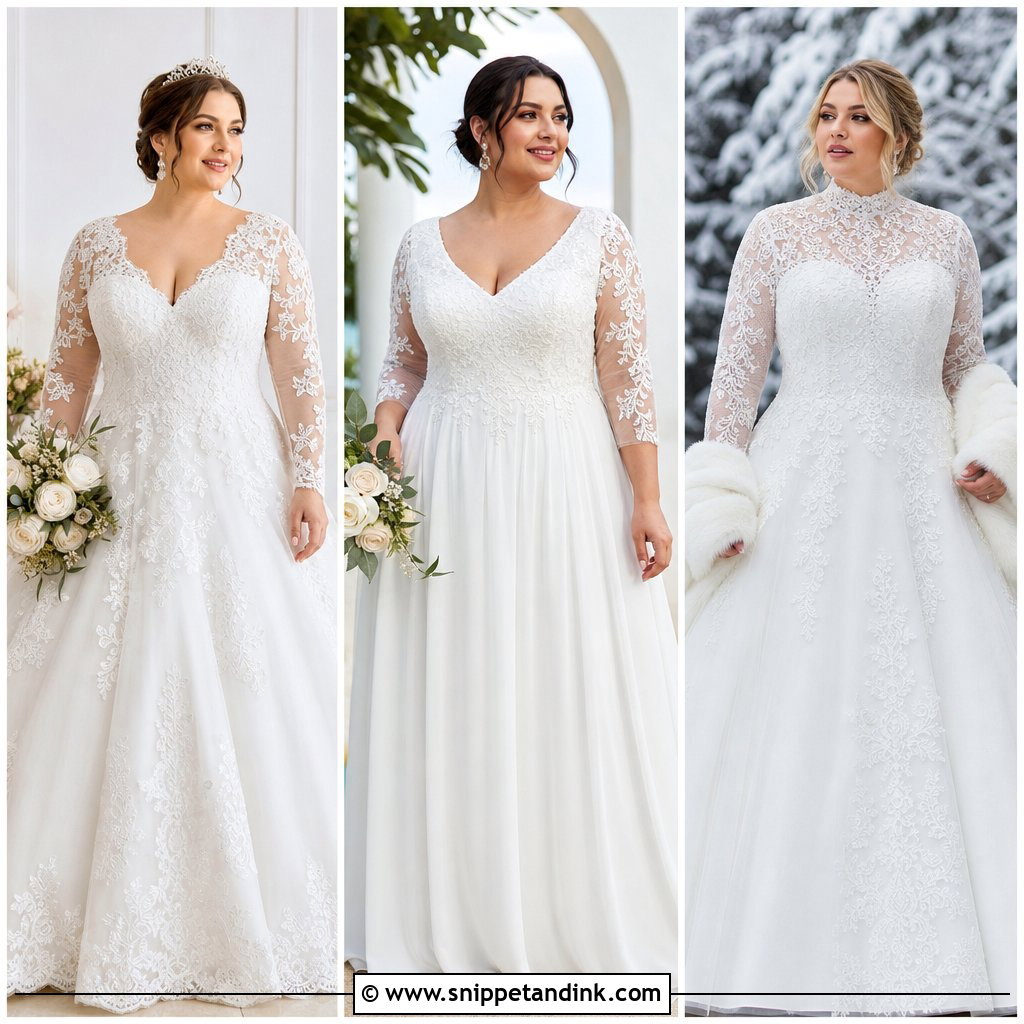
19. Plus Size Wedding Dress With Straps
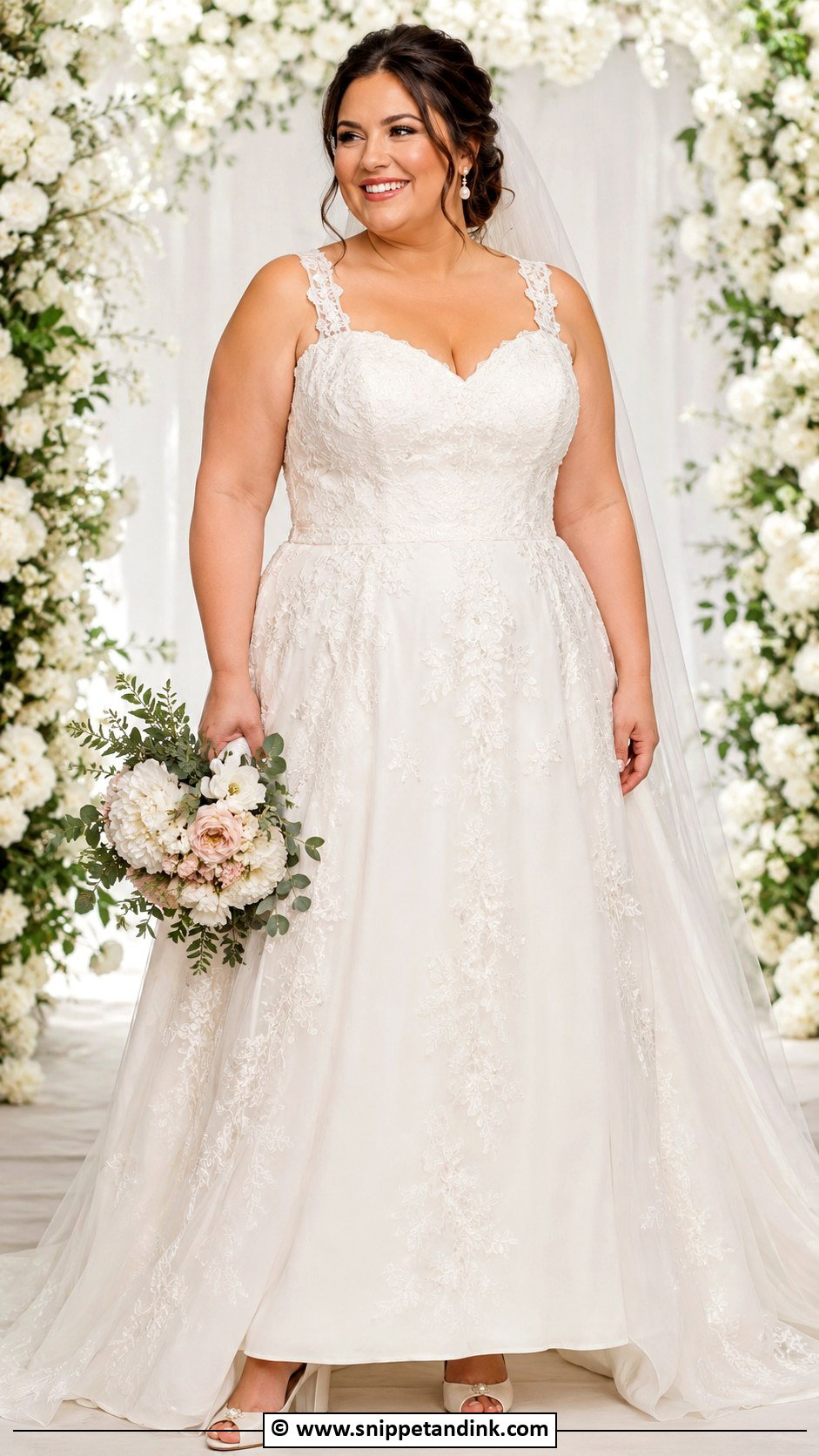
For a plus size wedding dress with straps, I look at the bodice first, then the strap width. A strong bodice with internal support and wide straps holds the bust without relying on a separate bra. A-line, ball gown, fit-and-flare and crepe sheath shapes can all work, and the right one depends on how it feels when you sit. Cushioned heels and a planned undergarment fitting help. Fit and comfort are what make a gown look right, not hiding anything.
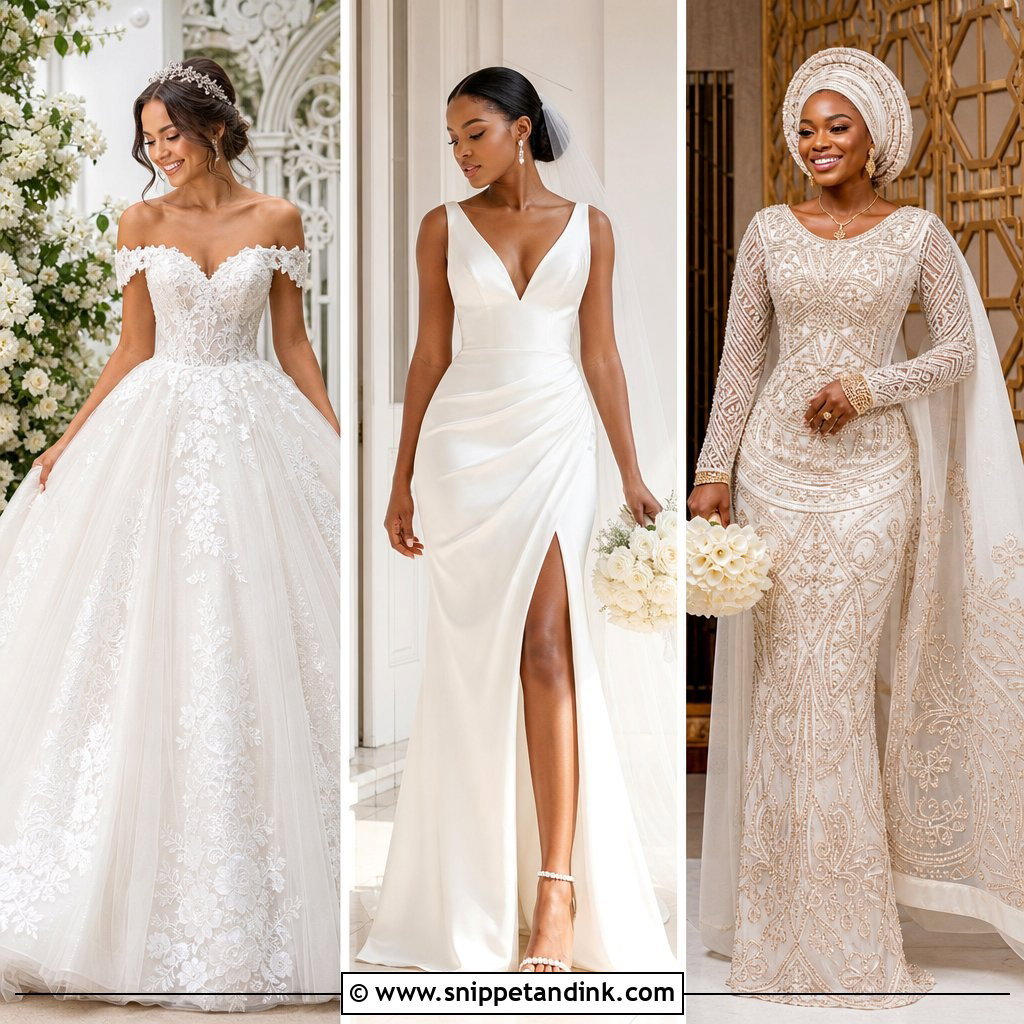

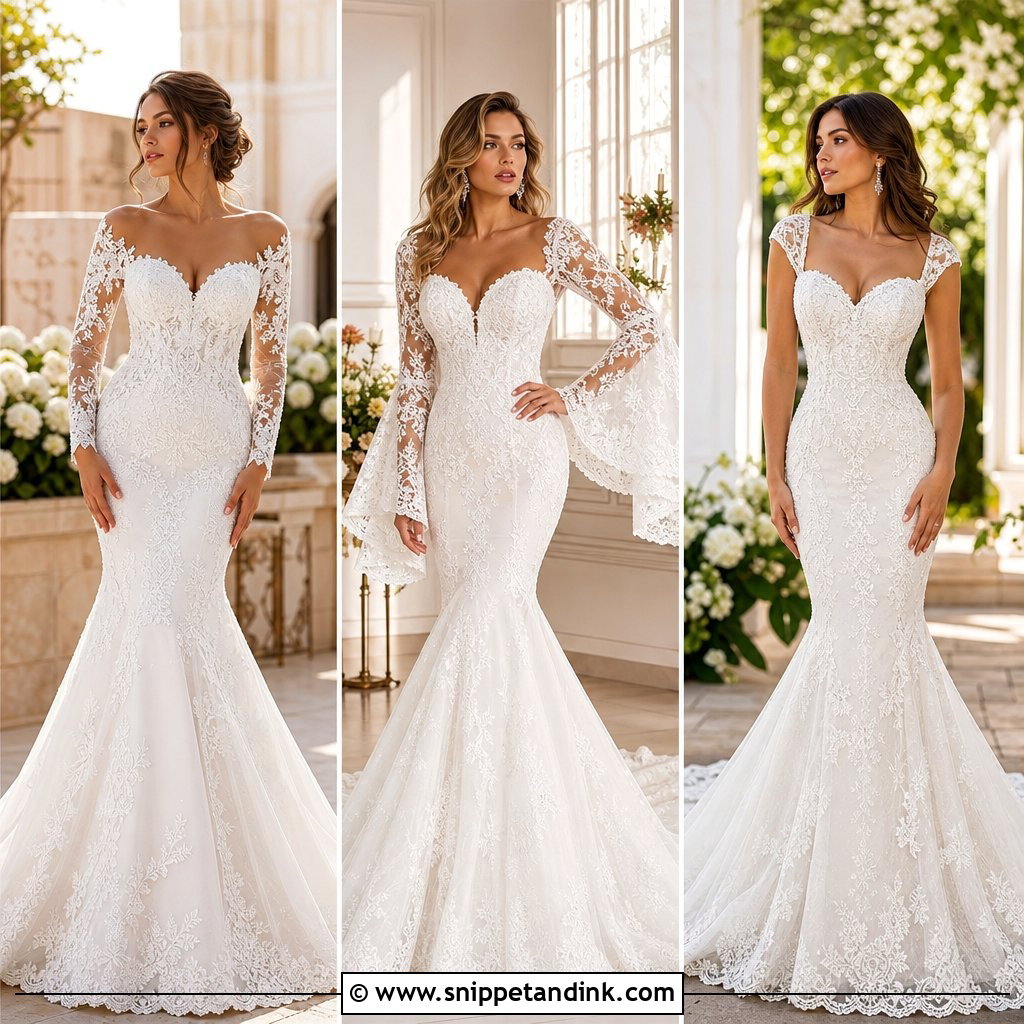
20. Beach Wedding Dress With Straps
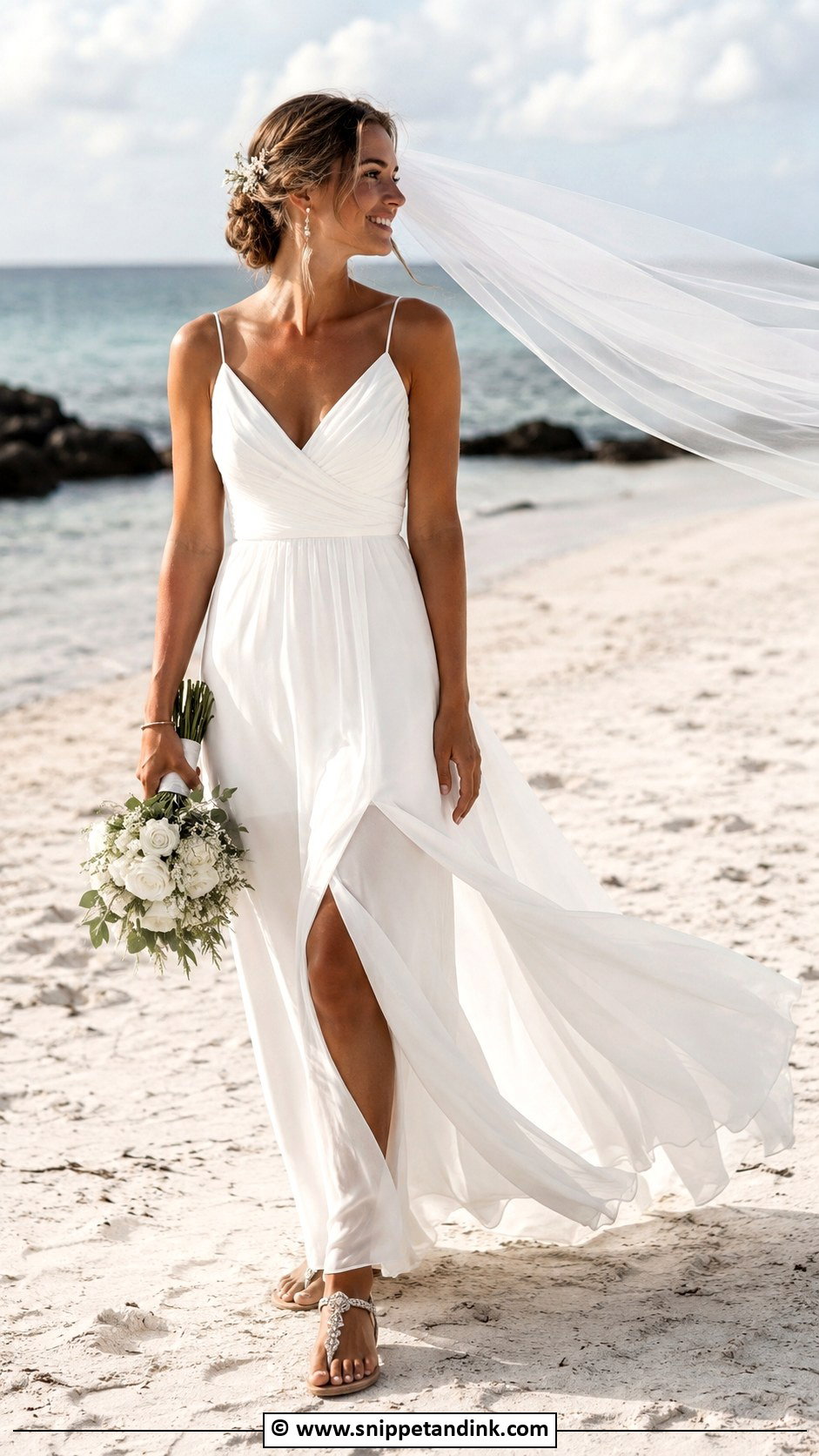
A beach wedding dress with straps has to cope with wind, heat and sand. Spaghetti, halter or soft lace straps keep the gown on your body without weight. Choose chiffon, crepe or light tulle; heavy satin turns uncomfortable in sun. Flat sandals or bare feet, pearl earrings and a hair comb rather than a long veil, since the wind will wrap a cathedral veil around your face. A sheath or slip shape is the most practical on sand. Keep the bouquet natural.
21. Boho Wedding Dress With Straps
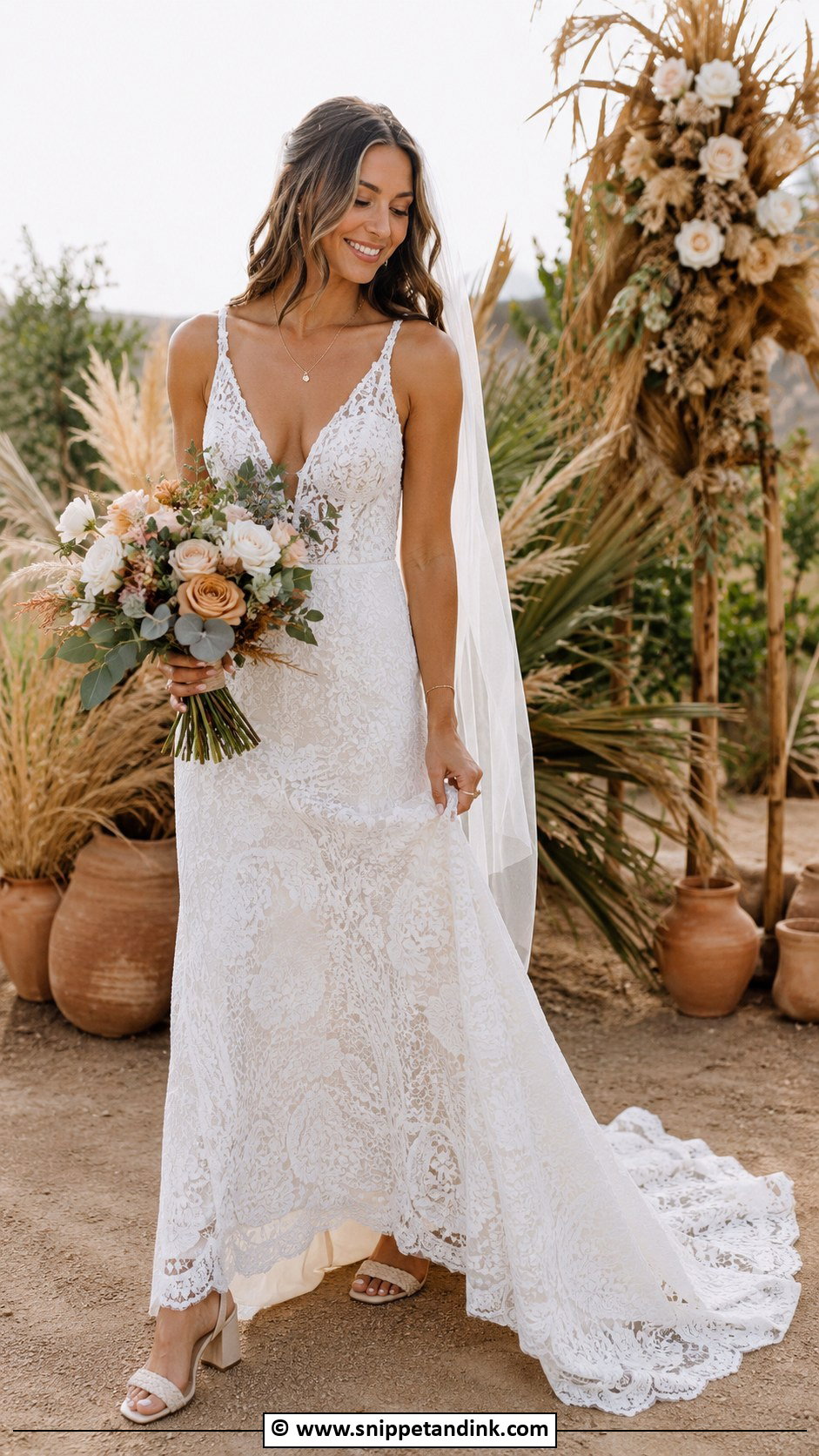
Boho dresses rely on texture and movement, so I look at lace and crochet patterns that won’t snag on wooden chairs or desert brush. A V-neck or open back suits the style, and comfortable straps make sense for a ceremony and reception spent outdoors. Block heels handle uneven ground. Loose waves, natural jewelry and a flower comb or a short veil keep it relaxed. It should feel like something you can sit on a hay bale in.
22. Simple Wedding Dress With Straps
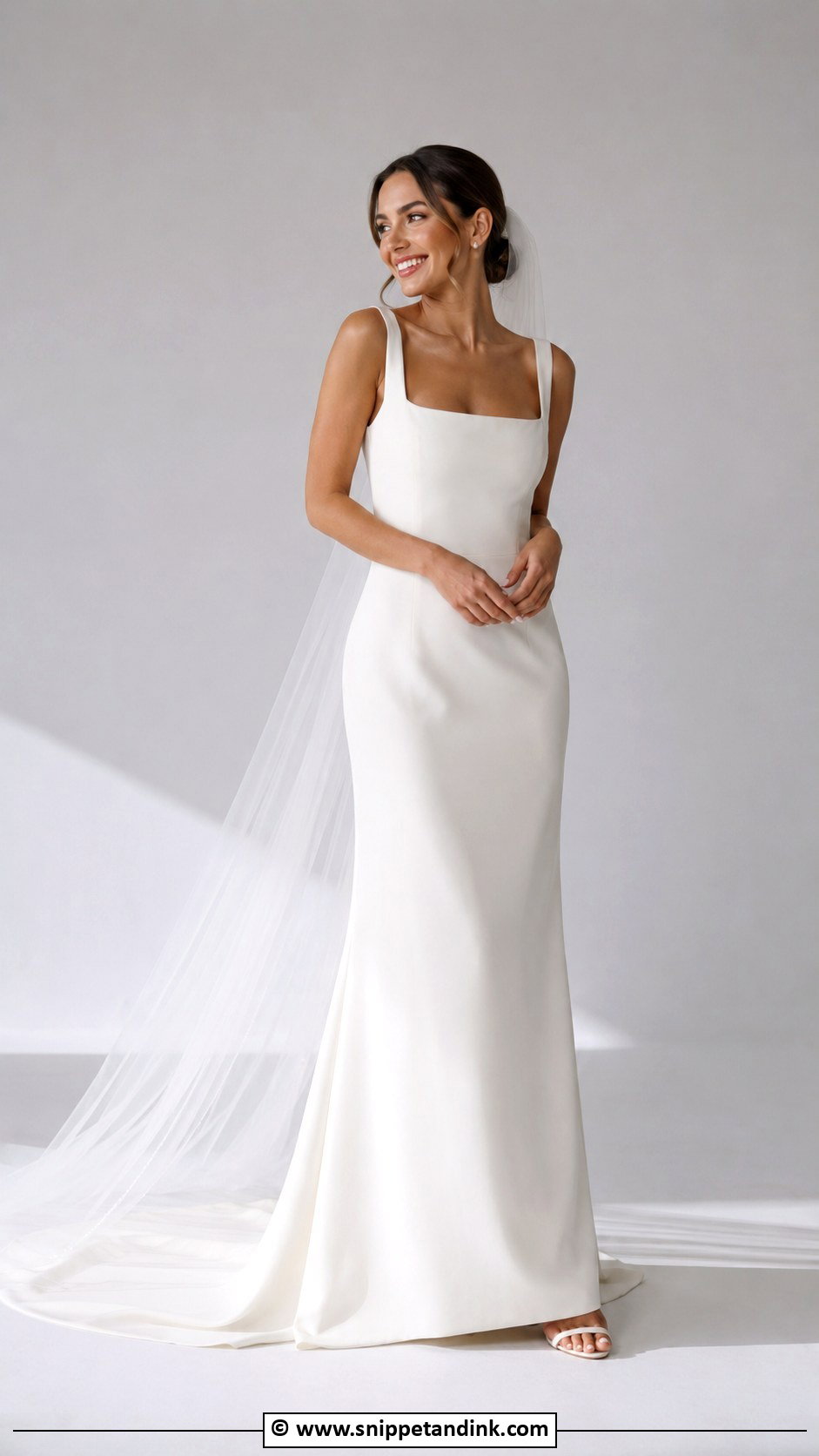
A simple dress depends entirely on fit and fabric, so every seam has to be right. Smooth crepe, satin or a matte fabric with a well-cut neckline does the work that beading usually does. The straps can be thin and delicate or wide and sculptural. Polished heels, pearl studs and a sleek veil complete it. A plain gown also gives you room to make the bouquet, the hair or a bold lip the focal point, from a courthouse to a ballroom.
23. Short Wedding Dress With Straps
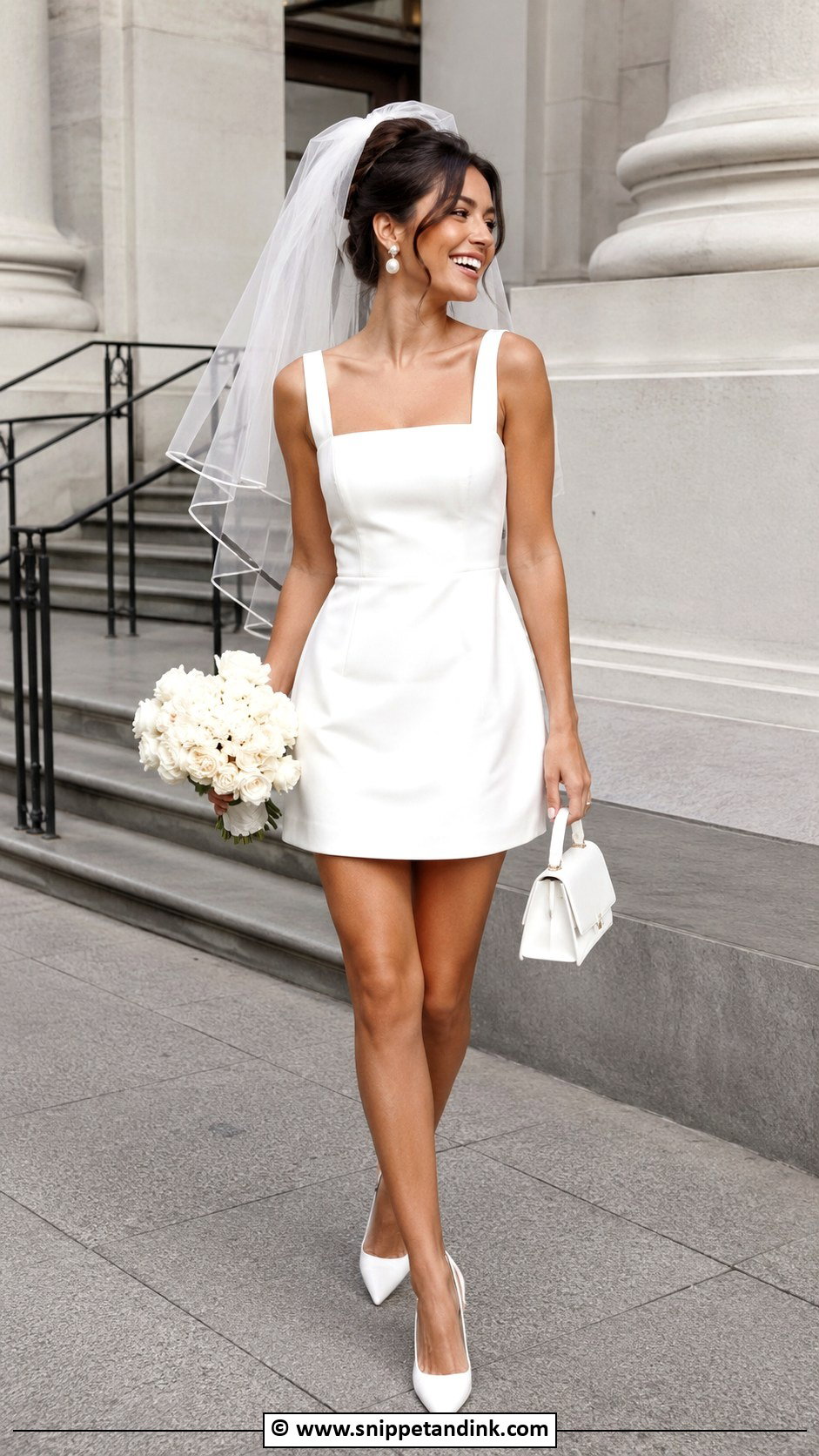
Short dresses suit second looks, courthouse ceremonies and casual receptions, and they’re the easiest to dance in. With a short hemline, shoes are on full display, so pick pointed heels you’d happily look at in photos. A satin mini with square straps is modern; a lace tea-length dress feels vintage. Pearl earrings and a small structured bag finish it. A short veil or a bow in the hair tells everyone you’re the bride.
24. Two Piece Wedding Dress With Straps
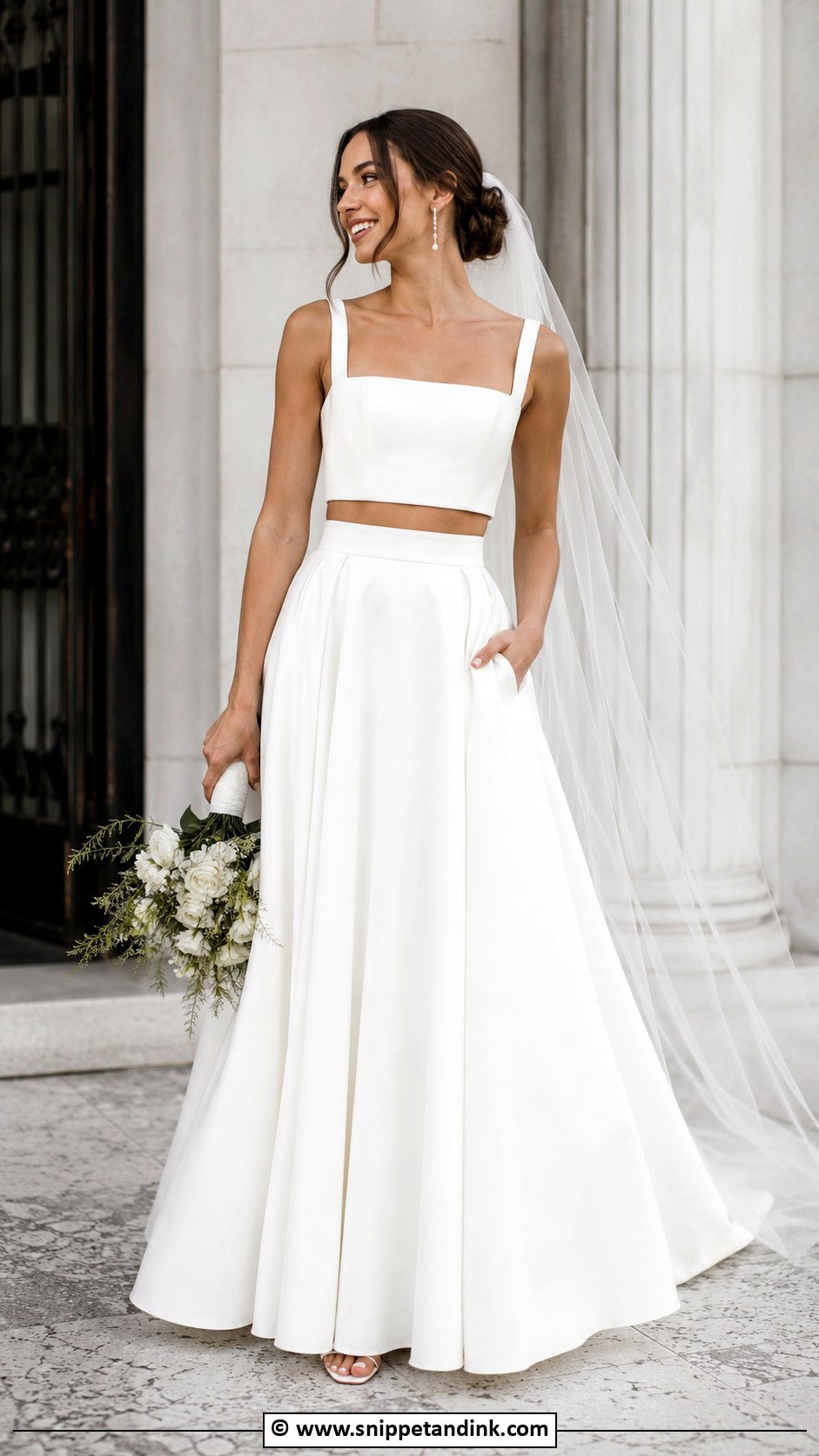
Two pieces are easier to alter than a gown, because the top and skirt are fitted separately. That’s useful if your bust and hips fall into different sizes on the chart. A cropped bodice, lace camisole or satin tank top paired with a high-waist A-line feels romantic; a slim skirt looks city-sharp. I’d check how much midriff shows when you sit and raise your arms. Simple heels, sleek earrings and a veil connect the two halves.

25. Floral Wedding Dress With Straps
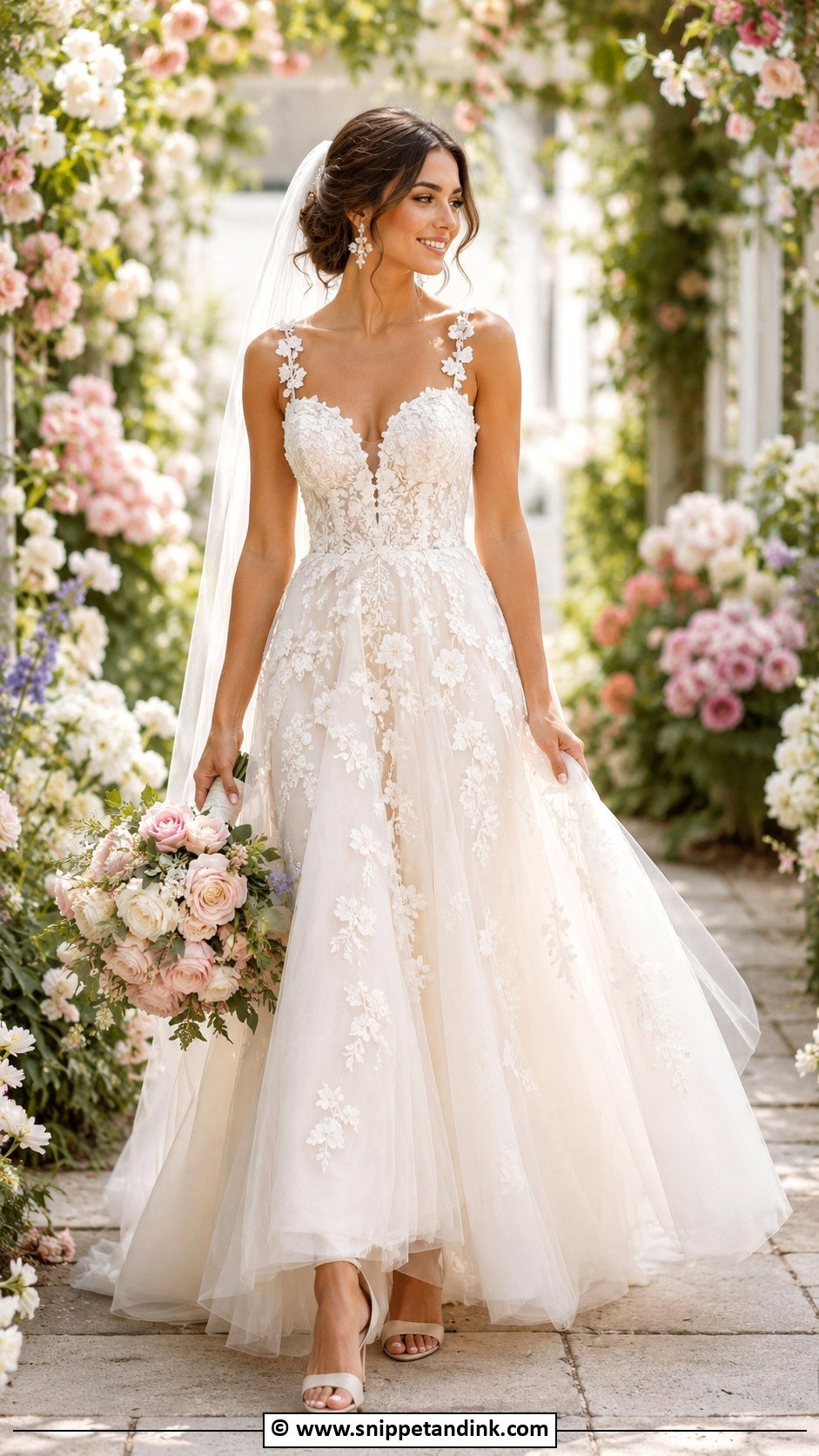
Floral detail can be lace appliqué, embroidery, 3D petals or a printed texture, and each behaves differently. 3D petals crush in a car, so plan to fluff them after the ride. Thin straps keep the look delicate; wider ones give support. If the florals are colored, keep shoes and jewelry neutral. Soft ivory heels, floral-inspired earrings and a plain veil let the dress stay in front for a spring garden wedding.
What a Seamstress Can Change About Straps
Brides often fall for a gown and assume the straps are fixed. Most aren’t. Straps are one of the simpler alterations, and it helps to know what to ask for at the first fitting.
- Shortening straps is routine and lifts the whole bodice, often fixing a gaping neckline.
- Adding straps to a strapless gown is possible with matching fabric, lace or tulle, usually taken from the hem or the train.
- Removable straps can be attached with hooks or snaps, giving you a strapped ceremony look and a strapless reception look.
- Sewn-in bra cups and a grip strip inside the bodice stop the dress shifting, which is especially useful with thin straps.
Bring the shoes and the undergarments you’ll actually wear to every fitting. Strap length depends on how the bodice sits, and a different bra can move it by a surprising amount. Shops vary, but plan for alterations to take several weeks, with two or three fittings.
Do Straps Slip or Dig In on the Day?
They can, and both problems are easy to prevent. Slipping usually means the strap sits too far out on a sloped shoulder; a tiny stitch to a bra strap, or a strip of fashion tape under the strap, holds it. Digging happens with heavy beaded gowns, so ask for a little padding sewn under the strap where it crosses the shoulder.
Think about tan lines too. If you’re outdoors in the weeks before, a bikini or tank top tan will sit right beside thin straps in every photo. Wear a strapless top in the sun or use sunscreen religiously, and save the self-tan for a trial a week before so you can see the result against the dress.
Try Two Strap Widths Before You Say Yes
Straps make the decision about necklines much easier, because they take the worry out of the bodice. Think about the full outfit: the gown, the shoes you’ll stand in, the veil and the jewelry. Satin, lace, crepe, tulle, beadwork and floral detail all behave differently over a long day, so match them to your venue and season. Try at least two strap widths in the fitting room, even on the same dress, because the difference is bigger than you’d guess. Then wear the gown that lets you forget you’re wearing it.
You'll Like These Ideas:



Leave a Reply