
Matching Strap Width to Your Shoulders and Bust
Strap style is usually chosen from a photo, but the right strap depends on the shoulders and bust it sits on. These are the adjustments I make most often.
Sloping or narrow shoulders
Straps slide outward on sloping shoulders, and thin ones slide fastest. Ask for the straps to be set slightly closer to the neck, with small hidden lingerie keepers inside the shoulder seam that snap around a bra strap or a sewn loop. A strap with some grip, like lace or ruched chiffon, stays put better than slick satin.
Broad or athletic shoulders
Very thin straps set close to the neck leave a wide stretch of bare shoulder, which can make the frame look broader. Medium straps, or straps placed nearer the outer edge of the shoulder, break that space up. A V or scoop neck also pulls the eye down and inward.
A fuller bust
Here the straps should finish the look, not carry the weight. Support has to come from the bodice: built-in cups, boning, a firm lining and often an internal waist stay that anchors the dress at the waist. If you’d rather wear your own bra, wide straps are the easiest way to cover it, so bring that bra to the first fitting.
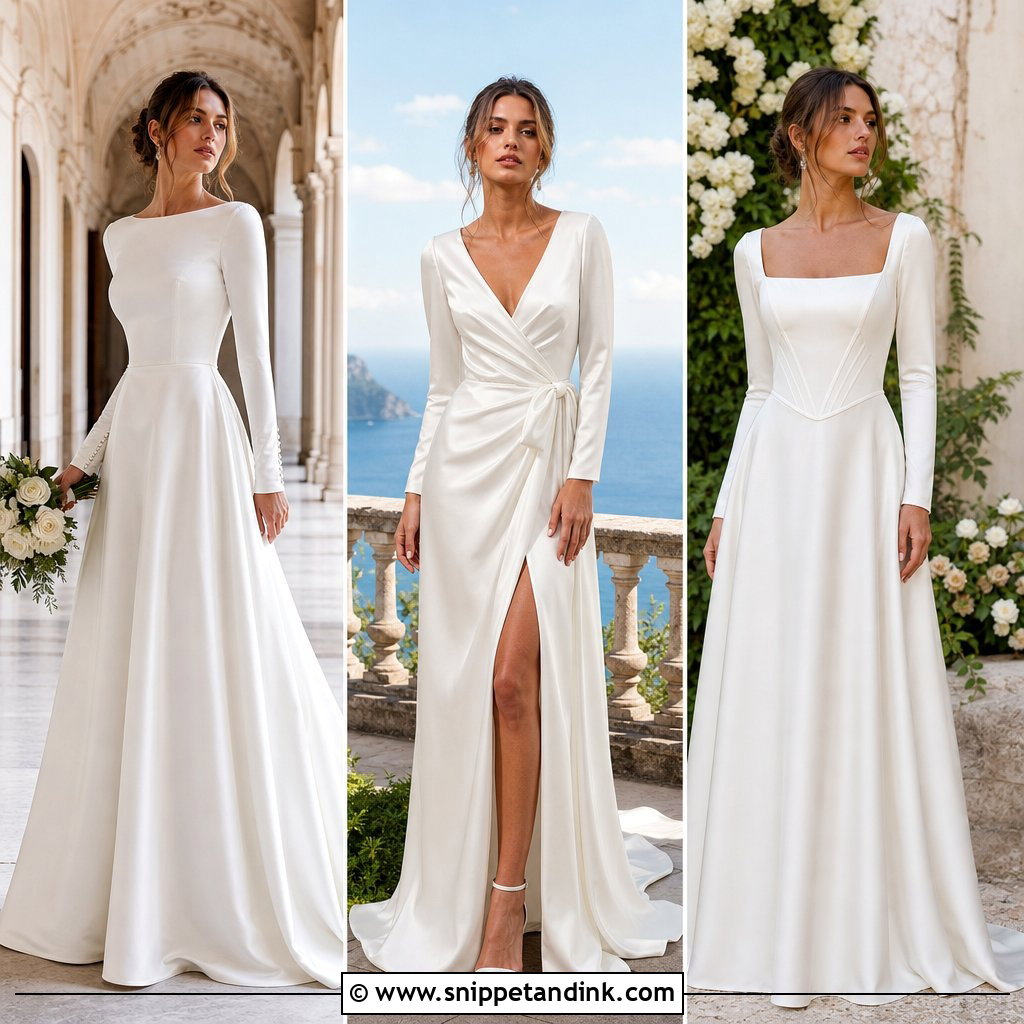
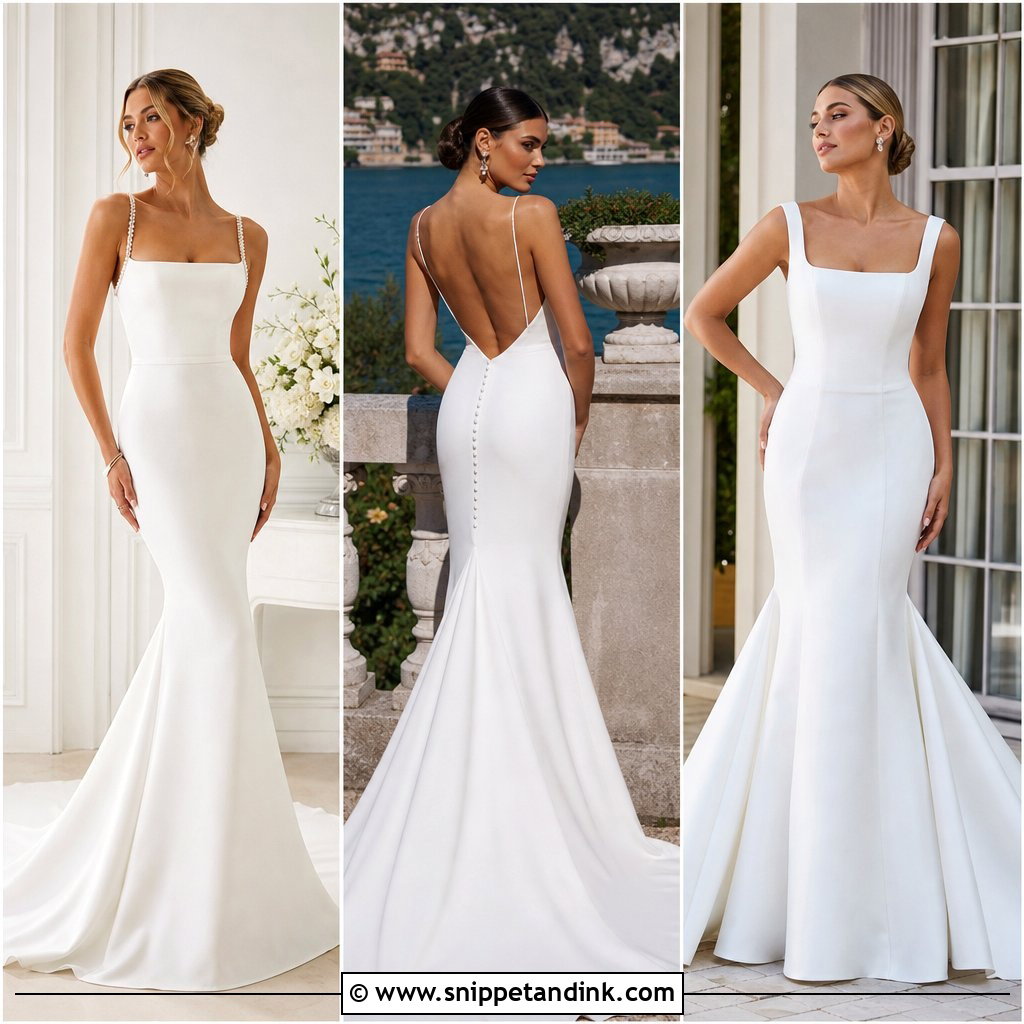
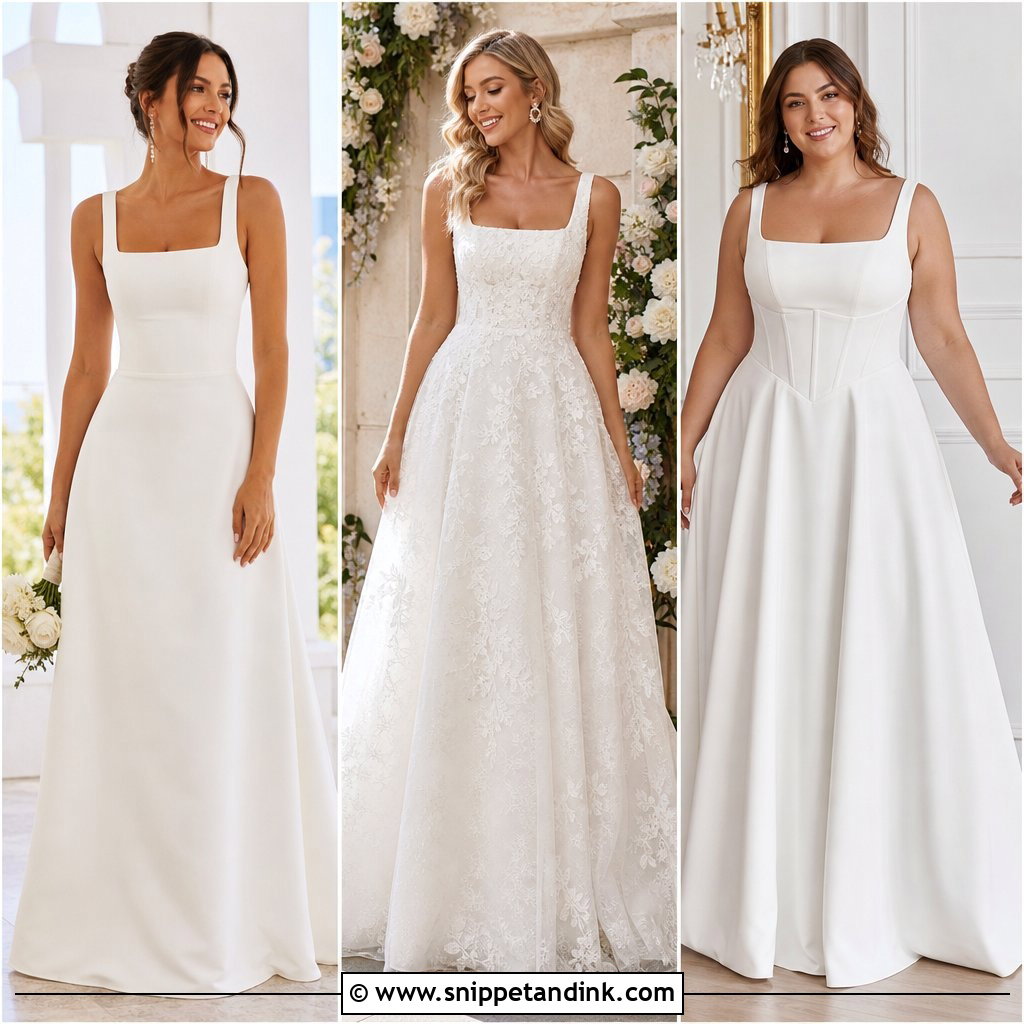
1. Square Neck Satin A Line Wedding Dress With Wide Straps
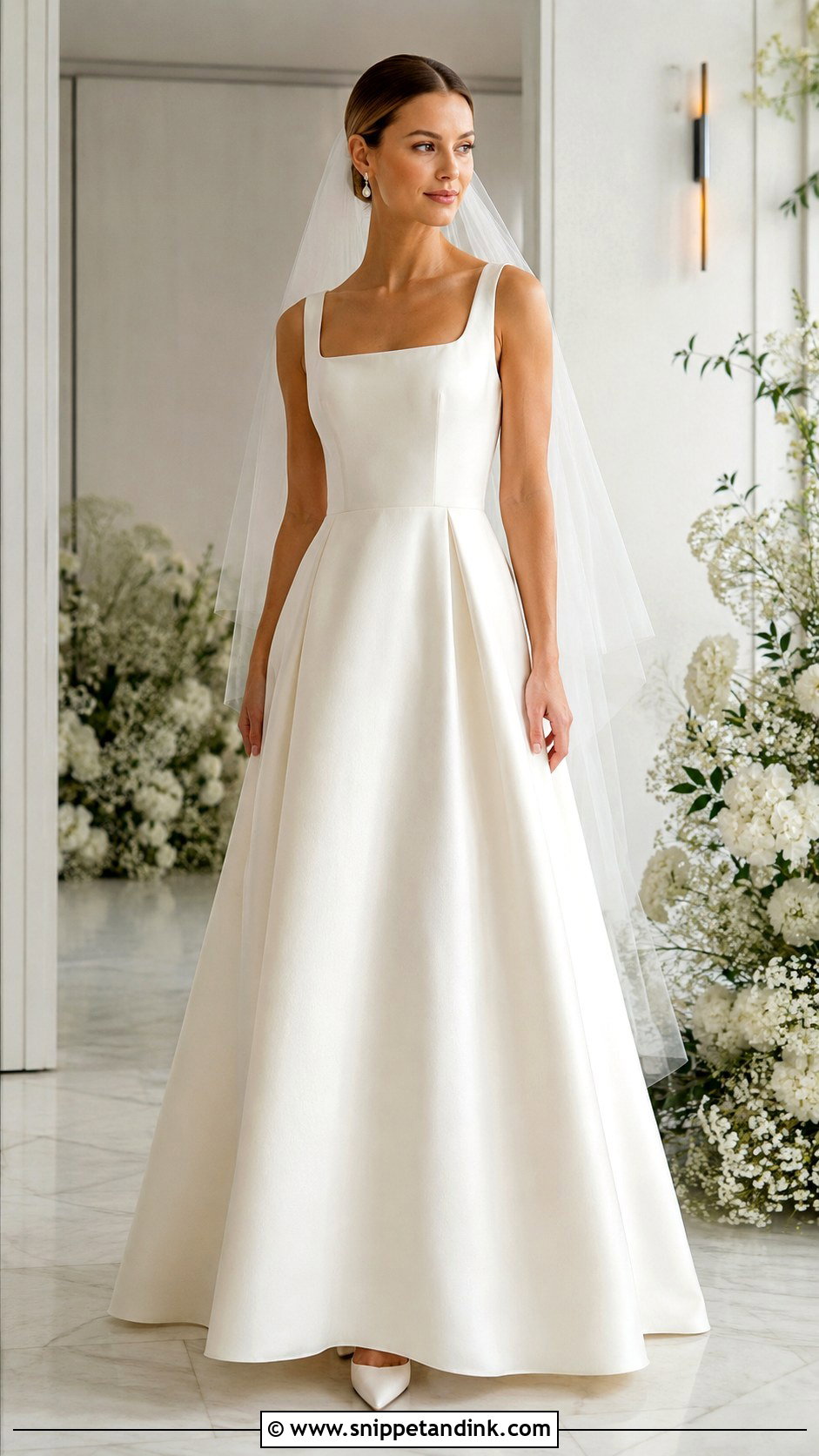
Square necklines are unforgiving of loose straps. If a strap is even slightly long, the corners of the neckline tip outward and the bodice loses its shape, so this is the first place I look at a fitting. Wide straps sitting squarely on the shoulder, a fitted bodice with defined seams and a softly flared skirt give you structure without severity, and matte satin keeps it modern rather than shiny. Pearl drops, a sleek low bun and pointed ivory pumps suit it, with a fingertip veil that softens the look without covering the neckline. An angled or basque waist adds definition if you want it. Have the seamstress check strap length while you sit, walk and lift your arms.
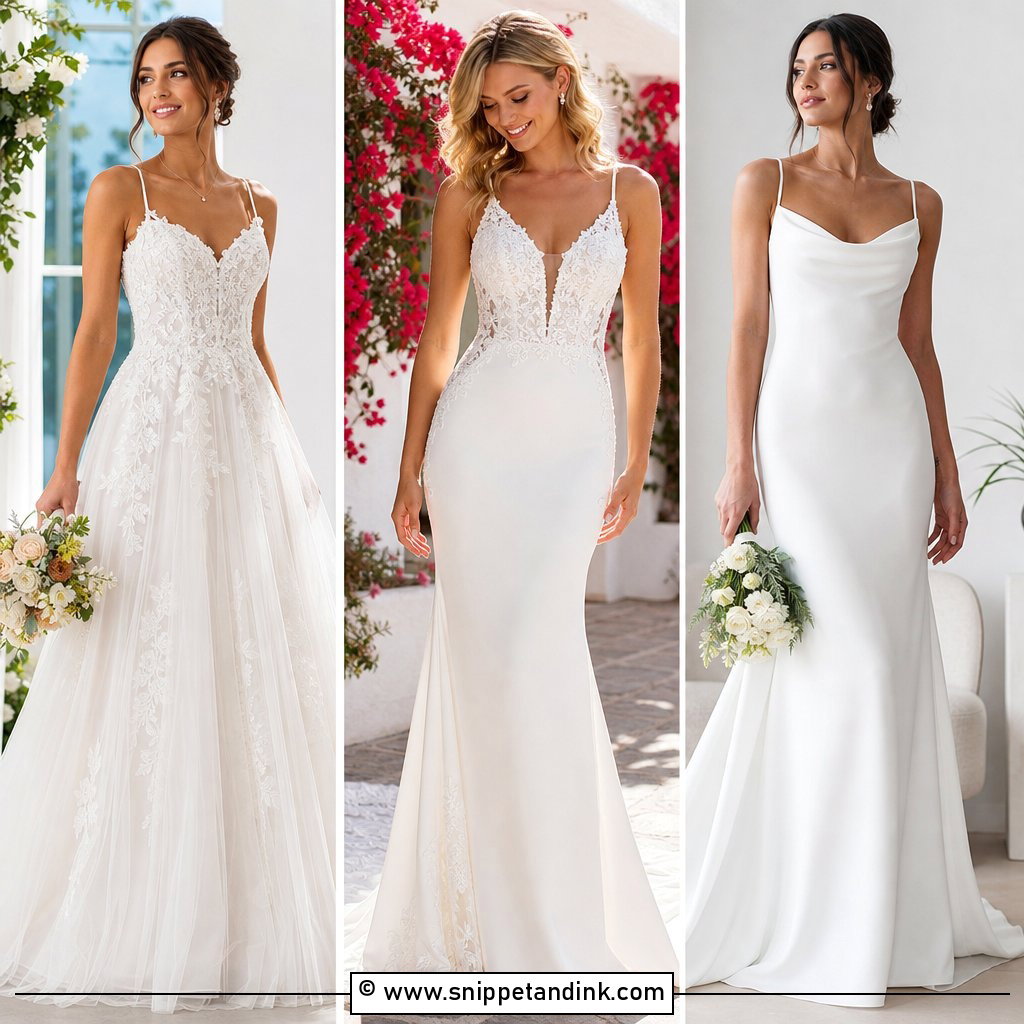
2. Lace A Line Wedding Dress With Spaghetti Straps
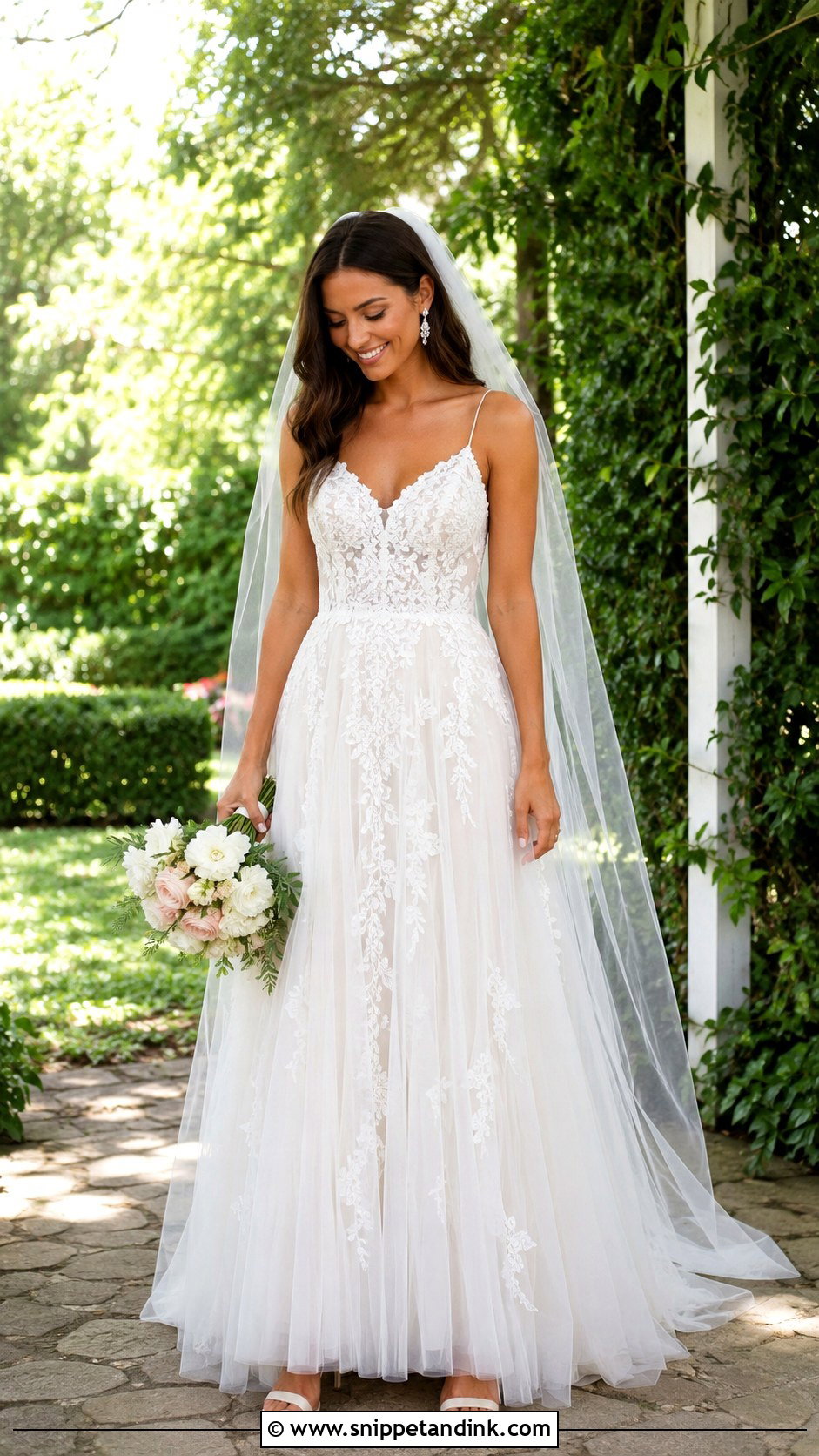
Thin straps on heavy lace are mostly decoration, and that’s fine as long as you know it. Delicate spaghetti straps balance an allover lace A-line visually, but the bodice has to hold itself up with internal structure. Floral lace reads romantic; geometric lace reads cleaner. A light tulle or organza layer under the lace keeps the skirt moving instead of hanging. I’d add small crystal earrings, an airy chapel veil and block-heel sandals, with soft waves or a textured updo that leaves the straps visible. If the bodice is sheer, ask for cups and lining matched to your skin tone, because a mismatch shows clearly in photos.
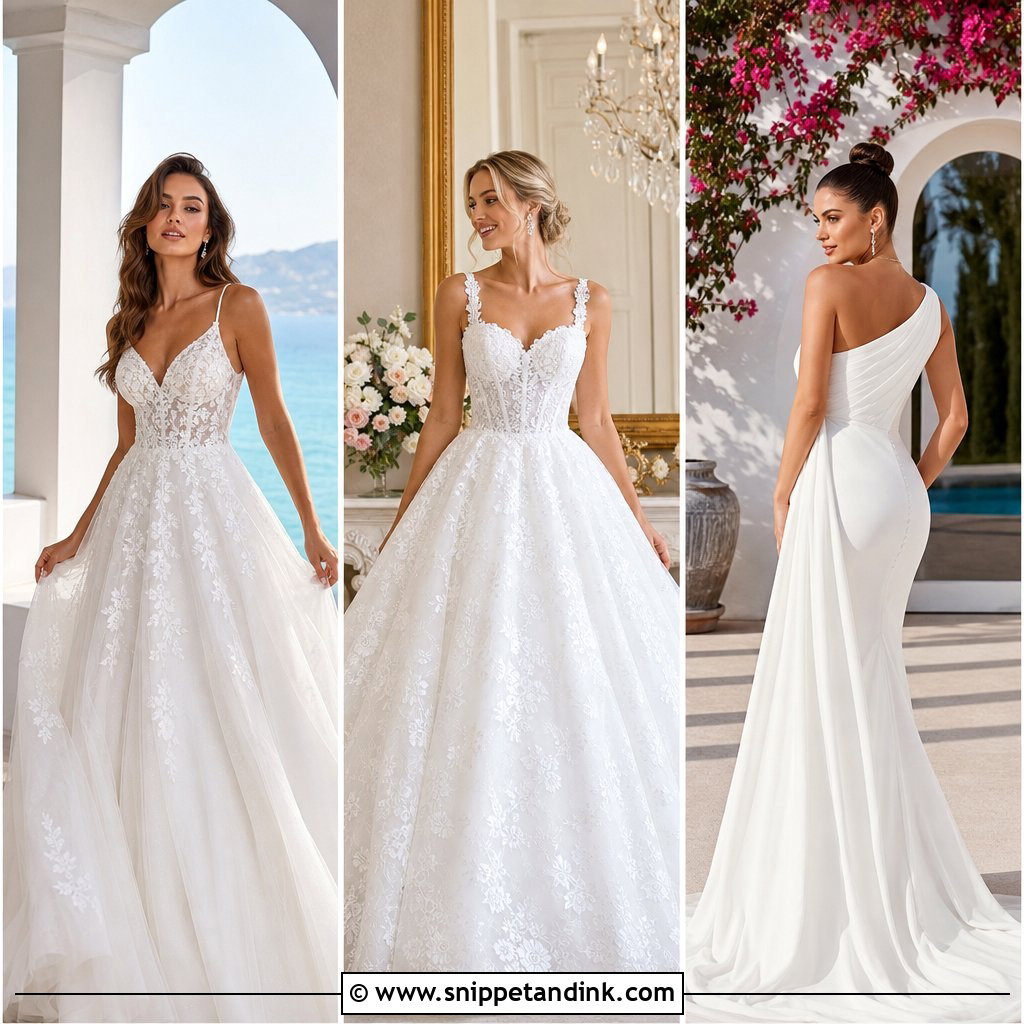
3. V Neck A Line Wedding Dress With Lace Straps
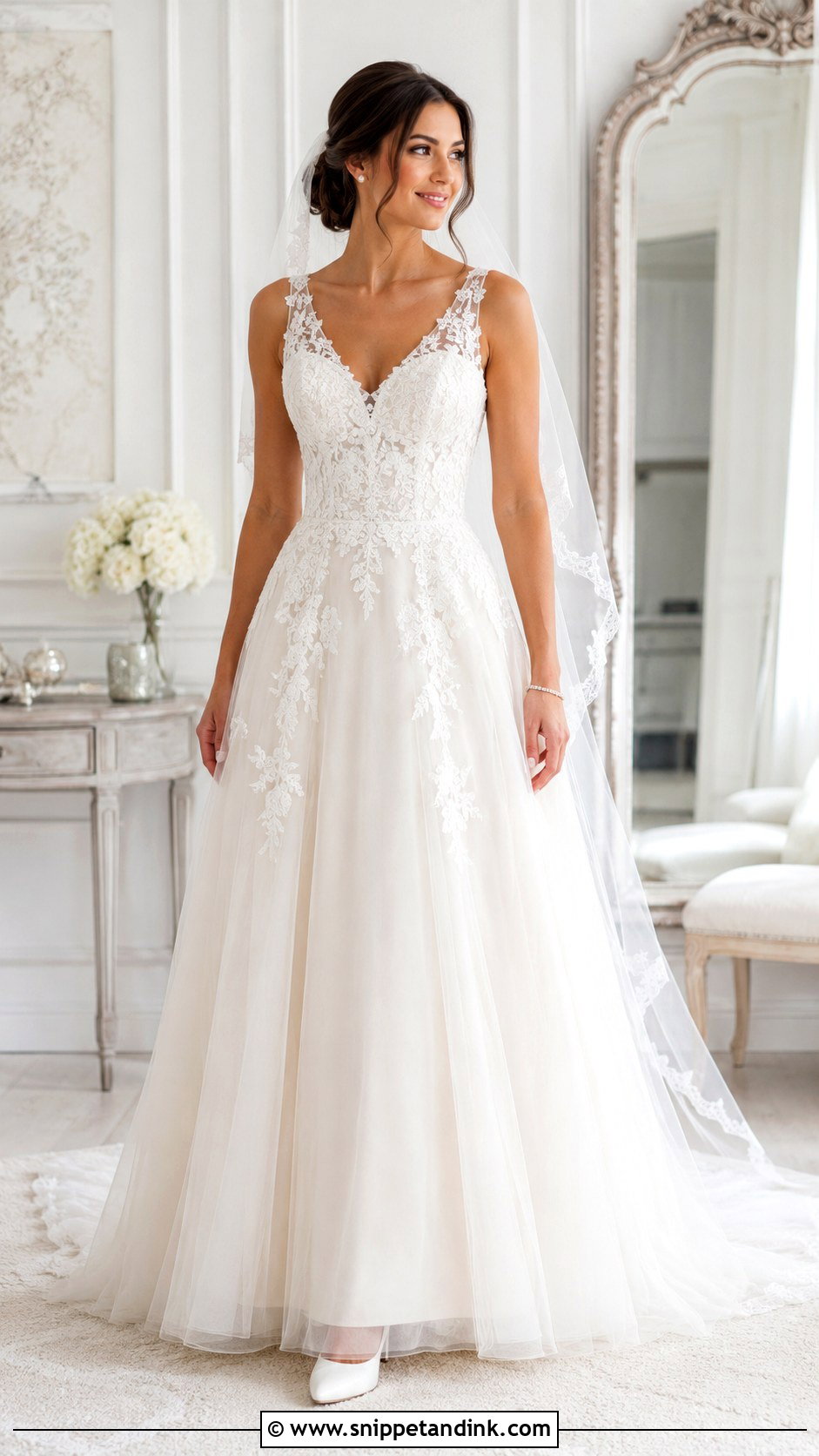
The V and the lace strap should look like one piece. I look for appliqué that runs off the strap and into the bodice, since a strap stitched on as an afterthought draws a hard line at the shoulder. A defined waist and flowing tulle skirt balance the length the V creates. If you want a lace-edged veil, repeat one detail from the gown rather than matching every motif, which tends to look fussy. Pearl studs, a fine bracelet and closed-toe ivory heels are enough. For a fuller bust, a moderate V with a sheer mesh inset keeps the shape stable while you move, and nobody notices the mesh from more than a few feet away.
4. Crepe A Line Wedding Dress With Thin Straps
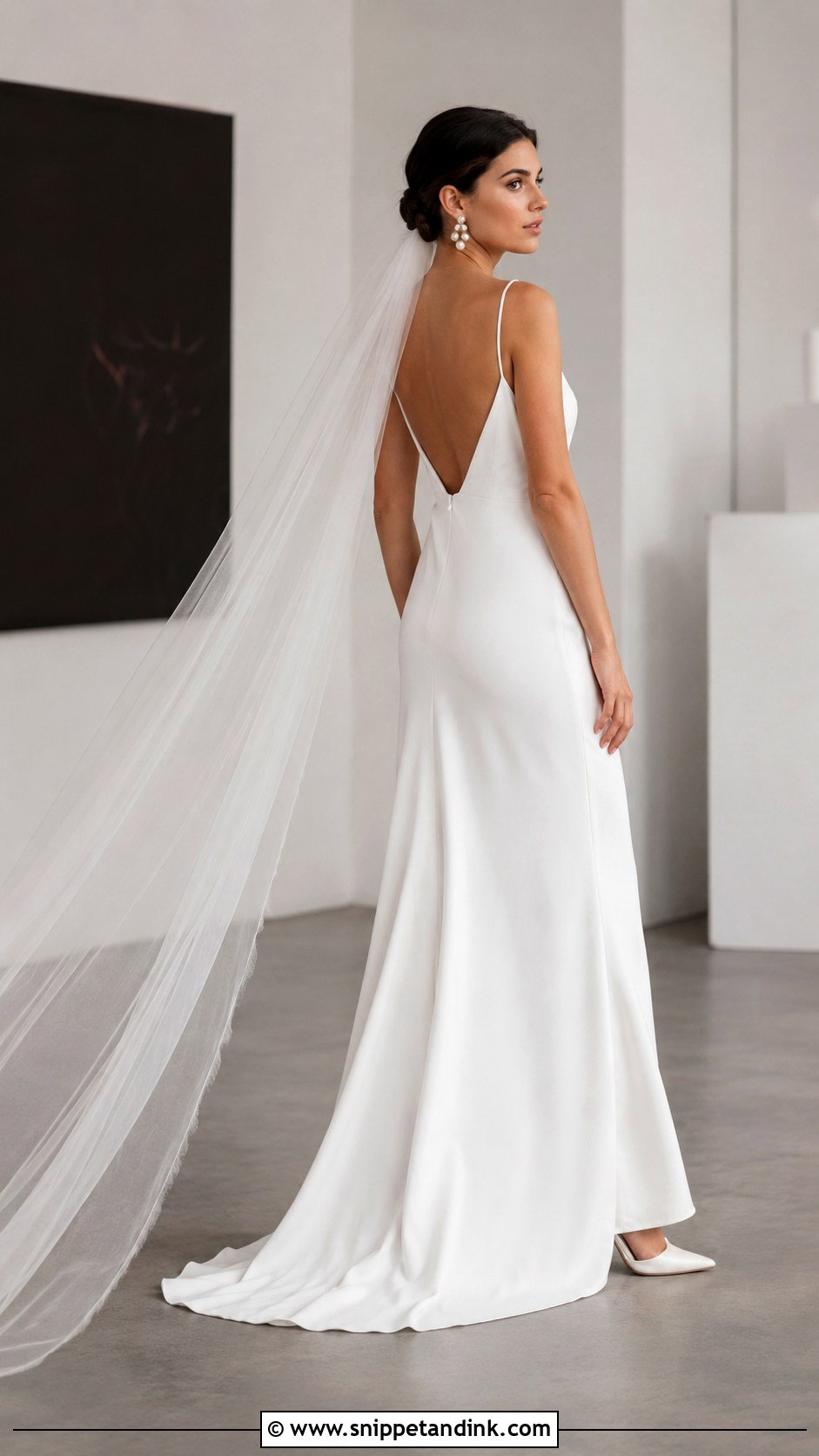
Crepe is my favourite fabric for a minimal strappy dress and the hardest one to hide anything under. It skims rather than stands away, so every pull, seam and underwear edge shows. That’s why I ask about built-in cups, supportive lining and bustle placement before a bride buys anything to wear underneath. Look for a substantial crepe with clean seaming and enough weight to fall smoothly; a low back gives interest while the front stays plain. Sculptural pearl earrings, a polished chignon, pointed pumps and a long raw-edge veil finish it without extra decoration. Budget for proper tailoring here. It decides whether this dress looks expensive or not.
5. Sweetheart A Line Wedding Dress With Beaded Straps
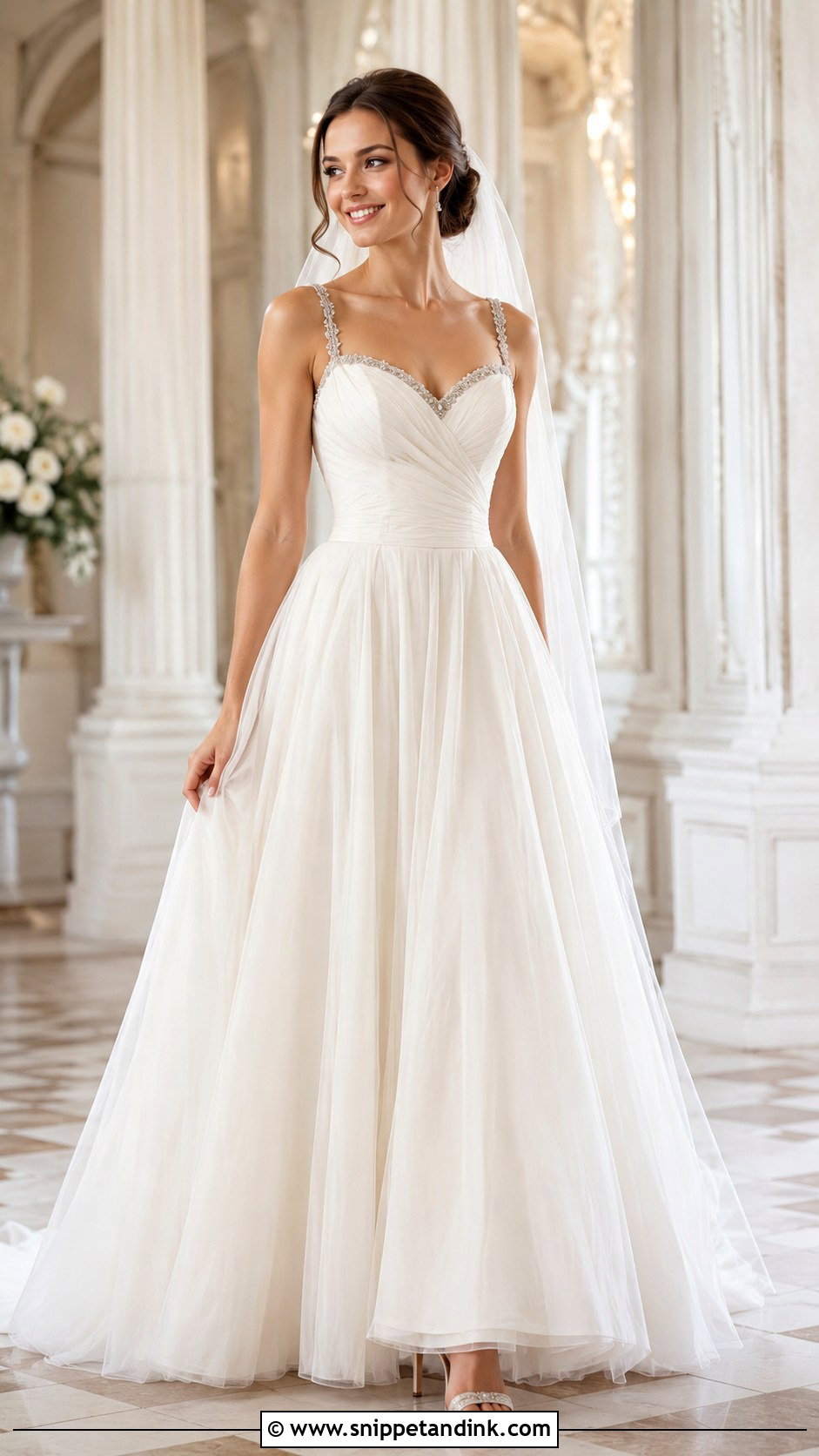
Beaded straps are the jewelry on a sweetheart A-line, so I keep earrings small and skip the necklace. Concentrate the sparkle at the shoulders and neckline, then let a chiffon or tulle skirt bring the formality down. Crystal, pearl and fine sequin straps all sit well against a lightly draped or embroidered bodice. Metallic ivory heels and a plain veil keep the straps visible, and a softly pinned updo shows off the shoulder. Before buying, turn each strap over. Bare thread ends and rough bead backs rub the skin raw over a long day, and a soft fabric backing prevents that.
6. Scoop Neck A Line Wedding Dress With Thick Straps
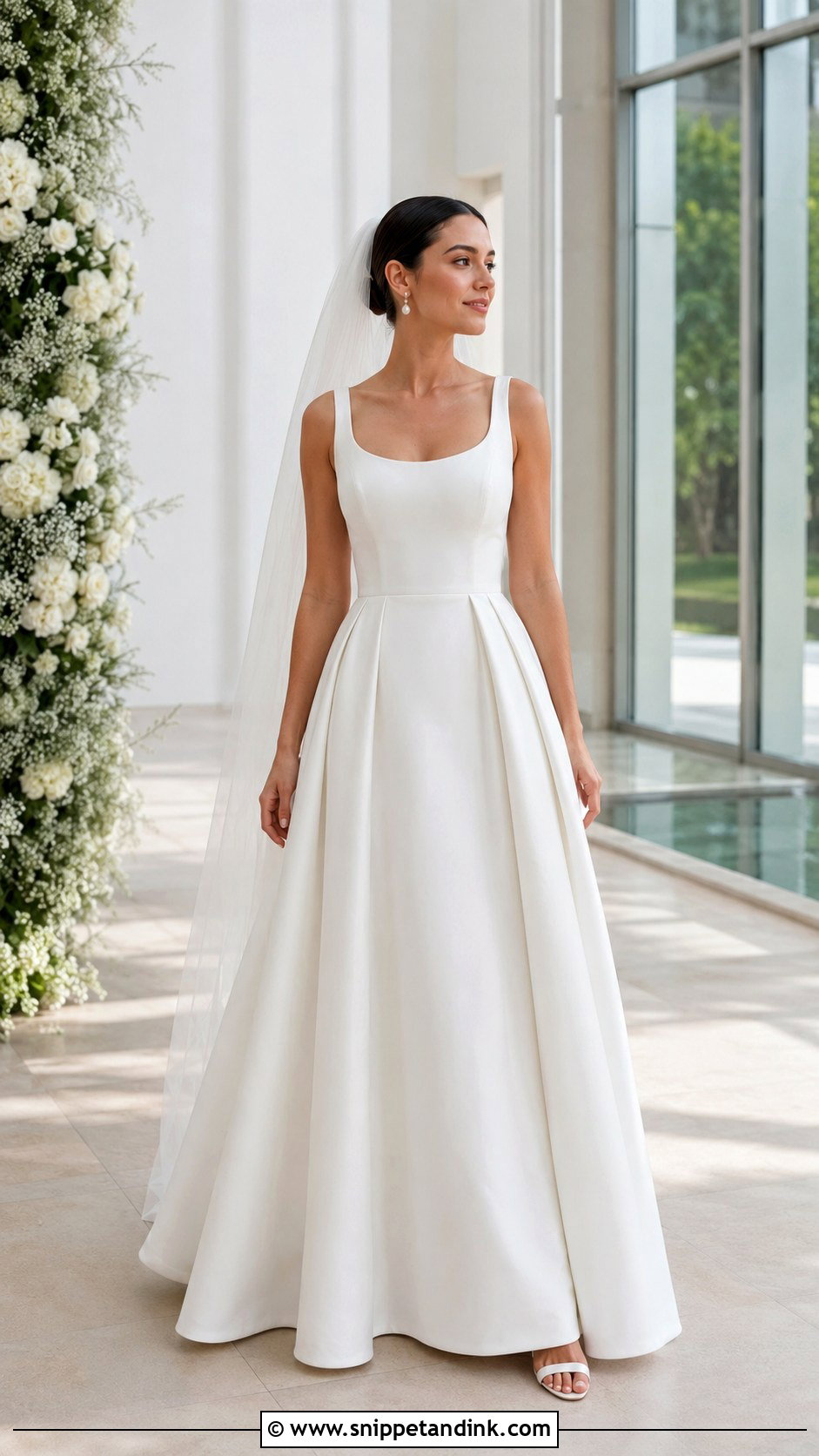
Thick straps are the practical choice, and there’s nothing dull about that. A scoop neck frames the collarbone, and the wider strap leaves room for real construction inside the bodice, or for a bra strap to hide underneath when a bride needs one. Mikado or satin gives a structured skirt; organza feels softer. Pearl button earrings, a slim tennis bracelet and low block heels finish it. A waist-length veil keeps the neckline in view, while a long plain veil gives the ceremony more impact. Princess seams or a softly pointed waist add shape. The straps should lie flat, never biting into the shoulder or creeping toward the arm.
7. Floral Appliqué A Line Wedding Dress With Tulle Straps
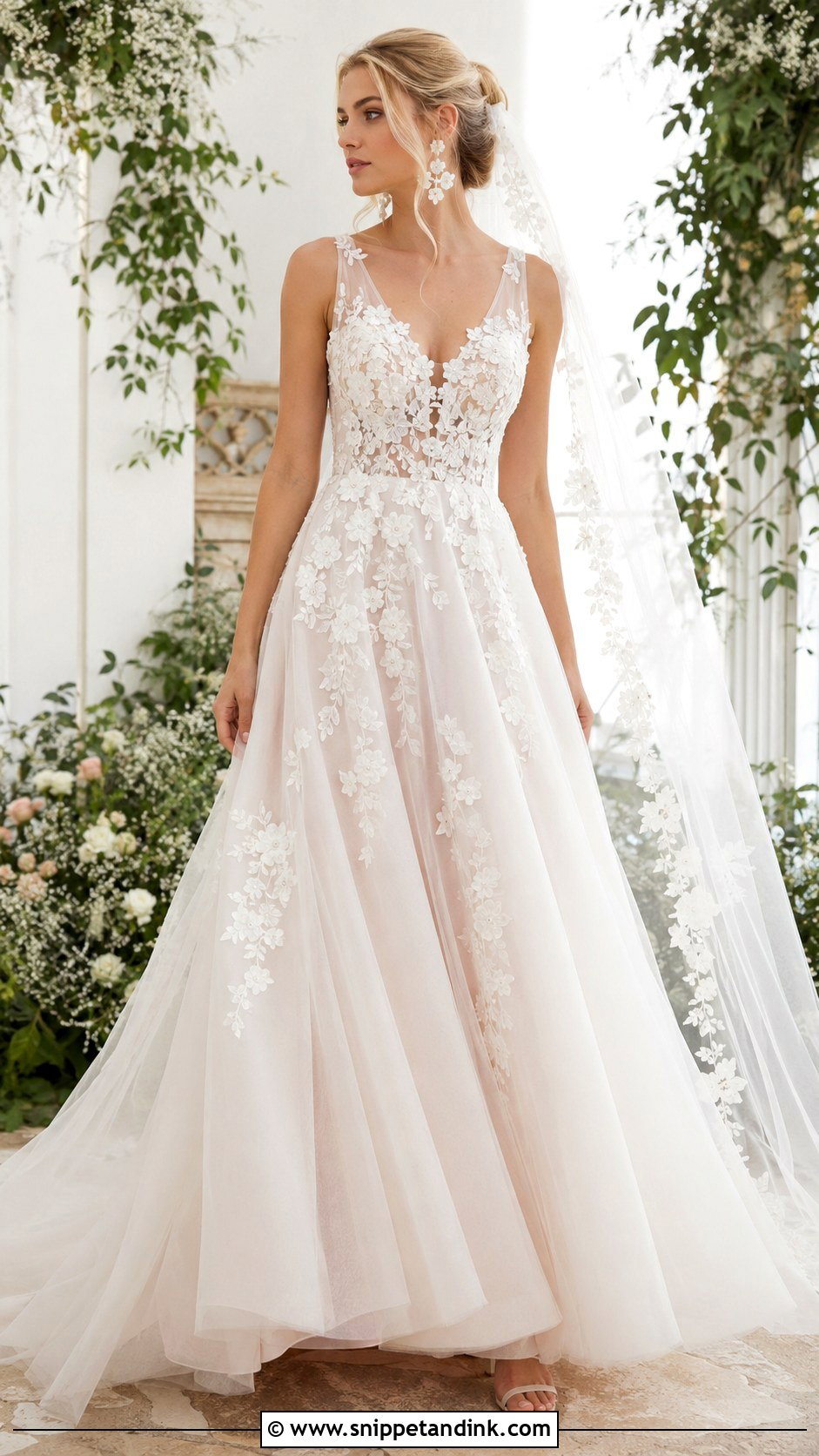
Appliqué looks best when it travels: down from the straps, across the bodice and thinning out into the skirt. That placement gives you continuity without covering the dress in heavy decoration. A nude, blush or ivory underlay changes how strongly the flowers read, so compare them side by side in daylight. Flower earrings, sheer ivory heels and a soft veil with a few scattered matching appliqués suit it, with a low bun and loose face-framing pieces. The weak point is the strap itself. Tulle stretches under weight, so ask for hidden ribbon or a structured backing inside it.
8. Simple A Line Wedding Dress With Straight Straps
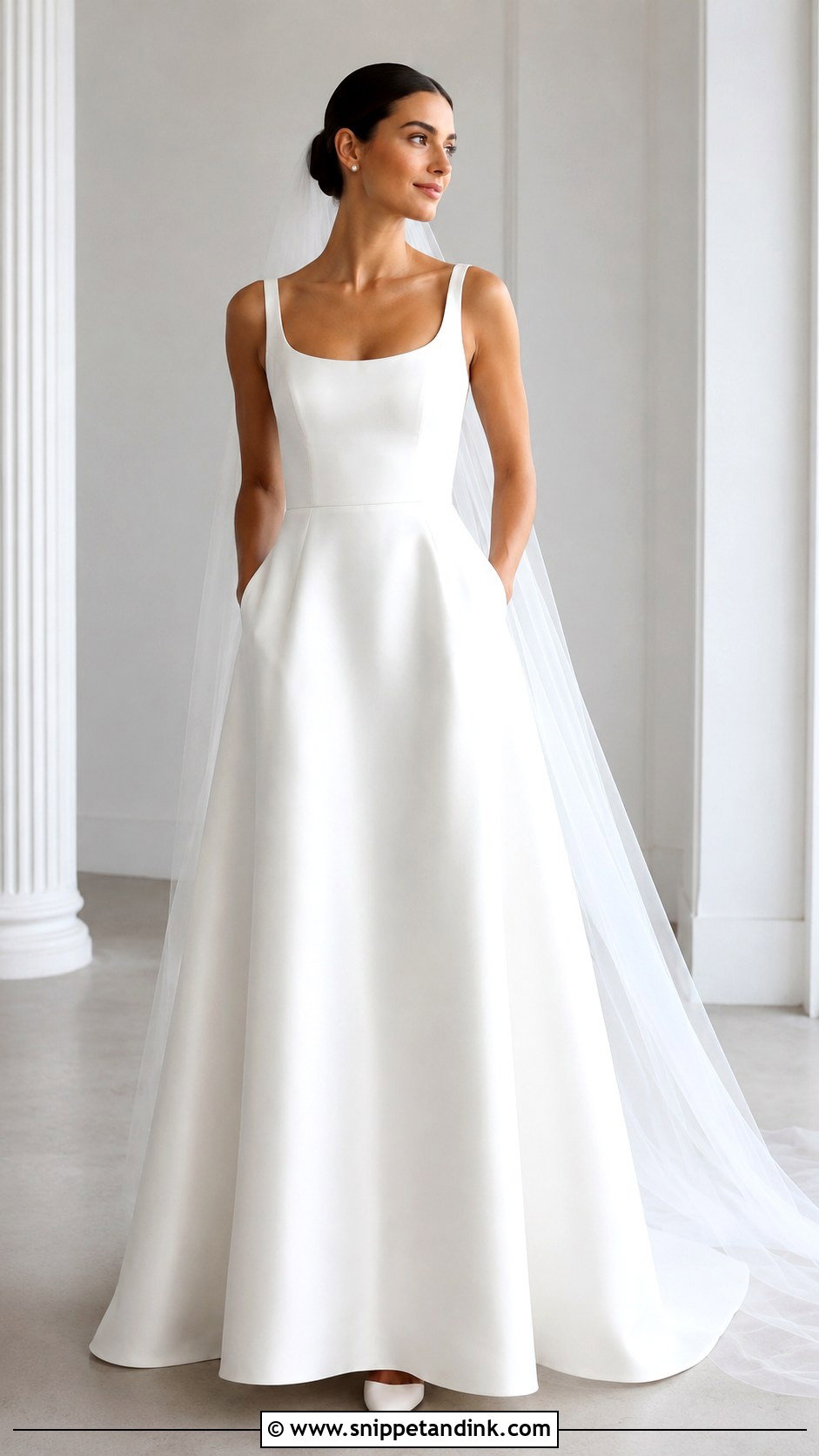
With nothing decorative to look at, the eye goes straight to fit. I treat this dress as a tailoring project first: matte satin, faille or structured crepe, a softly curved neckline and a natural waist, and then every seam has to be right. Check that both straps sit symmetrically and the neckline stays level, because few people have identical shoulders and a few millimetres on one strap makes a visible difference. A sleek bun, pearl studs and closed-toe pumps keep it quiet. A cathedral veil brings drama; a short one stays minimal. Pockets suit this style without breaking the line.
9. Corset A Line Wedding Dress With Delicate Straps
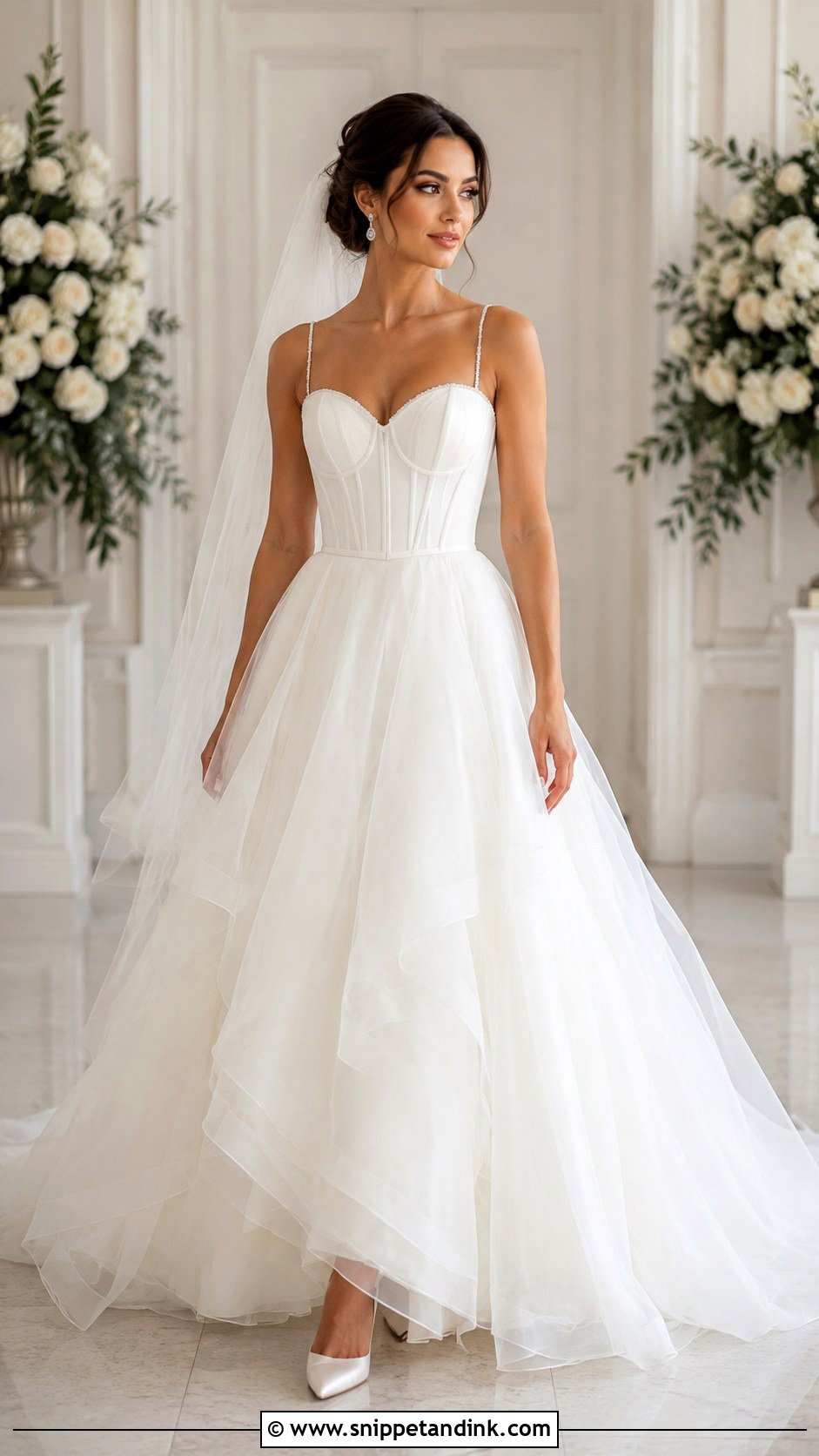
A good corset bodice should feel firm at the waist and still let you breathe at the ribs. The boning should follow your body rather than press into it, and I test that by asking the bride to sit and take a deep breath. Visible corset seams look modern; lace-covered boning feels more romantic. Pair it with a light tulle or organza skirt so the waist stays the focus, then add crystal studs, a fine bracelet, pointed satin heels and a plain chapel veil. Sheer panels need checking in natural light, since a lining shade that looks right under shop lighting can read very differently outdoors.
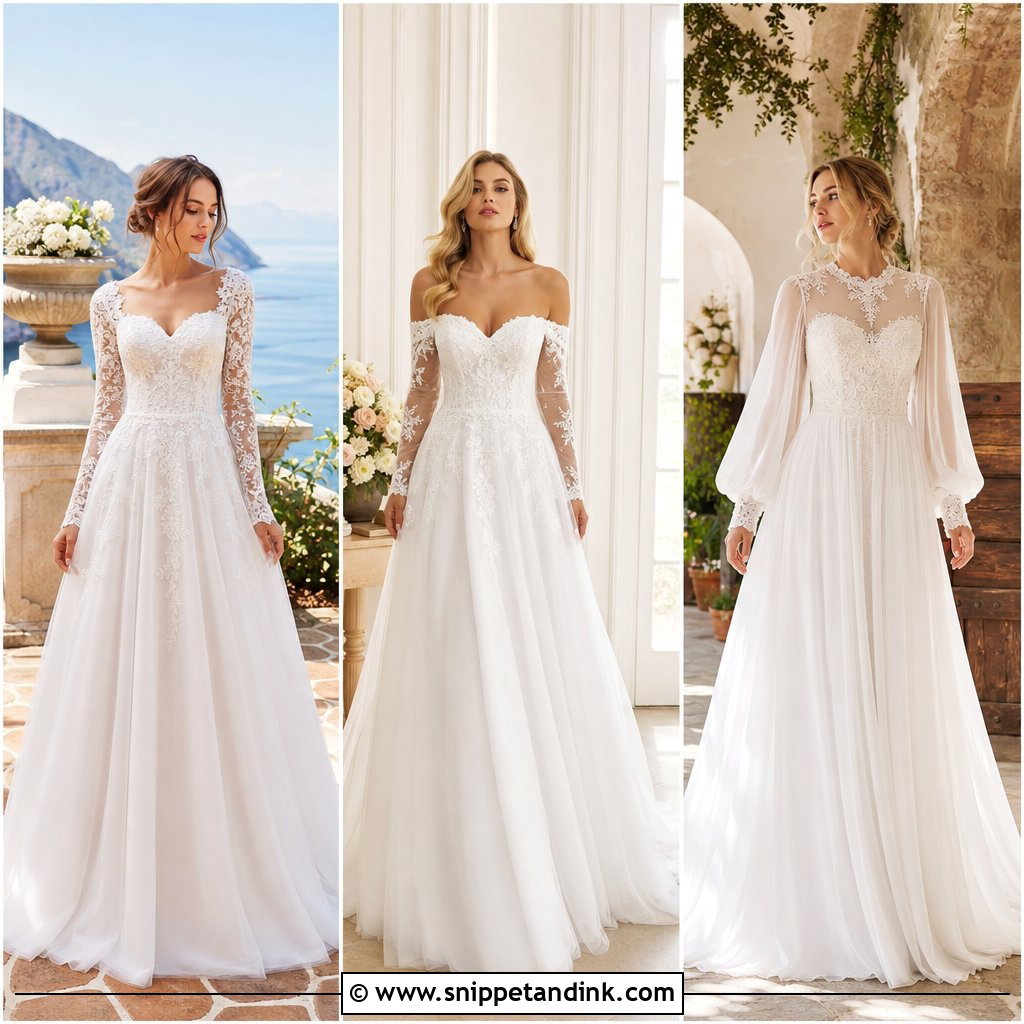
10. High Neck A Line Wedding Dress With Lace Straps
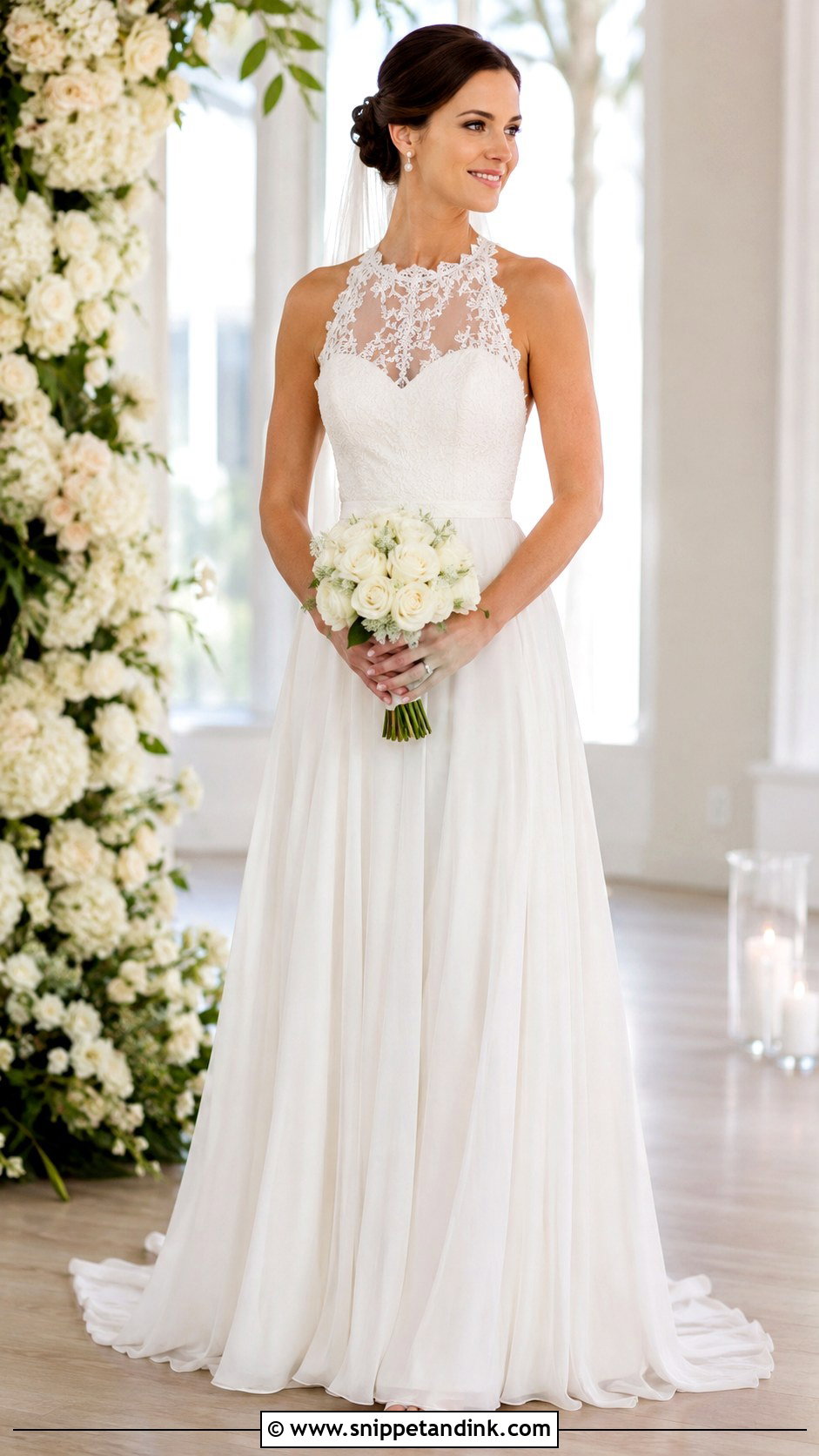
A high neck with lace straps still feels light if most of the coverage is sheer. An illusion yoke or lace panel can link the neckline to a fitted sweetheart or scoop bodice underneath, giving you coverage without weight across the chest. Chiffon, tulle or soft organza keeps the skirt fluid. I skip the necklace entirely here and use small earrings, a narrow bracelet and understated ivory heels. A neat updo with a simple veil set beneath it keeps the lace pattern clear. At the fitting, turn your head both ways. If the neck edge rubs, it needs easing before the day, not after.
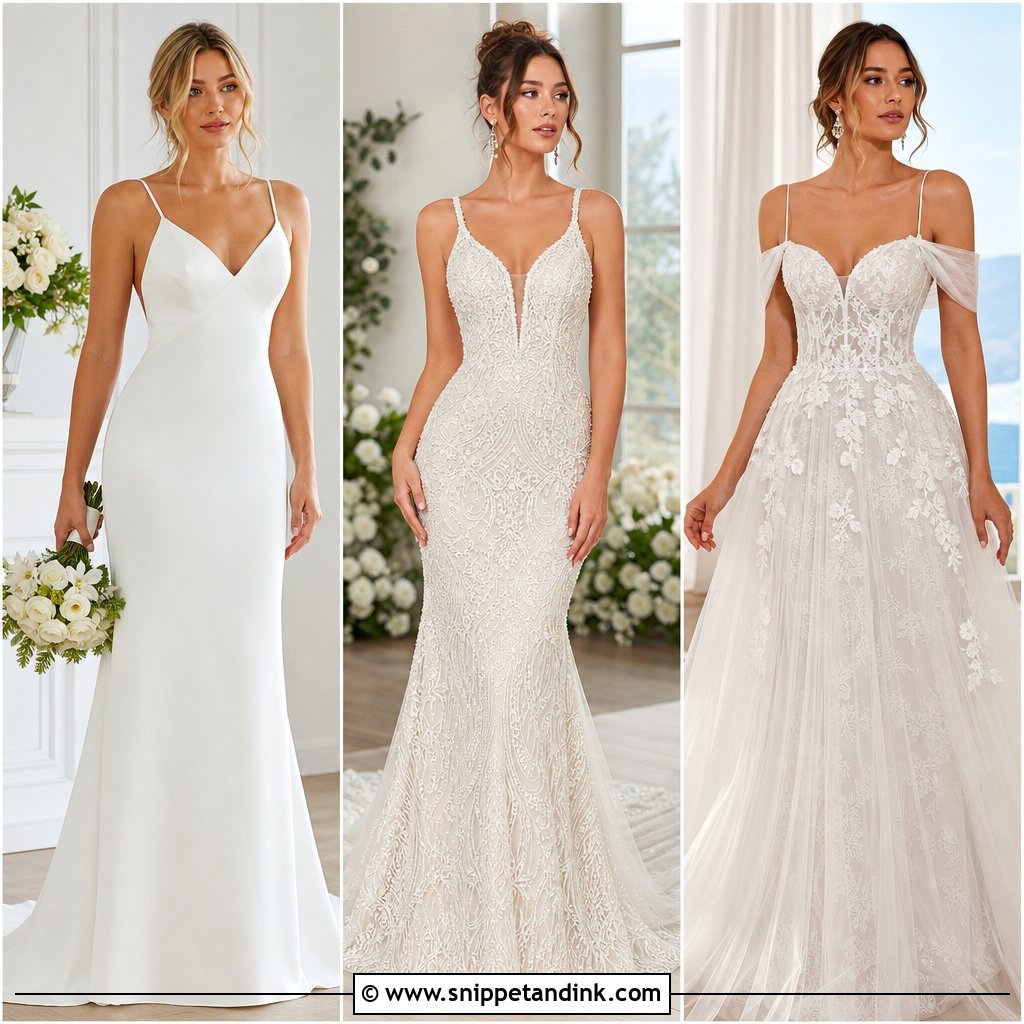
11. Plunging Neck A Line Wedding Dress With Supportive Straps
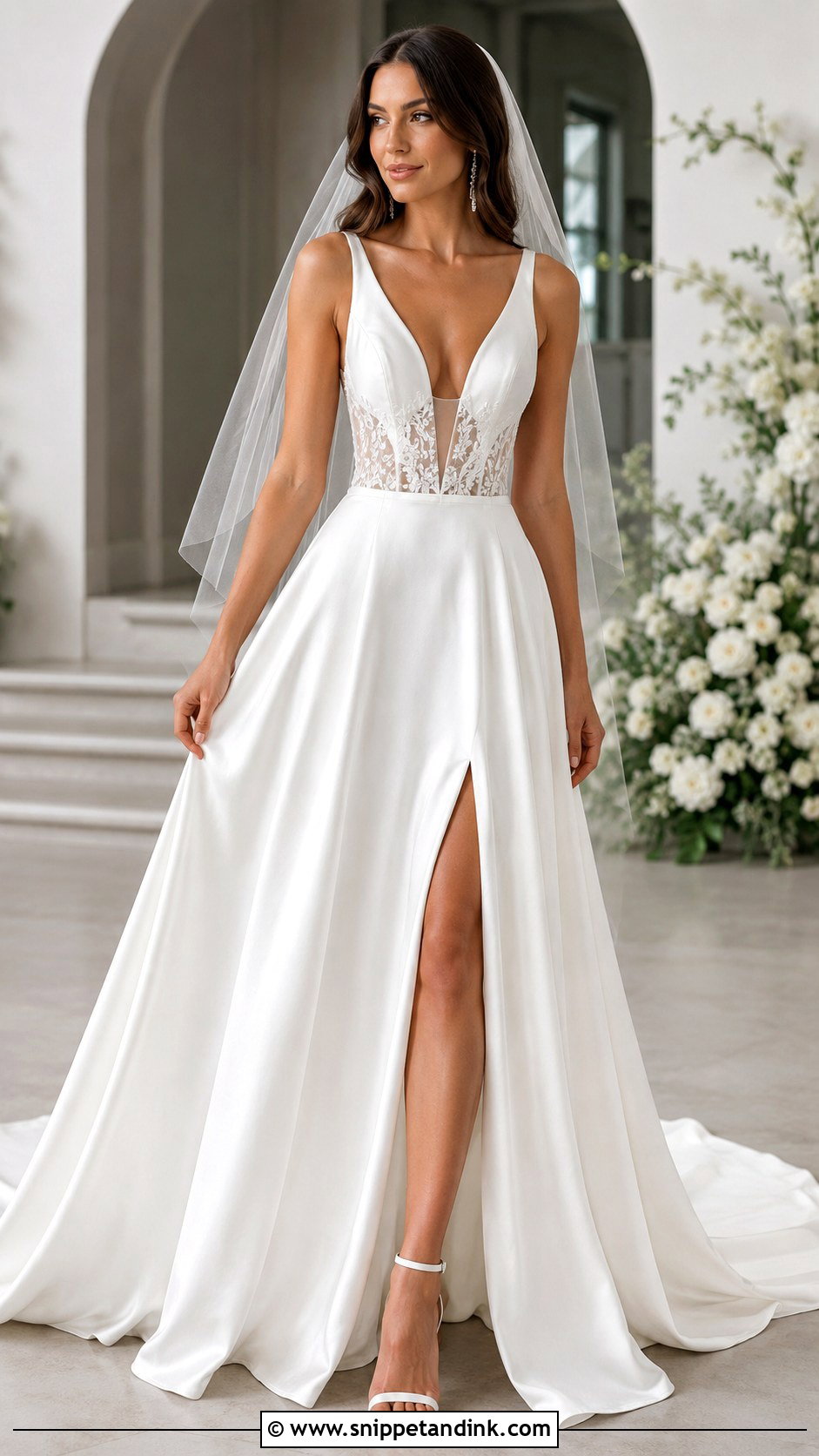
A plunging neckline is only as wearable as the engineering behind it. I look for firm side panels, internal boning and a discreet mesh inset through the centre, and I’d choose medium or wide straps over ultra-thin ones because they hold the edges of the V in place. Balance the fitted top with a flowing satin, chiffon or layered tulle skirt. Long drops, a low bun, ankle-strap heels and a plain veil keep it from getting busy. During fittings, bend, sit and walk as you normally would. Fashion tape is a backup for good tailoring, not a substitute for it.
12. Boho A Line Wedding Dress With Crochet Lace Straps
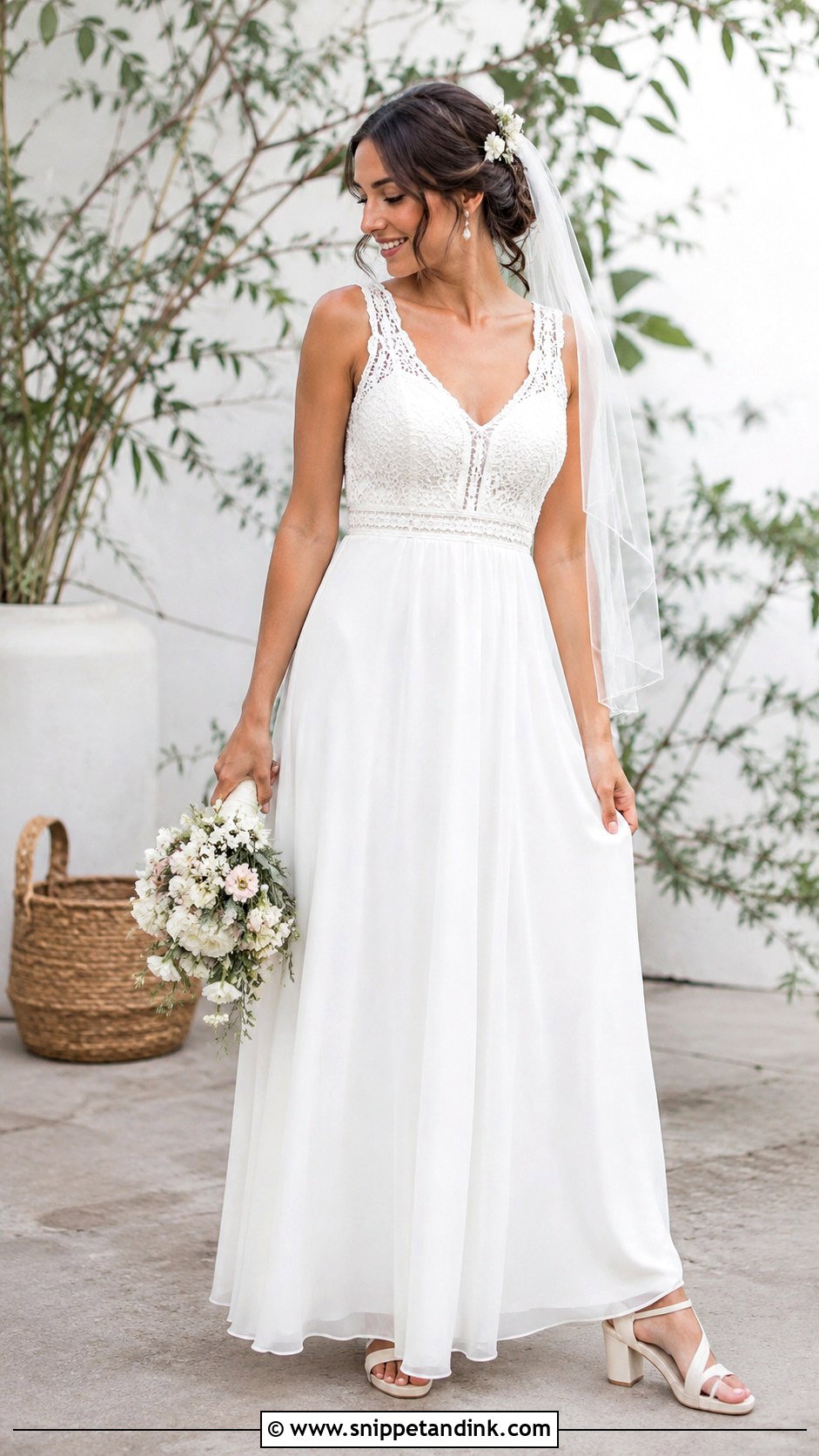
Crochet-style lace is open, and open lace stretches wherever it carries weight. The spot to check is where the straps meet the bodice; ask for reinforcement there before the wedding, not after the first gap appears. Otherwise this is an easy, relaxed dress: soft lace with defined motifs, a lined bodice, a chiffon or tulle skirt and a modest V or gentle scoop. Loose waves, small gold or pearl earrings, ivory block-heel sandals and a floral comb suit it better than a heavy headpiece. A soft fingertip veil, or a plain floor-length one without a rigid border, keeps the mood. Outdoors, choose stable heels and a simple bustle.
13. Mikado A Line Wedding Dress With Bow Straps
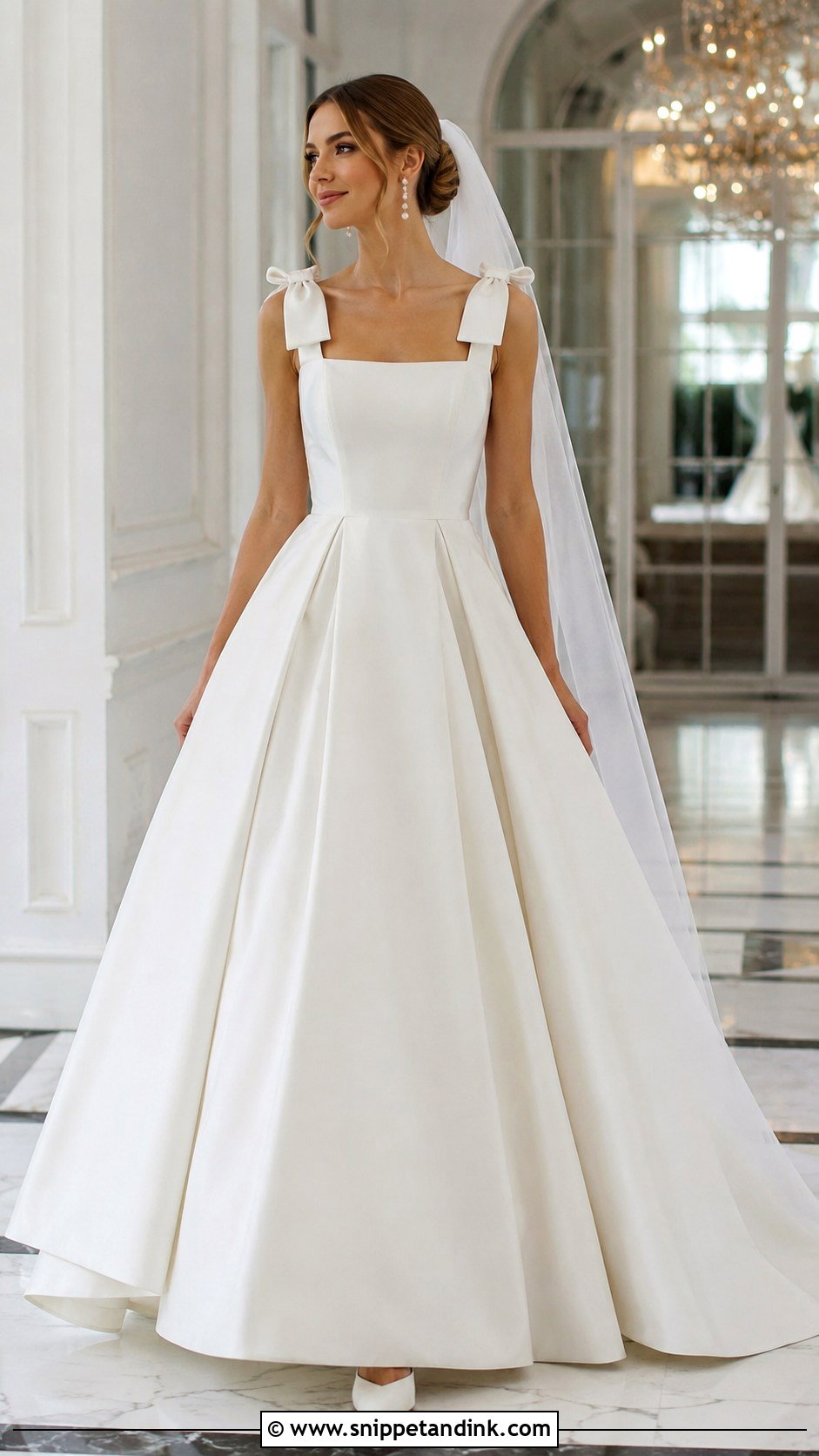
Bow straps go wrong when the bows are too big. I prefer tailored bows sitting neatly on top of the shoulder, which keep the neckline readable, over large loops that crowd it. Crisp mikado holds a bow’s shape far better than soft fabric, and a square or gently scooped bodice suits it, with box pleats for controlled volume in the skirt. Pearl drops, pointed pumps and a smooth veil without lace edging keep it clean, and a sleek ponytail or low chignon leaves the bows visible. If they detach for the reception, ask for snaps rather than pins. Pins work loose and the bows tilt in photos.
14. Chiffon A Line Wedding Dress With Ruched Straps
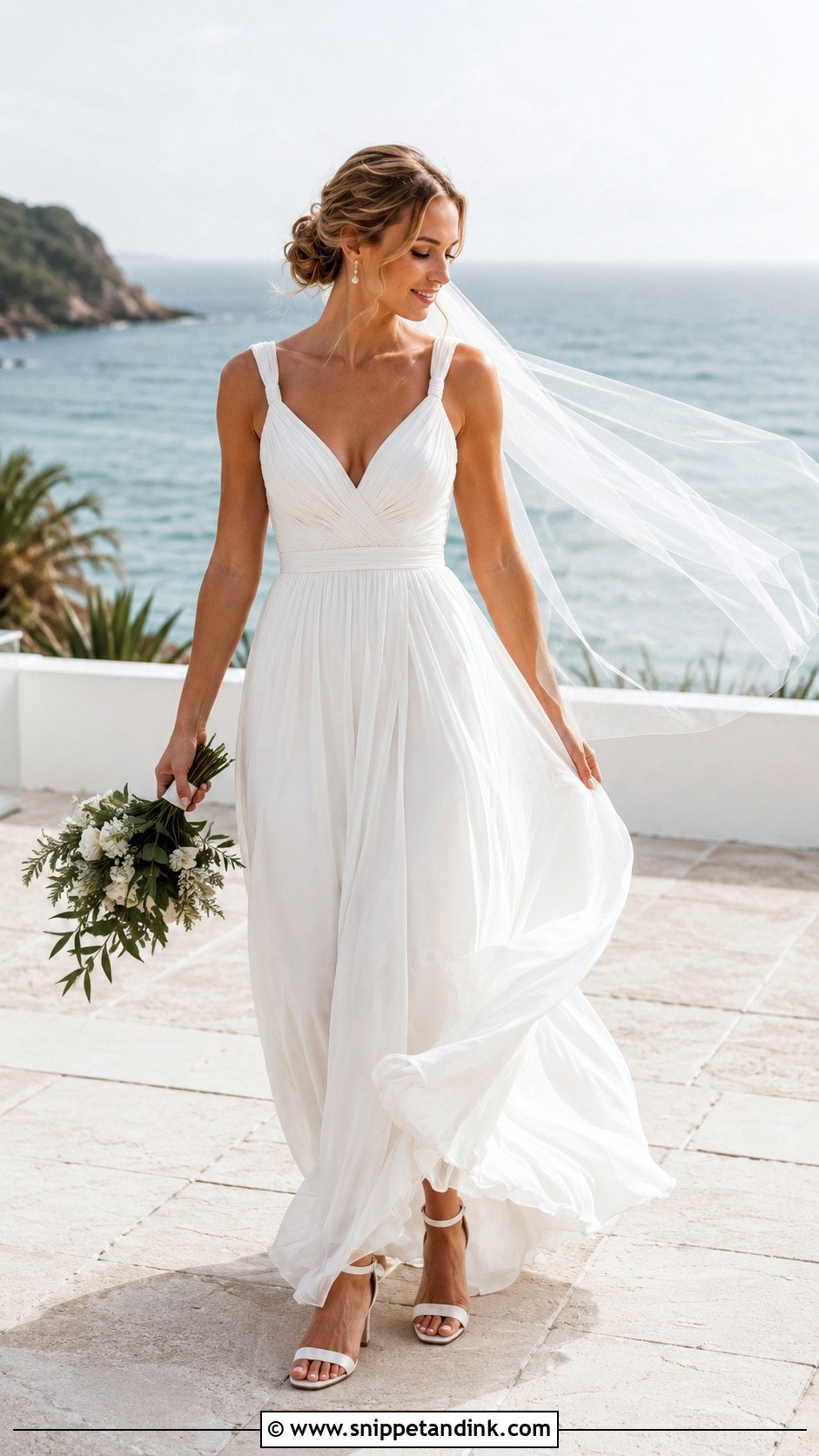
Chiffon is what I reach for when a bride is marrying somewhere hot. It’s light, it moves, and ruched straps carry that softness up into a gathered V-neck bodice. Look for a stable lining and ruching that defines the waist without adding bulk. Delicate earrings, a loose low bun and block-heel sandals suit uneven ground, and a lightweight veil matches the airy fabric better than a heavily embellished one. Two practical points. Chiffon can be see-through in direct sun, so check the lining by a window at your fitting, and ask for a wrist loop and a simple bustle so the train stays manageable later.
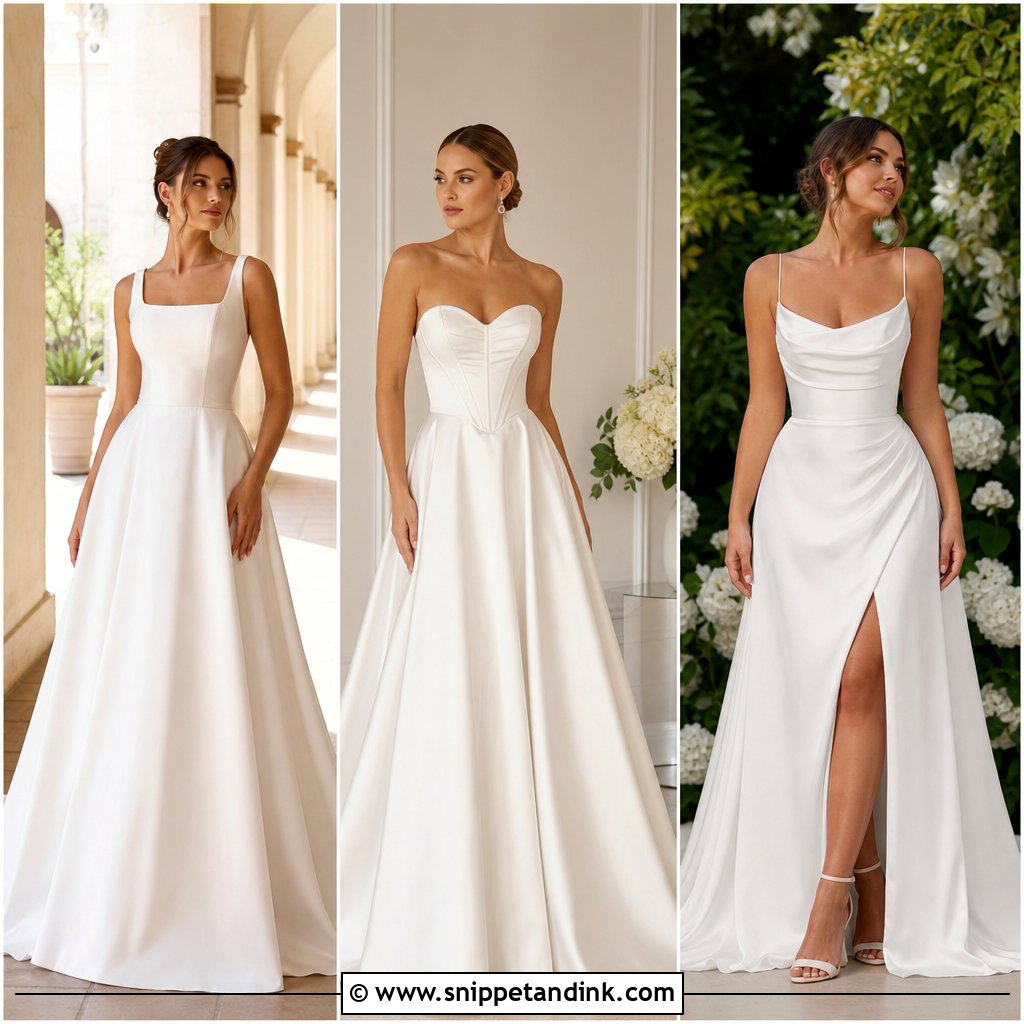

15. Pearl Strap A Line Wedding Dress With Satin Skirt
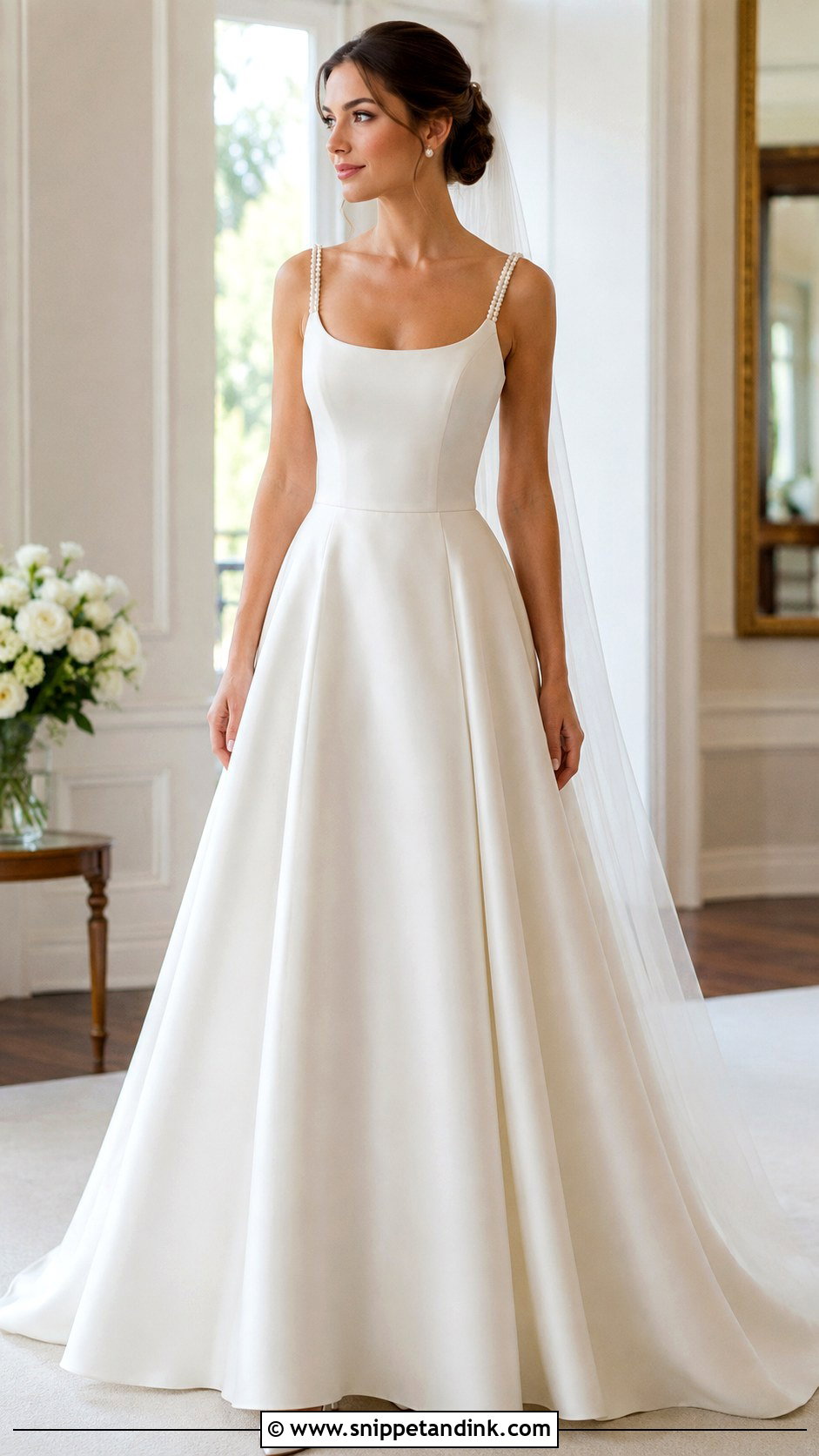
Pearl straps are jewelry, not engineering. Several fine strands give an ethereal effect and a wider pearl-covered strap has more impact, but neither should be holding the dress up; the bodice must fit securely on its own. A clean scoop, square or sweetheart neckline gives the pearls room, and a satin skirt keeps the contrast smooth. Pearl studs, satin pumps and a plain veil beneath a smooth updo complete it. Leave the necklace off. Ask the seamstress to check every pearl attachment before the final fitting, with reinforced ends and a soft backing where the strap meets skin.
16. Open Back A Line Wedding Dress With Crisscross Straps
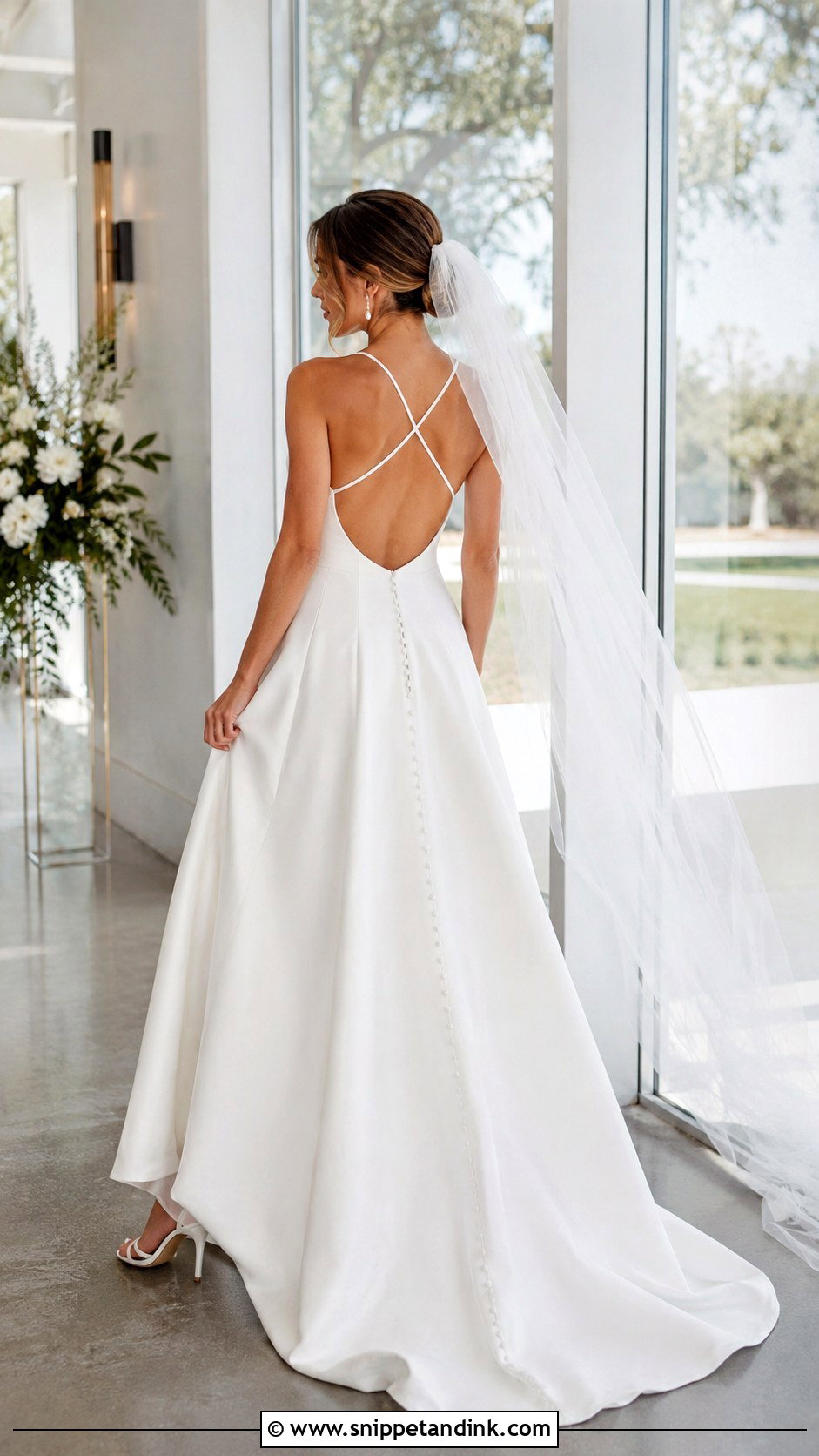
Crisscross straps make the back the main event, so I keep the front quiet with a scoop, V or softly draped bodice. Satin straps look sleek and lace ones romantic. Tension is everything. Too loose and they sag into a droopy X; too tight and they drag the bodice out of shape, so the tailor should set them while you stand, sit and roll your shoulders. An updo or side-swept style keeps the arrangement visible, and a sheer veil shows it off far better than dense lace. Add understated drops, comfortable ivory heels and a back necklace if the design allows.
17. Tulle A Line Wedding Dress With Embroidered Straps
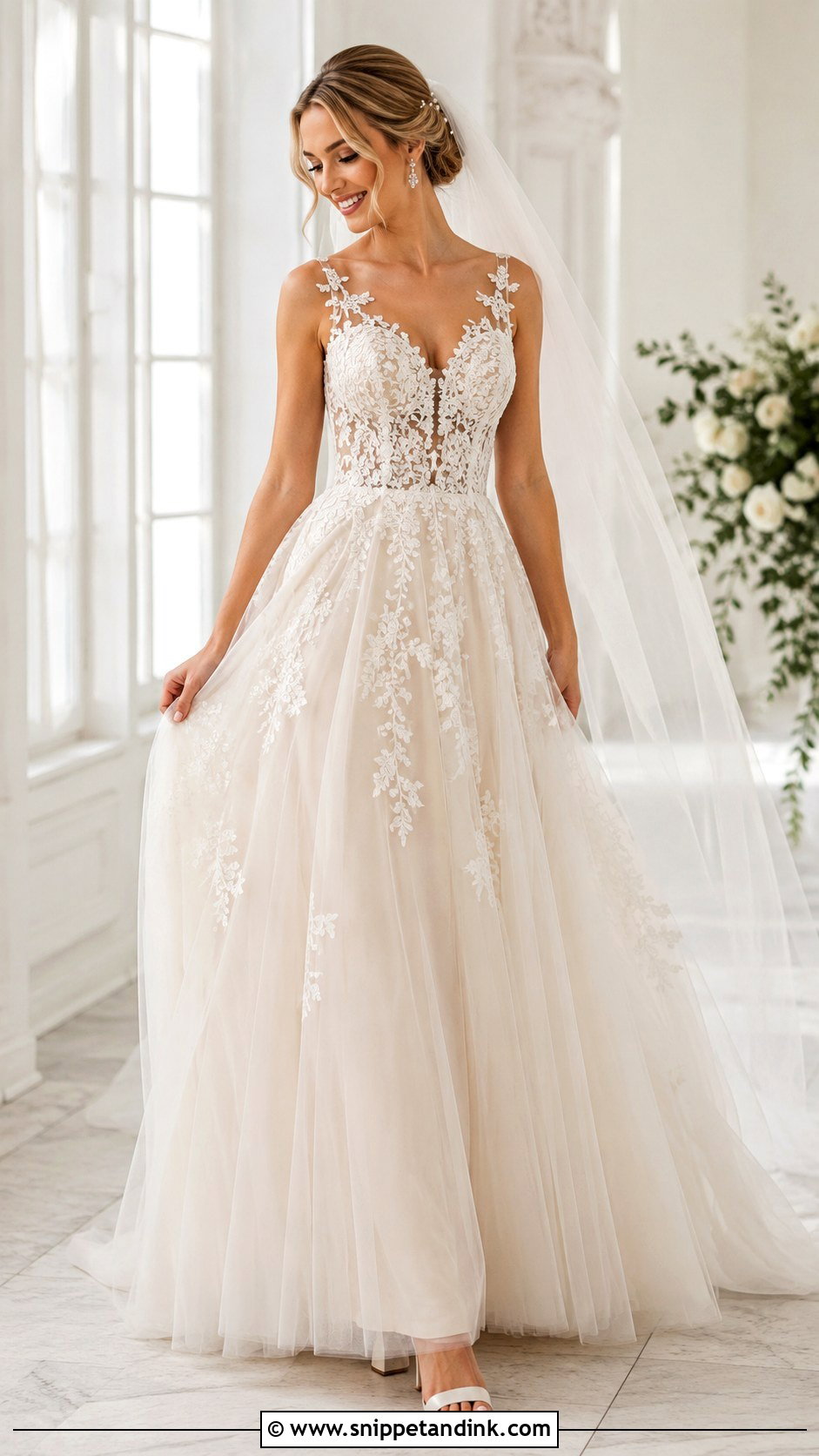
Tulle snags. That’s the first thing I think about with embroidered or beaded straps on a layered tulle gown, because a rough bead edge can pull a thread in the skirt every time your arm brushes it. Check that strap edges and bodice beadwork are smoothly finished. Embroidery repeated across the bodice and only lightly on the upper skirt keeps the design connected. Floral threadwork reads romantic, while beaded geometric work looks sharper. Crystal earrings, an airy veil, satin block heels and a softly curled updo suit it. A champagne or pale blush lining under ivory tulle makes fine embroidery easier to see and still looks clearly bridal.
18. Plus Size A Line Wedding Dress With Wide Lace Straps
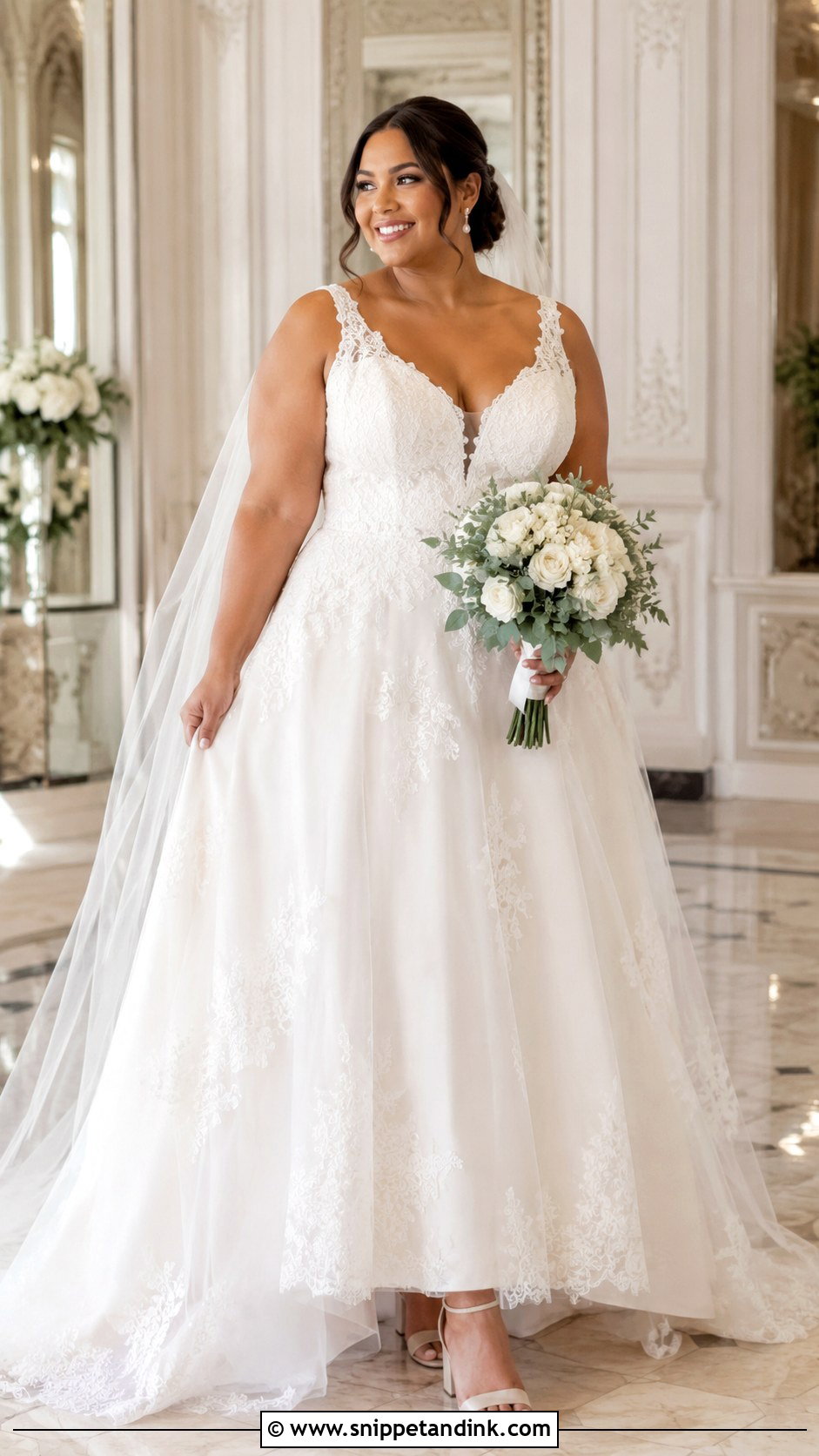
Wide lace straps work well on a plus-size A-line because they give the bodice somewhere to anchor, but they shouldn’t be doing the lifting. Support comes from the bodice itself: a secure neckline, flexible boning and cups chosen for your proportions. A V-neck adds vertical line; a square neck gives a clean frame. The skirt should flow from the natural waist without heavy gathering at the middle. Supportive block heels, pearl earrings and a soft veil past the shoulders complete it. Alter to your body rather than the size chart. The straps should lie flat, the waist seam should stay level, and you should be able to breathe and eat dinner in comfort.
19. Tea Length A Line Wedding Dress With Wide Straps
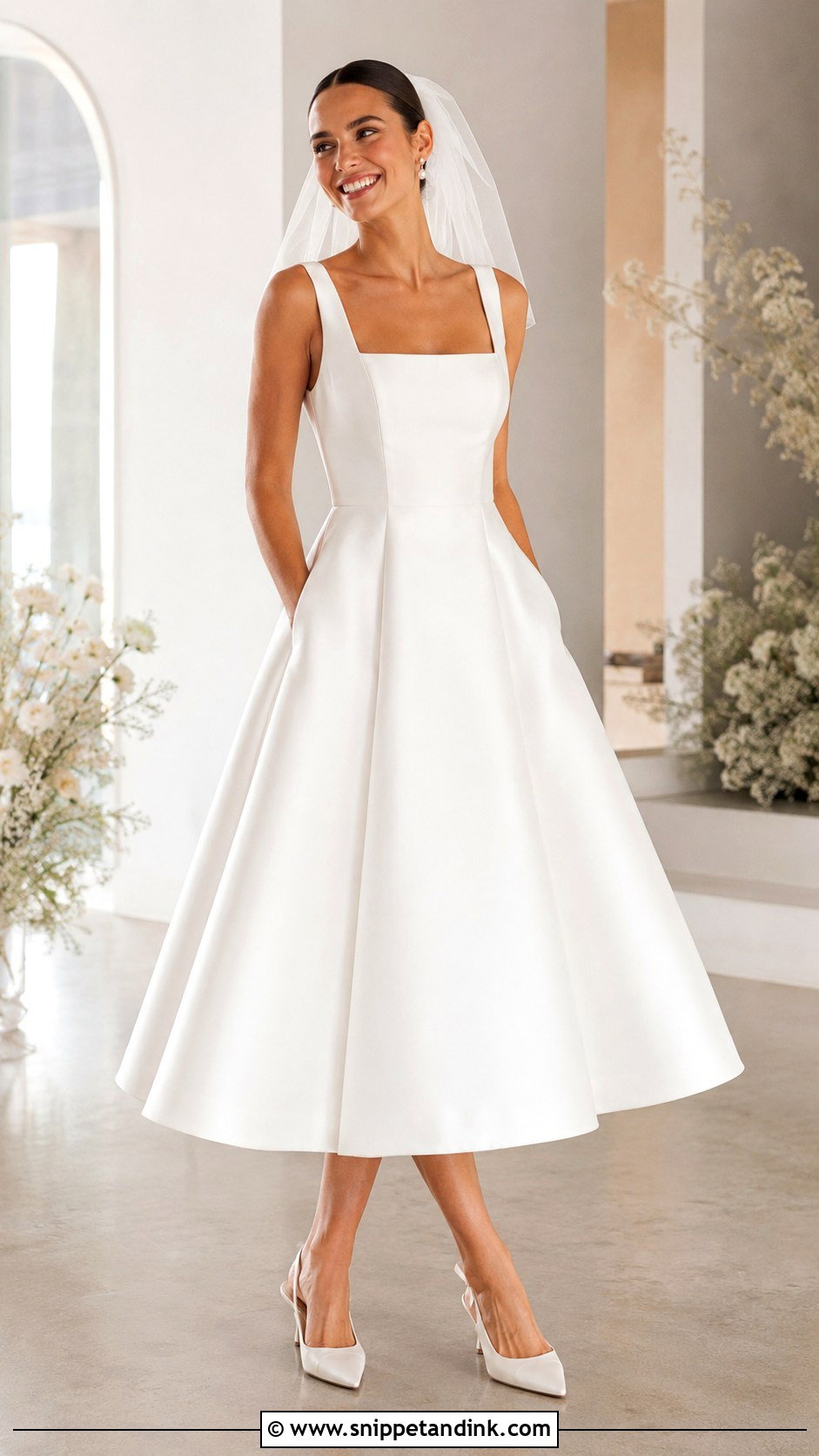
Tea length puts your shoes in every picture, so choose them before the first fitting. Wide straps and a fitted square or scoop bodice balance the shorter, fuller skirt, and mikado, satin or organza holds the hem’s shape. Pointed slingbacks, pearl earrings and a short veil or structured hair bow suit the playful mood. A slim belt can mark the waist if it matches the gown rather than chopping it in half. The flattering hem point sits somewhere between knee and ankle and differs on every leg, which is why I want your actual shoes at every fitting.



20. Sequin Lace A Line Wedding Dress With Sparkle Straps
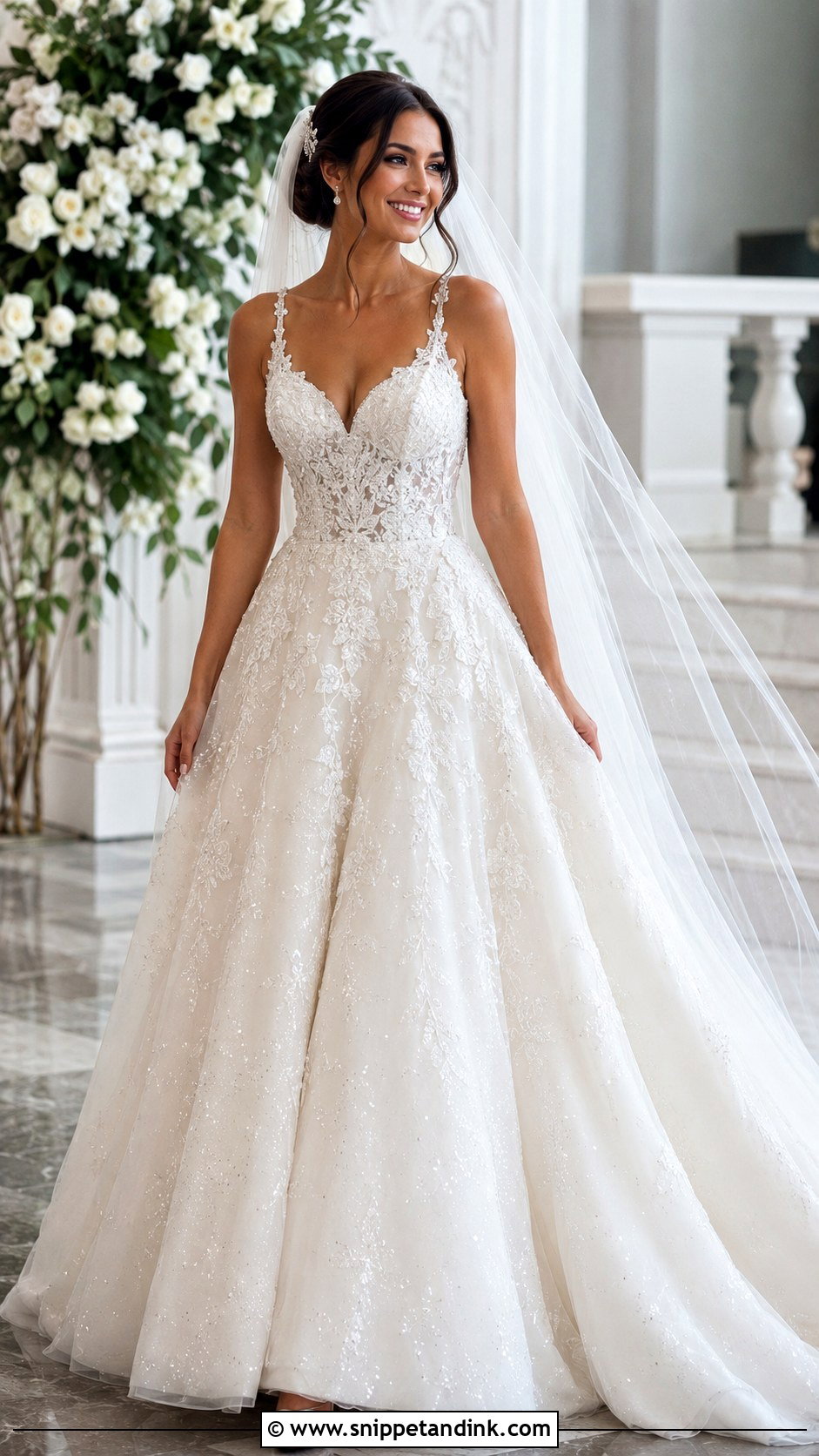
Sequins behave differently under every light. Tonal or clear ones that look subtle in a boutique can flare under venue spotlights and camera flash, so I ask brides to view the gown near a window, under warm light and with a phone flash before deciding. A fitted lace bodice, defined waist and softly layered skirt keep the silhouette classic. Crystal studs, a simple comb, plain satin heels and a sheer cathedral veil avoid competing patterns. Check the inside of the sparkly straps too: they need soft lining and smooth edges, or the sequins scratch your shoulders all evening.
A Fitting-Room Movement Test for Any Strapped Bodice
Straps get adjusted last, after the bust and waist are taken in, because tightening the bodice changes how much work the straps have to do. At the fitting where they’re finalised, I walk the bride through the movements of a real wedding day.
- Raise both arms above your head. The bodice should not ride up past your bust line or flash the lining.
- Hug someone, then look down. A gap at the neckline means the straps or the bust need more work.
- Sit for a few minutes and stand up. Look for red marks on the shoulders and straps that have drifted outward.
- Bend forward as if you were lifting the bouquet off a chair.
- Dance a few steps in your wedding shoes while someone films the back of the dress on a phone.
If a strap only feels right while you stand still, it isn’t right yet. Changes of a centimetre or less are normal at this stage, and a good seamstress expects to make them.
Does It Still Feel Secure When You Hug Everyone?
Straps decide more about this silhouette than people expect. Square necklines and wide satin straps feel clean and structured, while lace, pearls, embroidery and fine straps soften the look. Think about your venue, season and how much skirt volume you want, then test every shortlisted dress by sitting, walking, raising your arms and turning around. Alterations can fix strap length, bodice support, hem and bustle, but they can’t make a strap carry a bodice that doesn’t fit. Get the fit right first, and the strap style becomes a matter of taste.
You'll Like These Ideas:


Leave a Reply