
A fuller bust changes how I run a bridal appointment, and it should change how you shop. The question is never how to hide your shape. It’s where the support comes from: boning, a firm lining, wider straps, corset backs, a sweetheart or square neckline, a wrap bodice. Get that right and the gown stays put while you dance and hug people for hours. Get it wrong and you spend the reception hitching up the front. The 25 gowns below are full bridal looks, from ball gowns to plain crepe, each with a note on what I’d check before you say yes.
What I Test in the Fitting Room Before Anyone Talks Necklines
Bridal sizing runs small, and with a fuller bust the chest measurement usually decides your size. I order to fit the bust and take in the waist and hips afterward, because adding room to a bodice is often impossible while taking it in is routine work for a seamstress. Expect to try a size or two larger than your everyday clothes and don’t read anything into the number.
Bring the right underwear. A strapless longline or a well-fitted strapless bra gives a much truer picture than the bra you wore to work, and if you’re hoping to go braless, try samples with nothing underneath so you know what the bodice alone can do.
Then run my three-move test in every dress you like:
- Raise both arms as if hugging someone taller. The neckline should stay where it was.
- Sit down on a chair, then lean forward. Watch for gaping at the top edge and the bodice digging under the bust.
- Turn and look at the side seam in the mirror. Any spillage at the underarm means the cup or the cut is wrong for you.
A dress that passes all three is one I’ll happily send to alterations. A dress that fails two usually stays on the rail, however much you love the skirt.
1. Sweetheart Ball Gown Wedding Dress
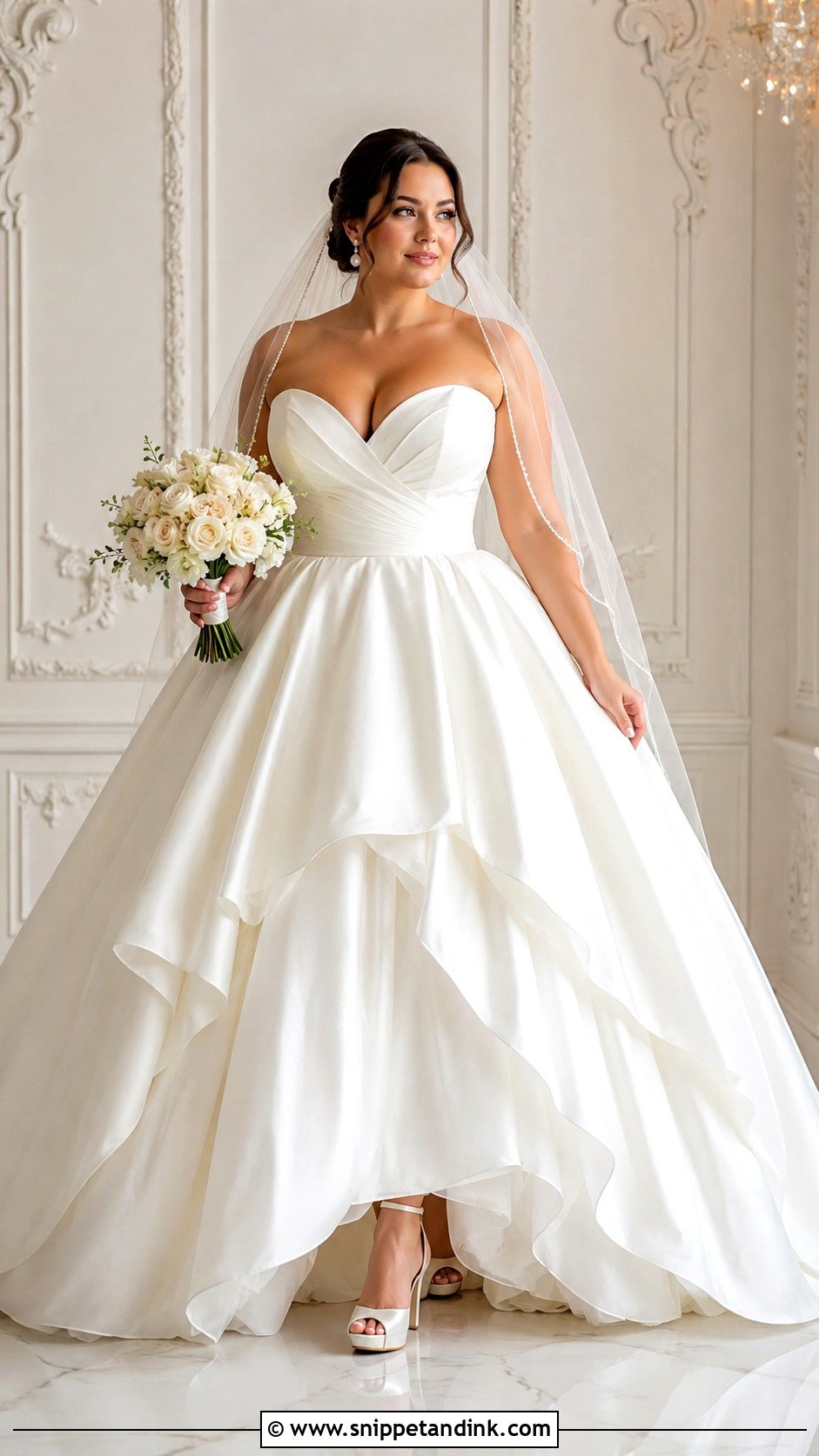
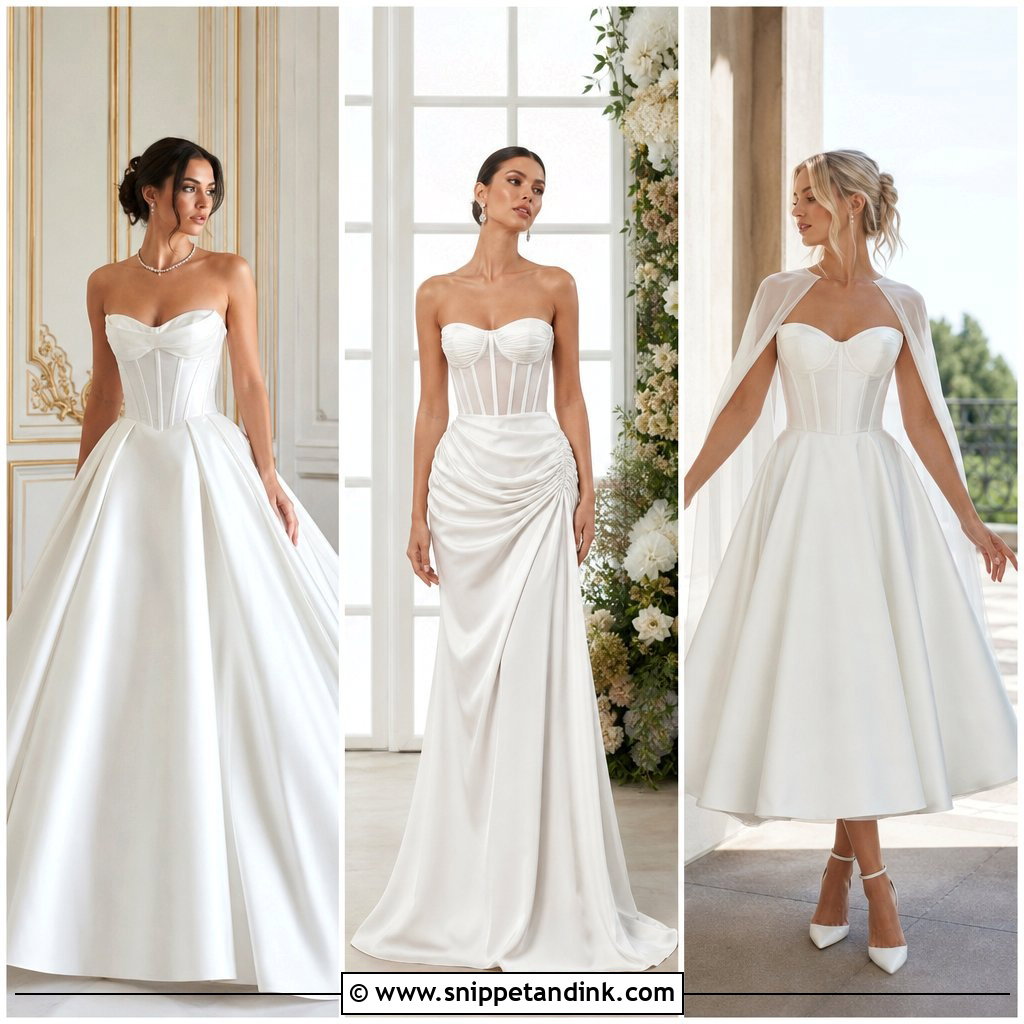
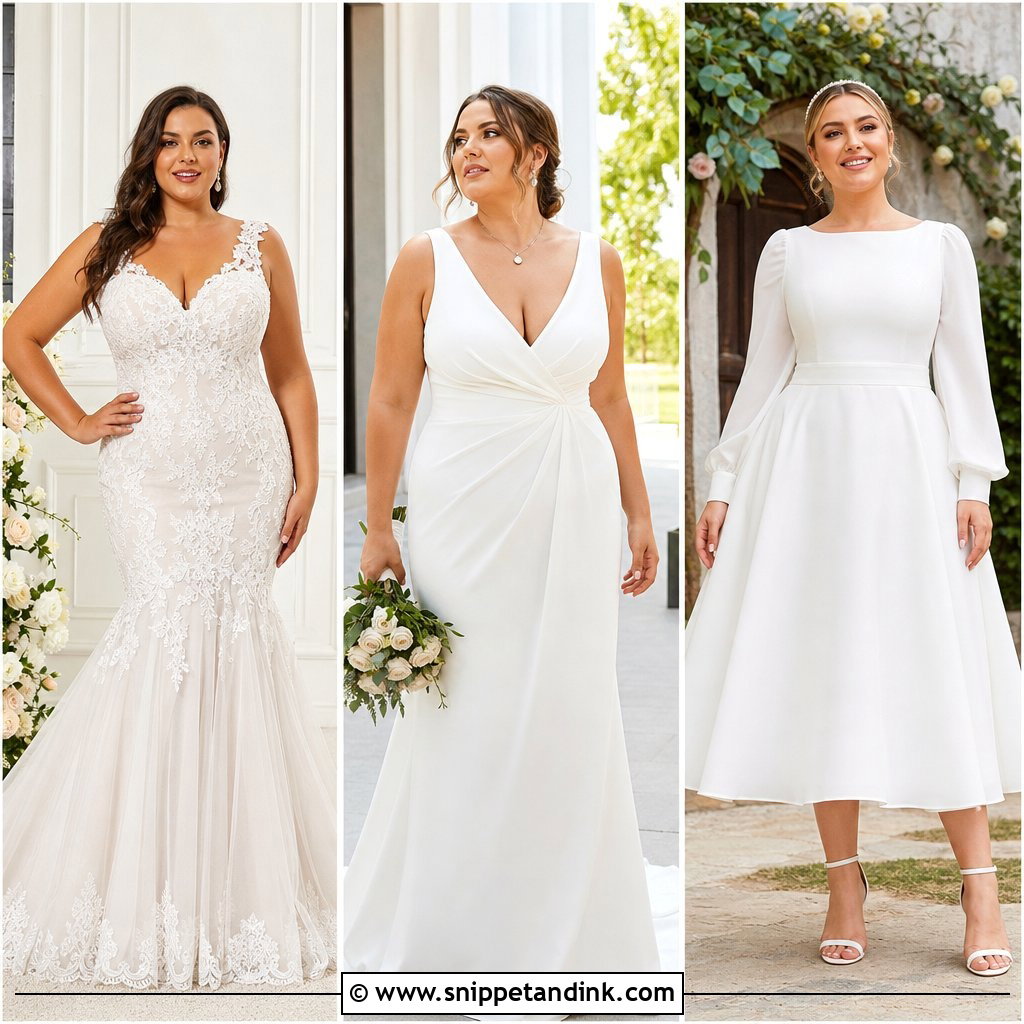
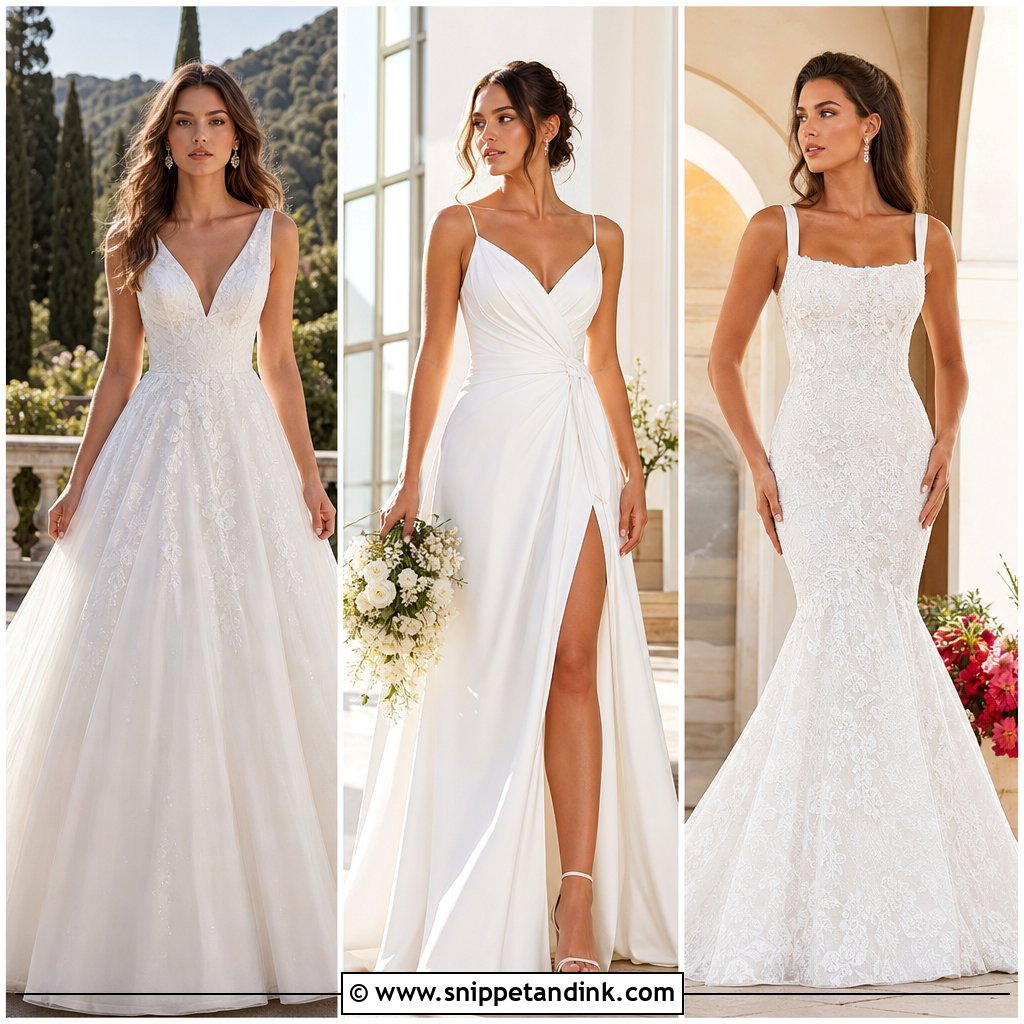
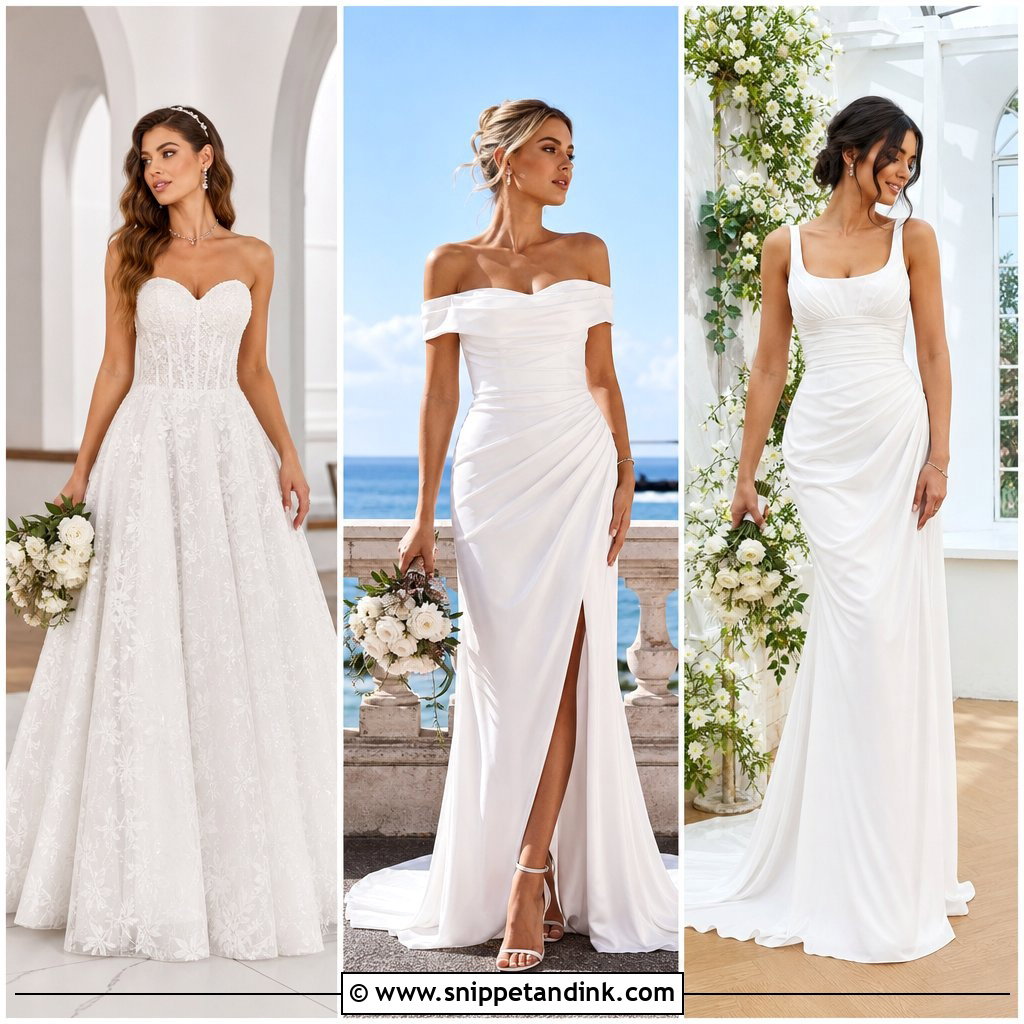
A sweetheart ball gown shapes the chest without closing off the neckline, which is why I pull it early for fuller-busted brides. The curve frames you, and the structured bodice does the lifting. Before anything else, I press the side seams gently: you should feel boning there, not just fabric. Satin, mikado and layered tulle hold the skirt’s shape, so the weight balances the top half. If a deep curve makes you nervous, ask for the center dip raised half an inch at alterations. It’s a small change that makes a real difference to how secure you feel.
2. Square Neck A Line Wedding Dress
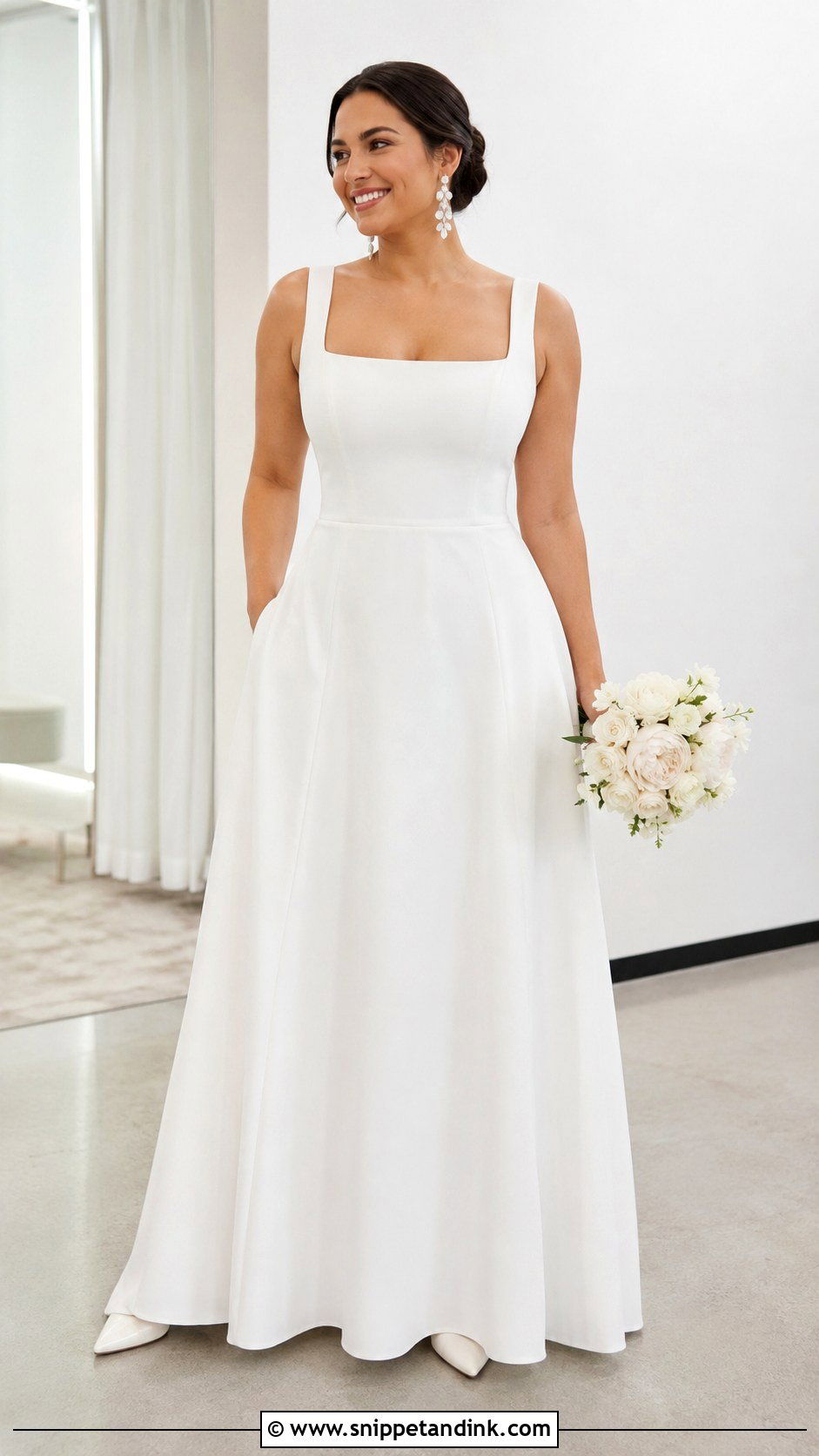
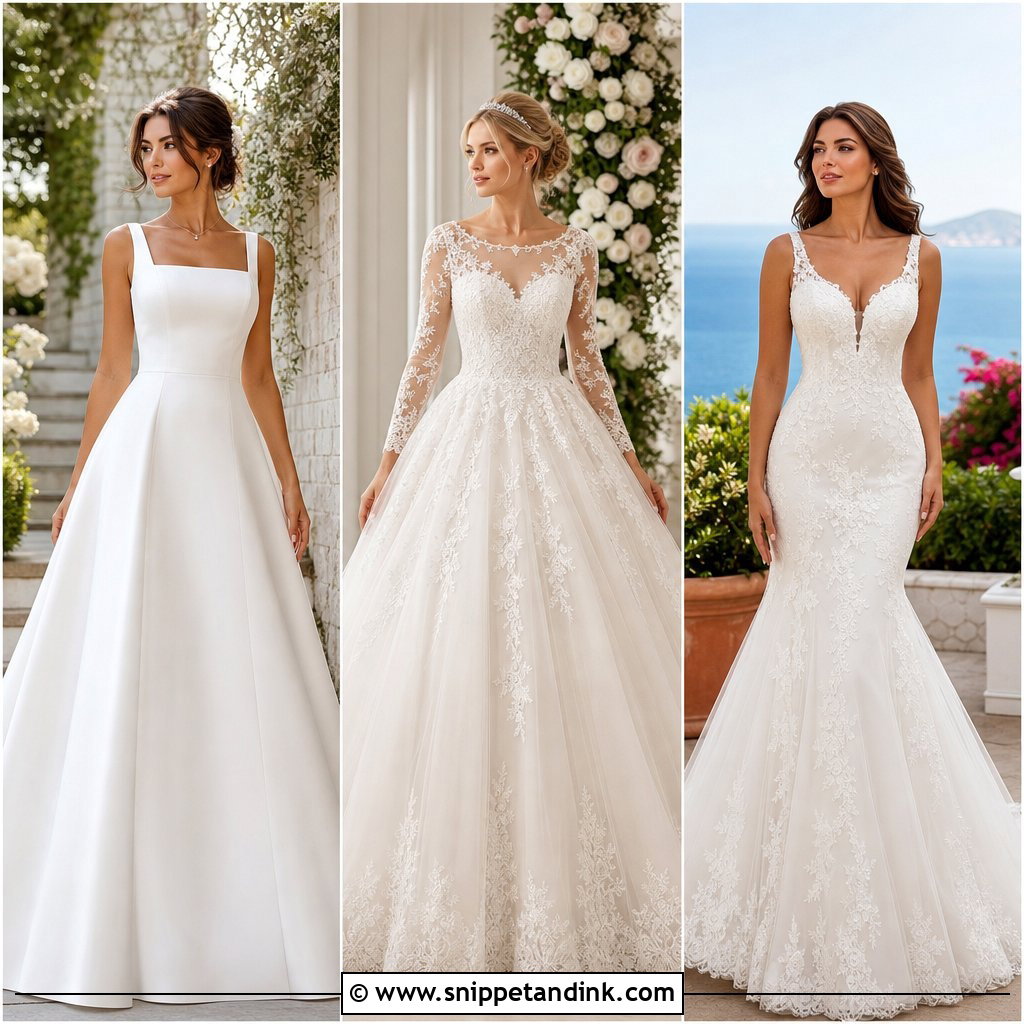
The straight line of a square neck widens the collarbone area, so a fuller chest reads as balanced rather than front-heavy. Its wide straps are the practical win: there’s room to hide a supportive bra or to have cups sewn in. The A-line skirt skims the hips without clinging. One thing I watch at fittings is the corners of the square. On a larger cup they can gape when you lean forward, and a seamstress can pull them in with a small tuck at the strap.
3. V Neck Lace Wedding Dress
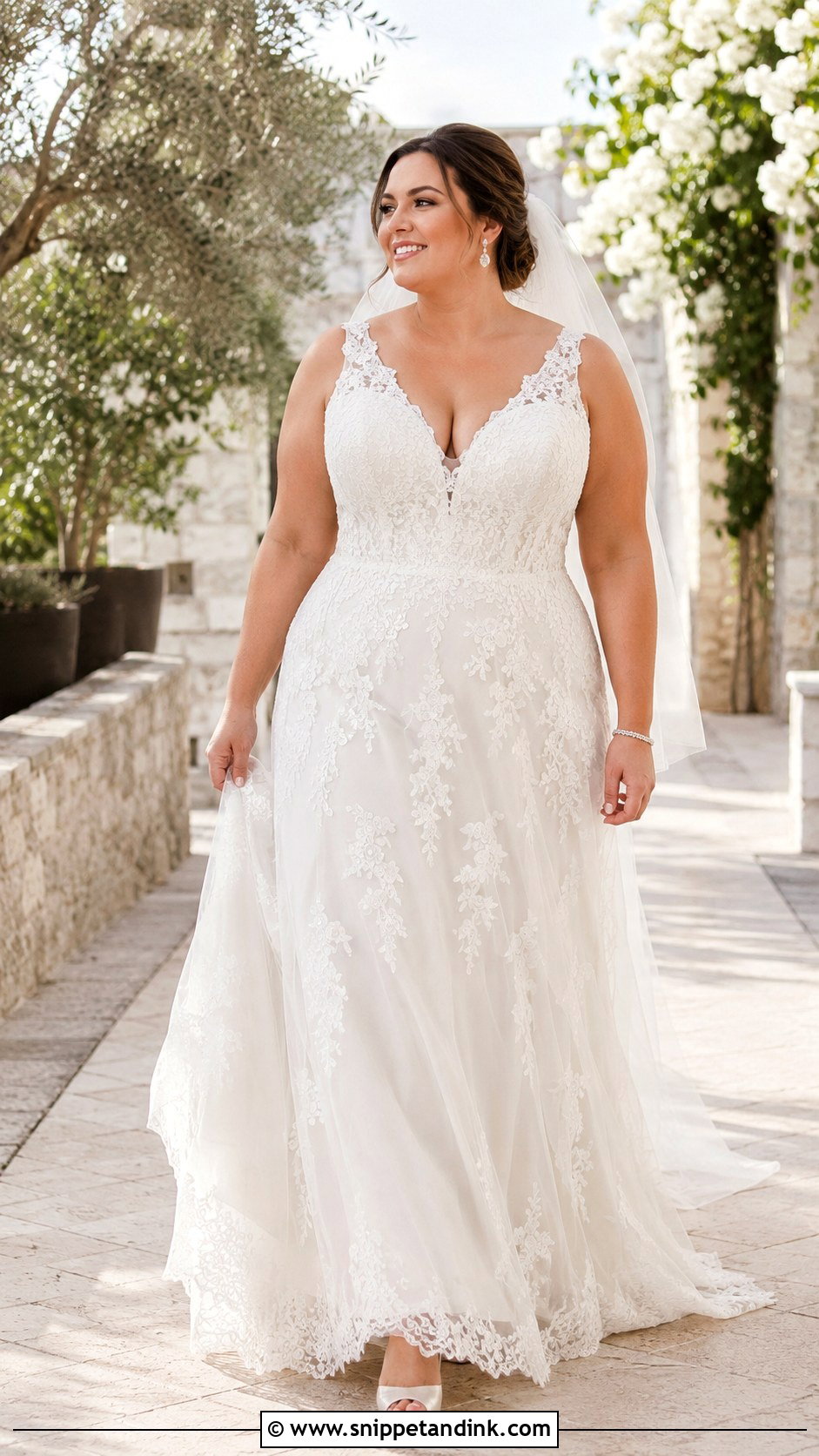
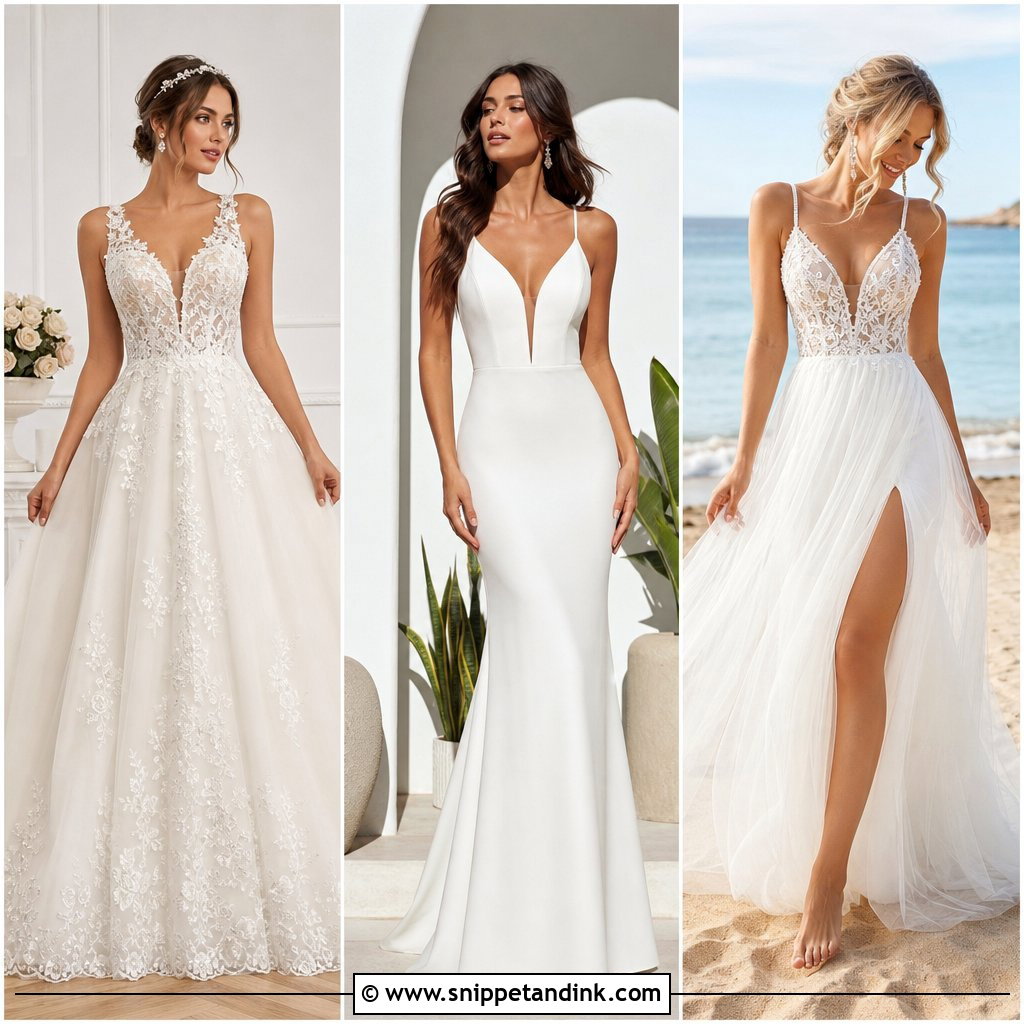
A V-neck lace gown works on a big bust only when the plunge is controlled. A moderate V draws the eye down the center and lengthens the torso. Too deep, and you’re relying on tape all night. I ask brides to bend forward as if signing the register: if the lace lifts away from the skin, the bodice needs a firmer lining or a modesty panel. Lace gives texture without heavy beading, and a soft A-line or fit-and-flare skirt suits this neckline best.
4. Corset Bodice Wedding Dress
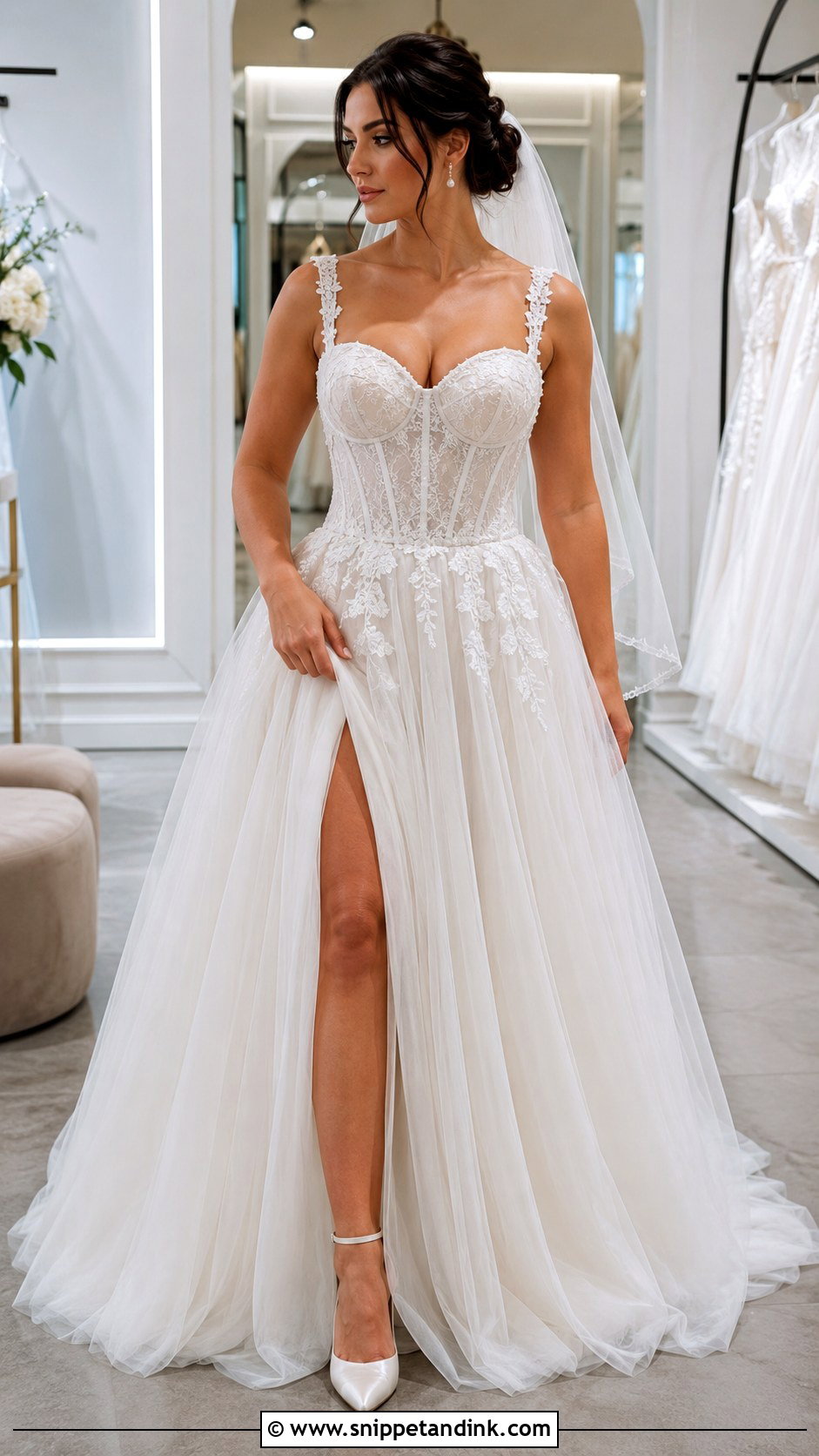
Built-in structure is the whole point of a corset bodice. Boning, a lace-up back and firm waist panels spread the support through the torso, so your straps (or your shoulders) aren’t carrying it all. Satin makes it look polished; lace softens it. My one firm rule: the cups must sit high enough. When I lace a corset back, I check that nothing spills at the top edge when you take a deep breath, because brides breathe deeper when they’re emotional, and the ceremony is when it shows.
5. Off Shoulder Wedding Dress
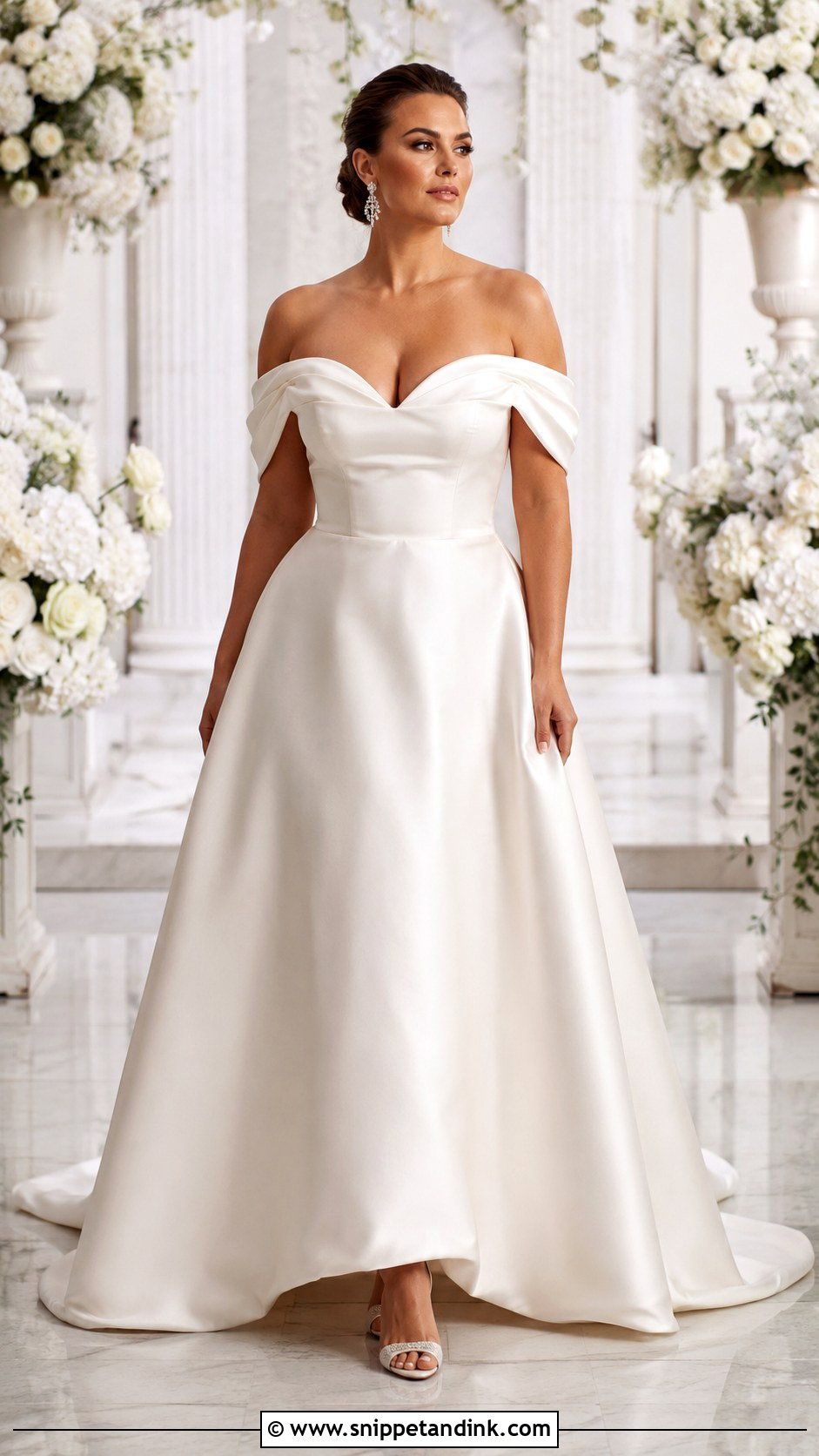
Off-shoulder sleeves highlight the shoulders and collarbone without adding bulk at the chest, but only if a firm inner bodice is doing the holding. The failure I see most often is sleeves that drag the neckline down every time you raise your arms. At a fitting I have brides reach up as if hugging someone taller. If the front slips, the sleeves need anchoring to the boned bodice, not just to elastic. A swept-back hairstyle keeps the shoulder line clear.
6. Wrap Bodice Wedding Dress
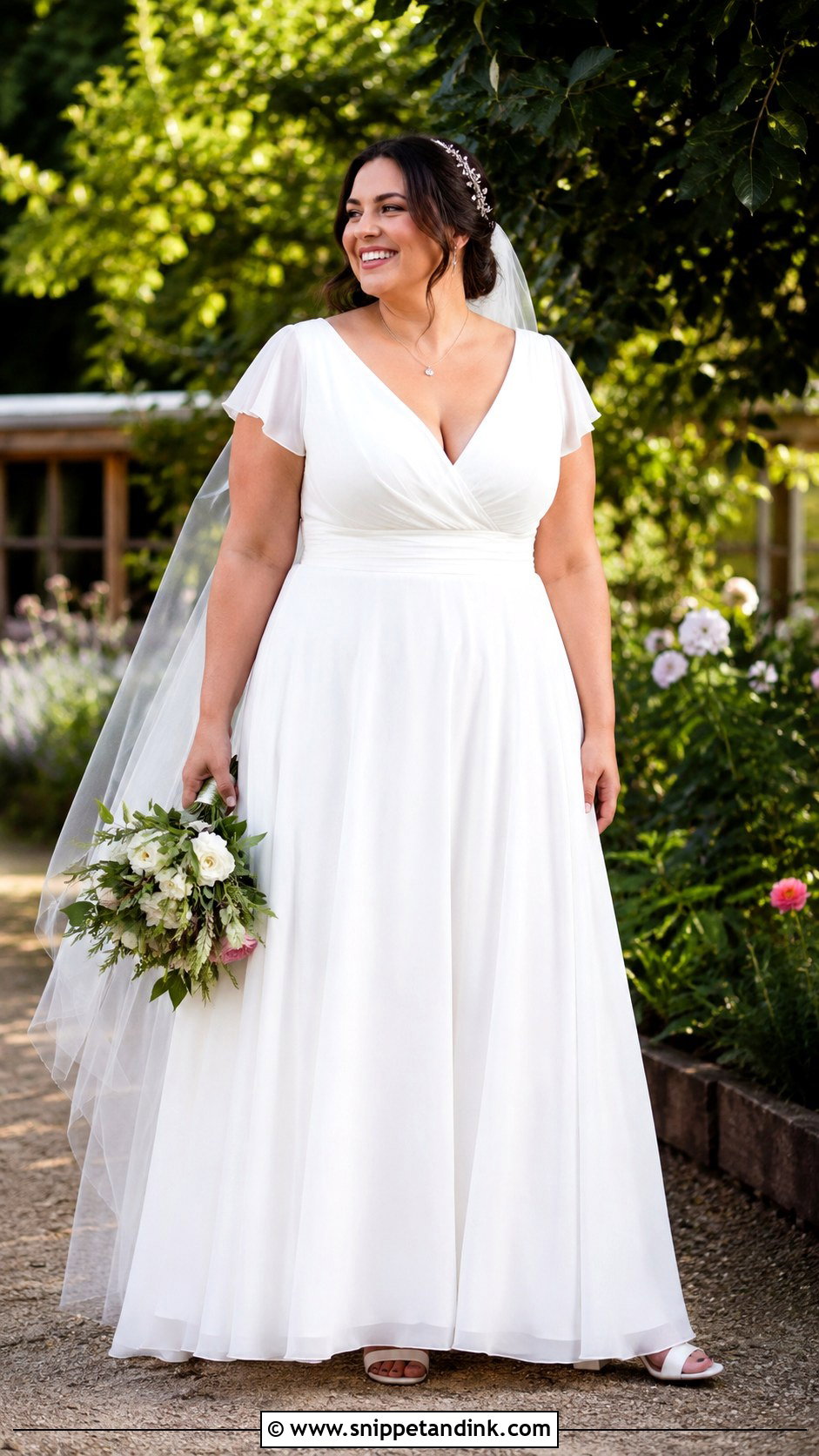
Diagonal lines are why a wrap bodice flatters: they guide the eye across the body, so the bust reads as part of the shape instead of the focal point. Insist on a stitched or faux wrap. A true loose wrap will shift by the first dance, and on a larger cup it opens. Crepe, chiffon and satin all drape well here. I’d steer you to this one if comfort and easy movement matter more to you than a sculpted look.
7. Halter Neck Wedding Dress
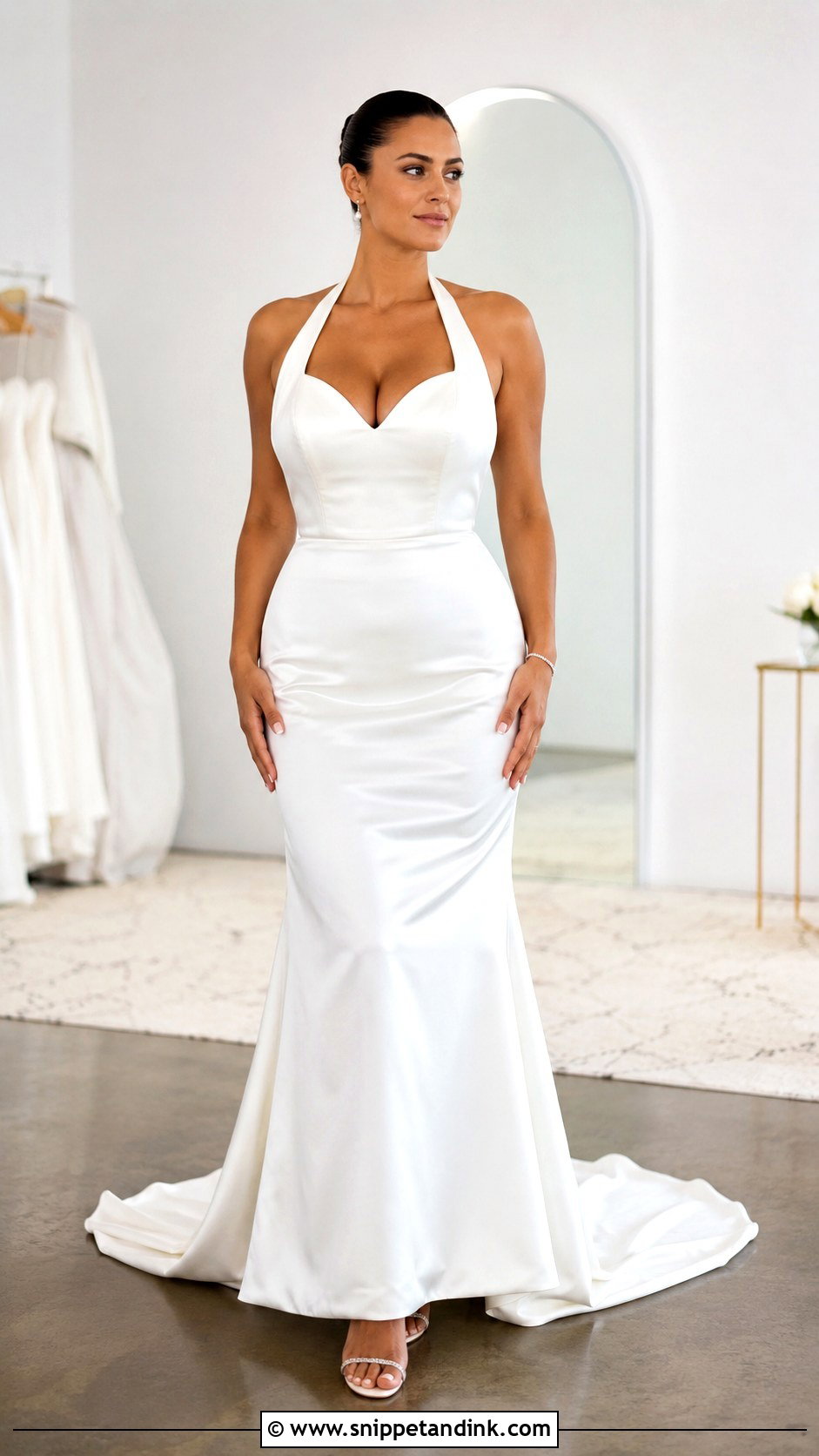
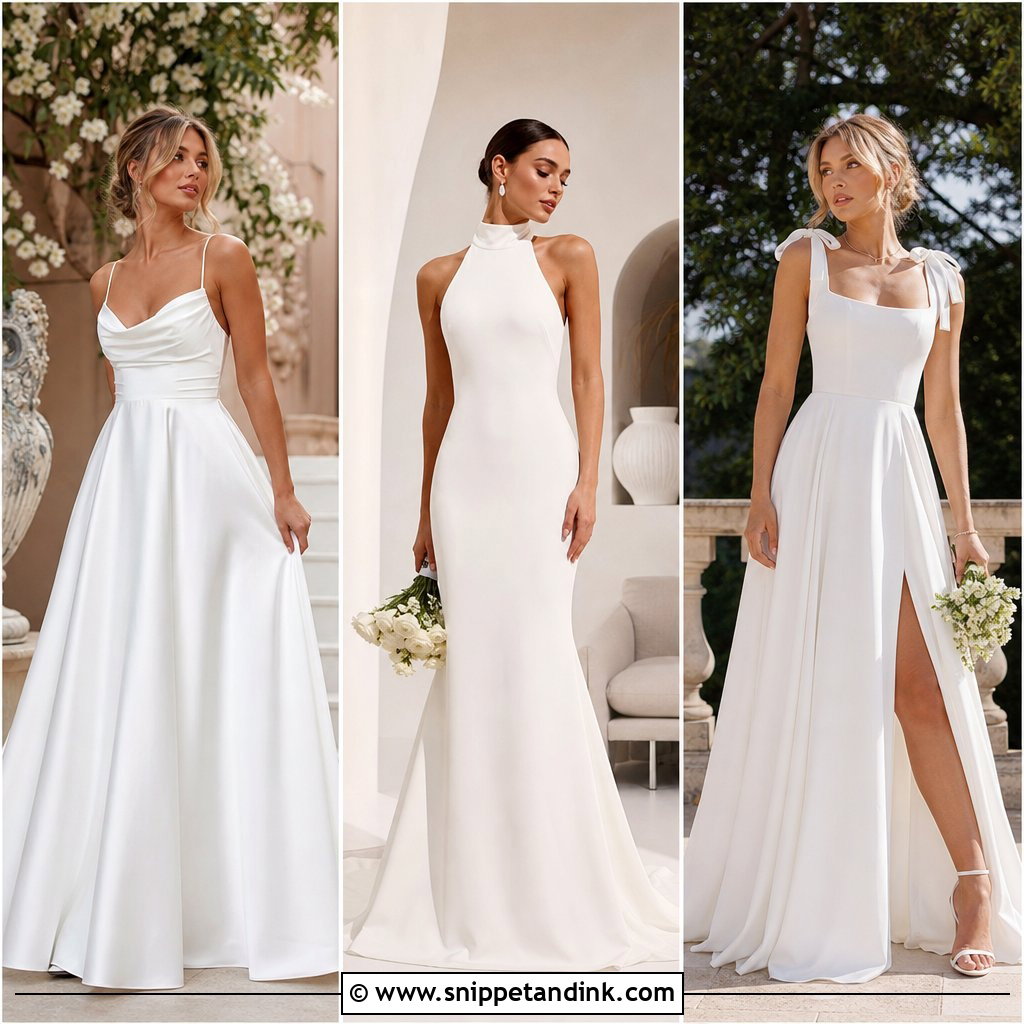
A halter frames the face and shoulders and can hold a full bust securely, provided the strap is wide. Thin halter ties are the enemy: by mid-reception they dig into the back of the neck, and you’ll feel it in your shoulders the next day. I look for a broad halter band, good lining and a fitted waist, with a soft mermaid or A-line skirt underneath. Sleek hair and small earrings let the neckline carry the look.
8. Bateau Neck Wedding Dress
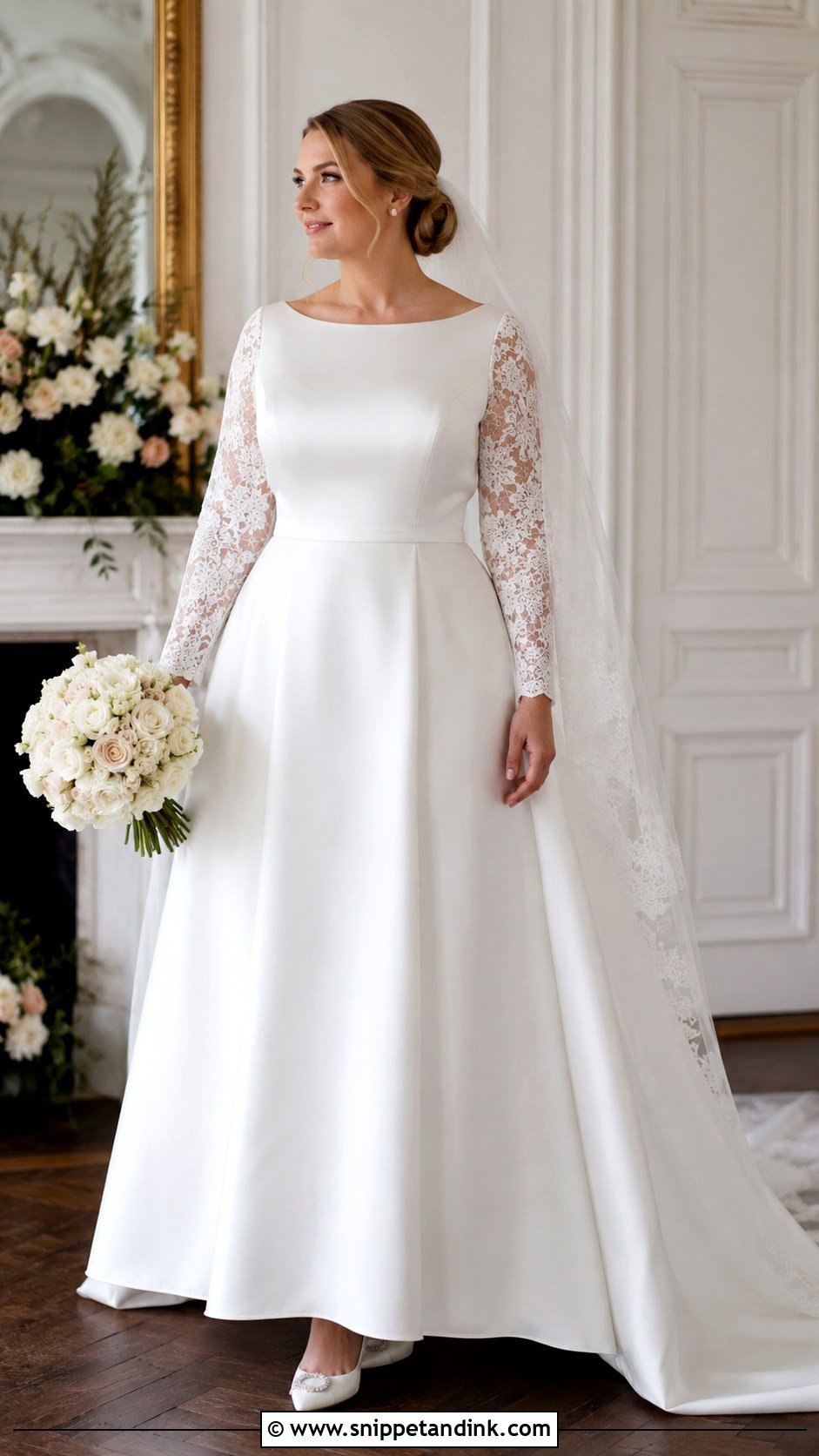
Bateau necks give coverage while still showing the collarbone. On a big bust, though, a flat panel of fabric stretched straight across can look like a shelf. I prefer a bateau with shaping seams through the bodice and a slight curve to the neckline, which softens the line. Pair it with a fit-and-flare or A-line skirt so it doesn’t turn boxy. Pearl studs and a low chignon suit its modest leaning.
9. Scoop Neck Wedding Dress
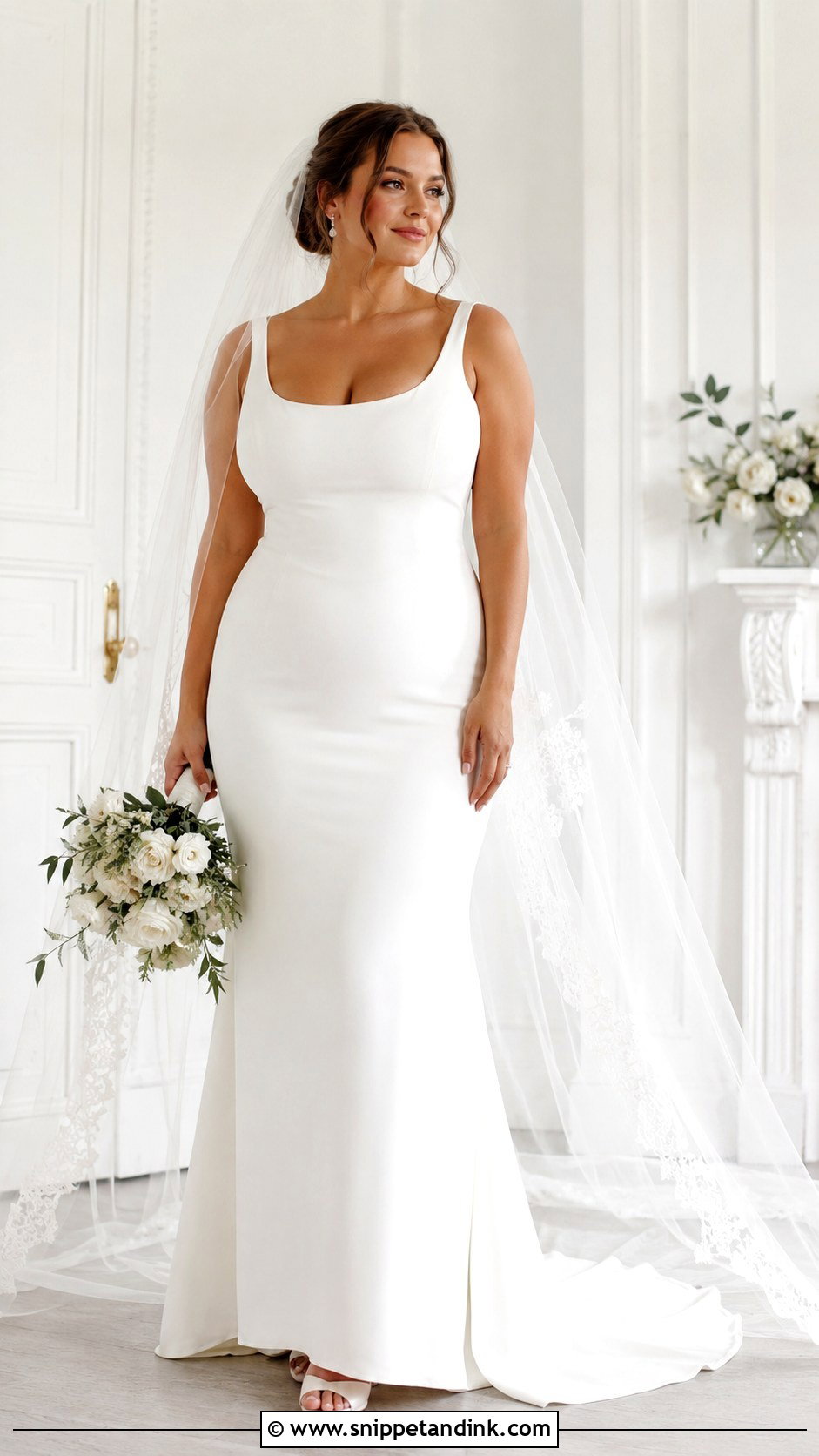
Comfort is the scoop neck’s strength. The rounded line covers the chest but opens it enough to avoid a heavy look, and wider straps leave room for real shaping inside. It’s an easy neckline to wear for ten hours. With a plain crepe scoop I’d add a cathedral veil for drama; with detailed lace, keep accessories minimal so the dress isn’t fighting itself.
10. Wide Strap Wedding Dress
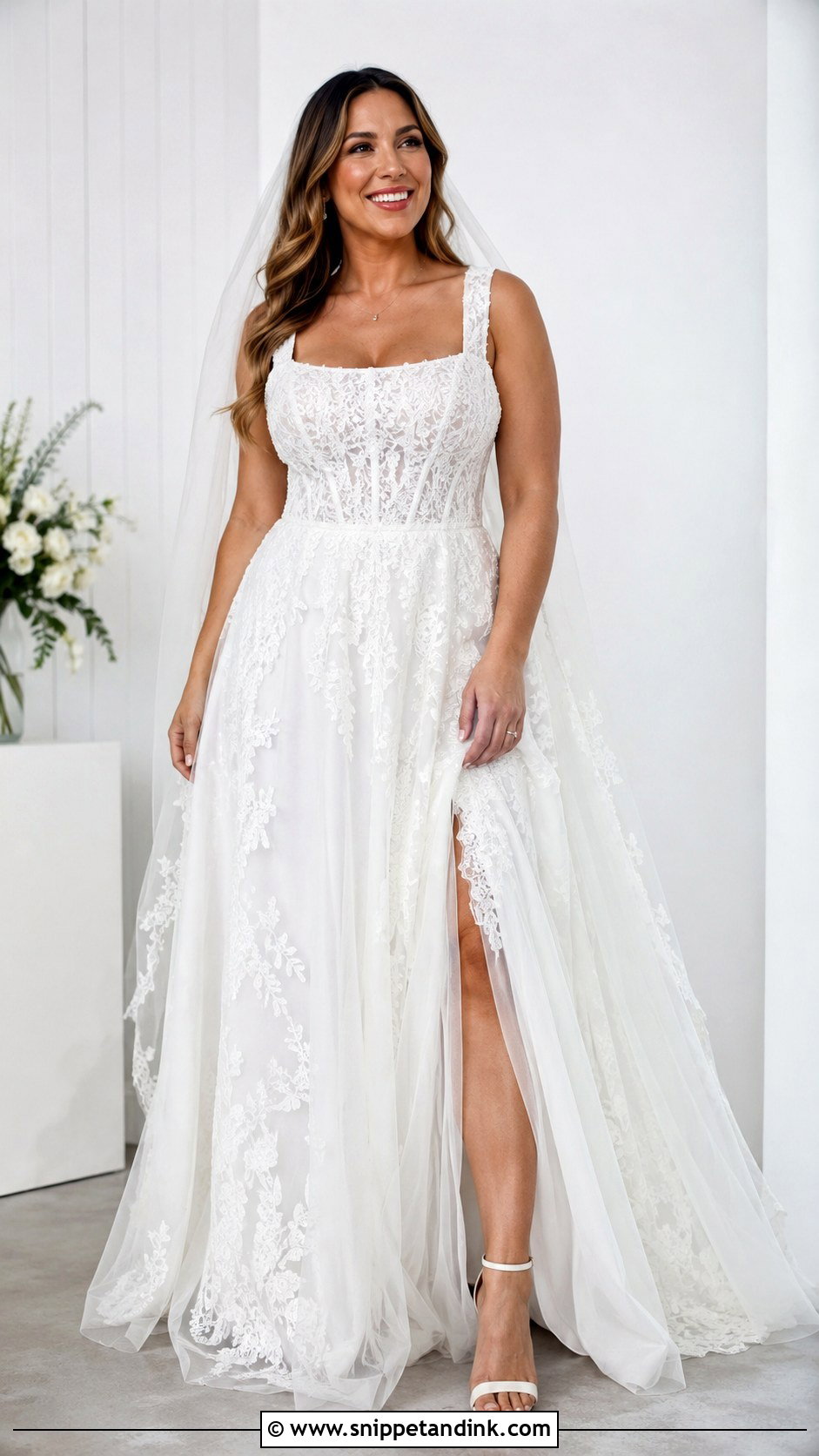
Wide straps do quiet work: they hide supportive undergarments, spread pressure across the shoulders and keep the bodice from creeping. A wide strap wedding dress pairs with nearly any neckline, but on a fuller bust I still want boning or a firm lining beneath, not soft fabric alone. Check where the straps land. Set too far out, they slide off at the shoulder edge; a seamstress can move them in by a fraction.
11. Long Sleeve Wedding Dress
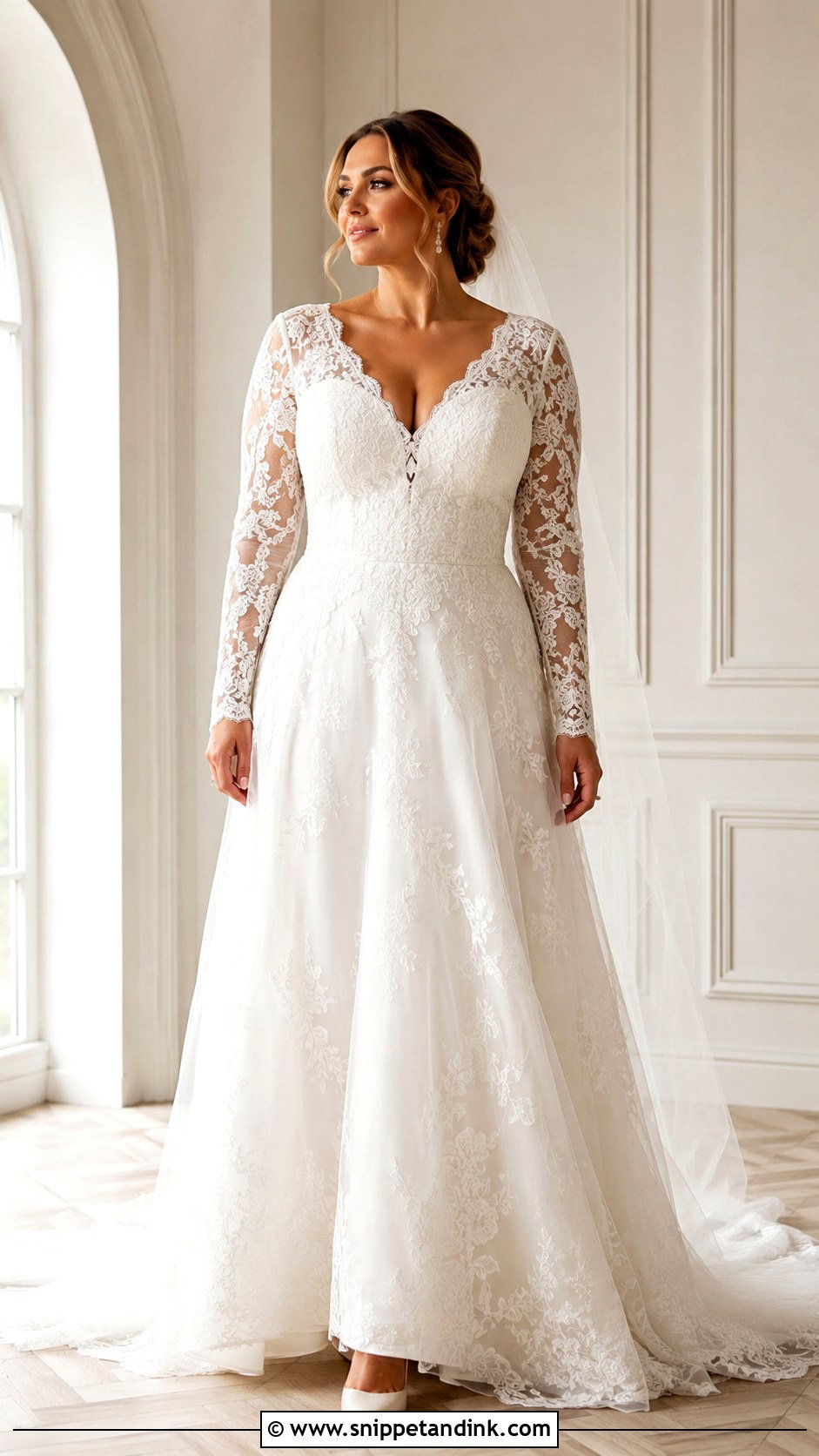
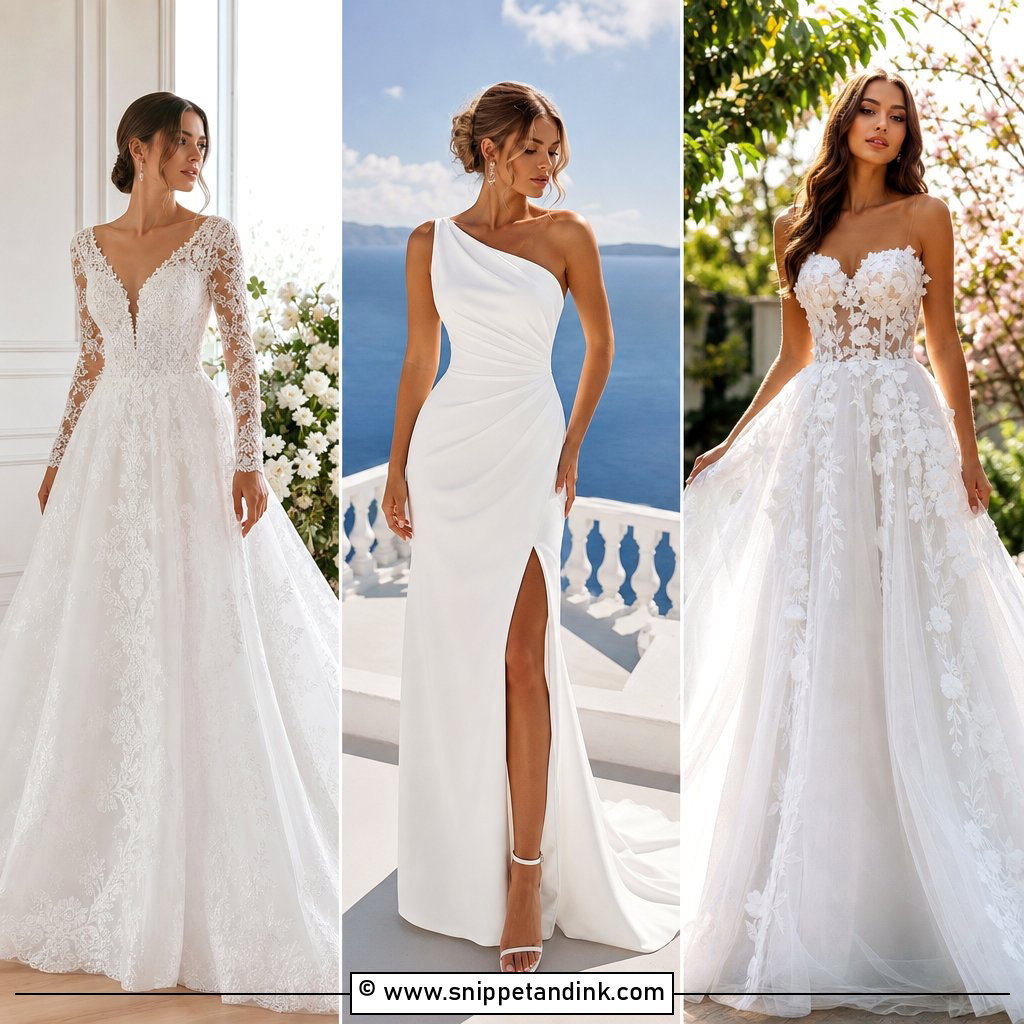
Long sleeves can close in the upper body, so the neckline and waist have to open it back up. A V, sweetheart or square neckline keeps the chest from looking wrapped, and a defined waist stops the whole top half from reading as one block. Sheer lace sleeves feel lighter than fitted crepe ones. Lift both arms at the fitting: tight armholes on a fitted sleeve will pull the whole bodice up, and that’s fixed by letting out the underarm, not by sizing up.
12. Illusion Neck Wedding Dress
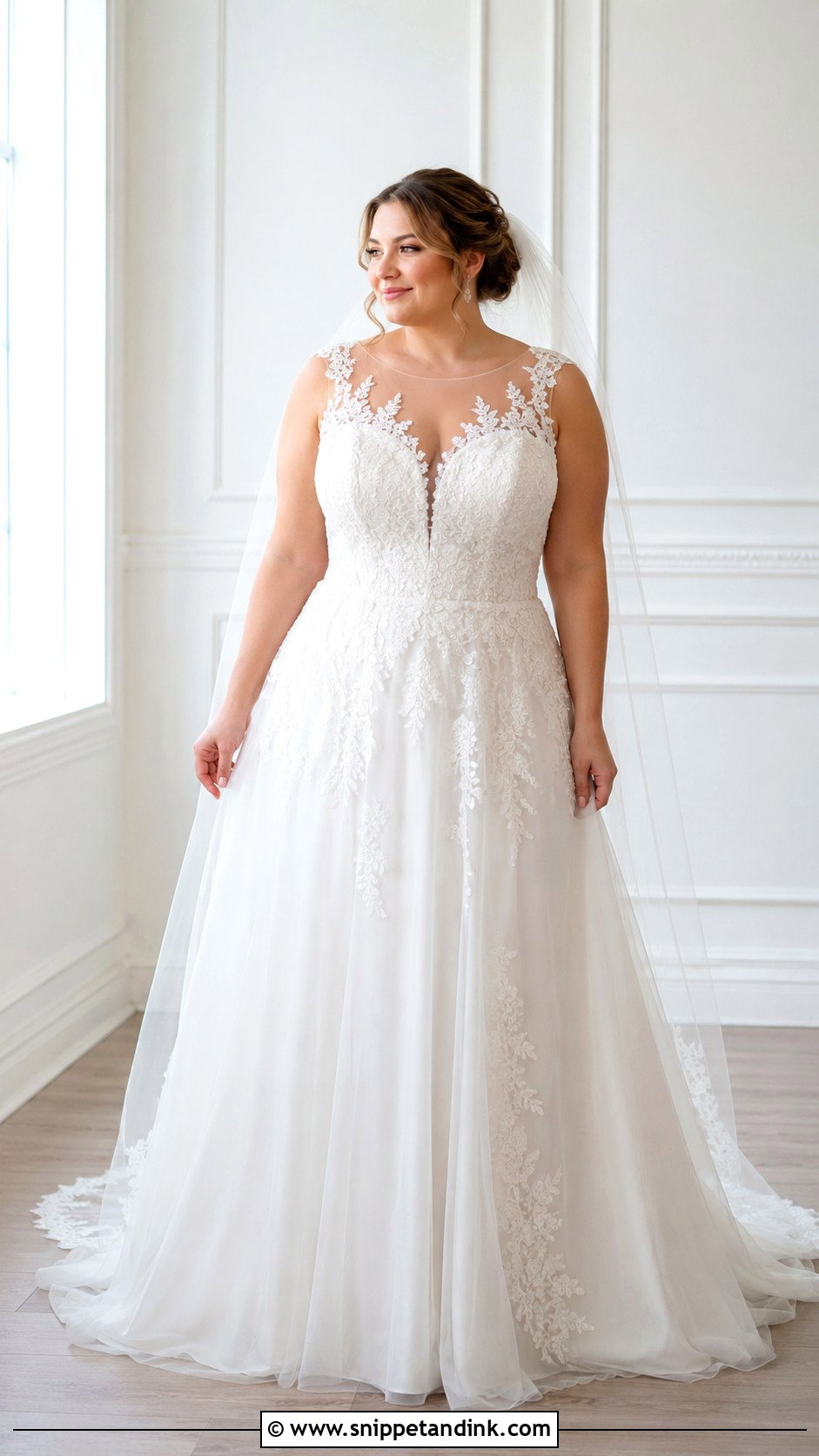
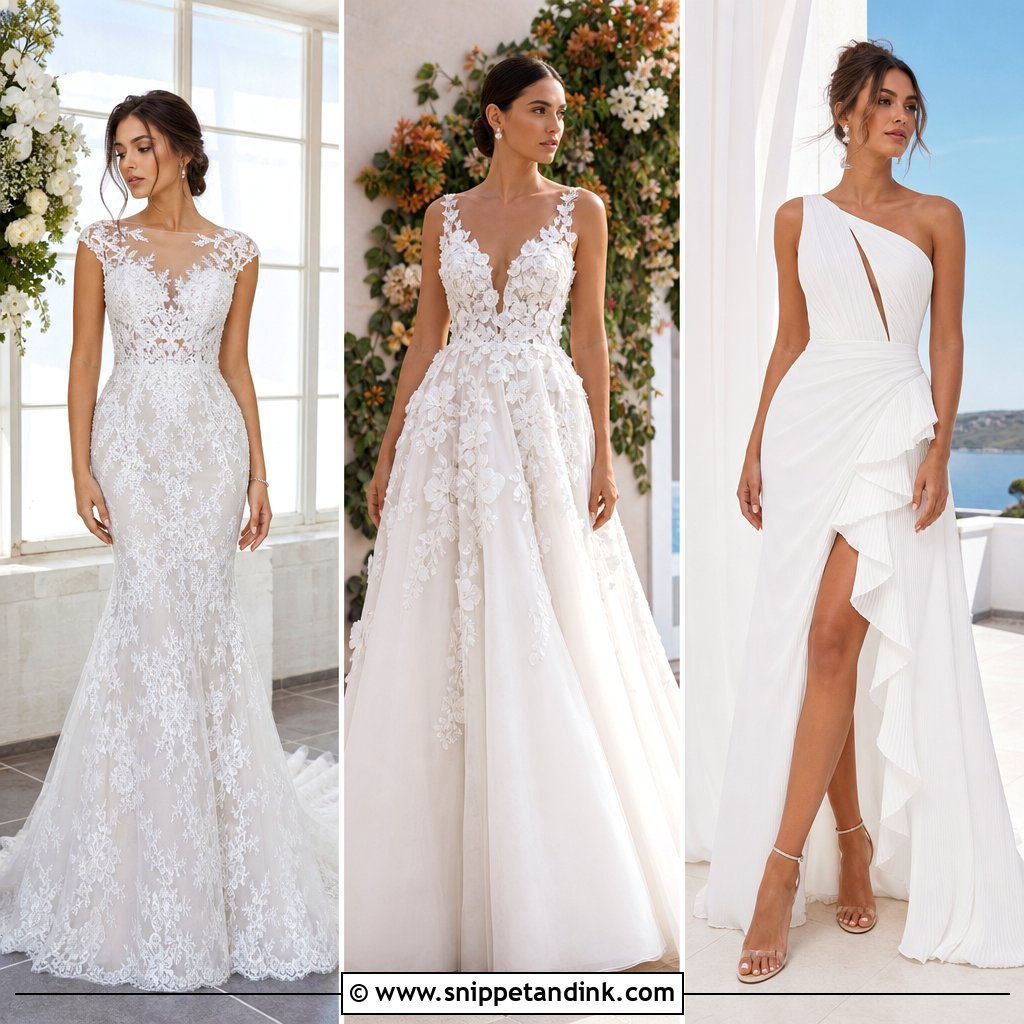
Illusion mesh softens a neckline that might otherwise feel too open, and lace appliqué placed over the sheer panel makes it look deliberate. But mesh is decoration, not support. I always check that a properly lined bodice sits underneath doing the real work. Match the mesh to your skin tone in daylight at the shop door; under boutique lighting, the wrong shade looks fine and then shows up grey in outdoor photos.
13. Strapless Sweetheart Wedding Dress
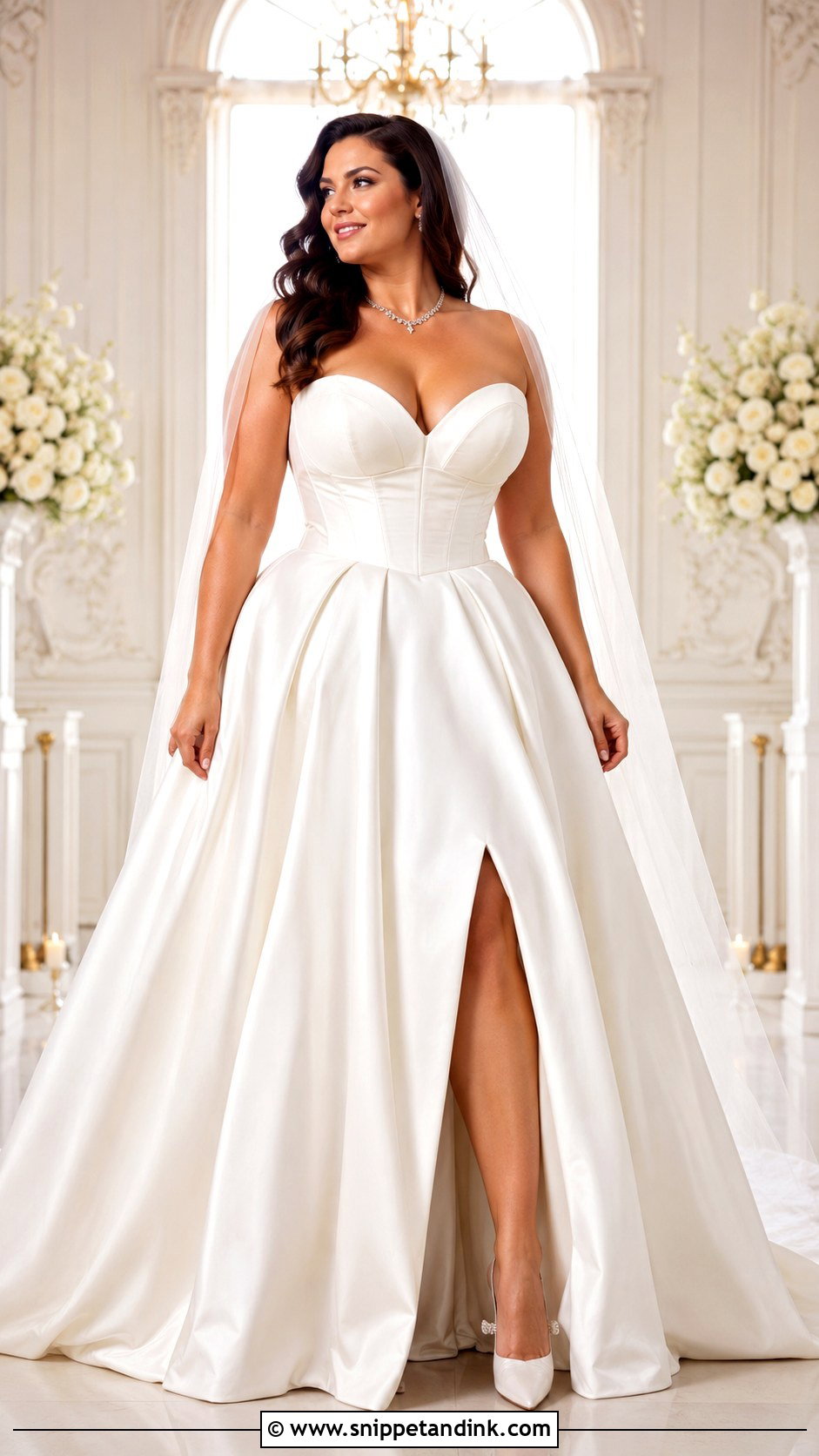
Strapless on a big bust is possible, and I don’t talk brides out of it when they love it. The support has to come from the bodice, waist, boning and an inner grip band, never from you tugging the top up. A sweetheart curve shapes the bust more kindly than a straight strapless edge. Ask whether a lace-up back or corset base can be added. Then do the honest test: wear it for twenty minutes in the shop, sitting and standing. If you reach for the neckline even once, it isn’t built tightly enough yet.
14. Basque Waist Wedding Dress
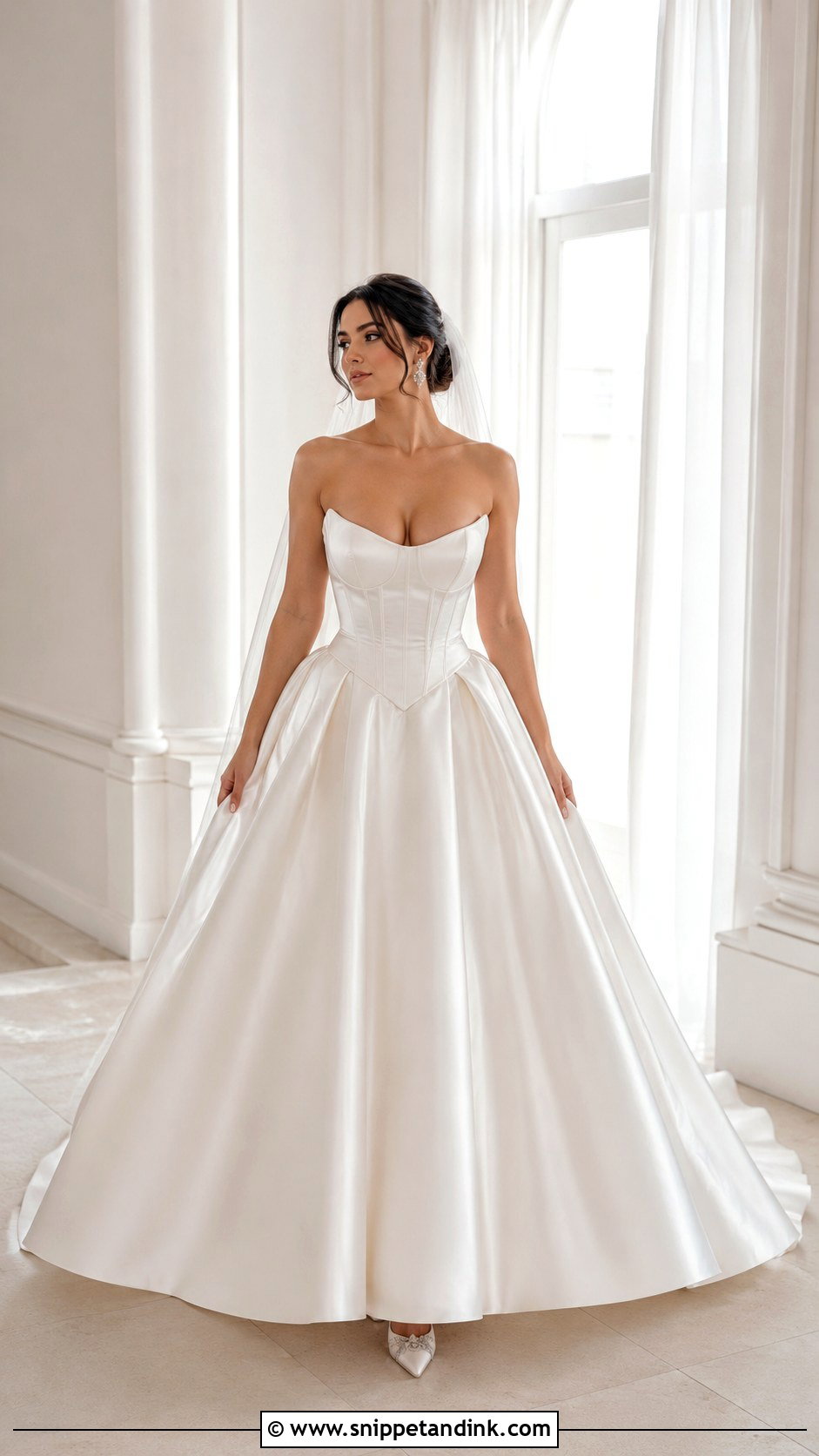
The dipped point of a basque waist draws the eye down to the waist and lengthens the torso, which balances a full chest well. I like to see supportive cups and a skirt that releases from that low point without gathers bunching at the hip. Satin and mikado make it sculptural; lace makes it softer. Keep the veil simple so the waistline stays the star.

15. Empire Waist Wedding Dress
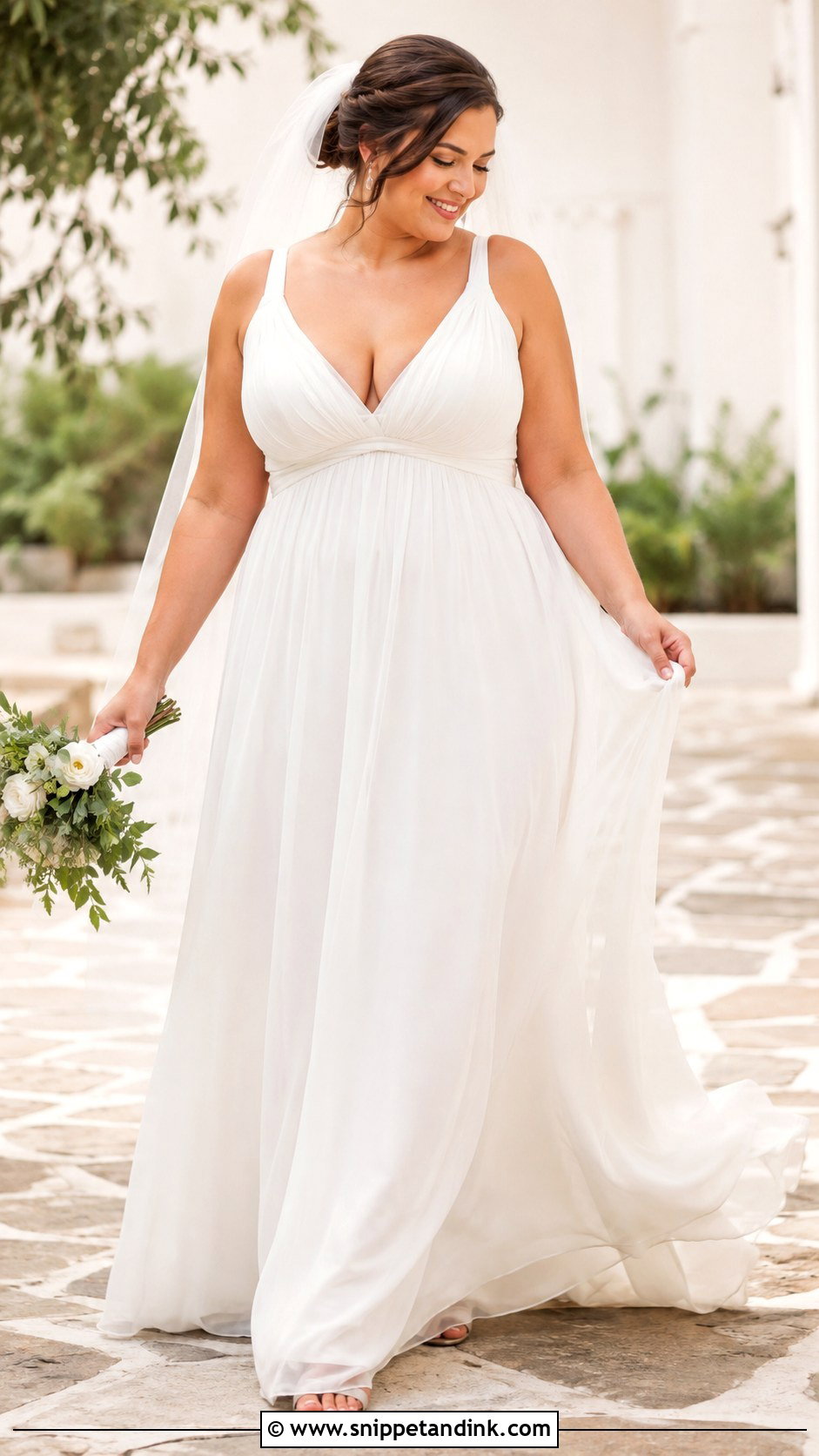
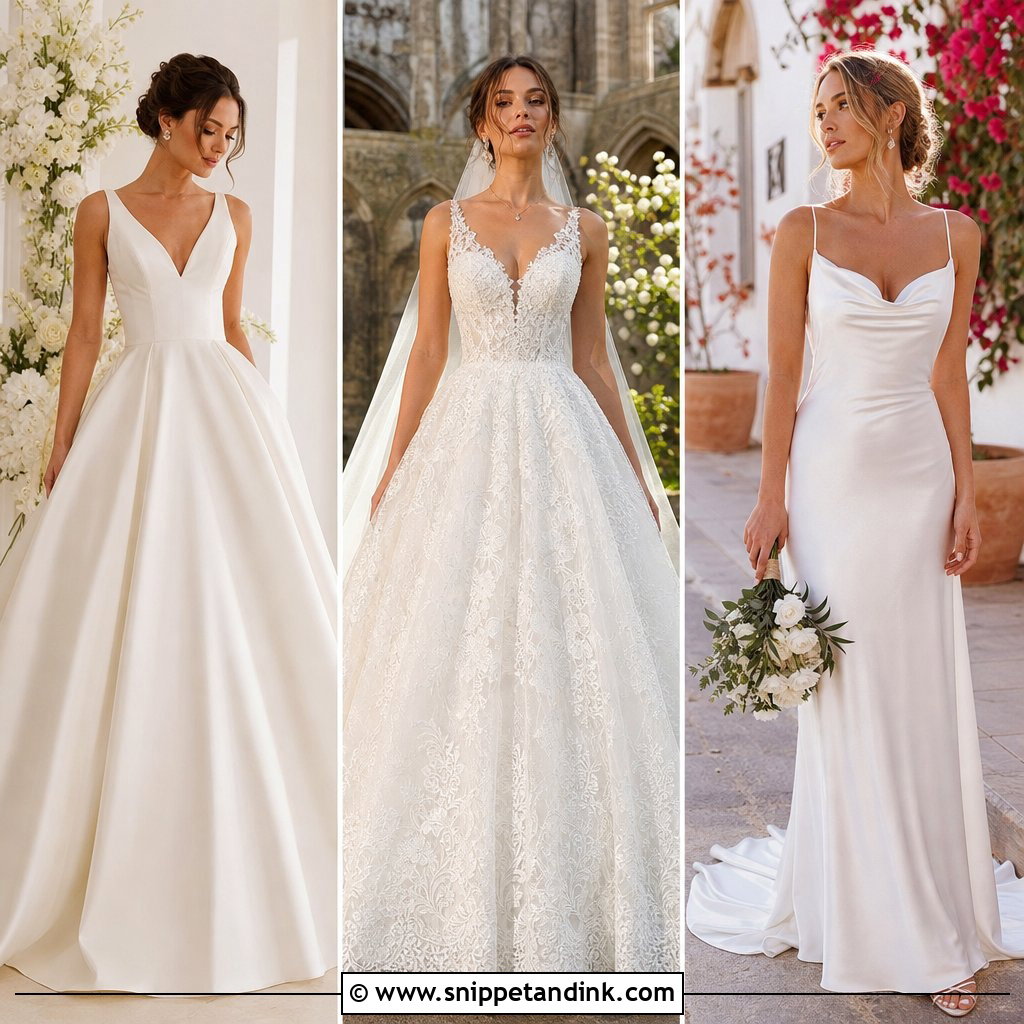
Seam placement decides whether an empire waist wedding dress works for you. It must sit under the bust, not cut across it. On larger cups, off-the-rack empire seams often land too high, and that’s the first thing I measure. Chiffon, soft tulle and light crepe flow from the seam without clinging. Choose a V or scoop over a high neckline, which can make the bodice look like one shelf with the seam.
16. Fit And Flare Wedding Dress
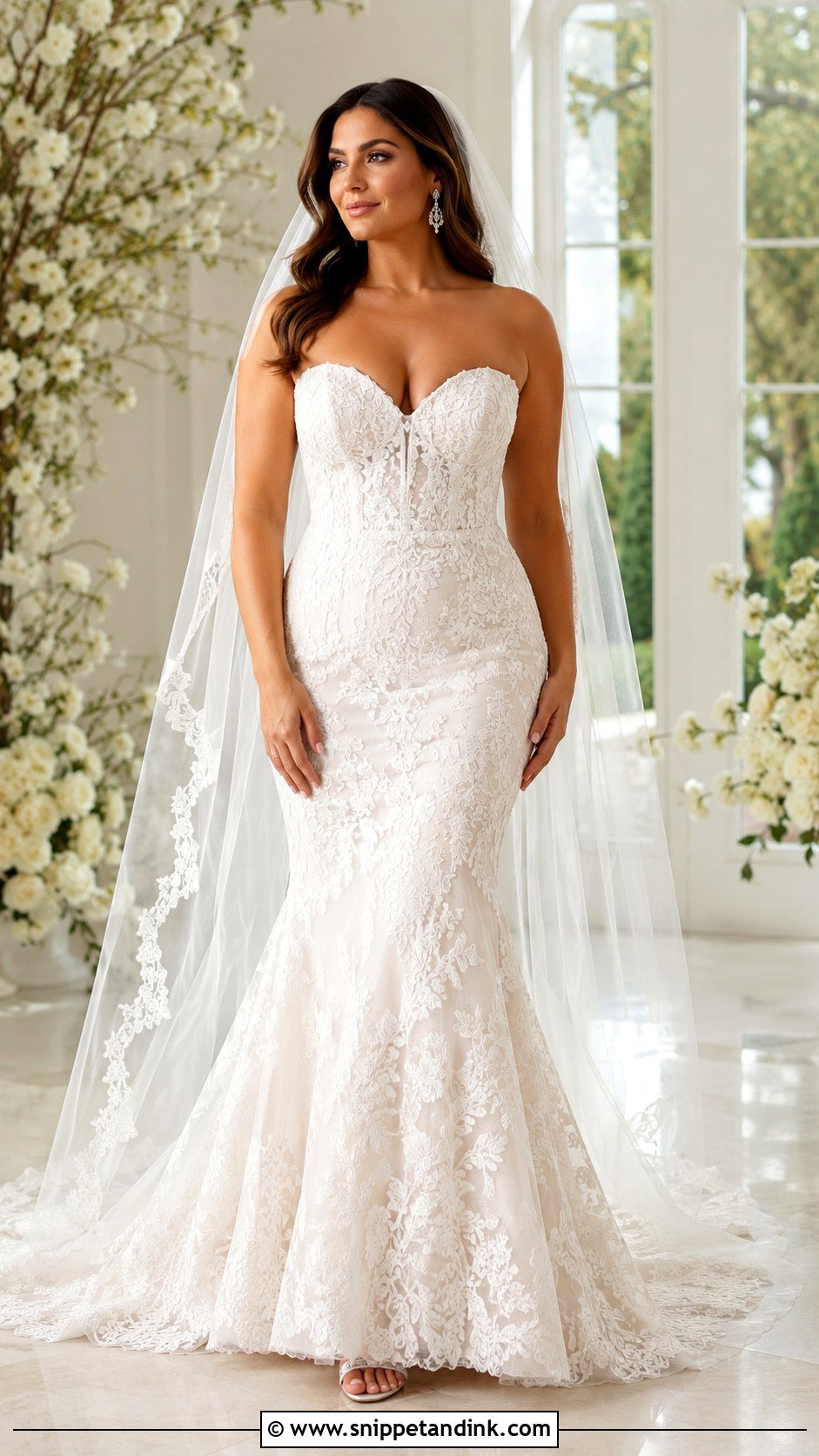
Fit-and-flare follows the body to the lower hip or thigh and then opens, giving shape without a mermaid’s drama. The bodice needs boning, sturdy straps or a secure sweetheart edge. Stretch crepe is forgiving to sit in, while satin creases at the hip crease when you’re seated for dinner, so factor in which you’d rather see in late-evening photos. Keep the neckline moderate and let a long veil add length.
17. Mermaid Wedding Dress
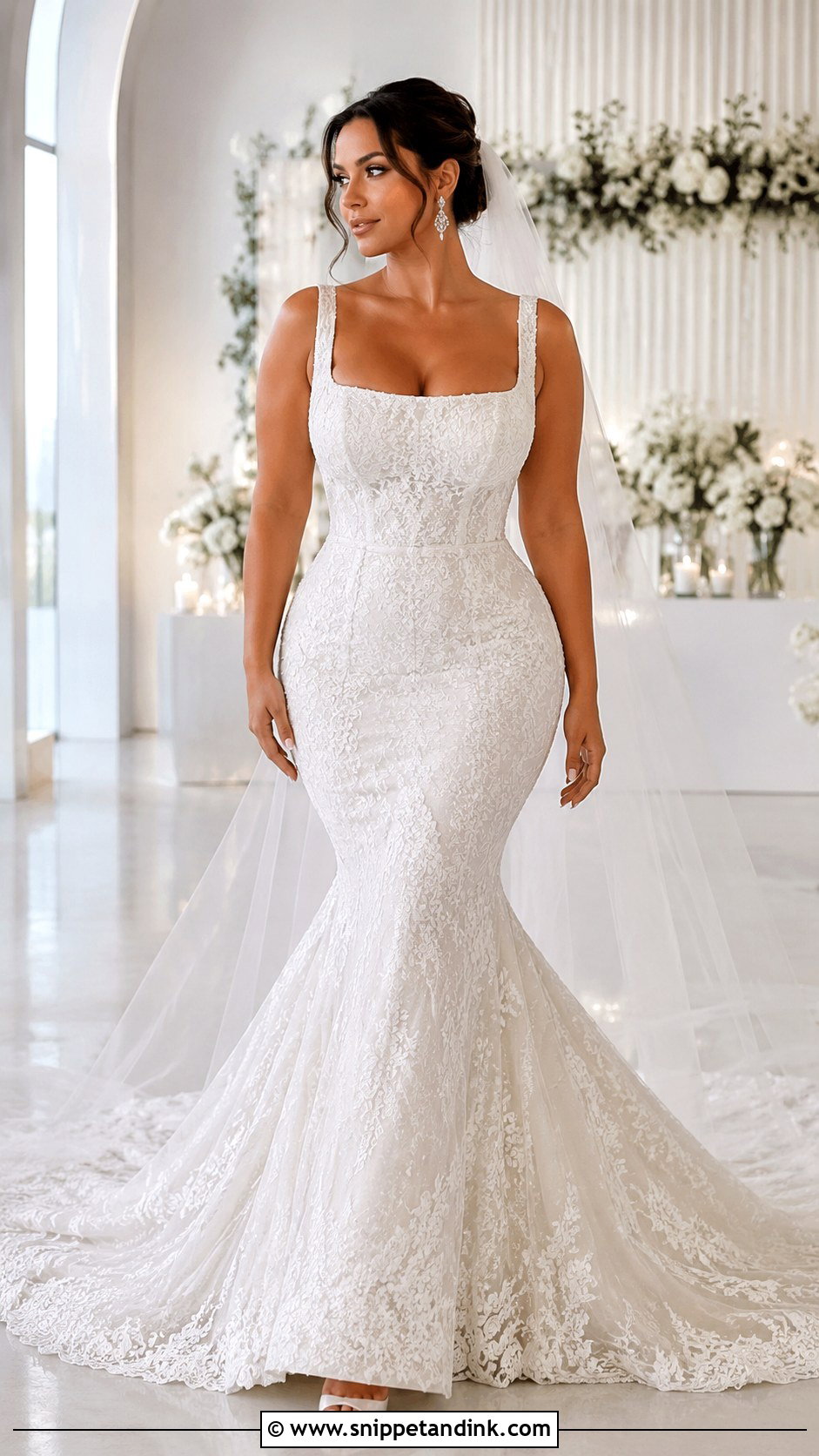
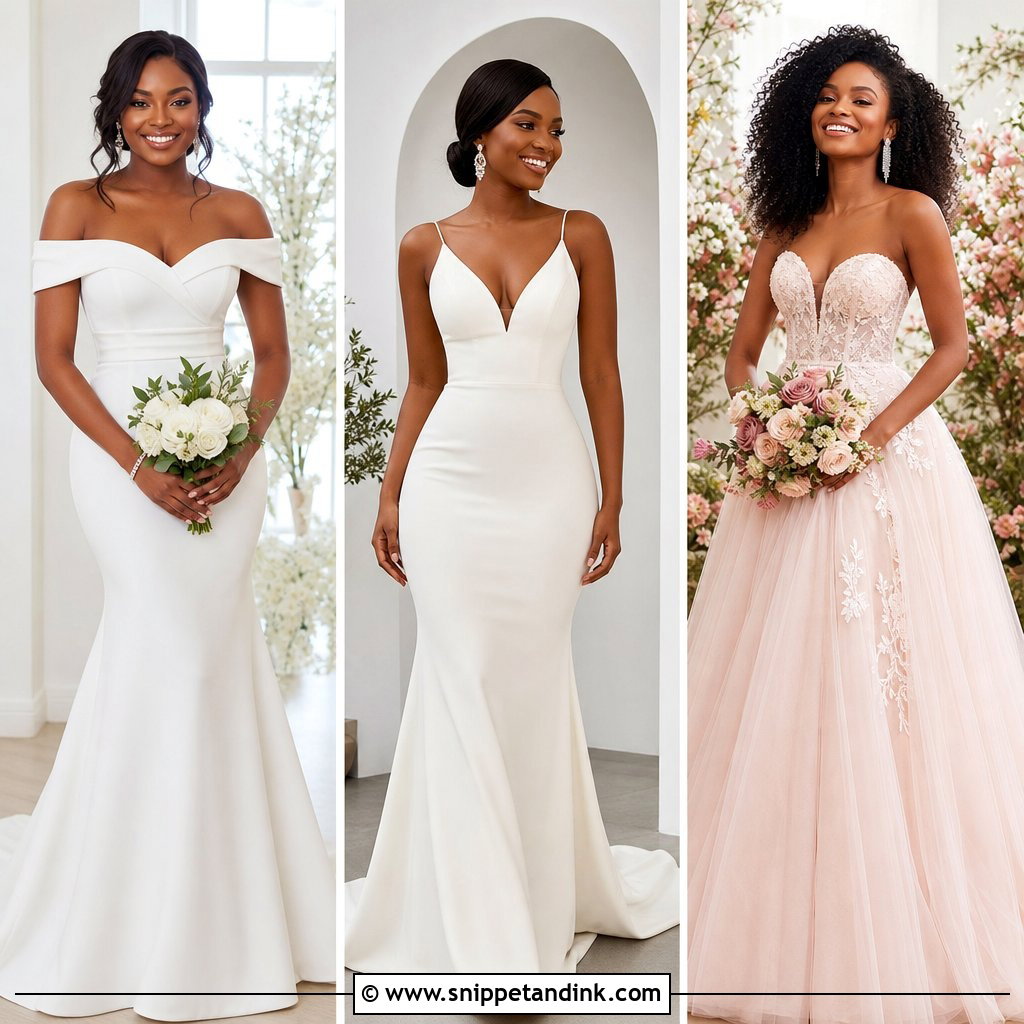
A mermaid celebrates curves from top to bottom, and the fitted line through waist and hip balances a fuller chest. The catch is that the bodice gets no help from the skirt, so I want strong cups, real boning and enough coverage that nothing shifts. Sweetheart, square and off-shoulder necklines all suit it. Before you commit, sit on a low chair and walk a flight of stairs in it. Mermaids that are too tight at the knee are the ones brides end up changing out of.
18. A Line Tulle Wedding Dress
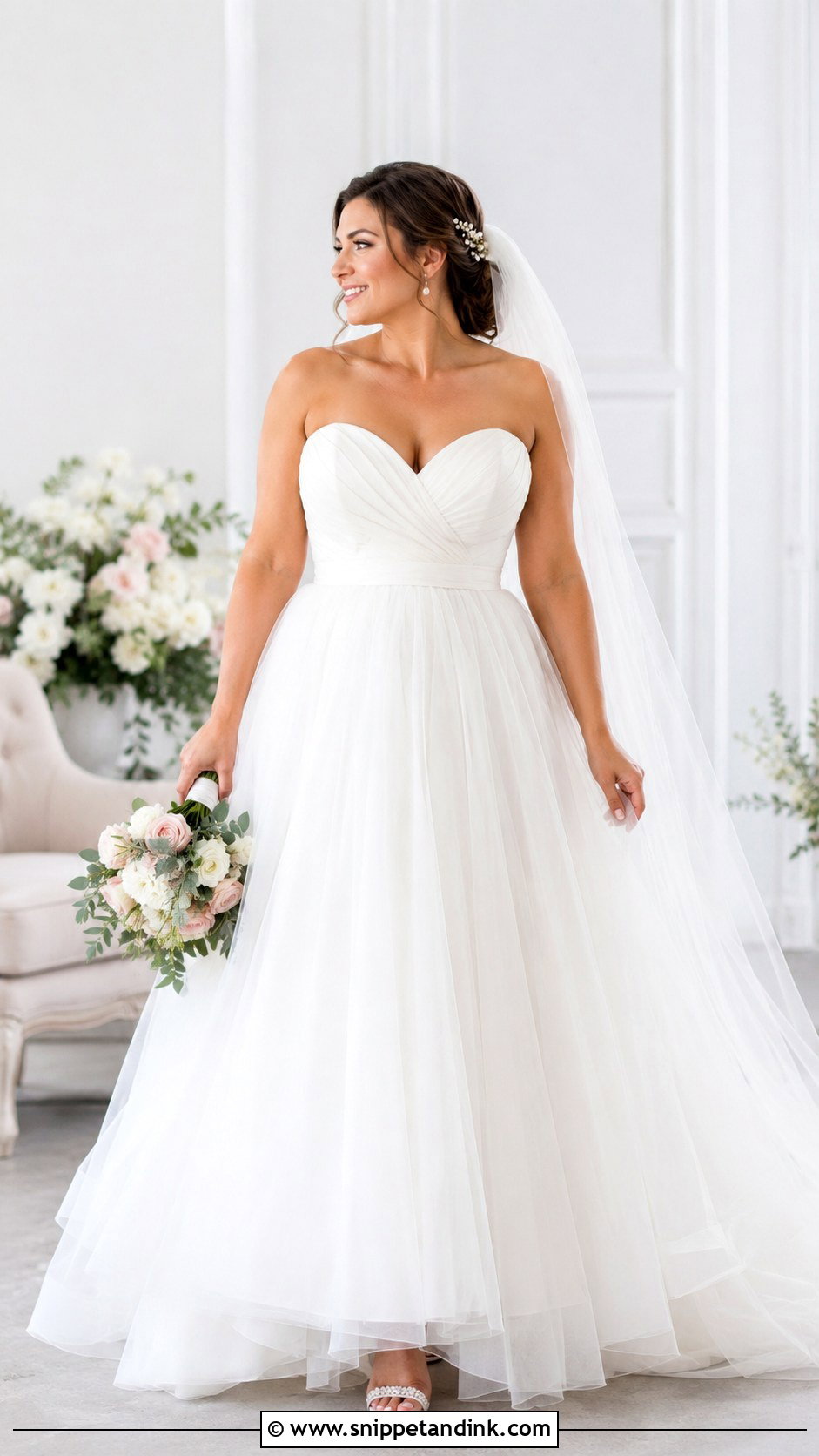
Tulle floats away from the body, so an A-line tulle gown gives volume without the weight of heavier fabrics. The trap is the bodice. Tulle alone holds nothing up, and I’ve pulled sample gowns where the top was a single unlined layer. Look for a lined, shaped bodice with a sweetheart, V, square or scoop neckline. Pearl pins in the hair suit the softness, and it’s light enough to wear through a long celebration.
19. Satin A Line Wedding Dress
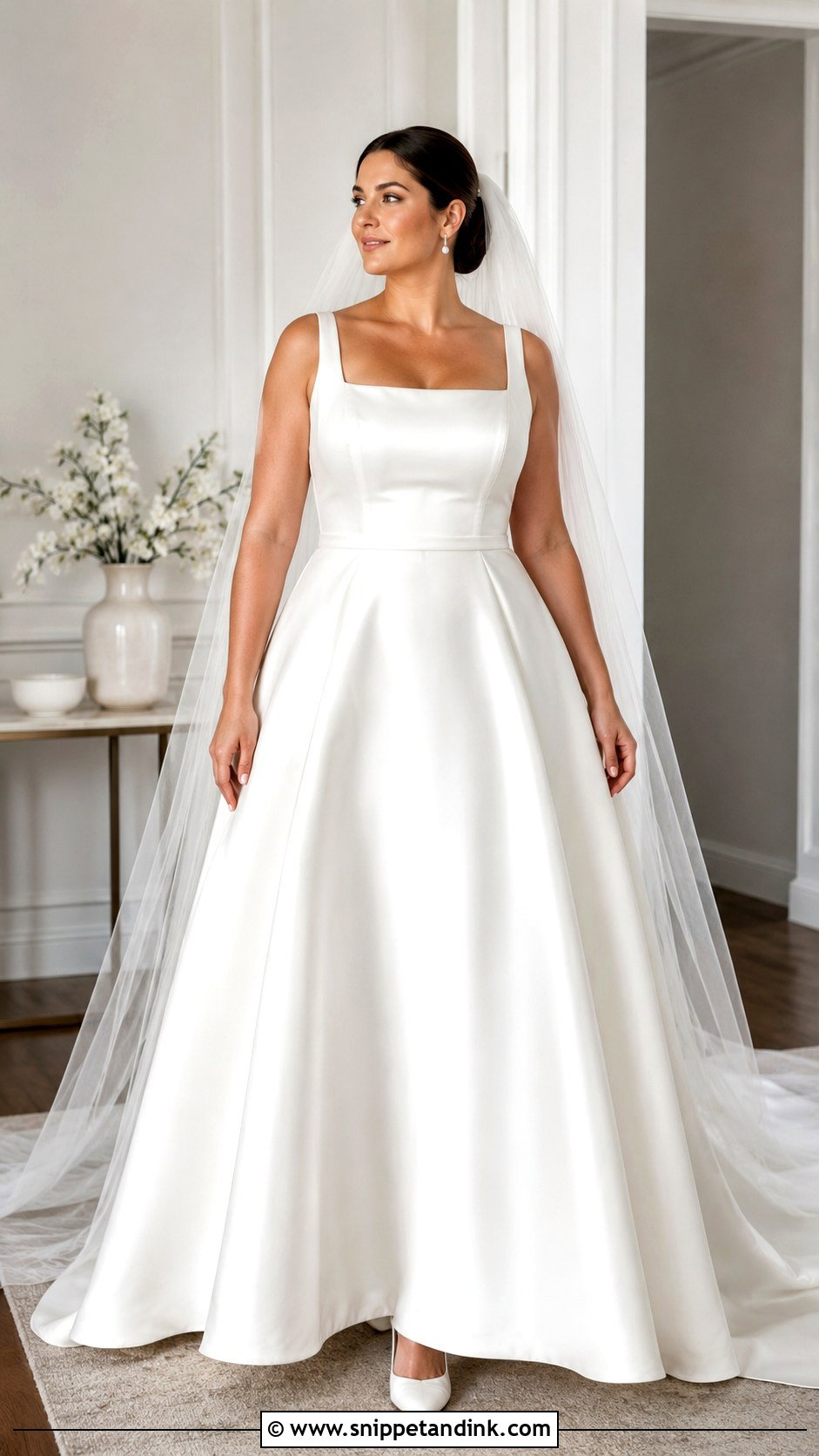
Satin holds its shape, which is why a satin A-line suits a big bust so well: paired with a lined bodice and a defined waist, the fabric itself helps the structure. A sweetheart or square neckline flatters, and wider straps or a corset back add security. Satin shows every pull line, though. If you see diagonal creases running from the bust toward the armpit, the bodice is too tight there, and that’s an alteration, not something to live with.
20. Crepe Sheath Wedding Dress
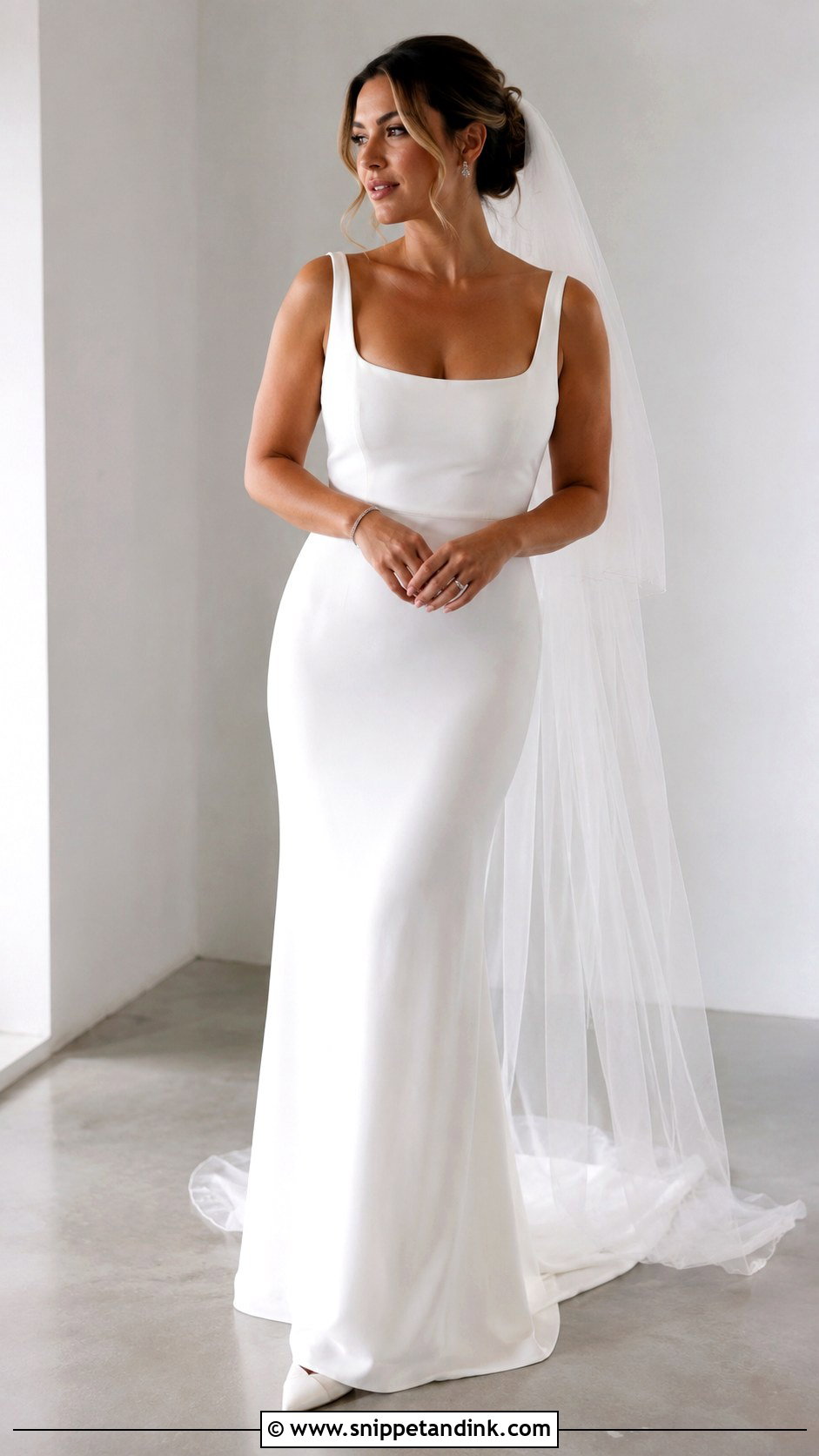
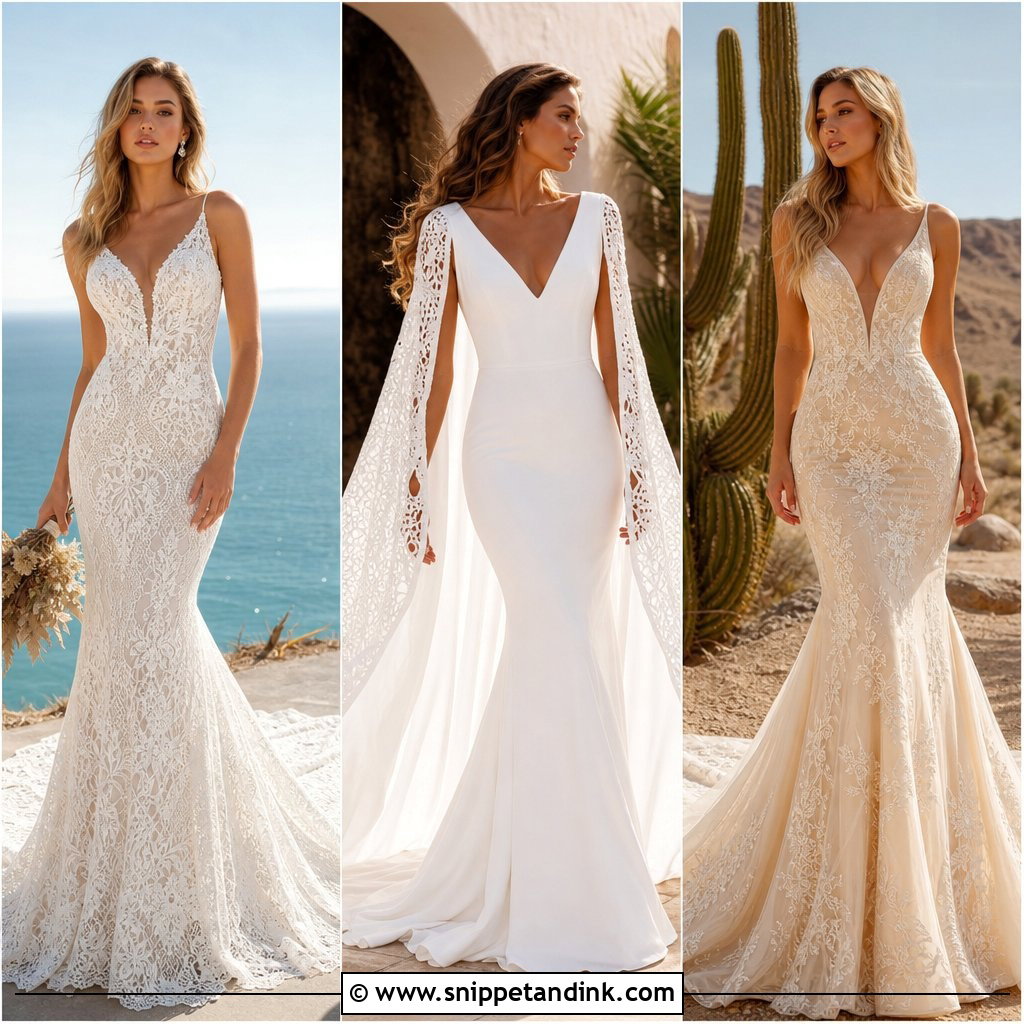
Crepe sheaths look sleek, but crepe shows every seam and every lump in a bra underneath. For a big bust I’d only consider a sheath with genuine structure built into the bodice, and a slightly heavier crepe over thin stretch fabric. Square, scoop or a modest V all work. Budget for skilled tailoring here more than with any other dress on this list, because the clean line is the whole point.
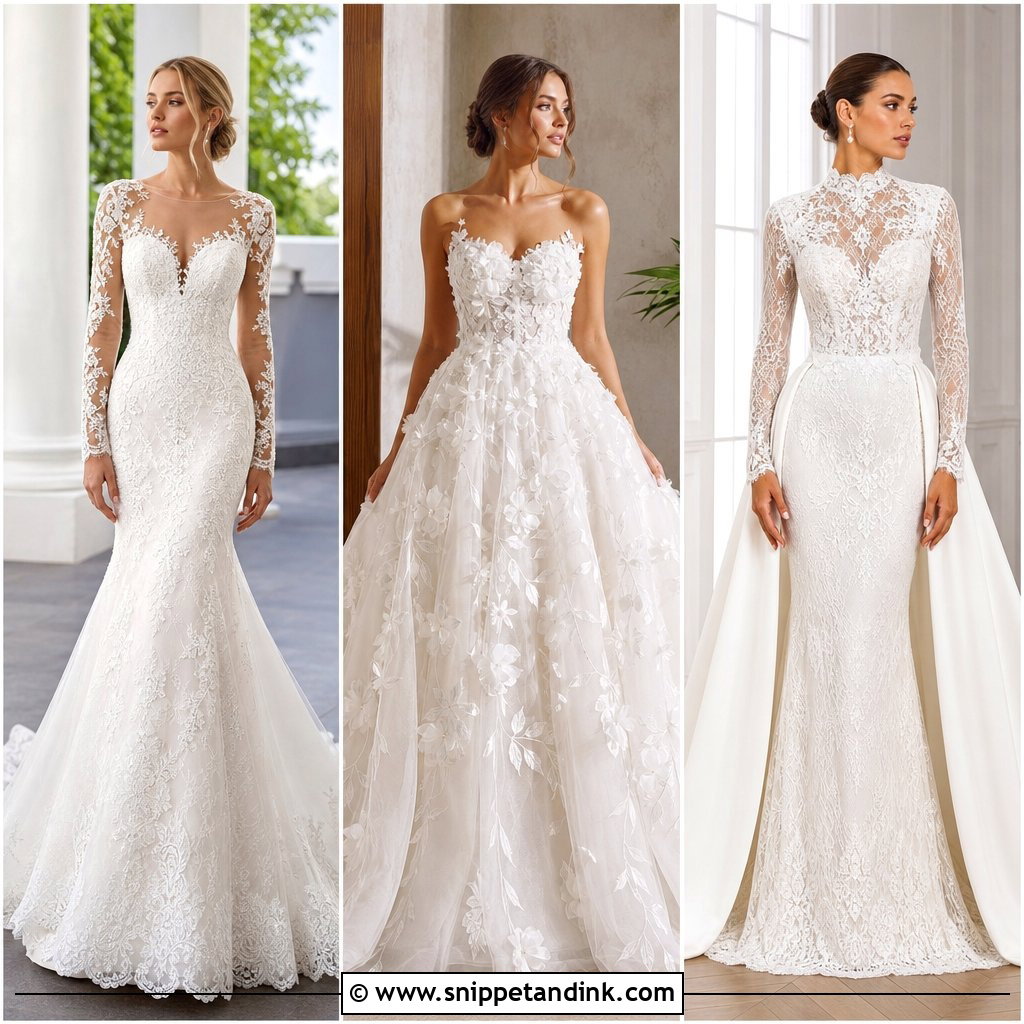
21. Lace A Line Wedding Dress
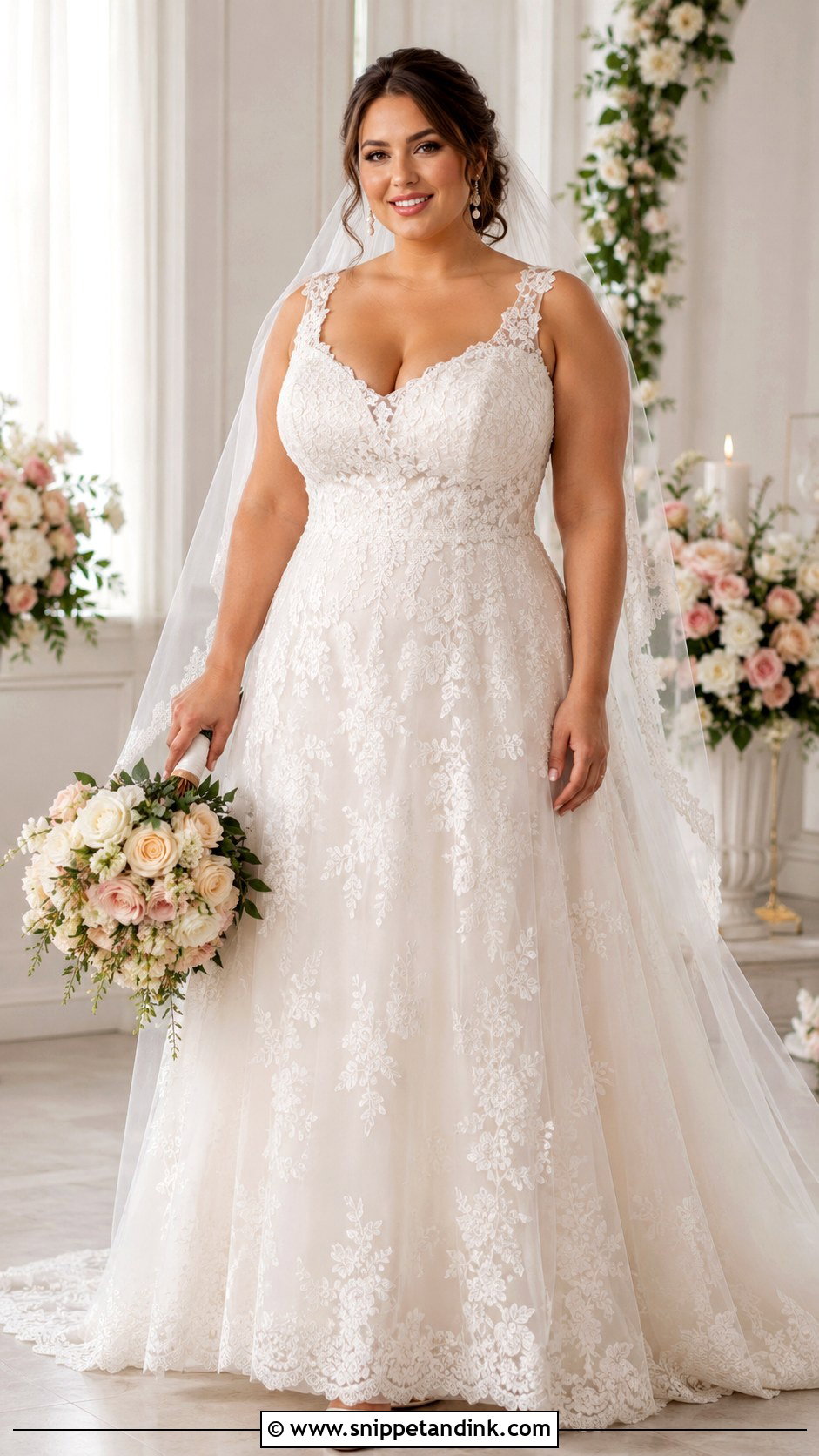
Lace placement is what I study on an A-line lace gown. Heavy motifs clustered across the chest add visual weight exactly where you don’t need it. Better designs frame the neckline and waist and let the lace thin out over the bust. A supportive lining keeps it secure, and lace straps or sleeves soften the edges. Sweetheart, scoop and V-necks all suit this traditional shape.
22. Tea Length Wedding Dress
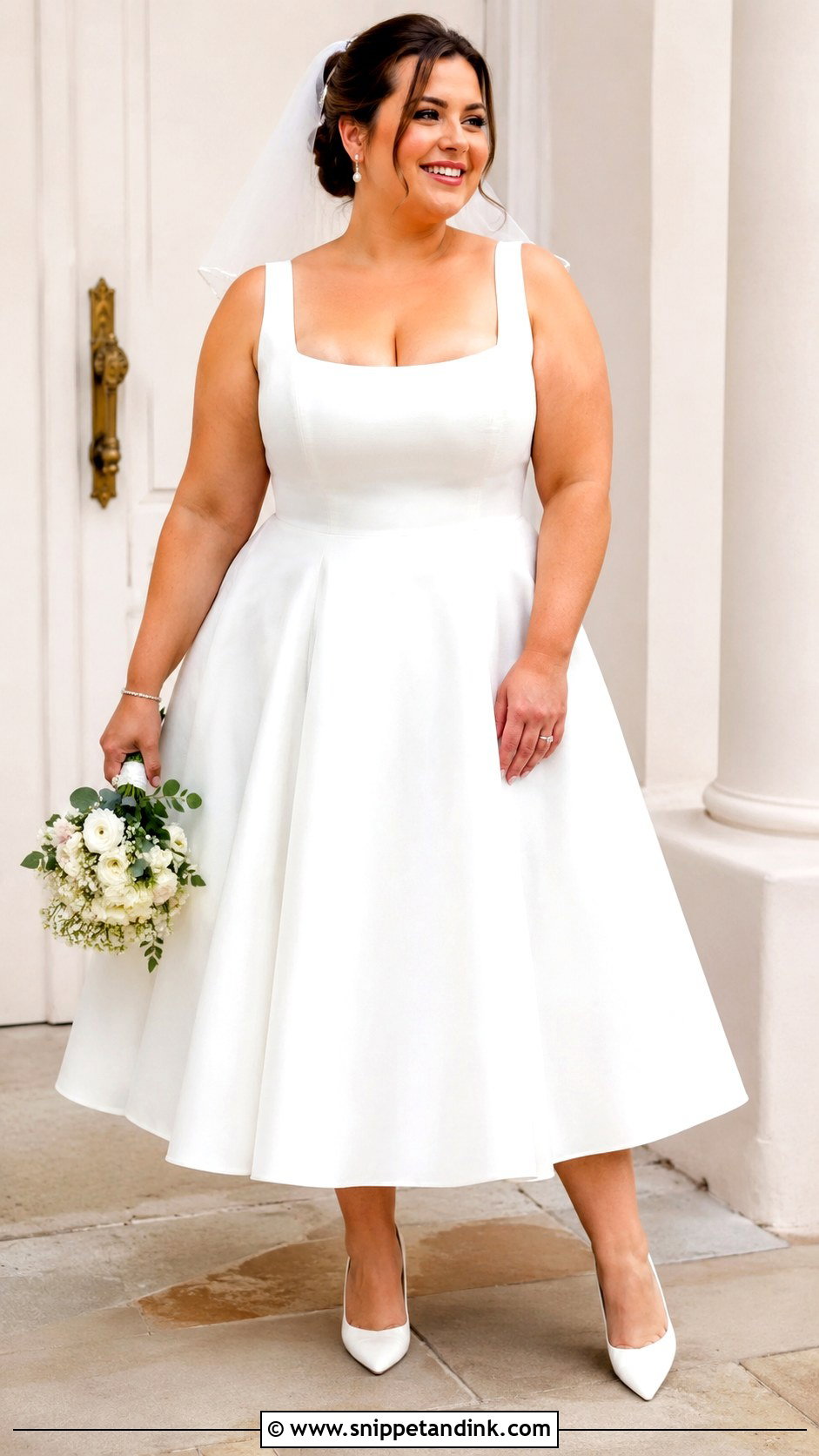
Shorter hems shift attention to the whole outfit: shoes, legs, the swing of the skirt. That’s why tea length works well with a fuller bust. The skirt lands below the knee or mid-calf. A structured top still matters, especially in strapless or sweetheart versions, and a square neck or wide-strap bodice feels most secure. It suits courthouse weddings and garden receptions, and pointed pumps with a short veil or hair bow give it vintage character.
23. One Shoulder Wedding Dress
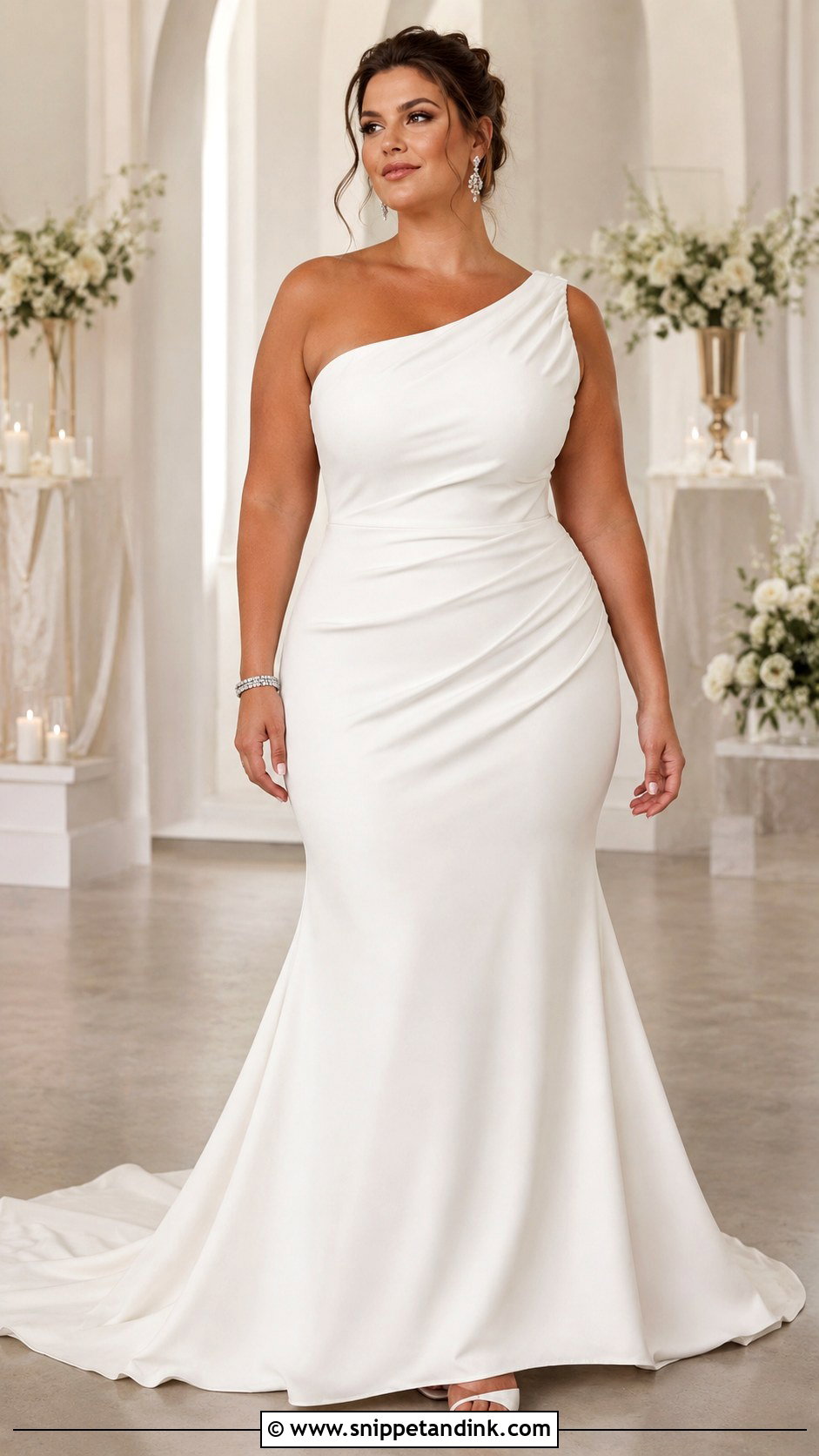
One-shoulder necklines offer more support than brides expect, since the strap anchors the bodice diagonally and the eye follows that line rather than resting on the chest. I check two things: that the single strap is sturdy and wide, and that built-in cups are fitted, not floating. A crepe fit-and-flare or satin A-line suits it. Skip the necklace; the shoulder is already doing the talking.
24. High Neck Lace Wedding Dress
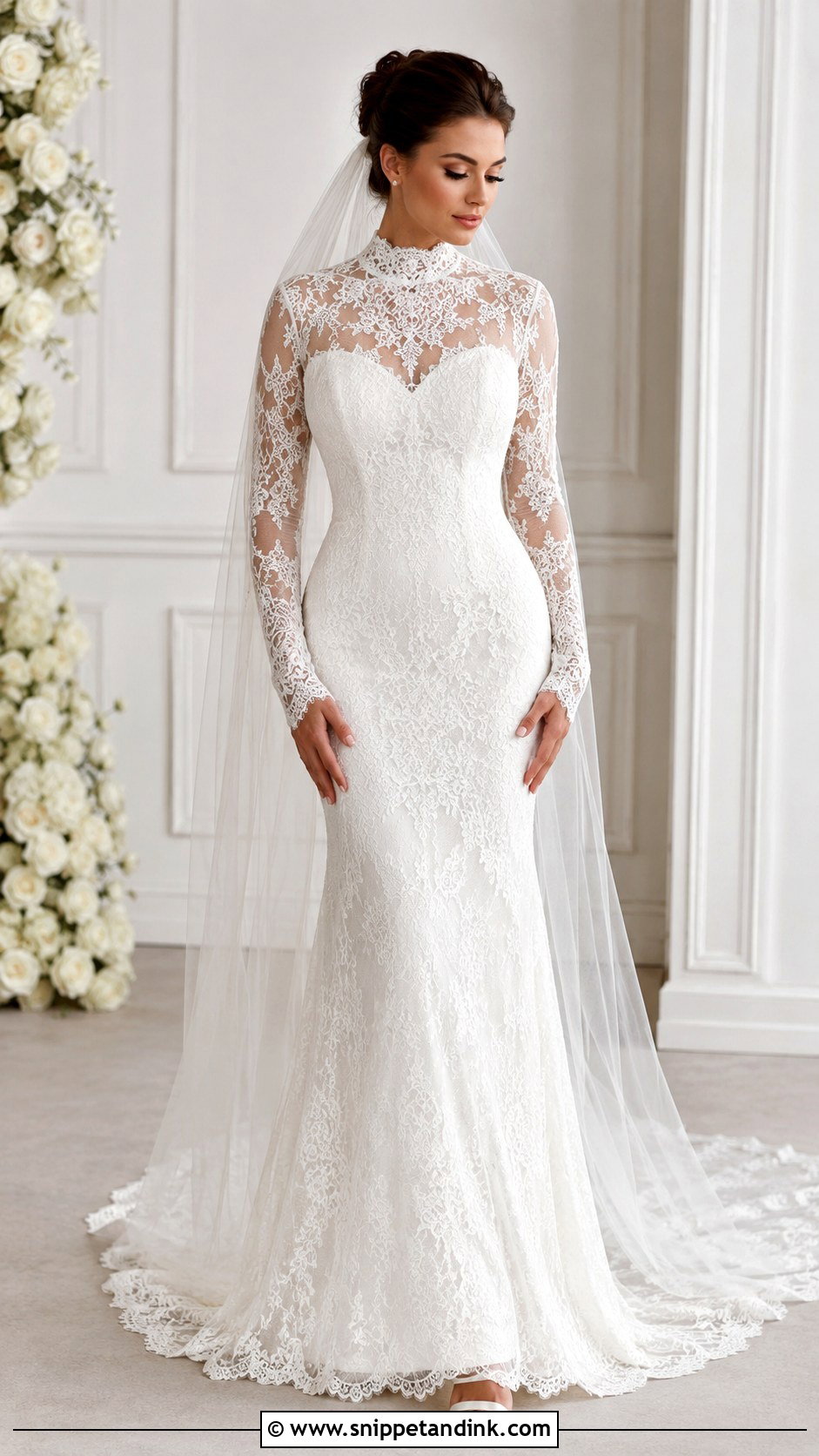
Coverage without bulk is the goal with a high neck lace wedding dress. A heavy opaque high neck on a full bust can make the chest look like one solid block from chin to waist, so I steer brides toward sheer lace, illusion panels or a soft mock neck. The waist must be clearly defined. Long sleeves or delicate cap sleeves suit it, and an updo keeps the neckline clean.
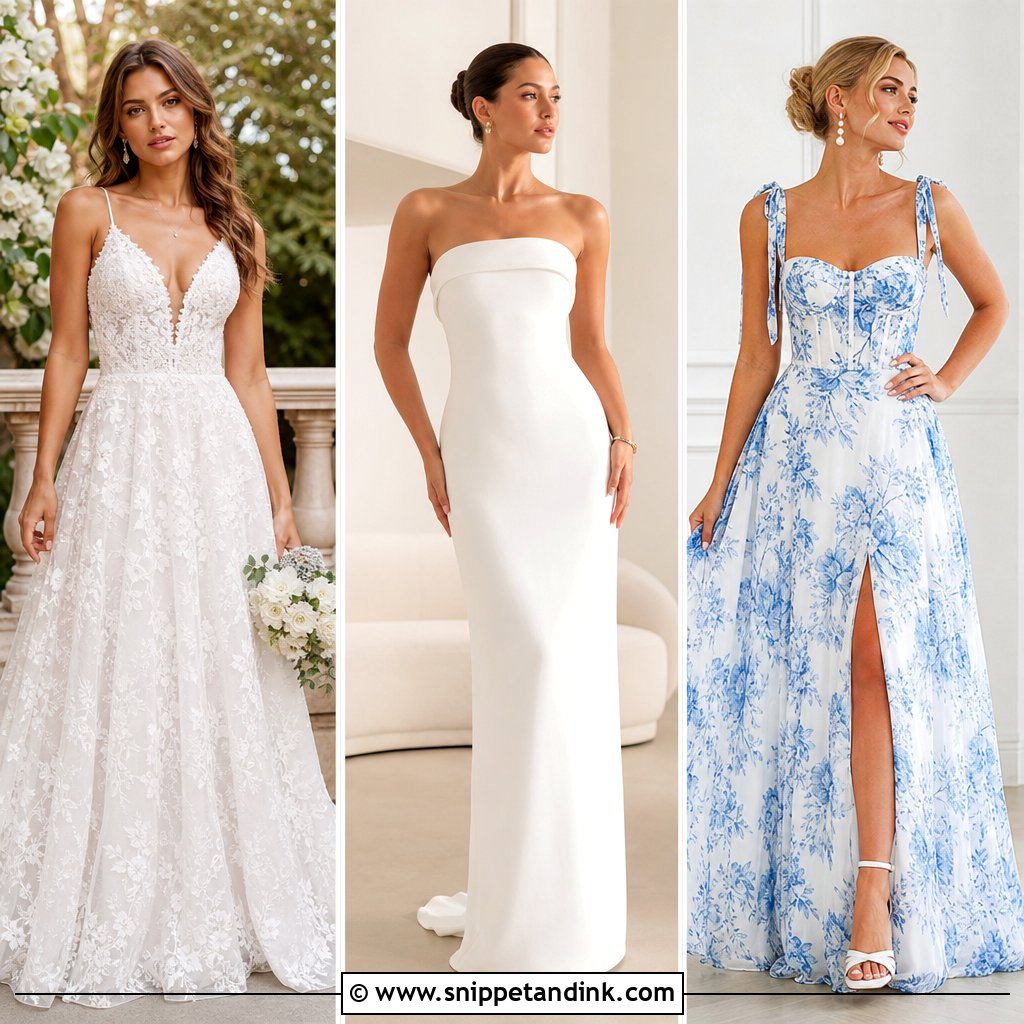
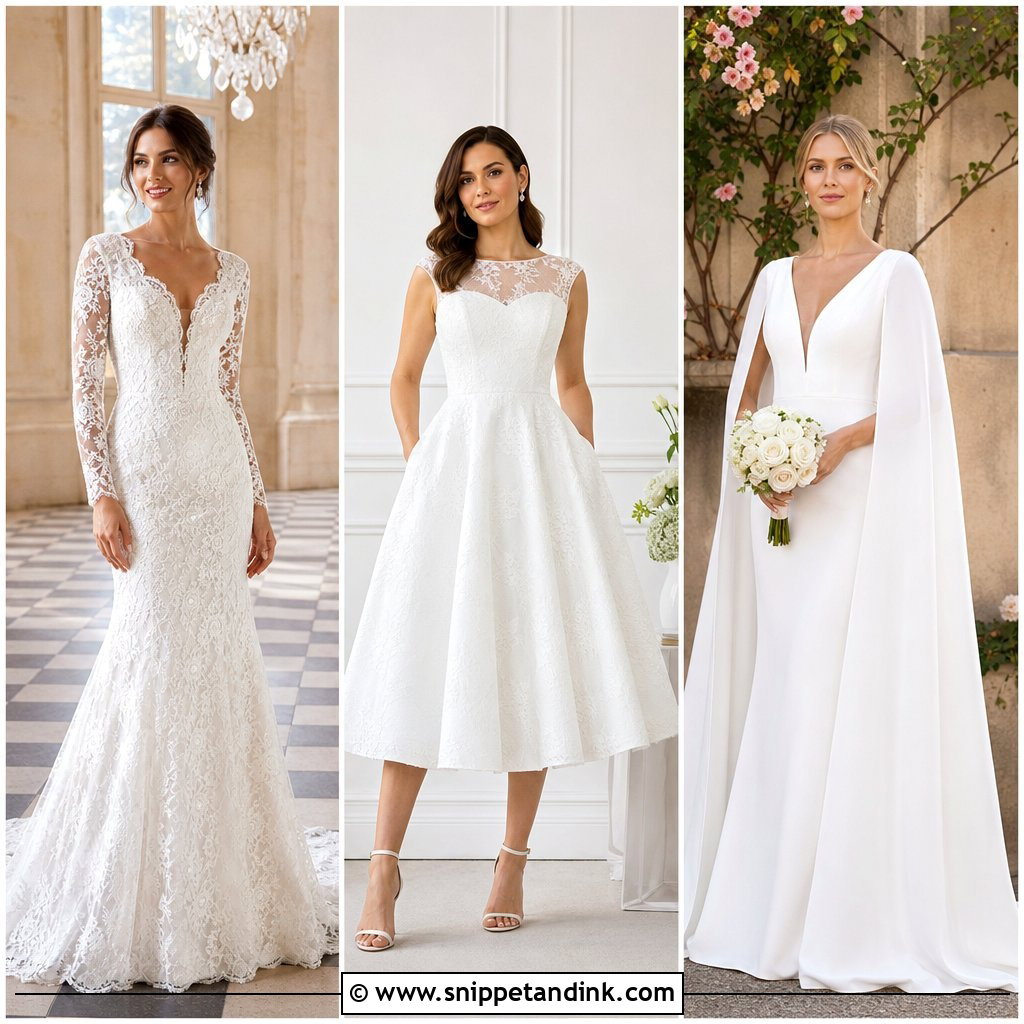
25. Blush Wedding Dress
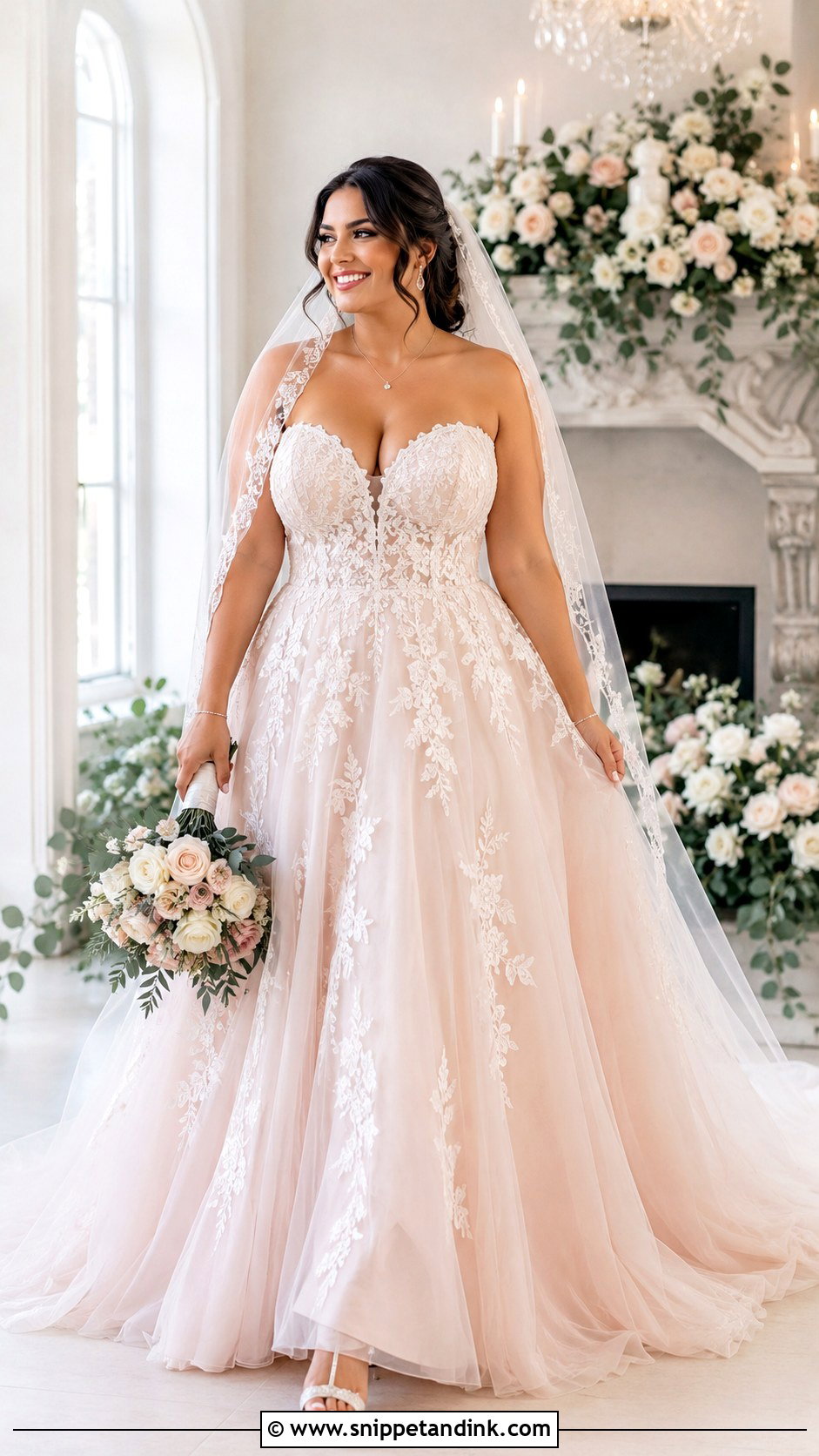
Blush warms the skin and still reads as bridal, so it’s a soft alternative to ivory. Champagne-blush and nude-blush tones work on more skin tones than pale pink does, and I always hold the fabric up to your face in daylight before you decide. Lace appliqué over blush lining creates depth without heavy beading. Choose a structured sweetheart, square or V bodice, then a ball gown or A-line skirt for romance or fitted crepe for something more modern.
Alterations a Big Bust Usually Needs, and When to Start Them
Most of the support in a finished gown is added by the seamstress, not the designer. I plan for alterations from the day you order, and with made-to-order gowns taking several months to arrive, the first fitting typically lands about two to three months before the wedding. Allow for two or three fittings in total.
Changes worth asking for
- Sewn-in cups, sized to you rather than the sample. They lift and remove the need for a separate bra.
- Extra boning along the side seams if the bodice softens when you sit.
- A grip band of silicone or elastic inside the top edge of a strapless gown.
- Moving straps inward so they stop sliding off the shoulder.
- A modesty panel in a V that sits lower than you’re comfortable with.
Wear your wedding shoes and the exact underwear you’ll be married in at every fitting. Changing either one after the hem and bodice are set will throw off the fit you paid for.
How a full bodice holds up over a long day
Structure relaxes a little as the fabric warms to your body, so a bodice that feels snug in the morning will feel right by the reception. One that already feels loose at the final fitting will feel looser by the first dance. If in doubt, I ask the seamstress to take it in that last quarter inch. Keep double-sided fashion tape and a couple of small safety pins in your emergency kit anyway; even a well-built strapless top can need a discreet fix after a lot of hugging.
Support Is Built In, Not Added at the Last Minute
A wedding dress with a fuller bust comes down to support, proportion and how you feel when you move. Sweetheart, square, scoop, V-neck, corset and wide-strap designs all help, but construction matters more than the neckline’s name. Press the seams for boning, check the lining, ask about cups and plan for alterations. A gown you never have to adjust is the one you’ll forget you’re wearing. Use these looks as a starting point and take the bodice test to every appointment.
You'll Like These Ideas:





Leave a Reply