
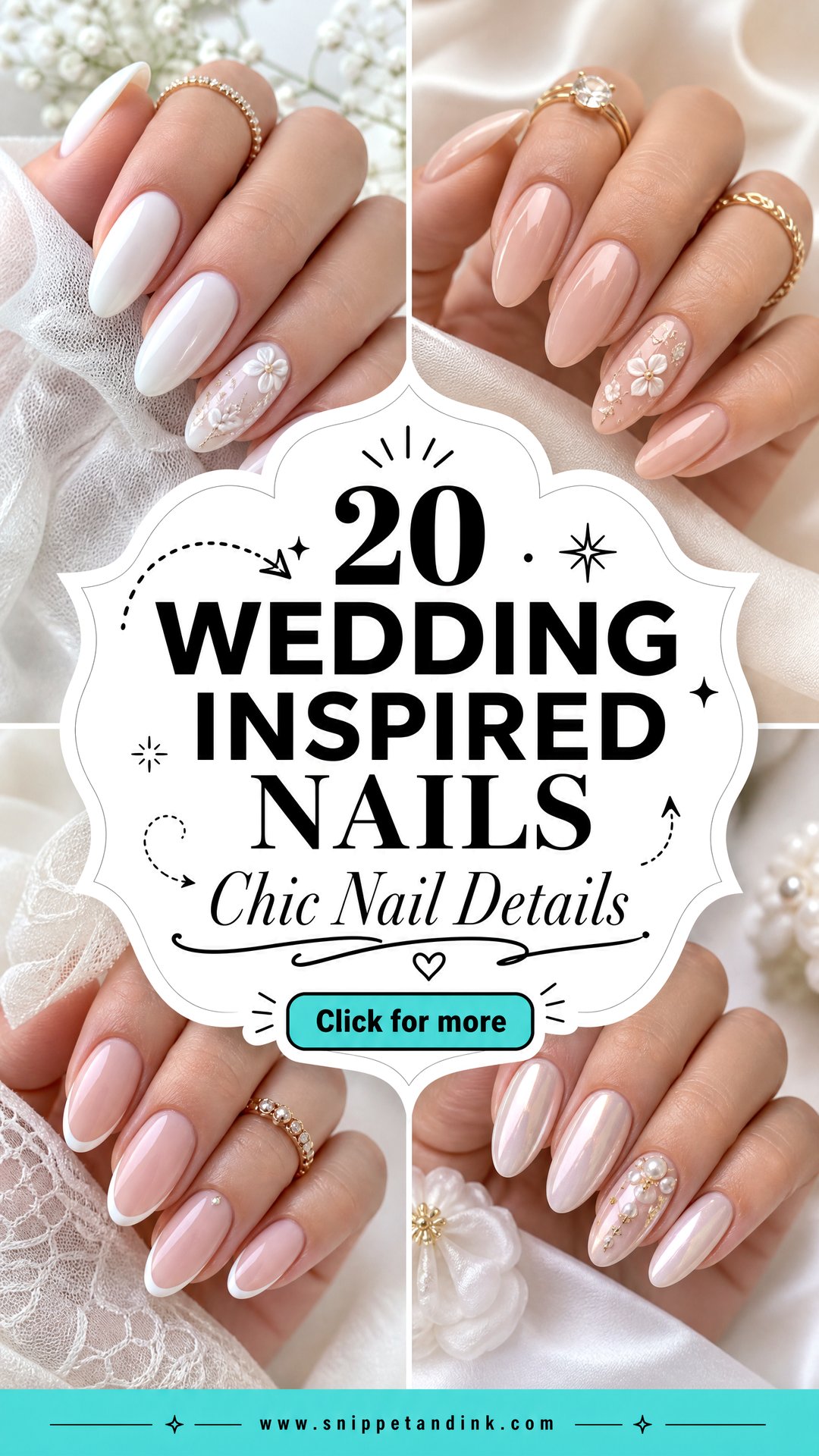
Nails are the one detail of a wedding look that ends up in a close-up. Every ring shot, every bouquet photo and every hand-on-arm portrait puts them right in the frame, so a chip or a too-bright shade shows in a way a hem never will. That’s true for the bride and for anyone else who’ll hold a glass in the toasts. At the table I usually steer people toward sheer, wearable finishes, and the current wedding nail trends make that easy: milky bases, pearl chrome, micro French tips, blush tones and fine shimmer all sit quietly next to a ring. Below are twenty sets I’d happily do for a wedding, with notes on the shapes, lengths and skin tones each one flatters, and where each tends to go wrong.
Bring the Ring, a Fabric Swatch and Your Real Hands
The most useful thing a bride can bring to a consultation isn’t an inspiration photo. It’s the engagement ring, a scrap of the dress fabric if the boutique can spare one, and an honest description of how you use your hands. Pinterest photos are usually long extensions on hand models under studio light; they tell me the mood you like, not what will suit you.
With the ring on your finger, I can see whether a shade makes the stone look warmer or cooler. Yellow gold usually wants a warmer nude, platinum and white gold a pinker or cooler one. A swatch of ivory satin next to a milky white tells us in seconds whether the white is too stark.
Length is a practical question
If you’ve never worn extensions, a wedding week is a risky time to start. Long nails change how you do up earrings, open a clutch and handle a bustle. I’d do a trial set a month or so out, live with it for a week and then decide.
- Tell me if you have a sensitivity to gel or acrylic; a reaction the week of the wedding is avoidable.
- Mention if you’ll be doing your own flowers or decor the day before; that’s when chips happen.
- Bring a photo of the bouquet colors if you have them.
1. Milky White Wedding Nails
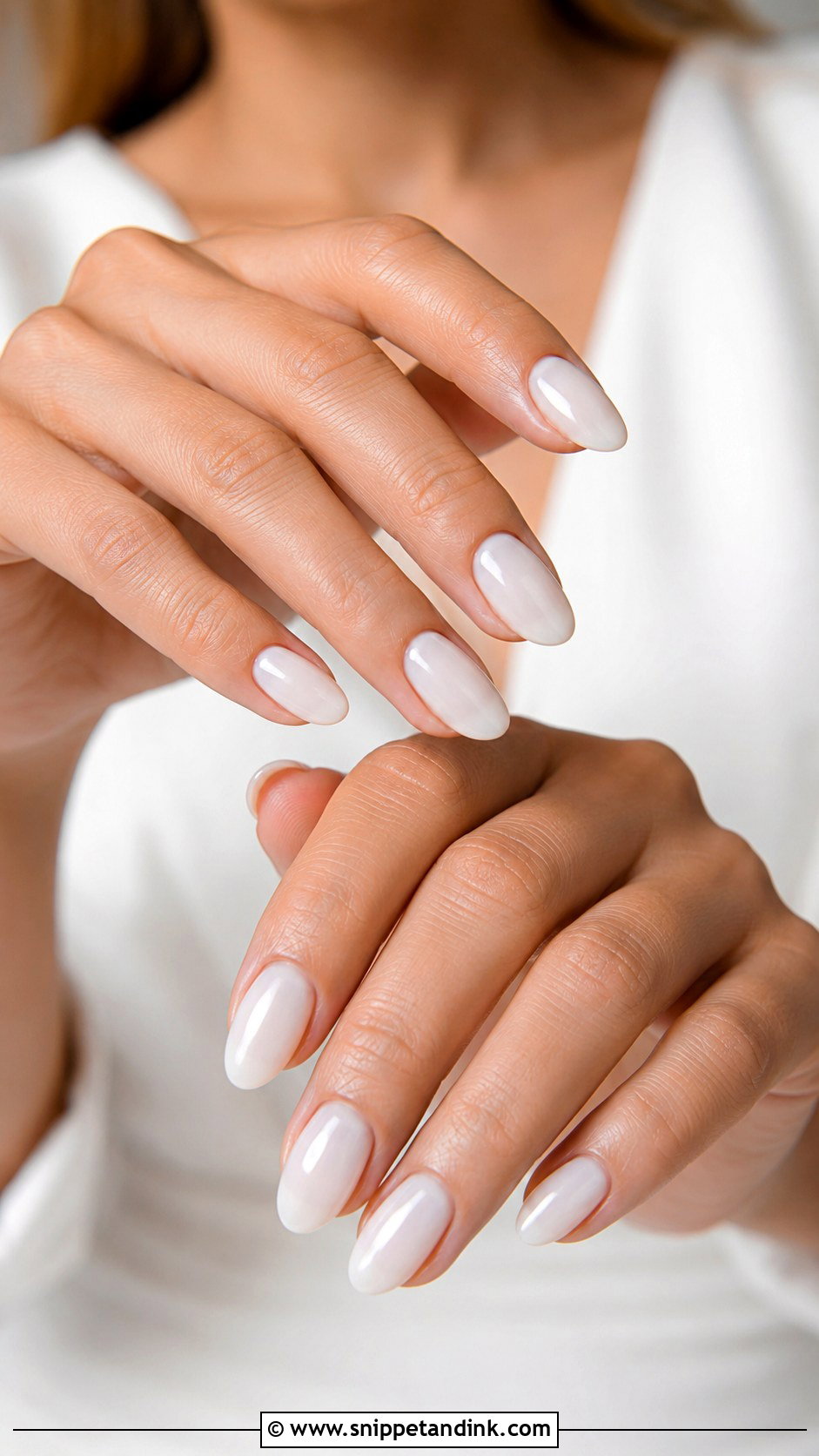
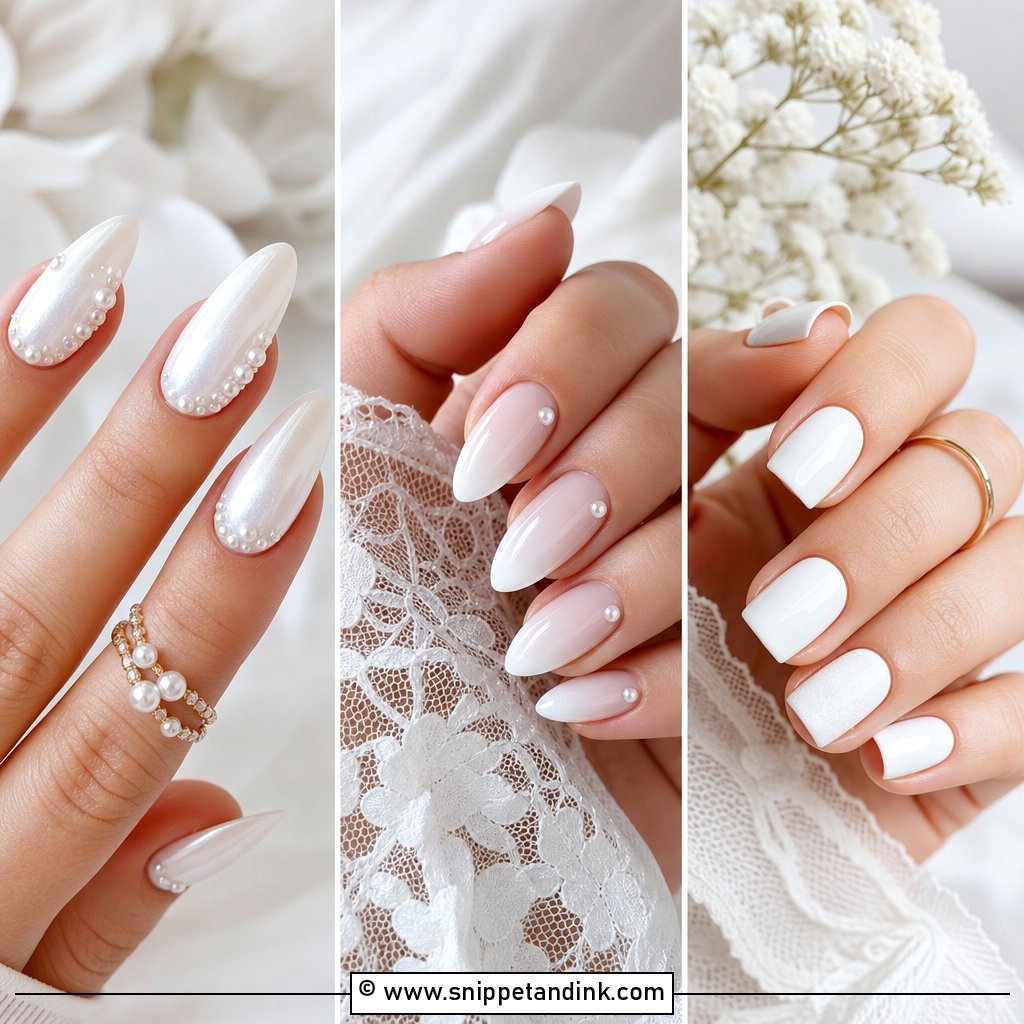
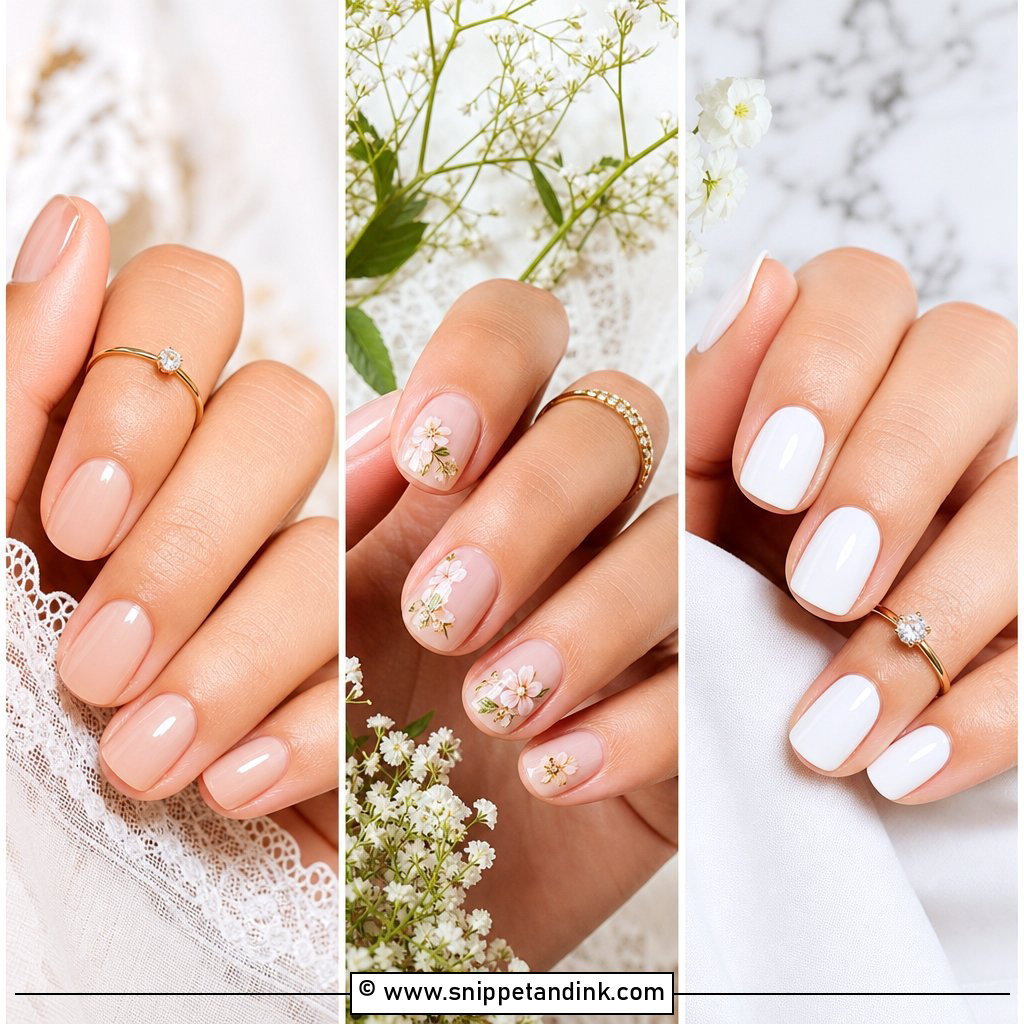
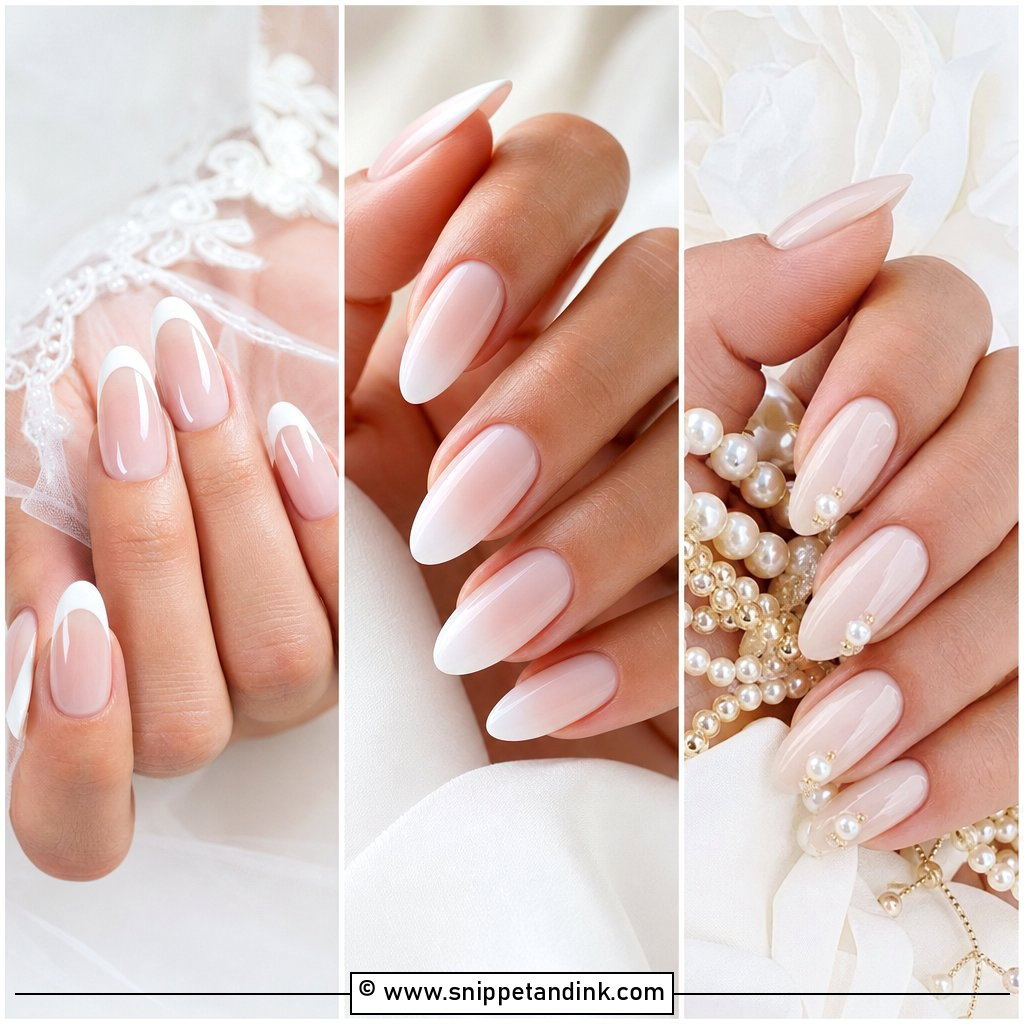
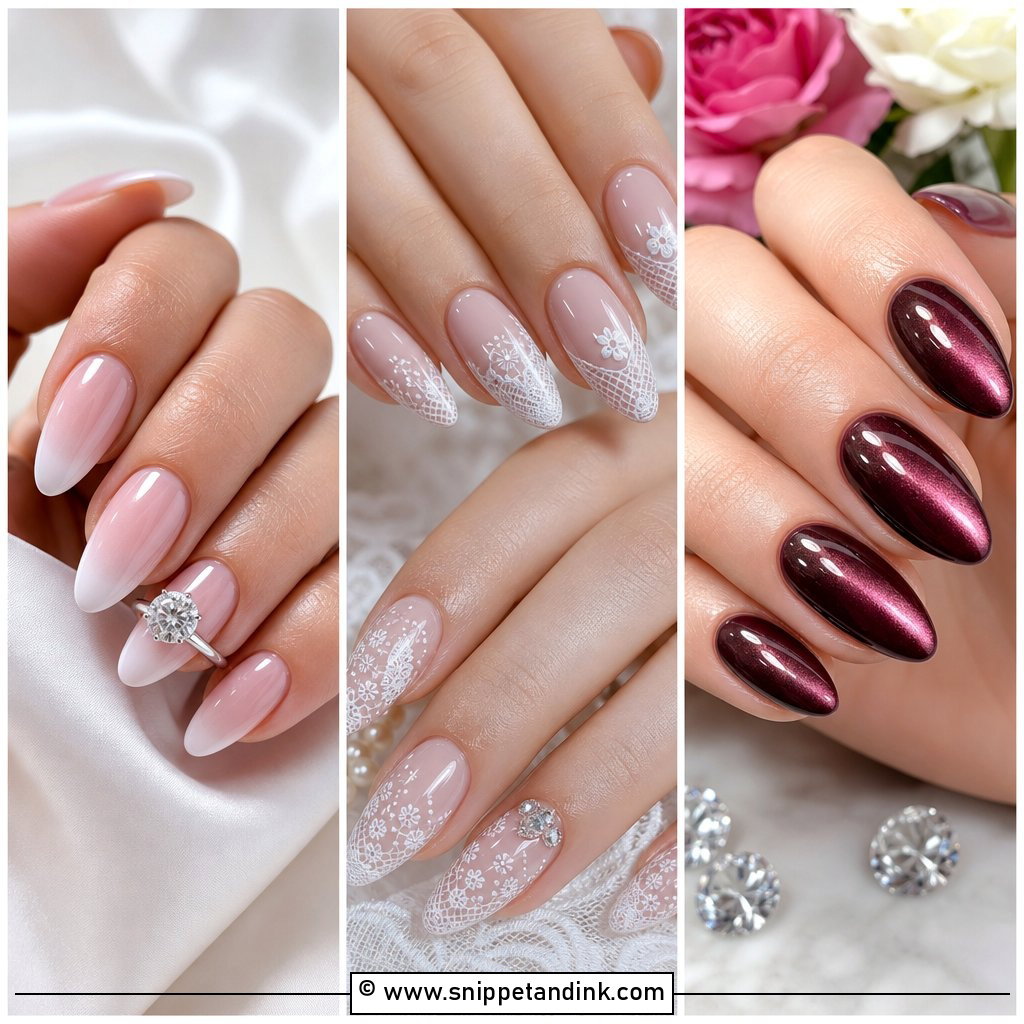
A milky white set is the one I do most for brides, and the reason is the translucency. A sheer white base looks creamy rather than stark, so it won’t fight an ivory dress the way a flat opaque white can. It suits short square, medium almond and longer oval nails equally well, and it sits next to lace, satin and nearly any bouquet. Ask for a buildable milky gel and a glossy top coat. One honest warning: sheer whites show every ridge on the nail plate, so I level the nail with a thin builder layer first. Warm undertones look best in a slightly ivory white; cool undertones in a cloud white.
2. Pearl Chrome Wedding Nails
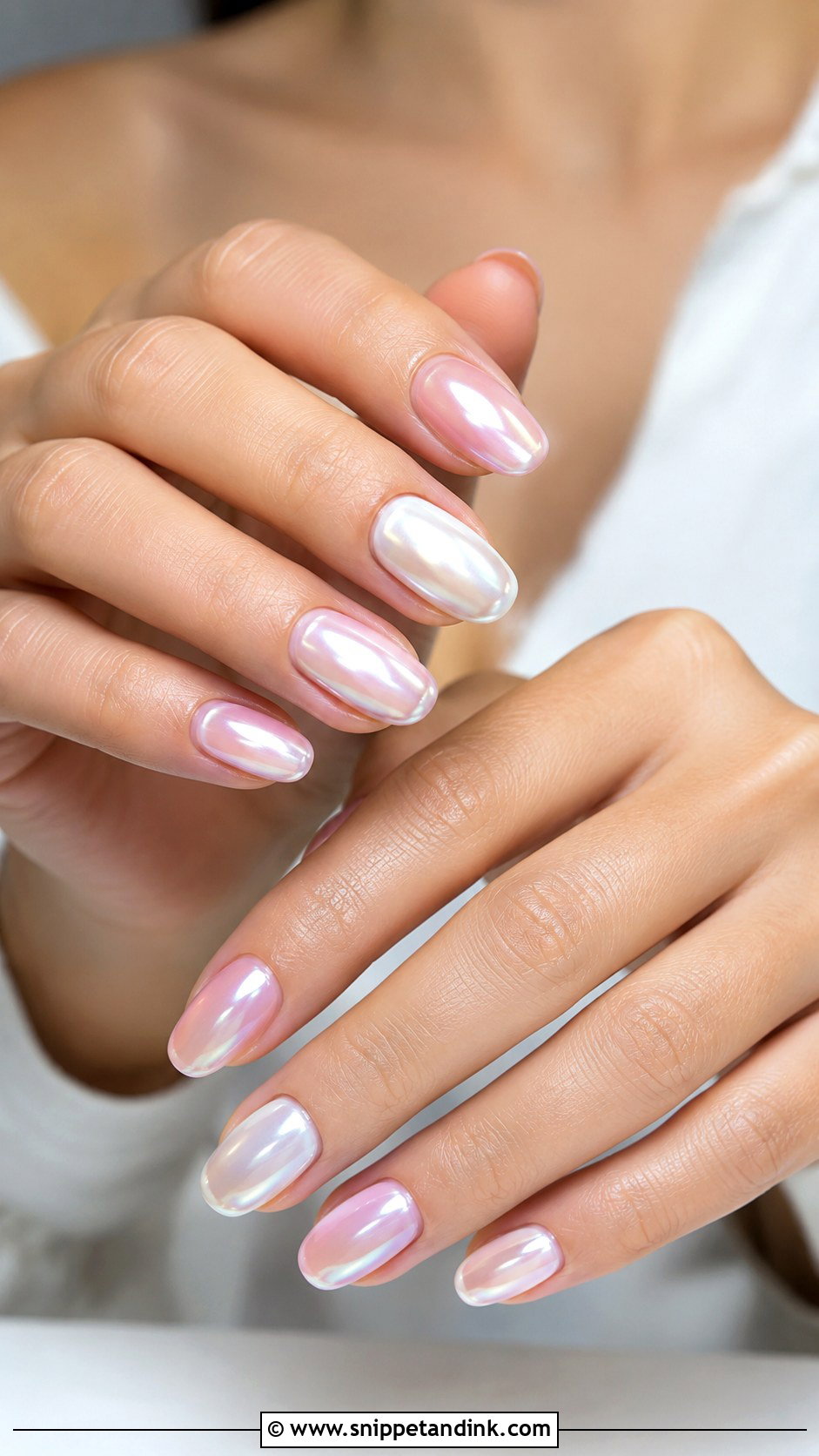
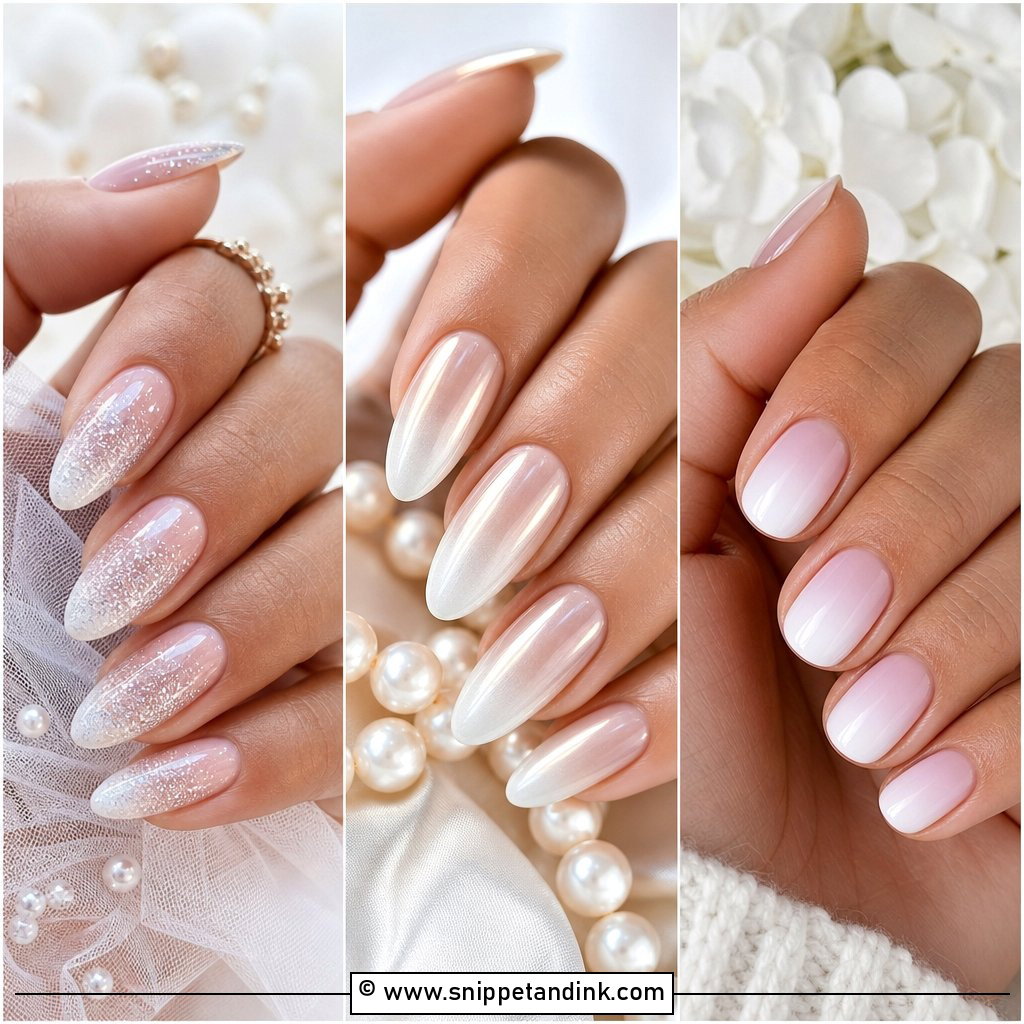
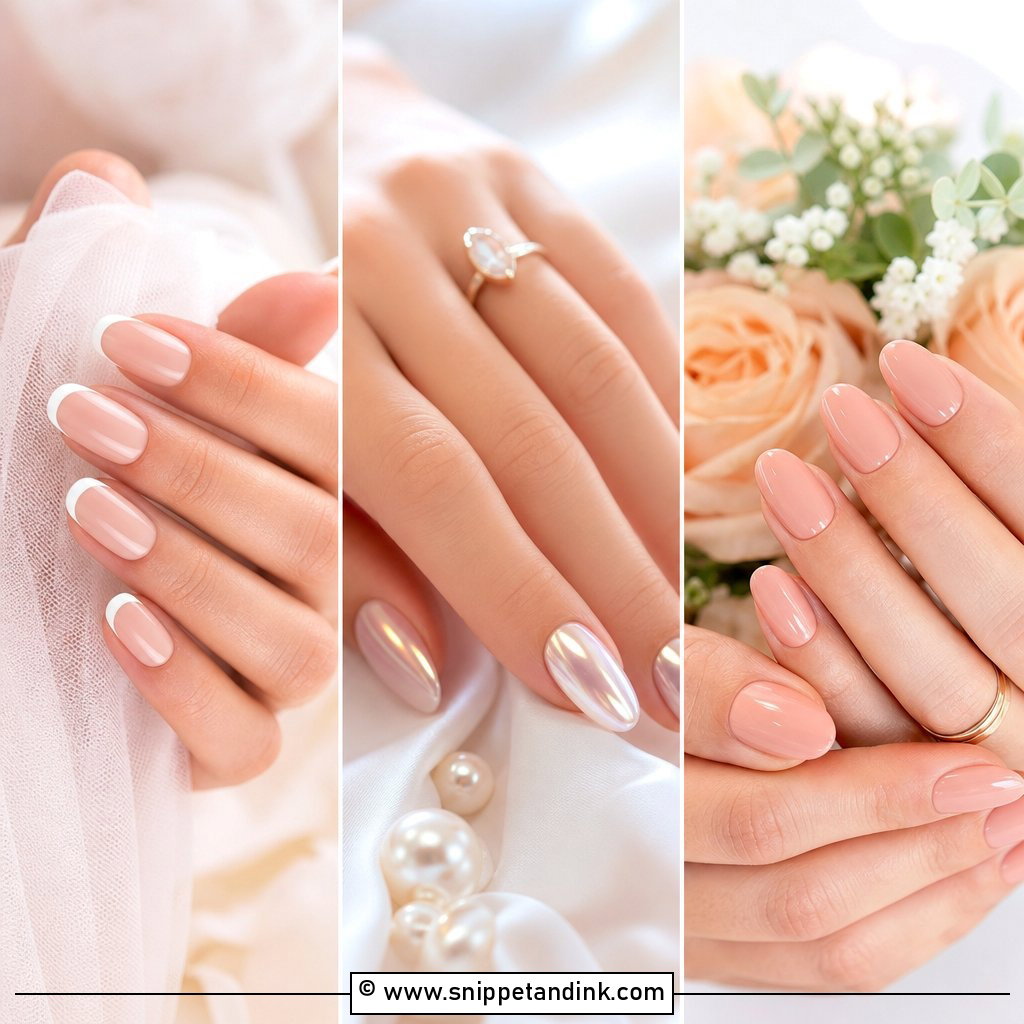
Pearl chrome gives that soft glow that reads expensive without being loud. I start with a sheer pink, nude or milky base, cure it, then buff a fine pearl powder over a no-wipe top coat so it bonds evenly. The finish catches light gently, which is exactly what you want next to a diamond in a ring photo. Almond, oval and squoval shapes show it best because the sheen follows the curve. Keep the base sheer for a delicate look or go whiter for brightness; either way it pairs naturally with pearl earrings and satin gowns.
3. French Tip Wedding Nails
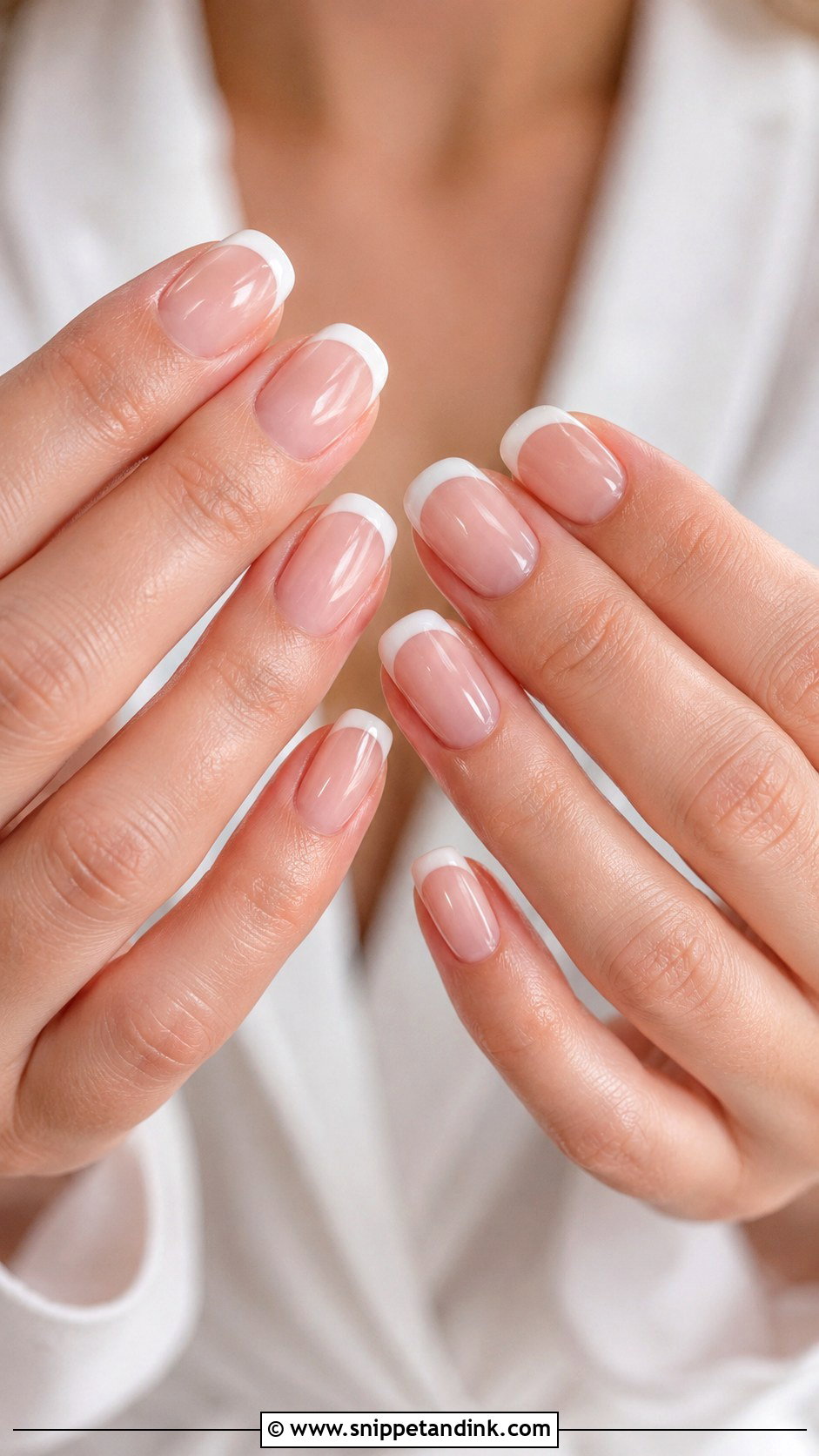
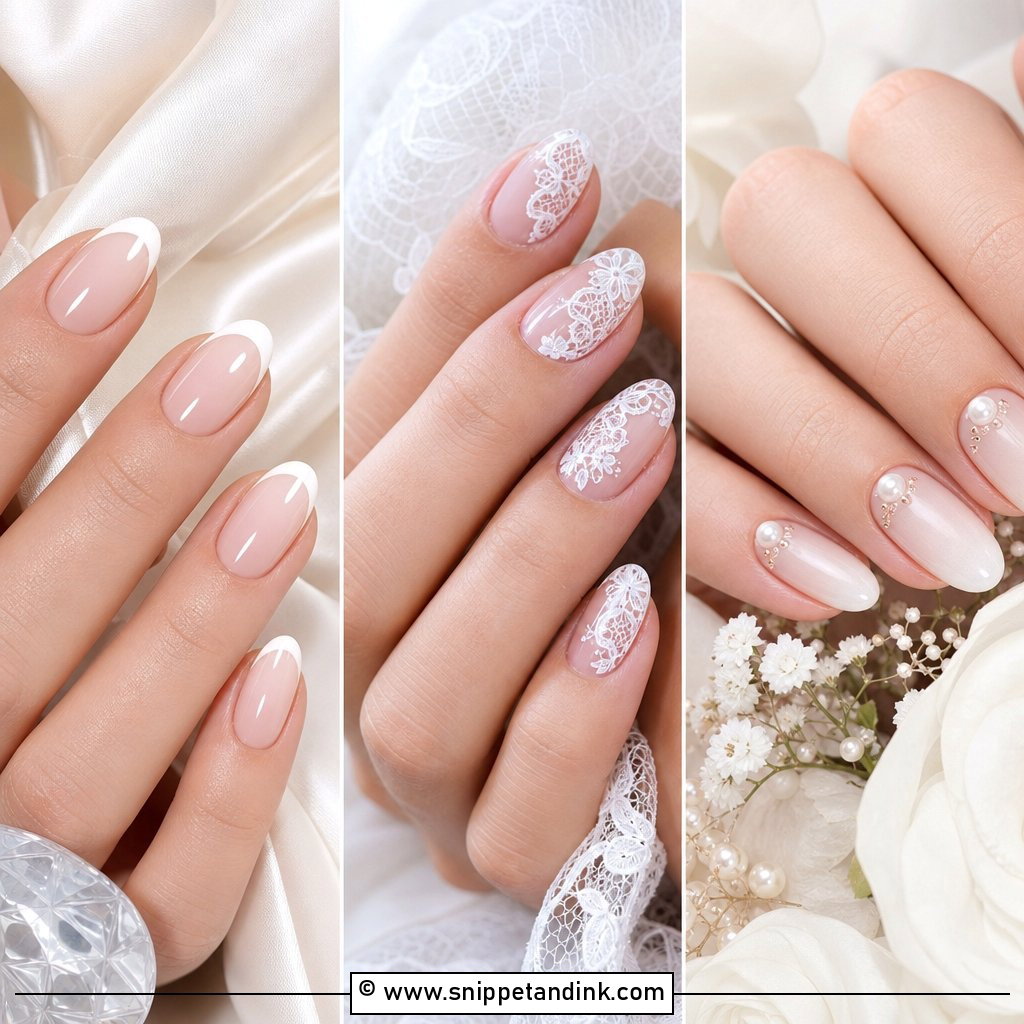
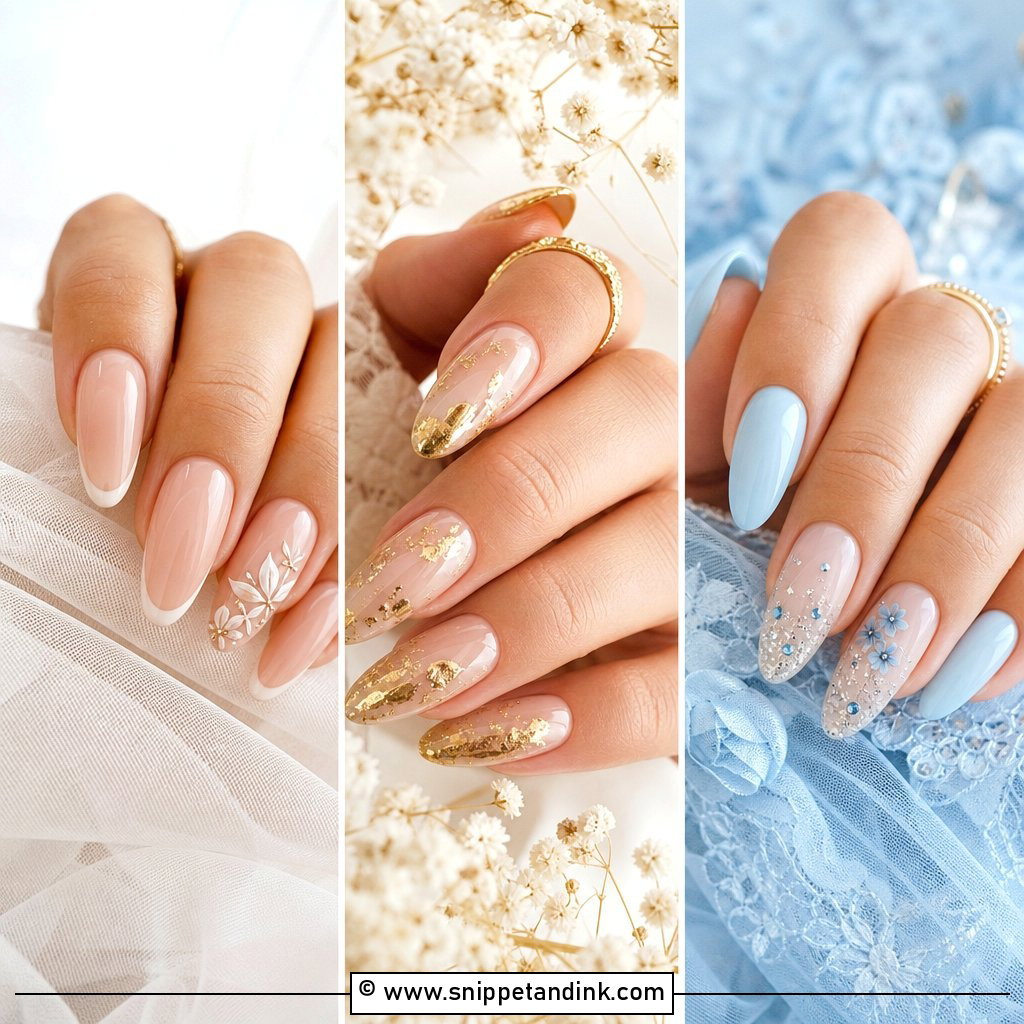
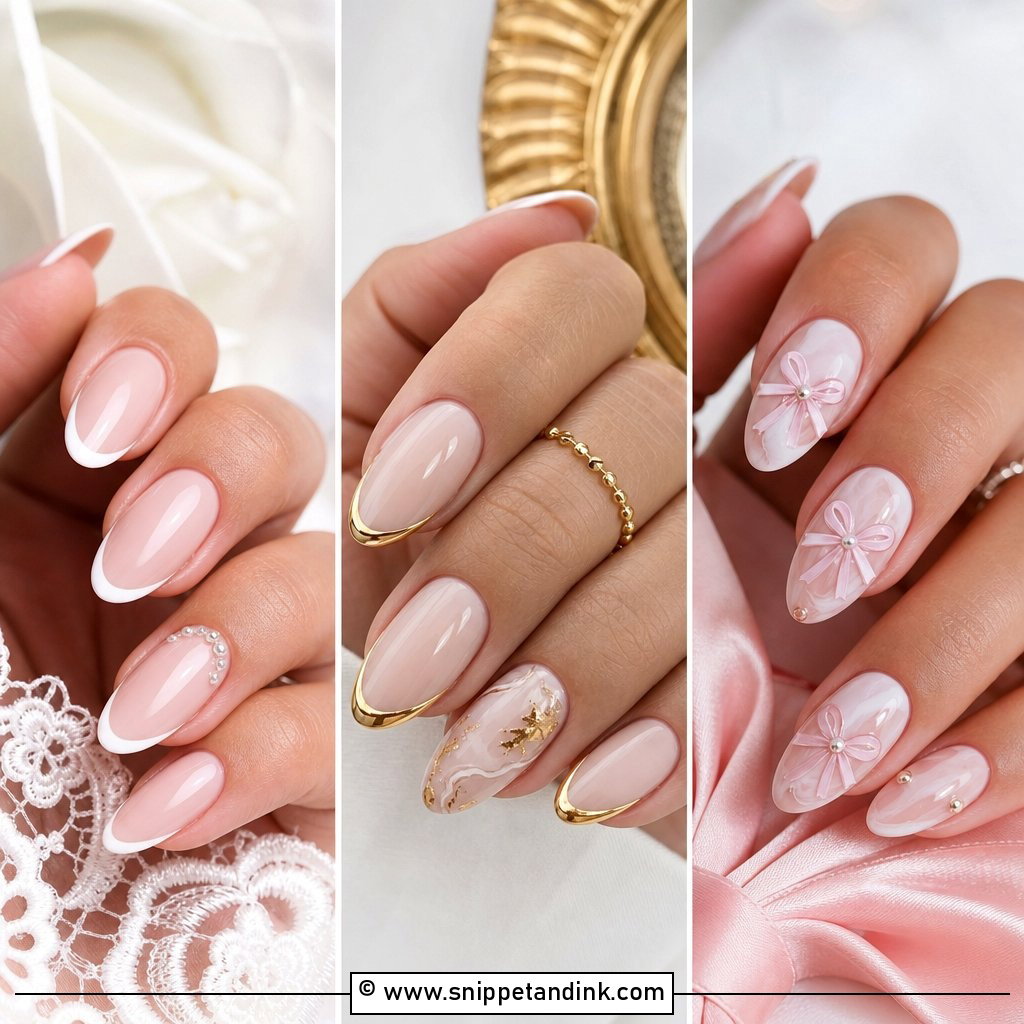
French tips make hands look neat and longer, and they’ve earned their place at weddings. For a bridal set I use a soft pink or sheer nude base and a clean white tip that follows your own nail shape. A thin tip reads modern; a deeper smile line is more traditional. The part most people don’t think about is the base color: if it’s too pink against your skin, the whole hand looks flushed in photos. I swatch two or three bases on your actual nail before committing. Short nails suit micro tips; longer almonds carry a fuller line.
4. Blush Pink Wedding Nails
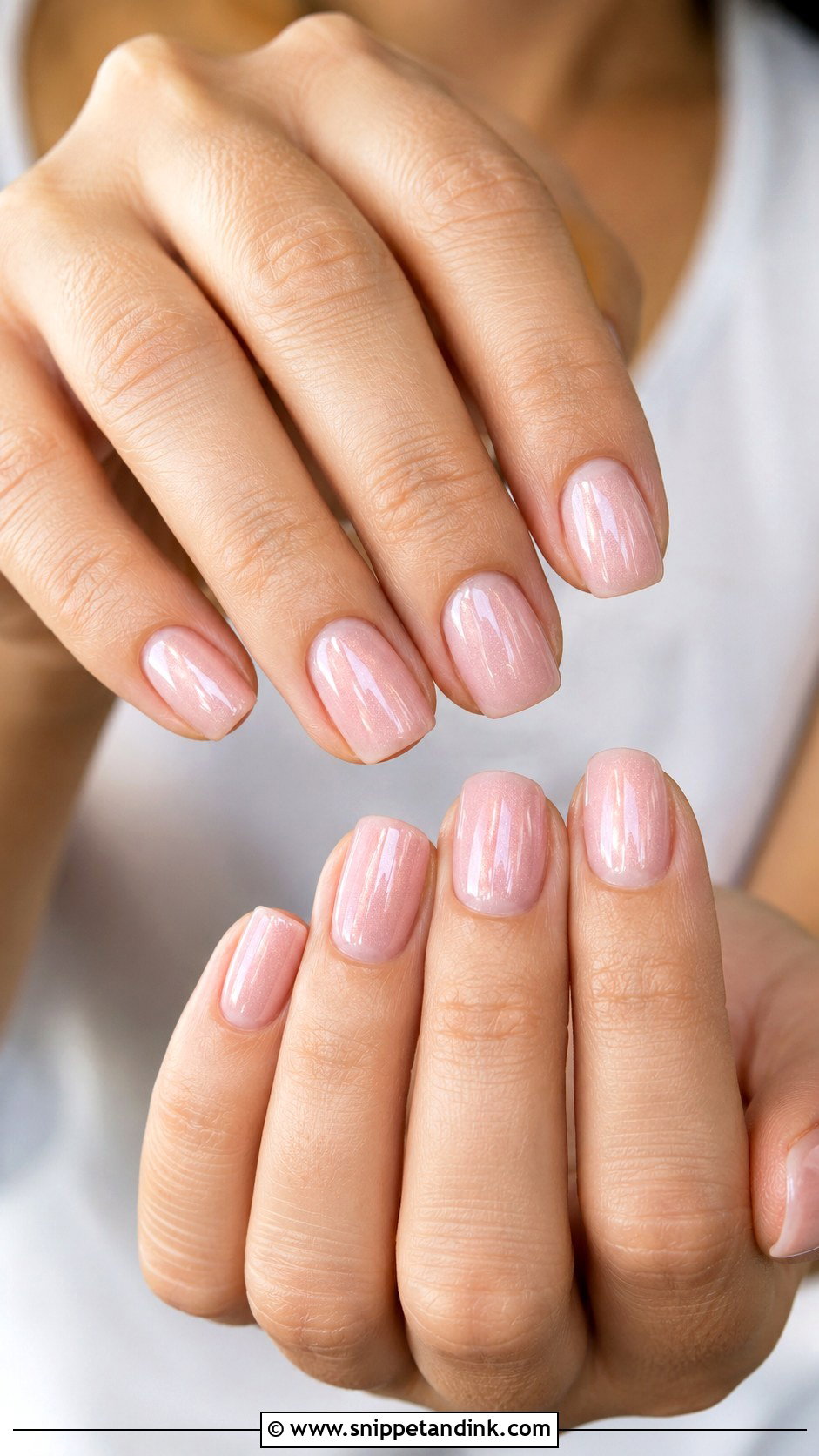
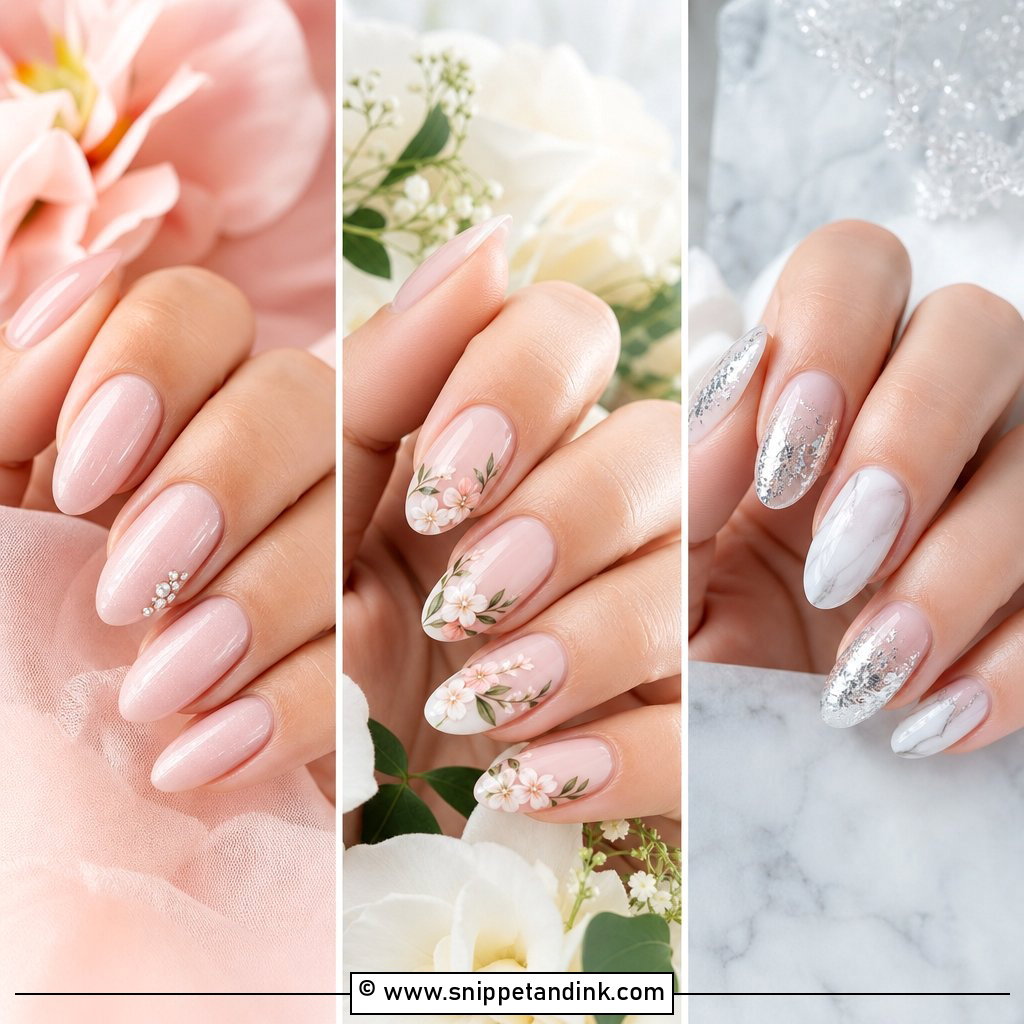
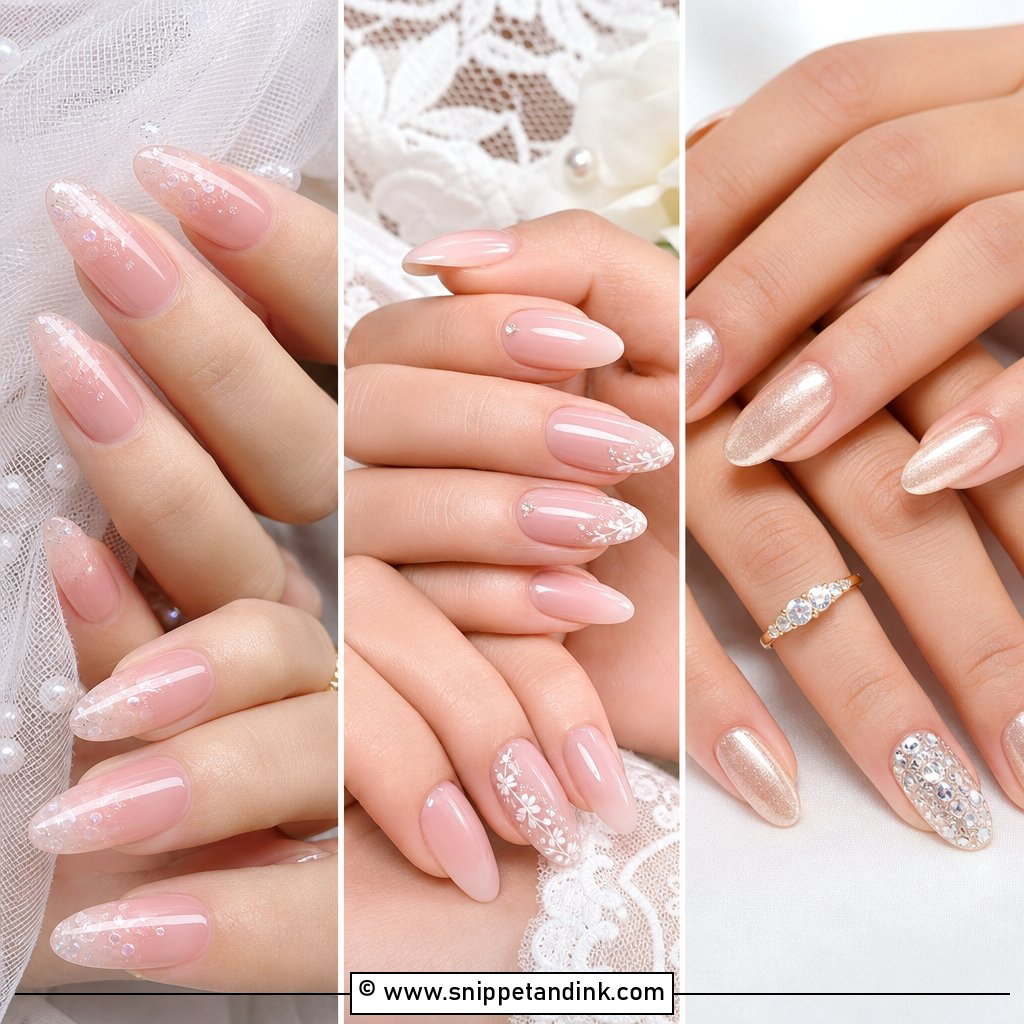
Blush is the step up from nude for people who want their nails noticed without competing with the dress. A sheer or creamy pink gives the nail a healthy, finished look and sits well beside white, ivory and champagne gowns. Bridesmaids can wear it across most palettes, from dusty rose to navy. I keep it glossy, often on a soft almond or rounded square. Creamy pinks can streak if they go on thick, so I build two thin coats rather than one heavy one. A single tiny pearl or a whisper of shimmer is plenty of detail.
5. Nude Wedding Nails
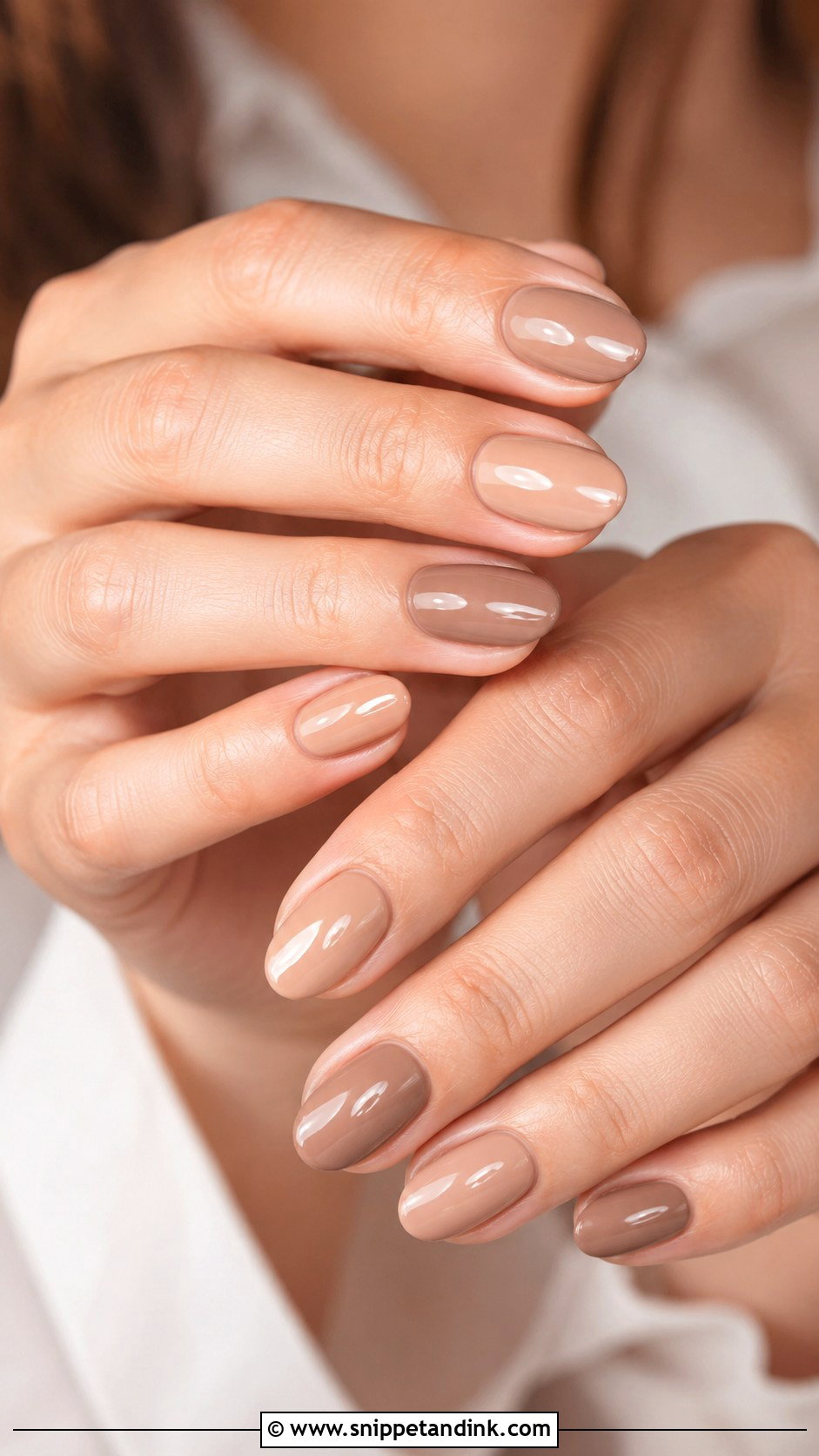
Nude only looks expensive when it matches your skin, and that’s where most nude manicures fail. Fair skin usually suits pink beige or soft peach. Medium skin warms up with caramel or rosy beige, and deep skin tones look rich in mocha, cocoa or chestnut. A nude that’s too light on deep skin turns chalky and gray in photos, so I always swatch against the fingers, not the back of the hand. Wear it glossy or slightly creamy, keep the shape simple, and let the ring and bouquet take the attention.
6. Baby Boomer Wedding Nails
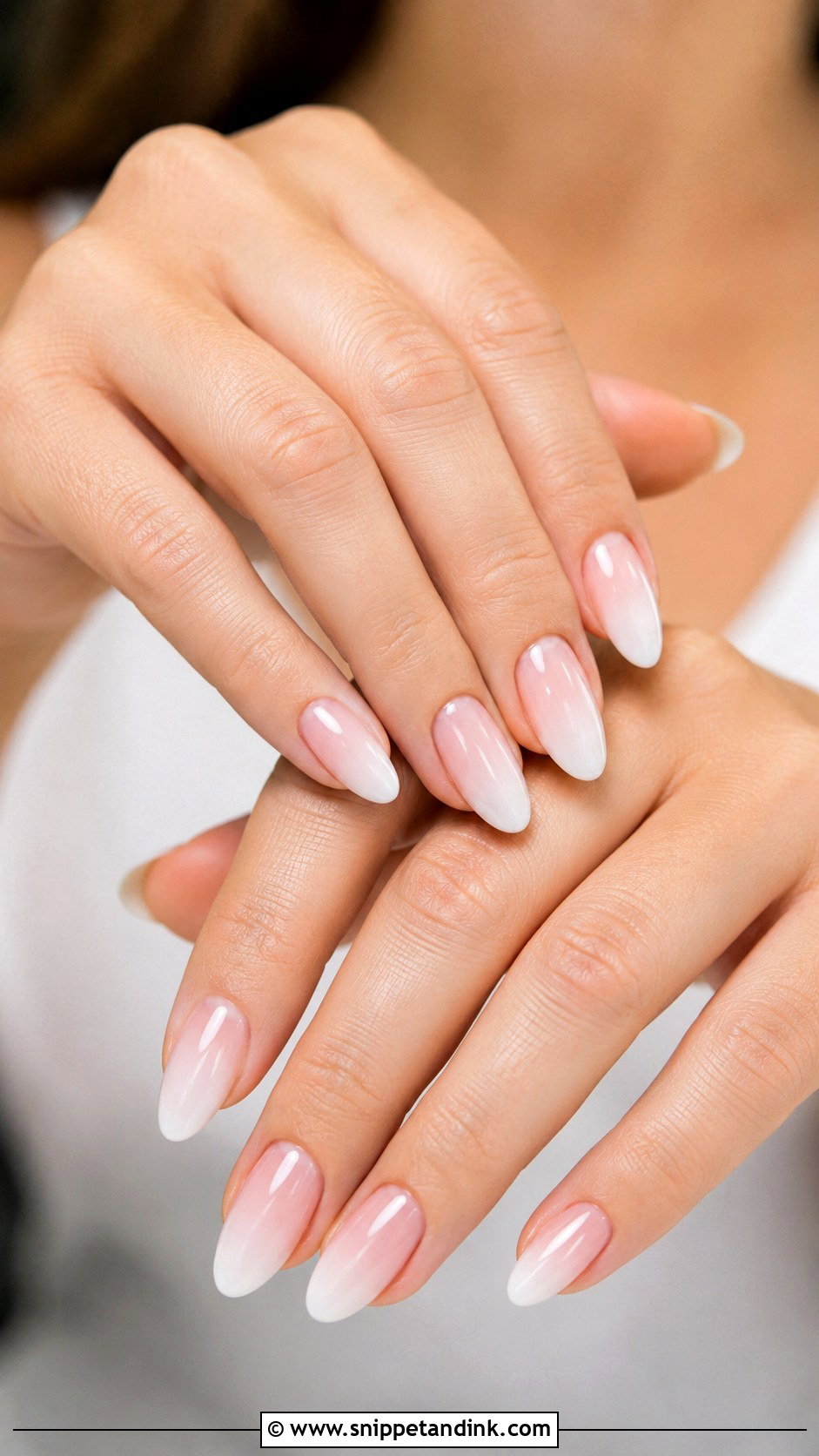
Baby boomer is a French manicure with the line blurred away: the color fades from a nude or pink base into a milky white end. I build the gradient with a sponge or a soft brush pat in gel, curing between layers so the white doesn’t flood toward the cuticle. On almond, coffin, and oval nails the fade makes fingers look longer. Keep the white diffused and the base sheer. If the blend shows a visible stripe, it needs another pass; that’s the sign of a rushed set. A gloss top keeps it classic, a pearl chrome layer makes it more current.
7. Micro French Wedding Nails
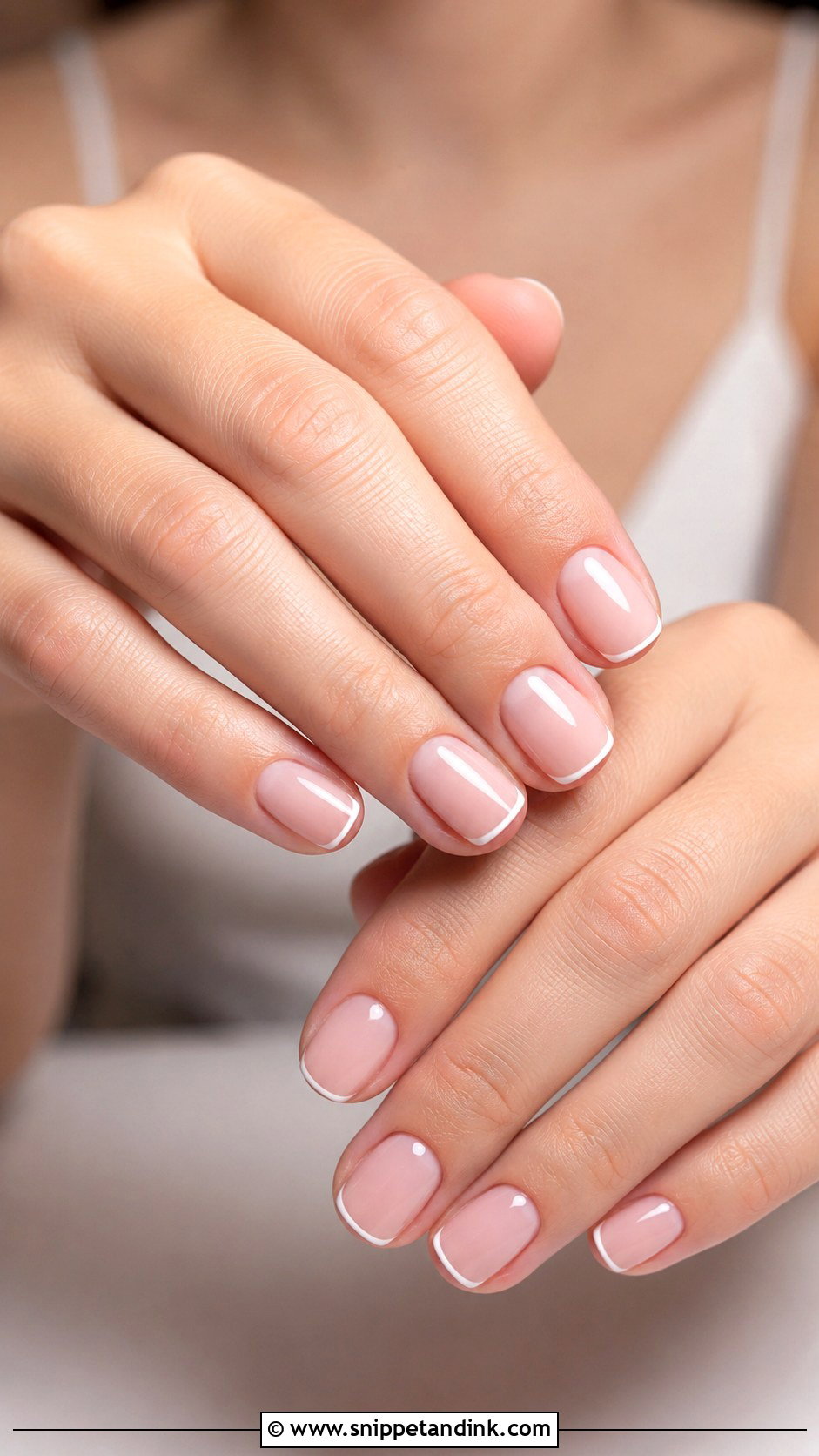
Micro French is my answer for short nails that still want a little detail. The tip is a hairline, so it looks deliberate even with almost no free edge. I paint it with a long striper brush along the edge of a sheer pink, nude or milky base. Guests can wear it with any dress color, and on a soft oval or squoval shape it looks very neat. It’s also forgiving: as the nail grows in the days before the wedding, the line stays put at the tip and the regrowth barely shows.
8. Glazed Wedding Nails
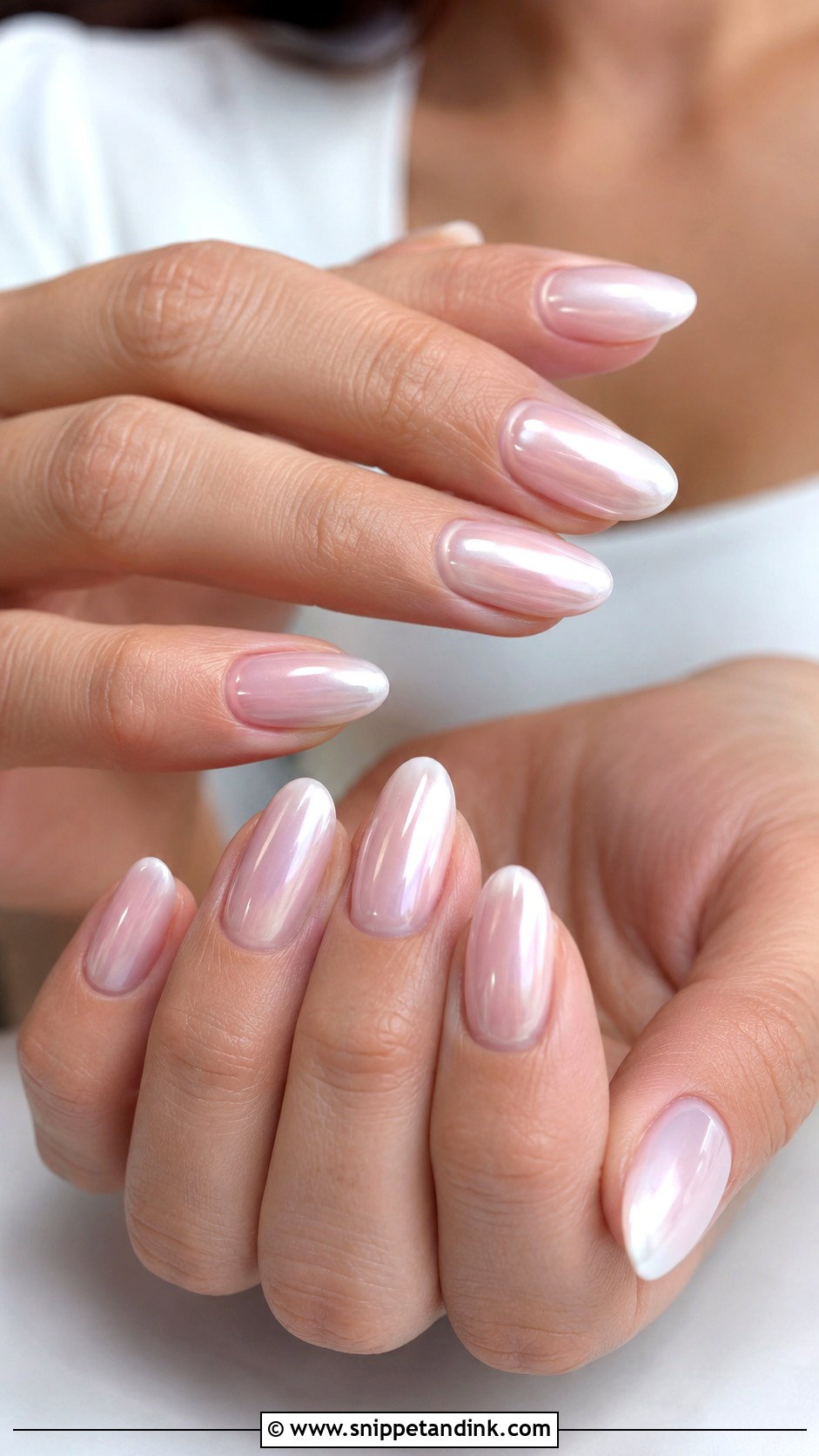
Glazed nails give you shine that still feels soft. The set starts with a pale base, such as milky white, sheer pink, or beige, then a fine reflective glaze goes on top for a lit-from-within effect. The skill is restraint: too much powder and it tips into metallic. I rub in the smallest amount and wipe the excess before sealing. It sits well with sleek gowns, bridal suits and minimal jewelry. Almond or oval shapes suit it best, and I’d skip extra art so the glow stays clean.
9. Lace Wedding Nails
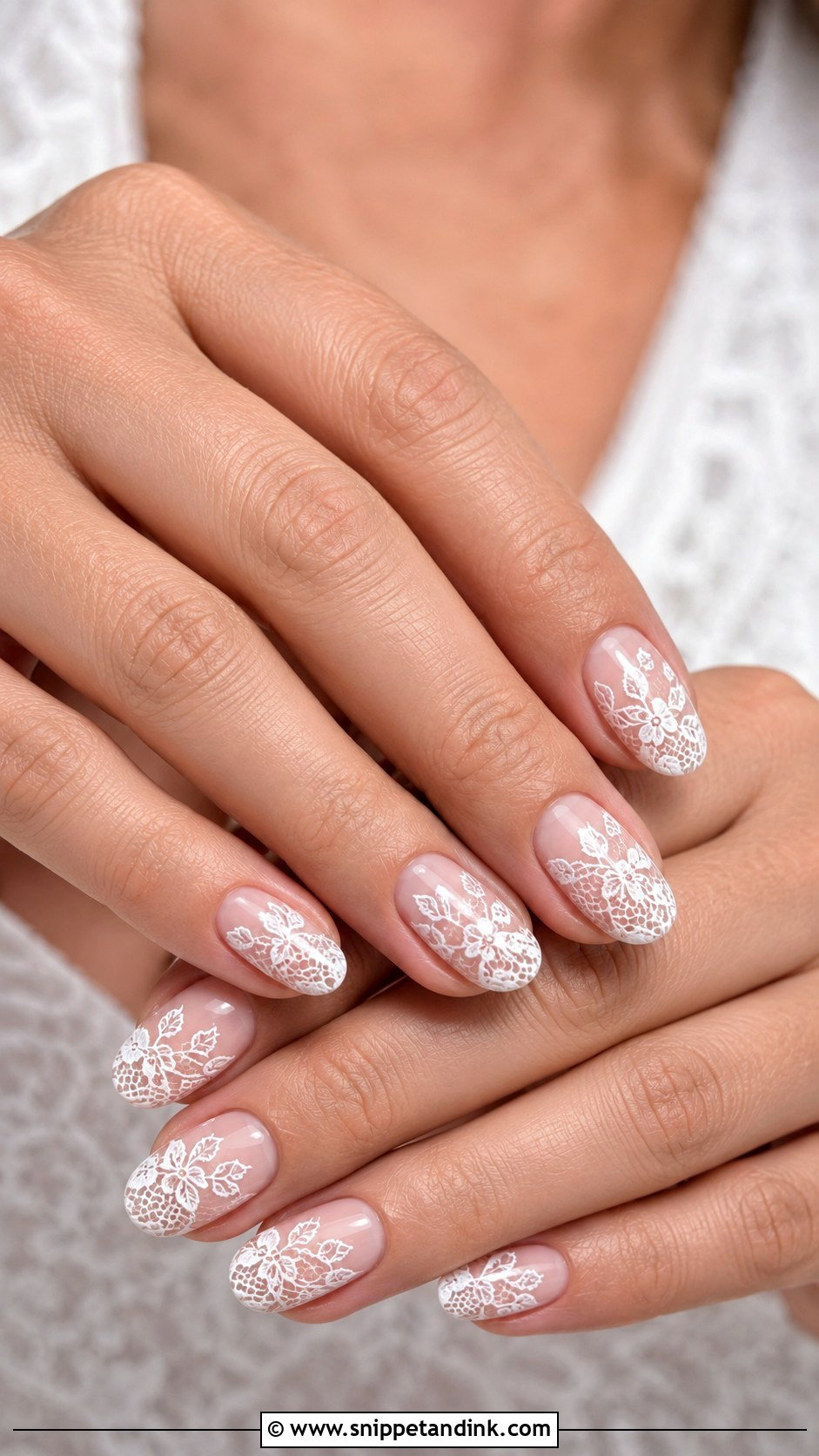
Lace nails are made for vintage gowns, lace sleeves and embroidered veils. Over a sheer nude or milky base, the pattern can be hand-painted, stamped or drawn with fine gel lines. Hand-painted lace takes time, so book a longer appointment and expect to sit still. To keep the set wearable, I either run a very faint lace across every nail or let the lace fade into bare, sheer negative space. Medium almond, oval or coffin nails give the pattern room. On very short nails the detail turns into blur.
10. Floral Wedding Nails
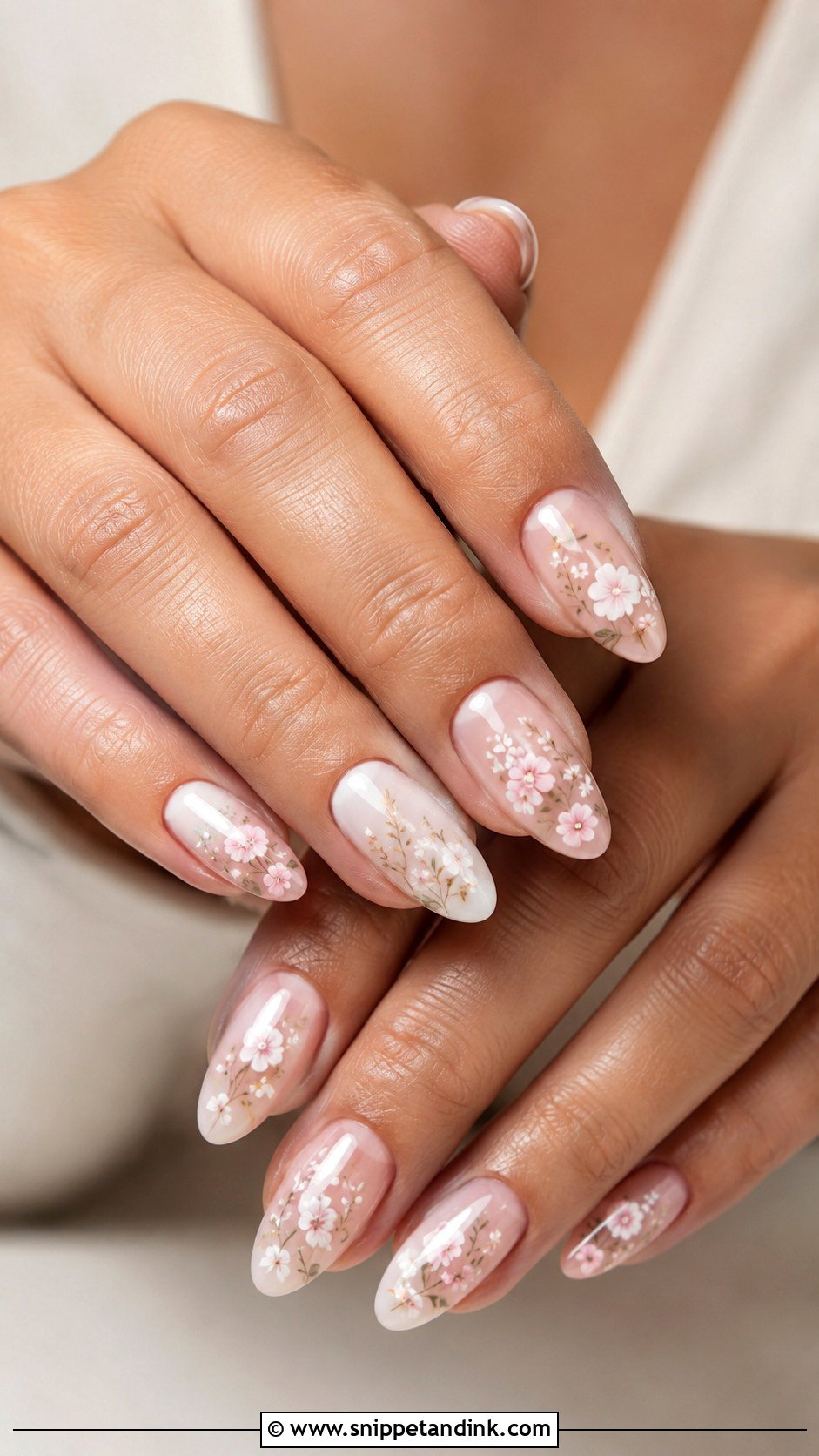
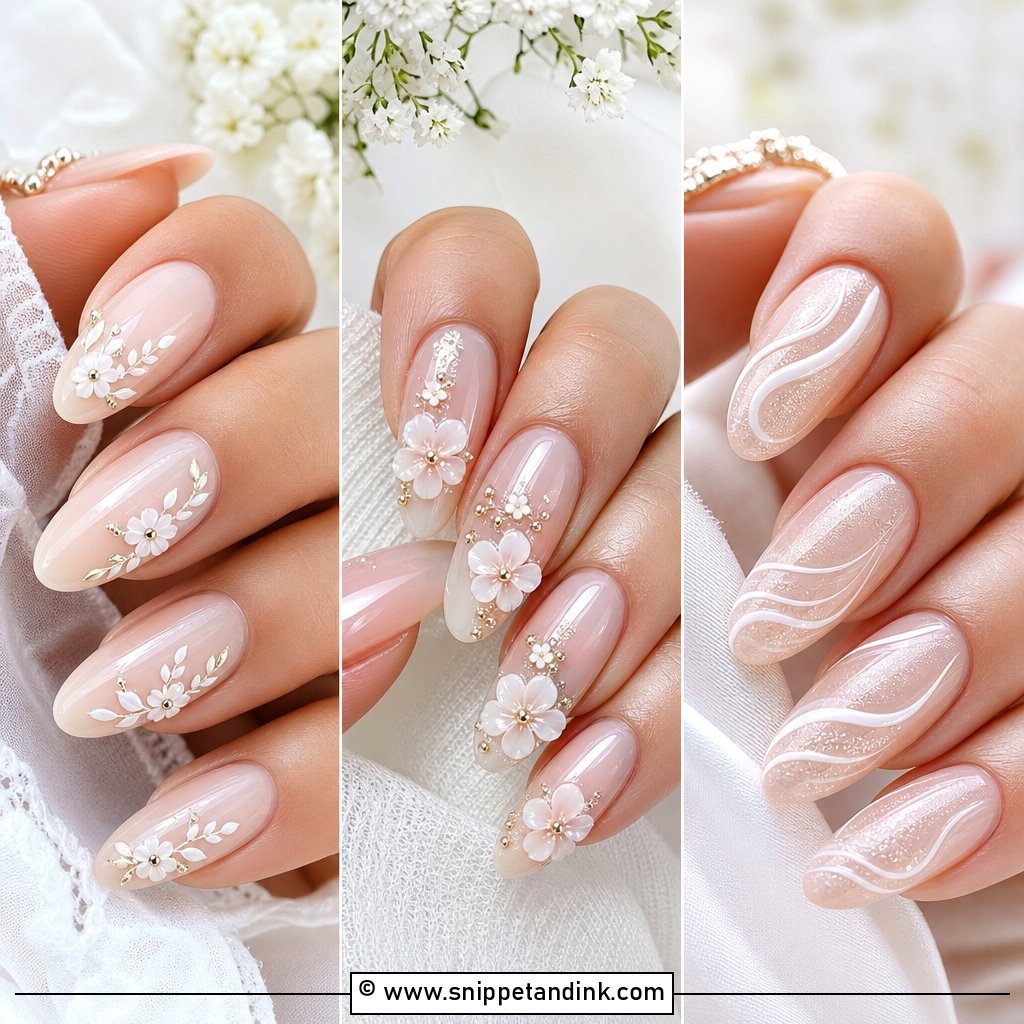
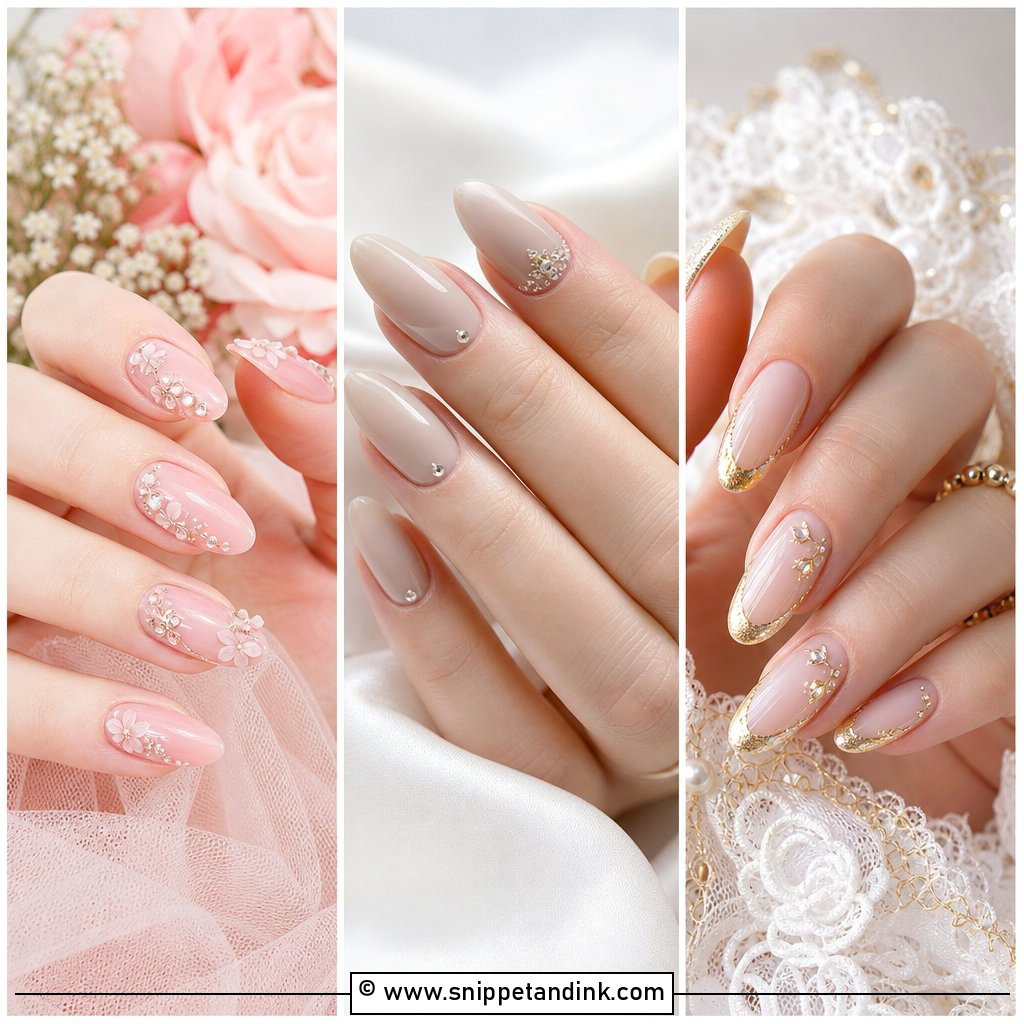
Floral nails bring romance without bright color. The version I do for weddings uses a sheer pink, nude or milky base and tiny white, blush or pastel blooms. Balance matters more than the flowers themselves: I place them near the cuticle on some nails and along the sidewall or tips on others so the set doesn’t look crowded. Garden ceremonies and spring weddings suit it. Short nails handle a few tiny dots of petals; longer nails can hold more detail. Ask for thin, soft lines and a glossy finish, which keeps it grown-up rather than playful.
11. Pearl Accent Wedding Nails
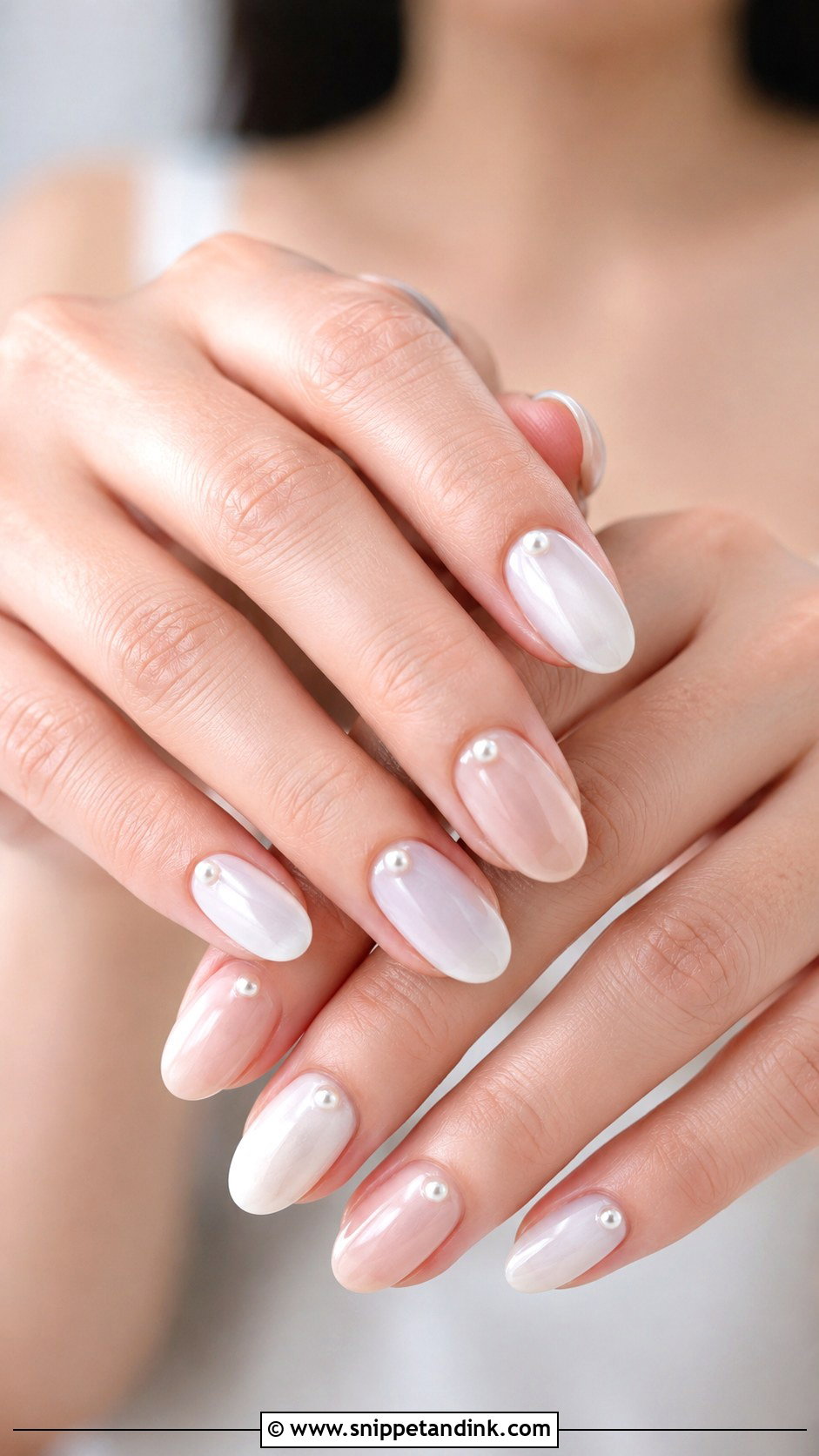
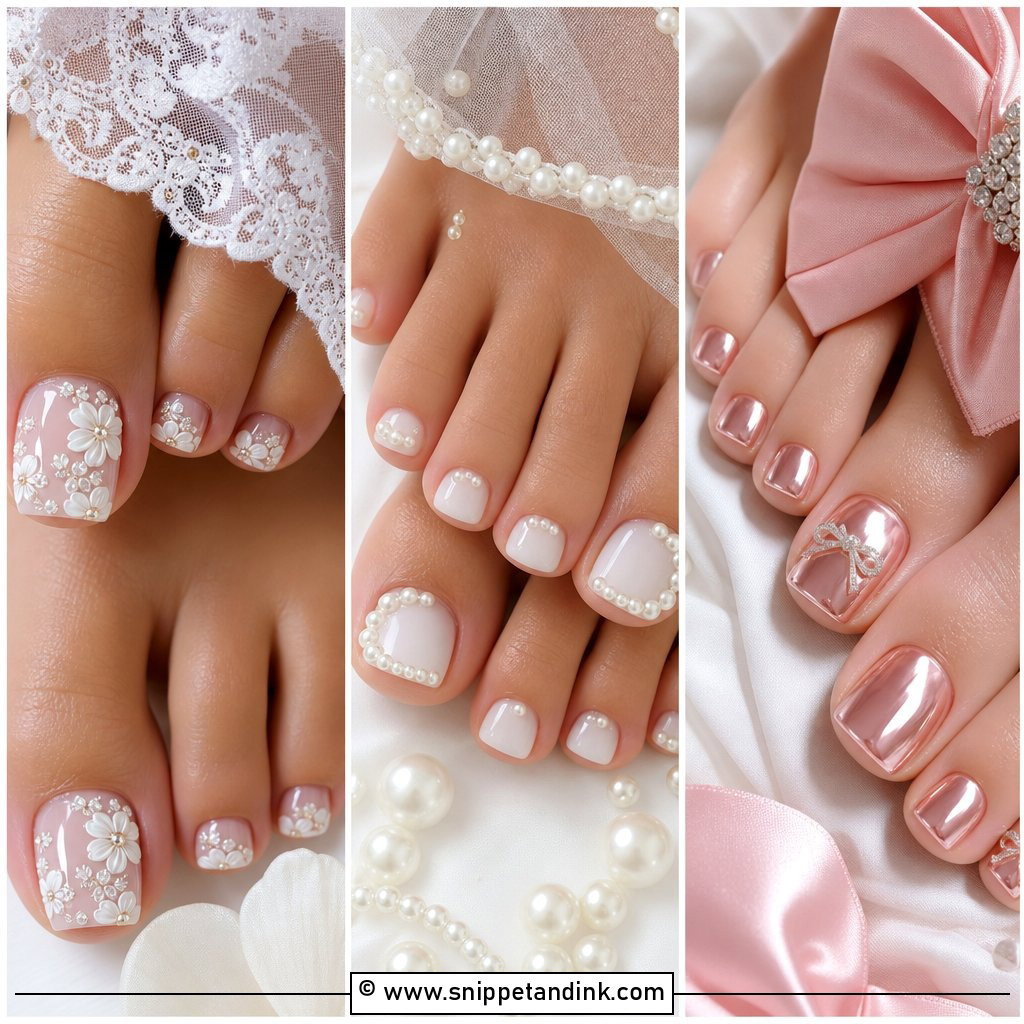
Pearls add texture without sparkle. The base can be milky white, sheer nude, blush or a baby boomer fade, and then tiny pearls go on with care. I keep them small and spaced: one at the cuticle of each nail feels clean, a little cluster on one or two nails feels richer. The practical issue is snagging. Flat-backed pearls set into gel and capped with a thick top coat around the edges stay put; glued-on pearls with exposed edges catch on veils and lace. Pair them with pearl jewelry or a satin gown.
12. Champagne Shimmer Wedding Nails
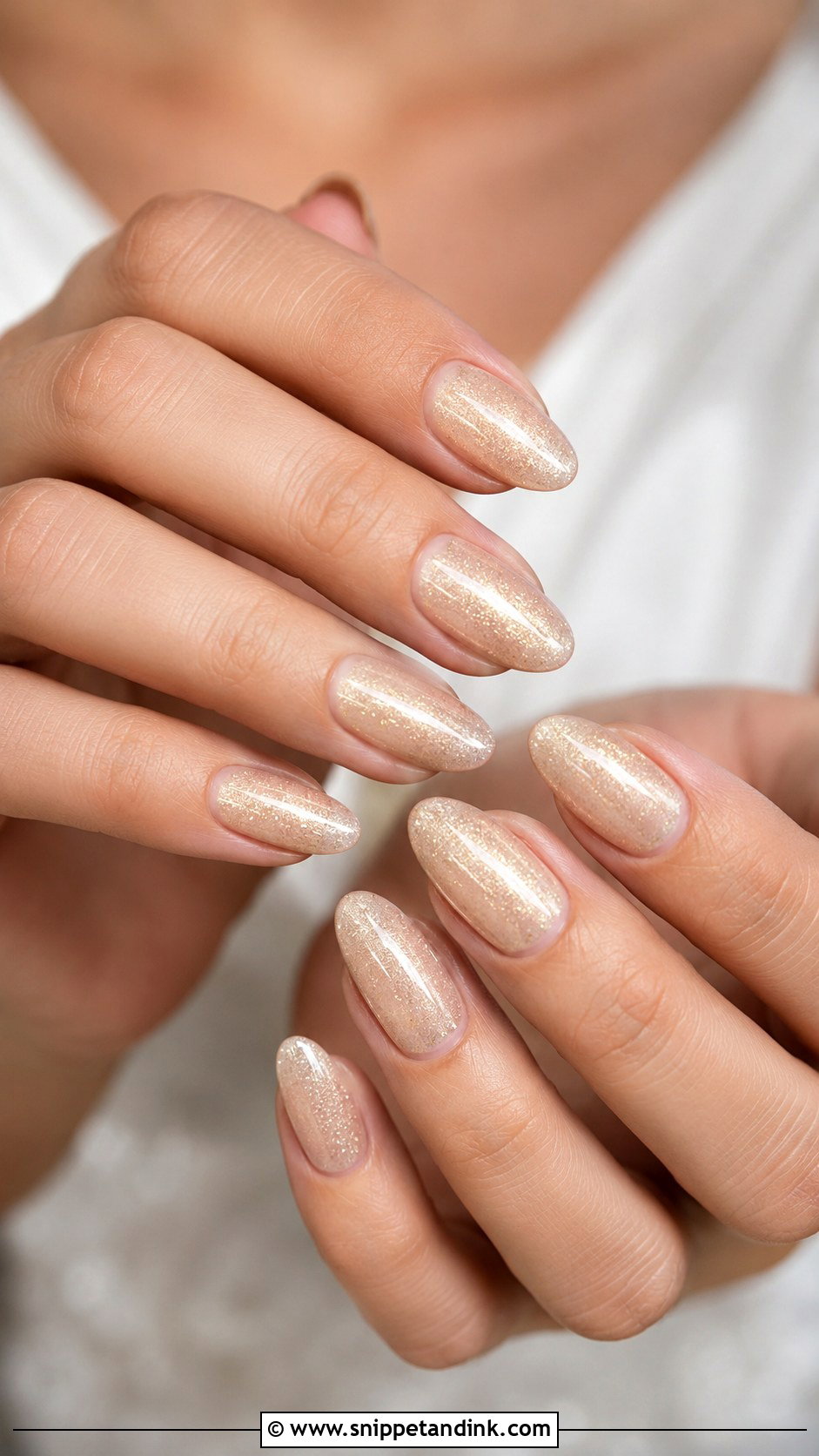
Champagne shimmer brings warmth for evening receptions, fall weddings and warm-toned looks. A soft beige, nude or pale gold base carries a fine shimmer. The shimmer must be micro-fine; chunkier glitter reads as a party nail in close-ups and is miserable to remove later. Gold jewelry and ivory dresses suit it, as do bronze makeup and warm florals. Almond and oval shapes feel soft, while short square nails feel modern. For more depth, a sheer champagne cat-eye layer adds a shifting line of light.
13. Rose Gold Wedding Nails
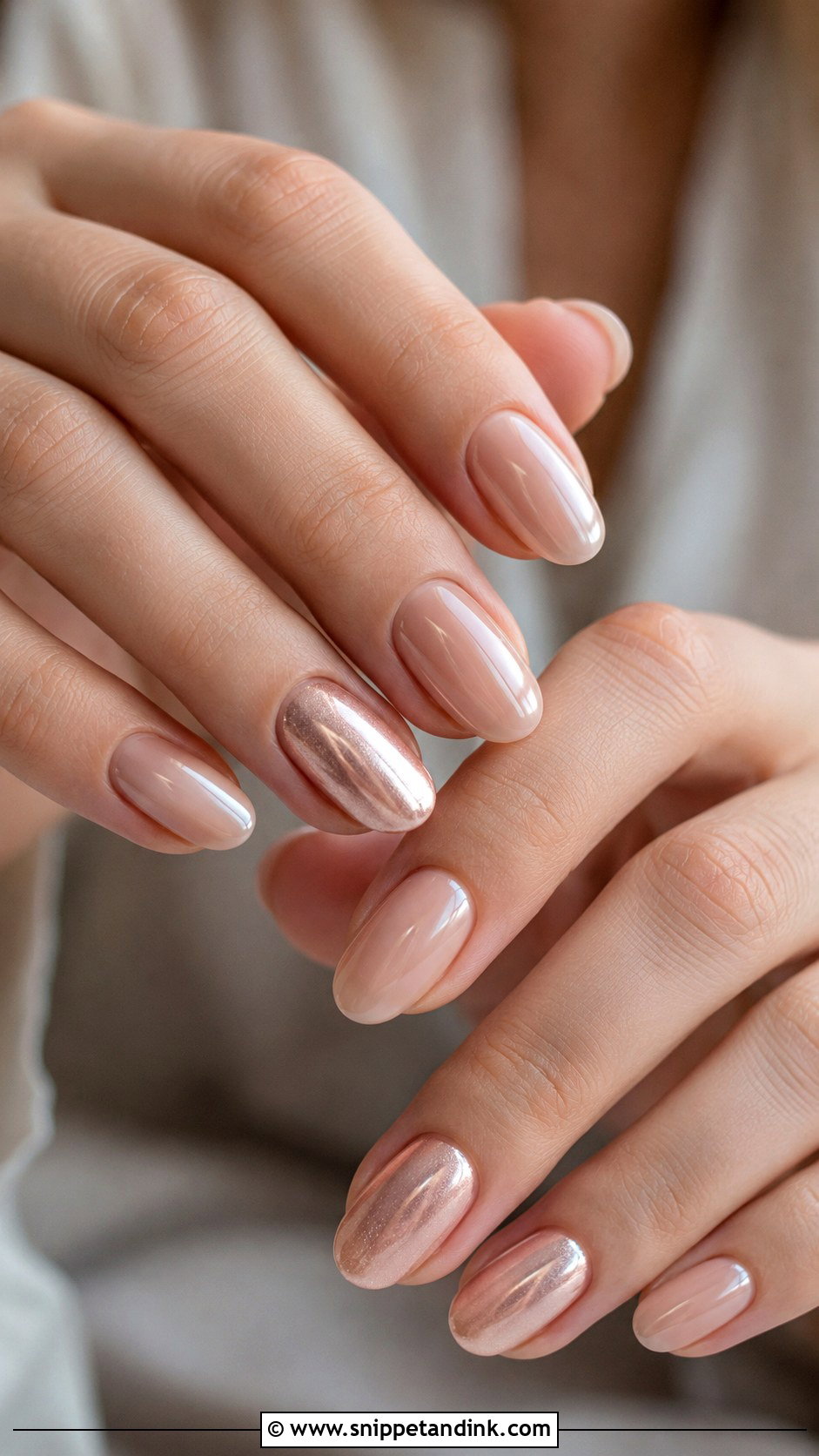
Rose gold reads both romantic and modern, but only when the metal stays soft. I start with a sheer blush or beige base and use rose gold chrome, foil or fine shimmer, rarely full mirror. It’s an obvious match for a rose gold ring, and it sits well with pink bouquets and mauve bridesmaids. Brides can keep it delicate by using rose gold only as a French tip or a light glaze; guests can go a touch stronger. Rose gold has a warm cast, so on very cool skin I’d test a swatch first.
14. White Chrome Wedding Nails
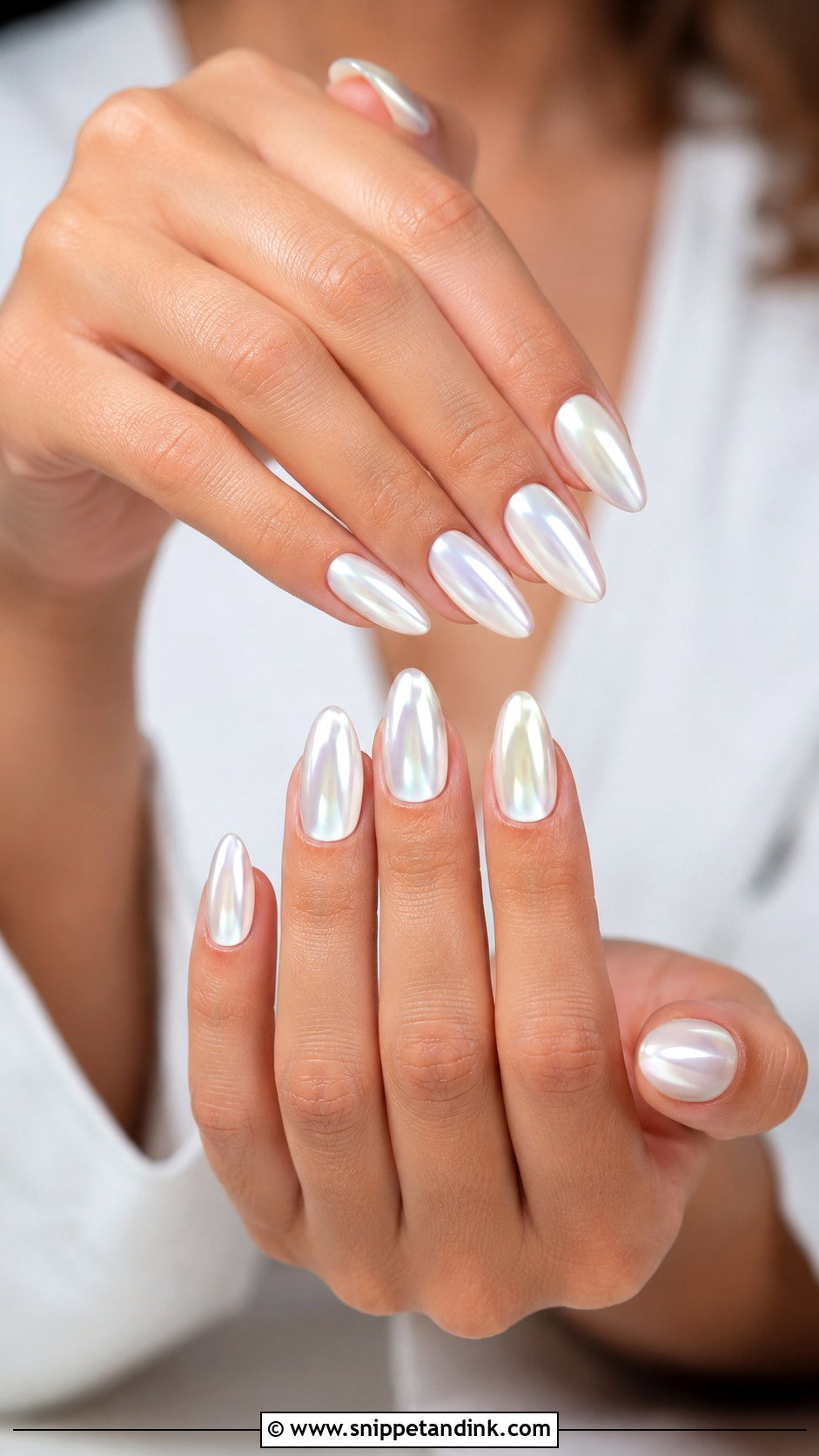
White chrome looks brighter than nude and more fashion-forward than a French. Unlike flat white polish, chrome adds dimension: I use a soft white or milky base with a fine powder that gives a pearl-like sheen. It pairs with sleek gowns, structured dresses and silver jewelry. White chrome magnifies any lumps in the base, so the structure underneath has to be smooth. Keep the shape simple, medium almond, oval or squoval, and let the finish carry it.
15. Cat Eye Wedding Nails
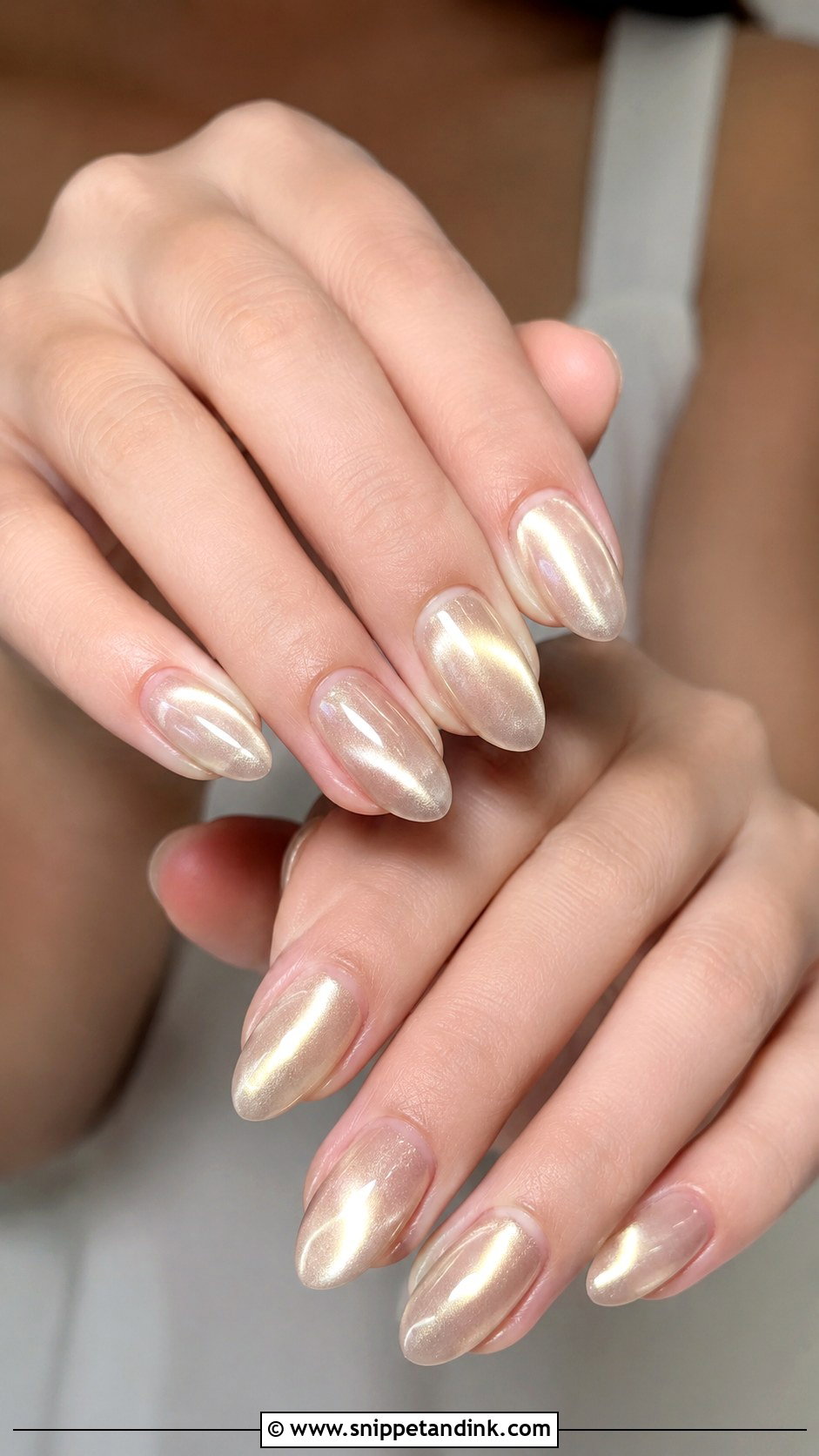
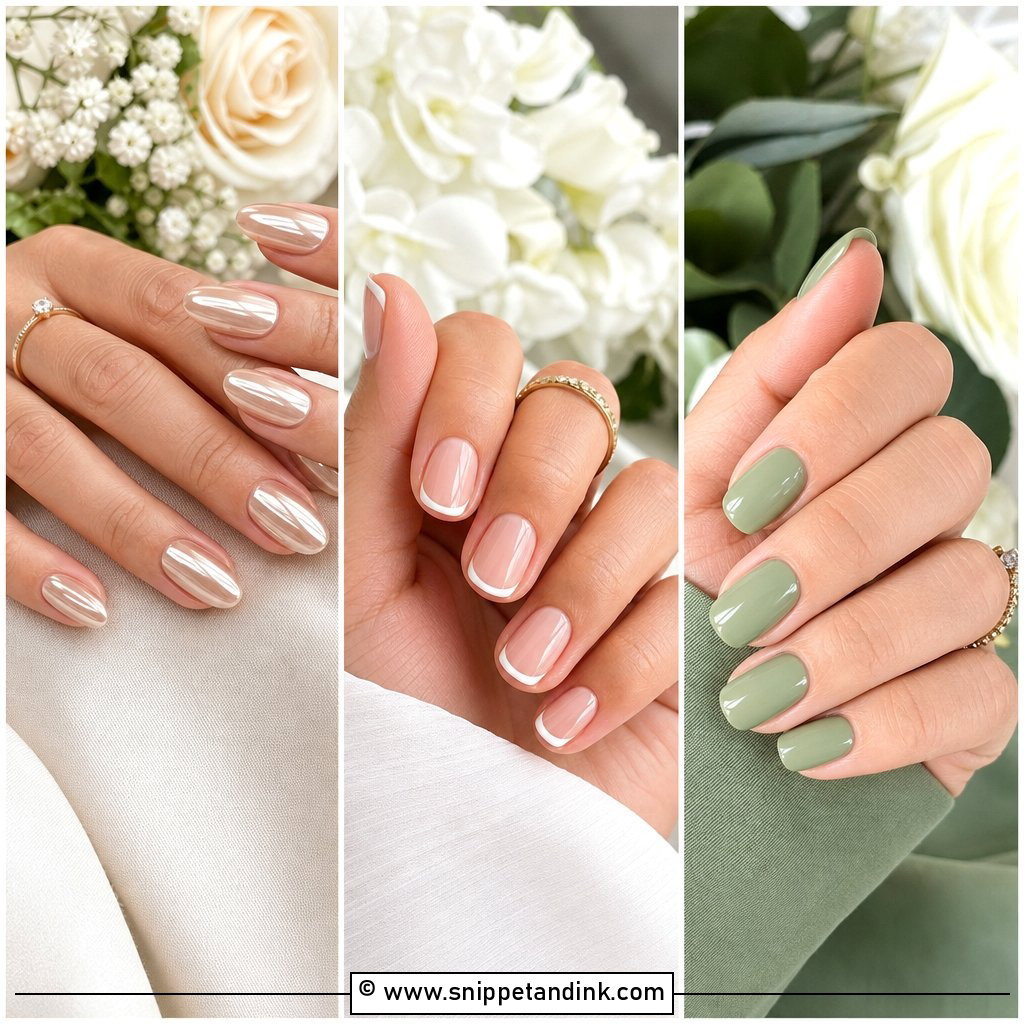
Cat eye nails get soft fast when you swap dark magnetic polish for bridal shades: champagne, pearl, pale pink, oyster or a soft silver. The magnet pulls the shimmer into a band of light across the nail, a bit like silk catching light. Timing is everything with this technique. I hold the magnet over each nail right before curing, one nail at a time, or the line drifts. Keep the base sheer or neutral. Almond and oval shapes show the light best, and a centered or diagonal glow under a gloss top coat looks the most bridal.
16. Almond Wedding Nails
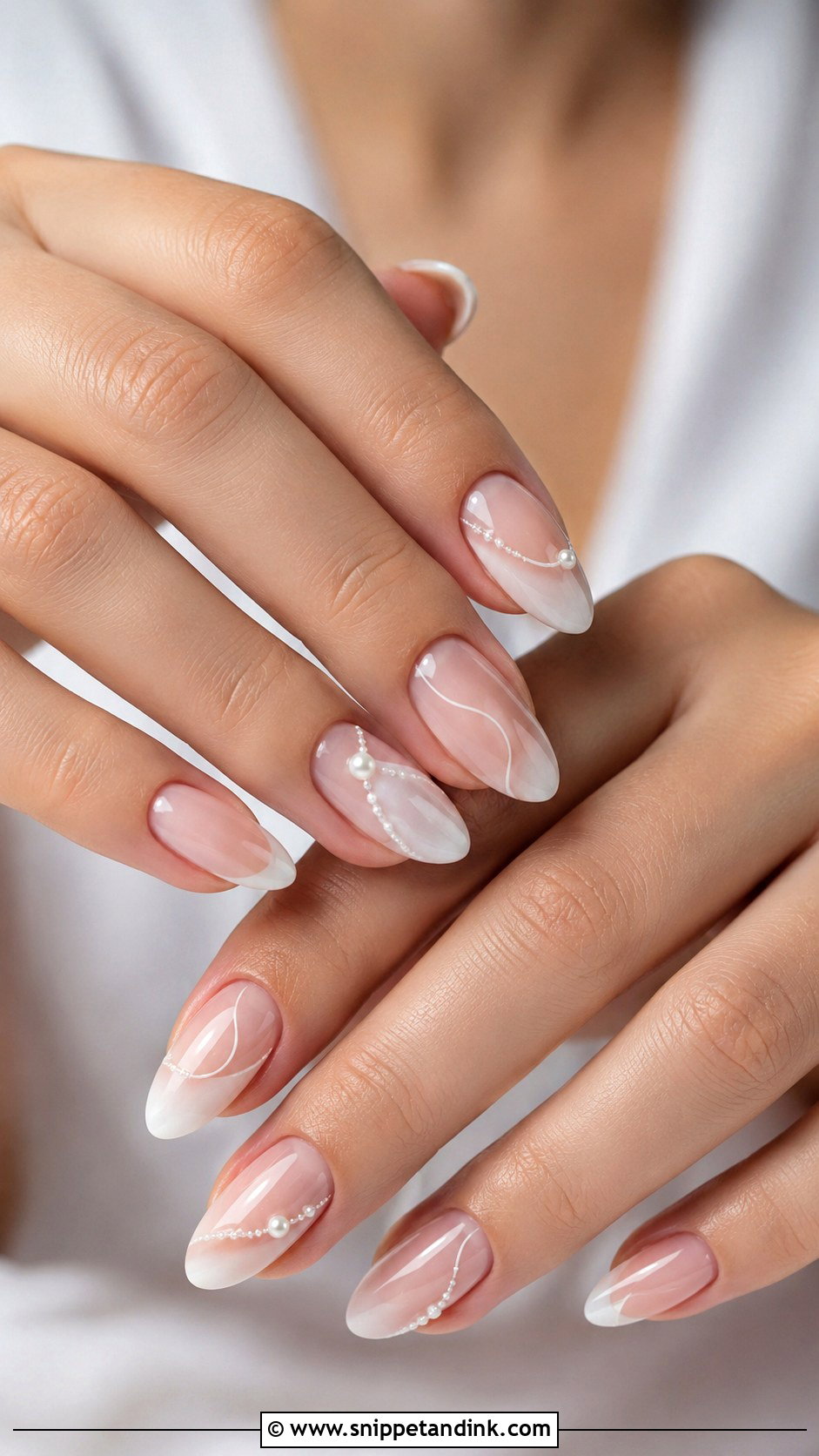
Almond is the shape I recommend most often because it makes fingers look longer and softer without feeling impractical. Pair it with a sheer pink base, milky white, a soft French or pearl chrome. The tapered sides make even a single color look finished. Medium length is the easiest to live with during a long day: you can still fasten jewelry and hold a pen to sign the register. If you want art, keep it delicate with small pearls or thin white lines. I’d avoid a very sharp almond tip on brides who aren’t used to length, because it snags tulle.
17. Short Wedding Nails
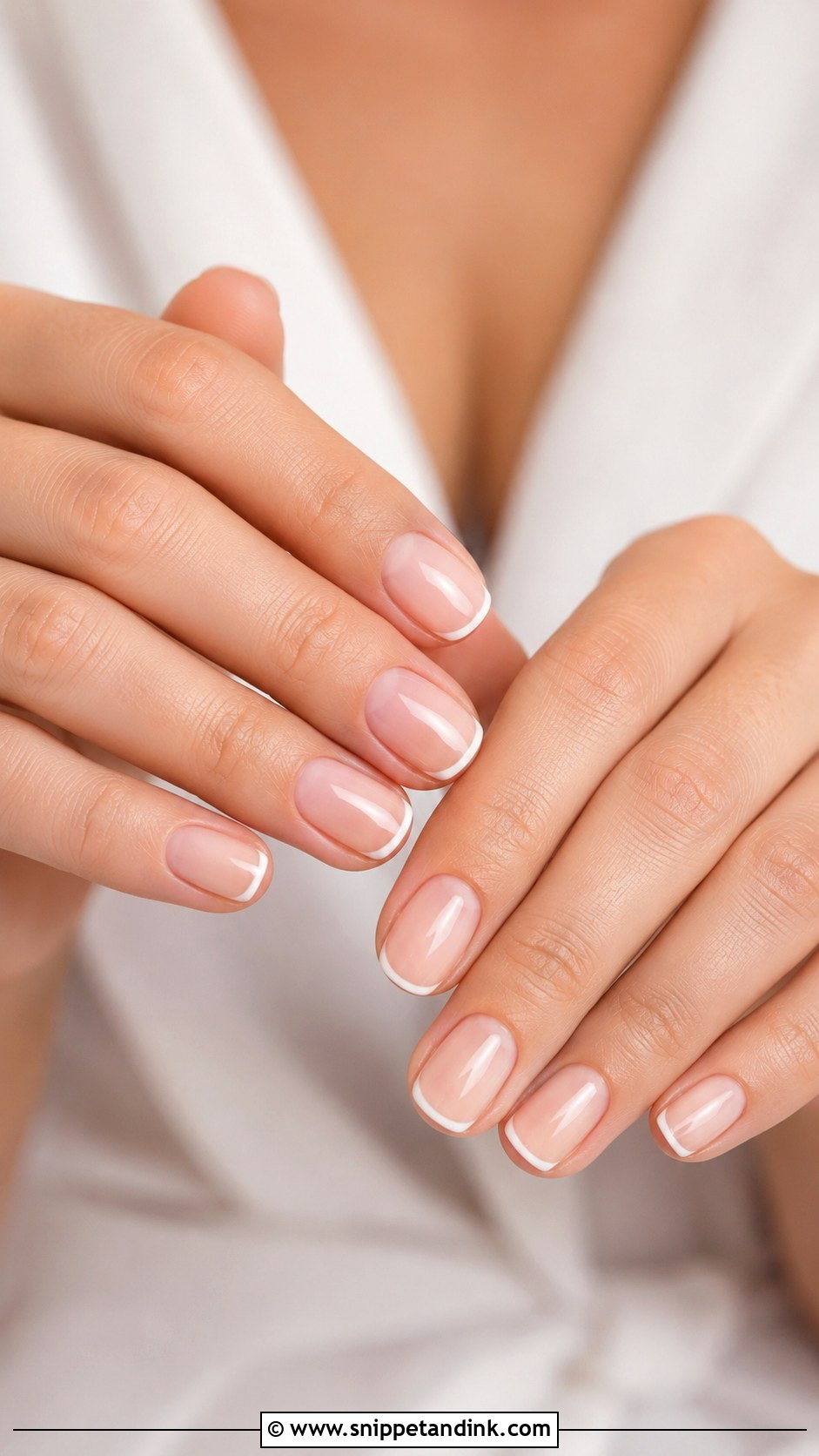
Short wedding nails look every bit as elegant as long ones when the work is precise. Milky white, sheer pink gloss, micro French tips, nude gel and subtle pearl chrome all suit short lengths. They make sense for brides who never wear extensions and don’t want to spend the day adjusting, and for bridesmaids or mothers of the bride. A soft square or squoval keeps hands neat. Oversized accents crowd a short nail, so I scale everything down: fine detail, high shine, a shade matched to skin.
18. Coffin Wedding Nails
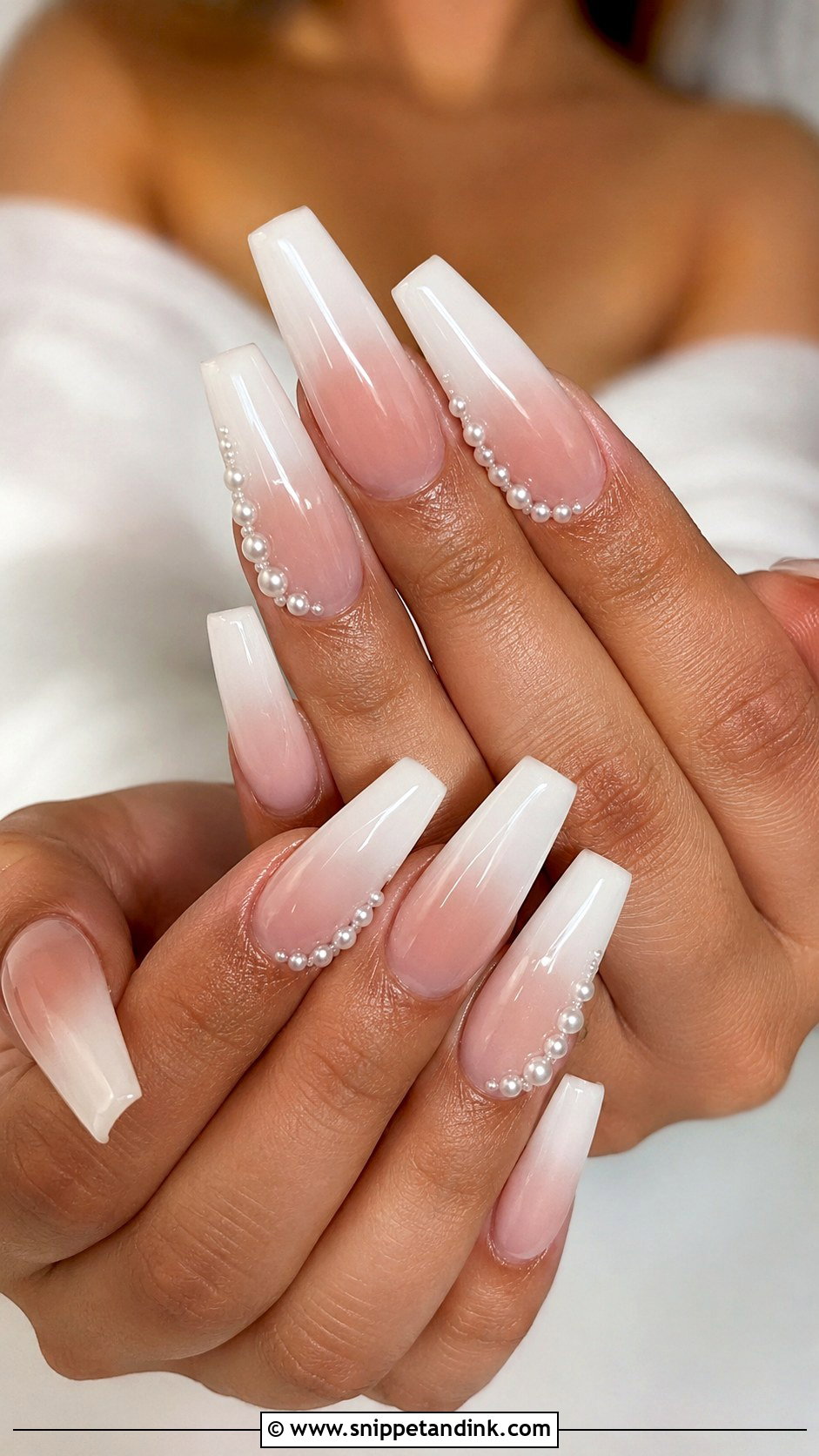
Coffin wedding nails give a more glamorous look while staying elegant when the colors are soft. The tapered sides and flat tip need medium to long length, so most clients wear extensions for this. Baby boomer fades, milky white chrome, blush shimmer, nude French tips and soft pearls all suit it. There’s room for detailed art, but I’d keep big gems off: they snag lace and sit awkwardly in ring close-ups. It suits formal receptions and brides who already wear longer nails day to day.
19. Gold French Wedding Nails
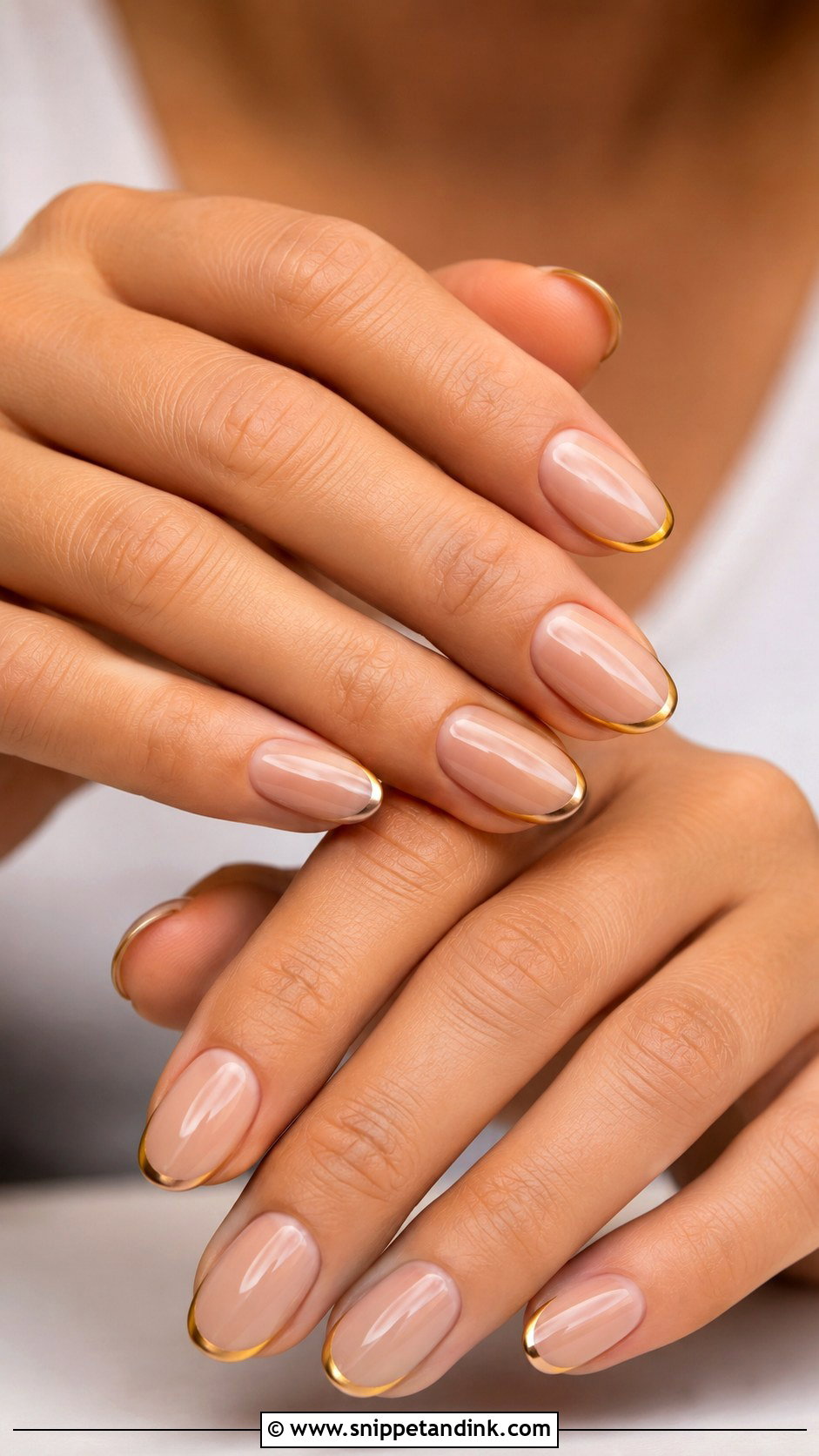
A gold French keeps the classic shape and swaps the white tip for a fine gold line over a sheer nude, blush or milky base. It feels festive while still bridal, and it looks right next to yellow gold jewelry, champagne dresses and warm ivory gowns. I paint the line with gold gel, not foil, because foil can lift at the edge within a few days. Keep the tip very thin for a quiet version or add a soft chrome over the base for more shine. Almond and oval nails feel graceful; short square nails feel modern.
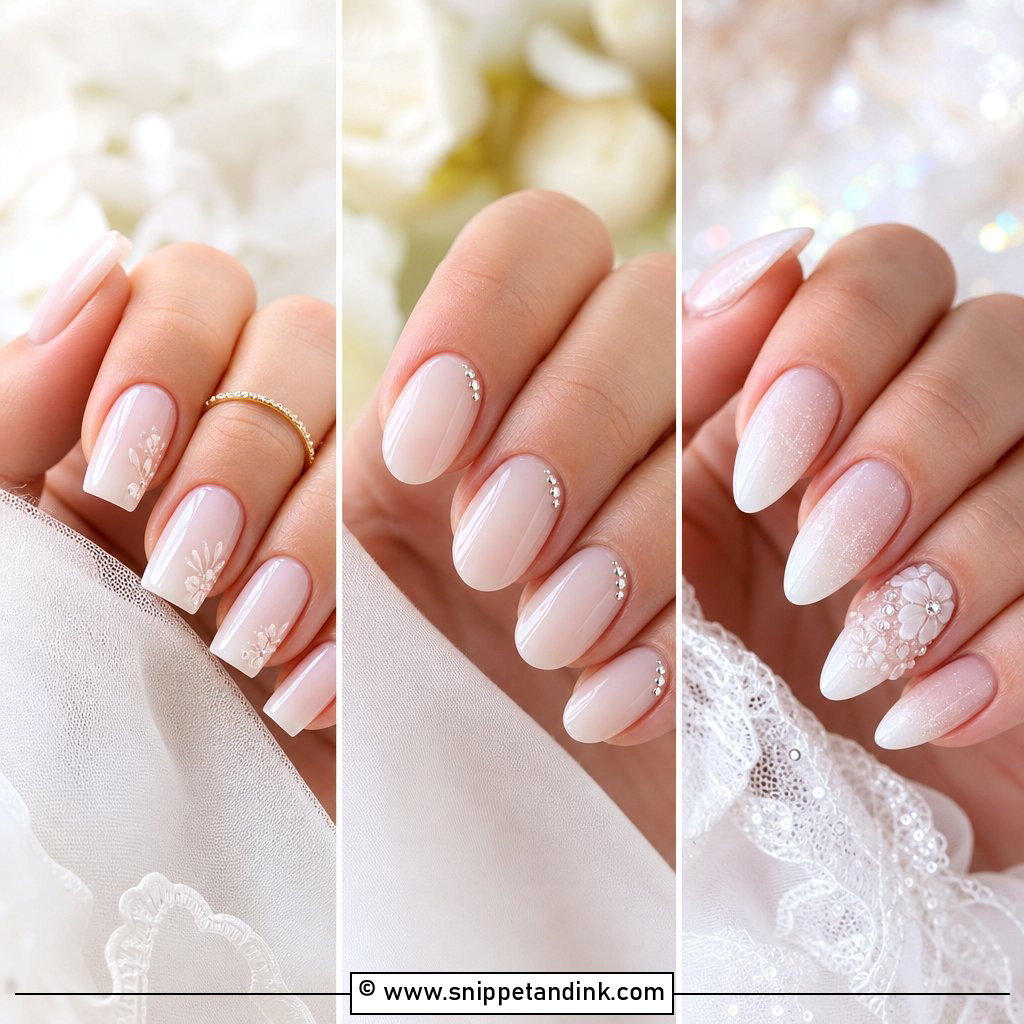
20. Something Blue Wedding Nails
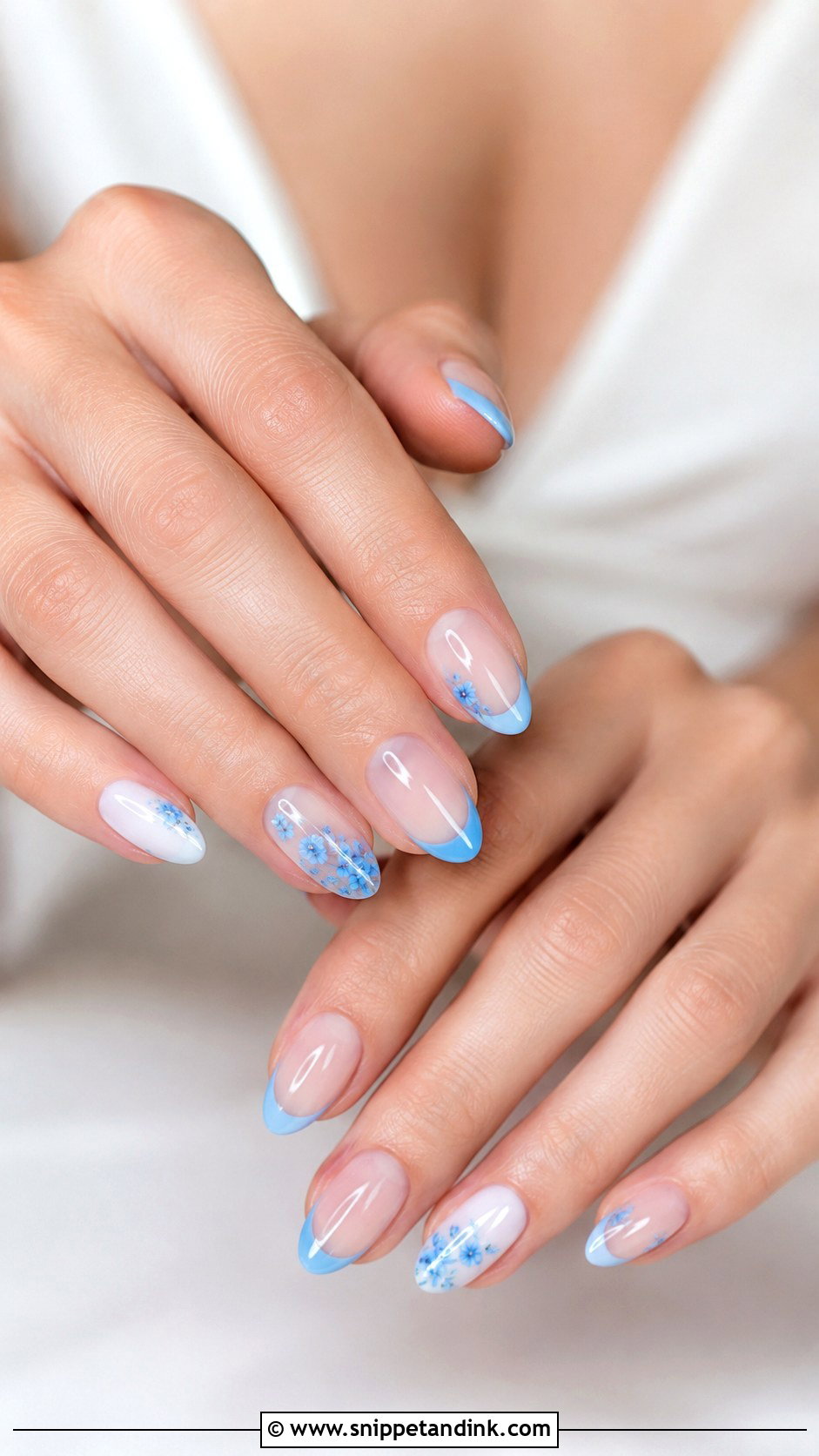
This is an easy way to slip in something blue. The wearable version keeps a sheer pink, nude or milky base and adds blue in small doses: pale blue micro tips, a few tiny blue flowers or a blue pearl shimmer on one accent nail. Light shades stay bridal; darker navy tends to look like an everyday manicure. It suits spring and coastal weddings and brides who want a private nod to tradition. Bridesmaids can wear it too when blue is in the palette. A glossy top coat keeps it smooth for photos.
The Close-Up Lens Sees Your Cuticles Before the Color
Photographers shoot rings with a macro lens, and at that magnification the color matters less than the skin around it. Dry cuticles, a lifted gel edge or a hangnail all show up sharper than you’d ever see them in a mirror. Most of the prep is boring, and it works.
- Start cuticle oil every night about two weeks before, massaged in at the nail edges.
- Don’t cut or pick at cuticles yourself in the final week. Fresh nicks look red in close-ups.
- Book the manicure one to three days before the wedding, so any lifting shows up while there is still time to fix it.
- Wear gloves for washing up and for any last-minute decor jobs.
- Pack a nail file and a small bottle of oil in the emergency kit for the day.
Gel is the most reliable choice for a wedding because it won’t smudge while you dress and it holds through the honeymoon. Regular polish can work for a guest, but give it a full night to harden. If a gel corner chips on the morning, don’t peel it; a dab of matching polish on the spot hides it in photos far better than a bare patch.
A Manicure That Belongs to the Outfit
The right set is the one that feels comfortable and looks like you. A bride may choose milky chrome, lace or a baby boomer fade, while a guest might prefer blush, nude gloss or a micro French manicure. Soft whites, sheer pinks, nudes, champagne, pearl and gentle metallics are the safest wedding shades. Match the shape to how you use your hands and the color to your skin, keep heavy detail to a minimum, and the nails will look right in person and in every close-up.
You'll Like These Ideas:


Leave a Reply