
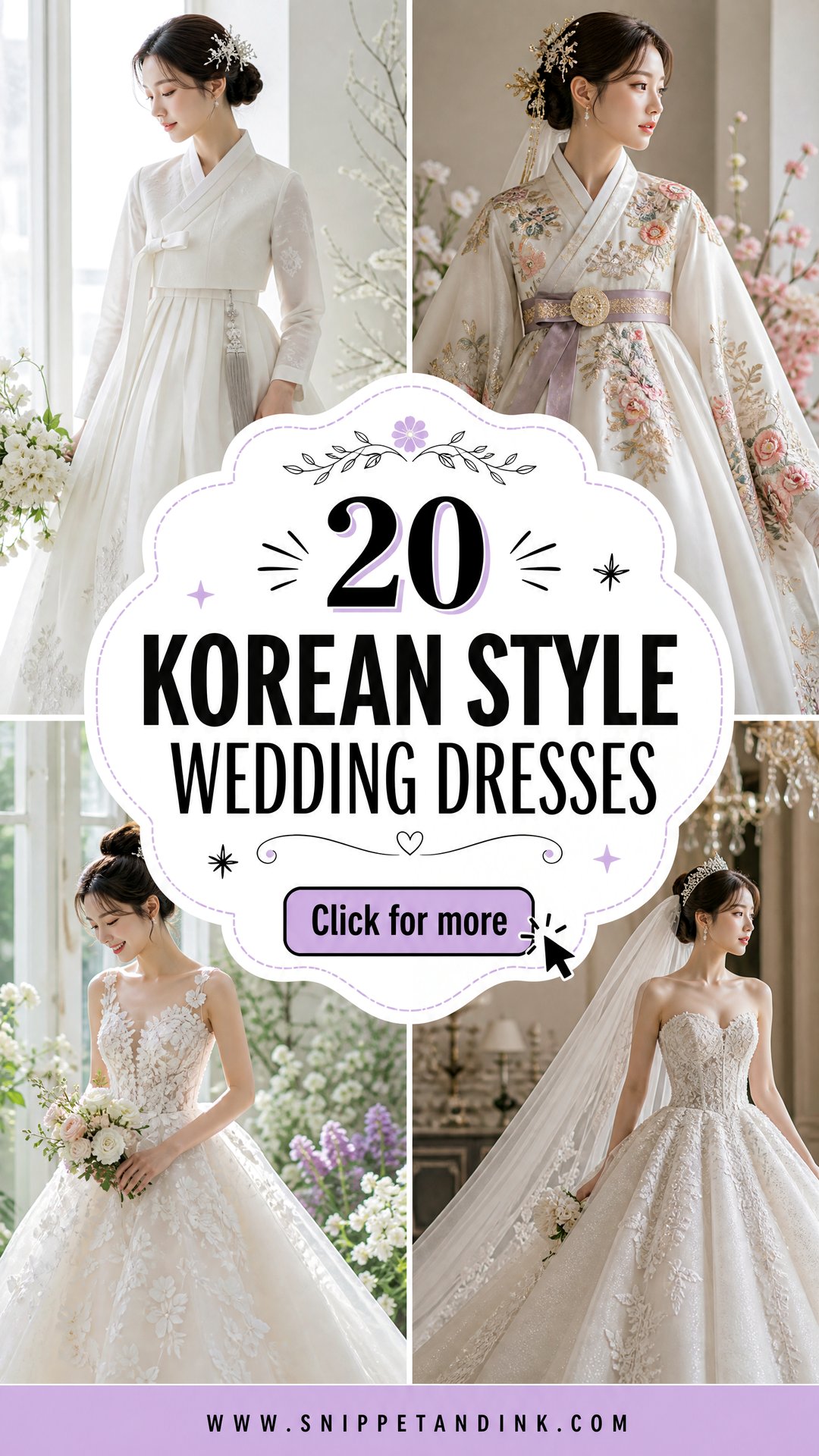
Seoul’s bridal style is quiet on the surface and very exact underneath. Some brides wear a traditional hanbok for the paebaek, others choose a Western gown with that clean, romantic Korean finish, and many wear both. The range below covers structured satin ball gowns, fine lace, pastel hanbok, embroidered ceremonial robes and short reception dresses. Traditional shapes are also getting lighter, with softer colours and easier proportions. I’d judge every one of them by three things: the venue, the ceremony format and how comfortable you’ll be after hours in it. How strongly you want Korean culture to show is the fourth, and only you can answer that one.
Silhouettes That Work in a Korean Wedding Hall
A typical Korean wedding hall runs ceremonies on a tight timetable. The service itself is short, guests move quickly to the buffet, and before it starts the bride sits in the bride’s room for close to an hour while friends and relatives come in to greet her and take photos. That waiting time shapes what I recommend more than the aisle does.
- Full ball gowns and corset bodices look the most dramatic in the bride’s room photos, but choose a skirt with a hoop or crinoline you can sit on without it springing up in front of you.
- Sheaths and empire waists are comfortable for that long seated hour and suit smaller halls and city venues.
- Long trains need a bustle or wrist loop, because the walk from the bride’s room to the aisle is often through corridors and lifts.
- If the paebaek follows straight after, a hanbok you can step into quickly saves more time than any other choice.
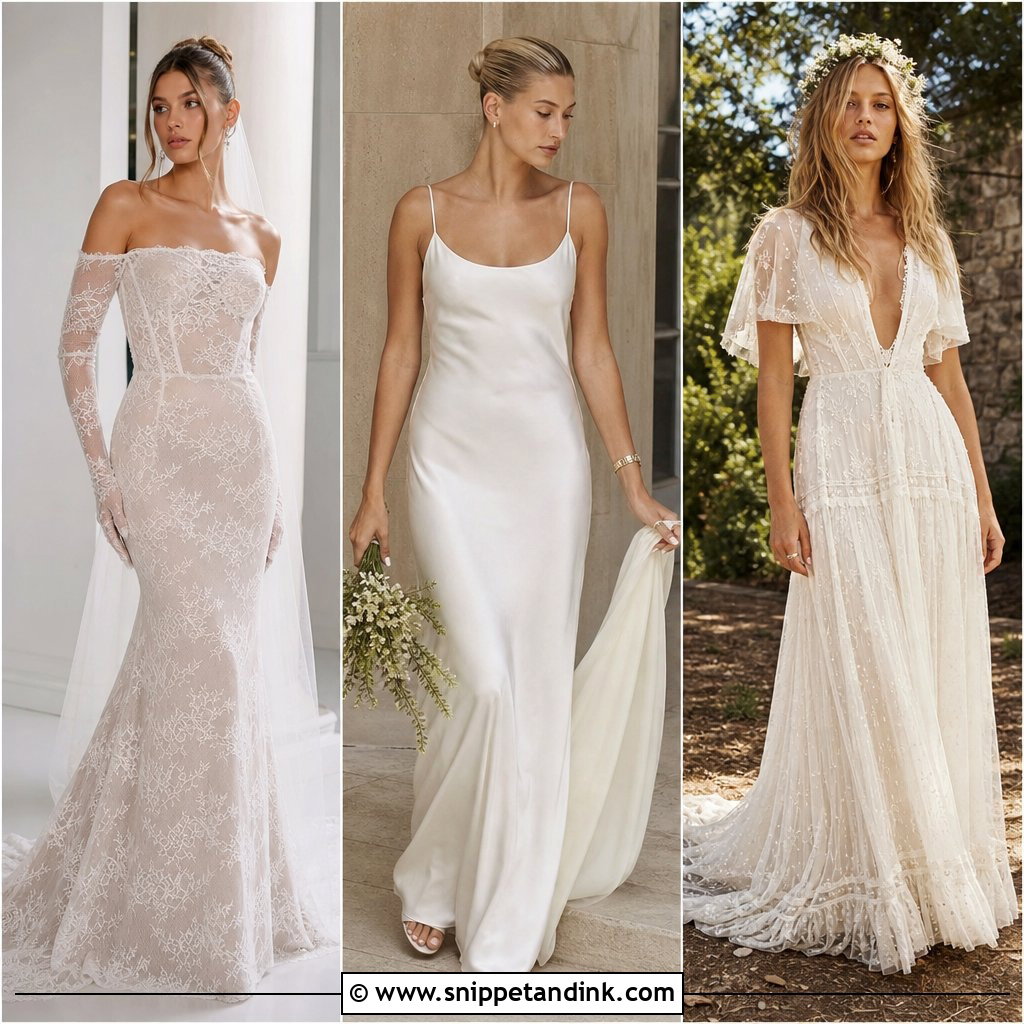
Height and frame matter too. Petite brides tend to look best in square-neck A-lines, empire waists and tea lengths, where the waist sits high and the hem doesn’t swallow the leg. Taller brides carry basque waists, capes and big bows easily. Try one of each shape before deciding on fabric; the silhouette is the part you can’t change later.
1. Traditional Red And Green Hanbok Wedding Dress
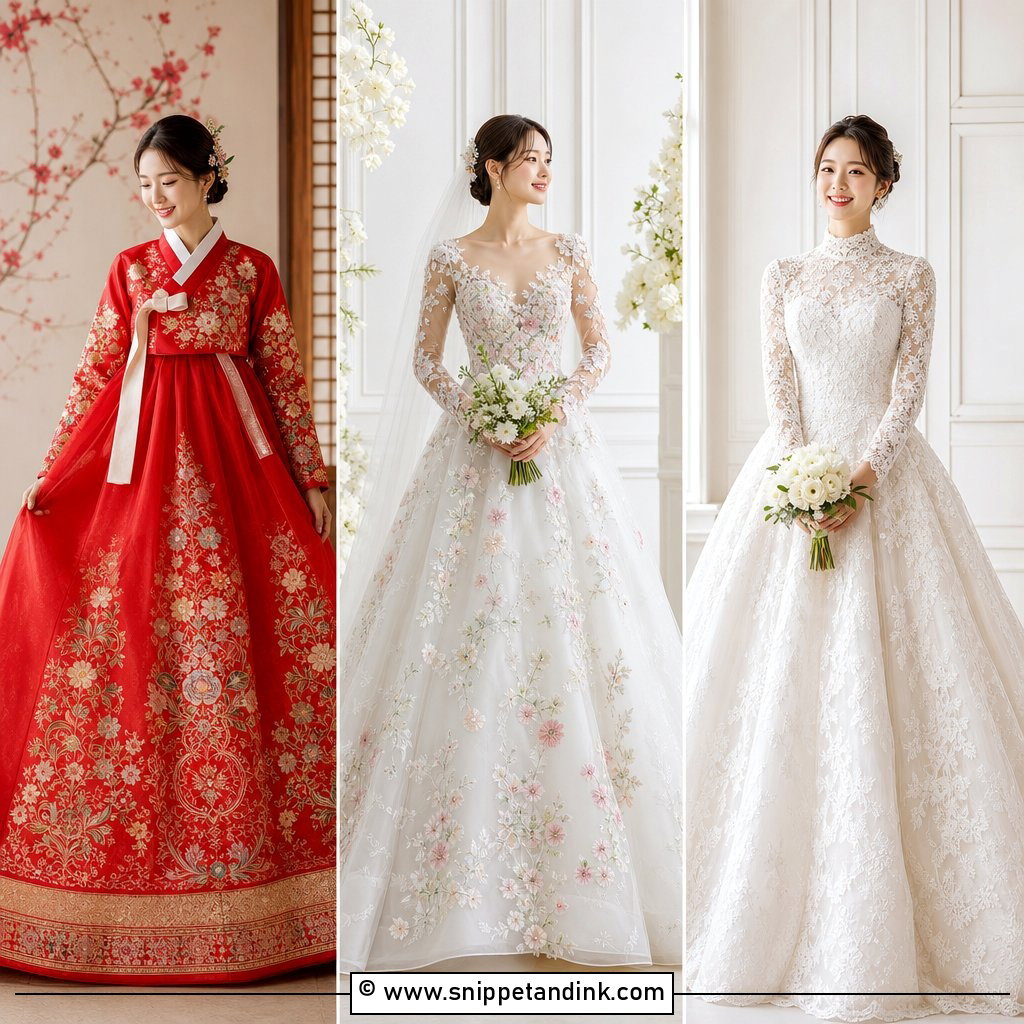
Red skirt, green jacket: this is the classic bridal hanbok, and the pairing has long been the traditional colour scheme for a Korean bride. A traditional red and green bridal hanbok pairs a full red chima with a green jeogori, tied high so the skirt falls in a bell shape. Embroidery, striped saekdong sleeve bands and the tied goreum ribbon carry the decoration, so you don’t need heavy jewellery. Add embroidered beoseon socks, silk flats, a small norigae and a neat bun with a decorative pin or headpiece. If you’ll be bowing at the paebaek, ask for a lighter silk blend; a full traditional silk chima is warm and stiff to kneel in.
2. White Modern Hanbok Wedding Dress
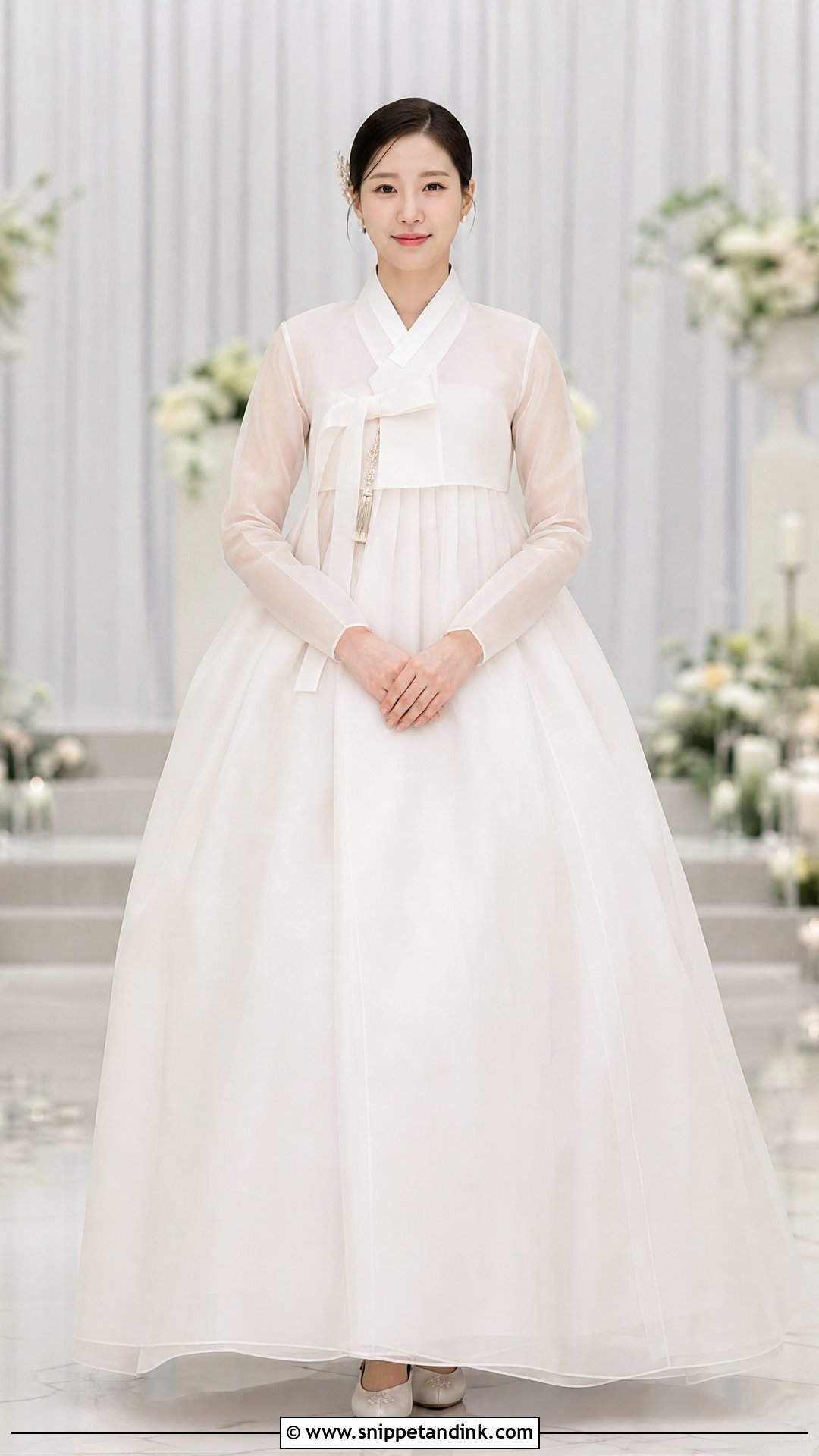
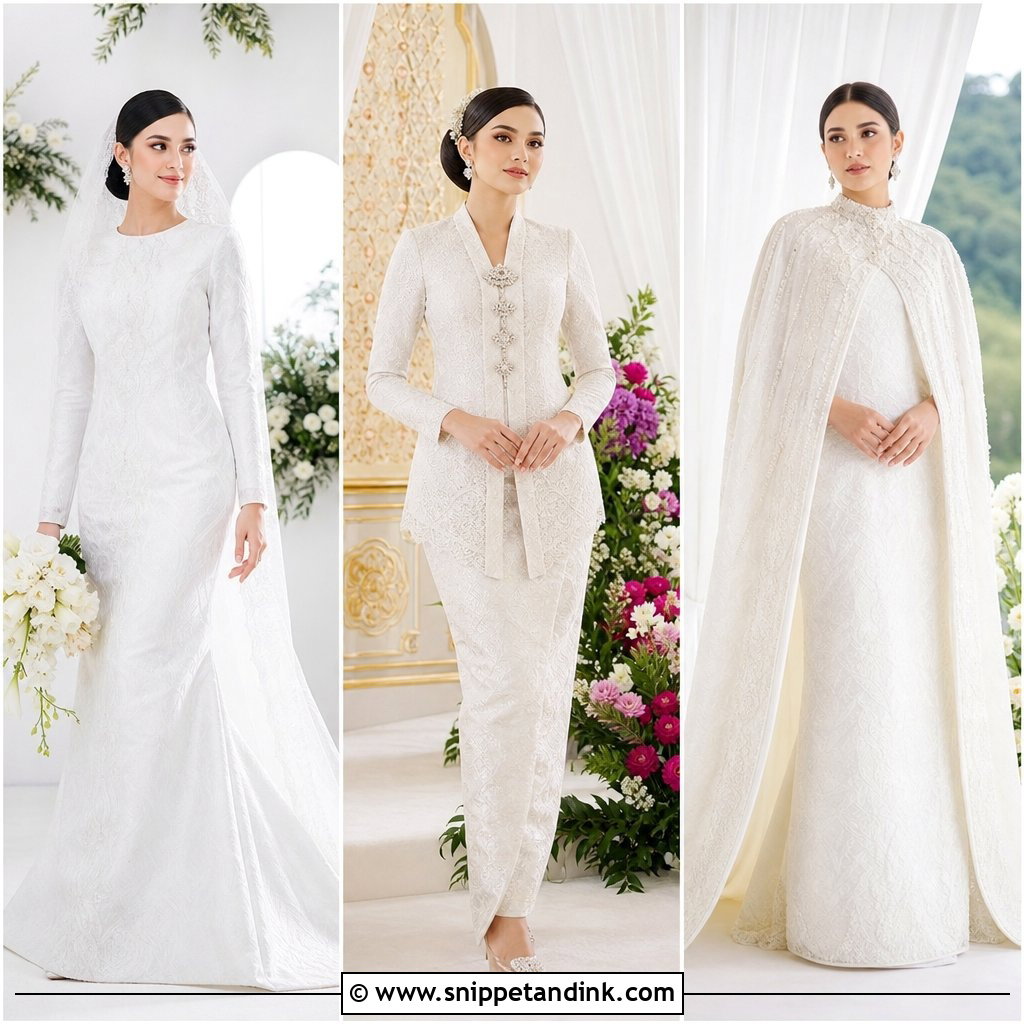
White turns the hanbok shape into something that reads as bridal to guests from any background. Look for an ivory chima with gentle volume and a fitted jeogori with clean ties, sheer sleeves or a fine embroidered edge. Modern makers keep the recognisable lines but adjust the fit and fabric so it’s easier to wear all day. Matte silk, organza and soft jacquard all work; shiny satin can make the full skirt look wider than it is. Pearl earrings, a white norigae, satin flats and a low bun finish it. Skip the long veil and use a sheer shoulder veil or a single binyeo pin instead. It suits a modern ceremony, a courthouse wedding or a reception entrance.
3. Pastel Pink Hanbok Wedding Dress
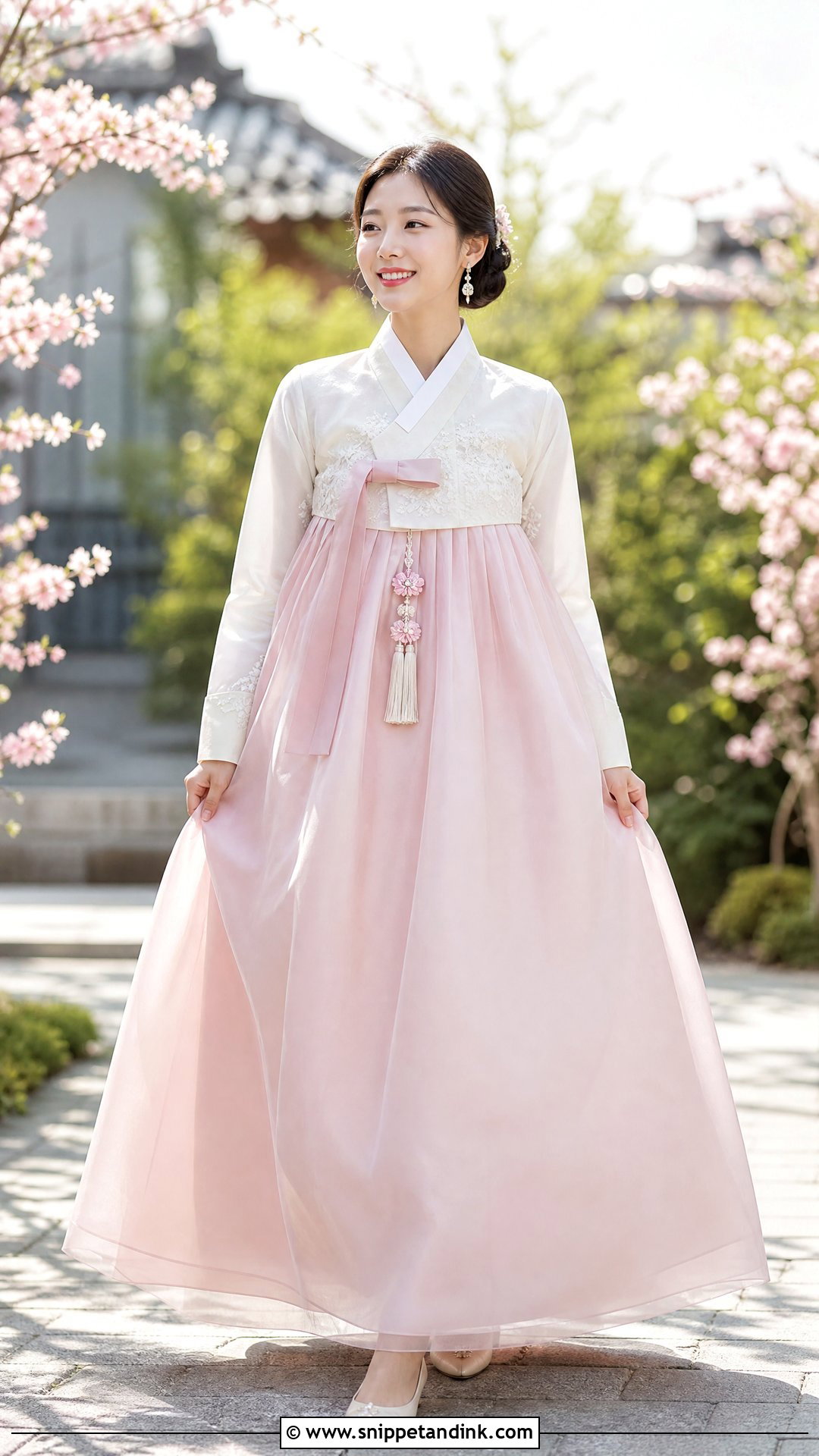
Blush pink is one of the easiest hanbok colours to wear because it softens near the face instead of competing with your skin. Pair a pale pink chima with an ivory jeogori, soft ribbon and a little floral embroidery. Spring ceremonies and outdoor portraits suit it best. I’d keep the skirt to a controlled volume; too many petticoat layers make a pastel skirt look like a costume. Ivory silk flats, pearl drops, a small embroidered clutch and a braided low bun with a floral pin complete it. If the palette feels washed out at the fitting, a deeper rose goreum ribbon or norigae fixes that without adding anything else.
4. Embroidered Hwarot Wedding Dress
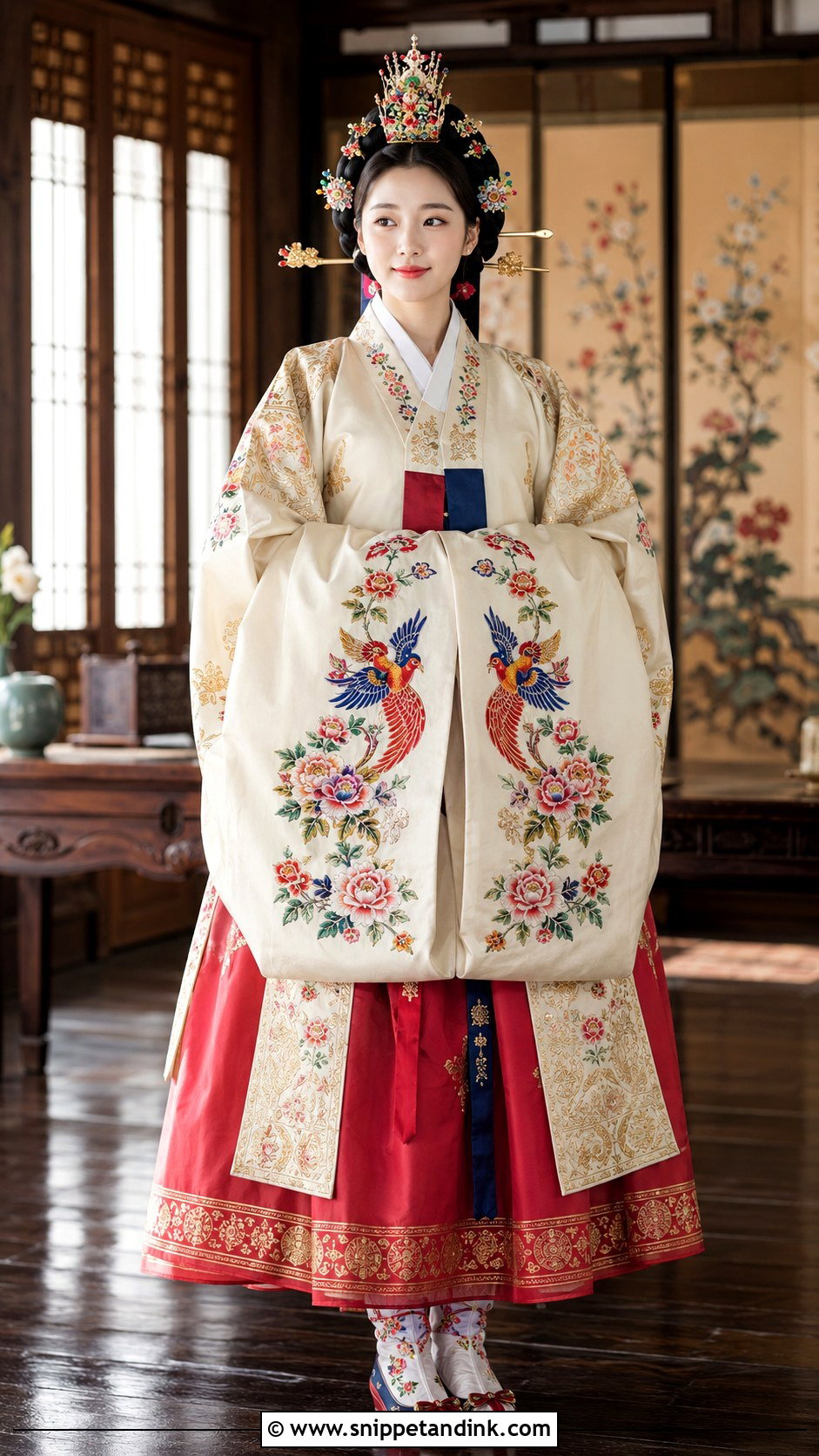
The hwarot is the most formal piece in Korean bridal dress, and also the heaviest. An embroidered hwarot is worn over a coordinated hanbok, with colourful motifs across the sleeves, shoulders and body. Since the robe carries the whole look, everything under it should stay traditional: a red chima, a light jeogori, embroidered socks and soft silk shoes. Finish with an updo, ornamental pins and a ceremonial headpiece. Leave Western necklaces and sparkly earrings at home; they look out of place against the embroidery. Before the day, put it on and bow twice. The sleeves are long and the weight sits on your shoulders, and you need to know how that feels.
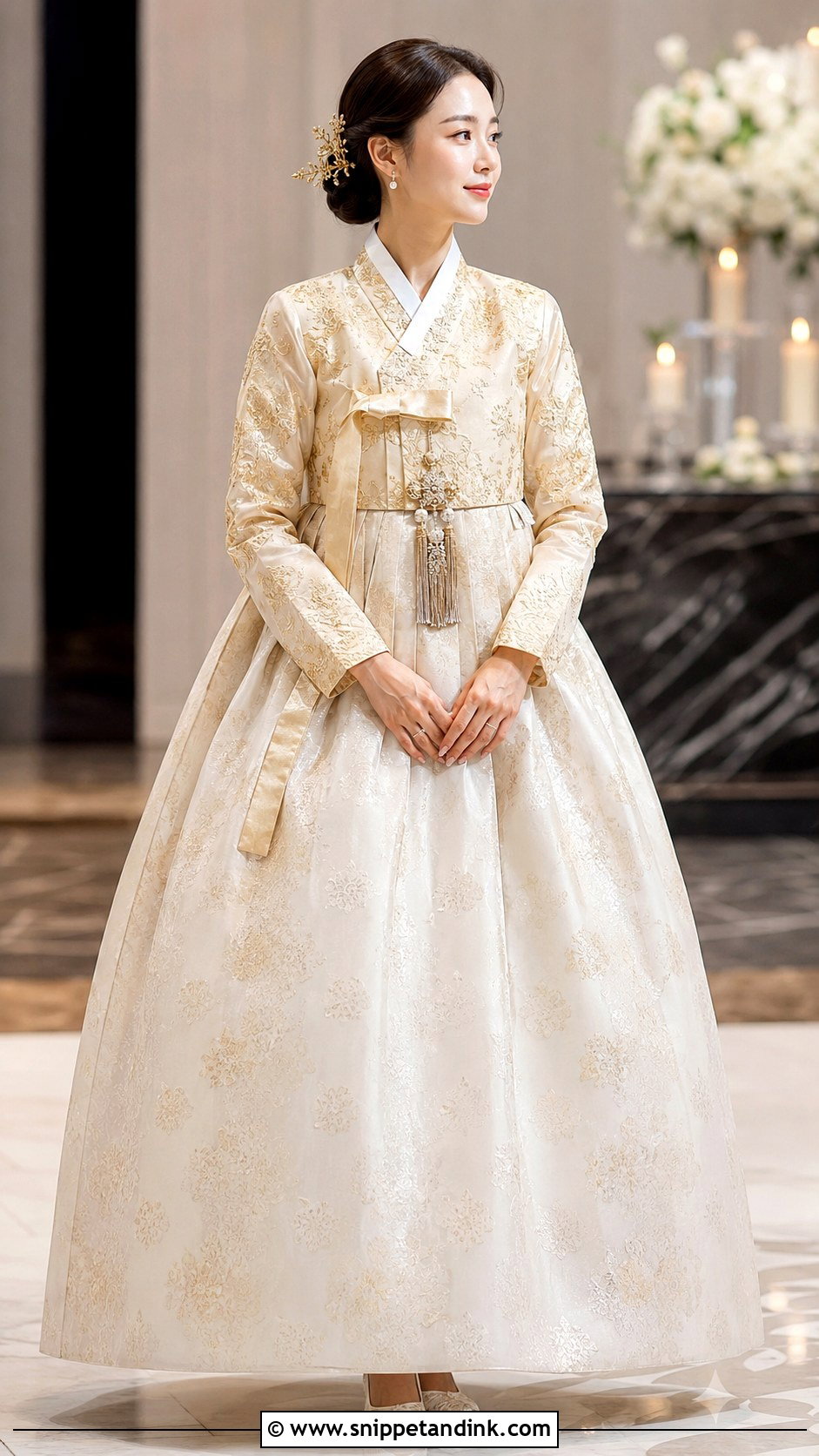
5. Gold And Ivory Hanbok Wedding Dress
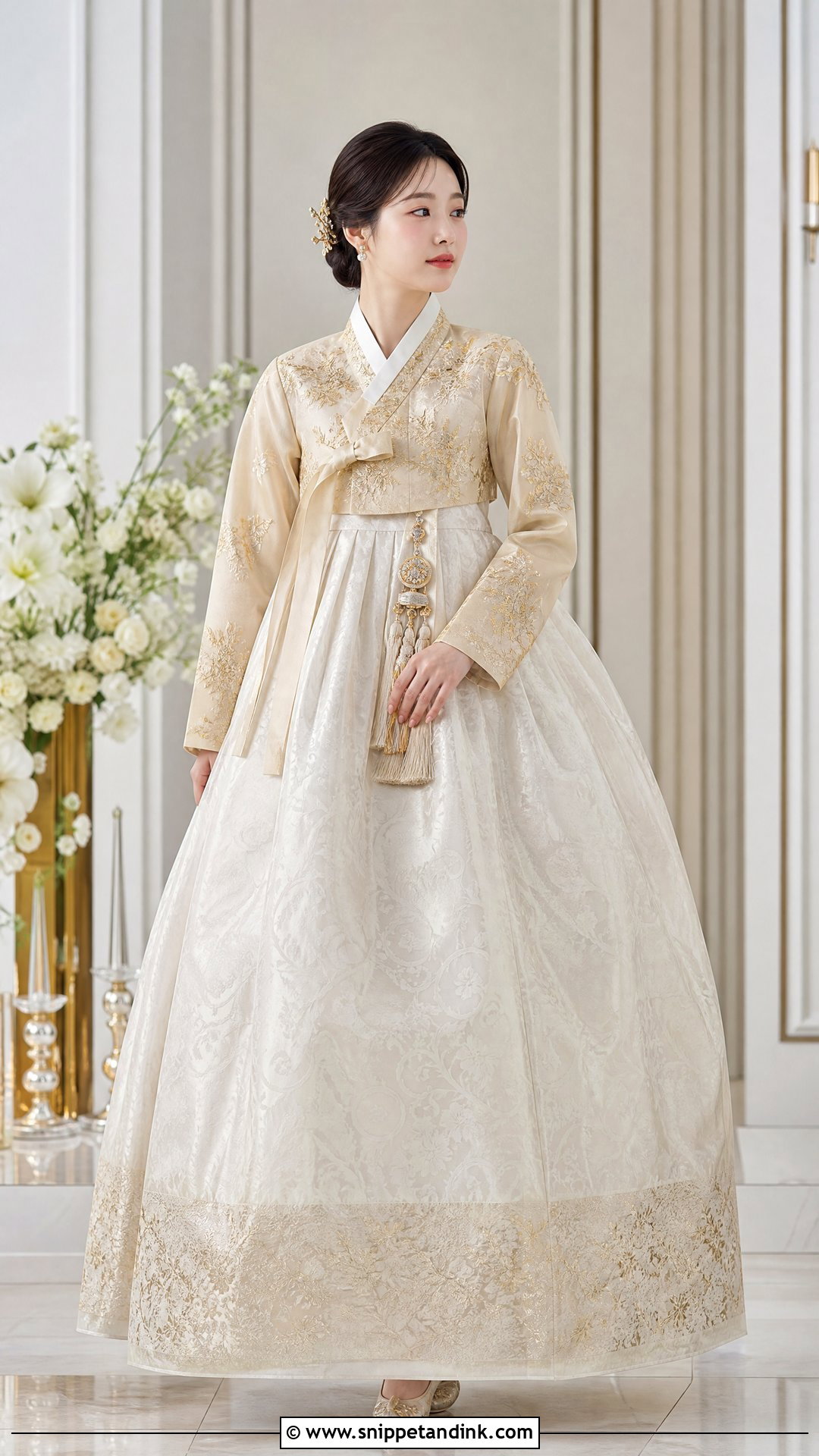
Ivory and muted gold look rich without any bright colour, which makes this hanbok a good fit for a hotel evening. Choose an ivory chima with a subtle woven pattern and a pale gold jeogori or embroidered short jacket. A soft metallic norigae adds a focal point at the front. Champagne flats, small pearl earrings and a structured ivory bag are enough, with a smooth low bun and one gold pin. Pick fabric with a gentle sheen. High-shine gold lamé bounces flash light and turns into flat bright patches in photos, losing the woven detail you paid for.
6. Minimalist Satin Ball Gown Wedding Dress
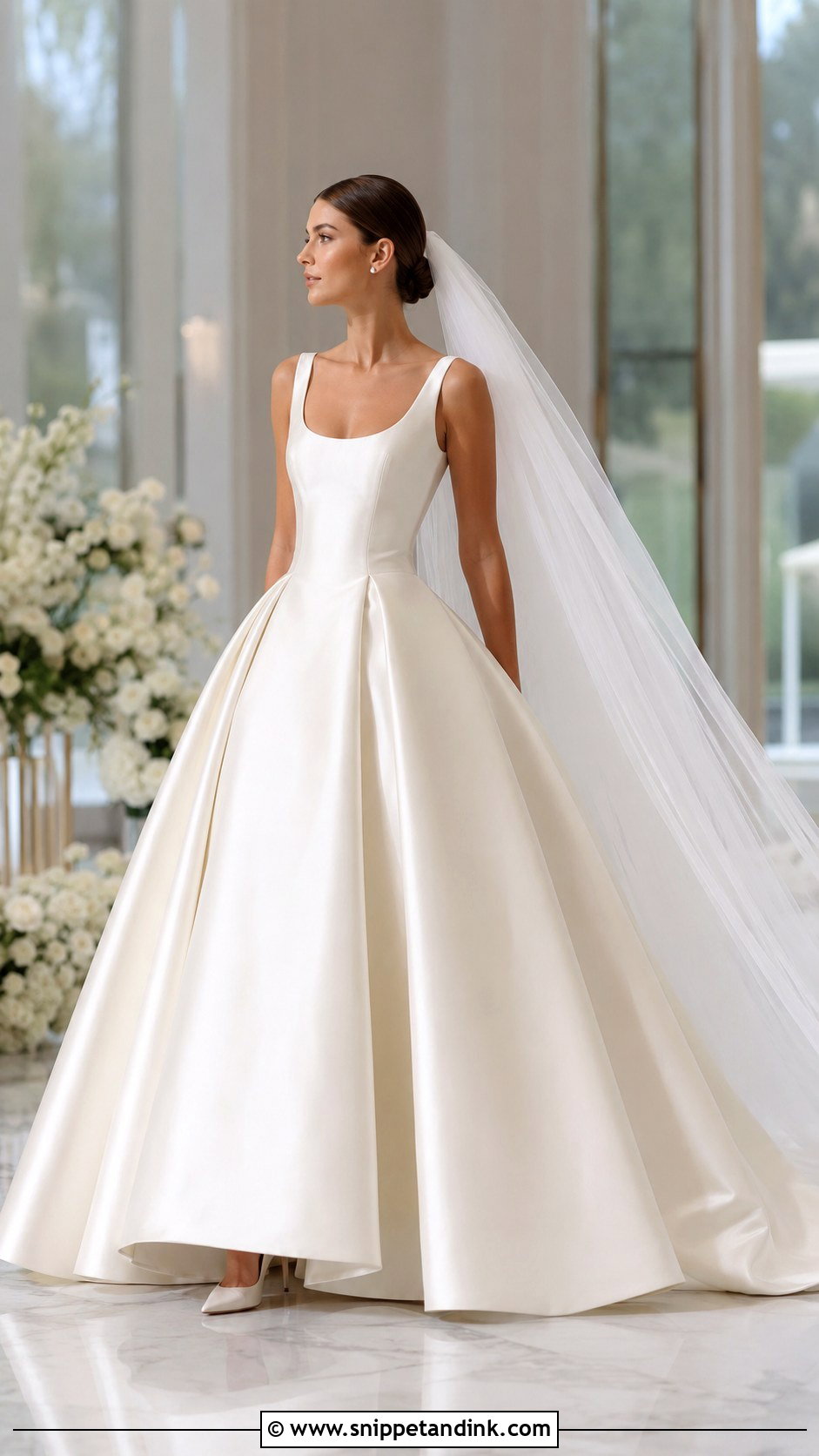
Minimal satin ball gowns are what many people picture when they think of Korean bridal style, and they’re less forgiving than they look. A structured bodice with a straight, scoop or soft neckline over a full skirt with very few seams means there’s nothing to hide a poor fit. I’d spend the budget on tailoring before anything else. Pointed satin pumps, pearl studs and a cathedral veil suit a formal ceremony, and a low bun or centre-parted chignon keeps attention on the neckline. If you want one more detail, add detachable gloves or a narrow satin belt. The impact comes entirely from proportion and fabric.
7. Off Shoulder Mikado Ball Gown Wedding Dress
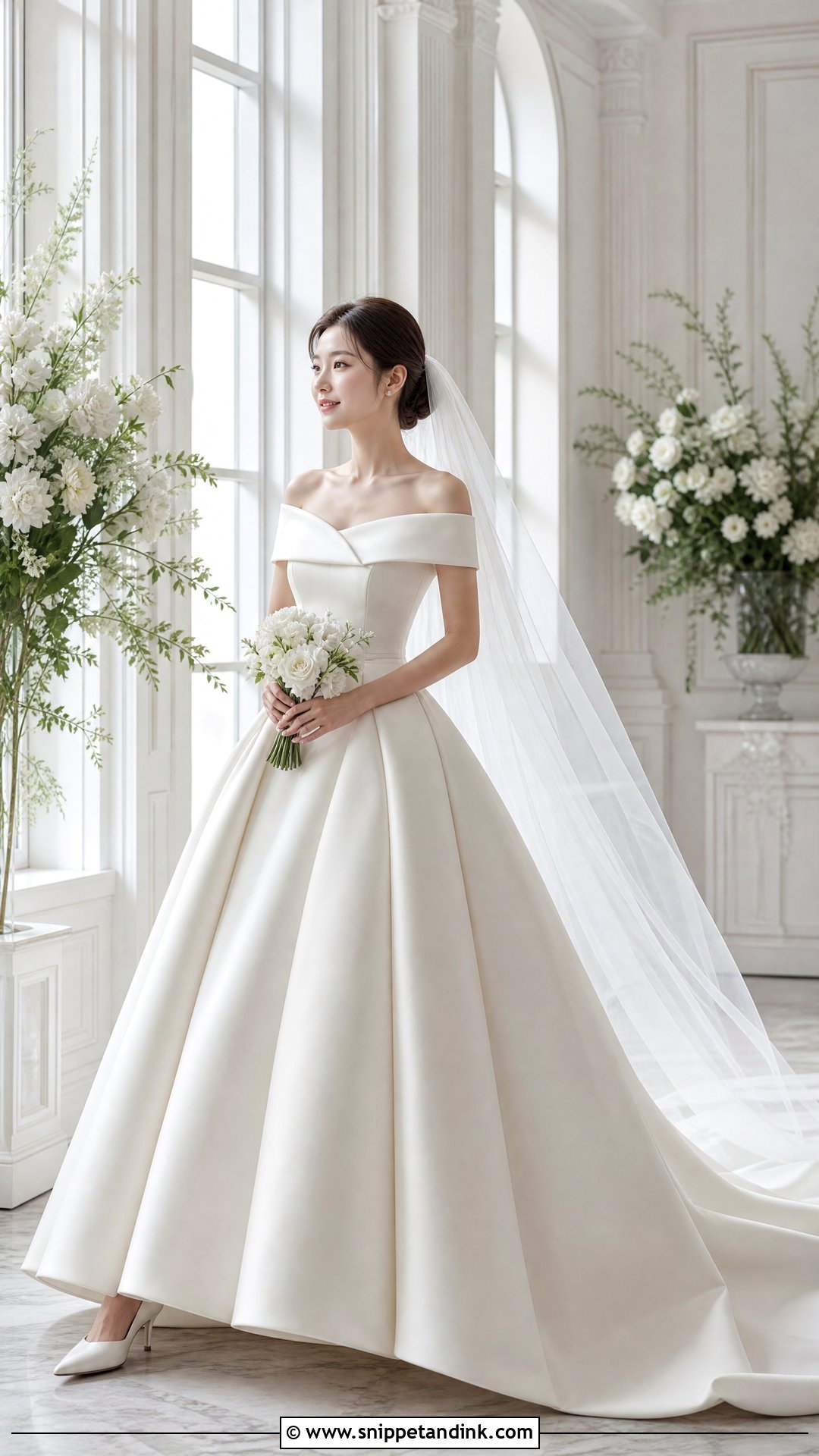
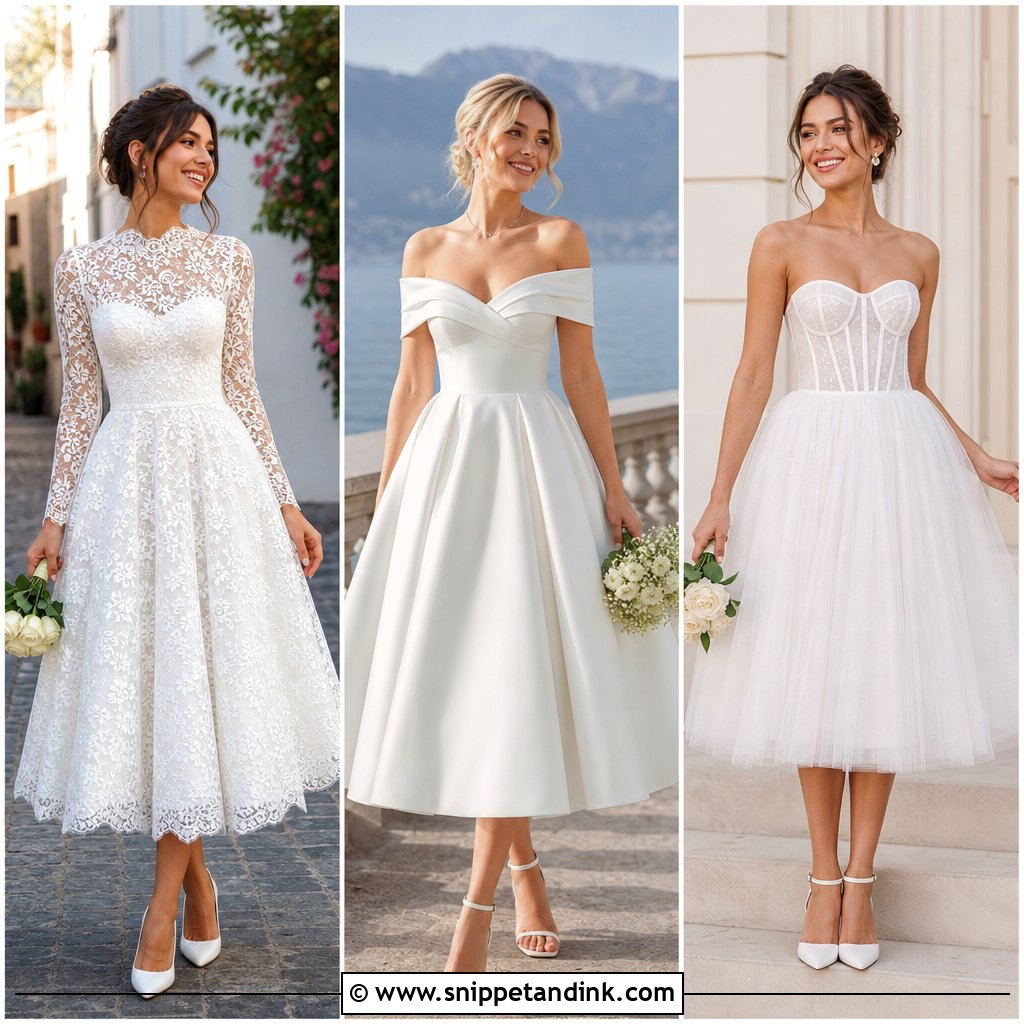
This is the princess shape you’ll see in many Korean studio portraits. On an off-shoulder mikado gown, the folded neckline frames the collarbones while the stiff fabric holds a smooth bodice and a rounded skirt. Test the neckline with your arms raised and holding a bouquet; if it slips, it needs more boning or a silicone grip strip inside. Ivory pumps and simple crystal or pearl earrings are enough. A long plain veil, and hair in a low bun, waves or half-up depending on the venue, balance it. Ask for wrist loops and a bustle for the train. Grand halls and clean studio sets show it at its best.
8. Long Sleeve Lace A-Line Wedding Dress
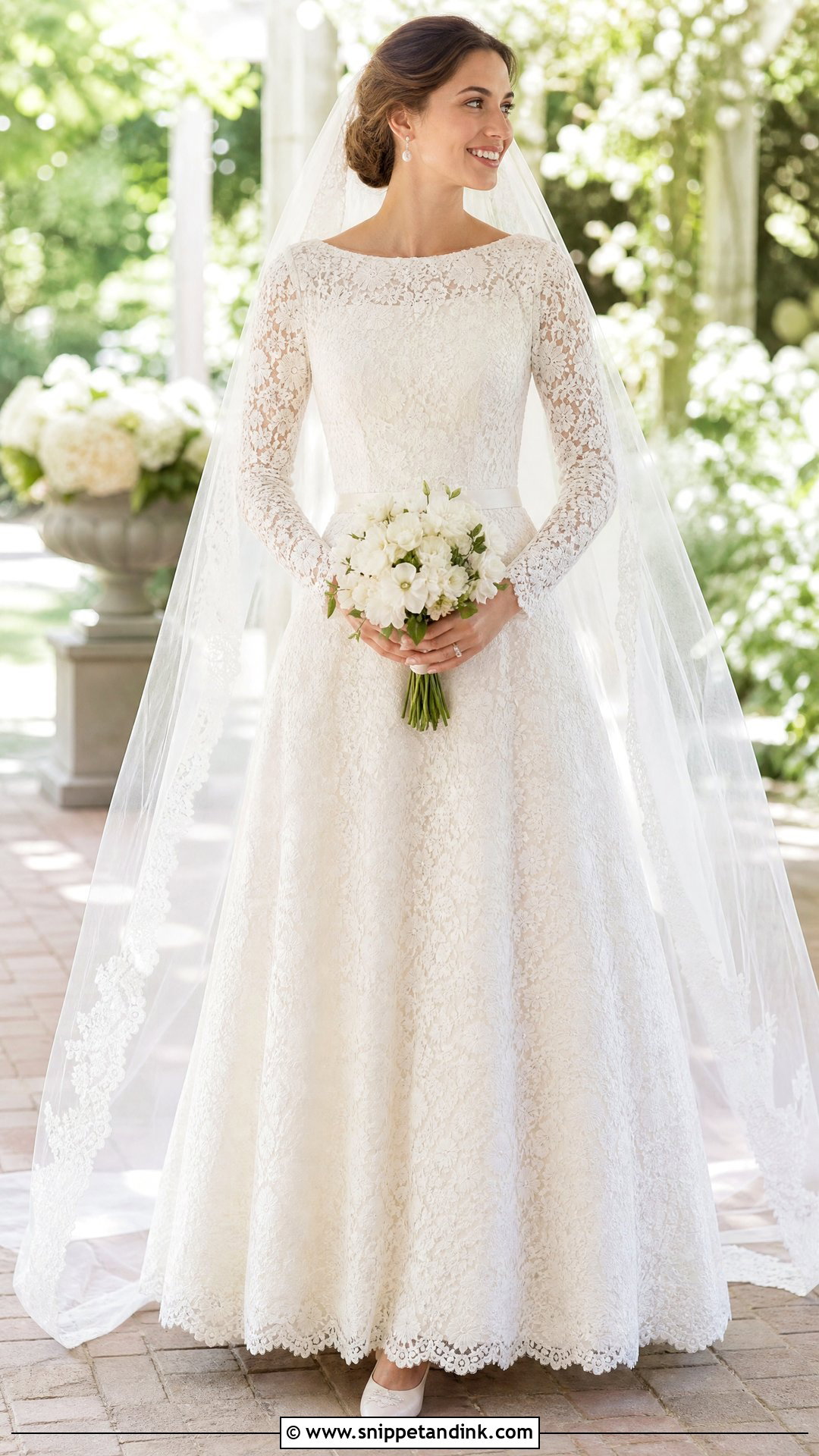
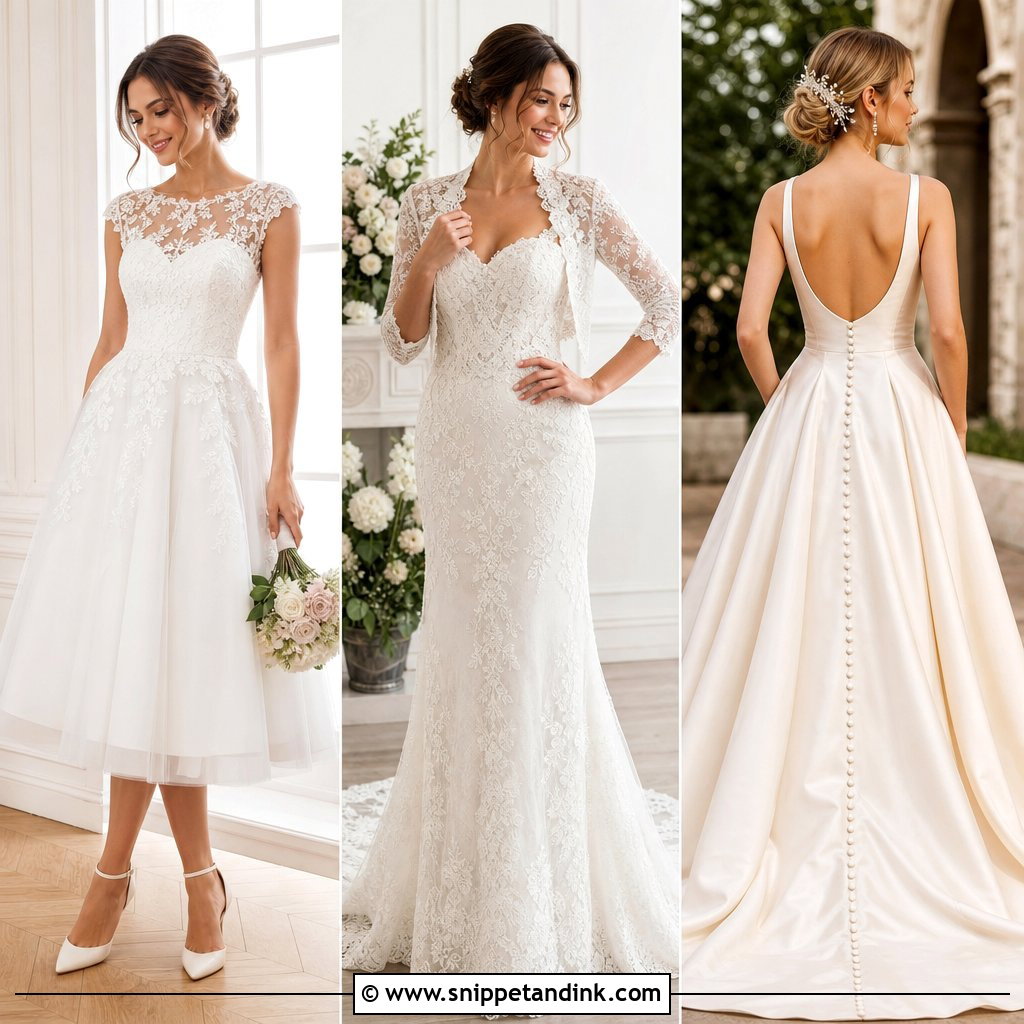
Long lace sleeves suit spring and autumn weddings, and they hide the goosebumps of an air-conditioned hall. Pick fine floral lace over a light lining, with a fitted bodice and a skirt widening gradually from the waist. Bateau, illusion and modest V-necks all sit well with covered arms. Ivory closed-toe heels, pearl earrings and a fingertip veil edged in matching lace complete it, and soft waves or a low textured bun stop it looking severe. I always have brides rub the lace against the inside of the arm before buying. Cheap lace scratches, and you’ll notice it by the second hour.
9. High Neck Lace Wedding Dress
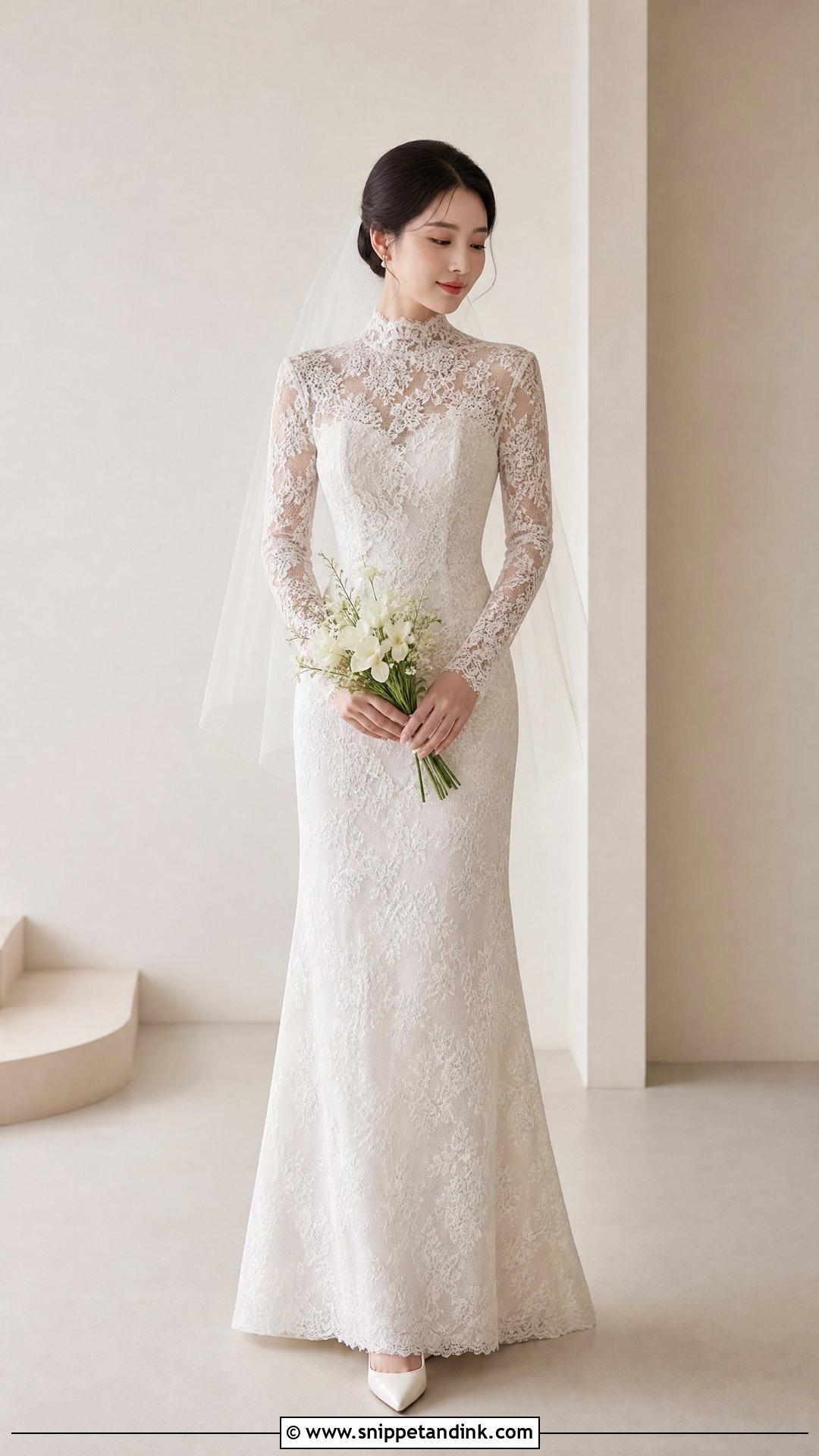
A high lace neck draws the eye straight up to the face. The best versions keep the skirt clean, in an A-line or narrow column, so the detail stays on top. Insist on a soft lined neckline; stiff lace at the throat rubs every time you turn your head. Long sheer sleeves add romance and cap sleeves suit warm weather. Skip the necklace and wear pearl studs or small drops, with a polished bun, low ponytail or half-up style that leaves the collar visible. Pointed ivory pumps and a plain tulle veil fixed below the bun finish it. I steer brides here when they want detail and coverage at the same time.
10. Square Neck Satin A-Line Wedding Dress
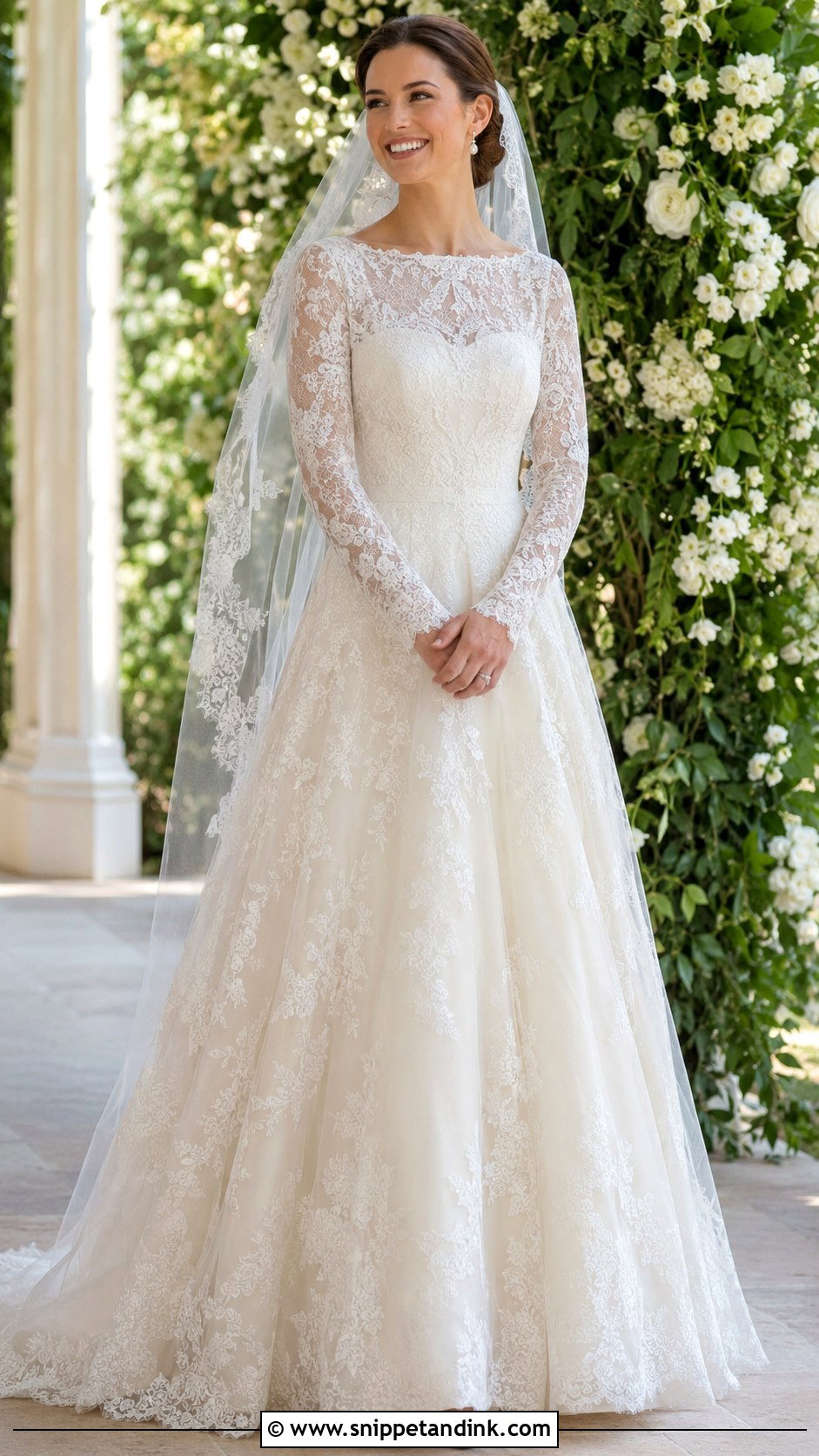
Square necklines look young and tidy, and the wide straps give real support, which I appreciate on brides who can’t wear strapless. Matte satin or mikado keeps the A-line skirt smooth through the ceremony, and well-placed princess seams shape the waist without crystals or lace. Pearl drops, a slim bracelet and closed-toe pumps are all it needs, with a sheer cathedral veil for softness behind the straight lines. Hair can go into a low bun with face-framing pieces or glossy shoulder-length waves. Pockets are welcome, but check them at the fitting; in stiff satin they can stick out at the hips.
11. Strapless Corset Ball Gown Wedding Dress
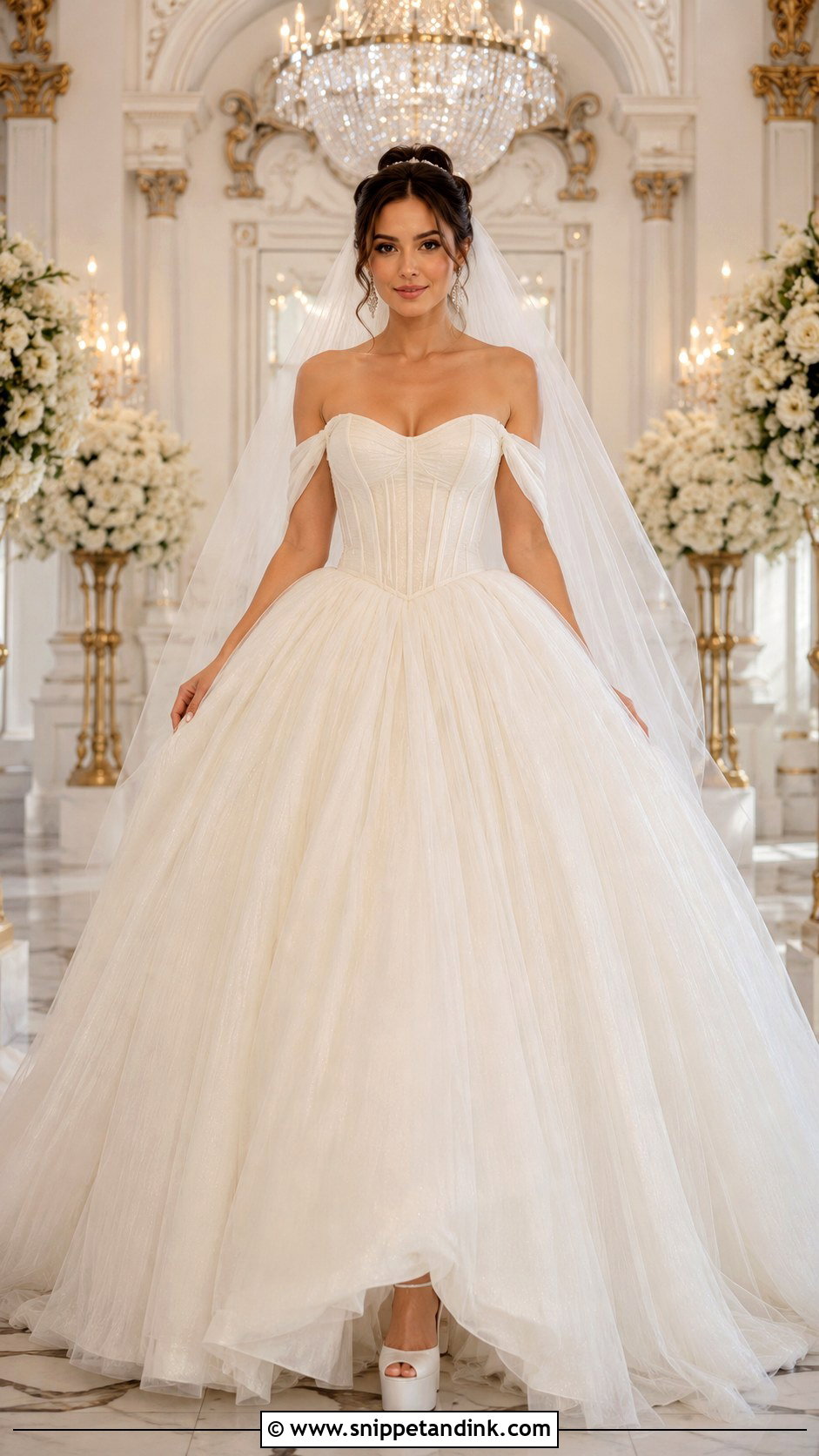
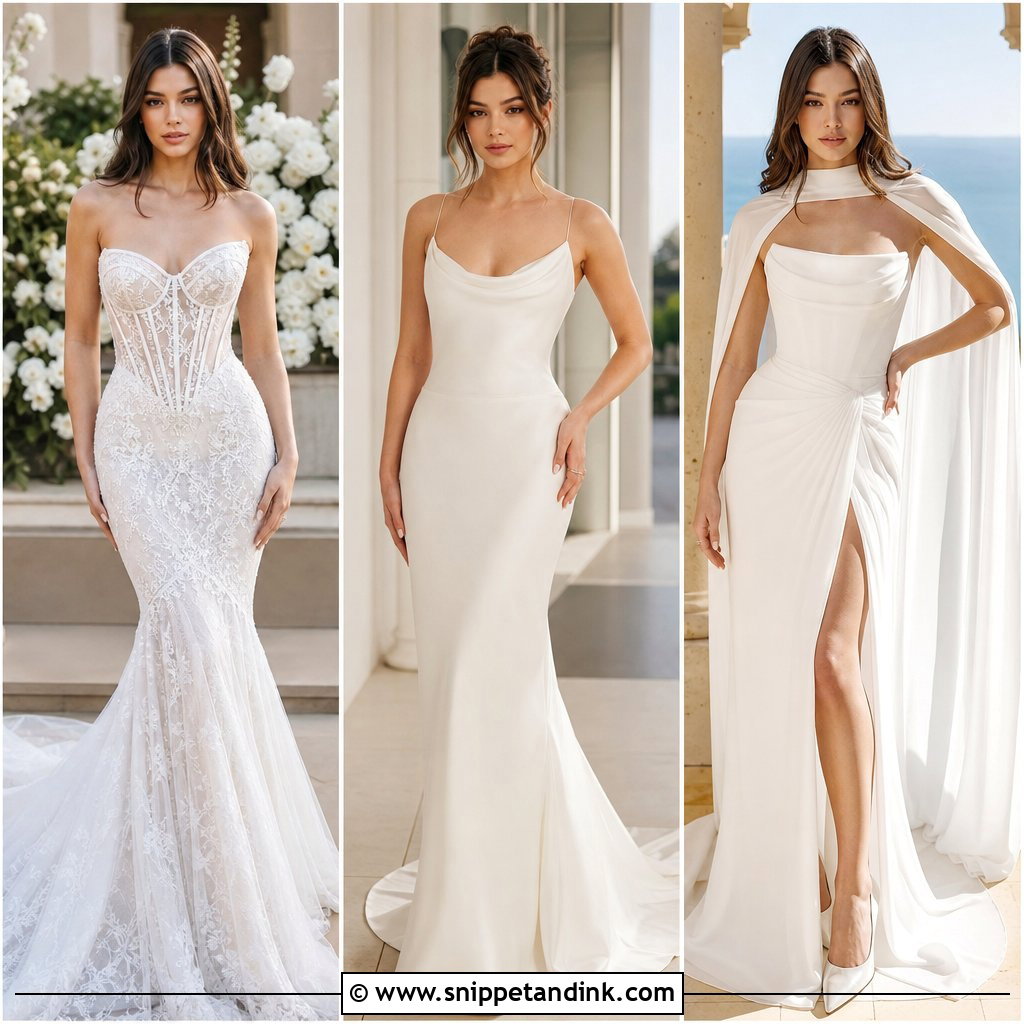
Corset ball gowns are popular because they give a defined waist with a full skirt, but the support should come from the build, not from lacing you in tight. Look for curved panels and internal boning. A soft scoop or cat-eye neckline feels fresher than a straight edge. Satin or mikado gives structure; layered tulle gives movement. Add a long veil, crystal studs and platform pumps under the hem, and a smooth updo to show the shoulders and anchor the veil. Detachable off-shoulder straps work well for the ceremony and come off for the reception. I make every bride sit down in it at each fitting, because that’s when a corset shows whether it fits.
12. Pearl Tulle Wedding Dress
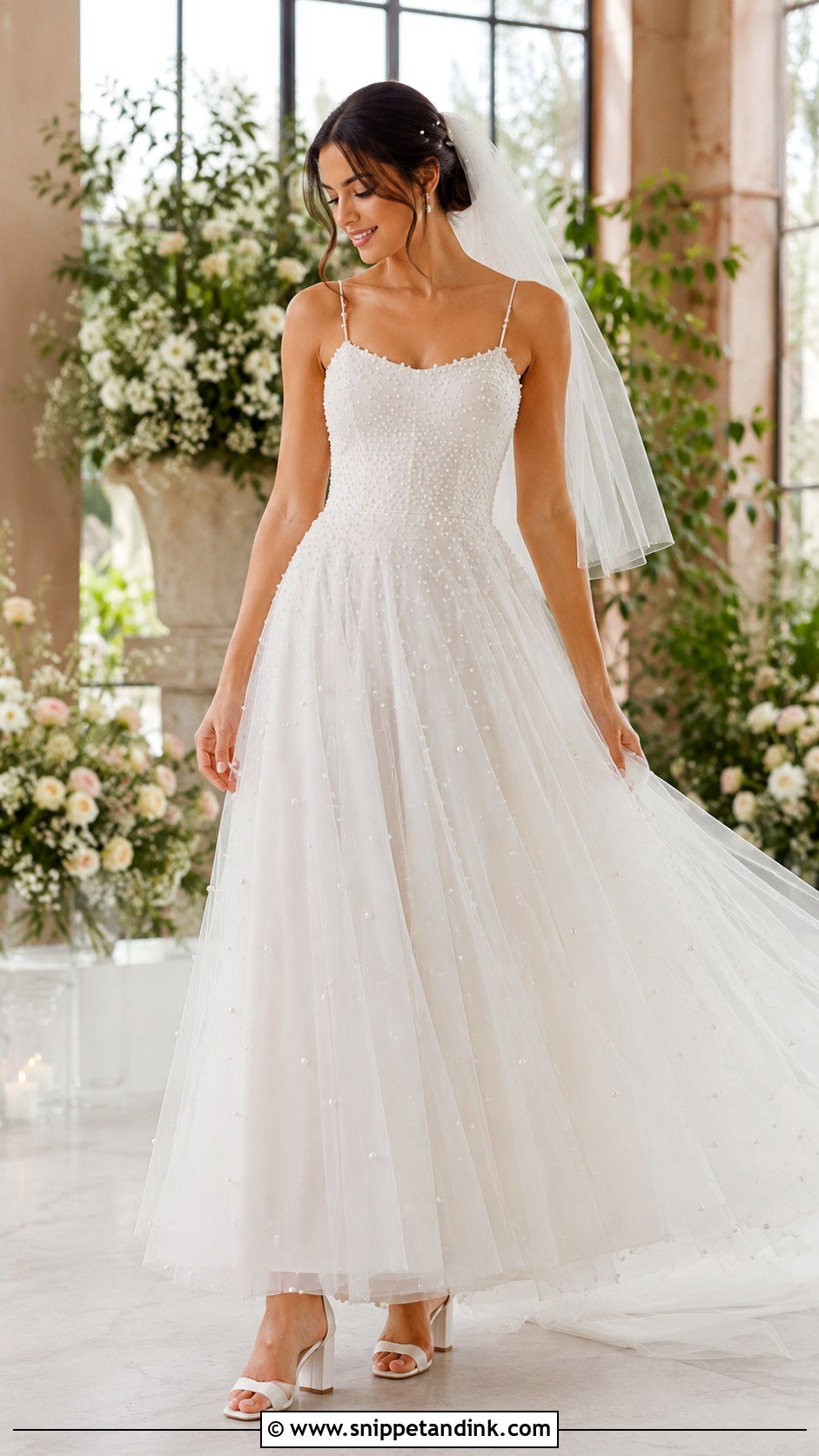
Pearls on tulle add texture without making the dress heavy, provided they’re scattered rather than packed. Choose an A-line with pearls fading out from the bodice into the upper skirt. The lining matters: tulle alone turns see-through under bright hall lights and camera flash, so make sure there’s a structured layer underneath. Pearl studs, a slim pearl pin and ivory block heels match without overdoing it, and a plain veil avoids two textures fighting. Loose waves or a relaxed low bun keep it romantic. When I inspect one of these, I tug gently on a few pearls; if they shift, they’ll fall off on the day.
13. Floral Applique A-Line Wedding Dress
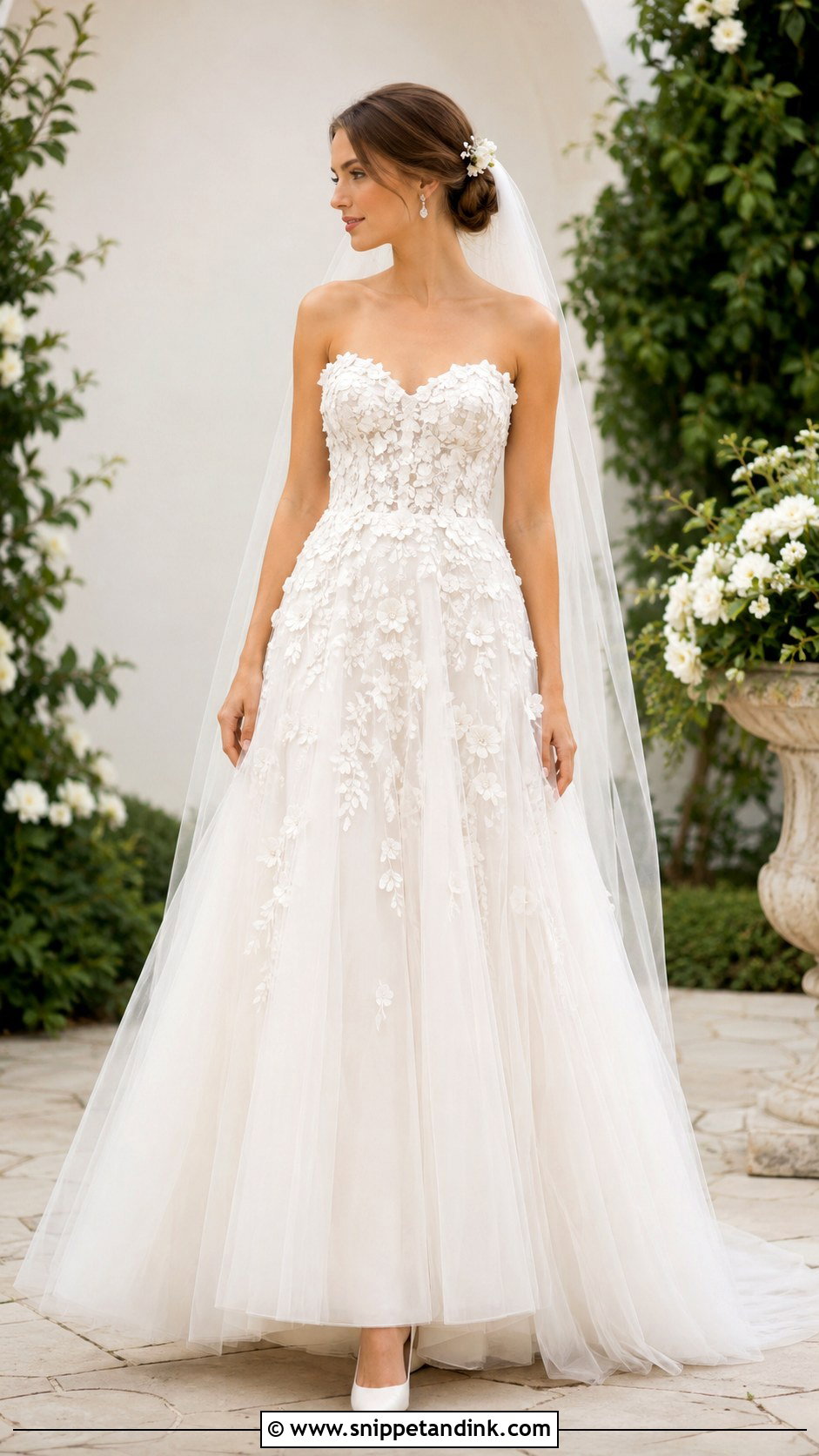
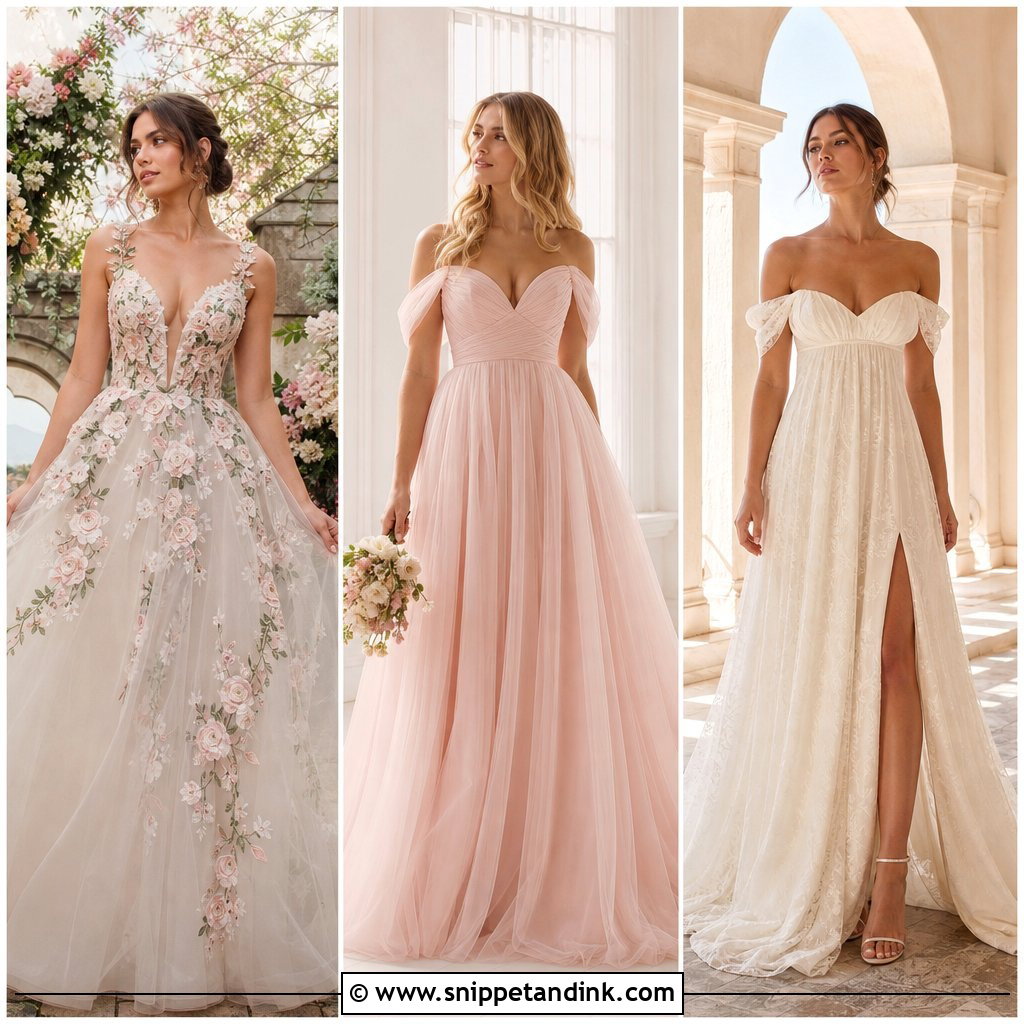
Three-dimensional flowers on a classic A-line freshen up a familiar shape. Keep them concentrated around the bodice, waist or train so the dress still reads clearly from a distance. Tulle petals look soft and blurry; organza petals look crisp and sculpted. A sweetheart or illusion neckline brings the flowers close to the face without crowding it. Simple satin pumps, small crystal earrings, a light veil and a loose low bun with one matching floral pin finish the look. Carry a small bouquet. A big one hides exactly the part of the dress where the appliqués are densest.
14. Minimalist Sheath Wedding Dress
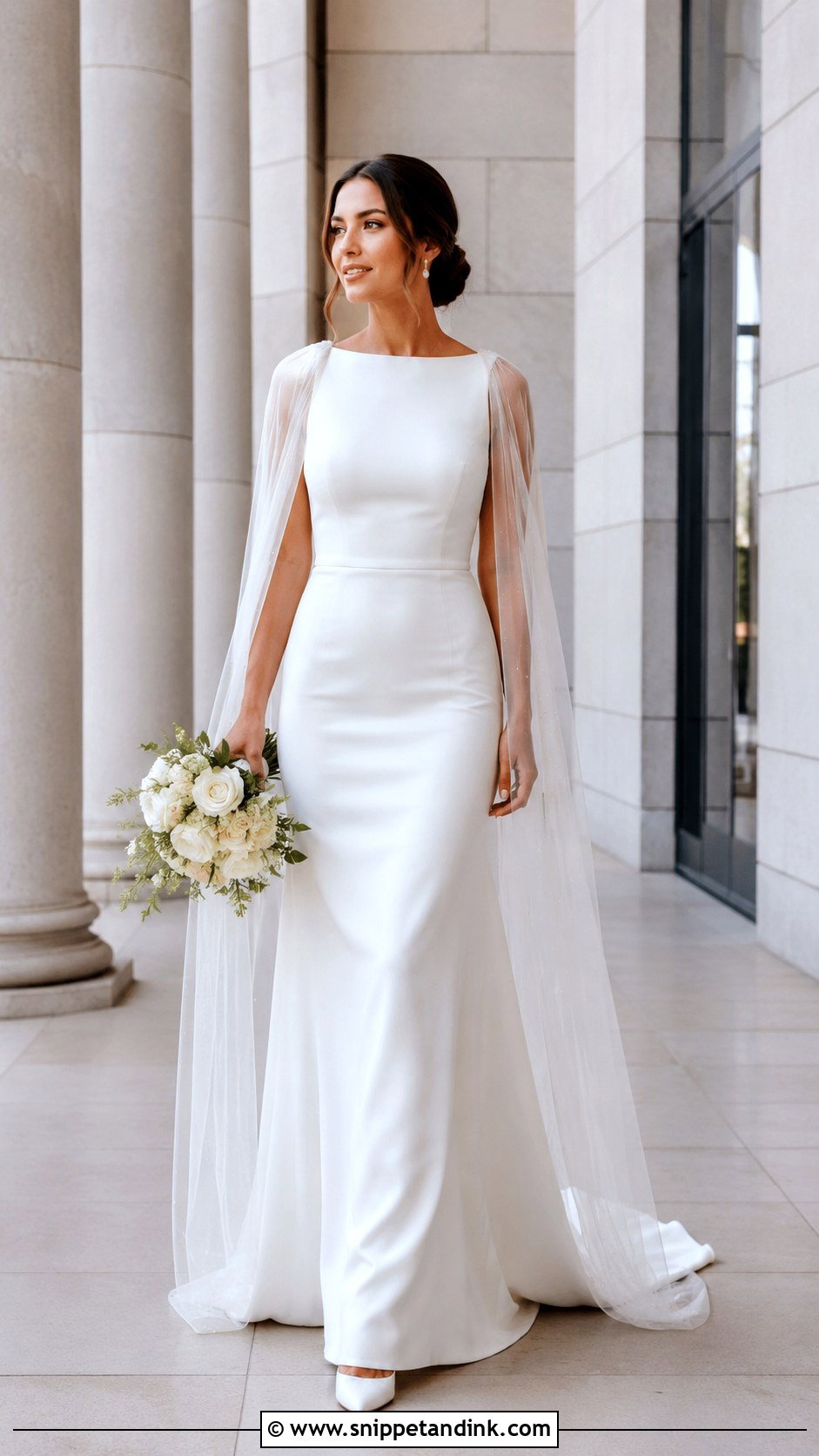
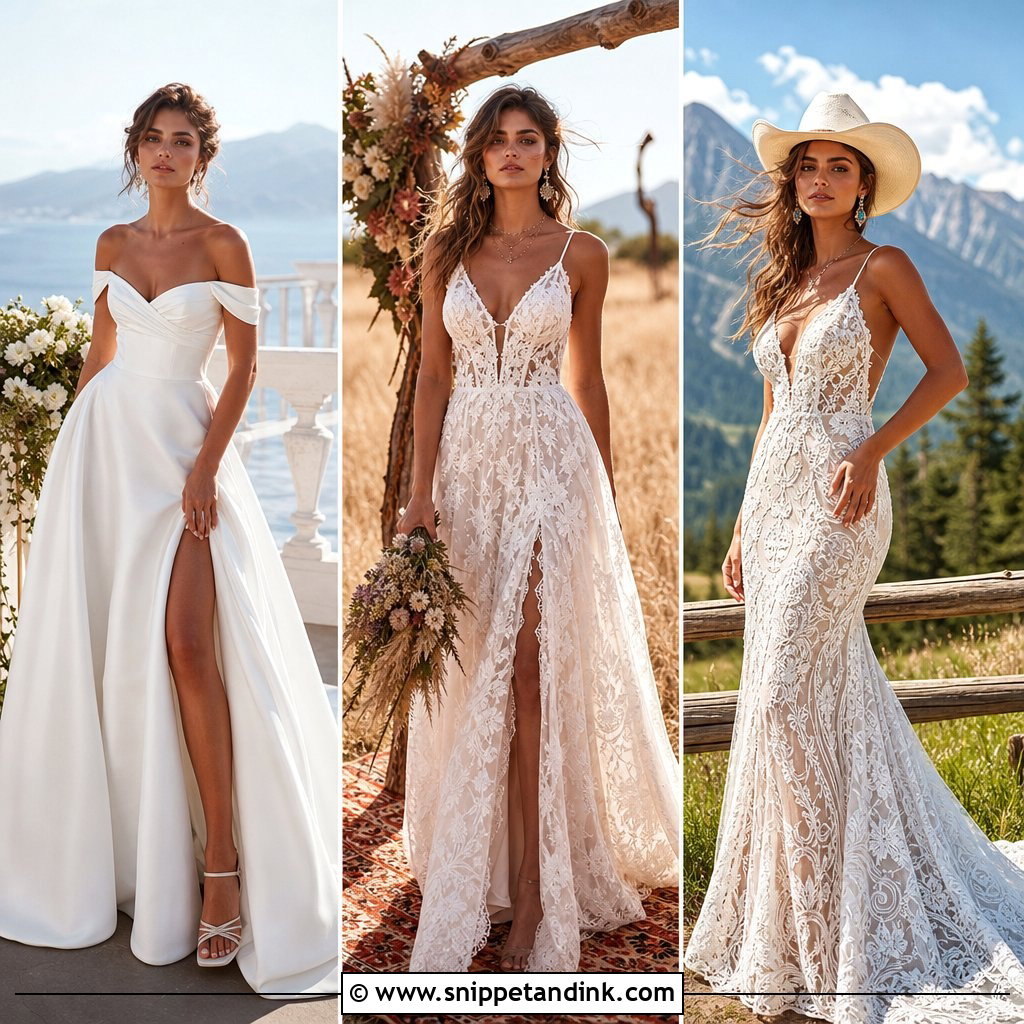
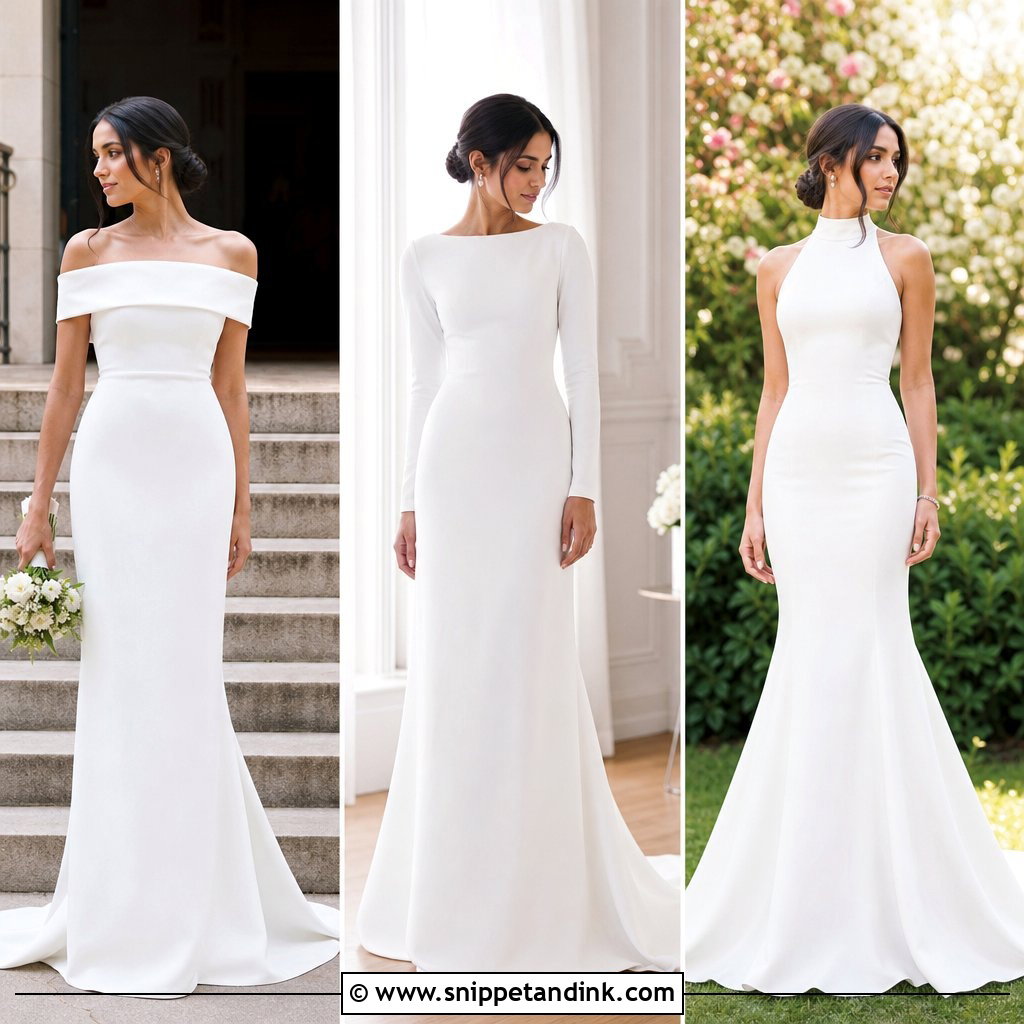
Sheaths are the hardest gowns to fit and the easiest to wear. Crepe or heavy silk with enough body to skim rather than cling is the key choice. A bateau, narrow V or modest square neck keeps it in line with the understated Korean look. Every alteration around the waist, hips and hem shows, so plan for two careful fittings. Pointed pumps, pearl earrings and a compact bouquet complete the ceremony look, and a detachable chapel veil or sheer shoulder cape adds drama for the aisle. Wear a sleek low bun or waves tucked behind the ears. It suits small weddings and city venues.
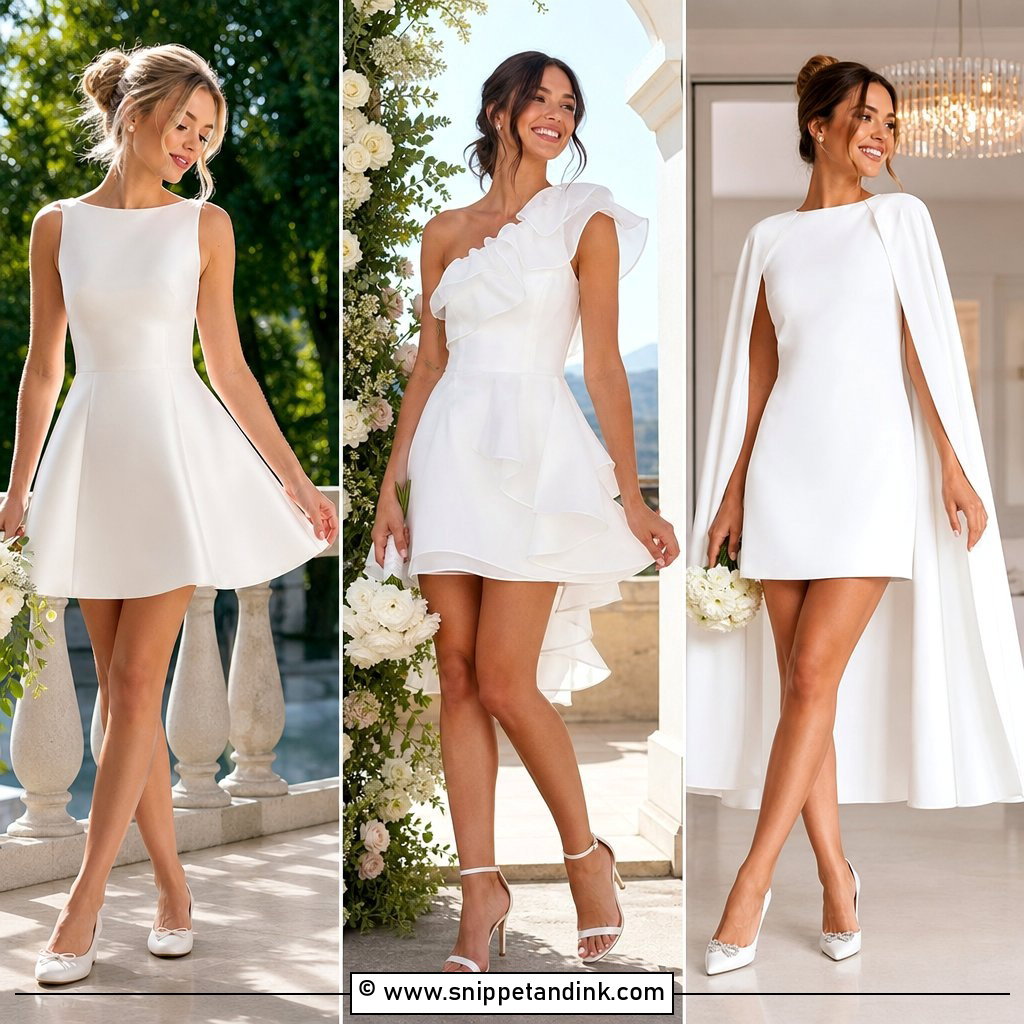
15. Cape Sleeve Wedding Dress
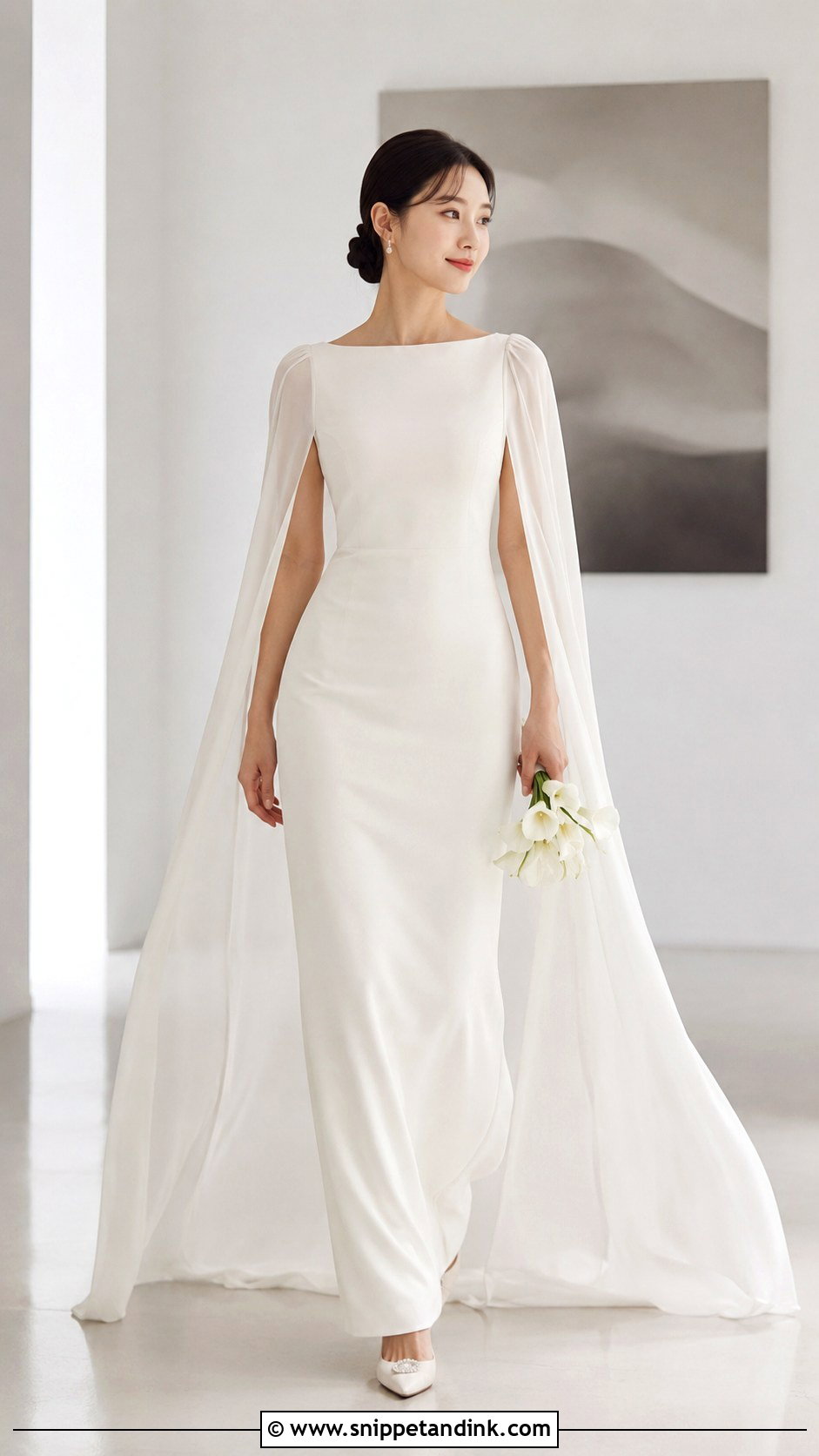
A cape sleeve can replace the veil completely. It might fall from the shoulders, attach at the neckline or grow out of a structured bodice. Chiffon floats; satin makes a firmer, more architectural line. Underneath, a simple column or A-line keeps the look clean. Pointed heels, small earrings and a smooth low bun let the cape stay the main feature. If you still want a veil, choose a short plain one, since two long back layers tangle. Walk, sit and turn in it before the day, and make it detachable so you can take it off for the reception.
16. Bow Back Satin Wedding Dress
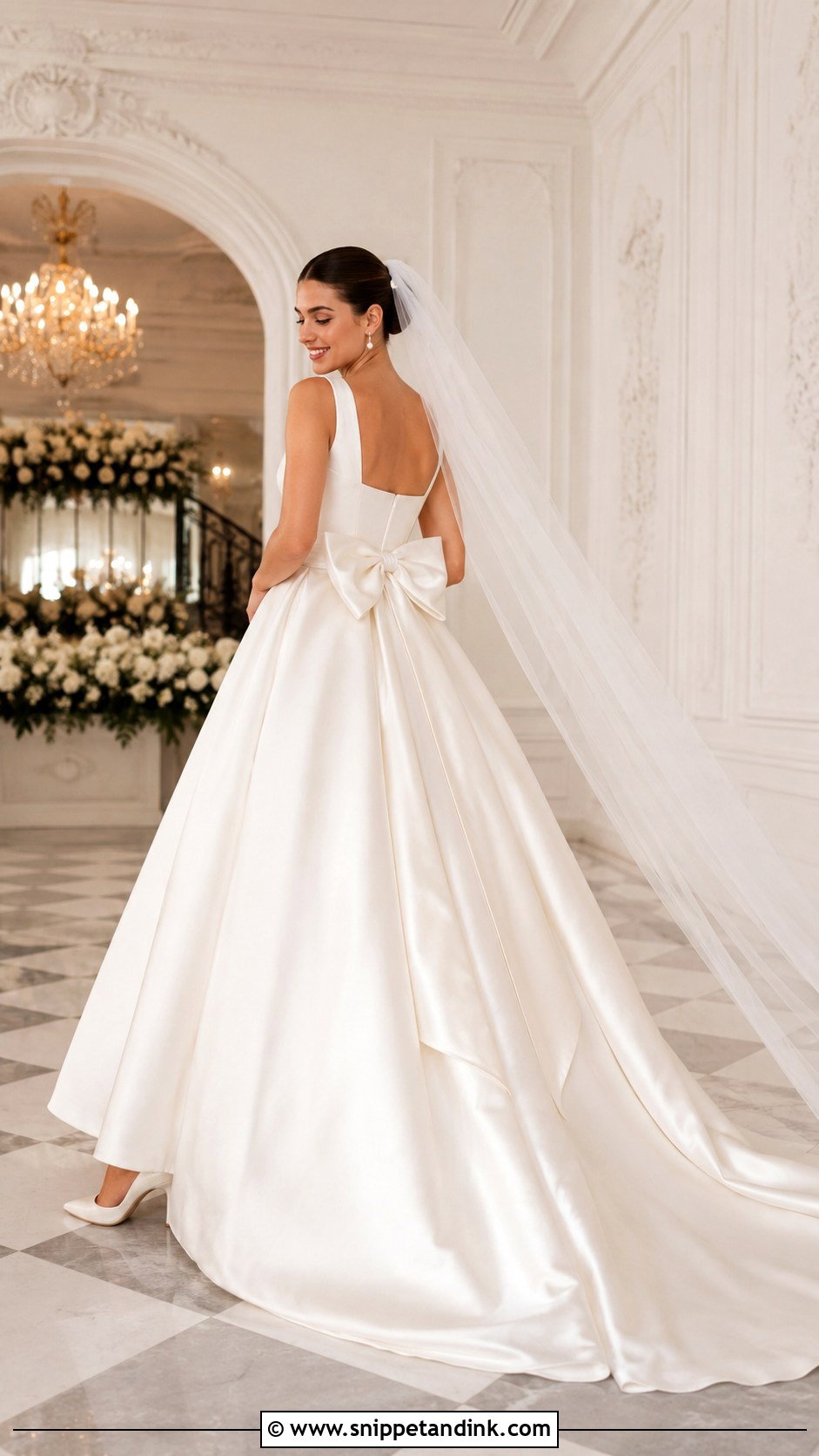
Bows look best when they’re scaled to the bride. On a petite frame an oversized bow swamps the back; on a tall bride a small one disappears. A clean A-line or ball gown with a medium detachable bow at the waist or upper train is the safe choice, and a simple square, scoop or strapless front keeps the attention behind. Pearl earrings, ivory pumps and a long plain veil complete it, with a neat bun so the back doesn’t look busy. Being detachable also lets you change the gown’s look between ceremony and party. Take the bow off for dancing if it pulls.
17. Tea Length Modern Hanbok Wedding Dress
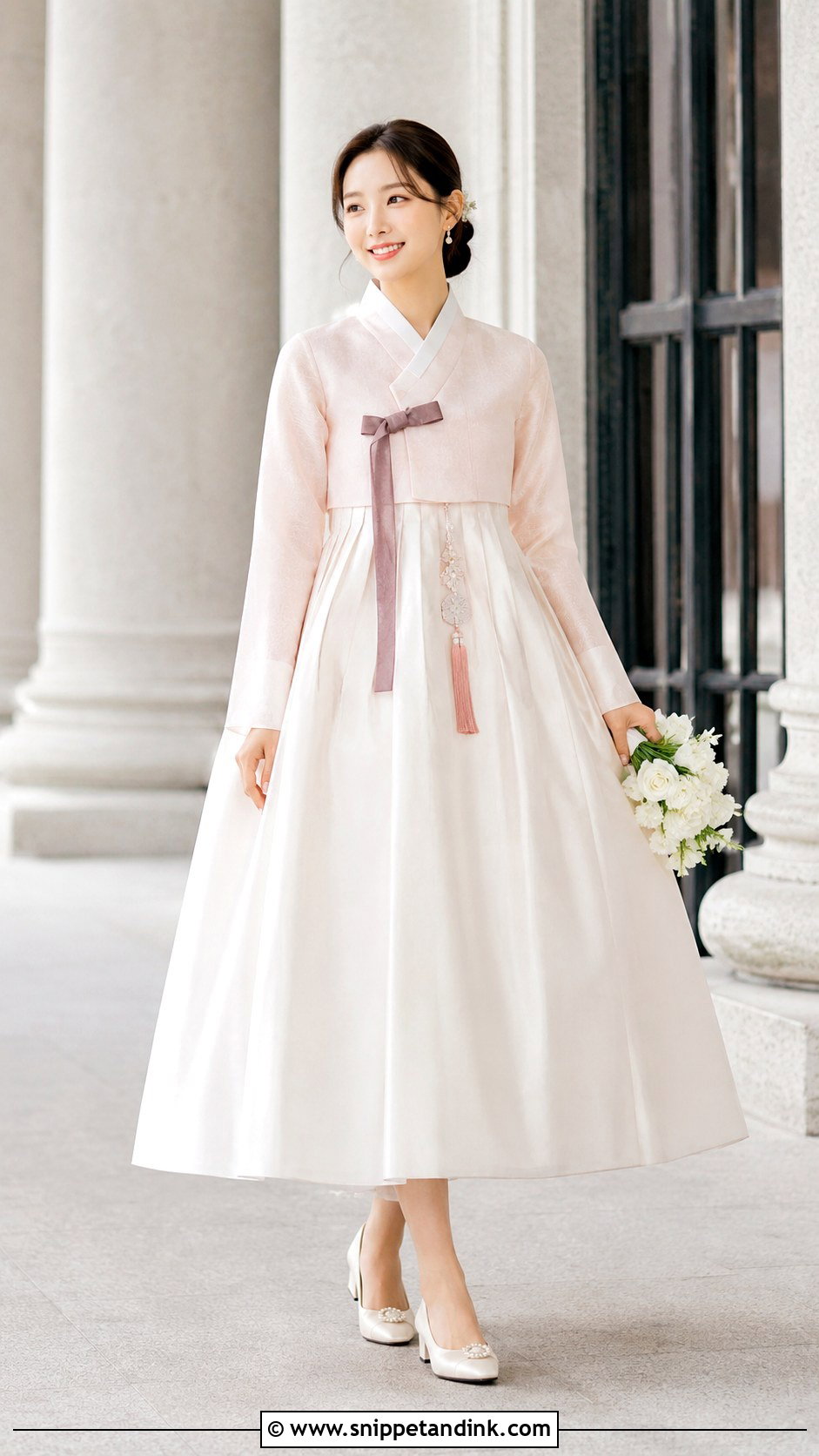
A tea-length modern hanbok keeps the Korean proportions but trims the hem, which makes stairs and city streets much easier. Choose a lightly structured chima ending between knee and ankle with a fitted jeogori or wrap top. White, ivory, blush and pale blue read as bridal, and contrasting ties keep the link to traditional dress. Your shoes show, so pick silk flats or low block heels you’re happy to have photographed. Add pearl earrings, a small norigae, a neat bag and a low bun with a fine pin. It’s also one of the few bridal outfits you can wear again for anniversaries and family events.
18. Organza Empire Waist Wedding Dress
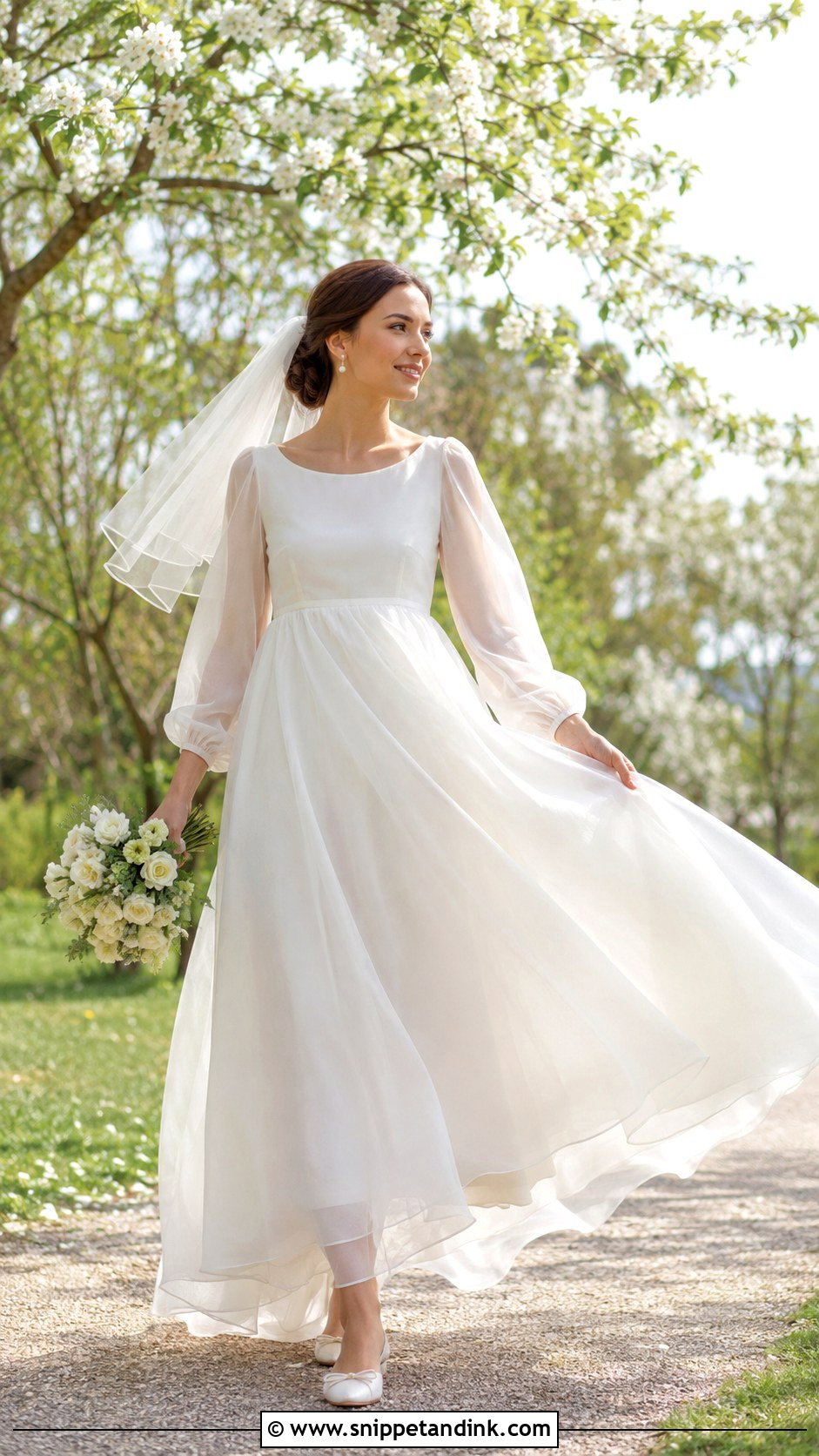
Empire waists are kind to petite brides because the high seam lengthens the leg line. Sheer organza gives an empire-waist wedding dress lift and volume, with the waist sitting just under the bust and the skirt falling freely. A structured inner bodice under the airy outer layer stops it feeling loose. Puff or gathered cap sleeves, or a modest scoop neck, give it a romantic Korean feel. Low satin heels, petite pearl earrings, a soft fingertip veil and a loose bun or half-up style suit the shape. I check this skirt by a window in daylight, because unlined organza layers can look patchy in photos.
19. Basque Waist Ball Gown Wedding Dress
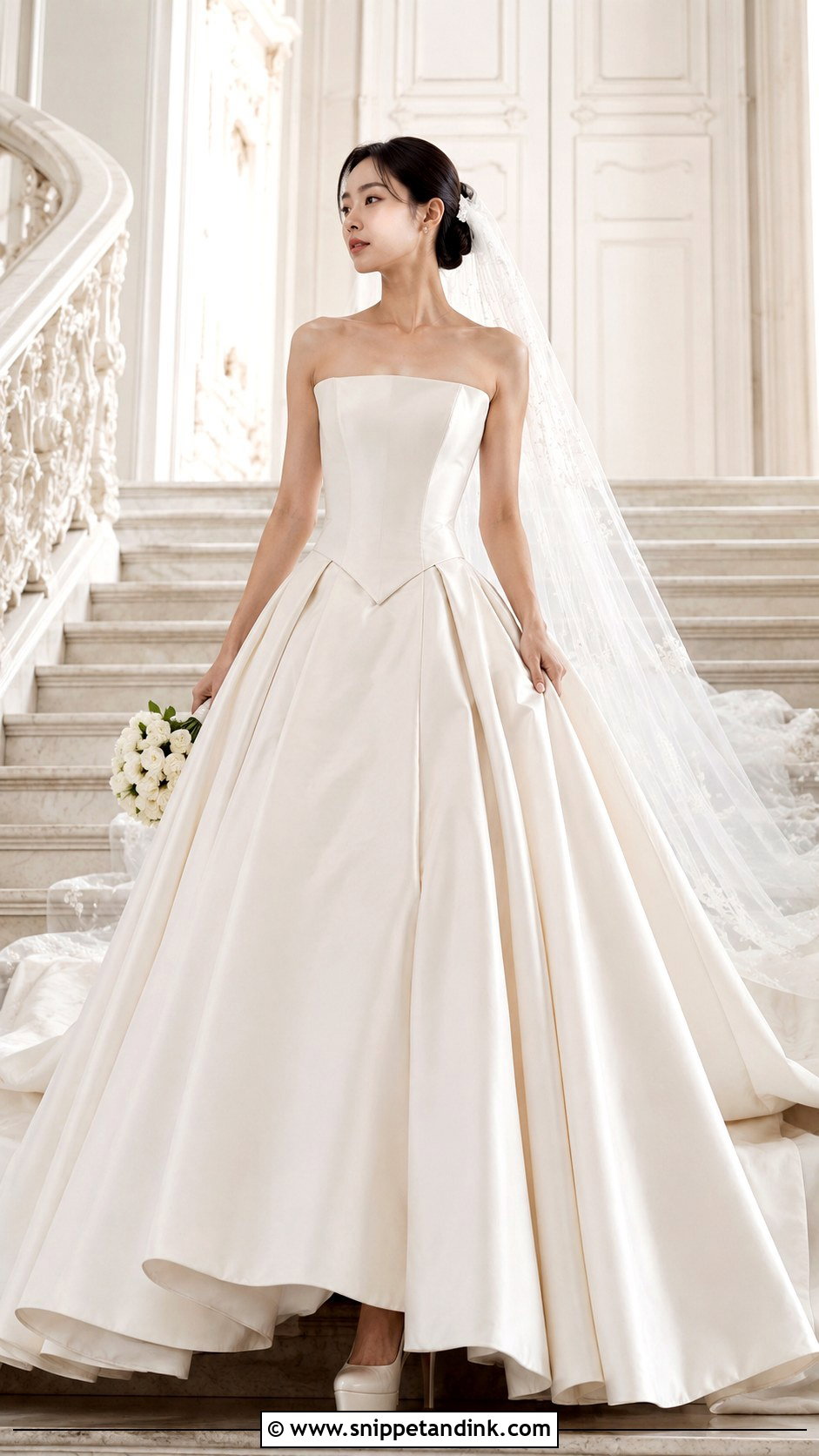
A basque waist dips into a soft point below the natural waistline, lengthening the torso before the skirt opens out. Plain mikado or fine lace keeps it modern. Ask for a gentle point rather than a deep drop if you want to sit comfortably, because a sharp basque can dig in when you’re seated at a low table. Strapless gives a classic result; long fitted sleeves add coverage. A cathedral veil, pearl or crystal studs and platform pumps make it fully formal. Carry a small bouquet so the waistline shows in photos, and choose a polished updo to balance the skirt.
20. Short Reception Wedding Dress
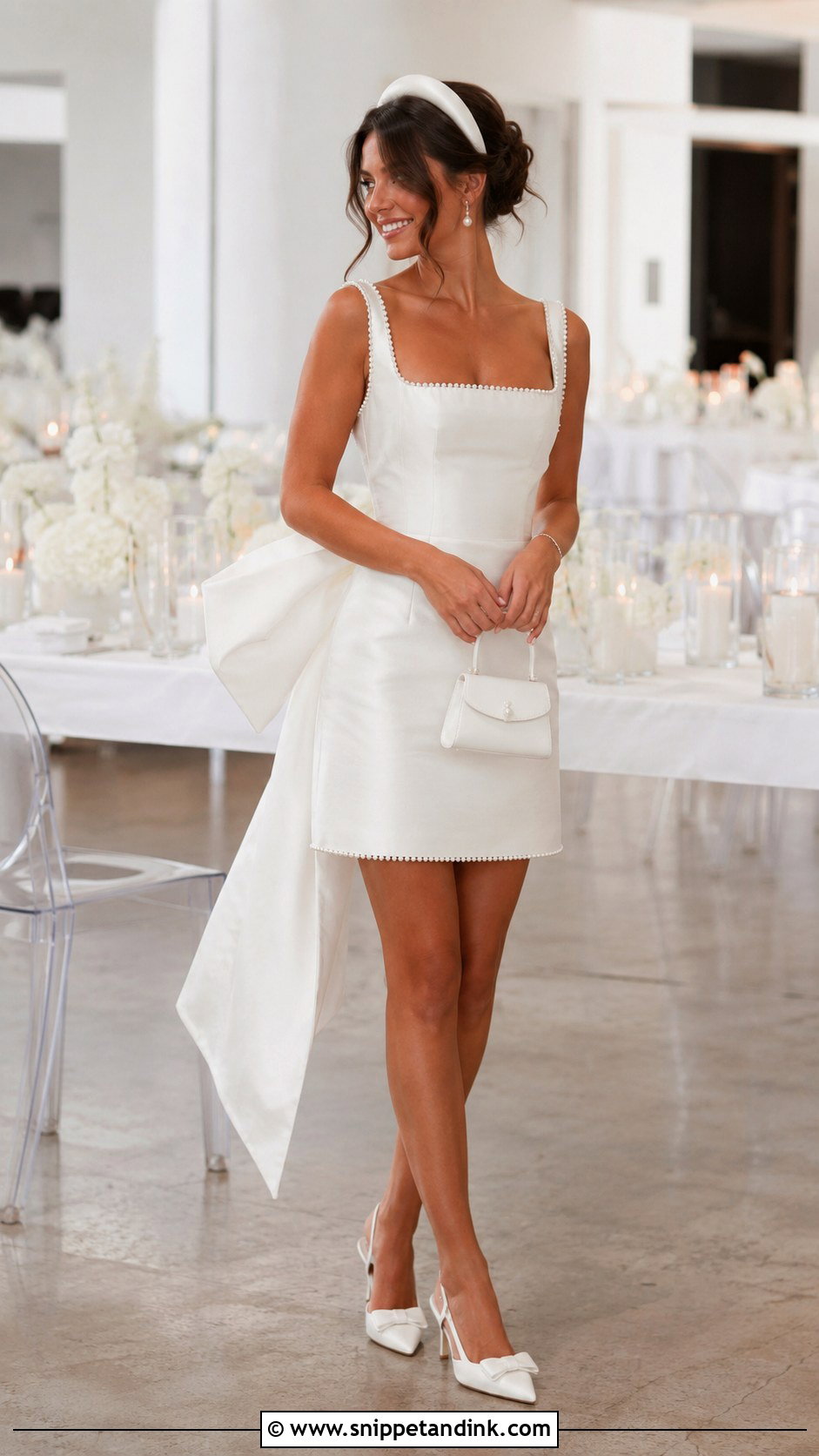
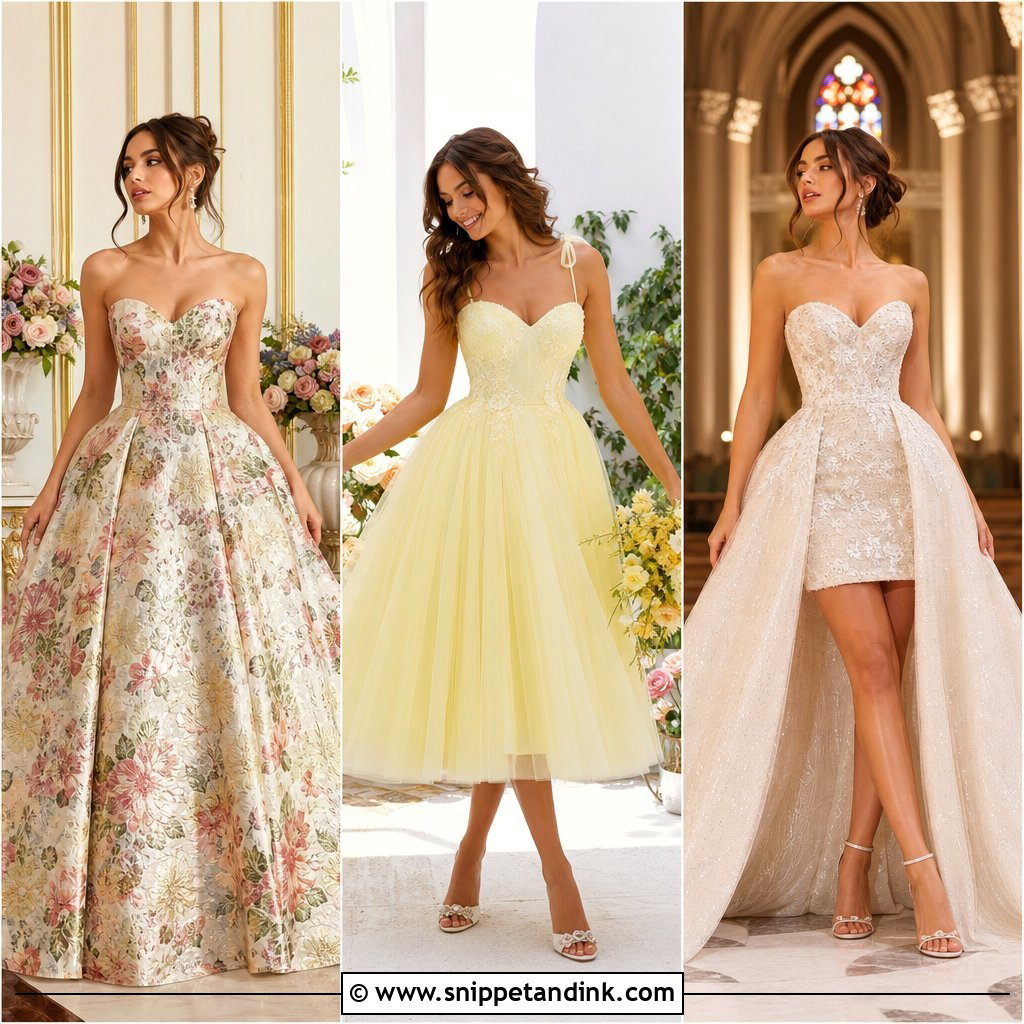
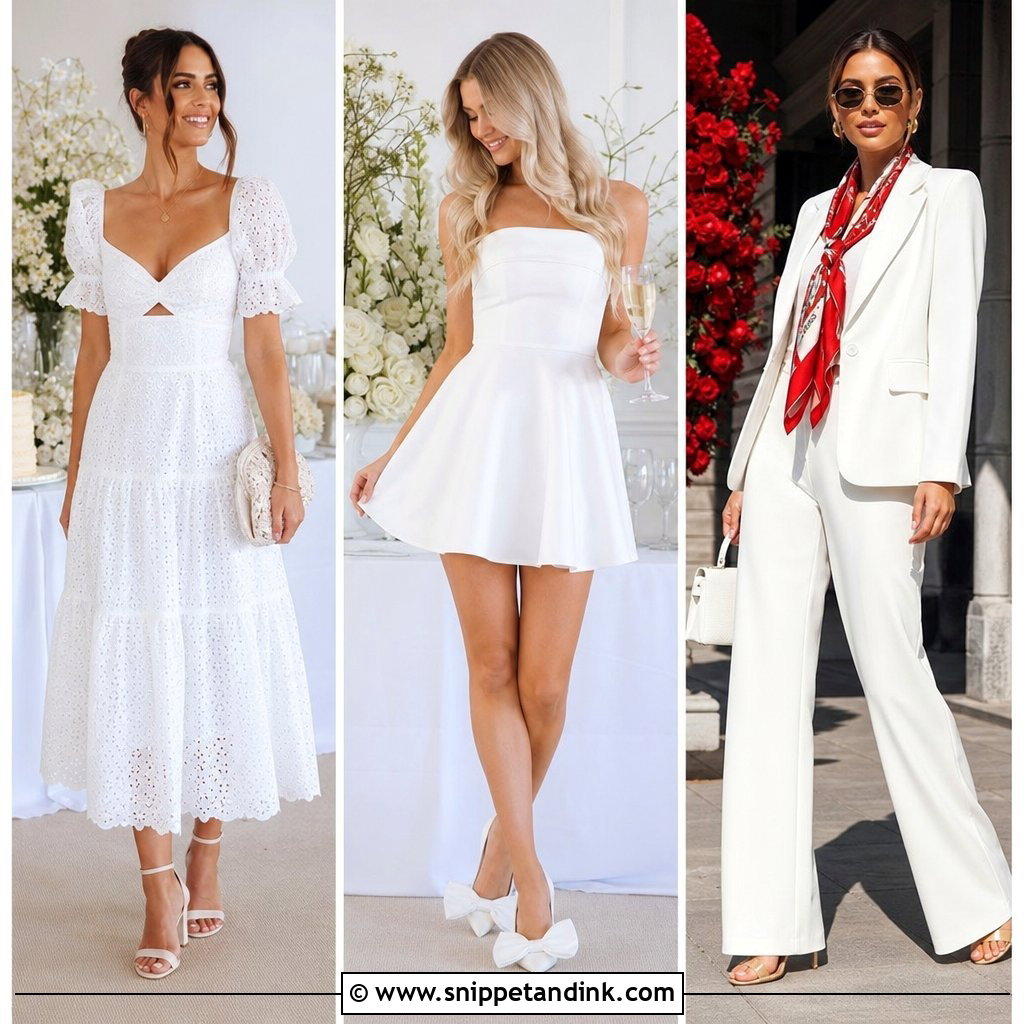
The short dress is for the second half of the night. Choose a structured mini or knee-length A-line with a square neck, a bow, pearl trim or fine lace sleeves, at a length you can sit and dance in without tugging. White slingbacks or embellished flats, pearl earrings and a small top-handle bag suit exit photos, with a short veil, satin headband or hair bow on top. If your ceremony gown is heavily detailed, pick a clean reception dress for contrast. Many brides wear these again afterwards. Keep a tailored ivory blazer close by for a cool evening.
Rented, Bought or Made to Order?
In Korea, renting the wedding gown is common, often as part of a package with the studio photographer and makeup artist. Brides outside Korea copying the look usually buy. Each route changes what you can expect at fittings.
Renting a gown or hanbok
Rental gowns are fitted with temporary alterations: pinning, clips and adjustable lacing rather than cutting. That works well for corset and ball gown shapes, less well for sheaths, which rely on exact tailoring. Ask what’s included, how many dresses you can try, and who handles stains. Hanbok rental for the paebaek is simple and widely available; reserve early for spring and autumn dates.
Buying or ordering
A bought gown lets you alter freely, so sheaths, basque waists and pearl overlays become realistic options. Allow several months for a made-to-order dress and two or three fittings after it arrives. For a custom hanbok, bring photos of the gown you’re wearing so the maker can choose an ivory or accent shade that sits well beside it in the photos.
Whichever route you take, do one full rehearsal with hair, shoes and the veil before the final fitting. Most fit problems only appear when everything is on at once.
Pearls, Hairpins and a Plain Veil Go a Long Way
Korean bridal style works best when the dress, the construction and the amount of cultural detail all suit your day. A traditional red hanbok or embroidered hwarot belongs to the ceremonial moments, while a white modern hanbok, clean satin, lace A-line or structured ball gown covers the rest. Test each one walking, sitting, bowing and in front of a camera. Keep accessories small: pearls, a simple veil, silk shoes, hairpins and a norigae are enough. A dress that fits your wedding format and lets you breathe will always look better than one you’re fighting.
You'll Like These Ideas:


Leave a Reply