
Most brides walk into their first appointment with a picture of one dress and leave in a completely different shape. That’s normal. A silhouette that looks dull on a hanger can suddenly make sense once it’s zipped up and you’re standing on the platform. I sort wedding gowns by shape first, because the cut decides how you’ll move, sit and breathe for twelve hours, and fabric second, since it decides how the dress holds that shape. Below are twenty complete looks, from clean satin ball gowns and fitted crepe to dimensional lace and dropped waists, each with the veil, shoes, jewelry and flowers I’d put with it. Treat them as starting points to try on, not a list to tick off.
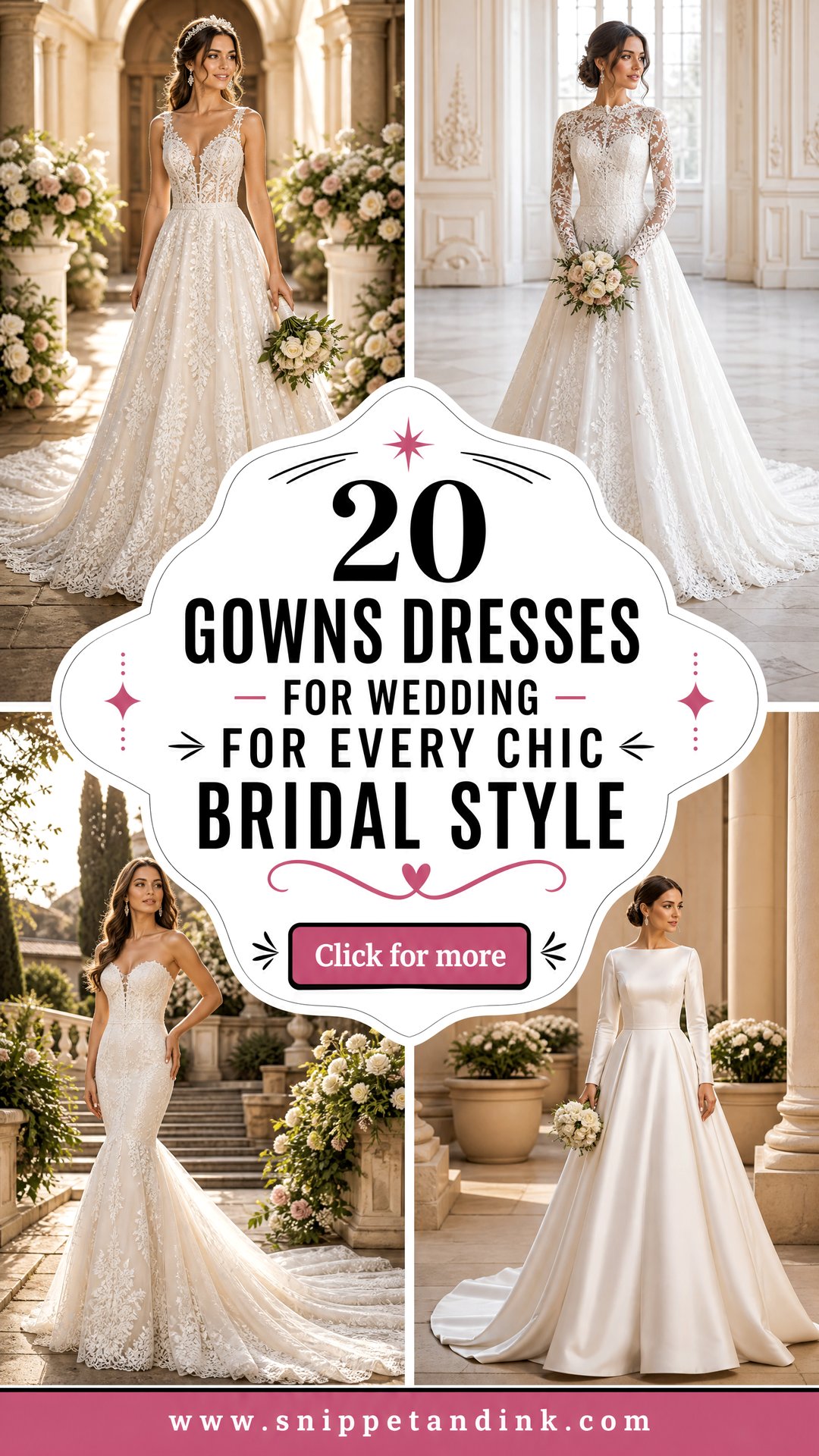
A Gown Order Runs on a Longer Clock Than Most Brides Expect
The single biggest surprise for brides is how long a new gown takes. Most bridal dresses aren’t pulled off a shelf in your size; they’re cut and sewn to order after you choose them. Production times vary by designer and season, so always ask the shop for its own estimate, but this is roughly how I’d plan backwards from the date:
- Start trying on around nine to twelve months ahead. This leaves room for a second visit and a change of heart.
- Order by about eight months before the wedding. Many made-to-order gowns take four to six months to arrive, and some take longer.
- Begin alterations eight to twelve weeks out. Most brides need two or three fittings, more if the dress is being restyled.
- Have a final fitting a week or two before, wearing the actual shoes, underwear and anything else you’ll have on that day.
- Collect it pressed and bustled, and get someone shown how the bustle works.
If your timeline is shorter, ask about rush production (usually extra cost), buy a sample off the rack, or look at ready-to-wear collections. All three are perfectly good routes; they just narrow the choice.
1. Satin Ball Gown Wedding Dress
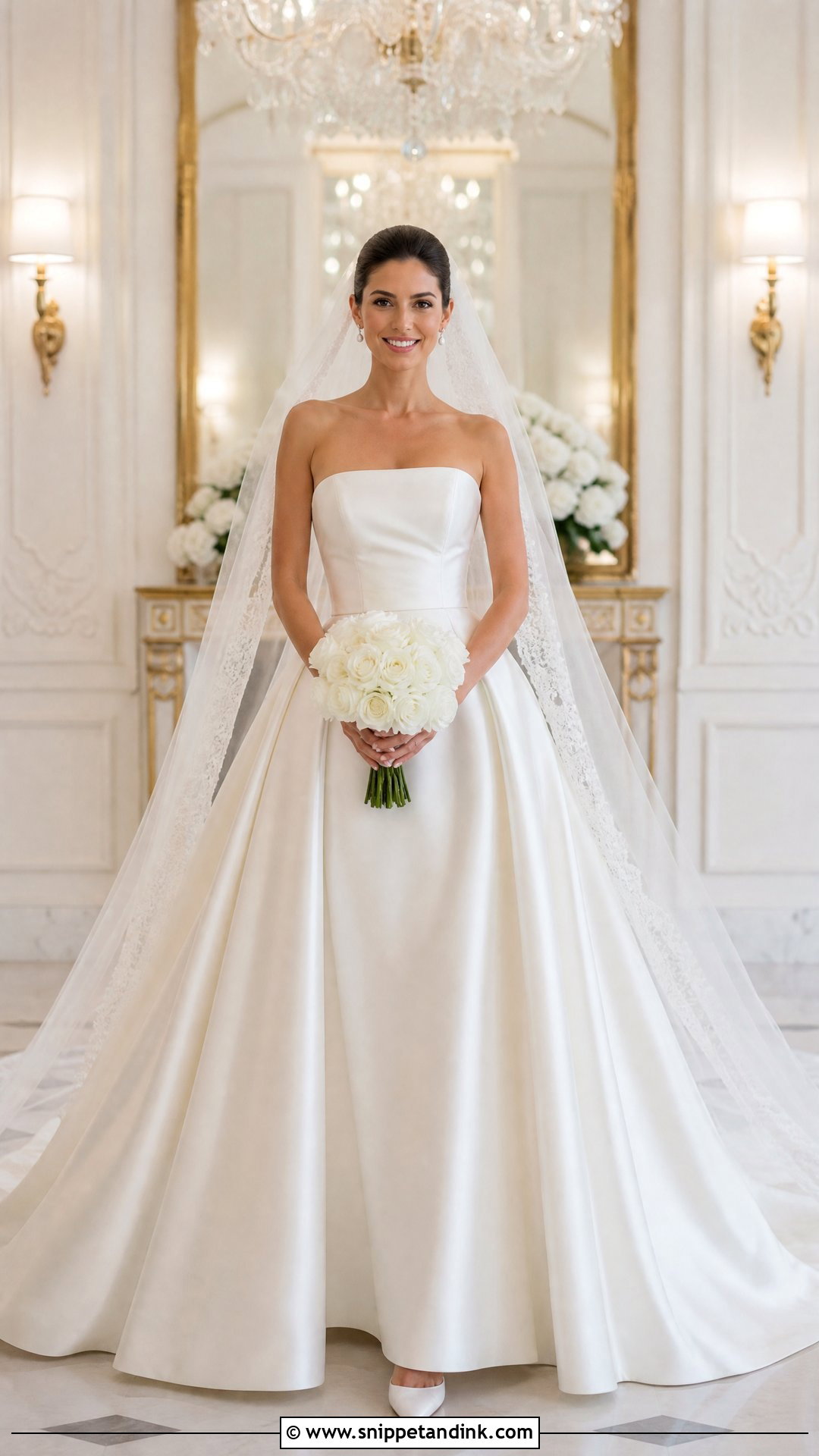
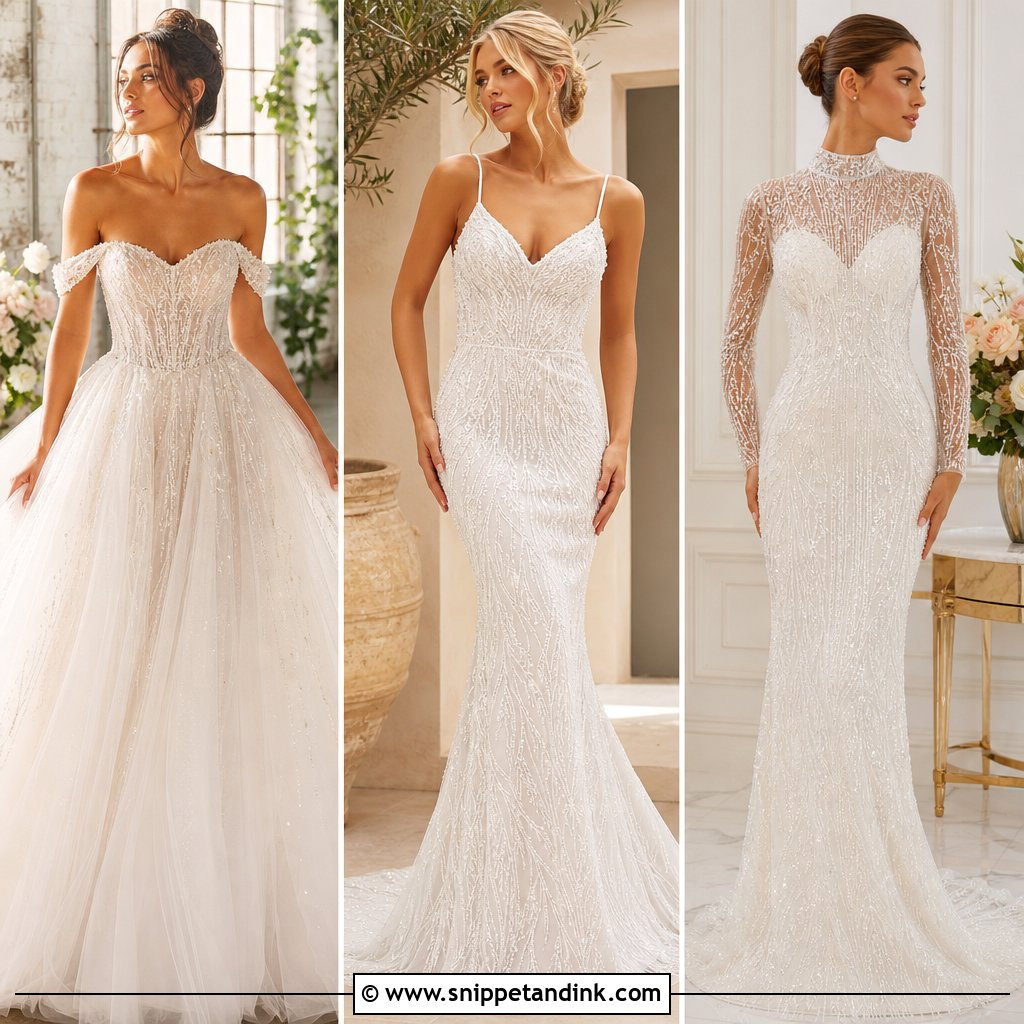
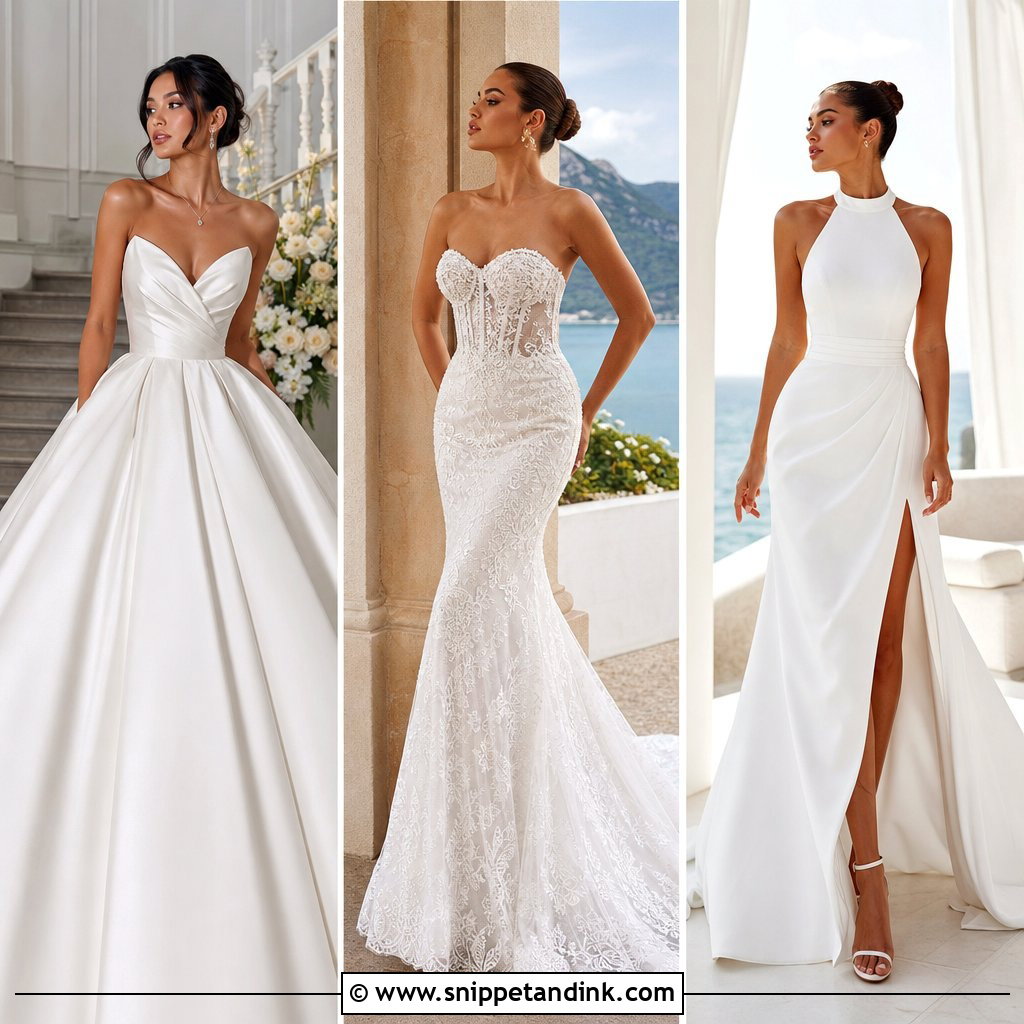
A satin ball gown has presence the moment you step into it. I look for a structured bodice with a softly curved neckline and a skirt that holds its volume through petticoats or a stiff underlayer, not through heavy satin alone, which can feel like wearing a tent. Ivory satin pairs with pearl drop earrings, a cathedral-length veil and pointed satin pumps, plus a compact bouquet of white roses or seasonal flowers. Skip the necklace; the skirt is doing enough. It belongs in a ballroom or grand hotel. Petite brides usually do better with a slightly narrower skirt, and taller brides can carry more fullness and a sweeping train. The bodice must be tailored snug, because a full skirt pulls a loose bodice down all day.
2. Lace A-Line Wedding Gown
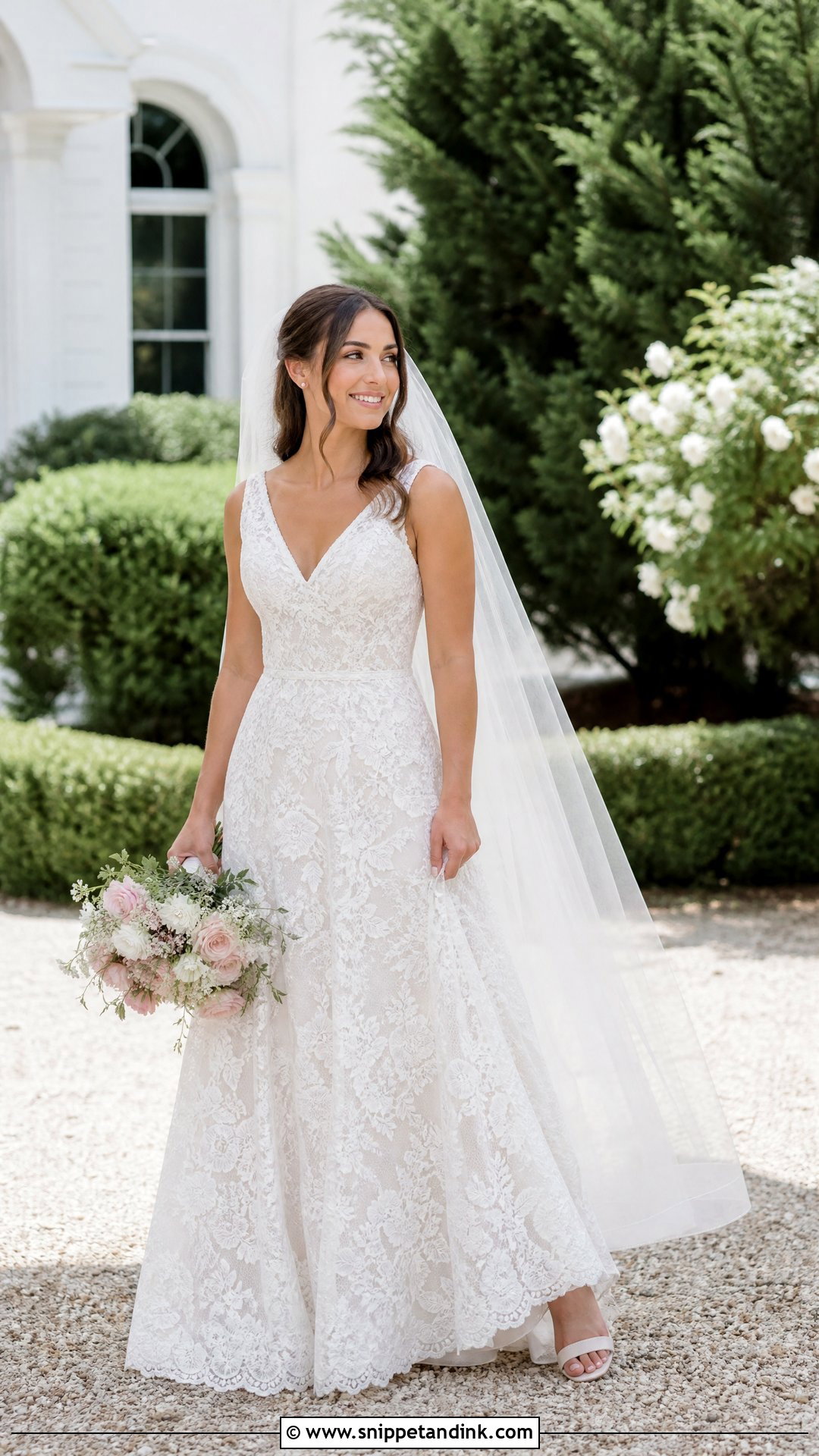
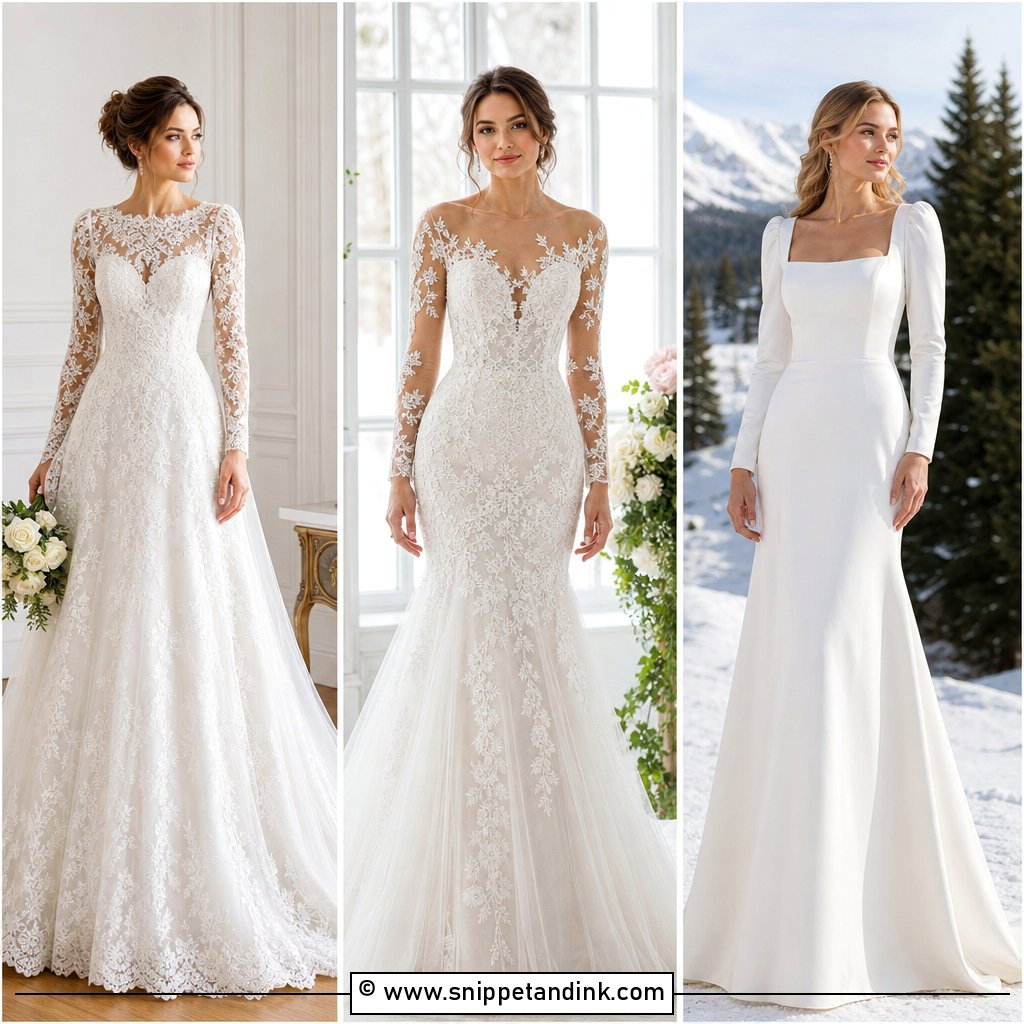
If a bride tells me she has no idea what suits her, a lace A-line is usually the first dress I pull. It fits at the natural waist and skims over the hips, which works on most figures. A subtle V-neck lengthens the upper body, and wider straps carry the weight of the lace more comfortably than thin ones. Pearl studs, a fingertip veil, ivory block heels and a loose bouquet in white and pale pink complete it. For more coverage, choose a lined bodice; you keep the lace and lose the see-through. A scalloped hem shows off nicely as you walk, so keep jewelry delicate and let the lace lead in a garden, estate or airy indoor venue.
3. Off Shoulder Wedding Gown
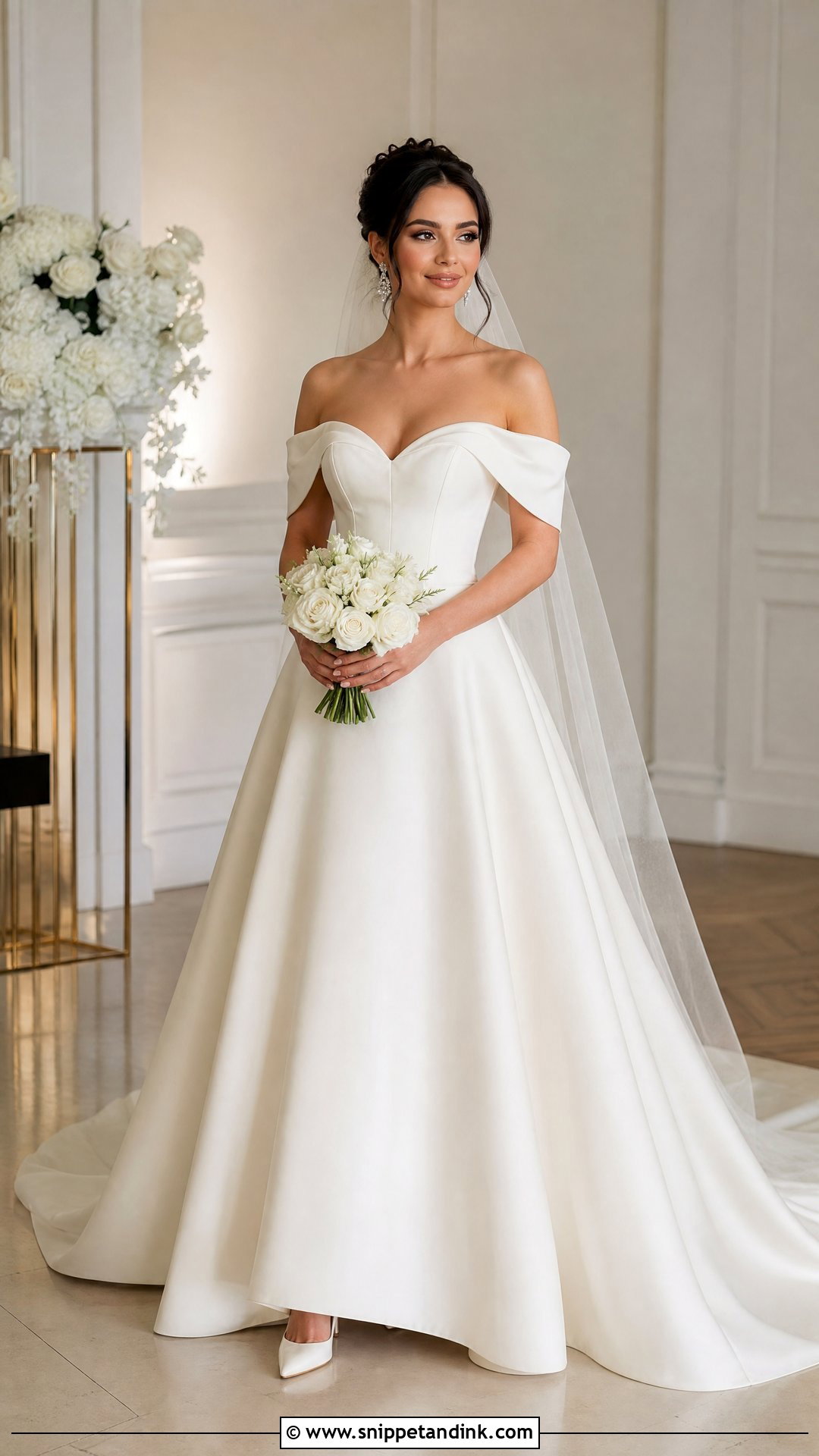
The off-shoulder band is where these gowns succeed or fail. If it’s held up only by the band itself, it slides every time you reach forward; I want internal boning and a grip strip at the top of the bodice so the sleeves rest on the arms without pulling. A fitted bodice over an A-line or full skirt balances the wide neckline. Style it with a smooth low bun, crystal earrings, pointed ivory heels and a sheer veil set beneath the hair, plus a small structured bouquet. Raise both arms over your head at every fitting and pretend to hug someone. Fashion tape helps a little, but alterations are what actually make it wearable through spring, summer and early autumn dancing.
4. Long Sleeve Lace Wedding Gown
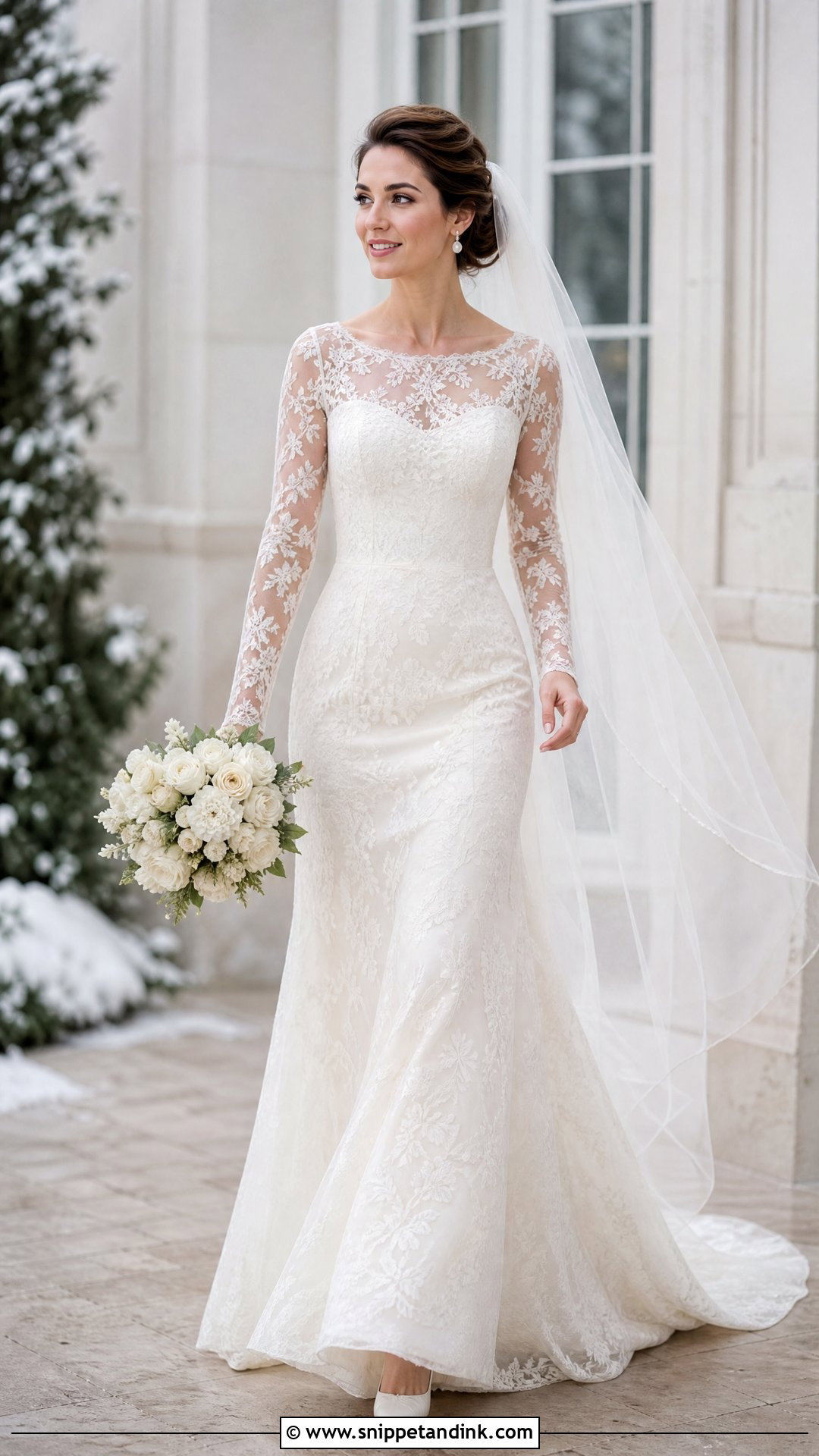
With lace sleeves, I ask one question first: do you want to see skin through them? Sheer illusion sleeves use fine mesh with appliqués placed over it; fully lined sleeves give a more modest finish. The bodice is fitted and the skirt softly flared, and a low or buttoned back adds detail behind. Pearl earrings, a simple hair comb, closed-toe pumps and a lightweight veil keep things restrained. Leave stacked bracelets off, since lace snags on clasps. Long sleeves suit cooler months, but breathable lace can be worn year-round. A bouquet of greenery and cream flowers gives quiet contrast.
5. Strapless Corset Wedding Gown
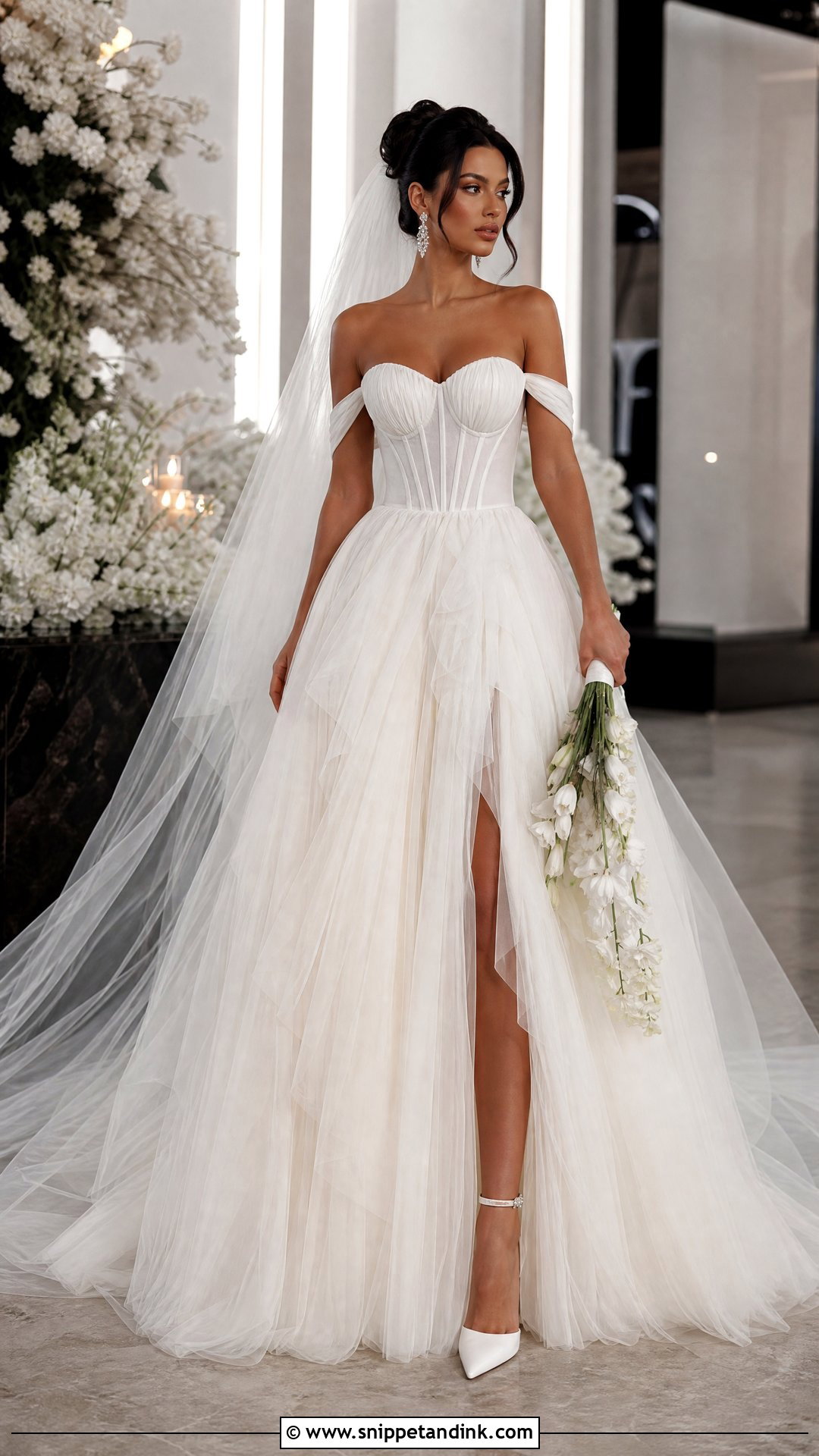
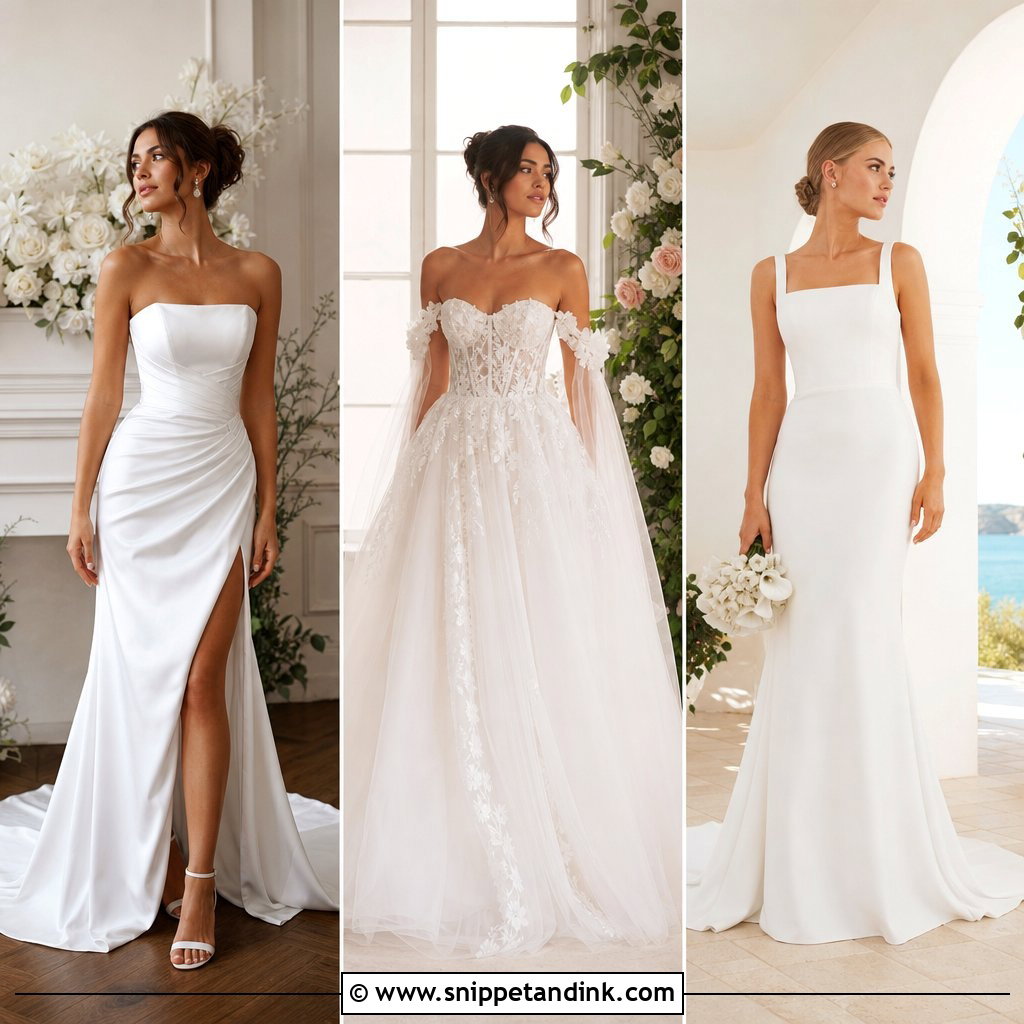
Corset bodices are about engineering. I check that the boning sits flat, the neckline doesn’t gape when you lean forward and the back closure, often lacing, leaves room for adjustment at alterations. A good corset supports without pinching; if you see a gap at the top edge when you breathe in, it needs work. Pair it with a flowing tulle skirt for softness or satin for a sharper line. A sheer cathedral veil, crystal studs and sleek pointed pumps keep the neckline clear. Detachable off-shoulder straps can be worn for the ceremony and removed later. Hold the bouquet low and narrow so the waist stays visible in formal and evening venues.
6. Square Neck Wedding Gown
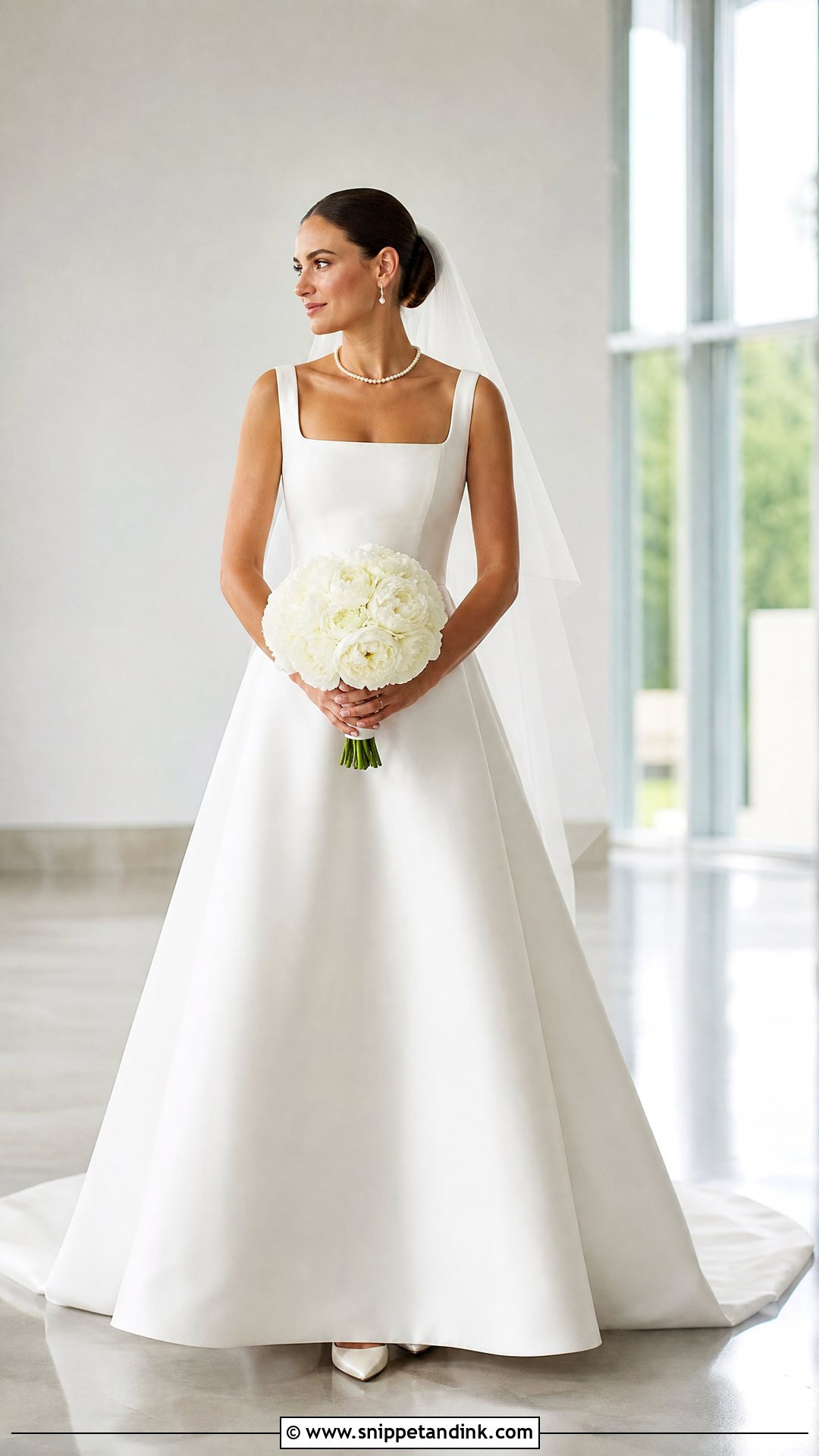
Square necklines frame the collarbones with straight lines, and that geometry flatters broad shoulders and balances fuller hips. They work with wide straps, short sleeves or fitted long sleeves. I’d choose an A-line satin for classic structure or fitted crepe for a cleaner line. This is one of the few necklines where a short pearl necklace actually helps, sitting just inside the square. Add drop earrings, low ivory heels and a clean-edged veil, with a neat bun or soft waves. On a fuller bust, insist on supportive seams and wider straps, because a square neck shows any gaping immediately. A rounded bouquet softens all those angles.
7. Mermaid Wedding Gown
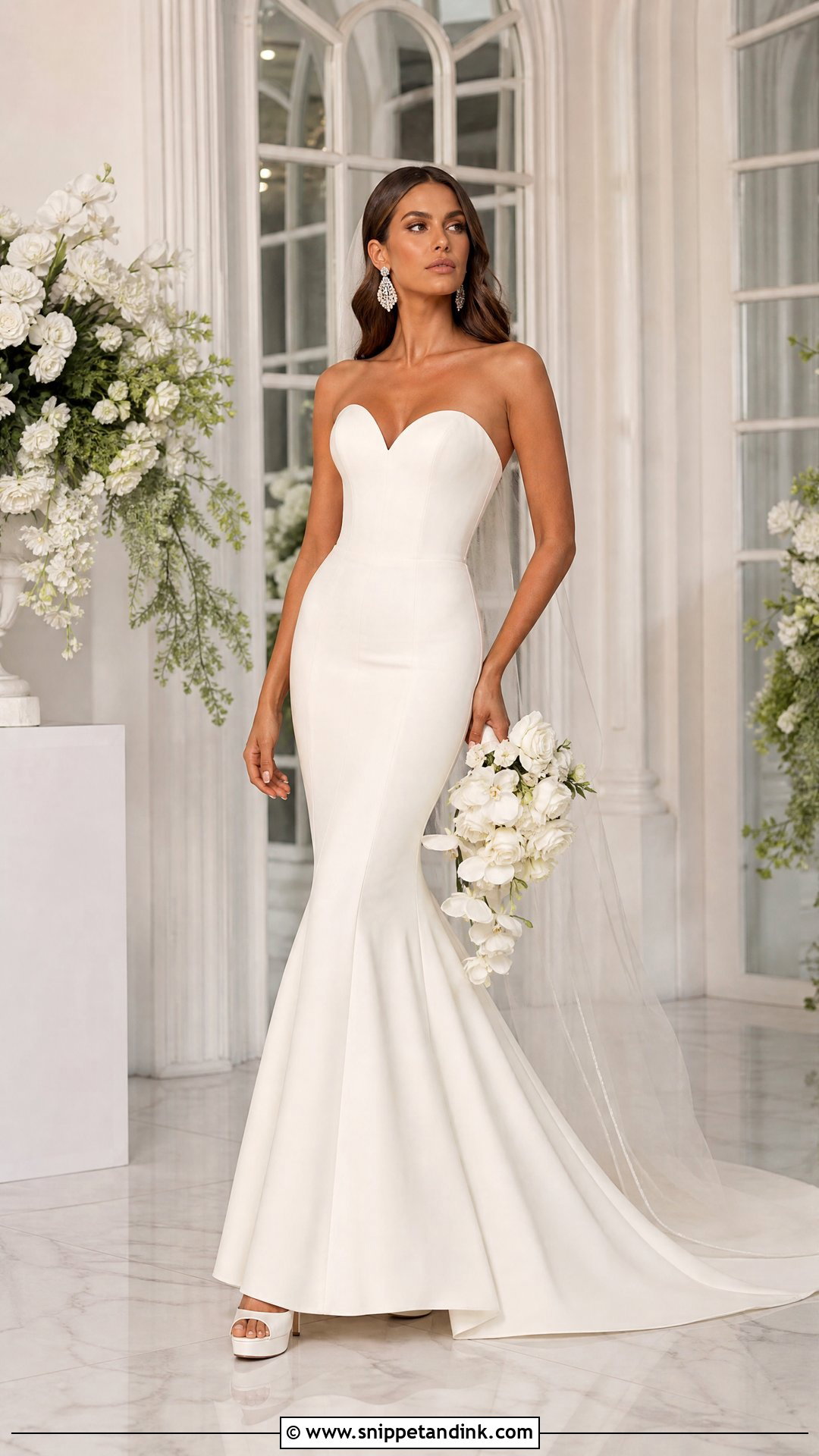
Mermaid gowns fit tight to the knee before flaring, and where that flare starts decides whether you can walk. Stretch crepe, lace or smooth mikado all work if the fabric has some give. I always ask brides to take ten steps and sit down in the fitting room; if the flare starts too low, the steps shrink to shuffles. A sweetheart or soft scoop neck balances the fitted shape, and detachable straps add support. Sparkling earrings, a narrow veil, platform heels and a long cascading bouquet finish it, with no oversized necklace. Plan a bustle for the reception, and tailor it close to the body without making it tight.
8. Drop Waist Wedding Gown
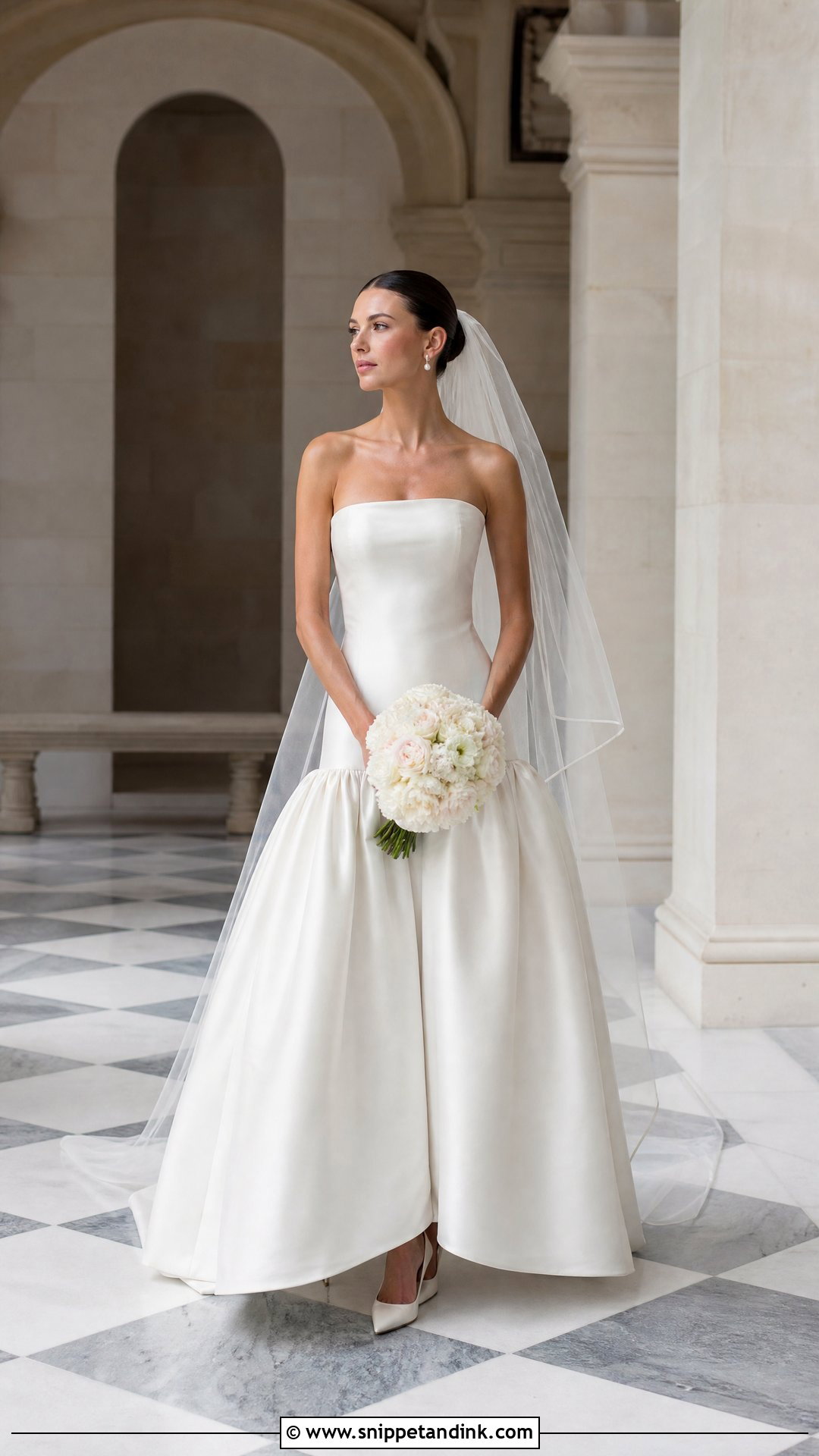
A drop waist extends the fitted bodice below the natural waist before opening into a fuller skirt, which lengthens the torso noticeably. Where that seam ends changes your proportions, so I compare it at the hip bone and a couple of inches higher before committing. Satin or mikado gives crisp structure; layered tulle is softer. Pair with a fingertip veil, pearl earrings, fine gloves and pointed pumps that peek out as the skirt moves. Strapless shows off the long bodice best, while wide straps give support. Hold the bouquet slightly below the waist so the seam stays visible, and pick a venue with space for the skirt to move.
9. Minimalist Crepe Wedding Gown
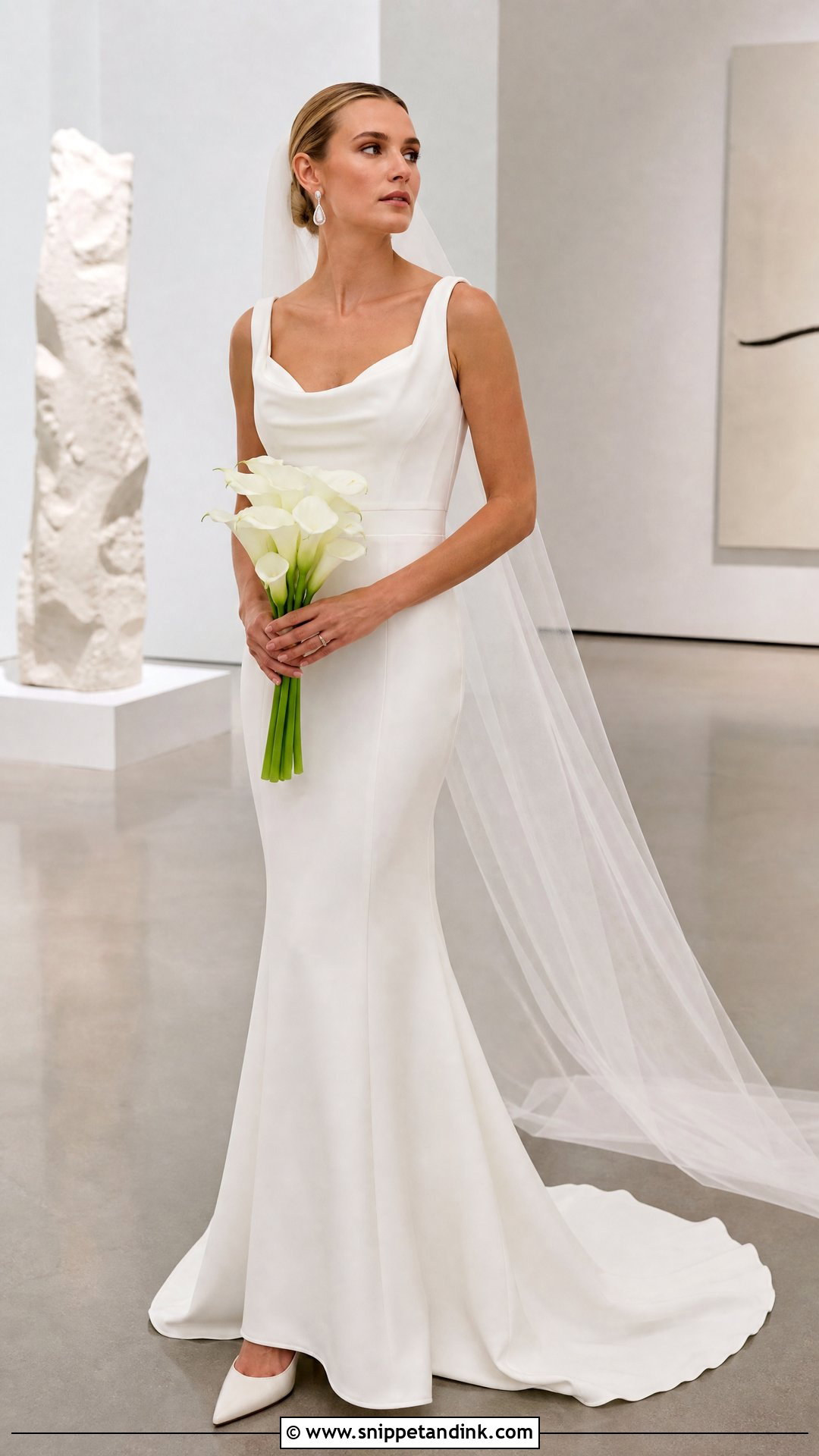
Crepe hides nothing. It’s the plainest-looking fabric in a bridal shop and the most demanding, because every seam and every undergarment line shows through. I look for a sheath or soft fit-and-flare with precise seams, a smooth bodice and one memorable detail like a low back or a draped neckline. Smooth, no-line foundations are non-negotiable, and so are skilled alterations. Sculptural earrings, pointed leather pumps, a sleek bun and a plain-edged veil keep the mood modern, with calla lilies or another single simple flower. It suits a city venue, a gallery or an intimate ceremony, and a detachable overskirt or long veil can add drama for the walk.
10. Floral Applique Wedding Gown
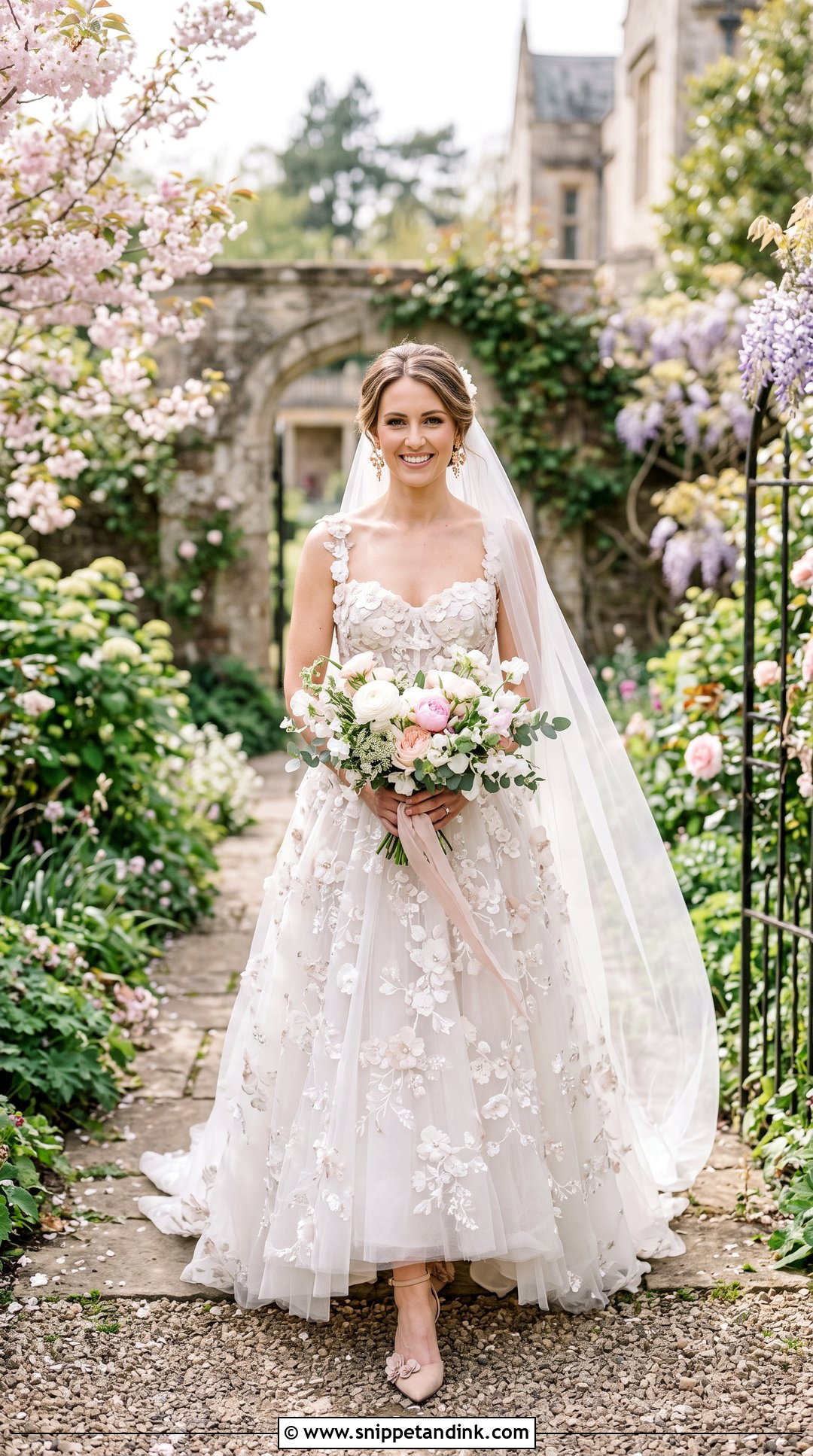
Three-dimensional appliqués should look like they’ve drifted down the dress: clustered on the bodice and scattering lighter across the skirt. A dense blanket of flowers all over reads heavy in photos. A lined sweetheart bodice, layered tulle skirt and softly defined waist make a comfortable base. Small floral earrings, ivory ankle-strap heels, a sheer veil and a bouquet with similar flower shapes complete it; no embellished necklace, which would fight the appliqués at the neckline. Ivory, blush or pale blue flowers can add subtle color. Keep the hair softly polished, and save it for garden, greenhouse and spring weddings.
11. Chiffon Beach Wedding Gown
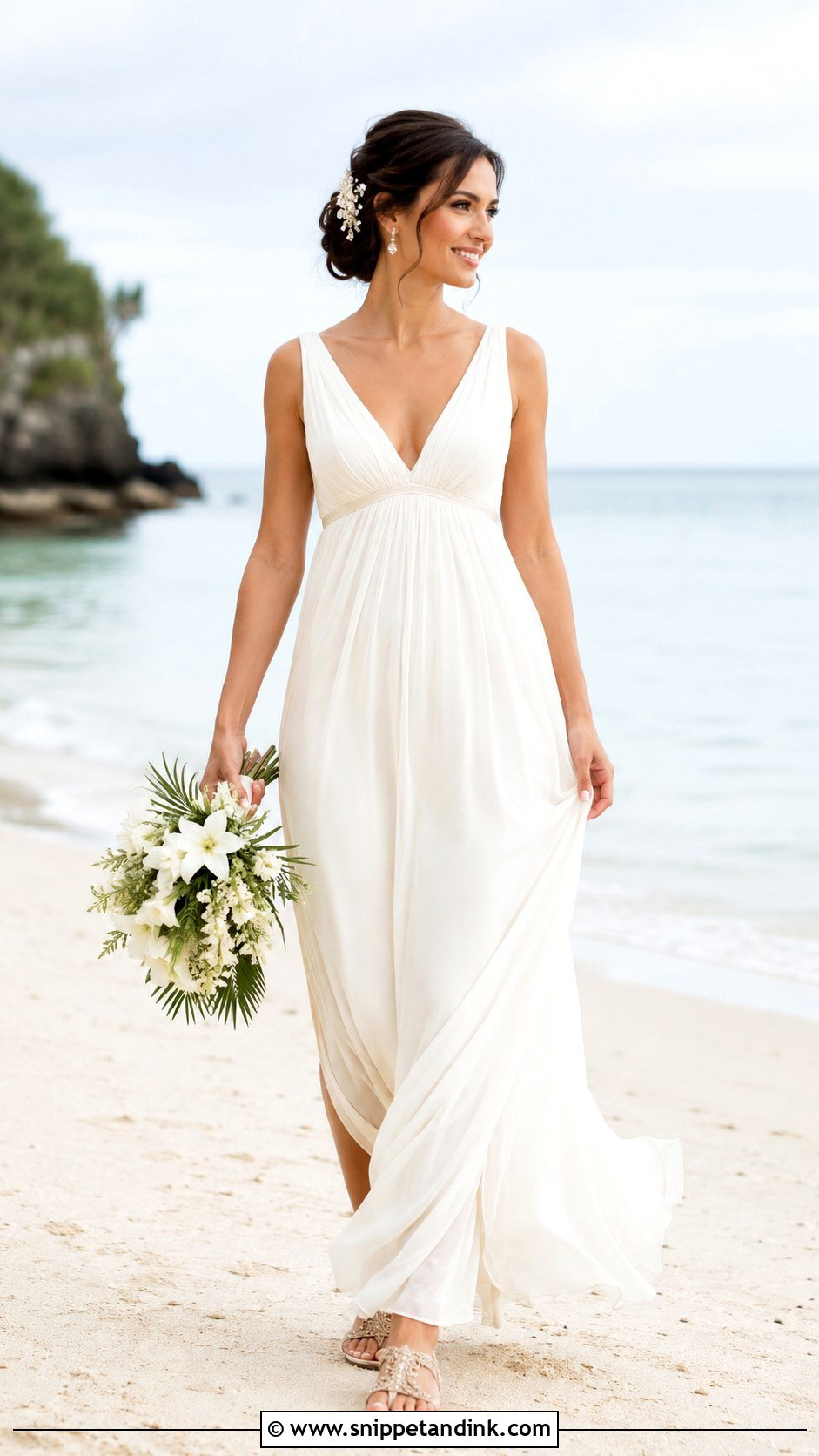
Chiffon is my first choice for a beach ceremony because it’s light, breathes, and lets the wind move it instead of fighting it. Choose an A-line or empire waist with secure straps, a short train and a skirt without heavy layers. Line the bodice; strong sunlight shows straight through unlined chiffon in photos. Flat embellished sandals, shell-inspired earrings, a short veil or hair comb and a loose bouquet of white tropical flowers keep things relaxed. Long trains collect sand and wet hems drag, so keep it short. Soft waves or a low braid stay put in wind, and a light wrap covers you once the evening cools.
12. Boho Lace Wedding Gown
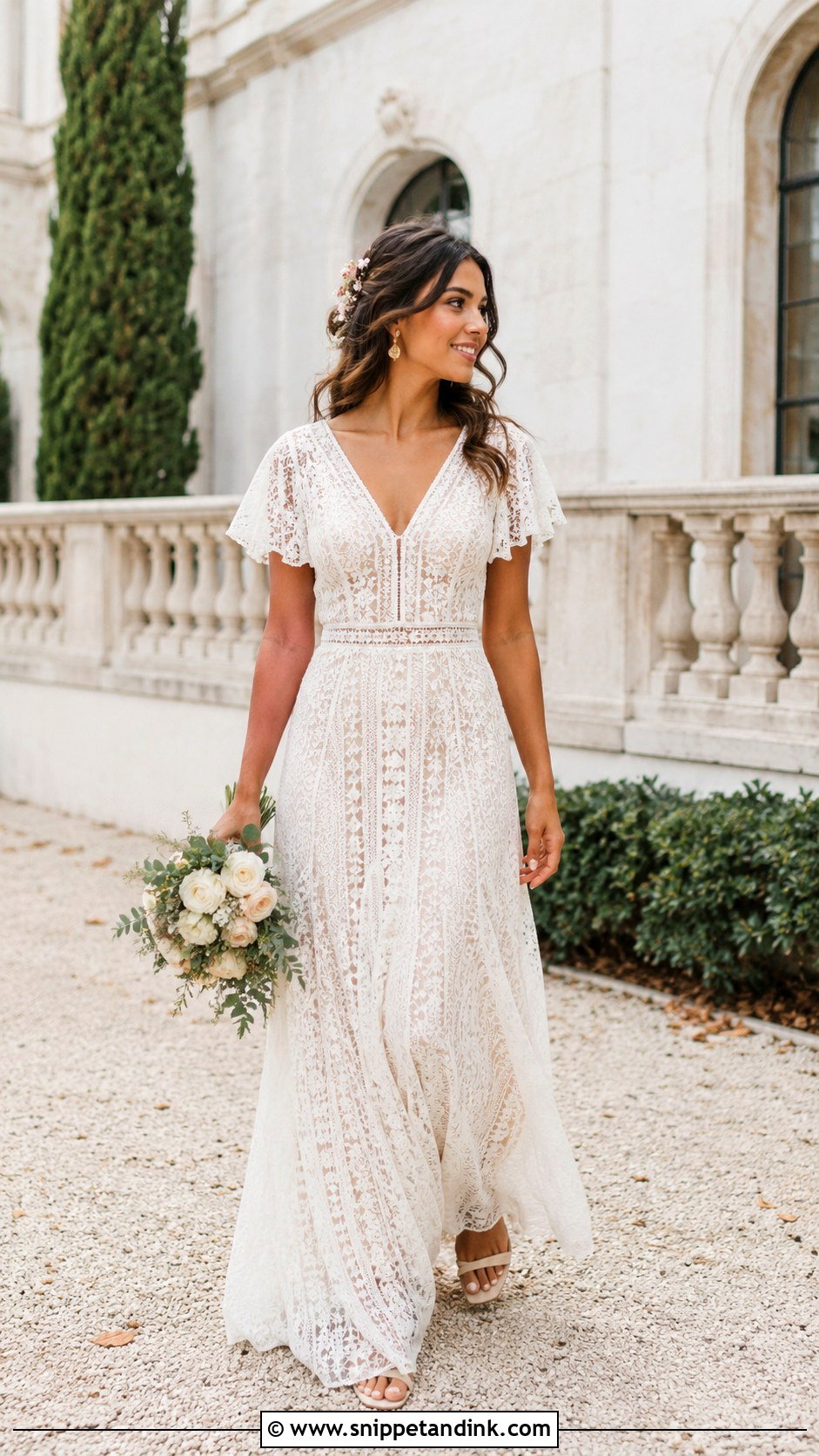
Boho lace should look handmade and move like it. I look for soft geometric lace, flutter sleeves, a defined waist and a skirt that falls loosely rather than holding a stiff shape. Smooth lining under open lace keeps it comfortable and stops it looking unfinished. Low block-heel sandals, gold earrings, a floral comb and a bouquet heavy on greenery suit it, with a light veil or a lace-trimmed cape. For brides who need support, a structured bodice can hide under the relaxed exterior, and nobody will know. Wear it outdoors, in rustic estates or for a destination wedding.
13. High Neck Wedding Gown
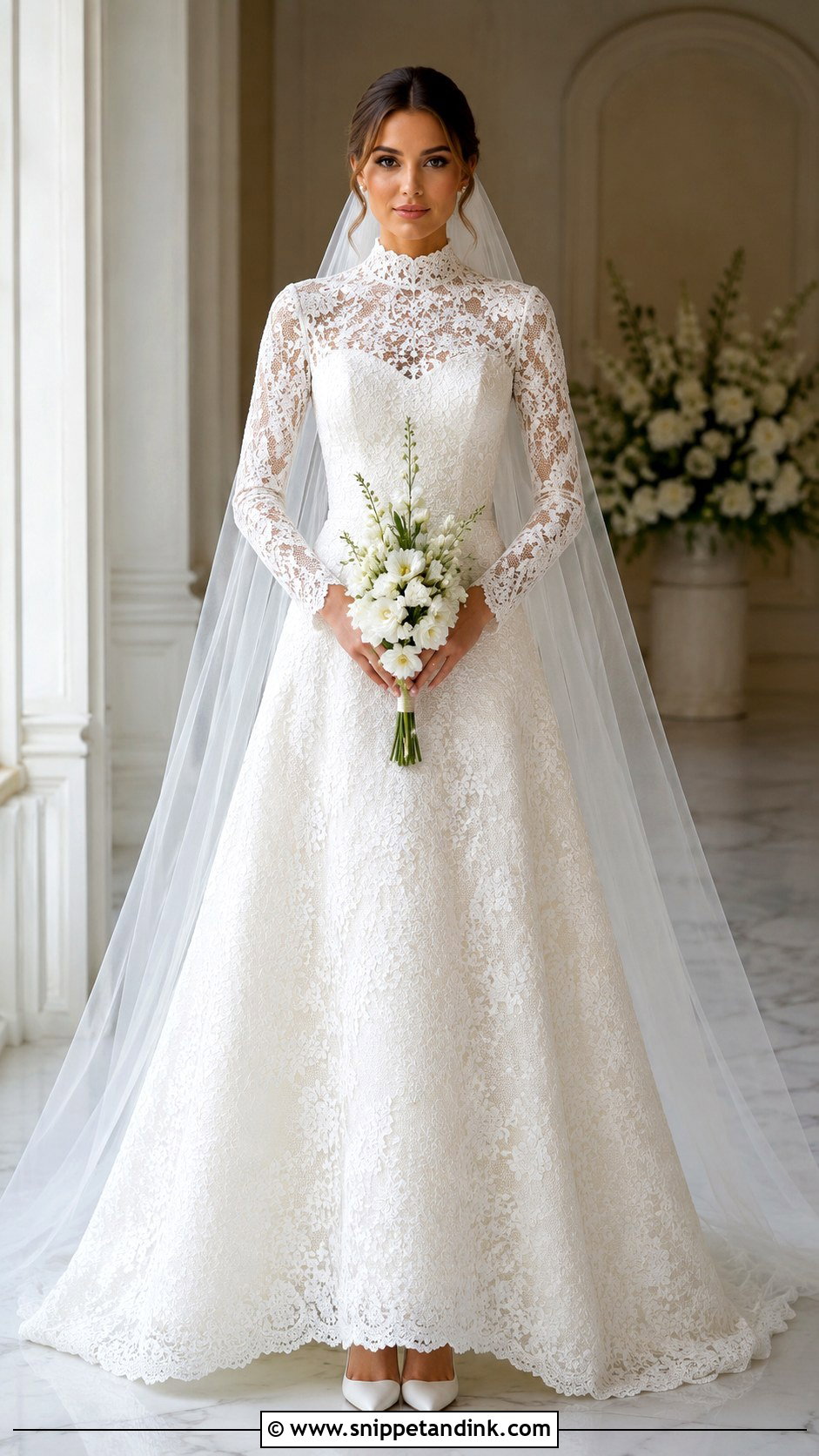
A high neck puts all the attention on your face and shoulders, which means the collar has to stay comfortable from morning to midnight. Lace, satin and crepe all work, but I make brides turn their head, sit and look down at an imaginary plate during fittings; a collar that’s even slightly tight rubs within hours. A fitted bodice with an A-line skirt is balanced, while a column is more modern. Skip the necklace and wear pearl or crystal earrings, a low bun, pointed pumps and a veil set beneath the hair. A bracelet adds a little shine. Carry a narrow bouquet so the front stays visible; it’s a practical choice for cool seasons.
14. Cape Sleeve Wedding Gown
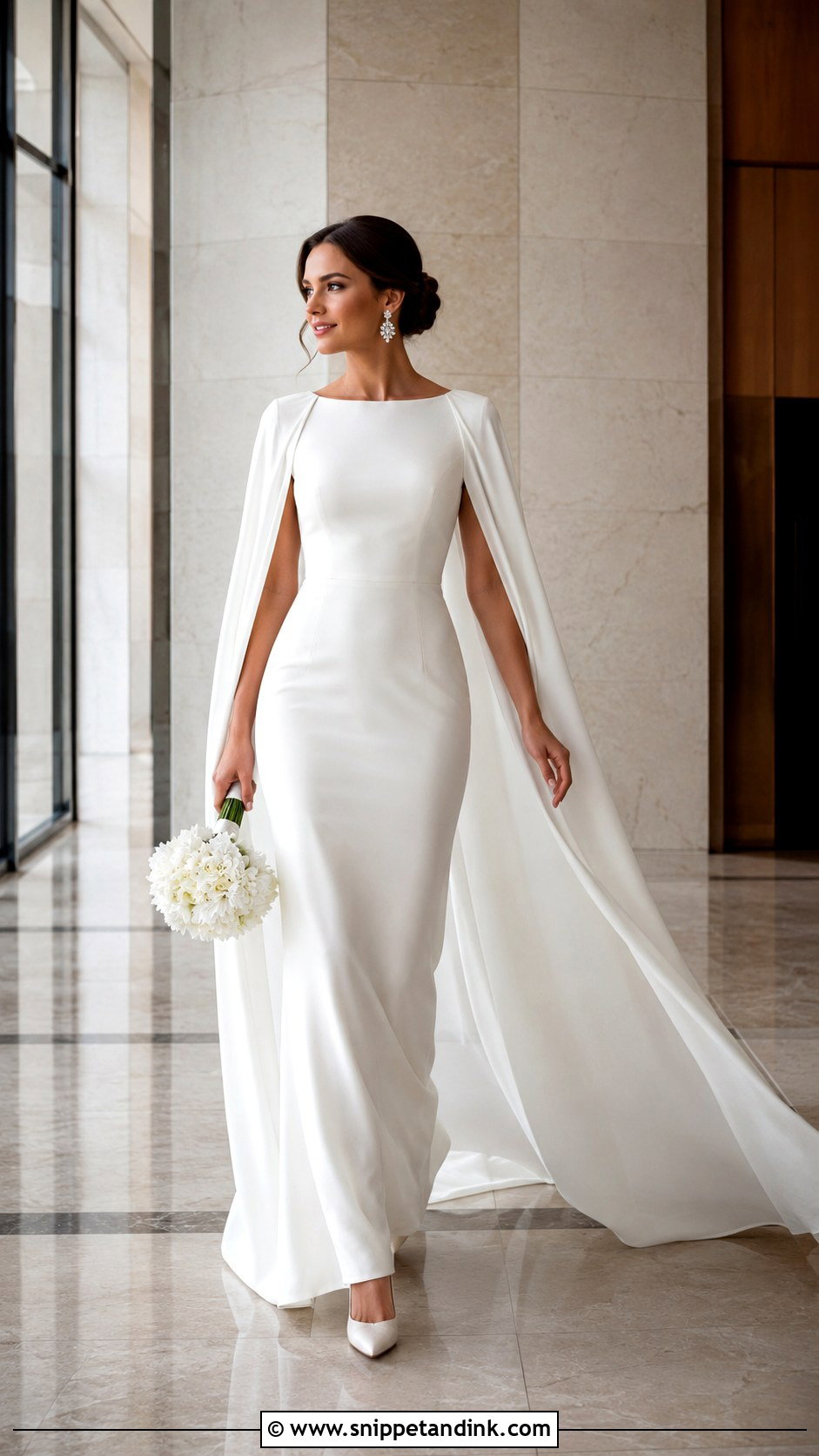
Cape sleeves give movement and drama without a veil. Under them, the gown should be simple, a sleek column, sheath or A-line, so the silhouette stays balanced. Chiffon is airy; satin or crepe is more architectural. Statement earrings, a smooth updo, pointed heels and a compact bouquet complete it. Two practical checks: the cape shouldn’t touch the floor, where it gets stepped on, and it shouldn’t cover your hands when you hold flowers. A detachable cape can make the entrance and come off before dinner. Keep everything else restrained, since the cape is already the defining layer, particularly in modern or formal indoor venues.
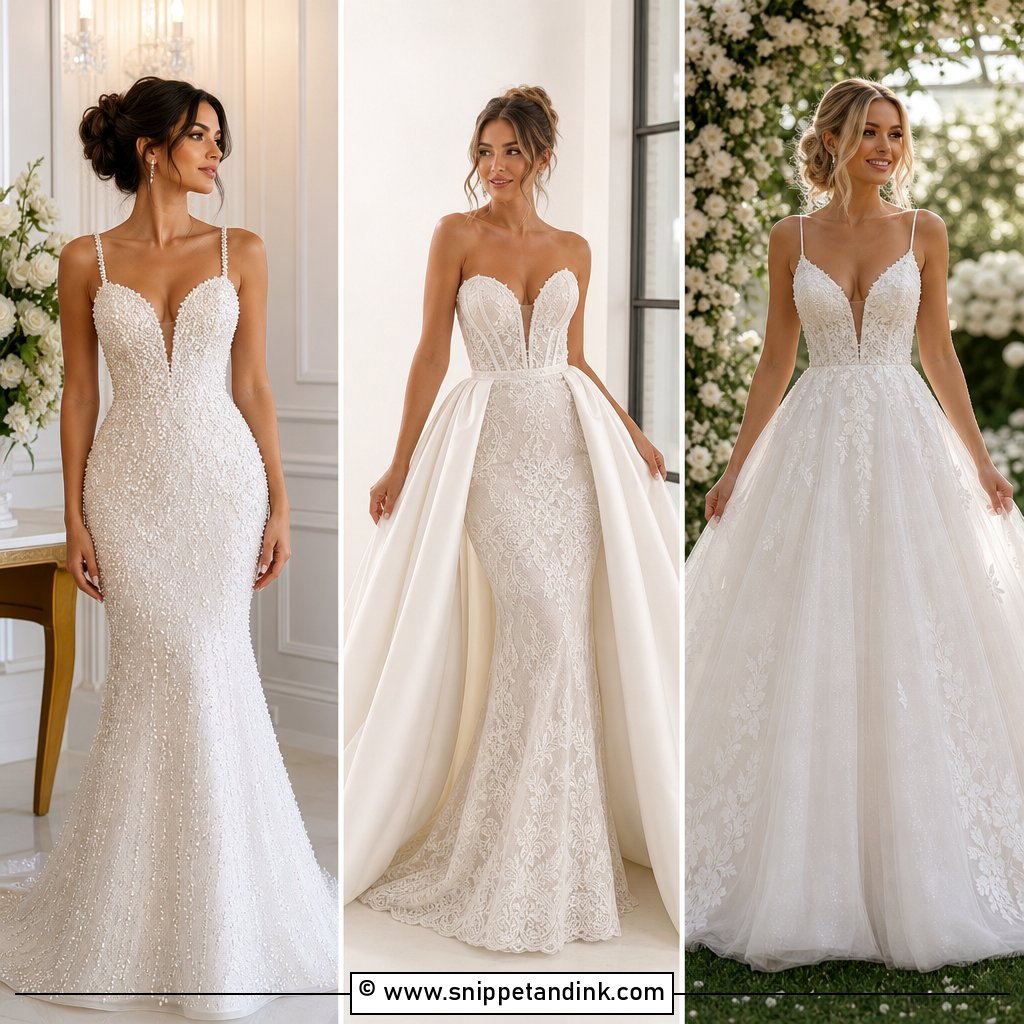

15. Basque Waist Wedding Gown
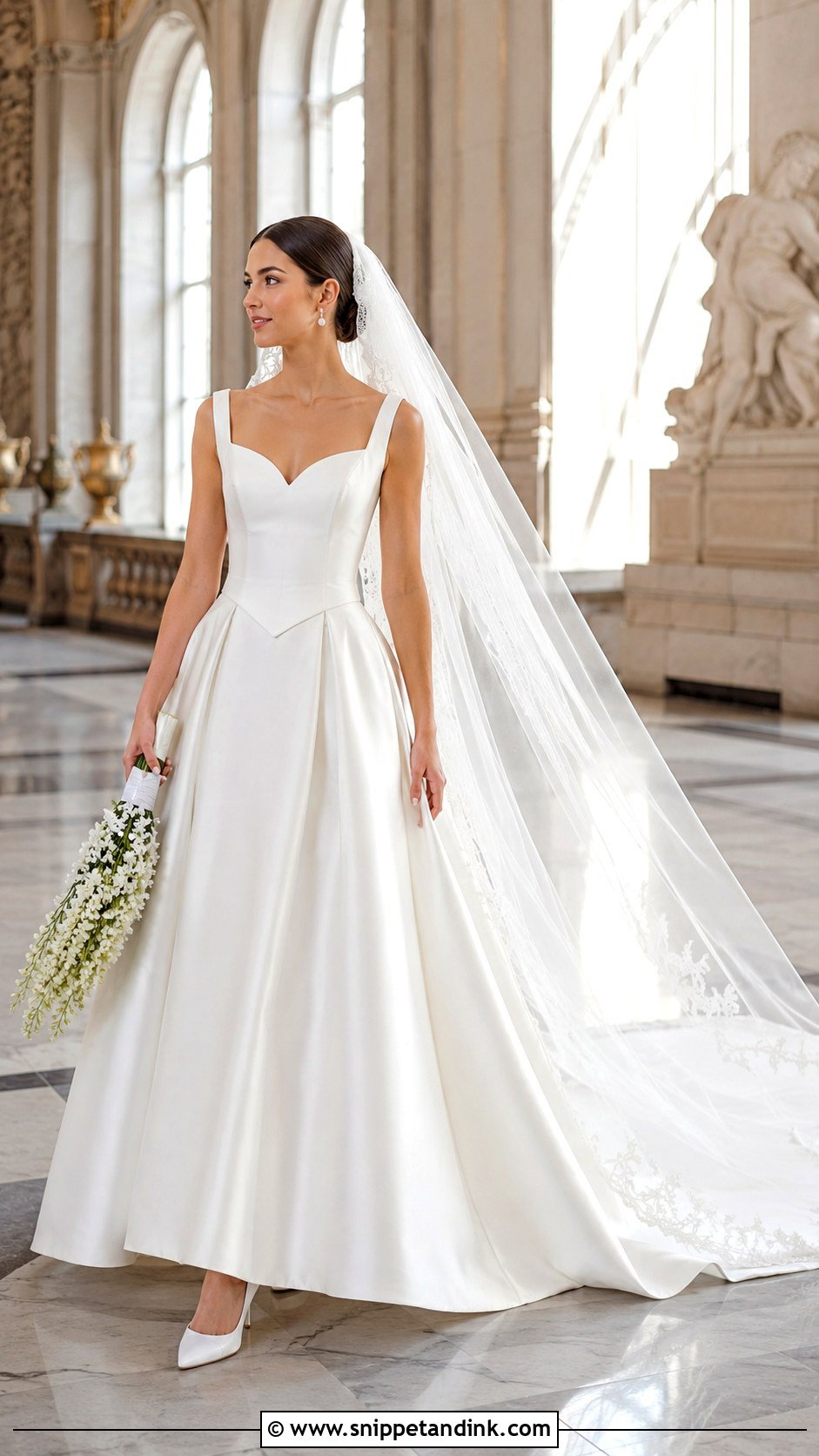
The V-shaped seam of a basque waist wedding gown defines the torso before the skirt opens out. Satin, mikado or layered tulle all hold the shape. The point of that V tends to fold or flip up when you sit if the bodice isn’t boned down to it, so I check the boning goes right to the tip. Choose a gentle V for subtle shaping or a deeper point for drama. Pair a strapless or softly scooped bodice with a cathedral veil, pearl earrings, satin pumps and a structured bouquet held narrow enough to show the waistline. It looks strongest from the front and side.
16. Tea Length Wedding Gown
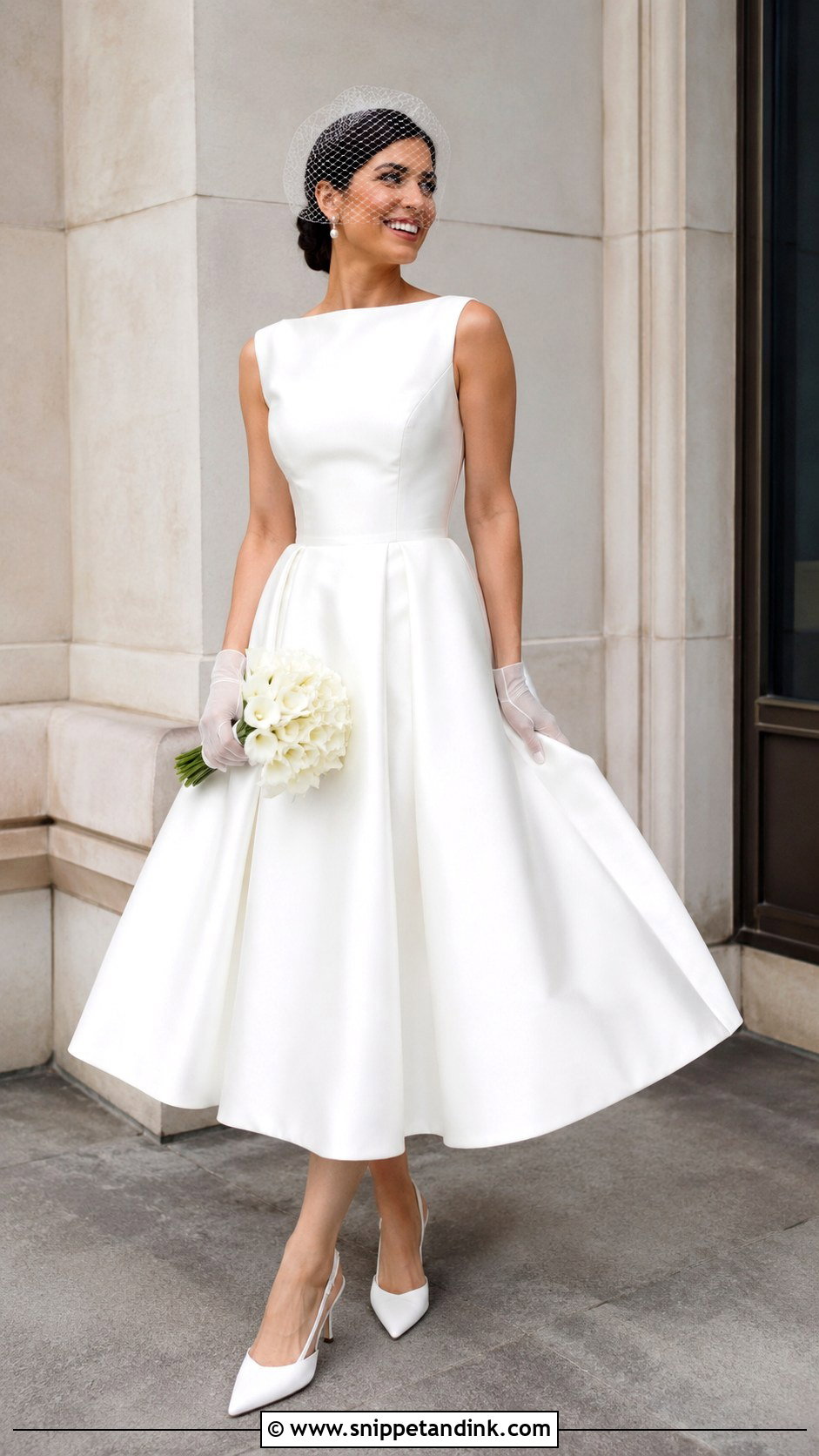
Tea length ends between knee and ankle and frees you to move, but it also puts your shoes in every photo. I try several hem positions at the fitting; an inch or two changes how long the legs look, and the most flattering spot is usually just below the widest part of the calf. Satin gives structure, lace or organza a softer finish. Pointed slingbacks, pearl earrings, short gloves and a birdcage veil or hair bow suit it, with a small bouquet. It’s right for courthouse ceremonies, intimate celebrations and warm weather. Choose shoes you can stand, walk and dance in, because there’s nowhere to hide a pair of flats.
17. Beaded Wedding Gown
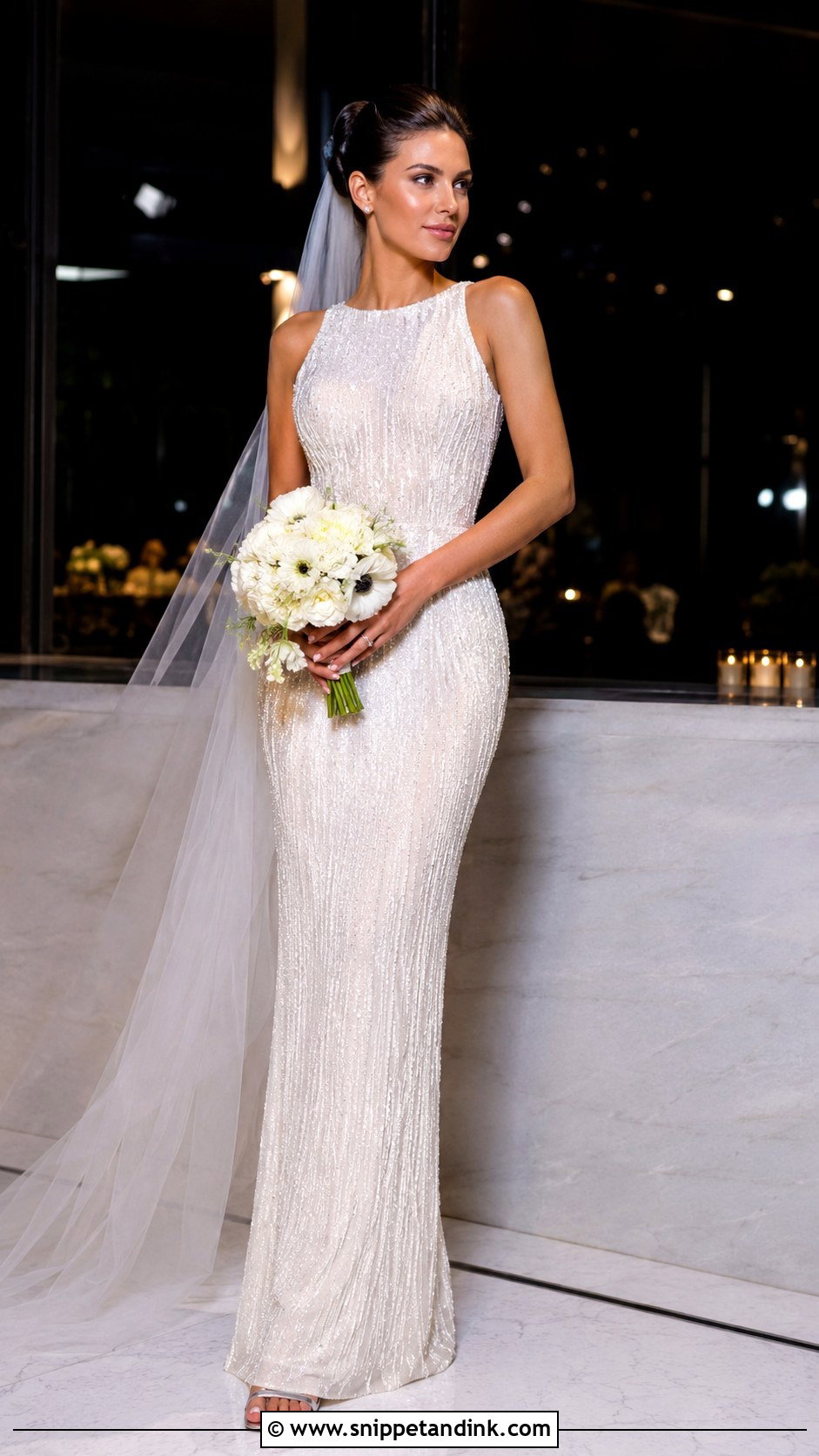
Beading is heavier than it looks on a hanger. Before anything else, I lift the gown on its hanger and then ask the bride to raise her arms; beading under the arms scratches, and a fully beaded skirt adds real weight by the end of the night. A lightly beaded bodice over a simpler skirt gives the sparkle with less load. Choose a fitted column, A-line or gentle flare with beadwork that follows the seams. Crystal studs, metallic or ivory heels, a plain veil and white flowers are enough. Keep hair smooth so it doesn’t catch. Evening receptions and clean modern lighting show the texture best.
18. Blush Wedding Gown
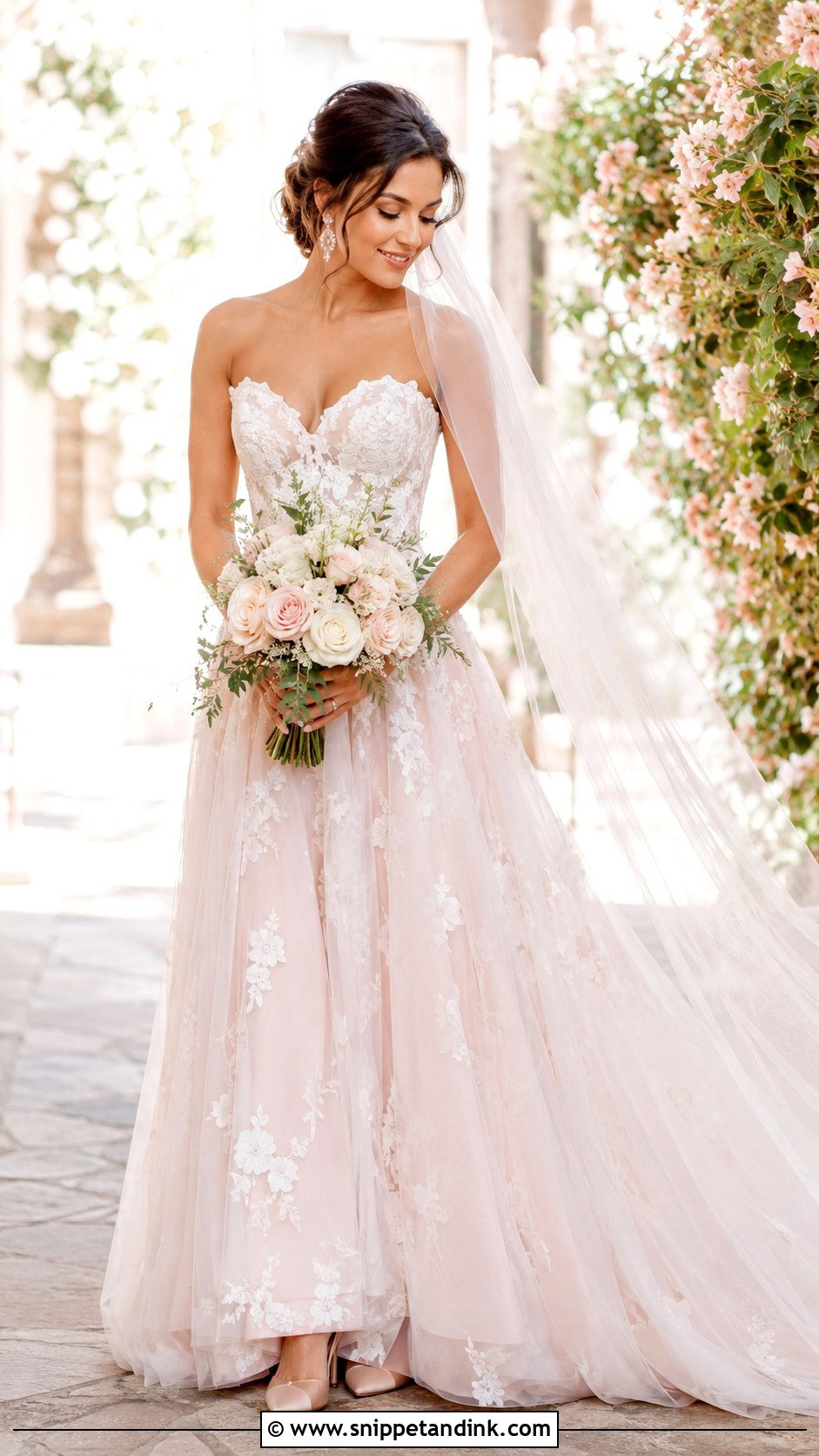
Blush usually comes from a tinted lining under ivory tulle and lace rather than pink fabric throughout, which is why the color shifts depending on light. The layering adds depth and helps floral appliqués stand out. I always take the sample to a window and then back under indoor lights, because a blush that looks warm in the shop can turn grayish or nearly white outdoors. Rose-gold earrings, neutral satin pumps, a sheer ivory veil and a bouquet in cream, blush and muted green suit it; avoid strongly colored accessories. Pick the tone that warms your complexion, since that’s what the camera will show.
19. Plus Size Empire Waist Wedding Gown
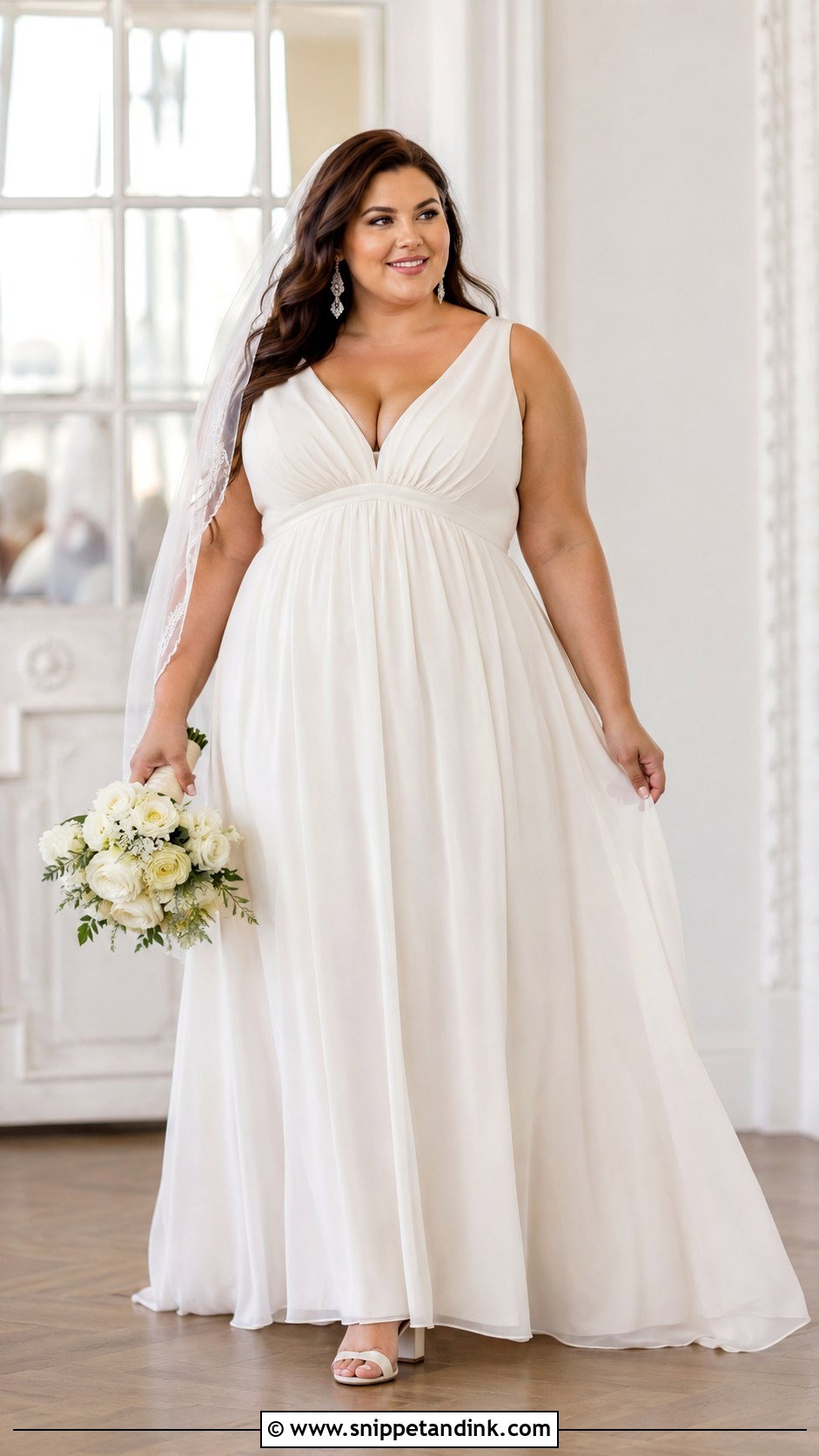
An empire-waist wedding gown seams just beneath the bust and falls into a long, loose skirt, and that loose skirt can tempt brides to ignore the bodice. Don’t. I insist on wider straps, built-in cups and proper seaming, because the bodice carries all the support. Chiffon moves easily; satin is more structured. Comfortable block heels, statement earrings, a fingertip veil and a medium bouquet finish it. For more waist definition, a fitted underlayer or a subtle sash below the bust helps. The neckline, V, square or soft scoop, should feel open. Ignore the size on the label; good tailoring matters far more.
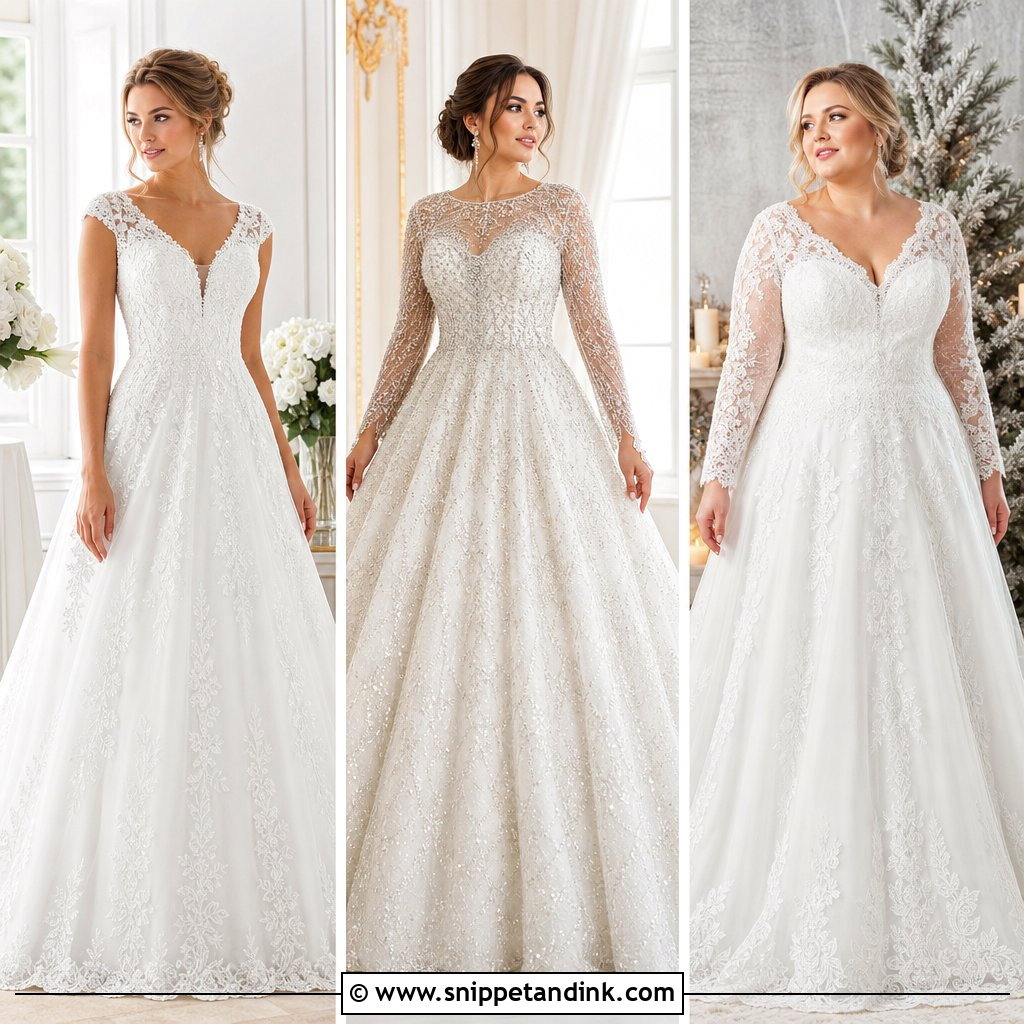



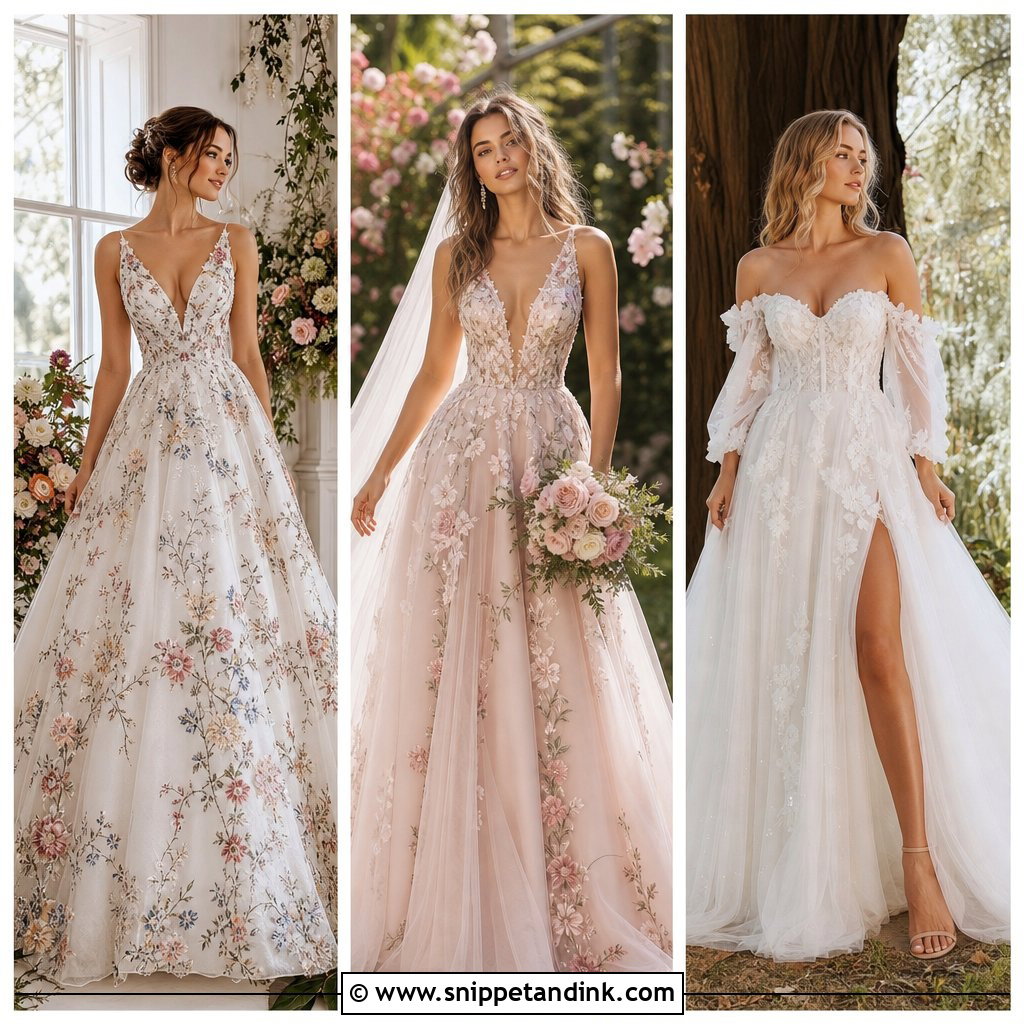
20. Modest Satin Wedding Gown
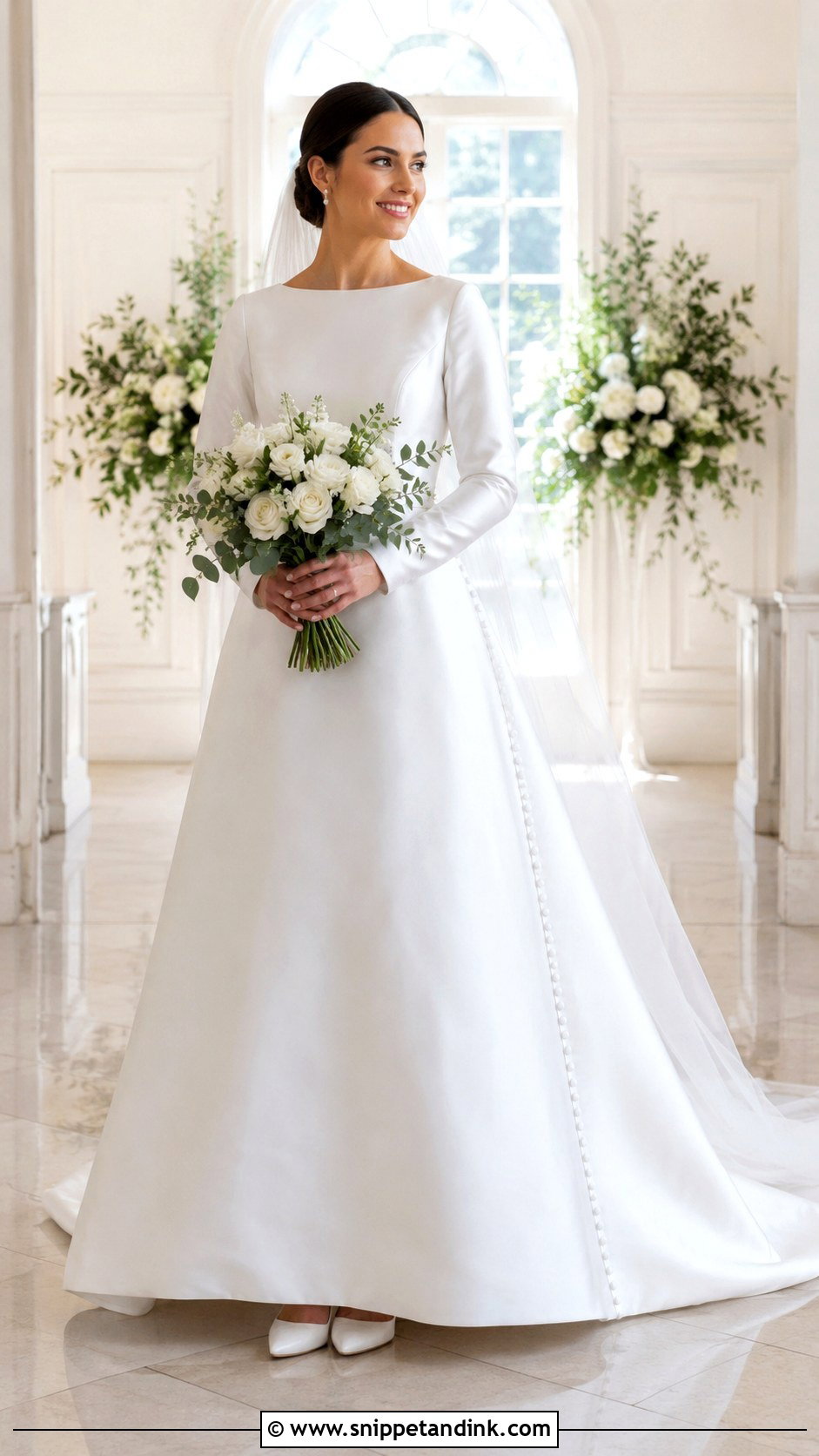
Full coverage in satin depends on the satin itself: it needs enough weight to drape smoothly and enough give to sit and lift your arms. Look for a high or softly rounded neckline, fitted long sleeves, a natural waist and an A-line skirt with controlled volume. Fabric-covered buttons at the cuffs or down the back add detail without fuss. Have the sleeves adjusted so you can raise a glass and hug guests without the shoulder seam pulling. Pearl earrings, closed-toe pumps, a simple veil and white flowers with subtle greenery keep the focus on fit and construction rather than exposed skin.
Sample Sizes, Bustles and Other Fitting-Room Surprises
Shops usually carry each design in one or two sample sizes, so the dress you try may be clipped at the back or not zip at all. That’s fine. A good consultant can show you the shape with clips and tell you how it changes once it’s made to your measurements.
Bridal sizing also runs smaller than everyday clothing, often by a size or two, so ignore the number on the order form. Gowns are ordered from your largest measurement of bust, waist and hips and then taken in where needed, because letting out is often impossible.
- Ask which bustle suits your train. A French or under-bustle tucks the train under in soft folds; an American or over-bustle lifts it with hooks on top. Long, heavy trains may need several points.
- Find out what alterations cost before you order. Some shops include them, many quote separately, and the price varies widely.
- Bring your shoes to every fitting, or at least shoes of the same heel height. The hem is set to them.
- Check the return and cancellation terms in writing. Made-to-order gowns are rarely refundable once production starts.
The Right Dress Lets You Sit, Hug and Dance Without Thinking
The most dramatic dress in the shop isn’t automatically the right one. What matters is that it supports your body, suits the venue and lets you move without fussing with it. Try necklines, fabrics, waist placements and skirt shapes you’d never have picked from a photo, and judge each one with the veil, shoes and jewelry you’d actually wear. Alterations often turn a good dress into yours, so leave time for them. Use these twenty looks to narrow down what to try, then trust what you feel in the mirror.
You'll Like These Ideas:








Leave a Reply