
A plain wedding dress is the hardest kind to get right, and I say that as someone who loves them. With no lace or beading to look at, the eye goes straight to the fabric, the fit and the seams, so a minimal gown only looks expensive when those three are right. The upside is range: one clean dress can move from a ballroom to a garden, a courthouse or a beach with a change of shoes and hair. The twenty dresses below go from bias-cut silk slips to structured satin A-lines, each styled from head to toe, with the fitting check I’d make on that particular cut.
Underwear Decides Whether a Plain Dress Looks Expensive
On a lace gown, a seam or strap under the dress disappears into the pattern. On plain satin, crepe or silk, it shows from across the room. That is why I ask brides to sort out undergarments before the first fitting, not after.
- Choose nude tones matched to your skin, not white. White shows through ivory fabric under flash.
- Laser-cut or bonded edges leave no line on silk and satin. Lace trims and thick elastic do.
- Light shapewear smooths a slip or sheath, but anything that rolls at the waist will show worse than no shapewear at all. Sit in it for twenty minutes at home to check.
- If the dress has a low back or plunge, decide between built-in cups and adhesive cups early; the tailor fits the bodice around them.
Once you’ve settled on them, wear the same pieces to every fitting. Switching bras between fittings can shift the bust line enough that the bodice no longer sits the way it was pinned.
1. Satin A-Line Bridal Dress
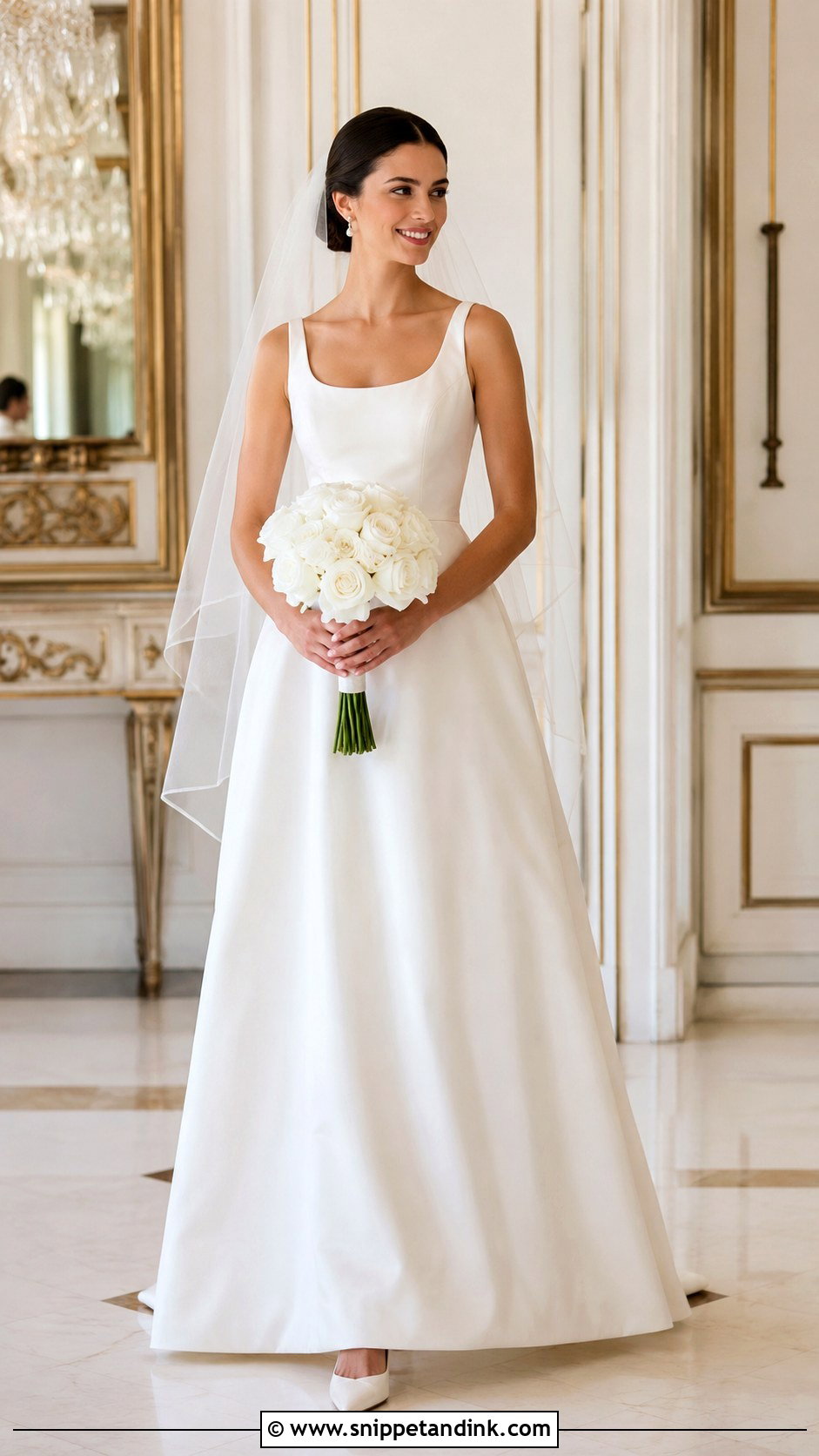
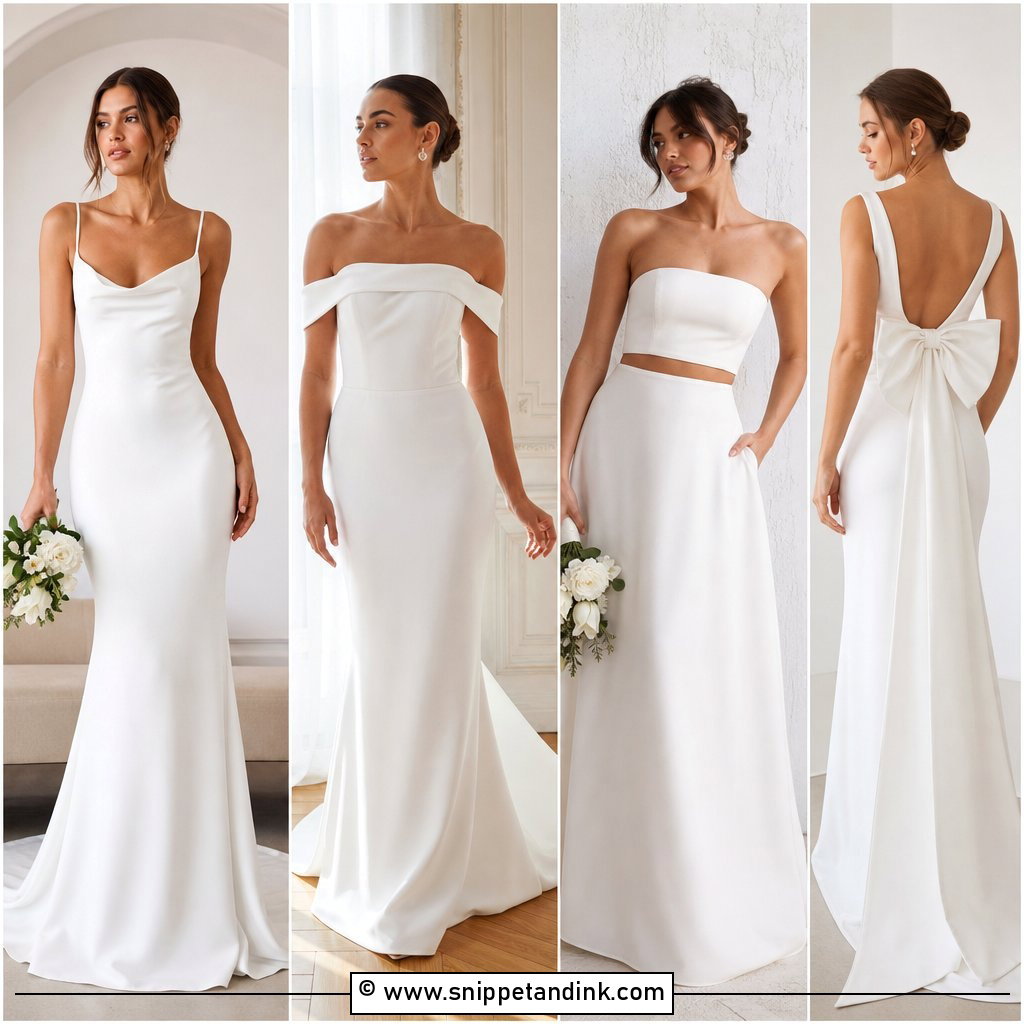
Satin A-lines are the dress most people picture when they hear “classic bride.” Fitted bodice, natural waist, a skirt that widens gently to the floor. Medium-weight satin holds that shape and gives a soft sheen; very light satin collapses and shows the seams. Scoop, square or a shallow V keep it clean. Pointed ivory pumps, pearl drops, a fingertip veil and a small bouquet of roses or calla lilies. The hem is my main worry on this one: a smooth satin skirt shows any wobble in the hemline, so it needs setting with your real shoes on. Sleek or softly pinned hair keeps the neckline in view.
2. Crepe Sheath Bridal Dress
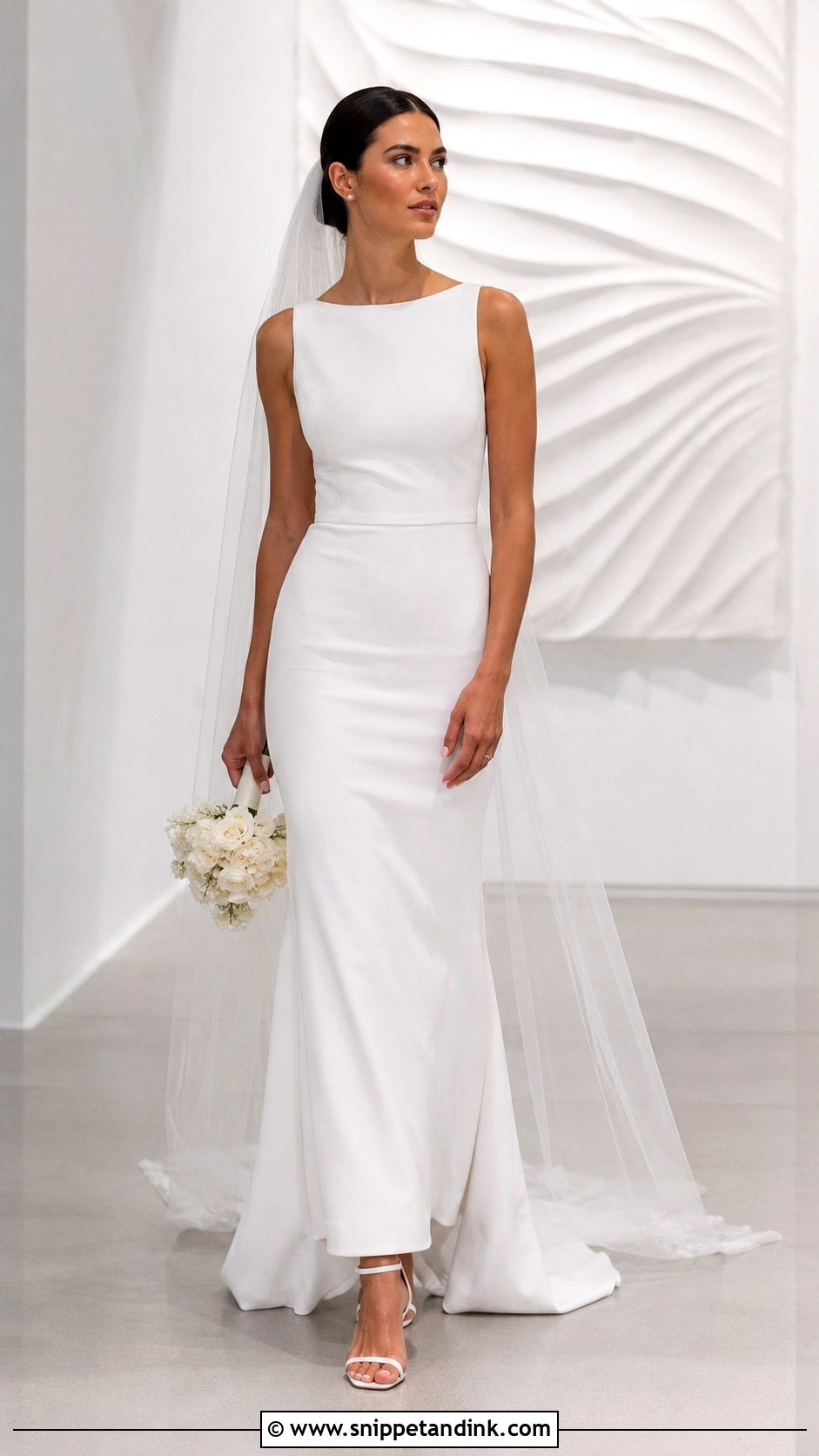
Crepe is the fabric I trust most for a sheath. It has weight, it skims rather than clings, and it hides a lot that satin would show. A sheath with internal structure defines the waist while leaving room through the hips; thicker stretch crepe gives a little more coverage and give. Slim ankle-strap heels, stud earrings and a low bun, with a chapel veil for the ceremony. A clean ivory coat beats an embellished wrap in cooler weather. Crepe tailors well, but only if every fitting happens in the undergarments and shoes you’ll actually wear.
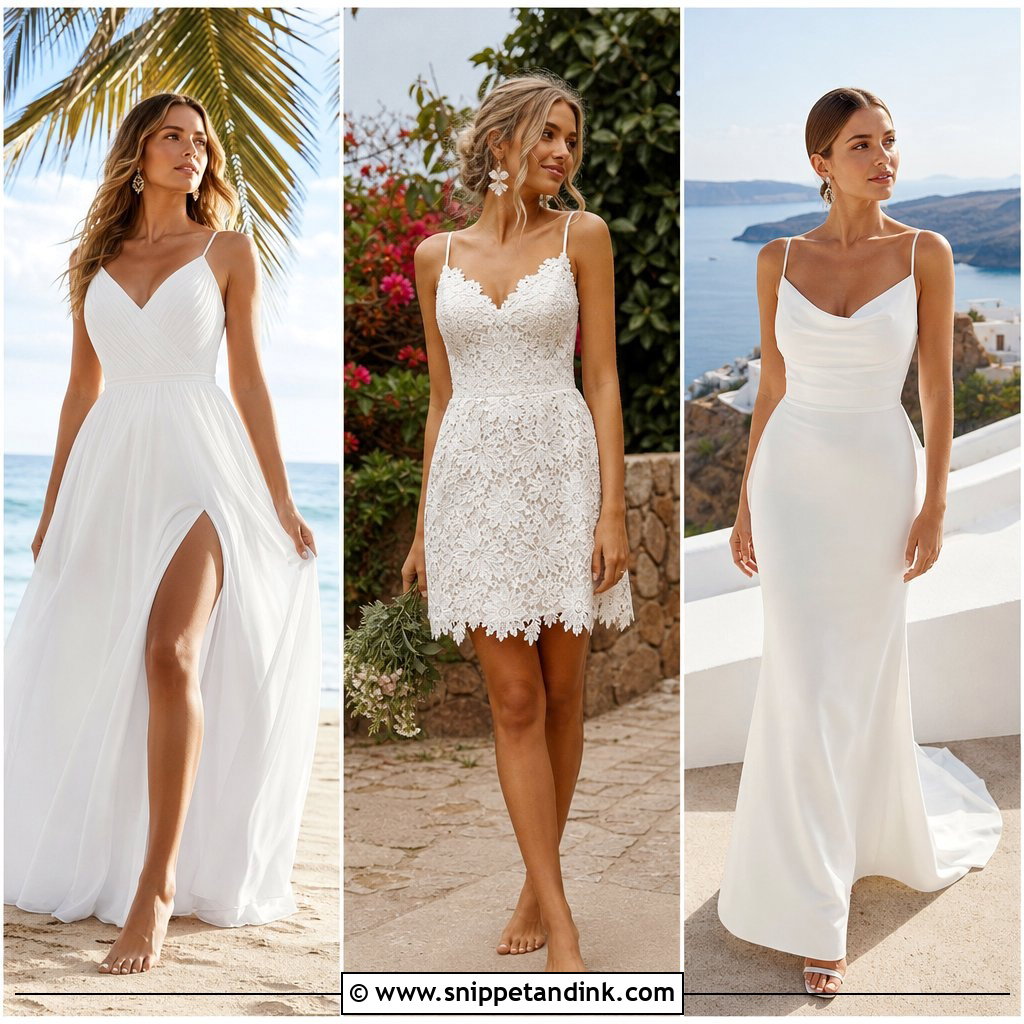
3. Silk Slip Bridal Dress
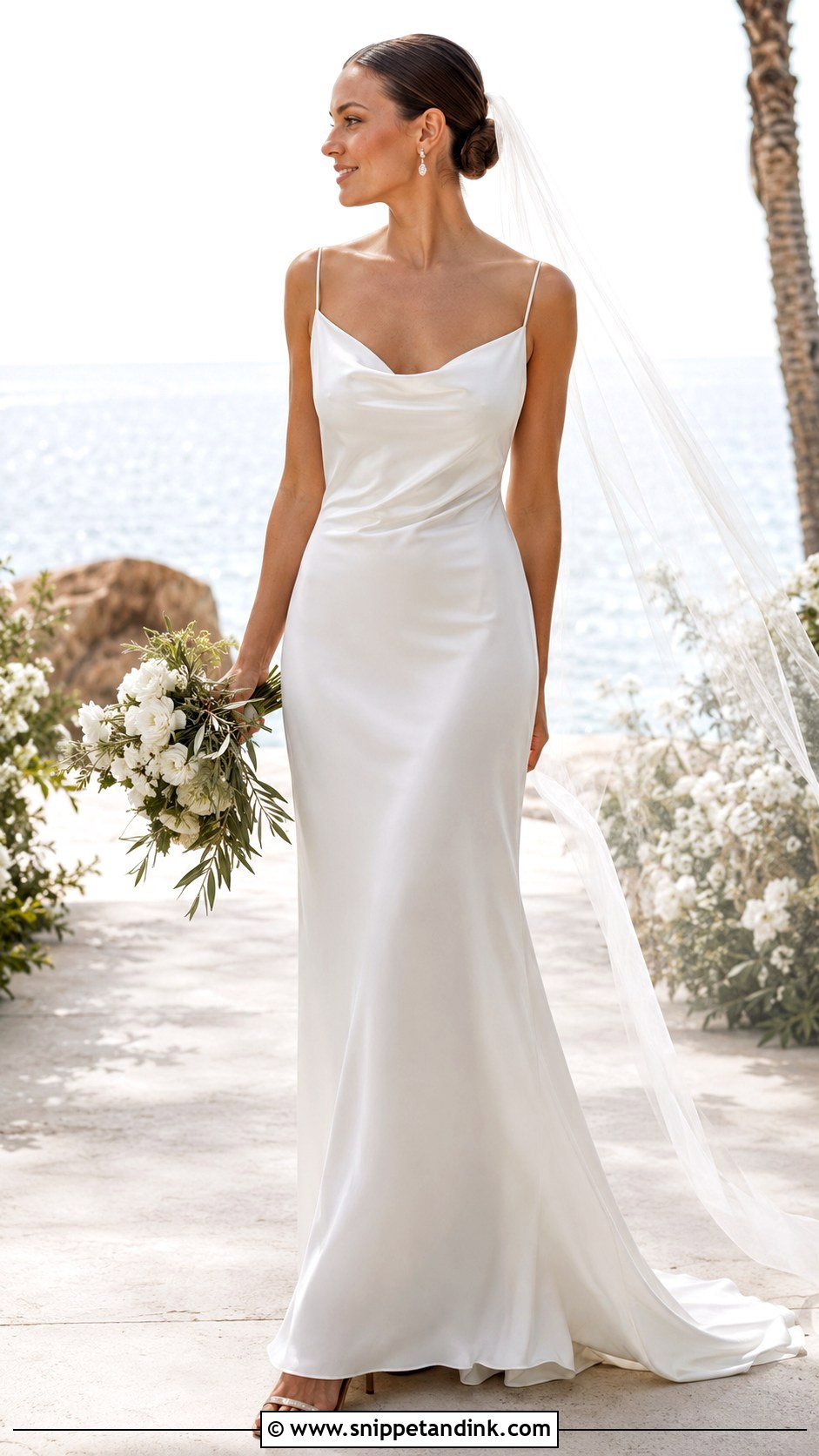
Bias-cut silk is what gives a slip dress its pour. Cut on the diagonal, the fabric stretches slightly and follows the body, which is lovely when you move and unforgiving when you stand still under bright light. Pick the neckline by support: a soft cowl or a straight neck on narrow straps. Leather sandals, small diamond or crystal studs, and a barely-there veil. A neat bun or smooth waves. A sheer wrap or silk shawl covers the shoulders if needed. I always have brides check their line-free underwear in daylight and indoor light, because silk shows every line. Summer and coastal ceremonies suit it.
4. Square Neck Column Bridal Dress
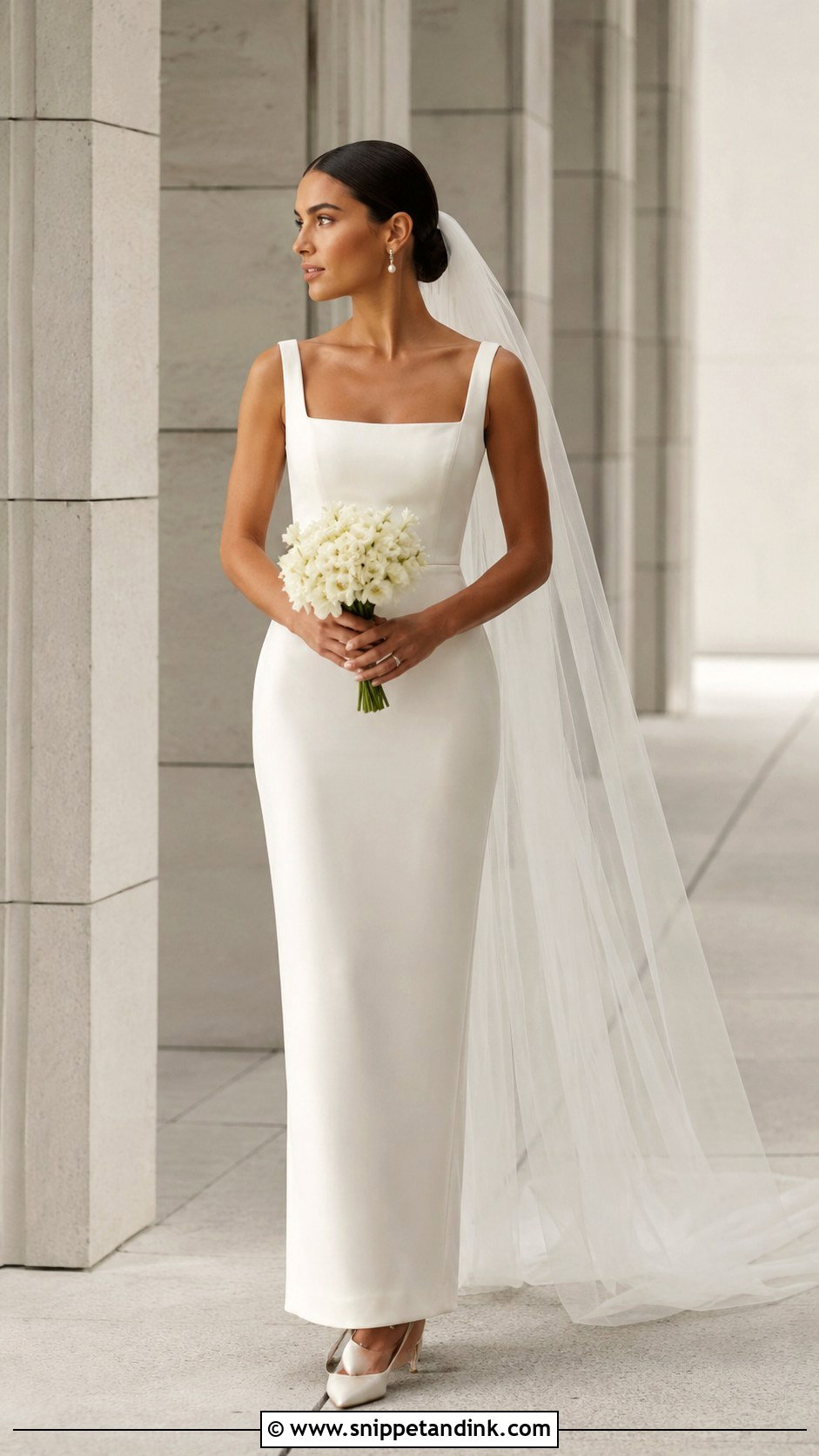
Square neck plus column: a fresh, graphic combination. The neckline frames the collarbones and the narrow skirt draws one long line down to the hem. Wide straps beat spaghetti straps for support and balance a fuller bust. Matte crepe or substantial satin. Pearl earrings, slingbacks and a compact bouquet. A center-parted low bun and a long plain veil to soften the straight lines. The square edge should sit flat when you sit down; if it bows forward, the bodice needs taking in at the side seams, which I’d check before the final fitting.
5. Strapless Mikado Bridal Dress
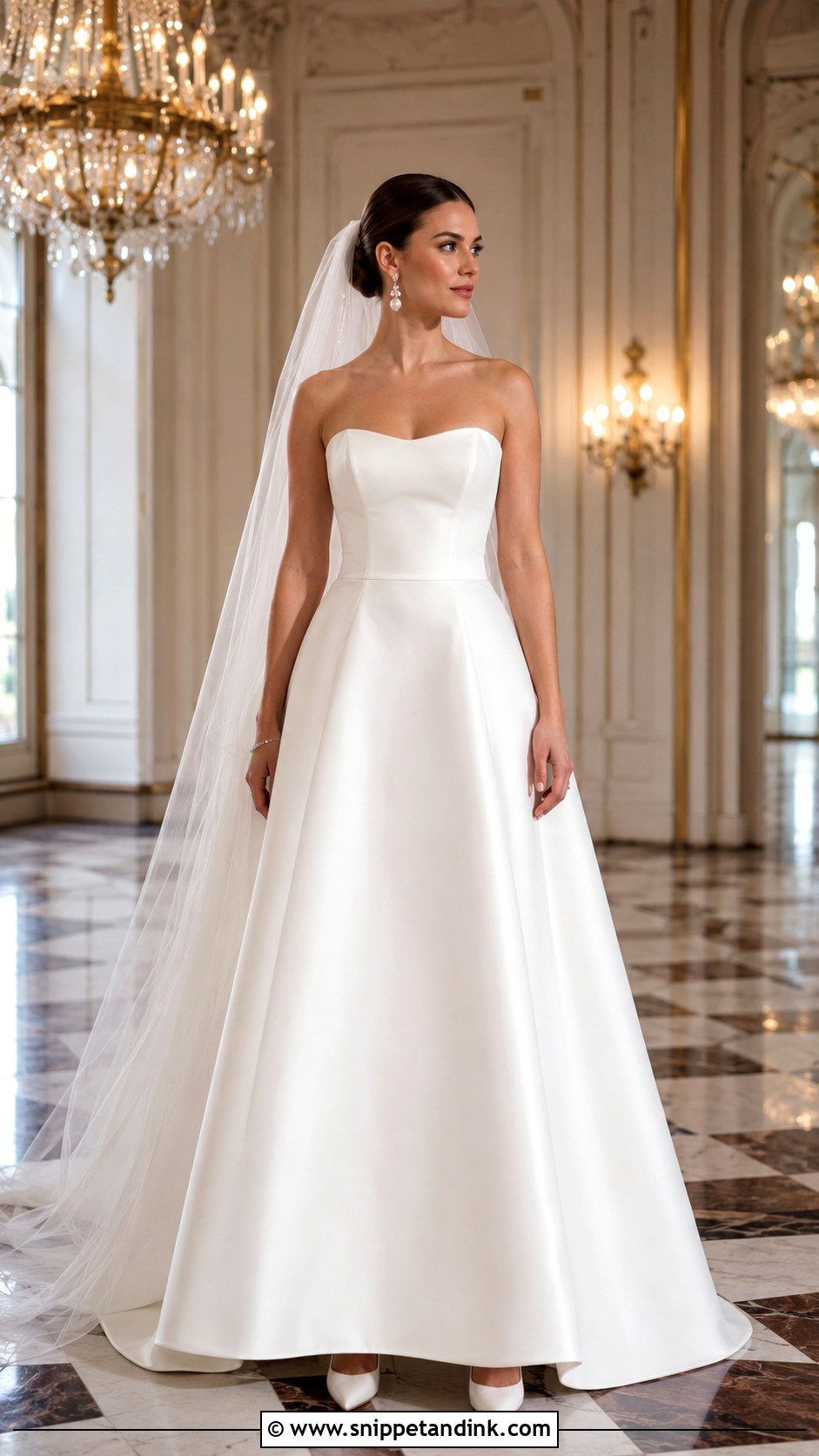
Mikado has body. It holds an A-line or gentle flare without help, so a strapless dress needs nothing else: no lace, no crystals. A boned bodice with a straight or softly curved neckline. Satin pumps, sculptural pearl earrings and a long sheer veil with a raw edge. A polished updo shows the shoulders. Bring a satin wrap for cool moments outdoors. Strapless bodices are where I’m strictest at fittings: lift your arms, sit, and take several deep breaths. It should stay put without digging in.
6. Long Sleeve Crepe Bridal Dress
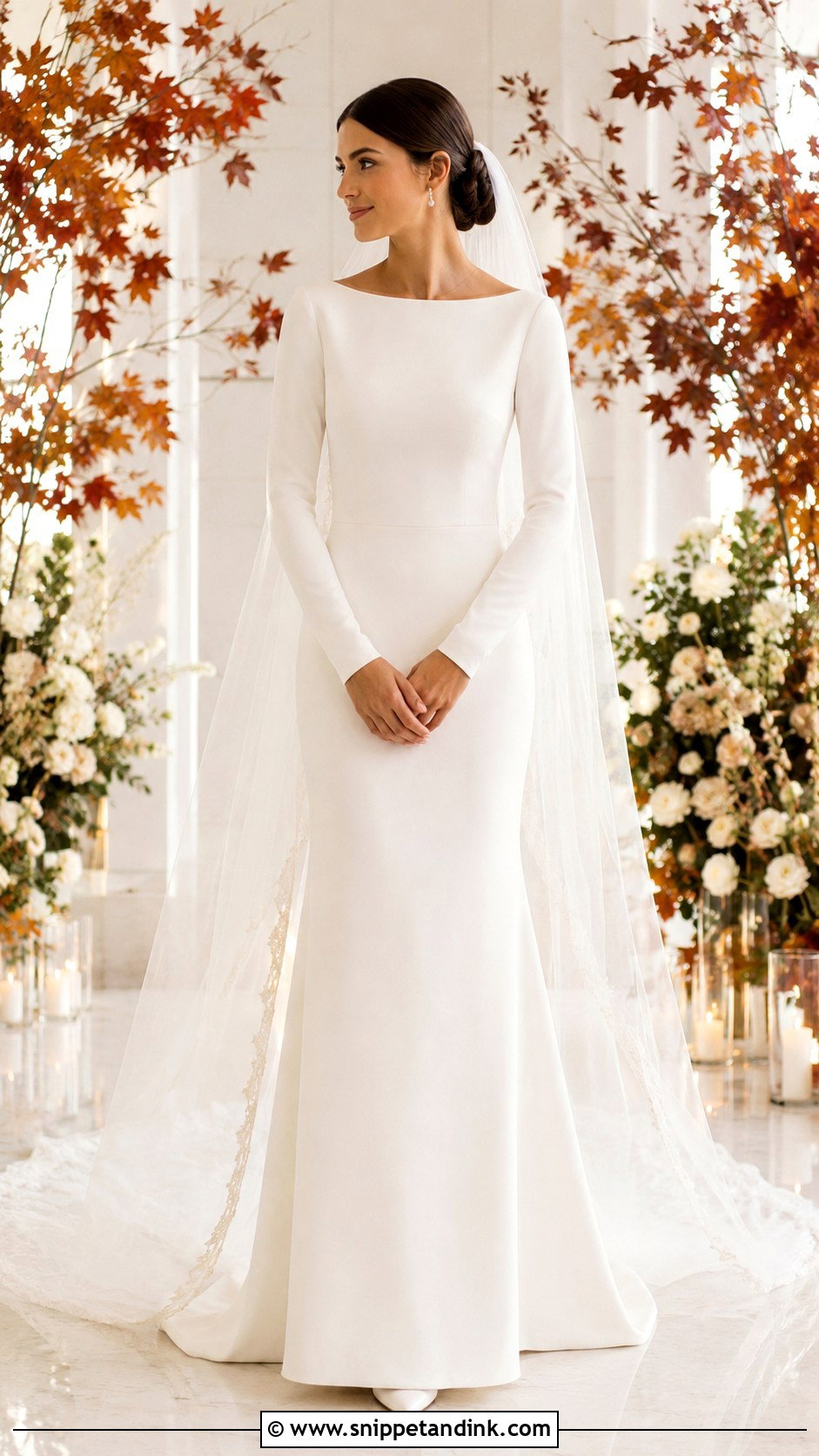
Long sleeves in crepe give coverage and a clean outline. Look for fitted sleeves, a defined waist and a softly flared skirt that lets you walk. A bateau, square or modest V neckline keeps all that coverage from feeling heavy. Pointed heels, small earrings and a low chignon, with a plain cathedral veil or, for something quieter, a silk bow in the hair. Fall and winter are the obvious seasons, though breathable stretch crepe handles mild weather. The sleeve lining is what I test: it needs some stretch at the elbow, or you won’t be able to lift a glass for the toast without the sleeve pulling.
7. High Neck Satin Bridal Dress
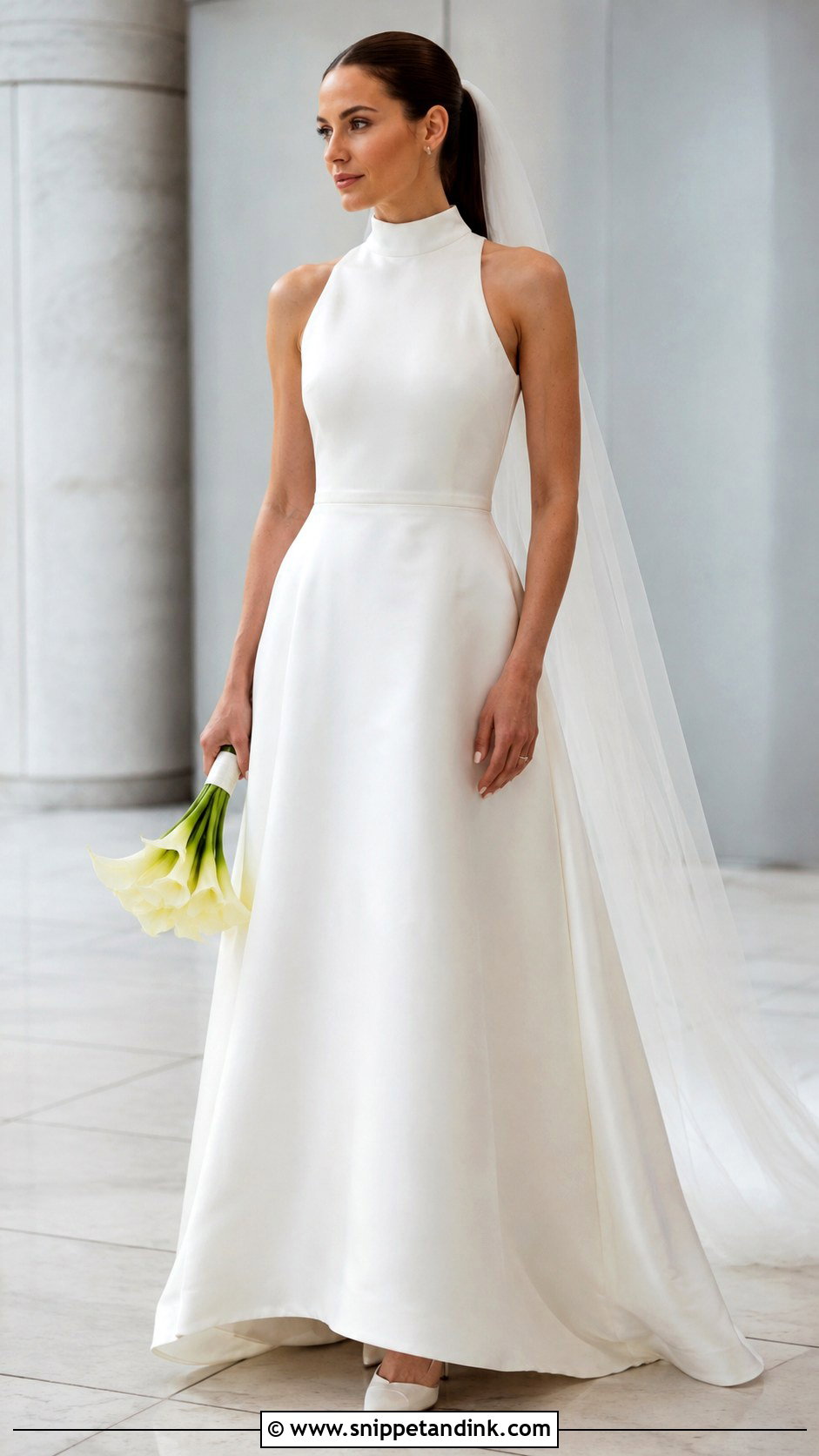
High neck satin is modest and quietly fashion-forward. A column or gentle A-line keeps the covered neckline balanced. Sleeveless shows the shoulders; cap or long sleeves add coverage. Sleek pumps, small studs and a low bun or high ponytail. No necklace. A narrow bouquet and a plain floor-length veil. Satin creases in a garment bag, so plan for steaming at the venue, not at home. At fittings, look down and turn your head: the collar should lie flat without rubbing your throat or riding up.
8. One Shoulder Column Bridal Dress
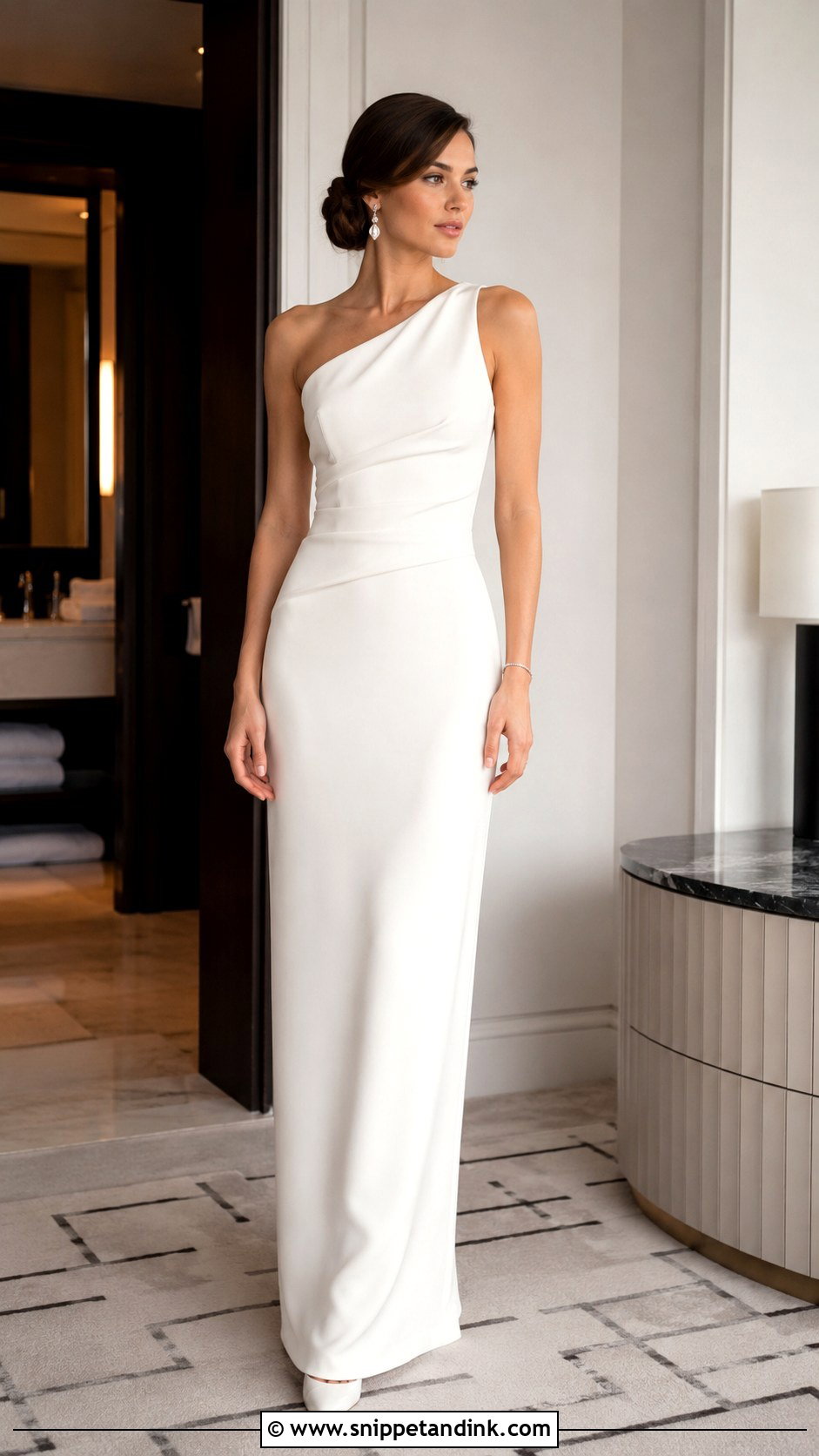
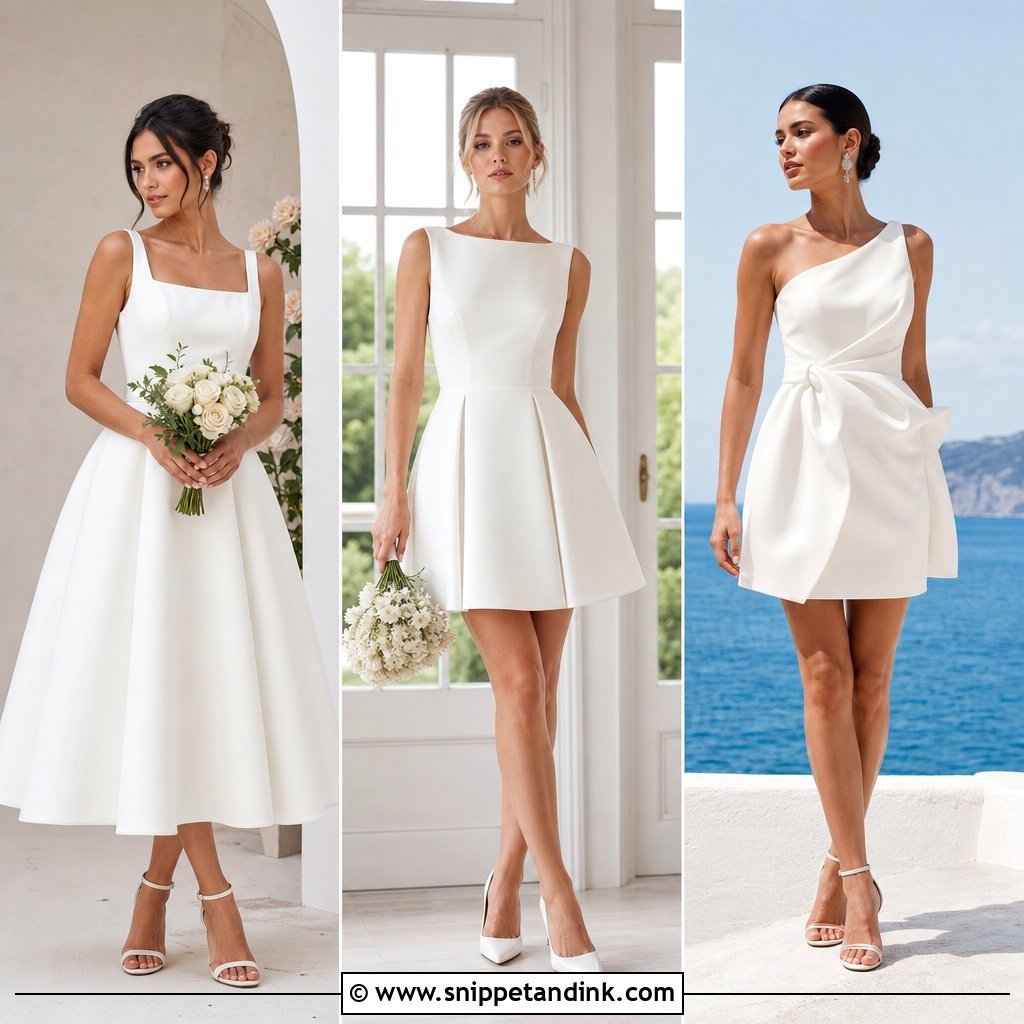
One bare shoulder is enough decoration on a plain column. Crepe, satin or cady keeps it modern. For the simplest result, choose a shoulder that lies close to the body rather than a big ruffle. Fine drop earrings, a slim metallic bracelet and pointed ivory heels. A low side-parted bun on the opposite side to the strap. A short veil or a detachable train adds bridal character without fighting the bodice. Reach across your body at fittings; a single strap should feel secure without pulling across the chest.
9. Off Shoulder A-Line Bridal Dress
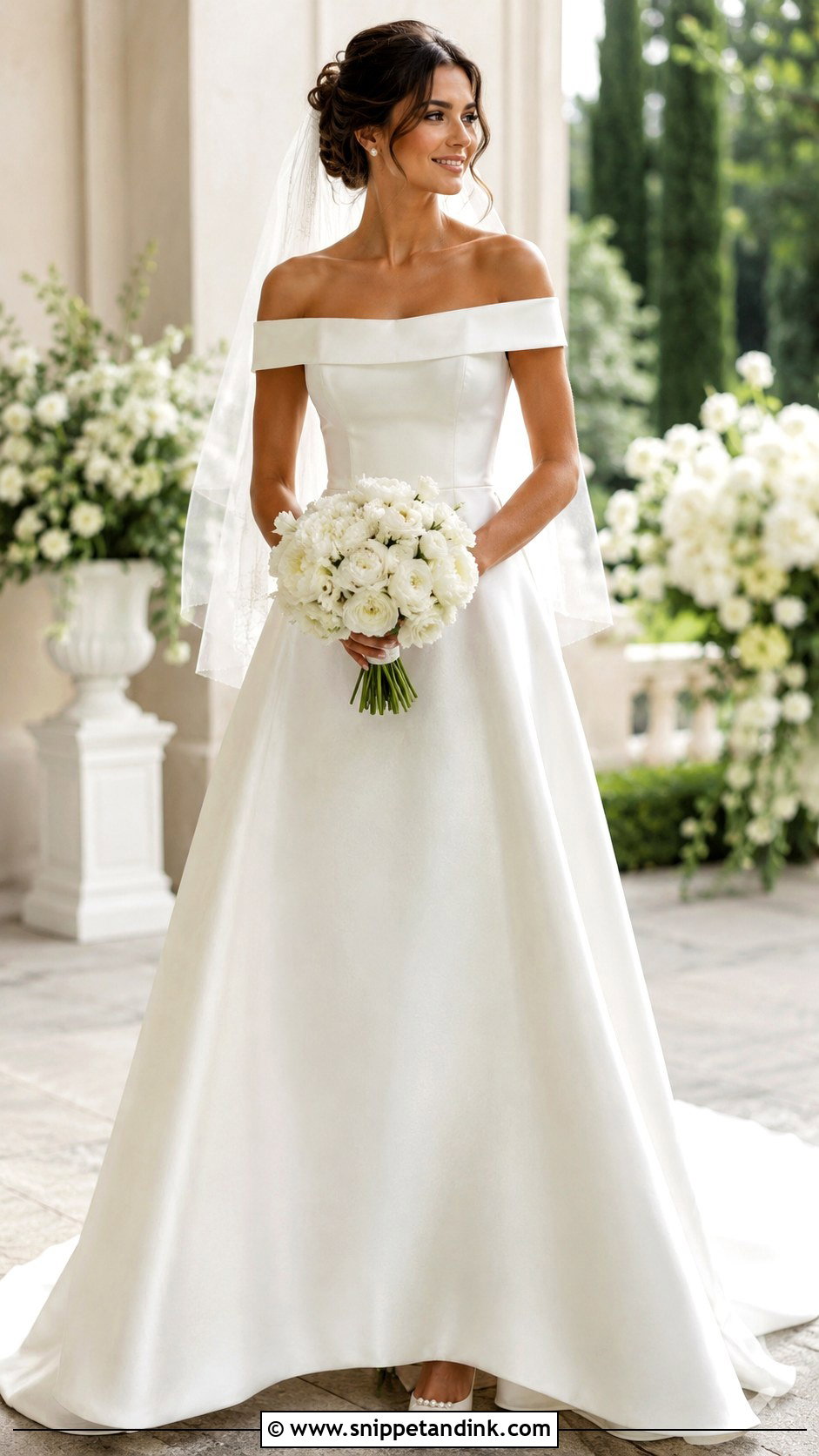
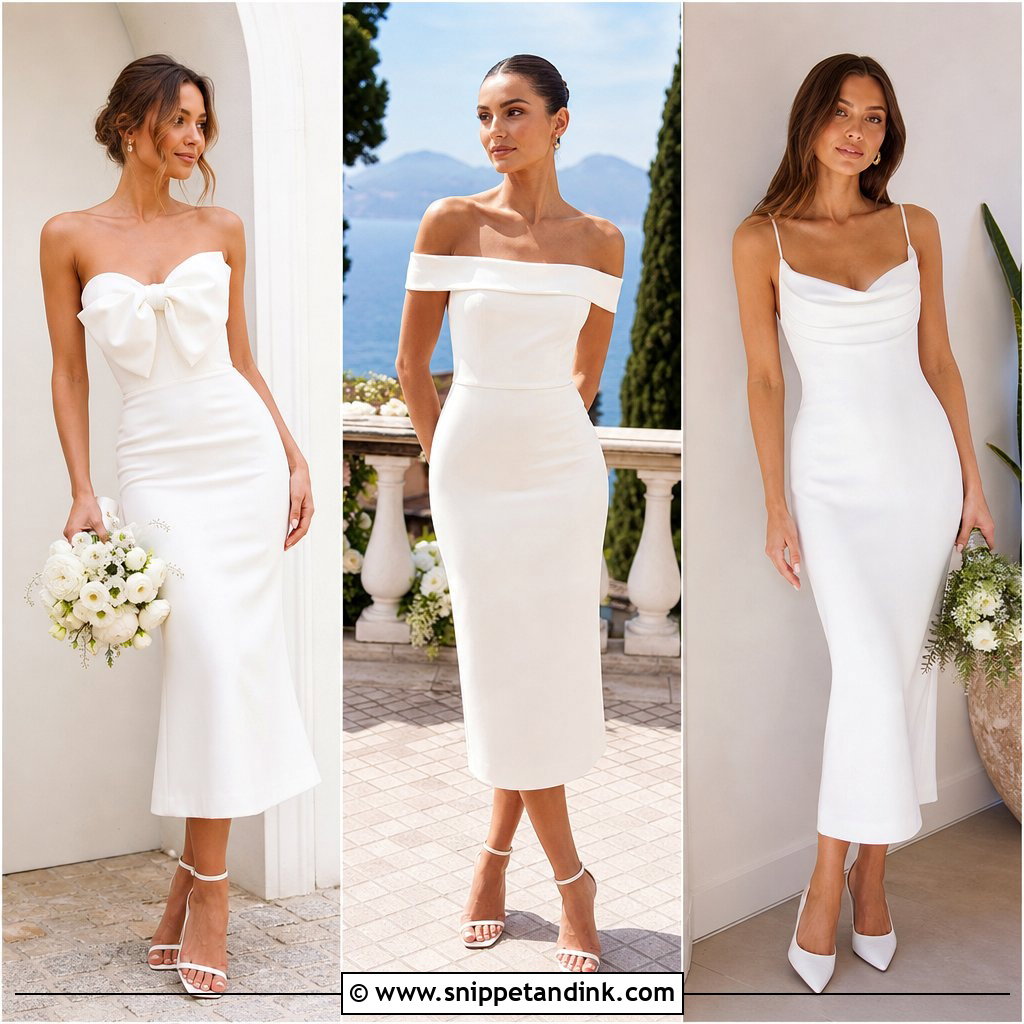
Off-shoulder A-lines combine soft shoulders with a shape most bodies can wear, since the neckline shows the collarbones and the skirt falls away from the hips. A folded satin neckline or smooth crepe band has to sit firmly on the upper arms. My test is simple: hug someone. If the band climbs toward your neck, it needs gripper elastic or a firmer anchor. Pearl studs, pointed pumps and a fingertip veil. A soft updo keeps hair off the band. A round bouquet of white flowers. Practice lifting your arms and sitting during alterations.
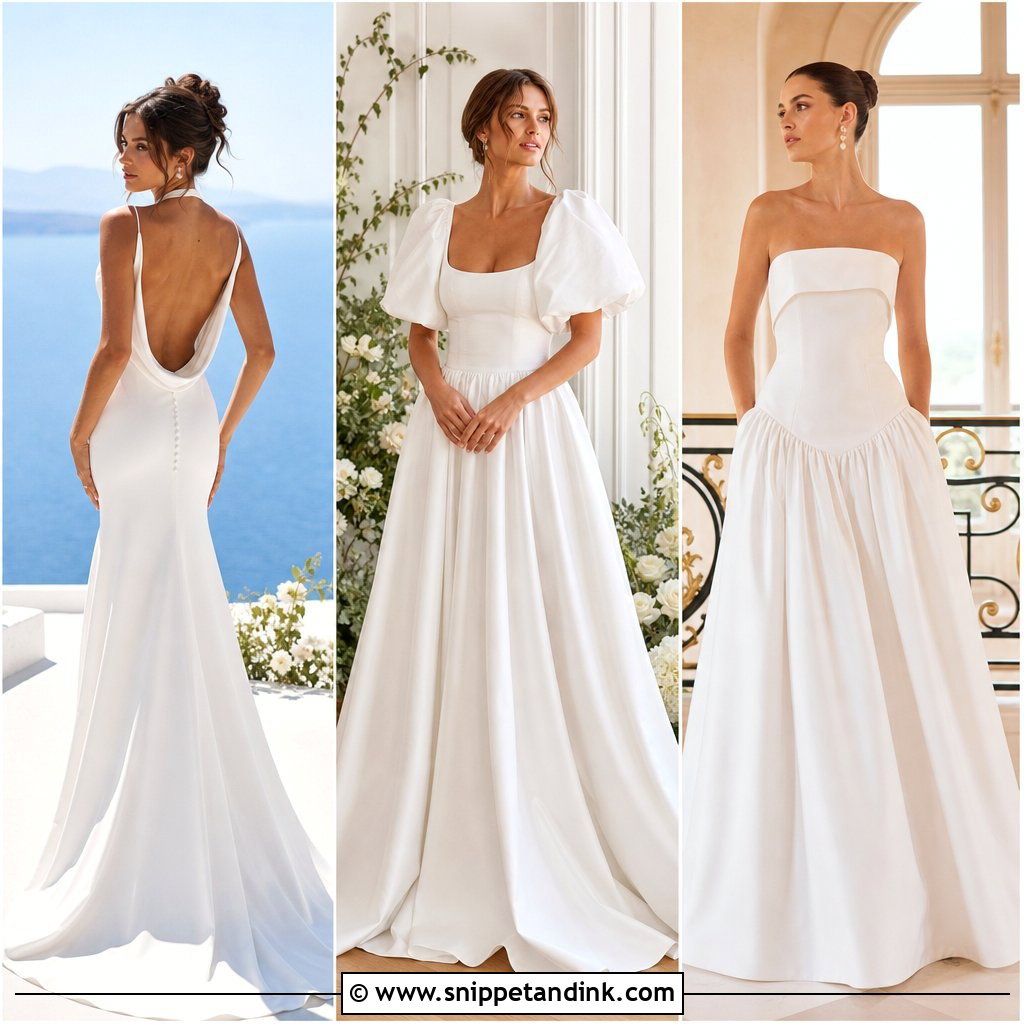
10. Cowl Neck Slip Bridal Dress
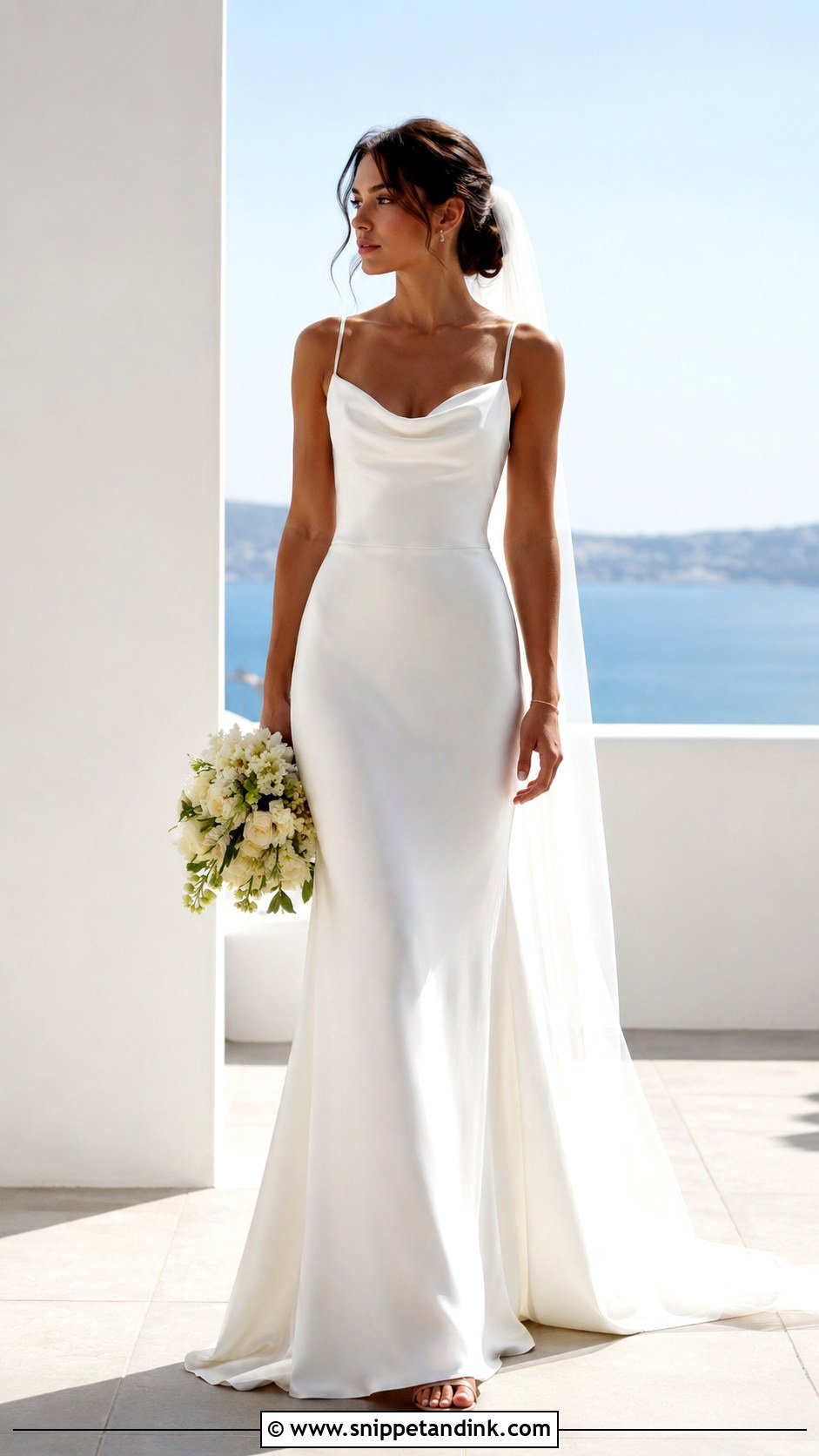
A cowl neck softens a minimal slip. Silk satin with enough weight falls smoothly at the chest and hips; very light satin sags and shows everything underneath. A bias-cut skirt keeps the line narrow and fluid. Barely-there sandals, quiet earrings and a fine bracelet. A softly gathered bun or loose polished waves. A long sheer veil for the ceremony, off for the reception. Cowls rarely offer support, so ask a tailor about sewn-in cups, and tack the drape inside so it doesn’t fall lower each time you bend. No bulky necklaces.
11. Halter Neck Bridal Dress
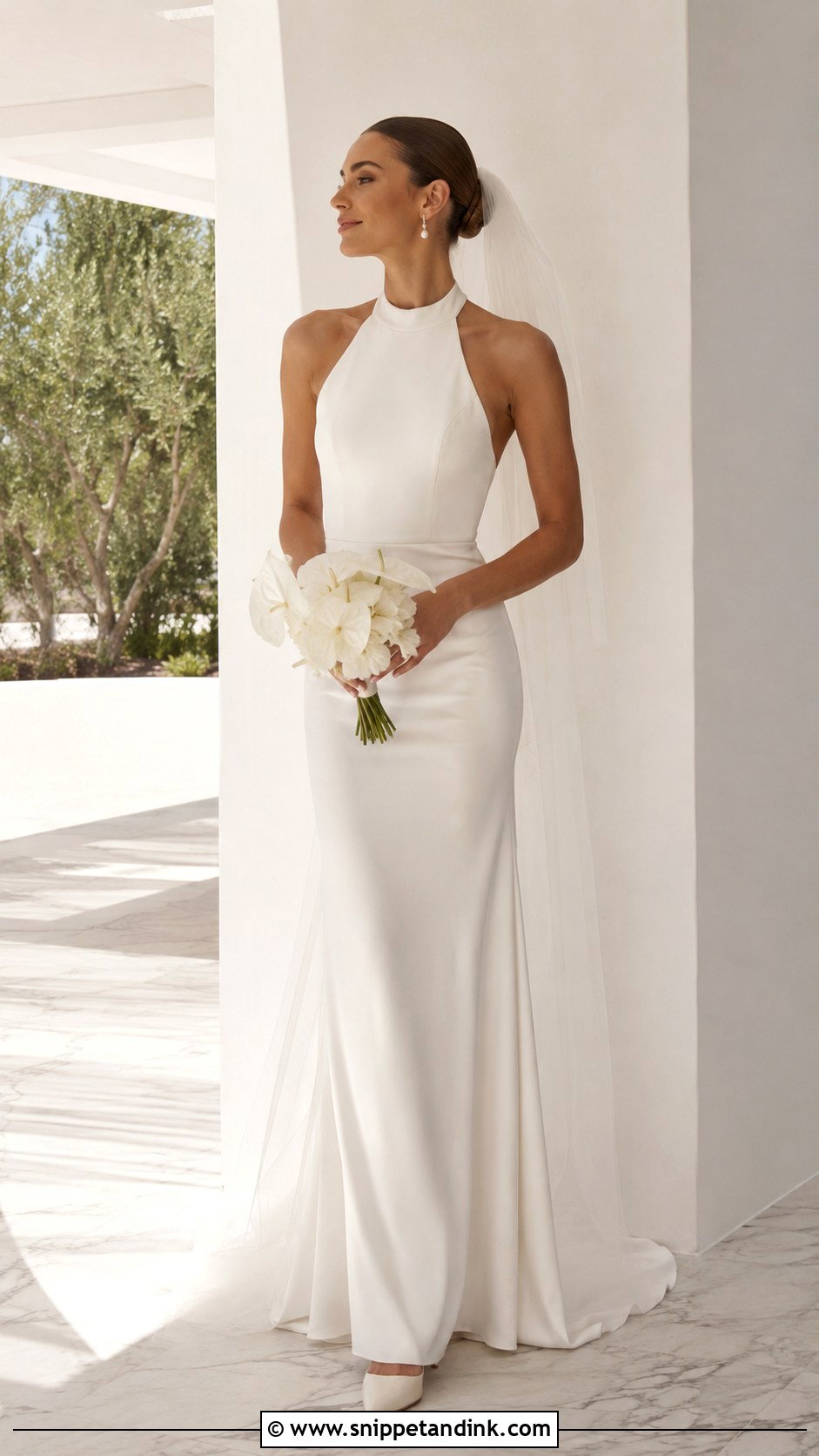
A halter neck gown frames the shoulders and looks confident. A high halter covers more; a draped one feels relaxed. Column, sheath or understated A-line all work. Drop earrings, a sleek bun and pointed heels; no necklace. A plain veil pinned beneath the bun runs cleanly down the back. Halters suit warm weather, but they hang from the neck, and by evening that pressure is real. I make sure the bodice has its own support so the halter straps aren’t holding up the whole dress.
12. Tea Length Bridal Dress
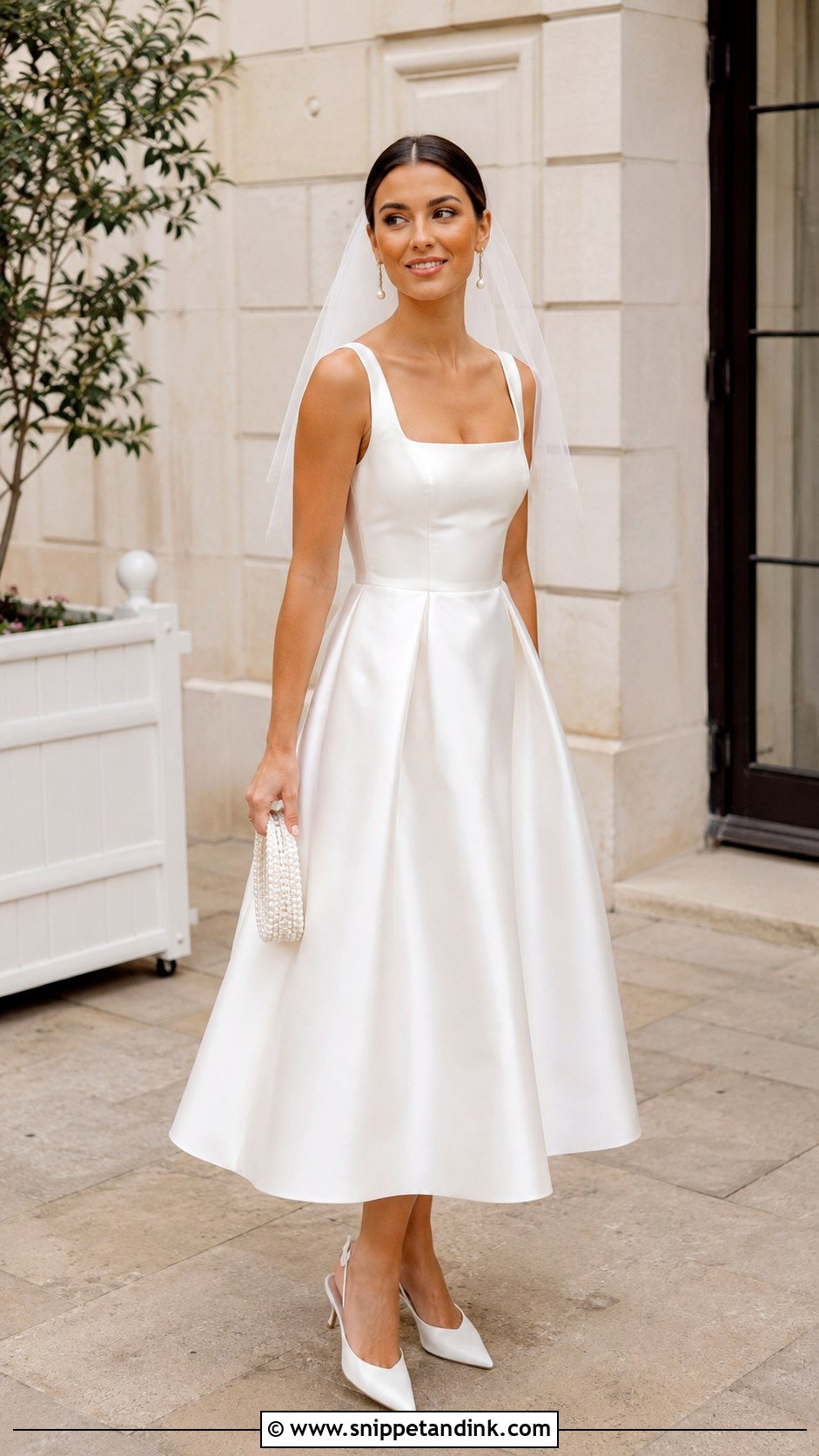
Tea length, between knee and ankle, has a vintage feel and puts your shoes on show. Smooth satin or structured crepe with a fitted bodice and gently full skirt. Pointed slingbacks, pearl earrings and a short veil or hair bow. A small handbag helps at a courthouse or restaurant reception. It walks far more easily than a floor-length gown. The hem placement matters more than people expect: it should end at a slim point of the calf, not the widest part. Have your tailor set it while you stand in your exact wedding shoes.
13. Simple Bridal Mini Dress
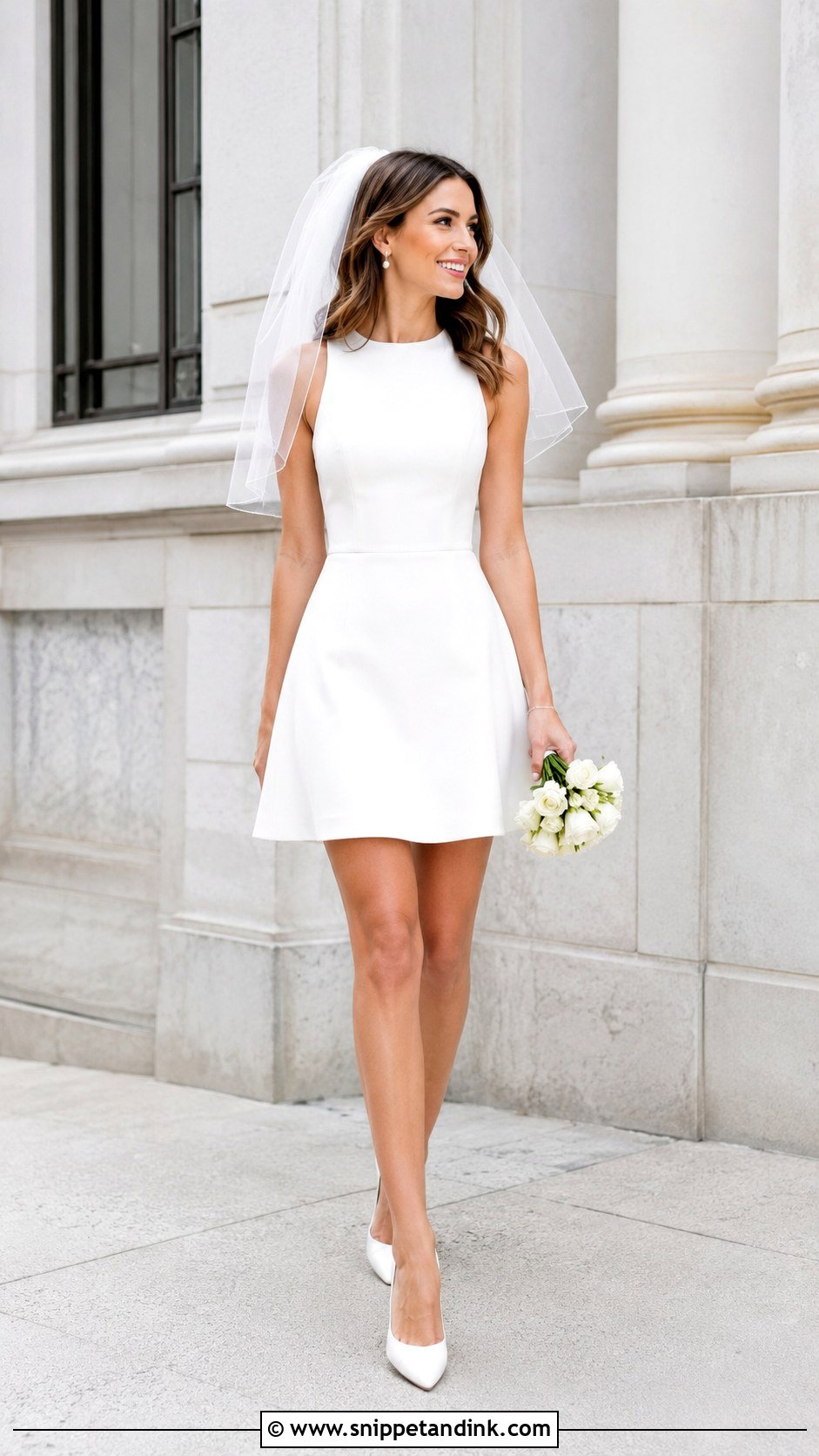
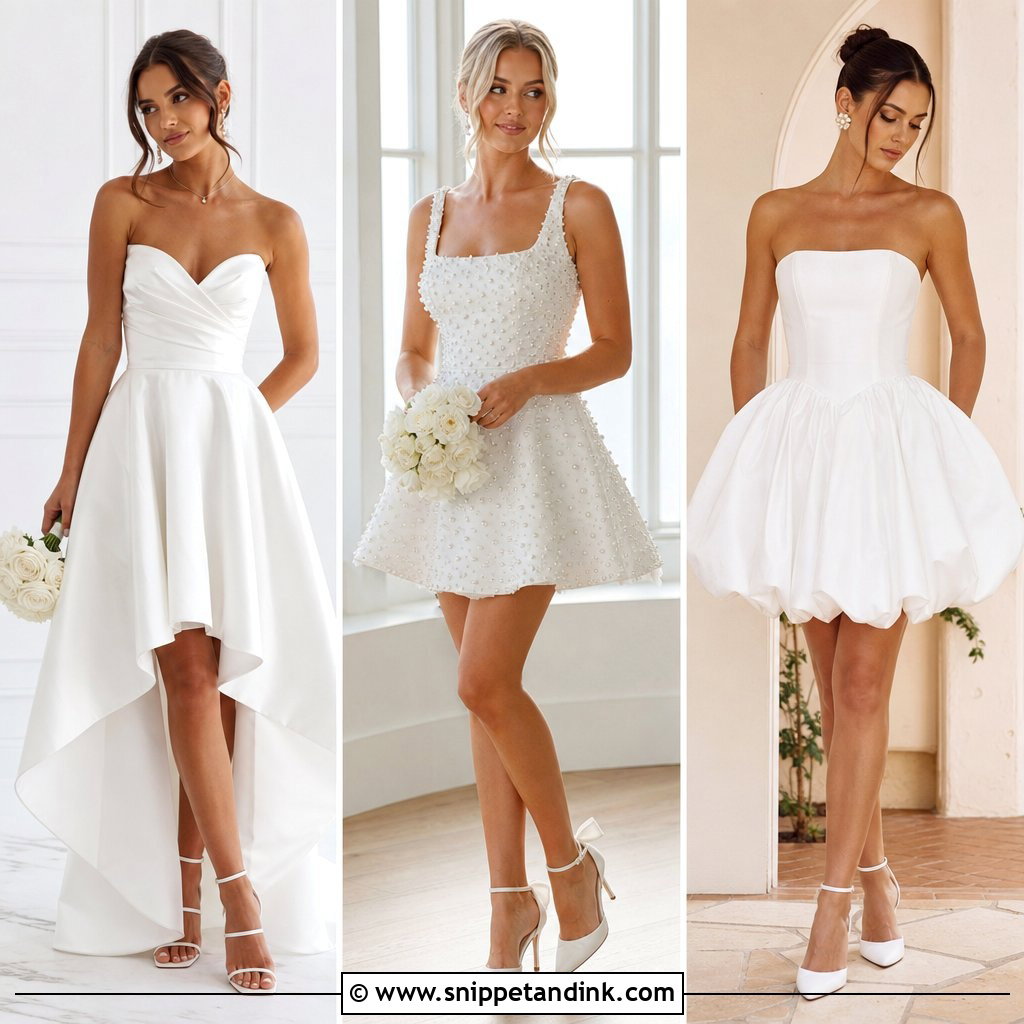
A short dress is light and uncomplicated for a courthouse ceremony, an elopement or a second wedding outfit. A tailored shift, a fitted sheath or a soft flare in satin, crepe or structured faille. A higher neckline balances the hem; square or strapless is bolder. Shoes depend on the walking: pointed pumps, slingbacks or low block heels. Pearl earrings, a small bouquet and a shoulder-length veil make it clearly bridal. Sheer tights and a tailored coat for cool weather. Sit down in front of a mirror before buying; a hem that’s fine standing can ride up a lot when seated.
14. Simple Satin Ball Gown
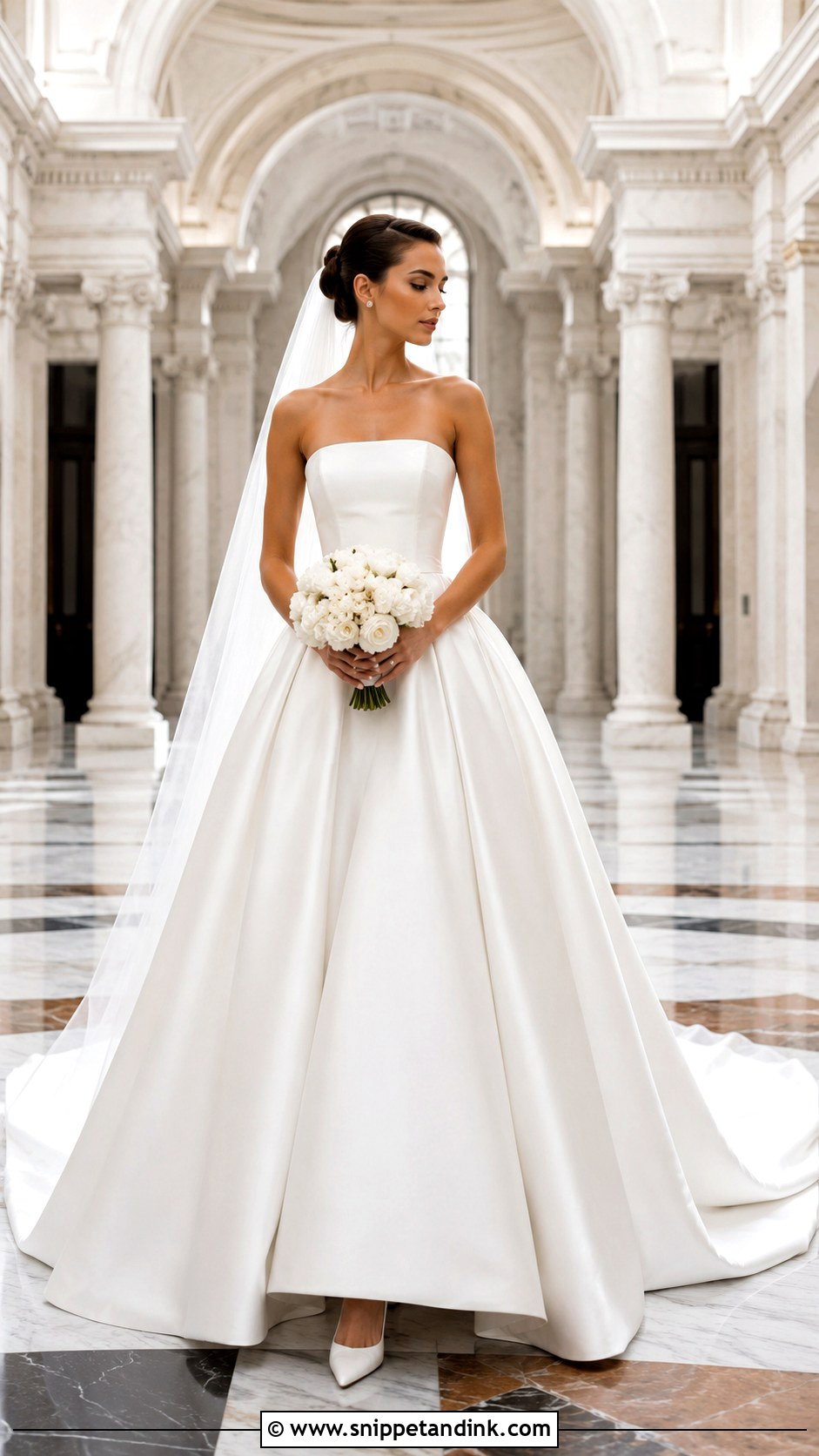
A ball gown can still be simple if shape and fabric do the work. Smooth satin, fitted bodice, defined waist and a full skirt with no lace or heavy beads. Scoop, square or strapless keeps the top clean. Classic pumps, small diamond earrings and a long plain veil. A structured bouquet and a neat updo. Volume like this comes from layers underneath, and lighter internal layers make the skirt much easier to carry around all day. Ask about a bustle early so the train can lift securely for dinner and dancing.
15. Drop Waist Bridal Dress
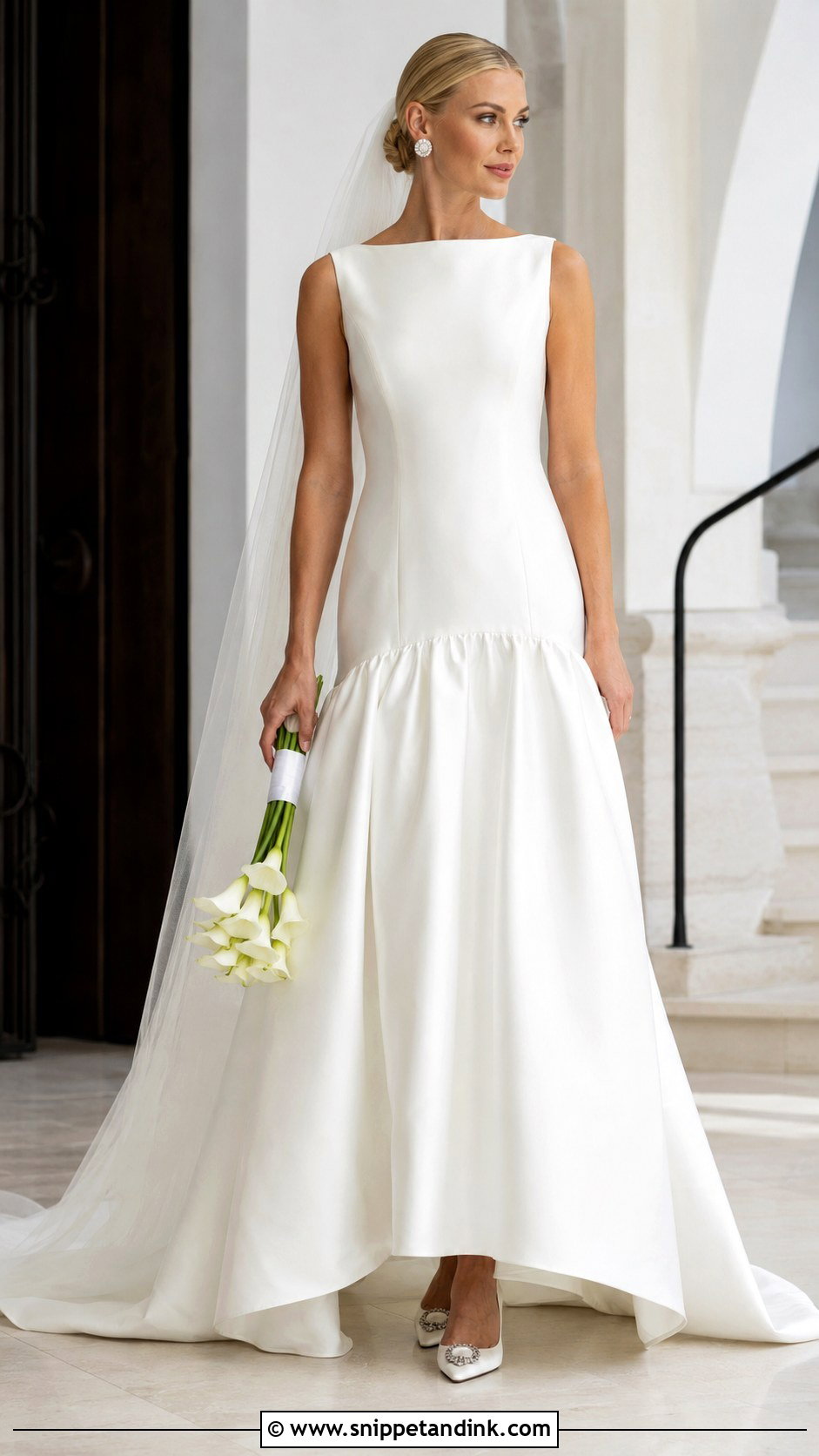
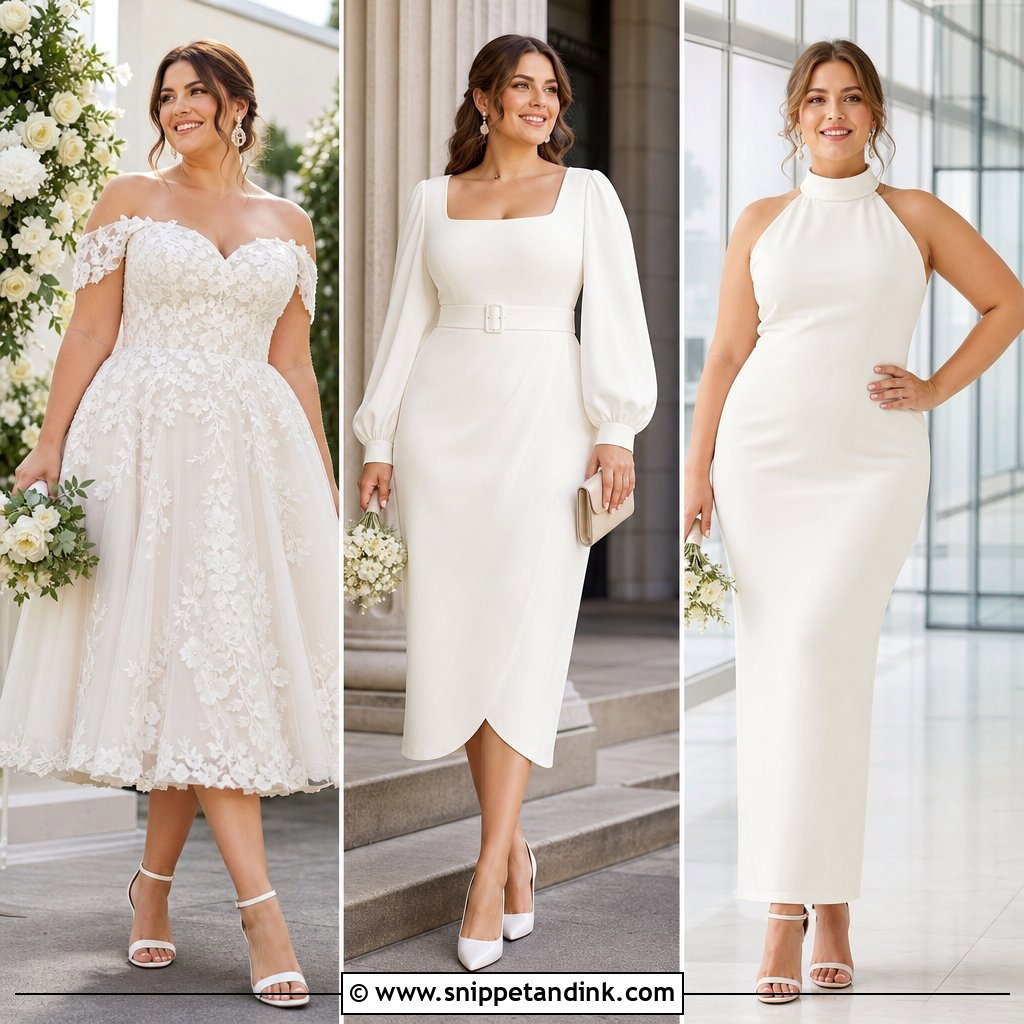
Drop waists lengthen the torso by moving the seam below the natural waist before the skirt opens. Satin, mikado and smooth taffeta hold that shape well. Pointed pumps, bold studs and a plain veil beneath a polished bun. Keep the bouquet narrow so it doesn’t hide the long bodice. This silhouette depends completely on where the seam lands. Petite brides usually look best with a subtle drop, while taller brides can carry a longer bodice, so I always try a couple of seam positions before ordering. A precise fit keeps it from bunching at the hips.
16. Empire Waist Bridal Dress
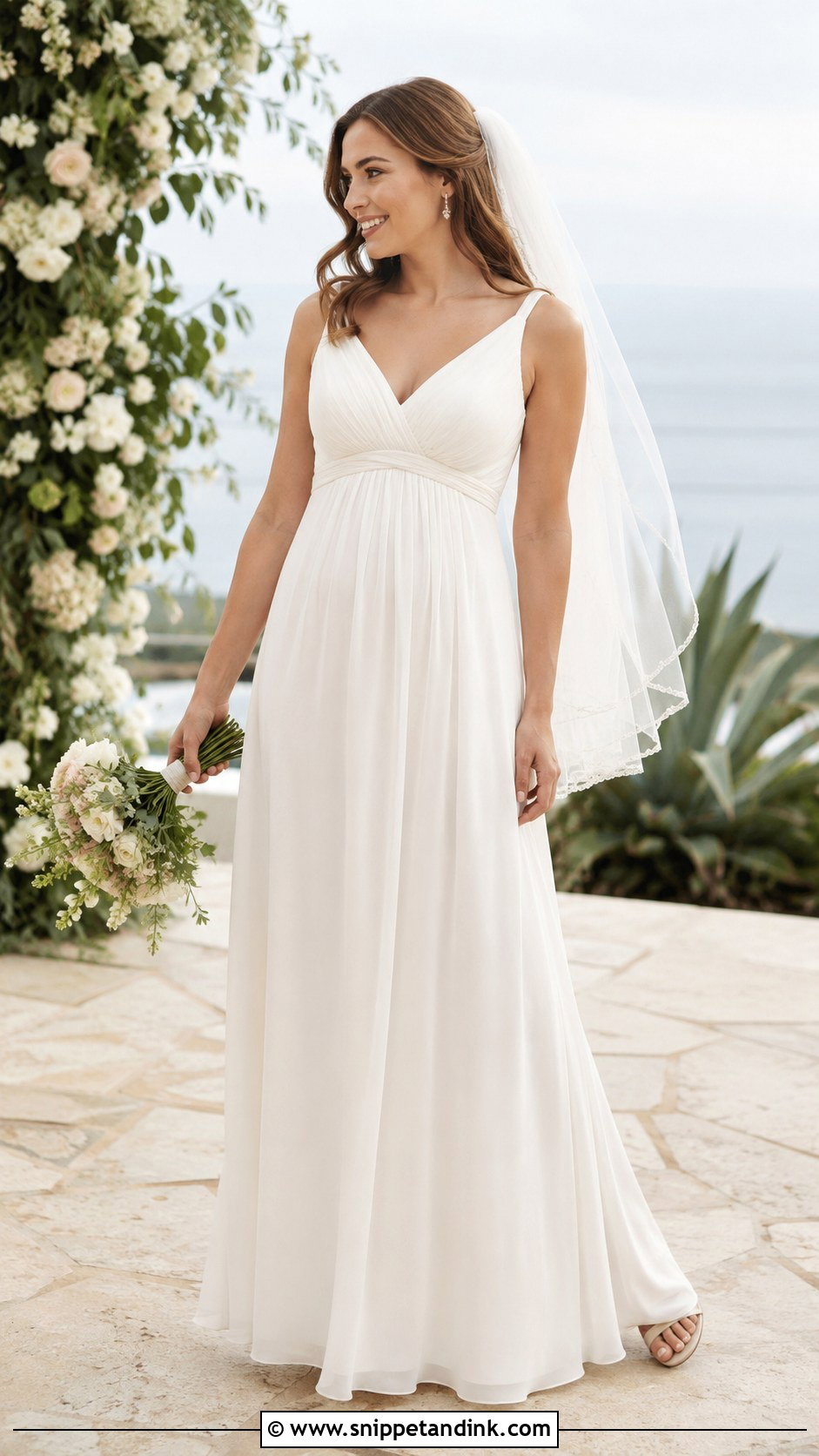
An empire waist bridal dress puts the seam just under the bust and lets the skirt fall loosely, which is why it suits hot weather, pregnancy and anyone who wants to breathe. Matte crepe, silk chiffon or light satin keeps the line clean. Low block heels, fine drop earrings and a fingertip veil; soft waves or a loose bun. A small bouquet with some movement. For a truly minimal look, avoid heavy gathering under the bust. For a pregnant bride, I’d schedule the final fitting as late as the seamstress allows, since the bust and waist can change in the last weeks.
17. Cap Sleeve Bridal Dress
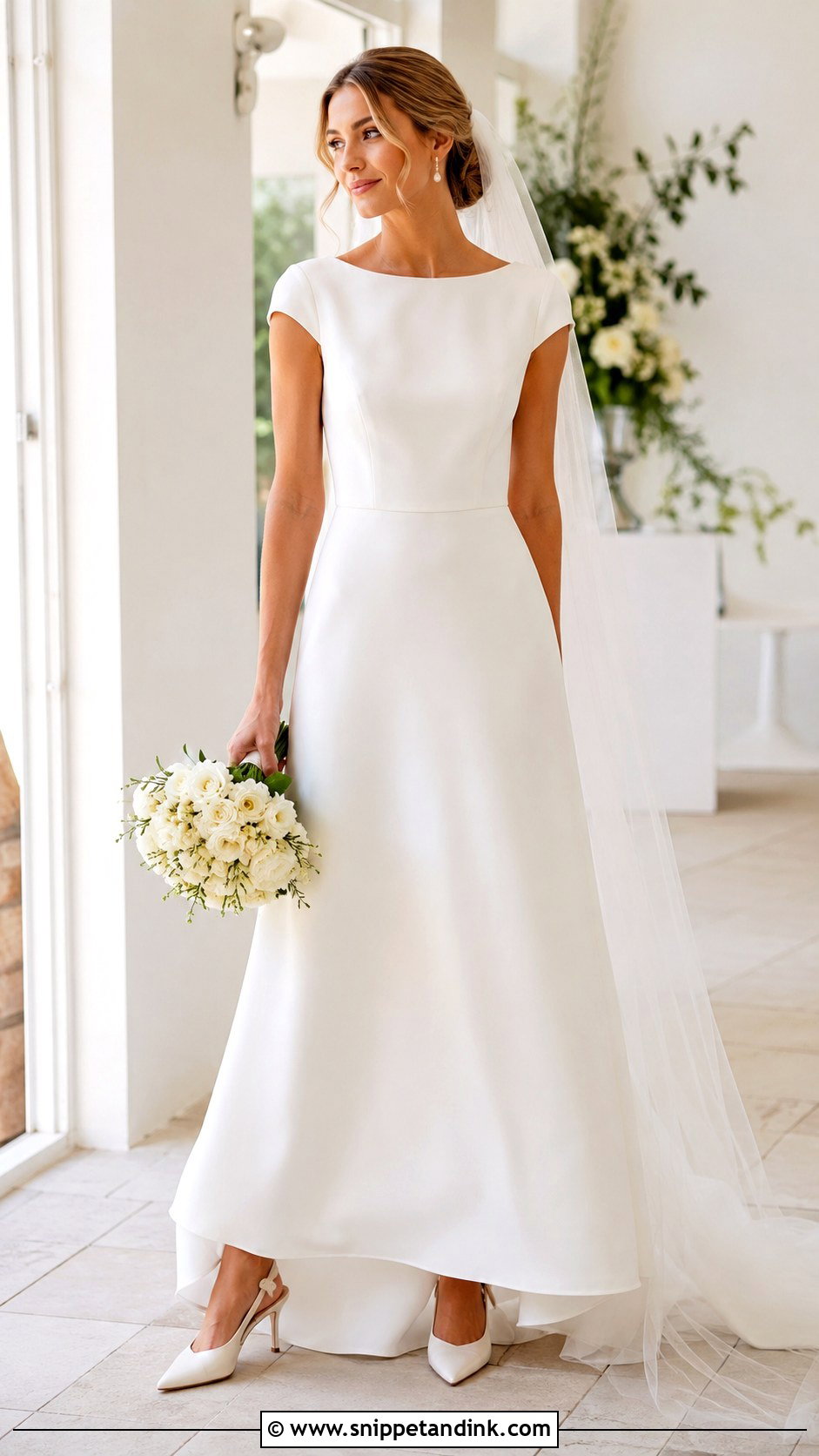
Cap sleeves cover the tops of the shoulders and keep the dress light. A crepe sheath, satin A-line or structured column with sleeves following the natural shoulder line. A bateau or shallow V suits them. Pearl drops, pointed slingbacks and a low twisted bun. A plain floor-length veil or a small comb. Good for spring, summer and indoor weddings. Of all the sleeve types, cap sleeves are the ones that most often cut into the arm when the bride raises it, so raise and lower your arms at every alteration until the edge sits comfortably.
18. Backless Bridal Dress
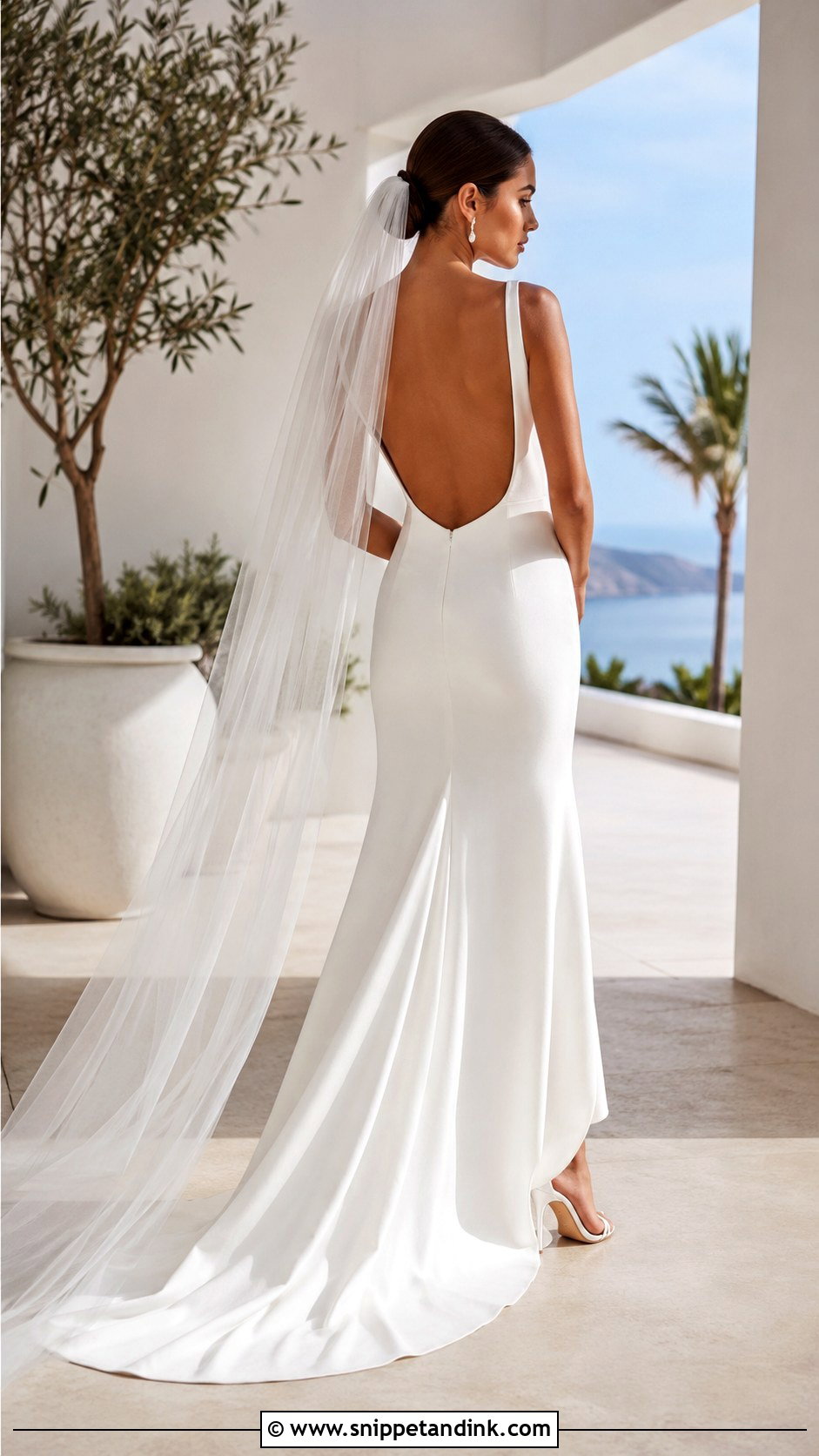
A backless gown keeps the front plain and saves the drama for the back. Silk slip, crepe sheath or satin column, with a scoop, V or draped opening. The front still has to support you, which is the tricky part, so try adhesive cups, sewn-in cups or a low-back undergarment at your first fitting rather than the last. Fine earrings, sleek heels and a low bun that leaves the back visible. A veil pinned beneath the hair frames it without hiding it. Sit, walk and bend before buying to check the neckline stays put.
19. Bridal Dress With Cape
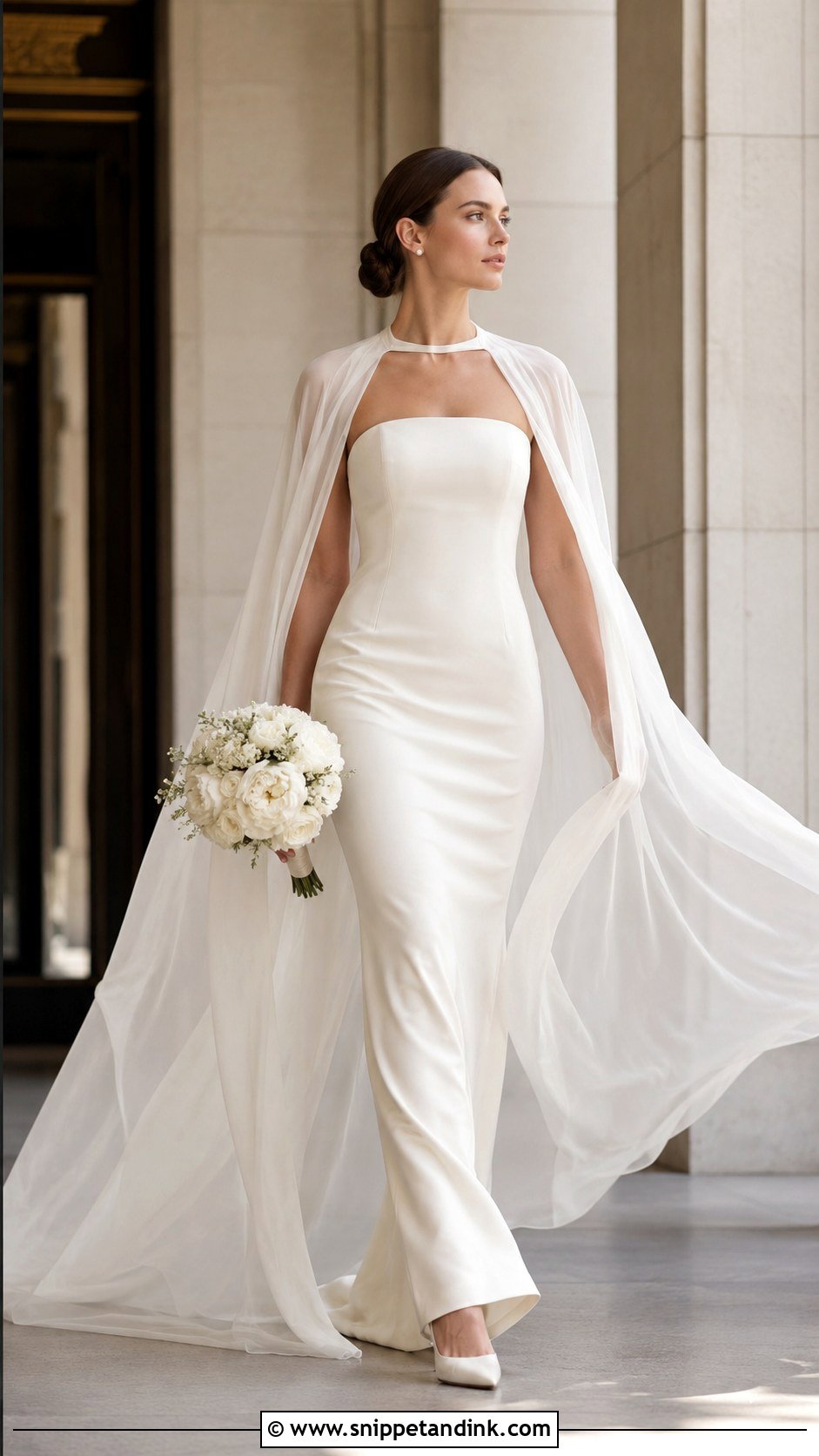
A cape gives a simple dress removable ceremony drama. Start with a strapless column, square-neck sheath or satin A-line, and add a sheer floor-length cape, a structured shoulder cape or a clean crepe one. Pointed pumps, small earrings and a low bun. The cape can stand in for a veil and adds shoulder coverage, then comes off for the reception. Look closely at how it fastens: hooks at the shoulder seams can drag the neckline back, so I test it by having the bride lift her arms and turn around before the hem is set. Fall, winter and city weddings suit it.
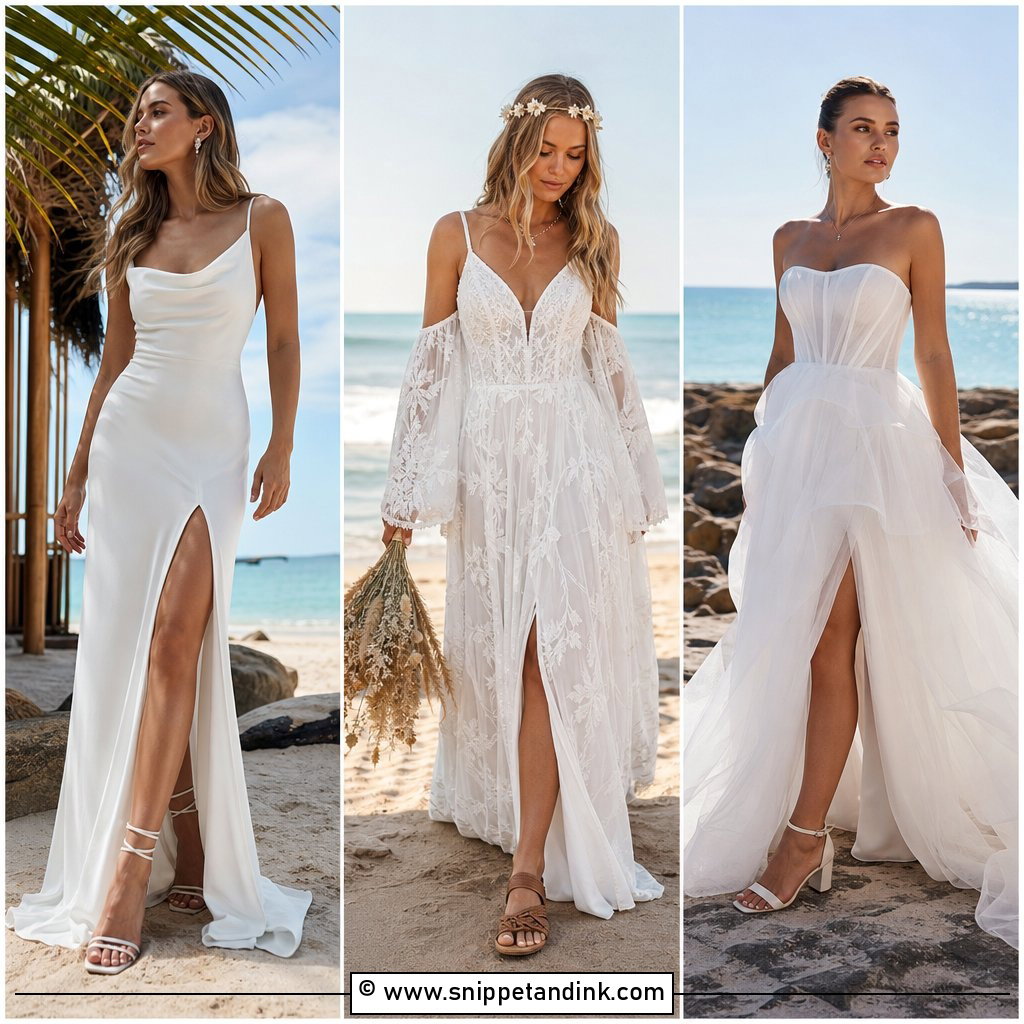
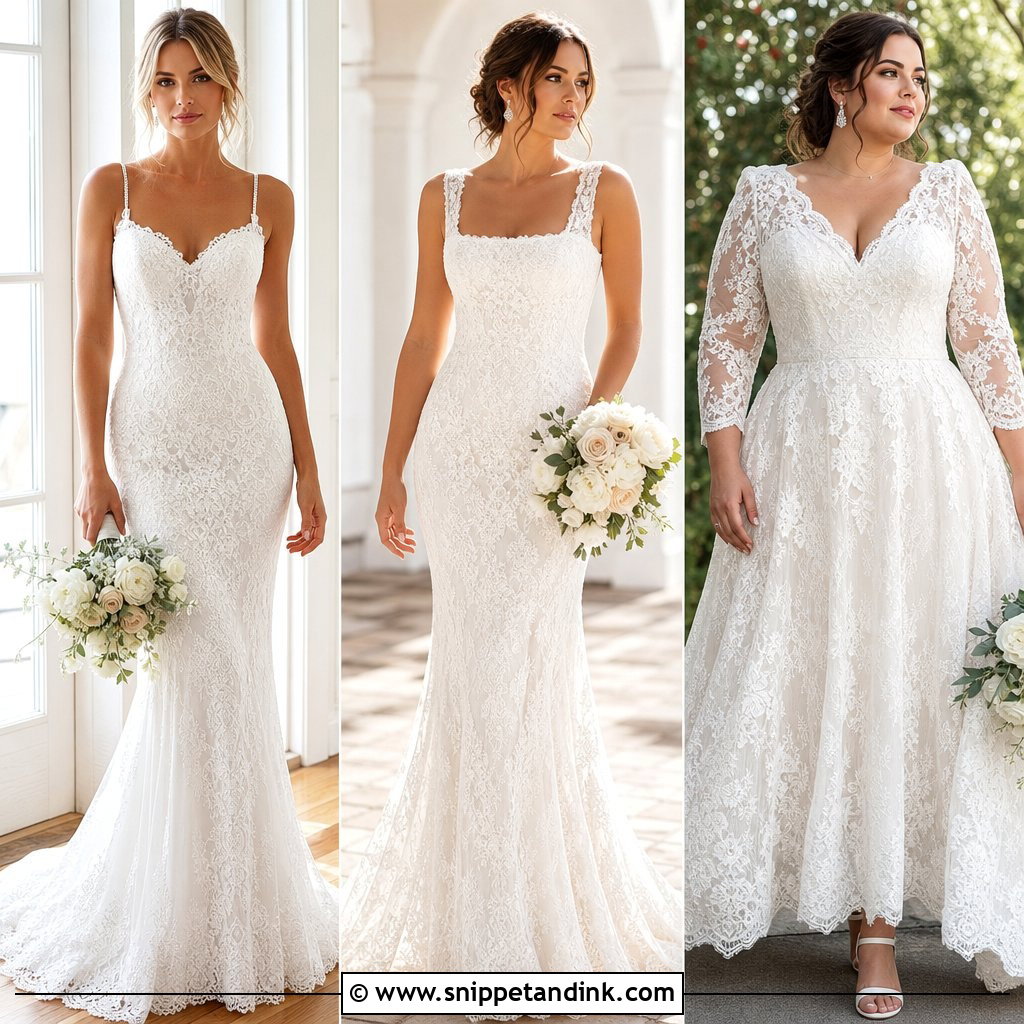
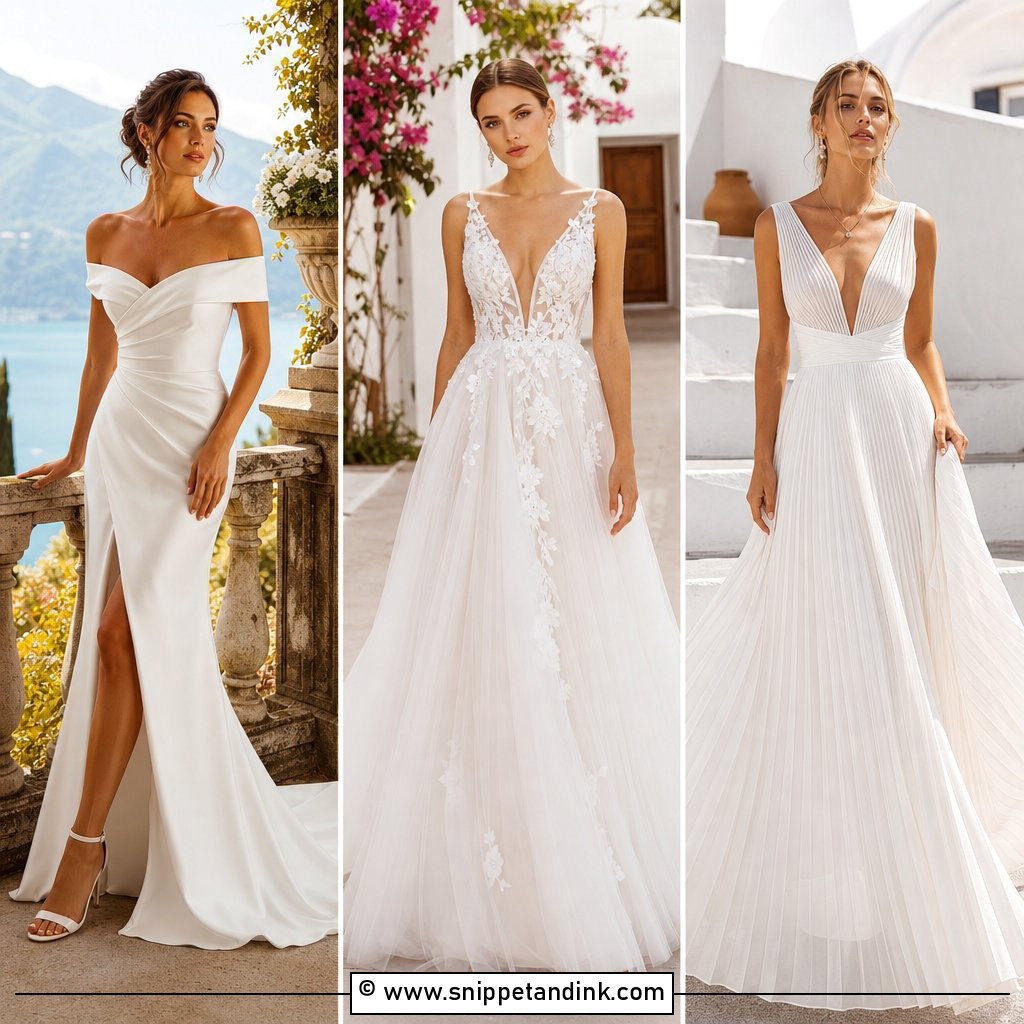
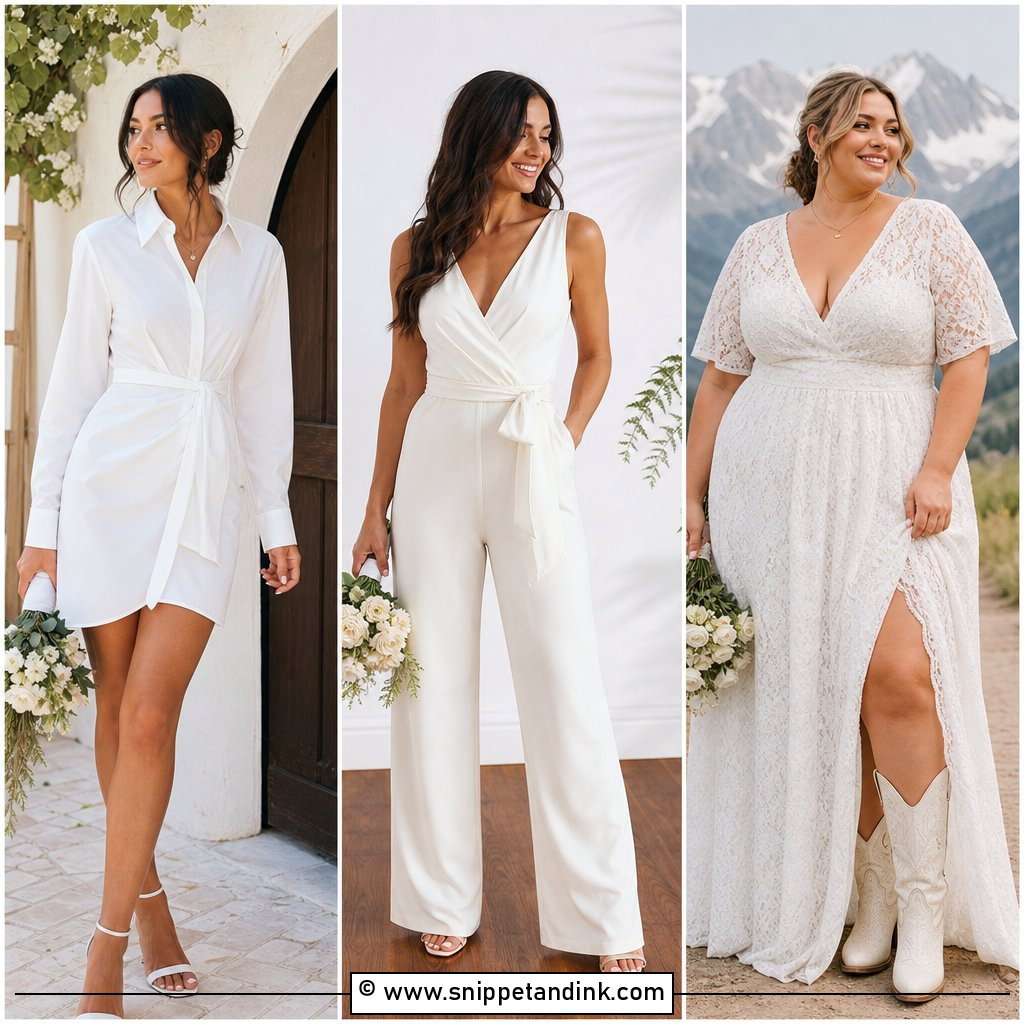

20. Courthouse Midi Bridal Dress
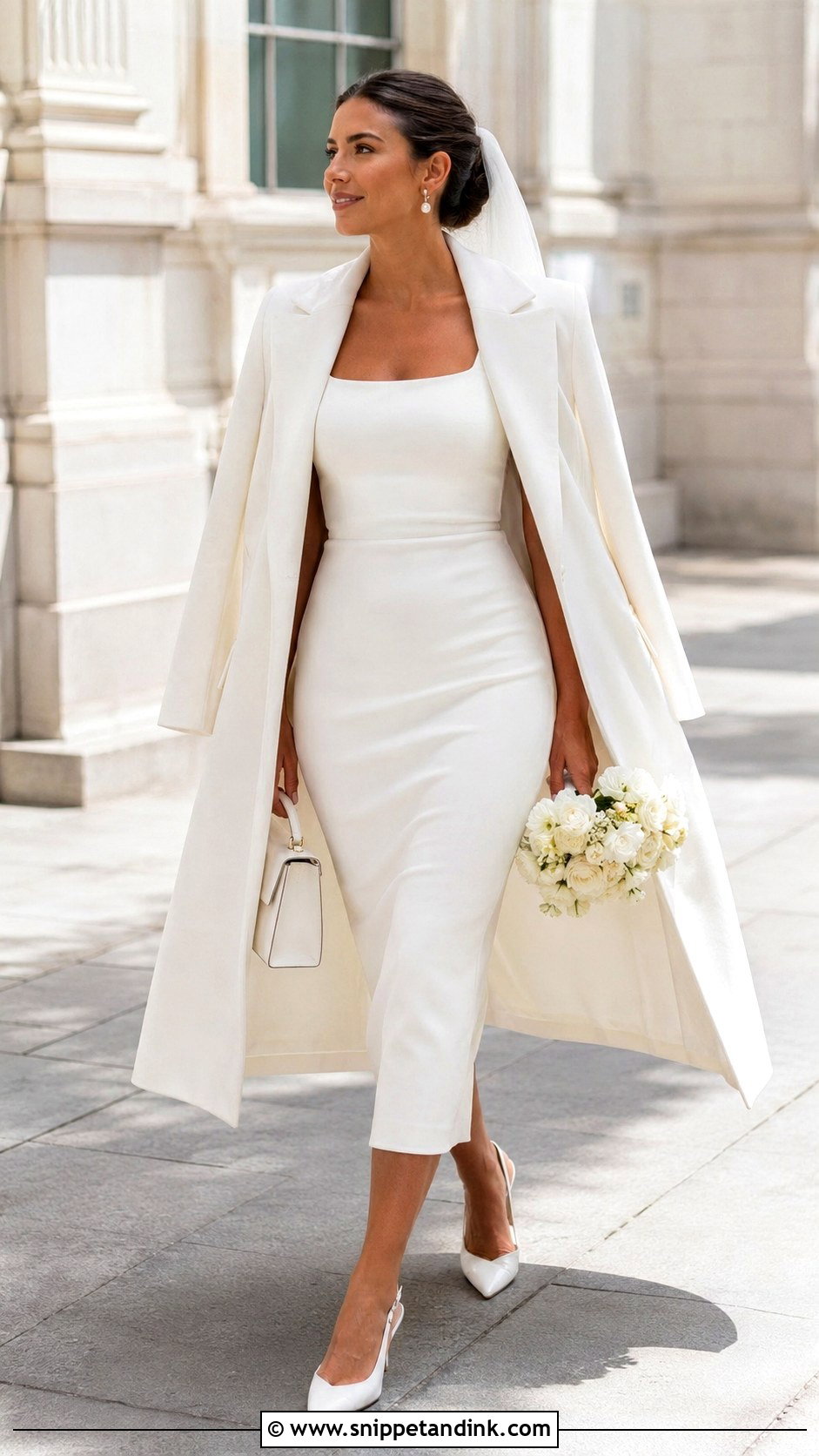
A courthouse midi dress is practical and still feels like an occasion. A tailored crepe sheath, a satin fit-and-flare or a structured square neck falling below the knee. Pointed slingbacks, pearl earrings and a top-handle bag. A short veil, a pillbox-style headpiece or a hair bow says bride. A white blazer or long coat for cool weather. You’ll probably spend time in a car and on city pavement, so pick a fabric that won’t wrinkle badly in transit; linen and thin cotton look tired by the time you reach the clerk’s office. Set the hem with your exact heels.
Off the Rack, Online or Made to Measure?
Simple dresses are easier to find outside the traditional bridal salon, which is good news for budgets and timelines. Each route has a different catch.
Ready-to-wear and off the rack
You can take it home the same week, which suits short engagements. The dress is cut for a standard size, so plan to alter it, and budget for that from the start; with plain fabric, the alterations are what make it look made for you.
Ordering online
Order early enough to return it, and read the return policy before buying, since some bridal pieces are final sale. When it arrives, check the fabric weight and lining in daylight; thin satin can look fine in product photos and feel flimsy in person.
Made to measure
This takes the longest, often several months, though timing varies widely, but it lets you adjust neckline height, strap width and hem from the start. I’d choose this route if your measurements span very different sizes on top and bottom, since a plain sheath or column shows those differences most.
Why Fewer Details Ask for Better Tailoring
A simple dress works when the fit is excellent, the fabric is comfortable, and the styling sounds like you. Silk slip, structured satin, tailored midi or long sleeves: each leaves room for personal details to stand out. Start with a shape that supports your body and suits the venue, then add shoes, jewelry, hair and a veil or cape that work with the dress. Test the whole outfit walking, sitting and moving before the wedding. Good alterations and a few well-chosen accessories are what make a minimal dress look polished from ceremony to last dance.
You'll Like These Ideas:






Leave a Reply