
Piping is having a real comeback on wedding cakes, and I’m glad, because it’s how a plain cake gets detail and texture without looking busy. Clean borders, tiny pearls, soft shells, vertical lines and vintage edges can turn an ordinary tiered cake into a finished piece. A lot of piped designs are also realistic for small weddings, backyard receptions, courthouse celebrations and DIY dessert tables, and they sit happily beside fresh flowers, pearls, satin ribbon or a white-on-white palette. Below are twenty-five full cake looks, from a single shell border up to a restrained Lambeth tier, with the tips and habits I rely on for each.
Which Buttercream Actually Holds a Piped Line?
The frosting decides what piping is possible before anyone picks up a bag. When couples bring me a picture of crisp vintage borders and also ask for a light whipped frosting, I have to explain that the two don’t go together. Here’s how the common ones behave:
- American buttercream (butter and powdered sugar) forms a light crust and holds sharp shells, ridges and Lambeth layers well. It’s sweeter and stiffer.
- Swiss and Italian meringue buttercreams are silkier and less sweet. They pipe clean borders and rosettes but soften faster in warm rooms, so fine detail needs a cool venue.
- Cream cheese frosting tastes great but is too soft for fine piping. I use it for filling or loose swirls only.
- Royal icing is the traditional choice for very fine lace and Lambeth work on fondant. It sets hard, so it isn’t pleasant to eat in thick amounts.
Tips worth knowing by name
Small round tips handle pearls, dots, lace and lettering. Open and closed star tips make shells and rosettes. Petal tips make ruffles and ribbon, and leaf and basketweave tips do what their names say. If you’re briefing a baker, you don’t need tip numbers, but describing the size of the detail (pinhead pearls or pea-sized beads) helps a lot.
1. Simple Buttercream Wedding Cake Piping
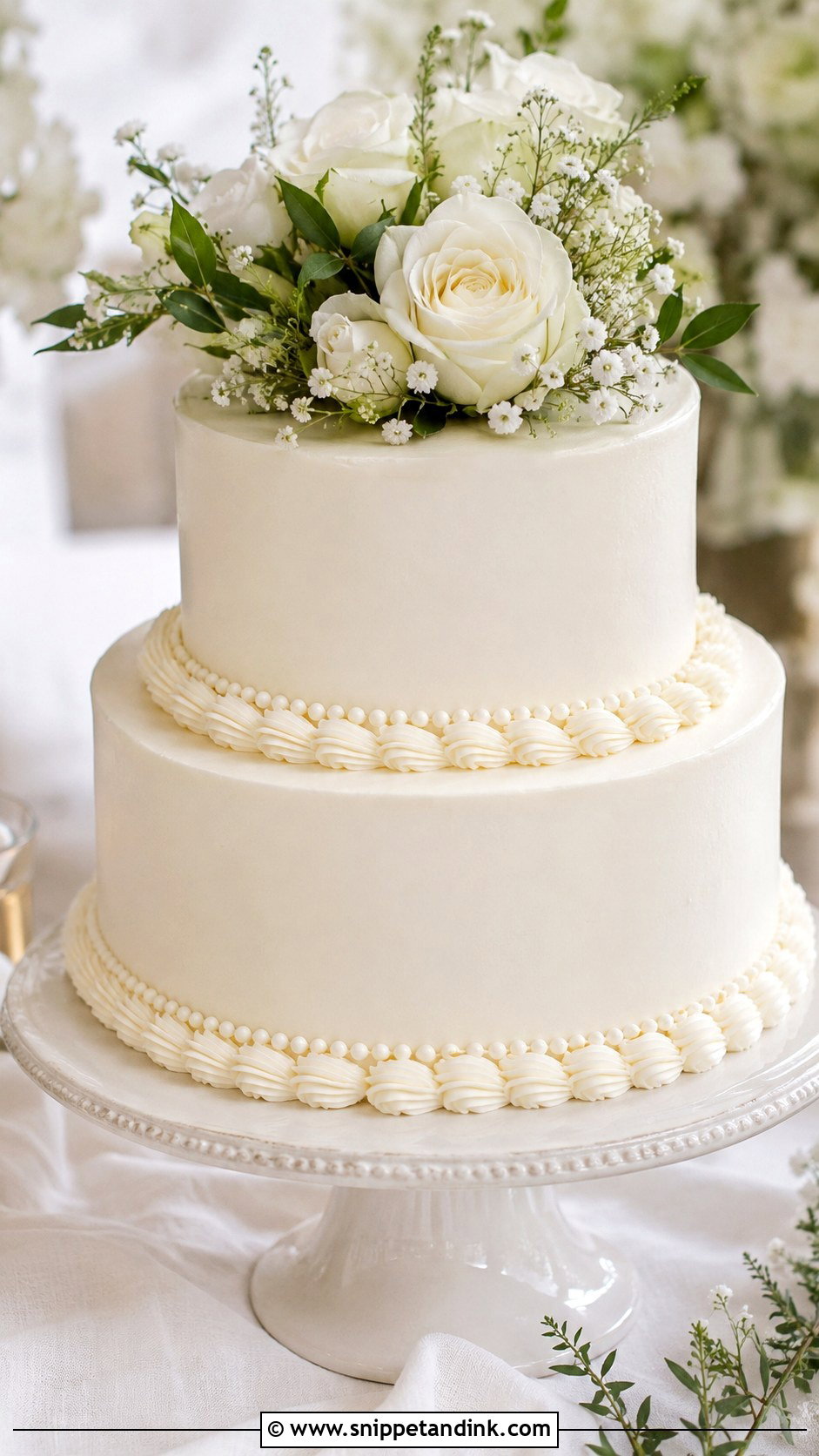
This is the design I’d hand a couple who wants elegance with almost no decoration. On a smooth white or ivory buttercream cake, I pipe a small shell border around the bottom of each tier and a thin pearl border along the top edge. The bottom border isn’t only pretty; it hides the seam where cake meets board. It works on a single cutting tier or a classic two-tier. Consistent pressure matters more than anything else here, because one shell larger than the rest catches the eye immediately. A few white roses or a sprig of greenery on one side is plenty.
2. Simple Pearl Wedding Cake Piping
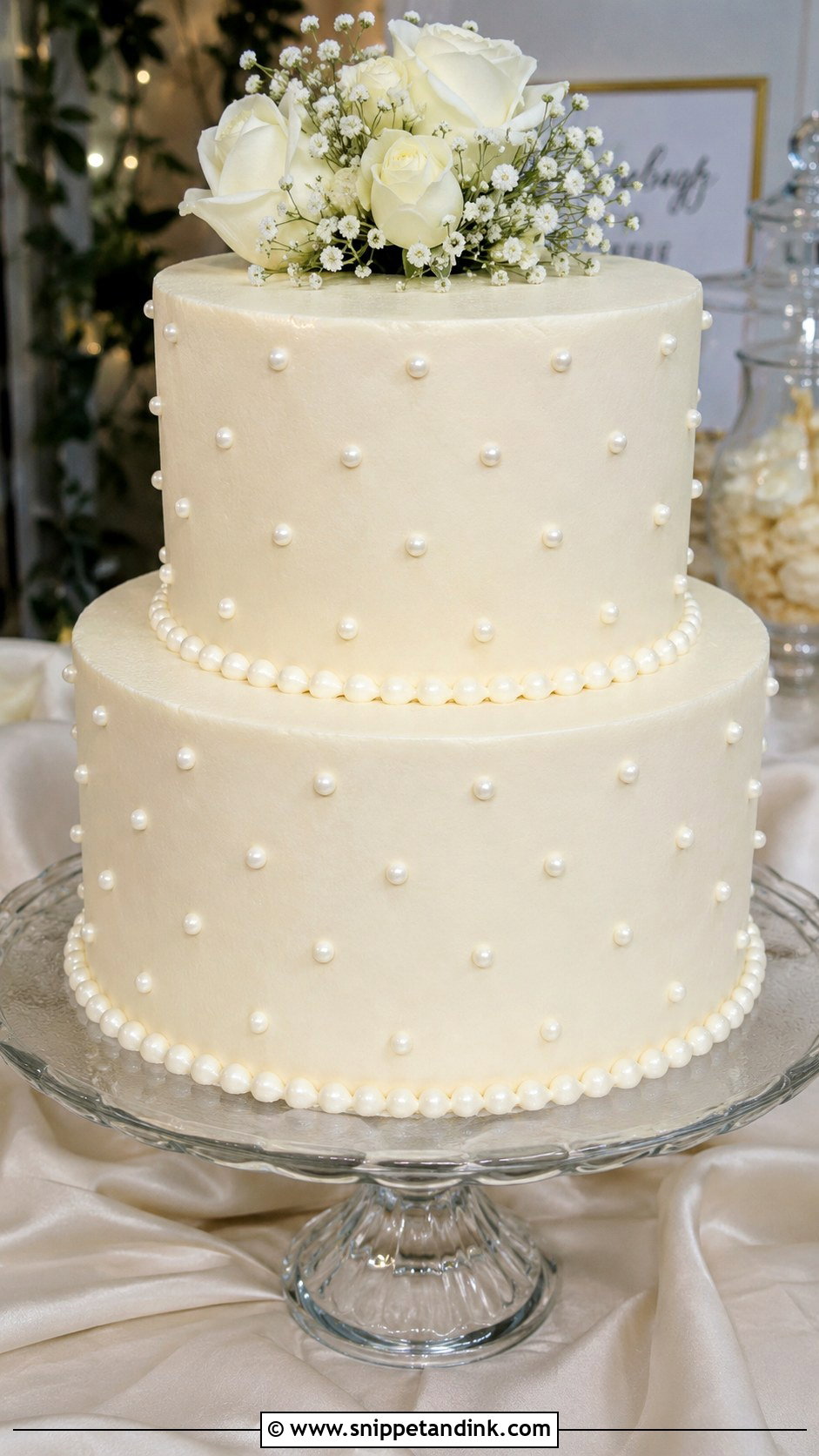
Pearl piping is a row of small round dots, usually with a #2 or #3 round tip, set around the base, the top edge or between tiers on smooth buttercream or fondant. White reads quiet, soft champagne warmer. The trick is the finish of each dot: I stop squeezing before lifting the tip and give a tiny sideways flick, which avoids the little peak that makes dots look like chocolate chips. Keep the tiers simple and let the dots work like a string of jewellery.
3. Simple Shell Border Wedding Cake
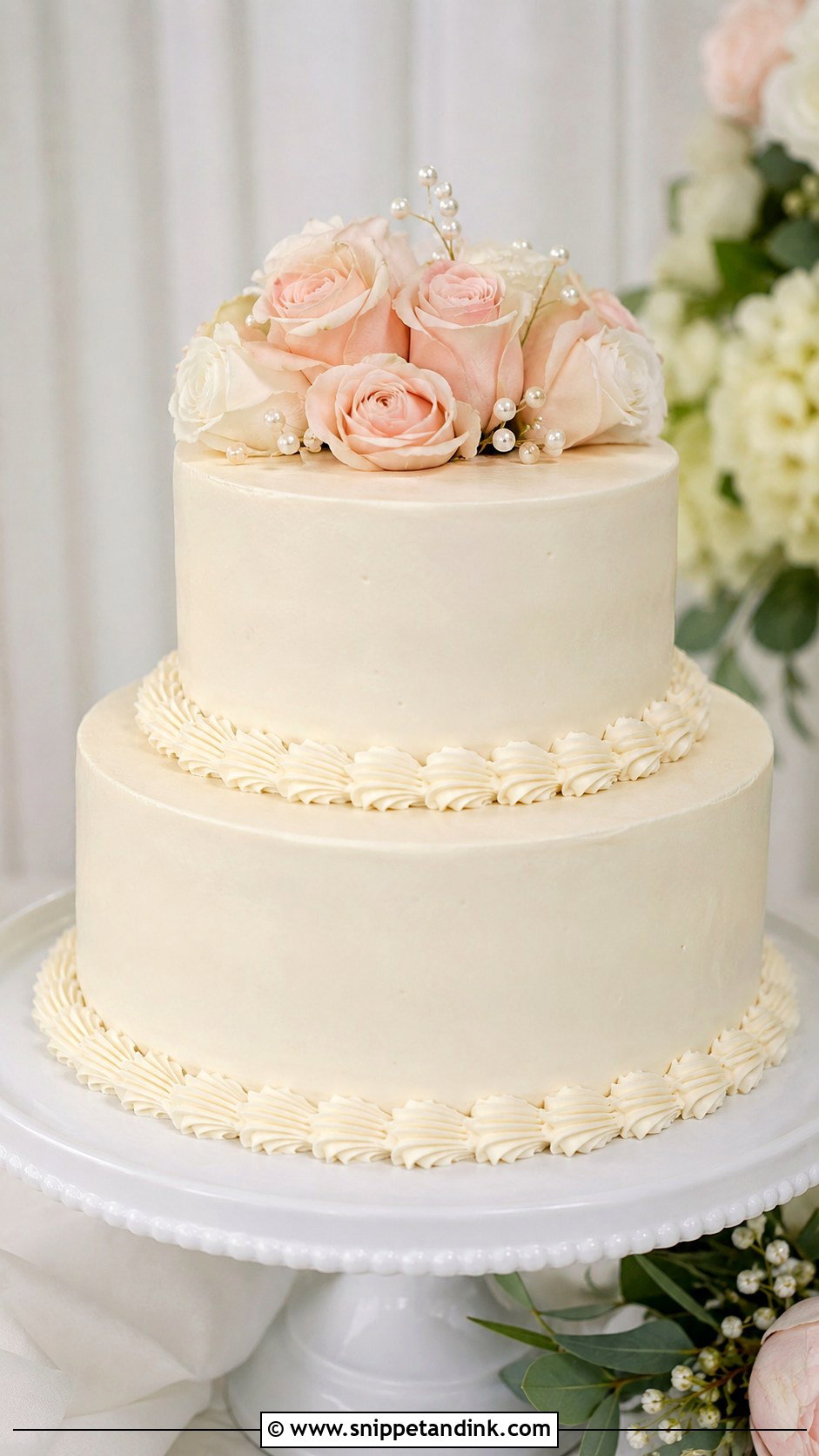
Shell borders are the most traditional piping there is, made with a star tip by squeezing, easing off and pulling each shell into the next. A small star tip gives dainty shells; a larger one gives a bolder edge. They sit best at the base of each tier on smooth buttercream. With ivory frosting and blush flowers the cake reads classic. For a more modern look, keep it all white and use just one shell border per tier, nothing else.
4. Simple Vintage Wedding Cake Piping
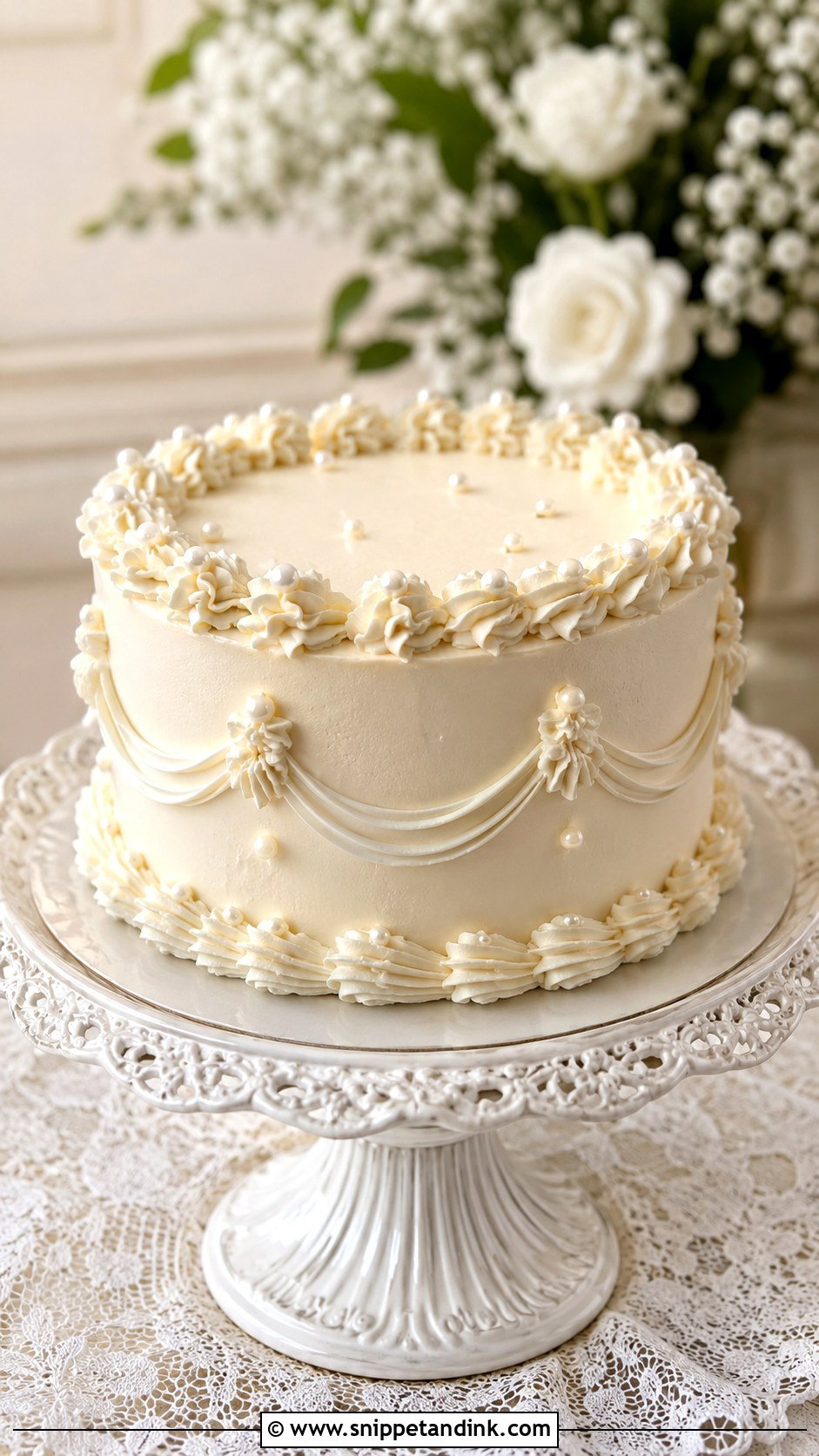
Vintage piping stays simple when you decide where it goes before you start. On a one or two-tier cake in soft ivory, I keep small swags, tiny shells and pearl dots to the borders and the front-facing panel, rather than wrapping the whole cake. That keeps an old-fashioned feel without crowding. I mark the swag points lightly with a toothpick first so the curves are even all the way round; eyeballing it nearly always leaves one swag short at the back. A few buttercream rosettes or edible pearls finish it.
5. Simple Lambeth Wedding Cake Piping
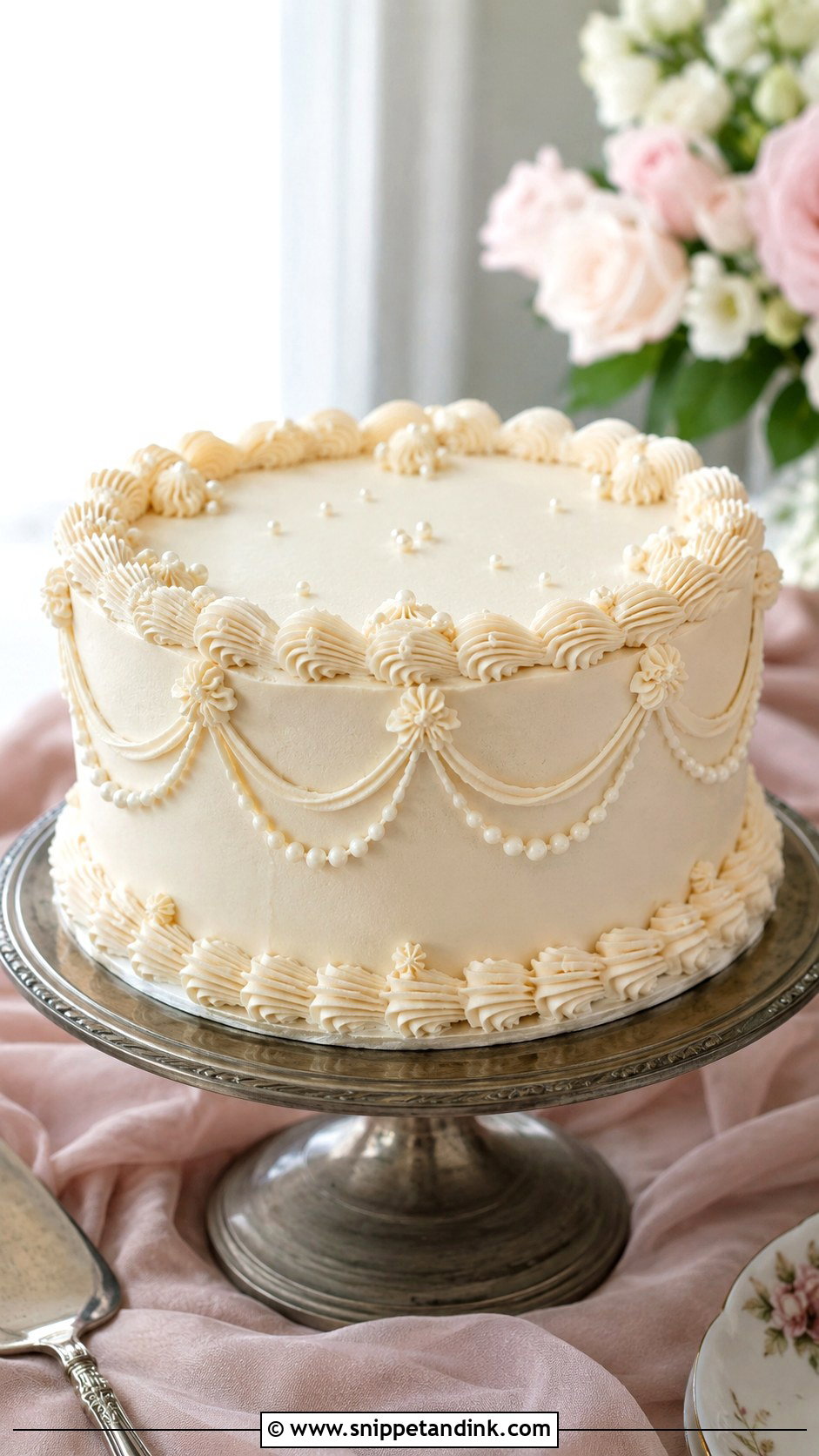
Lambeth piping stacks layer upon layer of overpiped shells, curves and swags, and the simple version is about knowing when to stop. On a smooth round ivory cake I pipe overlapping shells, gentle curves and hanging swags, but limit myself to two or three layers instead of the five or six of a full Lambeth piece. A one-tier Lambeth cake makes a good cutting cake; two tiers stand out on a dessert table. Lambeth needs a firm buttercream that holds sharp ridges, so this isn’t the place for a soft whipped frosting. White, ivory or pale blush suit it.
6. Simple Floral Piped Wedding Cake
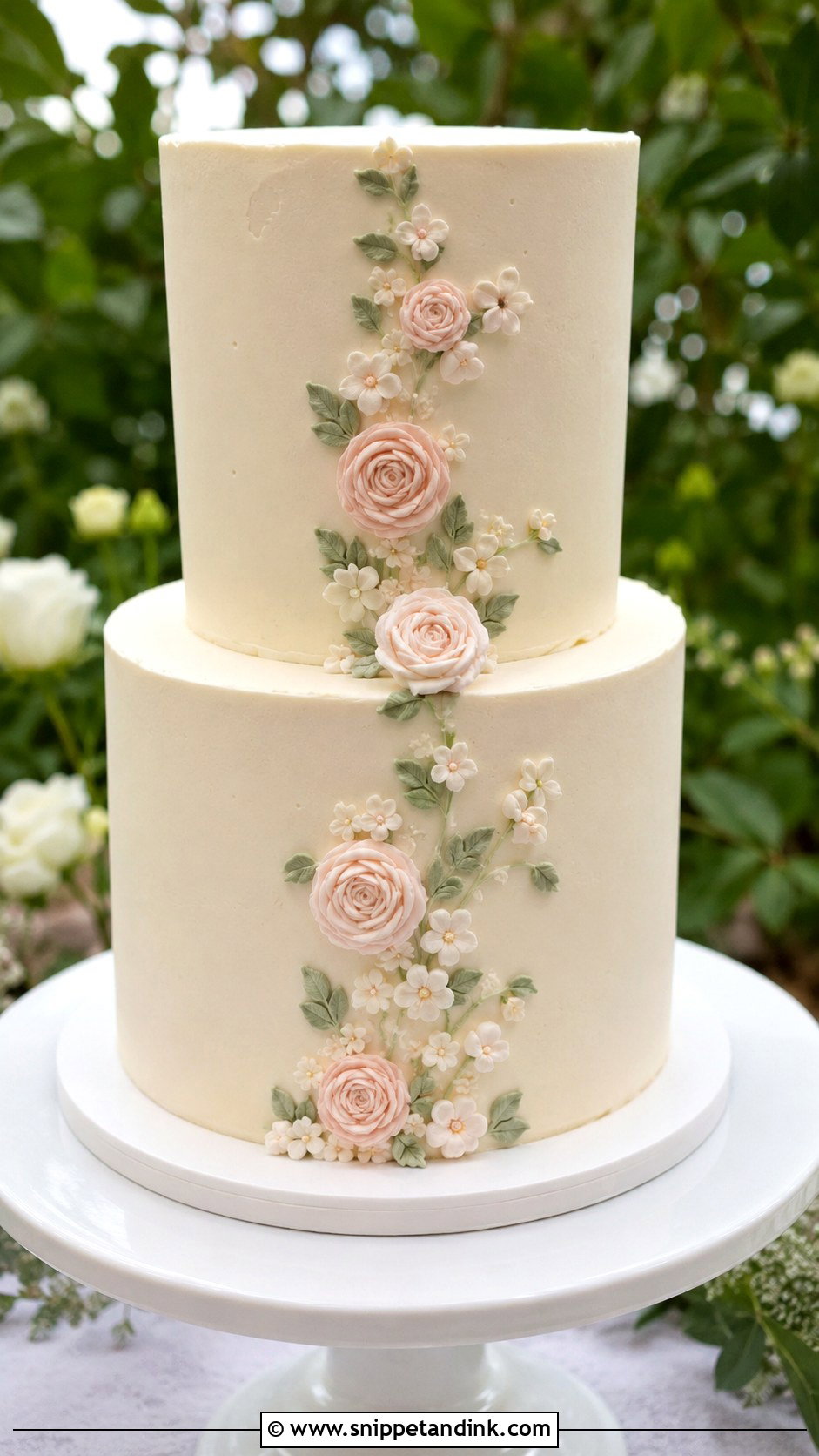
Piped flowers give you blooms that are fully edible. I pipe small roses, drop flowers and leaves along one side or around the base and keep the rest of the cake smooth. Drop flowers are made in one squeeze with a star or drop flower tip, so they’re quick and repeatable, while roses take longer and look more realistic. Vanilla, almond, lemon or champagne sponge all suit it. Muted ivory, blush, sage and pale peach keep the palette soft rather than sugary.
7. Simple Rosette Wedding Cake Piping
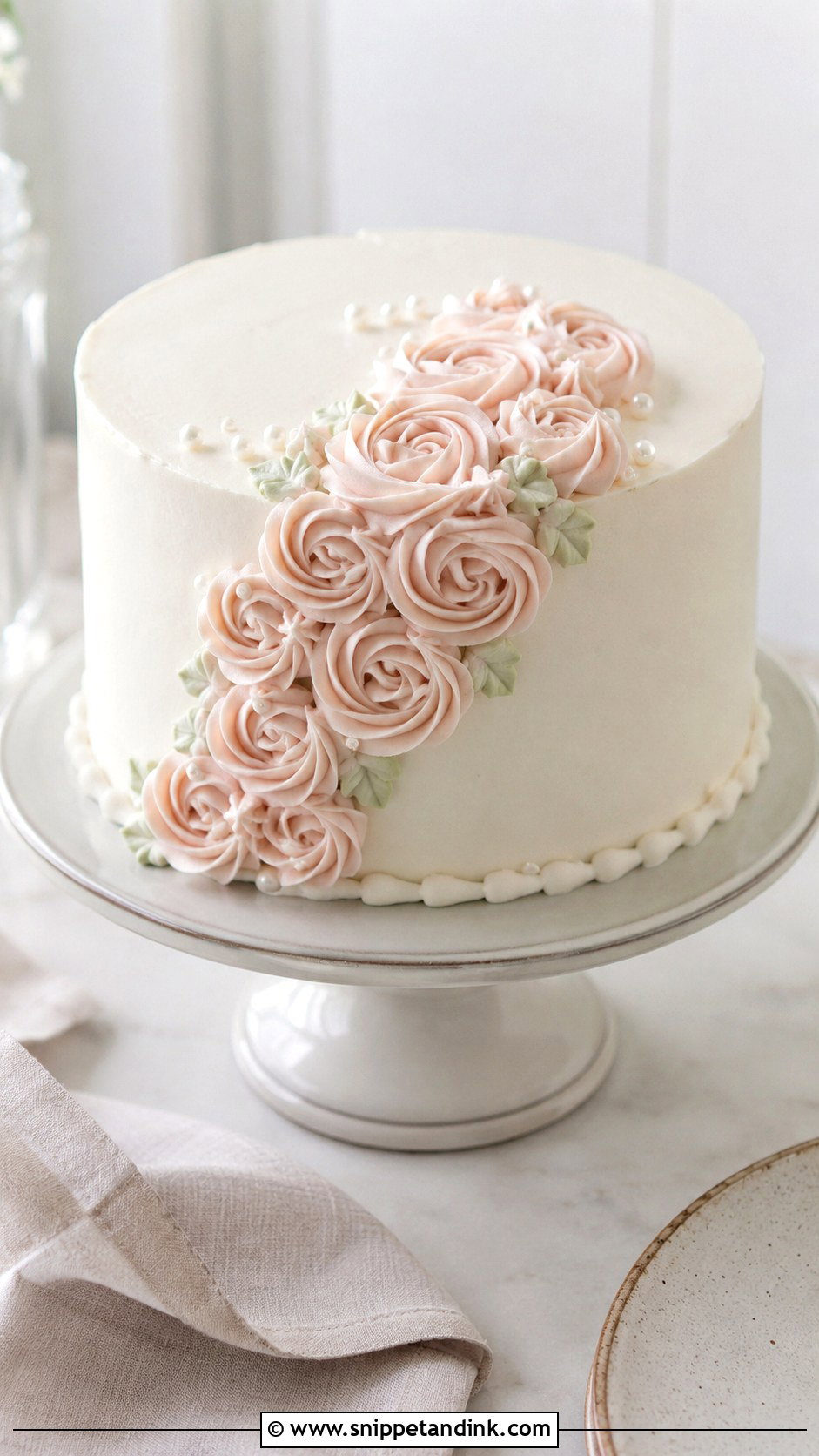
A rosette is a tight spiral piped with an open star tip, starting in the centre and circling out. On a simple cake I cluster a few on a diagonal across one tier instead of covering it, then add a thin border at the base to tie it together. Rosettes hold their swirl best in a slightly stiffer buttercream; if it’s too warm they slump into blobs. White is classic, pale blush more romantic, and a few small leaves or pearl dots finish it for an elopement or small reception.
8. Simple Lace Wedding Cake Piping
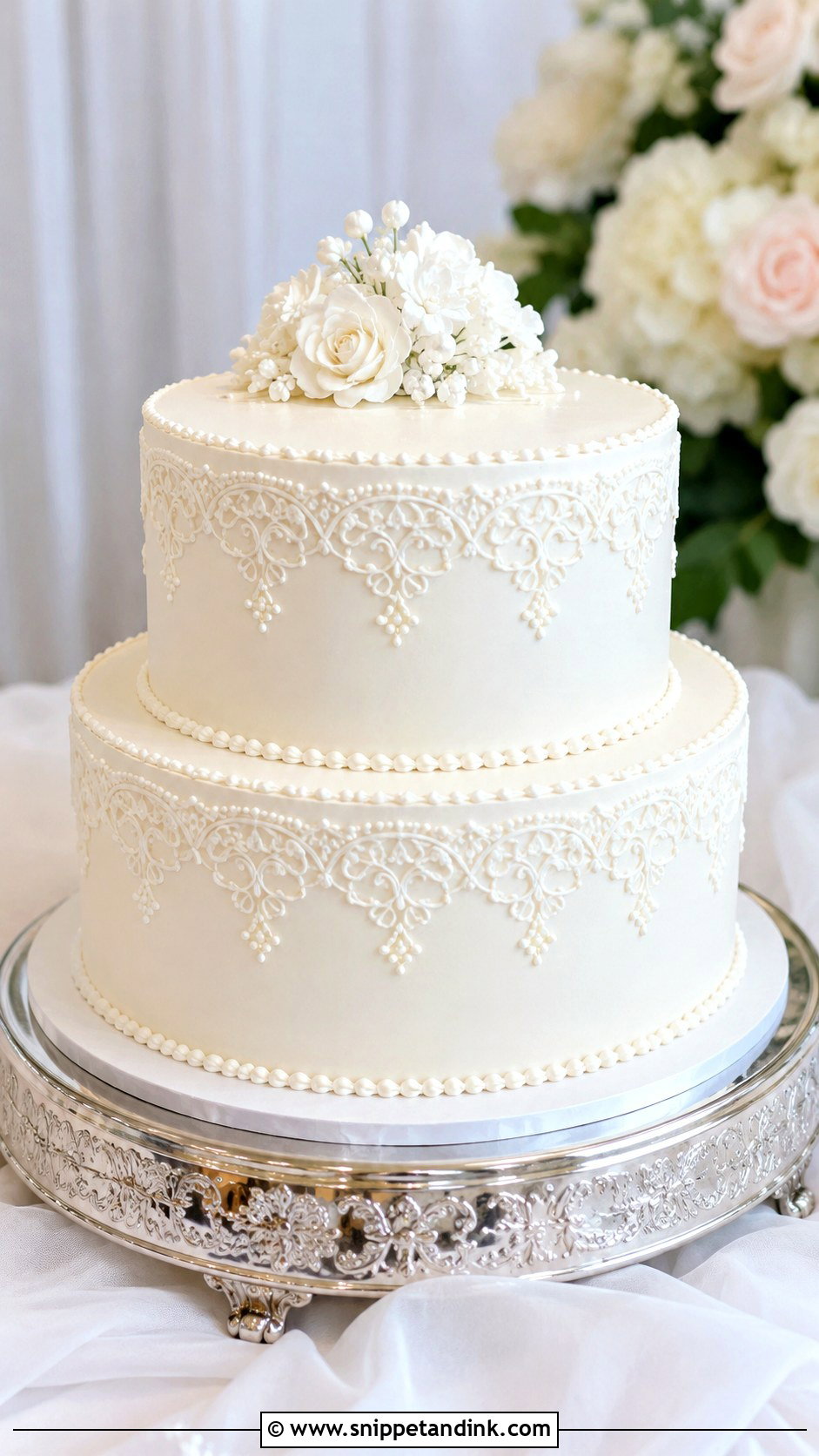
Lace piping uses fine loops, dots and curved lines, usually with a #1 or #2 round tip, over a very smooth surface. Fondant or a well-chilled buttercream works best, because fine lines vanish on a textured finish. I don’t cover the whole cake; a lace band around the middle tier or a couple of panels on the front is enough. Thin lines need a slightly softer consistency than borders, or they break as you pipe. Soft ivory or white with tiny sugar pearls keeps it bridal and light.
9. Simple Dot Wedding Cake Piping
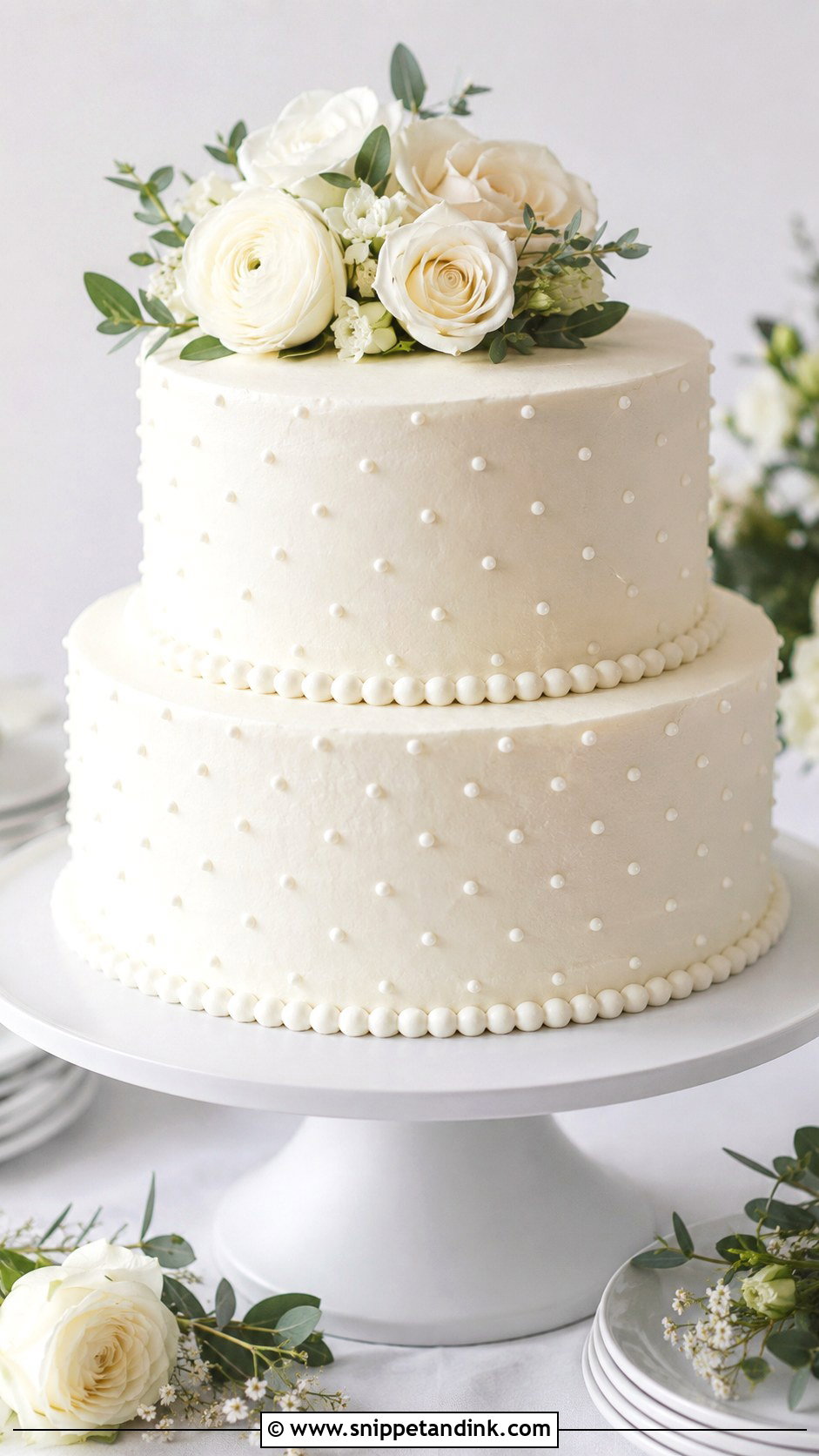
Dots are the most forgiving piping there is, which is why I recommend them to anyone piping her own cake. Small buttercream dots in rows, scattered like confetti or in loose patterns around each tier give detail while keeping the design calm. White on white reads modern, pearl-toned dots more classic. Even size is what makes it look professional, so I hold the bag at the same angle and count the same squeeze for each dot. Finish with a simple border at the base.
10. Simple Ruffle Wedding Cake Piping
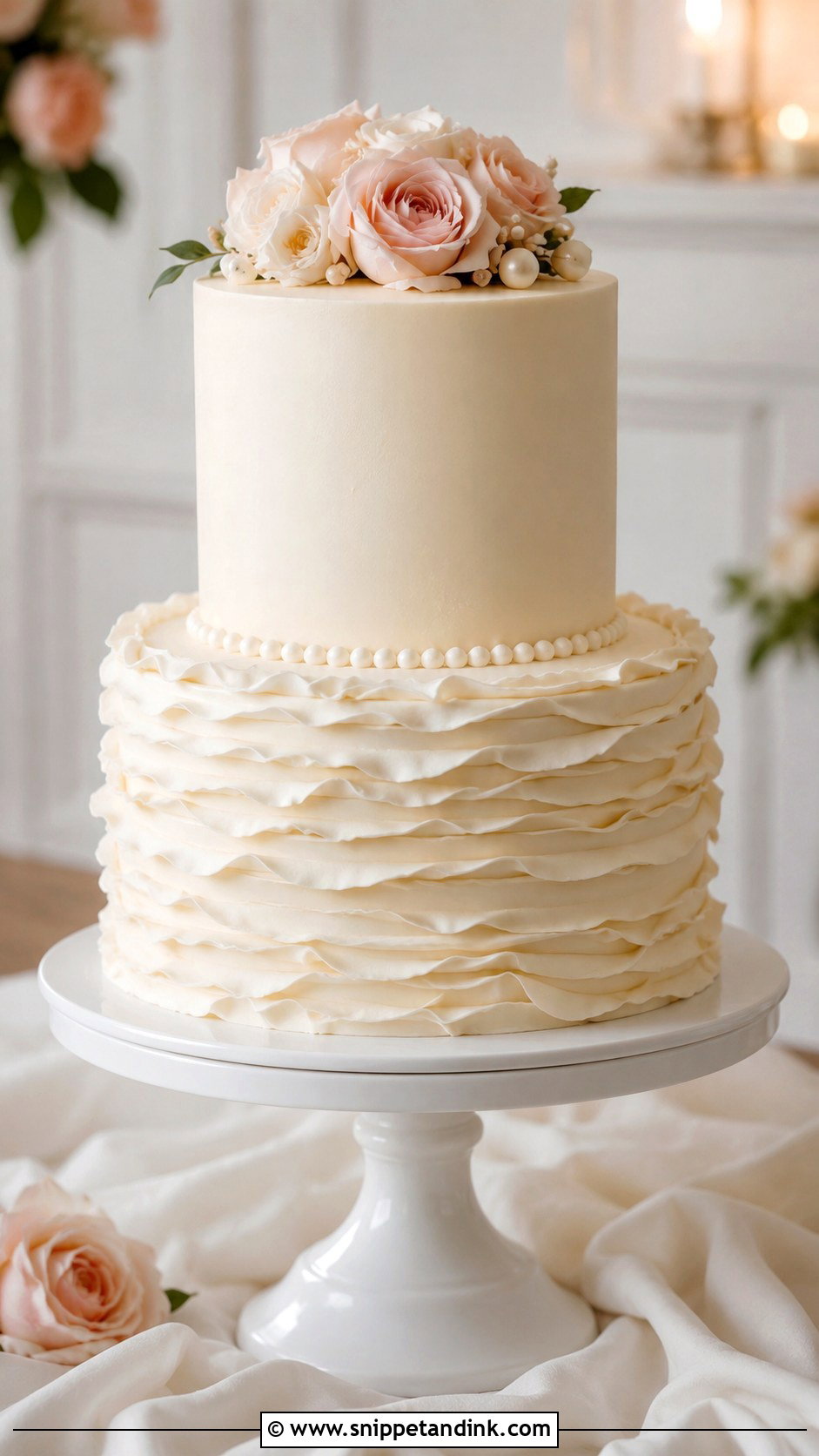
Ruffles come from a petal tip held with the wide end against the cake, wiggling slightly as you move around the tier. The simplest version ruffles just one tier and leaves the other smooth, which keeps the cake balanced. White or ivory is timeless; pale blush feels like a garden party. Ruffles add weight and use a lot of buttercream, so I chill the tier between rows to stop the lower ones sagging. Keep the top plain or add one small floral cluster.
11. Simple Vertical Piping Wedding Cake
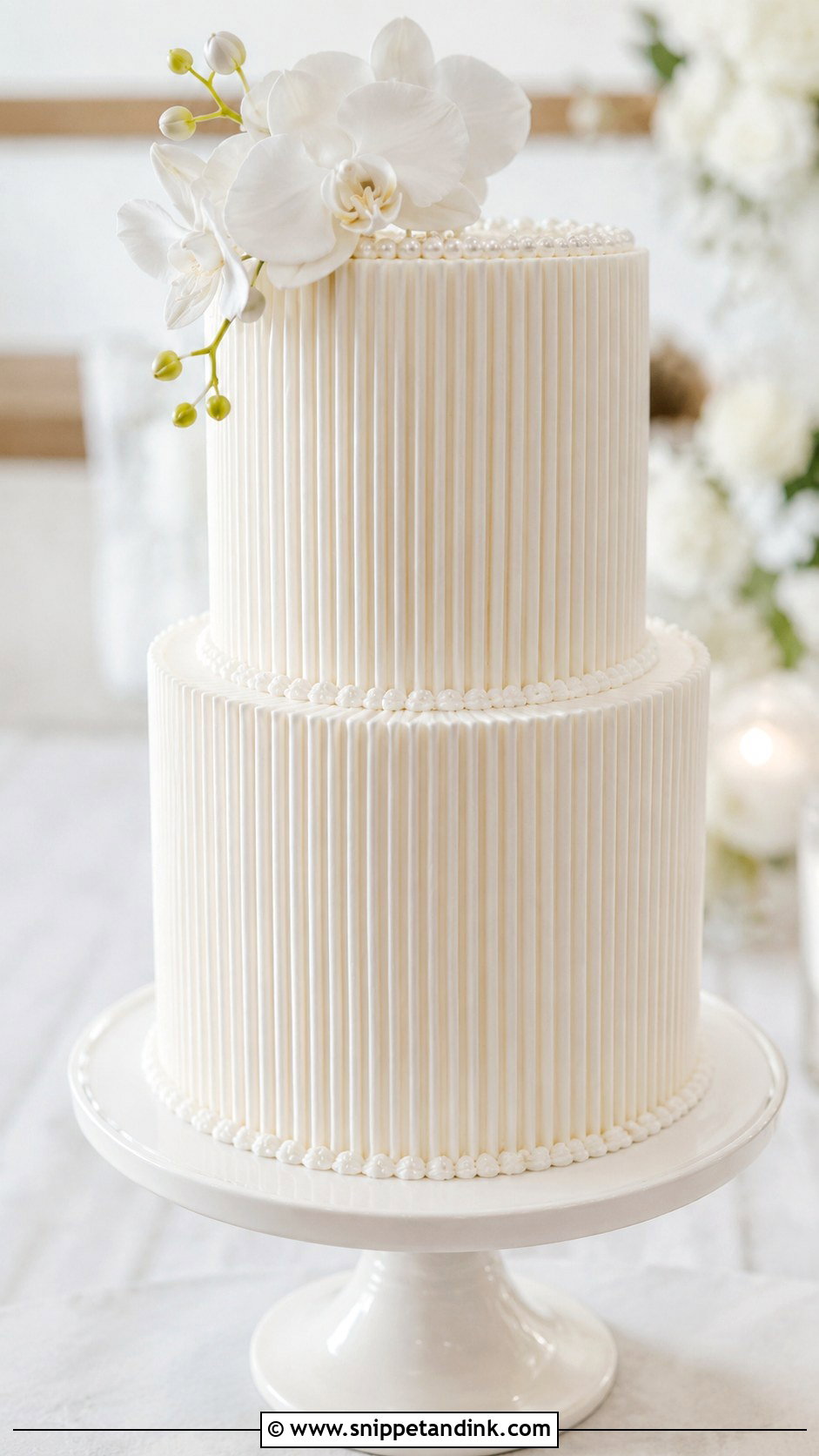
Vertical lines give a tailored, tall look. I pipe thin lines from the top edge down to the base, close together for a ribbed effect or spaced apart for a lighter one. It suits white buttercream, ivory Swiss meringue or another pale neutral frosting, and it looks best on tall tiers. Straight lines are less forgiving than they look; I chill the cake first and use a turntable marked in even sections so the spacing stays consistent. A neat bottom border hides the base edge.
12. Simple Scallop Wedding Cake Piping
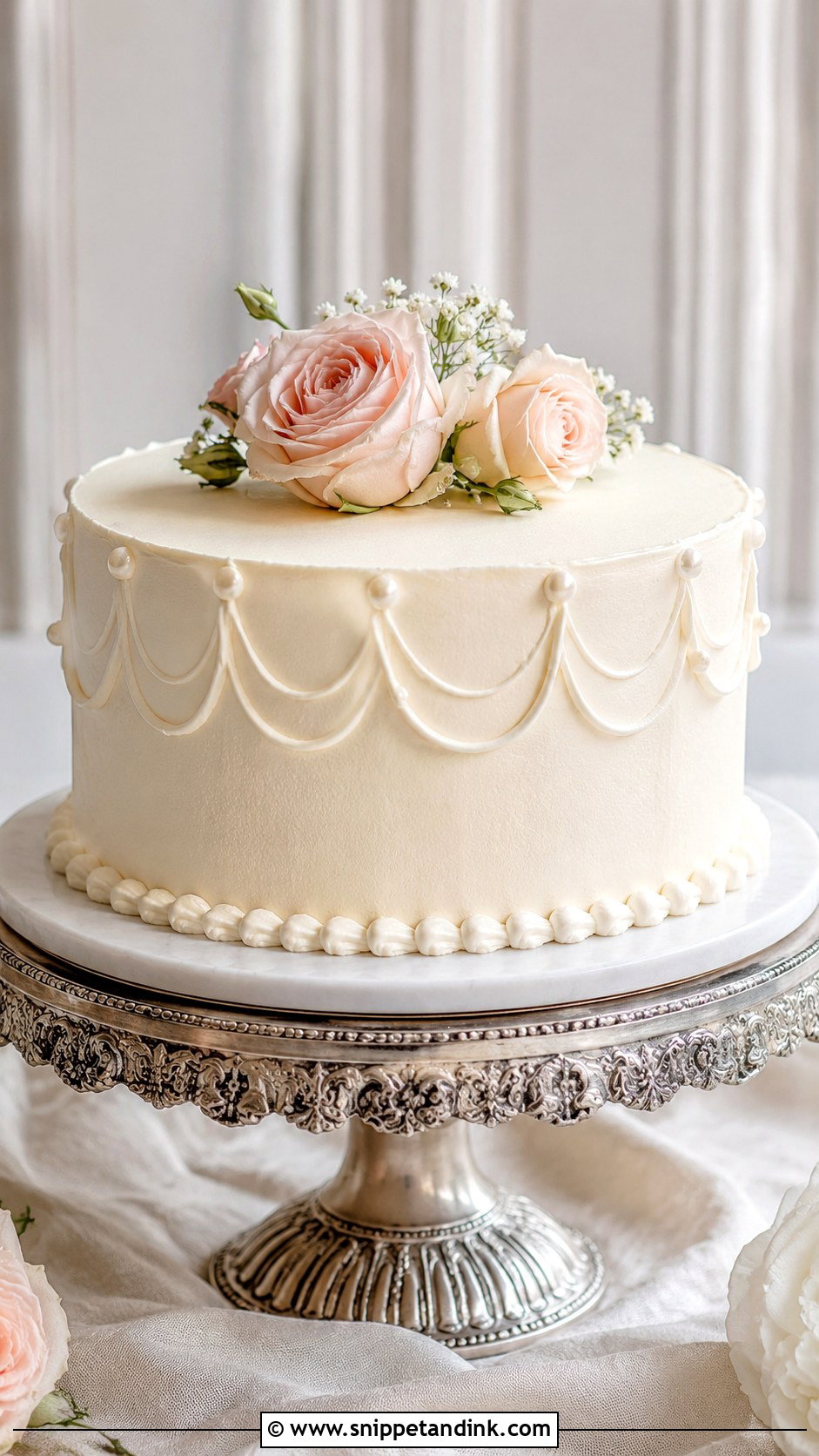
Scallops are small curved lines piped in rows or bands around the sides. They’re easier than swags because each curve is shallow, but they still need marking: I use a round cutter pressed gently into the frosting as a guide. A pearl dot where each pair of curves meets tidies the join. One or two white tiers with ivory buttercream and a small flower cluster on top suit traditional weddings, tea receptions and garden celebrations.
13. Simple Basketweave Wedding Cake Piping
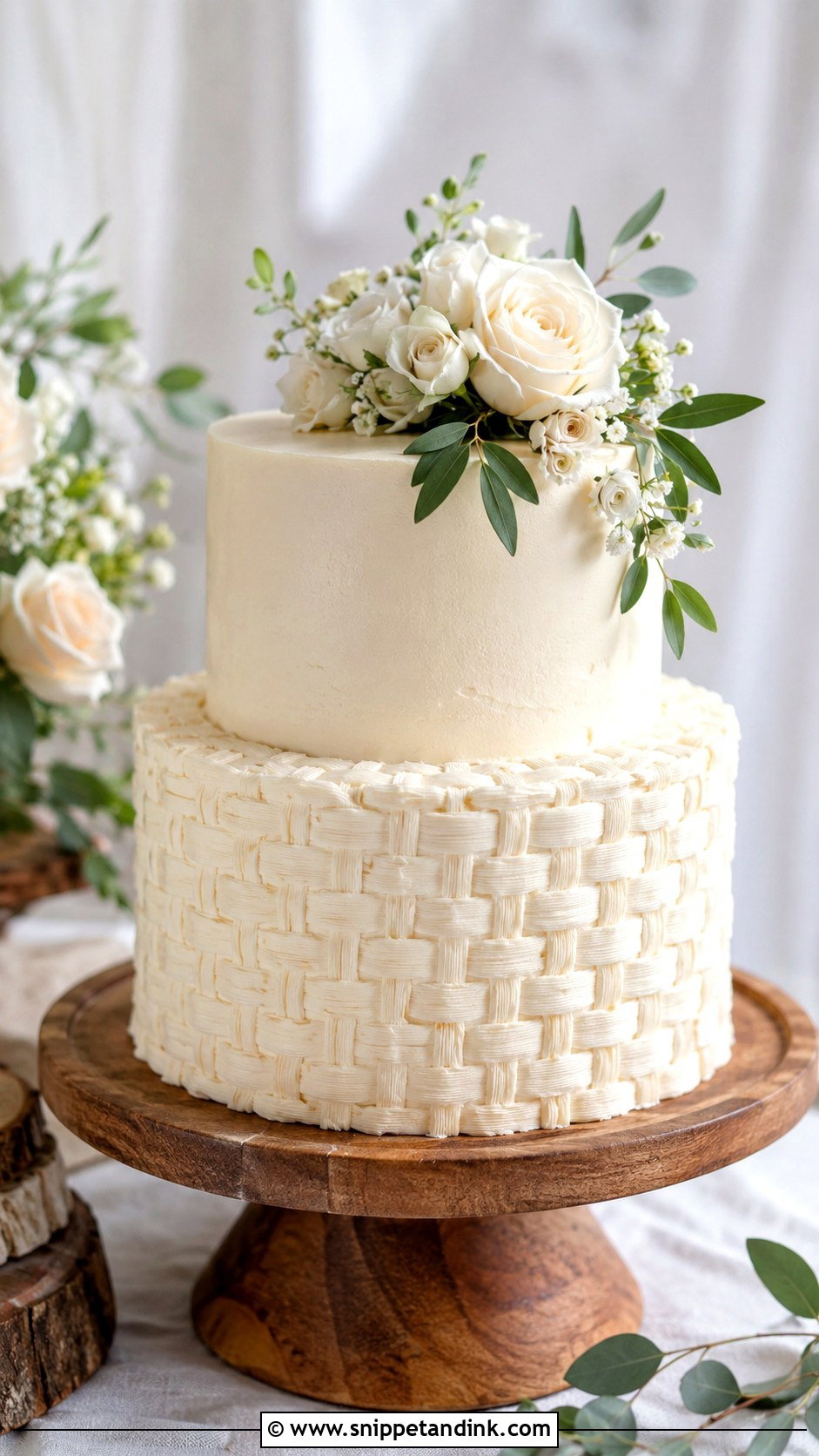
Basketweave piping is built from short horizontal strokes over vertical lines with a basketweave tip, and it’s slow work. For a simple wedding version, I use it only on the bottom tier and keep the top tier smooth. Ivory buttercream gives the softest woven look, and a clean shell border between tiers separates the two textures. A few fresh flowers or piped blossoms on top suit rustic receptions and spring weddings. Because basketweave takes time, it’s worth asking your baker whether it changes the price.
14. Simple Monogram Wedding Cake Piping
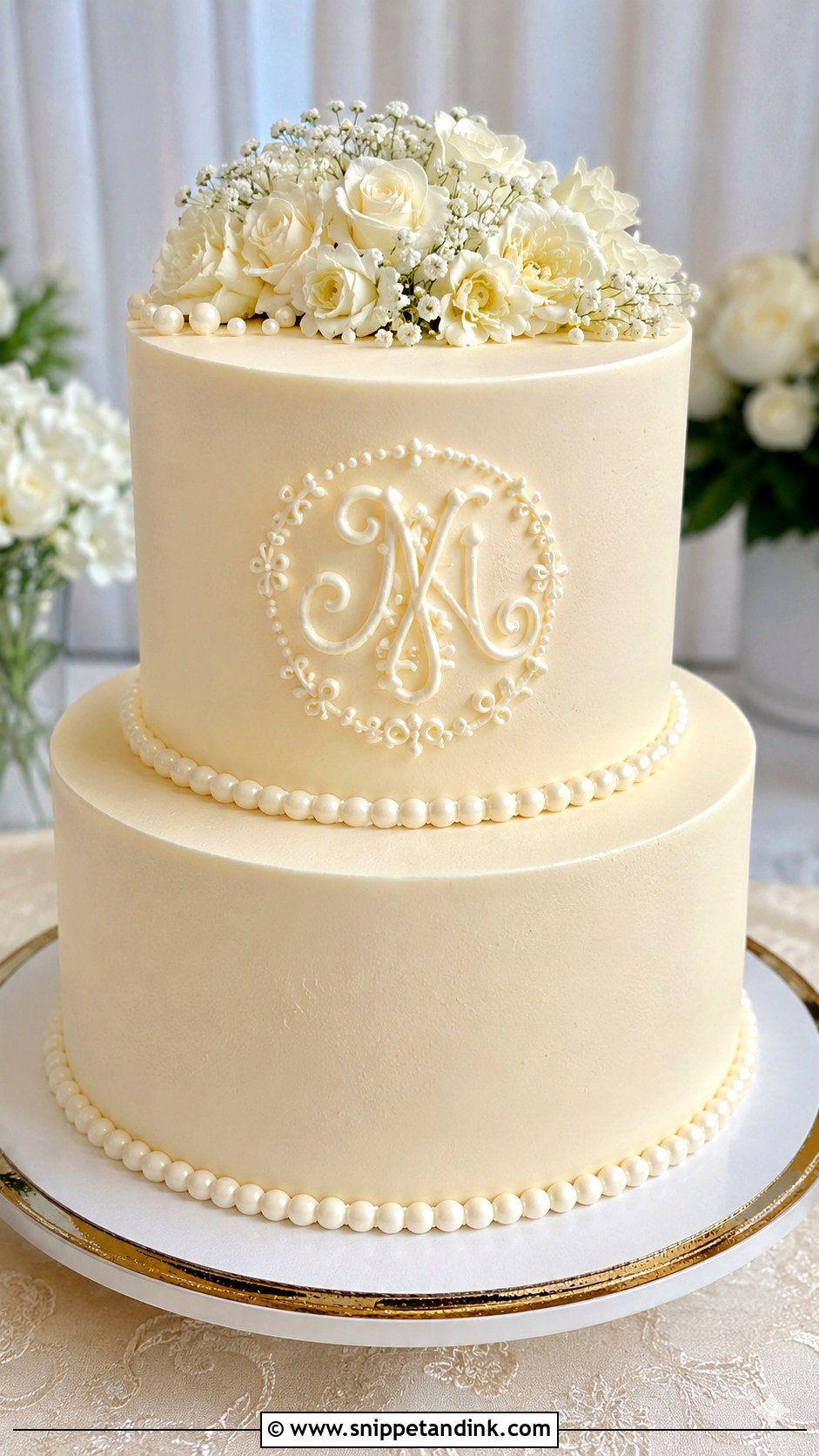
A piped monogram is the most personal decoration that takes almost no extra room. I pipe the initials on the front of the top or middle tier, after tracing them lightly with a stencil or a printed template pressed onto the frosting. Freehand lettering is where even good bakers wobble. Keep the letters clean, centred and readable, framed by a pearl or shell border at the base. White on ivory is subtle; soft gold accents warm it up.
15. Simple Heart Wedding Cake Piping
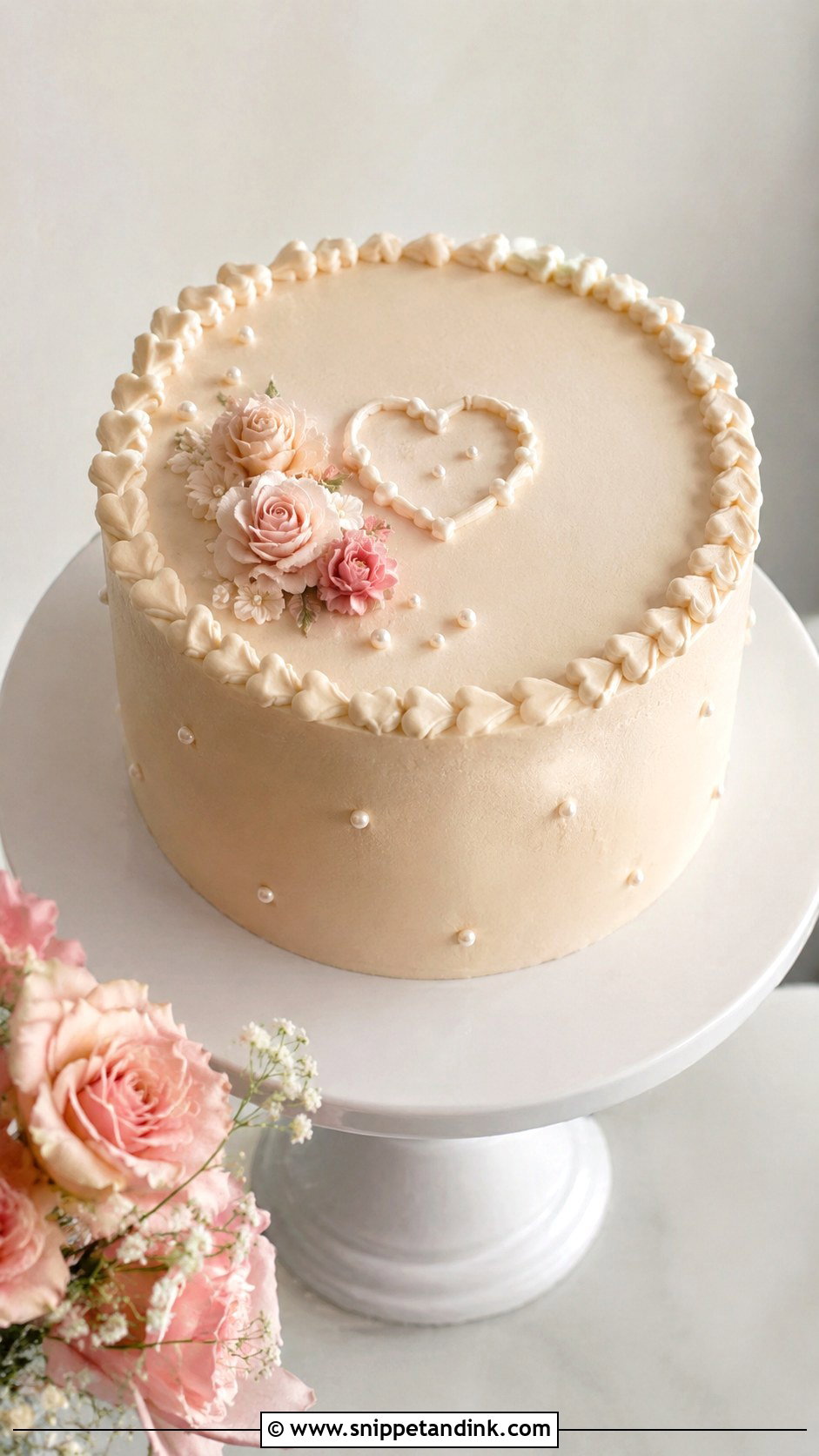
Small piped hearts can look grown-up rather than cute if they’re kept tiny and spaced well. I place them around the top border, down one side, or as a single detail on the front. A heart is two teardrop shapes piped toward each other, so a round tip and a steady pull give the cleanest result. White hearts on ivory are subtle; pale blush is sweeter. It suits small weddings, vow renewals and courthouse celebrations, finished with a few pearl dots or buttercream flowers.
16. Simple Piped Flower Border Wedding Cake
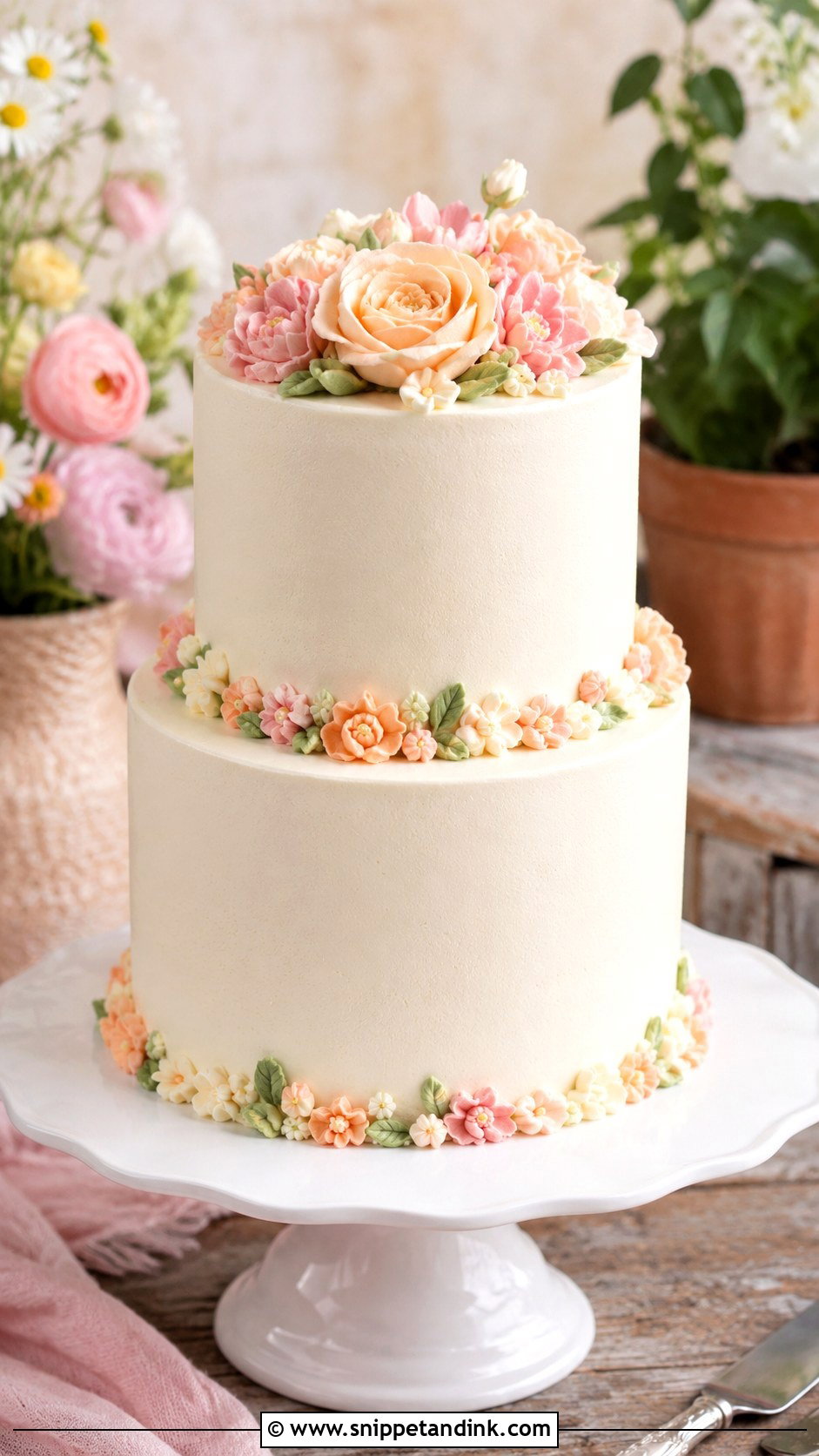
A ring of small piped blossoms around the base of each tier gives a floral frame and leaves the sides clean. White, cream, blush or pale peach flowers with a few tiny green leaves add contrast without taking over. On a round two-tier cake, this is one of the neatest floral options I know, and it’s faster than full flowers on the sides. I pipe the blossoms onto parchment ahead of time, chill them, then set them in place, which keeps spacing even and saves stress on the day.
17. Simple Piped Bow Wedding Cake
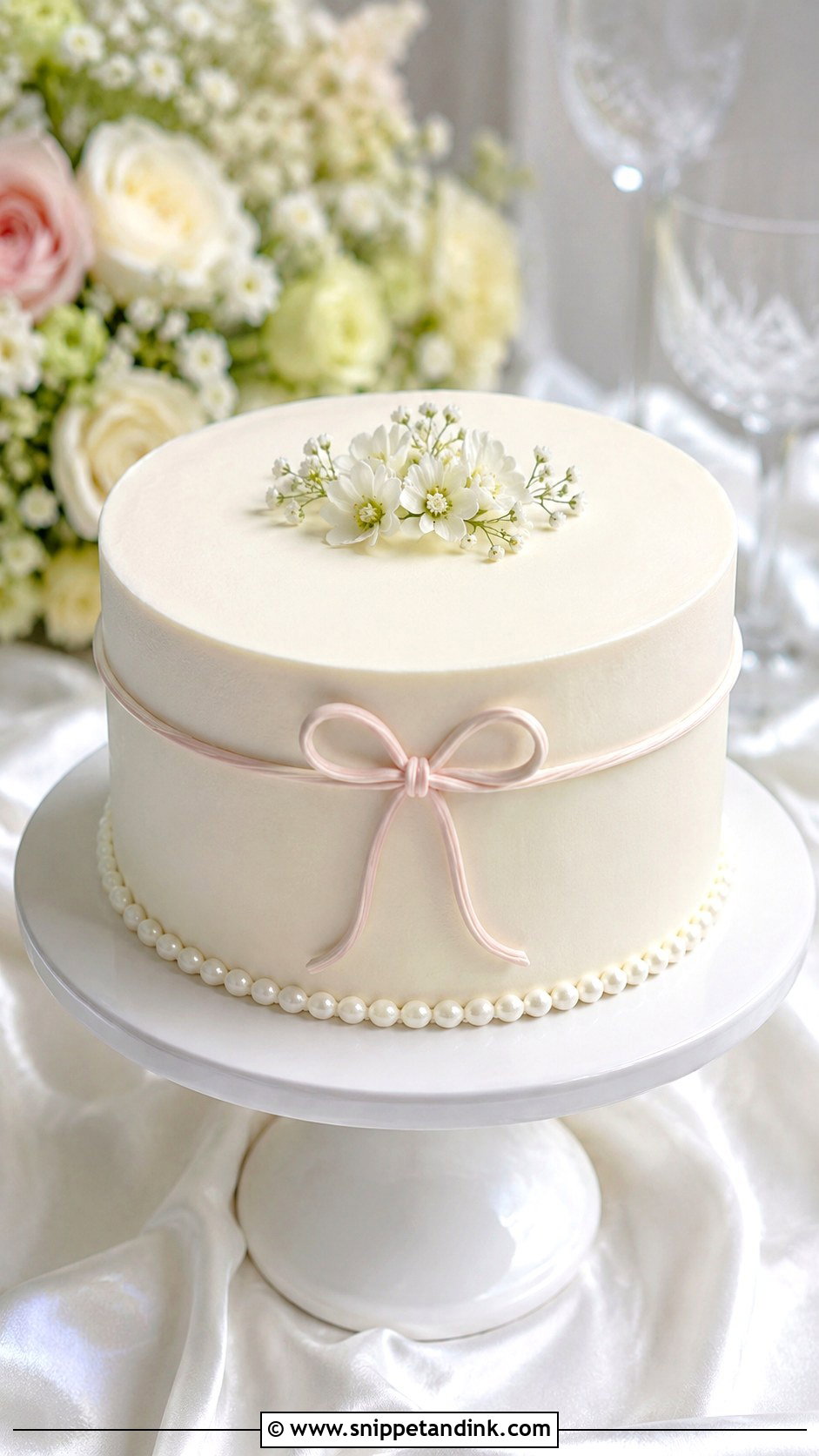
A piped bow needs to stay small and crisp to look elegant. I pipe a thin ribbon line around one tier with a flat or small round tip, then build the bow on the front or side from two loops and two short tails. Smooth white or ivory frosting shows it best; white is classic, pale blush more romantic. The rest of the piping stays minimal, perhaps a small pearl border at the base. It works for bridal showers, intimate weddings and receptions with soft styling.
18. Simple Piped Garland Wedding Cake
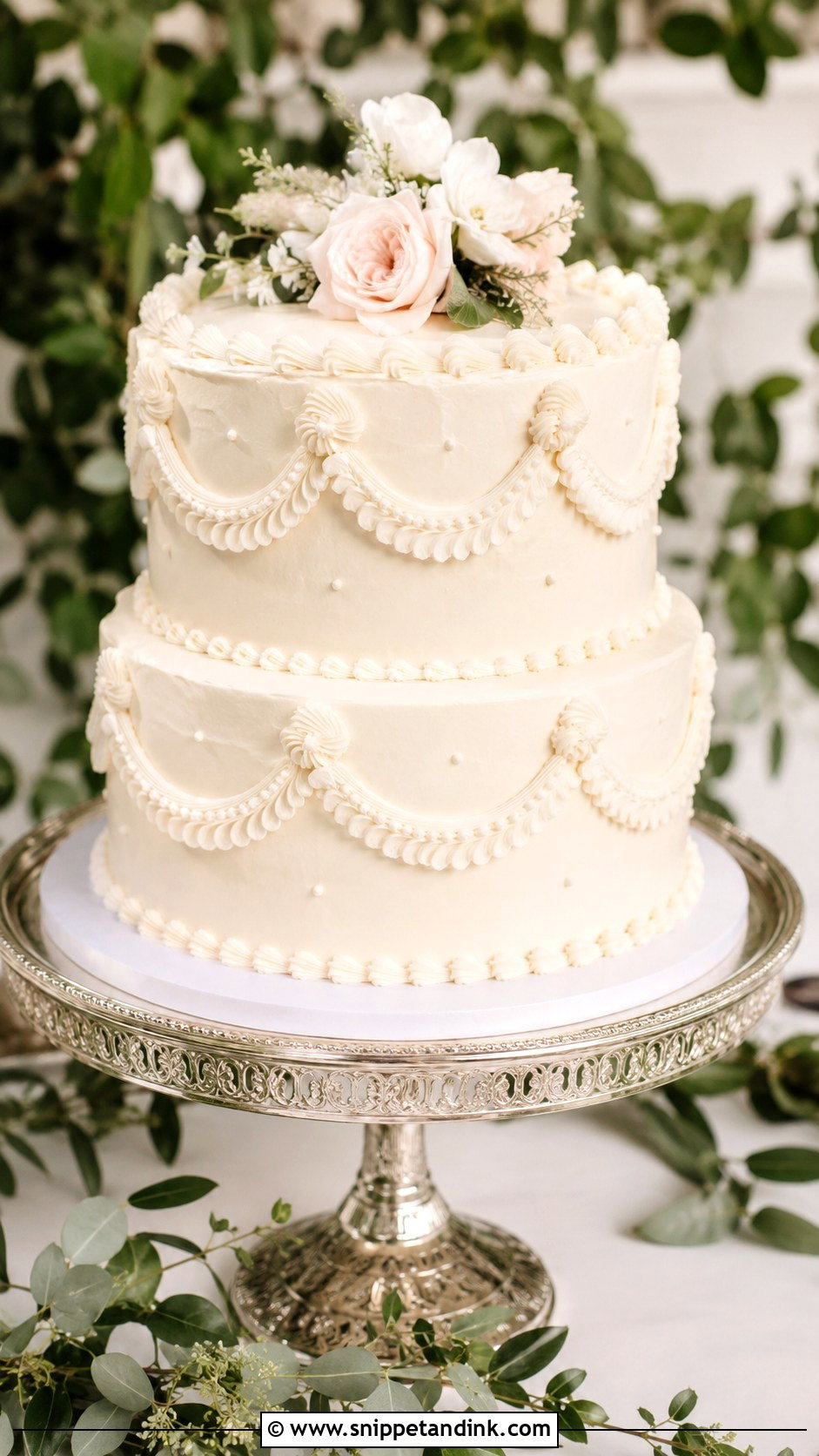
Garlands are curved swags piped around the sides, finished with small dots, shells or tiny flowers where they meet. One garland row per tier keeps it light; stacking several gets busy fast. Ivory buttercream keeps it classic, while sage leaves or blush flowers add colour. A smooth surface matters, since swags show every bump underneath. I mark the drop points evenly first with a cake divider or a paper template, because uneven swags are the first thing people notice. It suits vintage-style and garden weddings.
19. Simple Piped Leaf Wedding Cake
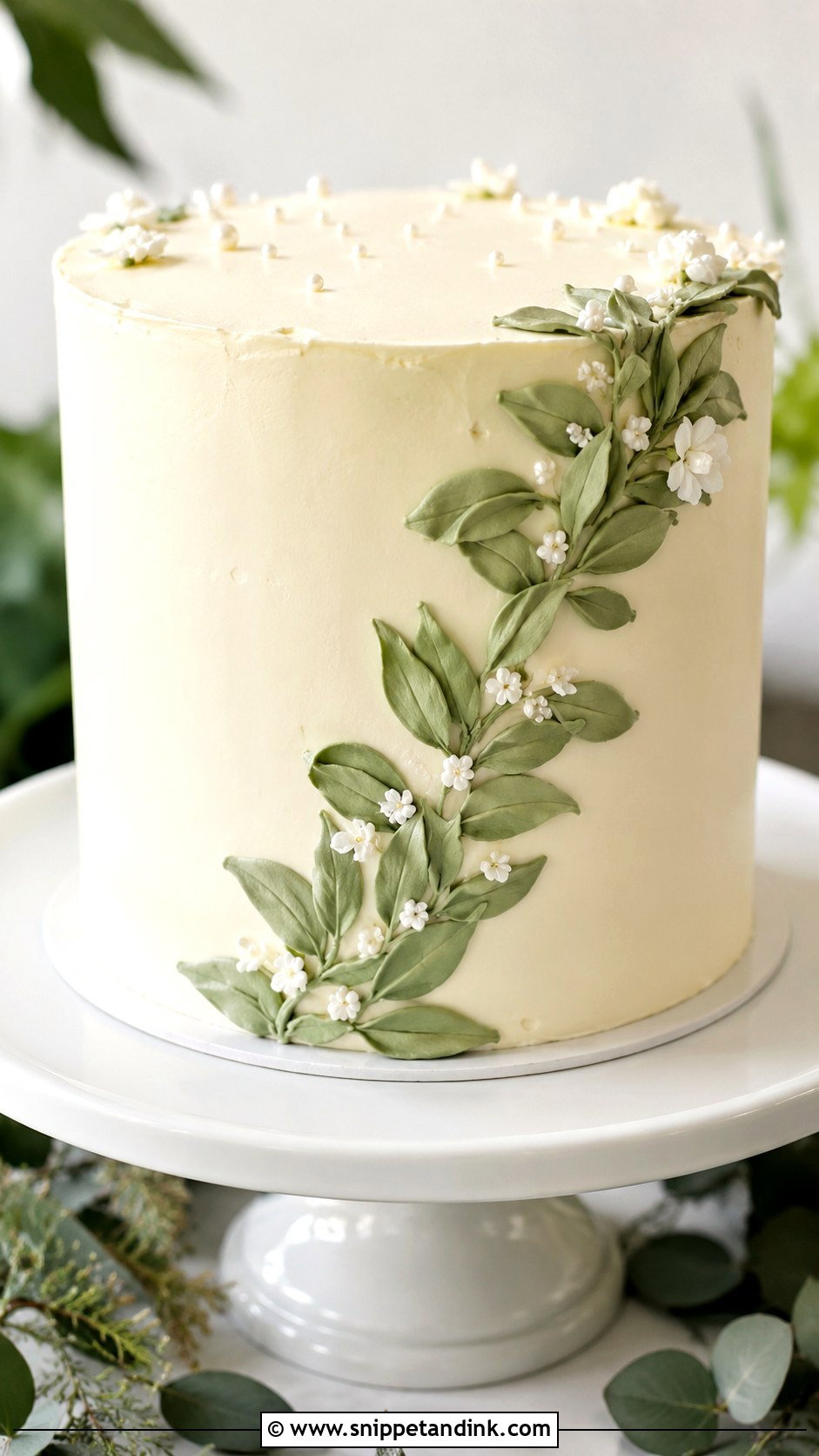
Leaves are piped with a leaf tip, squeezing at the base and easing off as you pull away to make the point. I place small leaves around the base, trailing up one side or framing a little floral cluster. Sage, eucalyptus green or soft olive against white buttercream look natural. Green colouring deepens as buttercream sits, so I mix it a shade lighter than the target and let it develop for an hour before piping. It’s a good choice if you like greenery but want everything edible.
20. Simple Piped Vine Wedding Cake
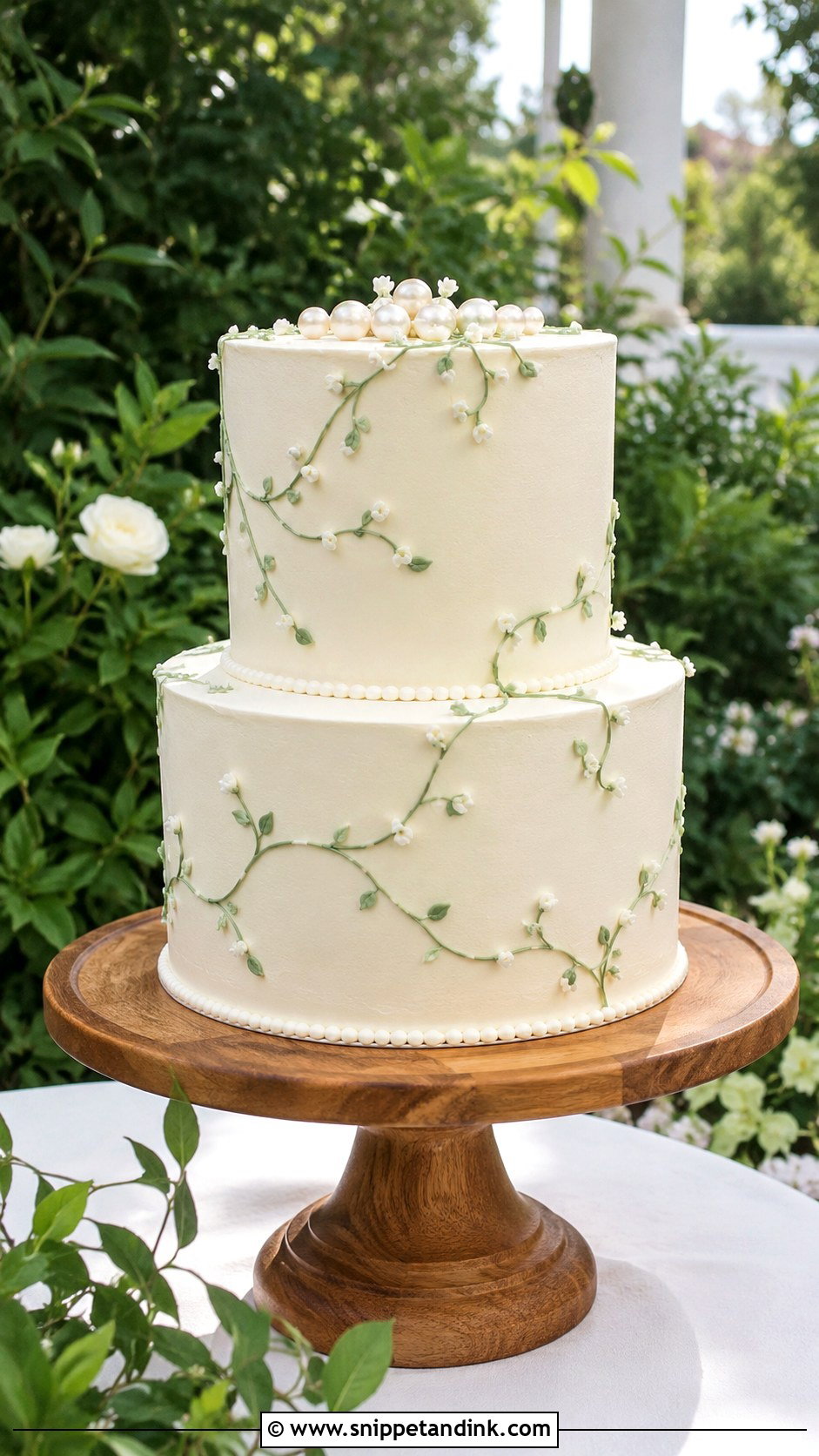
Thin vines curve around the tiers or climb one side, with tiny leaves and a few small white blossoms along them. I pipe the vine with a #2 round tip and keep it loose and flowing; a vine that’s too perfect looks mechanical. Ivory buttercream lets the green show without looking harsh, and a simple bottom border anchors the cake. It’s a soft botanical option for outdoor weddings and spring receptions, and much less work than a full floral design.
21. Simple Piped Bead Border Wedding Cake
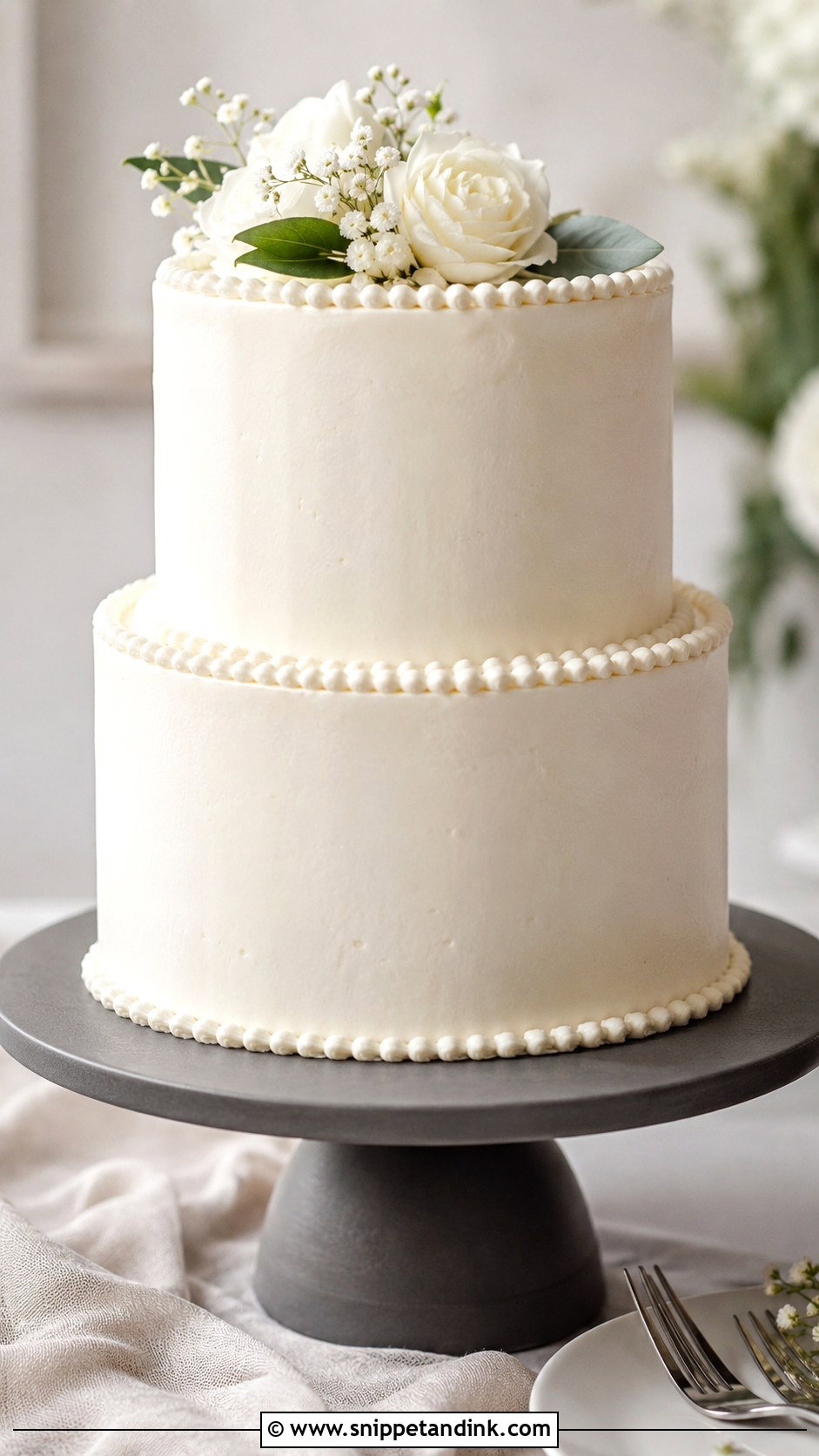
A bead border is a row of round dots or teardrops placed close together, so each one touches the next, around the base and top edge of every tier. It gives a finished edge with very little pattern, which suits minimalist couples. White beads on white buttercream feel modern; ivory beads on champagne frosting feel warmer. The beads should all be the same size and the same distance from the board, so I turn the cake rather than move my hand. Add a few flowers on top, or leave it plain.
22. Simple Piped Swirl Wedding Cake
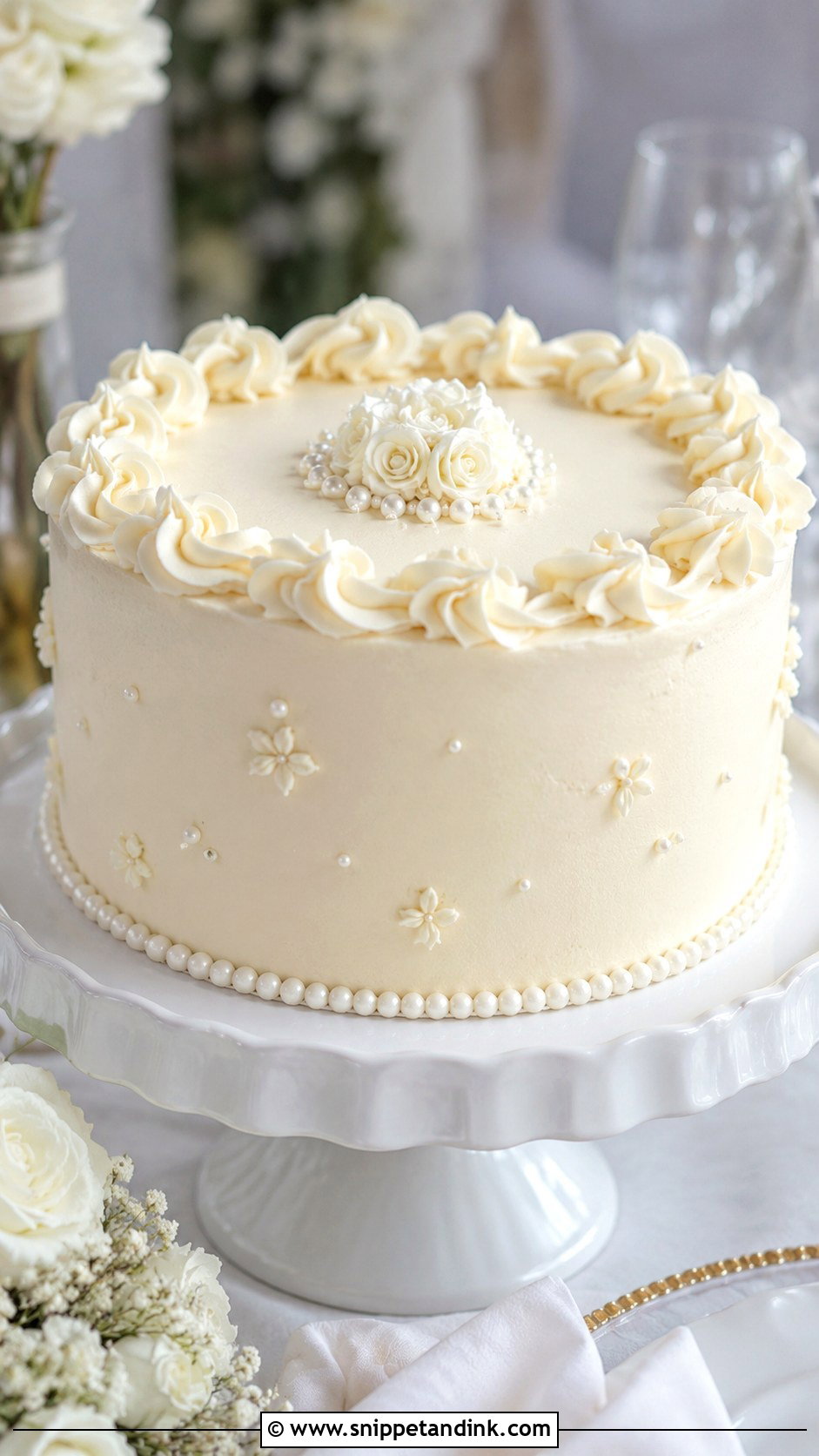
Swirls add movement, used as a border, around the top or as a light pattern on the sides. Keeping them small and even is what stops the cake looking busy. Vanilla or almond buttercream holds the shape well. Cream cheese frosting tastes wonderful but is soft, so I only use it for loose swirls and keep the cake cool; it won’t hold fine detail at room temperature. A few pearl dots between swirls make the design feel more formal.
23. Simple Piped Ombre Wedding Cake
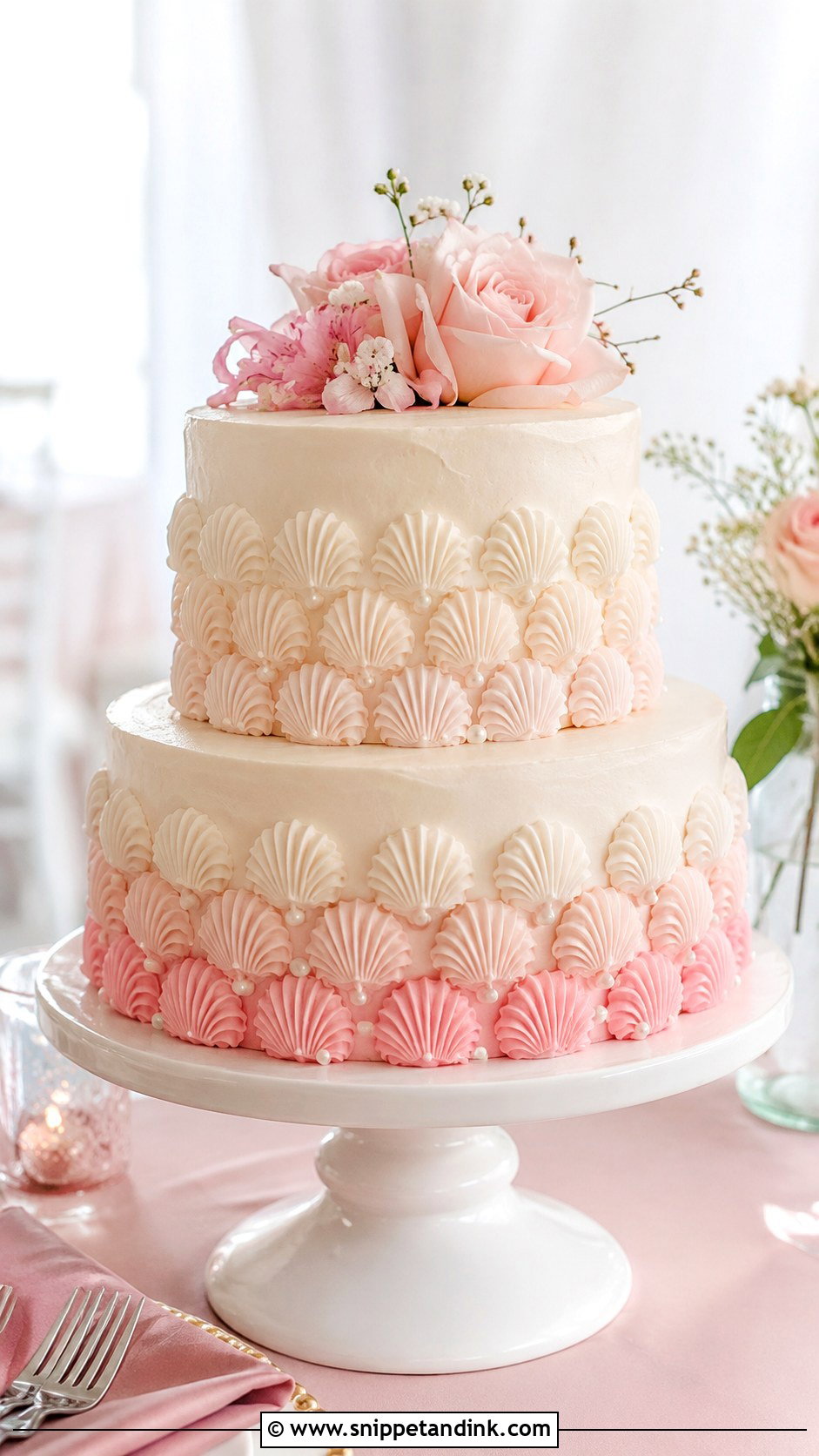
Ombre piping fades buttercream from ivory into blush, champagne, dusty blue or pale peach, using small shells, dots, rosettes or vertical lines. Darkest at the bottom and lightest at the top keeps it grounded. I mix all the shades from one batch, adding colour step by step and holding back a little of each, which keeps the transition smooth and lets me fix a gap if I run short. Keep the shape and flowers simple so the colour shift stays the main feature.
24. Simple Piped Tiered Wedding Cake
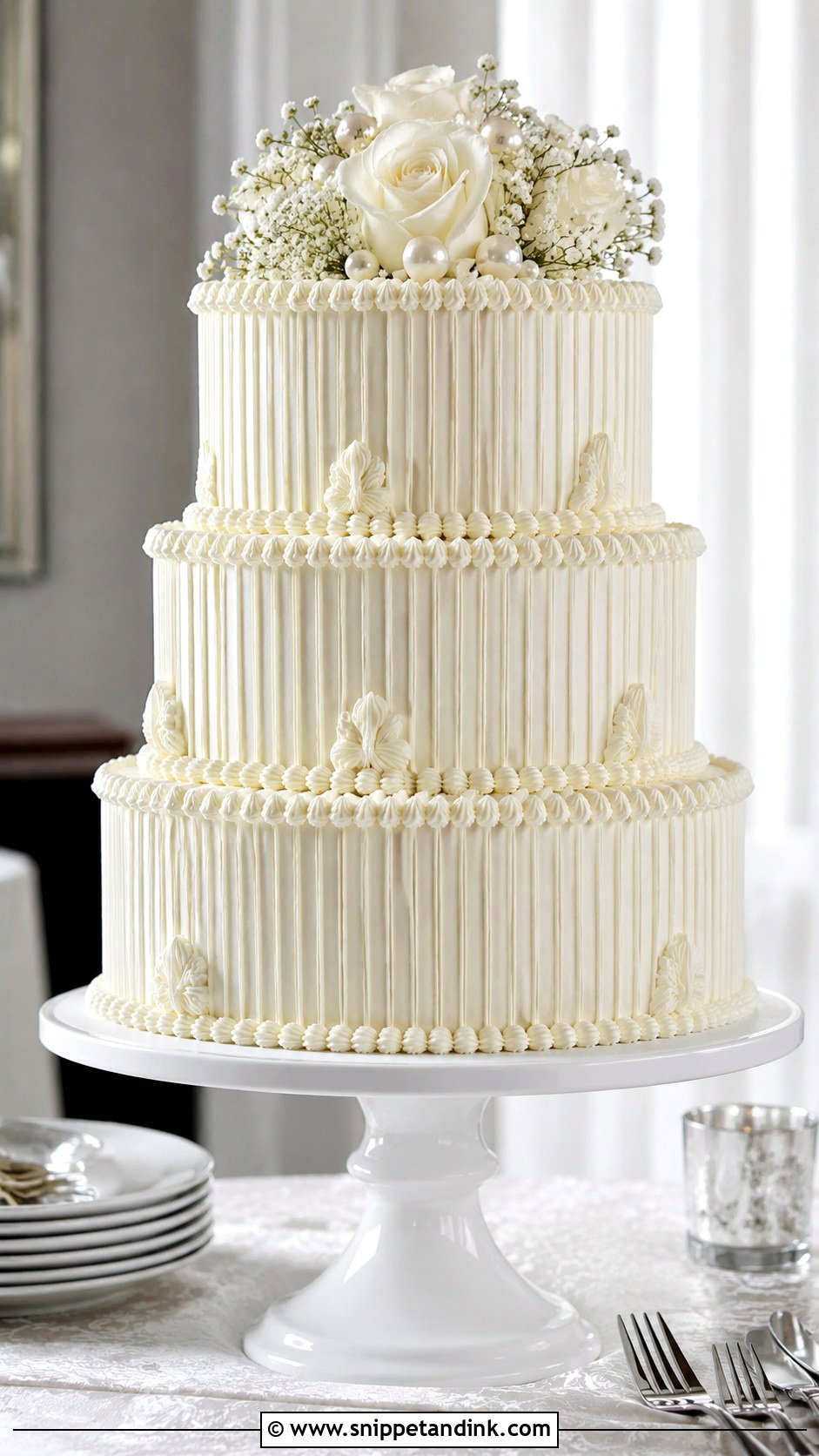
A simple piped tiered wedding cake works best when each tier gets one piping style and they all share a colour. Pearl borders on one, vertical lines on another and small shells on the third, all in the frosting colour, keep two or three tiers soft and cohesive. Restraint is the point: every tier has detail but the whole stays calm. Ask your baker to show you a tiered cake she’s piped before, as consistency across tiers is harder than one tier on its own. Fresh flowers and a clean stand go with it.
25. Simple Piped Cutting Cake
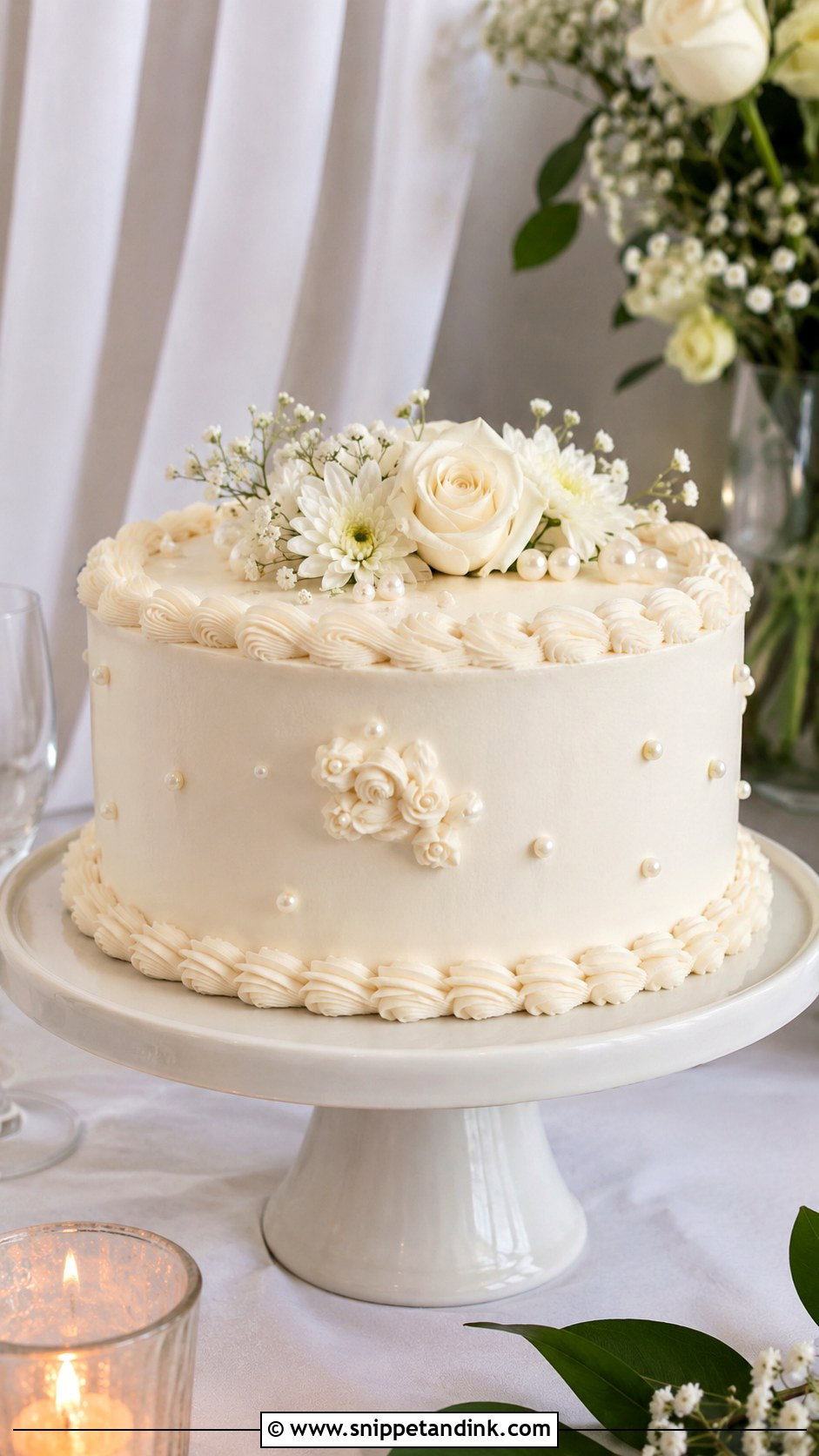
When guests are getting cupcakes, mini desserts or sheet cake, a small piped cutting cake gives you the photo moment. A small one-tier round cake with pearl dots, shell borders or tiny rosettes around the top and bottom edges is all it needs. Keep the frosting smooth and focus the detail on the front and top, since that’s what the camera sees. A few fresh flowers, edible pearls or a small topper can sit on top, and it fits on a small table.
Piping a Small Cutting Cake Yourself
A one-tier piped cake is a realistic home project if you give it time. The piping is rarely the problem; the surface underneath is. Here’s the order I’d follow:
- Bake and chill the layers a day ahead, then fill, crumb coat and chill again until firm.
- Apply the final coat and smooth it with a bench scraper on a turntable, then chill for at least half an hour.
- Practise every border on parchment or an upturned tin first, using the same buttercream and tip.
- Pipe the bottom border last, after everything above it is done, so you aren’t leaning over finished work.
- Keep the cake chilled, then let it sit out for an hour or so before serving so the buttercream softens and tastes as it should.
Warm hands melt buttercream inside the bag, which turns sharp shells into soft blobs halfway round. Fill the bag only half full and swap to a fresh one when it starts to feel soft.
Showing Your Baker the Detail You Mean
Piping words are vague. One baker’s pearl border is another’s bead border, and vintage can mean anything from one swag to full Lambeth. Bring close-up photos rather than full cake shots, circle the exact detail you like, and say how much of the cake it should cover. Ask to see examples of that specific technique in her own work. A quick sketch of each tier, however rough, removes most of the guesswork.
A Steady Hand Matters More Than More Decoration
Good piping is quiet. Clean buttercream, soft borders, tiny dots, delicate florals or a few vintage swags can make an ordinary cake look finished, as long as you choose one clear direction and let it lead. Pearl piping, shell borders, vines, rosettes or a small cutting cake all scale from an elopement to a full reception. With the right frosting, a steady hand and simple styling, a piped cake looks as good in the last photo of the night as in the first.
You'll Like These Ideas:






Leave a Reply