
Ganache is the finish I reach for when a couple wants clean lines but finds fondant too stiff. It’s simply chocolate and cream, yet set properly it gives a cake firm walls, crisp edges and a rich layer of flavor that buttercream can’t quite match. In white it can be poured smooth, whipped soft, run down the sides as a drip or textured with a spatula, and it takes flowers, pearls, fruit and metal leaf without fuss. It sits well over vanilla, almond, coconut, lemon, champagne and berry sponges. Below are twenty white ganache designs I’d happily put on a reception table, with notes on how each one is built and where it suits.
How a Ganache Finish Is Built
Most couples see ganache as a look. To me it’s a method, and knowing the steps explains why a ganache cake costs what it does and why it behaves so well on the day.
- The ganache is made ahead and left to firm up until it has the consistency of soft peanut butter, which is the stage at which it spreads cleanly.
- Each tier is filled, stacked and given a thin crumb coat, then chilled so the shape is locked in.
- A thick final coat goes on and is scraped against a straight edge or a pair of flat boards, which is where the sharp top edge comes from.
- The tier rests until the ganache sets firm. Only then does fondant, a drip or decoration go on.
Two things follow from this. First, the set ganache seals the sponge, so the cake stays moist for longer than a buttercream cake and can be finished a day or two before the wedding without drying out. Second, the firm shell is what carries the weight of upper tiers and survives the drive to the venue. If your design has a lot of handwork, such as Lambeth piping or sugar flowers, that head start gives your baker breathing room.
1. White Ganache Wedding Cake With Fresh Flowers
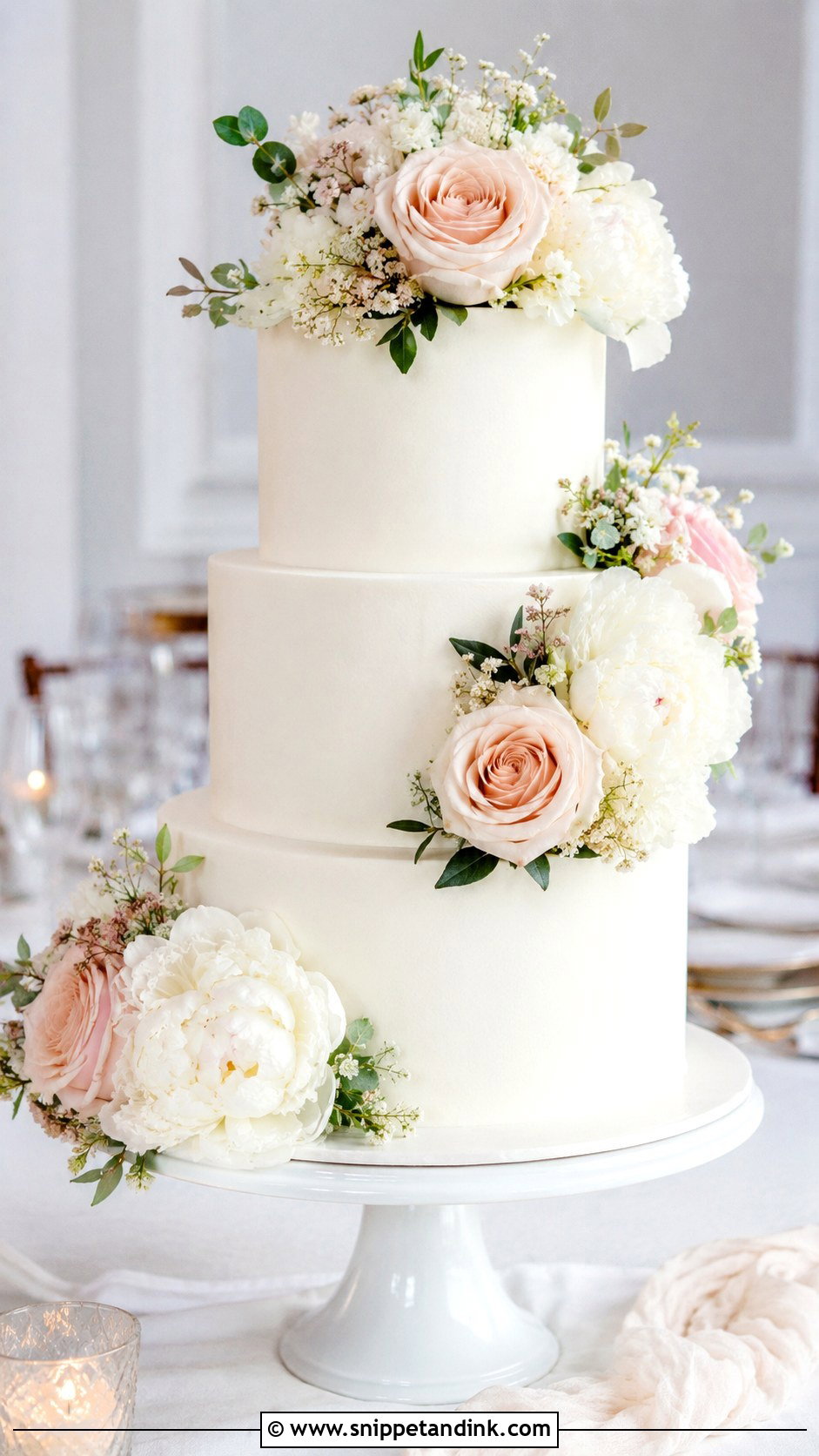
Fresh flowers are the quickest way to warm up a clean ganache finish. Match them to the bouquet with roses, peonies, ranunculus or small filler blooms, and group them in clusters so the smooth surface still shows between them. Ganache helps here, because its firm shell holds a wrapped stem without the frosting cracking around it. I insist every stem is wrapped or sealed and every variety cleared as safe by the florist before it goes near the cake. Garden, estate and classic indoor weddings all suit this one.
2. White Ganache Drip Wedding Cake
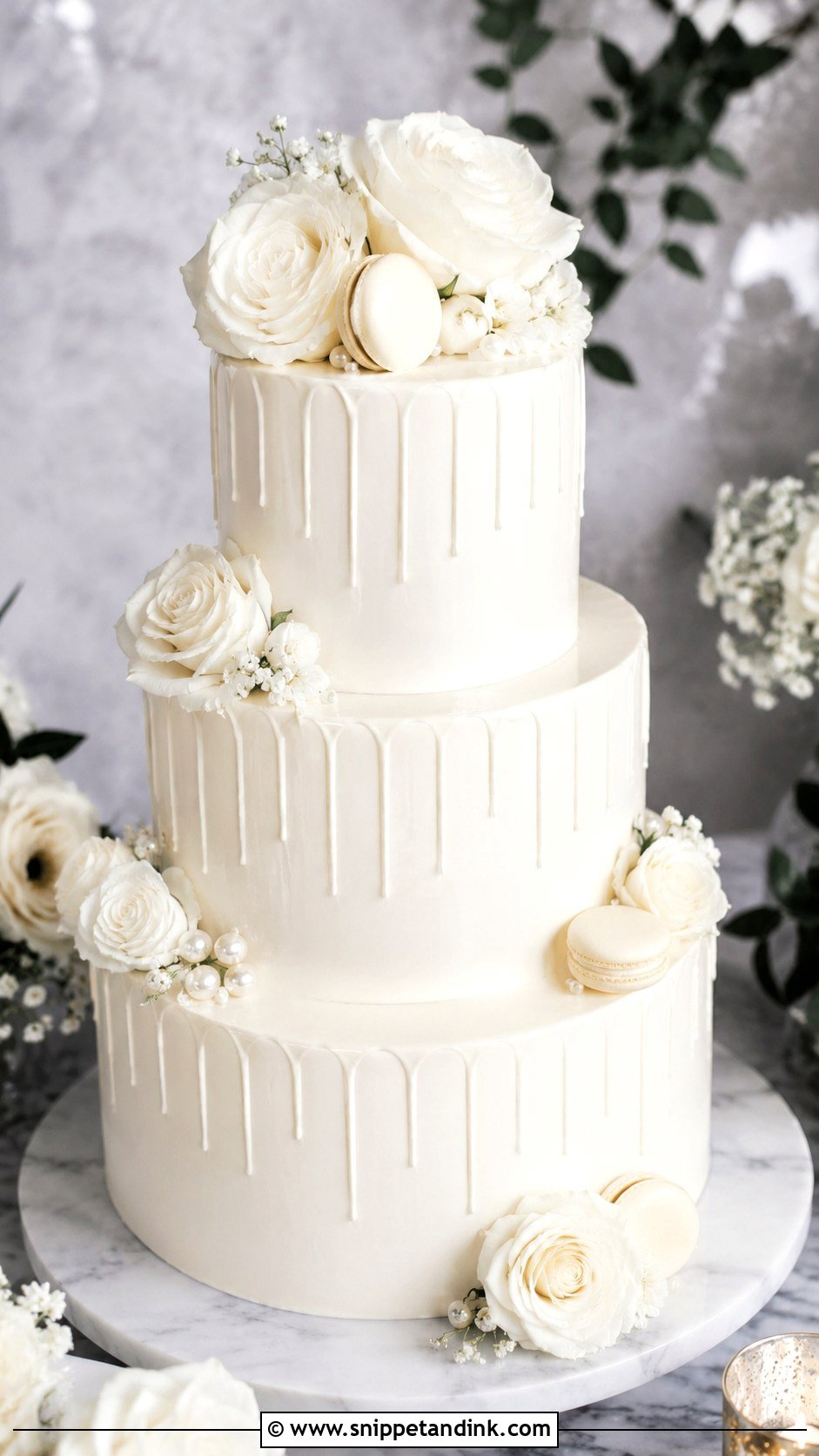
The best drips fall unevenly but end neatly, and that control comes down to temperature. A slightly glossy white chocolate ganache drip goes onto a well-chilled cake covered in smooth white ganache or pale buttercream; too warm and it pools at the base, too cool and it stops halfway in thick blobs. Keep the drip the same white as the cake for a refined look, or choose ivory with champagne accents for warmth. Fresh roses, macarons or a little greenery on top finish it.
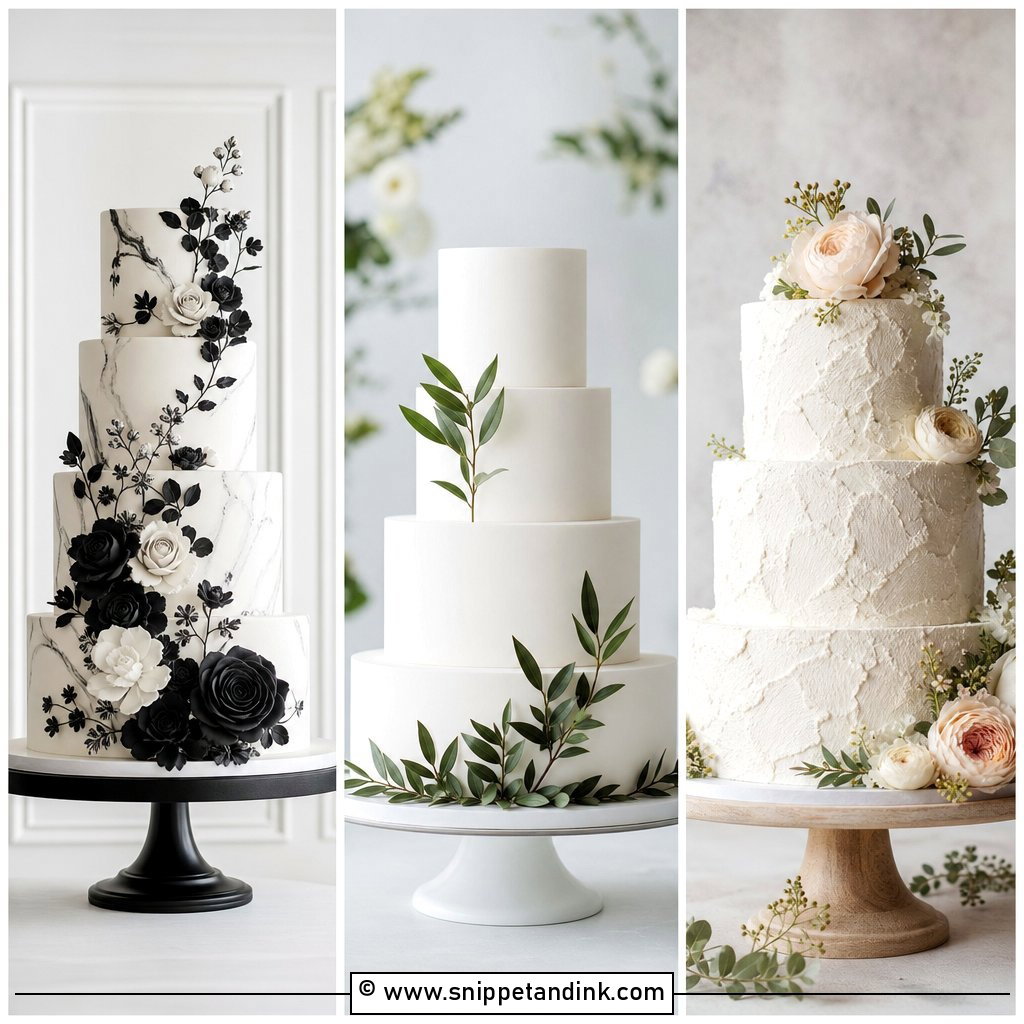
3. White Ganache Tiered Wedding Cake
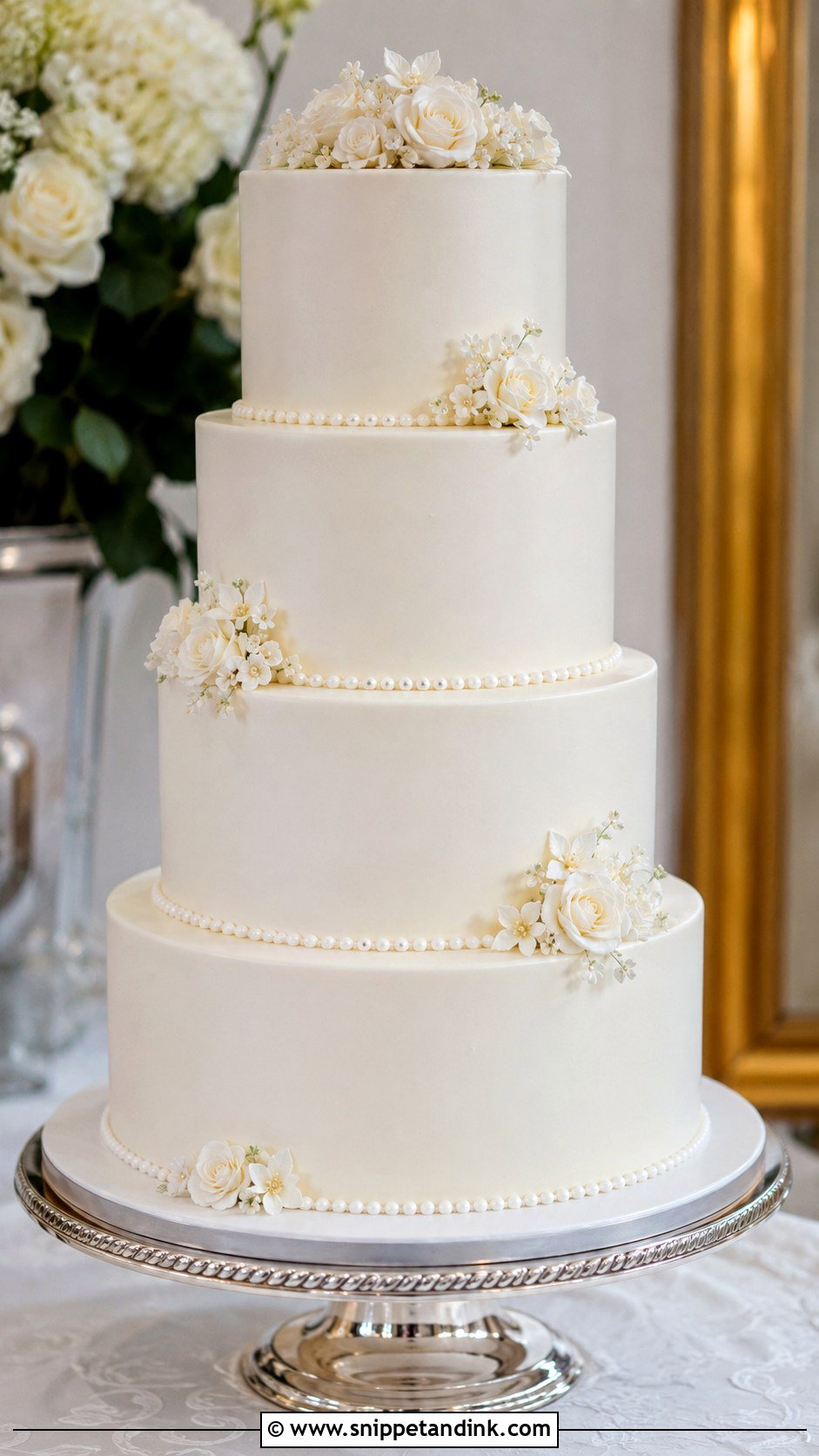
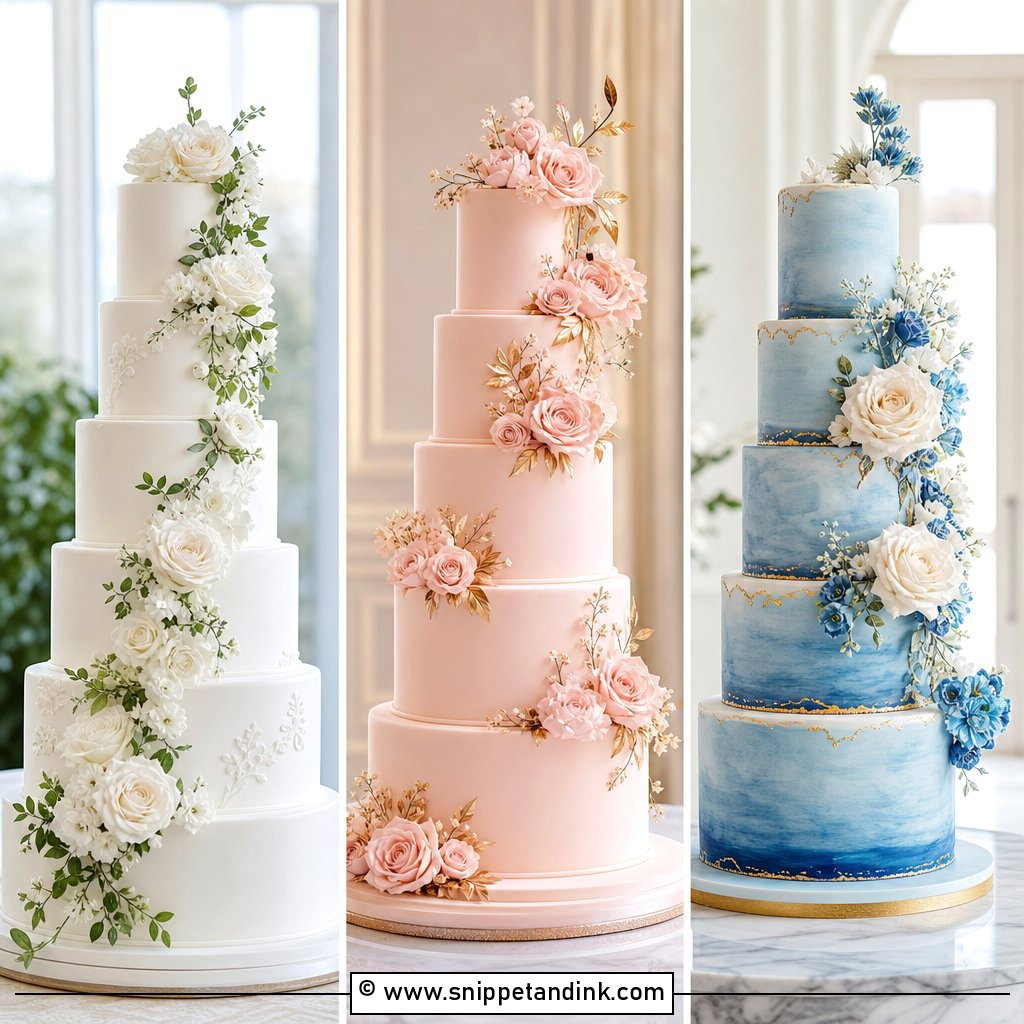
Few things look as classic as a tall white ganache tiered wedding cake, and ganache is the reason those tiers can stand so straight. Once set, it forms a firm shell that holds its shape under the weight of the tier above, which buttercream struggles to do in a warm room. Three or four tiers suit medium to large weddings. Simple piping, sugar flowers or pearls are plenty, and mixing round and square tiers gives it a contemporary edge.
4. White Ganache Wedding Cake With Gold Accents
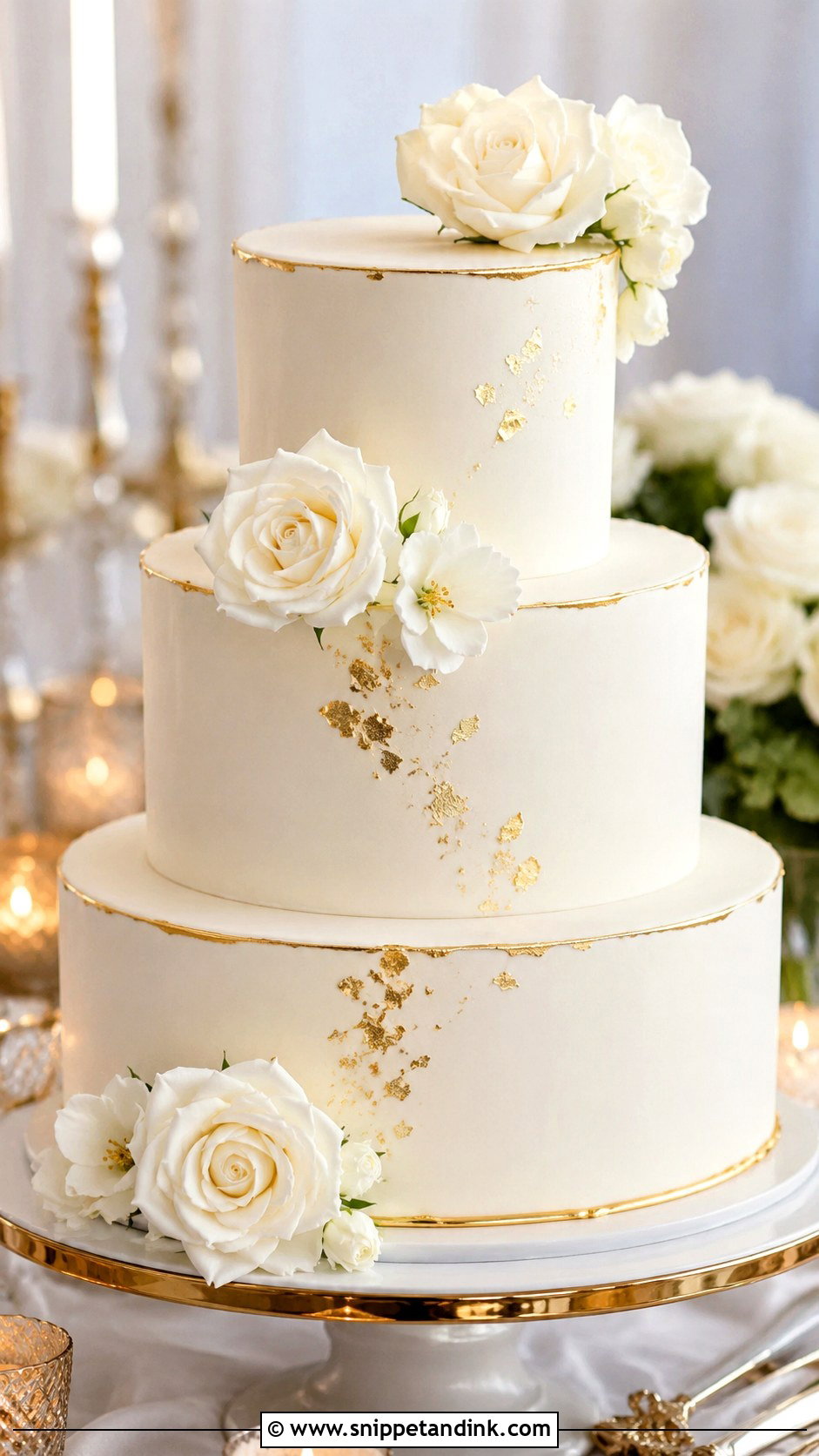
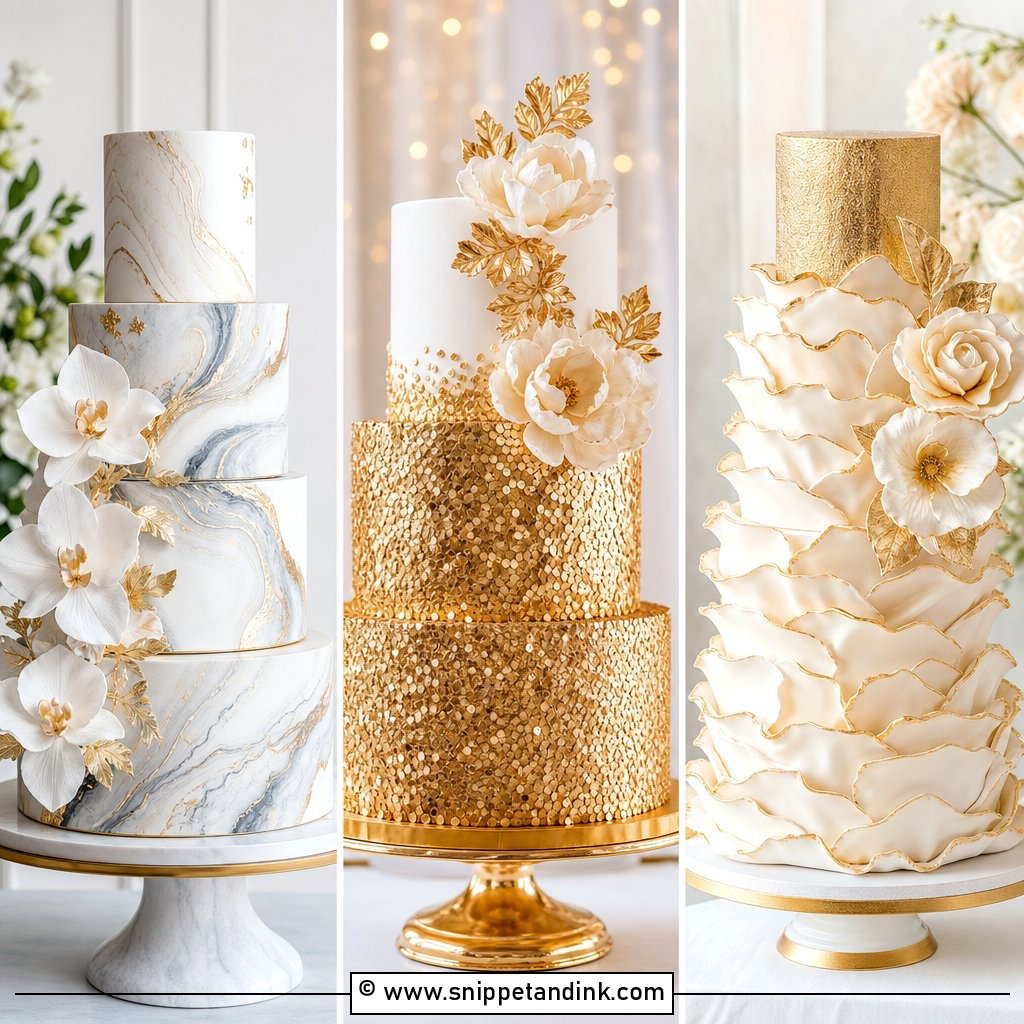
Gold against white ganache is warm rather than flashy, as long as it’s used sparingly. Thin patches of gold leaf, a brushed edge, gold pearls or a fine gold drip all work. One thing I always check: only metals sold as edible should touch a cake. Some shimmer dusts are labelled non-toxic, which isn’t the same as edible, so they belong on decorations that get removed. For a formal ballroom, I’d trim the base of each tier in gold; for something softer, scatter a little leaf among fresh white flowers.
5. White Ganache Wedding Cake With Pearls
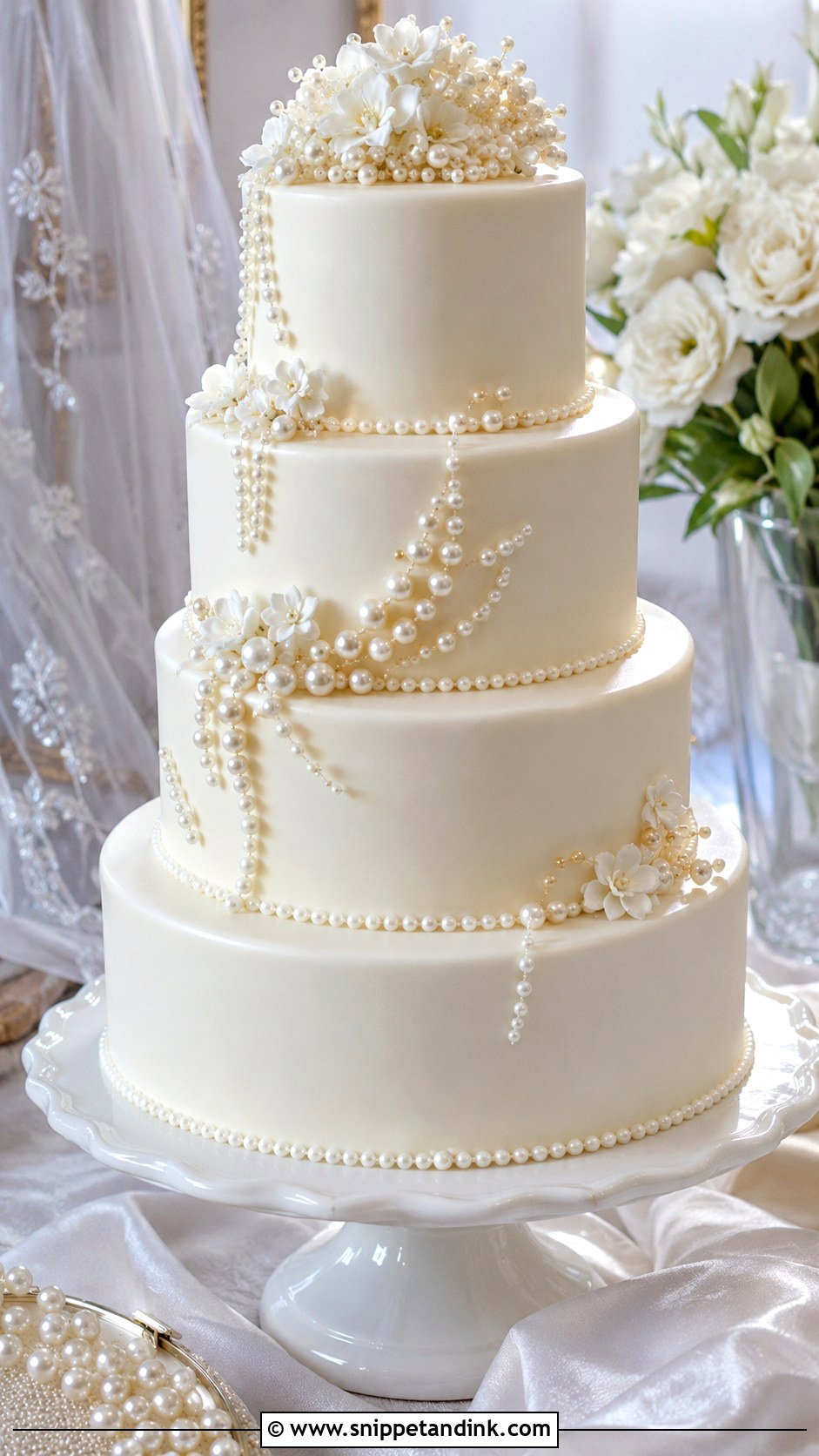
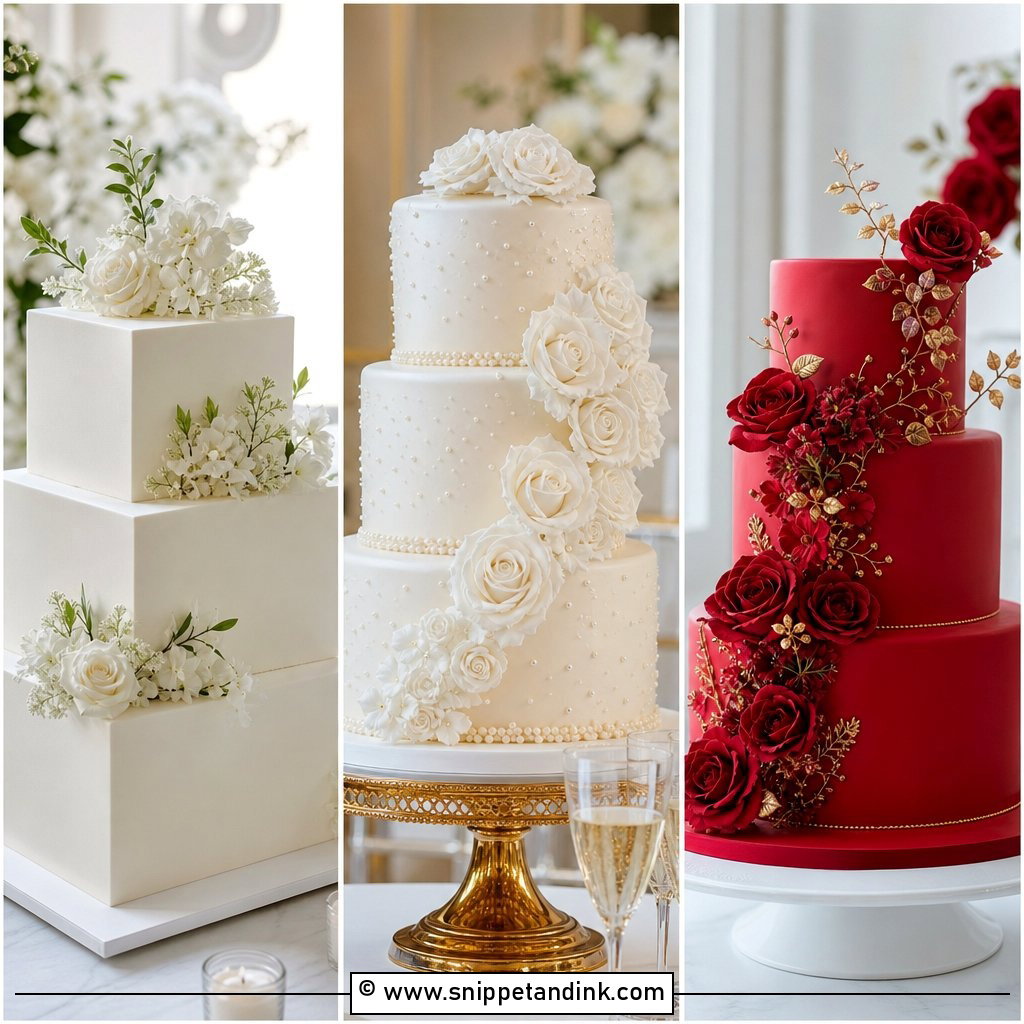
Pearls give a bridal look for very little effort. I press edible pearls into the ganache while it’s still soft enough to grip, or fix them with a tiny dot of piping gel once it has set. A row at the base of each tier looks tailored; a scatter across the surface feels playful. This design pairs naturally with satin gowns and pearl jewelry. Keep the whole cake white for a monochrome effect, or tuck in pale blush flowers to soften it.
6. White Ganache Wedding Cake With Roses
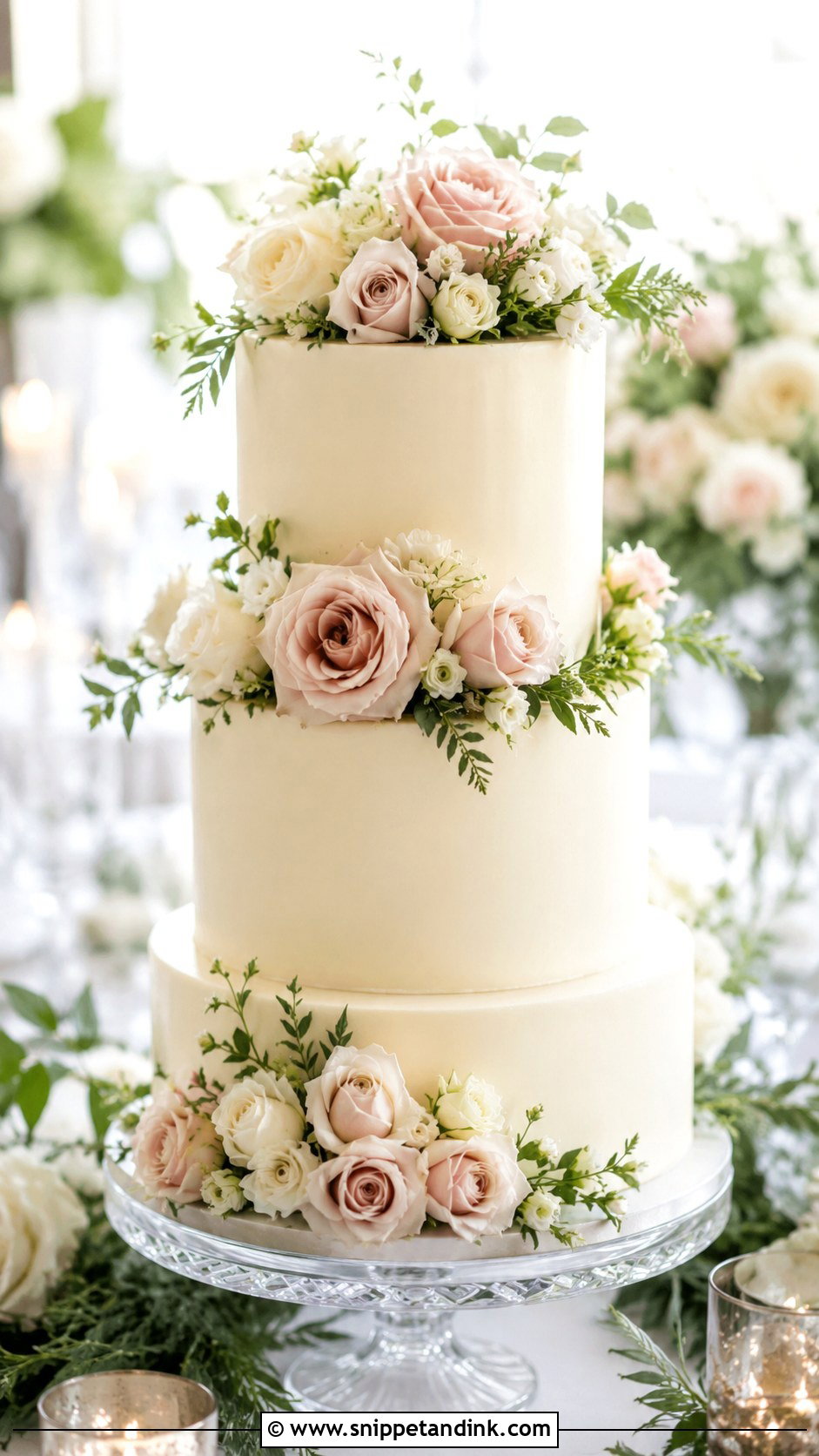
Roses are familiar for good reason. White roses keep the look classic, while blush, peach or dusty pink feel warmer; I’d avoid deep red if you want the mood to stay soft, since dark petals can also bleed color onto pale ganache if they’re damp. The roses can cascade, sit between tiers or gather on top. Smooth white ganache lets each rose shape read clearly. Garden venues, hotels and formal halls all suit it, in any season.
7. White Ganache Wedding Cake With Macarons
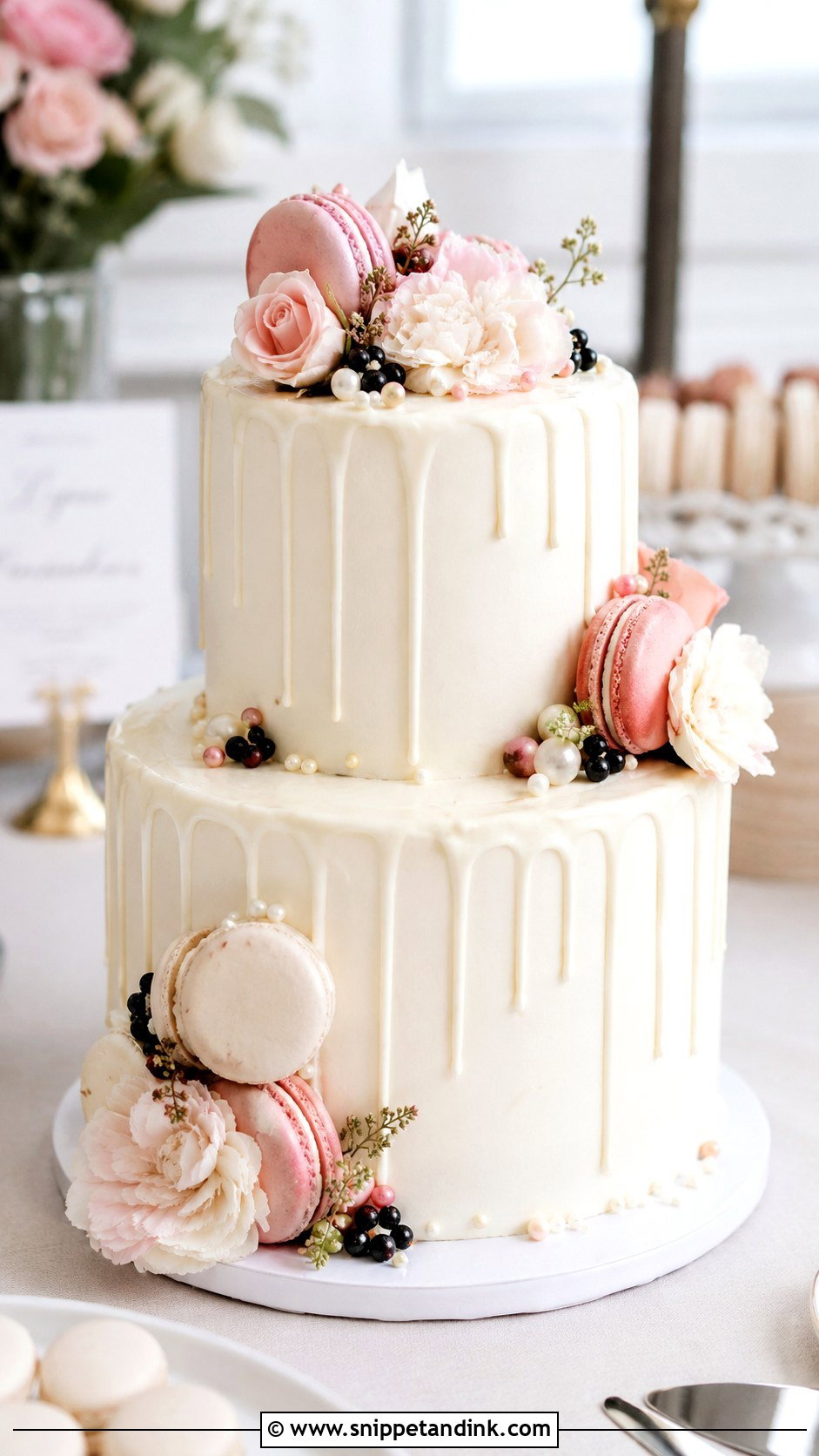
Macarons turn the cake into a nod to the dessert table. They can match the wedding colors or stay soft with ivory, blush and pale lavender, set in small clusters with a few flowers or berries. The catch is moisture. Macarons soften once they sit against cream or in humid air, so I attach them at the venue, not in the kitchen the day before. The cake underneath can be smooth or lightly whipped. French-inspired weddings and brunch receptions are where I see this one most.
8. White Ganache Wedding Cake With Sugar Flowers
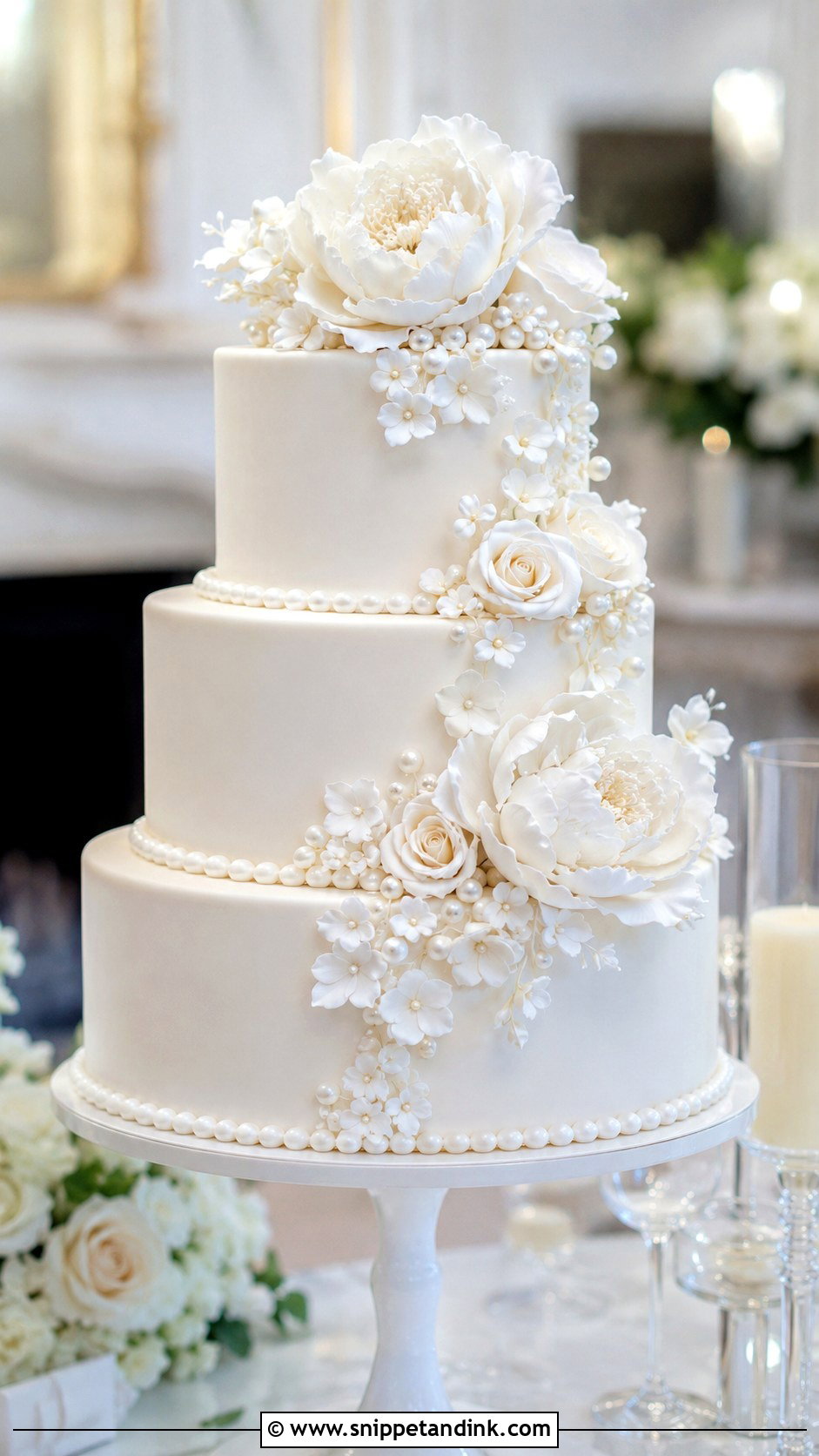
If the cake has to stand on display for hours, or travel to a destination venue, sugar flowers are what I’d choose. They won’t wilt, there’s no question of food safety, and they can be matched to your palette petal by petal as roses, peonies, orchids, anemones or tiny blossoms. Each flower is shaped and dried by hand over days, so order early. Against a smooth white ganache base, that handwork shows in every detail.
9. White Ganache Wedding Cake With Buttercream Texture
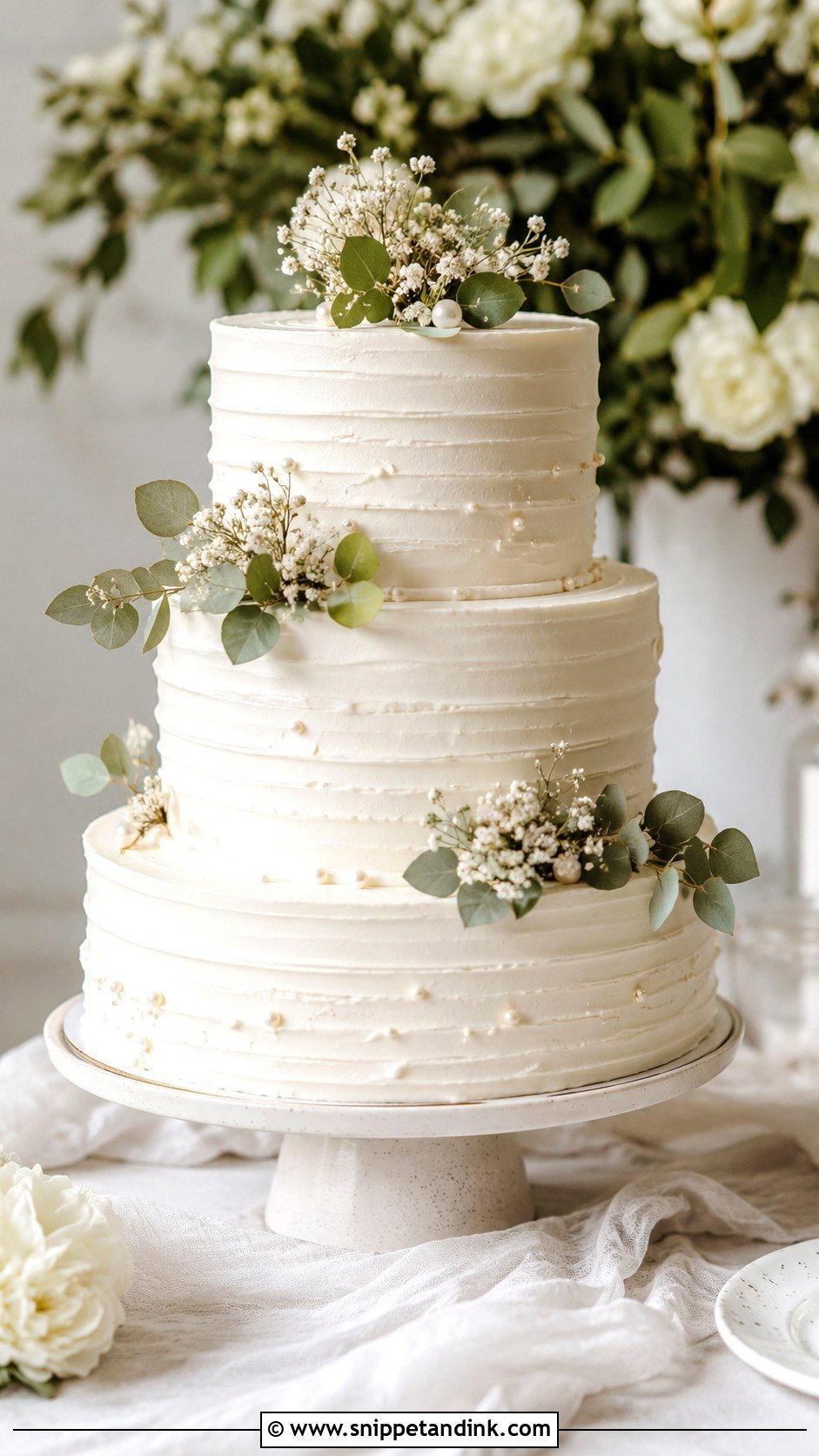
This combines the structure of ganache with the softness of buttercream. Ganache goes on first as the firm coat or filling, then a final layer of buttercream is worked into ridges, swirls, waves or spatula marks. The key is control: texture that’s deliberate looks relaxed, texture that’s random looks rushed. Rustic, coastal, garden and modern farmhouse weddings suit it. A few small flowers or some greenery are enough, and it sits well over vanilla bean, lemon, almond or coconut sponge.
10. White Ganache Wedding Cake With Fresh Berries
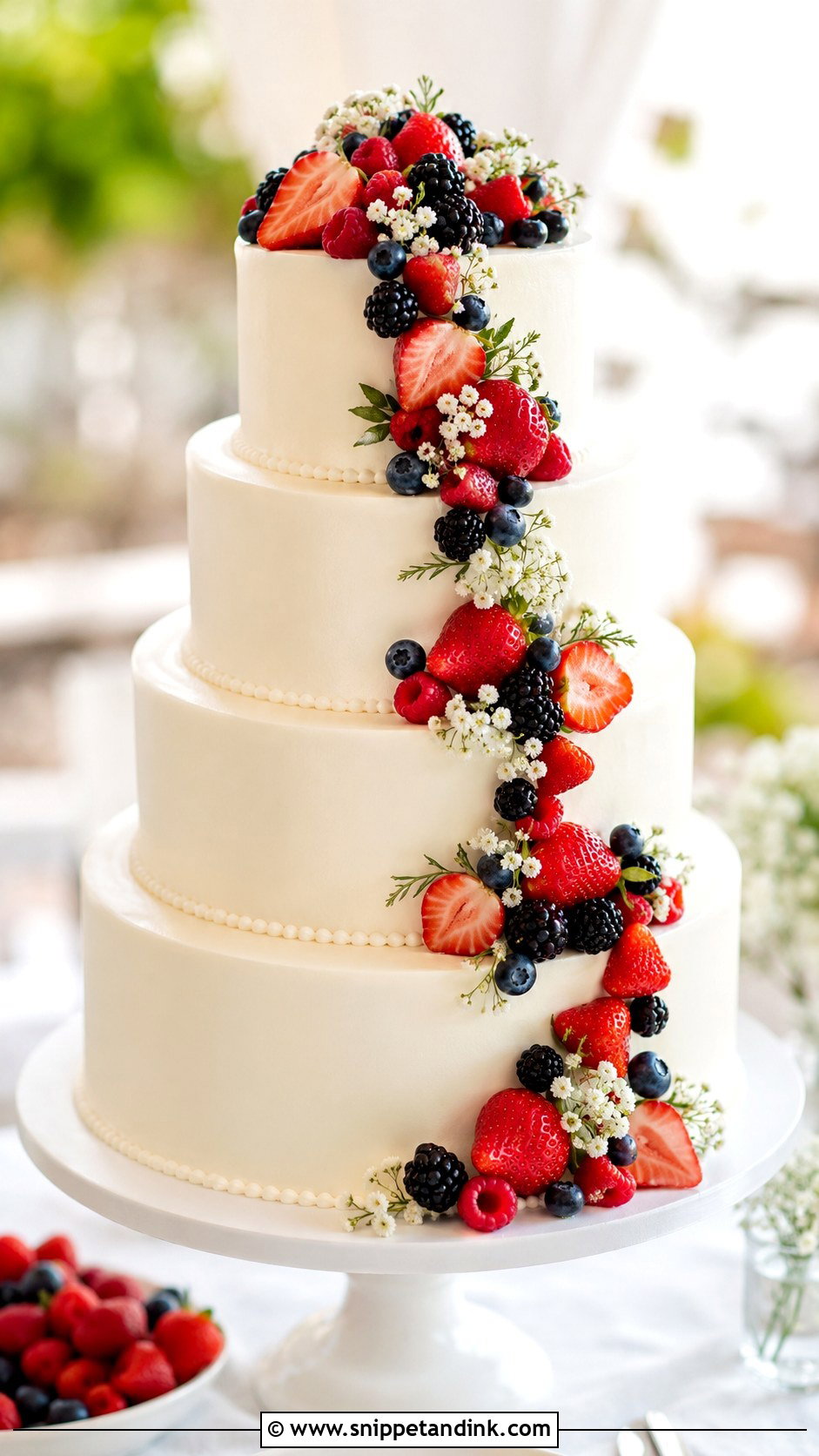
Berries on white ganache look bright and generous. Strawberries, raspberries, blueberries and blackberries all work, grouped around the tiers or running down one side. I wash and dry them thoroughly, because water beading on ganache leaves marks, and cut strawberries weep juice, so I use them whole. The fruit can hint at what’s inside, for example vanilla raspberry, lemon blueberry or almond strawberry. Summer weddings, brunch receptions and outdoor venues are where it shines. A few mint leaves or small flowers give it a natural finish.
11. White Ganache Wedding Cake With Lace Detail
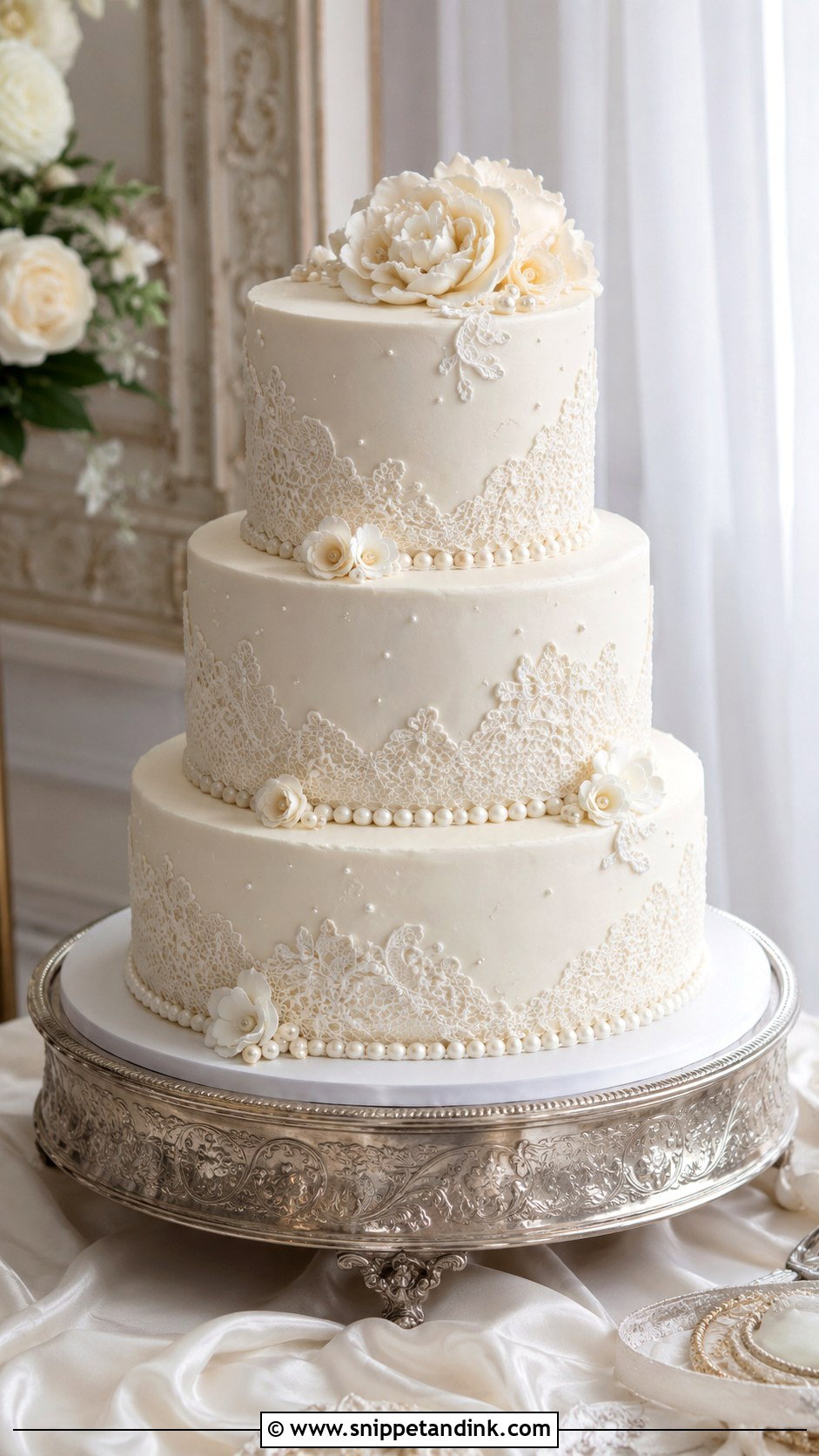
Lace detail echoes a lace dress without copying it too literally. Over ganache-covered tiers it can be fondant appliqué, royal icing or fine piping, and I like to see a photo of the gown so the motif sits in the same family. Royal icing lace sets brittle, which means the cake needs a gentle delivery. Keep the rest mostly white so the texture leads. Historic venues and classic formal receptions suit this design well.
12. White Ganache Wedding Cake With Greenery
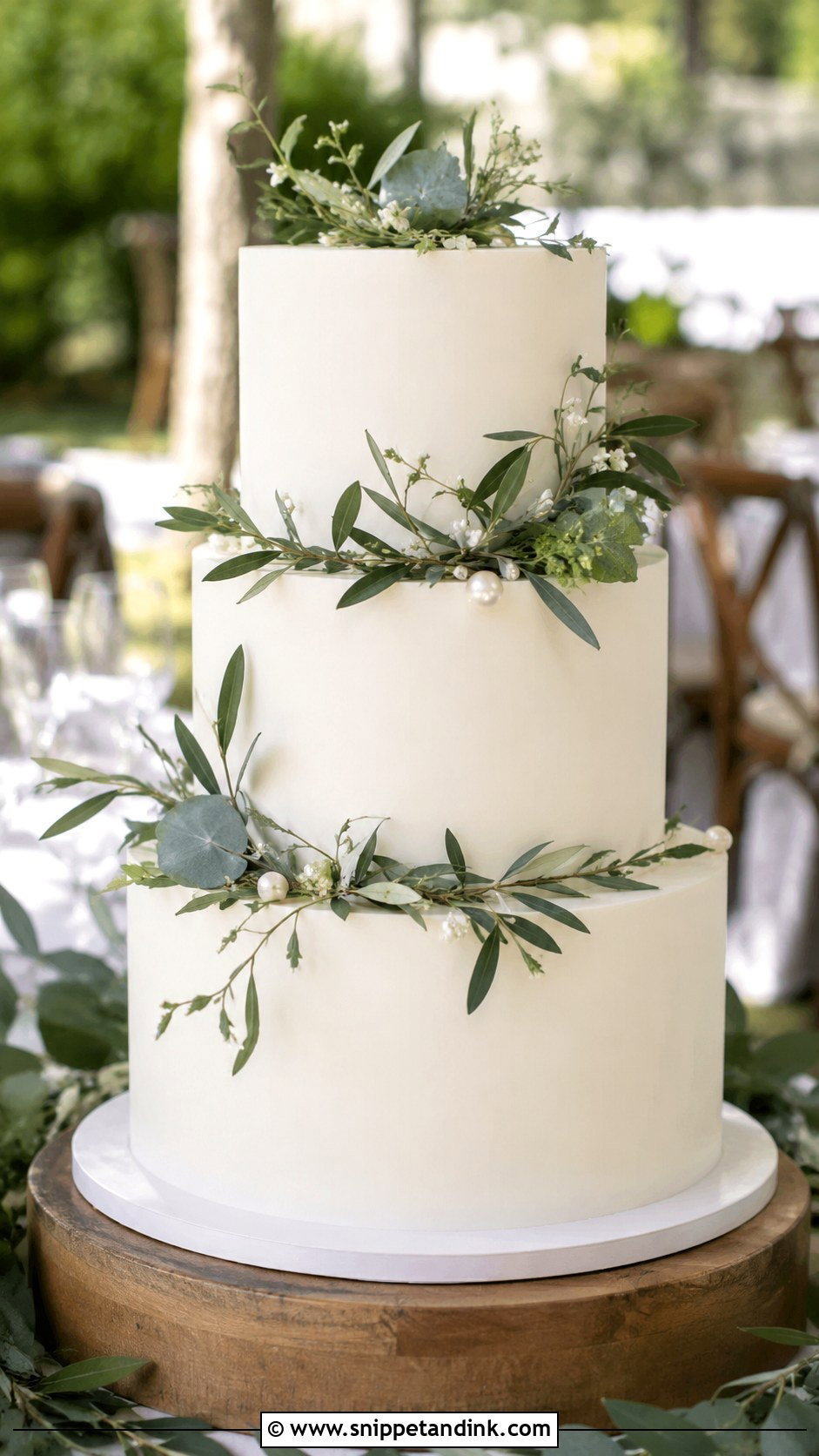
Greenery is the low-cost way to make a ganache cake feel natural. Eucalyptus, olive leaves, rosemary and soft fern all look fresh against white, wrapped loosely round the tiers or trailing down one side. Herbs like rosemary are food-friendly, but eucalyptus isn’t meant to be eaten, so it needs a barrier between leaf and ganache and should be removed before cutting. Smooth or lightly textured ganache both work underneath. Barns, outdoor weddings and minimalist celebrations are a natural match.
13. White Ganache Wedding Cake With Marble Effect
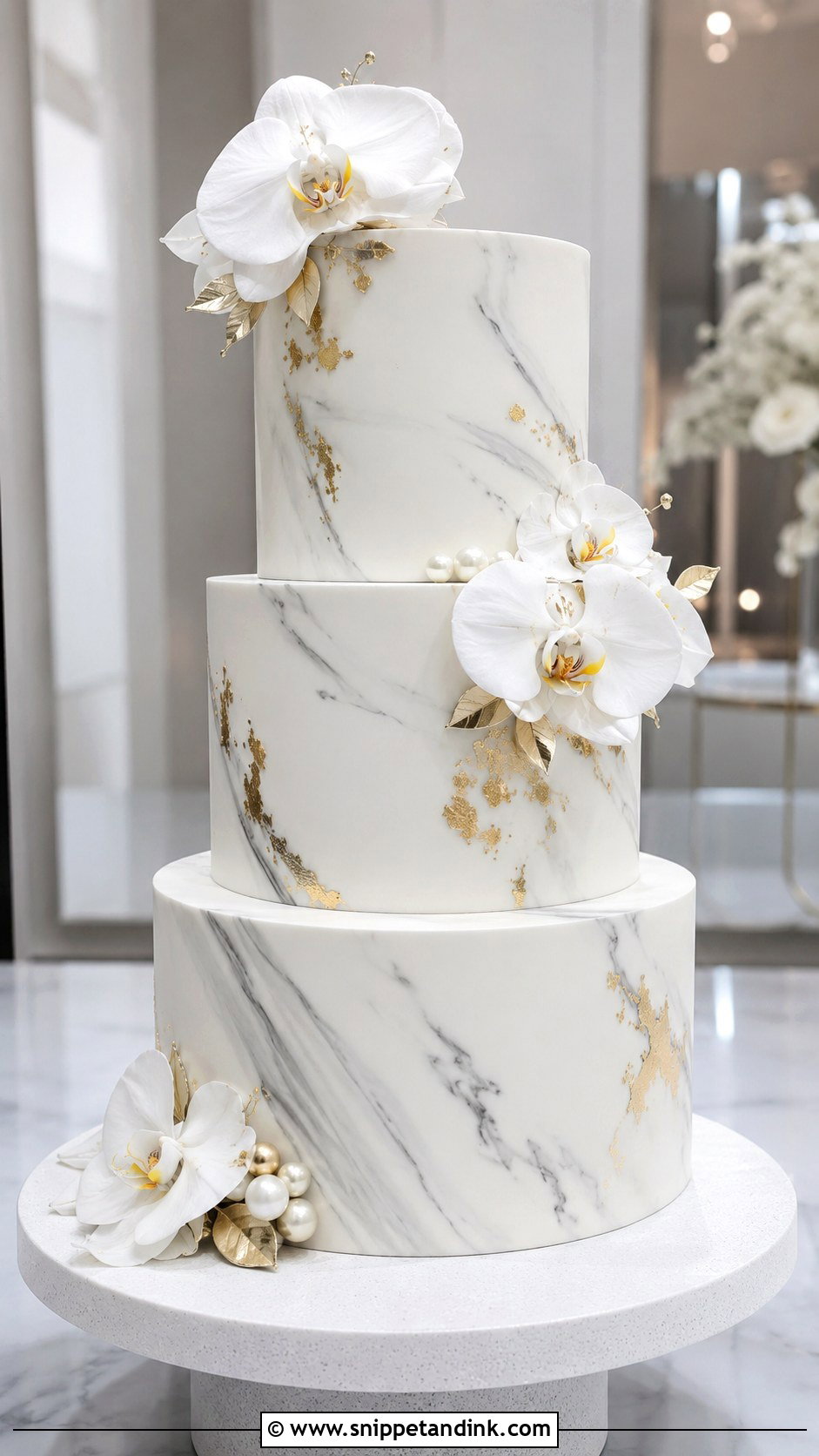
Marble is usually done in a fondant layer over the ganache, with soft gray, ivory or champagne streaks folded through before it’s rolled, or painted on by hand afterward. Subtle is the word: once the veins get dark, the cake stops reading as white. A little gold leaf, a few pearls or white flowers add polish without crowding the pattern. Modern venues, galleries and hotel weddings suit it, and the ganache underneath keeps the surface perfectly flat for the marble to sit on.
14. White Ganache Wedding Cake With Champagne Color
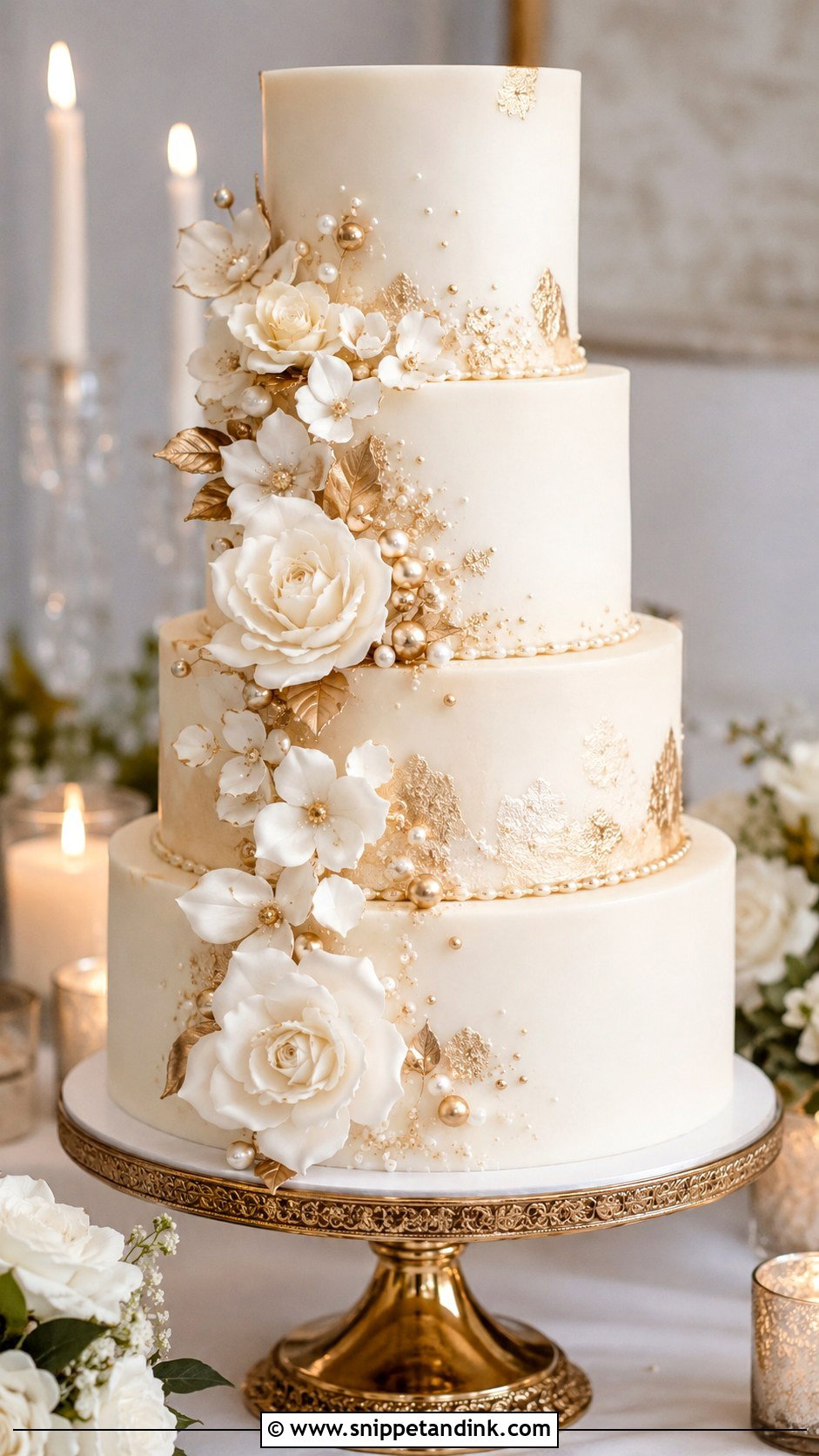
White ganache already leans ivory, because white chocolate is made from cocoa butter and milk, so a champagne cake is really just leaning into its natural color. That warmer tone sits well with gold decor, neutral flowers, satin linens and candlelight, and it never looks cold in evening photos. Champagne pearls, sugar flowers or a light drip add detail. Vanilla bean, almond, coconut or a champagne-flavored sponge all pair well underneath.



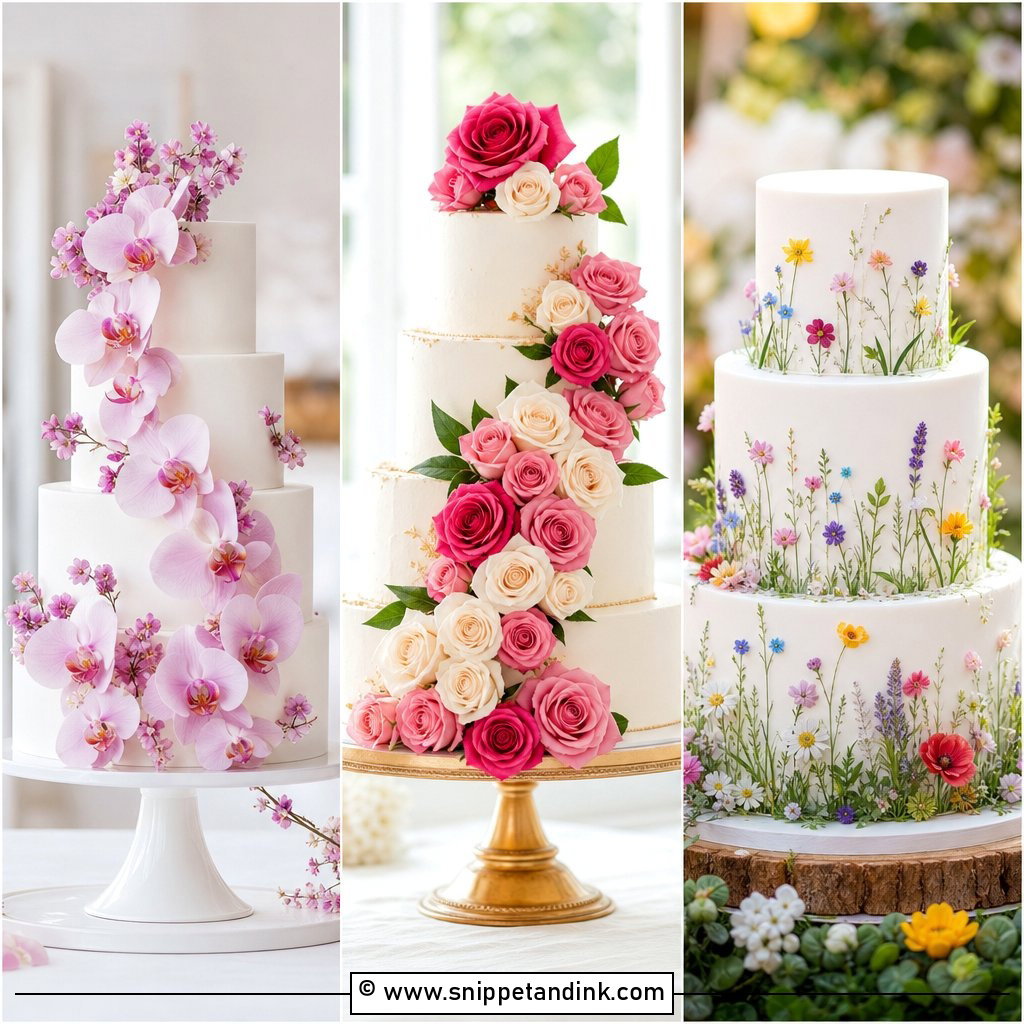
15. White Ganache Wedding Cake With Orchid Flowers
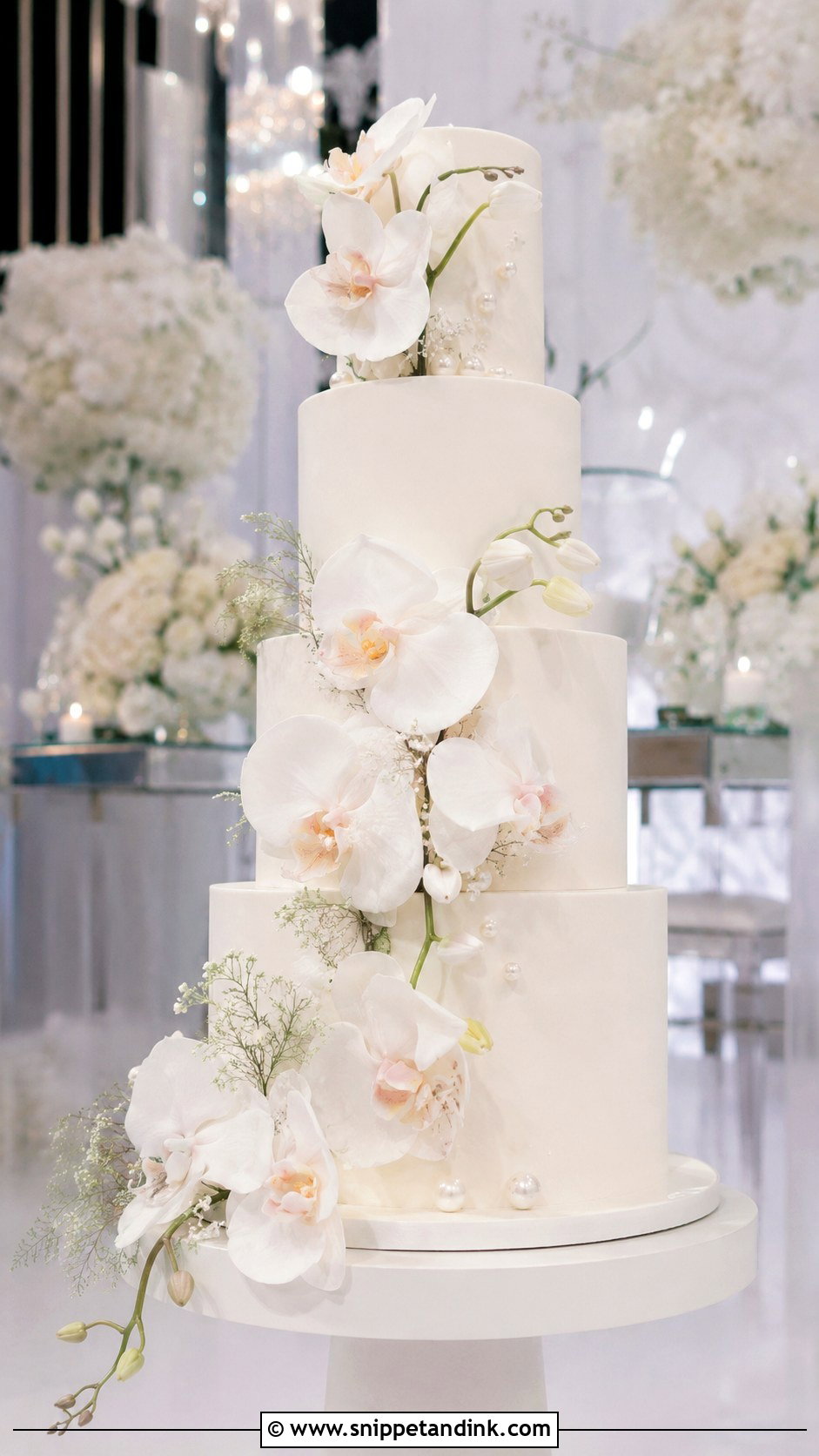
A white ganache cake with orchid flowers has a high-end feel because orchids bring shape without bulk. White keeps the cake monochrome; pale blush or soft lavender adds a gentle accent. They can cascade from the top tier or sit between layers. Orchids are among the hardier fresh flowers out of water, which helps in warm destinations, and sugar or silk versions suit a cake that stands out all day. Hotel, tropical and destination weddings are where I’d use it.
16. White Ganache Wedding Cake With Ruffles
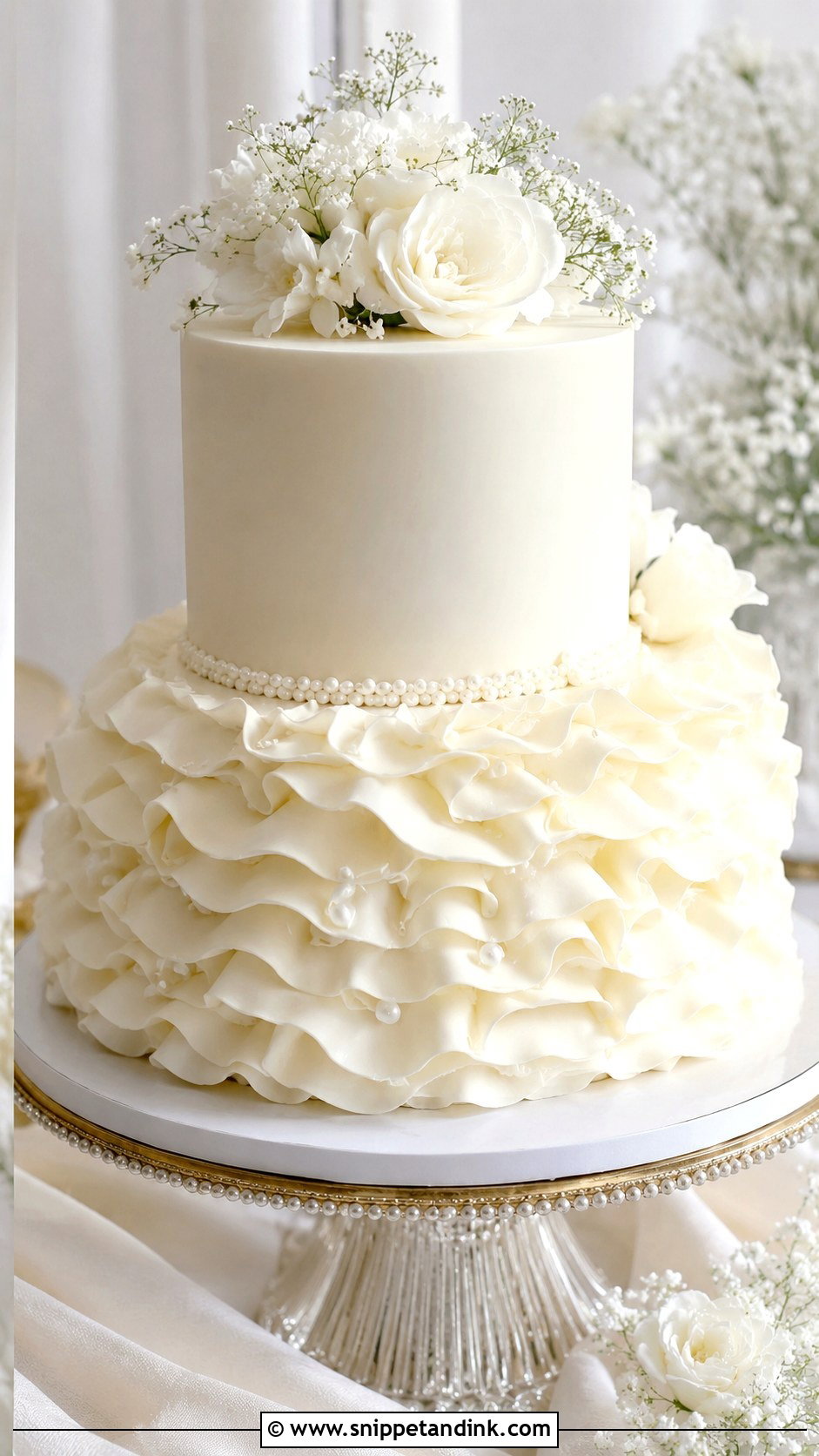
Ruffles over ganache can be made from white chocolate, modeling chocolate, fondant or piped frosting. Modeling chocolate gives the softest folds and holds well, while piped ruffles look prettier but slump faster in heat. I usually ruffle one tier and keep the others smooth, which stops the cake looking heavy. Small flowers or pearls are optional. It sits naturally in a romantic ballroom or next to flowing fabrics and floral centerpieces.
17. White Ganache Wedding Cake With Coconut
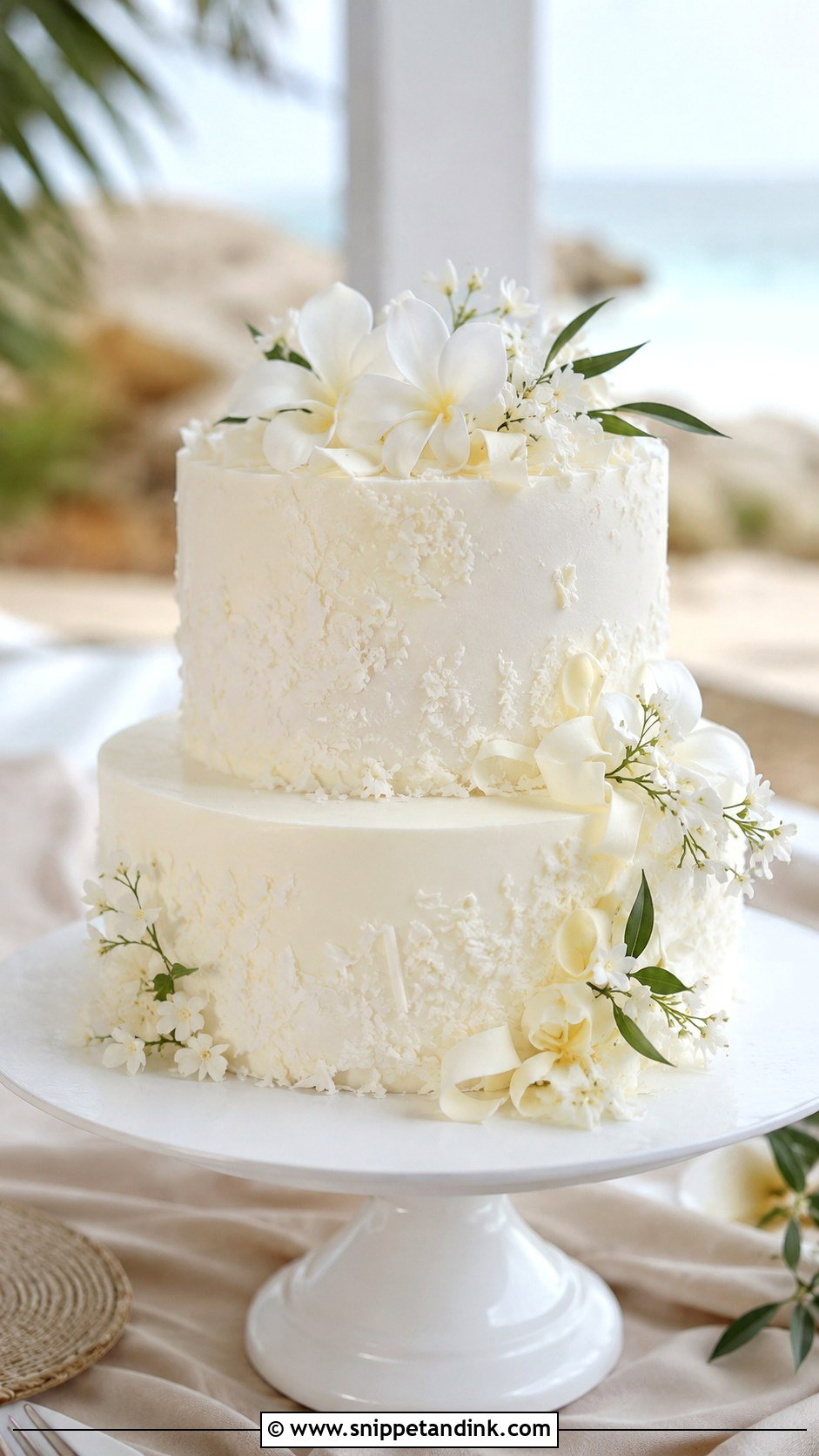
Coconut makes a white cake taste tropical while keeping it wedding-ready. Over smooth white ganache, I’d add a light scatter of coconut flakes or white chocolate curls rather than coating the whole cake, which can look like a bakery counter. Untoasted flakes keep the color pure white; toasted ones add a golden edge. Beach weddings and warm-weather receptions suit it, with vanilla, lime, pineapple or almond layers inside. Up close, the flake texture gives the camera plenty to catch.
18. White Ganache Wedding Cake With Lemon
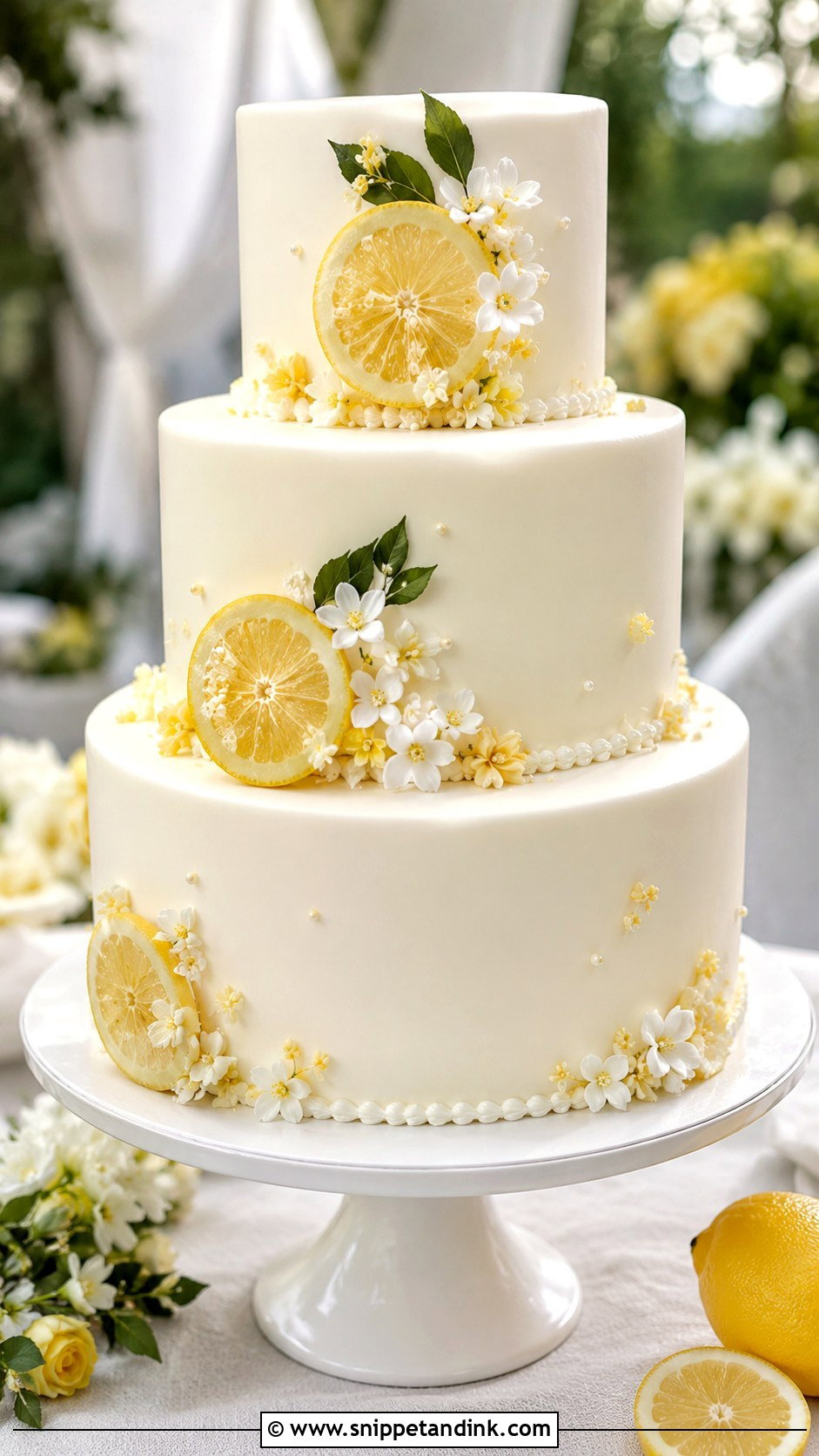
Lemon is what I suggest when the cake follows a heavy meal. Inside there can be lemon sponge, lemon curd or a lighter citrus filling, sealed under smooth white ganache. Because curd is soft, I keep it thin and pipe a firm dam around each layer so the tiers don’t slide. Outside, small lemon slices, white or pale yellow flowers and a few candied lemon pieces keep the accent soft and bridal. Spring, summer and daytime garden weddings are its natural home.
19. White Ganache Wedding Cake With Almond
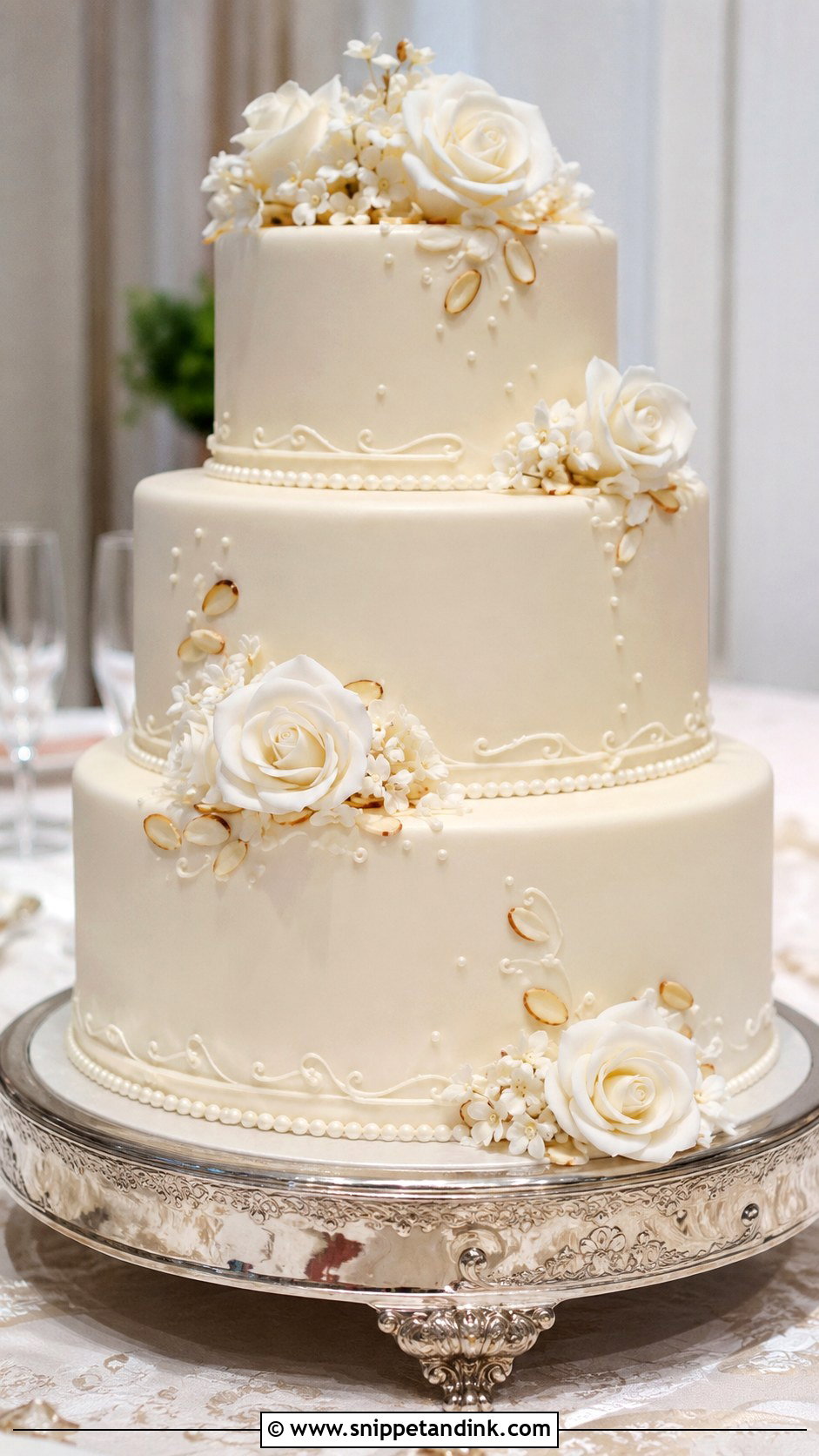
Almond and white chocolate ganache are both mellow, rounded flavors, which is why they sit together so well. The outside can stay simple with clean ganache, pearl borders and a few sugar flowers, plus a very light line of sliced almonds at the base as a flavor clue. Almond is familiar to most guests while being more memorable than plain vanilla, though it does mean a nut conversation with your caterer. Traditional weddings and elegant indoor receptions suit it.



20. White Ganache Wedding Cake With Square Tiers
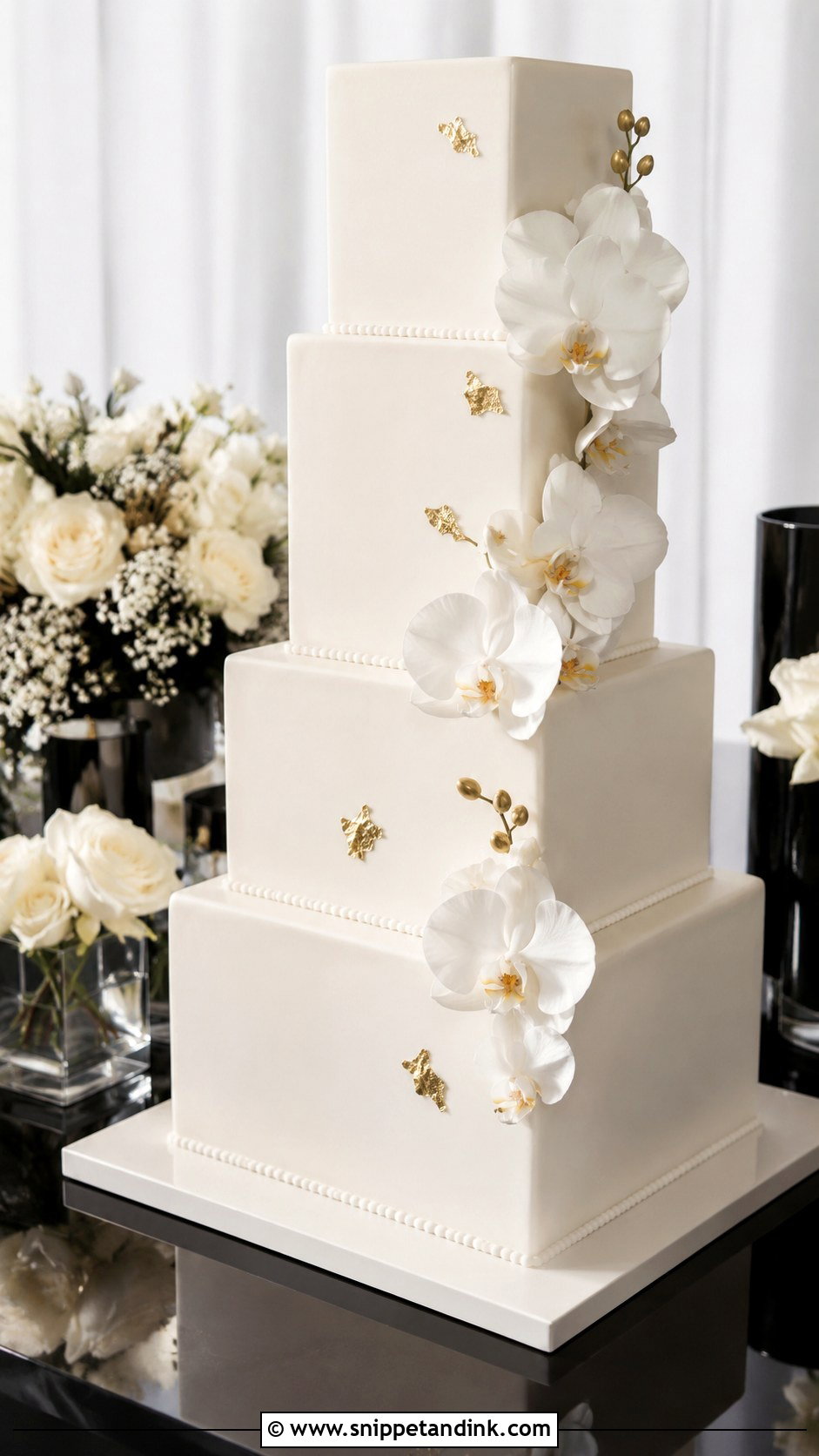
Square tiers show off what ganache does best. Building them is precise work: I set the ganache against flat boards on each side so the corners come out sharp, and even a slight lean is obvious on a square. Minimalist weddings, city venues and black-and-white palettes suit the shape. Keep it clean or add thin pearl borders, gold edging, white orchids or a small floral cluster. The strong lines also give the photographer clean shadows to work with, and it’s a confident step away from traditional round tiers.
Serving a Ganache Cake So It Tastes Its Best
Ganache tastes best at room temperature. Straight out of a fridge it’s hard and waxy and the flavor stays muted, so tell your venue not to chill the cake right up to cutting. In a cool room, letting it stand a couple of hours before slicing makes a real difference. In a hot one, keep it in shade and cut on schedule, because the shell softens fast.
The firm coat also changes how the cake is cut. A knife dipped in hot water and wiped dry between slices goes through the ganache cleanly instead of cracking it. Ask your caterer whether they’re portioning finger slices or dessert slices, since a rich ganache cake goes further in thin pieces than people expect.
Finally, think about who’s eating it. Ganache is made with cream, so it isn’t dairy-free, and fillings like almond or coconut need flagging for guests with allergies. If you want to save the top tier, wrap it well once it has chilled and freeze it. Ganache protects the sponge better than most finishes, which helps it hold up for a later anniversary.
Ganache Is the Base, the Details Are Yours
White ganache is the finish I’d recommend to most couples who want structure and flavor in one. It looks clean, tastes rich and gives a baker a firm base for crisp edges, drips, textures and delicate decoration. From there, the design can be romantic with roses, modern with marble, fresh with berries or classic with pearls. Bring your venue, dress, flowers, season and dessert table style to the consultation, and let those decide which of these looks fits the room.
You'll Like These Ideas:






Leave a Reply