
Wedding hair has a long day ahead of it: a ceremony, hugs, wind, a veil going on and off, and hours of dancing. The women wedding hairstyle ideas I trust most today pair classic structure with softer, personal details, such as low buns with loose face pieces, half up curls, glossy waves, textured ponytails, braided updos and natural curls shaped on purpose. What decides the right one is rarely the photo you saved. It’s your neckline, your veil, the weather, your hair’s texture and how much you’ll tolerate pins. Below are twenty styles, with notes on what each needs underneath to last, and who should pick something else.
Clean Hair or Second-Day Hair for the Morning?
This is the question I get most in the week before, and the answer depends on your hair and the style, not on a general rule. Freshly washed, silky hair is slippery, which makes pins slide and curls drop. Hair that’s a day or two past washing has a little grip and holds updos and braids better.
- Fine or straight hair heading into an updo: wash the night before, dry it fully, and skip conditioner on the roots.
- Thick or coarse hair: washing the evening before is usually fine, and a smoothing blow-dry makes the morning faster.
- Curly and coily hair: follow your normal wash-day routine a day or two ahead, so your curls are defined and moisturised rather than freshly frizzy.
- Oily scalps: a wash the night before, then dry shampoo at the roots in the morning, gives clean and grip at the same time.
Whatever you decide, avoid heavy oils, leave-in masks or a new product on the morning. Your stylist can add texture; taking slickness out is much harder.
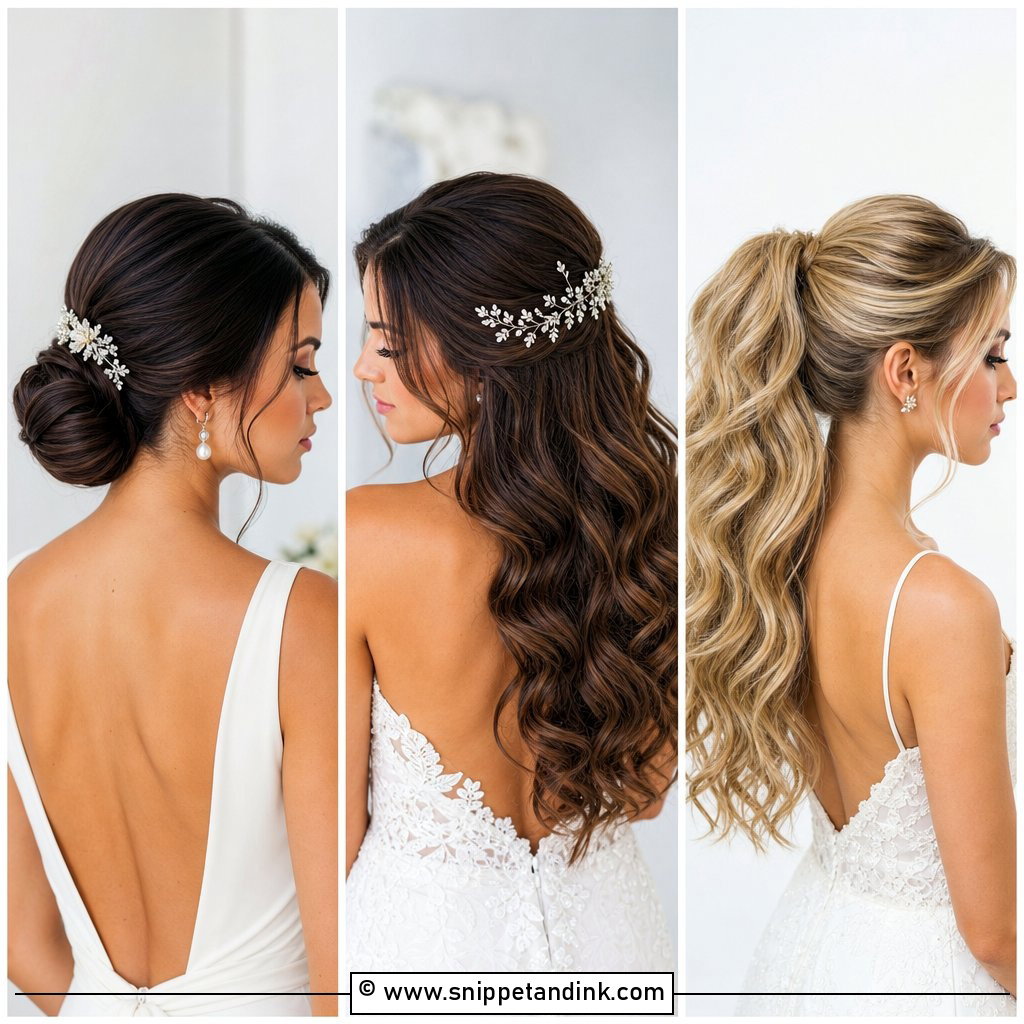
1. Wedding Low Bun
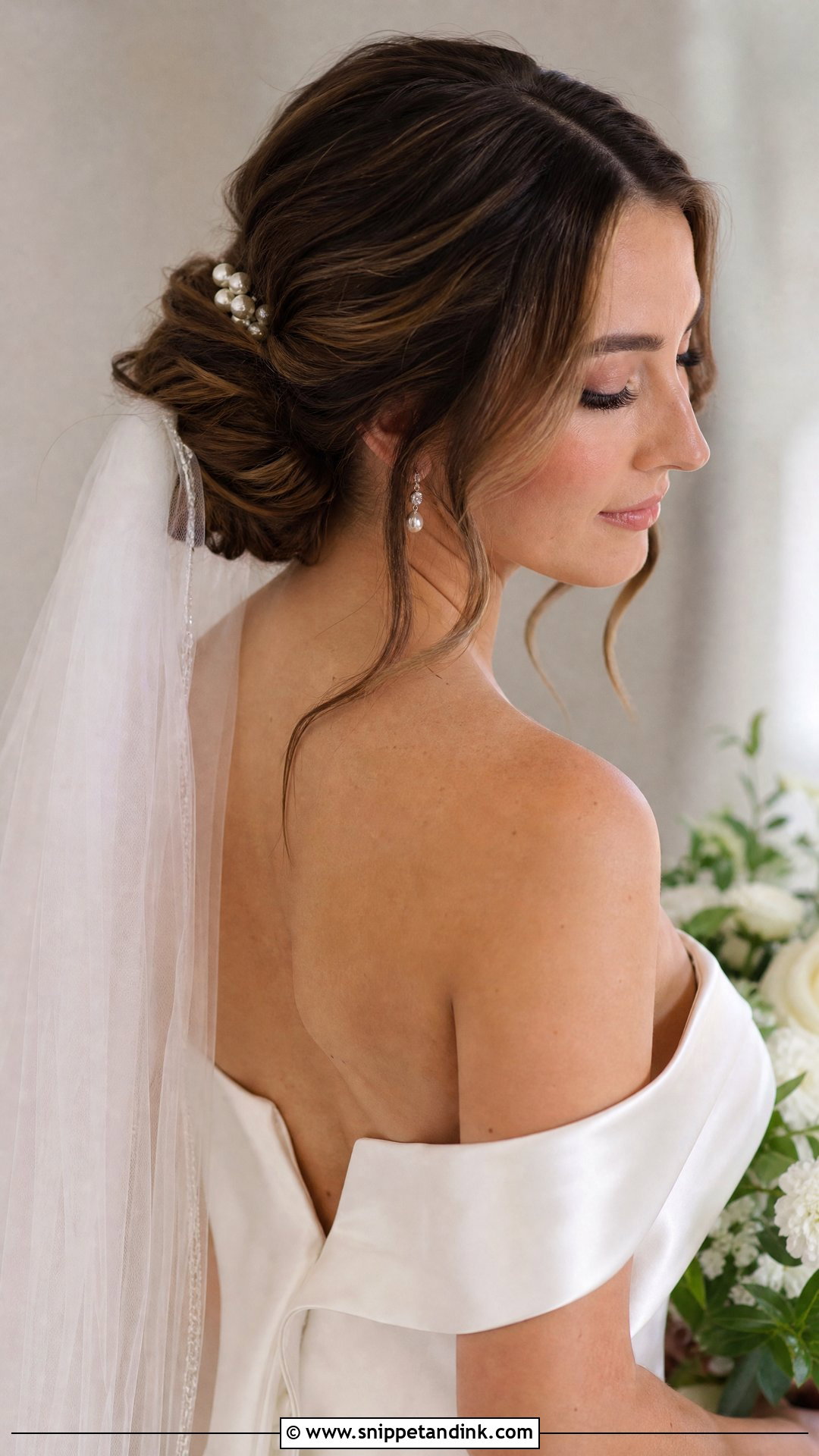
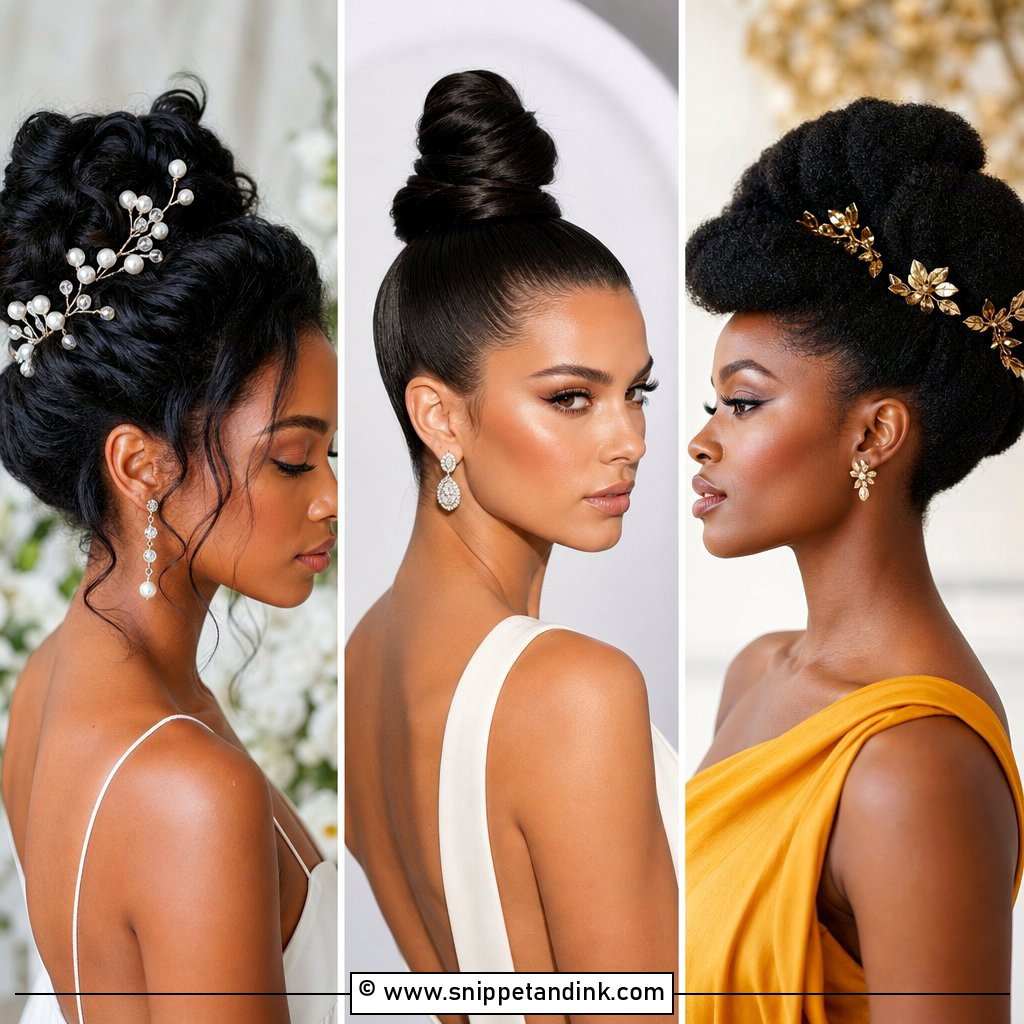
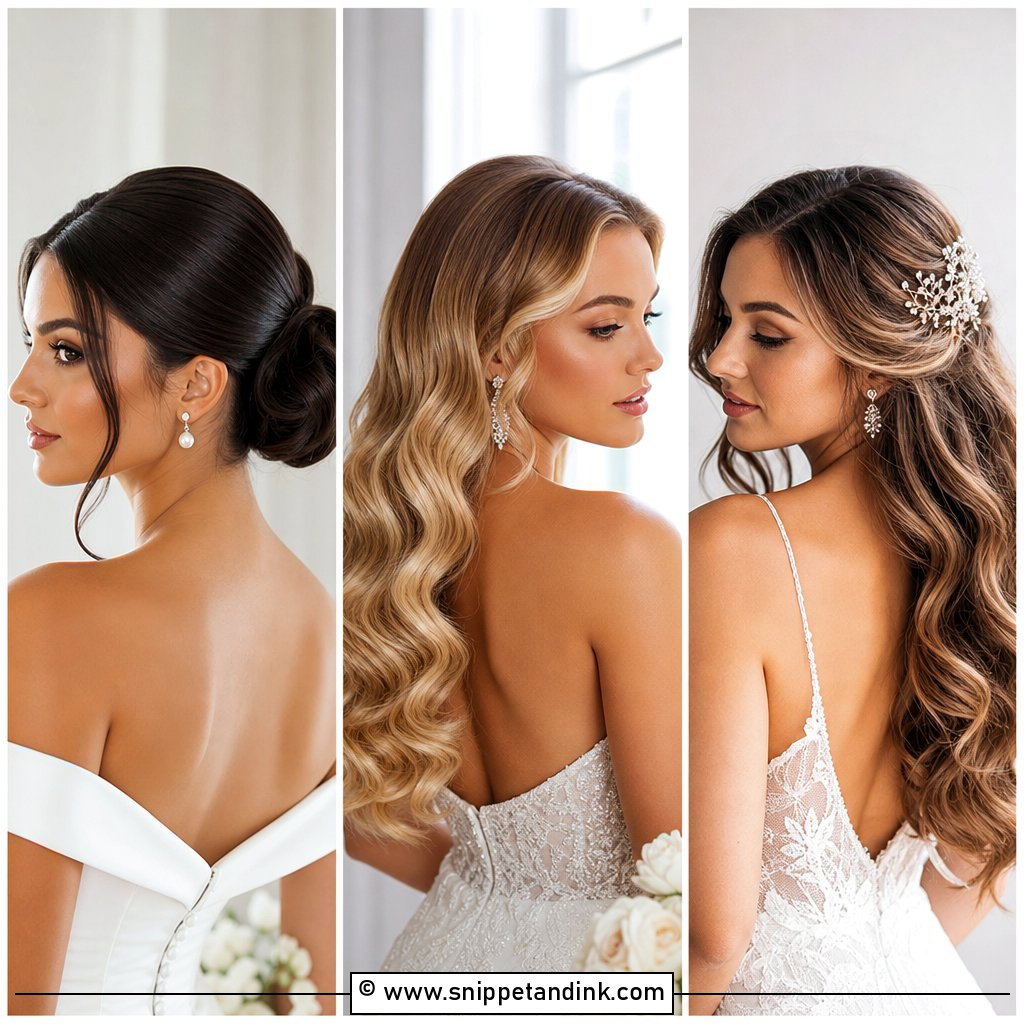
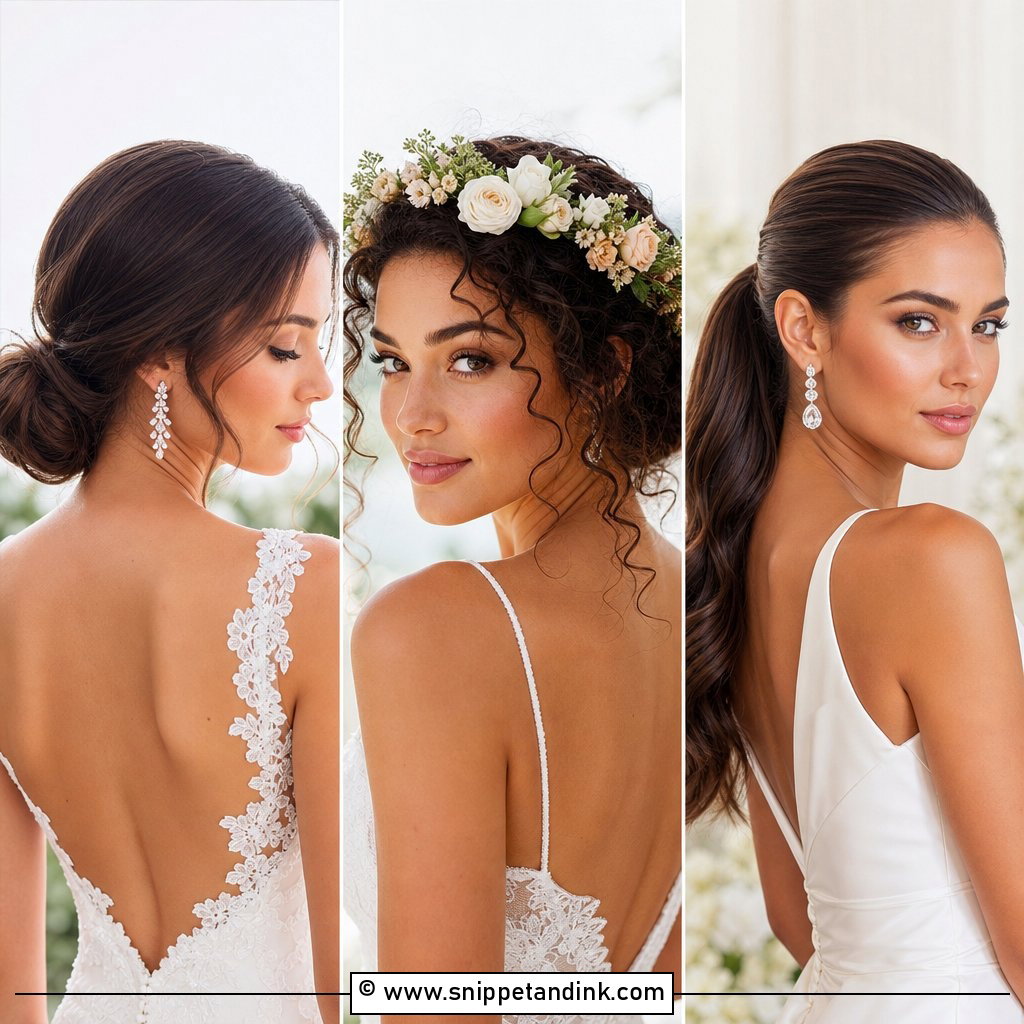
The low bun is the style I’m asked for most, and it earns that. Sitting at the nape, it leaves room for a veil comb above it and shows off pearl pins, floral combs and detailed dress backs. Middle part, soft side part or loose face pieces all suit it. The structure matters more than the look: I build it around a small elastic base so the pins have something to grip. Fine hair often needs a donut, padding or a few clip-in wefts to give it size; very thick hair should be shaped lower and wider so it doesn’t sit like a heavy knot.
2. Wedding Chignon
Tucked, twisted or rolled at the back, a chignon is smoother and more architectural than a bun. It looks right with off-the-shoulder gowns, high necks, satin and pared-back dresses. Keep it sleek for a modern ceremony, or pull a few small pieces at the temples to soften it. In humid weather it’s one of my safer choices because every section is pinned flat against the head and there’s no loose curl to drop. A pearl pin or a fine comb is all it needs.
3. Wedding Half Up Half Down Hair
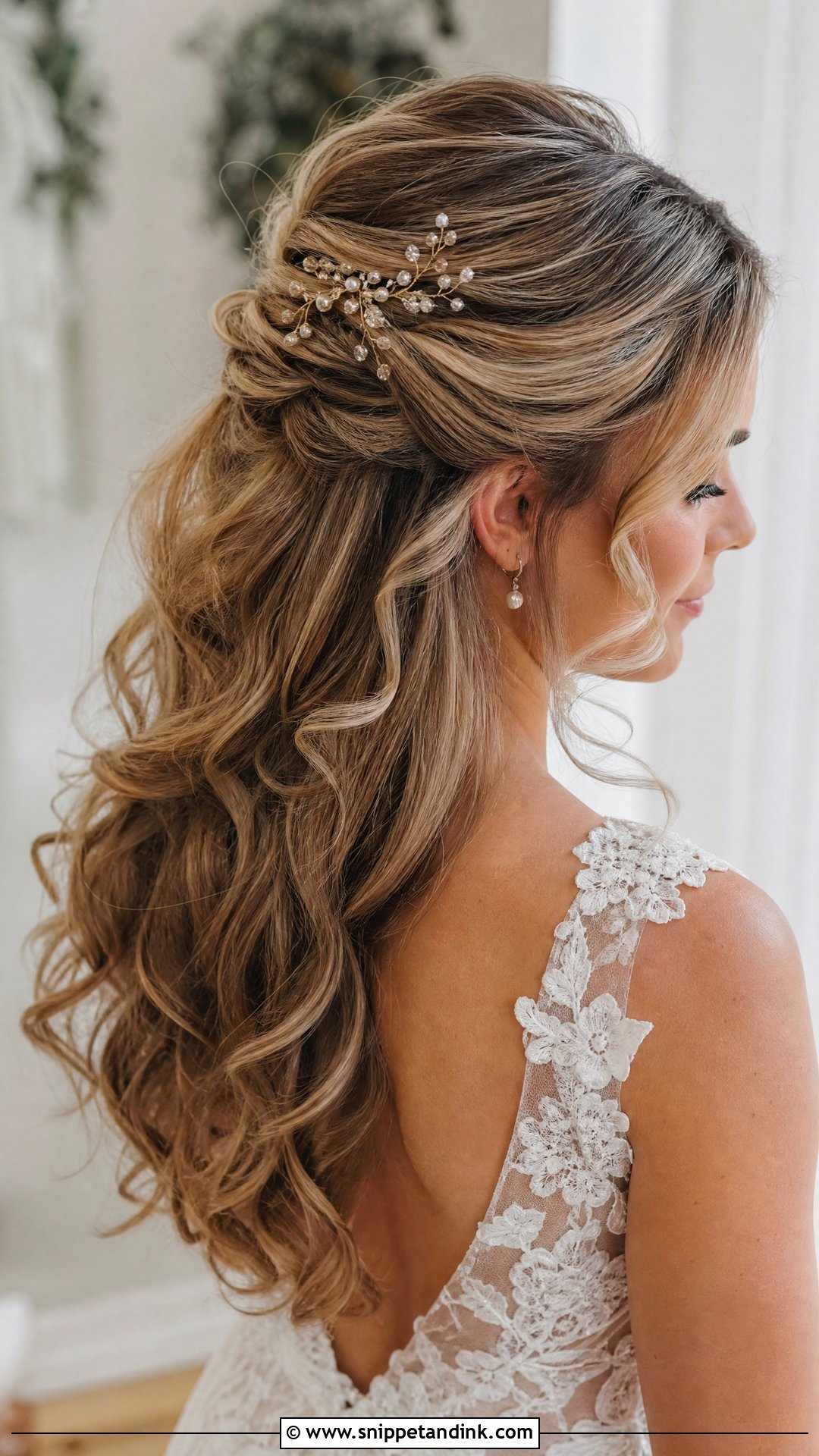
Half up, half down gives you the softness of loose hair while keeping it out of your face, which matters more than brides expect during vows and the first kiss. I secure the top section with a hidden elastic or a crossed pair of bobby pins before adding anything decorative; pins alone slide out of clean, silky hair. The lengths can be curled, waved or left in smooth bends. It works with veils, hair vines, flowers and clips, and it suits bridesmaids of different hair types well. On very fine or very straight hair, the curls are what drop first, so budget for strong prep.
4. Wedding Hollywood Waves
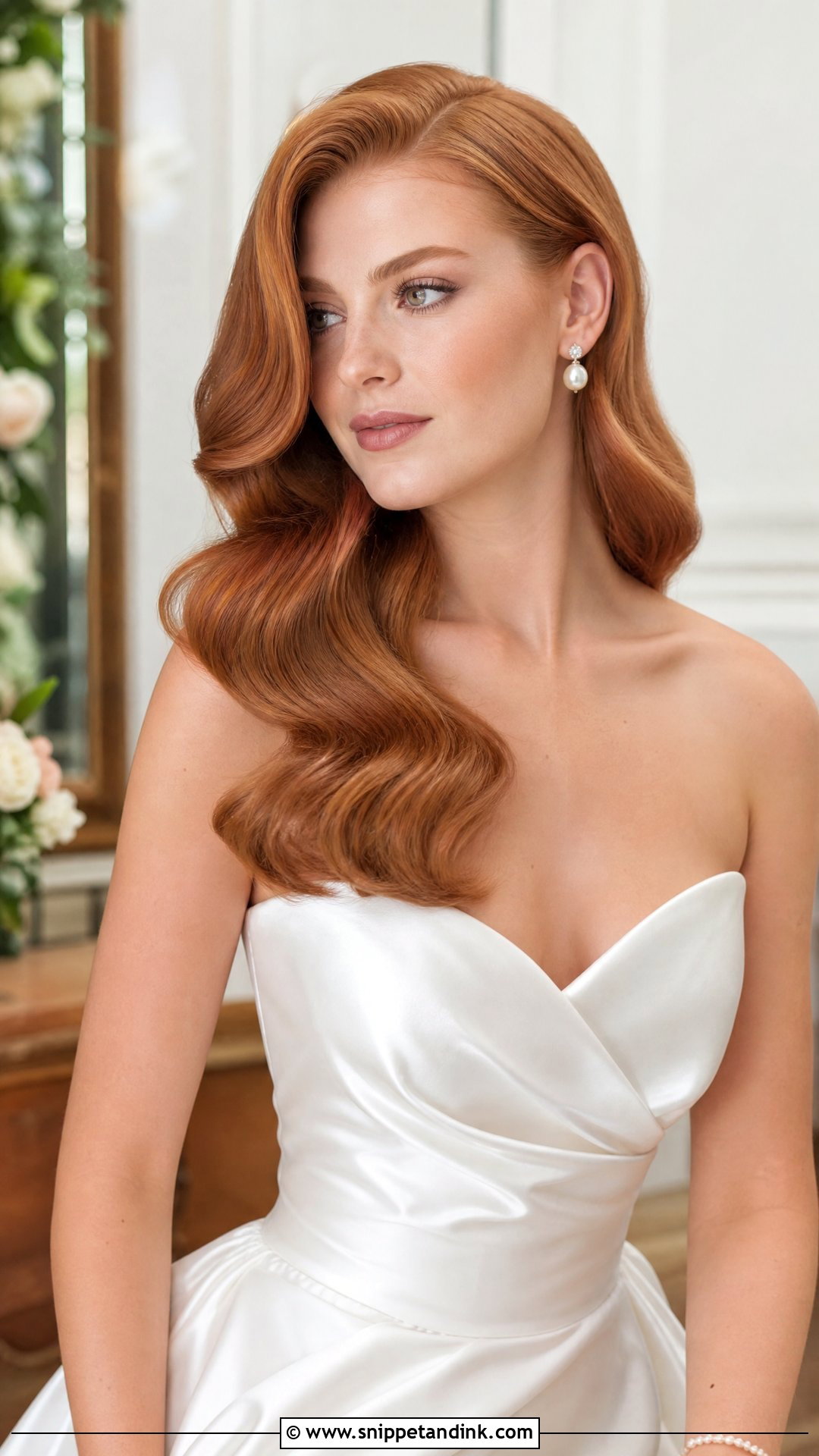
Hollywood waves are a set, not just curls. I curl every section in the same direction, pin each one to cool, then brush the whole lot out into one smooth ripple and lock the ridges with clips before spraying. Skipping the cooling time is the reason most attempts fall flat. Deep side part, strapless or vintage-inspired gowns and bold earrings are its natural partners. It needs medium to long hair to show the pattern, and clip-ins help fine hair hold the shape. Finish with a shine spray, not a heavy lacquer.
5. Wedding Soft Waves
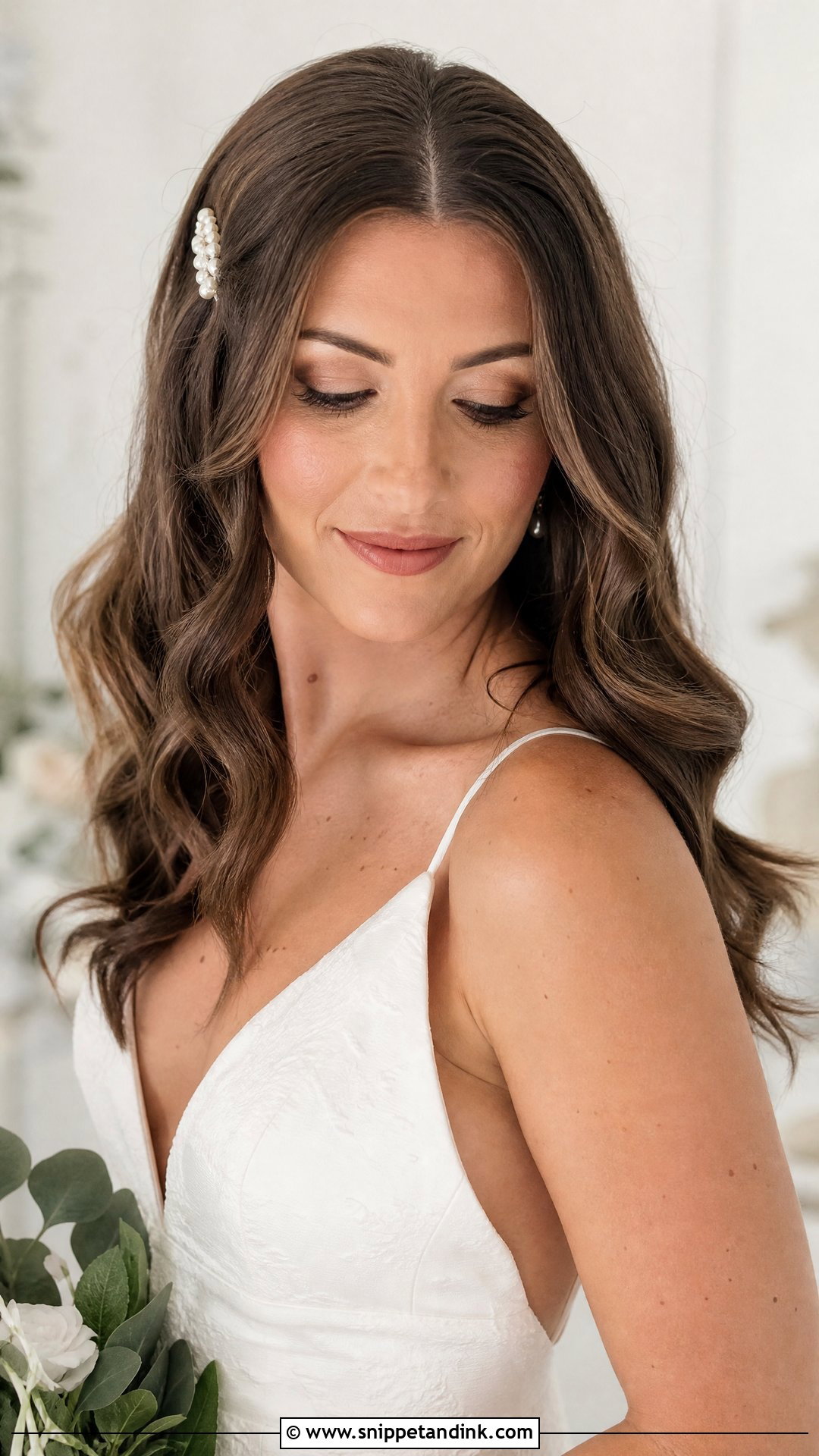
Soft waves are the relaxed cousin of Hollywood waves, and they flatter almost every length and face shape, which is why I use them across brides, bridesmaids, mothers and guests. Centre part, side part, veil, flower pins or a simple barrette all sit easily on top. They’re forgiving outdoors because they look fine as they loosen. The weak point is fine hair: without mousse at the root and a texture spray before curling, the wave can be gone before dinner.
6. Wedding Sleek Bun
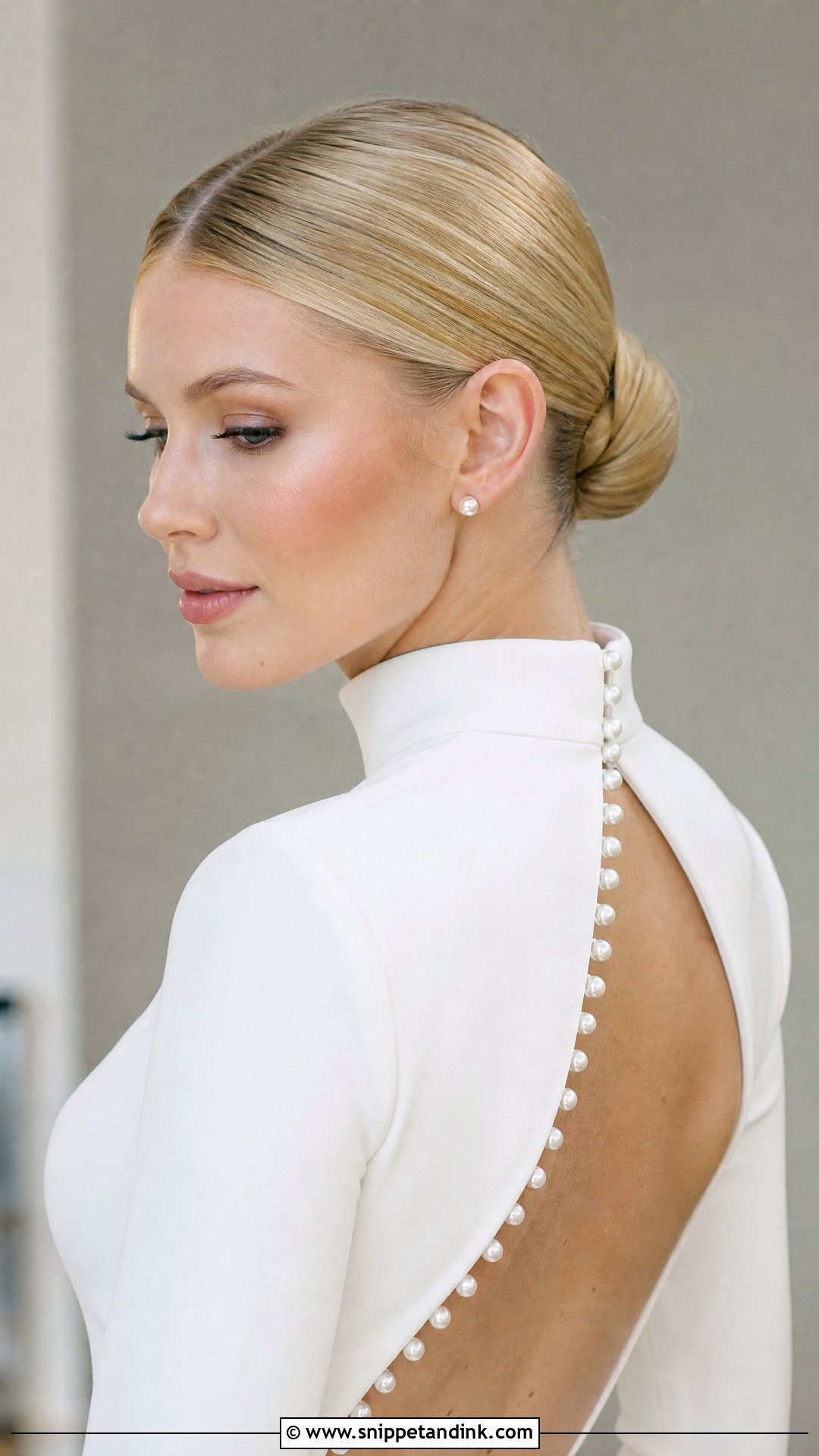
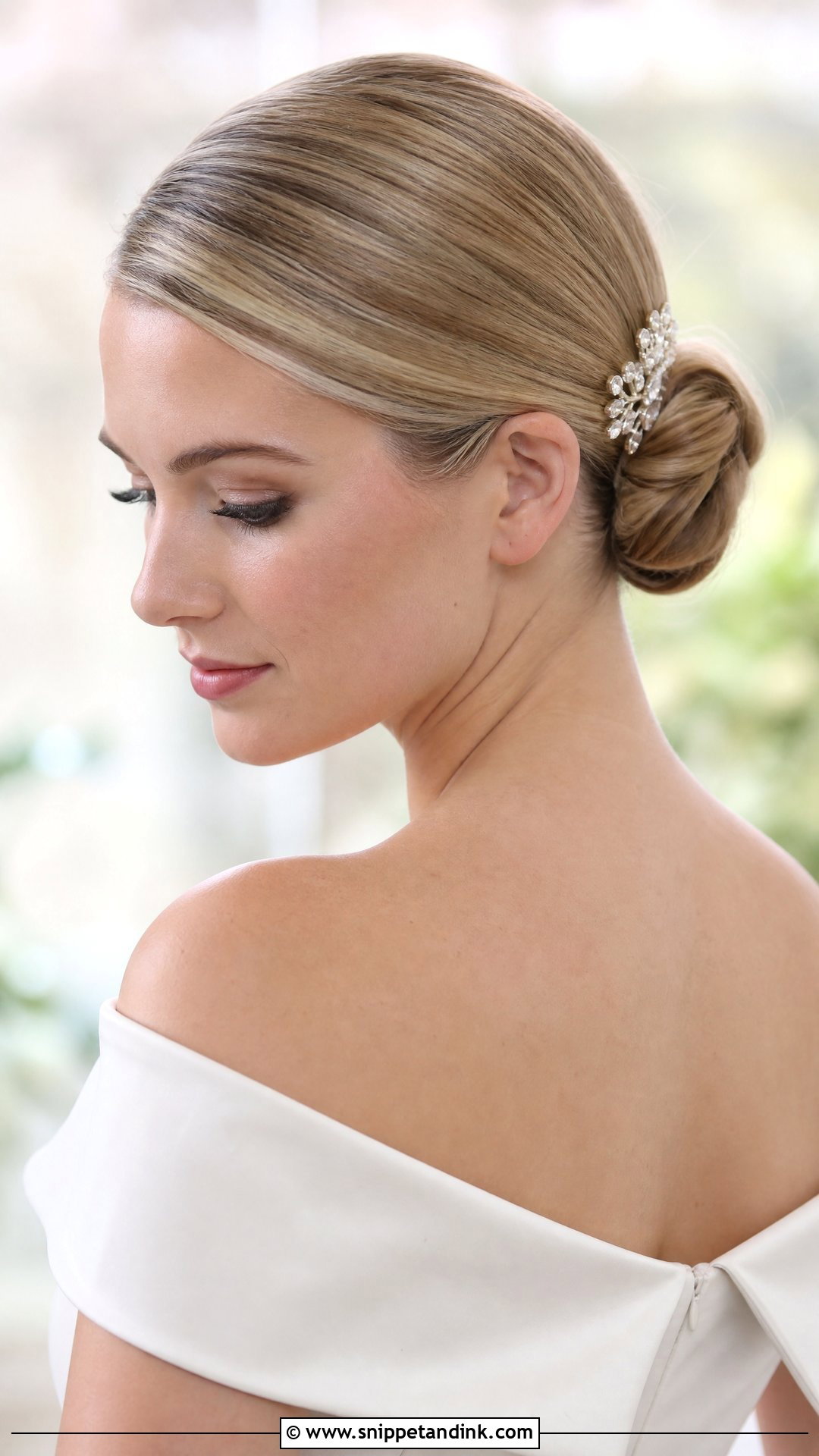
Sleek buns look simple and are anything but. Every flyaway shows, and so does an uneven part, so I work with a fine-tooth comb, a little gel or smoothing cream, and a boar bristle brush, then wrap the bun tightly at the nape or centre back. It suits minimal gowns, dramatic veils, high necks and statement earrings, and it keeps hair off the neck in warm weather. My warning: a pulled-tight sleek bun can give a headache by mid-afternoon. Tell your stylist if you’re sensitive, and aim for shine without tension.
7. Wedding Messy Bun
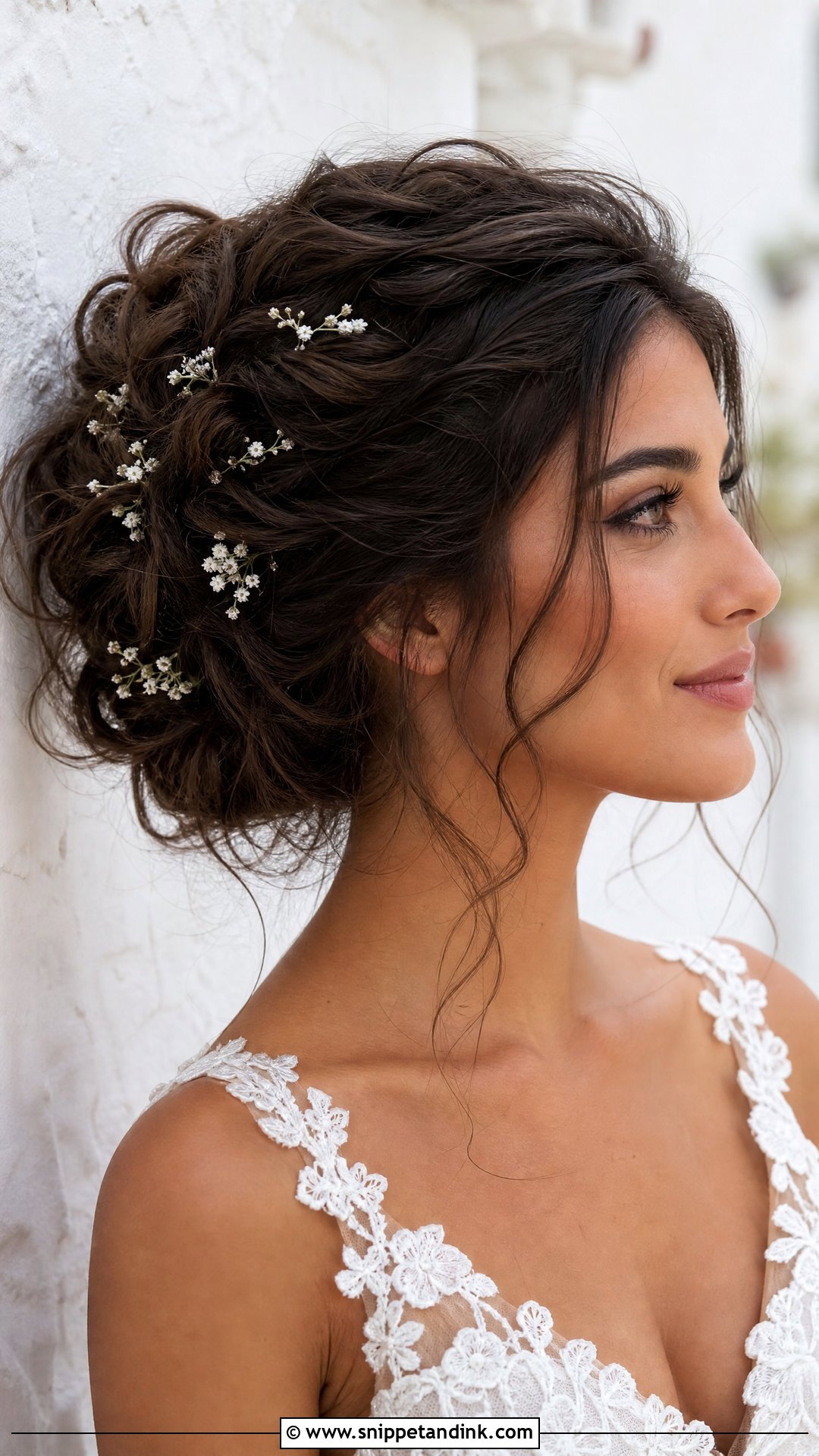
Nothing about a bridal messy bun is actually messy. Underneath sits a firm, pinned base; the loose twists, air and face pieces are added on top. Without that structure, it looks like a gym bun by the reception. It suits garden, beach and barn weddings, lace dresses, floral pins and delicate veils. Layered hair is an advantage here because the shorter lengths fall out naturally and look intentional. On one-length, very slippery hair, I texture-spray every section first so the twists hold.
8. Wedding Braided Updo
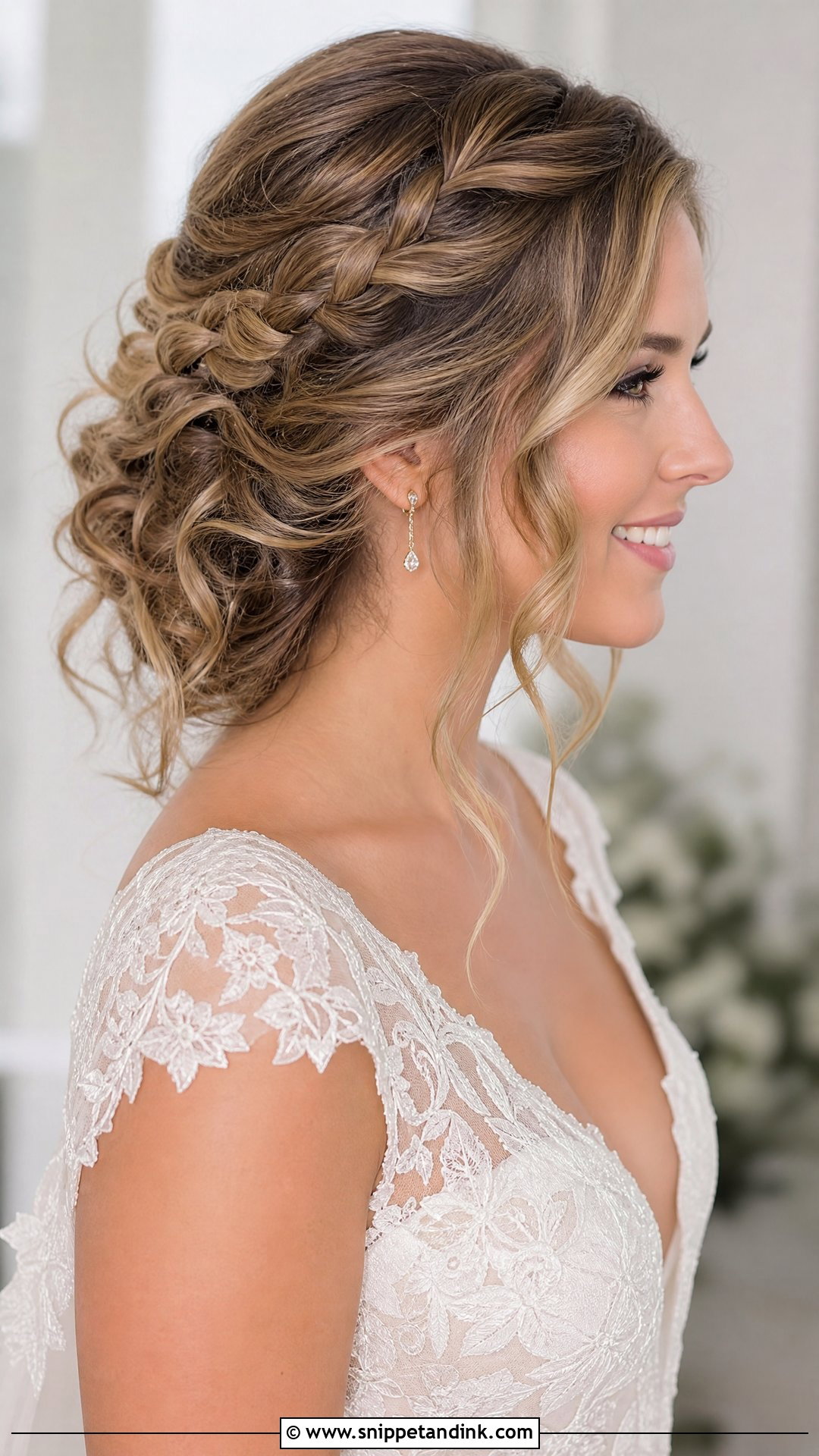
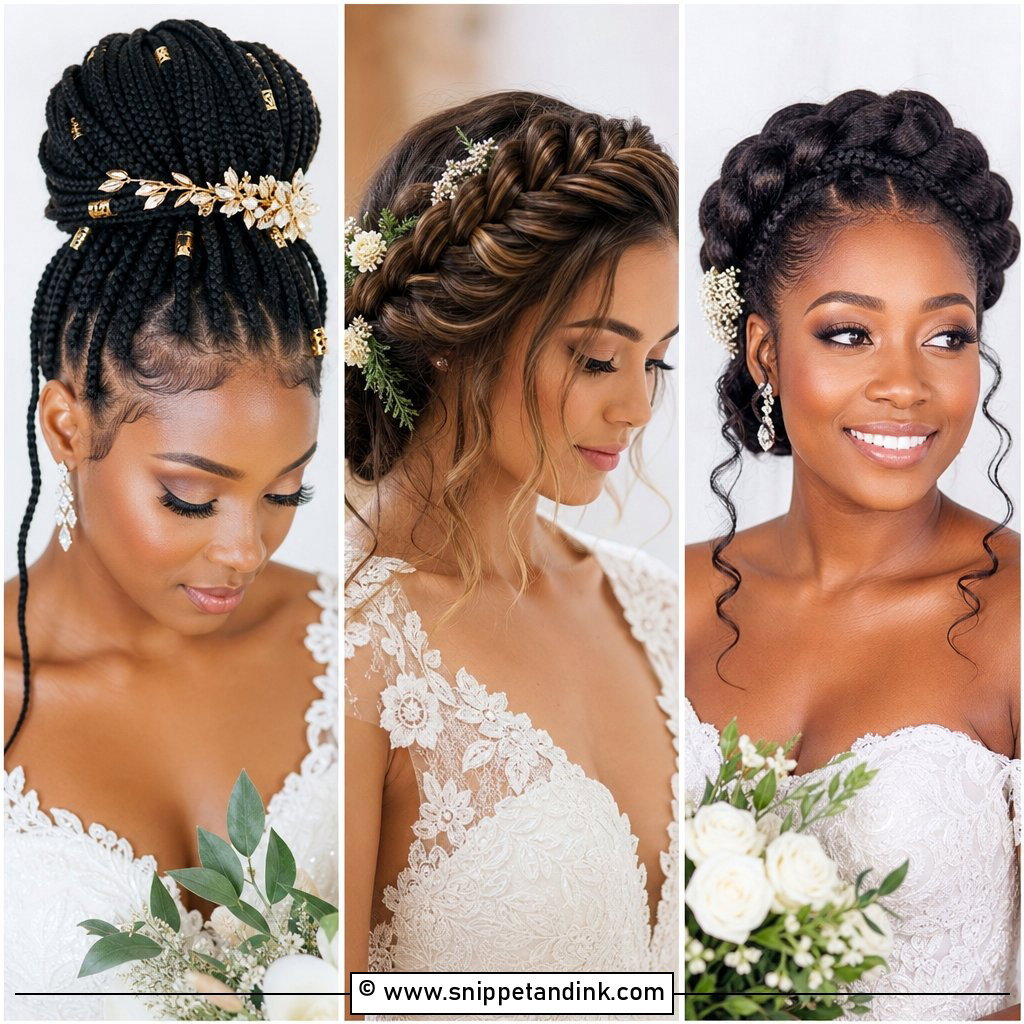
Braids are scaffolding as much as decoration. In a braided updo they wrap into a bun, frame the crown or weave through the back, and they give thick hair somewhere to go. That makes this one of my preferred styles for windy or humid outdoor weddings, where loose curls struggle. Smooth braids read polished; pulled, textured braids read relaxed. Small pearls, tiny flowers or pins sit securely between the plaits and show clearly in photos.
9. Wedding Crown Braid
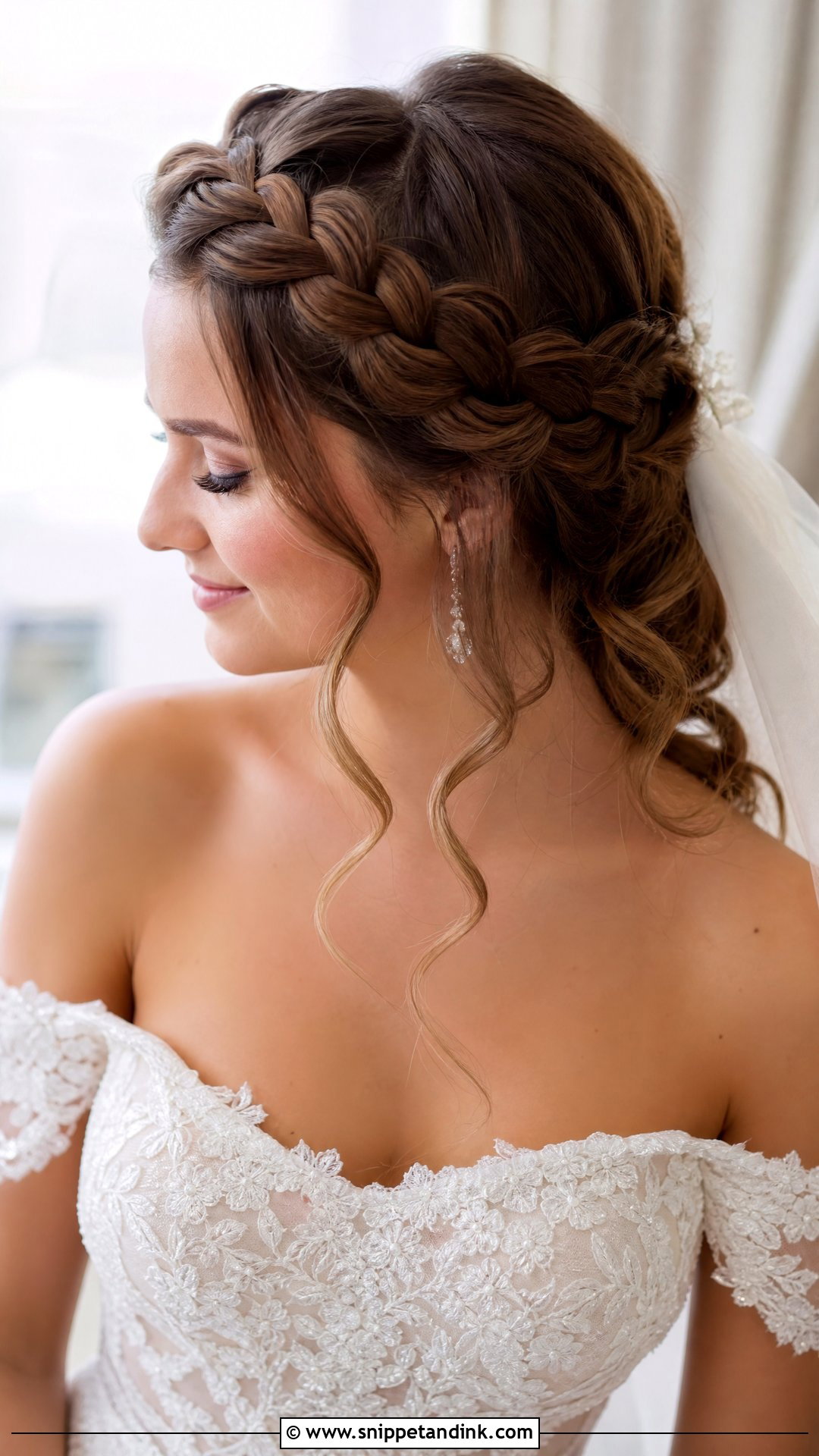
A crown braid wraps around the head or sweeps across the top, and once it’s pinned it barely moves. It suits outdoor and destination weddings and dresses with lace or fine detail. You can pin everything up or leave curls loose at the back. Medium to long hair is easiest; shorter lengths can borrow a clip-in braid. The braid should be loosened slightly after pinning. Pulled too tight, it looks severe and starts to ache along the hairline.
10. Wedding Fishtail Braid
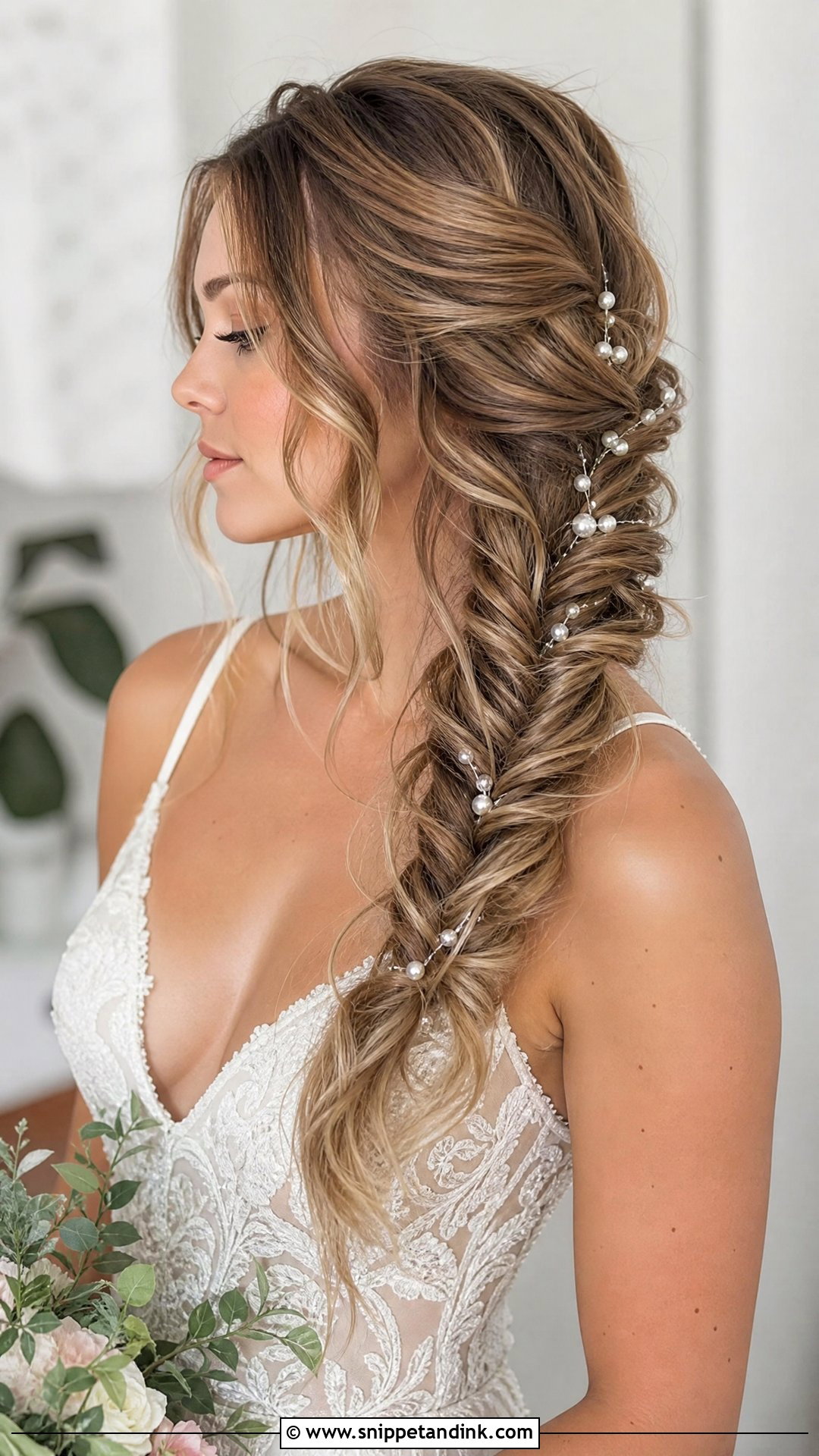
A fishtail has more detail than a three-strand braid because it’s built from many thin crossings, and that shows when it’s gently pulled apart. It can hang down the back, sweep to one side or sit within a half up style. I always curl the hair first; a fishtail made from straight hair looks thin and flat. It sits naturally with boho dresses, beach and garden ceremonies, and soft floral accessories. On layered hair, short ends poke out of the braid, so a little texture paste helps tuck them in.
11. Wedding Side Braid
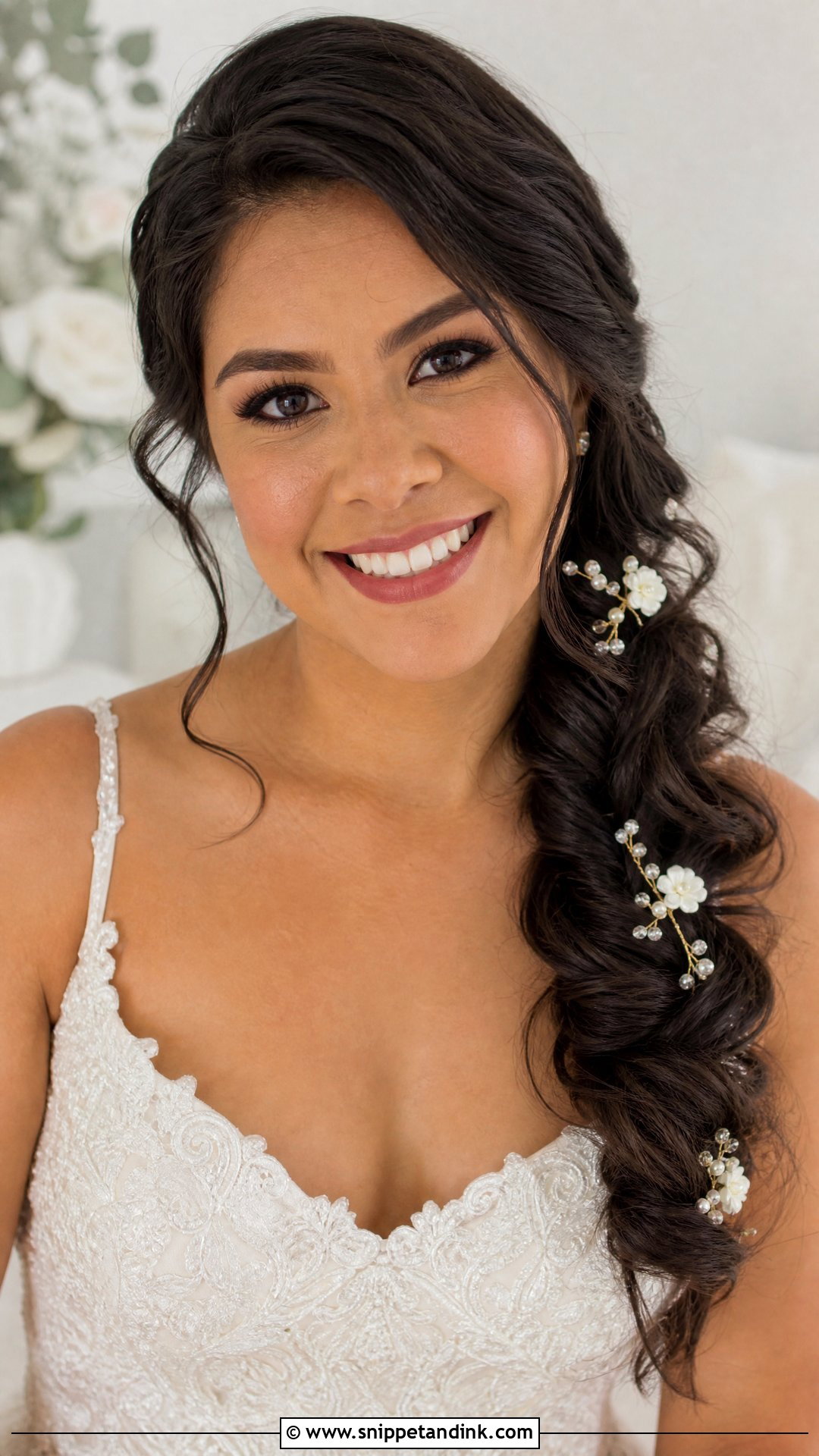
A side braid sits over one shoulder, so it’s visible from the front, which matters if your dress has an open back you’d rather show. Loose and soft, smooth and polished, or textured with smaller accent braids all work. It’s a comfortable way to manage thick or long hair over a long day, and it handles sea air better than loose curls. Face-framing pieces and a few delicate pins make it bridal. Bear in mind that a bouquet or a partner’s arm often lands on that shoulder, so it needs firm pinning at the nape.
12. Wedding High Ponytail
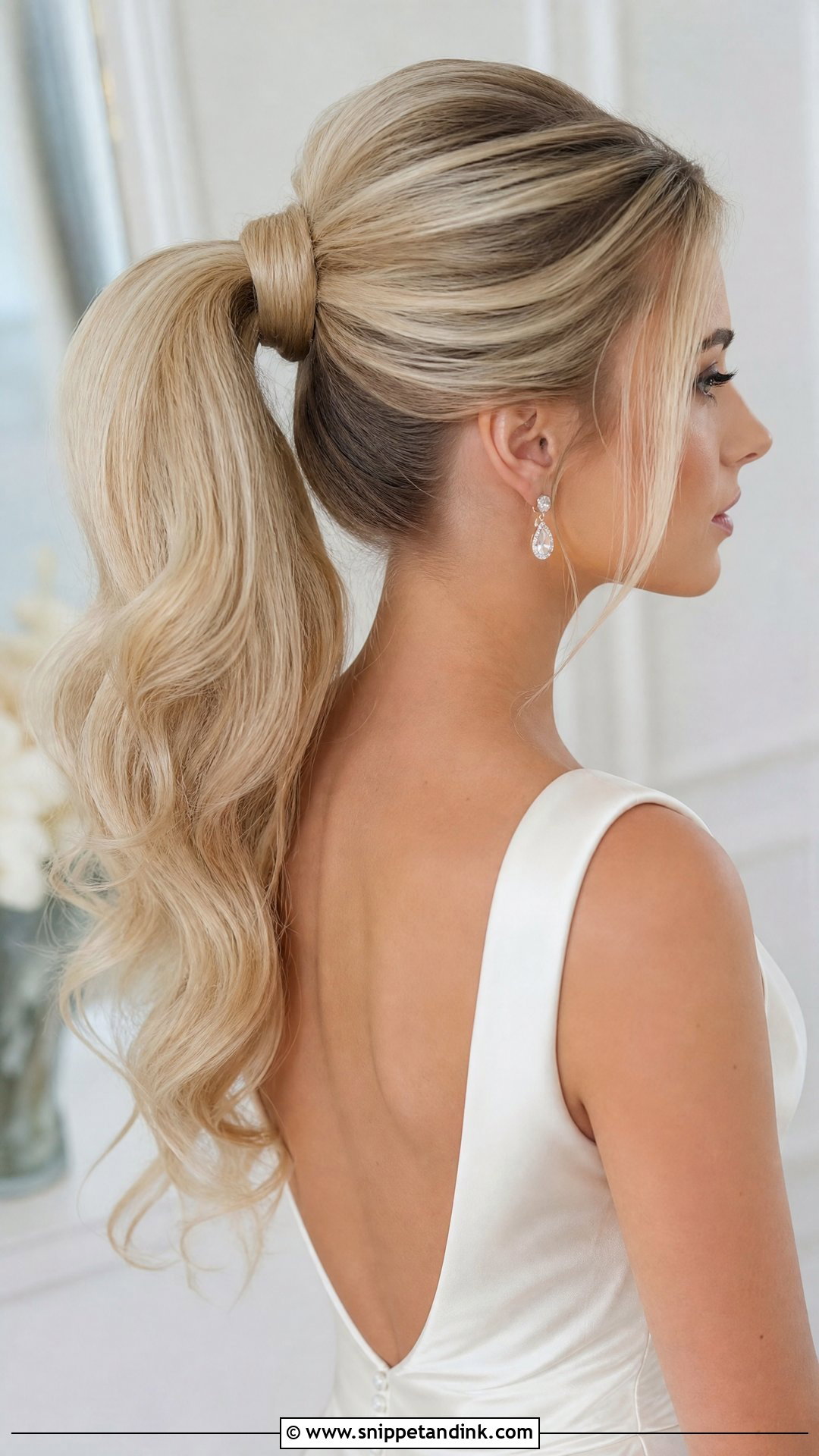
A high ponytail lifts the face a little and shows off length, curls or a sleek finish. It suits modern gowns, fitted silhouettes, jumpsuits and reception outfits, and it’s the style I suggest to brides who want hair off the face but don’t feel like themselves in a bun. The base is usually wrapped with hair to hide the elastic, with volume added through the tail. Extensions are common here. A heavy ponytail can pull at the crown over many hours, so I anchor it with crossed pins under the elastic.
13. Wedding Low Ponytail
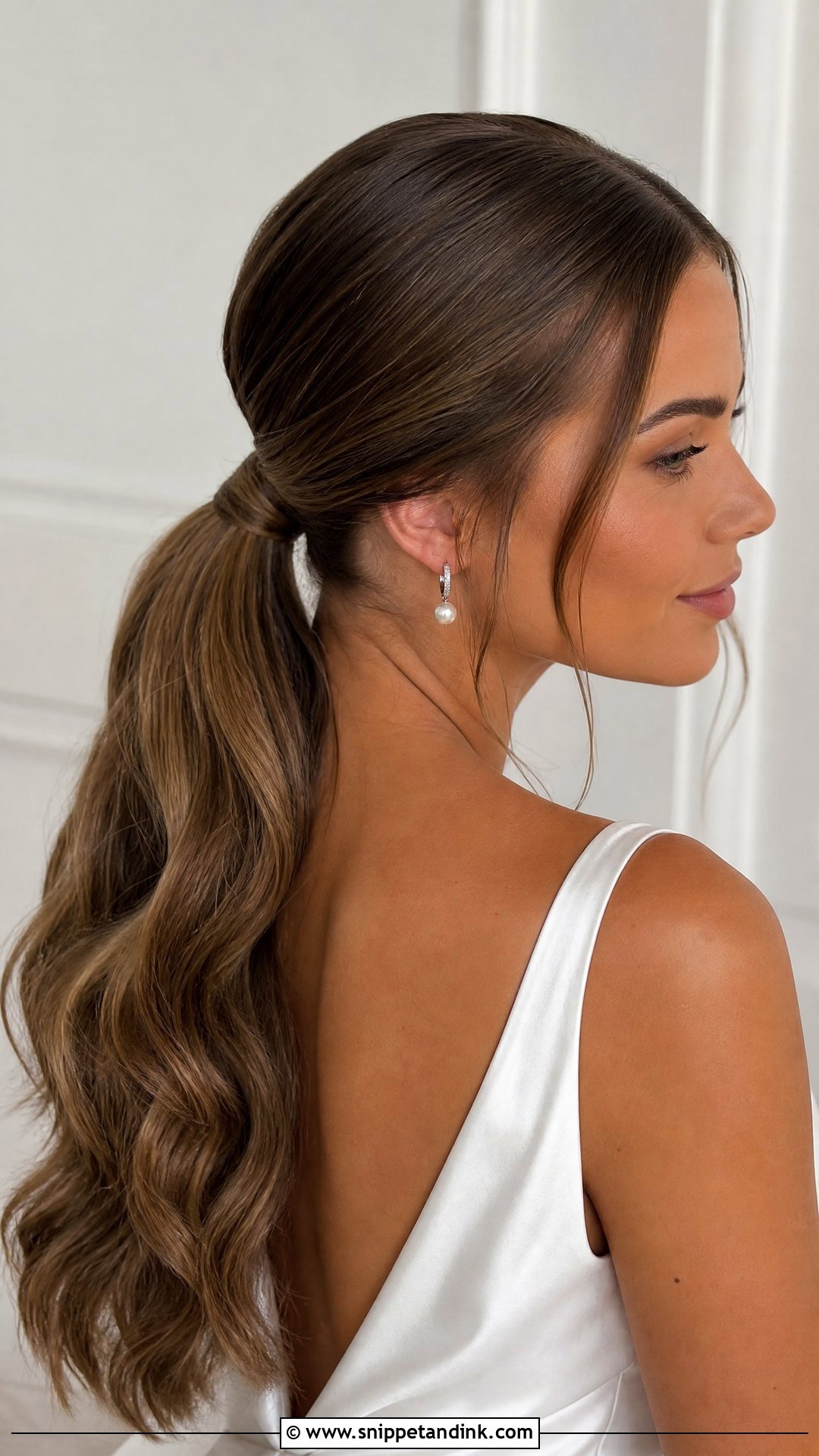
The low ponytail is underrated. Placed at the nape, it can be sleek, waved, twisted or lightly textured, and it pairs neatly with modern dresses, clean makeup, pearl earrings and long veils. A strand wrapped over the elastic, a bow or a few pins finishes the base. It’s secure but still moves. Leave a few face pieces for softness, or keep the part sharp and glossy for a more formal look.
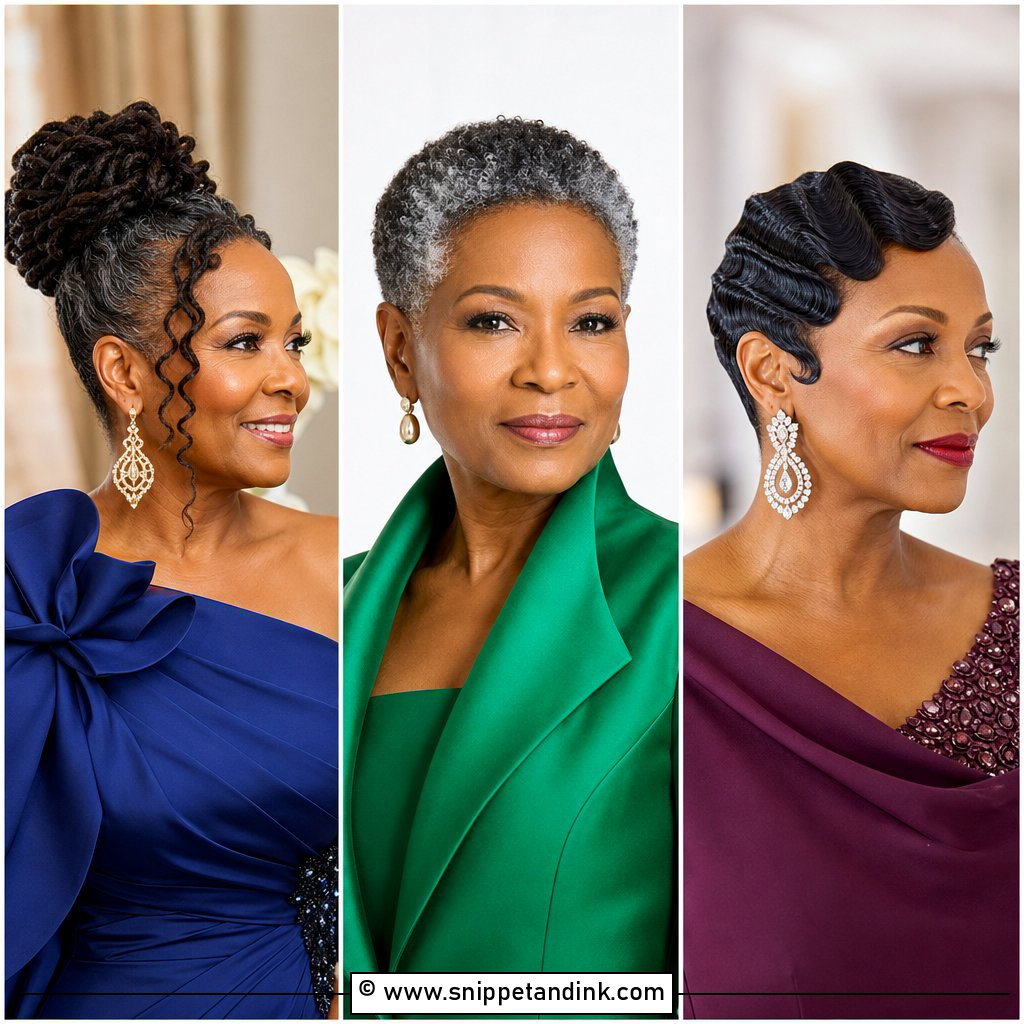
14. Wedding Curly Updo
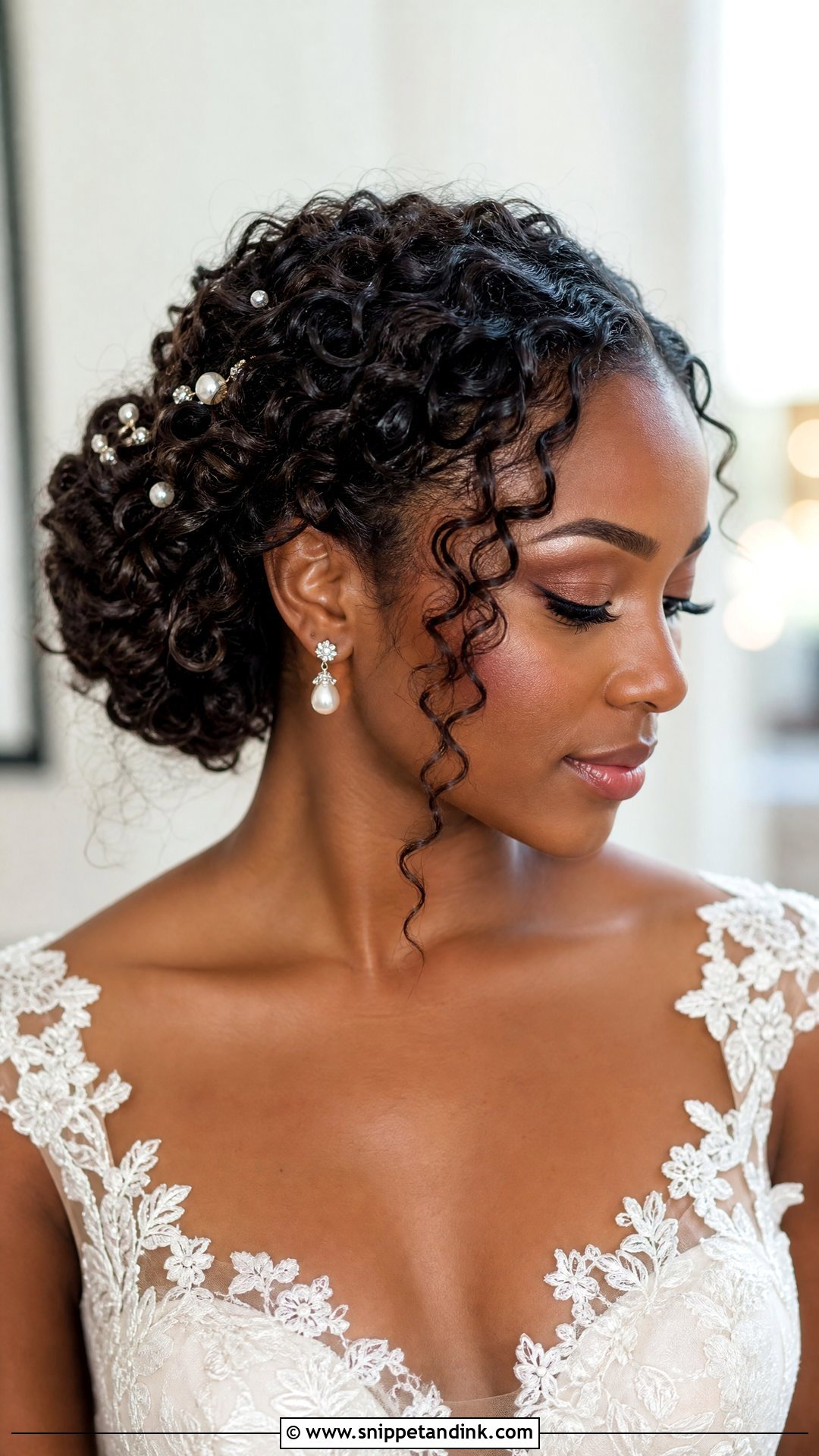
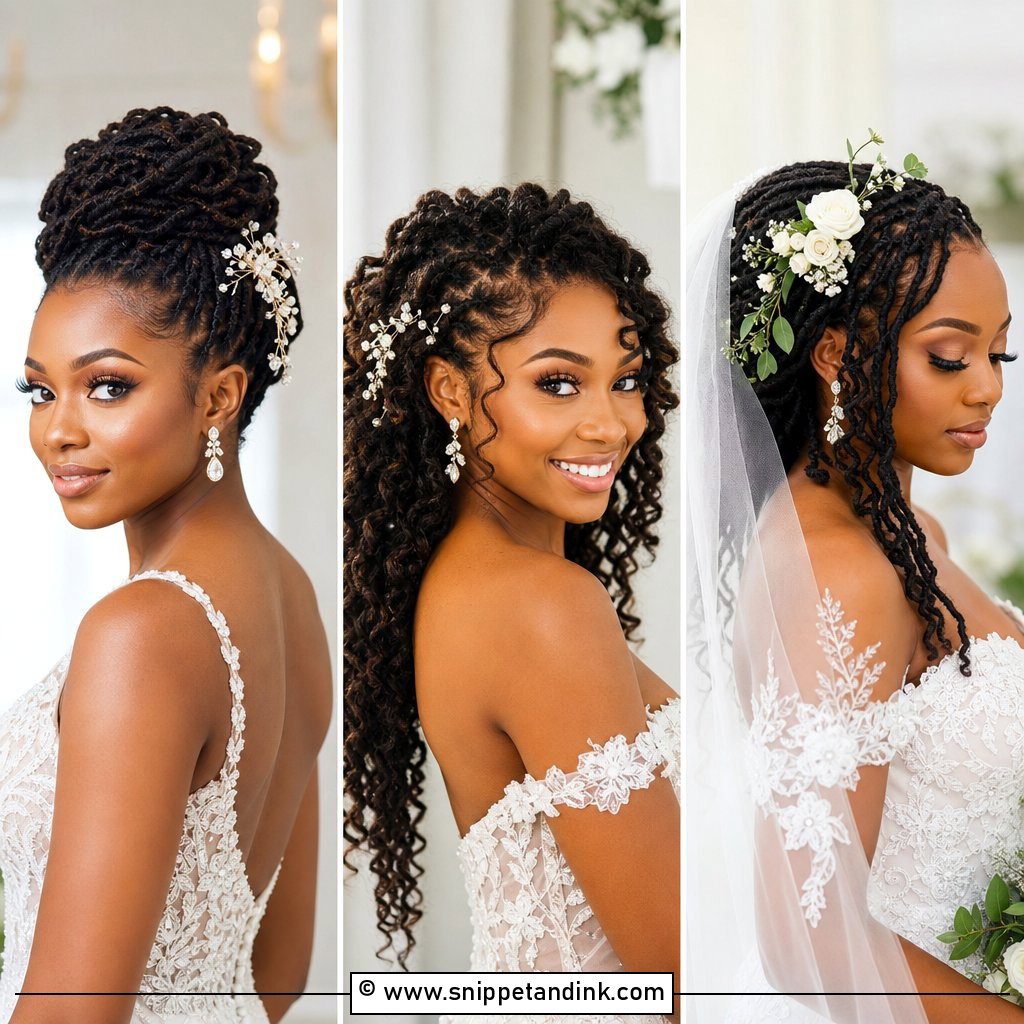
A curly updo should be built around the curl pattern, not against it. I don’t brush curls out; I set them with a curl cream or gel, let them dry fully, then pin them into a soft bun, a crown gathering or a low romantic shape, placing pins where they disappear into the volume. Done well, it simply looks like you, more polished. Face-framing curls soften it, and pearl pins or flowers add a bridal note. The one thing that ruins it is a stylist who isn’t used to curly texture, so ask to see curly brides in their portfolio.
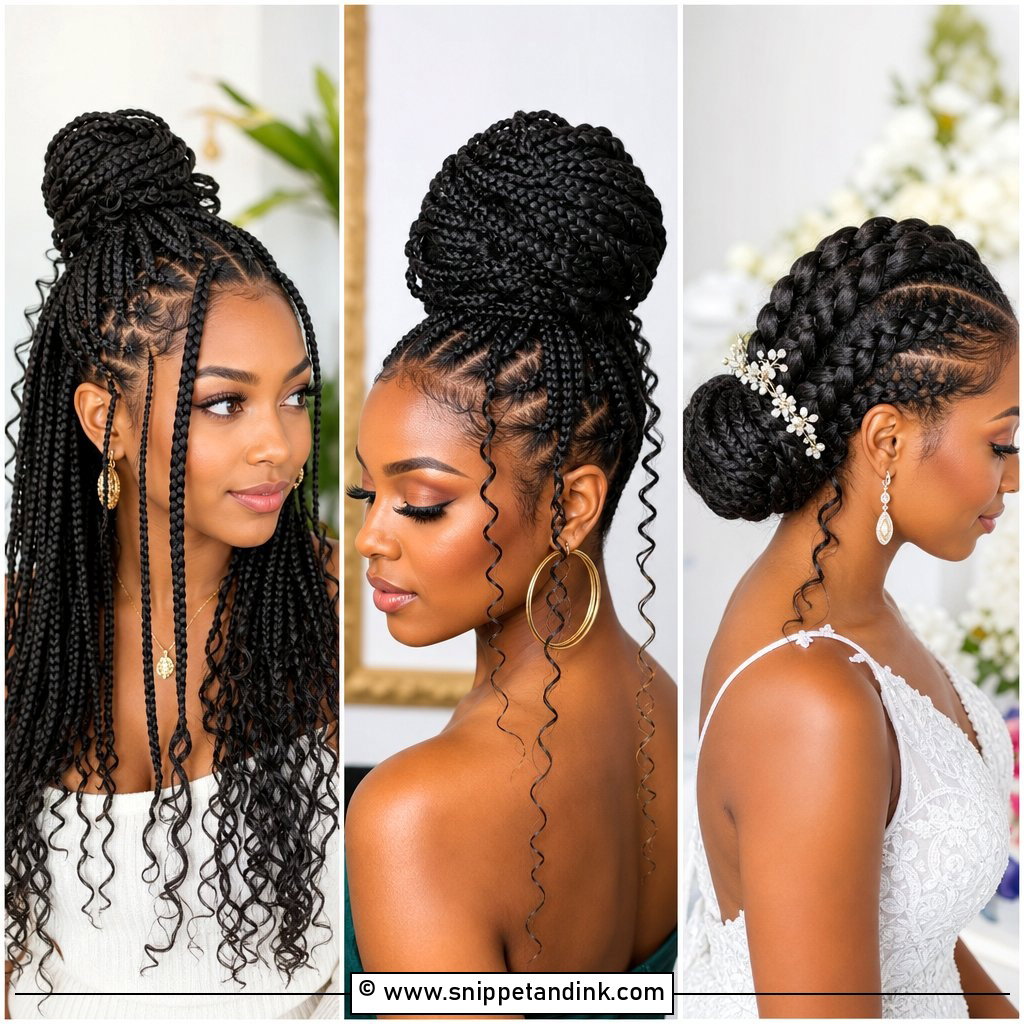
15. Wedding Natural Hair Updo
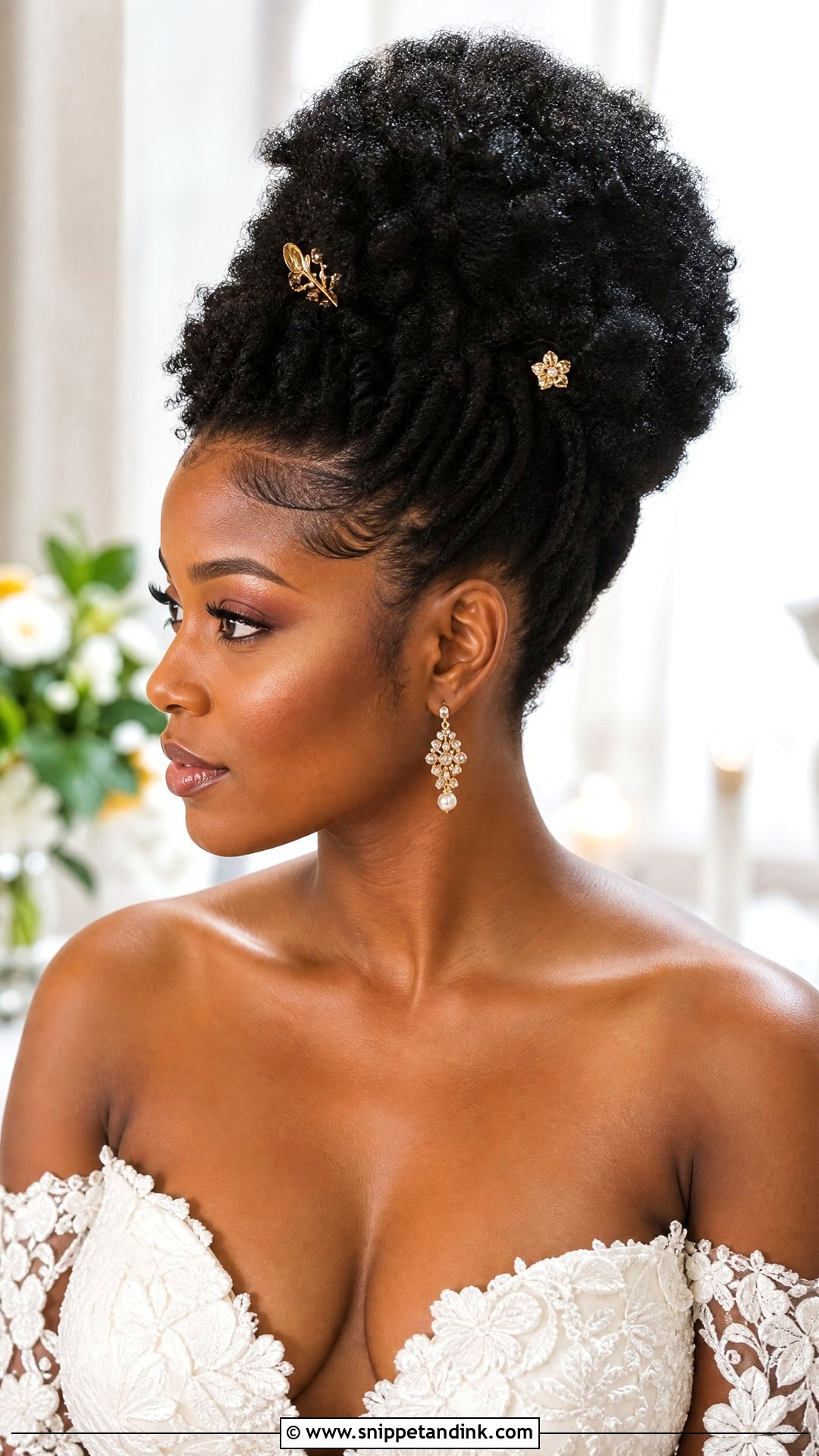
A natural hair updo is a fine way to celebrate coils, kinks, twists or stretched texture. A high puff, low bun, flat twist updo or sculpted pinned style all hold beautifully and keep hair protected through a long day. Gold pins, pearls, crystal combs and fresh flowers sit well in textured hair. Moisture comes first, then edge control, and a trial is essential, because stretched hair behaves differently from wash-and-go hair and the style should be planned around what your hair does on the day.
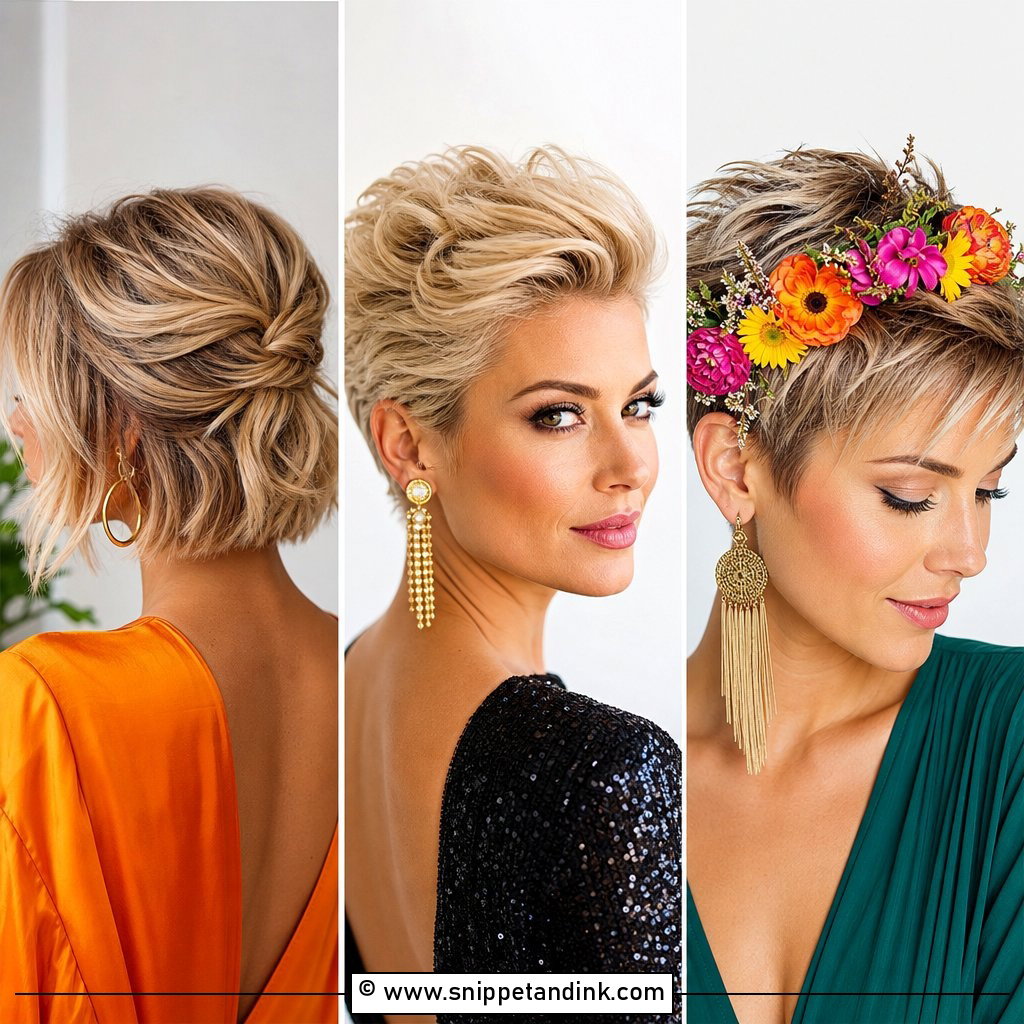
16. Wedding Short Hair Waves
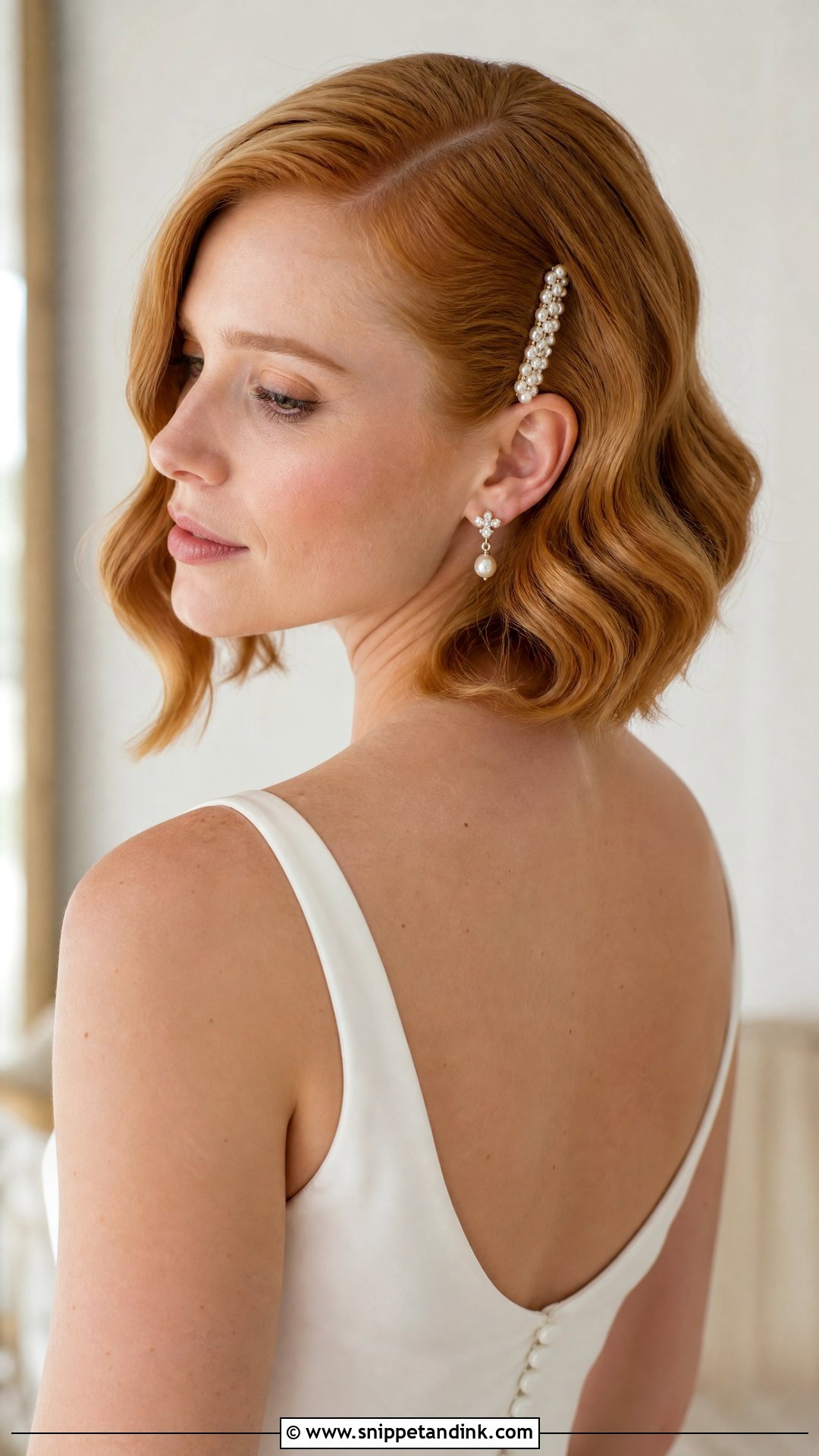
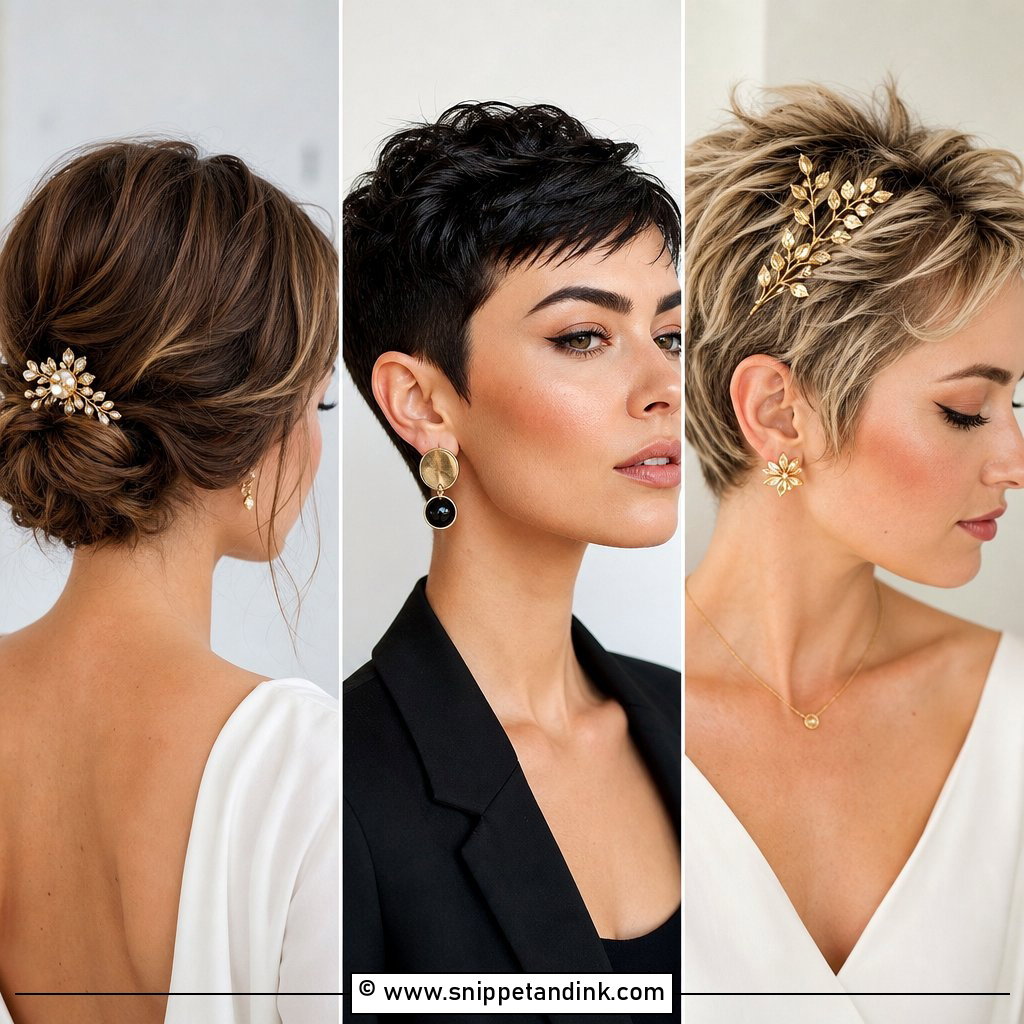
Short hair doesn’t need to be long to be bridal; it needs shape. A bob, lob or cropped cut looks finished with soft waves, a deep side part or polished texture, plus volume at the crown and defined ends. Short hair actually holds accessories well, since there’s less weight dragging them down, so veils, birdcage veils, pearl clips and floral pins all sit securely. The detail I spend most time on is the part, because on short hair it changes the whole face. Try two or three at the trial.
17. Wedding Pixie Hair
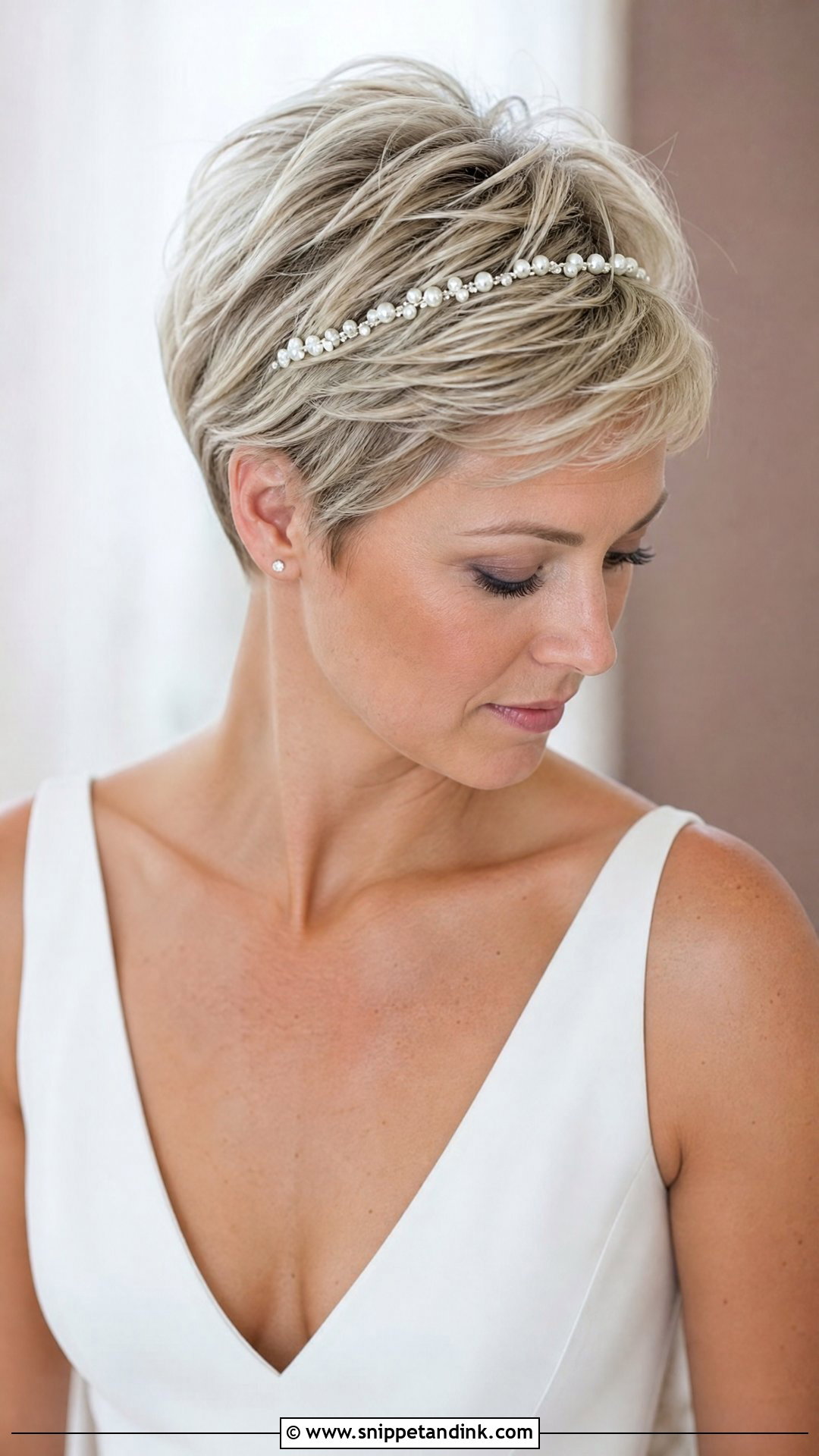
Wedding pixie hair puts everything on the face: makeup, earrings, neckline and bone structure. A pixie can be softly waved, slicked back, swept to one side or given gentle height at the crown. Accessories do a lot of work here, so think about a pearl headband, a delicate comb, a floral clip or a small veil. Pins don’t grip short pixie lengths easily; I use small snap clips or a comb with the teeth anchored in a tiny pinned section. Keep the finish touchable, with enough texture to show the cut.
18. Wedding Bob Hair
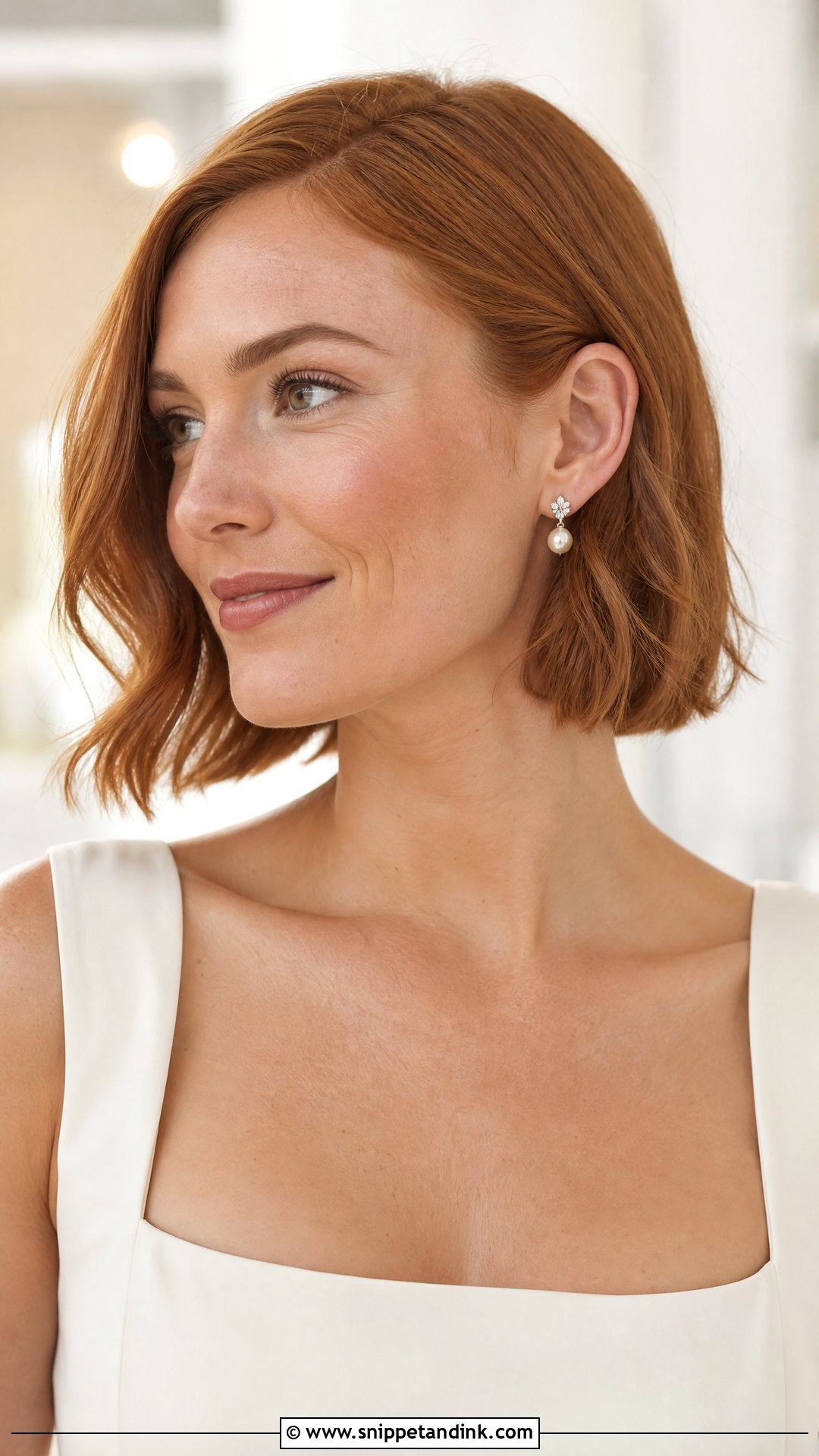
A chin-length bob or a shoulder-grazing lob looks fresh with soft bends, glossy waves, tucked ends or a smooth blowout, and it needs no extensions. It pairs well with minimal gowns, square necklines, slip dresses and pearls. Tucking one side behind an ear shows an earring and adds a little asymmetry. A small comb or clip by the part adds romance. Get the trim done two to three weeks before, not the week of, so the ends have softened and you’re used to the length.
19. Wedding Bun With Veil
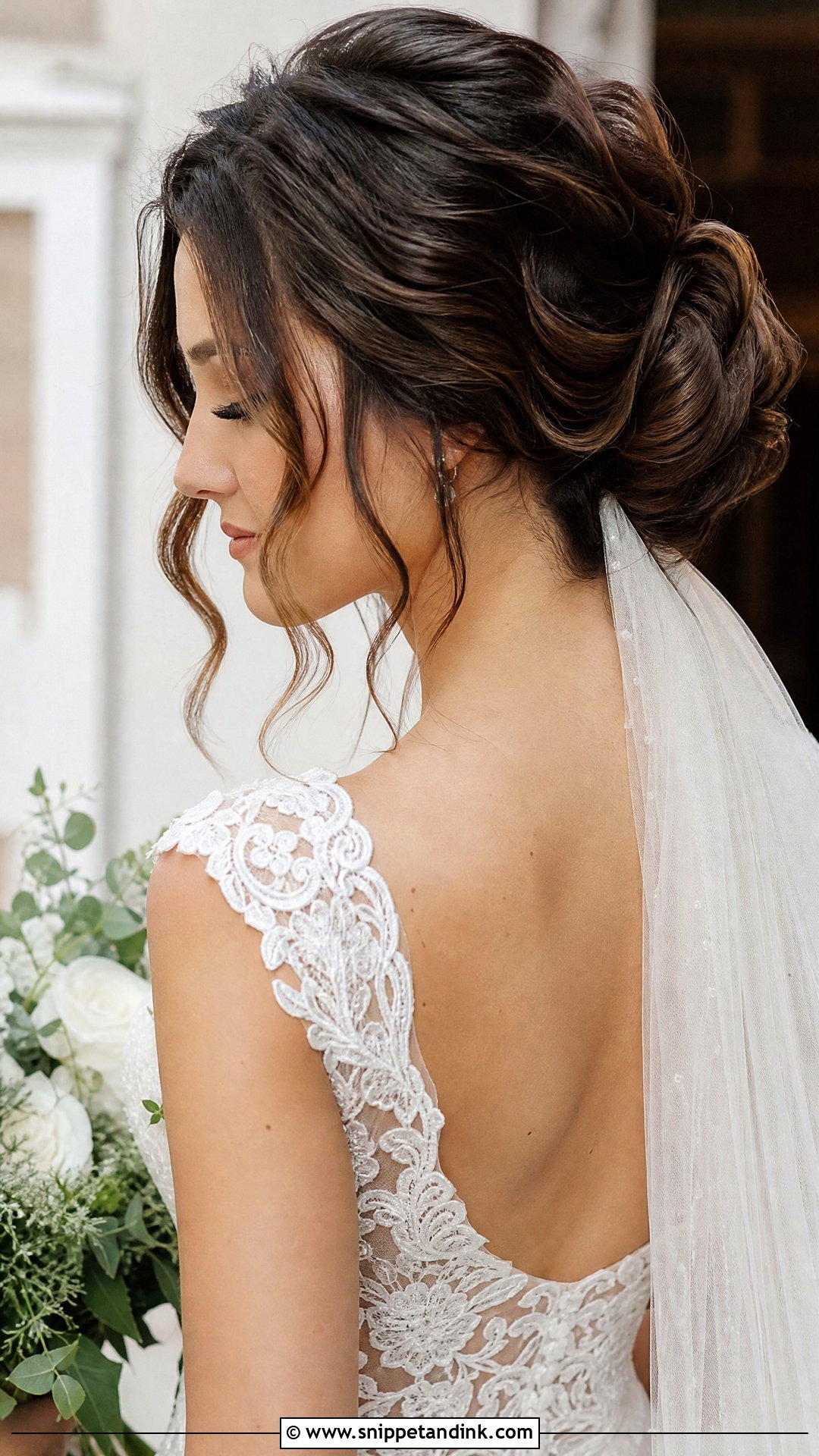
A bun gives a veil something solid to hold. The comb can sit above the bun, below it or tucked into it, and low buns, chignons, textured and sleek buns all take it. Placement decides how the veil falls in photos and whether the style still looks complete once the veil comes off. I always test it at the trial with the actual veil, because comb width and veil weight vary a lot. Bring the veil and any combs, and turn your head side to side to check it doesn’t tug.
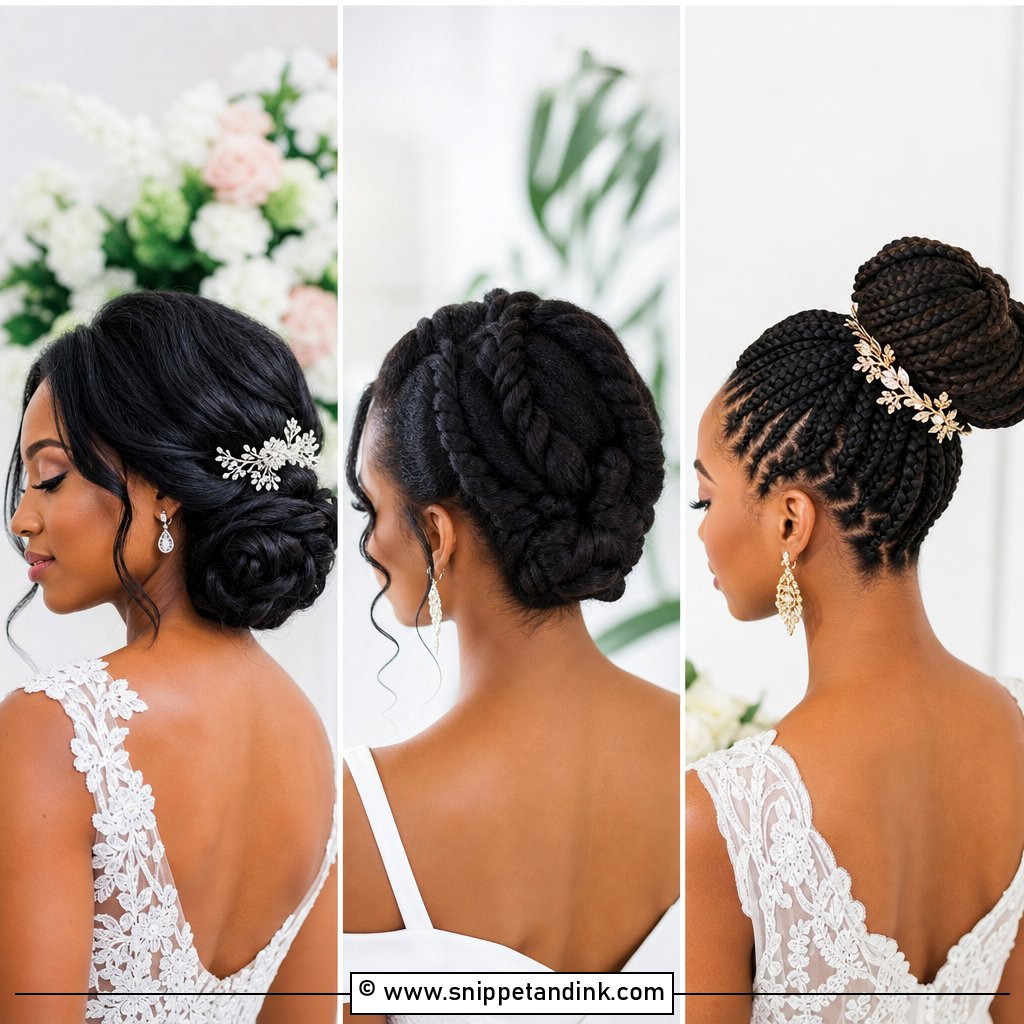
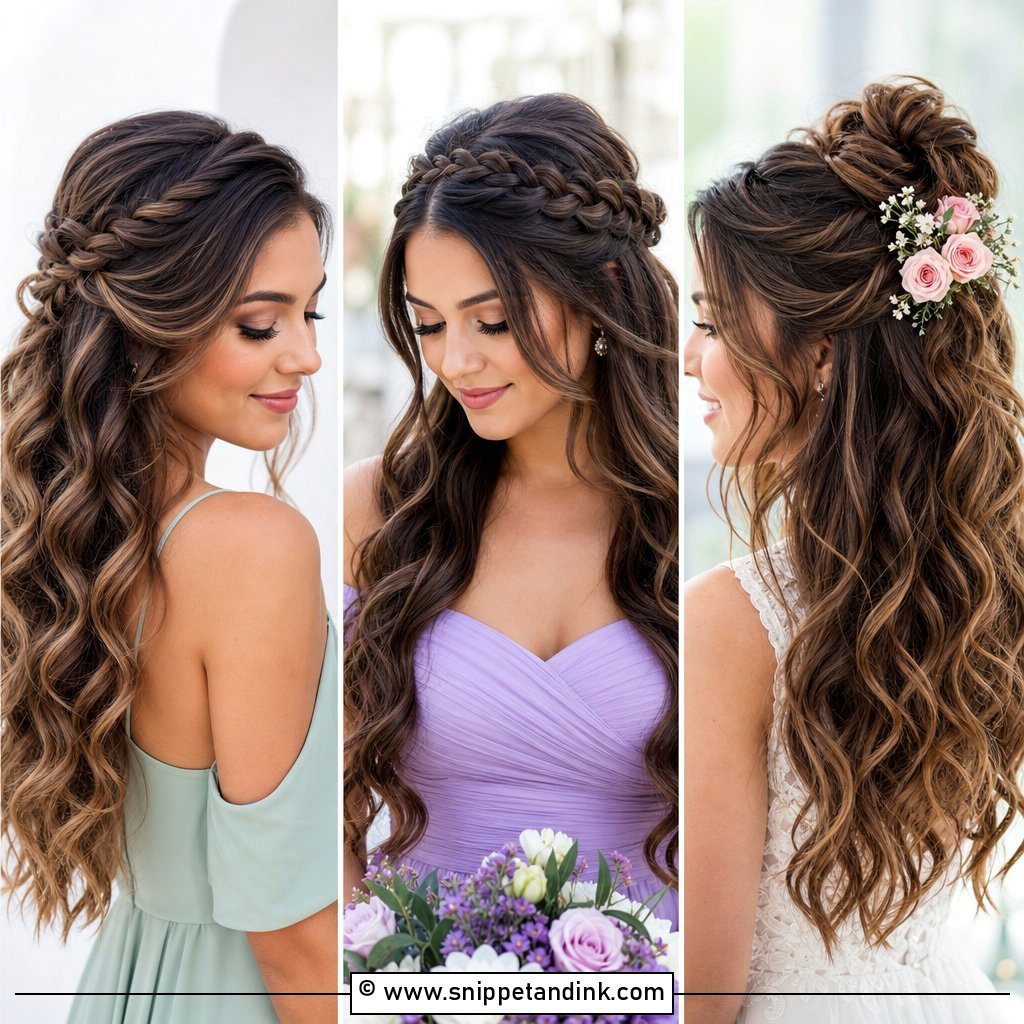
20. Wedding Hair With Flowers
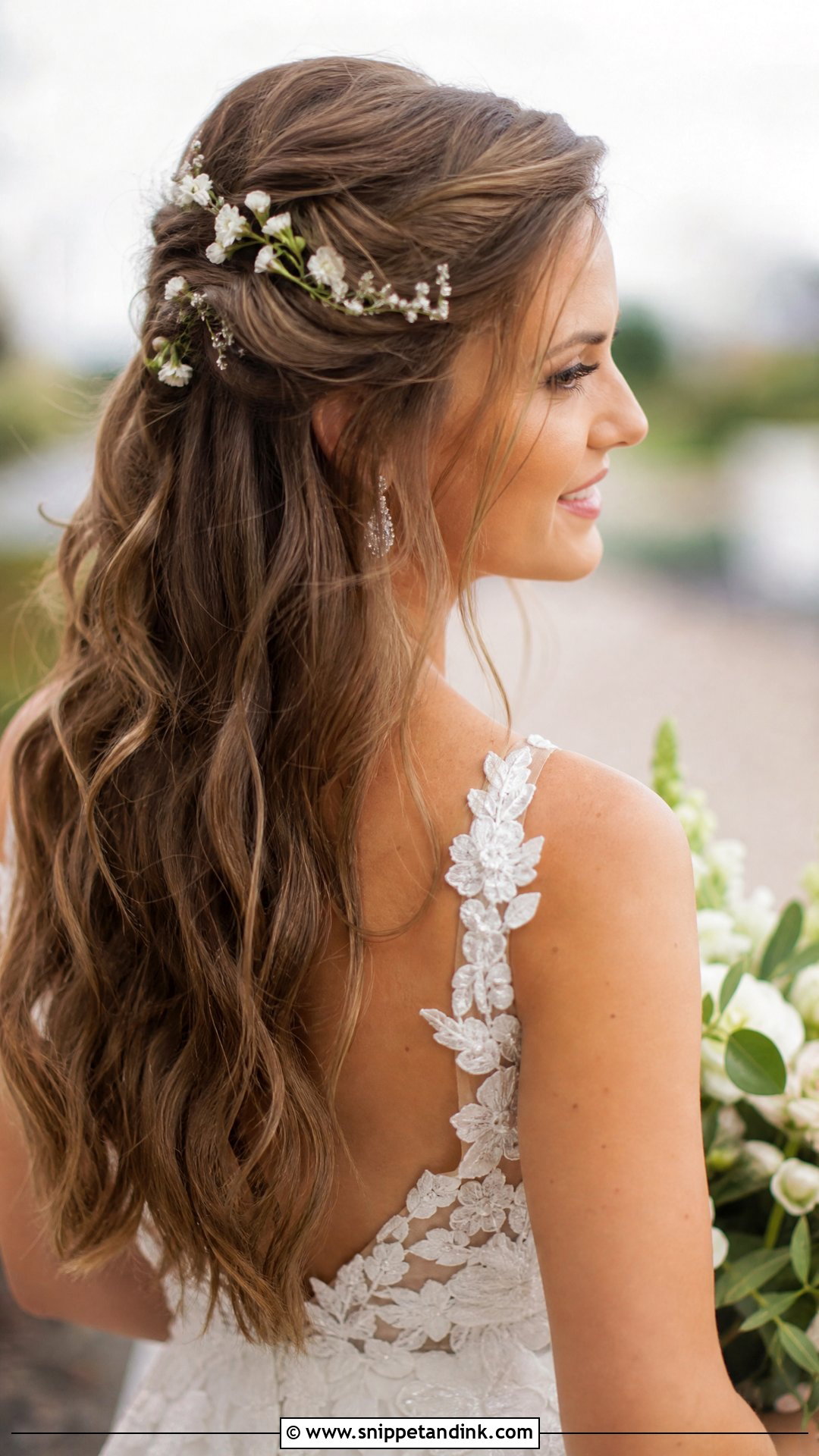
Flowers soften almost any style: tucked into waves, braided updos, buns, ponytails or half up hair. They should relate to the bouquet, season and dress rather than compete with the hairstyle. Tiny white flowers look delicate; blush or pastel blooms add warmth. Some flowers wilt within hours in heat, so ask your florist which varieties hold up out of water and have them wired or picked for hair. Good faux flowers are a sensible backup for summer. Keep placement balanced so the style still looks finished from the back.
When a Style Starts to Slip at the Reception
Every style relaxes over a long day. Curls loosen, buns sag a little, face pieces go limp. Planning for that is easier than fighting it, and a few small things help a lot.
Ask your stylist to leave you a small pouch with six or so bobby pins in your hair colour, a mini hairspray and a few clear elastics. A bridesmaid can push a loose pin back in or re-pin a fallen section in a minute. If curls have dropped, twisting a face piece around a finger and pinning it for ten minutes while you sit down brings some of the bend back.
Some brides plan a change for dancing: half up becomes a ponytail, or a veil comes out and a bun is loosened. If you like that idea, practise it at the trial so whoever helps you knows which pins come out first.
Hair accessories are the other weak spot. Heavy combs and crystal vines slowly work loose as you move, so ask your stylist to anchor them into a small pinned section or a braid rather than just sliding them into the style.
Your Dress, Your Texture and the Weather Will Narrow This List Fast
The right style is the one that fits your dress, venue, texture and personality. A sleek bun reads modern, a low chignon classic, half up hair soft. Braids bring texture, ponytails bring a fresh twist, and short hair can look every bit as polished as long with the right shape, shine and accessories. Book a trial, bring your veil and hairpieces, and have someone photograph you from the front, sides and back. Then wear the trial style for a few hours, so you see how it holds rather than just how it looks at the chair.
You'll Like These Ideas:


Leave a Reply