
An Indian wedding asks more of short hair than almost any other celebration. There may be four or five functions over a few days, each with a different outfit, and a maang tikka, a dupatta and fresh flowers all looking for something to hold on to. Short hair copes with that better than people expect; it just needs a different kind of anchoring than a long braid. These 25 styles are for brides, bridesmaids and guests alike, and for each one I’ve added how it behaves under jewellery, heat and a long night of dancing.
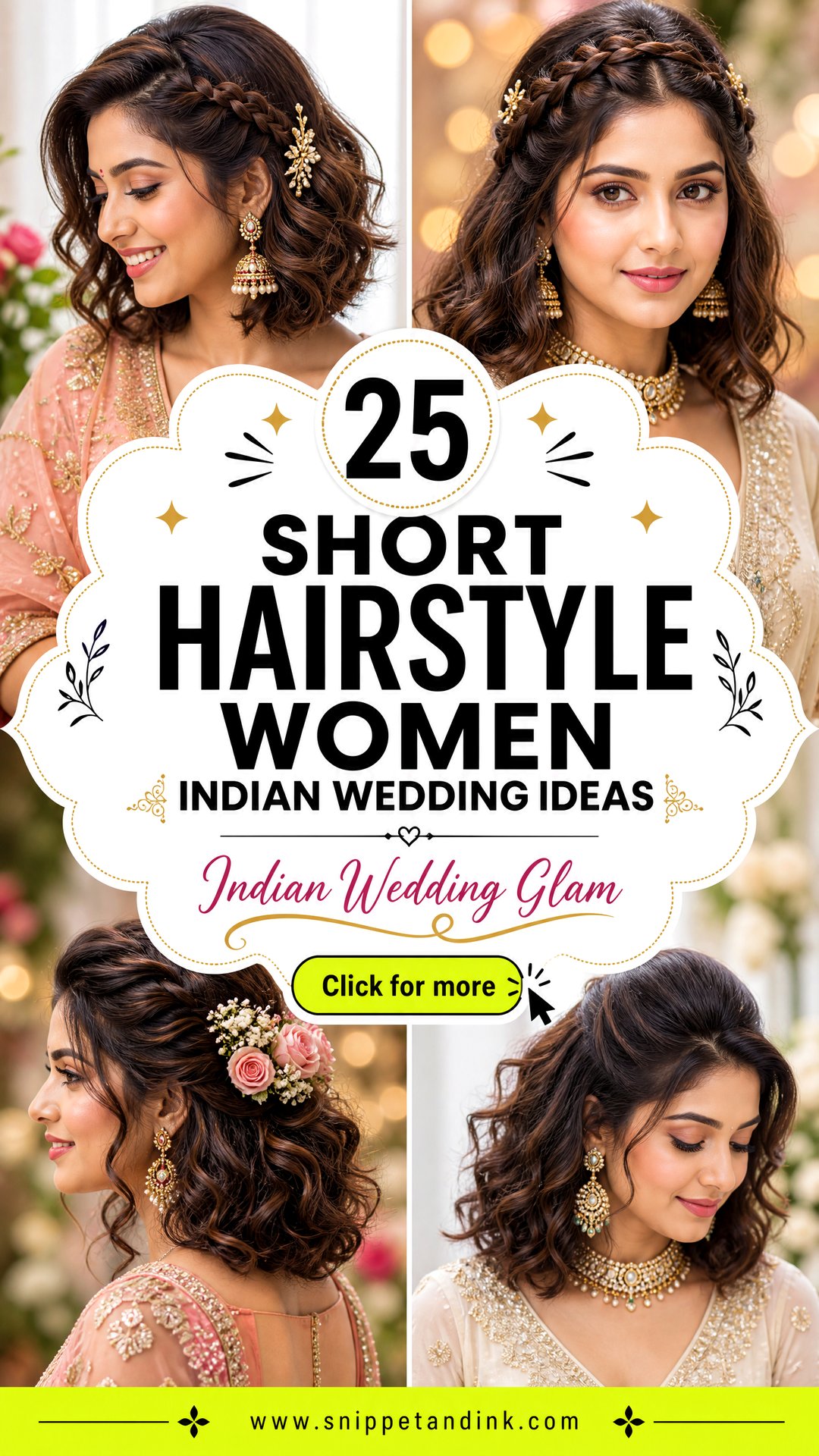
One Short Cut Across Haldi, Mehendi, Sangeet and Pheras
Most of my Indian wedding bookings with short hair span several days, and the hair has to survive all of them. I plan the functions together rather than one at a time, so we aren’t washing and restyling between each.
- Haldi: wear hair tied back or pinned up and oil the ends lightly. Turmeric paste can stain light, grey or highlighted hair yellow, and short hair gets splashed more easily.
- Mehendi: you’ll be sitting still with wet henna on your hands for hours, so choose a style that doesn’t need touching. Loose curls or a half-up with clips are easiest.
- Sangeet: plan for dancing. Pin anything that moves, and avoid heavy accessories that swing loose.
- Pheras and reception: this is where the maang tikka, dupatta and gajra come in, so the style needs a firm anchor at the crown and nape.
If your functions fall on back-to-back days, I’d keep a styled base, such as waves or a sleek finish, and change only the accessories. Re-curling short hair every morning dries it out quickly.
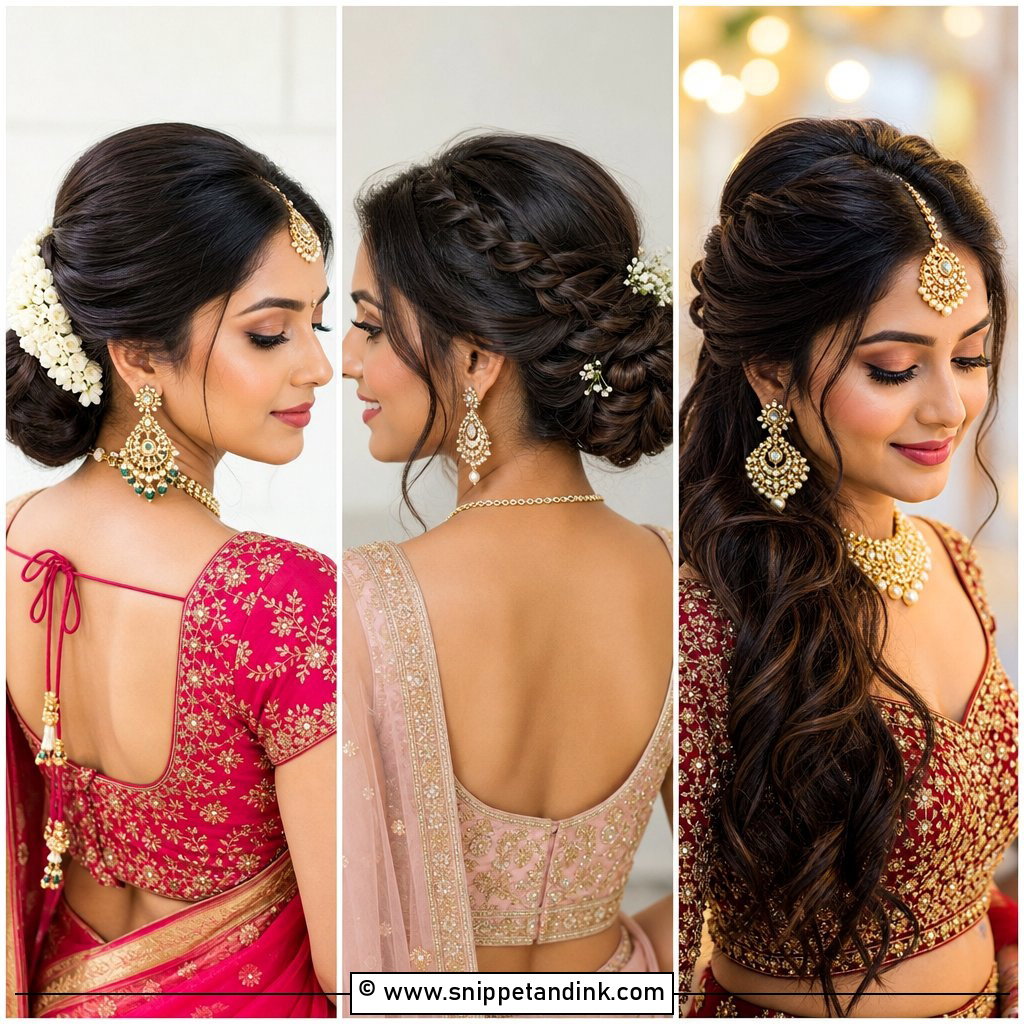
1. Messy Updo Bun With Fresh Flowers
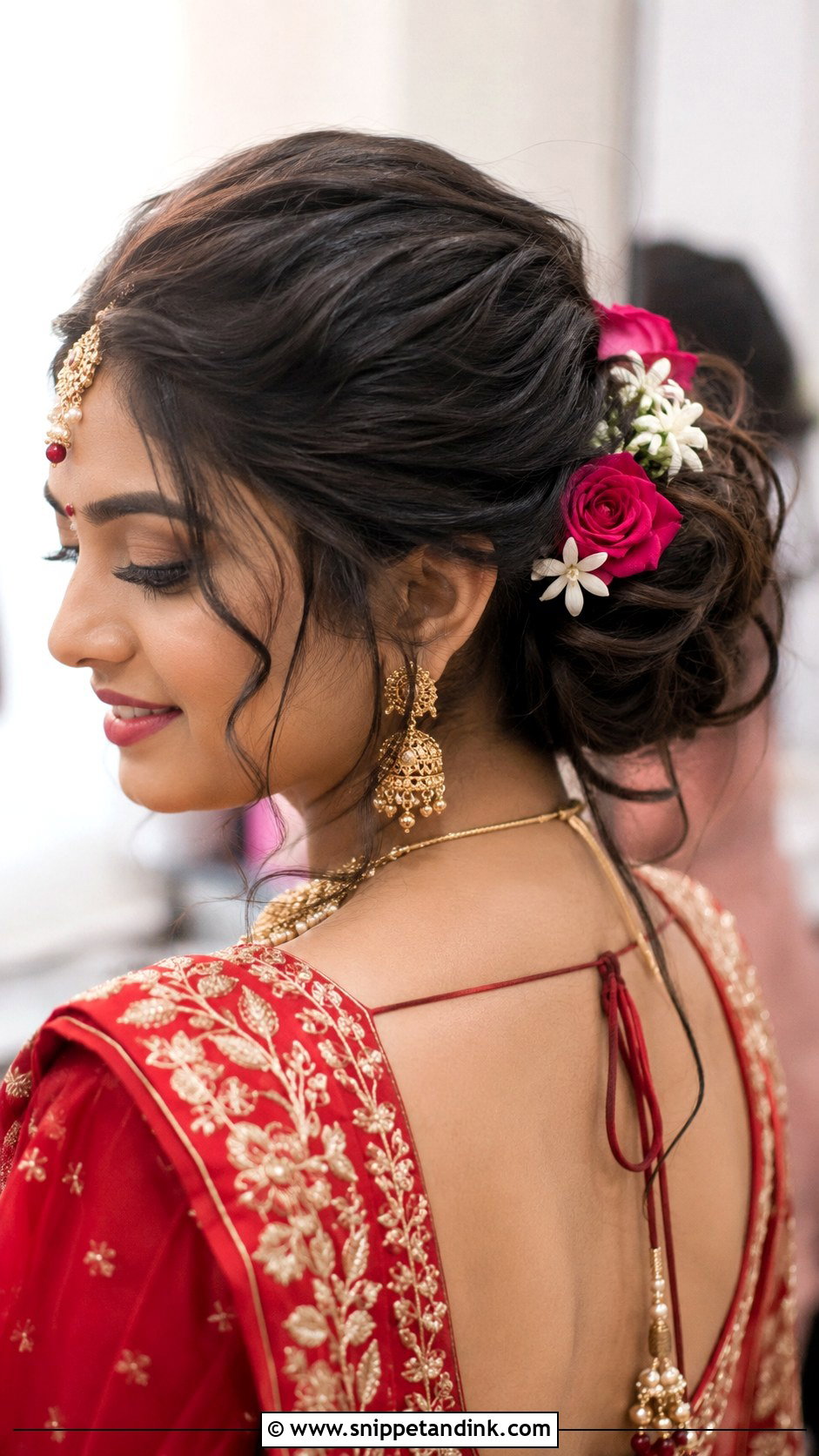
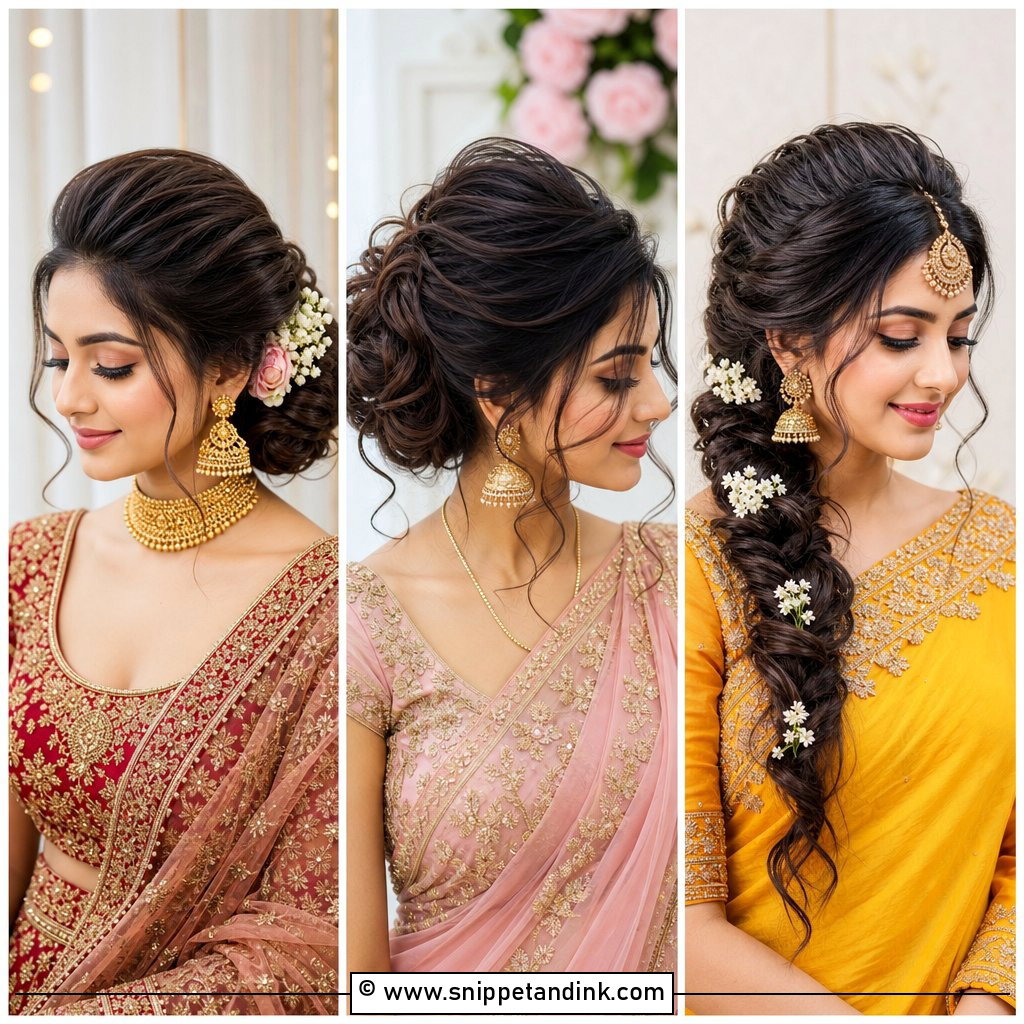
I reach for a messy updo bun on short hair because it hides the ends that won’t reach. I twist small sections up toward the back of the head, pinning each one before taking the next, then let the knot sit slightly loose. Jasmine or roses wrapped around the base cover any gaps and take most of the attention. The one thing it needs is grip: on very clean, silky hair I add a dry texture spray first or the pins slowly work their way out by the baraat.
2. Wavy Bob With Side Part
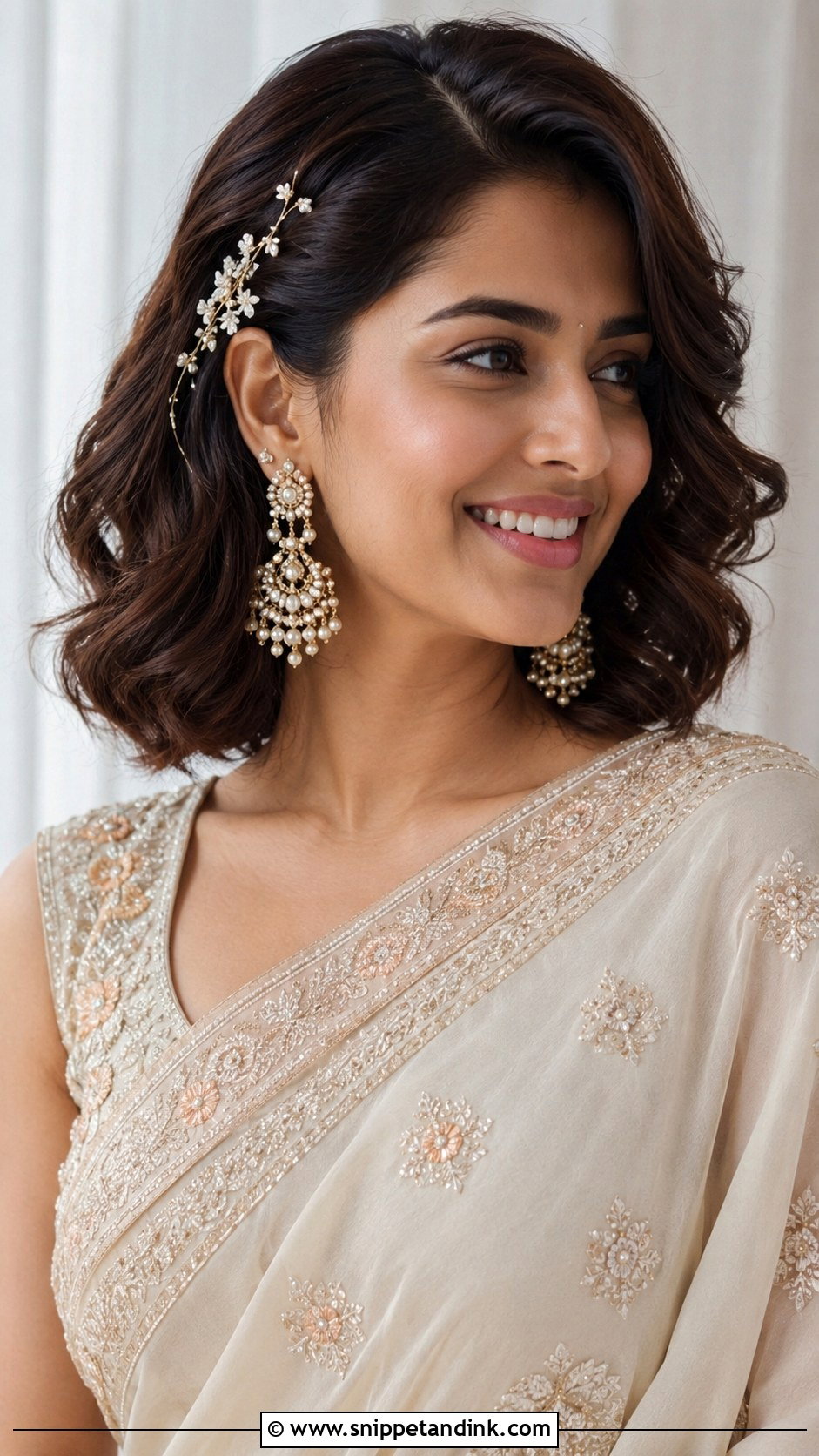
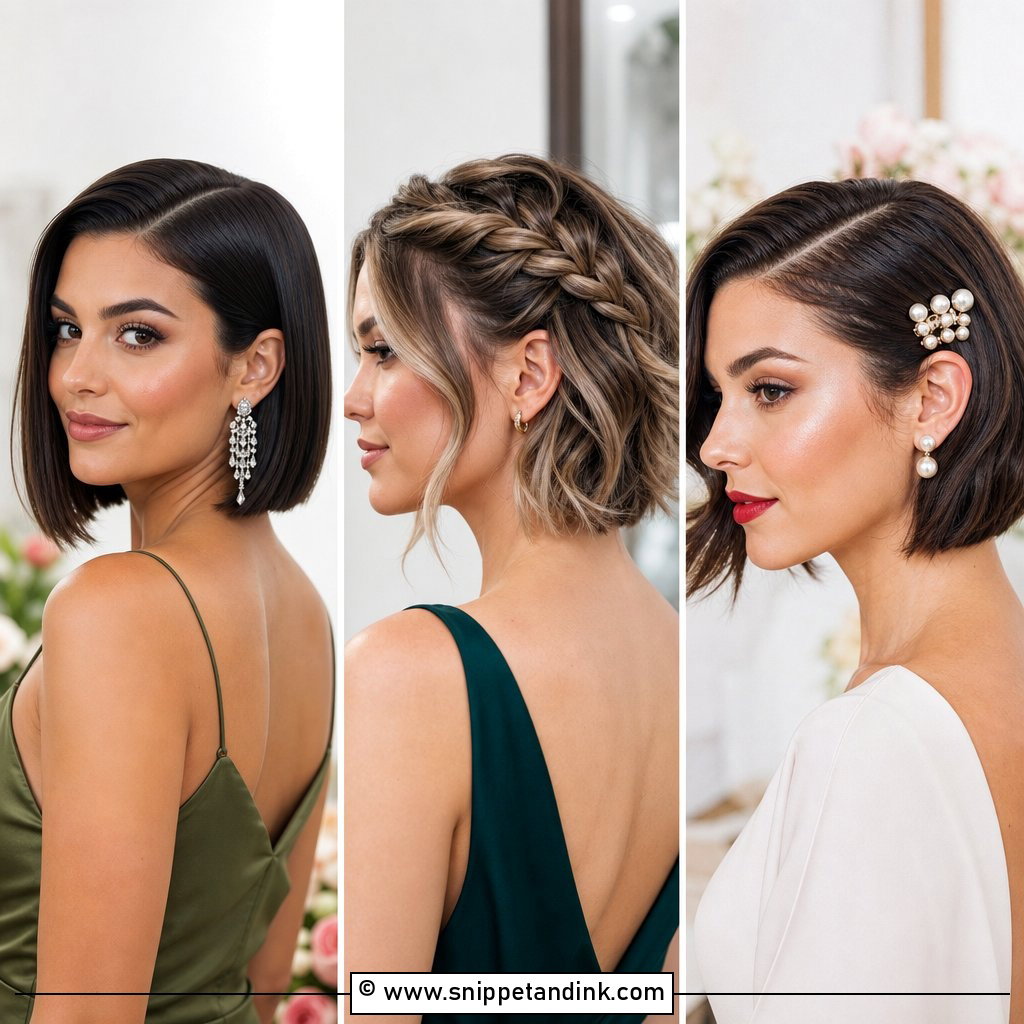
Waves on a short bob should be small and deliberate. I set a deep side part first, then curl with a one-inch wand away from the face and leave the ends straight so the waves don’t flip out. It sits comfortably with a lehenga or saree at a sangeet or cocktail evening. One flower or a short hair vine at the part is plenty; a heavy accessory drags short waves flat within an hour.
3. Braided Front With Curls At Back
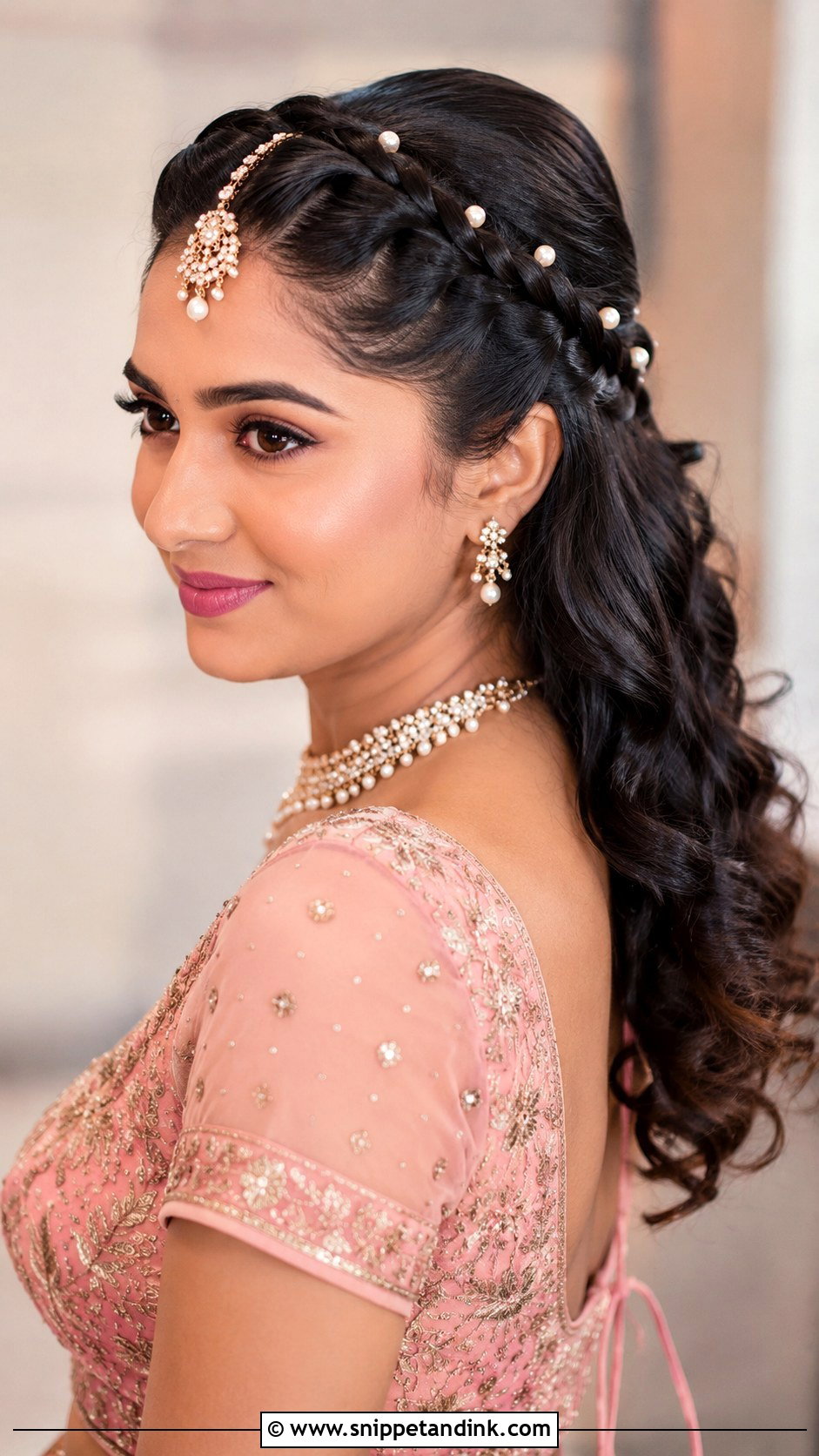
Braiding the front and curling the back is how I give a chin-length cut a finished, bridal look without needing length behind it. The front braids are tight to the scalp so they hold through the ceremony, and they double as a base for a maang tikka hook at the crown. Pearl pins tucked along the braid catch the light. If your back layers are very short, curl them toward the face so they don’t look like leftover ends.
4. Faux Bun With Flower Accessory
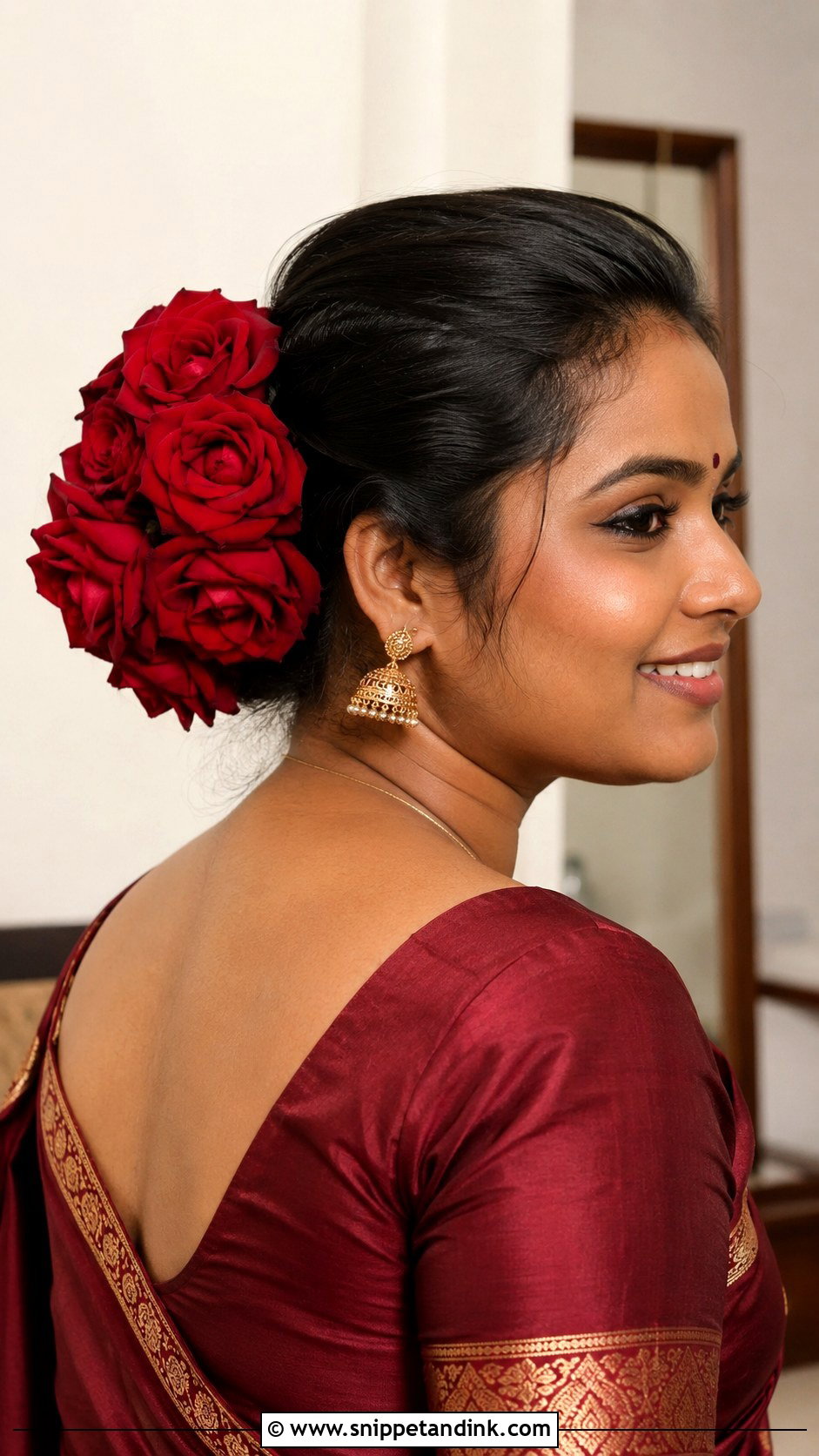
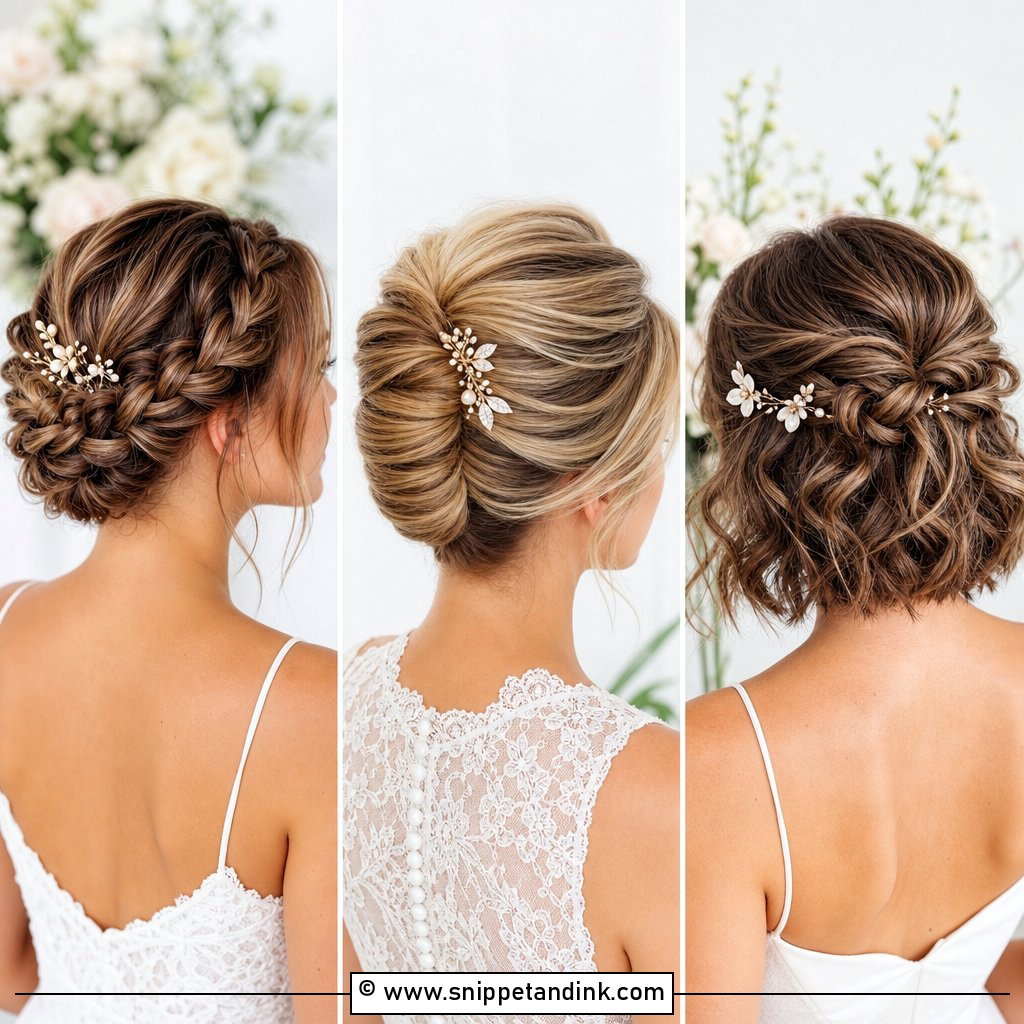
A faux bun piece gives short hair the volume of a traditional bridal bun. I first gather the hair into a small, tight ponytail or twist so the piece has something solid to clip onto, then attach it with its combs and add U-pins around the edge. Matching the colour is the part people skip; take the piece to your trial and check it in daylight. A large flower or a cluster of blooms covers the join, and the base becomes a firm anchor for a heavy dupatta.
5. Soft Curls Left Open
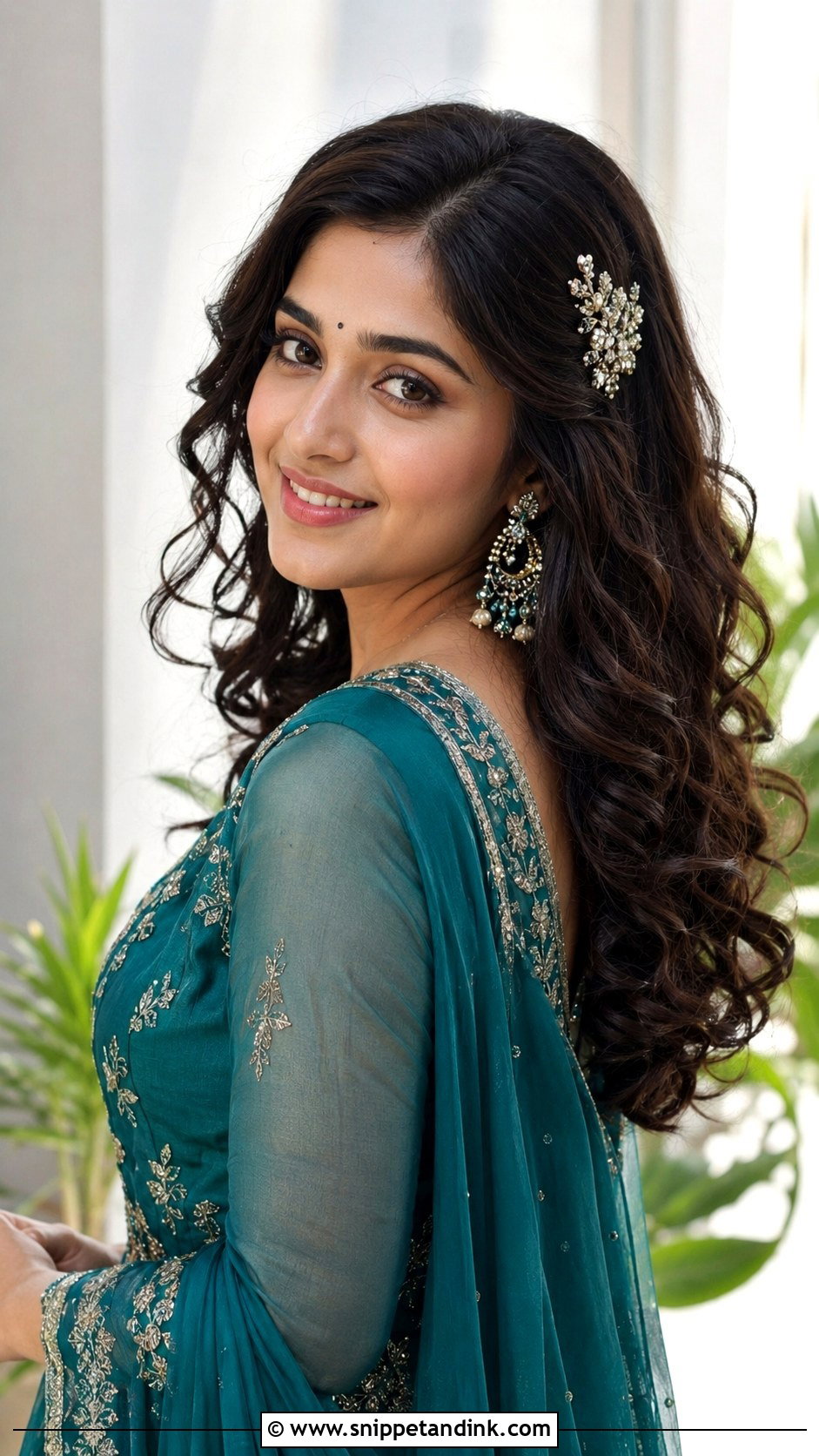
Leaving short hair open with soft curls is the quickest style here, which makes it handy for guests doing several functions in a day. I curl in alternating directions and break the curls up with fingers once they’re cool, so they look fuller on fine hair. A sparkly clip on one side keeps hair out of your face when you dance. For mehendi, sangeet, and reception events, change the accessory rather than the whole style to save time between outfits.
6. Chand Choti Braid Style
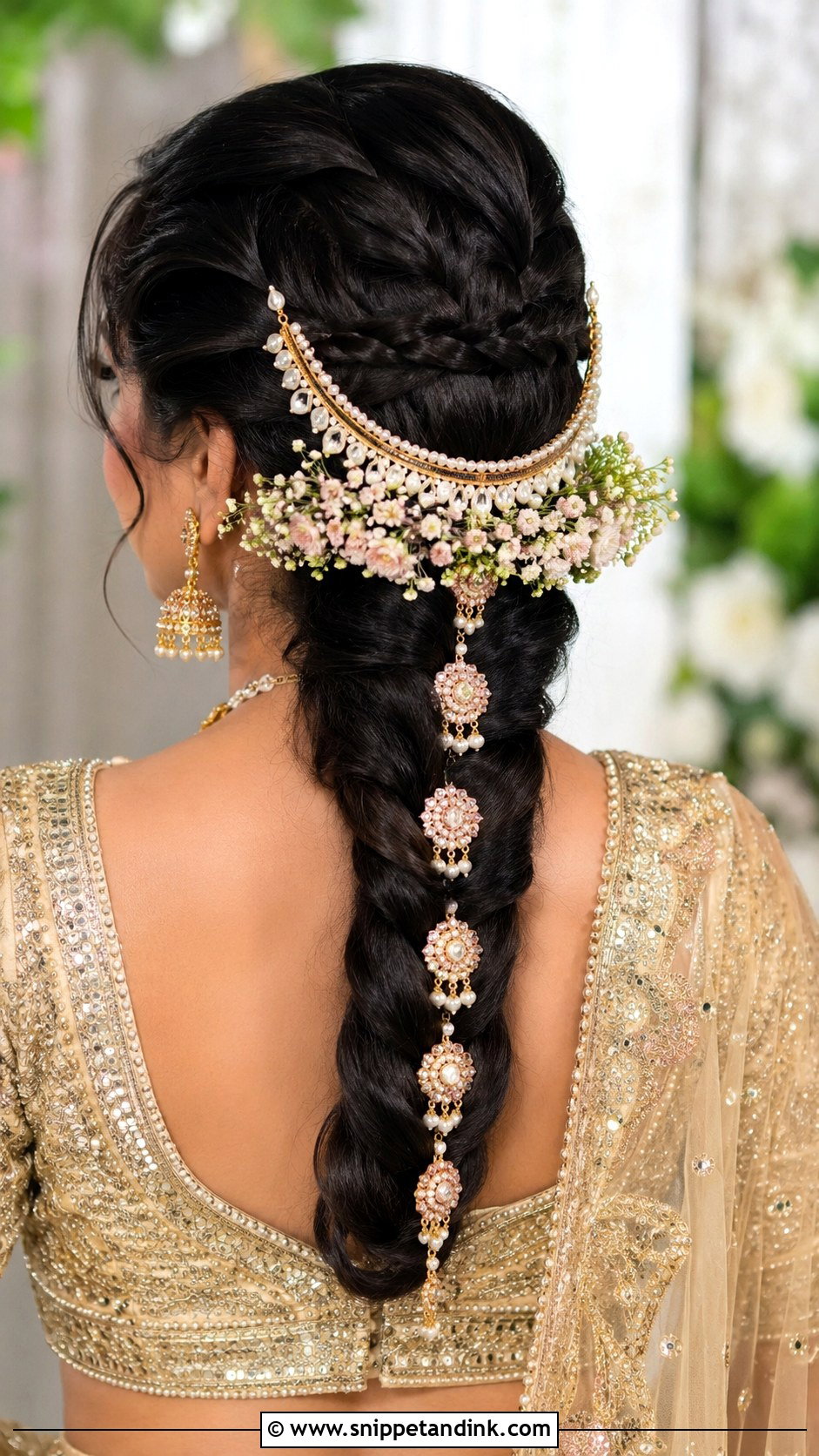
The chand choti suits hair that’s too long to leave neat but too short for a bun. The braid curves around the back of the head in a crescent and is pinned flat, which gives an ornament or flowers a firm place to sit. I braid it tight to the scalp so short pieces are caught early. Gota, pearls or small flowers can be pinned along the curve once the braid is set.
7. Side Braided Bun With Flowers
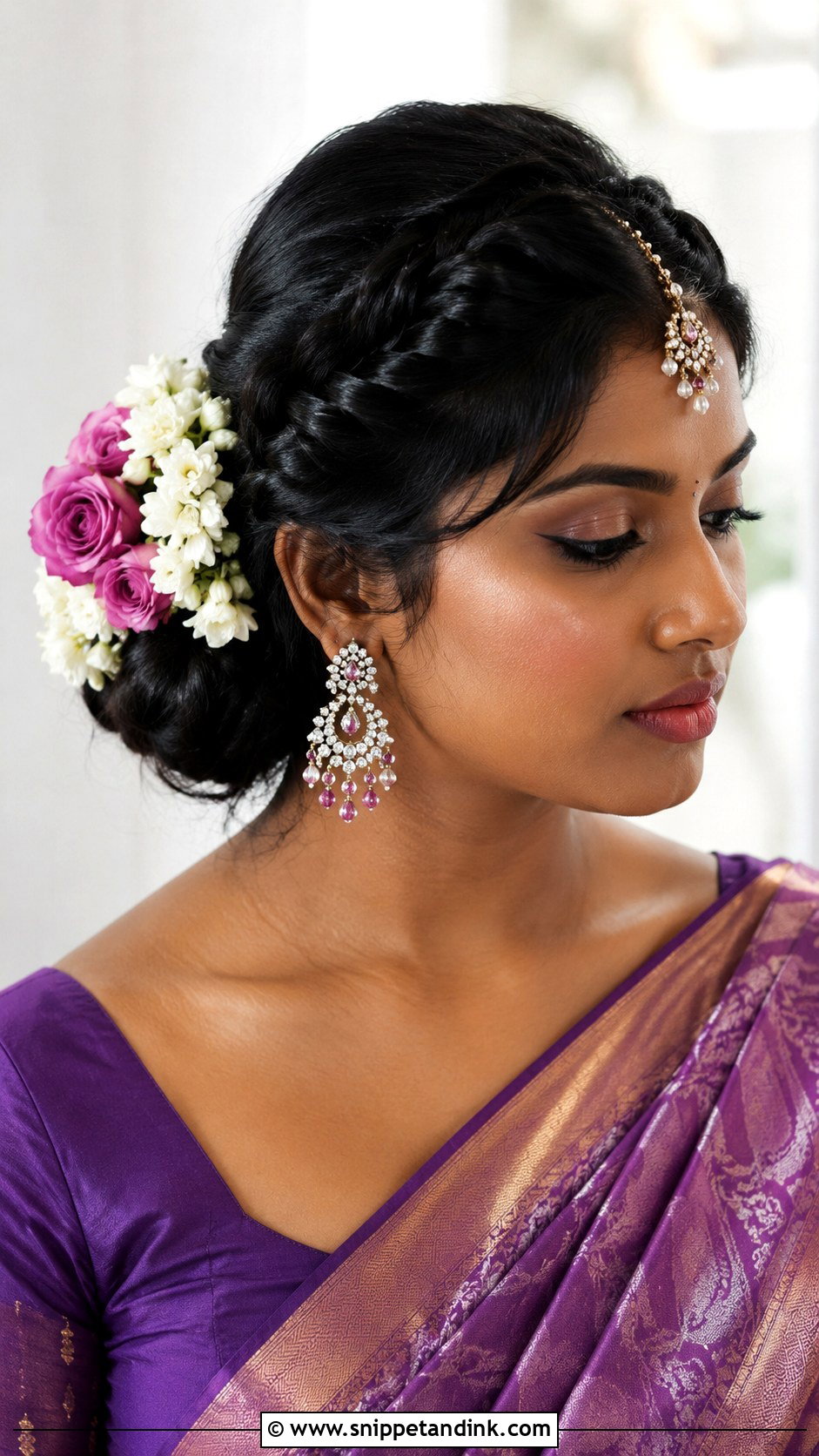
A side braided bun needs enough length to braid to the nape, roughly shoulder length. I part down the middle, sweep everything to one side, braid it loosely and coil the braid into a low bun just behind the ear. Pin the bun with U-pins rather than bobby pins, since the coil is heavier than it looks. Jasmine or roses tucked along the braid hide any short ends.
8. Wavy Curls With Side Braid
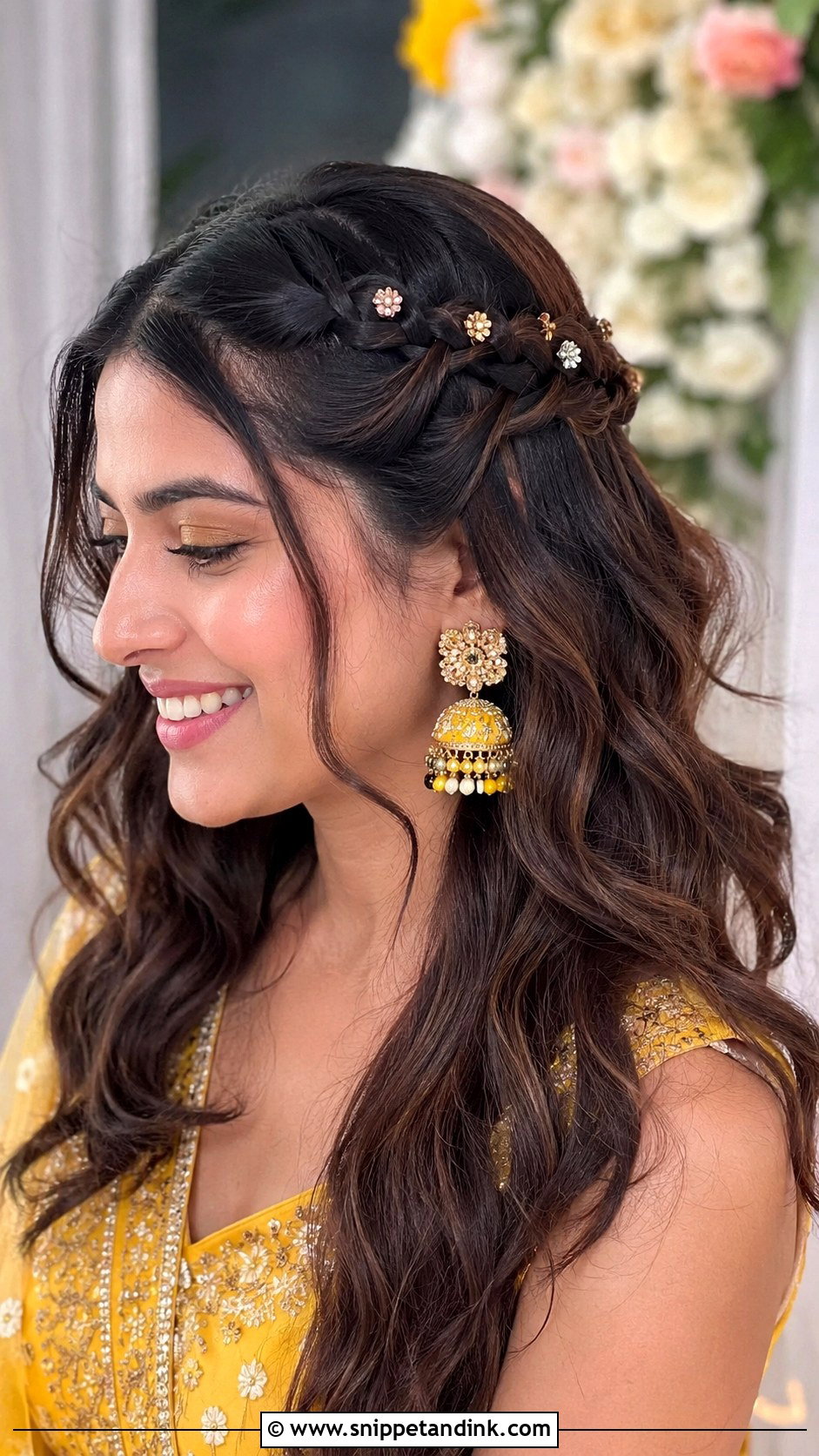
Mixing waves with a small side braid gives short hair texture and a detail that photographs well during dancing. I curl the hair first, then braid a thin section above one ear and pin the end back behind the ear. The braid keeps hair off your face while the rest moves. Bold jhumkas show best on the braided side.
9. Sleek Low Bun With Maang Tikka
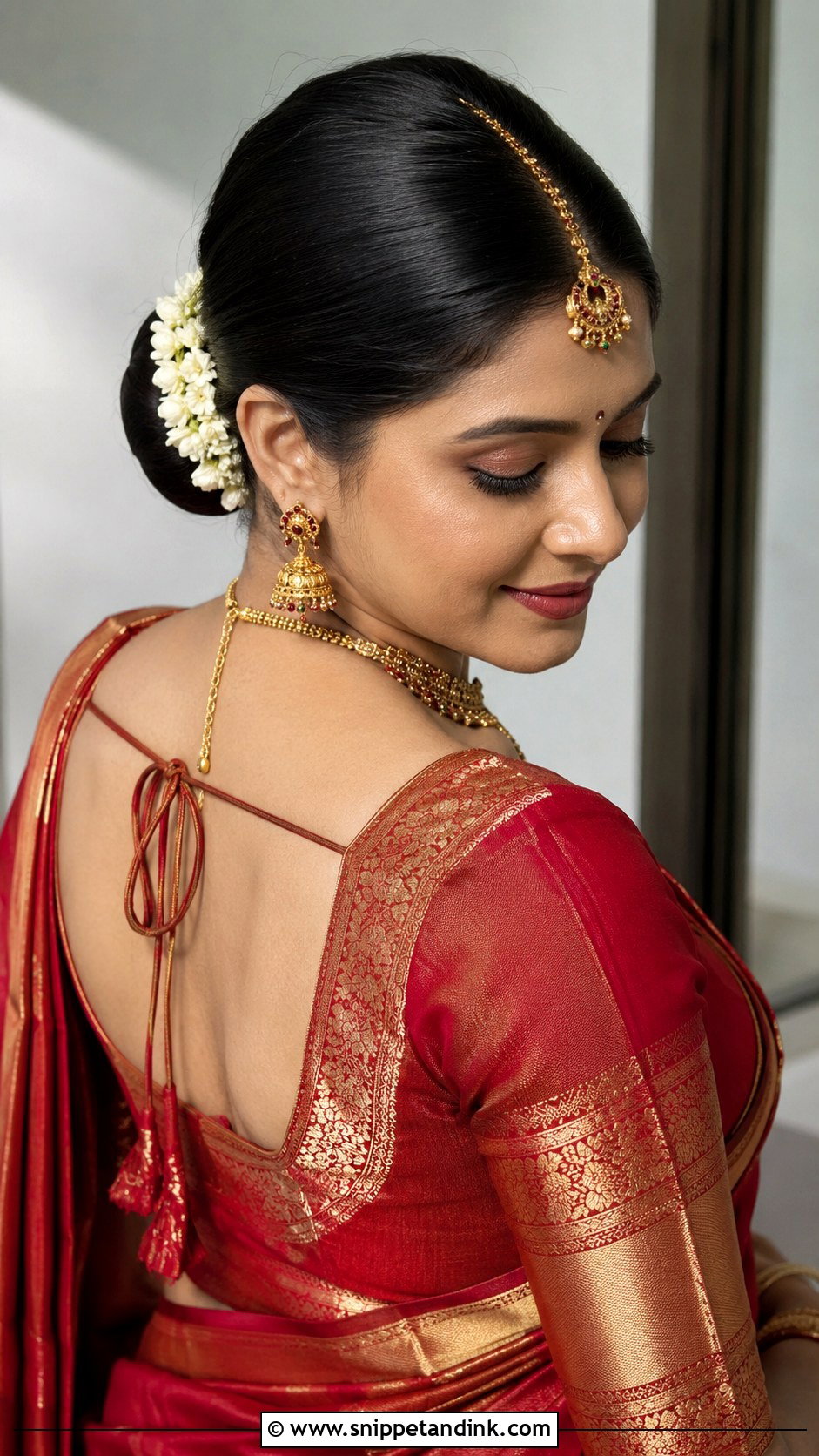
A sleek low bun is the best base for a heavy maang tikka, because the smooth crown lets the chain sit flat. I smooth hair back with a little gel or serum, gather it at the nape, twist it into a bun and add extra pins on short hair. Place the tikka along the centre part and pin the hook at the crown. A gajra wrapped around the bun adds fragrance and hides any gaps.
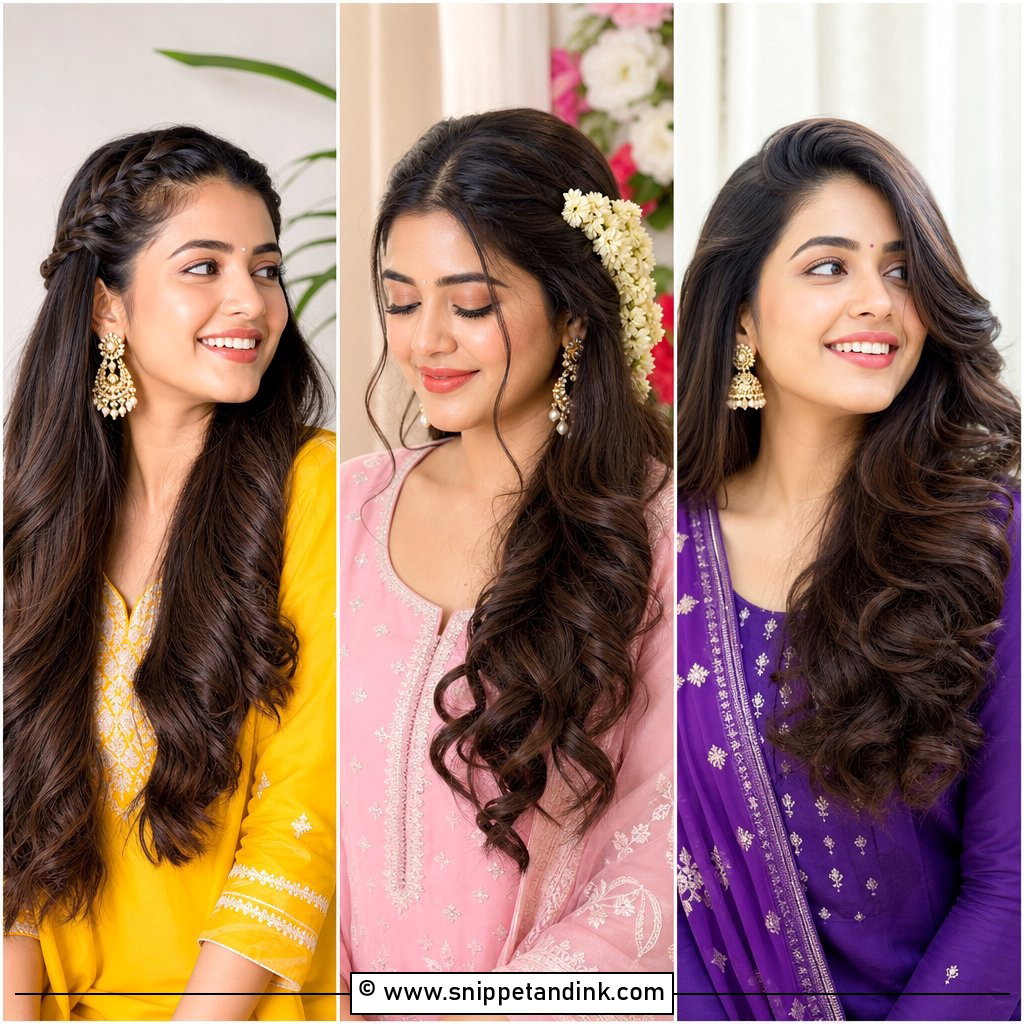
10. Half-Up Half-Down With Curls
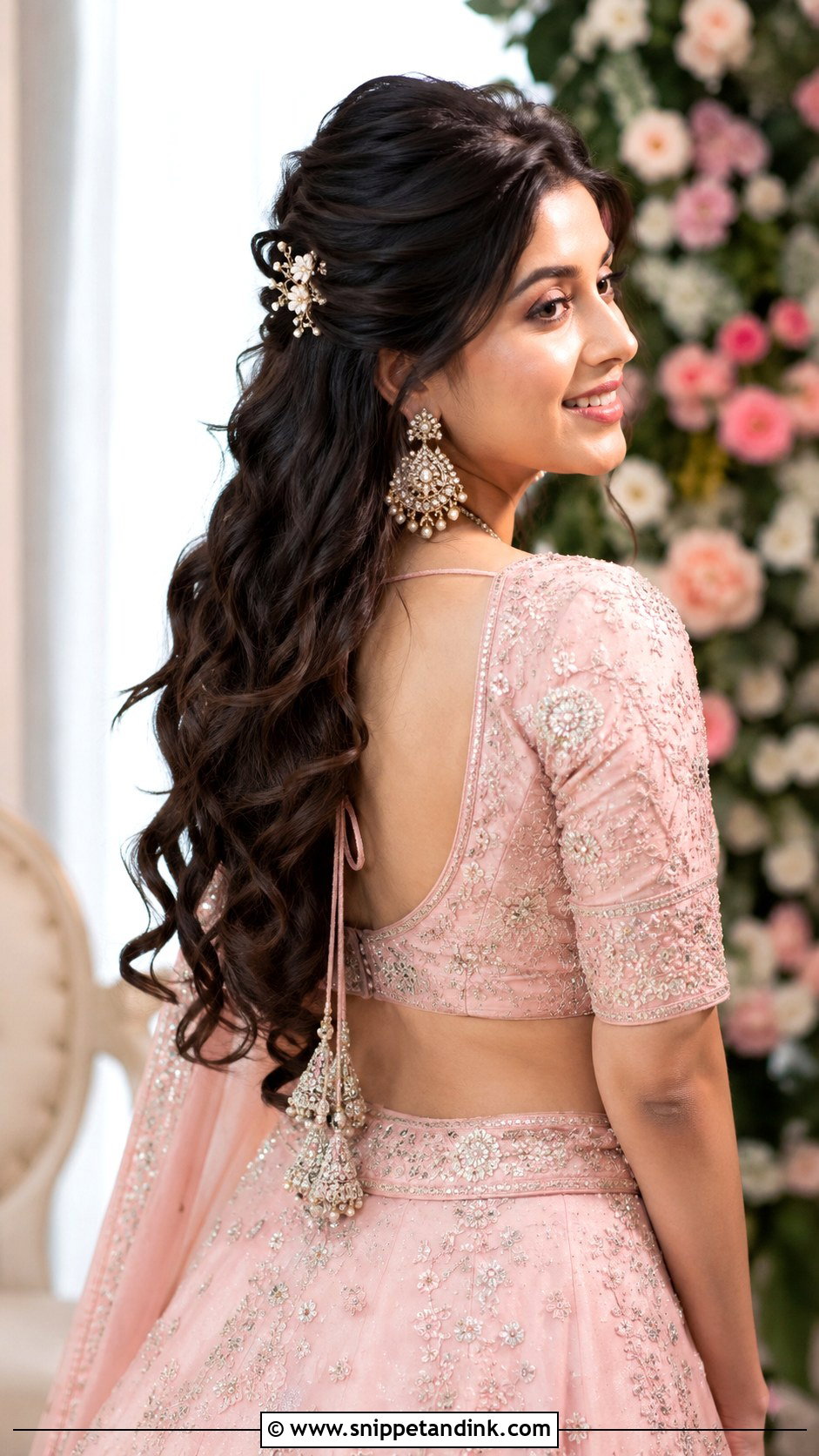
Half up with curls is one of the most adaptable styles for a multi-day wedding. I pin the top section back at the crown with crossed bobby pins and curl the rest. The pinned section also gives a clip or small flowers somewhere to sit. It goes with lehengas, saris and fusion outfits, so you can wear it to the sangeet and change only the accessory for the reception.
11. Pixie Cut With Hair Accessories
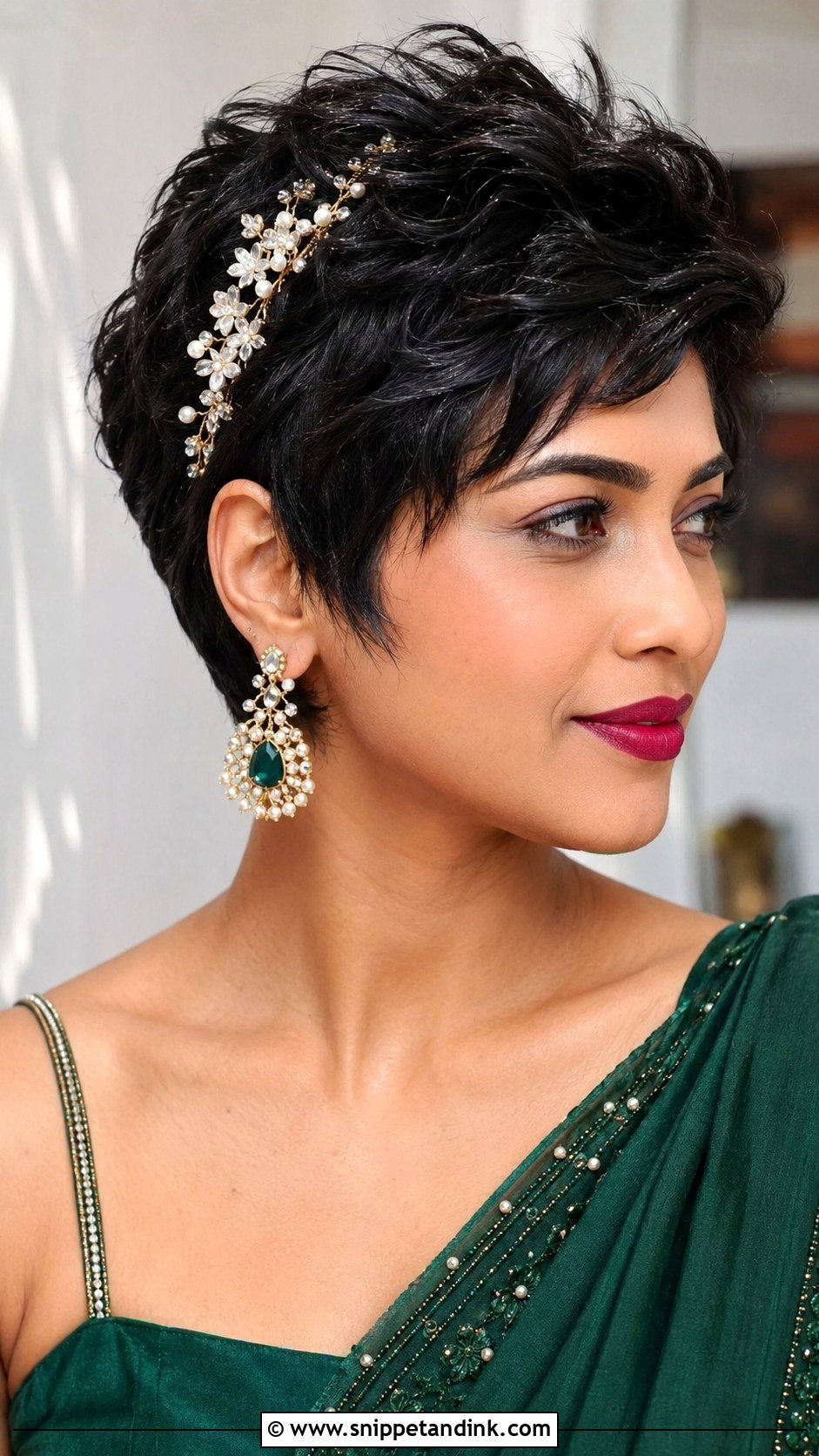
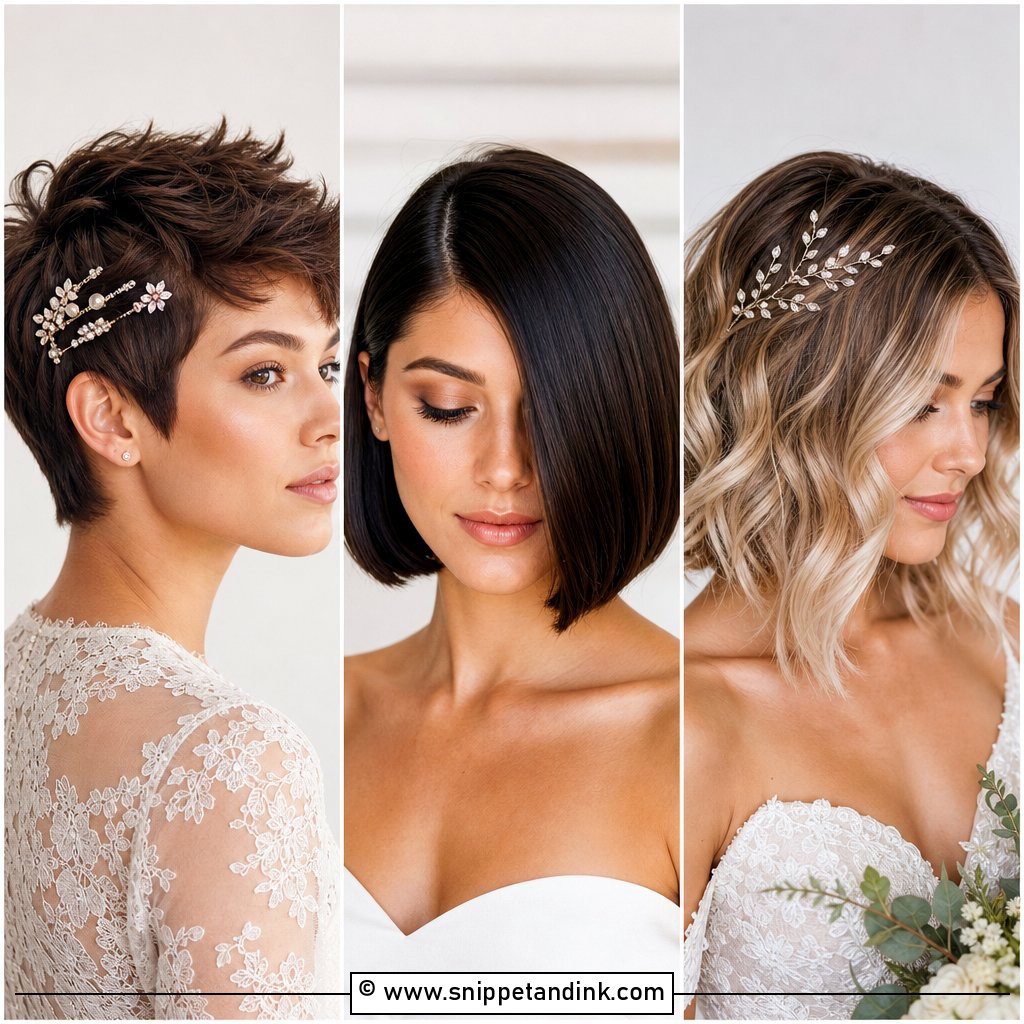
A pixie at an Indian wedding works best with confident accessories. I add a little texture with a light paste or cream, then pin jewelled clips or a hair vine along the side. A maang tikka can still be worn; I pin the hook into a small, flat pin curl at the crown. A pixie also keeps you cool through long ceremonies in hot weather.
12. Bob With Soft Curls And Hair Vine
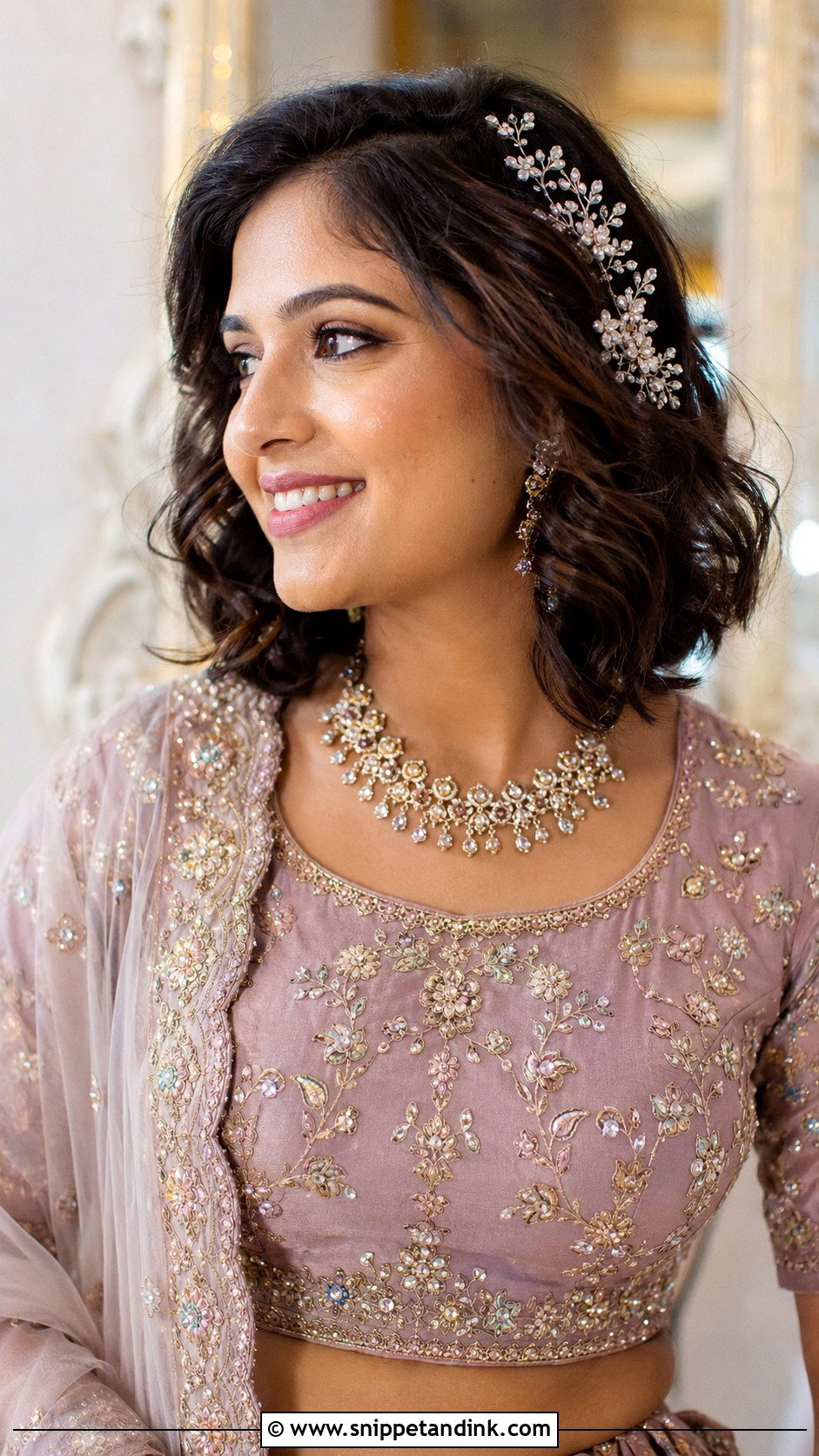
A hair vine looks far richer on a curled bob than on straight hair, because the curls give it something to weave through. I curl loosely first, then thread the vine along one side and pin it at each end and at the middle. It pairs well with traditional jewellery and a dupatta. The vine should be lightweight; heavy ones pull a bob down.
13. Twisted Updo With Gajra
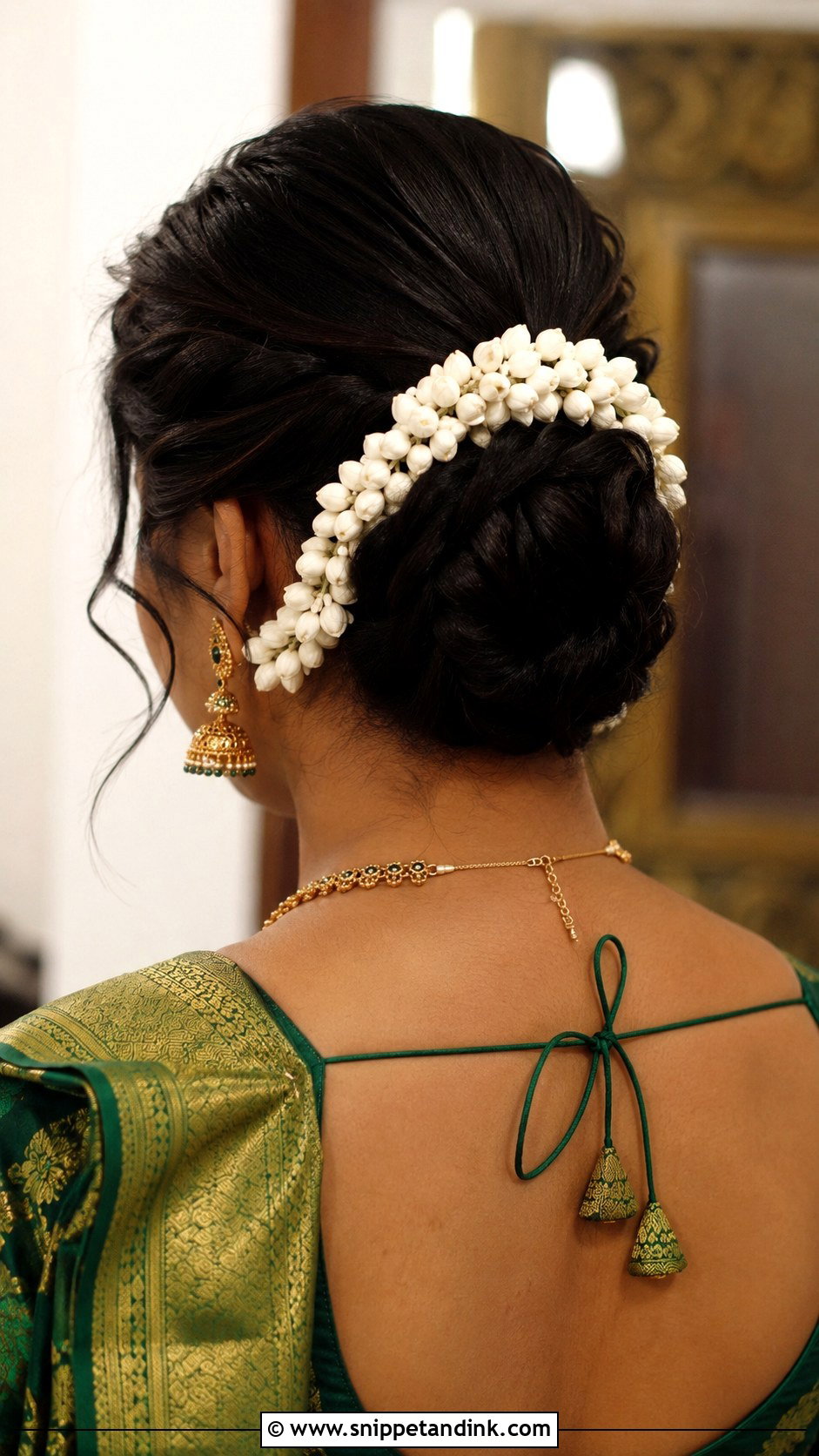
Gajra needs a secure base, and a twisted updo is a good one. I twist sections upward and pin them into a soft updo, then wrap the jasmine string around the base and pin it every few inches. The white flowers against dark hair give a classic South Indian bridal look with temple jewellery and a silk saree. Jasmine wilts within hours, so keep it in a damp cloth or cool place until you put it in.
14. Curly Side Swept Look
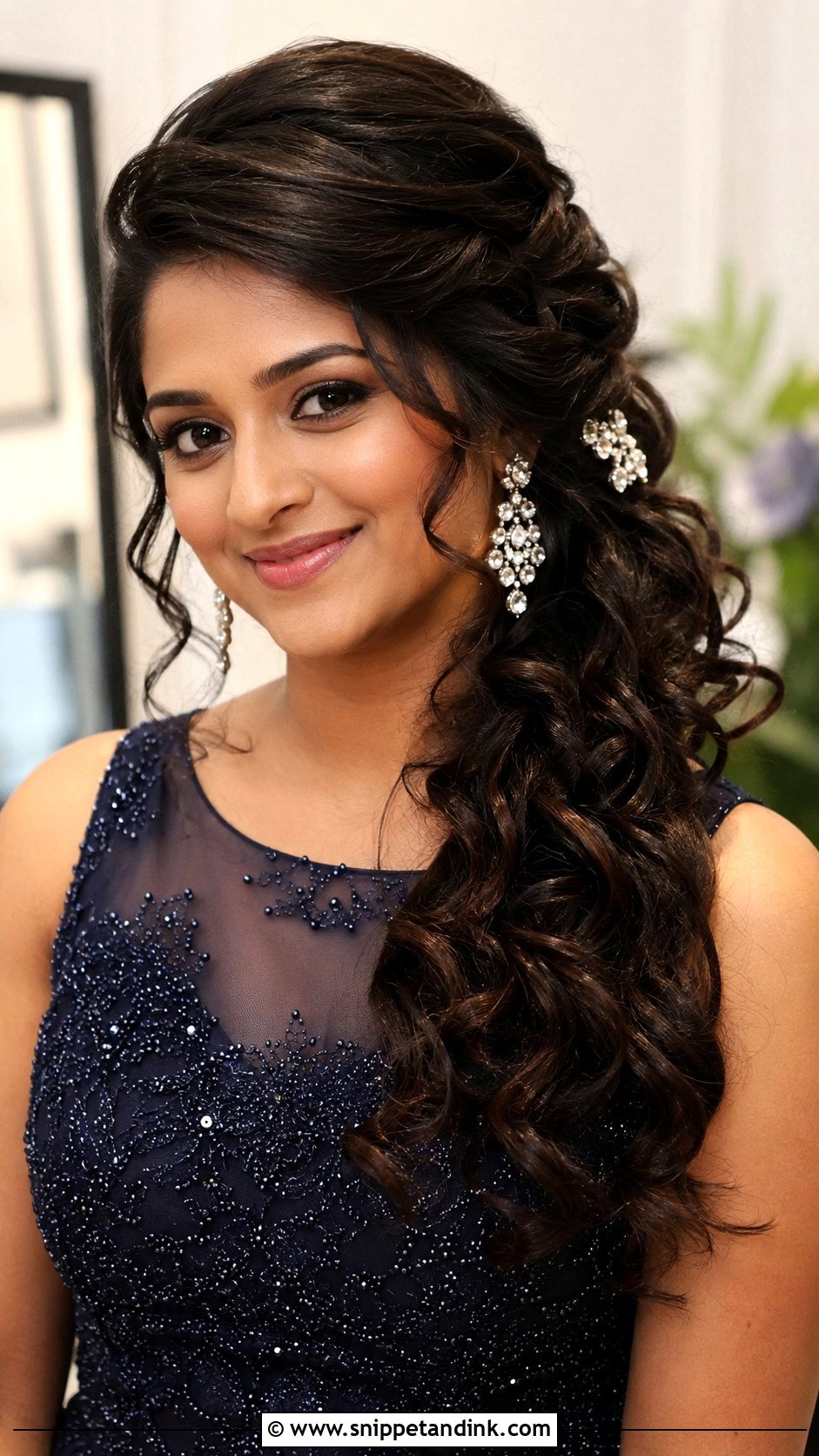
Side-swept curls draw attention to your neck and jewellery. I curl the hair, then gather it over one shoulder and pin the opposite side back with crossed pins. A sparkly pin or flower covers the pinned side. It suits a reception or cocktail evening and needs at least chin length on the swept side.
15. Messy Bun With Loose Tendrils
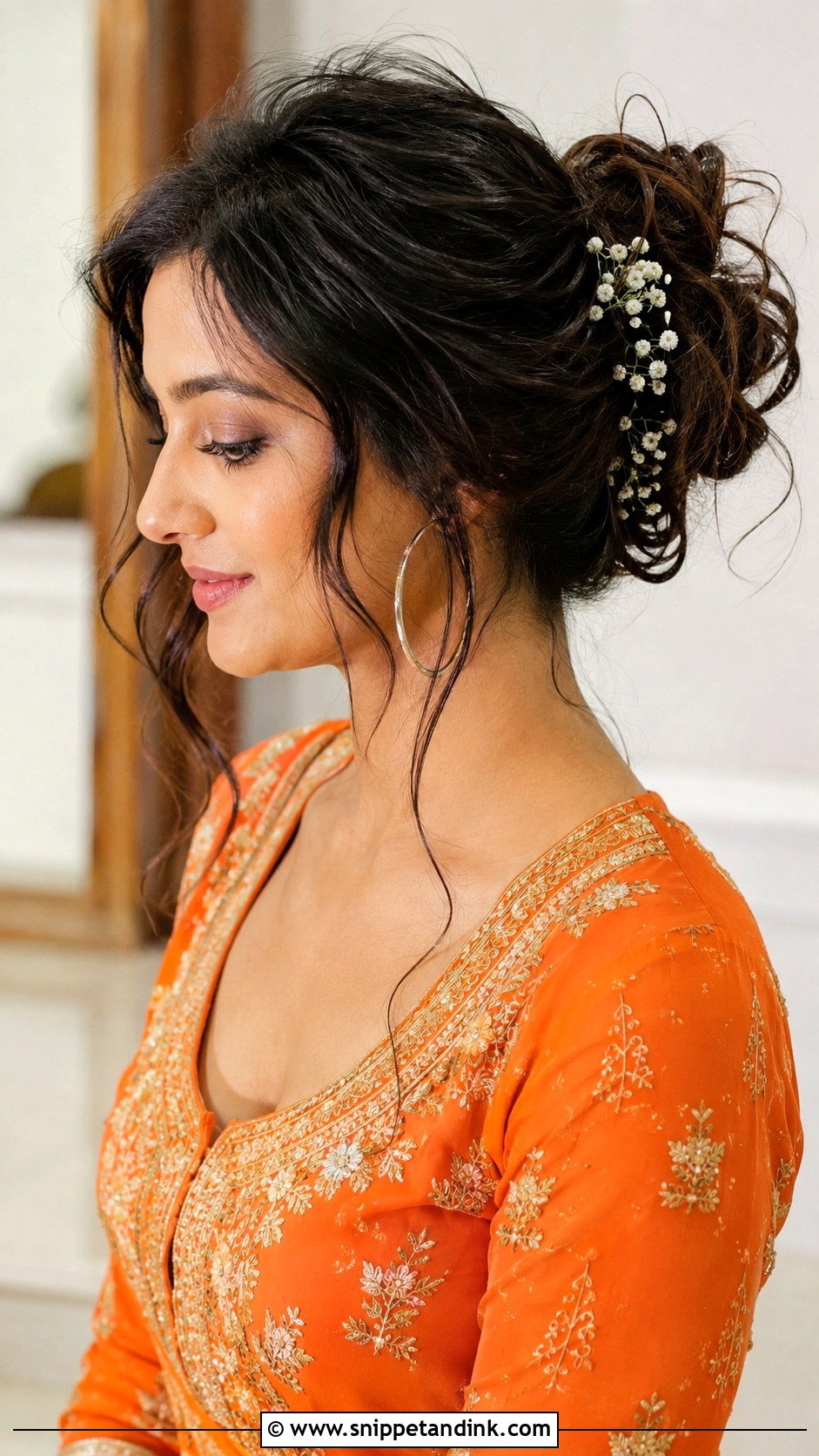
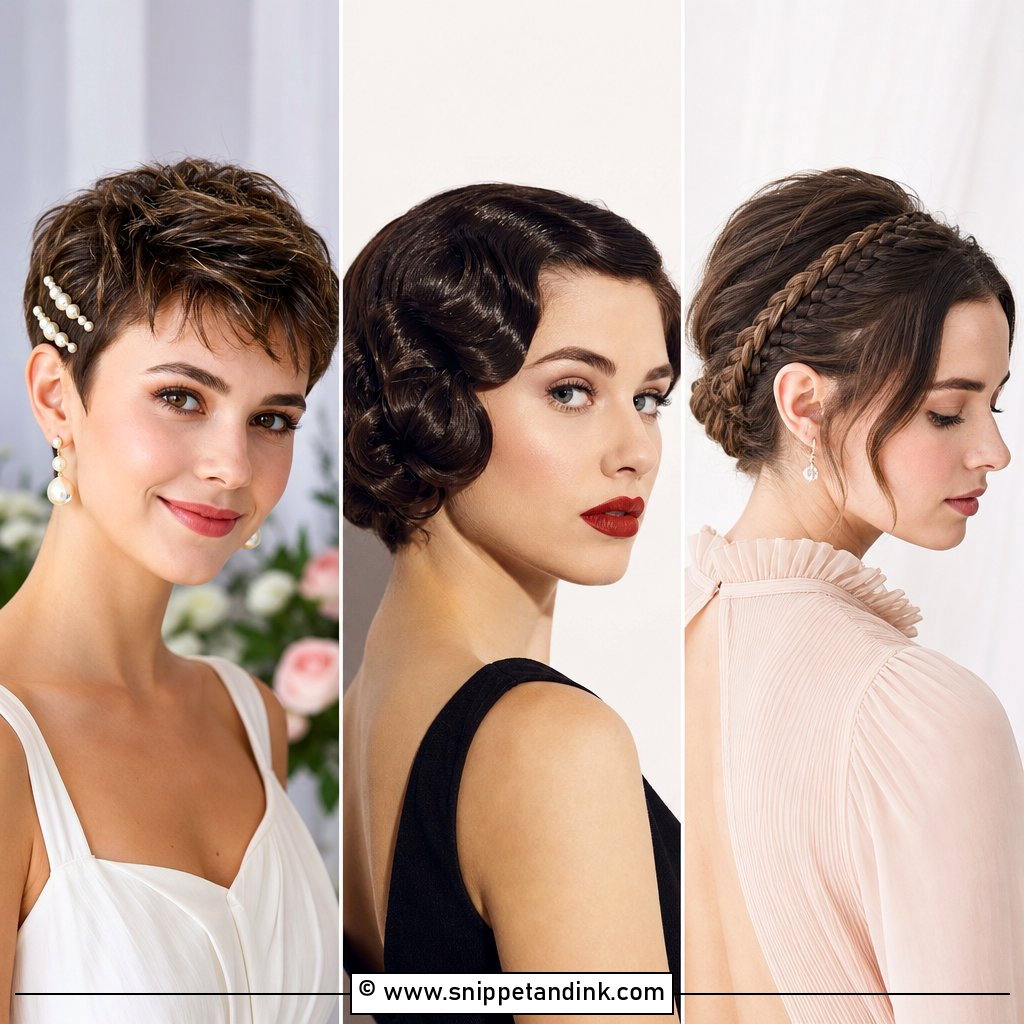
A messy bun with tendrils is quick and forgiving, which makes it a good choice for daytime events like mehendi. I gather hair loosely, pin it, then pull out face-framing pieces before the short layers fall on their own. Add small flowers or a hairpin, but avoid heavy accessories that drag the loose bun down. Hoop earrings work well with this style.
16. Front Braided Crown With Open Hair
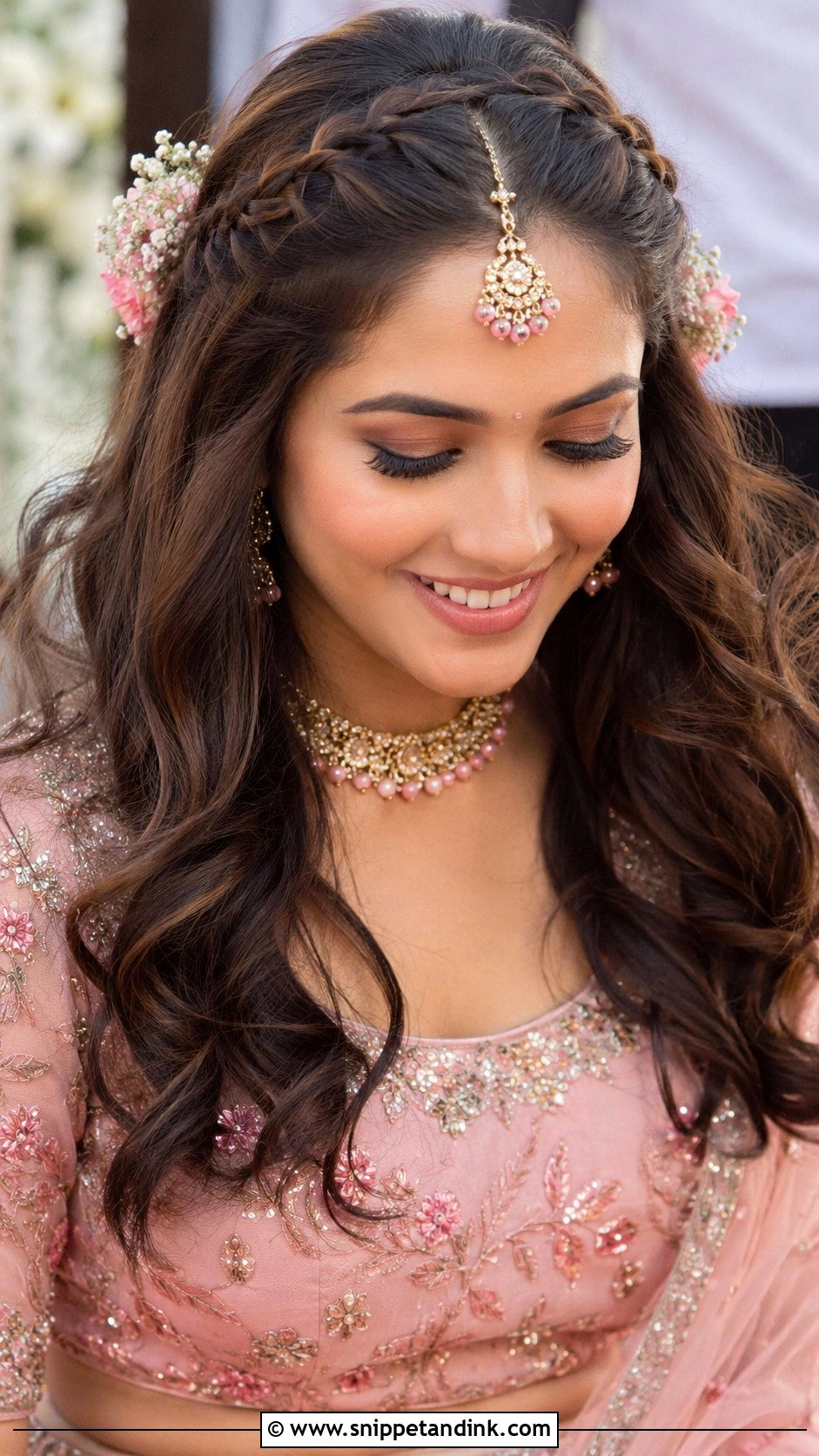
A front braided crown works on short hair because it only needs the front section. I braid along the hairline from one side to the other and pin each end behind the ears, then curl the rest of the hair. Tiny flowers or pearls can be added along the braid. A maang tikka can rest on the braided section, which helps hold the chain in place.
17. Low Side Bun With Statement Flower
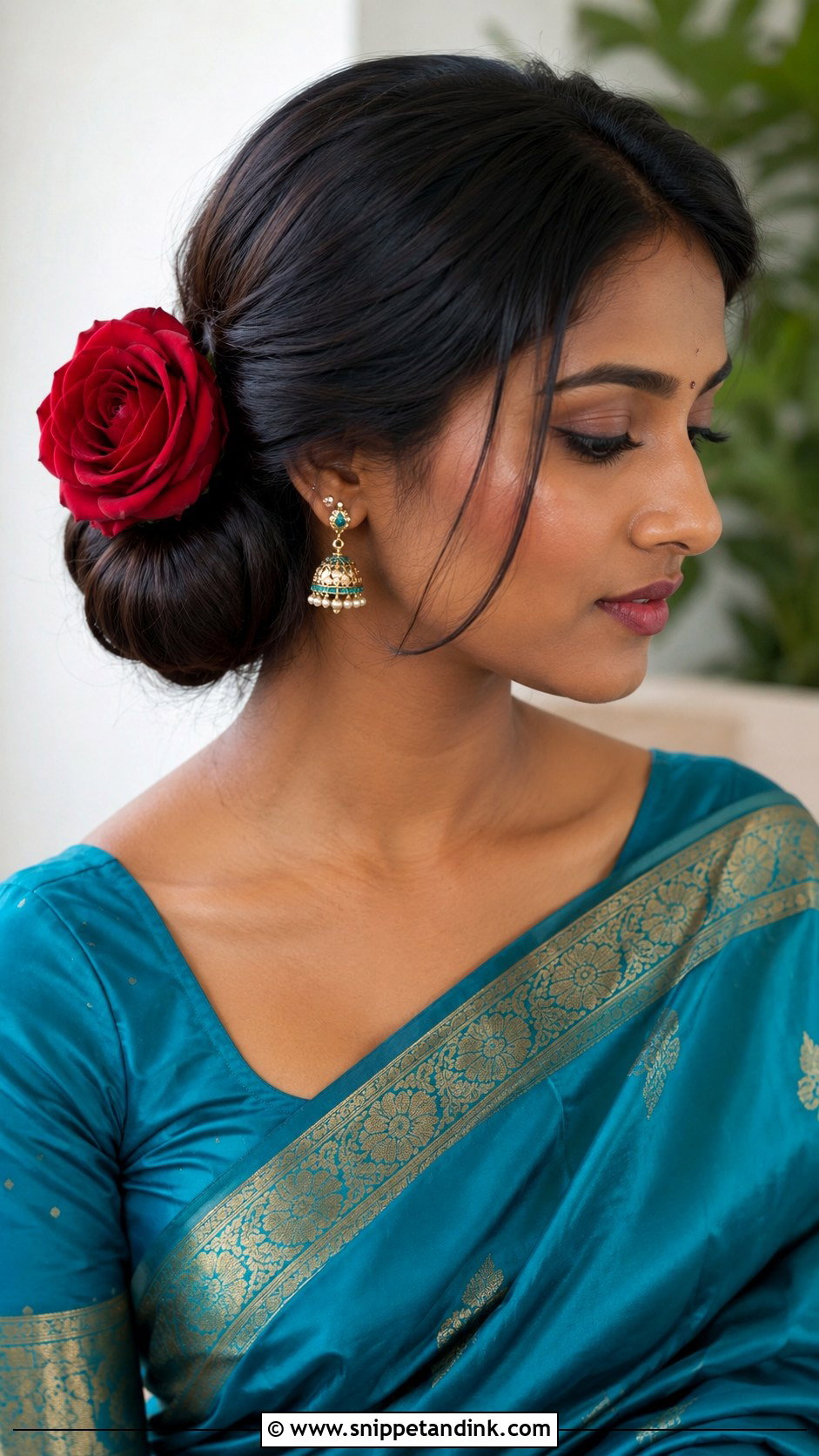
A low side bun with one big flower lets the flower take all the attention. I gather the hair to one side at the nape, twist it into a small bun and pin it firmly. Then I attach a rose or hibiscus just above the bun with bobby pins through the stem. Short hair needs extra pins for this; a small hair doughnut can help add size if needed.
18. Tousled Waves With Headband
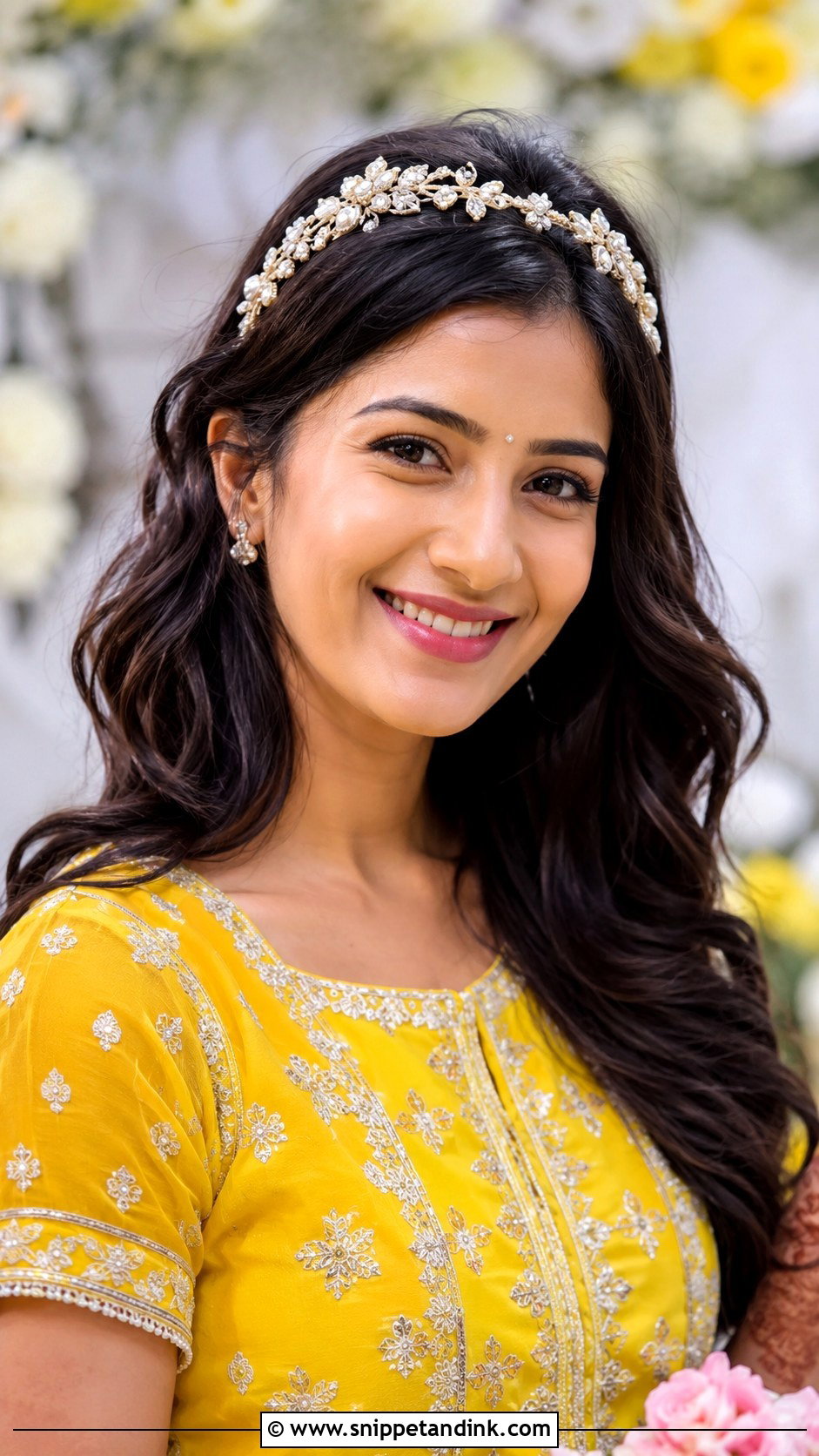
A headband over loose waves is a good choice for younger guests or bridesmaids at daytime events. I curl the hair loosely, then slide a jewelled or floral headband on, backcombing a little behind it so it doesn’t slip. The headband keeps hair off your face during dancing. Wear it at home first to check it doesn’t press behind the ears.
19. Sleek Bob With Deep Side Part
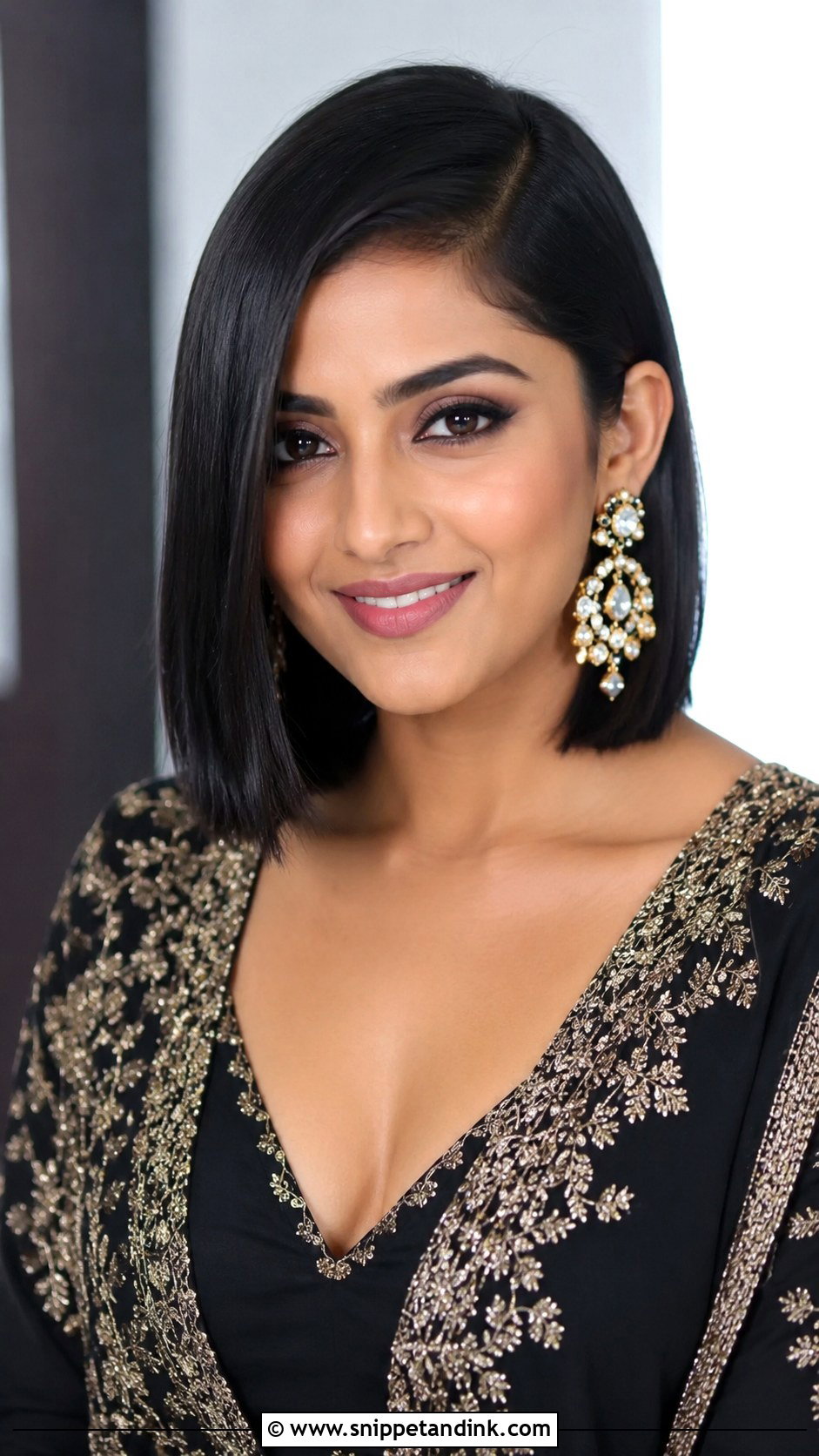
For a cocktail night in a gown or fusion lehenga, a sleek bob with a deep side part looks sharp and modern. I blow-dry against the part first, flip it over for root lift, then flat iron the lengths in thin sections. Indian wedding venues are often hot and crowded by the reception, so I put the anti-frizz product in before ironing and keep the shine serum to the surface. Tucking one side behind the ear opens up space for a heavy earring.
20. Floral Half Updo With Curls
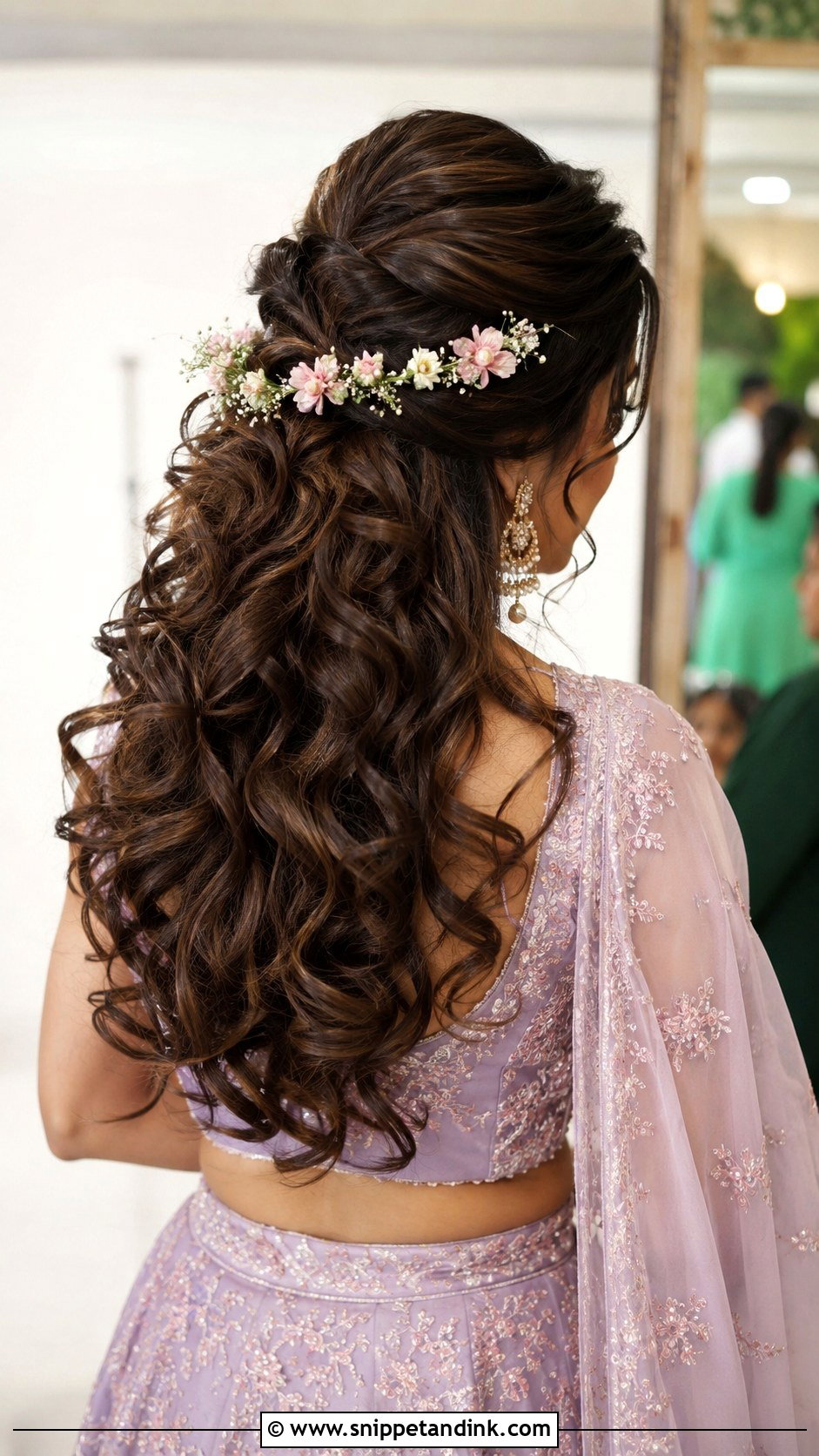
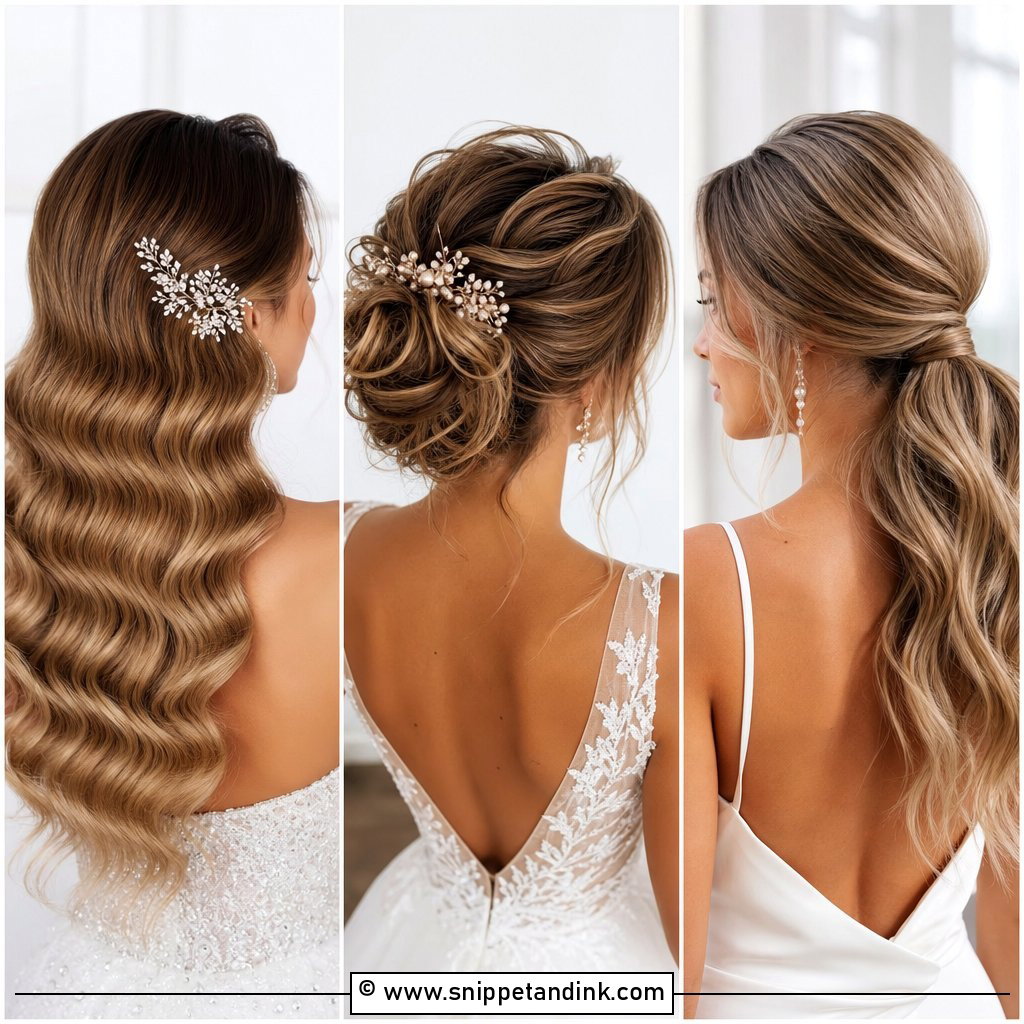
Pinning flowers across a half updo turns a simple style into something for the mehendi or a daytime ceremony. I secure the top section with crossed pins first, then attach a row of small blooms over the pins so they double as cover. Choose sturdy stems; mogra, baby’s breath and spray roses last far better in afternoon heat than soft petals that brown when touched. The curls below are set before the flowers go in, never after.
21. Retro Curls With Side Pin
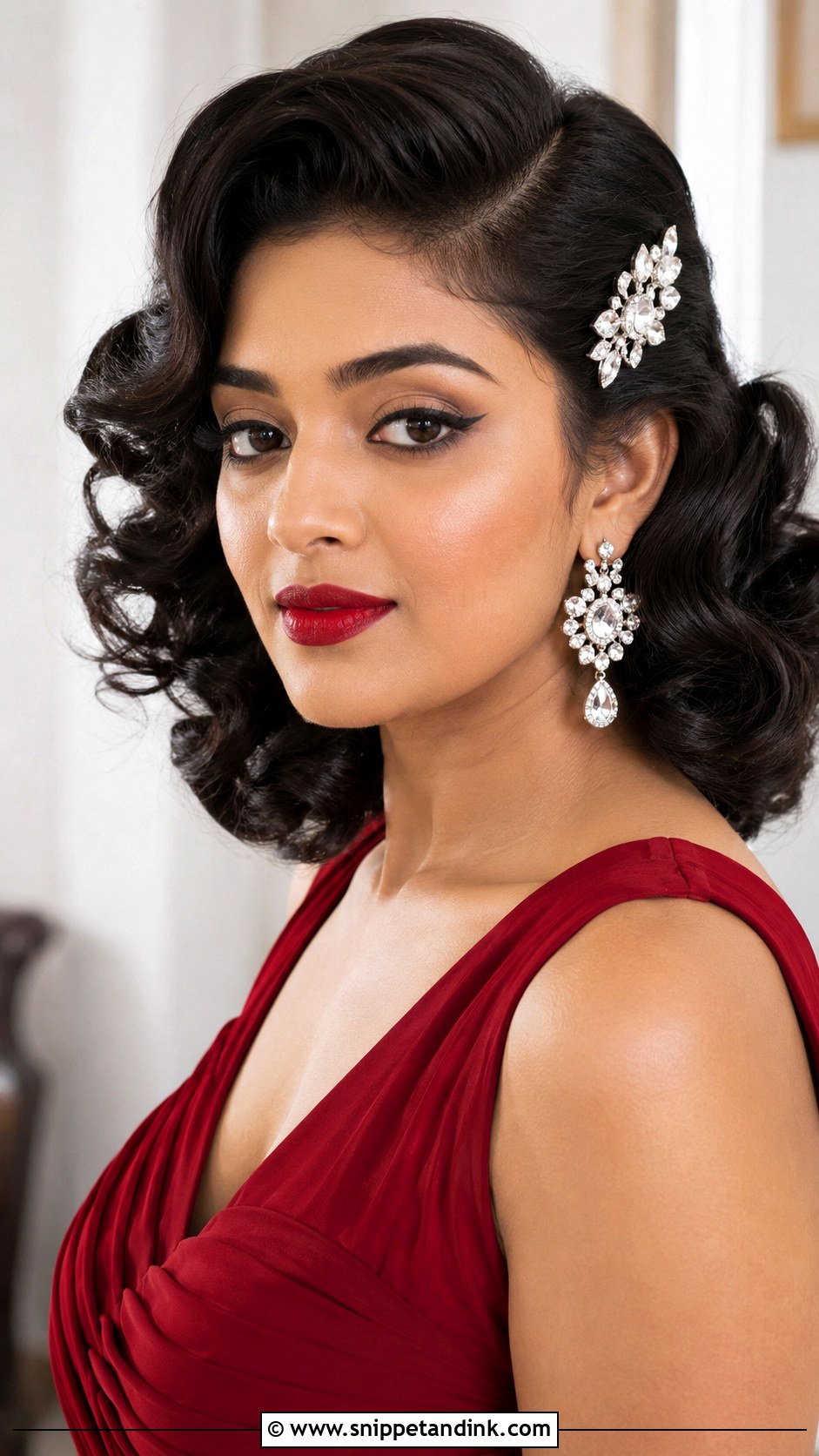
Retro curls only last if they’re set properly. I curl small sections, pin each curl flat to cool, and brush them out into a wave once completely cold, then sweep the whole shape to one side under a decorative pin. Hot rollers give a firmer set than an iron on fine hair. For a reception with a red lip and chandelier earrings, it’s a refreshing break from the usual curls.
22. Puff With Open Curly Hair
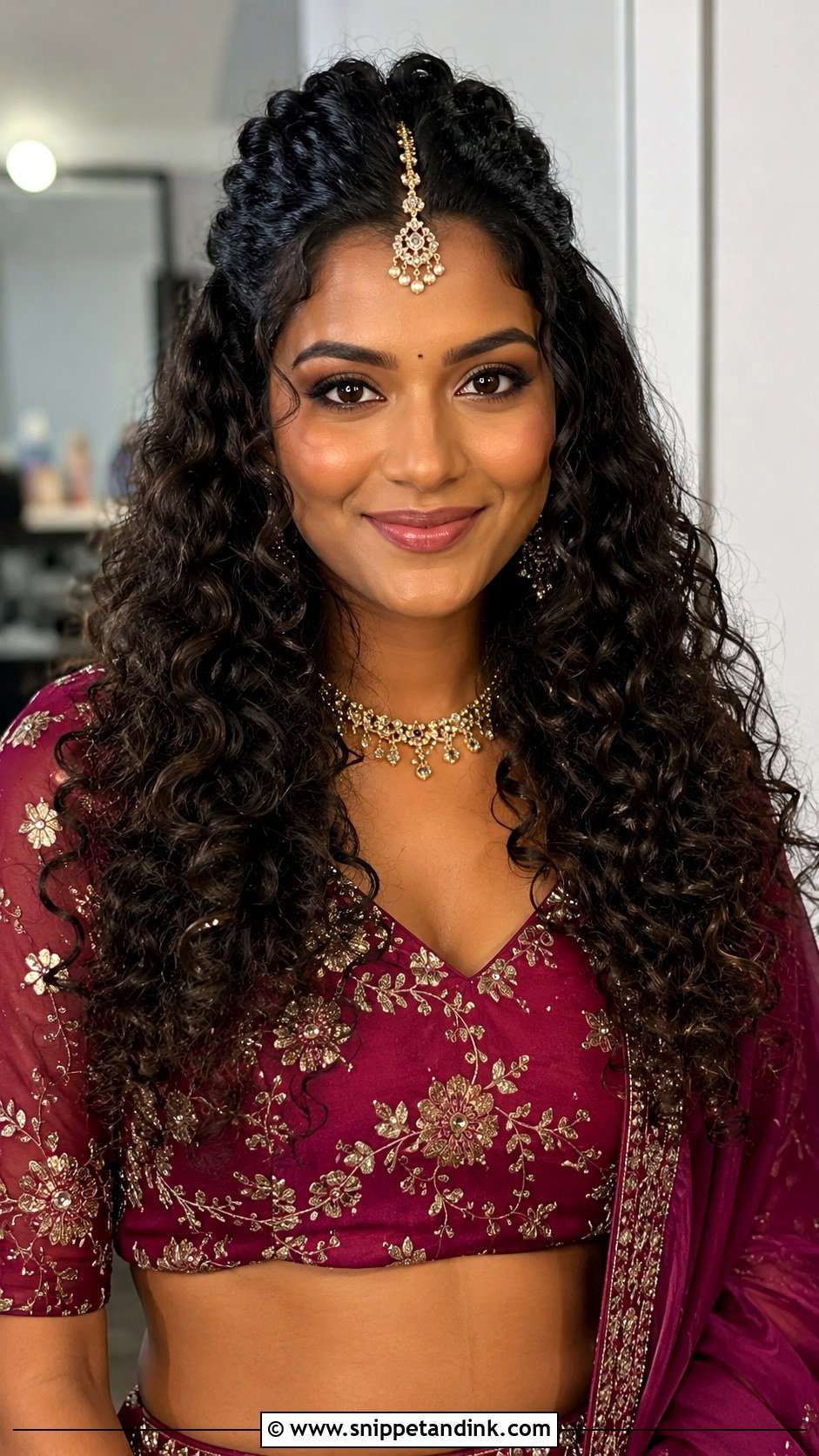
A teased puff at the crown adds height to short curly hair, but curls frizz when backcombed hard. I tease only the root of the top section, smooth the surface with a soft brush, and pin the puff from underneath. The rest stays in its natural curl pattern, refreshed with water and a curl cream. A tikka chain sits neatly along the centre part, held by the base of the puff.
23. Bob Tucked Behind Ears With Earrings
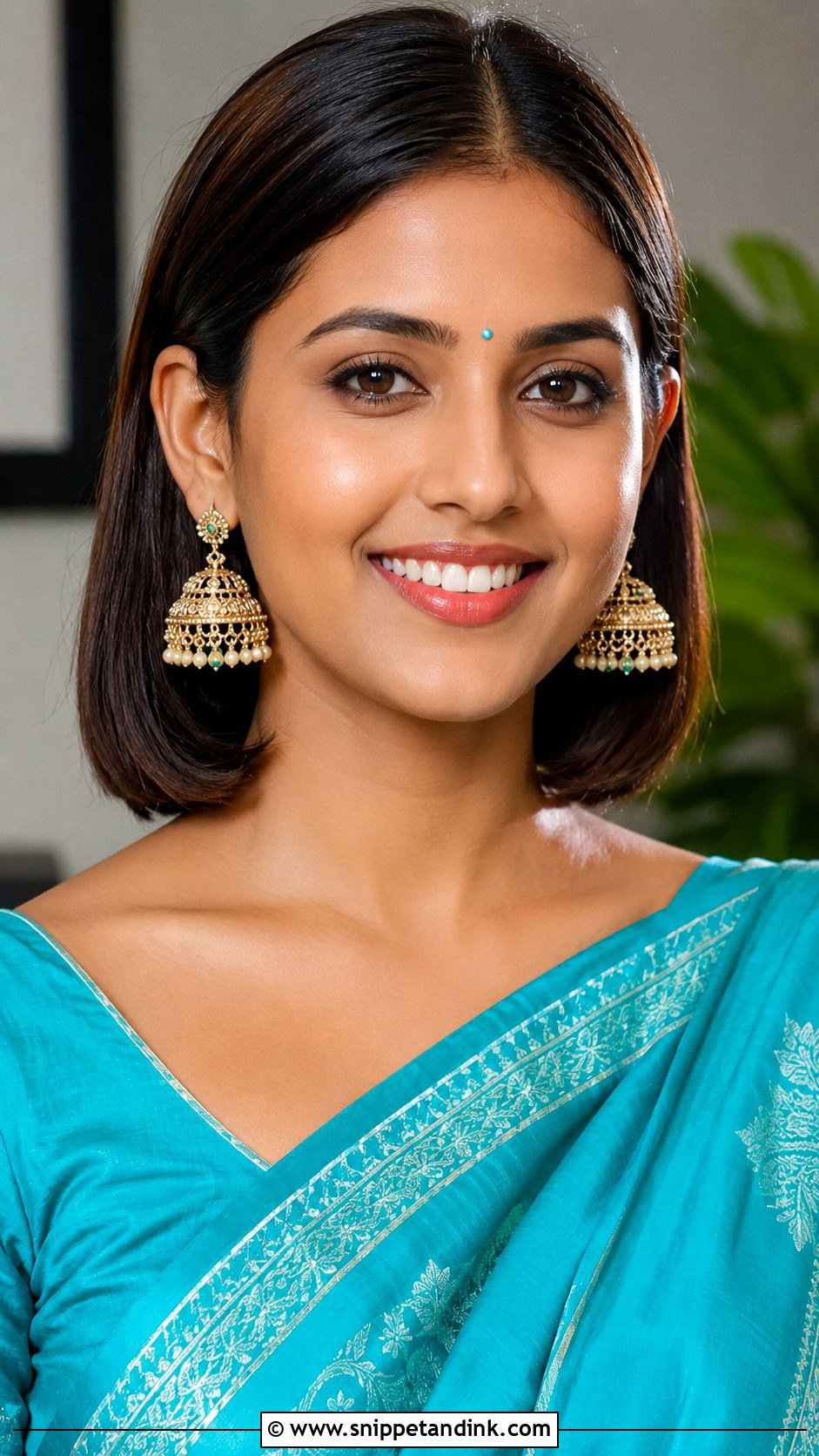
Tucking a bob behind both ears is the least effort on this list and leaves your jhumkas completely visible. I smooth the hair with a flat iron, add a little serum, and pin each side behind the ear with a bobby pin in your hair colour, hidden under the tuck. Heavy jhumkas can push the hair forward again, so the pins matter more than they seem. It suits a temple ceremony or a daytime mehendi where you want comfort.
24. Curly Updo With Pearl Pins
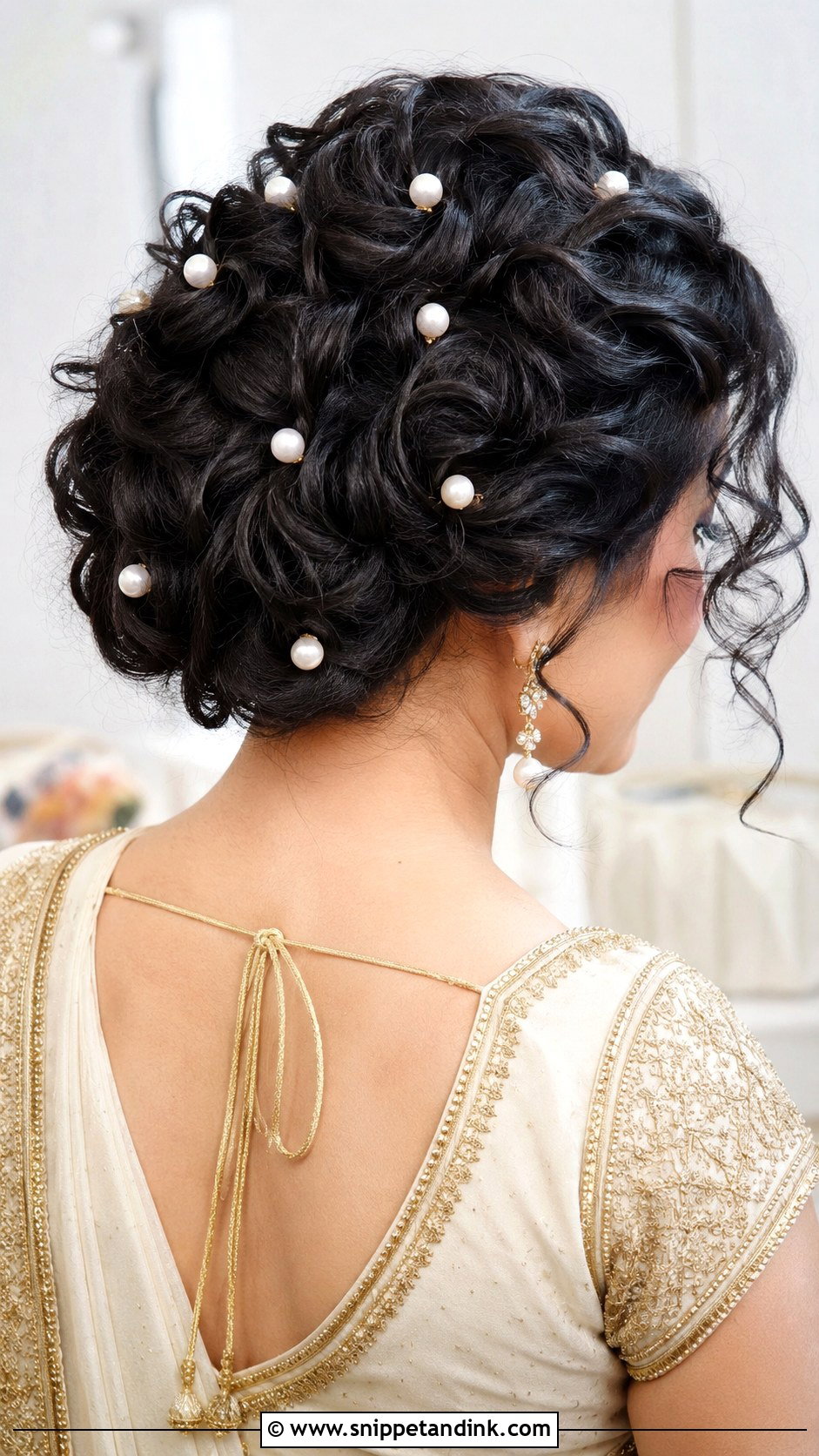
Curls hold an updo better than straight hair because the texture locks together. I gather the curls loosely and pin them into a soft updo with U-pins, then add pearl pins in two or three small clusters. Avoid brushing the curls before pinning, which turns them to frizz. Pearl earrings coordinate without needing a full pearl set.

25. Wavy Lob With Center Part
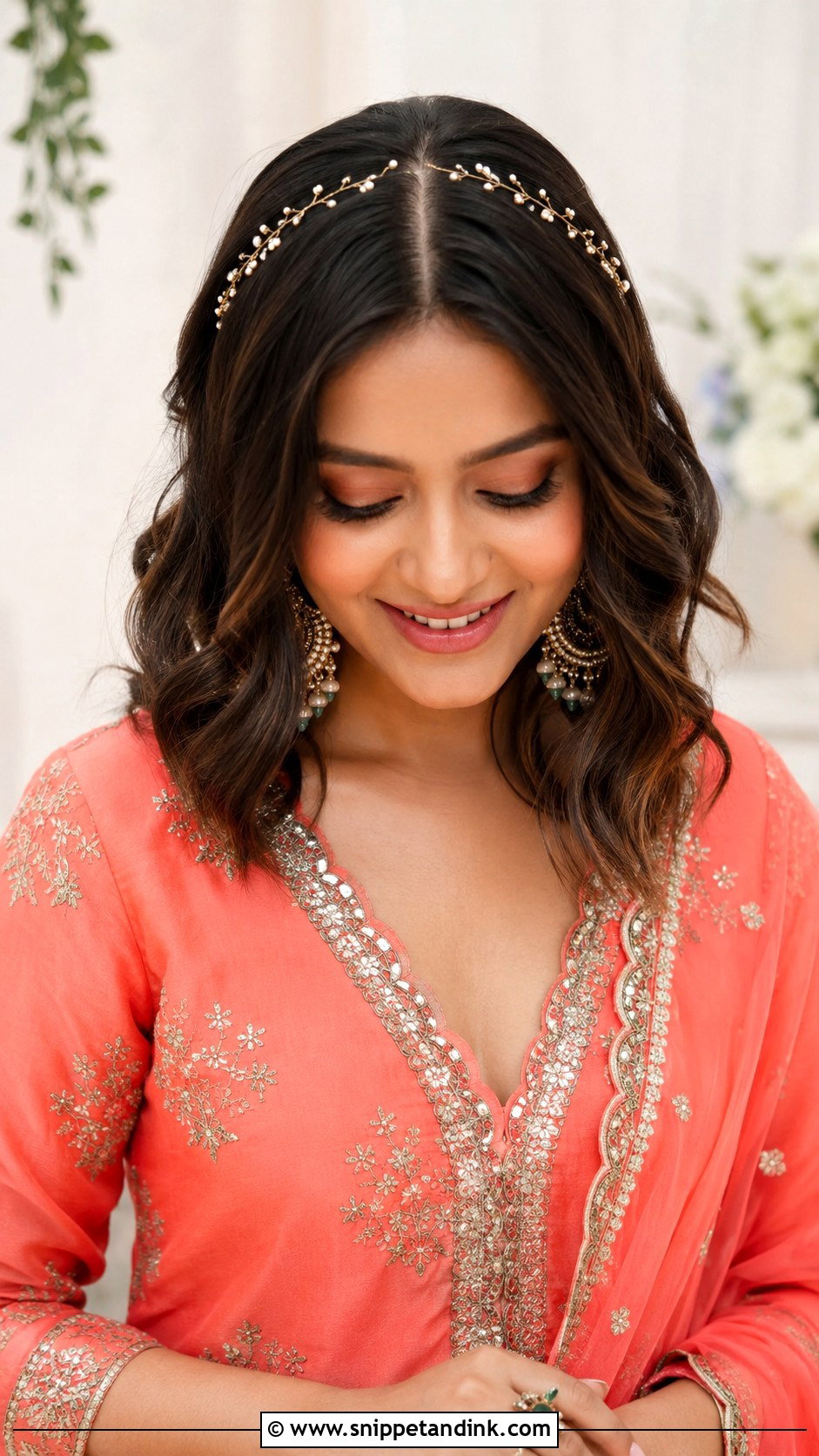
A wavy lob with a center part is one of the easiest styles to keep for several functions. I curl in alternating directions and leave the ends straight so the waves look relaxed. A centre part balances a symmetrical tikka or a small hair vine near the part. The waves loosen over the day, which suits a sangeet better than a formal pheras ceremony.
Anchoring a Maang Tikka and Head Dupatta Without a Bun
A maang tikka has a hook at the end of its chain that needs something to hold. On long hair it goes into the base of the braid; on short hair I create a small, flat pin curl or a tight twist at the crown and pin the hook into that with a bobby pin through the loop. For a pixie, a tiny clip-in weft at the crown gives the hook somewhere to grip.
A heavy dupatta is the bigger challenge. I pin it in several places, at the crown, behind each ear and at the nape, using U-pins pushed into a firm base of pinned hair. If there’s no bun, a small hair doughnut or a faux bun piece gives the dupatta a solid support. Test it at your trial with the actual dupatta, since the weight varies hugely between fabrics.
Gajra Weight, Wilting and Other Short-Hair Surprises
- Fresh jasmine is heavier than it looks once several strings are wrapped together. Pin it every few inches so the weight is spread.
- Gajra wilts within a few hours in heat. Order it for the morning and keep it wrapped in a damp cloth until you put it in.
- Flower pins in short hair need a textured base; spray dry texture before pinning.
- Pack spare bobby pins in your hair colour and a small comb for touch-ups between functions.
Swapping Flowers, Not Hairstyles, Between Functions
Short hair can carry an Indian wedding from the haldi to the reception without much fuss. What makes it work is anchoring: a firm base for the maang tikka, the dupatta and the flowers, set up early in the day and left alone. Keep the base style consistent and change the accessories between events. Bring your real jewellery and dupatta to the trial so we test what you’ll actually wear.
You'll Like These Ideas:


Leave a Reply