
Modern gowns are less about one look and more about construction choices: a satin that holds a clean line, a waist seam that dips, lace given real depth, convertible layers and hems that stop somewhere unexpected. None of these is right for everyone. The gown that works is the one that suits your venue, how much you’ll move and how much structure you’re happy to wear for ten-plus hours. With each idea below I’ve paired a veil, jewellery, shoes, hair and bouquet, and noted what I’d check at the fitting. Some are quiet enough for a small ceremony; others are built for a ballroom or for a bride who’d rather not look traditional at all.
Reading a Clipped Sample in the Bridal Salon
Most gowns in a bridal shop are samples in one or two sizes, clipped at the back to fit you. That’s normal, but it means you’re judging a dress that isn’t quite the one you’ll wear. A few habits at the appointment help you see past the clips.
- Wear smooth nude underwear and bring shoes close to your wedding heel height. A gown judged in bare feet always looks too long and too heavy.
- Ask which details can be changed: sleeves, neckline depth, train length, lining colour. Some designers allow changes, others don’t, and changes often add cost and time.
- Feel the fabric and ask what it is. Two gowns can look identical in photos and behave completely differently on a warm day.
- Look at the back in a mirror. Guests see the back of your gown for the whole ceremony.
Try at least one shape you don’t expect to like. Brides often arrive set on a silhouette and find a different neckline or waist placement flatters them more than the photos suggested.
1. Strapless Satin Wedding Gown
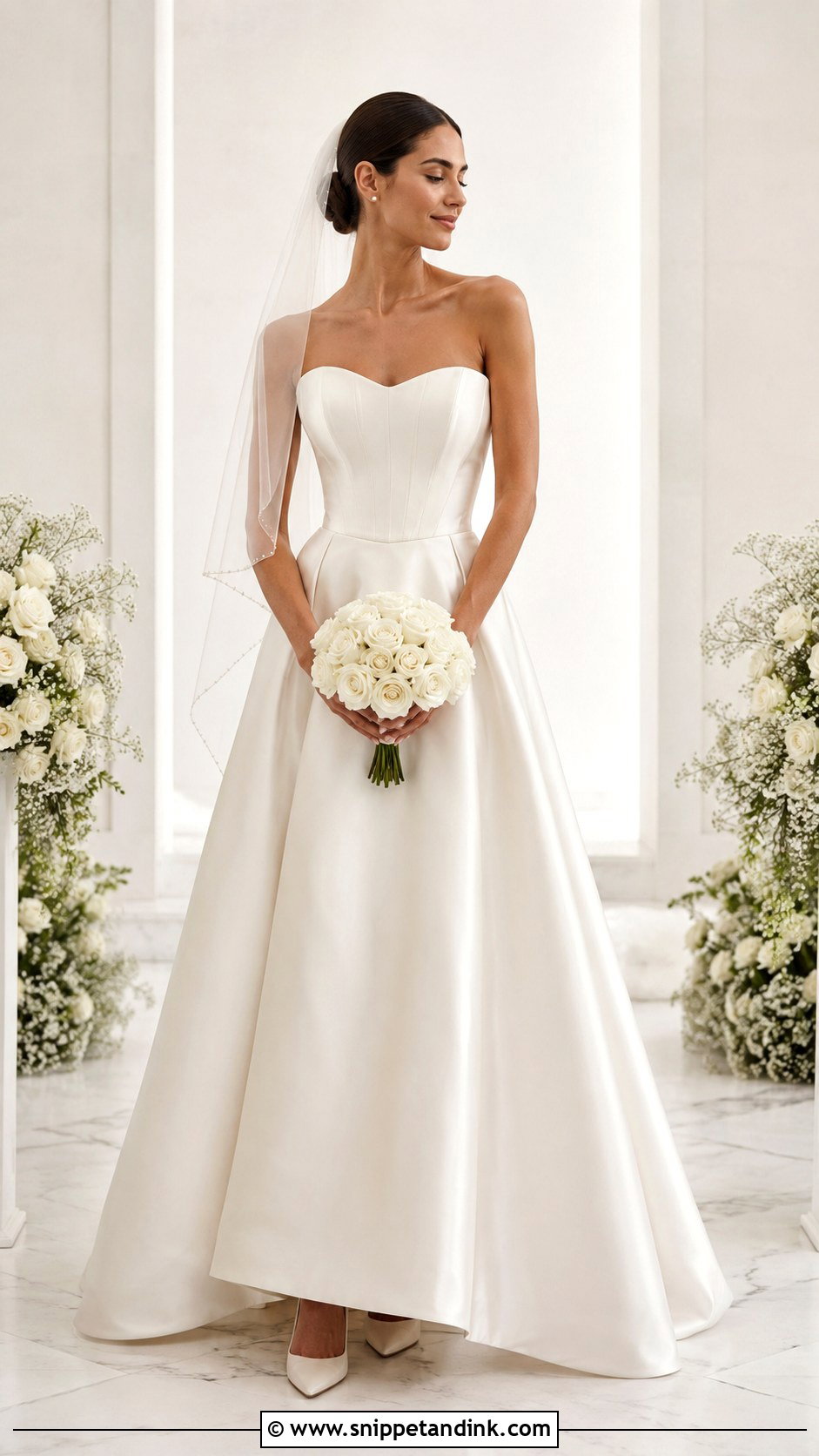
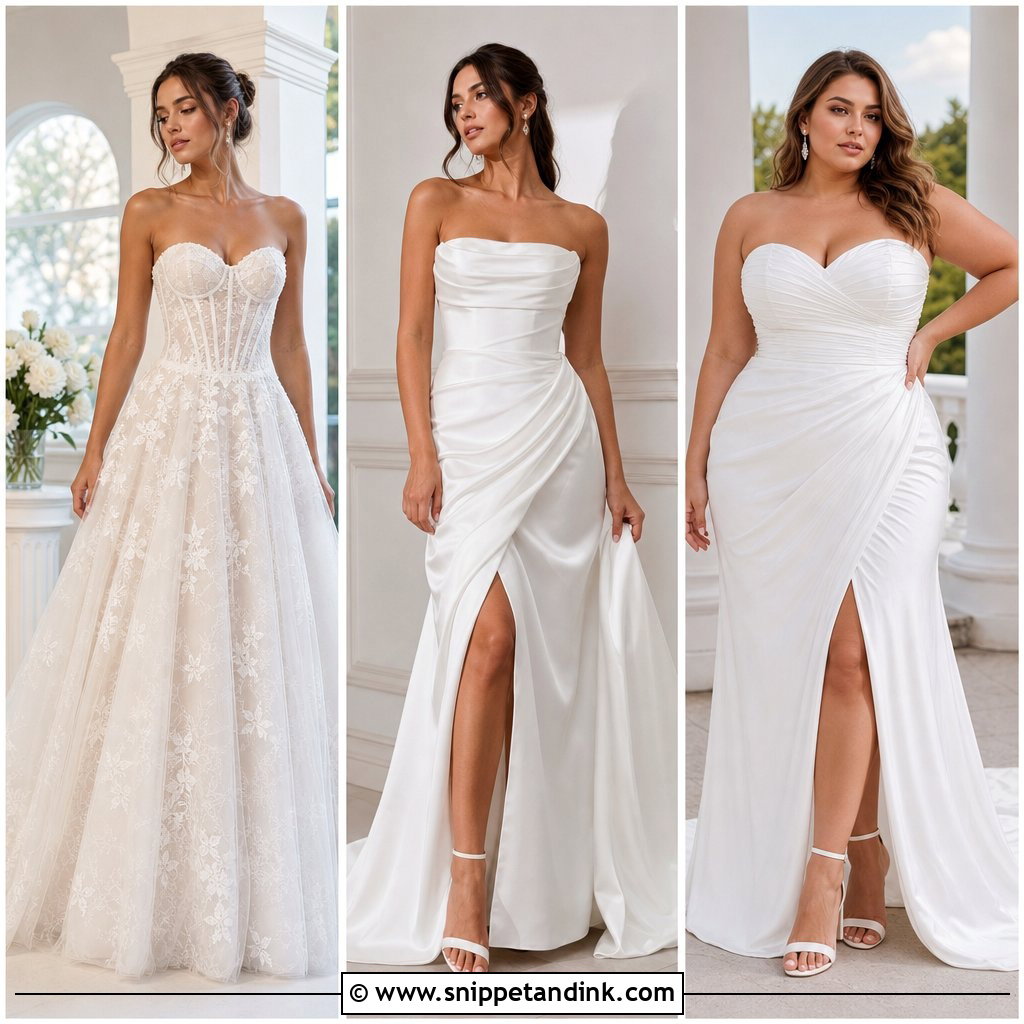
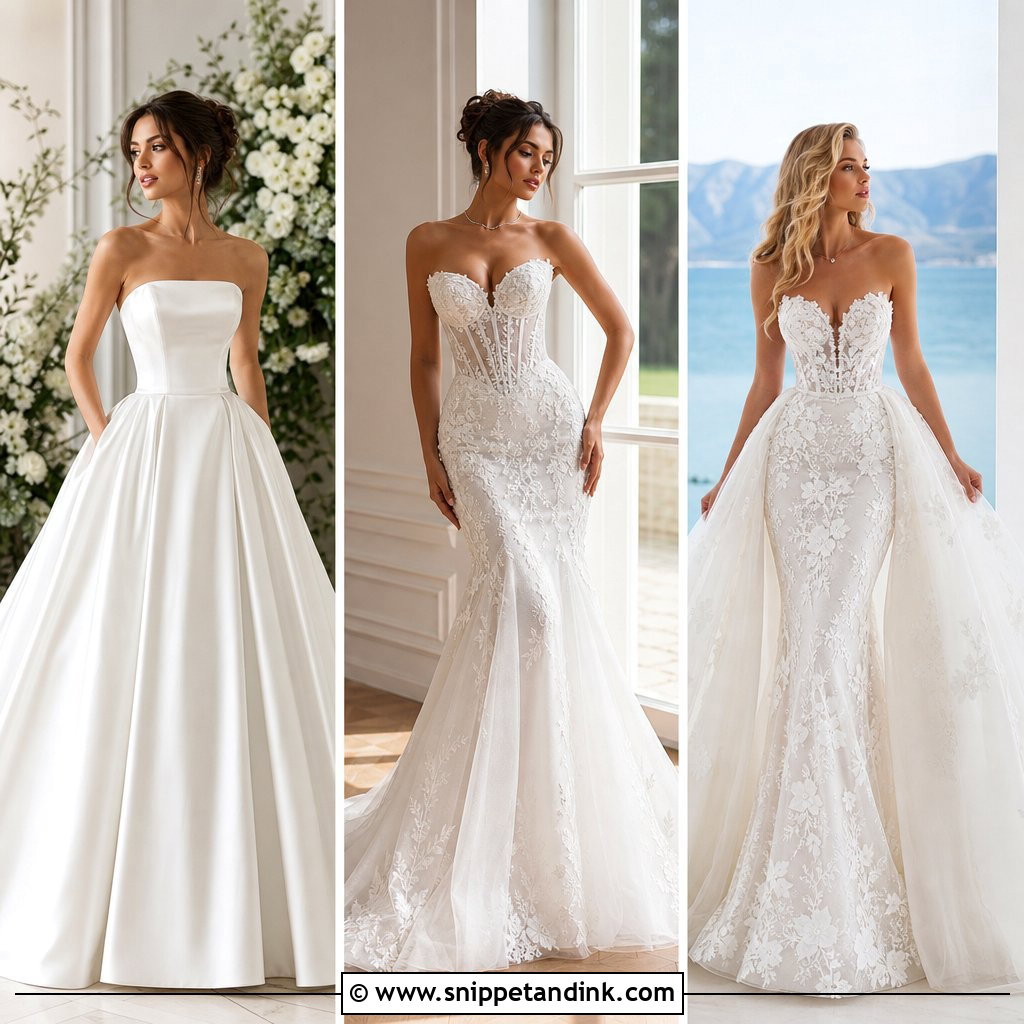
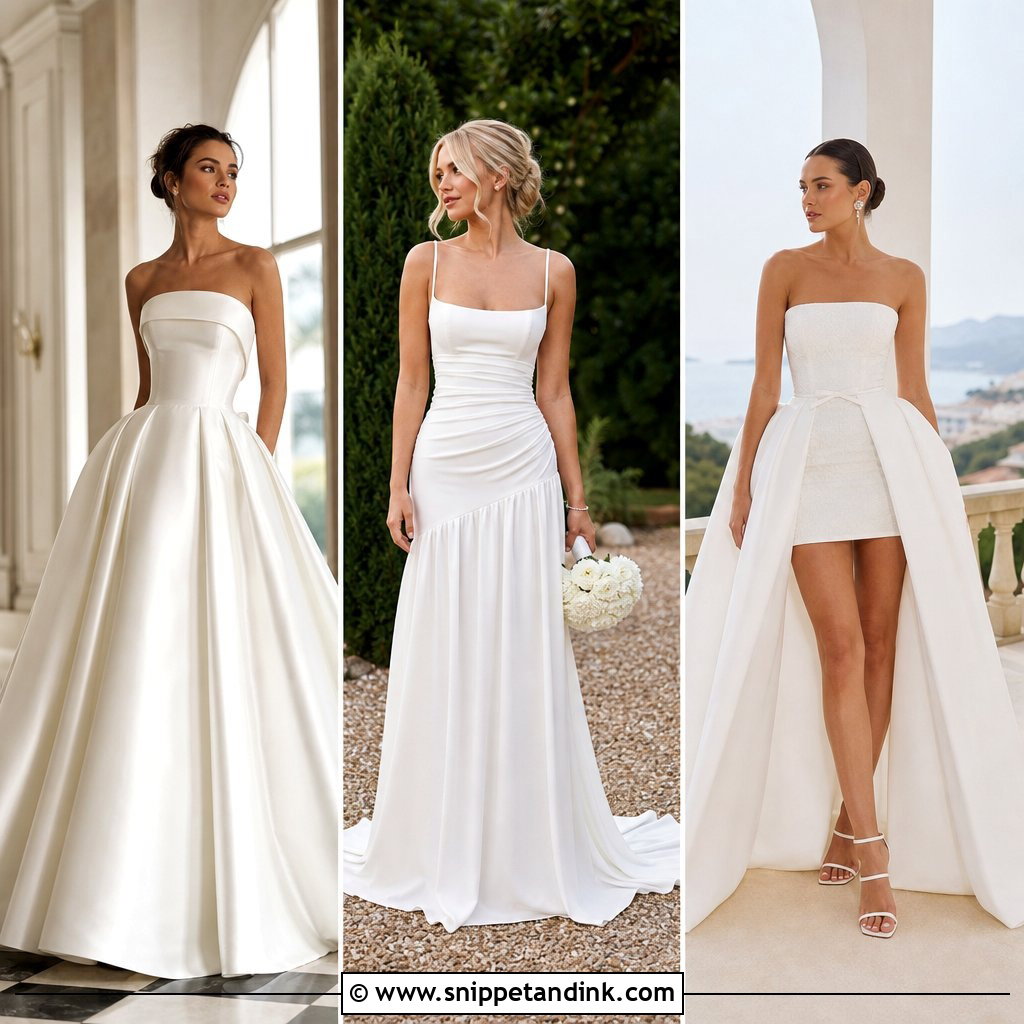
Strapless satin depends entirely on what’s inside the bodice. Without proper internal corsetry, you’ll spend the evening hitching it up. Duchess satin holds a crisp A-line or full skirt; silk satin falls more fluidly but shows every seam and wrinkle underneath. A softly curved neckline flatters more figures than a straight one. Pointed pumps, pearl or diamond studs, a fingertip veil with a narrow satin edge and a sleek bun keep the shoulders clear, with a compact bouquet of white roses. At alterations, sit, walk and raise both arms. If the top edge gapes when you reach, the bodice needs taking in at the side seams.
2. Basque Waist Ball Gown
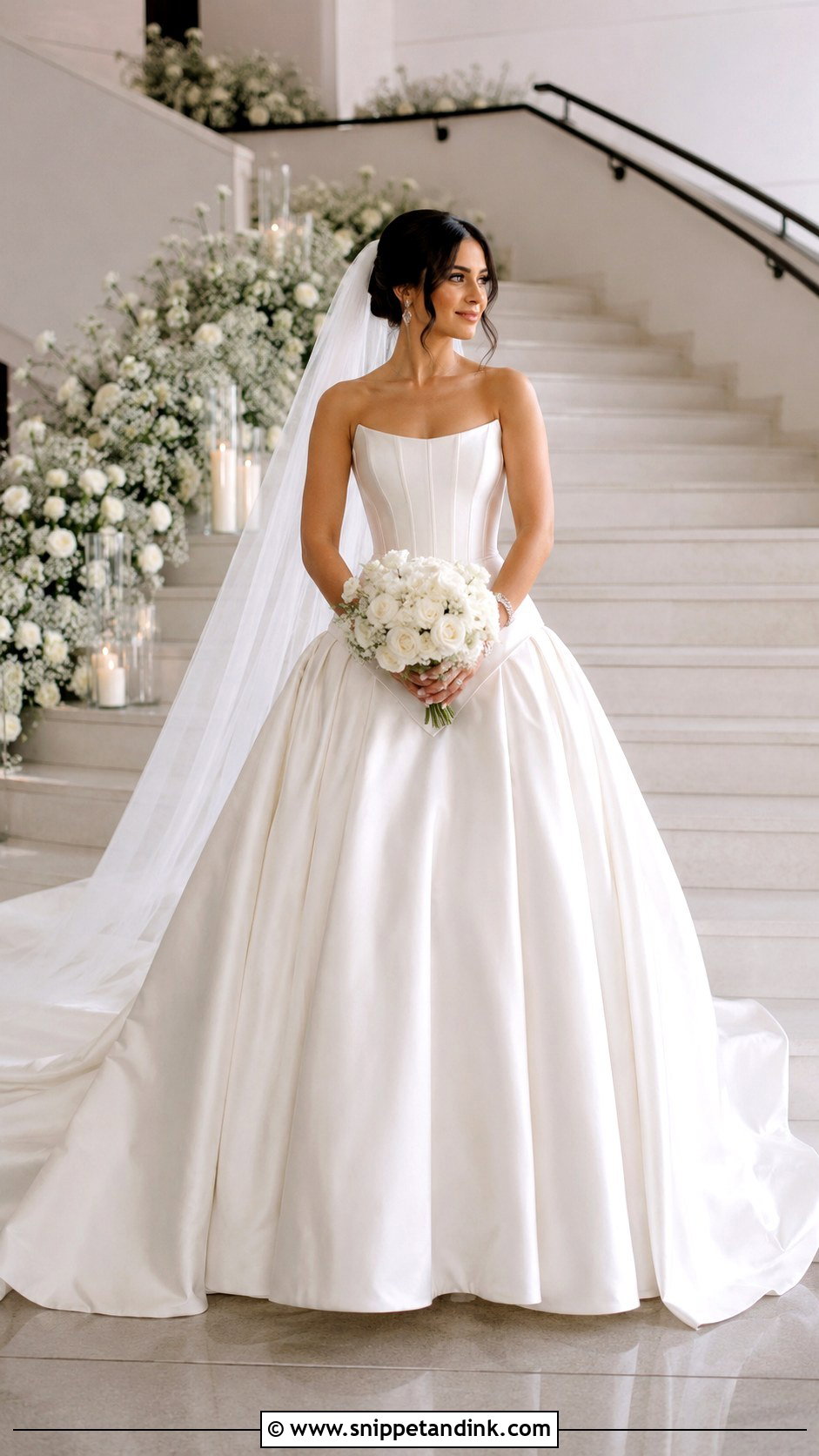
A basque waist dips into a V or U below the natural waist, which lengthens the torso before the skirt opens out. On a short torso it can look magical; on a very long one, I’d keep the dip shallow so the skirt doesn’t start too low. Mikado or satin give a crisp ball-gown shape, tulle a softer one. Style it with a cathedral veil, delicate drops, closed-toe heels under the skirt and a low chignon. Hold a medium bouquet so the point of the waist stays visible. Practise the bustle with whoever will do it, because a heavy ball-gown train needs several secure points.
3. Square Neck A-Line Wedding Gown
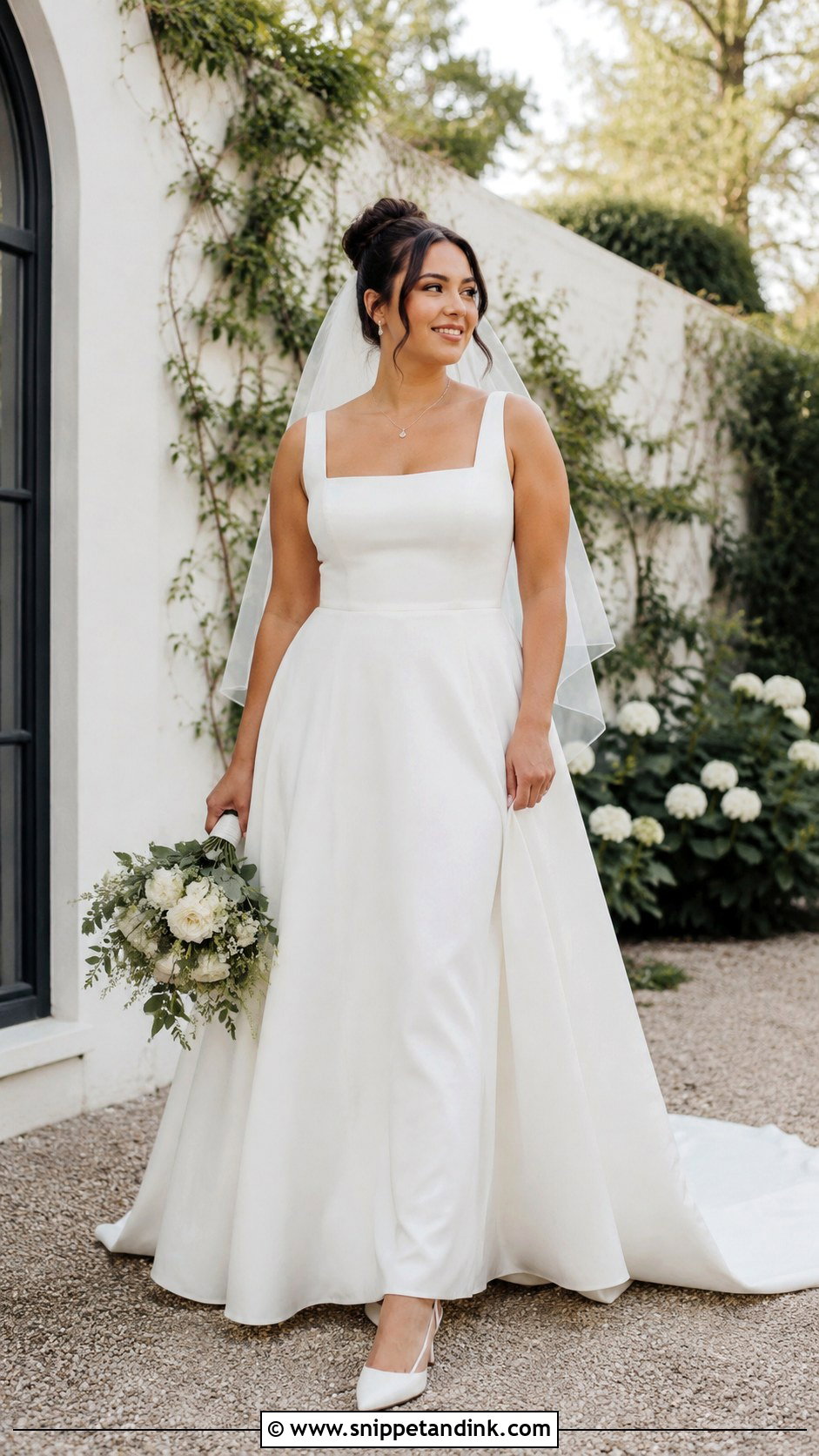
Square necklines frame the collarbone cleanly, and an A-line under one leaves room to walk and dance. Fabric changes the mood completely: matte crepe for minimalism, satin for a gentle sheen, floral jacquard for texture. A fine pendant, small hoops, pointed slingbacks and a plain chapel veil suit the geometry, with soft waves or a centre-parted low bun and a loose bouquet of white seasonal flowers. The detail I watch is the neckline edge. A square neck should lie flat against the chest when you lean forward; if it lifts, it needs a firmer facing or a little boning. Wider straps or fitted sleeves add coverage without losing the shape.
4. Off Shoulder Draped Wedding Gown
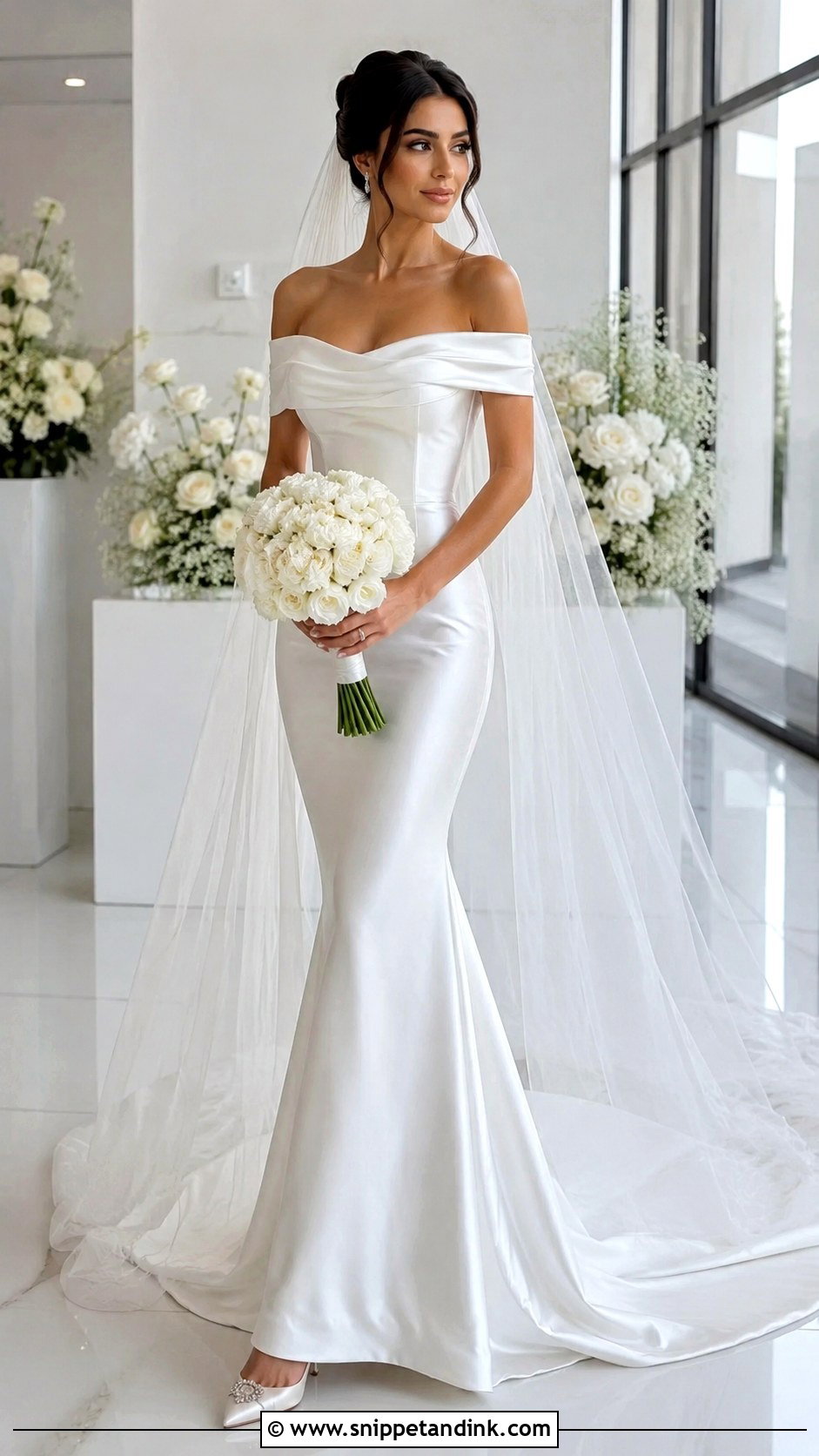
Draped satin around the shoulders gives an off-shoulder gown softness without any beading or lace. I like it over a fitted bodice and a gentle fit-and-flare skirt. Crystal studs, a slim bracelet and almond-toe heels are enough, and either a short veil or a sheer cathedral works because neither competes with the folds. An updo or side-swept waves keeps the shoulder line visible. The common problem is lift: off-shoulder sleeves pin your arms when you raise them to hug someone. Test that at the fitting, and ask for concealed elastic or internal supports so the drape stays where it was set.
5. Minimalist Crepe Column Wedding Gown
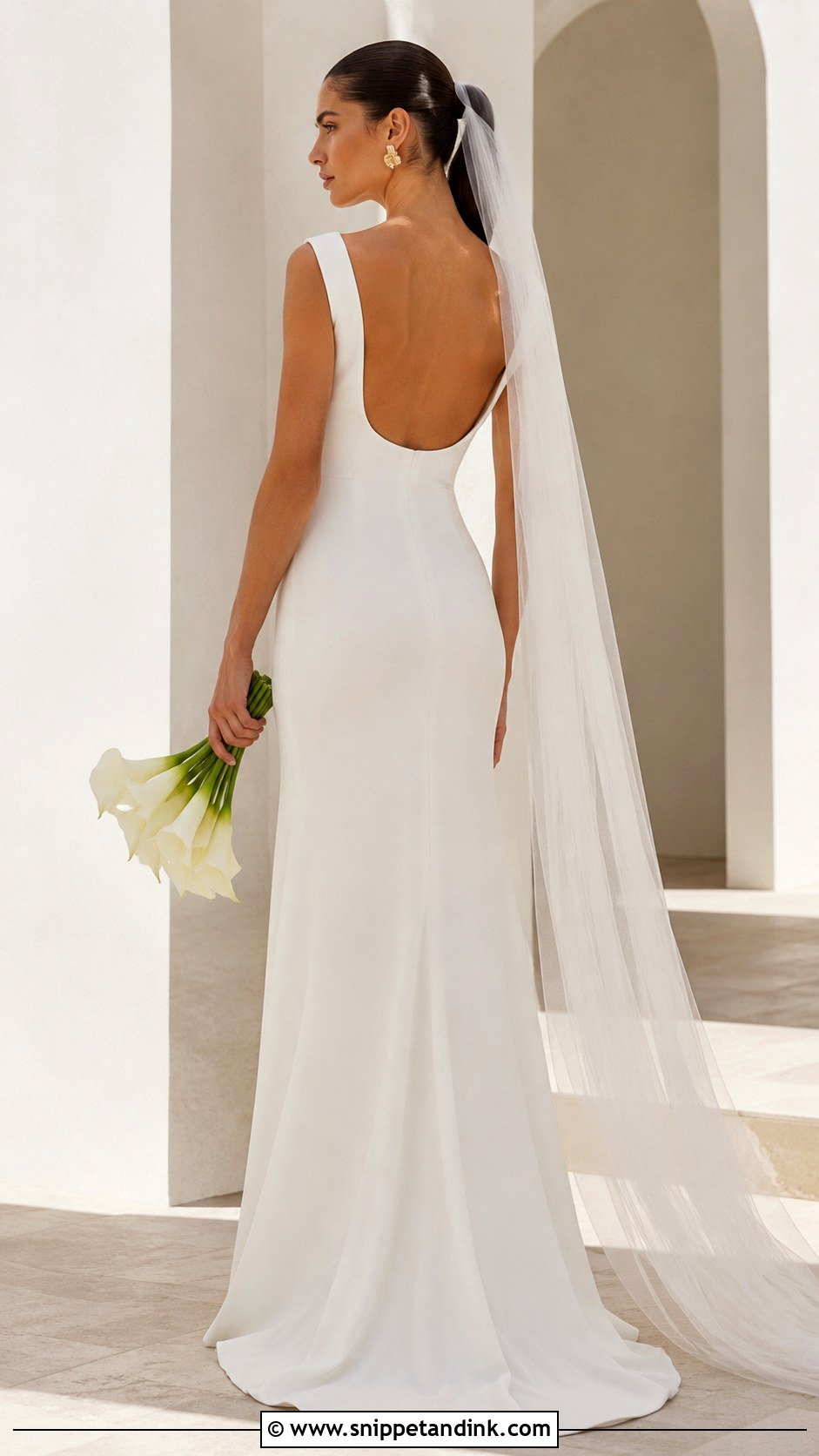
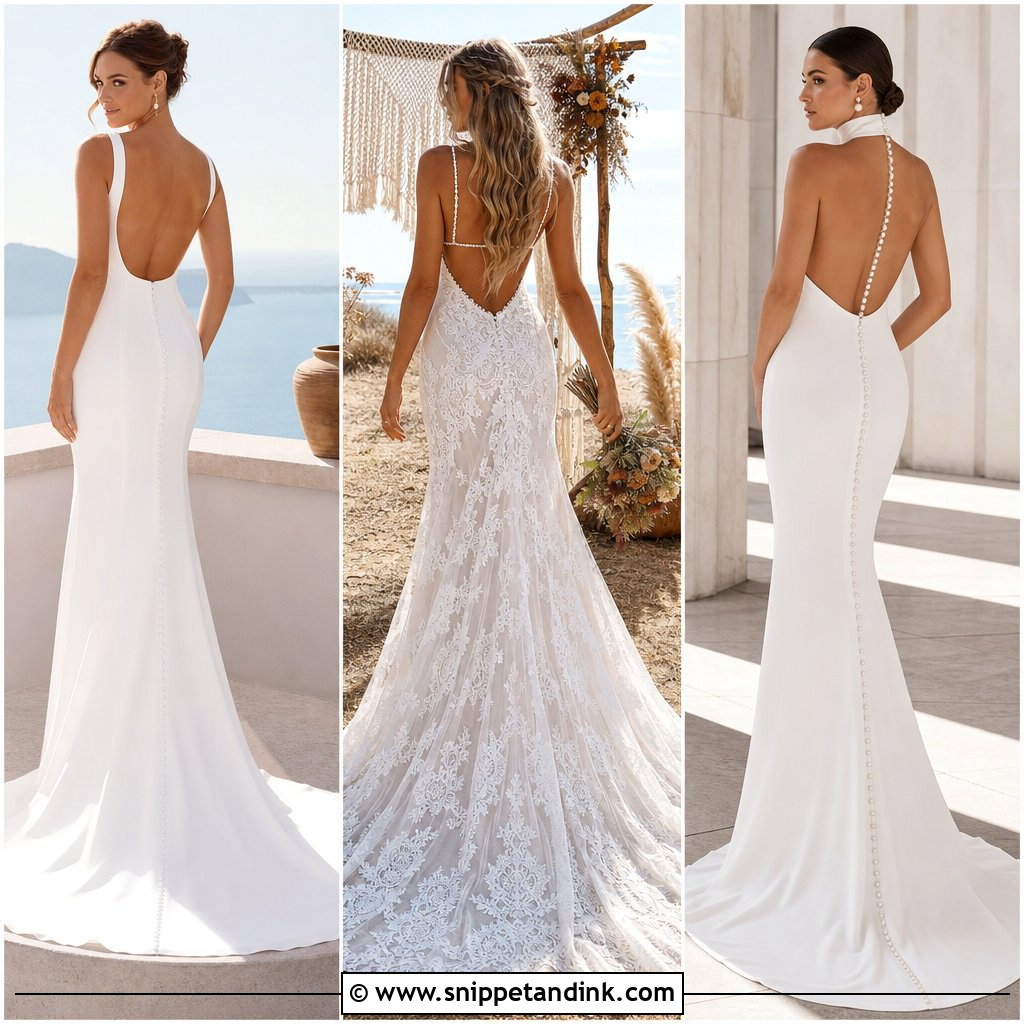
A crepe column has nowhere to hide, so the weight of the crepe matters more than the design. Thin crepe shows every underwear line; substantial stretch crepe skims the body and smooths it. A bateau, scoop, or straight neckline keeps it understated, and a low back adds the interest. Sleek pumps, sculptural earrings, a long plain veil and a polished ponytail or neat bun suit it, with a single-variety bouquet such as calla lilies. Walk, sit and dance at the appointment. A back slit or a slightly flared hem makes a column far easier to live in.
6. Lace Long Sleeve Wedding Gown
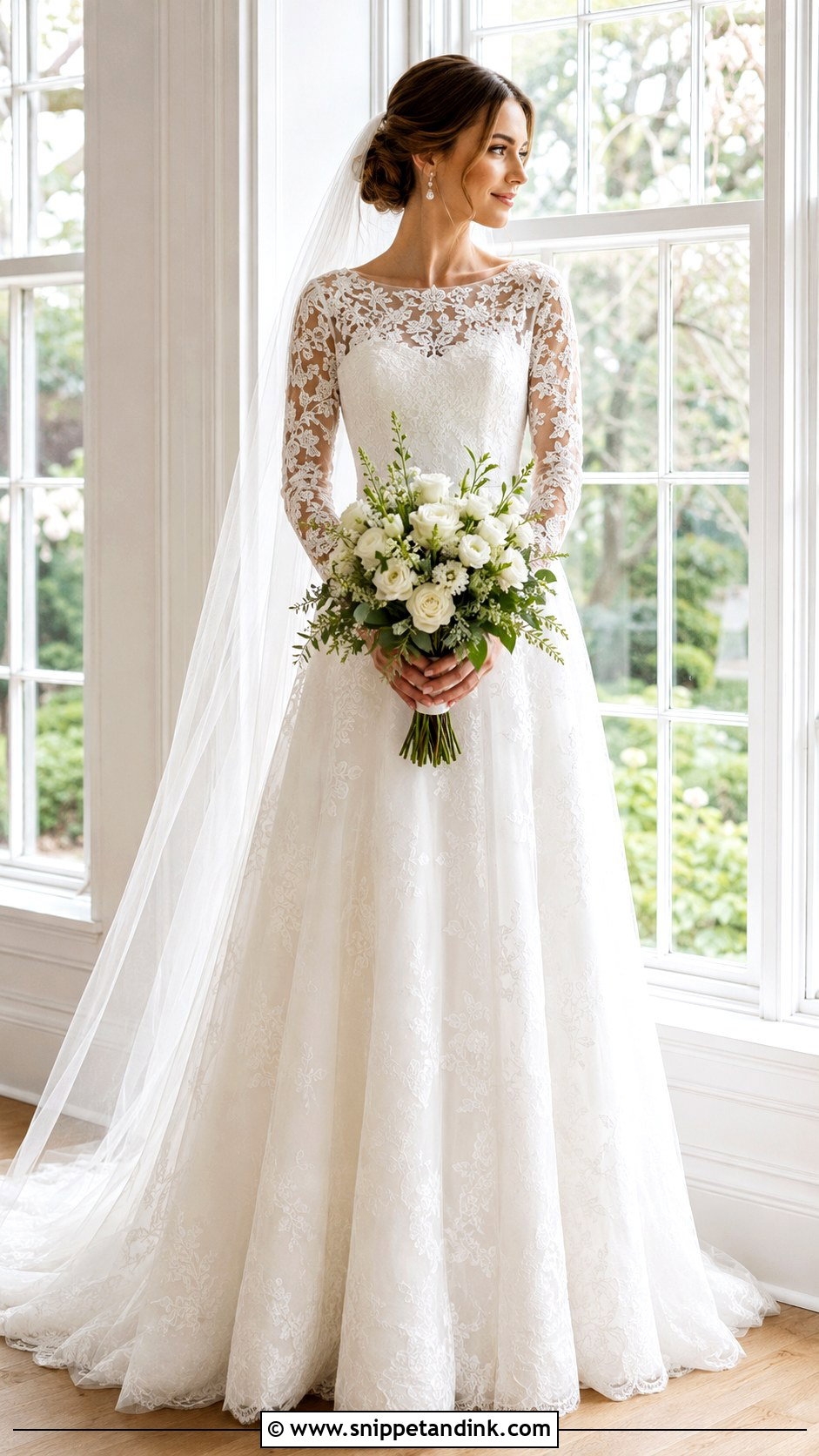
Long lace sleeves give coverage and texture without sparkle. Botanical lace over a lined bodice covers more; lace on a fitted illusion base looks lighter. Under it, an A-line skirt stays romantic, and a fitted crepe skirt sharpens the whole look. Pearl drops, closed-toe heels and a plain tulle veil that lets the lace show suit it, with a loose low bun and a white-and-green bouquet. Elbows are where lace sleeves fail. If the sleeve is cut straight with no ease, it pulls at the elbow and can tear at the seam, so bend your arms fully during alterations and check that appliqué edges feel smooth on the skin.
7. Halter Neck Wedding Gown
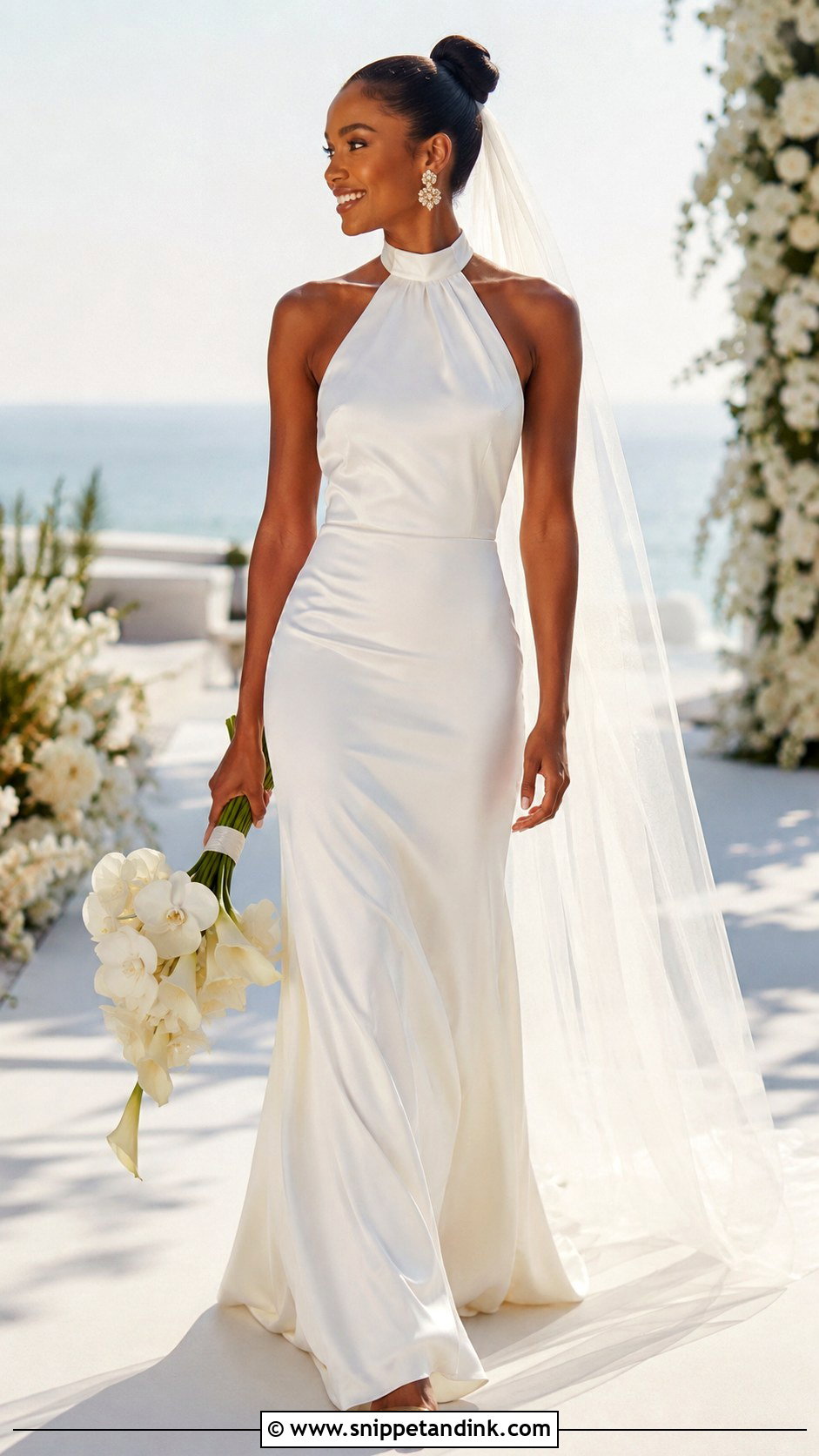
A halter draws the eye up and gives a strong, uncluttered line, especially with an open back. A high halter feels sculptural; a softly draped one feels relaxed. Fluid satin suits a destination wedding, while crepe or mikado looks tailored. Skip the necklace and wear statement earrings, with metallic sandals or pointed pumps and a narrow cathedral veil tucked under an updo. A halter that ties or fastens only at the neck can leave you with a sore neck by evening, so ask whether the support comes from the strap or from the bodice. The best ones carry the weight through the bodice and use the halter only for shape.
8. Corset Bodice Wedding Gown
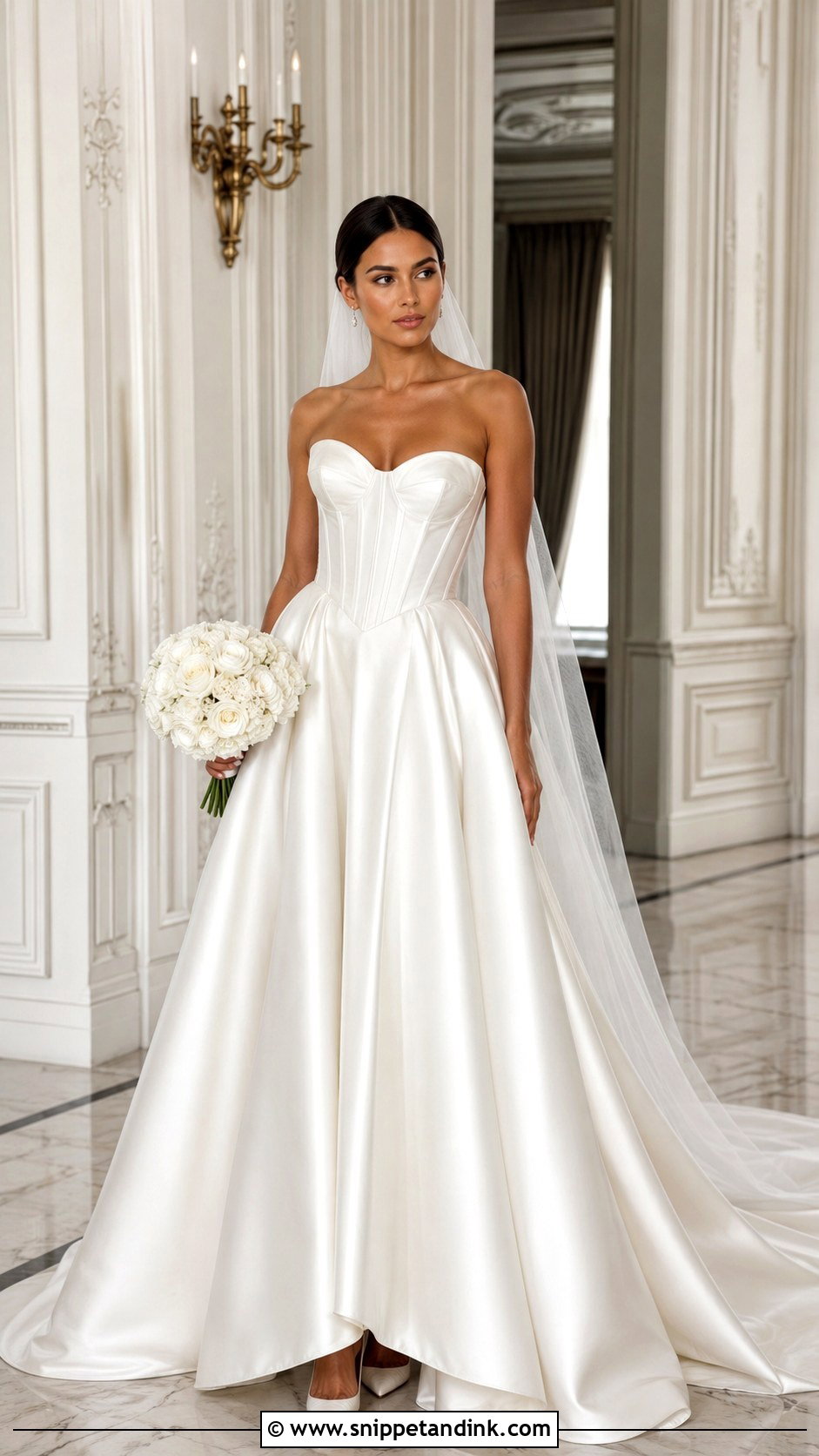
Visible seaming makes a corset bodice a structured statement. A fully lined bodice covers more; a lightly sheer one with placed appliqués feels more fashion-led. Under it, a full satin skirt gives contrast, a fitted lace skirt drama and a tulle skirt movement. Delicate earrings, a plain veil, pointed heels and a centre-parted bun balance the bodice. A corset should support, not squeeze. Take a deep breath, sit down and lift your arms in it. If you can’t eat dinner in it, ask for the boning length or cup placement to be adjusted rather than suffering through the day.
9. Drop Waist Wedding Gown
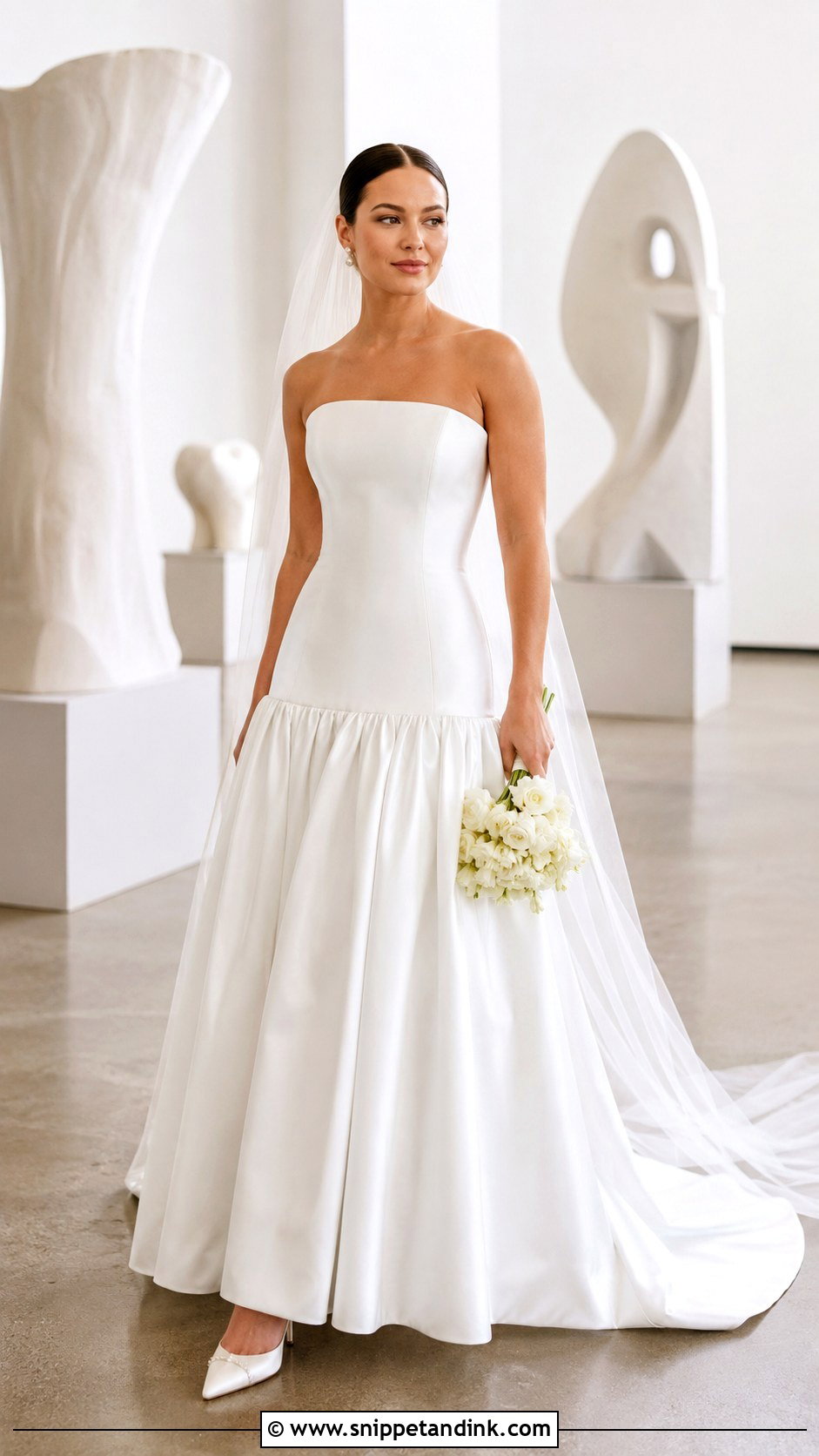
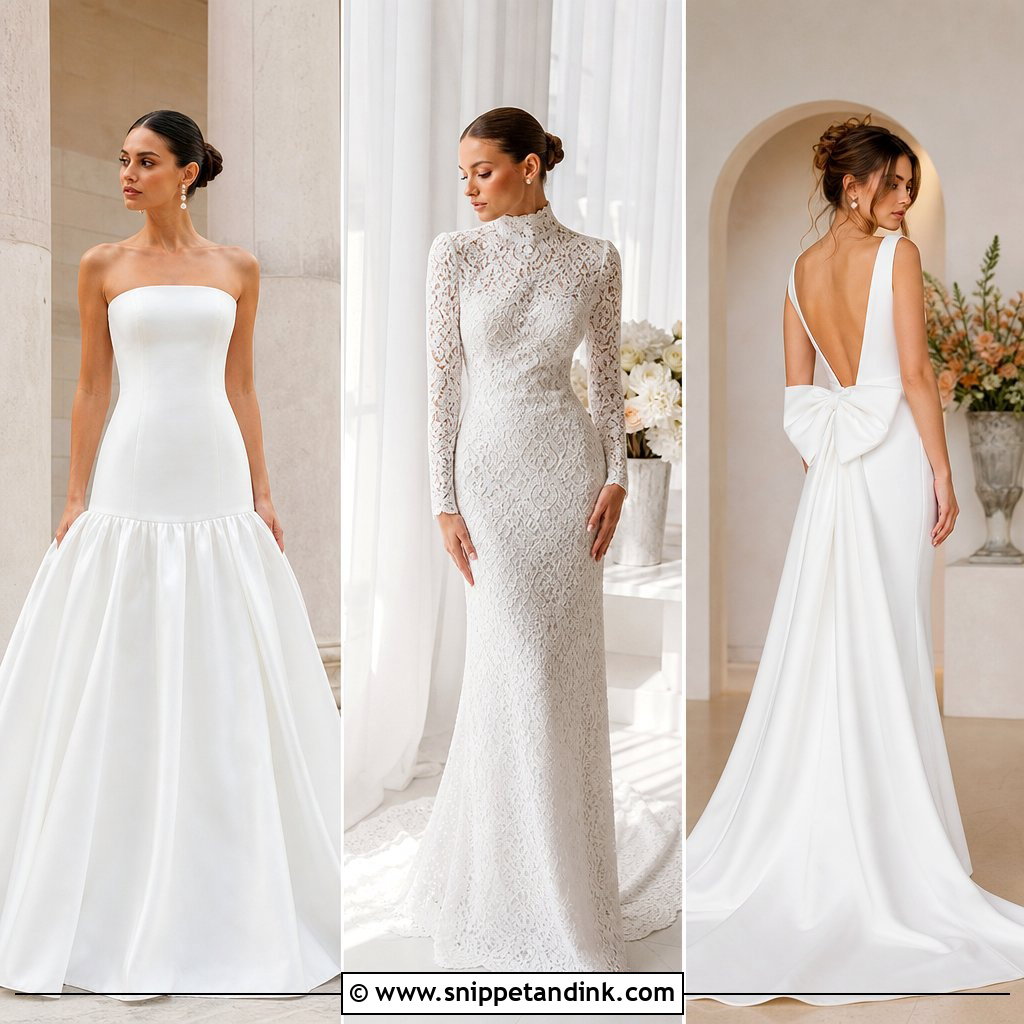
With a drop waist, the fitted part runs below the natural waist and then releases into a fuller skirt. It looks sculptural and a little unexpected, and it flatters a straight figure especially well because it creates a line where there isn’t a strong waist. Smooth satin shows off the long bodice; gathered tulle softens the join. Pearl studs, pointed pumps and a long veil suit it, with a sleek updo and a bouquet held below the hips. Sitting is the test here. A low seam can fold awkwardly over the hips when you sit, so climb steps and sit at the fitting and ask for adjustments if it buckles.
10. One Shoulder Wedding Gown
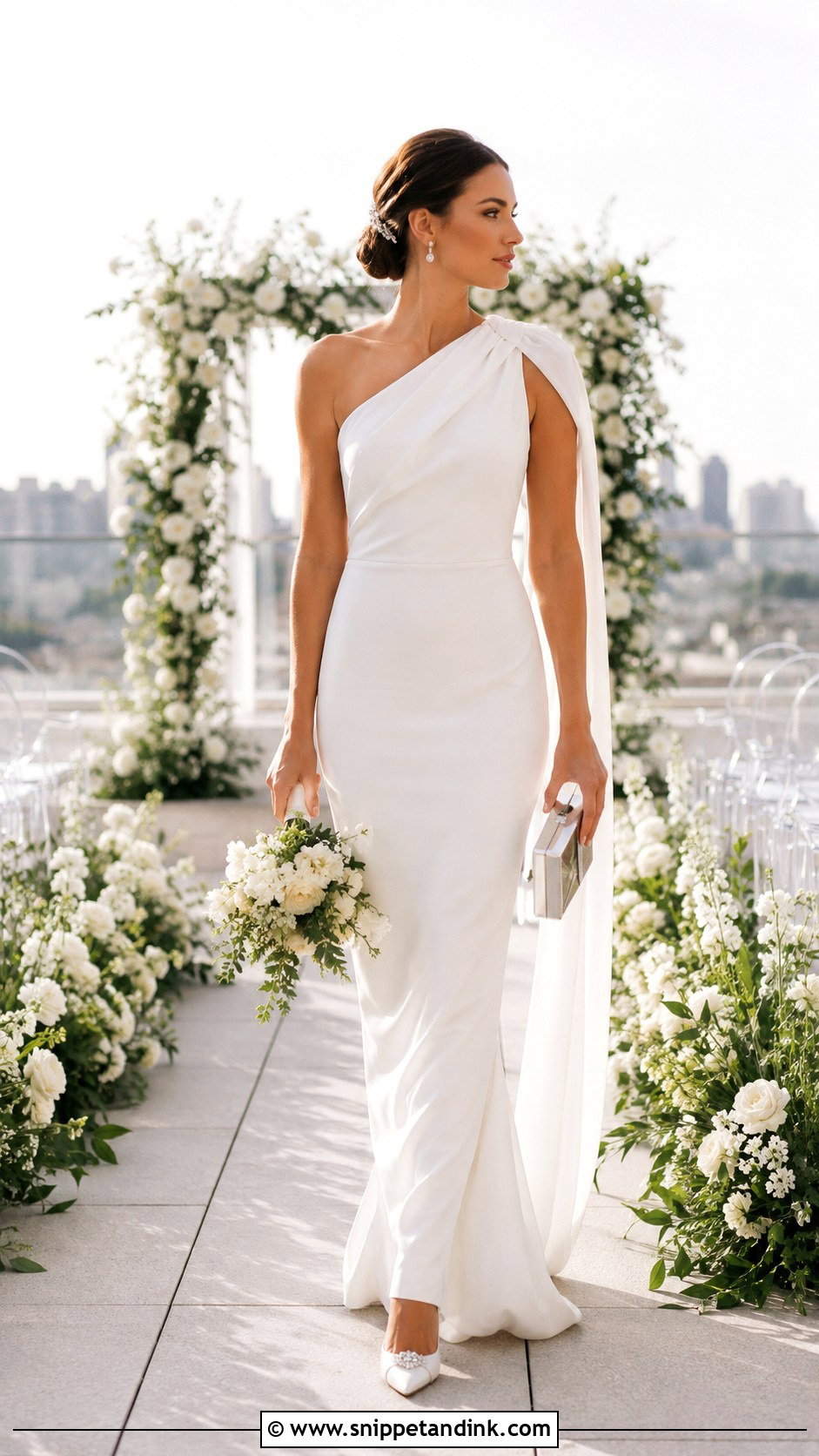
One shoulder gives a gown a confident, asymmetric line. A fitted crepe version is sleek; a softly gathered satin skirt adds movement. A bow, a pleated shoulder panel or a detachable drape adds interest. I’d wear one sleek earring or small studs, a metallic clutch and pointed heels. A traditional veil can hide the shoulder detail, so I often swap it for a low bun with a decorative comb. Hold the bouquet on the side opposite the shoulder. Raise both arms at the fitting; if the bodice tilts or the strap slips, it needs a stay inside.
11. High Neck Wedding Gown
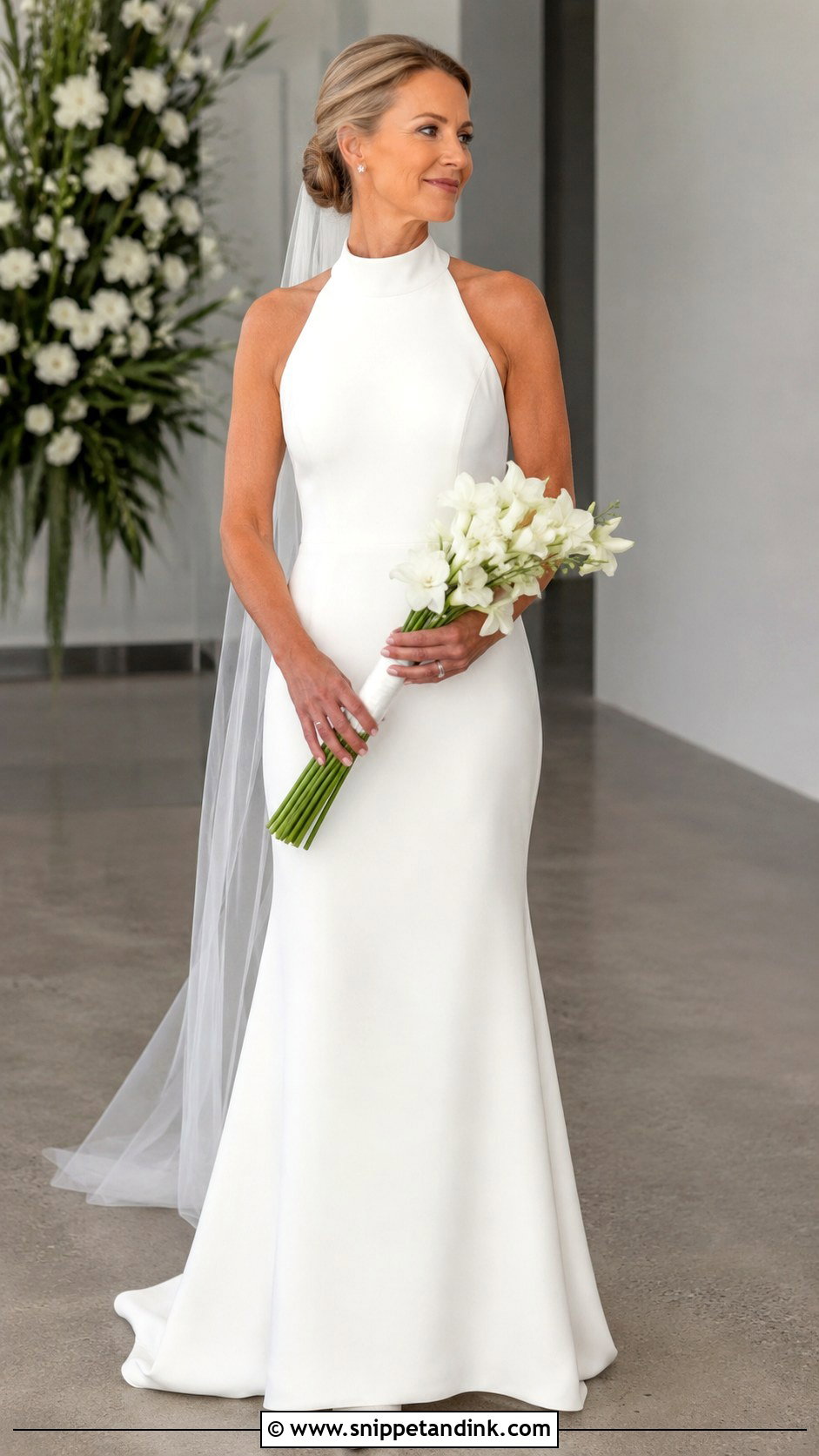
A high neck gives a long, clean line and makes a necklace unnecessary. A fitted lace bodice is romantic; smooth crepe or satin is more architectural. Long sleeves add coverage, while a sleeveless cut keeps the shoulders free. Stud earrings, closed-toe pumps and a veil attached under a low bun suit it, and a cascading or long-stemmed bouquet repeats the vertical line. The collar is where comfort is won or lost. It shouldn’t rub, fold or press when you turn your head, and a small back opening with covered buttons or a soft internal facing makes a big difference after a few hours.
12. Floral Applique Wedding Gown
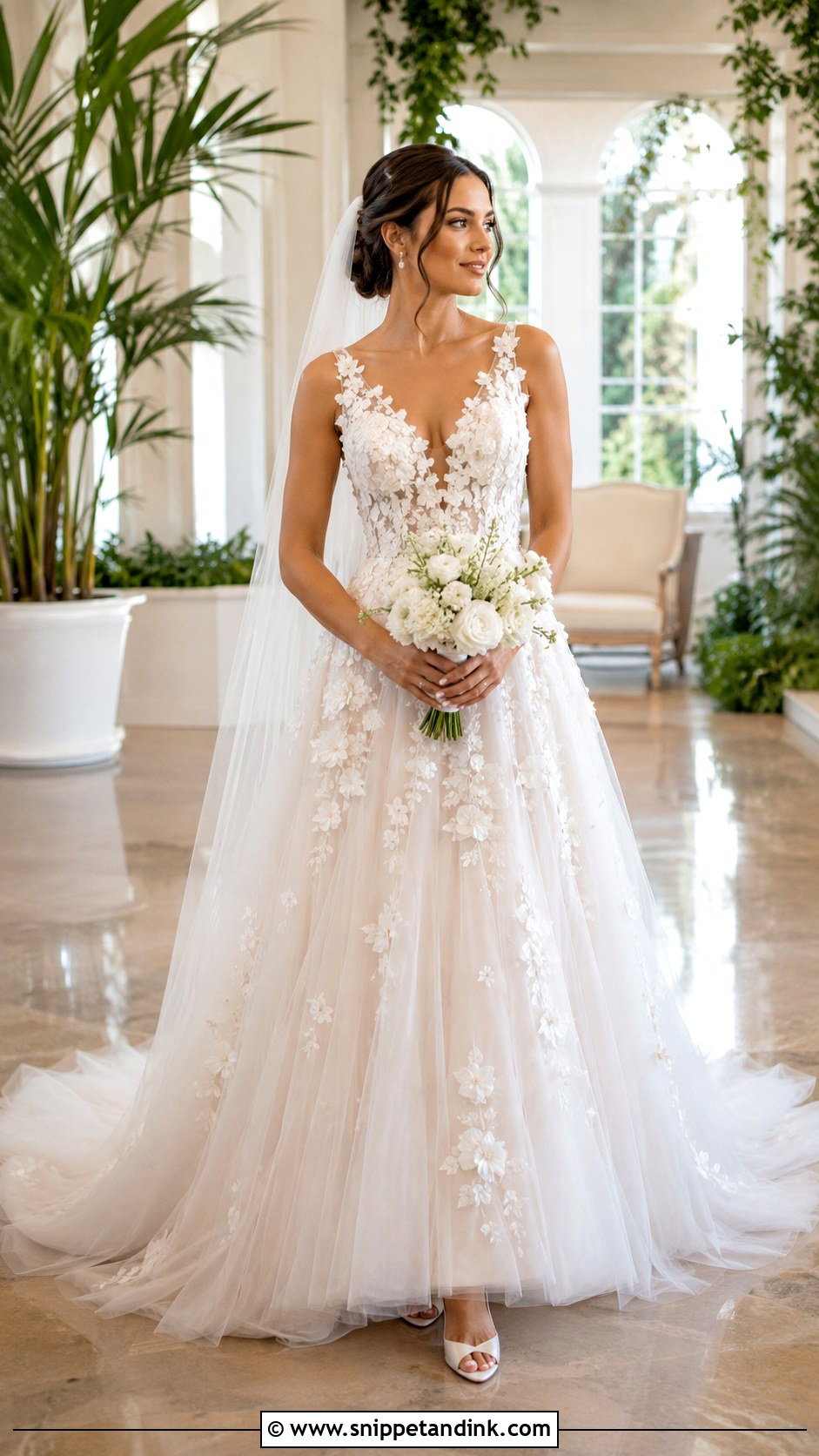
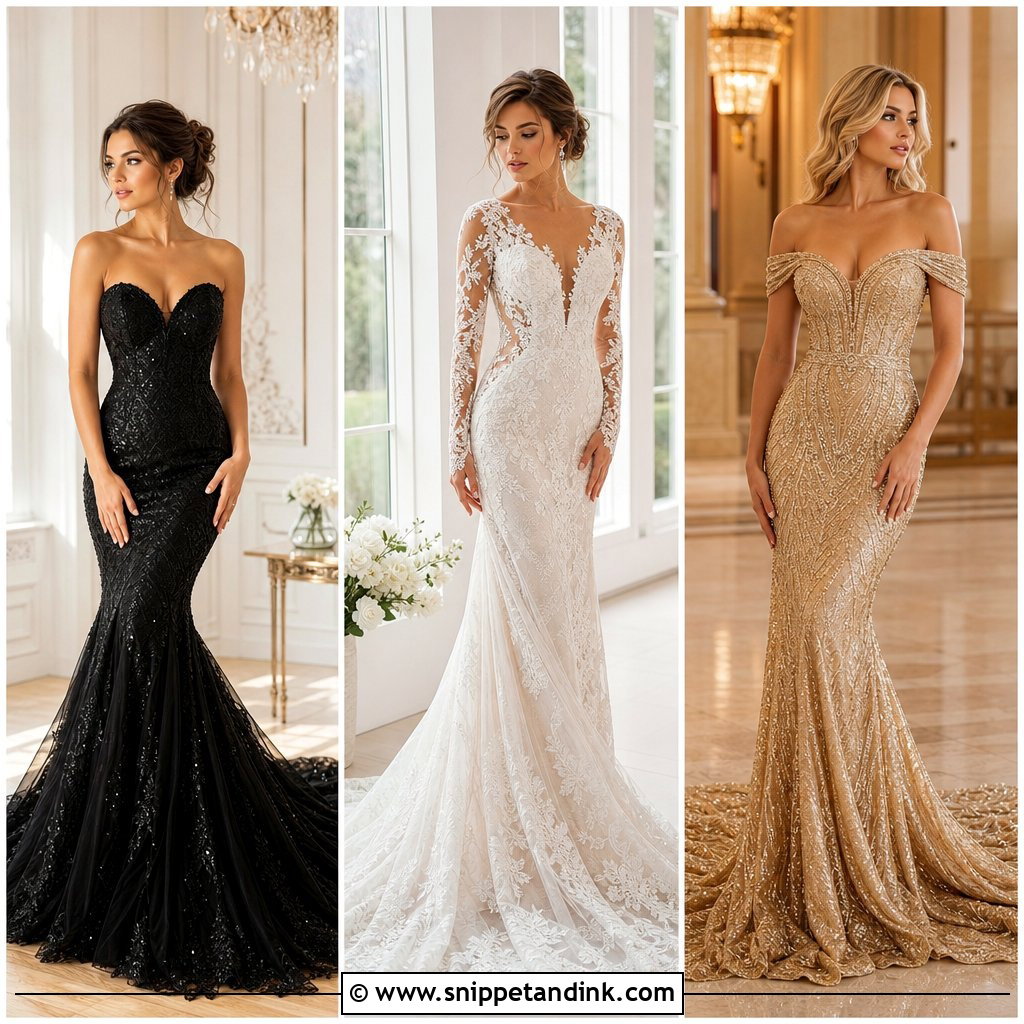
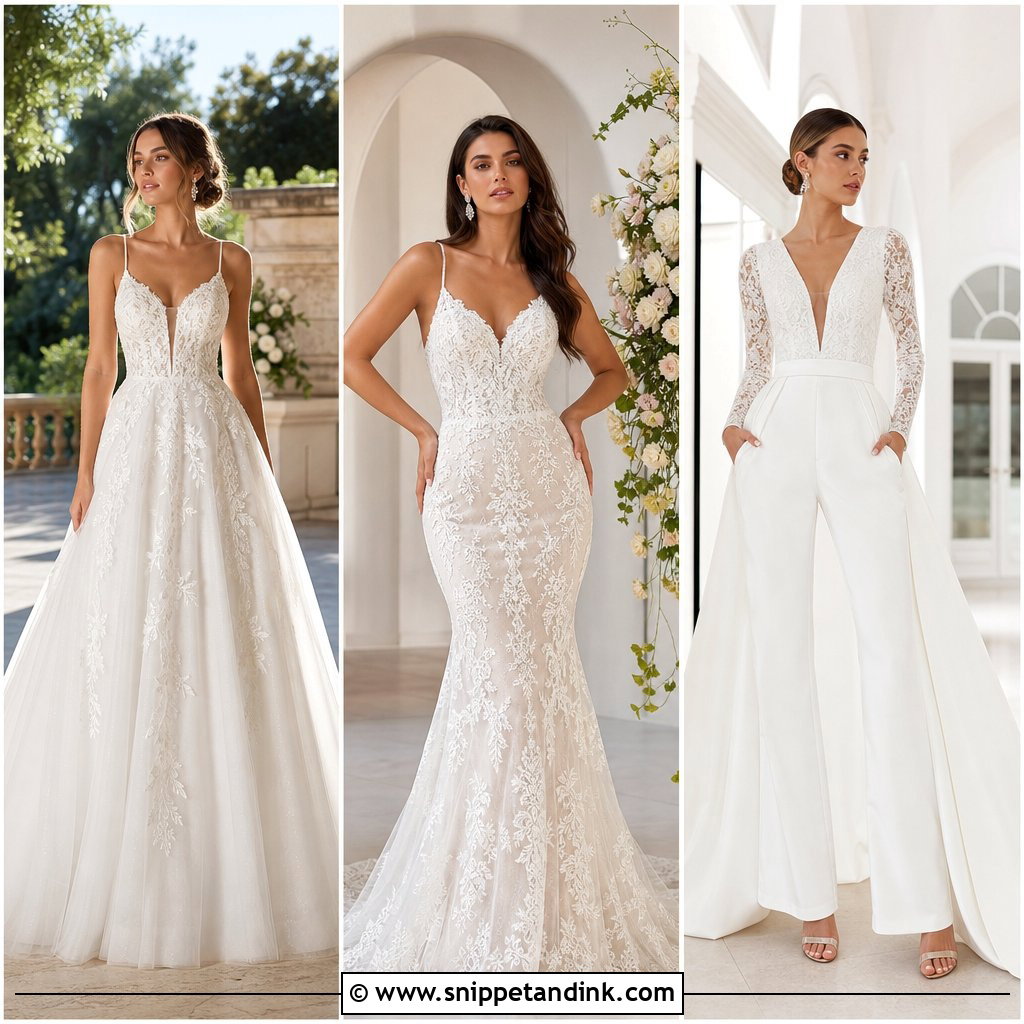
Raised floral appliqués turn a gown into a textured piece from top to hem. Scattered flowers feel airy; blooms massed on the bodice and train feel dramatic. A nude-toned lining makes the flowers stand out, while ivory lining softens the contrast and covers more. Pair the gown with simple satin heels, small crystal earrings and a plain tulle veil. Relaxed waves or a soft bun and a bouquet with restrained greenery keep it from looking crowded. Check the underarms and waist at the fitting, because stiff appliqué edges there scratch with every movement and can be repositioned.
13. Pearl Embellished Wedding Gown
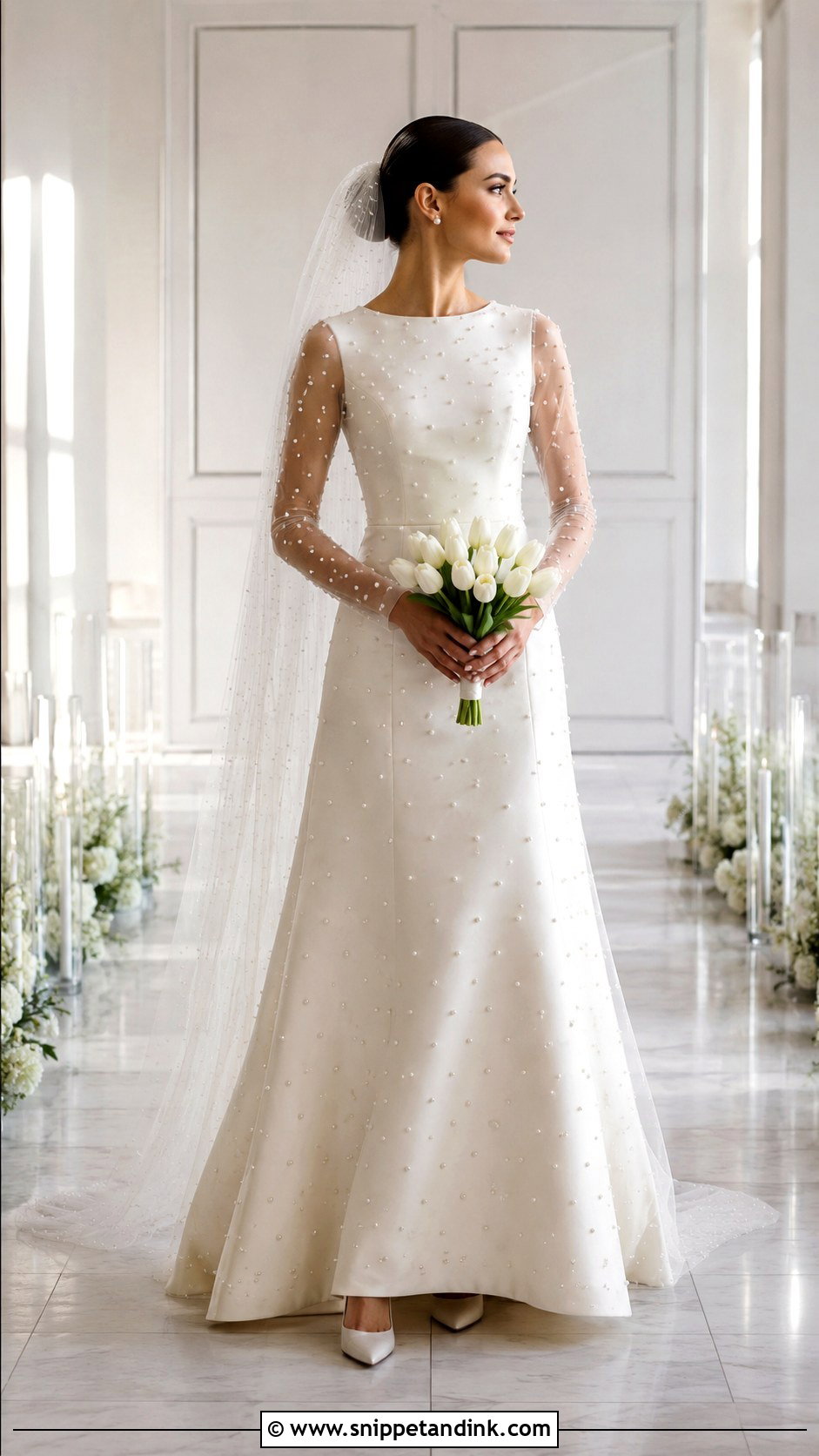
Pearls give a quieter shimmer than crystals, and they look modern when spaced evenly across sheer sleeves, a corseted bodice or a simple neckline. Mixing pearls with crystals and beading is where it starts to look busy. An A-line or column keeps the details intentional. Pearl studs, satin pumps, a sheer veil with a lightly beaded edge and a polished bun with a small bouquet of white tulips or roses keep the mood refined. Pull gently on a few pearls before you buy. During alterations, ask the seamstress to save any pearls removed from seams and stitch them back.
14. Detachable Overskirt Wedding Gown
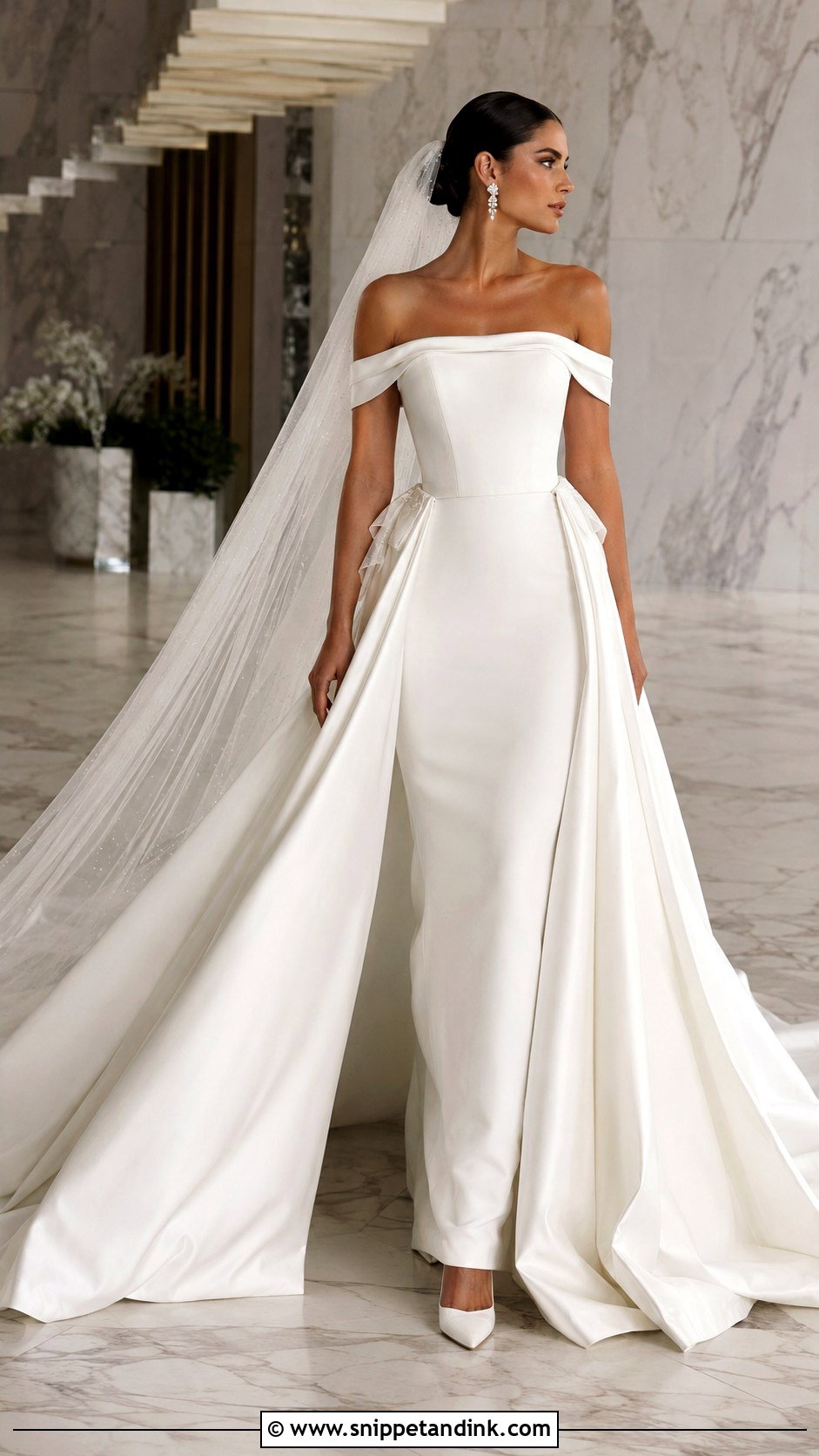
A detachable overskirt gives you two looks: the full skirt and sweeping train for the ceremony, then a slimmer crepe, lace or satin gown underneath for dancing. Statement earrings, comfortable pointed pumps and a sleek bun work with both. A long veil suits the first look and a decorative comb the second. Choose an attachment that lies flat from every angle, since bulky hooks at the waist show once the overskirt is off. Practise removing and refastening it, and teach one person exactly how it works so the change takes minutes, not half an hour.


15. Cape Sleeve Wedding Gown
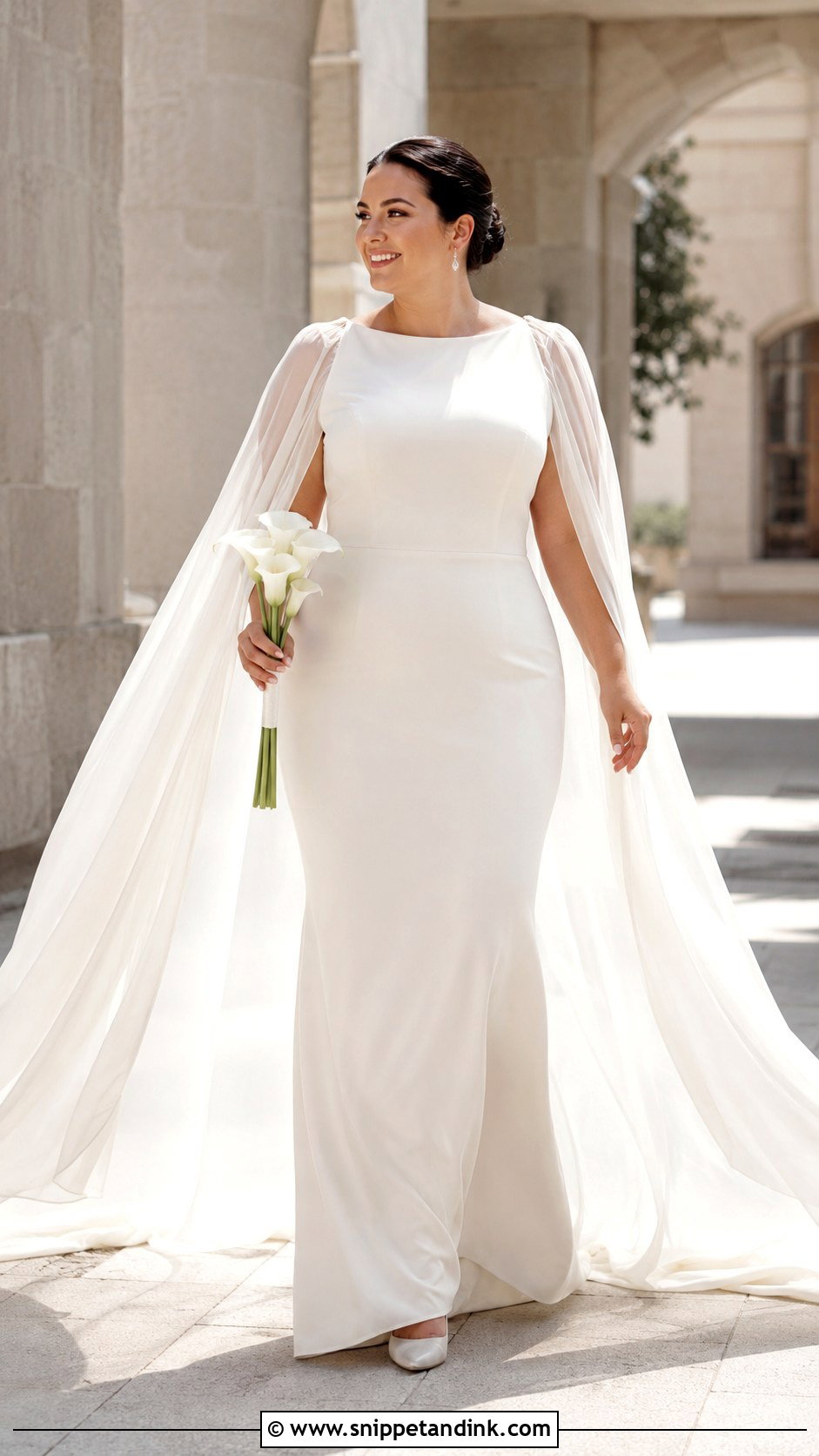
Cape sleeves give graceful coverage and lots of movement in photos. They can fall from the shoulders, attach at the neckline or be a separate layer over a sleeveless gown. A sheer chiffon cape suits a clean crepe column; lace over satin adds texture. Keep earrings understated, wear closed-toe heels and put hair in a smooth updo so it doesn’t tangle in the fabric. A floor-length cape can replace the veil. Wind is the real test outdoors. Walk in different directions at the fitting, and make sure a long cape is hemmed to clear your shoes, or you’ll step on it on the first stair.
16. Sheer Sleeve Wedding Gown
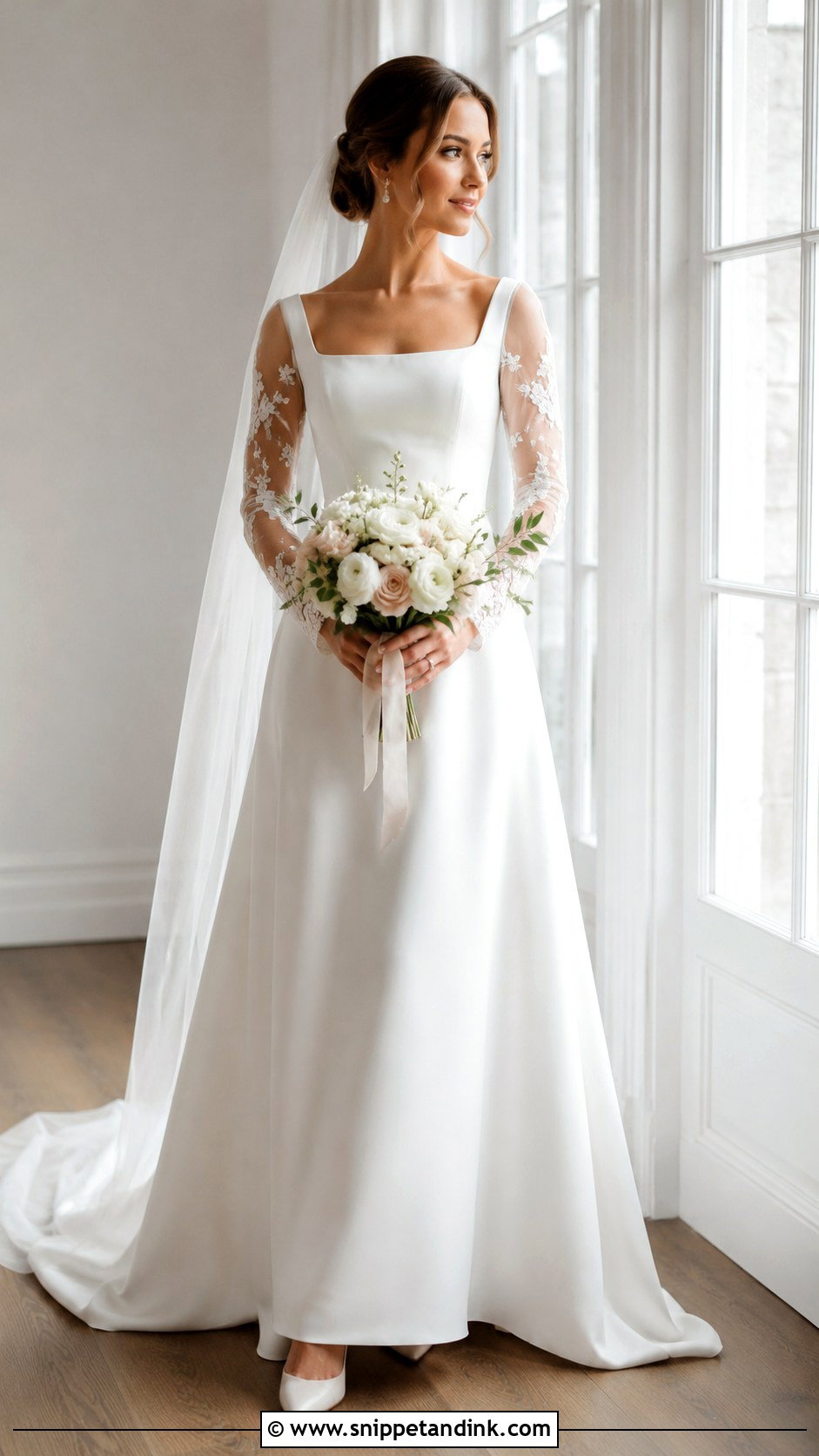
Sheer sleeves add coverage without weight, and fine tulle with small lace appliqués, pearls or covered buttons at the cuff keeps them delicate. A lined satin or crepe bodice gives contrast. Delicate earrings, pointed pumps and a plain lightweight veil suit it, with a loose chignon or soft waves and a compact pale bouquet. Illusion mesh comes in several shades, and the right one depends on your skin tone. Check it in bright daylight, because a mesh that looks invisible indoors can look grey or pink outside. Bend your elbows and lift your arms before alterations are finished.
17. Bubble Hem Wedding Gown
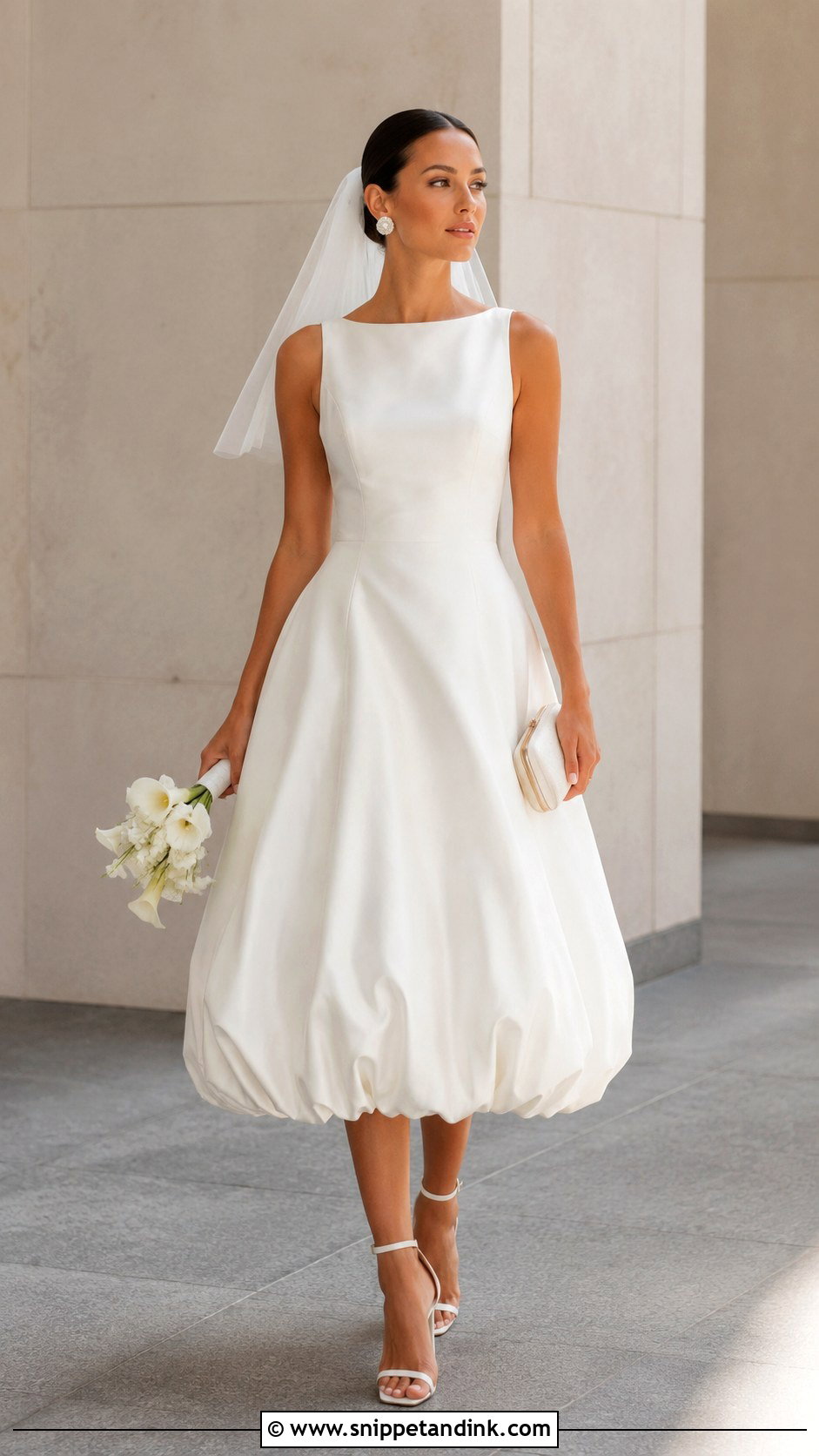
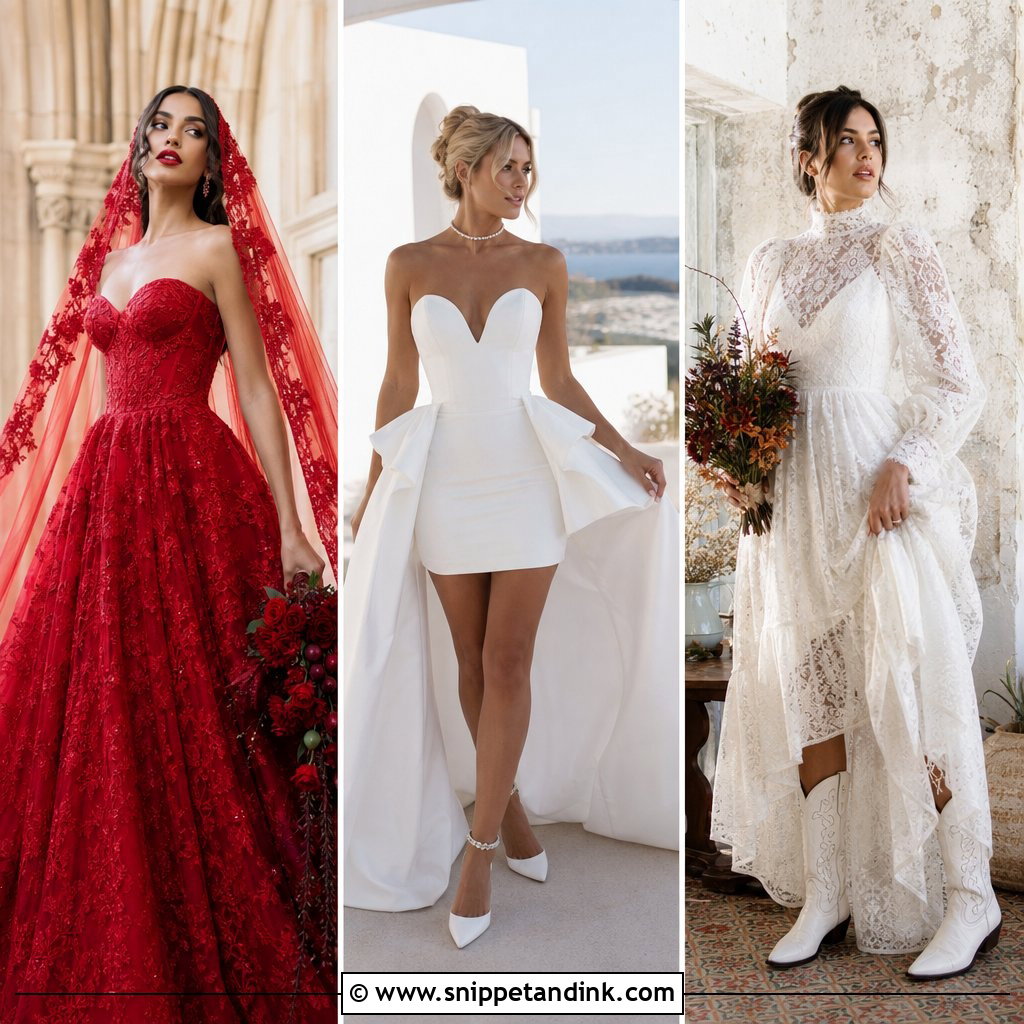
A bubble hem adds playful volume, either on a full-length satin gown, a sculpted midi dress or a removable overskirt over a narrow gown. Keep the bodice simple so the skirt leads. Pointed pumps or slim ankle-strap heels, bold studs, a compact clutch and a short veil or structured hair bow fit the modern proportions, with a small bouquet held at the waist. Bubble hems are built over an inner support, which adds weight and makes sitting fussy. Sit, walk and take stairs at the fitting, and check that the curve doesn’t collapse into folds.
18. Tea Length Wedding Gown
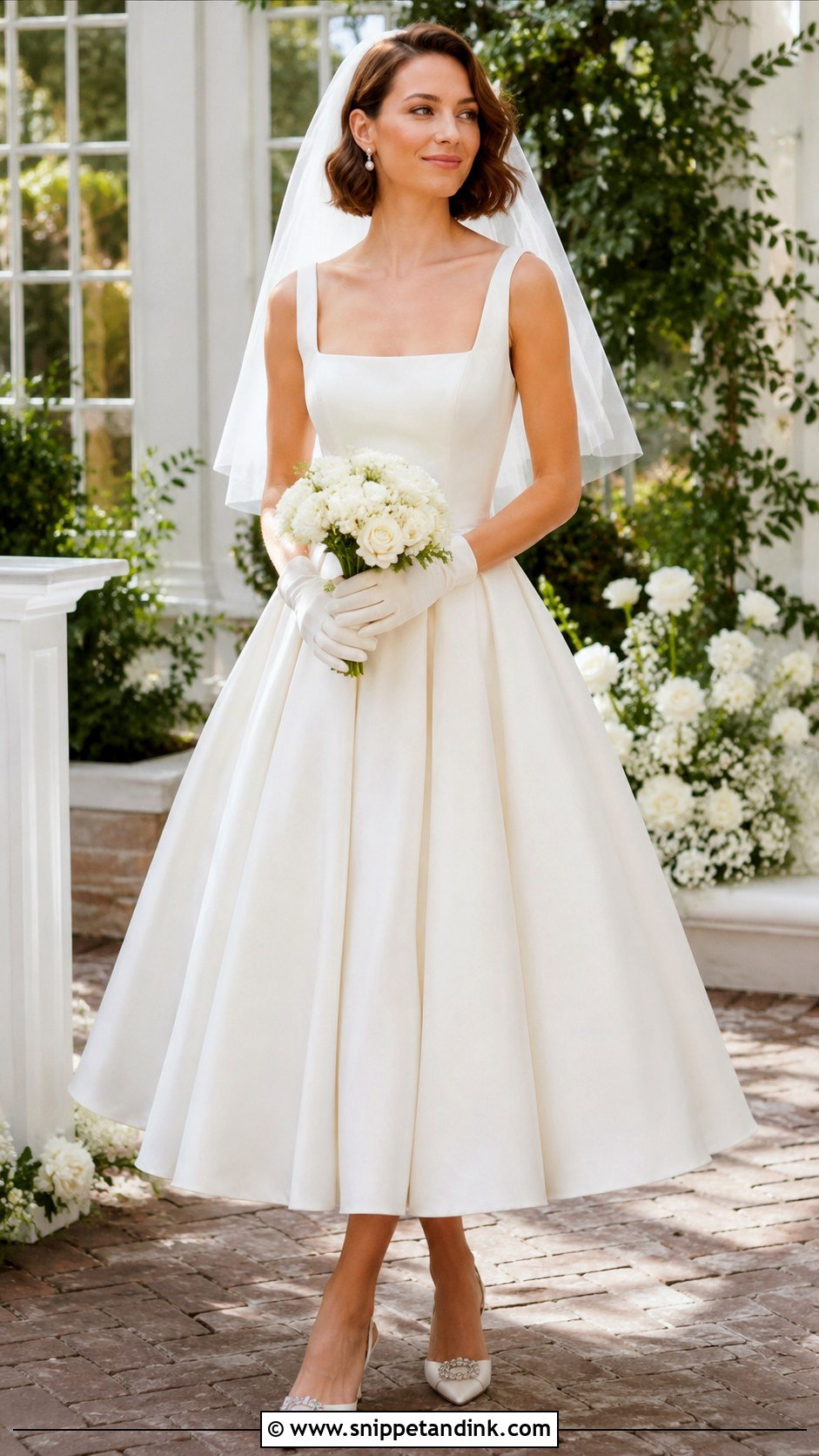
Tea length makes your shoes part of the look, which I love for a courthouse, garden or small wedding. The hem sits between knee and ankle. Structured satin gives crisp volume; chiffon moves more softly. Wear pointed slingbacks, embellished pumps or block heels with pearl earrings, optional short gloves and a shoulder-length veil. A neat bun or a curled bob and a small round bouquet finish it. Hem it in the exact shoes you’ll wear. Even a two-centimetre change in heel height shifts where the skirt meets the leg, and that changes the proportion.
19. Bridal Mini Wedding Gown
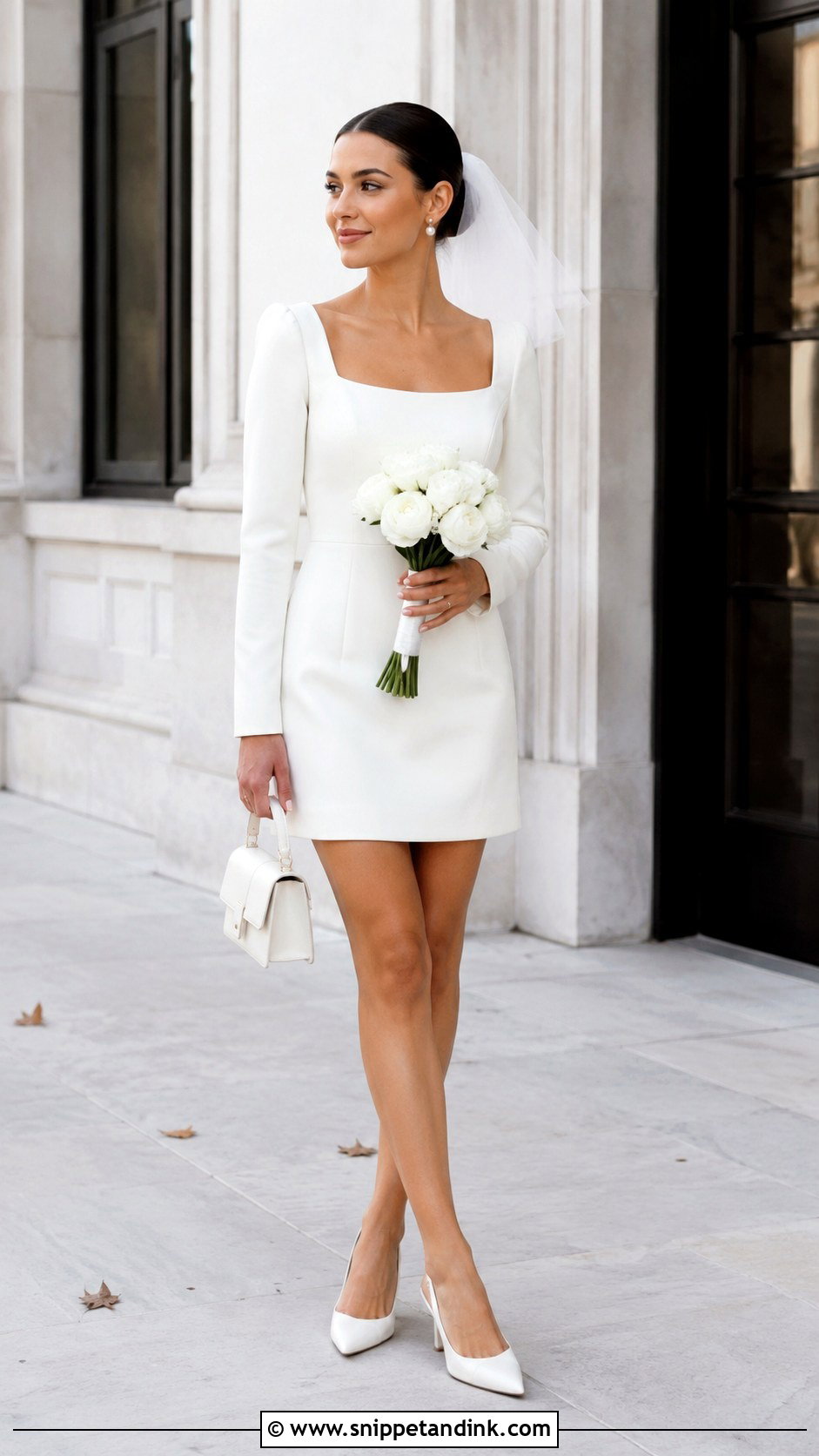
A mini works for a civil ceremony, a reception change or a relaxed destination wedding. A tailored shift, fitted crepe or structured satin with a defined waist all suit it. Long sleeves balance the short hem, and a square or bateau neck keeps it polished. Slingbacks, pearl earrings and a small top-handle bag pair well, and a short veil, large hair bow or slim headband marks it as bridal. Sit down in front of a mirror before you buy. Minis ride up when seated, so a slightly longer hem at the back and a smooth lining make a big difference in photos.
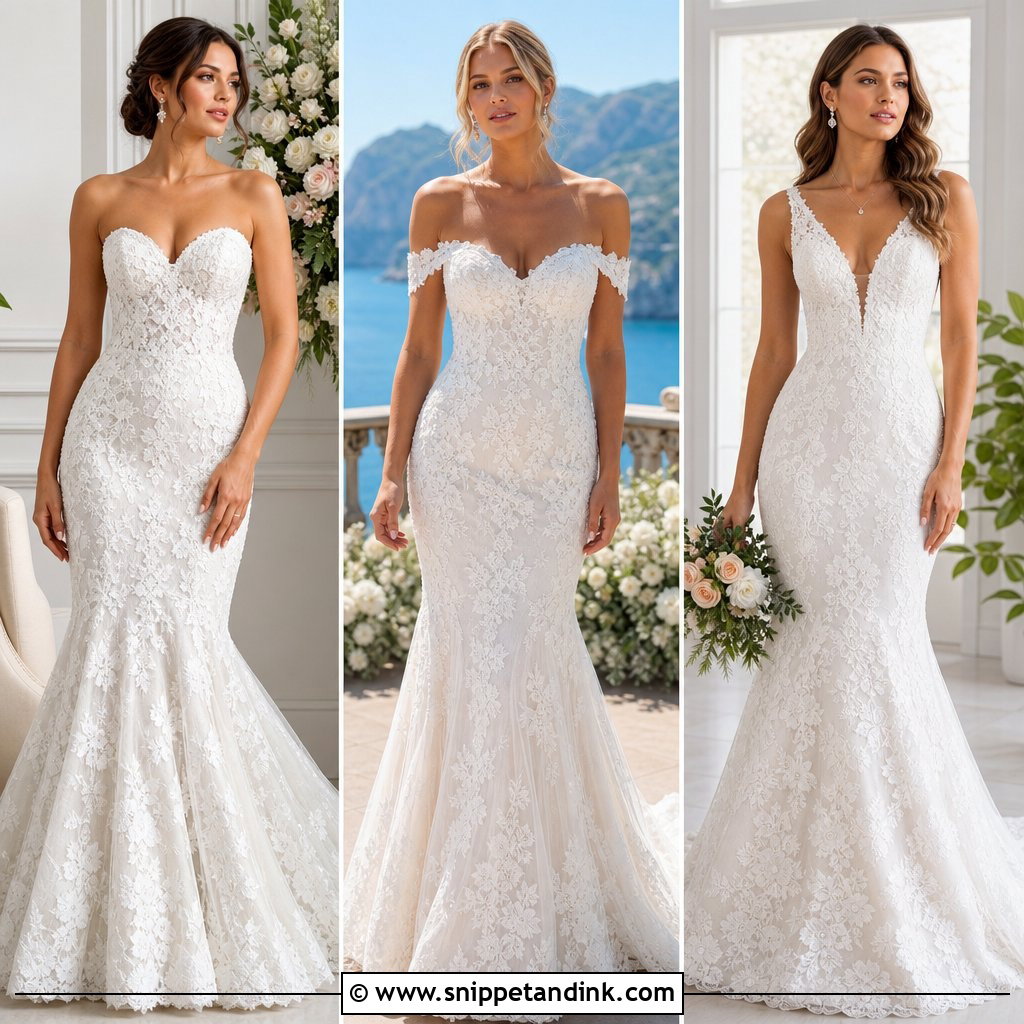
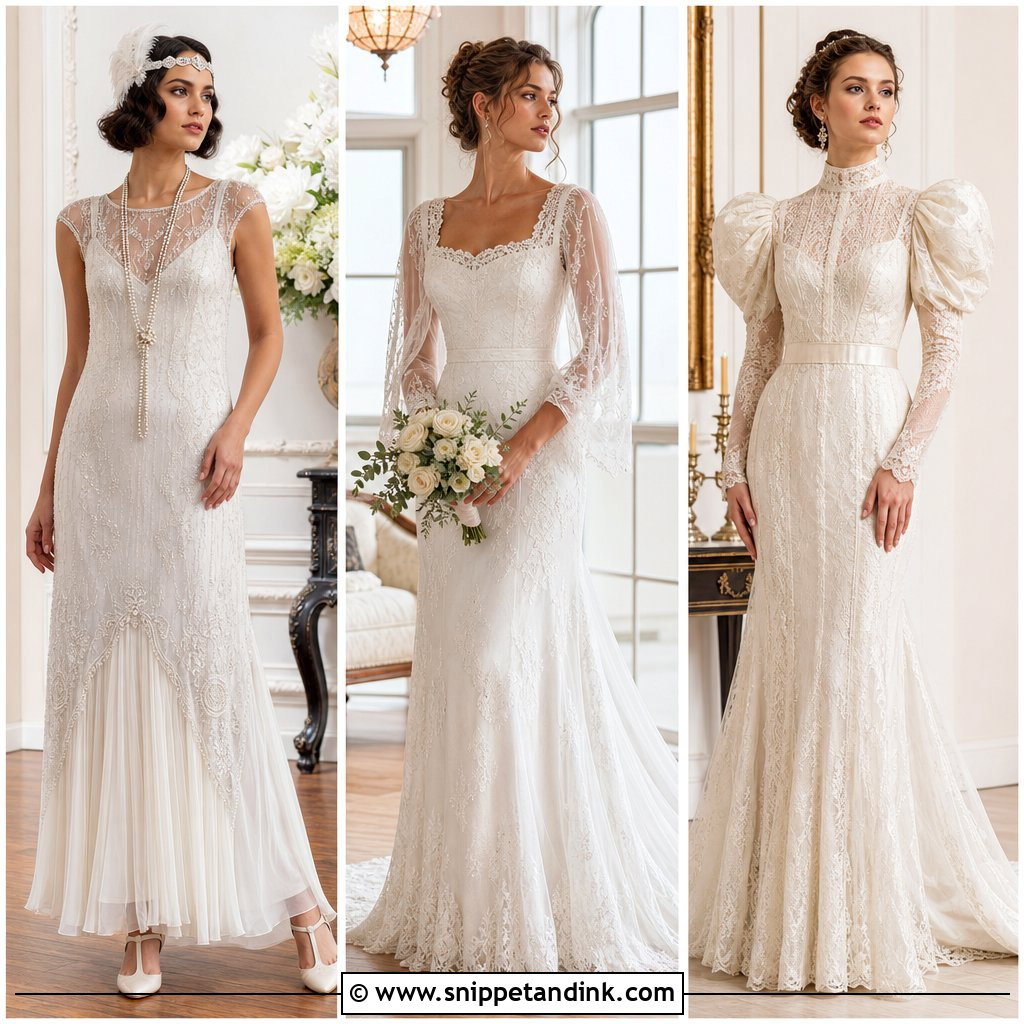
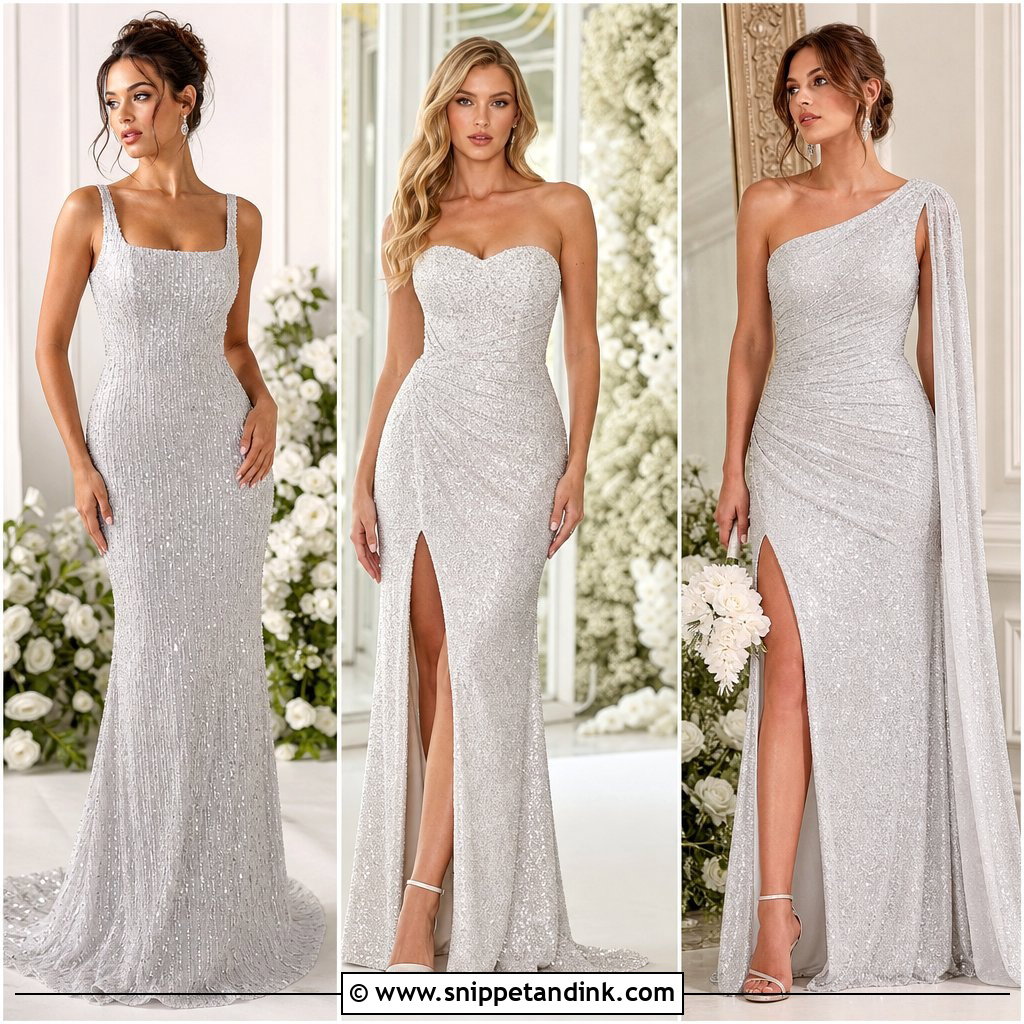
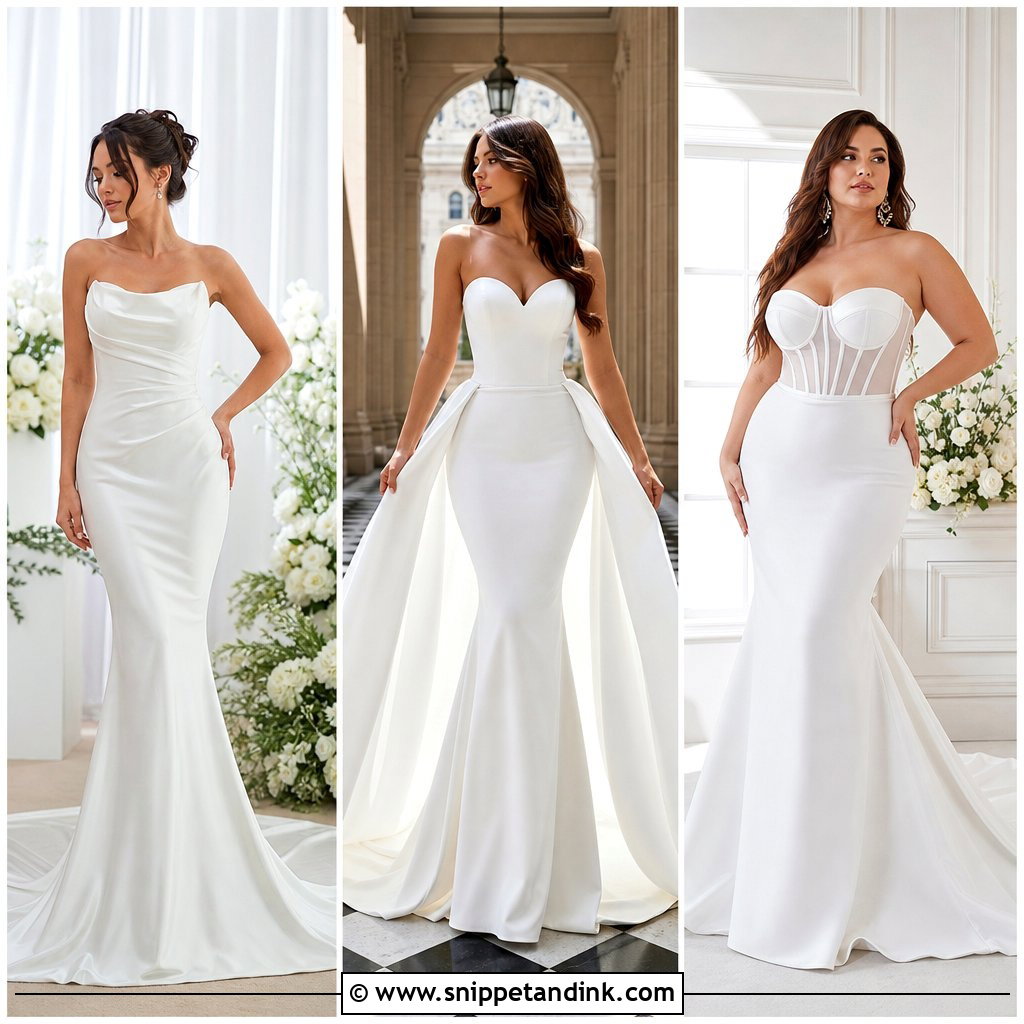
20. Colored Wedding Gown
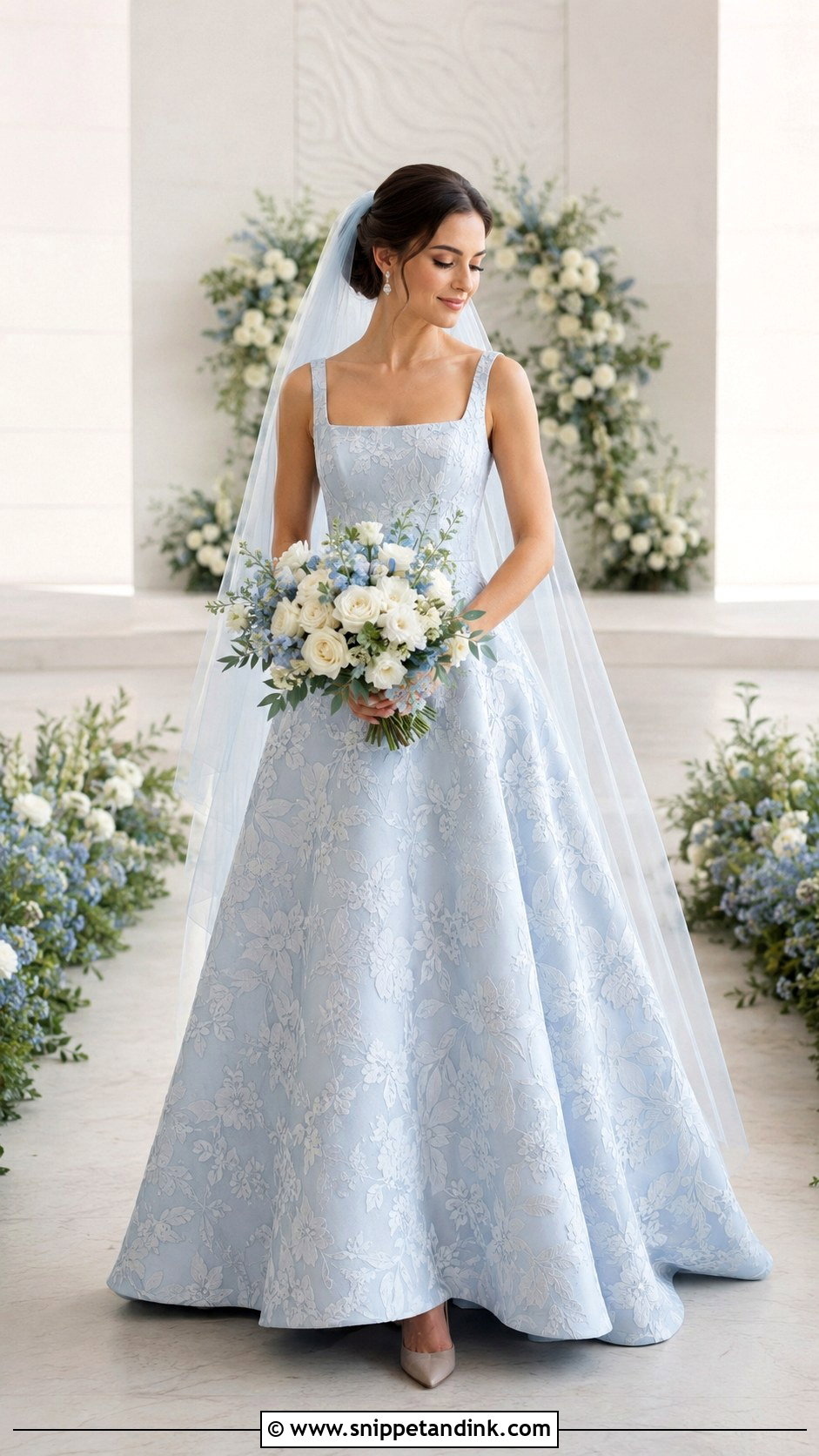
A bridal gown doesn’t have to be bright white. Blush, pale blue, champagne, silver or a botanical print can still feel ceremonial when the colour story is consistent. Let fabric give the depth: satin sheen, layered tulle or jacquard texture. Keep shoes neutral and jewellery understated, and match the veil to the gown’s undertone or swap it for a sculptural headband. Order fabric swatches before you choose anything else; coloured gowns shift more than white under indoor and outdoor light. Then photograph the swatch next to your bouquet flowers so the dress doesn’t vanish into them.
How Long a Made-to-Order Gown Really Takes
Many brides are surprised that a gown ordered in a salon isn’t pulled from a stockroom. It is usually made after you order it, and production times vary a lot by designer, so always ask for the expected delivery date in writing. As a rough guide, I suggest ordering around eight to ten months before the wedding. That leaves time for the gown to be made and shipped, then for two or three alterations fittings in the final couple of months.
Rush orders are sometimes possible, though often at extra cost and with fewer options. A sample or off-the-rack gown is the quickest route when time is short.
The Last Week With Your Gown
- Collect the gown after the final fitting and try it on once at home with every accessory, including the veil and shoes.
- Hang it by the inner hanger loops, not the shoulders, so heavy skirts don’t stretch the bodice.
- Have a steamer on the morning or book the venue’s. Satin and crepe crease in transit; tulle mostly drops out on its own if hung.
- Teach the bustle to two people, not one. If one is busy with photos, the other can do it.
- Pack a small kit: fashion tape, safety pins, a white chalk stick for marks and a needle threaded in the gown’s colour.
The Gown You Can Breathe, Dance and Eat Dinner In
It gets easier to decide when you look at the whole bridal look rather than the dress alone. The neckline, fabric, skirt construction, shoes, veil, jewellery, bouquet and hair all affect each other. Comfort matters as much as appearance, so walk, sit, turn and raise your arms in every gown you shortlist. Bring the underwear and heel height you plan to wear to every alterations appointment. A modern gown doesn’t have to be extremely minimal or unusual. It needs good proportions, well-finished details and styling that feels like you all day long.
You'll Like These Ideas:



Leave a Reply