
A little girl in her mother’s wedding gown is one of my favourite things to photograph, partly because nothing about it fits. The skirt pools, the bodice gapes, the veil slides, and that is exactly what makes the pictures honest. You don’t need the dress altered or perfectly pinned. You need good light, a setting that keeps attention on the gown, and a child who is enjoying herself. Heirloom jewellery, the old wedding portraits, flowers or Mom’s shoes can carry the family story. The ideas below are the setups I come back to, with notes on what actually works when your model is six and has a ten-minute attention span.

Clips, Snacks and a Short Session Before She Puts It On
Most of the success of this shoot happens before the camera comes out. An adult gown on a child needs taking in at the back, and I use large spring clamps or soft-jawed clips gathered behind her, hidden from the lens. They hold far more fabric than safety pins and can’t scratch her. Put a thin white slip or vest on her first, both for comfort under scratchy lace and to keep the bodice from touching her skin directly.
- Keep it short. For a preschooler, thirty minutes in the dress is plenty; older girls might manage an hour with breaks.
- Feed her before, not during. Juice and crumbs near antique silk are a stain waiting to happen.
- Schedule around her energy, not the light alone. A tired child in perfect window light still gives you a frown.
- Do a five-minute try-on a day or two before, so the weight and length aren’t a surprise.
Have clean hands on everyone who touches the dress, and keep makeup, lip balm and hair products well away from the fabric.
1. Daughter in Wedding Dress Mirror Photo
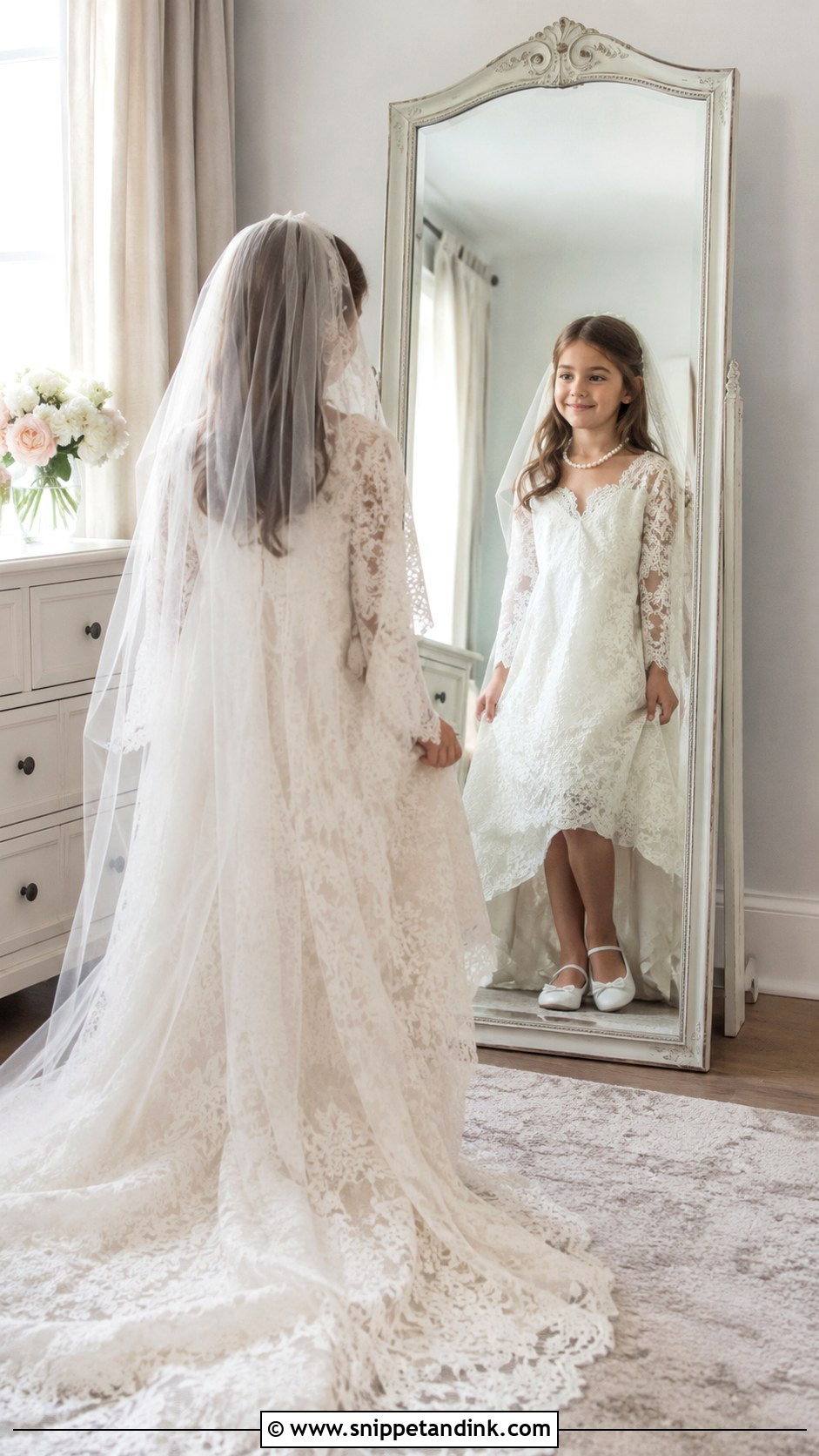
Mirror shots are easy to get wrong, because the camera can end up in the reflection. I stand at an angle to the glass and turn the daughter slightly sideways, so I catch her profile and her reflected face in one frame. Let the skirt bunch at her feet; trying to make it fit only makes her stiff. Give her something to do, like straightening the veil or studying the lace, and the expression takes care of itself. If you can, face the mirror toward a window so her reflection is lit too.
2. Daughter Holding Mom’s Wedding Photo
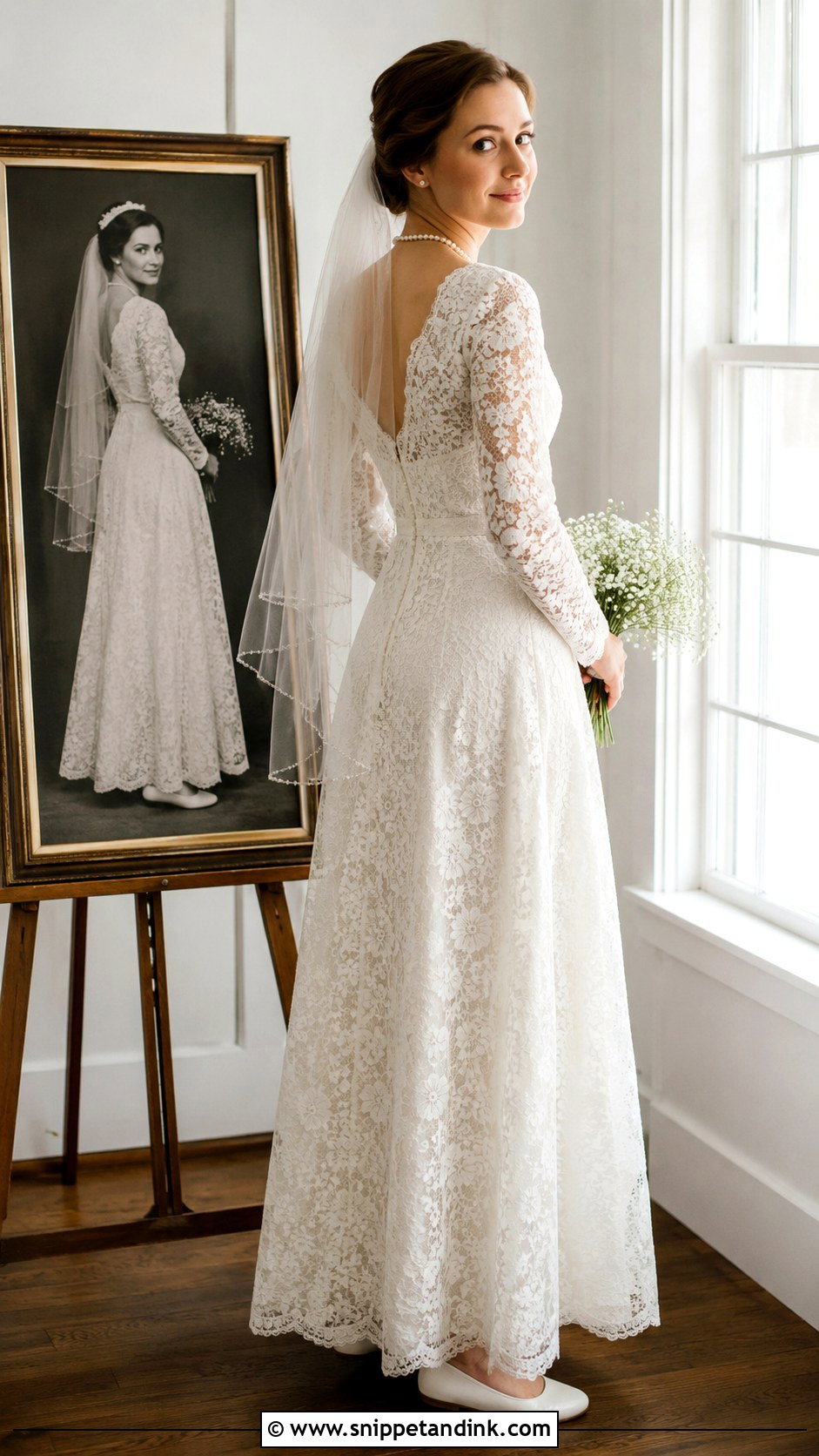
Handing her a framed photo from her parents’ wedding puts both generations in the same picture. Arrange the train, then let her sit on a low bench or stand by a window with the frame held where the camera can read it. Glass reflects, so I tilt the frame slightly down until the glare disappears from my viewfinder. Keep the frame plain. Take one frame of her looking at the photo and one looking at you; the first is usually the one families print.
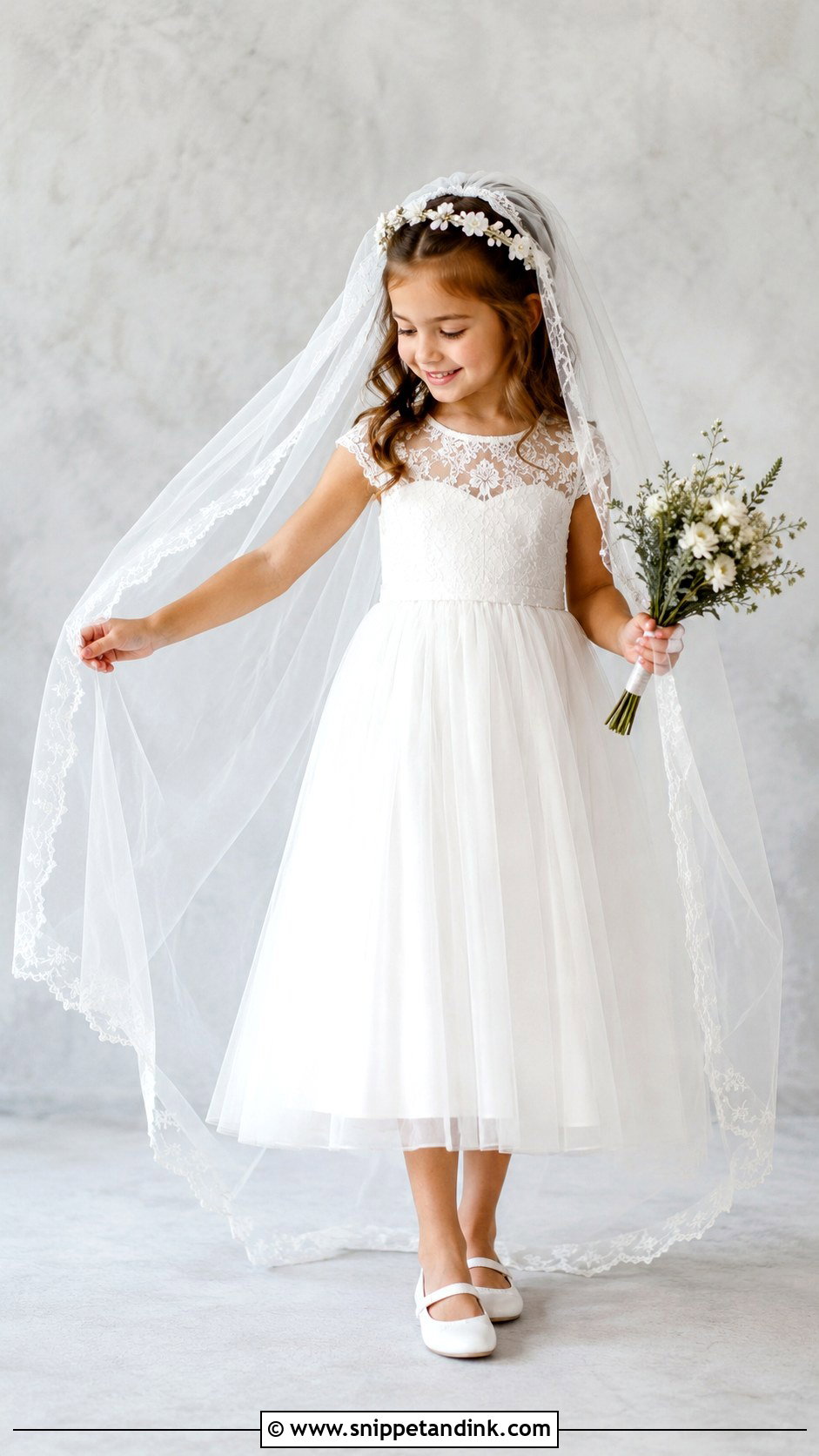
3. Daughter Wearing Mom’s Wedding Veil
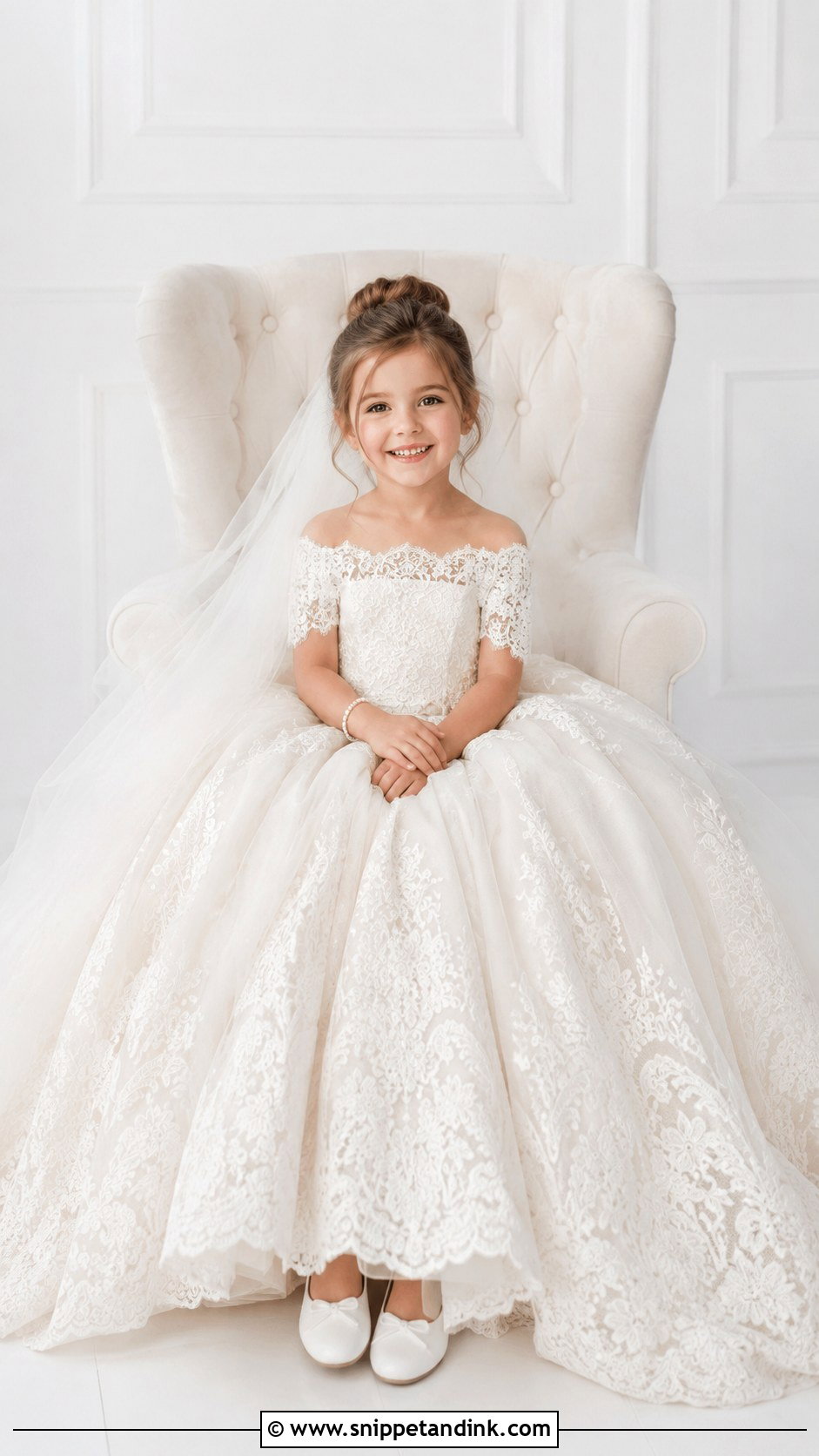
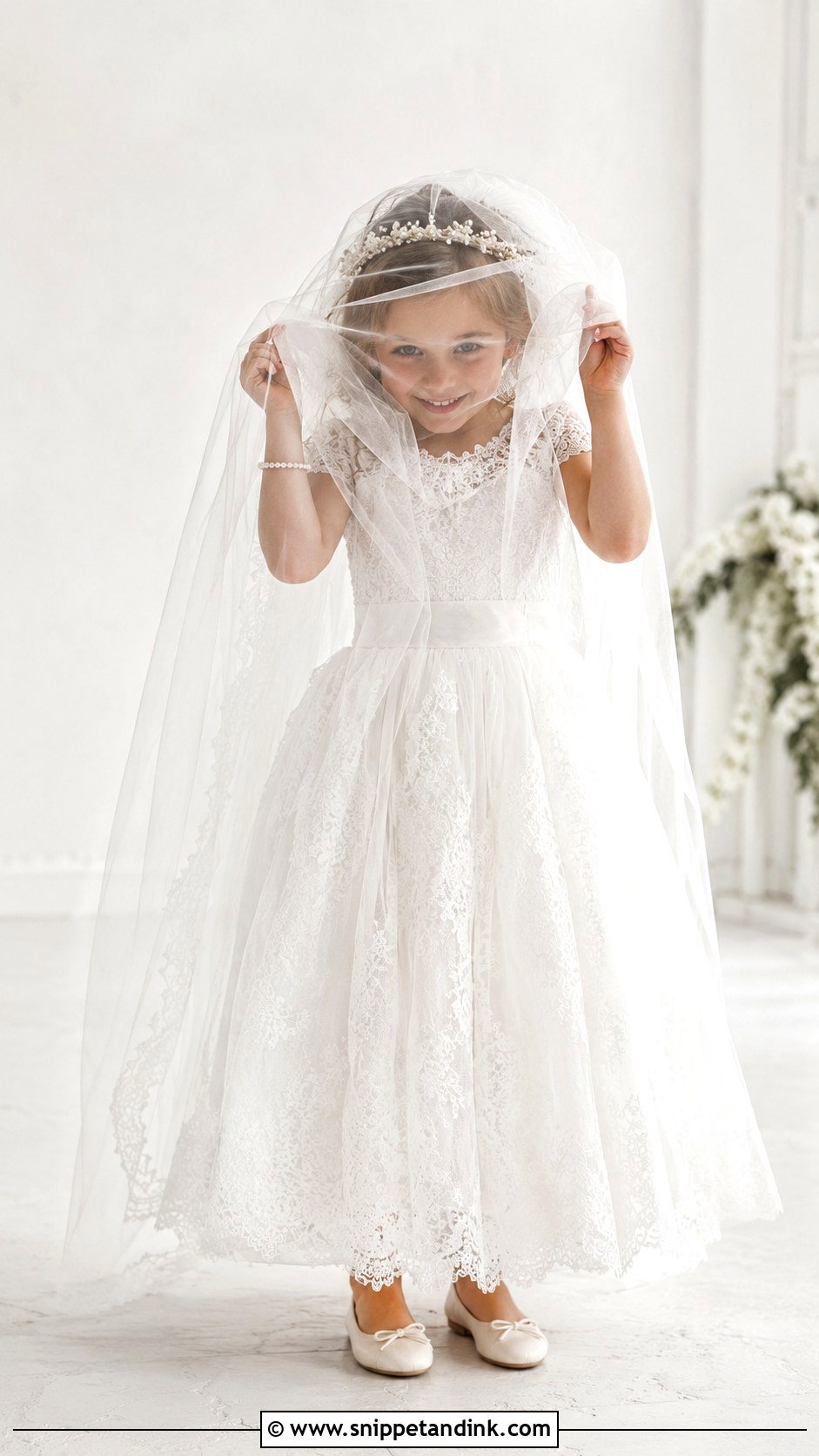
The veil is often the piece that actually fits, which is why I start many sessions with it. She can wear the gown or a plain white dress underneath, and a full-length shot should show how far the tulle trails behind her. Then let her play: holding the edges, peeking through, lifting it as if the wind caught it. Skip heavy combs that pull at fine hair; a couple of bobby pins crossed in an X hold a light veil better. A pale grey or cream backdrop keeps tulle from disappearing into white.
4. Daughter Sitting in the Wedding Dress
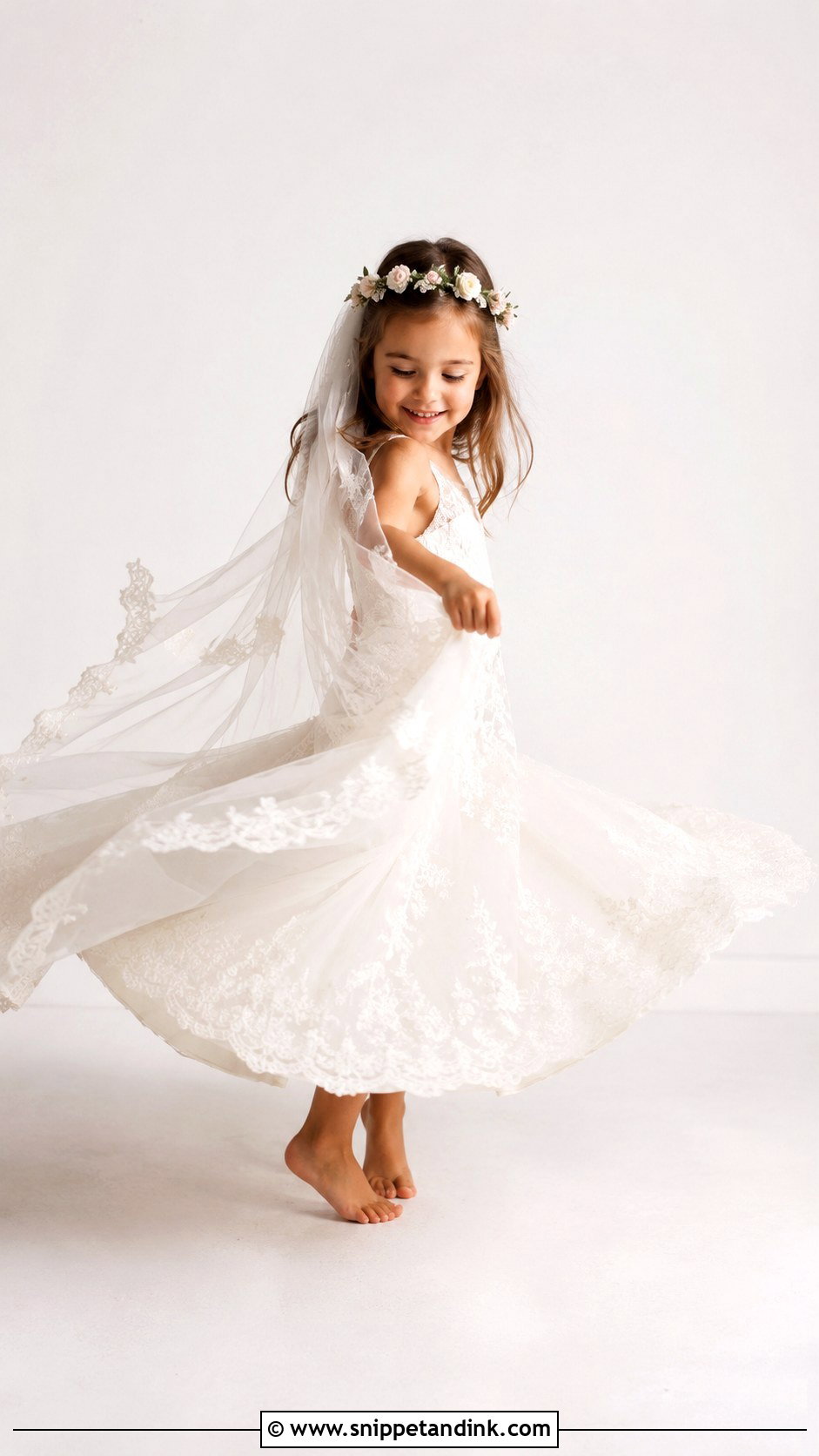
When the dress is far too big, sit her down. A sturdy stool or a clean floor lets you spread the skirt into a full circle, and suddenly the size works for you. Give her hands a job, a small bouquet or the lace on her lap. Hidden clips at the back can take in the neckline, but no sharp pins near skin. I shoot one frame from a step stool to show the skirt’s full shape and then drop to her eye level for her face. Bare feet or ballet flats keep it age-appropriate and comfortable for the long sit.
5. Daughter Twirling in the Wedding Dress
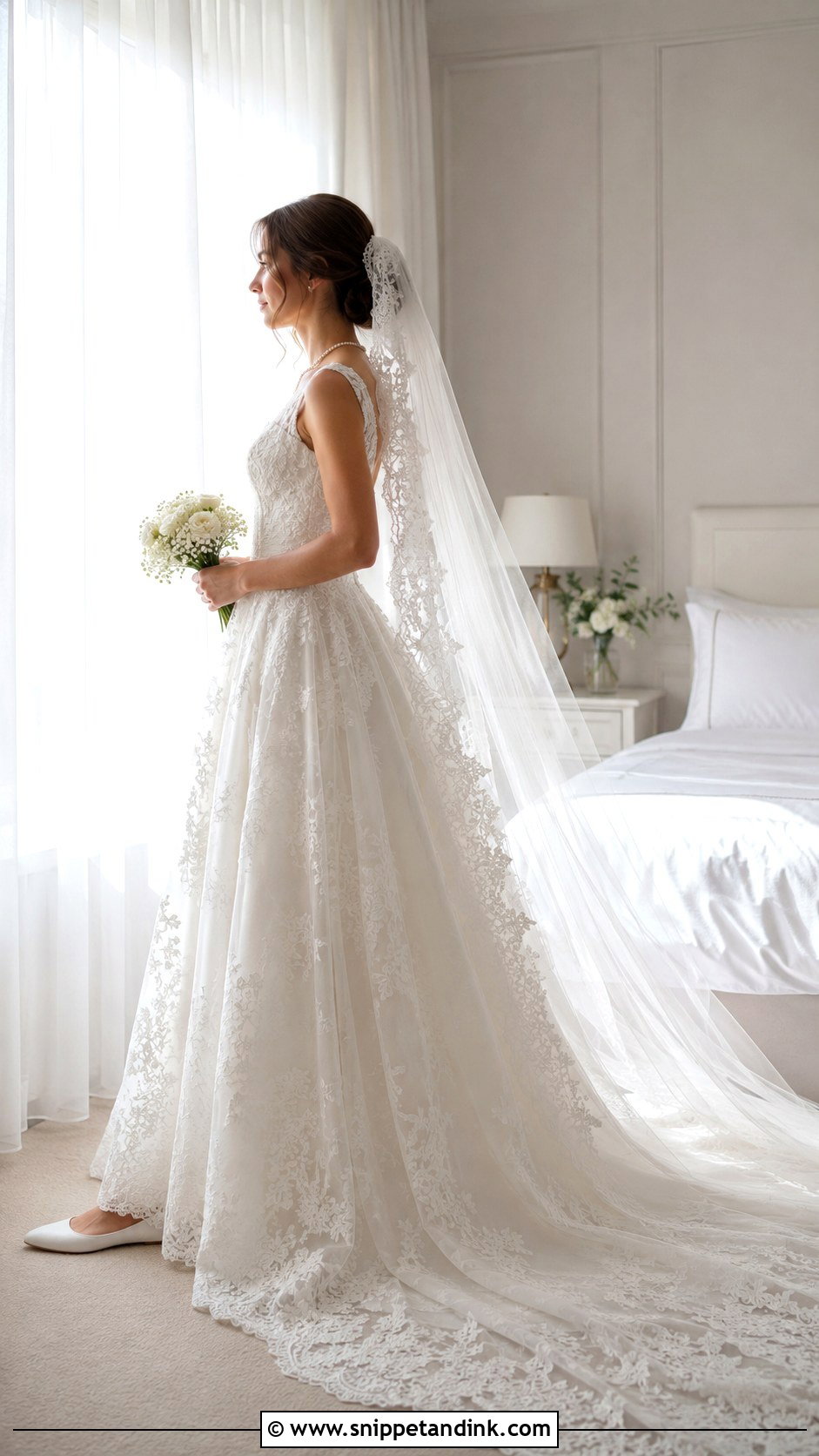
Twirls are where the real giggles come out, but they need clear floor and an adult managing the fabric. Lift or knot up the excess train behind her before she turns so she can’t step on it. One slow turn, hands lightly holding the skirt. To freeze the lace mid-spin I want a shutter of around 1/500 second; at 1/125 you get pleasing blur at the hem but a soft face. Shoot the turn and the grin straight after it, because the after-twirl laugh is often better than the spin itself.
6. Daughter Standing by a Bright Window
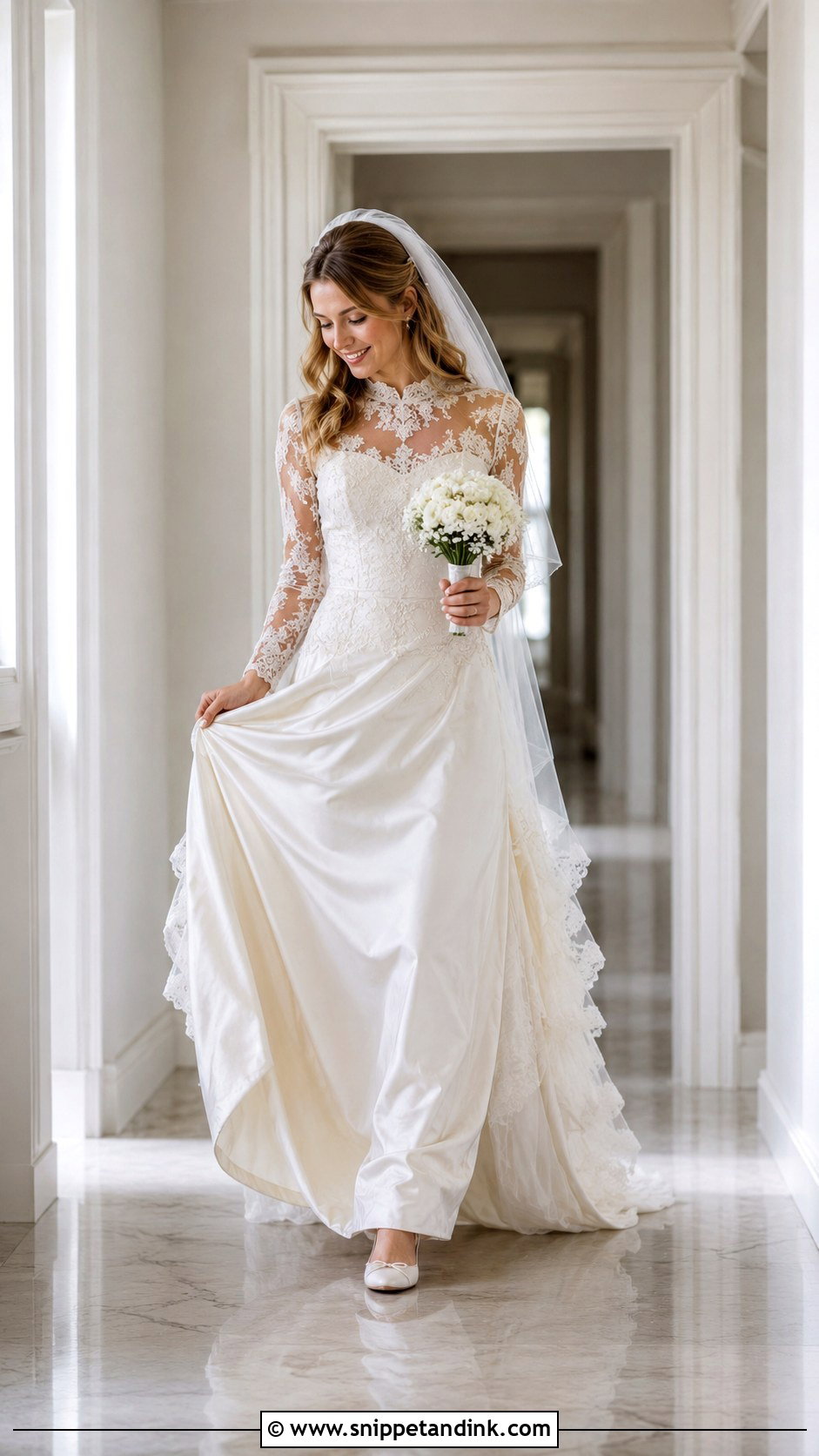
Window light is my default for heirloom fabric because it rakes across lace and shows the texture in a way flash flattens. Stand her beside the window with her body turned slightly toward it, and if the sun is falling directly in, hang a sheer curtain to soften it. She can look out, hold the curtain or glance back at you. Clear the sill and corners first. I shoot a tall vertical frame for the whole gown, then move in for her hands and the beading that only appears in that side light.
7. Daughter Walking in the Wedding Dress
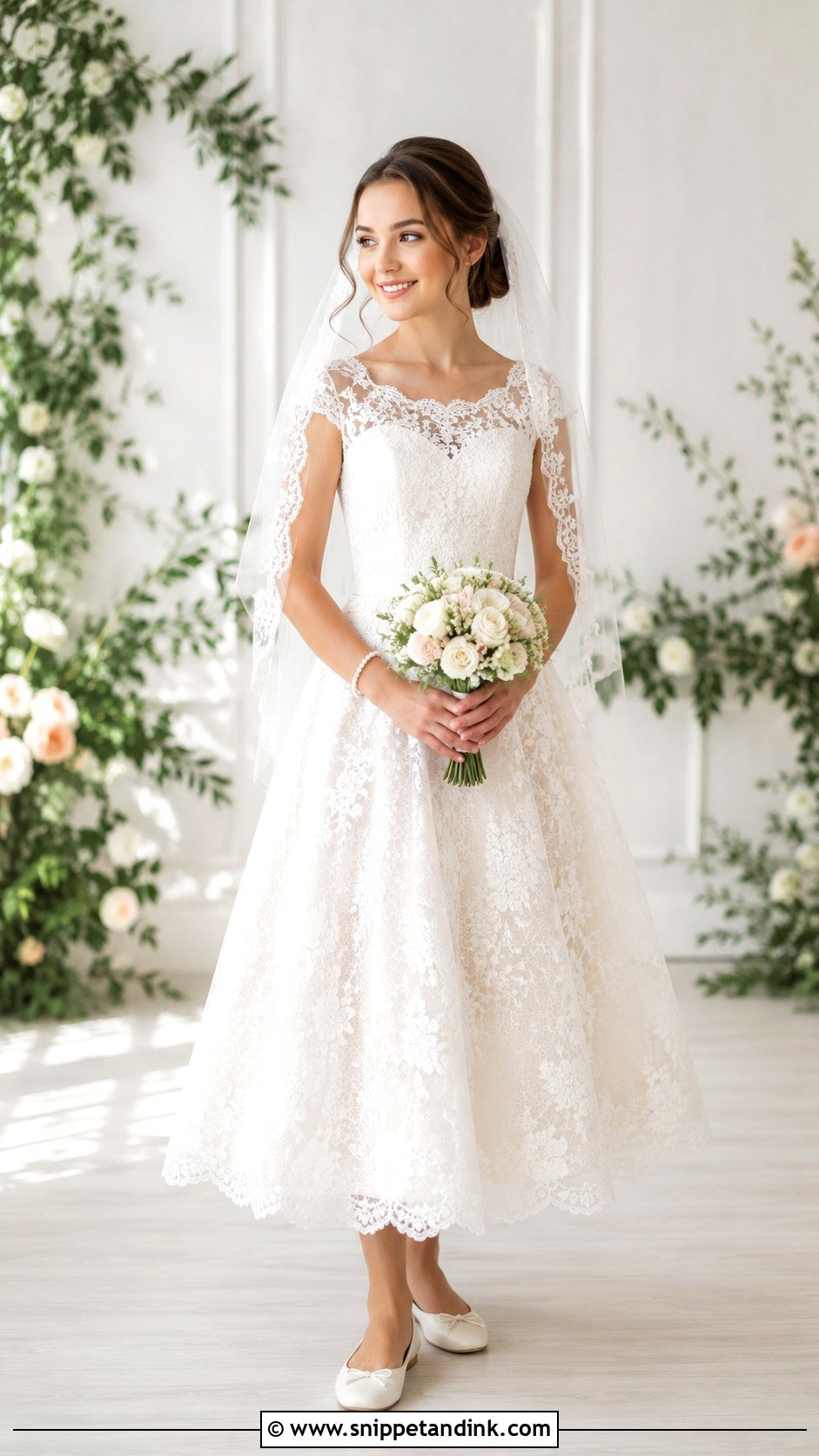
A slow walking pose gives movement without the chaos of a twirl. Choose a clean studio floor, a bright hallway or a smooth path, and secure the train so she won’t trip. Small steps, one hand on the skirt, bouquet in the other. Flats are safest; bare feet are fine indoors. I ask her to look at something ahead of her rather than at me, then call her name halfway through the walk. That turn of the head is the frame. Follow up with a back view to show the veil and train.
8. Daughter Holding a Small Bouquet
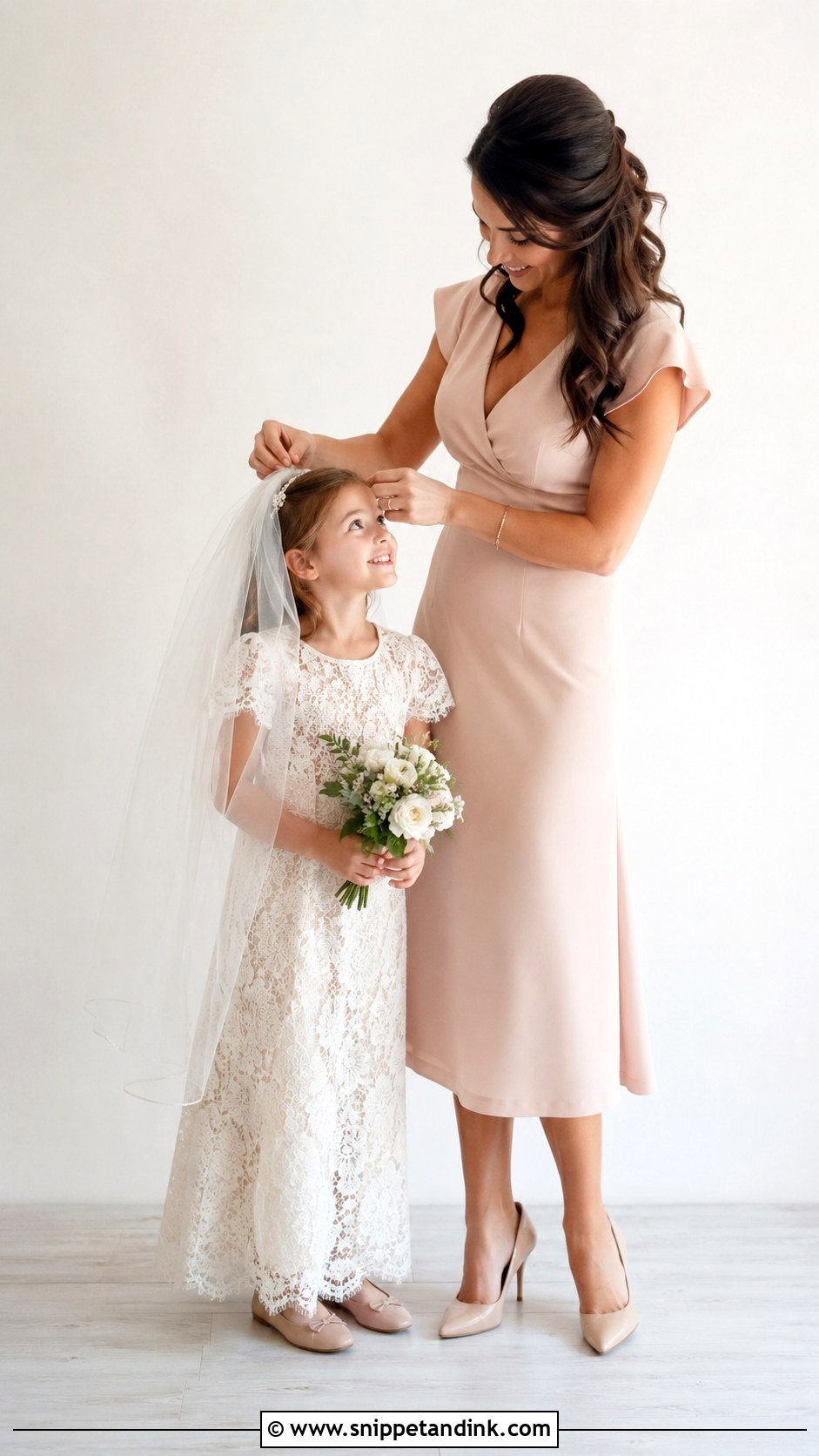
Children never know what to do with their hands, and a bouquet fixes that. Keep it small and scaled to her, because an adult bridal bouquet will hide half the gown. Real or good silk flowers both work; white roses, baby’s breath or soft pinks sit well with most bridal whites. Hands around waist height, then ask her to smell the flowers or hold them out to you. Add the original veil, flats and one piece of family jewellery. A light studio or a garden background lets the flowers be the only colour.
9. Daughter Wearing Mom’s Wedding Shoes
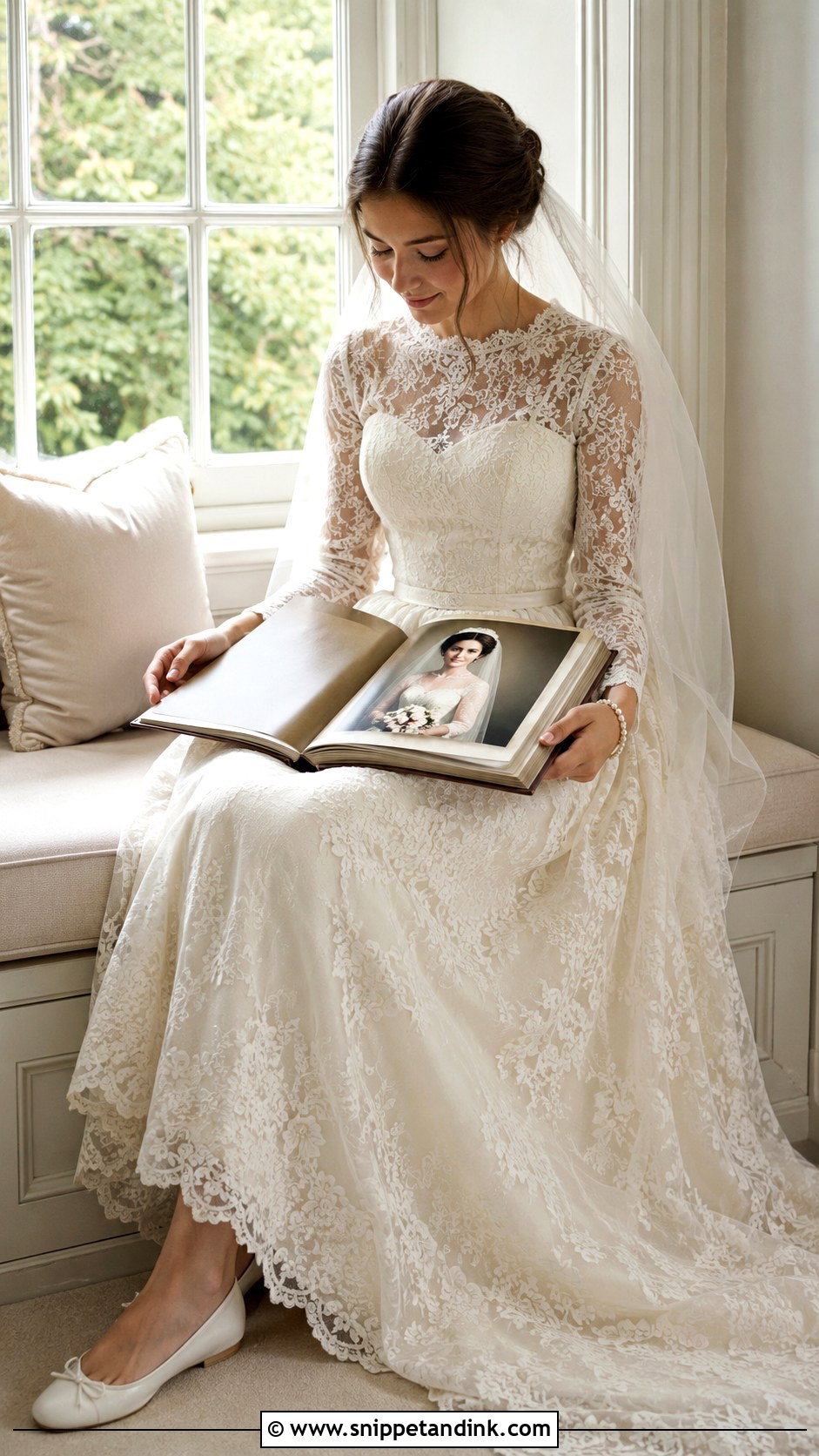
Mom’s wedding shoes are usually comically big, and that’s the charm. If they’re high heels, don’t let her walk in them on a hard floor. Seat her on a chair with the dress arranged so the shoes peek out, or stand them beside her feet. She can lift the hem to show them or laugh at how huge they are. I shoot a full-length frame and then get low for a close detail of hem and shoes together. Those pictures capture a child honestly playing in her mother’s treasured wedding pieces.
10. Daughter With Mom in the Wedding Dress
Bringing Mom into the frame changes the session from a portrait into a relationship. She should wear a simple neutral midi or maxi dress so the gown stays the only white in the picture. Kneeling to fix the veil, holding hands, arranging the train: these give both of them something real to do. I barely direct here. I’ll ask Mom to tell her daughter something about her wedding day and just keep shooting while they talk. On a fragile dress, Mom can also quietly carry the skirt’s weight between frames.
11. Daughter Looking Through the Wedding Album
A wedding album gives a child something to look at that isn’t the camera, which is why the expressions come out so natural. Seat her on a clean floor or window bench with the dress spread around her and open the album to a page where Mom wears the same gown. Ask her to find people she knows. I shoot over her shoulder so the album page is readable, then go wide from the front for the whole dress. Glossy album pages bounce light, so angle the book away from the window.
12. Daughter Beside the Hanging Wedding Dress
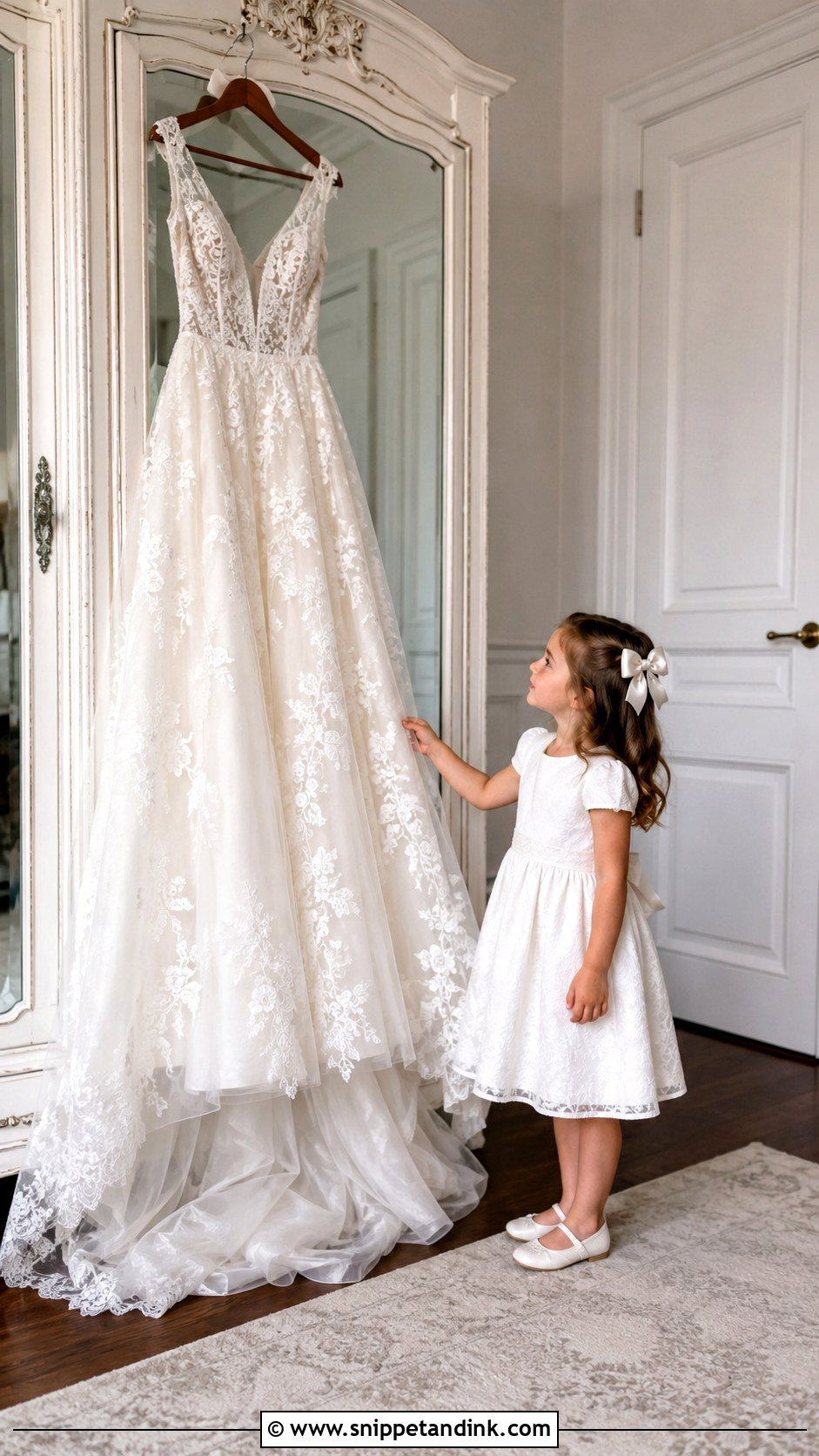
Not every frame needs her in the dress. A shot of her standing next to the wedding dress while it hangs makes a gentle opening picture for an album. Put her in a simple white dress and flats and let her reach up to touch the lace. Check the hanging point carefully first; a full gown is heavier than it looks, and a door hook can pull loose. A full-length composition that shows how tiny she is next to the gown tells the whole story before she even puts it on.
13. Daughter Wrapped in the Wedding Dress Train
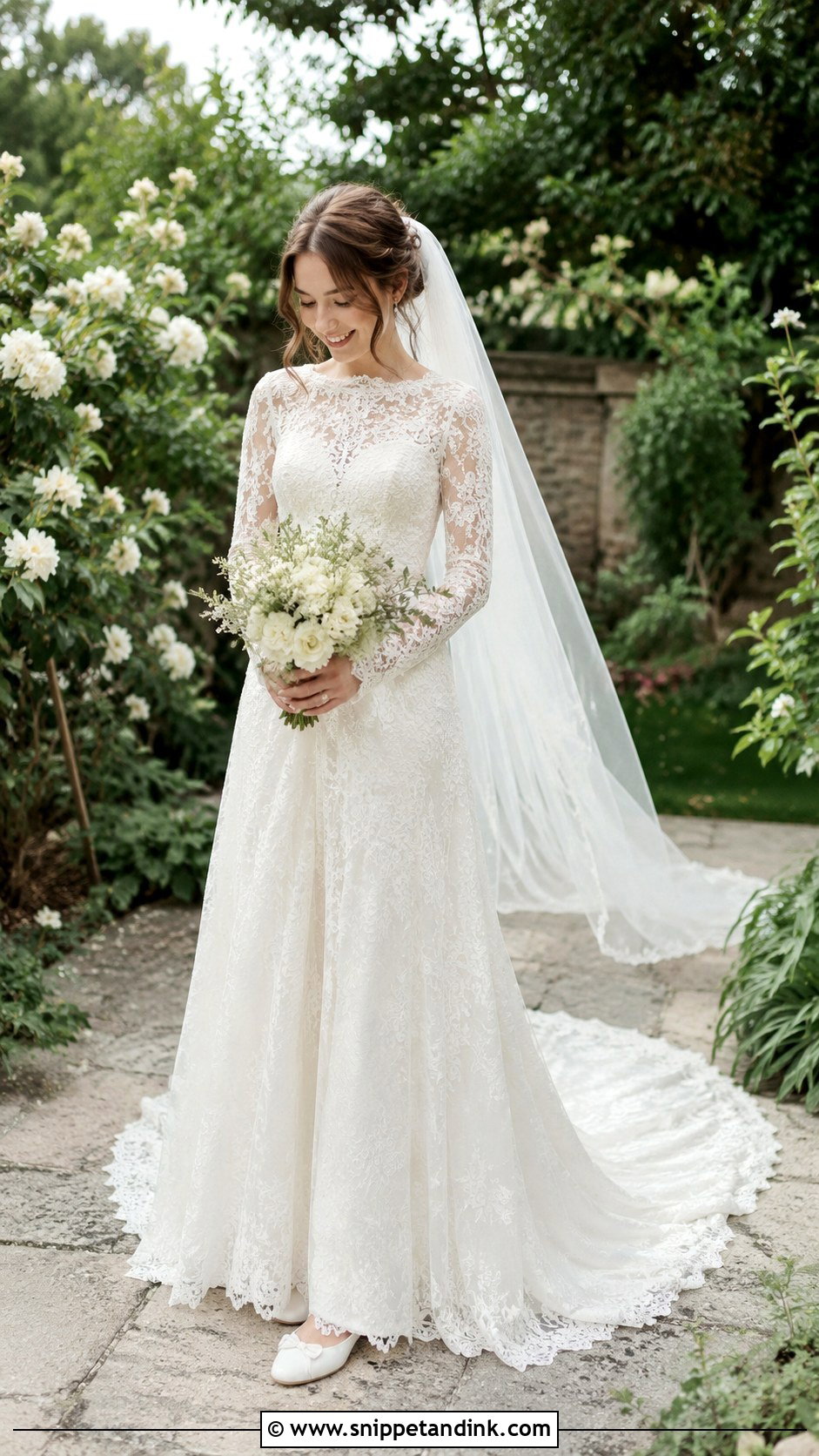
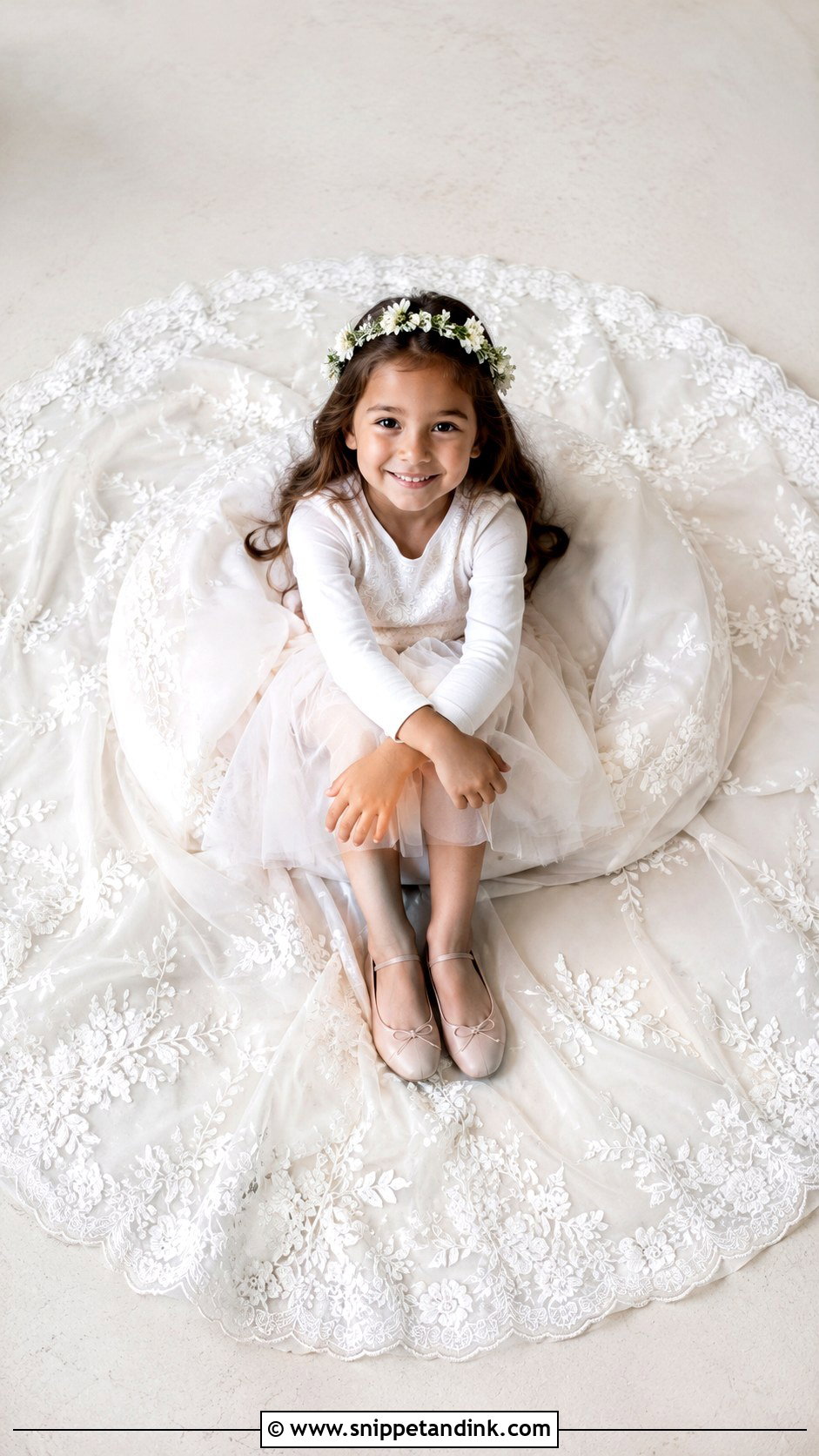
For very large or structured gowns, I sometimes skip the bodice entirely. She wears a plain white outfit and sits while we lay the skirt and train loosely around her like a nest. Keep her arms and shoulders free and never wrap heavy fabric snugly around a child. Turn the best lace toward the lens. A frame from directly above shows the circle of fabric; a second from the front is the portrait. It’s comfortable for her and avoids any strain on old bodice seams.
14. Daughter in Wedding Dress With Heirloom Jewelry
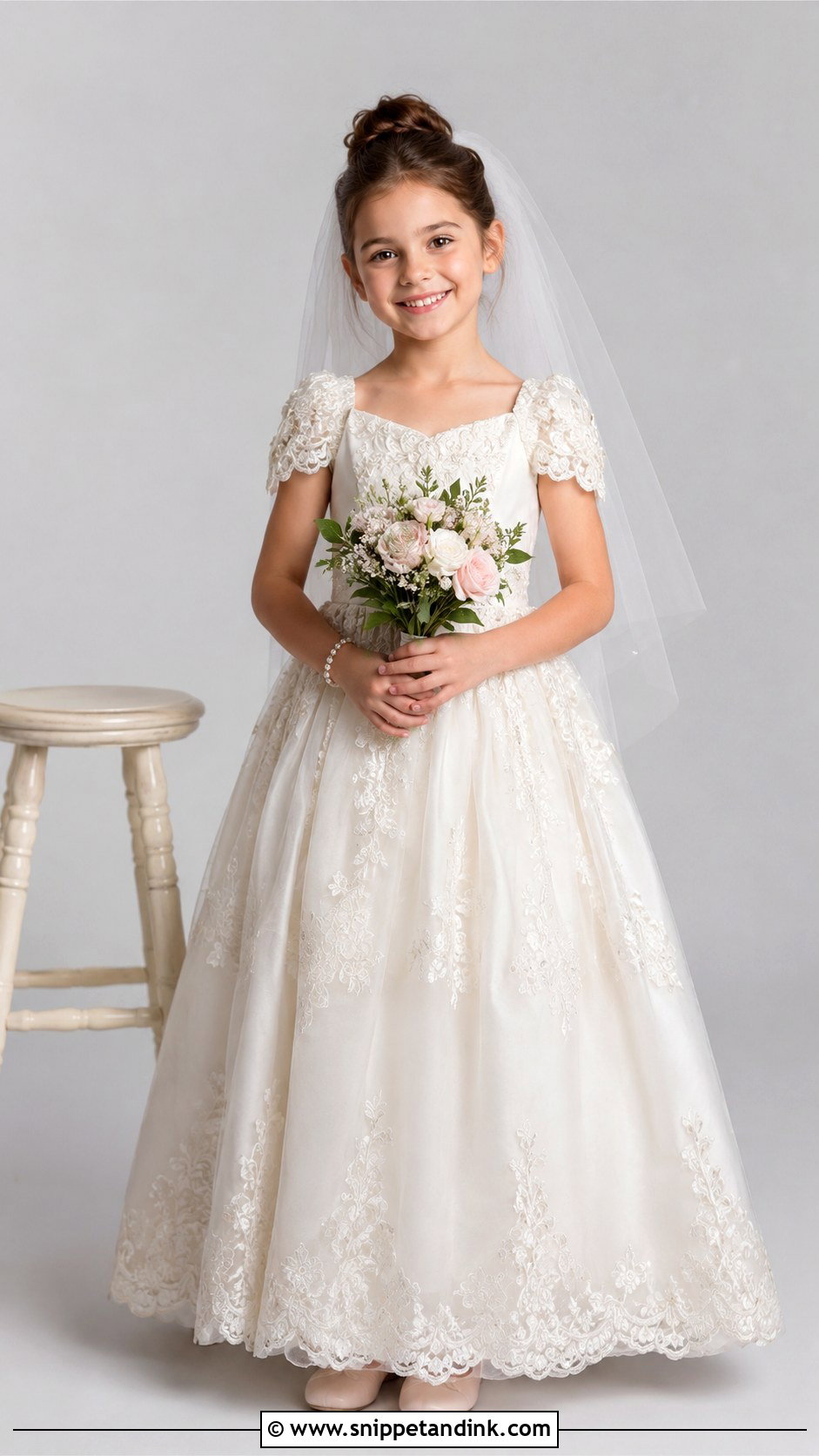
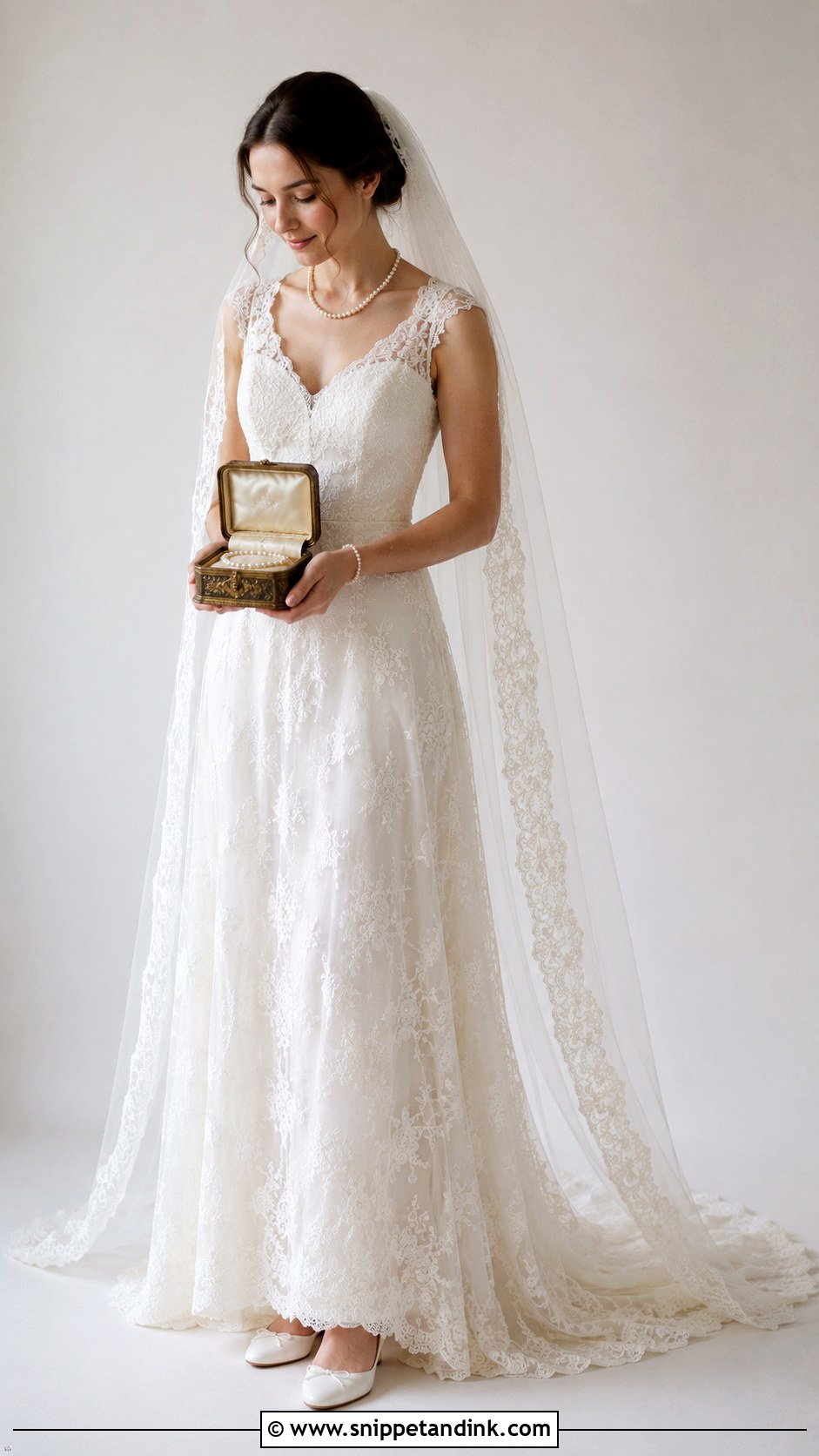
One or two heirloom pieces are plenty. A pearl necklace, a bracelet, a brooch or a hair comb all work; dangling earrings tend to annoy children and small loose items vanish into carpet. Put the gown on, settle the veil behind her and check that the jewellery actually shows. She can touch the necklace, hold an old jewellery box or look into a mirror. After the full-length frame, I take a tight shot of her hands or neckline. Write down whose each piece was afterward; families forget faster than they expect.
15. Daughter in Wedding Dress Garden Photo
Gardens look fresh behind a white gown but punish the fabric, so pick a clean path, a covered porch or a short lawn rather than flower beds and brambles. If the ground is damp, lay a washable sheet under the train and tuck the edges out of sight. Flats, a small posy and a well-pinned veil or flower crown suit her. Avoid midday sun, which turns white fabric into a featureless glare; open shade or late afternoon is far kinder. Have her walk slowly or look at the blooms rather than stand stiffly under an arch.
16. Daughter in Wedding Dress Studio Portrait
A studio gives you control and privacy, which matters when you’re clipping and re-clipping an oversized gown between shots. White, cream or soft grey backdrops all suit heirloom fabric. She can stand by a stool, sit with the skirt spread or hold a small bouquet. I light it with large, diffused sources so lace and embroidery show without hard shadows. Go for a straight smiling portrait, a side profile and then whatever happens in between poses. It’s the safest choice for fragile dresses that shouldn’t meet grass, wind or dust.
17. Daughter in Wedding Dress Back View
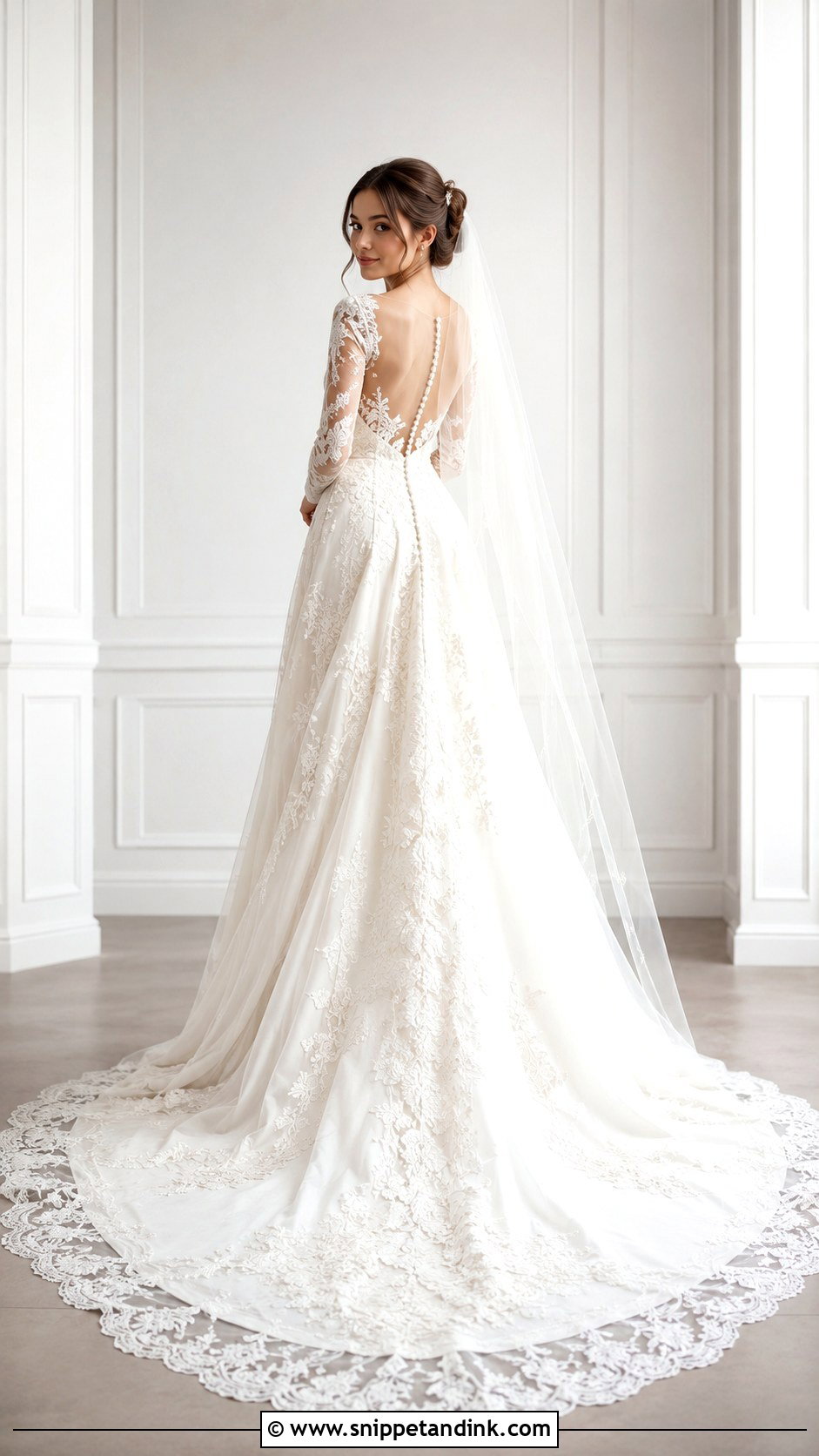
The back of a gown often holds the best work: covered buttons, lace panels, a bow, the train. A back view makes sure those details are recorded. Stand her against a bright window or a plain backdrop and arrange the train symmetrically behind her. She can look over her shoulder or hold the veil to one side. If you clipped the bodice, check the clips are hidden under the veil or tucked inside; they show instantly from behind. Take one still, centred frame, then a second with a little movement in the fabric.
18. Daughter Peeking Through the Wedding Veil
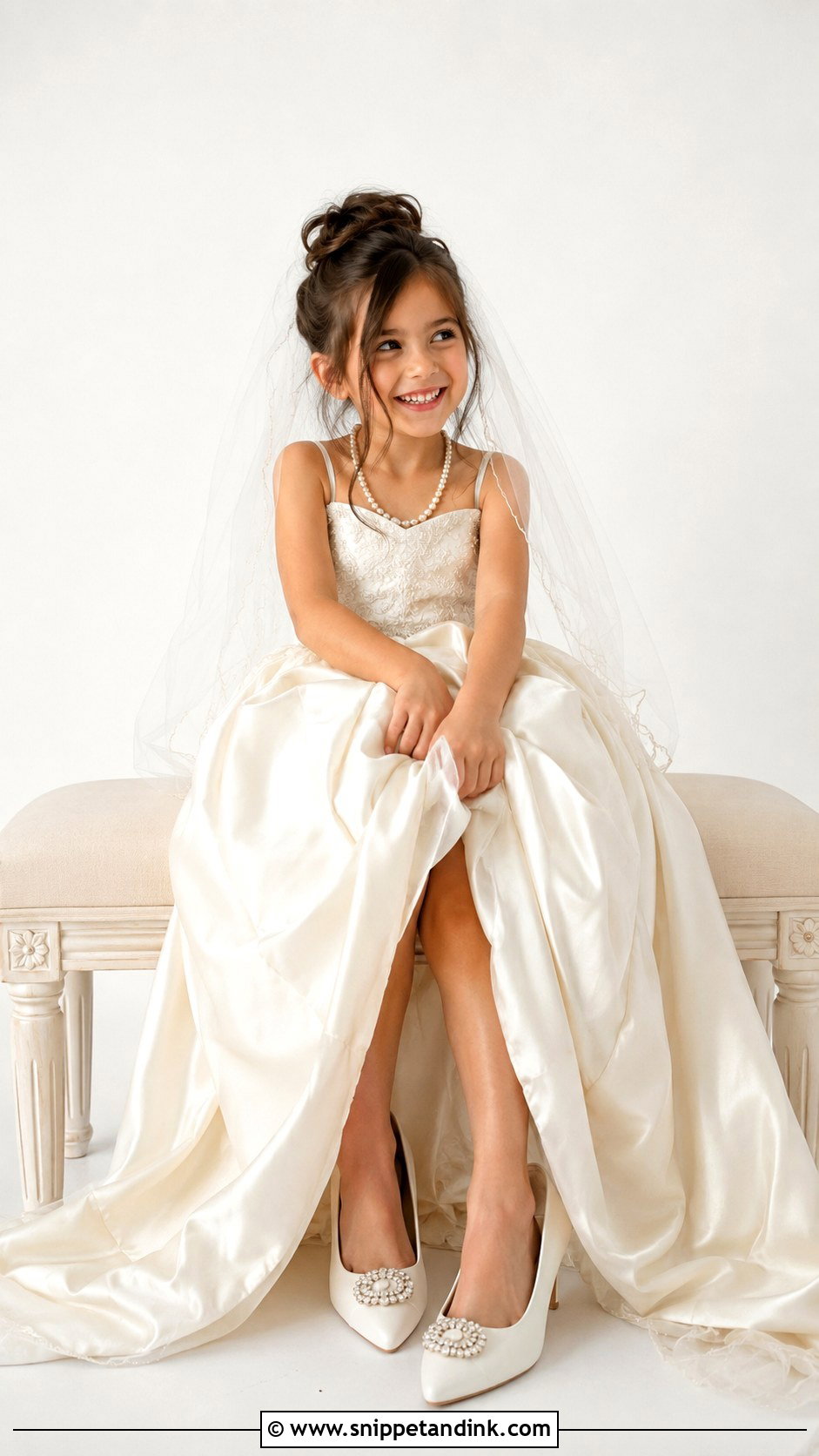
Peekaboo through the veil is a game, and children play it far better than they pose. Get a full-length frame of the whole outfit first, then bring one layer of tulle loosely across in front of her, never close over her nose or mouth. Let her hide and peek out at you. Tulle can go dull and grey in poor light, so this one needs a bright window or a big soft studio light. Move in close for the smile behind the net. The veil should frame her face, not swallow it.
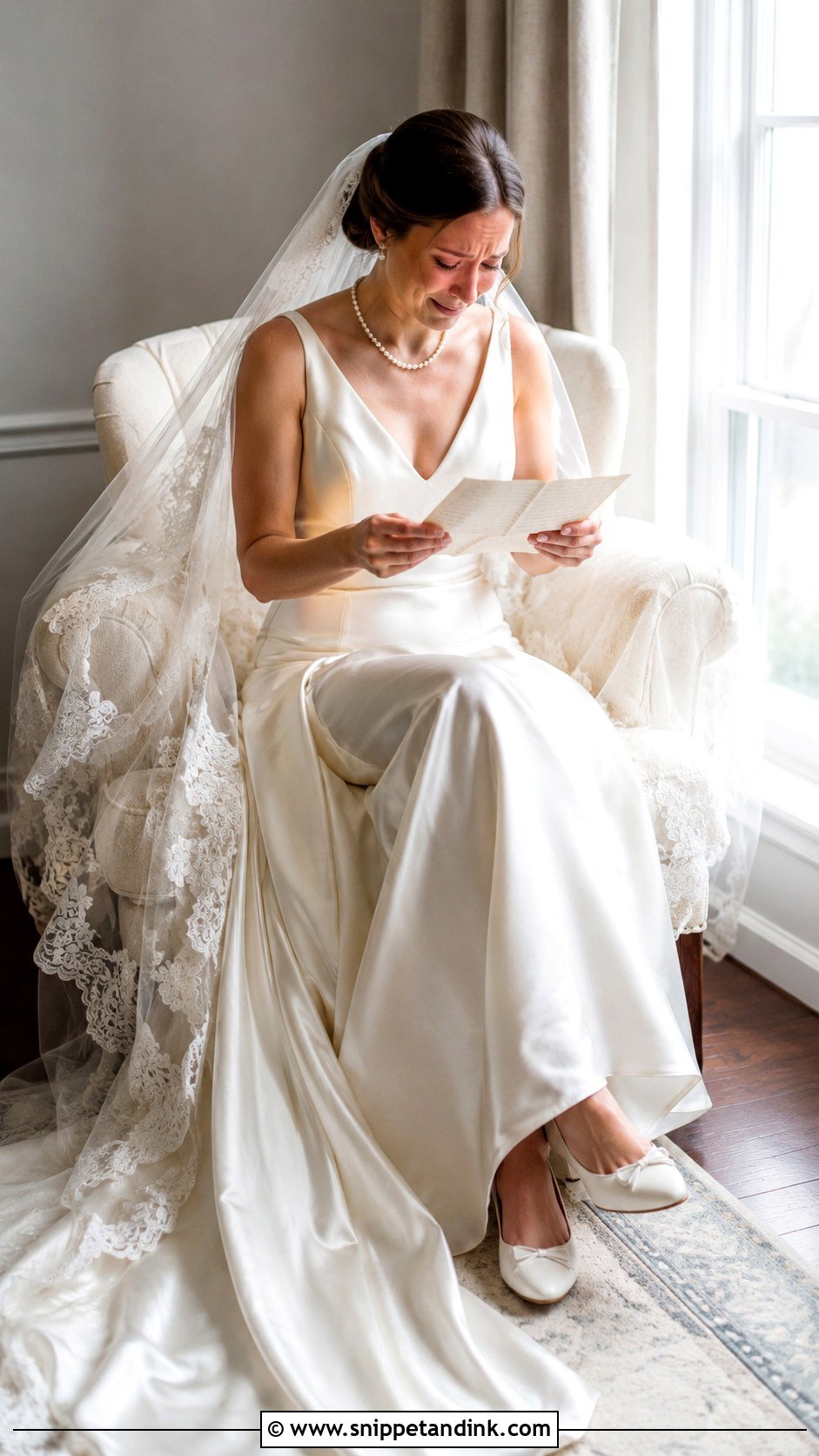
19. Daughter Reading a Letter From Mom
A letter from Mom gives the session an emotional anchor and leaves a keepsake behind. Write a short note about the gown, your hopes for her or simply what she means to you. Seat her by a bright window with the skirt arranged and the veil behind her shoulders. Older girls can read it themselves; younger ones can hold it while Mom reads aloud, and that reaction is worth waiting for. Plain stationery photographs best. Afterwards, keep the original letter in an acid-free envelope with the prints.
20. Daughter Recreating Mom’s Wedding Portrait
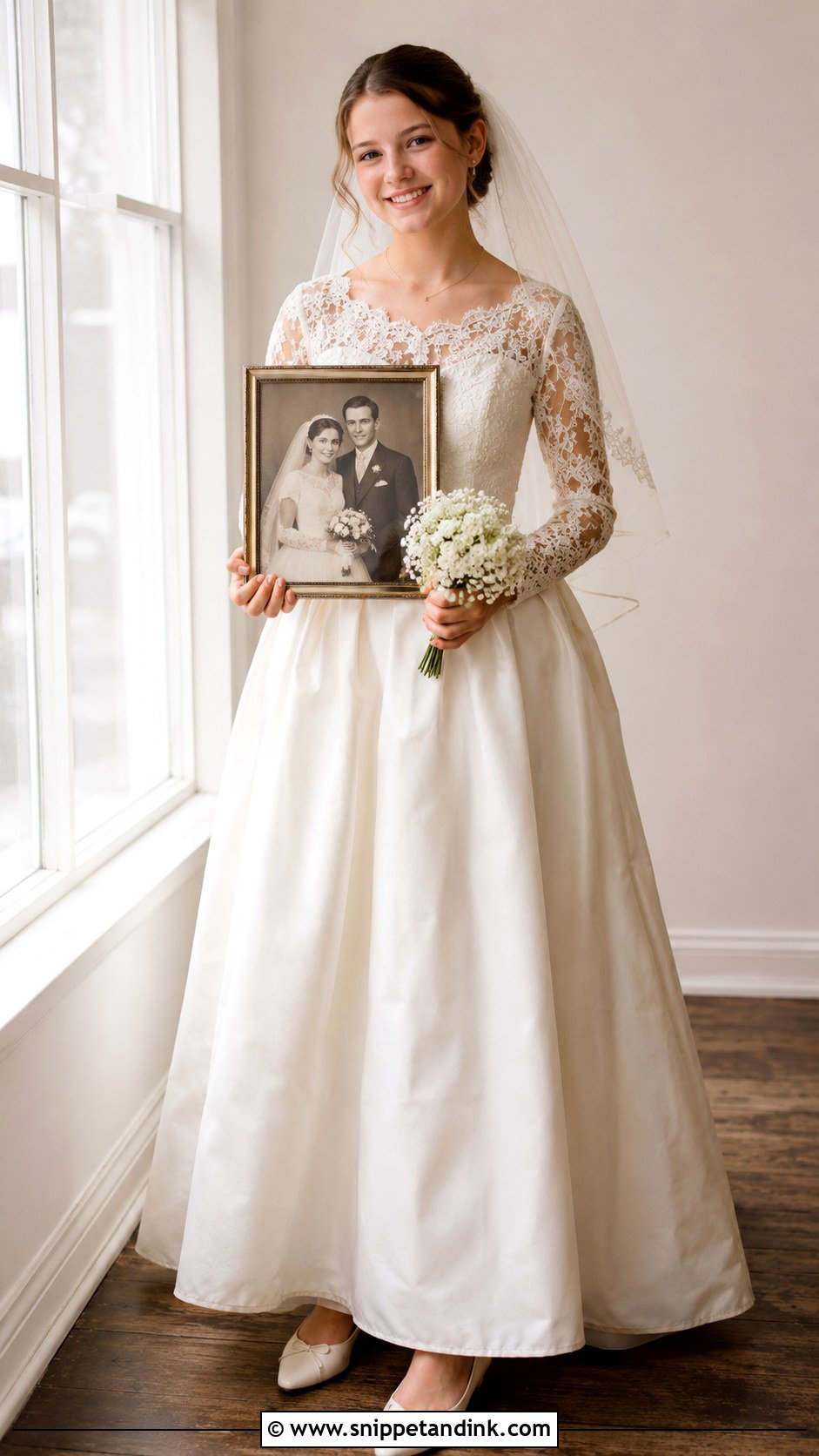
Recreating one of Mom’s bridal portraits is the shot most families frame. Pick a pose she can copy without strain, holding a bouquet, standing at a window or glancing over a shoulder. I bring the original on my phone and match the composition, the veil placement and roughly the camera height, but I don’t chase exactness; a child’s version should look like a child’s. Swap heels for flats or hide bare feet under the hem. Then photograph her holding the original. Printed side by side, the pair often becomes something to redo when she is older.
Exposing Old White Fabric Without Losing the Lace
White is the hardest thing to photograph well, and an aged gown adds a second problem: it usually isn’t white anymore. Cameras pushed to make it bright white turn faded ivory into grey, and over-exposing blows the lace into a blank shape with no detail.
- Watch the highlights, not the overall brightness. If your camera has highlight warnings, back off until the lace stops blinking.
- Set white balance for the skin, then let the dress be whatever shade it truly is. Correcting an ivory gown to pure white makes a child look ill.
- Use an aperture around f/2.8 to f/4 for a single child. Wider than that and the veil or skirt edge falls out of focus.
- Shoot in raw if you can; recovering detail in a white skirt is much easier from a raw file.
- Keep a white reflector or a sheet on the shadow side to lift her face without adding flash.
Phone cameras can do this too. Tap on the dress to set focus and exposure, then drag the brightness down a touch so the fabric keeps its texture.
One Gown, Two Generations and a Very Small Model
The pictures that last show the dress and the girl wearing it, not a child trying to be a bride. Plan around her age and patience rather than a shot list. A mirror, an album, a framed photo or a letter gives her something to do without cluttering the scene. Use hidden clips, never exposed pins, keep her in flat shoes when she’s moving, and choose soft daylight against a plain background. One portrait or a full album, it all turns a gown in a box into a record of your family.
You'll Like These Ideas:





Leave a Reply