
Castle cakes are closer to small building projects than to decorated cakes, and that’s both the appeal and the challenge. Done with the right colors and restraint, they bring height and storybook romance to a reception without looking like a child’s birthday. Ivory towers, sugar stonework, pearl borders, soft flowers, carved arches and a little gold are the usual ingredients. Some designs lean regal, others rustic or quietly modern. As you look through the ideas below, keep your venue, dress, flowers and guest count in mind, because those decide which castle will actually suit the room, and how much of it your baker can realistically build.
What a Turret Is Actually Made Of
The towers are the part couples ask about least and the part I spend the most time engineering. A real cake tower tall enough to look like a turret would collapse under its own weight, so most turrets are built from something lighter and firmer.
- Pressed rice cereal treats, shaped and covered in fondant. Edible and light, my usual choice for chunky towers.
- Gum paste or fondant cones and roofs, made days or weeks ahead and dried hard. Technically edible, but no one enjoys eating them.
- Styrofoam dummies, covered to match. Not edible at all, but they let me build height without weight.
- Cake pieces on their own boards, for short, wide towers only, supported by dowels like any other tier.
This matters for two reasons. First, servings: the turrets add drama but very few portions, so a castle that looks like it feeds two hundred may feed far fewer. Second, safety at the table. Anything inedible, including dowels, rods and wired pieces, has to be removed before cutting, and I always give the caterer a quick list of what comes off.
1. Castle Wedding Cake With Turrets
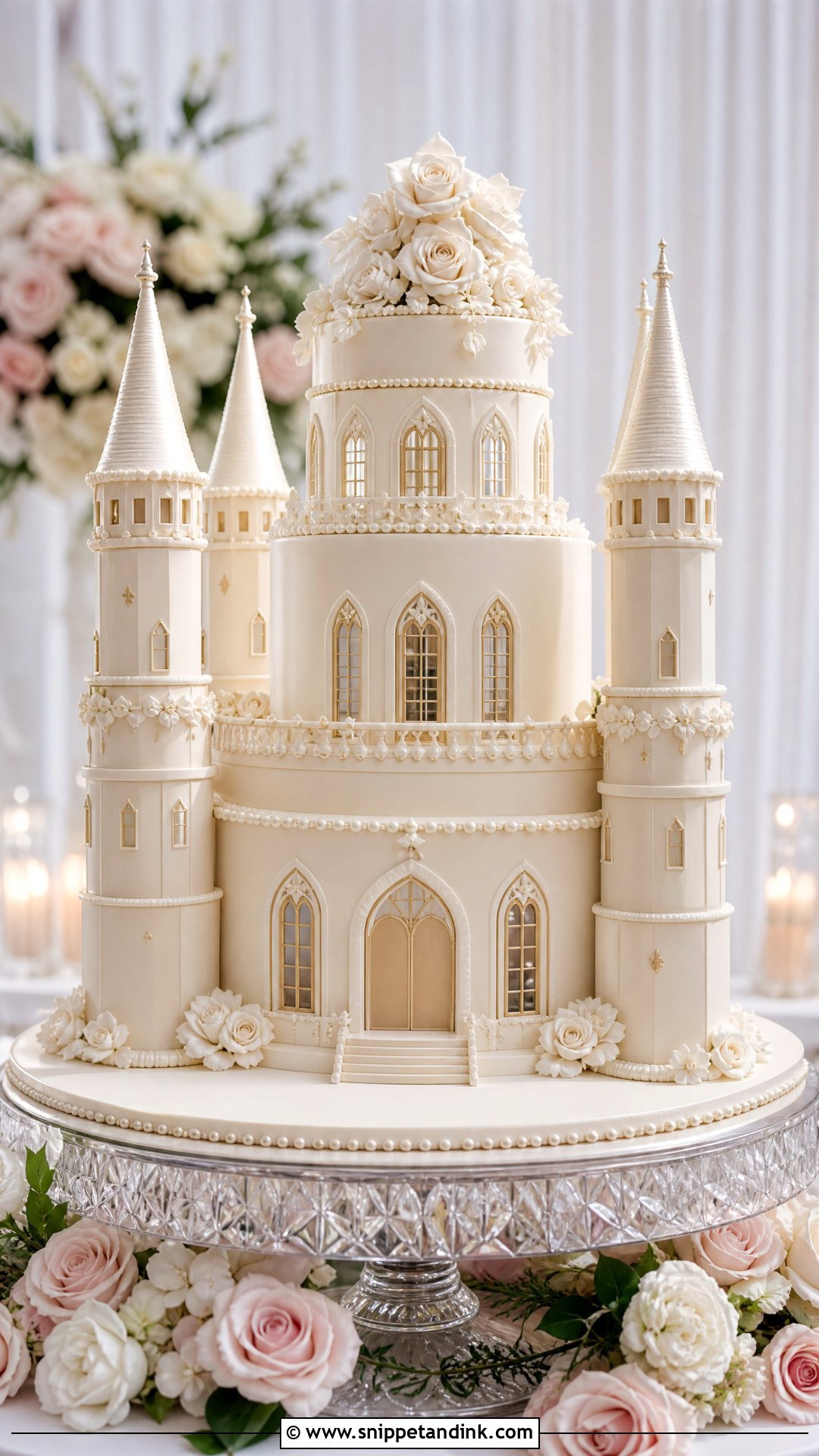
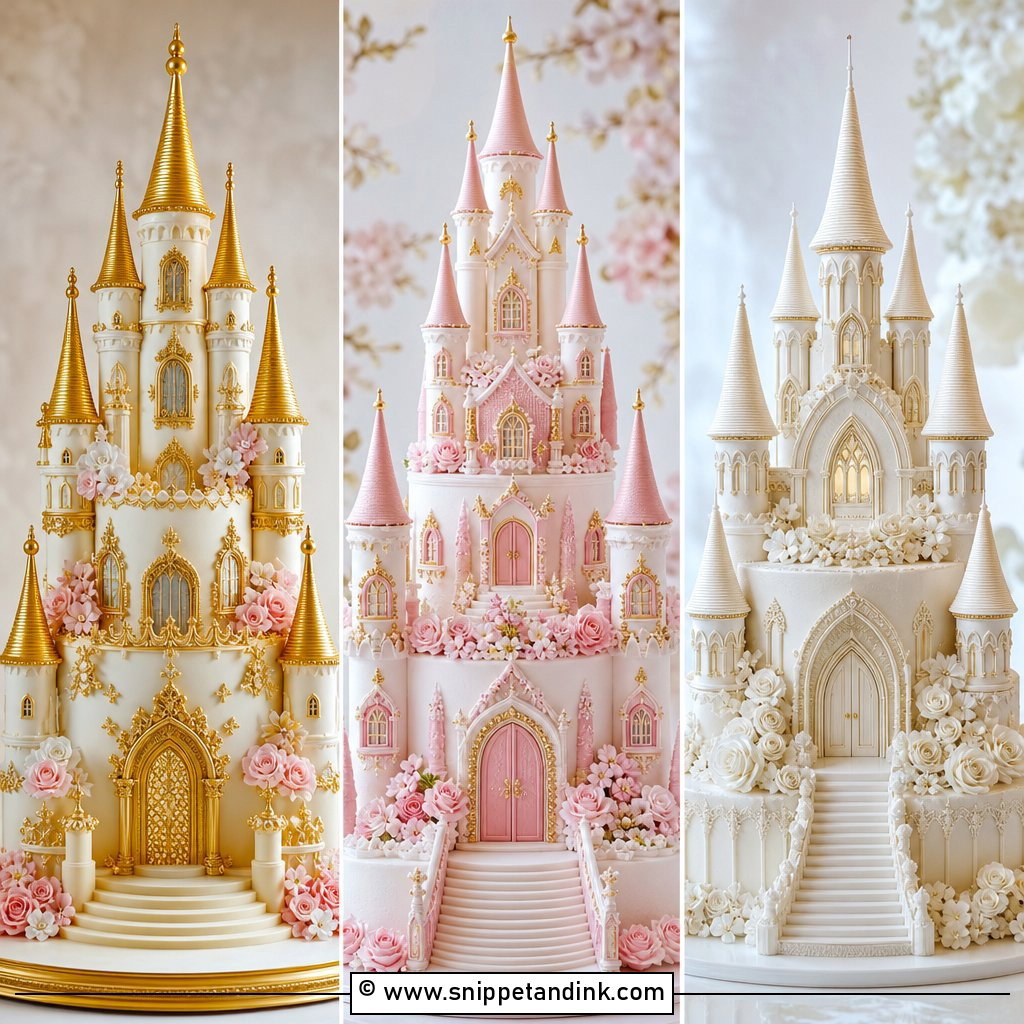
Turrets are what most couples picture, and they’re what turns stacked tiers into architecture. On a castle wedding cake with turrets, I keep the base tiers smooth and place the towers in balanced corners, since crowded turrets look accidental rather than planned. Ivory fondant is the safe bridal choice; blush, champagne or pale blue bring gentle color. Edible pearl borders, little arched windows and fine piping around the tower tops finish it. The one thing I plan before anything else is how each turret is anchored, because a tower that isn’t doweled into the tier below will lean by the end of the night.
2. White Castle Wedding Cake
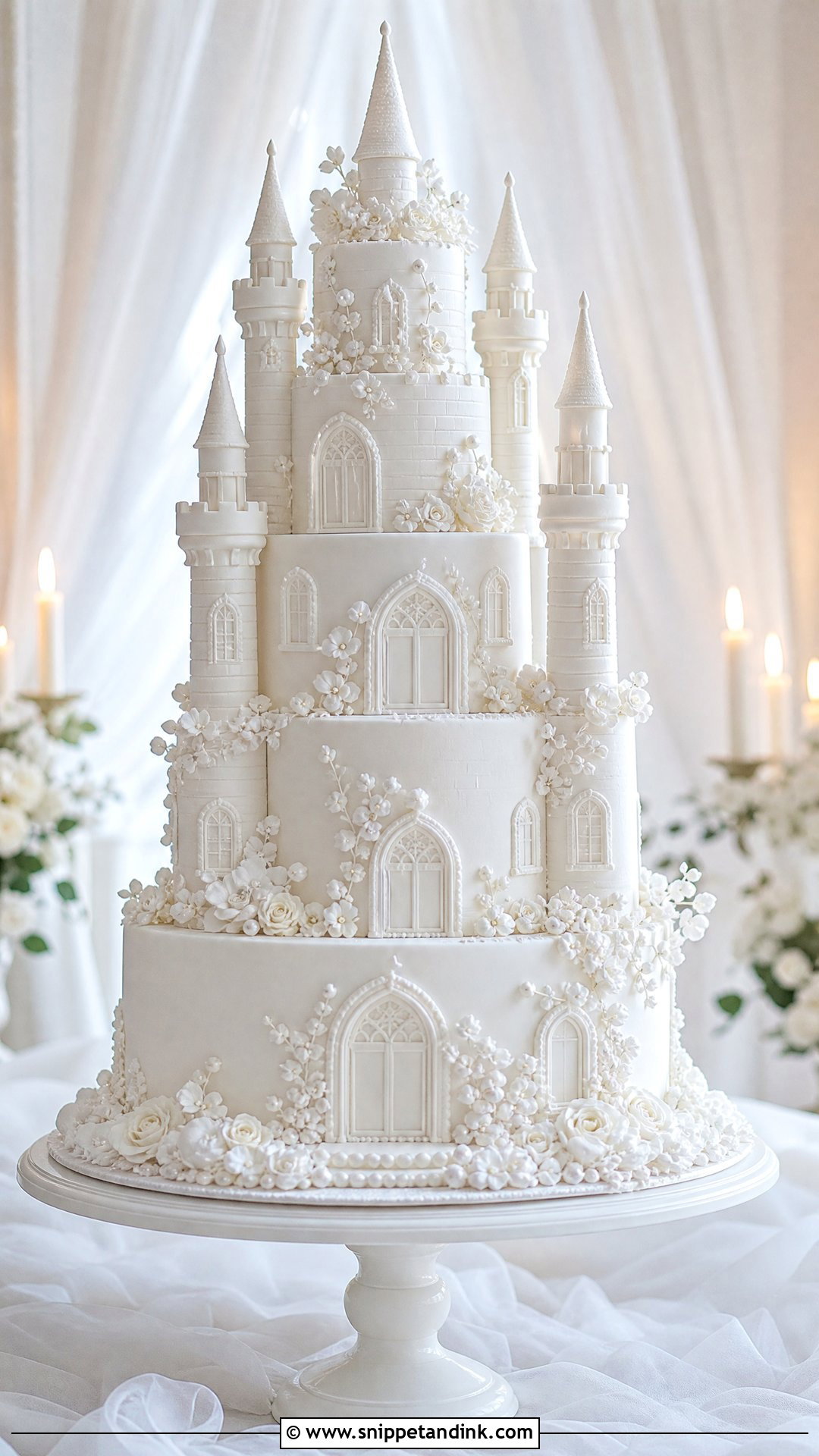
All-white castles look clean and match almost any palette, and they keep the theme bridal rather than playful. With no color to rely on, texture has to do the work. I mix smooth fondant with piped stonework, lace panels, pearl trim or raised royal icing scrolls, so light catches each edge differently. A few fresh white roses, sugar flowers or a small monogram crest make it personal. It’s my first suggestion for formal weddings, because you get the fantasy shape while the cake still reads as refined.
3. Gold Castle Wedding Cake
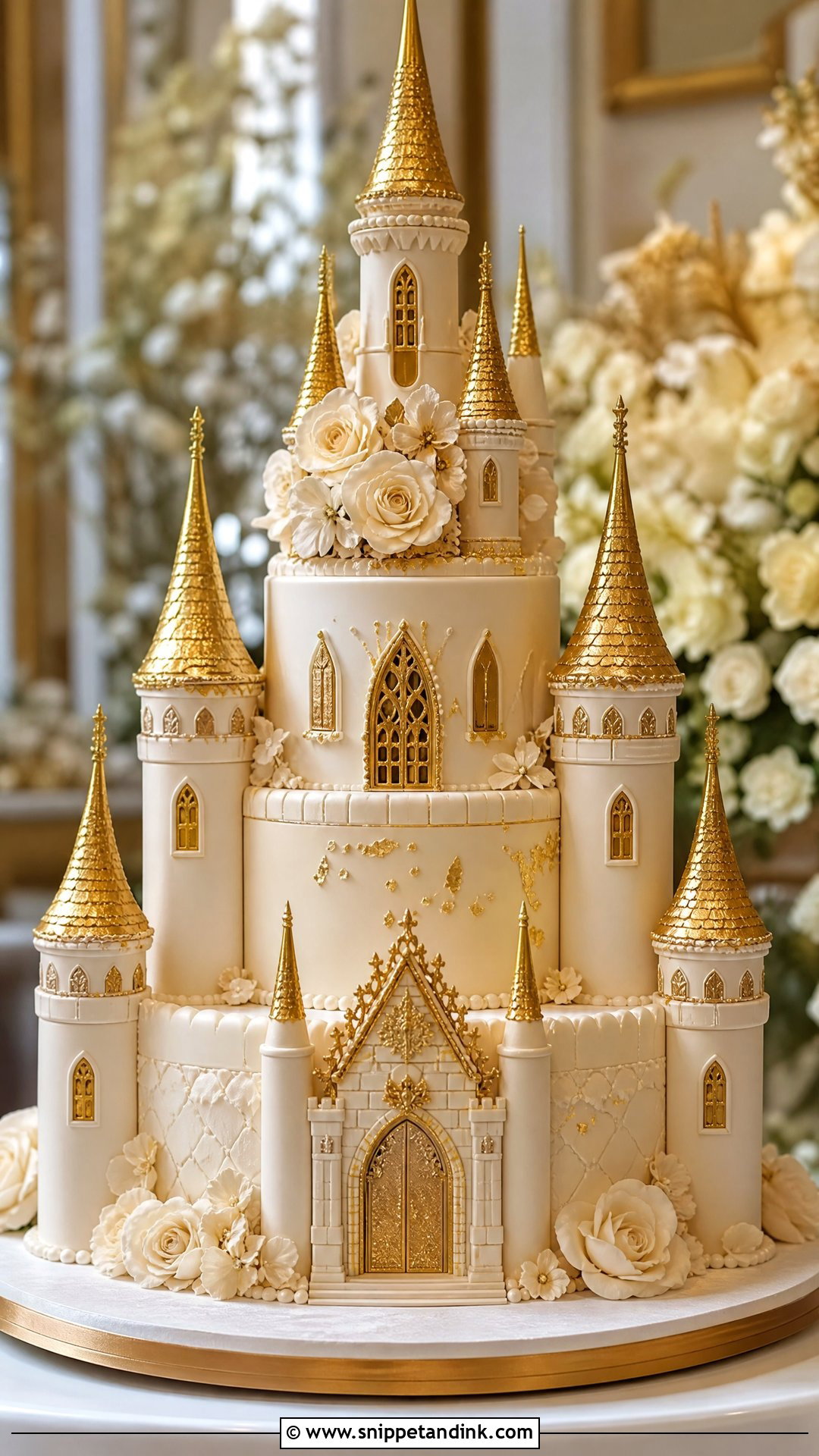
Gold gives a castle royal weight, but only in small doses. A gold castle wedding cake I’d design would have ivory tiers with brushed gold roofs, gold window frames and thin metallic borders, plus a few soft broken patches of edible gold leaf if you want it richer. Painted gold needs a dry surface, so I apply it to fondant or a gum paste piece rather than soft buttercream, where it smears. It glows under candlelight and suits champagne flowers and crystal stands. Inside, vanilla bean, almond or white chocolate keeps the flavor as light as the look.
4. Pink Castle Wedding Cake
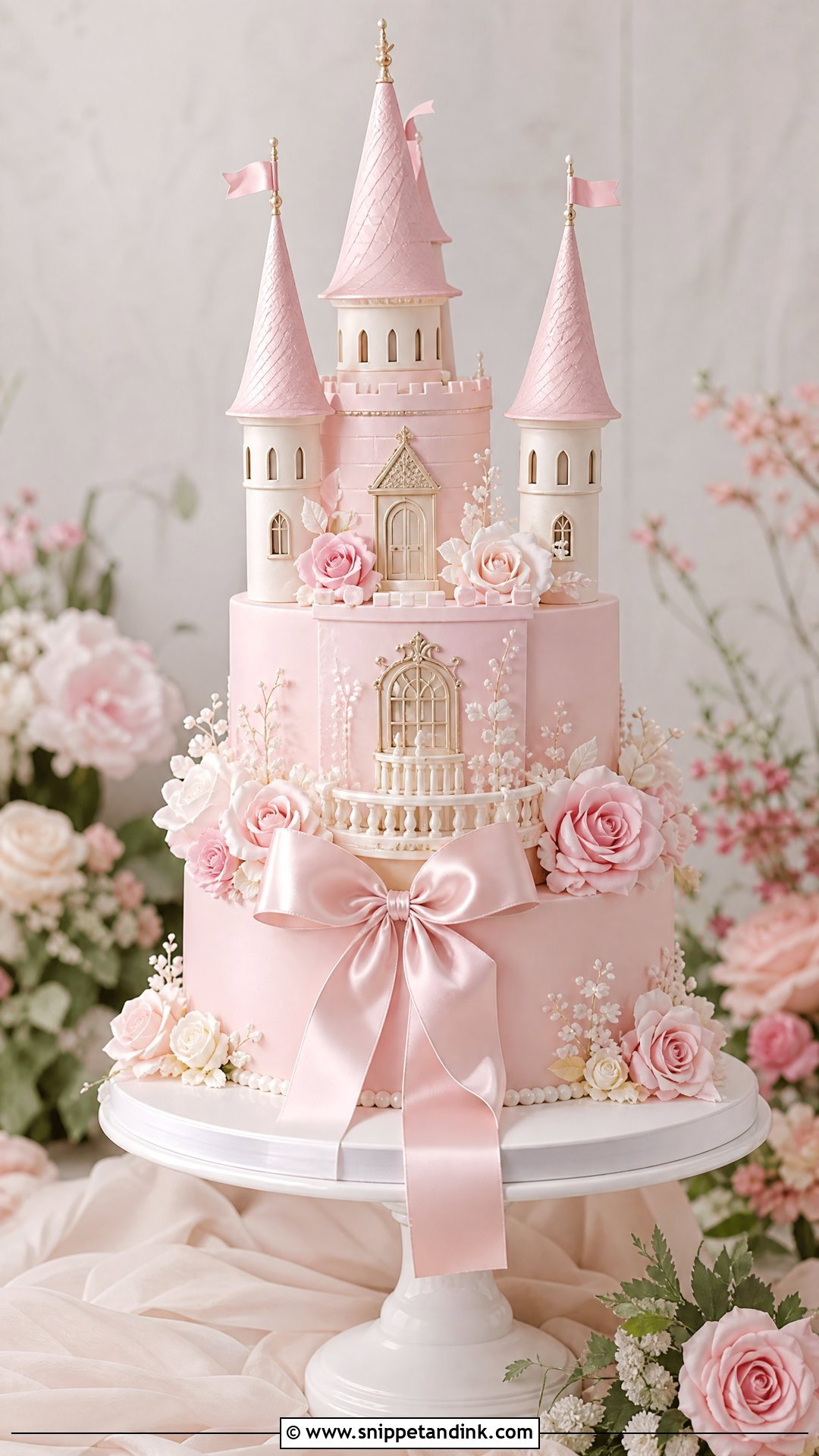
Pink castles can look romantic or juvenile, and the shade decides which. Dusty rose, blush, mauve and pale petal pink work for weddings; bright candy pink almost never does. I use it on the lower tiers or the roofs and balance it with ivory fondant and white flowers. Sugar roses, pearl beads and tiny arched doors keep it sweet without tipping into a party cake. Spring weddings and garden venues suit it most, with a satin ribbon at each tier base. Pink fondant fades under strong light over a few hours, so keep this cake out of direct sun.
5. Blue Castle Wedding Cake
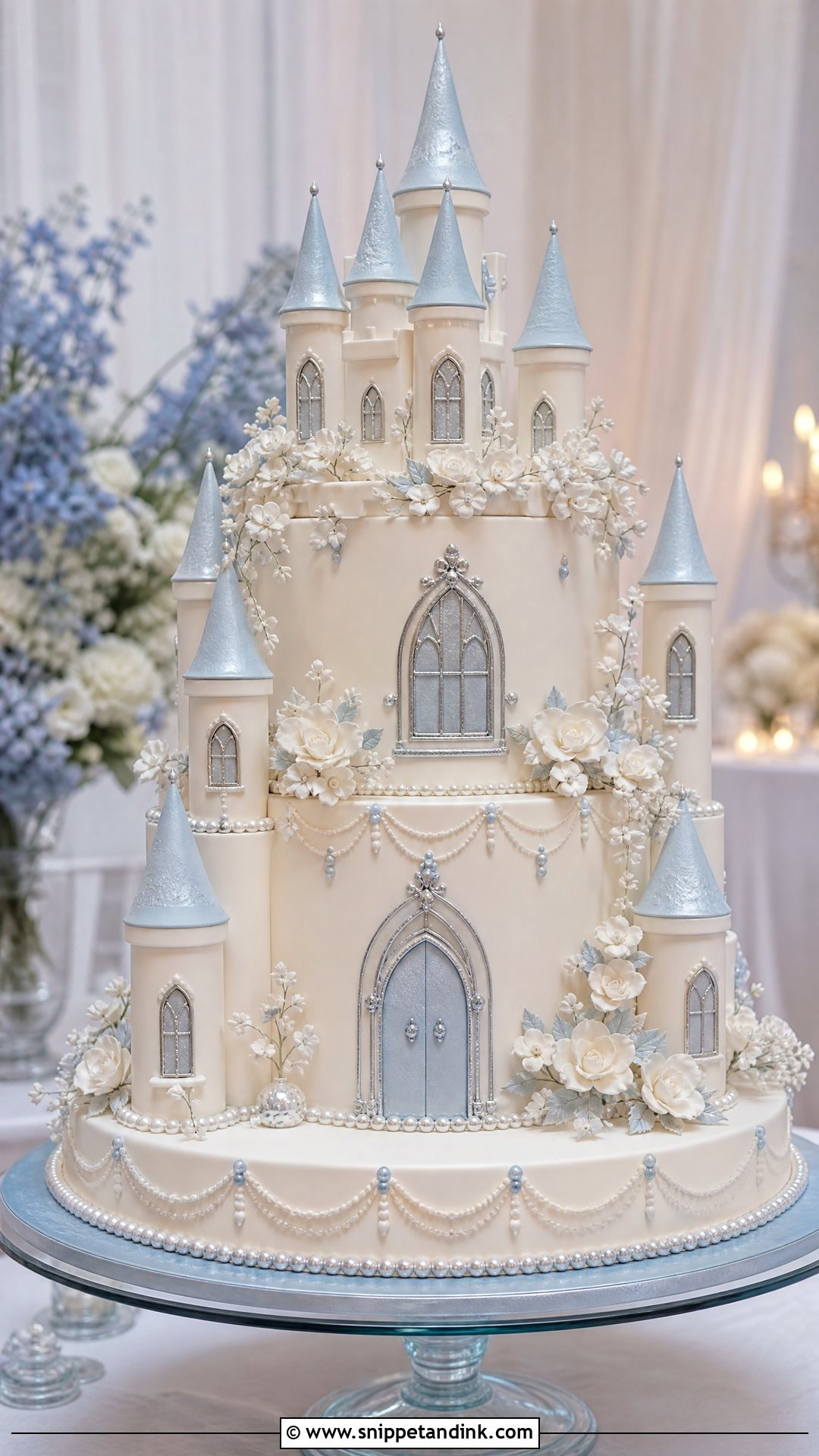
Blue gives a castle a calm, slightly magical feel. Pale, powder and dusty blue are the wedding-friendly shades, and they sit well with ivory, silver and white flowers. I put the color on the tower roofs, in watercolor fondant panels or in a soft ombre down the tiers, leaving the structure clean so the color leads. Silver pearl piping outlines the windows and arches without shouting. Winter weddings, seaside venues and blue bridesmaid dresses all suit it, and vanilla, lemon or almond cake fit the cool palette.
6. Fairytale Castle Wedding Cake
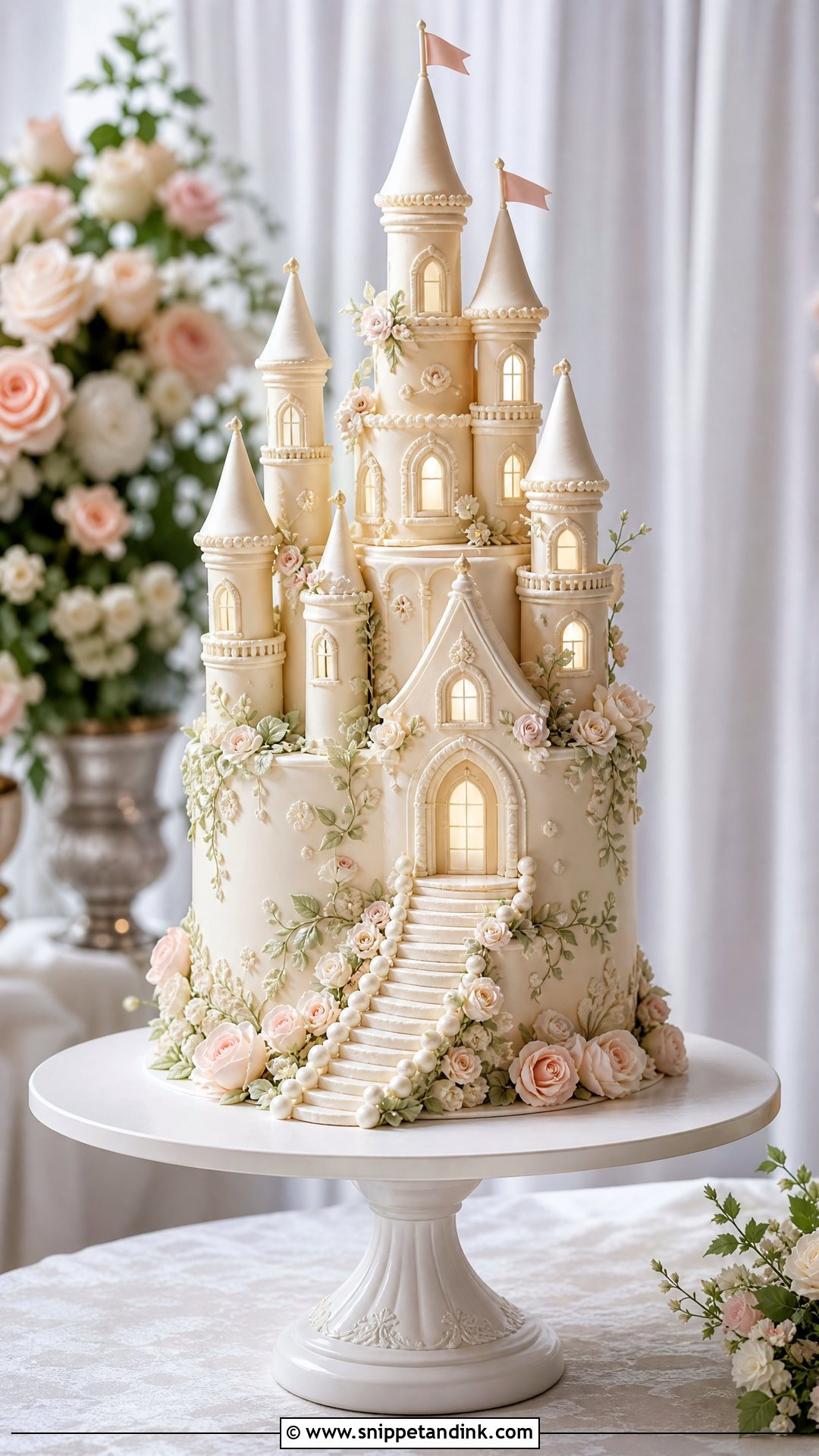
Storybook castles live in the details: rounded towers, tiny balconies, arched windows, pearl paths and sugar vines climbing the tiers. Because there’s so much going on, I hold the palette to soft shades, usually ivory, blush, champagne and sage together. The cake can be tall and dramatic, but every detail should be delicate. Fine piping, edible flowers and lightly textured fondant build depth without heaviness. Expect this one to take the most hours of any castle design, since every balcony and vine is made by hand.
7. Cinderella Castle Wedding Cake
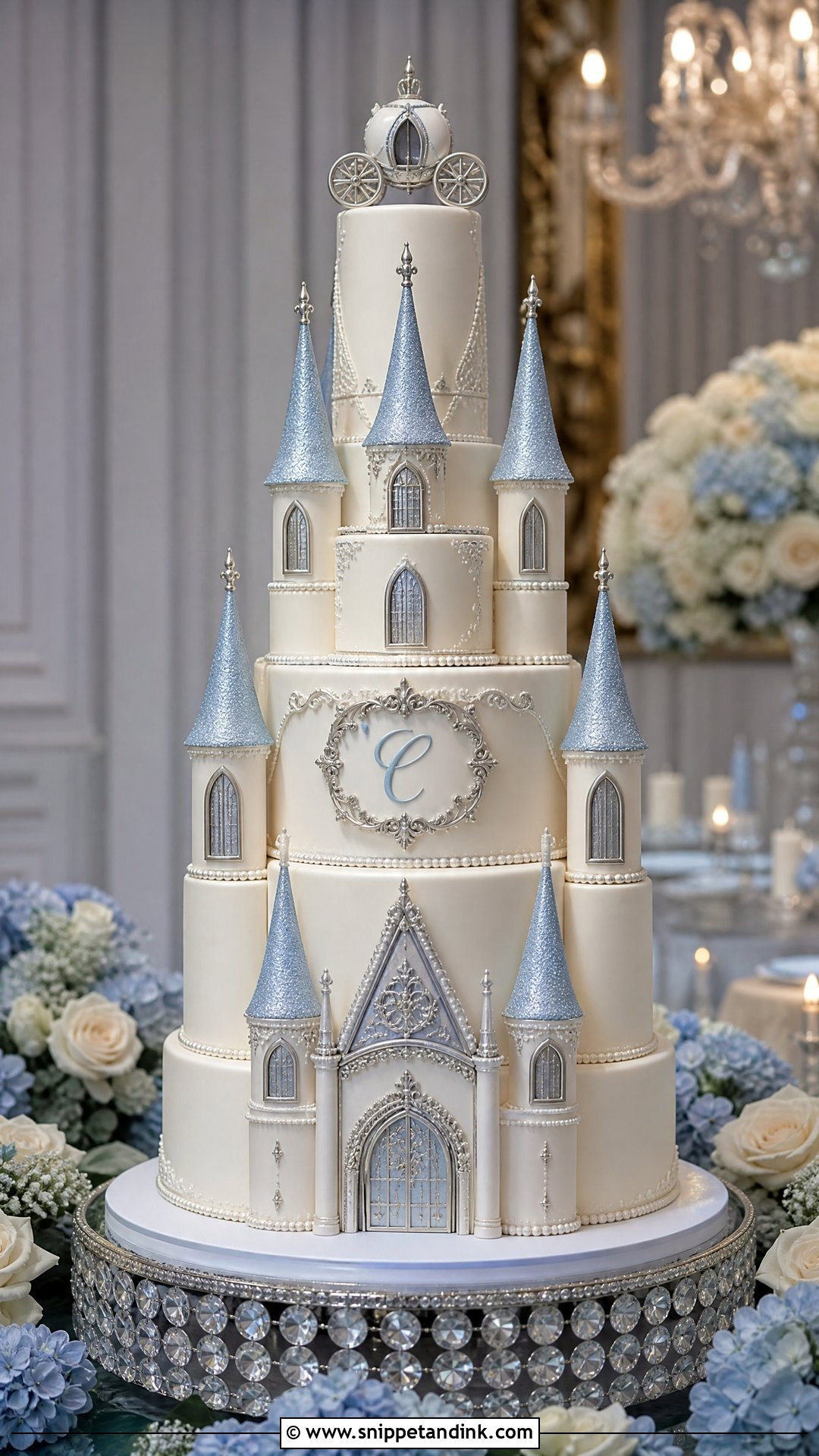
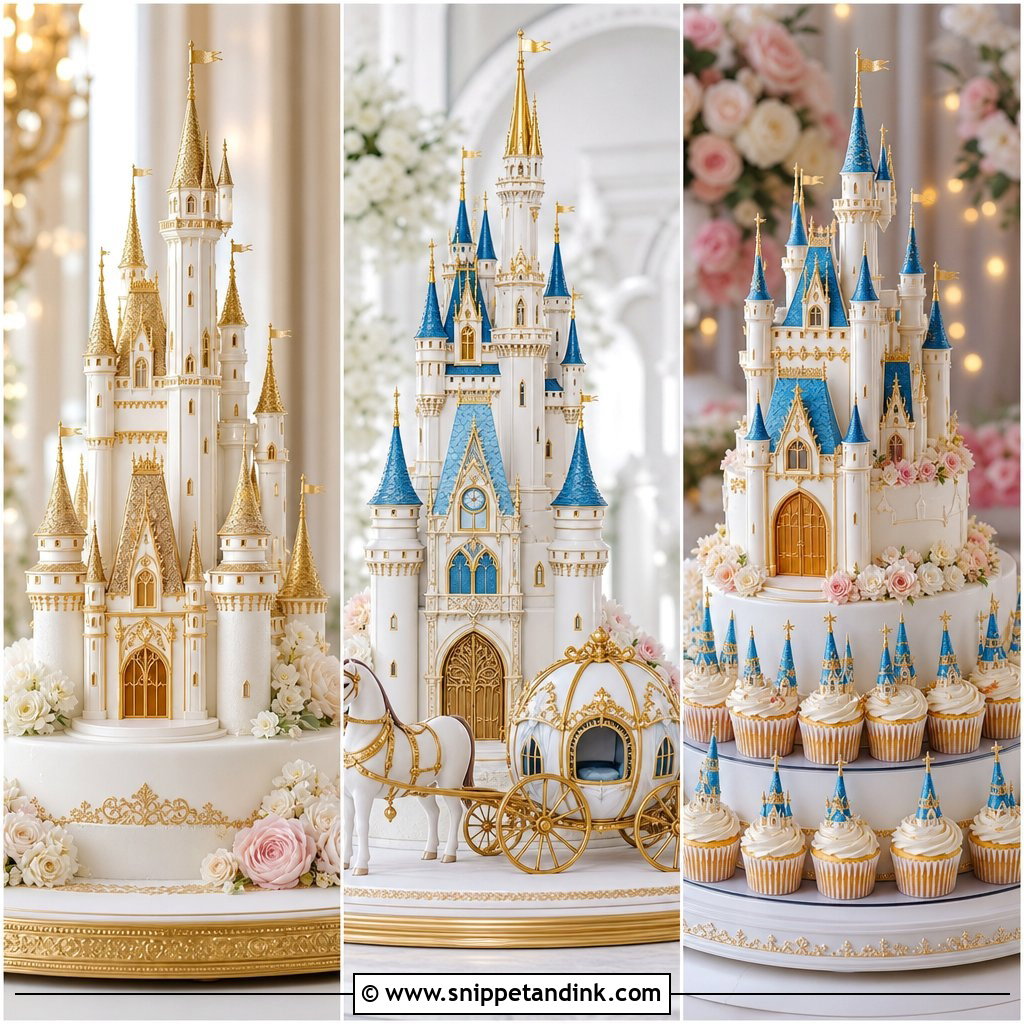
Pale blue, ivory, silver and crystal-like accents are what make a Cinderella castle wedding cake recognizable. Tall pointed turrets give the silhouette, and smooth fondant keeps it bridal. Sugar pumpkins or a carriage only belong if they’re small and subtle. Silver dragees, edible shimmer and pearl borders give a soft glow. I should mention that if you want the exact branded castle reproduced, many bakers will design an inspired version instead, so plan for that. Vanilla bean, white chocolate raspberry or lemon elderflower suit the pale palette.
8. Medieval Castle Wedding Cake
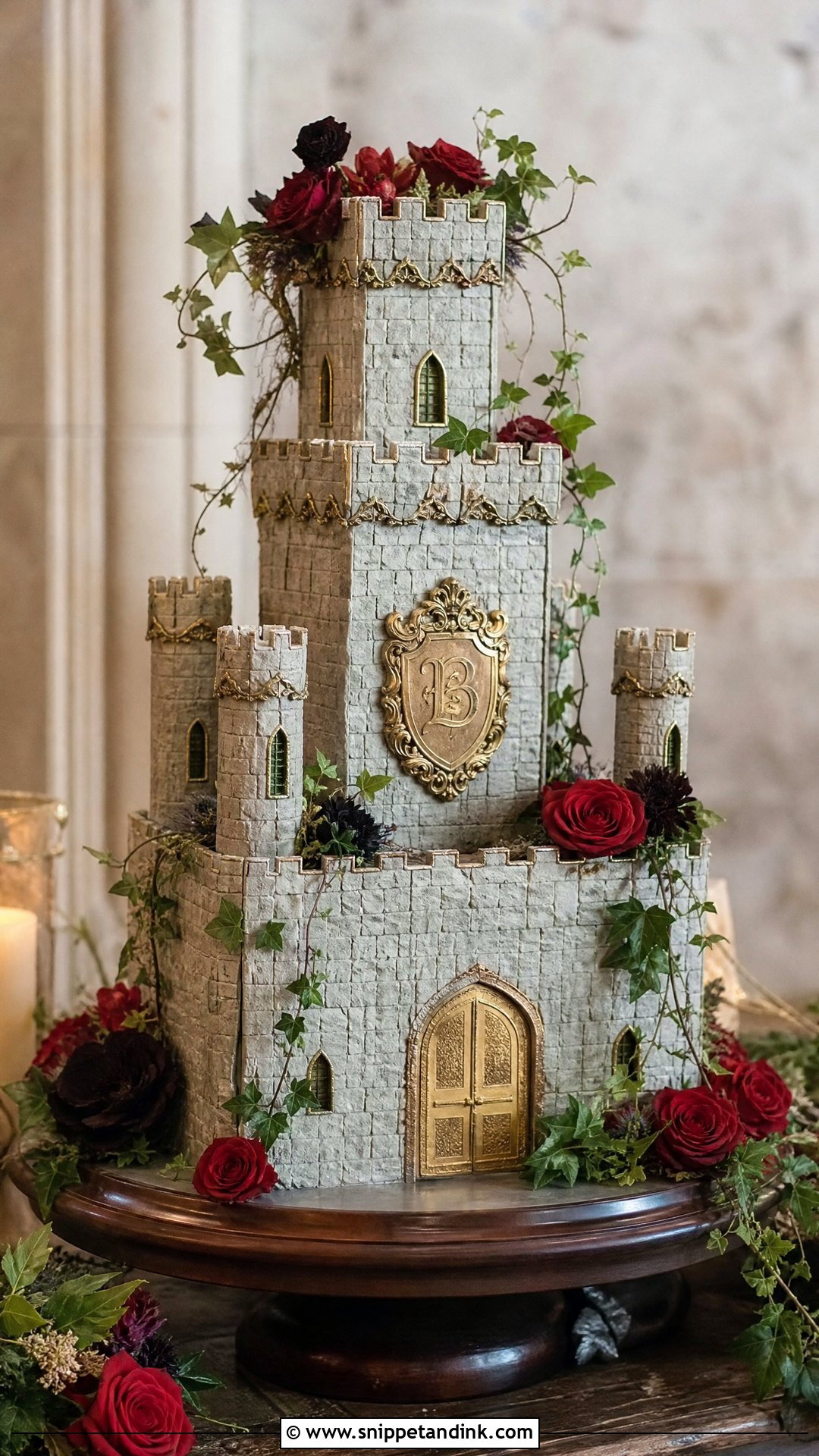
Medieval castles trade princess curves for stone texture, square towers, arched doors and grey or ivory shading. It’s the theme I’d suggest to couples who find the fairytale version too sweet. Textured buttercream can pass for stone, and fondant panels give stronger edges where you need them. Climbing greenery, deep red roses or a small edible crest add a regal finish. Historic venues, libraries and manor houses suit it. Inside, chocolate, spice or red velvet match the darker, moodier exterior.
9. Gothic Castle Wedding Cake
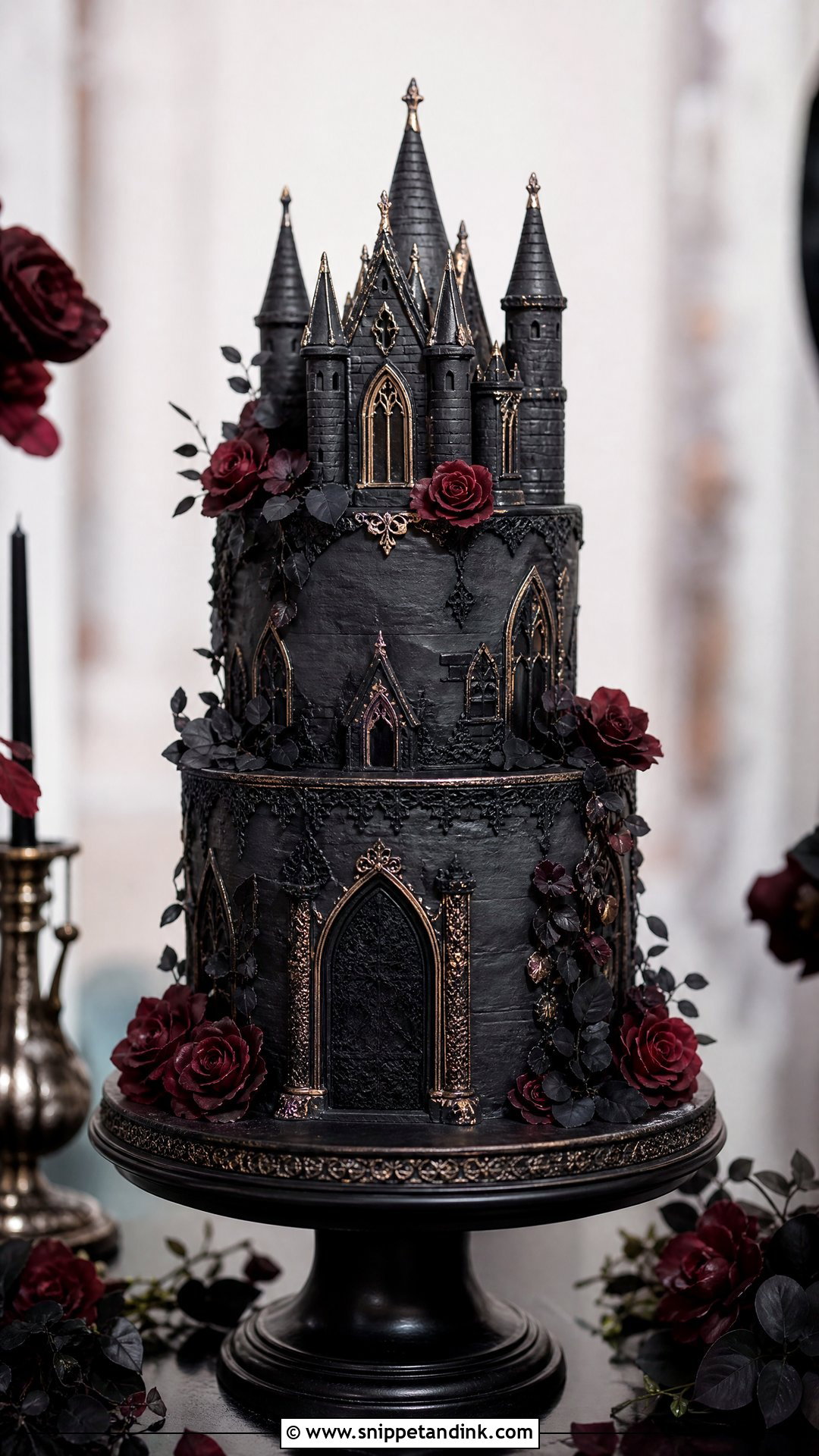
A gothic castle wedding cake is bold and grown-up. Black, charcoal, deep burgundy, ivory and antique gold set the mood; tall turrets, pointed arches and stonework complete it. I keep it romantic with dark sugar roses, gold trim and lace-like piping, and leave out anything spooky. Black fondant is worth discussing with your baker: it’s heavily colored, can stain lips and fingers, and shows every fingerprint, so many of us cover only the outer layer or use it on accents. Evening receptions and historic venues suit it, with chocolate ganache, black cocoa cake or red velvet inside.
10. Rustic Castle Wedding Cake
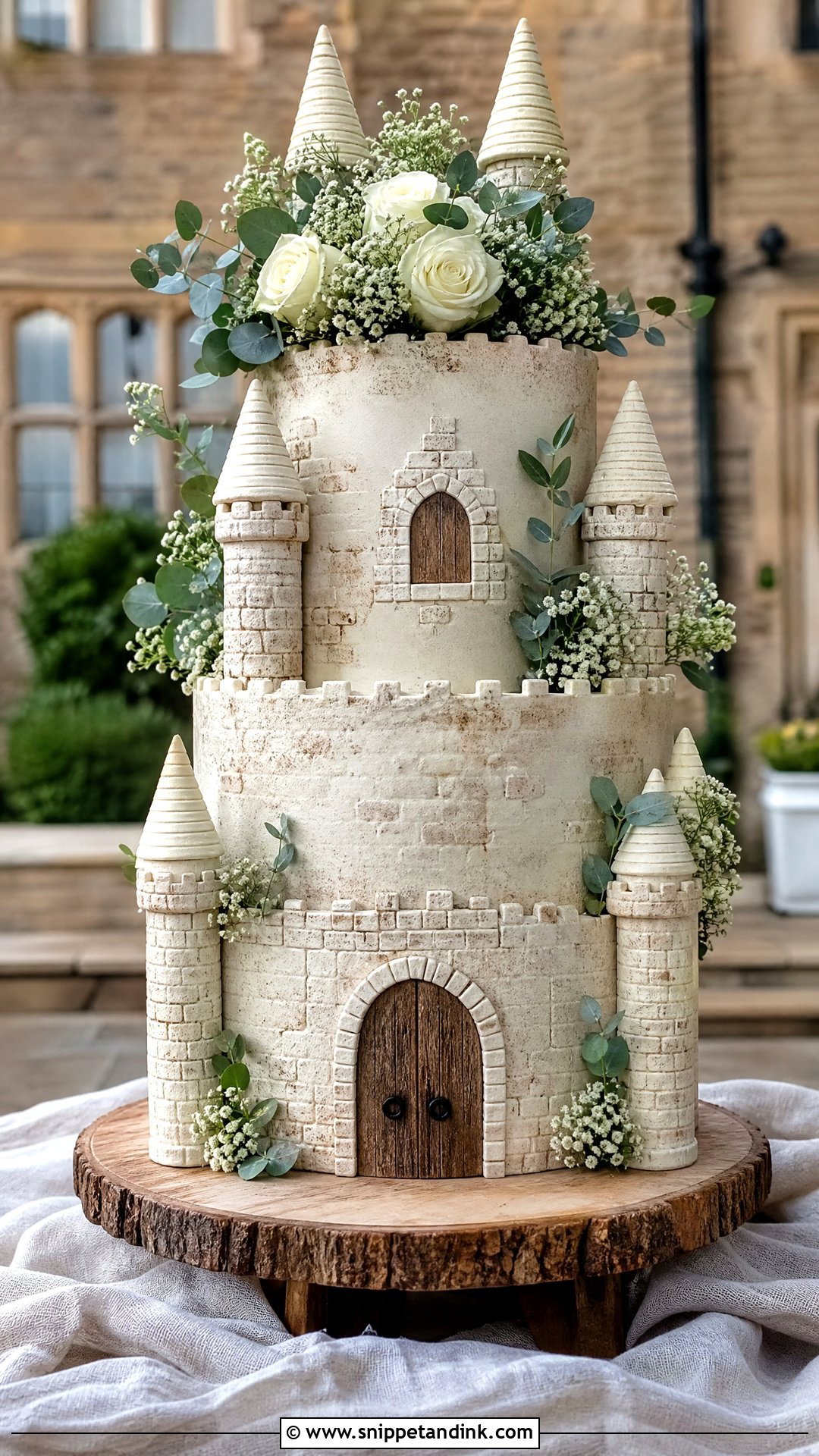
Rustic castles feel like a countryside estate rather than a palace. Lightly textured buttercream, stone-look panels and natural greenery replace polished fondant. The turrets can be ivory or warm beige, with small wood-effect doors and simple windows. Fresh herbs and white roses suit it, and if you want eucalyptus or baby’s breath, they need wrapped stems and a barrier, since neither is food-safe. Barn venues, outdoor estates and garden receptions are its natural home. Vanilla bean, honey almond, carrot or spice cake match the mood.
11. Floral Castle Wedding Cake
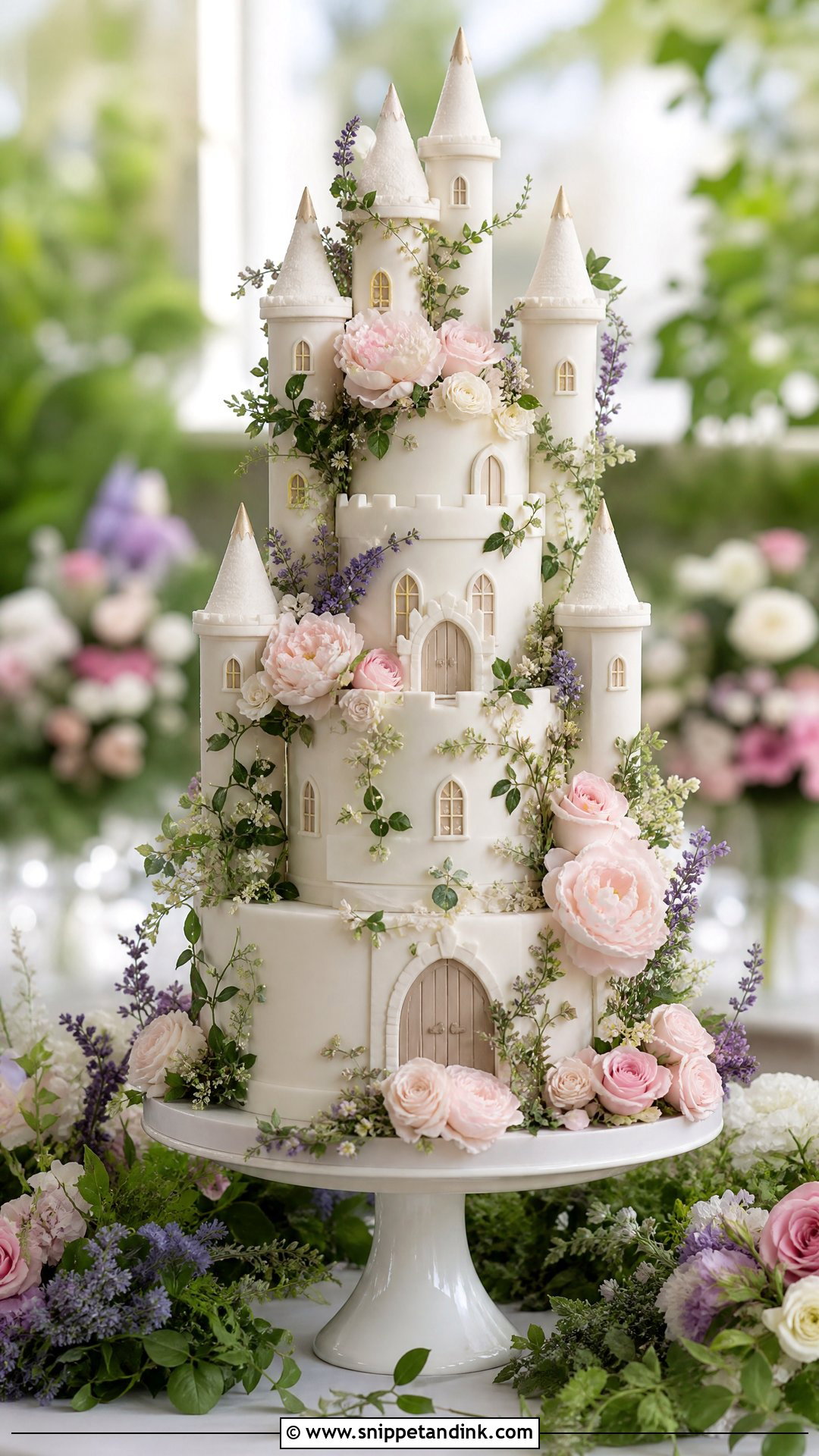
Flowers are the fastest way to soften a castle’s hard outline. They can frame the towers, trail down the tiers or circle the base like a garden. Sugar flowers give me full control; fresh flowers can match your bouquet. Either way, I place them in clusters so the windows, arches and doors still read, because a castle covered in blooms just looks like a flower cake. Blush roses, ivory peonies, lavender sprigs and greenery all suit it. Spring and summer weddings get the most from this one.
12. Castle Wedding Cake With Roses
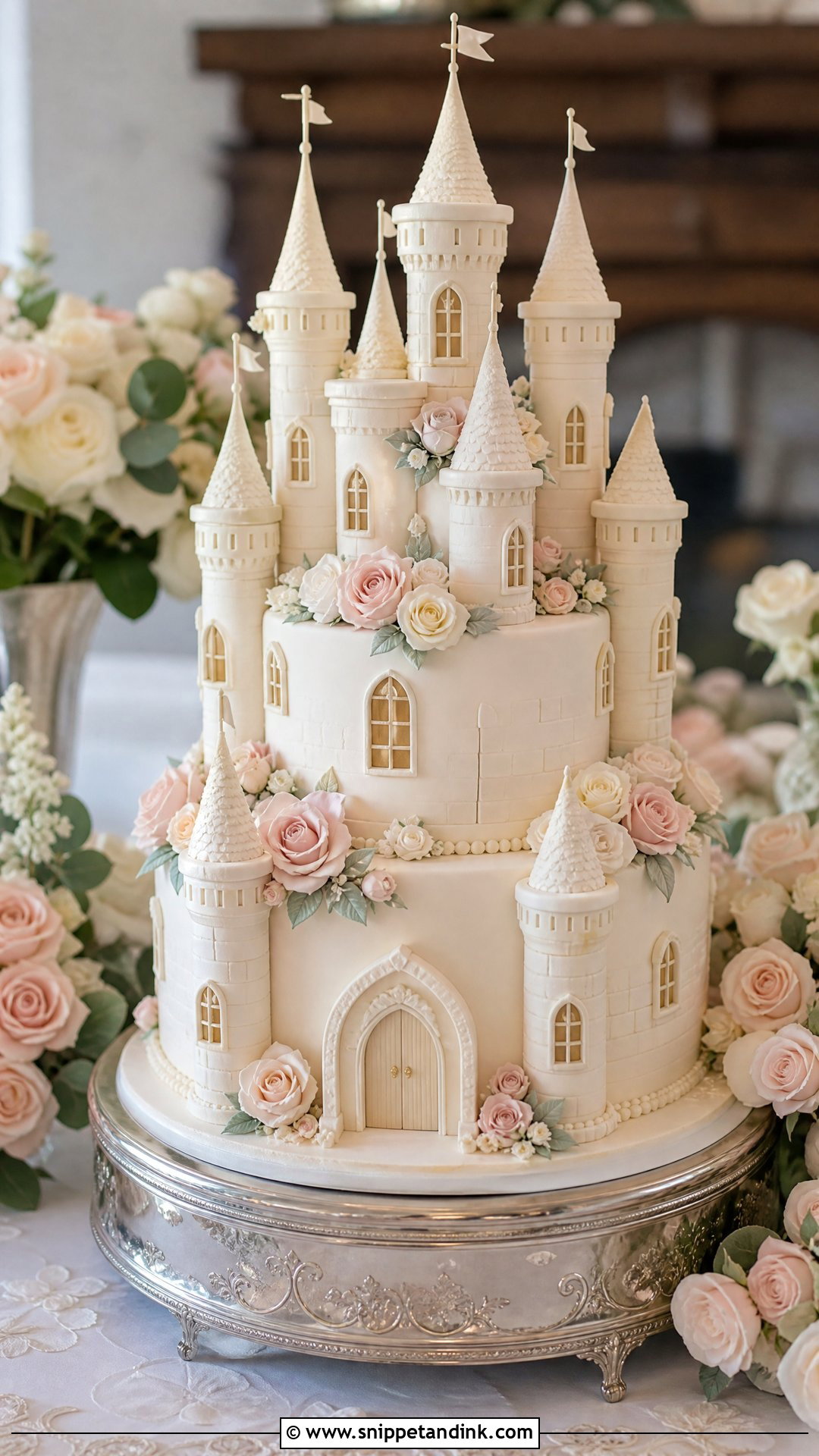
Roses soften towers and windows more naturally than any other flower. For a traditional cake, I’d do ivory fondant with white or blush sugar roses. For drama, red, burgundy, or dusty mauve roses against pale stone-textured tiers. I set them at the tower bases, along the tier edges and beside the main door, which balances the cake from every side. Rosewater buttercream or a raspberry rose filling can carry the theme inside. Go gently with rosewater, though; a little too much tastes like soap.
13. Castle Wedding Cake With Pearls
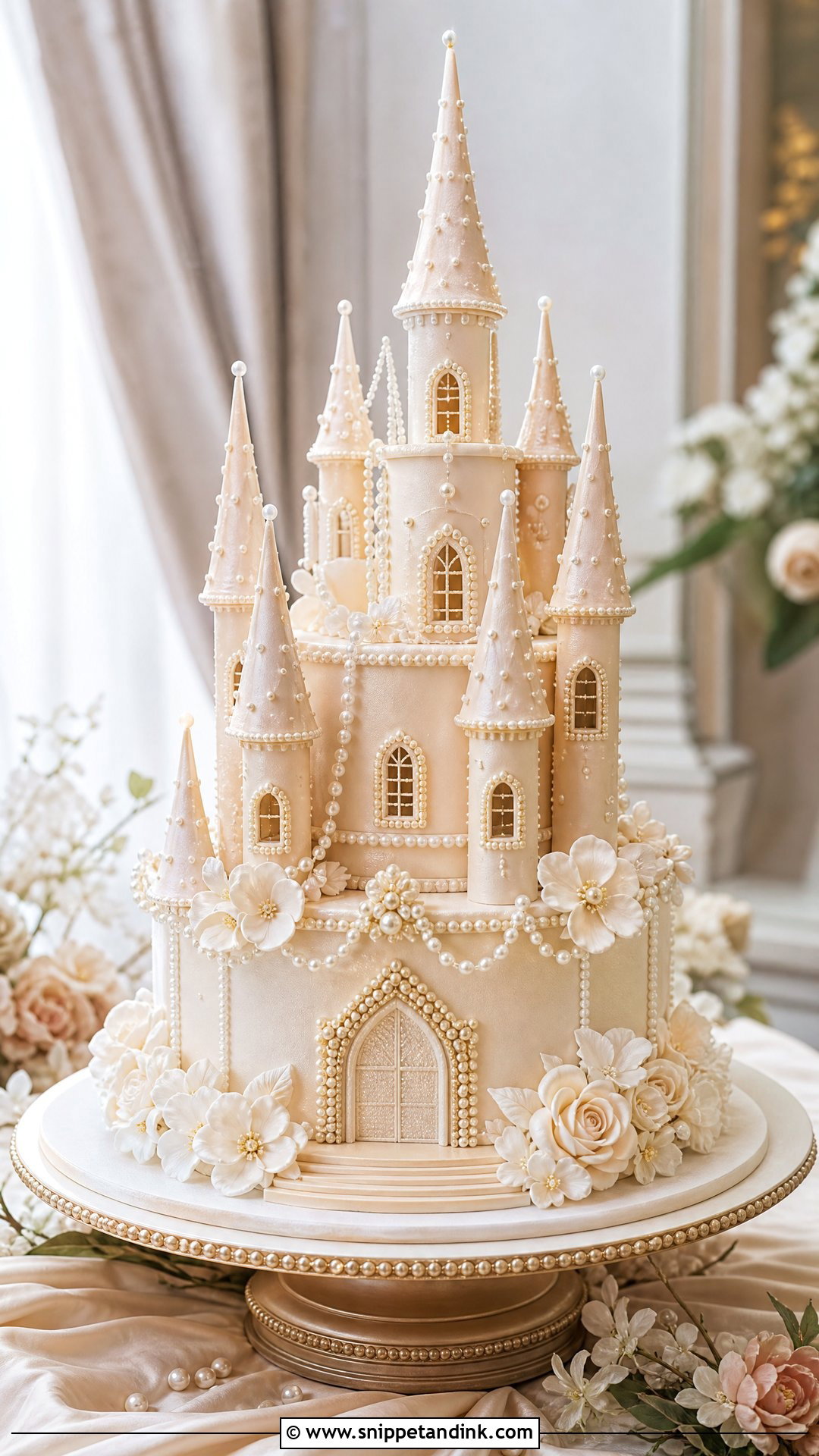
Pearls make a castle feel bridal instead of like a birthday cake. Edible pearls can outline windows, trace the roofs, frame tier borders and hang in fine strands. They sit best on ivory, champagne, blush or pale blue fondant. Placing them is slow work, each one set with a dot of edible glue, so the rest of the cake should stay simple and let the pearl work breathe. A few white sugar flowers or a small crest balance it. Classic weddings, church receptions and hotel ballrooms suit this soft royal look.
14. Castle Wedding Cake With Sugar Flowers
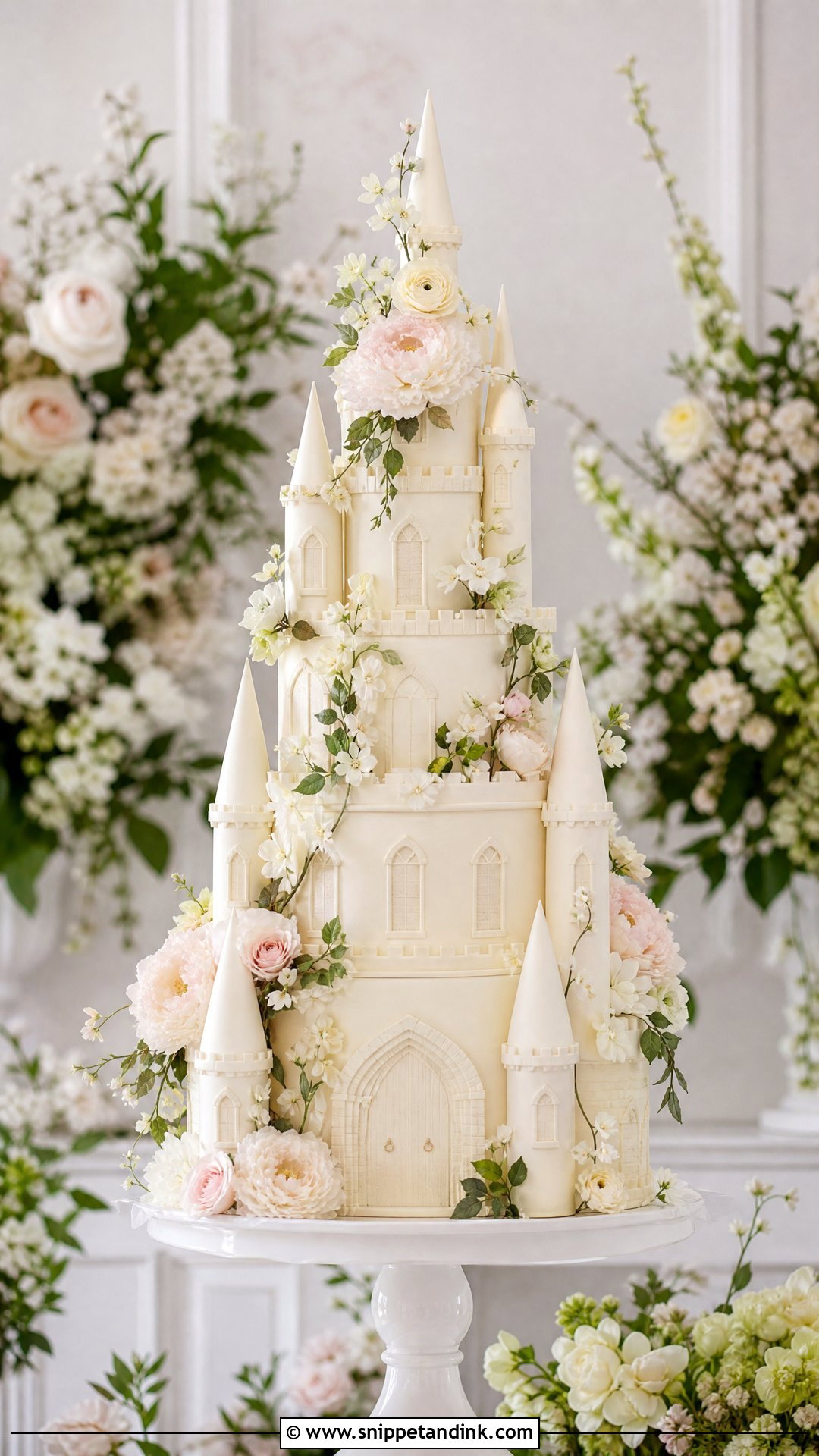
Sugar flowers give complete control over color, shape and placement, and they can be made weeks ahead and matched to your palette. I use them as a climbing garden around the walls or as clusters at each tier base. Roses, peonies, ranunculus, sweet peas and small blossoms all suit turrets. They also don’t wilt, which matters on a long reception day in a warm room. The trade-off is humidity: sugar flowers soften and droop in damp air, so they’re stored dry and placed on the day.

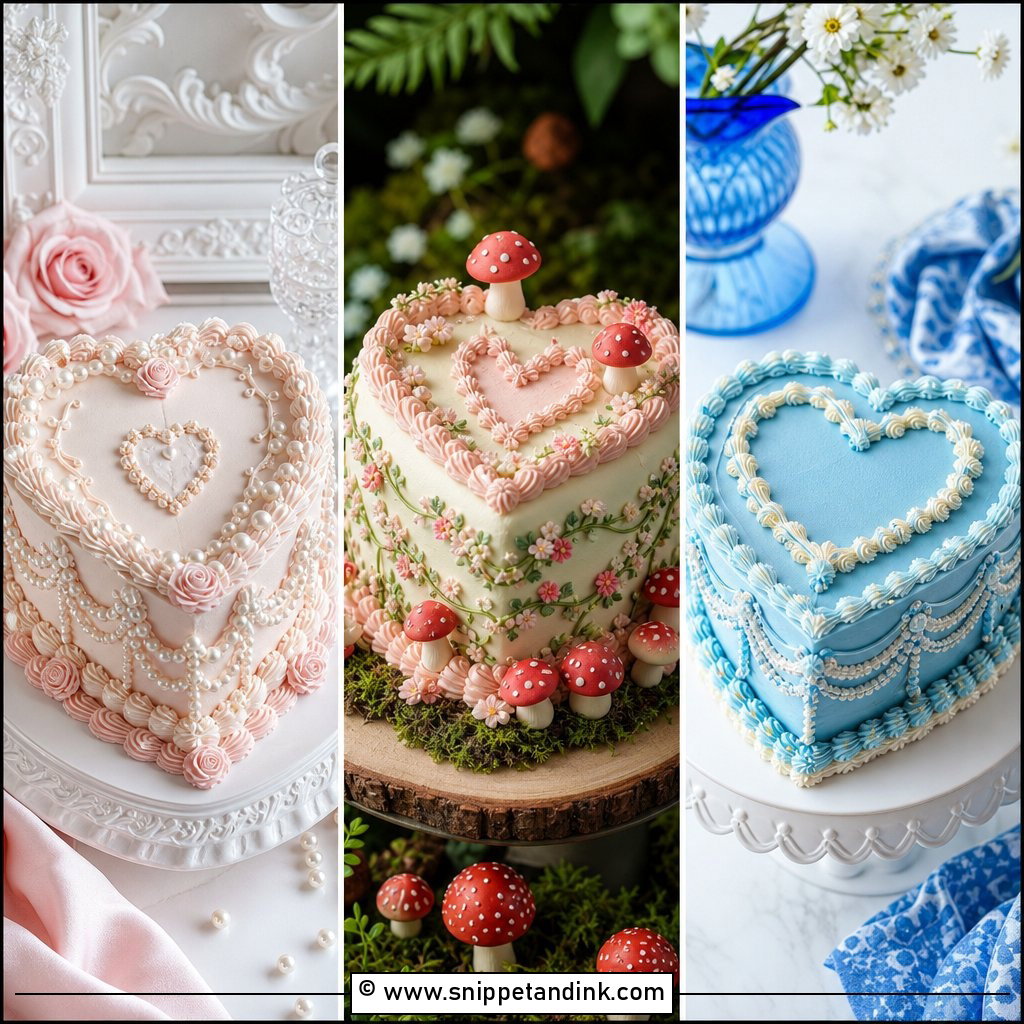
15. Castle Wedding Cake With Stairs
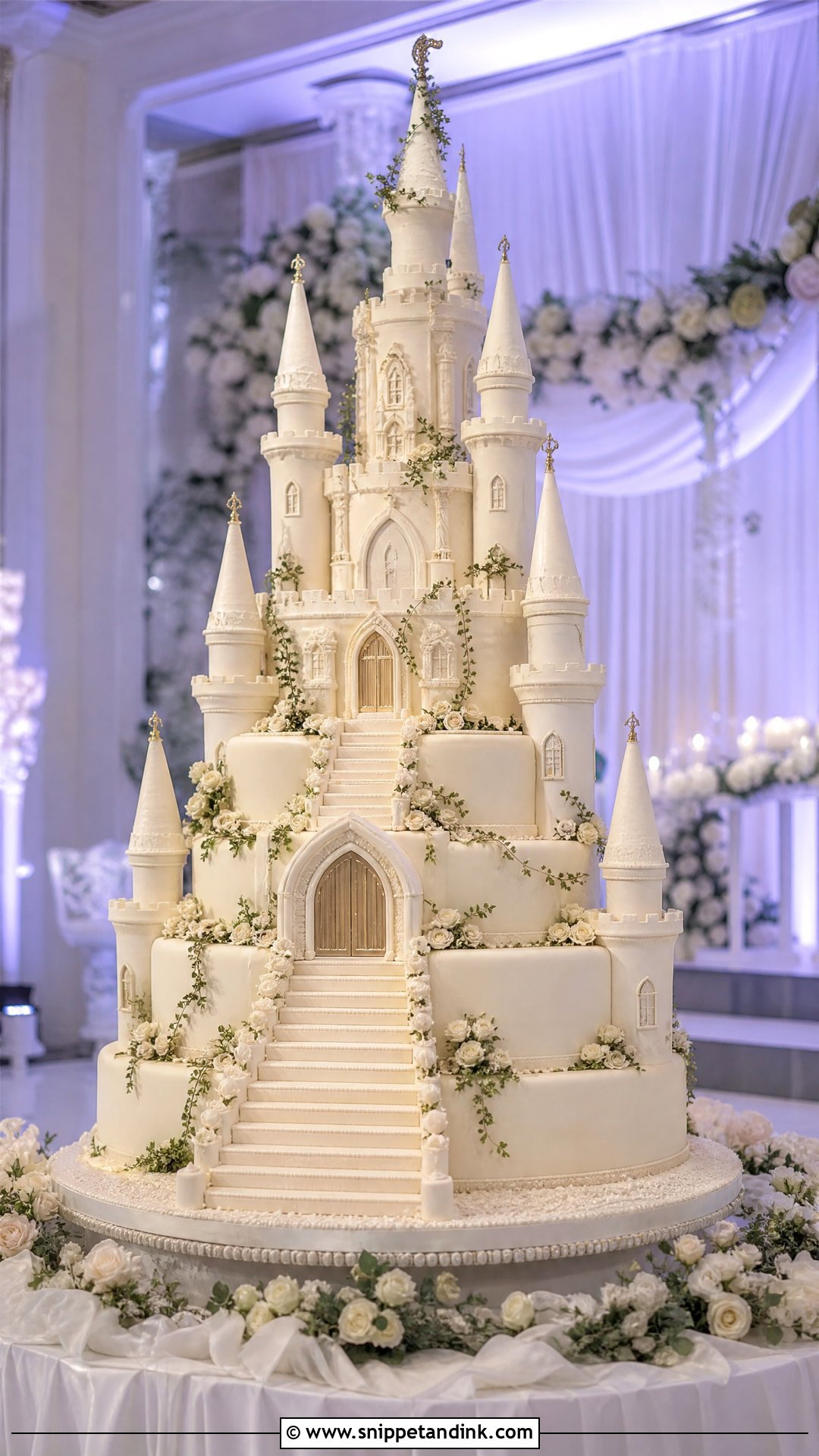
Stairs make a castle feel ceremonial, leading from a lower tier up to a main door. They need room to look tidy, so I only design them on a large cake. Clean stair edges come from gum paste or fondant, dried hard before placing, with tiny pearl borders, flowers or greenery along the sides. Light colors keep the structure elegant. The effect is like a miniature venue in cake form, and it draws guests to the table during a formal reception.
16. Castle Wedding Cake With Carriage
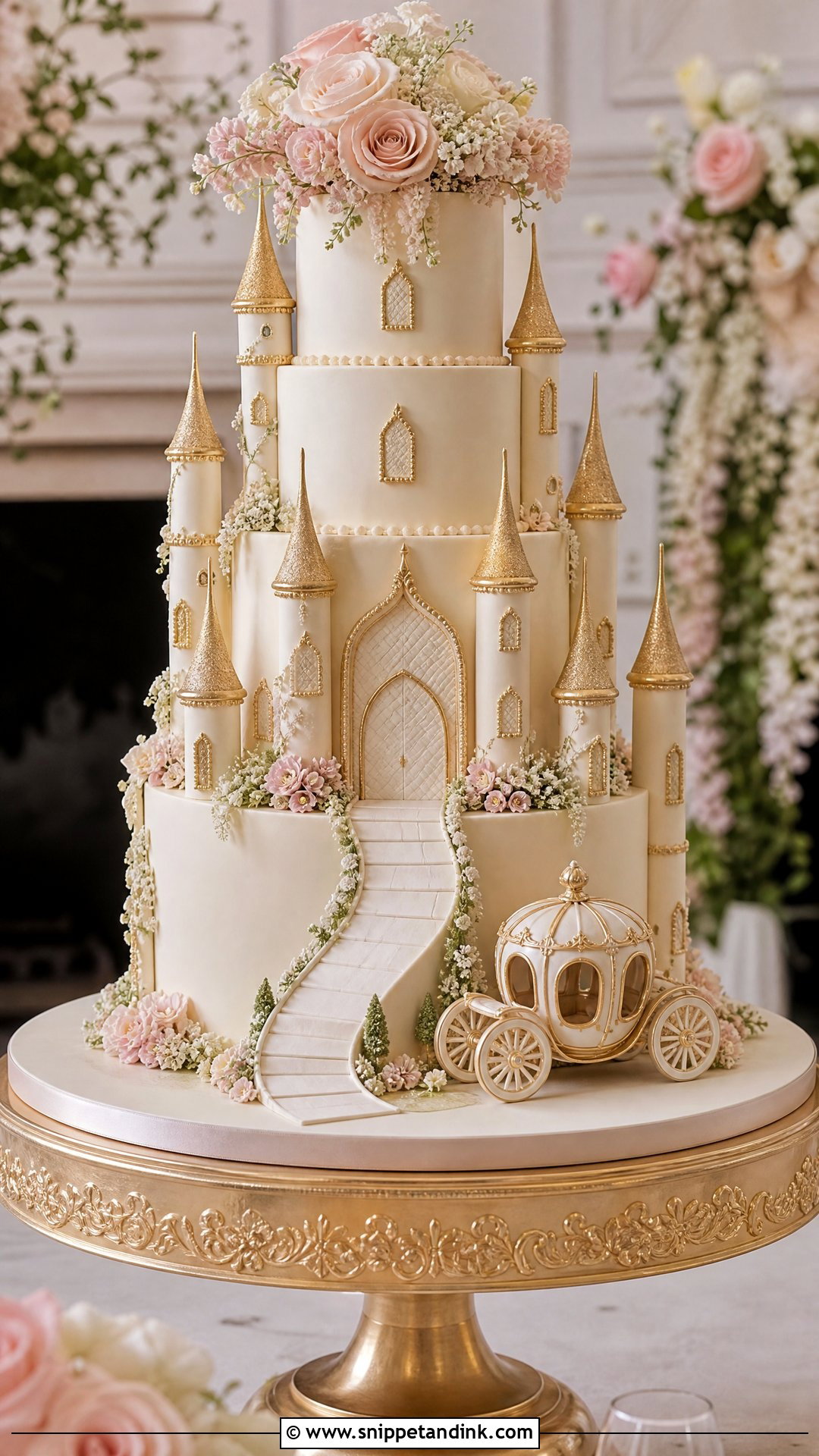
A small carriage adds a storybook reference without taking over. It can sit beside the cake, on the bottom tier, or on a fondant path toward the castle door. I make it small and fine, with pearl wheels or gold trim, and keep it in ivory, blush or champagne. Too large or too detailed and it turns cartoonish. Carriages are usually gum paste and inedible once dried hard, so tell guests it’s a keepsake rather than a bite. A soft floral base keeps the whole design romantic.
17. Small Castle Wedding Cake
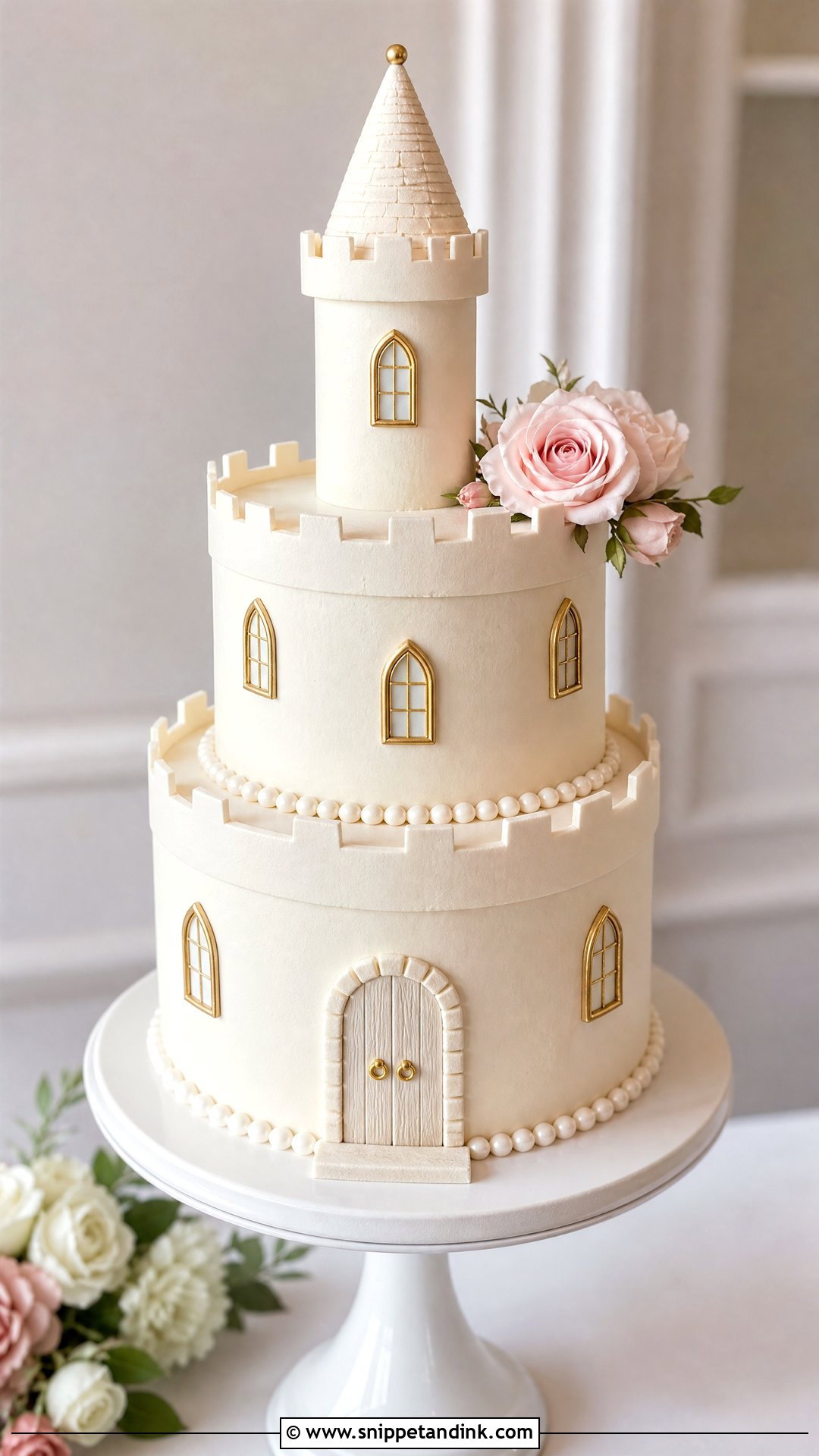
Small weddings and elopements don’t need a towering display to have a castle. Two tiers with one central turret, or three slim turrets around the top tier, give the look at a smaller scale. Smooth buttercream or fondant keeps it tidy. Choose a single statement detail, such as gold windows, sugar roses or pearl trim, rather than all of them. A tall stand with flowers around the base adds presence. It’s also a sensible route if a sheet cake will feed most guests from the kitchen.
18. Tall Castle Wedding Cake
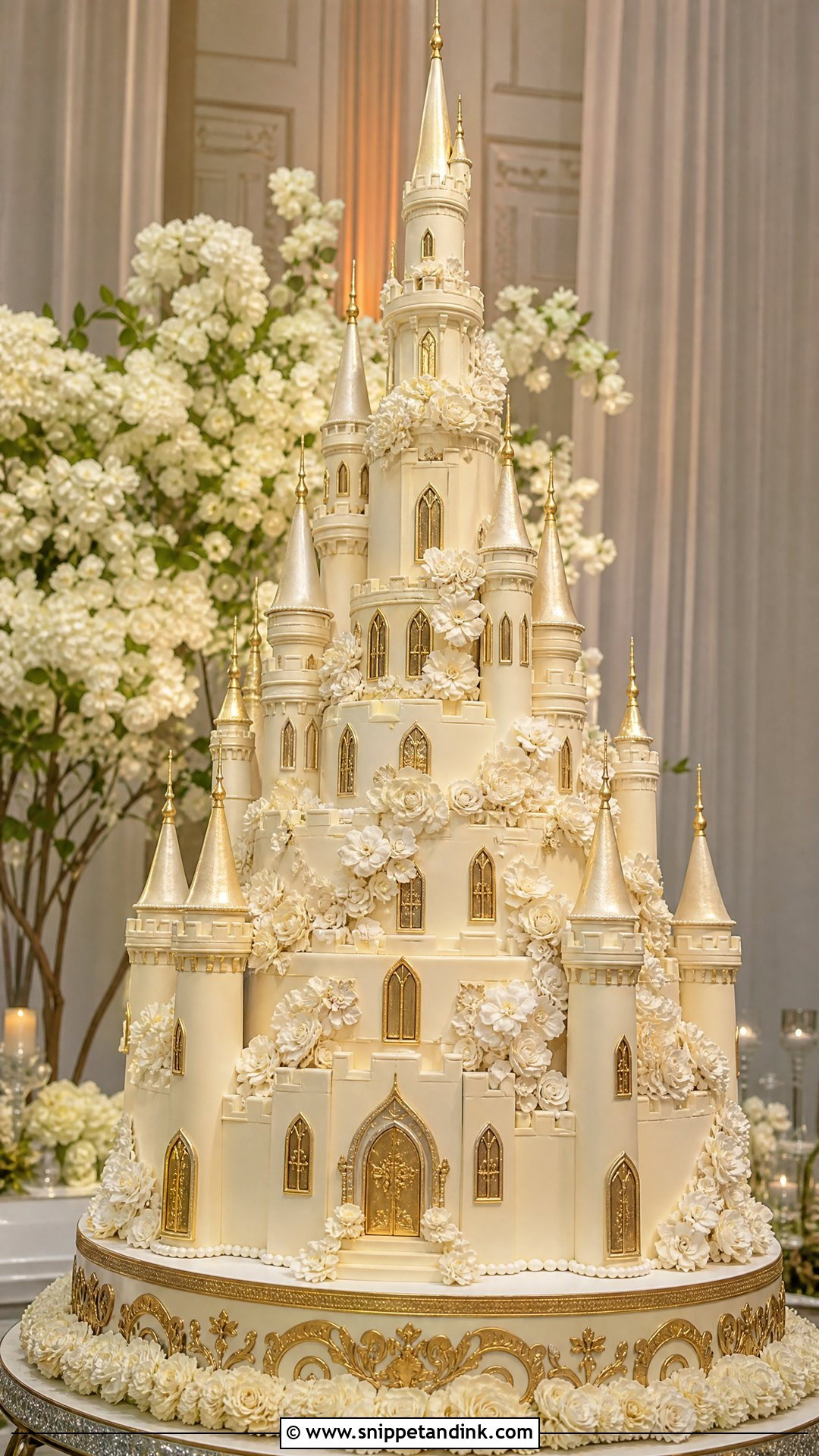
Tall castles create real drama, with several stacked tiers, rising turrets and a strong central silhouette. Height brings engineering: central rods, dowels at every level, and often towers that travel separately and are fixed on site. Ask your baker about internal support, delivery and where the table will stand before you commit. Repeated details, such as matching windows on each level or pearl borders on every tier, keep it orderly. Limit the palette. Grand ballrooms and large venues give it the space it needs.
19. Simple Castle Wedding Cake
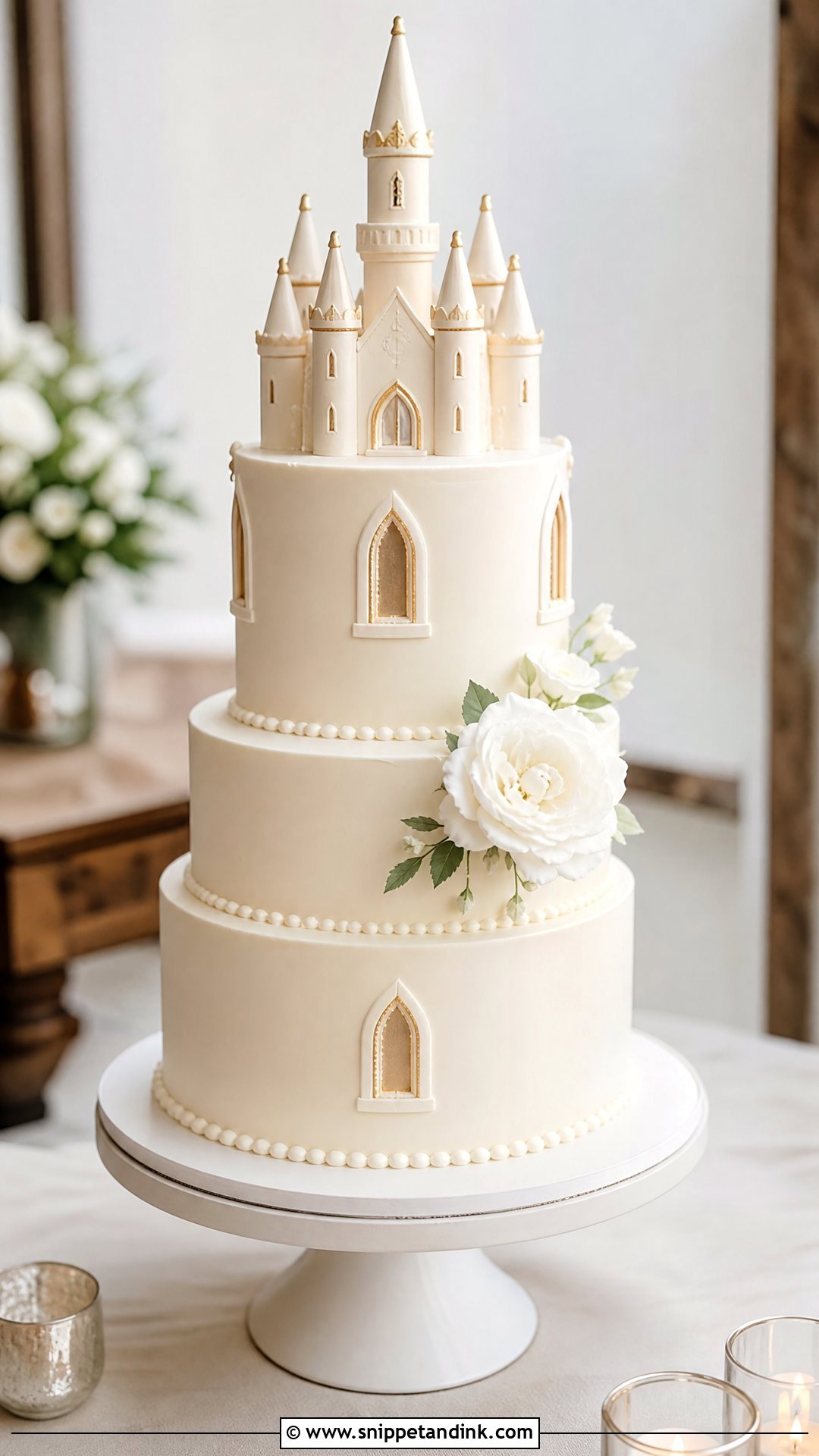
Simple castles suggest the theme without spelling out every stone. Smooth ivory buttercream or fondant, two or three neat tiers, and a small cluster of turrets on top. Add only a few details: arched windows, a pearl border, one cluster of flowers. It sits comfortably with modern decor, minimal flowers and neutral tables. Because there are fewer sculpted pieces, it also usually costs less, which makes it the version I suggest when budget is tight but the shape still matters.




20. Modern Castle Wedding Cake
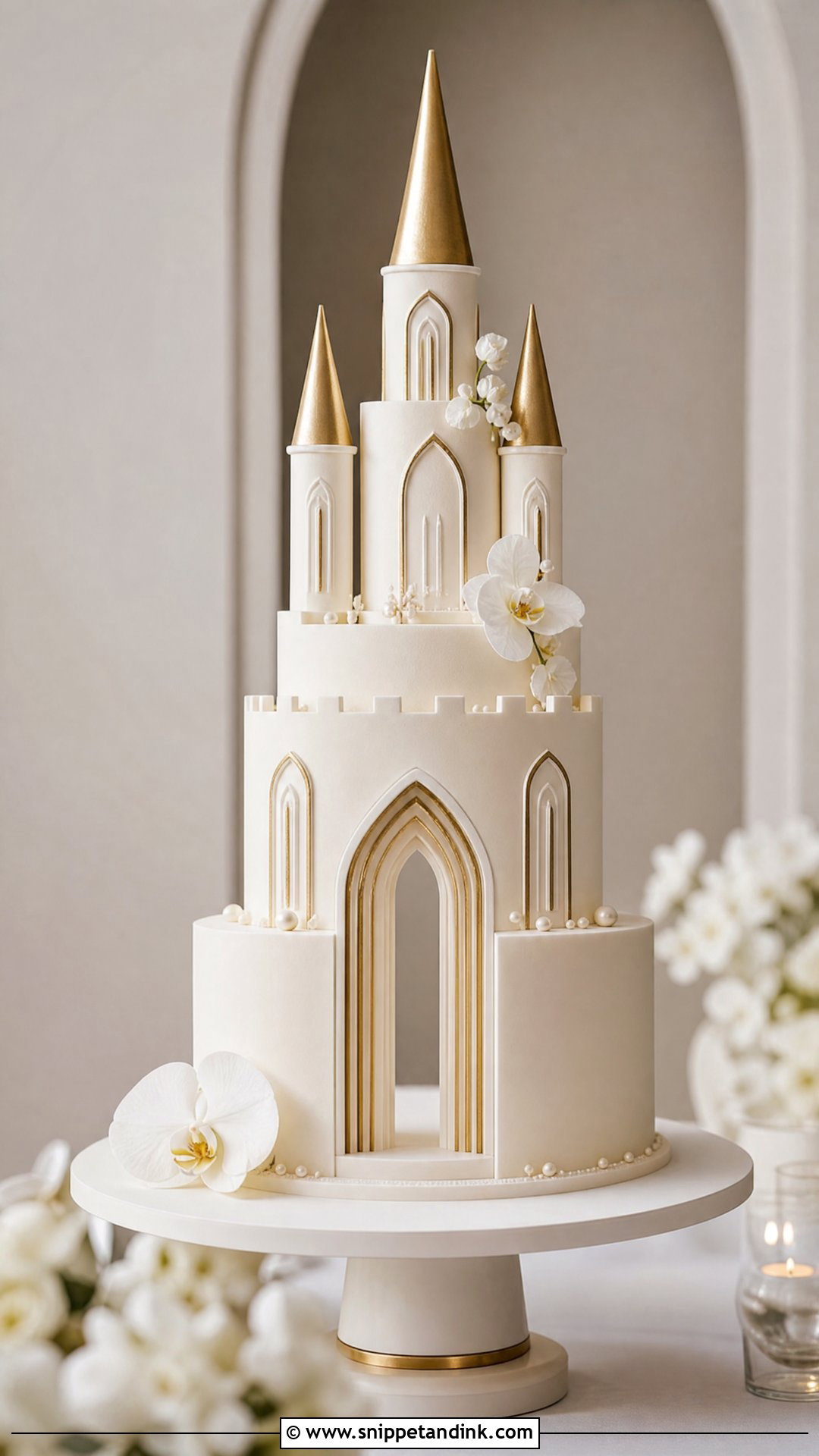
Modern castles turn the theme into clean architecture: sleek tiers, sharp edges, smooth fondant and simplified towers instead of tiny details. Ivory and matte gold, white and soft grey, or champagne and pearl all suit it. Geometric arches, subtle embossing and very few flowers keep it current. Sharp edges are the hardest finish in cake work and show any flaw, so look closely at a baker’s portfolio for crisp corners before booking. The inside can be anything from vanilla bean to lemon blueberry. Rooftop receptions and modern venues suit the restraint.
21. Vintage Castle Wedding Cake
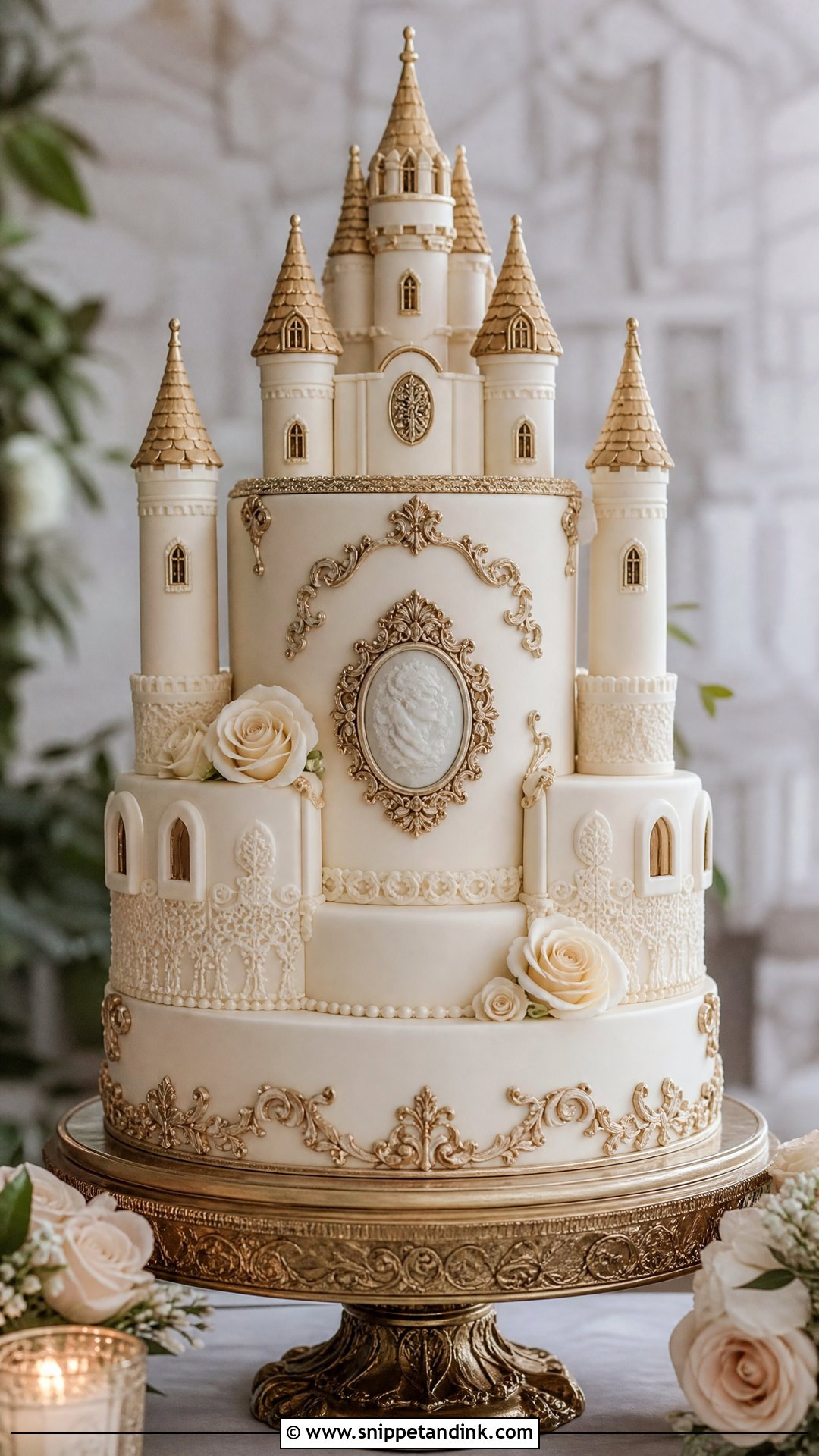
Vintage castles lean on lace, scrollwork, soft colors and texture. I use ivory or warm cream fondant with piped lace panels, pearl drops and antique gold. Rounded roofs on the turrets feel gentler than sharp points. Sugar roses, cameo-style plaques and fine borders give it an heirloom feel, and it sits well beside vintage gowns, historic venues and candlelight. Fine, consistent detail is what stops it looking cluttered. Almond, vanilla, champagne or red velvet suit the nostalgic mood.
22. Silver Castle Wedding Cake
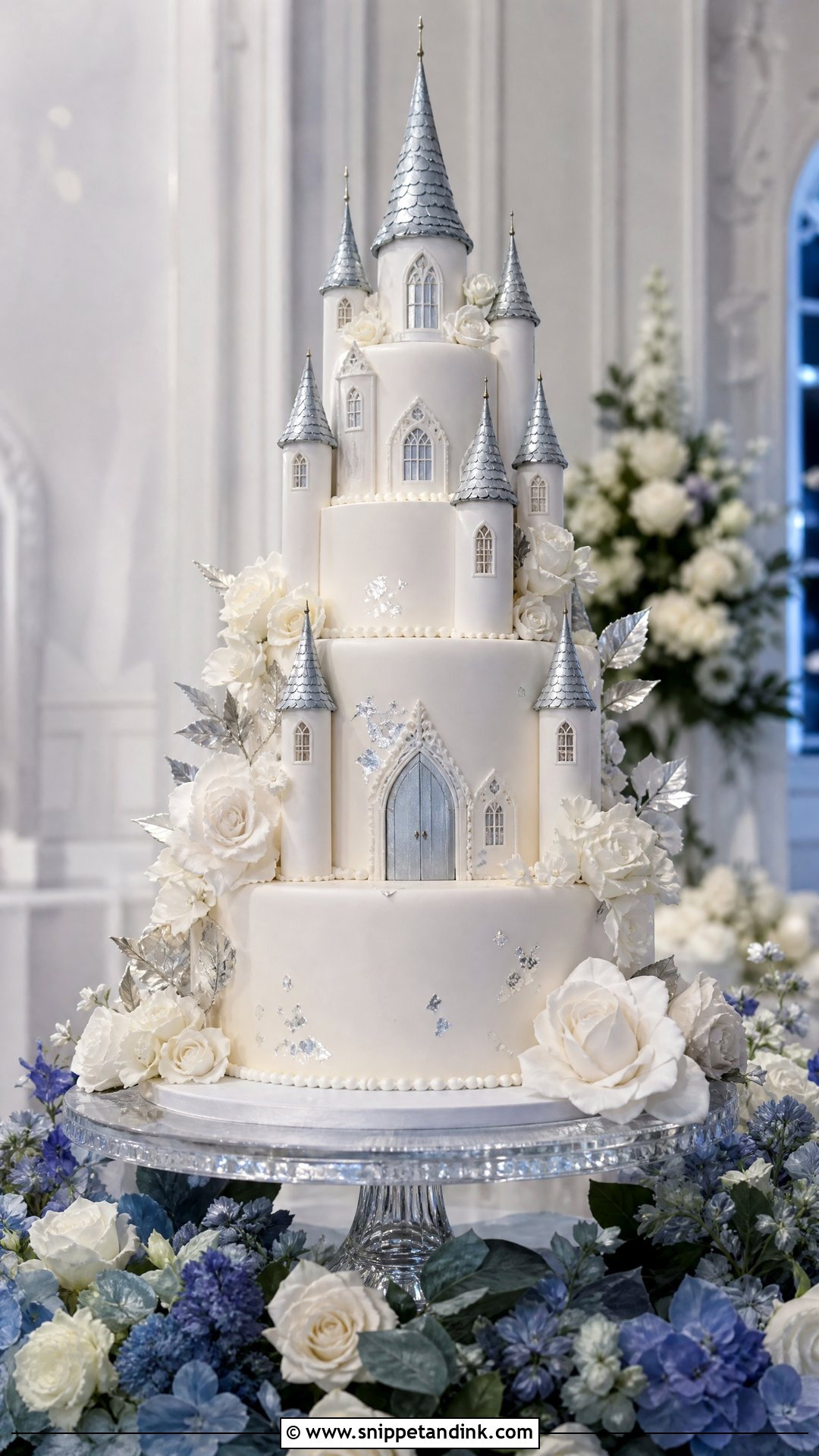
Silver feels cool and slightly magical. I use it on roofs, window frames, monograms and pearl-like borders, paired with white, icy blue, pale grey or lavender. Edible shimmer adds light, but too much reads as plastic in flash photos, so I keep it controlled. Winter weddings, evening receptions and rooms with crystal chandeliers suit it. White sugar flowers or soft silver leaves around the base complete it. Lit from the side, it gives off a quiet glow on every face of the cake.
23. Castle Wedding Cake With Lights
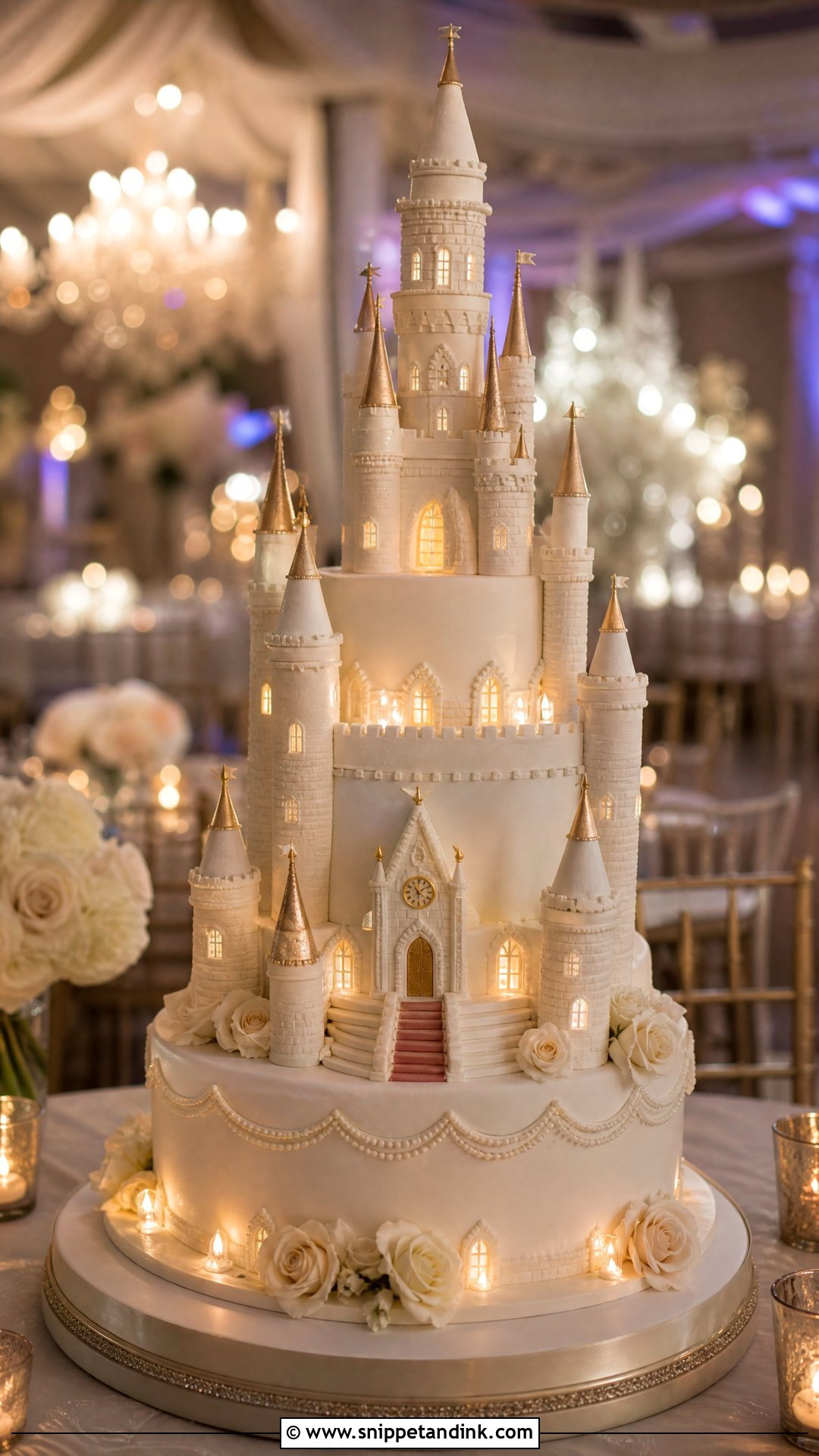
Lights can make a castle glow, but they need planning with your baker from the start. Battery display lights can go around the stand, behind the tiers, or inside non-edible window pieces if the structure is designed for them. The cake itself stays clean and bridal, with ivory fondant, pearls and warm gold. Tiny lit windows look alive during an evening reception. Use only food-safe setups, keep wires hidden, and remember that even small lights give off heat, so nothing sits pressed against buttercream. A dedicated dessert table with soft fabric and a backdrop lets the glow show.
24. Castle Wedding Cake With Cupcakes
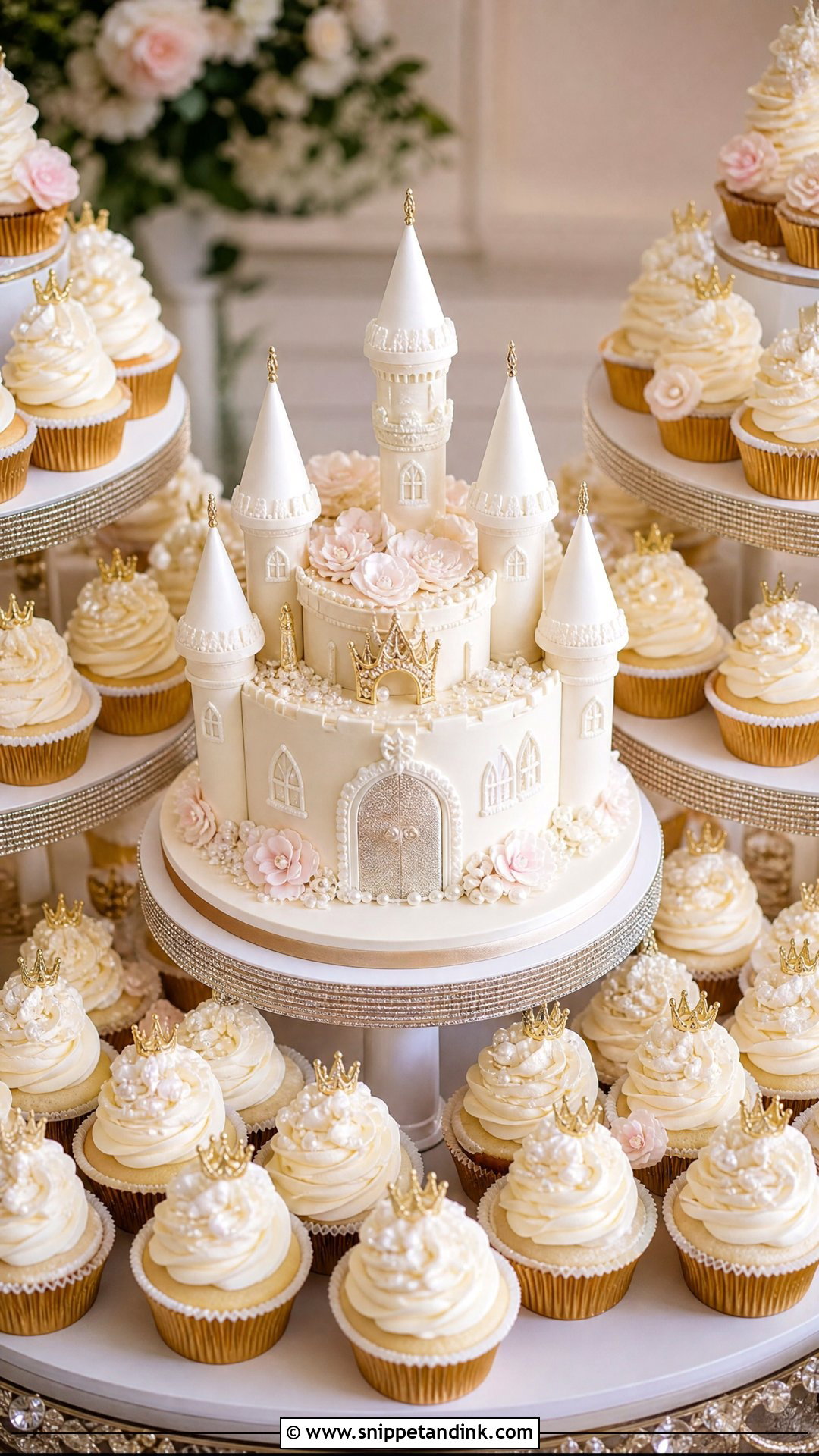
For a big guest list, a smaller castle surrounded by cupcakes is the practical answer. The castle gives you the cutting moment and the photos; the cupcakes, with mini crowns, pearl sprinkles, tiny flowers or matching swirls, do the serving. Guests get flavor options and the catering team saves time cutting. I display the cupcakes on tiered stands so the table looks planned rather than scattered. It’s the route I suggest when couples want a grand table without paying for an oversized sculpted cake.


25. Castle Wedding Cake Dessert Table
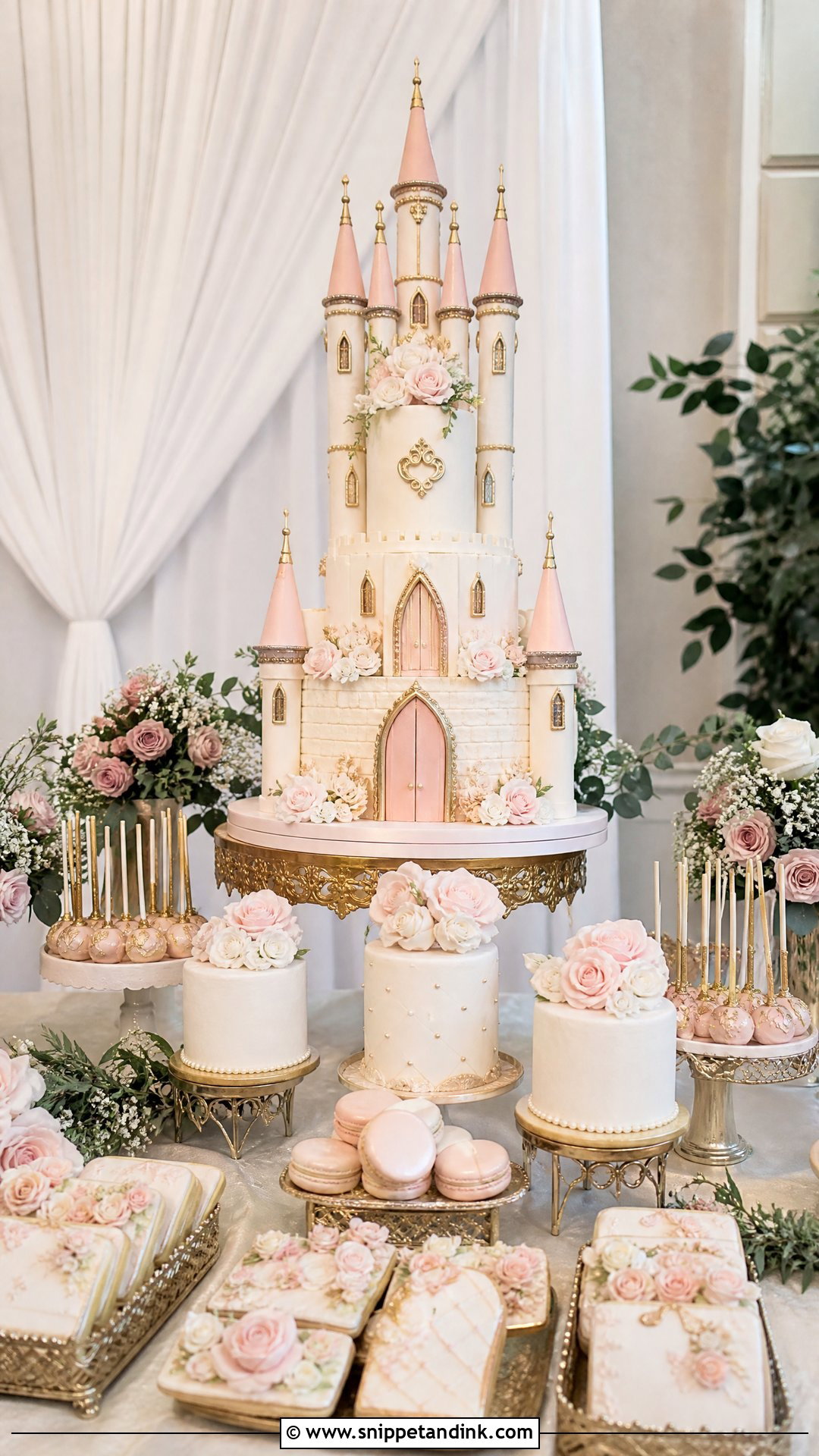
A full dessert table turns the whole display into a fairytale scene. The castle cake sits at the centre, with matching mini cakes, macarons, cake pops, cookies or petit fours around it. One palette across everything, such as ivory, blush, gold and sage, keeps it unified. Flowers, a soft linen and a raised stand add height. The castle has to stay the hero, so the smaller desserts should be simpler than it, never competing in detail. Guests end up walking around the whole table rather than glancing at one cake.
How Far Ahead a Castle Cake Needs Ordering
Sculpted cakes take far more hours than standard tiers, and bakers who do them well book up early. For an elaborate castle, I’d start talking to bakers several months before the wedding, earlier in peak season. Lead times vary a lot by baker and region, so ask rather than assume.
What to bring to the first consultation
- Photos of your venue, especially any towers, arches or windows the cake could echo.
- Your guest count, and whether the cake has to feed everyone or just the cutting.
- Two or three reference cakes, with a note on what you like in each, not just the whole image.
- Your reception timeline, so the baker knows how long the cake stands on display.
Delivery and setup
Castle cakes rarely travel finished. Tiers go in one box, turrets and roofs in another, and the cake is assembled at the venue, which takes time and a stable table. Ask your venue for an access window with the room already cool, and don’t schedule anything else at that table during setup.
Let Your Venue’s Architecture Shape the Towers
Castle cakes range from regal to rustic to quietly modern. Which one fits depends on your venue, guest count, palette and how much drama you want at the dessert table. A classic fairytale look comes from turrets, pearls, roses and ivory fondant. Something current comes from a cleaner silhouette with few accents. Larger weddings can lean on cupcakes or a dessert table built around a smaller castle. Whatever you choose, ask for balance, a sound structure and a few details that are genuinely yours.
You'll Like These Ideas:




Leave a Reply