
Blue and white is the oldest decorative pairing I know, and on a cake it reads instantly as heirloom. The same two colors can go antique, coastal, French, garden or full vintage bakery depending on the tier shape, the piping and which blue you choose. Ivory buttercream with porcelain patterns, dusty blue ribbon, pearl borders, lace and old-fashioned swags all belong here. It also gives you an easy way to carry your something blue onto the dessert table, next to traditional florals and heirloom-style decor. Below are the twenty versions I’d put in front of a couple who wants something graceful that guests will remember.
Why Blue Buttercream Turns Green, and What I Do About It
Blue is the hardest color I mix for a wedding cake, and couples are usually surprised by that. Real butter buttercream is pale yellow. Add blue to yellow and you get a greenish teal, which is the opposite of the soft powder or dusty blue in your inspiration photos.
There are a few ways around it. I whiten the buttercream first with a touch of violet color, which cancels the yellow, or I use a whiter base such as Swiss meringue buttercream whipped longer. For the clearest blues, I color fondant or royal icing instead, because they start out bright white.
Blue also shifts after it’s mixed. Gel colors deepen over a few hours as they develop, so I mix lighter than the target and let it rest before piping. Some blues fade in direct sunlight, too, so a cake displayed in a bright conservatory can look paler by the cutting than it did at setup.
None of this is a reason to avoid blue. It is a reason to see a colored sample at your tasting, ideally in daylight and next to the fabric it has to match.
1. Blue Lambeth Wedding Cake
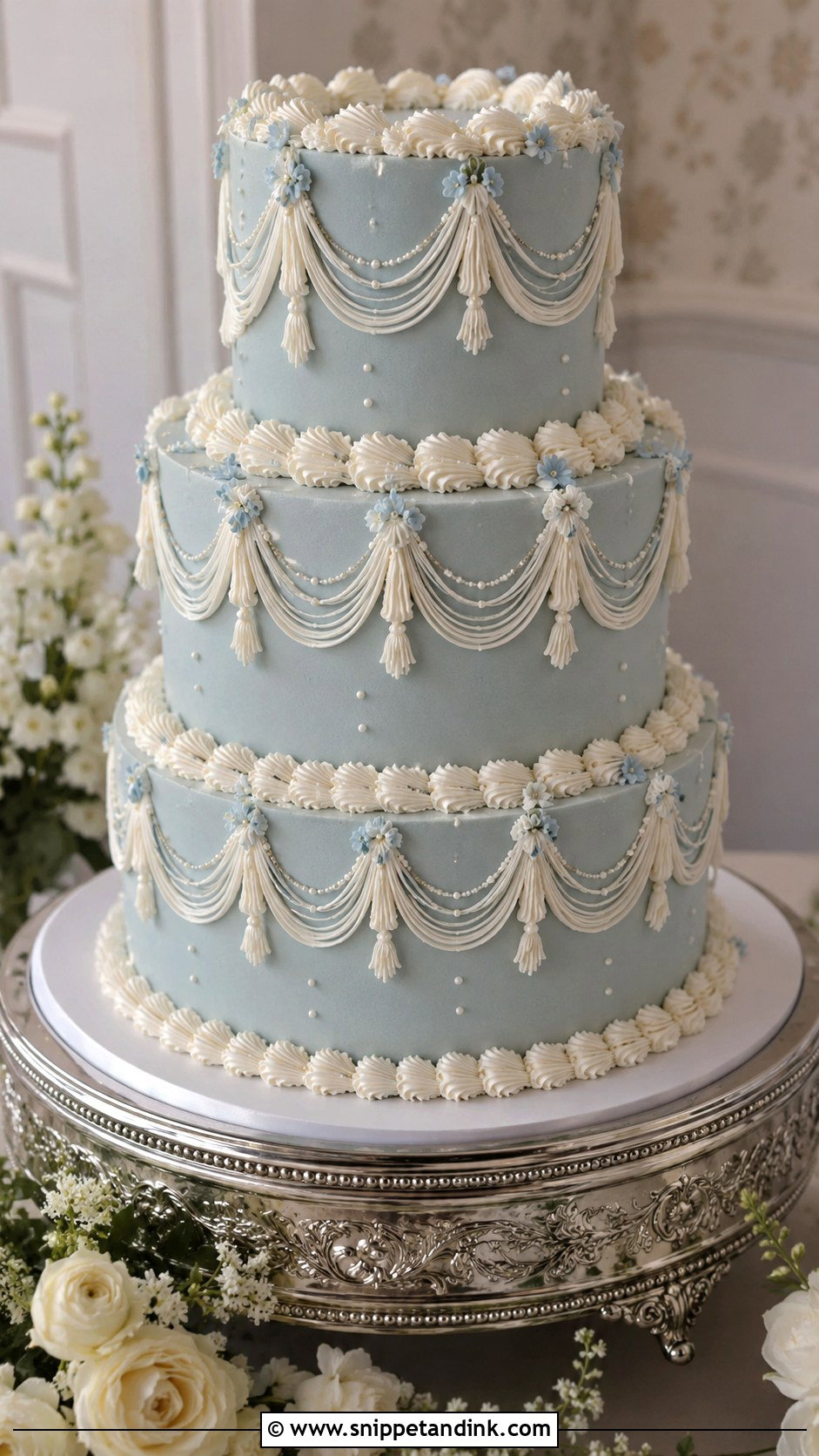
Lambeth is the most labor-heavy cake on this list, and that’s exactly why it looks so intentional. It’s built by overpiping: layer upon layer of shells, swags, scrolls and rosettes in white buttercream over a soft blue base. I pipe it in a cool room with a stiff consistency, because warm hands or a humid kitchen make the shells slump before the next layer goes on. Two tiers keep it sweet; three or four turn it into a showpiece and add many hours of piping. Pearls, small bows or a few blue sugar flowers add texture. Vanilla bean, almond or lemon elderflower keep the inside as light as the outside looks.
2. White Wedding Cake With Blue Piping
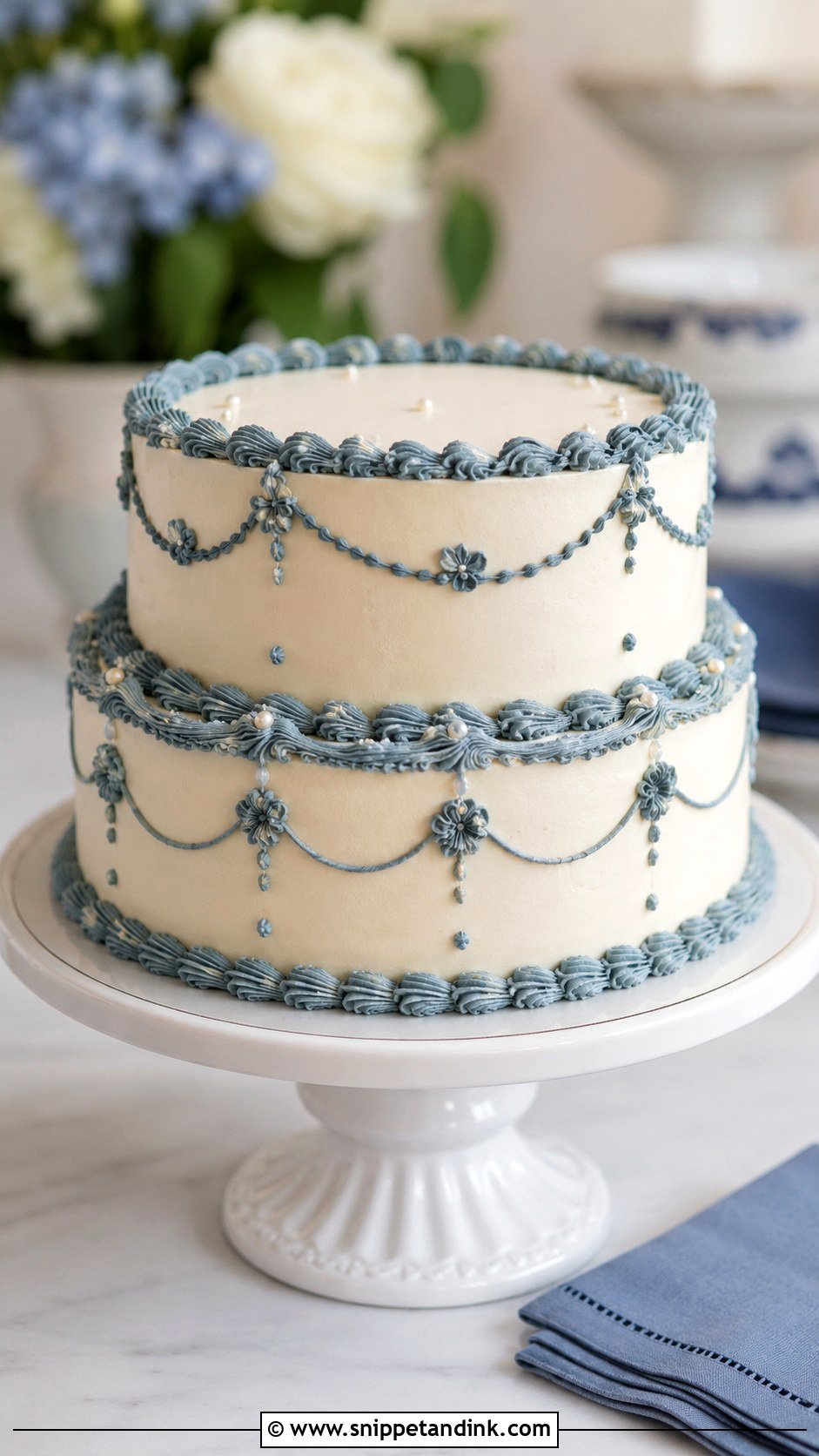
White tiers with blue piping give you a clean bridal cake with just enough color. The piping carries the personality: dusty blue for romance, navy for contrast, powder blue for something sweeter. Shell borders, lace lines, small drop strings and piped flowers all work. Drop strings are the delicate part; they’re piped freehand and can snap in transport, so I add them at the venue on a cake this style. A silver stand, blue napkins and white roses pair naturally. Buttercream gives softness, fondant gives a polished base for the piping to sit on.
3. Blue And White Toile Wedding Cake
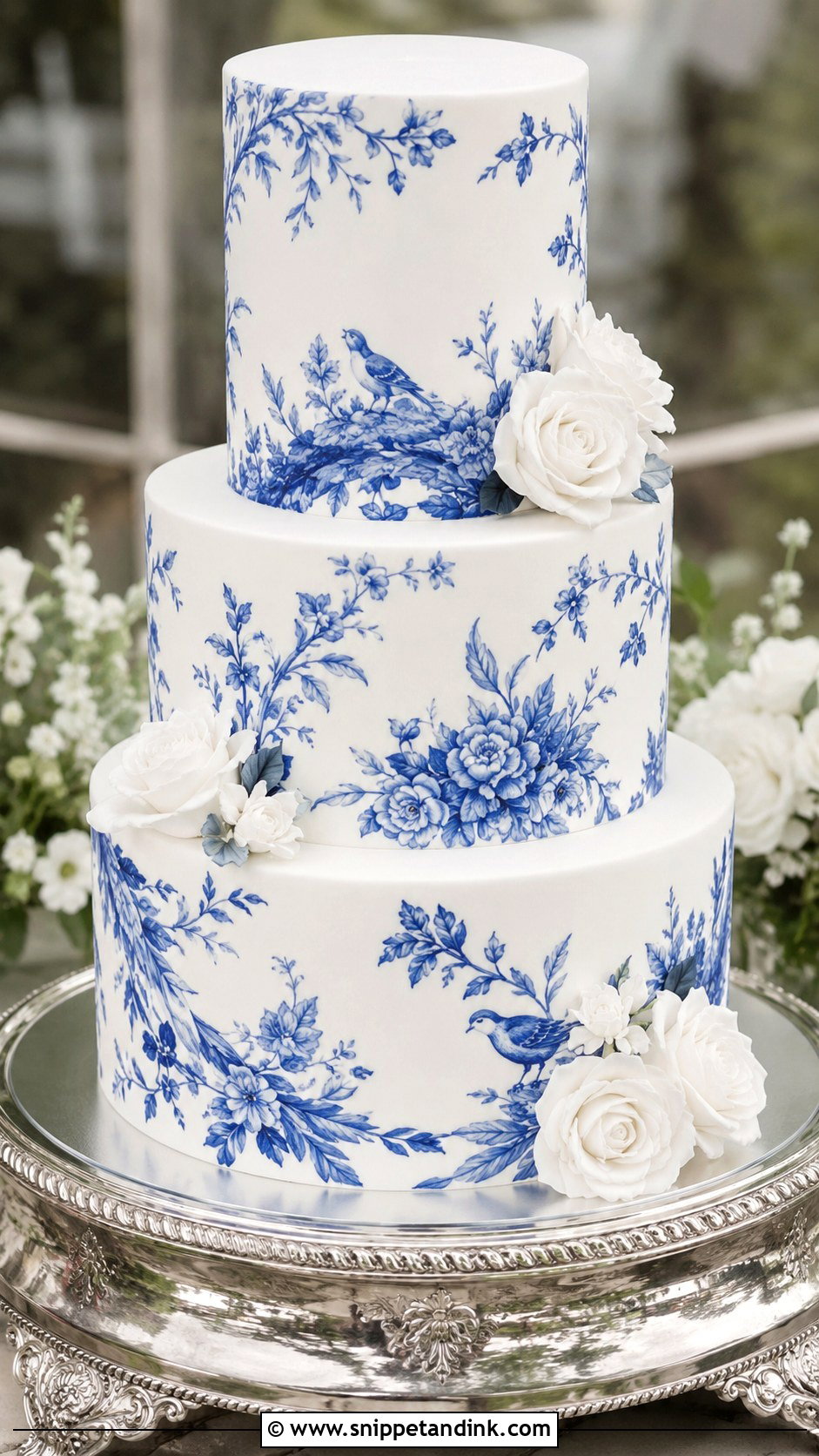
Toile cakes borrow from antique fabric and French country china. A white base carries hand-painted blue scenes, vines, birds or soft landscapes. I paint toile on smooth fondant or a dried royal icing panel with gel color thinned in a little alcohol, which evaporates and leaves a crisp line; on soft buttercream the brush drags and the detail blurs. That’s why this one needs a very clean surface. Keep the tier shape simple so the pattern leads: round tiers feel traditional, square ones more formal. White sugar flowers or a thin blue ribbon finish it. Garden weddings, estates and vintage table settings suit it best.
4. Delft Blue Wedding Cake
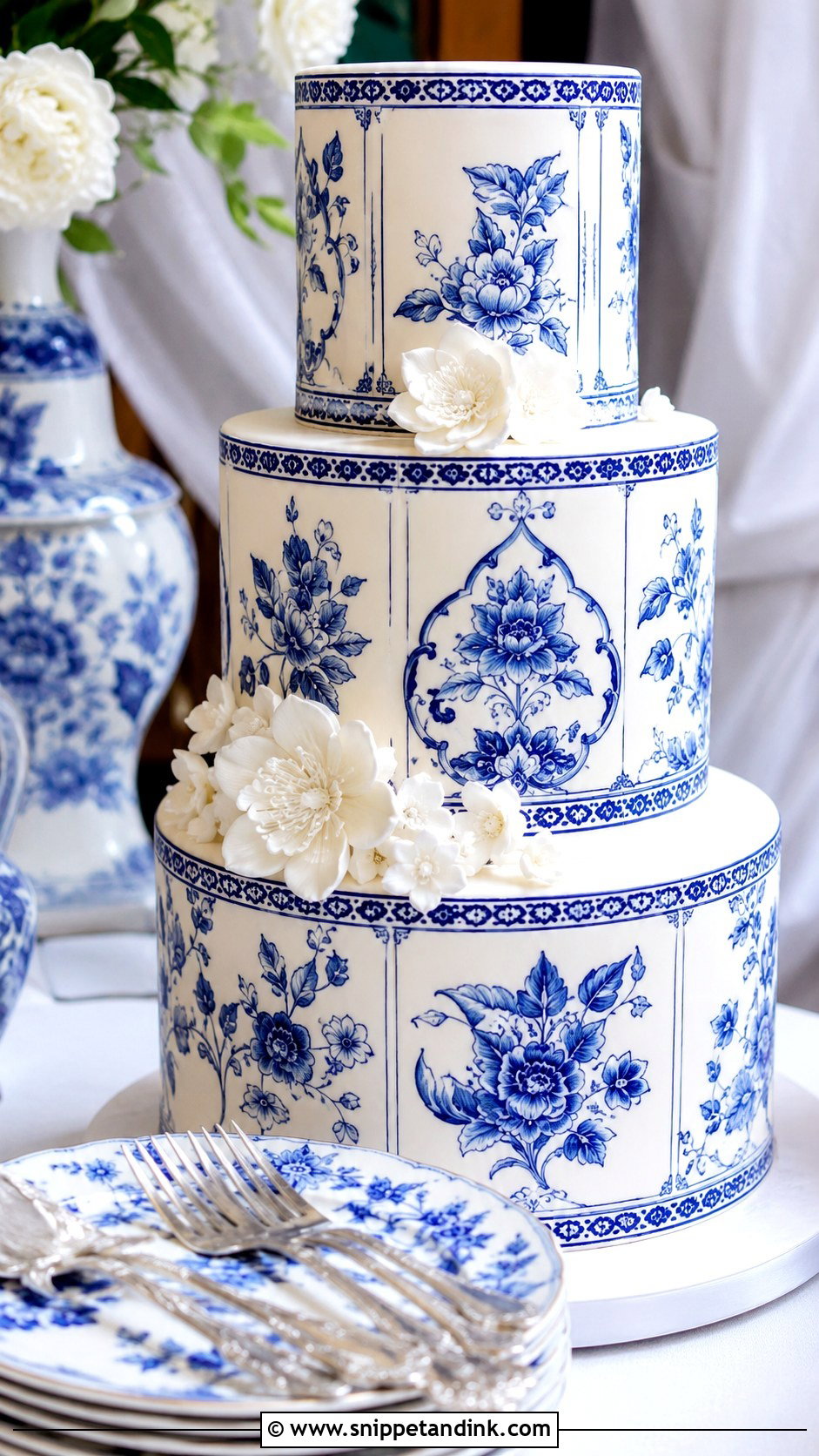
A Delft blue wedding cake is my favorite for couples who collect china or love porcelain detail. Cobalt floral patterns, tile-style borders and fine painted accents on white give a European, artistic look without heavy decoration. I paint each tier in a different pattern or leave one fully white so the eye has somewhere to rest. Cobalt is a strong color, and a strong blue against white tends to look sharp in photographs, which makes this a good centerpiece. White roses, blue hydrangeas and silver serving pieces sit well around it. Vanilla, almond or white chocolate match its crisp look.
5. Blue Heart Vintage Wedding Cake
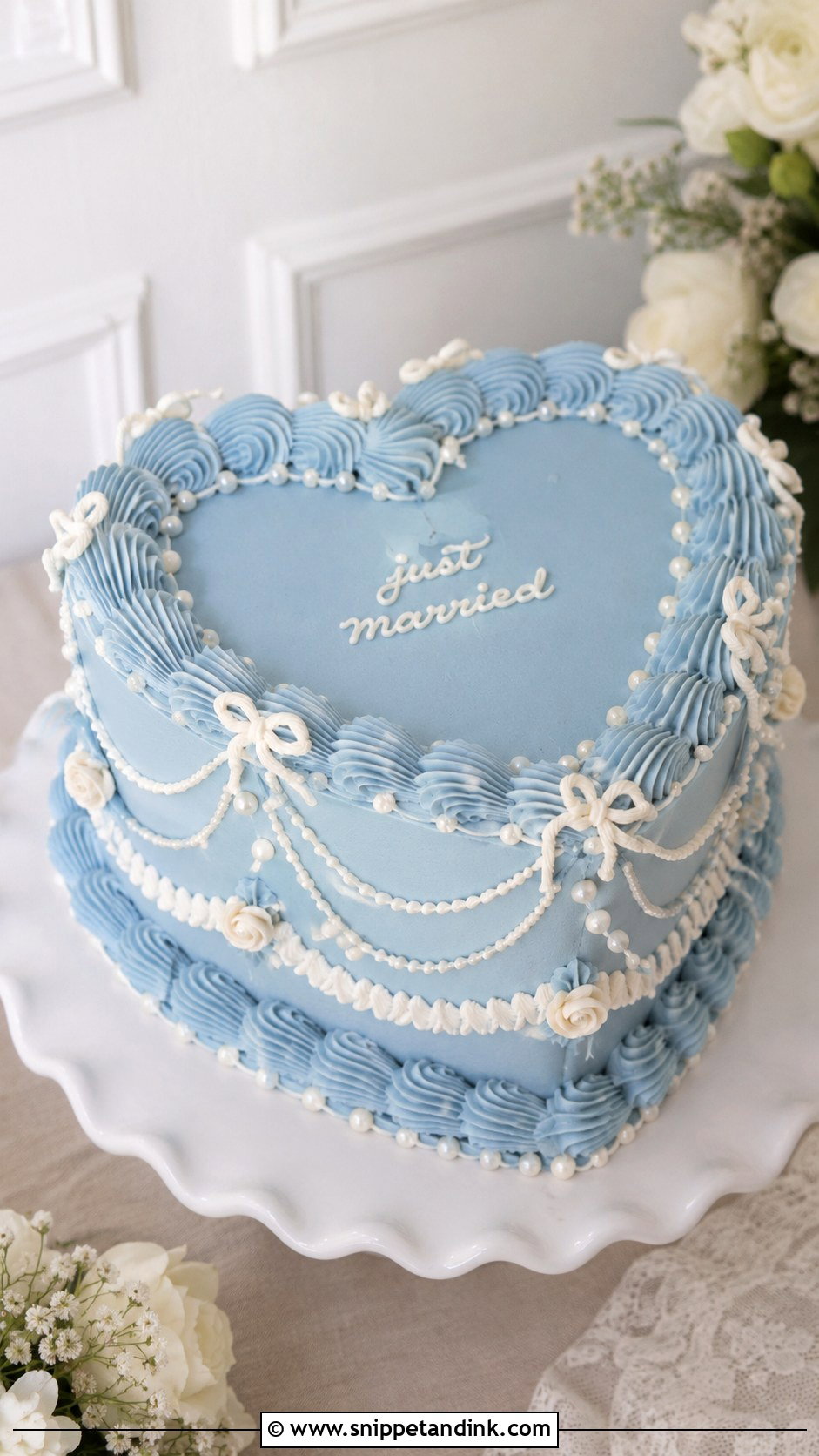
A heart-shaped cake feels playful and old-fashioned bakery at once, especially with white shell borders and piped swags. I’d use it for small weddings, elopements or as a sweetheart table cake rather than as the main cake for a large reception, since a heart shape cuts into fewer neat portions than a round of the same width. Icy, powder or dusty blue buttercream keeps it bridal. White lettering, tiny pearls or a short just-married message make it personal. Paired with matching mini cakes or cupcakes, it anchors a dessert table nicely.
6. White Vintage Cake With Blue Roses
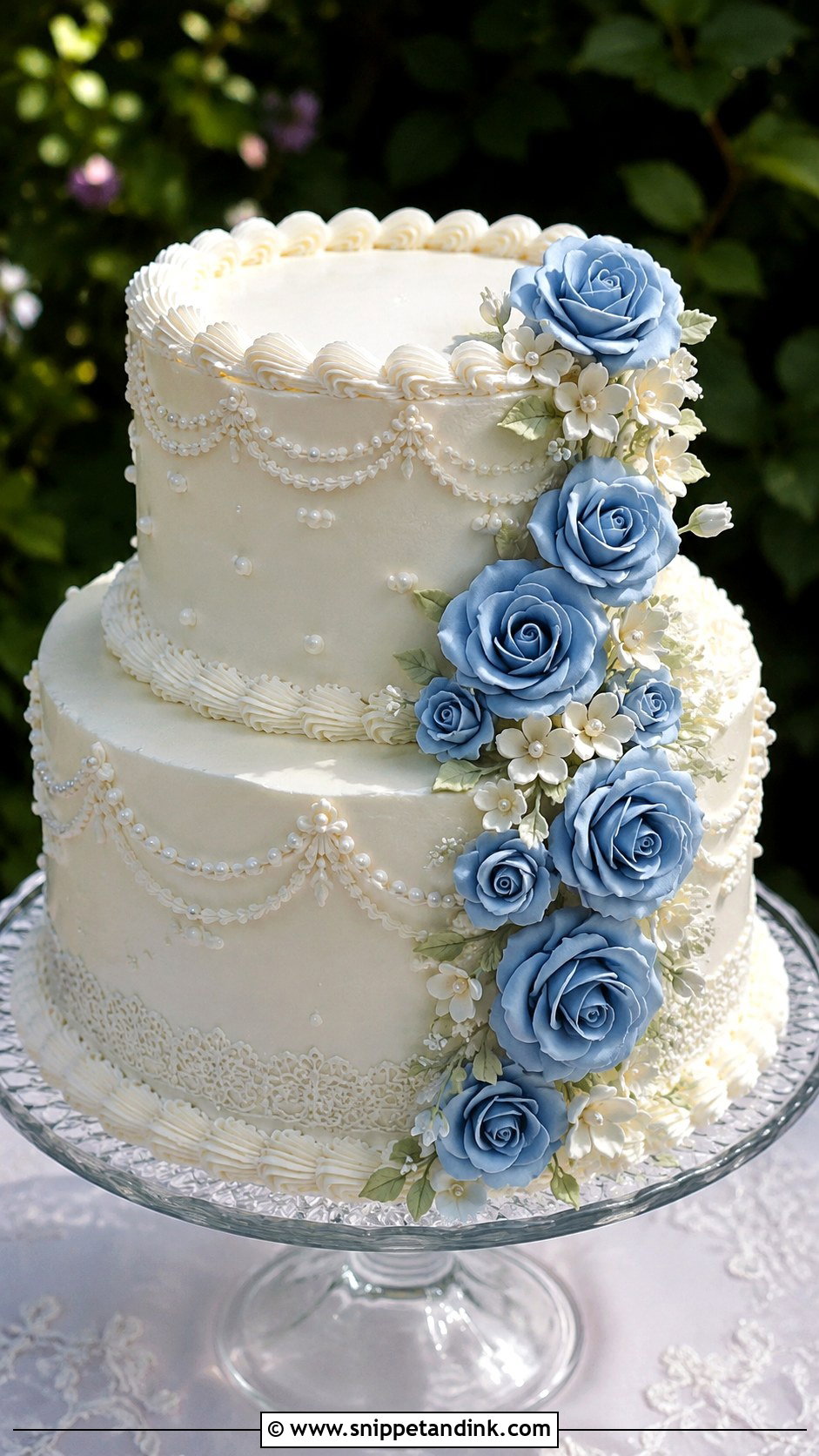
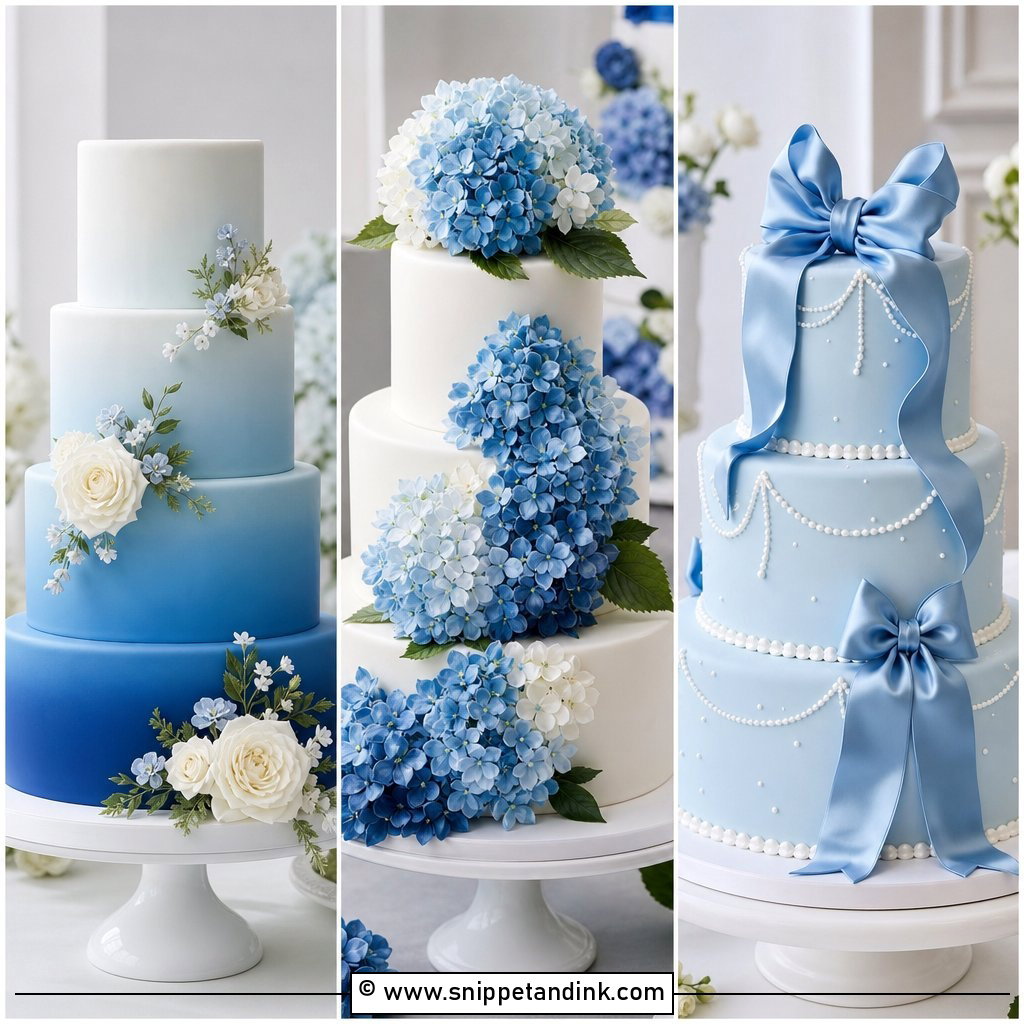
Blue roses give you florals without the usual pink or ivory. The cake can stay white or ivory while the roses supply the color and texture. Sugar roses look polished and keep for years if you want to save one; buttercream roses feel softer; fresh blue-toned flowers give a garden finish, though true blue roses don’t occur naturally, so fresh ones are usually dyed or swapped for blue blooms like delphinium. Ruffled borders, pearls and lace piping suit it. Cluster the roses on one side for a modern feel, or cascade them for drama. Spring weddings and garden receptions are its natural home.
7. Blue Ribbon Wedding Cake
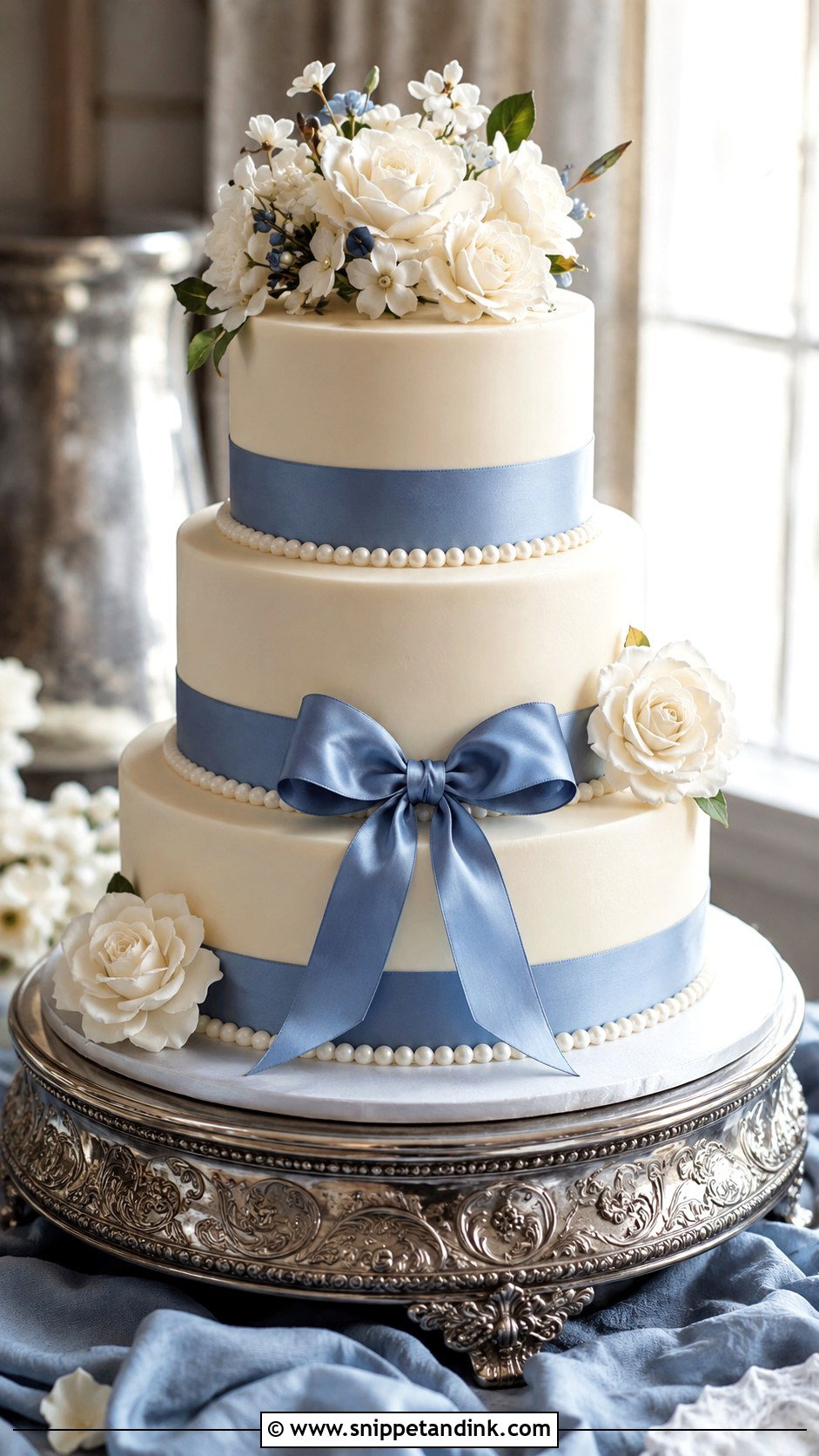
Ribbon is the simplest way to add blue, and I’d steer anyone short on budget toward it. Ribbon can circle the base of each tier, hang in soft bows or be imitated with fondant bands. Real ribbon needs a strip of acetate or tape behind it, otherwise the butter in the frosting seeps through and leaves greasy marks on satin. Satin looks refined; velvet feels richer and more old-world. A white cake with blue ribbon and pearl borders looks bridal immediately. White flowers, lace piping or a small silver topper finish it without clutter.
8. Blue Lace Wedding Cake
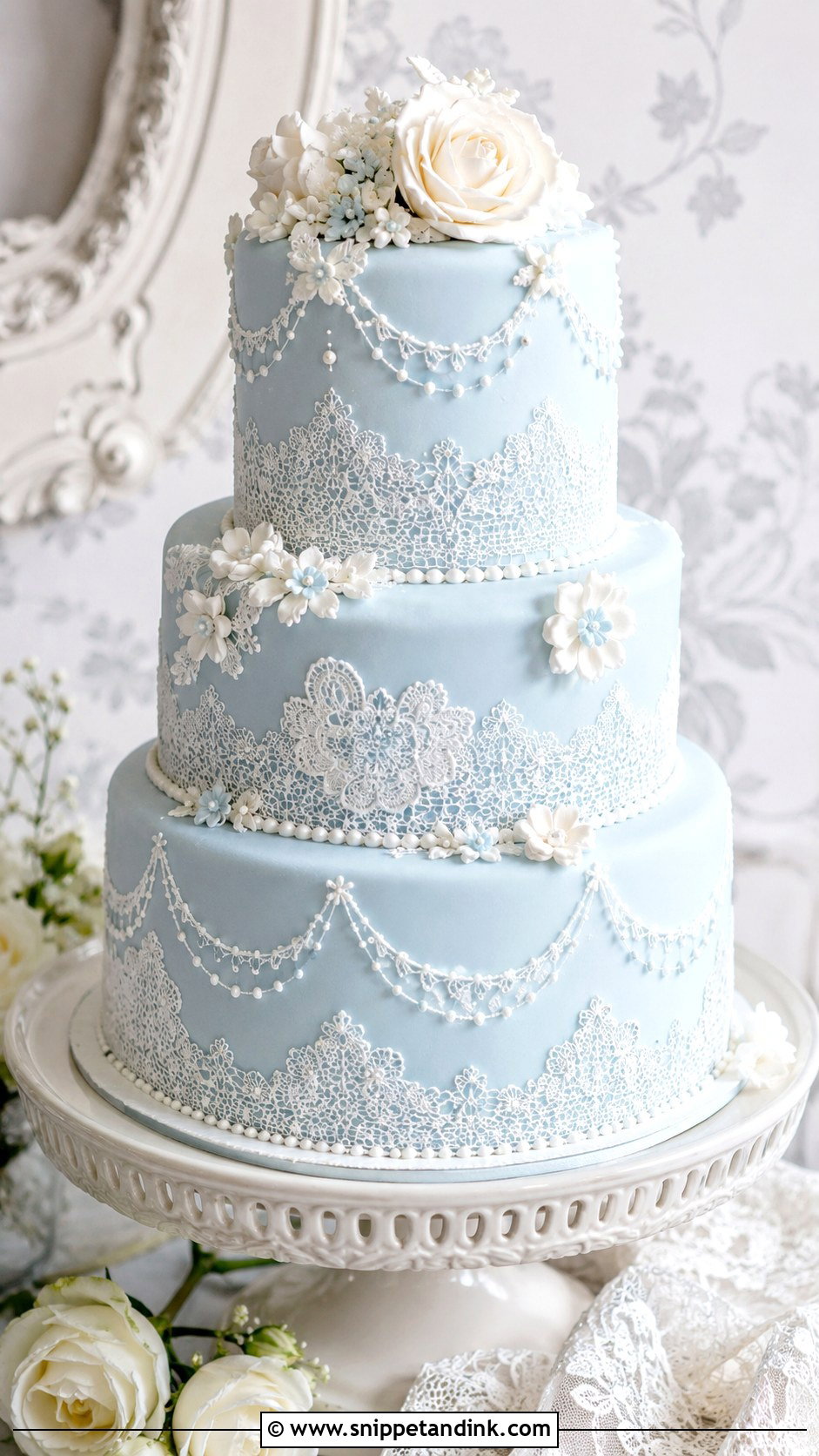
Lace adds soft texture and antique detail. It can be piped white over a blue tier, painted blue over white, or made from edible lace set in a silicone mat. Edible lace is the most realistic, but it’s sensitive to humidity and can go limp in a damp marquee, so I apply it late. Keep the colors gentle so the lace looks delicate, not heavy. Pearl dots, scalloped edges and tiny sugar blossoms add depth. Matching the cake lace to the gown or veil is a lovely detail if you bring a photo or a scrap of the fabric.
9. White And Blue Pearl Wedding Cake
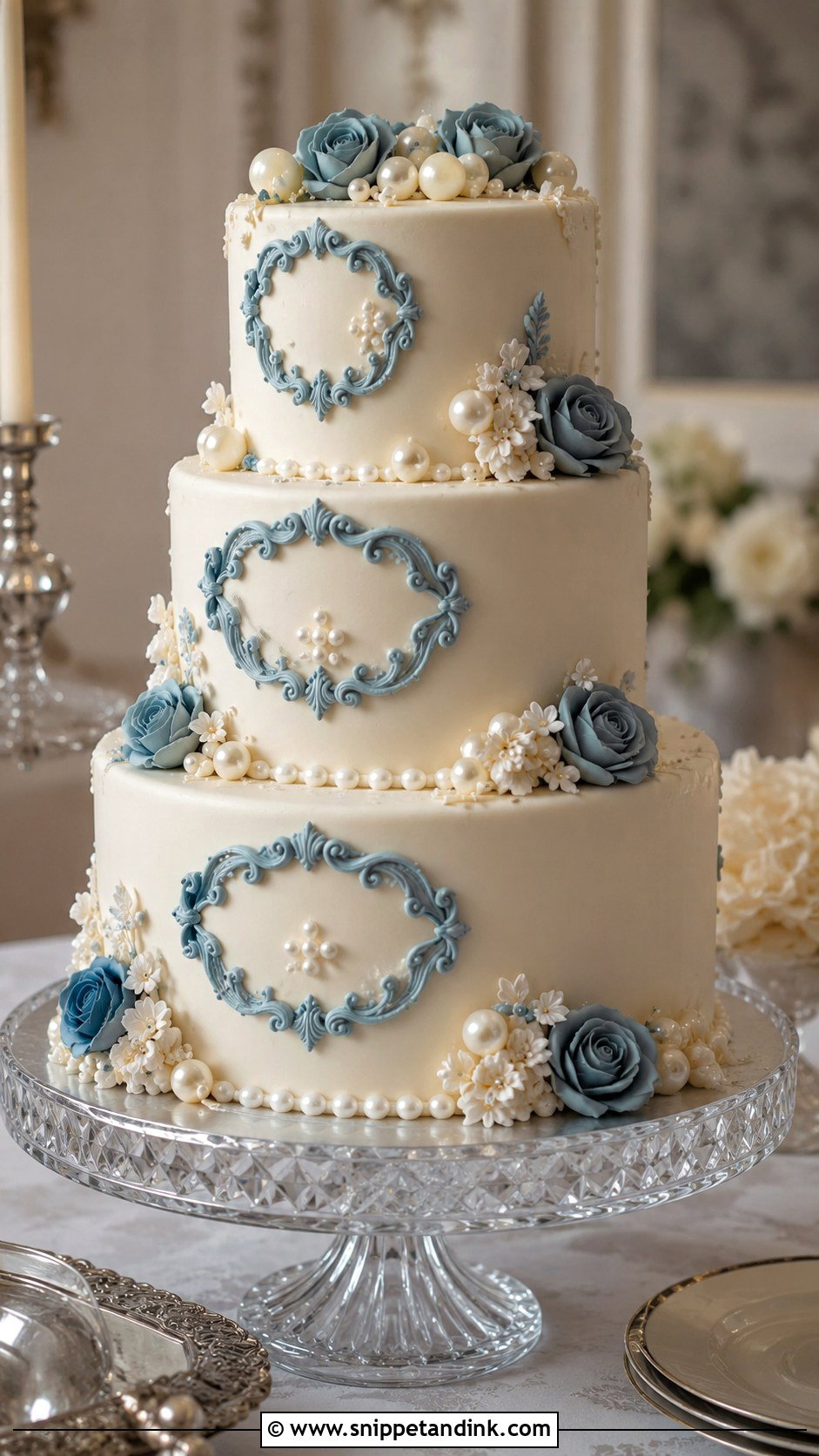
Pearls add detail without taking over, which is why I reach for them on vintage cakes so often. Start with a white or ivory base, then add blue piping, pearl borders and small clusters around the tiers. A single blue tier between two white ones gives contrast. Neat placement matters more than quantity; a border of evenly sized pearls looks expensive, a scatter looks crowded. Formal weddings, traditional venues and silver or crystal decor suit it. Almond, champagne-style vanilla or coconut fit the refined look.
10. Blue Floral Vintage Wedding Cake
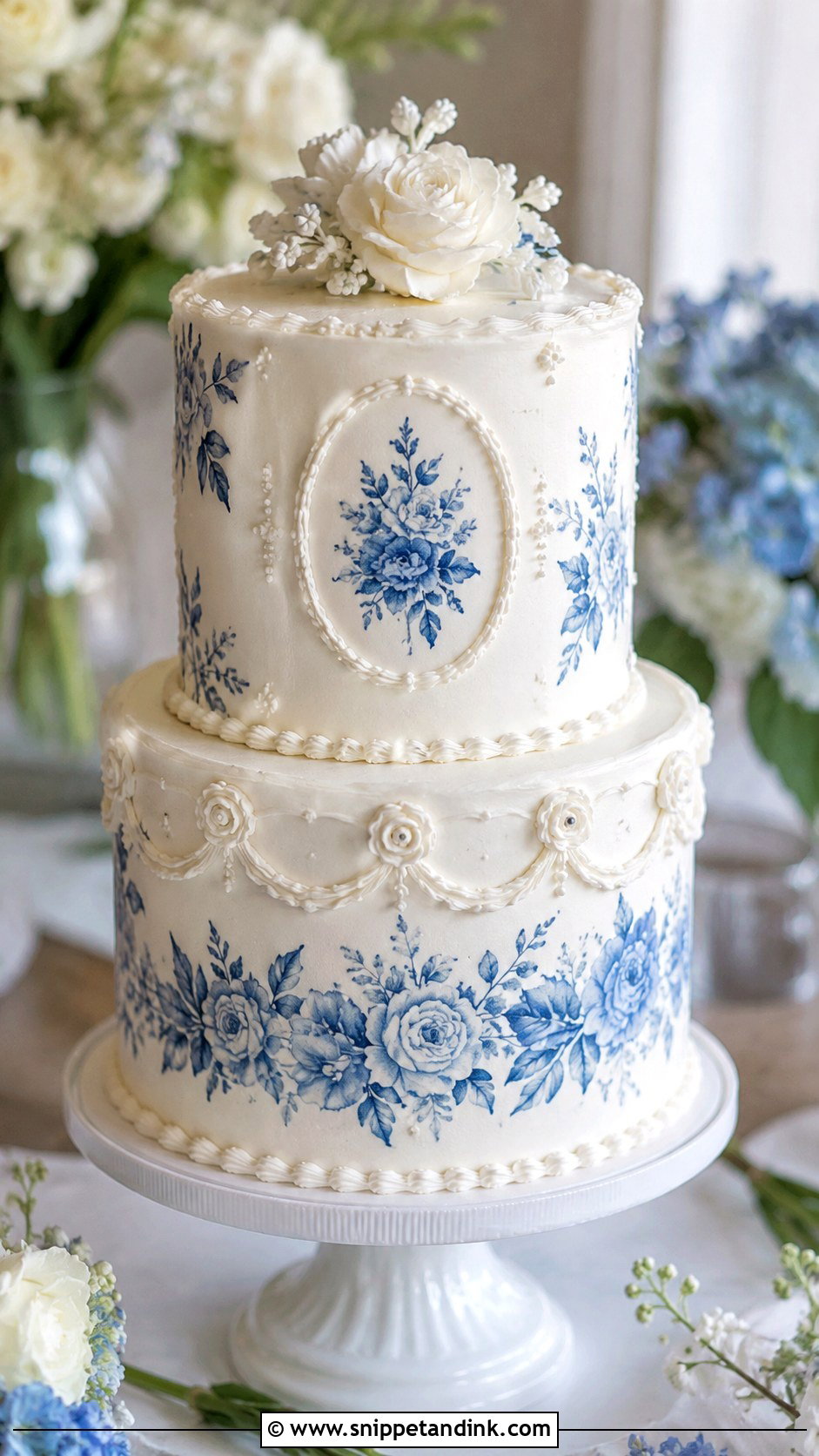
A blue floral vintage wedding cake blends romantic flowers with old-fashioned piping. The flowers can be hand-painted, piped in buttercream, shaped from sugar or placed fresh by your florist. Blue flowers sit softly on white tiers, and white flowers pop on blue buttercream. If the florist is supplying fresh stems, I ask for them wrapped and free of pesticides, and I place them myself. Vintage borders, drop strings or small rosettes keep it from tipping modern. Put flowers on chosen areas rather than every inch, so the cake looks graceful instead of crowded.
11. White Cake With Navy Blue Details
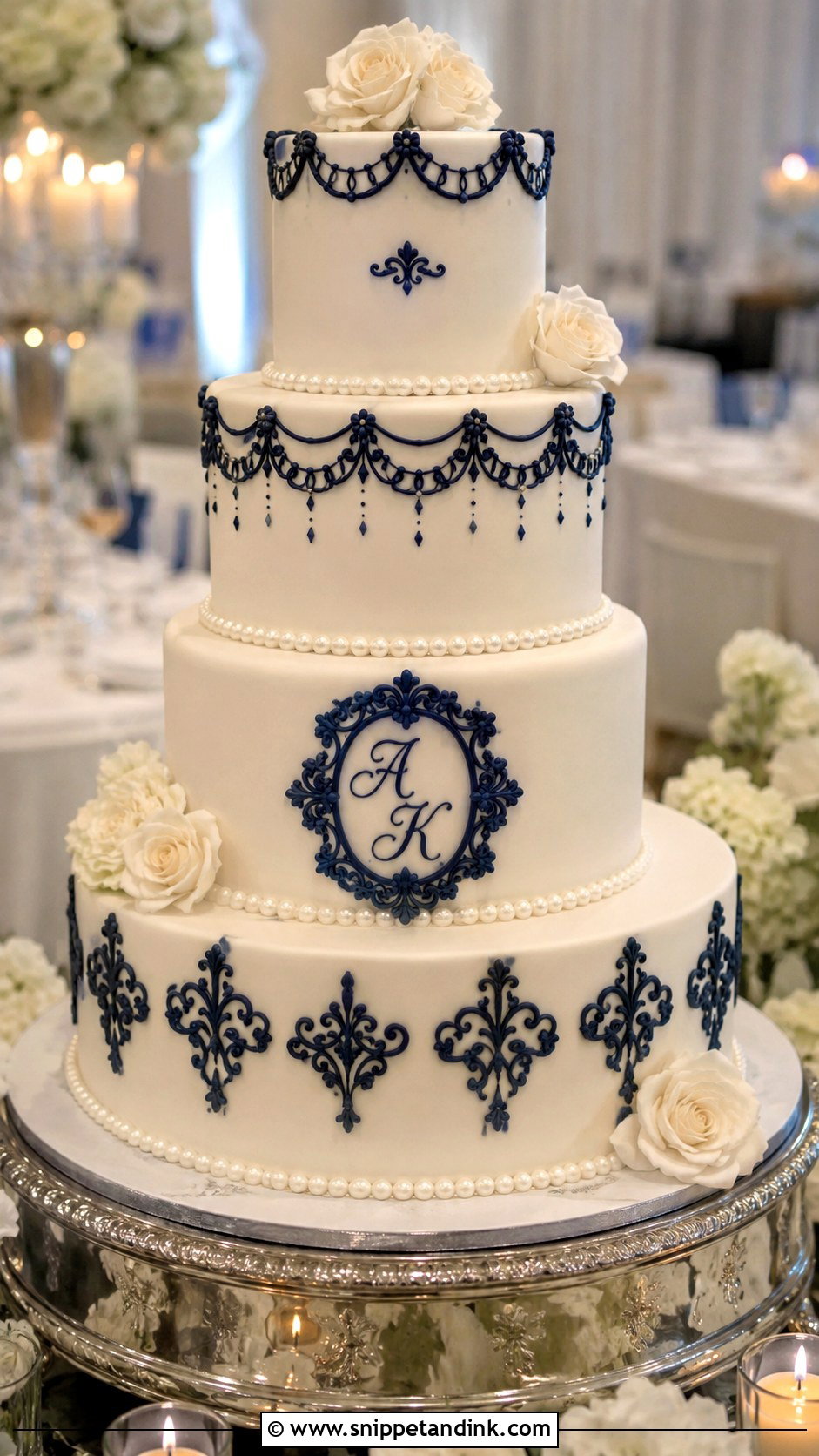
Navy is the stronger take on this palette, with more contrast and more formality. I use it for piping, ribbon, painted florals or small sugar accents on a white base. Achieving deep navy in buttercream takes a lot of coloring, which can taste slightly bitter and stain teeth, so I keep navy to details and avoid frosting a full tier in it. Evening weddings, coastal venues and black-tie receptions suit it. Ornate borders, pearl dots, lace or a framed monogram keep the vintage feel. A few navy touches go a long way.
12. Dusty Blue Wedding Cake
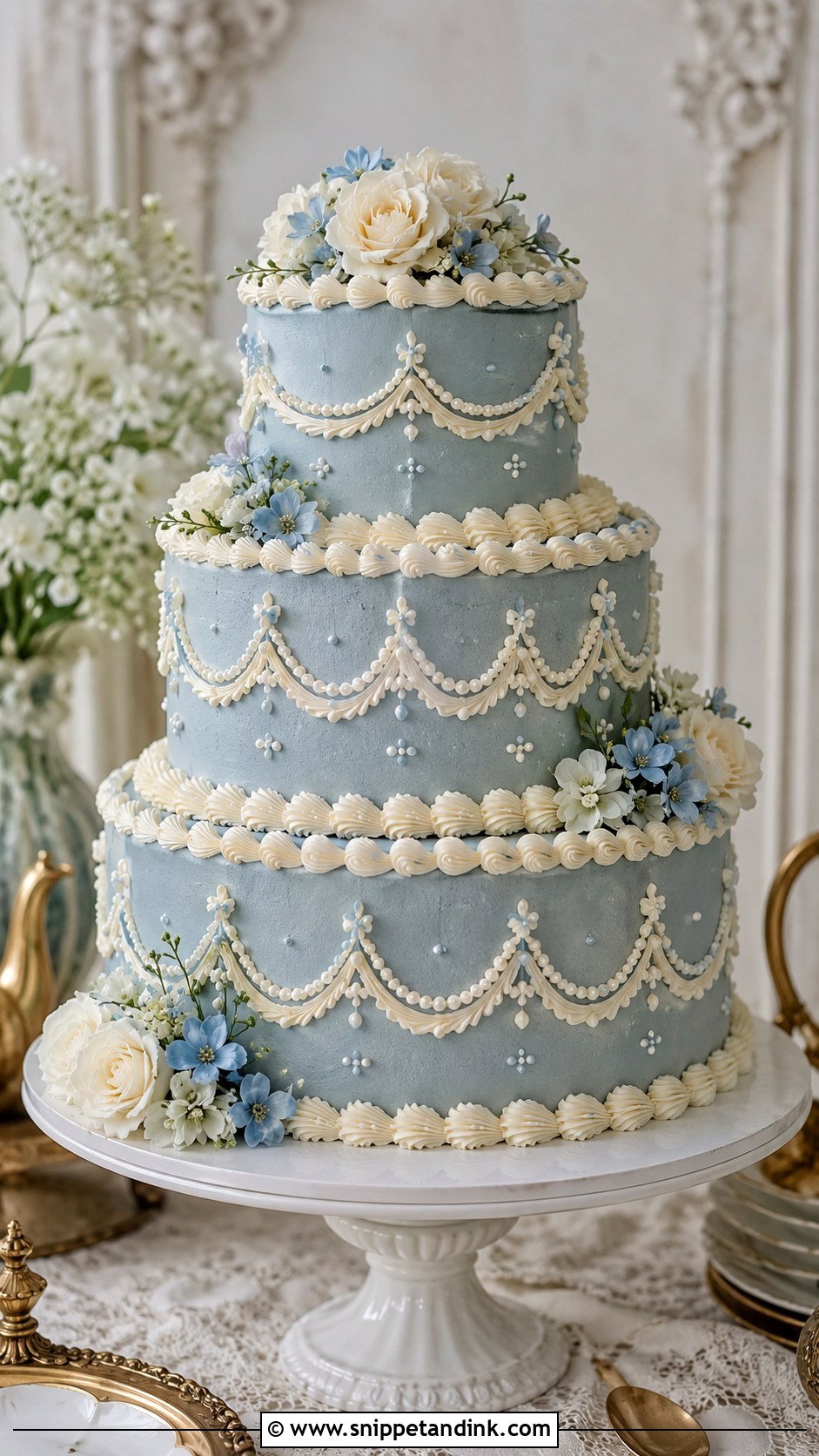
Dusty blue is softer than baby blue and less formal than navy, which makes it the easiest blue to style with ivory flowers, pearls, lace and antique gold. The muted tone comes from adding a touch of grey or black to the blue, and I mix it in daylight because it reads differently under kitchen lights. Buttercream piping, ruffled borders or smooth fondant all suit it. All dusty blue tiers or alternating with white both work. White roses, small sugar blossoms or piped swags keep it soft. Garden weddings, estate receptions and outdoor ceremonies are where it fits best.
13. Blue And White Square Wedding Cake
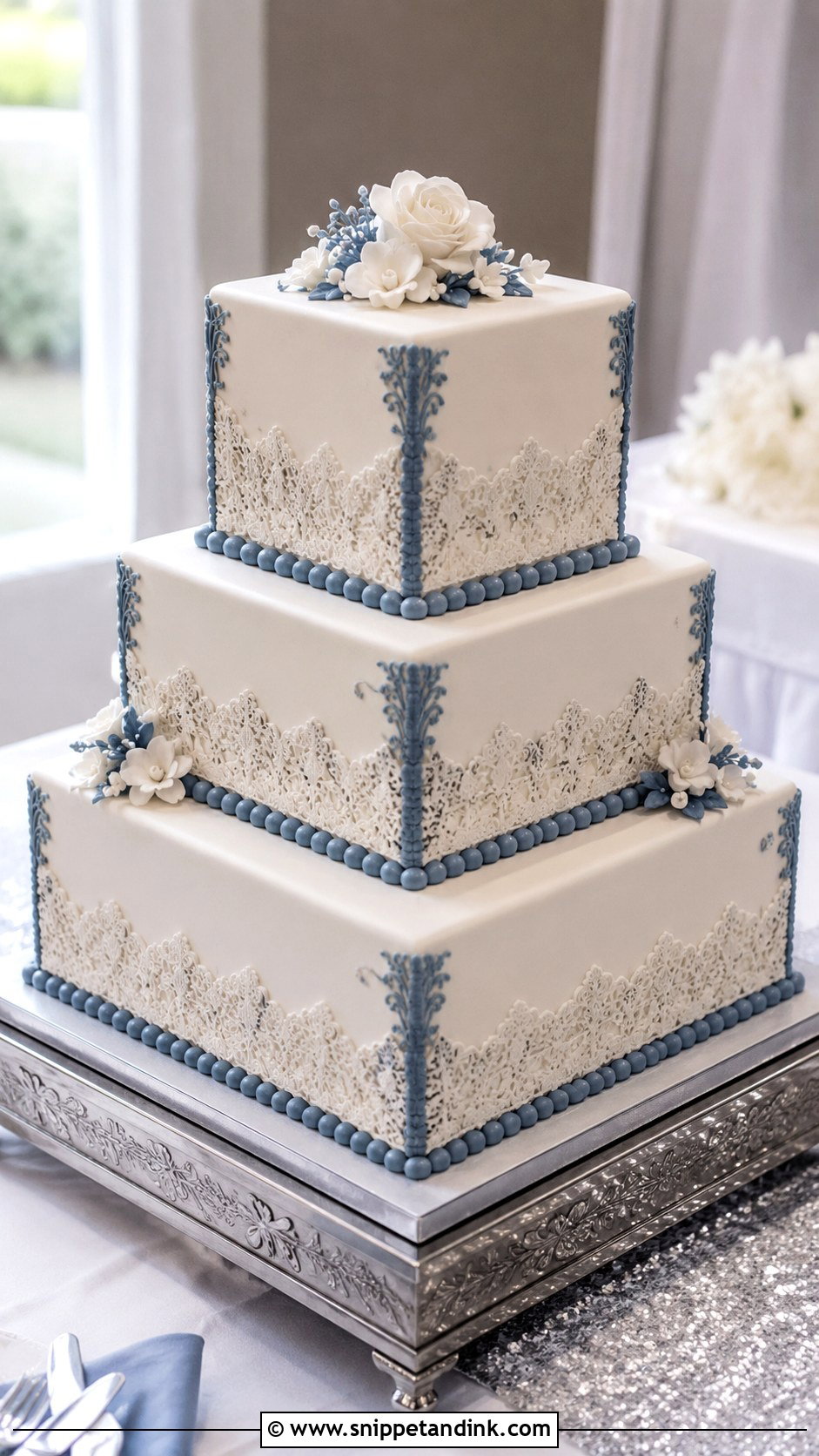
Square tiers give a vintage cake a formal, structured shape, and ornate piping looks especially neat against straight edges. White frosting as the base, with blue borders, lace patterns or painted corners. Square cakes are harder to finish than round ones; every corner shows, so I usually cover them in fondant or set them in ganache first. Stacking alternating blue and white square tiers makes a classic centerpiece. Decorate each corner equally so it stays symmetrical, and soften the geometry with pearls or a simple floral topper. Ballrooms, historic homes and traditional venues suit it.
14. Blue Bow Wedding Cake
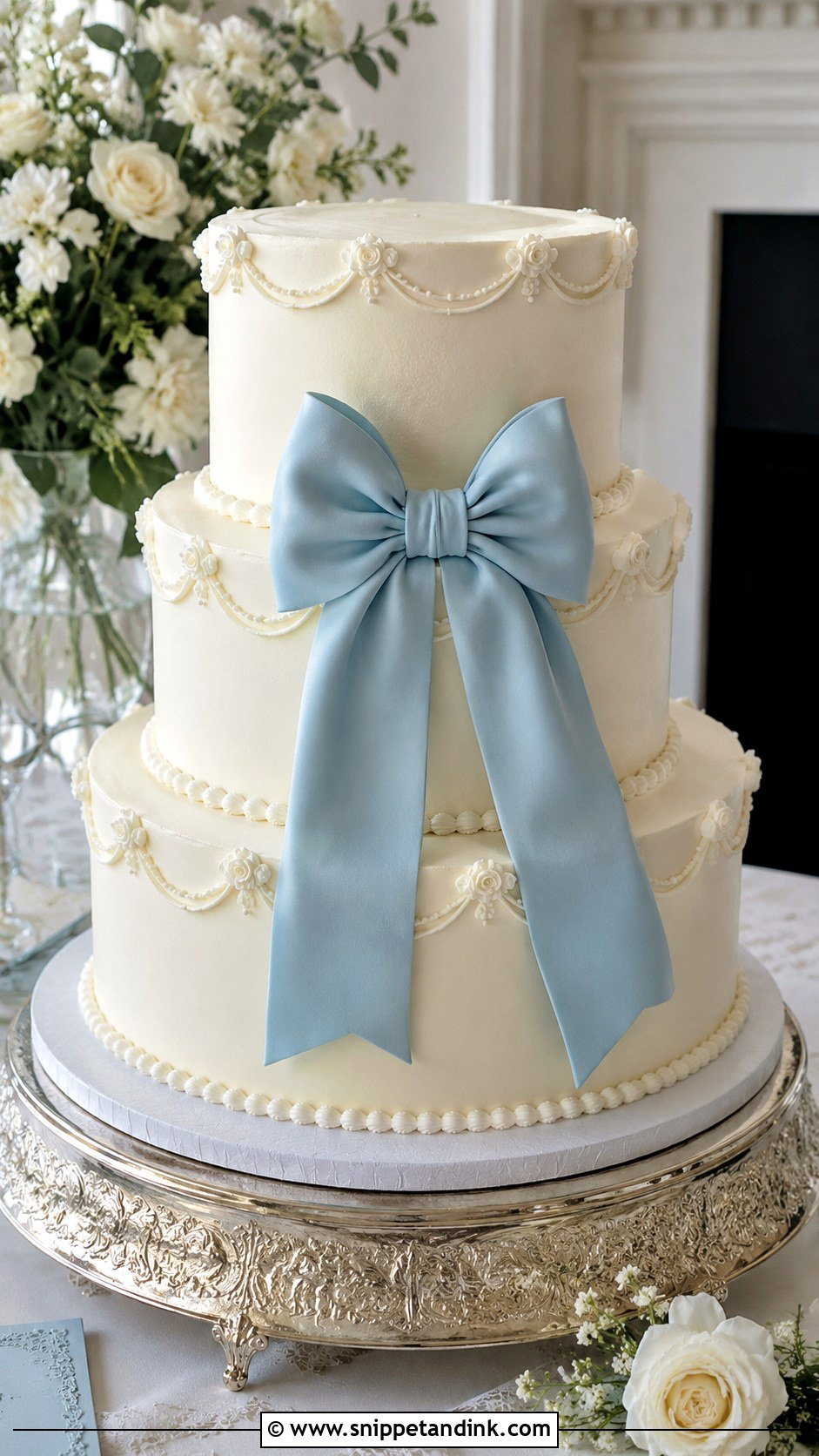
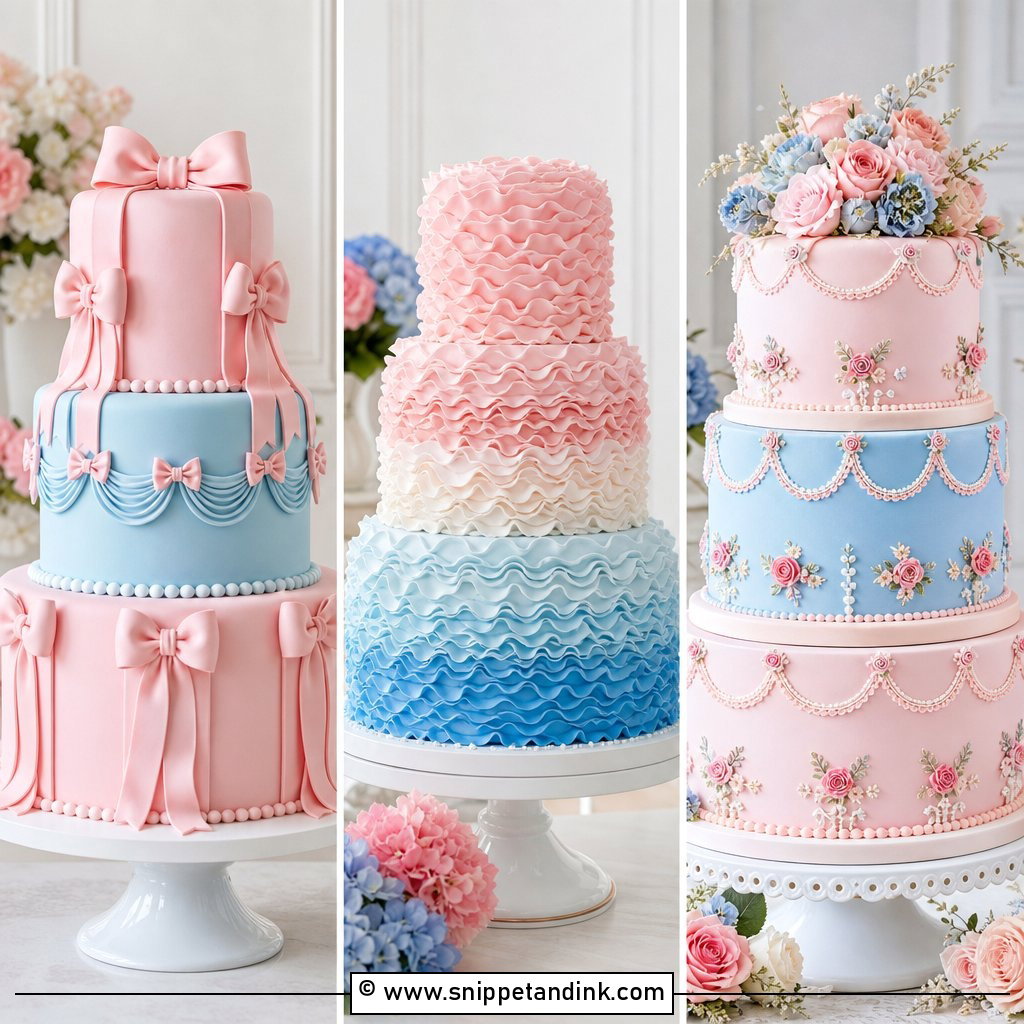
A bow can turn sweet very quickly, so I keep everything around it grown-up. The bow itself can be fondant, piped buttercream, satin ribbon or edible wafer paper. Fondant bows are made days ahead and left to dry so the loops hold their shape; wafer paper is lighter but wilts in humidity. One large bow on the front of a tier makes a focal point; smaller bows around each tier create a more detailed look. Pearl borders, scalloped piping or subtle lace complete it. Romantic weddings and bridal brunch receptions suit this one.


15. White Wedding Cake With Blue Cherries
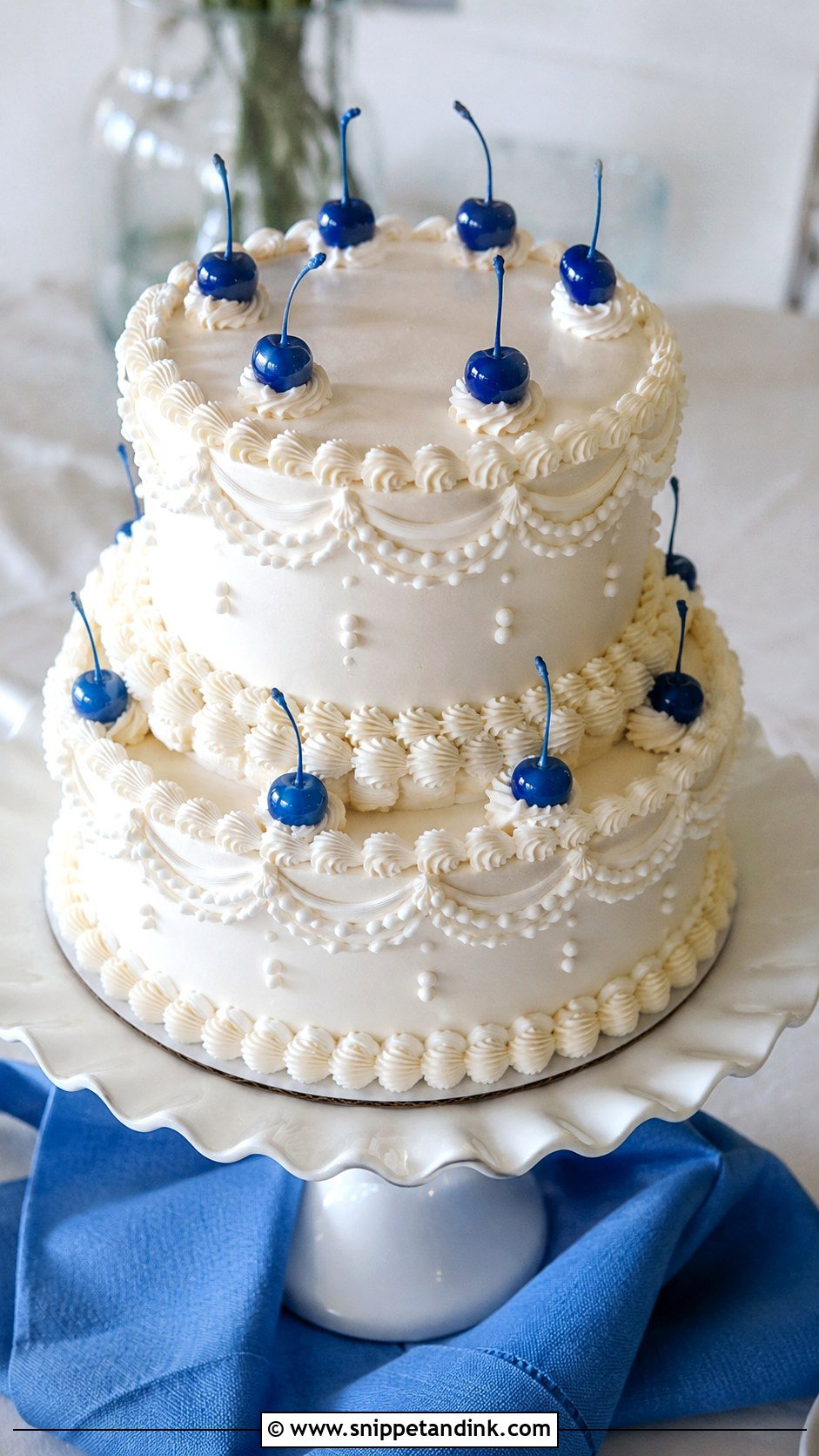
Blue cherries put a softer spin on the vintage cherry cake look. Instead of red, I use blue-tinted sugar cherries or small fruit-shaped sugar pieces. Real blueberries look sweet but bleed purple juice into white buttercream within a few hours, so I only use them on cakes cut soon after they’re placed. Lambeth swags, shell borders and piped rosettes build the vintage frame. It’s fun without being silly, and it makes a good smaller reception cake, after-party cake or dessert table centerpiece. Keep the blue spread evenly so it looks planned.
16. Blue Vintage Sheet Wedding Cake
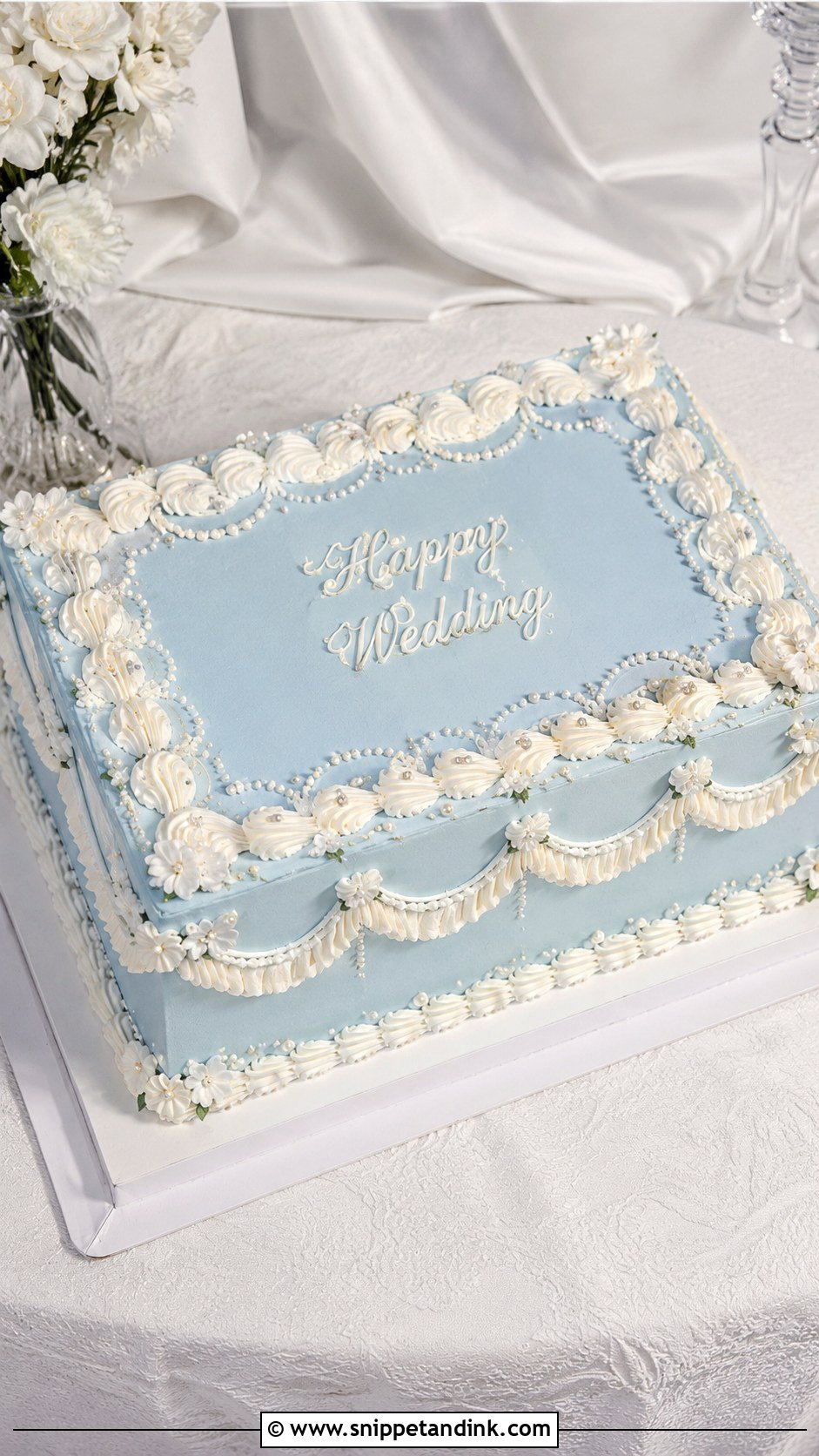
A sheet cake is the most honest way to feed a crowd, and it can still look pretty. White piped borders, blue rosettes, pearls and a short wedding message are enough. Casual receptions, backyard and brunch weddings, and couples after a retro bakery look suit it. Soft blue frosting with white piping feels cheerful; a white top with blue borders feels more traditional. Sheet cakes are quick to cut and easy to display, and a top-down photo shows every bit of the piping. Many couples pair a small tiered cake for cutting with sheet cakes in the kitchen.
17. White And Blue Ruffle Wedding Cake
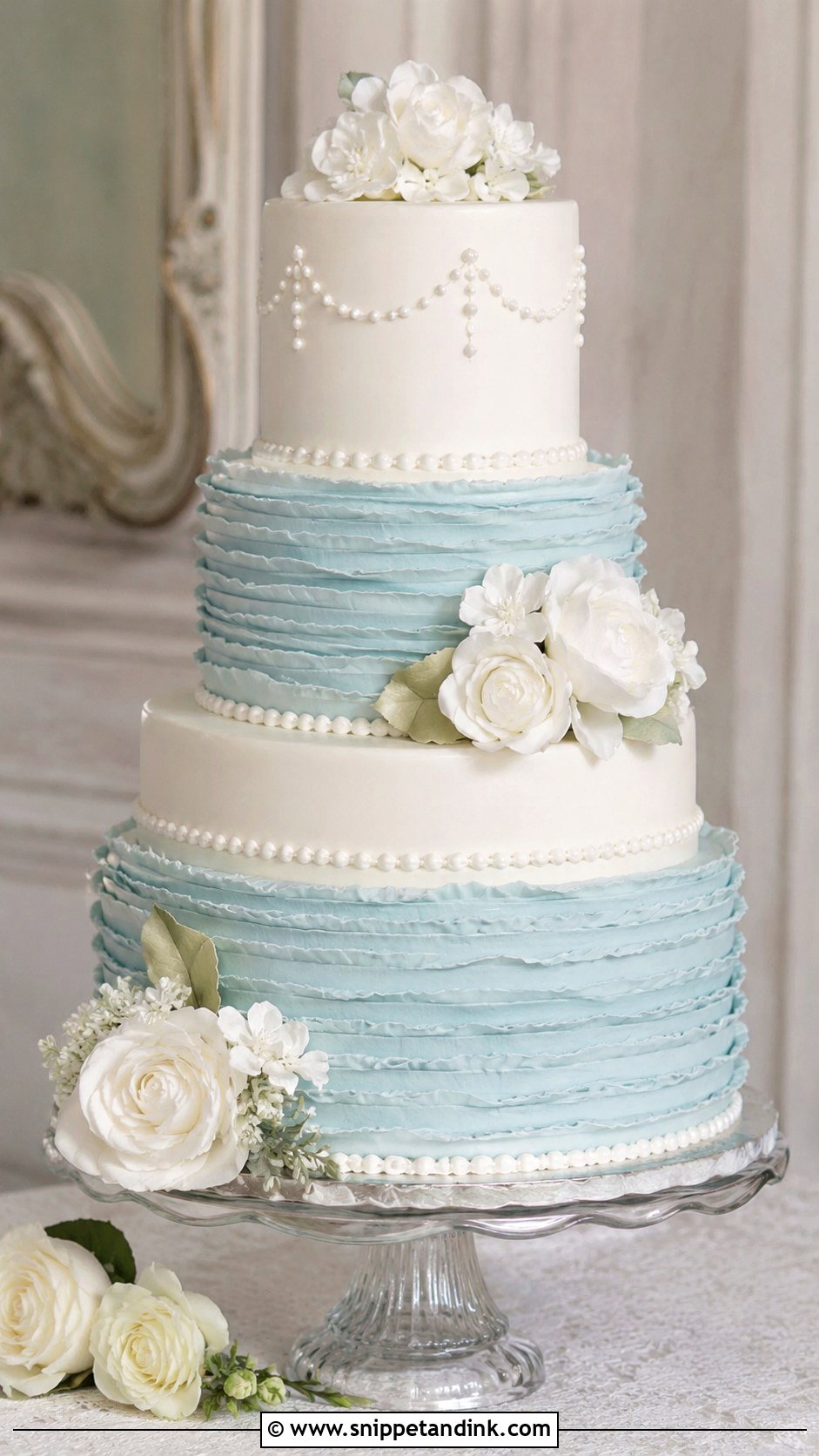
A white and blue ruffle wedding cake is all movement. Ruffles can be piped in buttercream with a petal tip, cut from fondant or folded in wafer paper; buttercream is the most forgiving in warm weather, wafer paper the most delicate. White tiers with pale blue ruffles look airy, while blue tiers with white ruffles feel more dramatic. Pearls, lace piping or small sugar flowers bring out the texture. Keep the colors gentle so all those layers don’t look busy. Ballrooms, garden receptions and traditional bridal themes suit it.
18. Blue Monogram Wedding Cake
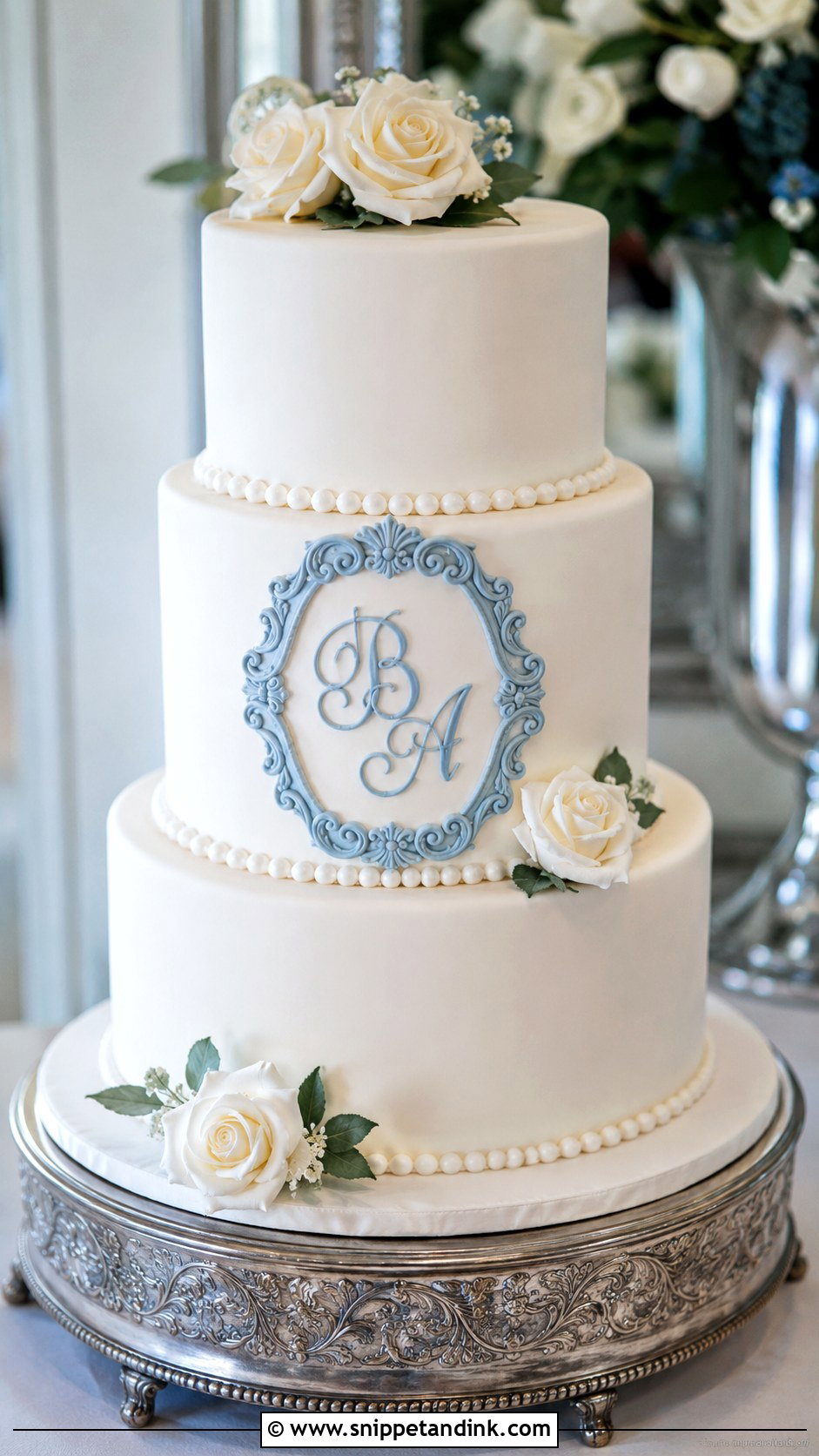
A monogram adds a personal detail to a traditional cake. It can be painted, piped, stamped or set as an edible plaque, and framed with vintage piping or small florals. I trace monograms from the couple’s stationery file so the lettering matches the invitations exactly. Use initials, the wedding date or a crest based on the invitation design. Keep the rest of the cake quieter so the monogram stays the focus, and repeat the blue in the borders or flowers to connect the whole design. Formal receptions, estate weddings and traditional venues suit it.
19. Blue And White Mini Wedding Cakes
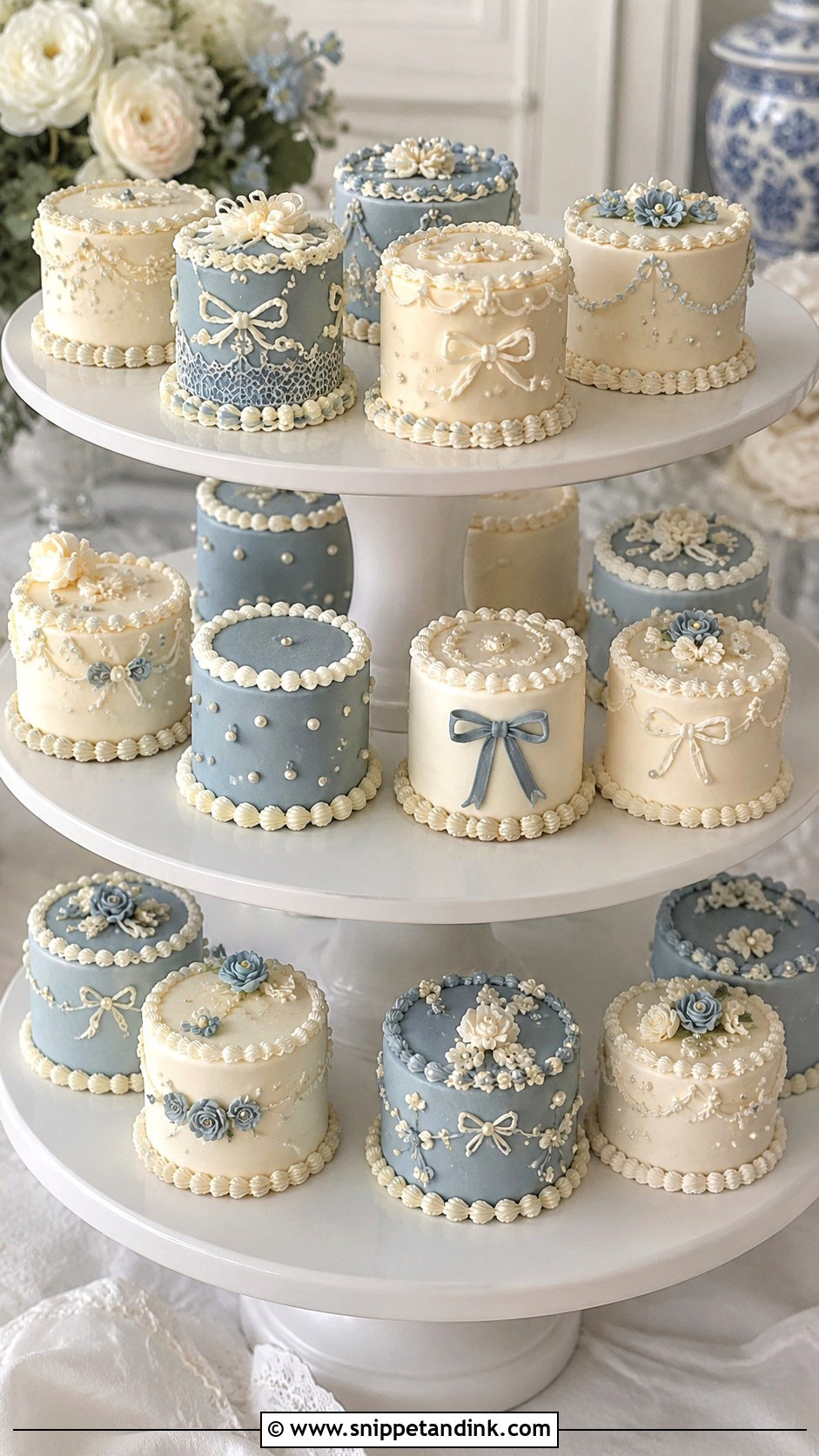
Blue and white mini wedding cakes give a dessert table a collected, heirloom feel. Each one can carry a different vintage detail: piped borders, tiny bows, pearl dots, lace or small sugar flowers. Mini cakes take far longer to decorate per serving than a tiered cake, so expect that in the quote. Guests see the full design up close, which is a nice thing for photos. White buttercream with blue piping or blue bases with white accents both keep the palette together. Intimate weddings and afternoon receptions suit them.

20. Blue And White Tiered Wedding Cake
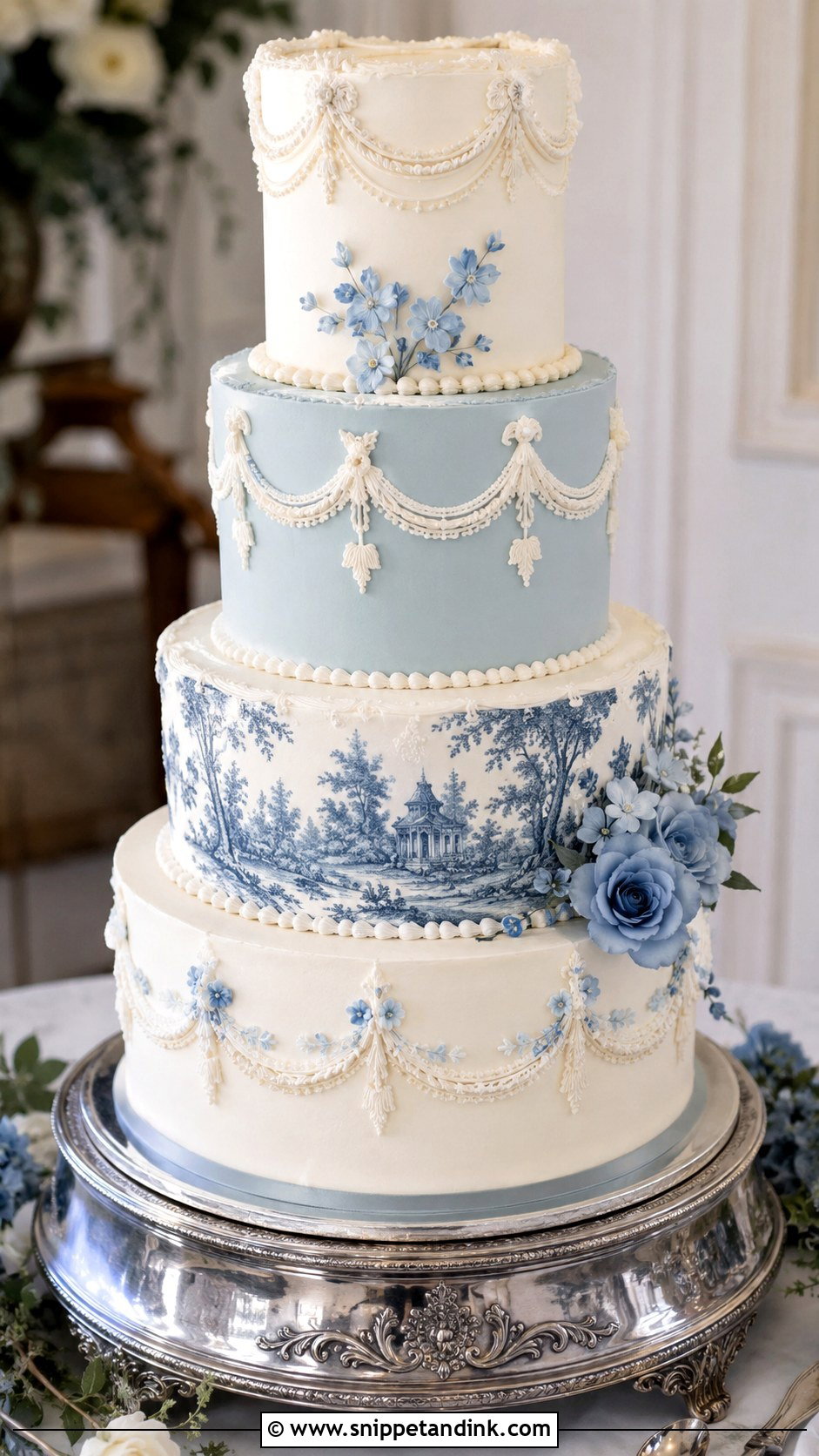
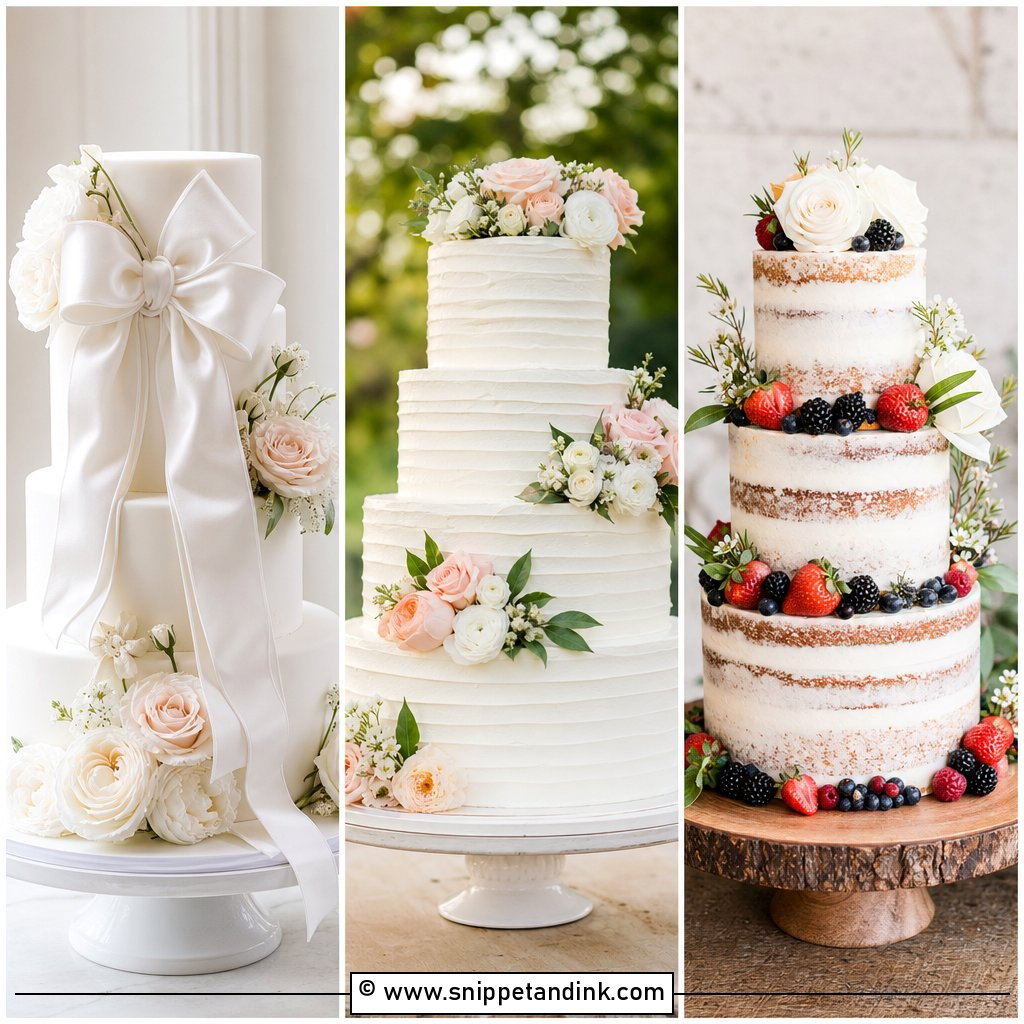
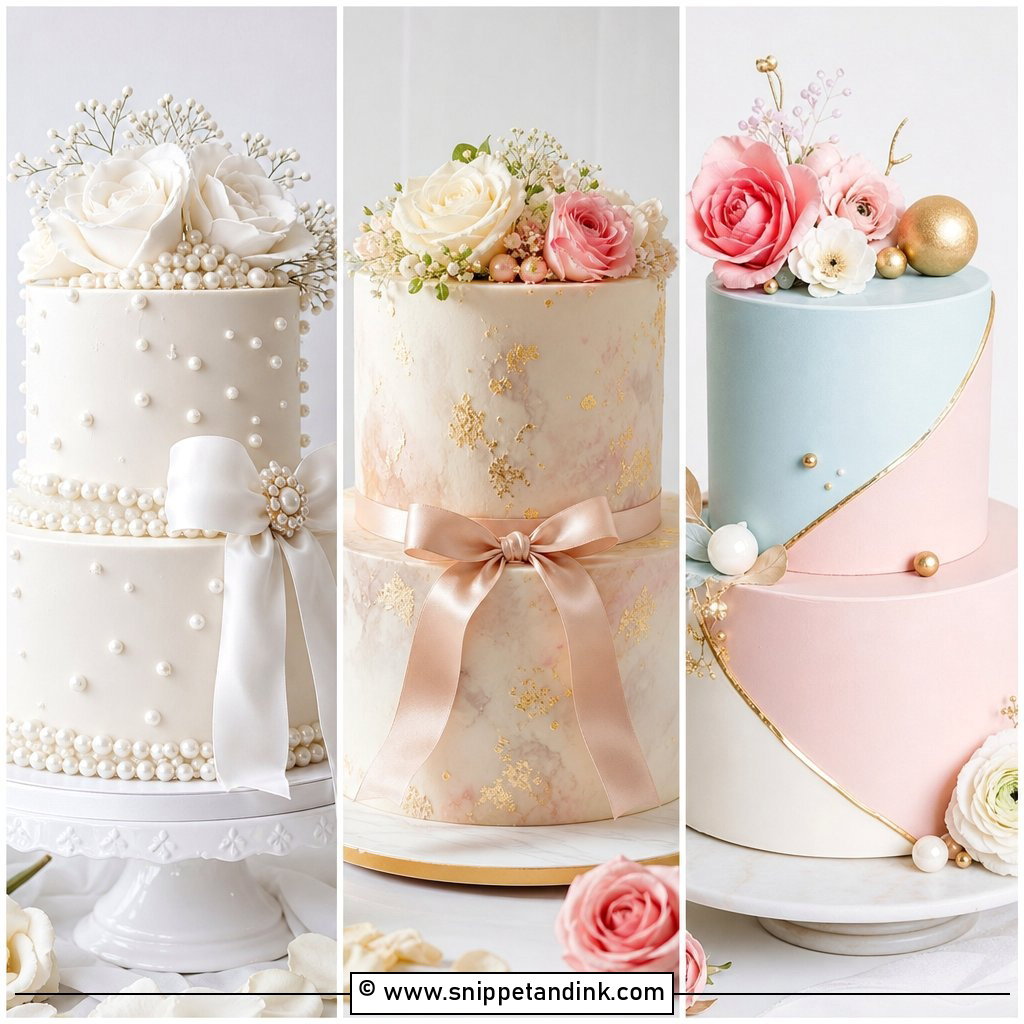
A tiered blue and white cake is the true centerpiece version. More tiers give you room to combine details such as Lambeth piping, toile, pearls, ribbon and sugar flowers, but I’d limit it to two or three techniques so it doesn’t look like a sampler. Alternate blue and white tiers, or keep blue to accents on white. It suits most wedding styles, from ballroom to garden. A silver, glass or white ceramic stand keeps the vintage mood. The cake should look considered from every side, since guests walk all the way around it.
A Fabric Swatch, a Sketch and Enough Weeks for Hand Piping
Vintage cakes are slow work. Lambeth piping, hand-painted toile and sugar flowers can each take days, so the order process matters more here than with a plain buttercream cake. This is the sequence I’d follow.
- Contact cake designers once your date and venue are confirmed. Detailed vintage work limits how many cakes a decorator can take in one weekend.
- Bring a swatch of your bridesmaid dress, a ribbon or an invitation to the tasting. Blue has more variation than almost any other wedding color, and a photo on a phone won’t match.
- Ask for a sketch that shows which tiers get which technique. It’s the easiest way to spot a design that has become too busy.
- Confirm the display: shade, temperature and how long the cake will sit out. Piping softens in heat and painted details smudge if condensation forms.
- Lock your final guest count a few weeks before, which is when tier sizes and any extra sheet cakes are set.
If you want to keep a sugar flower or a piece of the piped topper, tell your baker in advance. Sugar work keeps for years in a dry box away from light, and it makes a better keepsake than freezing the top tier.
Something Blue You Can Also Eat
White and blue vintage cakes can move between romantic, playful and formal with only a few design changes. A soft blue Lambeth cake feels nostalgic and current, while toile or Delft painting looks artistic and enduring. Pearls, lace, ribbon, bows, flowers and ornate piping all build the vintage mood. Start from your venue, flowers, dress and color palette, and the right style usually becomes obvious. A small heart cake or a tall tiered centerpiece, this palette gives your dessert table a graceful something blue.
You'll Like These Ideas:




Leave a Reply