
Blush and powder blue on one cake takes me straight back to old bakery windows, and somehow it still looks current. The pairing fits a garden wedding, a ballroom, the coast or a courthouse lunch, depending on how heavily it’s piped. Think shell borders, pearl dots, sugar roses, ruffled tiers and a little “something blue” worked into the icing. As the person piping it, I’ll be honest that this style lives or dies on two things: how well the two pastels sit together and how neatly the piping is done. Below are twenty ways I’d build a pink and blue cake in the vintage style, from a single heart to a full tiered centerpiece.
Getting Two Pastels to Agree on One Cake
Most pink and blue cakes that look off have a color problem, not a design problem. Here is how I handle the palette before any piping starts.
Let one color lead
Equal amounts of pink and blue fight each other and can look like a baby shower. I pick one as the main color, use the other for piping and accents, and add ivory as a buffer between them. Roughly two parts lead color to one part accent is a good starting point.
Mix early, judge later
Gel colors keep developing for hours after mixing, so buttercream that looks right at night is often a shade darker by morning. I tint the day before and check it in daylight. Blue needs extra care, because butter’s yellow tint pulls pale blue toward green; I whiten the base first. Pink has the opposite problem and fades under strong sun or bright windows.
- Bring a fabric swatch or ribbon from the wedding palette, not just a phone photo, since screens shift color.
- Say whether the cake will stand near windows, under warm string lights or outdoors. Each one changes how blue reads.
- Ask to see the tinted buttercream on a sample board before decorating starts.
1. Pink And Blue Lambeth Wedding Cake
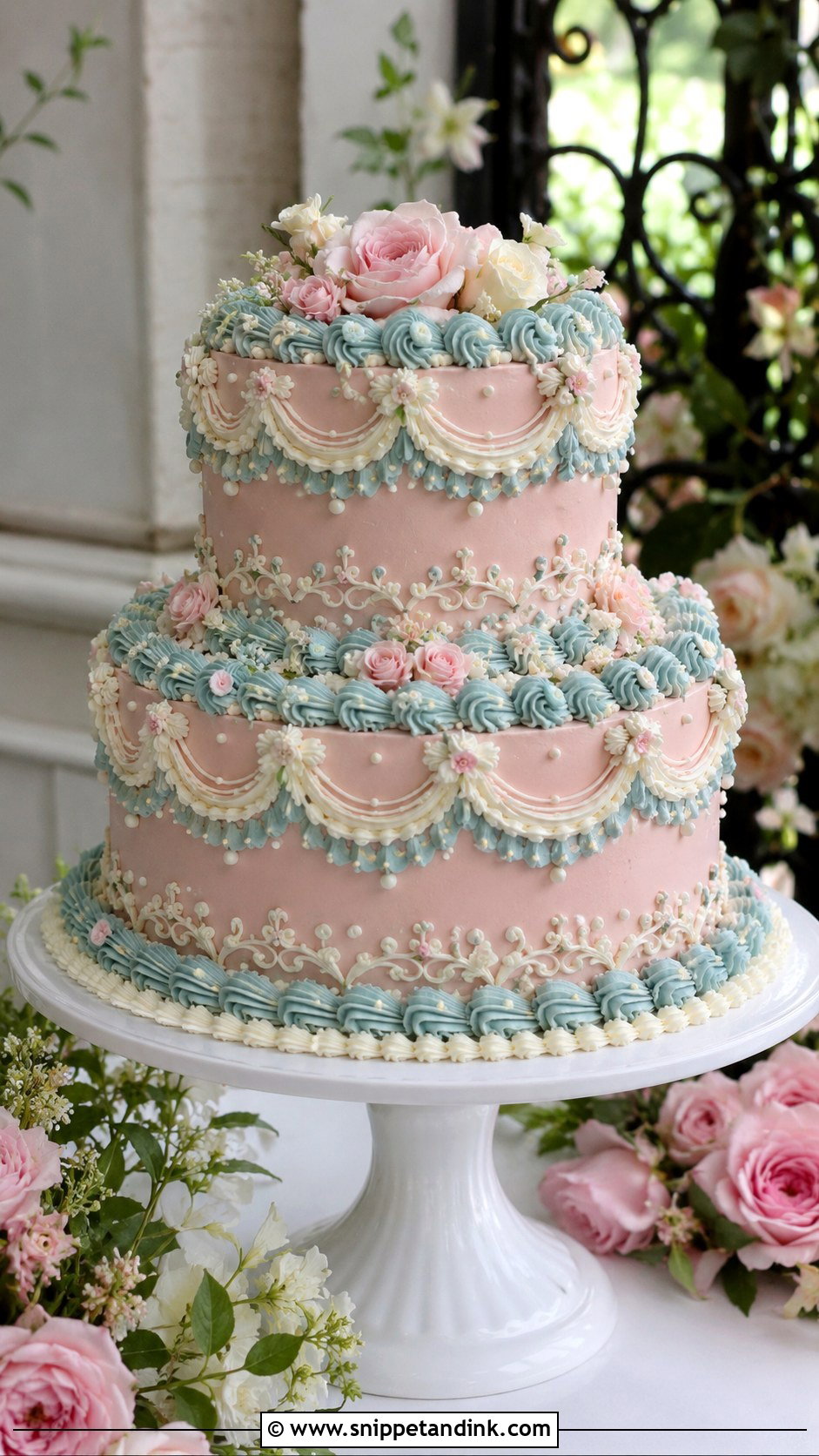
If you want the real vintage look, start here. Lambeth is built from layered piping, with shells piped over shells, swags over swags and scrolls on top, so the decoration stands proud of the cake instead of lying flat. A blush base with baby blue piping reads sweet; a powder blue base with pink accents gives you a quieter “something blue”. It has to be buttercream, since the texture is the whole point. I mark the tiers into even sections with a cake divider before I start, because uneven swags are the first thing an eye catches. Pearl dots or a piped heart on top finish it.
2. Pink And Blue Heart Wedding Cake
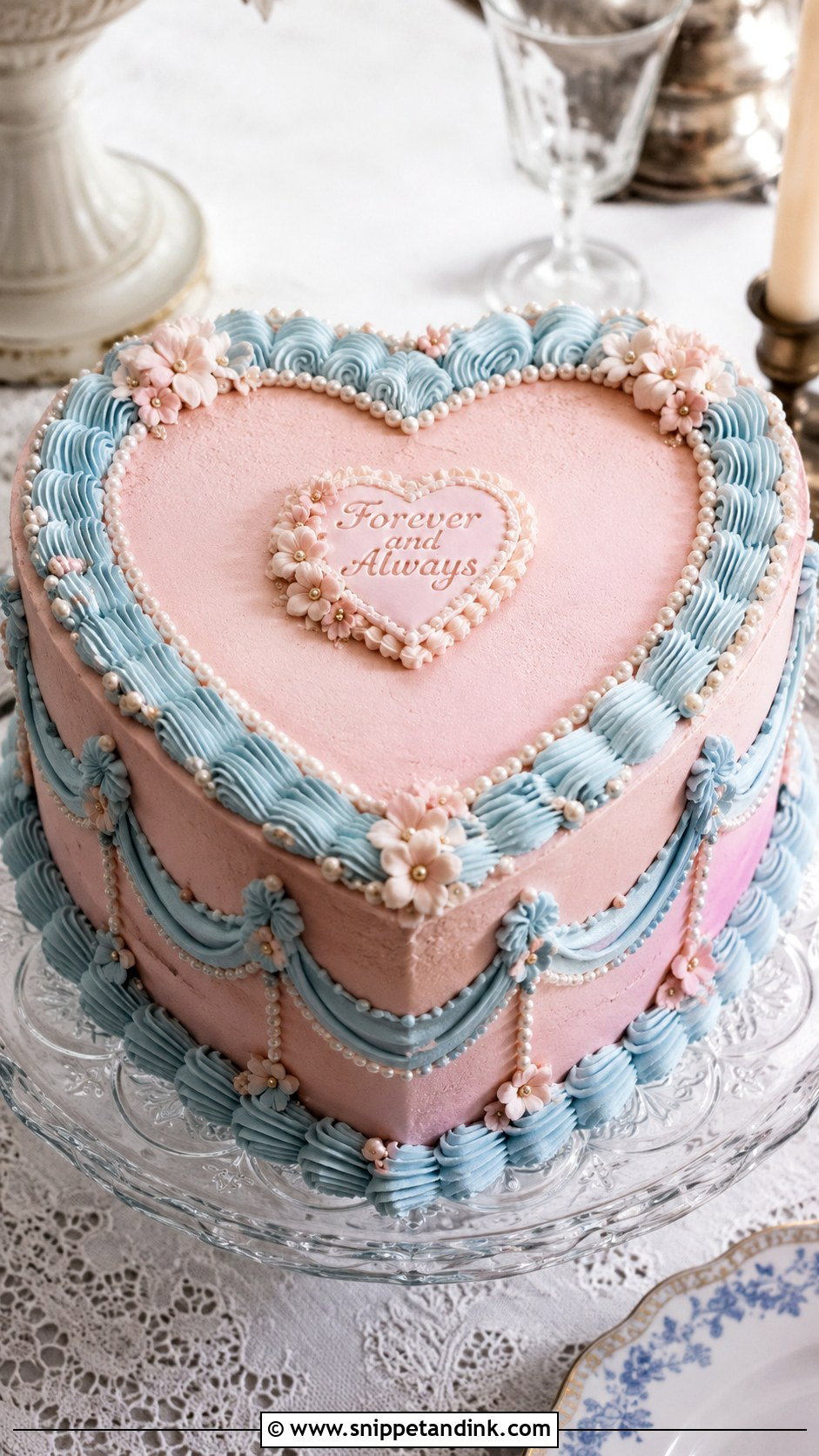
Heart cakes were a bakery staple decades ago, which is why a pink and blue heart wedding cake looks vintage almost before it’s decorated. Thick shell borders and buttercream swirls finish the job. I’d keep the colors grown-up: blush frosting, pale blue piping, ivory accents. A few pearls, small sugar flowers or a short piped message suit the top. It’s a sweetheart-table cake, a micro-wedding cake or a second dessert next to a bigger tiered one, more than a centerpiece for a large reception.
3. Pink And Blue Tiered Wedding Cake
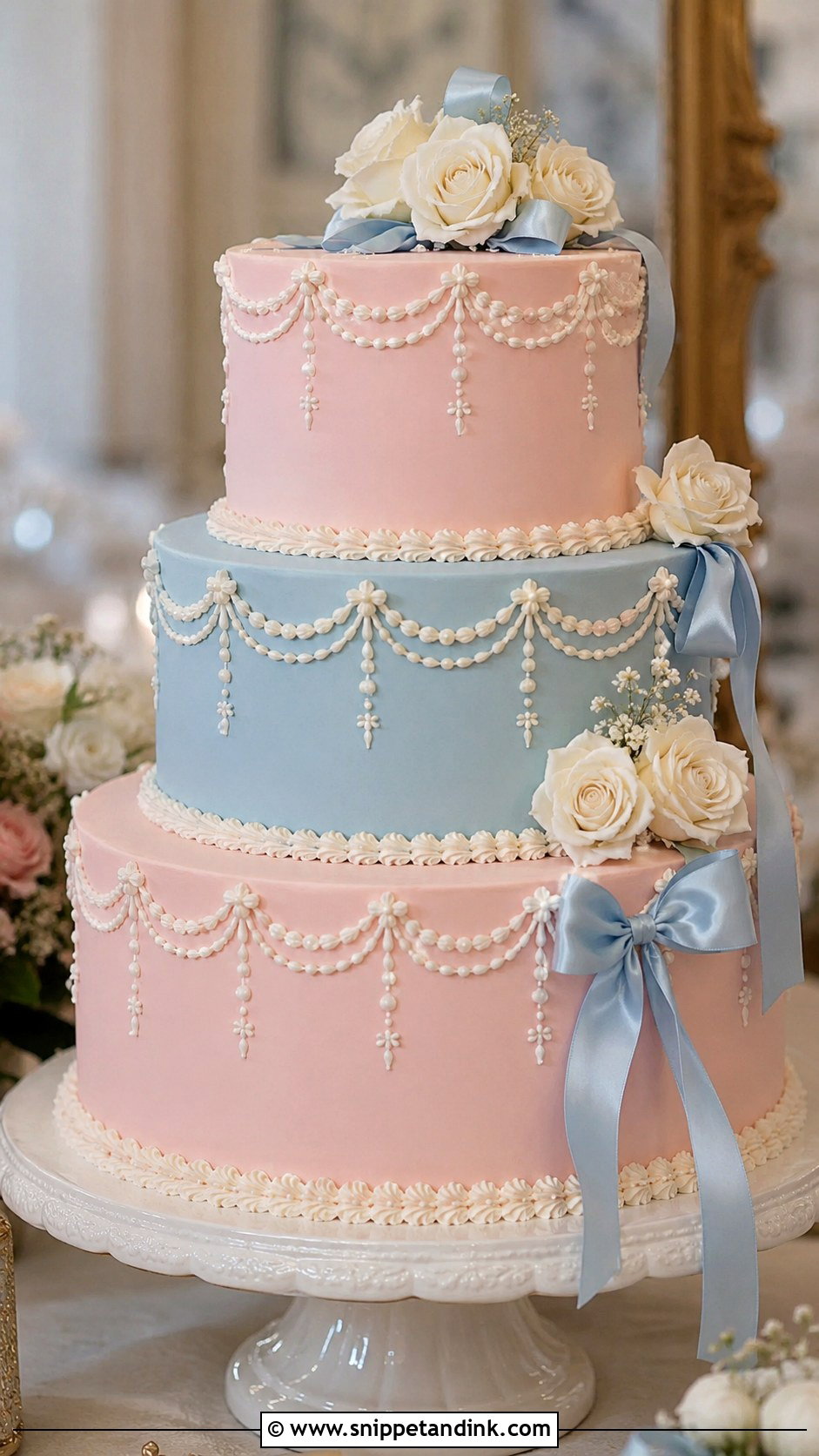
Splitting the colors by tier gives a tall cake its structure: dusty blue at the bottom, blush in the middle, ivory on top, with the same piping running through all three so it reads as one cake. I put the darkest color at the base because it visually anchors the cake; reverse it and the cake looks top-heavy. Shell borders, pearl dots and small flowers repeated on every tier hold it together. A white pedestal and a ring of garden flowers at the base suit it. Ask for muted shades, since bright pastels turn sugary fast at this height.
4. Pink And Blue Vintage Buttercream Wedding Cake
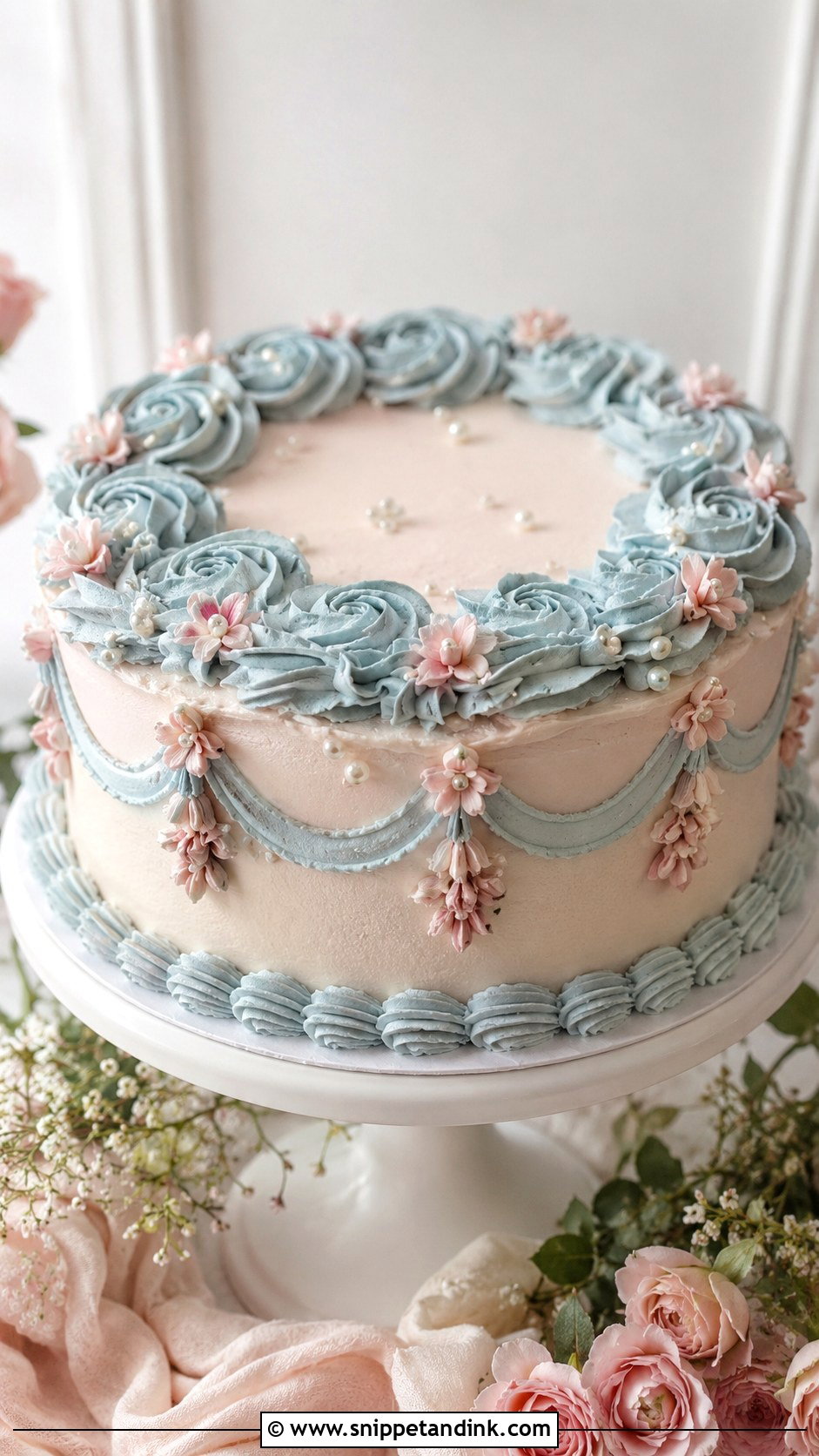
Buttercream is where vintage cakes come from, and it forgives a handmade finish that fondant would show as a flaw. On a pale pink base I’d pipe blue rosettes, buttercream lace and scalloped borders; flip it to a blue base with pink piping for a cooler cake. Vanilla, almond, lemon and strawberry sponges suit the palette and the era. One caution from the piping side: a soft Swiss meringue buttercream tastes lovely but loses sharp detail in a warm room, so for heavy piping I use a firmer mix on the outside.
5. Pink And Blue Wedding Cake With Cherries
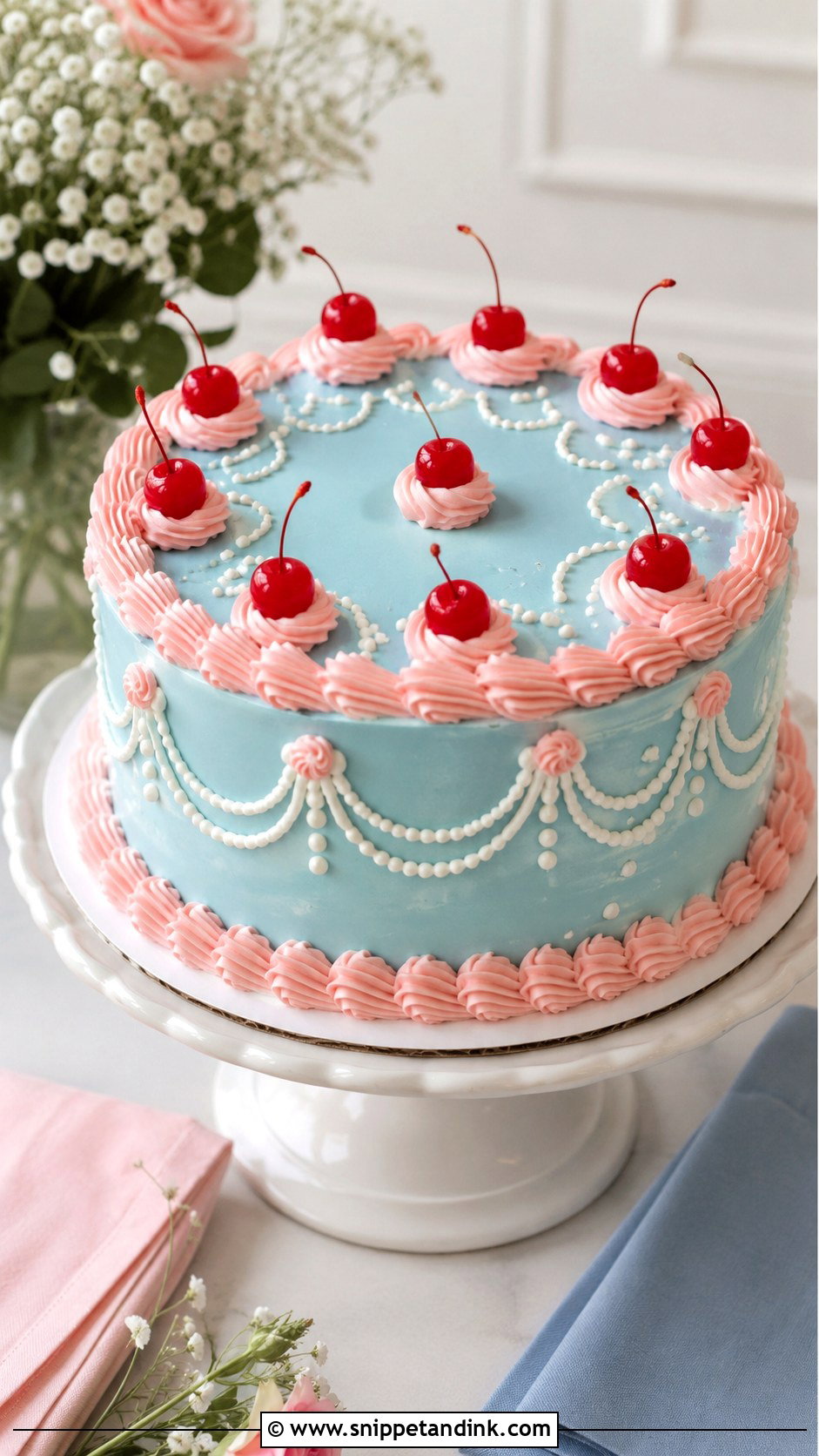
Bright red cherries against pastel piping is pure retro bakery, and they look best on Lambeth work. Picture baby blue buttercream, blush shell borders, white swags and a ring of glossy cherries around the top edge. That’s the cake with cherries I get asked for most. The practical issue is juice. Jarred cherries bleed red into pale icing within hours, so I drain them, dry them on paper overnight and set them on at the venue, or I use sugar cherries that won’t leak. Keep the piping neat, because the cherries already supply the fun.
6. Pink And Blue Wedding Cake With Bows
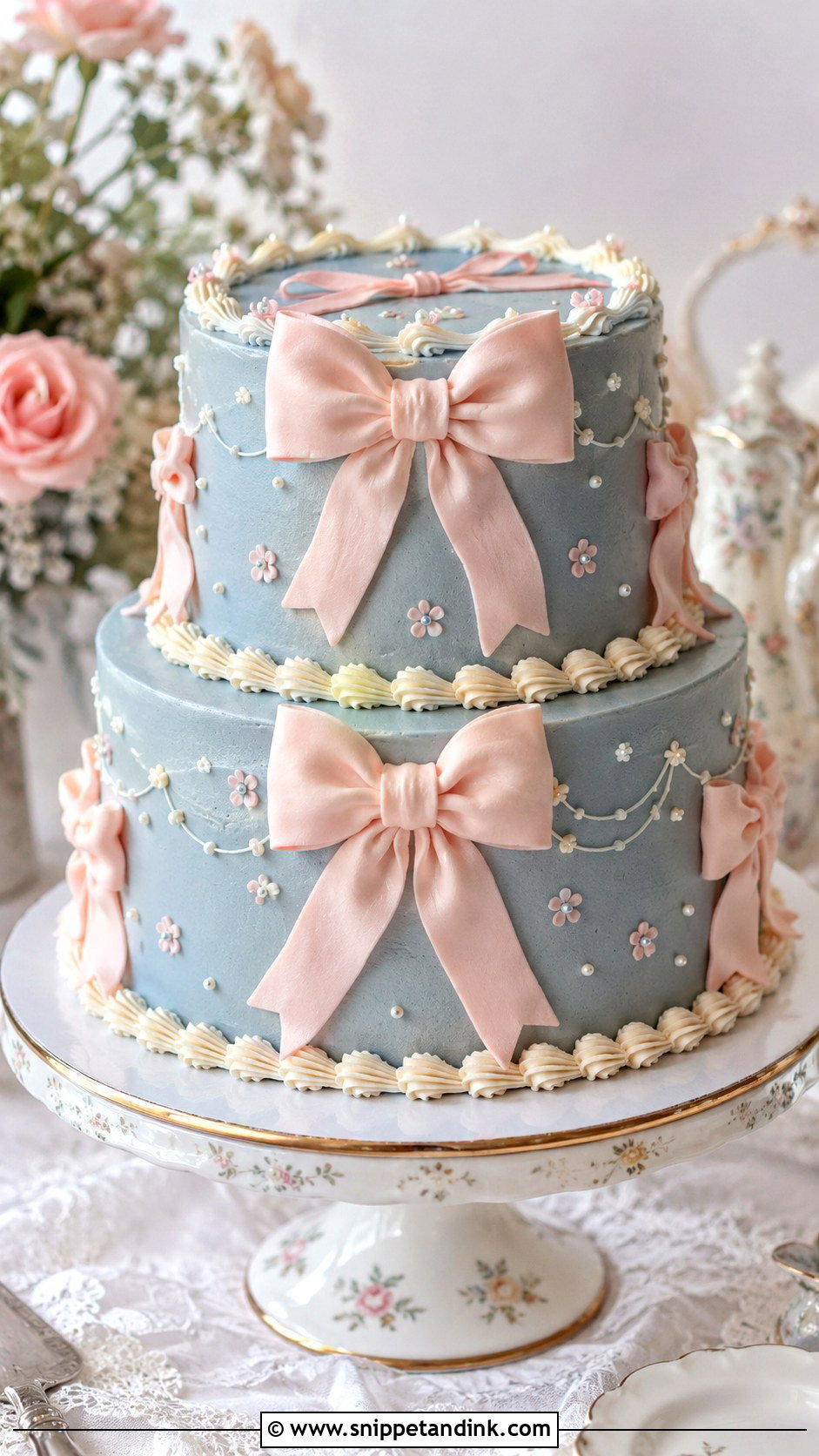
Bows look sweet without taking over, which suits a pastel cake. My usual version is a dusty blue cake with blush buttercream bows around each tier, plus piped borders, pearl dots and a few small flowers. Satin ribbon bows are quick, but butter soaks through fabric and leaves blotches, so for a fully styled cake I make the bows from fondant or pipe them. Fondant bows need a day or two to dry over a support so the loops keep their shape. This is a garden and spring wedding cake.
7. Pink And Blue Wedding Cake With Sugar Roses
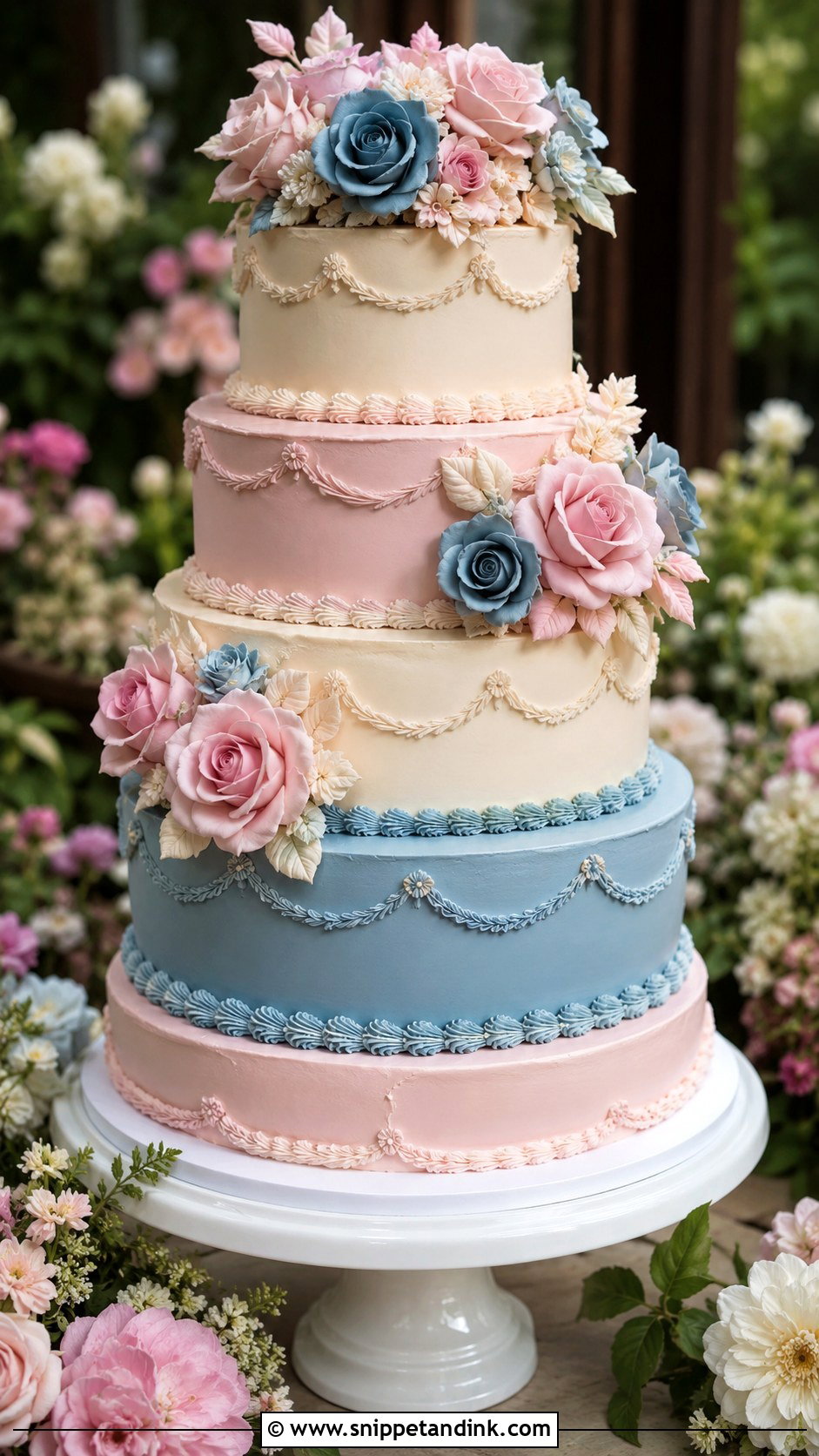
Sugar roses look heirloom when they’re grouped, not when they cover everything. I place them in two or three clusters, with blush roses, pale blue buds and ivory leaves, on white, pink or dusty blue buttercream, then tie it all together with piped borders. Gum paste roses are made petal by petal and dried for days, so they need ordering early. They also last, and many couples keep the top cluster afterward. Formal weddings suit this cake because the flowers look delicate up close.
8. Pink And Blue Wedding Cake With Pearls
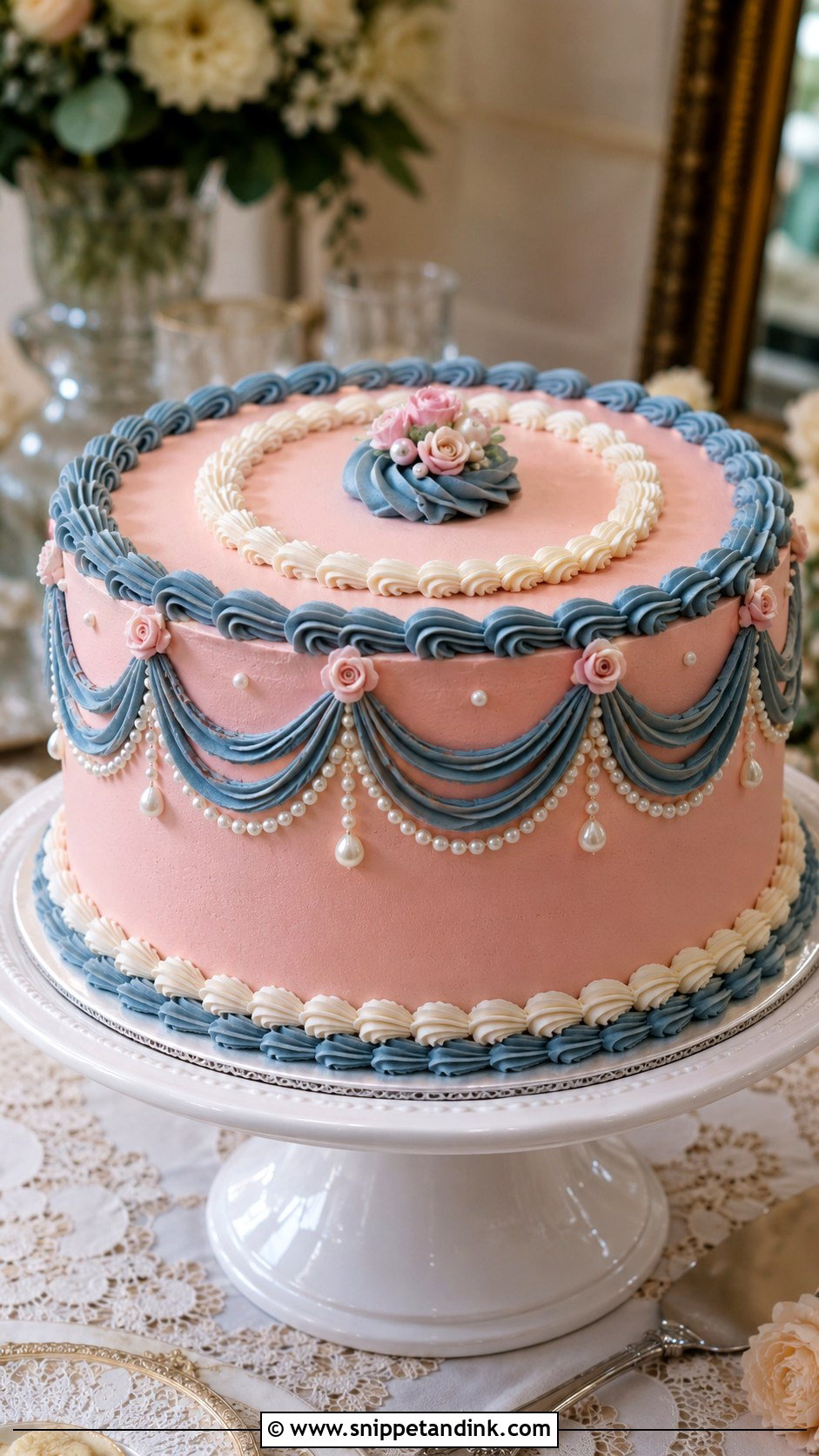
Pearls add shine without making a pastel cake look modern. On a blush cake, I’d pipe blue swags and hang a pearl drop at every curve, or run pearl borders where the tiers meet, almost like a necklace. Edible pearls should go in while the buttercream is soft so they lock in; pressed into crusted icing they pop off. Keep the rest restrained. Ballrooms and classic reception rooms show this one at its best.
9. Pink And Blue Lace Wedding Cake
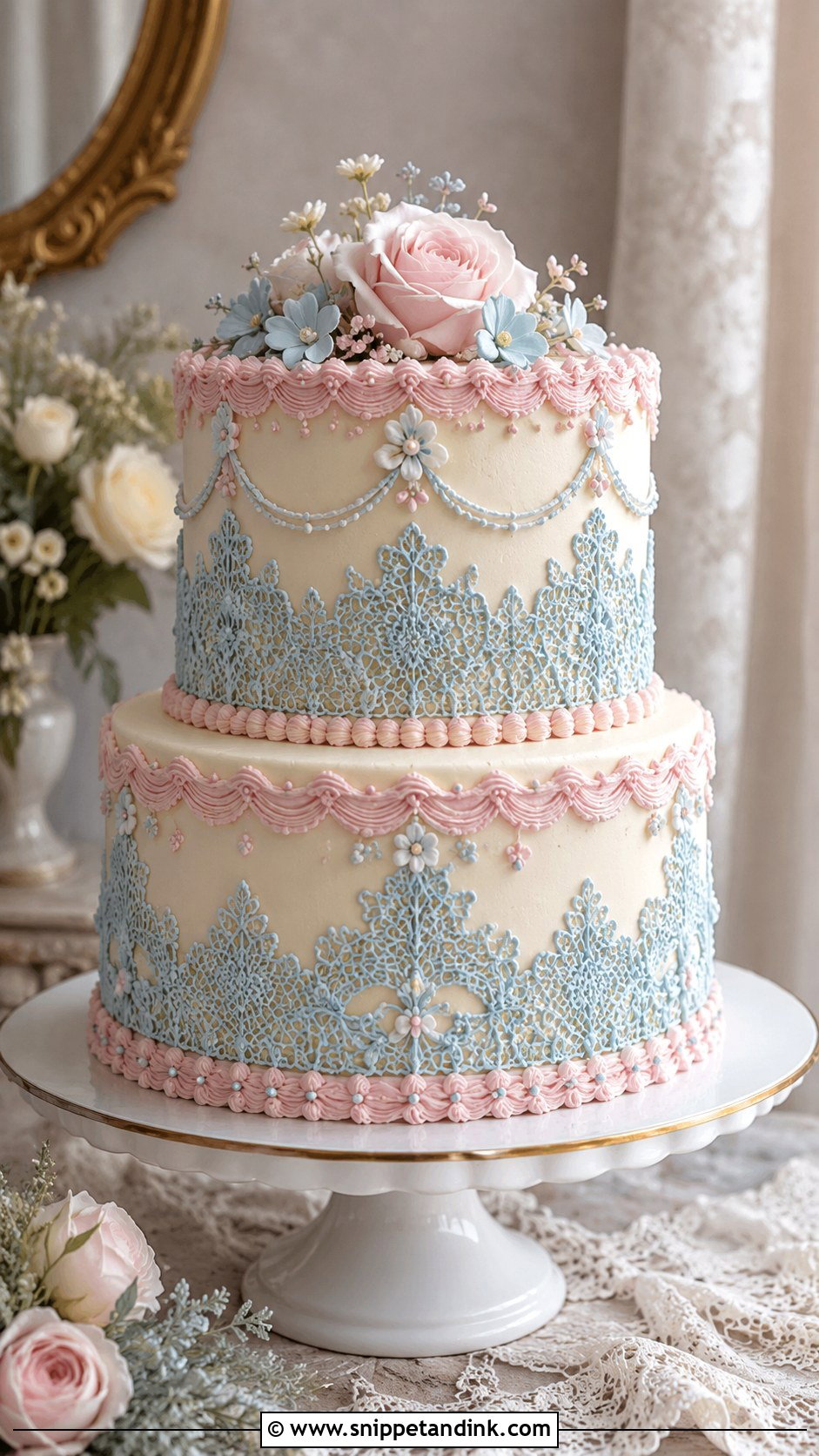
Lace on a cake can echo a veil, an embroidered bodice or an old tablecloth. I either pipe it freehand in fine lines, a technique called brush embroidery where a damp brush drags piped outlines into petals, or lay set sugar lace from a mold against the tier. Ivory cake with pink and blue lace feels traditional; a blue base with white and pink lace tells a stronger color story. Pearl borders and scalloped edges suit it. Of all the ideas here, lace needs the steadiest hand, so look at a baker’s close-up photos before booking.
10. Pink And Blue Ruffle Wedding Cake
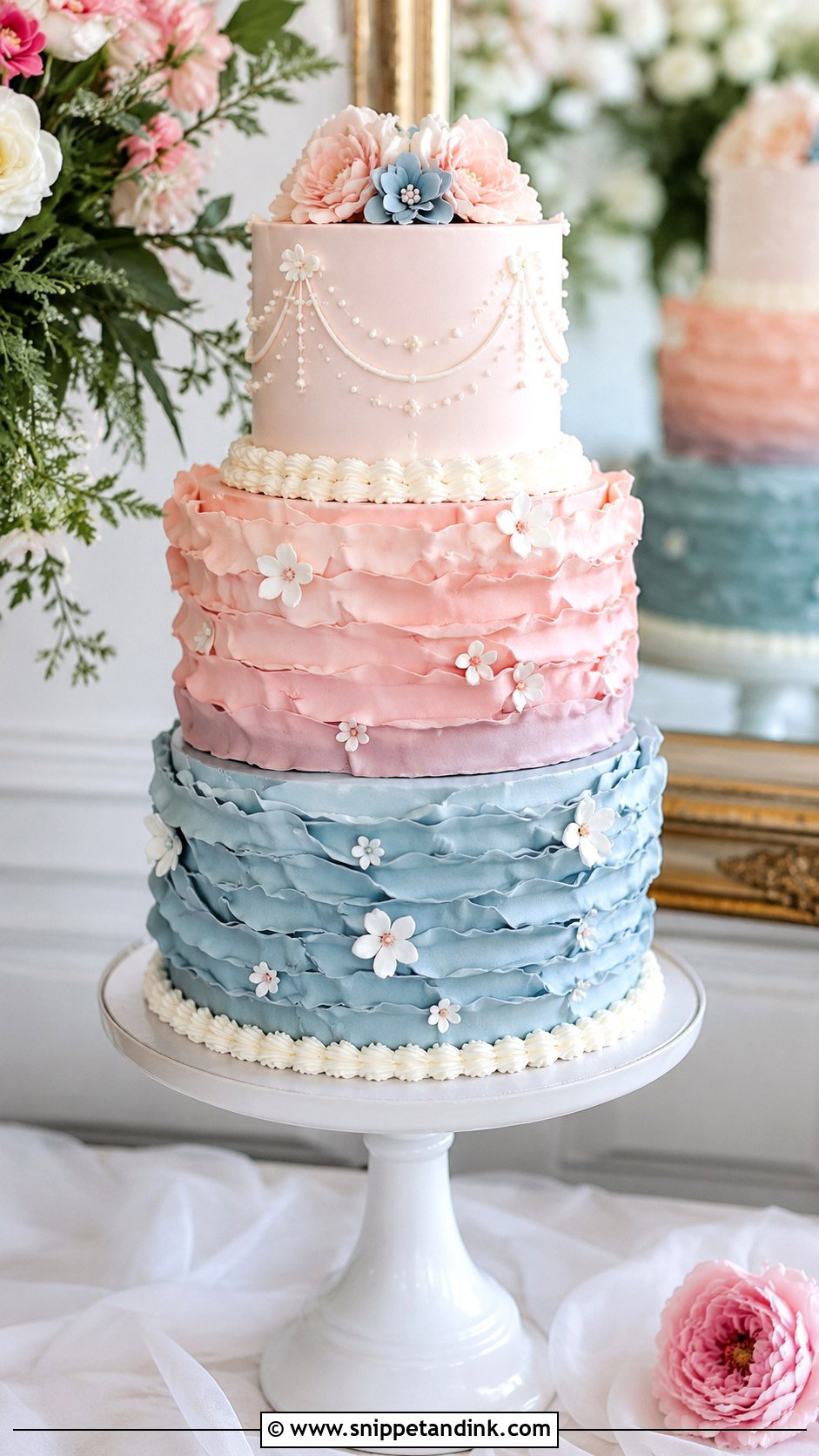
Ruffles add movement, and they add weight. Each band of ruffle is piped with a petal tip in overlapping rows, which uses a lot of buttercream, so I keep ruffles to the lower tiers and leave the top smooth. Pale pink ruffles at the bottom, dusty blue in the middle and a plain ivory top tier with vintage piping keeps the cake from looking busy. Garden weddings and spring receptions suit this texture. A few sugar flowers or pearl dots on the plain tier finish it.
11. Pink And Blue Sheet Wedding Cake
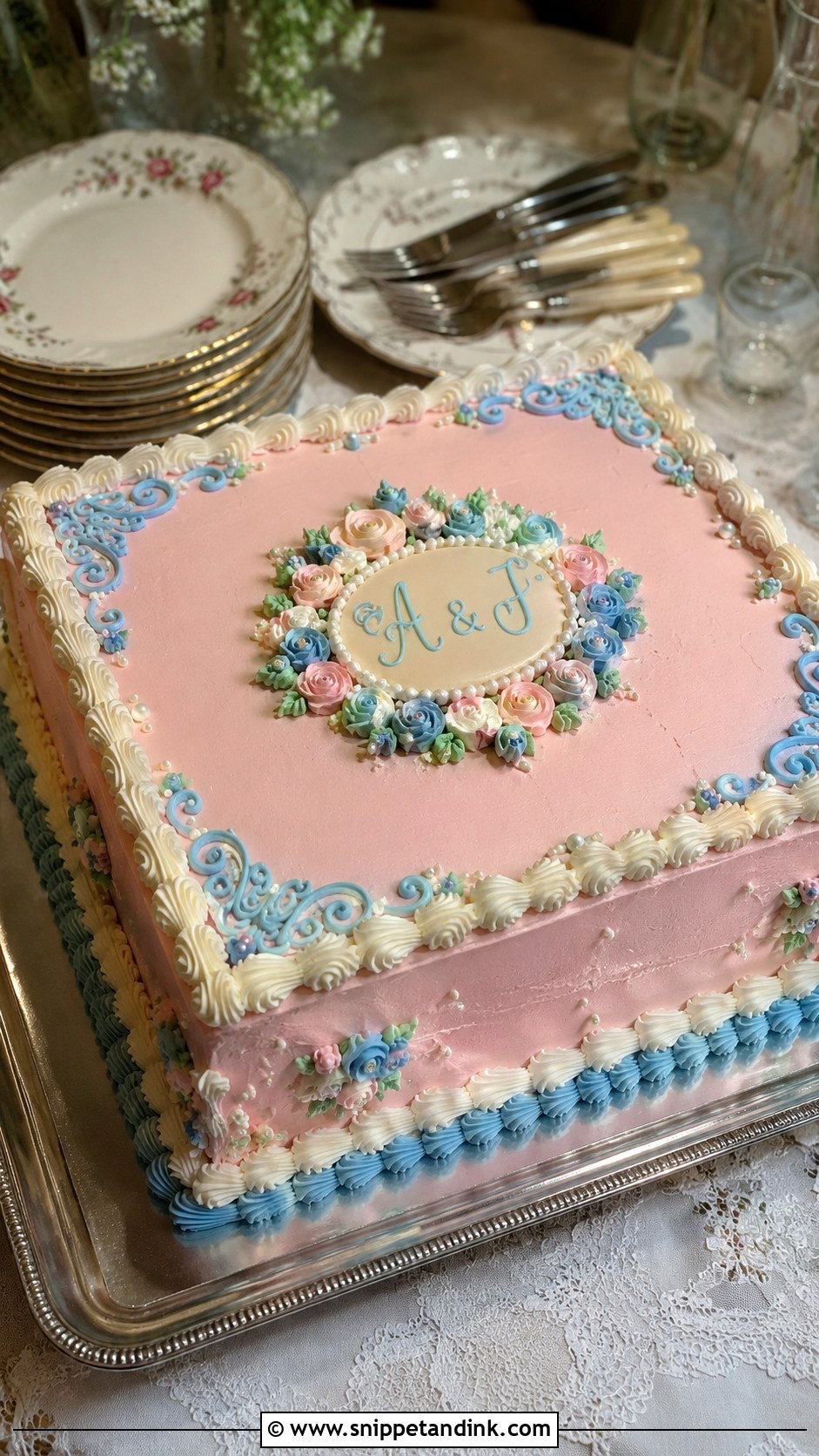
Sheet cakes serve easily and can still look vintage. A rectangle in pink buttercream with blue shell borders, piped flourishes at the corners and a small floral center holds its own against a round cake. Backyard weddings, casual receptions and dessert tables that need more servings without more tiers suit it best. Add a piped monogram or the date in the middle. Corners are the tricky part for me, since the border has to turn cleanly without a gap, so I pipe them first and join the straight runs to them.
12. Pink And Blue Mini Wedding Cake
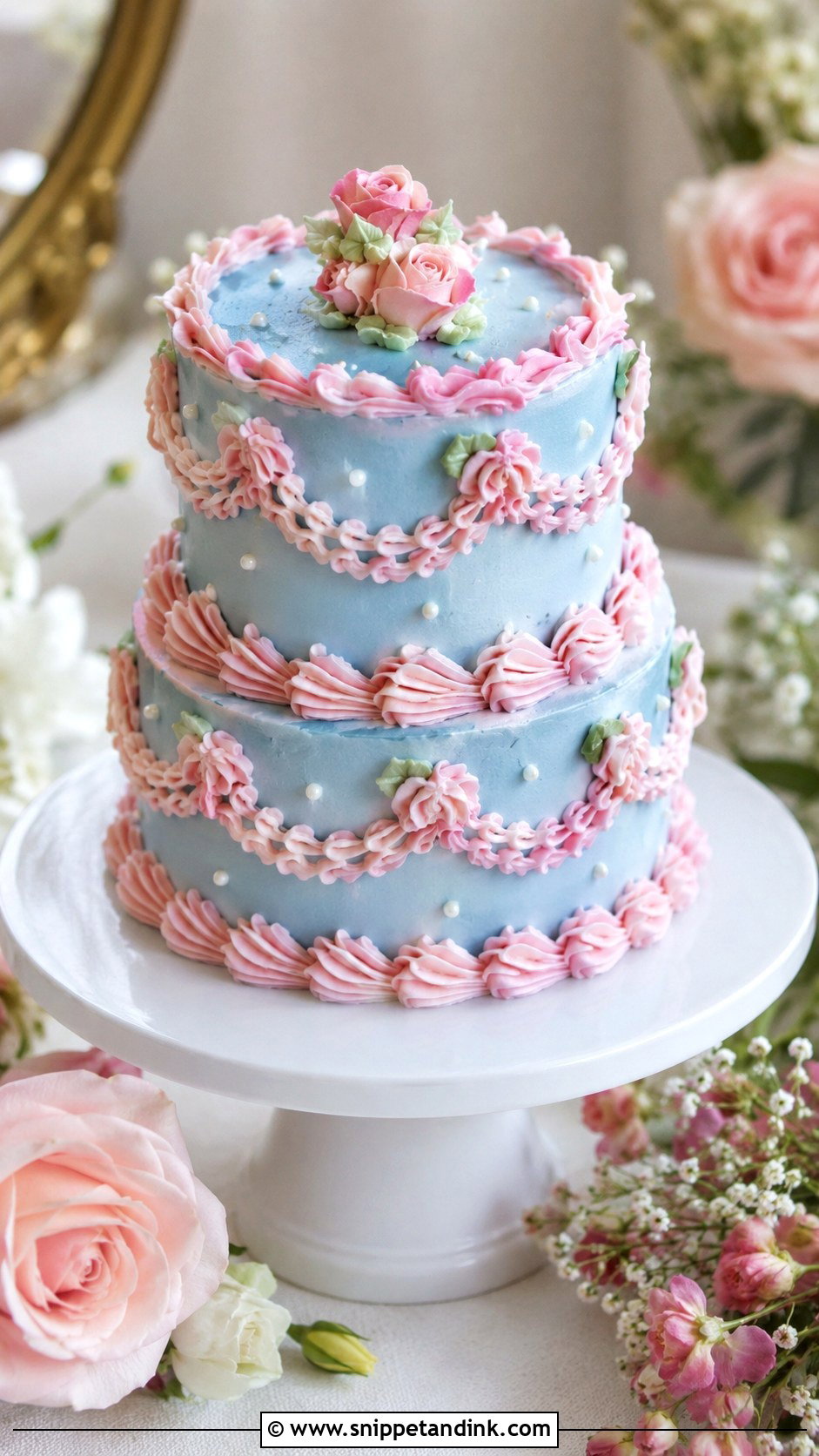
Small is not the same as plain. A two-layer mini cake with blush frosting, blue piped borders, pearl dots and tiny sugar roses carries every vintage detail at a scale an elopement suits. It also works as a ceremonial cutting cake when guests are served cupcakes, cookies or a kitchen cake from the back. On a small pedestal, surrounded by candles or old plates, the detail reads as precious. I pipe minis with smaller tips so the shells stay in proportion.
13. Pink And Blue Wedding Cake With Piped Flowers
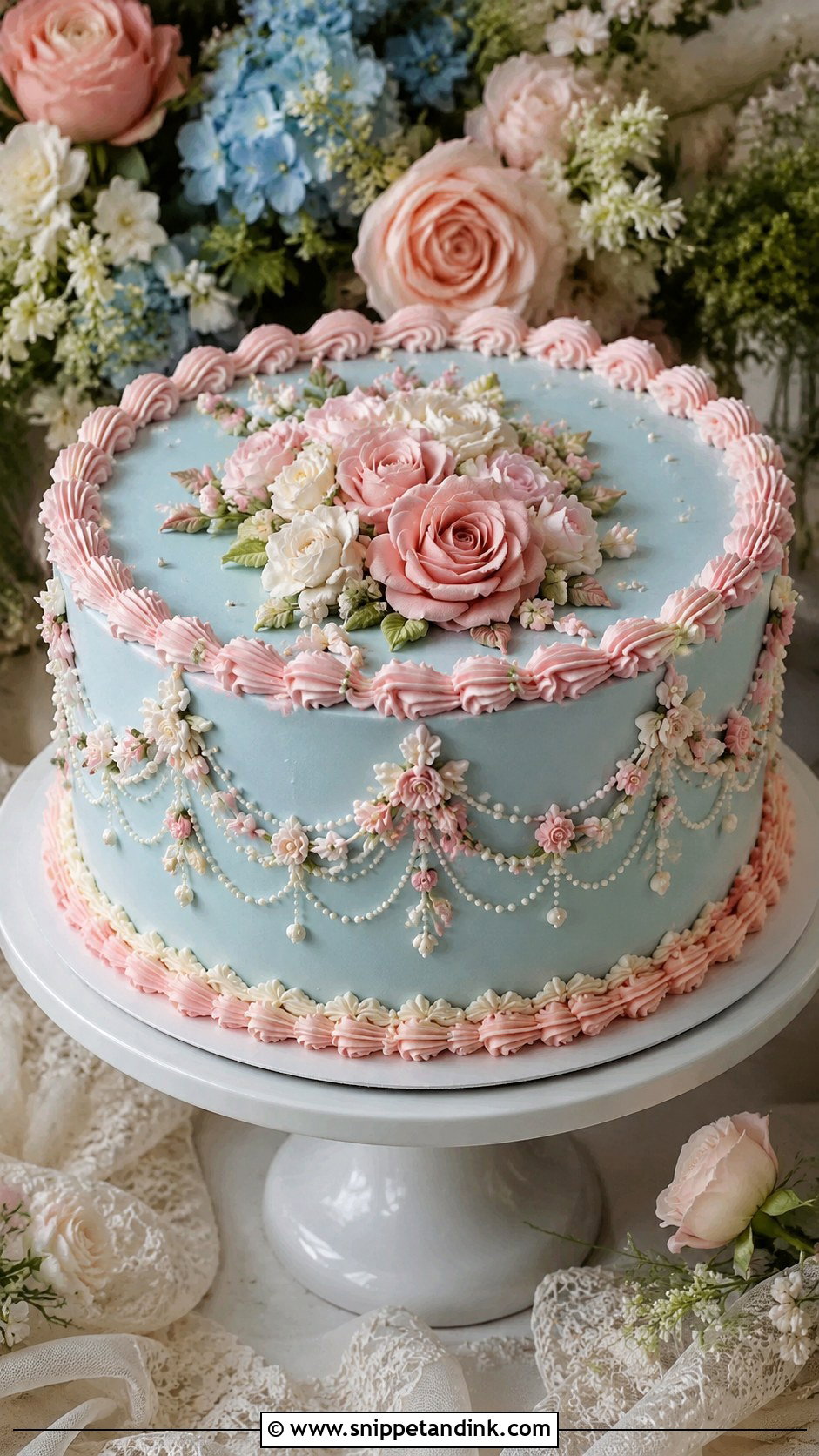
Piped buttercream flowers give a garden look with no fresh stems involved. I pipe them on a flower nail in blush, baby blue, ivory and pale lavender-blue, chill them until firm, then place them around the top edge, down one side or between tiers. Freezing them first lets me arrange them without crushing petals. They suit shell borders and scalloped trim, and they sit well beside floral linens and pastel bridesmaid colors in spring and summer.
14. Pink And Blue Wedding Cake With Scalloped Borders
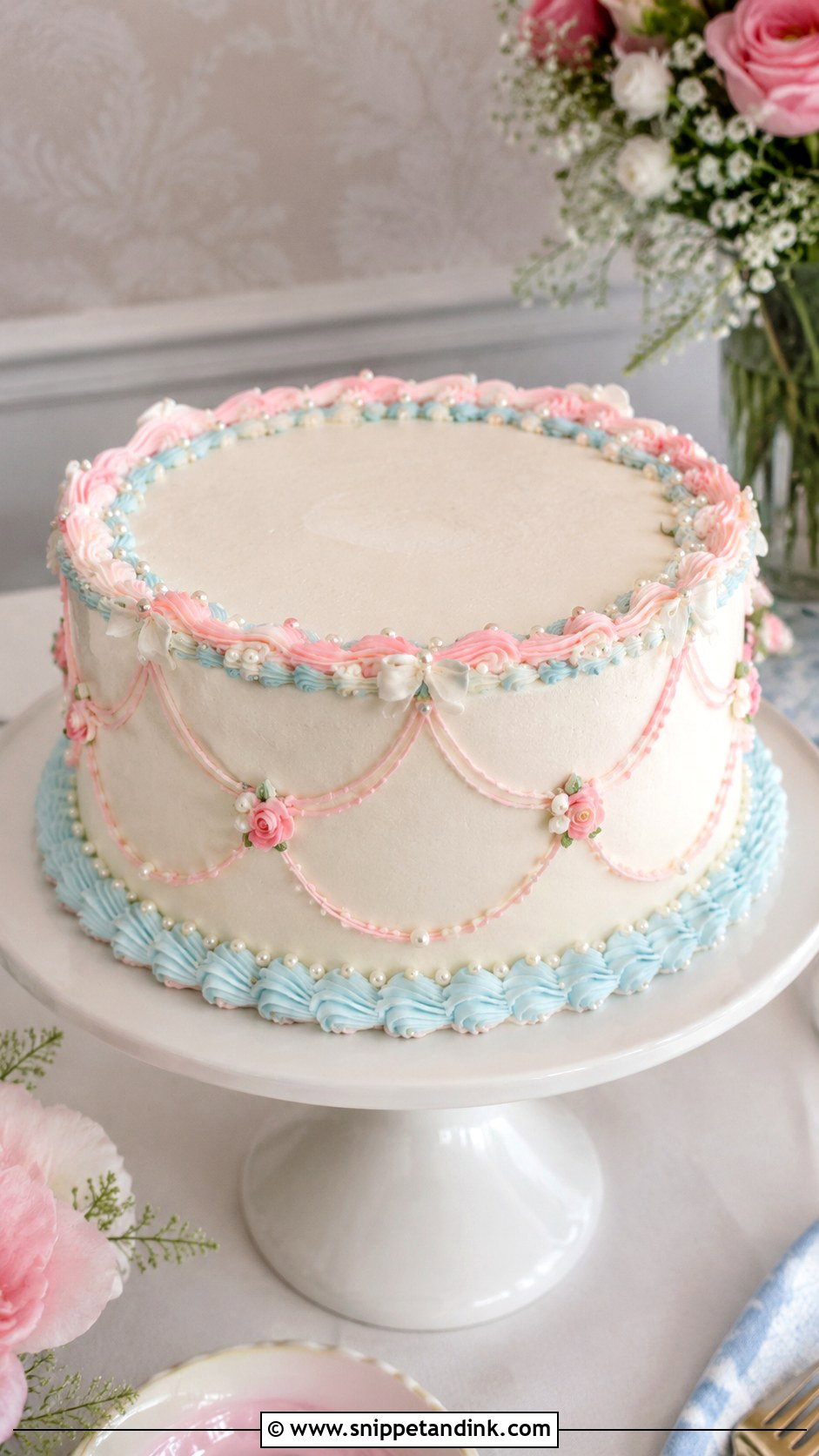
Scallops give a cake rhythm without much decoration. I mark them with a template so each curve is identical; freehand scallops drift, and the last one around the tier always ends up a different size. A white or ivory base lets the pink and blue scalloped borders show clearly. A pearl dot, a tiny bow or a rosette between each scallop adds charm. It’s the cake I’d suggest to anyone who wants a vintage feel with a lighter hand.
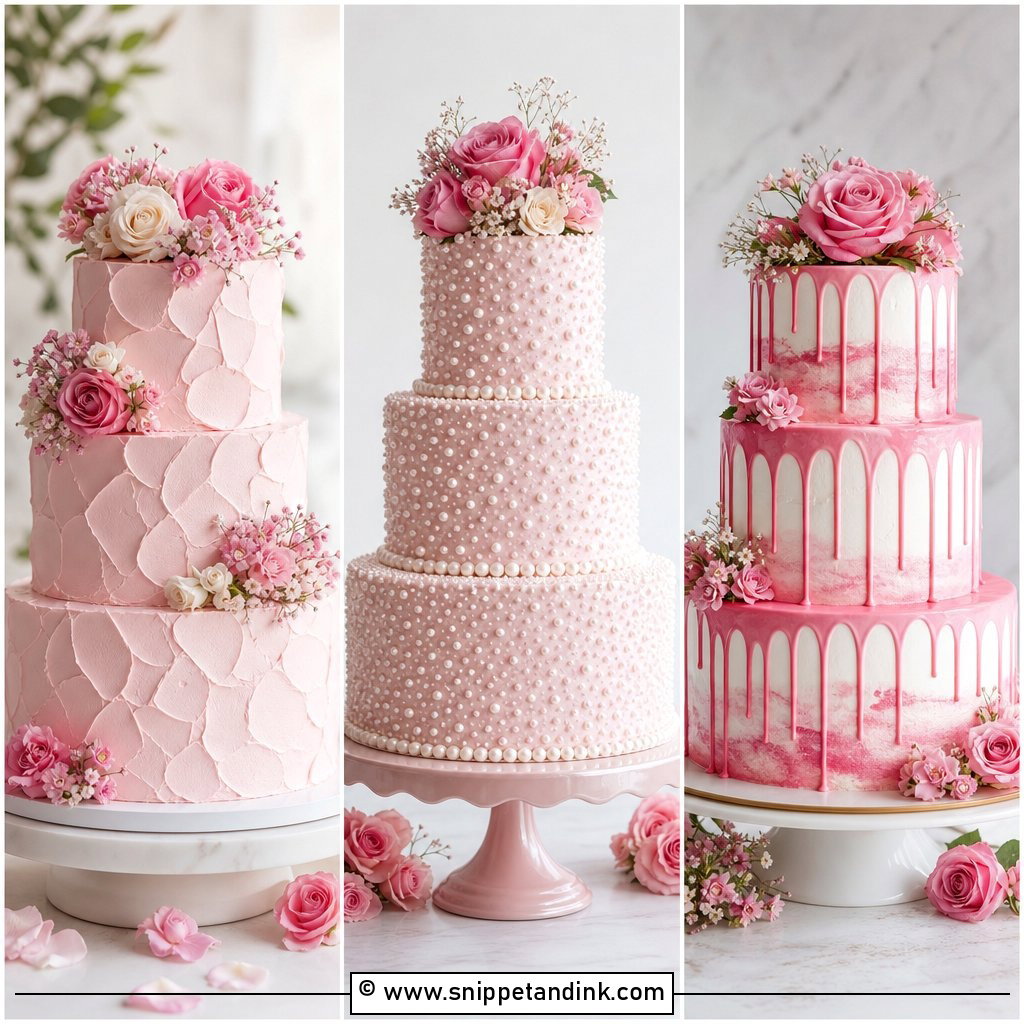
15. Pink And Blue Wedding Cake With Cameo Details
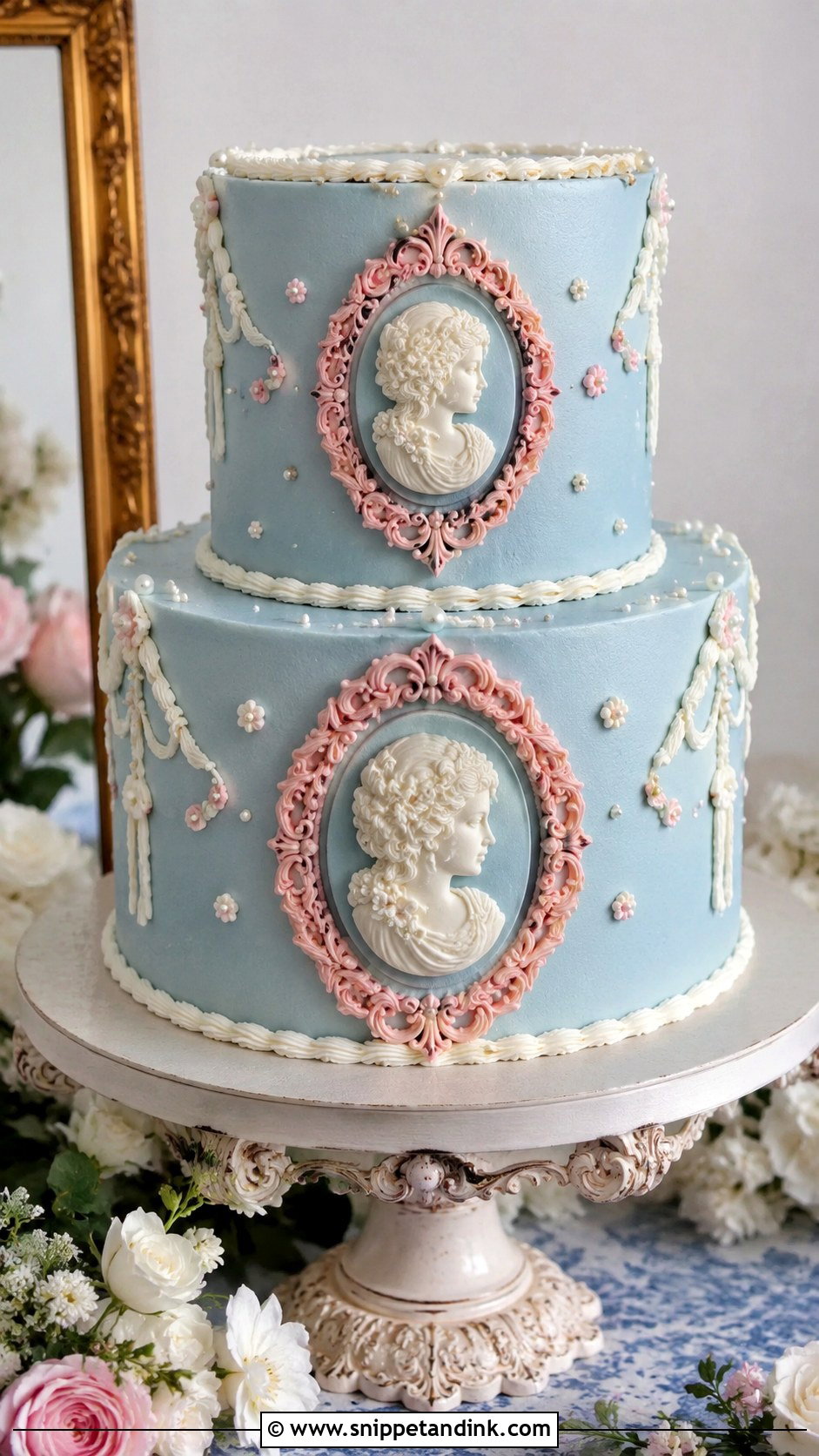
Cameos bring a proper antique mood. I press them from silicone molds in fondant or modelling chocolate, dust the raised face with a pale sheen and set them on the cake like framed brooches. A dusty blue base with blush frames and ivory cameo centers is the version I like best. Shell borders, rope trim and small pearls keep it neat. Victorian-inspired and formal romantic weddings suit it, and it stands apart from the many floral cakes guests will have seen.
16. Pink And Blue Wedding Cake With Monogram
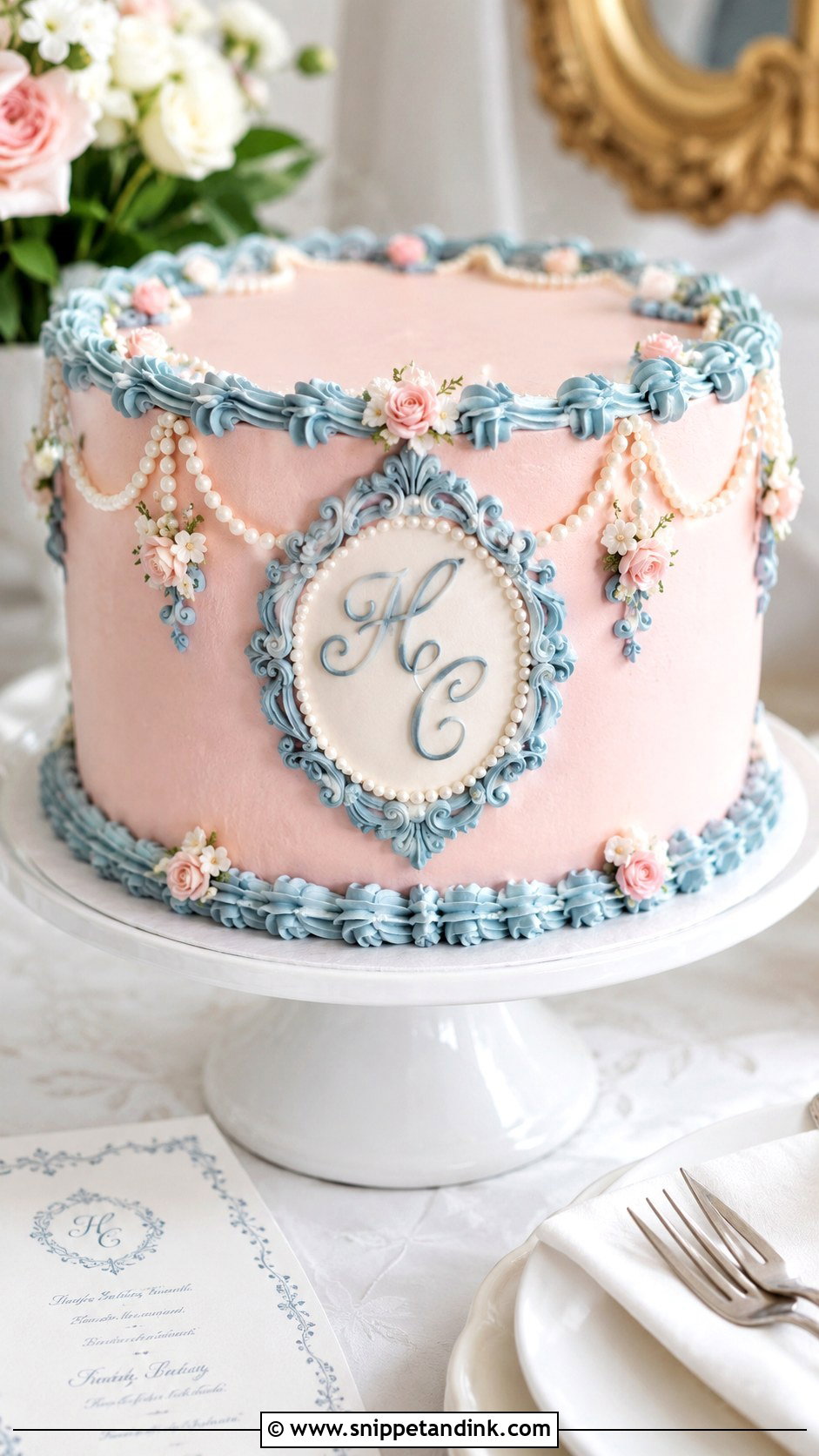
A monogram makes a cake feel commissioned. It can be piped straight onto the tier or made as a royal icing plaque, which I prefer, because a plaque can be piped days ahead and remade if one letter wobbles. On a blush cake, an ivory monogram framed by dusty blue piping, shell borders, pearl dots and small flowers looks classic. It fits a formal reception and a small wedding equally. Send your baker the exact letter style from your invitations so the two match.
17. Pink And Blue Wedding Cake With Draped Piping
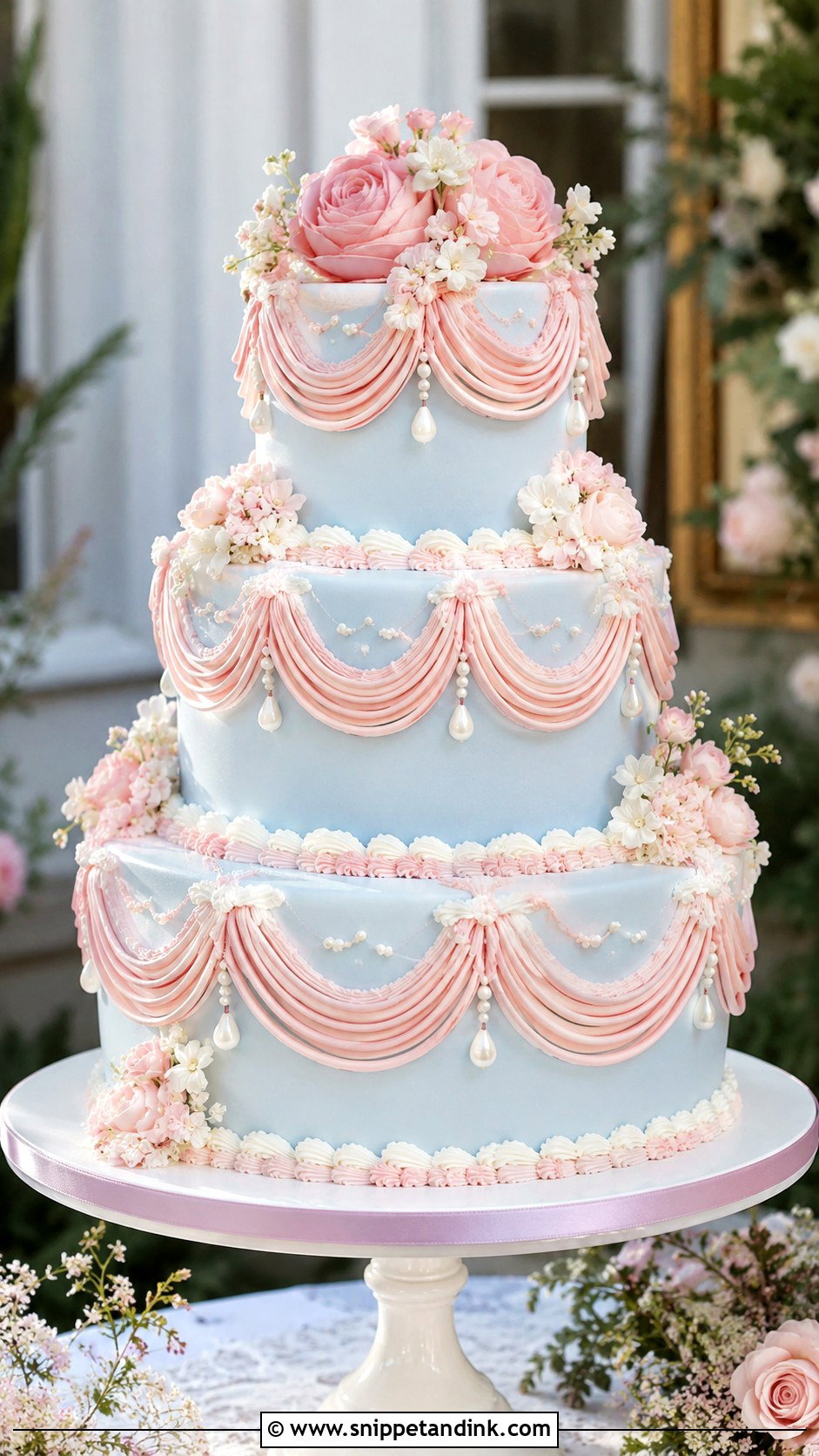
Draped piping falls around each tier like fabric caught up at intervals. A pale blue base with blush drapes and ivory shell borders is the combination I’d start with, with a pearl dot or a tiny sugar flower where each curve meets the next. The drapes need two or three tiers to create a flowing line, which makes this a centerpiece cake. I measure and mark every drop point first. Get the spacing wrong by a few millimeters and the drapes collide at the back.
18. Pink And Blue Wedding Cake With Vintage Florals
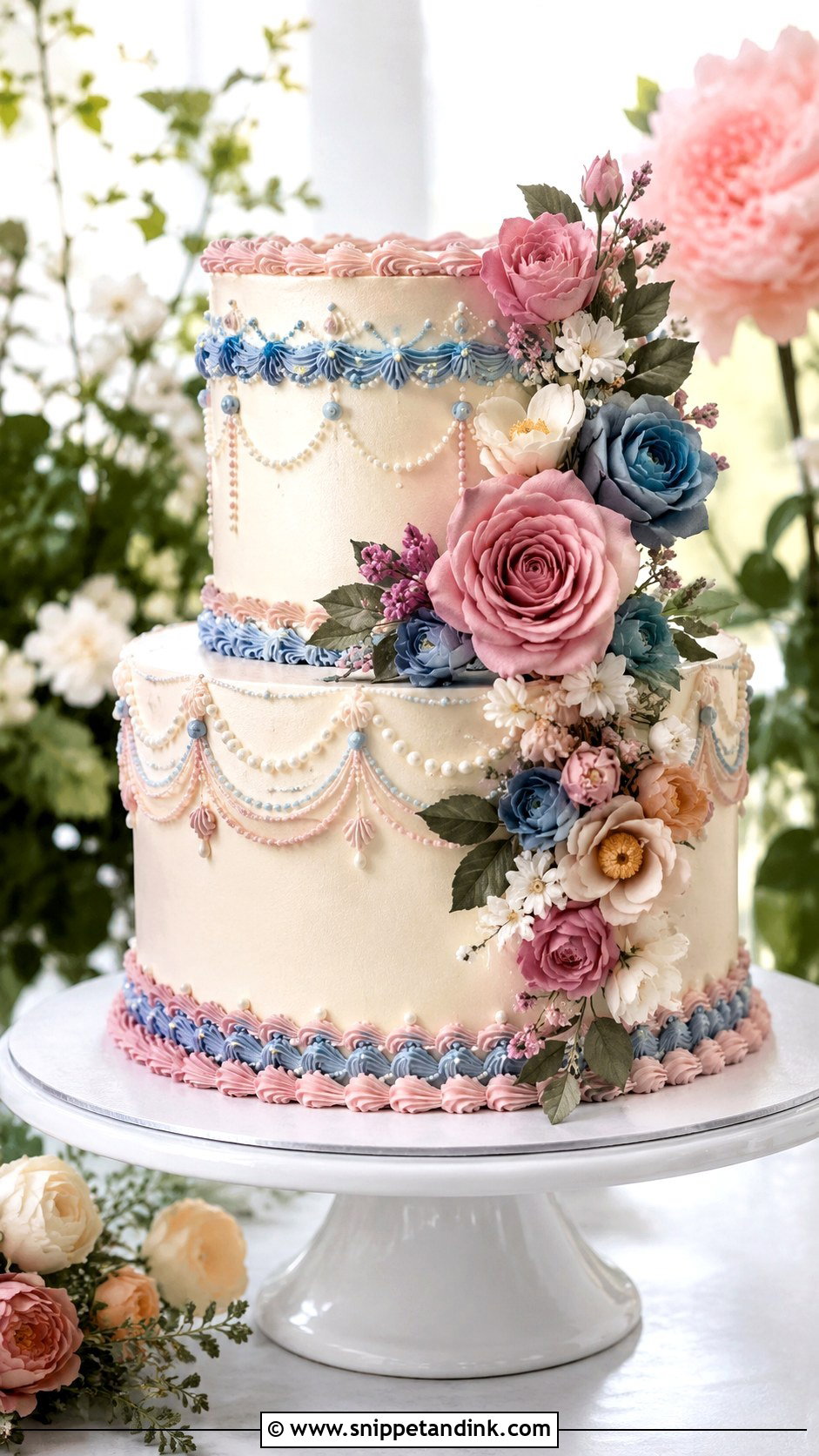
Garden romance with a vintage frame: sugar flowers or fresh blooms in blush, pale blue, ivory and muted green on a buttercream cake with piped borders. Small clusters beat full coverage, because they leave space for the pastel colors and piping to show. True blue fresh flowers are rare, so for the blue I usually rely on delphinium, hydrangea or sugar flowers tinted to match. Spring weddings and outdoor receptions suit this cake, and it’s easy to match to the bouquet.
19. Pink And Blue Wedding Cake With Vintage Swans
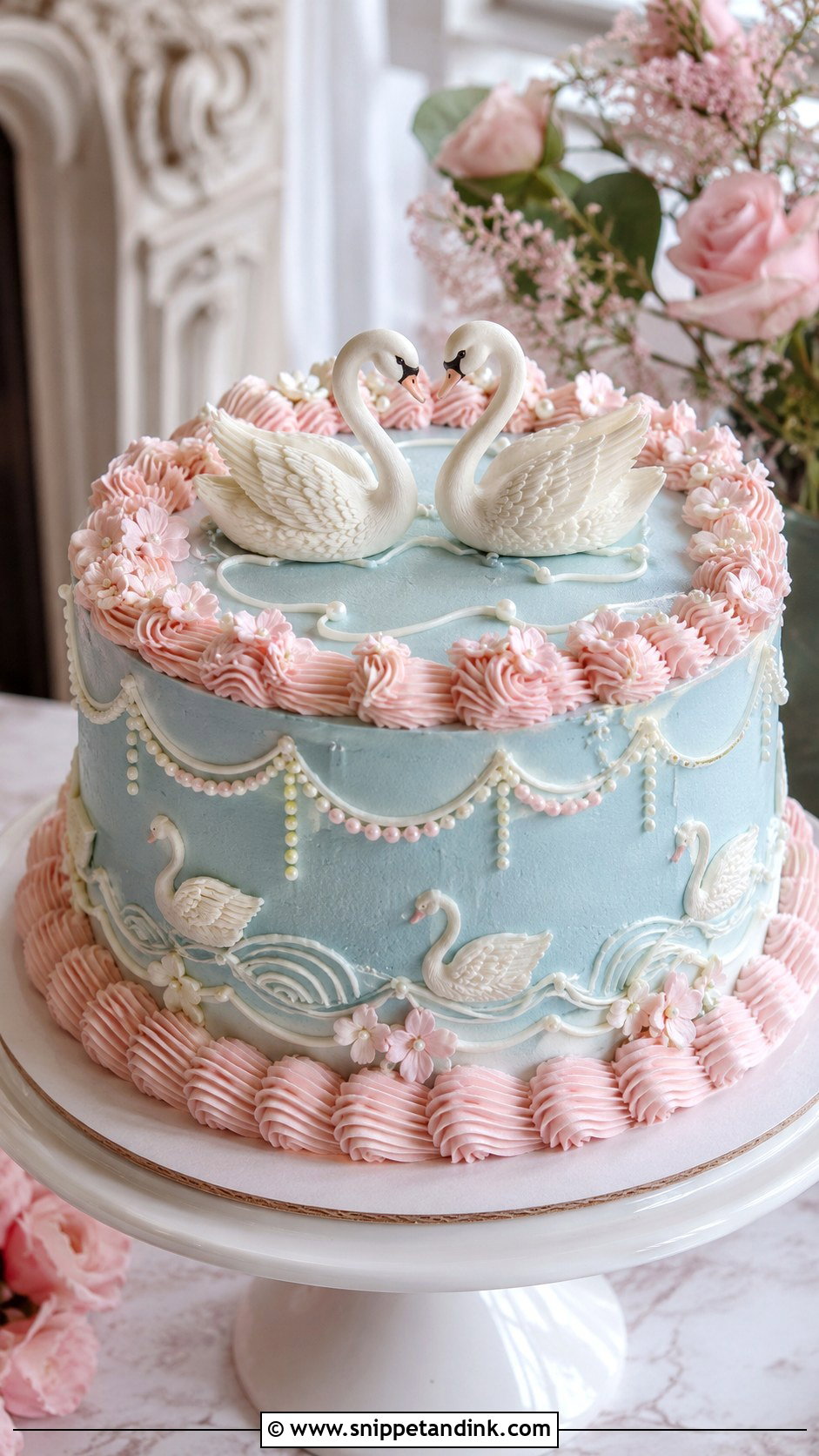
Swans have an old storybook quality that fits a pastel palette well. Picture a pale blue cake with pink piping, white swans on top, pearl accents and buttercream waves around the base. For the birds themselves, I pipe them from meringue or royal icing, or mold them in sugar. Meringue softens in humidity, so near water I use molded sugar instead. Simple, graceful shapes look elegant; cartoon swans don’t. Lakeside and garden weddings are where these vintage swans feel most at home.



20. Pink And Blue Wedding Cake With Vintage Piping
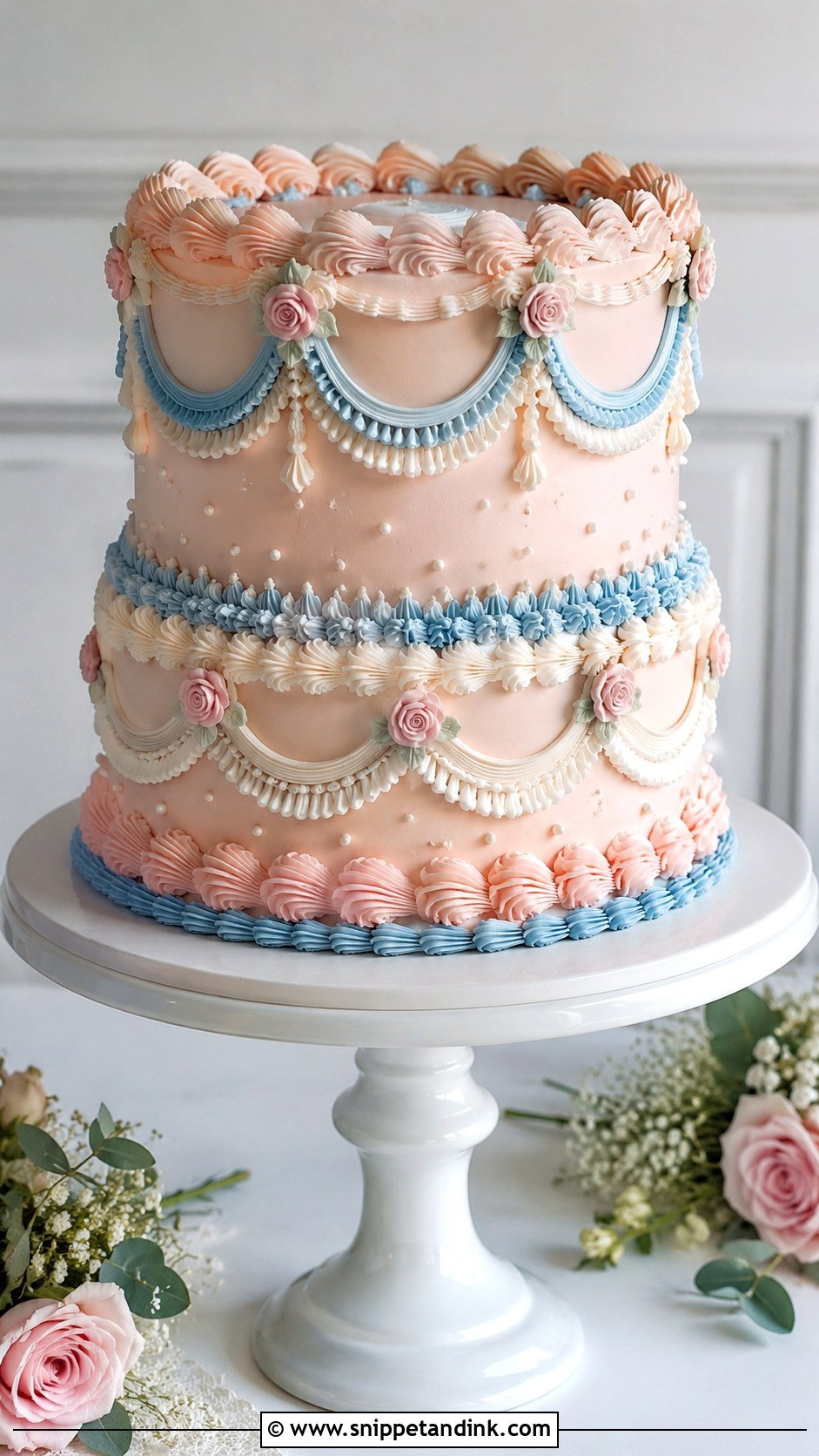
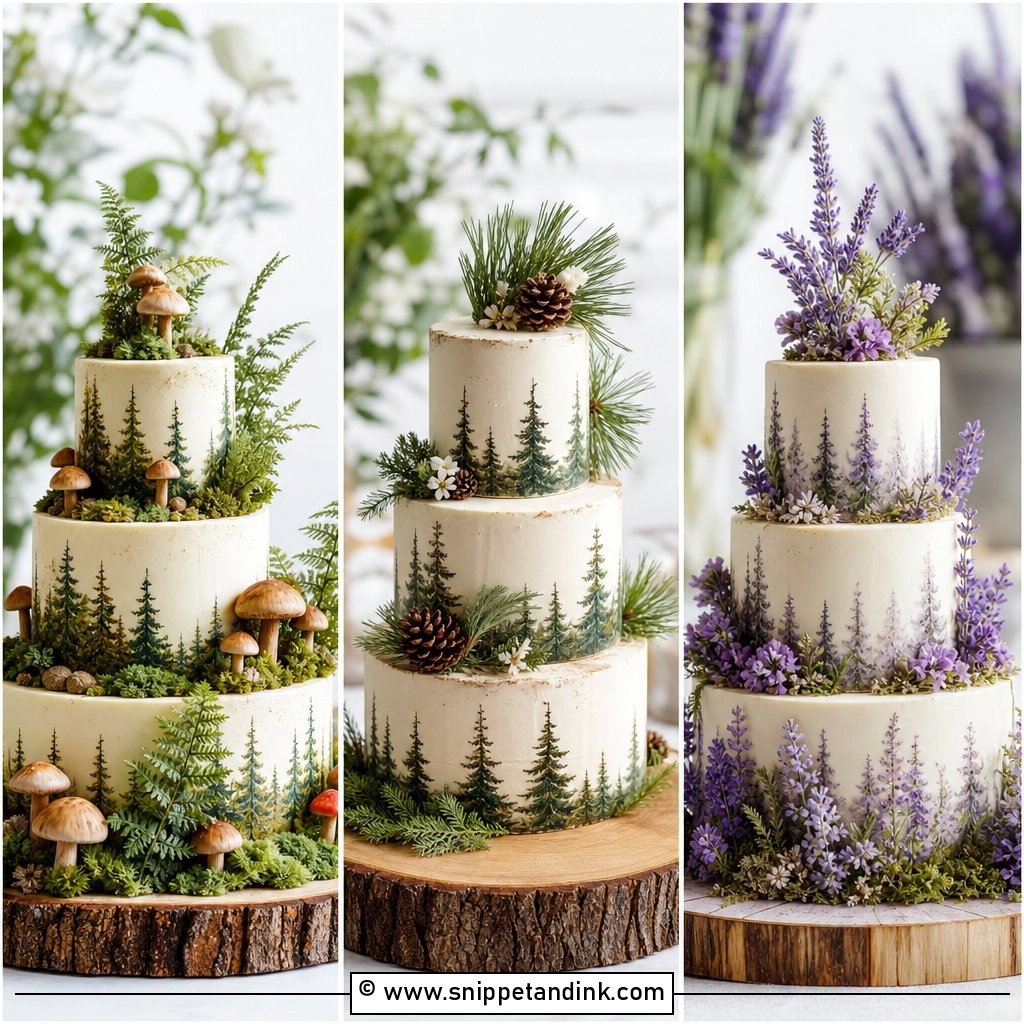
This is the most flexible idea on the list, because the piping is the design and you choose how much. Shells, dots, swags, rosettes and rope borders layered together give the classic look. A blush base with blue and ivory piping feels familiar; a blue base with pink detail is less common and puts your palette front and center. It works as a single tier, a tall modern cake or a full tiered centerpiece. If you can’t decide between several ideas above, this is usually where we end up.
Hours of Piping, and Keeping It Sharp Until the Cutting
Overpiped vintage work is slow. A Lambeth tier can take an experienced decorator several hours on its own, which is why these cakes usually cost more than a smooth cake of the same size. Prices vary widely by region and baker, so ask for a quote with and without the full piping. Dropping the heaviest work from the bottom tier, where few guests look closely, is an honest way to save without losing the look.
Once it’s finished, heat is the enemy of crisp shells. I deliver these cakes chilled and set them up last, and I ask the venue for a spot away from sunny windows, heaters and rows of candles. A warm tent can slump fine piping within an hour, so for summer outdoor weddings I’d keep the cake inside until shortly before guests see it, or choose a design with fewer delicate layers.
How Much Piping Is Enough?
Pink and blue vintage cakes work because color and texture do the decorating together. Lambeth piping, hearts, sugar roses, pearls, bows, ruffles and cameos all suit this palette, as long as the shades are muted and one color leads. Buttercream gives the most authentic finish. Bring your baker something from your venue, flowers, dress or stationery so the details tie in, and the cake will be one of the things people photograph most at your reception.
You'll Like These Ideas:



Leave a Reply