
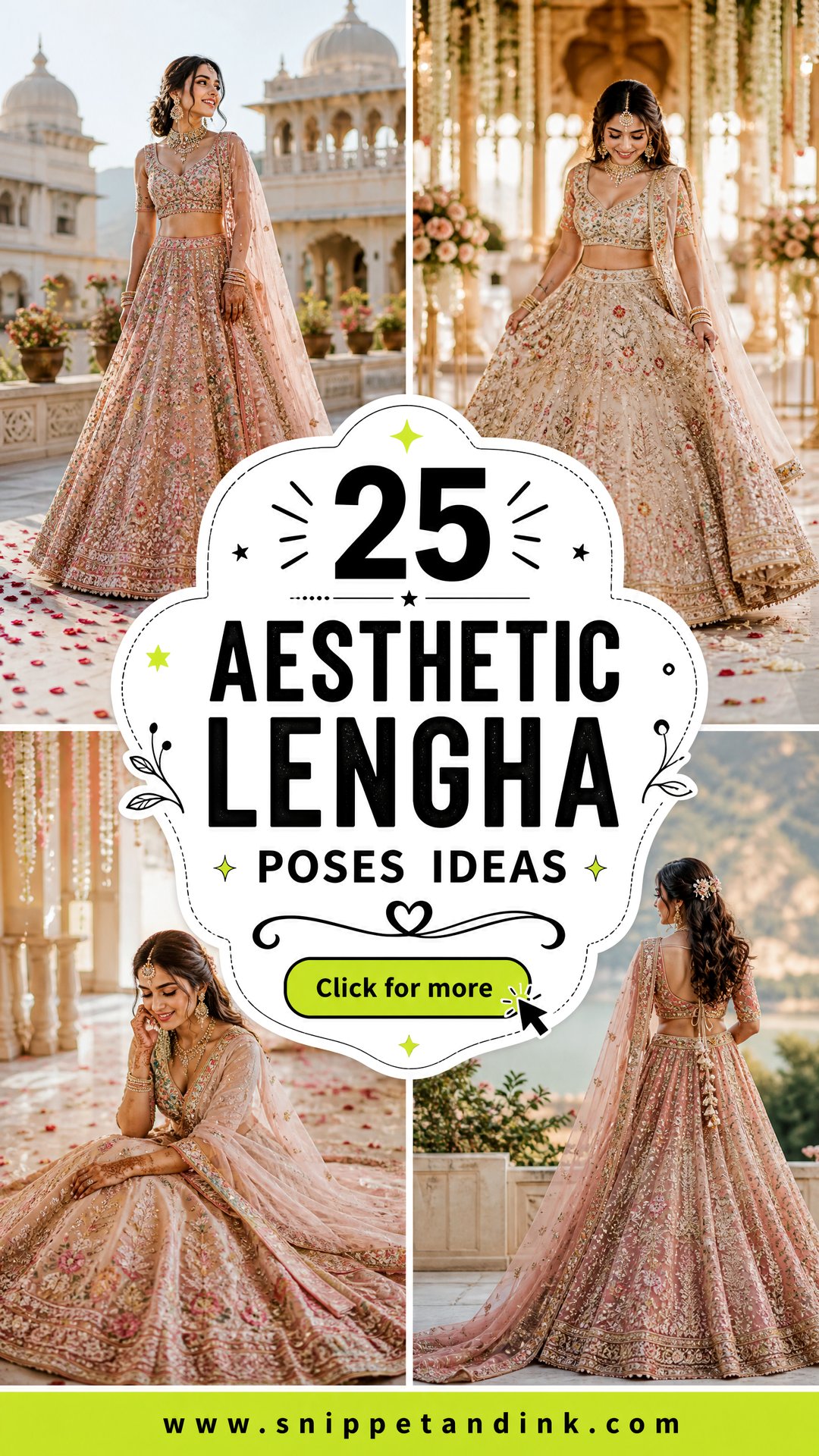
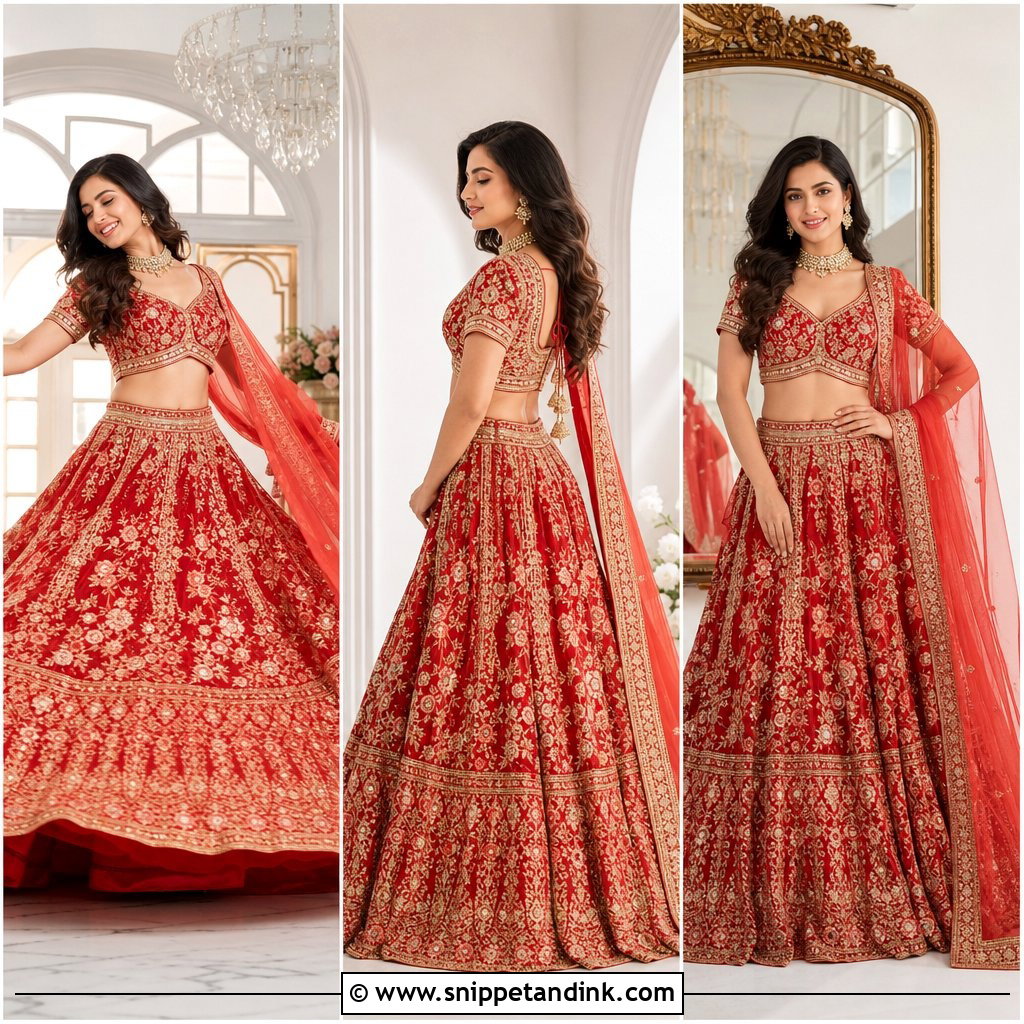
A lengha is built to be seen moving and from every side, and most of my portrait time with a bride goes into showing its colour, flare and embroidery without her looking stiff. Good posing defines the waist, opens the skirt to its full shape and keeps the face relaxed. The ideas below run from graceful standing portraits to movement shots, seated positions and quiet detail frames you can rehearse at home in front of a mirror. For each one I’ve noted what I’d tell you about posture, hands, expression and where I’d put the camera. They work for bridal portraits, mehndi and sangeet functions, or a styled shoot, with a minimal lengha or a heavily worked one.
Rehearse in the Real Lengha, Not in Leggings
Practising poses in a mirror helps, but only if you’re wearing the outfit, or something close in weight. A bridal lengha can be very heavy once the skirt, can-can and embroidery add up, and it changes how you stand, turn and sit. Poses that feel easy in leggings often don’t work in the real thing.
- Do one full twirl and note which direction feels steadier. Most people have a natural side.
- Sit on a chair and on the floor, then stand up without help. If you can’t, plan for someone to be nearby during the shoot.
- Pin the dupatta the way you’ll wear it and test each arm movement. Mark where the pins sit so the draper on the day can match it.
- Check how the blouse behaves when you raise an arm. If it rides up, a hair-adjustment pose may show skin you didn’t plan on.
I’d also suggest wearing the actual shoes. Heel height changes posture and how much hem touches the ground, which affects every full-length frame.
1. Full-Length Standing Lengha Pose
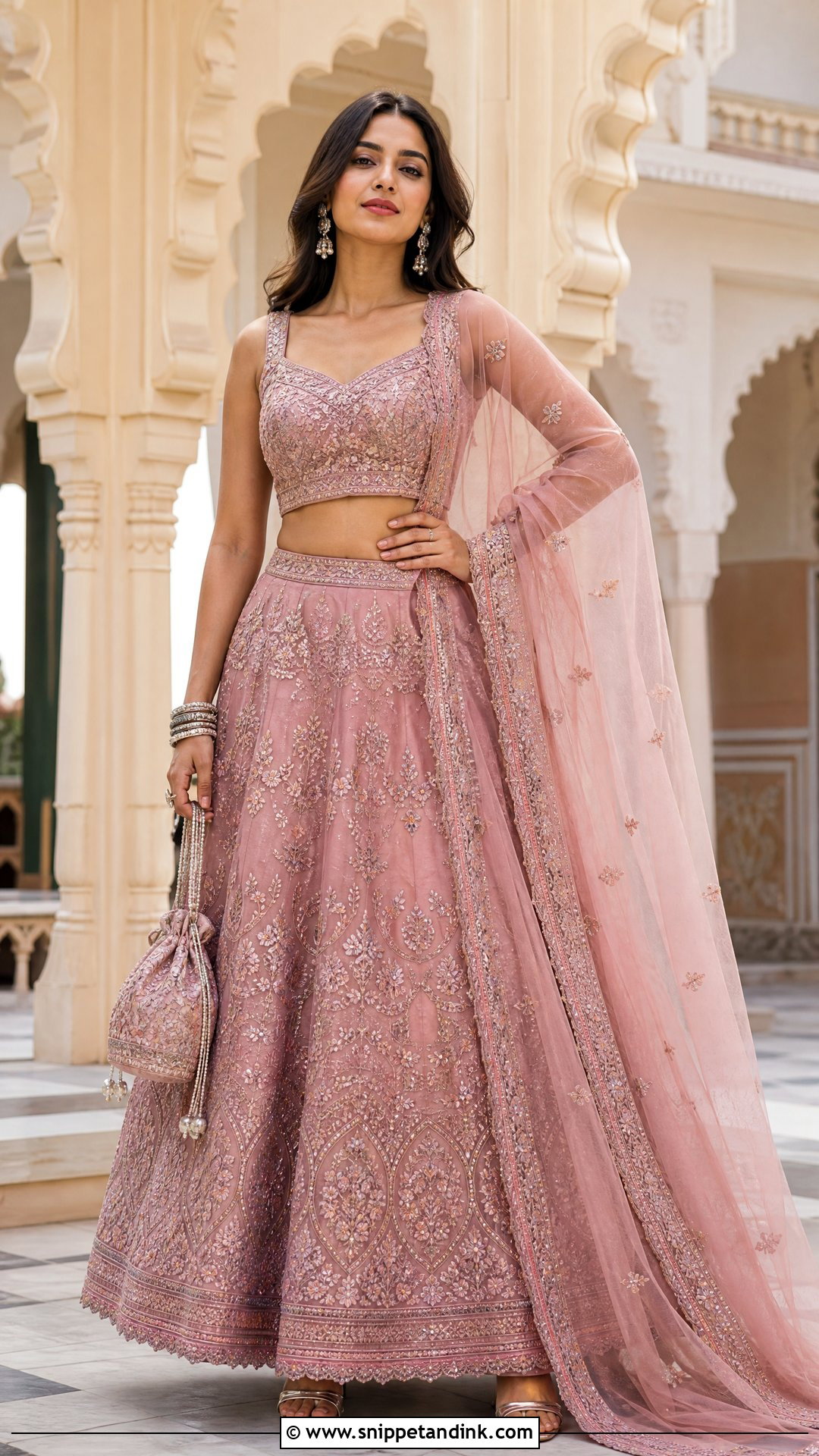
I start almost every lengha session here, because it gives me a clean record of the whole outfit before anything gets creased. Put one foot slightly ahead of the other and settle most of your weight on the back leg; that small shift is what stops the pose looking like a passport photo. One hand near the waist, the other resting on the skirt or holding the dupatta. Turn the torso a few degrees off the camera, drop the shoulders and push the chin slightly forward. I shoot this from around waist height. Go higher and the skirt shrinks and your feet disappear; go lower and the proportions stretch strangely.
2. Twirling Lengha Pose
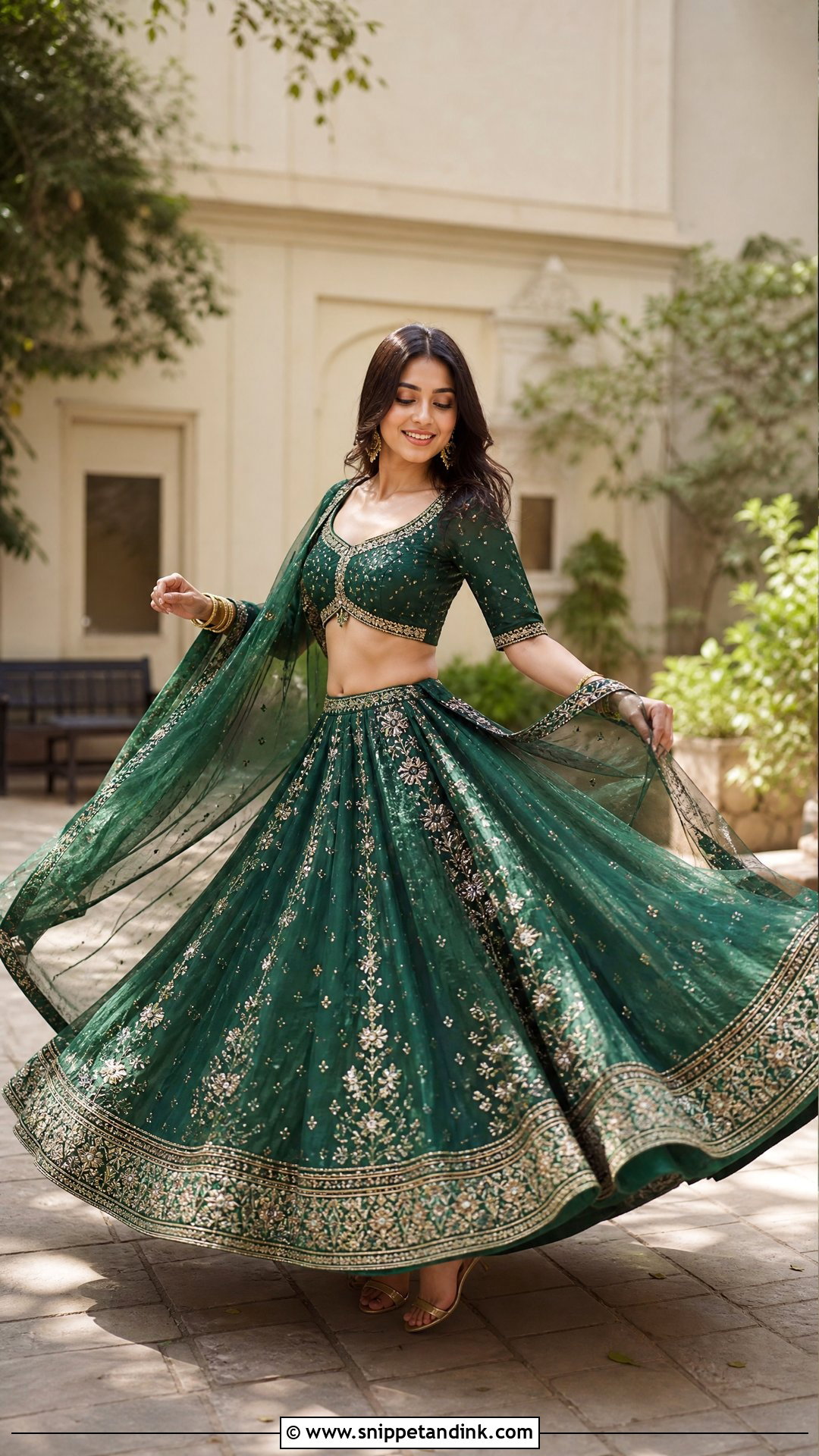
A controlled twirl shows a flared skirt’s volume better than anything else. Start with your feet close together, lightly hold one or both sides of the lengha and turn slowly. Brides nearly always spin too fast the first time, and the skirt wraps around the legs instead of opening into a circle. Keep your upper body lifted and your shoulders loose. I shoot in burst mode, since the best frame is usually the half-turn when the hem is fully out. Decide in advance which way you’ll turn so the dupatta swings away from your face. Courtyards, studios and open paths give the skirt room.
3. Walking Lengha Pose
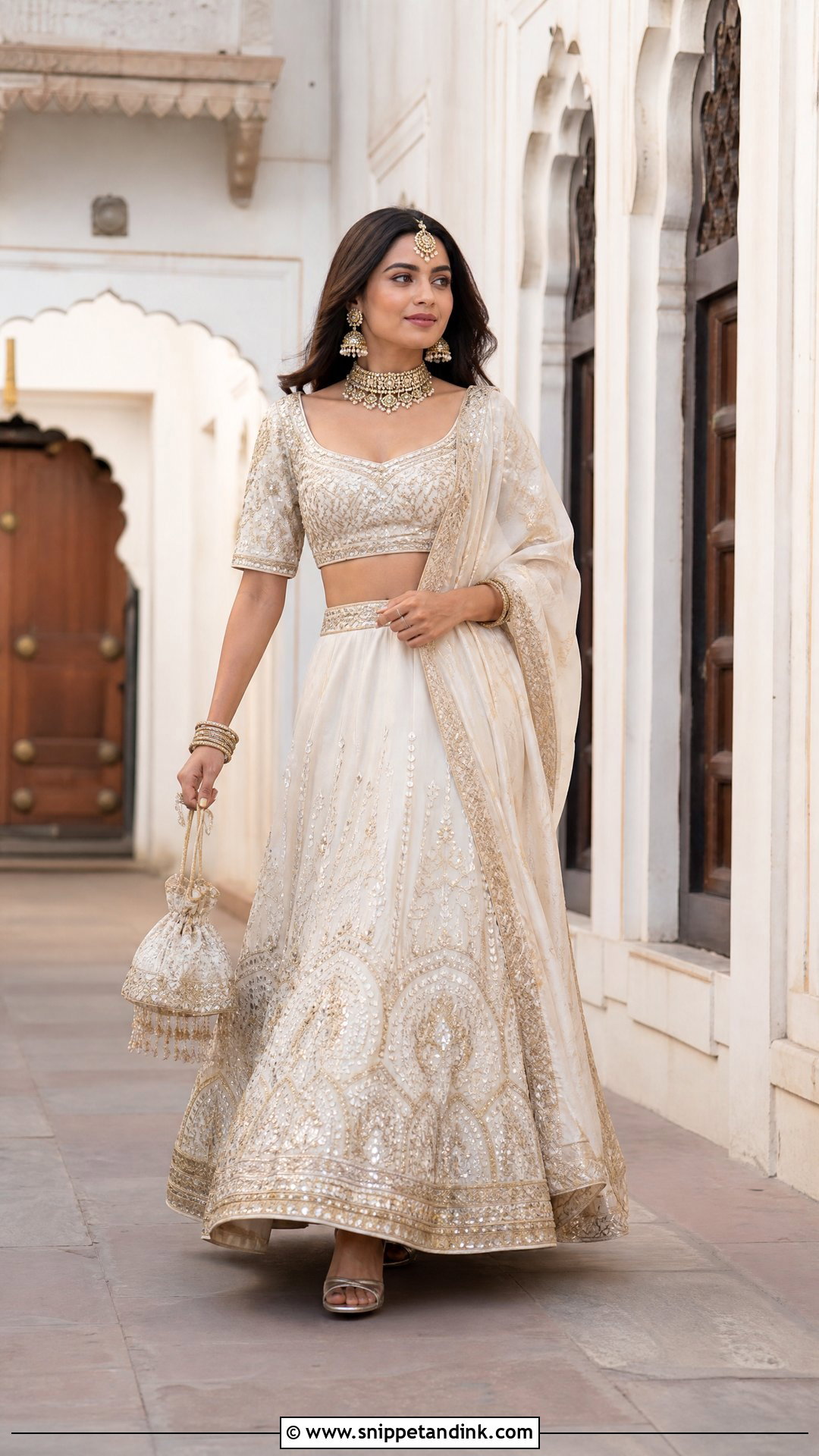
Walking shots suit brides who freeze in front of a lens. Take short, slow steps toward me and let the skirt sway; long strides make you kick the hem forward. Hold the dupatta lightly if it slips and let the other arm move as it wants. Look slightly to the side, at the path or straight at me, but don’t watch your feet the whole way, which folds the neck. I’ll stand well back and drop the camera a little to keep the full length. A clear walkway helps more than a pretty one, because background clutter competes with embroidery.
4. Over-the-Shoulder Lengha Pose
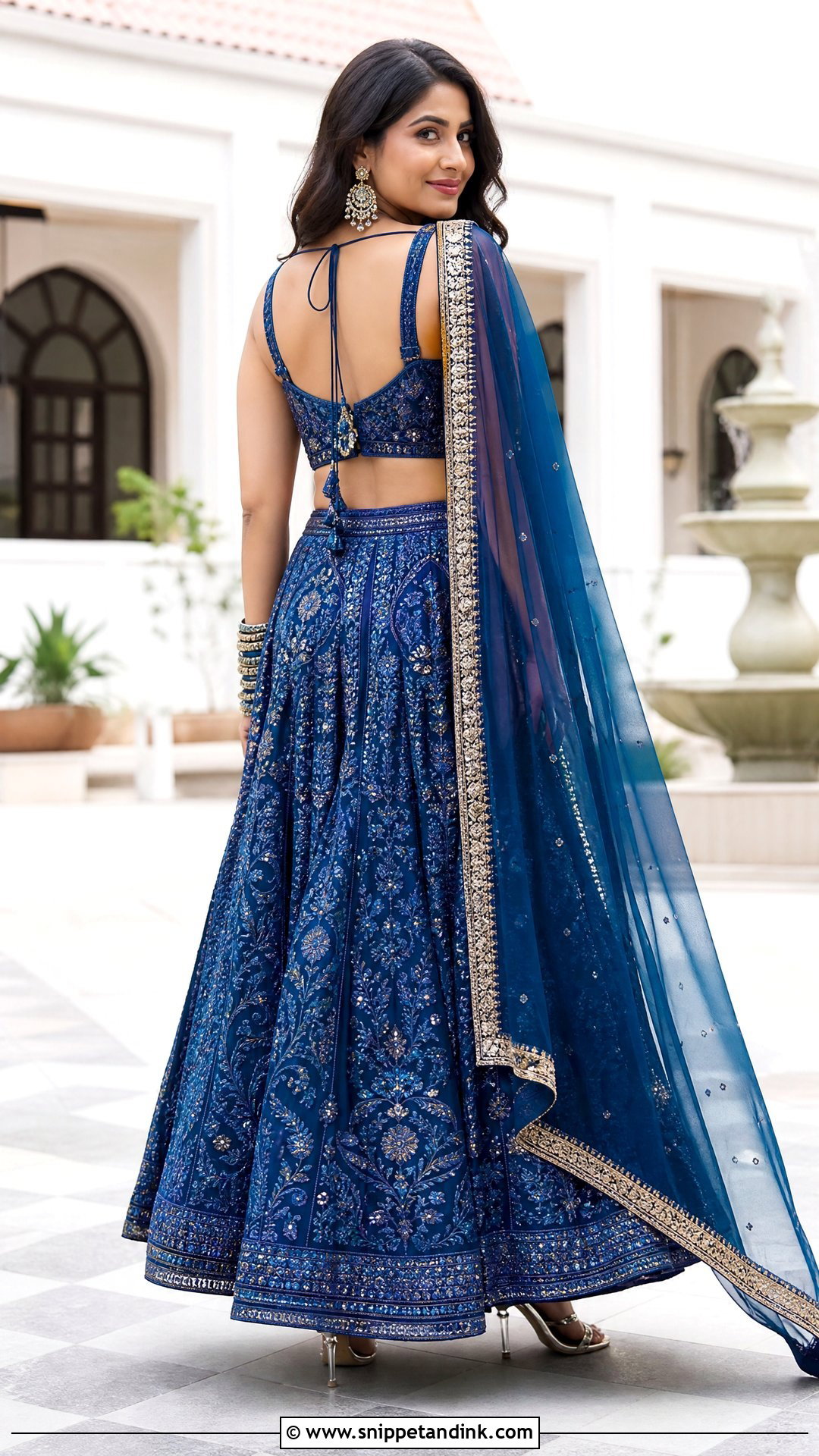
An over-the-shoulder pose is how I show a detailed blouse back, the hairstyle, dupatta border and earrings in one frame. Angle your back toward the camera rather than turning fully away, put your weight on the far leg and bring your head round gently. Keep the chin level; twisting too far creases the neck, and that is the first thing I correct. One hand at the waist, the other lightly on the skirt or dupatta. A soft smile feels warm; a neutral face looks editorial. I’ll make sure enough lower skirt stays in frame to keep the shape.
5. Side Profile Lengha Pose
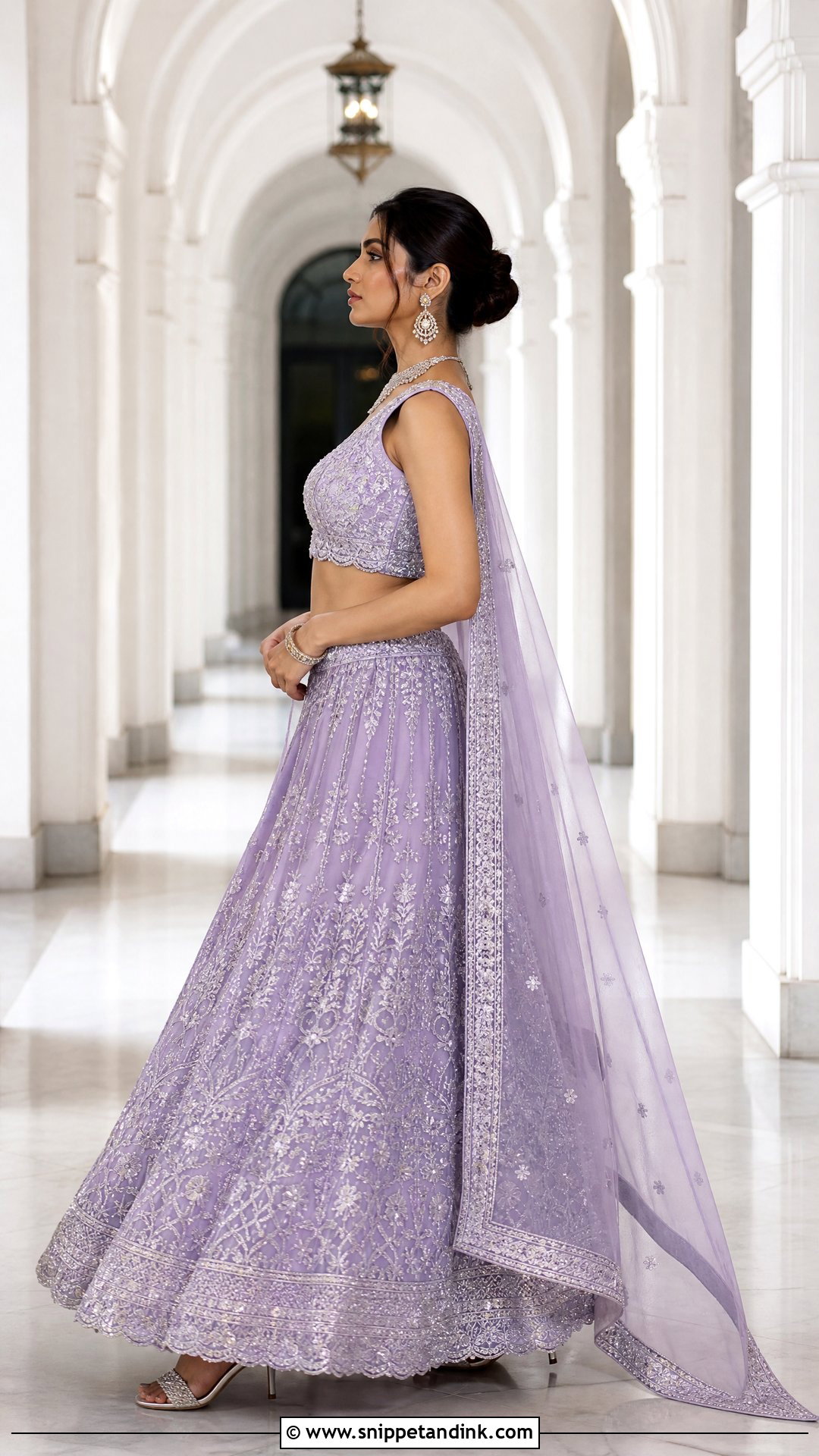
A side profile is the most honest view of a lengha’s silhouette. Turn sideways, bring the foot nearest the camera slightly forward, keep the spine long and soften that front knee. Hands can meet loosely at the waist, or one can adjust a bangle while the other holds the dupatta. Look ahead for something composed or down for something quieter. The dupatta should never cover the whole blouse or blend into the skirt. Side light brings out raised embroidery, but I keep it bright enough that a red still reads red rather than drifting toward maroon. I take both full-length and three-quarter versions.
6. Dupatta Toss Lengha Pose
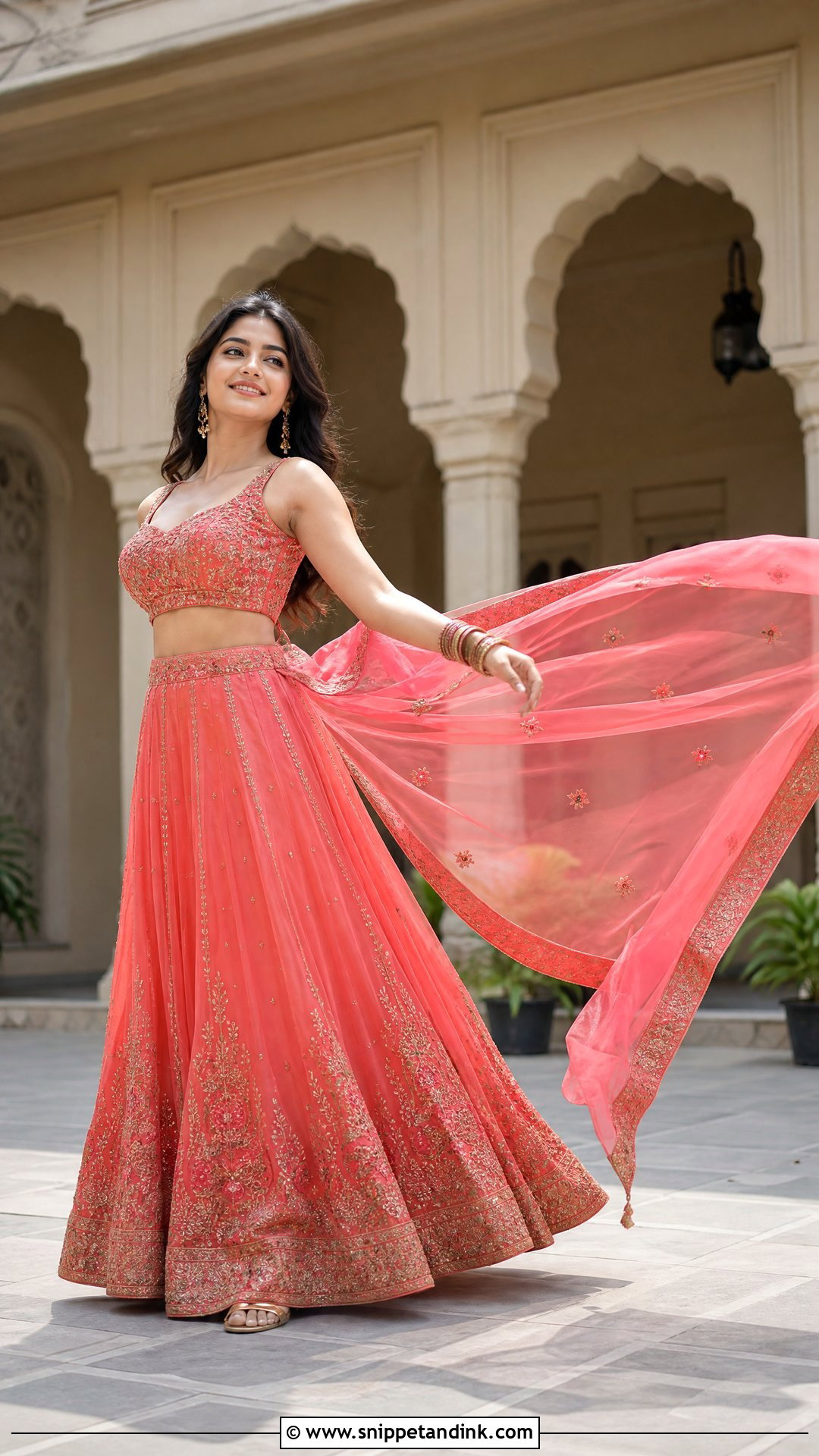
A floating dupatta adds energy without a complicated pose. Stand balanced, hold one end loosely and flick it out with a small wrist movement, keeping the elbow soft. Heavy dupattas barely lift on their own, so I often have someone out of frame throw it for you. Keep your body pose simple so the photo doesn’t get busy. The fabric should stay clear of your eyes and jewellery unless you want a veiled portrait. I’ll shoot a burst as it rises and settles. You need still air for this; a breeze makes it wrap around your face, and anything nearby will snag it.
7. Dupatta Over Head Lengha Pose
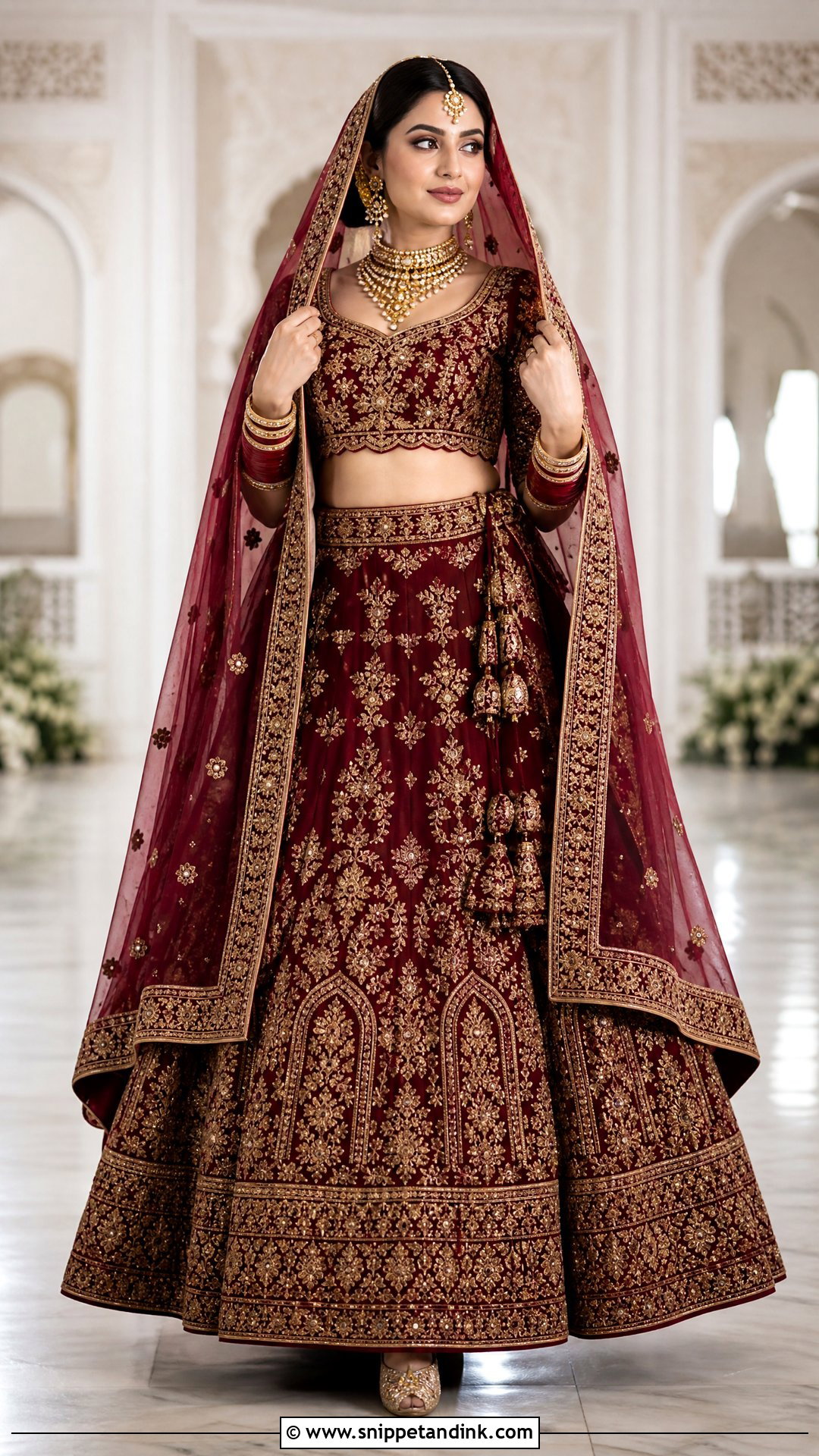
Draping the dupatta over your head gives a traditional portrait framing the face and jewellery. Set the fabric before posing so the border sits evenly. Heavy borders throw a shadow across the eyes, so I check that first and lift it slightly or turn your face into the light. Hold the edges at your shoulders or bring your hands together at the waist, with elbows a little away from the body. Face the camera, turn slightly or look down with a calm smile. A full-length frame should show how the dupatta falls over blouse and skirt, against a plain wall or soft greenery.
8. Face-Framing Dupatta Lengha Pose
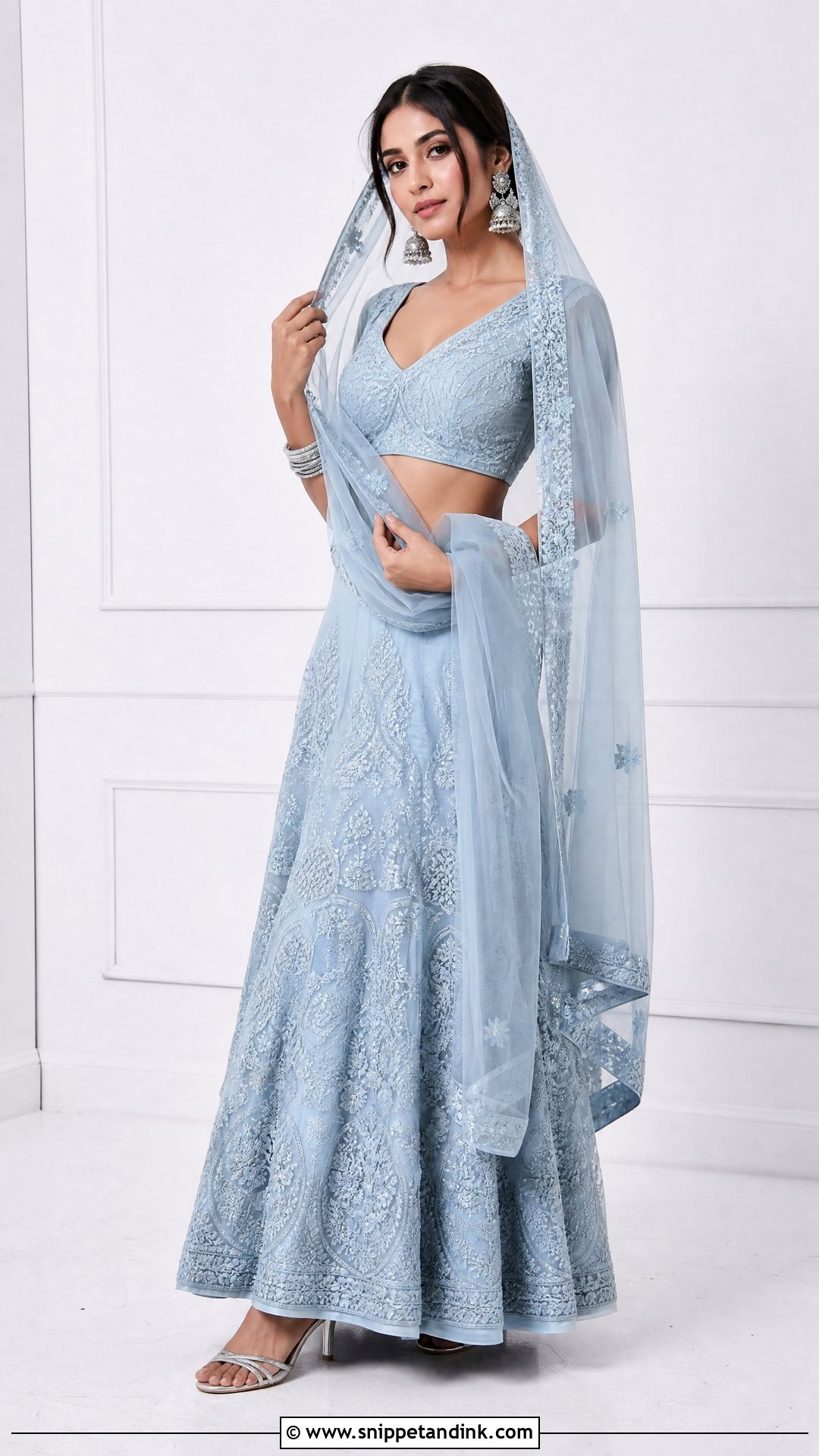
For a close portrait that still belongs to the outfit, lift the dupatta to frame your face and upper body. Hold each side near shoulder height without pulling it tight, and leave space round your cheeks, hair, earrings and neckline. Angle your body but keep your face toward the brightest light. A small smile, a lowered gaze and a direct look each give a different mood. Then I’ll ask for a vertical full-length version showing the dupatta cascading over the lengha. Sheer net works best because the embroidery shows through. I watch the hands most here; tight fingers look tense in close-ups.
9. One Hand on Waist Lengha Pose
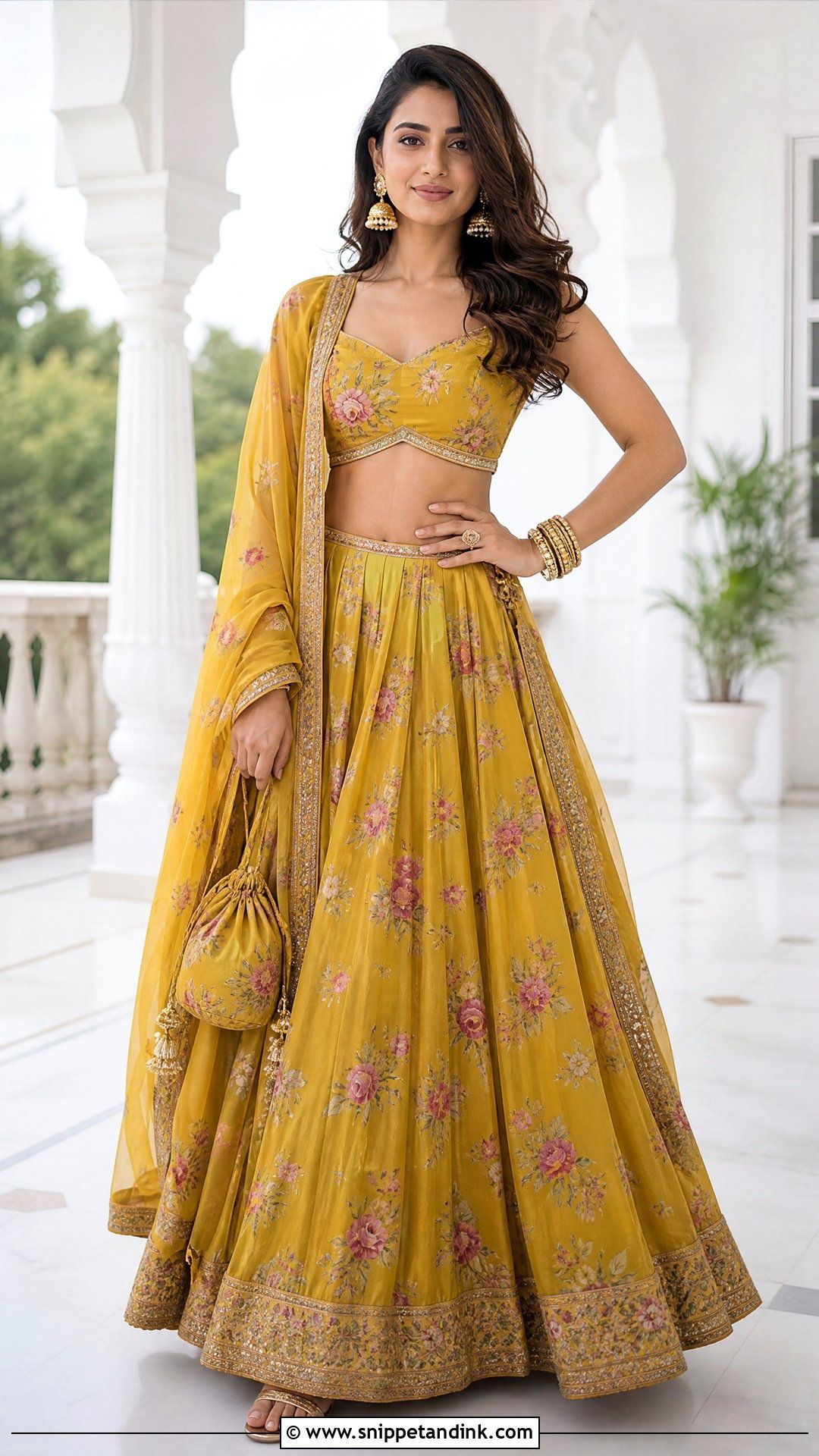
One hand on the waist is the pose I return to when a bride needs a reset. Keep the fingers together and rest the hand just above the hip without pressing in. The other arm can hang, hold the dupatta or touch the skirt. Shift your weight to one leg and turn the torso slightly toward me. Watch that the shoulder on the waist side doesn’t creep up toward the ear, which is the giveaway that you’re tense. Look straight down the lens or glance away. It suits every lengha shape because it leaves almost every detail uncovered.
10. Both Hands on Skirt Lengha Pose
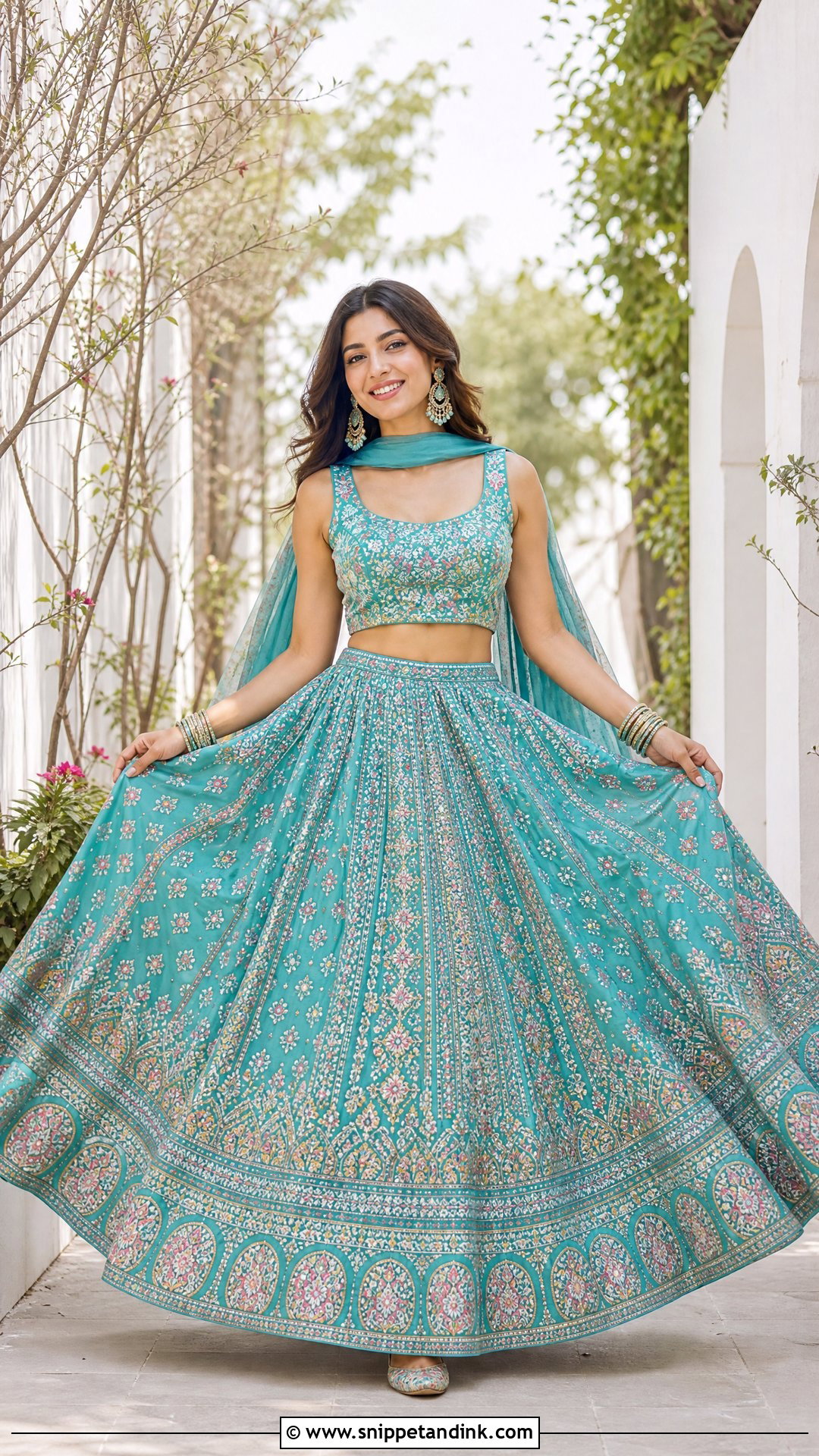
Holding the sides of the skirt gives a playful full-length shot. Take your hands to the same height and gather only a little fabric. Grab too much and the silhouette breaks and the embroidery folds away. Push the skirt slightly outward to show its width, soften the elbows and relax the shoulders. Stand still, take a step or start a turn. Point one foot forward to show the shoes. Smile at me or look down at the skirt. I frame this one centred, so both sides balance; it works especially well with panelled, printed or kalidar skirts.
11. Looking Down Lengha Pose
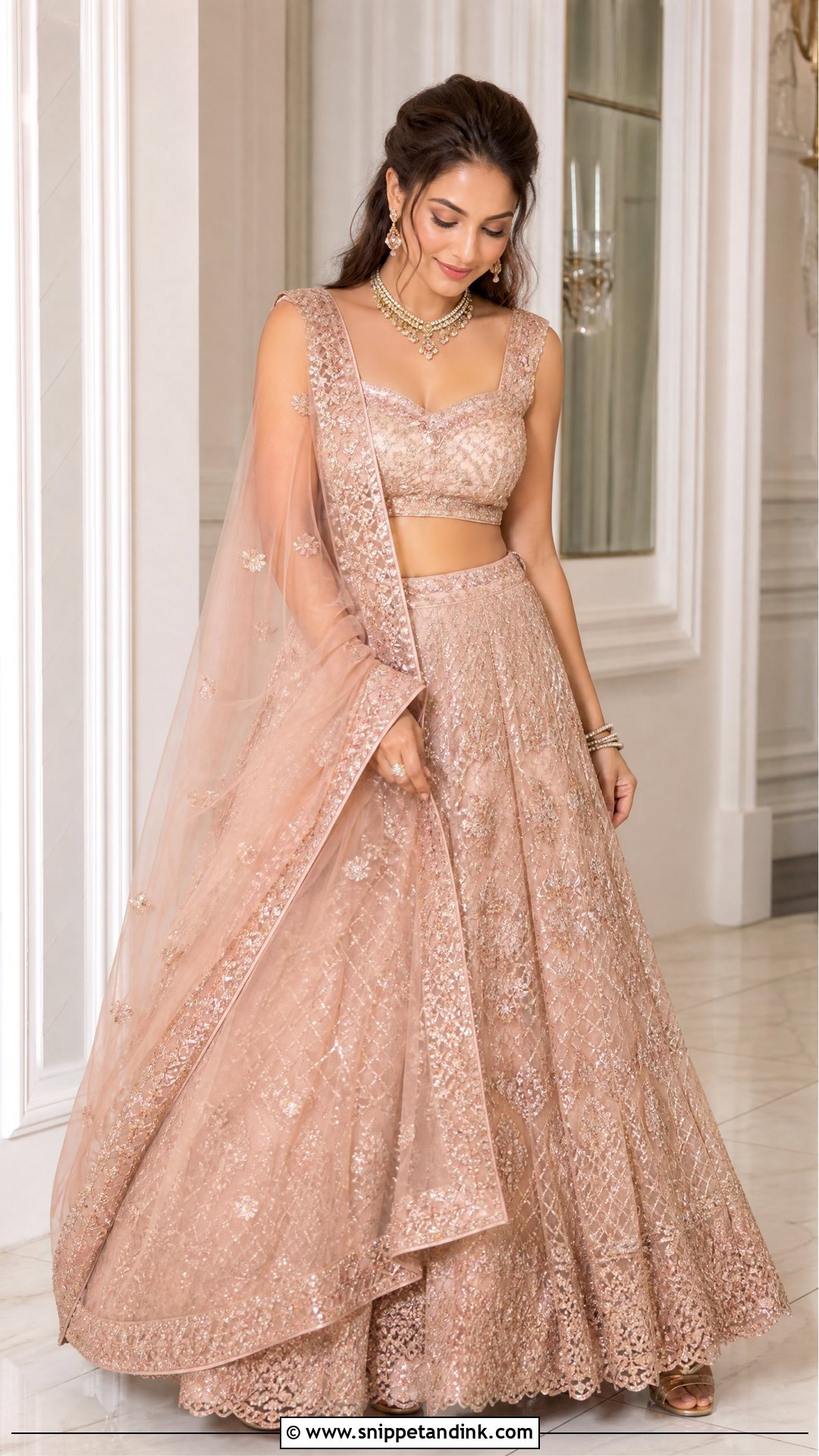
A lowered gaze looks calm and candid. Stand at a slight angle and look toward your jewellery, dupatta or the embroidery near your hands, lowering the eyes and chin but not the whole head. Dropping the head makes a double chin and buries your earrings in shadow, so I’ll remind you to keep the neck long. One hand at the waist, the other adjusting a bangle or holding the border. Keep a little space between arms and body. I take a full-length and a close version. Brides who dislike looking into the lens are usually most relaxed here, and it shows off eye makeup and the blouse neckline.
12. Jewelry Touch Lengha Pose
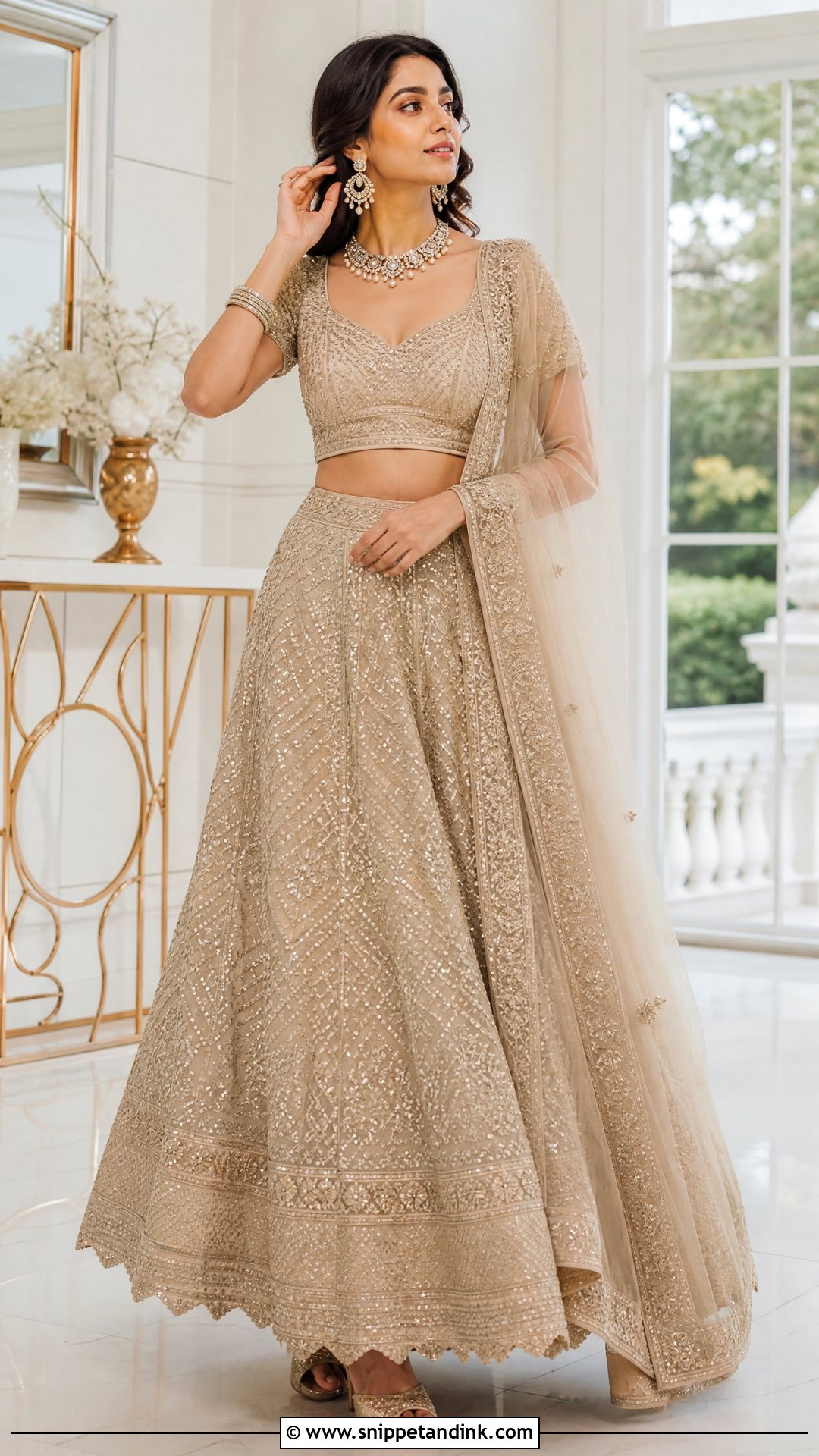
Touching your jewellery gives the hands something real to do. Adjust an earring, run fingers along the necklace edge or bring a hand near the maang tikka without covering your face. Use fingertips, not a grip. Turn the body slightly away and keep the face near the light. The free hand can rest on the skirt, the dupatta or the waist. Look down for a candid feel or meet the camera calmly. I always take the full outfit first and then move in, so the detail shots read as part of the same look rather than random close-ups.
13. Bangles Adjustment Lengha Pose
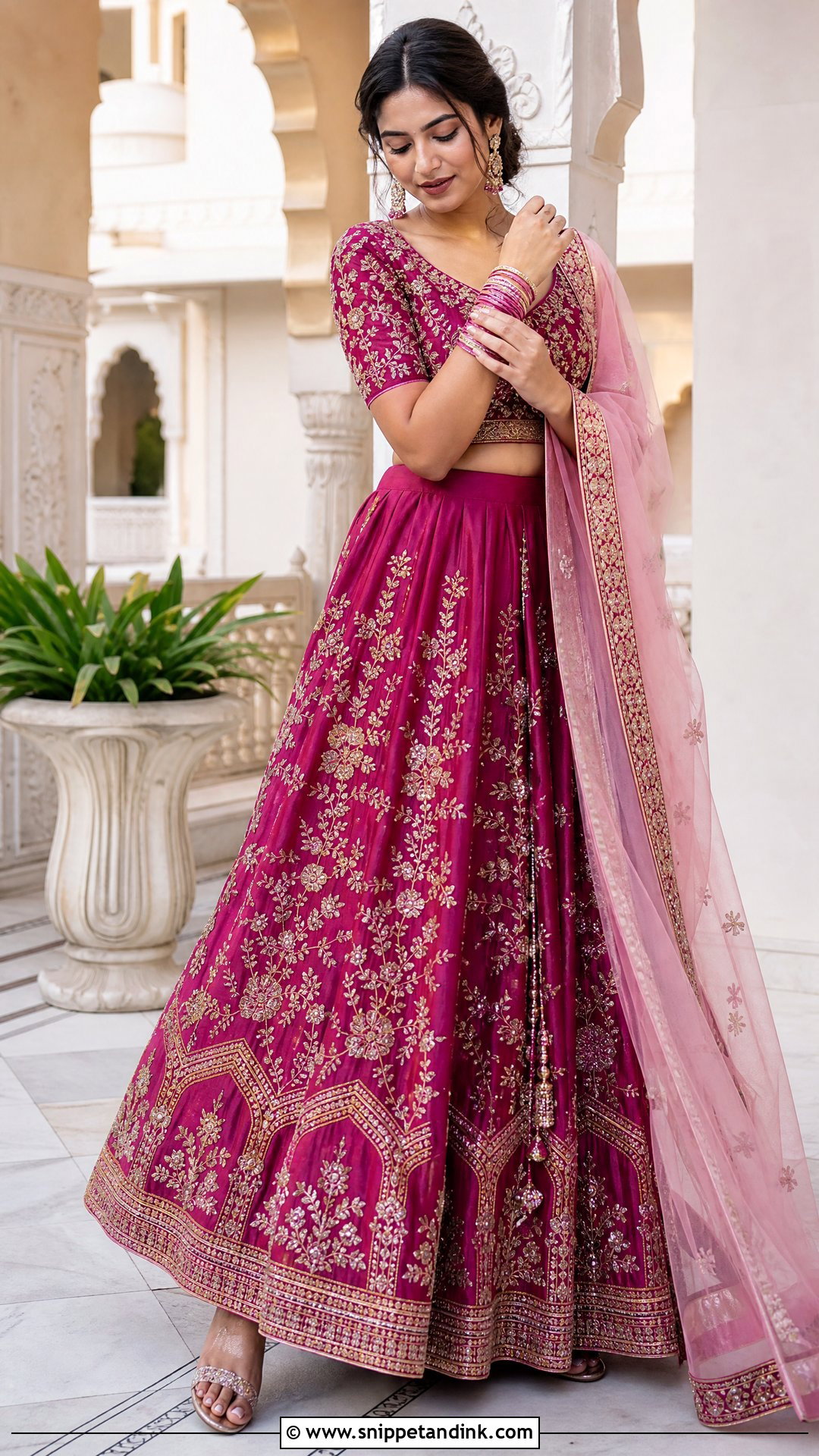
Adjusting your bangles is a gentle pause between bigger poses, and it gives lovely hand detail. Bring your hands together at waist or chest level and move one bangle with the other hand. Turn the wrists toward the light so the glass or gold catches it. Angle your body roughly 45 degrees from me with one foot ahead. Look at your hands, to the side or at me. Let the dupatta fall from one shoulder without covering both arms. I’ll shoot a vertical full-length first, including skirt and shoes, then a tighter crop of bangles, blouse and expression. If you have mehndi, this pose shows it off too.
14. Seated Chair Lengha Pose
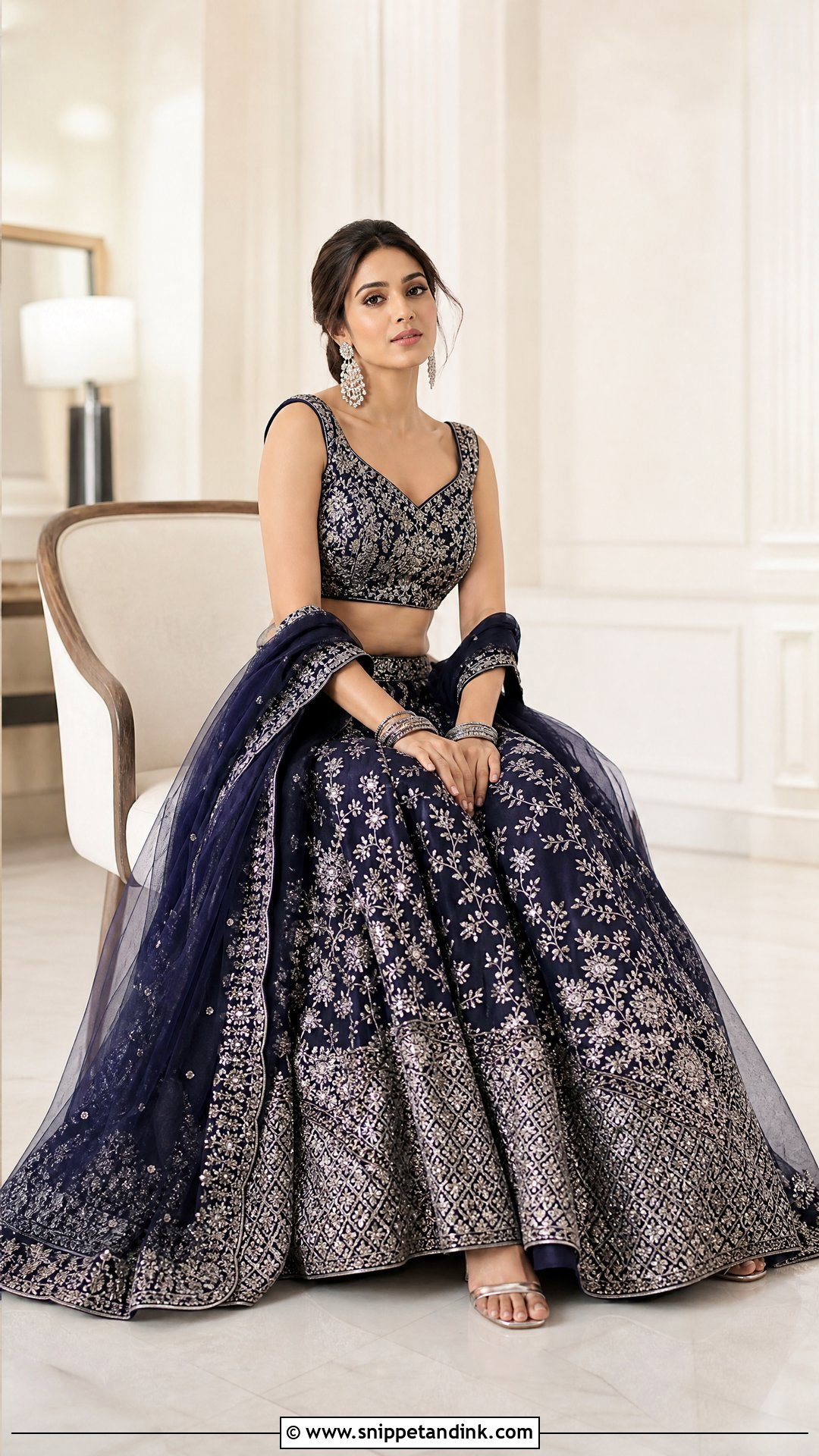
A chair gives a polished seated portrait anywhere. Sit near the front edge, not against the backrest, which compresses the waist and pushes the blouse up. Lengthen your spine, drop the shoulders and angle the knees to one side. I’ll arrange the skirt around the chair so the embroidery shows and nothing bunches under you. One hand in the lap, the other near the armrest, waist or dupatta; keep wrists soft and elbows off your sides. Look straight at me for confidence or away for ease. A simple, neutral chair is best, because a carved or gilded one fights a worked lengha.
15. Seated Floor Lengha Pose
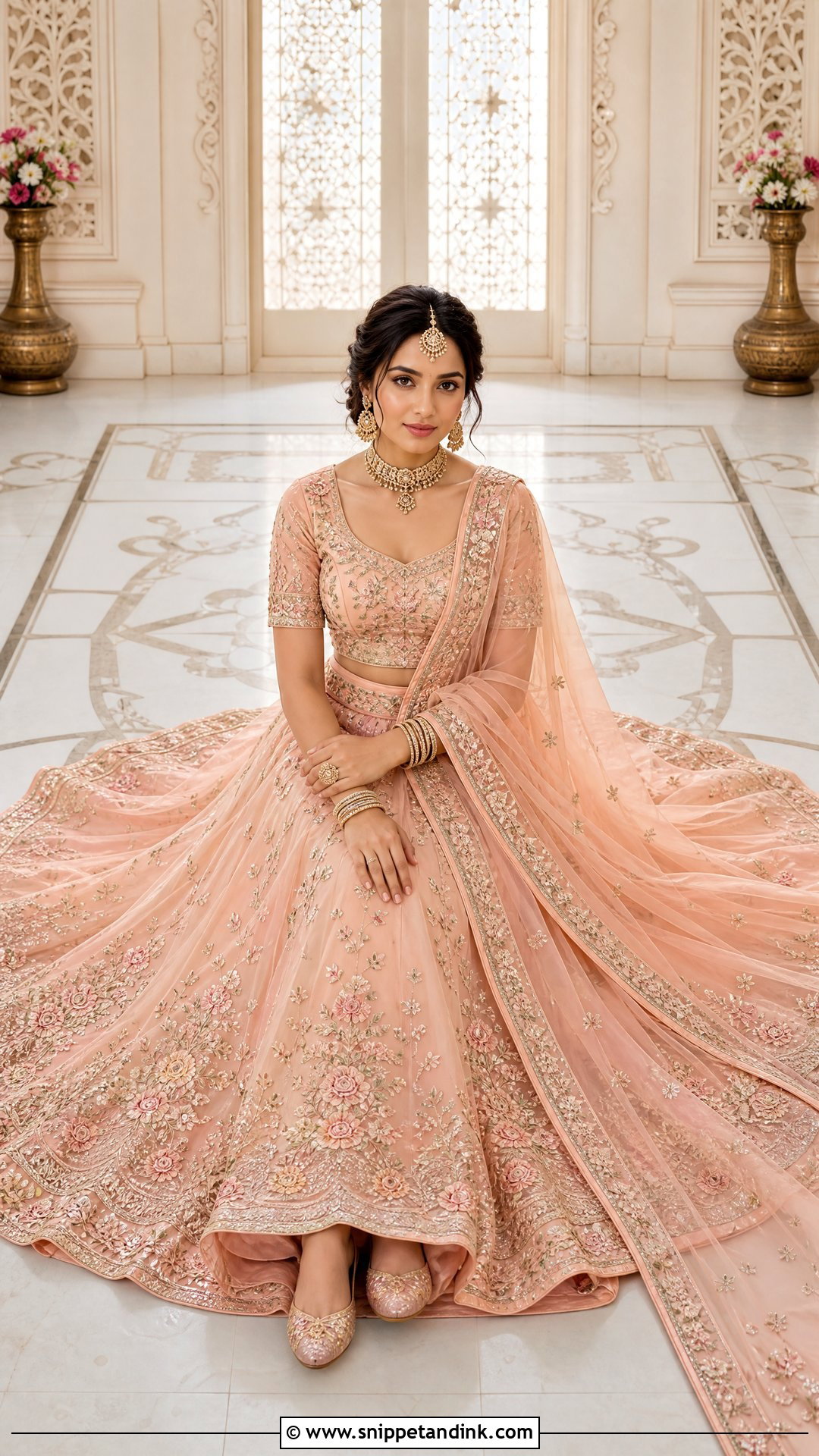
On the floor, a wide skirt can form a full circle around you. Choose a clean surface and get down with help if the lengha is heavy, since standing back up in one is harder than it looks. Fold your legs under the fabric and spread the skirt evenly without stretching it. Keep the spine straight and hands soft in your lap or along the skirt. I’ll shoot from a little above to capture the circle, embroidery, blouse and jewellery together. Turn toward the light and lift the chin to avoid shadows. Keep at least one hand visible; hands buried in fabric make the photo look unfinished.
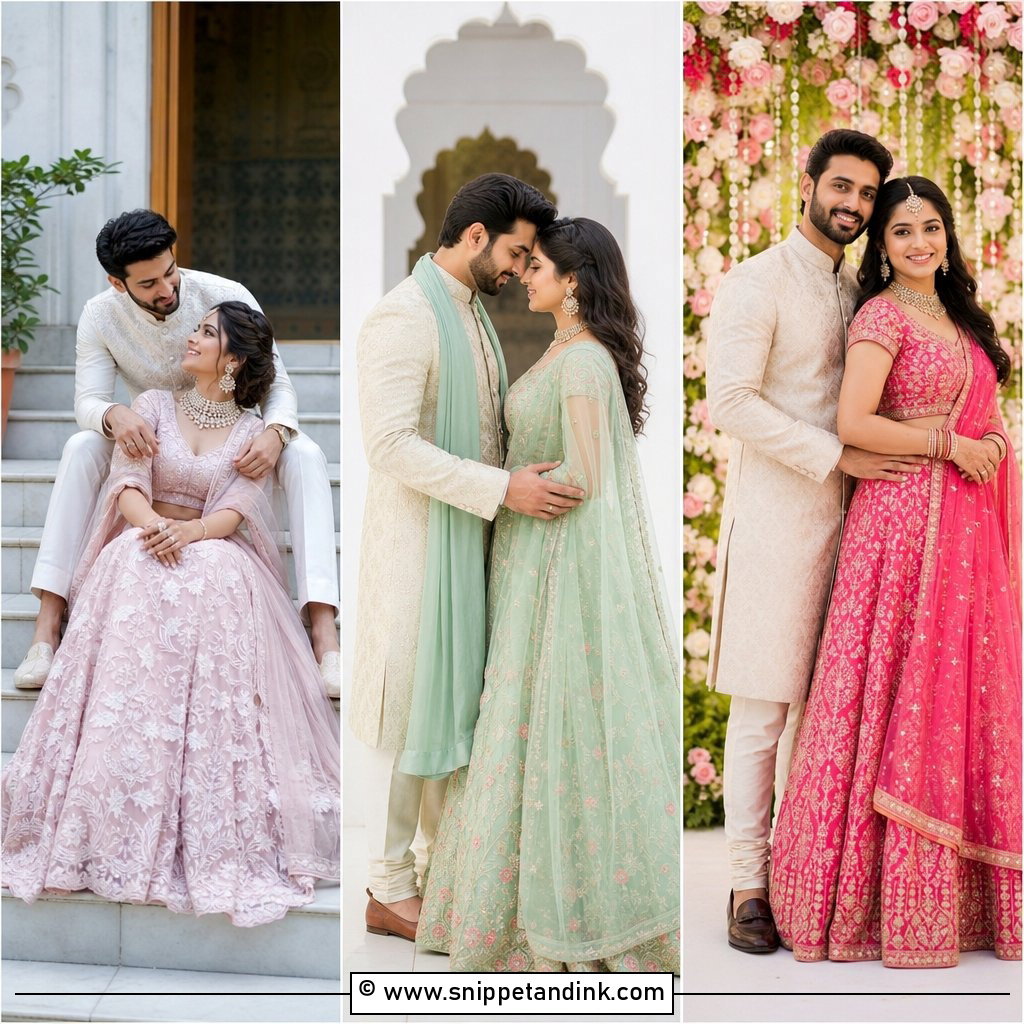
16. Sitting on Stairs Lengha Pose
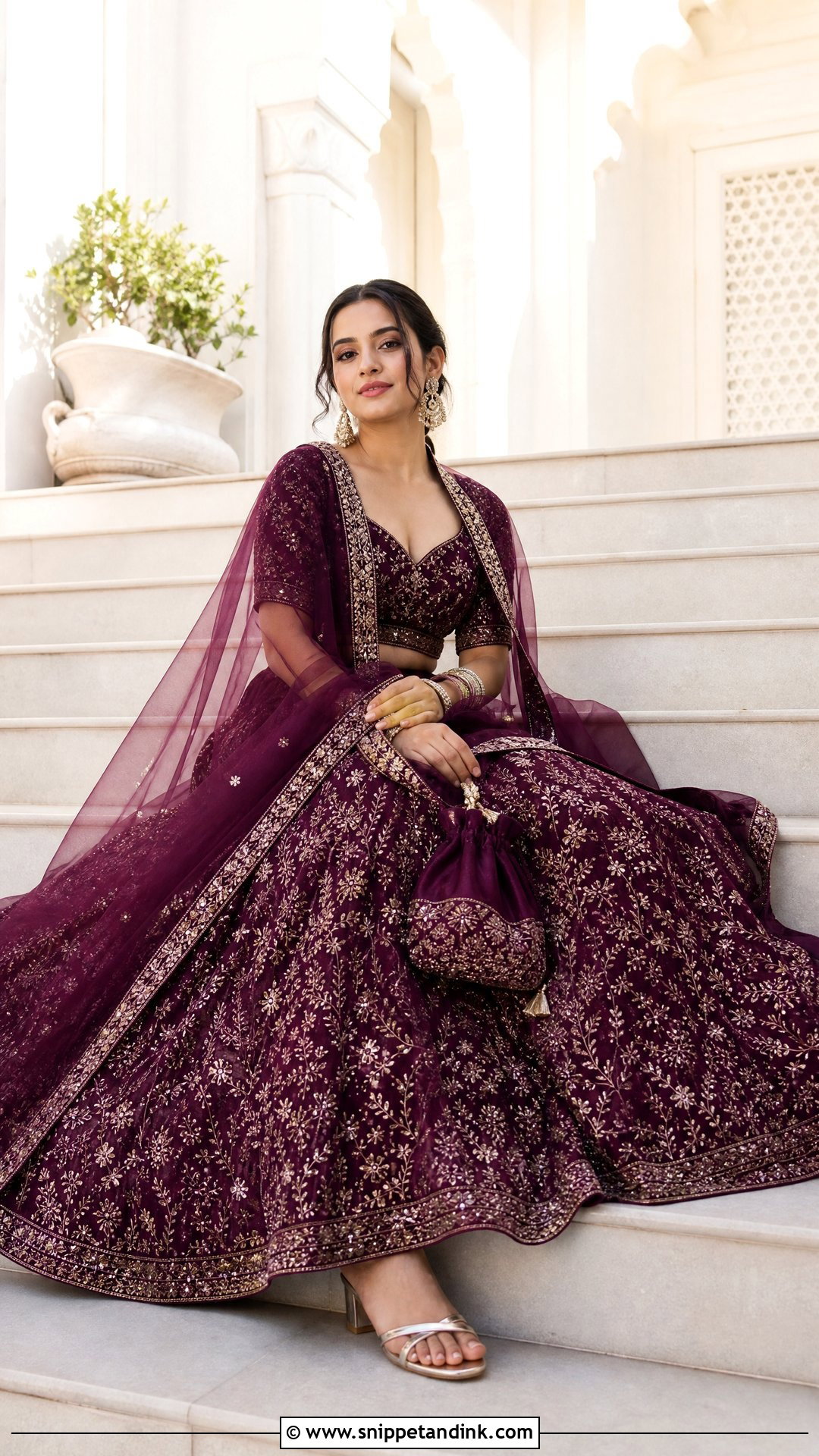
Stairs give you levels, and the skirt can cascade down through the frame. Sit on a wide step with knees angled to one side, back tall and shoulders loose. Spread the lengha across the step below rather than piling it at the waist. One hand beside you for balance, the other on your lap or dupatta. Face the light with the chin slightly forward. I can shoot from the bottom for a dramatic full-length or from the side for something softer. Check for railings that seem to sprout from your head. Dry, stable steps only, and never right beside an open edge.
17. Mirror Reflection Lengha Pose
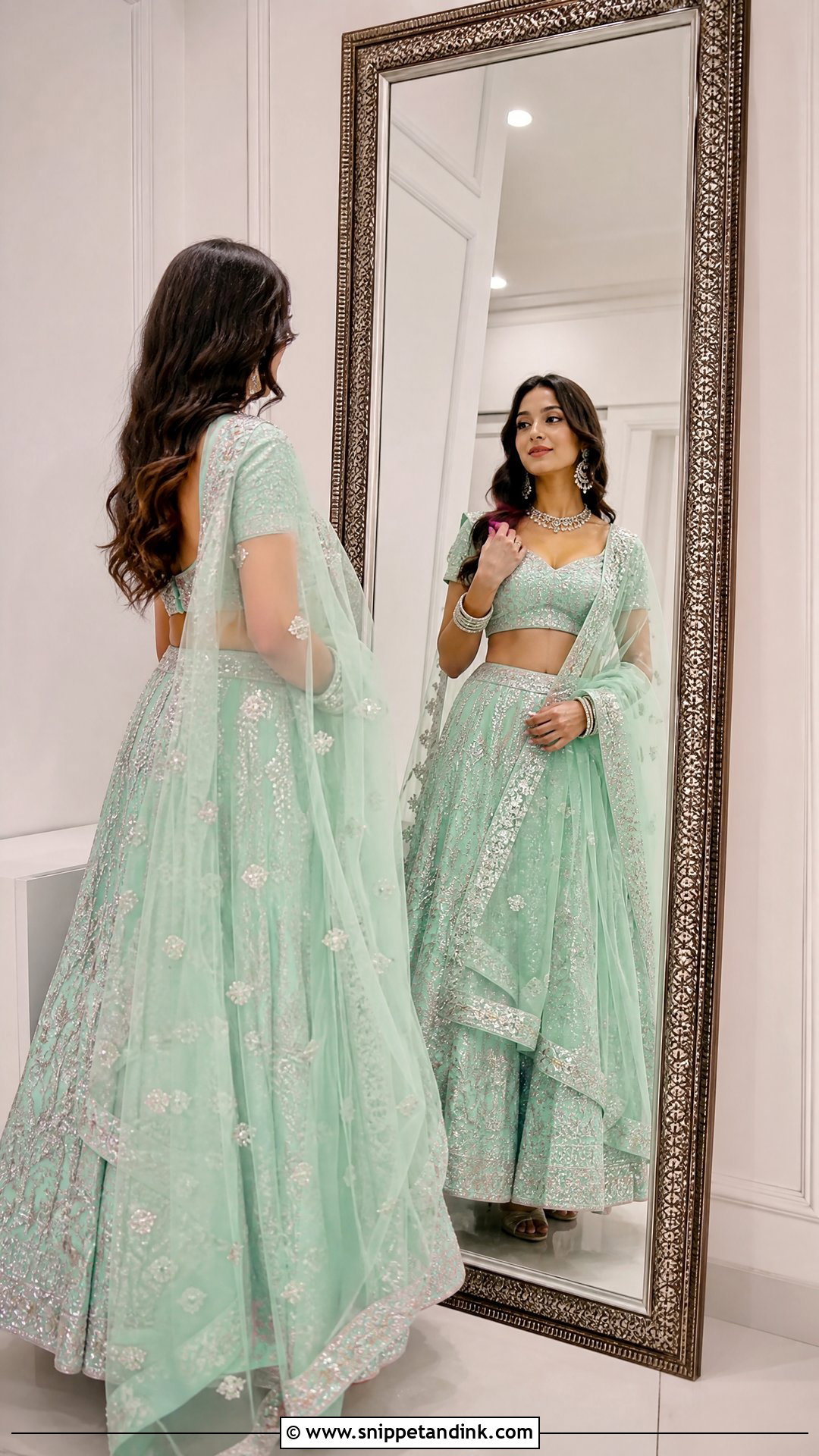
A mirror portrait shows front and back of the lengha at once. Stand at an angle to a tall, clean mirror, far enough back that the whole skirt fits in the reflection. Look into the mirror, or toward me through it. One hand on the dupatta, jewellery or waist. Keep your posture long and make sure the frame edge doesn’t slice through your head or hem. Mirrors also show me, my lights and everything behind me, so I spend a minute finding an angle where I’m out of the reflection and the room behind is tidy.
18. Wall Lean Lengha Pose
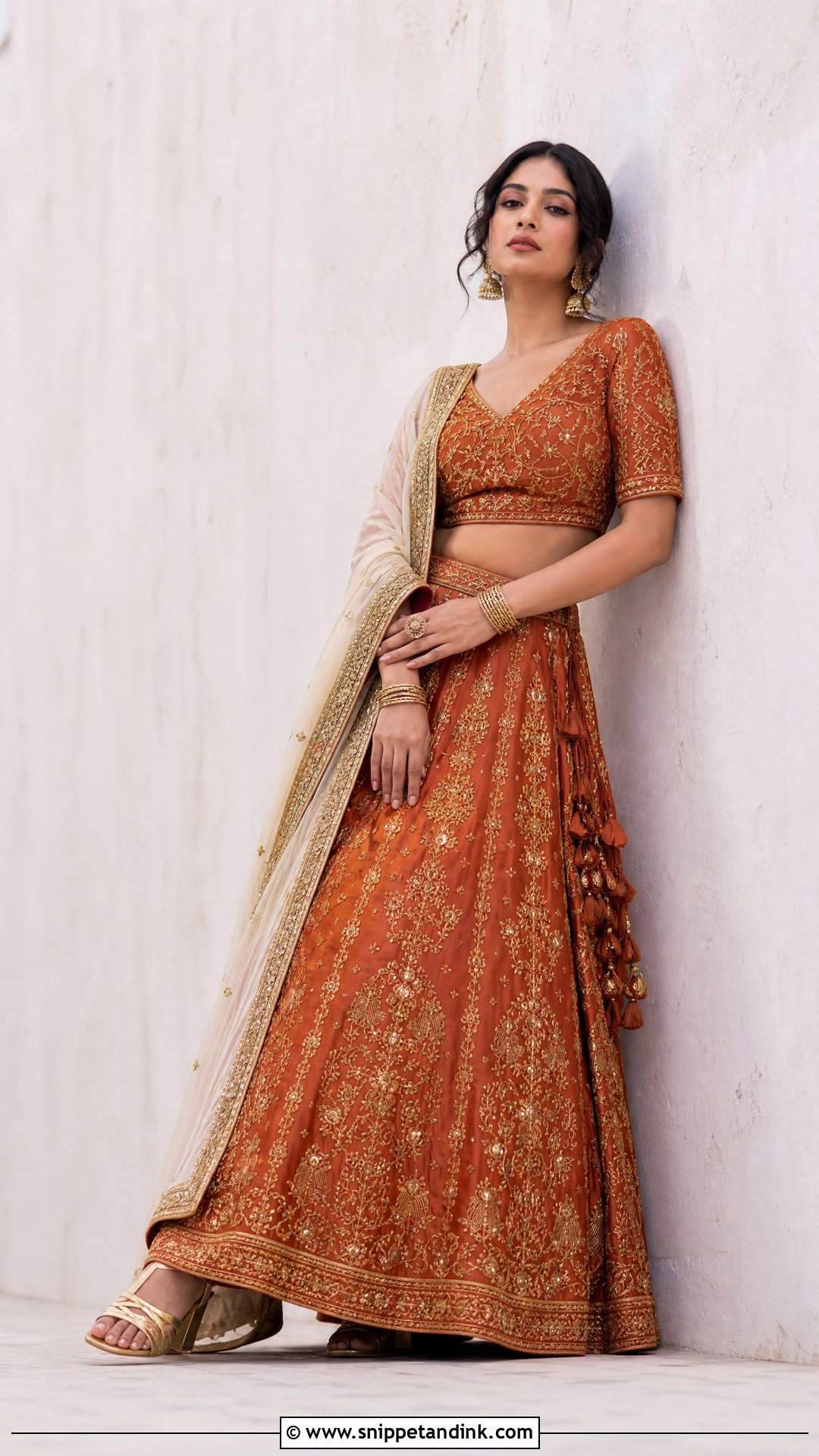
A light wall lean looks relaxed without collapsing the outfit. Rest one shoulder or the upper back on the wall rather than your whole weight. Extend one foot slightly forward and soften the other knee. Keep the head upright so hair and earrings stay neat. One hand at the waist, the other on the dupatta or skirt. Look away for a candid feel or straight at me for a fashion portrait. A plain wall, carved doorway or subtle texture suits it. Rough plaster and old brick snag fine embroidery and leave dust on the back of the blouse, so I check the surface with my hand first.
19. Doorway Lengha Pose
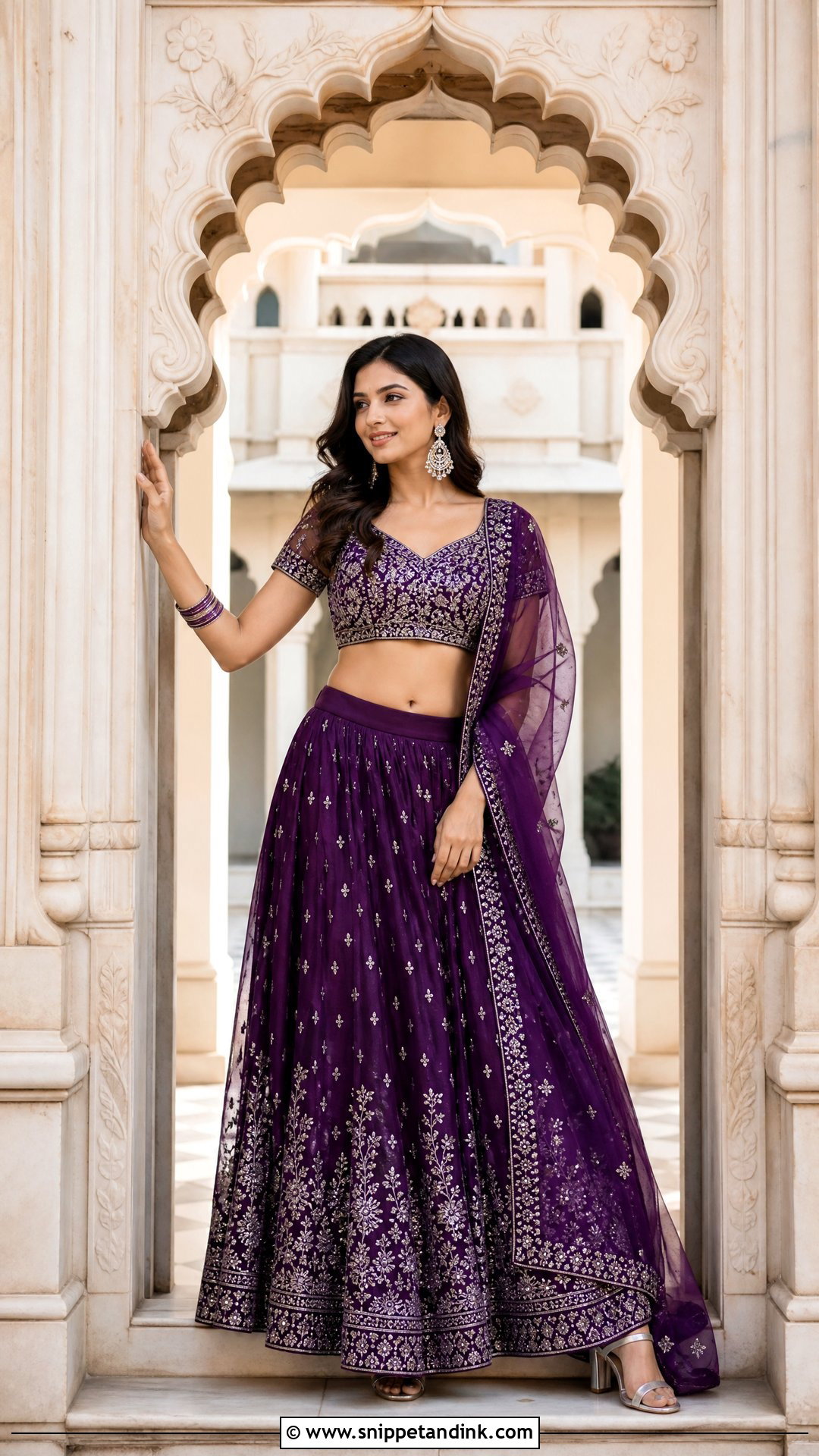
A doorway frames you naturally and gives a symmetrical portrait. Stand centred or just off to one side depending on the architecture. Lightly touch the frame with one hand; reaching high lifts the shoulder and tenses the pose. The other hand holds the dupatta or rests at the waist. Cross one foot slightly in front and angle your hips. Look into the room, at me or down at the skirt. I keep the vertical lines straight and the whole hem in. Arches and pale wooden doors work well. A doorway with bright light behind you will turn you into a silhouette unless there’s light on your face too.
20. Window Light Lengha Pose
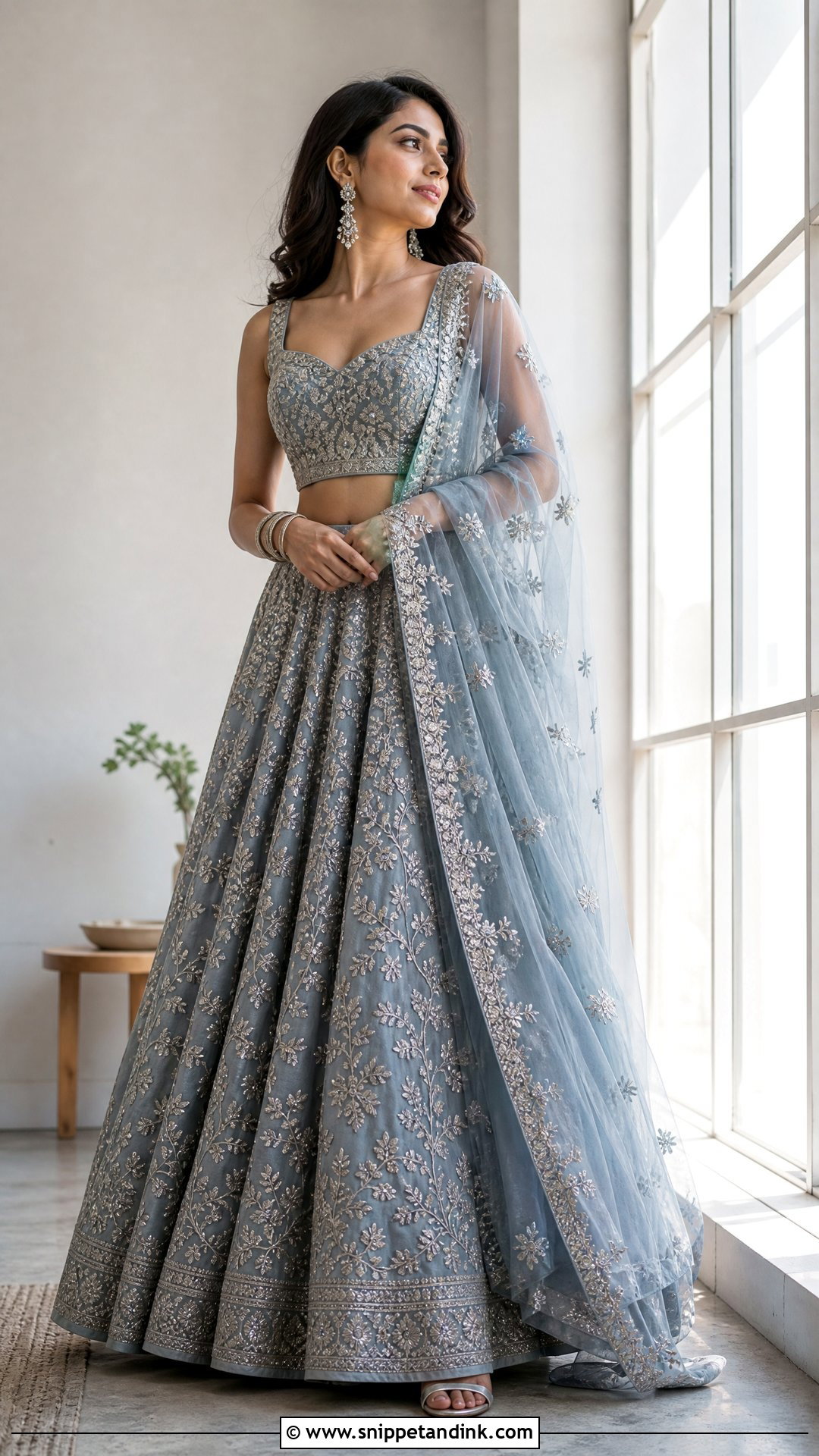
Window light is the most flattering setup I know for embroidery, and it needs no equipment. Stand side-on to a large window with a little space between you and the glass. Turn your face toward the light and keep your shoulders angled to me. One hand near the frame, the other holding the dupatta or touching jewellery. Don’t press against the glass. A calm face or slight smile suits it. I expose for your face and outfit and let the view outside go bright. Then a wide vertical of the whole lengha, followed by closer frames of blouse, accessories and expression.
21. Back-Facing Lengha Pose
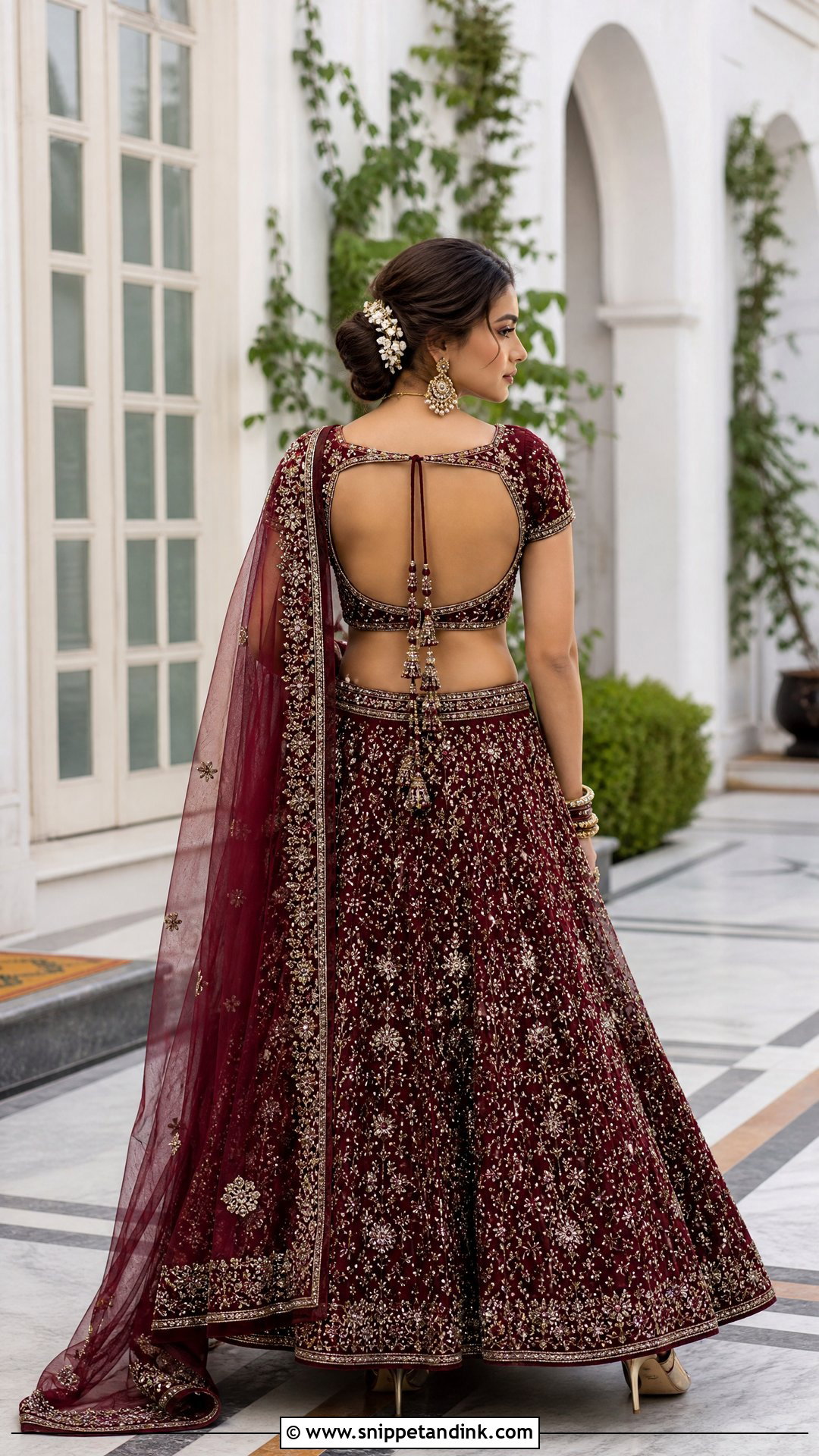
A back-facing shot puts the blouse, dupatta drape, hairstyle and the back of the skirt first. Stand tall with both feet grounded and your weight slightly to one side. Let the dupatta fall neatly without hiding the blouse. Hold the skirt at one side, touch your hair or let your arms relax. Turn the head slightly for a hint of profile or keep looking ahead for an anonymous, editorial frame. Keep the shoulders level, since one dropped shoulder is obvious from behind. I’ll shoot straight on for symmetry or off-centre for depth. Latkans, tie-backs and open-back blouses deserve this frame.
22. Hair Adjustment Lengha Pose
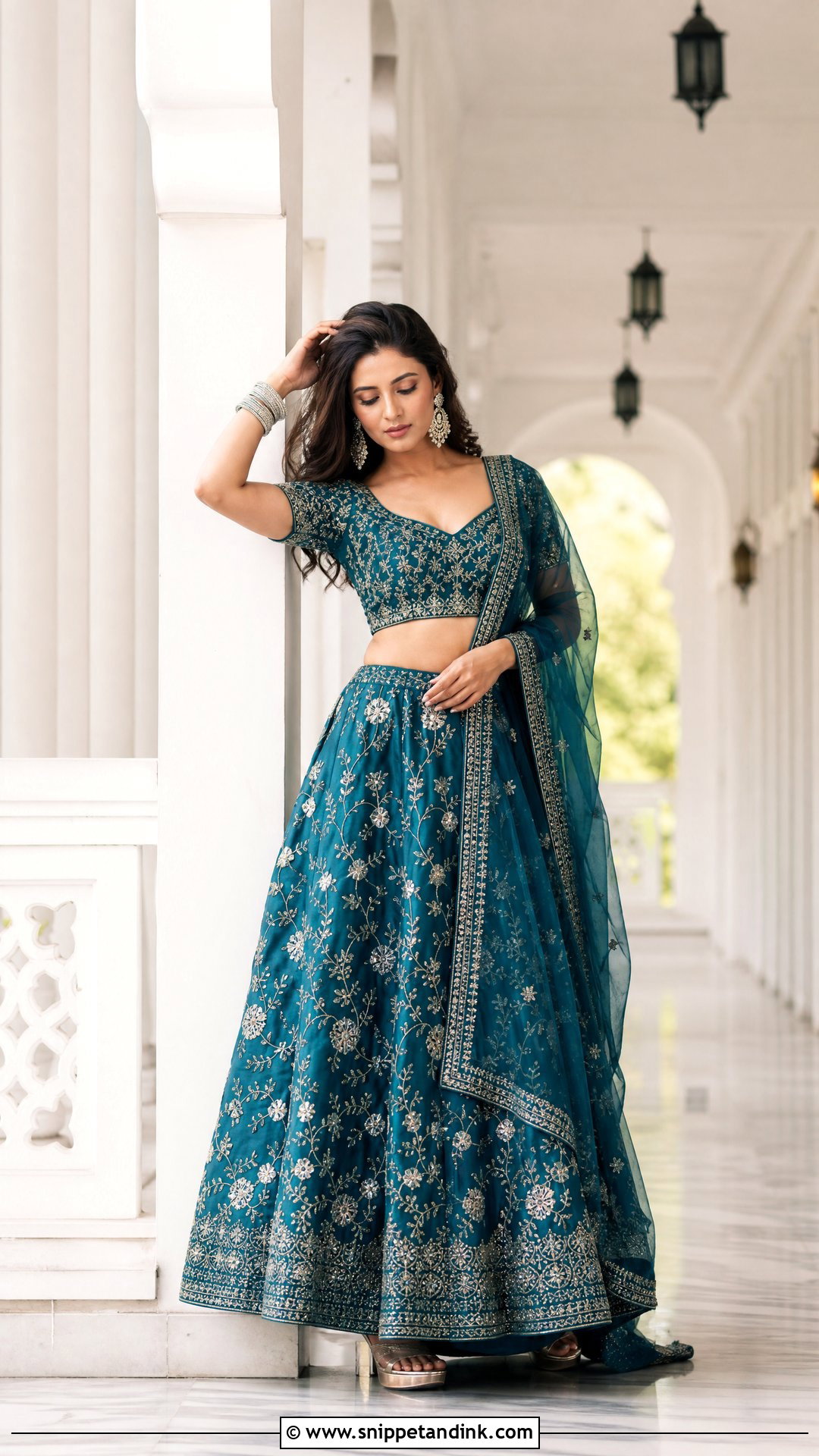
Touching your hair makes a styled portrait feel spontaneous. Reach toward a curl, braid or loose strand, leaving the other hand at the waist or dupatta. Angle the raised elbow outward so it doesn’t cover the blouse or jewellery. Fingertips, not a flat palm, which looks like you’re holding your head on. Turn your body away and bring the face back to the light. Smile, look down or gaze past the lens. I shoot the whole gesture, because the frames just before and after your hand arrives usually look most natural. Keep the background simple behind the raised arm.
23. Candid Laugh Lengha Pose
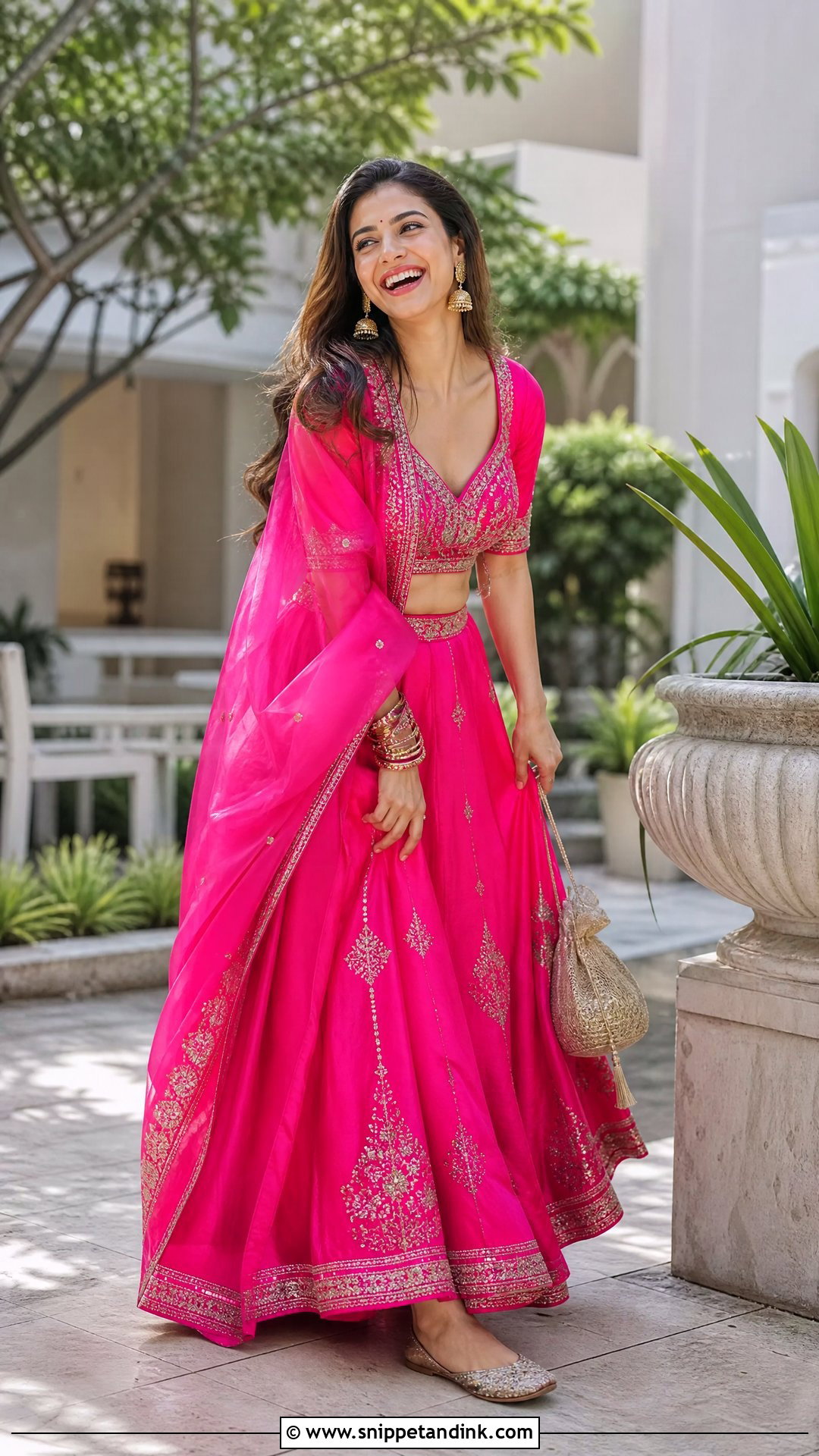
A genuine laugh can’t be produced on command, so I don’t ask for one. I talk, or I bring in a sister or friend to stand behind me and say something ridiculous. Angle your body and rest your hands on the skirt, waist or dupatta. If your head tips back as you laugh, bring your chin down a touch. I shoot continuously through the change from smile to full laugh. It works while walking or turning too, with enough room for the skirt. A clean, bright setting keeps attention on your face, and I take full-length and close versions.
24. Bridesmaids Lengha Pose
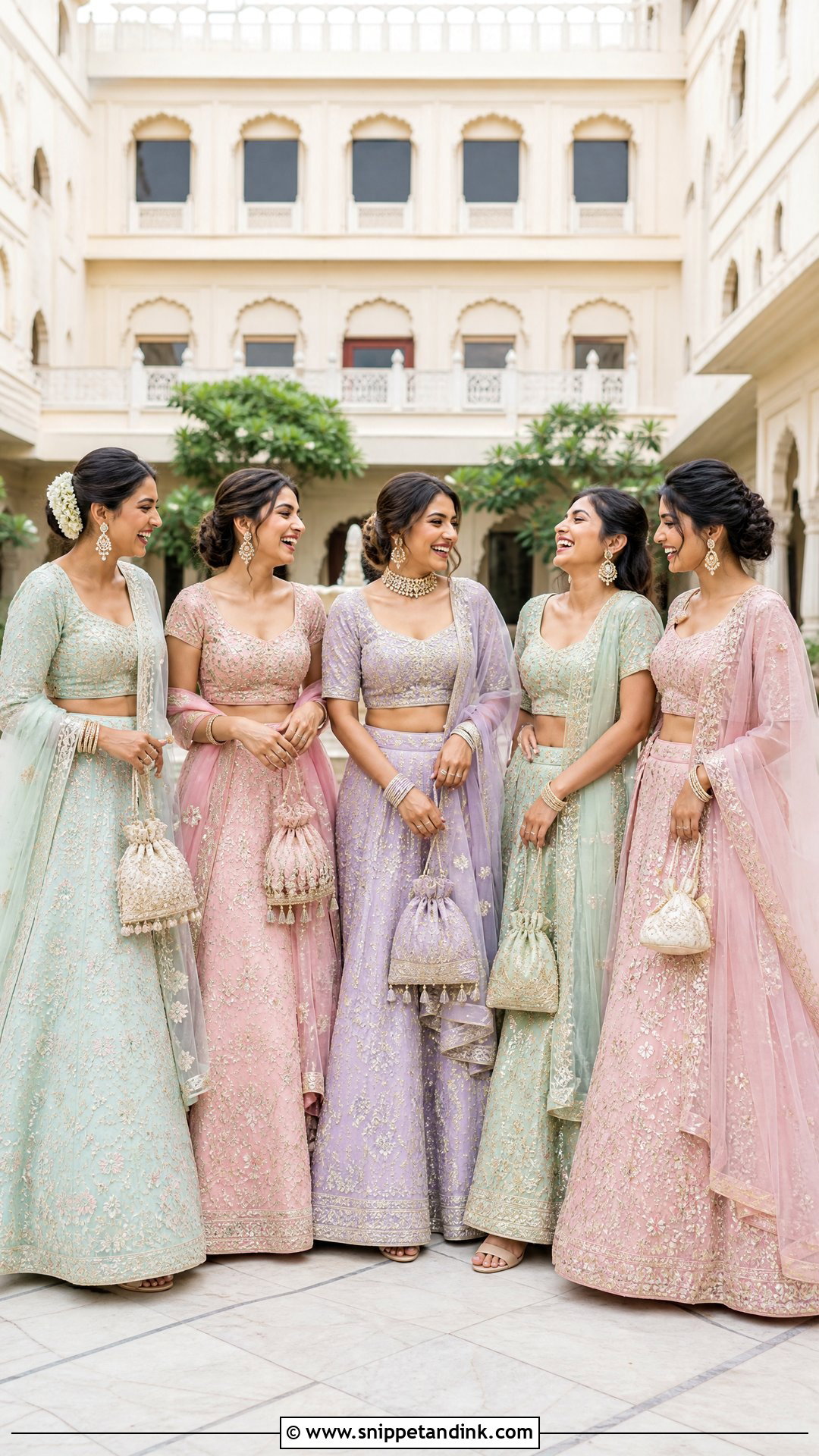
A group shot comes alive when people interact rather than lining up. Put the most detailed lengha, usually the bride, in the centre and angle everyone else slightly differently. Hold hands, fix a dupatta, share a laugh or walk slowly toward me. Leave a gap between people so each outfit shows; if skirts overlap, all the embroidery merges into one block. Matching hand positions look stiff, so vary them. Everyone can look at one person, at me or at each other. I take vertical and horizontal versions without cropping skirts or shoes, against an even, open background.
25. Flower Petal Lengha Pose
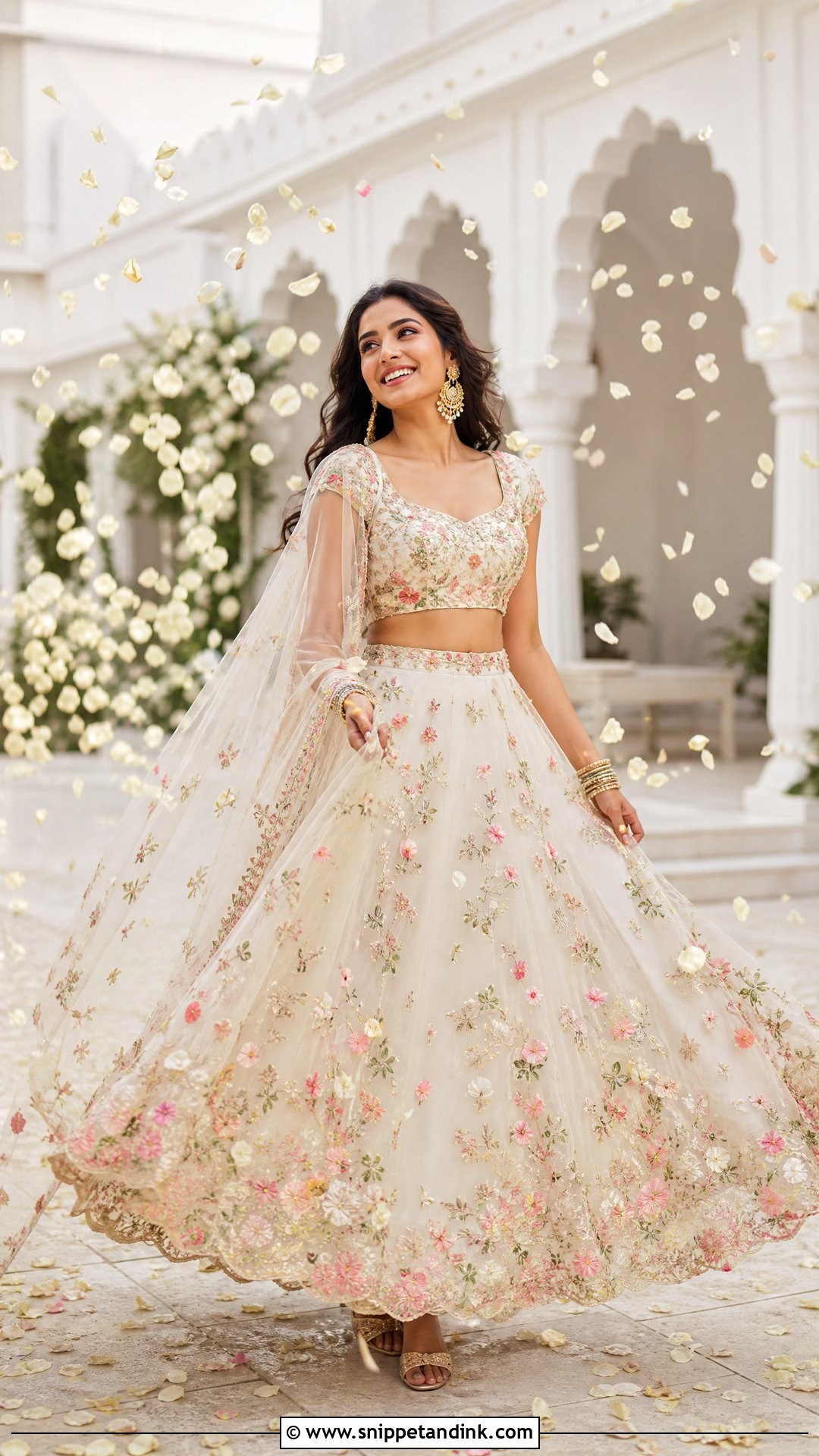
Falling petals turn a simple pose into a celebration. Stand steady with one foot forward and hands relaxed near the skirt or dupatta. Helpers should drop a modest handful from both sides, above you, rather than throwing them at your face. Look up, close your eyes for a moment or smile at me. A slow twirl can join in, but don’t stack too many actions. I’ll shoot a burst and keep the whole hem in frame. Rose petals can stain pale fabric when crushed, so on an ivory or pastel lengha I’d use lighter-coloured or dried petals. Check skirt, hair and dupatta afterwards for strays.
Red, Gold and Zari Under Different Kinds of Light
Bridal lenghas are some of the trickiest garments I photograph, mainly because of the colours and the metal thread. Knowing how they behave helps you pick a location and time for your portraits.
Deep reds and maroons
Saturated reds lose their texture first. In harsh midday sun the folds can turn into a flat red block, and in dim indoor light they go muddy. Open shade outdoors, or a large window indoors, holds the detail in the fabric while keeping the colour true.
Zari, sequins and mirror work
Metallic thread reflects whatever light hits it. Direct flash can make zari look white and blown out, while soft light from the side brings out the pattern. Mirror work throws bright little highlights; a slight turn of the body is often enough to control them.
Pastels and ivory
Pale lenghas pick up the colour of their surroundings. Green grass or a yellow wall will tint the fabric, so for a mint or ivory outfit I look for neutral backgrounds and plenty of reflected light from a pale floor or wall.
If you can, schedule a short portrait window in the hour or so before sunset. The light is softer and warmer, it is kind to every skin tone, and it gives embroidery depth without glare.
Send Your Photographer Five Favourites, Not Twenty-Five
The lengha portraits I’m proudest of come from comfortable posture, a reason for the hands, good light and an expression the bride recognises as hers. Try a few poses at home in the outfit so you know which angles show your blouse, skirt, dupatta and jewellery best. You don’t need to hold any of them perfectly; relaxed shoulders and small movements carry most frames. Pick a handful from this list and share them with your photographer in advance, mixing standing, seated, moving, detail and candid shots. Leave breathing time between setups, and you’ll enjoy the session instead of enduring it.
You'll Like These Ideas:


Leave a Reply