
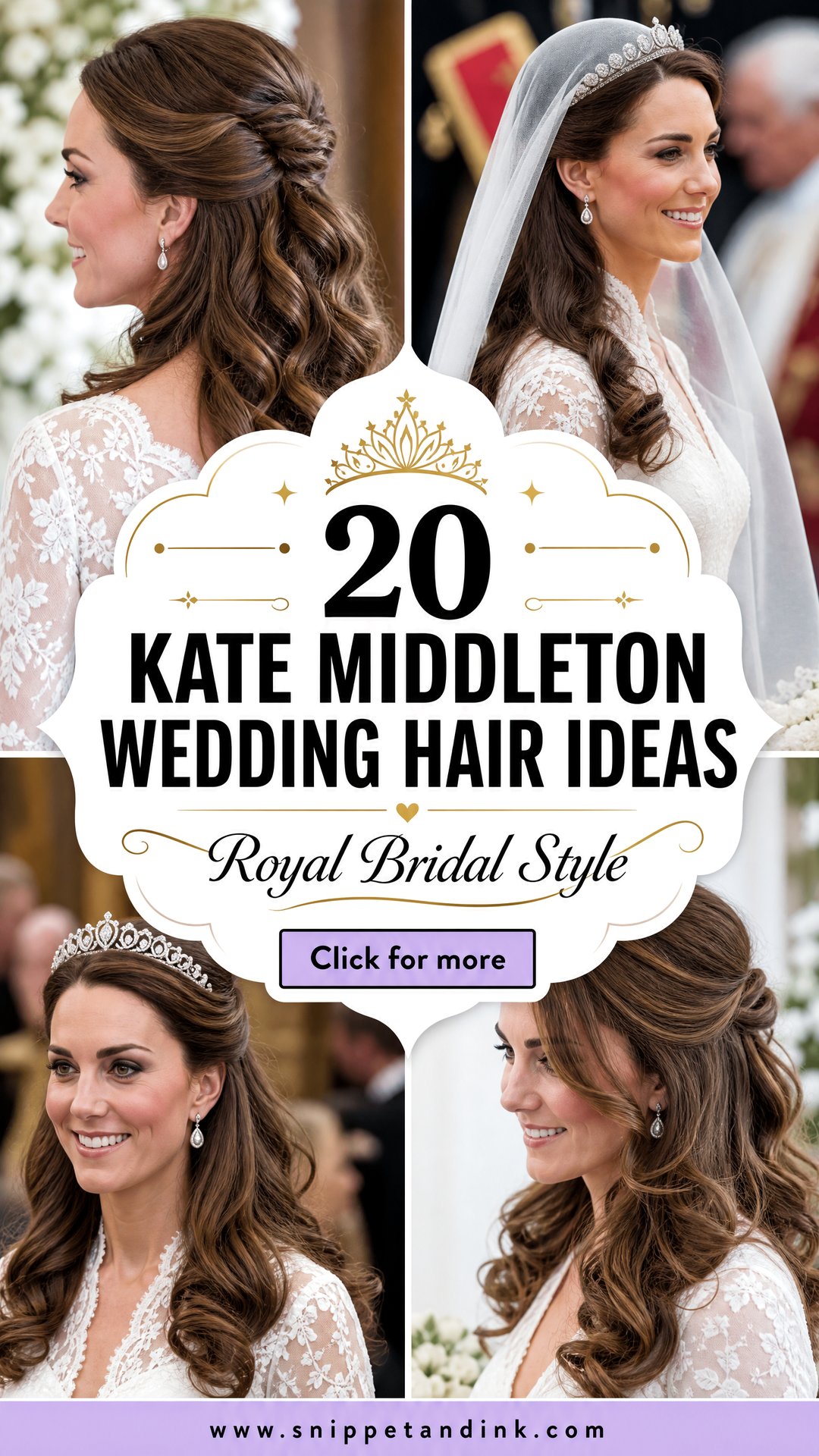
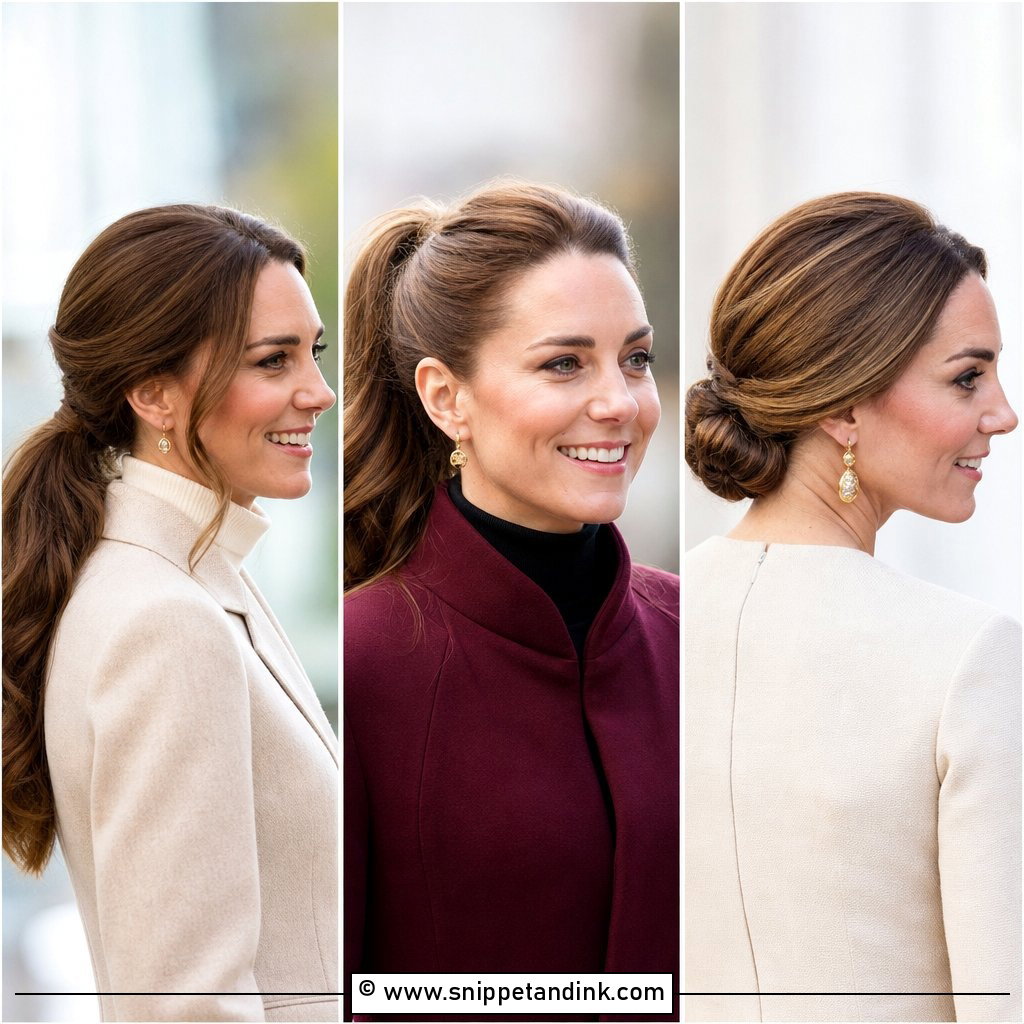
When Kate Middleton walked down the aisle in 2011, her half-up hair became one of the most requested bridal looks I’ve ever been asked to copy. Brides still sit in my chair, hold up a phone and say “the Kate look” before they say hello. What makes it work is restraint: the top is controlled, the lengths move, and nothing looks lacquered. Below are twenty styles drawn from her wedding and from years of her public appearances, with notes on how each one is actually built and who it suits.
Copying a Royal Half-Up When Your Hair Is Finer Than Hers
Kate’s hair is long, thick and naturally holds a bend, which is why her styles look full with very little effort. Most brides who bring me her photo don’t have that density, and that’s fine. The look can still be built, it just needs a different starting point.
- Fine hair: I use a mousse at the roots and a heat protectant with some grip on the lengths, then add two or three clip-in wefts at the back so the curls have bulk.
- Shoulder-length hair: the half-up still works, but the lengths won’t sweep down the back, so I’d choose a low chignon built over a small padded form instead.
- Very thick or coarse hair: it holds curl well, but the twist at the crown can get heavy. I thin the section underneath before pinning so it doesn’t sag.
- Curly or coily hair: keep your own pattern rather than straightening and re-curling. A defined twist-out pinned half-up looks royal without the heat damage.
Have your color done three to four weeks before the wedding so it settles, and avoid a big cut in the last fortnight. Wash your hair the night before rather than the morning; slightly lived-in hair grips pins much better than clean, slippery hair.
1. Half-Up Demi-Chignon With Loose Curls
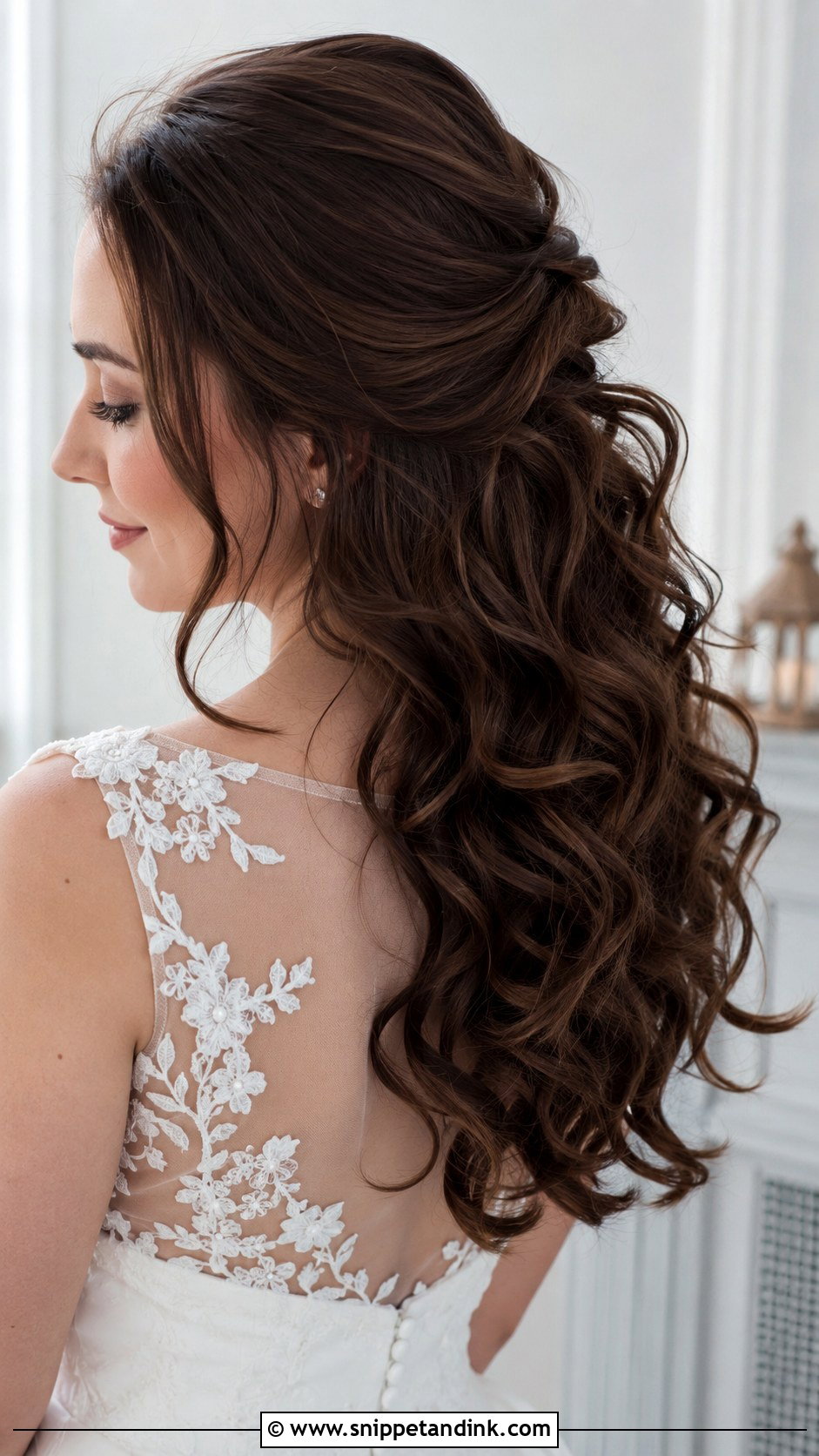
This is the style that started the requests. The front and top sections were twisted back off the face and pinned at the crown, while the rest fell in big, brushed-out curls. On a trial, the part I spend longest on is the pinning point: it has to sit high enough to hold a veil or tiara, but low enough that the twist doesn’t look like a schoolgirl clip. I backcomb a small panel just behind the hairline so the crown doesn’t flatten once the veil comb goes in. Very fine, straight hair will need a setting product and probably a few clip-in wefts to get that fullness down the back.
2. Classic Low Chignon Bun
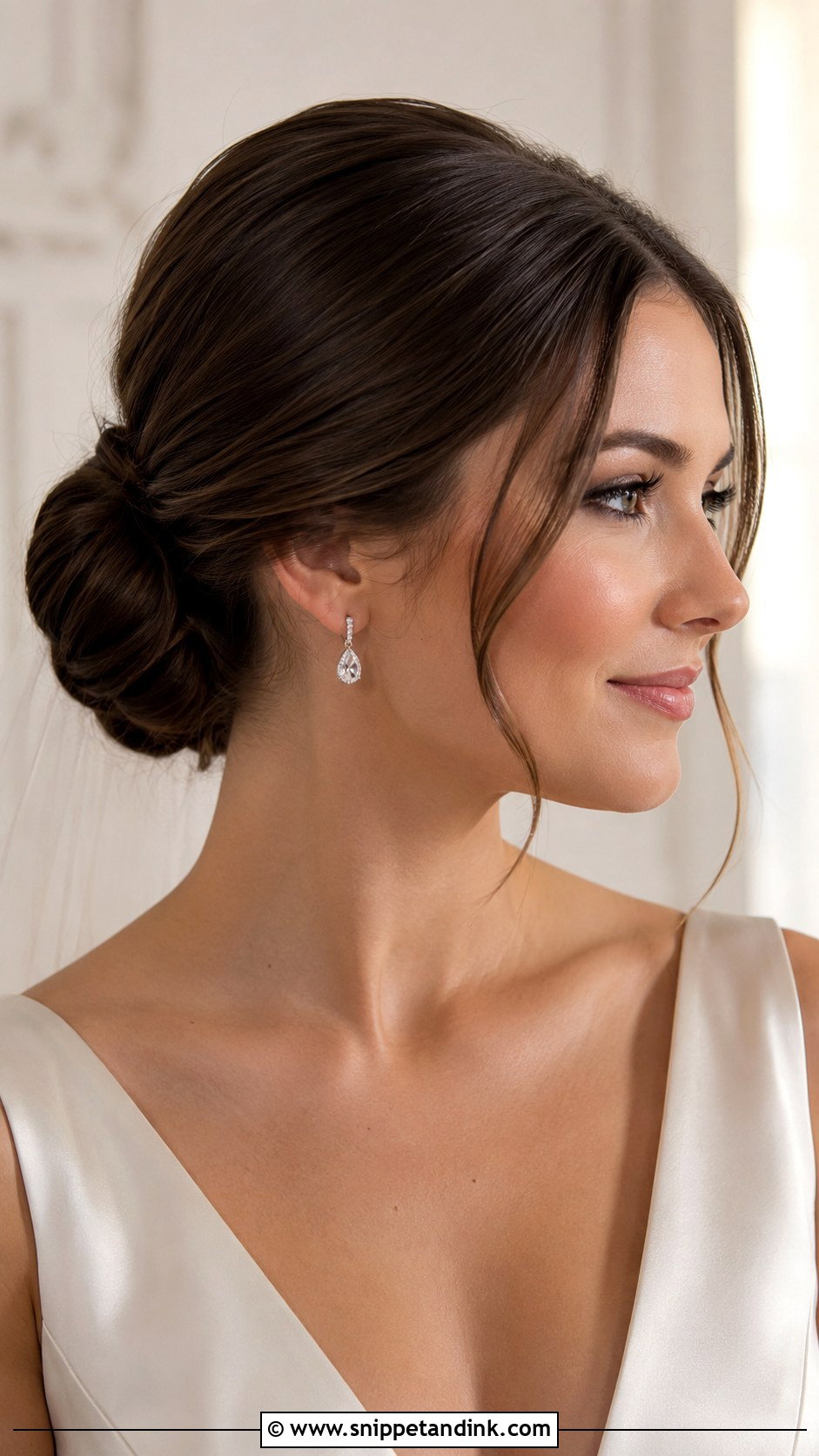
The low chignon is the style Kate falls back on for formal days, and it’s the one I trust most for a long, hot wedding. Hair is gathered at the nape and rolled into a smooth, rounded shape, with a couple of pieces left loose at the temples. Because the weight sits low, a cathedral veil can be anchored right above it without dragging the bun down. It keeps the neck clear in warm weather, which matters more than brides expect by mid-afternoon. If your hair is shoulder length or shorter, I build this one around a small padded form so it doesn’t look thin.
3. Bouncy Blow Dry With Side Part
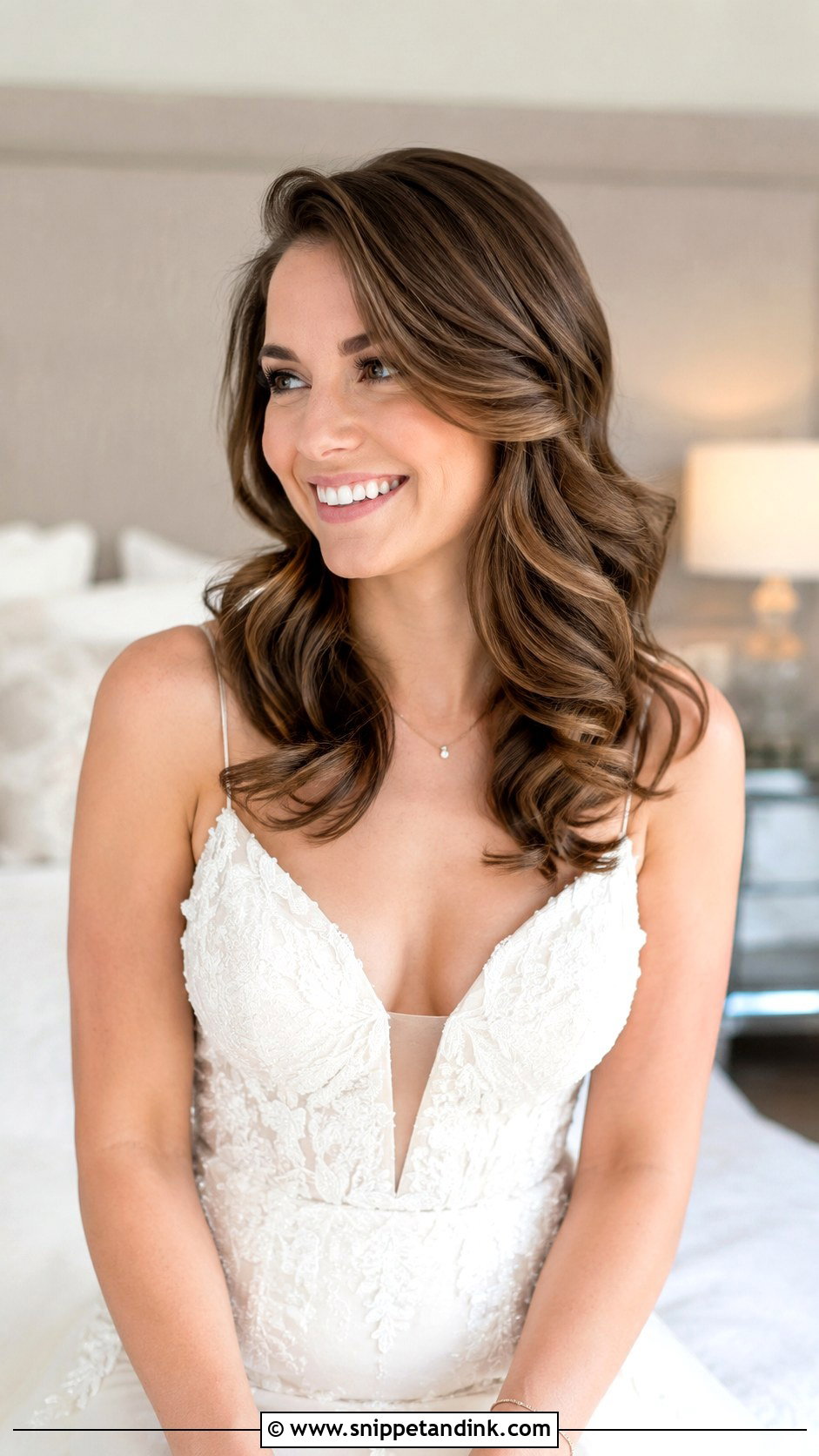
Her Chelsea blow dry is really a roller set disguised as a blowout. I dry the hair in large sections with a round brush, then let each section cool in a Velcro roller, because the bounce comes from the cooling, not the heat. A deep side part and plenty of shine finish it. This is the honest choice for long, healthy hair that already behaves; on hair that drops a curl within an hour, I’d want to see a trial before promising it survives the evening.
4. Soft Side-Swept Curls
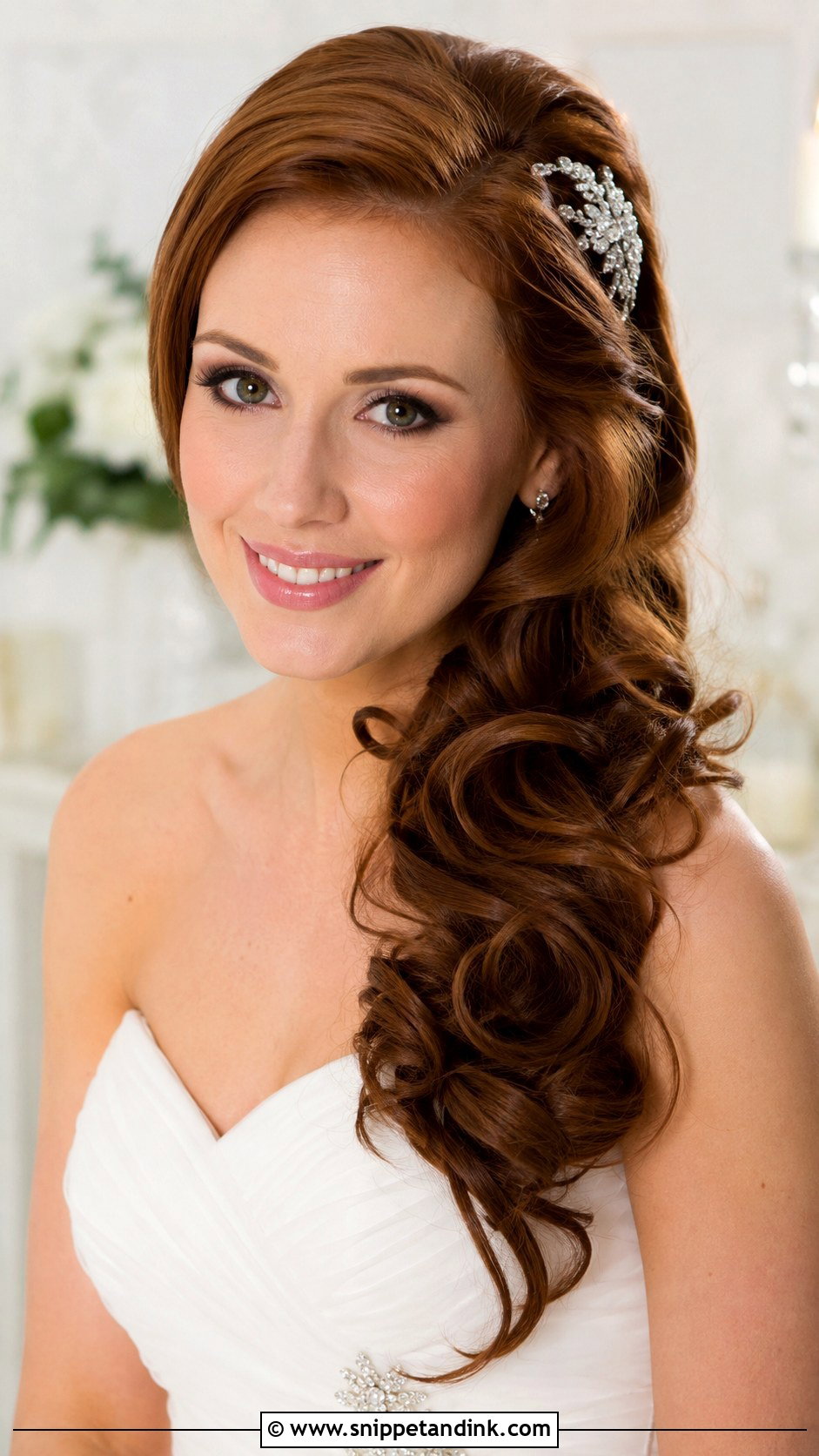
Gathering everything over one shoulder shows off the collarbone and suits a strapless or one-shoulder neckline. I curl in large barrel sections, then pin the back across the nape with crossed pins so the weight can’t swing round to the front during the ceremony. Brides with thick hair often find this side heavy by the reception, so I lighten the bulk underneath before pinning. A single jeweled comb behind the ear is enough decoration.
5. Twisted Princess Half-Updo
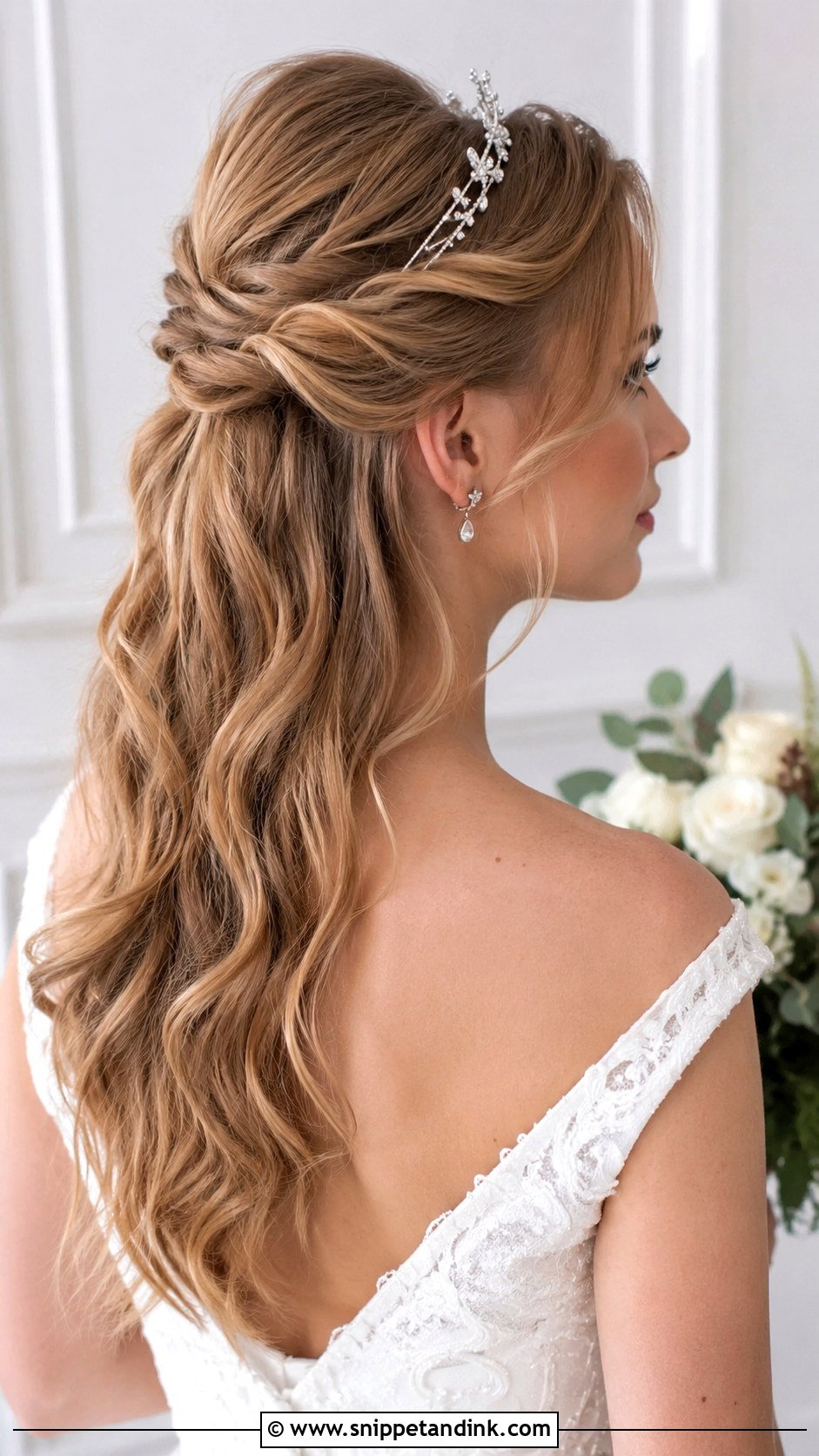
The princess twist is small: two narrow sections taken from above each ear, rolled back and pinned at the crown. It keeps hair off your face while you’re hugging people and eating, which is why it lasts better than a fully loose style. The mistake I see is twisting too tightly, which pulls the hairline and shows scalp in flash photos. I twist loosely, then loosen it further with my fingers once it’s pinned. Tiny pearl pins can hide the meeting point if you aren’t wearing a tiara.
6. Low Braided Bun
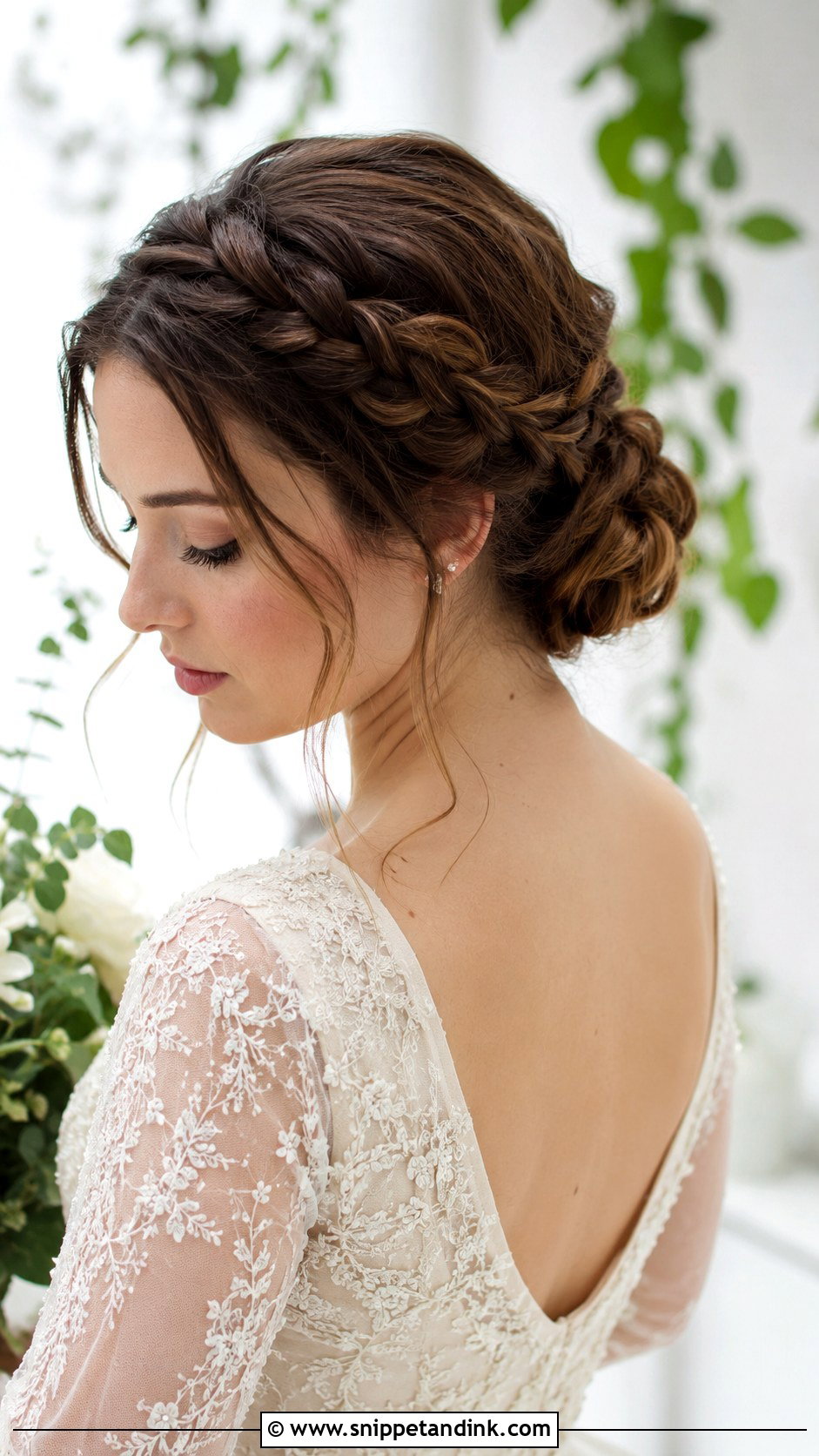
Kate wore a braided low bun to a London gala, and it translates well to a wedding with an outdoor setting. I braid two or three sections loosely, pancake each braid by pulling at the edges, then coil and pin them at the nape. Pancaking is what gives the texture that shows up in close-ups; a tight braid just looks like a rope. Fine hair can still do this, but the braids will be slimmer, so I usually add a weft before braiding.
7. Sleek Ballerina Bun
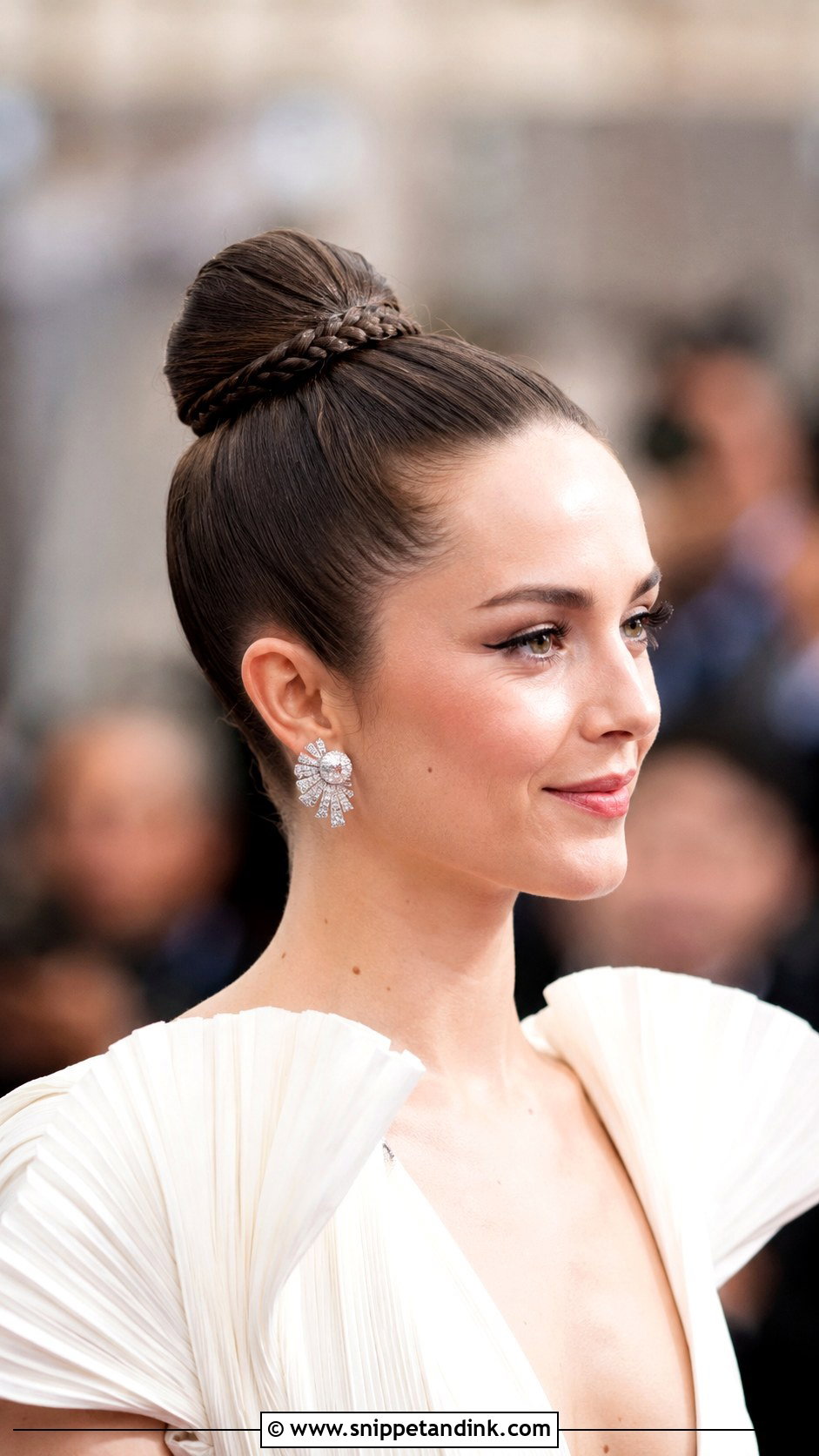
A sleek ballerina bun is all about the brush work before the bun is even made. Every strand is swept smooth into a high or mid position, and any bumps show in photos, so I use a boar bristle brush and a light gel along the hairline. It suits a structured gown and statement earrings, and it won’t move while you dance. I’d steer you away from it if you dislike your ears or forehead, because there is nowhere to hide. A thin braid wrapped around the base hides the elastic neatly.
8. Romantic Waves Under a Veil
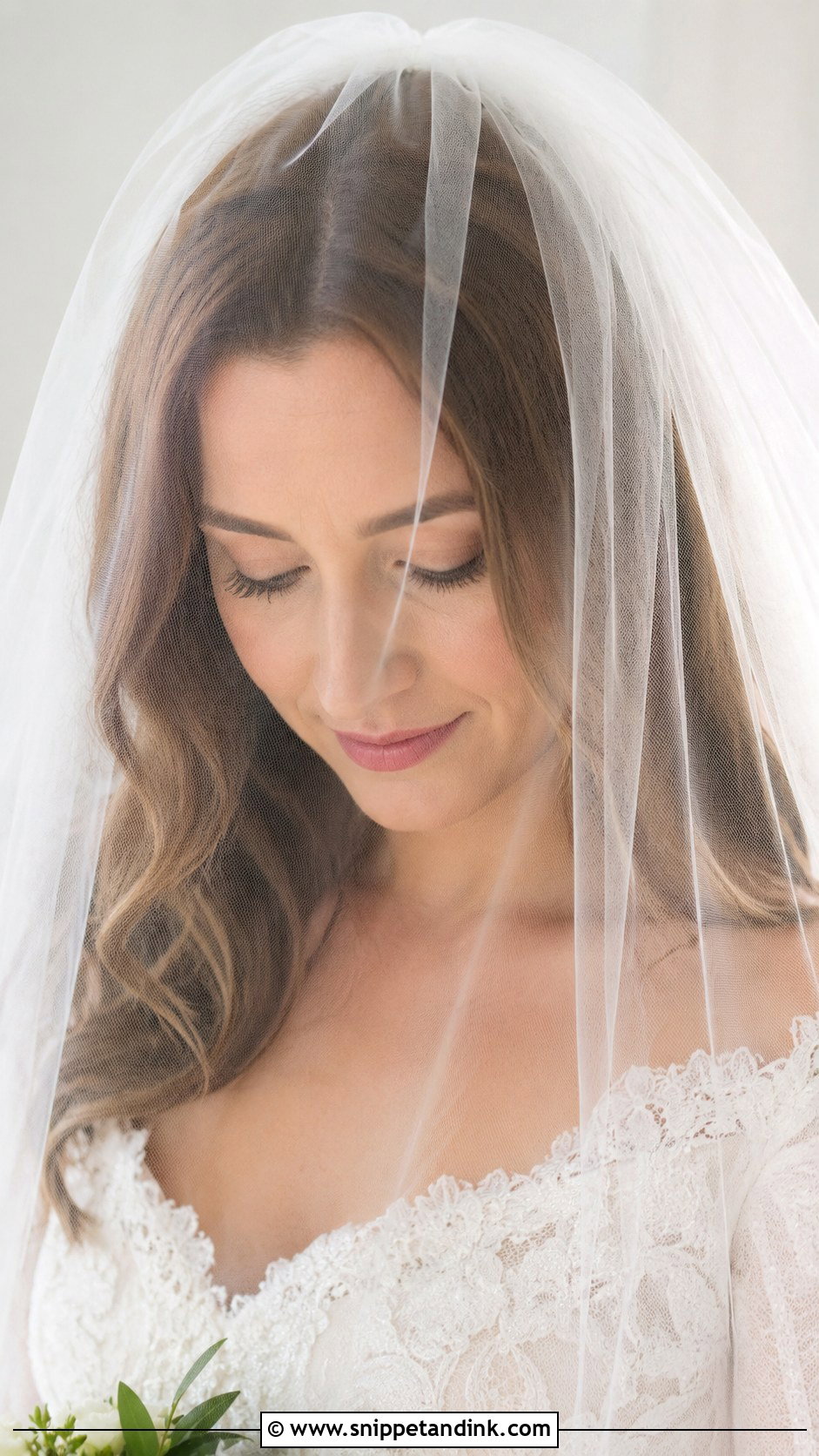
Loose waves under a veil is the simplest version of her style and one of the hardest to keep looking fresh. I set the waves with a large iron, pin each curl to cool, and only brush them out after the veil comb is in place, so the comb has something to grip. Placing the veil at the crown gives height; dropping it lower behind the ears feels softer. When the veil comes off for the reception, a quick finger-comb brings the waves back.
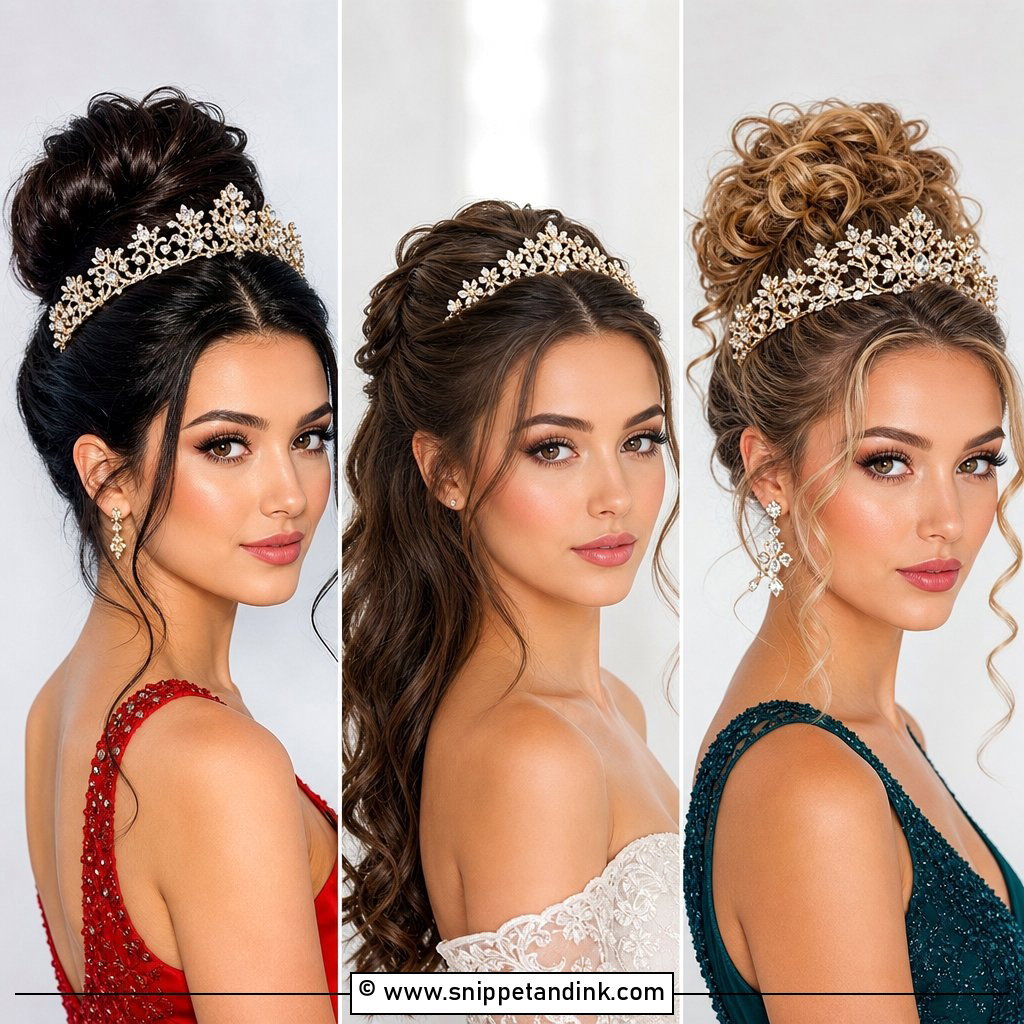
9. Tiara-Ready Half-Up Style
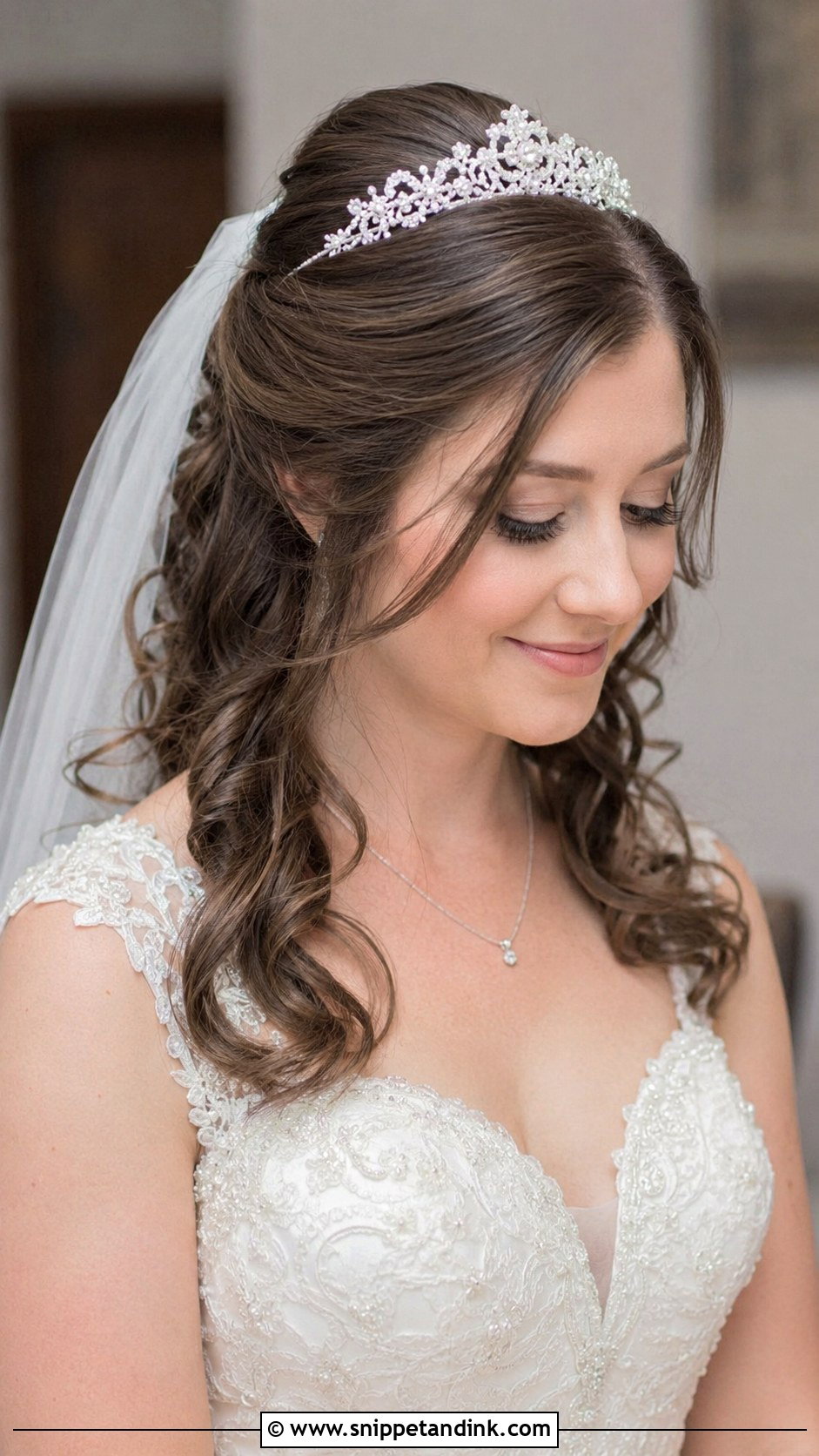
Kate wore the Cartier Halo tiara with her half-up demi-chignon, and that pairing is no accident. A tiara needs a firm base, and the pinned top section gives it exactly that. I anchor the tiara through its loops to a row of crossed pins hidden under a slim braid, so it never rests on loose hair alone. Bring the tiara to your trial, not a photo of it; weight and band shape change everything. A tiara-friendly hairstyle should hold it level without pinching behind the ears.
10. Soft Curls With Face-Framing Layers
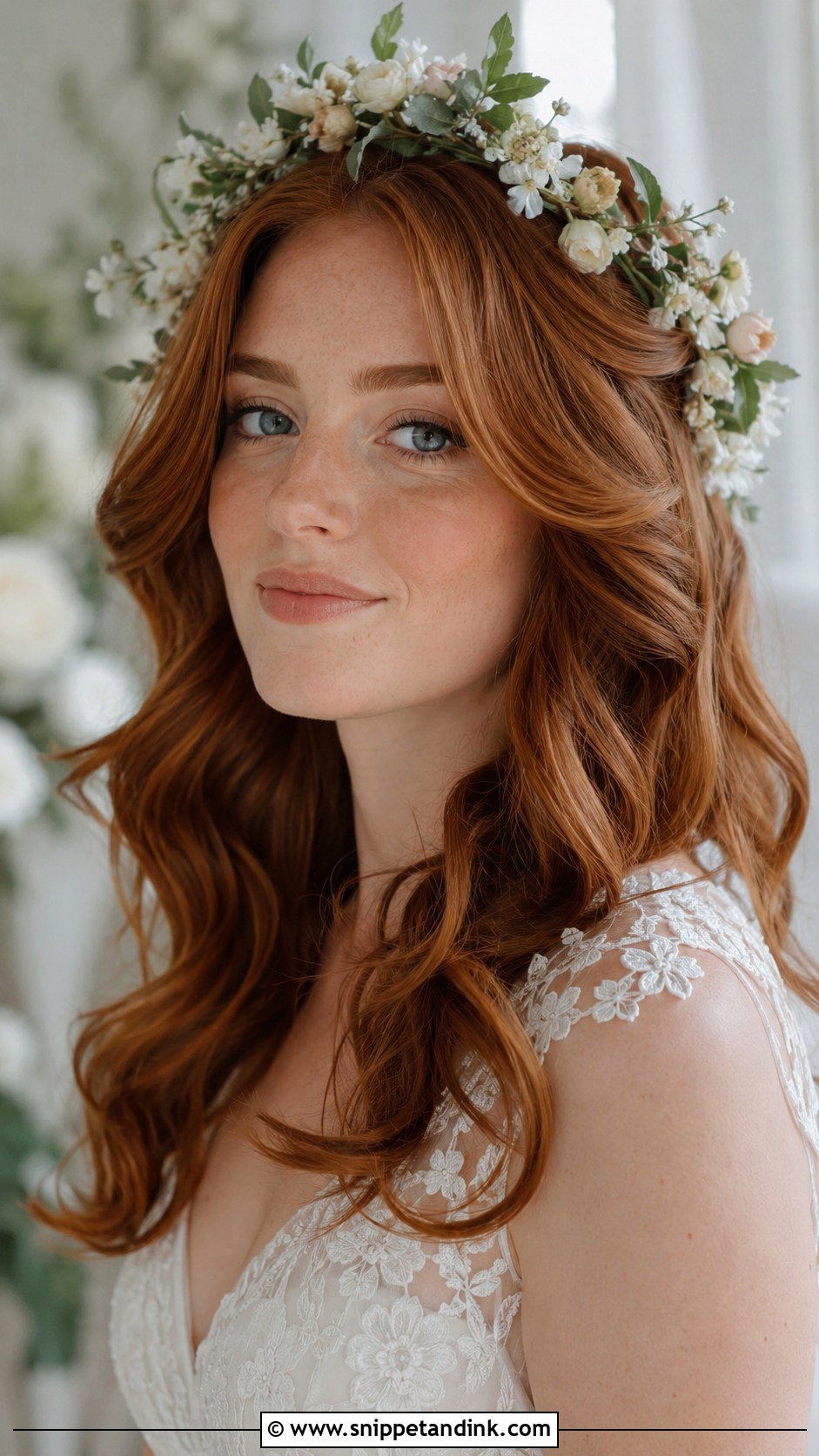
Her longer face-framing pieces are cut, not styled, so this look starts at the salon about six weeks out. Ask for the layers to begin around the cheekbone or jaw, depending on where you want the eye drawn. I curl them away from the face with a medium iron so they don’t fall into your lashes. Medium and long hair suit it best. If you hate pieces touching your face, skip this one; you’ll spend the day tucking them back.
11. Elegant Side Chignon
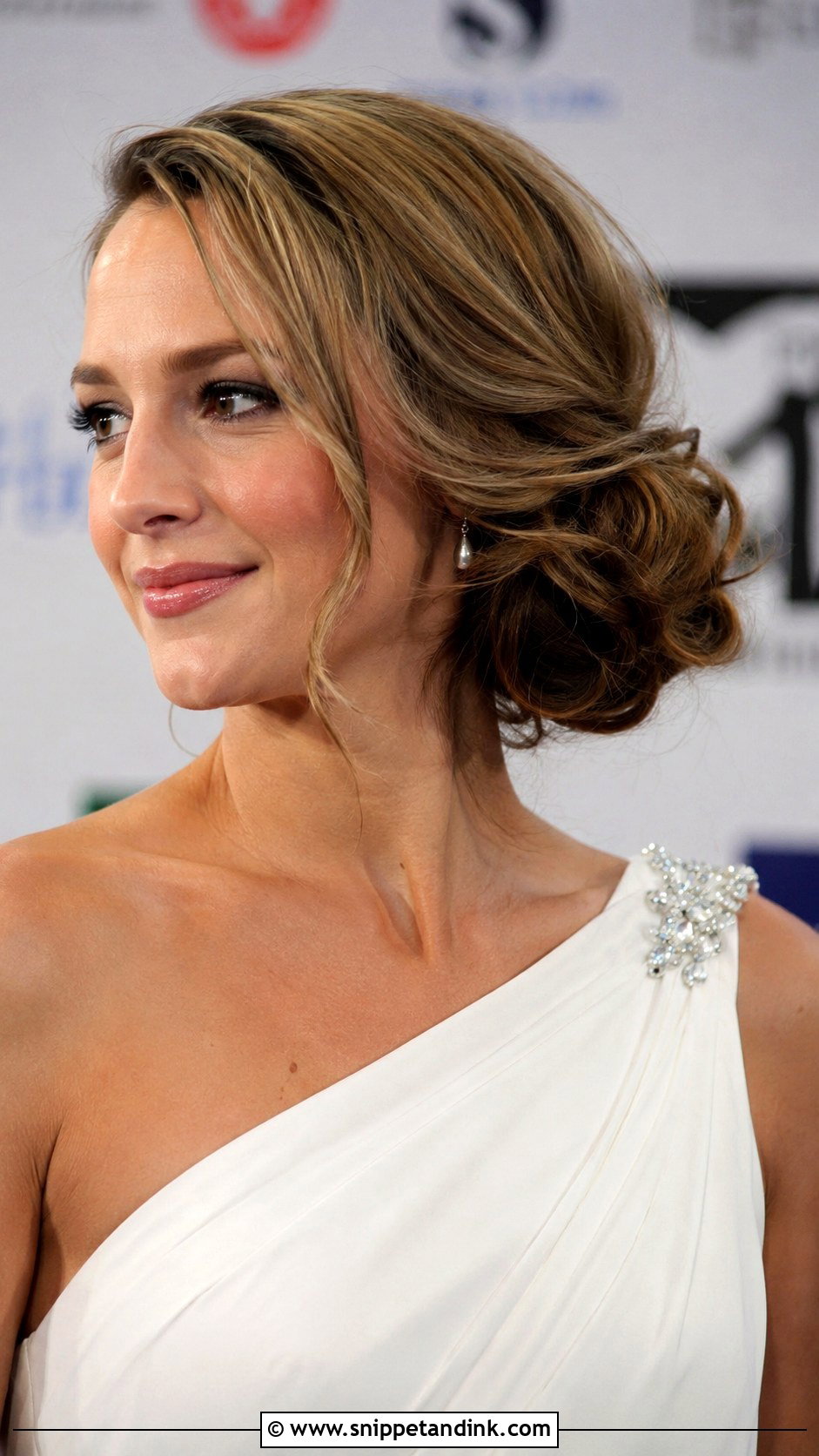
Moving the chignon off center to one side makes a diagonal line that works with a side-detailed or one-shoulder gown. I gather the hair low behind one ear and twist it into a loose knot, leaving a few tendrils on the opposite side to balance it. Before pinning, I check which side your partner will stand on, since that is the side most ceremony photos catch. Small flowers or jeweled pins can sit along the edge of the knot.
12. Loose Tousled Updo
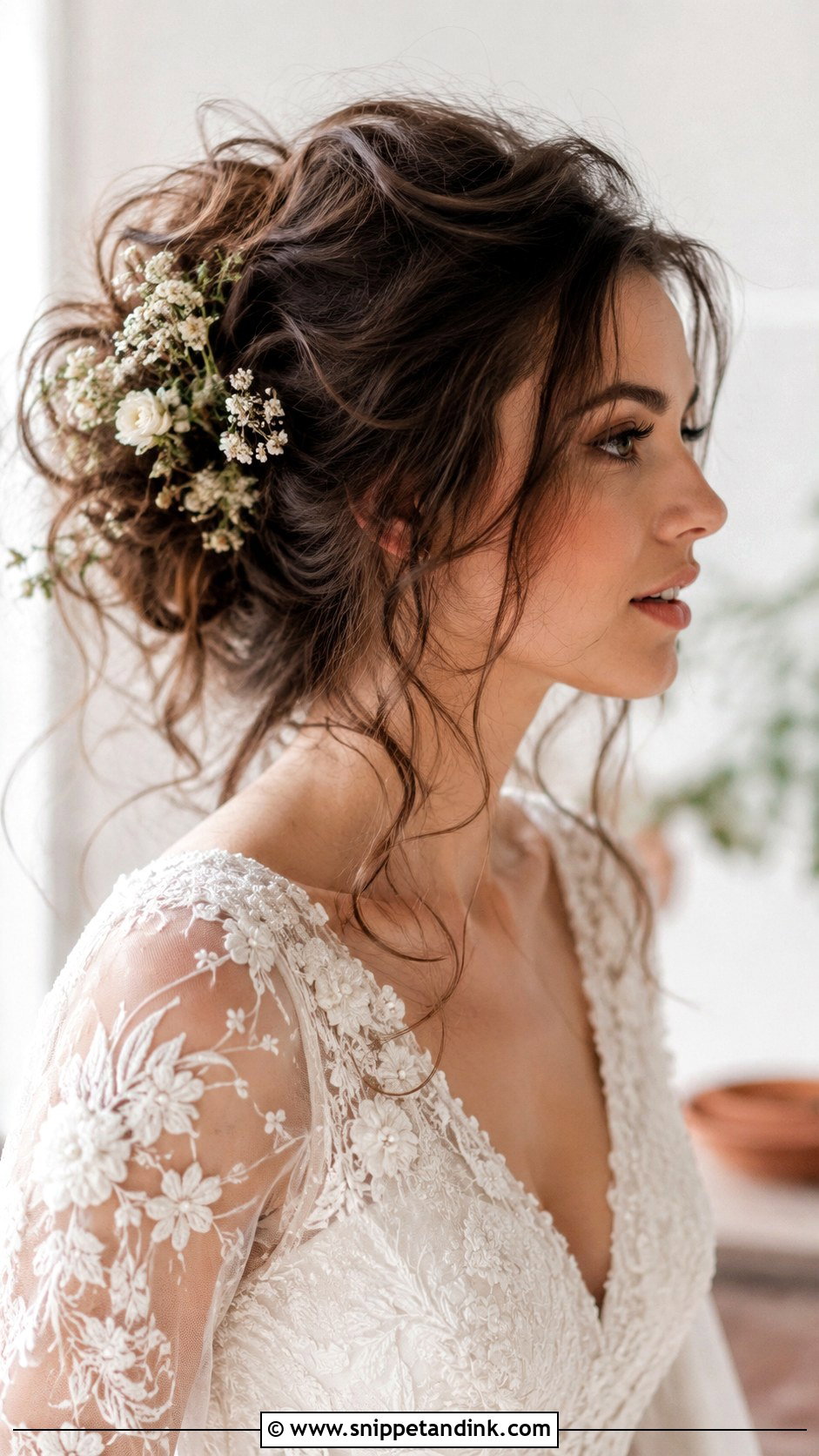
Not every updo needs to be smooth. A loose, tousled version is built on texture spray and gentle backcombing, and then pinned in soft sections rather than one tight gather. Done properly it’s surprisingly secure, because each section supports the next. The risk is that “undone” becomes messy after hours of hugging, so I hide a few extra pins inside the shape. It suits a garden or relaxed venue and feels comfortable all day.
13. Polished Ponytail With Volume
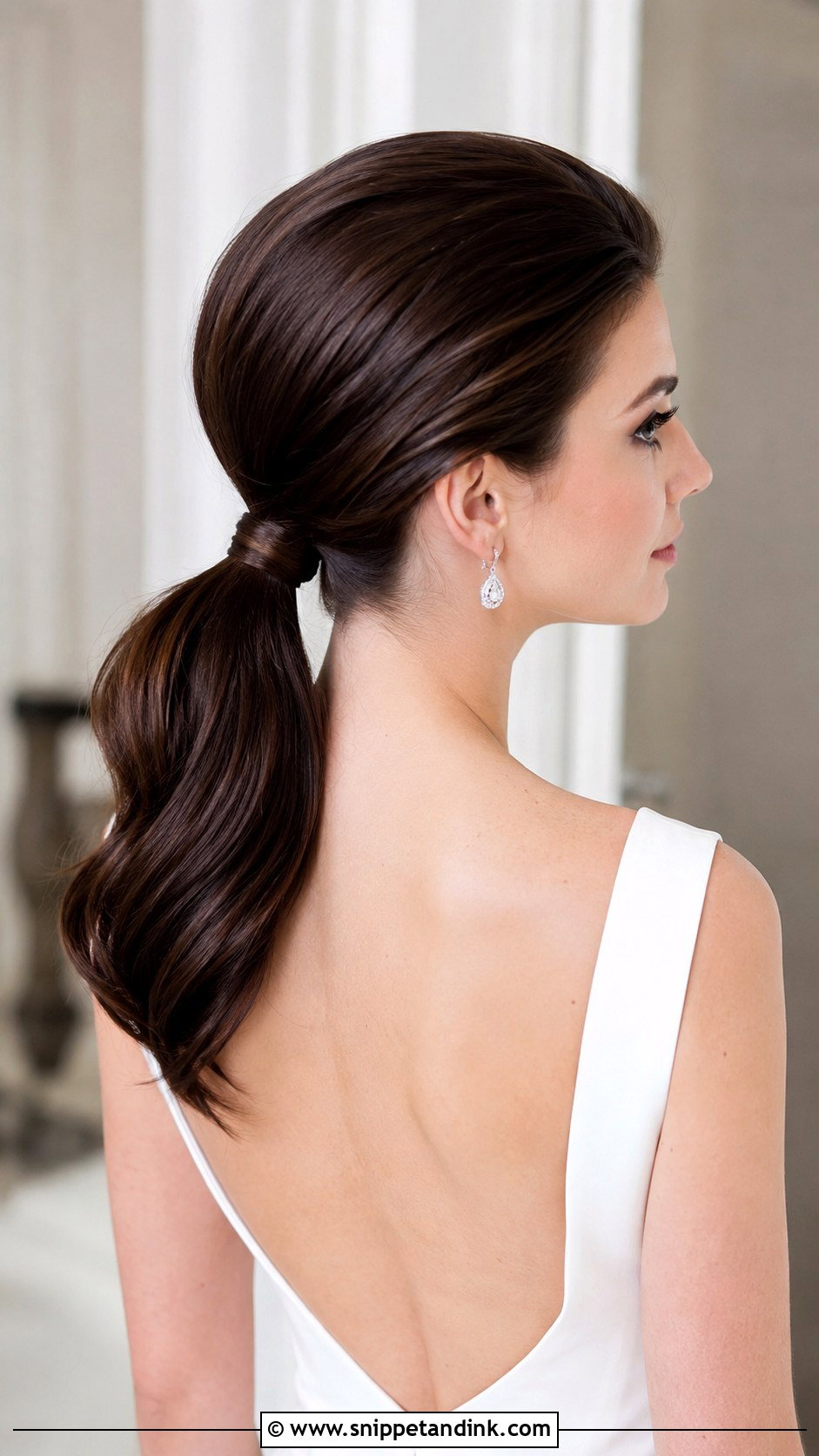
Kate’s low ponytails look simple, but the volume at the crown is what makes them read as polished rather than gym-ready. I tease a small section at the crown, smooth over it, then secure the ponytail with two elastics so it doesn’t slide down. A piece of hair wrapped around the base hides the band. This works well for a reception change: wear it down for the ceremony and pull it back later for dancing.
14. Vintage Hollywood Waves
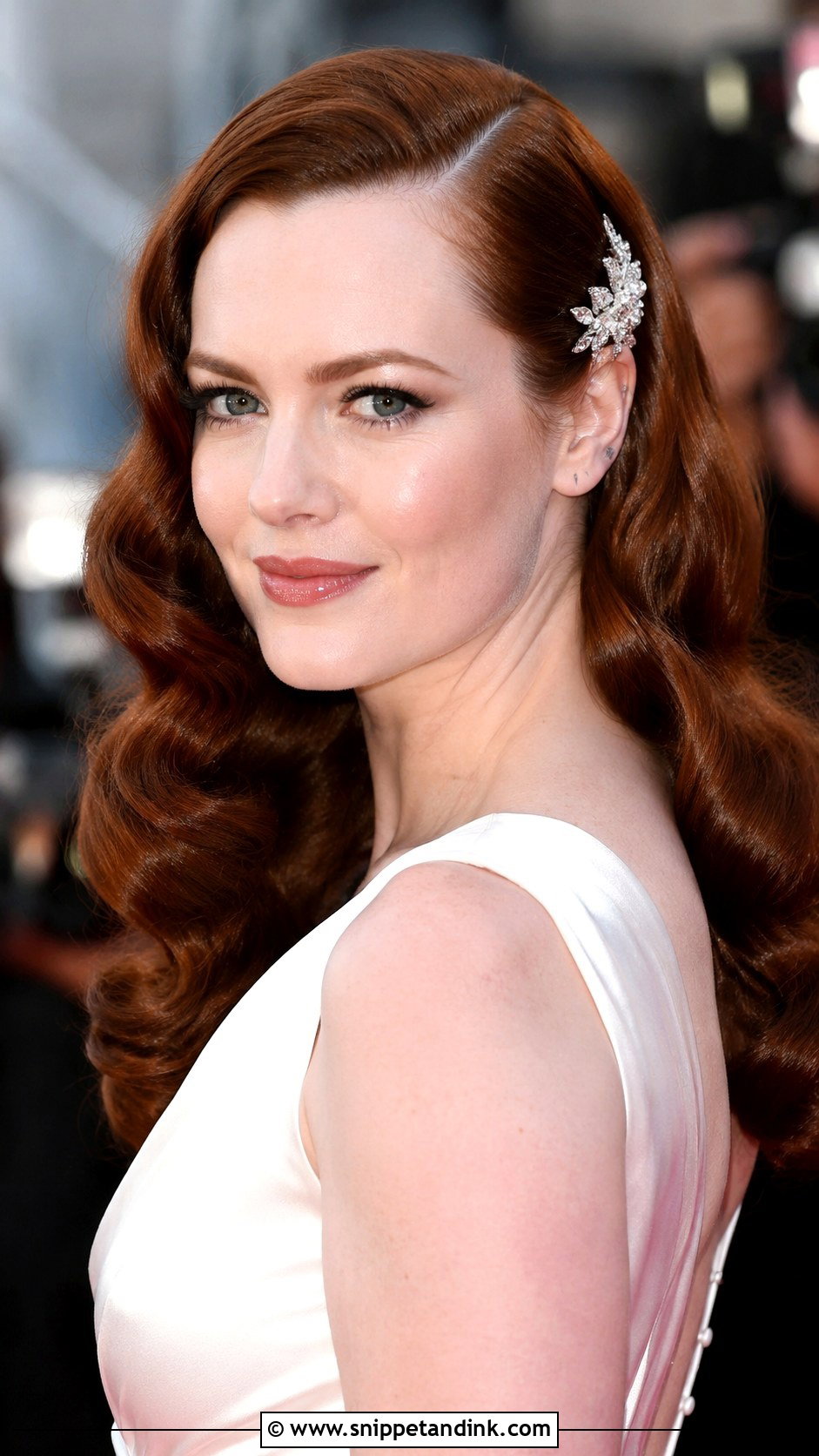
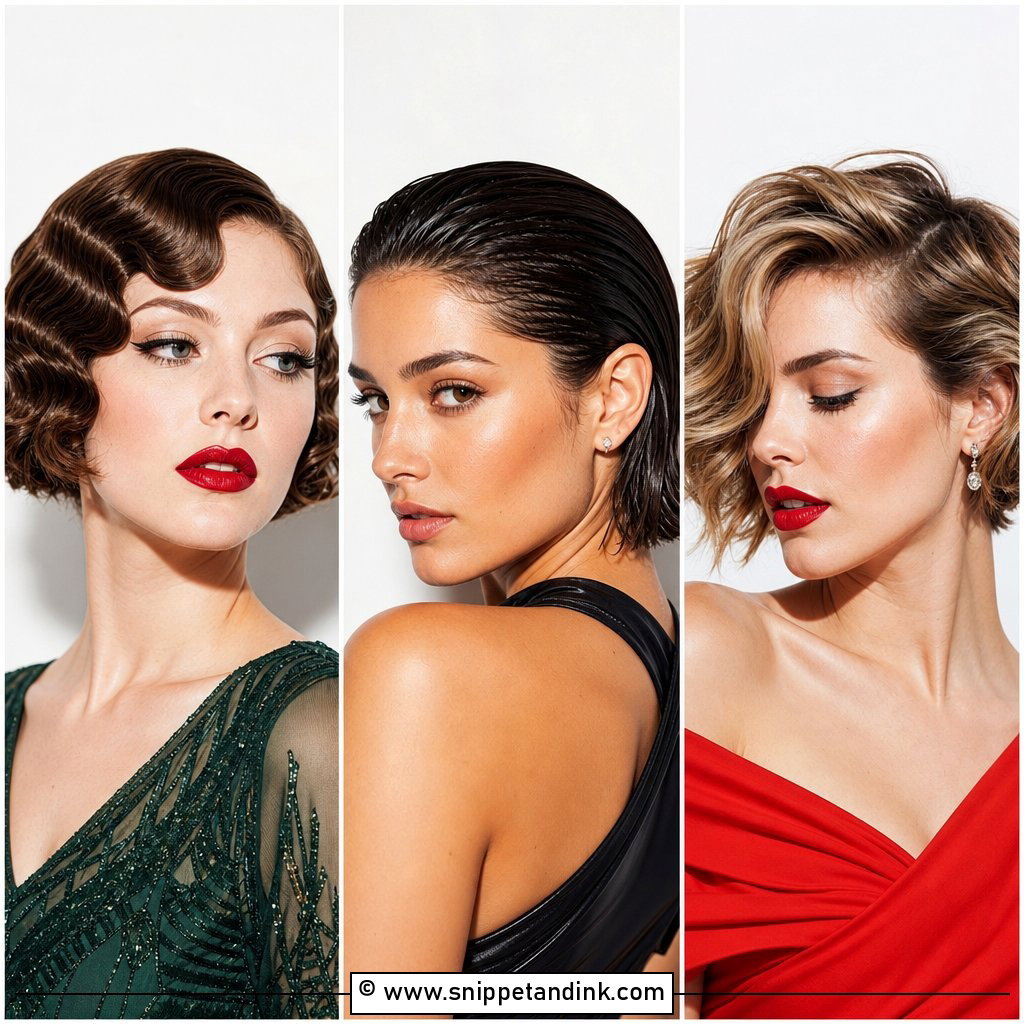
These waves are deeper and more sculpted than her everyday style, brushed into smooth, glossy waves from a deep side part. I set each curl in the same direction and pin it while it cools, then brush through in one direction to join the waves. It’s a slow style, so allow extra chair time. Satin gowns and a bold lip suit it, and in humid weather I’d test it first because the shape relaxes quickly.
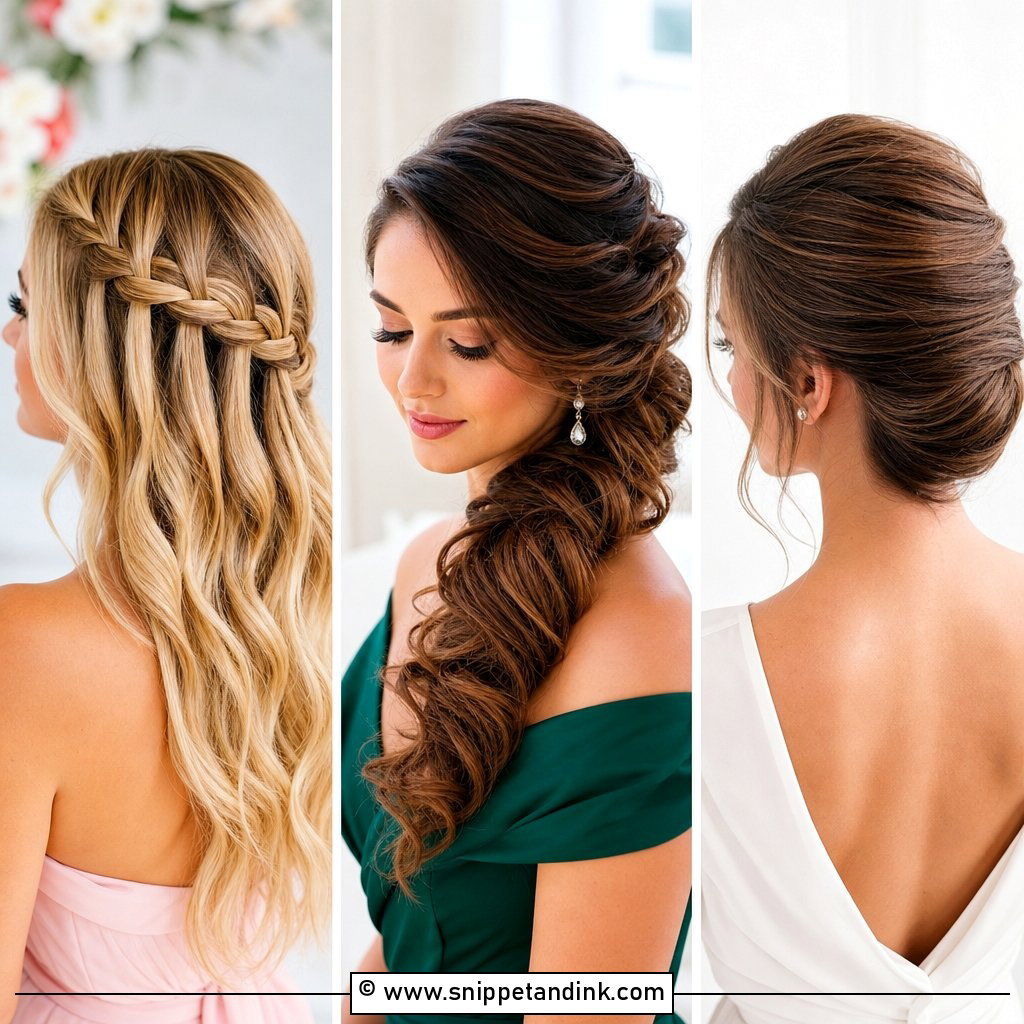
15. Braided Crown Half-Up
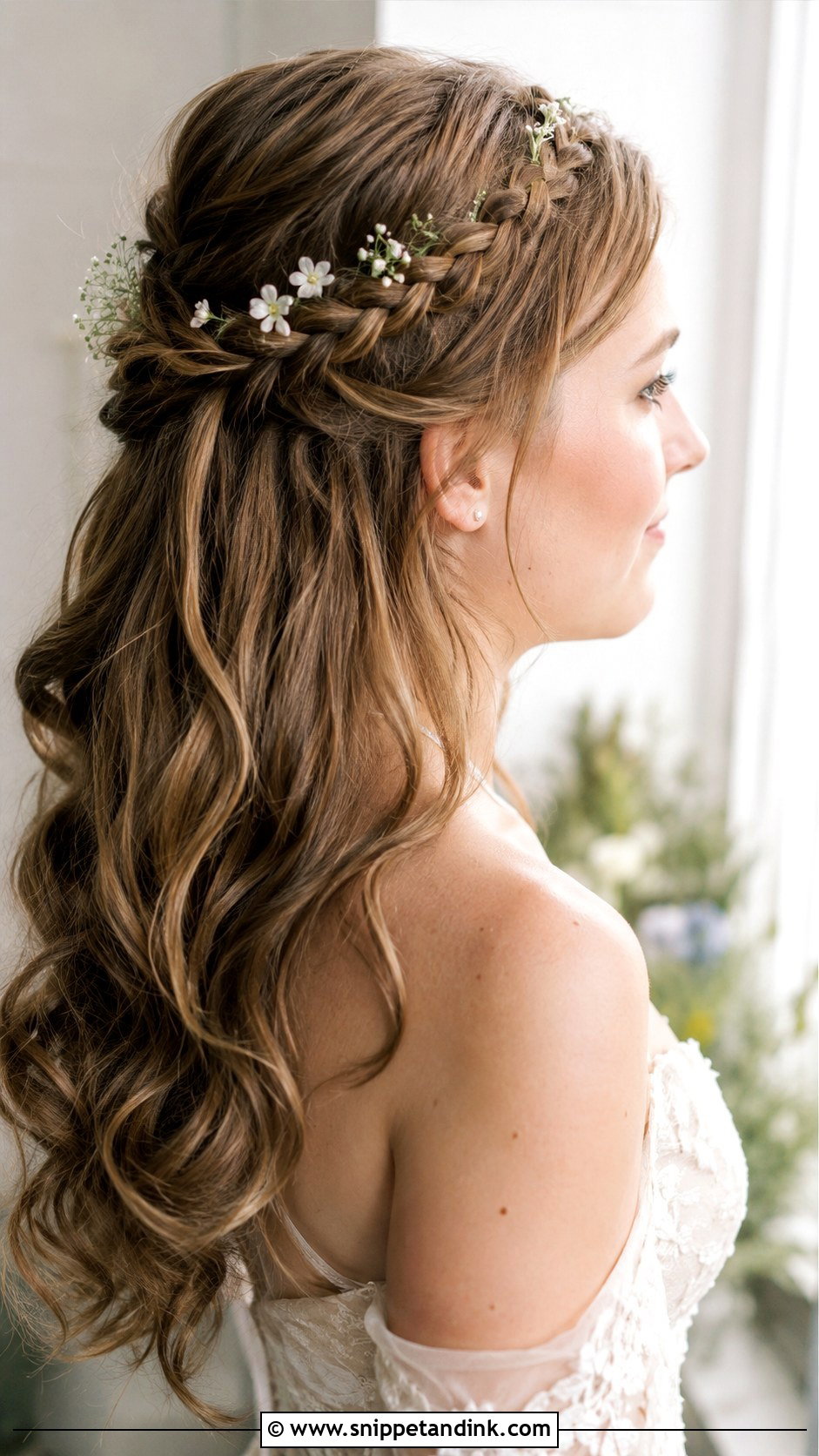
This one weaves a thin braid across the crown like a halo, with the rest of the hair down in waves. The braid acts like a headband, so it holds the hair back without any accessory. I start the braid behind one ear and finish it behind the other, pinning the tail under the hair so it vanishes. Shorter layers can poke out of a thin braid, which is worth knowing if your hair has been cut in long layers. Tiny flowers along the braid suit an outdoor wedding.
16. Smooth Center-Part Waves
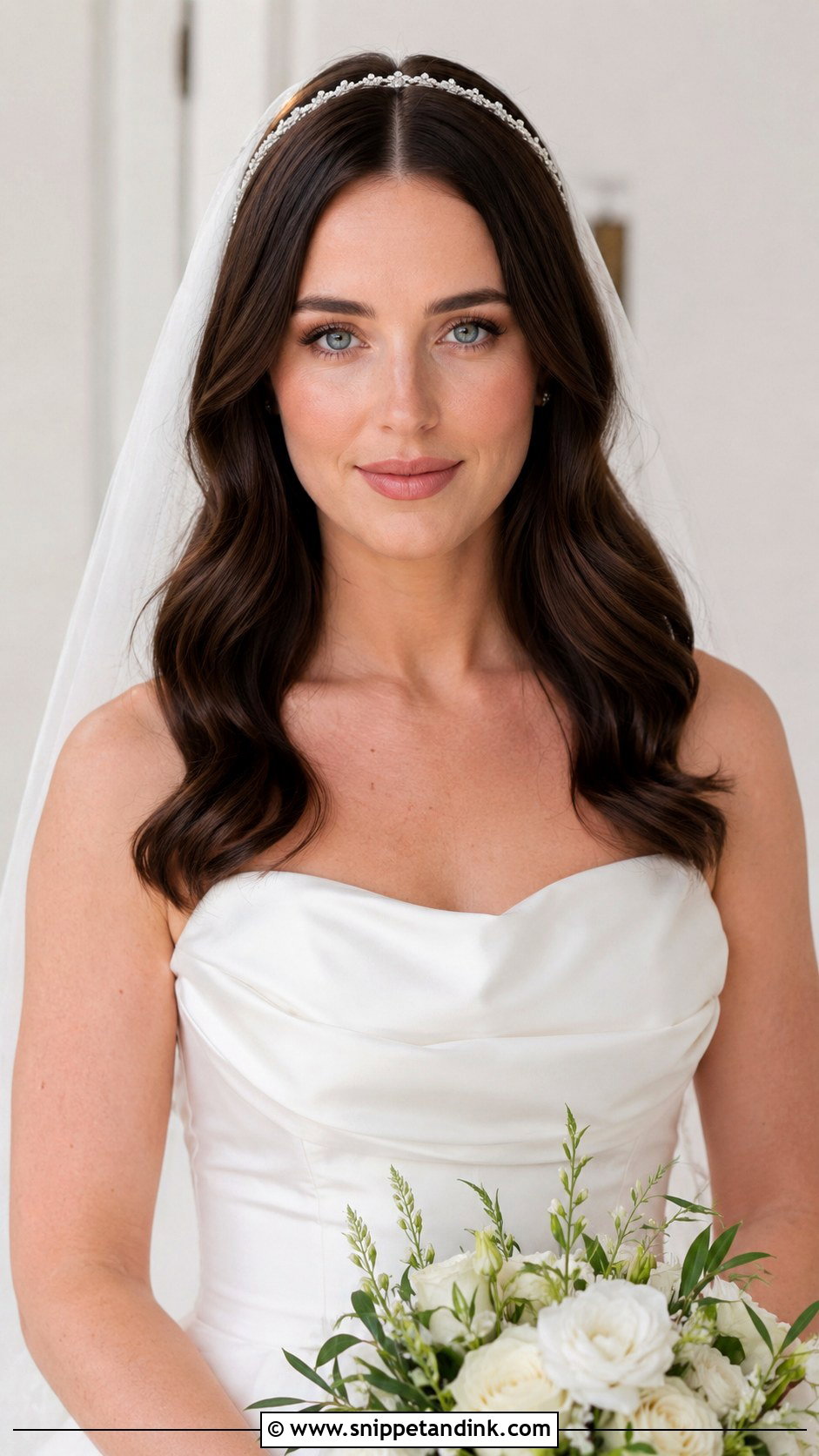
A center part feels more modern than her usual side part, with waves falling evenly on both sides. It’s honest about symmetry, so it suits oval and heart-shaped faces most. I check the part in a mirror from the front and from above, because a part that wanders even slightly shows in a straight-on portrait. Minimal gowns and simple jewelry suit it. A thin headband is optional.
17. Low Bun With Wispy Tendrils
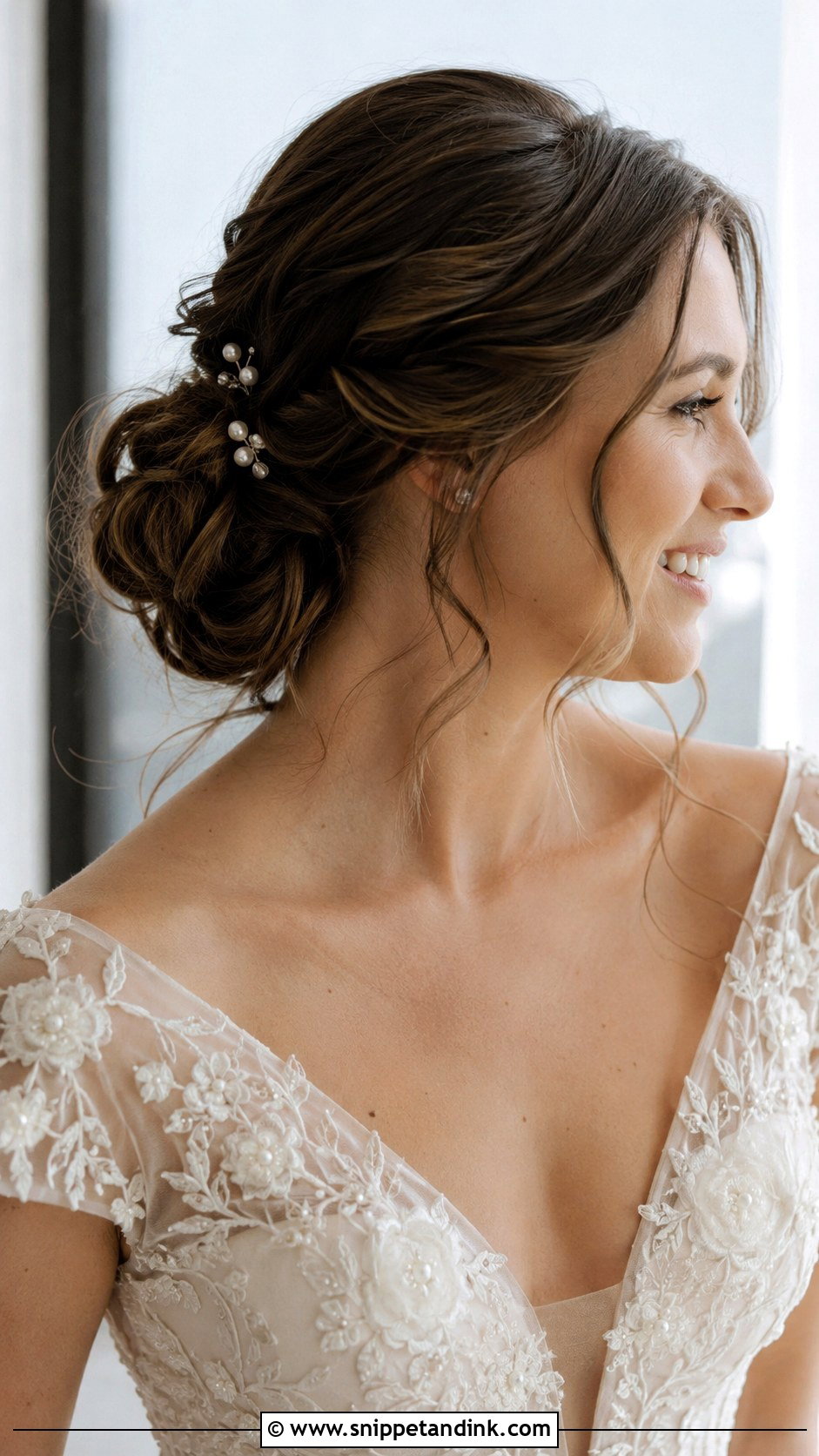
A low bun with a few loose pieces around the face is softer than the full chignon. The bun at the nape can be slightly textured, and the tendrils are curled separately so they hang rather than frizz. My rule is to pull out fewer pieces than you think you want; two on each side reads as intentional, six reads as escaped. Small pearl pins add a little light. It suits almost any venue.
18. Glossy Blowout With Soft Bends
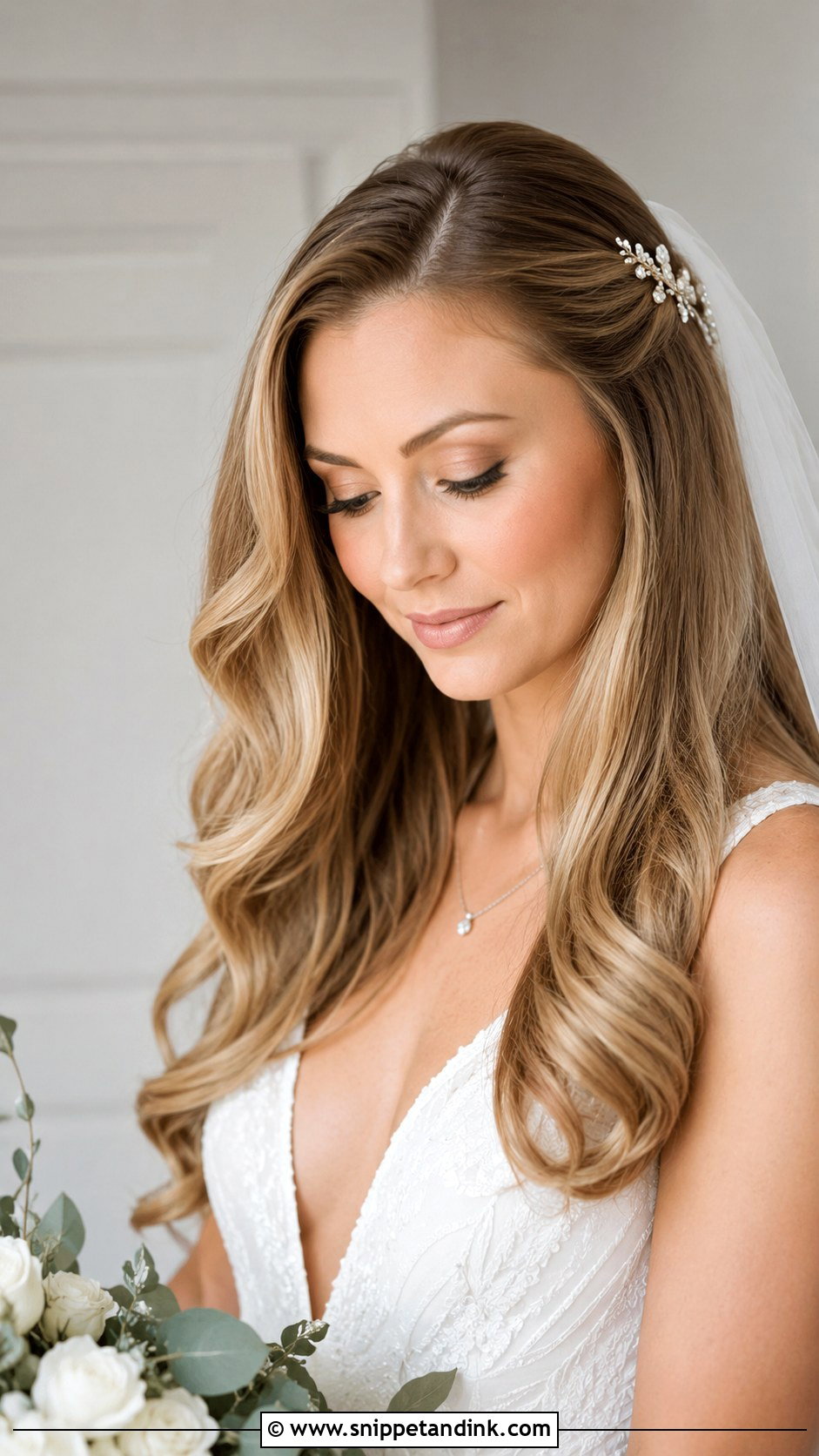
This is Kate’s everyday hair, just finished more carefully for a wedding. The blowout is smooth with gentle bends at the ends rather than curls, which is why it moves when you walk. I use a large round brush and finish with a light shine serum on the mid-lengths only, since roots get greasy by evening. Hair that frizzes in humidity won’t hold it, so this one suits indoor venues. A veil or a single pin is all it needs.
19. Floral Accented Half-Updo
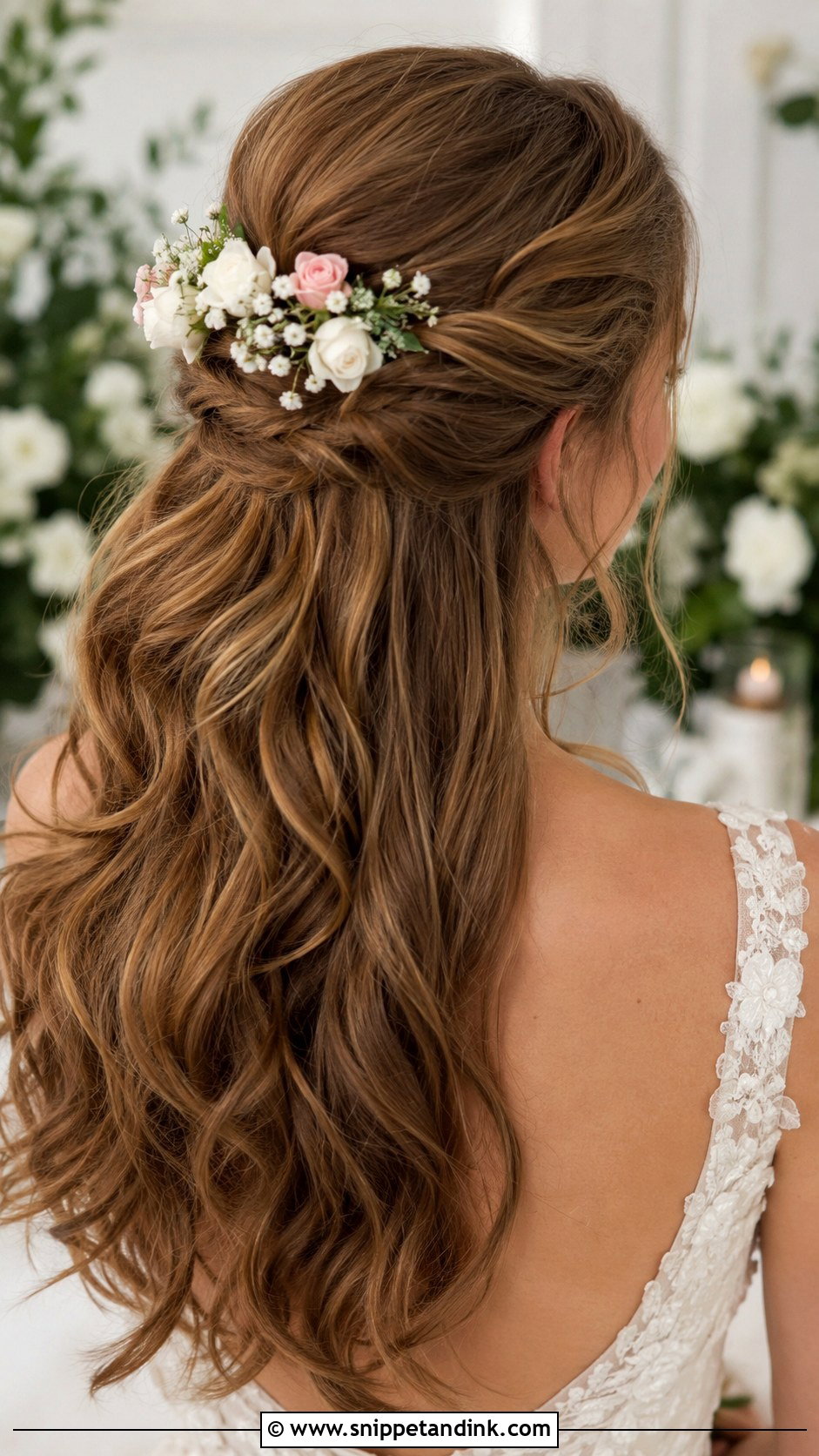
Small flowers tucked along a twisted half-up give a softer alternative to a tiara. The top section is gathered and pinned, and the blooms go along that pinned line. I ask the florist for hardy flowers such as spray roses or wax flower, wired with stems short, because delicate blooms wilt against warm scalp by the speeches. Match the flowers to your bouquet so it looks planned. It suits spring and summer weddings.

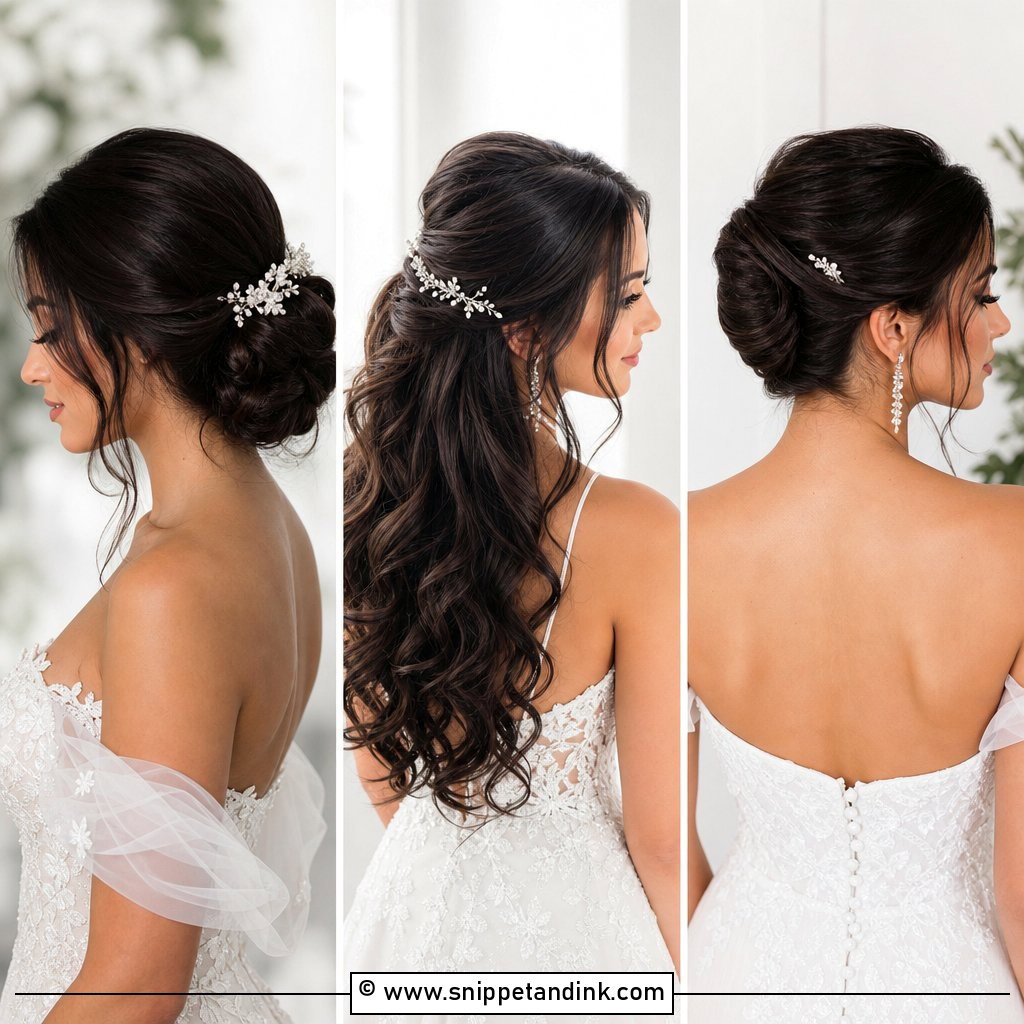
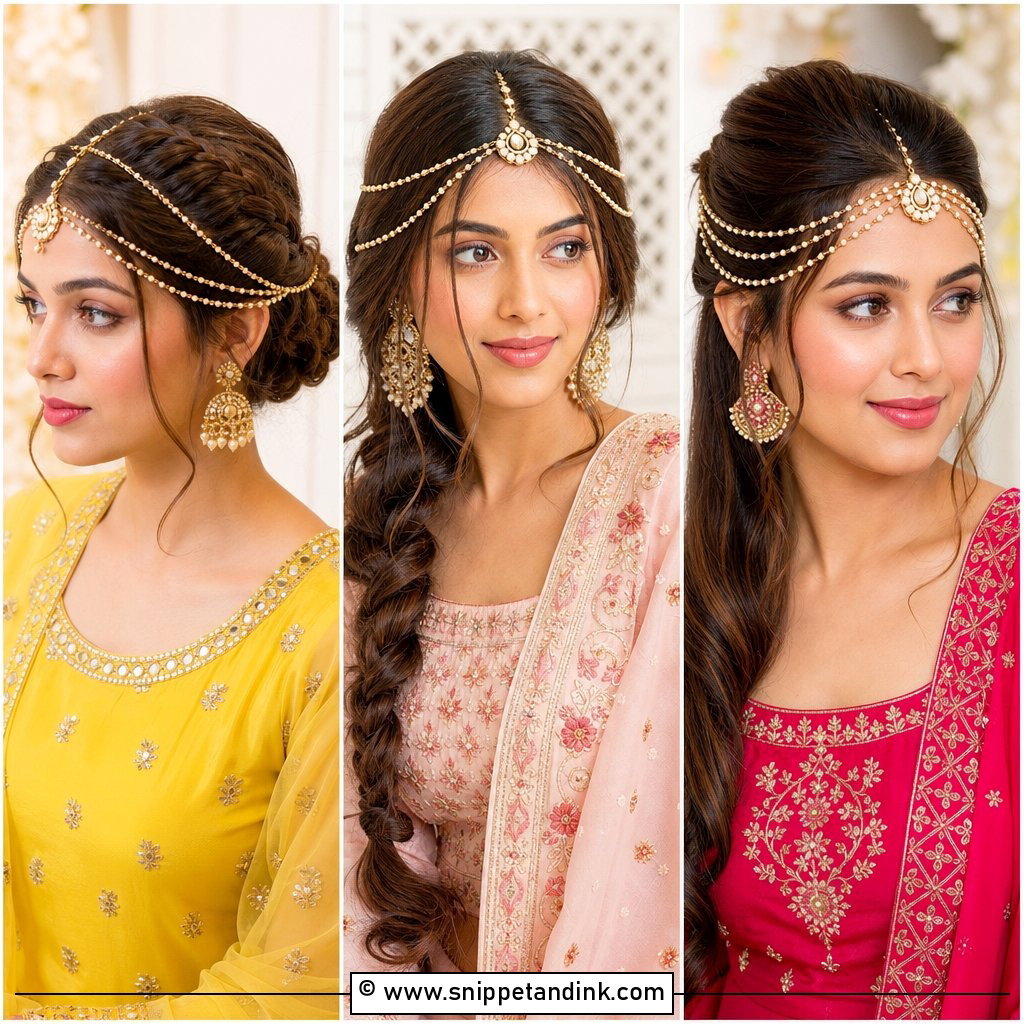
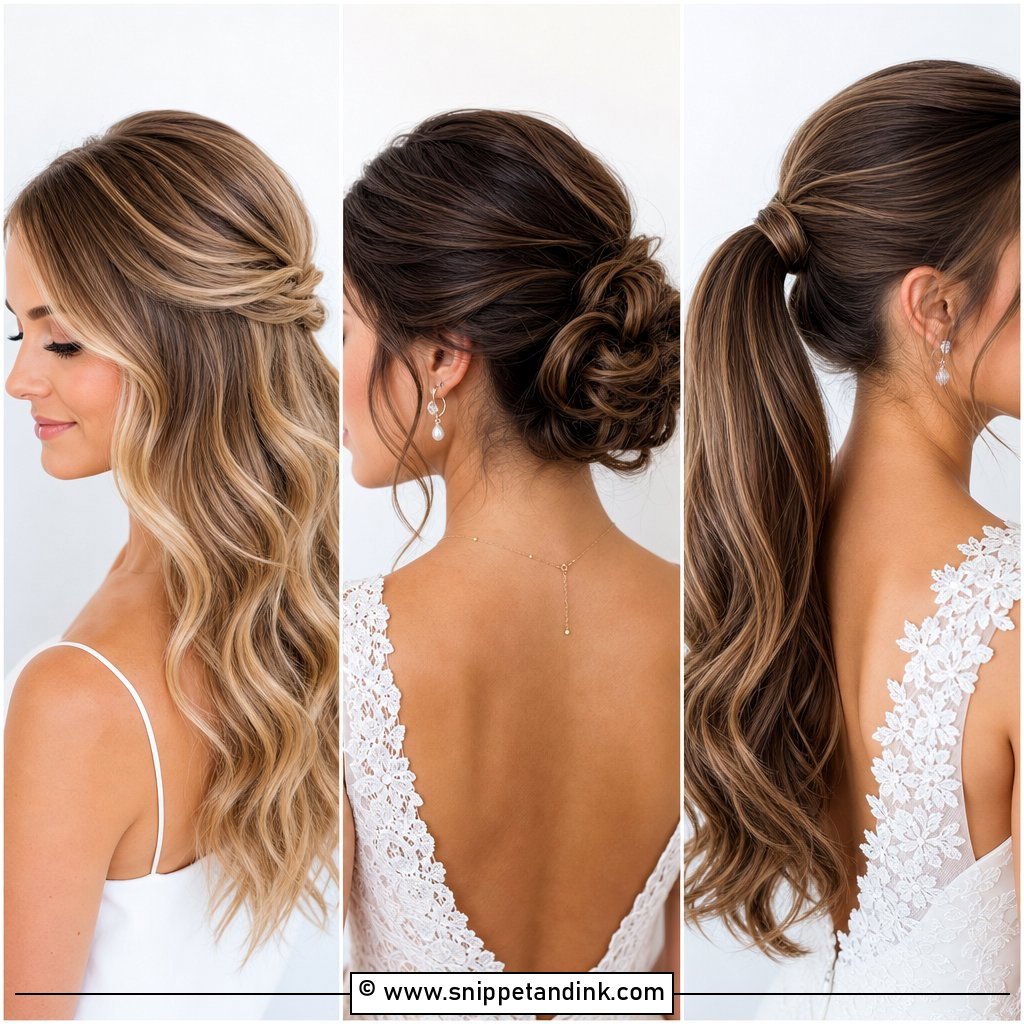
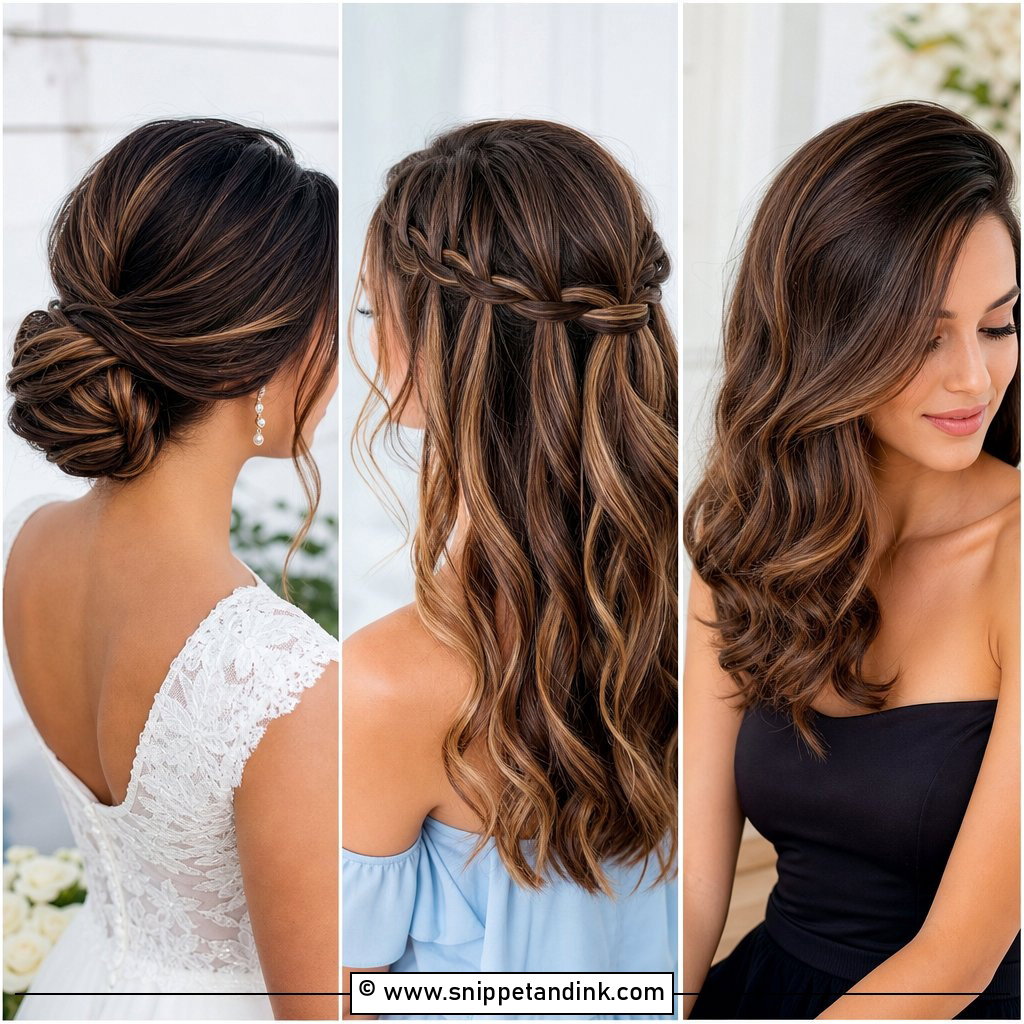
20. Textured Updo With Curled Pieces
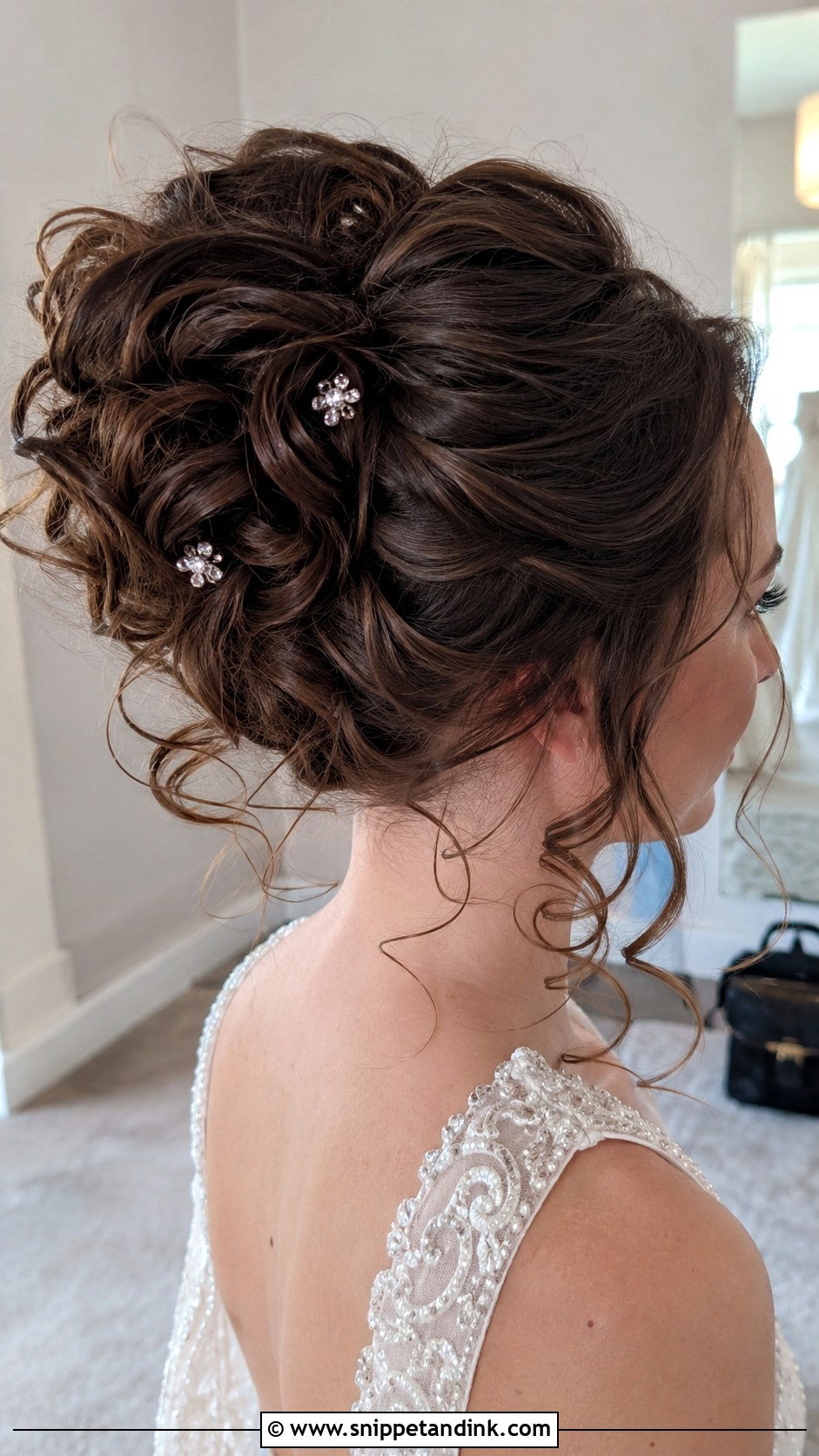
This updo gathers the hair up but leaves defined curls throughout, so it looks rich in texture rather than smooth. I curl the whole head first, then pin each curl loosely so you can still see its shape. Because each curl is pinned individually, it holds well through long celebrations. Pearl or crystal pins catch the light between the curls. It’s one of the best choices for thick hair that resists sleek styles.
How a Tiara Stays Put From the Vows to the Last Dance
A tiara is heavier than most brides expect, and the usual mistake is letting it sit on loose hair. Within an hour it slides back, and the headband edges start to press behind the ears.
The base I build under it
I make a firm foundation first: a thin braid or a row of crossed bobby pins exactly where the tiara will sit. The tiara’s loops are then pinned into that base, not into the hair itself. If a veil is going on too, the veil comb goes behind the tiara, never under it, so the two pieces don’t fight.
Testing comfort before the day
Wear the tiara at your trial for at least an hour. If it pinches, a jeweler can sometimes bend the band slightly, or I can pad the ends with a little hair. Pack a few spare pins in a bridesmaid’s bag; after hugs and dancing, one or two will always need reseating.
The Pinning Point Matters More Than the Tiara
Kate’s wedding hair still feels current because it never looked overworked, and every style above follows that idea. Start with your hair’s real texture and length, think about your neckline and veil, and book a trial with everything you’ll wear. A good stylist will tell you which of these looks will last on your hair and which ones won’t, and that honest answer matters more than the inspiration photo.
You'll Like These Ideas:


Leave a Reply