
Texture is what I reach for when a bride tells me she wants a gown that looks like more than a white shape in photos but doesn’t want to glitter. Raised florals, woven jacquard, pleats, ruching, feathers and pearls all catch light differently as you walk, sit down and turn to hug someone, so the dress keeps changing through the day. The skill is matching the right kind of texture to your frame and your venue, and that applies from minimalist to maximalist taste and from petite to curvy figures. Below are the textured gowns I pull most often, with what I watch for in each one at a fitting.
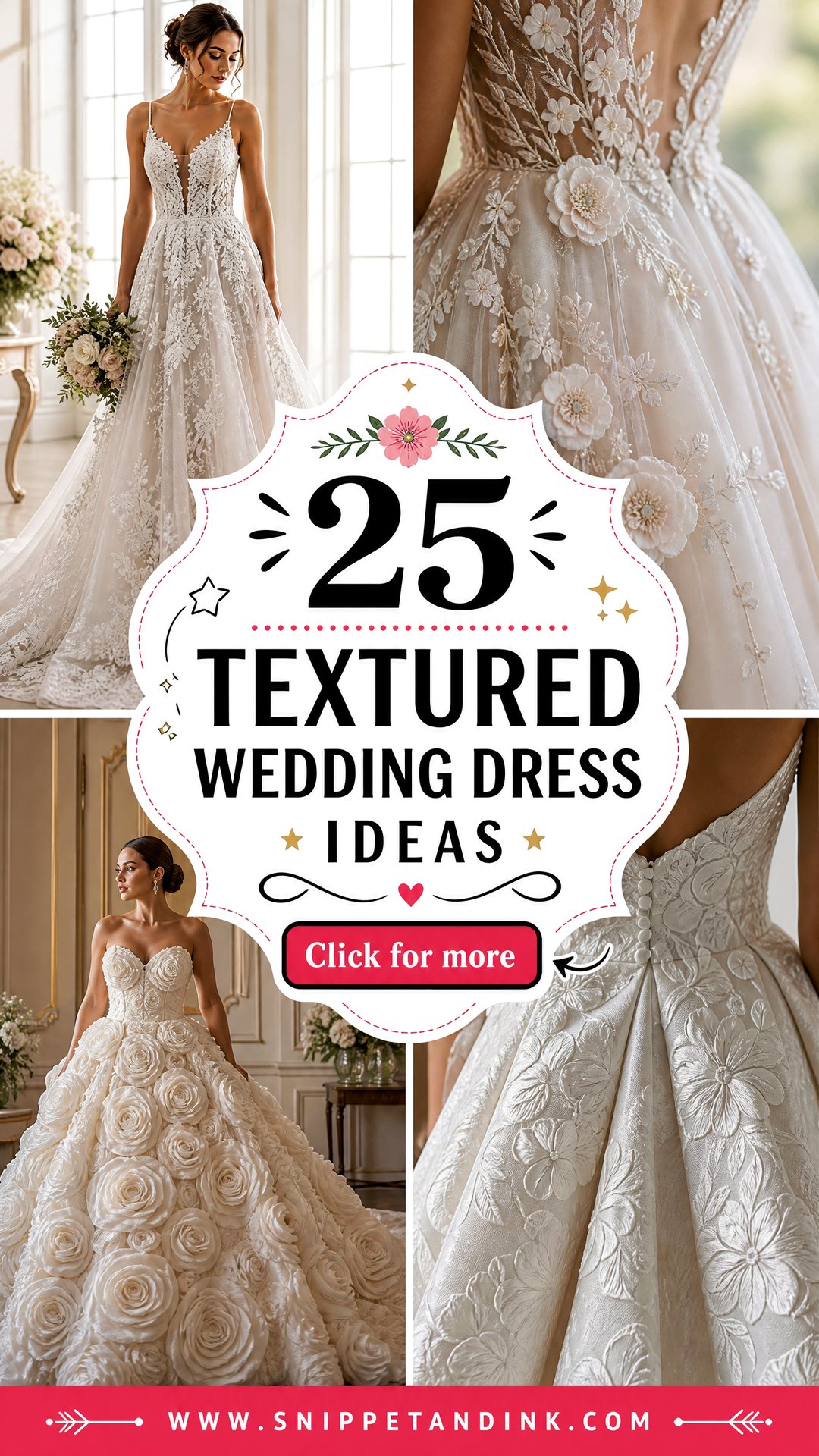
Reading a Textured Fabric With Your Hands, Not Just Your Eyes
Textured gowns photograph well online because the camera flatters raised detail. In a fitting room I judge them by touch and movement, and I’d encourage you to do the same before you fall for a picture.
- Run your palm over the bodice. Appliqué, pearls and 3D flowers should feel firmly anchored; anything that shifts under light pressure will shift more after hugs.
- Turn the skirt inside out. Clean finishing on the back of beading and embroidery tells you how carefully the gown was made.
- Sit down for two full minutes, then stand. Satin and mikado show creases; crinkle satin, jacquard and lace hide them.
- Hold your arms against your sides. Sequins, beading and crochet can rub the inner arm raw over a long day.
- Look at the dress under a window and under warm lamps. Embossing and jacquard can almost vanish in flat light and reappear with side light.
Weight matters too. A heavily beaded or brocade gown can be several times heavier than pleated tulle, and that weight sits on your shoulders and hips from the first look until the last dance. If you’ll be on your feet outdoors in summer, choose texture from the cloth itself rather than from what’s stitched onto it.
1. 3D Floral Wedding Dress
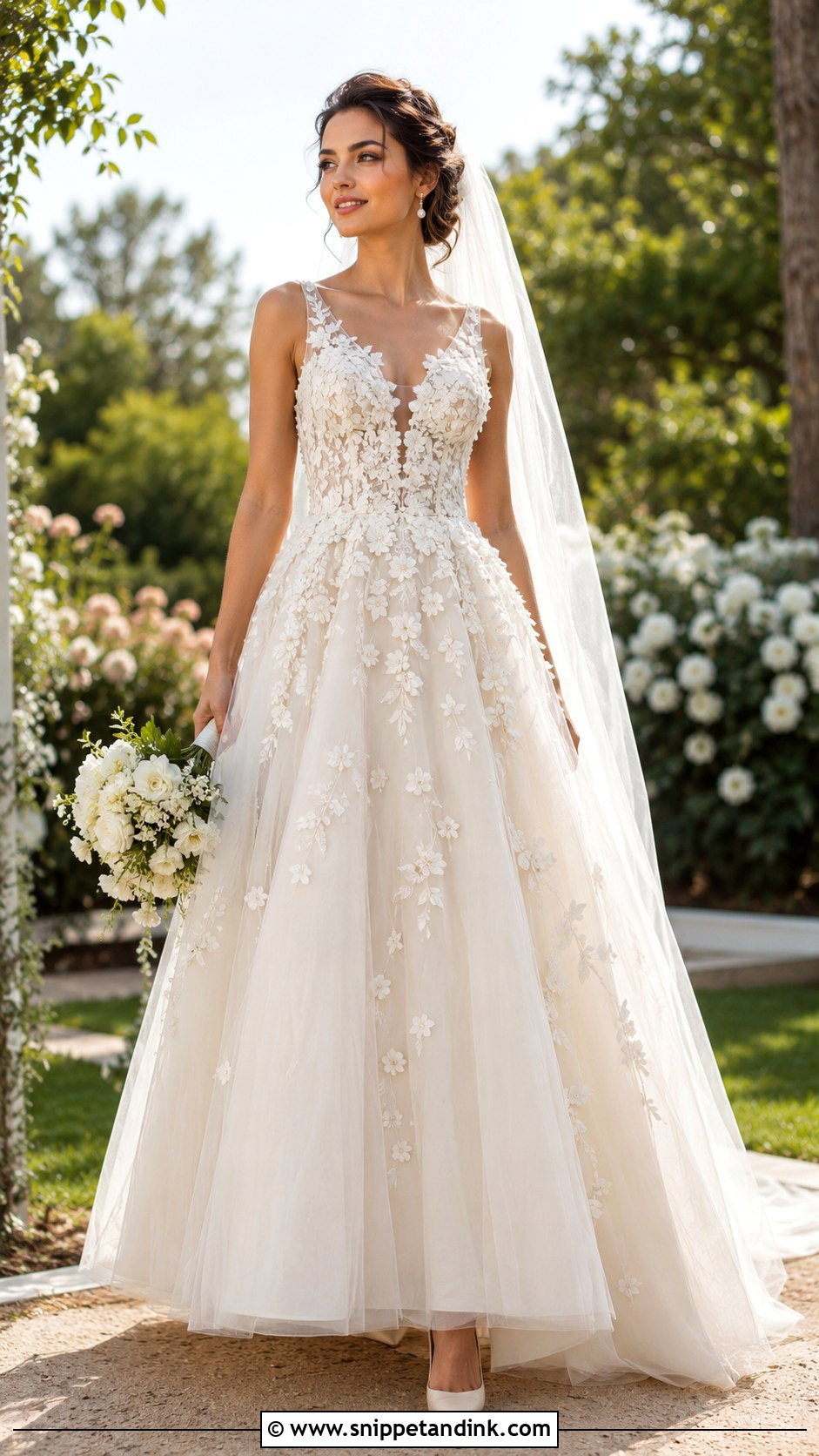
Petals that stand off the fabric read as a garden from across the room, and that is the whole appeal of a 3D floral gown. In fittings I check how the flowers are attached: the best ones are hand-tacked at the centre so the outer petals can move, while glued blooms flatten after a few hours of hugging. I like them densest on the bodice, thinning out as they travel down the skirt, so the eye moves upward to your face. If you prefer something more modern, a few oversized blooms on plain tulle or organza do more than an allover scatter. Once the flowers are doing the talking, keep your shoes and jewelry quiet.
2. Lace Applique Wedding Dress
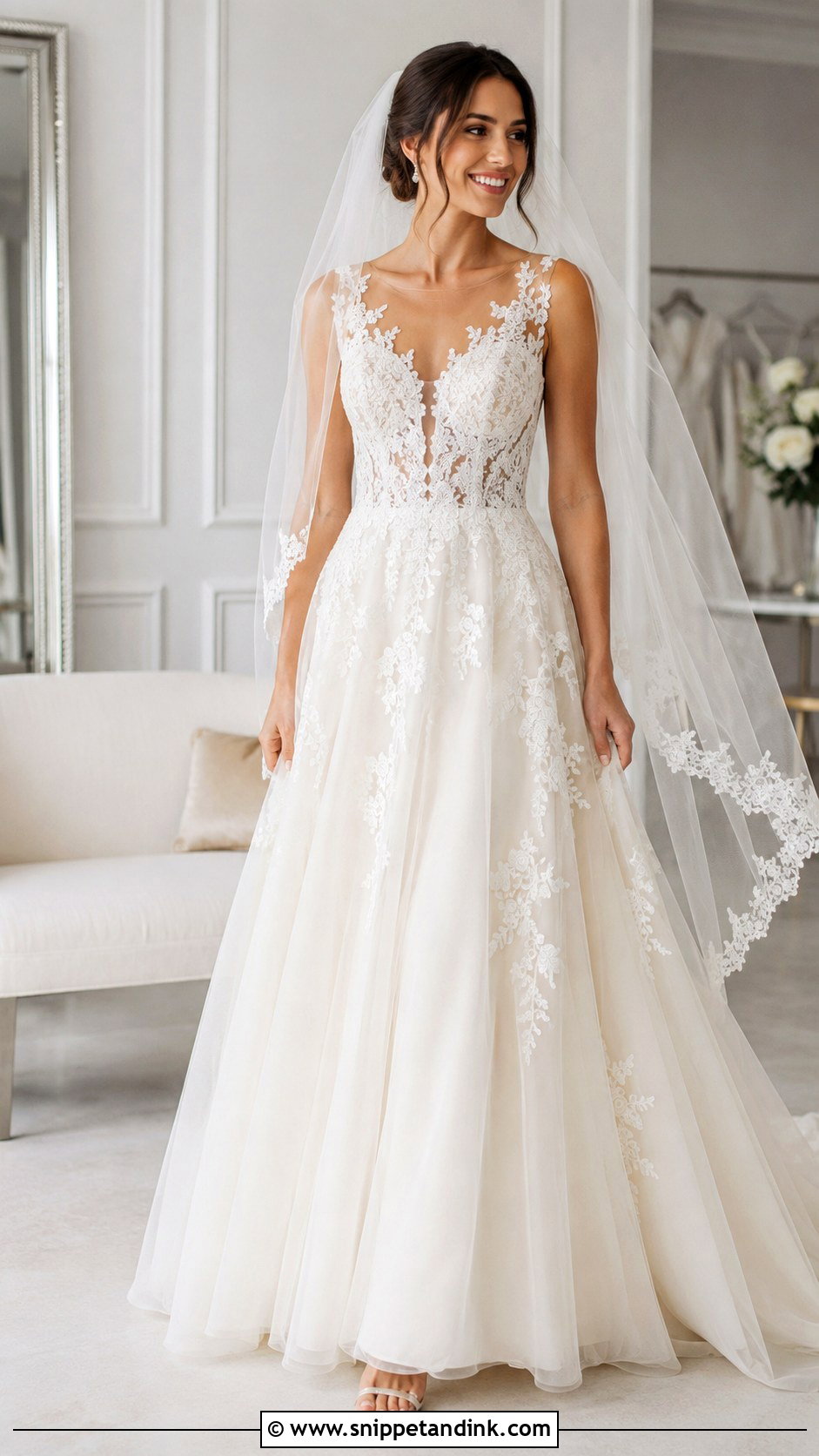
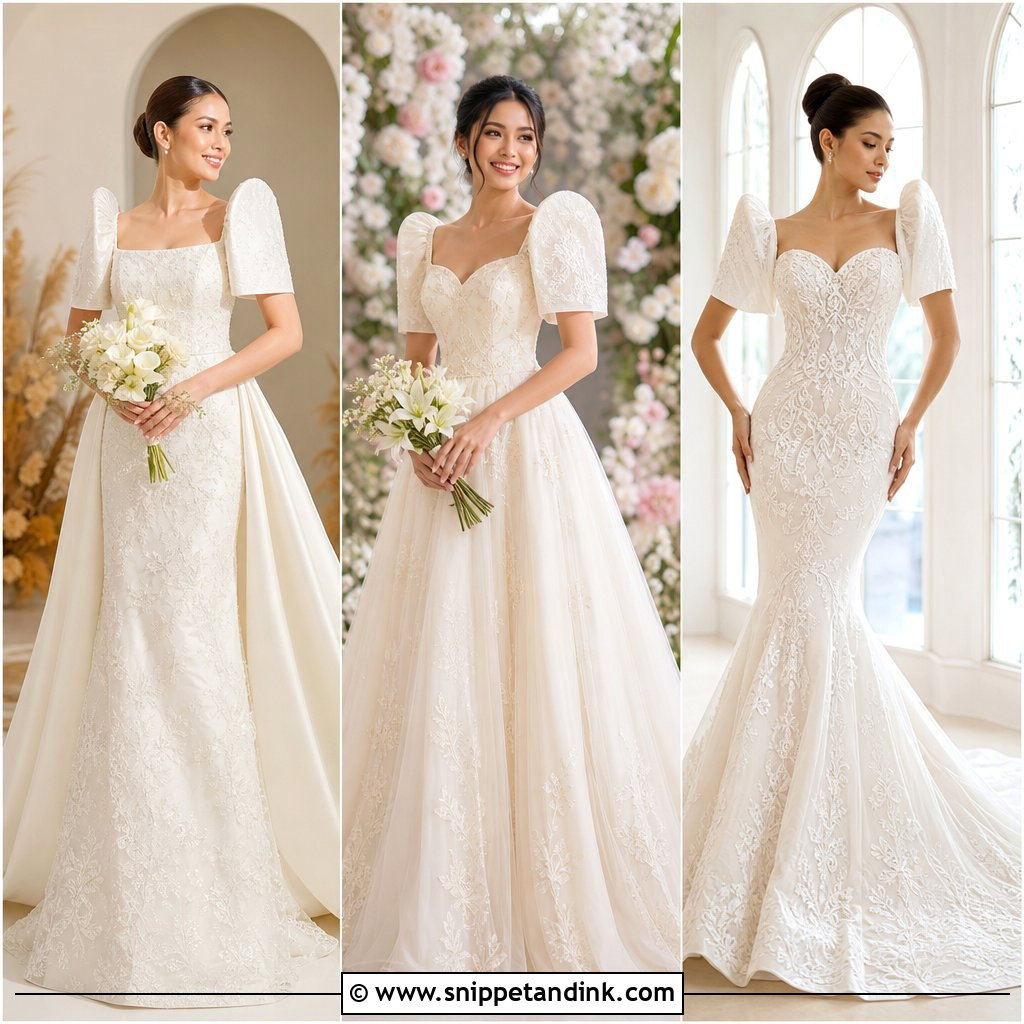
Appliqué is lace that has been cut out motif by motif and stitched onto tulle, crepe or organza, which is why it seems to float. The thing I check first is where the motifs cross seams and the zip, because a good maker lays them over the closure so the back reads as one piece. A fitted lace bodice draws in the waist, and a softer skirt keeps you able to walk and sit. Long lace sleeves or an illusion neckline give coverage; thin straps with scattered lace over a sheer overlay feel lighter. A fingertip veil and small pearl or crystal earrings finish it without crowding the lace.
3. Jacquard Wedding Dress
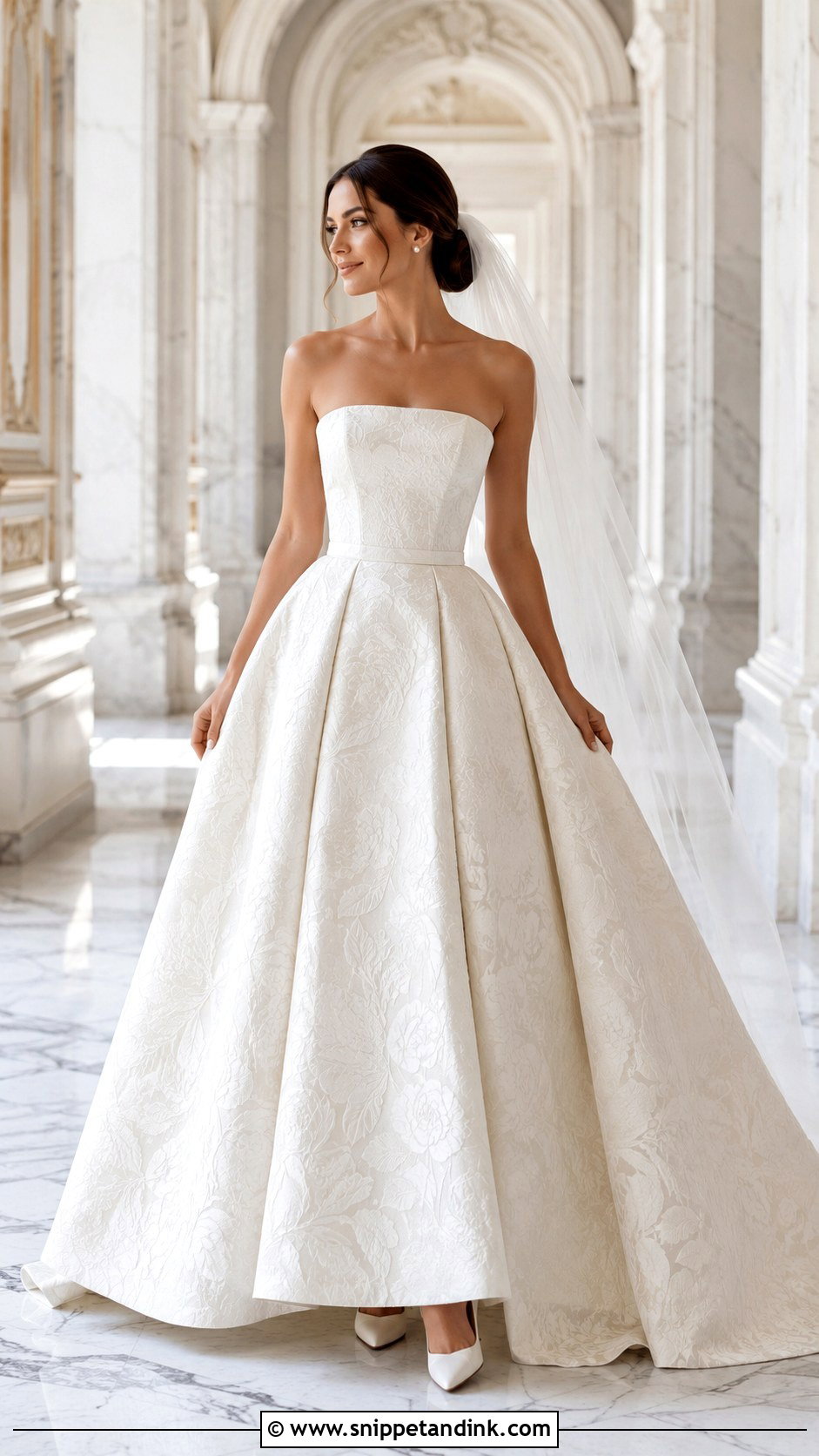
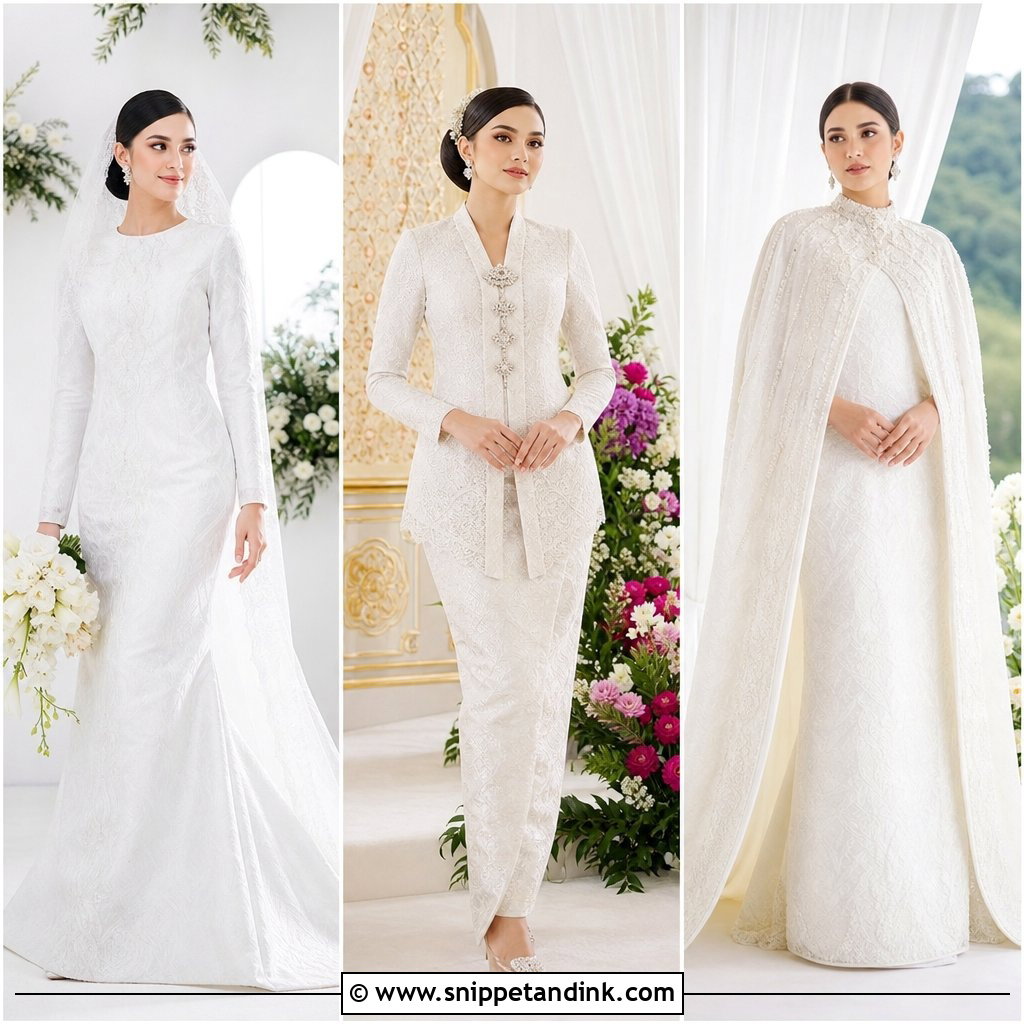
Jacquard has its pattern woven in on the loom, so the detail survives a full day of wear in a way beading sometimes doesn’t. Floral jacquard leans romantic; a vine or geometric weave reads more modern. Because the cloth has real body, I put it in structured shapes such as ball gowns, basque waists and clean A-lines, where it holds its line instead of collapsing. Satin pumps, a plain veil and a tight bouquet suit it. If you want a hint of warmth, champagne or blush jacquard still looks bridal next to ivory flowers.
4. Pleated Tulle Wedding Dress
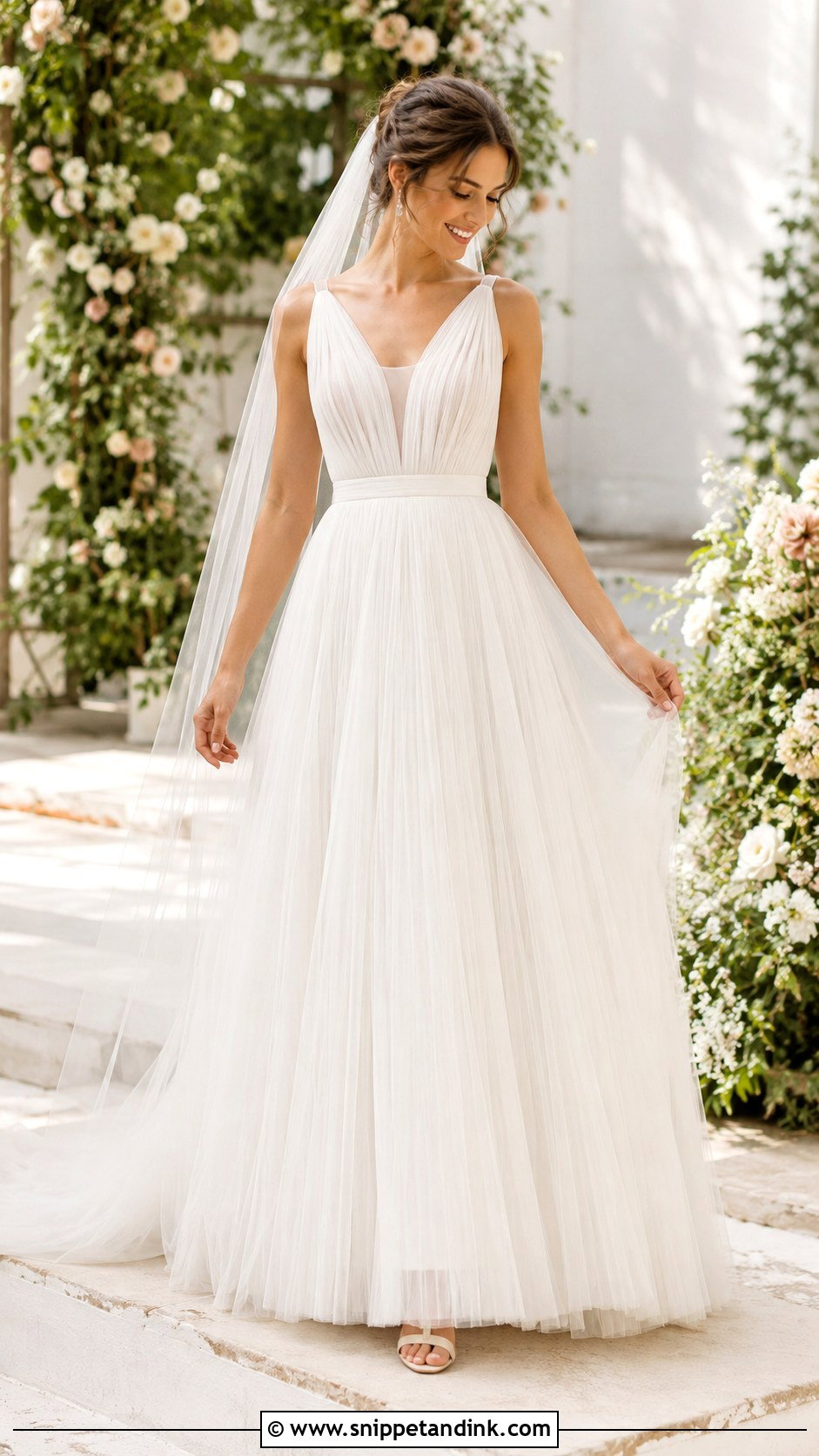
Fine pleats give movement without weight, which is why I steer warm-weather and destination brides toward pleated tulle. Vertical pleats on the bodice and skirt also lengthen the body rather than widening it. One honest warning: pleats are set with heat, and a steamer held too close or a crushed suitcase can relax them, so ask how the dress should travel before you book flights. A V-neck, square or strapless top all work here. Barely-there heels and a sheer veil keep the line uninterrupted.
5. Ruched Wedding Dress
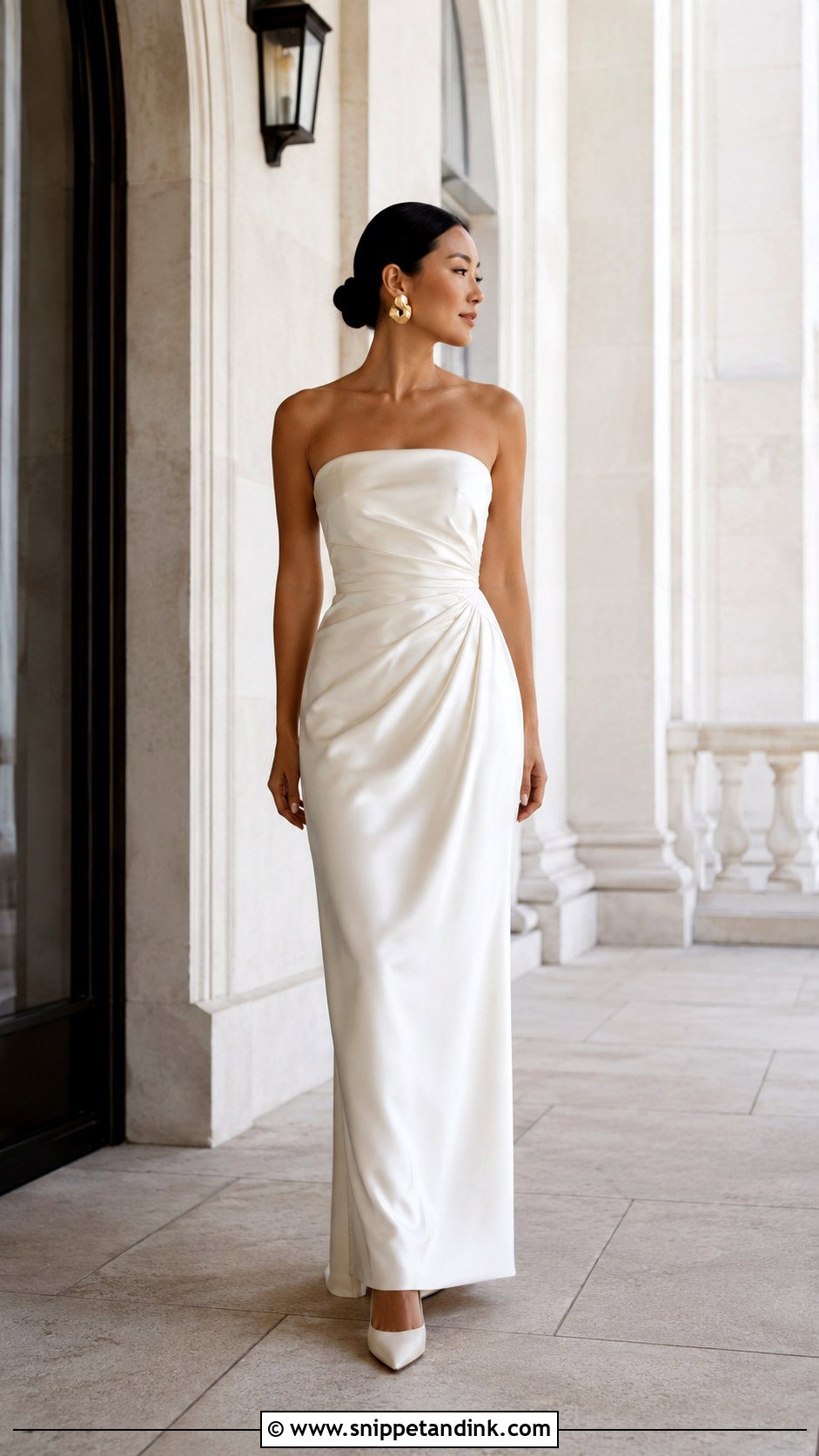
Ruching gathers fabric into folds across the bodice, waist or hips, and those folds forgive a lot. It skims the midsection and gives a plain column some life. Ruched satin or crepe looks sleek; ruched tulle is softer. What I check is whether the gathers are stitched to a fitted lining underneath, because loose ruching slides out of place once you start dancing. For drama, a ruched bodice on a full skirt; for a clean finish, a strapless column with side ruching. A sleek bun and statement earrings balance all that movement at the waist.
6. Pearl Beaded Wedding Dress
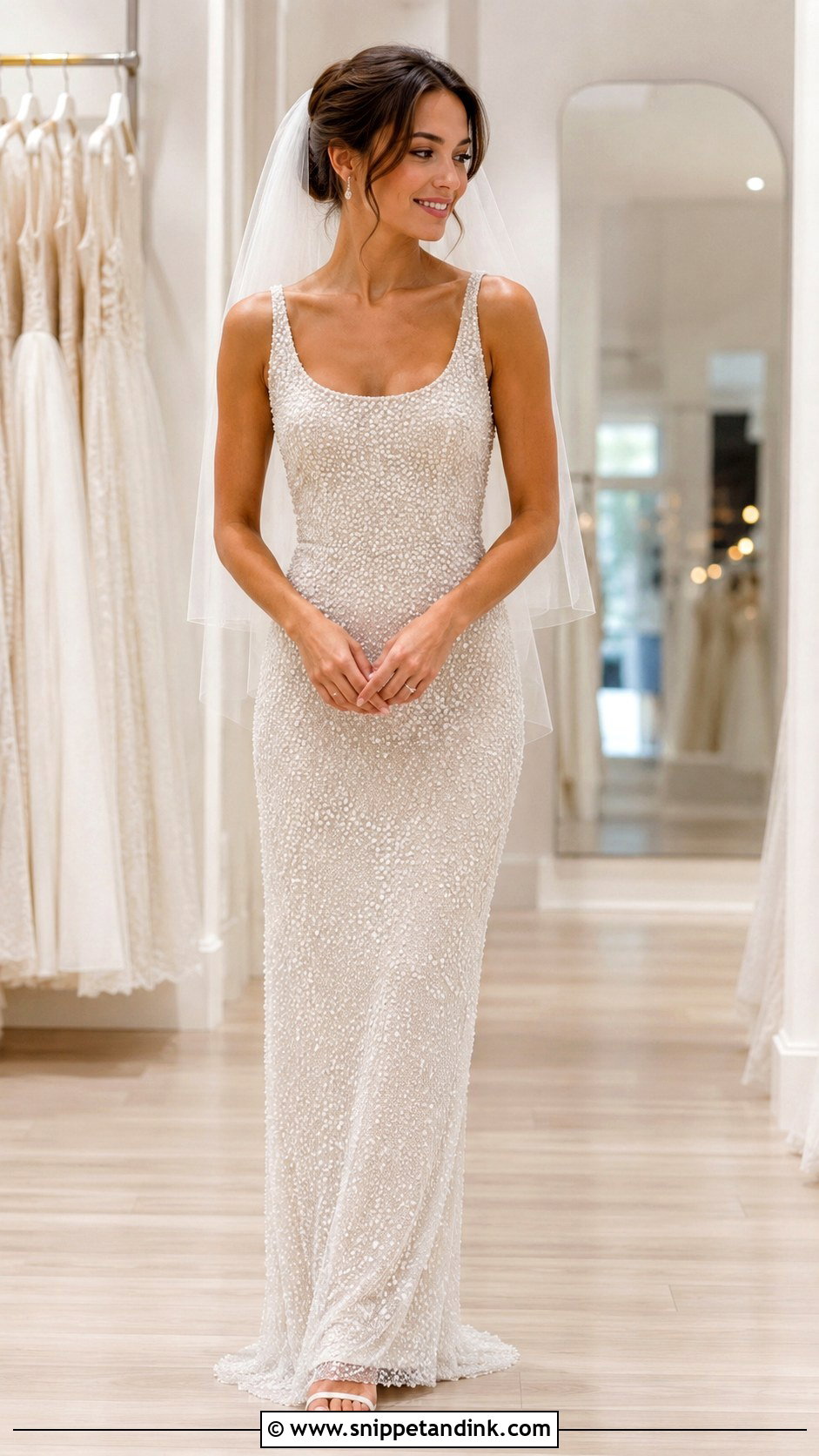
Pearls catch light softly, so a pearl-beaded gown feels rich up close and calm from a distance. They can be scattered across tulle, run along straps or layered over lace. I always lift the skirt and check the back of the beading, because loose threads there mean pearls dropping on the dance floor. A pearl sheath reads modern; a pearl tulle ball gown is more romantic. Pearl studs and a simple veil are enough, since the dress already carries the detail.
7. Embroidered Tulle Wedding Dress
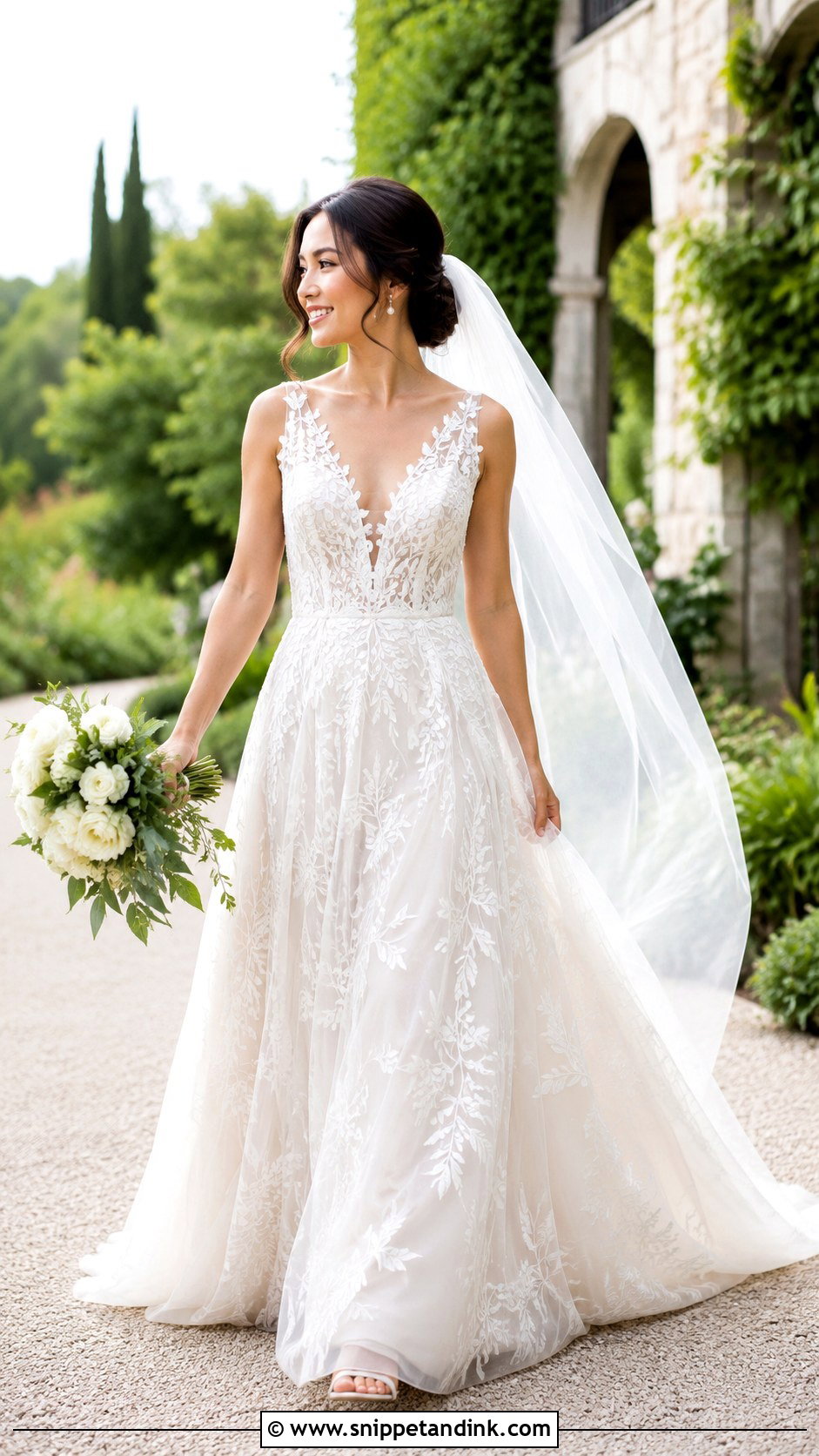
Embroidery on tulle is lighter than corded lace but still tells a story: flowers, vines, leaves, stars or abstract lines stitched straight into a sheer layer. It suits flowing A-lines, fit-and-flare shapes and long illusion sleeves. Garden and estate weddings are where I pull this one most, because the motifs echo what is growing around you. Ivory thread is classic, while faint pastel thread makes it more personal. Natural makeup and a sheer veil keep it from tipping into formal.
8. Ruffle Wedding Dress
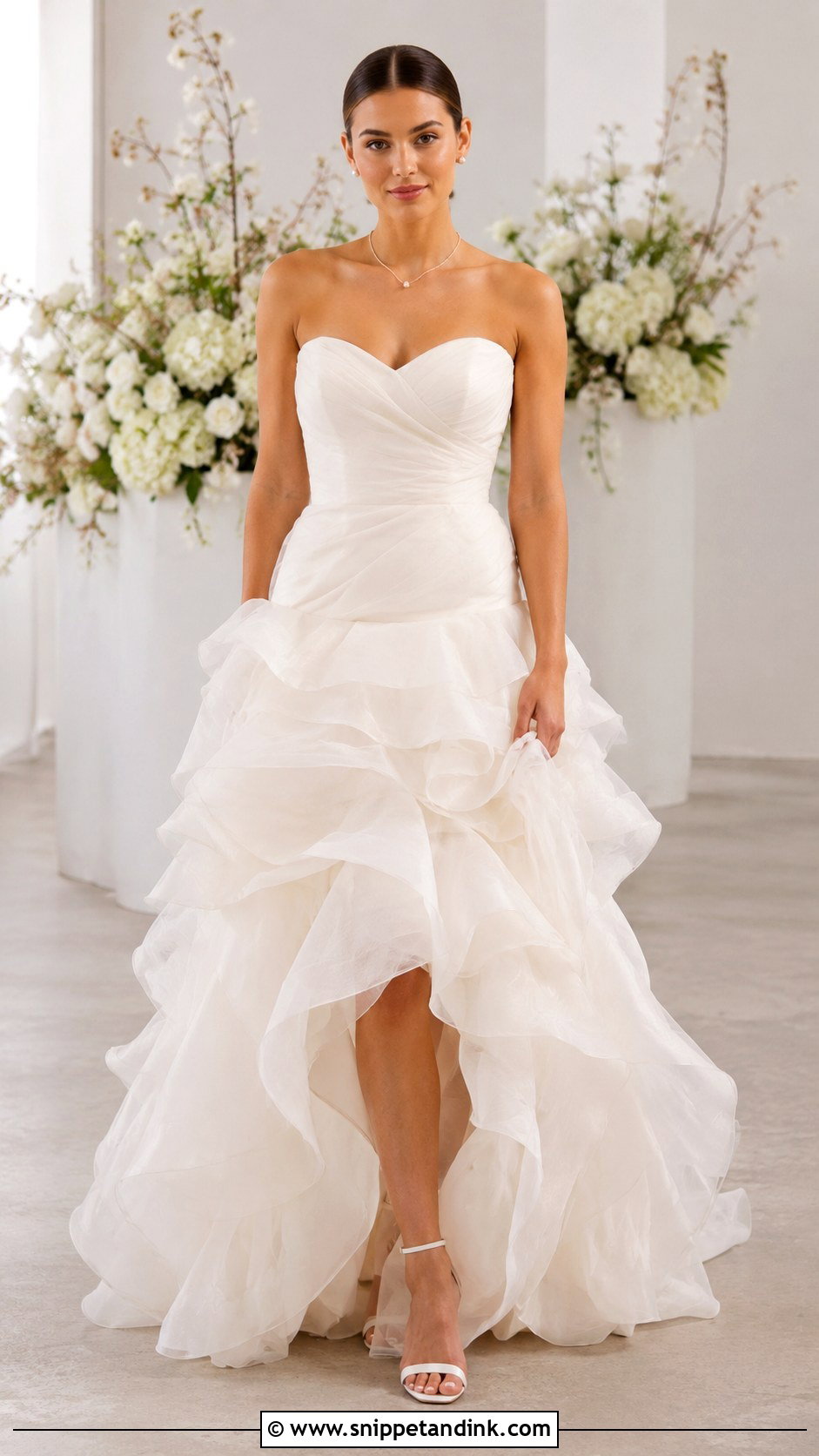
Ruffles bring volume, and the fabric decides the mood. Tiered soft ruffles feel playful, while a single sculptural ruffle at the neckline or hem is more fashion. If you’re petite, I’d keep them small and light so the ruffle wedding dress doesn’t wear you. A fitted bodice with ruffles starting below the waist is the most forgiving version. Keep the hair smooth and the jewelry minimal.
9. Organza Flower Wedding Dress
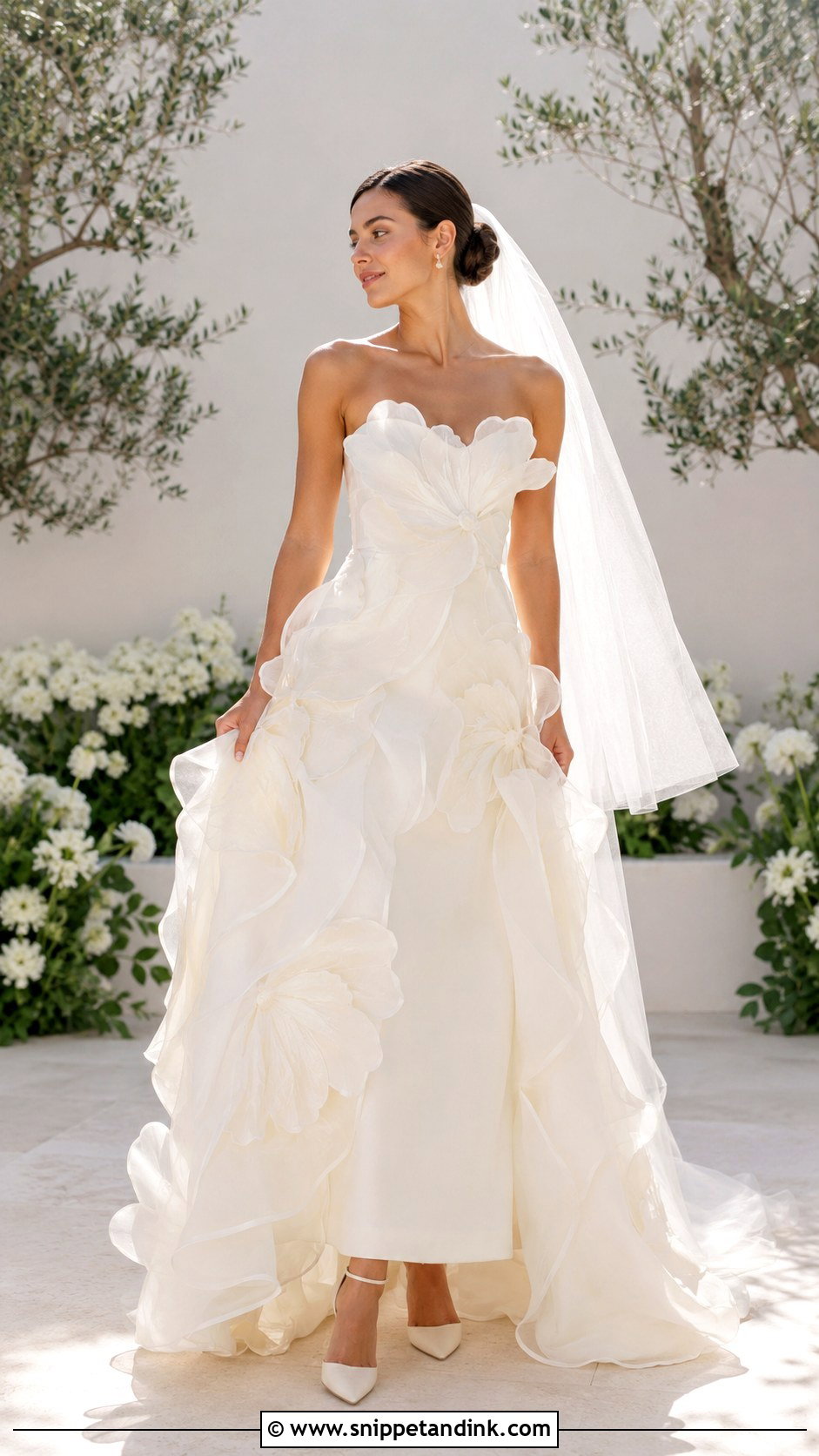
Organza is crisp enough that petals can stand away from the gown without drooping, so these flowers look sculpted rather than heavy. A strapless organza floral gown reads editorial; long sleeves soften it. My one caution is humidity: organza flowers can lose a little crispness on a sticky summer evening, so if your reception is outdoors in heat, ask whether they are stiffened or interfaced. Scattered blooms are subtle, large blossoms are a statement. Clean ivory heels and simple earrings let them lead in portraits.



10. Beaded Lace Wedding Dress
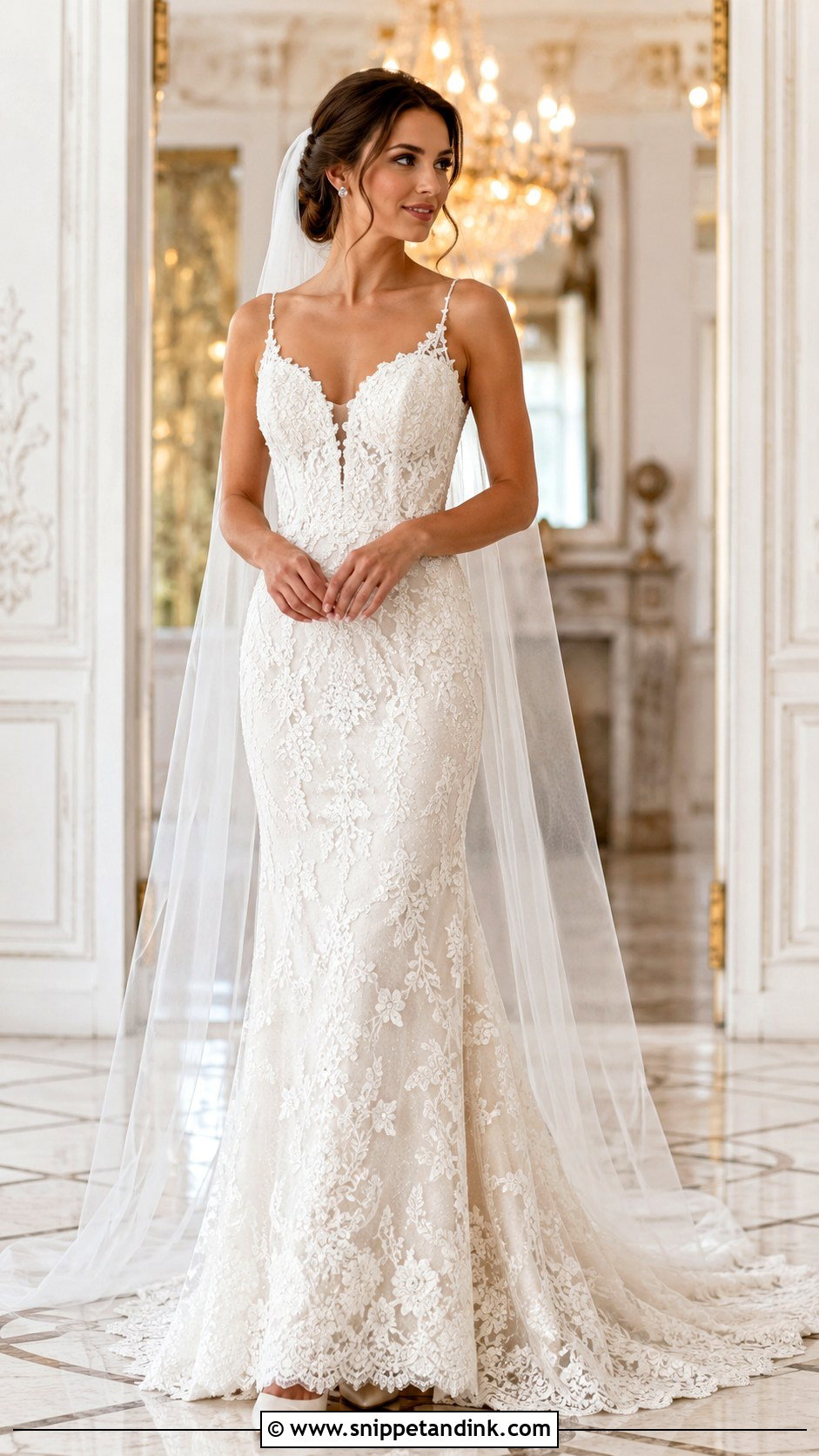
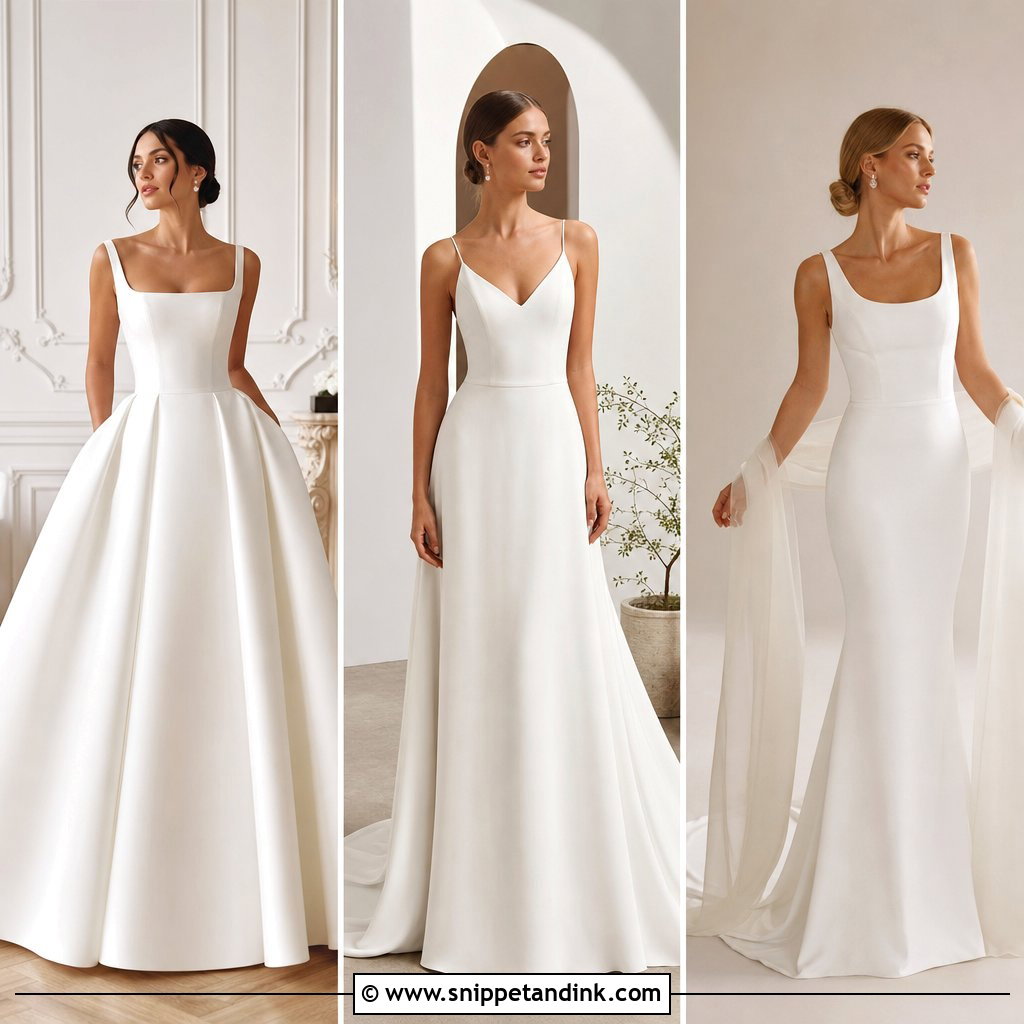
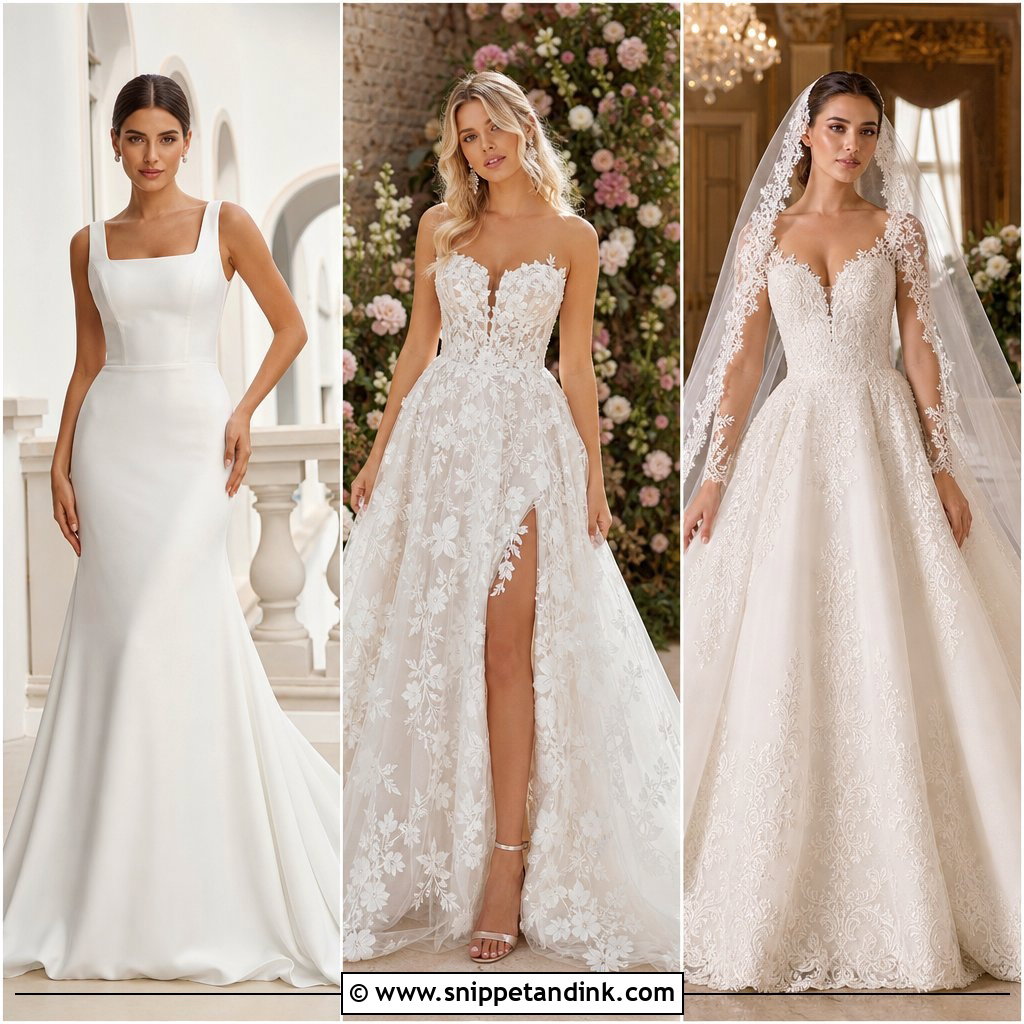
When the beading follows the lace pattern, the shimmer looks planned. When it’s scattered at random, it looks busy, and that is the first thing I compare between two beaded lace gowns. A fitted version reads glamorous; an A-line is softer and more traditional. Beading adds real weight, so try it on and walk for a few minutes, paying attention to the shoulders. With a heavy bodice, choose a plain veil and crystal studs rather than more sparkle.
11. Feather Trim Wedding Dress
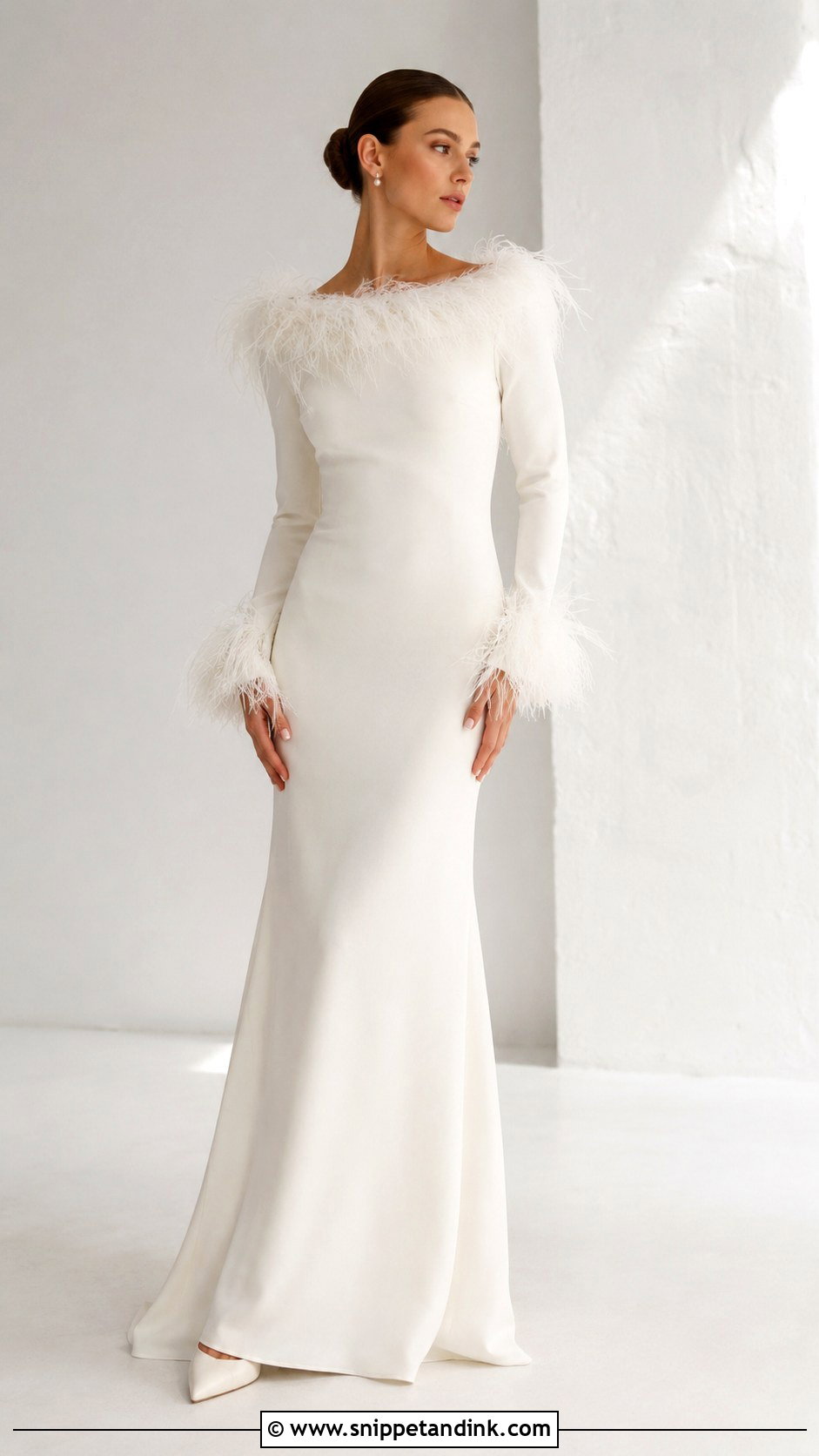
Feathers need a light hand. On the neckline, cuffs, hem or a detachable overskirt they move in walking photos; across a whole gown they can overwhelm. A crepe or satin dress with feather trim feels chic, and a feathered mini makes a fun reception change. I’d advise against them if you’re planning a windy cliff-top ceremony or have a feather sensitivity. Keep them ivory or pearl-toned and pair them with sleek heels and a clean clutch.
12. Bubble Hem Wedding Dress
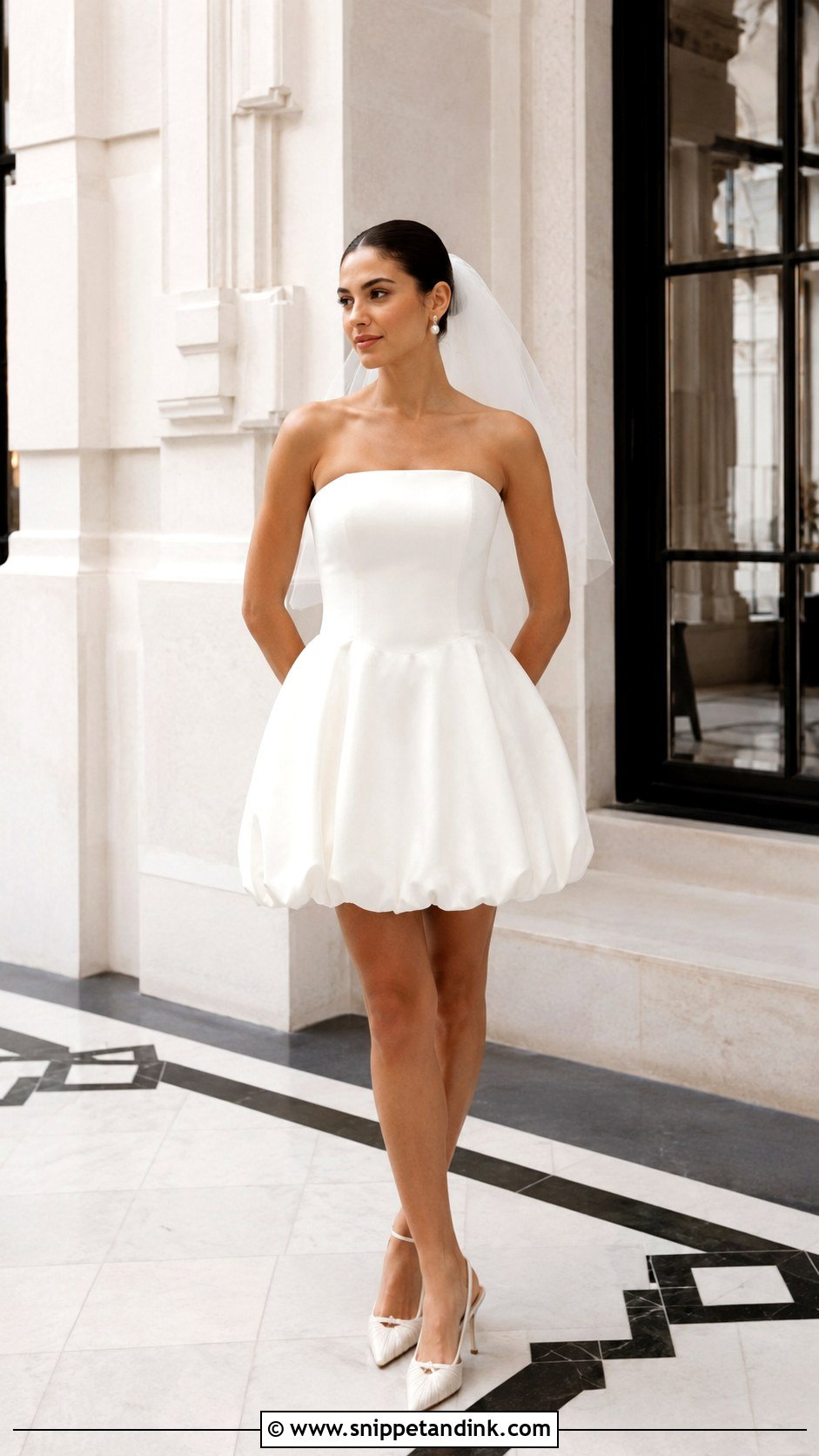
A bubble hem wedding dress gets its texture from shape rather than surface decoration: the hem turns under into a rounded puff. It is strongest on minis, tea-lengths and contemporary full-length gowns. Check how it sits when you’re seated, because a large bubble can ride up and push forward at the dinner table. A structured version with a fitted bodice holds up for a ceremony, and a short one with slingbacks makes an easy reception change.
13. Crinkle Satin Wedding Dress
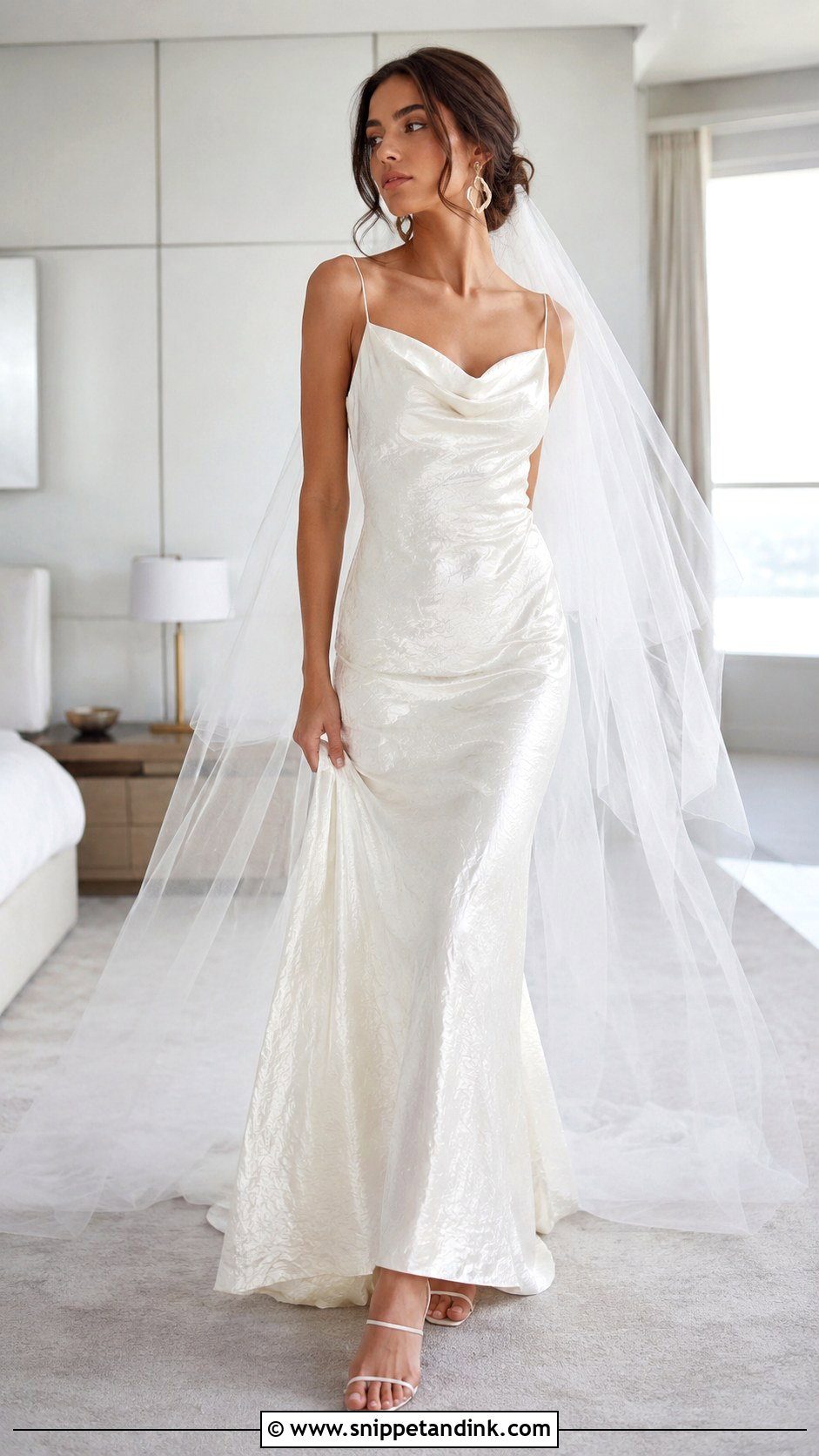
Crinkle satin has a lightly crushed surface that reflects light in a softer, less formal way than smooth satin. It suits slip dresses, bias cuts and draped shapes, and it hides the creases that plain satin shows after sitting through dinner, which is one of the reasons I like it. Don’t let anyone press it flat; the crinkle is the point. Strappy heels and a low bun keep it modern, and a sheer veil softens it for the ceremony.
14. Crochet Lace Wedding Dress
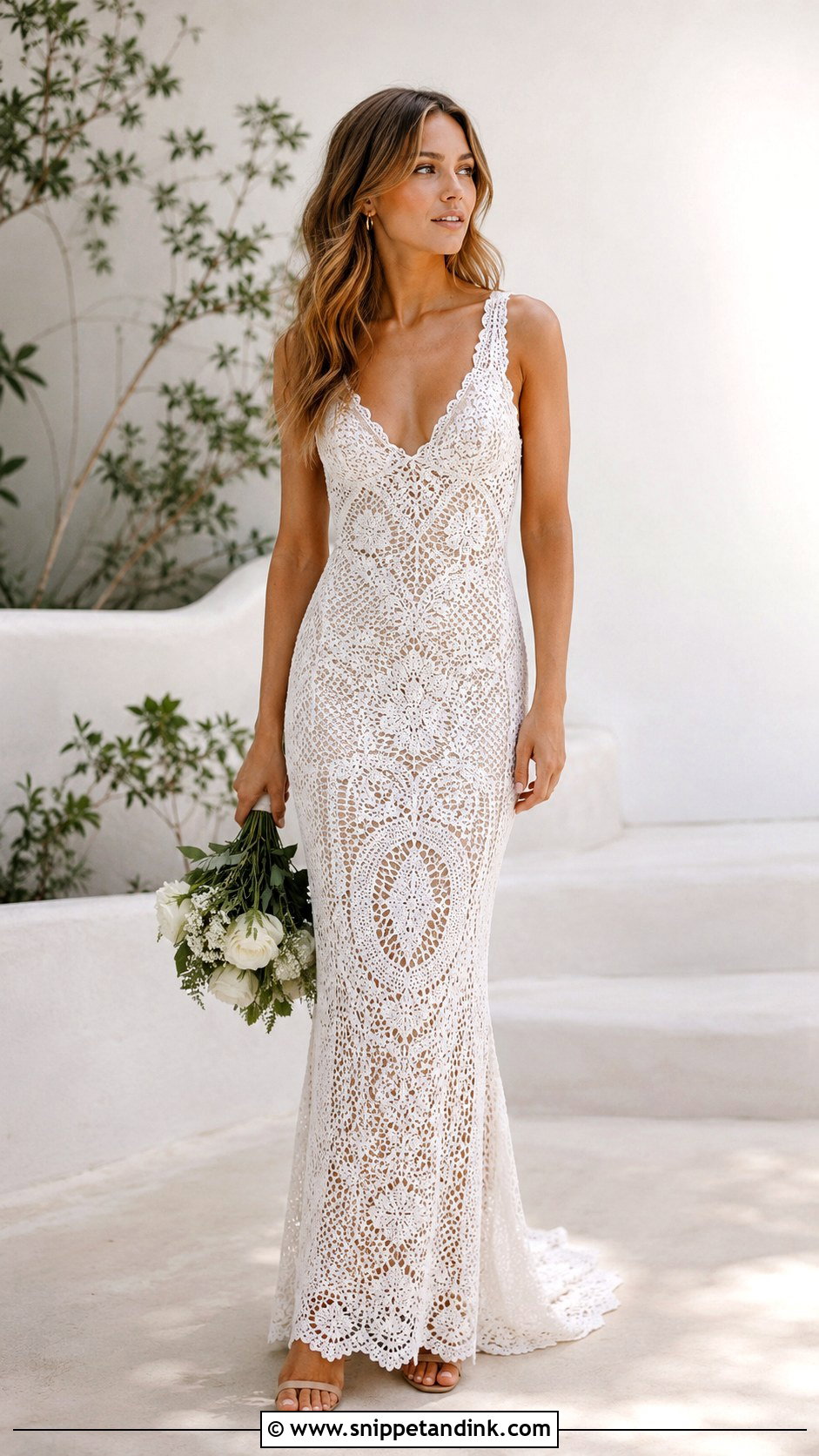
Crochet lace has an open, handmade pattern that reads differently from fine floral lace, and it can lean boho, vintage or modern depending on the cut. A fitted crochet gown suits beach and outdoor settings; a crochet bodice over a flowing skirt is softer. Because crochet stretches more than woven lace, I fit it a touch closer than usual so it doesn’t relax and bag at the hips by evening. Nude sandals, small hoops and loose waves suit it; skip anything that competes with the pattern.
15. Brocade Wedding Dress
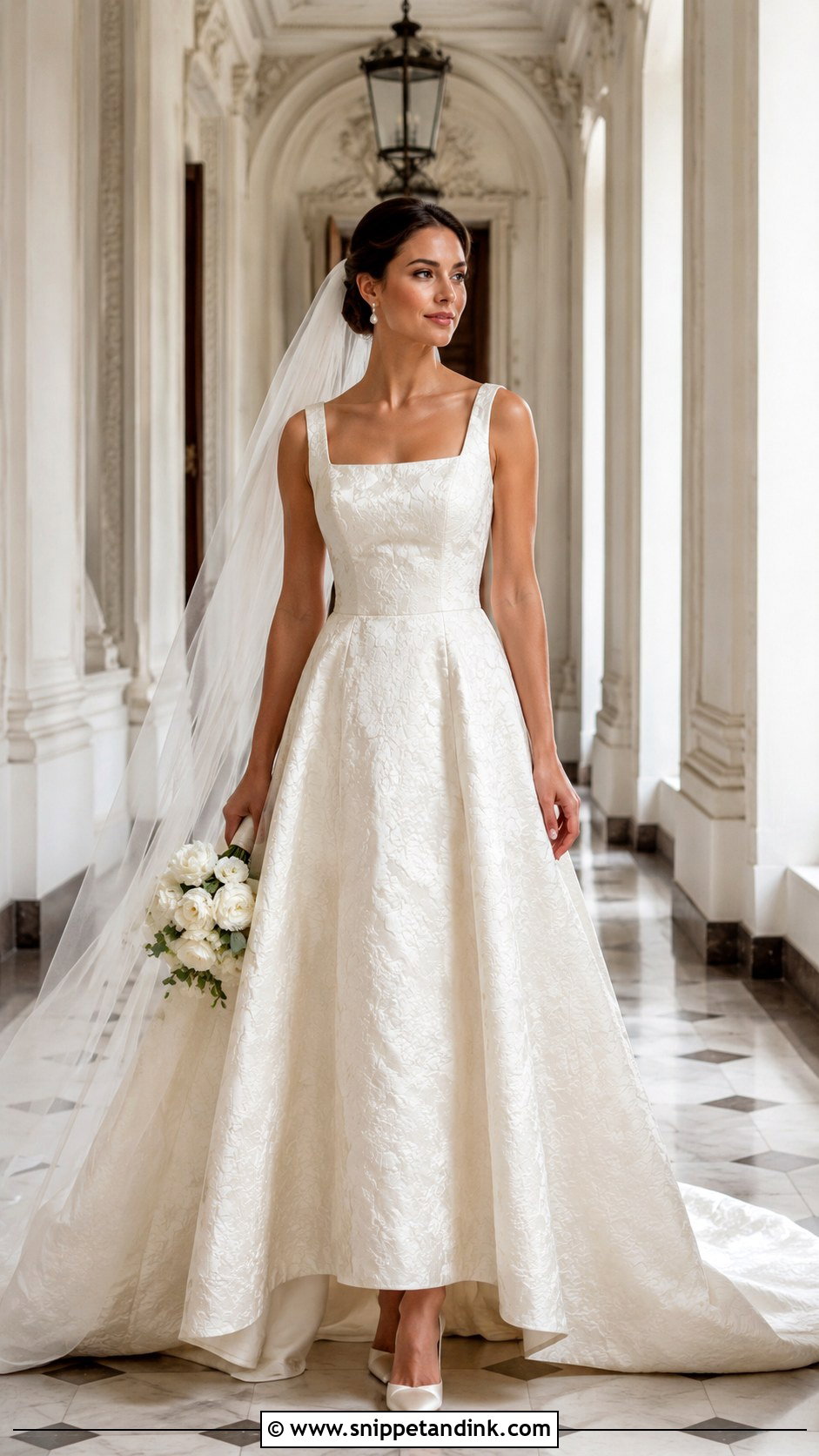
Brocade is jacquard’s more ornate cousin, woven with a raised, often metallic-looking figure. Its body holds dramatic shapes, which is why I use it for ball gowns, fitted midis and structured A-lines. It is warm to wear, so I’d save it for cooler months or formal indoor venues. With a bold pattern, keep the neckline plain and the jewelry classic. It looks regal without any added sparkle.
16. Tiered Tulle Wedding Dress
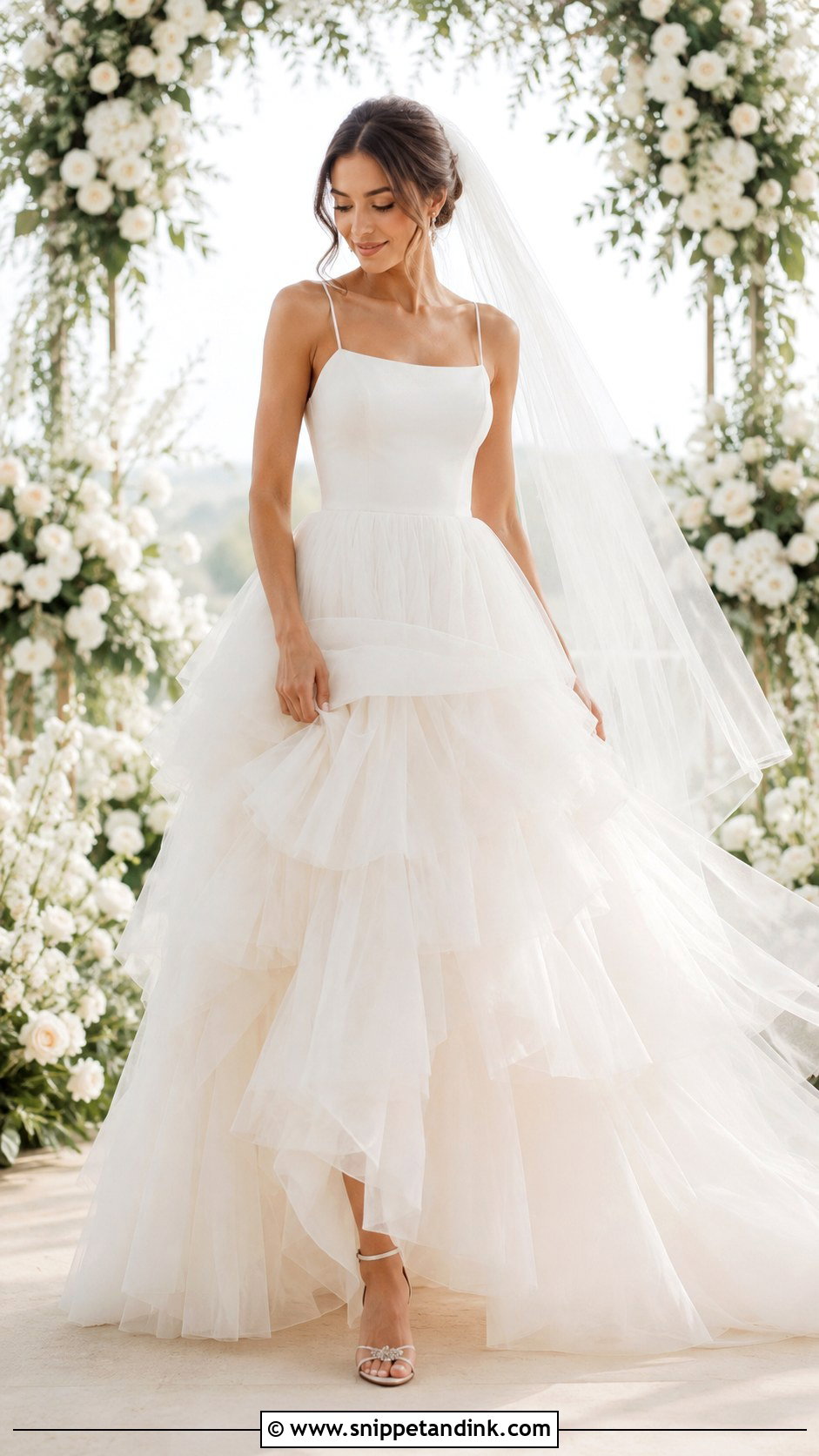
Tiers build texture from horizontal layers, and proportion decides whether it works. Many tiers need a quiet bodice; a few tiers can carry a more detailed top. Fine tulle gives a cloud effect, while stiffer tulle holds a sharper outline. The thing I check is the length of each tier against your height, since a petite bride can disappear under deep tiers. Delicate heels and understated earrings are all it needs.
17. Swiss Dot Wedding Dress
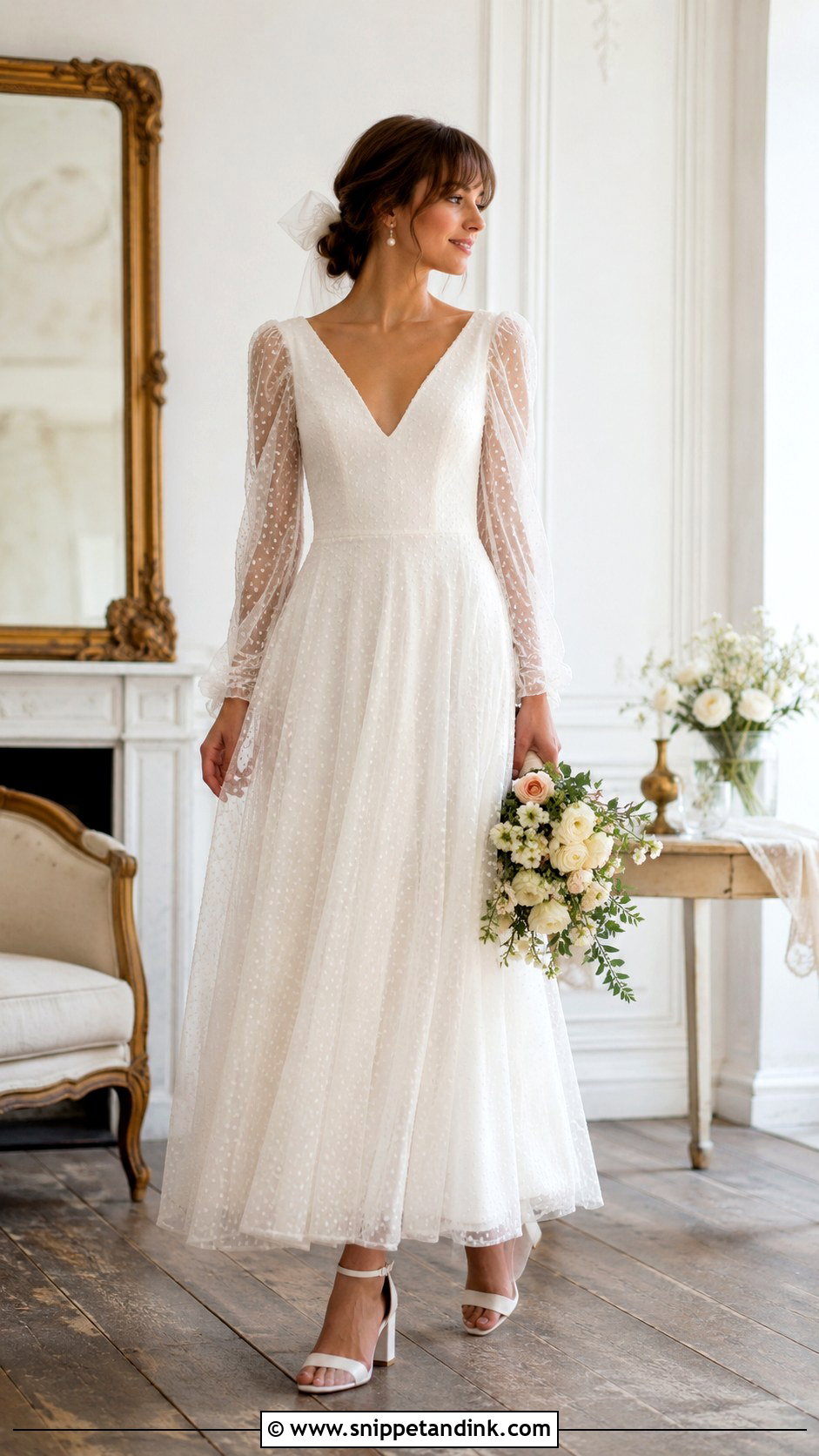
Swiss dot is a sheer cloth with tiny raised dots woven or flocked onto it, so you get pattern without any embellishment. It feels light and slightly vintage on A-lines, puff sleeves and tea-length shapes. A Swiss dot bodice over a plain skirt reads clean; an allover dot gown is more whimsical. Flocked dots can wear off with heavy rubbing, so I check them at the underarm and inner arm. A ribbon hair bow and block heels suit its relaxed mood.
18. Sequin Texture Wedding Dress
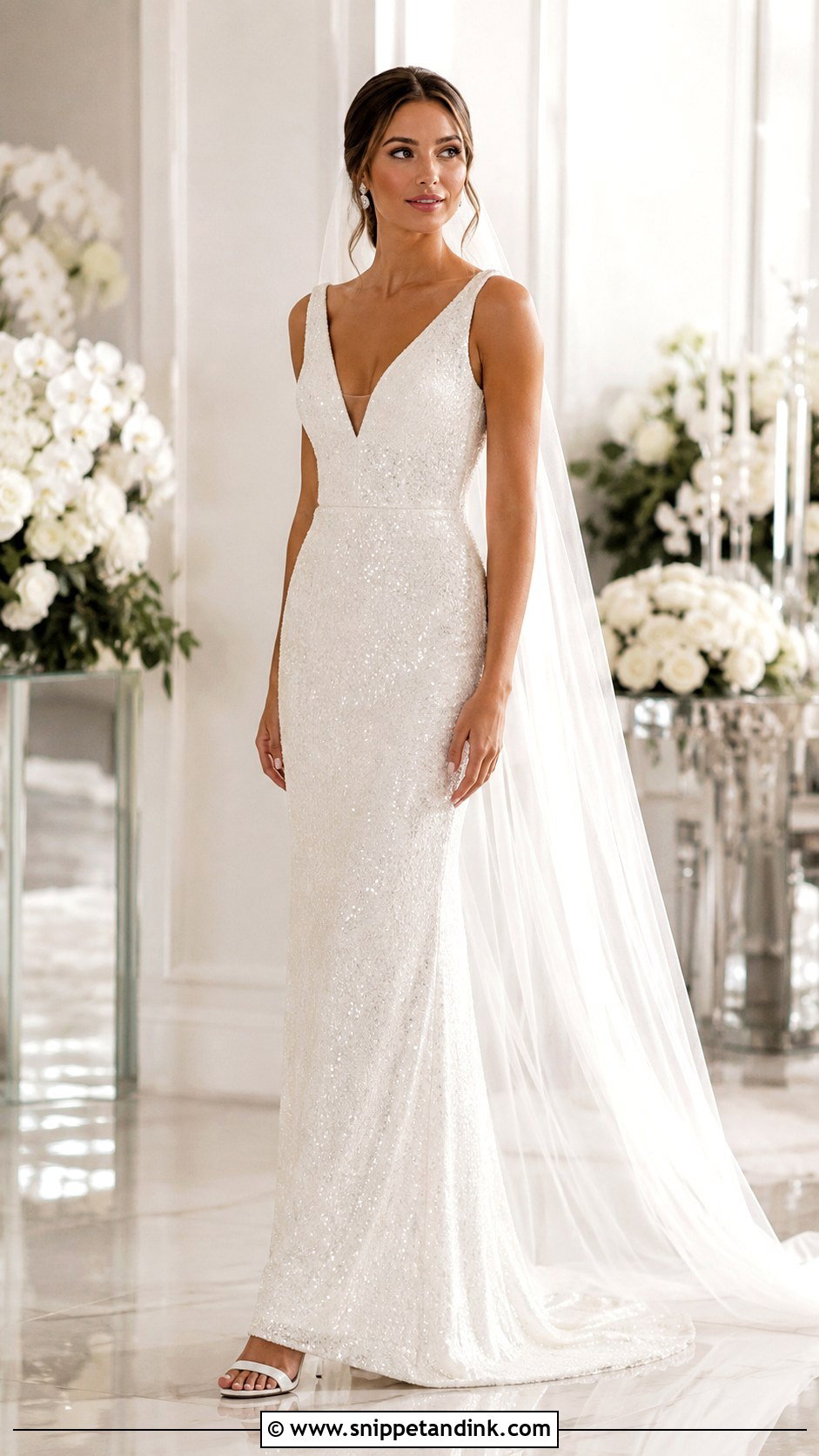
Sequins don’t have to shout. For bridal I look for matte sequins, tiny paillettes or tone-on-tone work, which give a sequin texture wedding dress a refined finish. They suit sheaths, slips and fitted long sleeves, and they come alive under evening lighting. The catch is the inner arm: sequins there can scratch, so ask for a smooth lining or a sequin-free band. A tulle overskirt or sheer cape adds softness for the ceremony.
19. Draped Wedding Dress
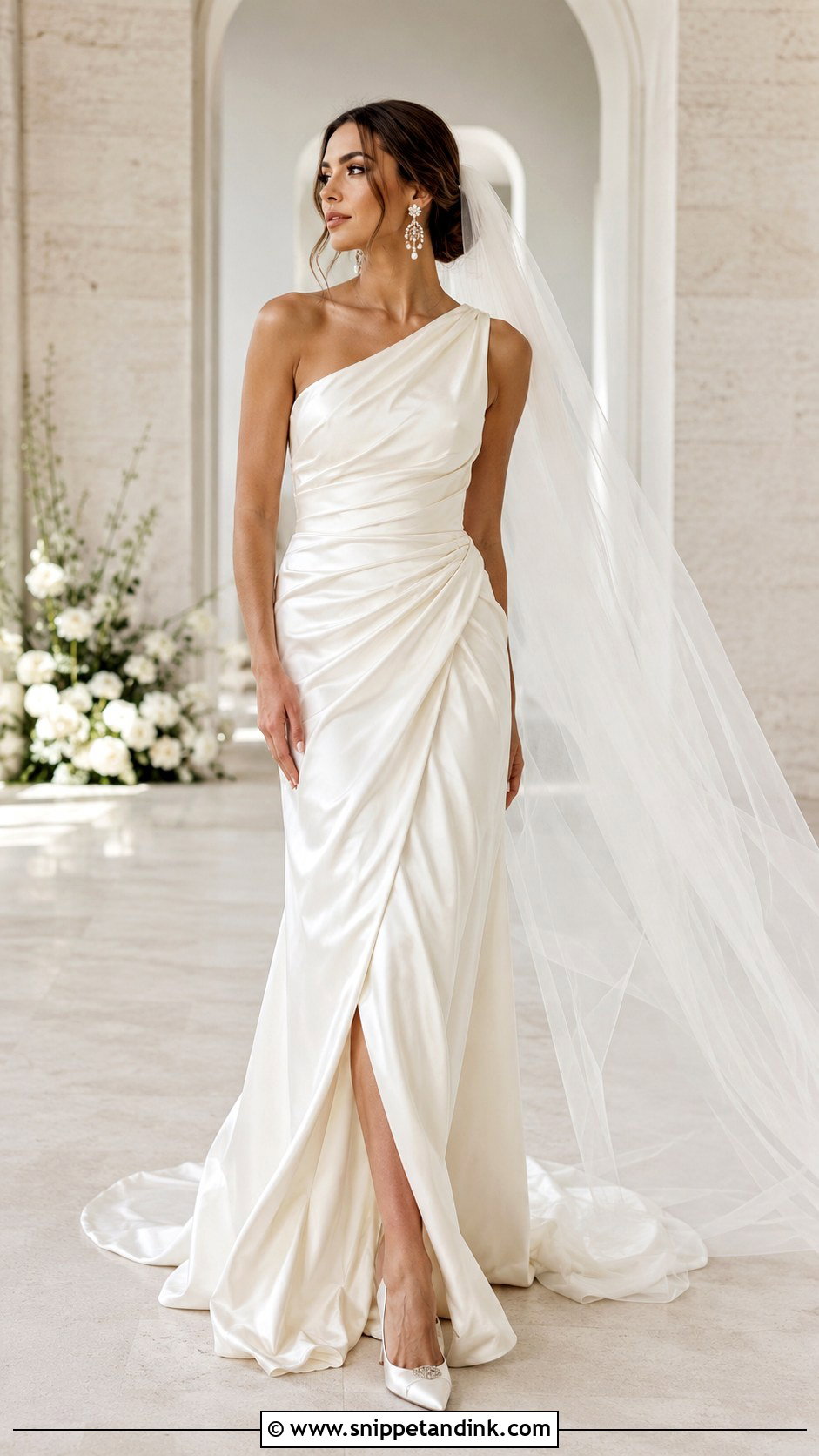
Draping makes texture from the fabric itself, folded to skim and wrap the body instead of decorated. It can mark the waist, soften the hips or move across the neckline. Satin, crepe, silk and chiffon all drape well, though chiffon needs a careful fitter because it shows every pull. A one-shoulder drape reads sleek, and a draped corset bodice gives more structure. Pointed heels and statement earrings suit the clean line.
20. Rosette Wedding Dress
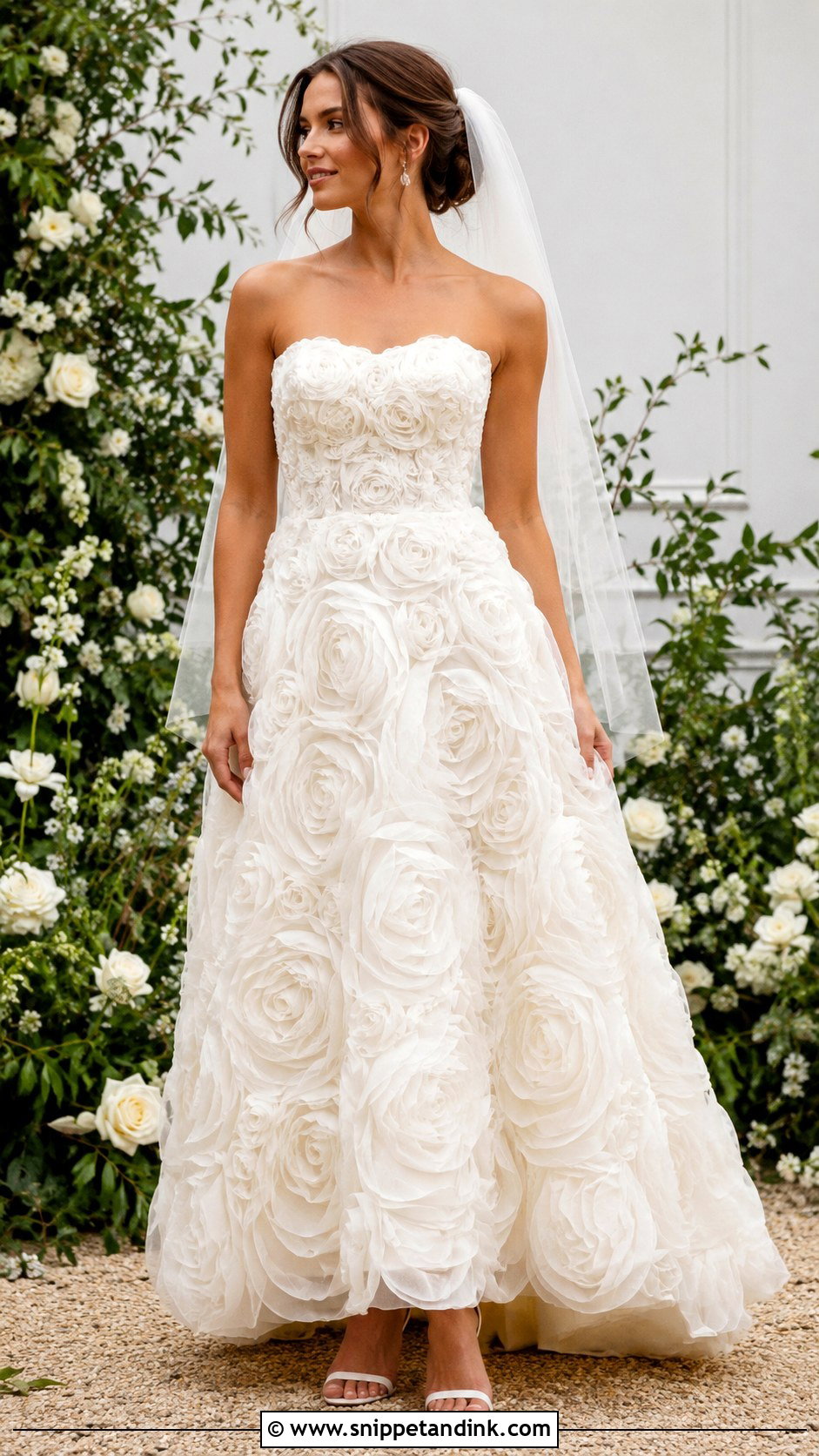
Rosettes are fabric flowers, tiny and scattered or big and sculptural. On the bodice they read romantic; down the skirt or train they make a stronger statement. They work when the rest of the dress is clean, so the shape of each rosette stands out. Large rosettes on a train get trodden on, so plan a bustle that lifts them clear before the dancing. Simple heels and delicate earrings are plenty.
21. Quilted Wedding Dress
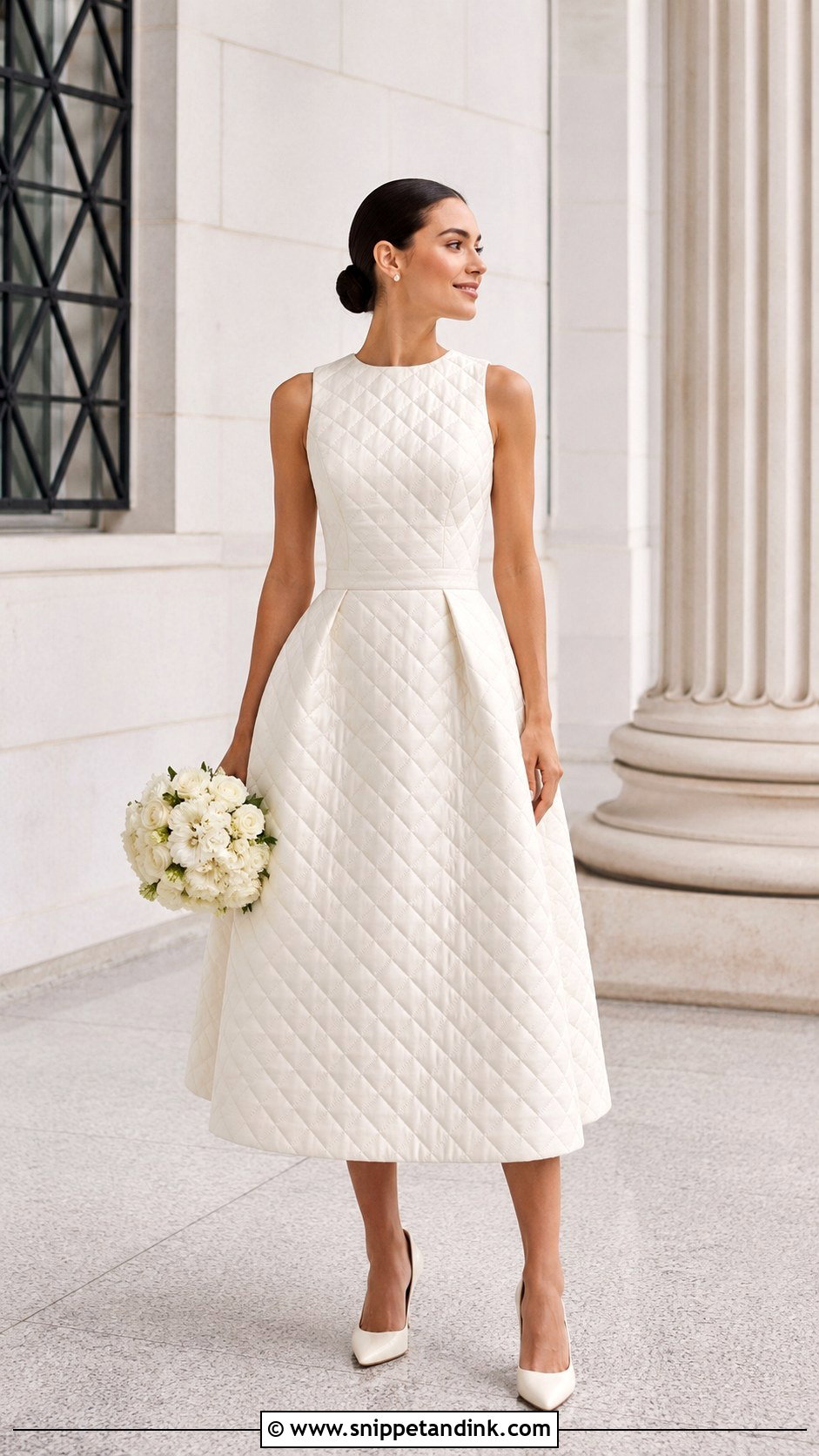
Quilting adds stitched structure without lace or sparkle, and it gives a gown a fashion edge I don’t see often in bridal. It can sit on the bodice, skirt, sleeves or on a bridal coat worn over the dress for a winter ceremony. Column dresses, midis and structured A-lines suit it best. Ivory quilting reads classic, pearl-toned fabric a little softer. Keep the hair smooth and the jewelry minimal.
22. Fringe Wedding Dress
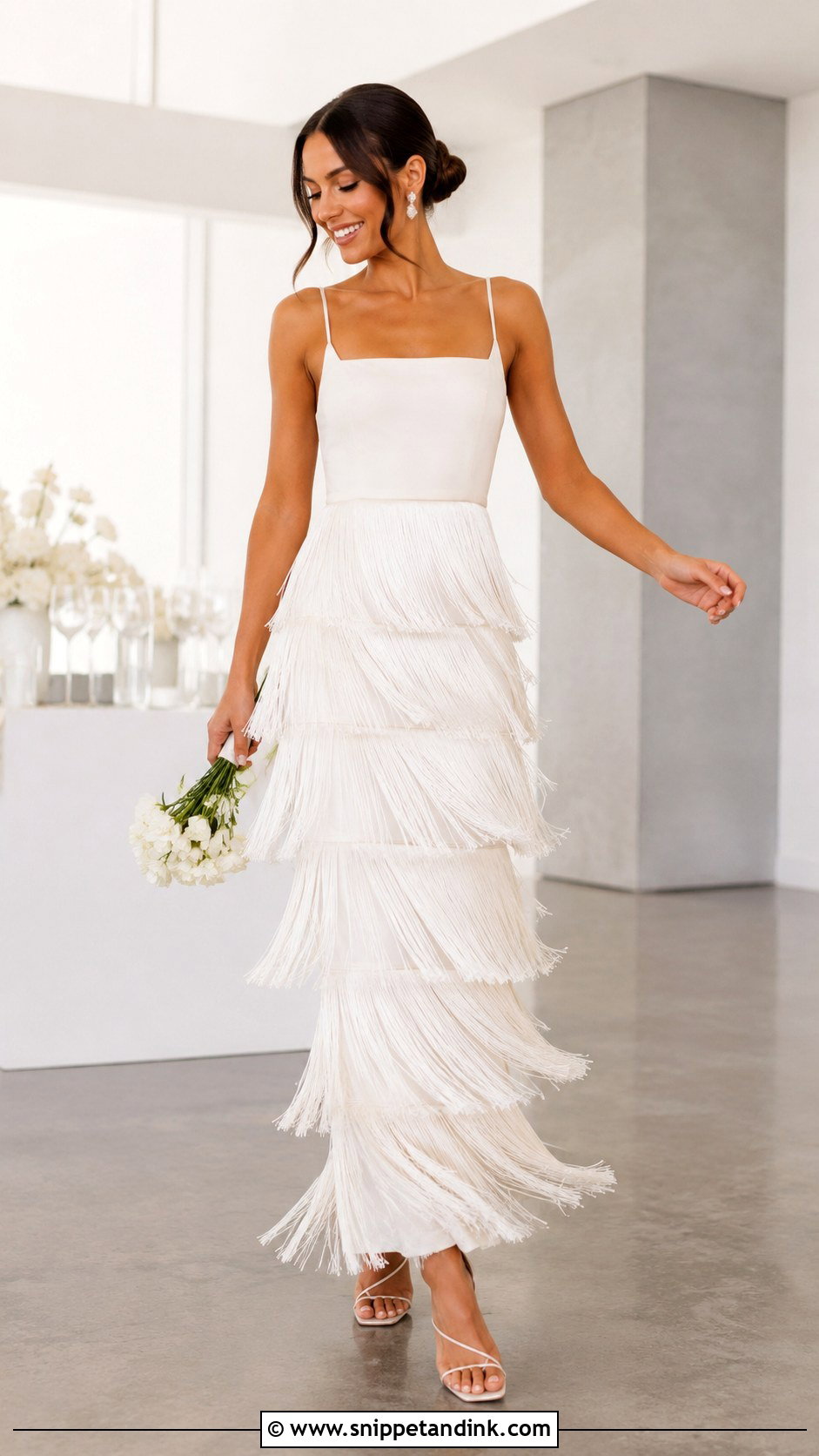
Fringe sways with every step, which makes it the liveliest texture on this list. It can sit across the skirt, sleeves, bodice or hem. Fine ivory fringe on a simple column looks sophisticated, and layered fringe falls like a waterfall. Fringe tangles, so I always keep a wide-toothed comb in my kit to straighten it before the entrance. It shines at the reception and can work for a modern ceremony with no veil at all.
23. Floral Embossed Wedding Dress
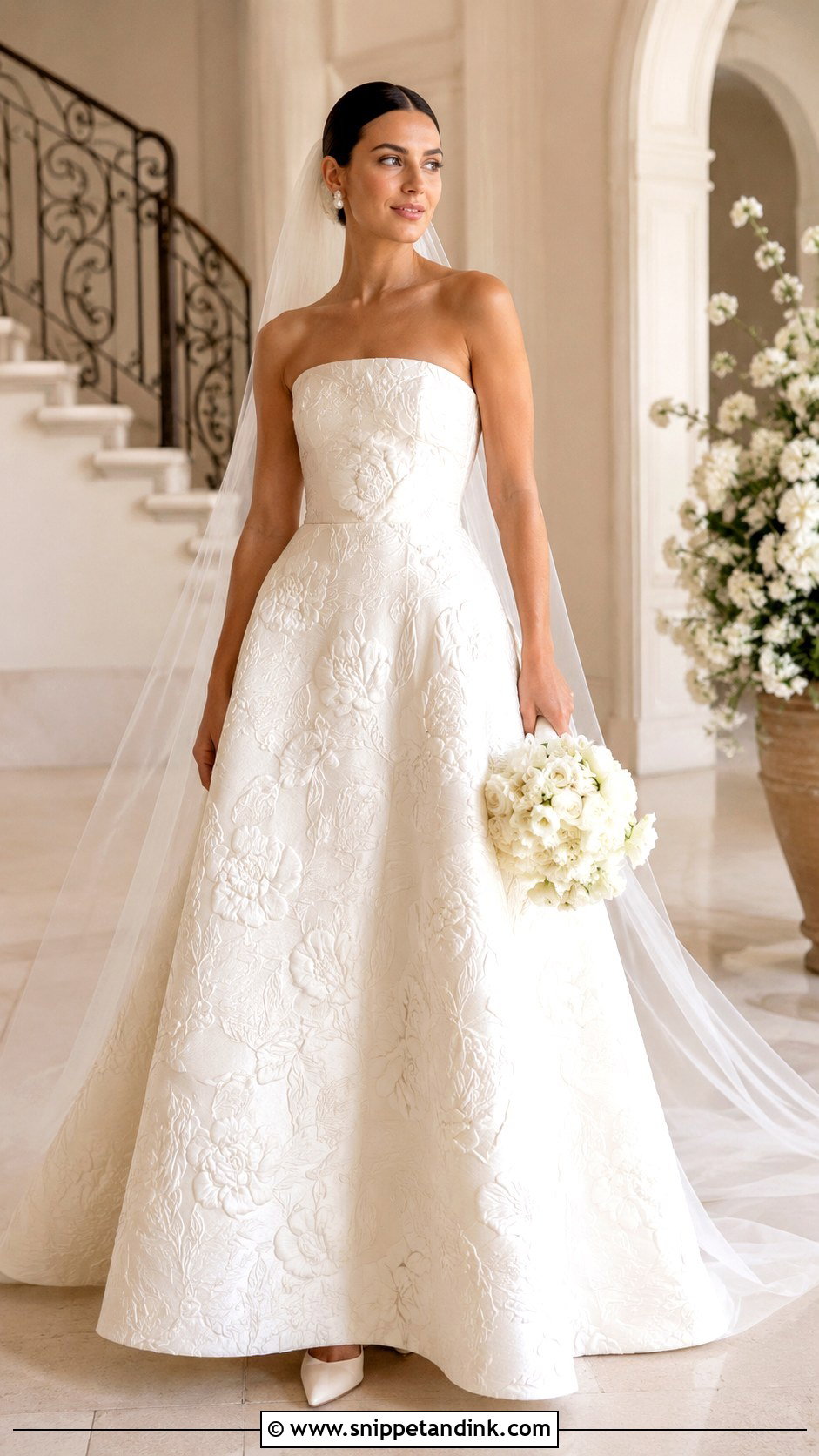
Embossing presses or weaves a raised floral pattern into the fabric surface. From across the room the gown looks smooth; up close, the detail appears. That makes it ideal if you want quiet dimension. It looks richest on satin, mikado, jacquard and organza, in structured ball gowns or clean strapless shapes. Embossing can flatten under a hot iron, so it should only ever be steamed from the inside. Classic heels and pearl earrings keep it polished.
24. Layered Lace Wedding Dress
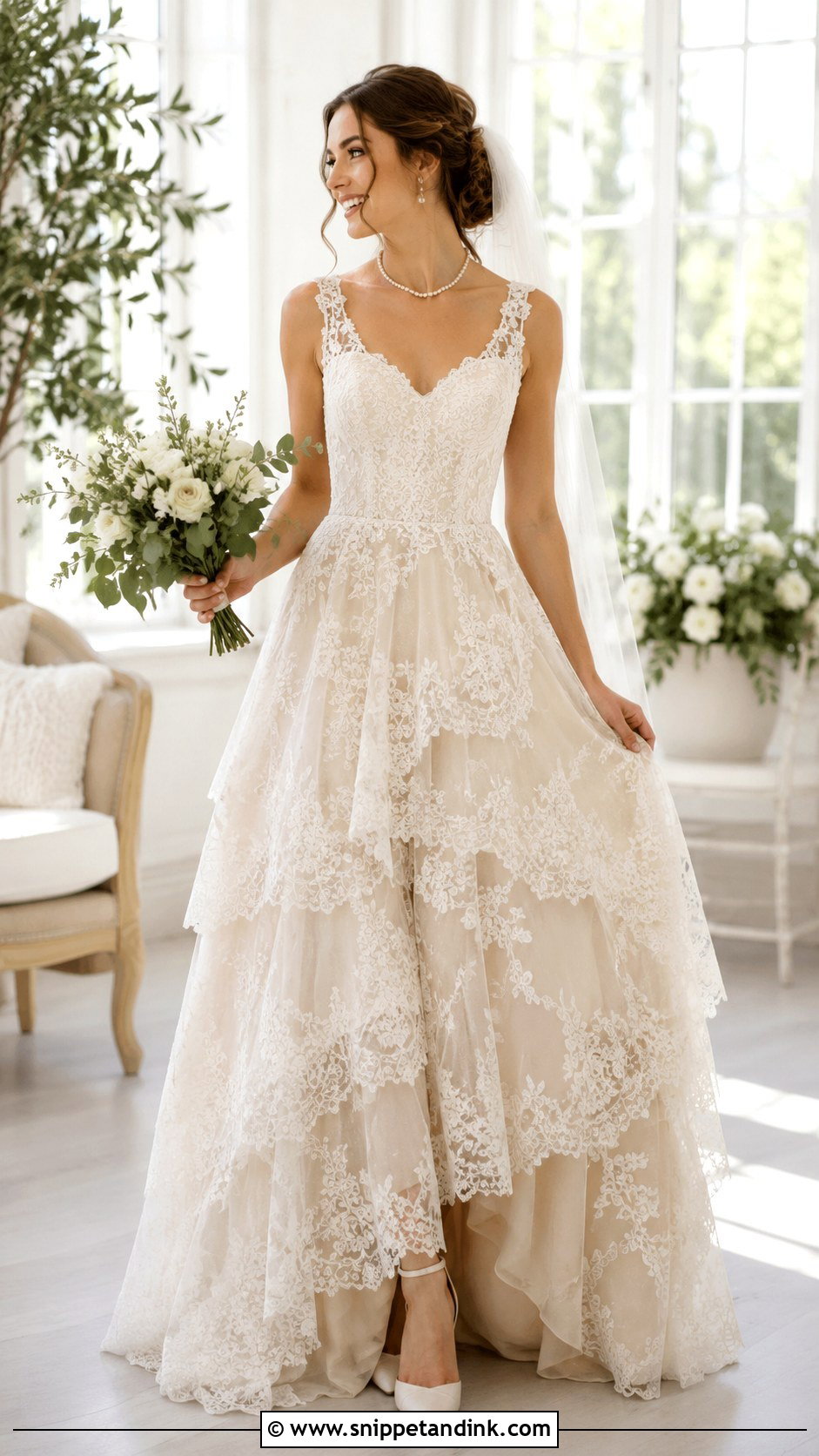
Layering one lace or sheer fabric over another gives depth that a single layer can’t. The pattern looks softer and richer, especially with a nude, champagne or blush underlay showing through. It suits fitted dresses, A-lines and long sleeves. Two layers can feel warm, so I ask whether the underlayer is breathable before a summer wedding. Ivory heels, a plain veil and soft pearl jewelry are enough.
25. Textured Corset Wedding Dress
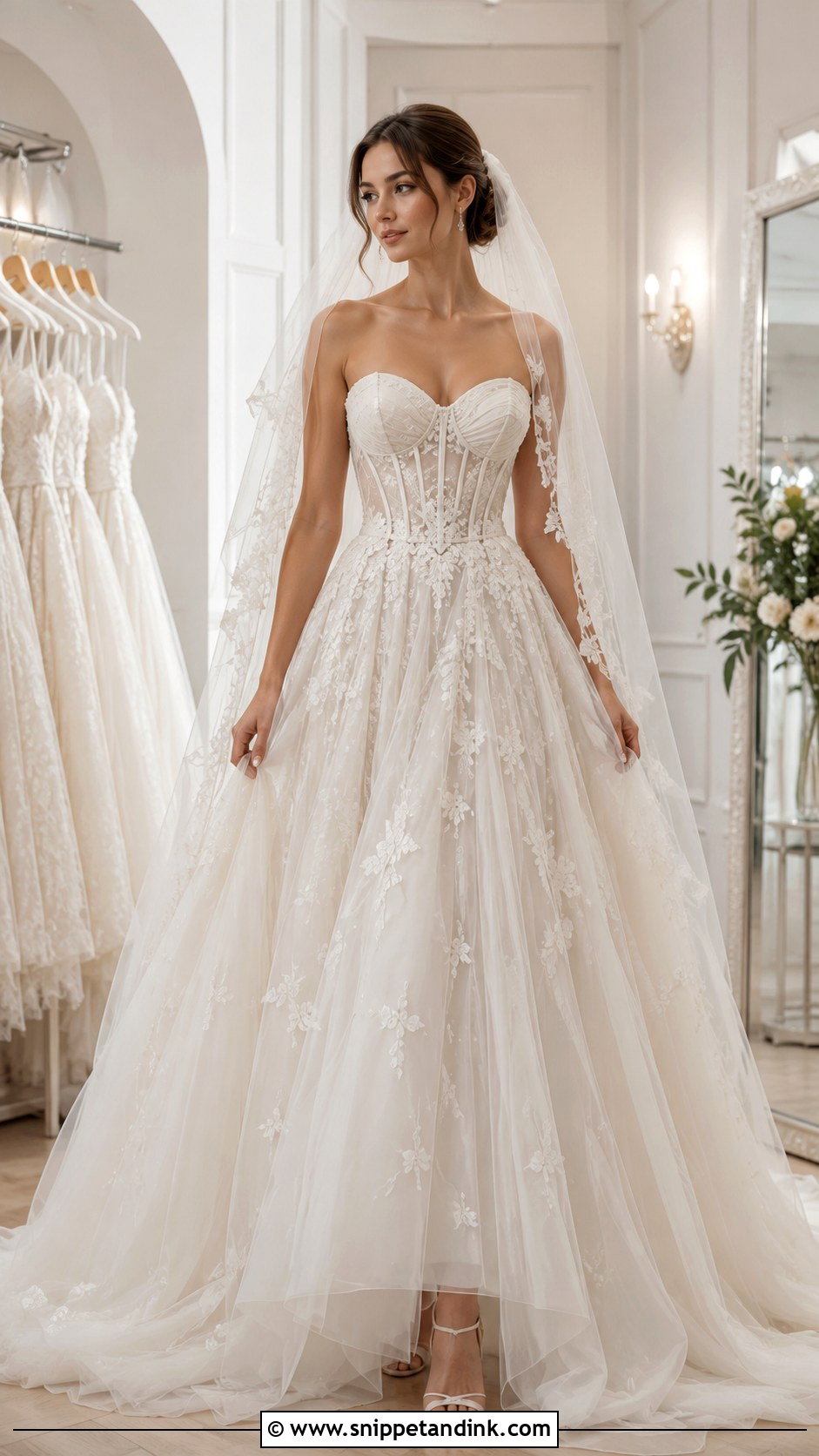
A corset gives structure: it defines the waist and supports the bust, and the textured surface keeps it from looking rigid. Look for corsets covered in appliqué, ruched tulle, pearls, embroidery or floral organza, paired with anything from sleek crepe to a full tulle or jacquard skirt. If you dread stiffness, ask for spiral steel or soft boning and sheer panels, and sit down in it at every fitting. A long veil and simple earrings finish it.
Why Alterations Cost More When the Dress Has Raised Detail
A plain crepe hem is quick for a seamstress. Shortening a skirt edged with lace appliqué means unpicking each motif, cutting the tulle, and hand-stitching the motifs back so they finish the new edge. Beaded seams have to be cleared of beads before they can be taken in, then rebeaded. Pleated tulle can’t simply be taken in at the side without breaking the pleat line.
In practice, that means two things. Budget more for alterations on a textured gown than on a plain one, and leave more time. I like the first fitting to happen about two to three months before the wedding when the dress has appliqué or heavy beading, so there’s room for a second and third session without rushing the handwork. Ask the shop for any spare motifs, pearls or sequins from the hem, because a good seamstress can use them to repair a pulled thread later.
Steaming, Packing and Storing a Gown With Raised Surfaces
Never put an iron directly on 3D flowers, embossing, pleats or feathers. Steam from the inside of the dress, holding the steamer a hand’s width away, and let the fabric hang to dry before anyone touches it. Crinkle satin should barely be steamed at all.
- For travel, lay the gown in a long garment bag with tissue folded between the layers and around any florals, then carry it on rather than checking it.
- On the morning, hang it from the internal loops, not the straps, so beading doesn’t stretch the shoulders.
- After the wedding, have it professionally cleaned soon; sugar and sweat stains darken with time and are harder to lift from embroidery.
- Store it boxed with acid-free tissue rather than hanging, so heavy beading doesn’t drag on the bodice for years.
Seeing Texture Move Before You Commit
Texture changes the whole personality of a gown. A 3D floral feels dreamy, jacquard looks structured, ruching flatters, and pearl beading reads classic. The right one fits your venue, your comfort and the way you move. Ask to see each dress walking, sitting and in daylight, not just on a hanger under shop lights, and you’ll know quickly which surface belongs to you.
You'll Like These Ideas:











Leave a Reply