
More brides are walking into fittings asking for color, and I understand why: the right shade can feel more like you than any white ever did. Soft blush, champagne, powder blue, sage, lavender, black, red and metallics are all on the rails now. Color is only the first decision, though. The veil, jewelry, shoes, bouquet, venue and season decide whether a colored gown reads bridal or like an evening dress, and that’s the part I spend most of a fitting on. Below are the colors I see brides choose most, each styled as a full bridal look with the fabric and fit notes I’d give in the fitting room.
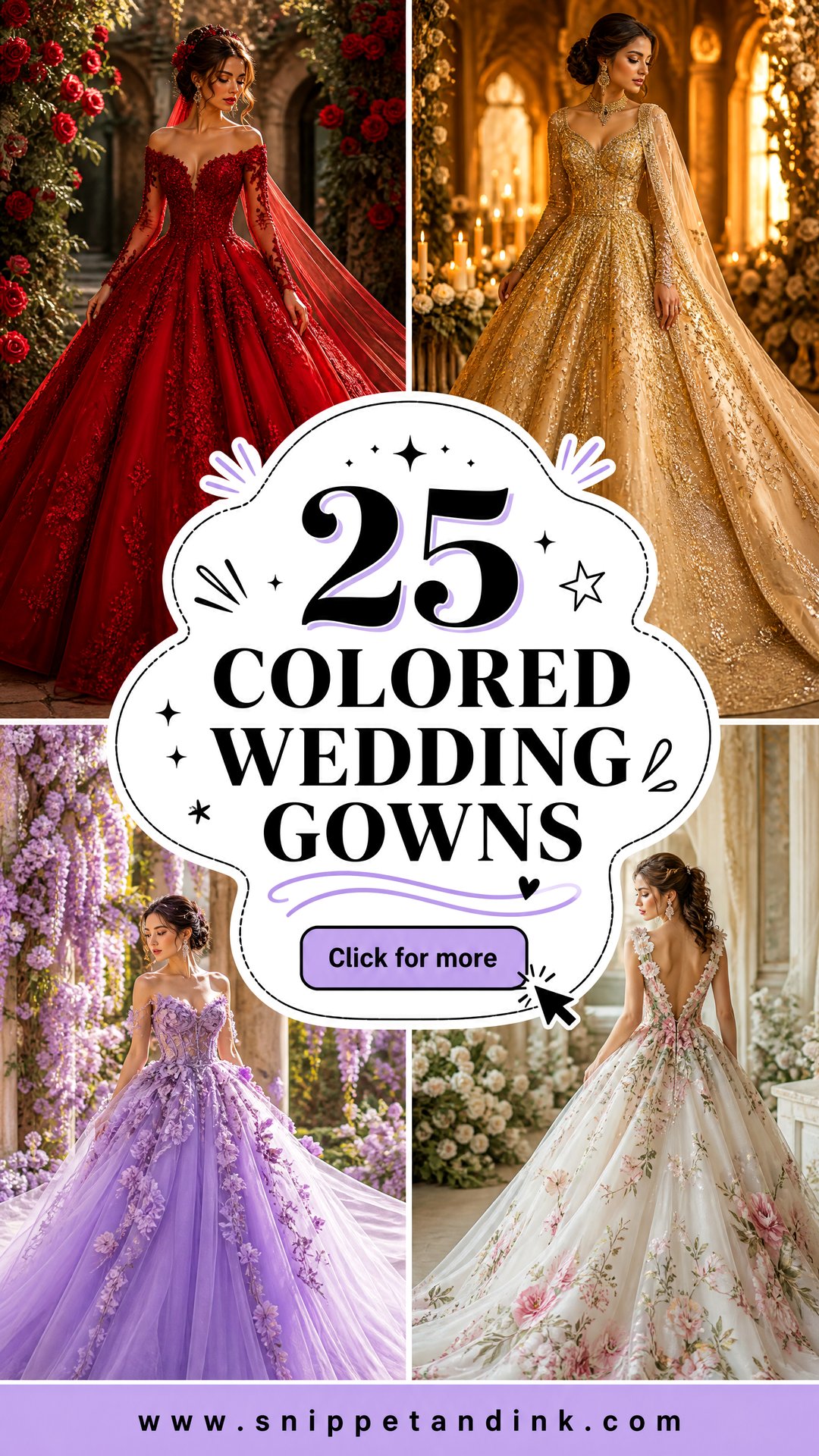
Testing a Color Against Your Skin Before You Fall for the Dress
A colored gown has to suit your face before it suits your venue, and this is where most brides go wrong: they choose from a photo of the color on someone else. At a fitting I start with undertone.
- Cool undertones, where the veins at your wrist look blue and silver jewelry suits you, usually wear blue-based blush, dusty blue, lavender, silver, navy and blue-reds well.
- Warm undertones, where the veins look greener and gold suits you, usually suit champagne, peach, coral, gold, sage and orange-reds.
- Neutral and olive undertones can move across both, though very pale yellows and flat grays can still look dull.
Then the practical test. Take the gown or a fabric swatch to a window, hold it just under your chin with no makeup on, and look in a mirror. If your skin looks brighter and your eyes clearer, it works. If you look tired or flushed, it doesn’t, however much you love the color on the hanger.
Where the color sits matters as much as which color it is. If you love a shade that doesn’t flatter your face, choose a gown with an ivory bodice and the color in the skirt, the lining or an ombre hem.
1. Blush Pink Wedding Gown
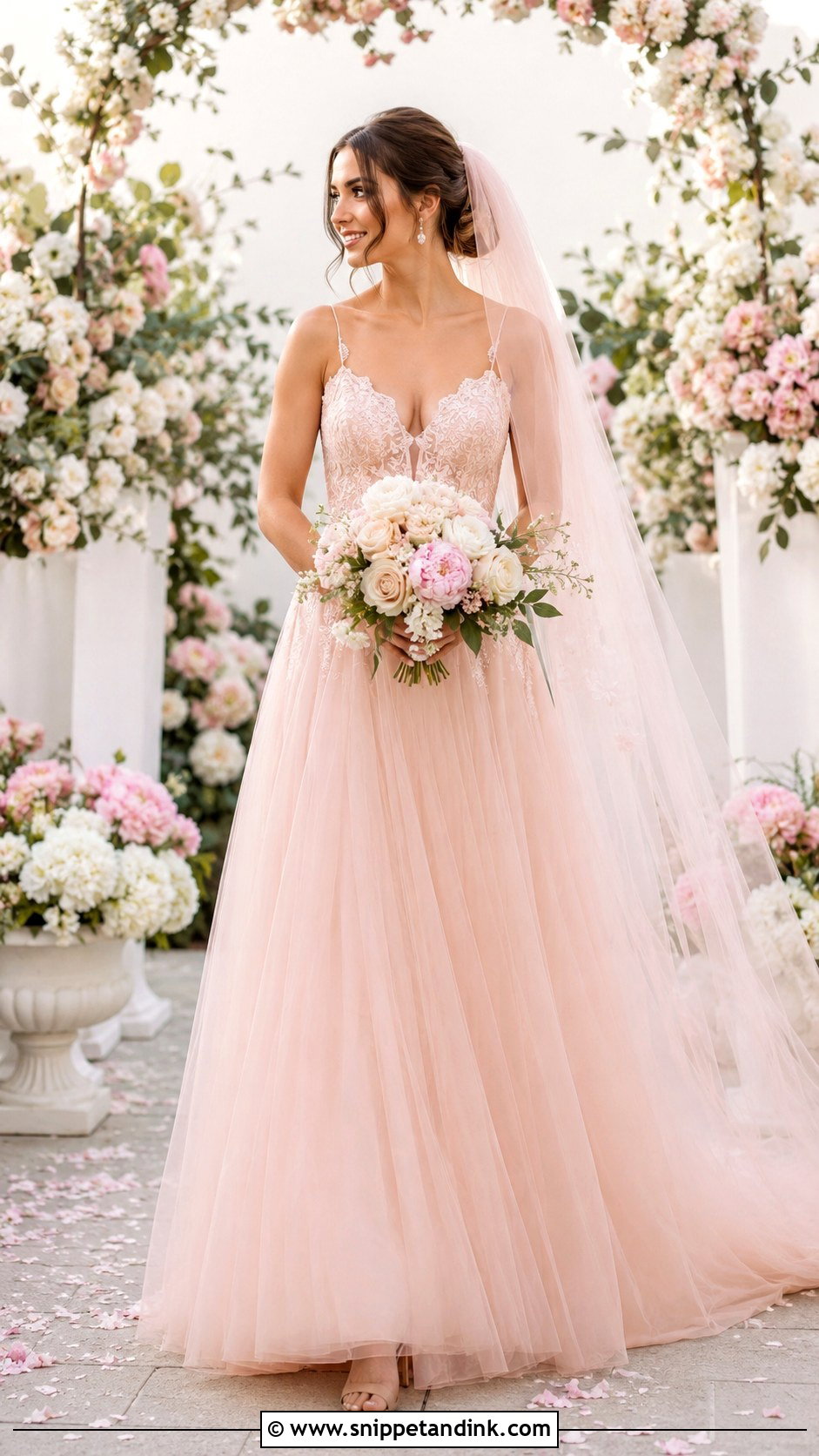
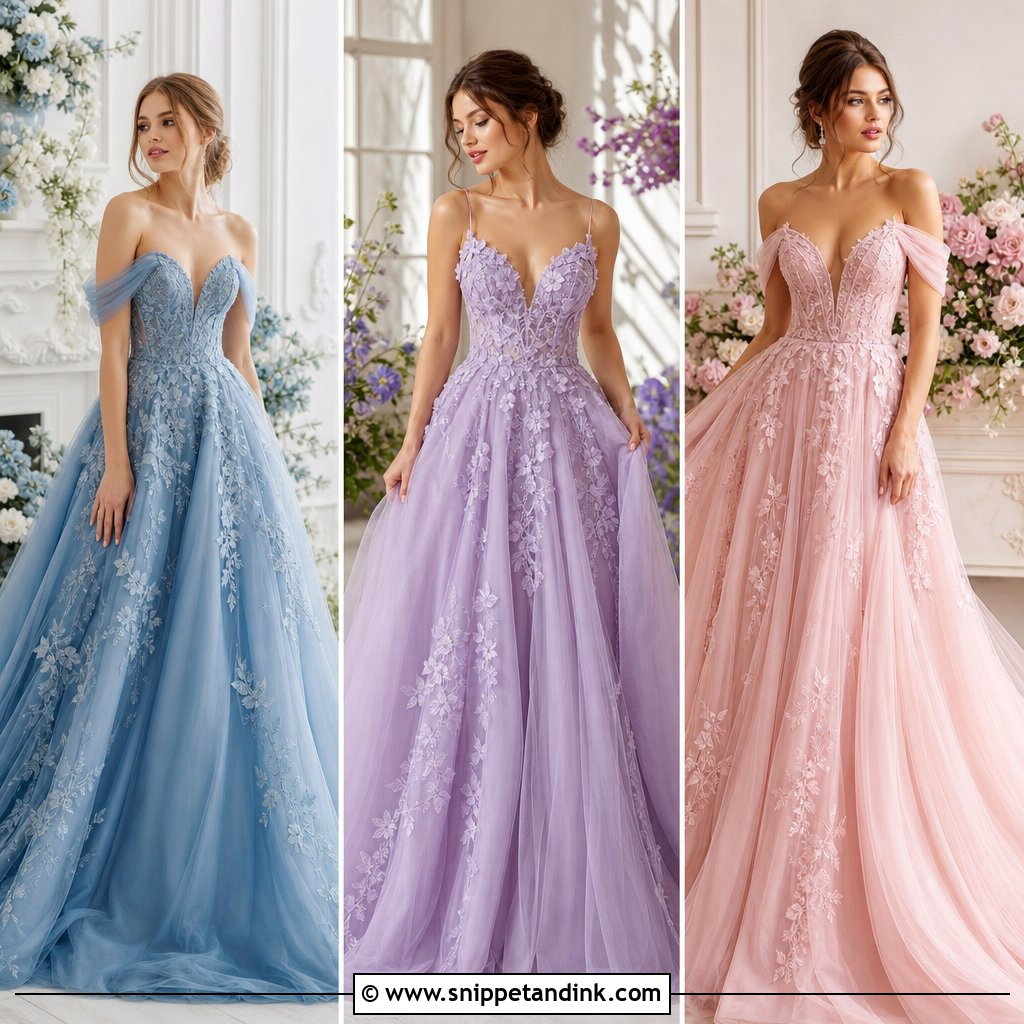
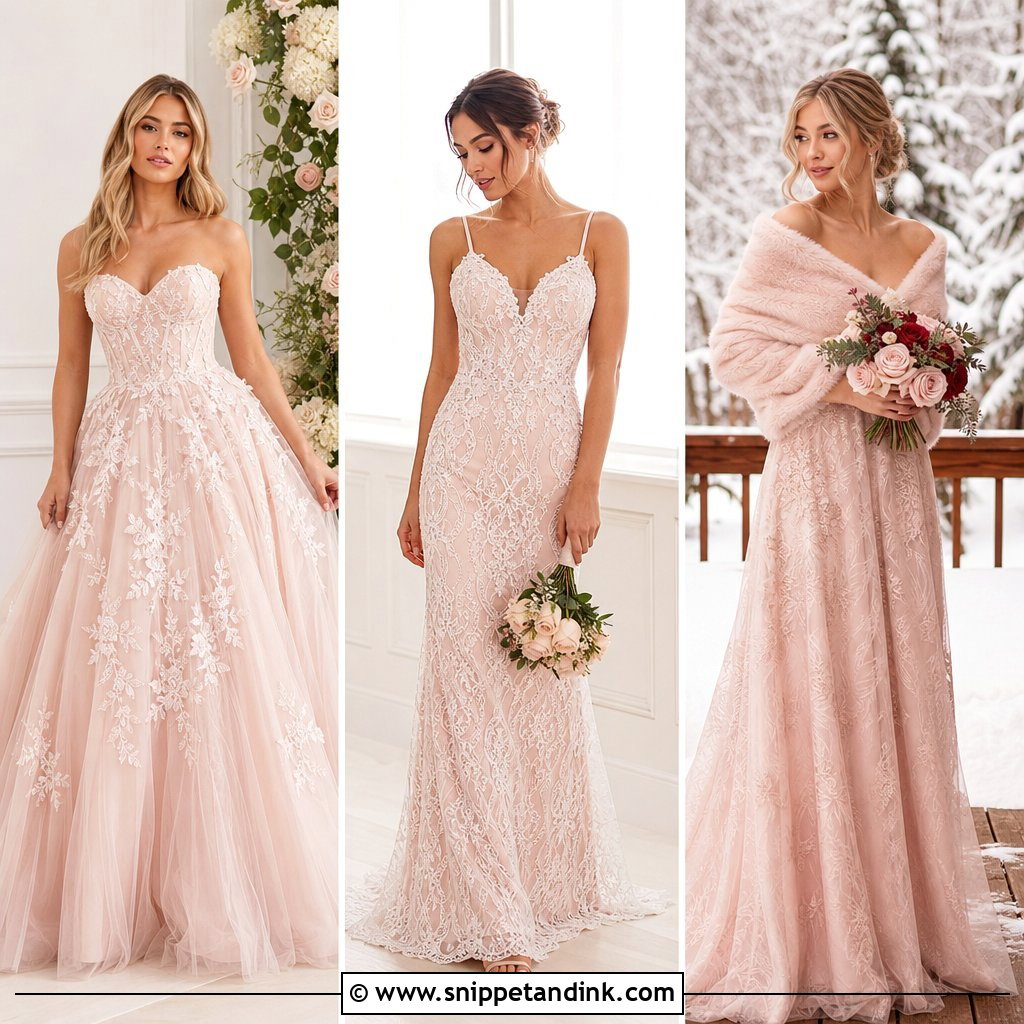
Blush is the gentlest step away from white, and the one I suggest to brides who want color they can still call bridal. It’s most flattering in airy layers of tulle, chiffon or organza, where the pink diffuses rather than sitting flat. Hold it to your face in daylight before deciding, since cool, pale skin can look washed out against a pink that leans peach. Pearl drops, nude or blush heels and a veil with a pale pink edge keep the palette soft, and cream roses with pink ranunculus stop it tipping into sugary. A slim satin belt adds waist definition if the A-line feels shapeless.
2. Champagne Wedding Gown
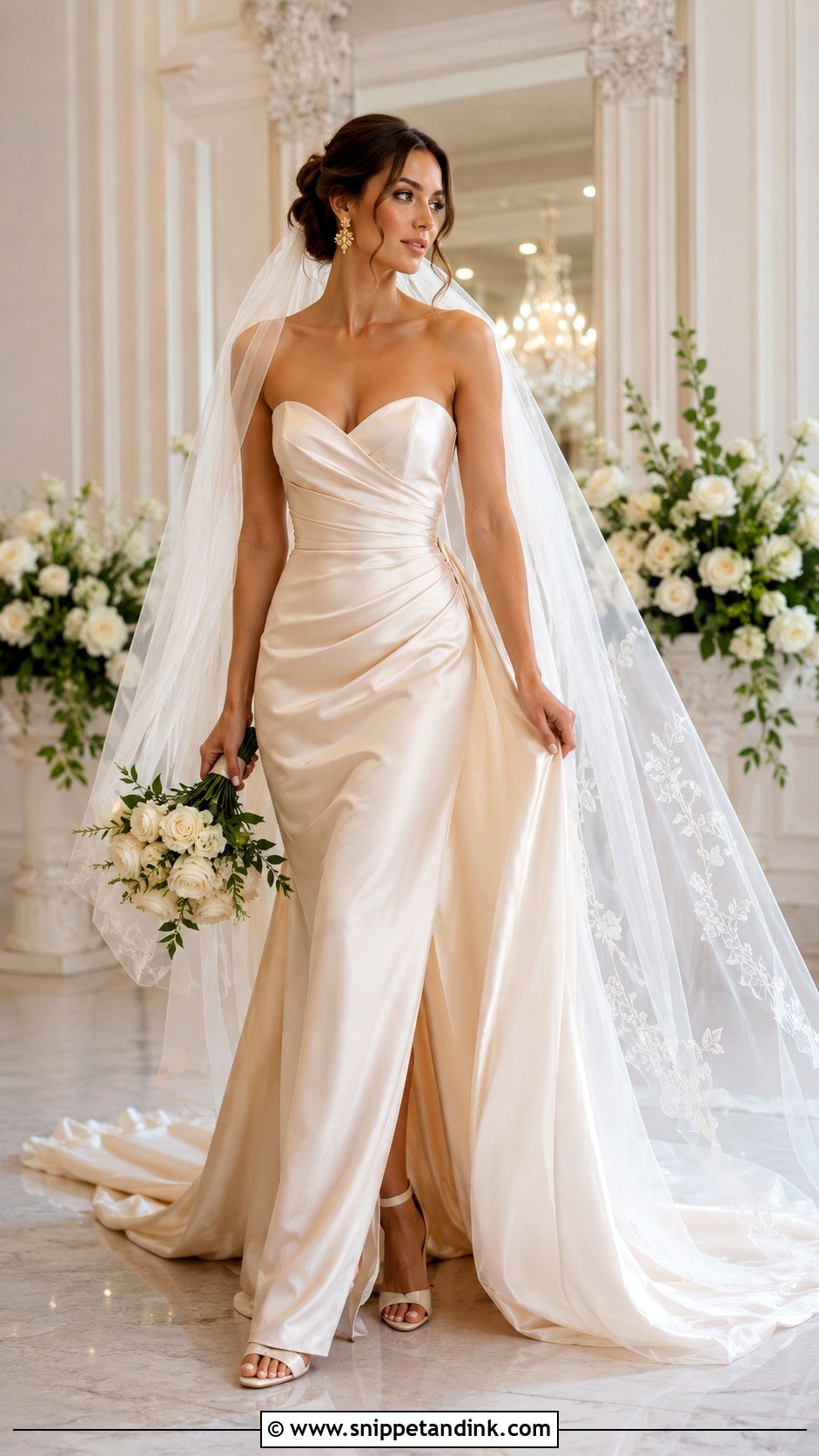
Champagne is the color brides choose when they want warmth without anyone asking why the dress isn’t white. In satin, silk, beaded tulle or crepe it catches light softly. The shade varies more than any other between designers, from nearly ivory to nearly gold, so compare swatches side by side. Gold earrings, ivory heels and a low bun suit it, and an ivory or champagne cathedral veil adds drama. White orchids, cream roses or dried grasses match a modern, organic mood. From across a hotel ballroom it reads classic; up close, the warmth shows.
3. Dusty Blue Wedding Gown
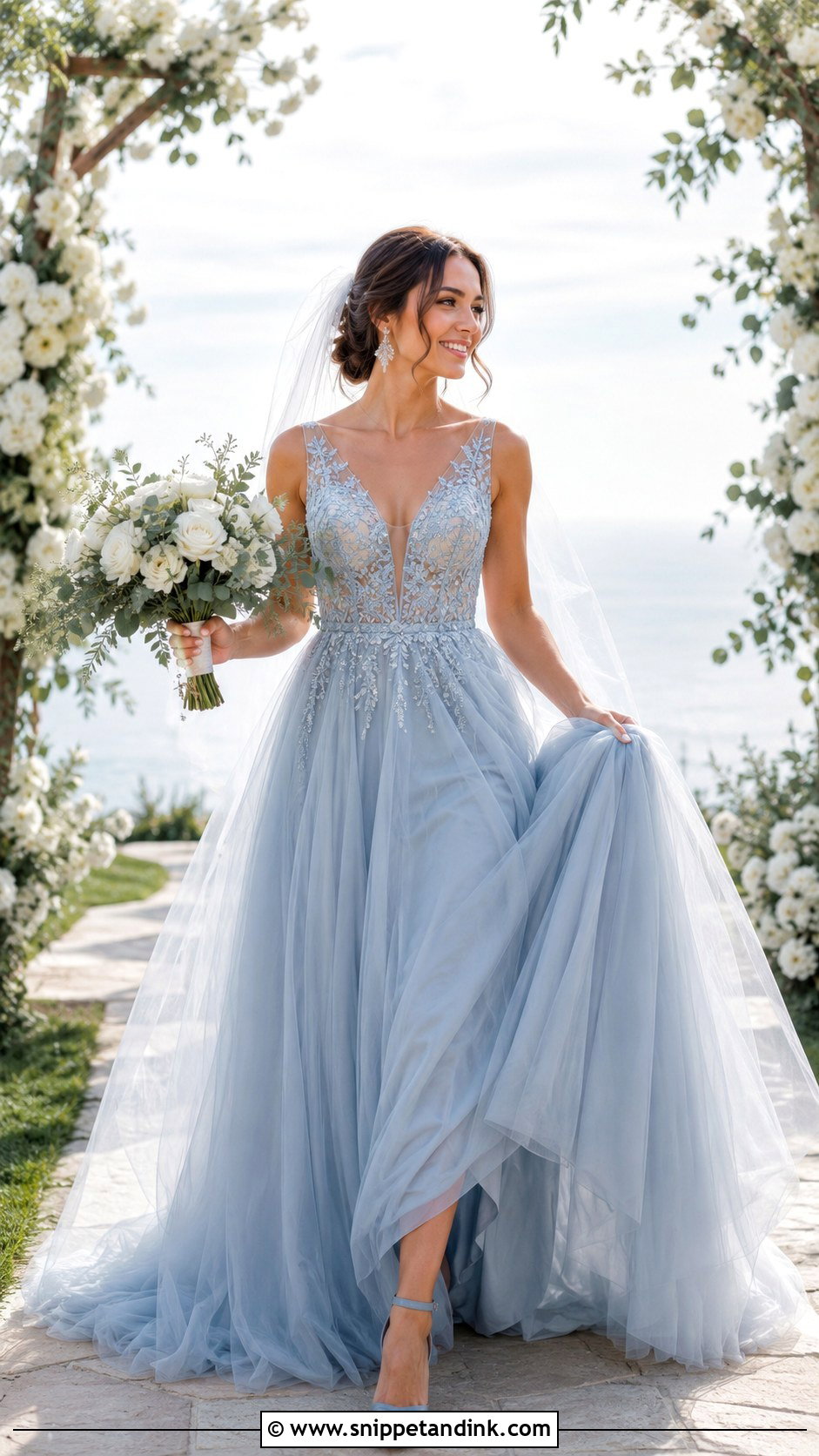
Dusty blue is calm and quietly unexpected, with enough gray in it that it doesn’t jump out against a white tablecloth or a pale sky. A tulle ball gown, chiffon A-line or ivory lace over a blue lining all work, the last being the gentlest way in. Silver earrings, blue-gray heels and a sheer veil keep the palette cool, and white peonies, blue delphinium and eucalyptus suit it. In natural light it has enough color to register without overwhelming the bride. Under warm indoor bulbs it can drift gray, so plan portraits outdoors or near windows.
4. Lavender Wedding Gown
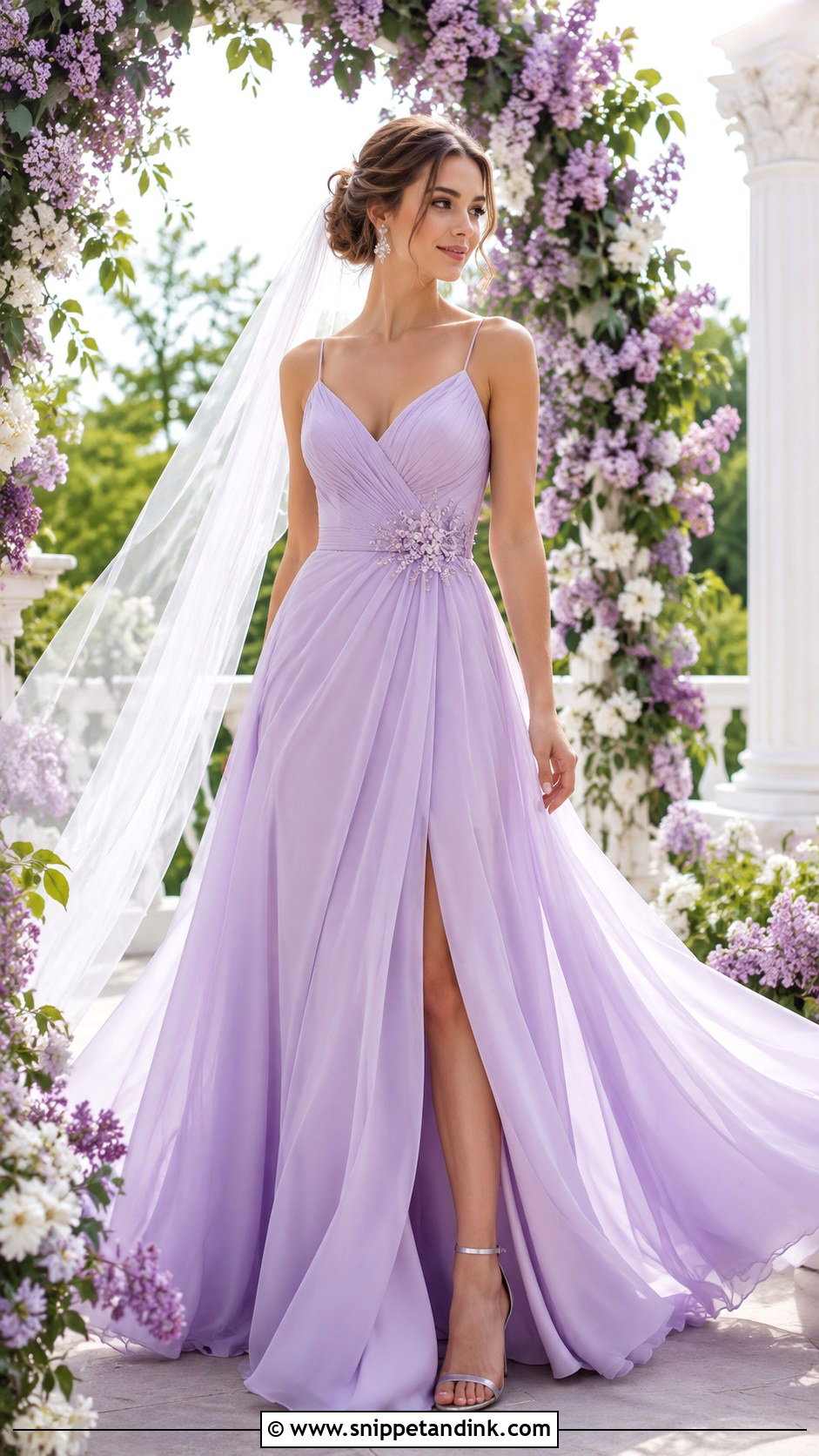
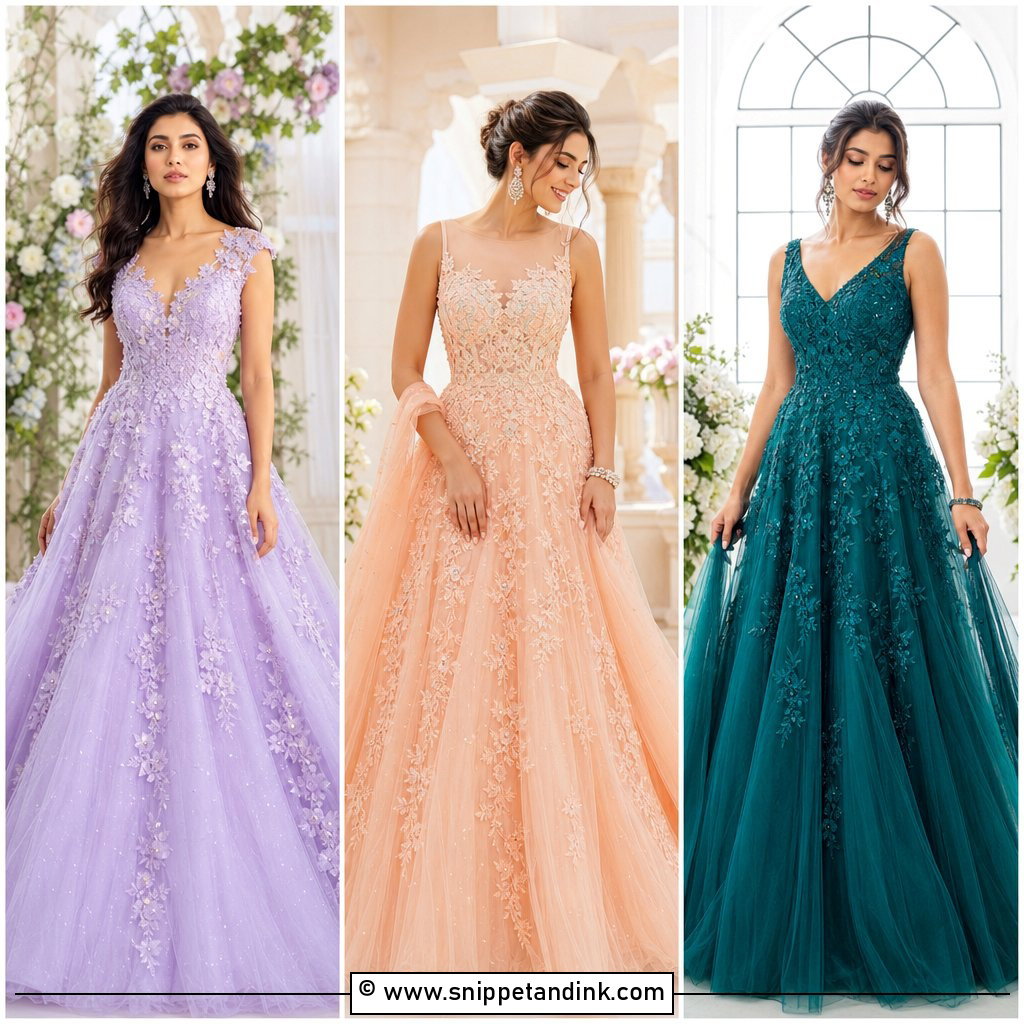
Lavender gives a fairytale mood, and the risk is it turning childish. Airy fabrics like tulle, chiffon and organza keep the color light, whereas heavy satin in lavender can look like a prom dress. Silver sandals, crystal earrings and a sheer veil that doesn’t mute the shade suit it, with white roses, lilac, lavender stems and soft greenery. For a more modern version I’d pick a clean lavender sheath with almost no jewelry. Spring weddings, gardens and outdoor portraits suit it. One caution: pale purples shift bluer in shade, so look at the fabric outside before ordering.
5. Sage Green Wedding Gown
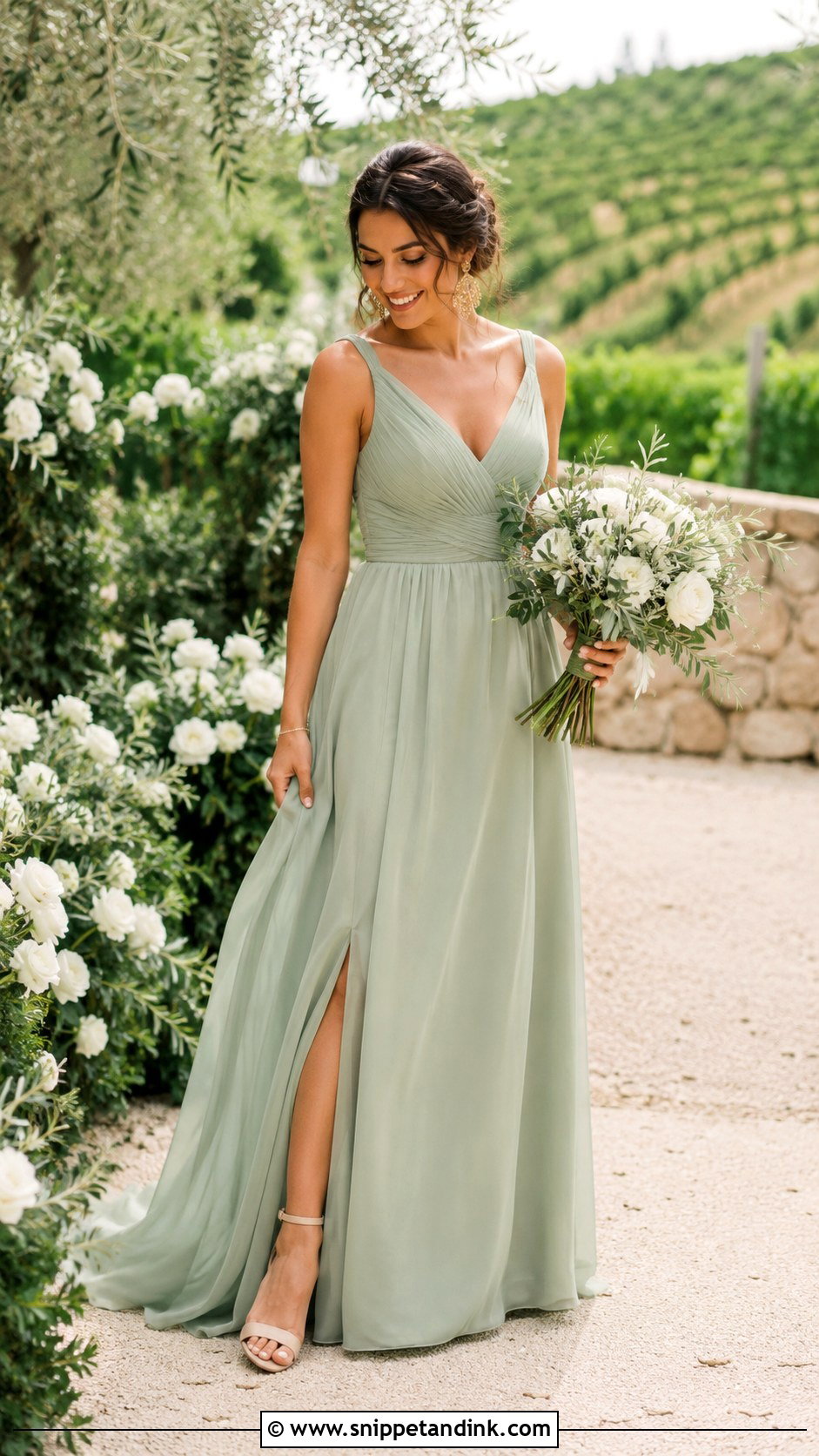
Sage looks best in matte fabrics. Matte satin, chiffon, crepe and fine lace keep the green earthy, while high-shine satin pushes it toward mint. Ivory block heels, gold jewelry and a loose updo with a few face-framing pieces suit it. White blooms, olive branches and pale foliage tie it to the setting at vineyards, gardens and rustic-modern venues. It’s one of the few colors that works across seasons, fresh in spring and grounded in fall. Check it next to your skin, though, because sage can make sallow undertones look tired.
6. Emerald Green Wedding Gown
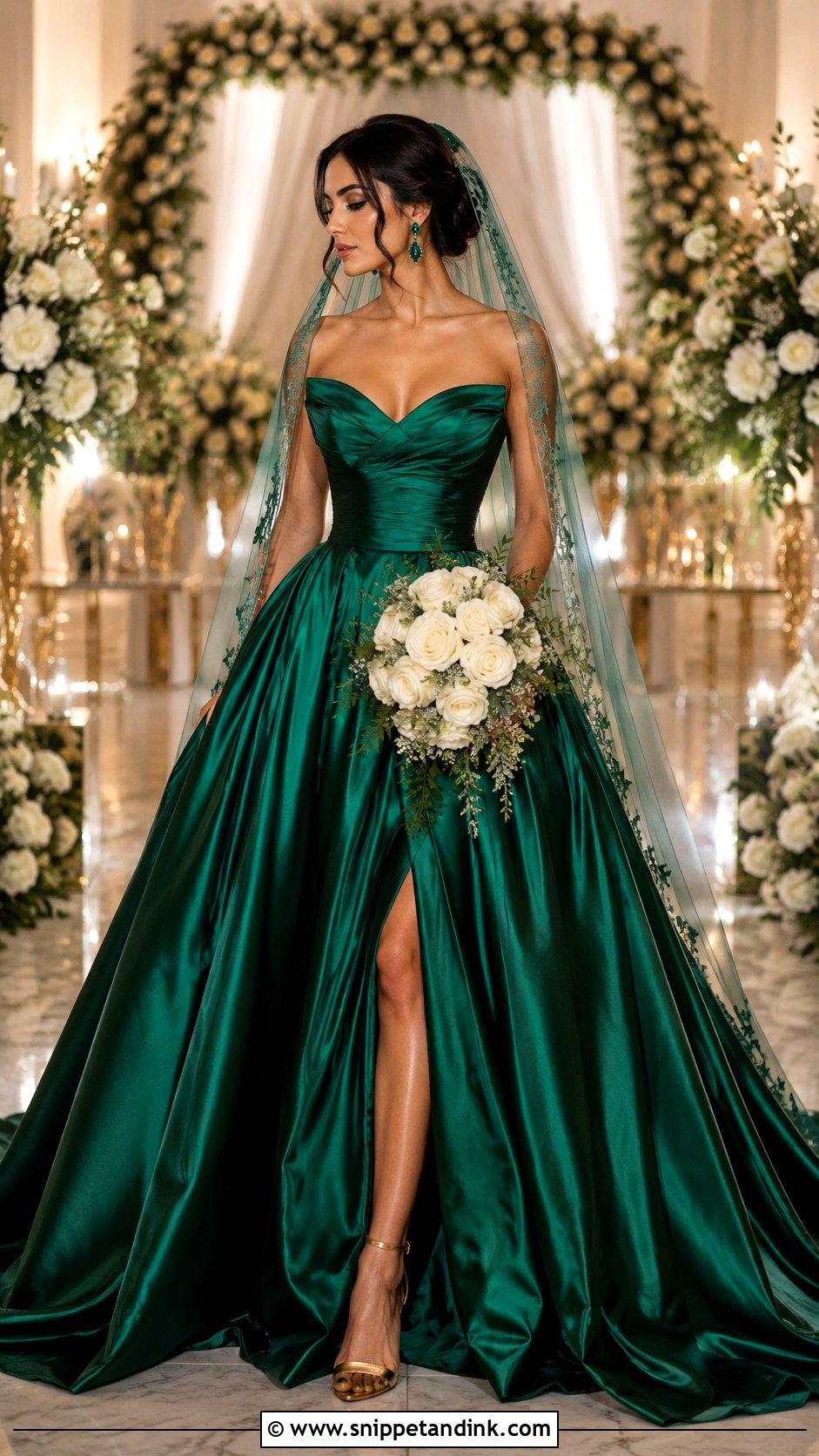
Emerald is a statement and should be treated as one. The fabric follows the season: velvet for winter, satin for a formal ballroom, structured mikado for a modern ceremony with clean lines. Gold heels, emerald earrings and a sleek low bun make it luxurious, and a bouquet of white roses and deep greenery with a touch of gold ribbon balances its depth. To keep it unmistakably bridal rather than red carpet, add a long veil or a sculptural train. Under evening lighting the color turns deep and dramatic, which suits it.
7. Black Wedding Gown
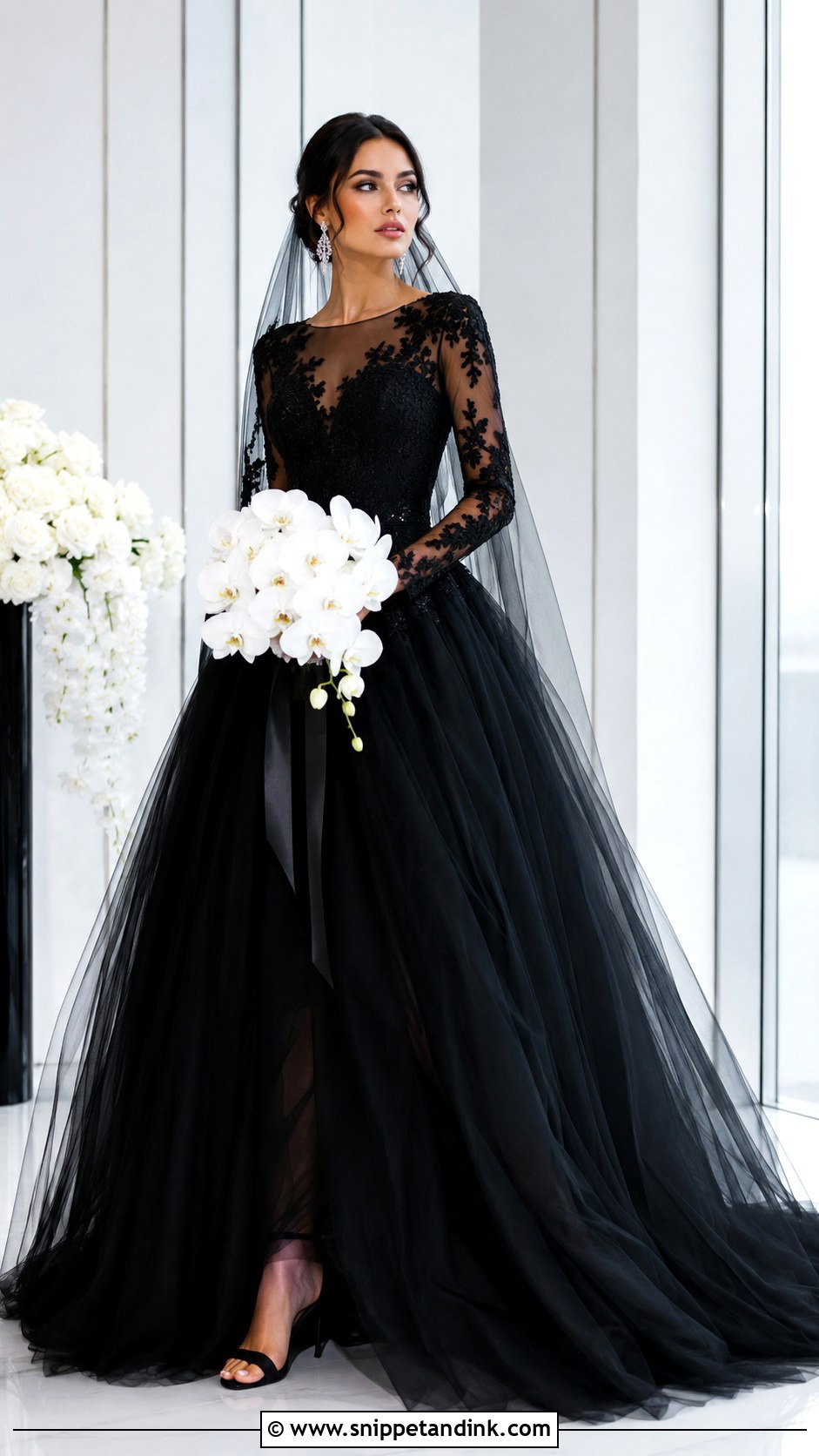
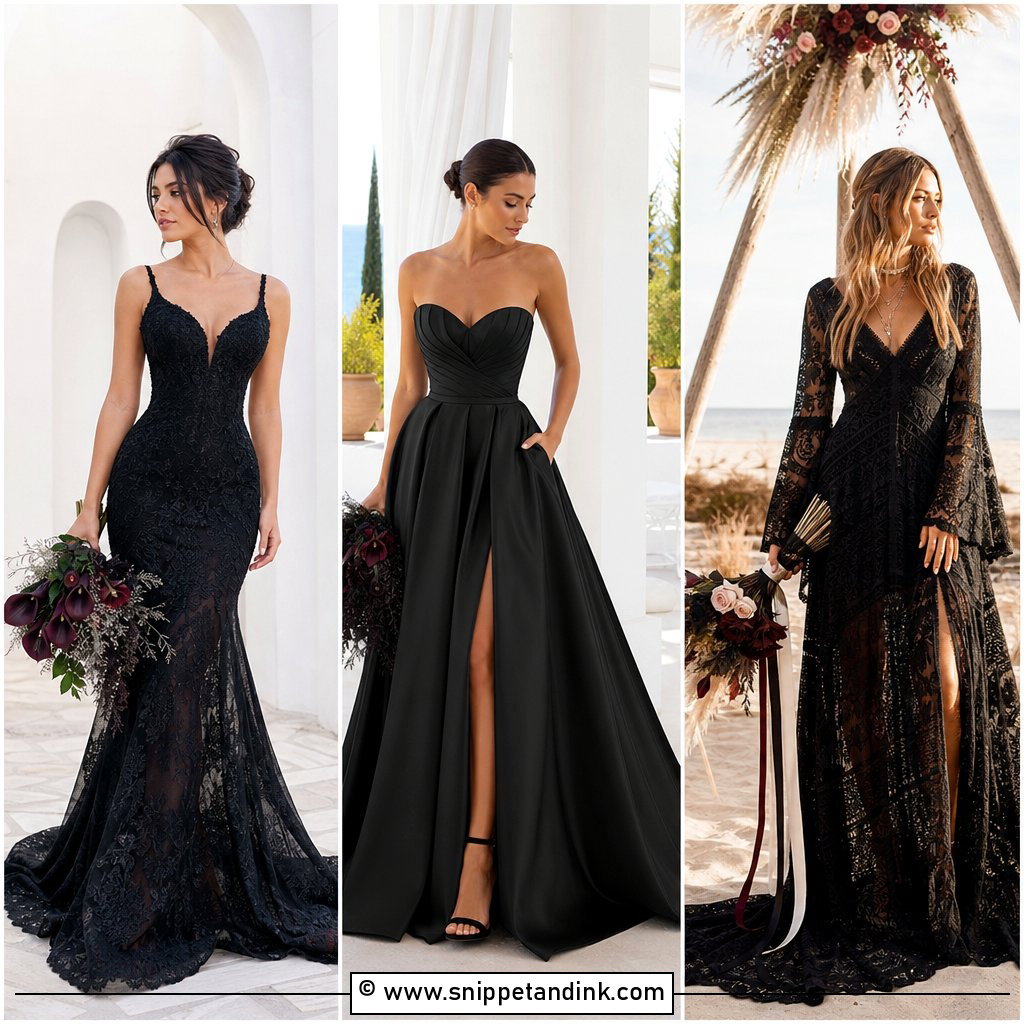
Black needs the most deliberate styling of any color here to read as bridal rather than as a guest. I lean on volume and length, a black lace ball gown, a sleek satin column or a soft tulle skirt, plus a veil, because a veil signals bride more clearly than anything else. Black or ivory veils both work, depending on how much contrast you want. Crystal earrings and black satin heels go with white orchids, cream roses or deep burgundy florals for contrast. City weddings, evening ceremonies and gallery venues suit it. Consider the family too: in some cultures black is closely tied to mourning, and that conversation is easier before the gown is ordered.
8. Red Wedding Gown
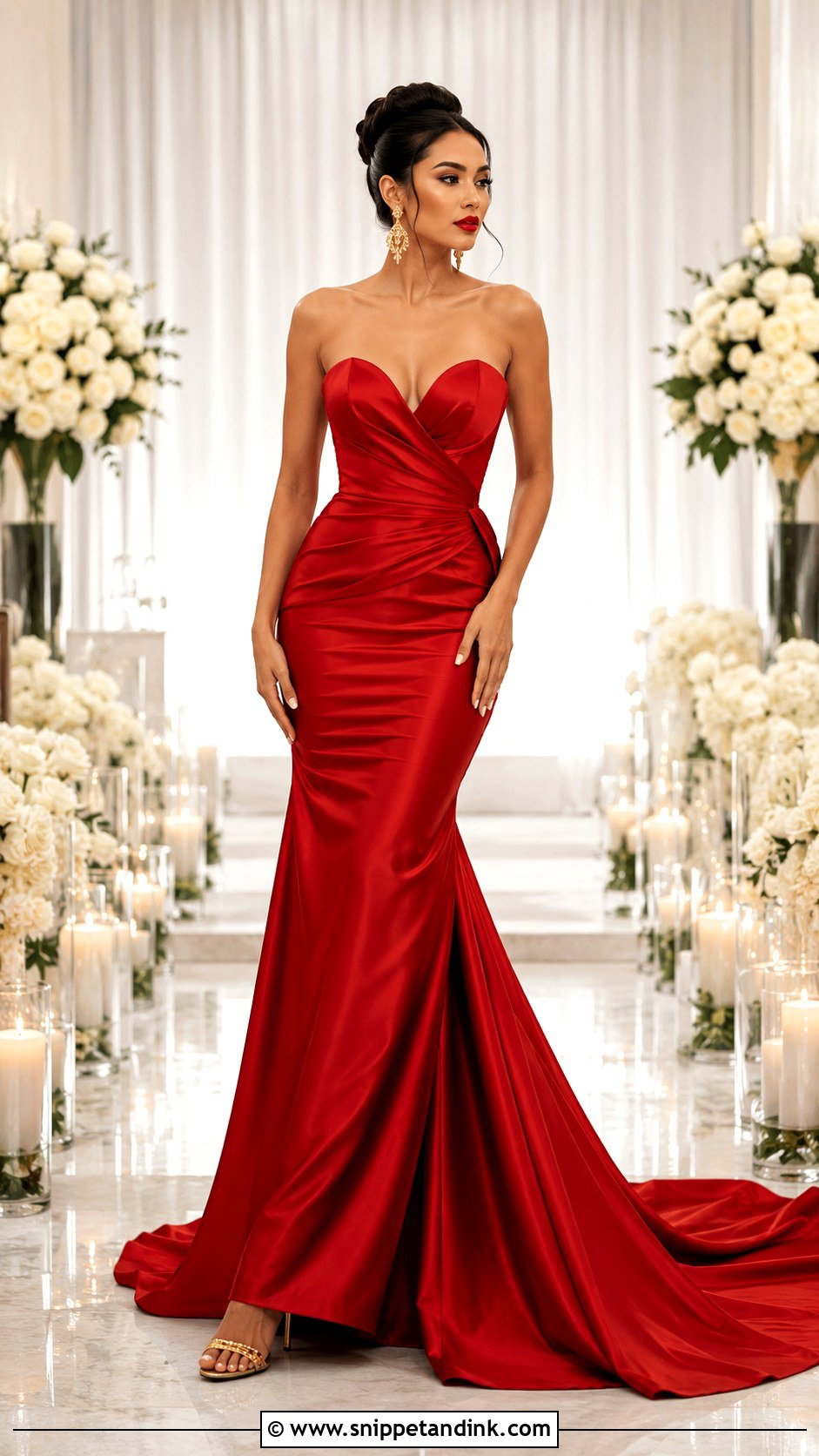
Red is the traditional bridal color in several cultures, Chinese, Indian and Vietnamese among them, so for some brides this is the classic choice rather than the bold one. A red satin mermaid, full tulle ball gown or tonal embroidered design all work. Gold heels, statement earrings and a smooth updo keep it balanced. White roses or soft pink flowers soften it, while all-red florals create a monochrome look. Choose the exact shade carefully: blue-reds flatter cool skin, orange-reds flatter warm skin. Formal indoor venues and cultural celebrations suit it.
9. Burgundy Wedding Gown
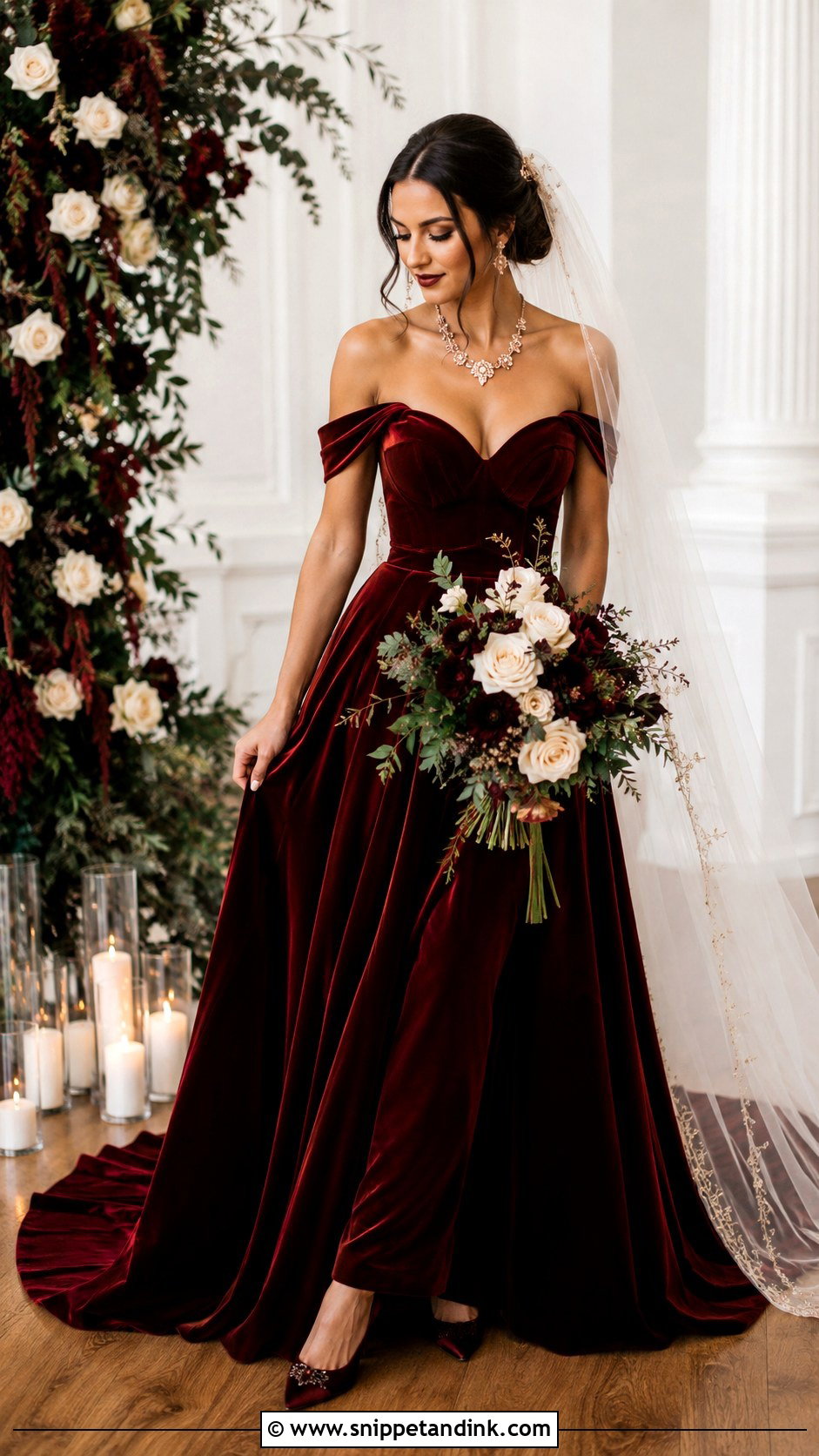
A burgundy wedding gown brings the richness of red without the brightness, and it’s kinder to more skin tones because it sits darker and softer. Velvet, satin, lace and layered tulle all deepen it. Gold or rose gold jewelry, burgundy heels and a veil in ivory or wine-toned tulle suit it, with cream roses, dark greenery and berry-colored flowers. Vineyards, moody ballrooms and candlelit receptions are where it looks its best. Burgundy goes almost black in dim light, so pick a fabric with some sheen or beading if most of your photos will be taken indoors at night.
10. Navy Blue Wedding Gown
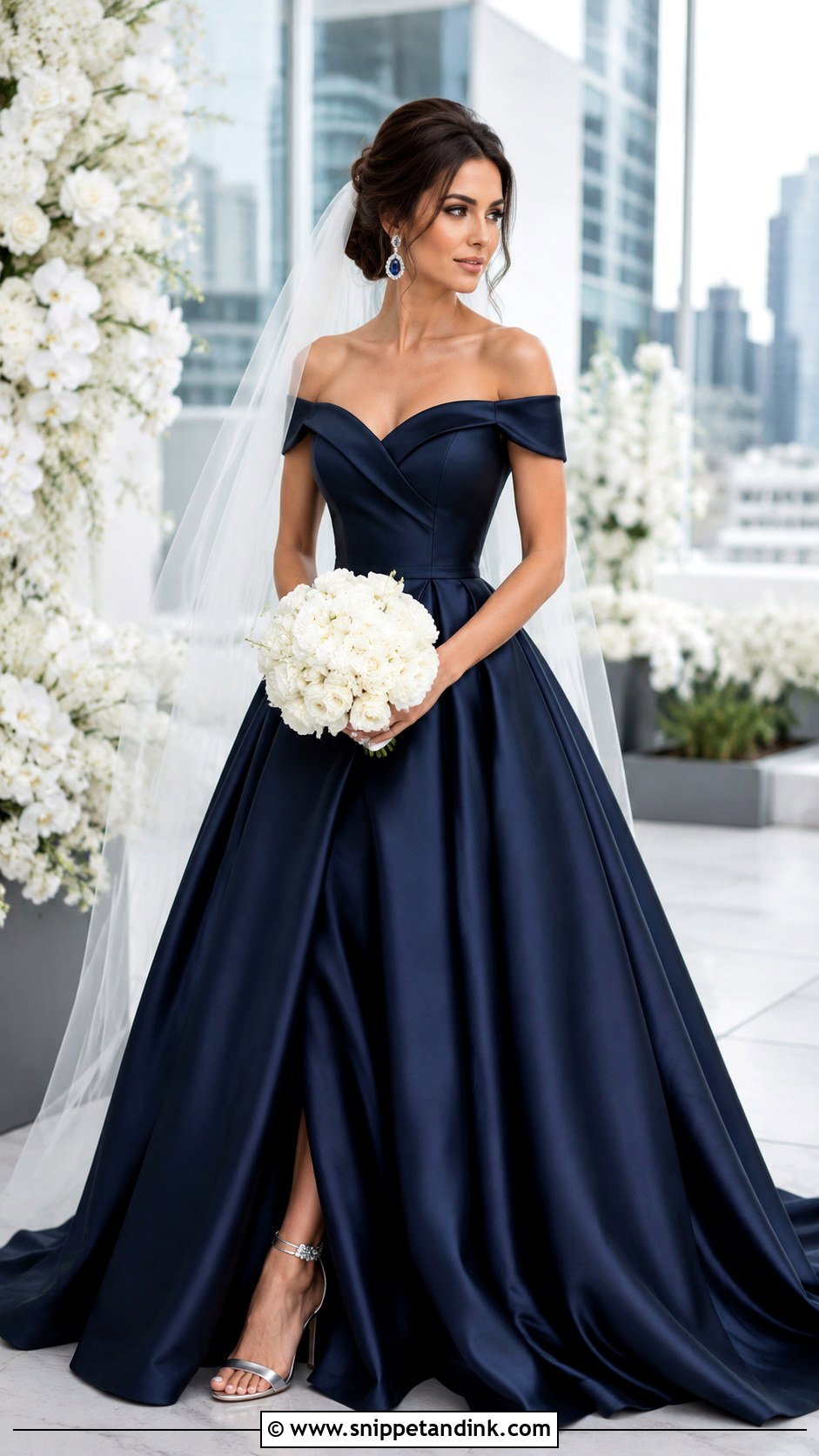
Navy is formal and less expected than black, which makes it a good fit for evening and city weddings. A satin ball gown, off-the-shoulder crepe or long-sleeved lace all hold the color well. I’d keep the veil soft ivory to bring in a bridal note, with silver heels and sapphire earrings, and white flowers with a little blue ribbon keep it crisp. Beside a groom in a black tuxedo it looks striking, although navy and black can blur together in a dim room, so ask your photographer to light the two of you well.
11. Powder Blue Wedding Gown
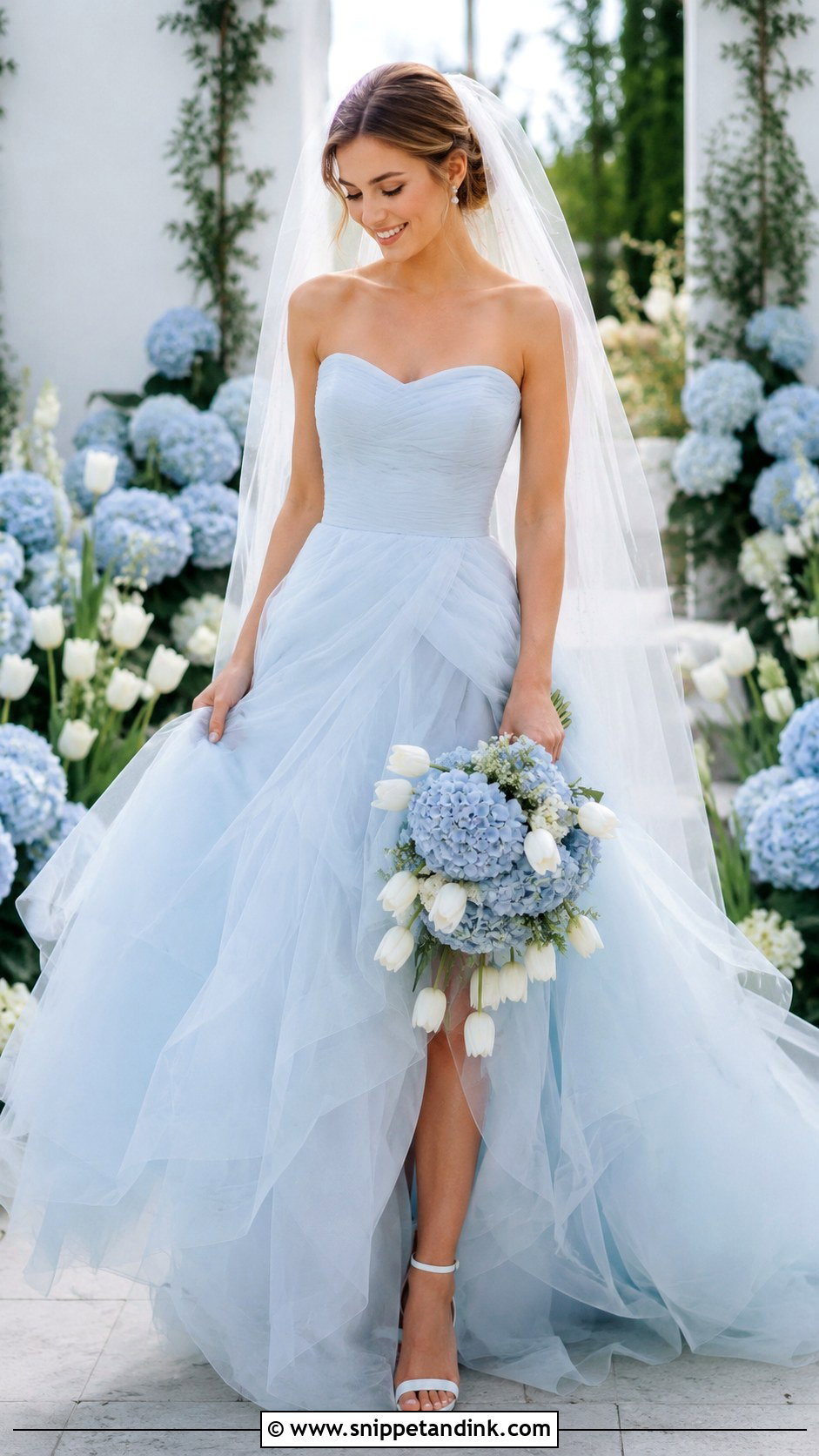
Powder blue is lighter than dusty blue, almost watercolor, and it suits the bride who wants her something blue to be the whole dress. Layered tulle, strapless organza or floral embroidery with blue accents carry it. White heels, pearls and a sheer veil keep it soft, with white tulips, pale blue hydrangeas and greenery in the bouquet. Spring, summer, beach and garden weddings are its home. In bright midday sun, pale blues can bleach out in photos, so it’s worth planning portraits for softer evening light.
12. Gold Wedding Gown
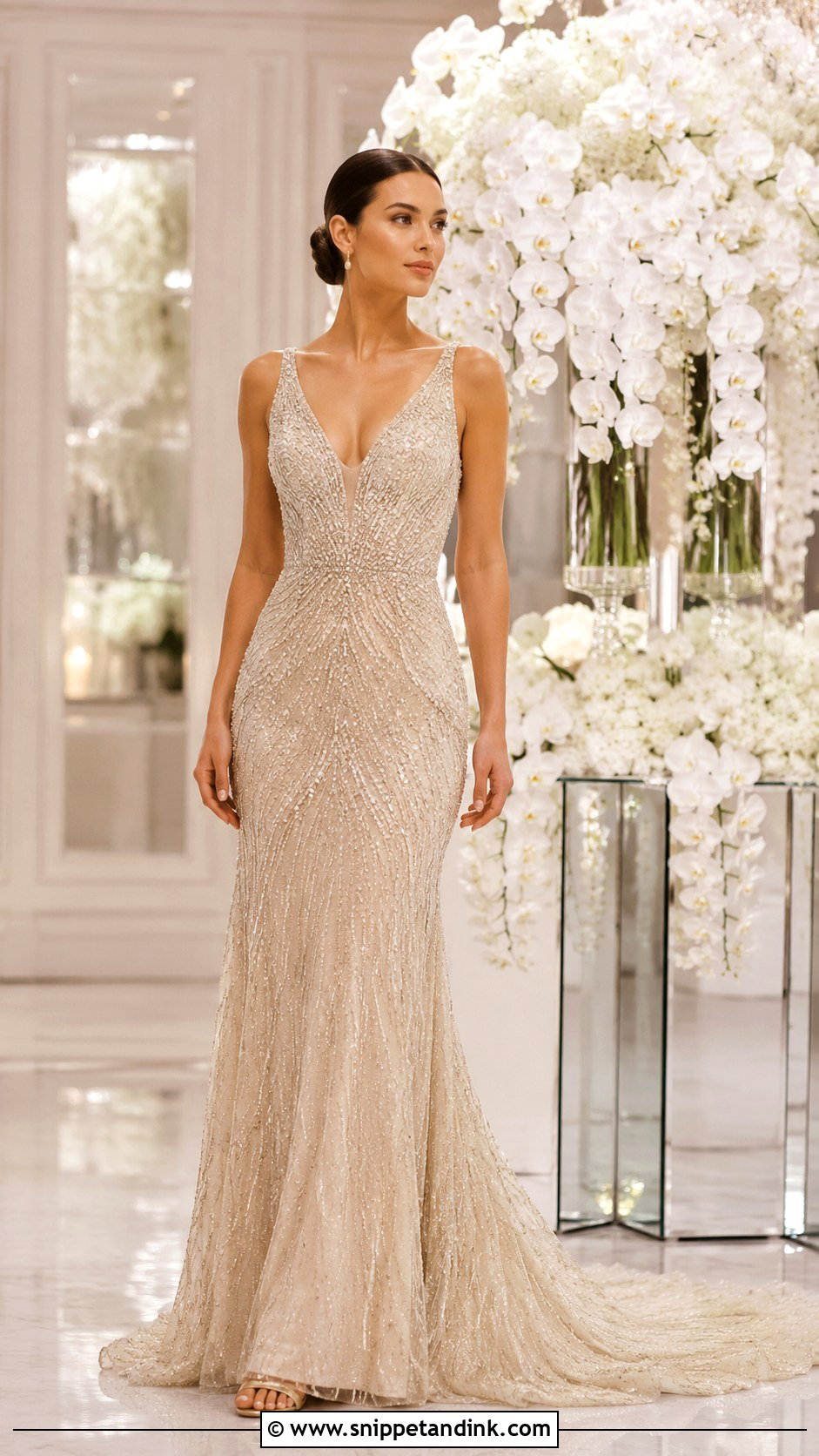
Gold reflects light, which is its whole appeal and its main challenge: in a ballroom it glows, in harsh sun it can glare. Soft gold suits romantic brides; deeper metallic gold suits a dramatic evening. Beaded tulle, satin, sequins or embroidered lace can all work depending on the venue. With that much reflection, keep the rest quiet: gold sandals, small earrings, smooth hair, and white orchids or cream roses. If the bodice is heavily embellished, skip the necklace so the neckline breathes. Beaded gold gowns are heavy, so have your seamstress check that the bustle points can carry the weight.
13. Silver Wedding Gown
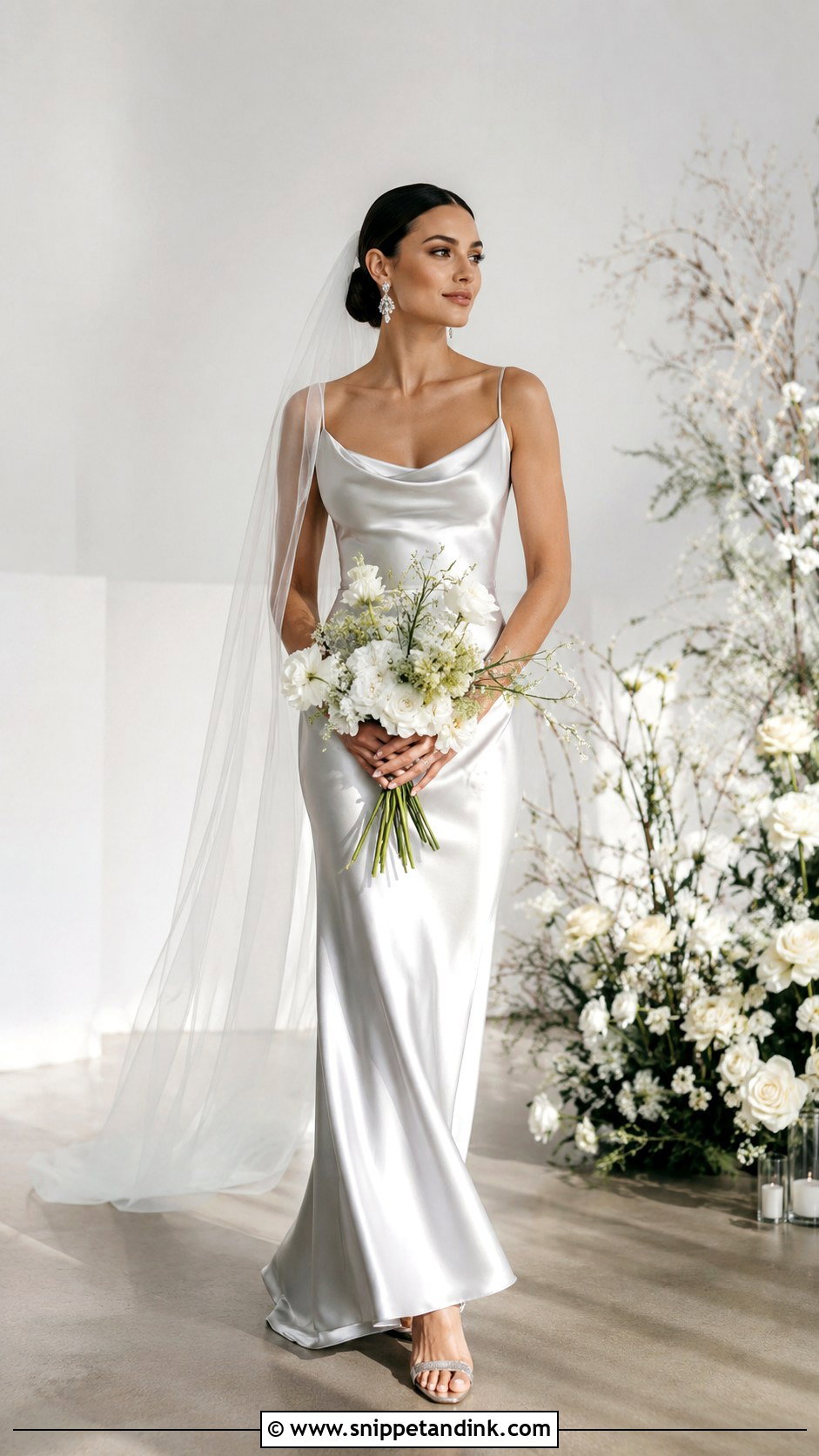
Silver gives brides who love cool tones shimmer without real color. A beaded sheath, metallic satin slip gown or tulle with silver embroidery all carry it. Crystal earrings, silver heels and a simple veil finish it cleanly, while white flowers, dusty miller and pale greenery soften the metal. Winter weddings, evening receptions and contemporary venues suit it best. A metallic satin slip is unforgiving, showing every line underneath and every crease from sitting, so I’d only recommend it to brides comfortable with a body-skimming fit and a steamer close at hand.
14. Rose Gold Wedding Gown
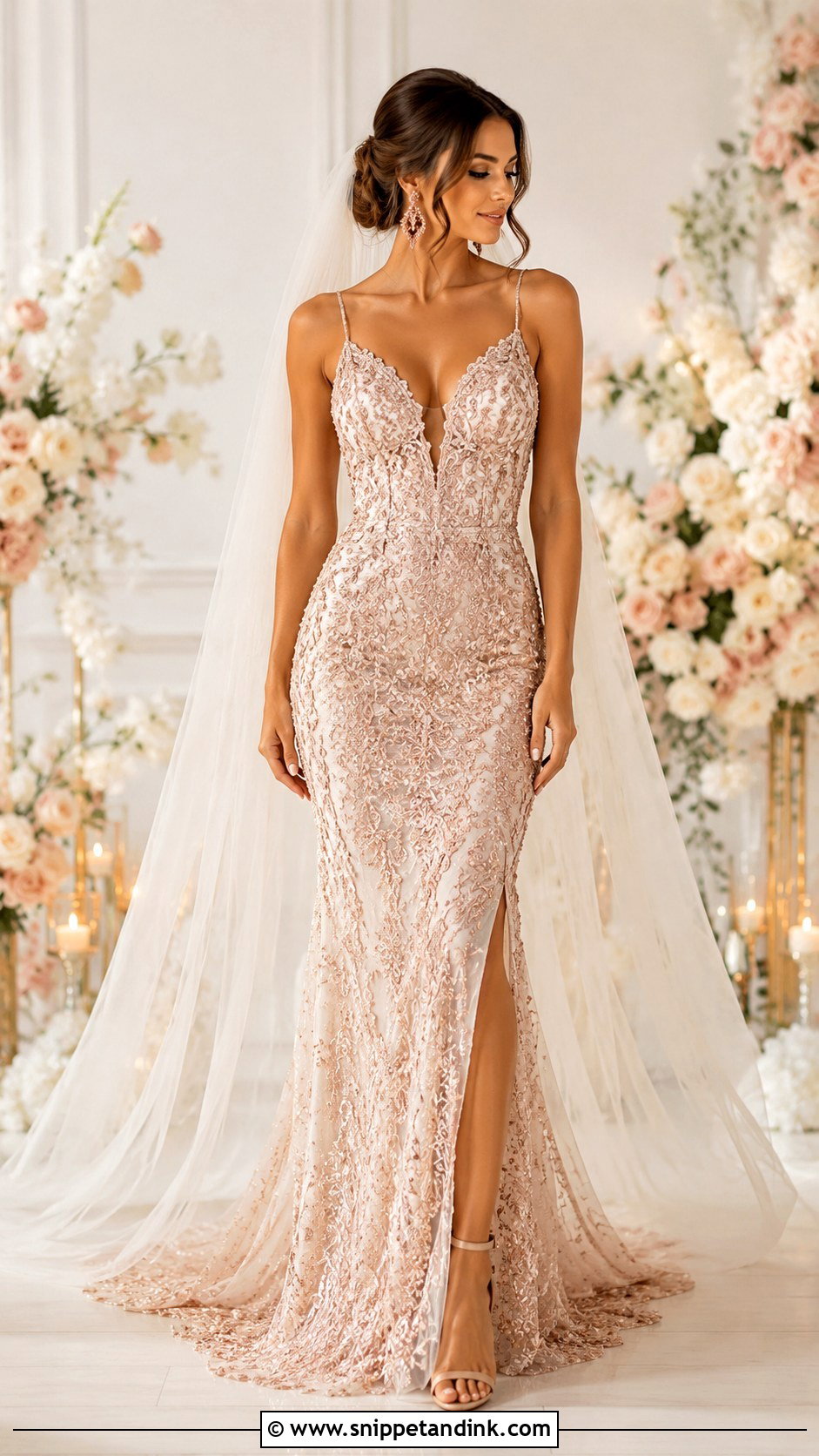
Rose gold sits between yellow gold and blush, which is why it flatters so many skin tones. Sequined gowns, beaded lace or satin with a rose gold undertone all carry it. Nude heels, rose gold earrings and an ivory or pale blush veil keep it soft, with cream roses, pink flowers and delicate greenery. Sunset ceremonies suit it especially, since warm evening light deepens the pink. The gown already glows, so keep the makeup fresh; heavy shimmer on the skin competes with the dress.



15. Mauve Wedding Gown
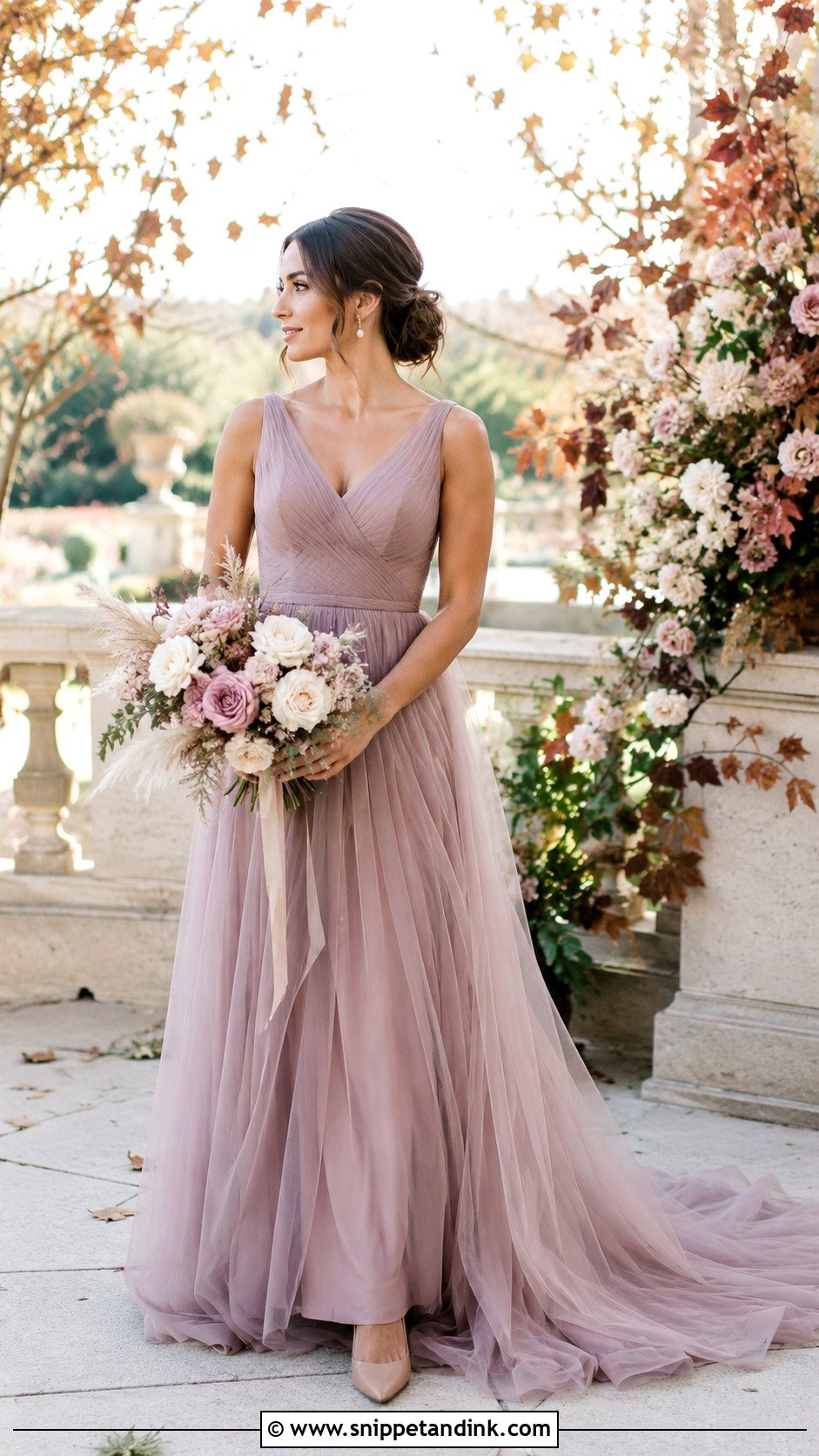
Mauve is the muted meeting point of pink and purple, and it’s the color I suggest to brides who want vintage softness. Chiffon, tulle, lace and matte satin all suit it. Soft nude heels, pearl earrings and a low textured bun keep the mood quiet, with cream roses, dusty pink flowers and soft greenery in the bouquet. Fall weddings, gardens and small indoor ceremonies suit it, and it sits comfortably beside neutral bridesmaid dresses and warm floral palettes. Mauve changes in every light, pinker in one room and grayer in the next, so see it both in daylight and under warm bulbs.
16. Lilac Wedding Gown
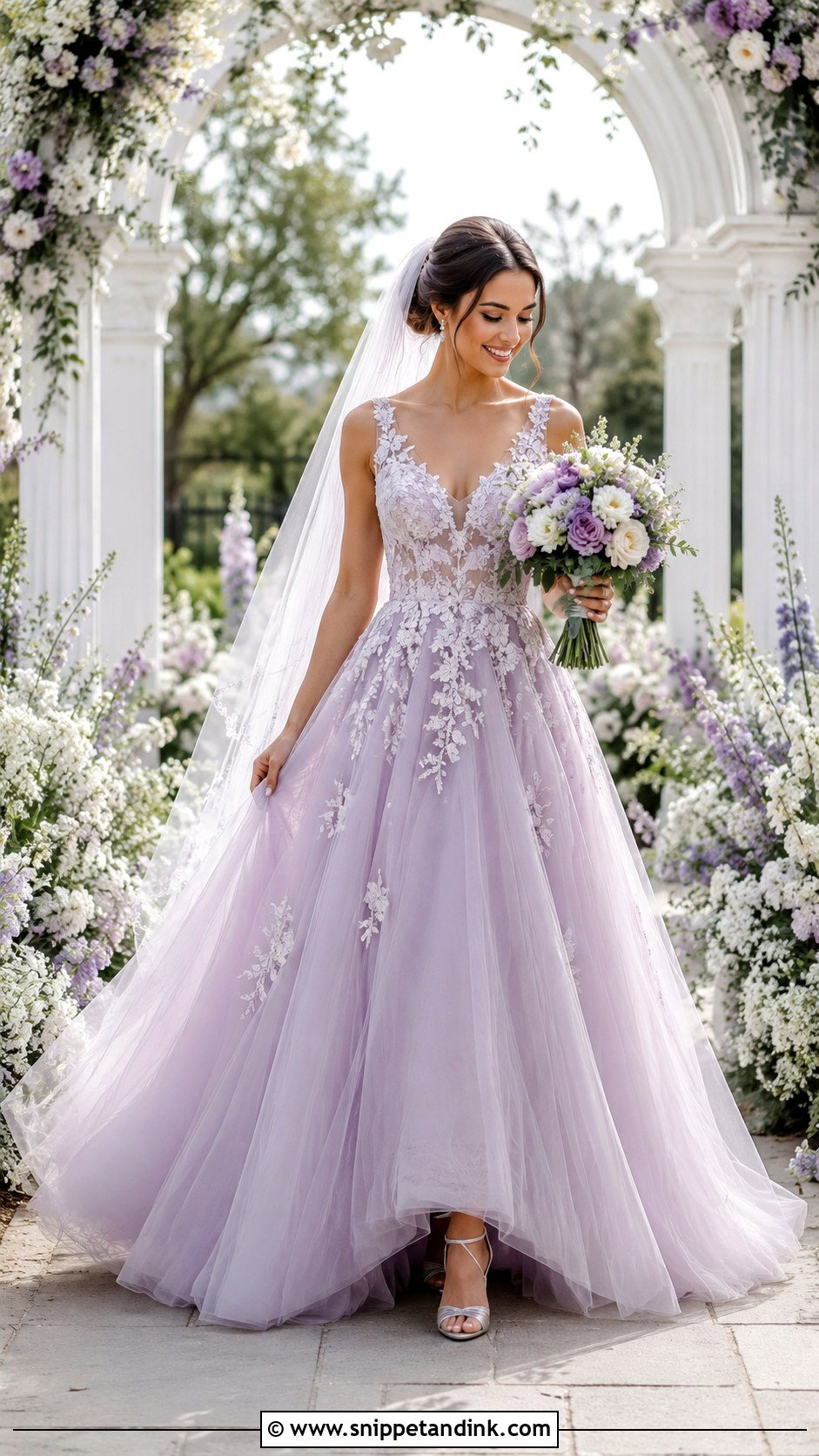
A lilac wedding gown is the lighter, fresher side of purple, and it needs fabric that lets it float. Tulle A-lines, chiffon empire waists and floral embroidered ball gowns all work, while heavy satin flattens the color. Silver shoes, delicate earrings and a sheer veil keep it light, with white flowers, lilac blooms and soft green stems. Spring weddings and garden ceremonies are its natural fit. Pale purples can fade with long exposure to sunlight, so store the gown away from windows in the weeks before the wedding.
17. Teal Wedding Gown
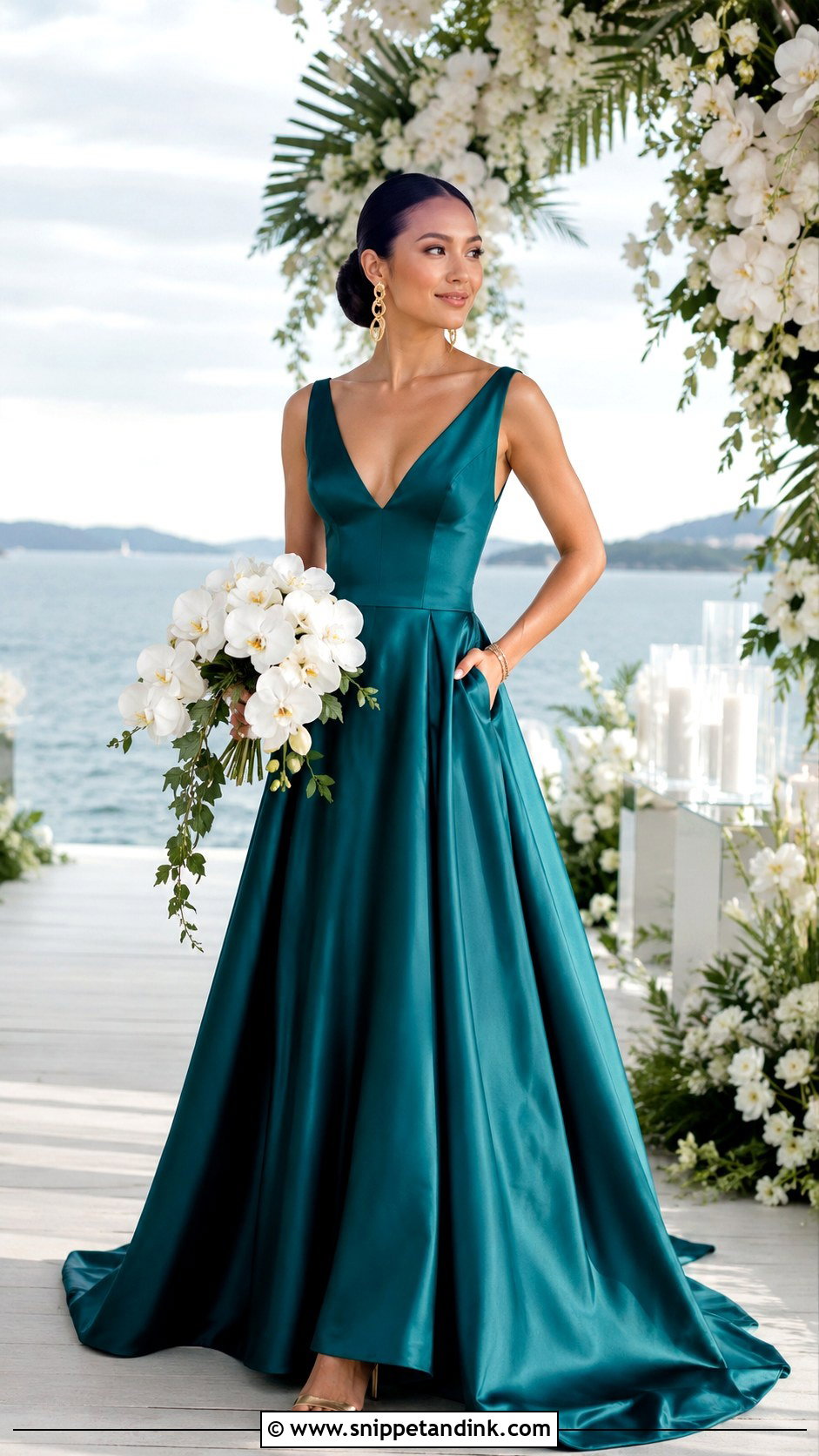
Teal mixes blue and green, so it’s bold without being loud, and it has enough depth to photograph well in most light. A satin A-line, fitted crepe or full tulle skirt all suit it. Gold earrings, metallic sandals and sleek hair warm it up, and white orchids, greenery and small blue accents complement it. Waterfront venues, modern museums and evening weddings suit it. The risk with teal is looking like a formal guest, so I lean on bridal signals: a veil, a train or a bouquet clearly larger than the bridesmaids’.
18. Coral Wedding Gown
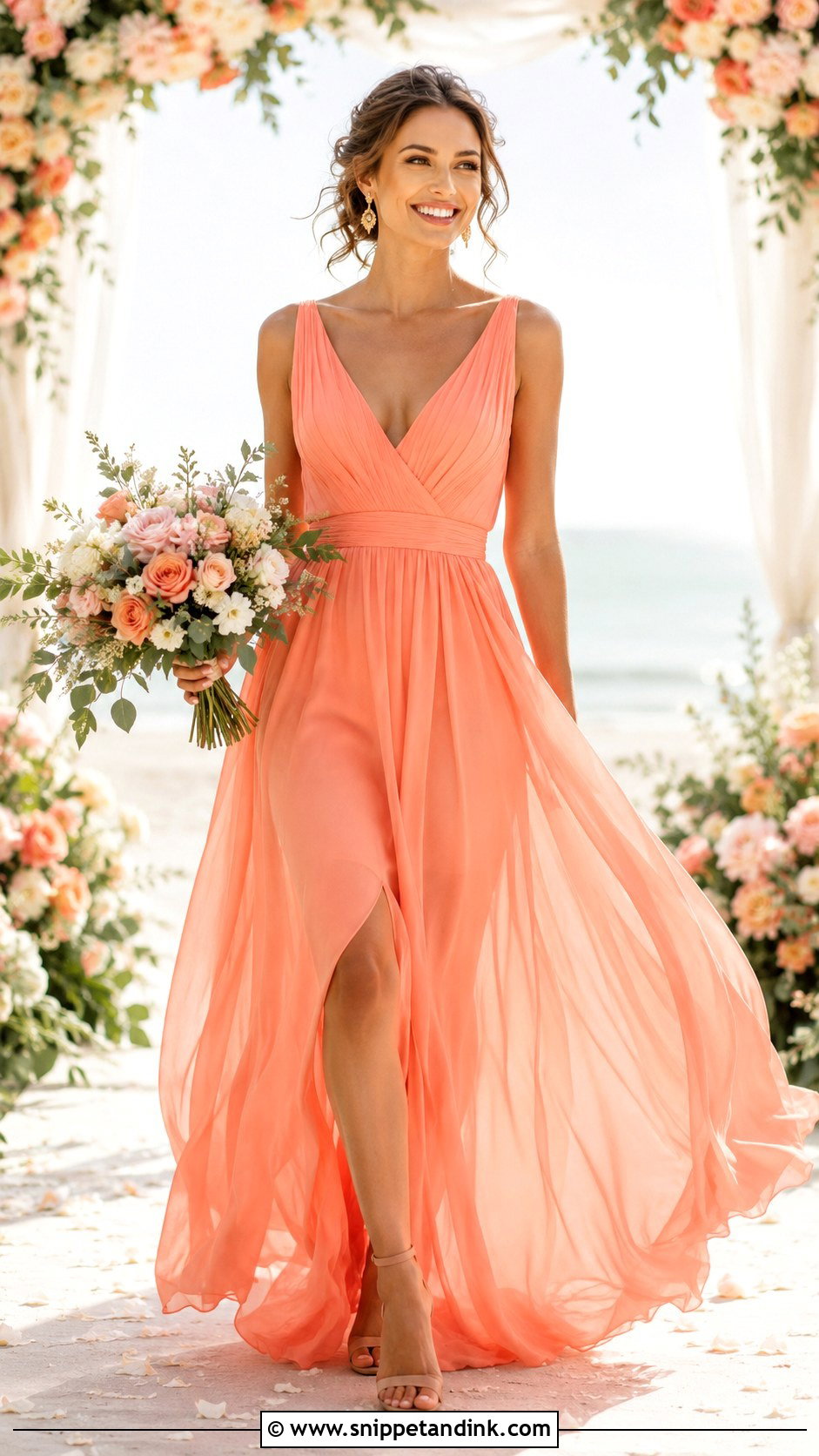
Coral is the most playful color here: brighter than blush, softer than orange. It belongs at warm-weather weddings, on beaches, in tropical settings and in summer gardens. Keep the fabric breezy, chiffon, organza or lightweight satin, because heavy fabric in a bright color looks costume-like in the heat. Nude sandals, gold earrings and natural makeup suit it, with white flowers, peach roses and fresh greenery. Coral can make some skin tones look ruddy, especially after time in the sun, so try it on in daylight with a bare face.
19. Peach Wedding Gown
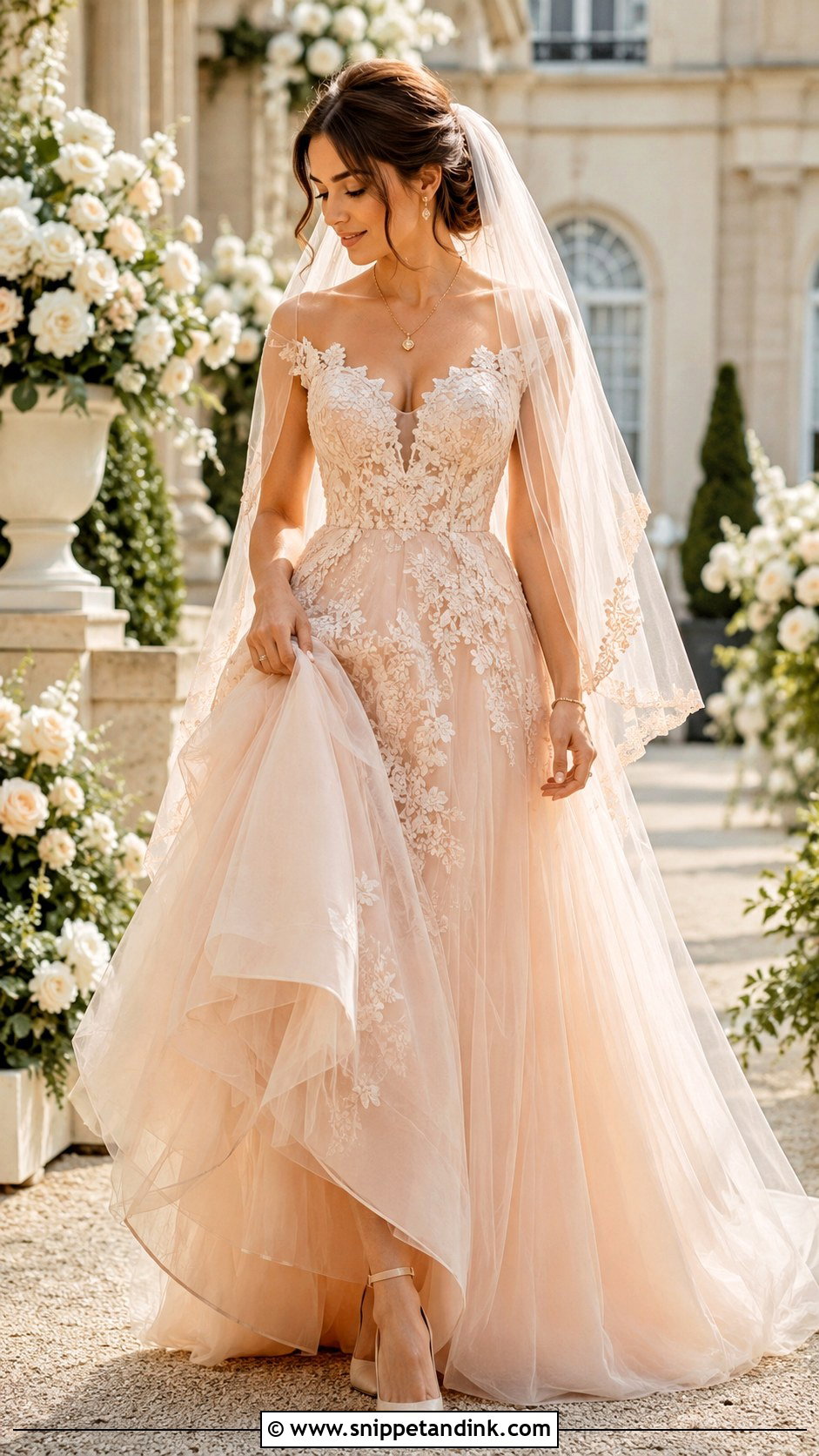
Peach is warm and gentle, colorful without shocking anyone. Tulle, silk chiffon or floral lace over a soft lining suit it. Ivory heels, delicate gold jewelry and a veil matched to the dress’s undertone keep it cohesive, since a bright white veil looks stark against peach. Cream flowers, peach roses and pale greenery complete it. Spring and summer weddings, outdoor ceremonies and estate venues suit it, and it flatters warm and olive skin especially well.



20. Yellow Wedding Gown
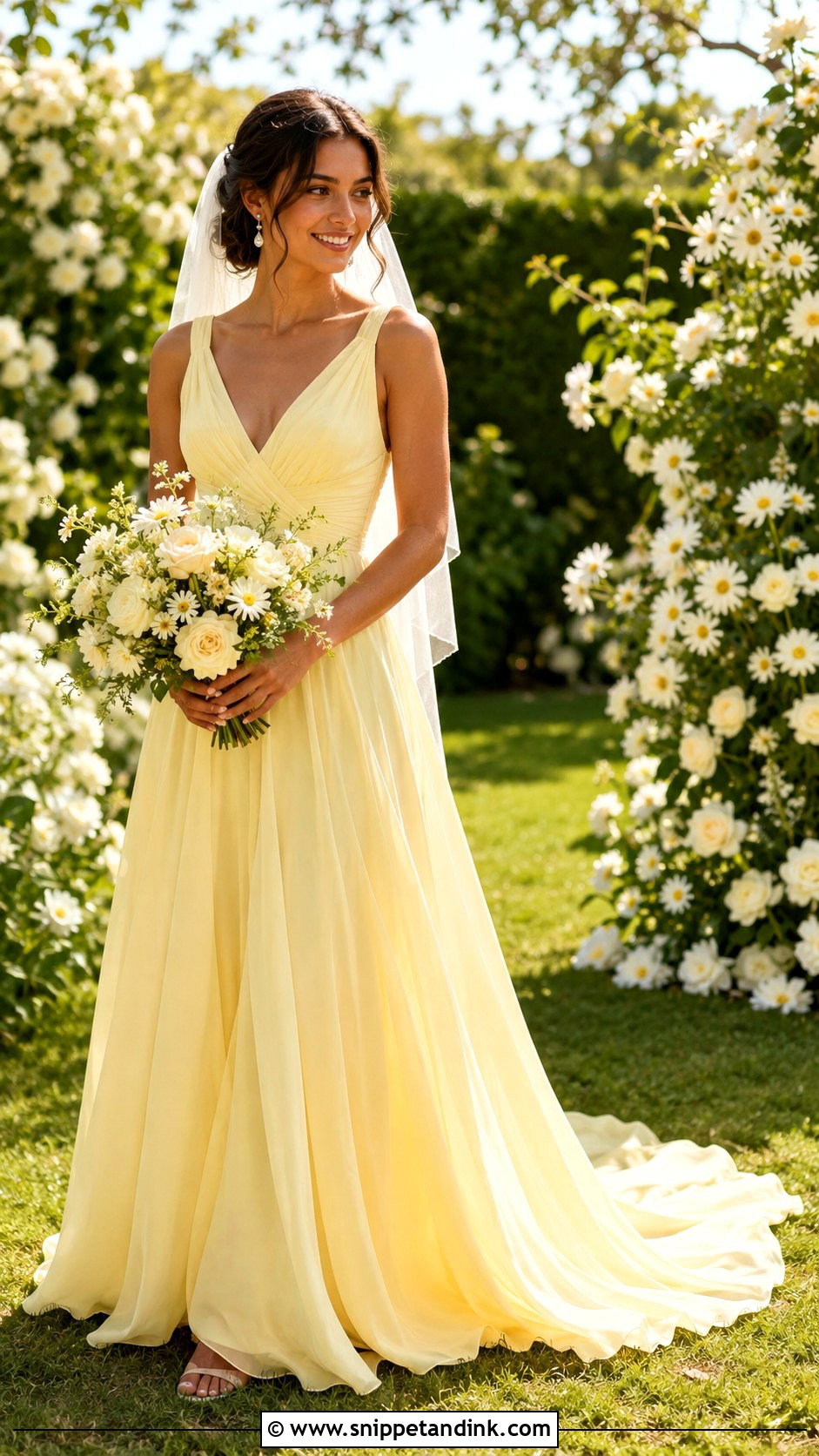
A yellow wedding gown is the happiest color on this list, and the trickiest to match to skin. Soft butter yellow is delicate; marigold is bolder and more festive. Try both against your face, since yellow can make fair skin look sallow. Flowing chiffon suits a garden, while satin gives a cleaner, more formal effect. Nude heels, pearl earrings and a simple veil keep it from overwhelming you, with white daisies, cream roses or soft greenery. Spring, summer and outdoor weddings in natural light suit it best.
21. Gray Wedding Gown
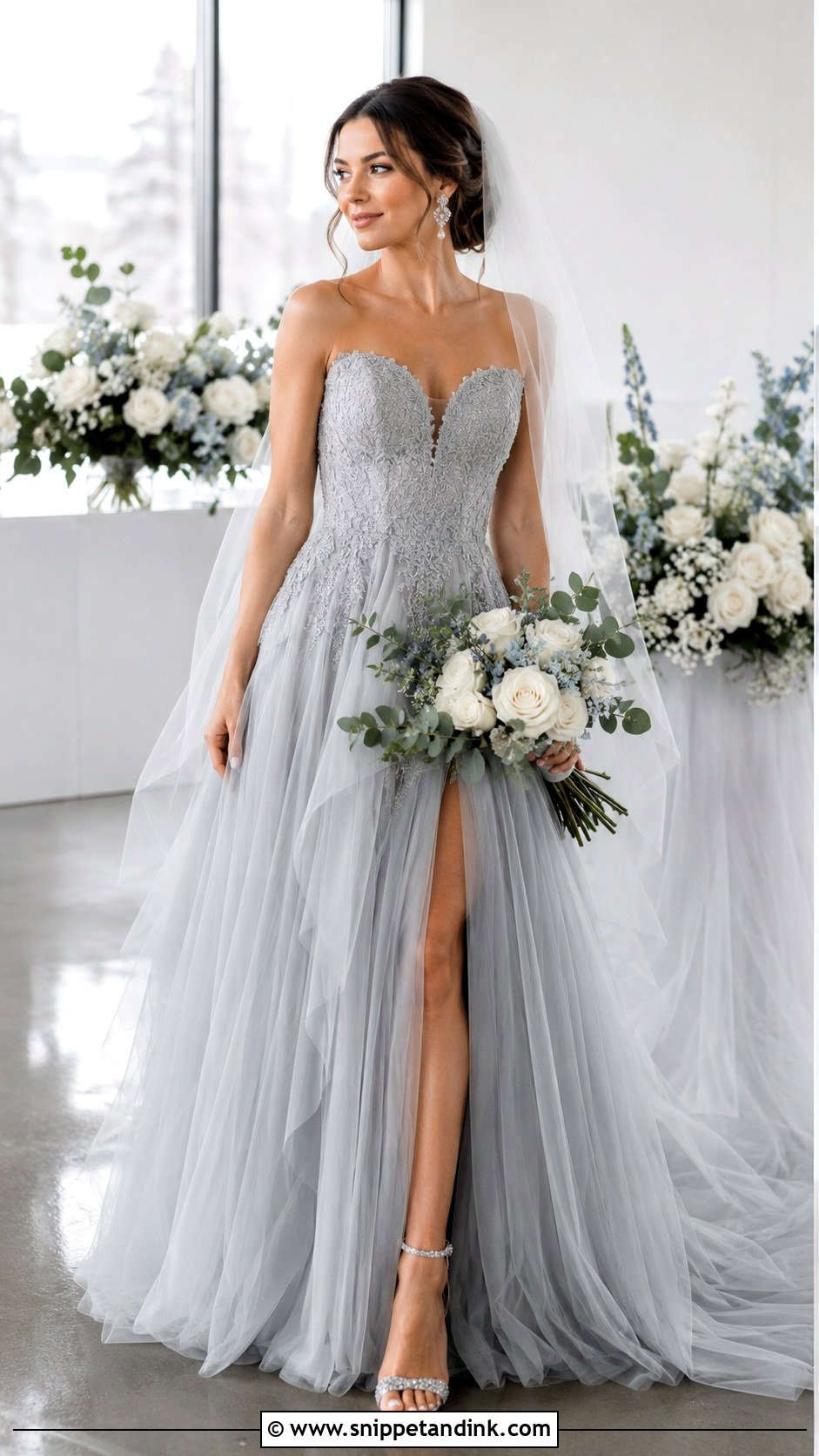
Gray is a quiet alternative for brides who don’t want white, black or bright color. Dove gray tulle, silver-gray satin or gray lace over a pale lining all work, and gray lets texture show, so lace, pleating and beading look sharper than they would in white. Silver heels, pearl earrings and a light veil suit it, with white roses, eucalyptus and soft blue accents. Winter weddings, modern venues and minimal celebrations suit it best. My main caution is the face: flat gray can drain color from skin, so bring warmth back with blush and a lip with some color in it.
22. Ivory Floral Wedding Gown
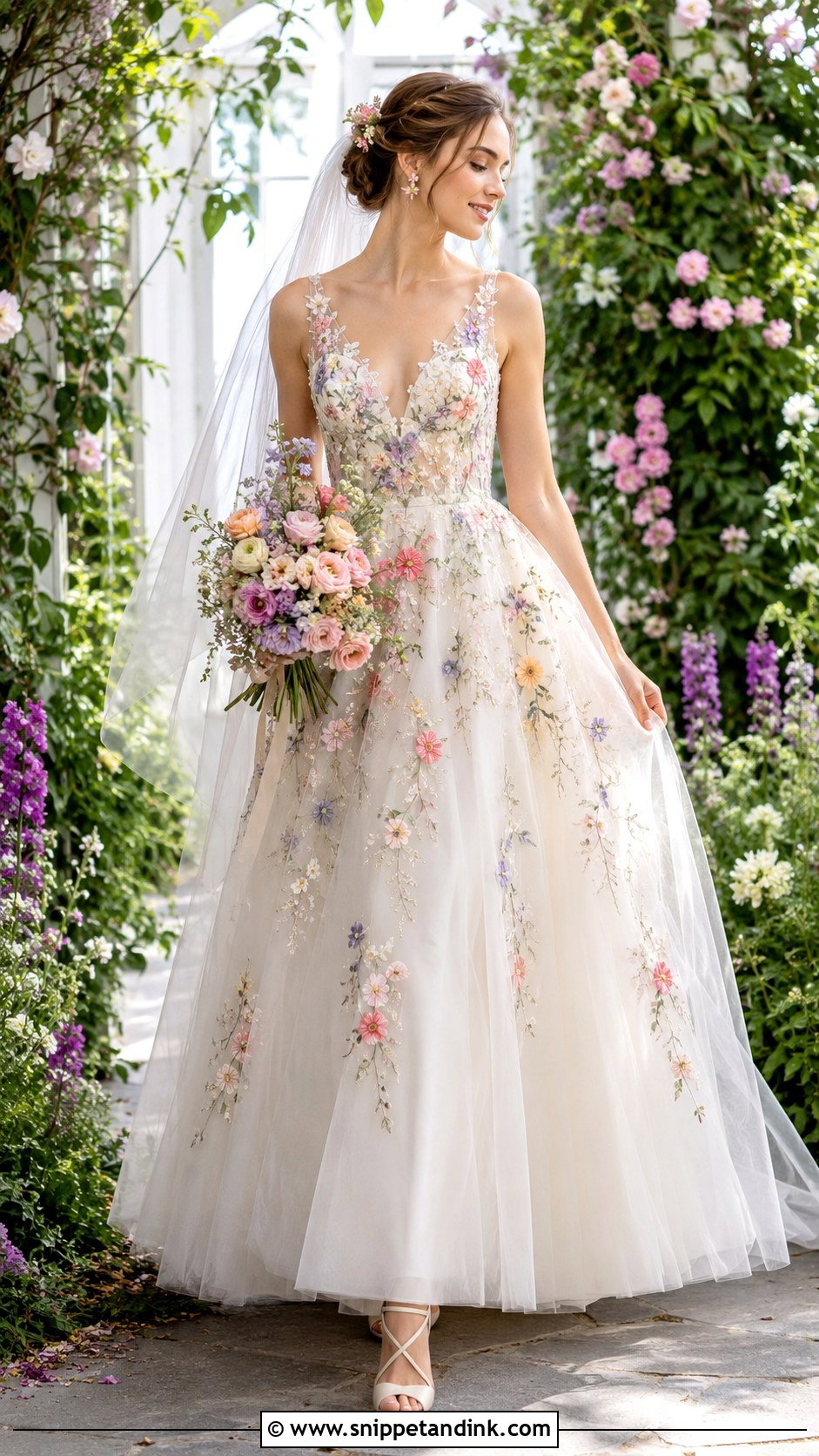
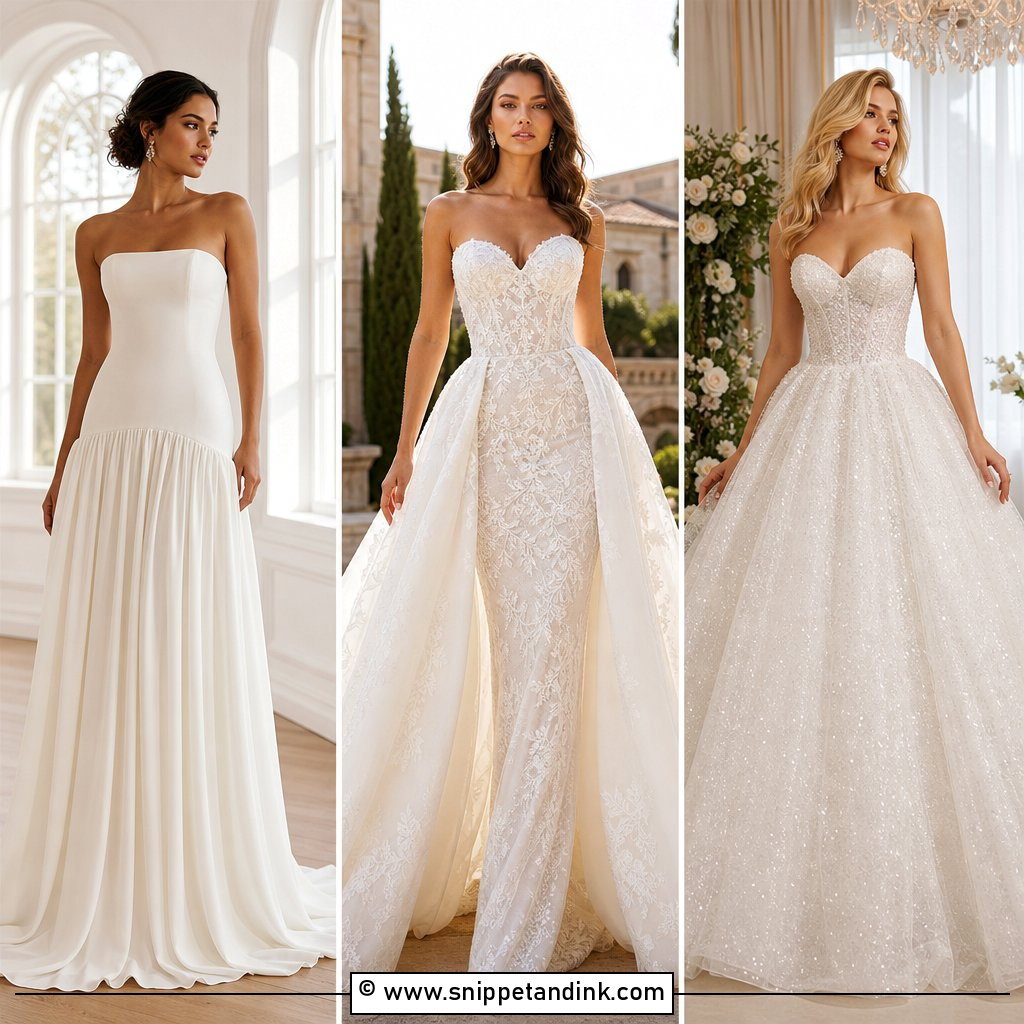
Ivory with floral detail is the middle path, with color for brides who still want a traditional base. Embroidered flowers, painted prints or colored appliques over ivory tulle carry it. Simple ivory heels, tiny floral earrings and a sheer veil that doesn’t hide the detailing finish it. The trick is the bouquet: repeat one or two colors from the gown so the flowers and dress look planned together. Garden weddings, spring ceremonies and outdoor venues suit it. If the appliques are three-dimensional, ask how they should be pressed, because they need steaming from behind, never an iron.
23. Ombre Wedding Gown
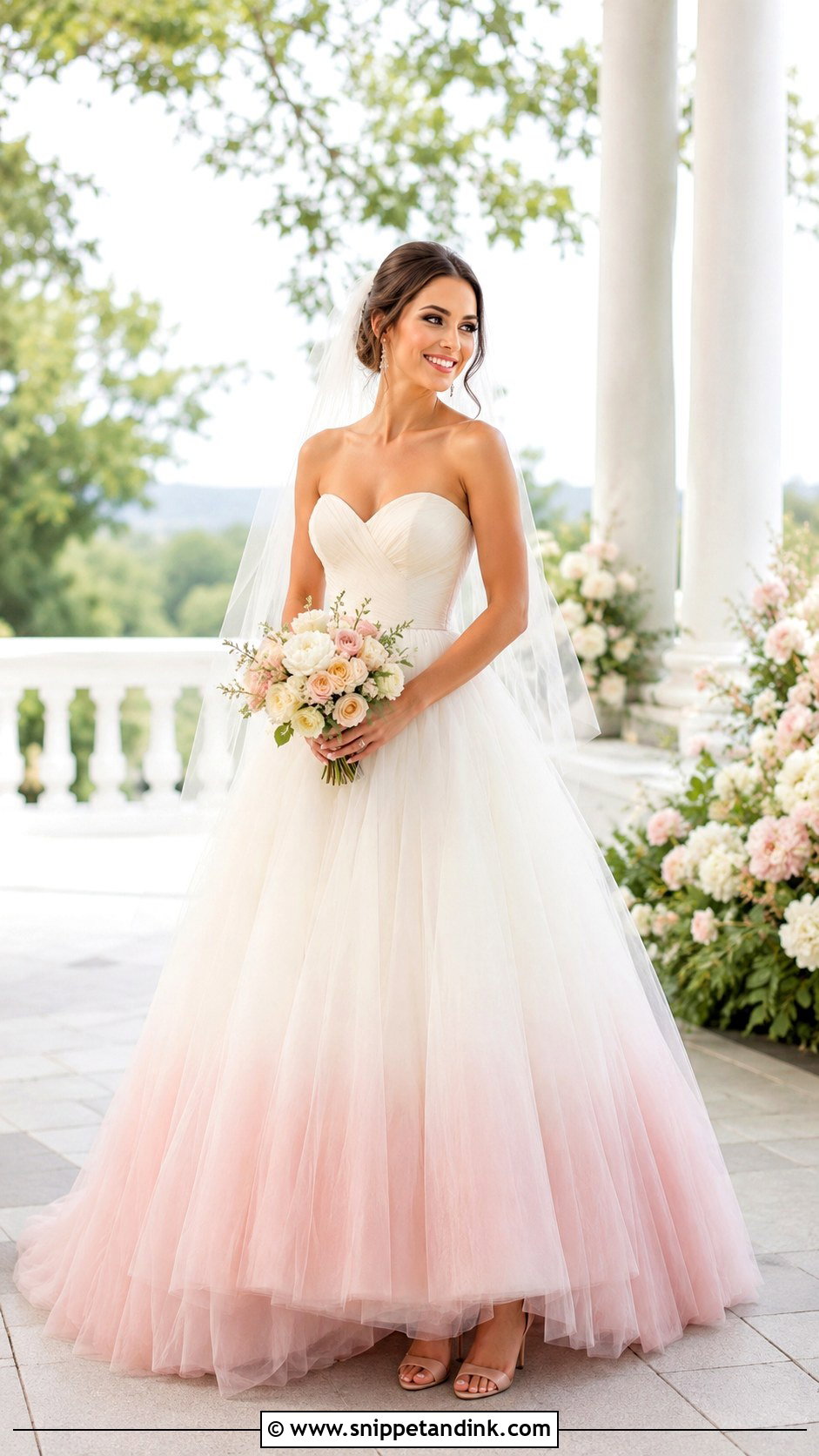
An ombre wedding gown tells a color story from bodice to hem: ivory to blush, white to blue, champagne to gold, lavender to deep purple. I usually suggest the lighter shade near the face, since it’s kinder in close-up photos, and the deepest at the hem, where it also hides grass marks. Neutral heels, delicate earrings and a clean veil keep the focus on the gradient. Match the bouquet to the lightest or deepest shade rather than the middle. The color shift shows most clearly in outdoor portraits. Ombre is often hand-dyed, so expect small differences from the sample you tried on.
24. Black And White Wedding Gown
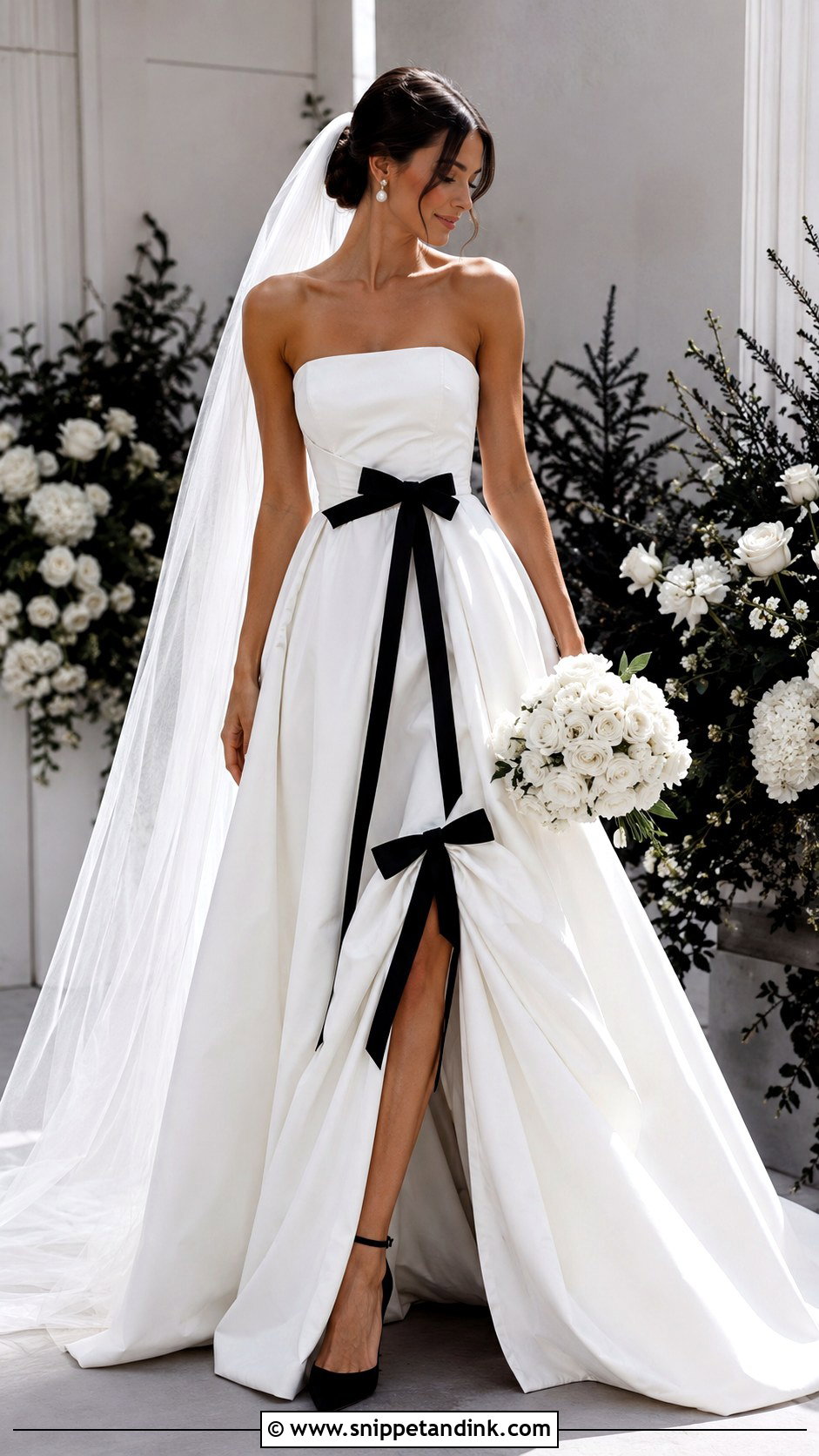
Black and white gives contrast while keeping the bride clearly the bride. A white gown with black bows, black lace, a black sash or a dramatic black overskirt all work. Let one color lead: a mostly white gown with black detail reads bridal, while a near-even split reads like an evening costume. Black heels, pearl earrings and a sleek veil keep it polished, with white flowers and dark greenery. City weddings and black-tie celebrations suit it. Dark dye can transfer onto white fabric if the gown gets wet, so ask the maker whether the black trims are colorfast.
25. Multicolor Wedding Gown
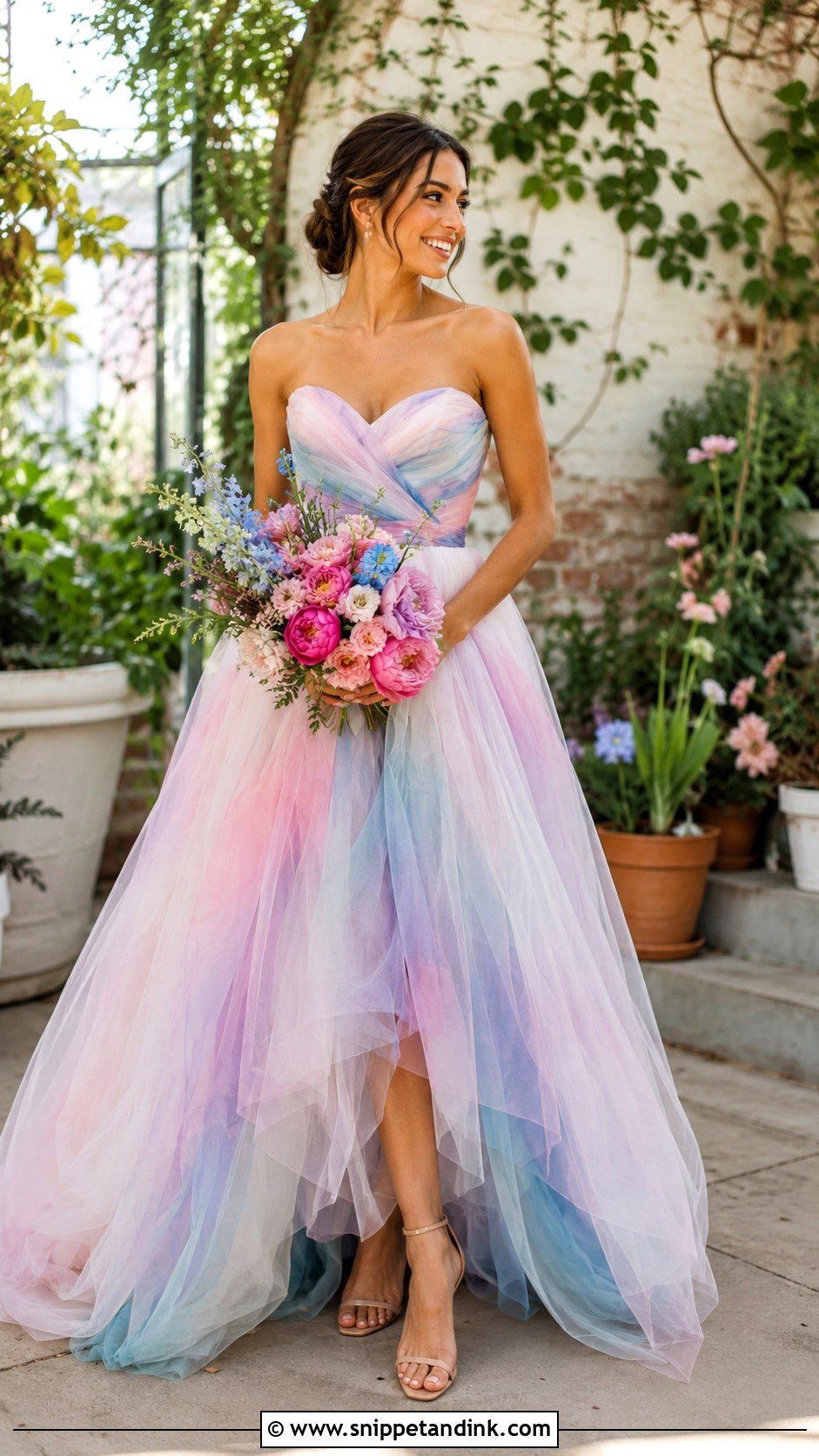
A multicolor gown is for the bride who wants her dress to be the art. Look for watercolor tulle, floral embroidery, pastel layers or color-blocked panels. With that much going on, everything else stays plain: nude heels, small earrings, clean hair and a simple veil. Pull the bouquet from one main shade in the gown, such as pink, blue or yellow, so the flowers look connected rather than competing. Garden weddings, creative venues and celebratory receptions suit it. It isn’t a traditional look, and it isn’t trying to be.
How Colored Fabric Behaves in Wedding Photos
White is forgiving for cameras; color is less predictable. Before you commit, send your photographer a picture of the gown and ask how it will look in your venue’s light. These are the shifts I warn brides about.
Bright sun bleaches pastels
Pale blue, lilac and blush can look almost white at midday. Open shade or late afternoon light keeps them clearly colored.
Warm indoor light pulls cool colors off course
Tungsten bulbs and candlelight push lavender toward gray and blue toward teal. Some of it can be corrected in editing, but not always all of it, especially when the dress, the guests and the decor are lit differently.
Dark colors lose detail at night
Burgundy, navy, emerald and black can swallow their own lace and beading in a dim room. Fabrics with some sheen, beading or raised texture keep their detail better than flat matte crepe.
Ordering Color Takes Longer Than Ordering White
Many colored gowns are cut or dyed to order, so allow more time than you would for an ivory sample bought off the rack. Timelines vary by maker, but a made-to-order bridal gown often takes several months to arrive, and alterations need their own stretch after that.
- Ask for a fabric swatch before you order, and look at it in daylight and indoors.
- Confirm the exact shade name in writing, since a dye lot can differ slightly from the sample you tried on.
- If the veil, sash or bridesmaid dresses need to match, order them against a swatch of the actual gown fabric, never against a screen.
- Book the final fitting with the shoes and undergarments you’ll wear, and ask the seamstress how to steam that fabric safely.
Ask how the gown should be cleaned afterward, too. Some dyes bleed or fade with standard dry cleaning, and a cleaner used to colored silks will know which process to use.
Which Shade Belongs in Your Wedding Photos?
Color gives brides room to choose a gown that reflects their personality, culture, venue and season. From blush and champagne to red, black, emerald and multicolor, any shade can read bridal when the whole outfit is styled with care. Before you decide, look at the fabric, silhouette, accessories, flowers, shoes and the light you’ll be married in. A colored gown should still be comfortable and flattering from every angle, close up and across a room. Romantic, minimal, dramatic or playful, the right color is the one that looks like you in every photo, not just in the fitting room mirror.
You'll Like These Ideas:







Leave a Reply