
A coloured gown used to need a defence. Now brides come to me already set on blush, dusty blue, black or a painterly floral, and the conversation is about which shade, not whether. Colour can be more flattering than white, because pure white is hard on many skin tones and ivory can wash out fair ones. It also ties the dress to the season and the venue in a way white can’t. What it asks for in return is planning: the fabric, the shade under different light, the bouquet and the shoes all need to agree. Here are thirty colours and prints I’d consider for a bride, with how I’d style each one.
Testing a Shade Against Your Skin Before You Order
A colour that looks wonderful on a hanger can drain you once it’s under your chin. I don’t let brides commit to a coloured gown until we’ve held the actual fabric against their face in two kinds of light.
- Ask the shop for a fabric swatch, or a cutting from the same dye lot if the dress is custom coloured.
- Hold it under your chin by a window in daylight, with no makeup or with your usual wedding makeup. Watch your skin, not the fabric: a good shade brightens under the eyes, a poor one makes you look tired or sallow.
- Repeat under warm indoor bulbs, which is what most evening receptions use. Blues, lilacs and greys can shift noticeably.
- Take a phone photo in both lights. The camera exaggerates colour shifts, so it’s a fair preview of the album.
As a rough guide, warm undertones usually suit champagne, peach, terracotta, gold and olive greens, while cool undertones tend to suit icy blue, lavender, silver and blue-based pinks. It’s a starting point, not a rule. I’ve seen plenty of exceptions, which is exactly why the swatch test matters more than any chart.
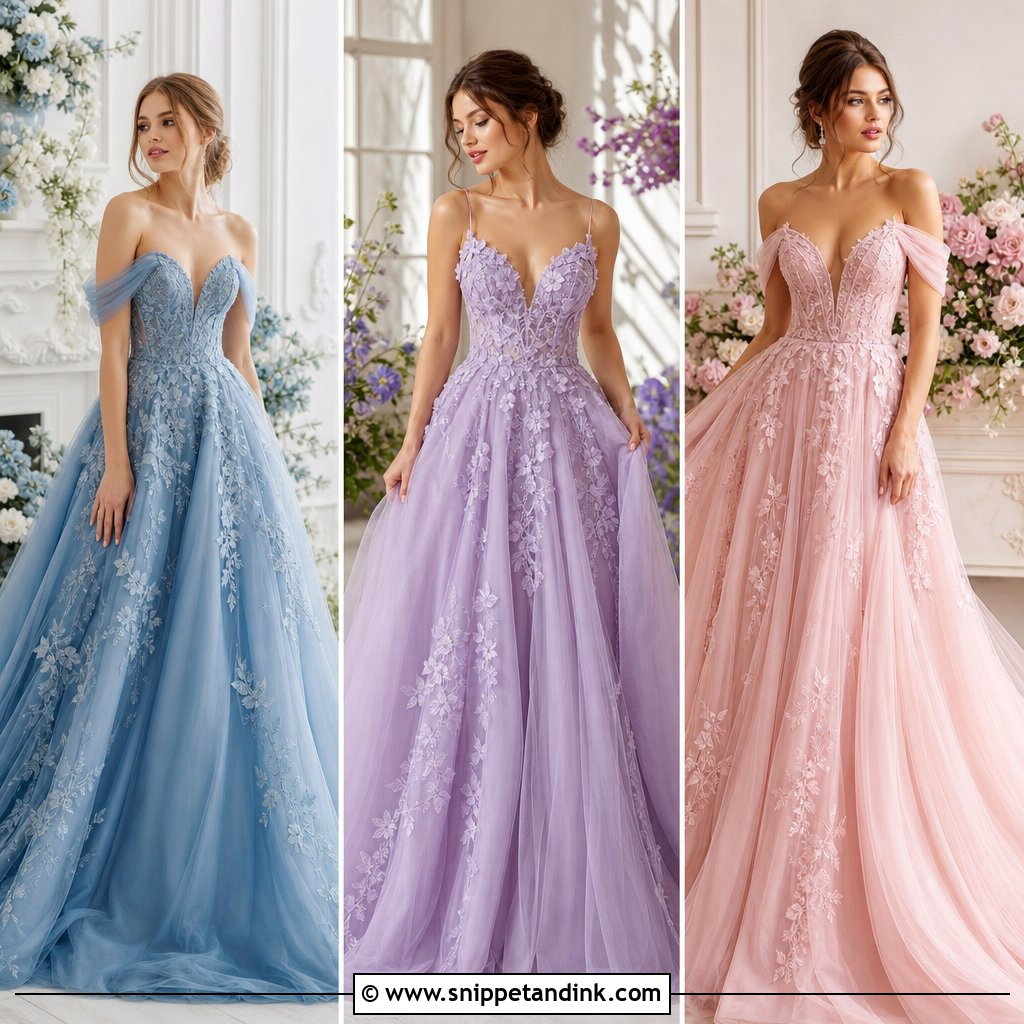
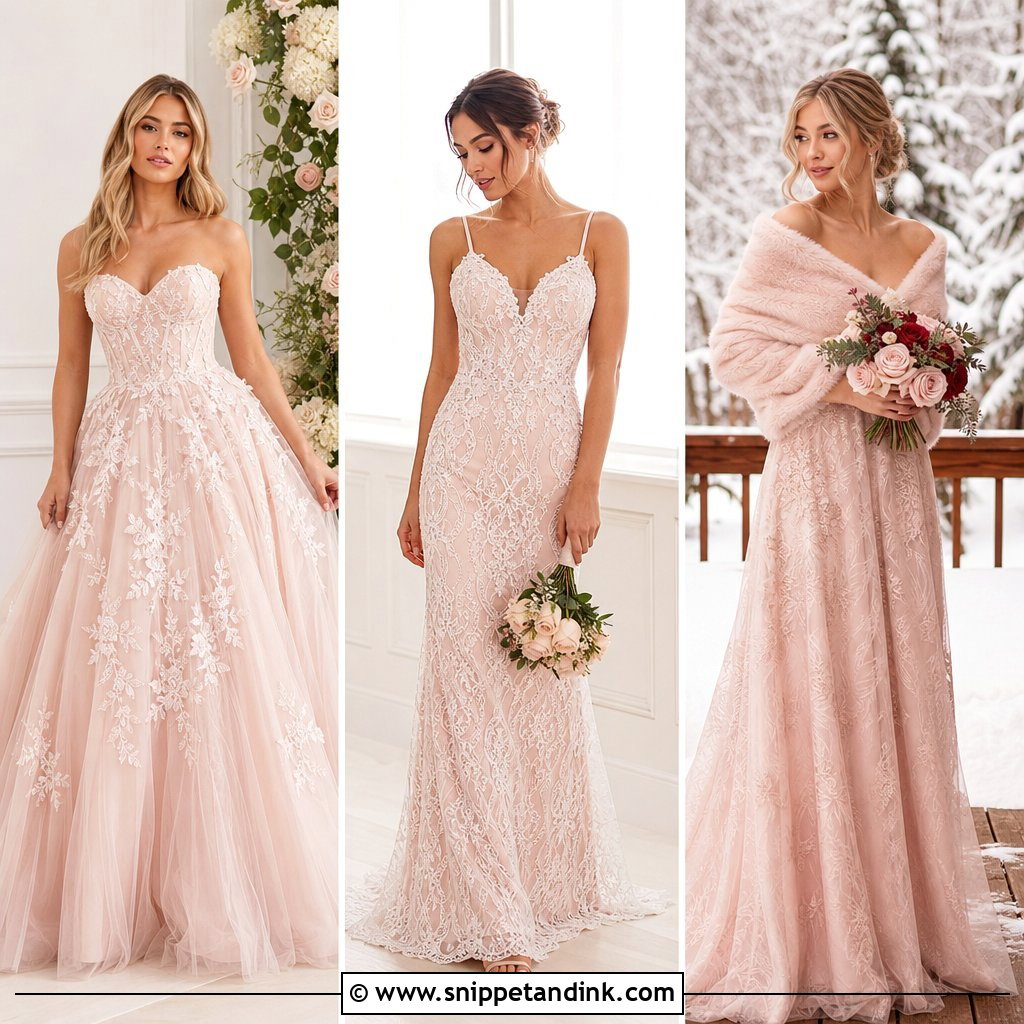
1. Blush Pink Wedding Dress
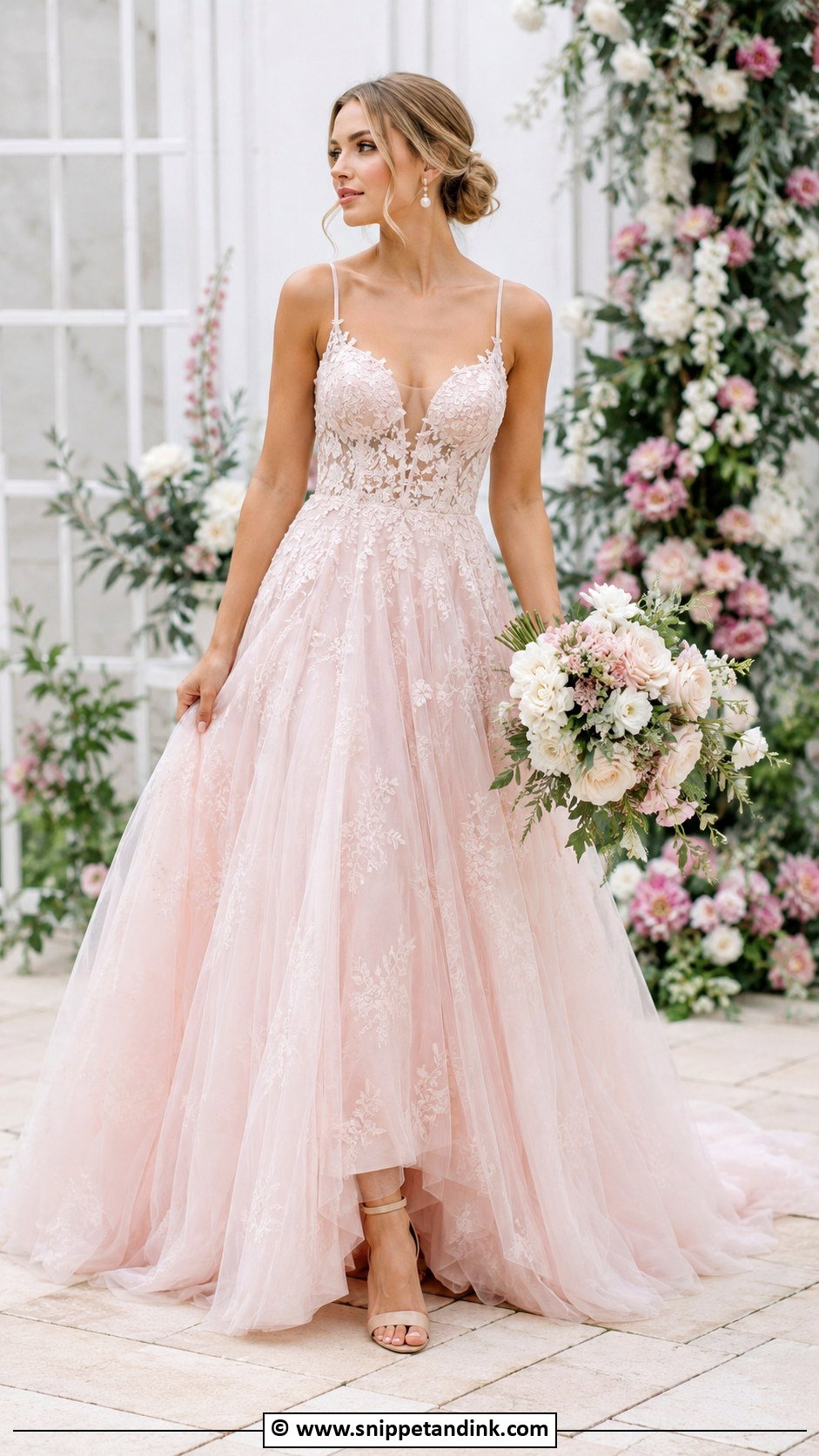
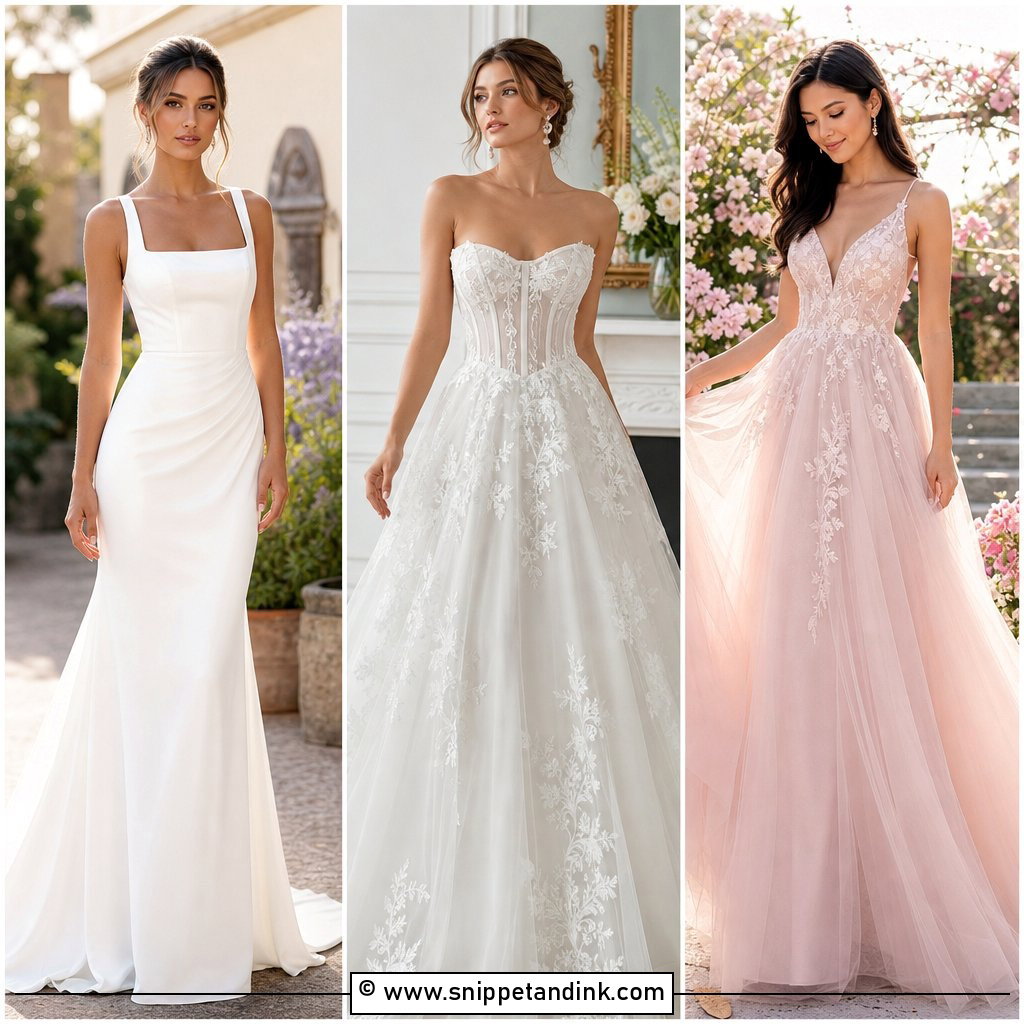
Blush is the shade I suggest to brides who want colour but are nervous of it, because on a tulle A-line it reads as warmth rather than pink. Layers matter here: three layers of blush tulle look noticeably deeper than one, so look at the skirt in daylight, not under a boutique spotlight. Pearl drops, nude or pale pink heels and a low bun keep it gentle. Cream, peach and dusty rose flowers sit naturally with it in a spring garden or an airy ballroom.
2. Champagne Wedding Dress
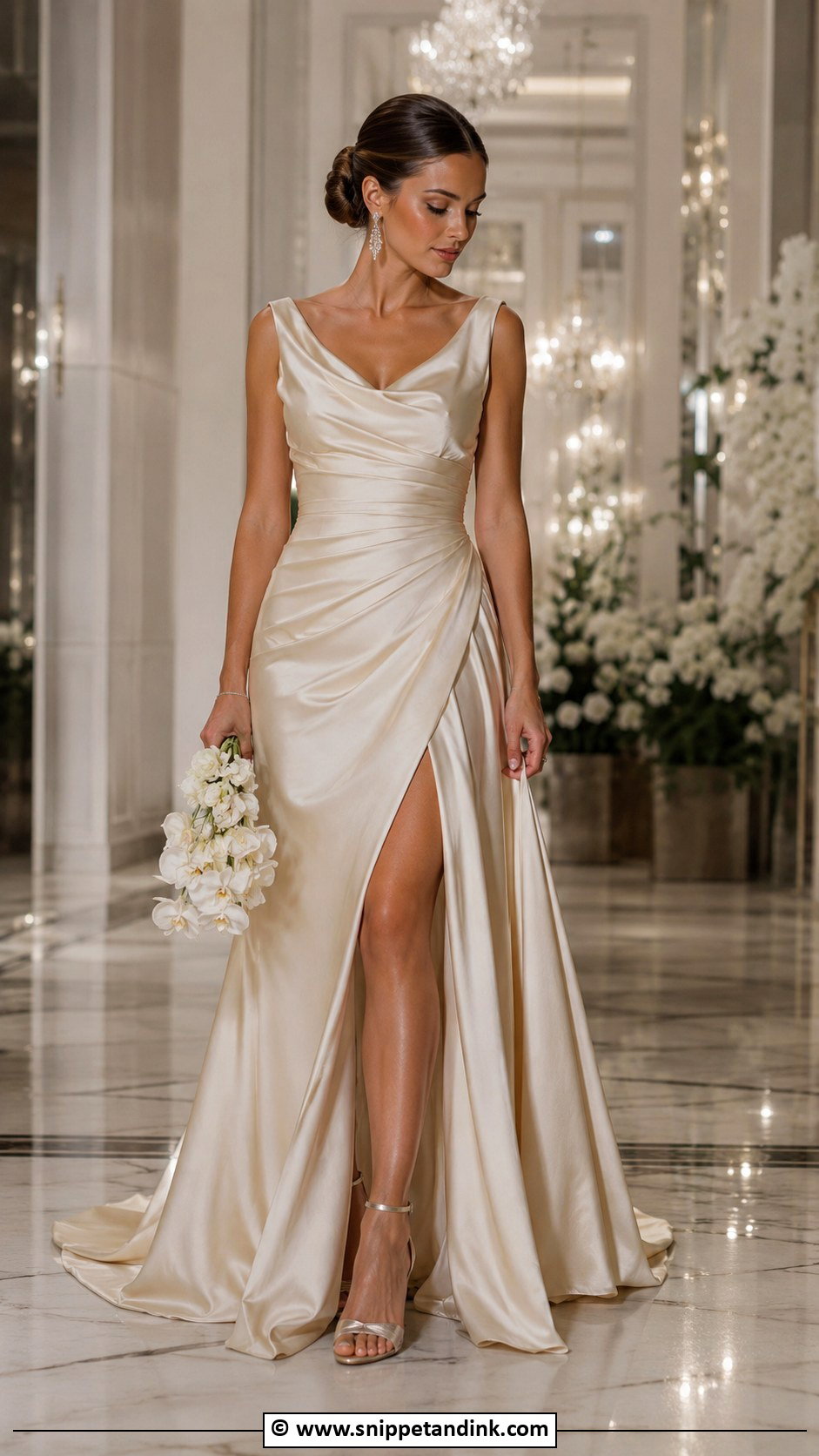
Champagne sits between ivory, beige and soft gold, and that middle position is why it flatters so many skin tones. On a satin gown with a draped neck, a fitted waist and a flowing skirt, the shine adds warmth in candlelight. I keep jewelry to crystal earrings and choose metallic heels and a veil with a clean, unbeaded edge. The colour already glows, so heavy accessories are unnecessary. A sleek updo, soft makeup and white roses with greenery suit a formal evening or fall wedding.
3. Light Blue Wedding Dress
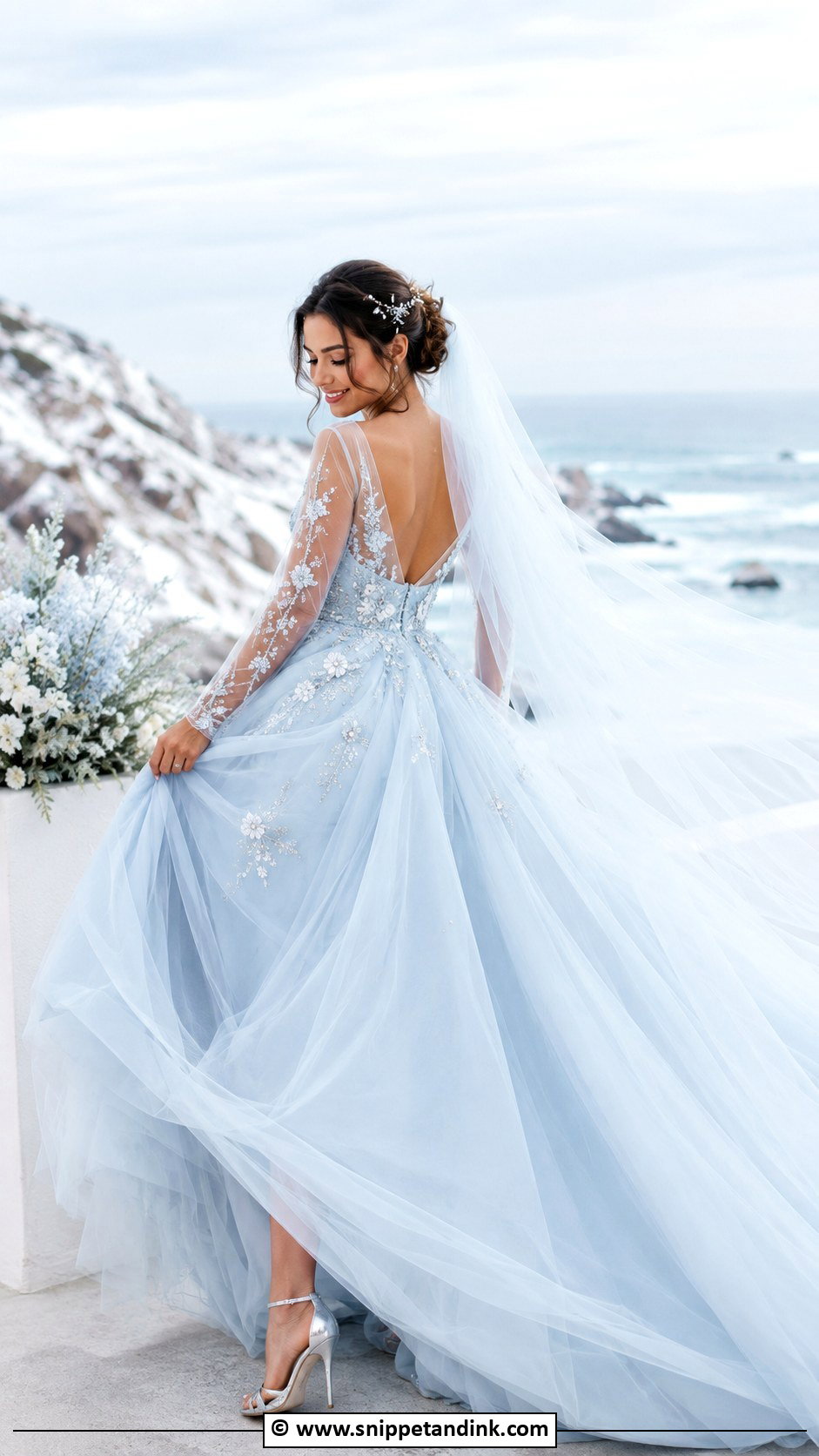
Pale blue changes with the fabric more than almost any colour I work with. In chiffon or organza it looks airy; in heavy satin it can look icy. A ball gown with a structured bodice, sheer sleeves and a floating skirt gives a fairytale-inspired outfit that stays bridal when the accessories are fine: silver heels, pearl pins and a delicate necklace. It’s lovely in winter and on the coast, and against blue or white decor. Rosy cheeks, a natural lip and a white and pale blue bouquet hold it together.
4. Dusty Blue Wedding Dress
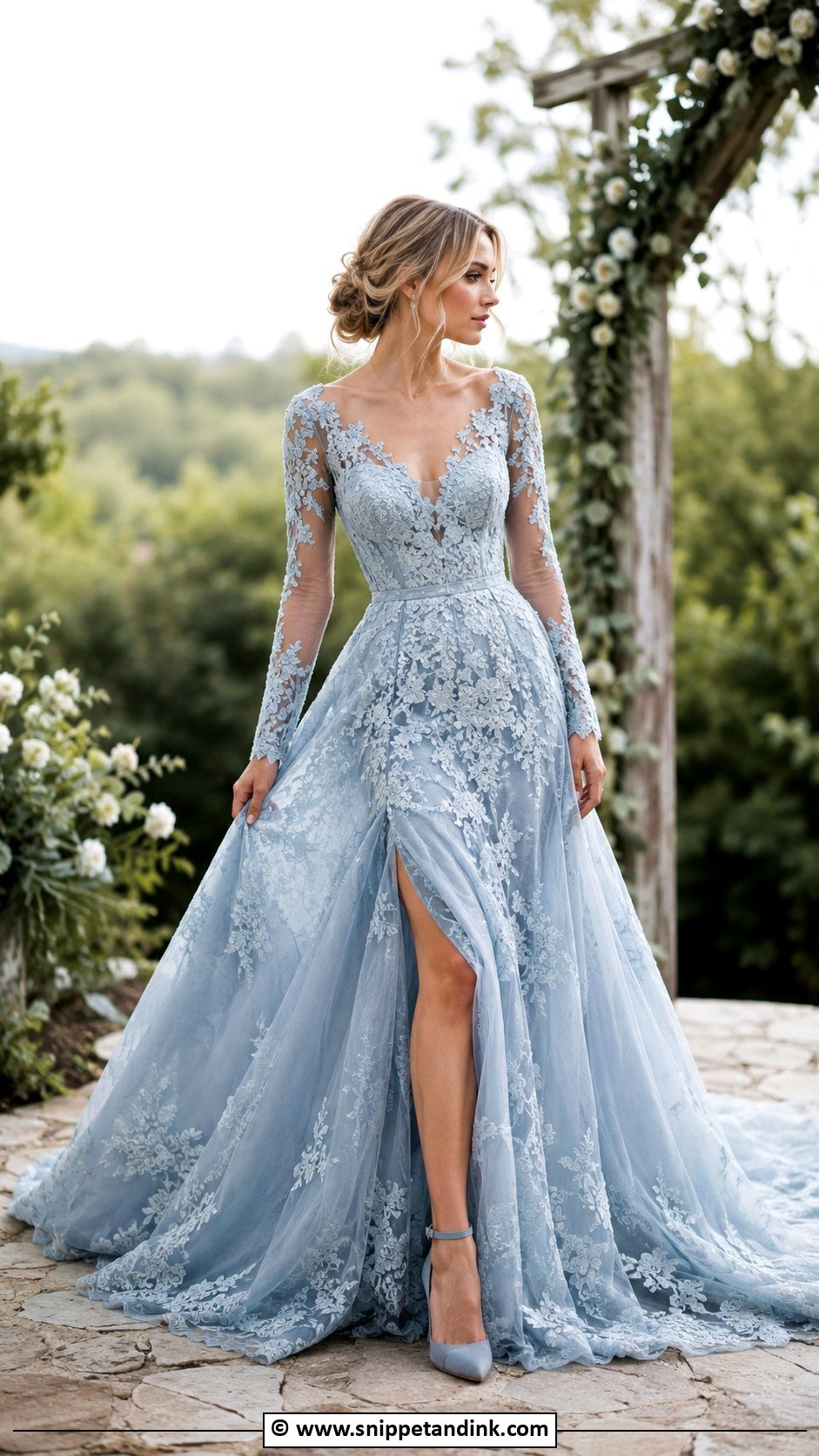
The grey undertone in dusty blue is what makes it feel grown-up. It sits quietly in outdoor light rather than fighting the landscape, which is why I like it for mountain or rustic venues. In long-sleeve lace with a fitted waist and a sweeping train, it has a slightly vintage feel. Silver jewelry, blue-grey heels and a loose low bun suit it, with ivory flowers, eucalyptus and touches of lavender in the bouquet.
5. Lavender Wedding Dress
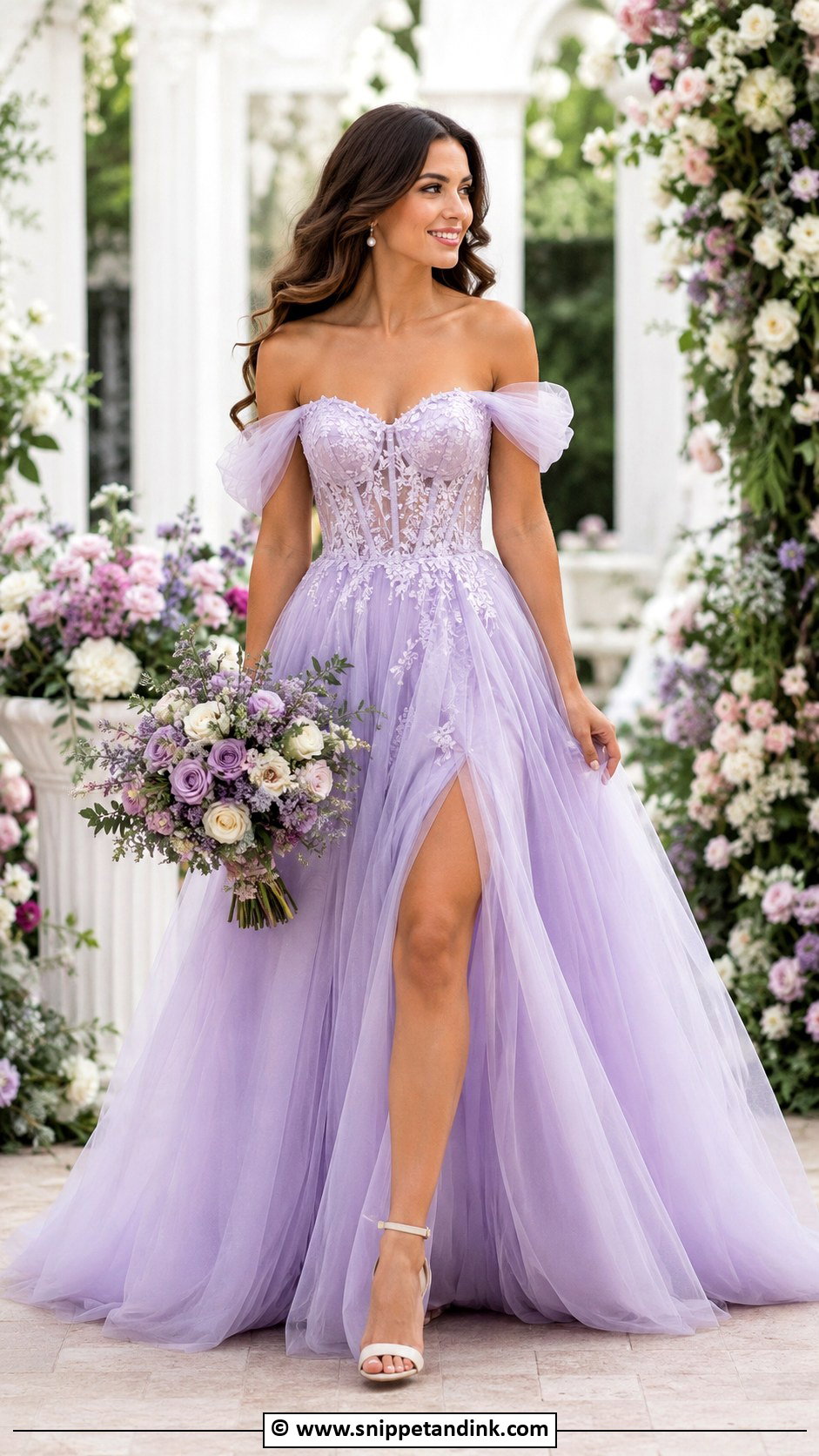
Lavender is one of the trickiest colours to photograph. Under warm indoor lighting it can lean grey, and some purple dyes register bluer on camera than they look to the eye, so I ask brides to take phone photos of the fabric in daylight and indoors before ordering. On a tulle gown with an off-shoulder neckline, a soft corset bodice and a layered skirt, it’s whimsical without being sugary. Neutral shoes, small pearl earrings, a sheer veil and loose waves keep it light. Ivory roses, lilac blooms and pale greenery suit a spring garden.
6. Lilac Wedding Dress
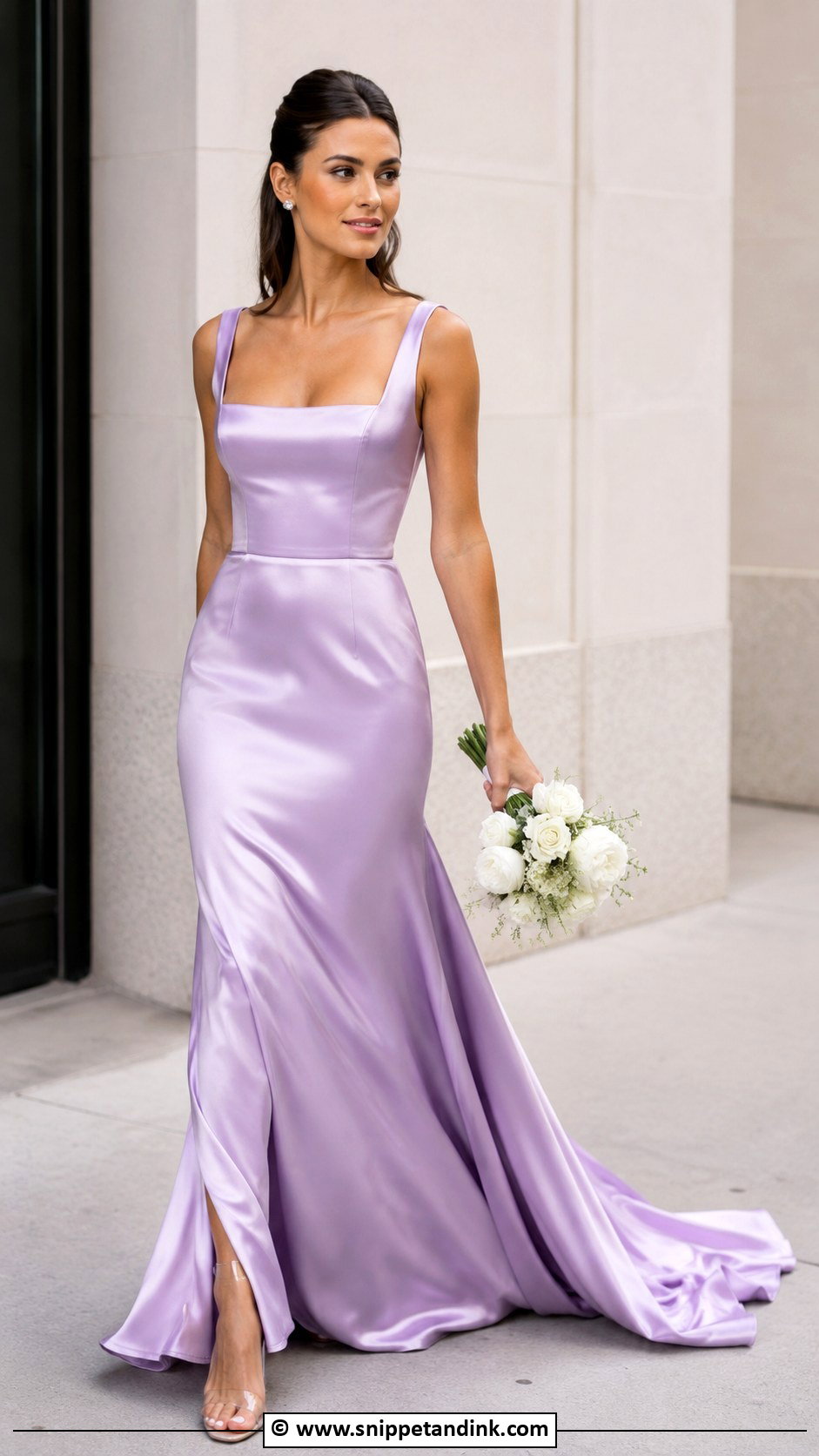
Lilac carries a little more pink and brightness than lavender, so A lilac wedding dress reads clearly as a colour from across a room. In satin with a square neckline, a fitted bodice and a fluid skirt, it’s modern. Clear heels, small diamond studs and a sleek half-up style keep it grown-up. The shade is playful, so I keep everything else plain. White ranunculus, pale purple flowers and soft greenery finish the bouquet for a city or botanical venue.
7. Sage Green Wedding Dress
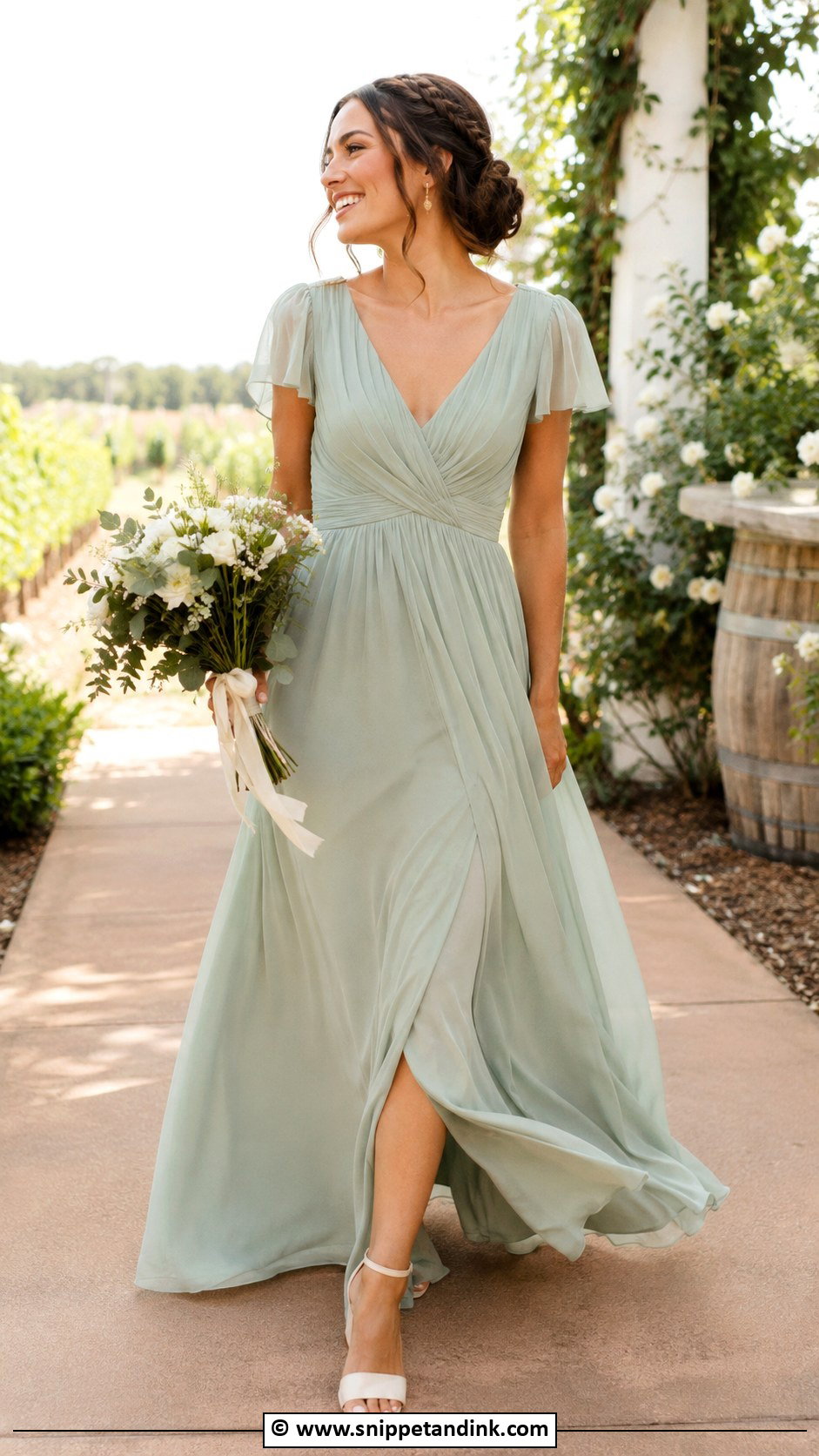
Sage depends entirely on movement. In a flat, stiff fabric it looks like a uniform; in chiffon with flutter sleeves, a defined waist and a flowing skirt, it looks like a garden. Ivory block heels, gold earrings and a loose braided updo suit vineyard and woodland ceremonies. I’d build the bouquet with white blooms, olive branches and soft green textures. Keep the accessories light so the colour feels calm.
8. Emerald Green Wedding Dress
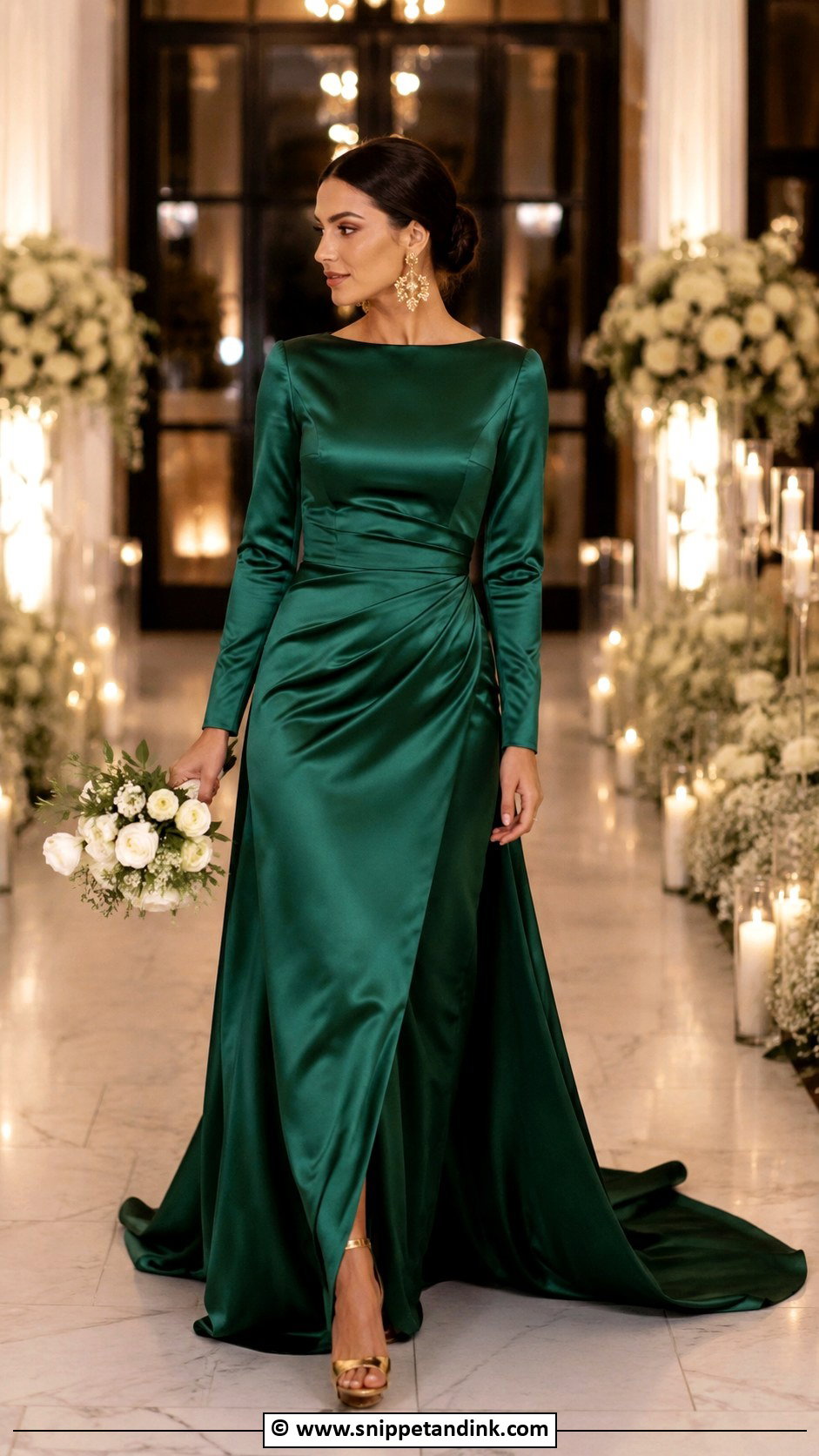
Velvet deepens An emerald green wedding dress in a way satin doesn’t, because the pile absorbs light and shows the colour at its richest. A fitted bodice, long sleeves and a slight train are all the detail it needs. Gold heels, sculptural earrings and a sleek updo suit fall and winter, historic venues and evening ceremonies. Keep the bouquet to ivory flowers and deep greenery. Candlelight and dark wood interiors suit it best.
9. Mint Green Wedding Dress
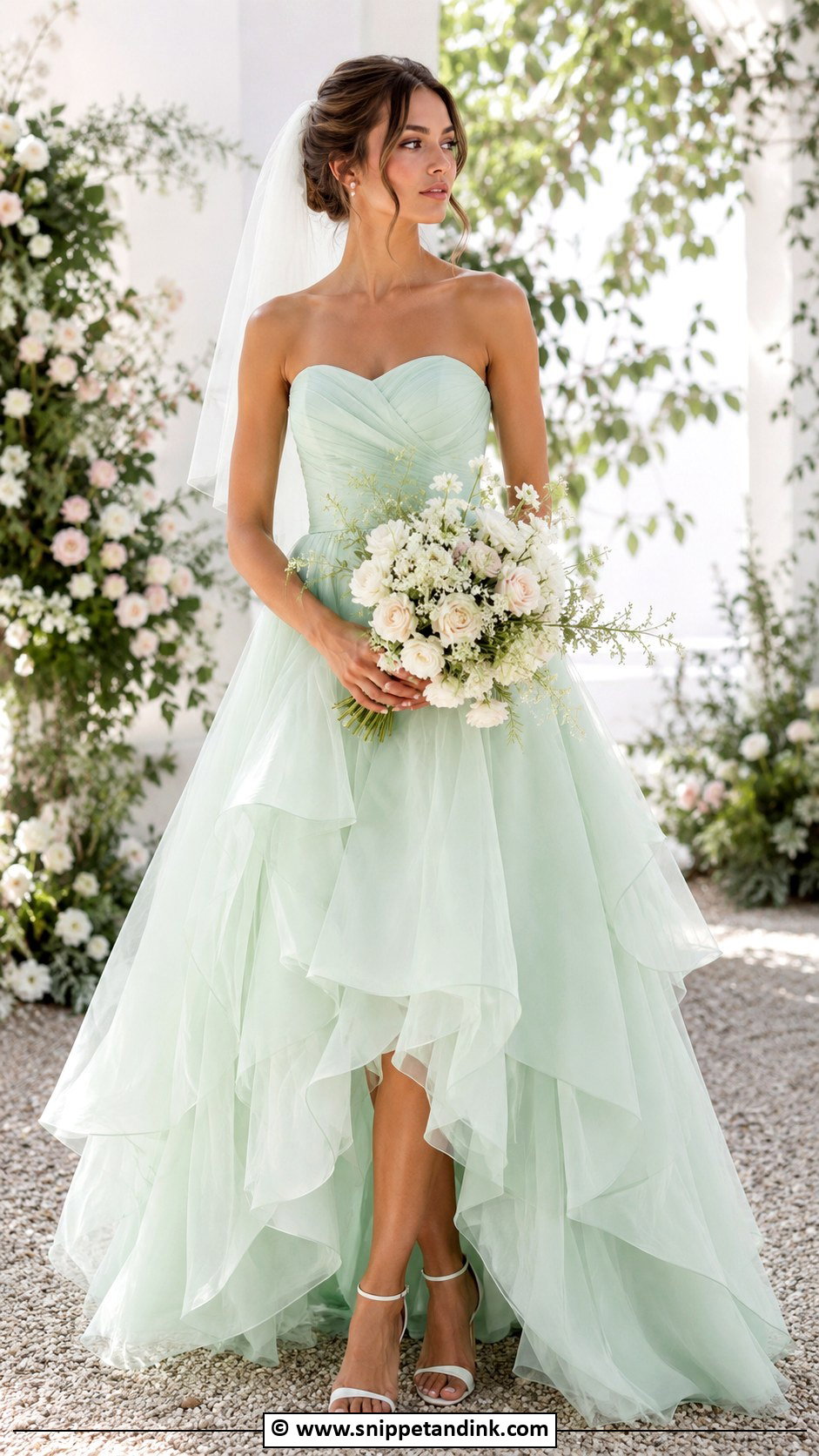
Mint is a warm-weather colour and looks out of place in a dark winter venue. On a strapless tulle or organza gown with an airy skirt, it’s fresh. White sandals, pearl studs and a short veil or a bow keep it sweet without going childish. Natural makeup with a pink lip and soft highlighter suits it. White peonies, pale yellow touches and green stems make the bouquet cheerful for a garden party or seaside ceremony.
10. Yellow Wedding Dress
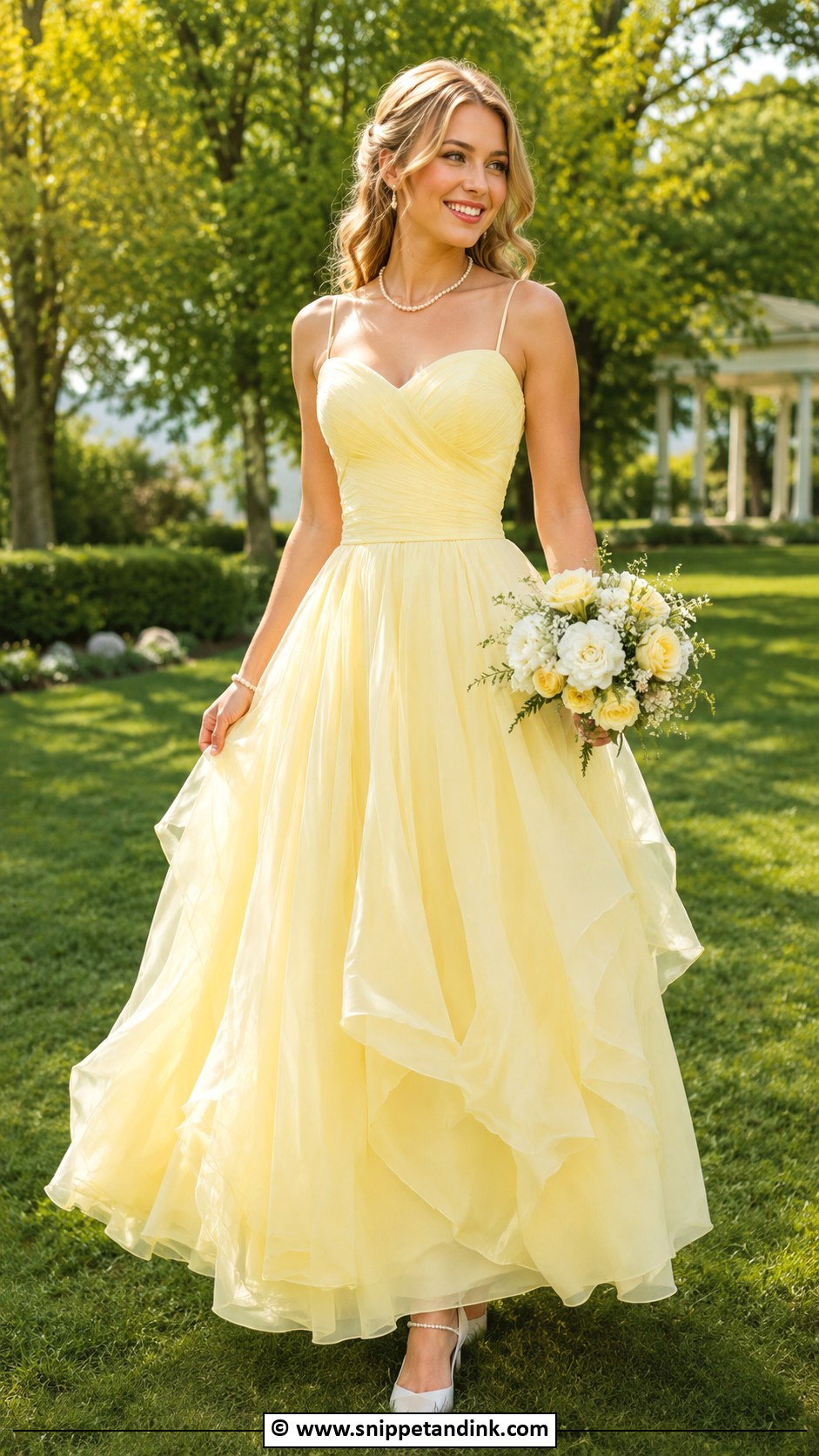
The shade decides everything with yellow. Butter yellow flatters; bright lemon or anything near neon does not suit most skin and fights the camera. A butter yellow organza dress with a fitted bodice, a full skirt and delicate straps looks romantic in daylight. Ivory heels, pearls and soft curls suit it. I keep the bouquet to white flowers, pale peach blooms and a little greenery. Spring lawns and daytime ceremonies are where it belongs.
11. Gold Wedding Dress
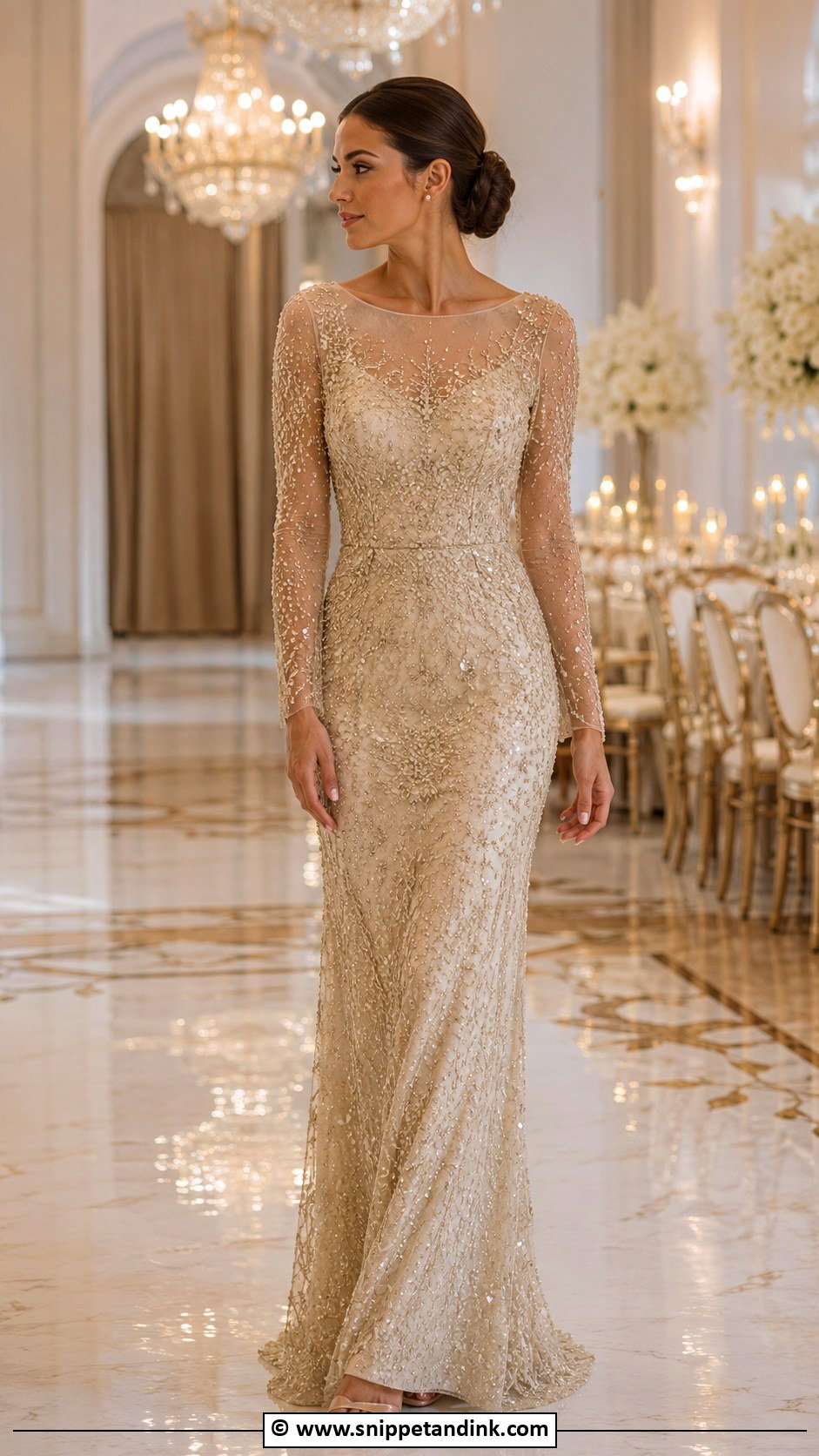
Gold works as a bridal colour when it’s soft and the fabric is good. Cheap metallic lamé looks costume; a soft gold beaded column with sheer sleeves and a subtle train looks luxurious. Gold or nude heels, simple studs and a smooth chignon finish it. Under bright ballroom or rooftop lighting it catches warmth from every direction and photographs glowing. The bouquet should be white and minimal so the gown leads.
12. Rose Gold Wedding Dress
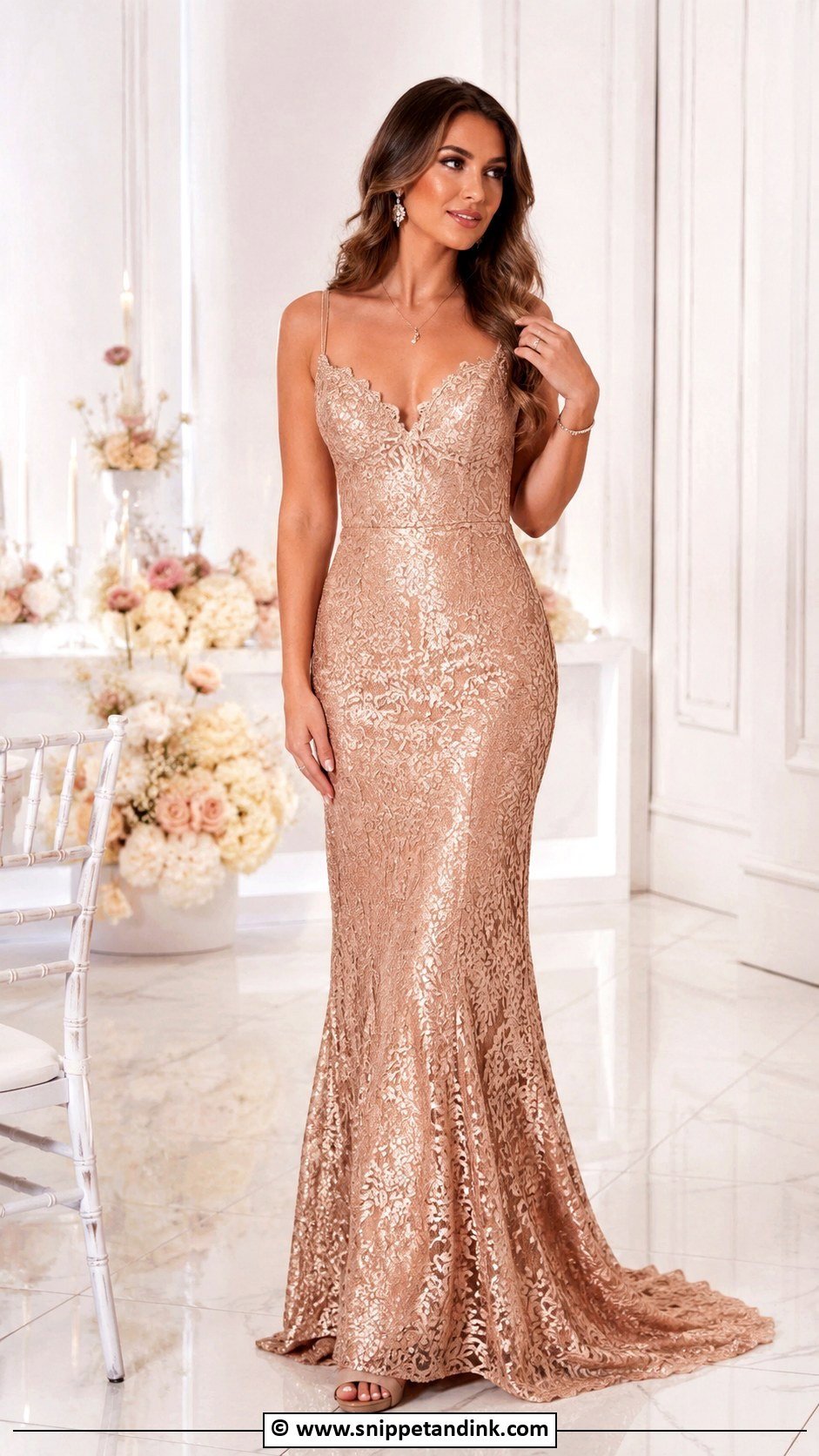
Rose gold falls between blush and gold, softer than one and more modern than the other. Sequins or metallic lace on a fitted gown with a gentle flare and a simple neckline give the shine. Nude heels, delicate rose gold jewelry and soft waves suit it. The fabric is already reflective, so a light veil and a simple bouquet of white orchids, blush roses or cream flowers keep it from feeling overdone at an evening reception.
13. Peach Wedding Dress
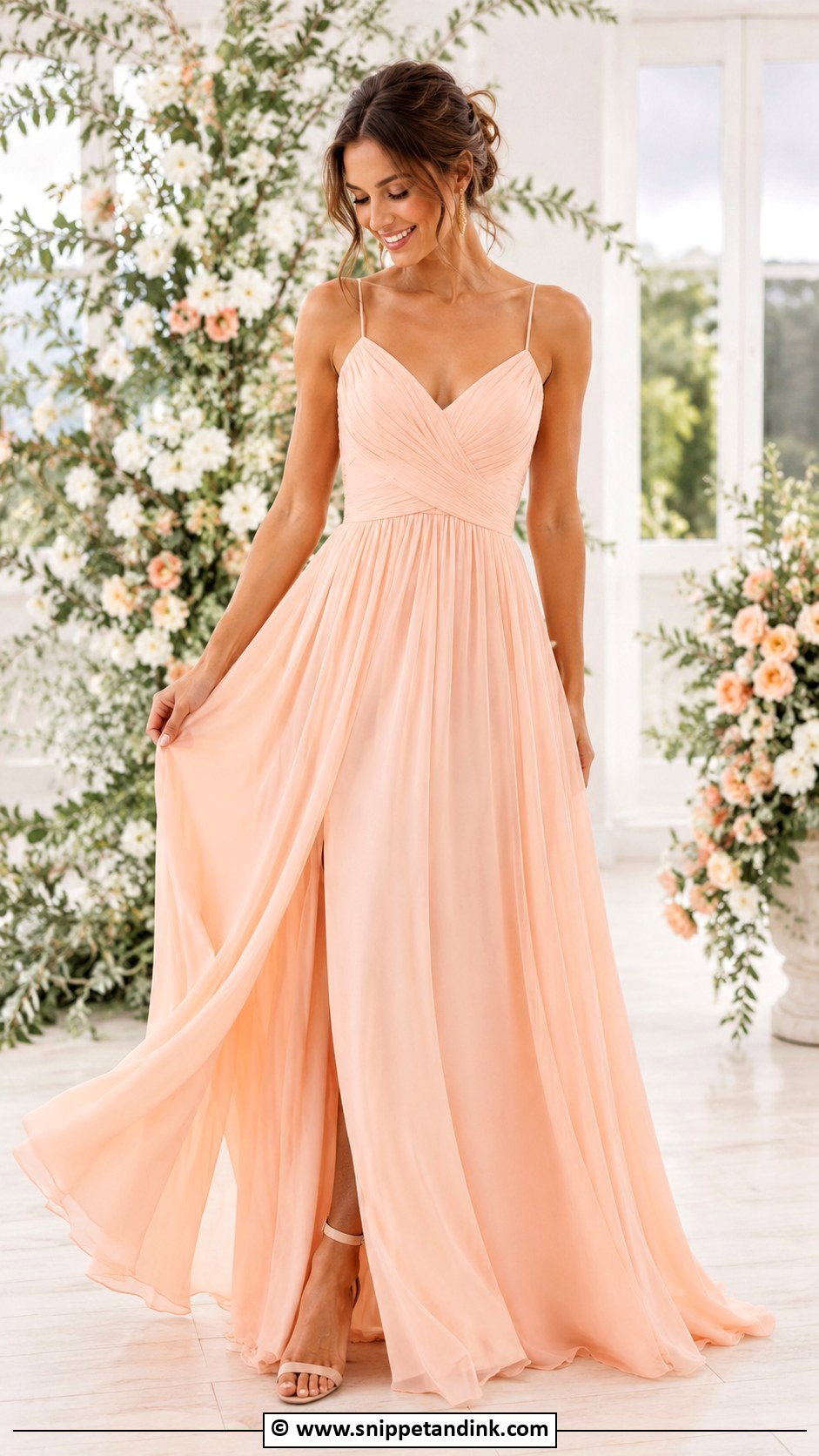
Peach sits between orange and blush and warms most skin tones. A chiffon gown with a pleated bodice, thin straps and a flowing skirt suits it, with nude heels, gold earrings and a relaxed updo with a few face-framing pieces. Cream, coral and soft green flowers echo the colour. Sunlit venues show it at its best. I keep accessories minimal so the gown stays light.
14. Coral Wedding Dress
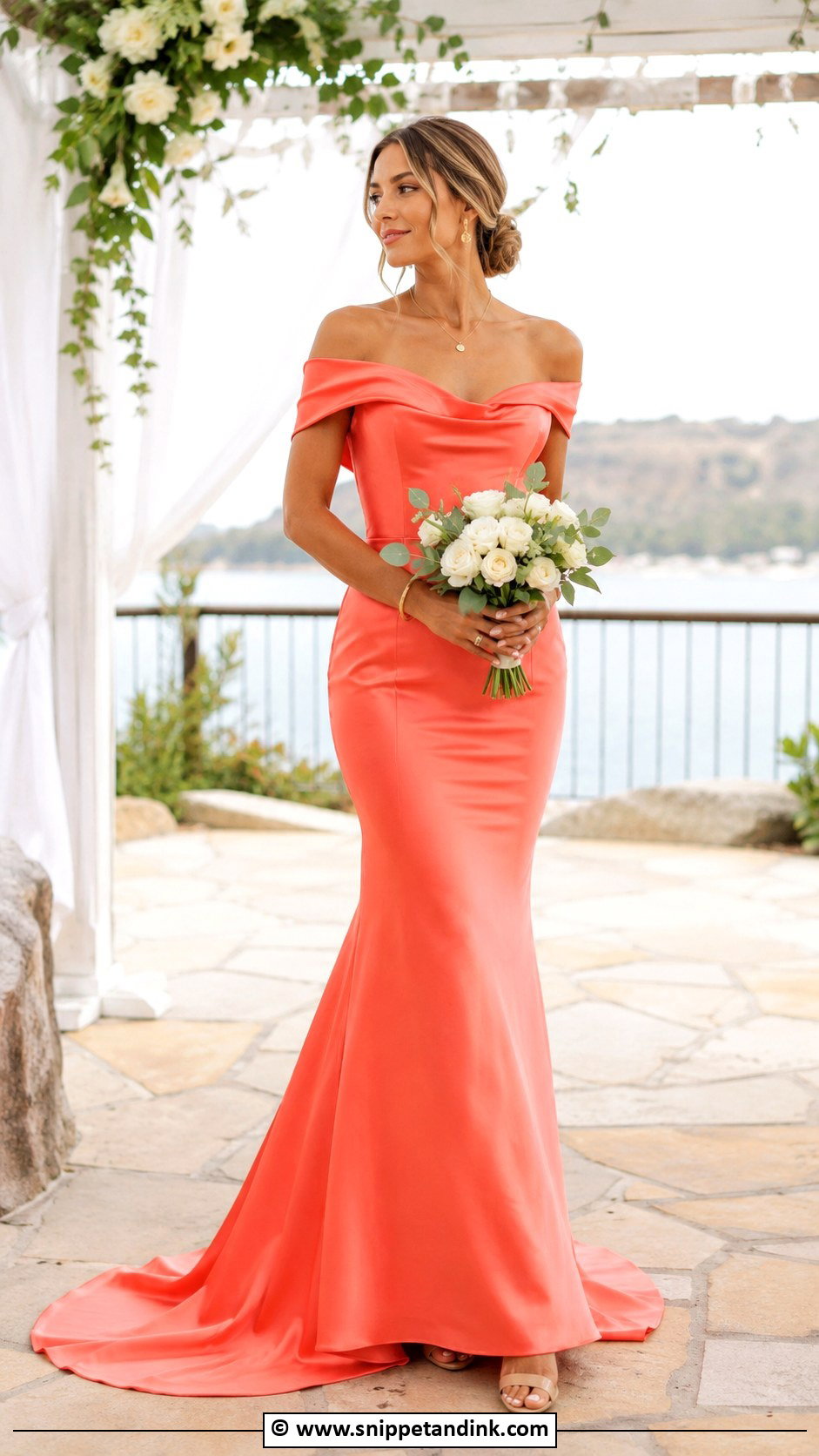
Coral is bolder than peach and photographs vivid, especially at a beach where the sky and sand are pale. A satin or crepe gown with an off-shoulder neckline and a soft mermaid shape gives it polish. Nude heels, gold jewelry and a low bun balance the colour. White flowers with peach accents and greenery keep the bouquet calm, and heavy accessories only compete with the dress.


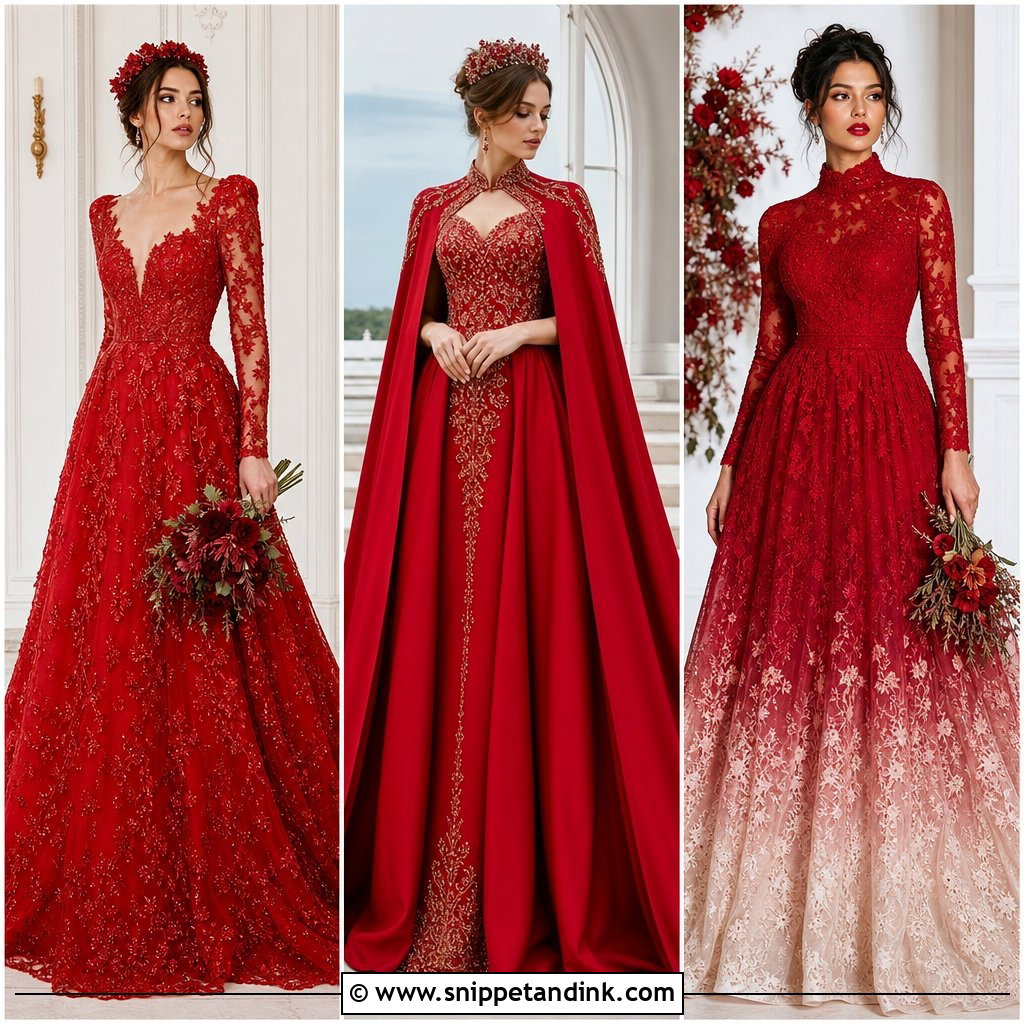
15. Red Wedding Dress
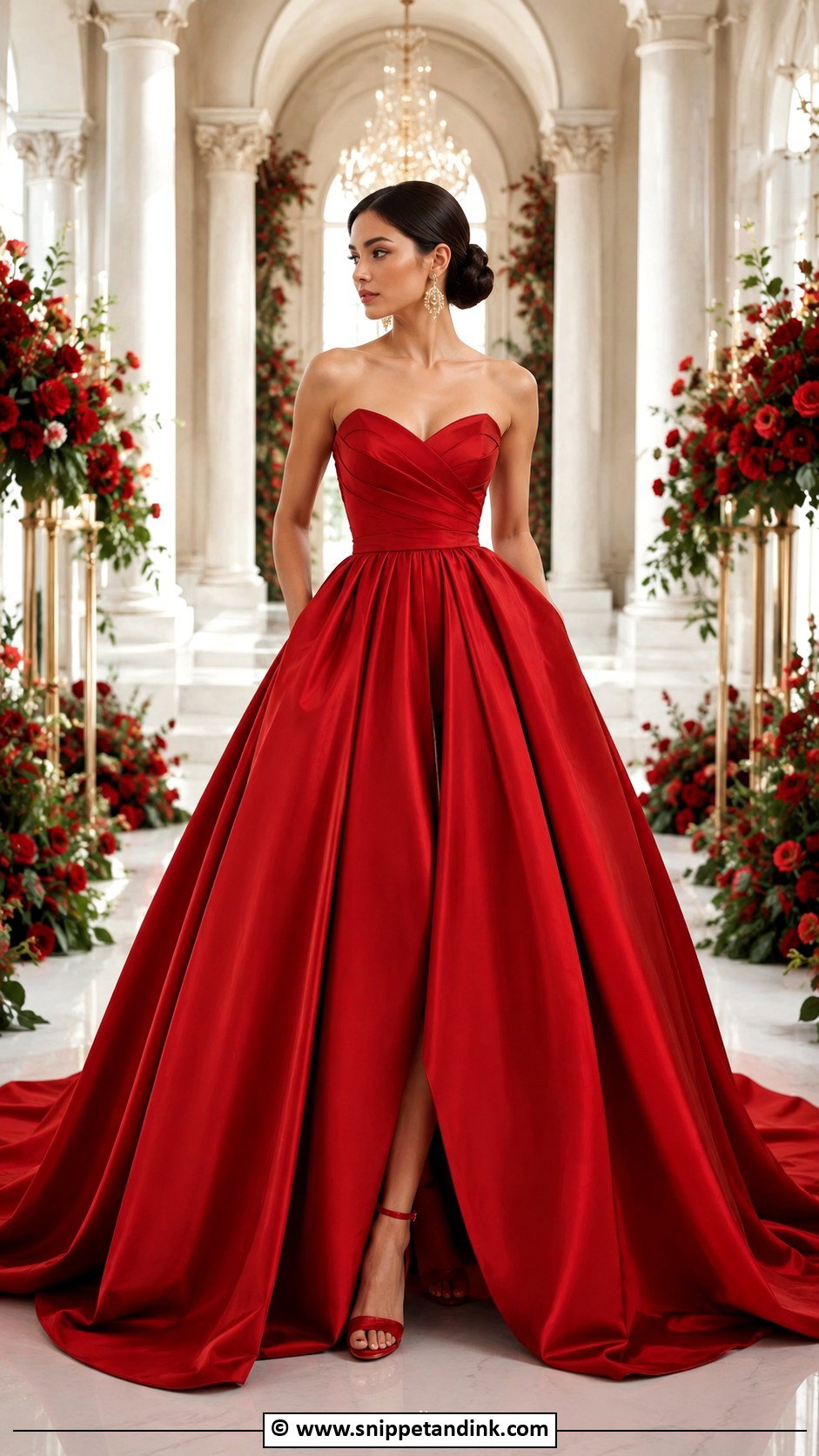
For many brides red isn’t a fashion choice at all. In Chinese, Indian and several other traditions it is the bridal colour, carrying meanings of luck, joy and celebration, and I always ask whether the dress has to work for a family ceremony as well. A ball gown with a structured bodice, a full skirt and a clean neckline feels grand. Red or nude heels, gold earrings and a sleek hairstyle keep the focus on the colour. Choose white roses, greenery or deep red flowers for the bouquet. Red needs simple styling around it.
16. Burgundy Wedding Dress
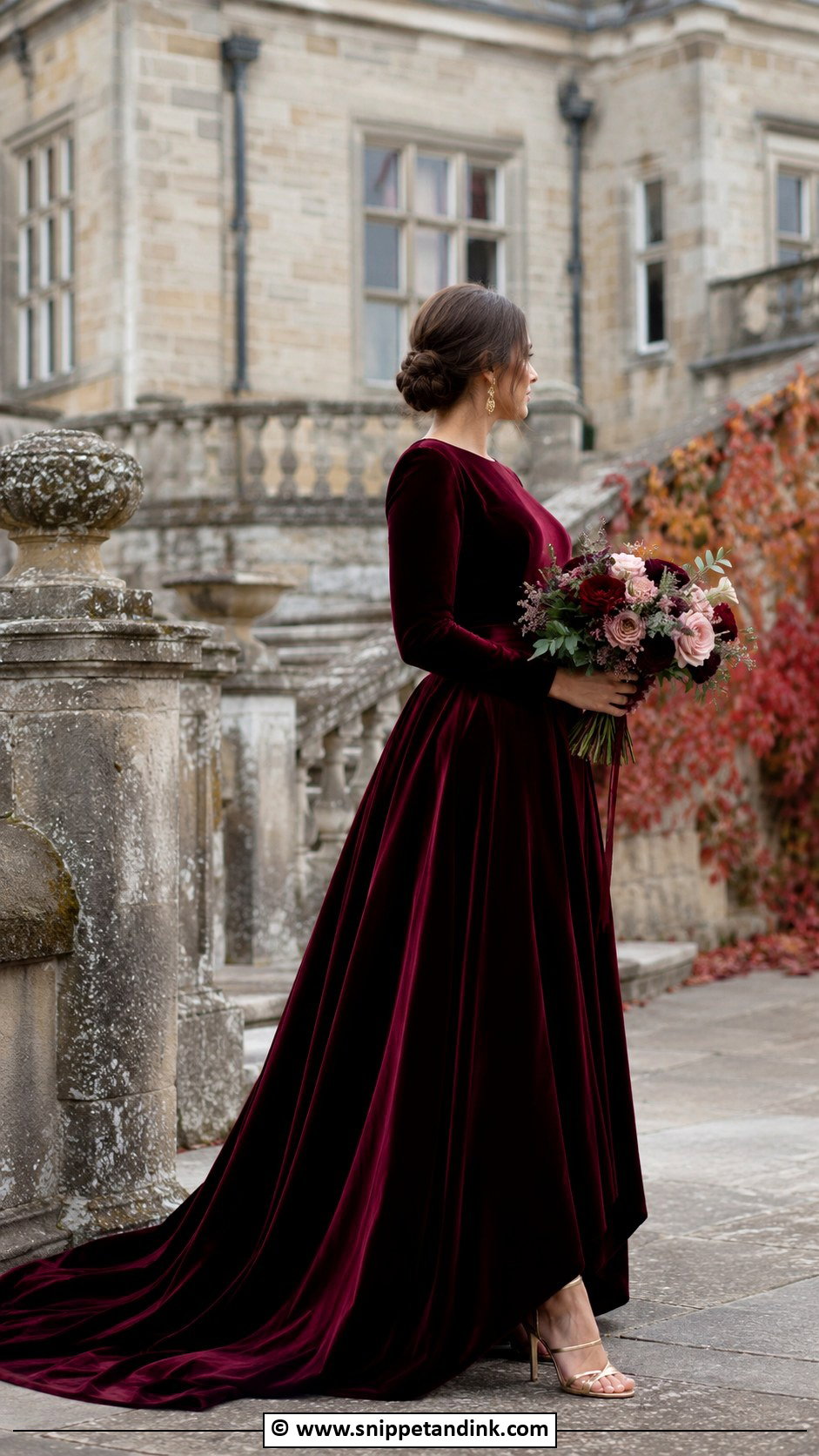
Burgundy has depth without the brightness of red, which makes it easier to wear and kinder to cool skin tones. A velvet gown with long sleeves, a fitted bodice and a flowing skirt suits fall and winter weddings at historic estates. Gold heels, vintage-style earrings and a low twisted bun finish it. Ivory flowers, dark greenery and a touch of blush in the bouquet look rich against it.
17. Black Wedding Dress
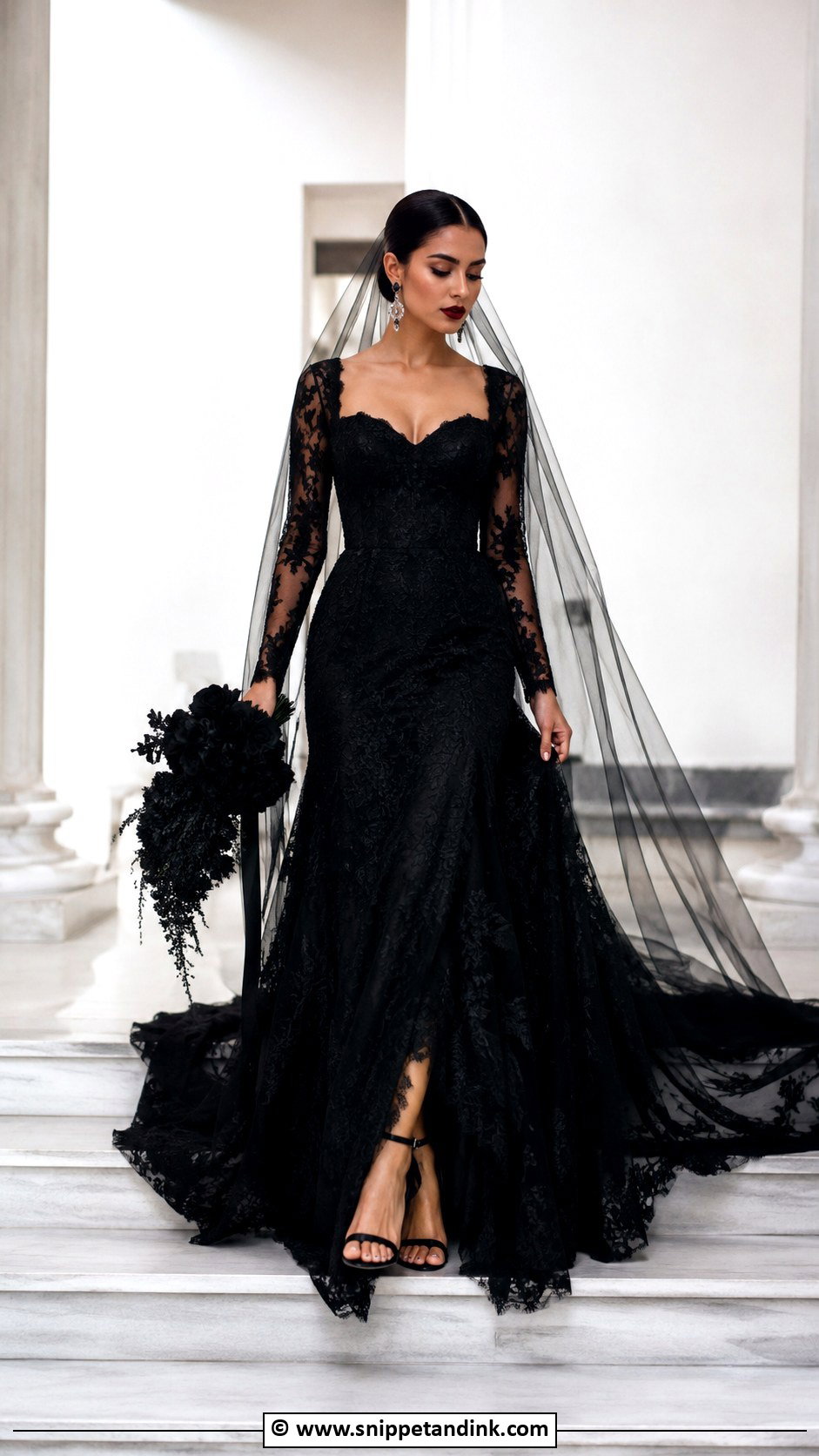
Black lace shows its pattern best against skin or a nude lining, so I look for sheer sleeves and a sweetheart neckline with a contrasting underlayer; solid black on black can turn into a flat shape in photos. A long train keeps it bridal. Black or silver heels, crystal earrings and a sleek veil give contrast. White flowers on green stems soften it at a gallery, rooftop or formal evening ceremony. Tell your photographer in advance, since black fabric needs different exposure to keep its detail.
18. Gray Wedding Dress
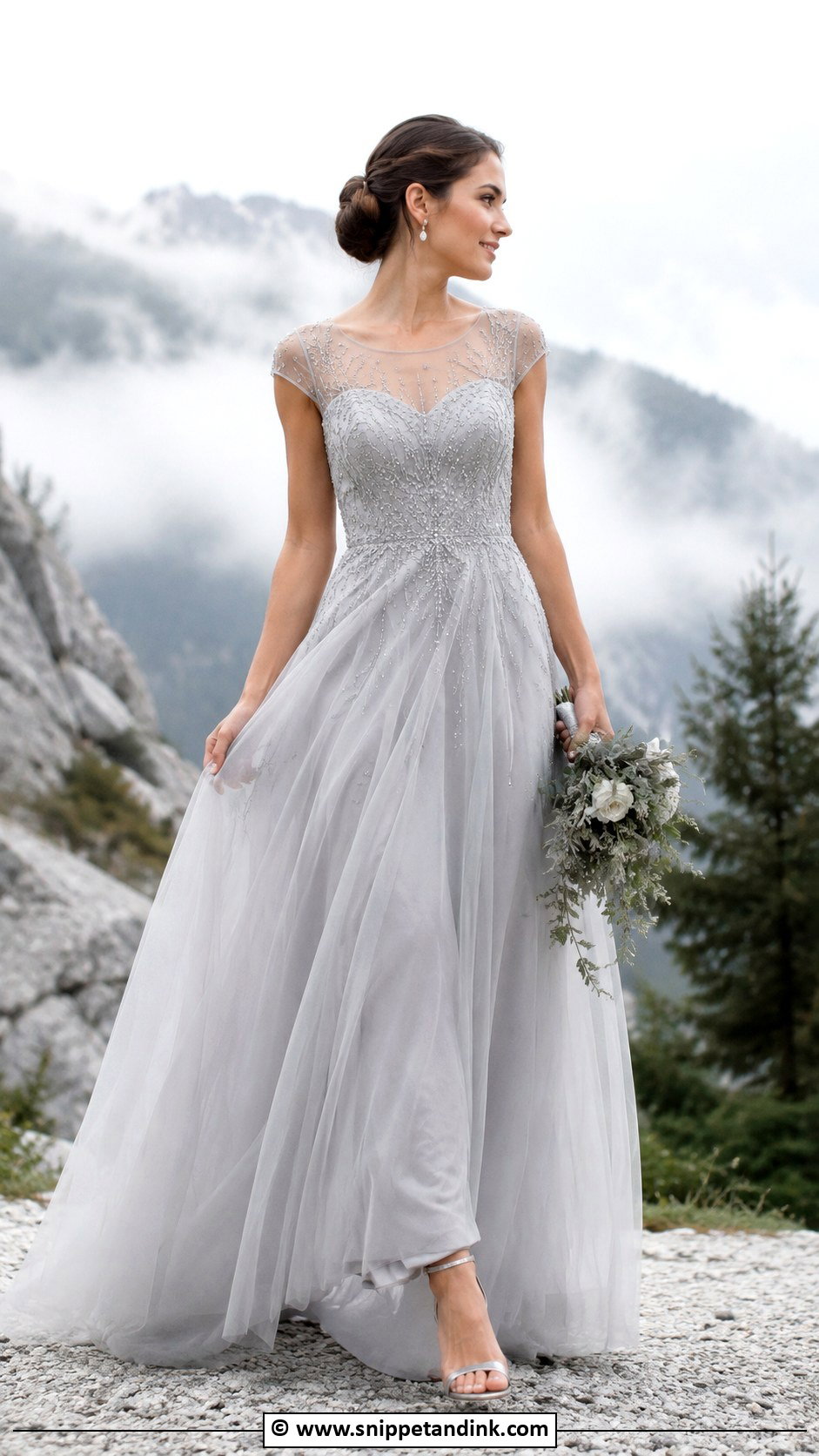
Grey sounds dull until you see a light silver-grey tulle in winter daylight. An A-line with a sheer neckline, delicate beading and a gentle train looks refined, and the colour sits well with both silver and white gold. Silver heels, pearl earrings and a smooth low bun suit it. I’d brighten the bouquet with white flowers, pale lavender and eucalyptus so the overall look doesn’t turn cold in a misty mountain setting.
19. Silver Wedding Dress
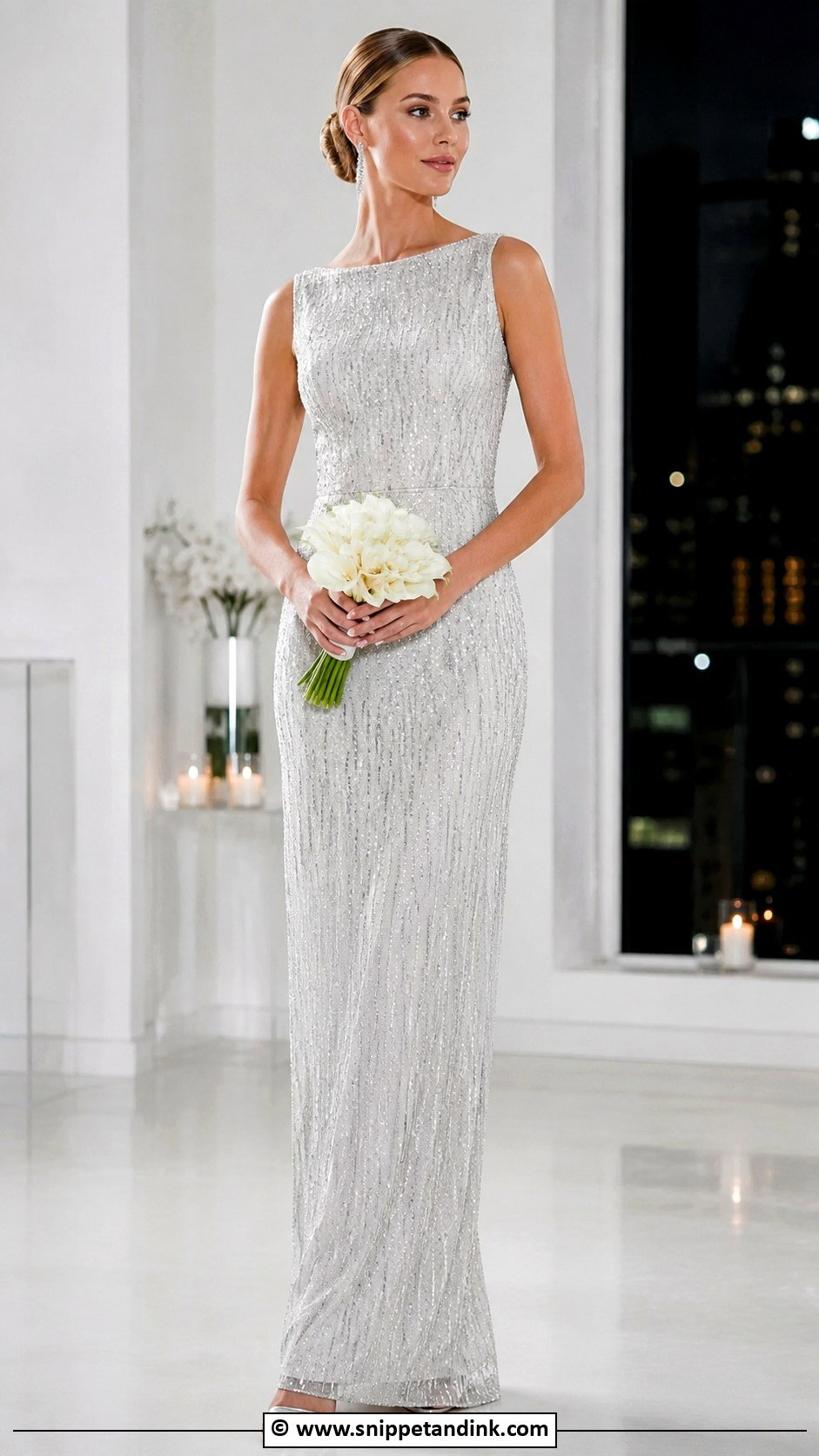
Silver reflects every light source in the room, so the styling has to be controlled. A beaded column or a metallic satin dress with a clean neckline and elegant drape is plenty; add silver sandals, crystal earrings and a polished updo and stop there. Too much sparkle in every piece turns busy fast. A simple white bouquet or a sculptural orchid arrangement gives it a modern finish for evening city receptions.


20. Navy Blue Wedding Dress
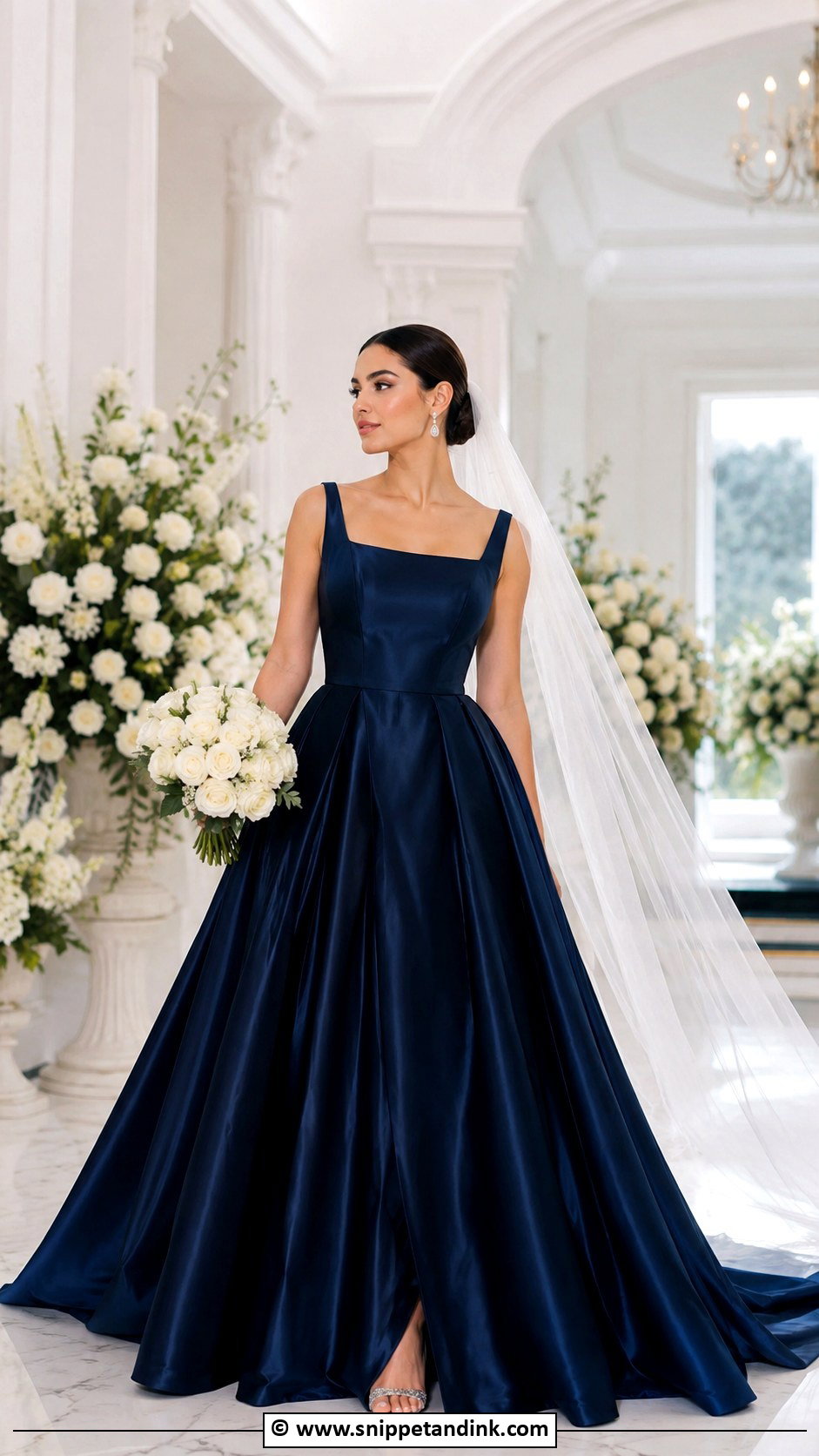
Navy is my answer when a bride wants a dark gown but finds black too severe. A satin ball gown with a fitted bodice and a sweeping skirt looks formal and calm, with pearl earrings, navy or metallic heels and a clean veil. It suits waterfront venues, winter ceremonies and classic ballrooms. White flowers and subtle greenery give it contrast. In photos, navy holds detail far better than black.
21. Royal Blue Wedding Dress
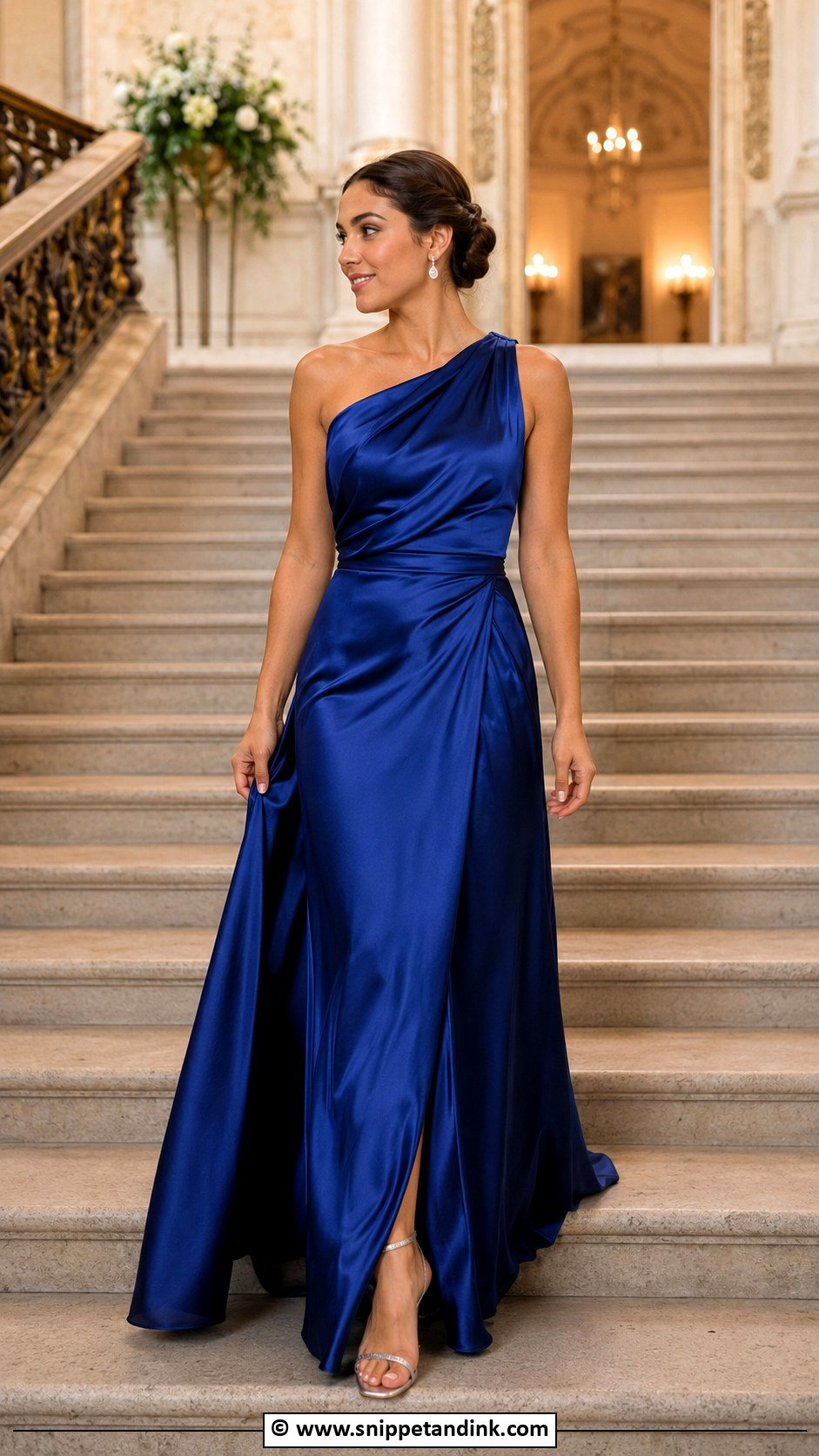
Royal blue is vivid enough that the cut has to be simple. A satin gown with a one-shoulder neckline, a fitted waist and a flowing skirt is modern and confident. Silver heels, simple earrings and a sleek ponytail or bun keep it polished. It looks regal on a grand staircase or in an indoor city venue. I’d keep the bouquet mostly white, with a few blue accents at most.
22. Teal Wedding Dress
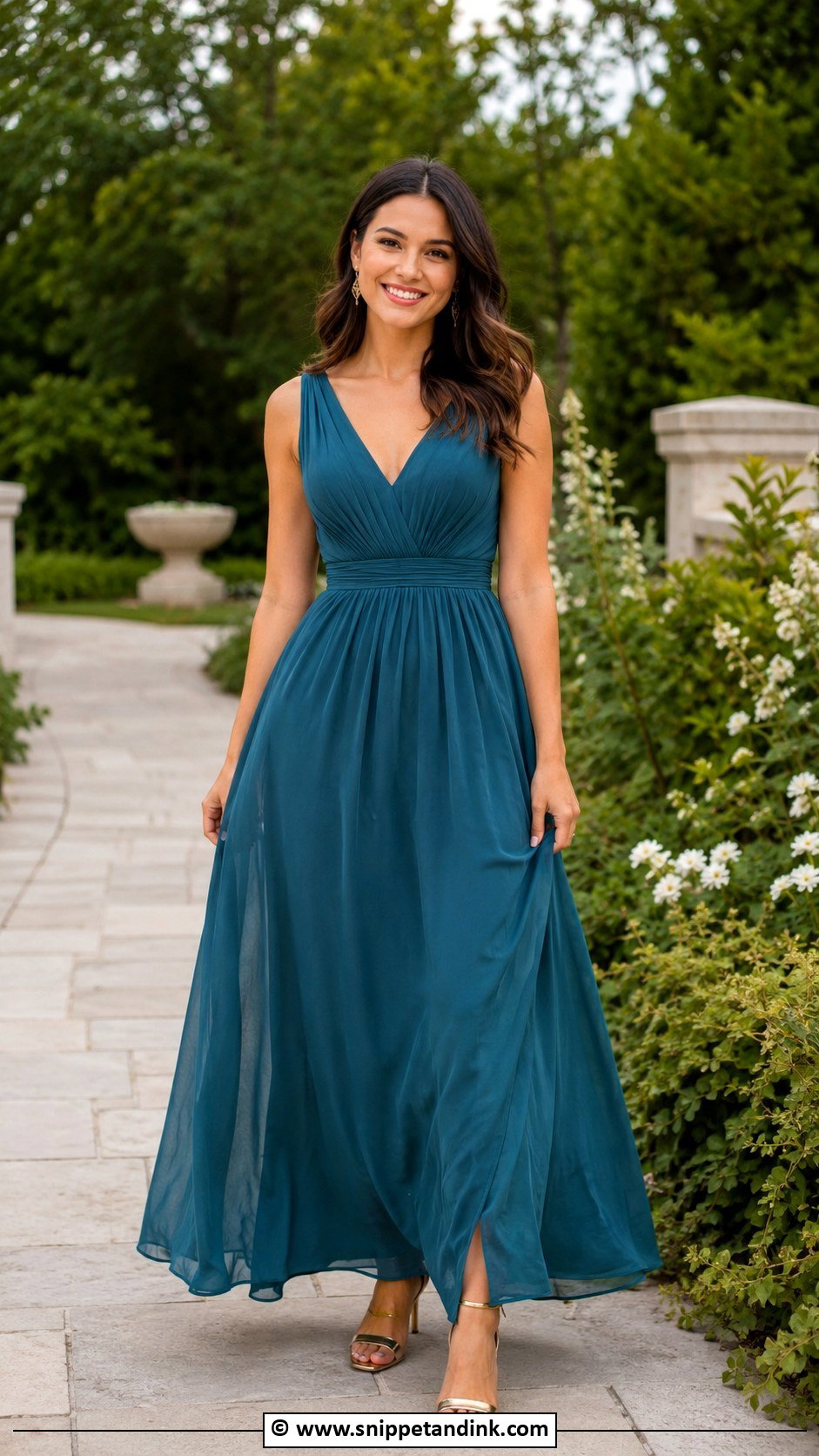
Teal shifts between blue and green depending on the light, which gives it depth outdoors near water or greenery. A chiffon or satin gown with a V neck, a fitted waist and a soft skirt works inside or out. Gold heels, delicate earrings and loose waves suit it. A bouquet of white flowers, pale peach blooms and eucalyptus softens the richness. It’s unusual without being a trend you’ll regret.
23. Purple Wedding Dress
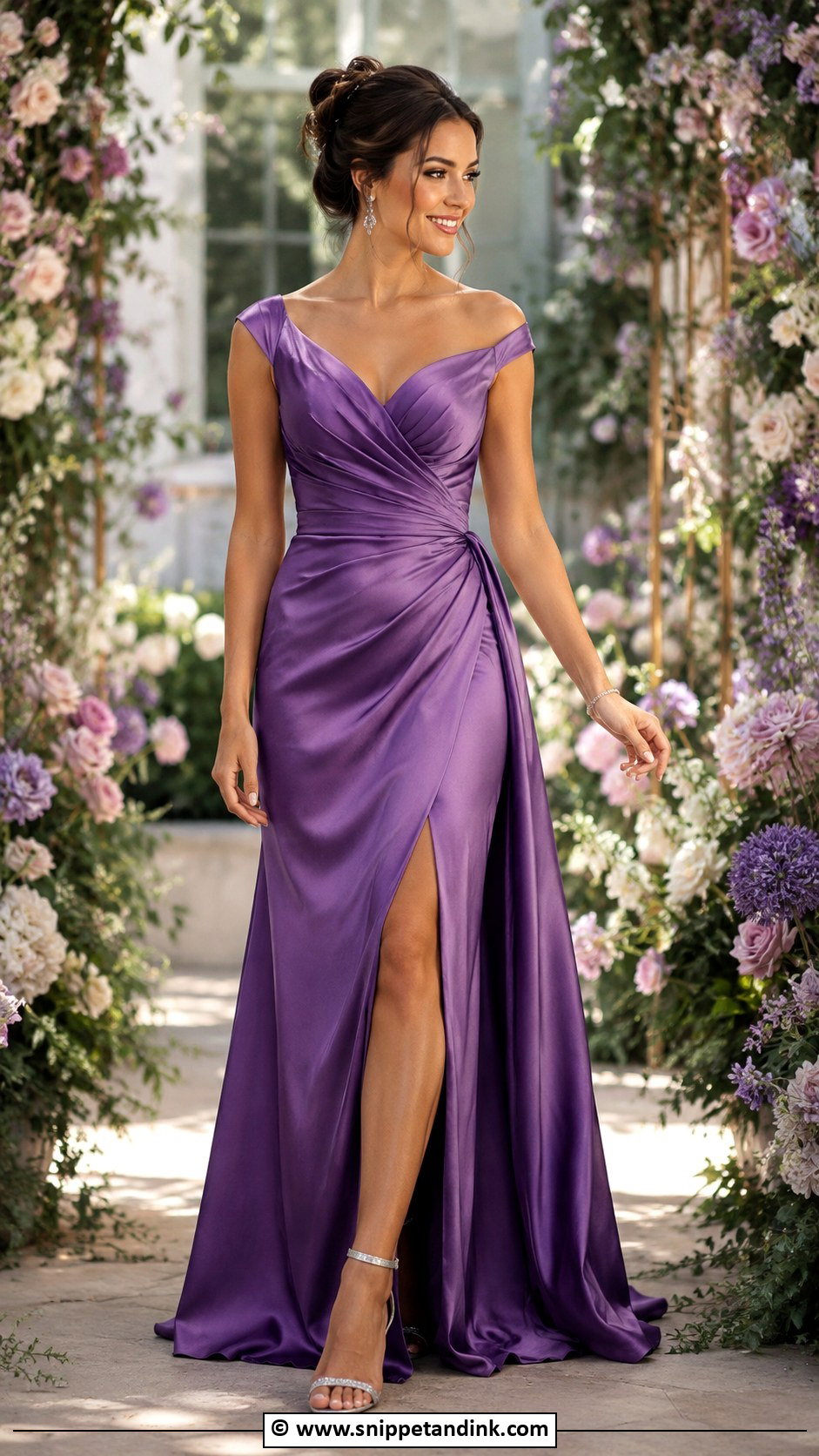
Medium purple has more presence than lavender and less heat than red. Satin, tulle or chiffon with an elegant neckline and a defined waist holds it best. Silver heels, crystal earrings and a soft updo work, and a bouquet in white, lavender and green keeps the palette intentional. As with lavender, check how your chosen shade looks on camera under warm light before ordering, since purples shift more than most colours. Gardens, evening ceremonies and artistic venues suit it.
24. Mauve Wedding Dress
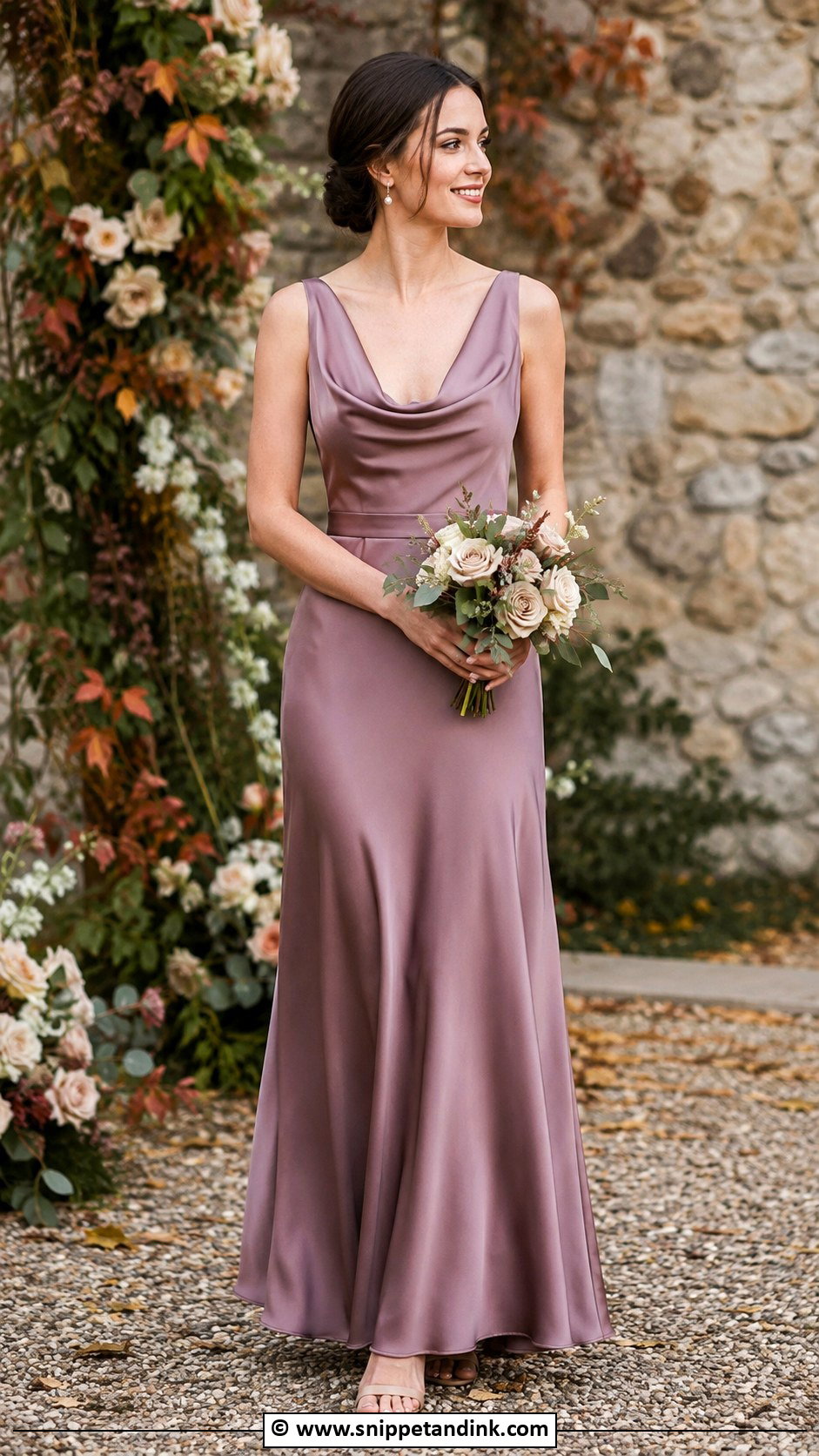
Mauve mixes pink, purple and a little grey, and that muted blend flatters more skin tones than most pastels. A crepe or chiffon gown with a cowl neckline, a fitted waist and a flowing skirt drapes beautifully in it. Nude heels, pearl earrings and a soft low bun keep it quiet. Cream flowers, dusty rose blooms and soft greenery suit fall weddings and intimate outdoor ceremonies.
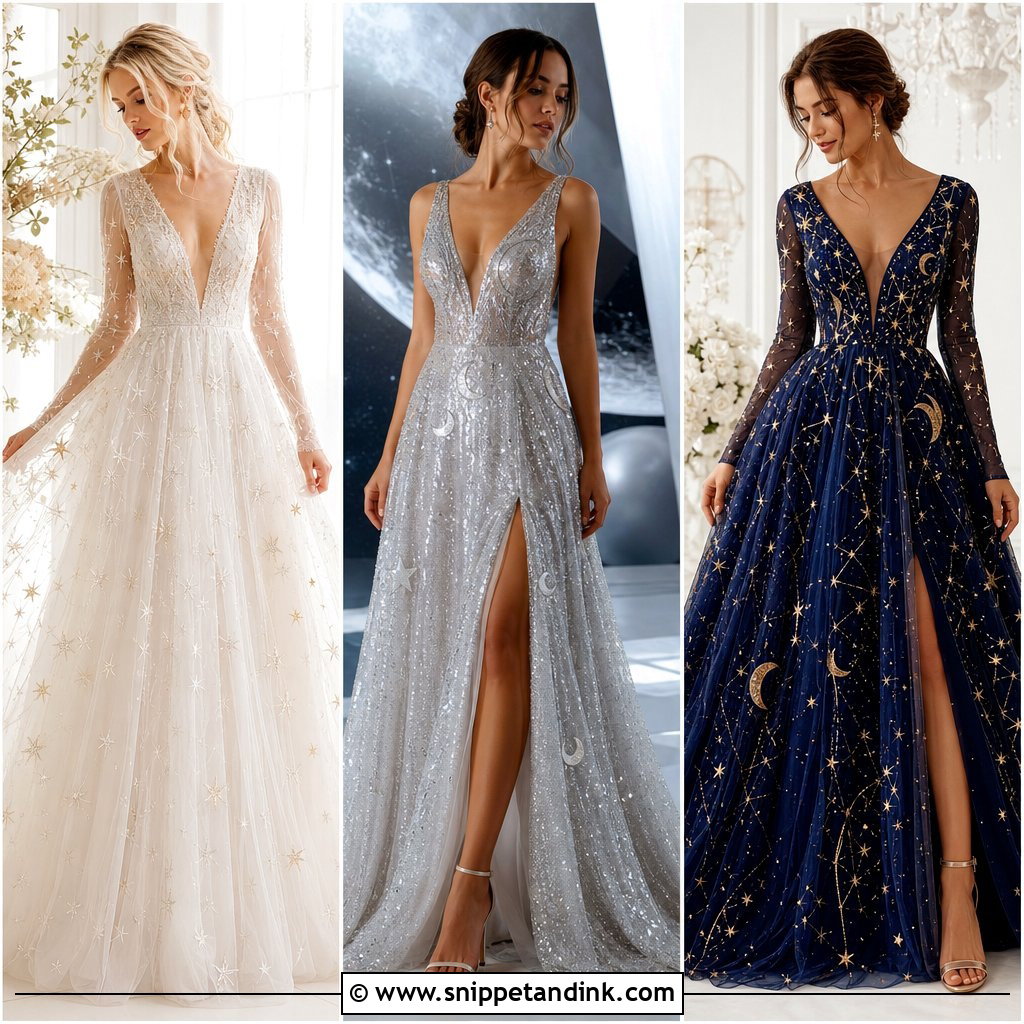

25. Floral Wedding Dress
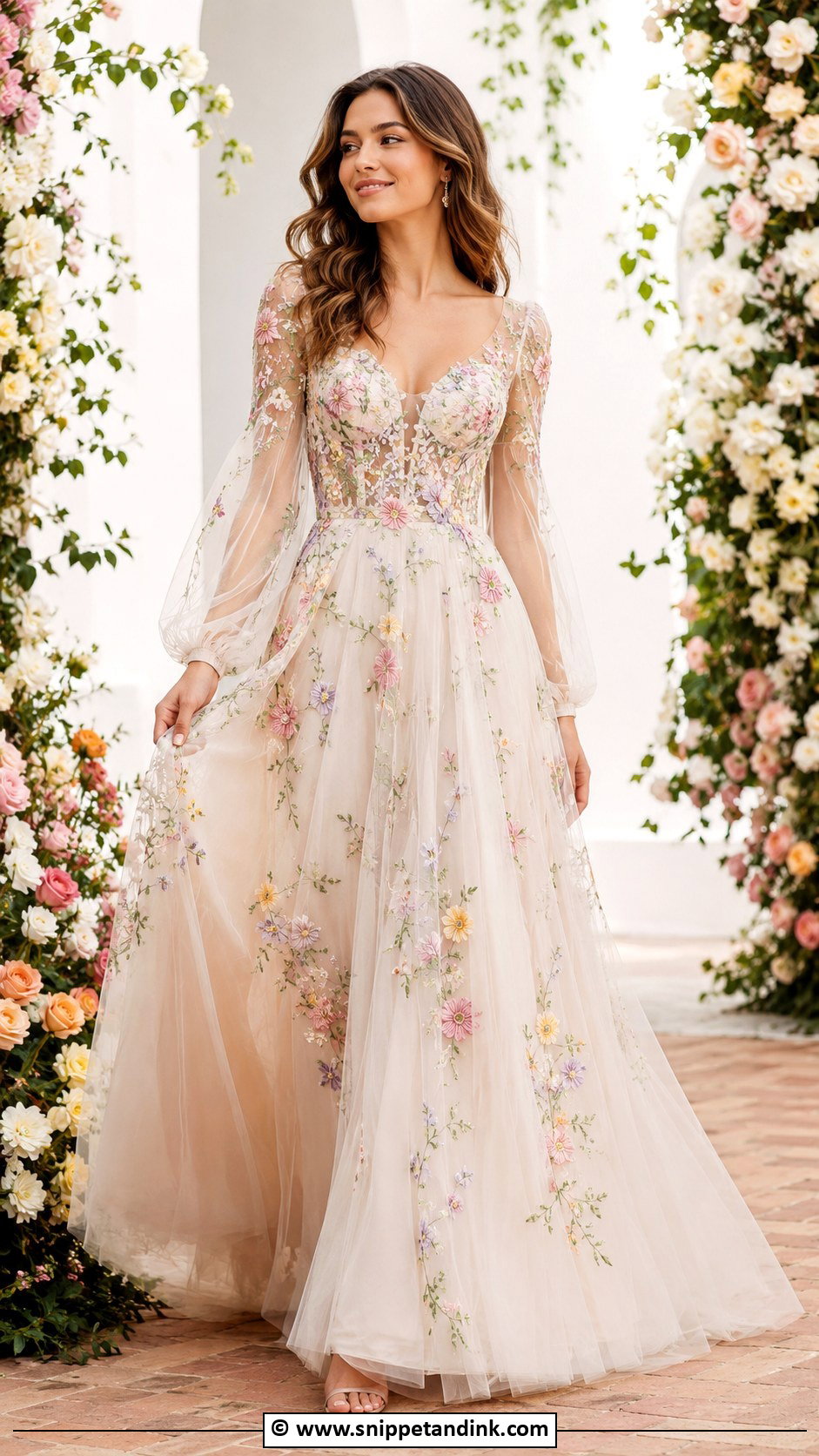
Embroidered florals give colour while keeping a white, blush or nude base, which is a good compromise for families who expect a pale dress. On tulle, with a fitted bodice, sheer sleeves and a full skirt, the flowers look hand-placed. Look closely at the embroidery: dense thread work on fine tulle can pucker, while well-backed appliqué lies flat. Simple heels, delicate earrings and loose waves suit it. Keep the bouquet lighter than the dress, and save it for spring or garden ceremonies.
26. Ombre Wedding Dress
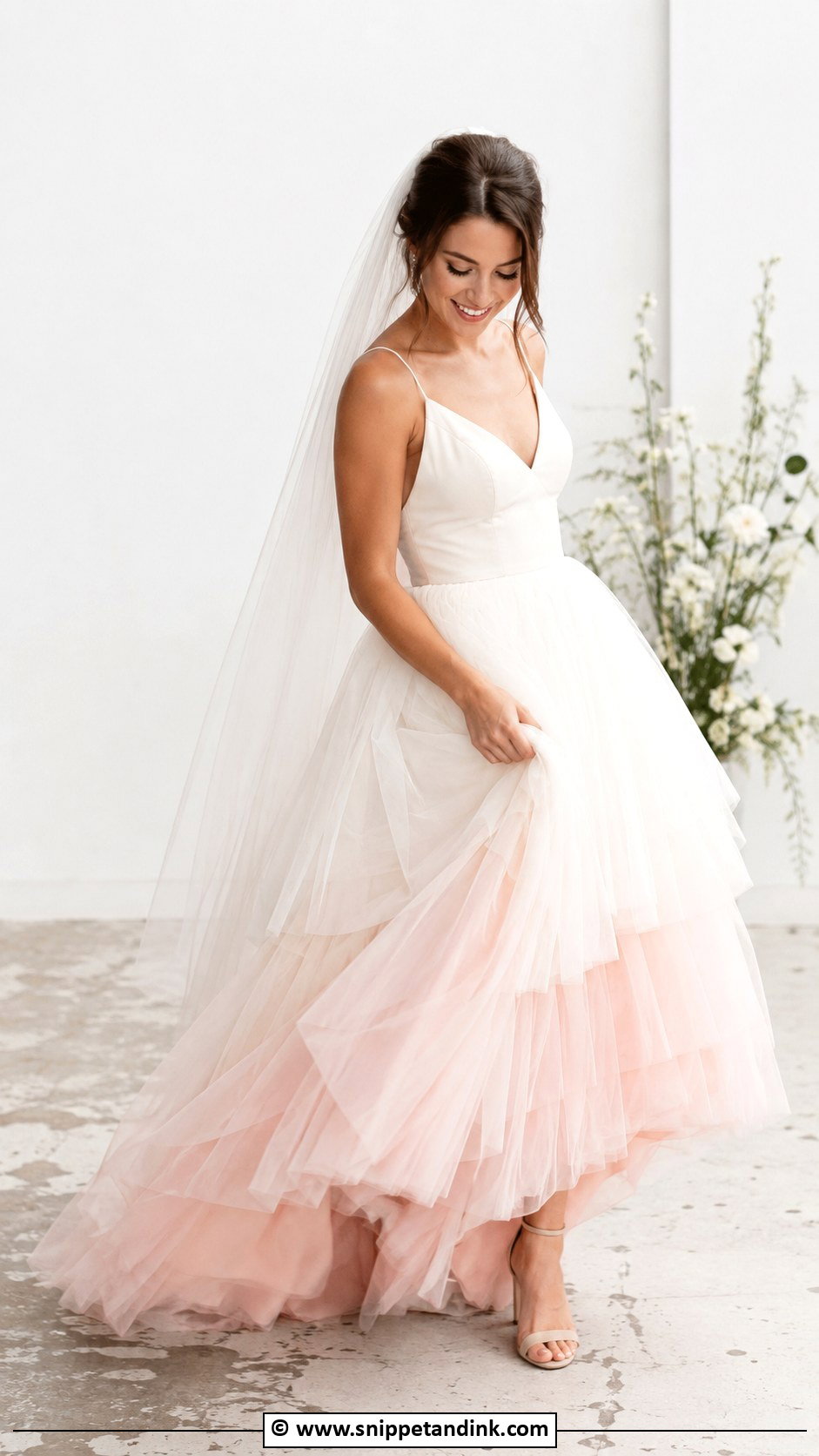
Ombre lets colour build gradually: ivory to blush, white to blue, champagne to gold or lavender to pale pink. In layered tulle, the fade moves as you walk, which is the whole appeal. The dyeing is done by hand on many of these gowns, so two dresses of the same style can differ slightly; ask to see yours before final payment. Neutral heels, small earrings and a clean veil suit it, with flowers matching the lightest shade.
27. Pastel Rainbow Wedding Dress
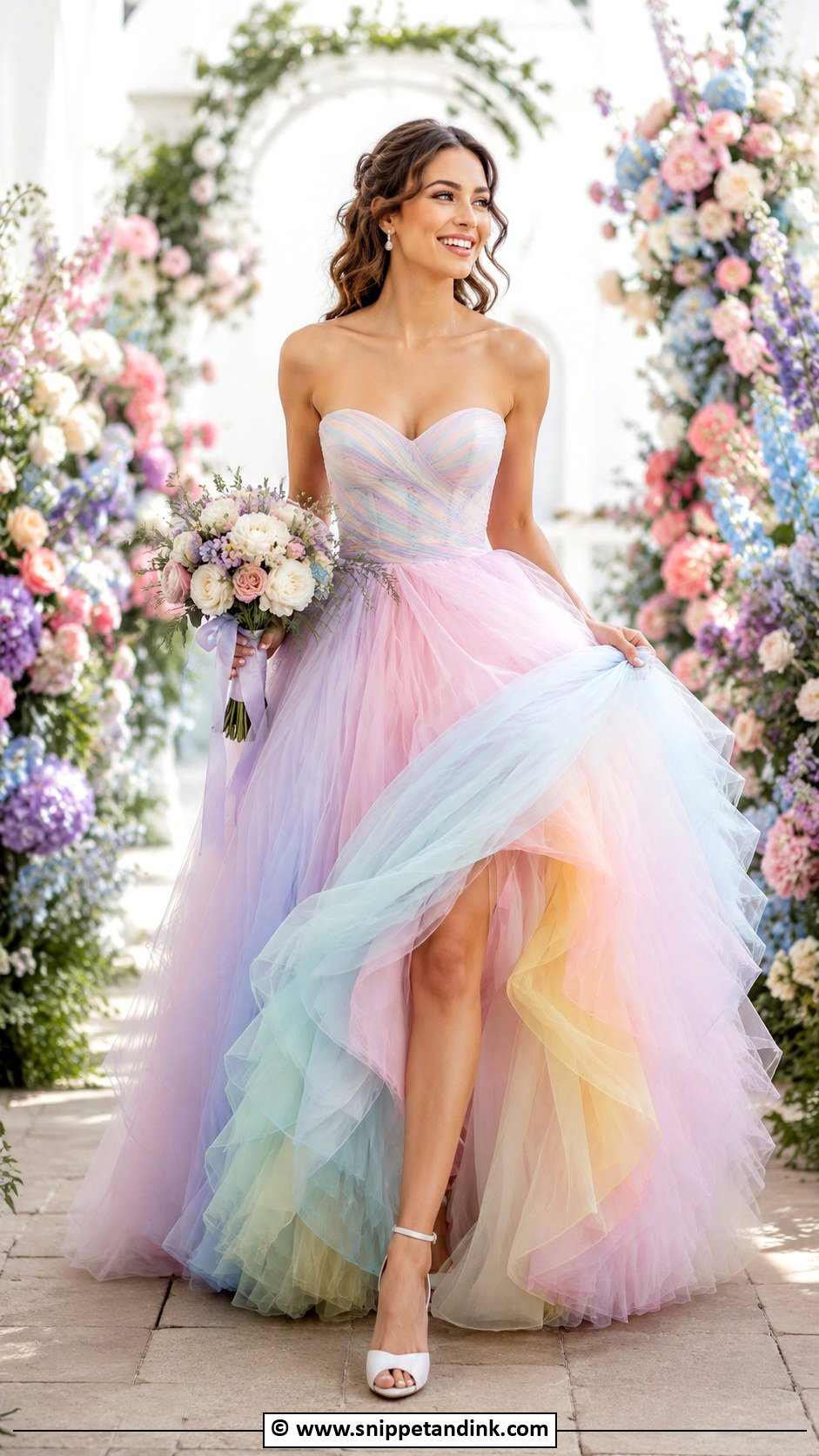
Softness is the only rule for A pastel rainbow wedding dress. Pale bands of pink, lavender, blue, mint and yellow on soft tulle feel joyful; saturated stripes start to look like a party costume. A structured bodice keeps it bridal. White heels, pearl earrings and soft curls suit it, and with this many colours already in play, the bouquet should be white with a few pastel accents. Gardens and creative venues suit it best.
28. Brown Wedding Dress
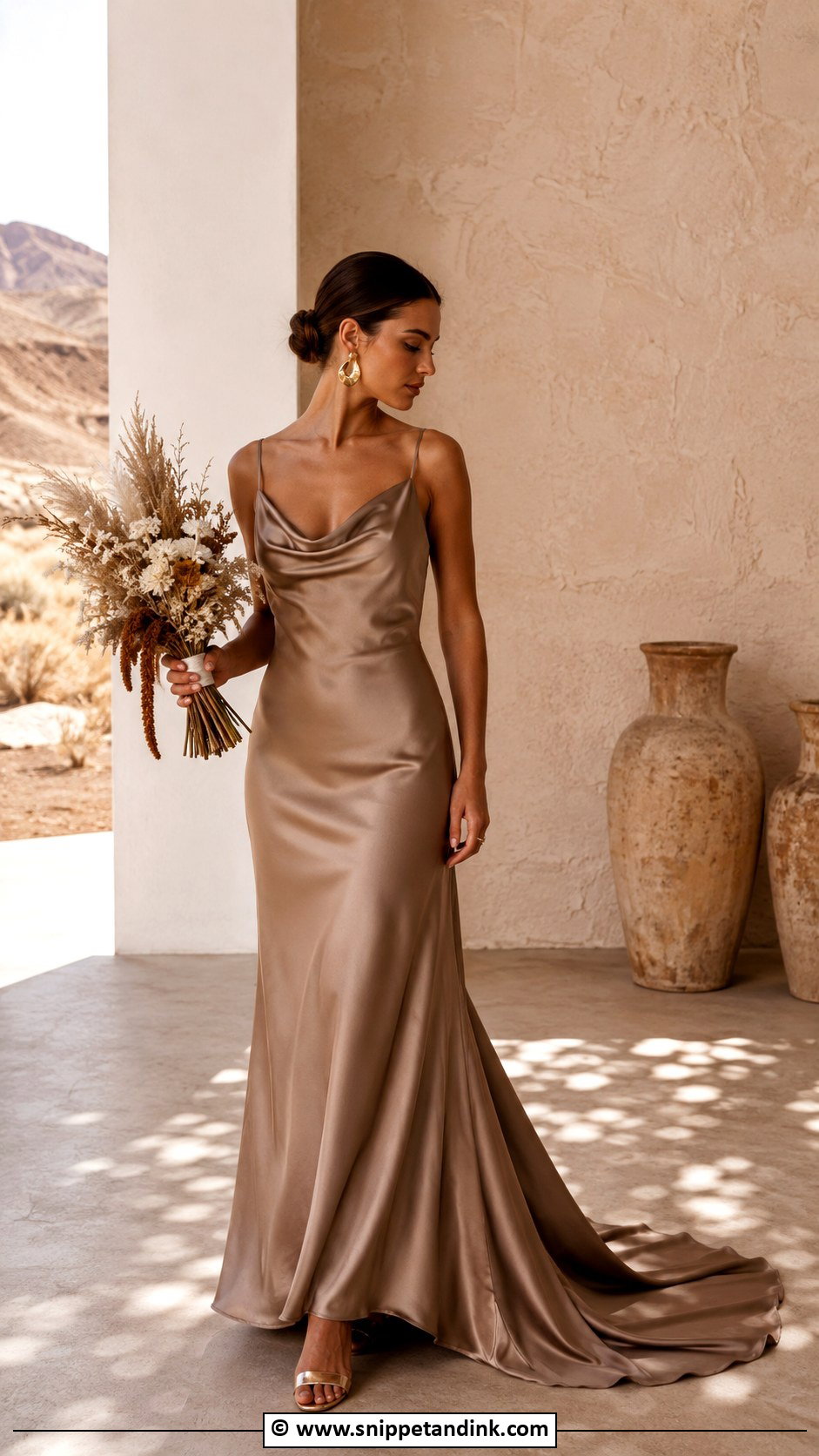
I steer brides toward mocha, cocoa or a bronze-brown rather than a flat dark brown for A brown wedding dress, because a slight warmth or sheen keeps it from looking drab in photos. A satin slip with a draped neckline, a close fit and a subtle train is chic. Gold heels, sculptural earrings and a smooth bun finish it. Fall weddings, desert venues and minimalist ceremonies suit it, with cream flowers, caramel tones and olive greenery in the bouquet.
29. Orange Wedding Dress
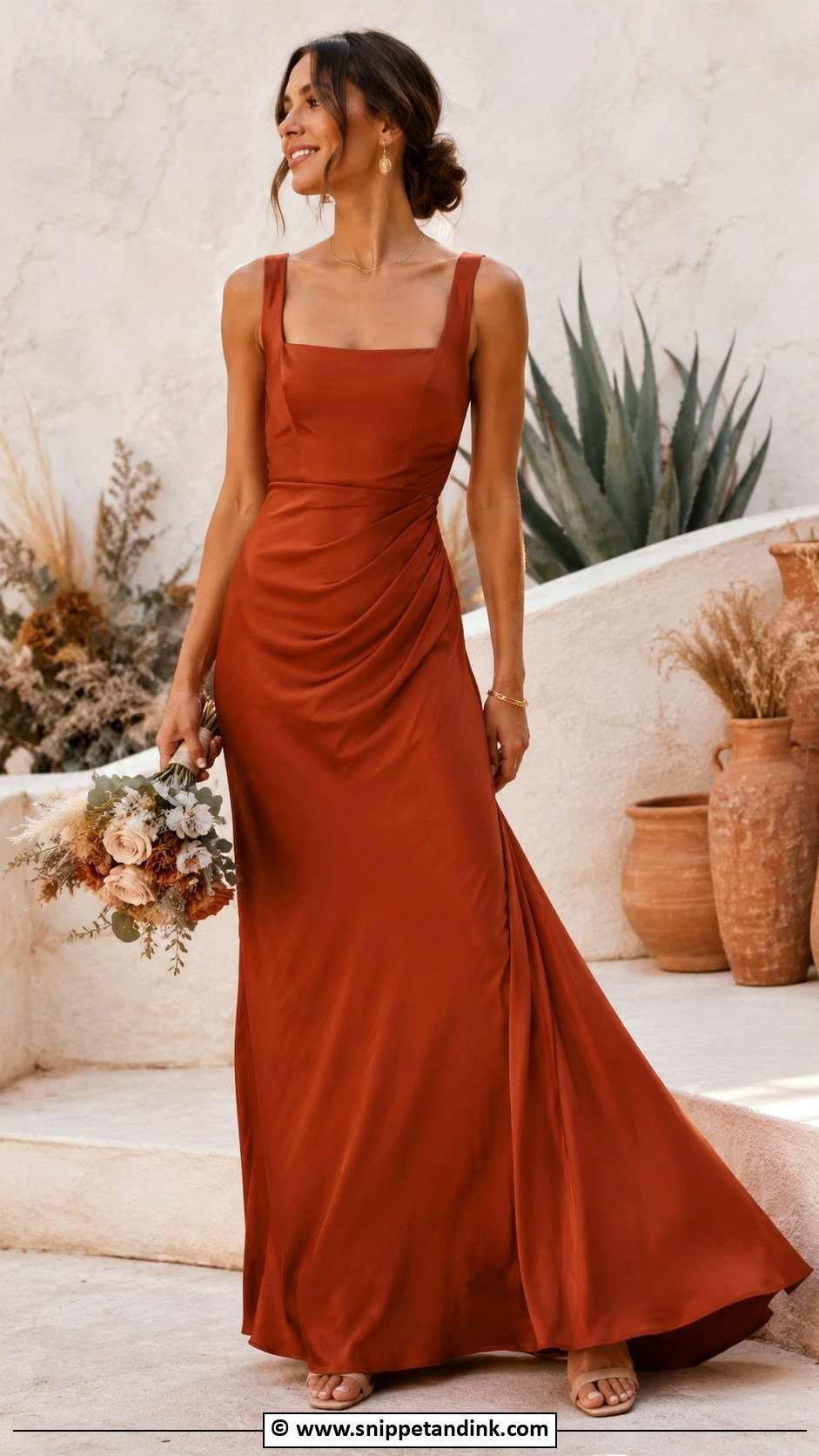
Orange needs the right version for the season: apricot in spring, terracotta or burnt orange in fall. An orange wedding dress in terracotta satin with a square neckline, a fitted waist and a flowing skirt is modern without trying. Nude heels, gold jewelry and a low textured bun suit it. Cream flowers, rust accents and greenery keep the bouquet balanced. It’s not for every bride, and I’d say so honestly, but on warm skin in a desert setting it’s memorable.
30. Printed Wedding Dress
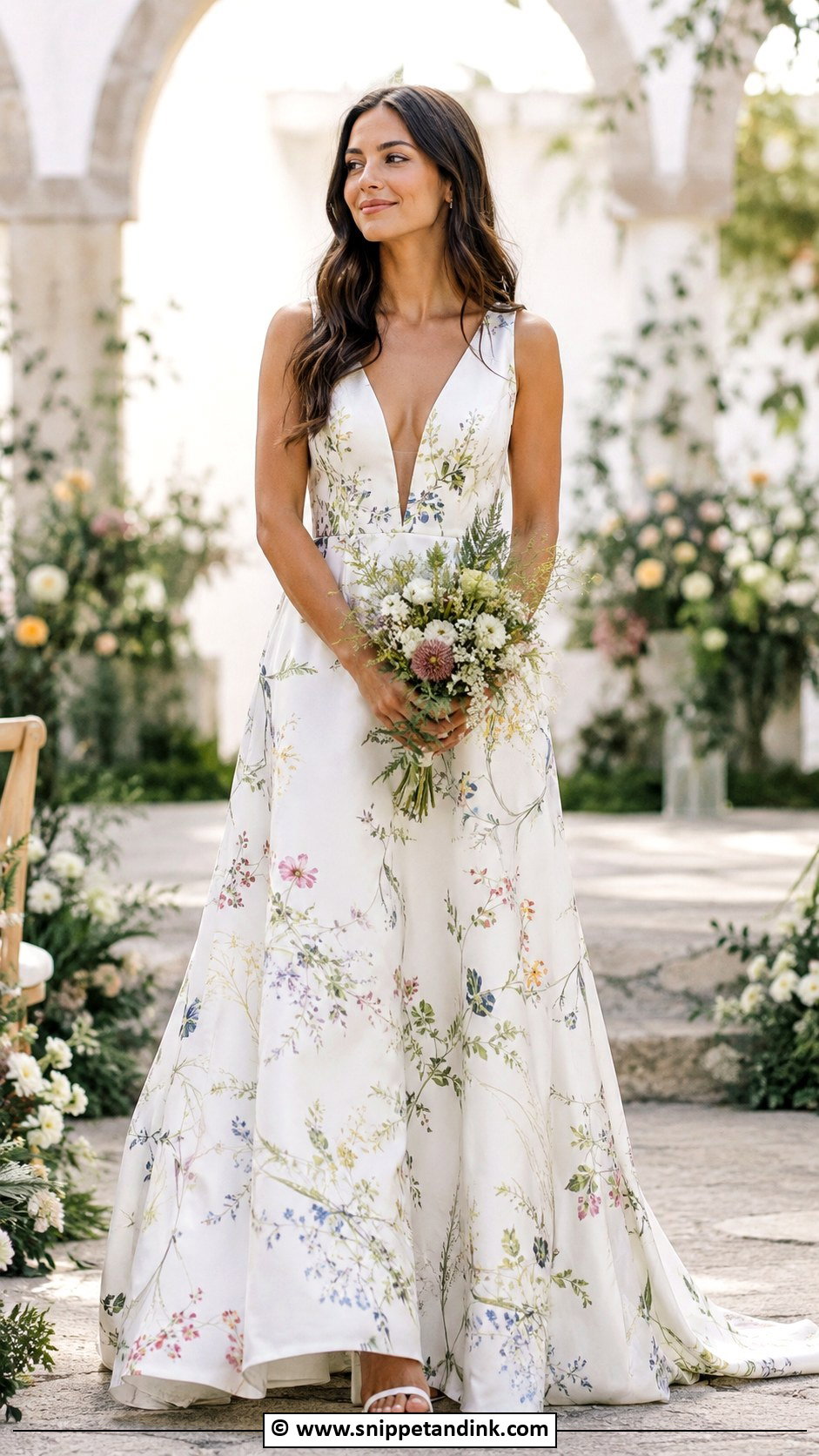
A busy print needs a simple shape, so I look for an A-line skirt or a fitted bodice with clean seams. Florals are the most common, but watercolour, botanical, abstract or small pattern prints can all look bridal. Check where the print lands at the fitting; a large flower placed at the bust or hips draws the eye there. Simple shoes, small earrings and natural hair keep it calm. Pull one or two colours from the print into the bouquet for a garden or destination wedding.
Custom Colour Orders Take Longer
Many designers will dye a white style in another shade, but it adds time because the fabric has to be dyed or sourced before cutting. Ask the shop how much extra time a colour adds for that designer, and order earlier than you would for a white gown. Two things I always confirm in writing: the exact colour name on the order, and whether lace, lining and tulle are dyed together. Different fabrics take dye differently, so a lace bodice and a tulle skirt can come out a shade apart unless the maker matches them.
Getting the Bouquet, Party and Family on Board
With a white dress, the florist and bridesmaids work around a neutral. With colour, they have to work around you. Send your florist a swatch, not a screenshot, since screens change colour. Choose bridesmaid dresses that sit a step lighter, darker or in a neutral, so you don’t disappear into a row of matching blue.
Some families have strong feelings about bridal colour, for tradition, religion or simple expectation. If you think it will surprise anyone close to you, I’d tell them before the wedding rather than letting them see it as you walk in. A calm conversation weeks ahead is easier than a tense one on the morning.
Colour Works When Everything Around It Agrees
Colour gives you more room to choose a dress that feels like yours. Blush, icy blue, emerald, burgundy, black or floral embroidery can all connect your outfit to your personality, the season and the place. The work is in the styling: shoes, jewelry, bouquet and hair need to agree with the shade. A coloured gown should still feel bridal, polished and comfortable, and with the right shade and silhouette, any of these thirty can be the one you wear.
You'll Like These Ideas:






Leave a Reply