
A roka is usually the first time both families sit together as relatives, so the outfit has a slightly odd job: it has to look dressed up in close-range phone photos, yet still let you sit on a floor cushion through a puja and bend to touch elders’ feet a dozen times. That is why I steer most brides toward lighter weights here: organza, georgette, chanderi, crepe and soft silks that move with you instead of fighting you. Save the heavy bridal work for the wedding itself. Below are the looks I would actually put on a bride-to-be, from pastel lehengas to guest-ready ethnic outfits, with notes on how each one behaves once the rituals start.
Dressing Around the Roka Rituals Themselves
Before I talk about color or embroidery with a bride-to-be, I ask what will actually happen at her roka. The answer changes the outfit more than any trend does, because a roka is mostly sitting, bowing, being fed sweets and receiving gifts, often on a floor cushion in a crowded living room.
Sitting on the floor for the puja
If there is a havan or puja, you may sit cross-legged for thirty minutes or more. Wide lehenga skirts and shararas handle this well; fitted gowns, mermaid skirts and pencil-cut sarees do not. At the fitting I ask brides to sit on the floor and stand up again twice. If the blouse rides up or the skirt hook strains, it gets fixed then, not on the morning.
The chunni and the tilak
In many Punjabi families the groom’s mother or sisters drape a chunni over the bride’s head and give her a tilak. Wear an outfit where a second dupatta can sit on top without clashing, and keep your own dupatta pinned on one shoulder so it can be moved. Avoid very high updos with lots of pins, since the chunni will flatten them.
- Bending to touch elders’ feet: a fitted blouse needs at least a finger of ease across the back.
- Accepting gifts and sweets: sleeves that end above the wrist stay out of the mithai.
- Hugging a lot of relatives: matte embroidery near the shoulders catches less on jewelry and hair than sequins or mirror work.
1. Pastel Lehenga For Roka Ceremony
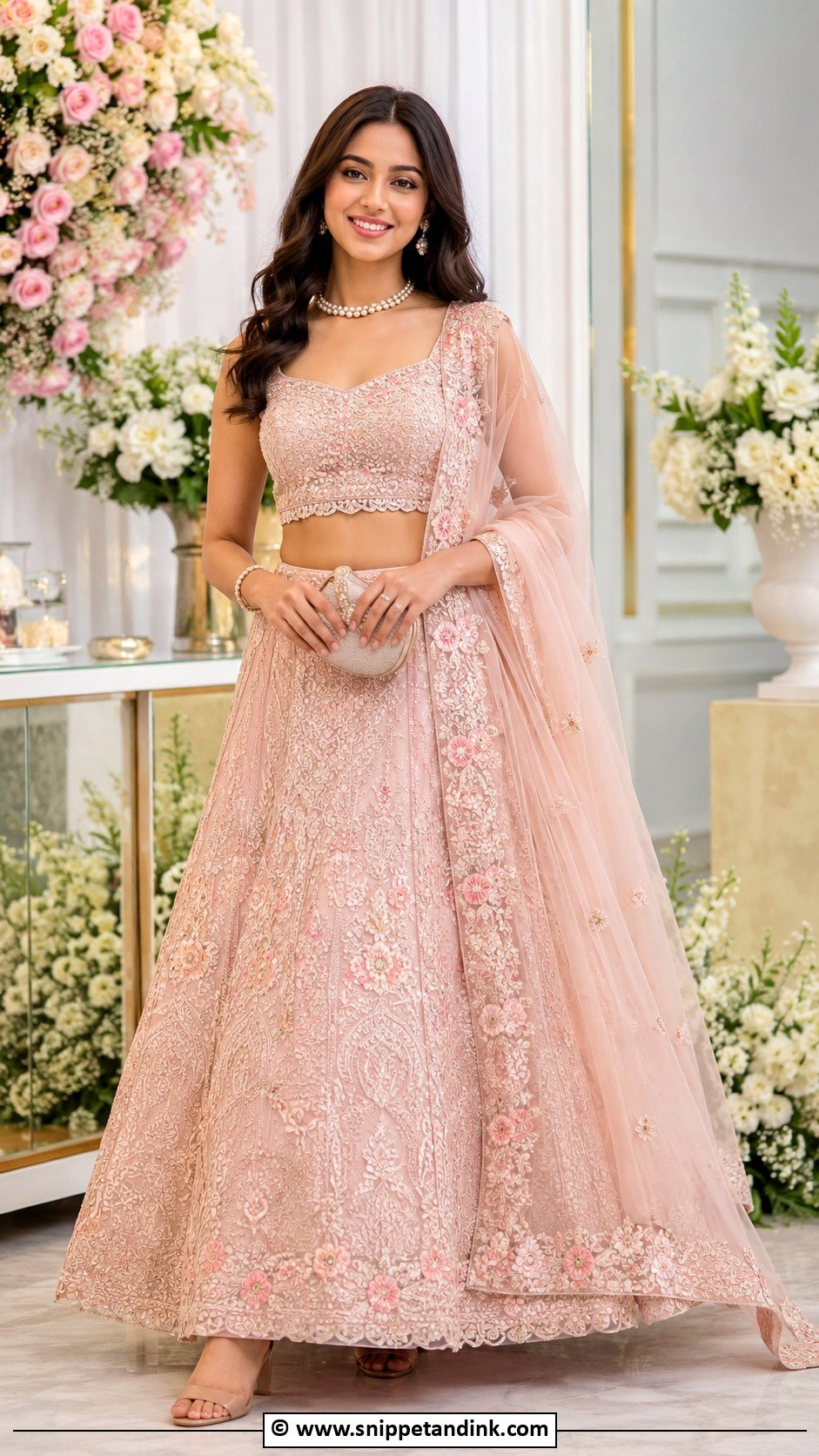
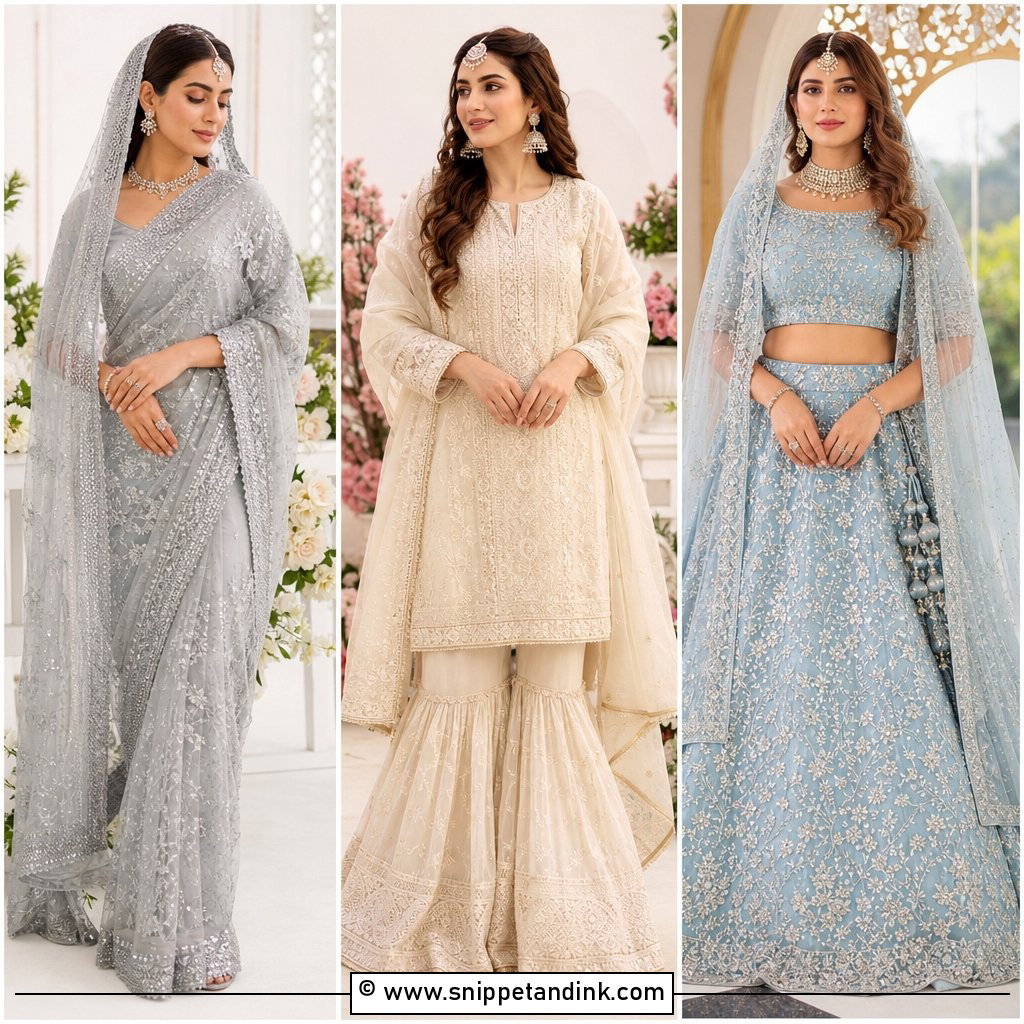
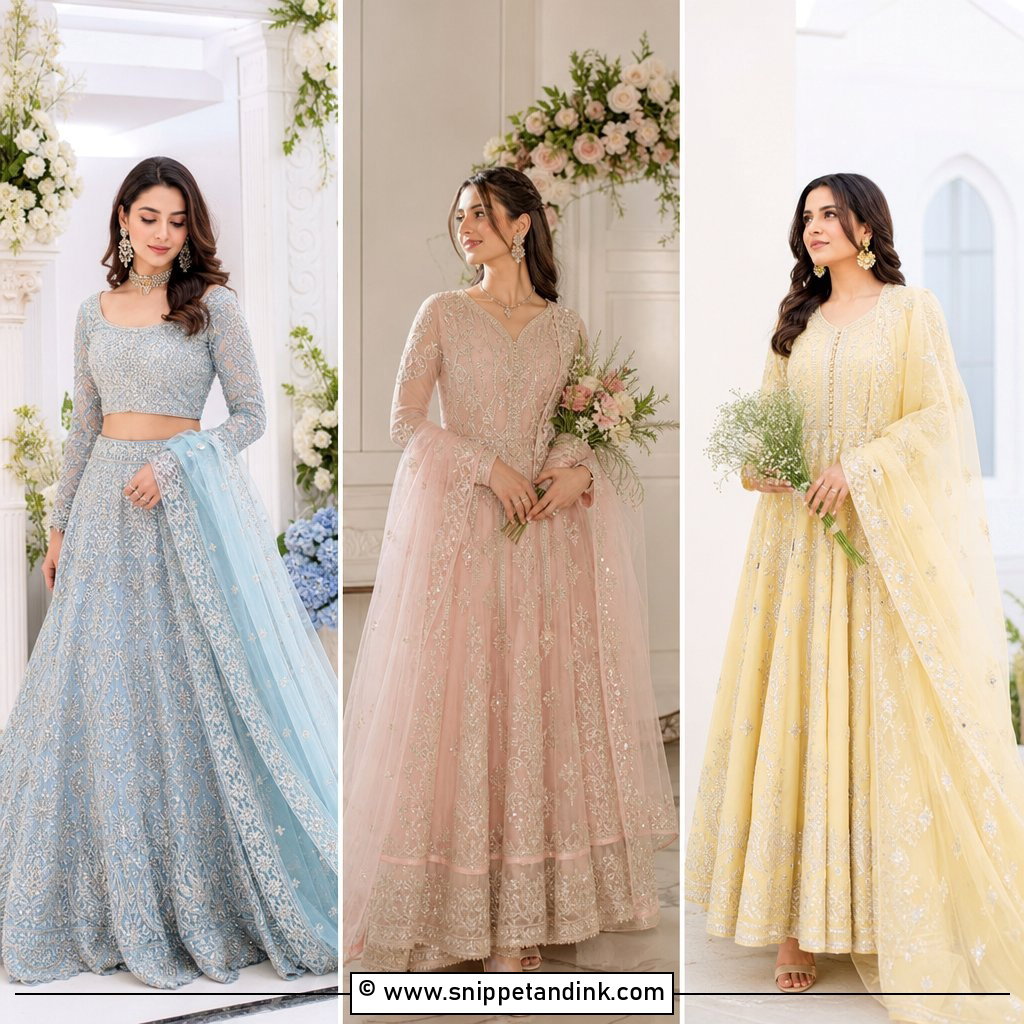
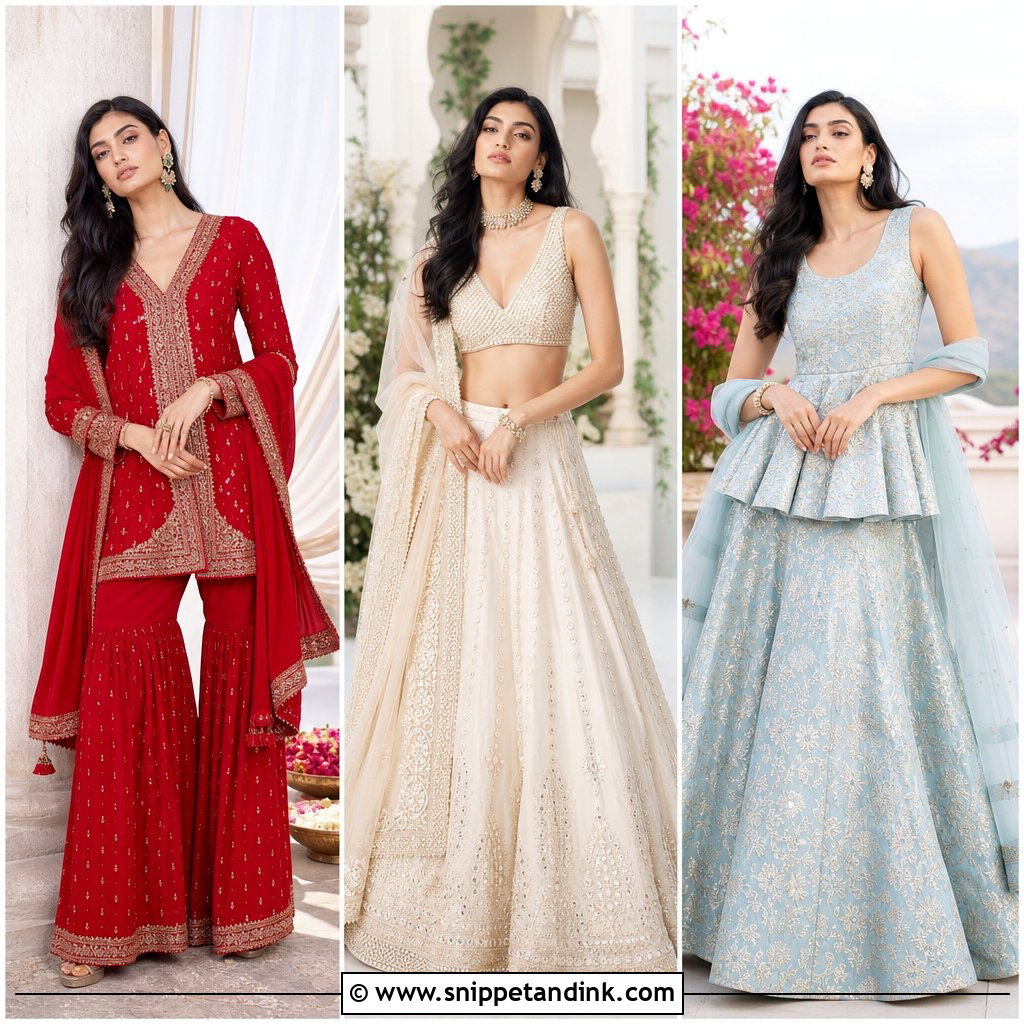
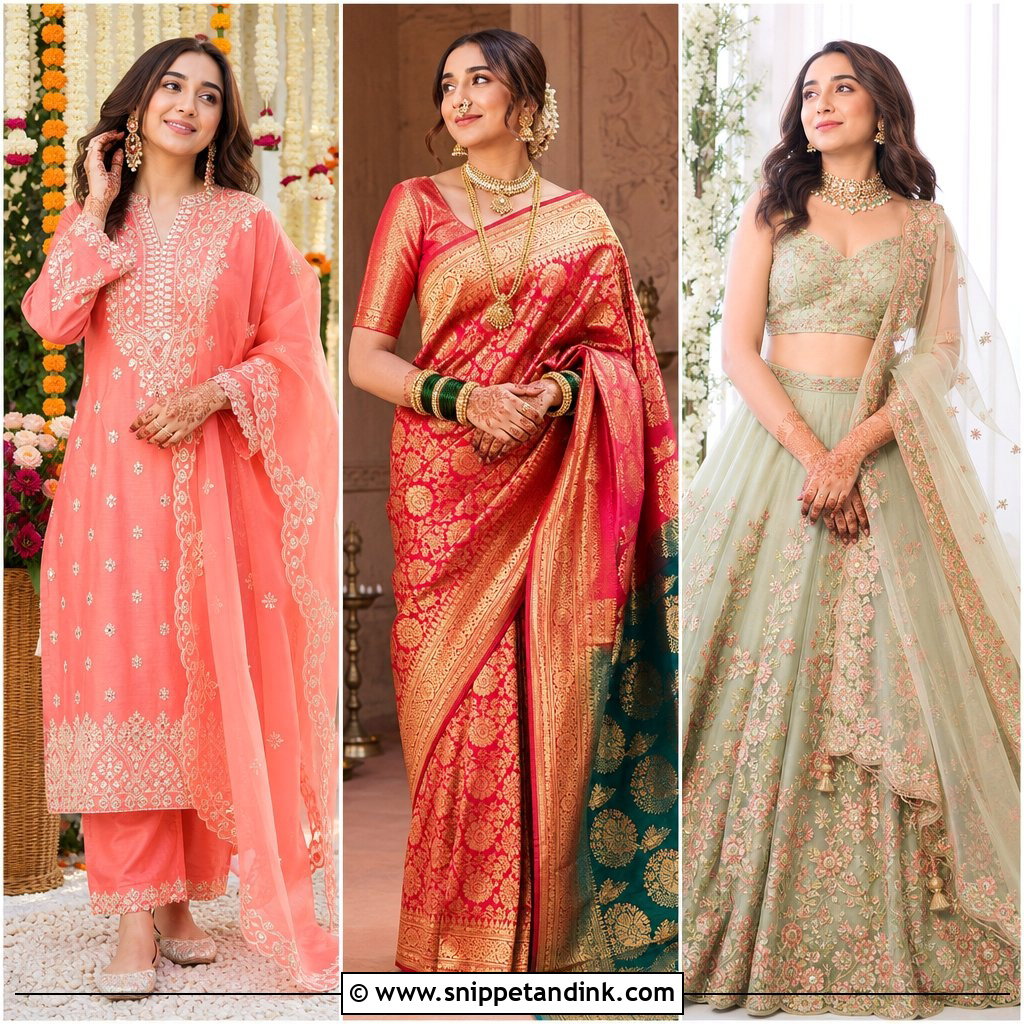
Pastels are my default suggestion for a roka because they read as bridal without competing with the red or deep jewel tones most brides save for the wedding. Blush, mint, powder blue, peach and lavender all work, but check the shade in daylight before you buy: some lavenders turn grey on camera and some mints go slightly sallow on warm skin. Keep the skirt lightly embroidered so you can sit through the ceremony without the can-can digging in. Pearl earrings, a slim choker and juttis are enough. I’d add a small bindi only if it suits your family’s style.
2. Organza Saree For Roka Ceremony
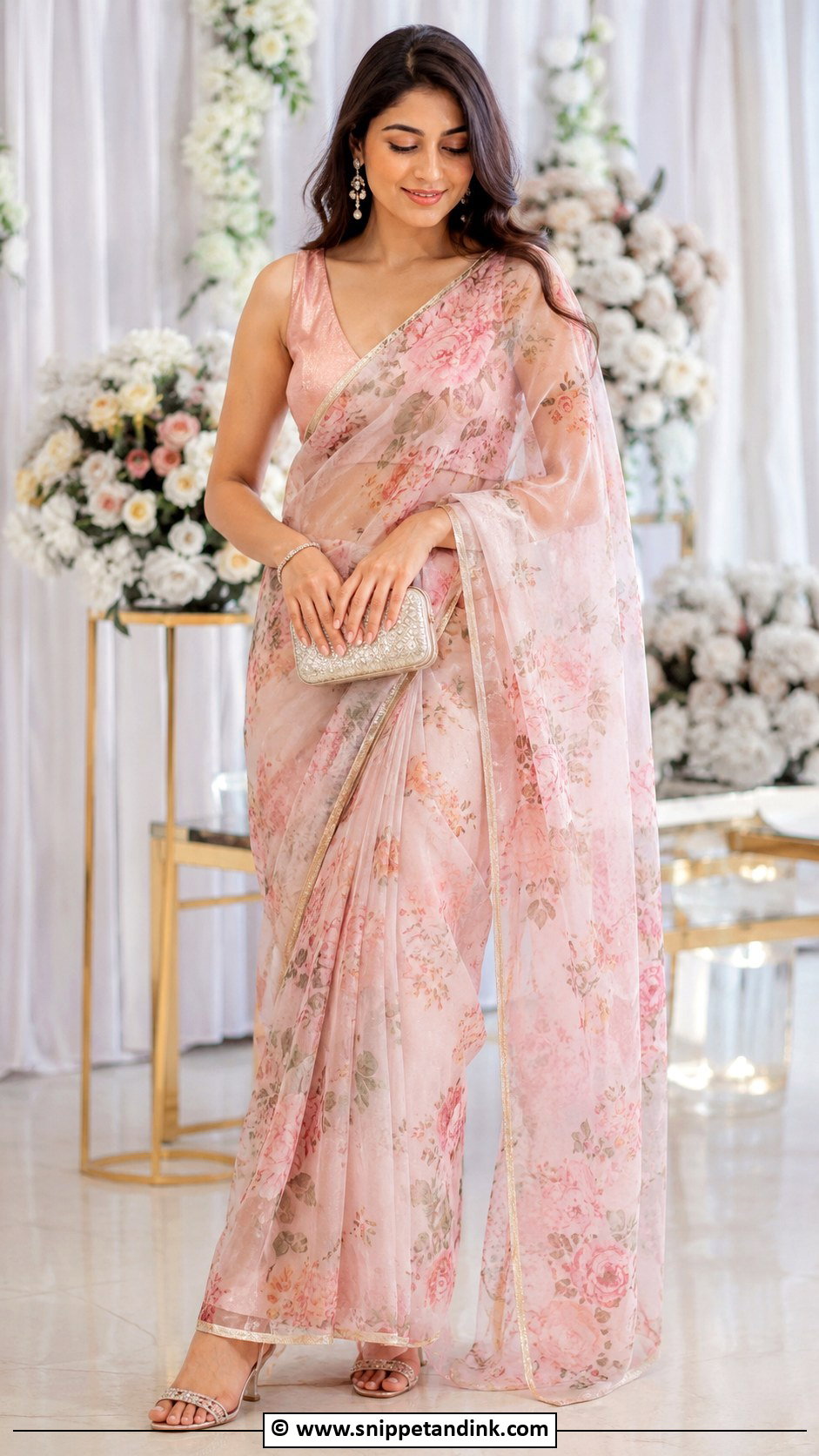
Organza holds its shape, which is the whole appeal: the pleats stay crisp and the pallu floats instead of clinging. The trade-off is that it creases sharply when you sit, so I always ask brides to sit in it at the fitting and see how the pleats recover. A fitted raw silk or brocade blouse gives the sheer fabric something solid to sit against. Pearl drops and a low bun with a few fresh flowers suit it; heavy necklaces tend to drag the light drape down.
3. Sharara Set For Roka Ceremony
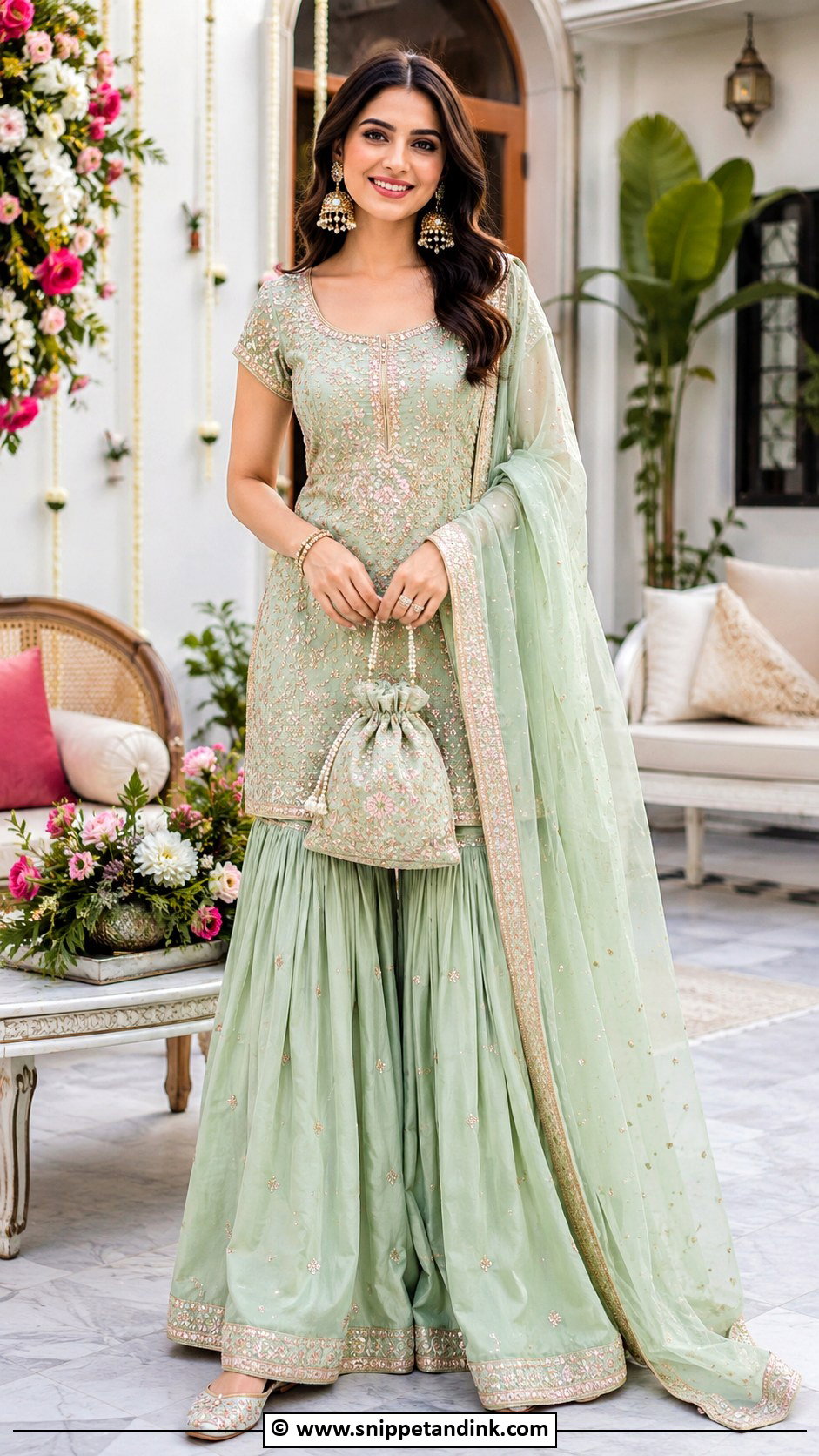
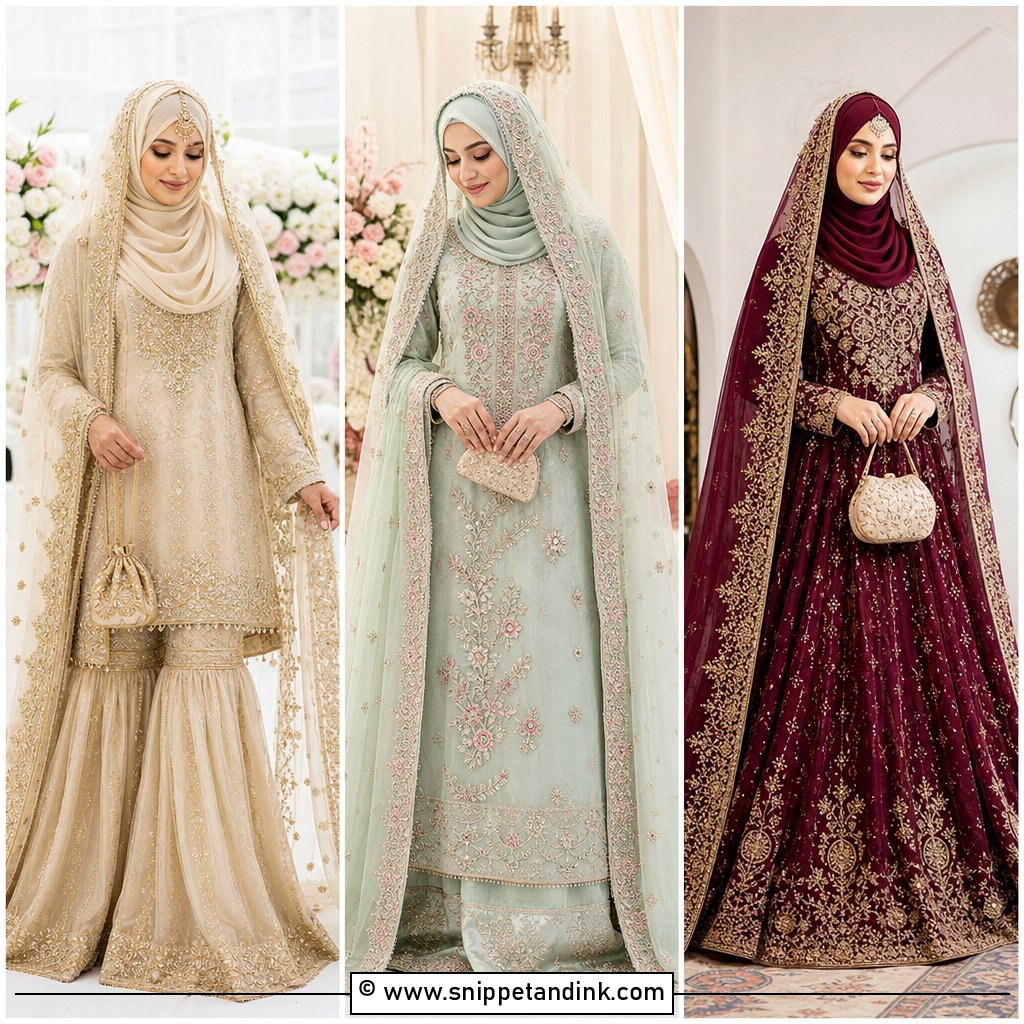
A sharara set is what I suggest to brides who expect to be on their feet hosting half the afternoon. The flared legs give the same movement as a lehenga skirt but you can climb stairs and step over cushions without lifting anything. Have the hem finished with the exact footwear you will wear, because sharara pants that pool on the floor get trodden on within the first hour. Thread work, mirror and light gota suit daytime; emerald, ruby or deep teal carry better into an evening ceremony. Pin the dupatta on one shoulder so it does not slide forward during the tilak.
4. Anarkali Suit For Roka Ceremony
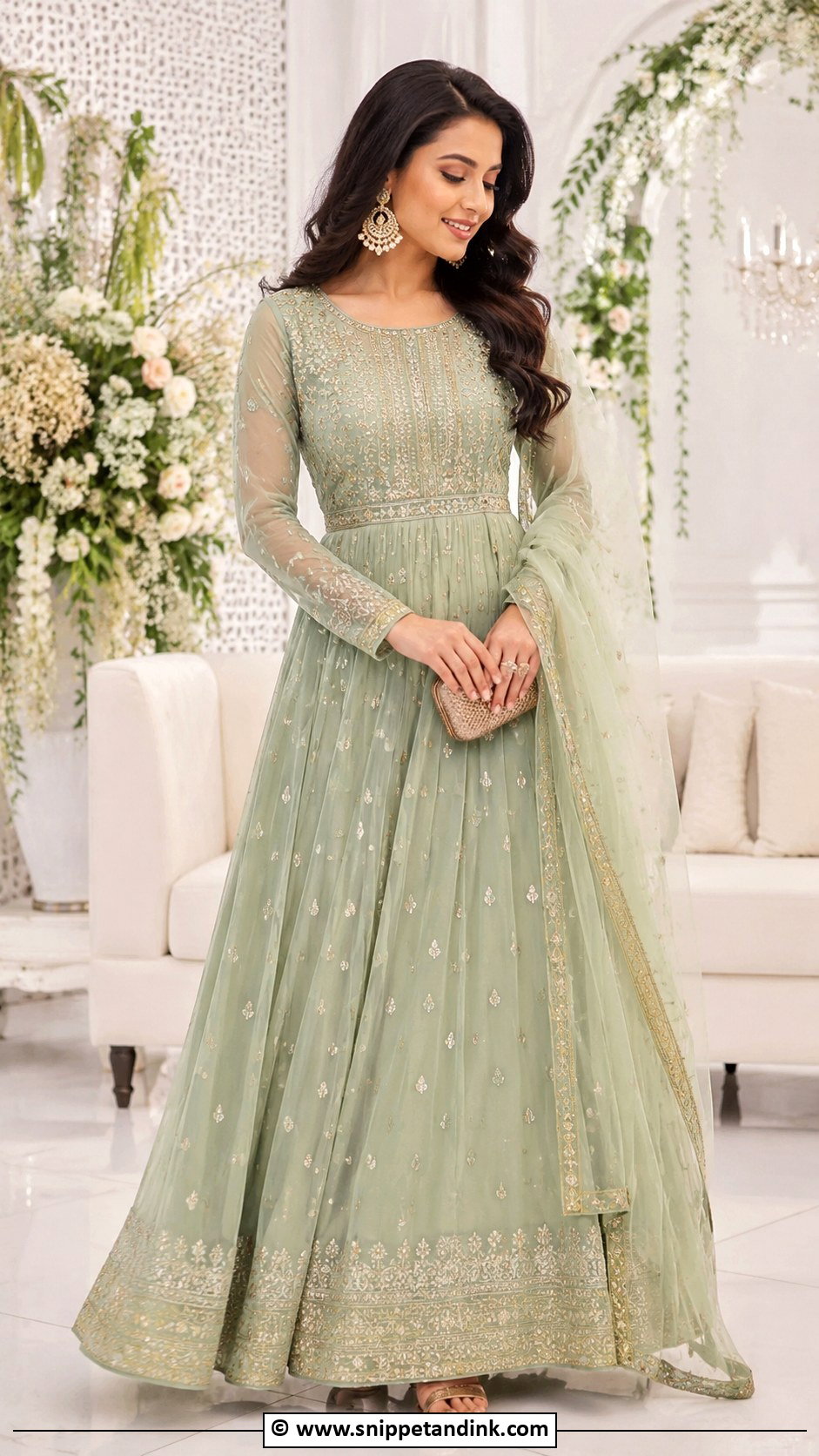
An Anarkali is the most forgiving outfit in this list for a ceremony with older relatives, because it covers well and still feels festive. The flare is cut from many panels, so ask how many kalis it has: more panels mean a fuller twirl but also more fabric to gather when you sit cross-legged. Silk and georgette hang better than stiff net. If the neckline is heavily worked, skip the necklace and let chandbalis do the talking.
5. Silk Saree For Roka Ceremony
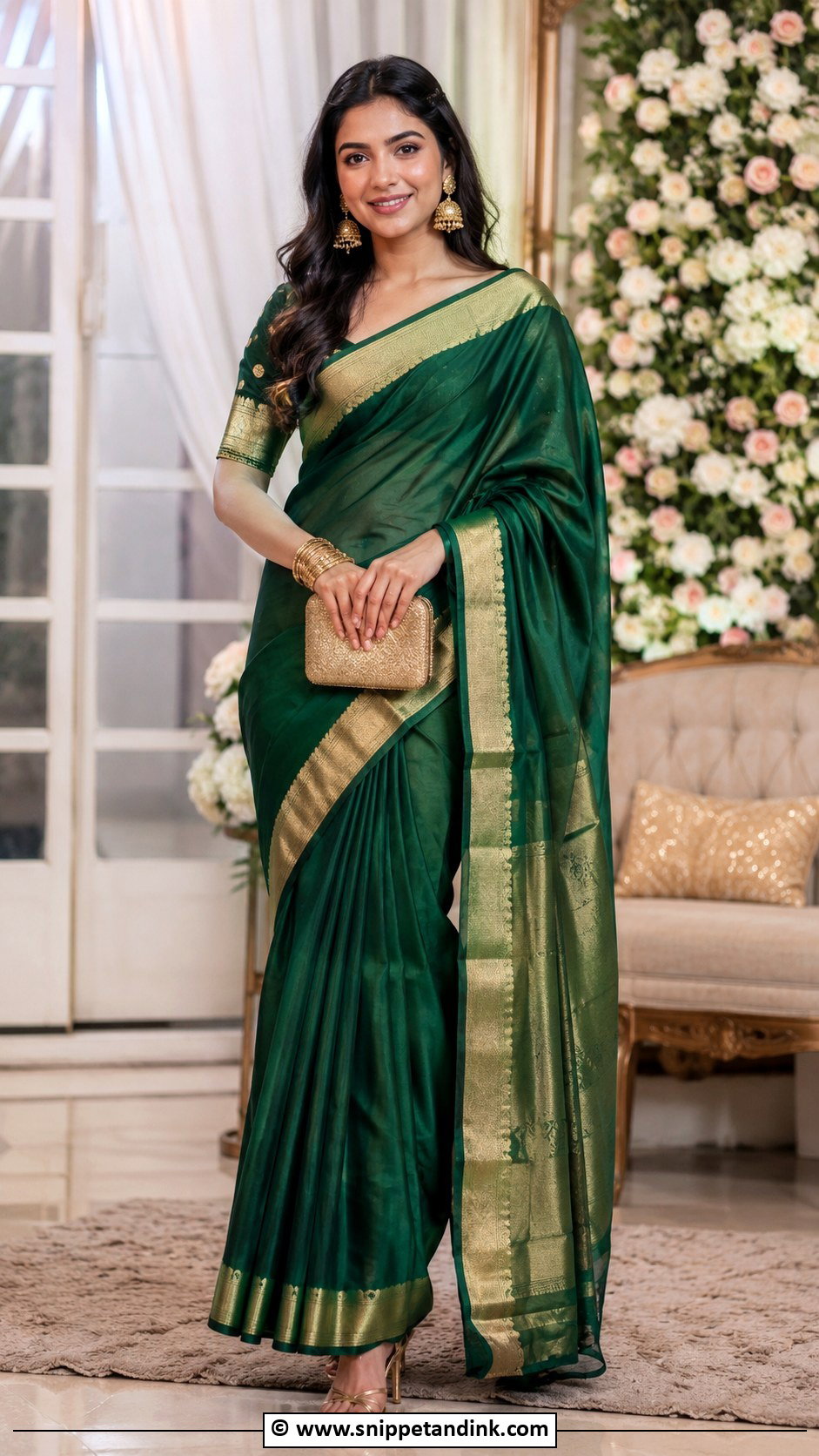
When the roka includes a havan or formal rituals with grandparents present, a silk saree feels right in a way that a fashion piece sometimes does not. I’d pick a lighter weave like chanderi silk or tissue silk over a full kanjivaram, simply because a heavy drape gets hot and stiff by the second hour of sitting near a fire. Ivory and gold, rani pink and emerald all read as festive and respectful. Ask whoever drapes you to pin the pleats at the waist and shoulder, since silk tends to slip when you rise from the floor repeatedly.
6. Chikankari Suit For Roka Ceremony
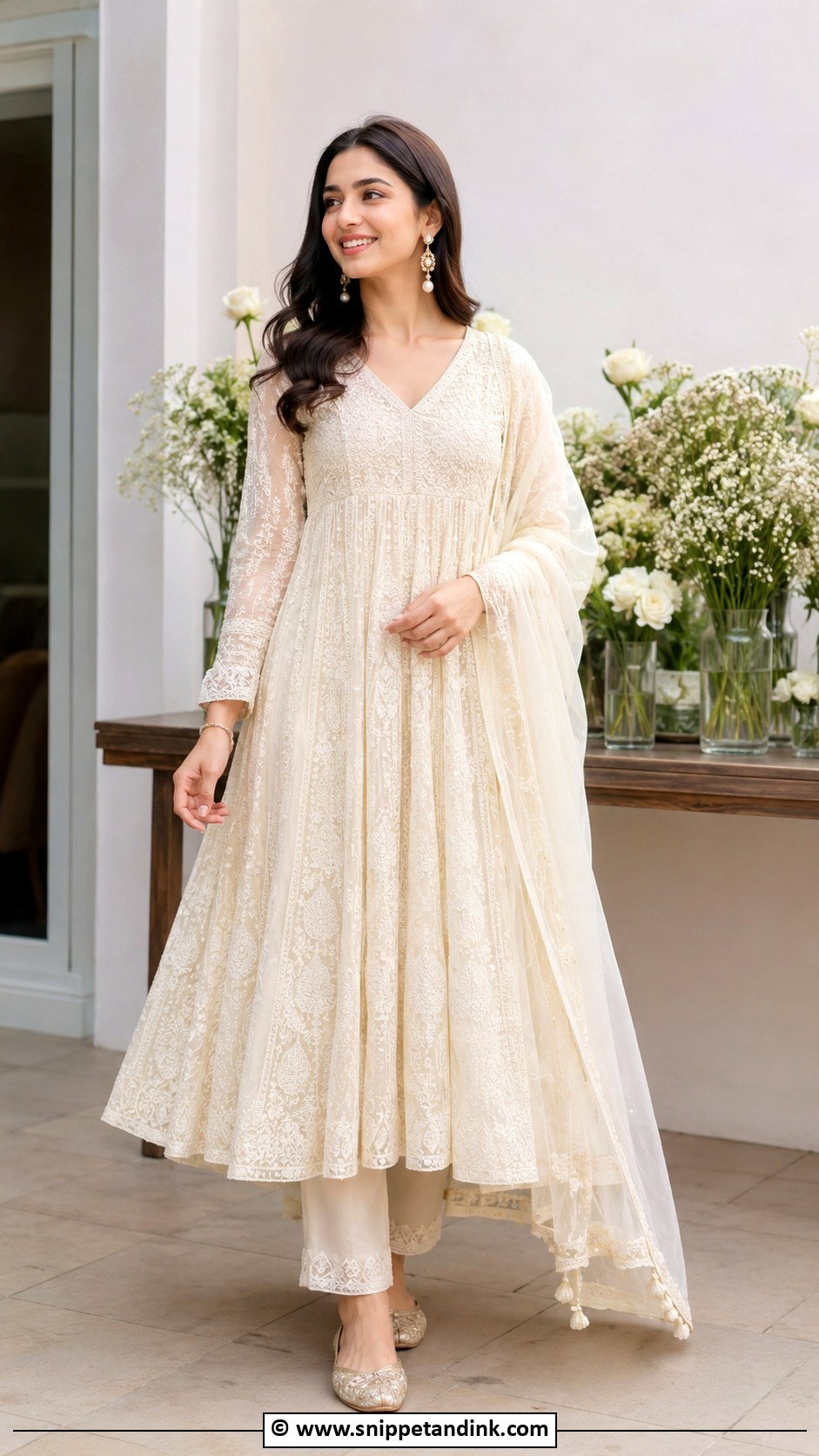
Chikankari is hand embroidery, usually on cotton, mulmul or georgette, and the best pieces look soft rather than flashy. For a daytime roka at home it is one of my favorite choices. Check the base fabric before you commit: very sheer georgette chikankari needs a full-length slip, and the cheaper machine versions have flat, uneven stitching that shows up in close photos. Silver jhumkas or pearls suit it far better than heavy gold.
7. Floral Lehenga For Roka Ceremony
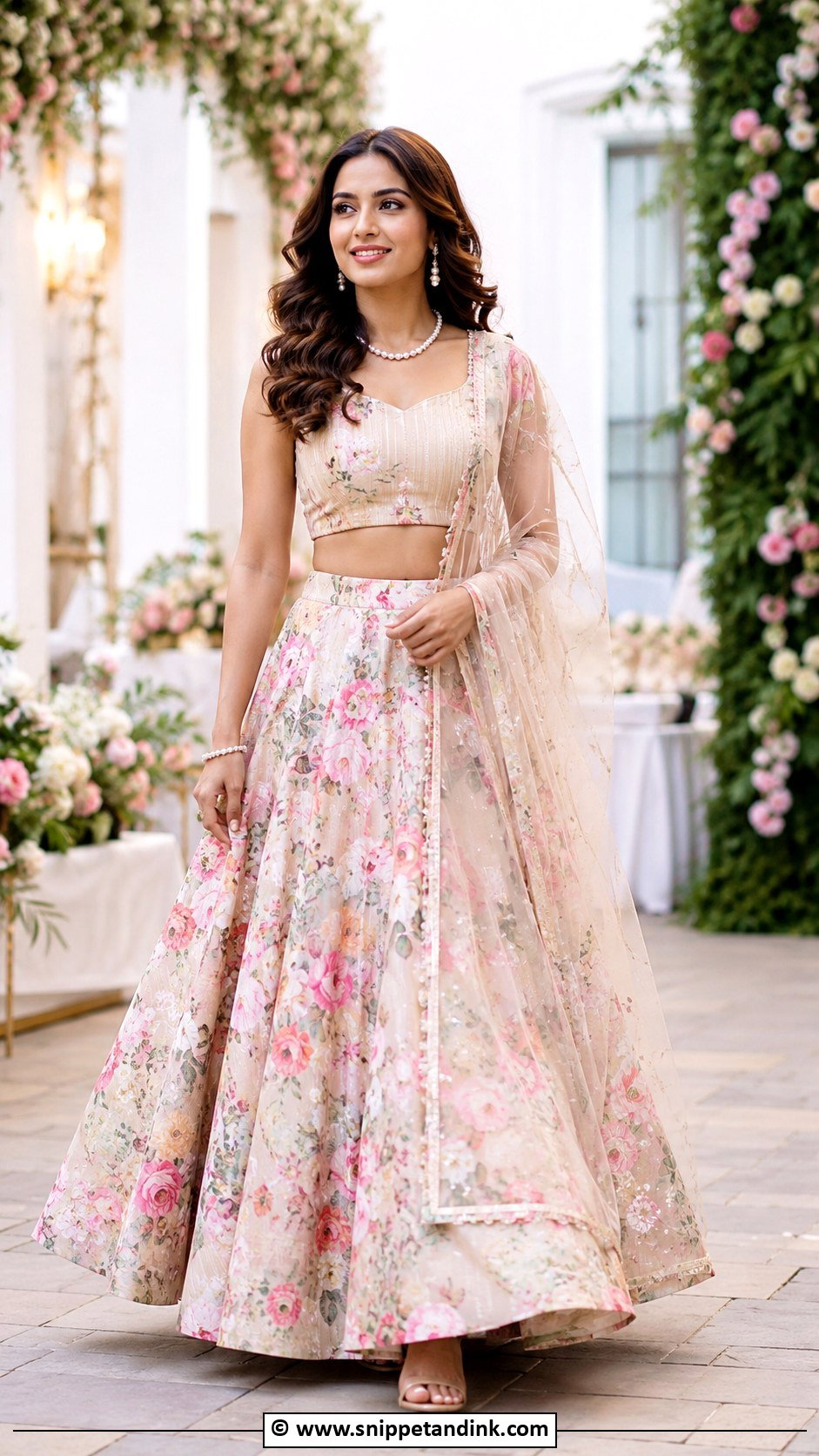
Florals carry the spring and summer feeling better than any solid color. Printed organza or georgette with a little embroidery over the print keeps the skirt festive without adding weight. My one caution is scale: very large prints break up the figure in group photos, while a small or medium repeat reads more polished. Pastel florals for daytime, deeper grounds for evening. A half-up style or loose braid suits the print better than a severe bun.
8. Palazzo Suit For Roka Ceremony
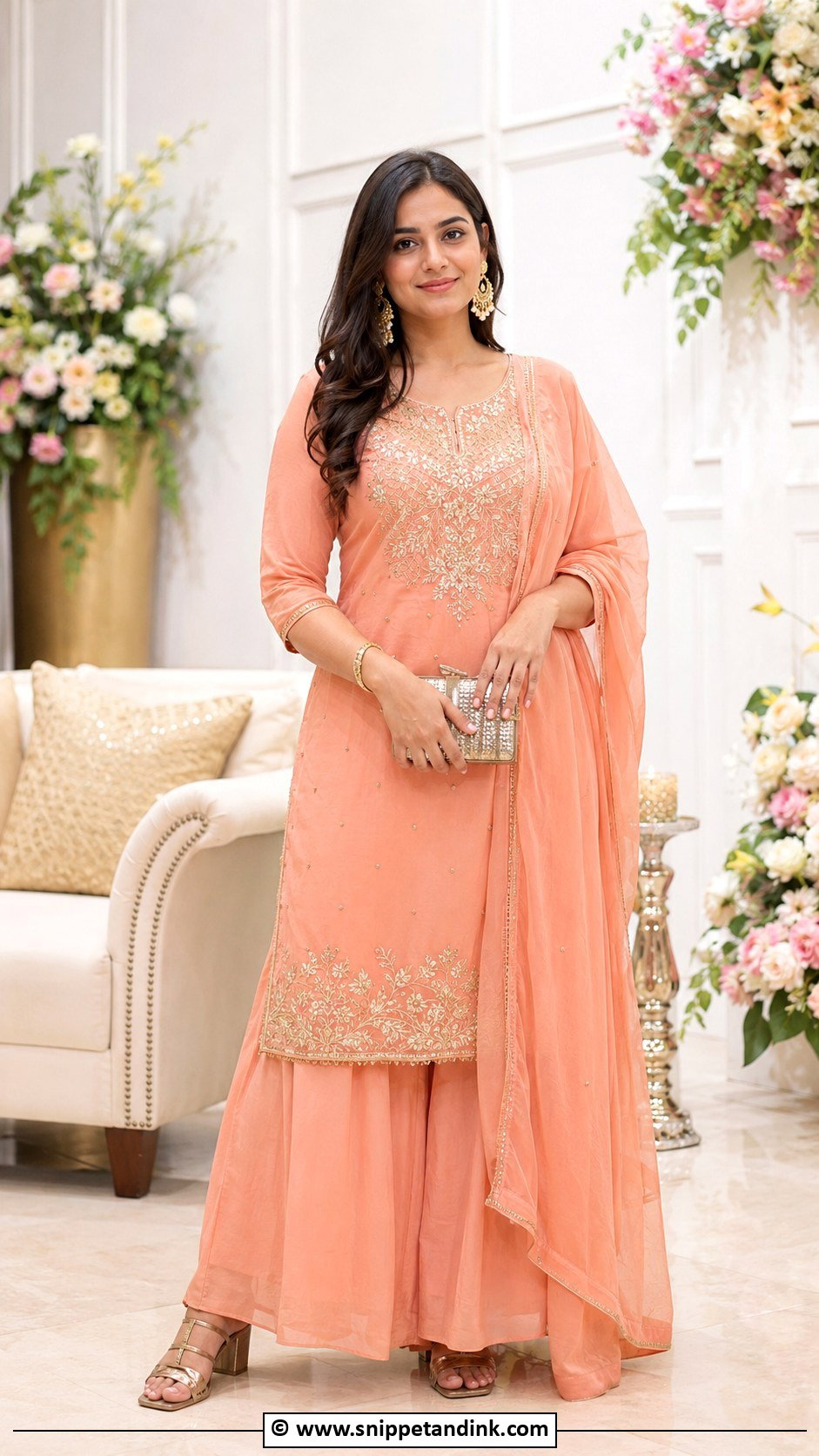
I rate a palazzo suit highly for brides who hate fuss. Wide legs mean no lifting a skirt to sit, kneel or walk between rooms. The risk is that a plain kurta with palazzos can look like everyday wear, so put the money into embroidery at the neckline or a richer dupatta. Silk, chanderi and crepe look more ceremonial than cotton. If the kurta is printed, stop at earrings.
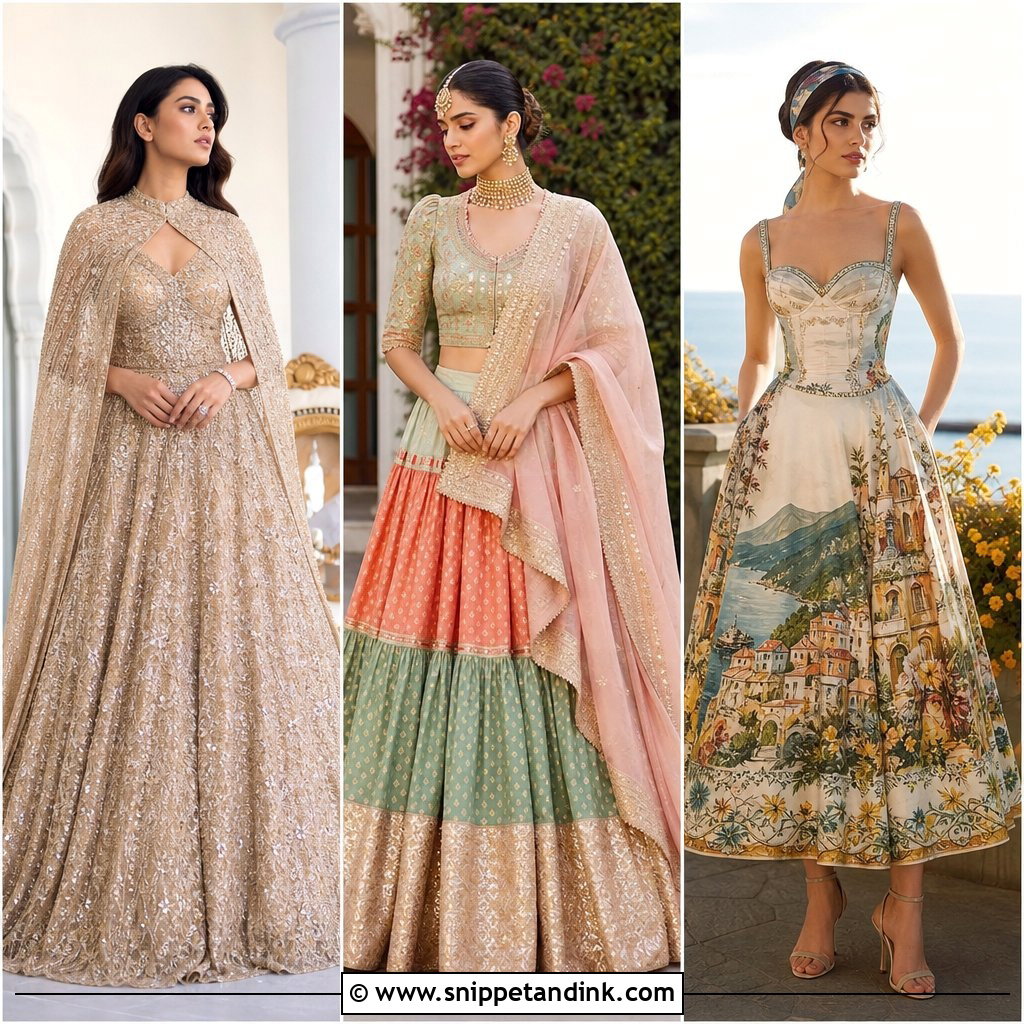
9. Indo Western Gown For Roka Ceremony
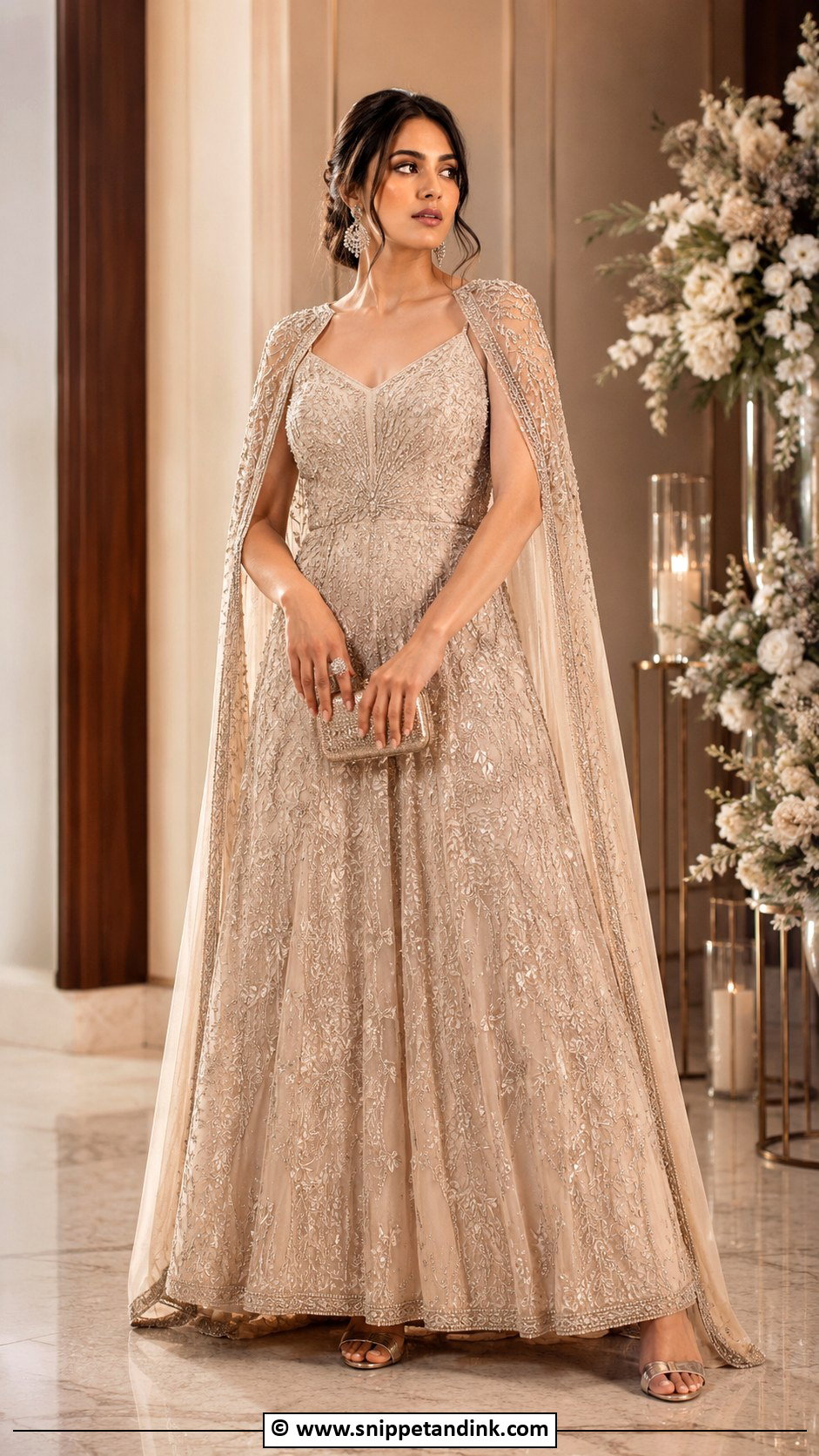
An Indo-western gown works best for a hotel roka or an evening dinner where the rituals are brief. Capes, attached dupattas and draped bodices give the ethnic reference without a full lehenga. Dusty rose, champagne, mauve and sage photograph softly under warm banquet lighting. Before you choose this, ask the family how long the ceremony itself runs: a fitted gown is uncomfortable for sitting on the floor, and some older relatives still expect a dupatta for the chunni moment.
10. Kurta With Skirt For Roka Ceremony
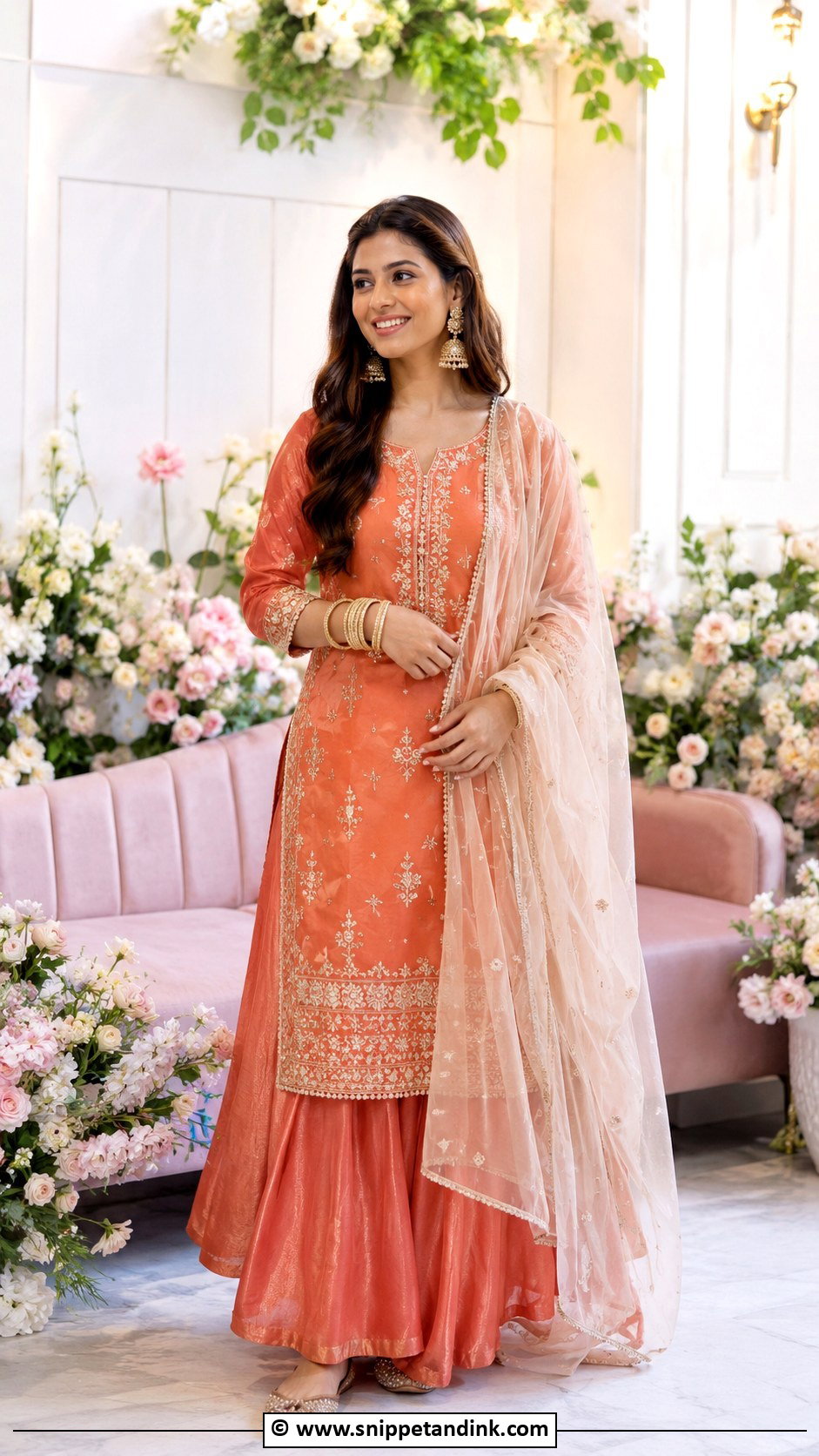
A long kurta over a flowing skirt sits between a suit and a lehenga, and that middle ground is useful for a roka that is half ritual, half lunch. It is also much lighter than a lehenga because there is no separate heavy blouse and can-can. Silk, chanderi and organza make it look dressier than cotton. Pastels feel gentle, while mustard or coral suit a bright family gathering. Add a dupatta if you expect the groom’s mother to drape a chunni over your head.
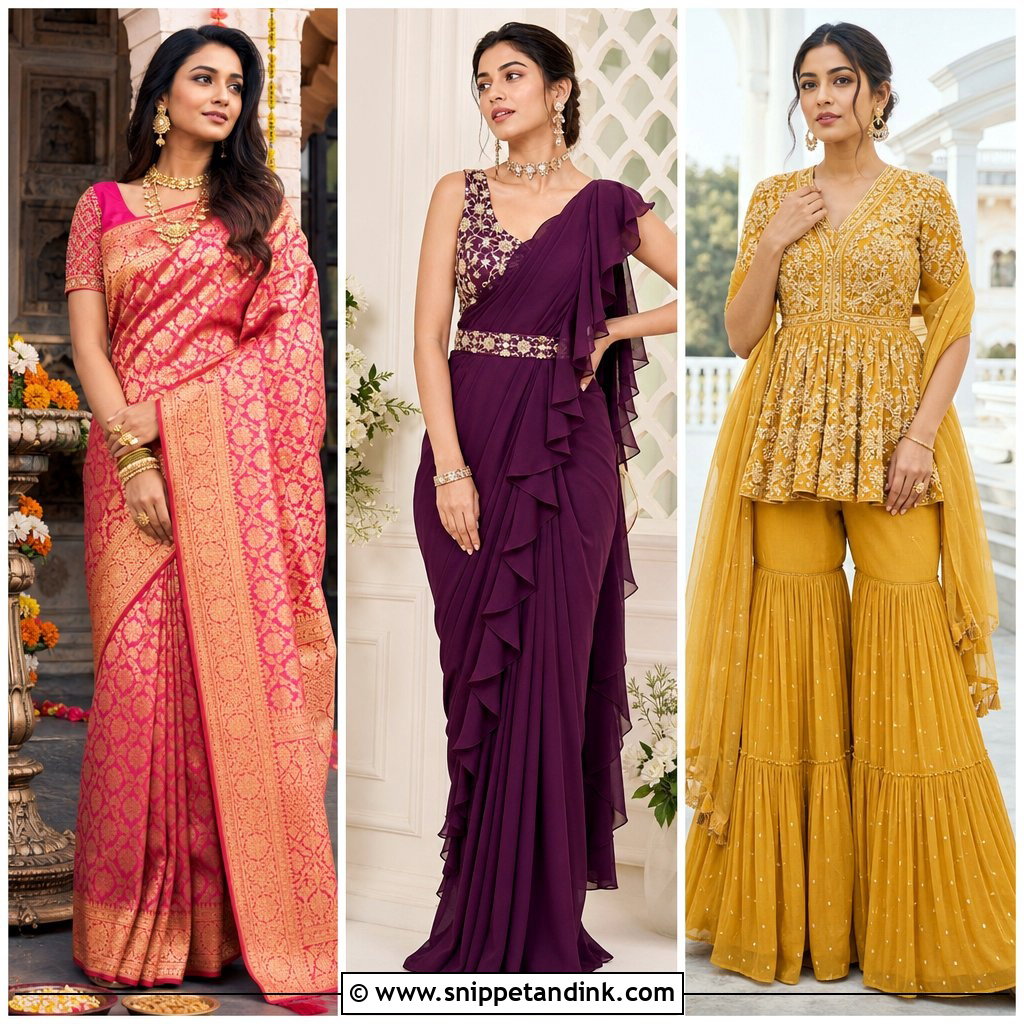
11. Banarasi Saree For Roka Ceremony
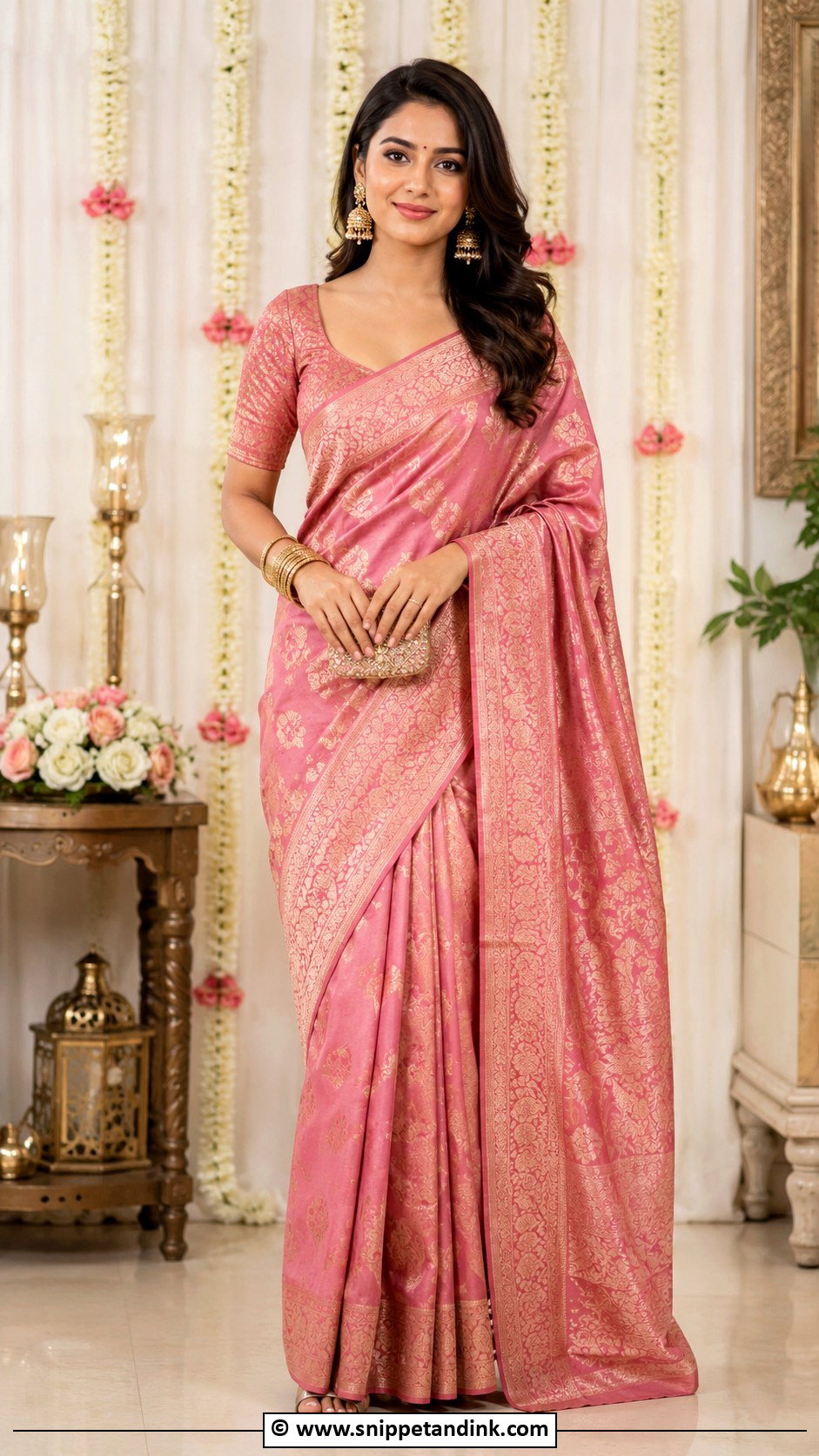
Banarasi weaves are rich by nature, so for a roka I look for a lighter kadhua or a softer color rather than a full wedding Banarasi. Ivory with gold, rose, sage or lavender let the weave show without the heavy bridal effect. These sarees are stiff when new and need careful pleating; I’d have them pre-pleated or at least steamed the day before. A sleek bun, a few bangles and gold earrings are all it needs. Wear heels you can stand in for an hour, because a structured silk drape tires you faster than you expect.
12. Peplum Sharara For Roka Ceremony
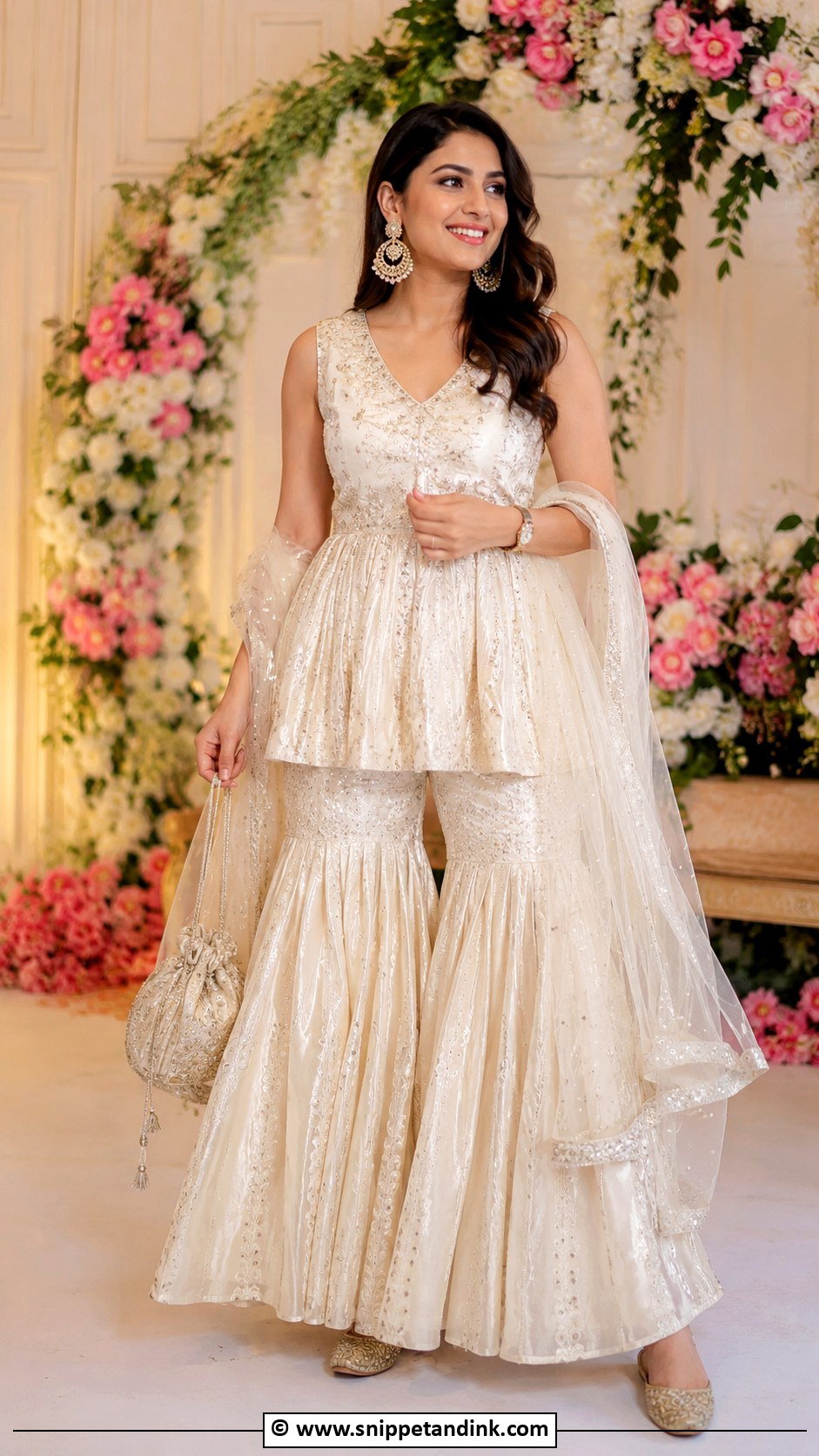
The peplum top defines the waist and then flares, which suits brides who want shape without a fitted blouse on show. It looks youthful, so it suits a relaxed roka more than a formal family one. Check that the peplum ends at the high hip: too long and it shortens the legs once the sharara is added. Light thread or mirror work keeps the balance. Peach, mint and ivory for daytime; wine or emerald at night.
13. Cape Lehenga For Roka Ceremony
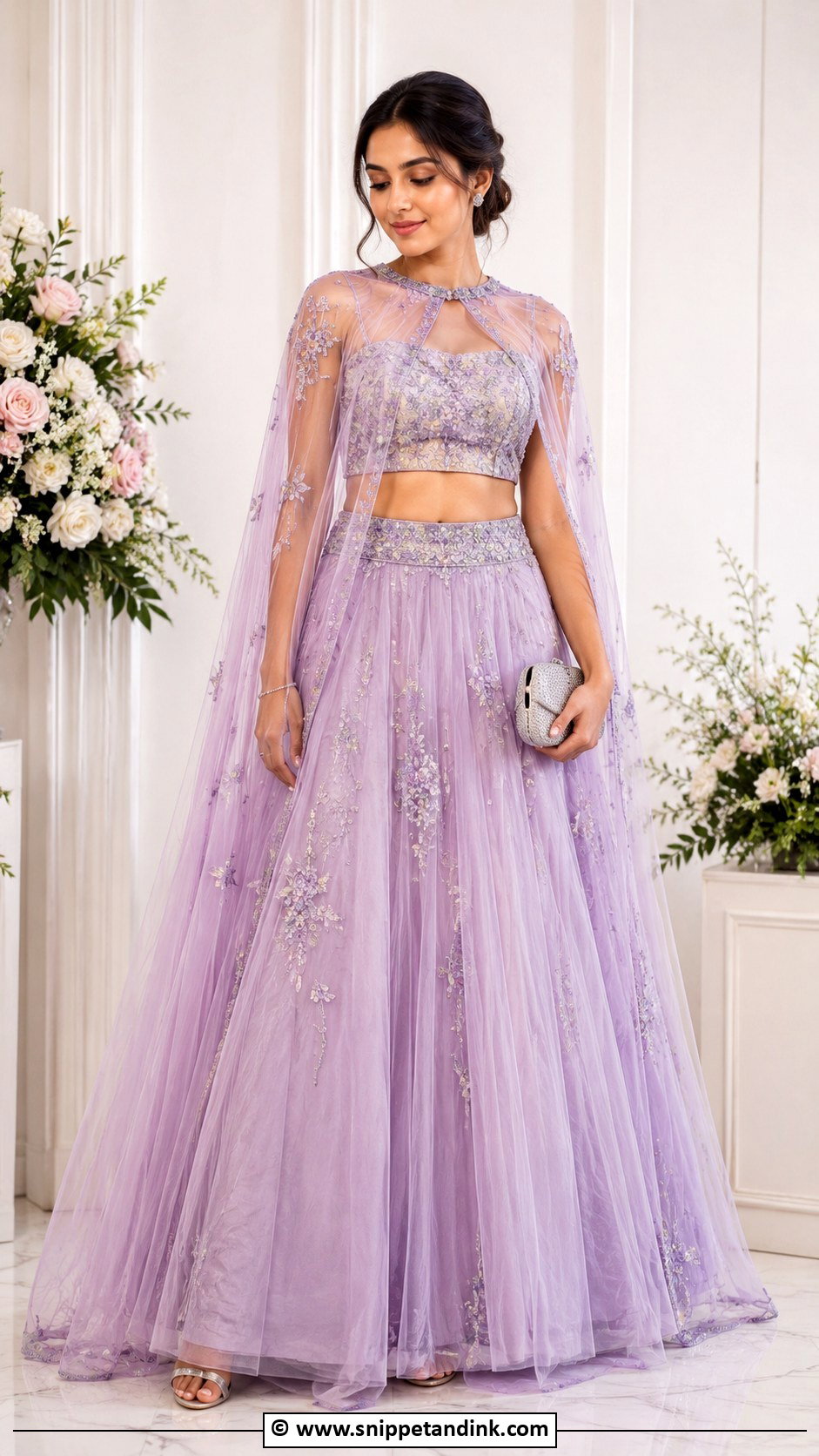
A cape replaces the dupatta, and that is the practical reason I like it: nothing to keep re-draping while your hands are full of shagun envelopes and sweets. Choose a sheer embroidered cape that falls at least to the knee so it moves when you walk. Champagne, ice blue and silver read modern. The catch is cultural rather than stylistic: if your family plans a chunni ceremony, a cape leaves nowhere natural to place it, so check before you buy.
14. Straight Suit For Roka Ceremony
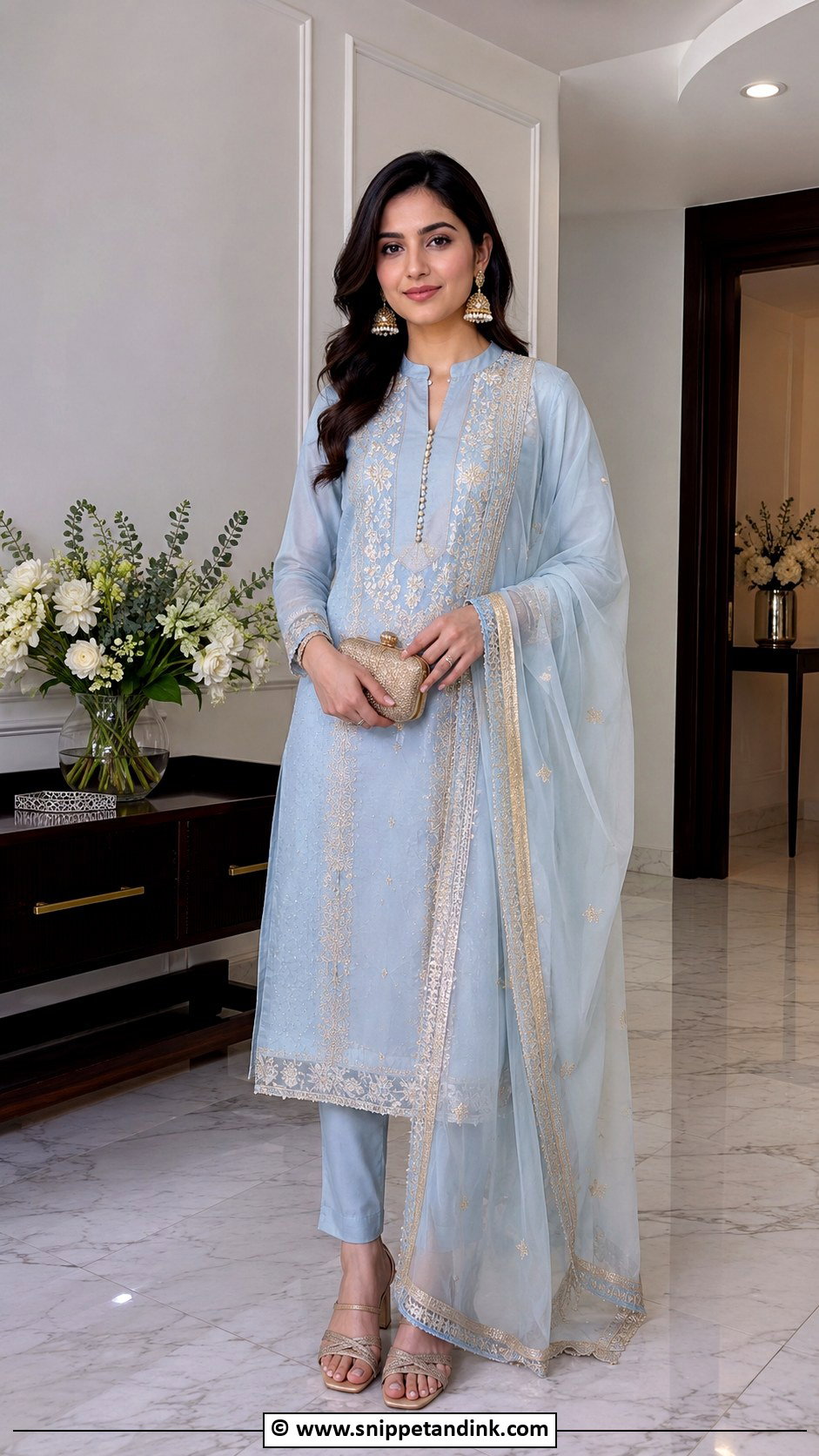
For a small home roka, a straight suit is often the most honest choice. A long kurta with cigarette pants or palazzos, embroidery at the neck and sleeves, and a good dupatta looks put together without trying too hard. If you are the bride in a straight suit, I’d push the dupatta: a heavily bordered or zari-edged one is what separates your outfit from the guests’ in photos. Flats or low heels are fine here.


15. Ruffle Saree For Roka Ceremony
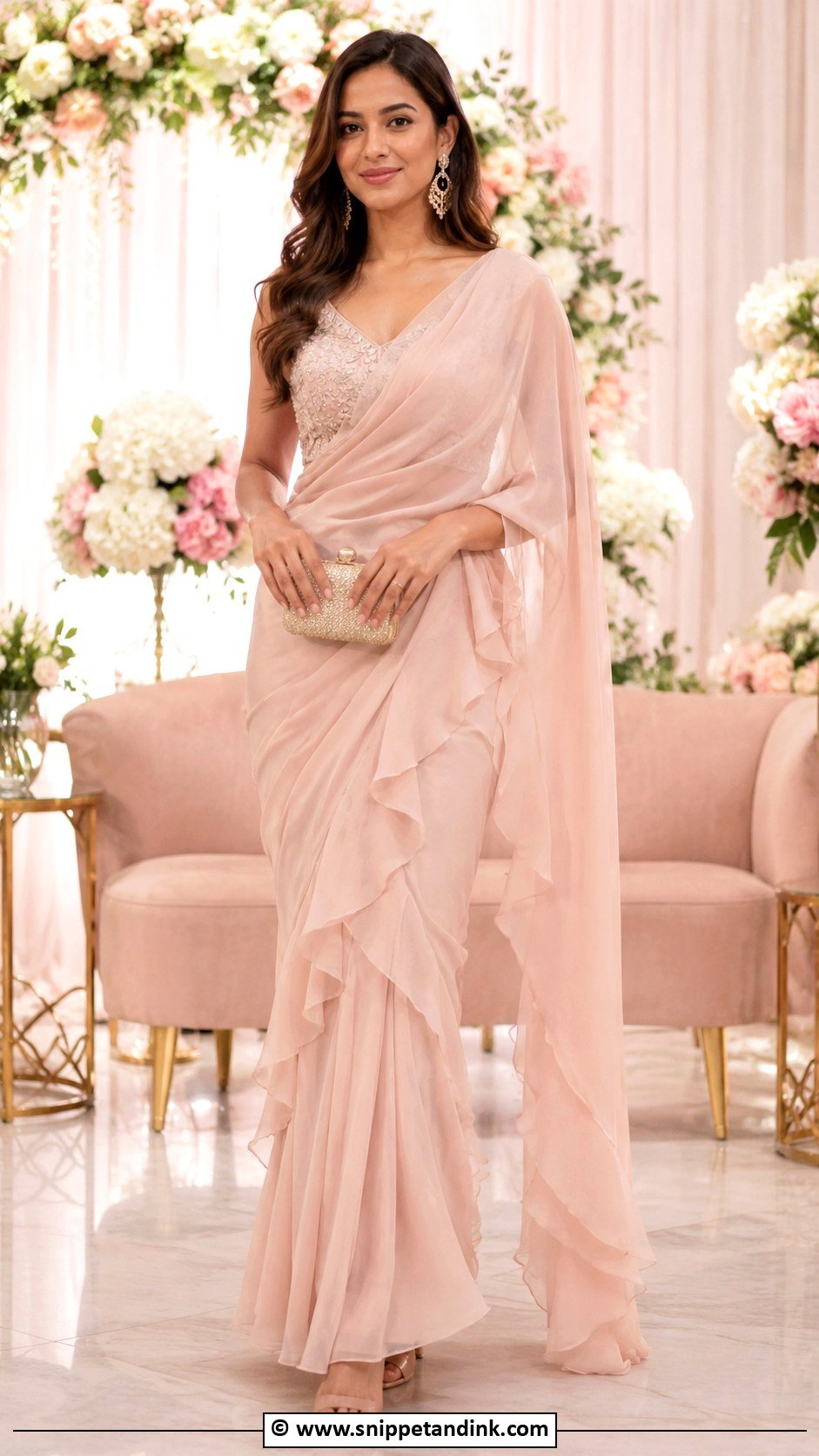
Ruffles soften a saree and make it look younger, and pre-stitched ruffle sarees are far easier to manage than a traditional drape. Georgette and chiffon ruffle well; stiff organza ruffles can stand out too much at the hem. A corset or structured blouse balances the movement in the drape. I tend to recommend this for an indoor evening roka with a younger crowd, and less for a traditional family puja where it can read as party wear.
16. Ivory Lehenga For Roka Ceremony
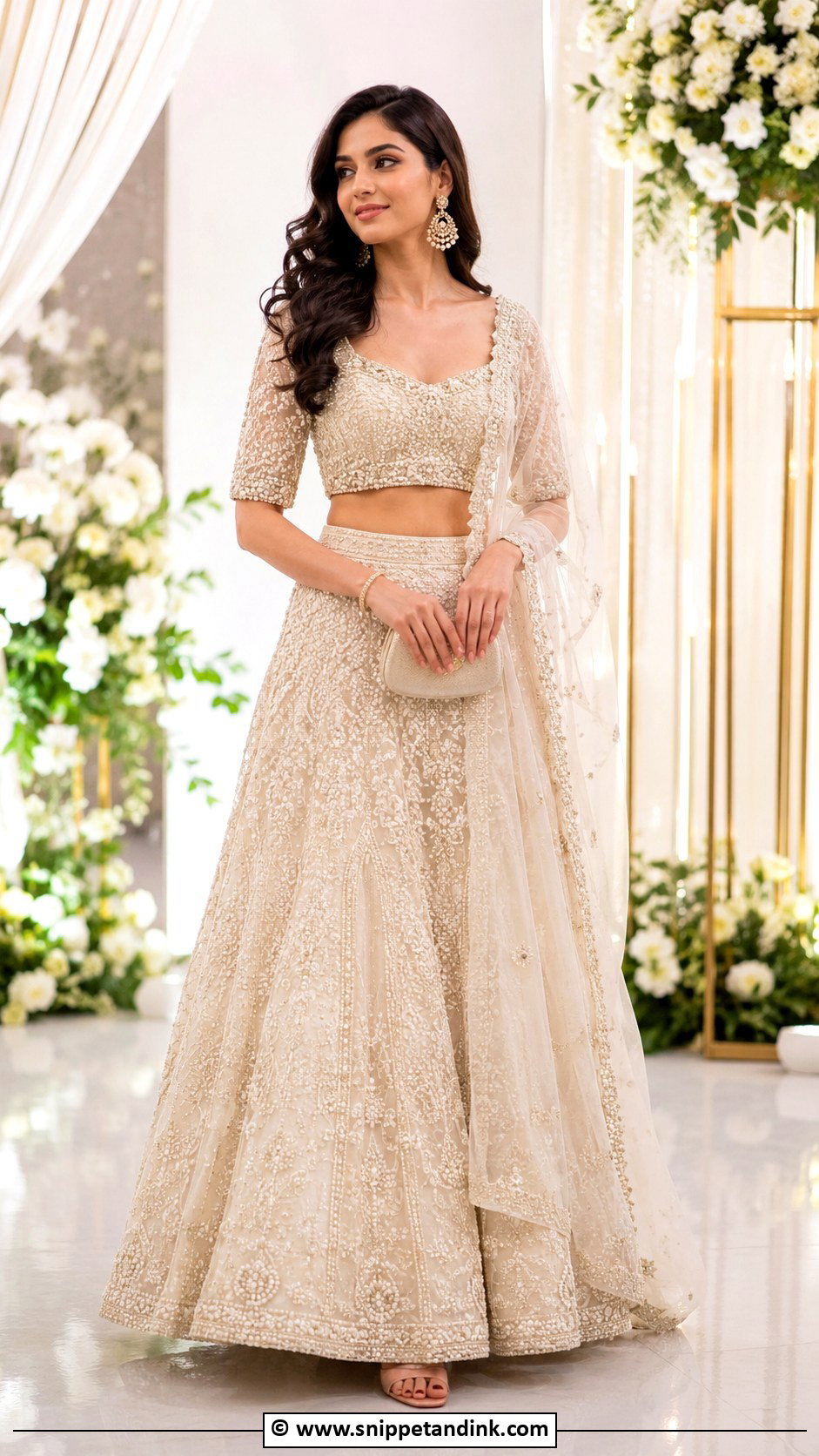
Ivory gives a bridal feel without red, and it photographs cleanly in both daylight and warm indoor light. Pearl work, chikankari and soft zari keep it from looking flat. One practical check: ivory shows every mark, including turmeric, kumkum and tilak powder, so if the ceremony involves any of those, wear a dupatta you can pull aside. Polki or pearls suit ivory far better than bright yellow gold.
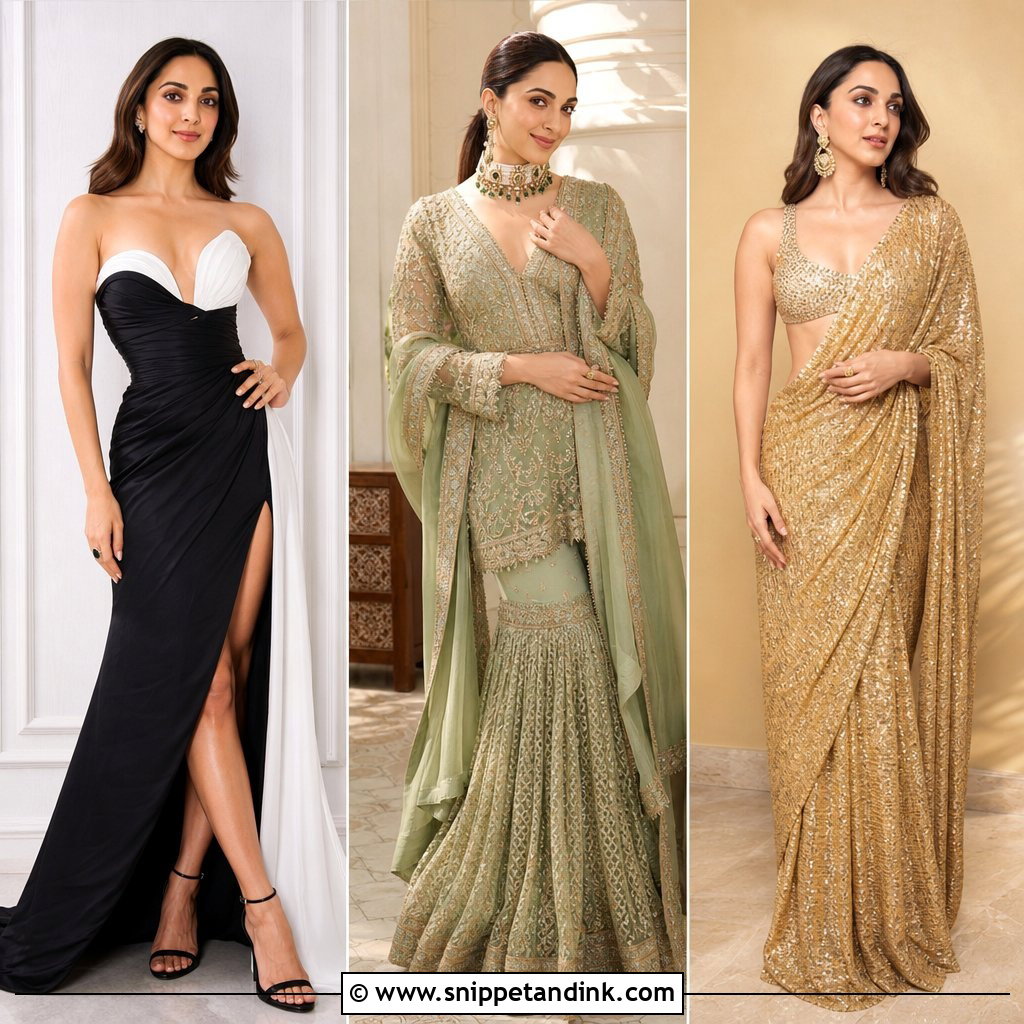
17. Sequin Saree For Roka Ceremony
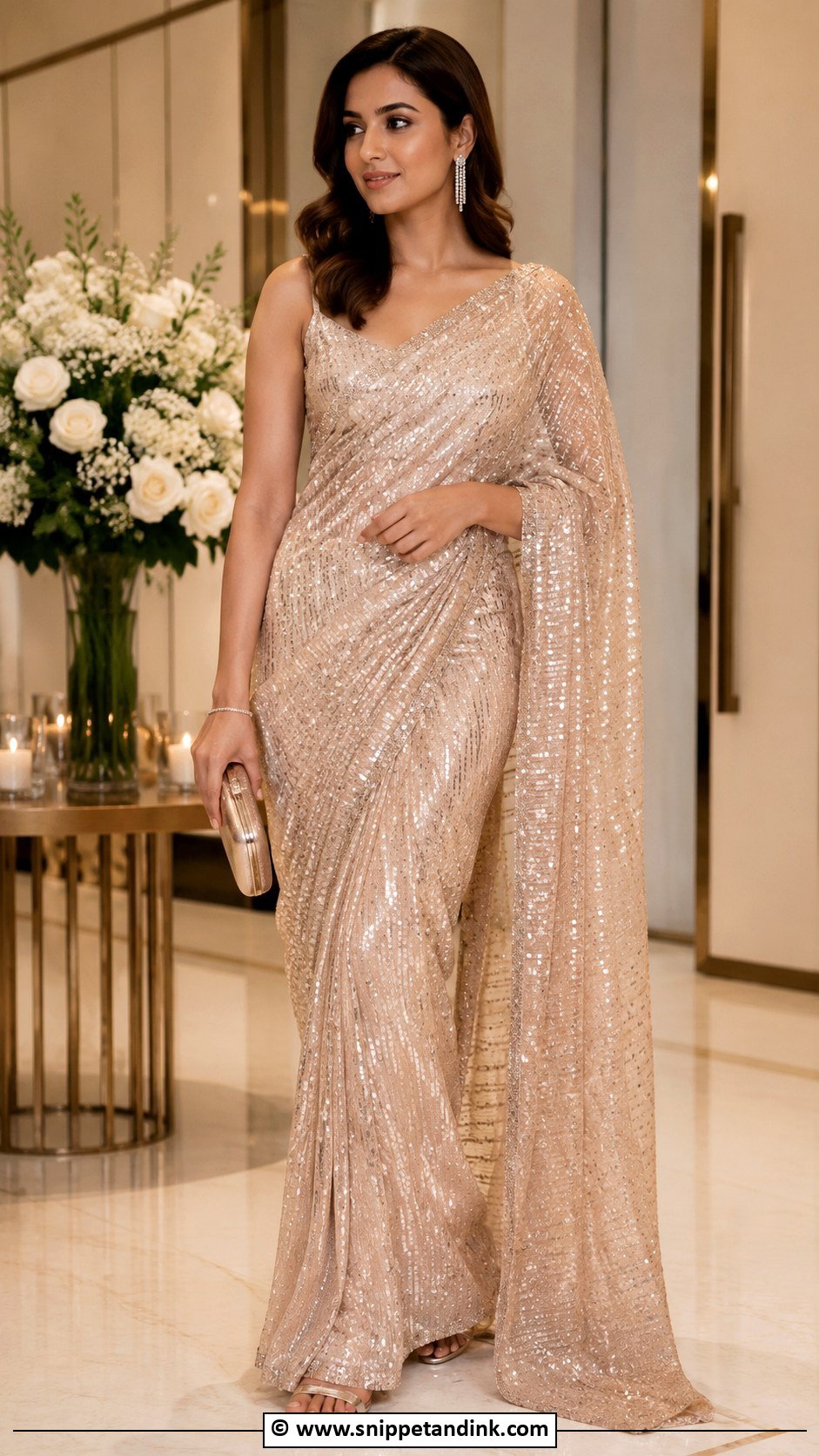
A sequin saree belongs to an evening roka with dinner afterwards, not a morning puja. Go for fine, tone-on-tone shimmer in champagne, blush or rose gold rather than large paillettes. Sequins scratch the inner arm over a few hours, so ask for a blouse lined in soft fabric and keep the sleeves slightly longer if you are sensitive. Keep the jewelry small; the drape already does the sparkling.
18. Jacket Lehenga For Roka Ceremony
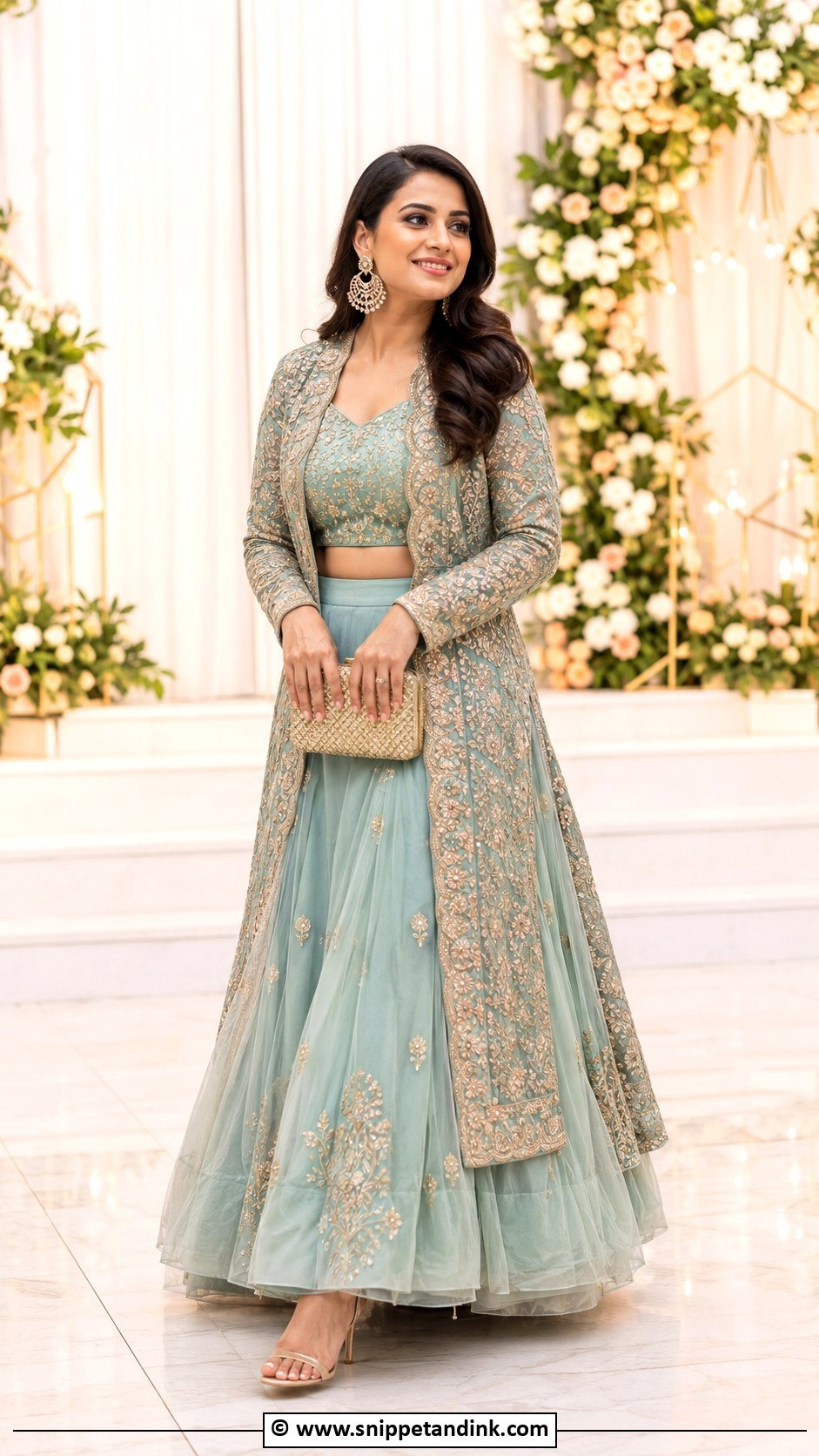
A jacket over a lehenga does two jobs: it replaces the dupatta and gives cover in an air-conditioned hall or a chilly winter evening. A cropped jacket looks younger, a long one more regal. I fit the jacket last, after the blouse, because if it is cut tight across the back you will feel it every time you lean forward to greet someone. Gota or mirror accents keep it festive rather than formal.
19. Printed Saree For Roka Ceremony
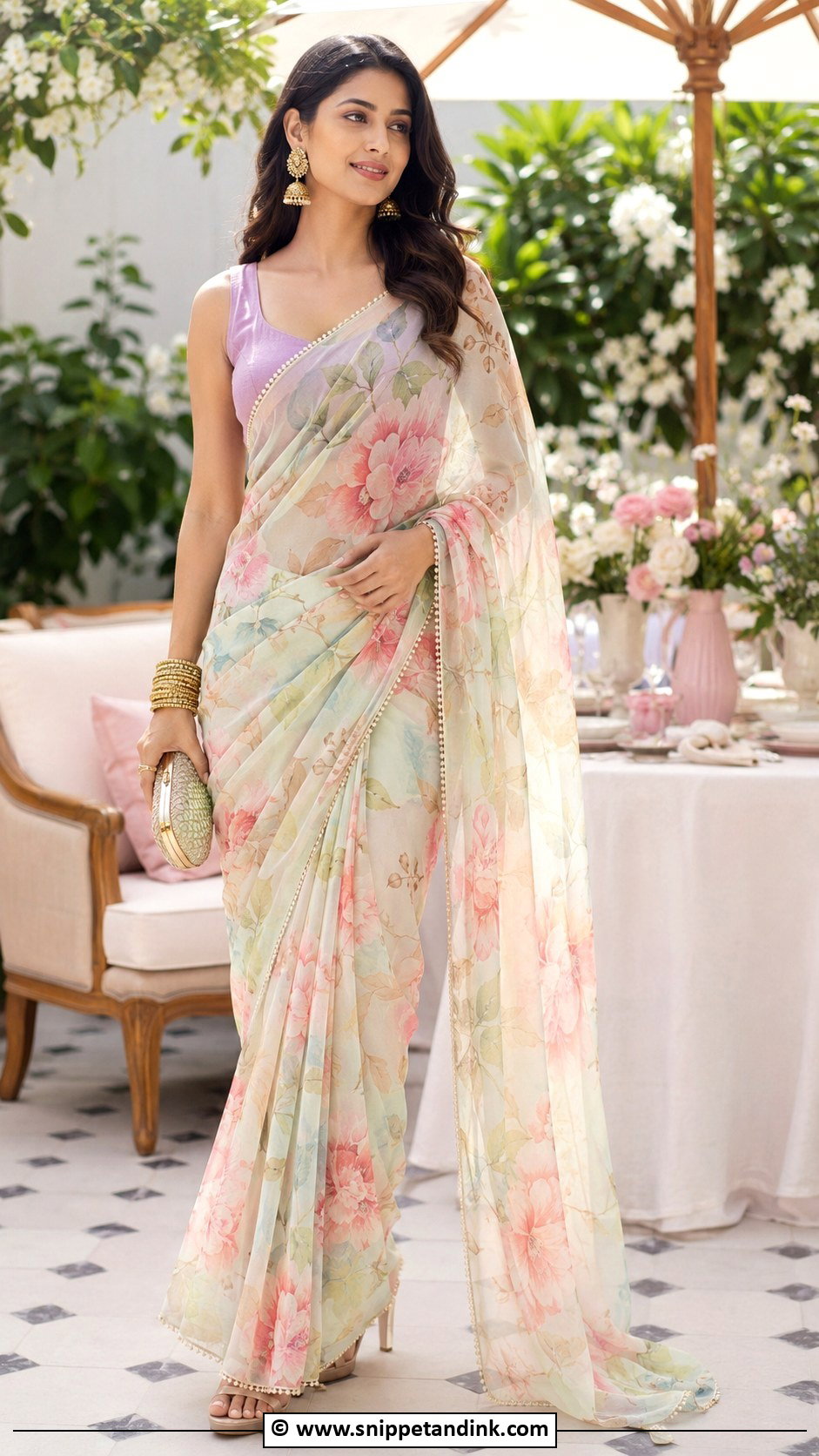
Printed sarees suit a relaxed daytime roka ceremony, the kind that ends in a long lunch. Florals, block prints and fine paisleys feel festive without asking for heavy jewelry. A solid or lightly embroidered blouse lifts the print and makes it look dressed. Organza, crepe and silk blends drape more cleanly than pure cotton. Brides can wear this too, but pick a richer print or a zari border so you stand slightly apart from the guests.
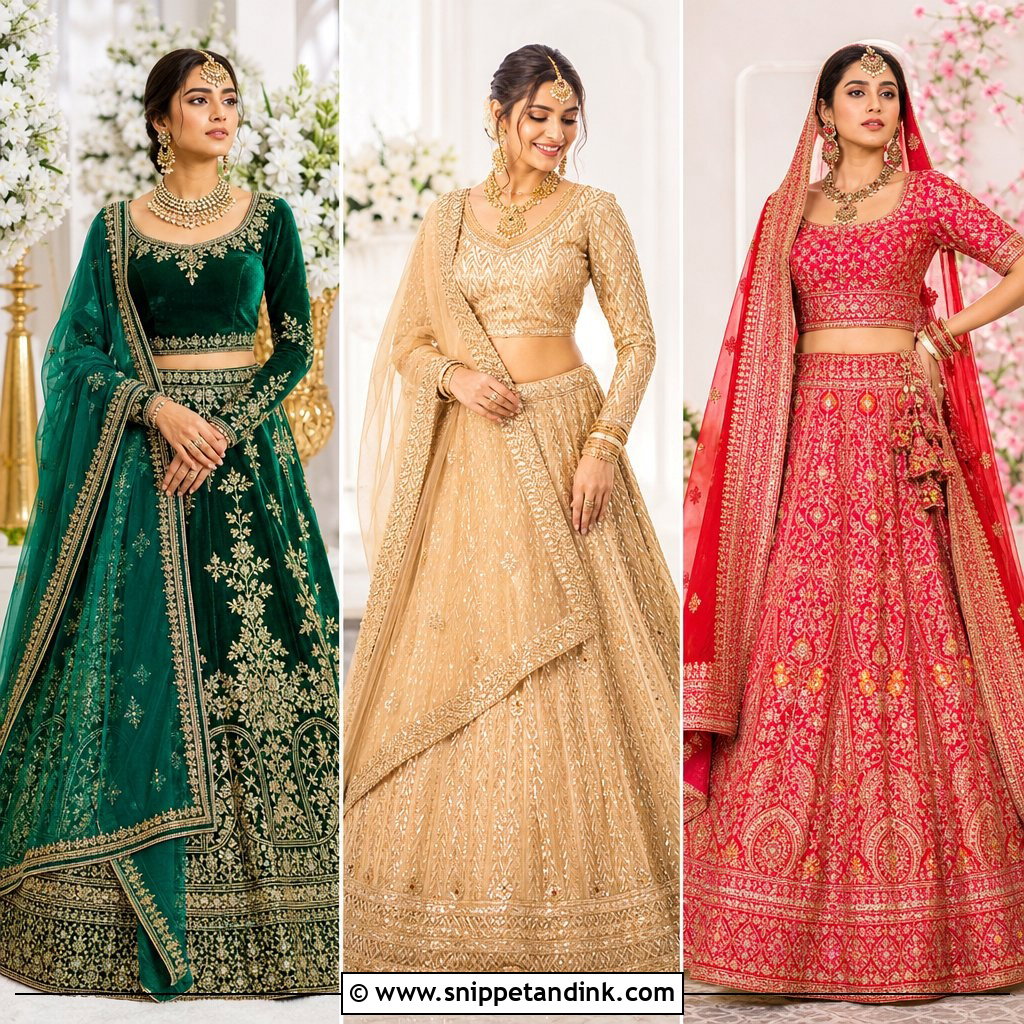
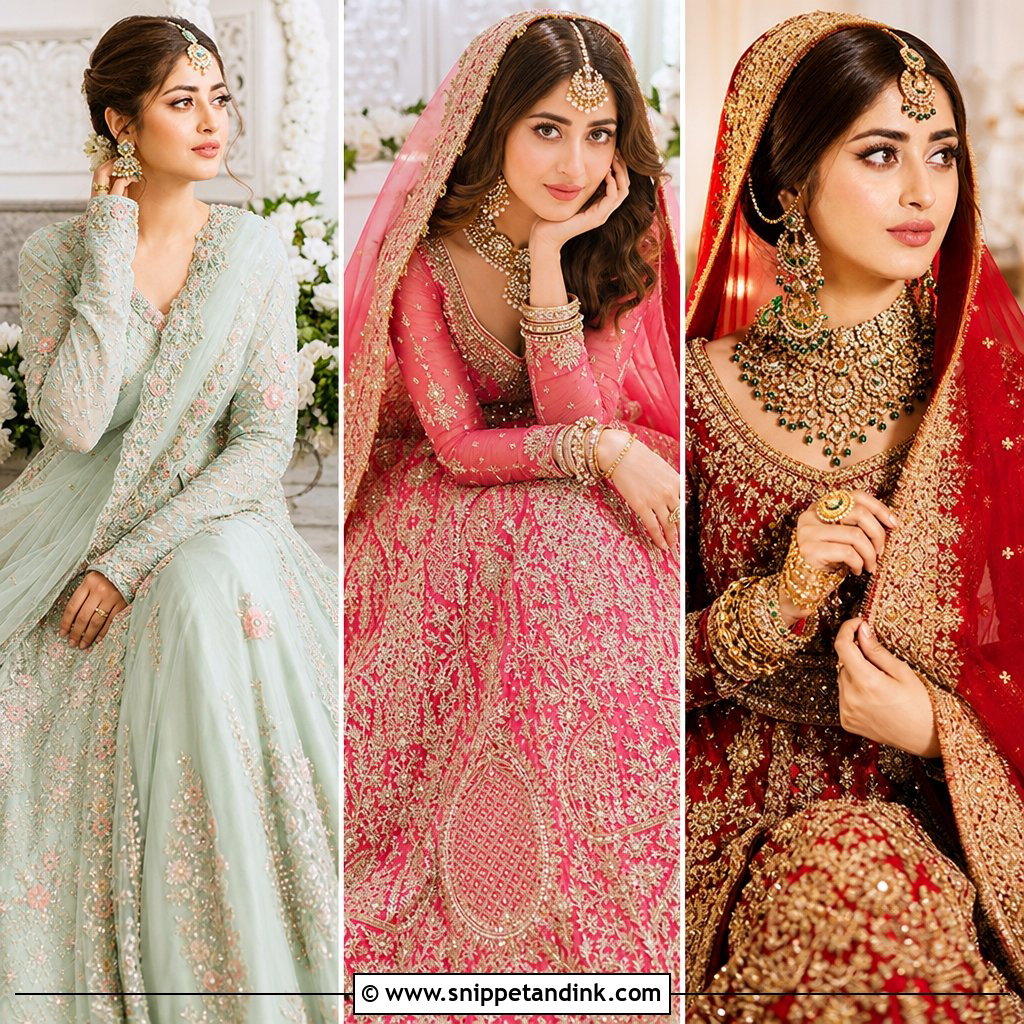
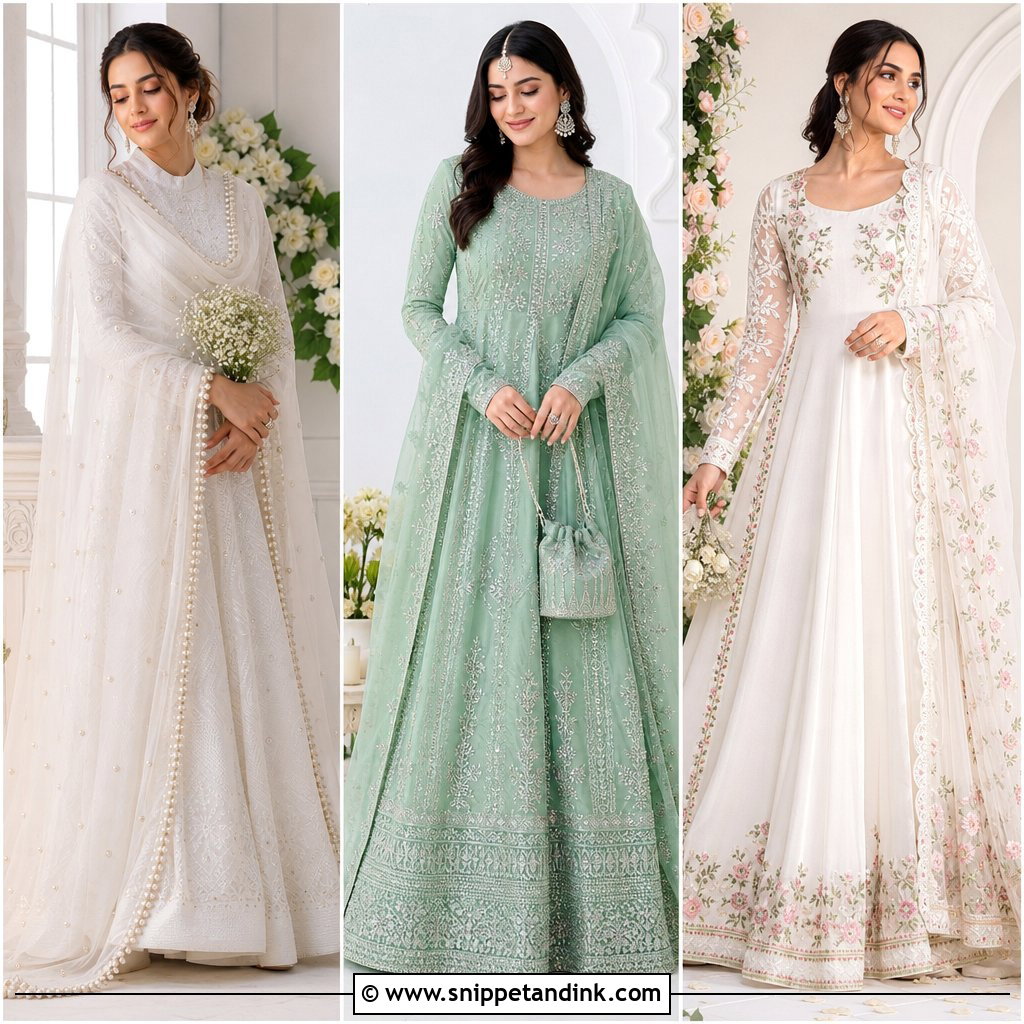
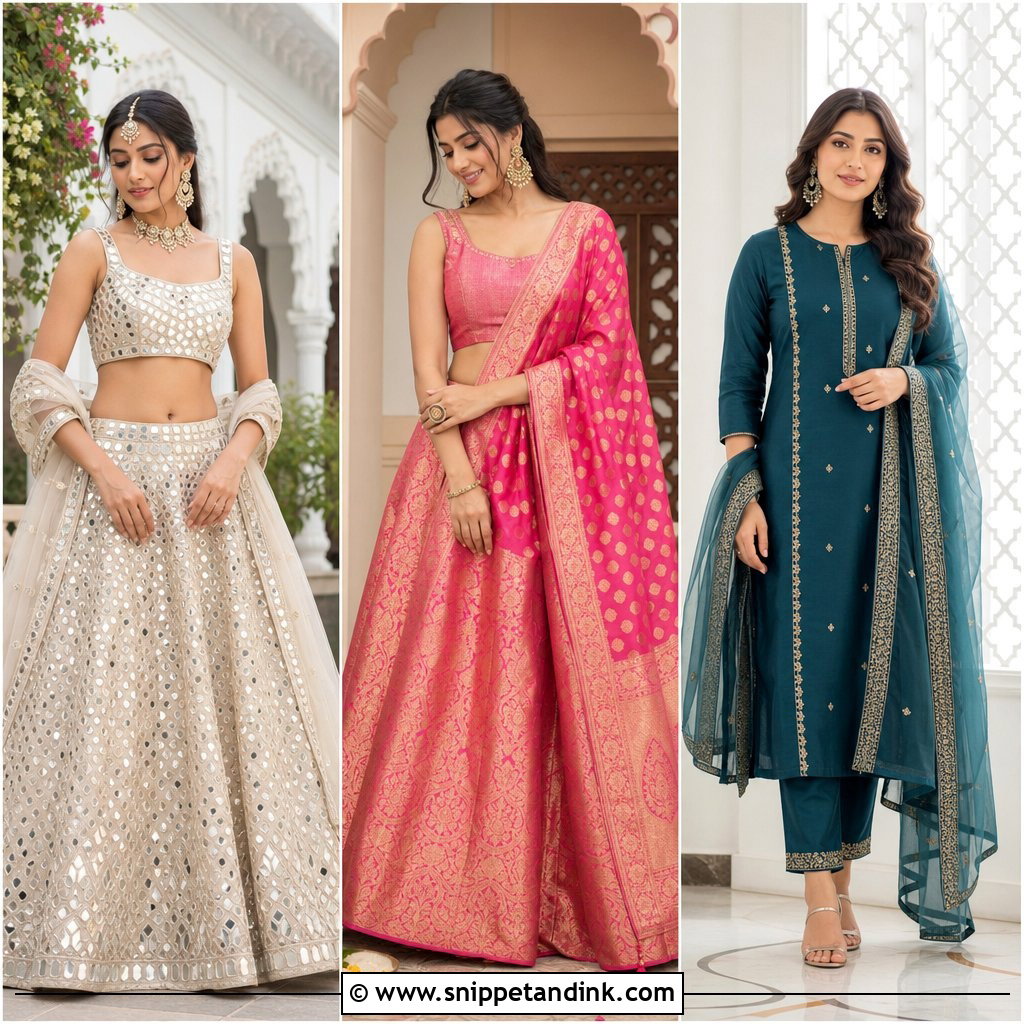
20. Co Ord Set For Roka Ceremony
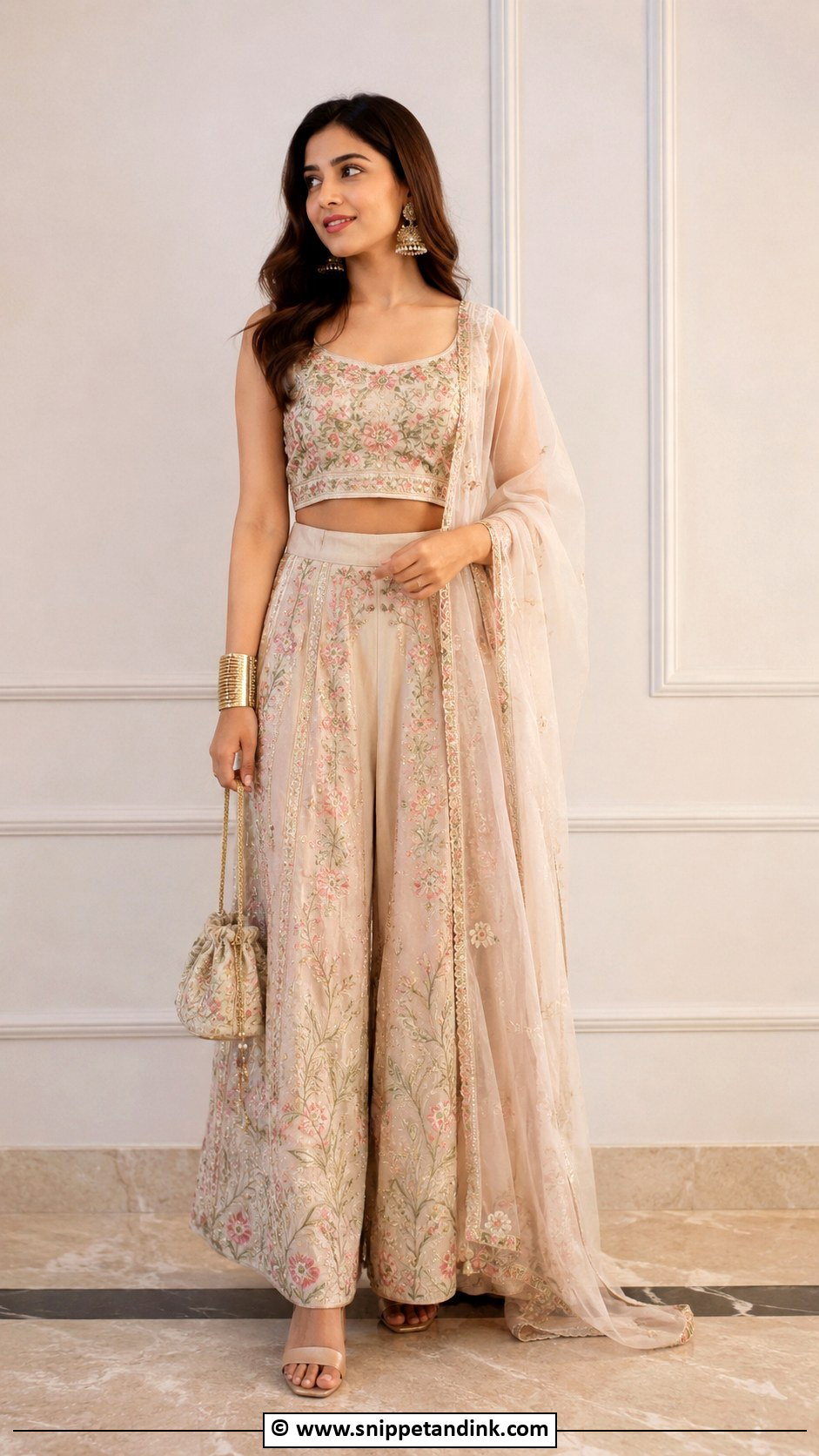
Co-ord sets are comfortable for long family gatherings, and that comfort is their main selling point. To keep one from looking casual, look for embroidery, mirror work or a zari border, and choose silk, chanderi or crepe over cotton. They are usually the sister and cousin outfit at a roka. A bride can wear one at a very small home roka if she adds a heavier dupatta and better earrings.
21. Velvet Suit For Roka Ceremony
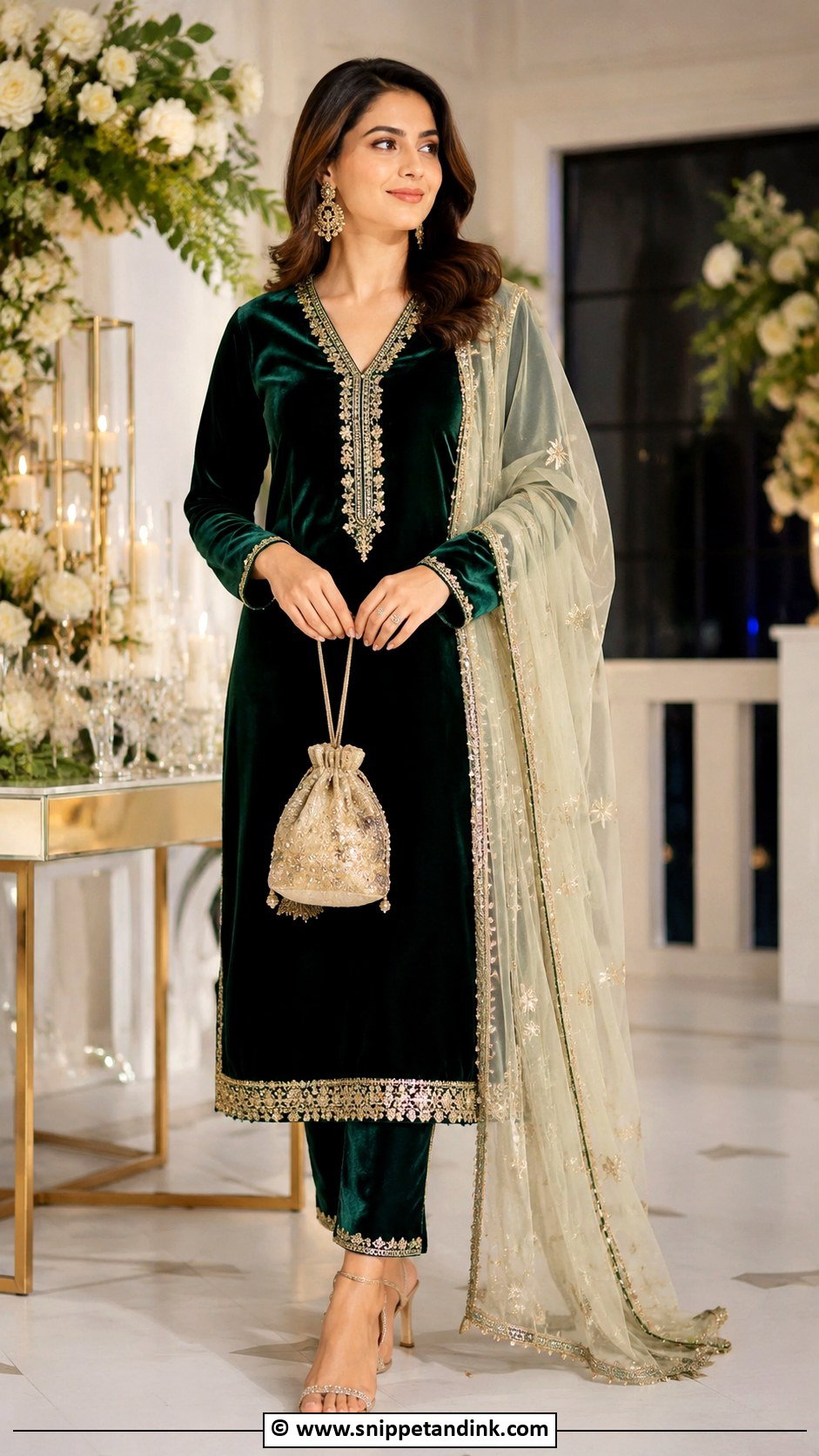
Velvet is my winter answer, and I would not suggest it from April to September in most of India. It is warm, heavy and naturally rich, so the embroidery can stay restrained. Emerald, wine, plum and navy carry well in velvet; pastels can look flat. Keep the dupatta in net or organza so the weight does not pile up on the shoulders. Velvet also marks when it is folded, so hang it the night before.
22. Tissue Silk Saree For Roka Ceremony
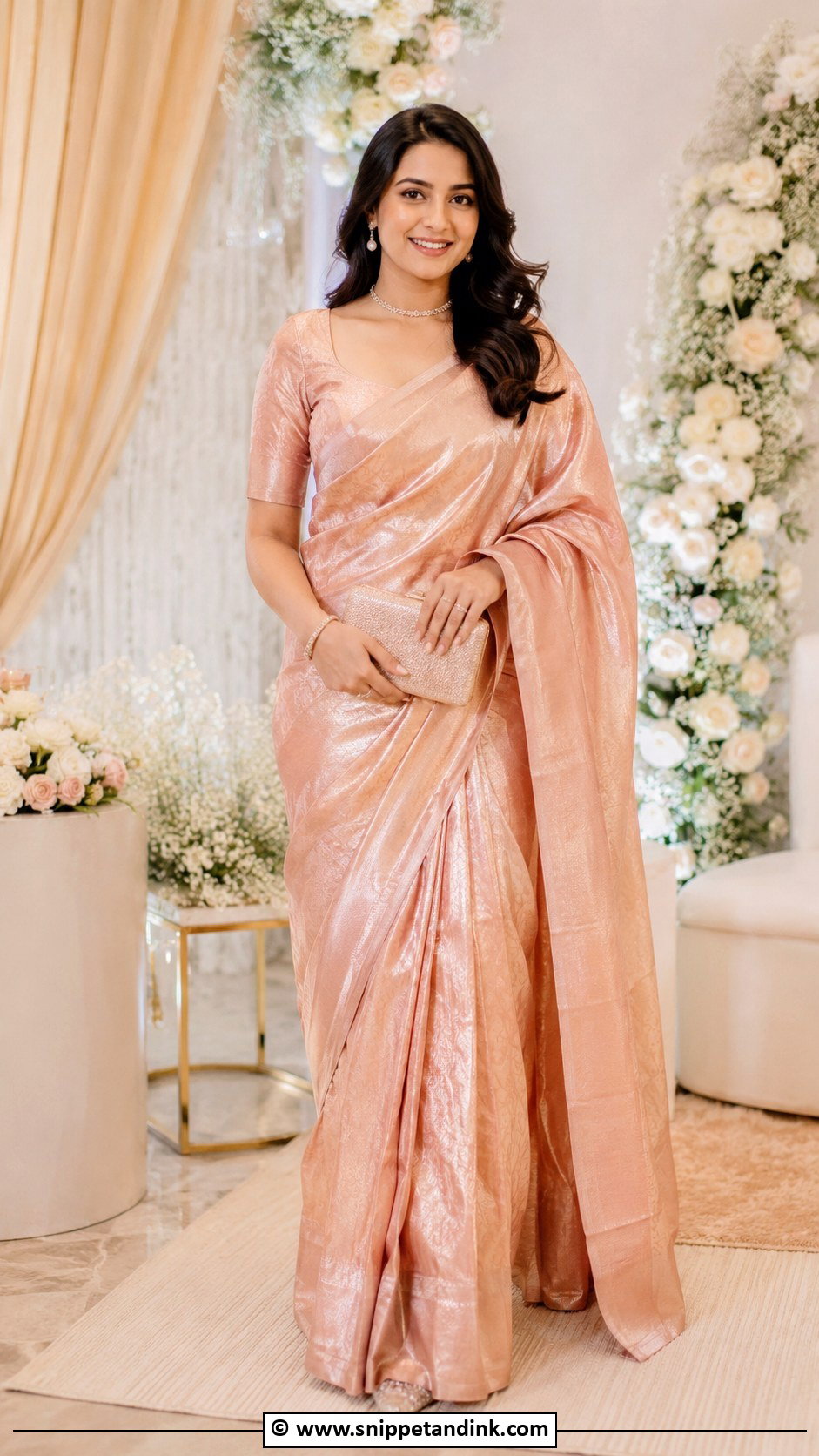
Tissue silk has a metallic sheen woven in, which means it glows in photos even with simple styling. It is light, so it suits a roka where you will be up and down all afternoon. The downside is that tissue crushes and shows creases easily; I’d steam it on the hanger, never press it flat with a hot iron. Champagne, rose gold, pale green and dusty pink are the shades that look richest. Keep the jewelry delicate because the fabric already catches light.
23. Gota Patti Suit For Roka Ceremony
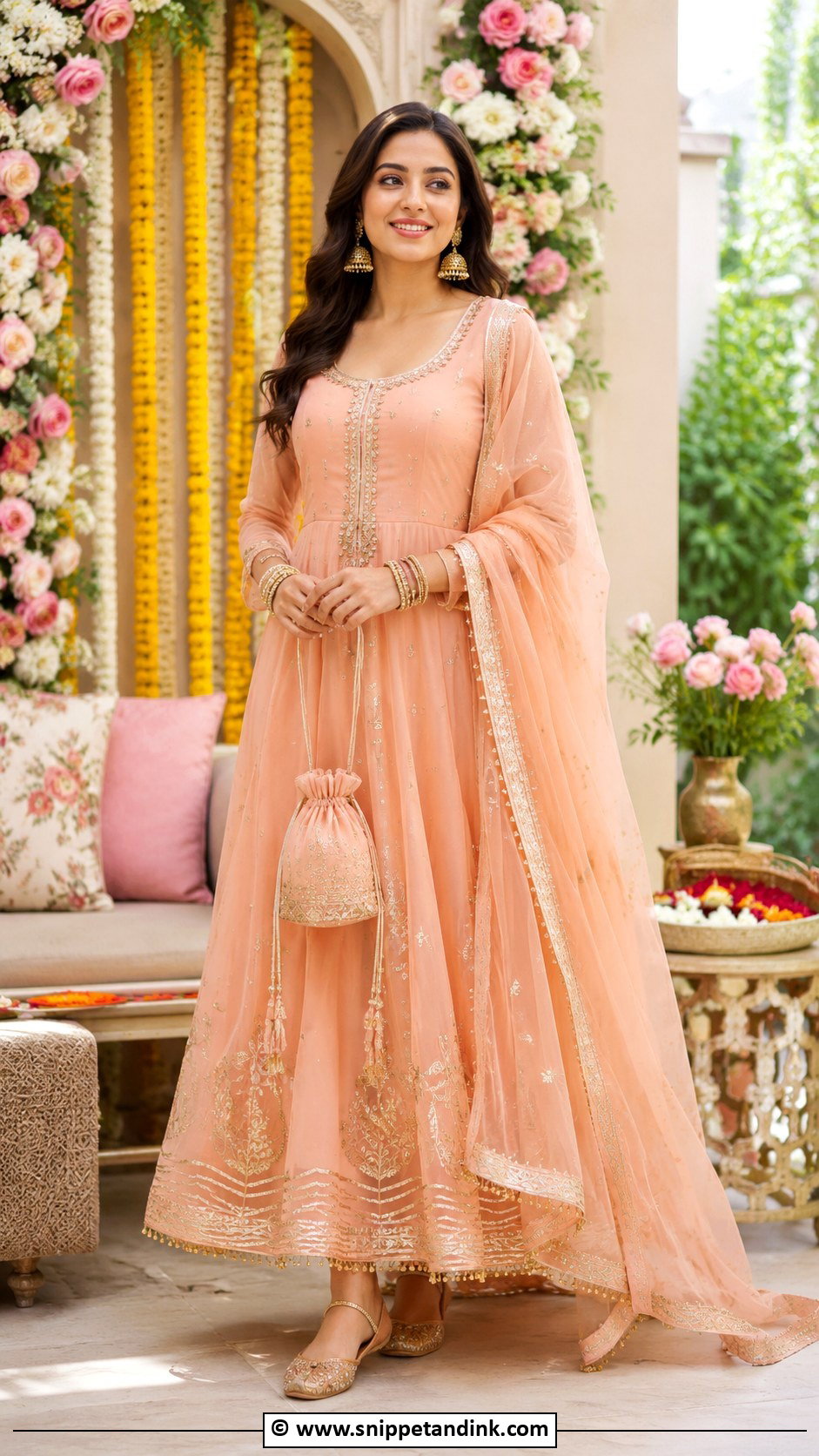
Gota patti is metallic ribbon appliqued onto the fabric, and it gives that Rajasthani festive shine without heavy embroidery. A gota patti suit looks brightest on georgette or chiffon in yellow, peach, pink or green. Real gota can tarnish over time, so wrap it in muslin when you store it and keep it away from perfume. Gold jhumkas, bangles and a potli bag complete it easily.
24. Pastel Saree For Roka Ceremony
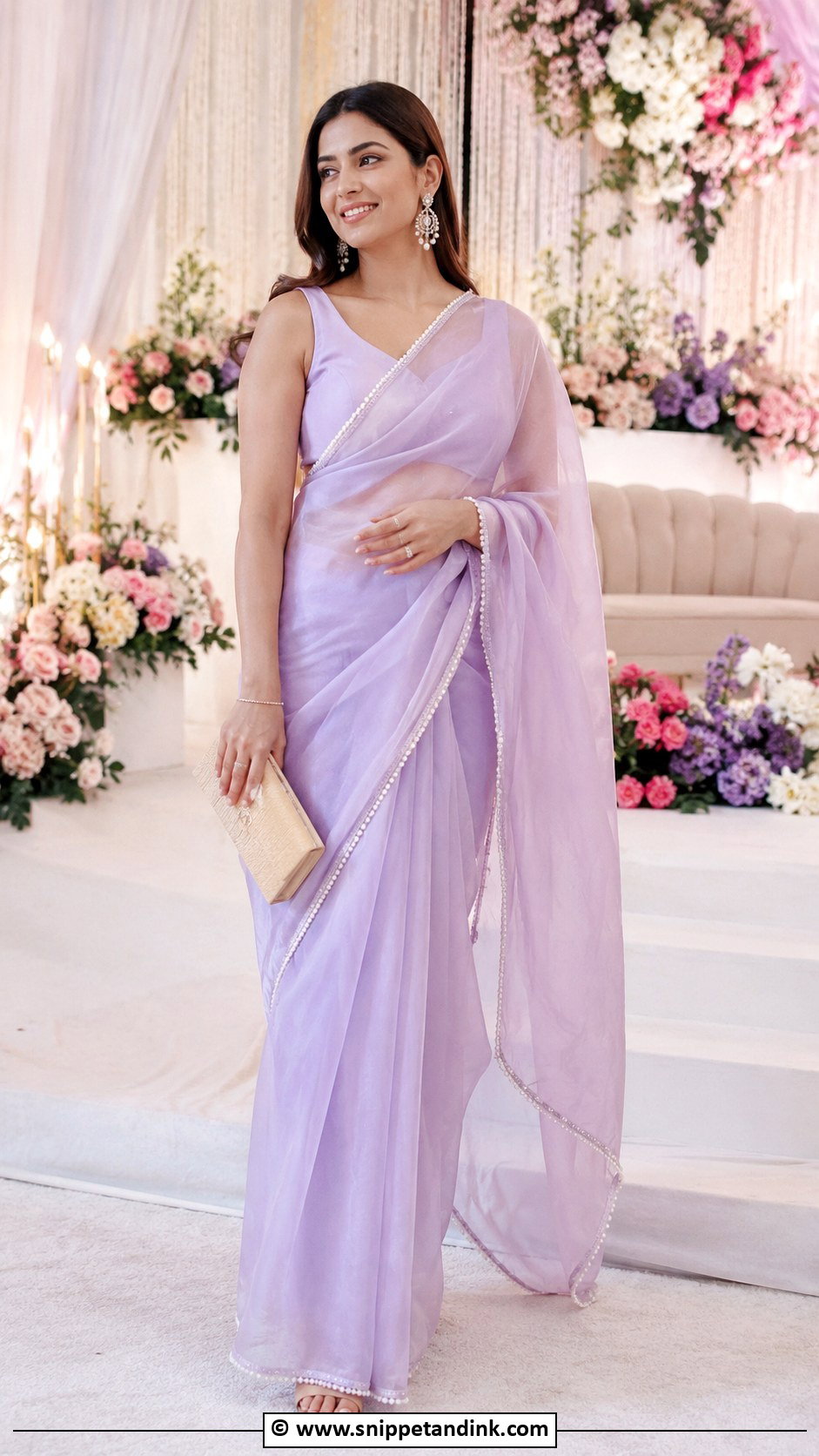
A pastel saree is the safest bet in this list, which is both its strength and its risk. It suits almost any roka setting, but it can disappear in a room full of pastel guests. I’d give it one point of interest: a contrast blouse, a pearl border or a sequinned pallu. Powder blue, lavender and pale yellow in organza or chiffon drape lightly. Soft curls and dewy skin suit the color better than heavy contour.



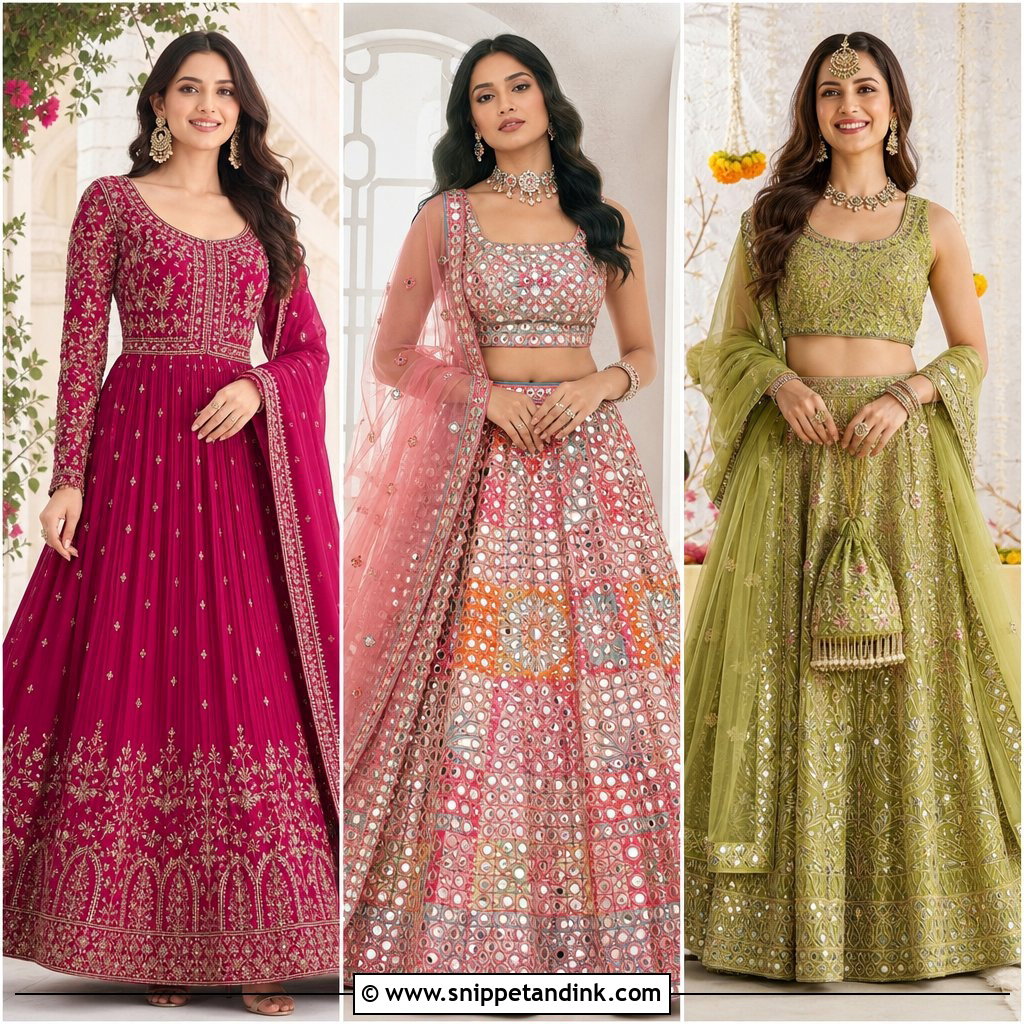
25. Embroidered Kurta Set For Roka Ceremony
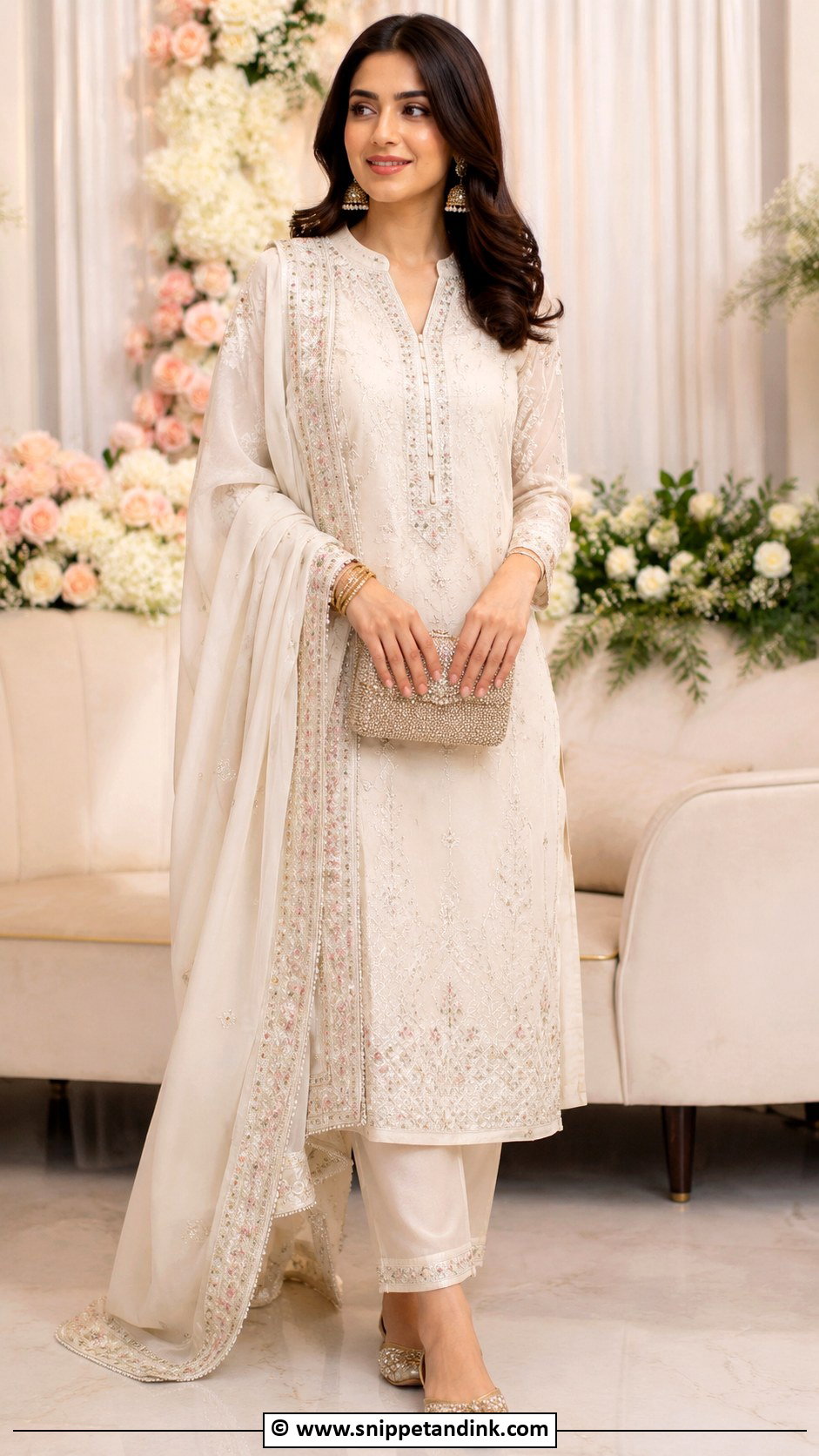
An embroidered kurta set is the outfit I suggest when a bride tells me she doesn’t want to think about clothes that day. Thread work or zari on the kurta, a bordered dupatta and straight pants or palazzos is all it takes. The dupatta is what makes it ceremonial, so spend there. Everyone from the bride to the aunties can wear this; the bride’s version just needs a richer fabric and better earrings.
26. Georgette Lehenga For Roka Ceremony
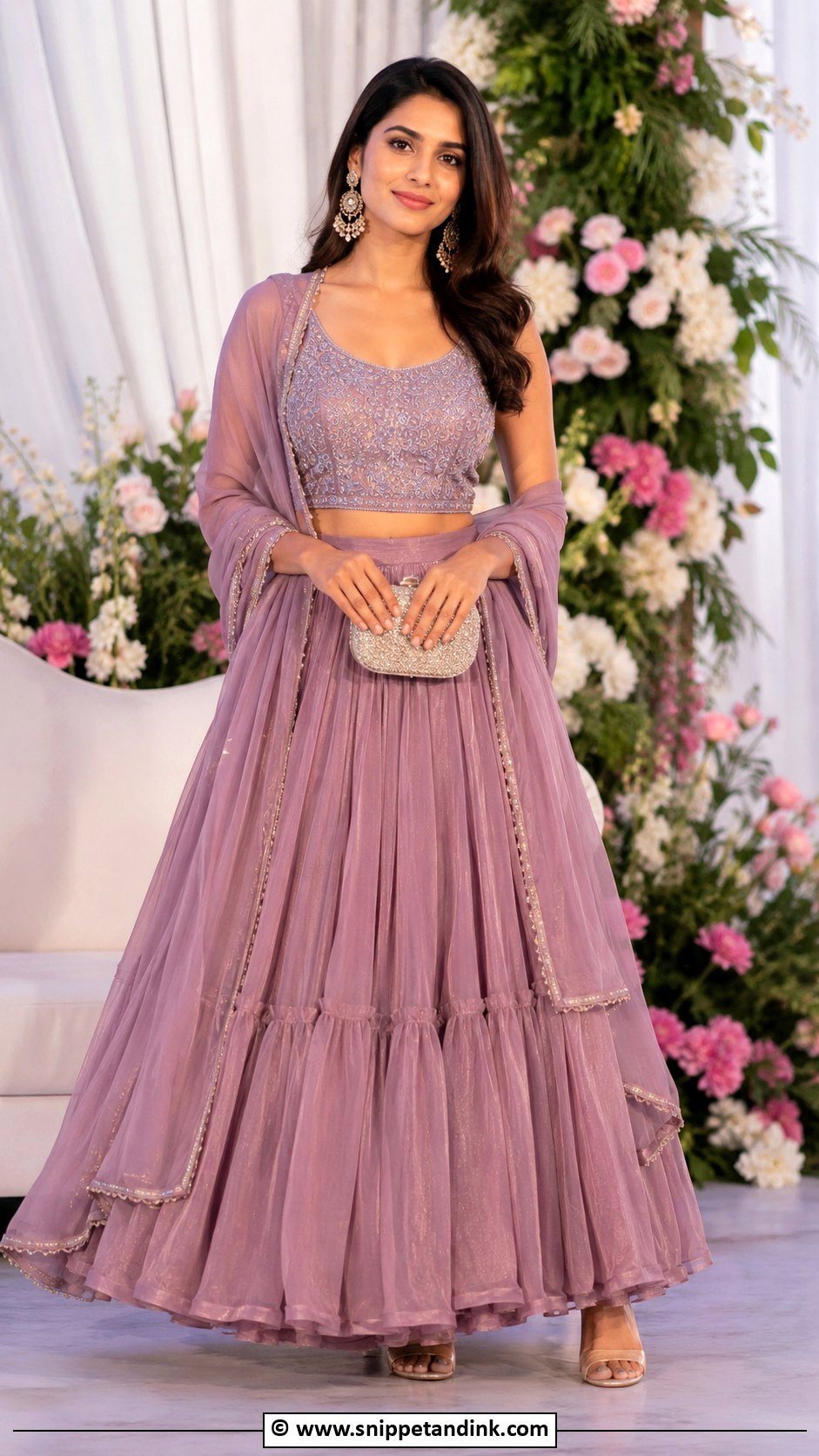
Georgette is soft and fluid, so a georgette lehenga swings with you and never stands stiff when you sit. That fluidity also means it clings and shows the shape of whatever is underneath, so the can-can and lining matter more than the outer embroidery. Coral, mauve, powder blue and sage all look good in it. Start here if a lehenga appeals but adjusting one all day does not.
27. Pakistani Suit For Roka Ceremony
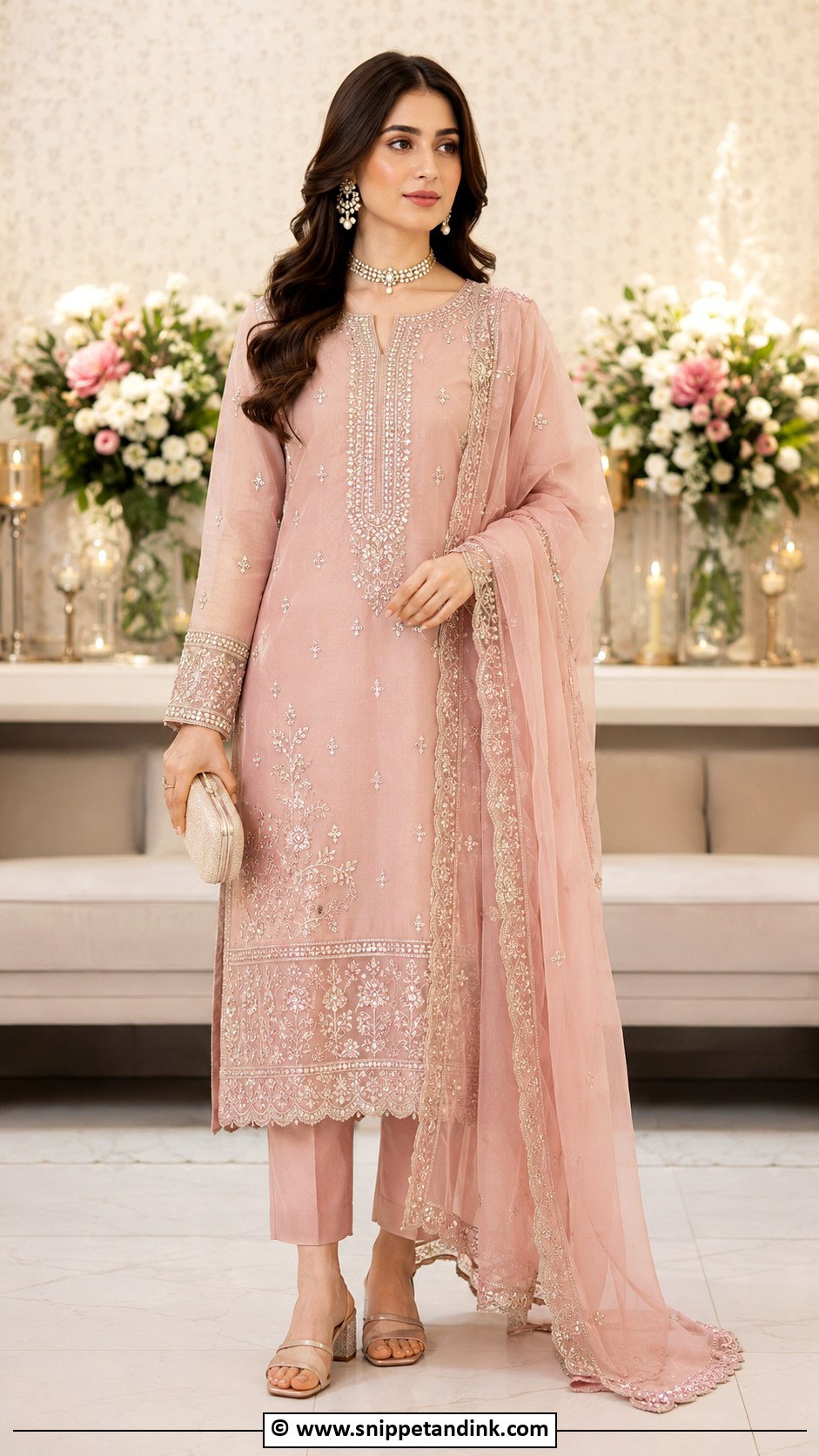
Pakistani-style suits are cut long, often to mid-calf or ankle, with straight pants and a heavily worked dupatta. The long line looks graceful and modest, which tends to go down well with older relatives. Lawn, chiffon and organza with neckline and border embroidery are classic. Check the side slits: very high slits open up when you sit cross-legged, so I’d have them closed an inch or two at the fitting.
28. Mirror Work Lehenga For Roka Ceremony
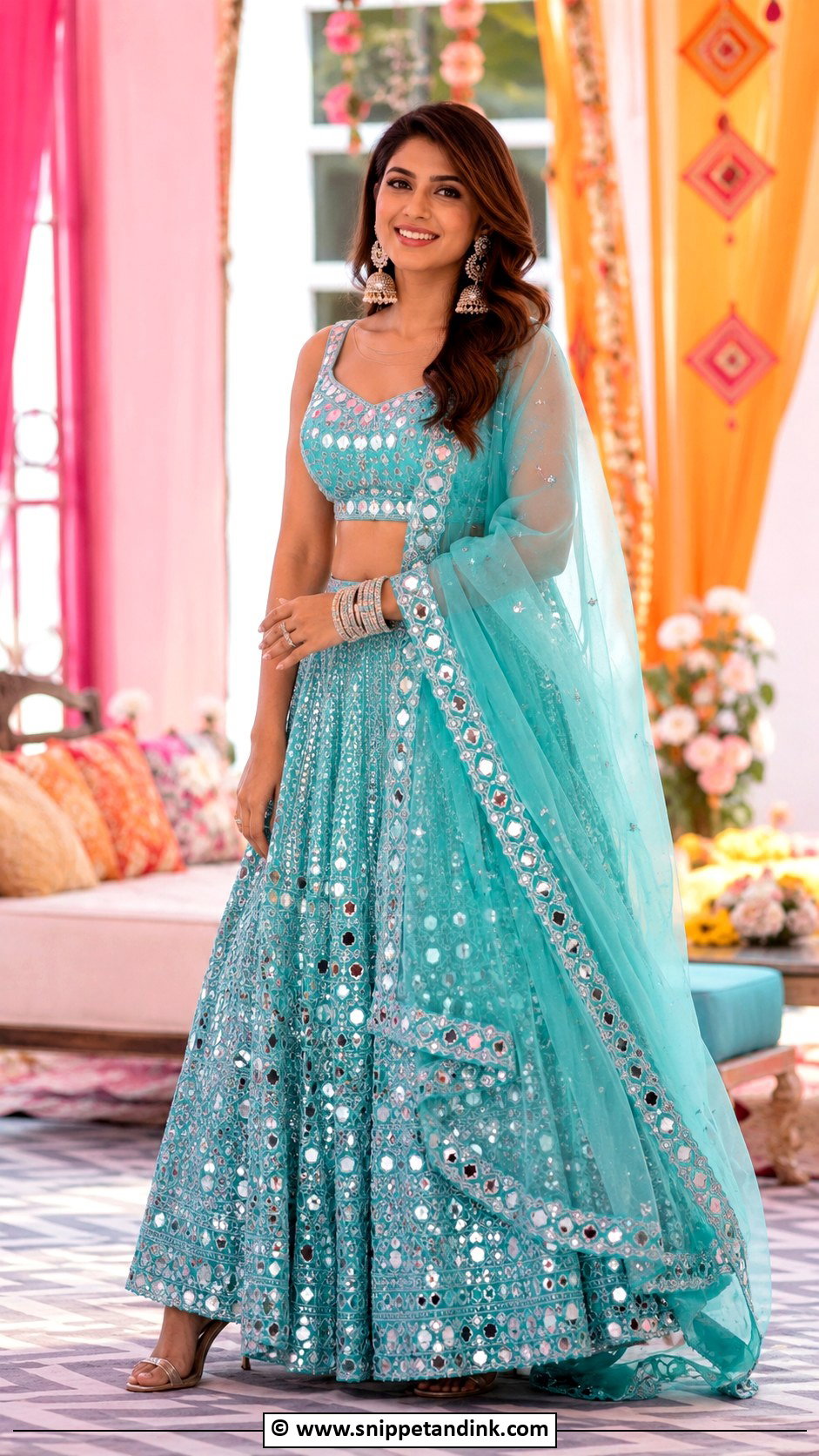
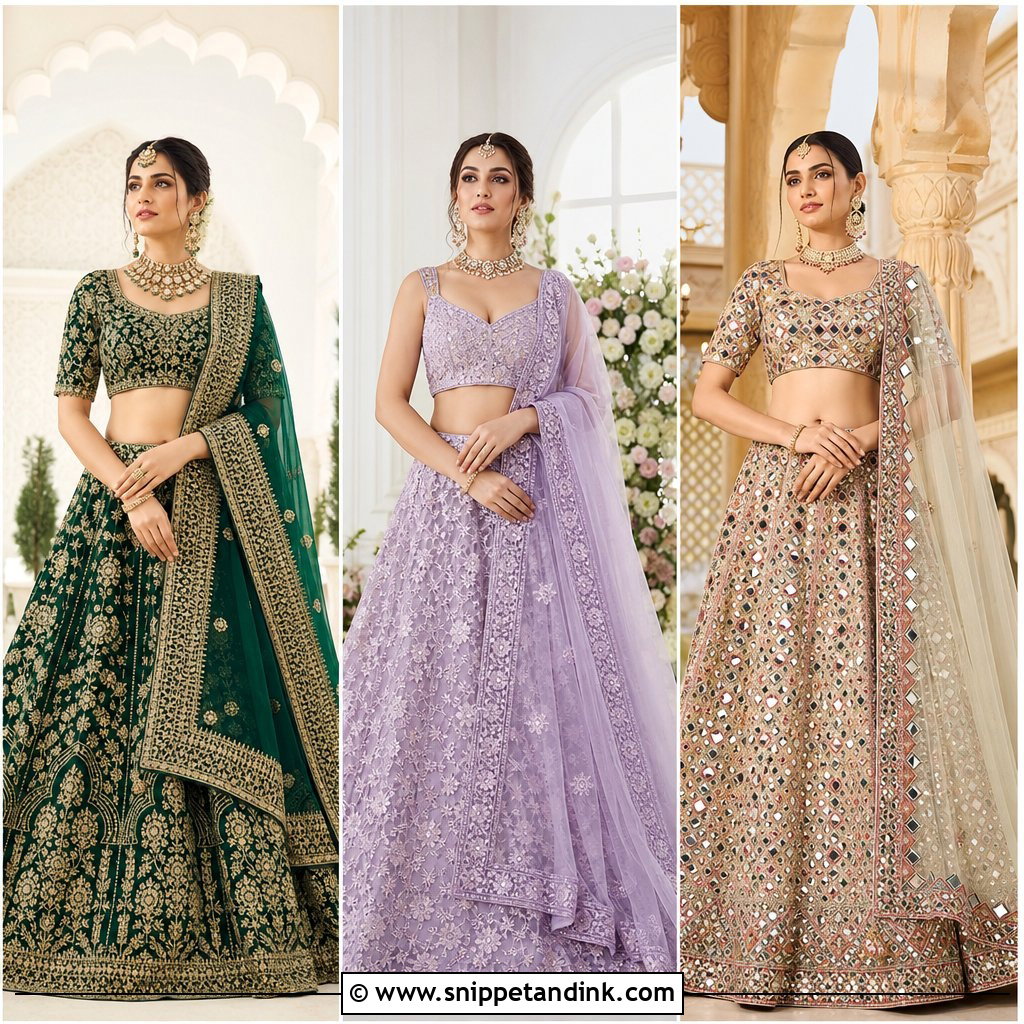
Mirror work gives sparkle the traditional way, and it photographs well because each piece catches flash and sunlight. The practical issue is that mirrors are hard and slightly heavy; a skirt covered in them is warm, and mirror edges can snag a net dupatta or long hair. I’d keep the heaviest work on the skirt and lighter work on the blouse. Pastels keep it soft; fuchsia, turquoise and yellow suit a loud, musical roka.
29. Draped Skirt Set For Roka Ceremony
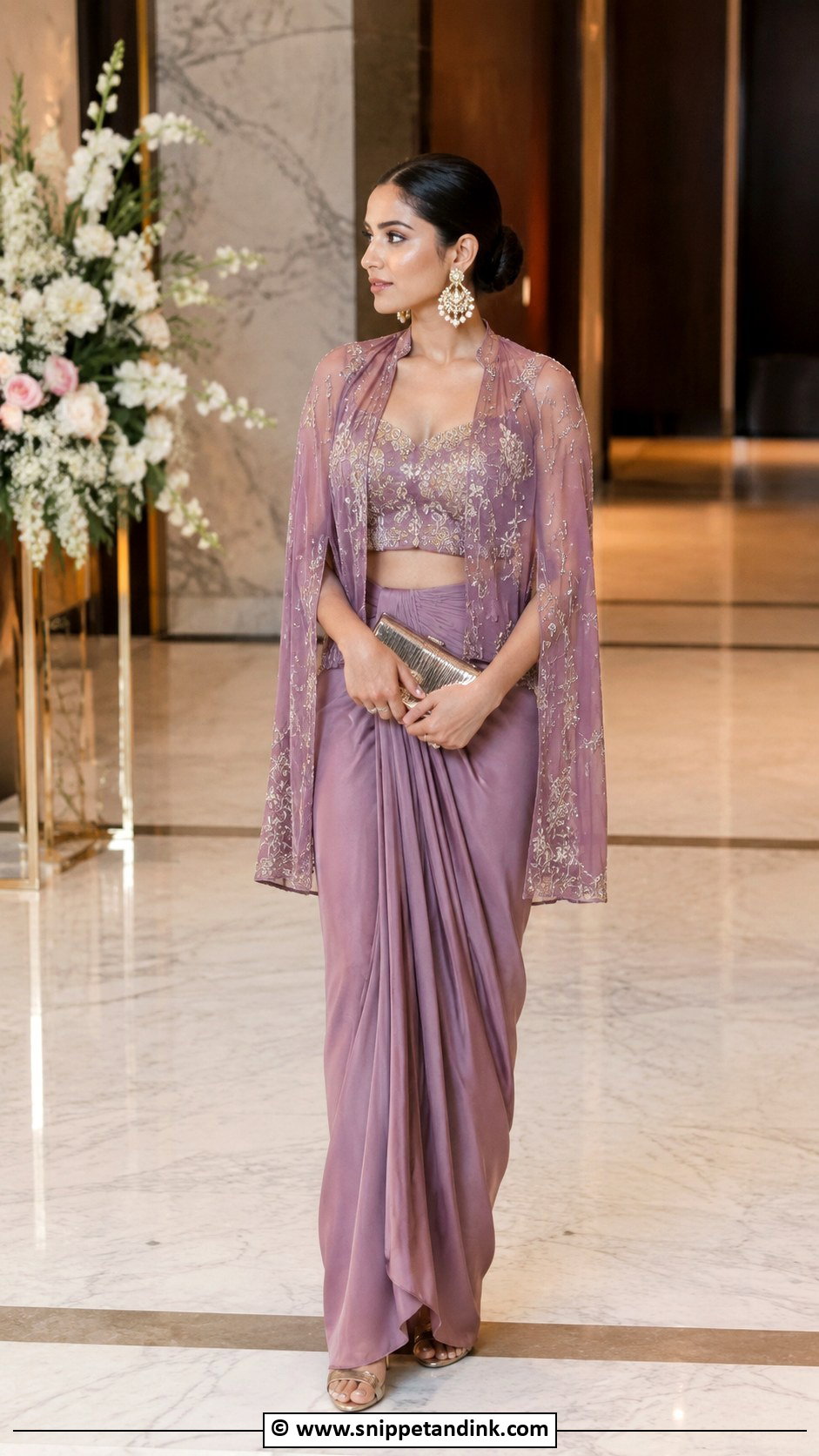
A draped skirt set gives the line of a saree without the pleating, because the drape is already stitched in place. That makes it a good choice for brides who have never worn a saree and do not want to learn on the day. Crepe, satin and georgette fall best. It has a cocktail feel, so it suits a hotel roka better than a home puja. Keep the hair tidy, since the movement is already in the outfit.
30. Chanderi Suit For Roka Ceremony
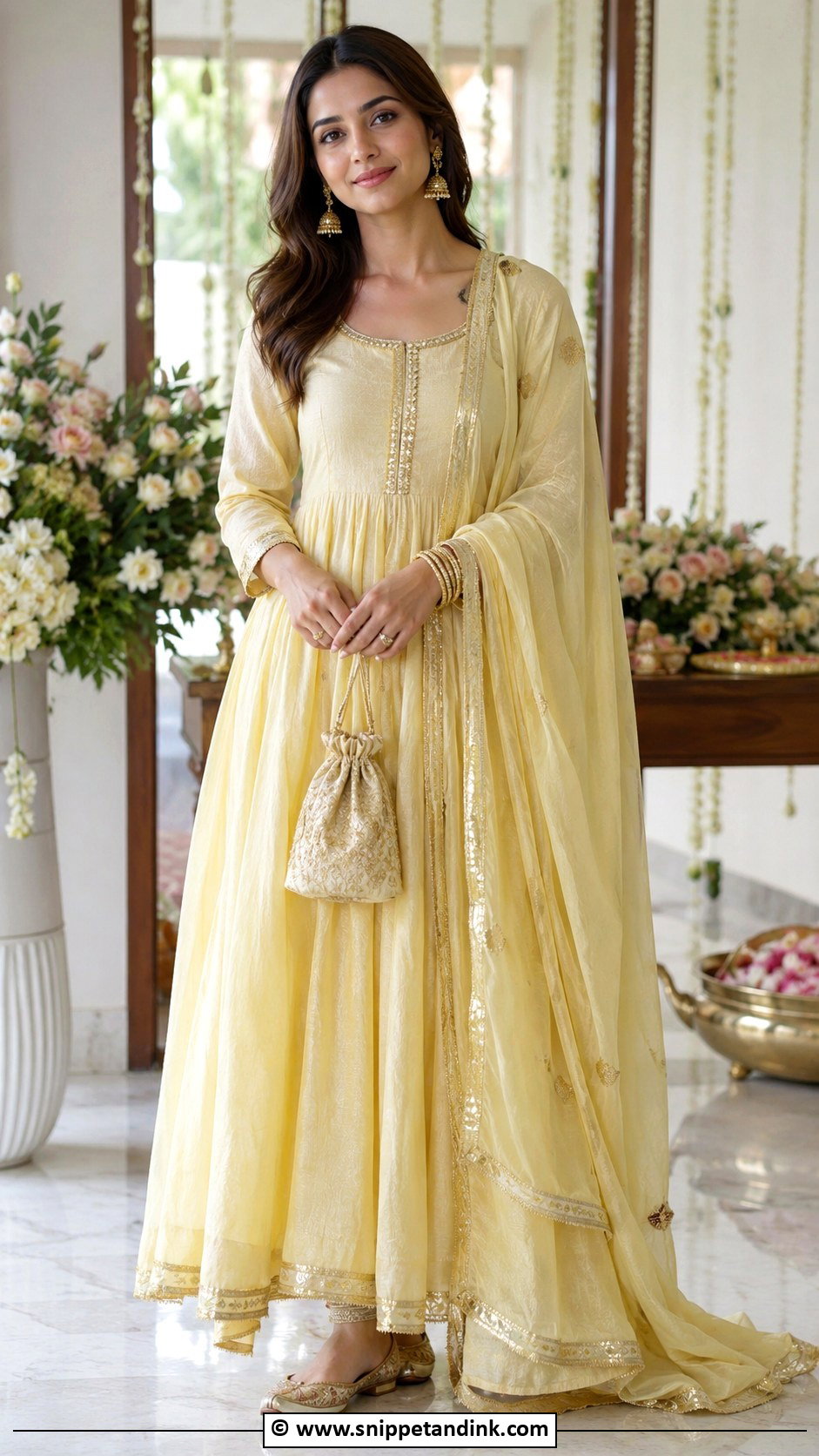
Chanderi is a fine, light weave with a gentle sheen, and it is one of the coolest fabrics to wear in hot weather while still looking ceremonial. A kurta set with a woven gold border and a light dupatta is a good choice for a summer afternoon roka. Ivory, yellow, rose and mint look especially soft in it. Chanderi can be slightly translucent, so I always check the lining against daylight.
31. Red Suit For Roka Ceremony
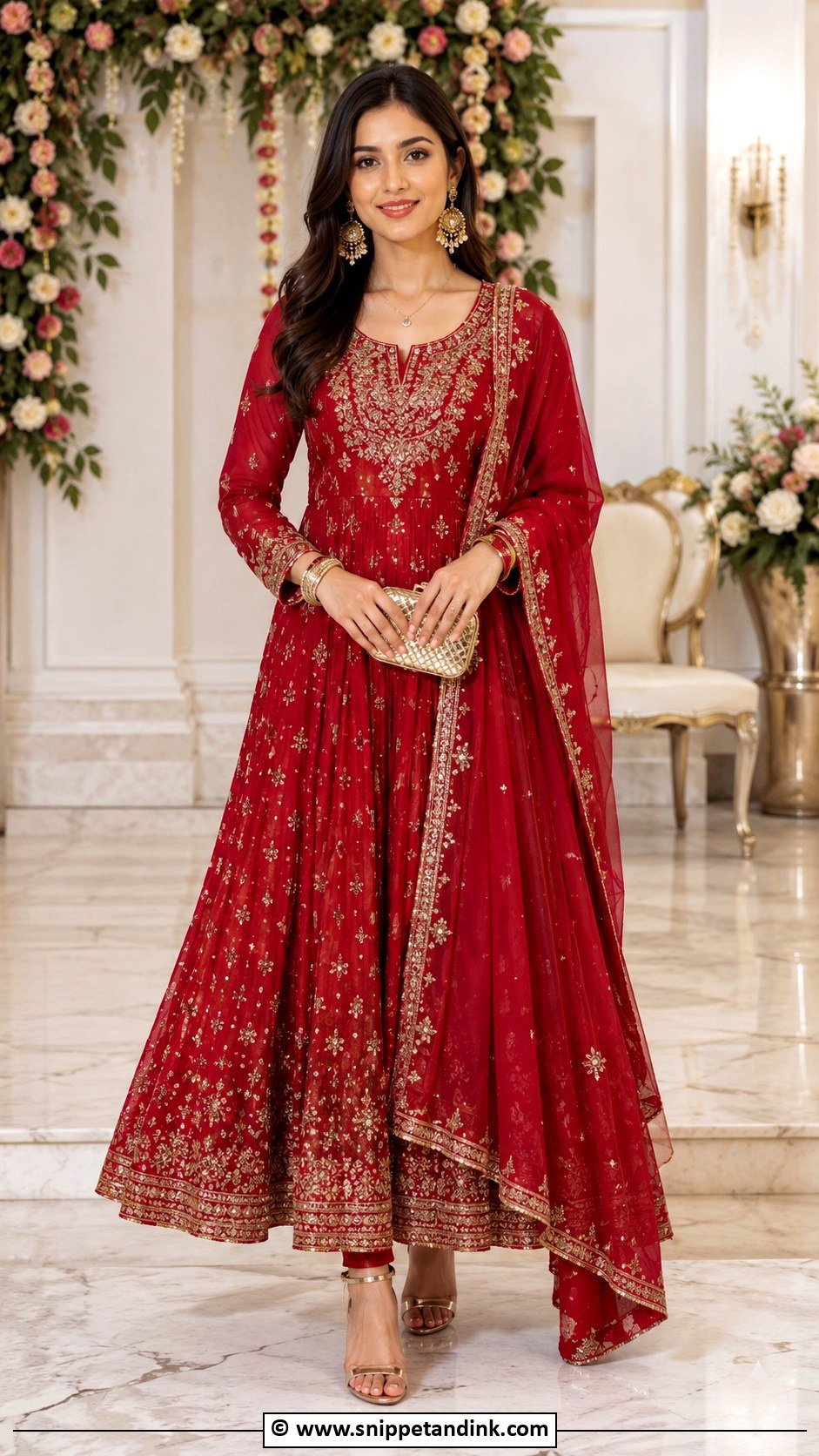
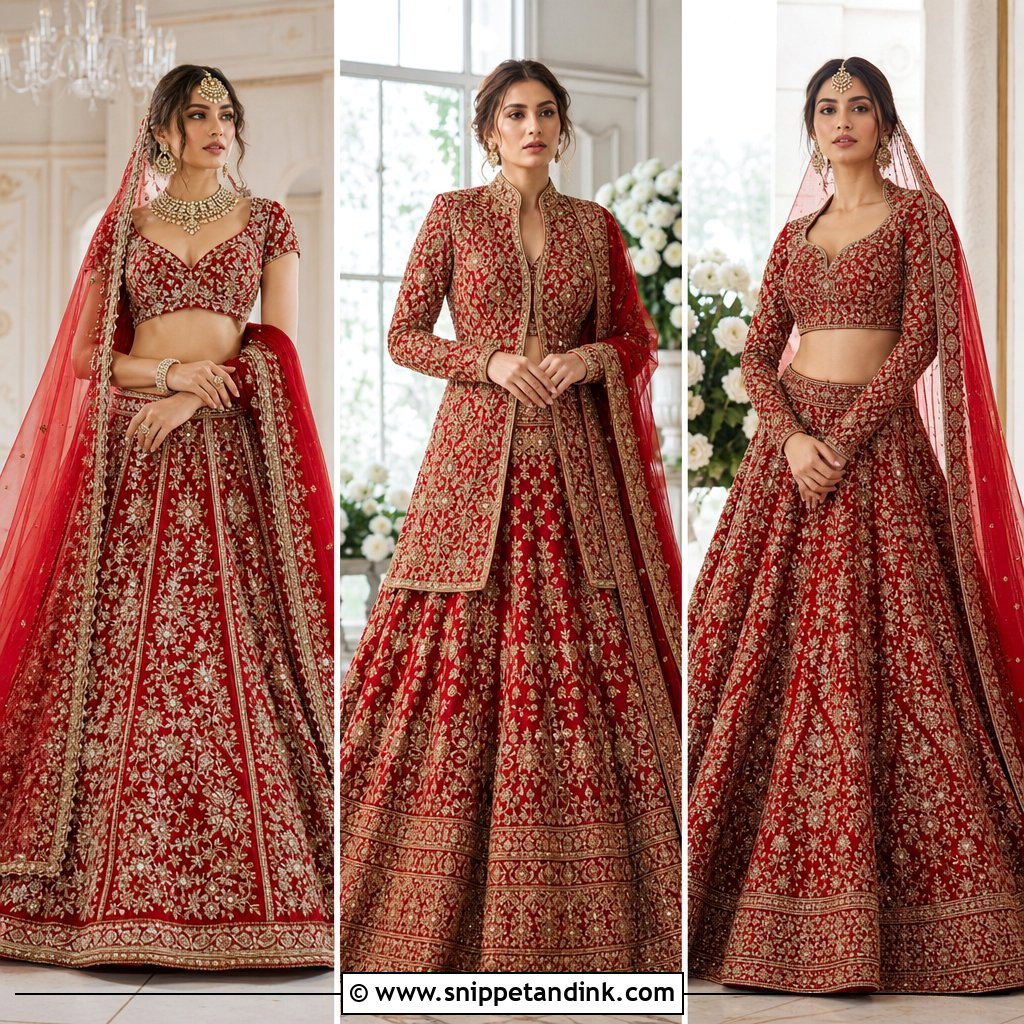
Red is the classic bridal color, so wearing it at the roka needs a little restraint if you want the wedding outfit to still feel like the big reveal. I’d choose a lighter silhouette such as a straight kurta or sharara in a softer red, with delicate embroidery and a slim necklace. Keep the dupatta simple rather than a heavy bridal border. It suits brides who love tradition but want to keep the full red lehenga for the wedding itself.
32. Sage Green Lehenga For Roka Ceremony
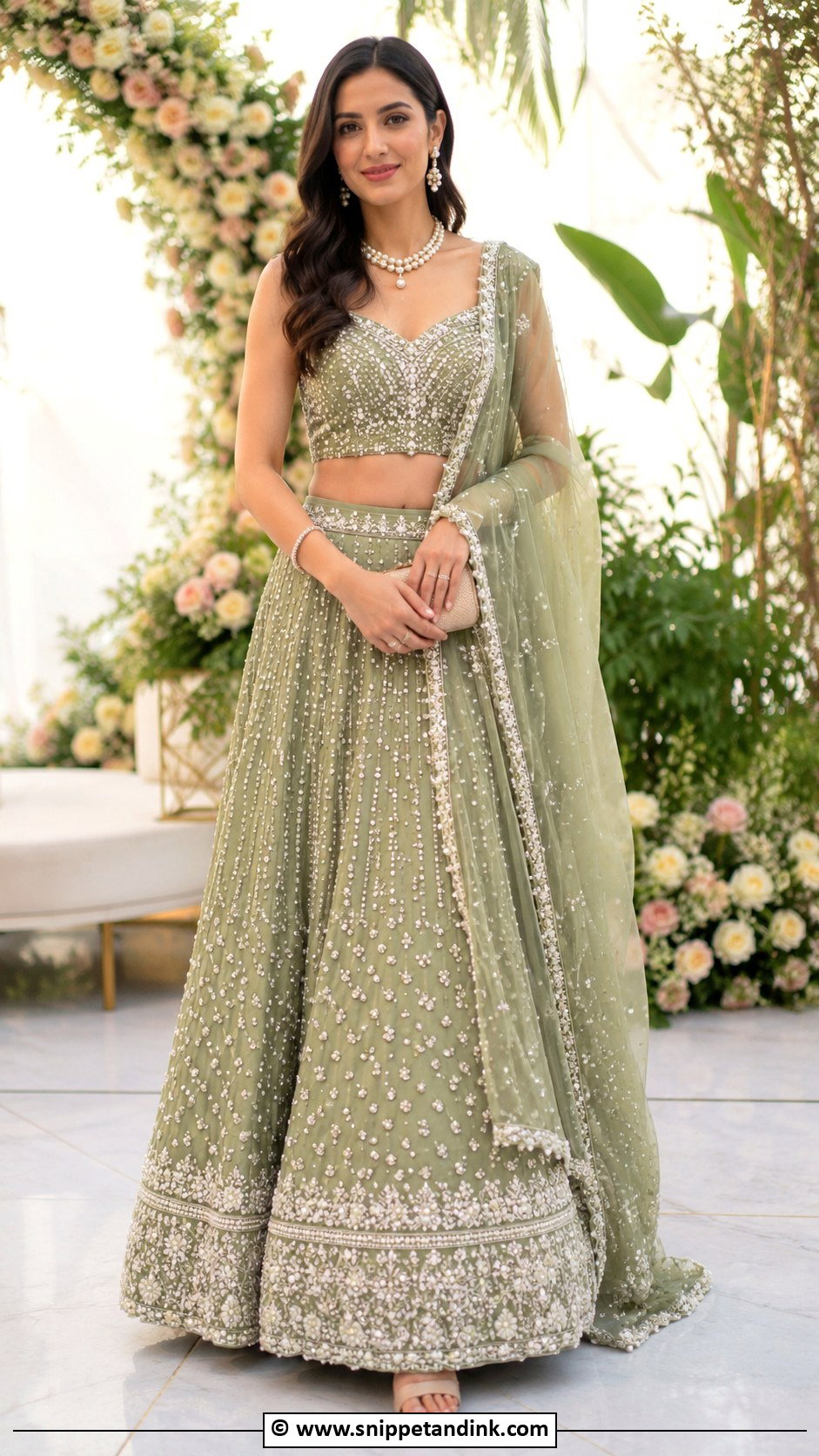
Sage green has become a modern pastel because it flatters most skin tones and sits well against floral decor. Silver, pearl or muted gold embroidery suits it better than bright gold, which can turn it yellowish in photos. A matching blouse and sheer dupatta keep it coordinated. I’d keep makeup warm, with rosy cheeks and a neutral lip, so the green does not drain your color.
33. Mustard Sharara For Roka Ceremony
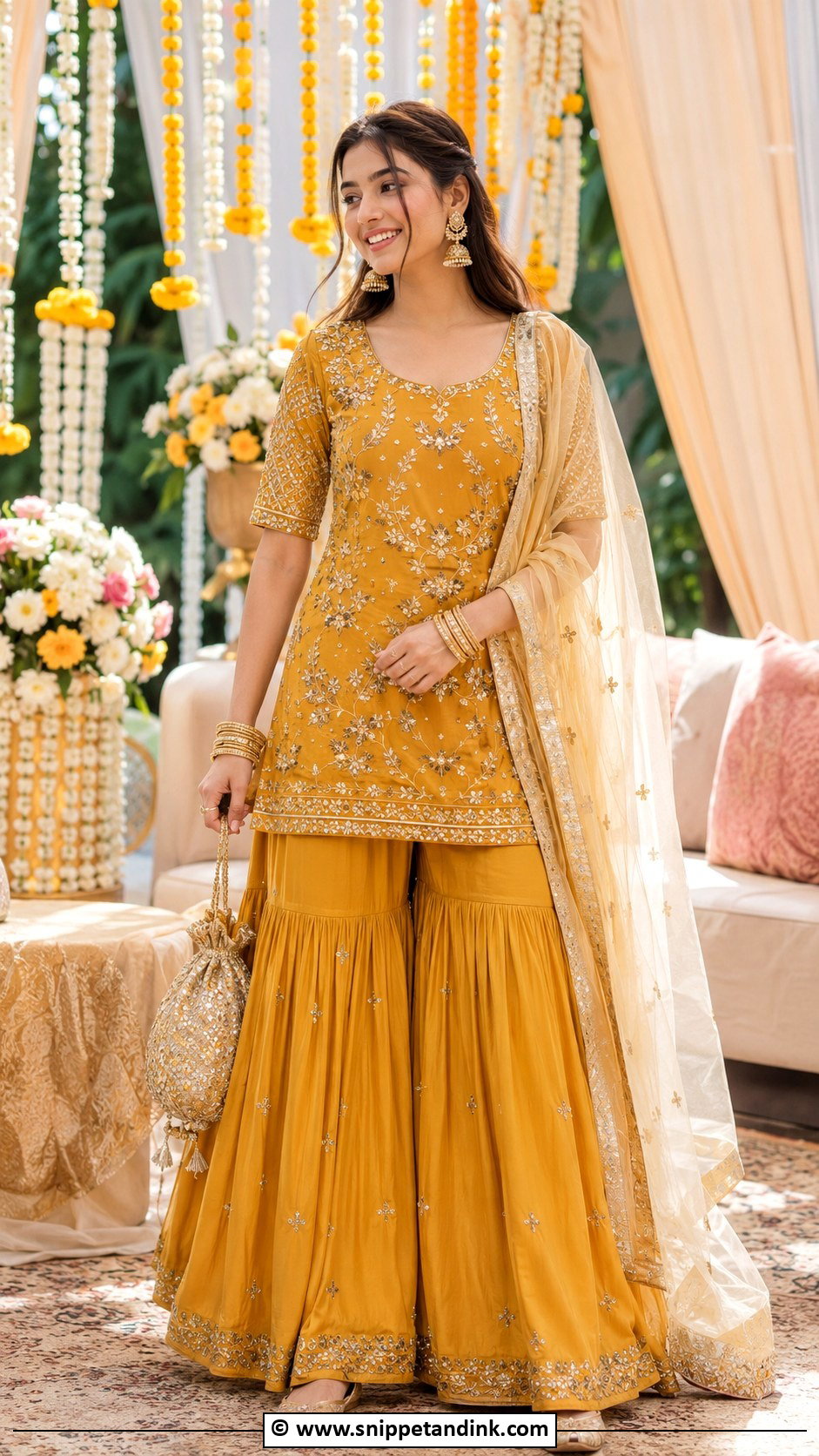
A mustard sharara is a warm color that looks joyful in daylight and pairs easily with gold, ivory and green. A short embroidered kurti over flared legs, with gota or mirror work, is festive without being heavy. Mustard can turn muddy under fluorescent light, so I would keep it for an outdoor or daylit roka. Sisters and cousins look good in it too, which is worth knowing if you want the family photos to coordinate.
34. Blush Pink Saree For Roka Ceremony
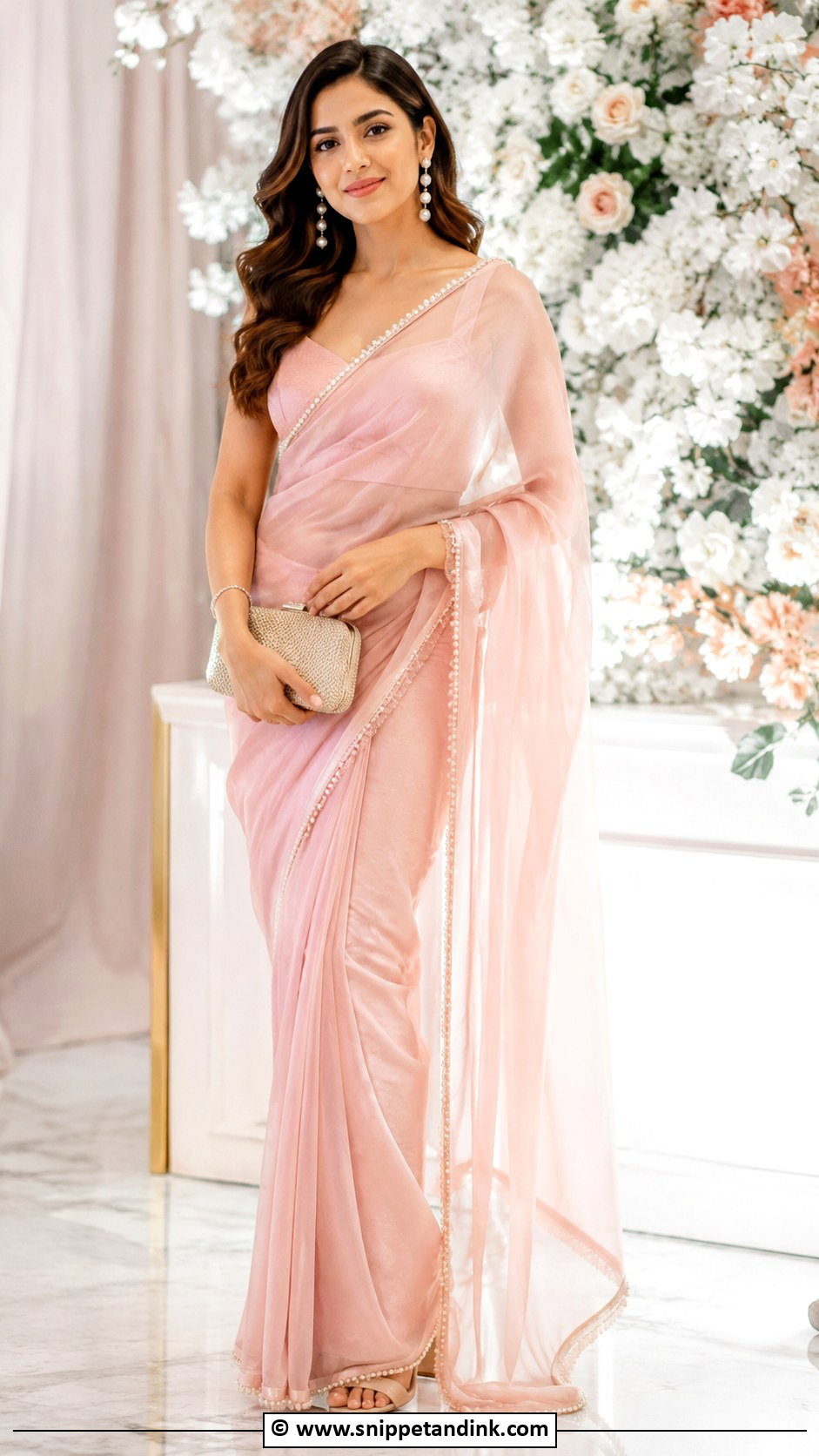
Blush is the most flattering pink for a wide range of skin tones because it sits between peach and rose. In organza or chiffon with pearl borders it looks soft and graceful; in silk with a gold blouse it feels more festive. Pearl earrings and nude heels keep it fresh. I’d avoid a blush that has too much grey in it, as it can look washed out next to warm gold decor.
35. White And Gold Suit For Roka Ceremony
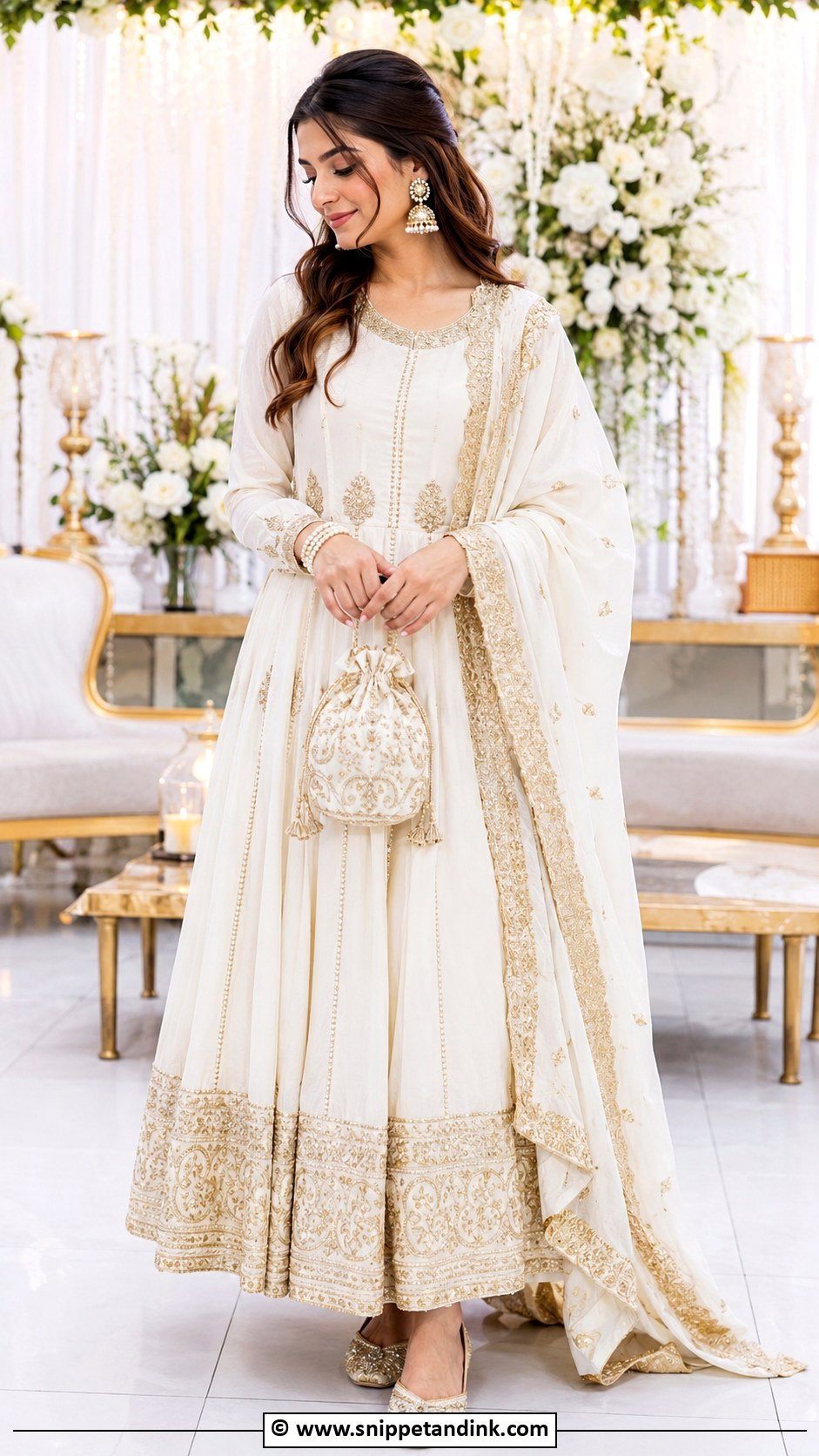
White and gold is a quiet, clean combination that feels festive without being loud. It works for brides and for the immediate family, and it suits pastel decor and daylit home ceremonies. An Anarkali or straight suit with gold zari borders or fine sequins is the easiest version. Check with your family before choosing pure white, though: some households keep white away from auspicious ceremonies, and ivory or cream with gold avoids the question entirely.
When the Roka Date Is Only a Few Weeks Away
Rokas are often fixed quickly, once the families agree, so many brides have far less time than they would for the wedding outfit. Plan around that instead of panicking. Ready-made sets from a good label usually need only small alterations, and I would rather a bride wear a well-fitted ready outfit than a rushed custom one.
- Buy first, fit second. Alterations to a blouse or kurta typically take a week or two, but this varies by tailor and season.
- Avoid fully custom embroidery if you have under two months. Hand embroidery takes time, and the rush version is where errors creep in.
- Try the outfit with the actual shoes and jewelry once. A sharara hem or a saree length depends on heel height.
- Steam, don’t iron, organza, tissue and silk the day before, and hang everything on a padded hanger overnight.
Wearing It Again After the Roka
A roka outfit rarely needs to be a one-time piece. A lighter lehenga can return at a cousin’s sangeet, a saree can be re-draped with a different blouse, and a good dupatta from a suit can be worn over a plain kurta later. That is another reason I suggest pieces that are not too bridal.
For storage, wrap zari, gota and silk pieces in soft muslin rather than plastic, which traps moisture and can tarnish metallic thread. Refold them every few months along different lines so the creases don’t become permanent, and keep perfume away from embroidery. Velvet and heavily worked pieces are best hung, not folded.
Matching the Outfit to the Room, the Hour and the Elders
Start with the setting, the time of day and how traditional the ceremony will be, and the right outfit usually narrows itself. For the bride, a soft lehenga, saree, Anarkali, sharara or Indo-western piece all work as long as it is lighter than the wedding outfit. Guests and family have even more freedom with suits, printed sarees and co-ords. Whatever you wear, make sure you can sit, bow, hug and eat in it, because a roka is about the people, not the clothes.
You'll Like These Ideas:



Leave a Reply