
A North Indian wedding is rarely one event. There’s usually a haldi, a mehndi, a sangeet, the ceremony itself and a reception, and each asks something different from what you wear. I plan these wardrobes the way I’d plan a trip: breathable fabric for daytime rituals, outfits you can dance in for the evening, and the heavy embroidery saved for the moments that are mostly standing and photographs. Lehengas, sarees, Anarkalis, shararas, ghararas and draped fusion sets all have a place. Below are twenty complete looks, from a bridal red lehenga to an Indo-Western dhoti set, with notes on fit, footwear and how each one behaves over a long day.
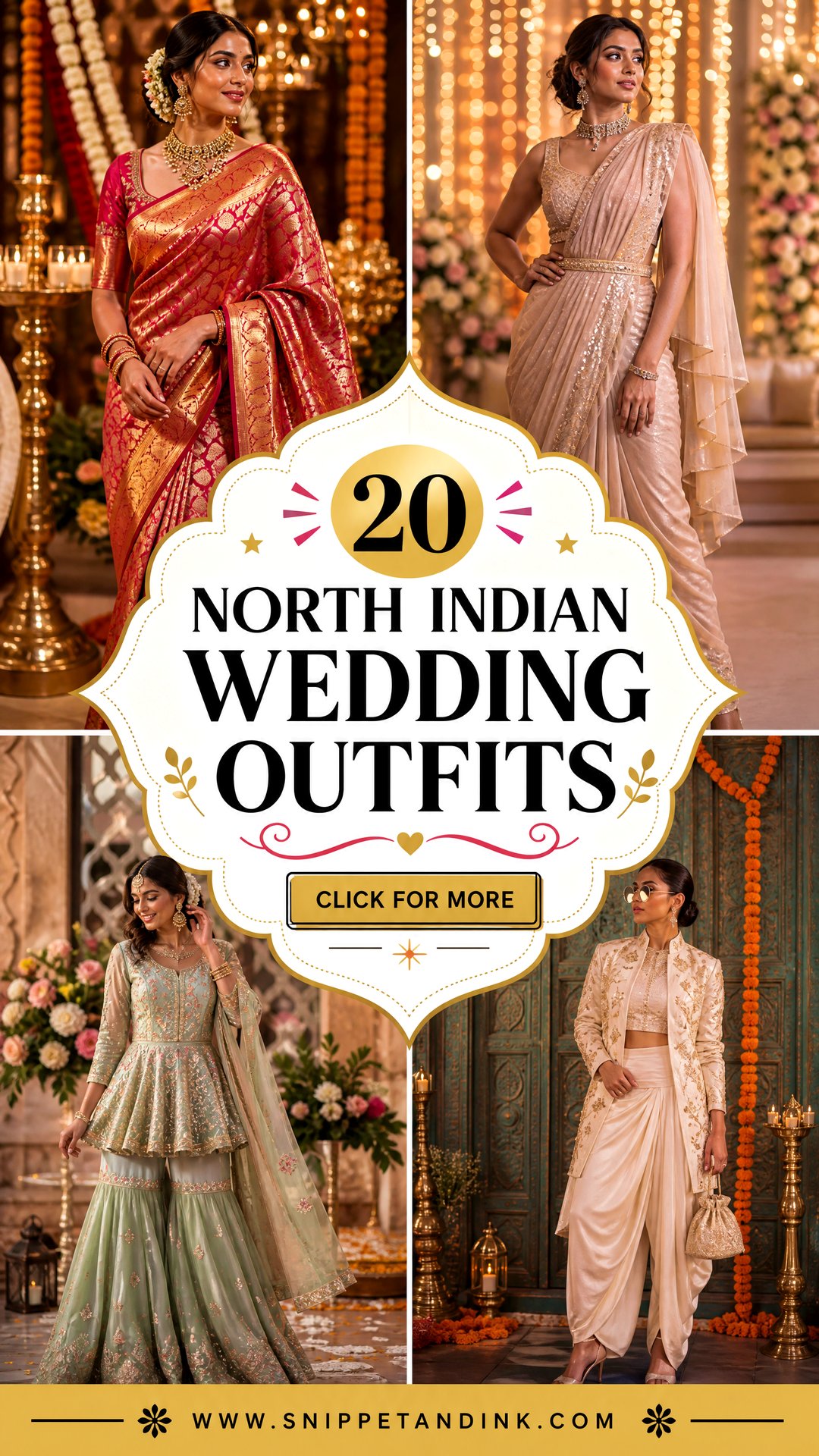
Mapping Outfits to Haldi, Mehndi, Sangeet and Pheras
When a bride or a close family member brings me a list of functions, I sort them by what the body is actually doing at each one, not by how grand the event feels. That decides fabric and weight before we talk color.
- Haldi: sitting on the floor while paste goes everywhere. Washable cotton or cotton silk, short sleeves or sleeves you can push up, nothing you’d cry over.
- Mehndi: hours of sitting with hands out. Light fabric, sleeves that stop above the wrist, no rings, and a dupatta you can pin so nobody has to adjust it for you.
- Sangeet: dancing. Shararas, ghararas, light lehengas and dhoti pants, with flat or block-heeled shoes.
- Ceremony: long periods of sitting, then standing for the pheras. This is where the heavy silk and the full jewelry belong.
- Reception: standing, greeting and photos. Capes, organza sarees and gowns with a sculpted line work here.
If budget is tight, I put the most money into the ceremony outfit and one evening outfit, and build the rest from separates that can be restyled with a different dupatta.
1. Red Bridal Lehenga For North Indian Wedding
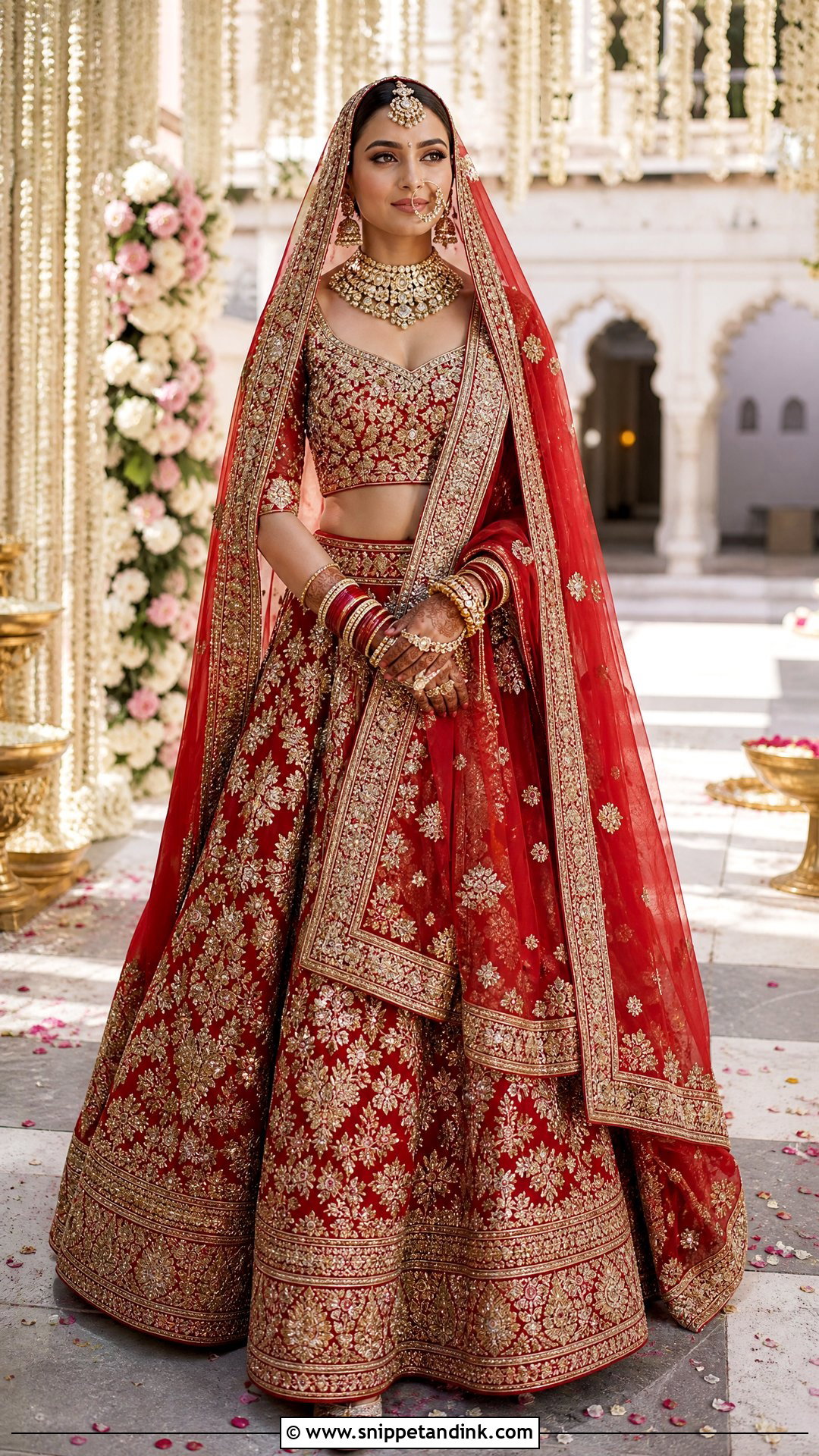
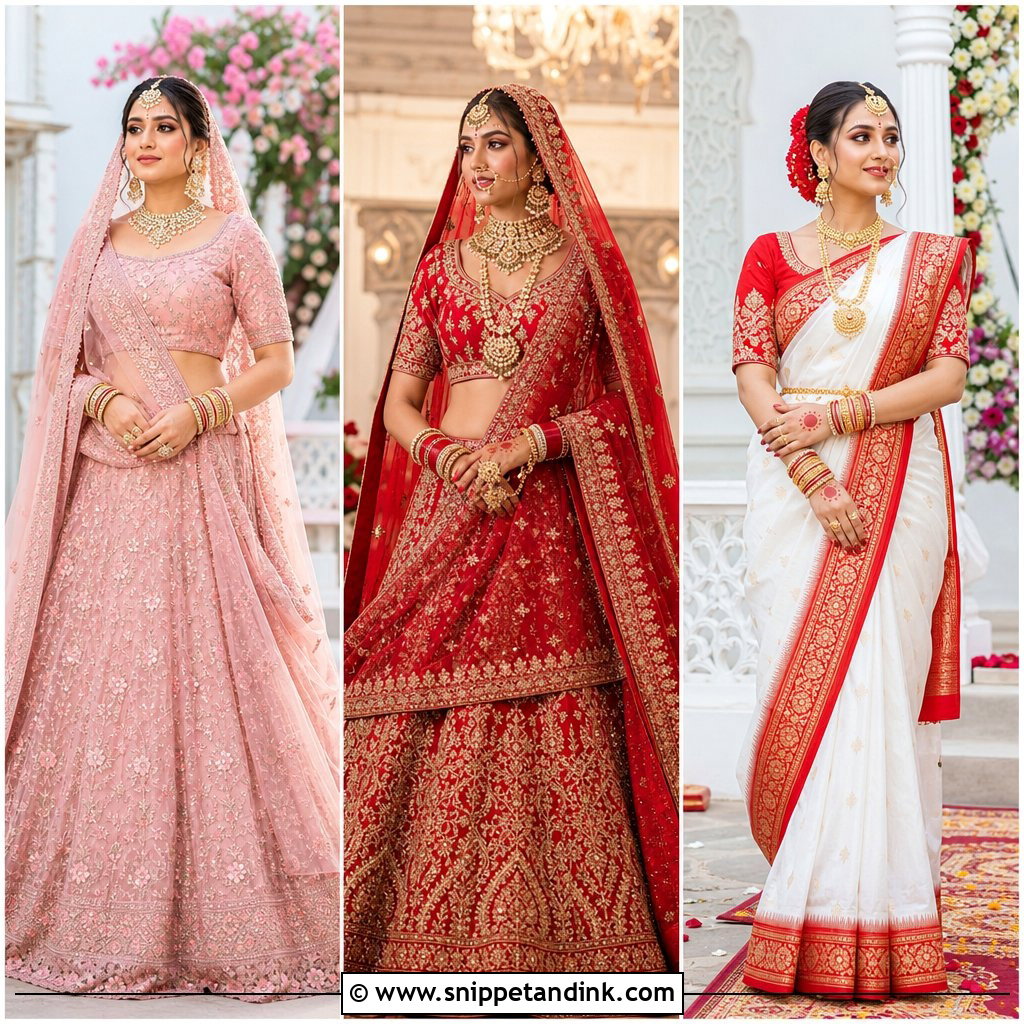
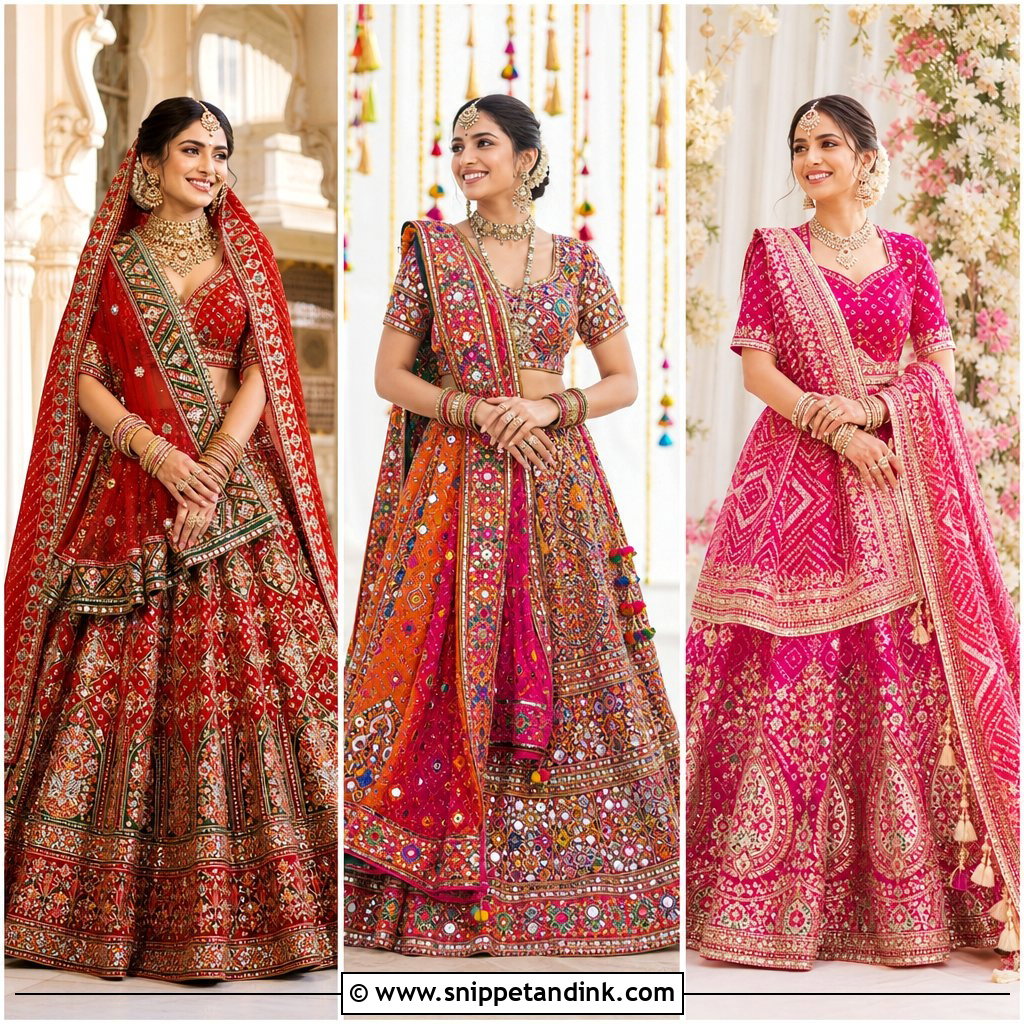
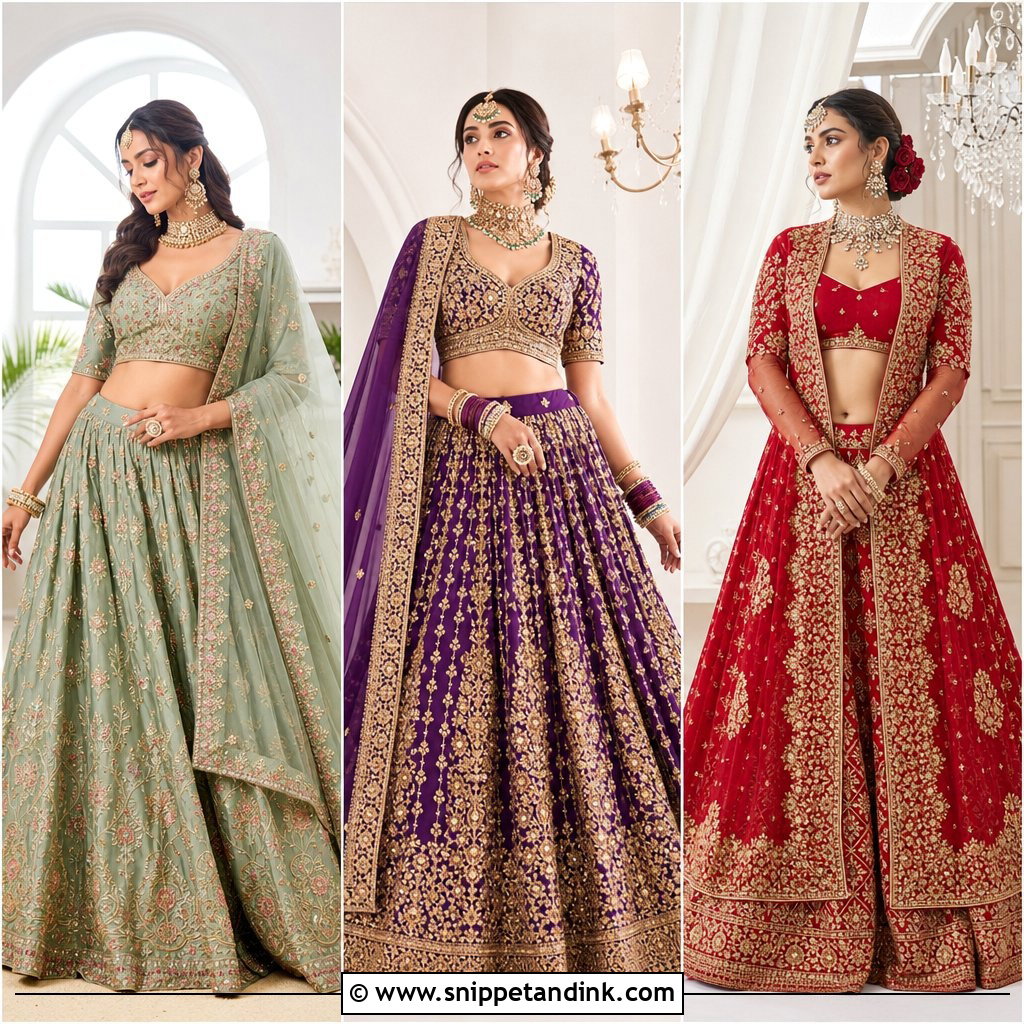
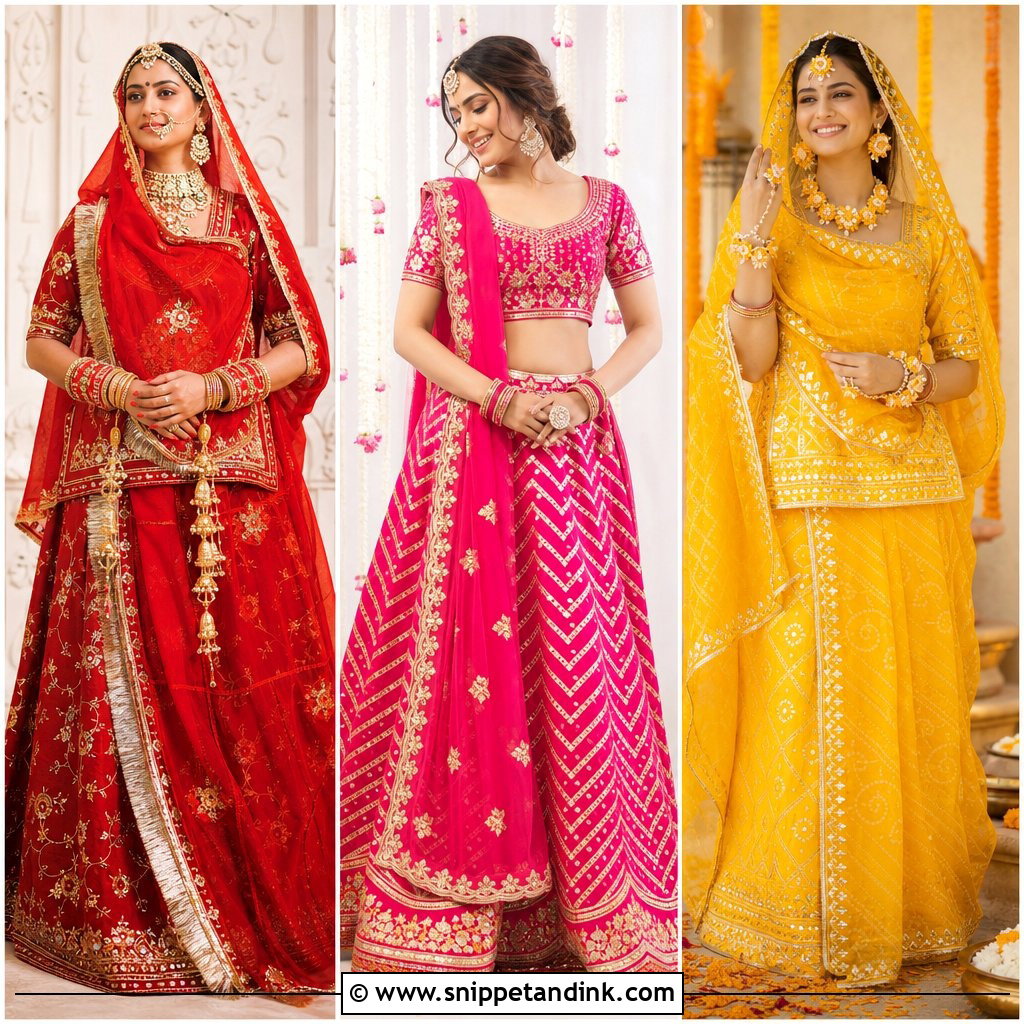
Red is still the color many families expect for the ceremony, and a full raw silk or velvet lehenga with zardozi, dabka or gold thread work carries that tradition well. The blouse is where I spend most of the fitting time. It has to support you through hours of rituals, sitting cross-legged and standing for pheras, so I ask for proper cups or padding and a back closure that won’t gape when you lean forward. Use one embroidered dupatta over the head and a lighter second one draped on the shoulder, then add a kundan choker, a long necklace, maang tikka, bridal bangles and embroidered juttis. A structured bun or long braid sits well under the veil. Walk, sit and turn in the skirt at the final trial; a waistband that shifts at the fitting will slip further by midnight.
2. Ivory And Gold Lehenga For North Indian Wedding
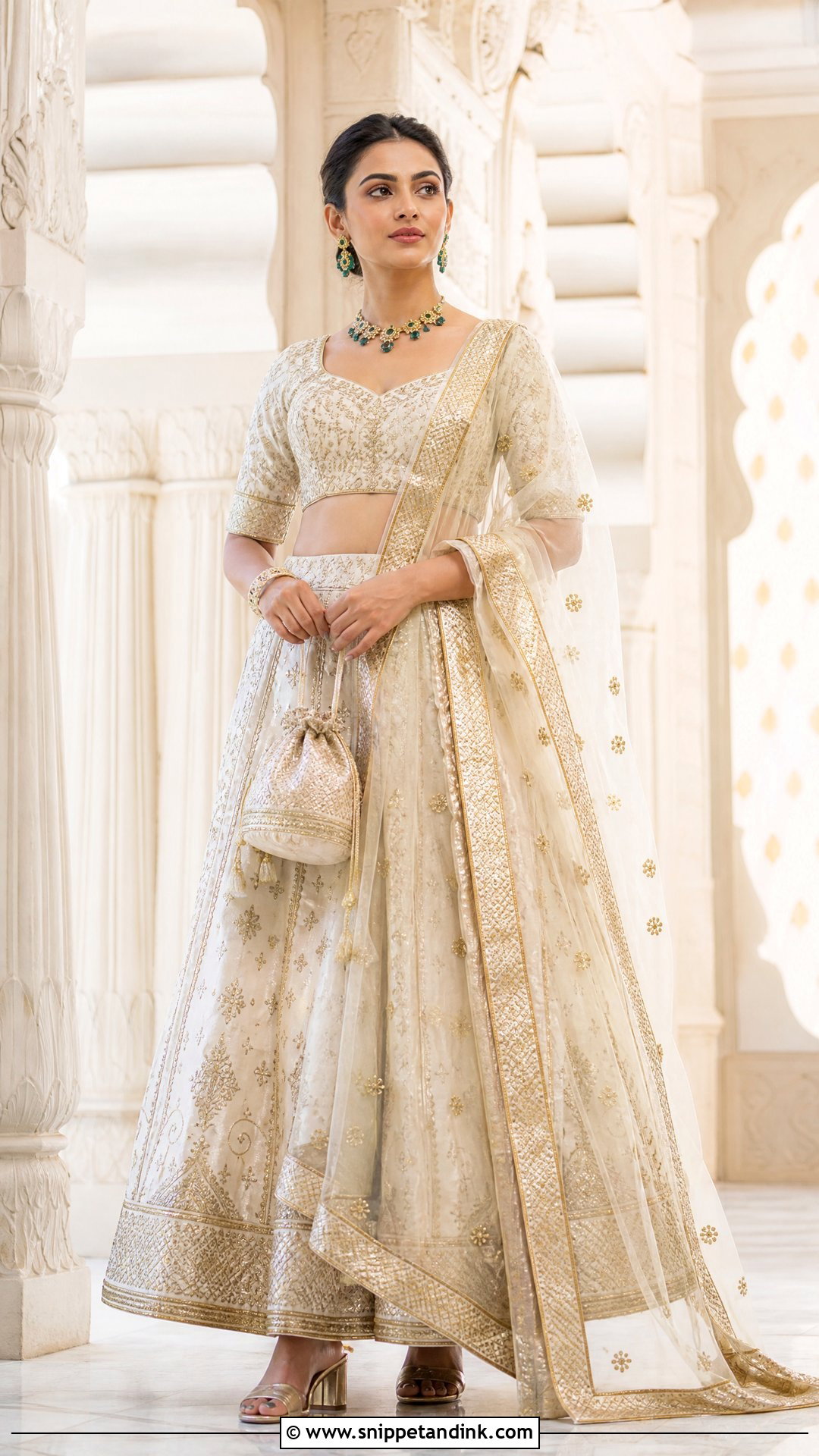
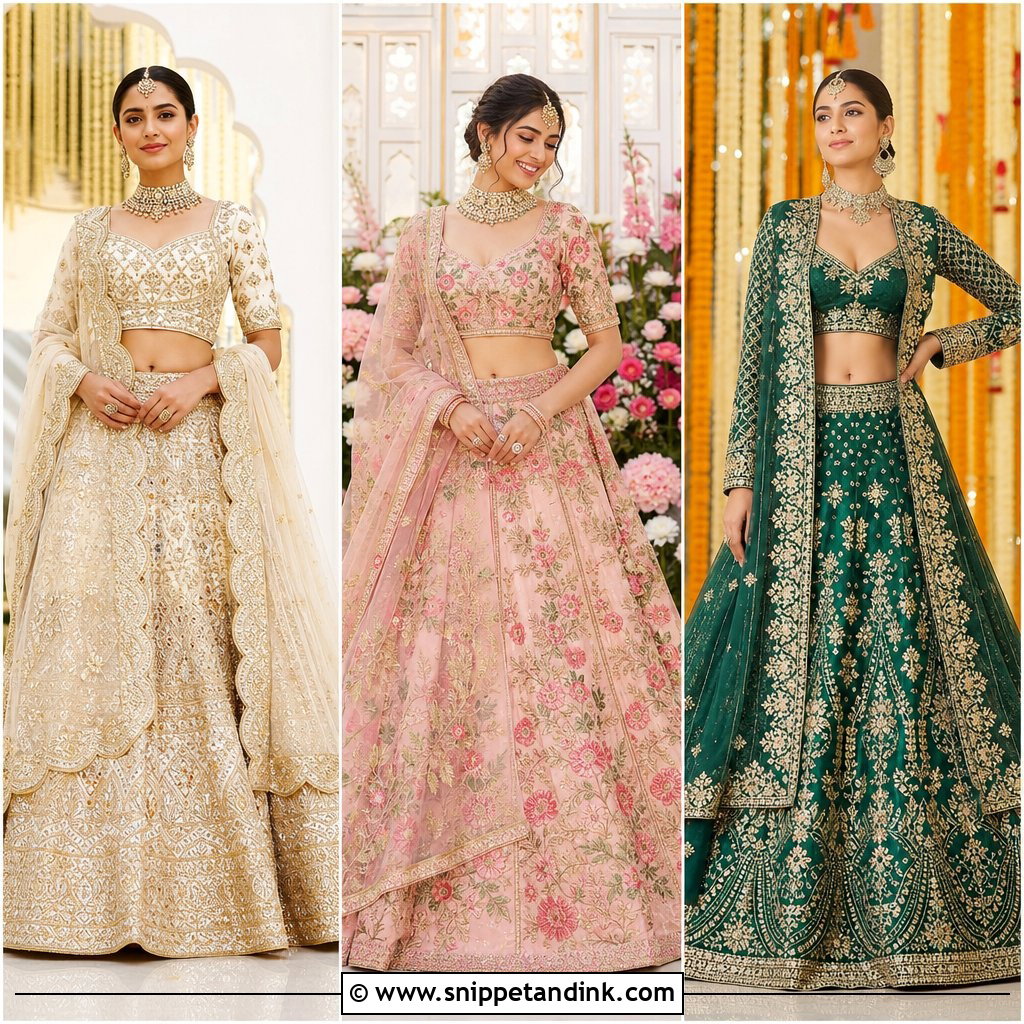
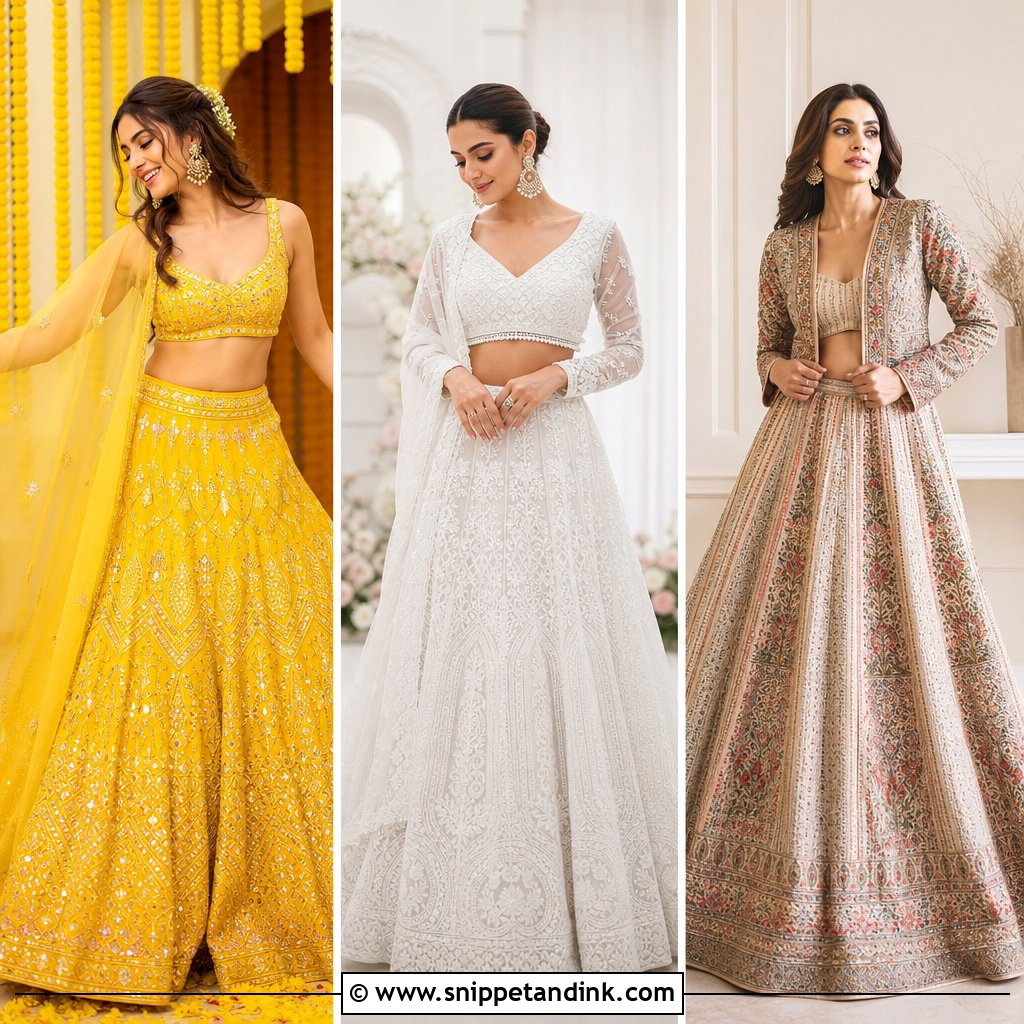
Ivory with gold zari is a quieter alternative to red and suits an engagement or reception better than a ceremony in most traditional families. Silk, organza or raw silk with metallic zari, small sequins or tonal beadwork gives it depth. I like an elbow-sleeve structured blouse here and a sheer gold-bordered dupatta, then bring in color through emerald or ruby jewelry so the outfit doesn’t fade into the background. Add a small potli, metallic block heels and polished bangles, with glowing skin and a rose lip. Ivory picks up every mark, so I’d keep a stain pen in the potli and avoid it entirely for a haldi or mehndi. Guests should stick to moderate embroidery; brides can go fuller.
3. Pastel Floral Lehenga For North Indian Wedding
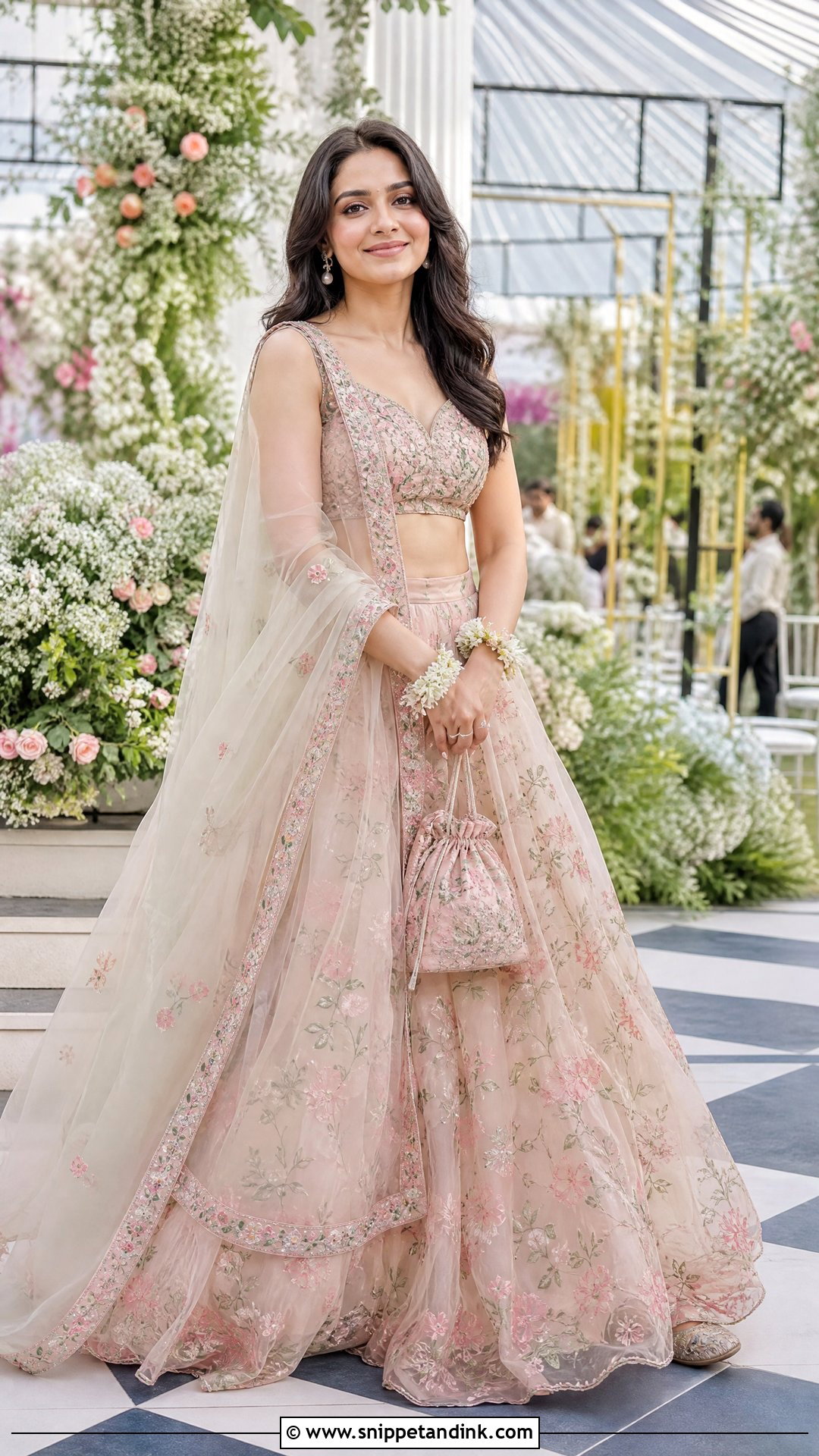
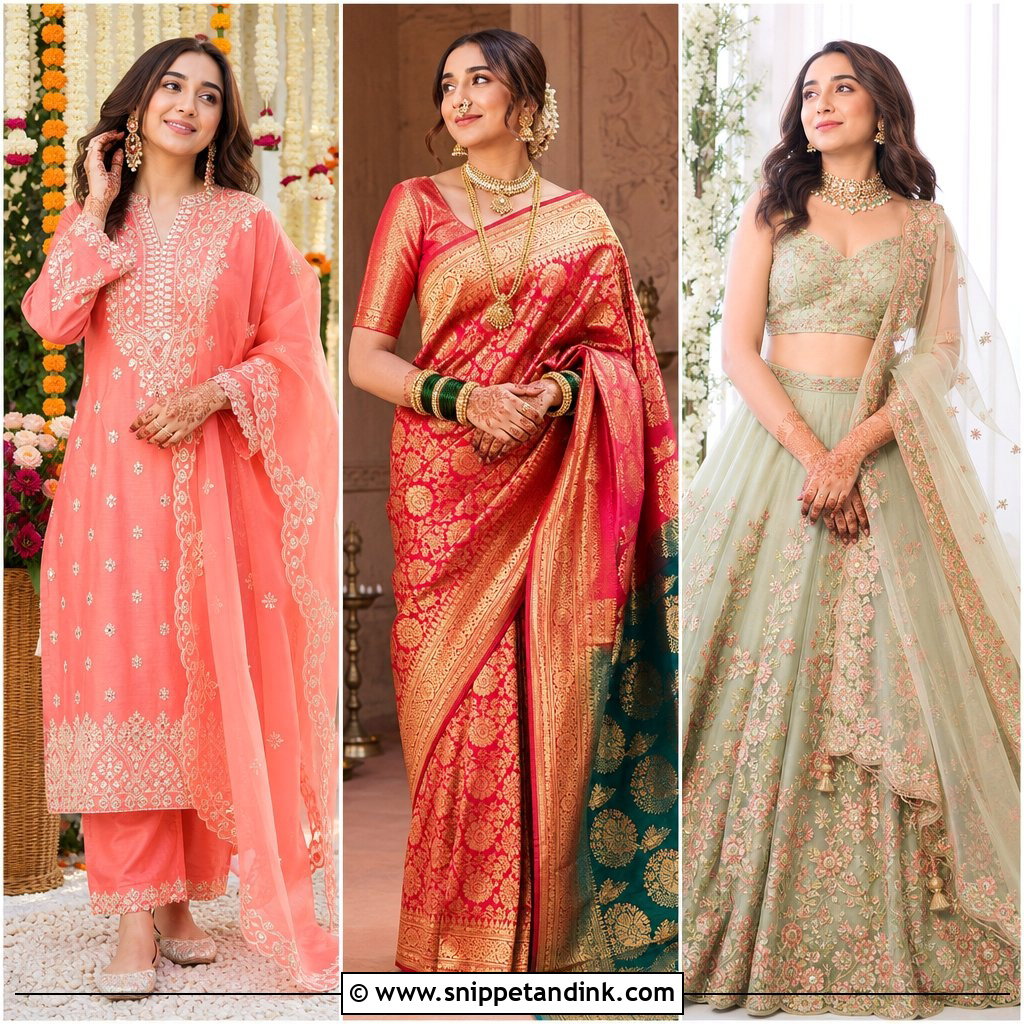
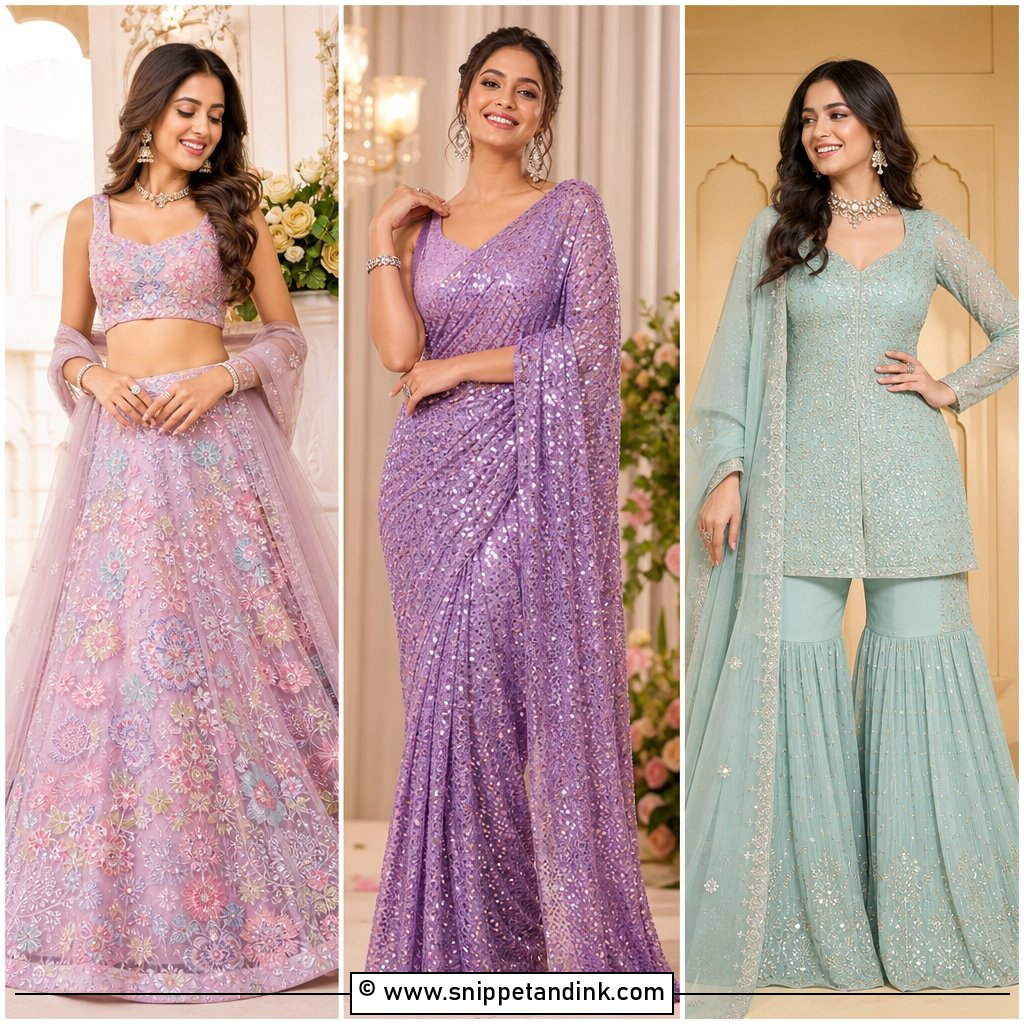
Soft pink, sage, powder blue and lavender come into their own at a daytime engagement, a mehndi or a spring wedding in a garden. Lightweight organza or georgette with threadwork, printed florals or placed appliqué keeps the skirt airy, paired with a coordinating blouse and a sheer dupatta with a slim border. Pearl earrings, floral bangles and a compact potli finish it without weight. Choose low block heels or embellished juttis for grass. My one firm rule with pastels: two shades, not four. Mixed pastels look washed out in direct sun, while a two-color palette holds together. Loose waves or a low ponytail suit the softness.
4. Banarasi Silk Saree For North Indian Wedding
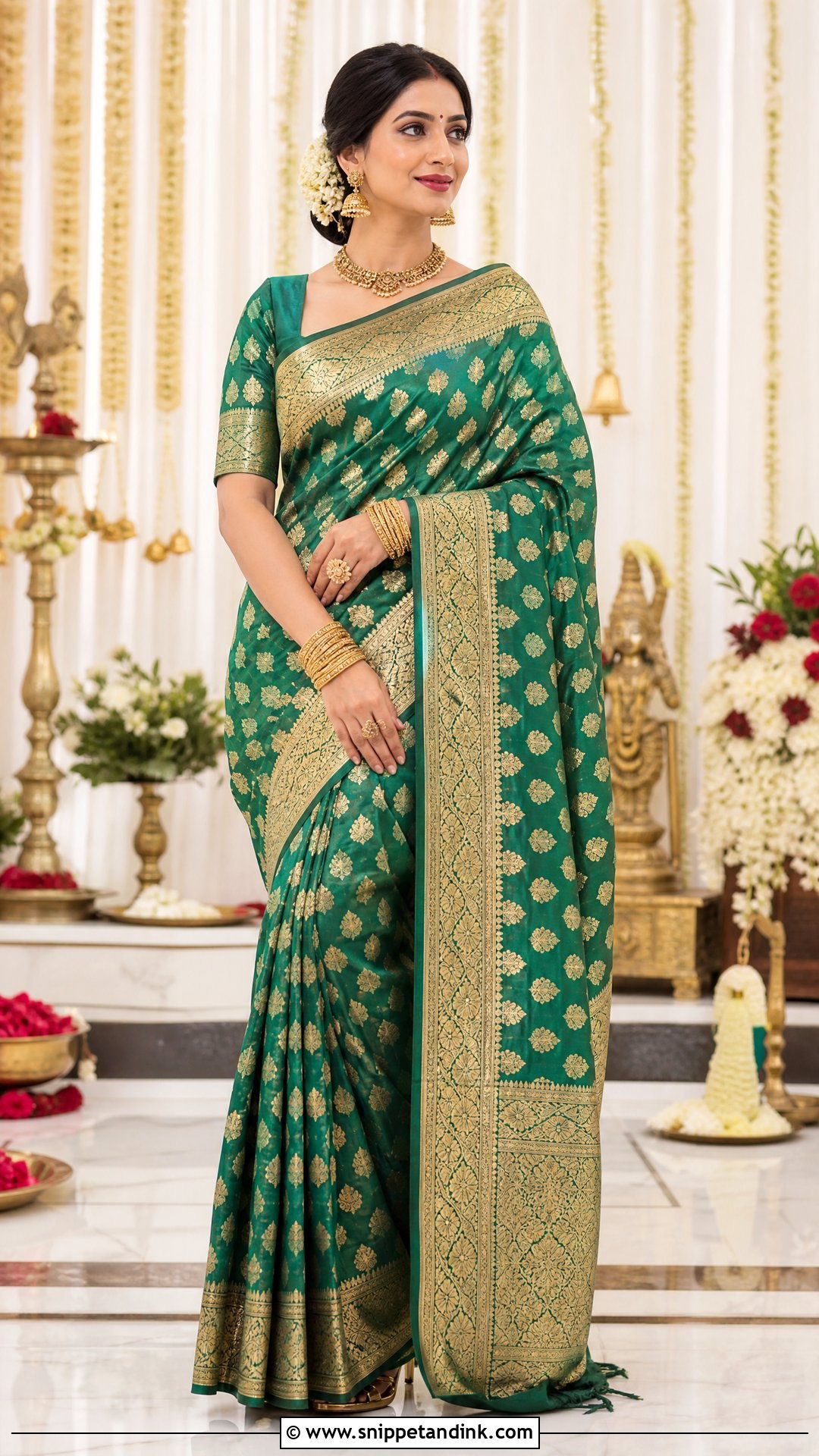
A Banarasi silk saree is about as formal as North Indian dressing gets, and it suits the main ceremony. Emerald, maroon, royal blue and magenta show off the woven zari best. Pair it with a tailored silk blouse with a square, round or modest sweetheart neck, then gold jhumkas, a traditional necklace, stacked bangles and a small bindi. Put your shoes on before the drape begins. If the draper sets the length barefoot and you then step into wedges, the hem rises and the whole fall changes. Banarasi silk is heavy and slippery, so I pin the pleats on the inside at the waist and again at the shoulder. Guests can choose a restrained border; close family can carry heavier brocade.
5. Rani Pink Sharara For North Indian Wedding
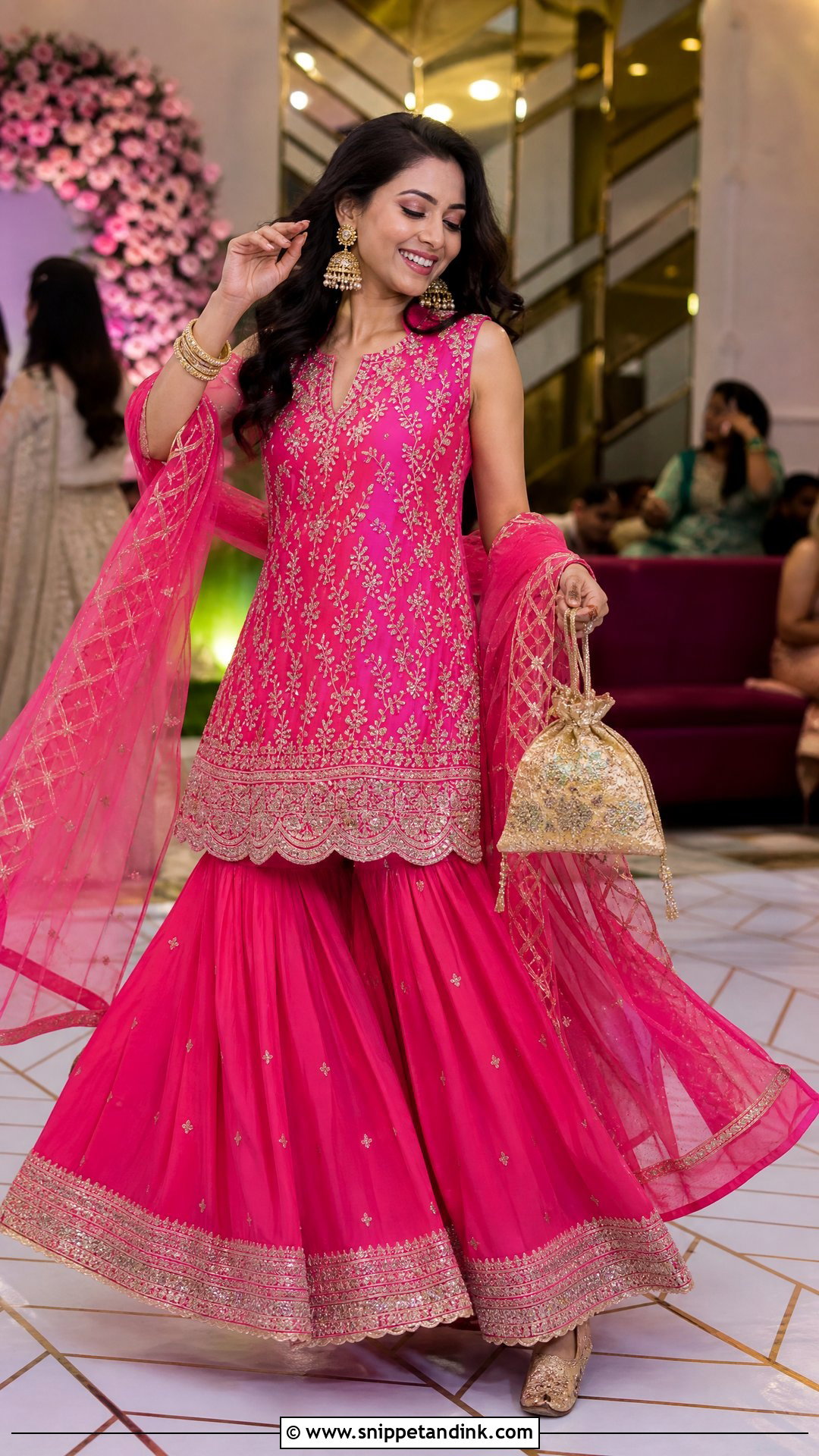
Rani pink is the color I reach for when a sangeet or mehndi needs energy. Build it around a short embroidered kurta and wide sharara pants, which give you the swing of a lehenga with far less weight and far more freedom on the dance floor. An organza dupatta with gota patti edging adds the North Indian finish, with gold jhumkas, matching bangles and a small embellished bag. Swap stilettos for cushioned juttis or stable block heels. Watch the balance: if the kurta is heavily worked, keep the pants and jewelry simple, otherwise the whole set looks busy in group photos. A braided ponytail or half-up waves will survive the dancing.
6. Green Mehndi Gharara For North Indian Wedding
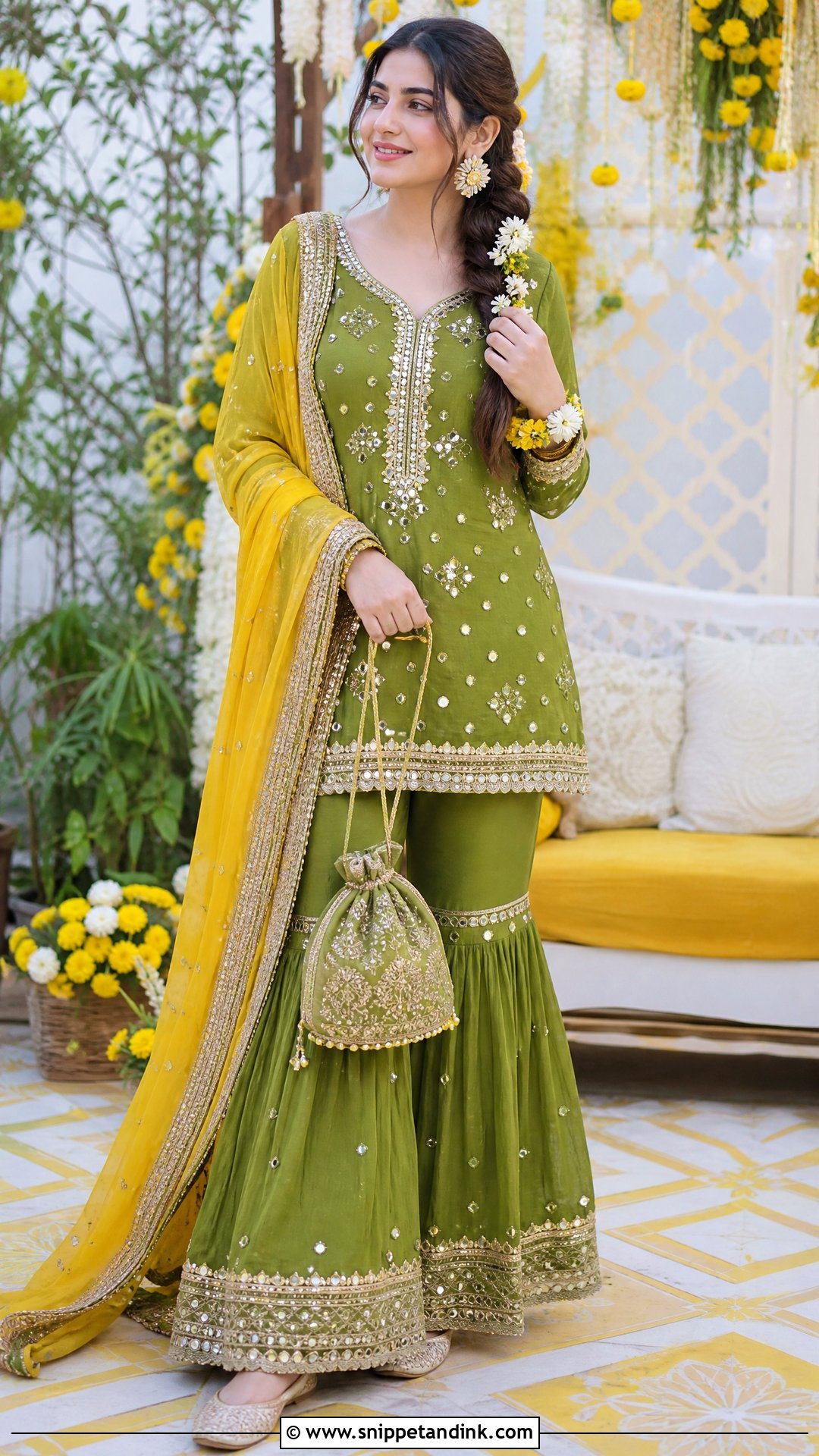
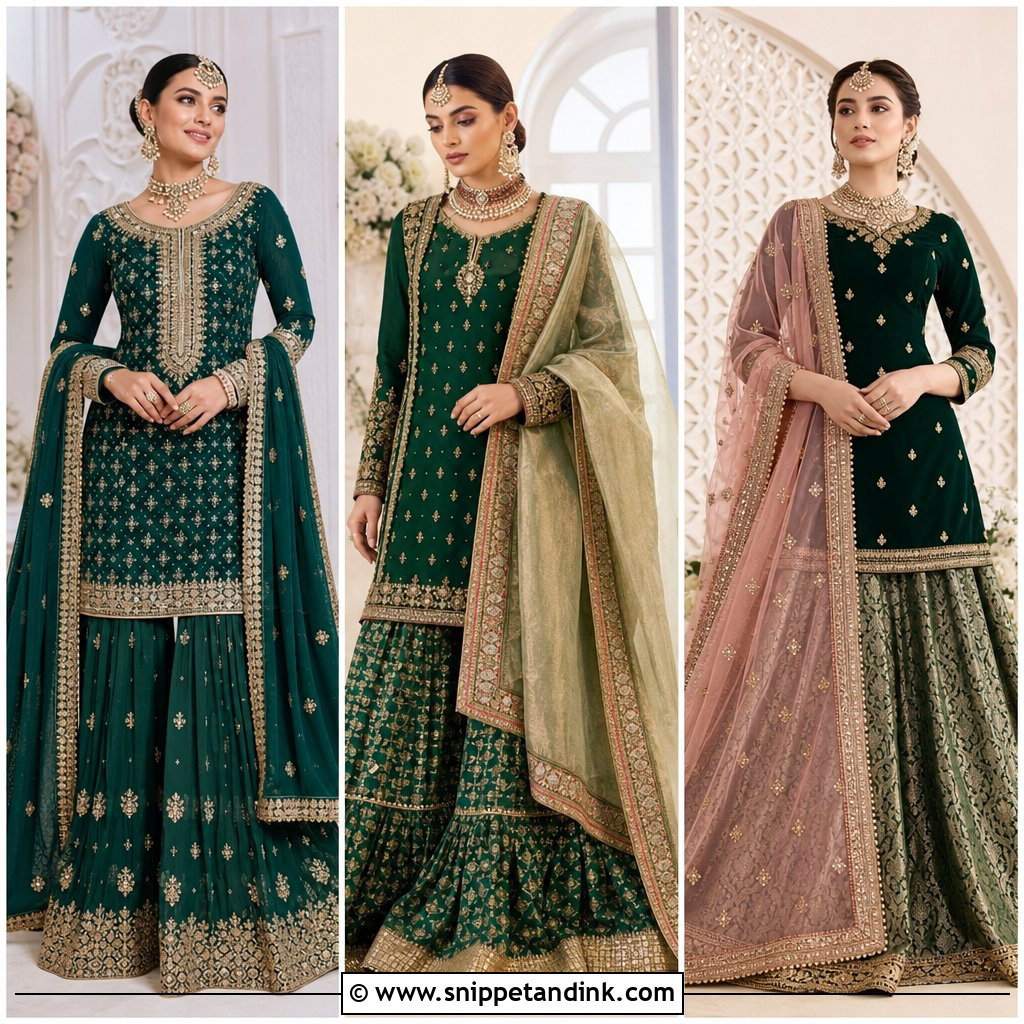
Green belongs to the mehndi, and a short kurti with a fitted gharara that flares below the knee gives a traditional shape with personality. Gota patti, mirror accents or small florals keep it festive without formality, and a yellow, pink or orange dupatta adds contrast. Wear floral earrings, slim bangles, an embroidered potli and flat juttis. Think about your hands first. Fresh mehndi needs hours to dry and darken, so skip rings and hand jewelry, and choose sleeves that stop above the wrist so wet paste doesn’t smudge into the cuffs. Breathable cotton silk or georgette is kinder for a long day, and a side braid keeps hair out of your face while you sit still.
7. Yellow Haldi Anarkali For North Indian Wedding
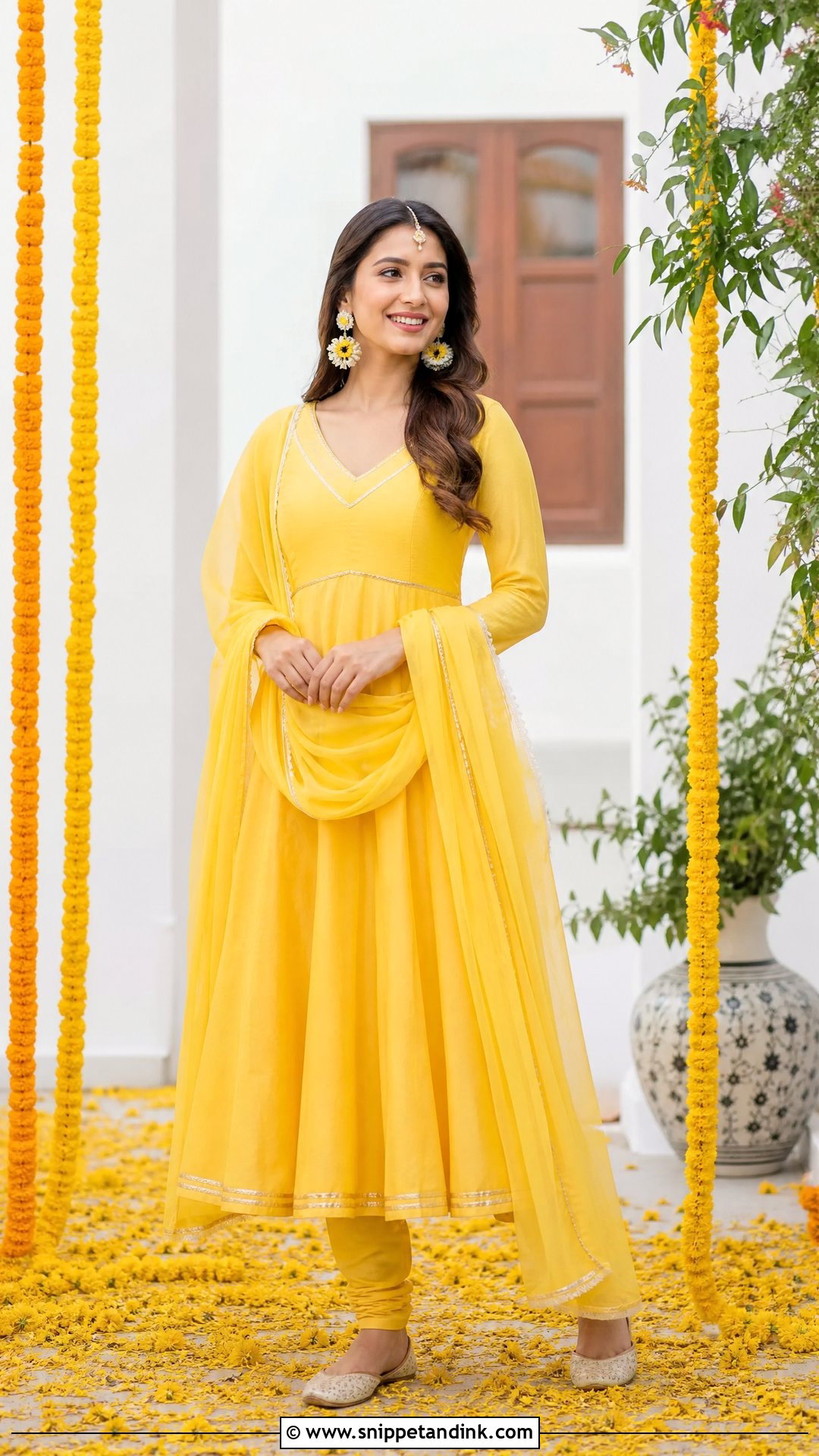
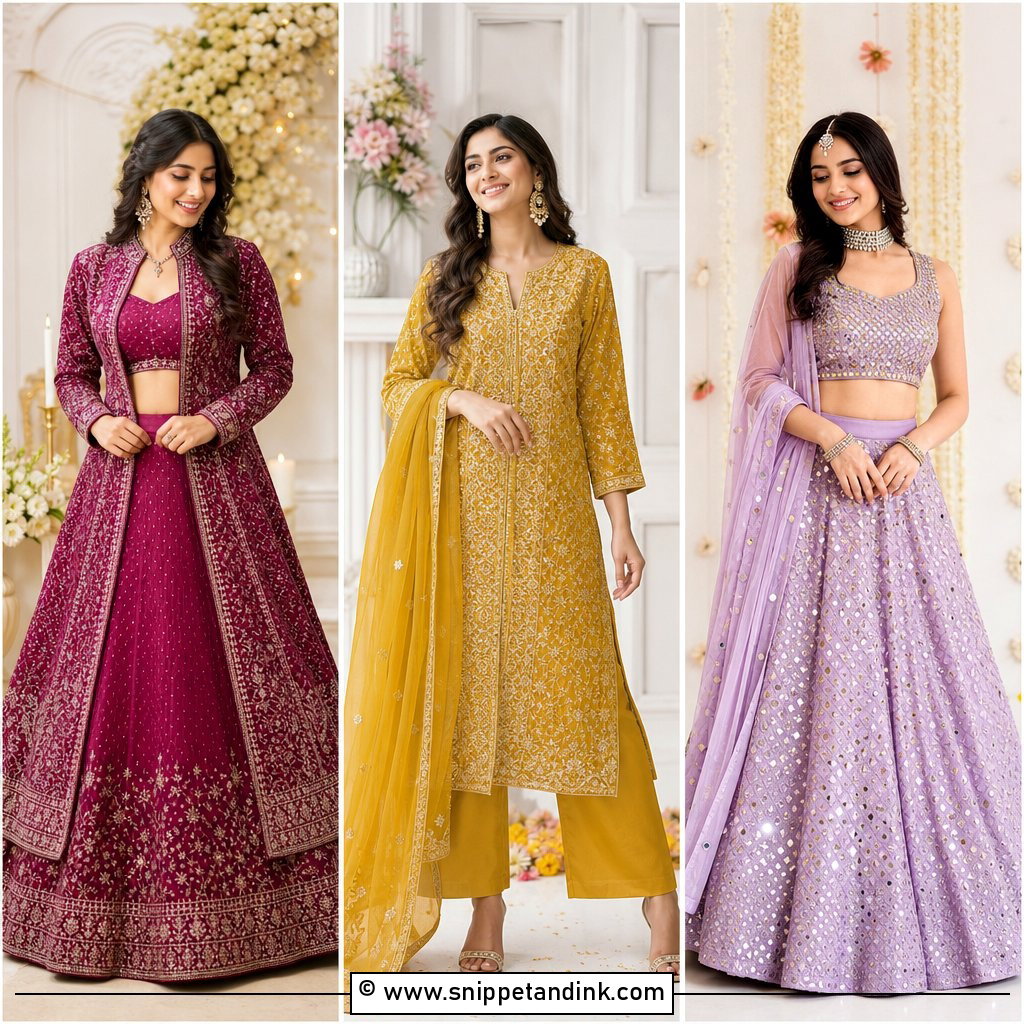
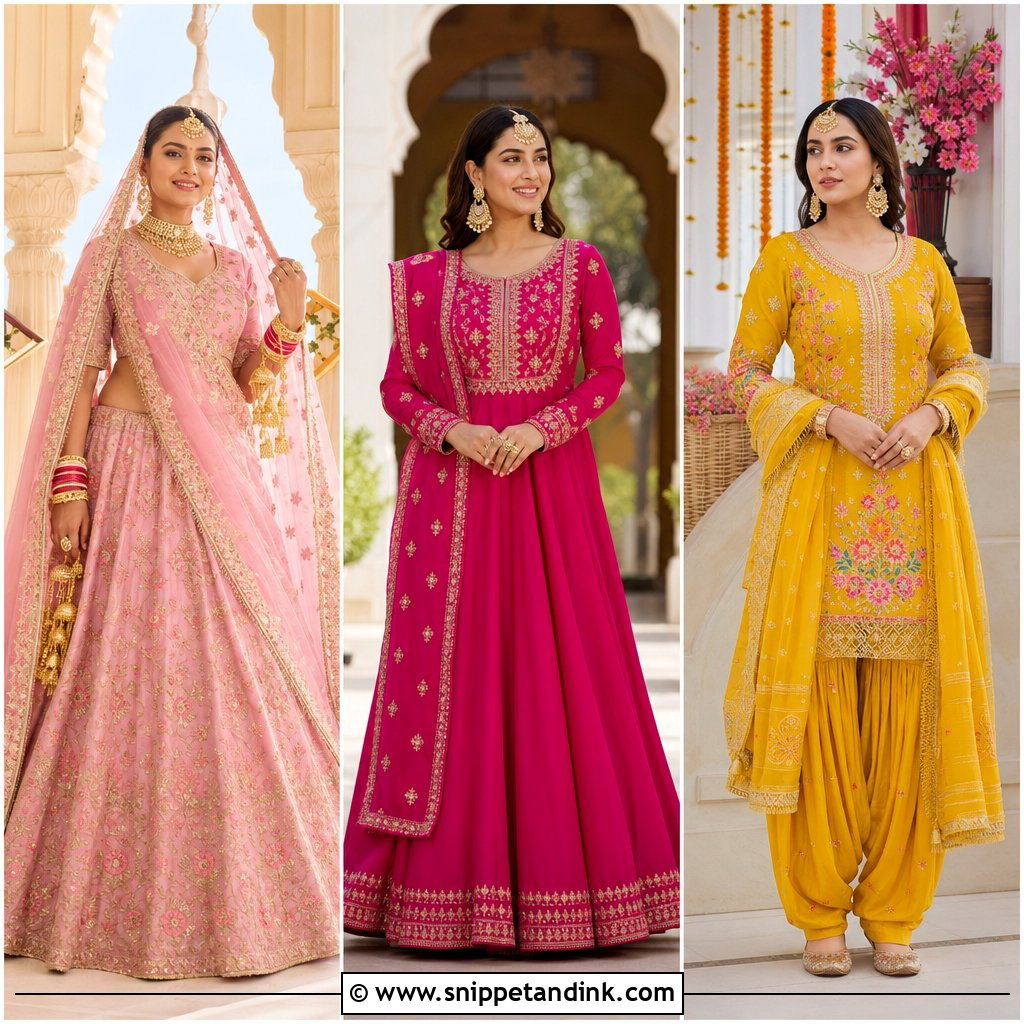
A yellow Anarkali gives more coverage than a short kurta set for the haldi, and that coverage matters when people are rubbing turmeric paste onto your arms and face. Cotton silk, chanderi or light georgette copes with heat and long sitting, and minimal gota trim or a printed border keeps it festive without making it precious. Pair it with churidar pants, a light dupatta and flat gold or ivory juttis, with floral earrings and a simple maang tikka in place of metal jewelry. Turmeric stains readily, especially on pale cotton and anything with white thread. I tell brides to treat this outfit as either washable or a keepsake that will carry a few marks, and to plan accordingly.
8. Mirror Work Sangeet Lehenga For North Indian Wedding
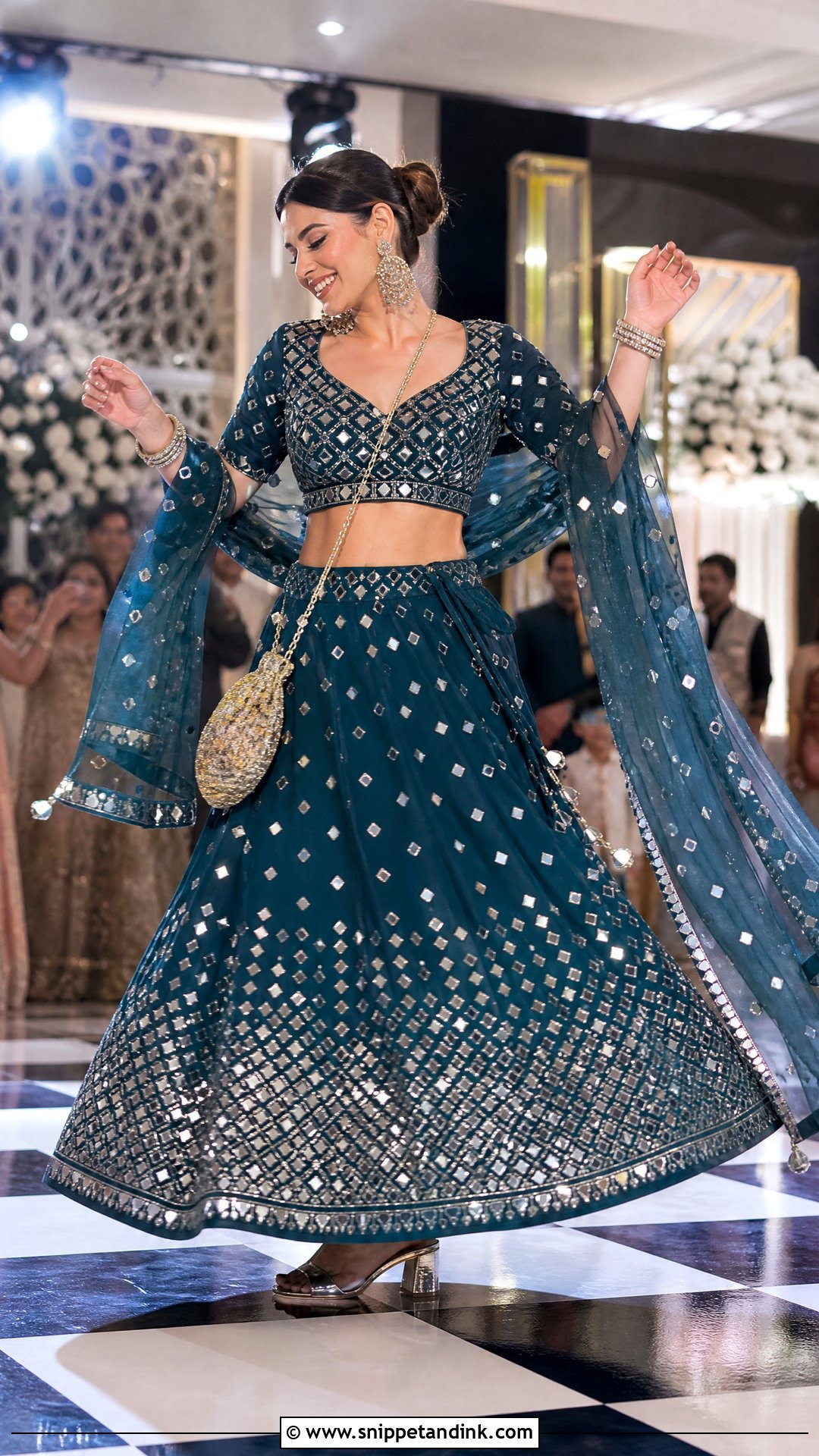
Mirror work catches light every time you spin, which is exactly why it suits the sangeet. A light georgette skirt in navy, plum, teal or deep purple with a supportive matching blouse is the base. Small, evenly spread mirrors look more refined than large ones, and they’re also lighter; big mirror panels add surprising weight to a skirt you plan to dance in. Drape the sheer dupatta over one shoulder and secure it at the wrist or waist. Statement earrings, a few slim bangles and a crossbody potli leave your hands free. If the blouse neckline is already worked, keep the necklace minimal. A high ponytail holds through hours of movement better than an intricate updo.
9. Velvet Winter Lehenga For North Indian Wedding
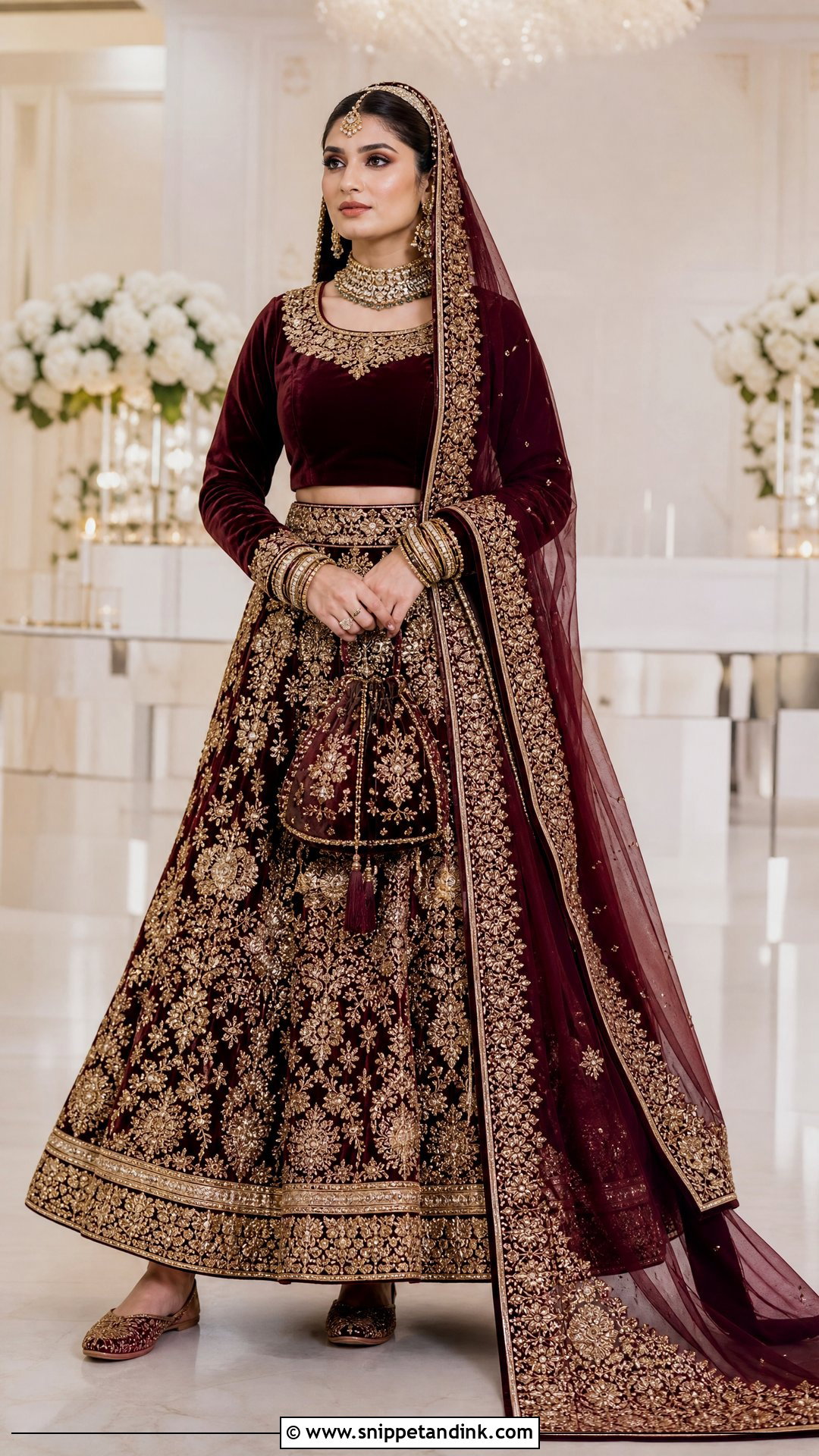
Winter weddings are the one time I encourage velvet. Burgundy, bottle green, midnight blue and deep plum all look rich, but velvet already has visual weight, so I’d choose controlled gold embroidery over heavy work on every panel. A long-sleeved blouse and a silk or velvet-bordered dupatta add coverage, with kundan jewelry, antique gold bangles and a structured potli. Closed-toe juttis help on cold evenings. The catch is heat: North Indian winter venues are often heated indoors, and velvet with a dense lining gets warm fast once the dancing starts. Ask your tailor for a cotton lining in the blouse and waistband. A smooth bun, defined eyes and a berry lip finish it.
10. Organza Saree For North Indian Wedding Reception
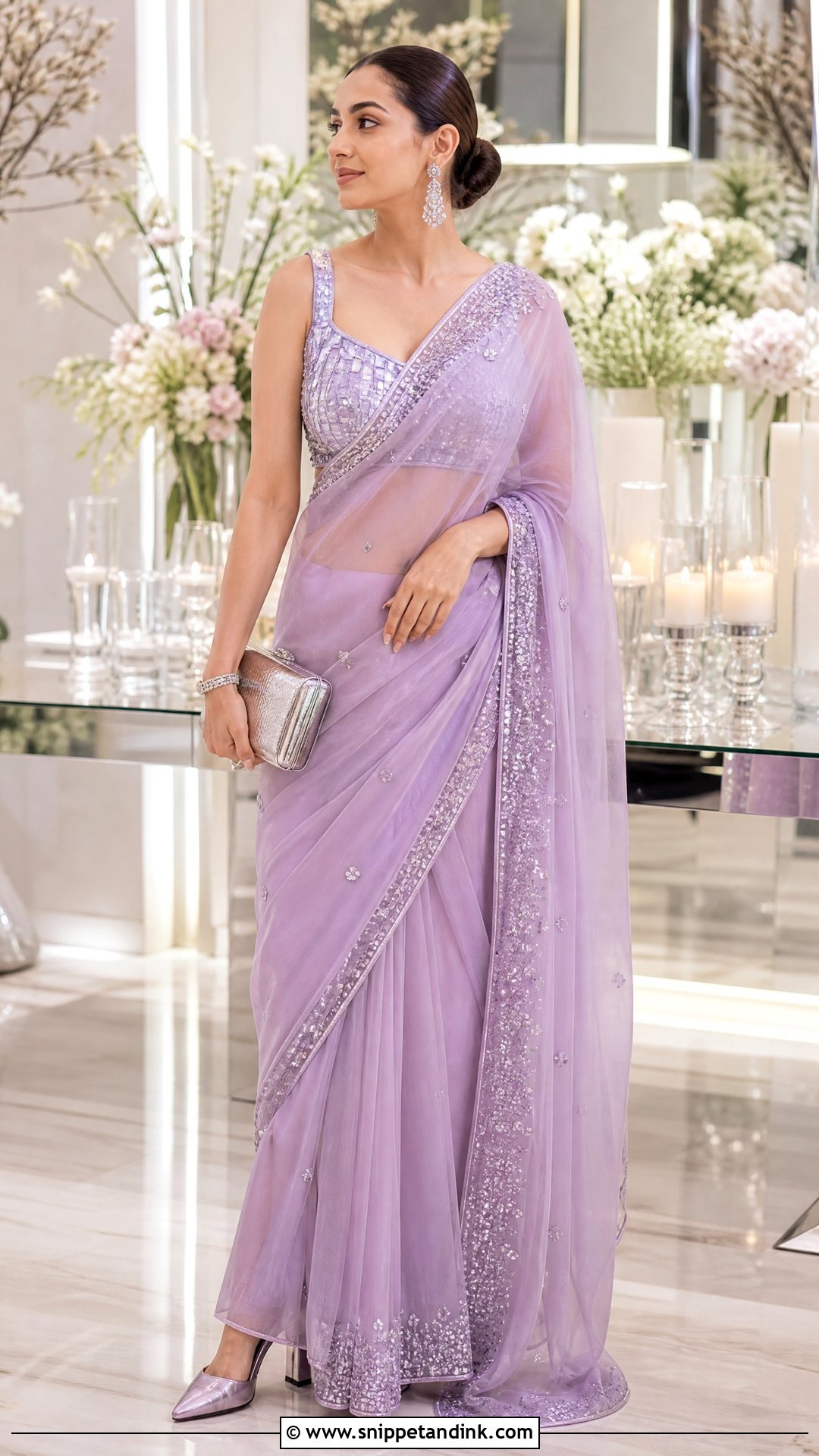
Organza gives you a reception saree with drama but very little weight. Look for embroidered borders, scattered sequins, floral threadwork or subtle metallic detail, and pair it with a fitted blouse in silk, velvet or matching organza so the sheer saree has something solid to sit against. Crystal earrings, a sleek bracelet, a metallic clutch and pointed block heels keep it modern. Organza springs back up rather than falling, so I keep the pleats narrow and press them firmly before draping; wide pleats puff out like a bell. A petticoat in exactly the saree’s color is essential, because any contrast shows straight through. A sleek ponytail or low bun finishes the look.
11. Cape Lehenga For North Indian Wedding Reception
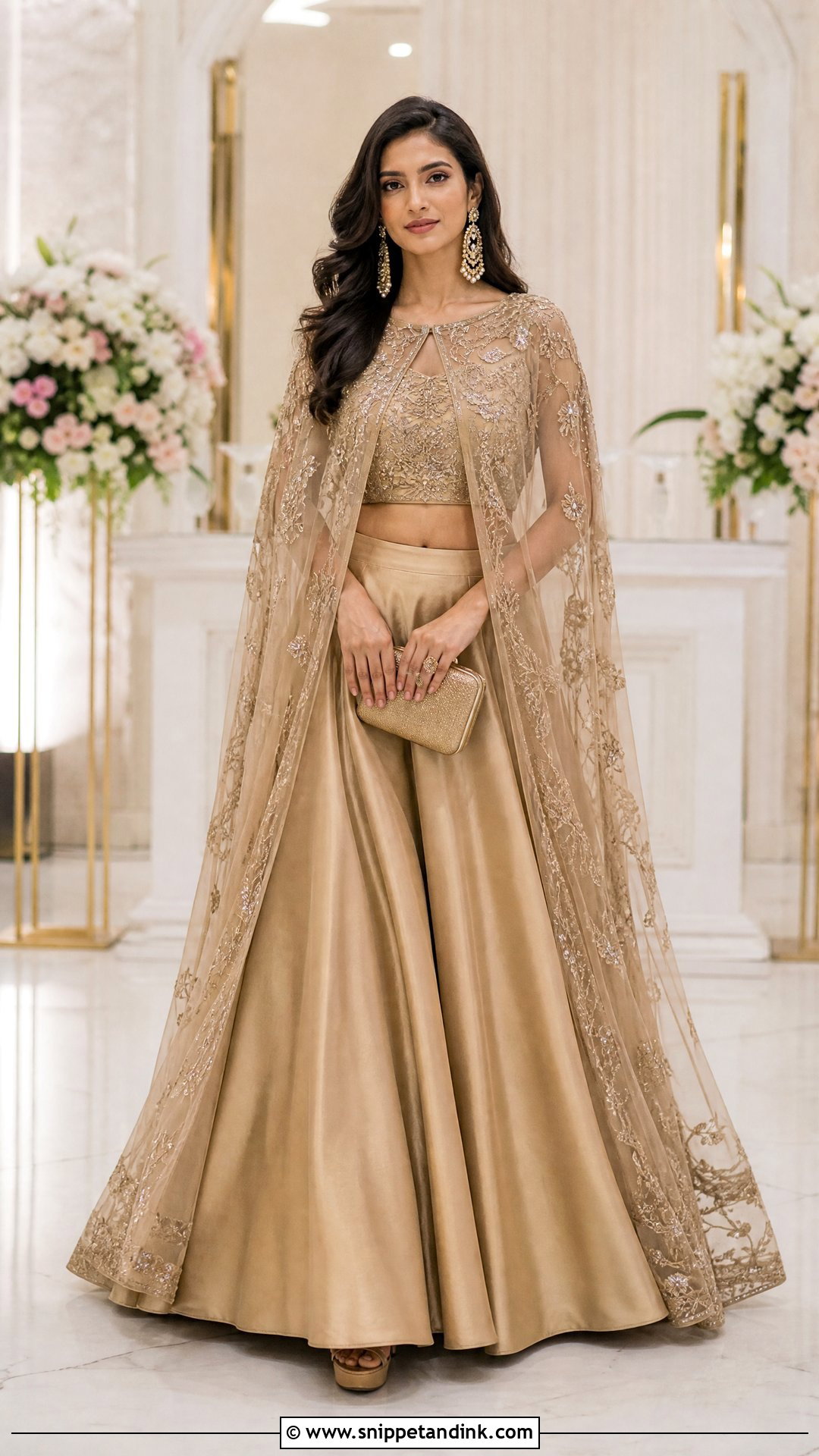
A cape lehenga trades the dupatta for a sheer embroidered cape, which suits a reception where you’ll be standing and greeting more than sitting through rituals. Start with a flowing satin, georgette or crepe skirt and a fitted blouse, then check where the cape ends. If it stops right at the widest part of the skirt, the outfit looks boxy; slightly shorter or longer gives a cleaner line. Jewel tones, muted metallics and pastels all work. Long earrings, a cocktail ring and a slim clutch are enough, because the cape already decorates the shoulders. Platform sandals balance the length, and a sleek center part keeps loose hair from catching on the embroidery.
12. Chikankari Sharara For North Indian Wedding
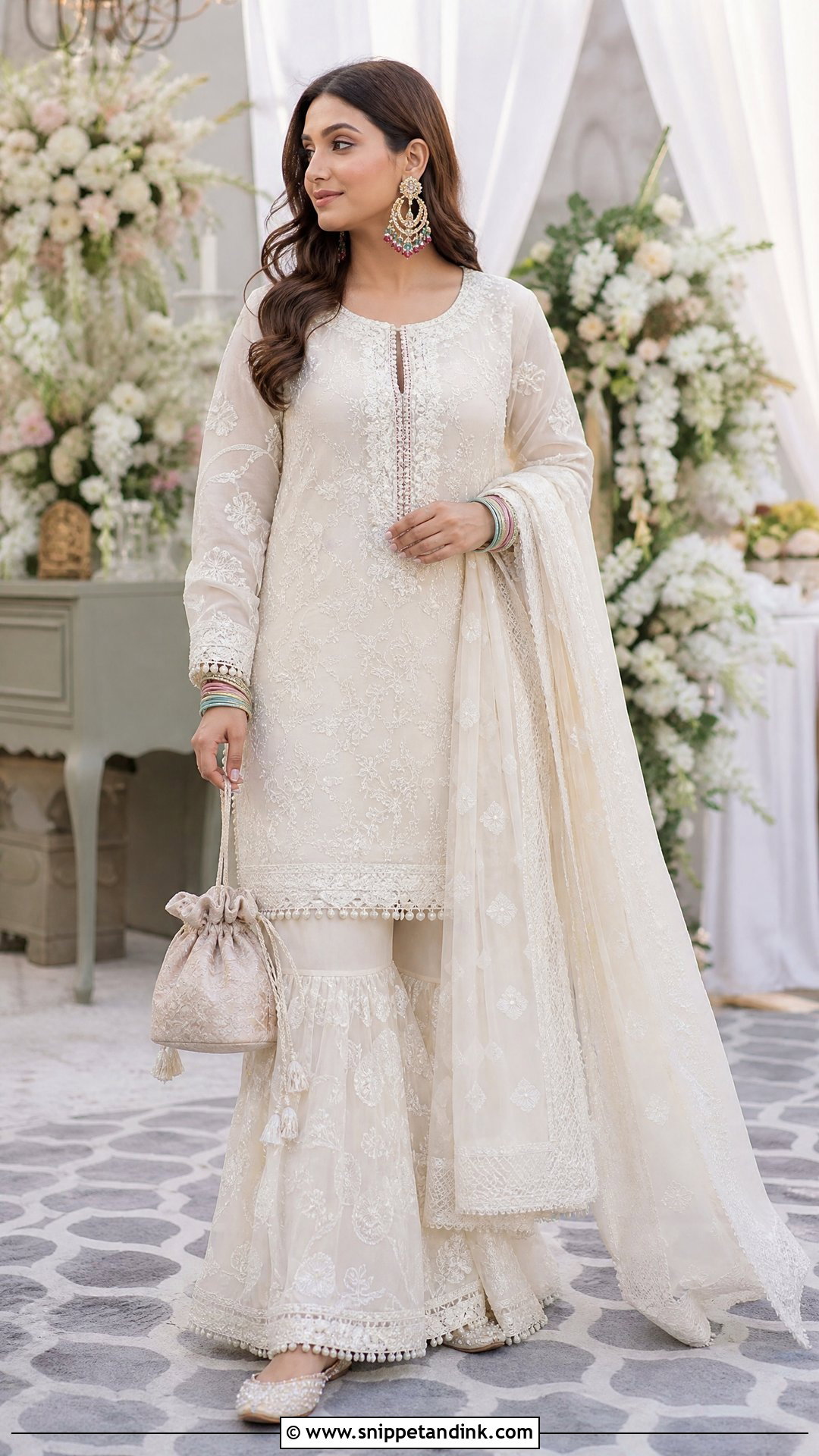
Chikankari is hand embroidery from Lucknow, worked in fine white or tonal thread, and it’s at its best in daylight. Ivory, blush, mint, peach or pale blue with tonal threadwork and only a few sequins suits an engagement or morning ceremony. A knee-length kurta over softly flared sharara pants, with a light dupatta, keeps the proportions balanced. Bring color in through meenakari earrings, pastel bangles or an embroidered potli, with pearl-detailed juttis. The first thing I check is lining. Chikankari is usually worked on thin cotton or georgette, and in bright sun it can turn see-through, so both the kurta and pants need a proper slip underneath. A low braided bun or pinned waves keep it fresh.
13. Punjabi Salwar Suit For North Indian Wedding
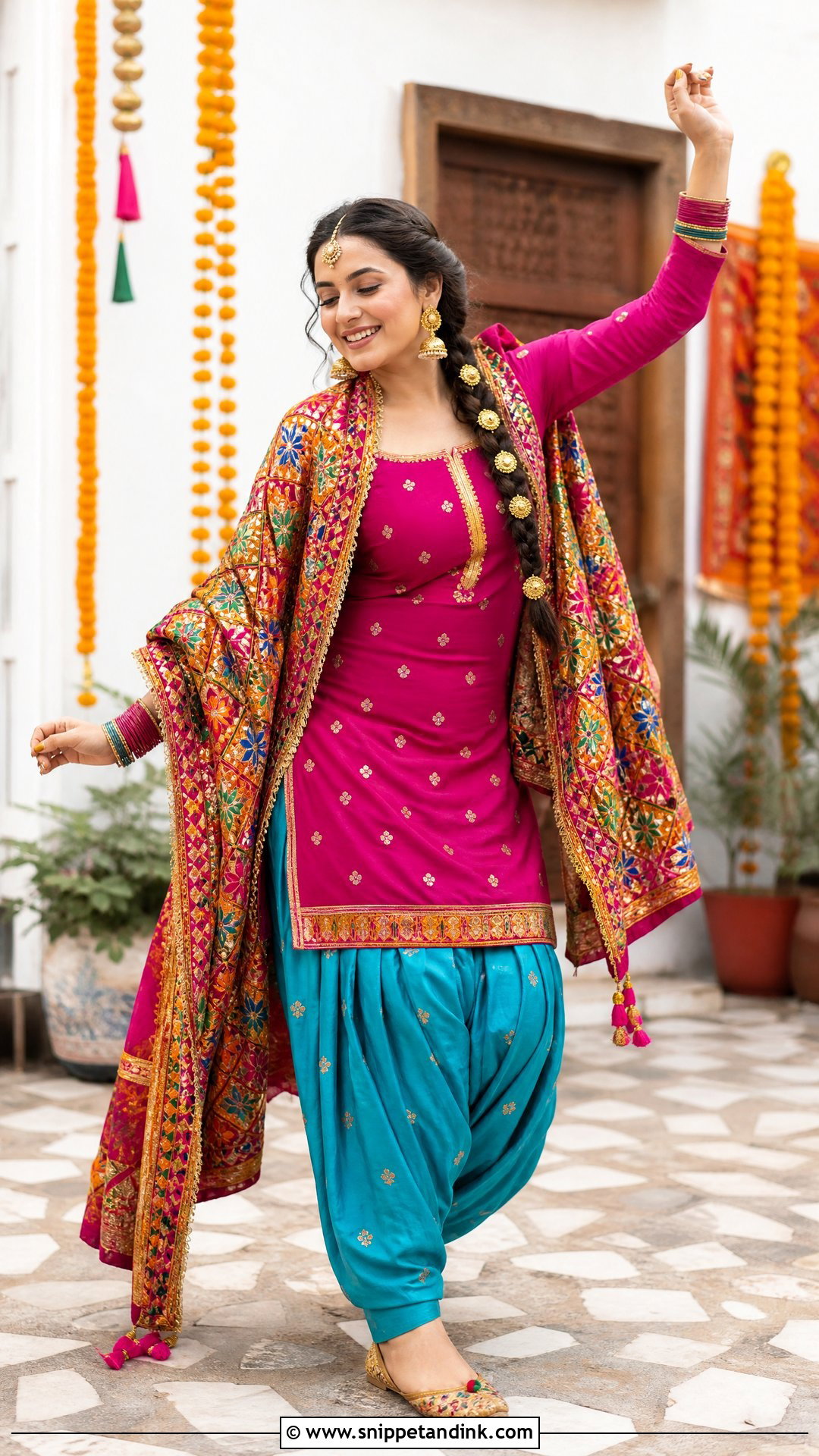
A Punjabi salwar suit is the comfortable, colorful choice for a jaggo, a mehndi or a relaxed family gathering. Pair a fitted embroidered kameez with a pleated Patiala salwar and a bright phulkari dupatta, in mustard, magenta, turquoise or green. Traditional parandi hair accessories, jhumkas, glass bangles and embroidered Punjabi juttis bring in the regional character. I keep the kameez around knee length so the pleats of the salwar actually show; a longer kameez hides the volume that makes a Patiala recognisable. A braid with a parandi is the natural match. Phulkari dupattas can be heavy with embroidery, so pin one corner at the shoulder before you start dancing.
14. Floor-Length Anarkali For North Indian Wedding
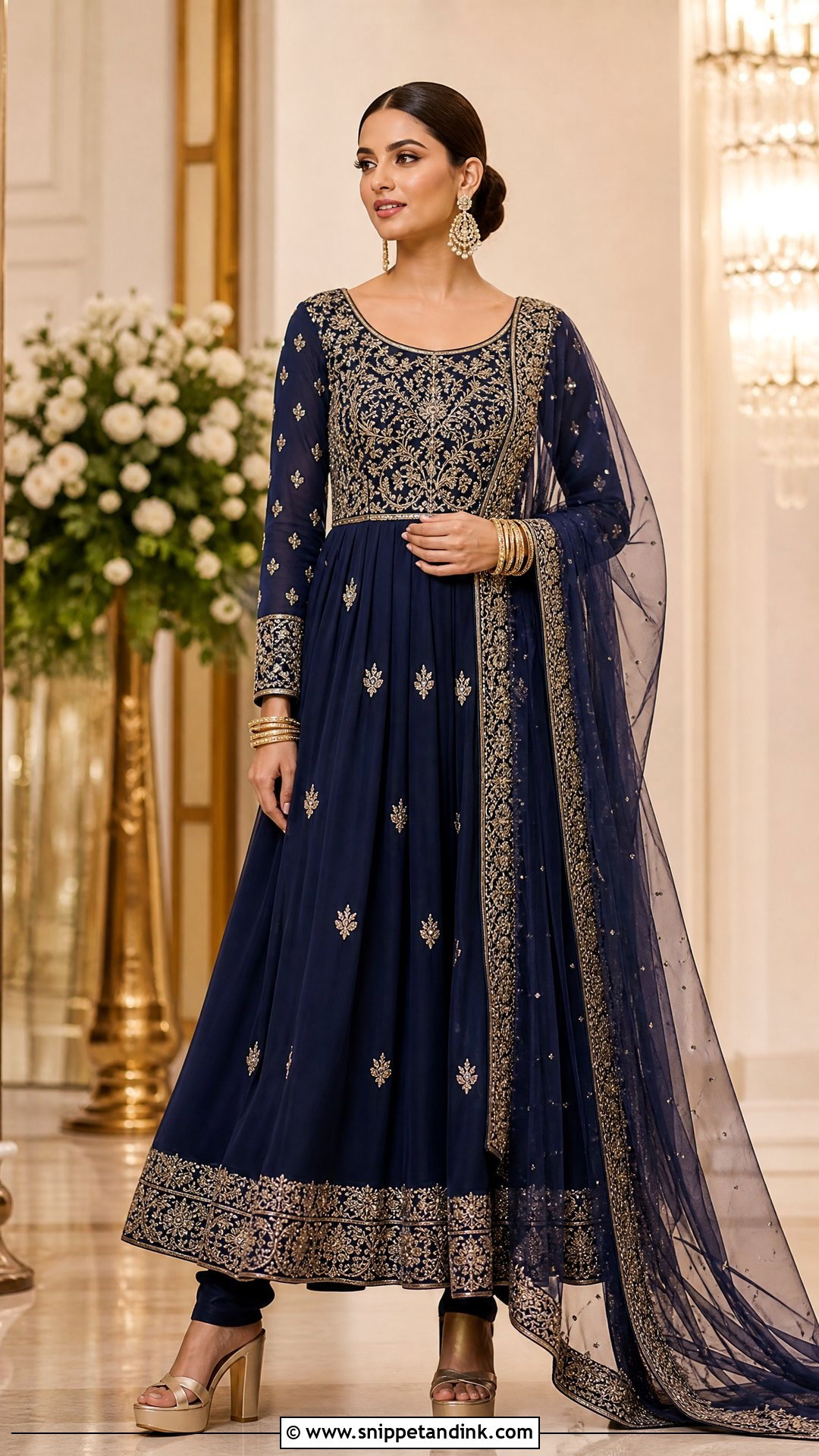
A floor-length Anarkali gives you the presence of a gown while staying traditional, and it’s one of the outfits I suggest most to guests who want coverage and comfort together. Look for a fitted bodice, a defined waist and enough flare to move, in silk, georgette or layered net. Pair it with churidar pants, an embroidered dupatta, chandelier earrings and stacked bangles. Have the hem finished to the exact height of the shoes you’ll wear, since a floor-length flare that’s a little long is the fastest way to trip on stairs. Petite women usually look best in smaller motifs and a controlled flare, while taller women can carry broad borders. A low bun or side-swept waves suit the long neckline.

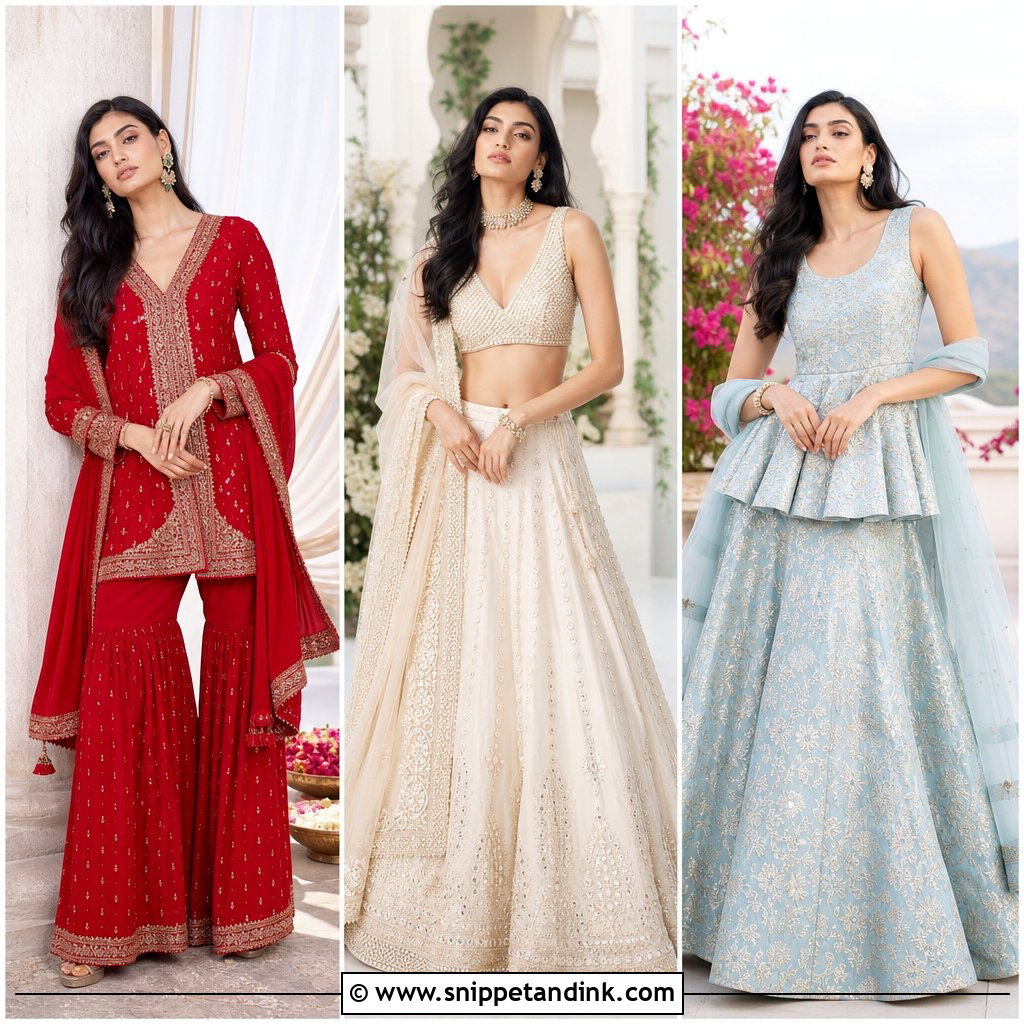
15. Palazzo Kurta Set For North Indian Wedding
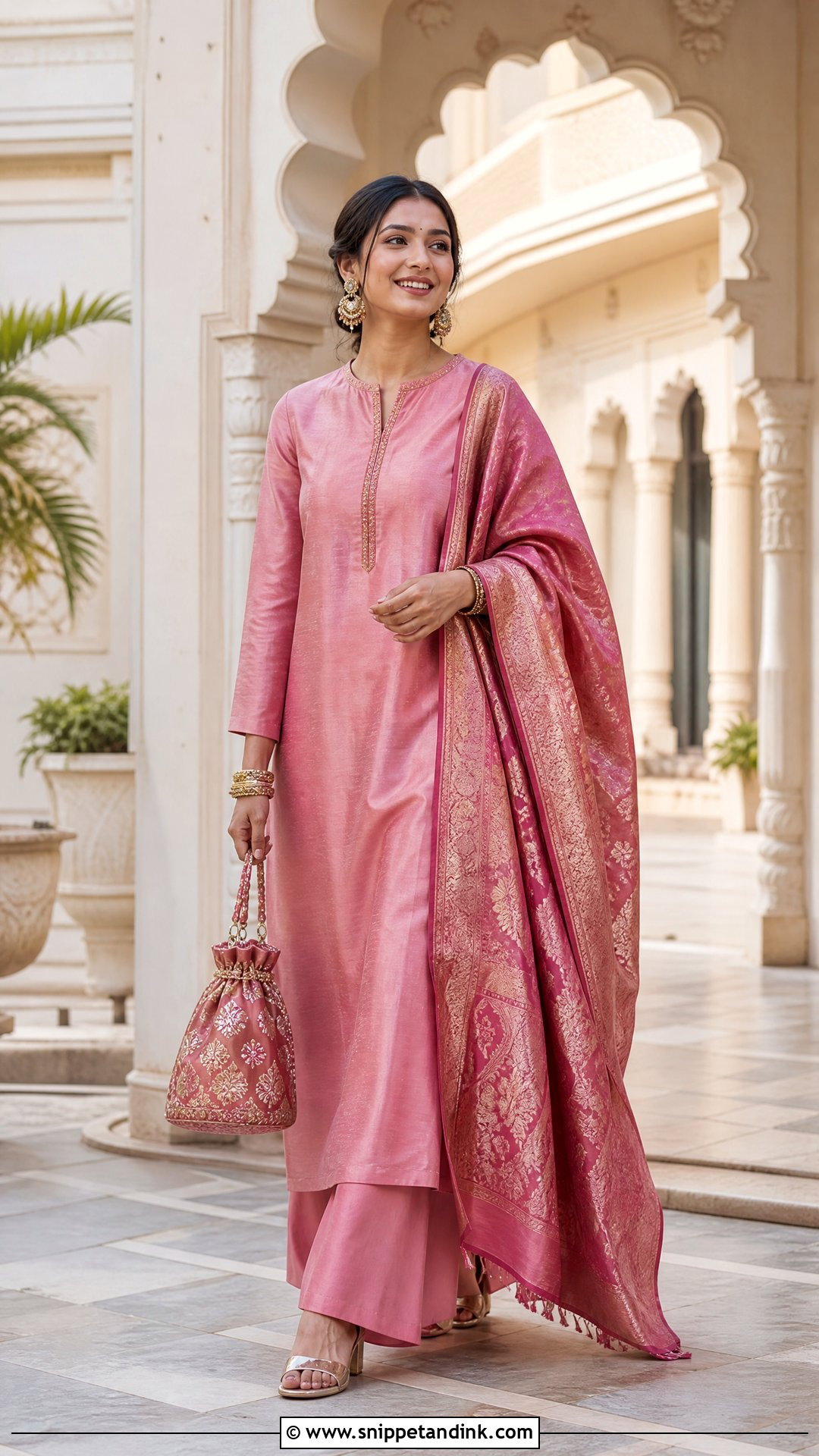
An embroidered straight kurta over wide palazzos is the outfit I’d wear myself to a long engagement party or a daytime ceremony where you’re on your feet for hours. A silk-blend kurta with side slits and a defined neckline, palazzos in the same color, and a contrasting Banarasi or organza dupatta give it enough festivity. Medium earrings, metallic bangles, a structured potli and low block heels complete it. Hem the palazzos to skim the top of the shoe, not the floor; wide legs that touch the ground pick up dust and get stepped on. Monochrome sets look the most polished, as long as the accessories add some contrast. A smooth blowout or half-up style suits the clean shape.
16. Pre-Draped Saree For North Indian Wedding
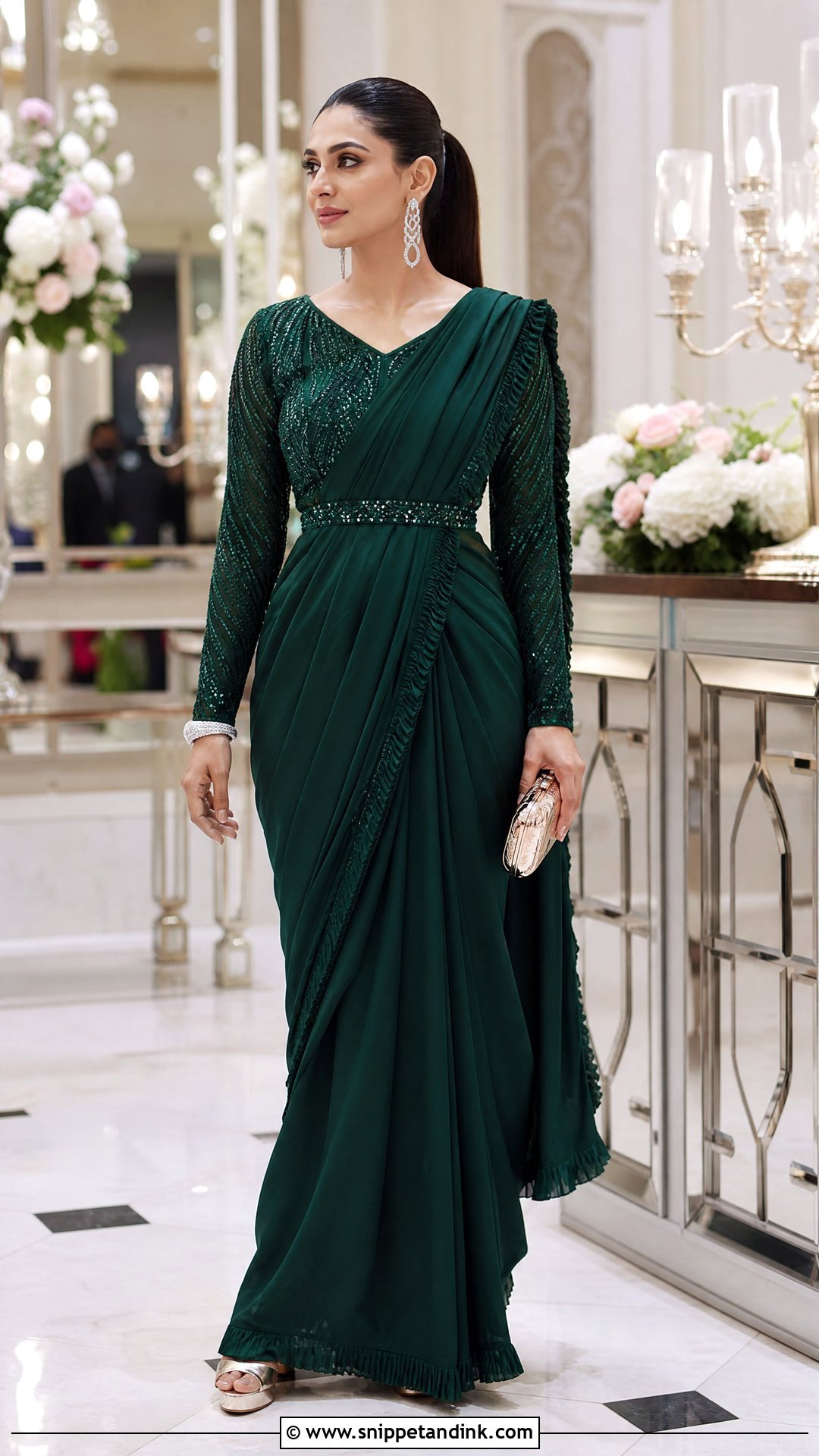
Pre-draped sarees solve a real problem: plenty of people love wearing a saree but don’t have someone on hand to drape one at six in the morning. These come with stitched pleats, an attached pallu and a waistband, so you step in and fasten. Choose georgette or crepe, and match the blouse to the function, sequined for a sangeet or long-sleeved and structured for a ceremony. Drop earrings, a cuff, a metallic clutch and comfortable heels finish it. At the trial, I check that the stitched pleats fall softly rather than standing stiff, and that the waistband doesn’t twist when you sit. Pin the pallu discreetly at the shoulder, and a sleek bun or ponytail keeps it uncluttered.
17. Jacket Lehenga For North Indian Wedding
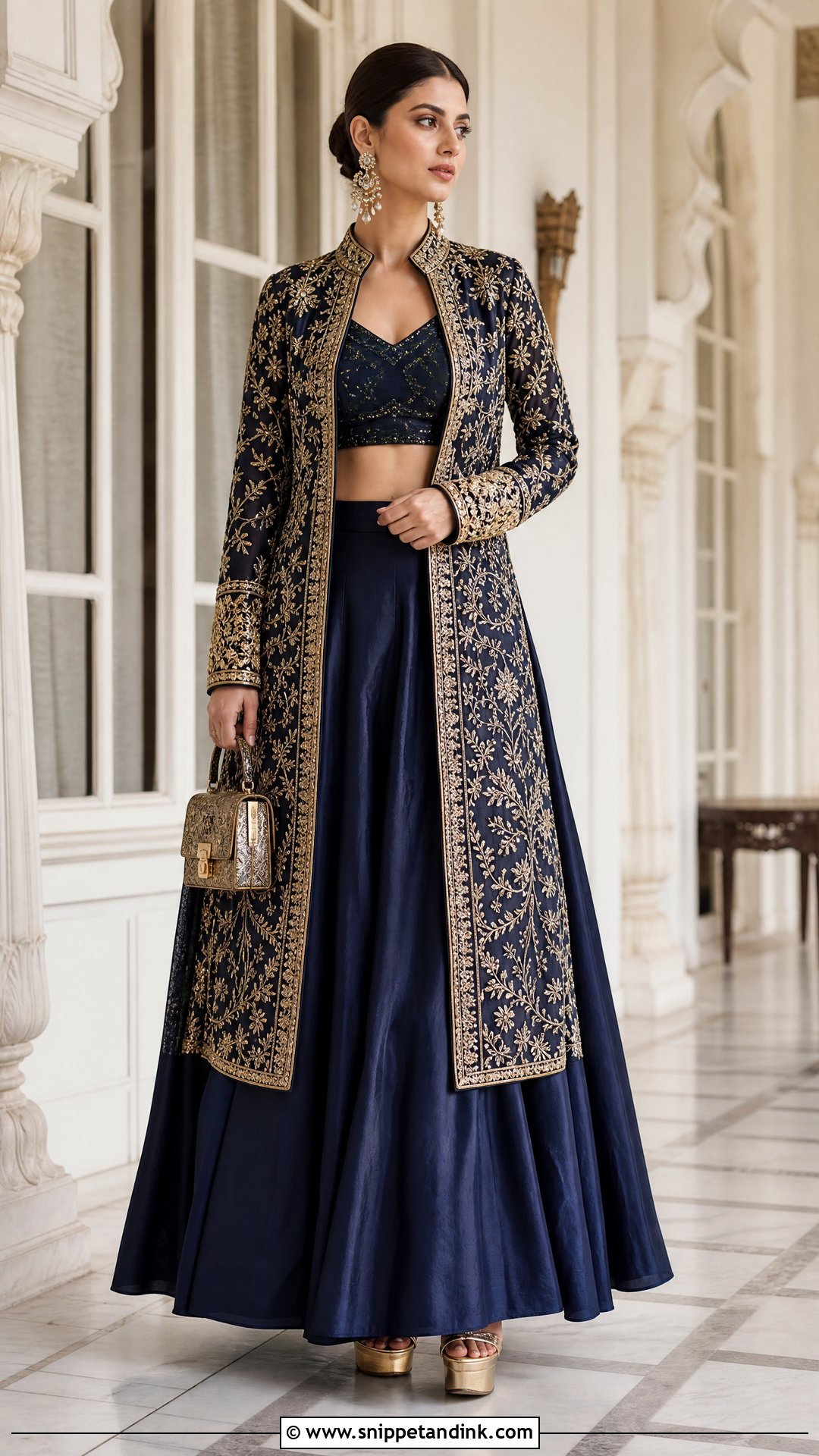
A jacket lehenga adds a layer that brings coverage, structure and, in winter, real warmth. Begin with a simple silk or georgette lehenga and fitted blouse, then add a knee or ankle-length embroidered jacket. If the jacket carries dense threadwork, sequins or brocade, keep the skirt plain. Velvet or raw silk suits winter, organza or net suits warmer evenings. Statement earrings, a small handbag and platform heels are enough, and I’d usually leave the dupatta out unless the family expects one; three layers bury the outfit. Sleeves are where jacket lehengas go wrong, so have them fitted with the blouse on underneath, or they’ll look bulky. A sleek ponytail shows off the neckline.
18. Peplum Gharara For North Indian Wedding
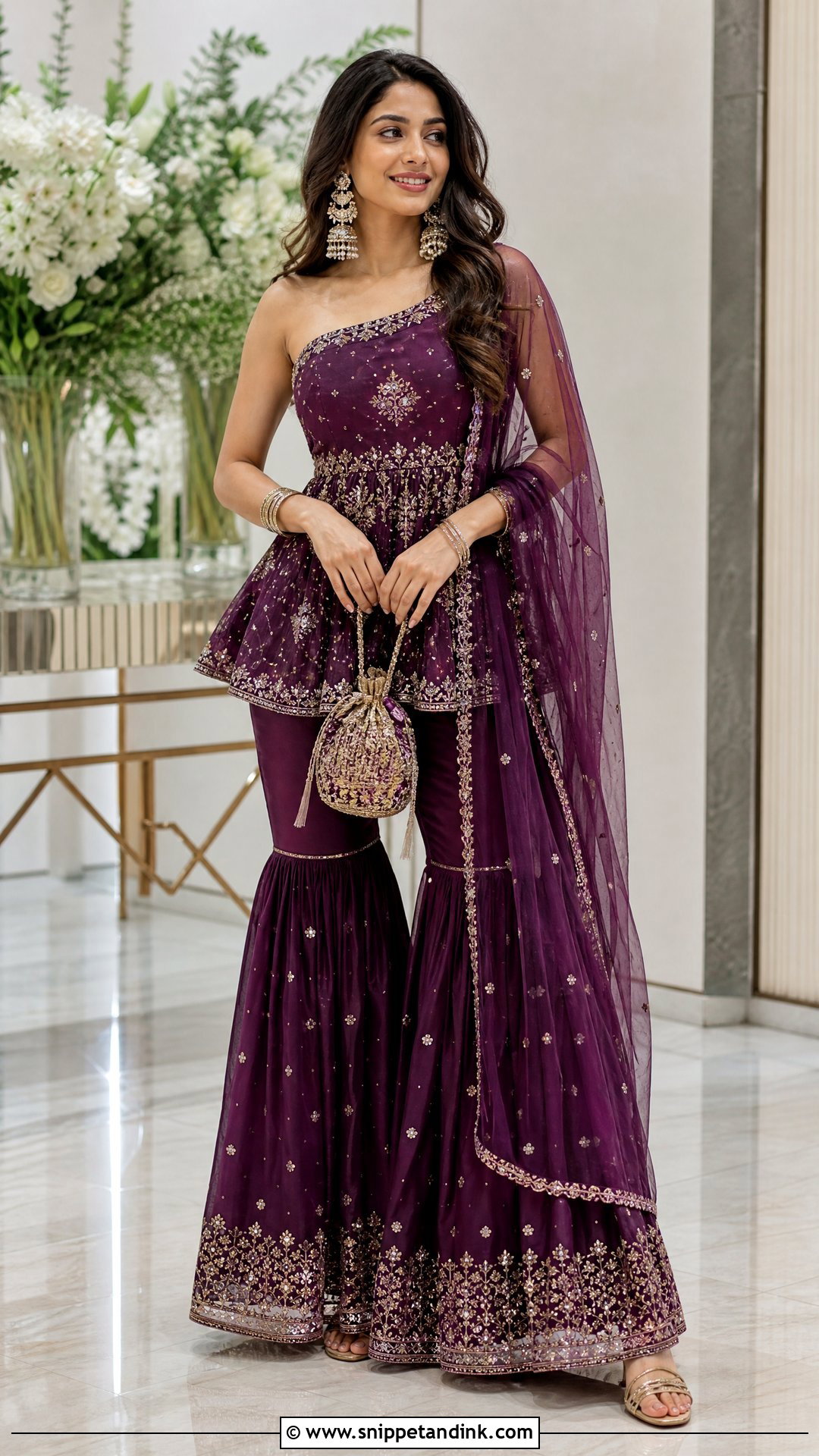
A peplum gharara defines the waist and puts the drama in the lower half, which makes it a strong sangeet or reception choice. Select a fitted peplum top that flares gently over the hips and gharara pants that widen below the knee, in coordinating fabric so the two pieces look like one outfit. Add a light dupatta over one shoulder, or skip it if the sleeves and high neckline already carry detail. Long earrings, slim bangles, a jeweled potli and block heels finish it. The hem of the peplum is the detail I adjust most. Ending right at the widest part of the hips adds width; an inch or two higher or lower gives a far more comfortable line. A high ponytail suits the playful proportions.
19. Brocade Kurta And Skirt For North Indian Wedding
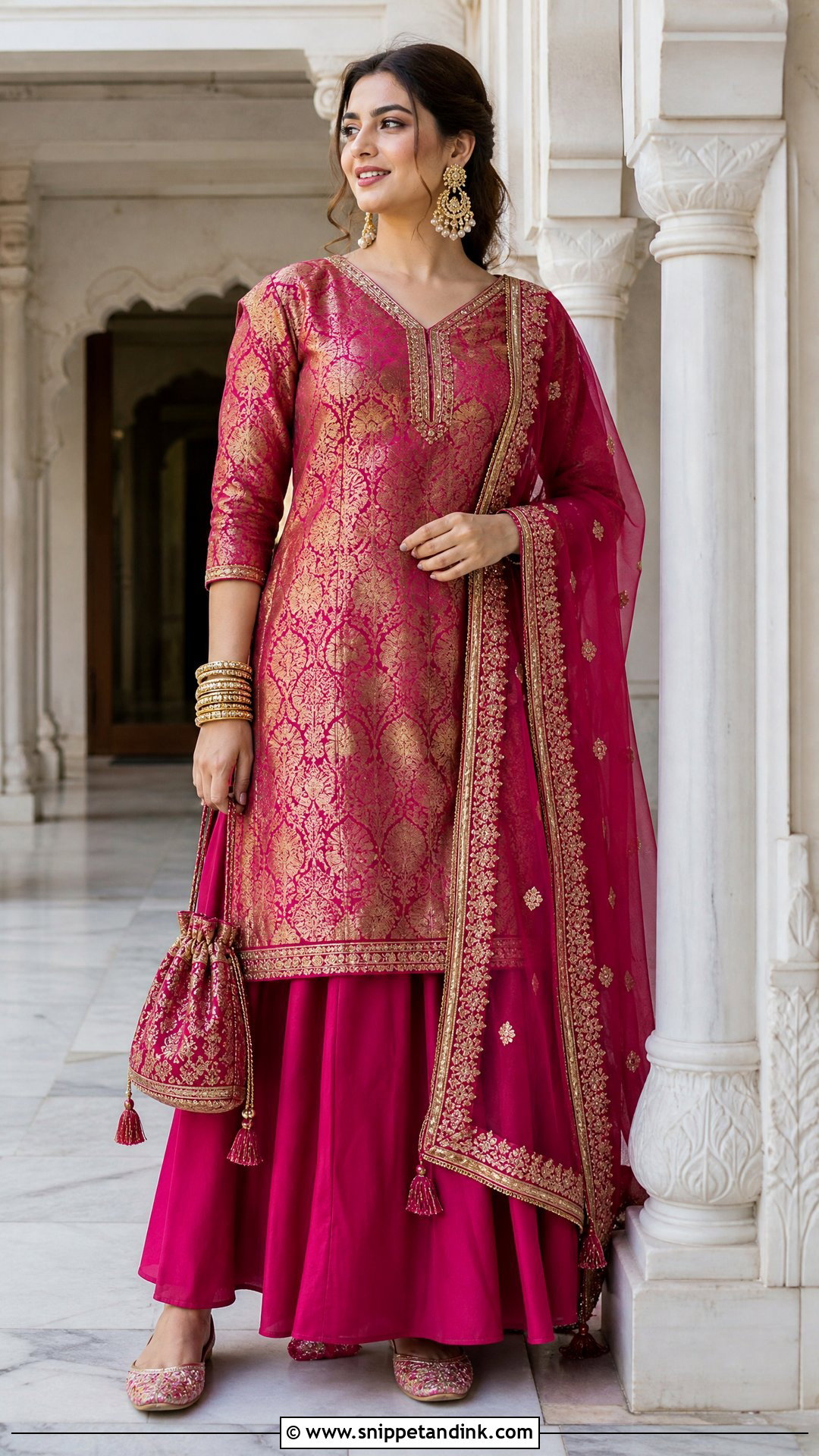
Brocade works best when only one piece carries the pattern. Pair a short or mid-length fitted brocade kurta with a sweeping solid skirt that picks up one shade from the weave, or flip it, a plain silk kurta over a patterned brocade skirt. A sheer dupatta with a narrow zari border connects them without hiding either. Antique gold earrings, bangles, a classic potli and embroidered juttis suit the heritage fabric, with a center-parted bun or soft curls. Brocade is stiff and doesn’t stretch at all, so I size the kurta for sitting, not standing, and leave enough ease at the waist for a long dinner. When the weave has several metallic colors, keep the jewelry to one tone.
20. Indo-Western Dhoti Pant Outfit For North Indian Wedding
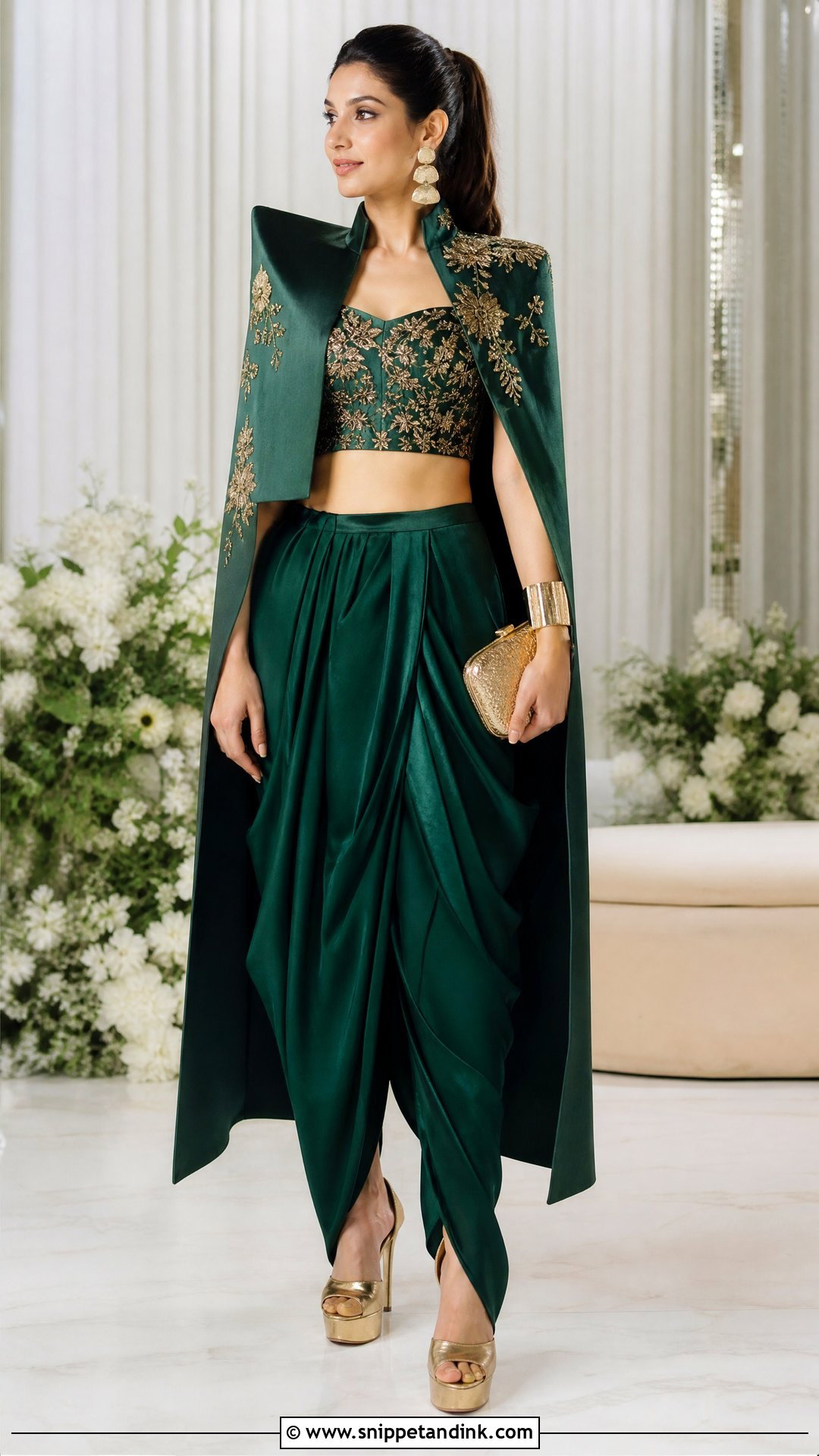
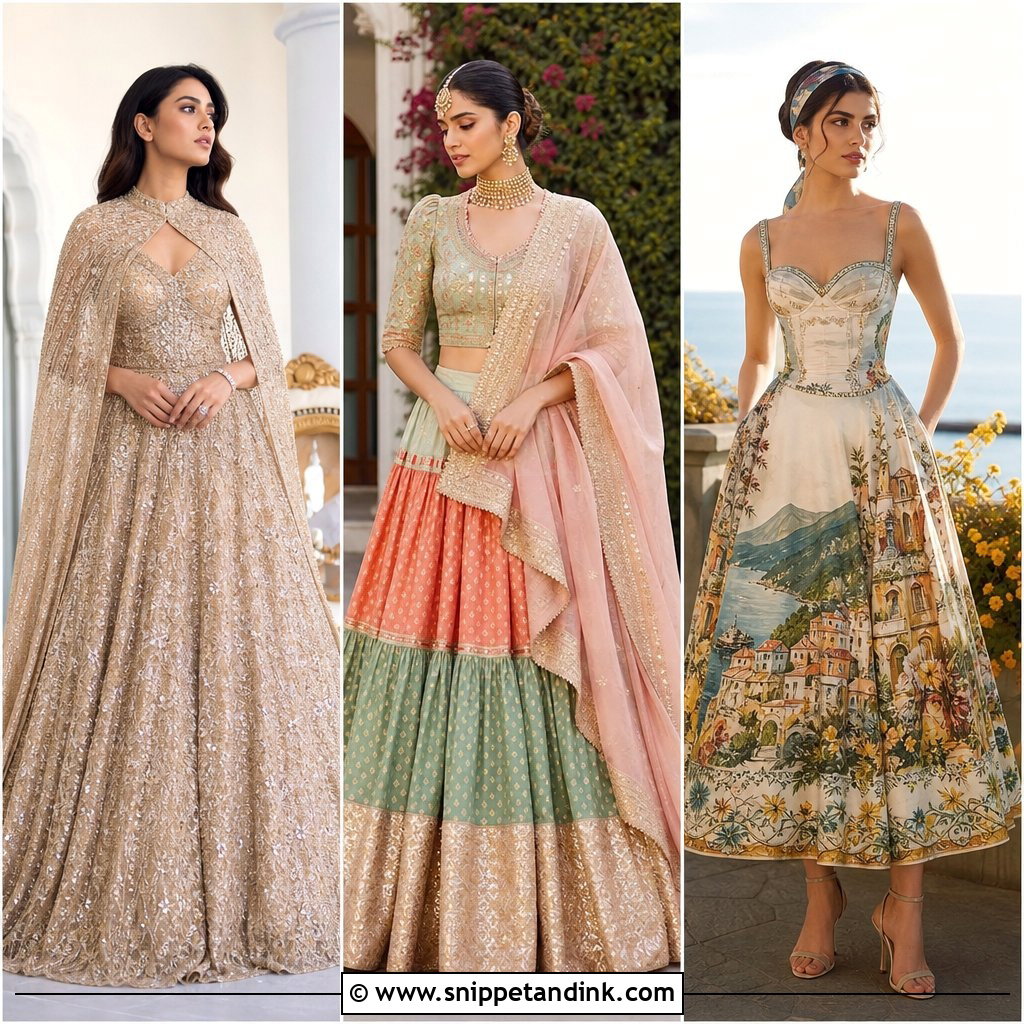
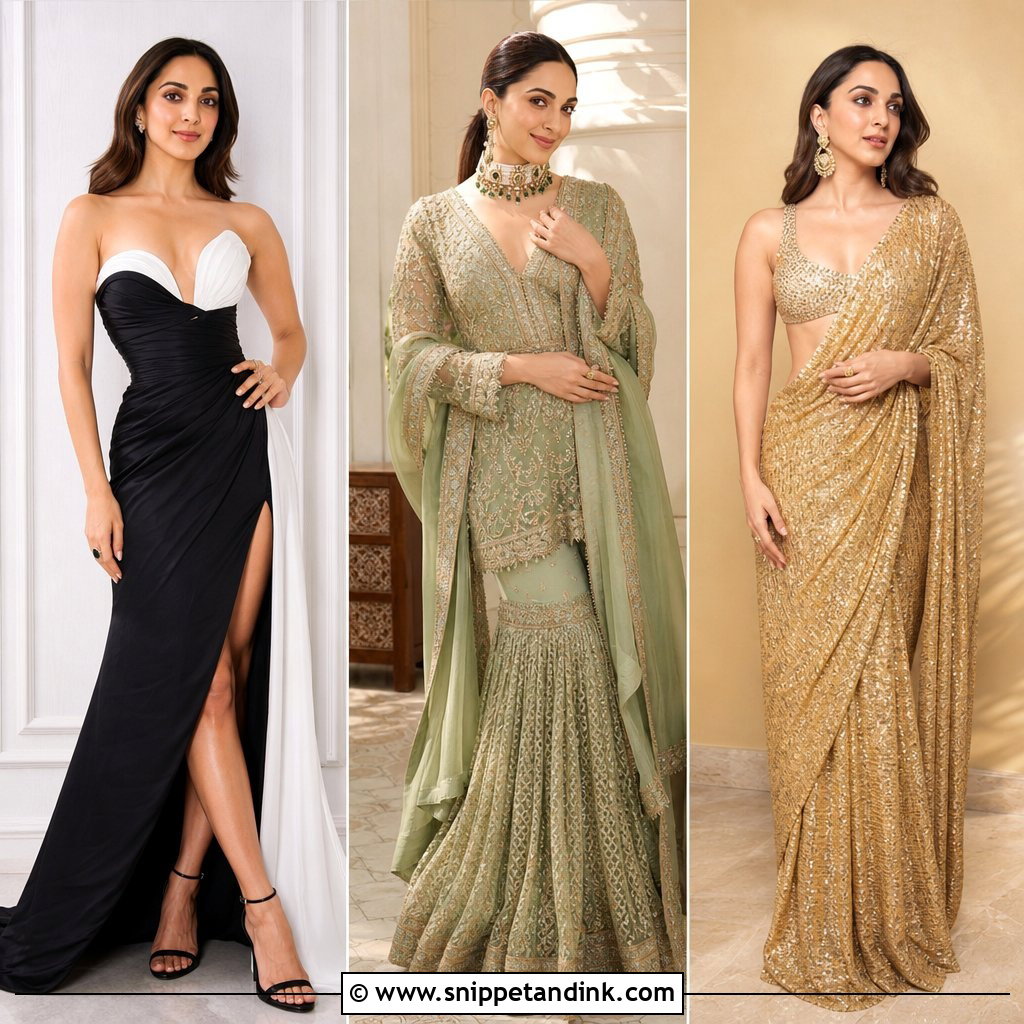
Fusion pieces can sit comfortably beside traditional ones when they keep a link to Indian craftsmanship. Pair draped dhoti pants with an embroidered crop top or fitted short kurta, then add one dramatic layer: a structured cape, a long jacket or a one-shoulder dupatta. Satin, silk or crepe gives clean folds instead of bulk. Jewel tones and metallic neutrals suit evening functions, with sculptural earrings, a cuff, a small clutch and platform heels. Define the waist clearly, because without that the volume of the dhoti swallows the frame. For anyone who simply dances better in trousers, this is my sangeet pick. A sleek ponytail or low bun keeps it modern.
Can a Guest Wear Red, White or Black?
This is the question I’m asked most by guests, and the honest answer is that it depends on the family. In many North Indian families, red and heavy bridal-style lehengas are left to the bride, white is associated with mourning, and black is avoided at the ceremony itself, though plenty of modern families relax all three for the sangeet or reception. If you’re unsure, ask the couple or a close relative directly. Nobody minds the question, and it saves you an awkward evening.
Guests also do well to keep embroidery a notch below the bride’s and to bring a dupatta or scarf to most ceremonies, since many Sikh and Hindu religious spaces ask everyone to cover their heads. Shoes are usually removed at the gurdwara, so slip-on footwear is far easier than buckled sandals.
How Heavy Is Too Heavy for a Lehenga?
Bridal lehengas with dense zardozi, velvet and multiple layers of can-can can get genuinely heavy, and the weight lands on your waist for many hours. I ask brides to try the finished skirt on for at least half an hour at the last fitting, sitting and standing, before signing off.
- Ask the tailor to add a wide, padded waistband or shoulder straps hidden inside the blouse to share some of the load.
- Use a can-can sized to the skirt, not a generic one; too much stiffness makes sitting awkward.
- Leave enough time for alterations. Custom bridal outfits from a designer or a family tailor are usually ordered months ahead, and blouse fittings tend to need two or three rounds. Lead times vary widely, so ask when you first order.
- Plan a lighter change for the reception if the ceremony outfit is heavy. Few brides regret that decision.
Heavy Silk for the Pheras, Light Cotton for the Haldi
A good North Indian wedding wardrobe respects tradition and still lets you move through several long, busy days. Banarasi sarees and rich bridal lehengas belong to the formal ceremony; shararas, ghararas and light lehengas give you room at the mehndi and sangeet; Anarkalis, pre-draped sarees and palazzo sets are the dependable choices when you want coverage and ease. Before buying anything, check the venue, the weather, the family’s dress code and how much dancing is planned. Then put your money into tailoring. A simple outfit fitted properly looks richer than an expensive one that pulls at the waist, and the colors you feel most like yourself in will carry you further than any trend.
You'll Like These Ideas:






Leave a Reply