
Mehndi events are some of the most colourful days I shoot, and also some of the trickiest. Saturated yellows, neon limes and mirror work all react to light in their own way, and what looks right in a fitting room can turn flat, glaring or oddly tinted on camera. The twenty outfits below cover lehengas, shararas, ghararas, Anarkalis, sarees, a kaftan and colour-blocked separates for brides, bridesmaids, relatives and guests. For each one I’ve added what I notice through the lens: how the fabric moves, where it catches light and what to pair it with so your henna and your face stay the focus.
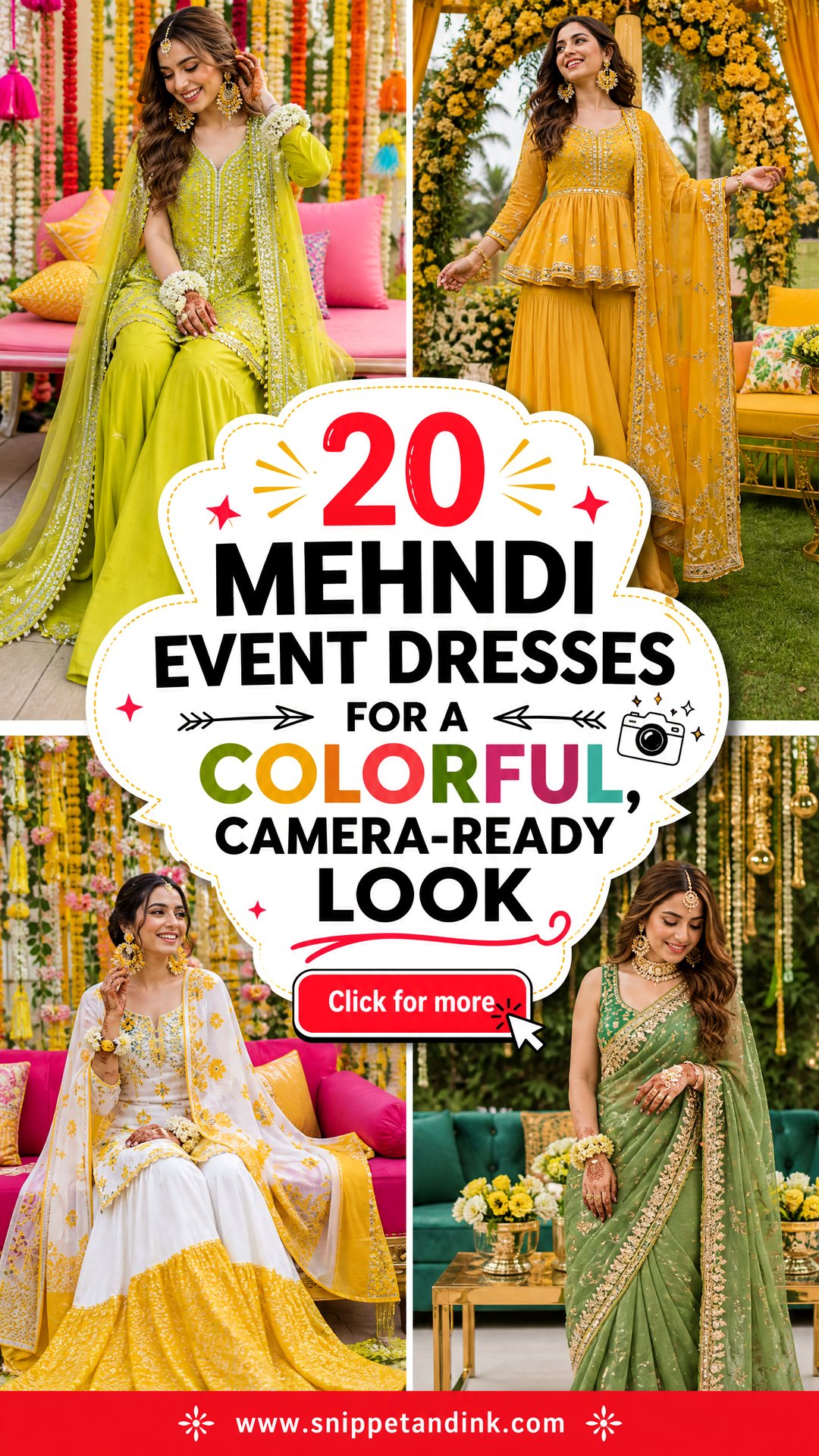
Sun, Fairy Lights and Flash: What Light Does to Mehndi Colours
Most mehndi events happen in two kinds of light: harsh afternoon sun outdoors, or warm, low string lights and tent lamps in the evening. Your outfit behaves differently in each.
Daytime outdoors
Bright sun is hard on pure white and on very saturated colours. White loses its embroidery detail, and neon limes, hot oranges and bright fuchsias can render as flat blocks without folds. Shade from a canopy helps, and so do slightly softer versions of those colours. Also watch for reflected colour: a strong yellow or green fabric bounces light upward and can tint your face in close portraits.
Evening indoors
Warm lighting adds a yellow-orange cast. Jewel tones like emerald, purple, teal and deep pink stay rich in it, while mustard, beige and some pastels can drift toward brown or grey. Mirror work and sequins come alive at night, though a direct flash makes every mirror flare.
If you know the event will move from afternoon into night, I’d pick a mid-depth colour that works in both, and save your palest or most neon option for a shorter daytime function.
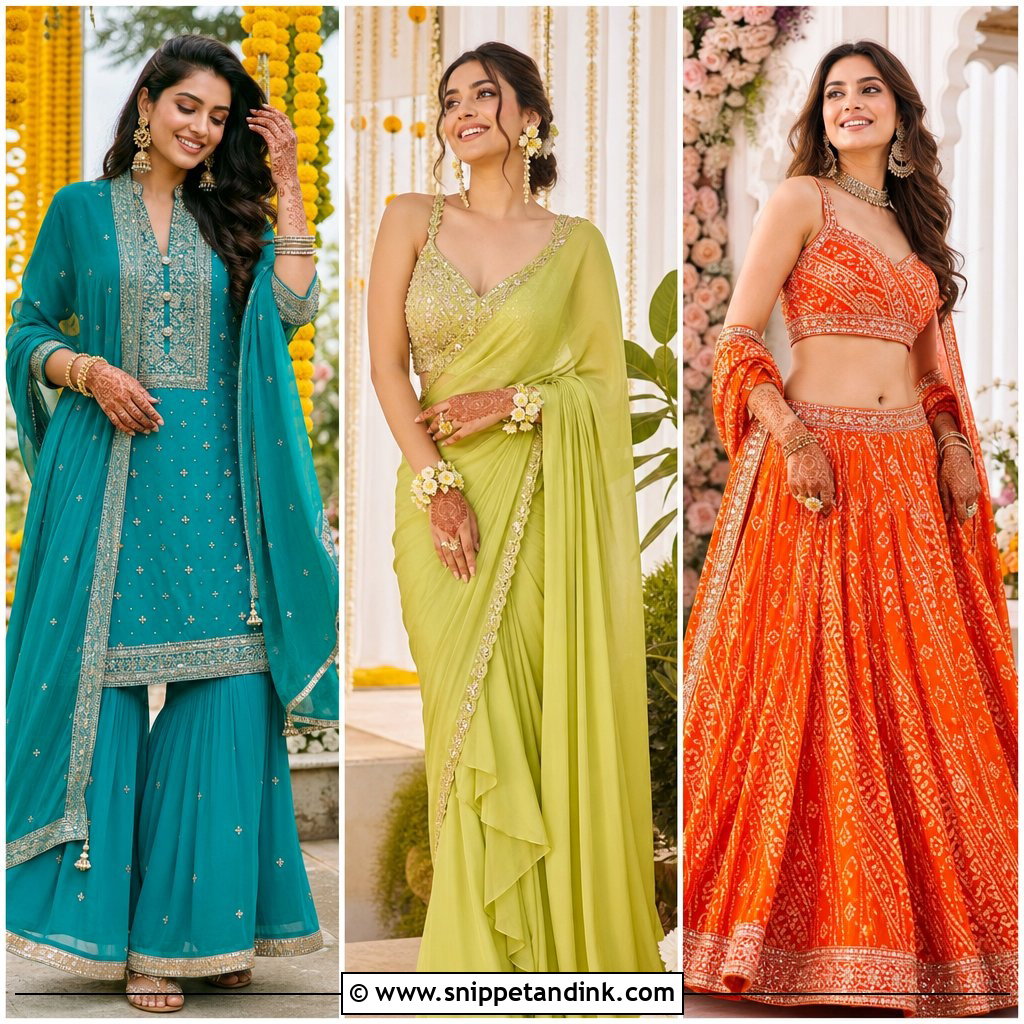
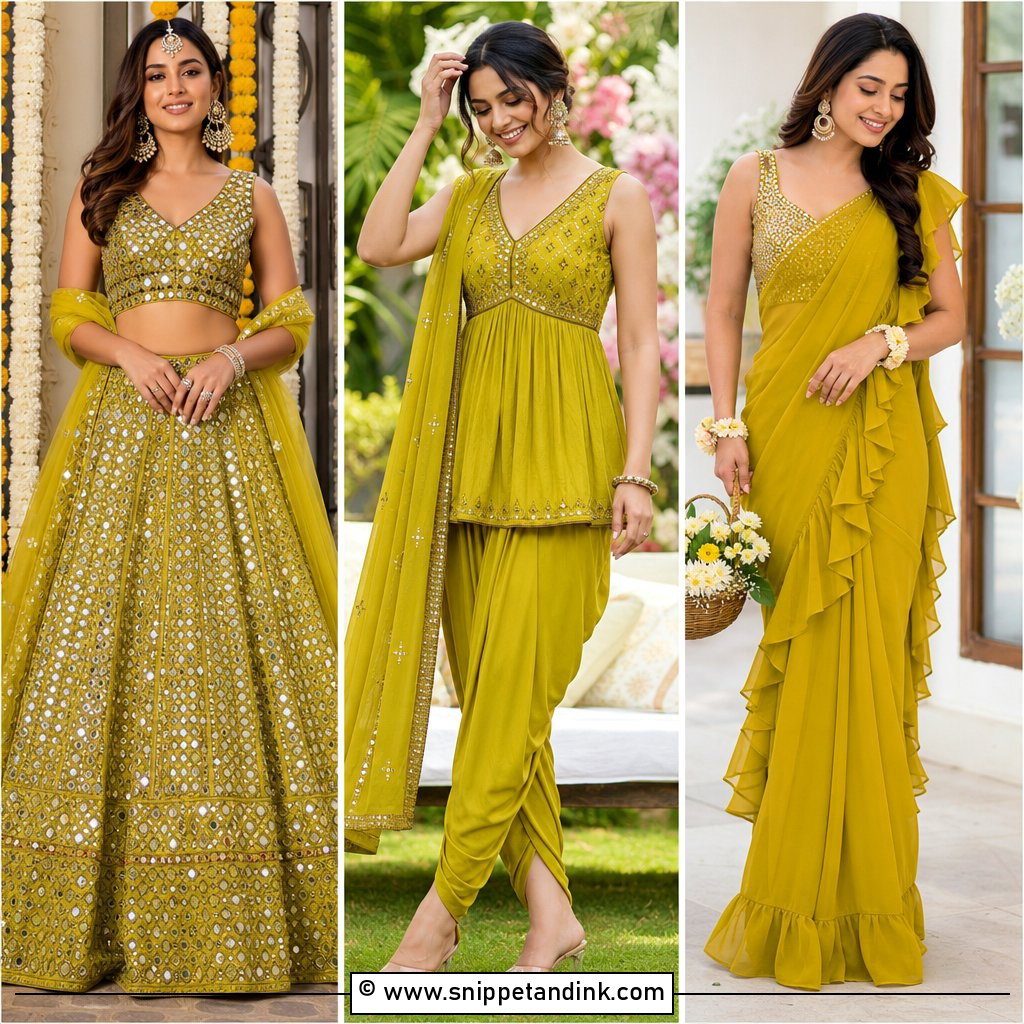
1. Yellow Mehndi Lehenga Dress
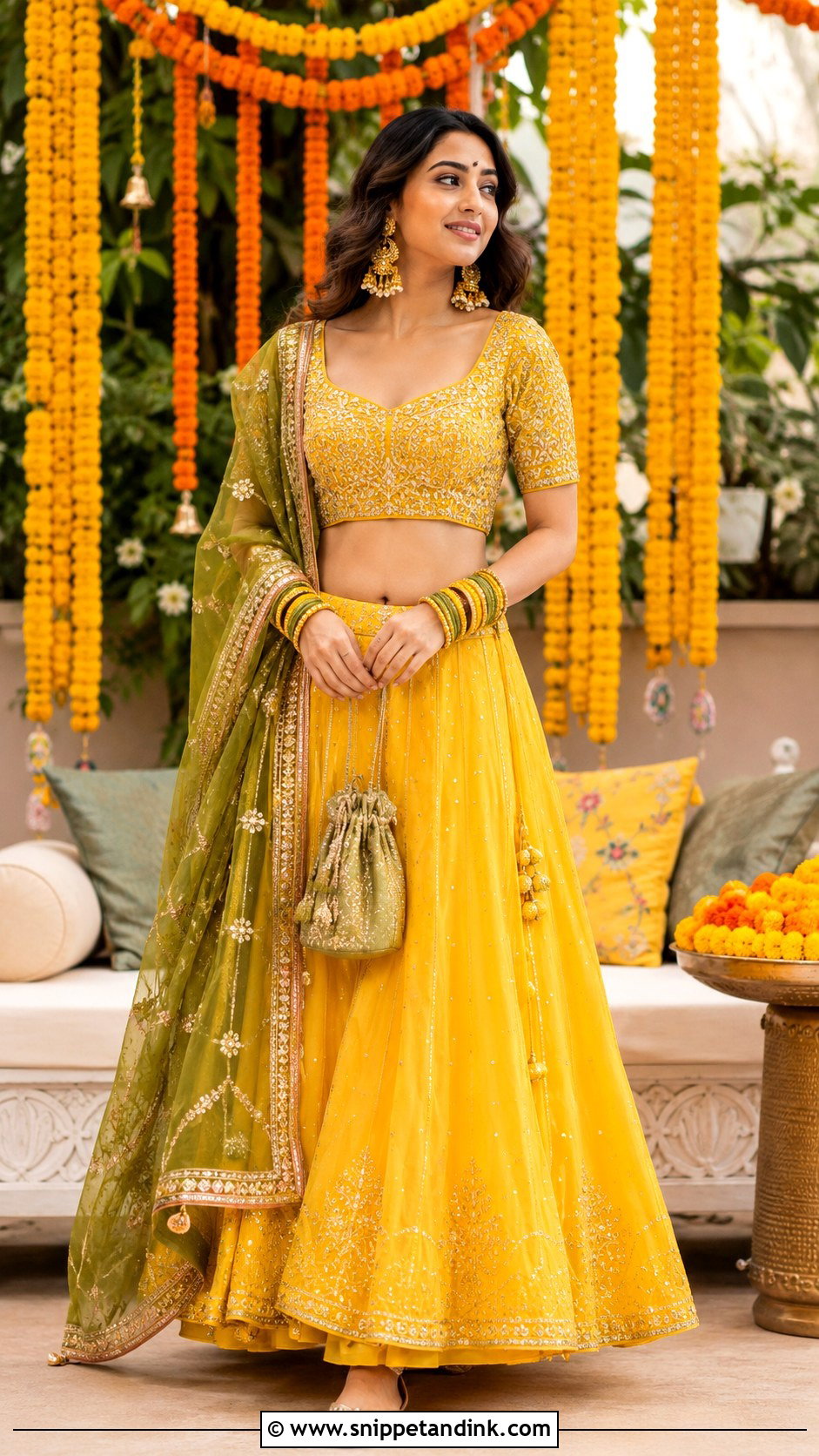
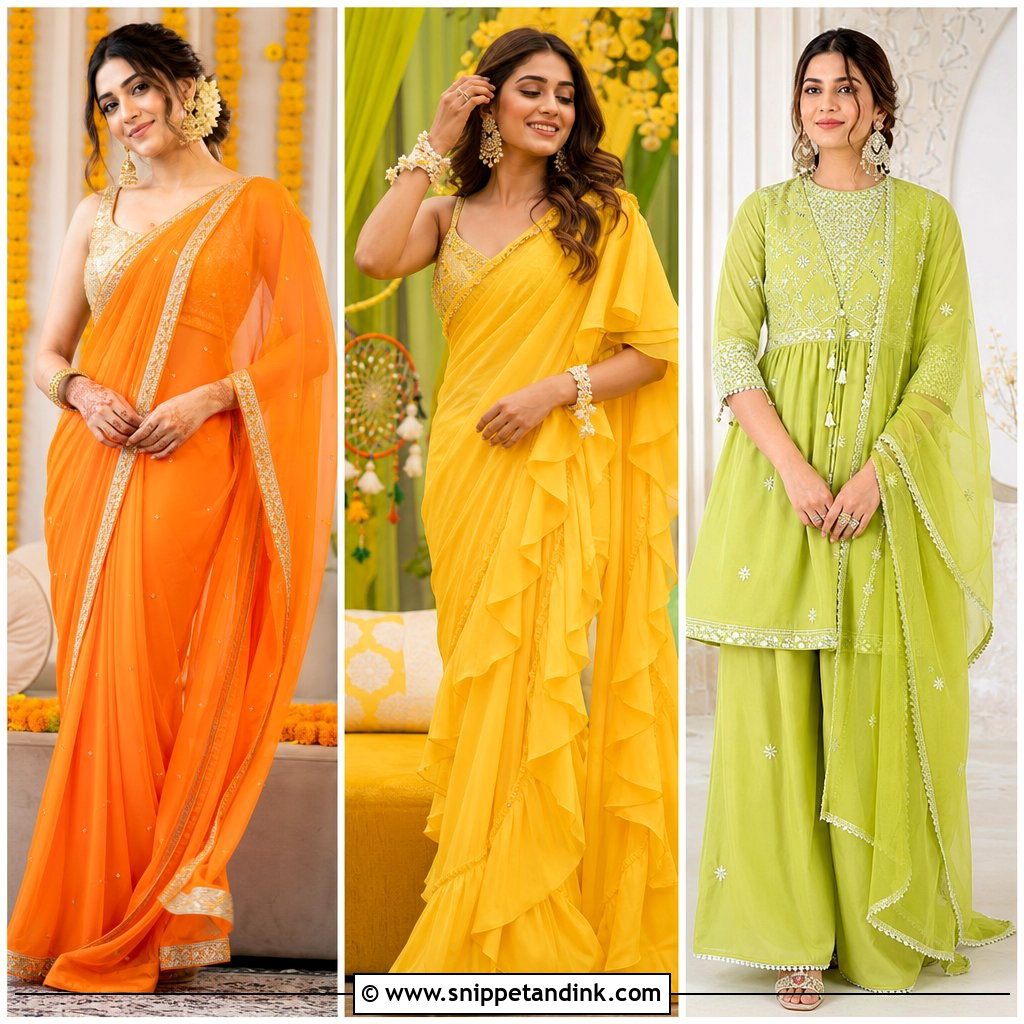
Yellow is the colour of this event, and a light georgette or chiffon lehenga with gota borders and small mirror accents is the easy version. In direct midday sun, a very bright lemon can bounce yellow light up onto your face, so I’d favour a warmer marigold or a softer butter shade for an outdoor afternoon. A short-sleeve blouse, a sheer green or coral dupatta and metallic juttis keep it simple. Brides can go fuller in the skirt; guests look better with lighter embellishment.
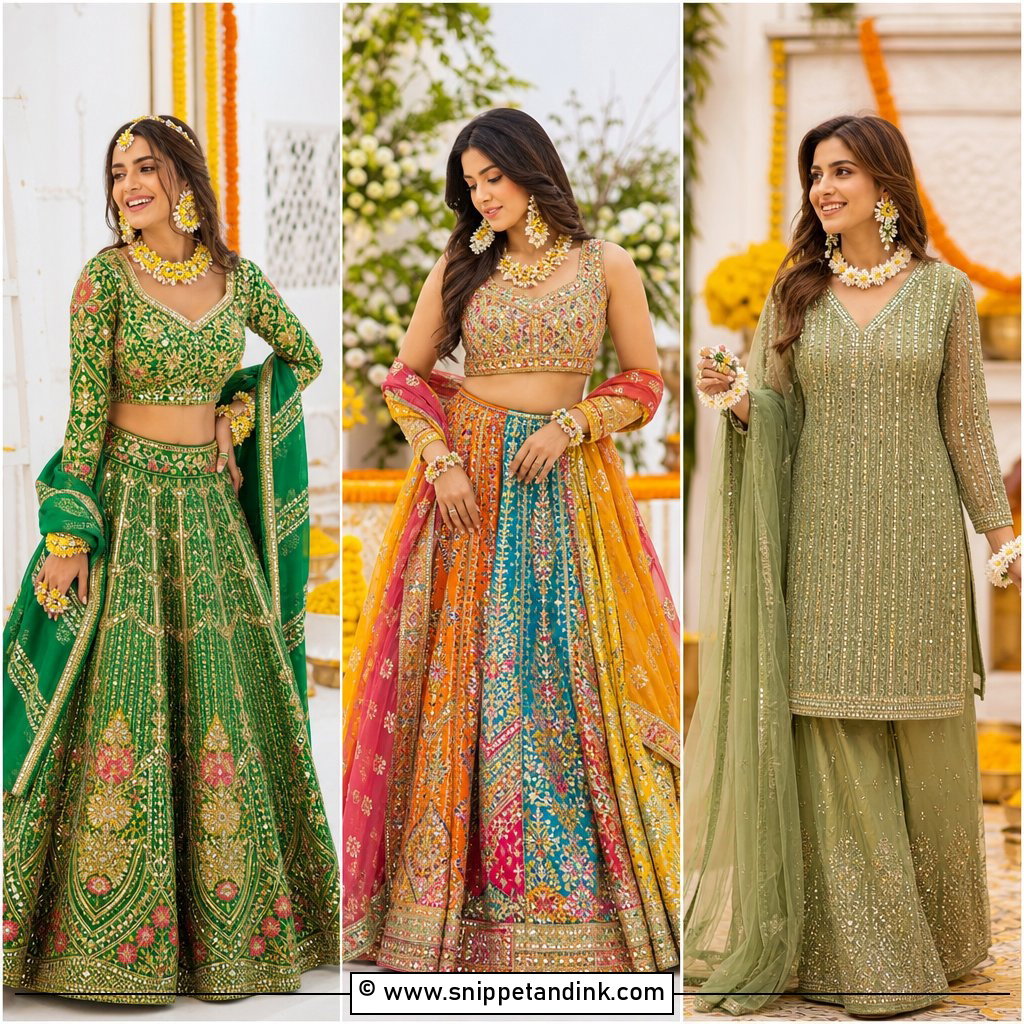
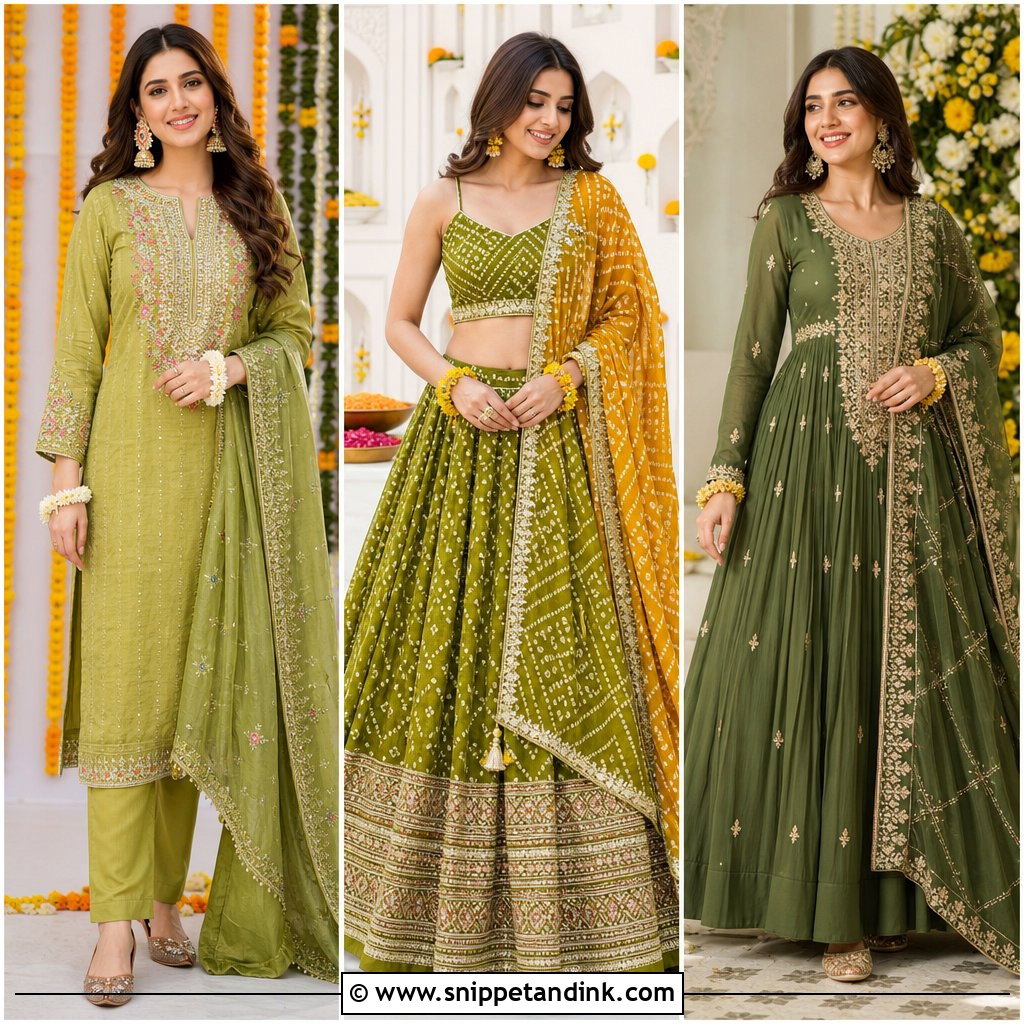
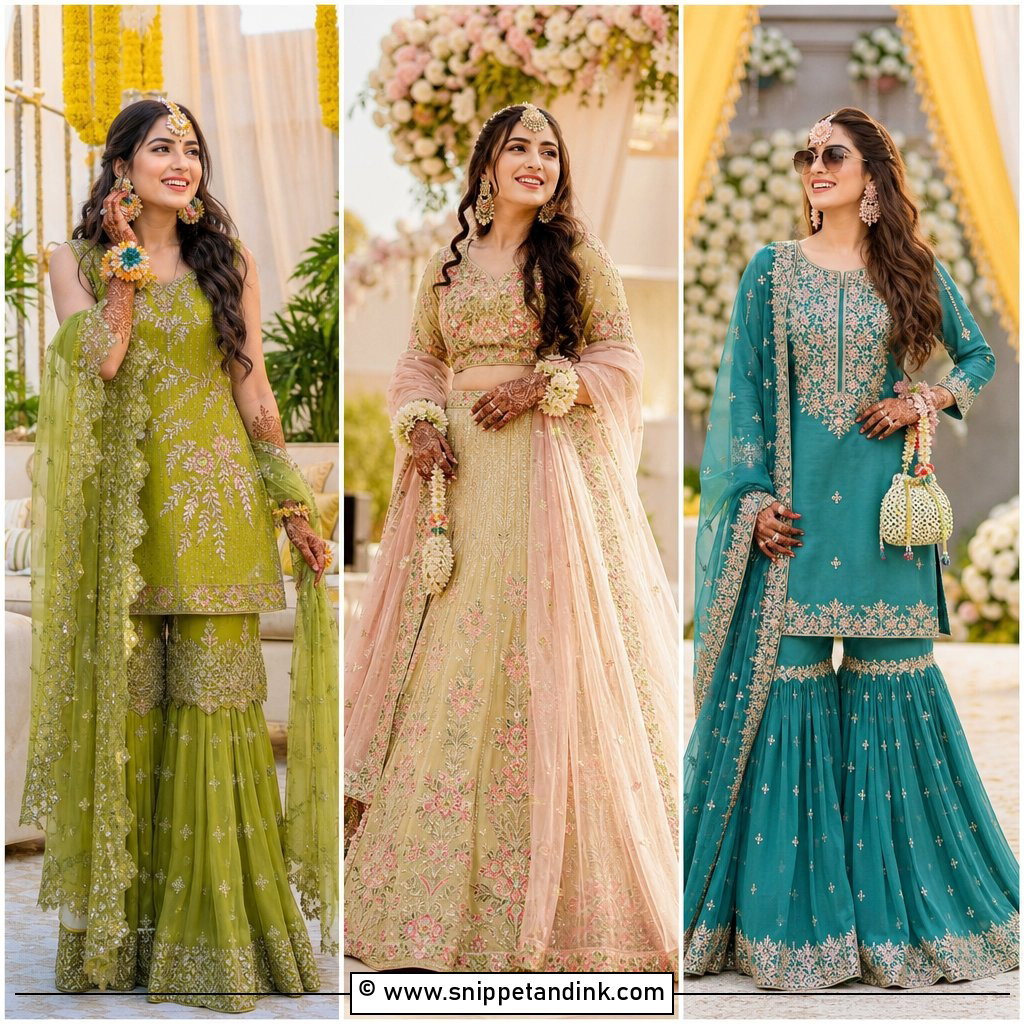
2. Green Mehndi Sharara Dress
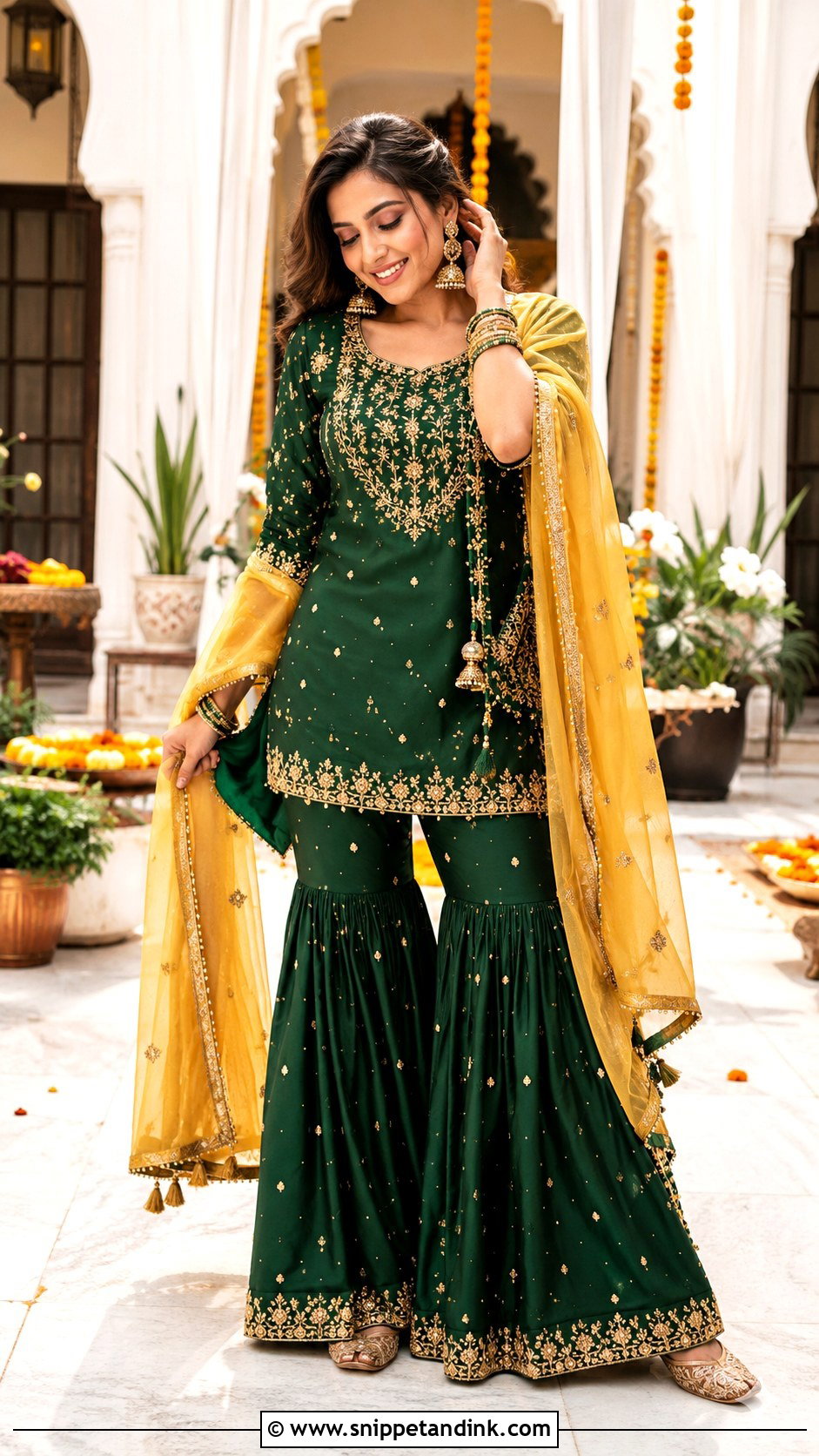
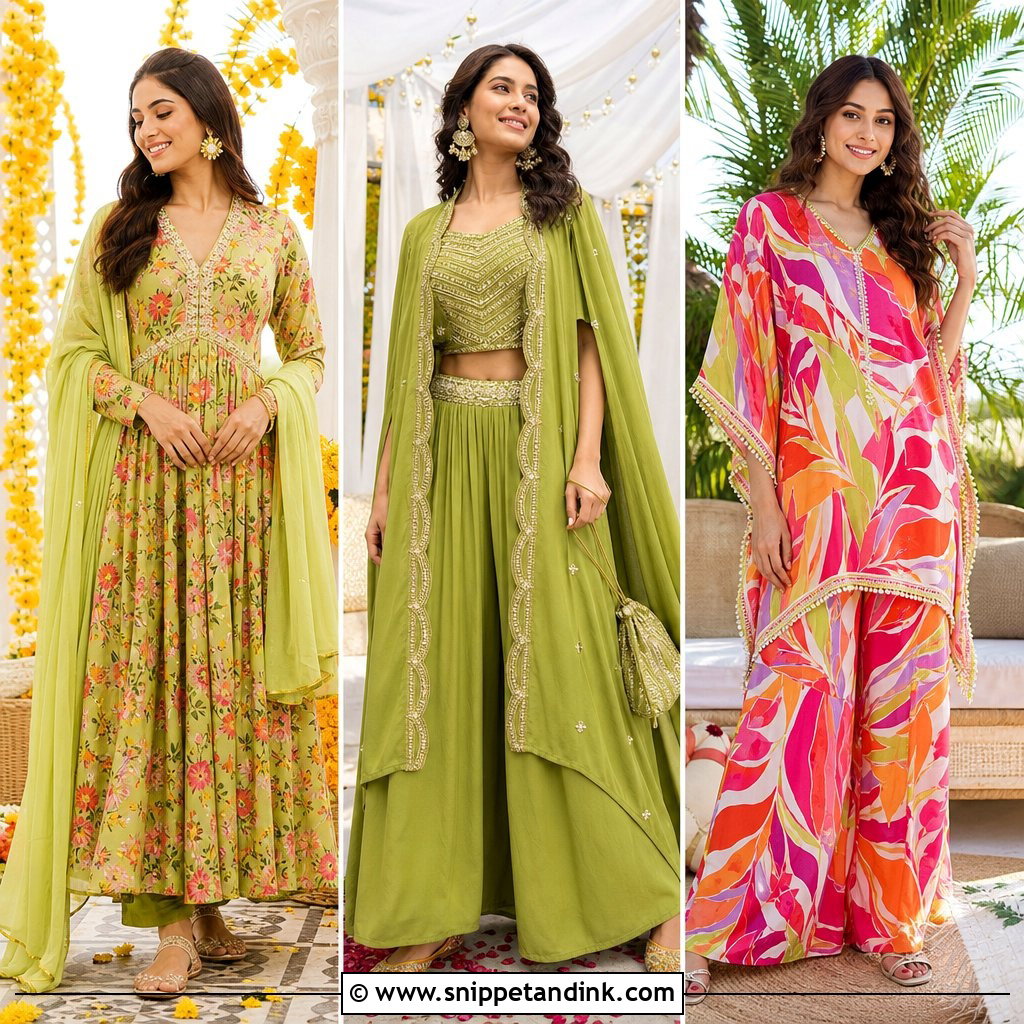
A green sharara dress is the outfit I see people actually relax in, and relaxed people give me better candids. A short emerald, lime or leaf-green kurta with gold threadwork at the neck and hem, wide soft shararas and a yellow dupatta make the classic combination. When the kurta is densely worked, keep the jewelry simple, otherwise detail shots of the neckline get crowded. Sisters, cousins and bridesmaids all suit it.
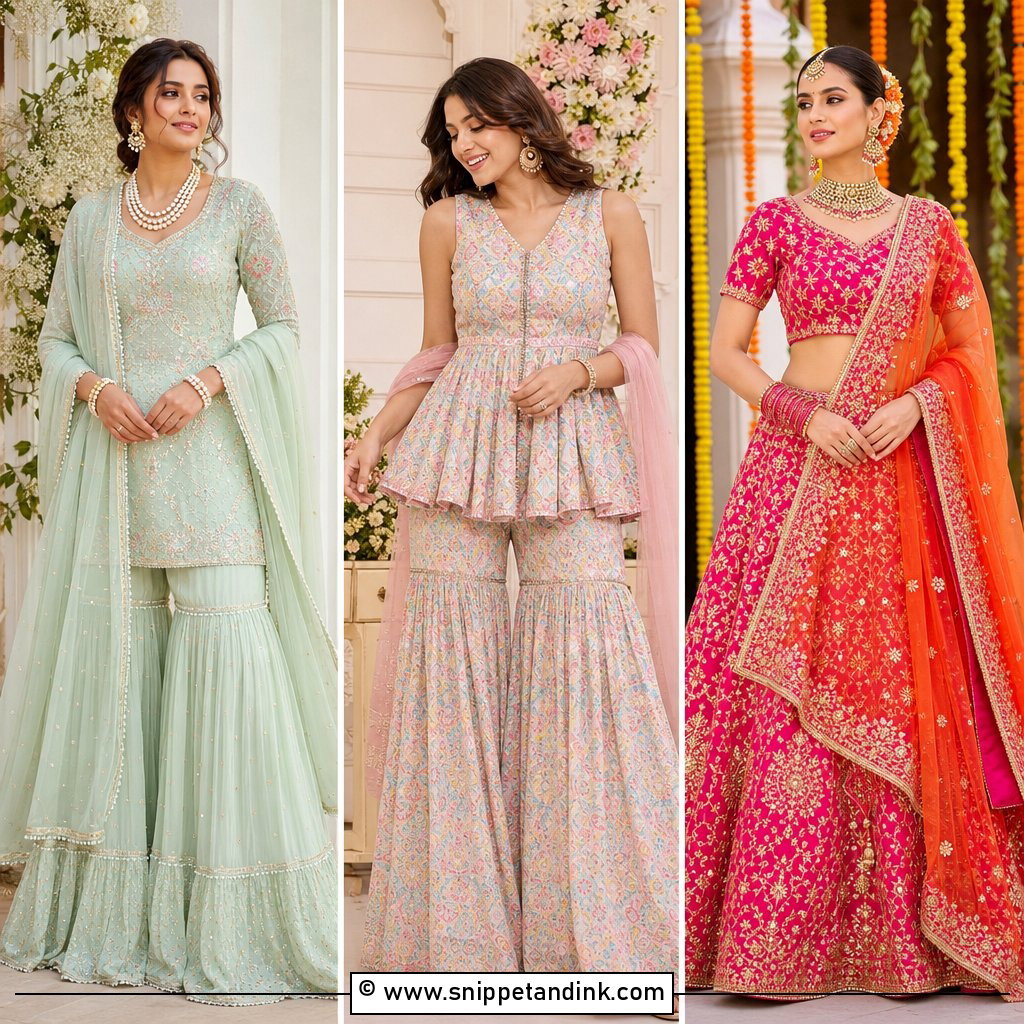
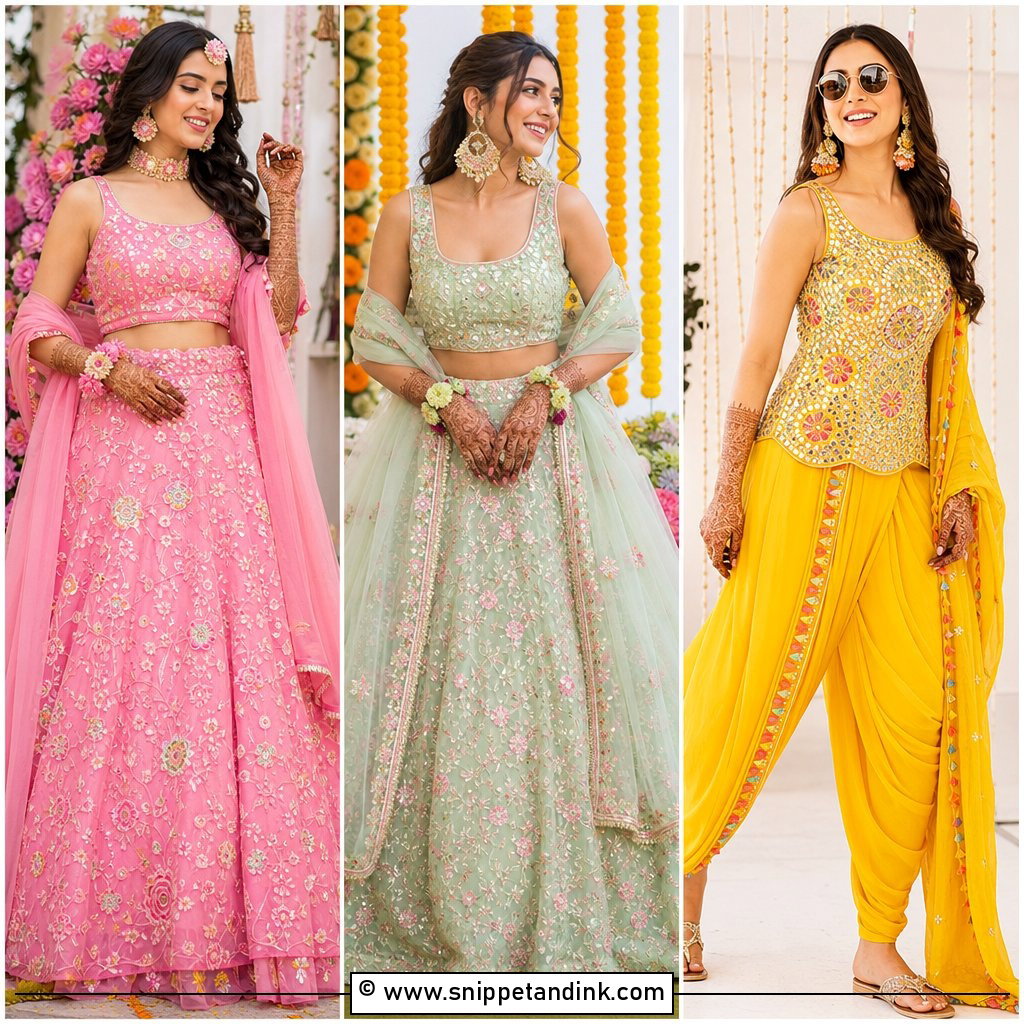
3. Pink Gharara Mehndi Dress
Pink gharara pants have their volume below the knee, which is lovely in motion. When a guest spins on the dance floor, the flare opens out and reads clearly in a still frame. Soft pink with gota trim and small sequins, a short kameez, and a mint, orange or yellow dupatta keep it playful. Pastels can wash out in harsh sun, so a slightly deeper rose holds its colour better outdoors. A low bun shows the neckline; loose waves feel softer.
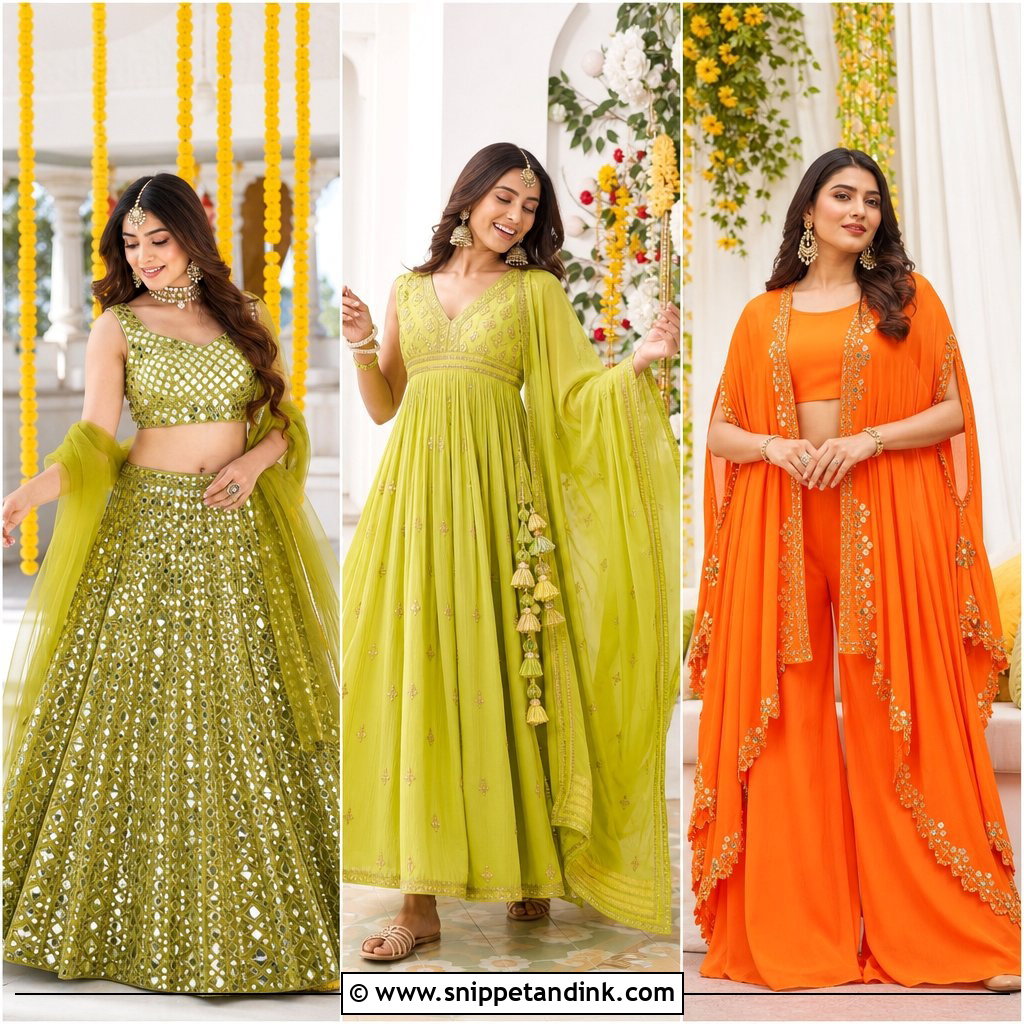
4. Orange Anarkali Mehndi Dress
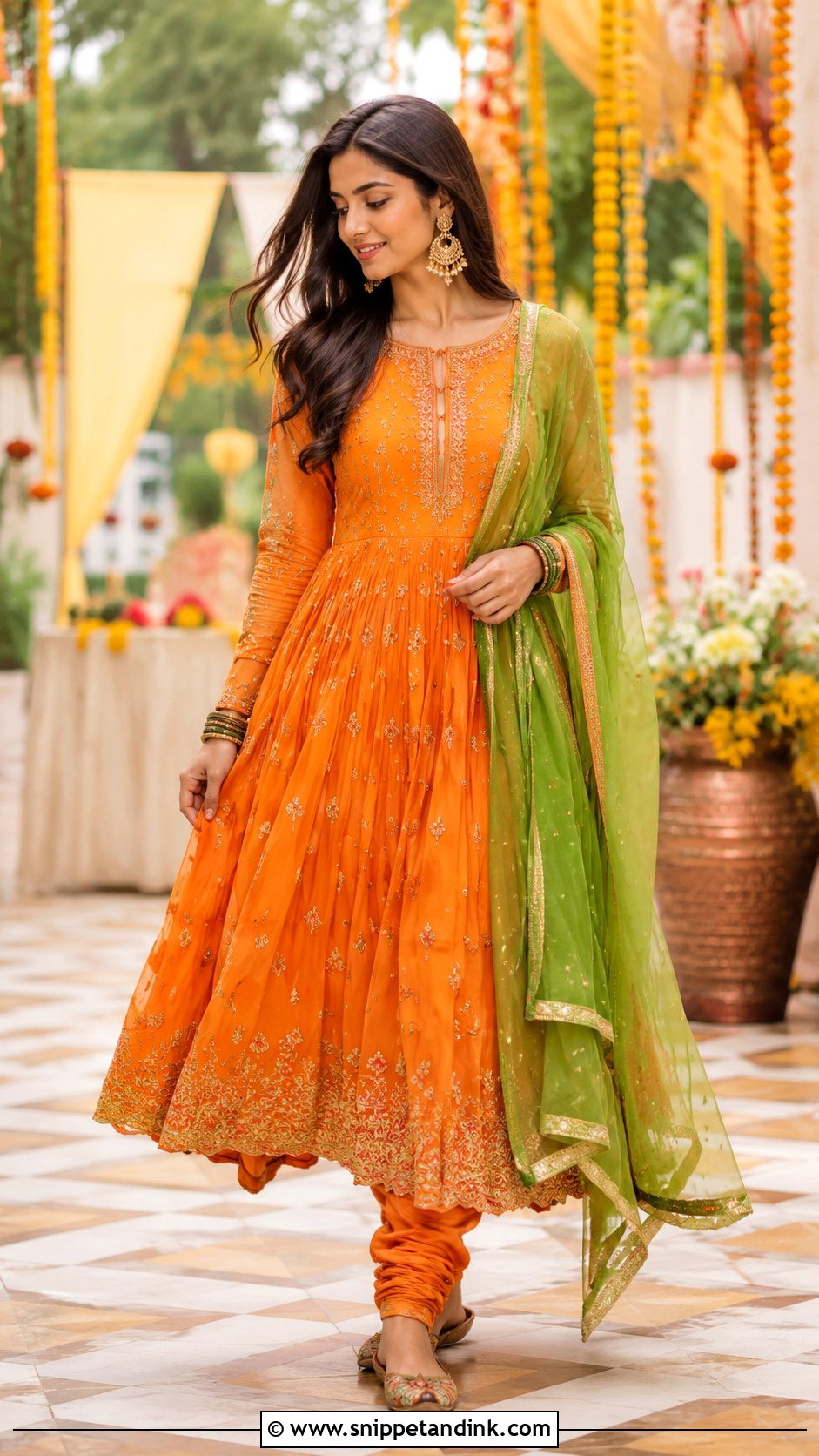
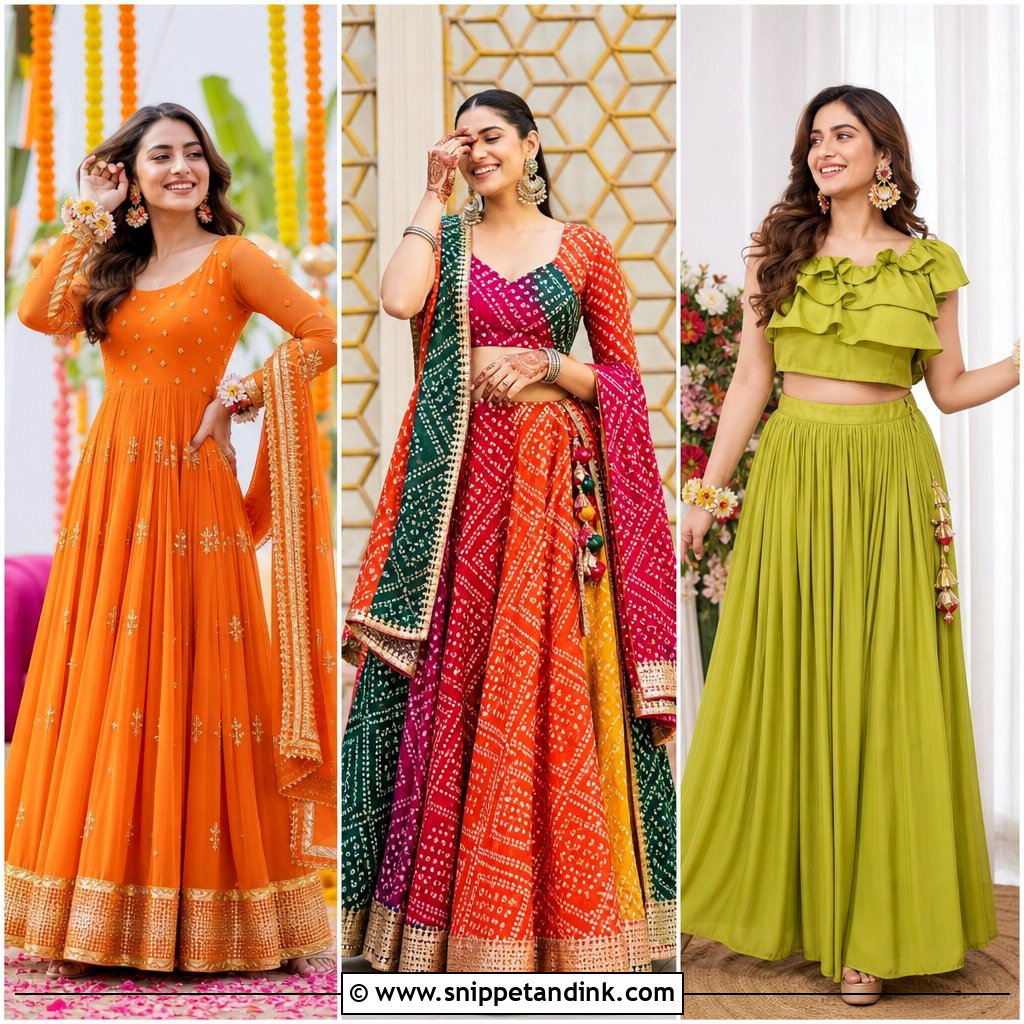
An orange Anarkali is made for twirl shots. The fitted bodice and wide flared skirt in chiffon, georgette or cotton silk catch air beautifully when you turn. Slim churidars, a pink or green dupatta and chandbali earrings complete it. Practically, three-quarter sleeves work if only the hands get henna; short sleeves are better for arm designs, and they also let me photograph the full design without anyone pushing up fabric. One caution: a very saturated orange can lose its fold detail on camera in bright sun, so a slightly softer orange keeps the texture visible.
5. Multicolor Mehndi Lehenga Dress
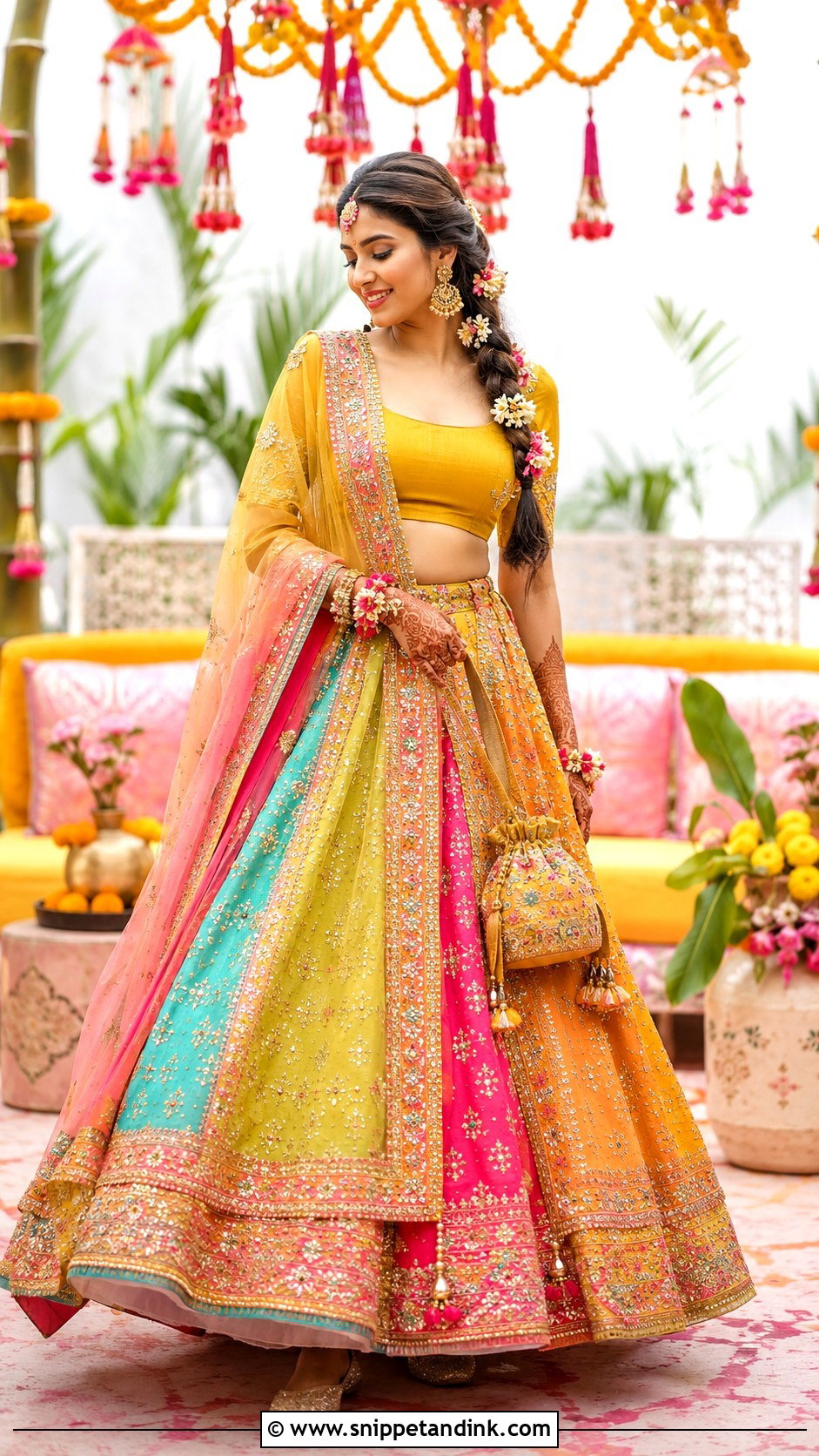
Multicolour lehengas are the outfit everyone points at in group photos. Panels of yellow, pink, green, orange and turquoise need a solid blouse and a sheer dupatta in one matching shade, or the frame gets chaotic. Medium gold earrings and neutral juttis are enough. I find these work best for the bride and bridesmaids against a colourful backdrop; for guests, fewer panels and simpler fabric stop you competing with the bride in wide shots.
6. Lime Green Palazzo Mehndi Dress
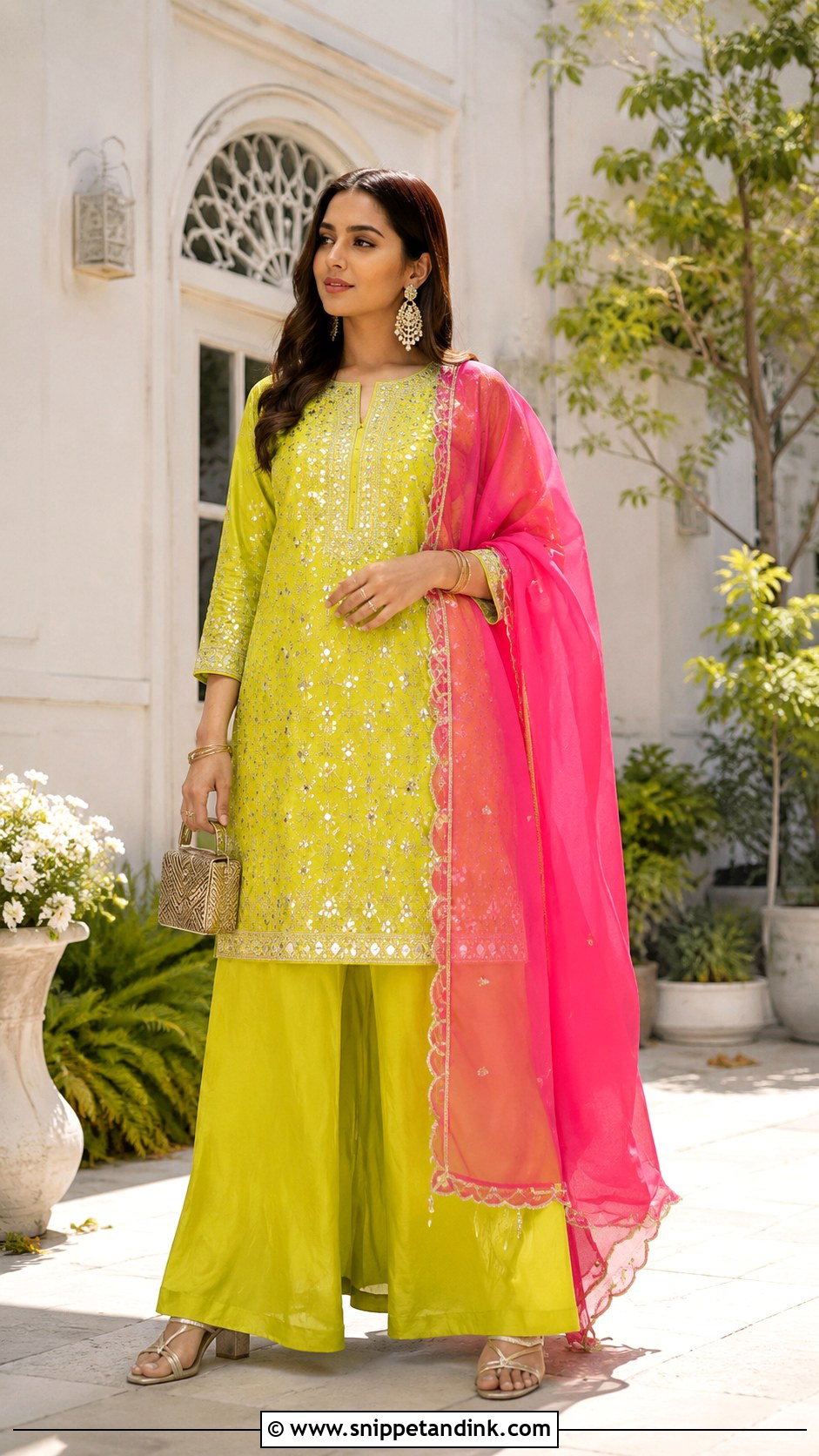
A lime green kurta and palazzo set is the practical pick for an outdoor, warm-weather mehndi. The wide palazzos let you sit cross-legged without pulling, and the straight kurta with short sleeves and light mirror work keeps you cool. A pink, yellow or printed organza dupatta adds depth. Bright lime is one of the colours digital cameras struggle with, since it can glow almost neon, so a dupatta in a deeper contrasting shade helps anchor it. It suits most ages and body types because the proportions are easy to adjust.
7. Mustard Peplum Mehndi Dress
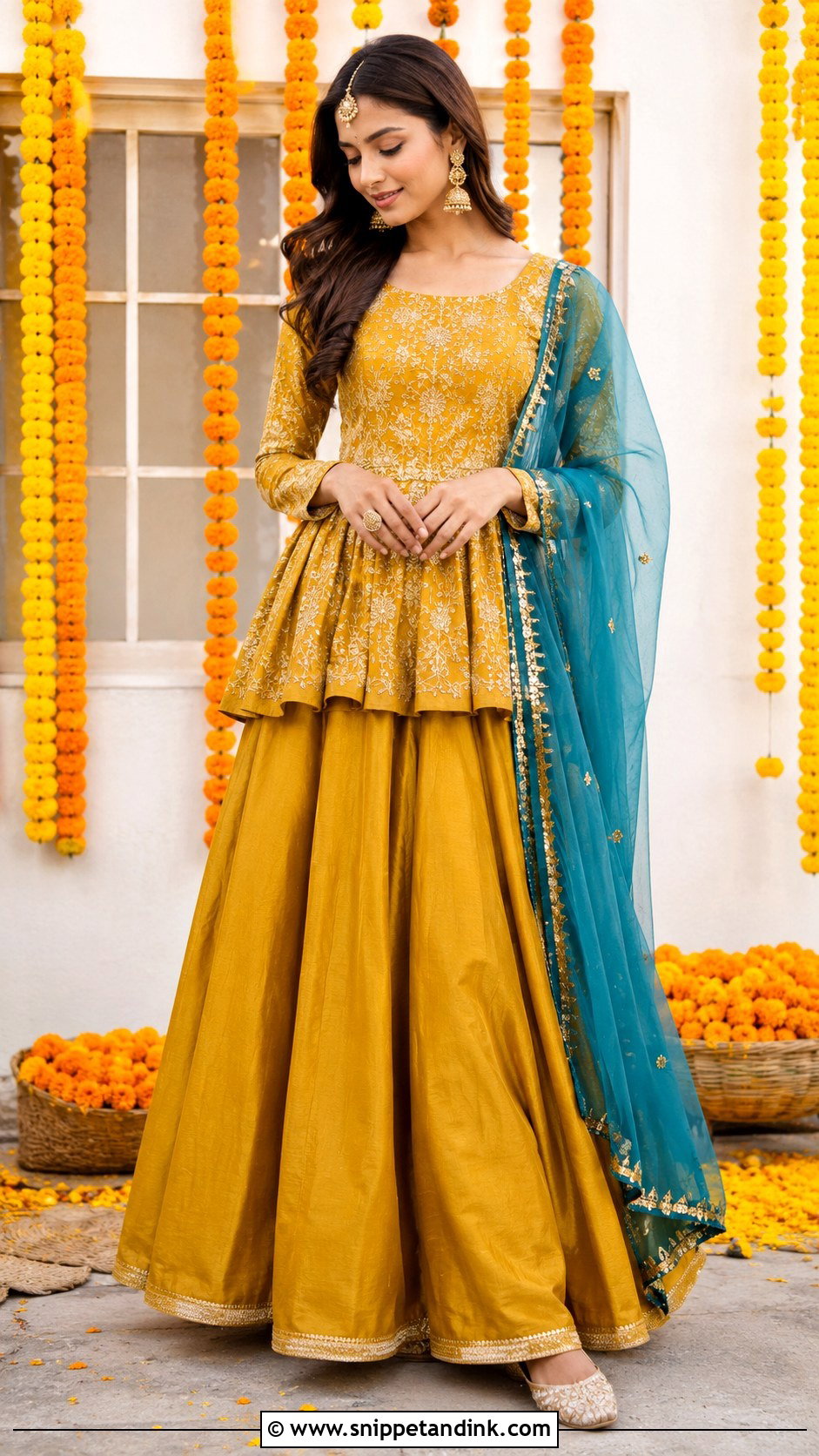
A mustard peplum top over a high-waisted flared skirt gives a modern line with a traditional feel. The peplum defines the waist, which helps in seated shots where a straight kurta can bunch. Choose gota, mirror accents or small tassels rather than heavy beadwork, and add a teal, magenta or bottle-green dupatta. Mustard can look muddy under warm tungsten lights at night, and that deep contrasting dupatta keeps it from going brown. Wear your hair up so the neckline shows.
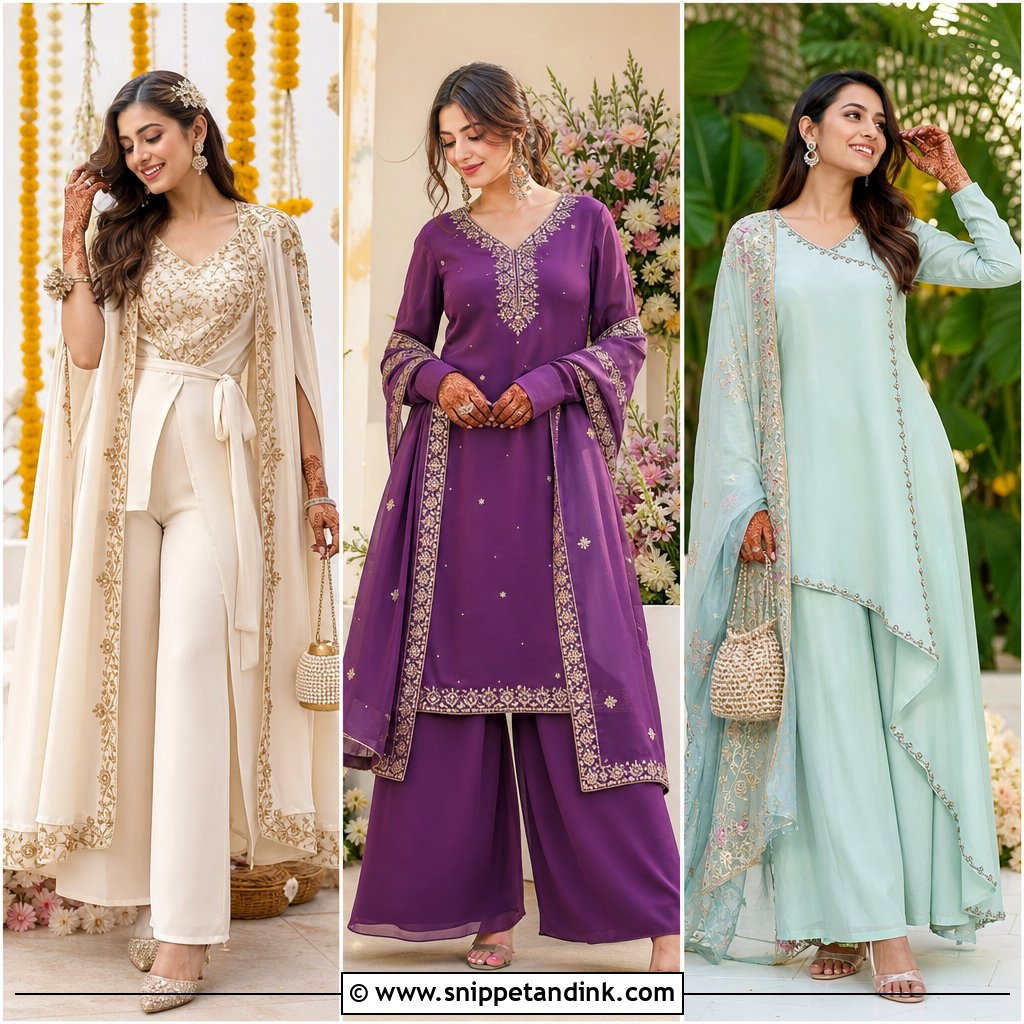
8. Teal Cape Mehndi Dress
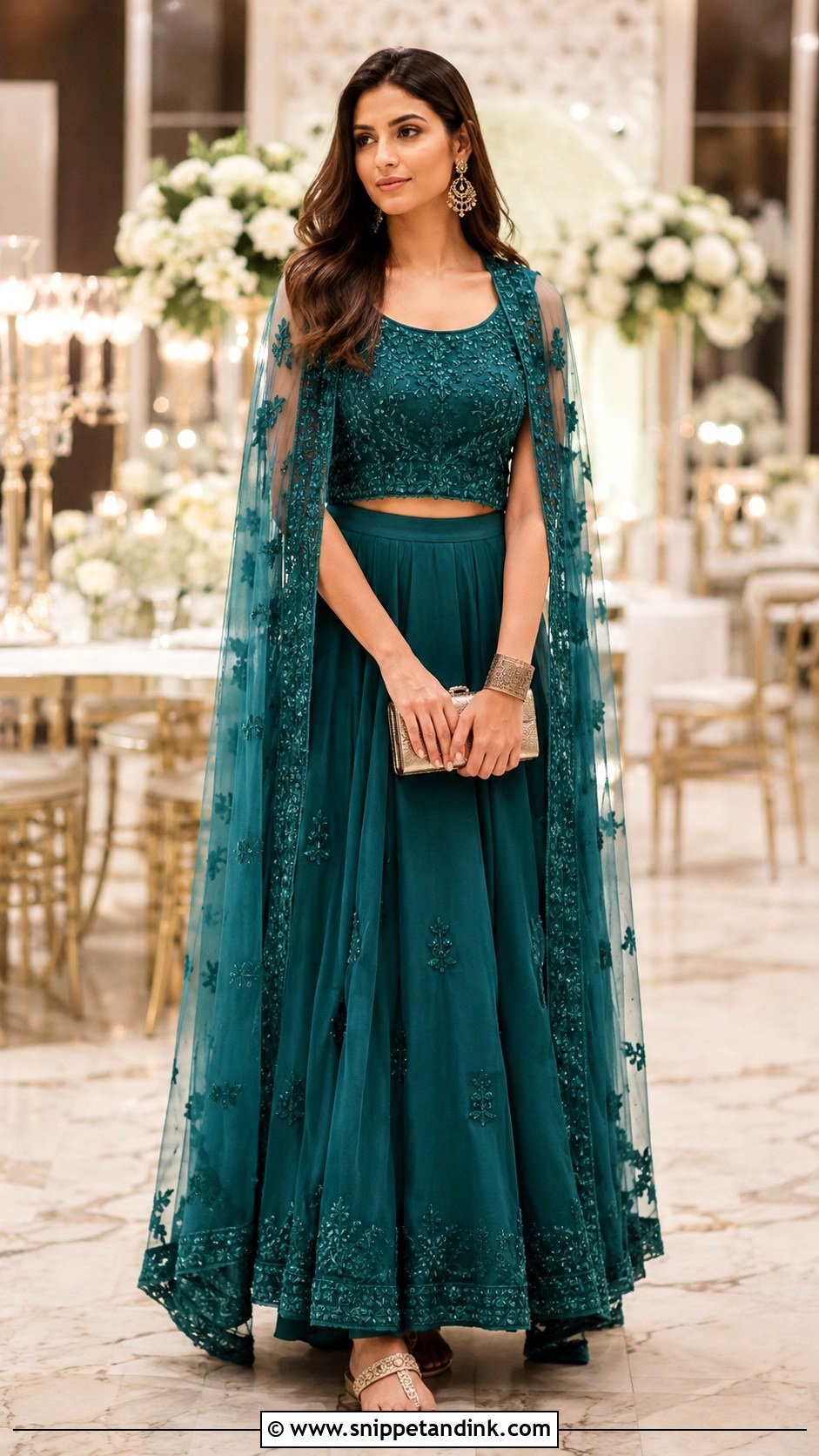
Capes move every time you walk, which gives me motion in photos that a pinned dupatta can’t. Layer a sheer embroidered teal cape over a sleeveless crop top and a lehenga skirt or wide palazzos, and keep everything else clean. One pair of statement earrings, one cuff and a sleek clutch is plenty. Brides can choose a floor-length cape with worked borders; guests look sharp in a shorter one. A low ponytail or bun keeps the cape’s shoulder detail visible.
9. Floral Print Mehndi Lehenga Dress
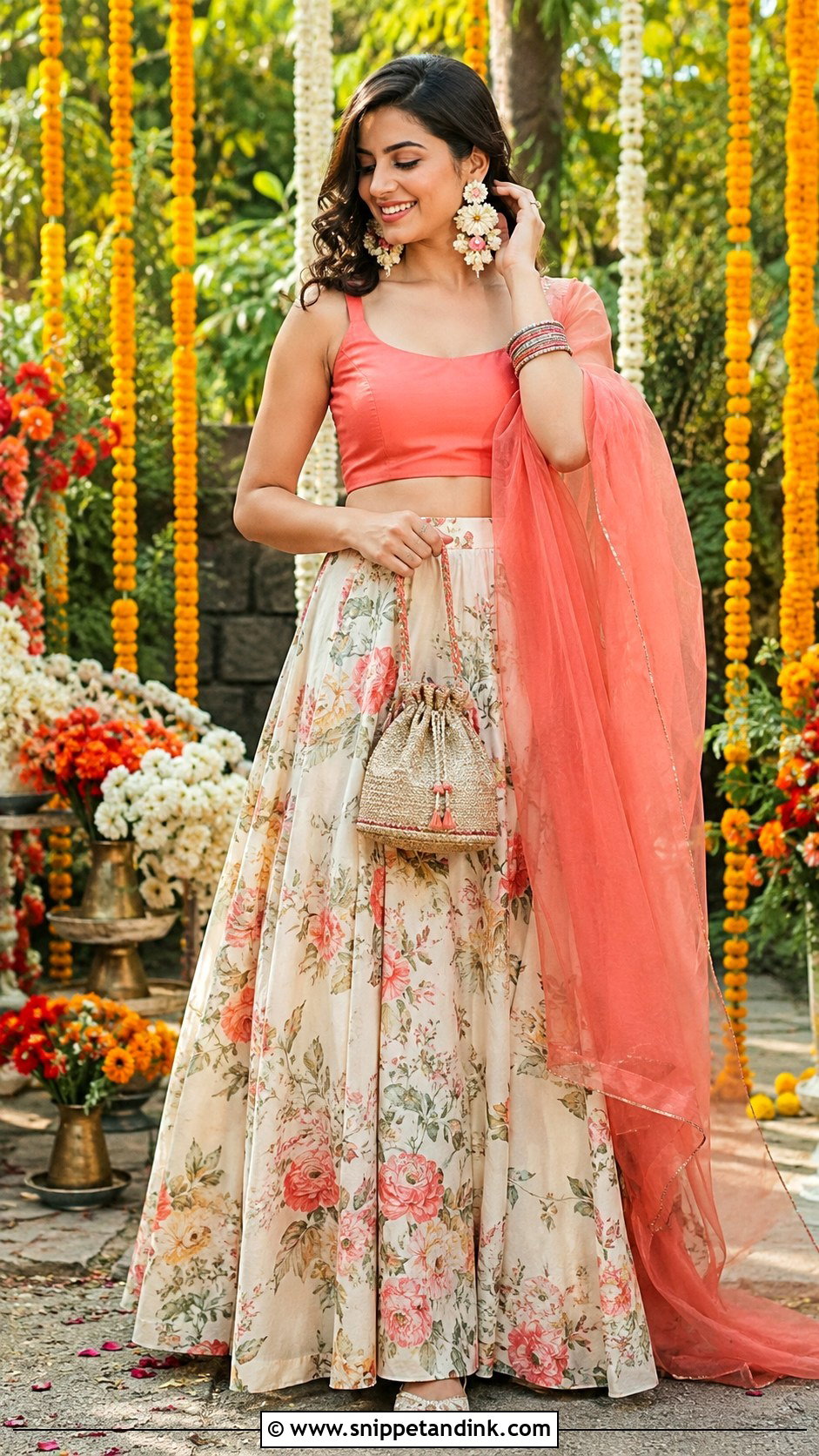
Printed florals are the most forgiving outfit on this list for a daytime garden mehndi. Marigold, rose or tropical motifs on a light lehenga skirt, a solid crop top pulled from the print and a plain organza dupatta with a slim embroidered edge look polished without trying. Avoid heavy necklaces, since the print already fills the frame. It suits destination weddings and guests who want to look festive without outshining the bride.
10. Yellow Angrakha Mehndi Dress
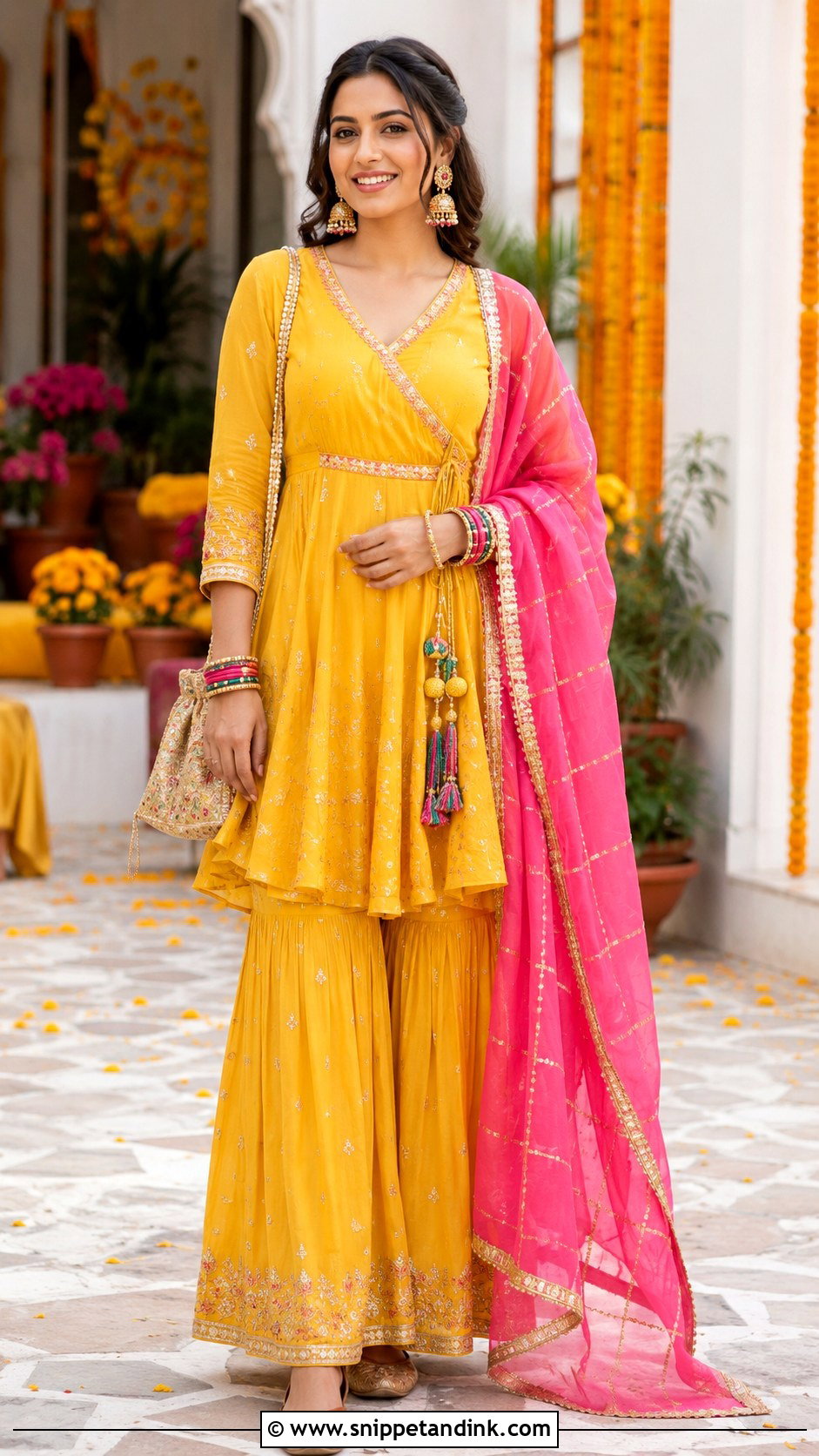
The wrap front of a yellow angrakha creates a diagonal line across the body, which is more flattering on camera than a straight neckline for many figures. Knee or ankle length with side ties and tassels, narrow pants or matching shararas, and a pink or green dupatta with light gota all work. Tassels sway when you move, which adds life to candid frames. A good tailor can adjust the wrap so it sits flat; a gaping wrap is very visible in close-ups. Brides can go richer in embroidery and fuller in the skirt.
11. Coral Kurta And Sharara Mehndi Dress
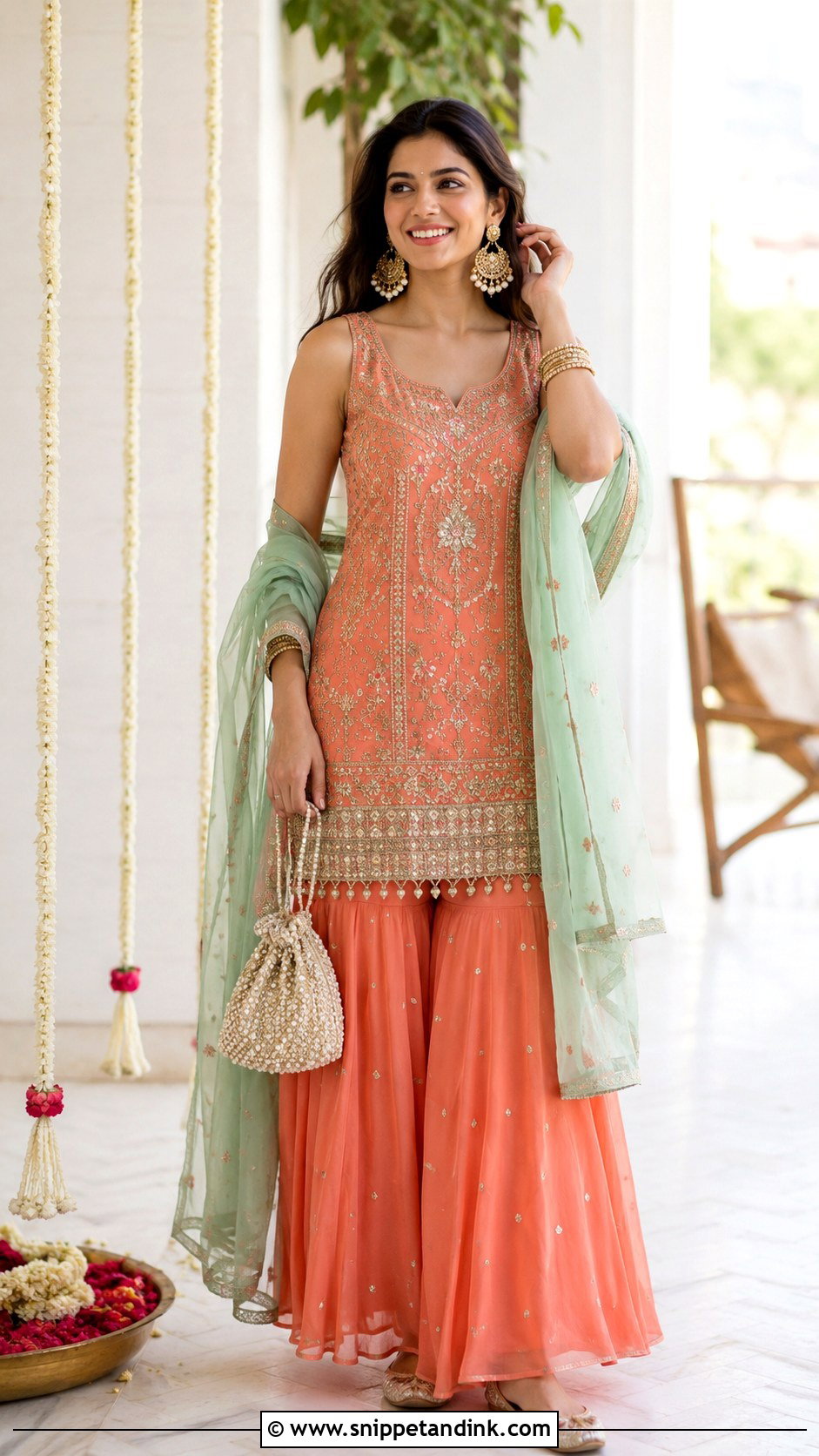
Coral is one of the most flattering colours I photograph on almost any skin tone, because it reflects a warm, healthy light back onto the face. A coral kurta and sharara combination with a square or round neckline, delicate gold embroidery and henna-friendly sleeves feels warm and fresh. The decorated sharara border shows up best when you walk. A mint or pale yellow dupatta softens it. Close relatives and bridesmaids can go more embellished; guests can pare it back.
12. White And Yellow Mehndi Dress
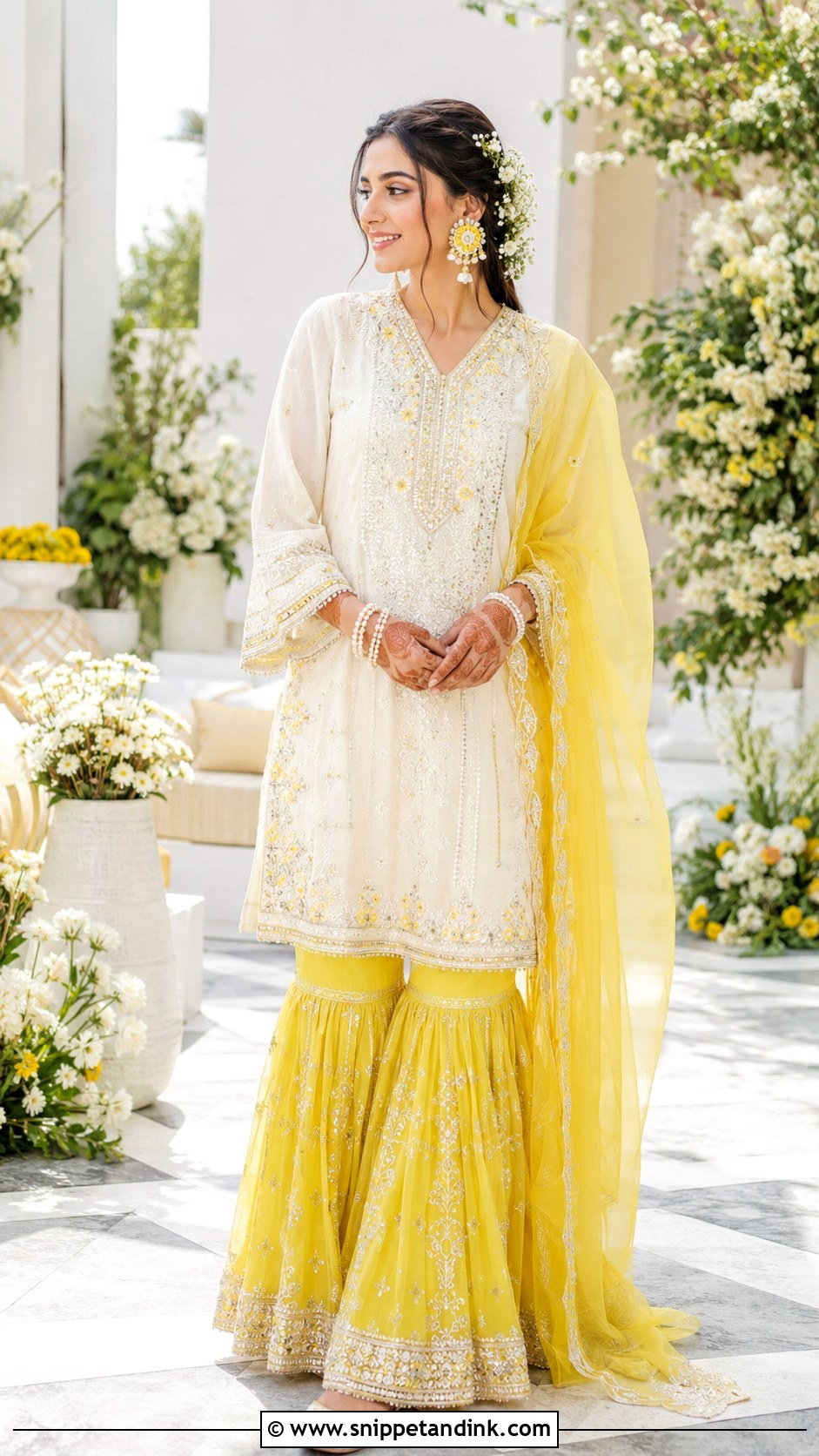
White and yellow look fresh outdoors, but white is the first thing to blow out in strong sun. I’d steer you to an ivory or cream base rather than optical white, which holds detail in bright light. Yellow floral embroidery or mirror work on the kurta, a matching yellow gharara or sharara and a sheer yellow dupatta tie it to the event. Pale fabric also shows henna marks, so keep the dupatta secured and choose a lower layer you can wash. Best for guests, bridesmaids or a small, airy bridal ceremony.
13. Purple Lehenga Mehndi Dress
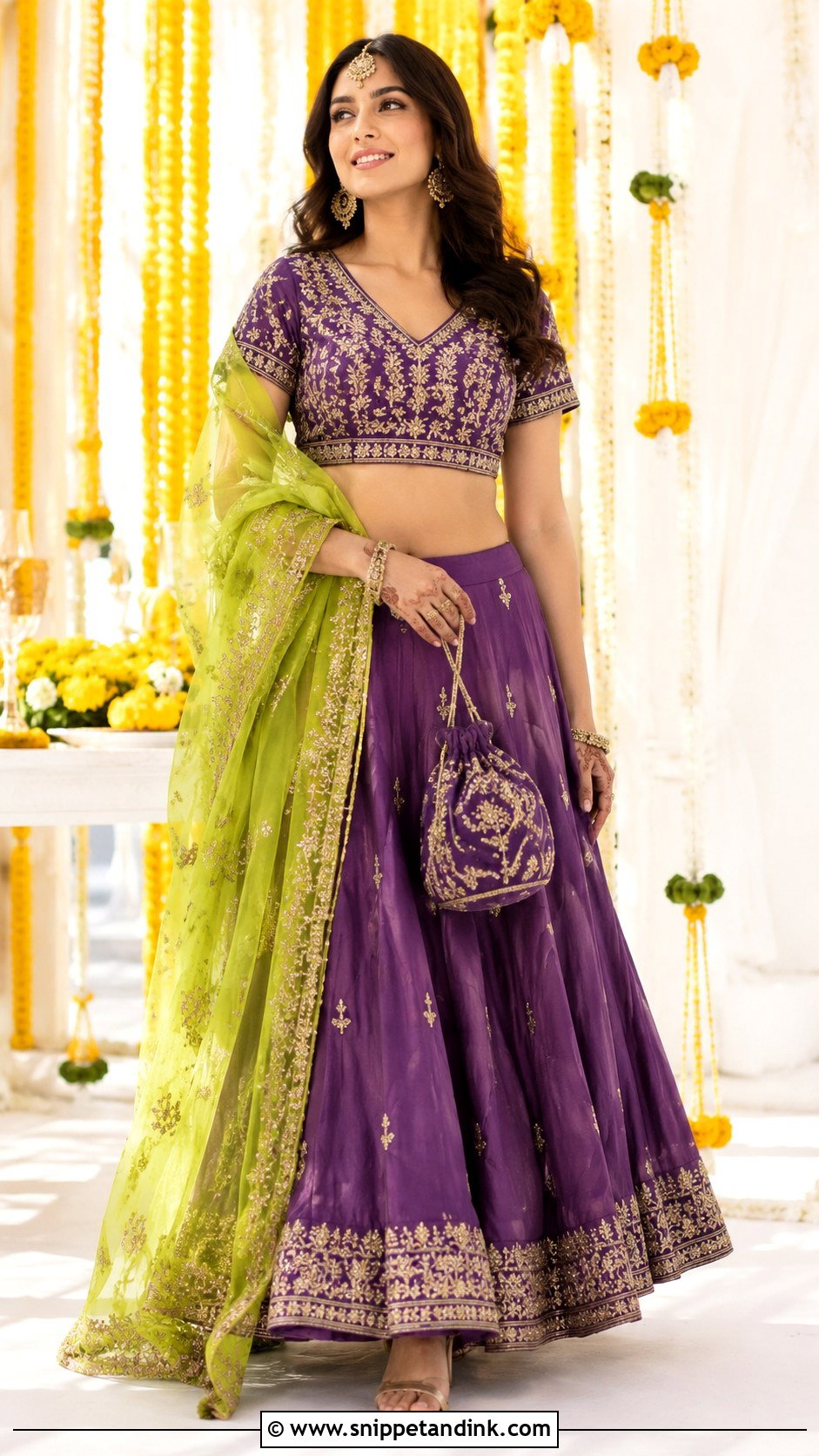
Deep purple is wonderful for an evening mehndi. Under warm venue lighting, jewel tones stay rich while pastels can turn muddy. A light purple lehenga with gold motifs, a short-sleeve blouse and a lime or mustard dupatta keeps it from looking too formal. Embellish either the blouse or the skirt heavily, not both. Brides and sisters can wear fuller jewelry; guests look elegant with delicate pieces.
14. Mirror Work Mehndi Dress
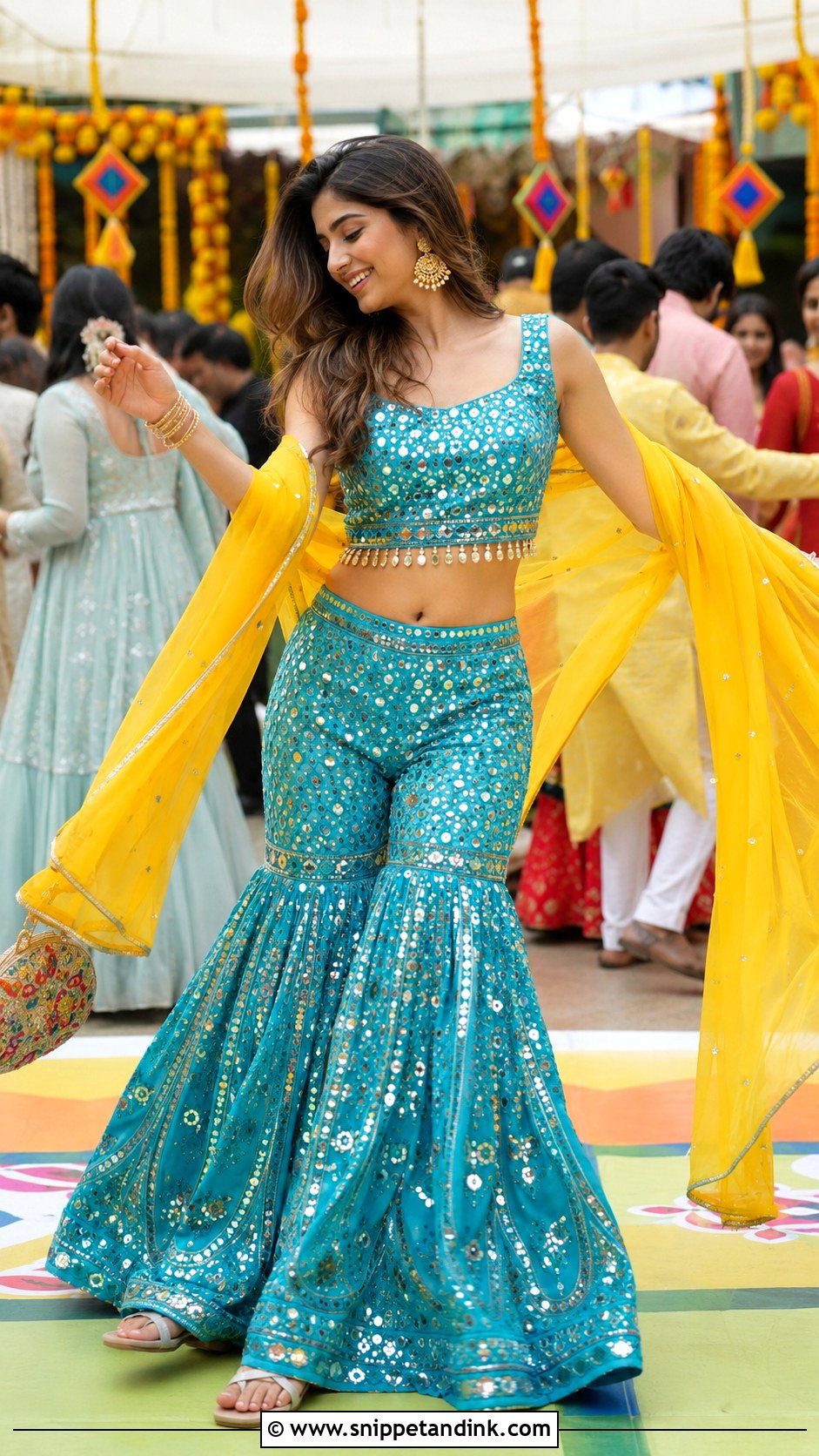
Mirror work is fun to photograph and has one quirk I warn people about: each mirror throws a bright point of light when the flash or sun hits it, so dense mirror work right at the neckline can pull attention from your face. A short kurta and sharara set with mirrors placed lower, or a mirror-work crop top with a plain flared skirt, gives sparkle without distracting from the portrait. Limit jewelry to medium earrings and a few bangles. Check that every mirror is securely stitched; loose ones snag dupattas.
15. Bandhani Mehndi Lehenga Dress
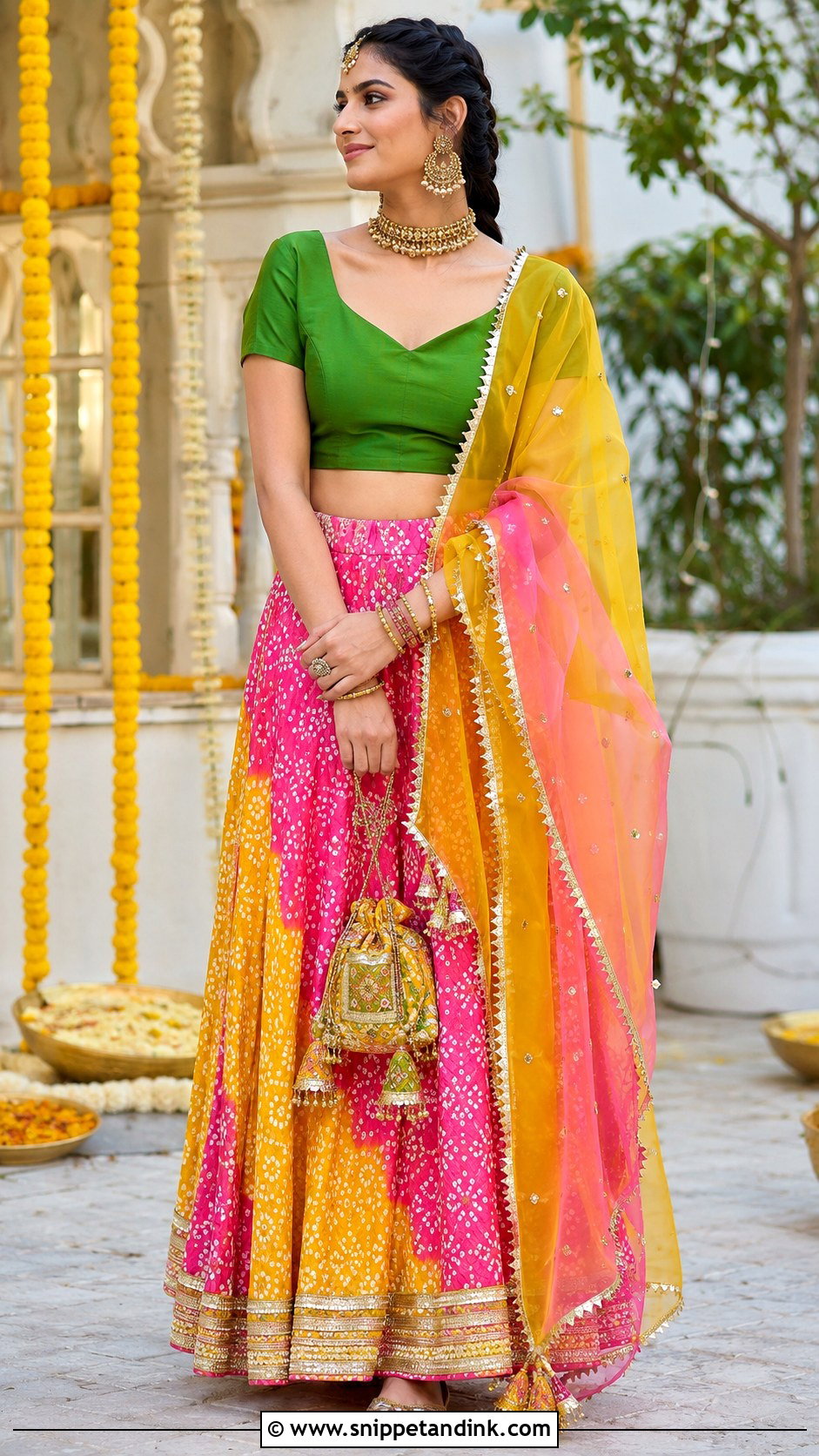
A bandhani lehenga carries a pattern made by hand-tying tiny points of cloth before dyeing, and those dots render as rich texture rather than noise even in wide shots. Red, pink, green or yellow bandhani with a plain short-sleeve blouse and a sheer gota-edged dupatta avoids clashing patterns. Oxidised silver or antique gold suits the craft. Its swing makes it easy to sit, walk and join group dances in.
16. Green Saree Mehndi Dress
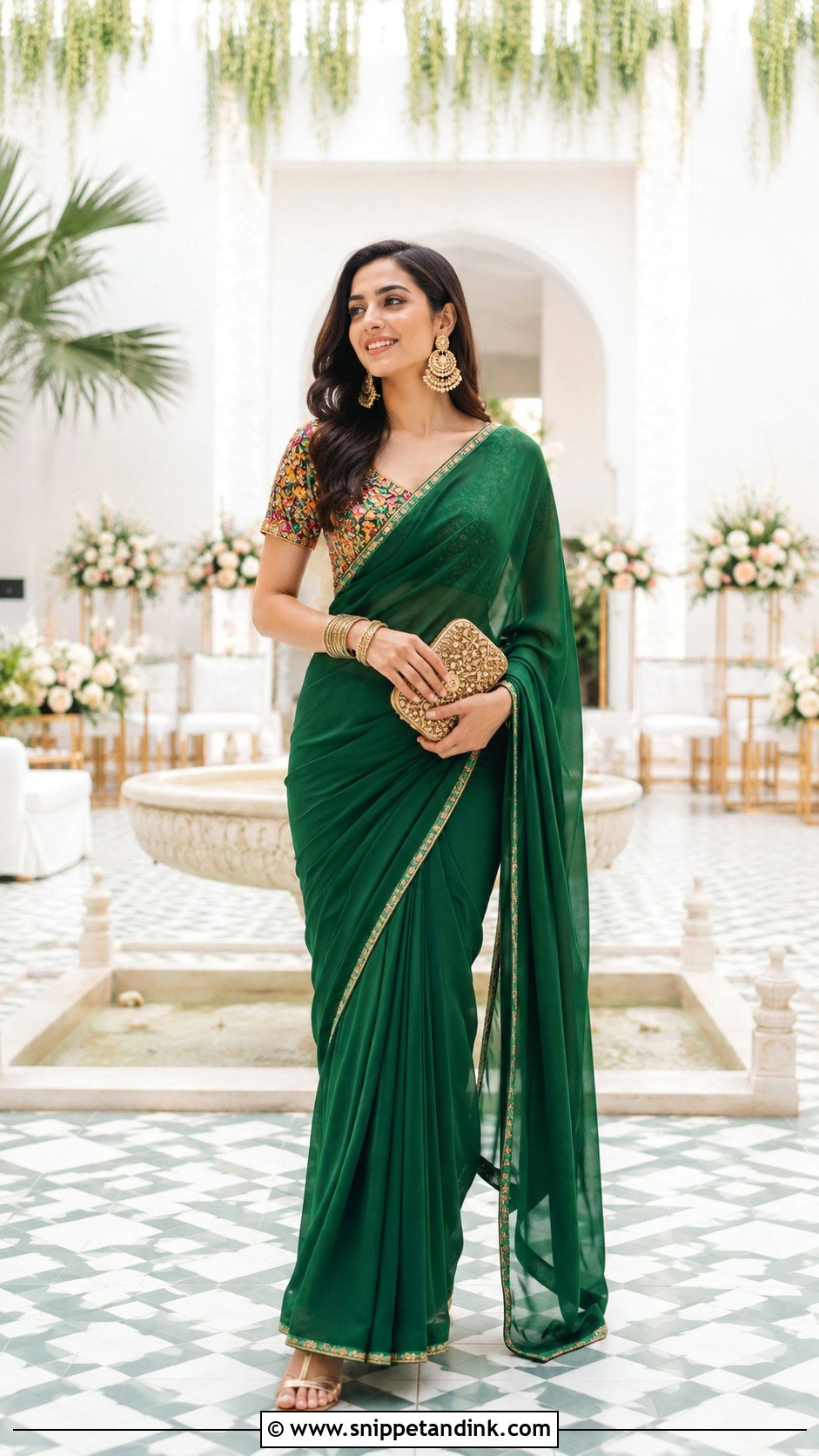
A light green saree in chiffon, georgette or organza drapes well in still portraits, and I find saree wearers tend to pose naturally because the pallu gives them something to hold. Pair it with a yellow, pink or multicolour short-sleeve blouse, and ask for pre-pleating so it stays neat across a long event. Pin the pallu firmly to keep your hands free for henna. Mothers, aunts and sisters suit it well; brides can add a belt or floral jewelry.
17. Yellow Kaftan Mehndi Dress
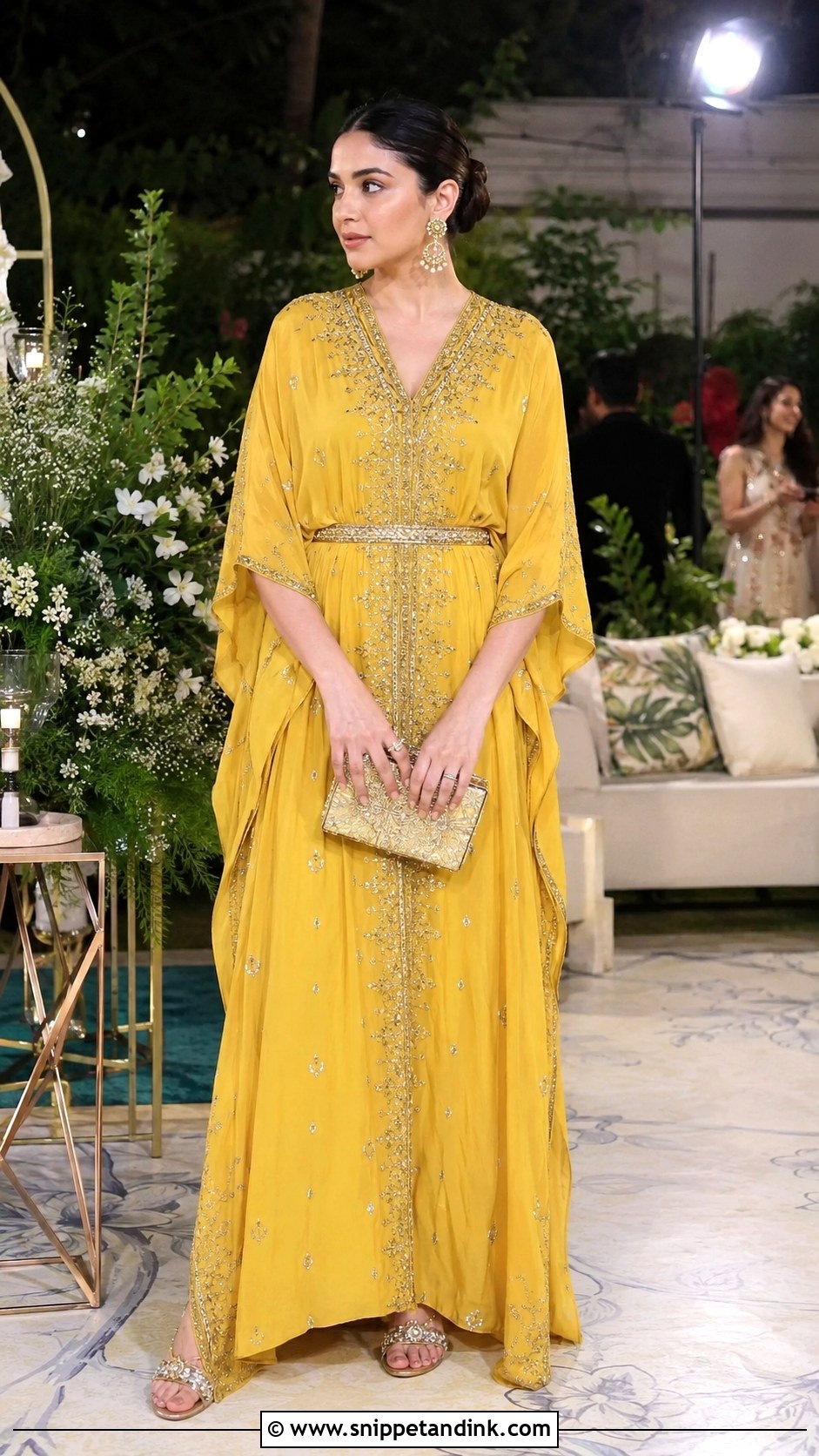
A yellow kaftan is the most relaxed outfit here and suits a small or casual mehndi. The risk on camera is shapelessness: loose fabric can hide your outline completely when you sit. Look for controlled volume and a shaped waist, or add the slim belt. Wide sleeves must stop above the wrists to keep clear of fresh henna. Embroidery at the neckline and sleeve edges gives the portrait a focal point. Go more detailed for the bride; guests can keep it simple.
18. Jacket Lehenga Mehndi Dress
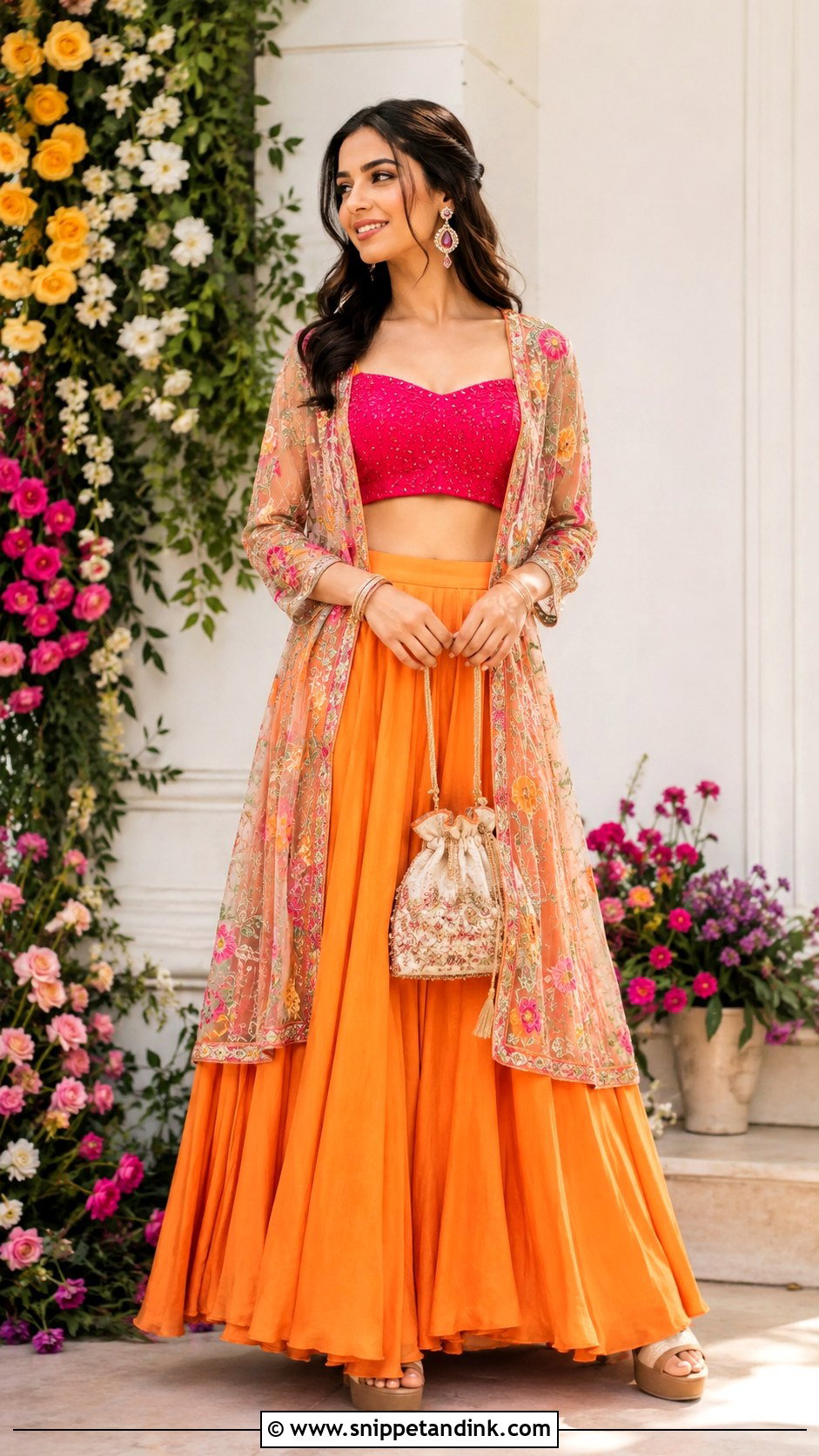
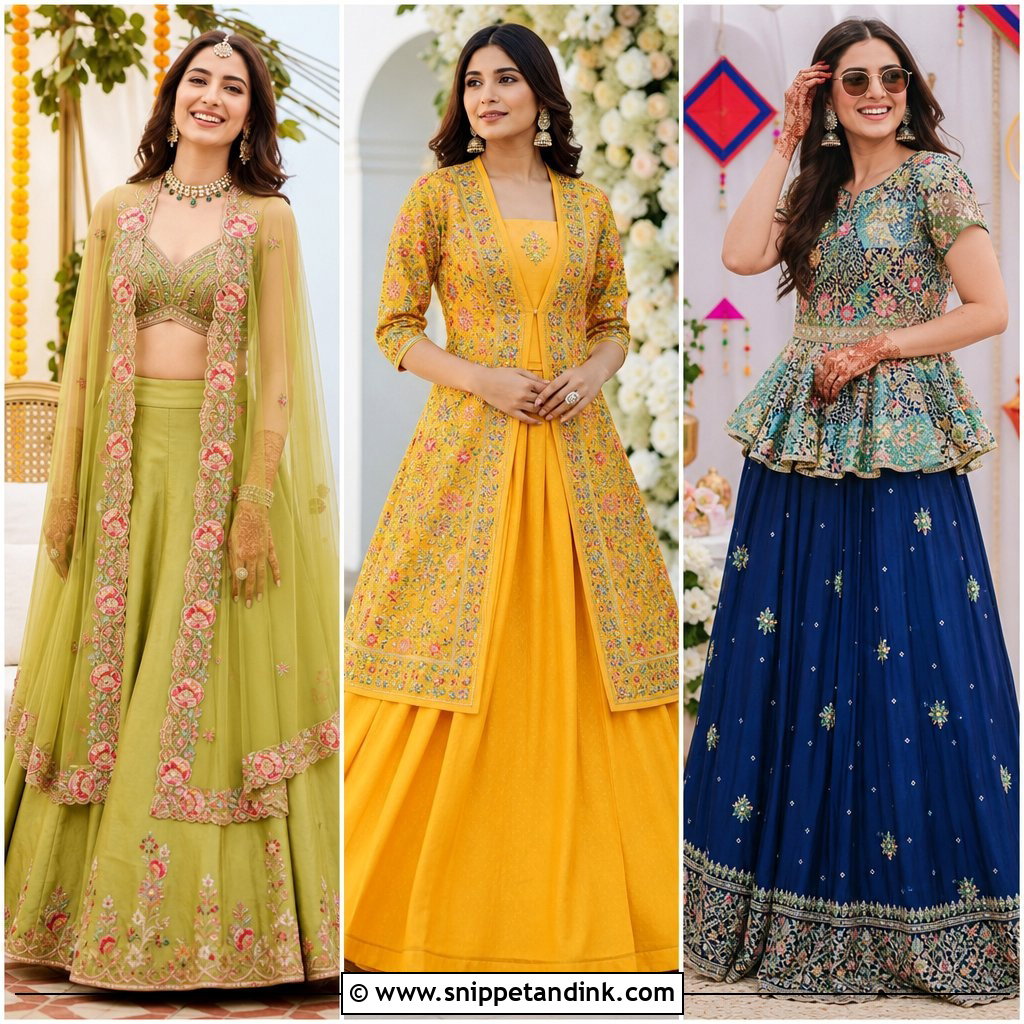
Jacket lehengas photograph with clean lines because there’s no dupatta sliding around between frames. A fitted crop top and flowing skirt under a sheer, knee-length embroidered jacket in green with pink, mustard with teal, or ivory with multicolour threadwork gives you coverage and movement. Avoid a stiff jacket; it juts out at the hips when you sit. Platform sandals and a small potli finish it, and pulling your hair back keeps the jacket’s front decoration in view.
19. Color Block Mehndi Dress
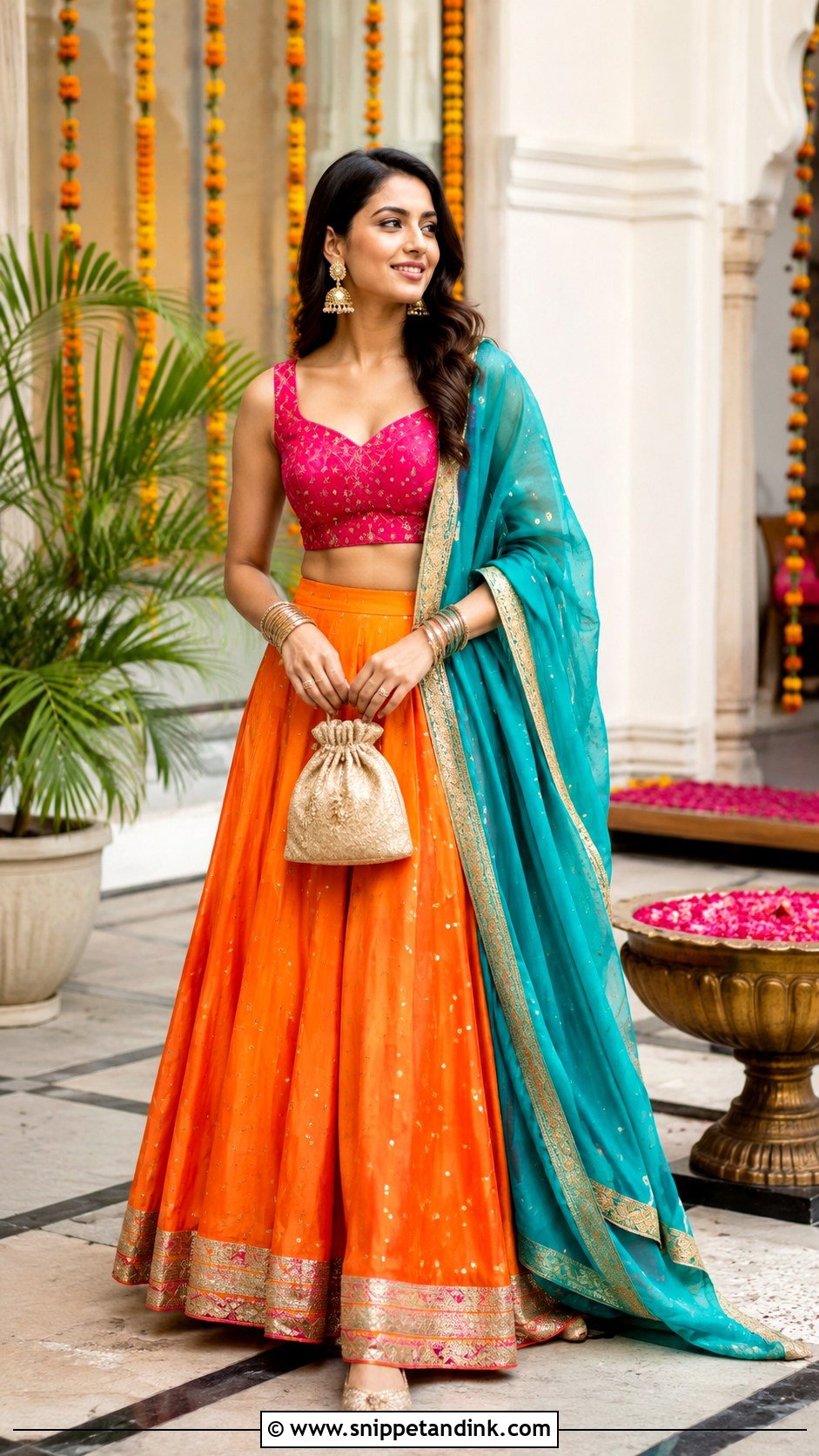
Colour blocking is one of the easiest looks to build from separates you already own: a fuchsia blouse with an orange lehenga, a teal kurta with yellow shararas, a lime top with a purple skirt. Keep the cuts clean and let the colours do the work. A dupatta in one of the two shades links them. The only thing I’d check is that both pieces have a similar sheen; a matte cotton top on a shiny silk skirt looks mismatched under camera flash.
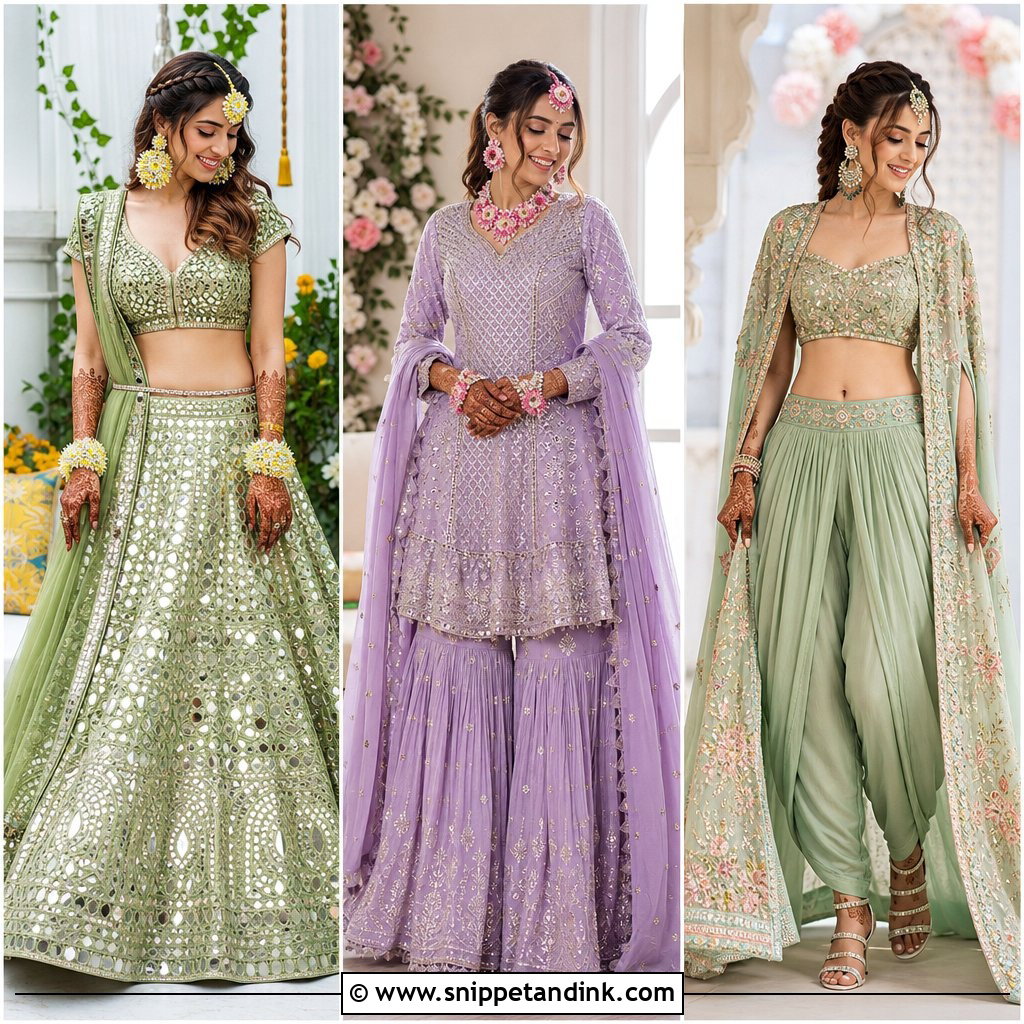
20. Pastel Mehndi Gharara Dress
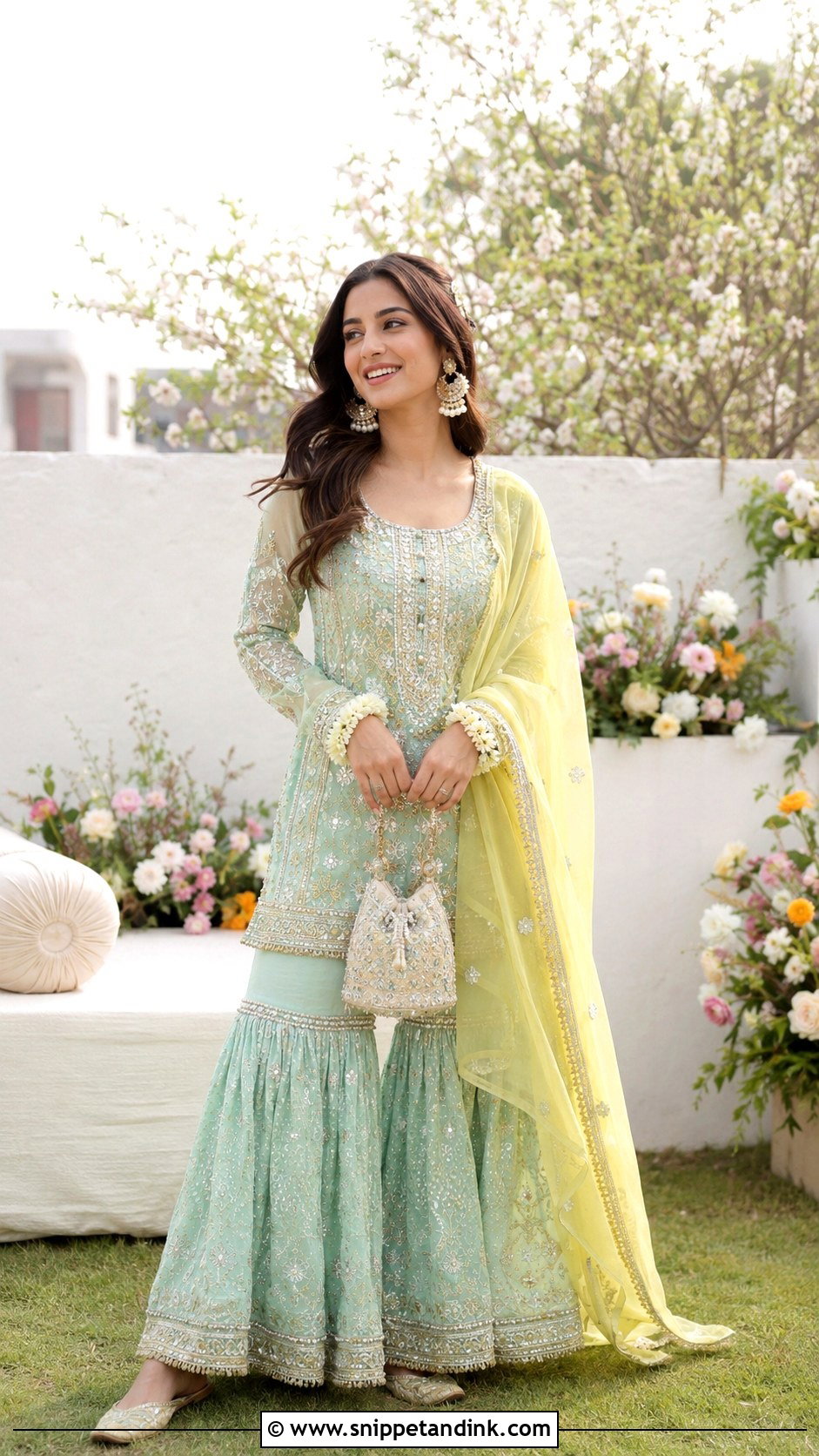
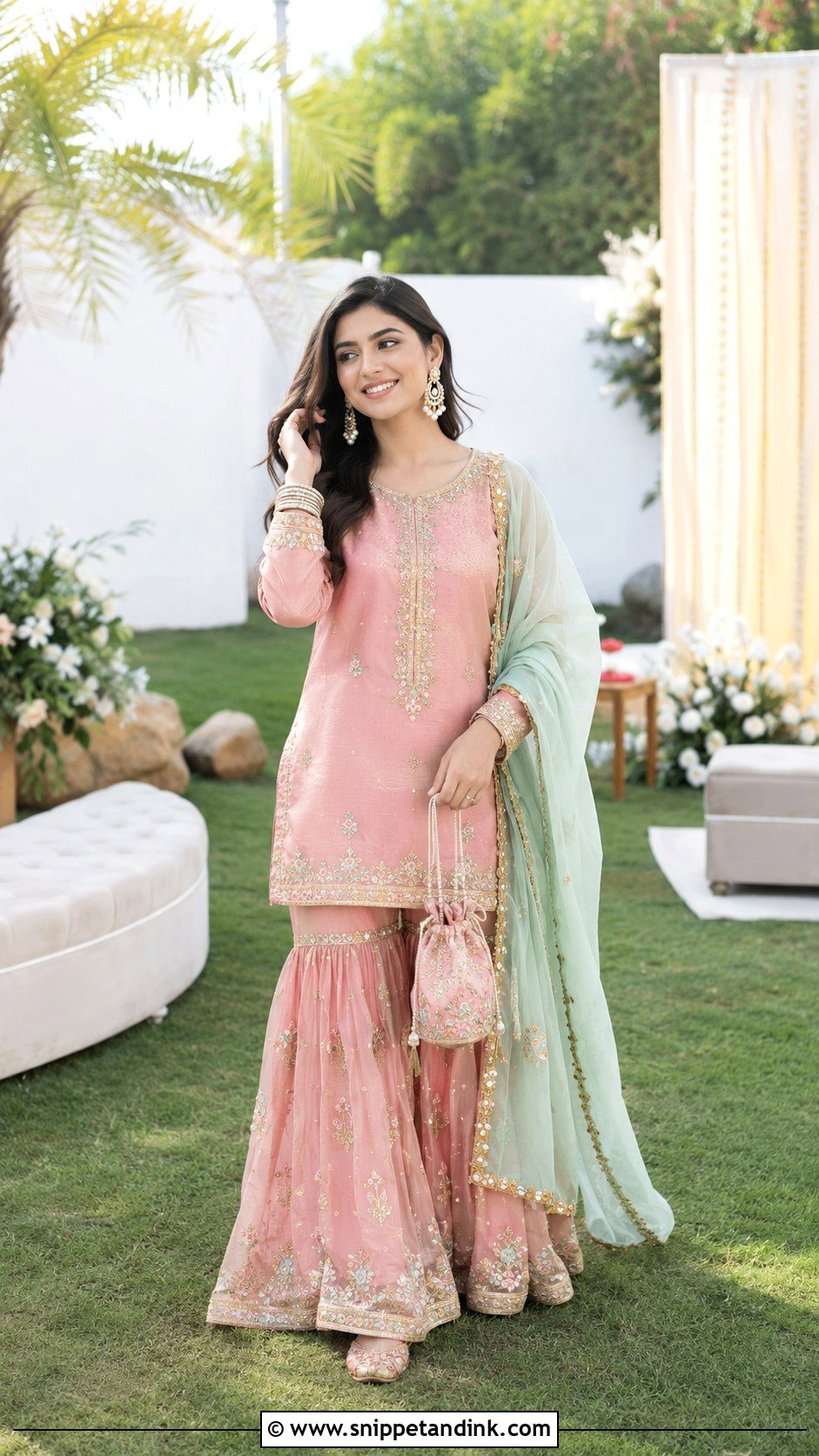
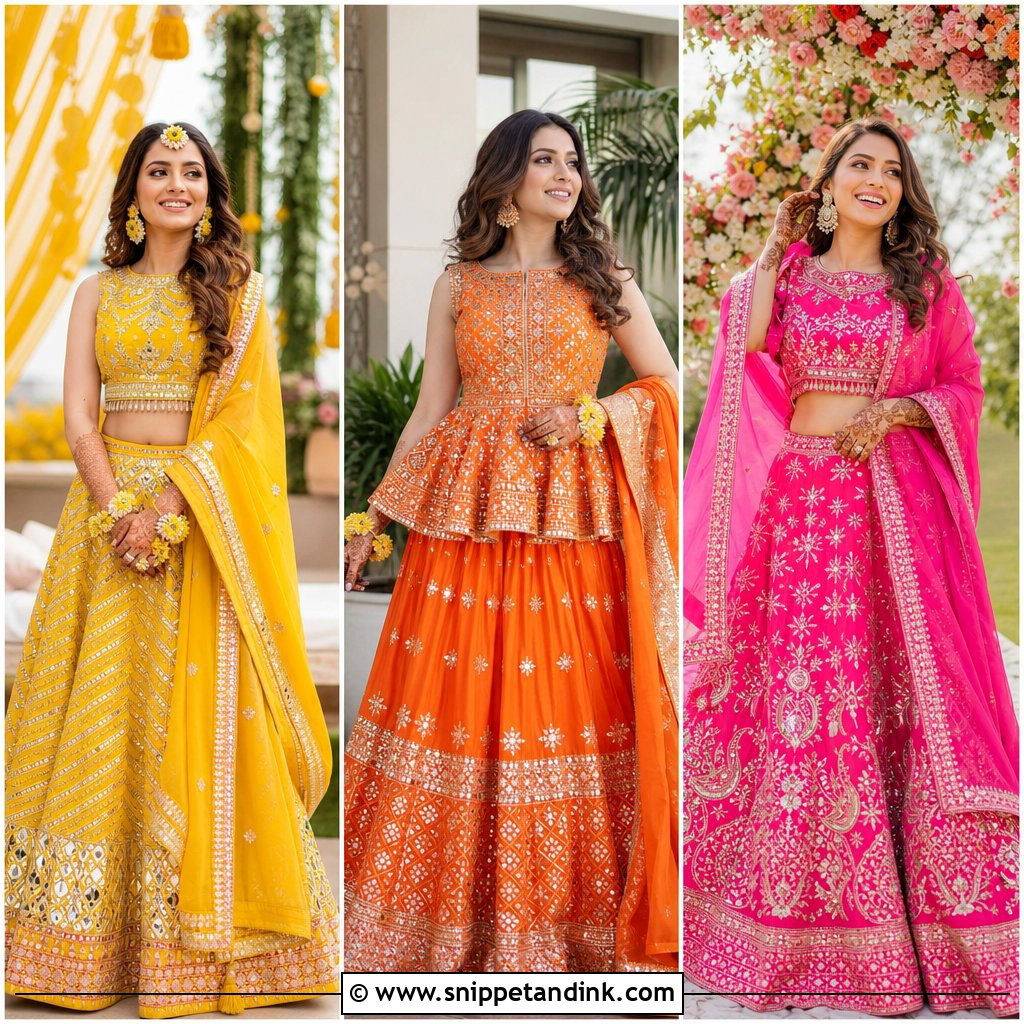
Pastels hold their own at a mehndi when you give them texture and one bright accent. A mint, peach, lilac or powder-blue short kurta with a coordinated gharara and pearl, sequin or thread embroidery pairs well with a lemon, coral or fresh green dupatta. That bright dupatta matters in photos: without it, pale outfits can vanish against a busy, colourful backdrop. Daytime garden venues suit pastels best. Brides can layer jewelry and add detailed borders.
Group Photos, Detail Shots and Henna Hands
The mehndi produces two kinds of pictures people treasure: big family groups and close-ups of the henna. Both are easier with a little planning around clothes.
- For the bridal party, a shared colour family looks better than identical outfits. Two or three related shades, like mint, pistachio and emerald, give a group shot unity without everyone blending together.
- Avoid tiny, tight patterns such as fine stripes or small checks. They can create a shimmering moiré effect on camera.
- For henna close-ups, plain fabric behind the hands is ideal. A solid-coloured dupatta or skirt panel gives the design a clean background; busy prints compete with it.
- Rings and bangles go on after the paste is removed if you want them in the detail shots. Before that, I photograph the design on bare hands.
- Keep a small cloth or tissue handy. Brushing flakes of dried paste off your lap before portraits saves a lot of retouching.
Brides should also think about where they’ll sit. A seat in open shade, facing toward the light rather than away from it, gives far better portraits during the long application than a spot with sun coming through gaps in the canopy.
Test Your Outfit on Camera Before the Day
Your role, the venue, the weather and how much you’ll move should all shape what you wear to a mehndi. Brides can go for fuller shapes, richer embroidery and statement jewelry; guests can wear lighter versions of the same outfits. Yellow and green never fail, and pink, coral, teal, purple and pastels all suit the occasion. Before the day, take a few phone photos of yourself in the outfit near a window and again under warm indoor light. You’ll see straight away whether the colour holds, whether the mirror work glares, and whether the dupatta stays where you pinned it.
You'll Like These Ideas:


Leave a Reply