
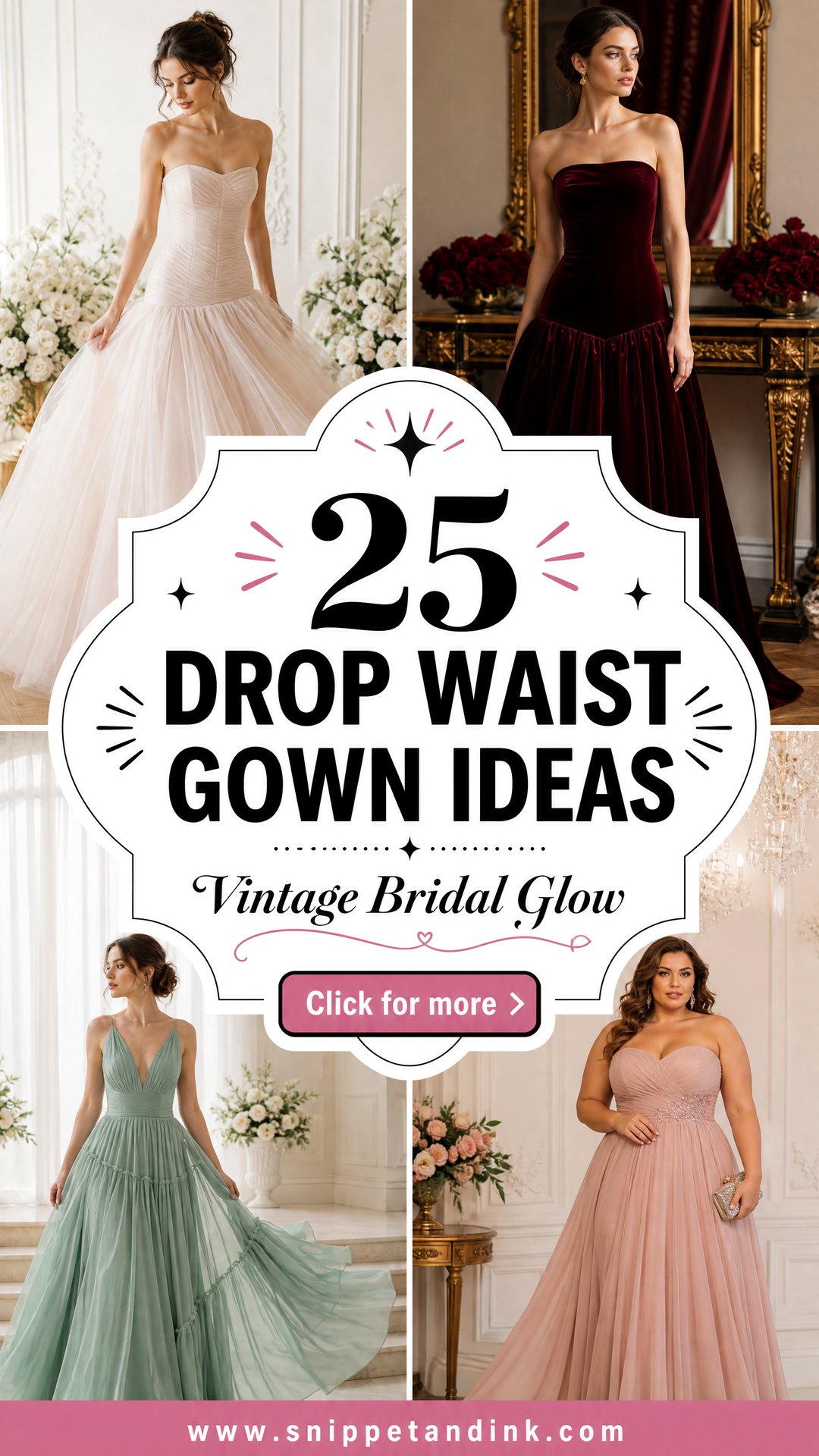
A dropped waist moves the seam from your natural waist down toward the hip, so the bodice reads longer and the skirt starts its swing lower. In a fitting room that one change does more than any embellishment: it can make a short torso look leaner, or swallow a long one if the seam lands in the wrong place. I dress brides in this silhouette often, and the gowns below range from structured satin to soft chiffon, with notes on what each fabric does once you are actually wearing it. Fit and fabric decide whether a drop waist looks vintage in the good sense or simply unfinished, so that is where I’d start.
Where the Seam Should Land on Your Body
The first thing I do with a drop waist bride is ask her to bend forward from the hips. Wherever the body folds is roughly where the seam can sit without bunching. Above that crease, the gown looks like a long bodice; below it, the seam wrinkles every time you sit and pulls upward when you walk.
Torso length decides how low to go. A long-waisted bride can carry a seam well down toward the hip bone. A short-waisted or petite bride usually looks better with a gentle drop of a few centimetres, because a deep seam eats into leg length. Samples are cut for one height, so I never trust where the seam falls on the hanger.
- Wear your actual shoes and undergarments to every fitting; a heel changes where the seam sits against the hip.
- Look at the seam from the side as well as the front. It should run level or dip very slightly at the back, never ride up.
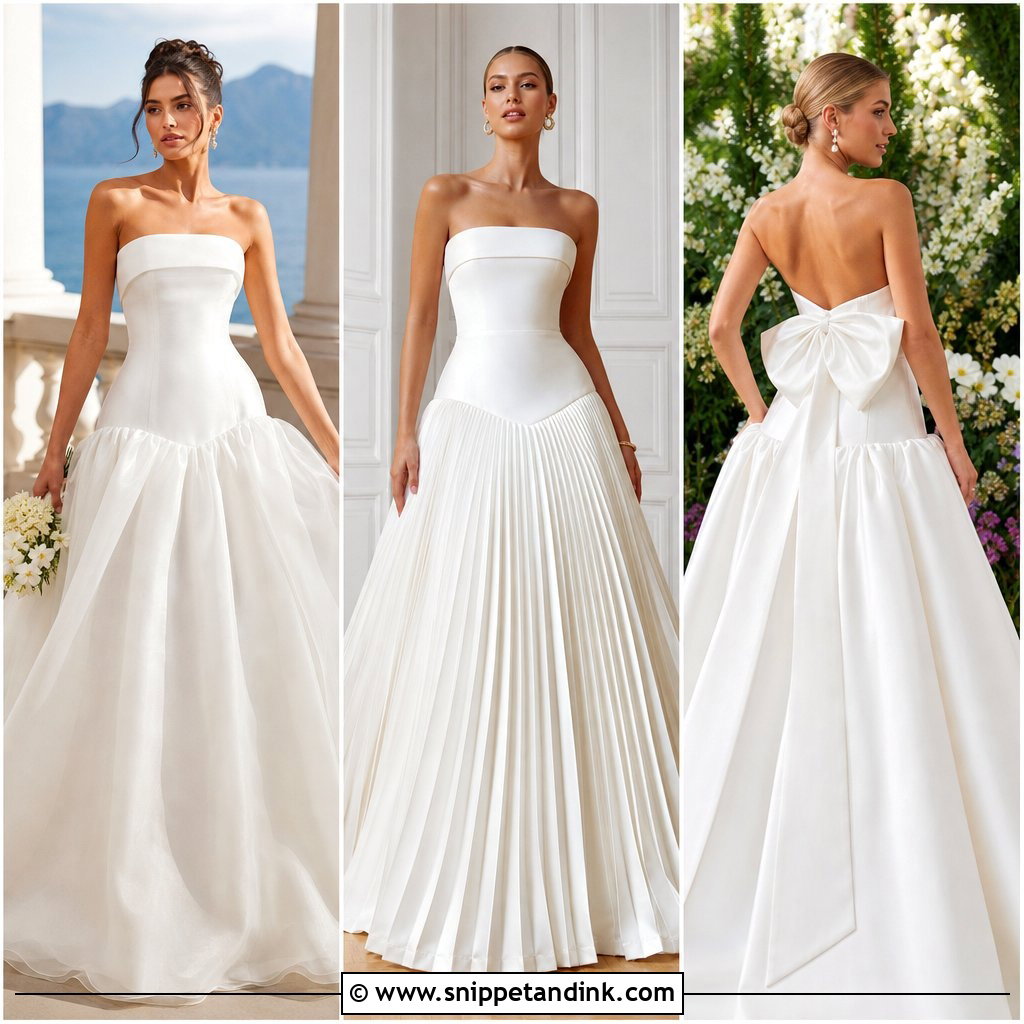
- Ask whether the seam is curved (a basque point) or straight. A V-shaped dip slims more people than a straight horizontal line.
- Check the skirt fabric against the bodice. A heavy skirt on a soft bodice drags the seam lower over the evening.
Expect two or three fittings for this cut. Moving a dropped seam is a bigger job than taking in a side seam, so I’d start alterations roughly two to three months out, earlier if the bodice is beaded or lace-covered.
1. Drop Waist Satin Ball Gown
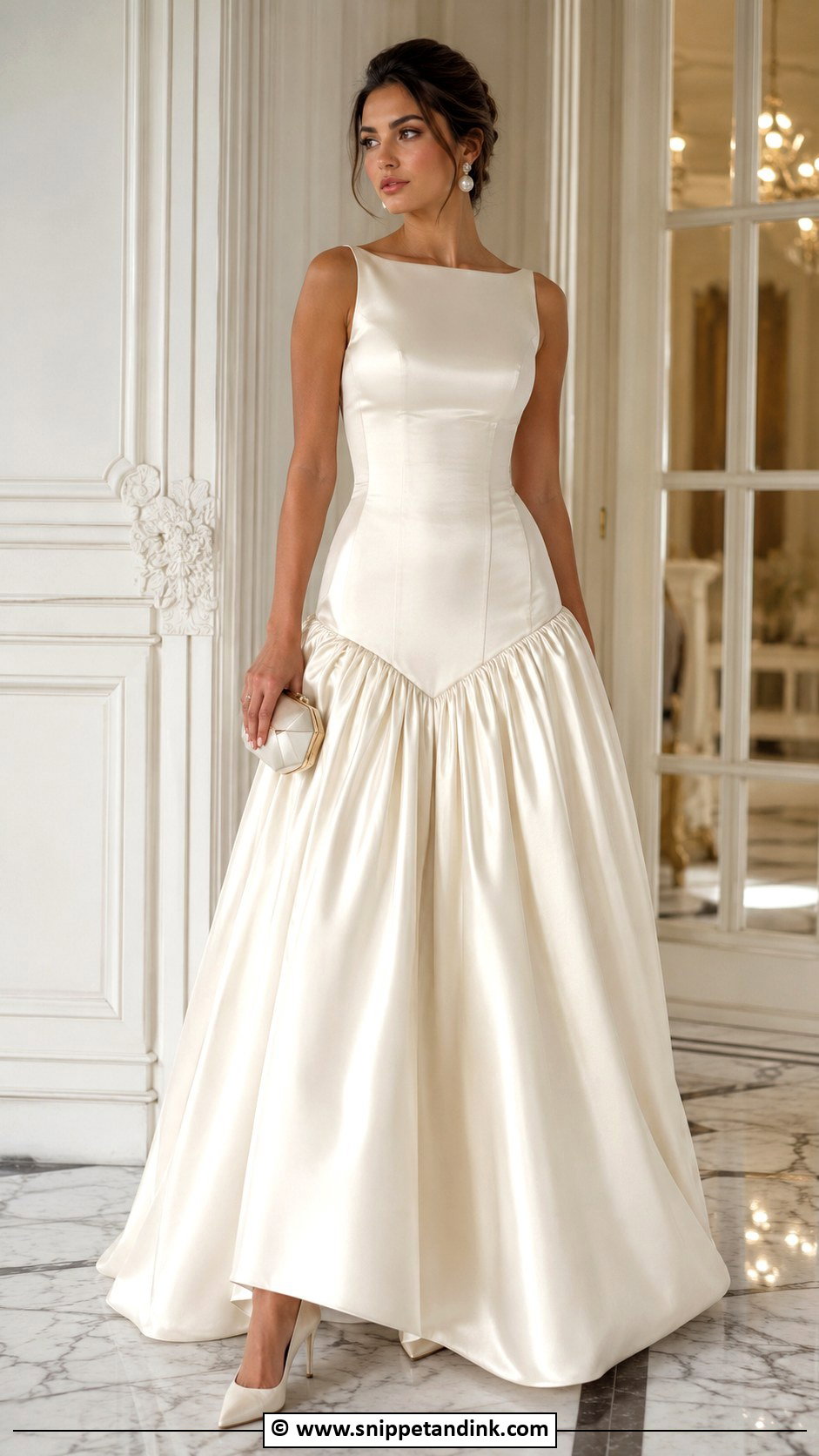
Satin is the most forgiving fabric for a first try at this shape, because its weight keeps the lowered seam crisp instead of letting it ripple. The bodice does the shaping and the skirt opens below the hip with real volume. In a fitting I look at the seam from the side: if the satin pulls into diagonal lines toward the hip, the bodice is too tight there and needs letting out before anything else is touched. Internal corsetry or a lace-up back helps when you want support without stiff boning showing through. Ivory and champagne satin take pearl or crystal earrings and pointed satin heels without any fuss.
2. Drop Waist Lace Wedding Gown
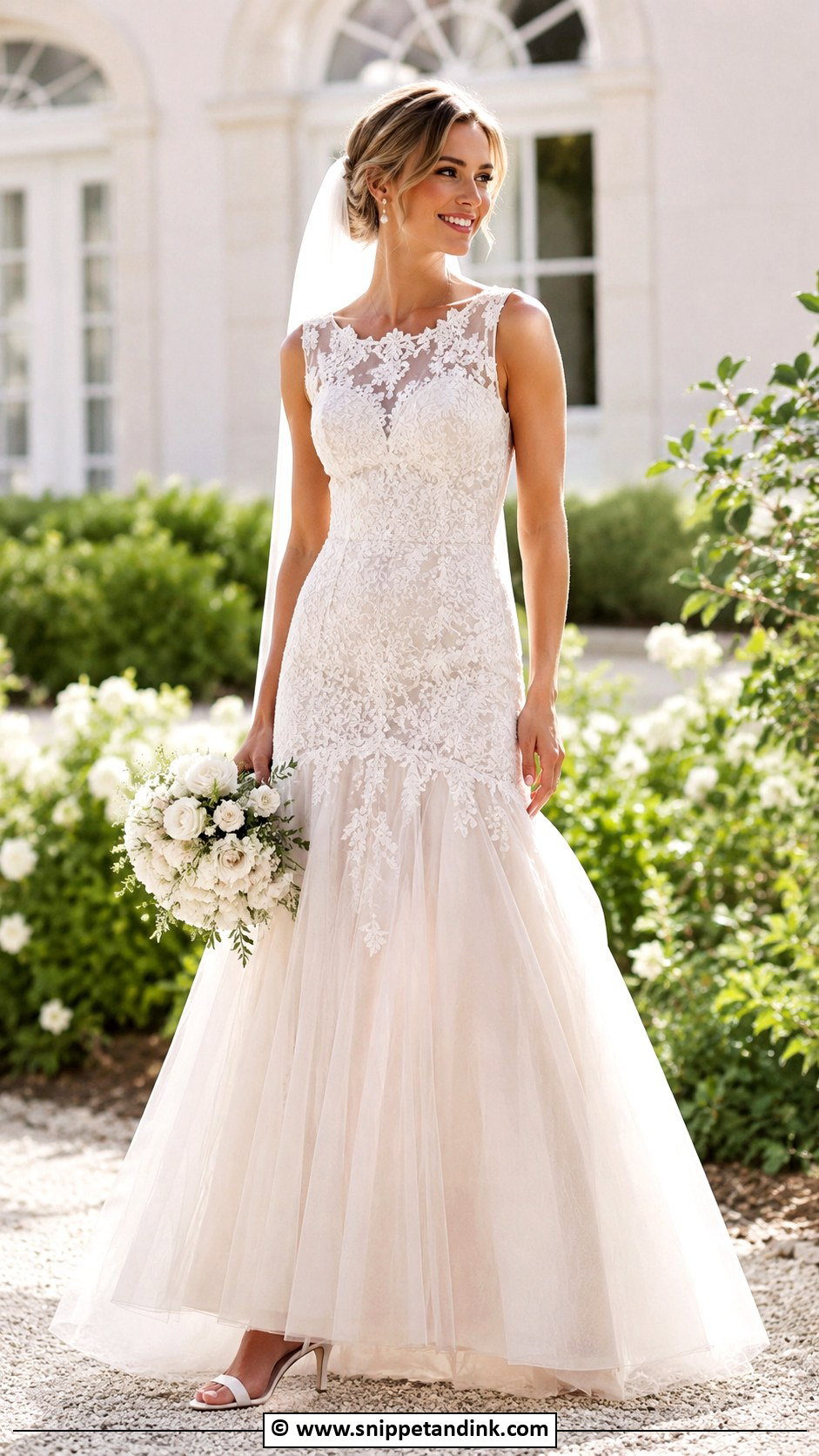
Lace softens the seam itself. Where satin draws a hard line across the hip, a scalloped lace edge can be cut along the motif so the waistline follows the pattern rather than a straight stitch. I always ask the seamstress whether the lace has been appliqued over the seam or simply sewn through it, because the first version can be taken in later without losing the design. Pair a lace bodice with a tulle or organza skirt to keep the weight off the hips. Long lace sleeves or an illusion neckline give coverage for church ceremonies and still let the dropped line show.
3. Drop Waist Tulle Gown
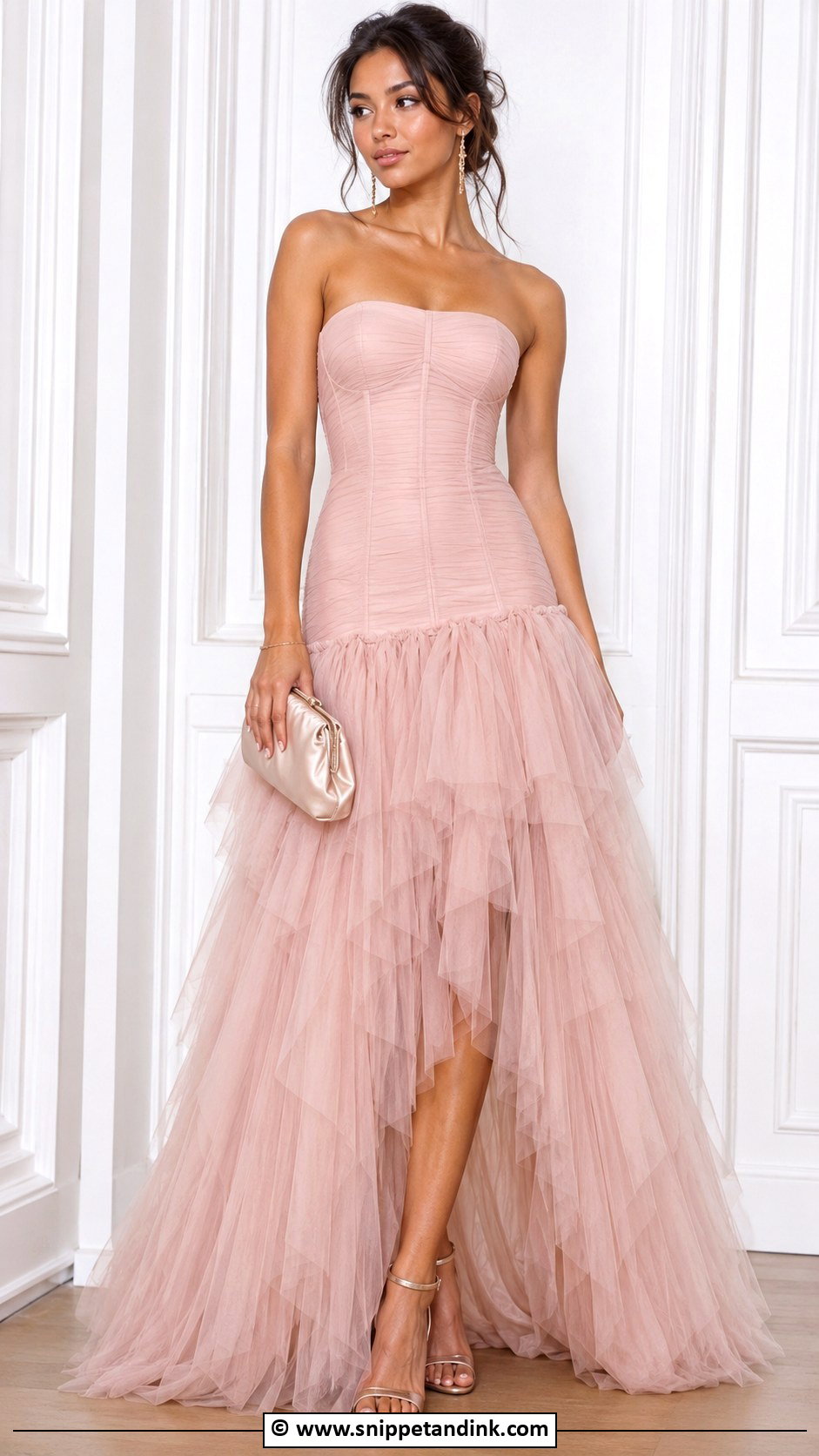
Tulle volume starting at the hip instead of the waist reads less like a princess gown and more like fashion. The catch is that tulle has almost no structure of its own, so the bodice has to hold the seam up; without a firm lining it sags toward the thigh by the reception. Blush, powder blue and dove grey tulle all soften in daylight, and a half-up style keeps hair off the shoulders where the bodice lines are. Strappy metallic heels and one bracelet are plenty.
4. Drop Waist Mermaid Gown
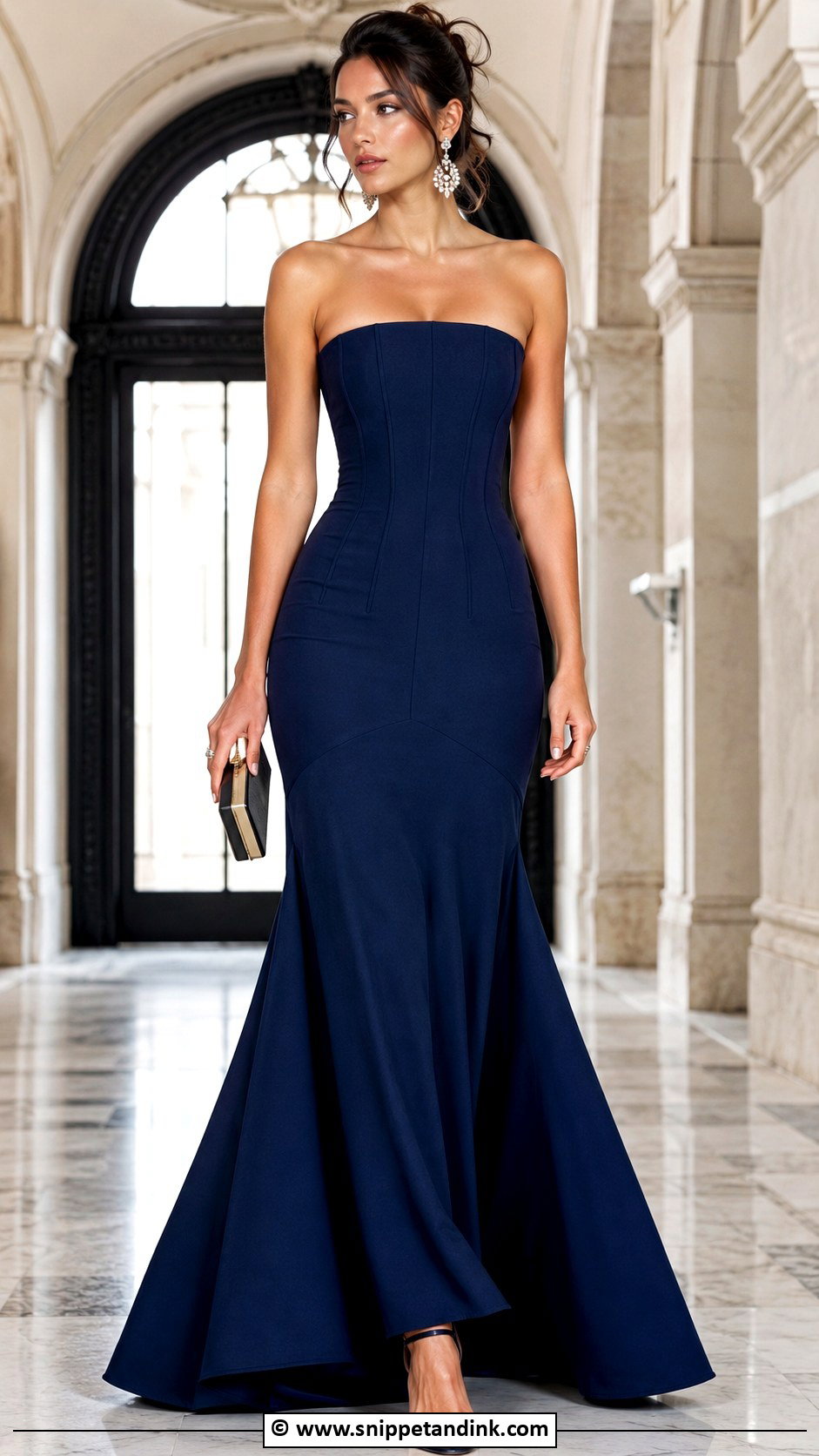
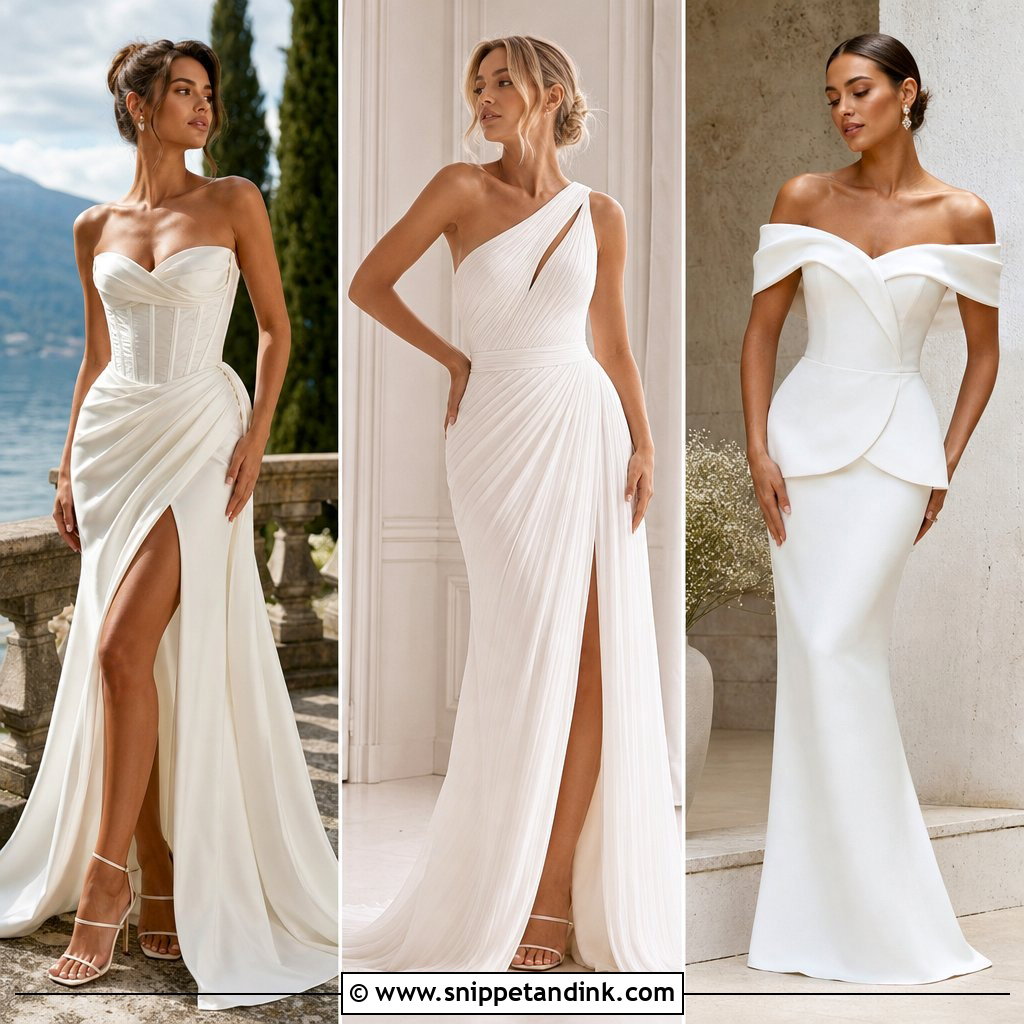
A drop waist mermaid gown is the most demanding cut on this list. It hugs the torso and hips, then flares near the knee, which means the dropped seam and the flare point are close together and both have to sit exactly right. Crepe, mikado and stretch satin hold that line; thin satin shows every undergarment. I’d do a sitting test at the first fitting, because a mermaid with a low seam can make sitting through dinner genuinely uncomfortable. Strapless versions take a short necklace, high necklines only earrings.
5. Drop Waist Corset Gown
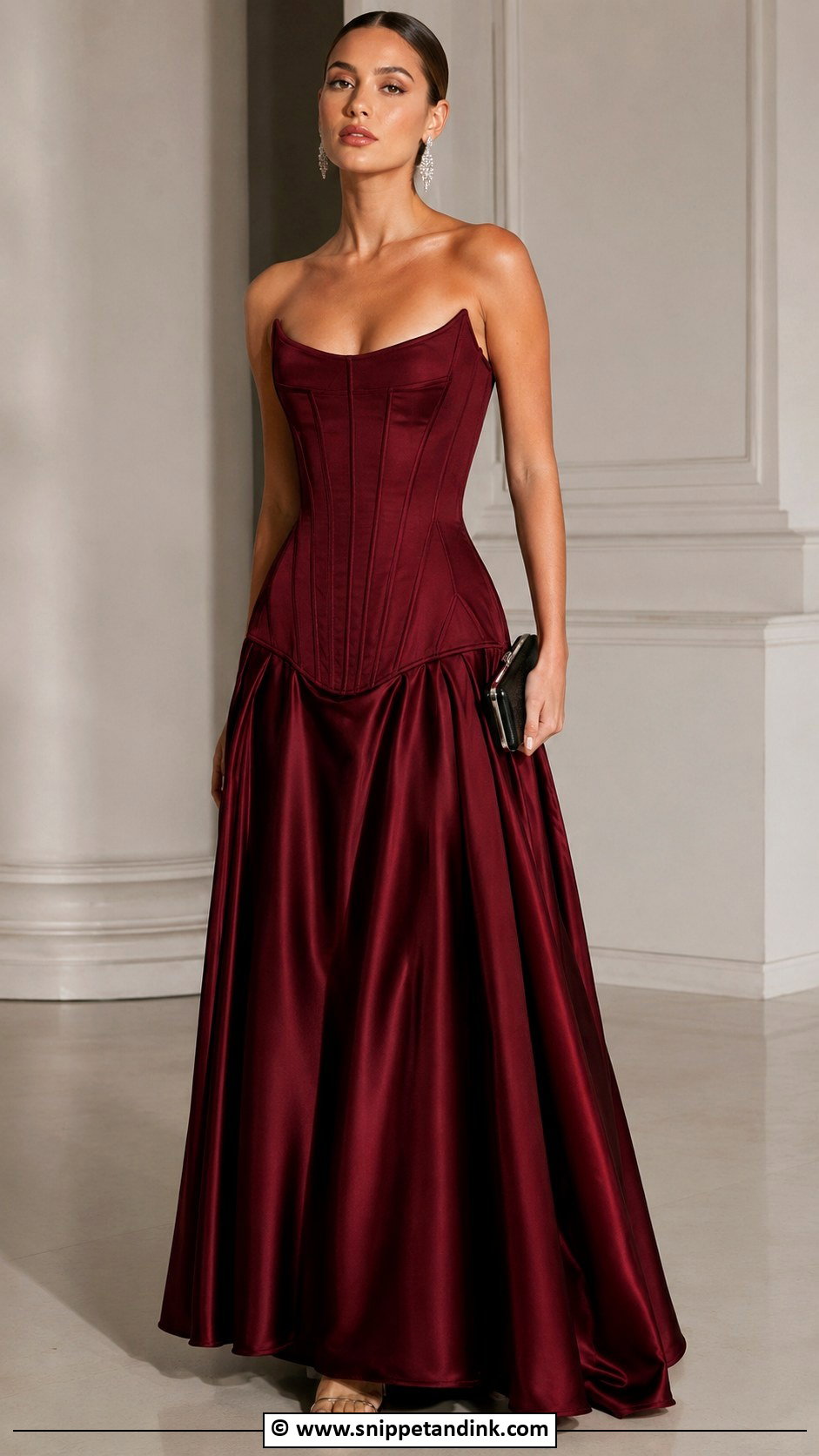
The corset bodice does the work here, pulling in at the bust and waist while the lowered seam pushes the skirt drama further down. Visible boning is the detail to manage: it looks refined in ivory, black or burgundy with sleek heels and plain jewelry, and it starts to look like a costume the moment you add lace gloves and a choker on top. I check that each bone ends above the seam rather than crossing it, otherwise it digs into the hip every time you bend. A slick bun and a clean manicure suit the structure.
6. Drop Waist Off Shoulder Gown
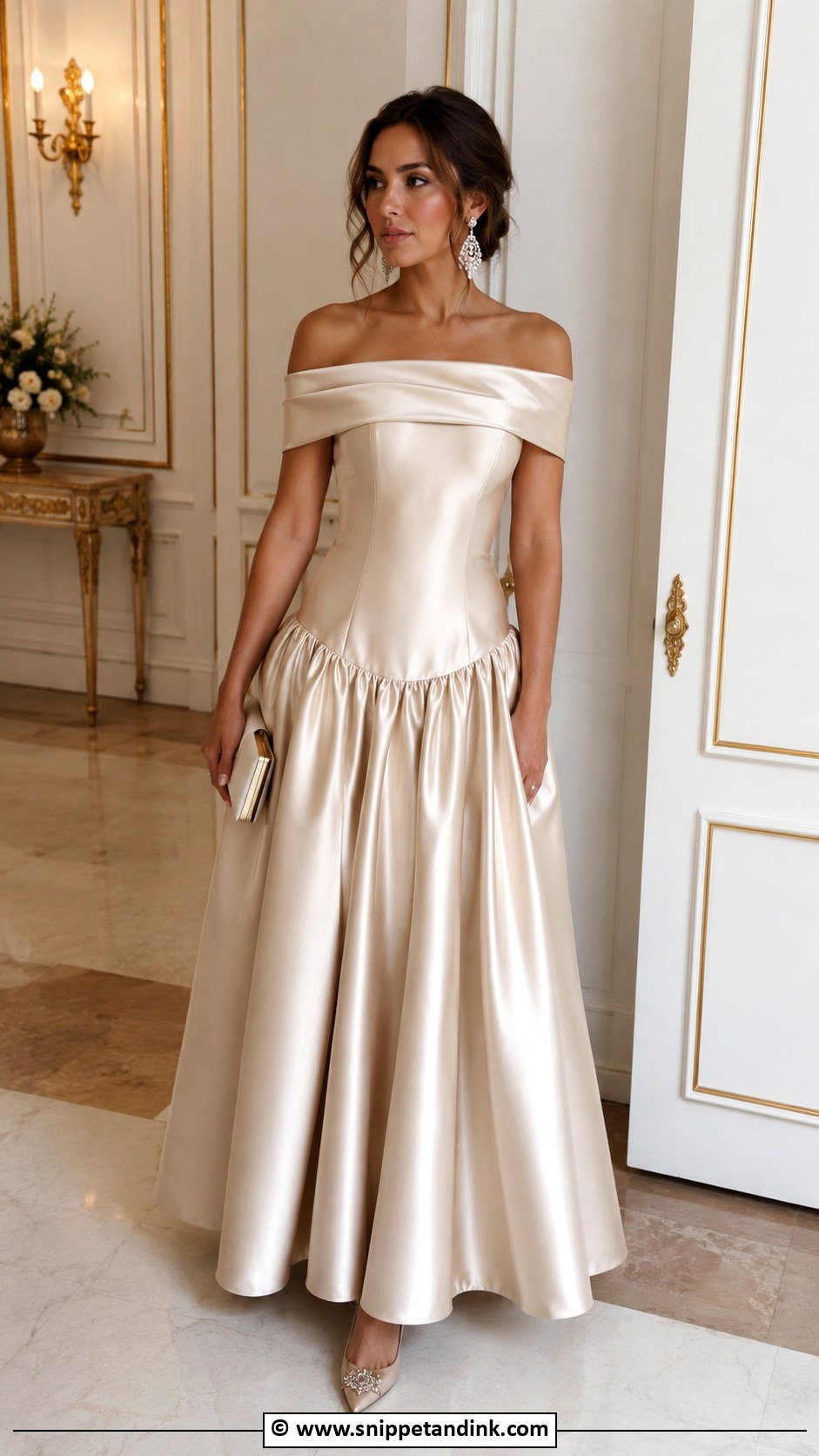
Off shoulder necklines and dropped waists pull the eye in two directions, out across the collarbones and down to the hip, and together they make the whole torso look longer. Satin, lace and taffeta all hold an off shoulder band, but the band needs silicone grip or it slides up during the first hug. Chandelier earrings carry the open neckline better than any necklace would. A low chignon keeps the shoulder line clear for photos.
7. Drop Waist Strapless Gown
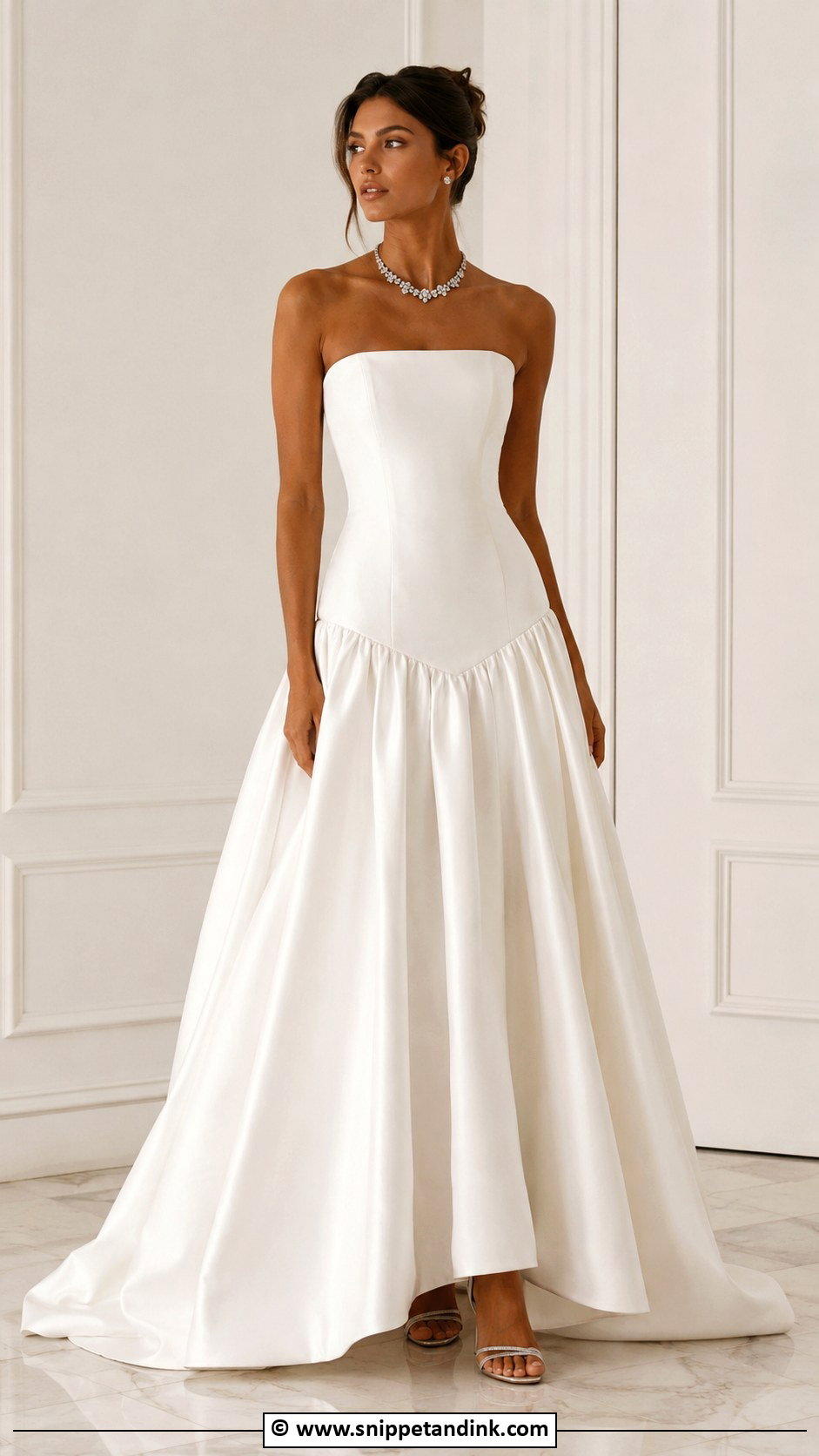
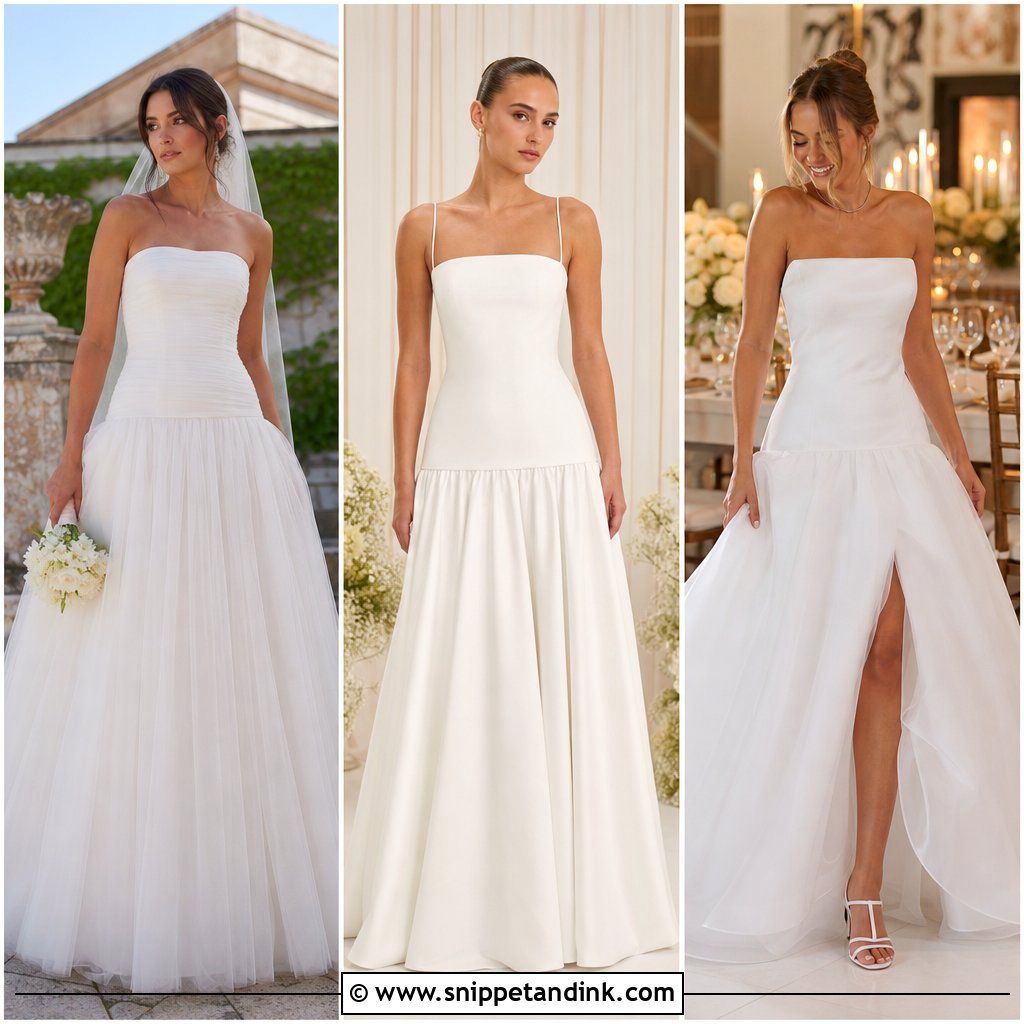
A strapless drop waist gown has nothing above the bust to hold it up, so everything depends on the bodice construction. I’d ask for boning in the side seams and a waist stay, the grosgrain band sewn inside that anchors the gown to your body rather than to your chest. Satin or mikado with a full skirt gives a classic shape; crepe or silk with a softer skirt looks sleeker. Either way, a crystal necklace or just statement earrings, not both.
8. Drop Waist Long Sleeve Gown
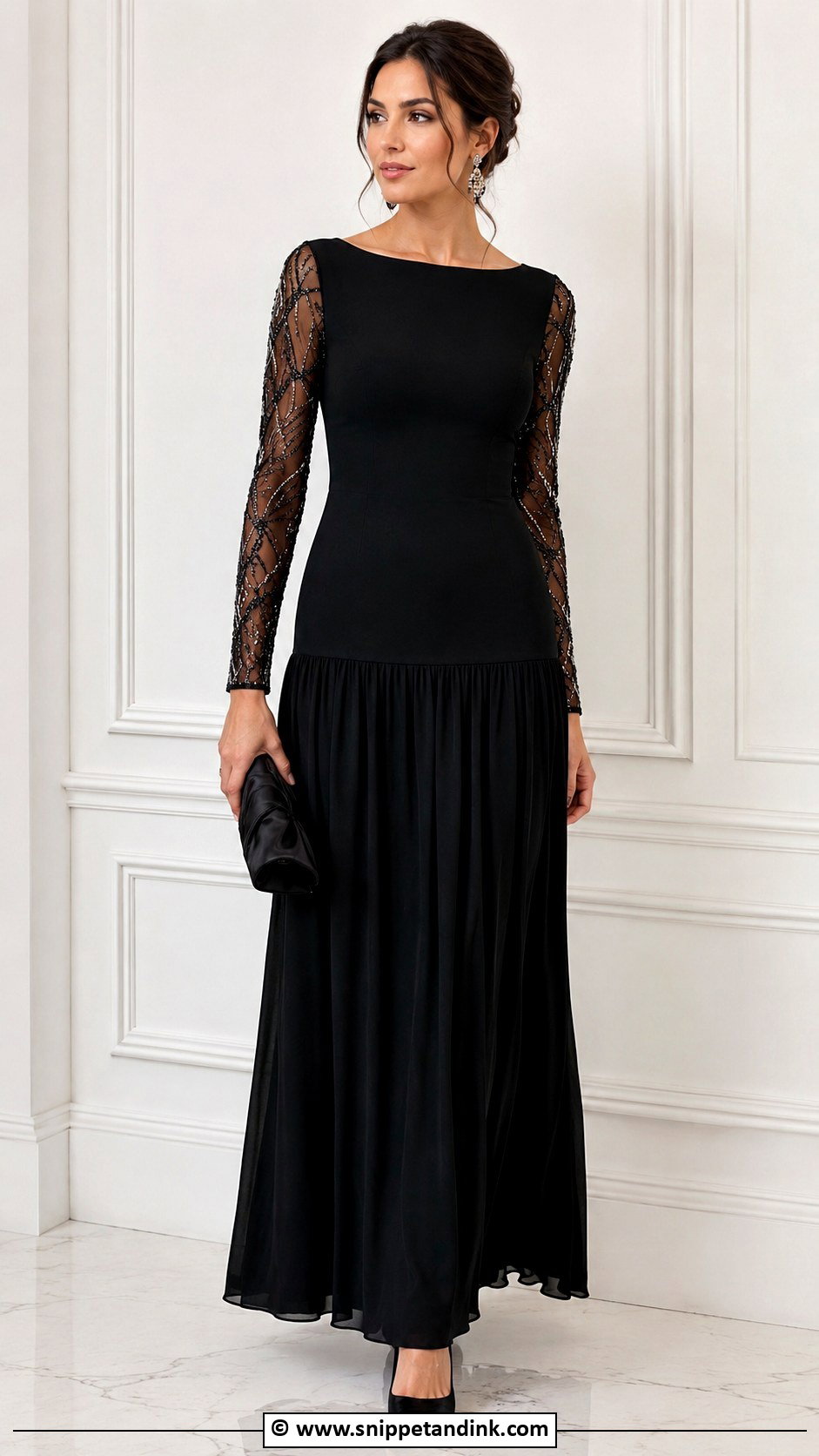
Sleeves balance a lowered seam better than people expect. With covered arms the long bodice stops looking bare, and the dropped line looks deliberate. Lace sleeves read romantic, satin sleeves formal, sheer beaded sleeves more evening. One fitting note: raise your arms fully before any sleeve is finalised. A fitted sleeve on a long bodice can pull the whole seam up when you reach for a hug. Skip stacked bracelets, the sleeve is already the detail. These work best for autumn and winter ceremonies and ballroom receptions.
9. Drop Waist Beaded Gown
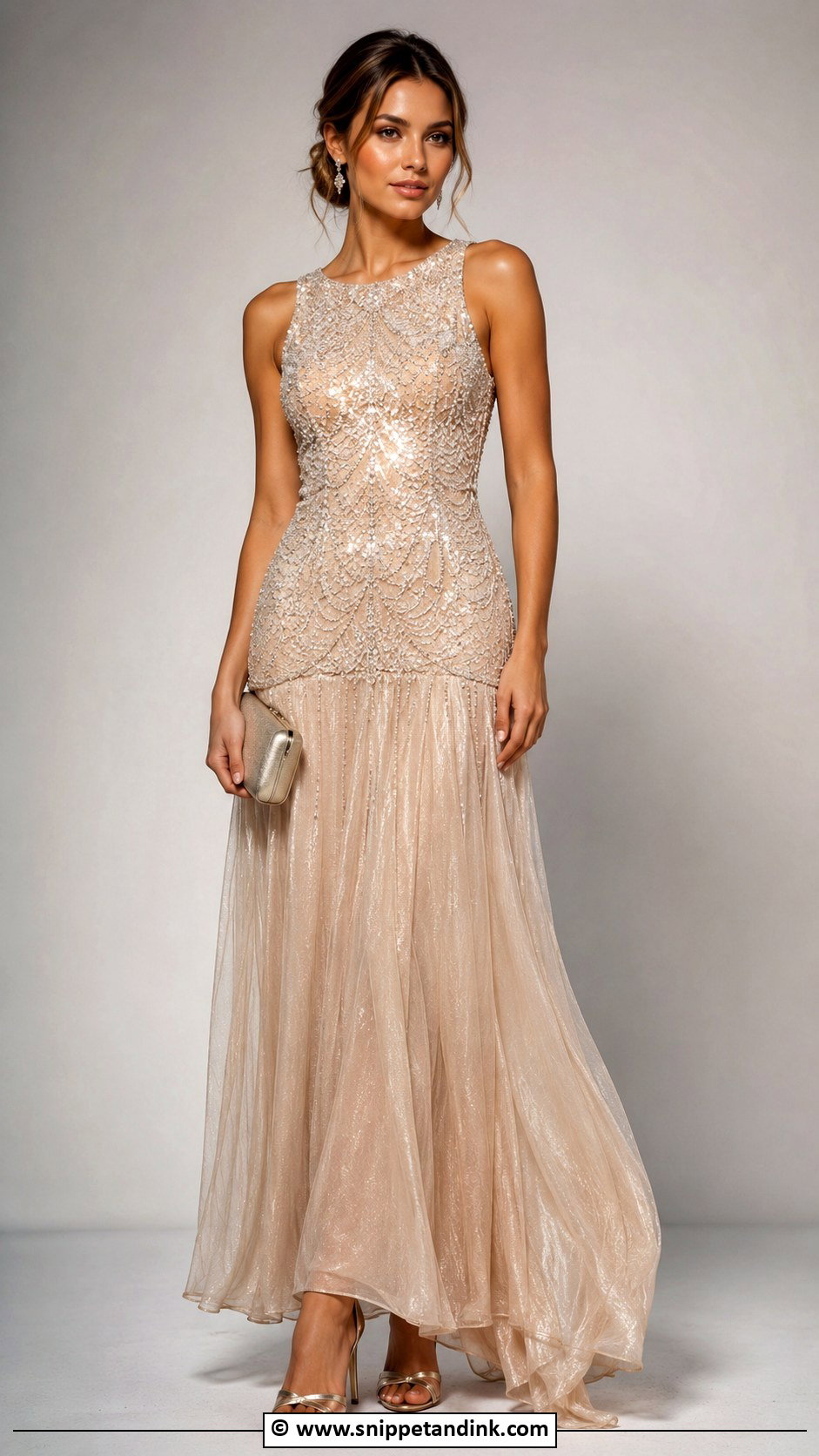
Beading changes how the seam behaves, because it adds weight right where the bodice ends. Heavily beaded bodices on a soft skirt can drag the seam lower over a long evening, so I look for a firm lining and beadwork that is stitched flat, not loose strands that catch on lace or a partner’s cufflinks. Silver, champagne, navy and black beading all suit evening light. Match earrings to the bead tone and keep hair smooth; a beaded bodice with a textured updo starts to compete with itself.
10. Drop Waist Floral Gown
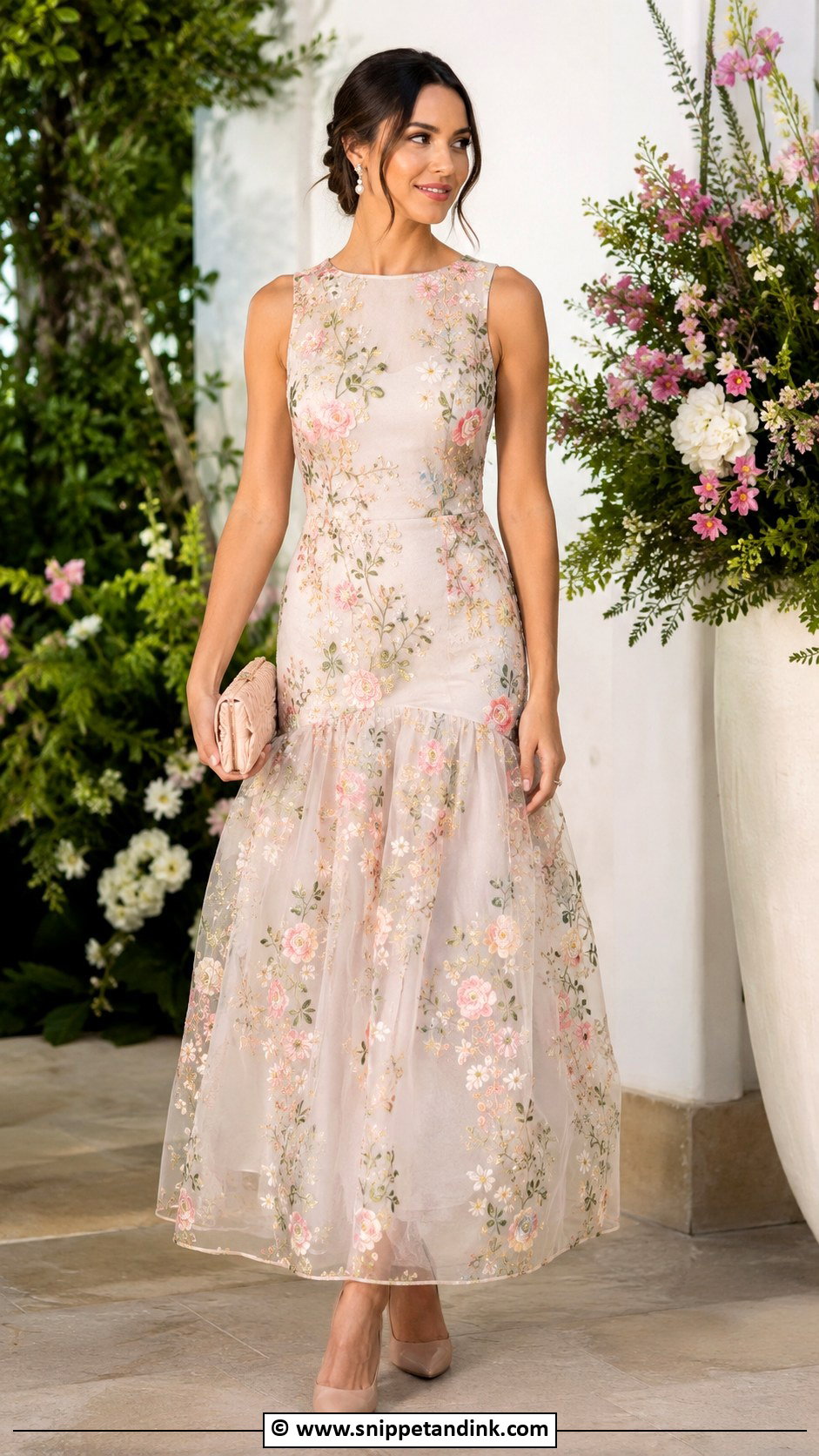
Floral embroidery, printed organza or 3D appliques are the gentlest way into this silhouette for a spring or summer wedding. I like the flowers to cluster just above the seam and scatter down into the skirt, because a solid line of appliques right on the hip makes the seam look heavier than it is. A fitted bodice with a flowing skirt keeps it balanced. Nude heels and pearl earrings are enough; if the print is bold, keep hair and makeup quiet. Garden ceremonies and daytime receptions suit it best.
11. Drop Waist Black Gown
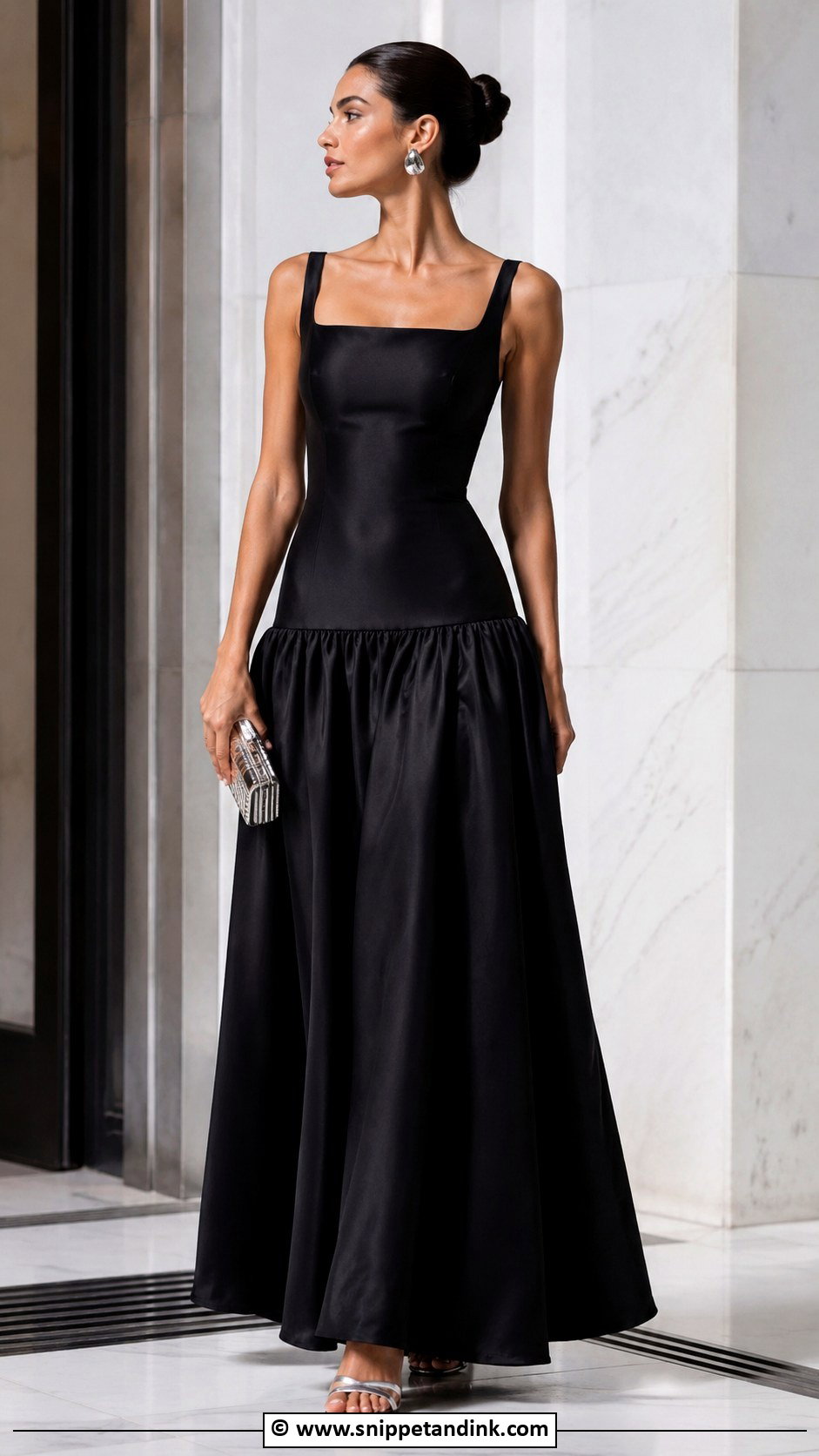
Black sharpens the silhouette. The dropped waist that might look soft in ivory turns graphic, which makes this a strong choice for black-tie receptions and bridesmaids at evening weddings. Satin gives shine, crepe a matte, minimal finish, tulle a softer kind of drama. Sculptural earrings and a structured clutch suit it; a red lip makes it classic. Choose a full skirt or train for more presence, or a smooth A-line for a cleaner line.
12. Drop Waist White Gown
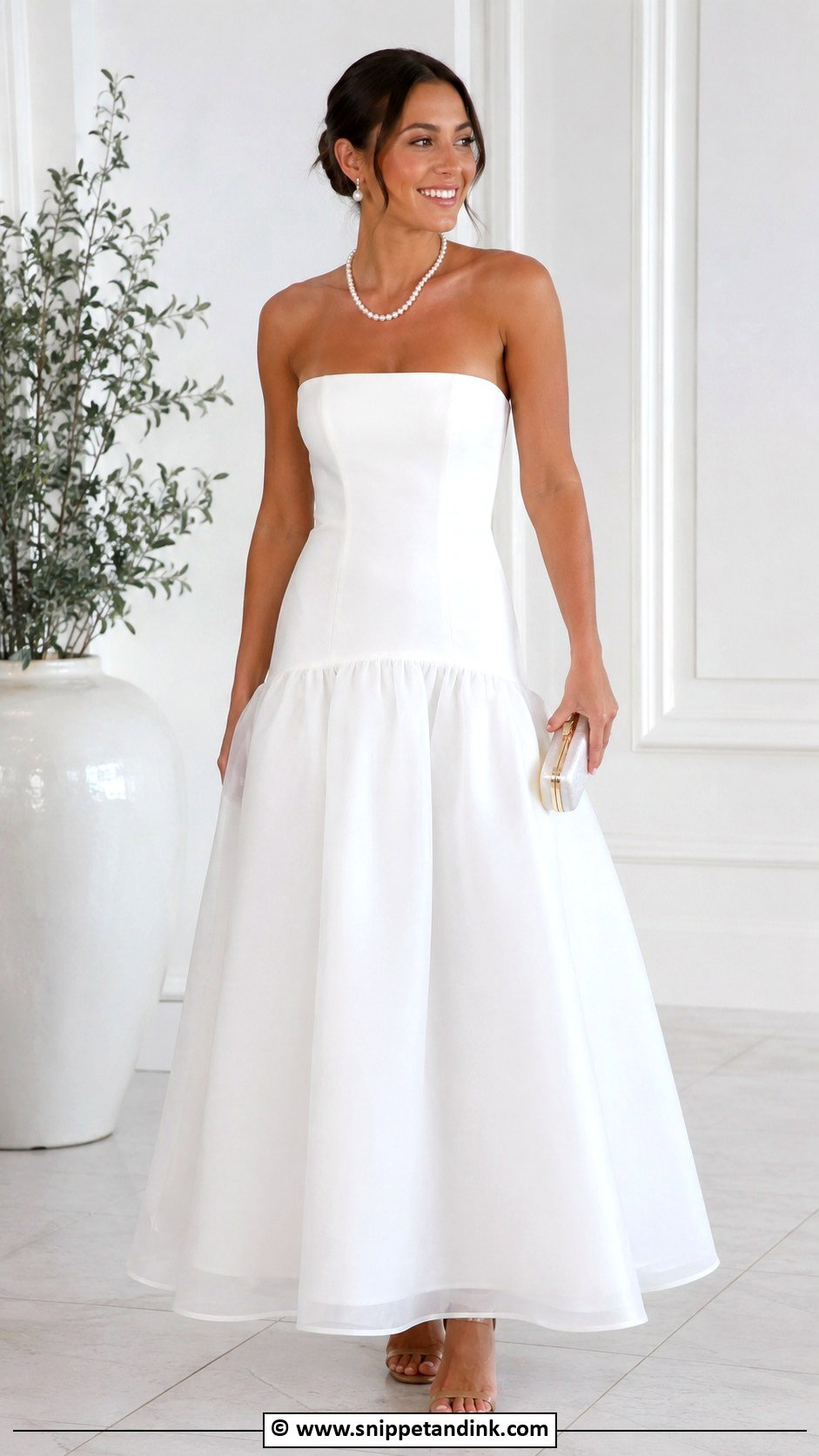
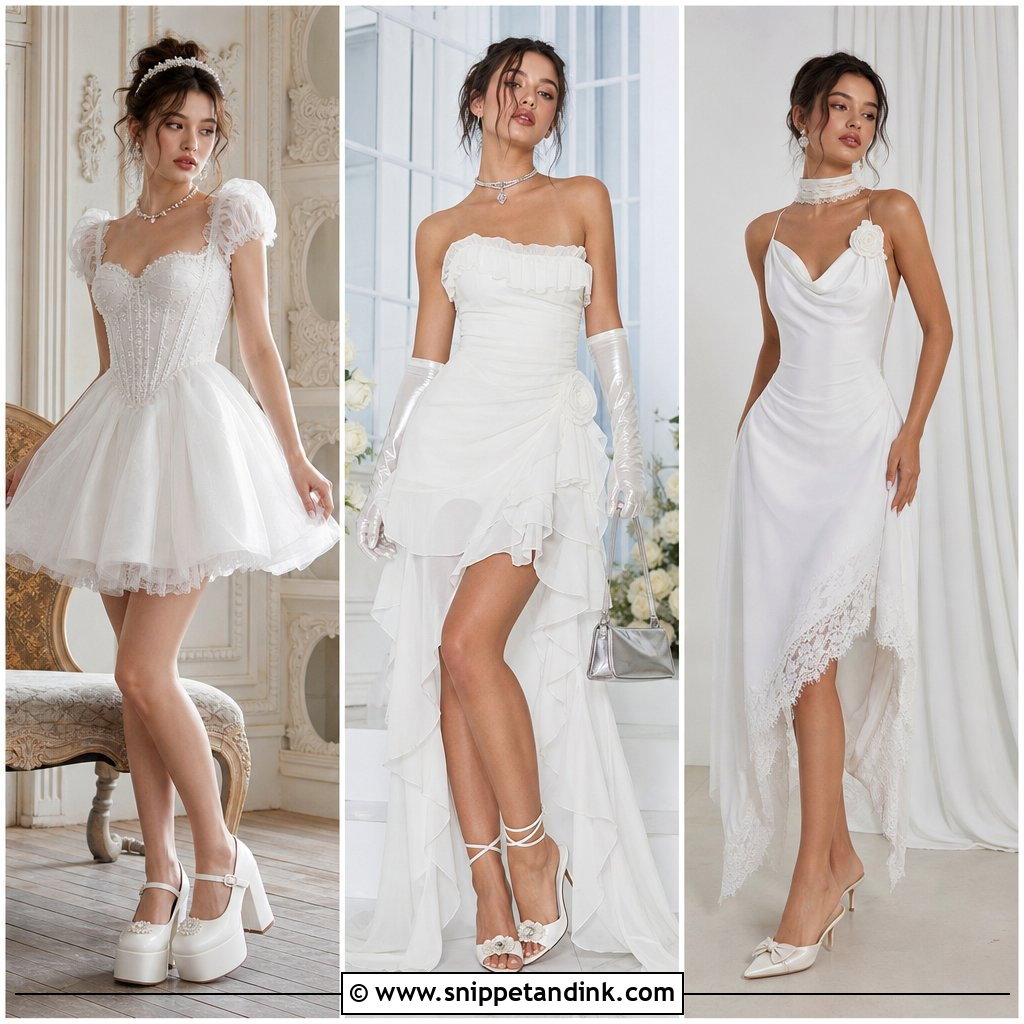
White is unforgiving about construction. Every seam, pucker and lining shadow shows, and a dropped seam is a long horizontal line right across the body. I hold white gowns up to daylight at fittings to check that the lining is cut to the same length as the outer seam, because a lining that sits a centimetre higher shows through as a faint stripe in photos. Satin and mikado feel formal, chiffon and organza lighter. Pearl jewelry and white or nude heels finish it. For a civil ceremony or rehearsal dinner, modern shoes keep it from looking like a second wedding dress.
13. Drop Waist Pink Gown
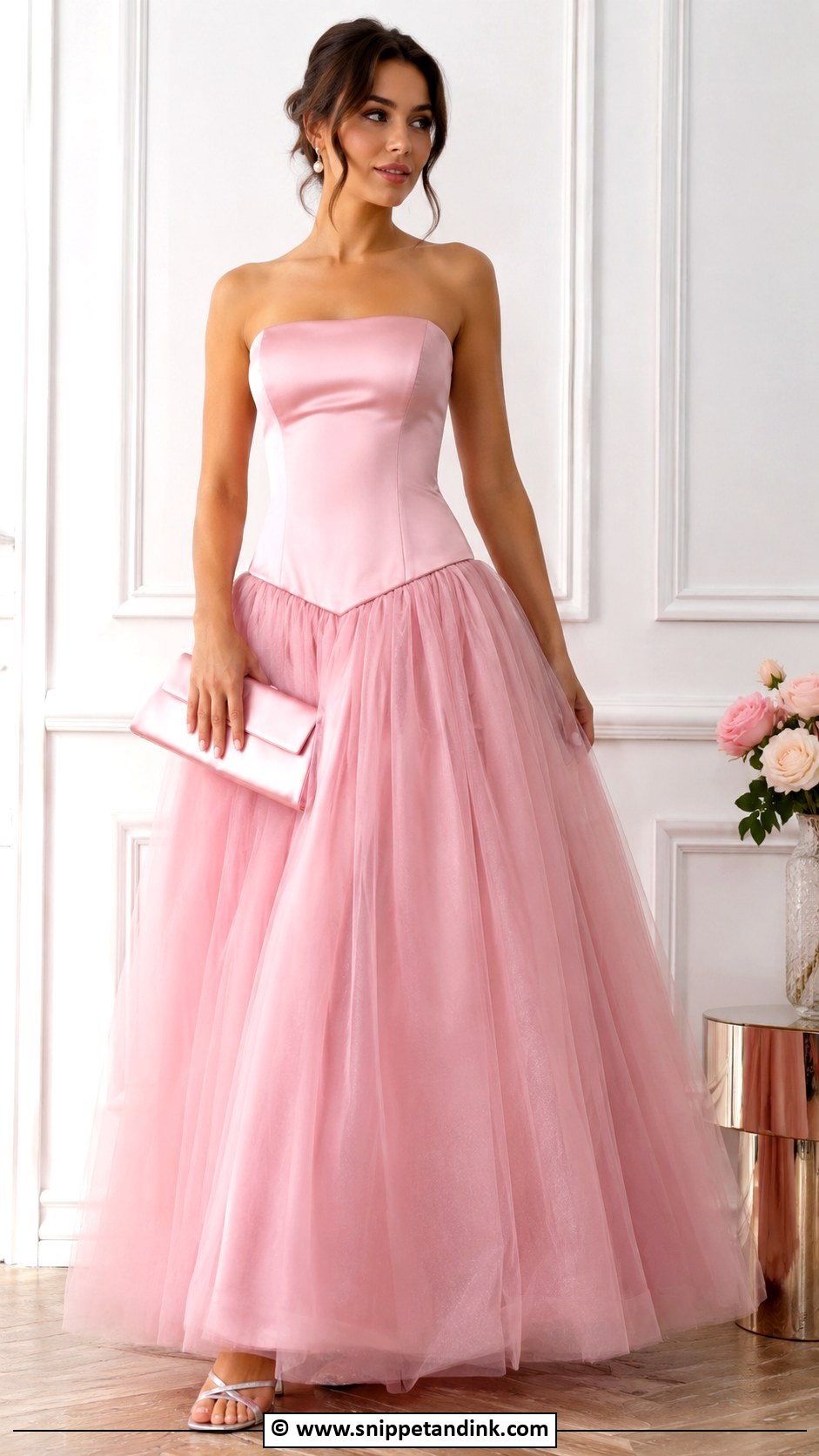
Shade decides the mood with pink. Blush reads delicate, rose more feminine, bright pink much louder. The dropped waist keeps any of them modern, especially with a full tulle skirt or a sleek satin one. Silver heels and pearl earrings suit the softer shades; a sleek ponytail and crystal earrings suit the brighter ones. I’d check blush satin against your skin in daylight before ordering, because some blushes read almost beige on camera. Bridal showers, engagement portraits and bridesmaid lineups are where pink lands best.
14. Drop Waist Blue Gown
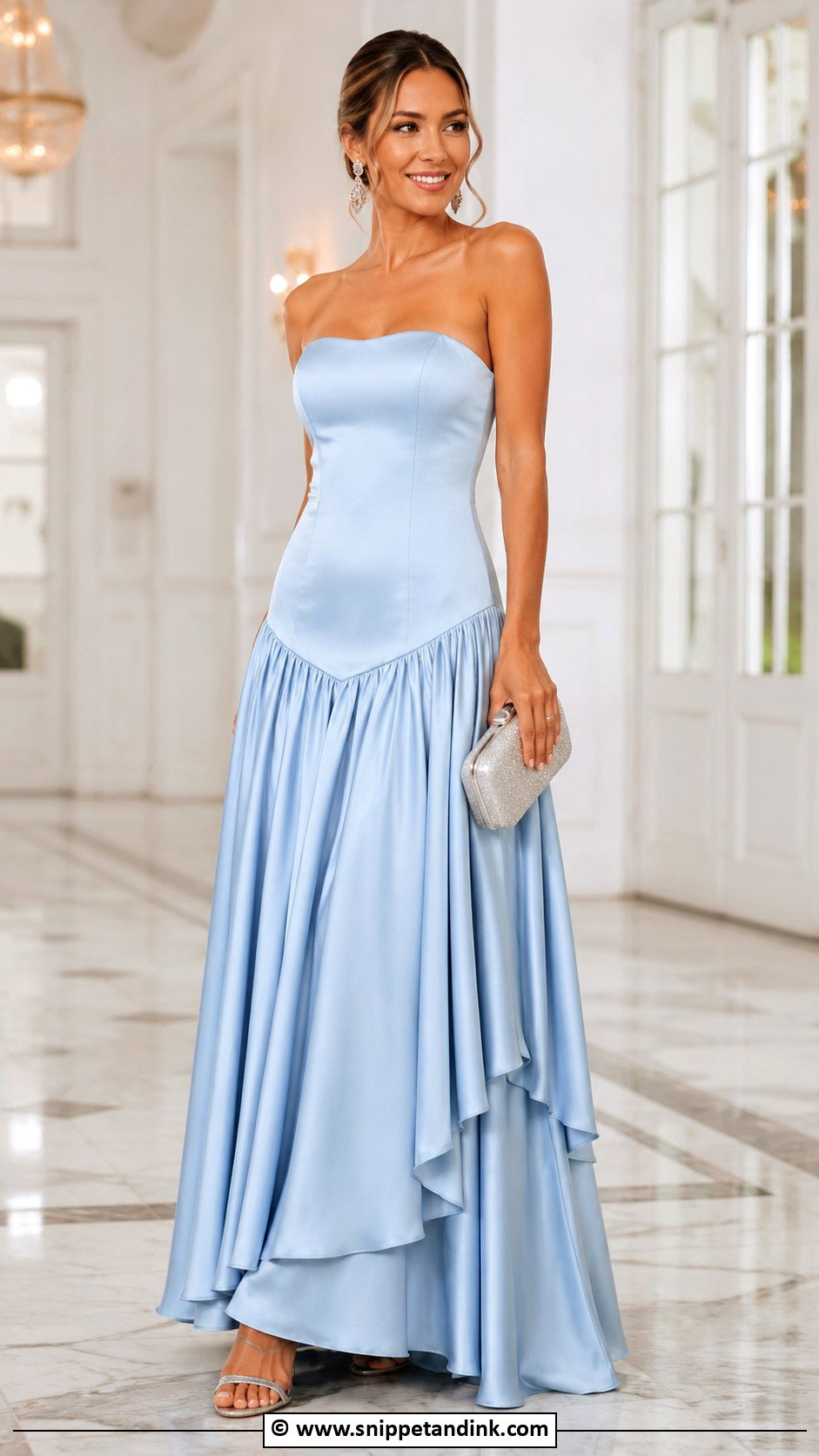
Blue is one of the safest colors to photograph in a dropped silhouette, from pale blue to navy to cobalt. The lower waist works with both soft tulle and structured satin skirts. I adjust jewelry to the fabric rather than the color: shimmer or beading means simple earrings, while plain satin can carry a statement bracelet. Navy in particular holds up under indoor reception lighting, where lighter blues can drift toward grey. Silver heels and a clean clutch finish it.
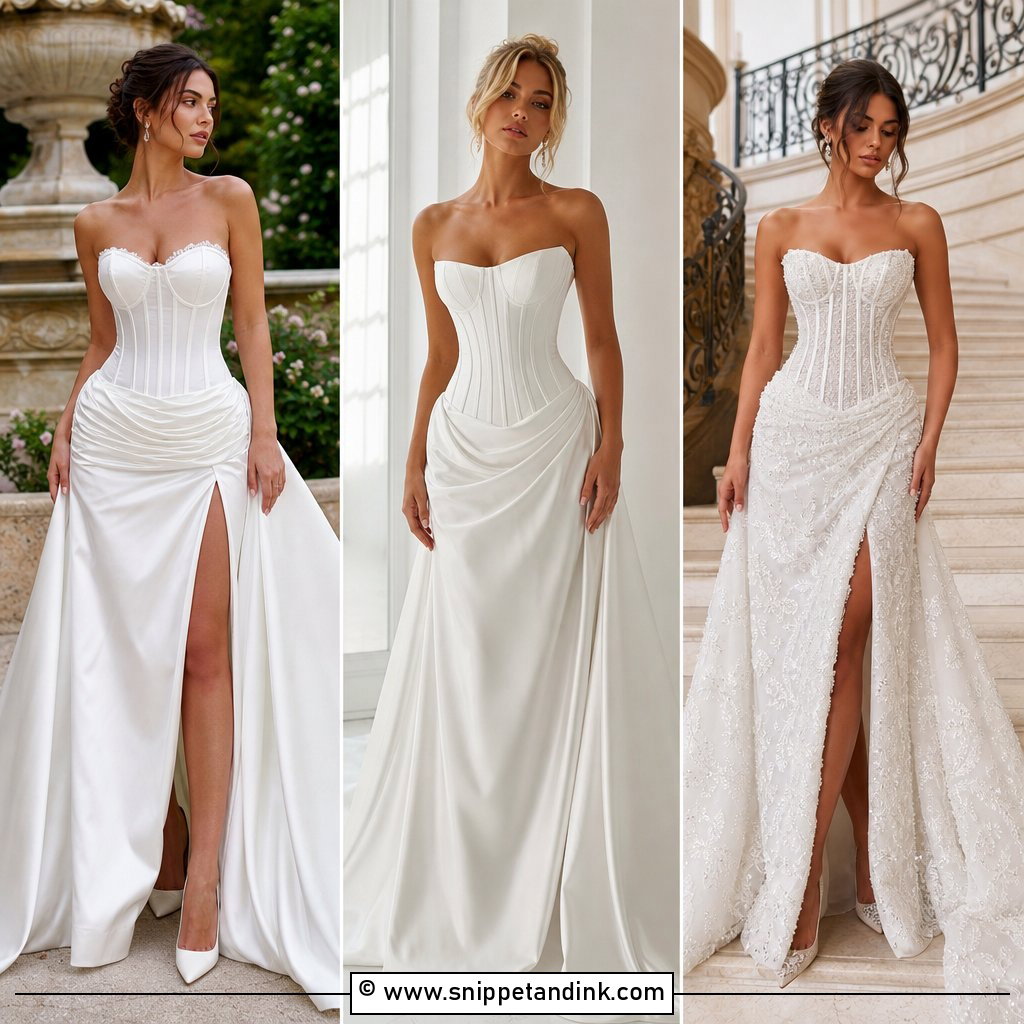
15. Drop Waist Red Gown
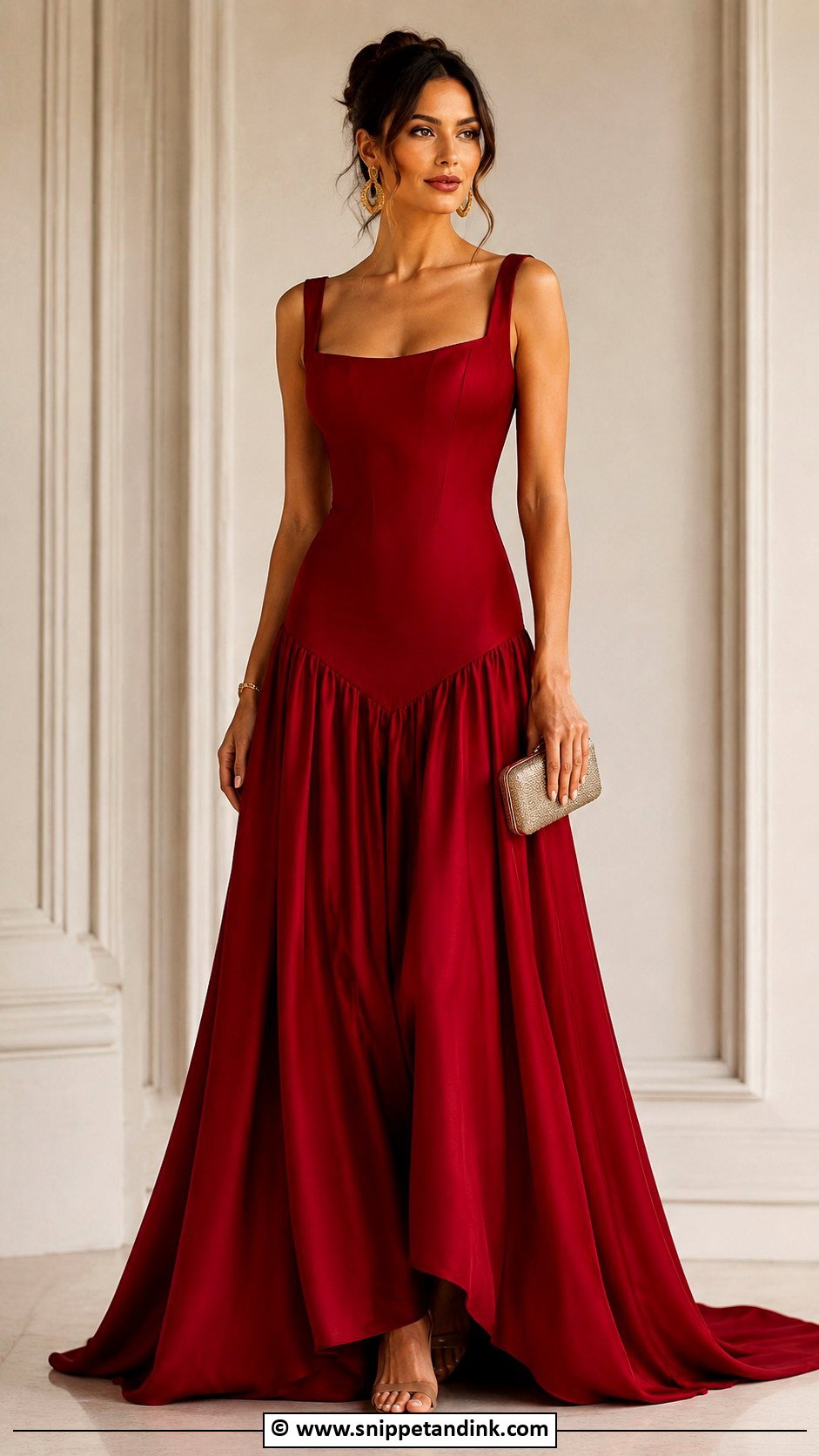
A red gown already makes the entrance, and the dropped waist keeps it from feeling predictable, especially with a full or moving skirt. Cherry is brightest, crimson deeper, burgundy richest for evening. I keep jewelry spare: gold hoops, crystal studs or one cuff. The fitting point to watch with red is the seam itself, since a strong color shows any pull or ripple more than a pale one does. Smooth hair keeps attention on the color.
16. Drop Waist Green Gown
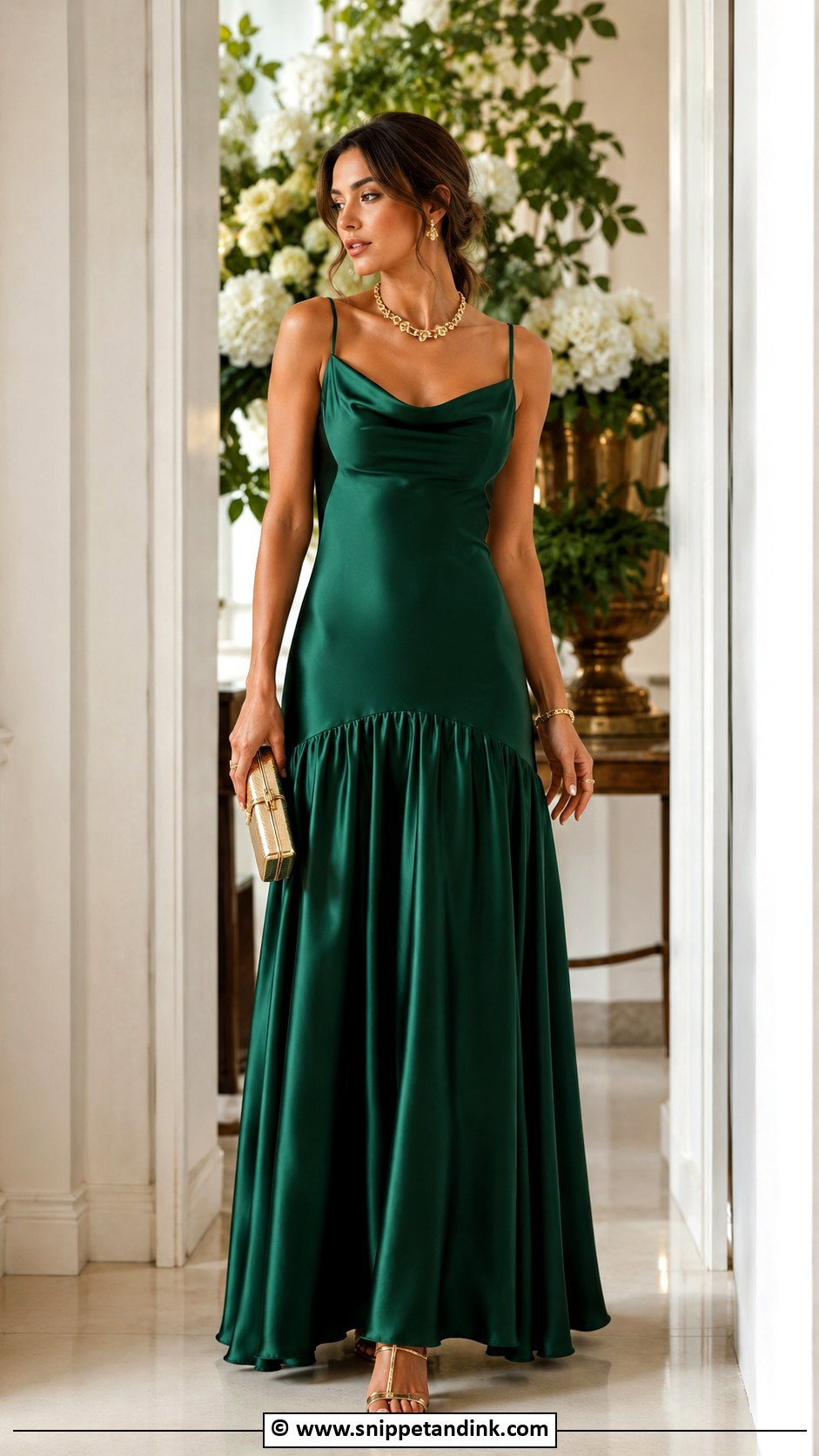
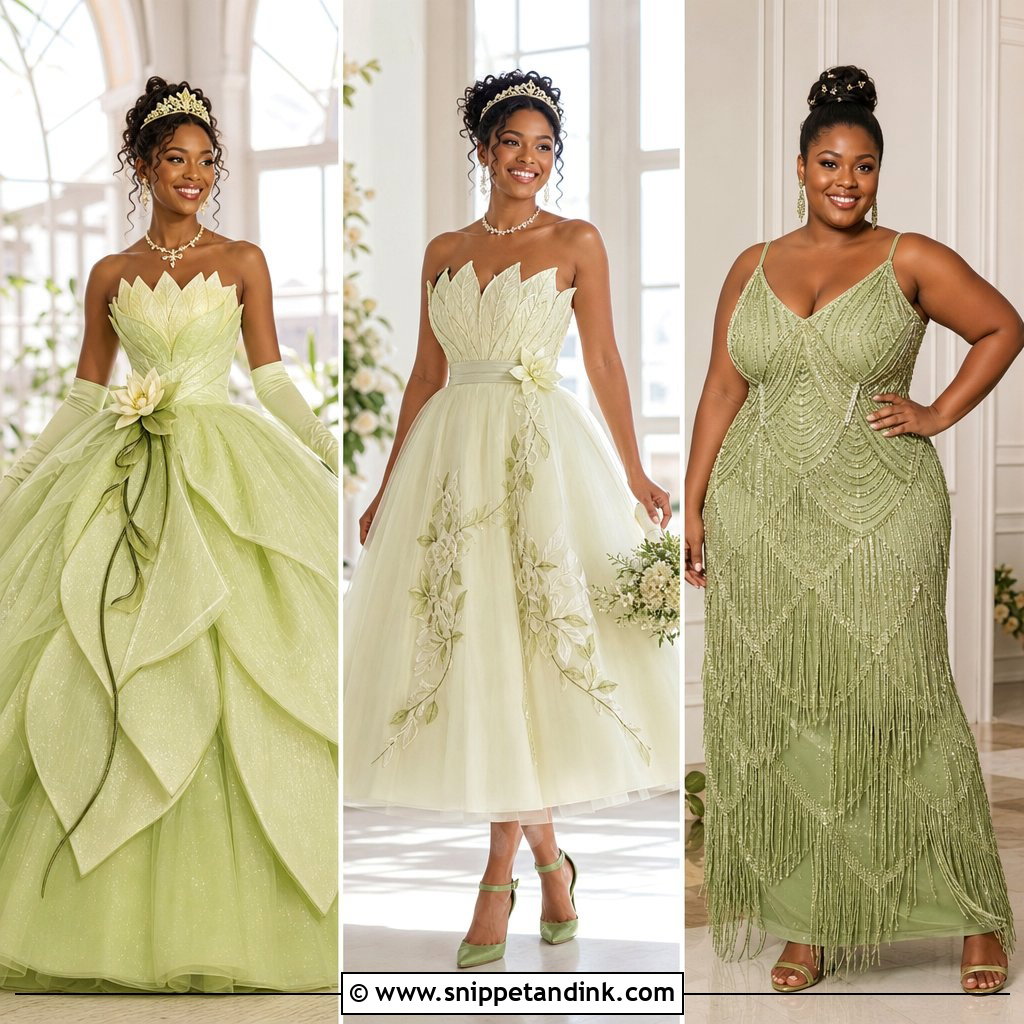
Green shifts with the season. Emerald is for evening, sage for daylight, olive for an earthier wedding. Each one pairs with a different metal: emerald with gold, sage with pearls, olive with bronze. The lowered waist sits nicely in satin, chiffon or velvet depending on the month. I’d suggest green for bridesmaids when the bride wants color that still looks calm in group photos; sage especially suits a wide range of skin tones across a lineup.
17. Drop Waist Gold Gown
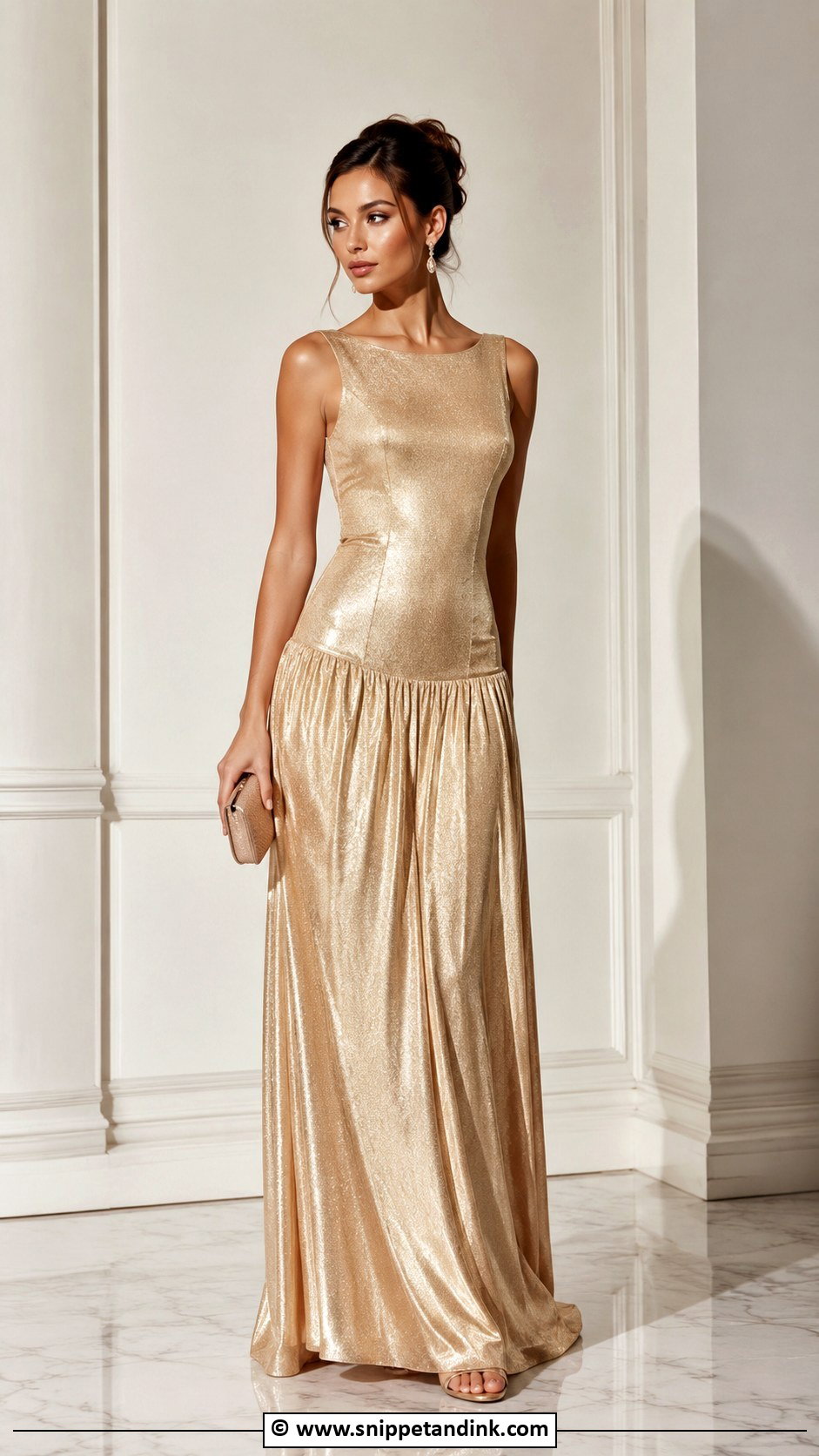
Gold already shines, so the shape should do very little. A fitted bodice with a smooth skirt or soft flare is enough. Champagne gold is the quieter option, brighter gold the louder one, and I’d steer you to champagne if your venue has warm lighting, because bright gold under yellow bulbs can look brassy. Metallic heels, delicate earrings and a clutch in gold, nude or ivory. A sleek bun keeps all that shine looking refined.
18. Drop Waist Velvet Gown
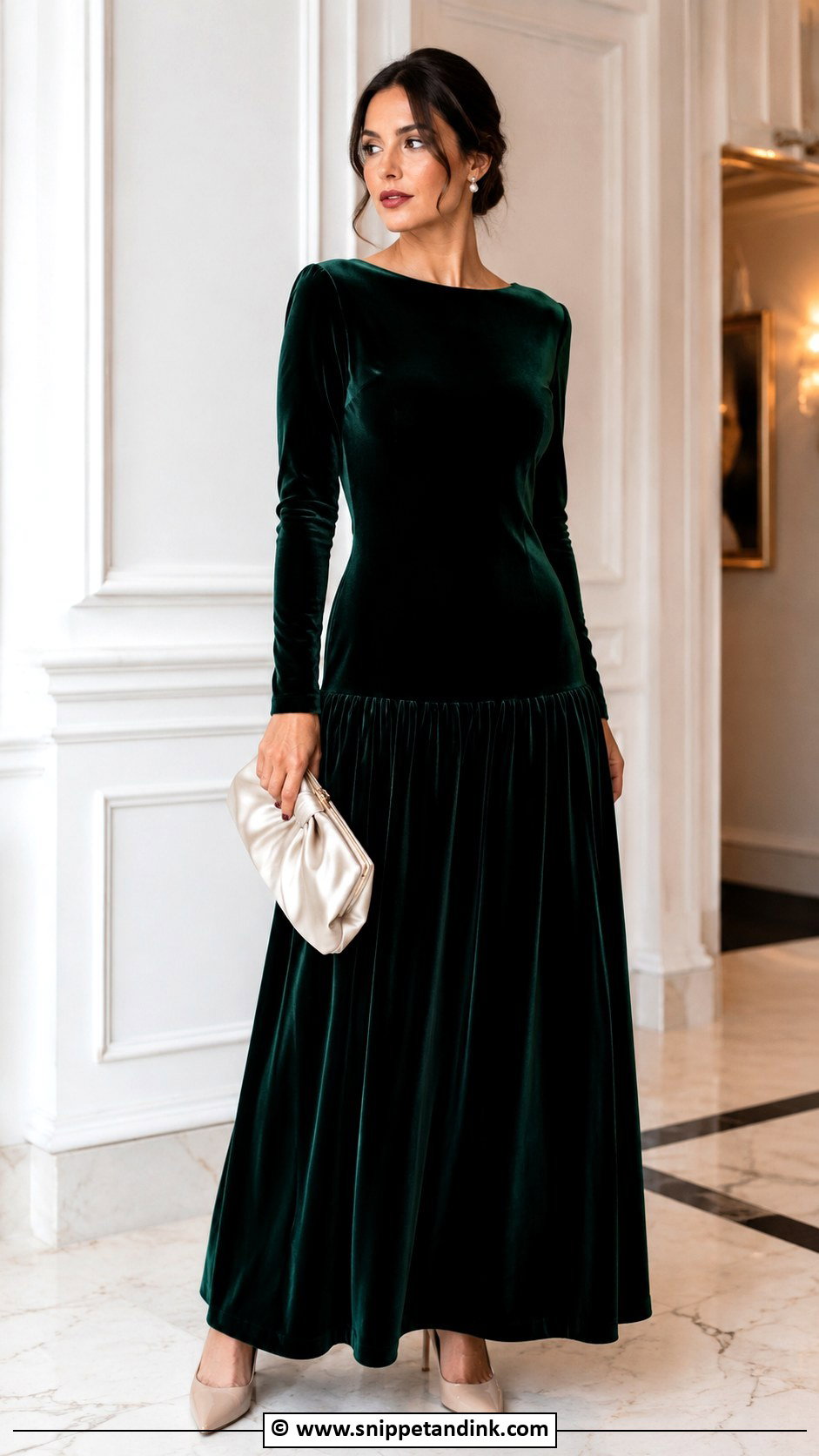
Velvet is a cold-weather fabric with one real drawback: it marks. Pile crushes wherever you sit or lean, and on a dropped waist that crease lands right across the hip. I tell velvet brides to stand for portraits before dinner, and to steam rather than iron, since an iron flattens the pile permanently. Black, emerald, burgundy, navy and chocolate all deepen in velvet. Because the fabric has texture, accessories stay simple: pointed heels and pearl studs, with a satin clutch for contrast. Make sure the skirt has enough movement; a tight velvet skirt walks heavily.
19. Drop Waist Chiffon Gown
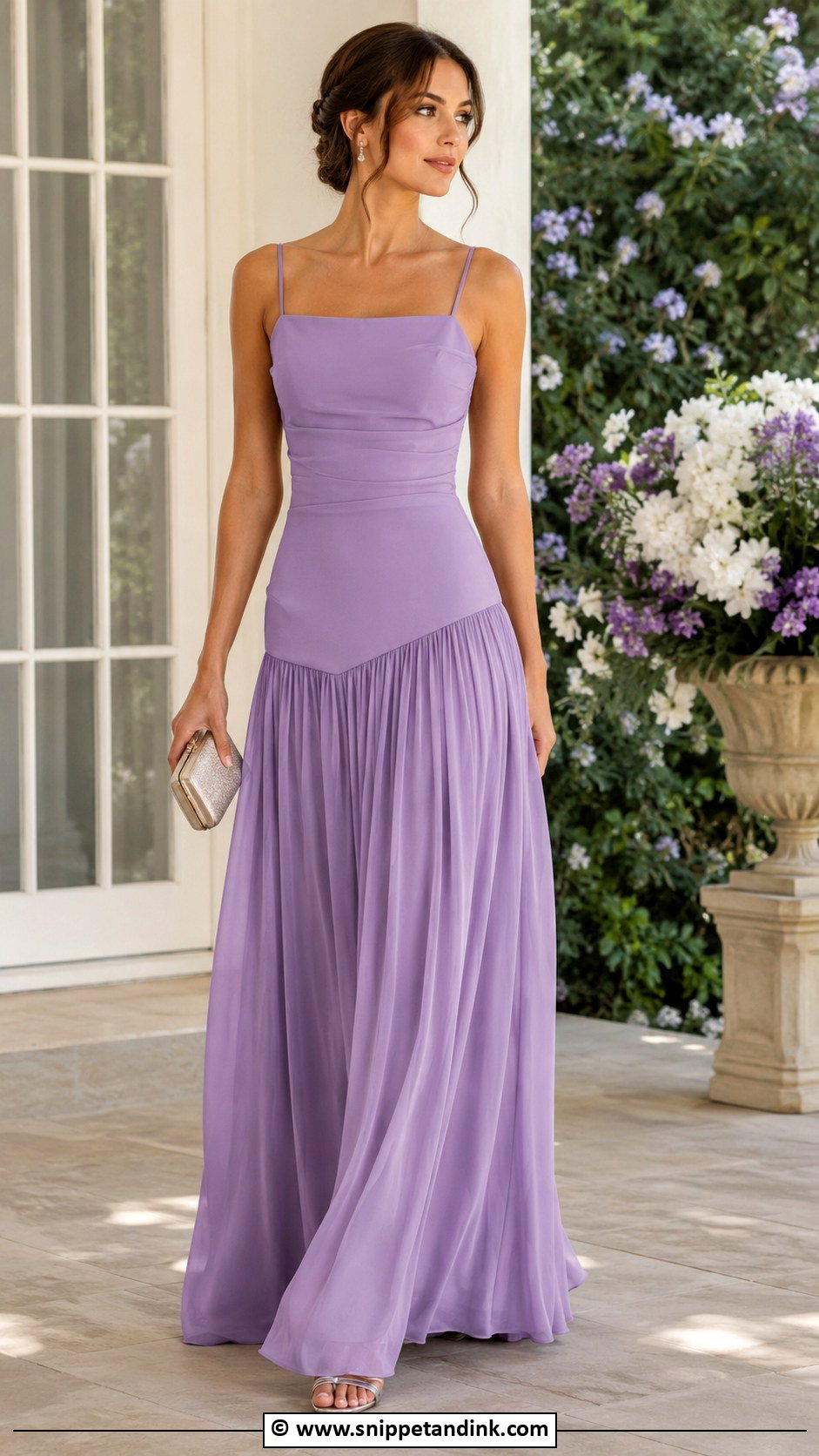
Chiffon is what I recommend for long days and warm venues. It moves with every step, breathes, and forgives a little extra room in the fitting. The trade-off is that chiffon cannot support a seam on its own, so the bodice under it needs a firm lining or the dropped line goes wavy. Pastels, navy, champagne and lavender all work. Pleated or layered skirts carry enough movement that accessories can stay minimal. Bridesmaids and destination weddings suit it well.
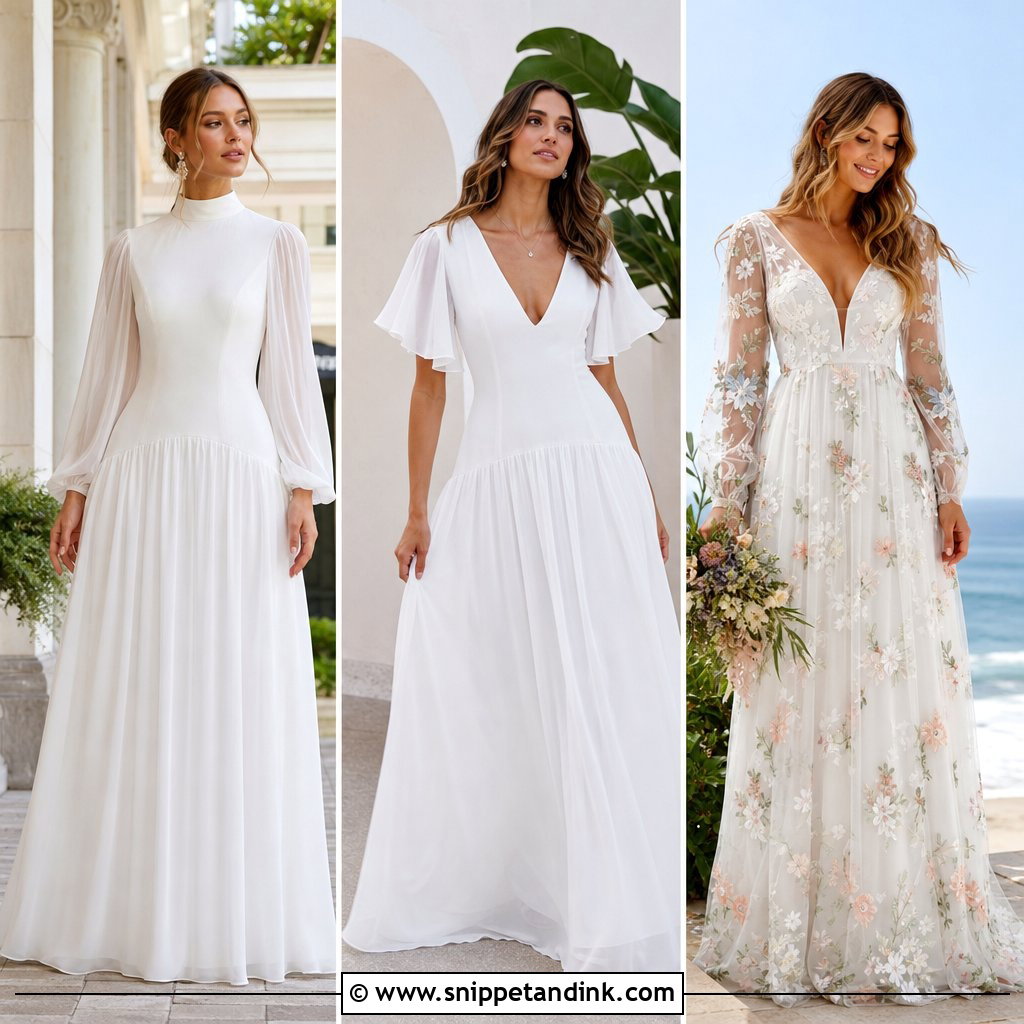
20. Drop Waist Organza Gown
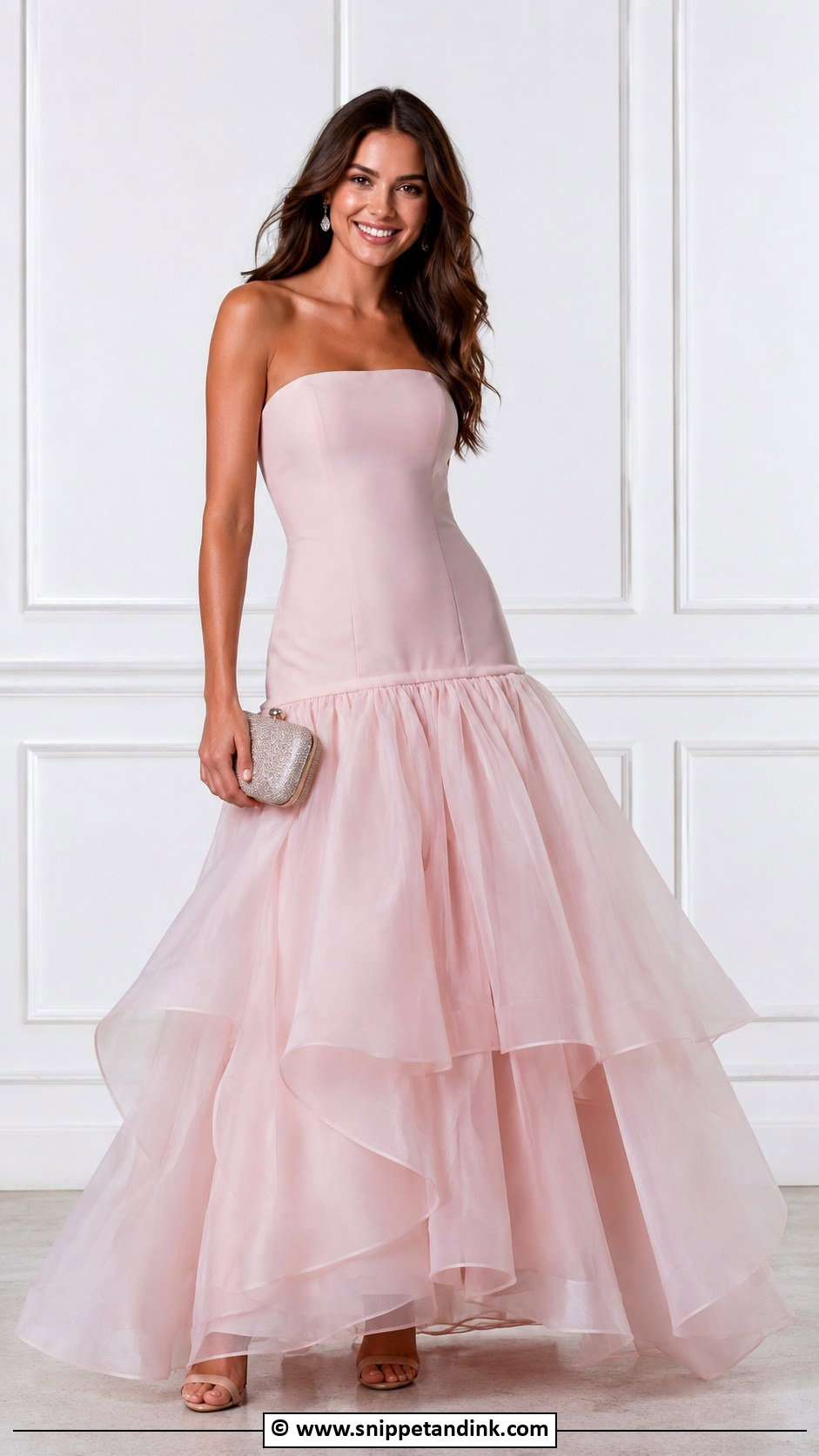
Organza gives volume without weight. It is crisp enough to hold full skirts, bubble hems and layers, and with a dropped waist the volume starts lower for a sculptural outline. Organza does crease when packed, so I always tell brides to have it steamed at the venue rather than trusting the garment bag. Ivory, black, blush, pale yellow and blue all look fresh. Slim heels and delicate earrings suit it; bulky bags fight the shape. It photographs well for prom, bridal fashion, formal portraits and receptions with a lot of light.
21. Drop Waist High Low Gown
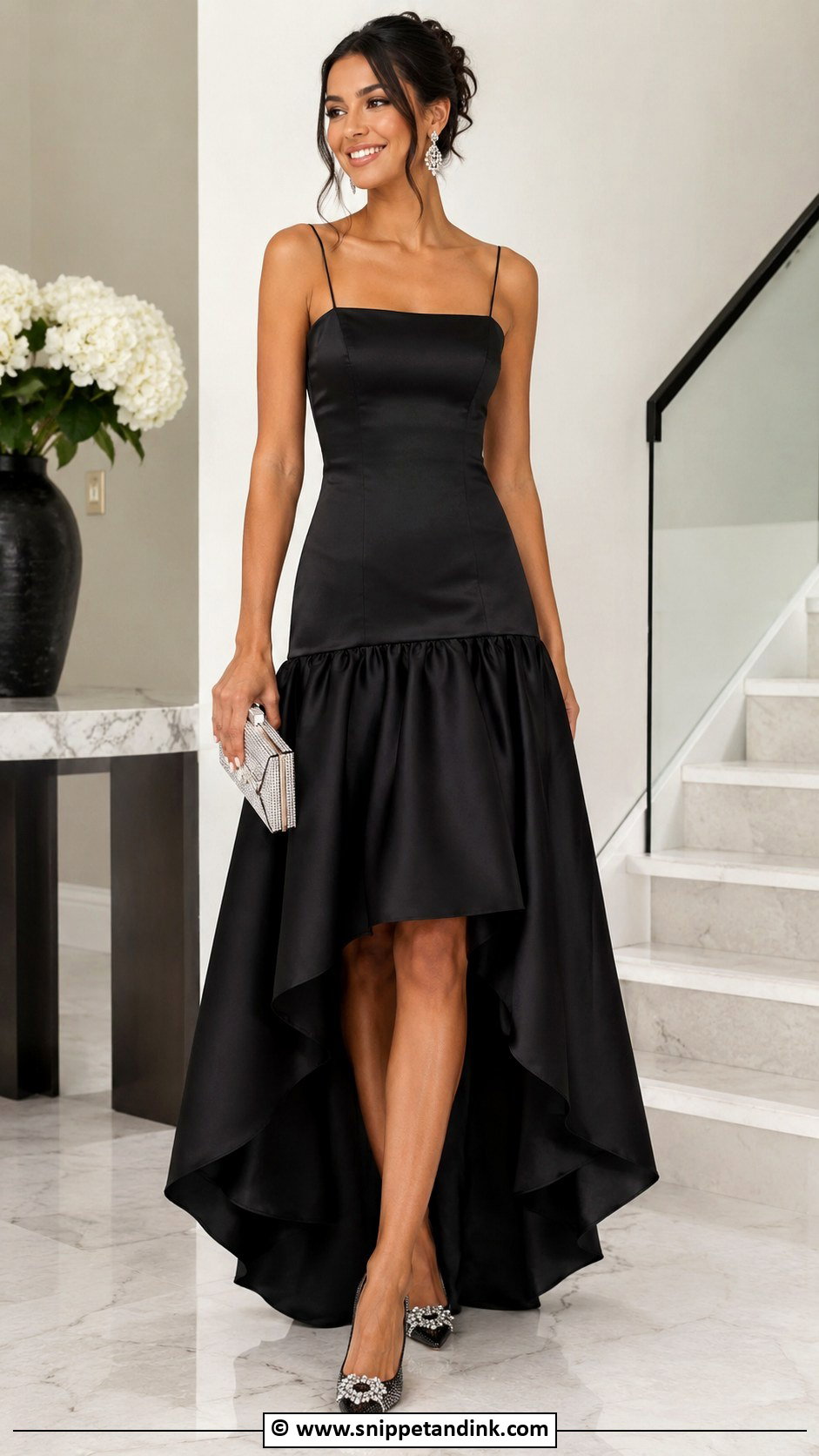
A drop waist high low gown puts your shoes on show, so choose them as carefully as the gown: strappy heels, embellished pumps or pointed sandals. The lowered seam keeps the bodice sleek while the hem gives you room to move. The detail I’d watch is the front hem length. Too long and it looks like a dress that was shortened, too short and it reads casual. Satin versions look polished, tulle versions more playful. Outdoor receptions and dance-heavy evenings suit it.
22. Drop Waist Plus Size Gown
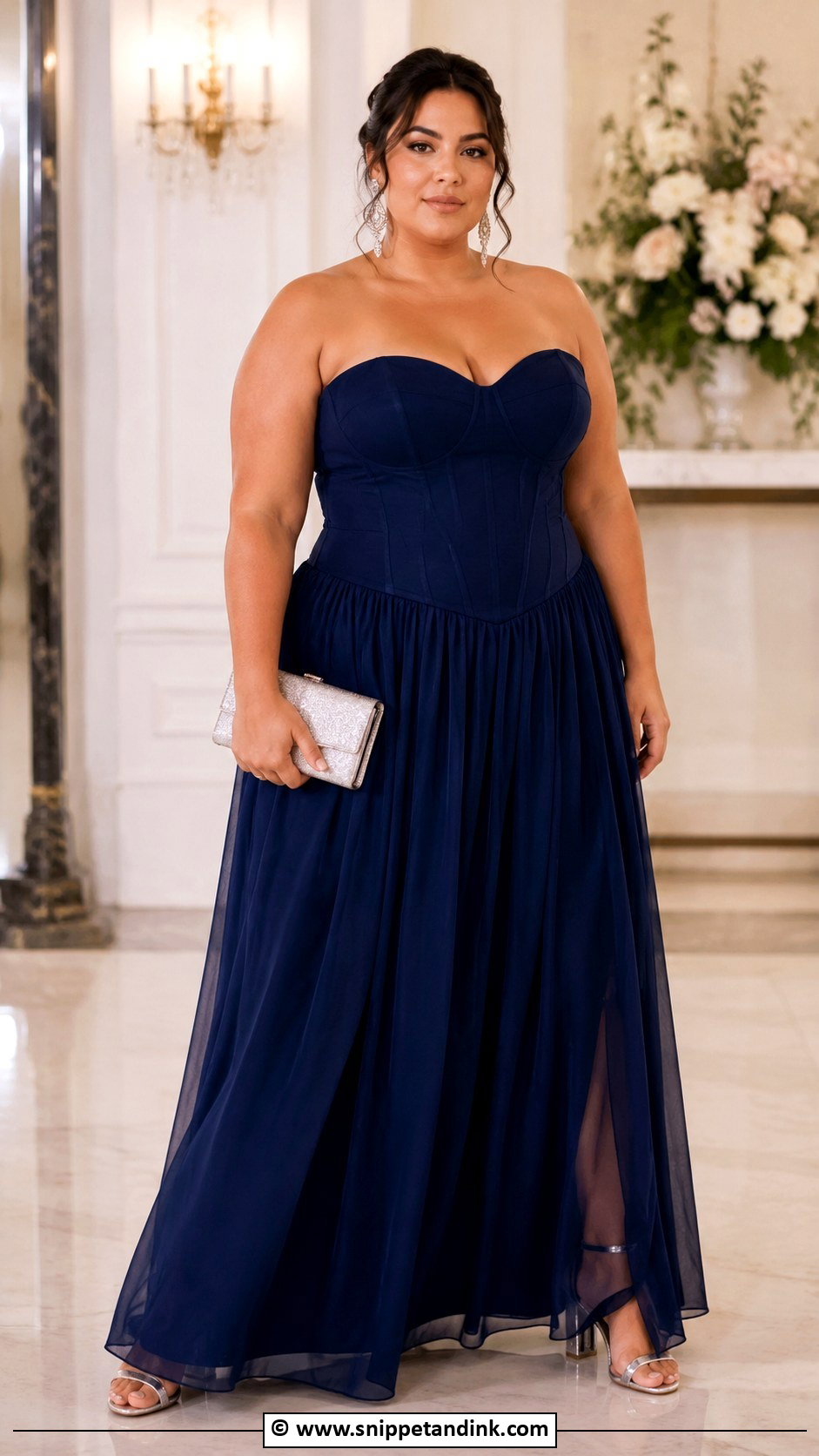
A drop waist plus size gown works when the bodice is built properly. It should support the bust and smooth through the torso without squeezing, and the seam should drop only slightly; an extremely low seam can cut across the widest part of the hip. In fittings I often move the seam up two or three centimetres from the sample and the whole gown looks more balanced. A-line skirts in tulle, chiffon or structured satin all work, as do V-neck, sweetheart and square necklines. Block heels for comfort, earrings in proportion to the neckline.
23. Drop Waist Petite Gown
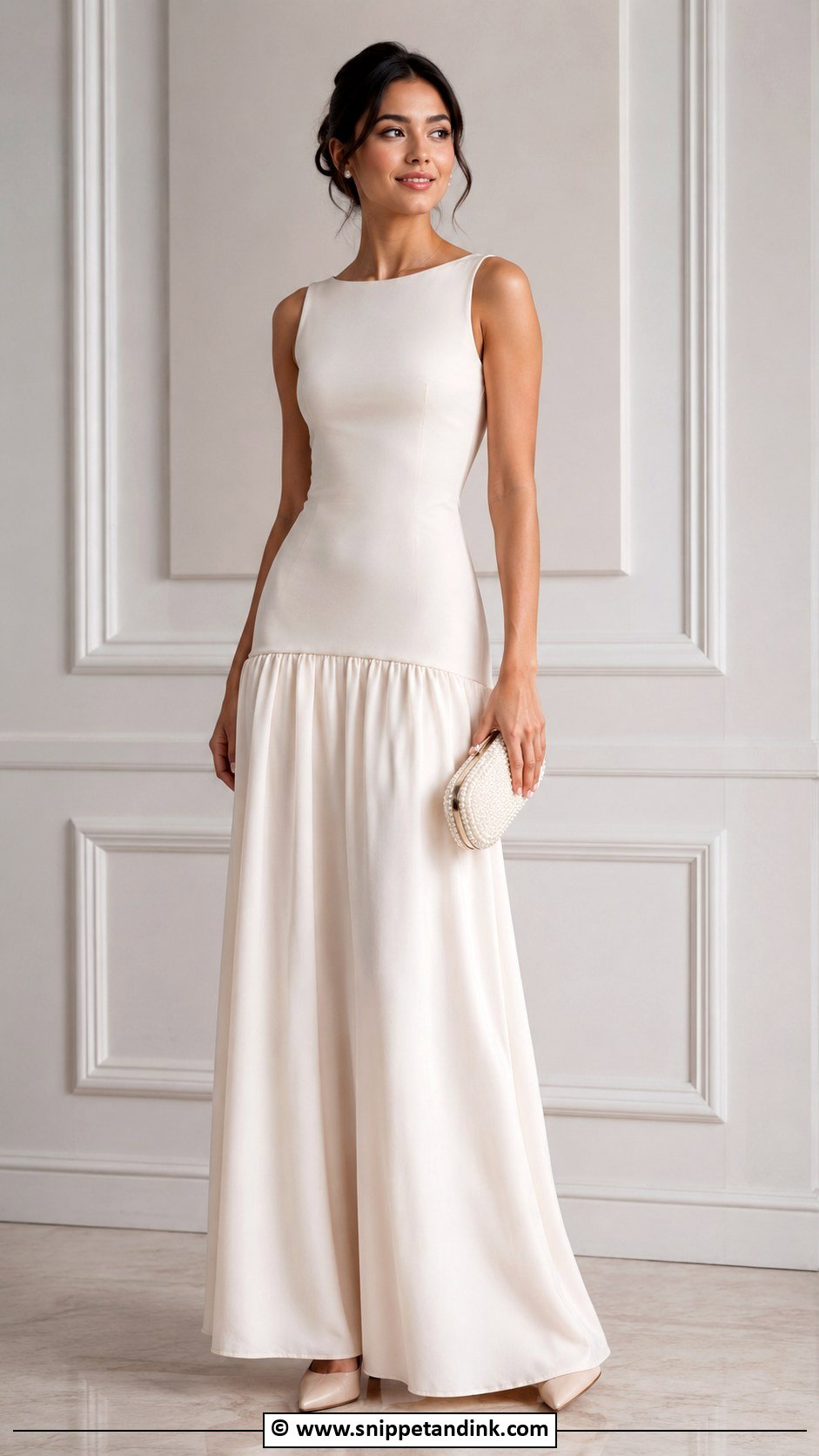
Petite brides can wear a dropped waist, but the seam position is everything. A slight drop lengthens the torso; a deep one shortens the legs, and the gown starts to look borrowed. I’d ask for the seam to be marked on you, not copied from the sample size, and keep the skirt clean rather than layered. Heels close to your skin tone or the gown color carry the leg line further. Strapless, V-neck and halter necklines help the vertical balance, and small-scale jewelry keeps it in proportion.
24. Drop Waist Mother Of The Bride Gown
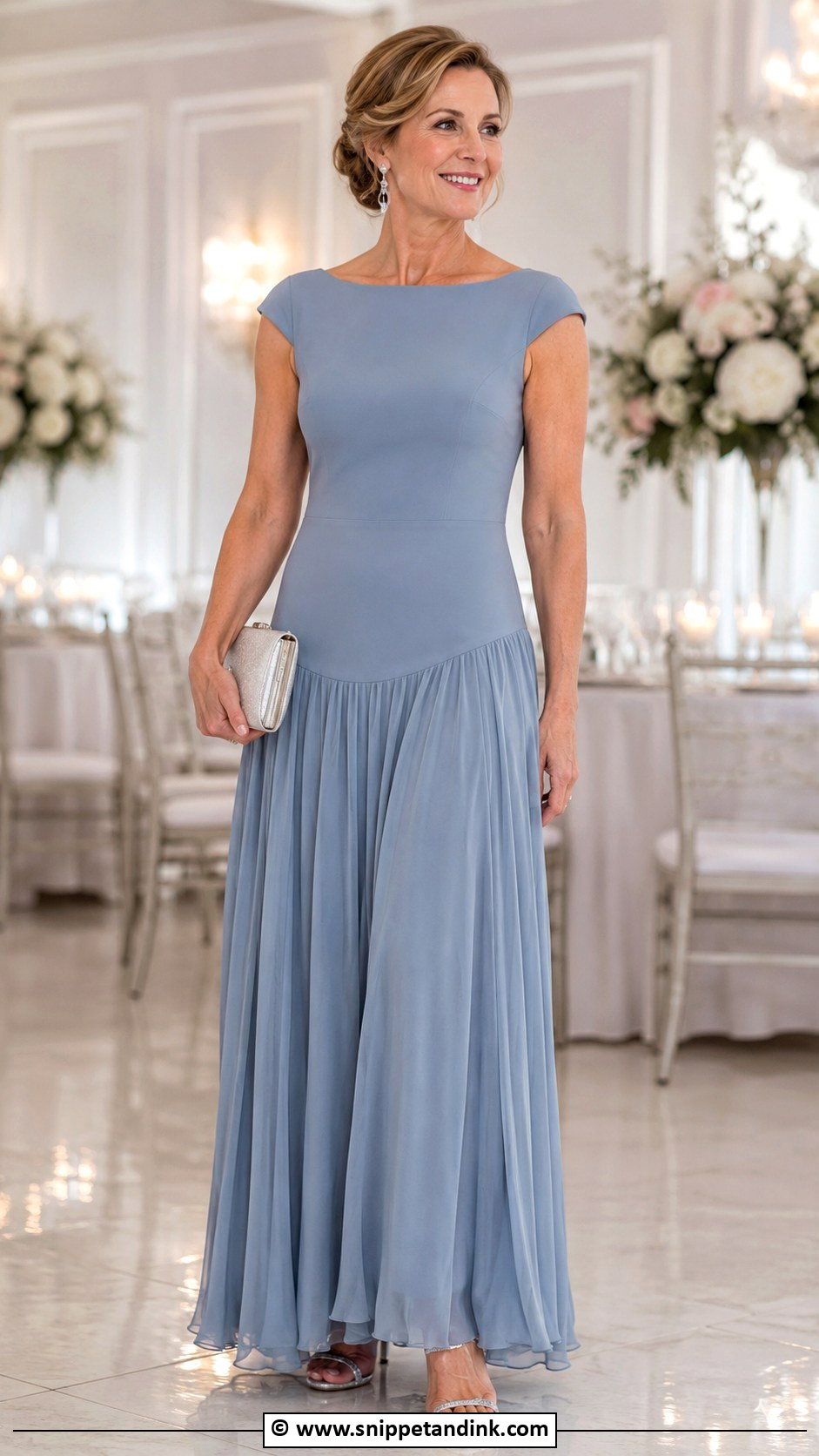
A drop waist mother of the bride gown looks current when the seam sits softly below the natural waist, not sharply at the hip. Crepe, chiffon, satin and lace all suit it, in navy, champagne, mauve, silver, dusty blue or soft green. I always suggest a sheer sleeve, capelet or matching wrap for mothers who want arm coverage, because it keeps the silhouette visible. Comfortable heels matter more here than anywhere: she will stand through the ceremony, receiving line and family portraits.
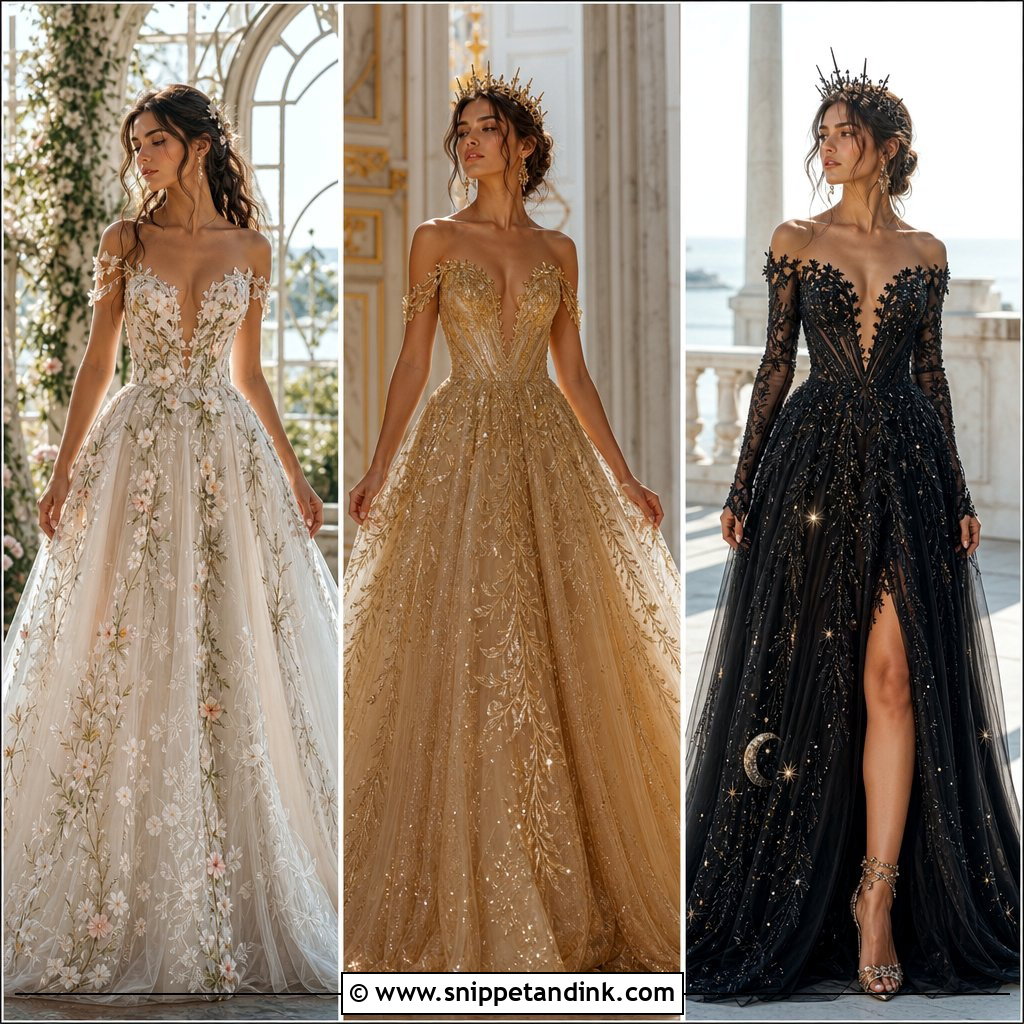

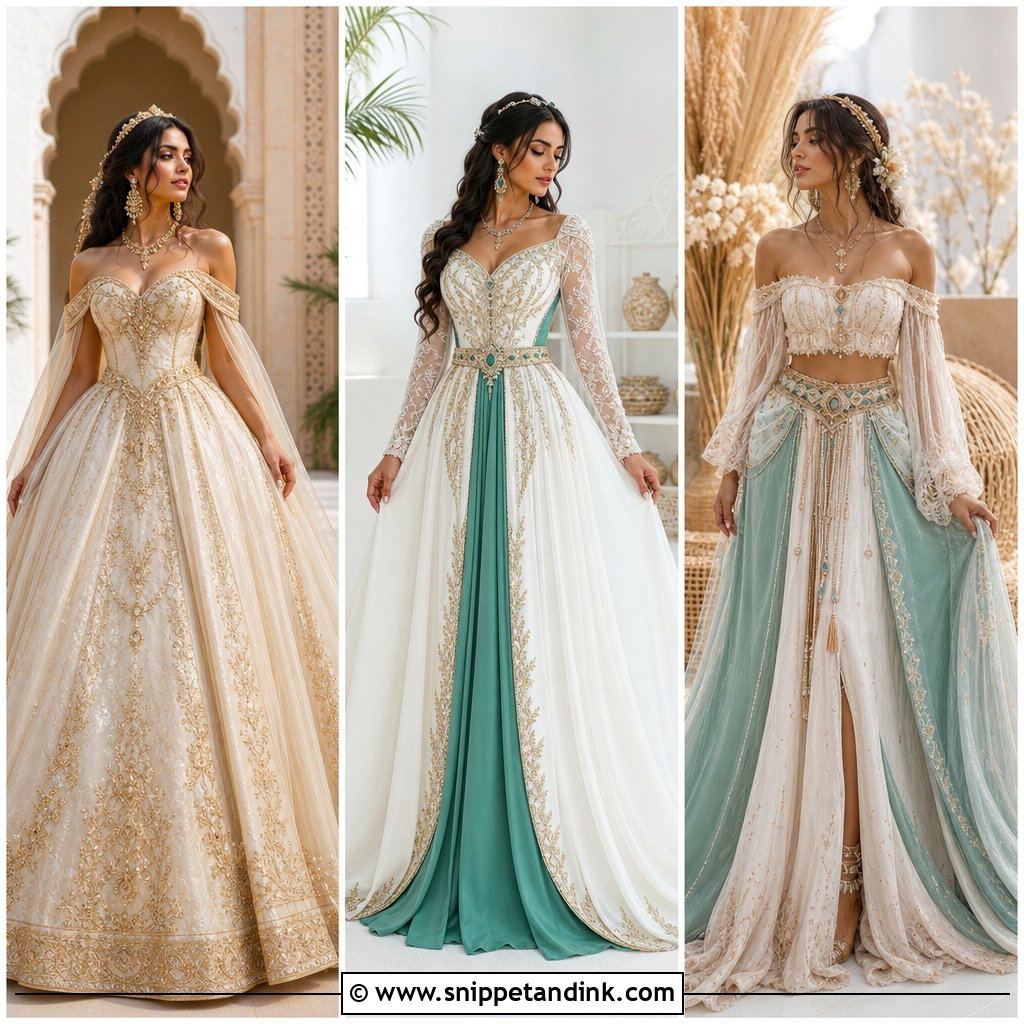
25. Drop Waist Prom Gown
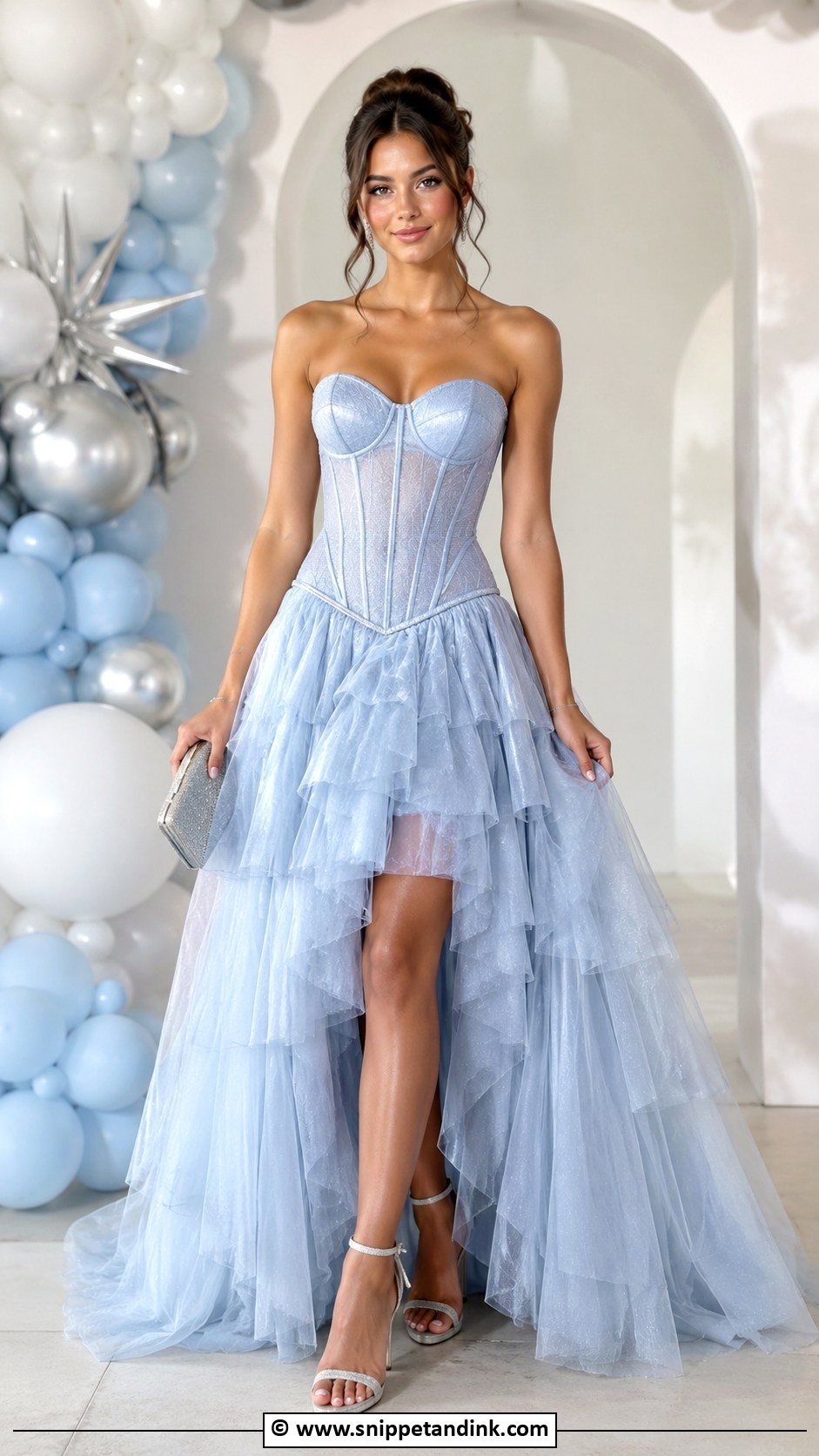
For prom or a pre-wedding party, the dropped waist stands out from the usual A-line and fitted gowns because the skirt begins lower. Satin looks sleek, tulle softer, beading sparkles, chiffon is the comfortable option. Corset bodices, strapless tops, off shoulder necklines and floral details all personalise it. Wear heels you can actually walk in; a dropped seam already shortens your stride a little.
Sitting, Dancing and Bustling in a Low Waistline
A dropped waist behaves differently from a natural waist once you are actually living in it. When you sit, the seam pushes up into your stomach rather than folding at the waist, so a fitted bodice that felt fine standing can feel tight at dinner. I have brides sit on a hard chair at the final fitting for a few minutes. If the seam digs in, the bodice needs a little more room at the hip.
Bustles start lower too
Because the skirt begins at the hip, bustle points sit lower than on a standard gown. A French or under bustle usually suits this silhouette better than an over bustle, which can lift the seam at the back and break the long line. Have your seamstress show the person who will do it on the day, and practise once.
Small fixes for the day itself
- Fashion tape along the inside of a strapless or off shoulder bodice stops it creeping up.
- A handheld steamer at the venue rescues creased organza, satin and velvet after travel.
- Stand for portraits before you sit for dinner if the gown is velvet or silk; seated creases sit right across the seam.
- Keep a small sewing kit with thread matched to the gown for a loose bead or a popped bustle loop.
A Lower Seam Asks for Fewer Accessories
Every gown above shares one idea: the seam moves down, and the rest of the outfit has to make room for it. In my fittings the gowns that work best are the ones where the bodice fits closely, the seam sits where your body naturally bends, and you can sit and dance without tugging at it. After that, keep the accessories few. Simple heels, one good pair of earrings and a small clutch are usually all a drop waist needs.
You'll Like These Ideas:






Leave a Reply