
Every decade of bridal fashion solved the same problem differently: how to make one woman look special for one day. Victorian corsetry, Edwardian lace, 1920s beading, 1930s satin and the tea-length skirts of the 1950s each give a completely different mood, and I find most brides already lean toward one of them before they know the names. You can wear a genuine vintage garment, restore a family heirloom, or buy a new dress cut on a historical pattern with modern lining and support. In fittings I always ask about the veil, shoes and gloves early, because accessories are what tip a period look into either polish or costume. Below are 25 old-fashioned dresses I’d happily style, from grand ballrooms to a quick courthouse ceremony.
Real Vintage, Restored or Newly Made: What Each Asks of You
These three routes look similar in photos but behave very differently in a fitting room. I ask brides to decide which one they’re on before falling for a specific dress, because it changes the timeline, the budget for alterations and how much risk sits in the fabric.
Genuine vintage
Old sizing runs much smaller than today’s labels, and older silk can be brittle along fold lines. Alterations are mostly about taking in, not letting out; seam allowances in many older gowns are narrow, so there’s rarely much fabric to add. Try it on before you pay, and bring a seamstress if you can. Look closely at underarms, waistline and hem for yellowing, small splits and repairs, and hold the lace up to a window to check for thinning.
A restored family dress
Plan more time than you’d expect. Assessment, careful cleaning and reinforcement can stretch over months, and a specialist may tell you some parts can’t be saved. Go in ready to adapt the dress rather than wear it exactly as it was.
A new gown on a historical pattern
This is the lowest-risk route and the one I’d recommend for anyone with a long, active day planned. You get modern lining, strong seams and normal alteration windows, usually two or three fittings in the final couple of months. The trade-off is that new lace rarely has the softness of old lace, so handle samples and ask what the lace is made of.
1. Victorian Lace Wedding Dress
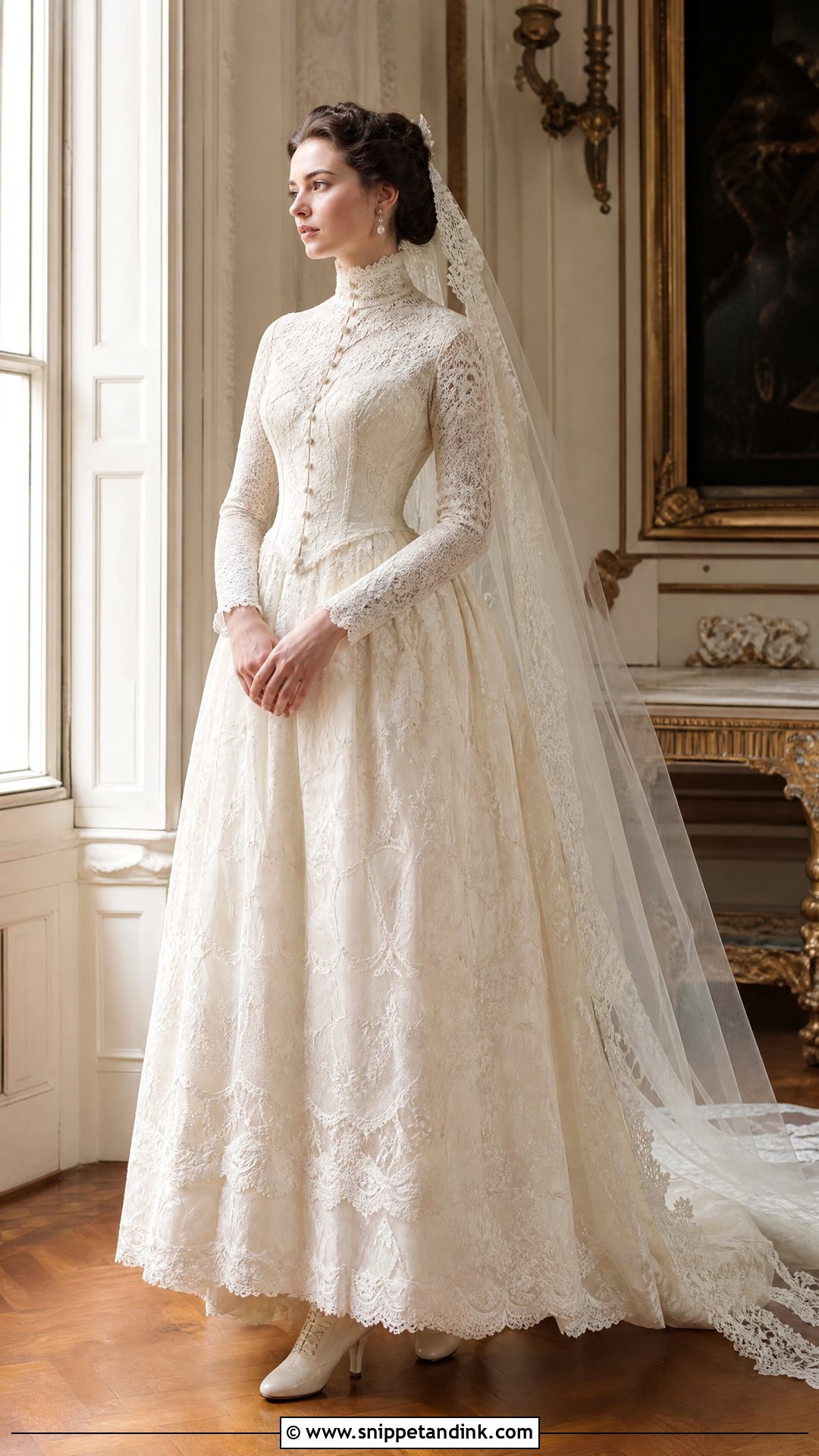
A Victorian lace wedding dress is the most formal of the vintage looks: fitted bodice, defined waist, full skirt, high neck and long sleeves covered in botanical lace. Real Victorian gowns relied on heavy fabric and rigid corsetry, and that is the part I’d modernise first. Ask for flexible internal boning sewn into the lining instead of a separate laced corset, because you’ll be sitting through dinner in it. Antique ivory reads softer than bright white and lets the lace pattern show. I’d finish it with pearl drops, a long lace-edged veil, button-front shoes and a structured bouquet of garden roses, which keeps the whole thing feeling like a wedding rather than a museum piece.
2. Edwardian High Neck Wedding Dress
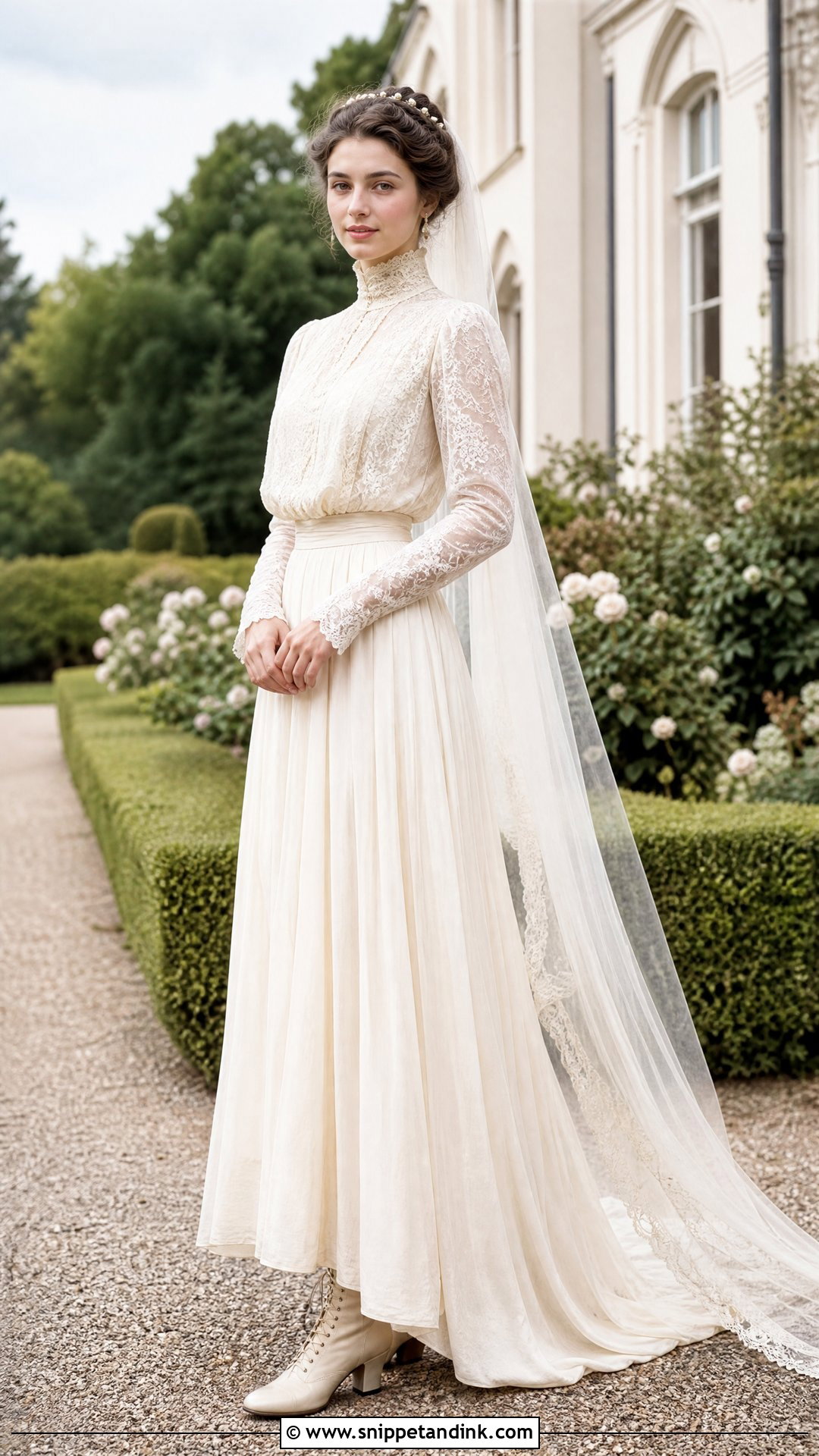
The high collar is what people recognise as Edwardian, and it’s the detail I fit most carefully. A collar that sits even a few millimetres too tight will rub raw by the speeches, so I check it with the bride turning her head and laughing. Look for a lightly bloused bodice, long fitted sleeves and a skirt that falls straight without much volume. Champagne, cream or pale blush add to the heirloom feel. Pearl hairpins, low lace-up boots and a long veil tucked under a loose chignon are enough; skip statement jewellery, since the neckline is already doing that work. Garden venues and historic houses suit it best.
3. 1920s Beaded Wedding Dress
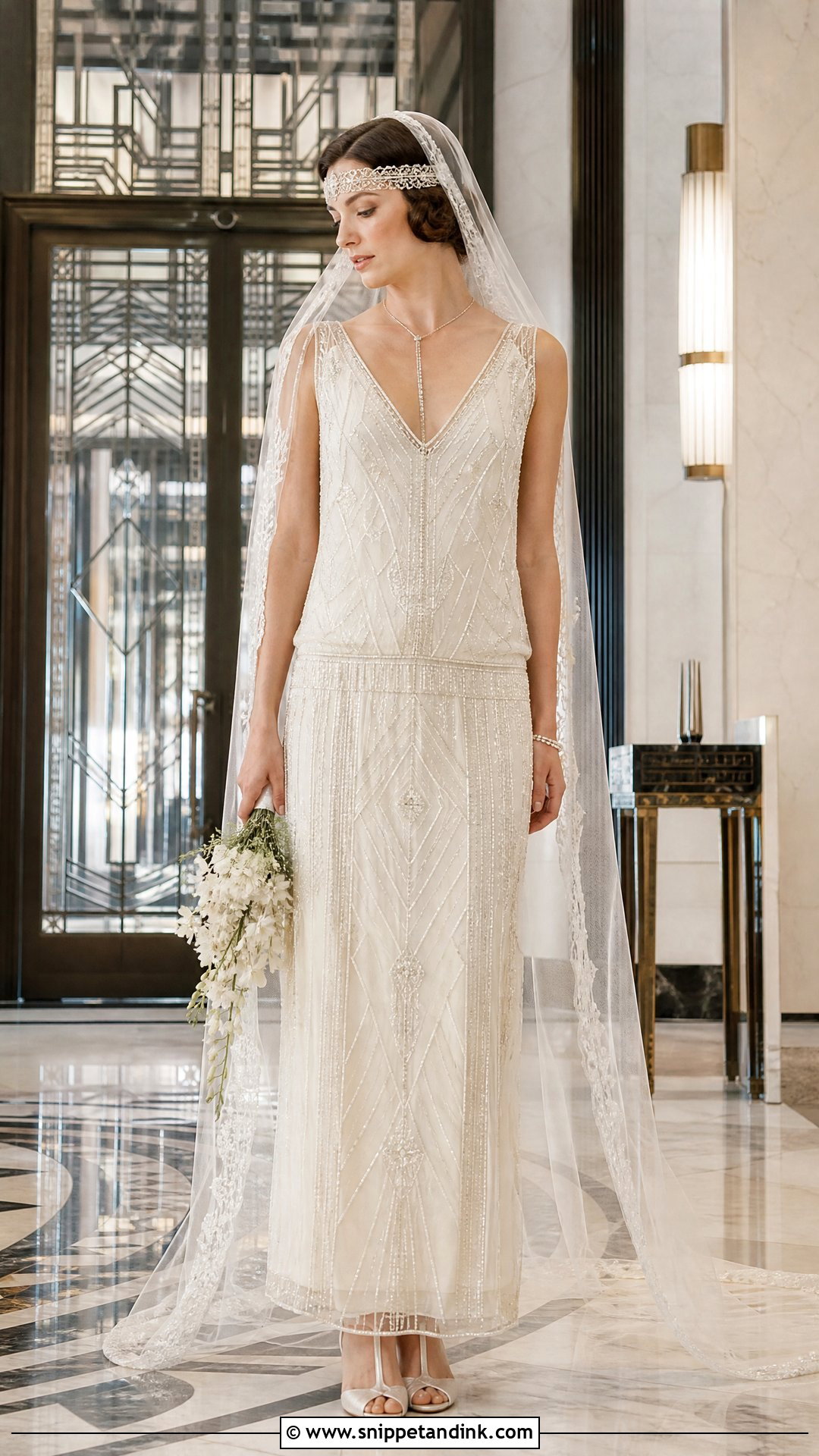
Beading is heavy, and that’s the first thing I warn brides about with a 1920s dress. A fully beaded straight shift can weigh several pounds and pulls downward all day, so the shoulder seams and lining need to be strong. The flattering cut is straight or gently dropped at the waist, decorated with geometric beading, sequins, or pearl embellishment; it captures the decade far better than a structured modern ball gown ever could. Satin T-strap shoes, one slim bracelet and a cathedral veil on a jewelled headband carry the Art Deco line. Keep the bouquet long and narrow (calla lilies are ideal), and pair it with a waved bob or a pinned faux bob so the beadwork stays the focus.
4. 1930s Satin Wedding Dress
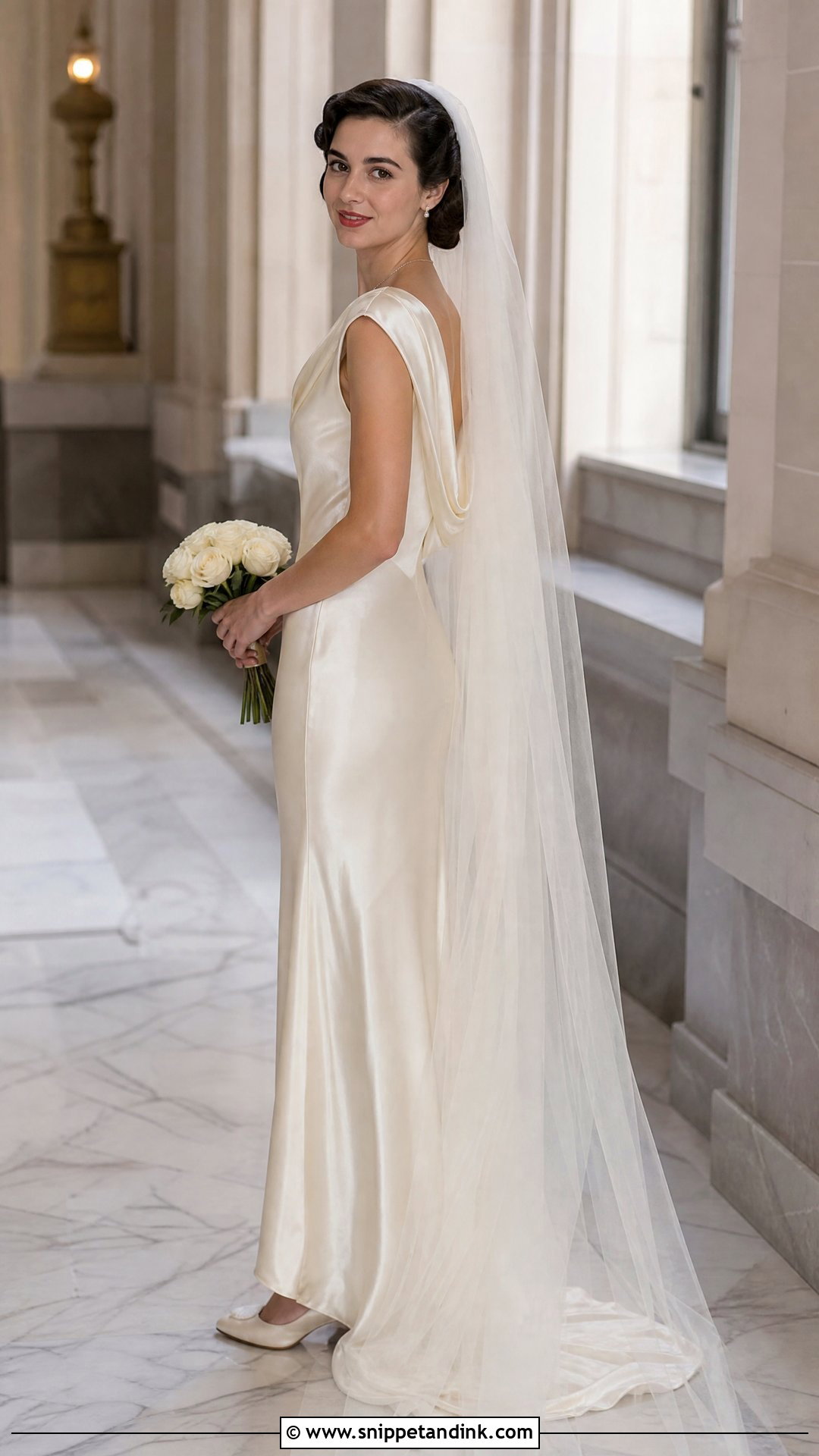
Bias cut is the whole story here. Cutting satin on the diagonal makes it drape and cling, which is why a 1930s gown follows the body without being tight, and also why it shows every line underneath. I fit these over the exact underwear the bride will wear, never over whatever she arrived in. Silk satin moves best; a modern satin blend creases less and is easier to steam on the morning. A cowl neck or low draped back gives the period touch. Closed satin pumps, a fine chain and a plain long veil are all it needs, with a small bouquet of cream roses and an optional capelet if you want more coverage.
5. 1940s Long Sleeve Wedding Dress
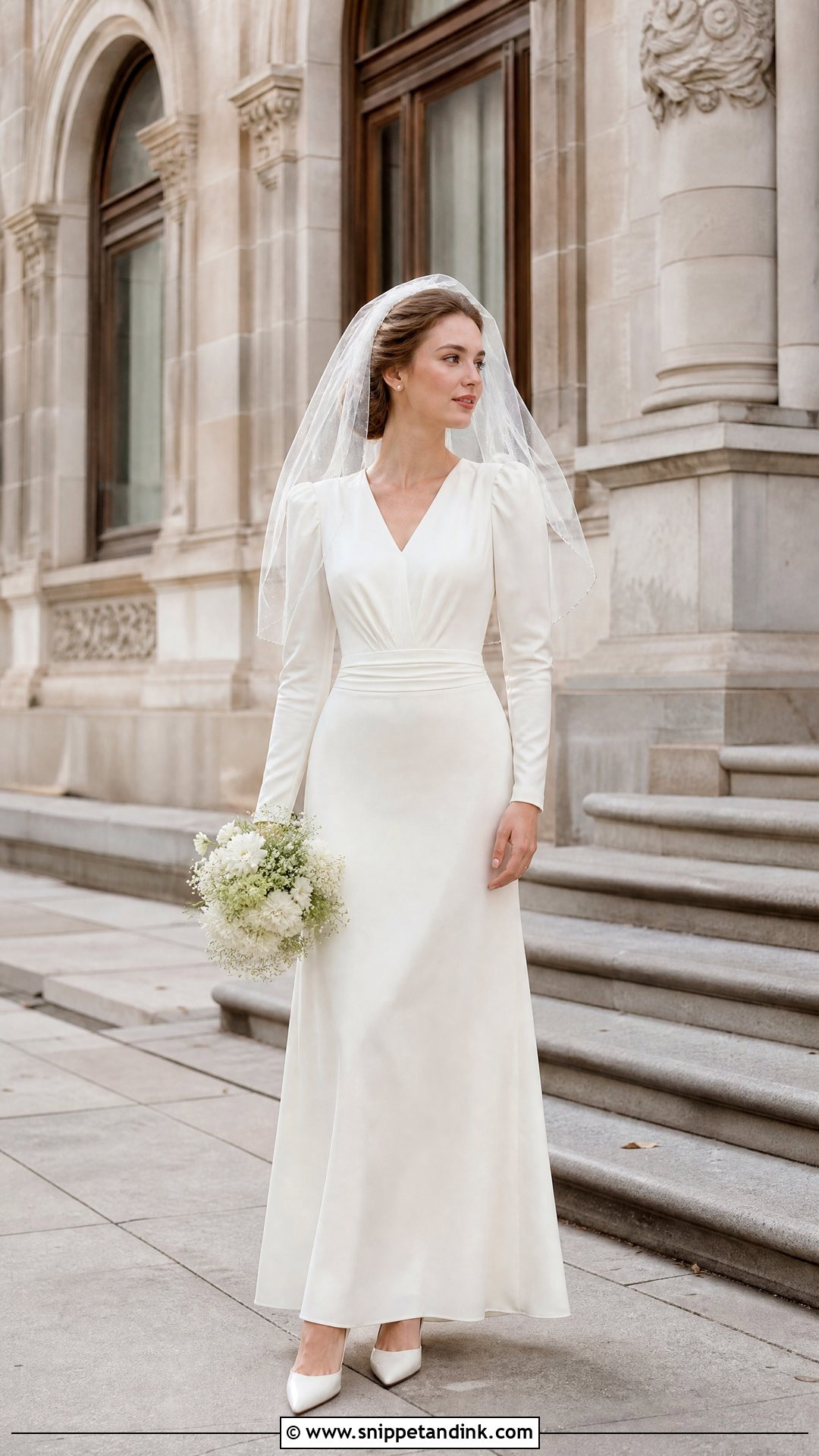
Wartime rationing shaped 1940s bridal wear, so the look is tailored and quietly practical: shaped waist, modest V-neck, lightly gathered shoulders and a narrow A-line skirt with long sleeves. Matte crepe or soft satin gives the smooth finish. Covered buttons down the back add detail, though I always tell brides to budget an extra ten minutes for someone to do them up. Low block heels, pearl studs and a fingertip veil placed behind rolled or waved hair complete it. If you’d like more structure at the shoulder, ask for a light shaped pad rather than the full exaggerated version, which can swamp a petite frame. It sits naturally in a courthouse or historic hall.
6. 1950s Tea Length Wedding Dress
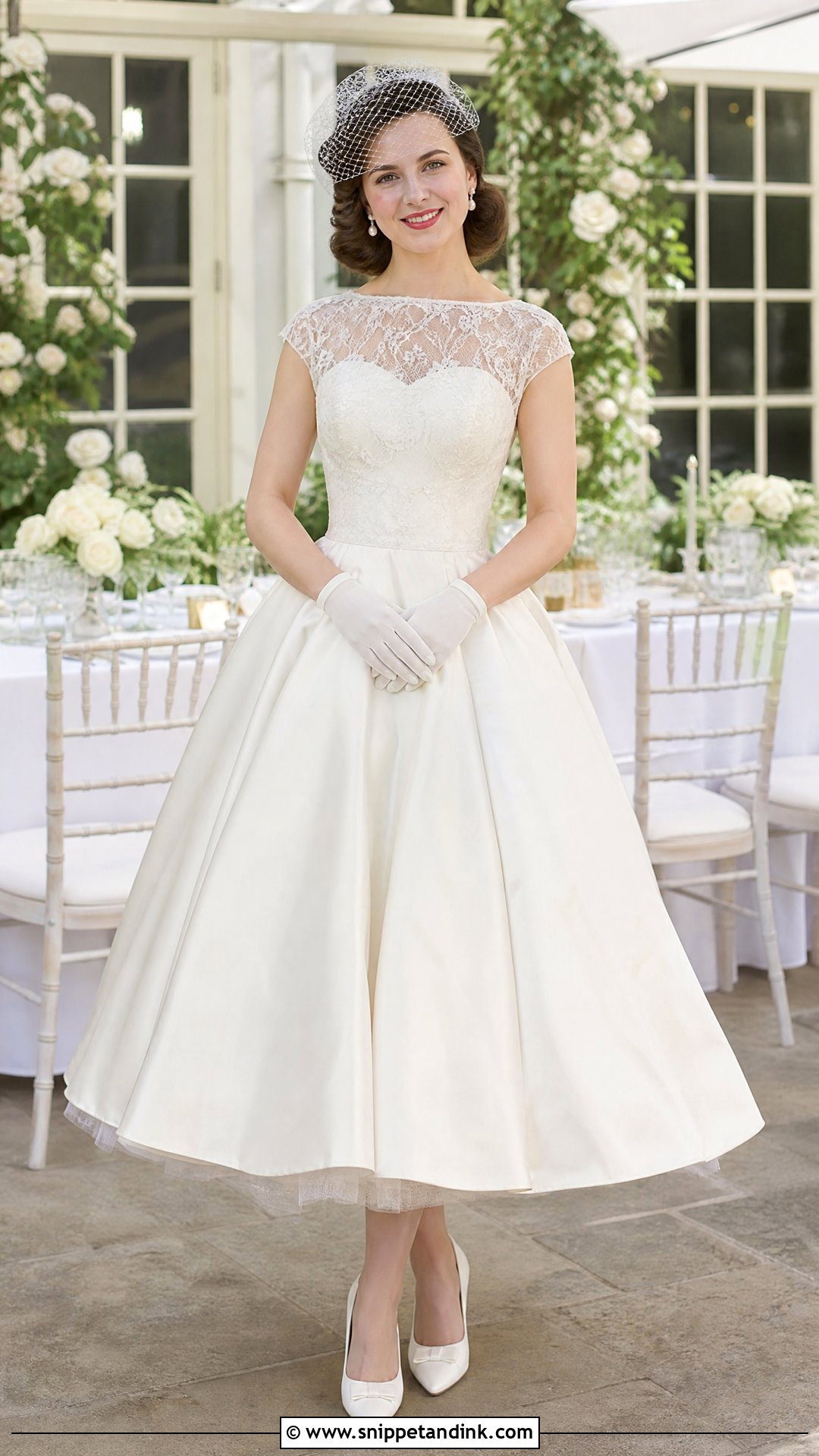
Tea length is my favourite answer when a bride tells me she plans to dance all night. The classic 1950s shape has a fitted bodice, a defined natural waist and a full skirt ending between knee and ankle. Choose satin, lace, organza or structured cotton depending on how formal the day is. Because the hem shows your feet all day, the shoes become part of the dress, so buy them before the hemming appointment and bring them. Pointed pumps, short gloves, pearl earrings and a birdcage veil finish it. A crinoline petticoat gives the full circle-skirt volume; a softer tulle underskirt looks more natural in photos and is far easier to sit in.
7. 1960s A-Line Wedding Dress
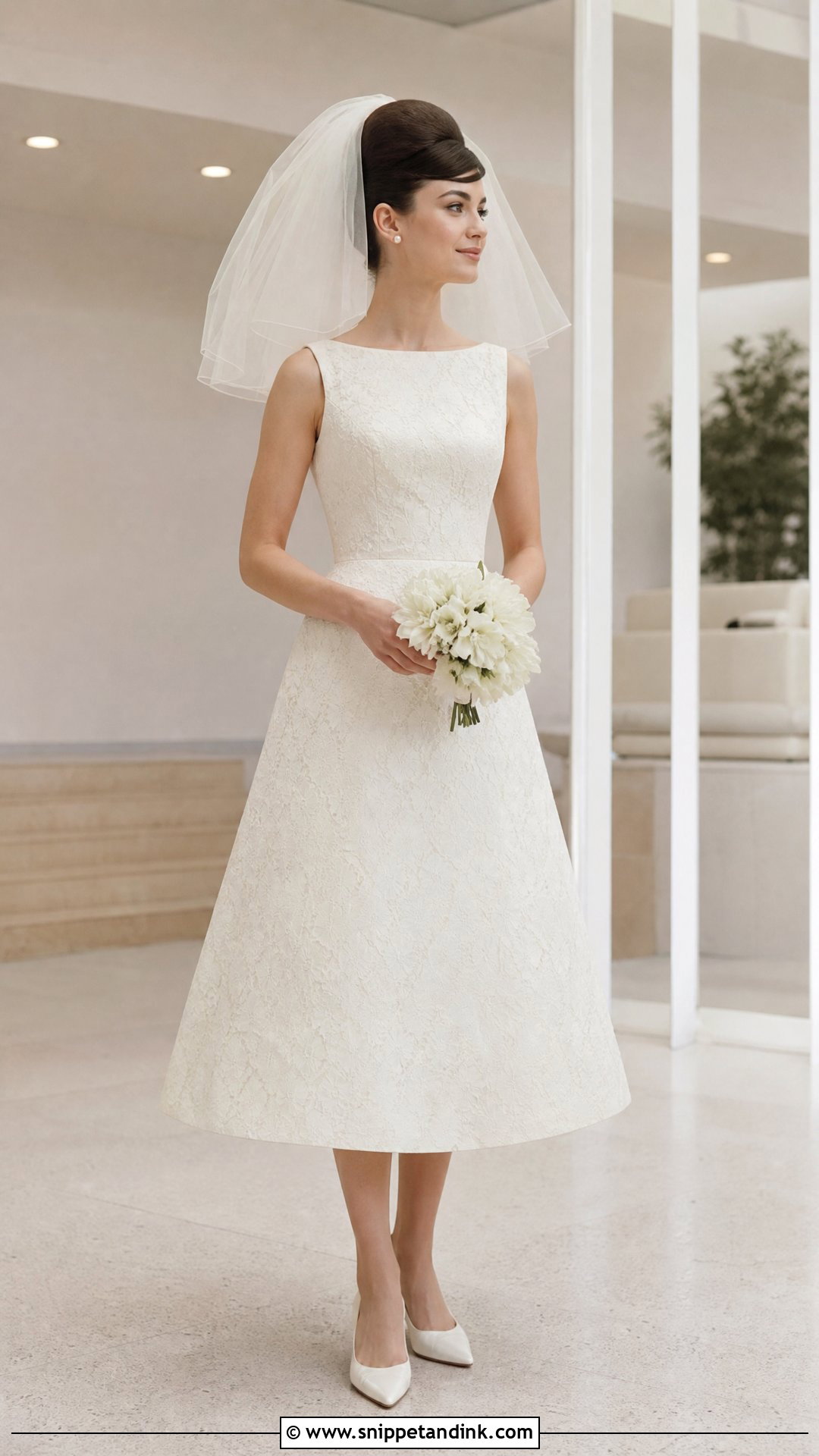
This is the vintage look I suggest to brides who say they don’t really like vintage. A 1960s A-line has a fitted top, sleeveless or bracelet-length sleeves and a skirt that widens gradually from the waist, with nothing ornate about it. The fabric has to hold the shape on its own, so smooth satin, jacquard or a heavy crepe; a flimsy fabric just collapses into a plain shift. A bateau neckline and a neat row of back buttons are enough decoration. Low pointed heels, pearl studs and a short bouffant veil keep the line clean, and a smooth low bun or rounded updo suits the proportions.
8. 1960s Mod Mini Wedding Dress
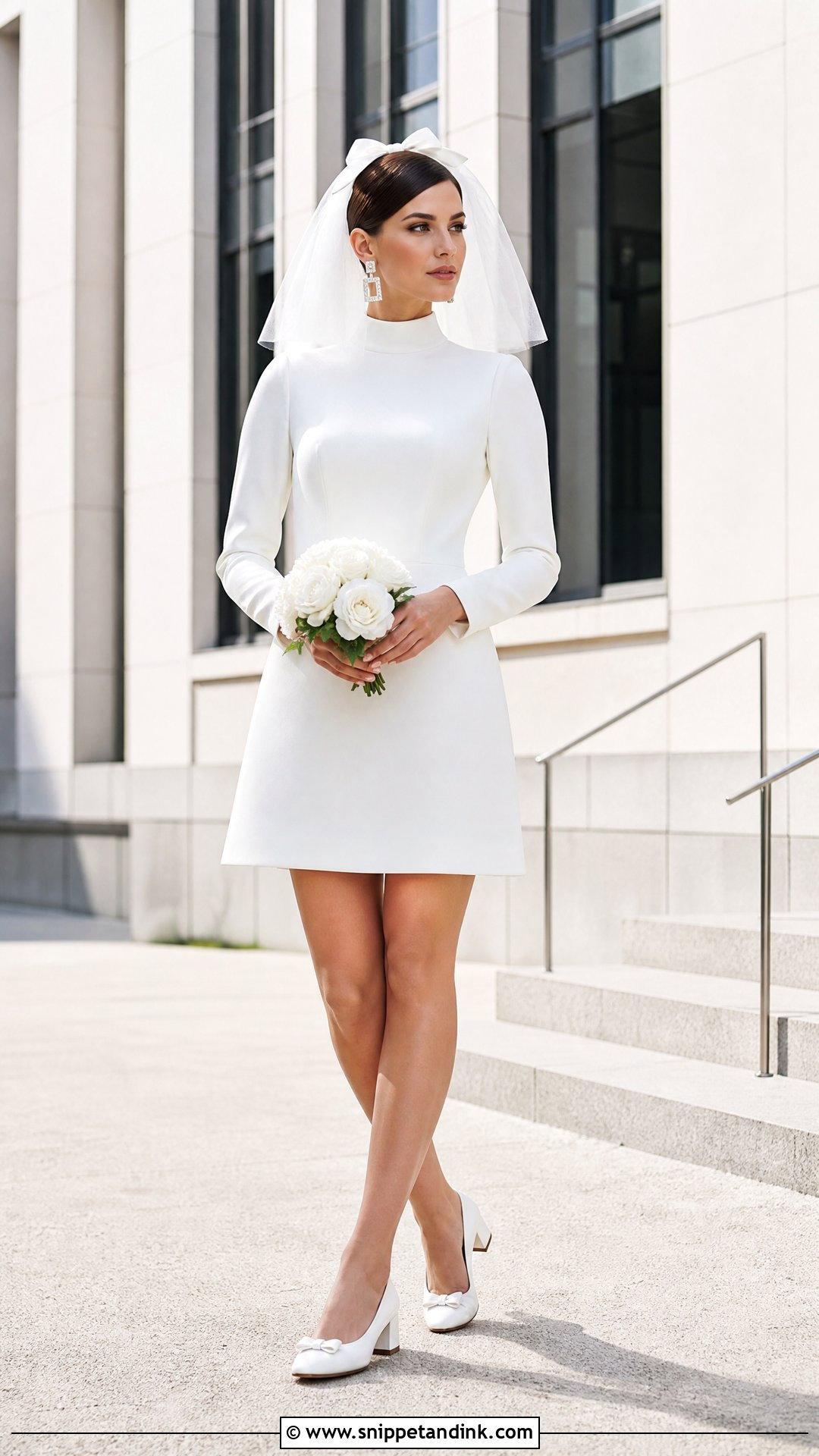
A mod mini is pure fun for a civil ceremony, but the hem needs testing. I have brides sit, climb a step and bend to sign the register in the fitting, because a hem that looks right standing can ride up surprisingly far when seated. The cut is clean: high neck, long sleeves and enough substance in the fabric (white crepe, jacquard or matte satin) to look bridal. Low block heels or slingbacks suit it far better than platforms. A short veil, padded headband or a simple bow gives the period finish. Keep jewellery graphic and minimal, and carry a rounded bouquet to soften the straight shape. Restaurant receptions and city halls suit it.
9. 1970s Boho Lace Wedding Dress
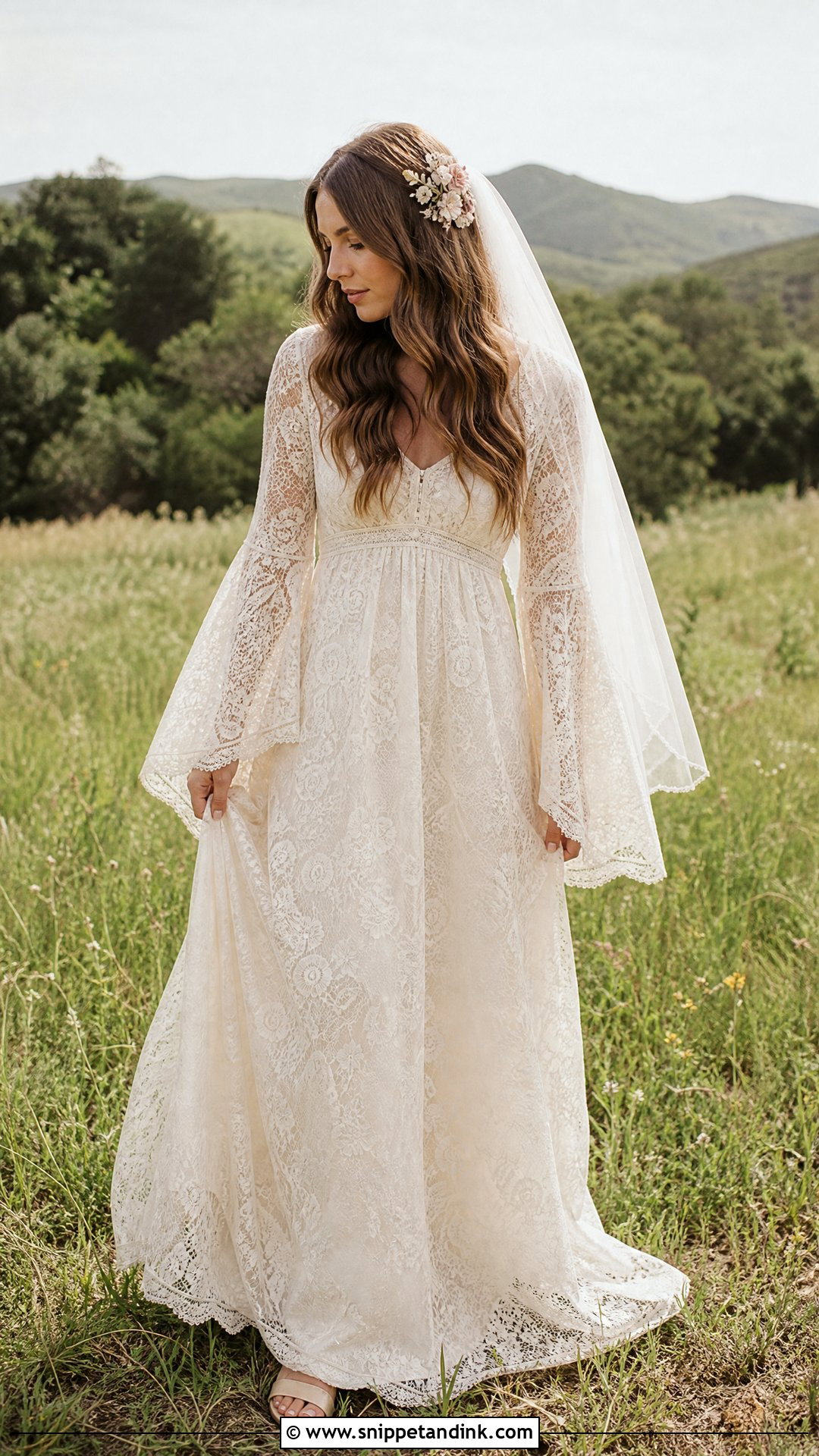
A 1970s boho lace wedding dress belongs outdoors: flowing skirt, empire or natural waist, bell sleeves and crochet or cotton lace. The thing I check in daylight is the lining. Open crochet lace that looks modest under shop lighting can turn almost see-through in direct sun, so stand by a window at your fitting. Low leather or ivory sandals, loose waves and a floral comb are the right finish; a heavily structured veil fights the mood, so choose a soft chapel or lace-edged one. An airy bouquet of seasonal flowers suits woodland, meadow and desert ceremonies.
10. Renaissance Square Neck Wedding Dress
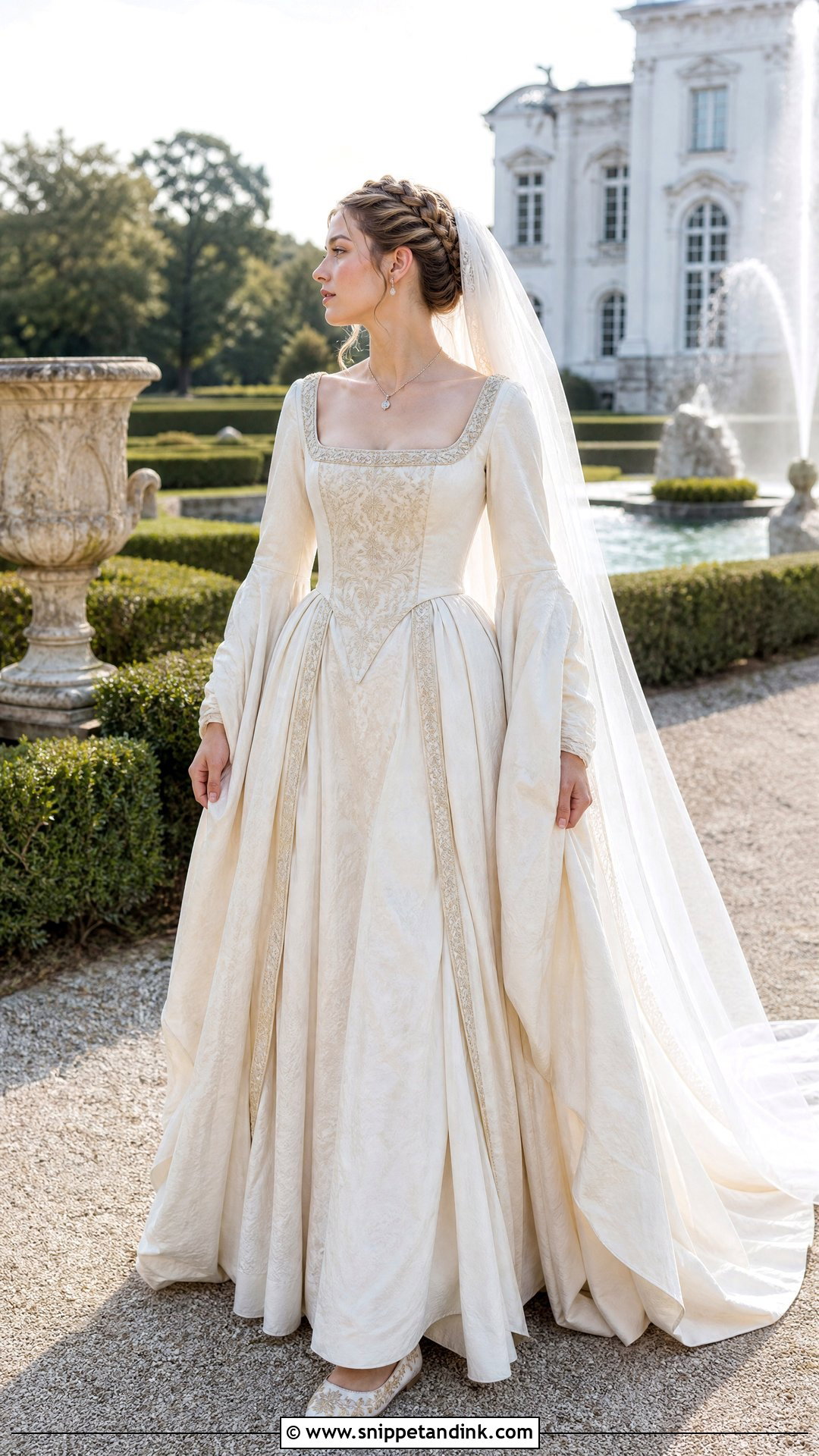
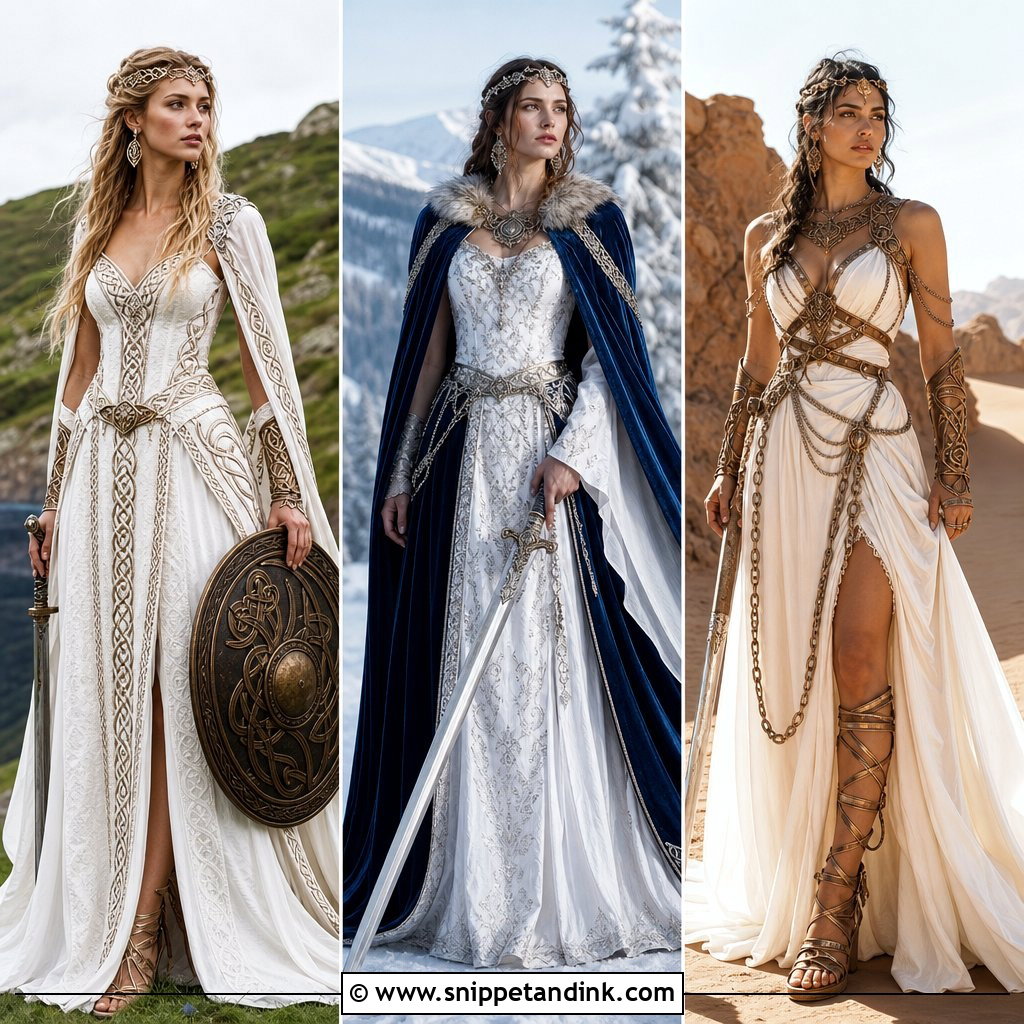
A Renaissance square-neck wedding dress gives historical weight without turning into costume, as long as you keep the palette tonal. The broad square neckline, fitted bodice, flowing skirt and statement sleeves do the period work by themselves. Season decides the fabric for me: ivory velvet in cold months, a silk blend or lightweight brocade in summer, because velvet under midday sun is genuinely punishing. A delicate pendant, embroidered flats and a long veil set beneath a braided updo finish it. Trailing greenery with pale flowers suits castle, estate and formal garden settings.
11. Regency Empire Waist Wedding Dress
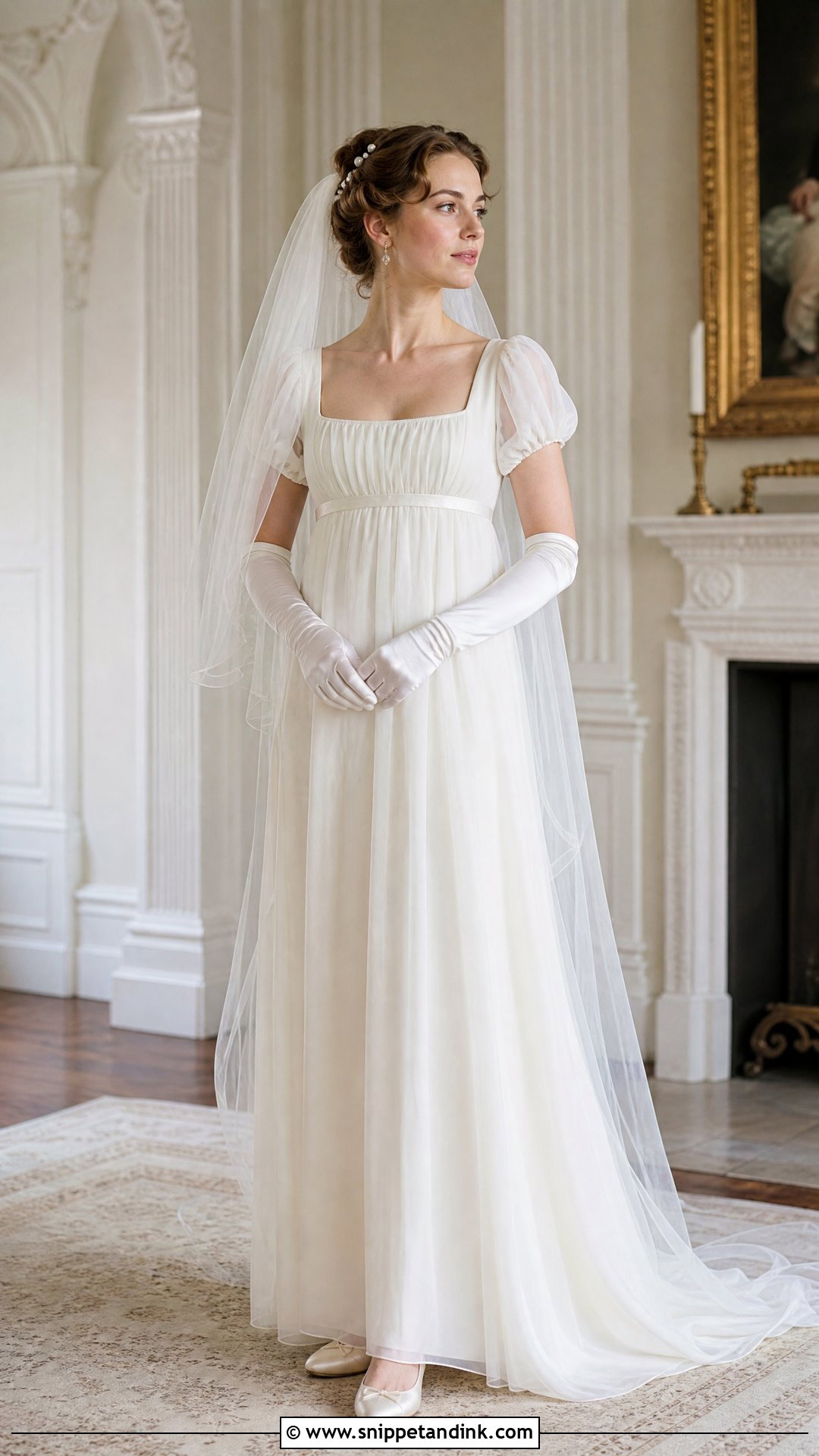
The Regency empire-waist wedding dress puts the waistline just under the bust, so the skirt falls straight from there and nothing presses on the stomach. That makes it one of the most comfortable silhouettes in this list. Fine fabric is essential: chiffon, silk or soft crepe drops cleanly, while anything stiff makes the high waist look like maternity wear. A square or scooped neckline and short puff sleeves give the period cue. Elbow gloves for the ceremony, drop earrings, satin slippers and a soft updo with pearl pins suit a spring wedding at a historic house.
12. Medieval Bell Sleeve Wedding Dress
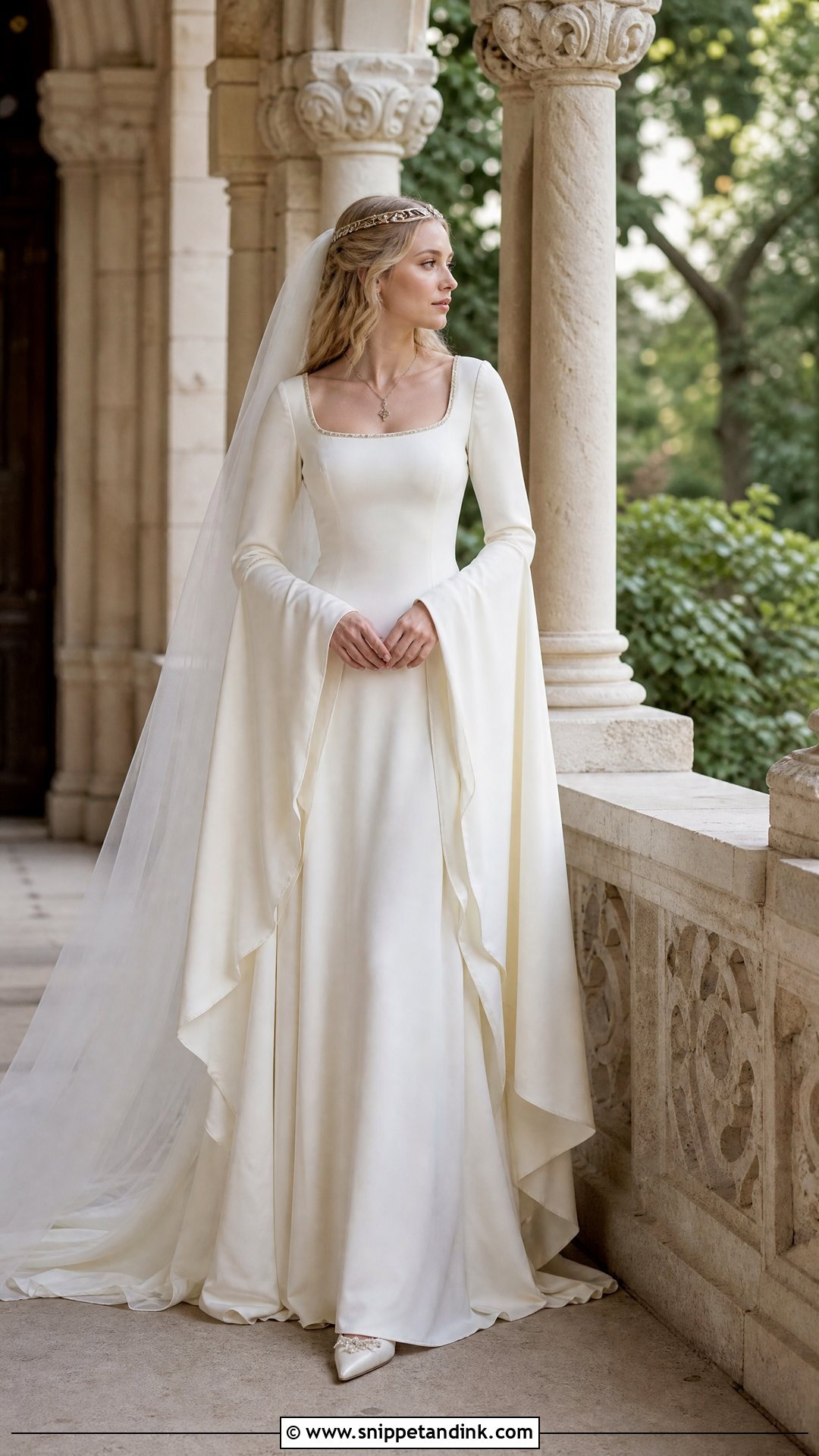
Bell sleeves are lovely until they land in the soup. My rule is that the widest point should finish above the wrist bone, or roughly there, so you can hold a bouquet and eat without the fabric trailing across the plate. Pick a fitted upper body, a gently shaped waist and a fluid floor-length skirt in crepe, matte satin or soft velvet; shiny stiff fabric looks cheap in this cut. Pointed flats, a fine circlet headband and a flowing veil at the back of the hair keep it simple. Trailing greenery echoes the sleeve movement, and stone venues or forest settings in cooler weather are where it really sings.
13. Antique Ivory Lace Wedding Dress
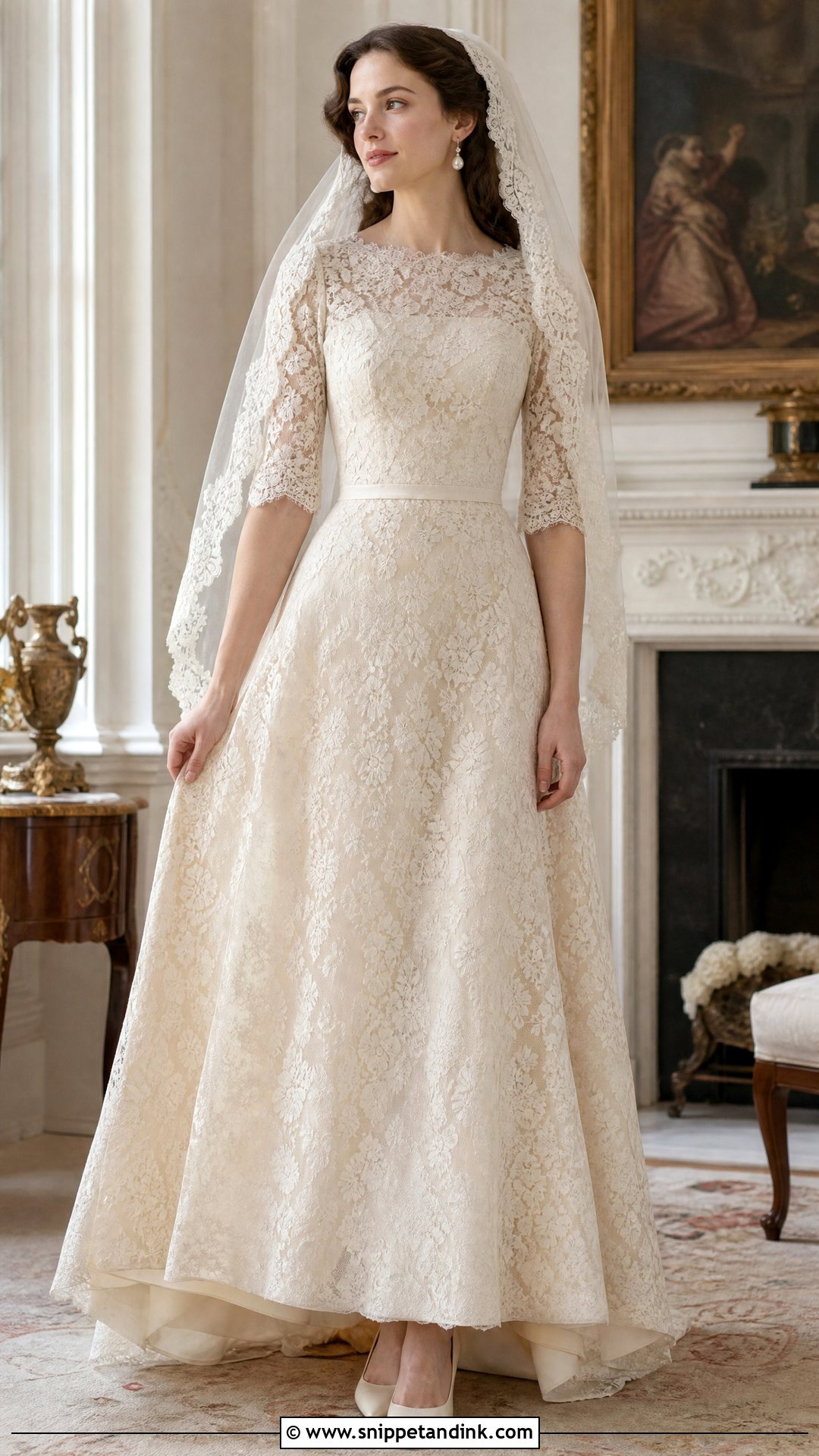
Antique ivory gives lace an aged warmth, but it’s also the easiest colour to get wrong. Creams vary enormously between brands, and an ivory veil beside an ivory dress can look grey or yellow once you’re outside. I ask brides to bring every accessory to one fitting so we can compare them together in daylight. A lining a shade deeper than the lace makes the floral pattern stand out, both in person and on camera. Style with ivory pumps, heirloom pearls and a veil with a narrow lace border, and keep the flowers white, cream and muted blush. You get the heirloom feel without the fragility of a real antique.
14. Basque Waist Wedding Dress
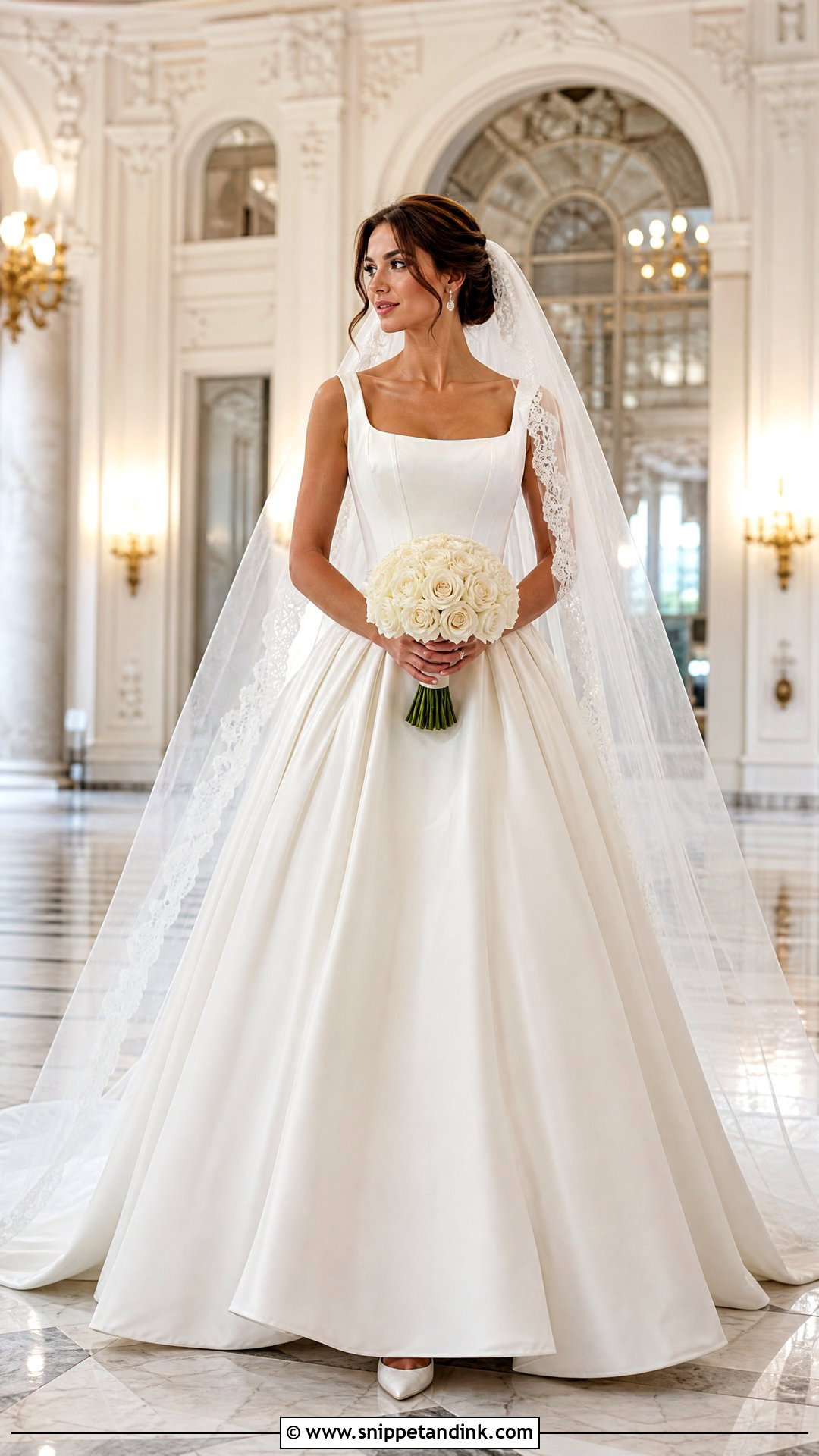
A basque waist extends the bodice into a point below the natural waist, which lengthens the torso and makes the skirt look fuller. It needs real internal structure to stay flat, and the point can dig in when you sit if it’s cut too long. In fittings I have brides sit, walk and bend before we sign off on the length. Satin makes it formal; lace softens it. A cathedral veil, drop earrings and closed pumps are enough, and if the neckline is detailed, leave the necklace off. Roses or peonies in a structured bouquet balance the skirt volume in a ballroom or estate.
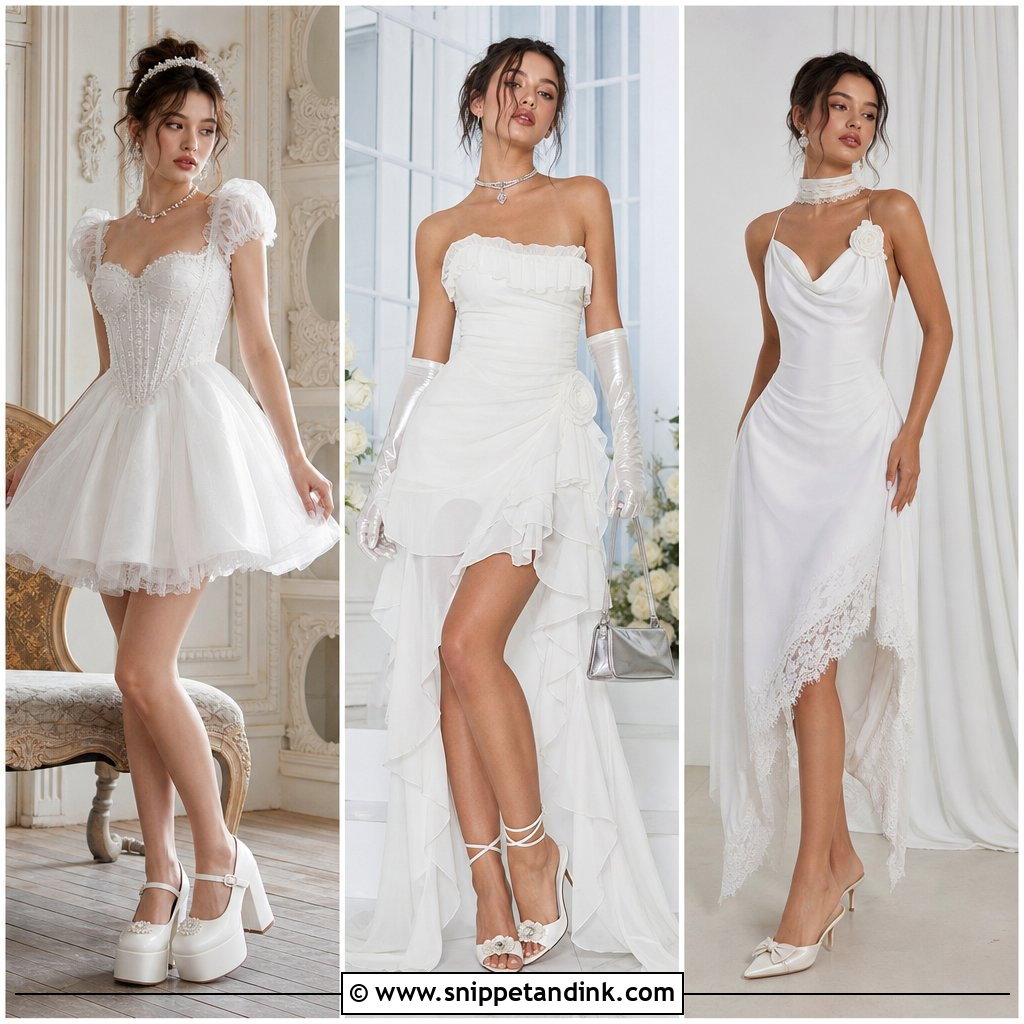
15. Puff Sleeve Wedding Dress
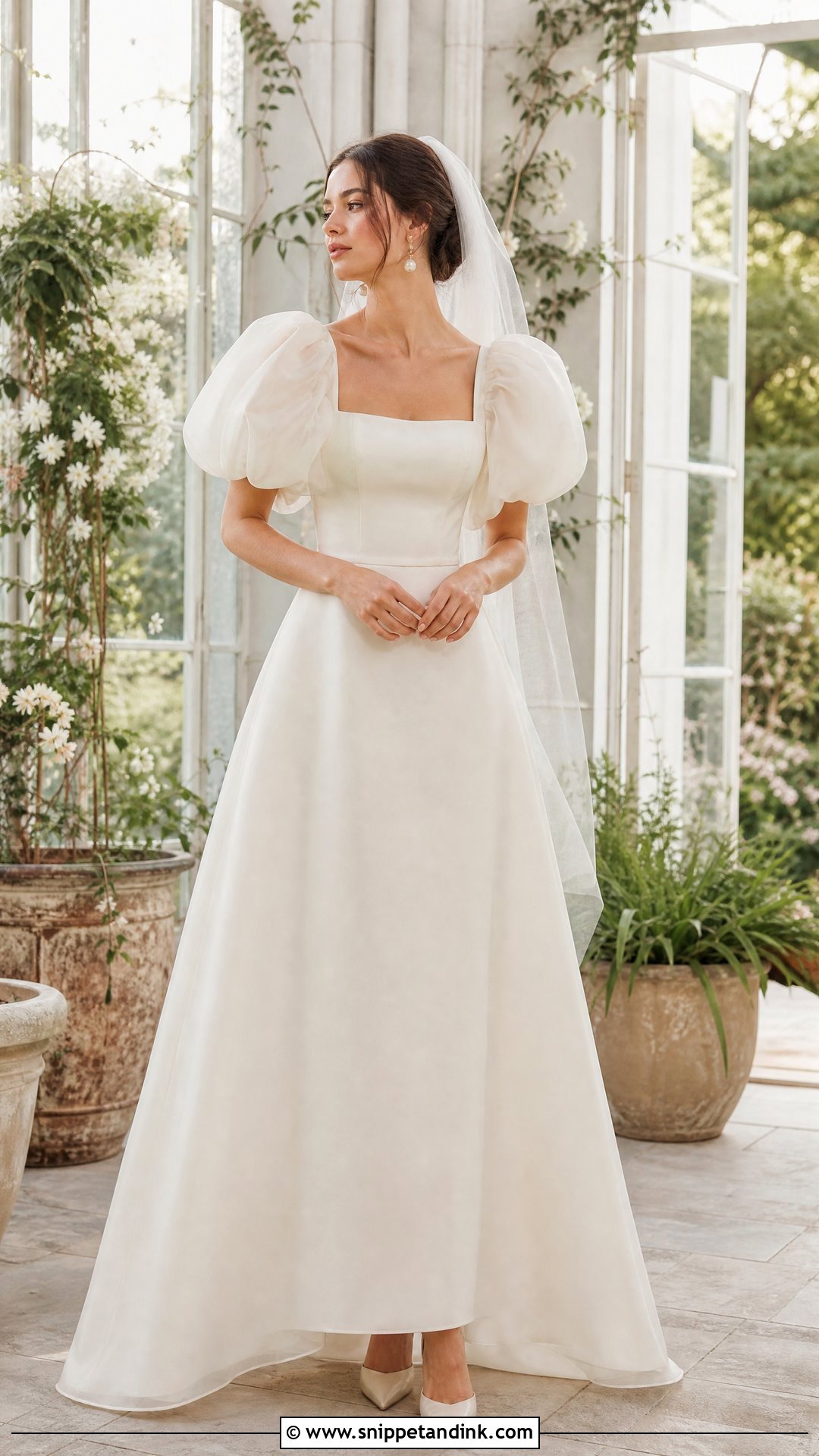
Puff sleeves have to be scaled to the bride. On a narrow-shouldered frame, a large puff can look like it’s wearing her, so I usually pin two sizes during a fitting and look at both in the mirror from a few steps back. Small gathered sleeves give a delicate historical reference; bigger ones make a fashion point. Organza keeps them light, while satin or brocade holds a firmer shape. A fitted waist and a smooth A-line skirt balance the volume above. Wear a simple veil behind the hair, pearl earrings and pointed heels, and leave out the big necklace.
16. Leg Of Mutton Sleeve Wedding Dress
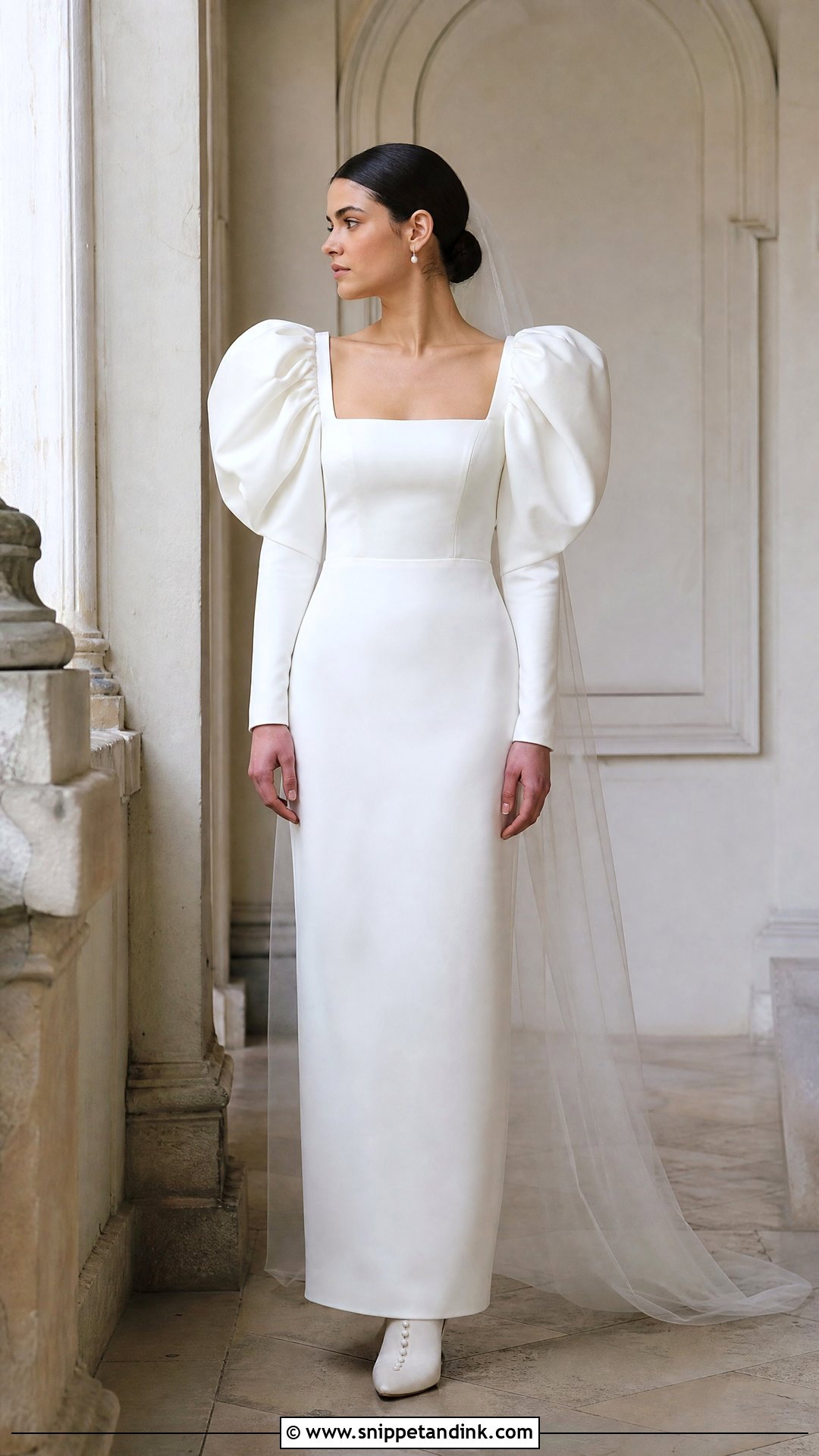
Leg-of-mutton sleeves swell at the shoulder and narrow tightly below the elbow, a shape that comes straight from nineteenth-century dressmaking. It’s a strong statement, and that means everything else should be restrained. I pair it with a narrow skirt or controlled A-line so the volume stays up top. A high neck strengthens the old-world feel; a square neck makes it feel fresher. Check you can raise your arms comfortably, because the tight forearm can restrict movement when hugging guests. A clean low bun, small earrings, button-front shoes, a plain chapel veil and a slim bouquet keep the focus on that dramatic sleeve.
17. Lace Jacket Wedding Dress
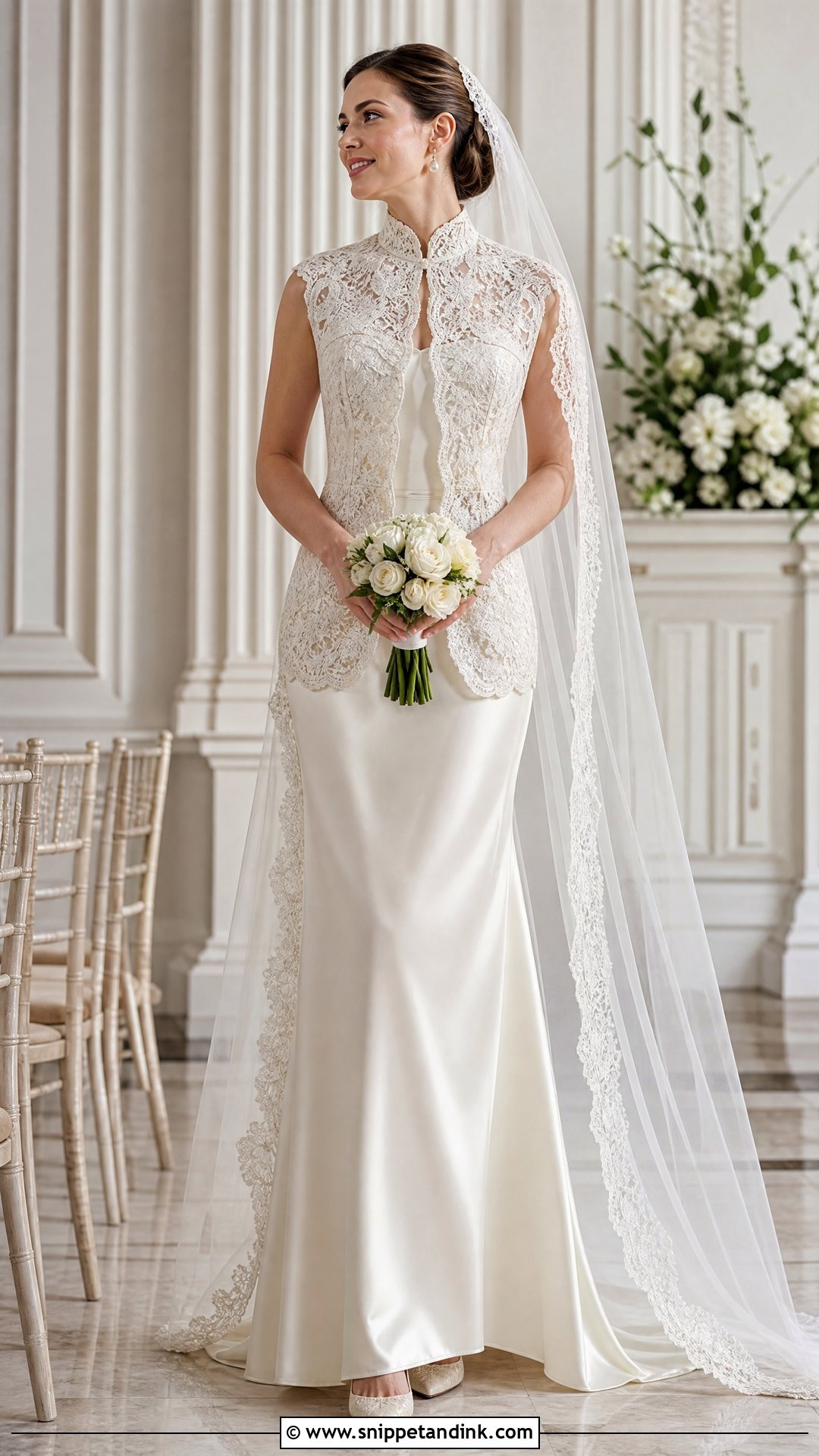
A lace jacket solves the church-then-party problem neatly. You start with a sleeveless satin or crepe gown and add a fitted lace jacket with covered buttons, a high neck or scalloped edges for the ceremony. The detail I fuss over is where the jacket hem meets the dress waist: if they sit even slightly apart, the two pieces look accidental. Pearl earrings, closed heels and a lace-trimmed veil complete it. After the vows, remove the jacket and you’re in a simpler reception look. It’s also a smart answer when the ceremony venue is cold and the reception hall is warm.
18. Button Back Wedding Dress
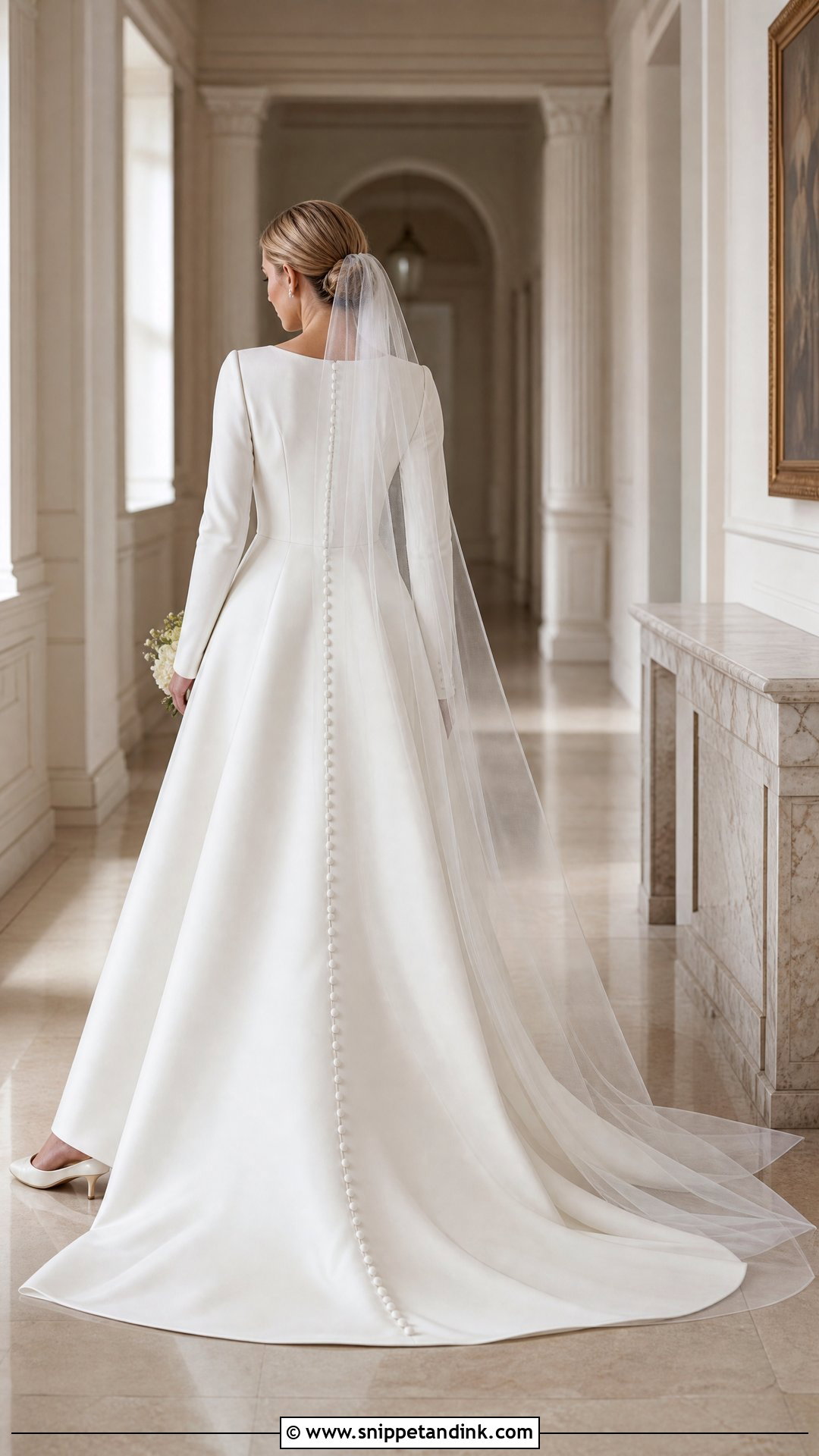
A long line of buttons running from bodice to train is one of the best details for the processional, when most guests are looking at your back. Ask your consultant early whether they’re functional loops or decorative buttons over a zip. Real loops can take ten to fifteen minutes to close, and that needs to be in the morning timeline. Choose covered buttons that match the fabric exactly, on either a long-sleeve A-line or a cleaner column. Pick a sheer veil so the buttons show through. Pearl studs, pointed pumps and a low chignon keep attention on the construction.
19. Brocade Ball Gown Wedding Dress
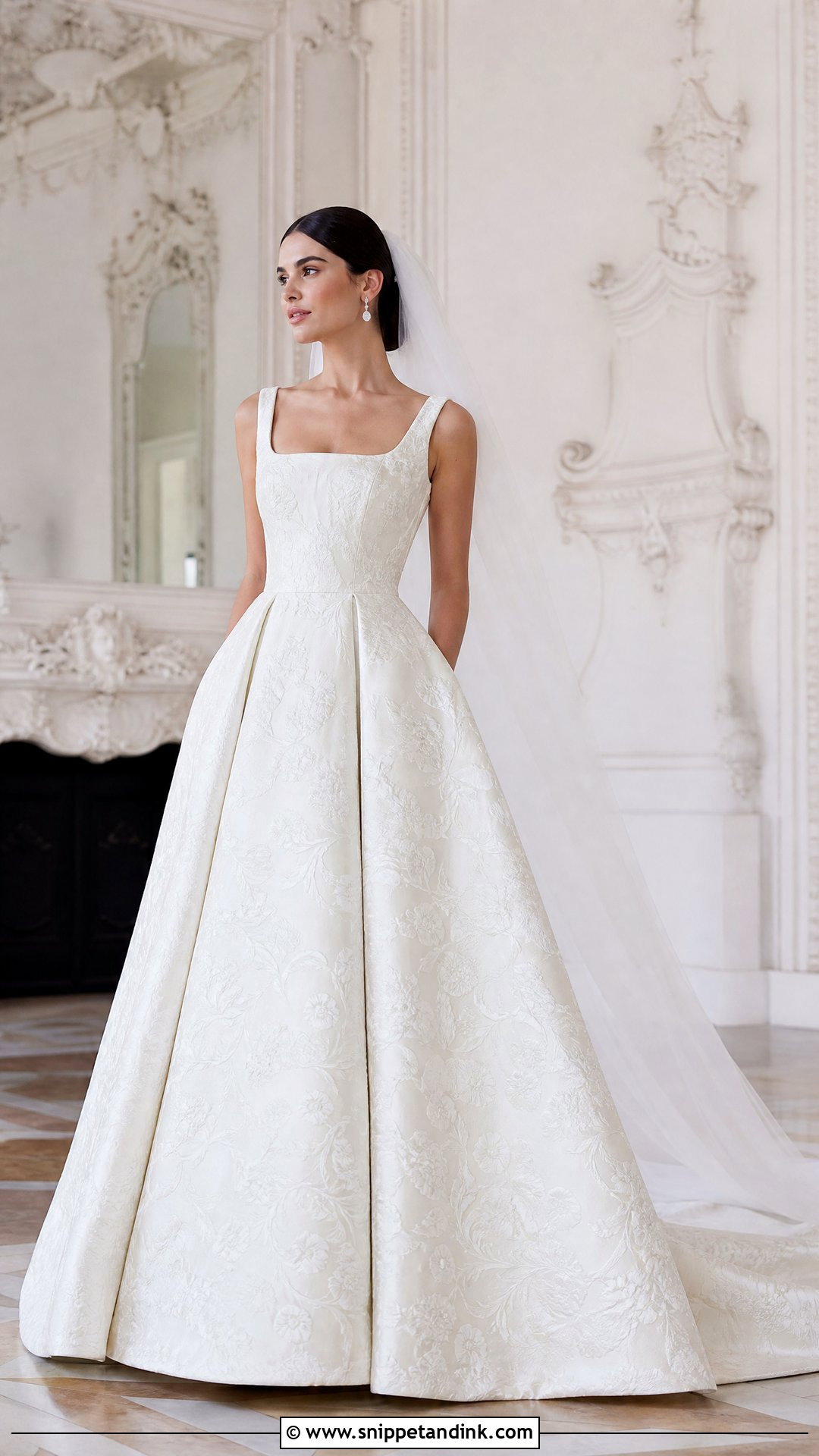
Brocade has its pattern woven into the cloth rather than printed on top, which is why it catches light so richly and why it carries real weight. An ivory ground with a subtle floral or damask pattern needs no beading; a fitted bodice and full skirt are enough to show it off. Because brocade is heavy and doesn’t breathe much, I insist on a cotton or silk lining and a test wear in conditions like the wedding season. A plain fingertip or cathedral veil, small drop earrings and structured satin pumps finish it. Winter weddings in ballrooms, hotels and grand estates are its natural home.
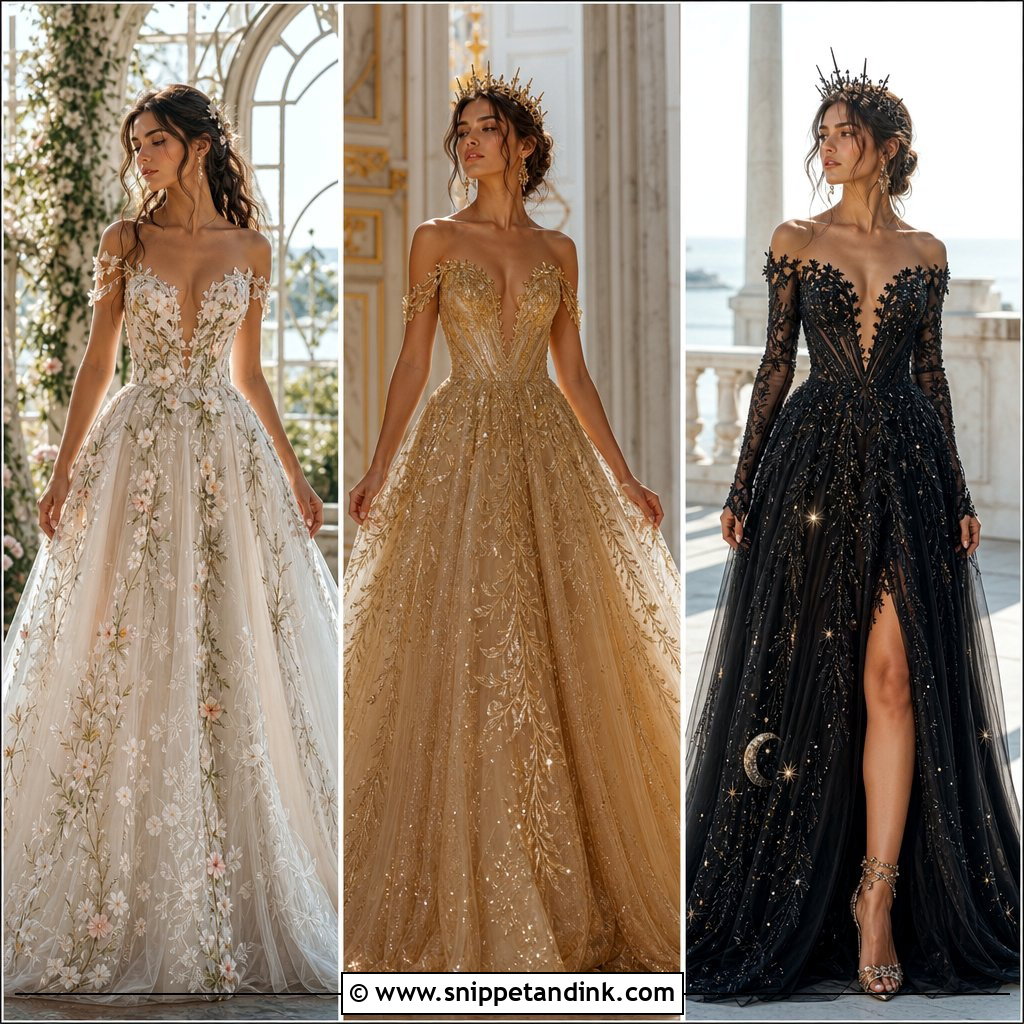

20. Cameo Neckline Wedding Dress
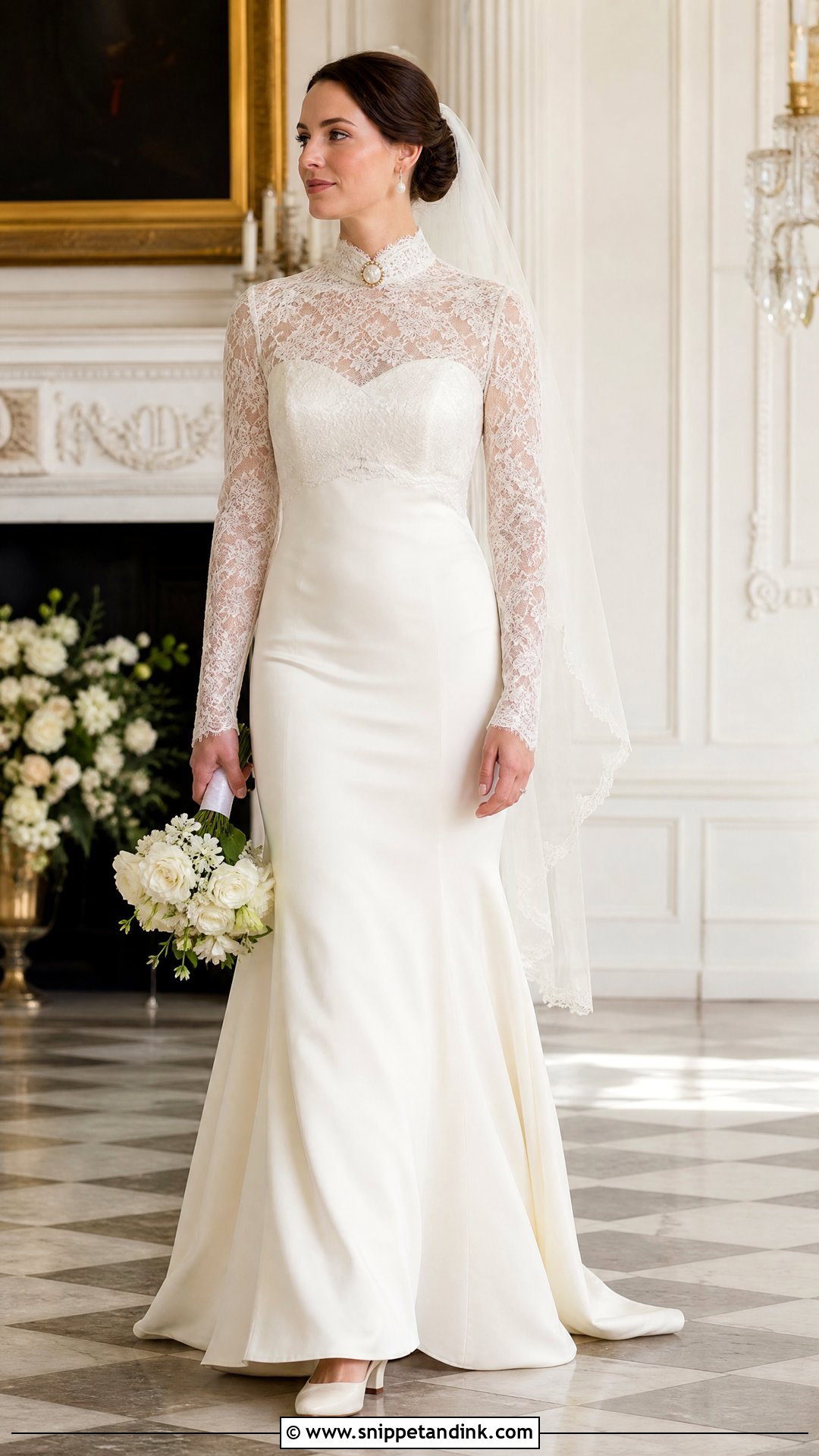
A cameo neckline layers sheer fabric or lace above a sweetheart, scoop or strapless bodice, so you get coverage while the shape underneath still defines you. The yoke needs fitting at the neck as carefully as any collar; a wrinkle across the sheer mesh shows instantly in photos. A small brooch at the collar is a nice vintage touch, but it must be light and stitched or securely pinned so it doesn’t drag the fabric down. Skip the necklace altogether. Pearl earrings, low heels, a smooth updo with the veil beneath and a compact white bouquet keep it modest and light for a traditional daytime ceremony.
21. Lace Cape Wedding Dress
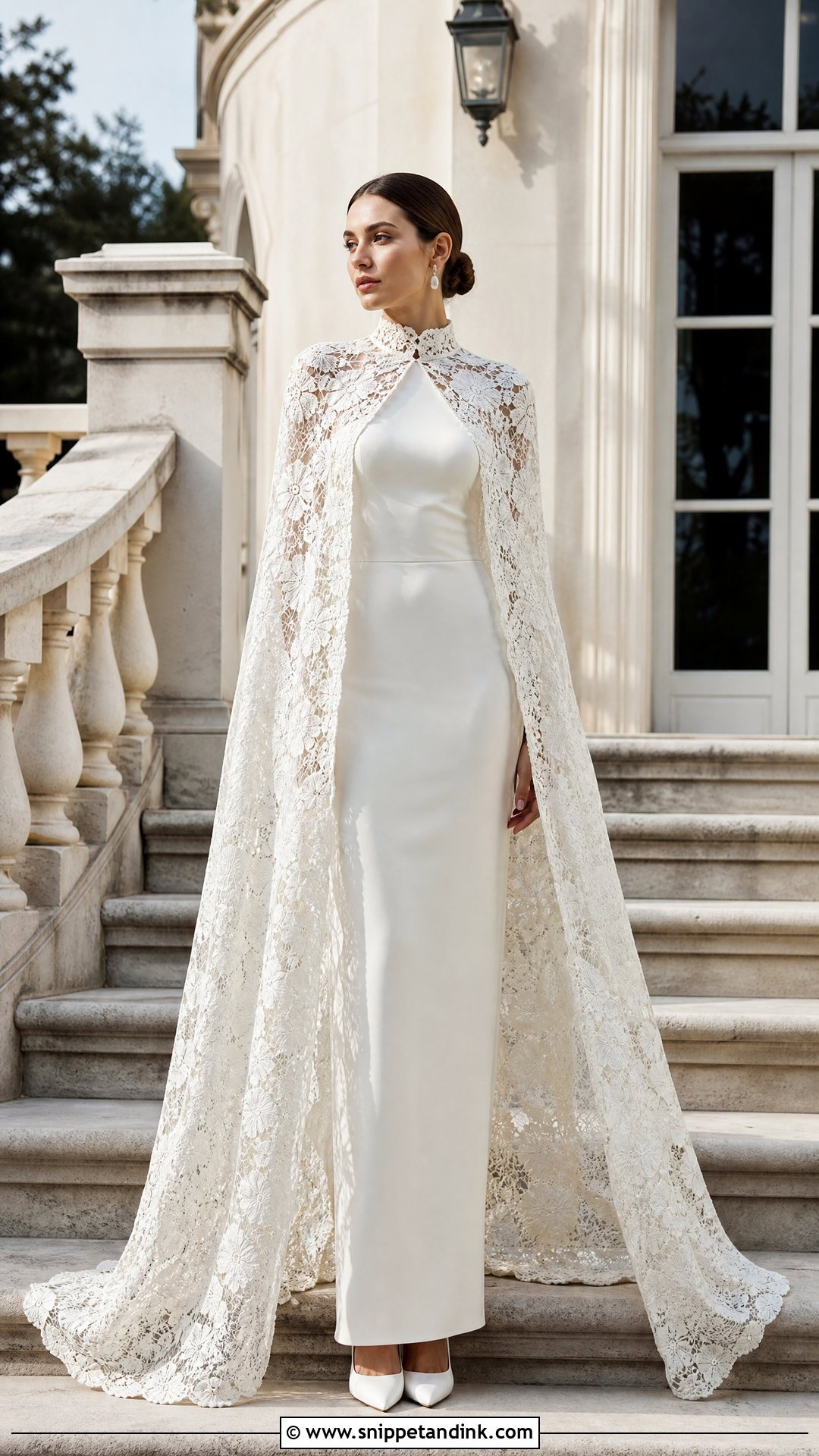
A lace cape is the simplest way to turn a plain gown into something old-world. It fastens at the neck and falls over the shoulders, either to the hip for an easy feel or to the floor for a big entrance. Two layers of detailed lace will compete, so if the cape is heavily patterned, choose a plain veil or no veil at all. I always test the fastening in a breeze; capes catch wind like sails, and a hook-and-eye alone can pull at the throat outdoors. Pointed pumps, subtle earrings and a sleek low bun suit it, and the cape comes off for the reception.
22. Drop Waist Wedding Dress
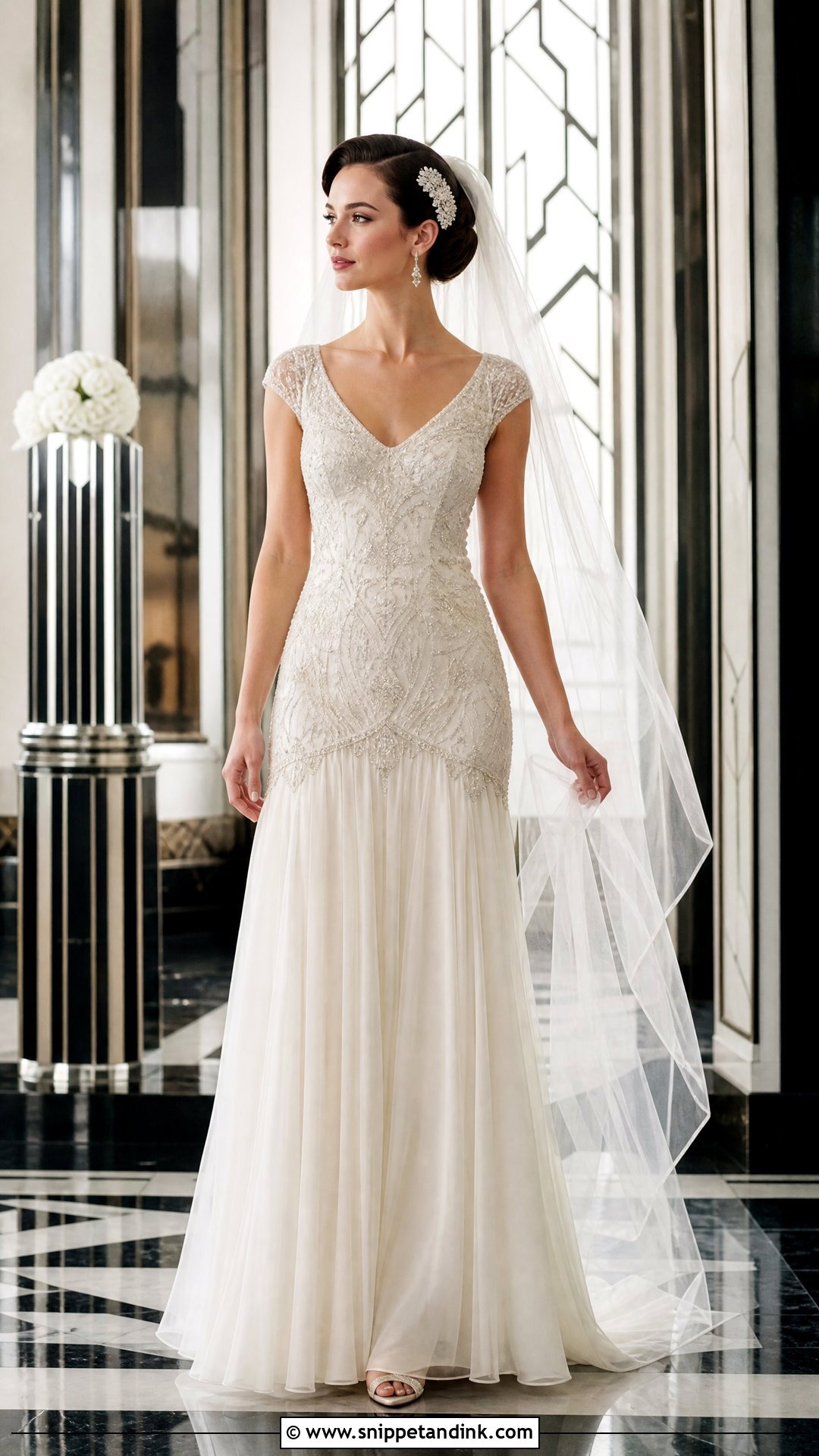
Placing the seam below the natural waist lengthens the torso, but only if it lands at exactly the right point for your body. A dropped waist that sits too low on a short-waisted bride makes her legs look shorter, so I have a tailor pin it at a couple of heights before cutting. For an old-fashioned feel, keep the bodice softly fitted and the skirt flowing rather than a tight mermaid. Beaded tulle points to the 1920s; smooth satin feels more formal. Don’t belt it at the natural waist, which breaks the line you’re paying for. Simple earrings, slim heels and a veil on a jewelled comb are enough.
23. Eyelet Cotton Wedding Dress
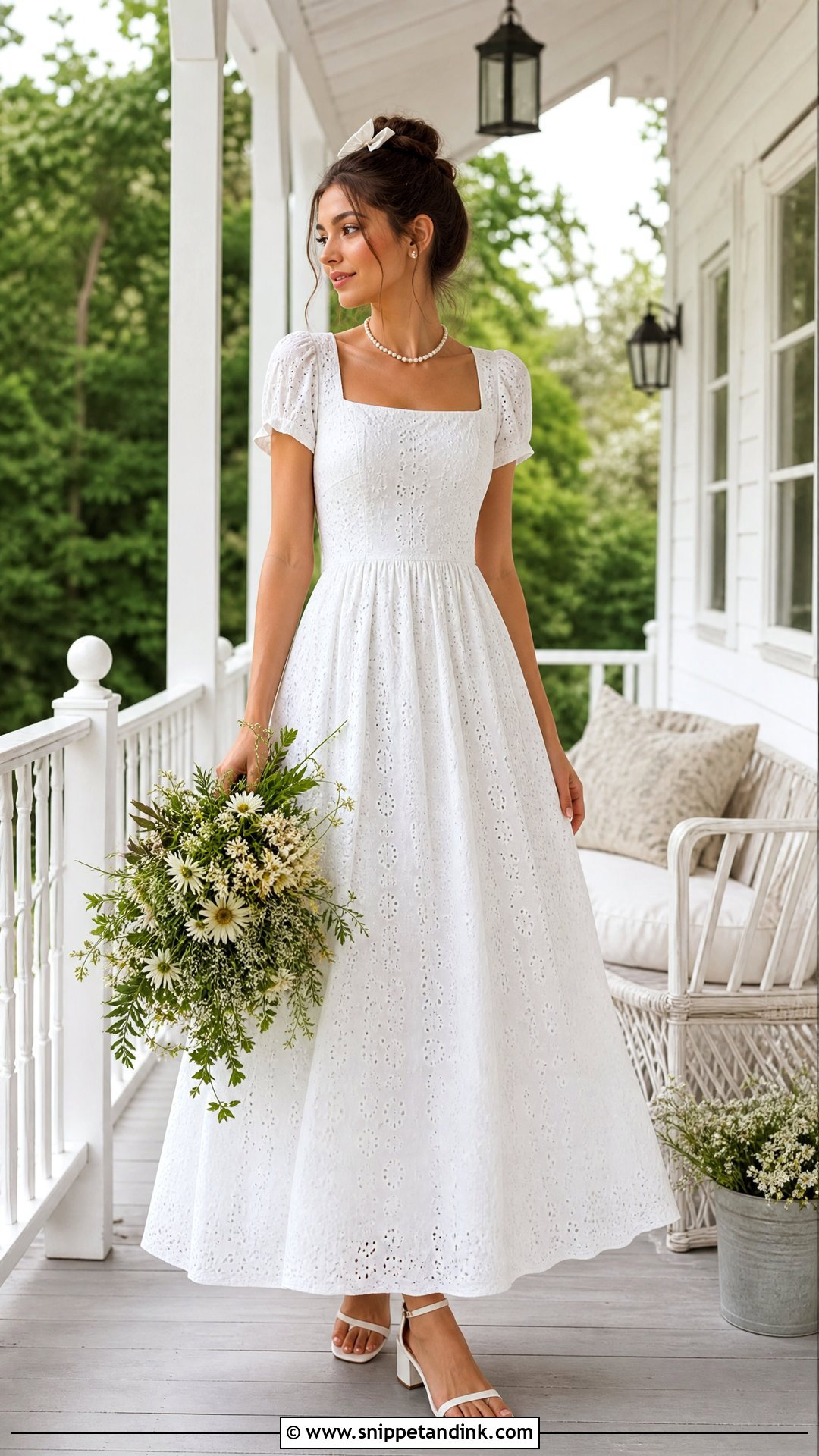
Eyelet cotton is the most breathable fabric in this list, which makes it my pick for a hot outdoor ceremony. Choose a fitted bodice with short sleeves, a defined waist and a tea or ankle-length skirt. The small cut-out holes need a full lining, otherwise skin shows through in bright sun. Cotton creases, so have it steamed on the morning and accept a few natural wrinkles by evening; that relaxed texture is part of its charm. Low block-heel sandals, a small pearl necklace and a short veil or bow suit it. A loose garden bouquet fits porch, farm and backyard weddings.
24. Heirloom Wedding Dress
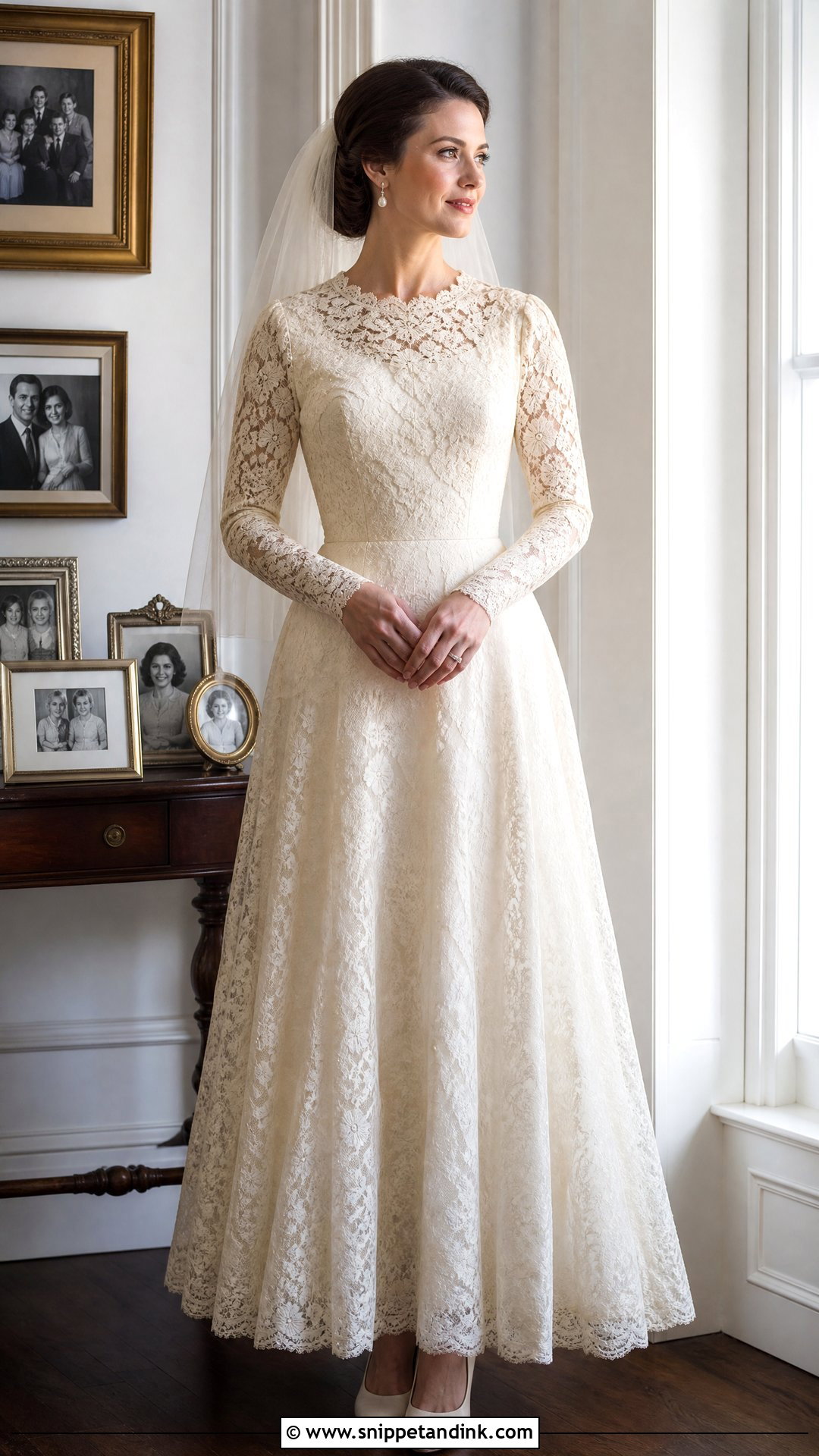
An heirloom dress is personal in a way no new gown can be, but please don’t clean, press or cut it until a textile specialist has looked at it. Old silk can split along its folds, and some vintage fabrics react badly to standard dry cleaning. Lace, seams and fastenings often need reinforcement before they’ll survive a full day. Preserve the original character, then add comfort through a new supportive lining, discreet closures or removable underlayers. If the dress truly can’t be worn, its lace can become a jacket, sash, veil trim or bouquet wrap. New shoes and understated jewellery let the dress stay the story.

25. Vintage Inspired Two Piece Wedding Dress
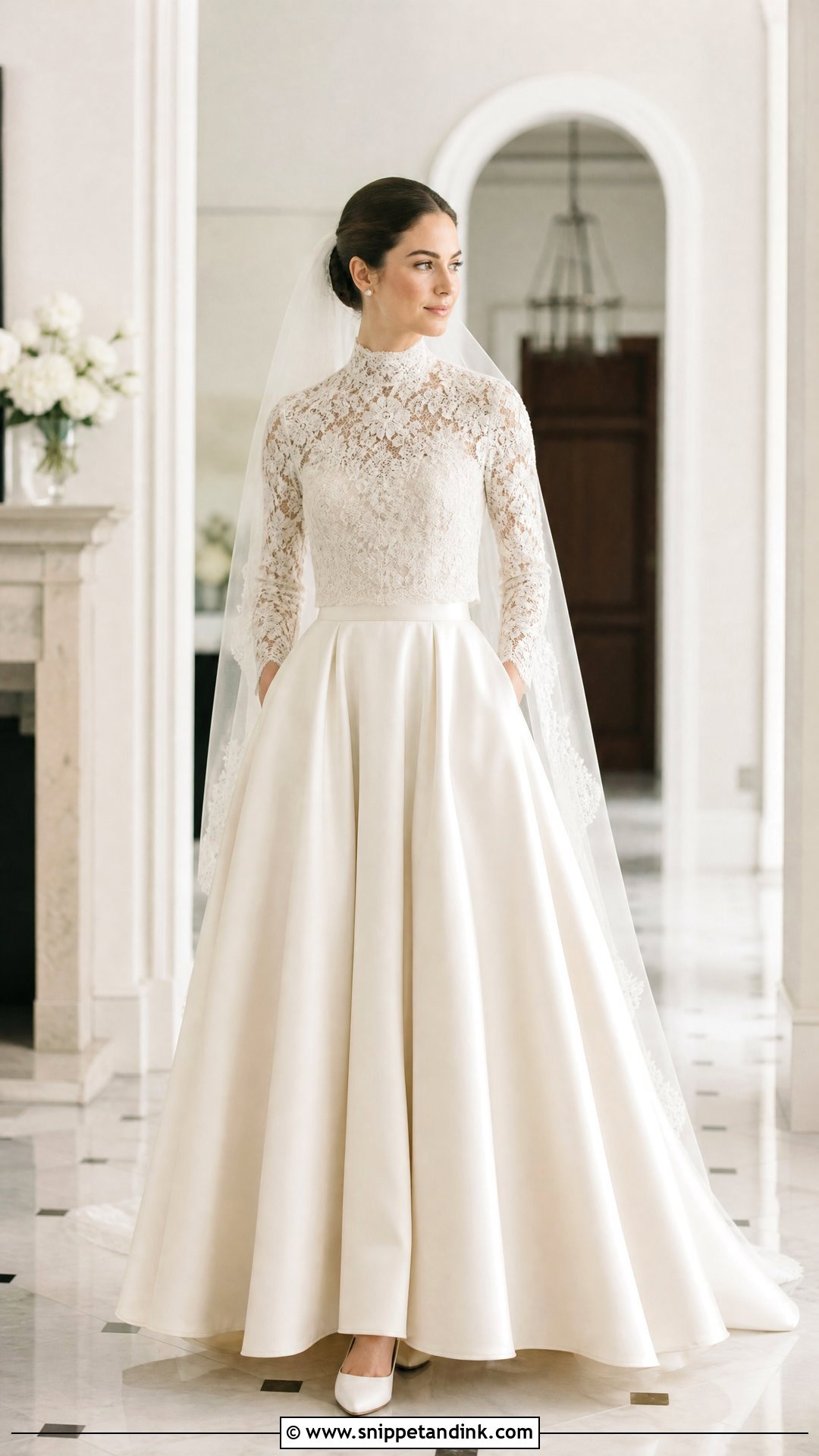
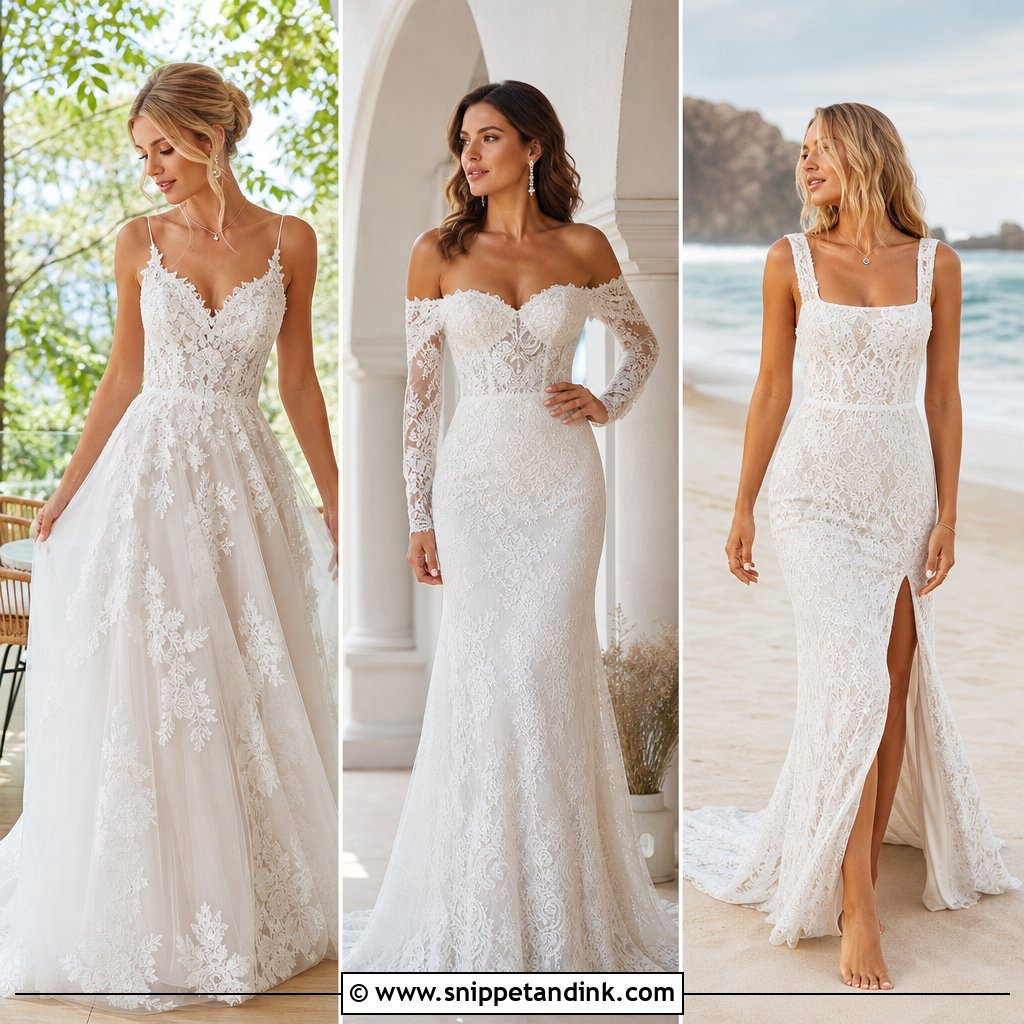
Separates give more sizing control than any gown, which is why I suggest them to brides whose top and bottom are different sizes. Pair a high-neck lace top with a full satin skirt, or a long-sleeve buttoned blouse with a soft crepe skirt. Test the waist join while sitting and lifting your arms; a gap that opens during the first dance is the classic problem. Matching ivory across two different fabrics is tricky, so compare them in daylight before alterations. A chapel veil, pearl earrings and closed heels suit the ceremony, and a shorter skirt can replace the long one later.
The Underpinnings Each Era Expects
Period silhouettes were built on what went underneath them, and a vintage-style dress over modern everyday underwear rarely sits right. I always have brides bring their real foundation garments to every fitting from the first one, because changing them later changes the fit.
- Victorian and basque-waist gowns: boning in the bodice lining does the shaping, so a smooth bra with no visible seams or a built-in cup works better than a padded push-up.
- 1920s and drop-waist dresses: a soft, smoothing slip lets beads hang straight; anything that cinches the waist fights the shape.
- 1930s bias cut: smooth, edge-free underwear in a skin tone, never white, since bias satin shows every edge and white glows under thin fabric.
- 1950s tea length: a petticoat or tulle underskirt sets the volume; decide how full before the hem is marked, because the petticoat changes the length.
- Regency empire waist: a supportive strapless or longline bra matters most, as the whole dress hangs from just under the bust.
Storing Old Lace and Silk Once the Party Ends
Get the dress cleaned soon after the wedding, even if it looks spotless. Splashes of champagne, cake and sweat are often invisible at first and then oxidise to brown marks months later, which is far harder to treat. Tell the cleaner about any vintage or beaded areas so they can be handled separately.
For storage, wrap the dress in acid-free tissue and keep it in a breathable cotton bag or an acid-free box, never a plastic garment bag, which traps moisture. Pad the folds with more tissue so creases don’t set. Heavy beaded 1920s styles should lie flat rather than hang, because the weight of the beads slowly stretches the fabric at the shoulders. Store it somewhere dark, dry and at a steady room temperature, not in an attic or basement, and refold it along different lines every year or so.
Which Decade Feels Like You
Start with the decade that already feels like you, not the one you think you should wear. Victorian lace brings drama, Edwardian coverage feels graceful, 1920s beading adds movement and 1950s skirts bring structure. After that, every accessory should support the same mood, and it helps to stop one piece short of costume. Prioritise construction you can sit in, fastenings someone can actually close, and a fabric that suits the season. Authentic vintage dresses should always be inspected before alterations or cleaning, while new vintage-inspired gowns give you the history with modern support underneath. Wear the one you forget you’re wearing by the second hour.
You'll Like These Ideas:






Leave a Reply