
Your hair has to look right in the first photo at nine in the morning and still hold its shape at the last dance, and those are two very different jobs. The style you choose also has to work with your dress neckline, your veil or headpiece, the weather at your venue and, most of all, the hair you actually have. These are 25 bridal styles I’d happily put in front of a bride at a consultation. For each one I’ve noted how it’s built, what kind of hair it needs and where it tends to give up during a long day.
Inspiration Photos Often Hide Extensions, So Read Them Against Your Own Hair
Most bridal hair photos online are styled on thick, long hair, and very often with clip-in extensions added for the shoot. That’s not a problem, but it means a picture can promise more volume than your hair can give. Before a trial, I look at three things with the bride.
- Density. Pull your hair into a ponytail and check its thickness at the band. If it’s about the width of a finger, a big braided updo will need extensions or a padding piece to match the photo.
- Length. Count where your hair sits now, not where it’ll be by the wedding. Hair grows roughly a centimetre a month, but trims take some of that back.
- Texture. Curly and coily hair holds braids and updos well but needs a different prep from straight hair; very fine straight hair holds curls for less time and benefits from a setting product.
What to bring to the trial
Bring two or three photos of styles you like and one you don’t, since the dislikes tell me as much as the likes. Wear a top with a similar neckline to your dress, and bring the veil, headband or flowers you plan to wear. I’d also suggest a trial on the same hair day you’ll have on the wedding morning, usually washed the night before, so the hair behaves as it will on the day.
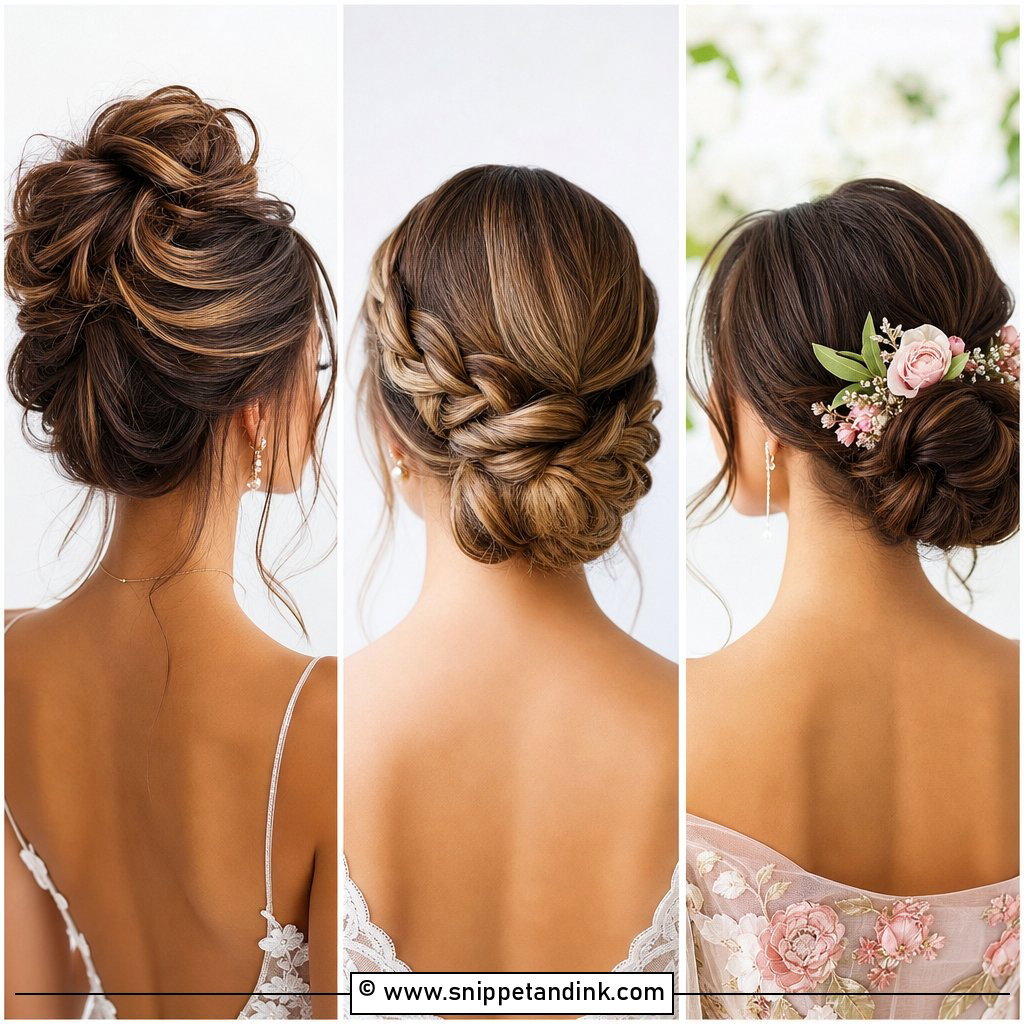
1. Low Chignon Bun for Wedding
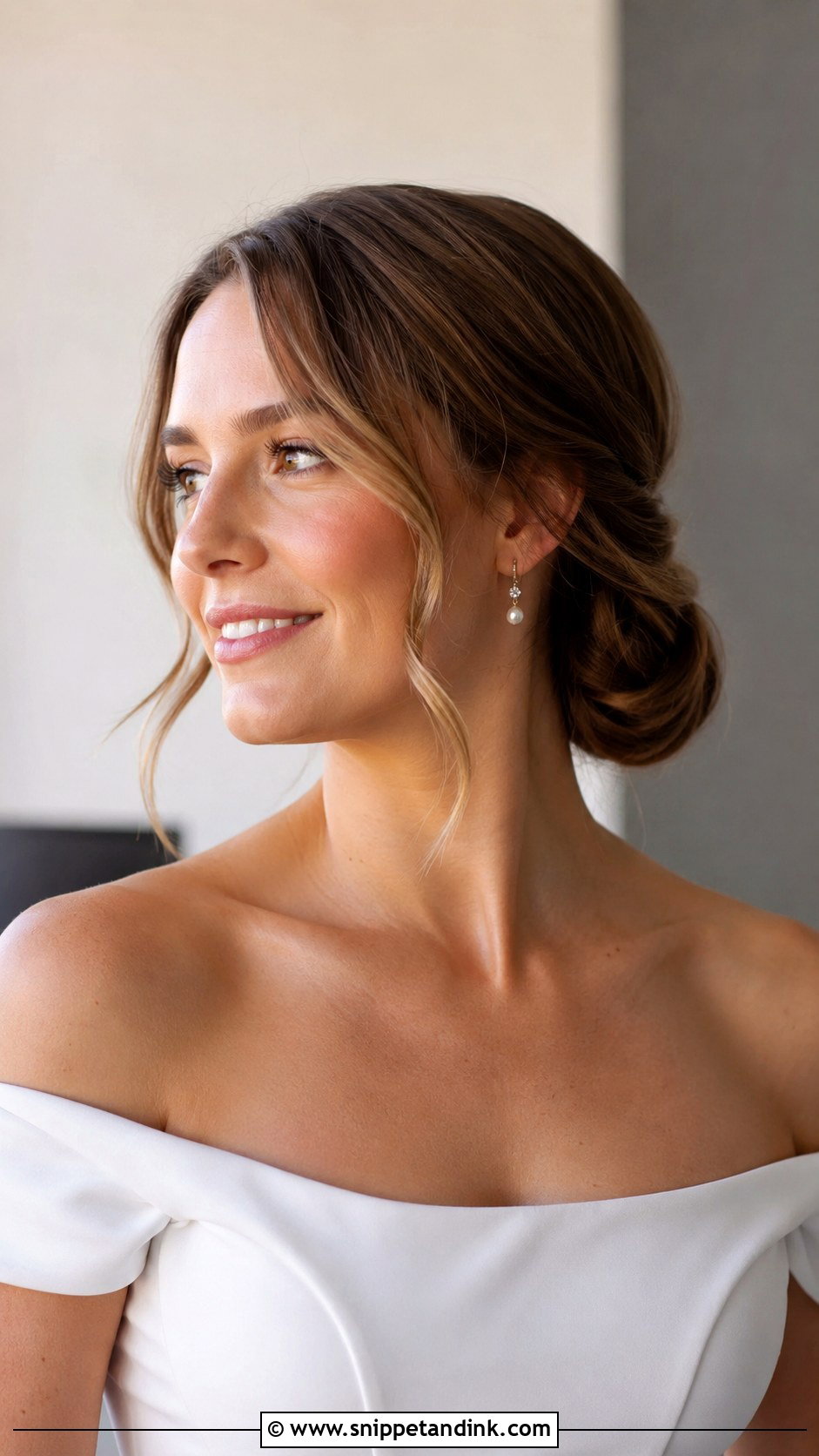
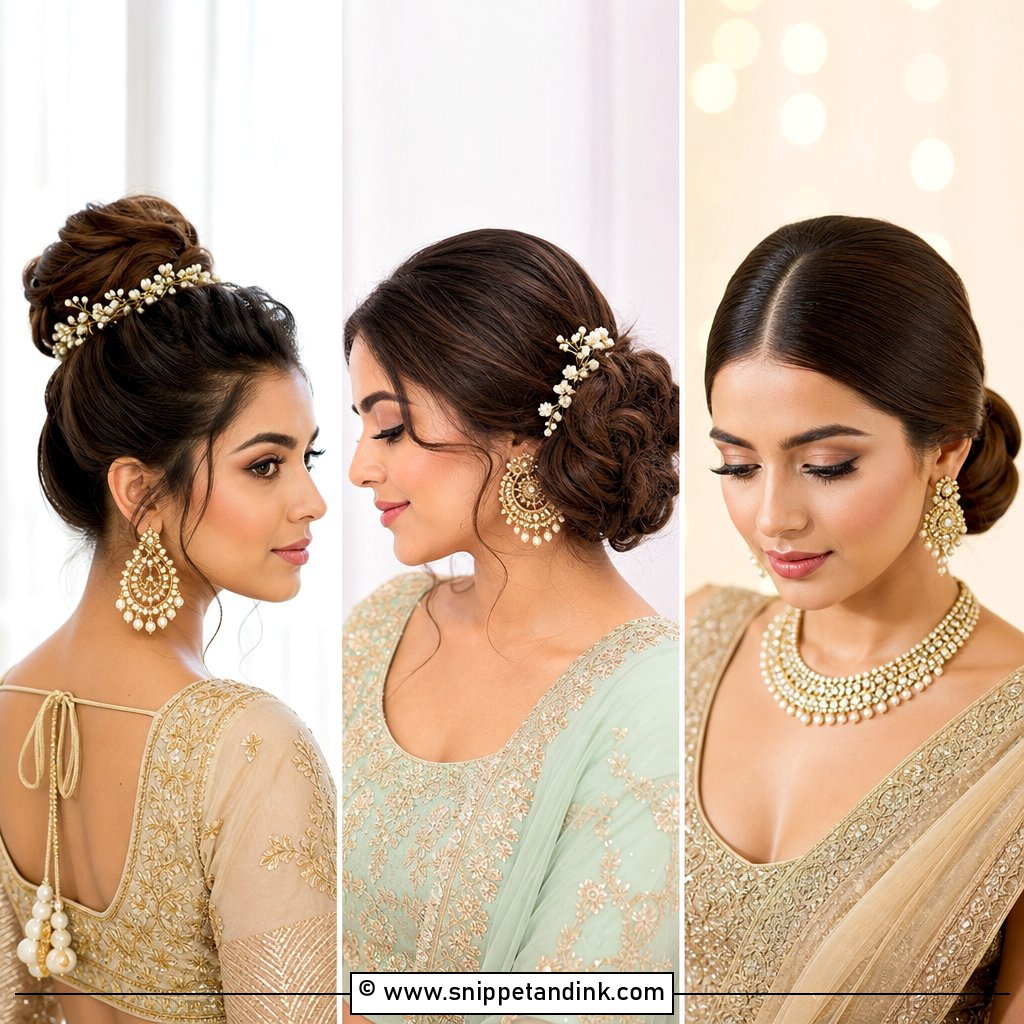
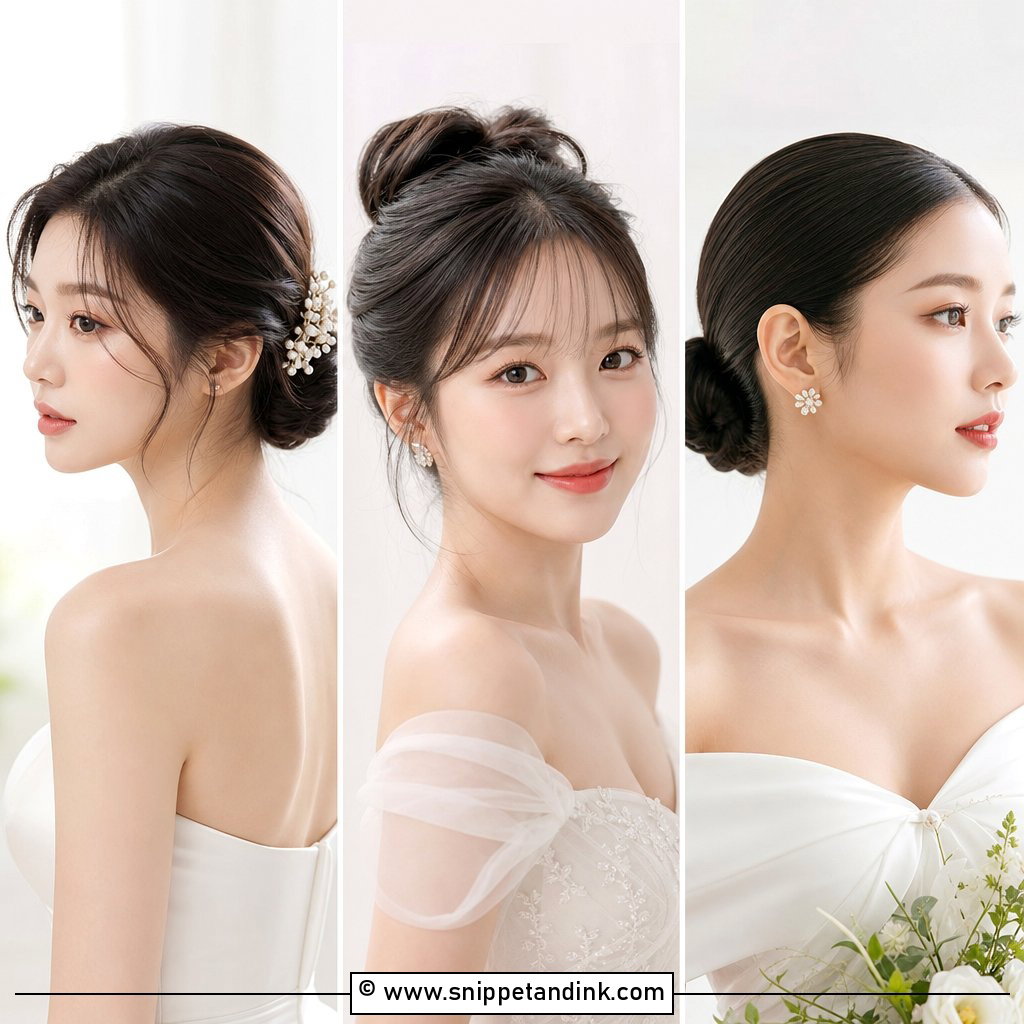
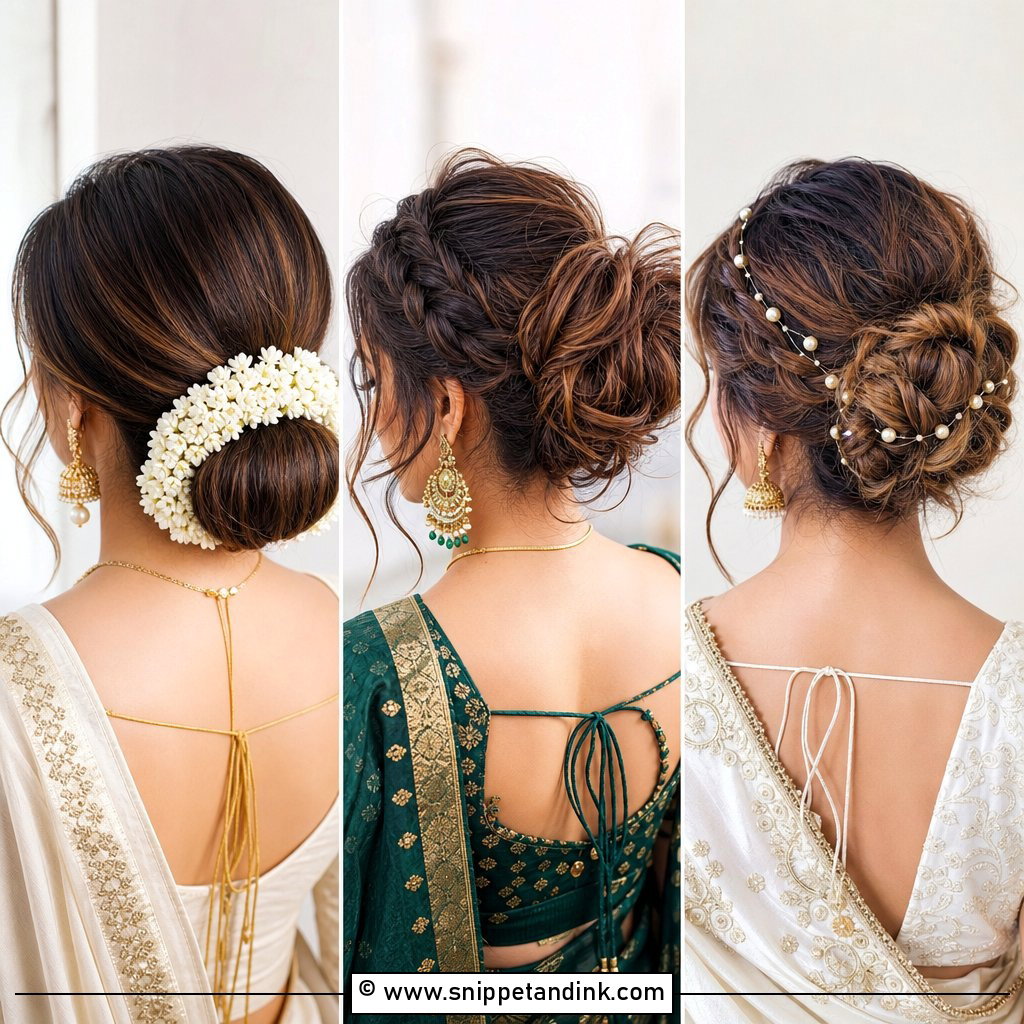
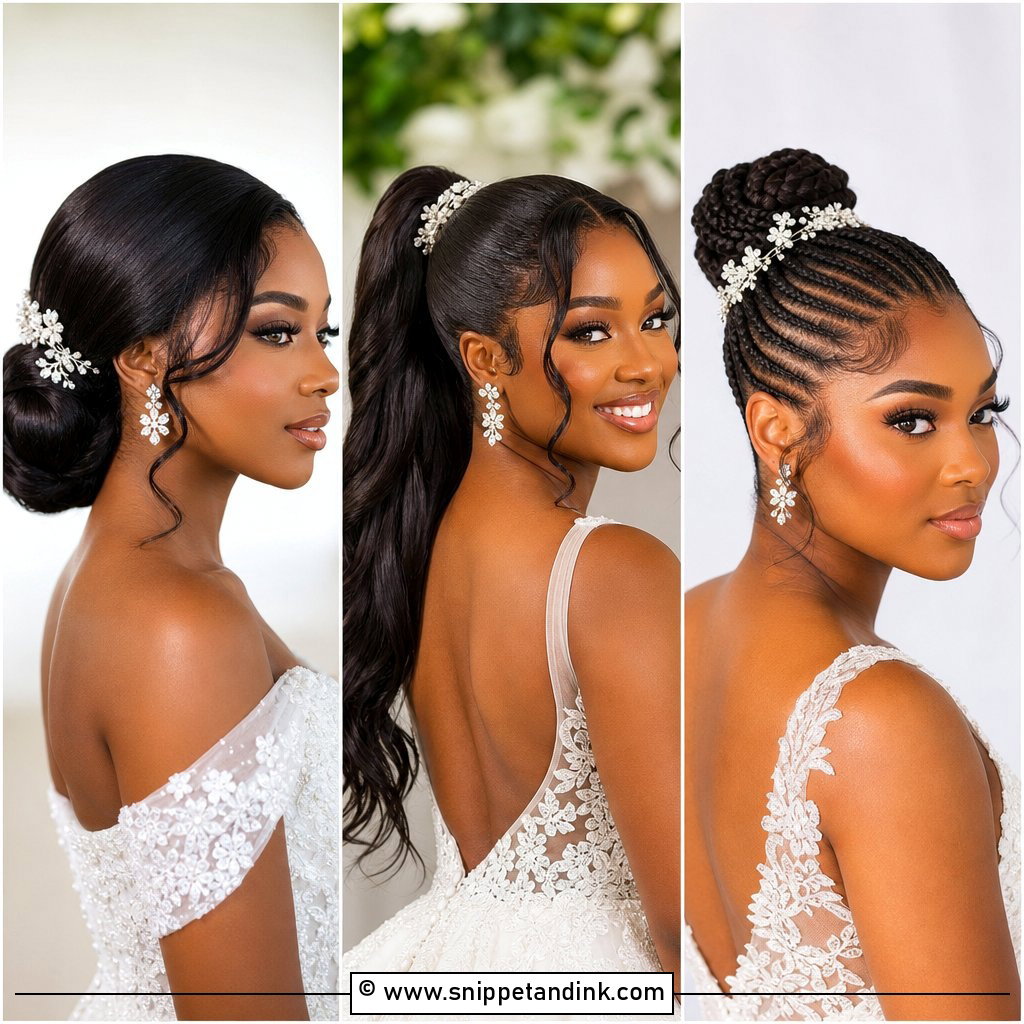
A low chignon is the style I trust most for a long day with a veil. It sits at the nape, so a comb slides in right above it, and the knot itself is protected from the back of a chair. I build it over a small teased base or a ponytail so the pins have something to bite into; a chignon pinned straight into slippery clean hair is the one that loosens by the reception. Keep it smooth for a formal ceremony or pull a few strands loose for a softer finish. It works on most lengths from the shoulders down.
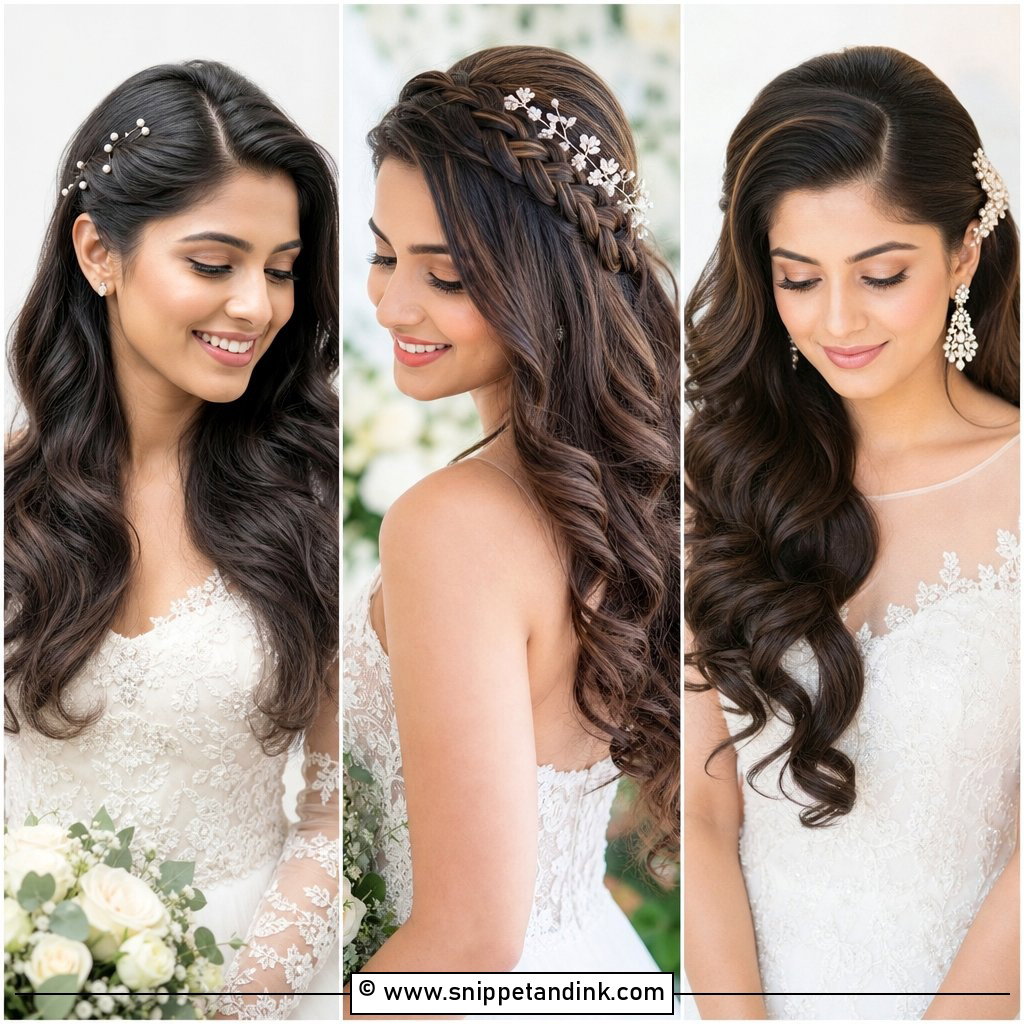
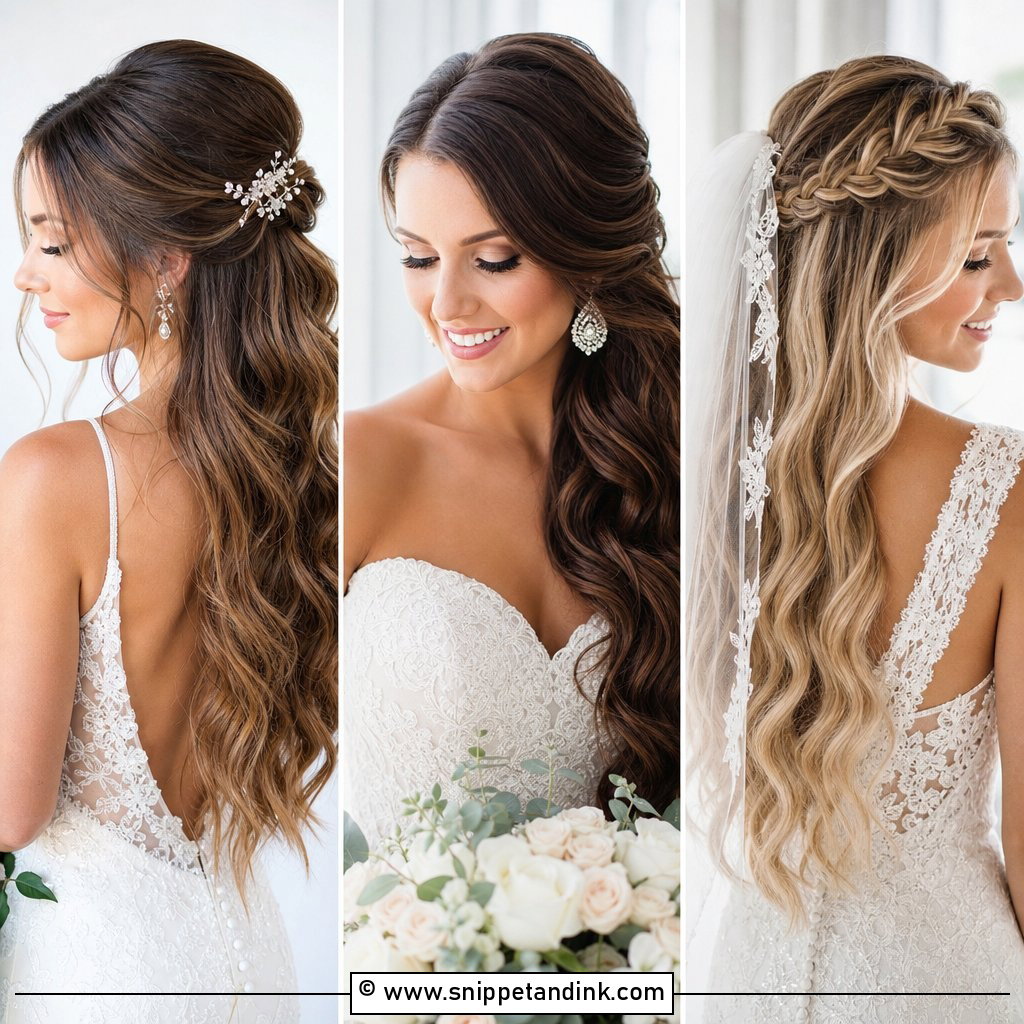
2. Half-Up Half-Down Bridal Hairstyle
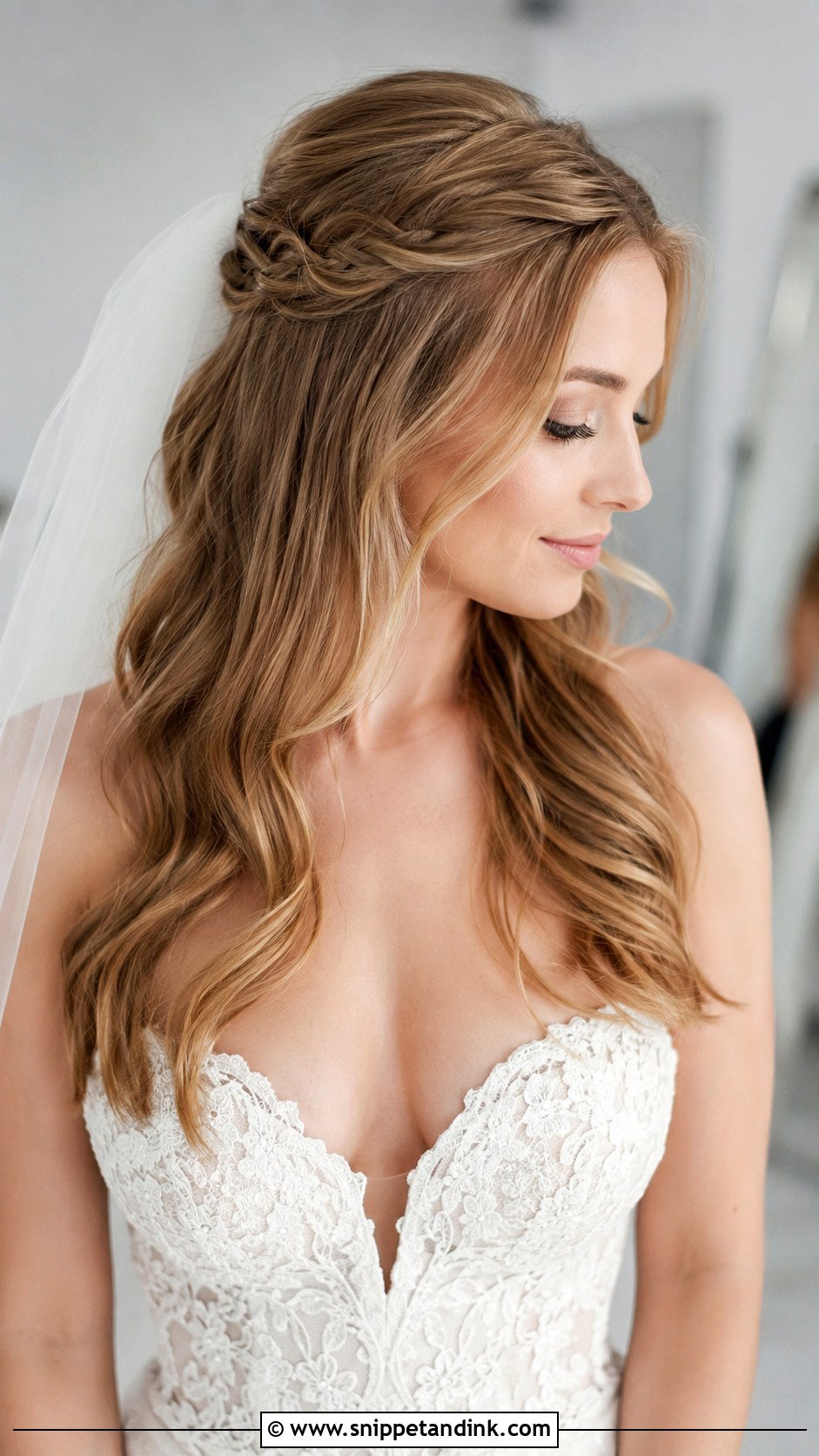
Half-up, half-down suits brides who want length on show but don’t want hair in their eyes during the vows. I secure the top section first, sometimes with a small bun, twist or braid at the crown, so the style still reads from the front in photos. The waves below are the weak point. On fine hair they relax within a few hours, so I set them with heat and let them cool in pin curls before brushing out. Long and medium hair carry it best; anything above the collarbone loses the down part.
3. Romantic Loose Waves for Brides
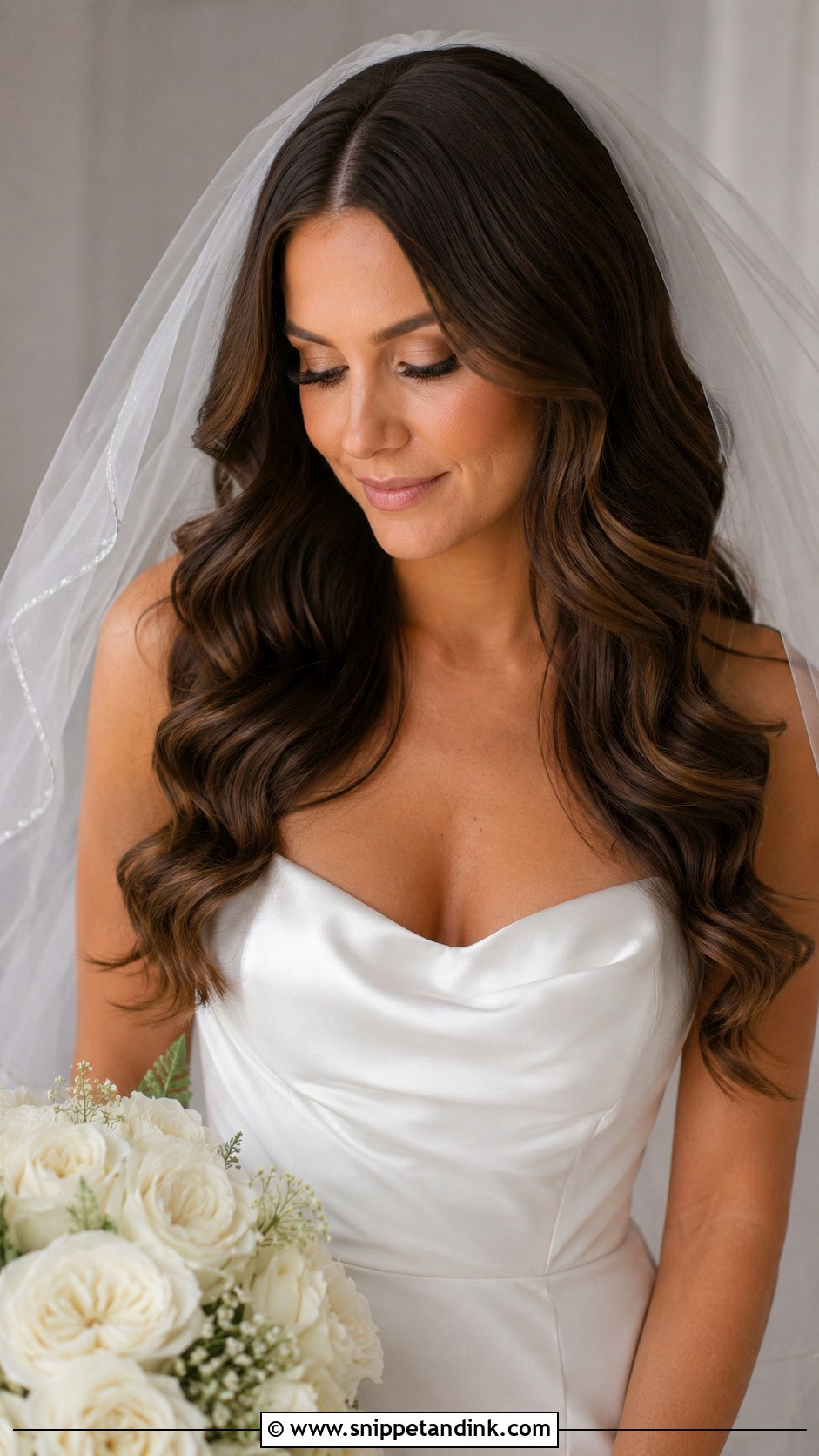
Loose waves read as simple, but the version in red-carpet photos is built: curled in sections, brushed out and shaped. A sleek center part makes it look current, and a flower tucked behind one ear or a flowing veil both sit well with it. The honest problem is humidity and hugging. Waves worn down get crushed against shoulders and drop as the room warms, so I set them a little tighter than the finished look and leave a small brush with the maid of honor. If your hair won’t hold a curl at all, I’d steer you toward a half-up version instead.
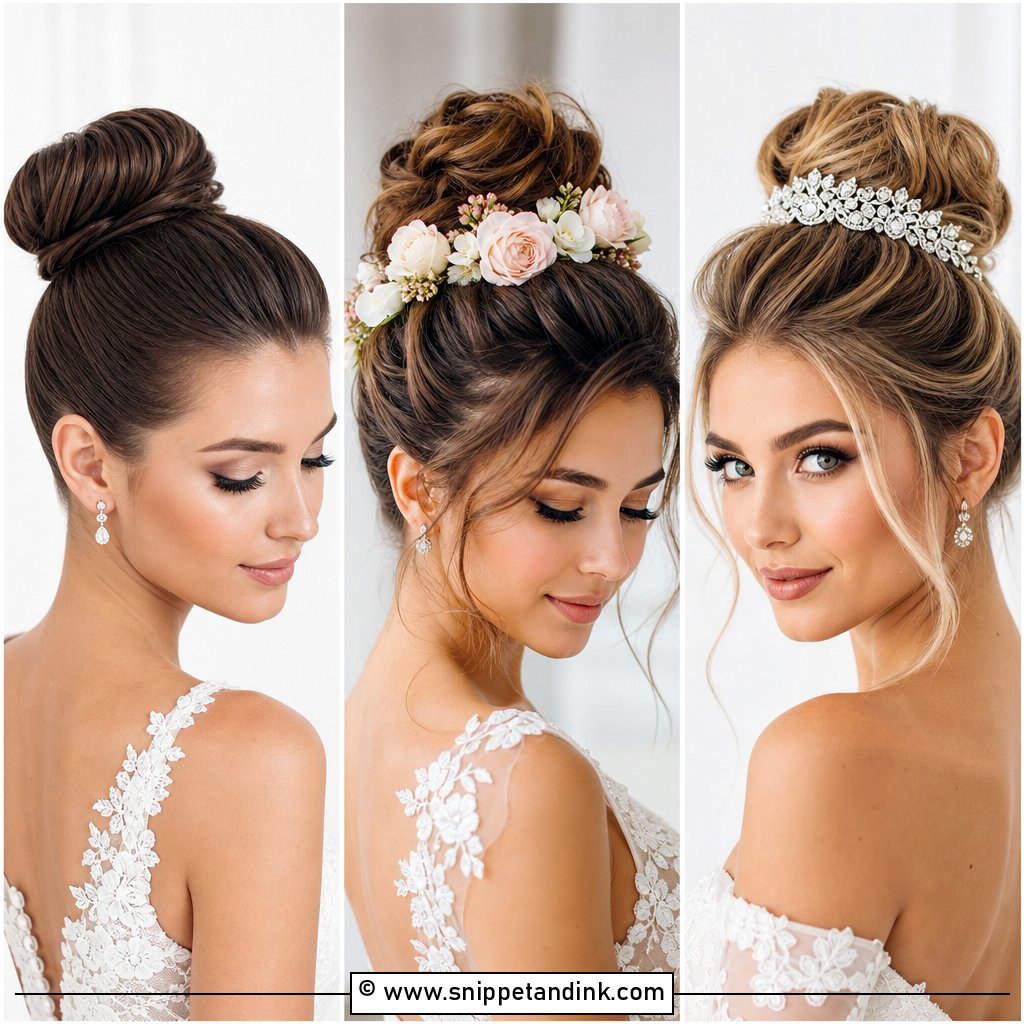
4. Messy High Bun Wedding Hairstyle
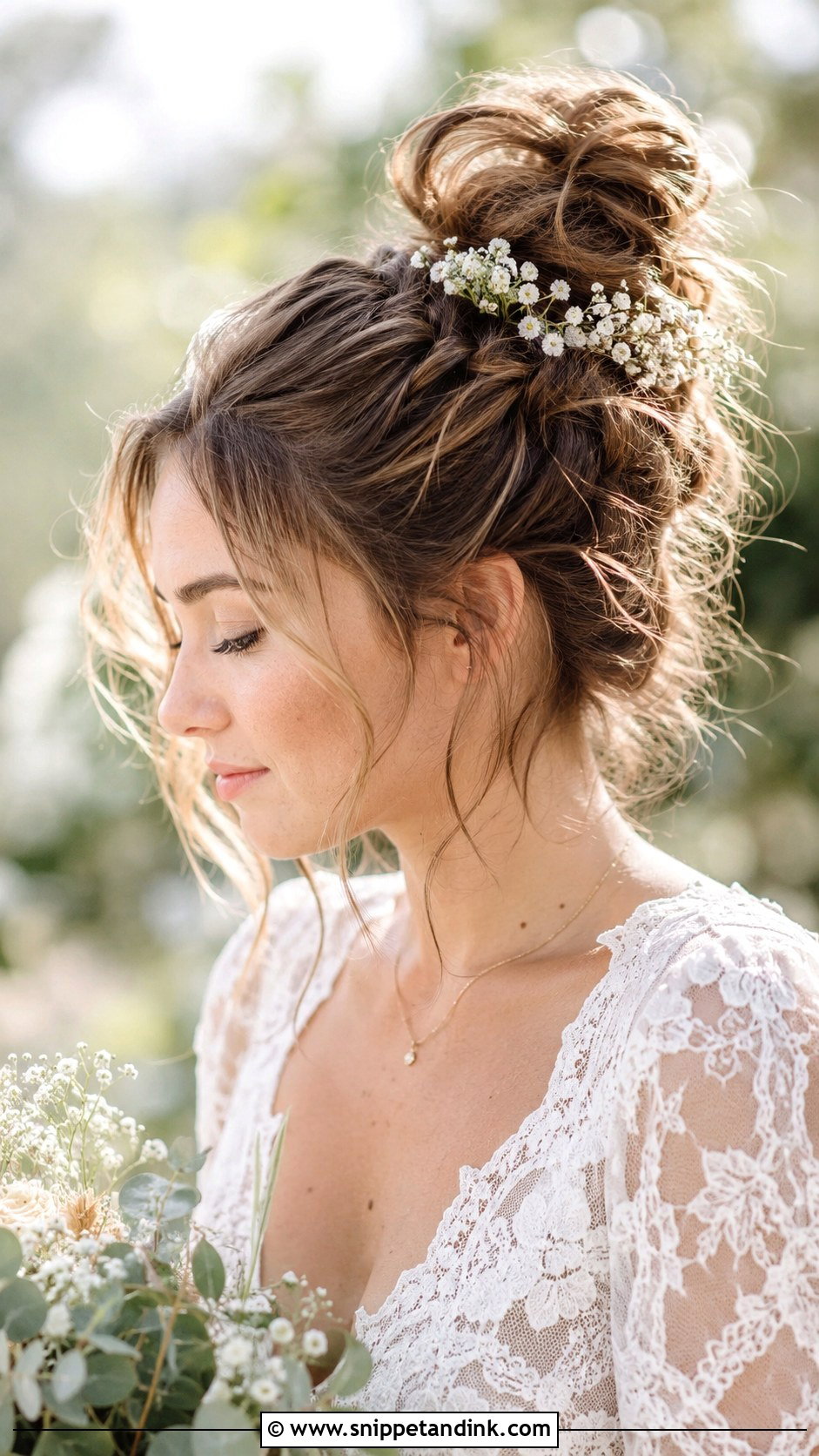
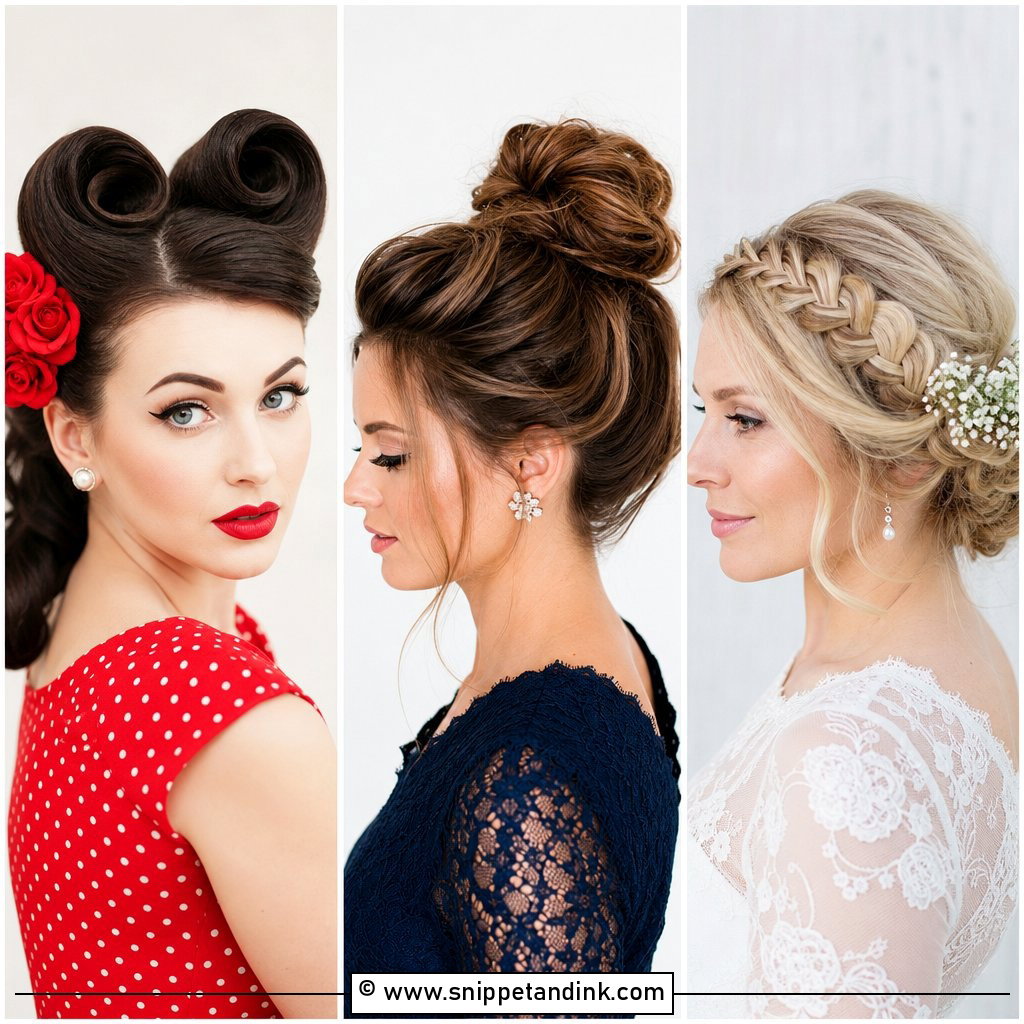
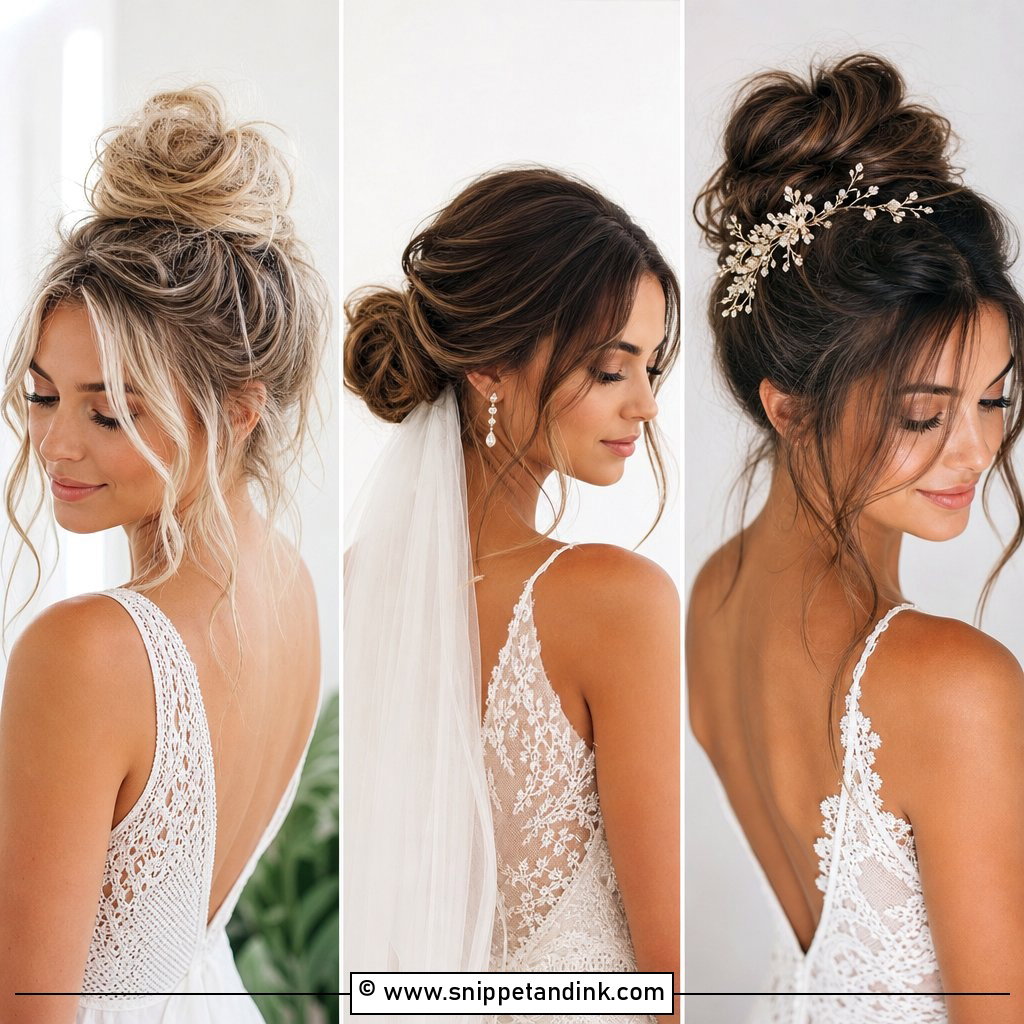
This is the updo for the free-spirited bride, and it’s harder to do well than a sleek bun. It sits high on the crown, lengthens the neck and has soft pieces falling around the face. I texturize the hair first with dry spray, then pin the bun in loose loops so it looks undone while the pins underneath are tight. Freshly washed, silky hair fights this style. Pins, small flowers or a hair vine suit it, and it’s well matched to rustic or outdoor weddings, though a long veil has nowhere to go but underneath.
5. French Twist Updo for Wedding
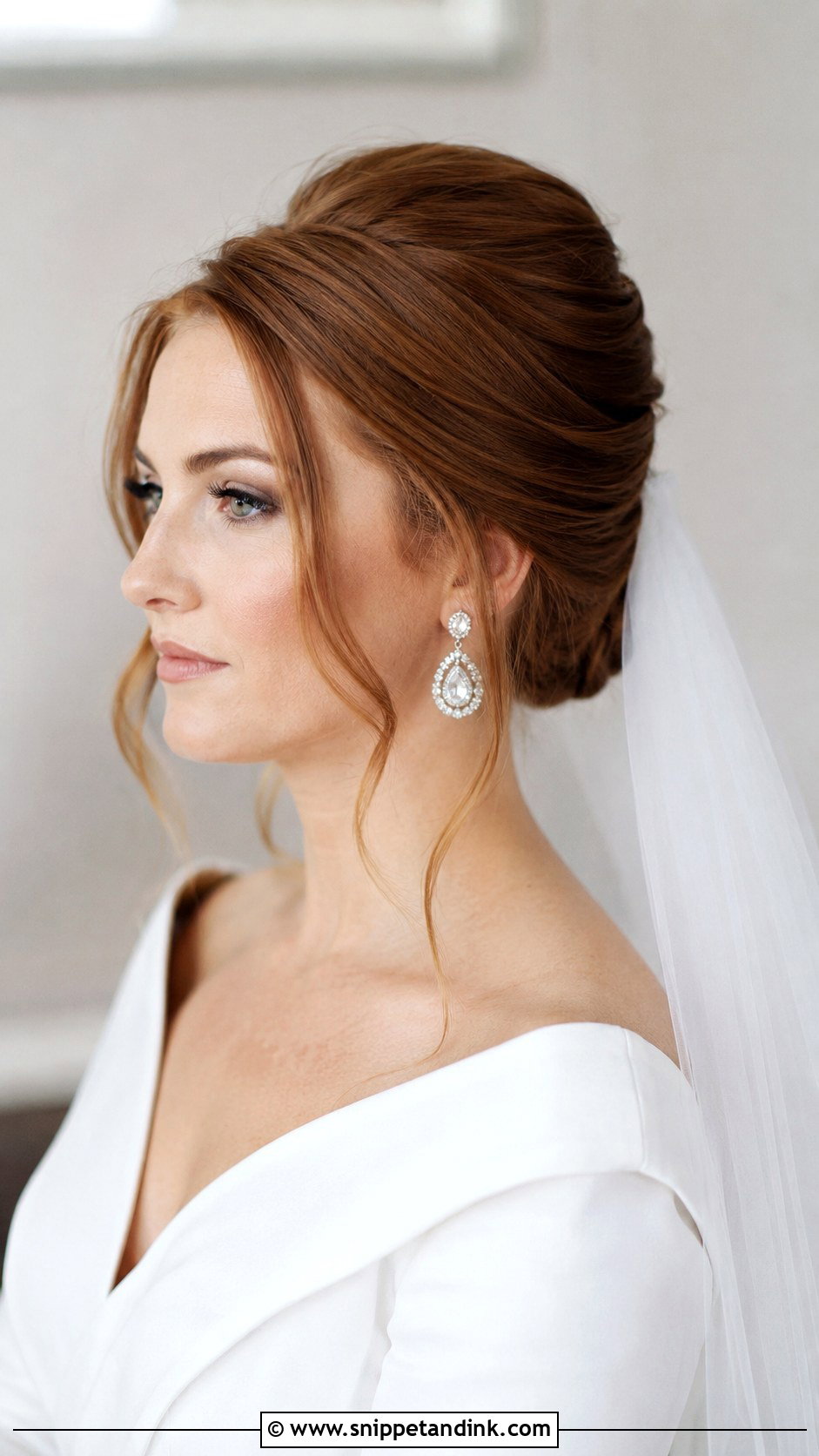
The French twist sweeps the hair to one side and tucks it into a vertical roll down the back of the head. I back-comb the inside of the roll so it has grip, then pin along the seam with long pins angled up into the twist; that’s what keeps it secure from the ceremony through the reception. It needs hair at least to the shoulders. Statement jewelry and a veil set at the top of the roll suit it, and you can soften it with a few loose pieces at the front if a fully sleek shape feels too severe.
6. Braided Low Bun for Bride
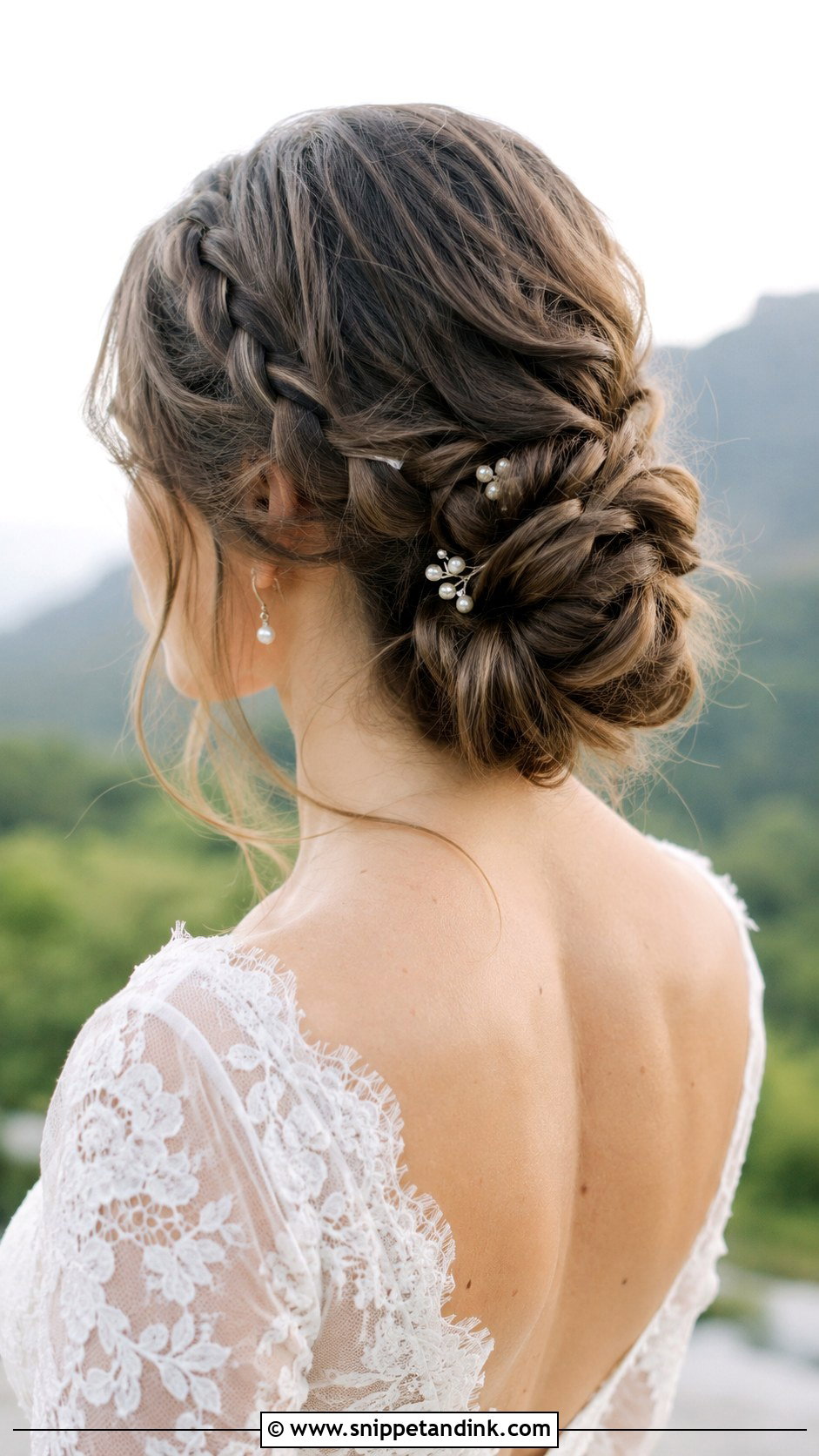
Braids add texture to a low bun, and they also make it stronger, since a braid holds pins far better than a loose twist does. You can run one French braid into the bun or scatter several thin braids through it. I plait the braids slightly loose and then pull at their edges, so they look fuller once coiled. Pearl pins or fresh flowers sit nicely in the gaps. Layered hair is the one complication: short layers escape from braids, so a little wax on the fingers while braiding helps.
7. Sleek Low Ponytail for Wedding
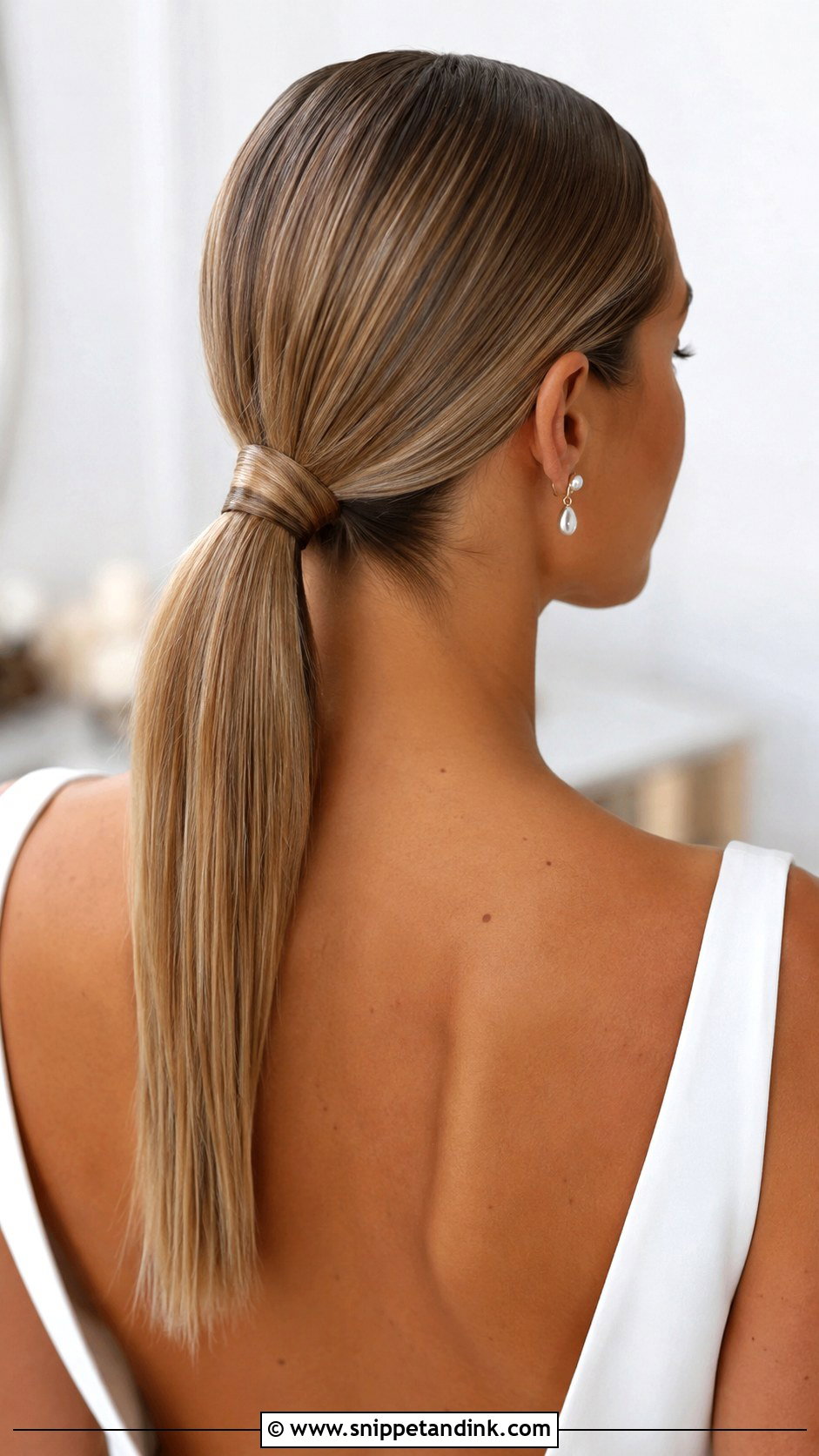
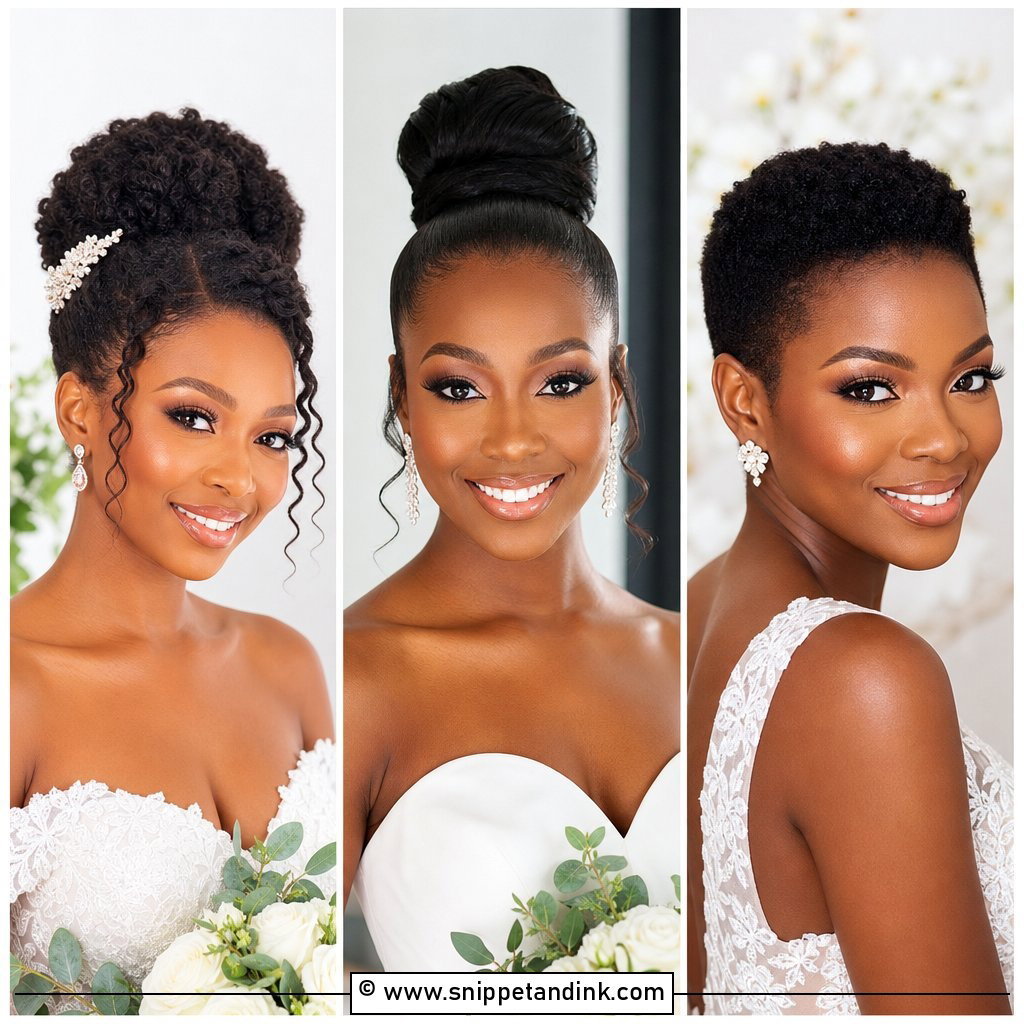
A sleek low ponytail is quick to wear and very easy to dance in. I blow-dry the hair completely smooth first, because a ponytail shows every bump at the hairline, then secure it at the nape and wrap a strand round the band, pinning the end underneath. A light serum through the lengths gives the gloss. On thin hair the ponytail itself can look sparse, which is where a clip-in ponytail piece earns its place. It works with most textures, and curly hair can wear it sleek at the front with the curls left in the tail.
8. Textured Updo with Curls for Bride
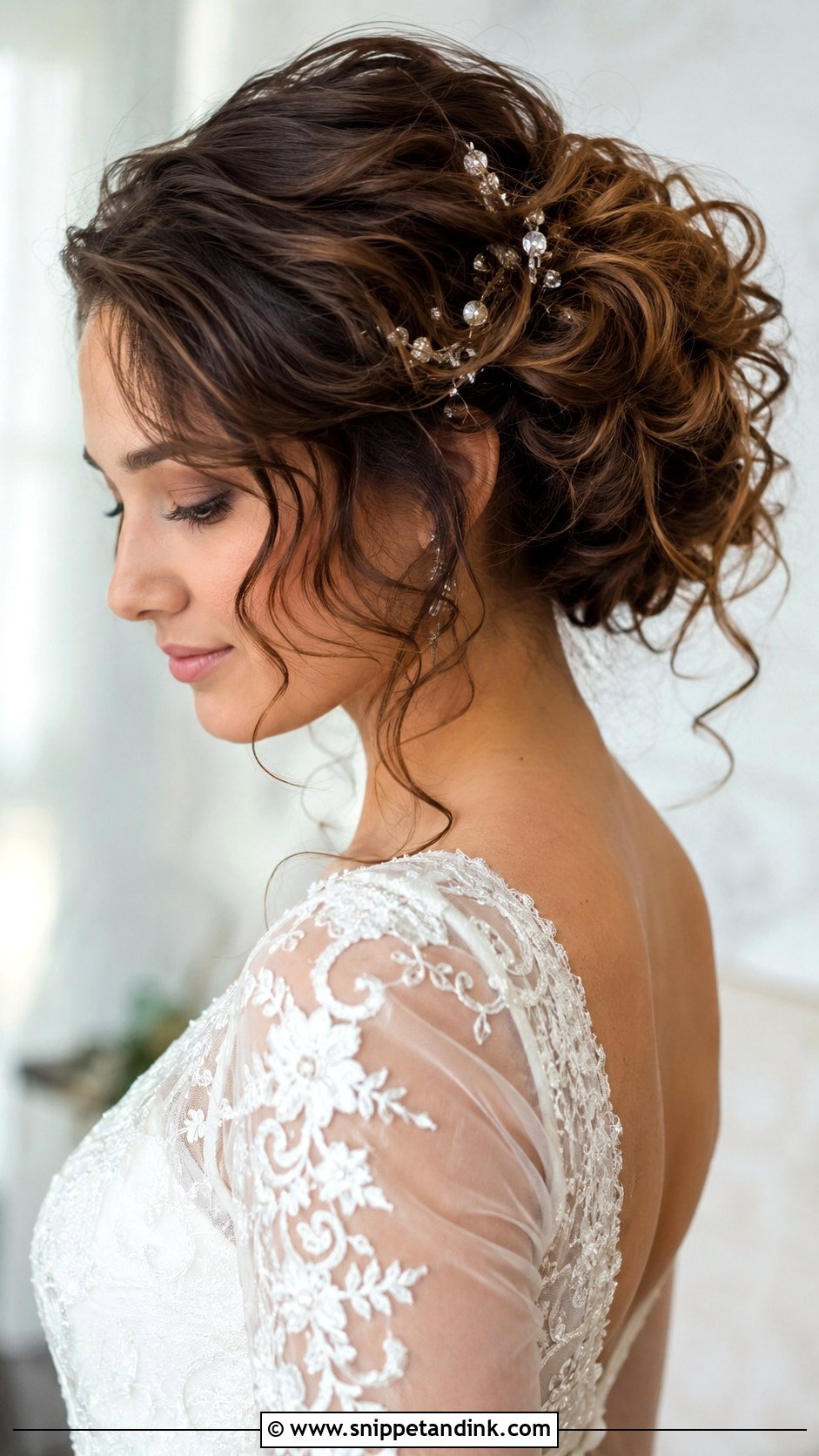
A textured updo mixes curls, waves and twists, so it has depth from every angle. Each part is curled first and then pinned in place one section at a time, which is why it takes longer at the chair than a classic bun. I like it on medium to thick hair; very fine hair tends to show the pins between sections. A few face-framing pieces soften it, and small blooms or pins tucked among the curls suit both indoor and outdoor weddings.
9. Fishtail Braid Wedding Hairstyle
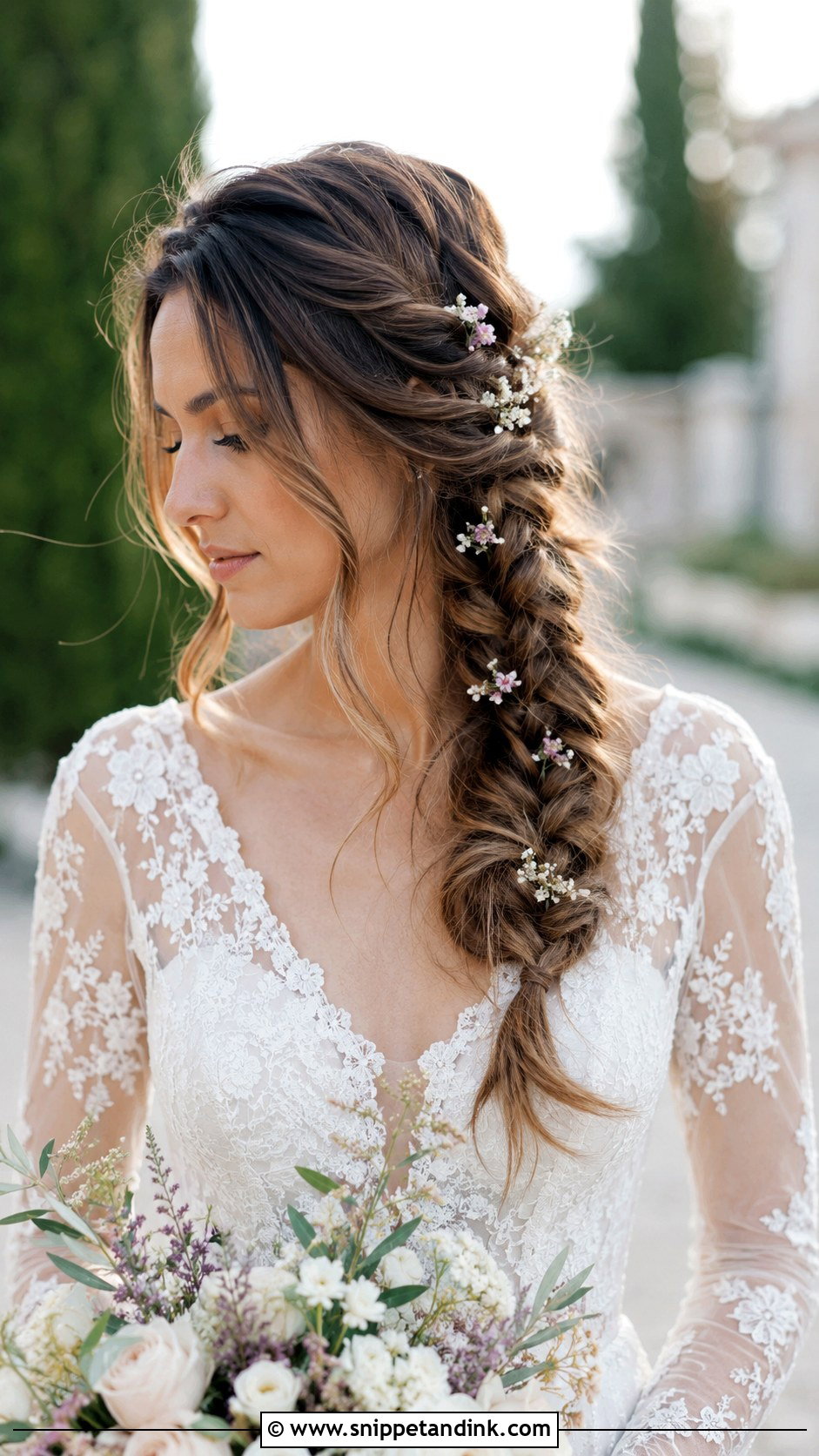
The fishtail splits the hair into two sections and crosses a small piece from the outside of each, which creates its herringbone pattern. It’s slow on long hair, so leave enough time in the morning. Worn to the side over one shoulder, I loosen it from the bottom up after tying it off so it widens without falling apart. It suits boho and garden weddings, and tiny flowers or pearl pins woven through add detail. Hair shorter than the collarbone usually needs extensions to make the braid worth it.
10. Classic Bridal Updo with Veil
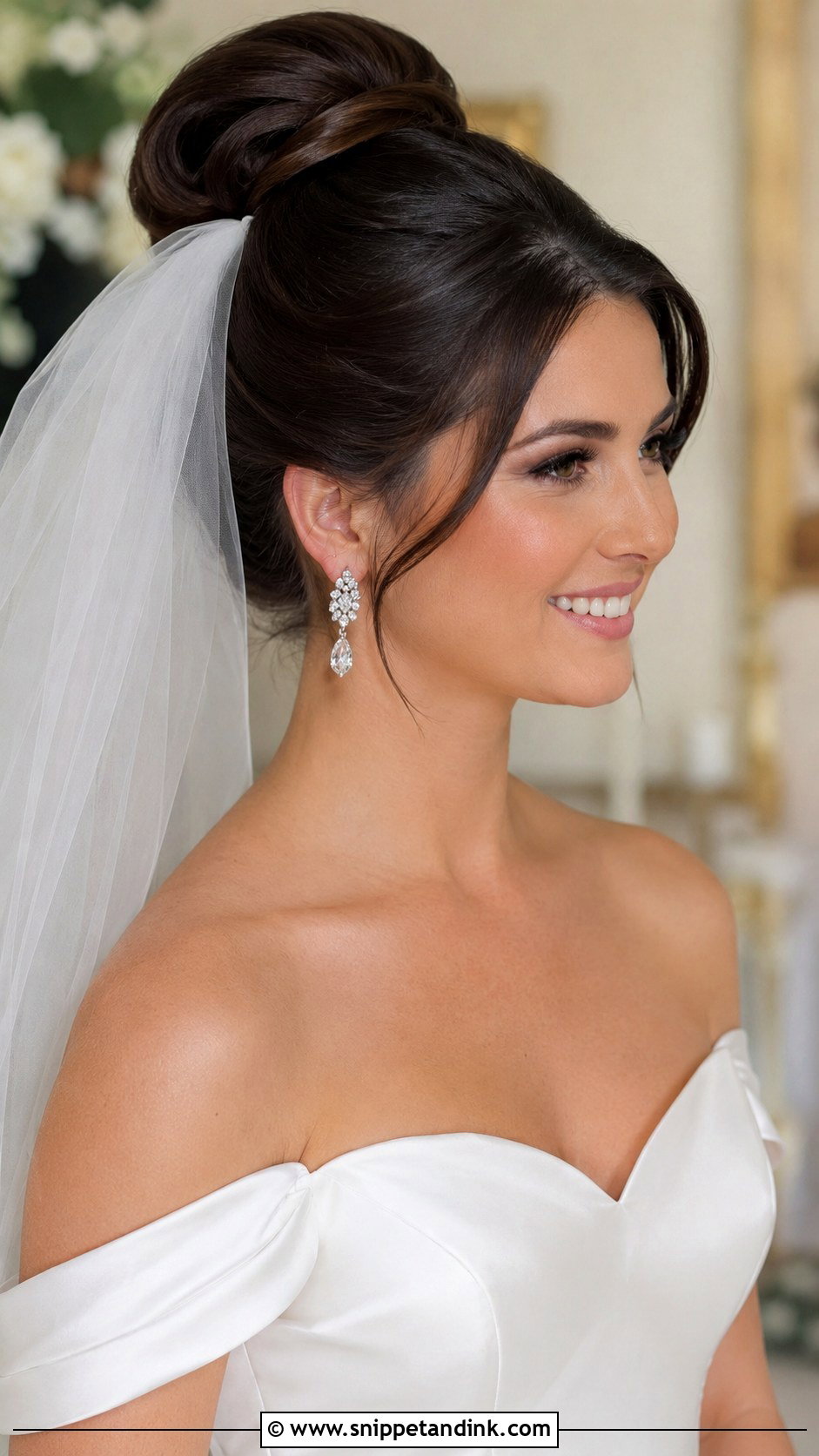
A classic updo is the most reliable base for a veil. The hair is swept up into a structured shape, and the comb goes either at the crown or tucked under the updo, depending on how the veil should fall. I always ask a bride to bring her veil to the trial, because a cathedral veil pulls back harder than a fingertip one, and the updo has to be pinned to take that weight. It suits formal church and ballroom ceremonies, and you can keep it smooth or add volume at the crown.
11. Boho Braided Crown for Wedding
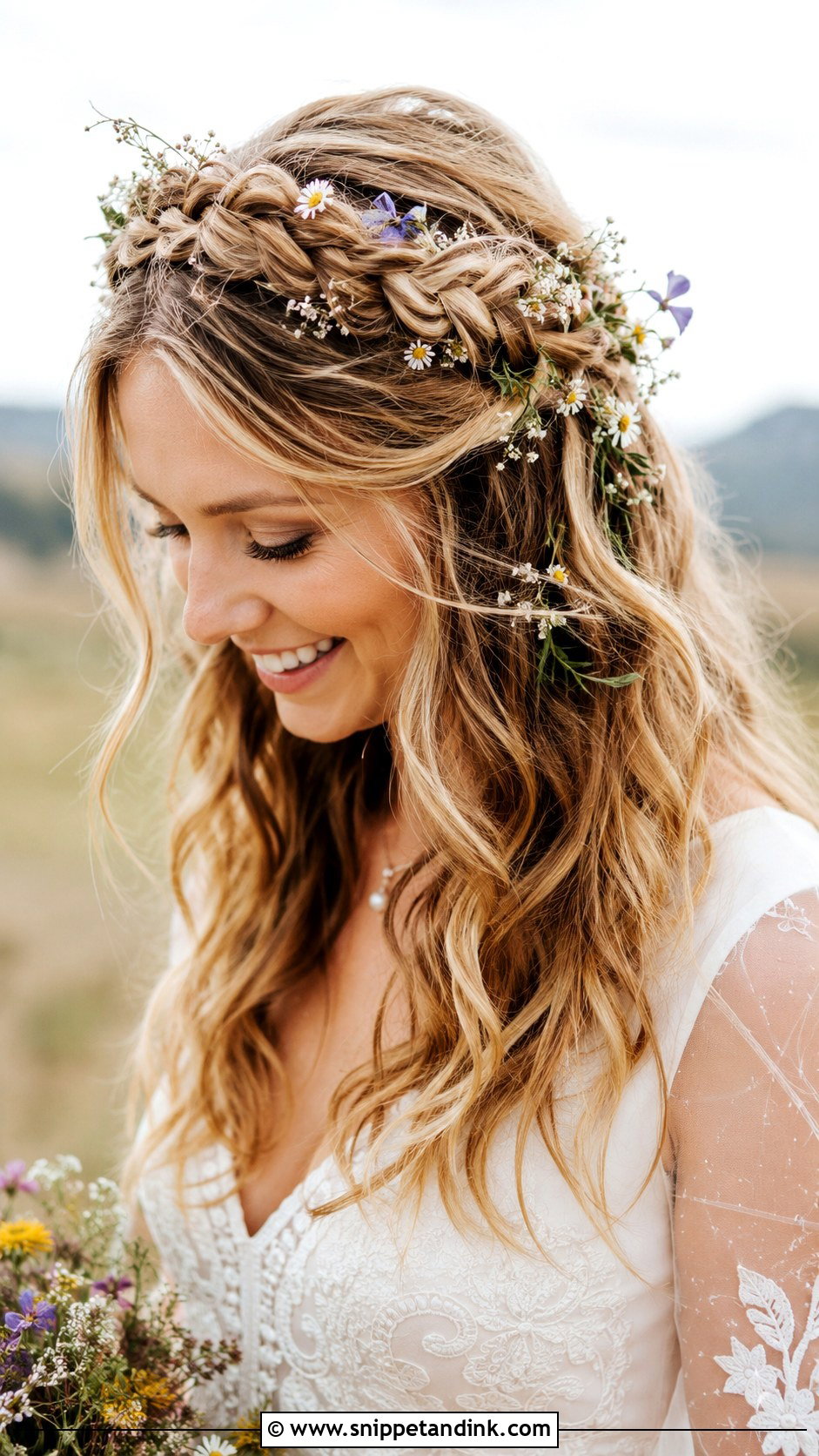
In a dreamy boho braided crown, the braids wind around the head and keep hair completely off the face, which matters at windy outdoor weddings. I work it from two braids that meet at the back rather than one long braid wrapped around, because the two-braid version sits flatter and holds better. The rest of the hair can hang down or go into a soft bun. Baby’s breath and small wildflowers tucked into the braid last better through a warm afternoon than fragile blooms do.
12. Side-Swept Curls for Bride
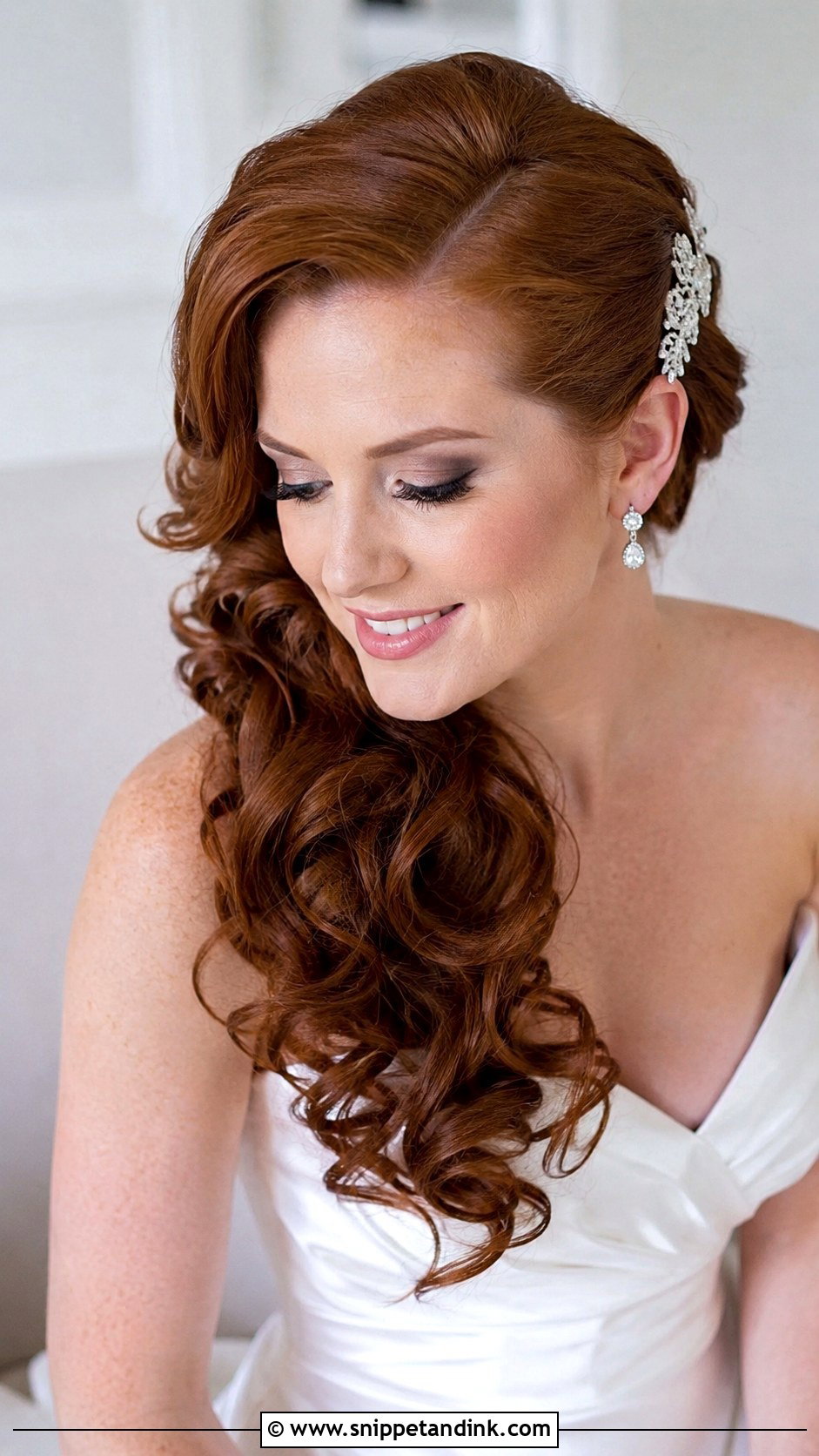
Side-swept curls bring old-Hollywood glamour, gathered to one side and draped over one shoulder. The pinning matters more than the curls: I crisscross bobby pins behind the ear on the bare side so the weight of the hair doesn’t drag it back to center during the day. A jeweled comb can hide those pins. Show off statement earrings on the open side. Medium to long hair works; on short hair the curls don’t have enough length to reach the shoulder.
13. Sleek Bun with Center Part
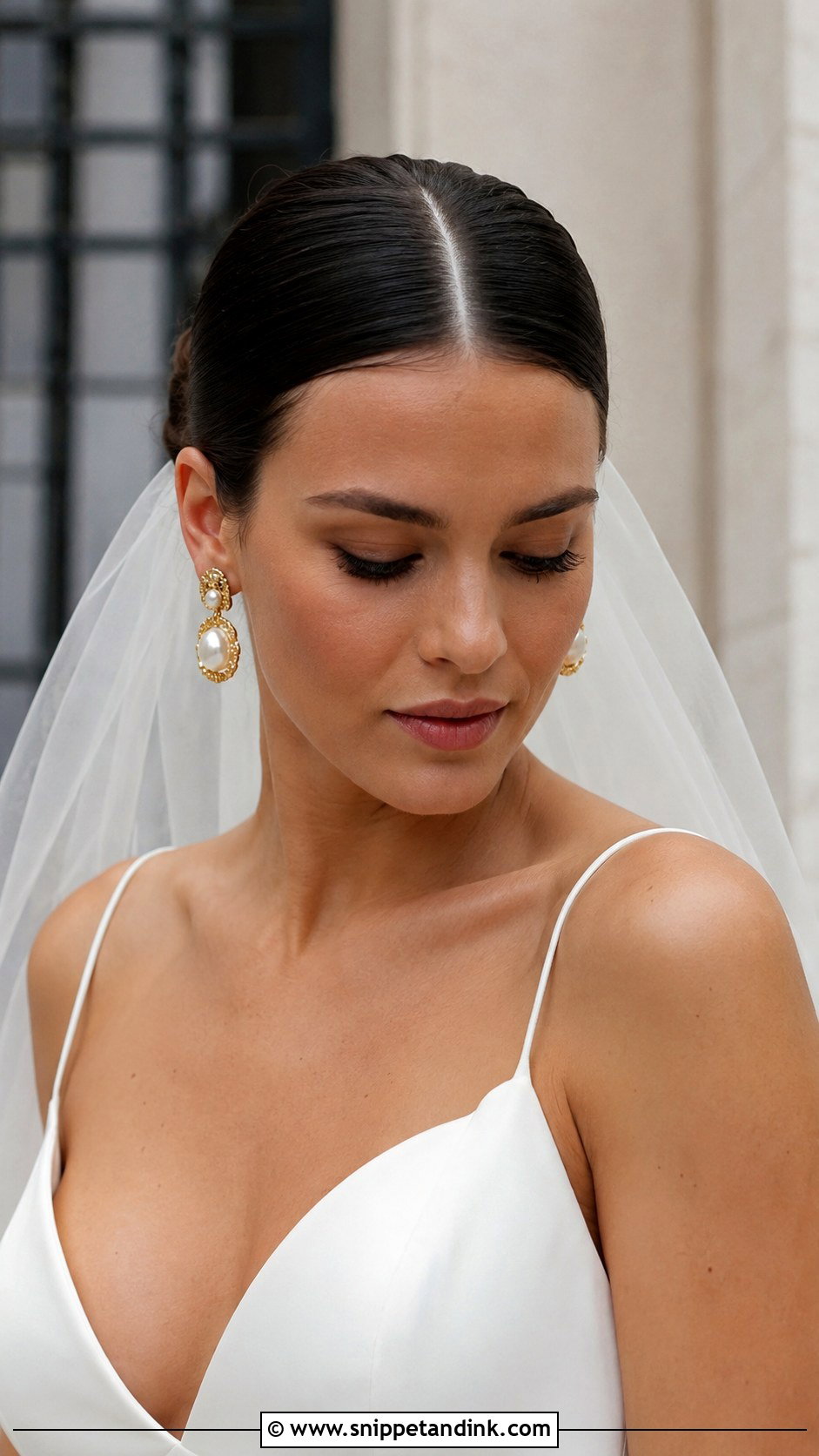
A sleek bun with a center part is precise, and that precision is the whole style. I part the hair with a tail comb, blow-dry it flat, then smooth it back with gel and secure the bun tight. Any wobble in the part shows straight away in close-up photos, so I check it against the bridge of the nose. It suits minimal, modern weddings and bold earrings. It’s less kind to a very thin hairline or a strong cowlick at the front, and those are worth trying at a trial first.
14. Romantic Updo with Flowers for Wedding
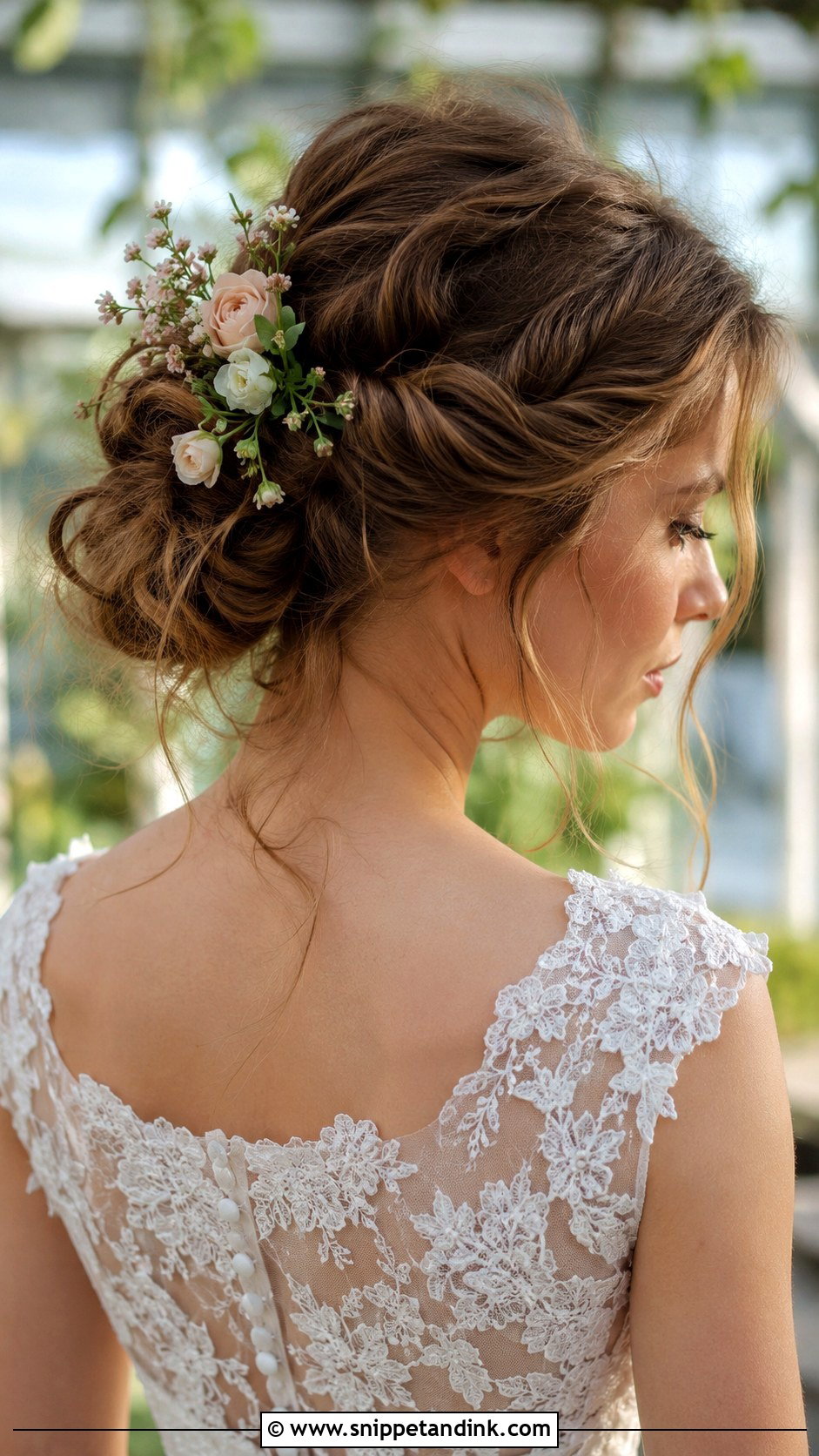
An updo with fresh flowers needs the florist and the stylist talking to each other. The hair goes up into a soft, textured shape and blooms are scattered through it or clustered on one side. I ask for flowers wired or on short stems, because thick stems push the updo out of shape. Sturdy blooms like spray roses or waxflower hold up better than delicate petals. Picking flowers from your bouquet ties the look together, and it’s well suited to spring, garden and outdoor weddings.
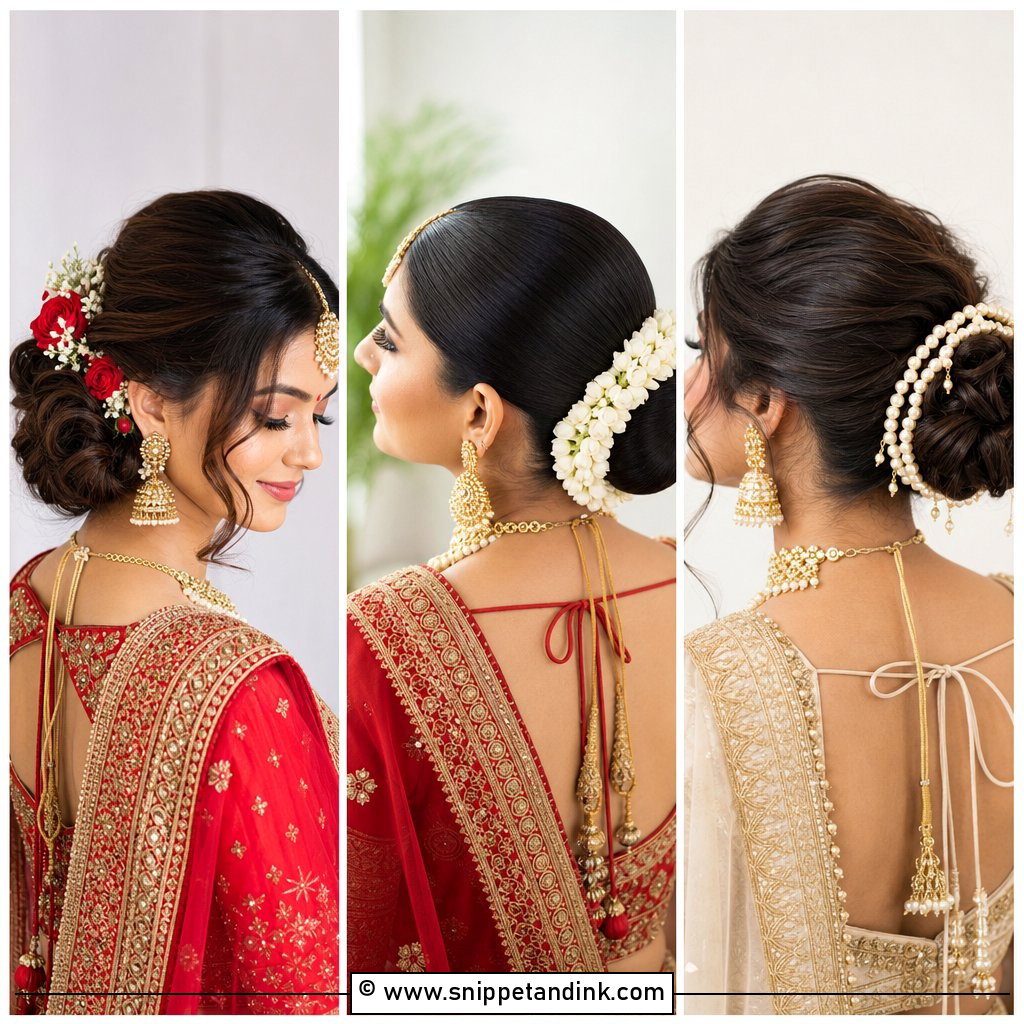
15. Curtain Bangs Bridal Hairstyle
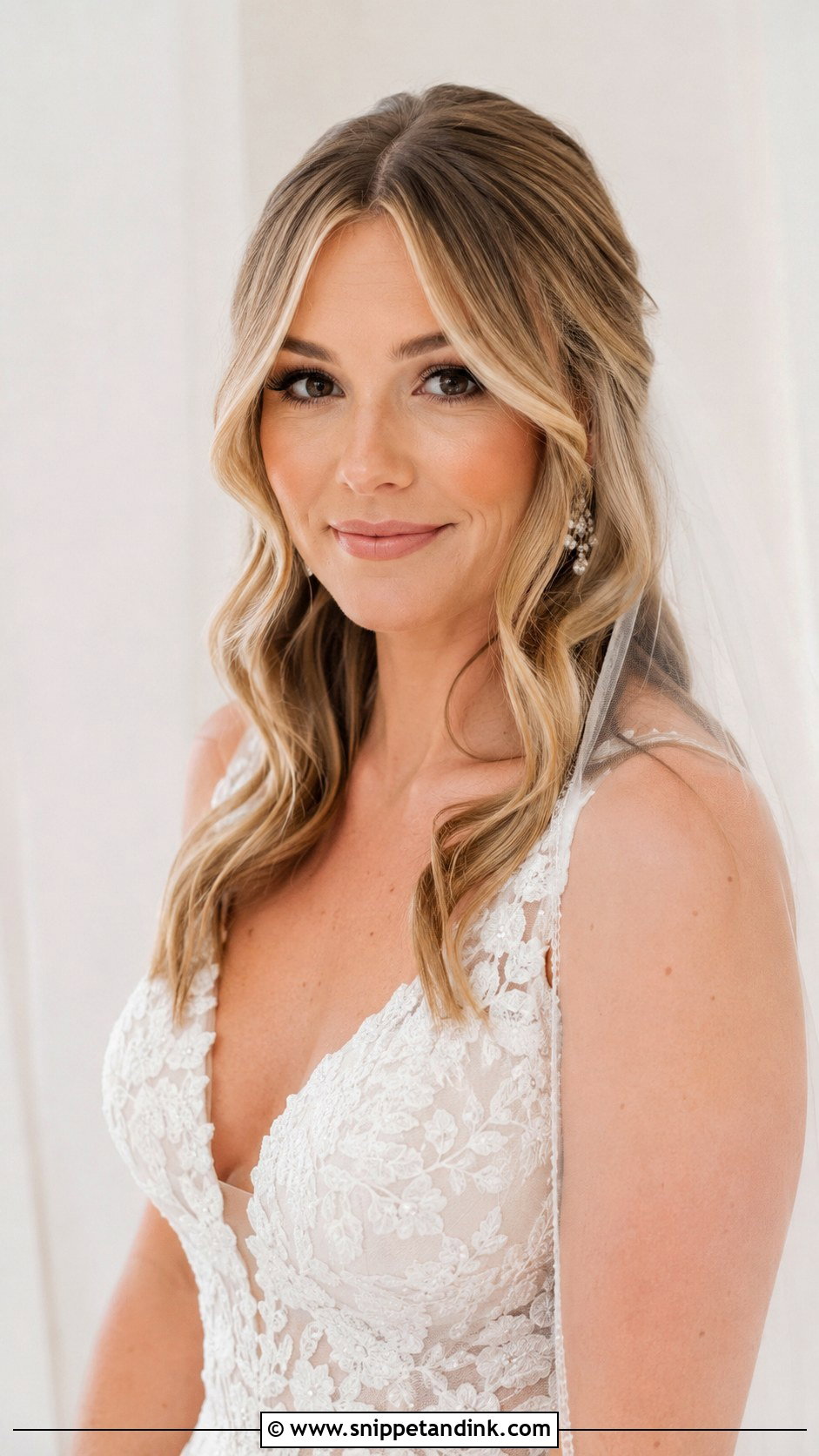
Curtain bangs part in the middle and sweep to each side, framing the eyes and cheekbones. I’d never cut them for the first time within a few weeks of the wedding. Have them cut at least four to six weeks before, then a light trim about a week out, so they have time to settle. They work with an updo or loose waves. On the day, I set them with a round brush or a large velcro roller rather than a curling iron, which keeps the bend soft.
16. Low Twisted Updo for Bride
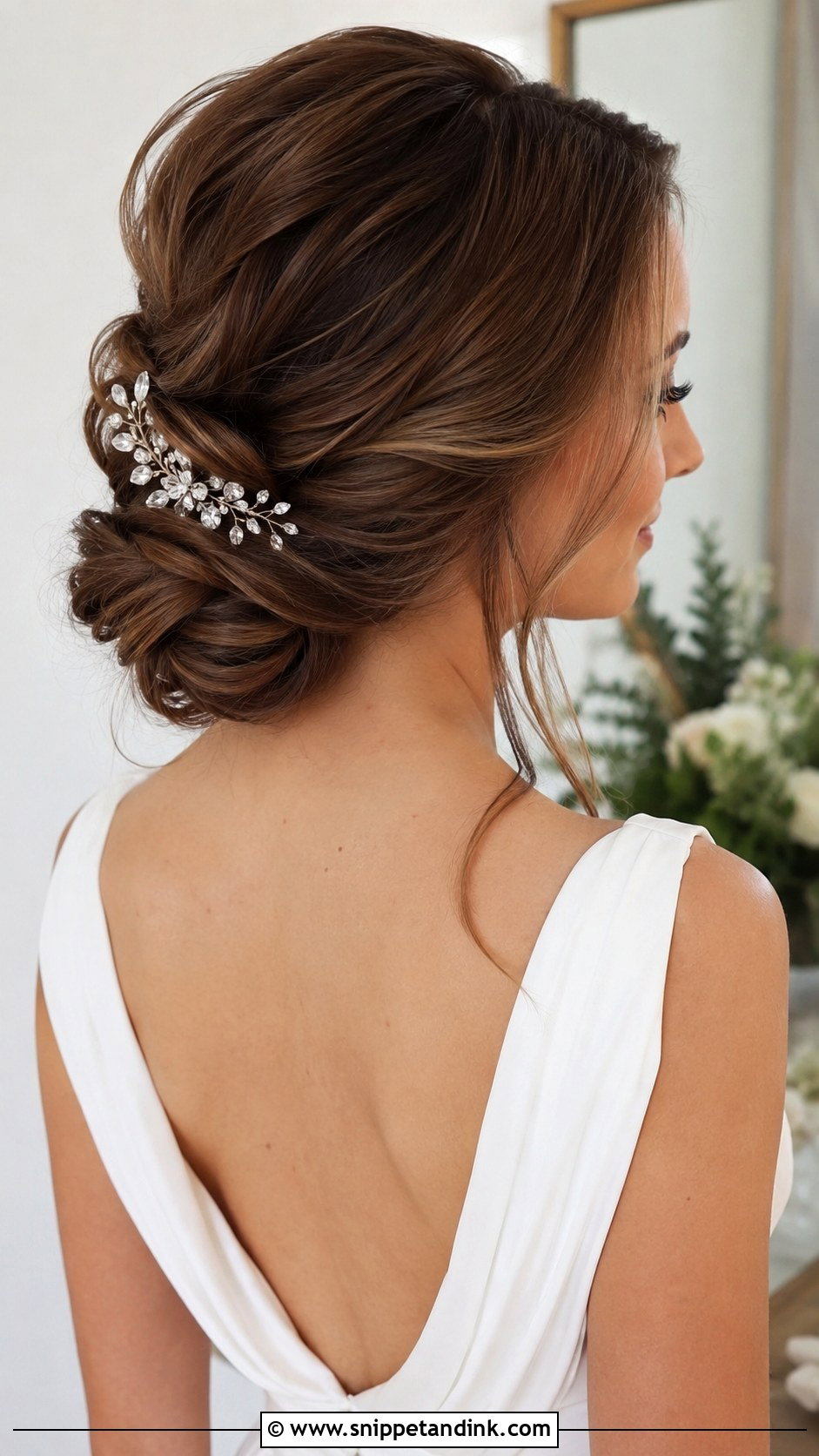
The low twisted updo uses twisted sections gathered at the nape instead of a single bun, which makes it more interesting from behind, where guests look during the ceremony. Twists are lighter than braids but they also loosen more easily, so I pin each twist where it lands and spray between sections rather than only at the end. It’s a good choice for medium hair that’s too short for a full braided bun. A sparkling comb or a few delicate pins finish it.
17. Boho Waves with Headband for Wedding
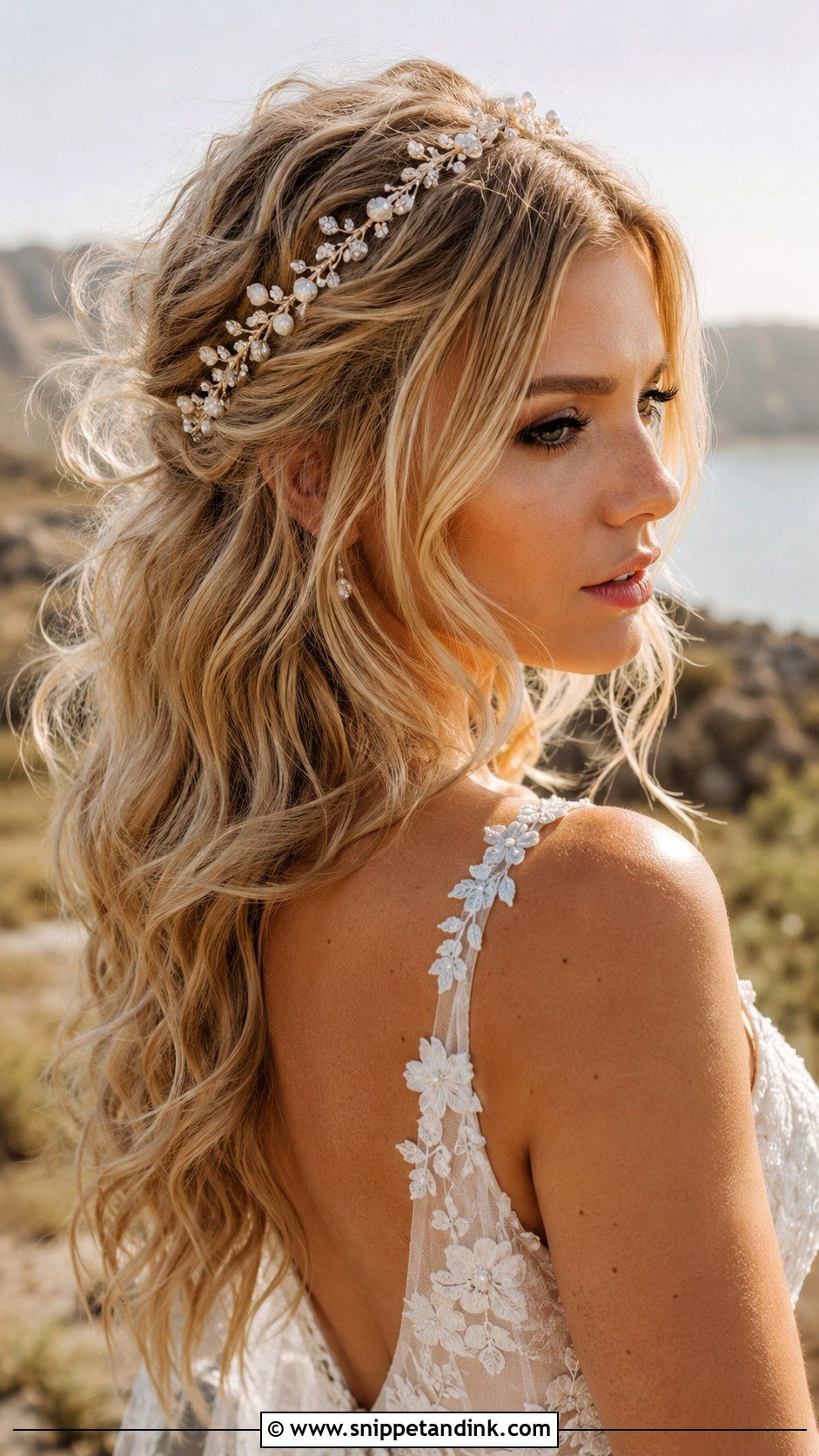
Tousled waves with a band across the crown are one of the easiest looks to keep comfortable all day, and soft boho waves are forgiving if they drop a little. The headband keeps hair off your face. The thing I check at the trial is pressure behind the ears: a rigid metal band that pinches at ten in the morning will be painful by dinner, so try it on for at least an hour. Pearl and flower bands both suit outdoor weddings.
18. Dutch Braid Updo for Bride
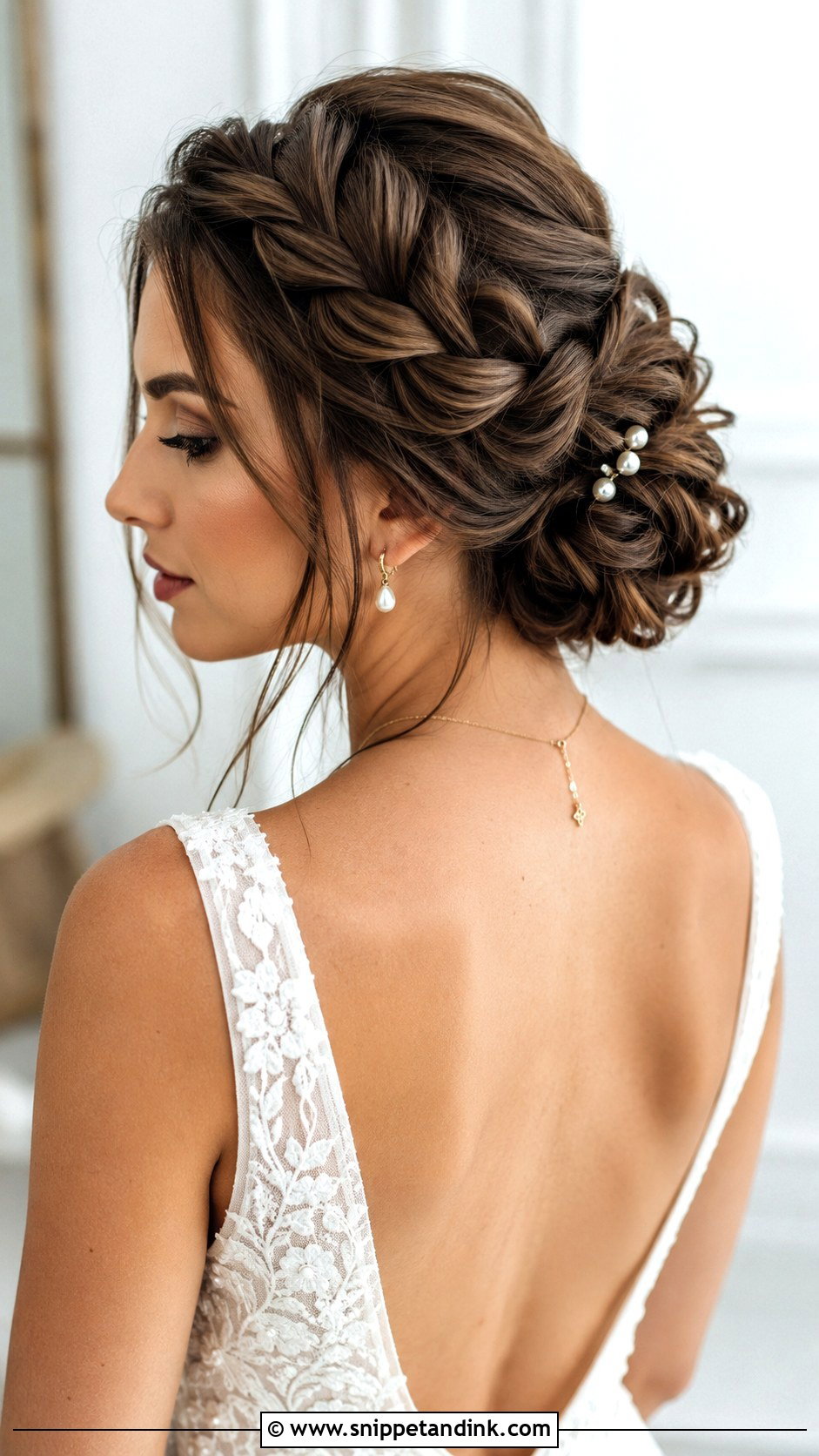
Dutch braids are plaited under rather than over, so they sit raised on the head, and that’s what gives this updo its dimension. They can wrap into a full updo or lead into a low bun. Because the braids are so visible, I make sure the parting lines between them are clean and straight before I start. They hold extremely well, which makes them a safe pick for a long, active day. Pearls or sparkling pins in the braid add detail without much weight.
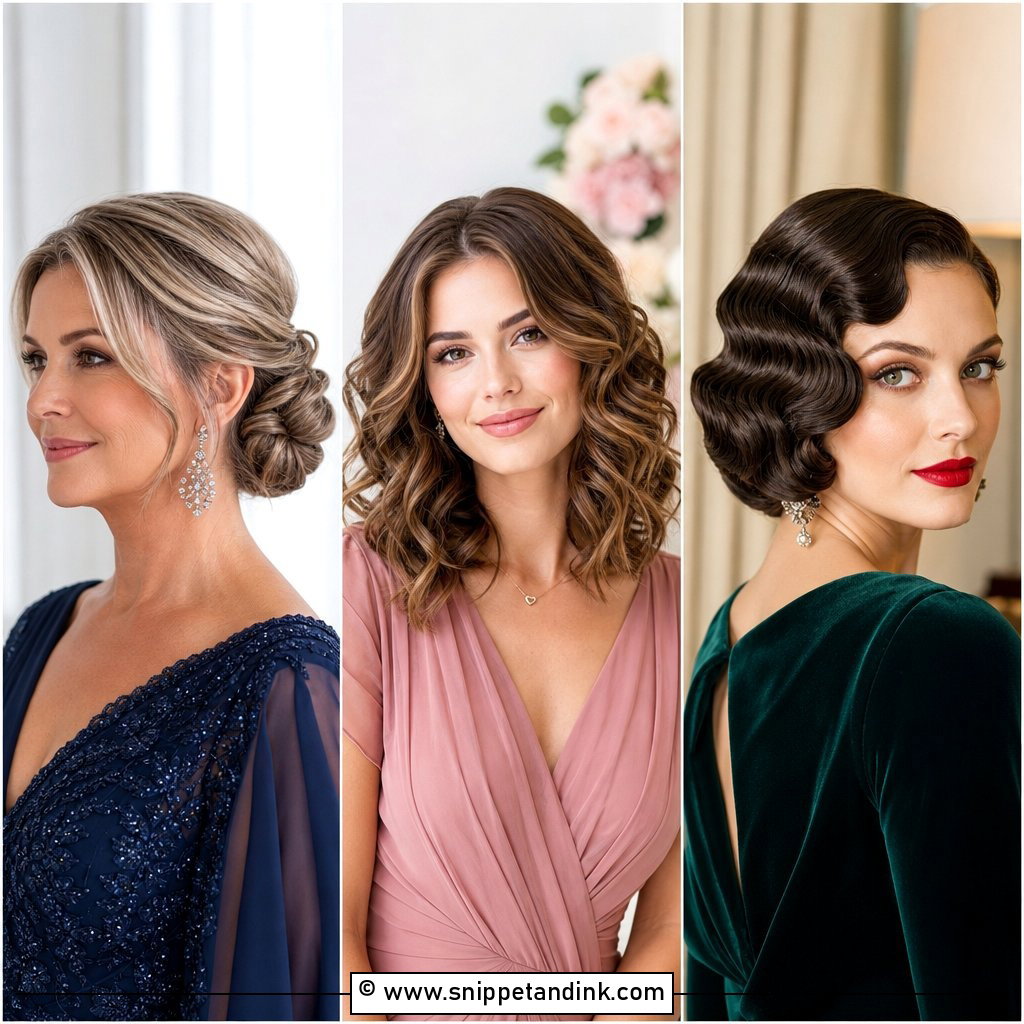
19. Vintage Finger Waves for Wedding
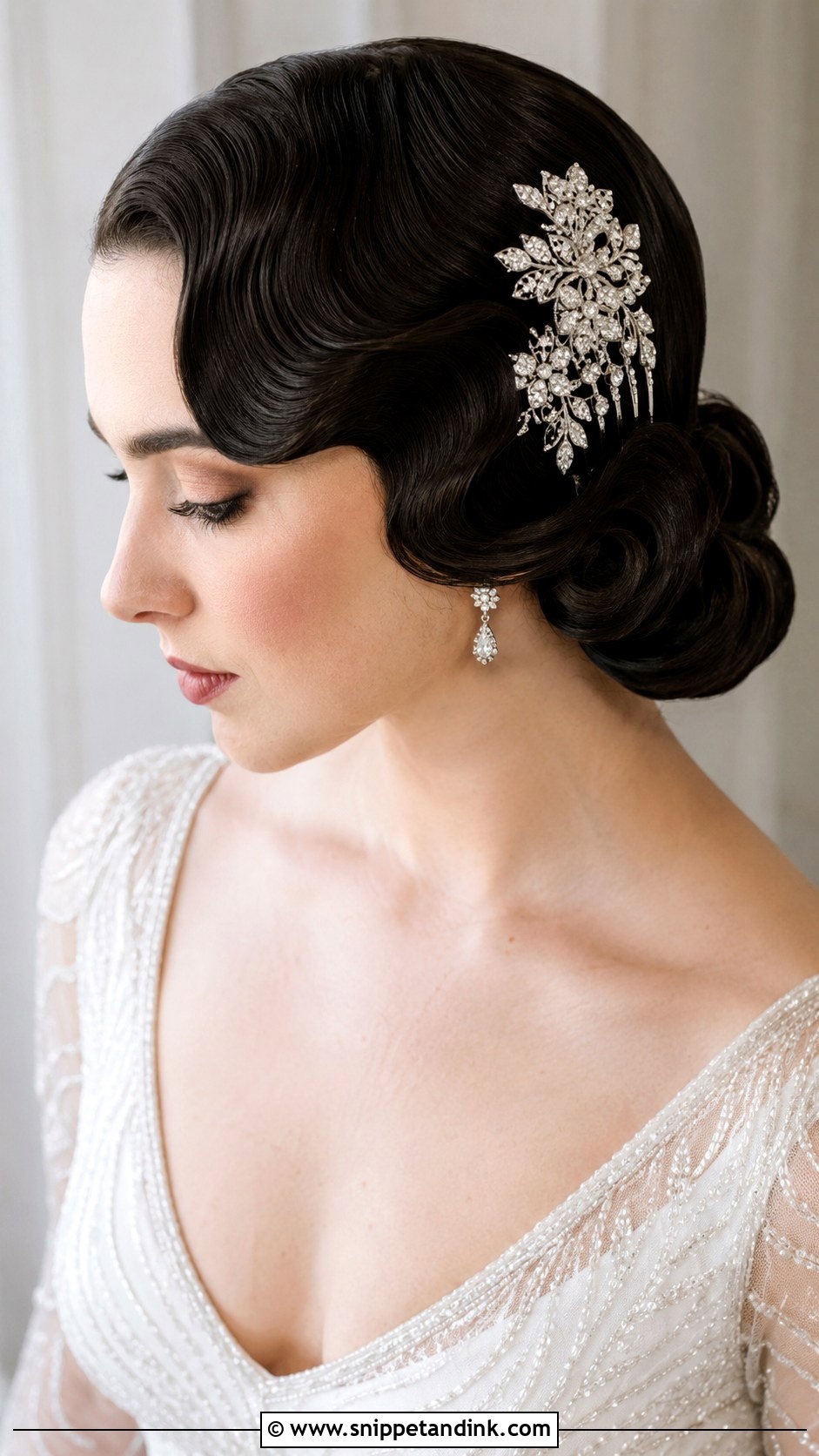
Finger waves are sculpted S-shaped waves set close to the head, the classic look of the 1920s and 1930s. They’re a specialist job: the hair is set wet with gel and molded with fingers and a comb, or created with a curling iron and then pressed flat. They suit short to medium hair, and they suit art-deco or vintage-themed weddings. I’d only book them with a stylist who can show you finger waves they’ve actually done. A vintage hair comb finishes the look.
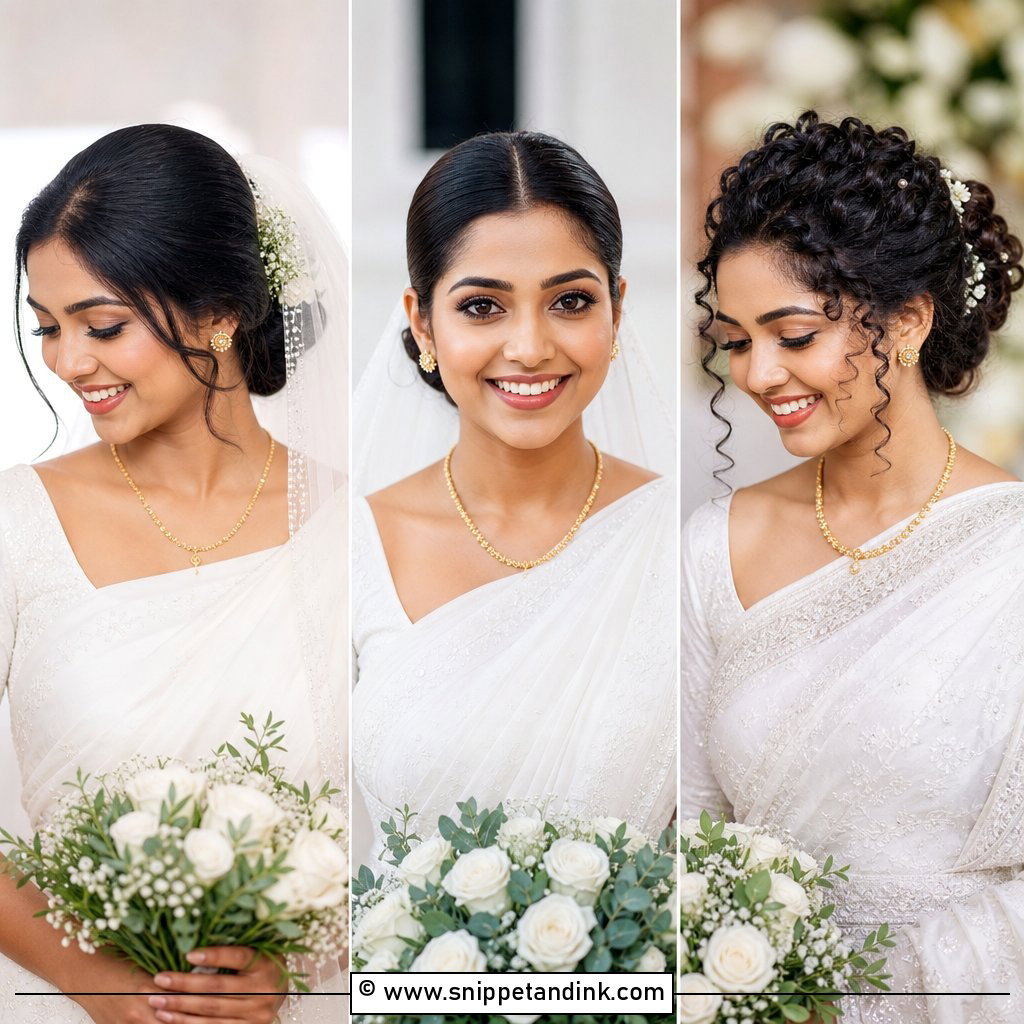

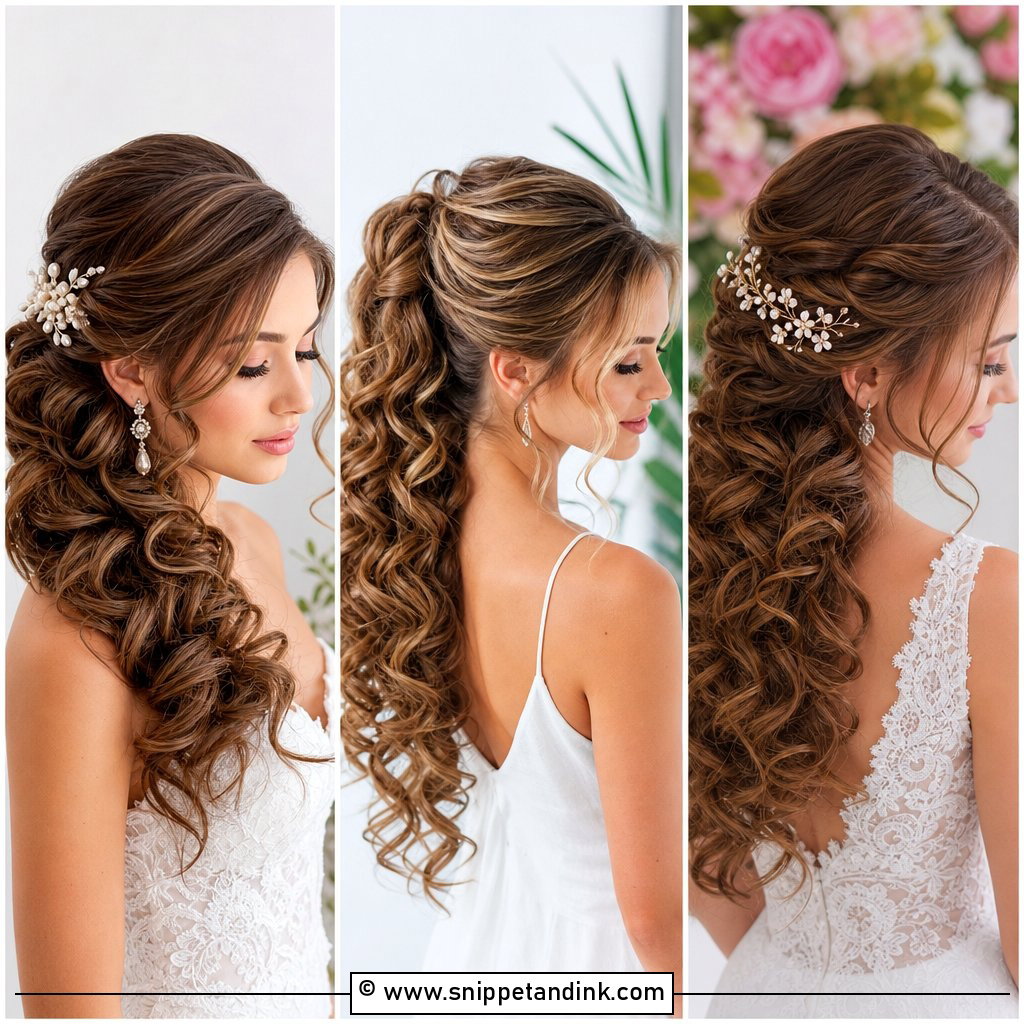
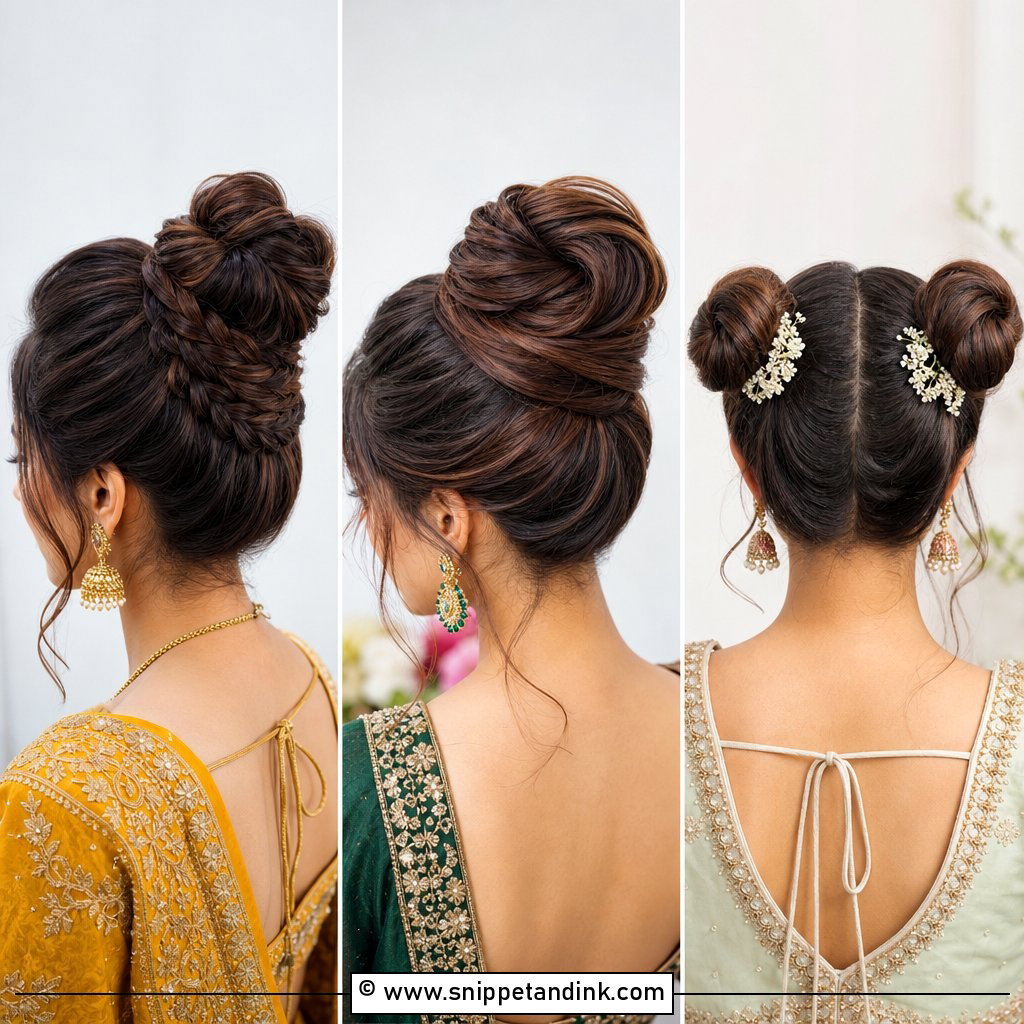
20. Half-Up Braided Crown for Bride
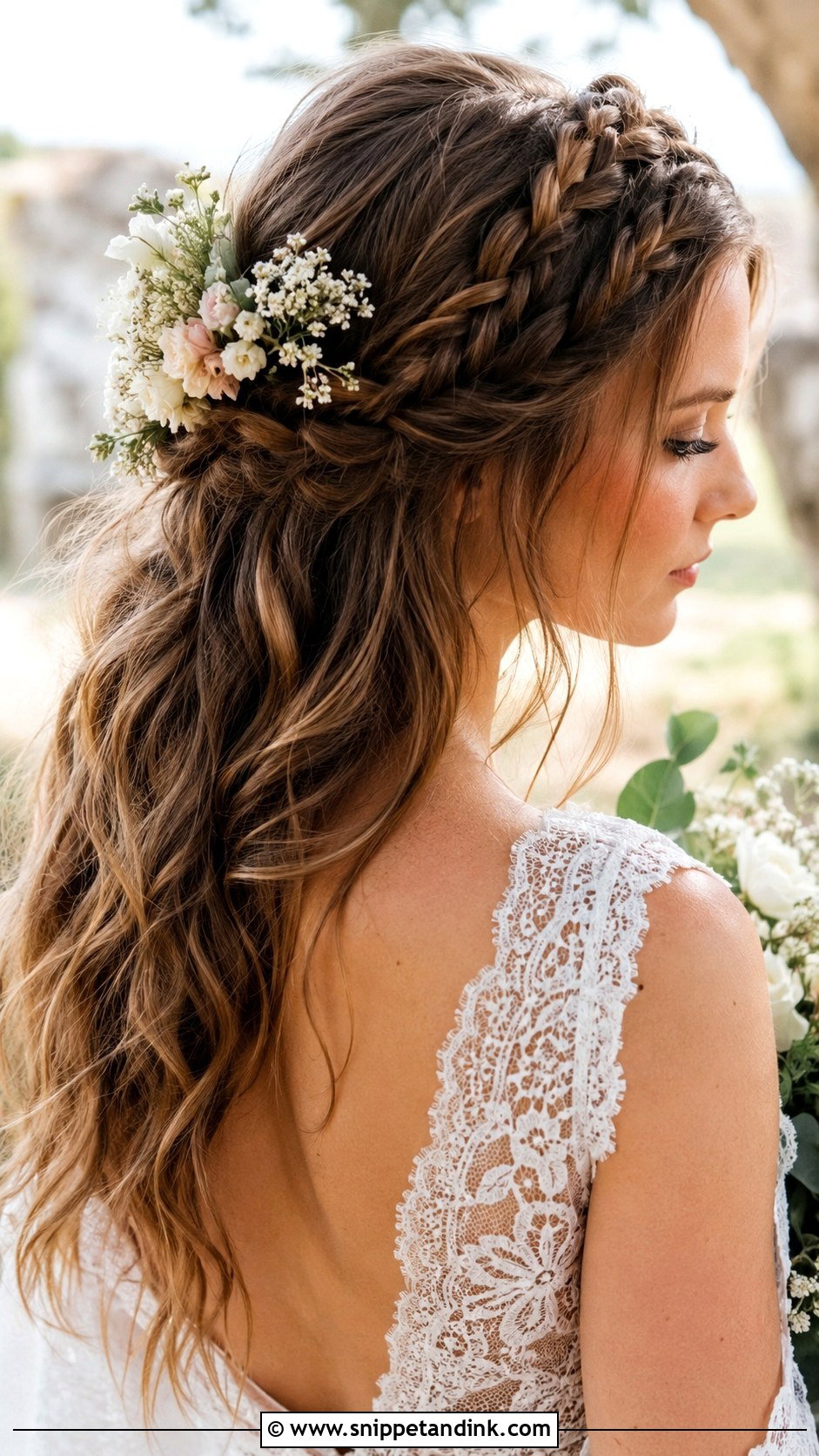
A half-up braided crown braids the top sections into a band around the head and leaves the rest of the hair down. The braid frames the face and holds the front in place, while the lengths below stay soft. I pin the two braids together at the back first and let the waves fall over that join, which hides the pins. Delicate flowers tuck into the braid well. Like any half-down look, the curls underneath need to be set firmly or they relax by evening.
21. Sleek High Ponytail for Wedding
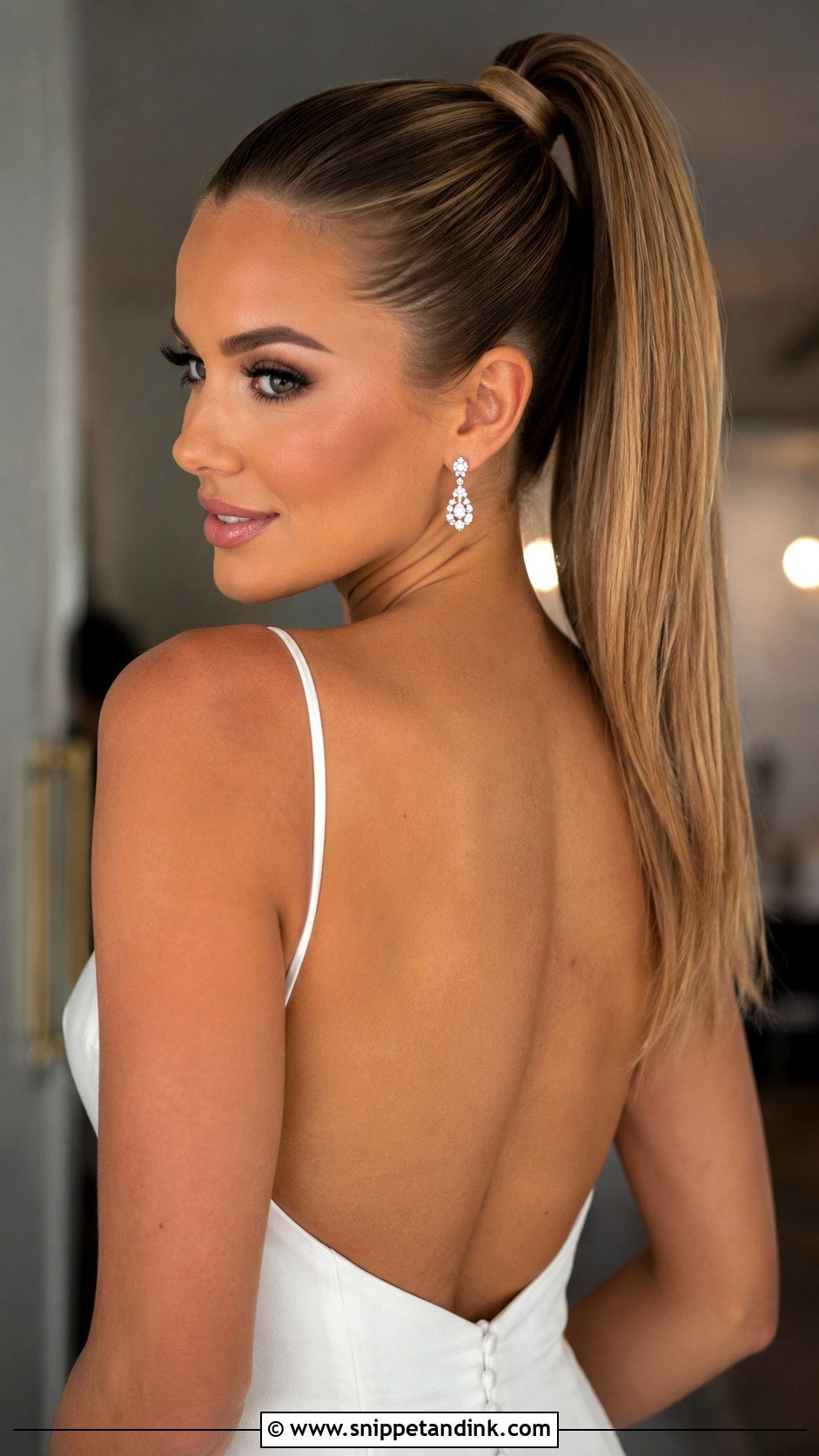
A high ponytail lifts the features and keeps hair off the neck, which helps at a hot summer wedding. I tie it with two bands, one on top of the other, so it stays up instead of sliding down through the day, then wrap a strand around the base. Clip-in extensions give extra length and swing. A heavy ponytail can cause a headache after a few hours, though, so if you’re sensitive to tension I’d try it for a full afternoon at the trial before committing.
22. Soft Romantic Chignon with Tendrils
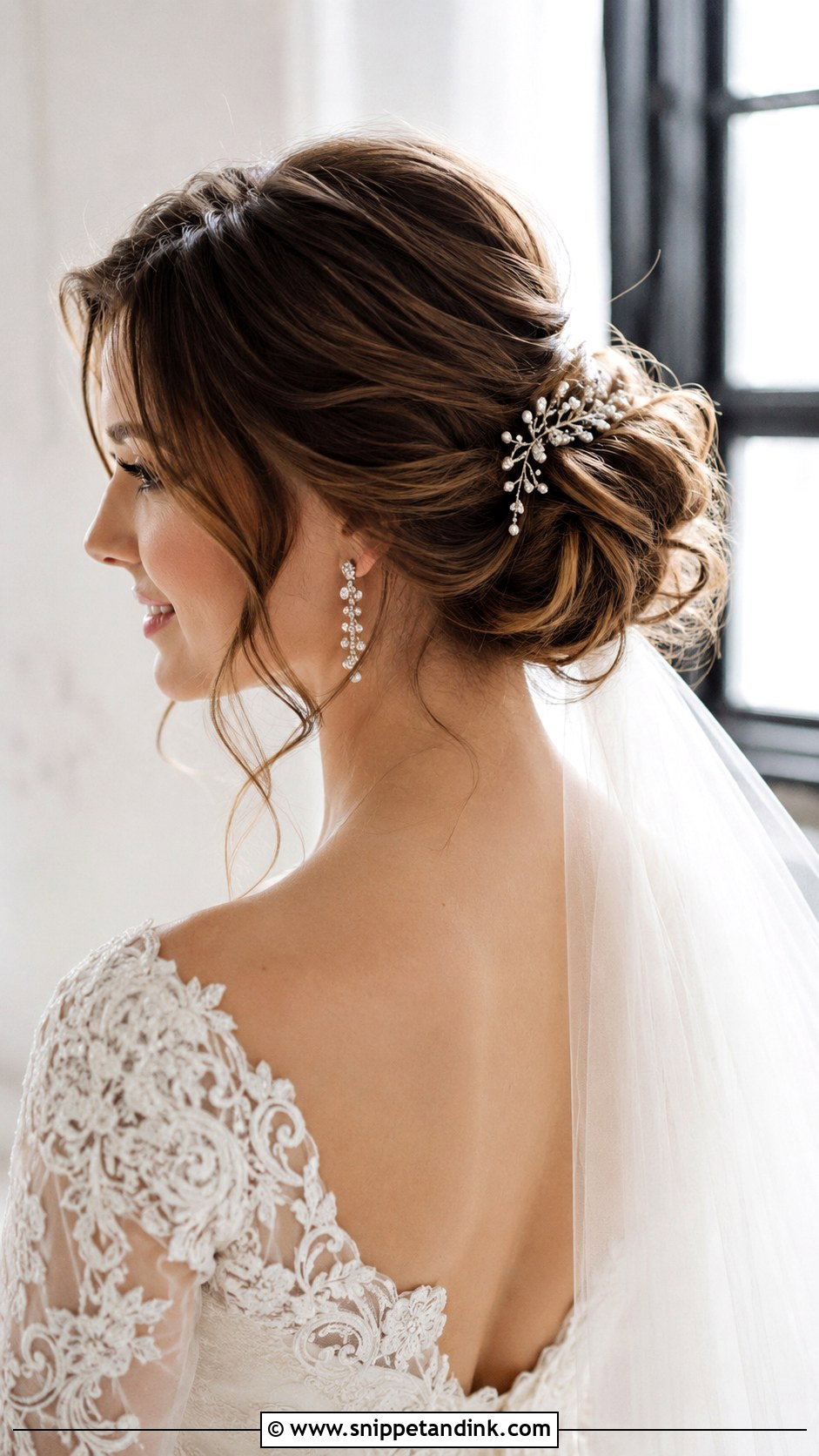
The softer chignon is gathered low and loose, with wispy tendrils framing the face. Those tendrils need a curl set into them; straight face pieces just look like hair that fell out. I leave them slightly longer than the final look, because curled hair shrinks. A delicate veil or a few hairpins sit well with it, and it works indoors or outside.
23. Waterfall Braid Bridal Hairstyle
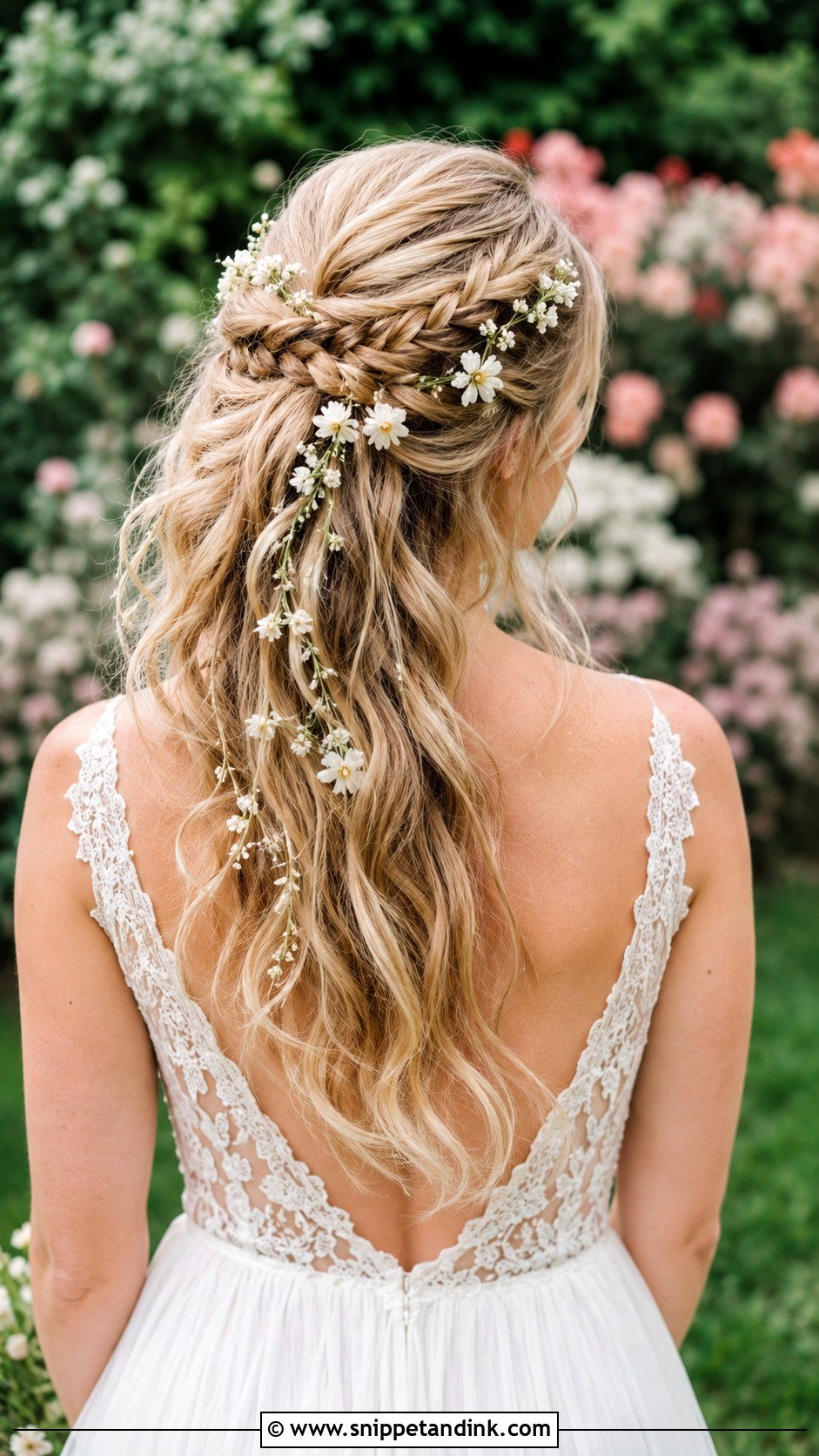
A waterfall braid runs horizontally across the head, dropping a strand after each stitch so the hair falls through it like water. It finishes into loose waves below. I keep the braid fairly tight at the start, because the dropped strands mean less hair holding it together. The waterfall braid frames your face nicely, and small flowers fit into the gaps. It suits garden, beach and bohemian weddings.
24. Low Bun with Side Braid for Bride
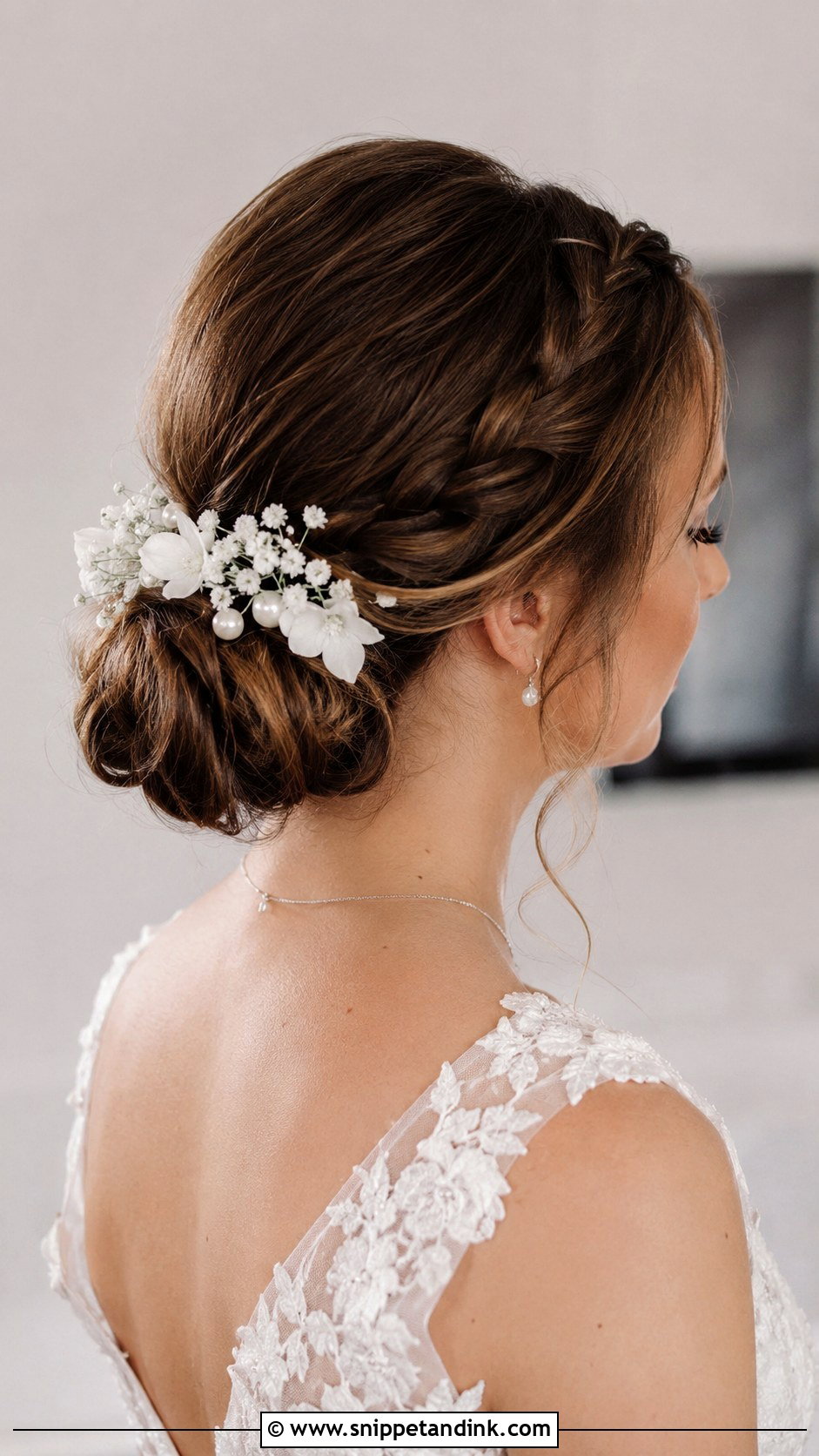
A low bun with a side braid adds one textured detail to a classic shape. The braid starts at the part, runs along one side, and is folded into the bun. I choose the braid side based on where the veil or flowers will sit, so the detail doesn’t get covered. It holds well through the ceremony and reception. Pearl pins along the braid suit it.
25. Voluminous Blowout for Wedding
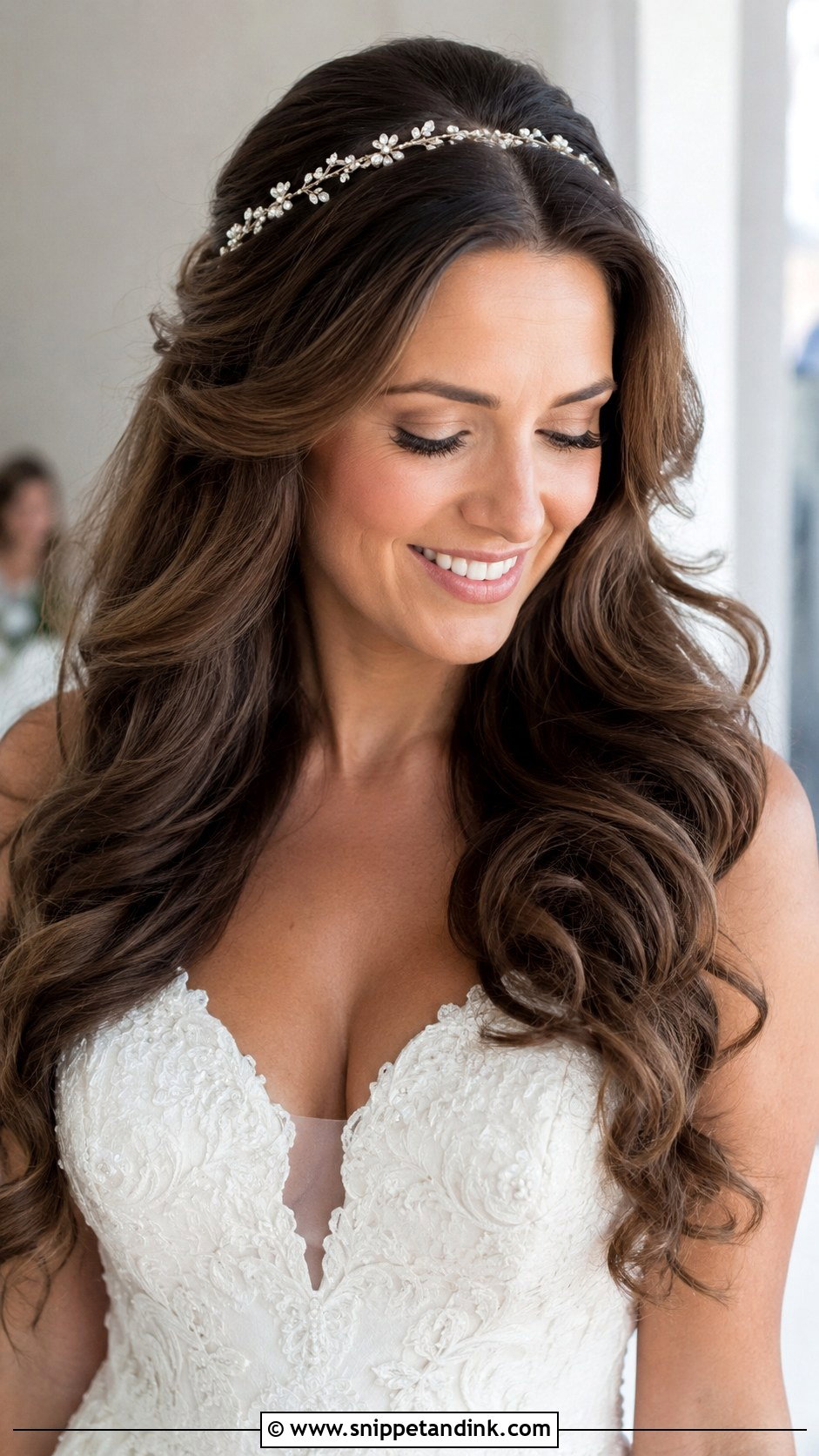
Hair worn down in a full blowout is about volume and gloss rather than an updo. The style has full-bodied, bouncy hair with smooth waves and lots of movement. I build volume at the root with a round brush and velcro rollers left in while makeup is done, then brush out just before photos. Fine, flat hair loses body fastest, so it benefits most from rollers. A veil or headband suits it. Of every style here, this one depends most on how healthy your hair is.
A Hair Calendar for the Two Months Before the Wedding
Most problems I see on wedding mornings were set in motion weeks before: a new colour that came out brassy, a fringe cut too short, a heavy mask that made the hair too slippery to pin. A simple calendar avoids most of that.
- Eight weeks out: any big change in colour or cut. This gives time to correct it if you don’t like the result.
- Six weeks out: the hair trial. It should be close enough that your hair is roughly the length it will be.
- Two to three weeks out: a trim of the ends and any colour refresh or gloss, so roots aren’t showing on the day.
- The week of: no new products or treatments. Keep to what you know your hair tolerates.
- The night before: wash and dry your hair fully, without heavy conditioner or oil at the root, unless your stylist has asked you otherwise.
If your hair is curly or coily, tell your stylist how you usually wash and style it. Some curly brides do better washing two days before, since natural oils make the hair easier to smooth and shape.
Your Neckline and Veil Come First, Then the Hairstyle
Start with the things you can’t change: the neckline of your dress, the length and weight of your veil, and the weather at your venue. Those narrow the list quickly. A high neck usually wants an updo, a strapless or backless dress opens up waves, and a cathedral veil needs a solid base. Then look honestly at your own hair. Book a trial with the actual veil and any accessories, take photos from the back and side, and you’ll know which of these styles truly works for you.
You'll Like These Ideas:


Leave a Reply