
On the morning of a haldi, I spend more time on the floor plan than on the flowers, because everyone, not just the bride, ends up sitting low, crowding in for photos and getting turmeric on their sleeves. That’s why the outfit question is the same for the bride, a bridesmaid, a cousin, a mother or a guest: can you sit, dance, pose and get a bit messy without fussing? Yellow is the obvious favourite, but ivory, orange, green, peach, florals, mirror work and breezy Indo-western cuts all suit the morning. The 35 outfits below cover lehengas, sarees, shararas, kaftans, anarkalis and co-ords, with notes on who each one suits and how it holds up through a lively, sunny ceremony.
Bride, Family or Guest? Reading the Haldi Dress Code
Haldi customs differ from family to family and region to region, so the most useful thing I can tell a guest is to ask. A quick message to the host saves a lot of second-guessing, and most families are glad to be asked.
- The bride sets the tone. If she’s wearing yellow, the family often does too; some brides prefer to be the only one in a particular shade, so check before buying.
- Close family and bridesmaids usually get paste on them as well. Wear something washable and leave the heirloom silk for the wedding.
- Guests should look festive but not bridal. Skip heavy lehengas with dense embroidery, and lean toward suits, shararas, sarees or co-ords.
- Everyone should plan for floor seating and possibly bare feet, since many families hold the ritual on rugs, mats or flower-strewn floors.
I also tell people to bring a small bag with a change of top, wet wipes and a hand towel. Even guests standing at the edge can end up with yellow fingerprints after the hugging starts, and a quick change before lunch is far nicer than sitting in damp turmeric.
1. Yellow Haldi Lehenga Outfit
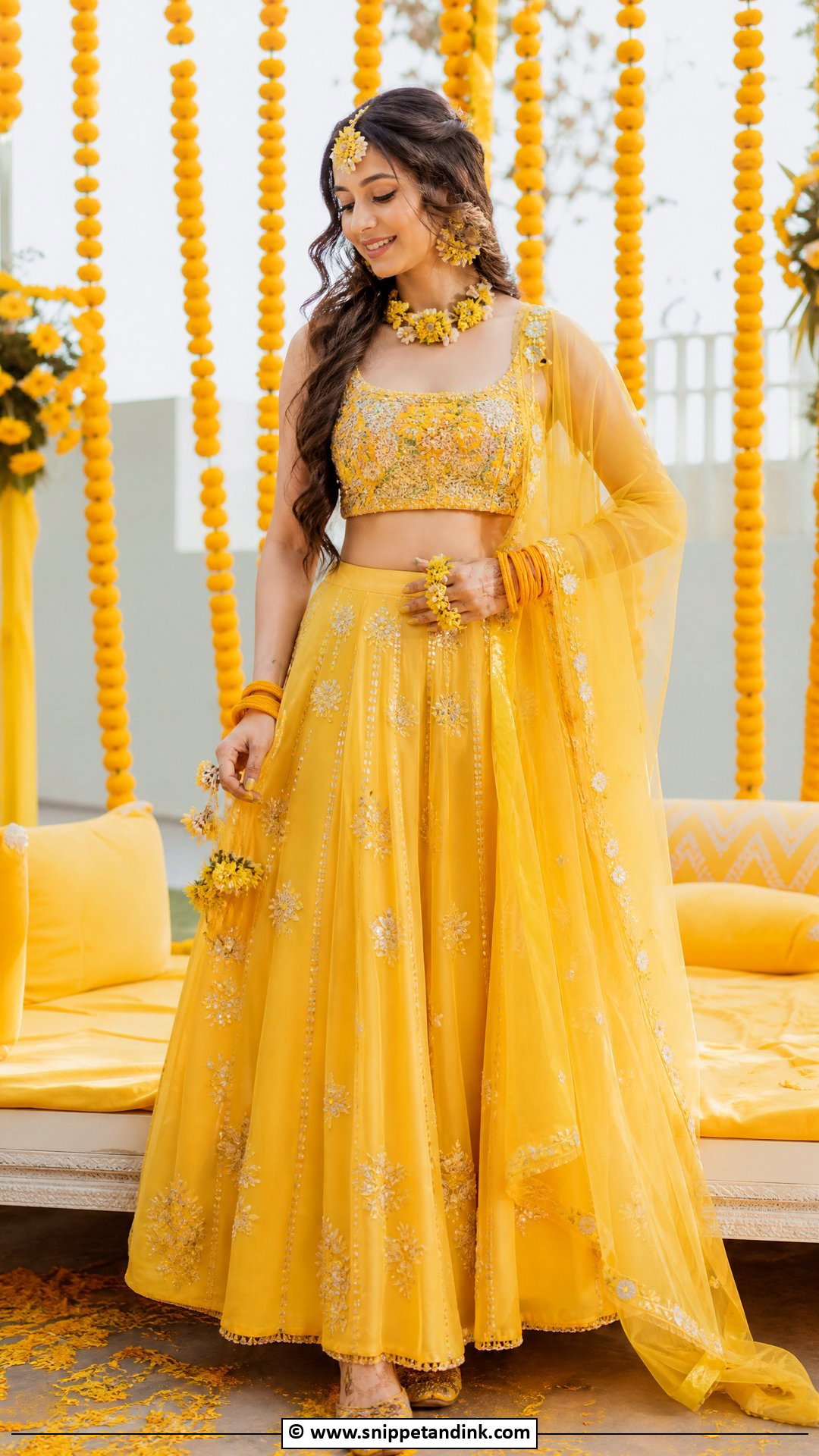
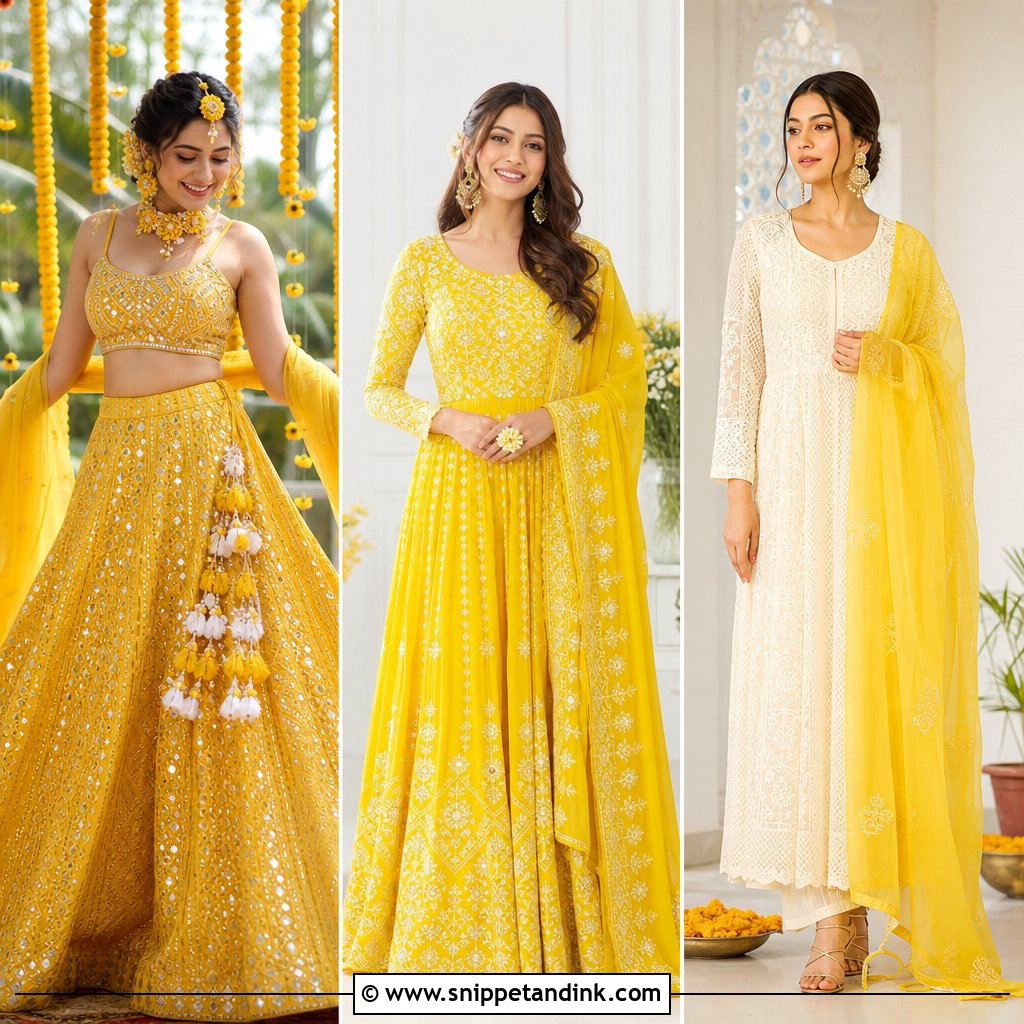
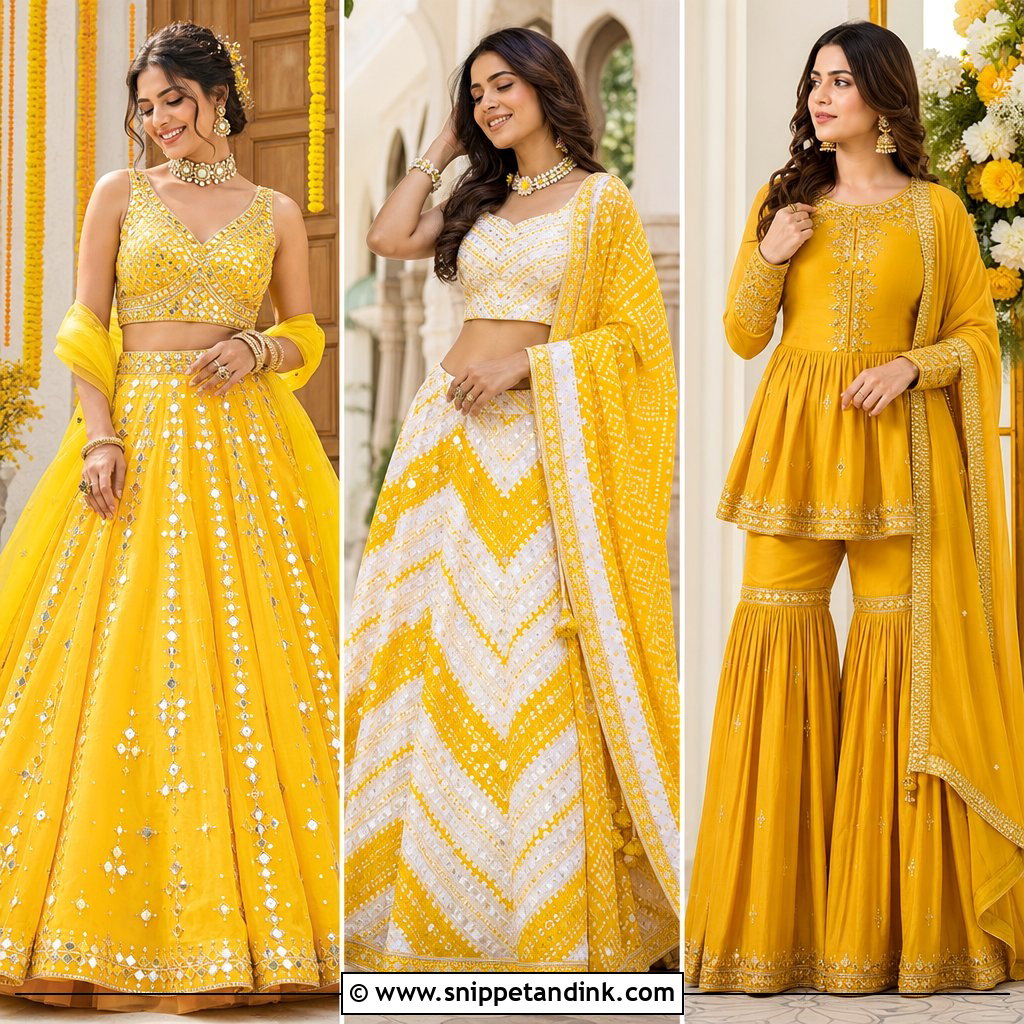
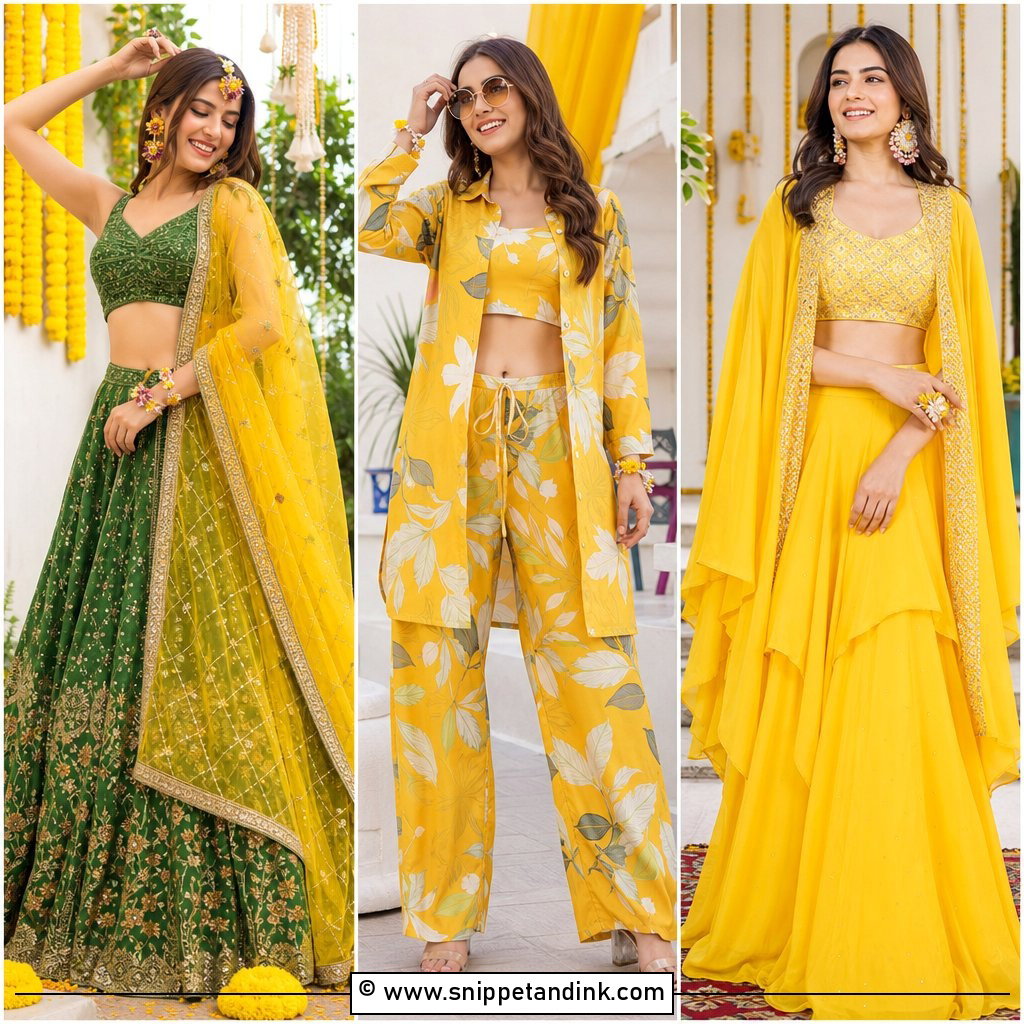
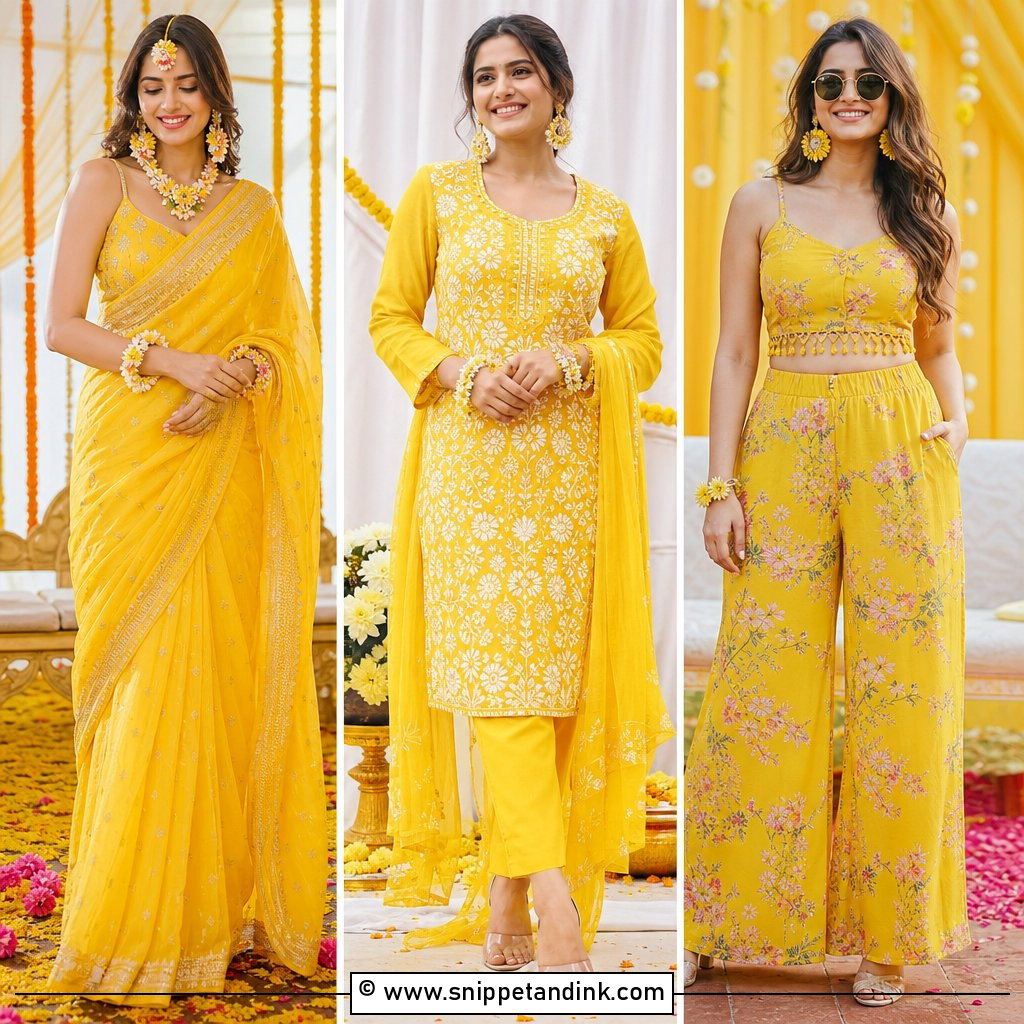
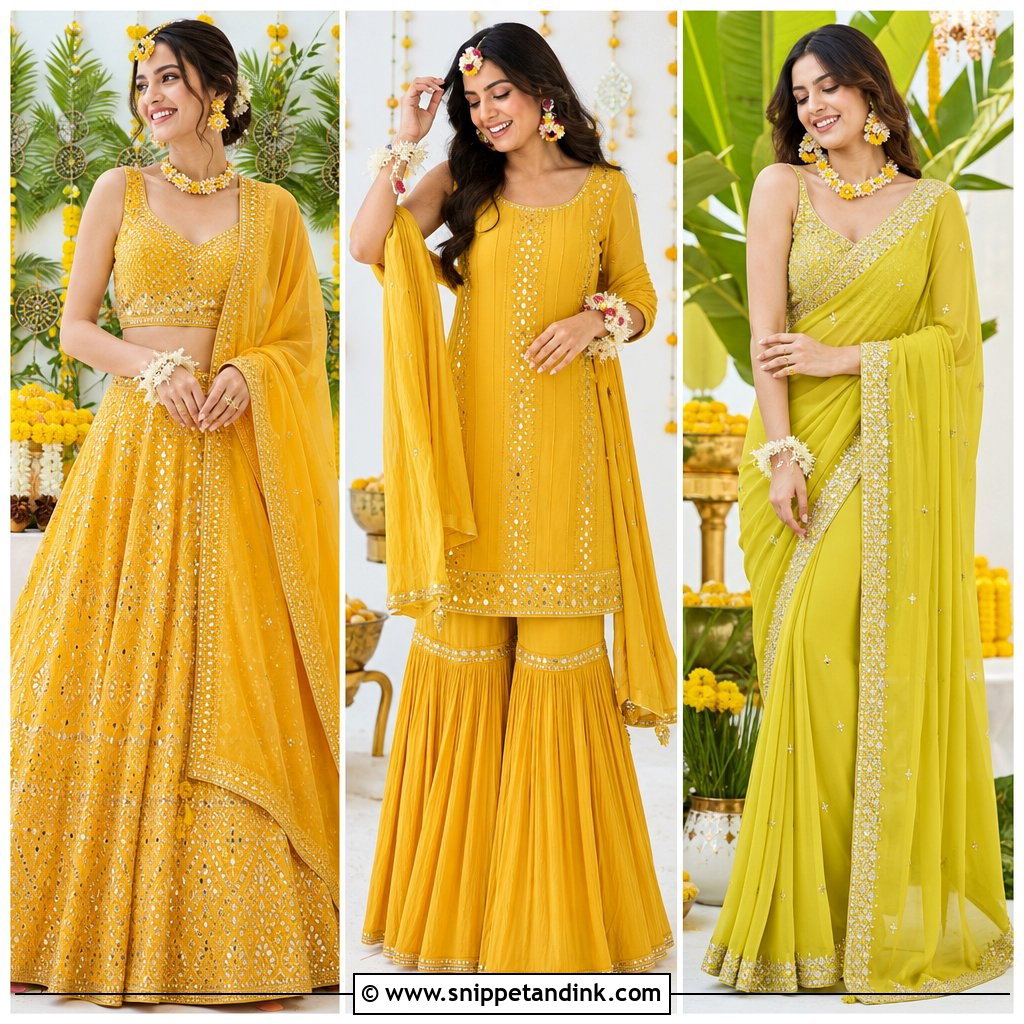
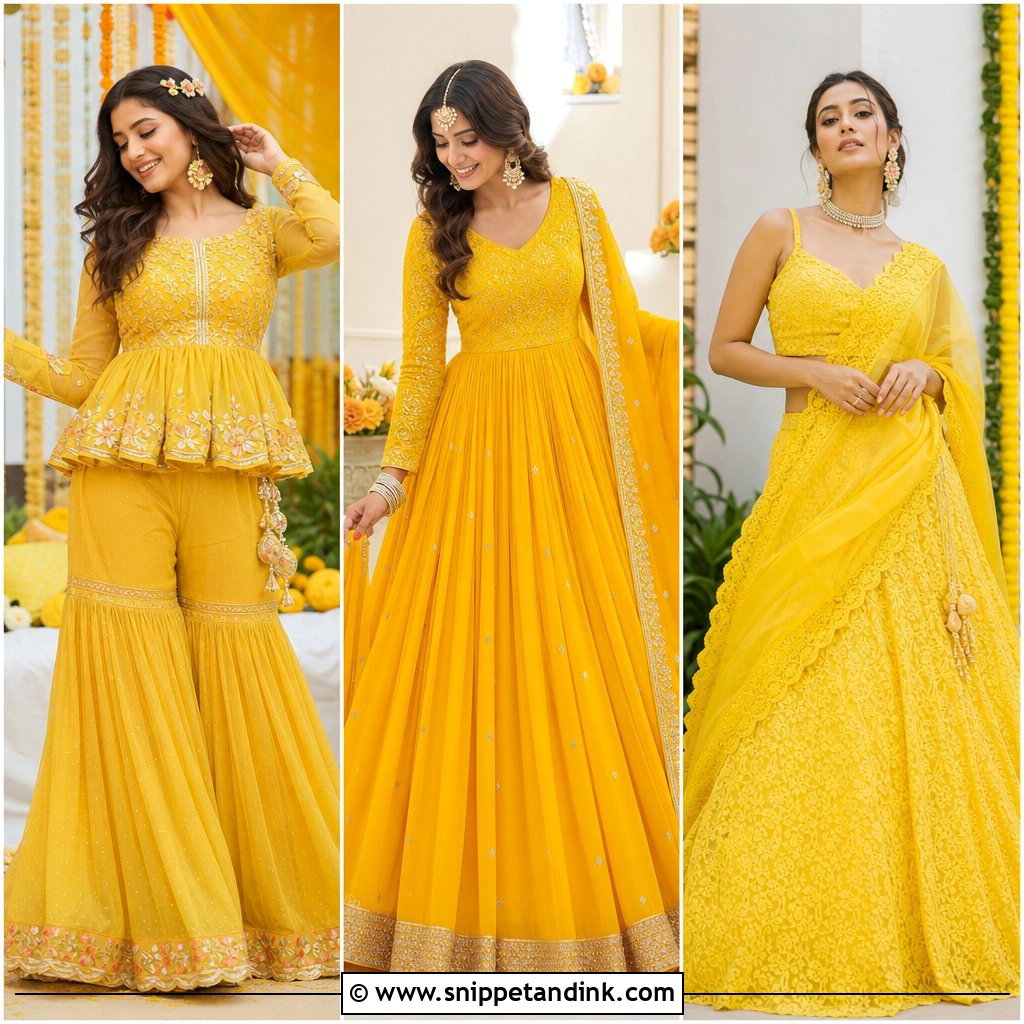
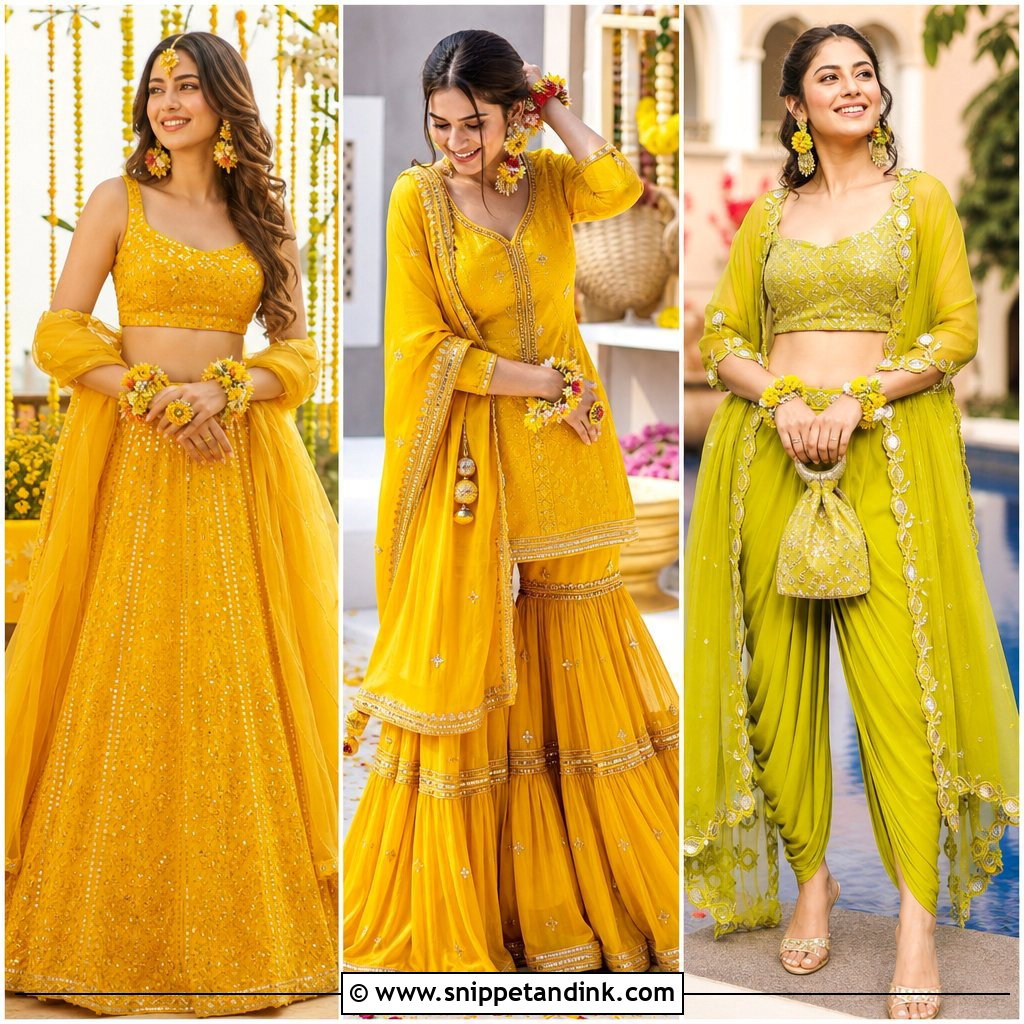
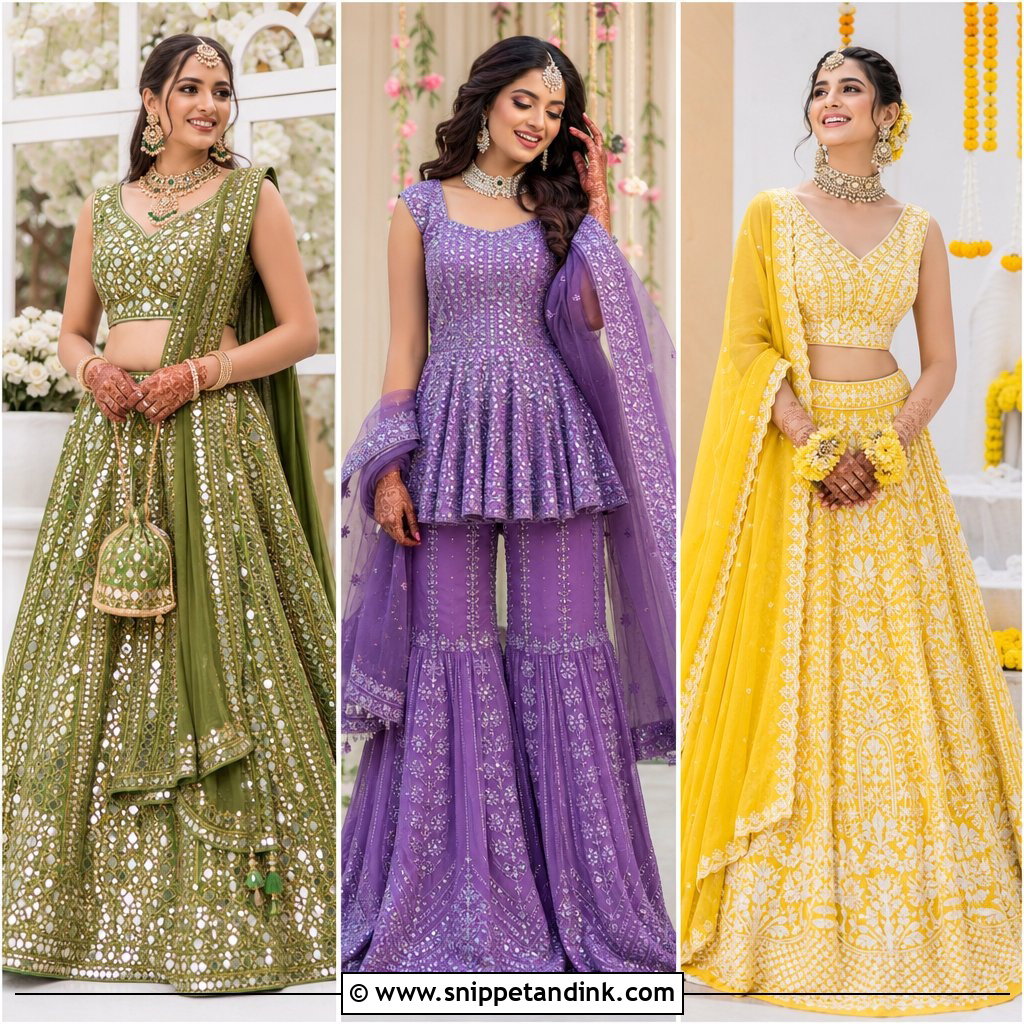
The classic. A yellow haldi lehenga outfit suits the bride or close family who want to look festive without heavy work. Cotton silk, organza, georgette or chanderi moves easily. A cropped blouse with gota patti, mirror work or thread embroidery keeps it bright. Pin the dupatta to one shoulder so your hands stay free for the bowls of paste and the hugs. Floral jewelry, juttis, fresh makeup and soft waves or a low bun complete it, and the yellow melts into the setting rather than fighting it.
2. White Haldi Lehenga Outfit
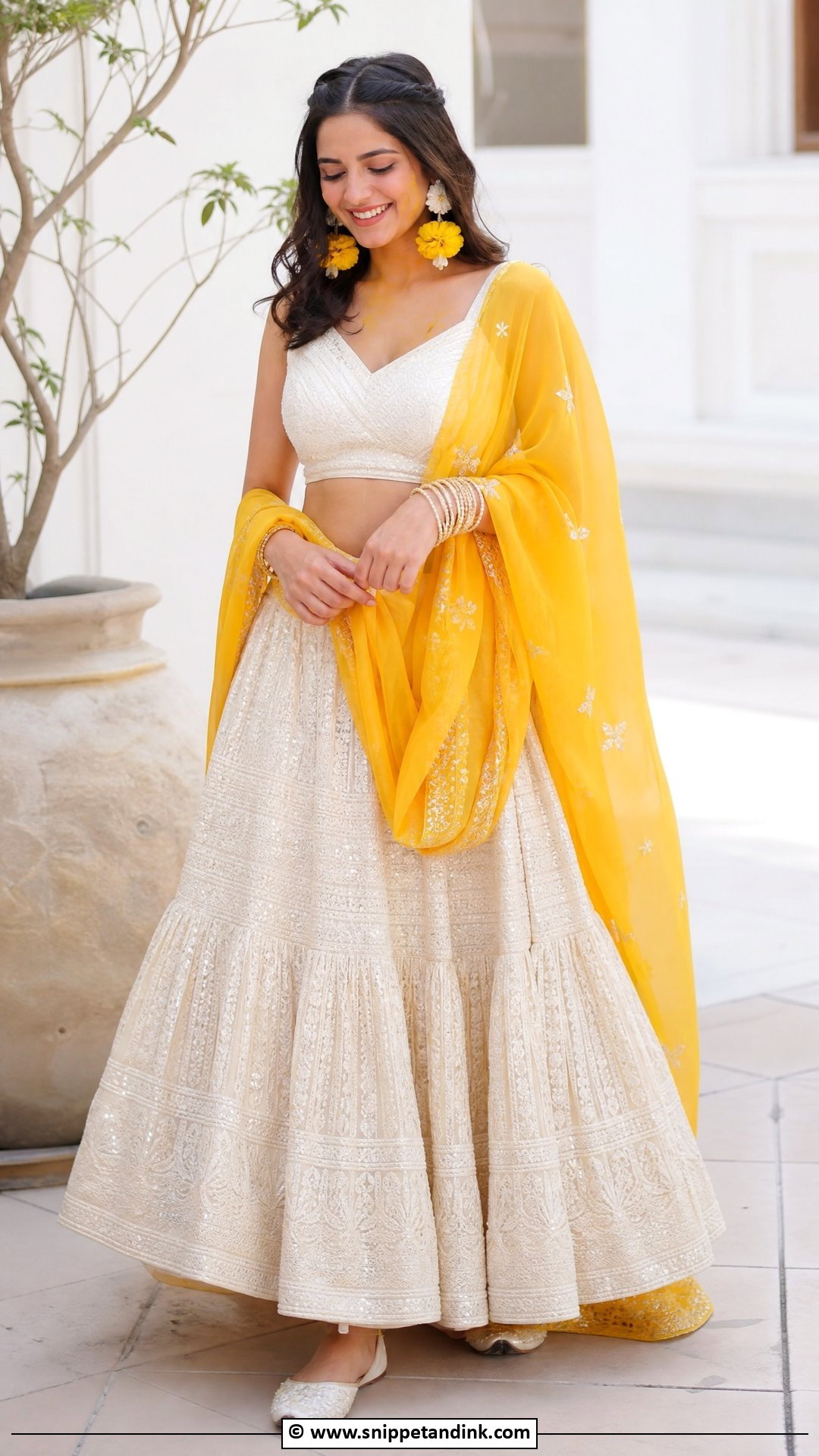
Some brides choose white deliberately, so that the turmeric marks build up through the ritual and the before-and-after photos tell the story. If that’s the plan, tell your photographer so they catch you in the clean outfit first. An ivory or off-white lehenga with yellow floral embroidery, mirror borders or a little sequin work, paired with a bright yellow dupatta, keeps contrast in the frame. Light marigold earrings, bangles or a maang tikka are enough, with white juttis or embellished flats. Accept that the outfit probably won’t come back to pure white.
3. Yellow Haldi Saree Outfit
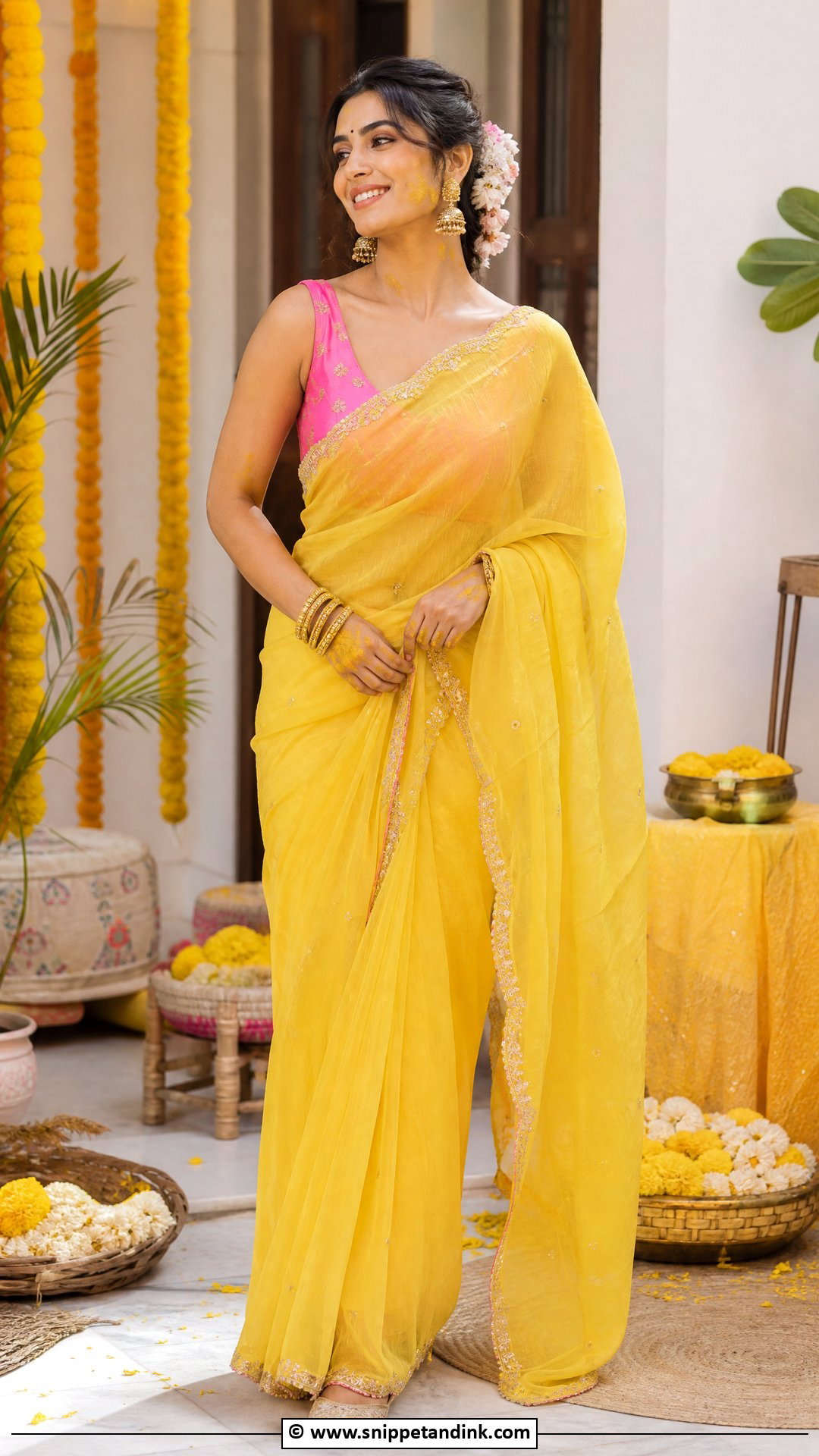
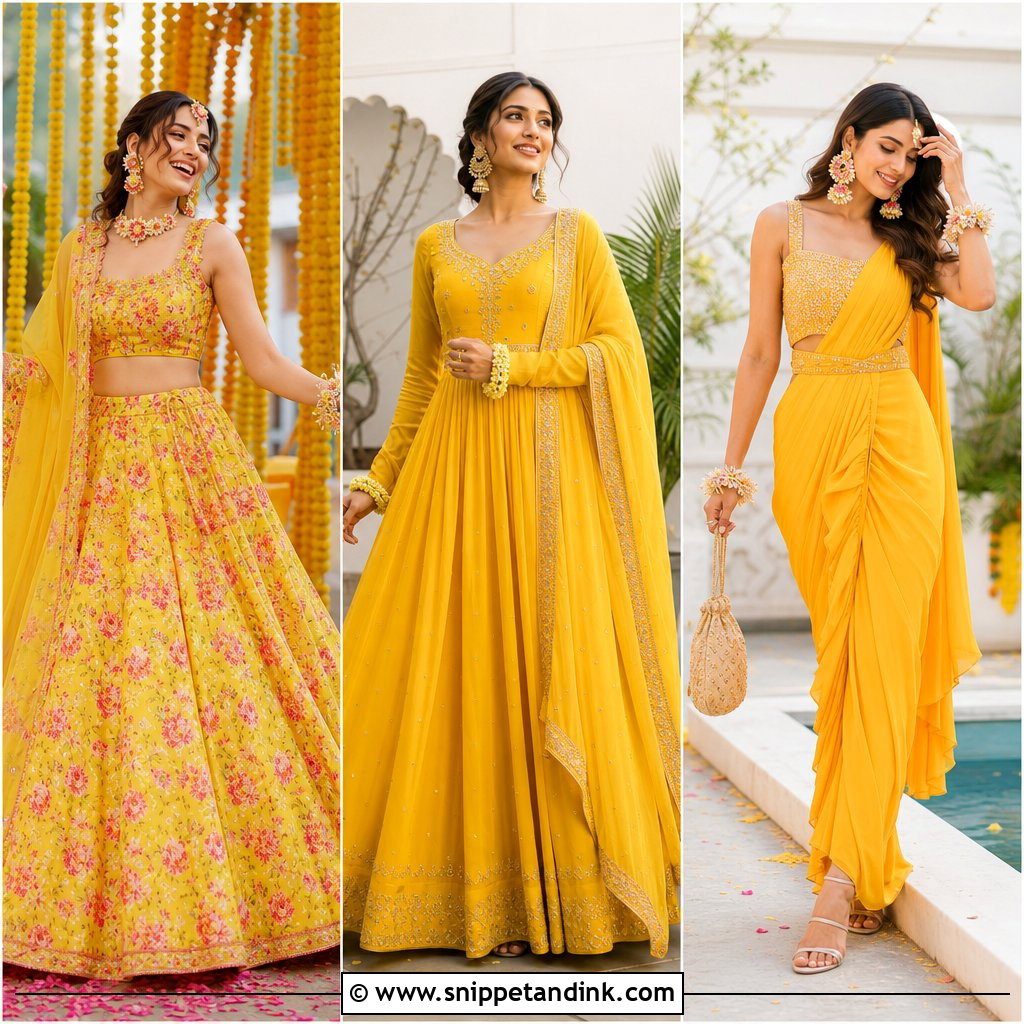
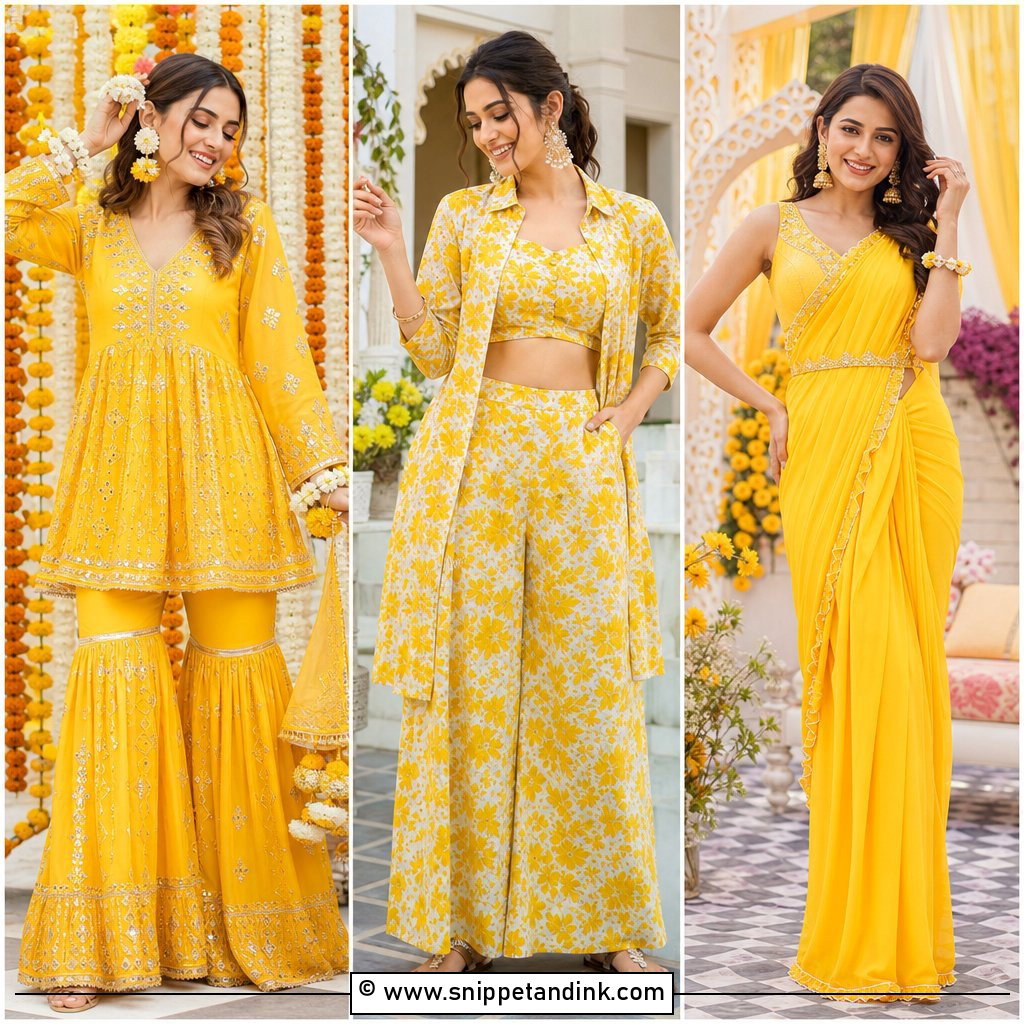
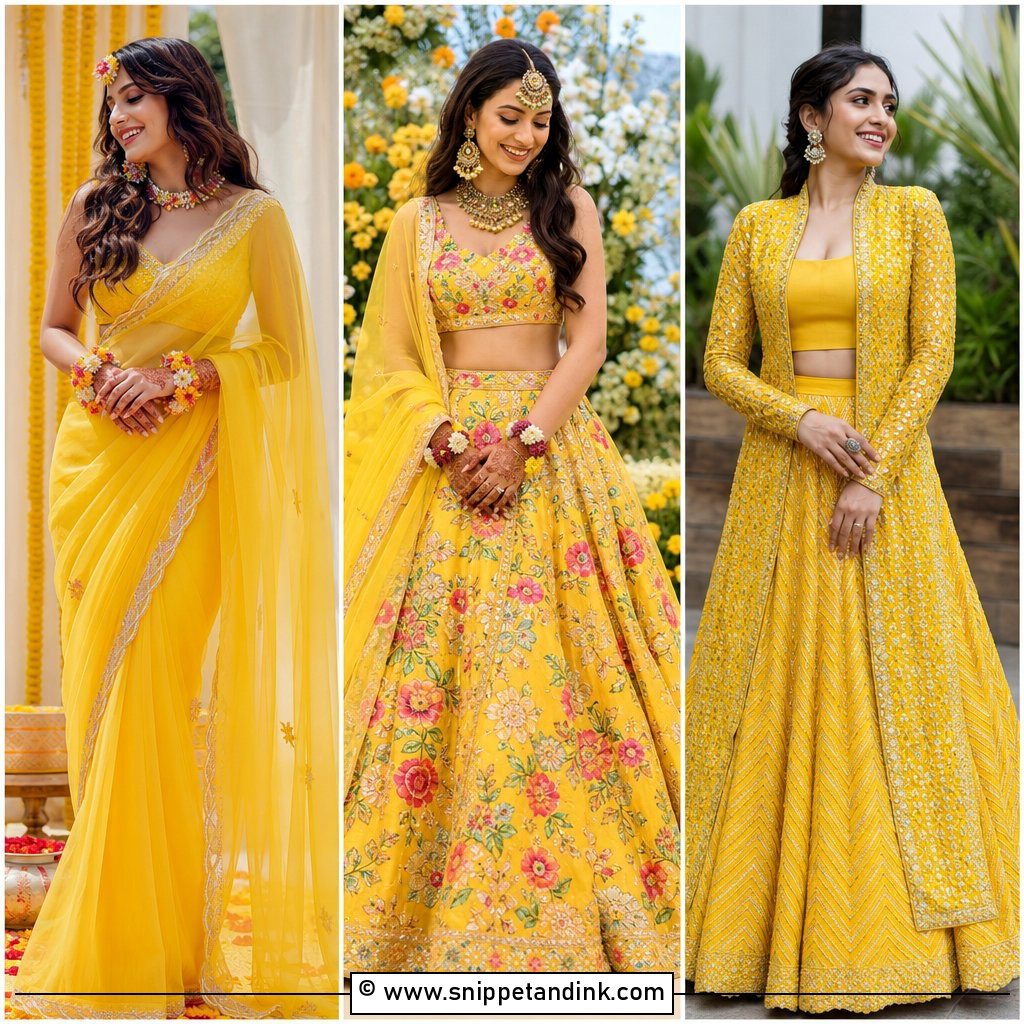
Sarees suit every generation at a haldi. Chiffon, georgette, organza, linen or silk cotton stays comfortable during a long seated ritual. A pink, green, orange or ivory contrast blouse makes it festive; a tone-on-tone yellow blouse with a little embroidery keeps it soft. In my experience the pallu is what comes loose first when relatives lean in, so pin it at the shoulder and tuck the pleats firmly. Add floral jewelry, gold bangles and flat sandals or juttis.
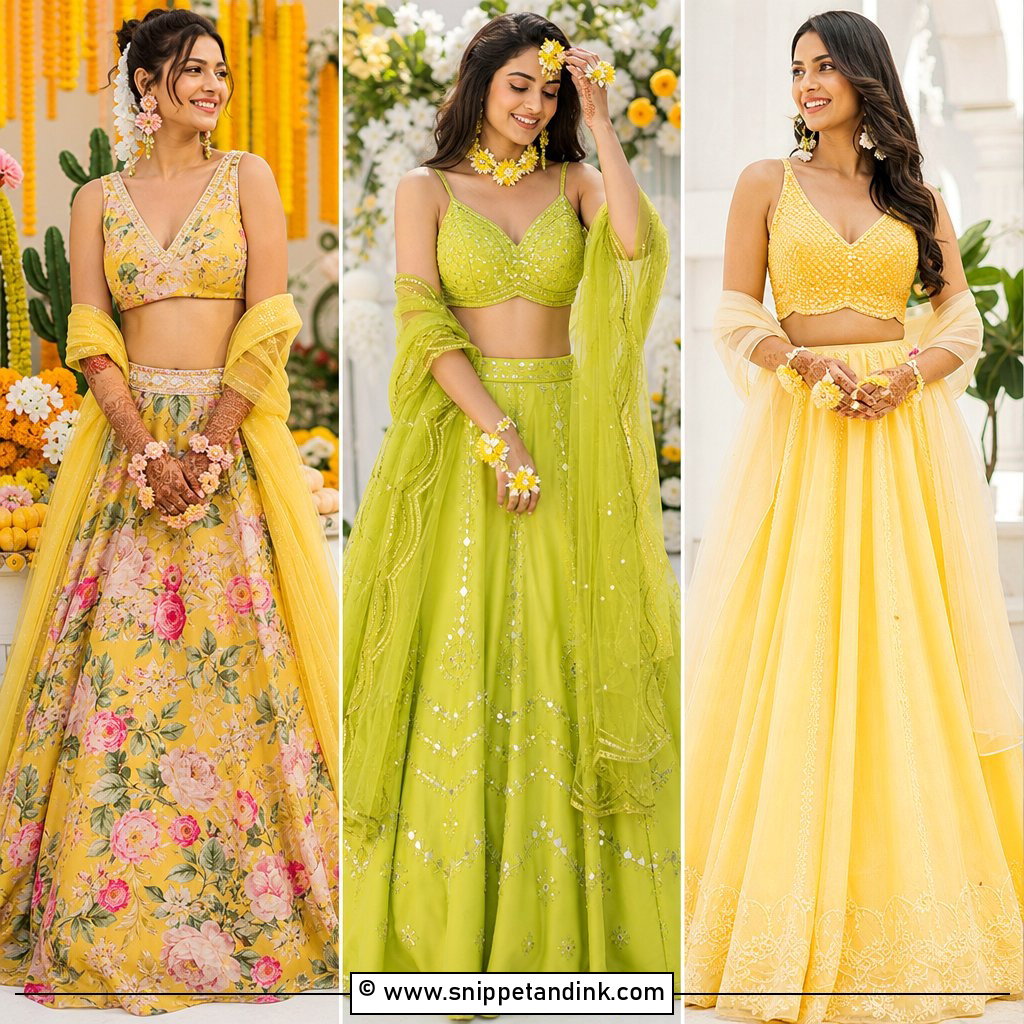
4. Floral Haldi Lehenga Outfit
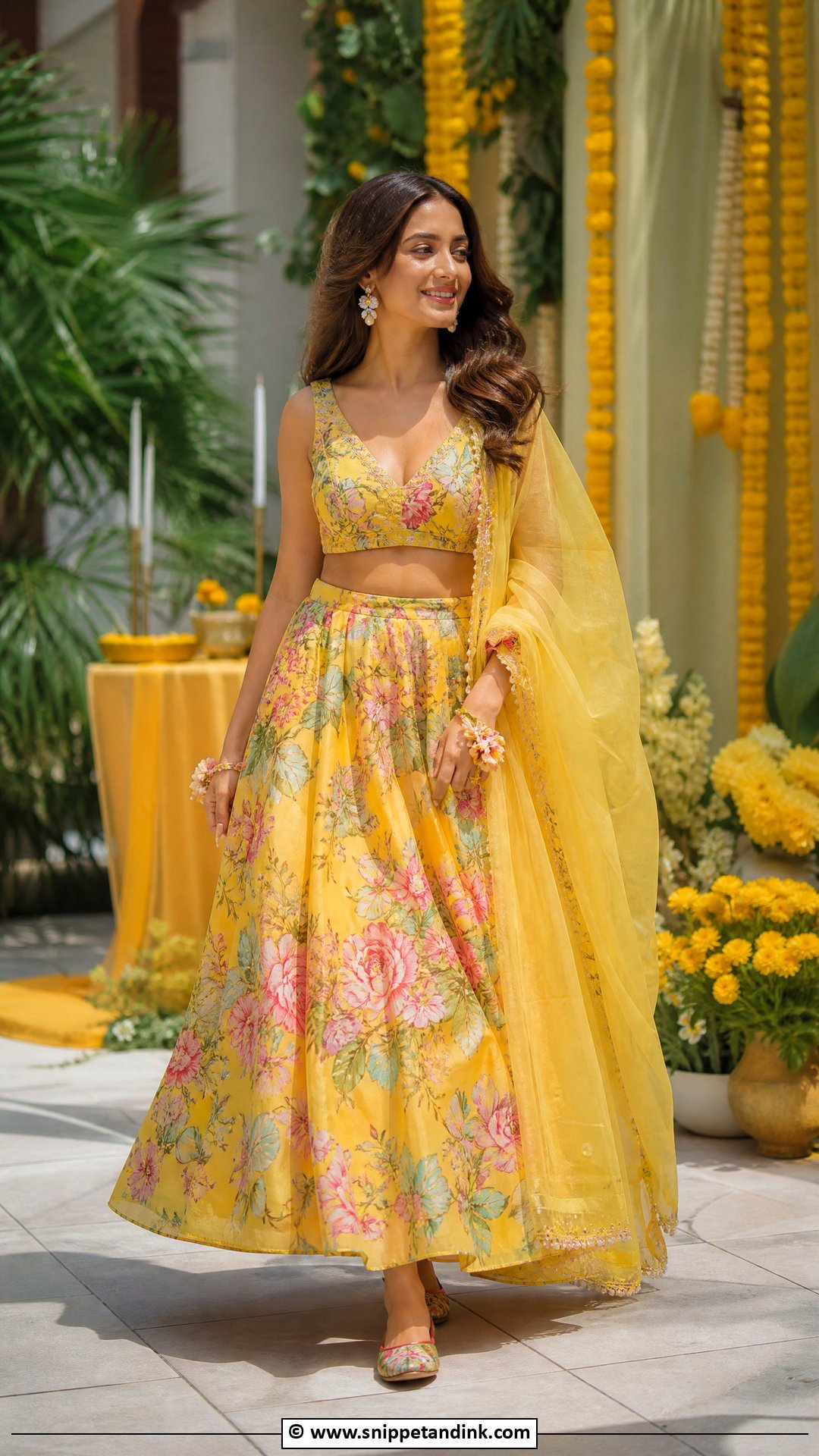
Floral lehengas belong at garden, beach and daytime functions. Prints feel youthful without heavy embellishment: a yellow, ivory, peach or lime base with pink, orange or green blooms. A sleeveless or short-sleeved choli keeps it light, and a sheer dupatta finishes it. Pearl earrings, floral bangles and soft curls suit the mood. I often suggest florals for bridesmaids, because the look reads coordinated without competing with the bride, and it sits easily against marigold decor.
5. Haldi Sharara Outfit
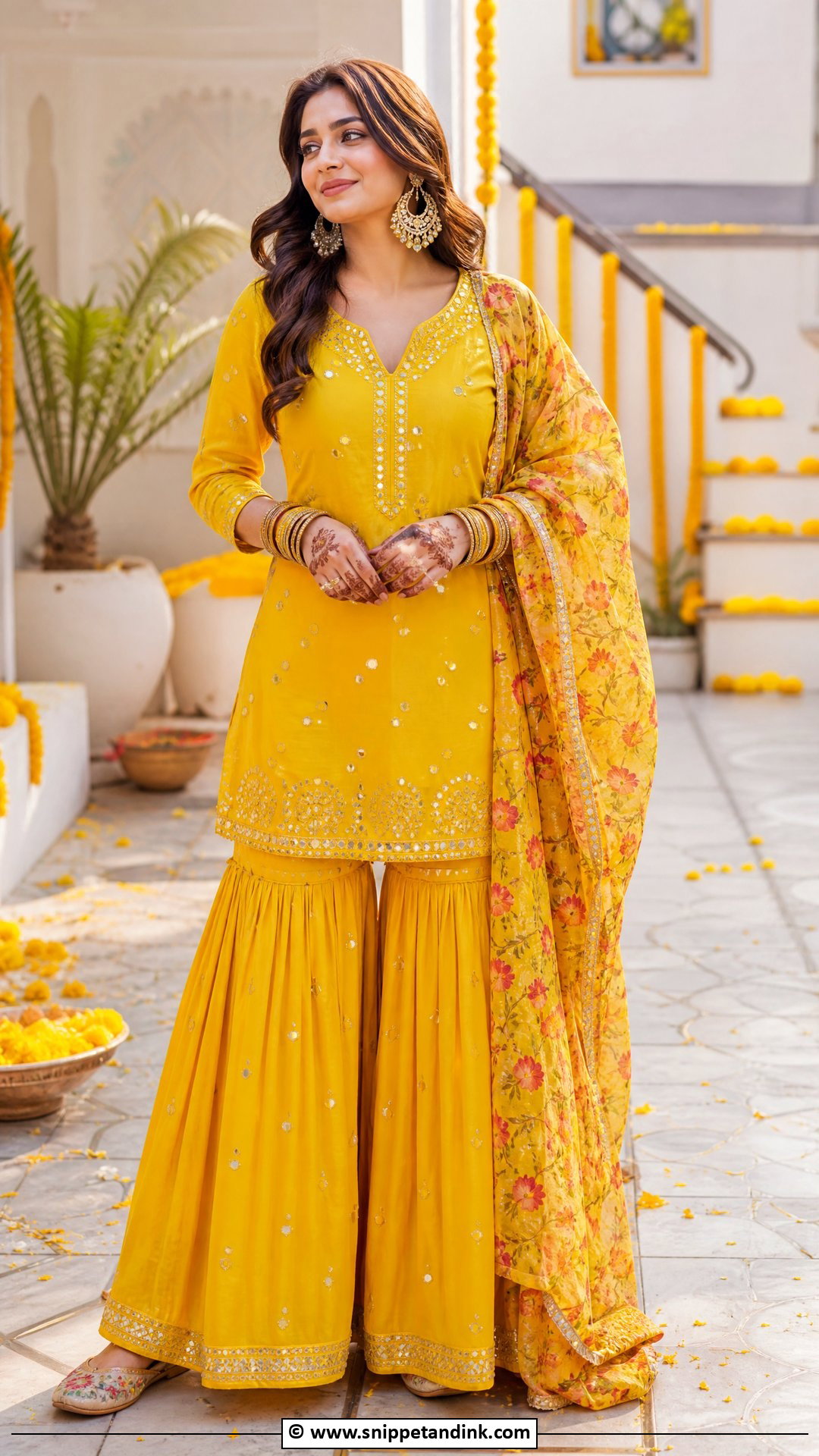
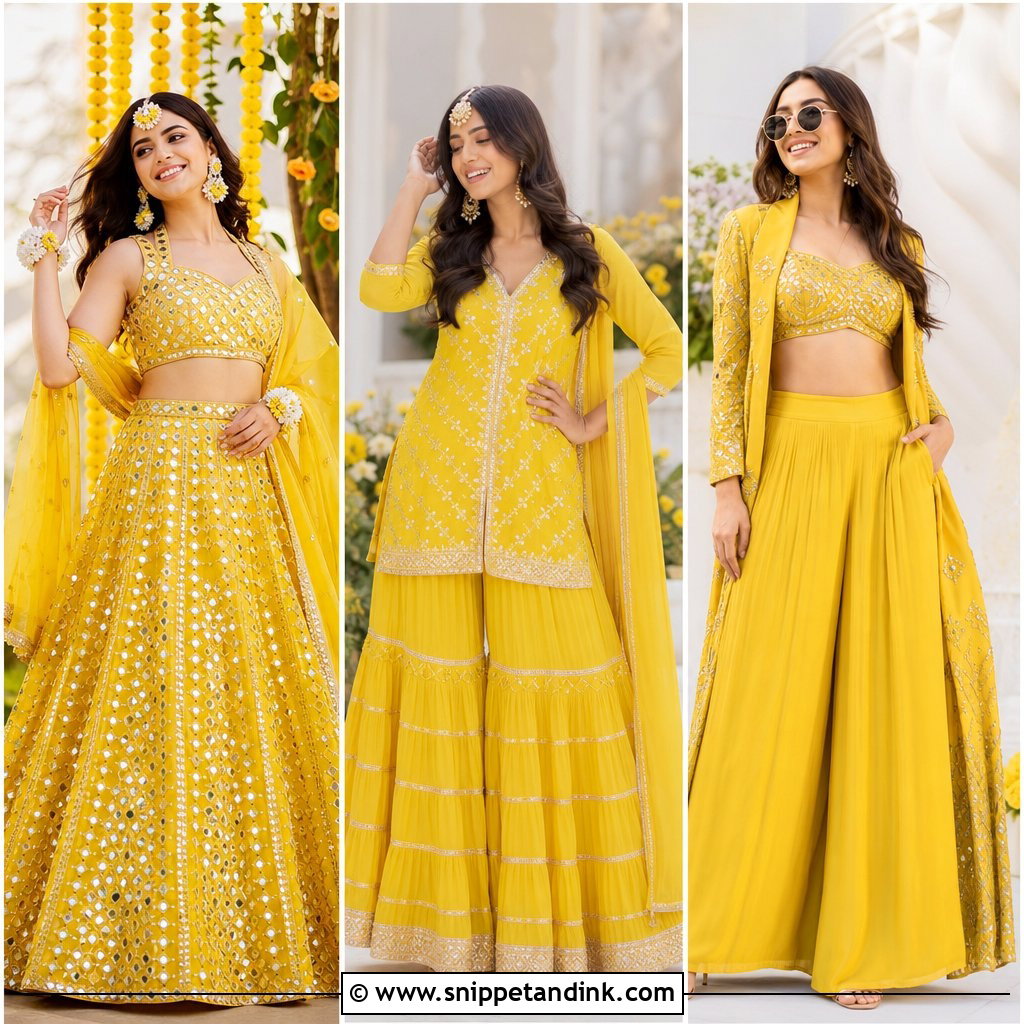
A haldi sharara outfit gives a traditional silhouette with the ease of trousers, which makes sitting, dancing and moving around simple. A short kurti or peplum over flared pants in yellow, mustard, ivory or orange is the usual combination, with gota, mirror embroidery or block prints for detail and a printed dupatta to finish. Chandbalis, bangles and embroidered juttis complete it. The fitted top balances the volume below, which is why it suits so many body types.
6. Yellow Kurta Palazzo Haldi Outfit
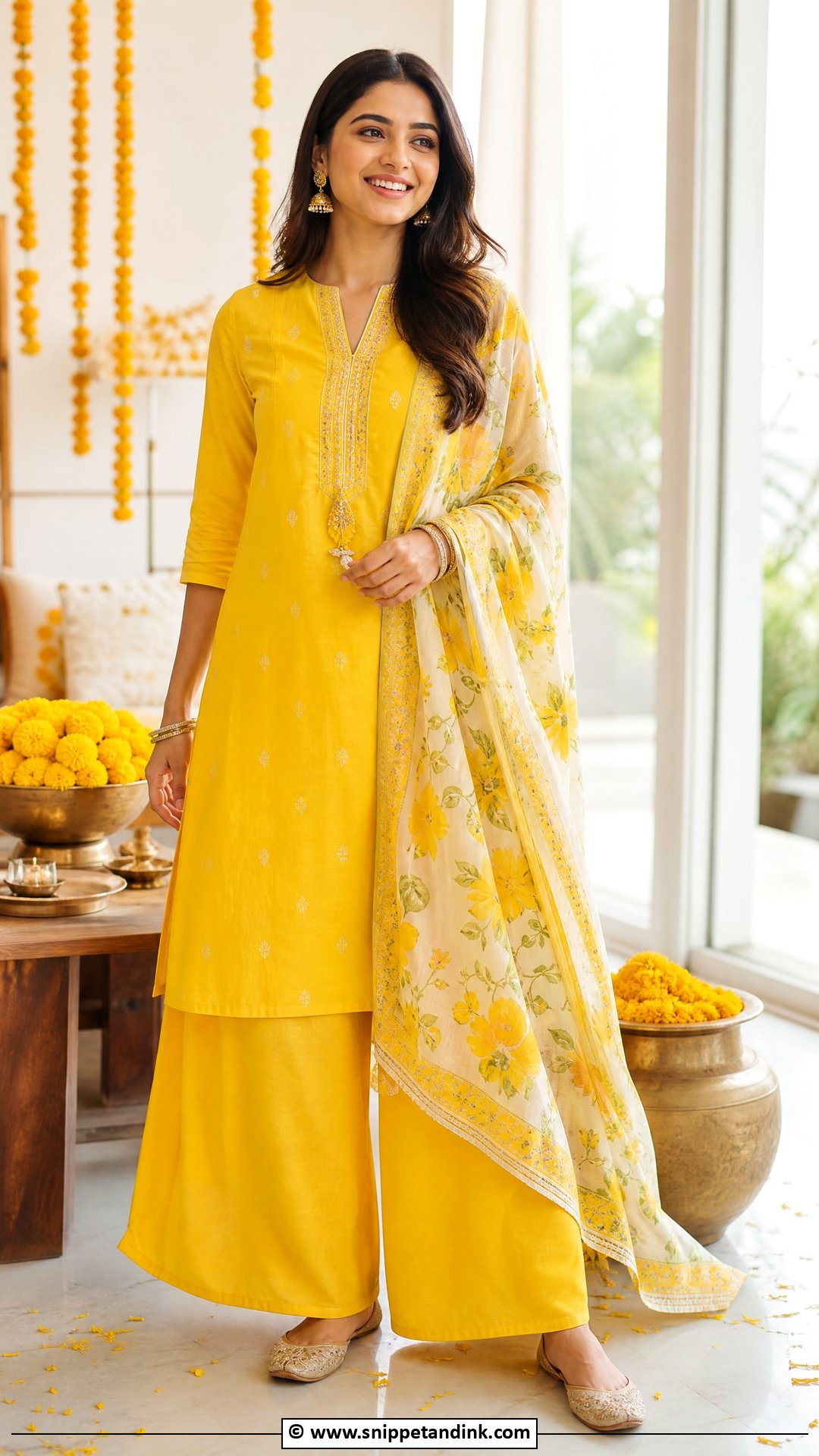
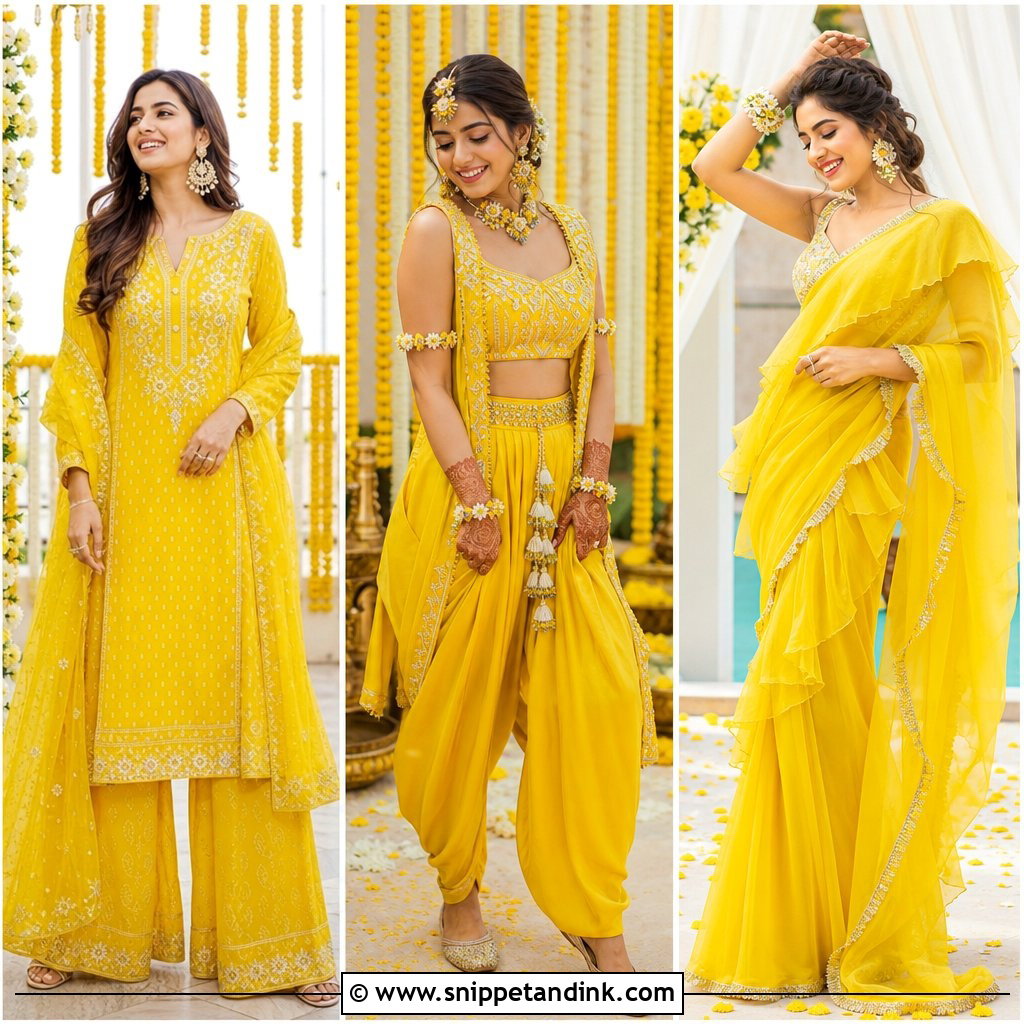
Guests and family who want practicality first should start here. A straight or A-line kurta over wide palazzos gives room to move through a long ceremony. Cotton, rayon, linen or a light silk blend breathes in the sun, and small mirrors, lace trim or floral embroidery keep it festive. A matching or printed dupatta polishes it. Juttis, small earrings and a neat bun or braid are all you need. At outdoor haldis I always see the people in cotton looking the freshest by noon.
7. Haldi Anarkali Suit Outfit
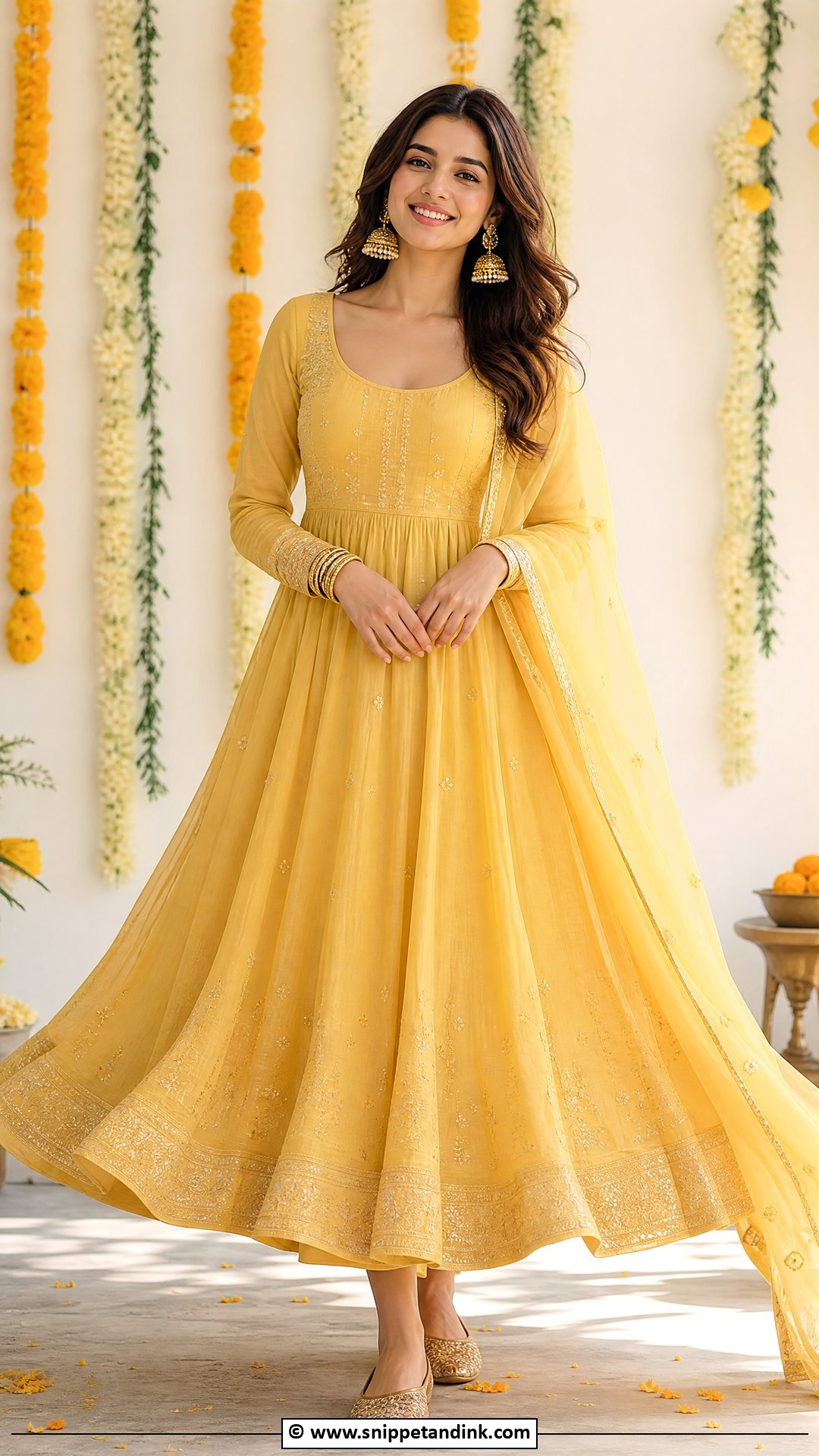
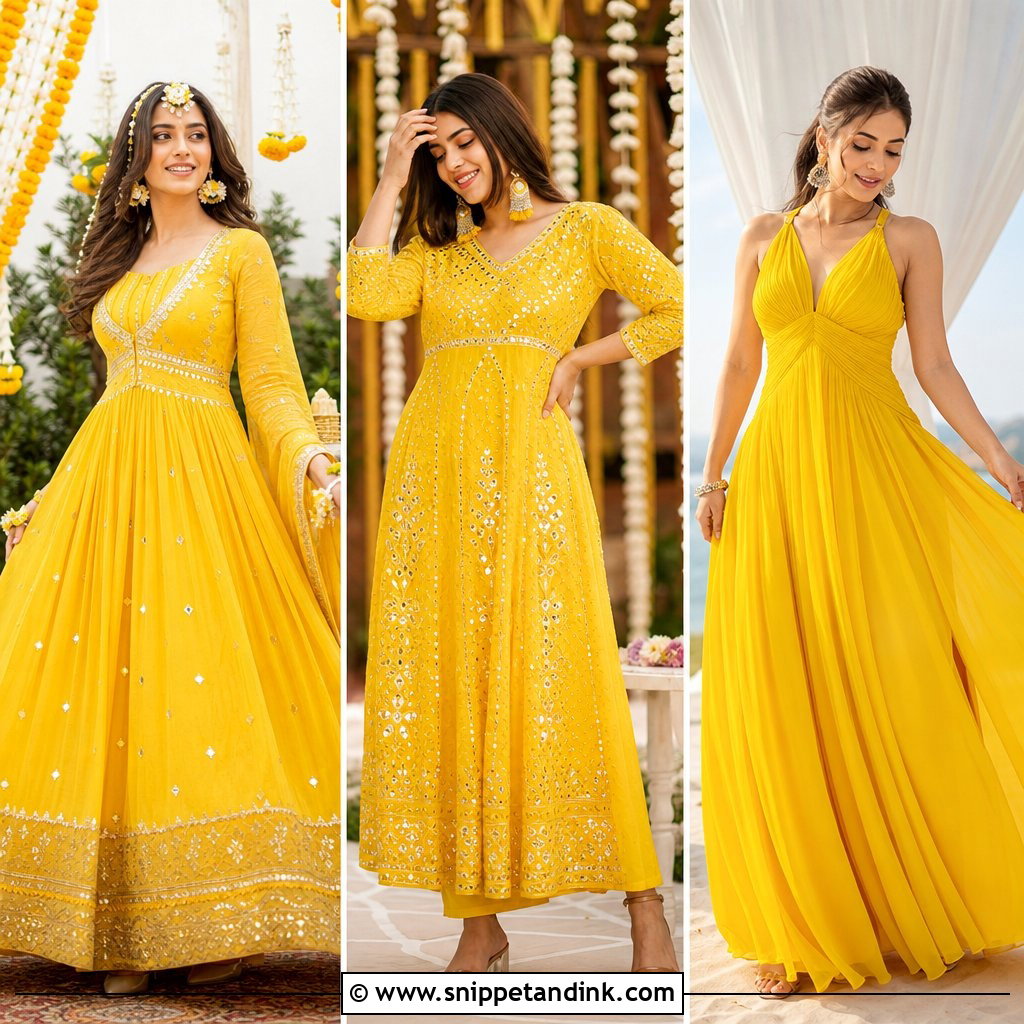
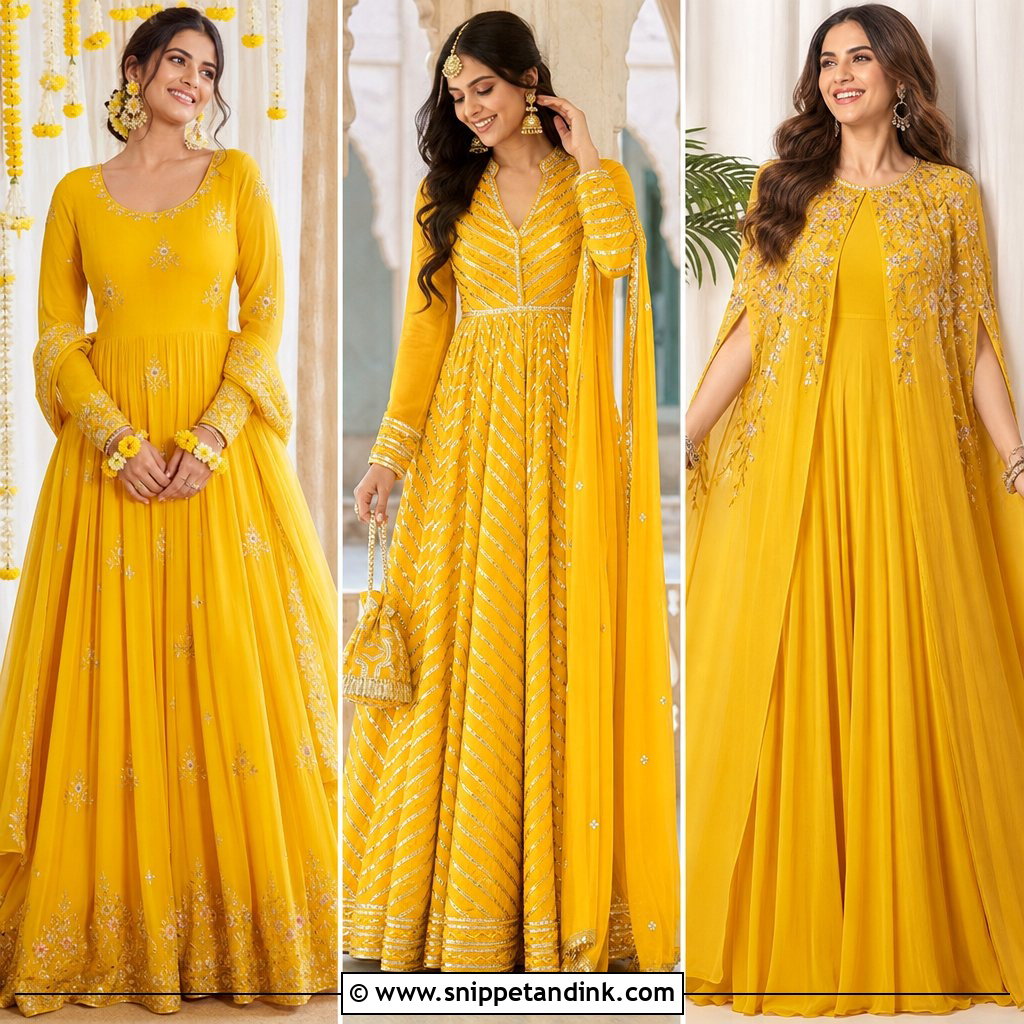
An anarkali looks dressy without a lehenga’s weight. A flared yellow, peach or ivory cut with light embroidery at the neck, sleeves or hem is festive enough, and an organza or chiffon dupatta adds softness without bulk. Mothers, sisters and guests who prefer coverage tend to love it. Jhumkas, bangles and wedges or juttis finish the outfit, with hair kept soft. Very full anarkalis pool around you on the floor, so a moderate flare is easier to manage if seating is low.
8. Haldi Gharara Outfit
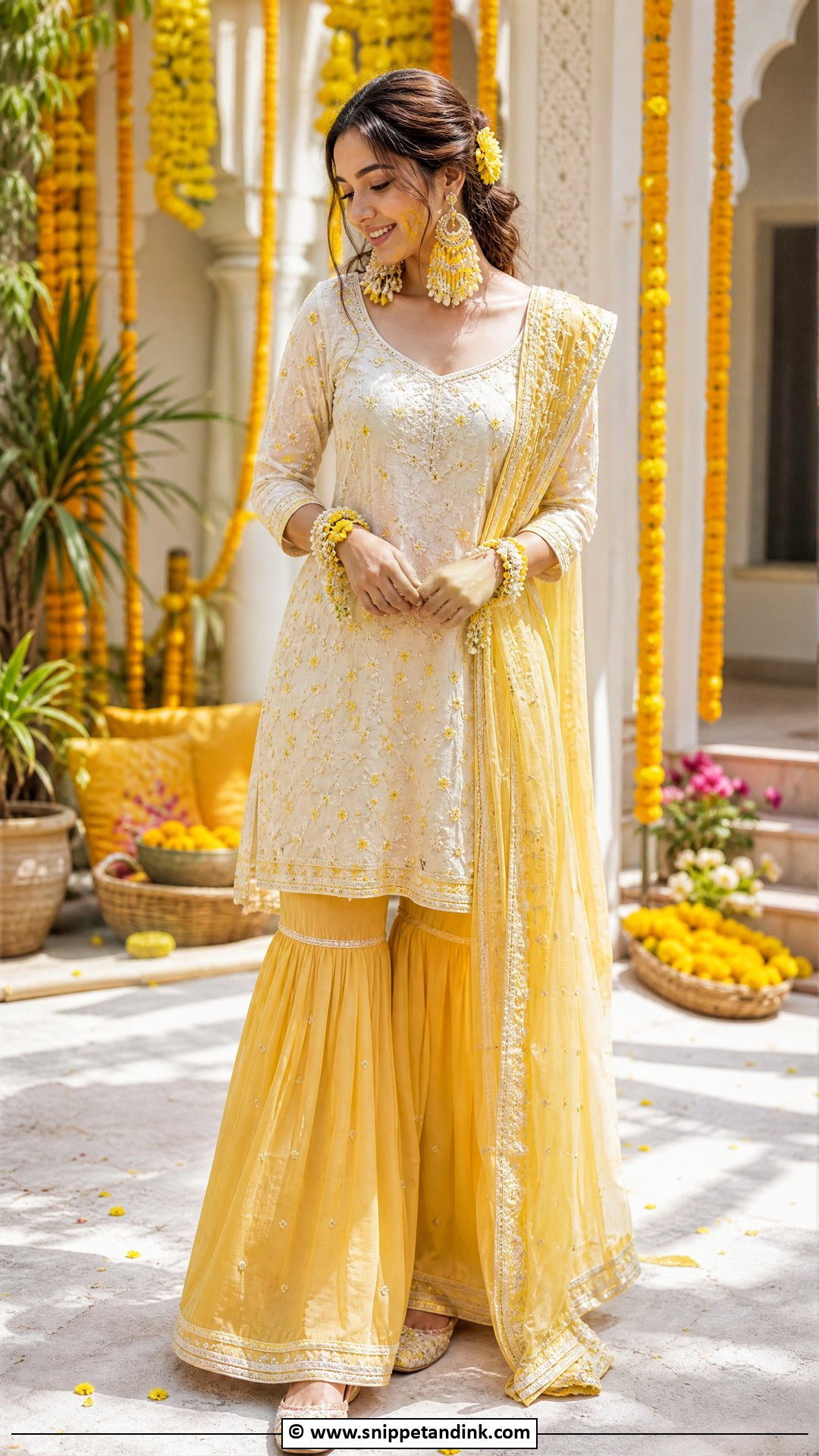
Ghararas have a regal, old-world line: fitted to the knee, then a gathered flare. A yellow or ivory set with a short kurti and light dupatta, trimmed with embroidered borders, zari or mirrors, gives just enough sparkle. Bridesmaids and close cousins pick it when they want something less common than a straight suit. Statement earrings, embellished flats and soft makeup complete it. The knee seam restricts sitting cross-legged slightly, so try that before the day.
9. Haldi Crop Top Skirt Outfit
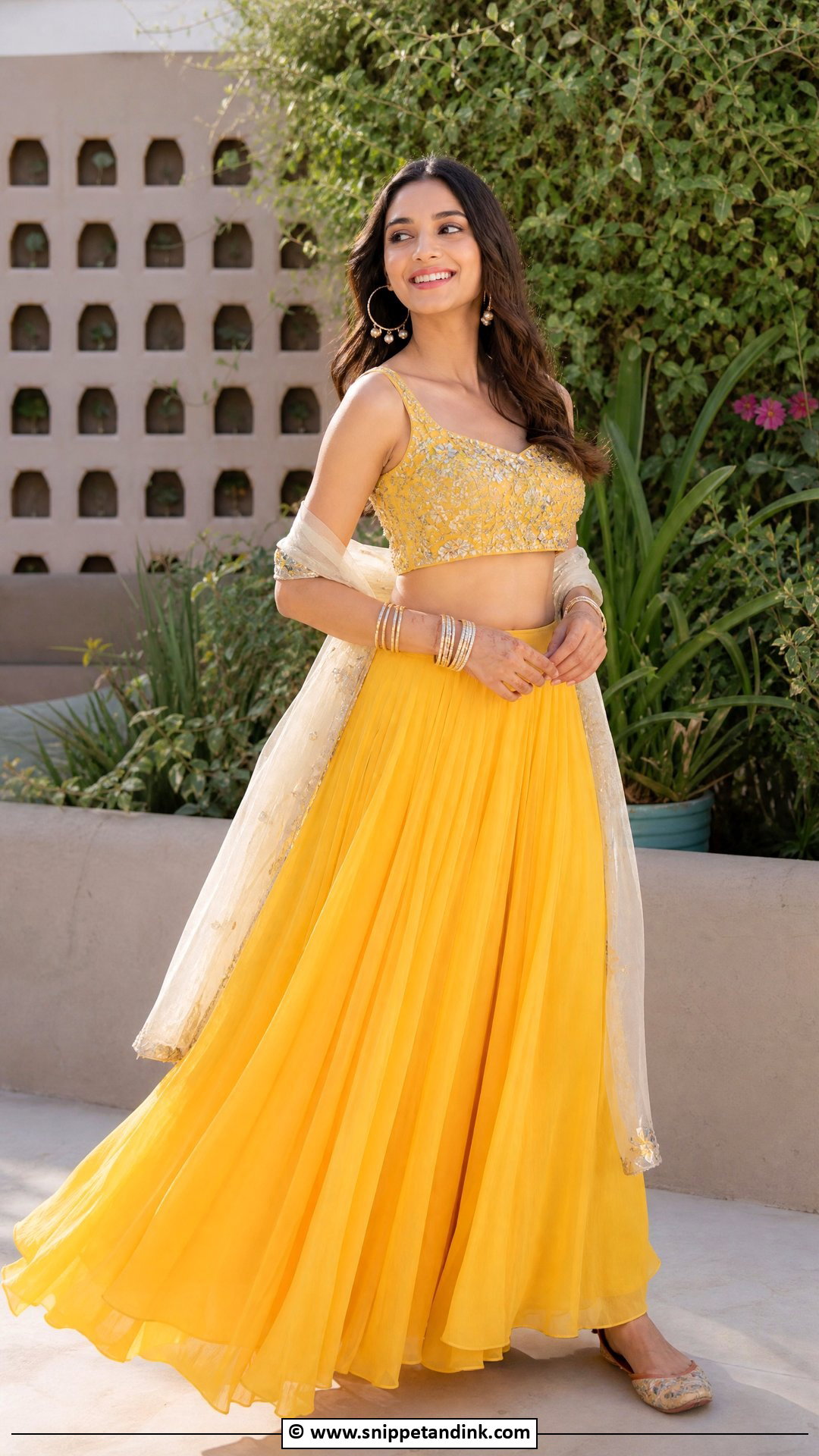
Crop top and skirt is the playful option, good for bridesmaids, younger guests or a bride who wants a lighter look. A flowy skirt in yellow, orange or a floral print pairs with a fitted crop top or embellished blouse. A light dupatta pulls it back to tradition; going without makes it Indo-western. Choose breathable fabric if there’s dancing. Hoops, bangles and juttis or block heels finish it, and the pieces split up easily for wearing again.
10. Haldi Dhoti Pants Outfit
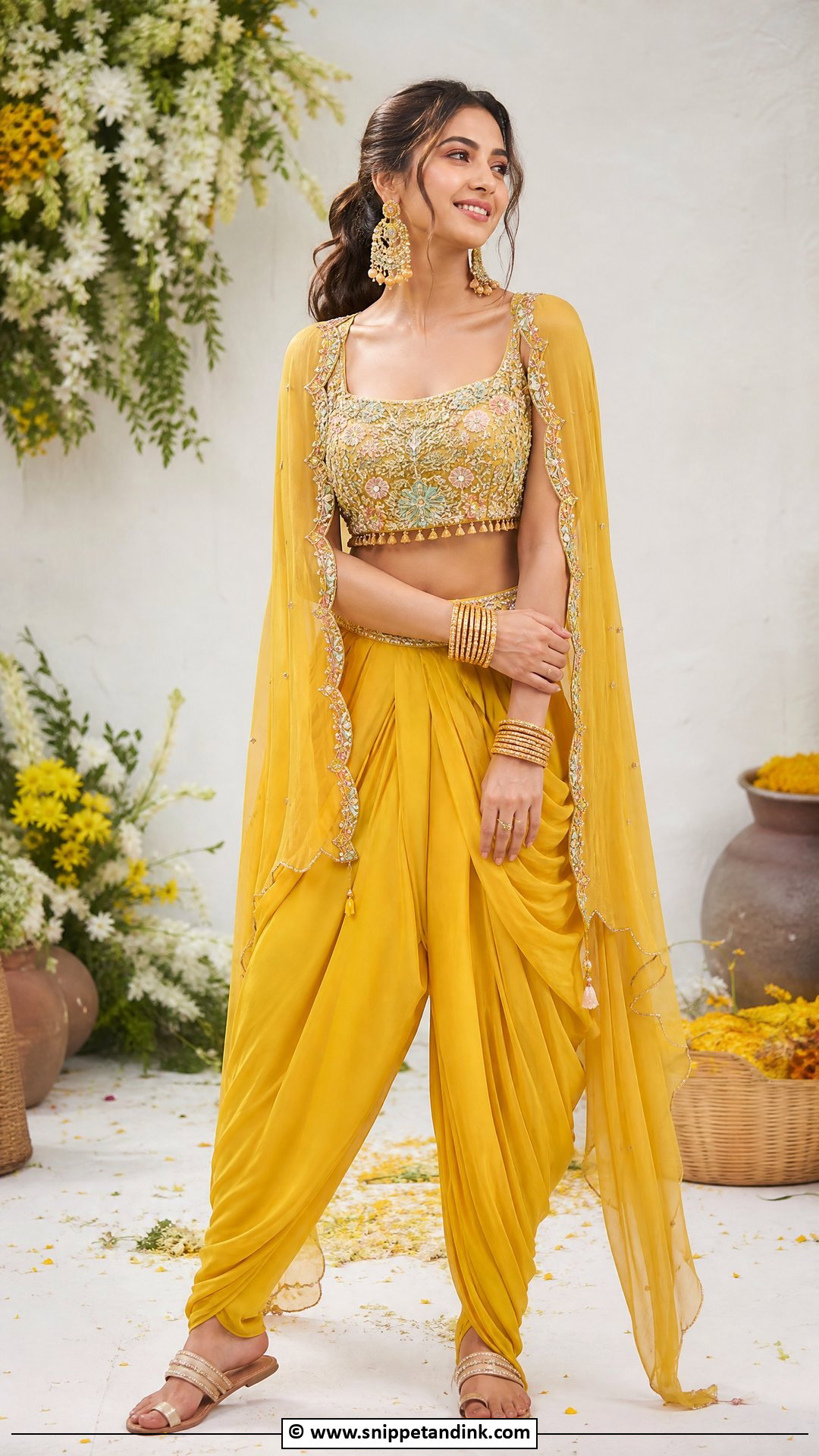
A haldi dhoti pants outfit suits anyone who likes fusion. The relaxed dhoti drape sits well under a crop top, short kurti or embroidered jacket, in yellow, ivory, lime or marigold. A cape or dupatta adds coverage. Sitting and moving are easy, which matters when the bride’s friends end up dancing in the courtyard. Statement earrings, stacked bangles, flat sandals and a sleek ponytail or braid keep it modern.
11. Haldi Co Ord Set Outfit
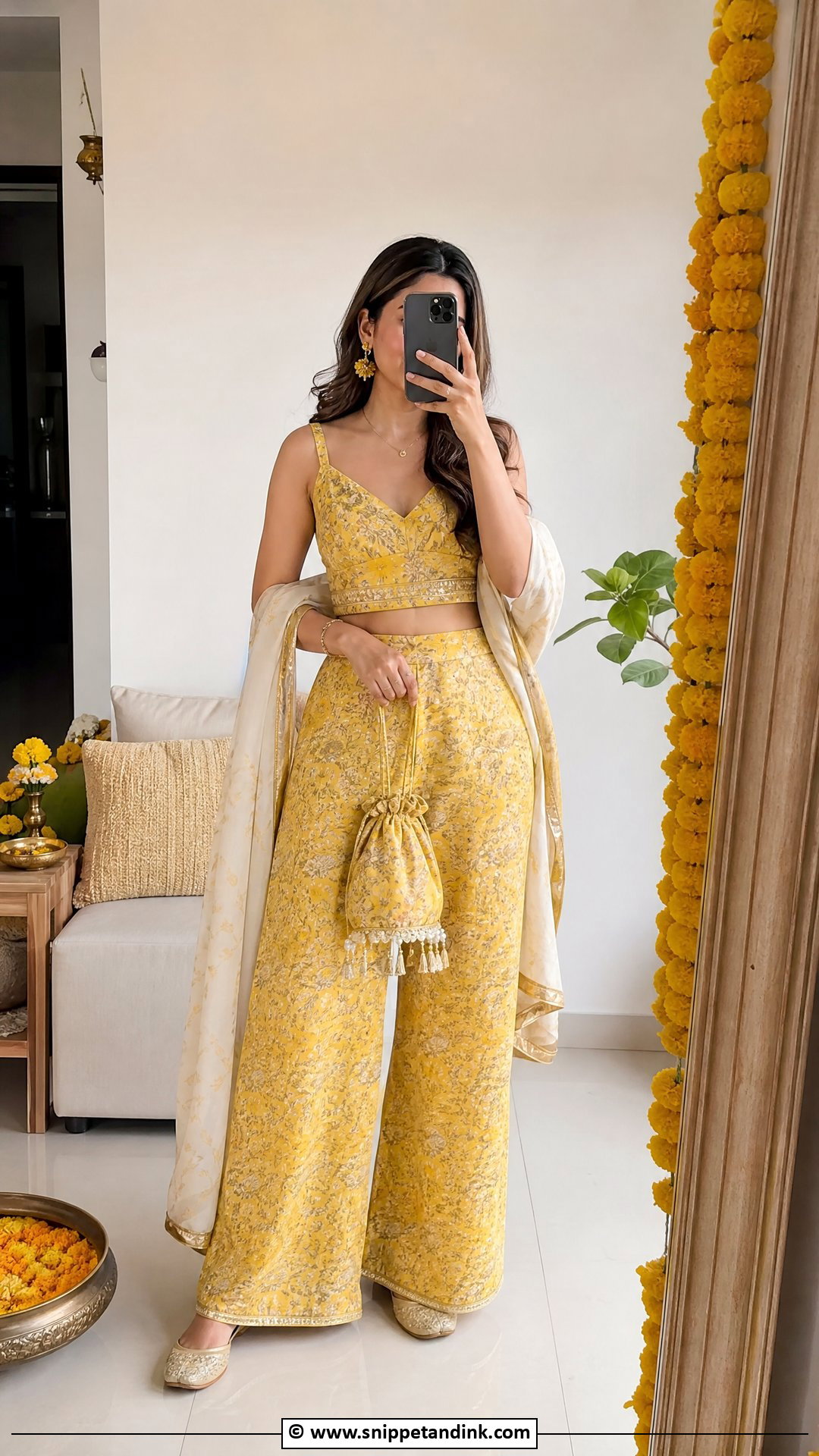
A haldi co ord set outfit looks put together with almost no styling. Try a yellow crop top with wide-leg pants, a short kurta with trousers, or a printed tunic with matching palazzos, in cotton, linen, georgette or crepe. Add a dupatta for tradition or skip it for a clean fusion look. Minimal jewelry, juttis and a small potli bag are enough. It’s the outfit I recommend to guests attending several events in one weekend, since the separates mix with other pieces.
12. Haldi Jacket Lehenga Outfit
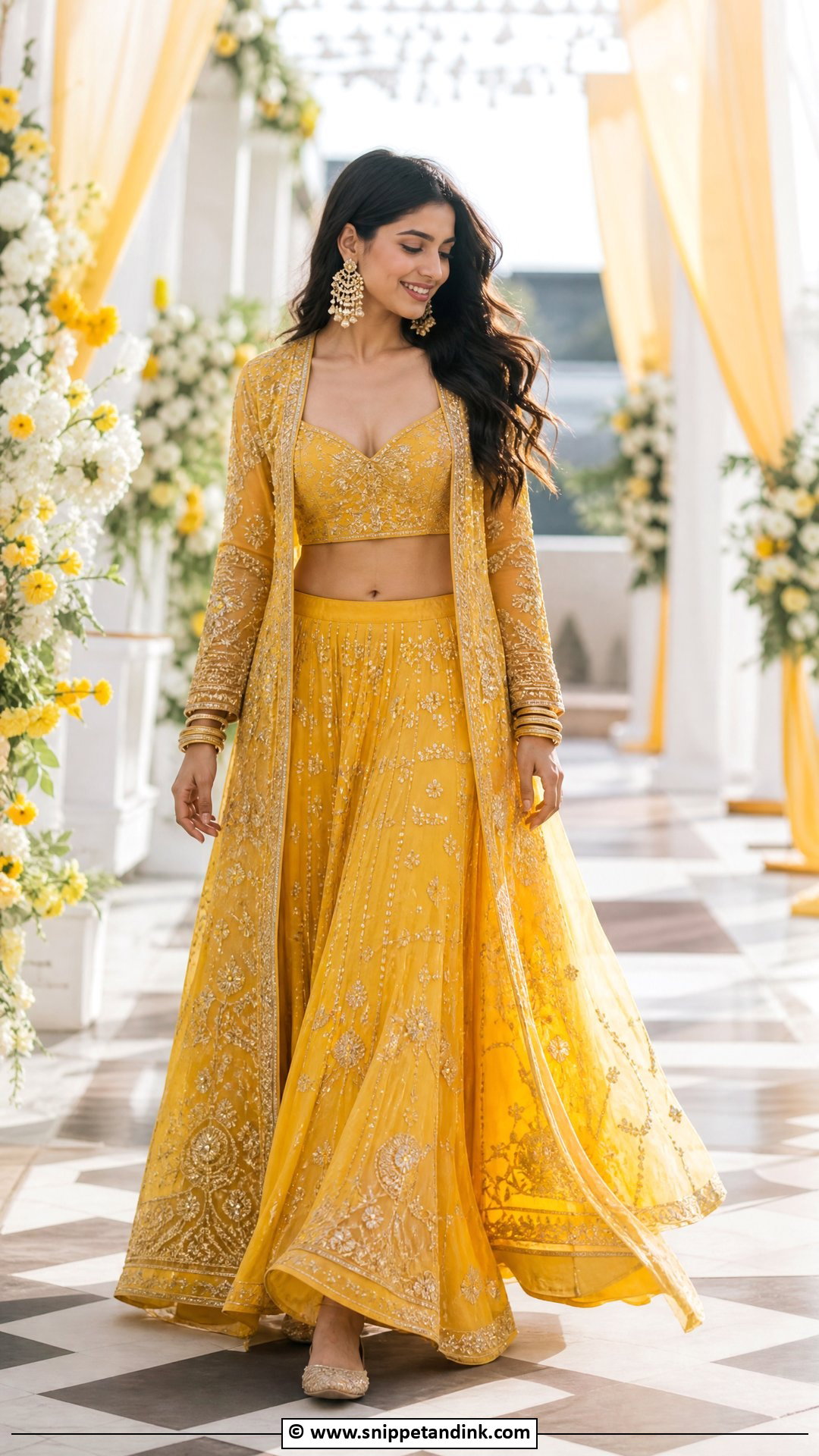
A jacket does the dupatta’s job without slipping off your shoulder. Pair a yellow or ivory lehenga and cropped blouse with a sheer embroidered jacket, or throw a long printed jacket over a simple skirt and top. The jacket swings as you walk, which shows in candids. Balance jewelry with earrings and bangles rather than heavy necklaces, and finish with heels or juttis. Choose short or elbow sleeves if paste is going on your arms.
13. Haldi Cape Lehenga Outfit
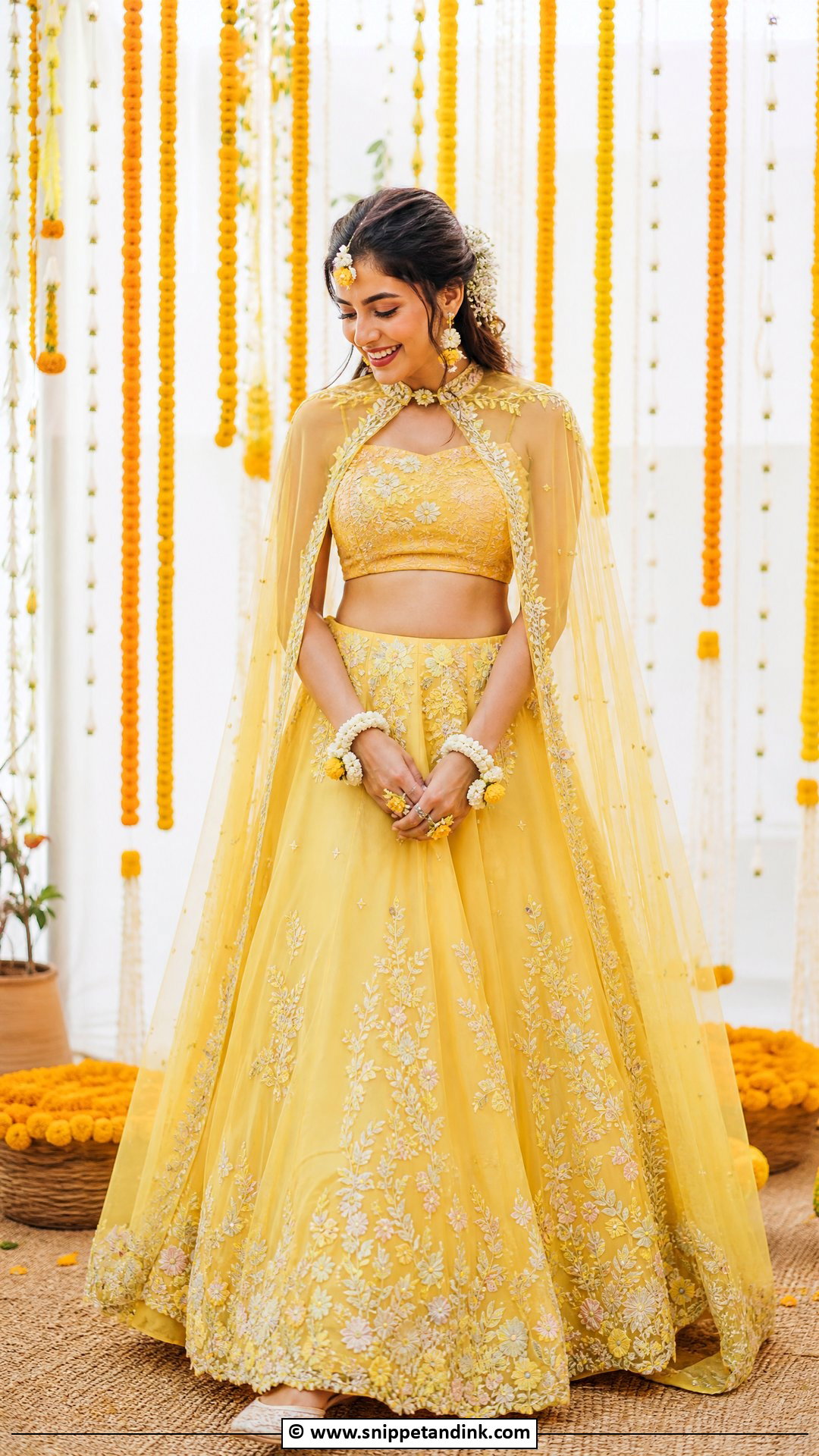
Capes appeal to brides for one reason above all: nothing to adjust mid-ritual. Choose a light lehenga in yellow, ivory or peach with a matching blouse and a sheer cape trimmed with embroidery, mirrors or small florals. Delicate earrings, floral hair accessories and embellished flats suit it. The cape moves in photos and keeps the outline soft. Check that it’s stitched or hooked securely at the shoulder, because relatives tend to grab an arm.
14. Haldi Peplum Sharara Outfit
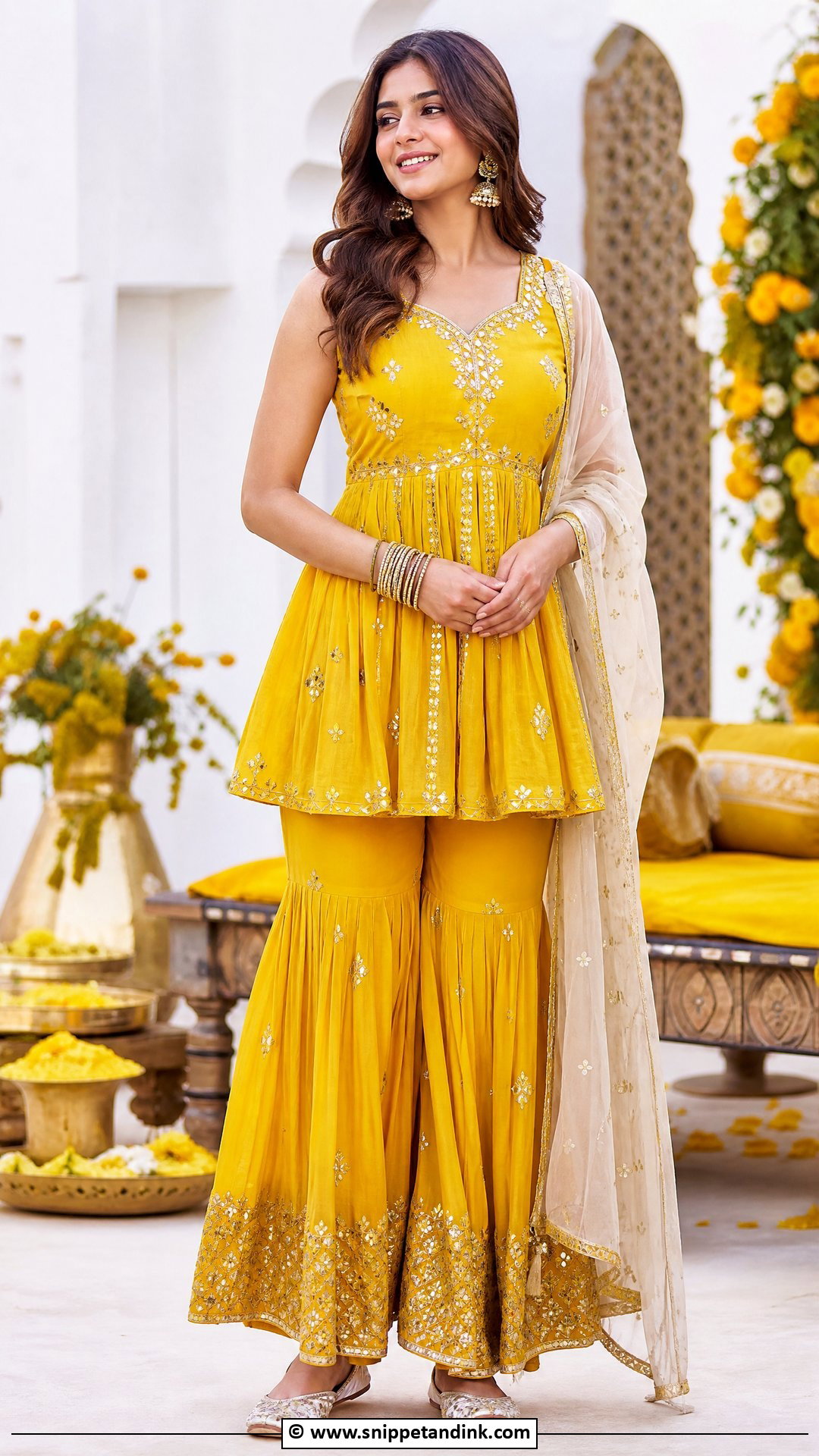
Peplum tops define the waist while the sharara adds flow. Bright yellow keeps it traditional; a white and yellow print lightens it. Embroidery at the neckline or sleeves makes it ceremony-ready, and a dupatta can go over one shoulder or be skipped if the peplum is detailed enough. Add jhumkas, bangles and juttis. Bridesmaids, sisters and guests who want shape and movement in one outfit gravitate to this one.
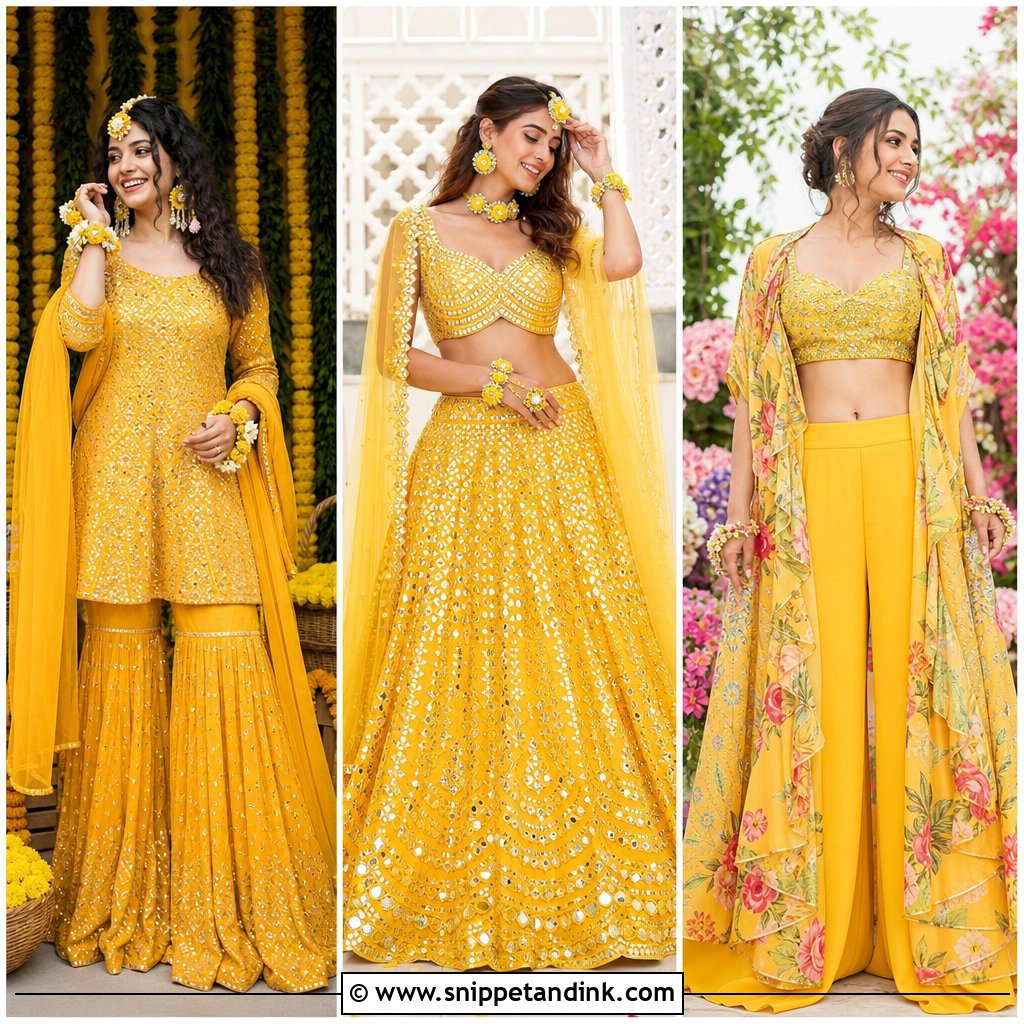
15. Haldi Indo Western Jumpsuit Outfit
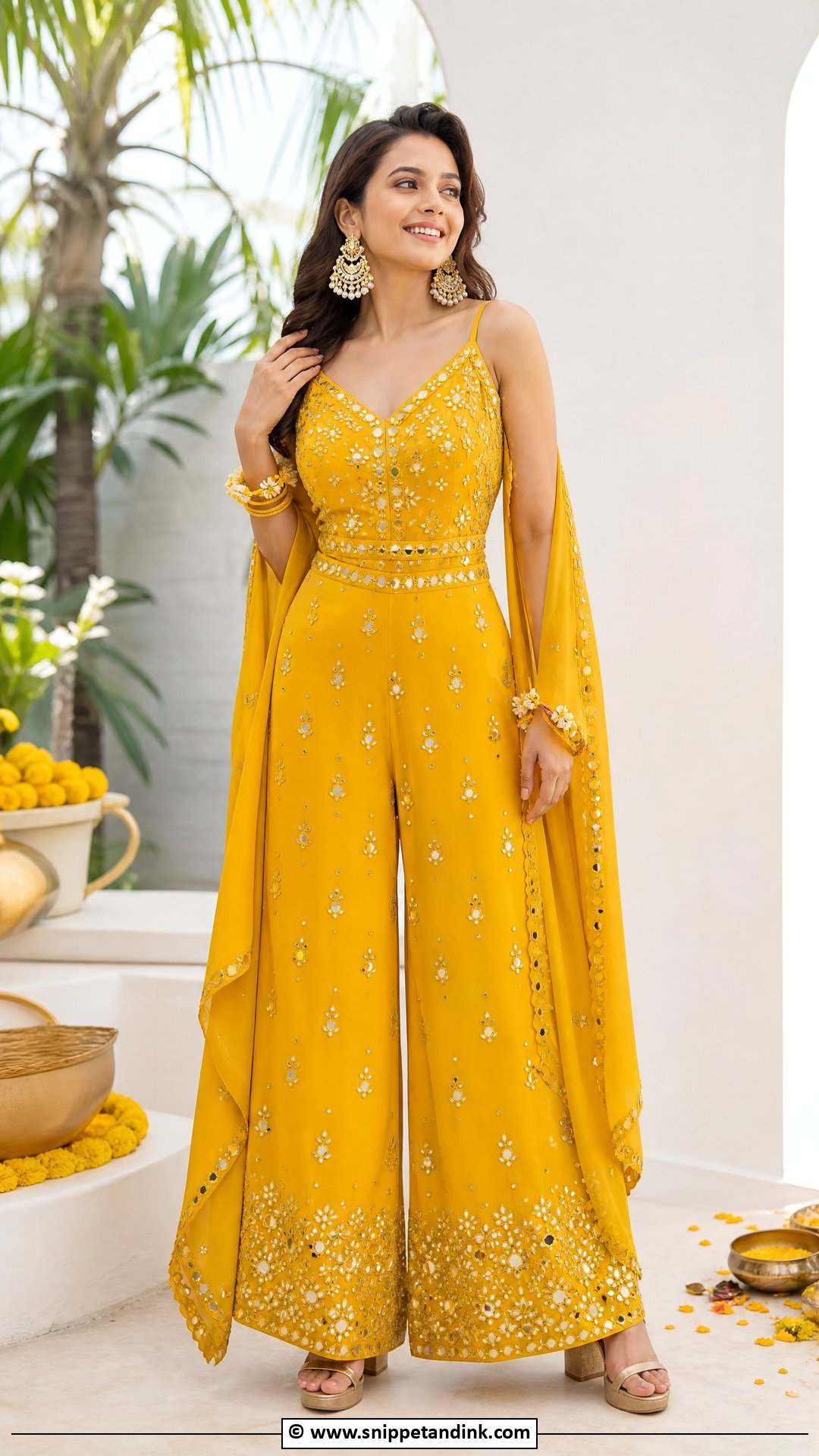
Jumpsuits are sleek and fuss-free. Look for yellow, mustard or ivory with mirror work, a draped panel, embroidery or a cape overlay; wide legs are the most comfortable for daytime. A belt adds waist definition. Statement earrings, bangles and block heels or embellished flats finish it, with fresh, bright makeup. It suits destination weddings and modern haldis. Before you buy, check that you can manage the zip alone, because turmeric-covered hands and a back zip don’t mix.
16. Haldi Maxi Dress Outfit
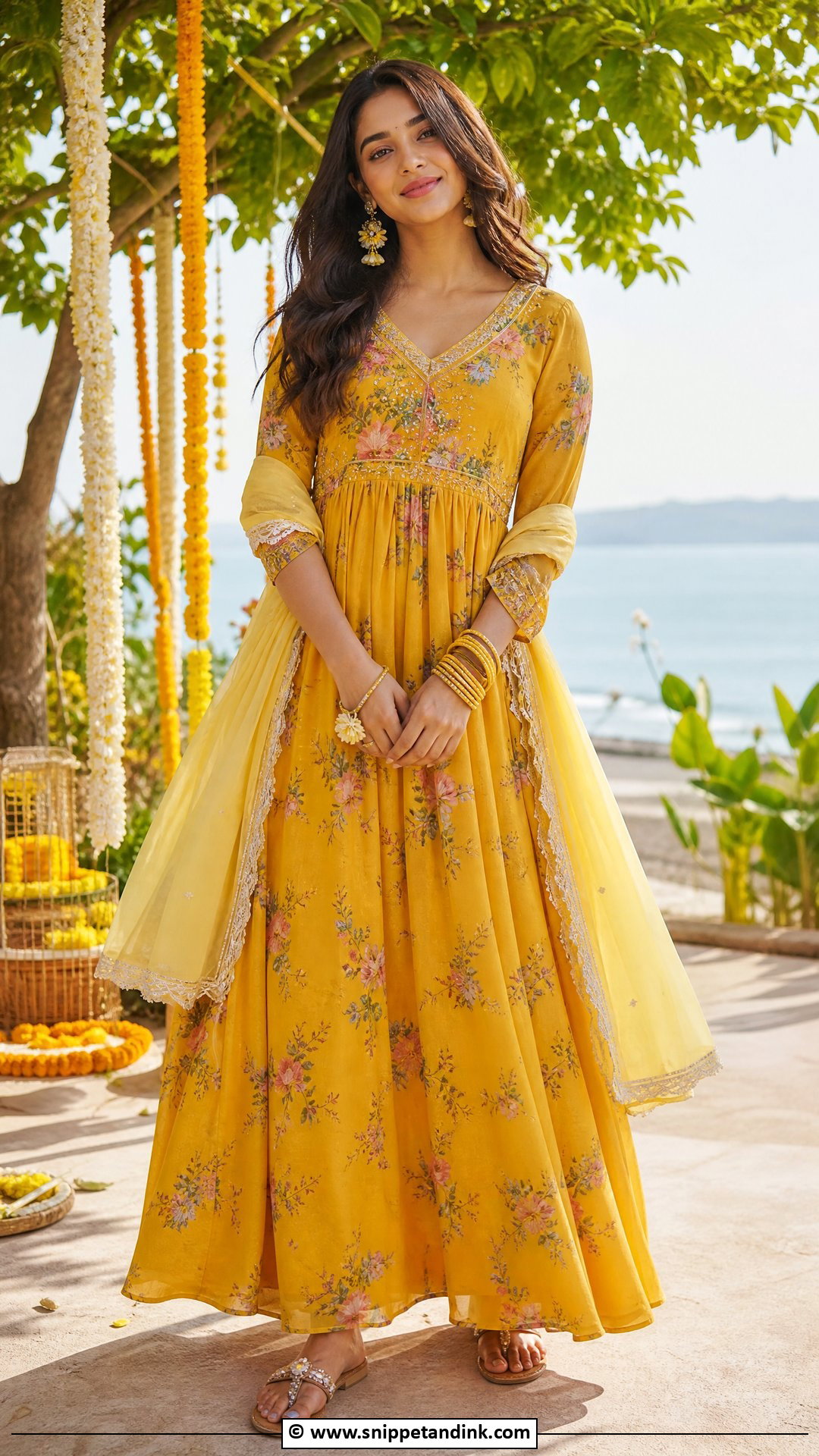
A maxi dress works for guests who don’t want a lehenga or saree but still want to dress for the occasion. Choose yellow, ivory or a floral print with Indian embroidery, mirror detail or a flowing cut, in cotton, chiffon or georgette. A dupatta-style scarf, statement earrings and bangles make it festive, and flat sandals or juttis keep it comfortable. It suits relaxed and destination haldis. Pick a lined one, since sun and a splash of water make thin fabric see-through.
17. Haldi Kaftan Outfit
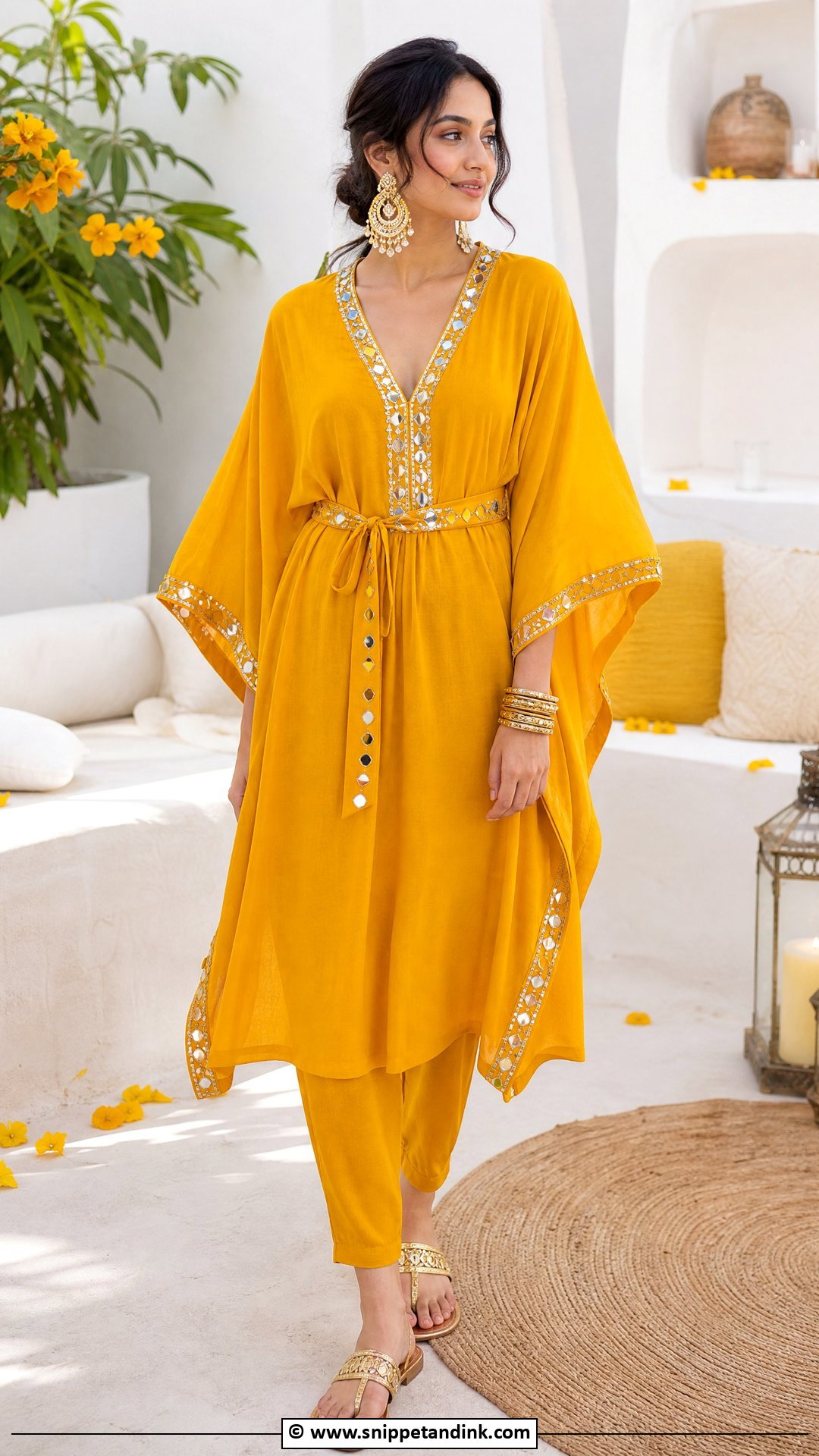
Kaftans are the easiest thing to wear at a home or resort haldi. Bright yellow, saffron, ivory or printed, with light embroidery, tassels or mirrors, they let air move around you in the heat. Belted gives shape; loose feels airier. Wear slim pants or palazzos underneath, or choose a longer style as a full dress. Bold earrings, stacked bracelets and flat sandals finish it. Moms and aunts who’ve spent the morning running the kitchen tend to thank whoever suggested this one.
18. Haldi Silk Saree Outfit
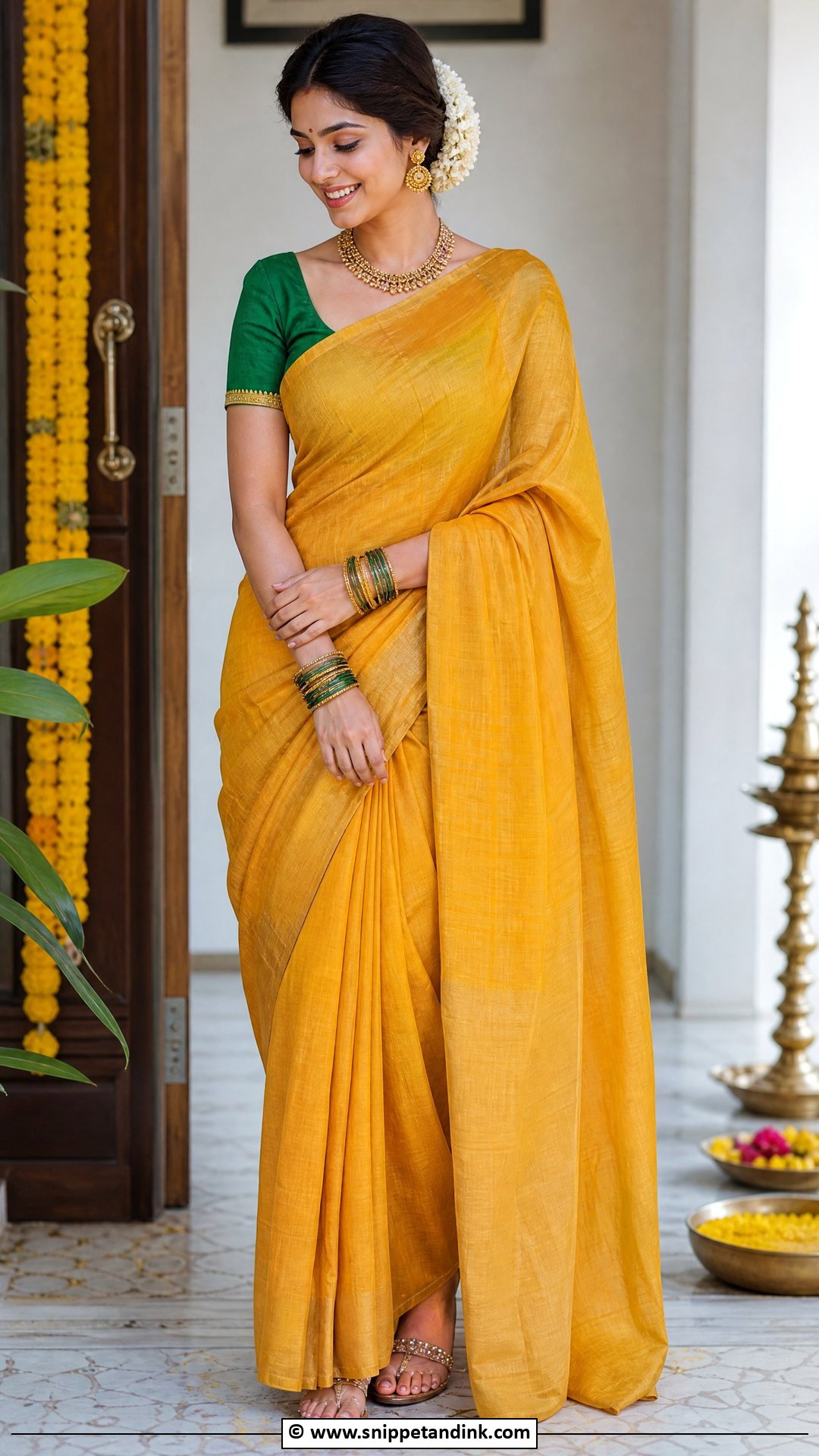
Silk sarees suit family elders, the bride and anyone who loves classic dressing. Lightweight silk, silk cotton or chanderi in yellow, mustard, gold or turmeric tones keeps you cooler than heavy silk, and a green, pink or orange contrast blouse adds colour. Drape it neatly and pin it well. Gold jewelry, a small bindi and a bun with fresh flowers complete it. If the event gets lively, wear a simpler silk blend rather than an heirloom, because turmeric on pure silk is very hard to remove.
19. Haldi Chikankari Kurta Outfit
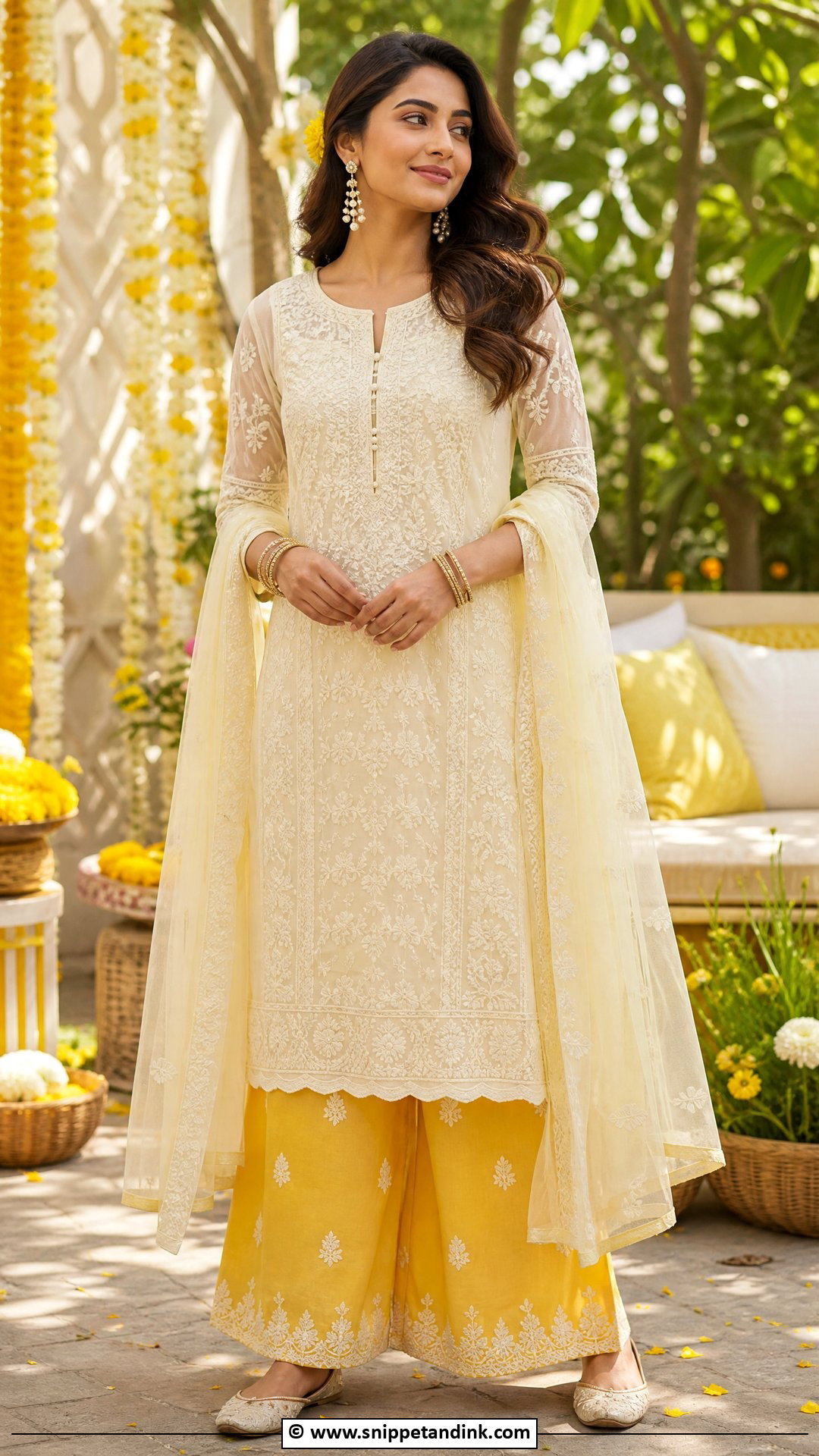
Chikankari is fine hand embroidery, so a yellow or ivory chikankari kurta brings texture without weight. Pair it with palazzos or straight trousers and a light organza, chiffon or cotton dupatta. Pearl earrings, delicate bangles and juttis keep it refined. It works across ages and is easy to wear again for festivals. It’s modest and polished while still bright enough for photos.
20. Haldi Mirror Work Lehenga Outfit
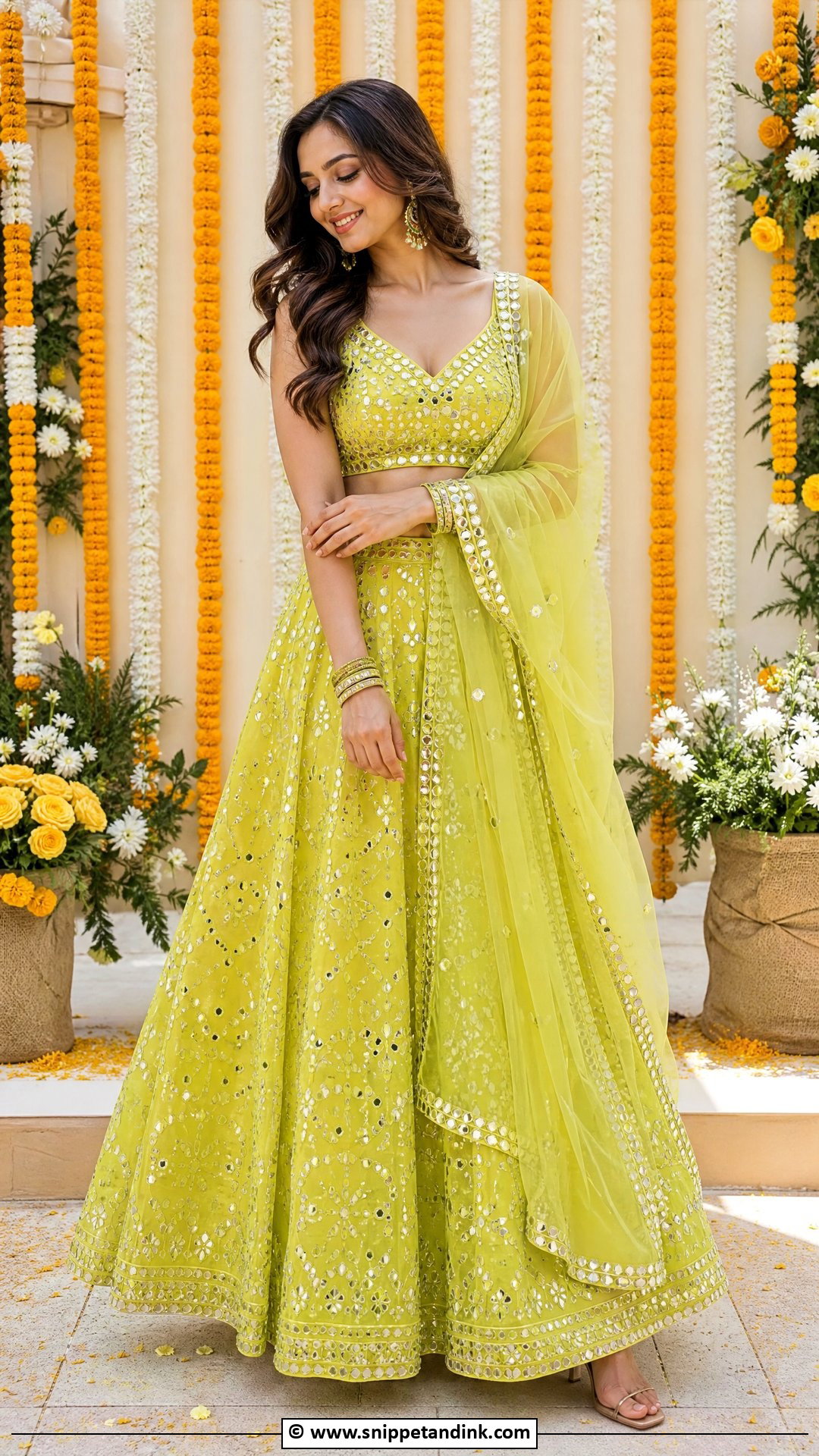
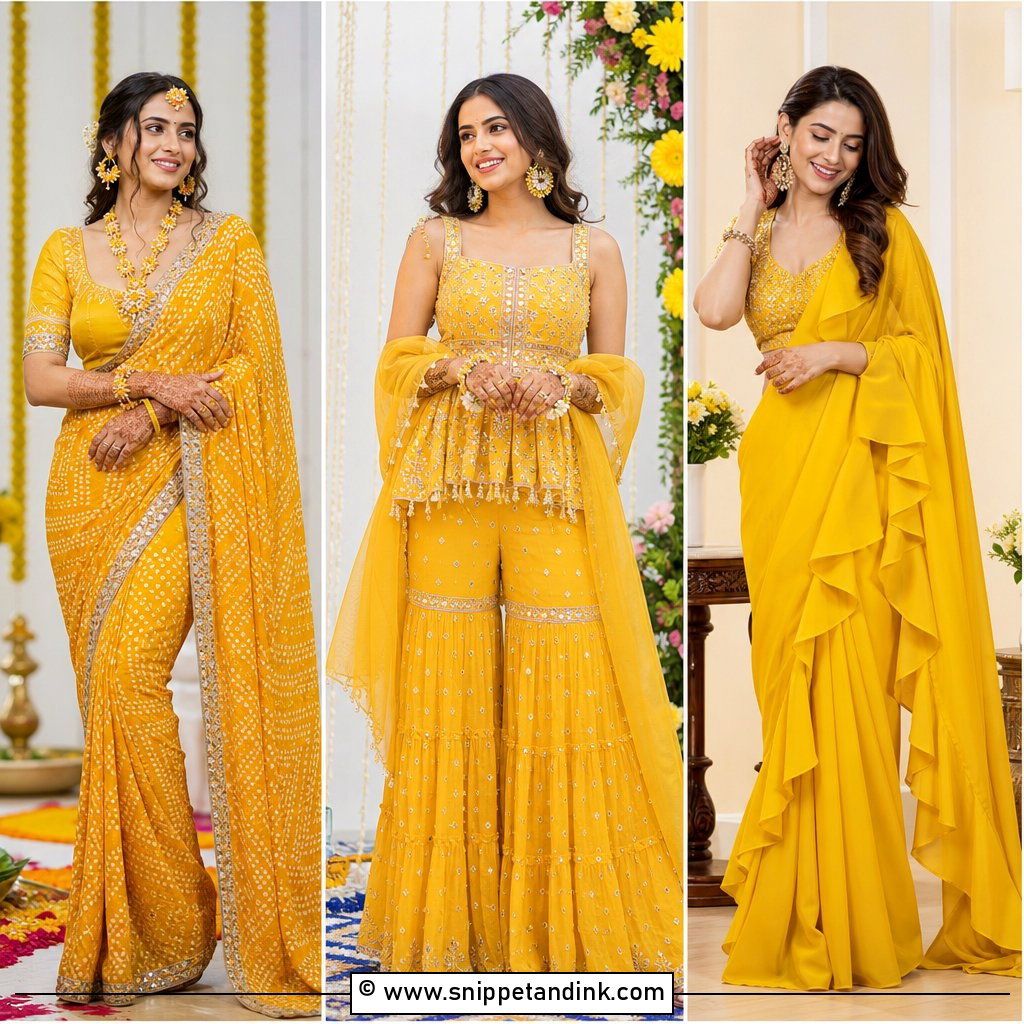
Mirror work brings sparkle without heavy jewelry, because each small mirror catches daylight. Choose a yellow, lime or ivory lehenga with mirrors on the blouse, skirt border or dupatta, in a light base fabric. Since it already shines, keep earrings, bangles and makeup simple. Juttis or low heels are easiest. Brides, sisters and bridesmaids all suit it. Dense mirror panels can scratch when people hug you, so scattered work is kinder.
21. Haldi Gota Patti Suit Outfit
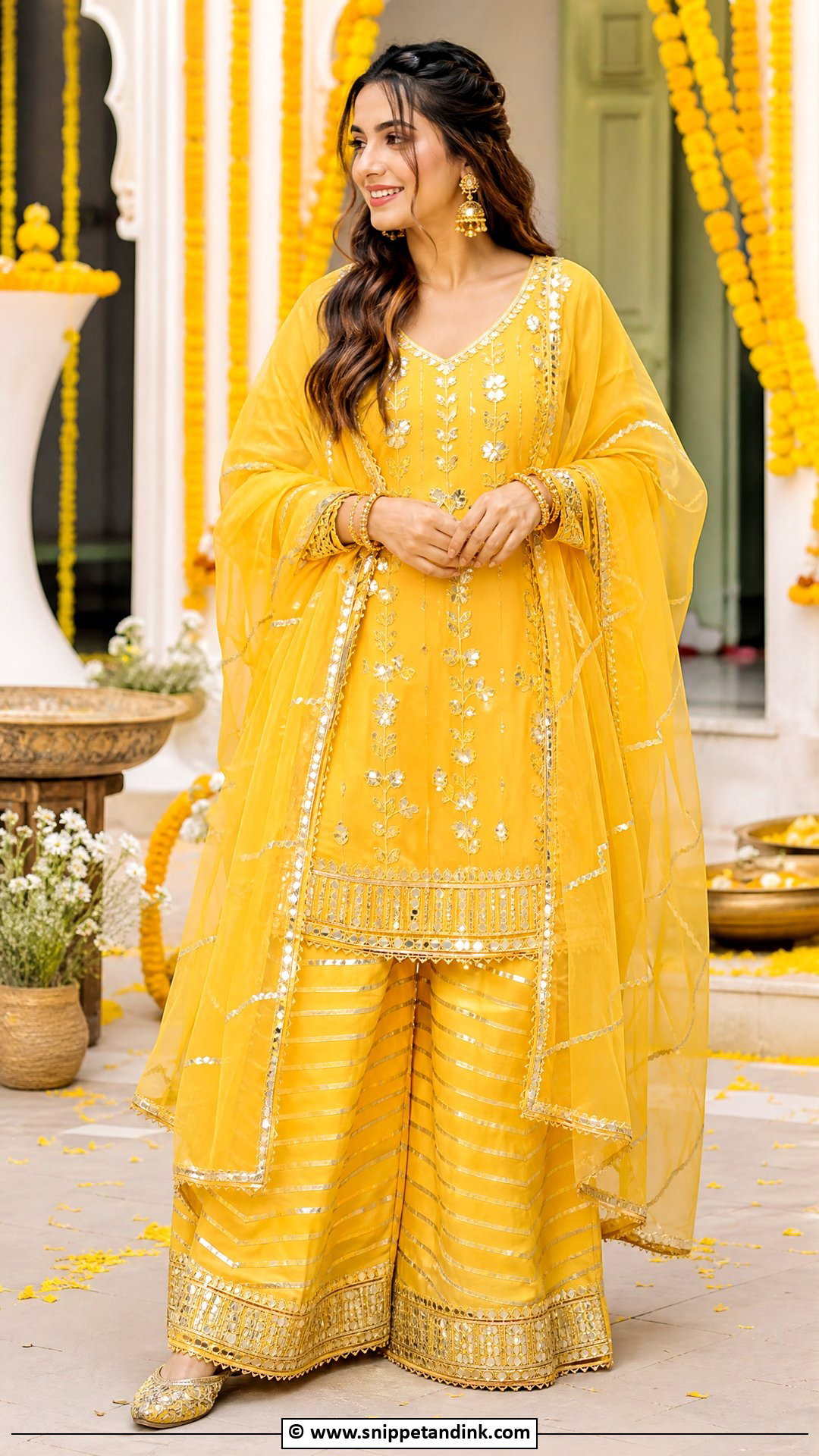
A haldi gota patti suit outfit is classic and always appropriate before a wedding. The metallic ribbon work shines on yellow, orange, ivory and green without much weight. Choose an anarkali, straight suit or palazzo set, and remember a gota-bordered dupatta lifts even a plain kurta. Jhumkas, bangles and embroidered flats finish it. It carries a Rajasthani character that suits the mood, and it’s a safe choice for any guest unsure how dressy to go.
22. Haldi Orange Lehenga Outfit
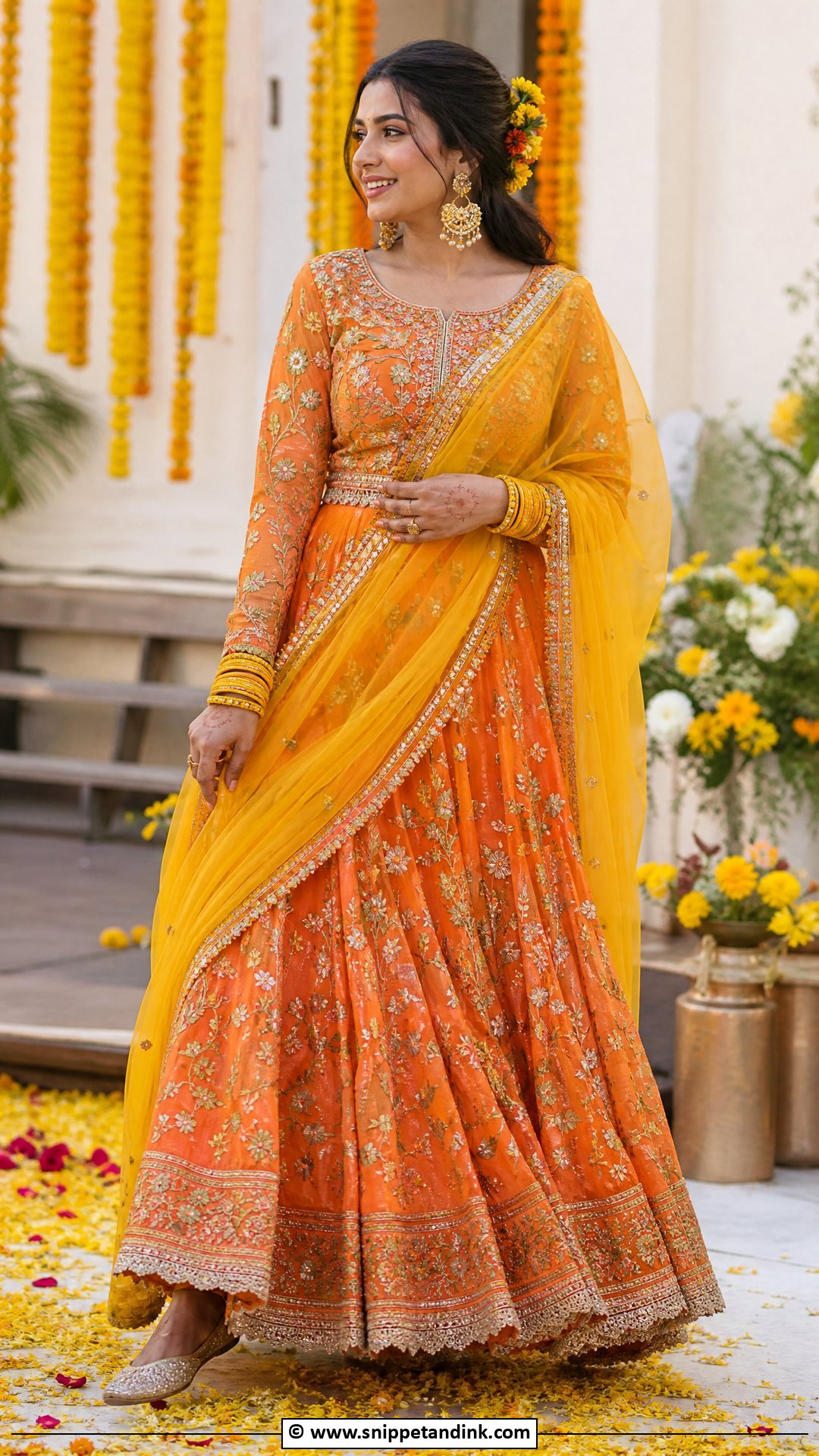
Orange is the natural step beyond yellow, still tied to turmeric and marigolds. A light lehenga with thread work, mirror accents or florals, a matching blouse and a yellow or pink dupatta creates contrast. Gold jewelry and flowers in the hair add festivity. Orange glows in outdoor daylight, so it suits bridesmaids, sisters or a bride who loves strong colour. Saturated orange can reflect onto faces in direct sun, so I seat people in dappled shade for close portraits.
23. Haldi Green Sharara Outfit
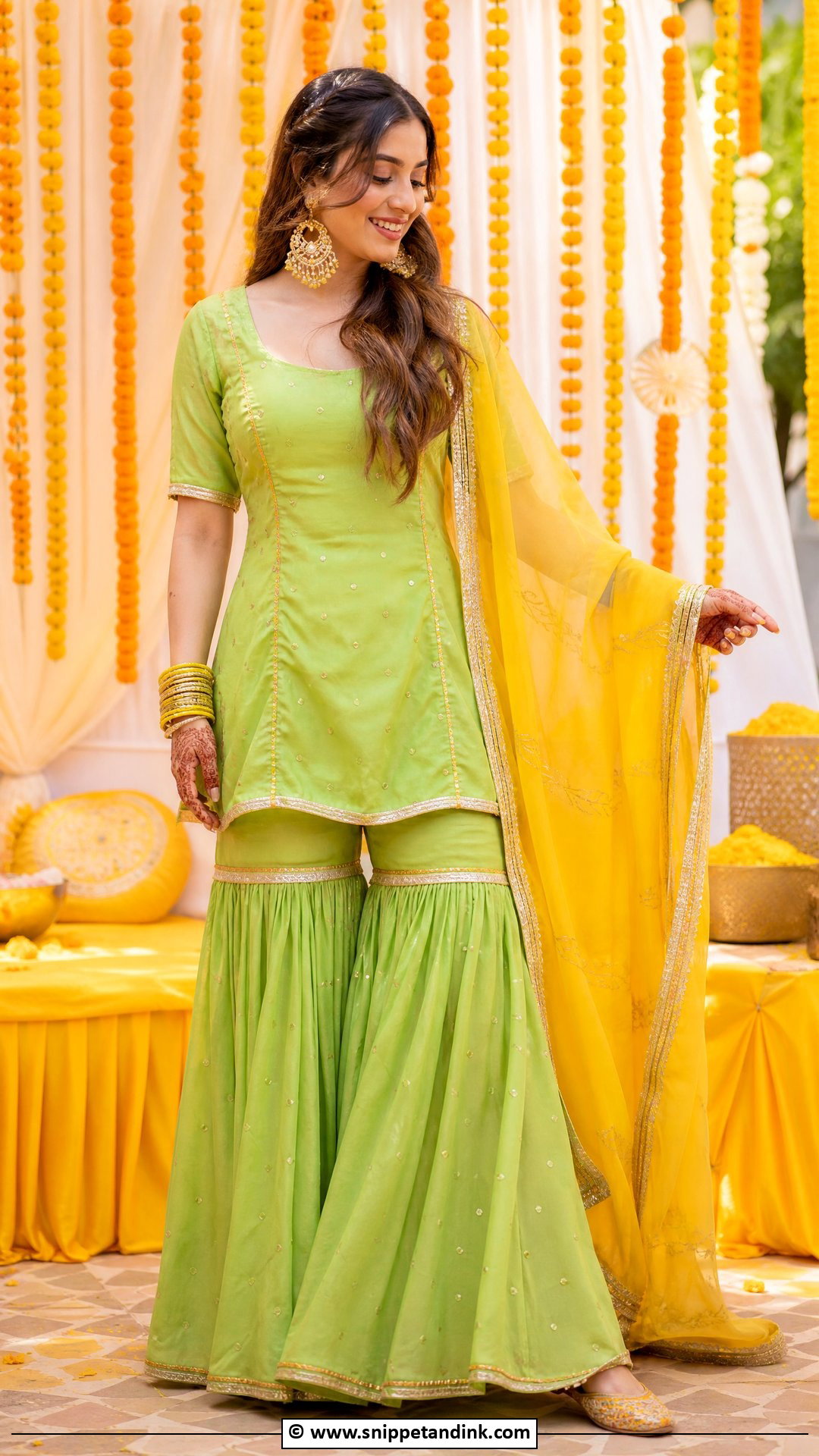
Green stands out among a sea of yellow. Lime, parrot, mint and mehendi green all suit haldi. Pair a short kurti and flared sharara with a yellow or floral dupatta to tie it back to the event, adding light mirror work, gota or embroidery. Gold earrings, bangles and juttis finish it. For bridesmaids, green coordinates with the marigold decor while giving each person a distinct look.
24. Haldi Pink And Yellow Outfit
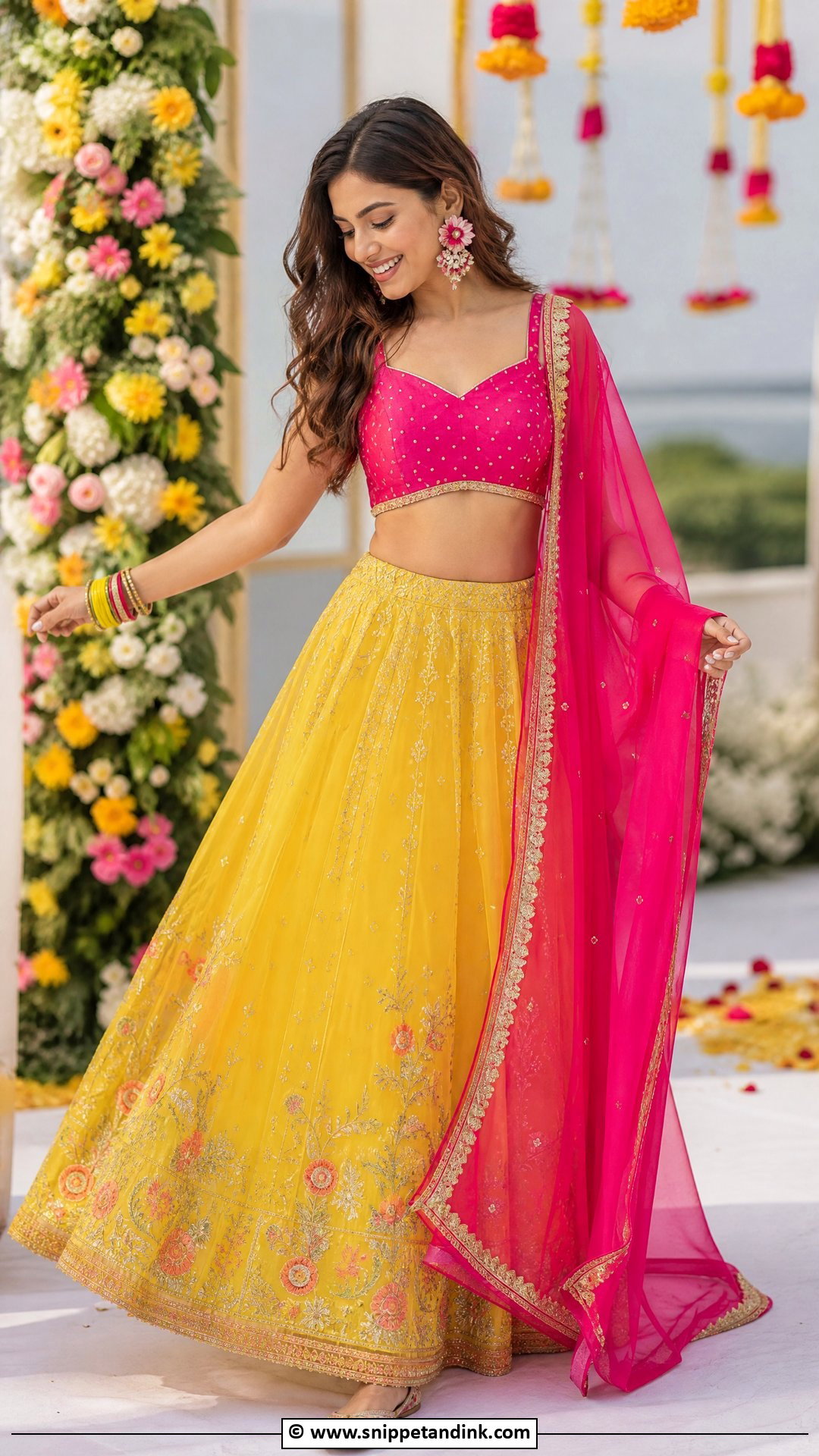
Pink and yellow is a cheerful pairing that never clashes with the theme. Wear a yellow lehenga with a hot pink blouse, a pink sharara with a yellow dupatta, or a print that mixes both. Keep fabrics light and embellishment moderate, with floral jewelry, gold bangles and soft pink makeup. It suits bridesmaids, sisters and guests who want brightness while staying near traditional colours.


25. Haldi Pastel Yellow Saree Outfit
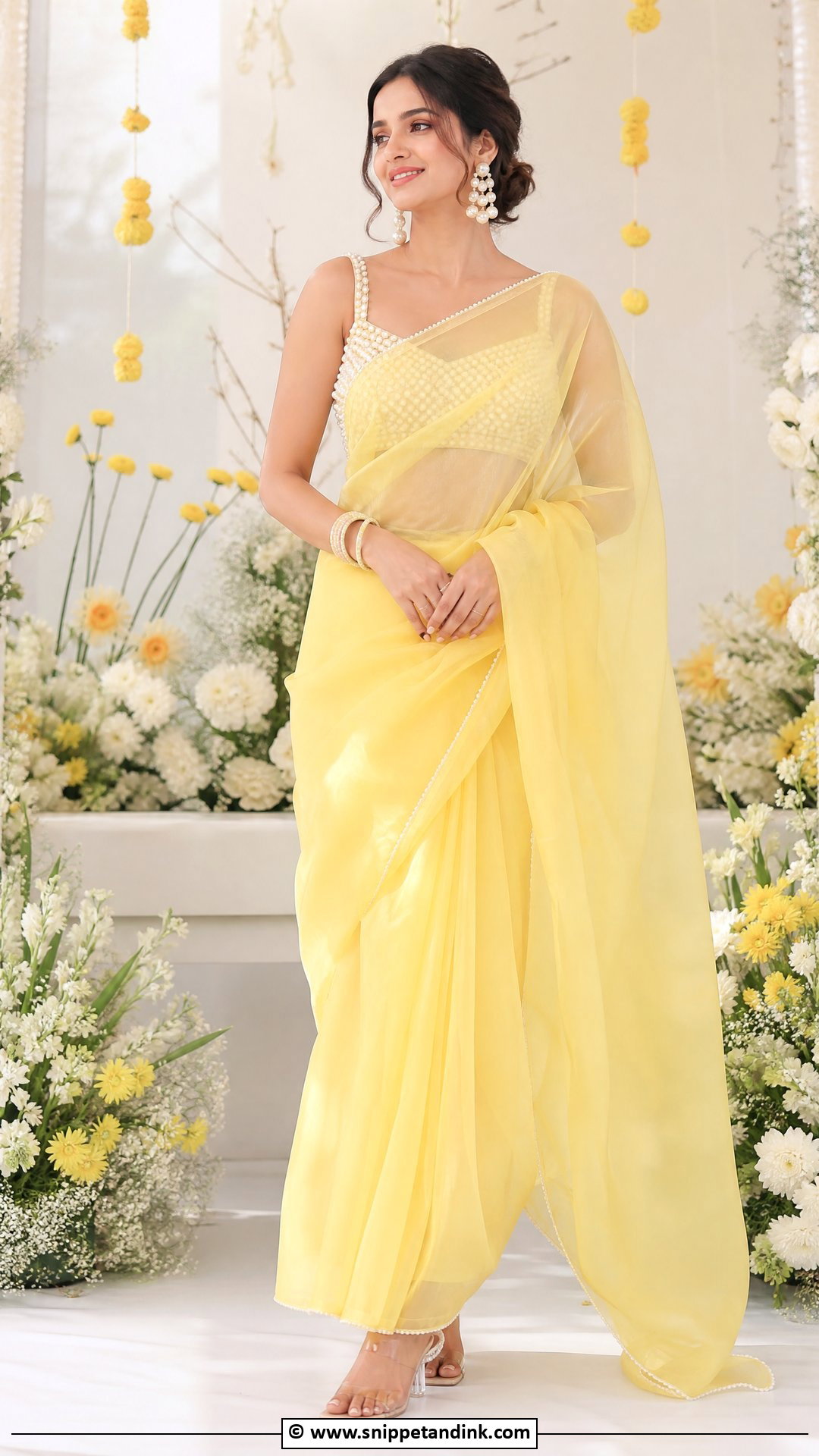
Pastel yellow is softer than mustard or marigold, which suits warm days and daytime light. Organza, chiffon, linen or georgette gives an airy drape. A pearl, embroidered crop or floral blouse adds detail without volume. Style it with pearl earrings, soft curls and minimal bangles. Guests, mothers and brides who prefer a refined look often choose it. Very pale shades can wash out in harsh midday sun, so lean toward a warmer butter tone rather than an icy one.
26. Haldi Mustard Kurta Outfit
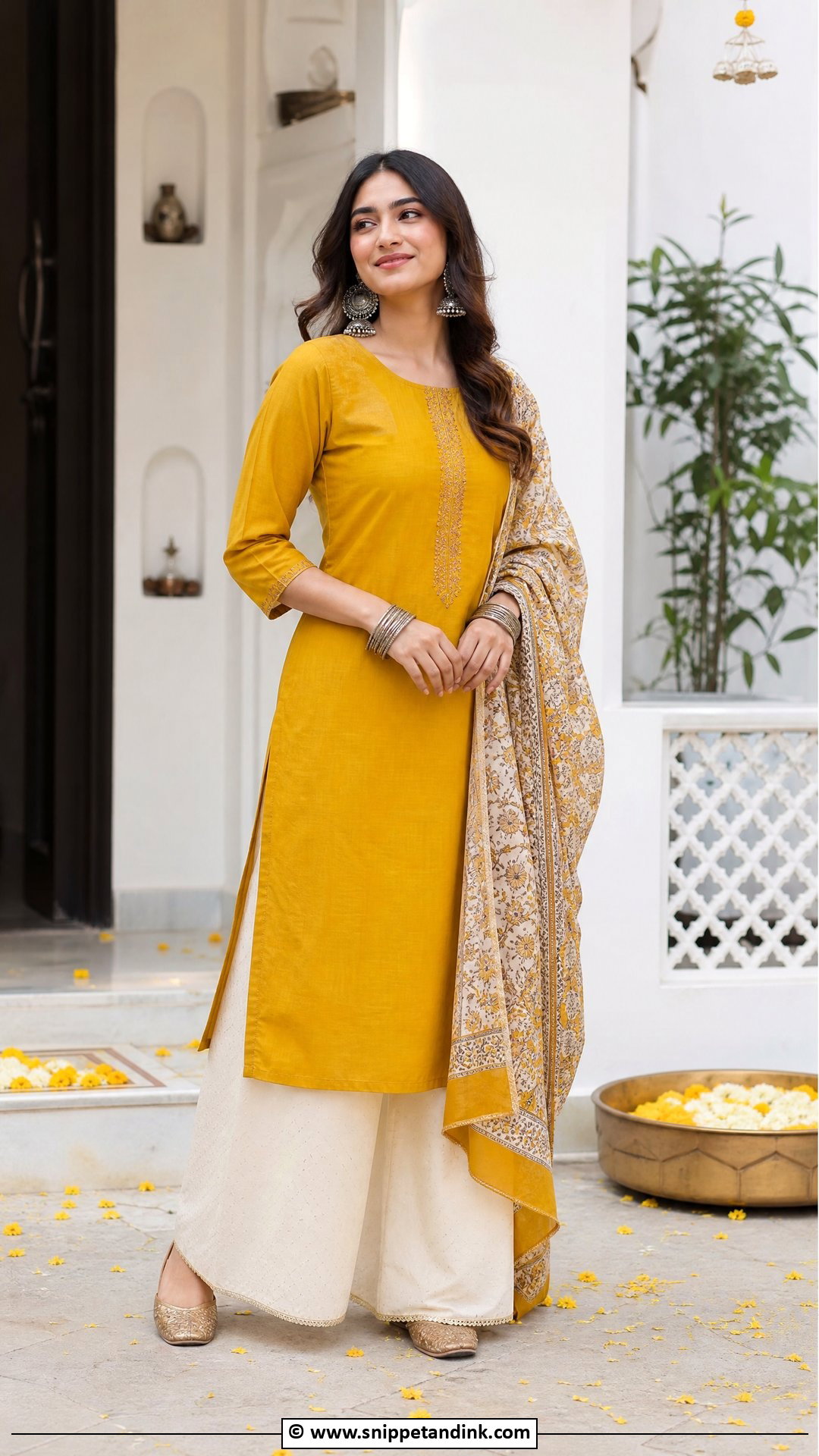
Mustard is a little richer than bright yellow and sits well on many skin tones. A straight kurta with palazzos, cigarette pants or a flowy skirt makes a complete outfit, with an embroidered neck, mirrors or a printed dupatta for festivity. Oxidised earrings give a boho turn, gold a traditional one. Comfortable juttis help through a long celebration. It’s simple, appropriate and one of the easiest haldi outfits to wear again.
27. Haldi Bandhani Lehenga Outfit
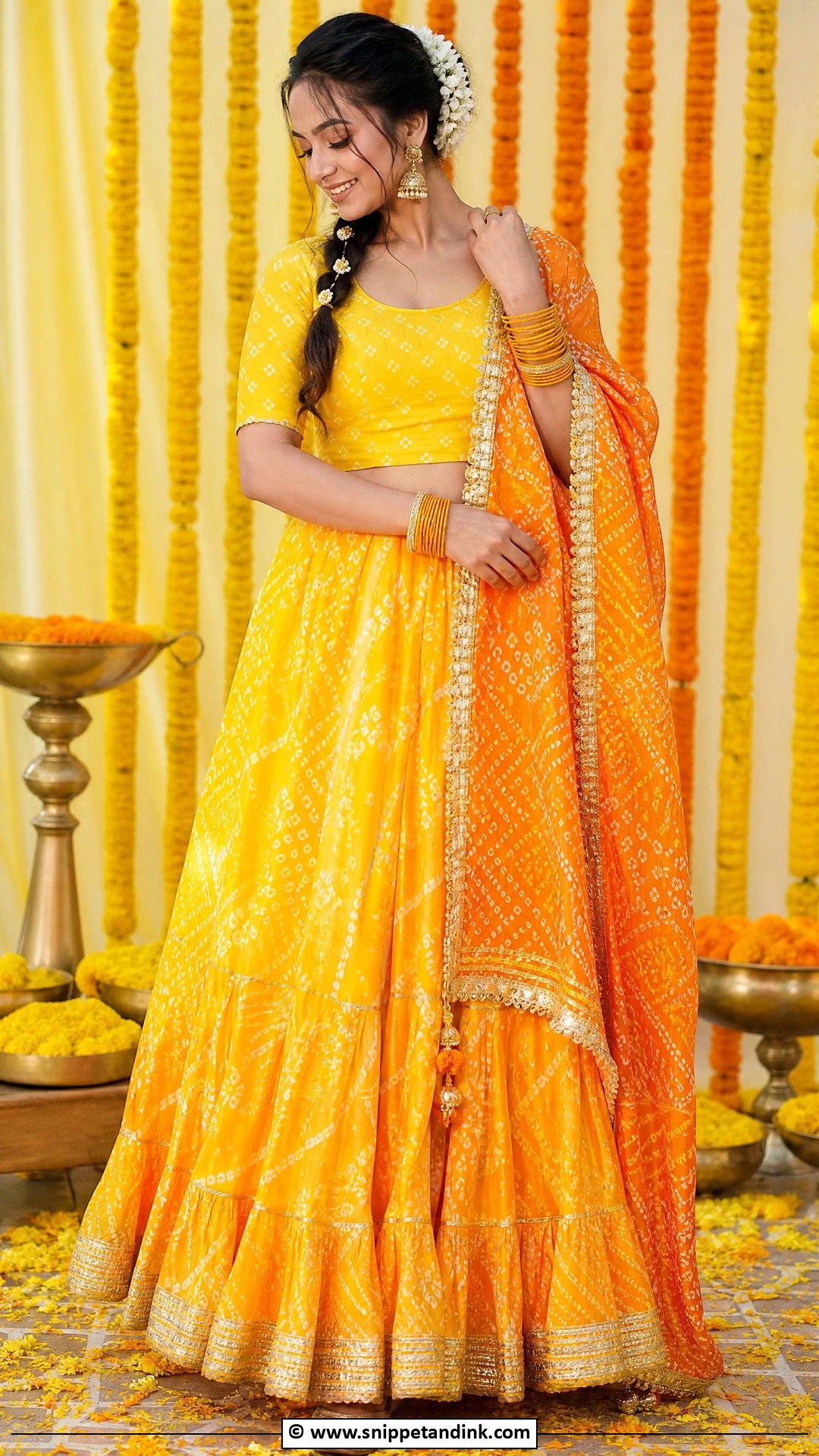
A haldi bandhani lehenga outfit brings colour and texture without heavy embroidery. Bandhani’s tie-dyed dots in yellow, orange, green or pink feel joyful. Pair a flared skirt with a simple blouse and a matching or contrast dupatta, adding gota borders for a dressier finish. Bridesmaids, sisters or a bride wanting a regional look all suit it, and the skirt moves well. Jhumkas, bangles, juttis and a flower braid complete it. Real bandhani can bleed on its first wash, so wash it cold and alone.
28. Haldi Printed Saree Outfit
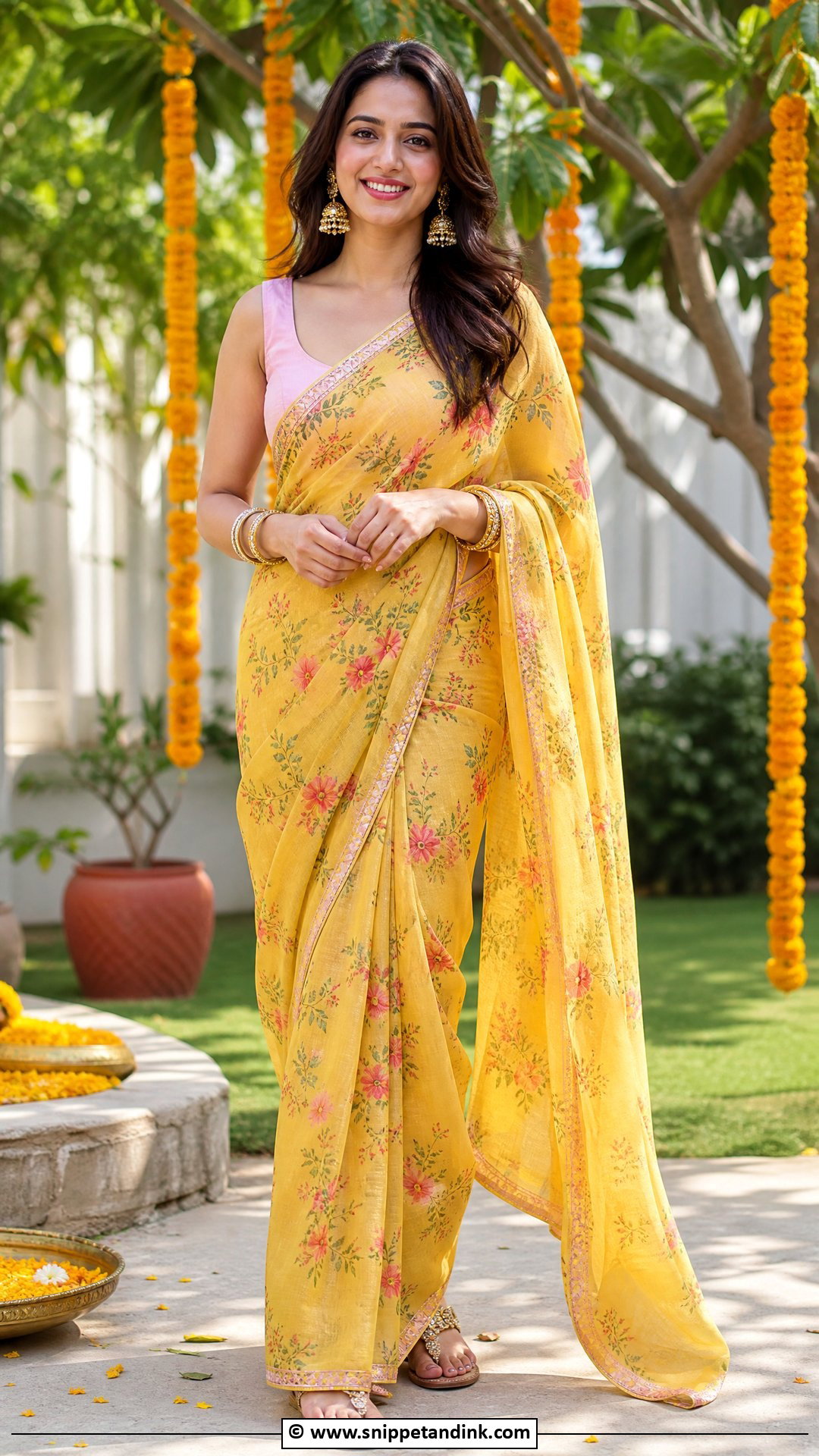
Printed sarees are light and full of personality. Florals, block prints, leheriya or abstracts suit a daytime function, in yellow, ivory, peach, orange or green. A plain blouse lets the print lead; a contrast blouse looks more styled. Add jhumkas, bangles and comfortable sandals. Guests who’d rather not invest in a heavy outfit do well here, and a printed saree breathes and gets worn again all wedding season.
29. Haldi Ruffle Saree Outfit
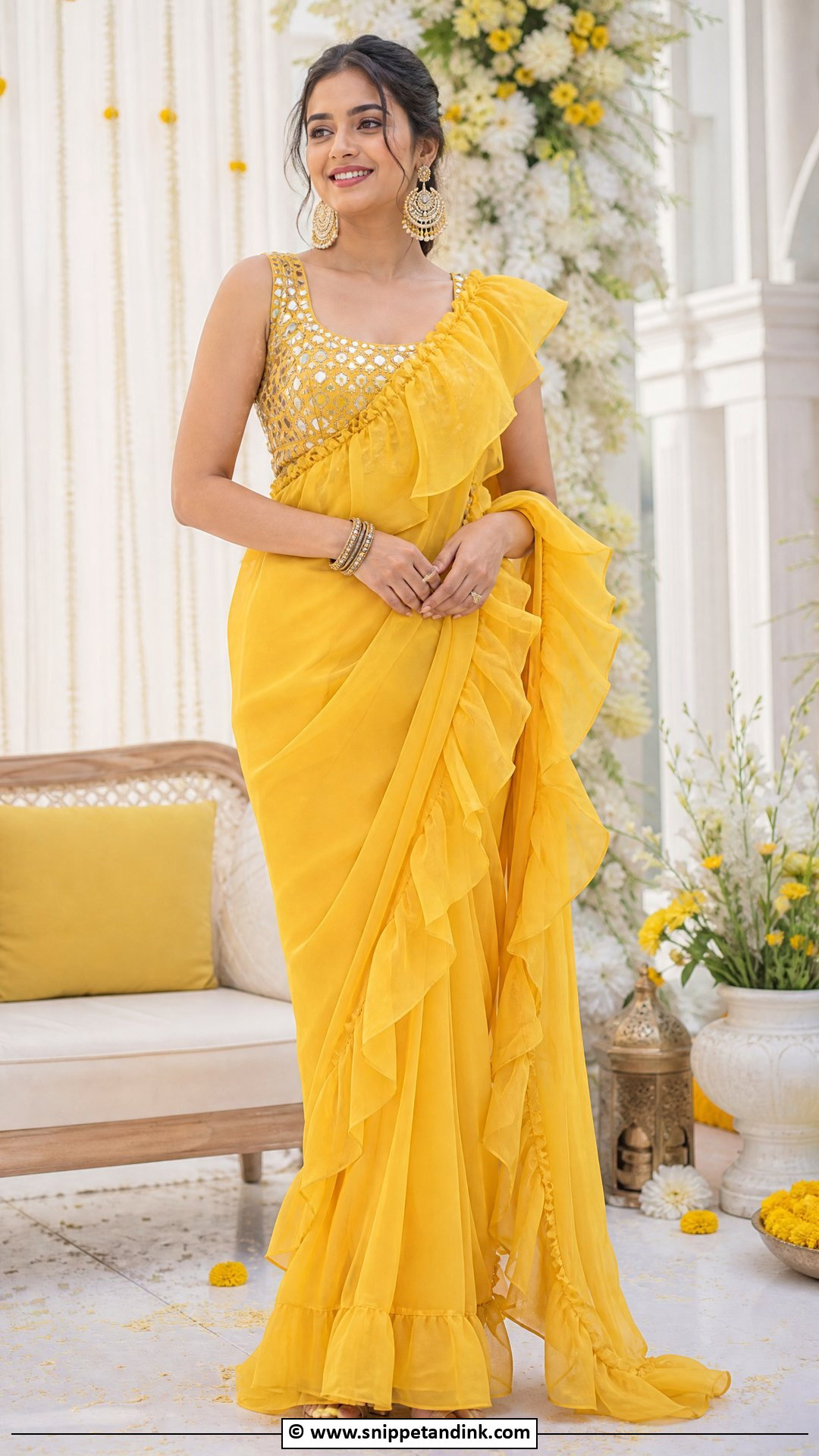
Ruffles give a saree movement and volume without embroidery, which makes it a statement for a bride or bridesmaid. Choose a yellow, ivory or orange ruffle saree with a structured blouse, crop top or mirror work blouse. The saree already has drama, so statement earrings, a few bangles and block heels are enough. It comes alive in dancing photos. The ruffles do drag along the floor if the saree is draped long, so have it pinned a touch higher than usual.
30. Haldi Ombre Lehenga Outfit
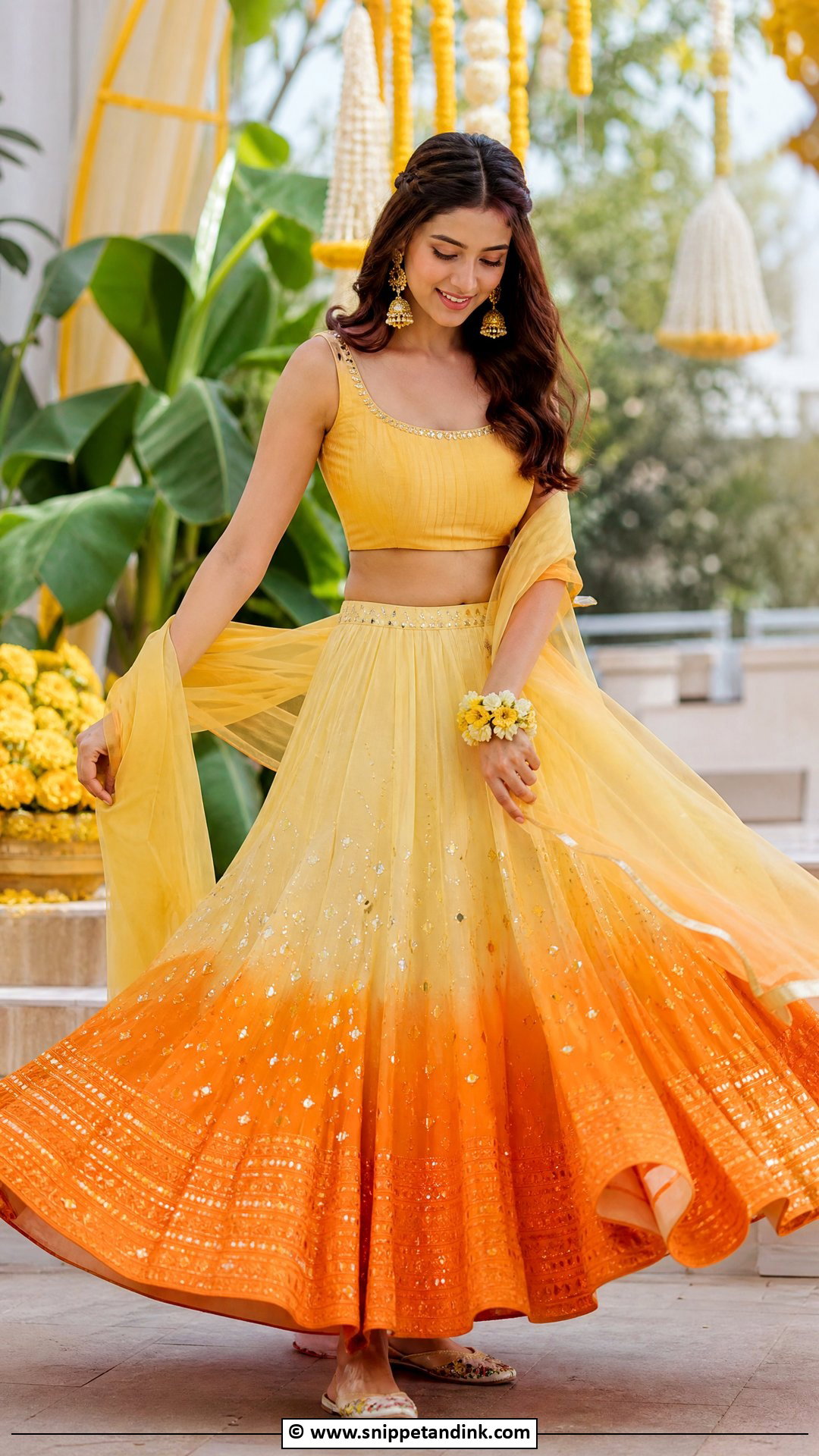
Ombre adds dimension and stays soft. Yellow to orange, ivory to yellow or peach to marigold all suit daylight and the warm mood. Keep the blouse simple and the dupatta sheer so the gradient shows, and go light on embroidery. Gold earrings, floral bangles and juttis or low heels finish it. It works for a bride who wants something special but not heavy, and for bridesmaids who want coordination with a little variation.
31. Haldi Short Kurti Sharara Outfit
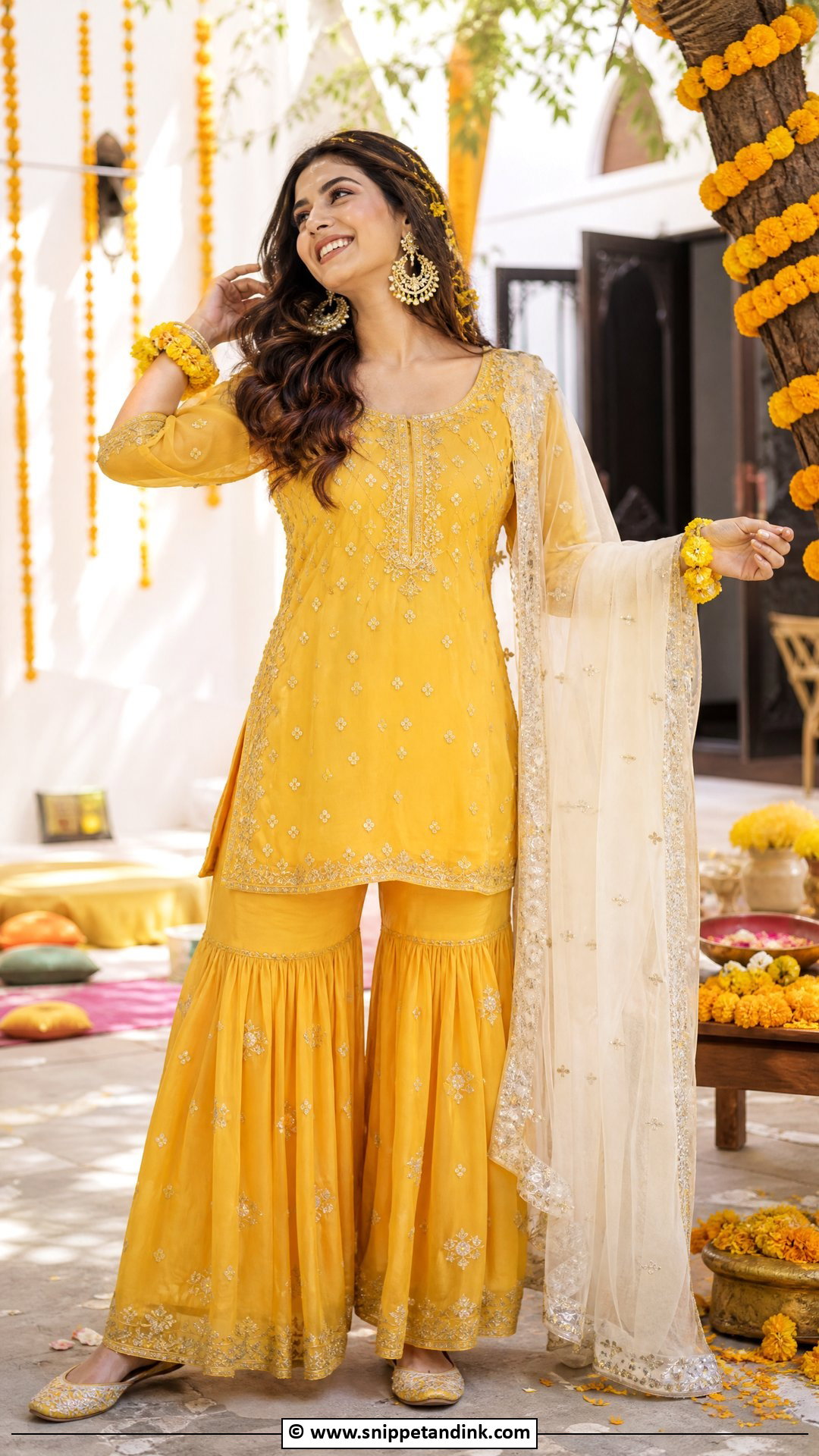
Short kurti and sharara is youthful and easy to move in. The short kurti shows off the flare of the pants, giving a balanced shape. Yellow, ivory, lime or orange with mirror work, gota or florals all work, and a light dupatta can be pinned for comfort. Chandbalis, bangles and juttis finish it. Guests and cousins find it dressy without being hard to manage, and it’s practical for sitting on the floor and joining the fun.
32. Haldi Palazzo Saree Outfit
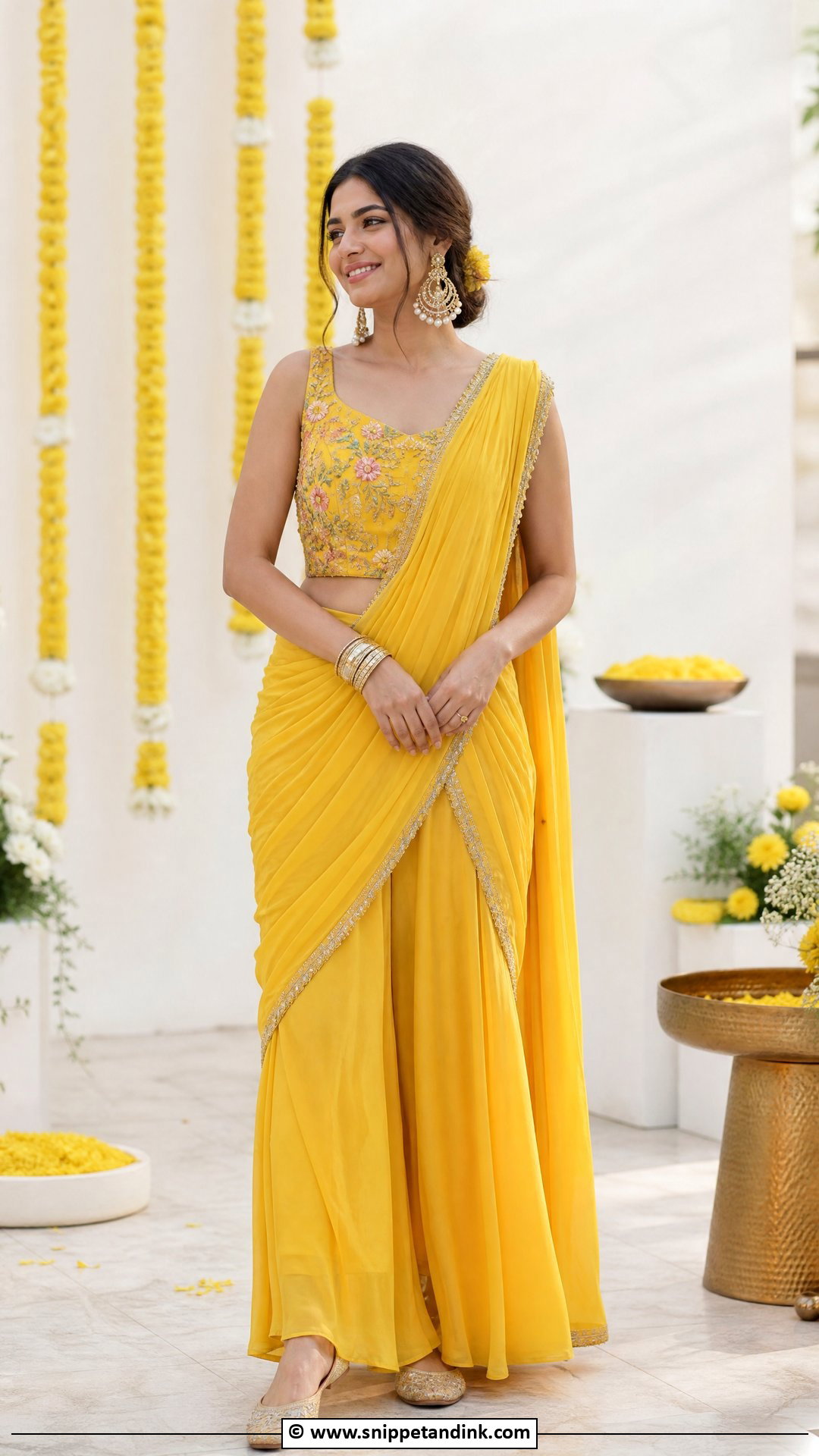
A palazzo saree gives the look of a drape with the comfort of trousers. Because it’s pre-draped, it stays secure through an active event. Yellow, ivory or peach suit it, with a blouse that has mirror work, embroidery or a festive neckline. Statement earrings and sleek bangles are enough, with block heels or embellished flats. It suits bridesmaids, sisters and guests who don’t want to wrestle with pleats, or who’ll be dressing themselves in a hurry.
33. Haldi Skirt And Kurti Outfit
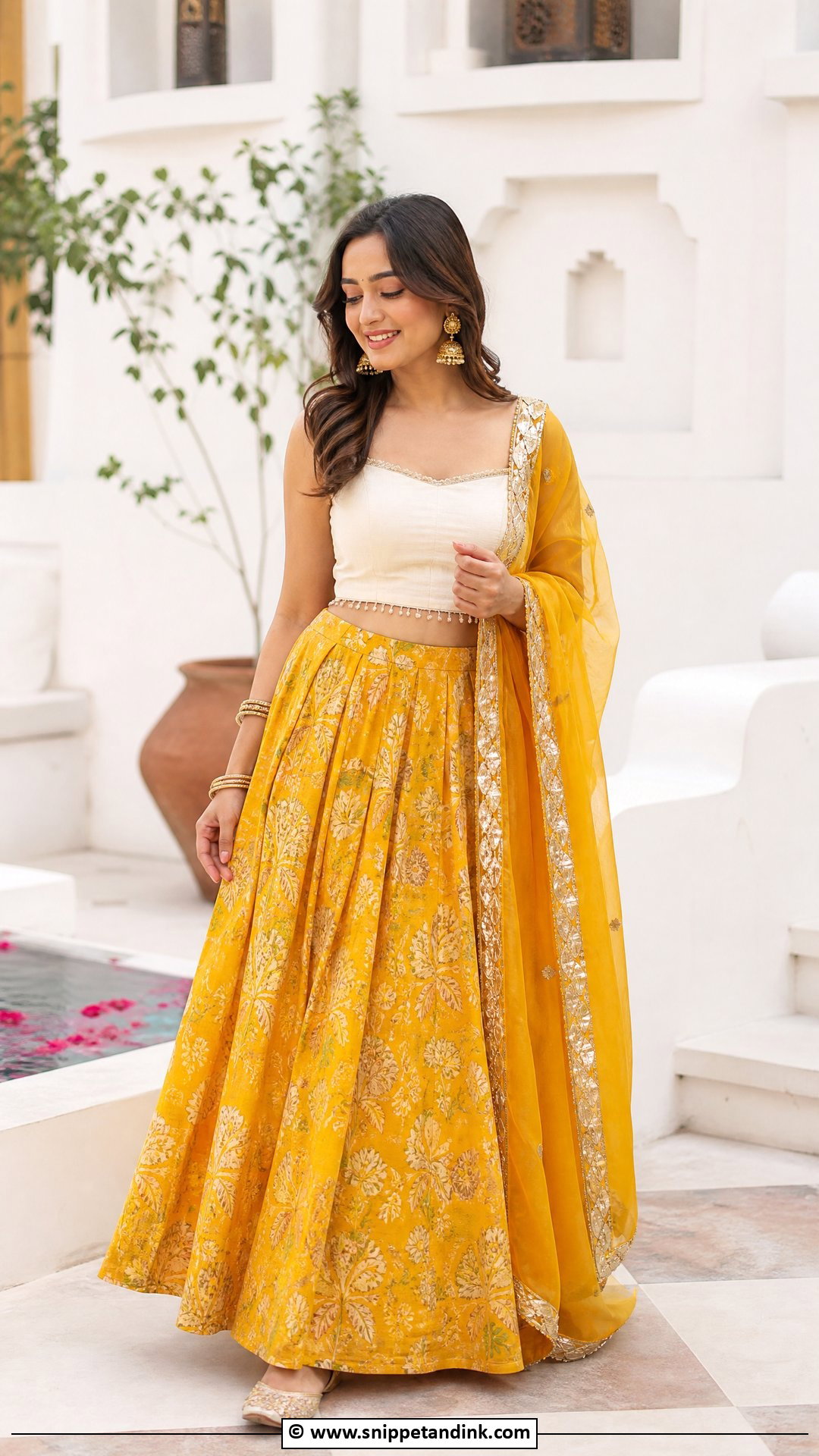
Skirt and kurti is the relaxed cousin of the lehenga, modest and comfortable for many body types. Pair a flared yellow or printed skirt with a short or straight kurti, and a gota or tassel-edged dupatta to dress it up. Cotton, silk cotton, rayon or georgette depending on formality. Jhumkas, bangles and juttis finish it. It’s a good choice for guests who want traditional charm without anything that could be mistaken for a bridal lehenga.
34. Haldi Floral Jewelry Bride Outfit
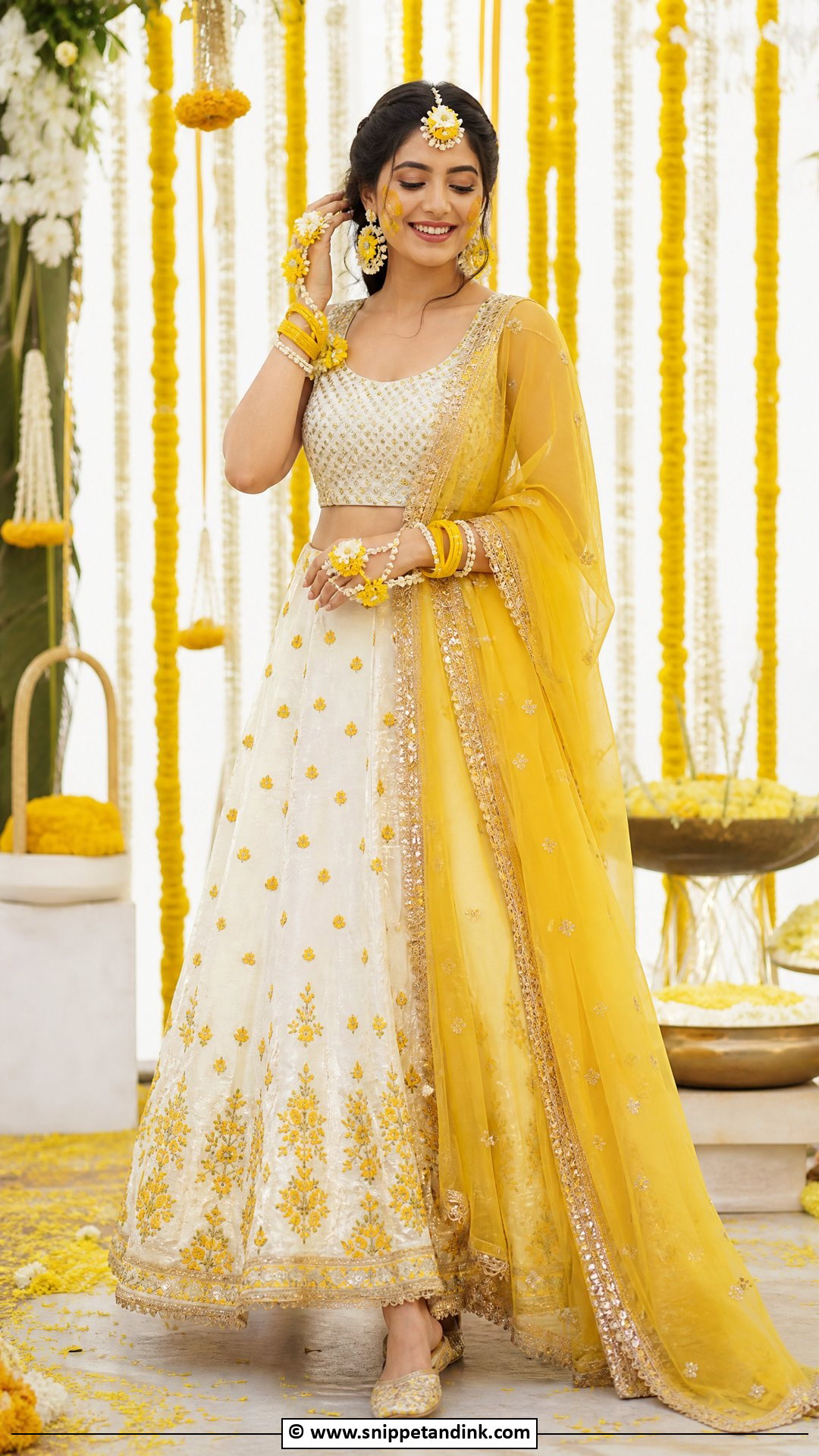
For the bride, floral jewelry is the heart of the haldi look. Start with a yellow, ivory or orange lehenga, saree or sharara, then add fresh or faux flowers: maang tikka, earrings, haath phool, bangles or a necklace. Marigold, jasmine, roses and white blooms suit haldi colours. Keep the embroidery moderate so the flowers stand out, with soft makeup and a neat bun or braid. On the logistics side, I schedule fresh floral jewelry to arrive the same morning and keep it cool until the bride dresses, since it wilts quickly in warm rooms.
35. Haldi Bridesmaid Matching Outfit
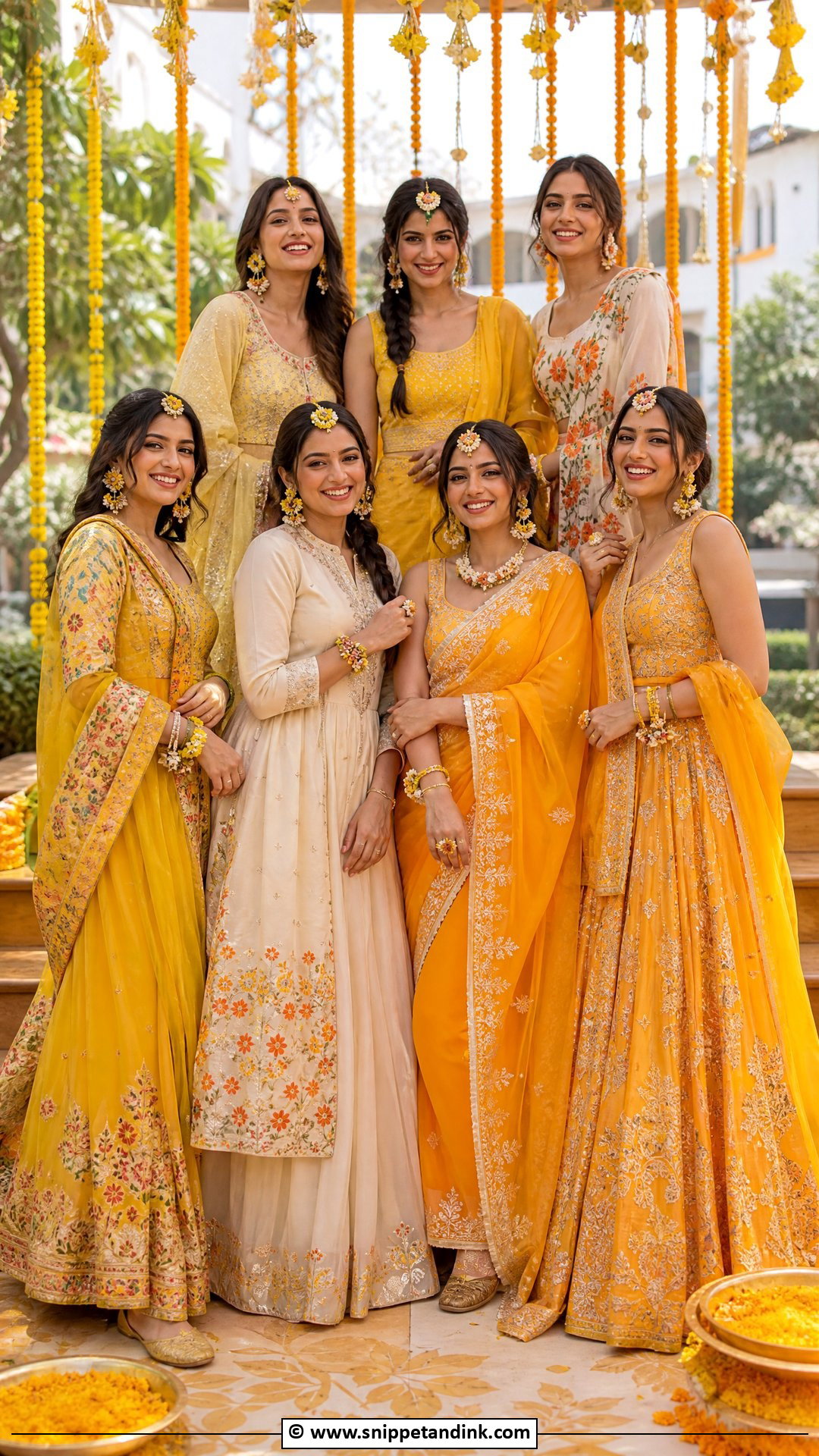
Matching bridesmaids don’t need identical outfits. Pick one colour family, yellow, ivory, orange or green, and let each person wear the lehenga, sharara, saree or kurta set she’s comfortable in. Matching dupattas, similar floral jewelry or coordinated bangles tie the group together. Light fabrics matter, because bridesmaids end up carrying paste bowls, herding relatives and dancing. The result looks polished in group shots while respecting different bodies, budgets and tastes.
A Colour Plan Makes the Group Photos
The family portraits are where haldi outfits are most remembered, and a little planning keeps them from looking accidental. I send a short colour note to the family group a few weeks before, and it does more than any amount of styling on the day.
Give a palette, not a uniform
Name one main colour and two supporting shades, such as marigold with ivory and soft green. People can then shop in their own budget and style, and the group still reads as one.
Mix prints and solids on purpose
A row of busy prints turns into noise in a wide shot. If roughly half the group wears solids, the prints have room to show and the bride stays the focus.
Watch neon and strong reflections
Fluorescent yellows and greens throw colour onto skin in bright sun and look harsh on camera. Warm, slightly muted tones photograph more kindly, and they forgive a turmeric smudge or two.
Think about shoes last
If the ritual area is barefoot, a neat pedicure or simple painted toes matters more than shoes. Slip-on juttis or sandals are easiest to kick off and find again at the edge of the rug.
Dress for the Floor, the Sun and the Splash
Every outfit above has the same job: keep you festive and comfortable enough to be present for the whole ceremony. Yellow leads, but ivory, orange, green, pink, florals and fusion cuts all belong. Weigh fabric, movement, the weather and how playful your family gets with the turmeric, then add accessories and shoes you can actually stand in. Lehengas, sarees, shararas, suits, co-ords and jumpsuits all have a place on a haldi morning.
You'll Like These Ideas:




Leave a Reply