
A South Indian bride’s hair has to do a lot of work. It carries gold, flowers and sometimes a heavy extension, it has to look right from behind while she sits for rituals, and it often starts before dawn and ends after a late reception. Most of the looks I create are built on a long braid or a structured bun, finished with mallige, roses or temple jewellery. The order of events shapes my plan more than anything: a traditional poola jada for the ceremony, a soft floral bun for the muhurtham, something looser for the reception. Here are fifteen styles I’d recommend, with what each one asks of your hair.
Oil Your Hair the Week Before, Not the Night Before
Many families oil a bride’s hair right up to the wedding, and I understand why. But oil the night before makes my job much harder. Pins slide out of slick hair, braids loosen, and flowers won’t stay where I place them. I ask brides to do their last oil treatment two or three days ahead, then wash the day before with a light conditioner kept off the roots.
Second-day hair grips better than squeaky-clean hair, so don’t wash again on the morning itself unless your scalp gets very oily. If it does, tell me at the trial and we’ll plan around it with dry shampoo at the roots.
Extensions for a jada
A jada needs length most brides don’t have. Buy the extension early and bring it to the trial so I can check colour and texture against your own hair in daylight. Real hair blends and braids far more naturally than synthetic, which can look shiny on camera and doesn’t hold a tight plait as well. If it is too thick, I thin it before the day rather than let it overpower a fine natural braid.
1. South Indian Bridal Jada Braid
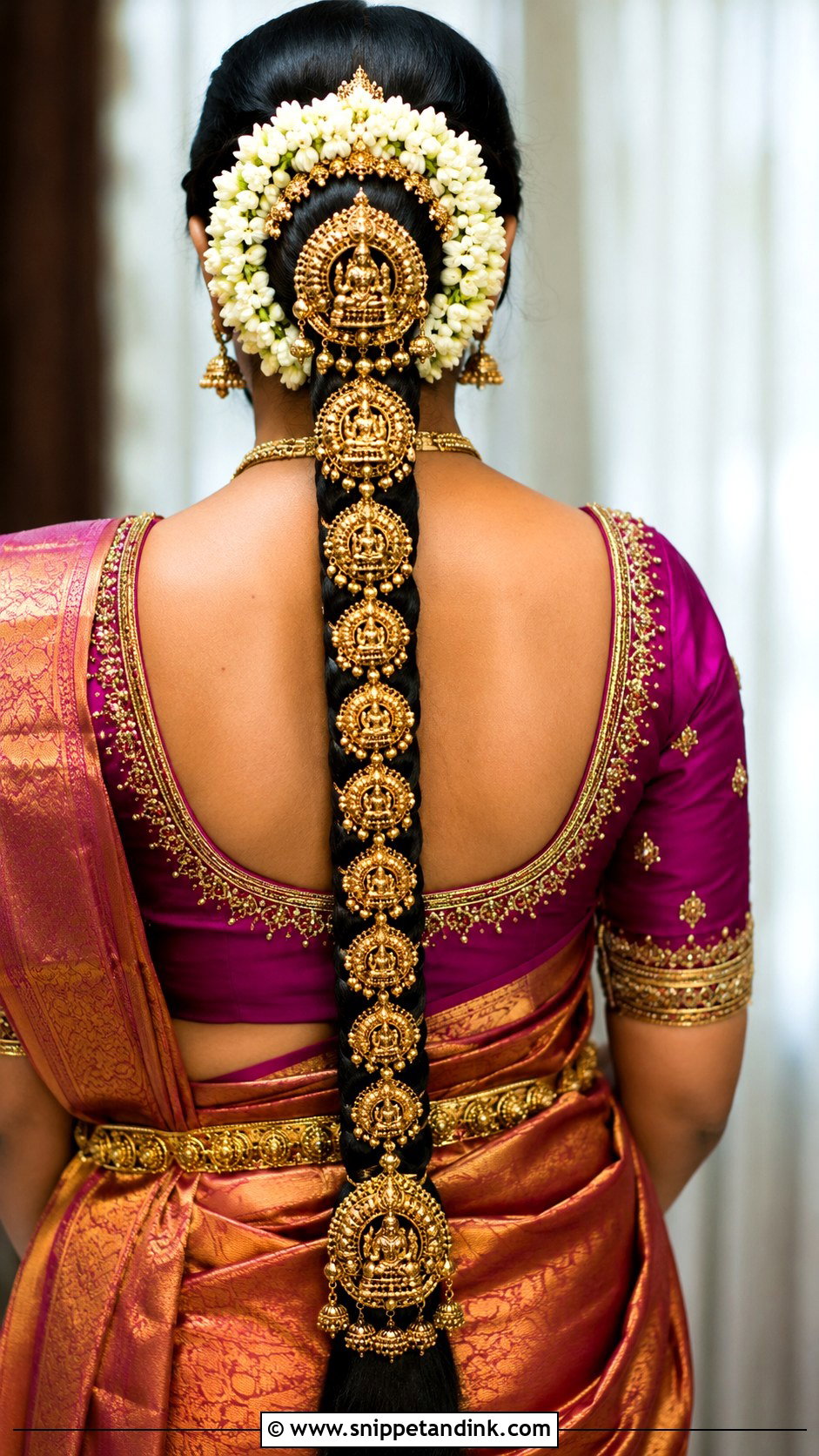
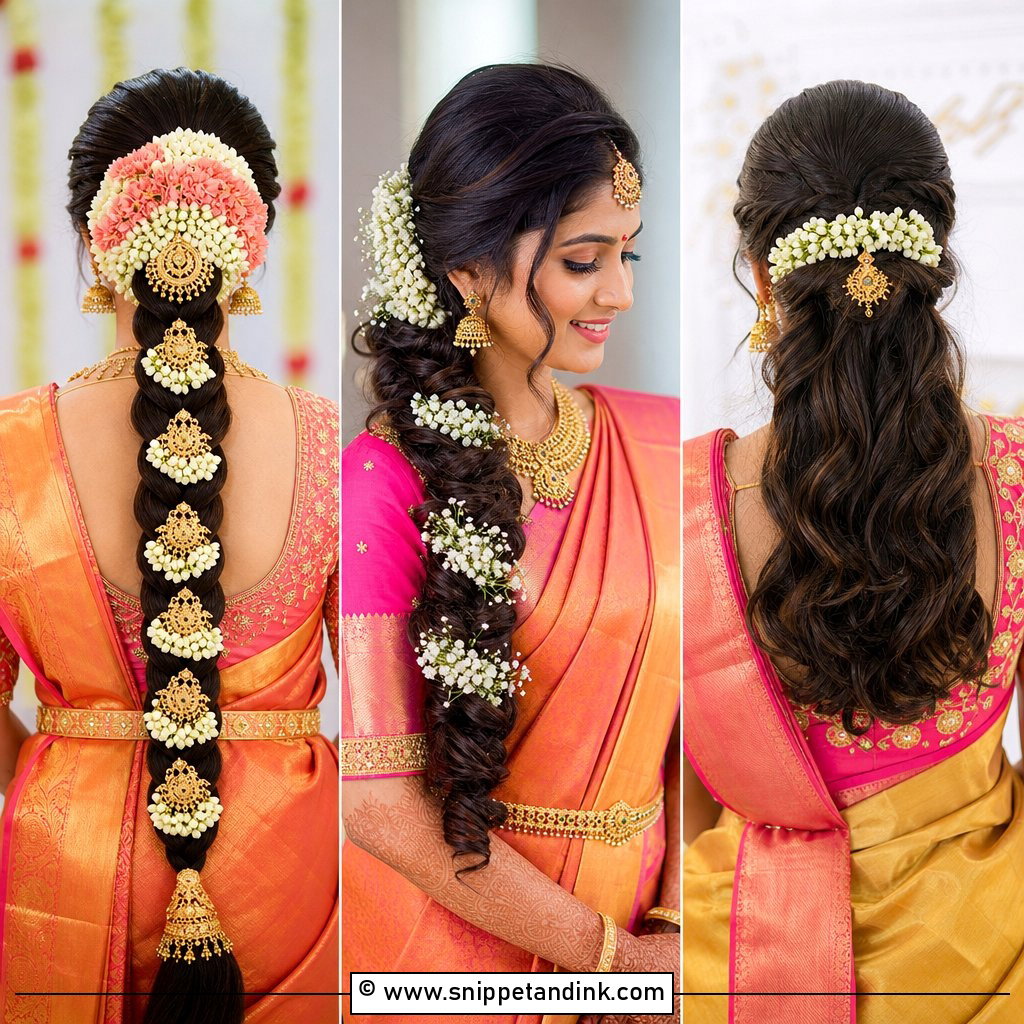
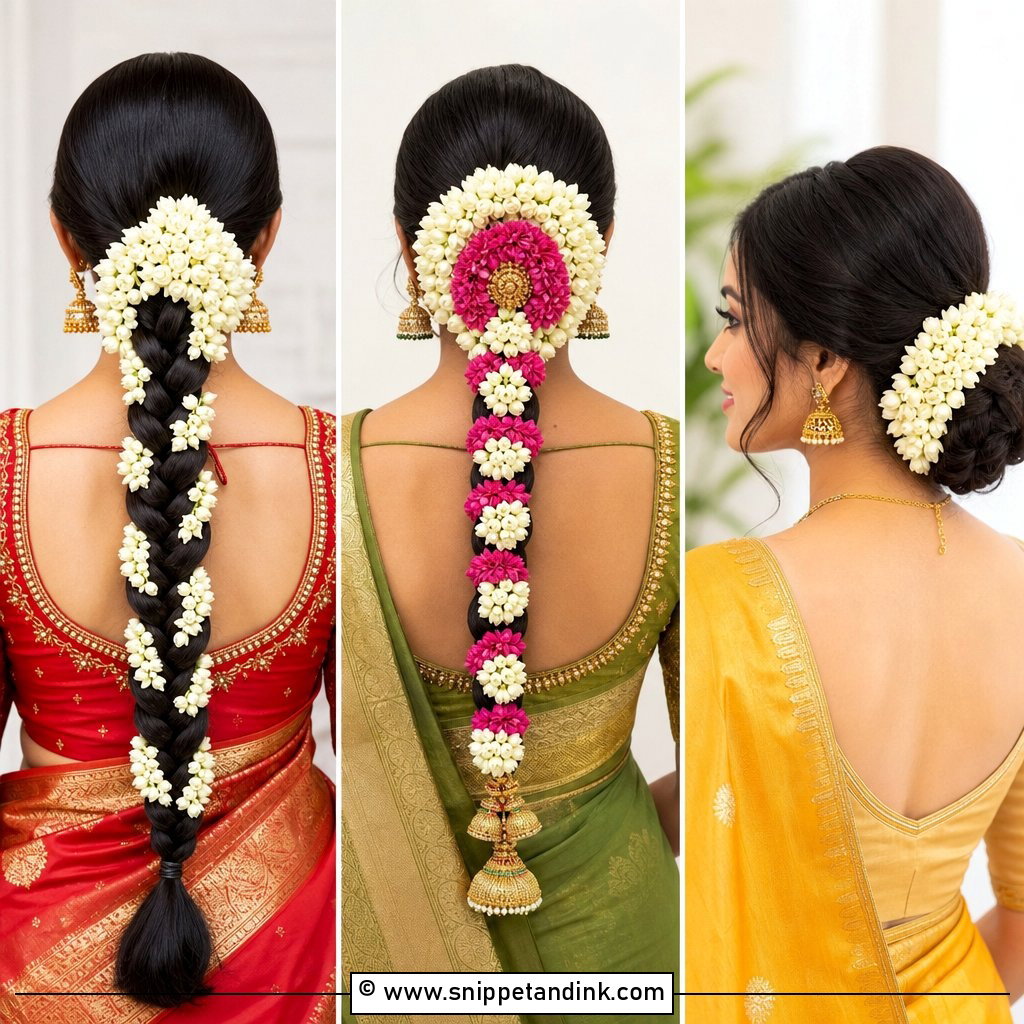
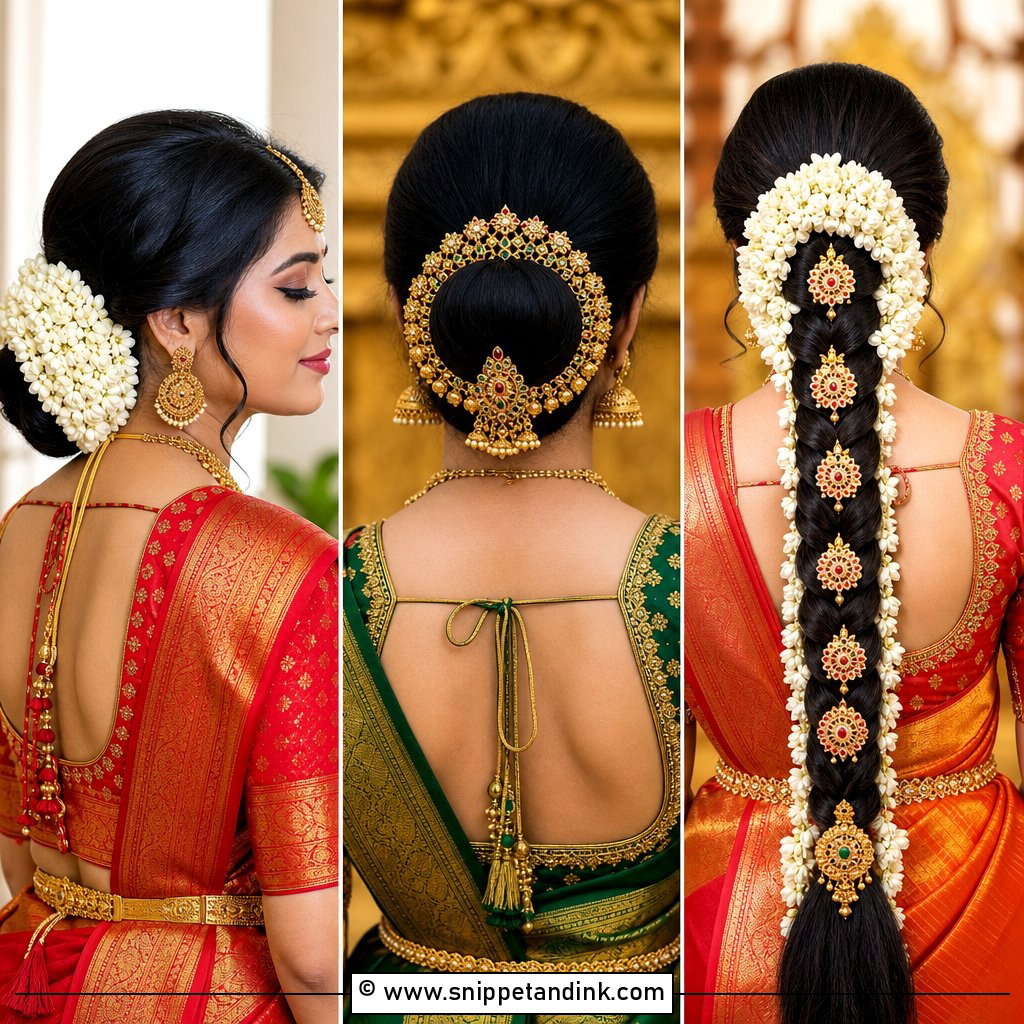
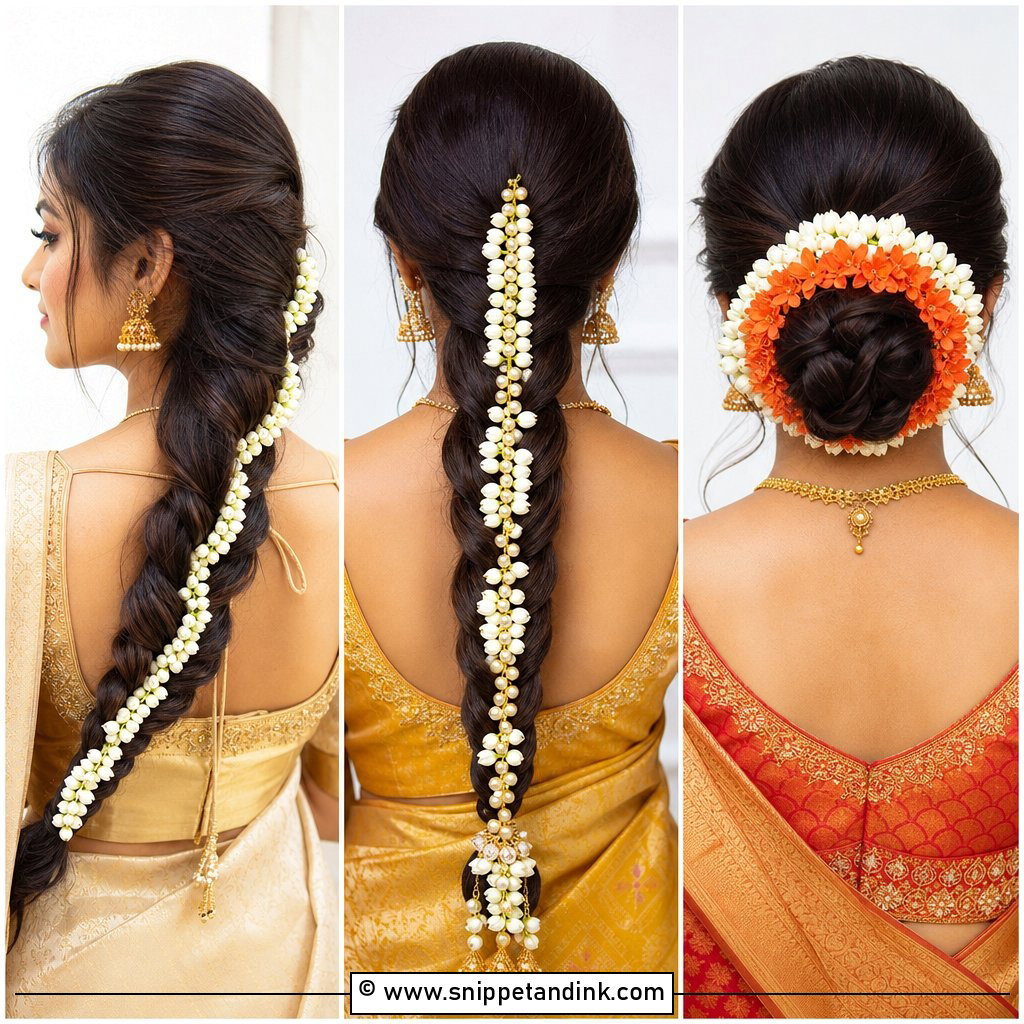
The jada braid is the image most people picture first, and it earns that place. I centre-part the hair, smooth it flat against the head and braid it long, adding an extension if the natural length stops above the waist. Gold jada accessories, temple motifs and flowers then run down the plait. It sits naturally with a Kanjeevaram, layered necklaces and big earrings, and the back view matters because guests see it through every ritual. My one firm rule: the base braid must be tight at the nape. Gold pieces add up quickly, and a soft braid sags under them within the hour.
2. South Indian Bridal Poola Jada
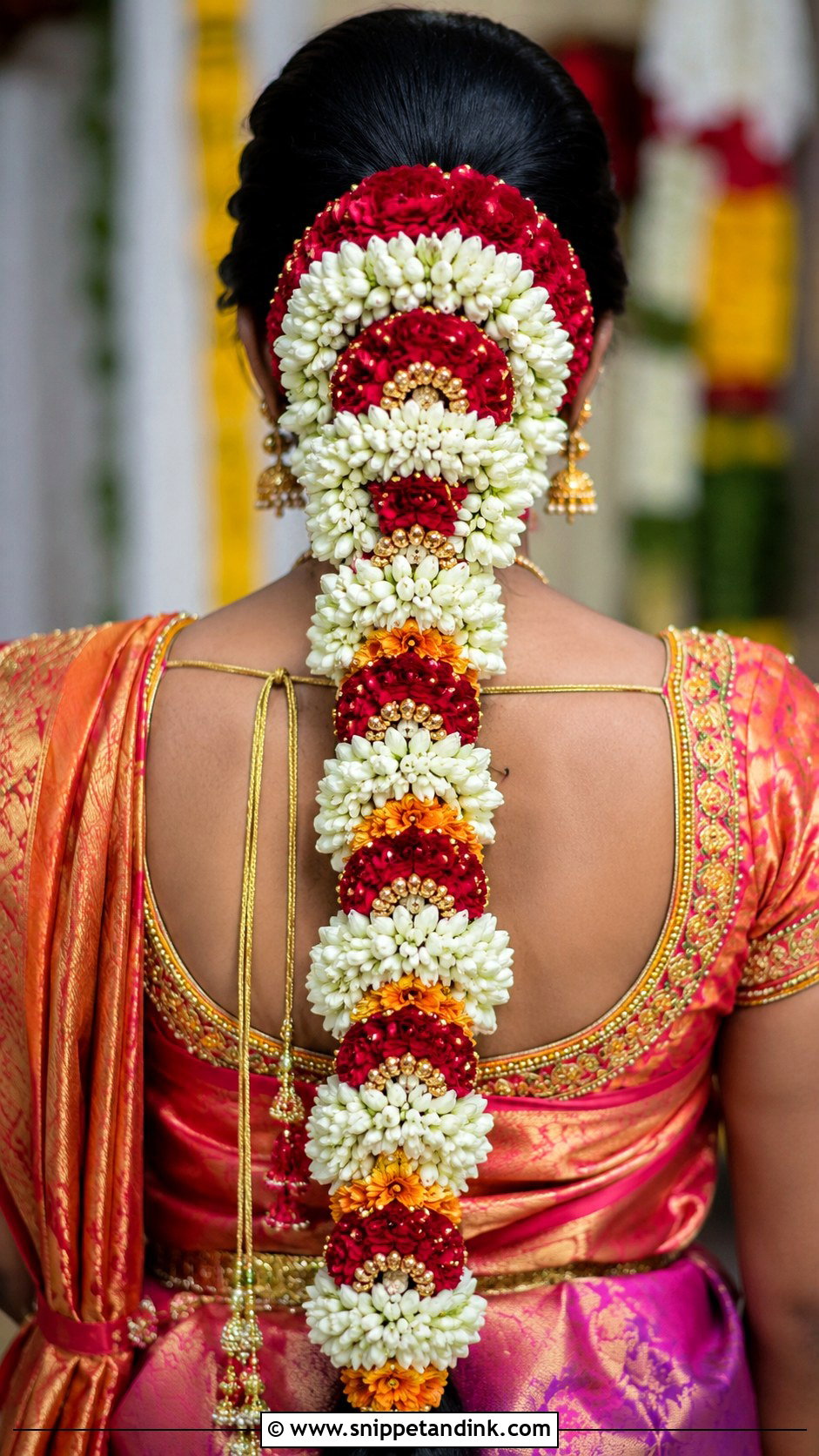
If fresh flowers are what you love most, a South Indian bridal poola jada gives you the most of them. Jasmine, roses, marigolds or whatever is in season is layered from crown to tip, either as a dense trail or as spaced floral rounds with gold in between. Telugu and Tamil brides often make the braid the centrepiece of the whole outfit. I look at the saree border before choosing flower colours, because a red rose panel against a red-and-gold border can merge into one block in photos.
3. South Indian Bridal Bun With Gajra
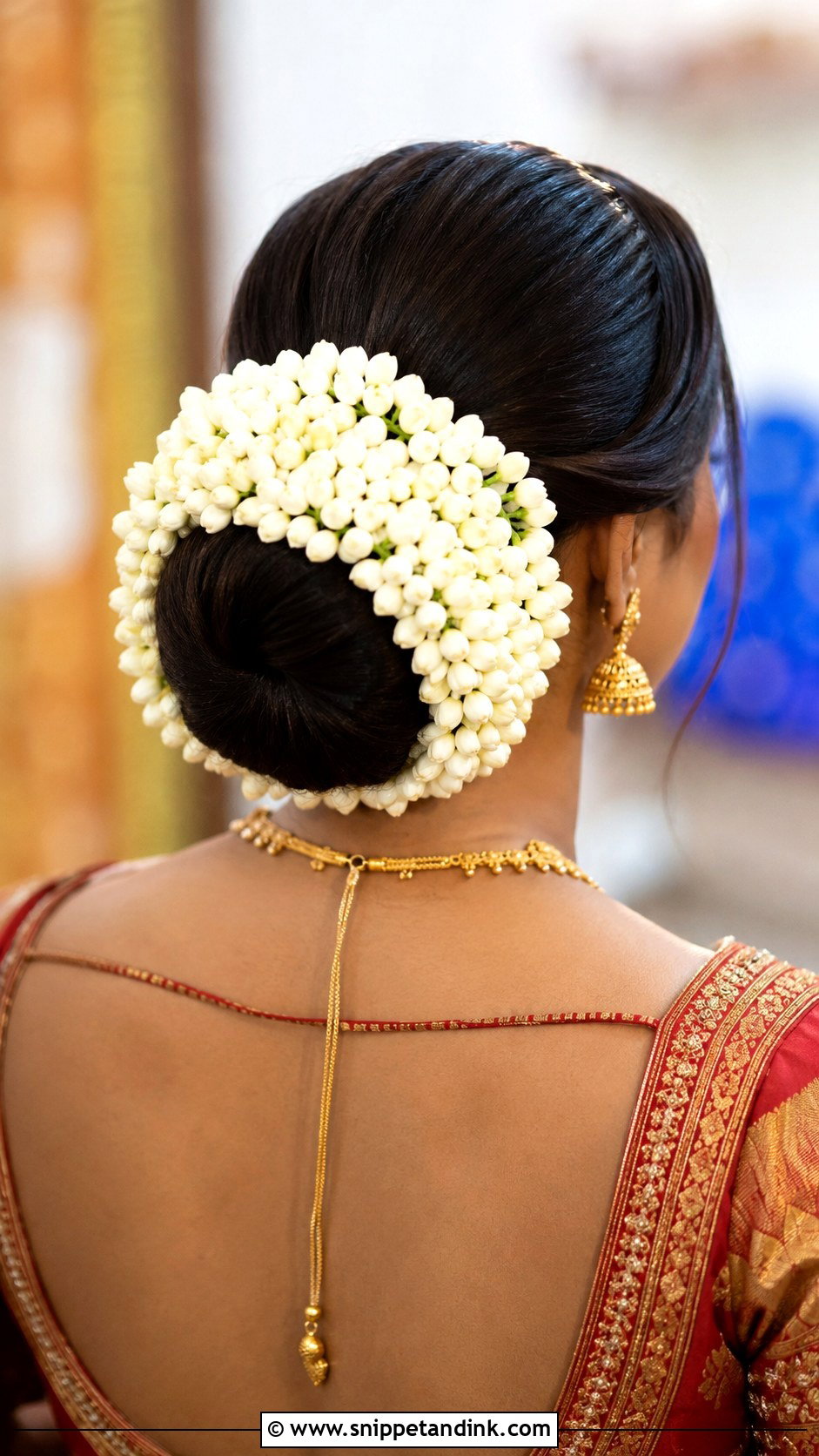
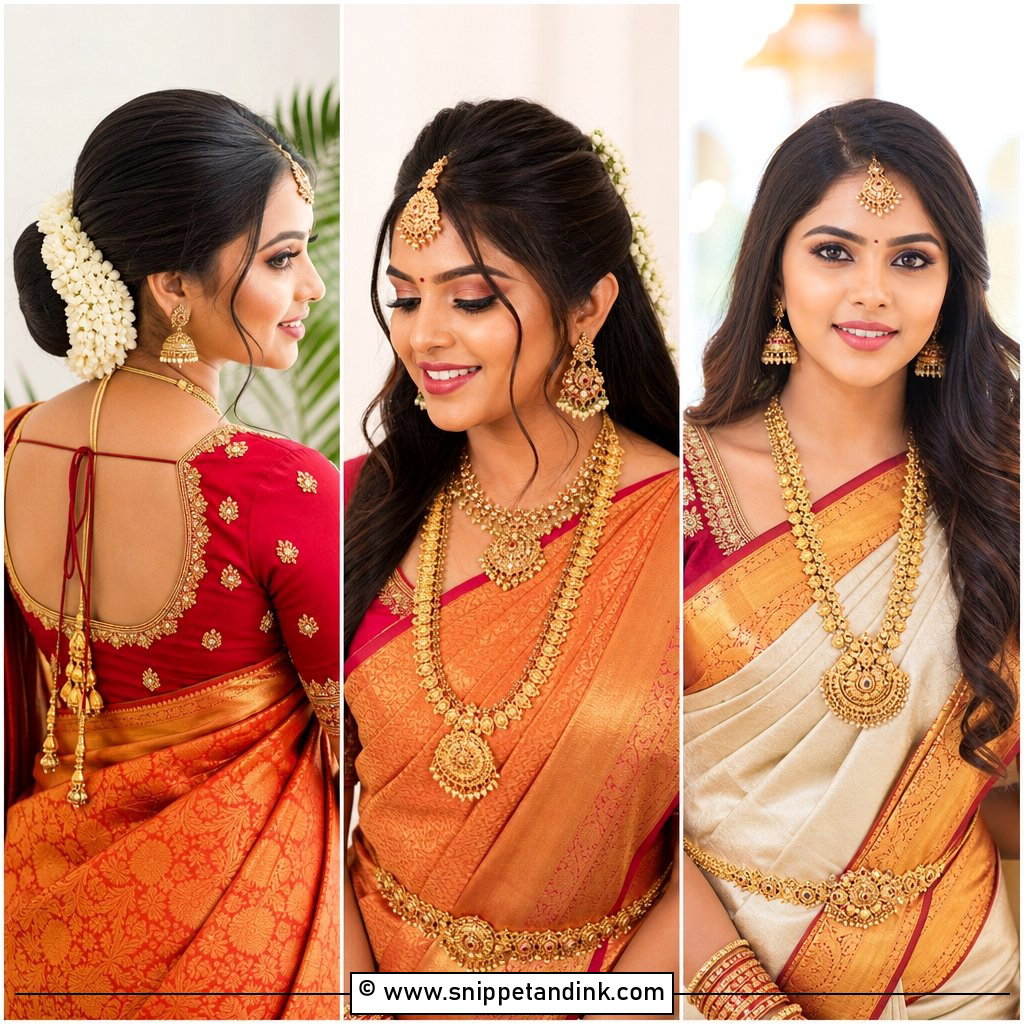
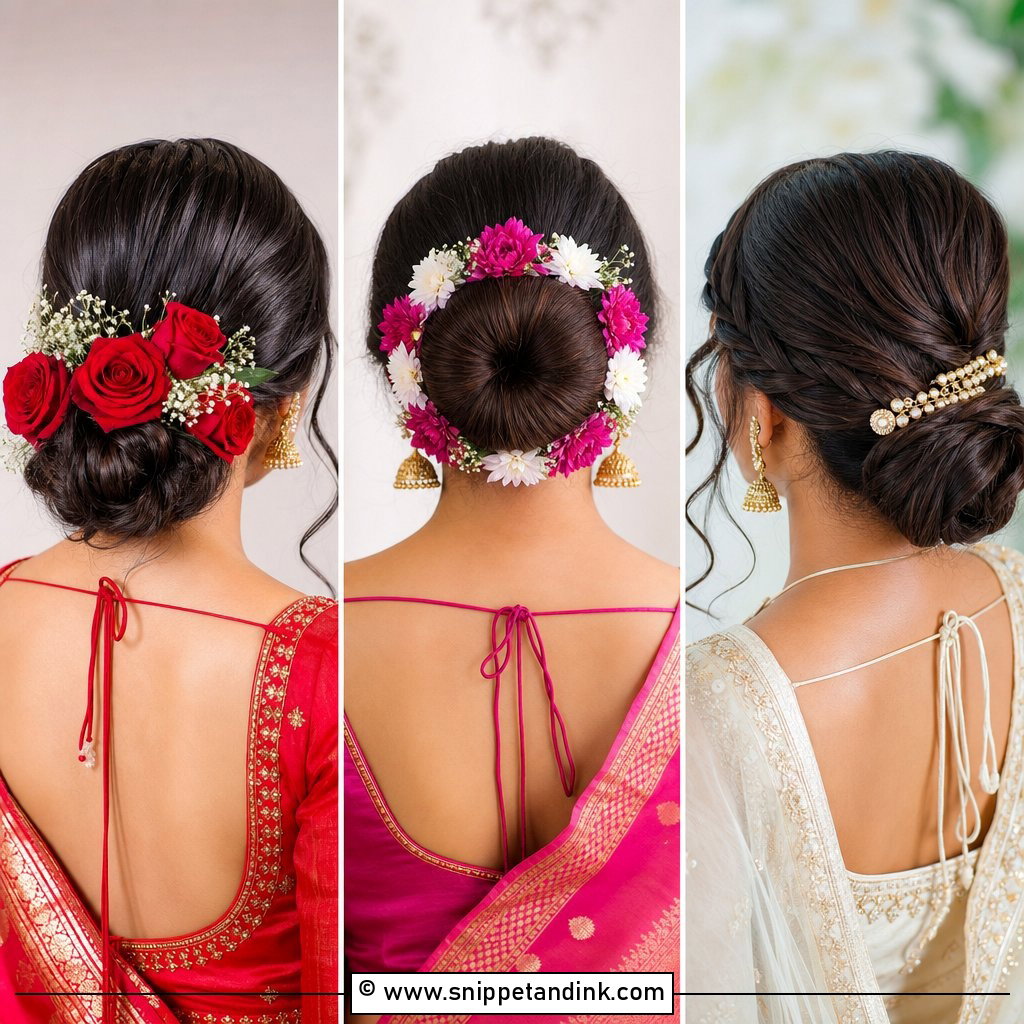
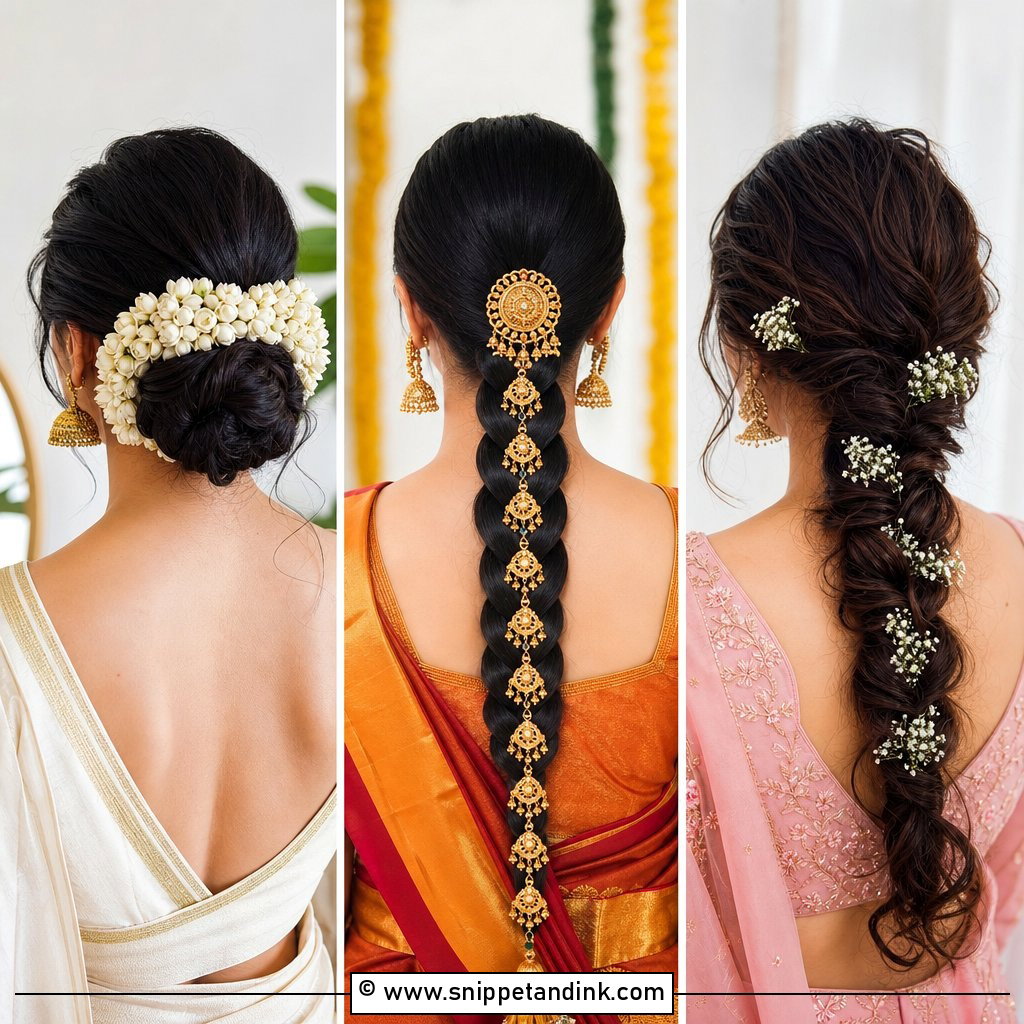
Keeping the neck clear in warm weather is easiest with a South Indian bridal bun with gajra, my most dependable choice. I part the hair neatly, set the bun low or at mid-height, then wrap jasmine around the base. On thin hair I add a small padding donut so the bun stays round instead of flattening against the scalp. Temple jewellery, a maang tikka or a matha patti all work with it. It never dates, which is why so many mothers still request it for their daughters.
4. South Indian Bridal Bun With Temple Jewelry
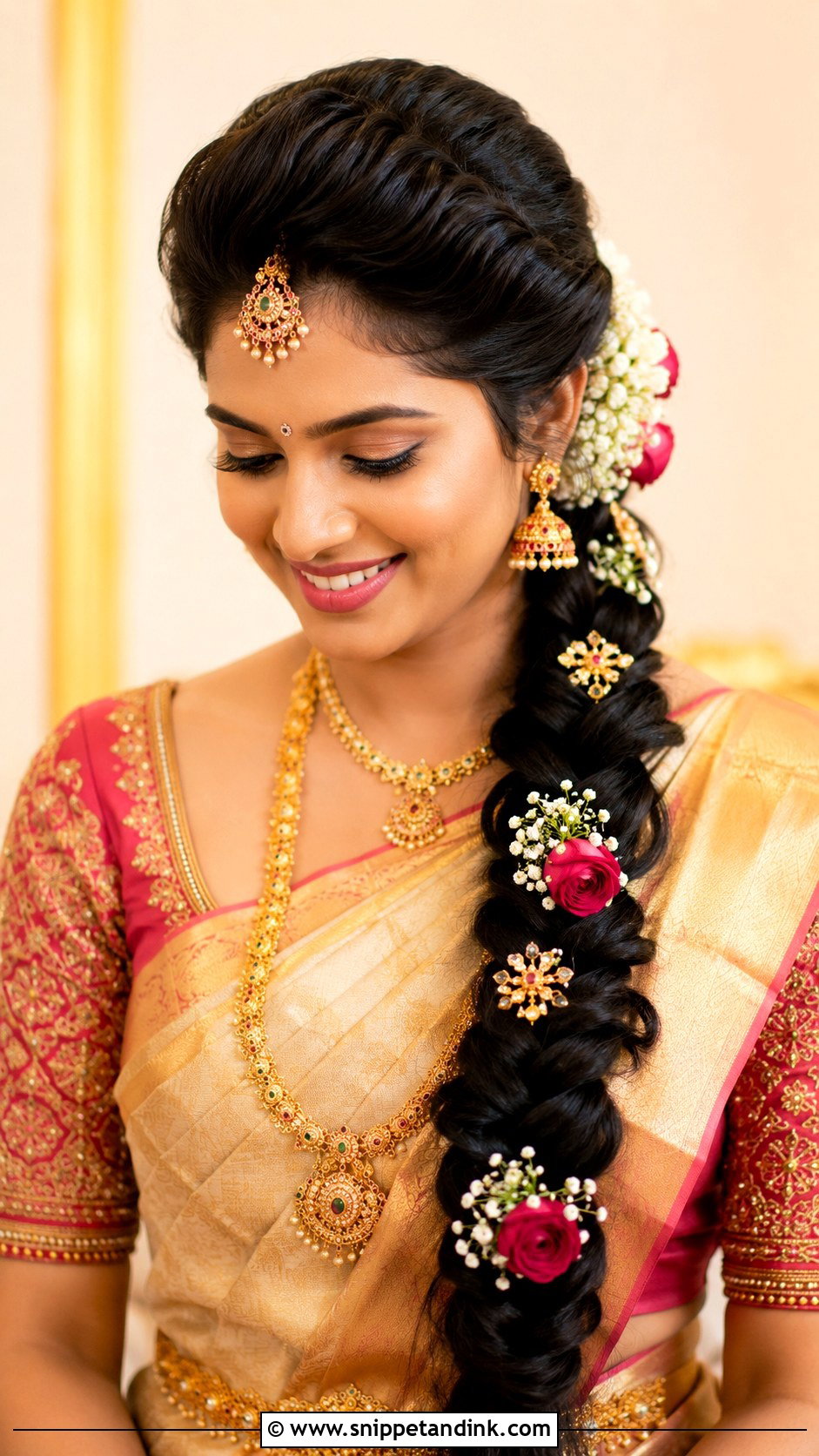
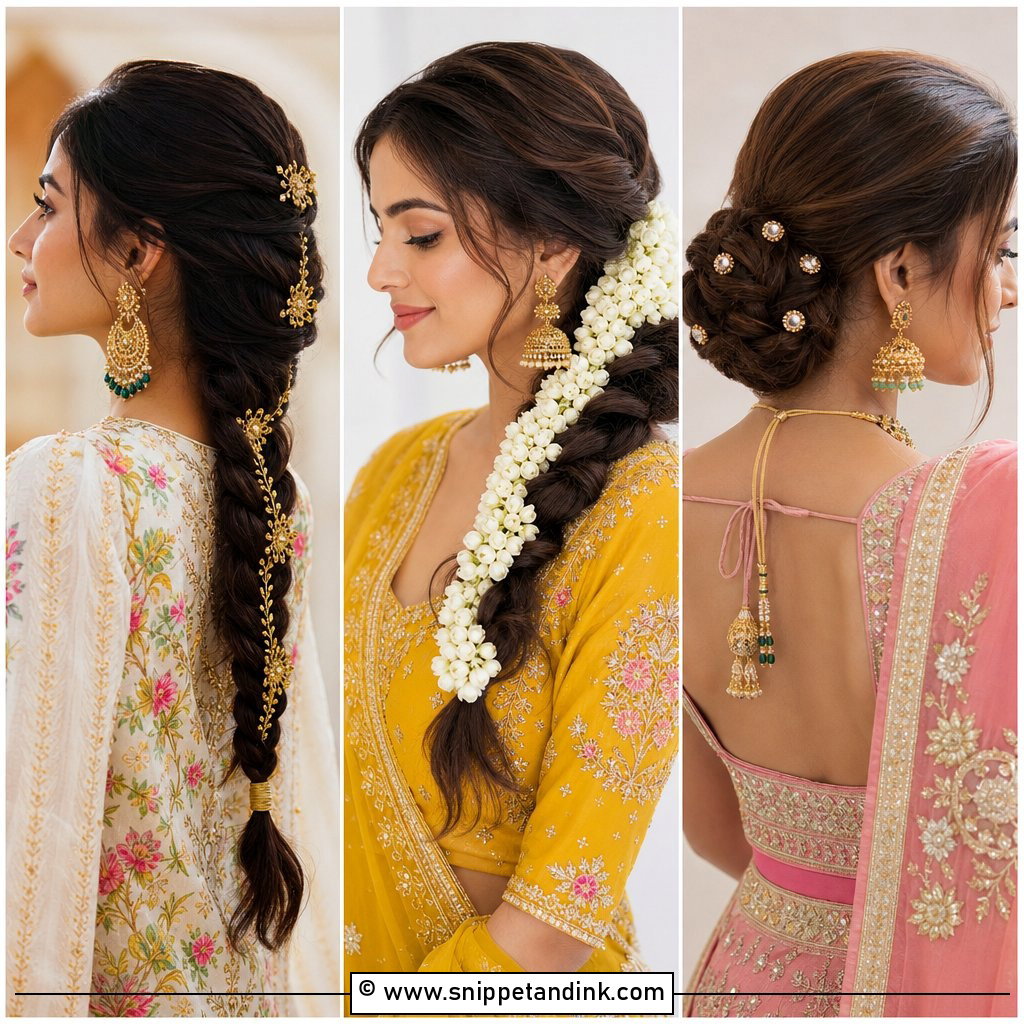
Gold hair chains, sun and moon pins and traditional ornaments placed around the crown and bun give this one a heritage feel suited to the main ceremony. A jasmine or rose gajra softens all that metal. I ask brides to bring every piece of hair jewellery to the trial, because sun and moon pins sit differently on every head shape and I need to find where they balance. Each ornament gets its own anchor pin. If one only hangs off another ornament, it will slide during the first prostration.
5. South Indian Bridal Braid With Jasmine Flowers
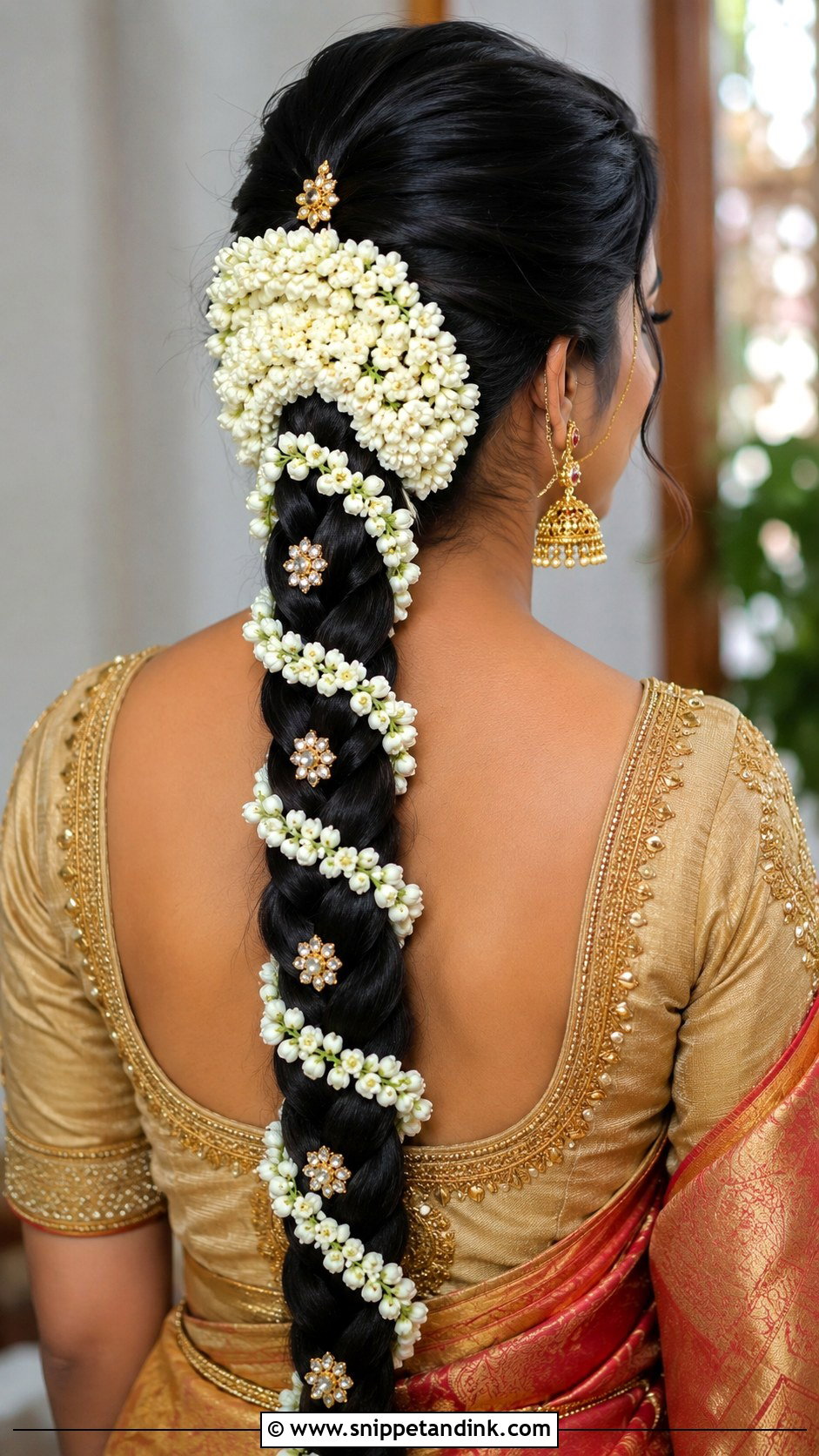
A braid with jasmine flowers gives you tradition with far less weight than a full poola jada. The braid can be thick and smooth, with strings wrapped down its length or pinned on as small clusters. White against dark hair and bright silk is a contrast that never fails. I like it for pre-wedding rituals and temple ceremonies, where the bride is moving a lot. A few gold pins or pearls add detail, but the jasmine is really the point.
6. South Indian Bridal Braid With Gold Accessories
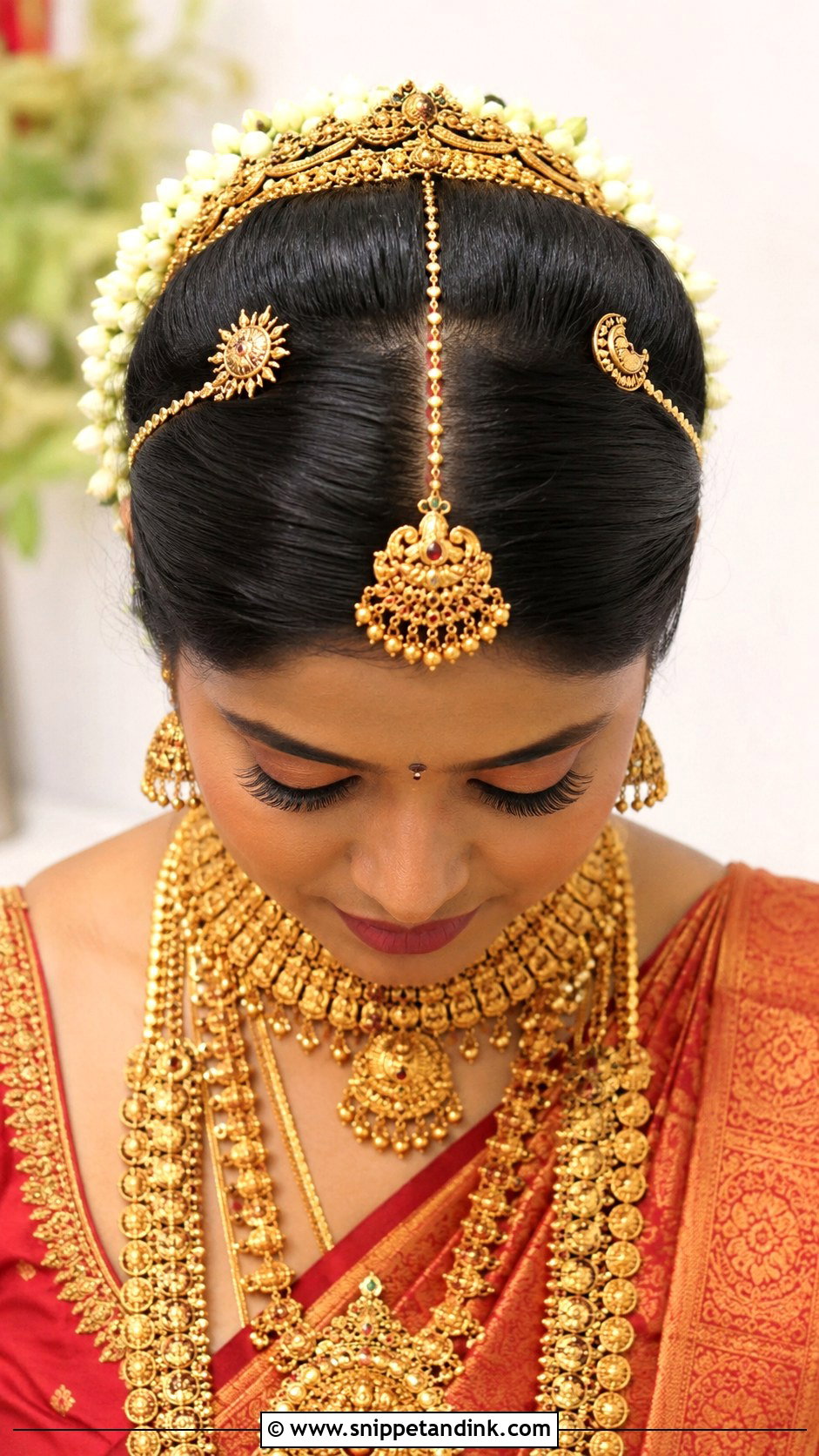
Some brides want sparkle more than scent, and this braid is for them. Gold jada pieces, discs, beads or temple ornaments are spaced evenly from top to bottom, with flowers only near the bun or along the sides. It holds up better than fresh flowers in heat, which matters at an outdoor or summer wedding. I always match the gold tone of the hair pieces to the necklace and earrings. Antique gold next to bright yellow gold looks like two separate sets, and the camera picks it up.
7. South Indian Bridal Kondai Bun
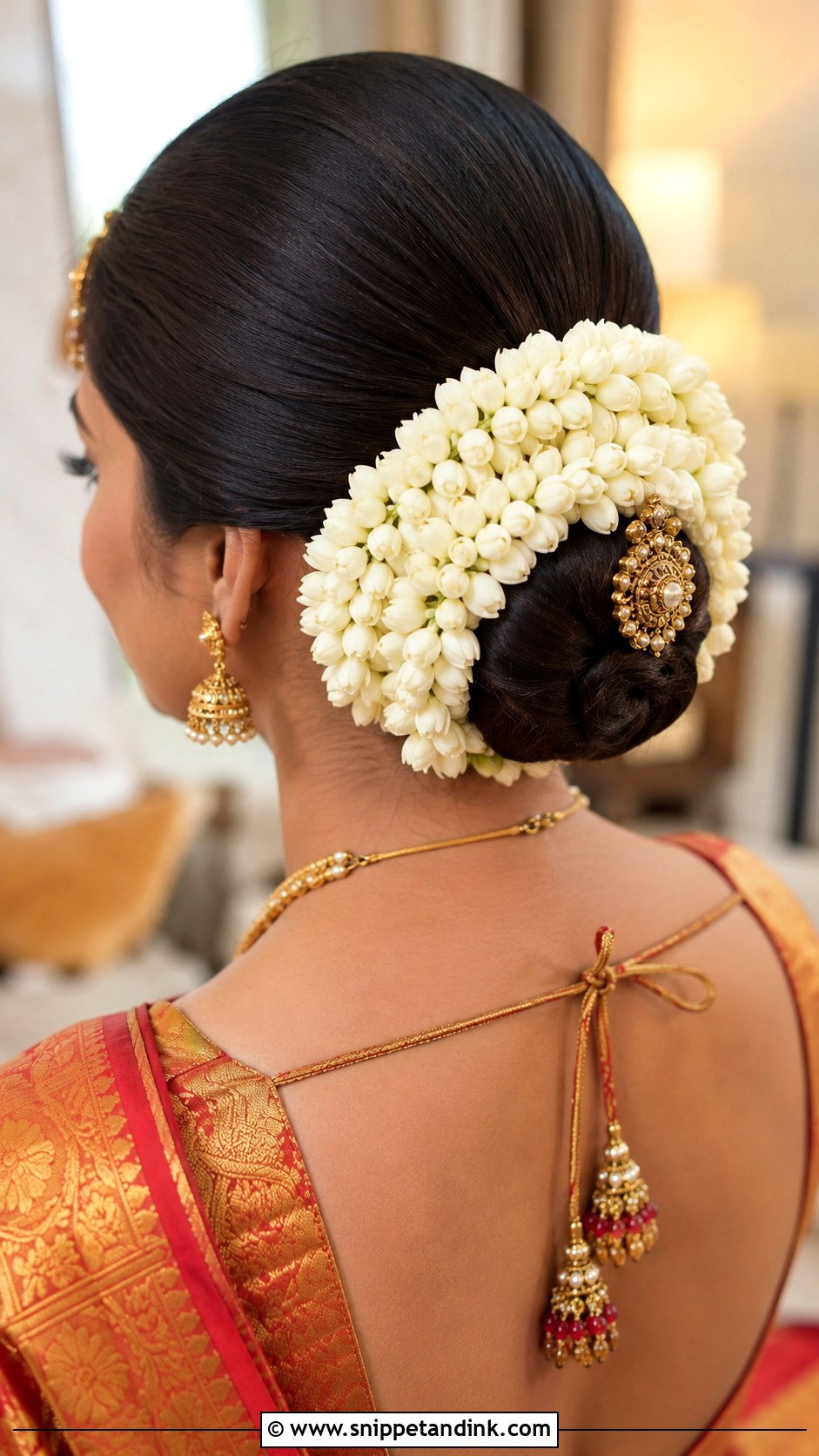
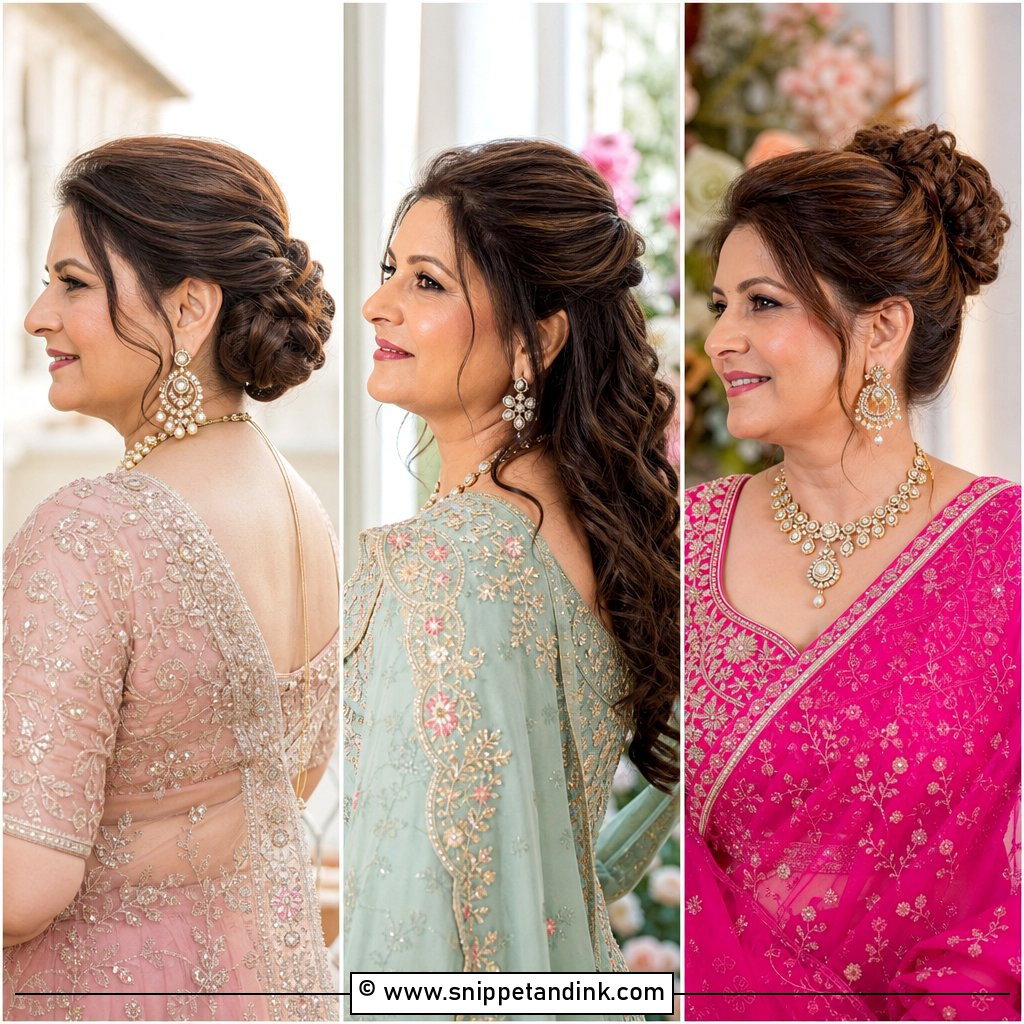
Medium-length hair is where the kondai bun really helps, because it gives a full bridal profile without needing a long braid. The bun sits low or slightly to one side, then gets wrapped with flowers or dressed with gold. Padding or a small extension fills it out when needed. I build it on a firm ponytail base so it stays steady through rituals, photos and a long line of family blessings. Long earrings and strong eye makeup suit it, since the side profile is on show.
8. South Indian Bridal Side Braid
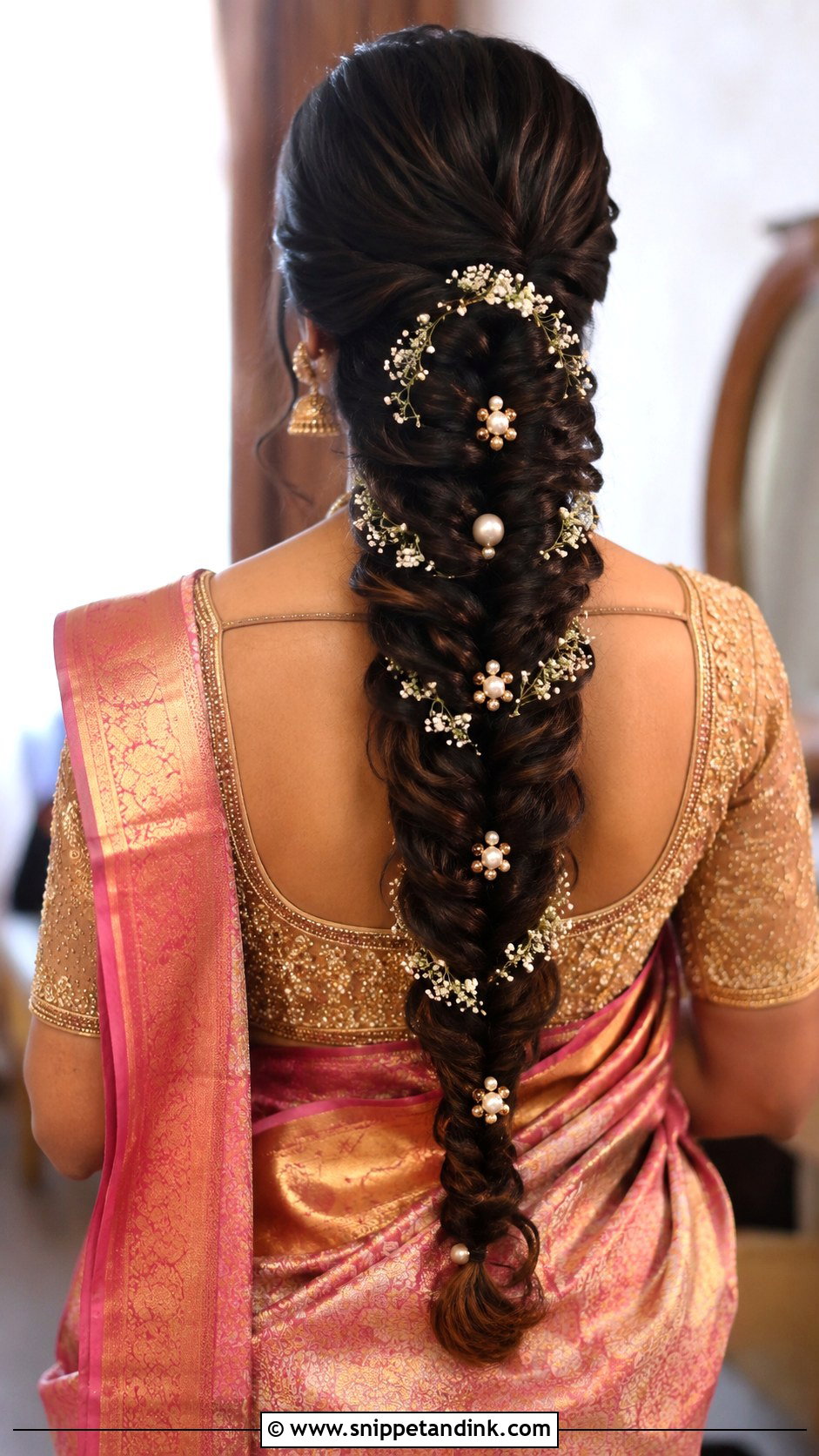
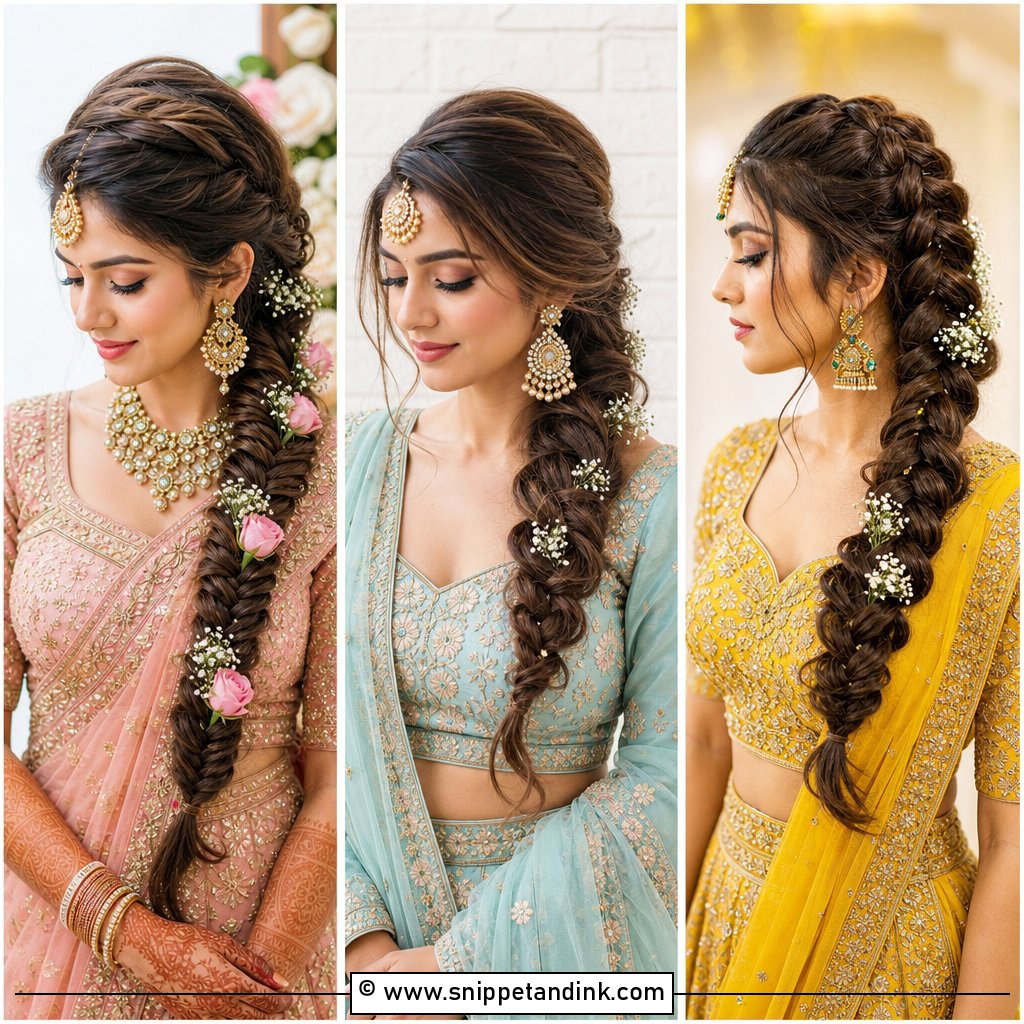
Bringing the braid over one shoulder lets the flowers, gold and braid texture show from the front, so you appear in portraits without turning around. Jasmine, roses, pearls or temple jewellery can all go on it. The crown needs to stay smooth and lifted, otherwise the side sweep looks flat. A front braid also rubs against the pallu and necklace whenever you move, so I keep the decoration slim near the shoulder. Engagements, receptions and smaller functions are where I’d use it most.
9. South Indian Bridal Fishtail Braid
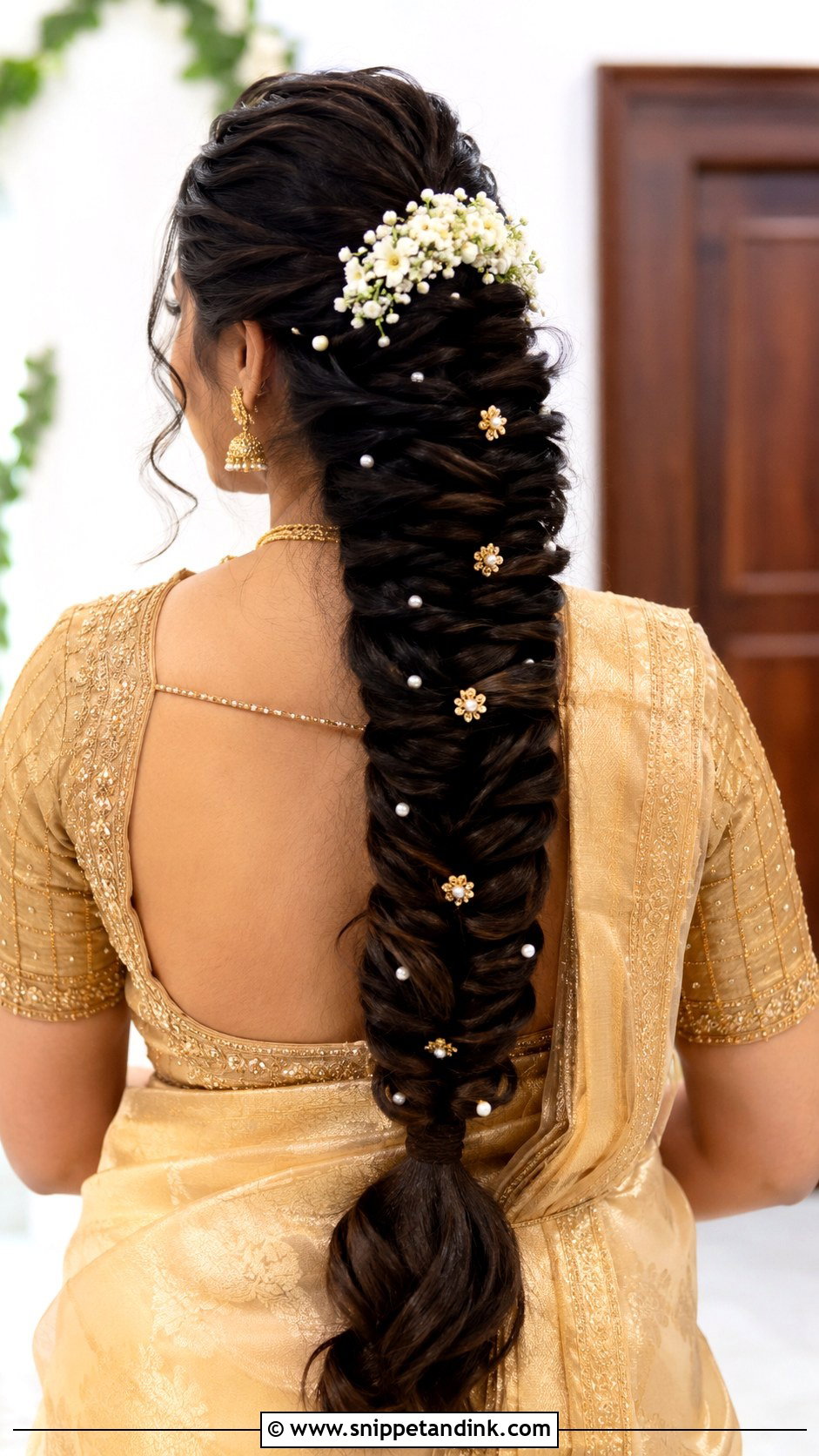
Fishtail braids show more texture than a three-strand plait, so they read as full and intricate in photos. Jasmine, tiny roses, pearls or gold pins can go through the weave without hiding it. The pattern needs length and some grip; very silky, freshly conditioned hair tends to slip apart, and I’ll use a little texture spray before I start. I keep the crown smooth and pull the braid slightly wide. Too tight and it looks like a rope, too loose and it starts to fray by evening.
10. South Indian Bridal Flower Bun
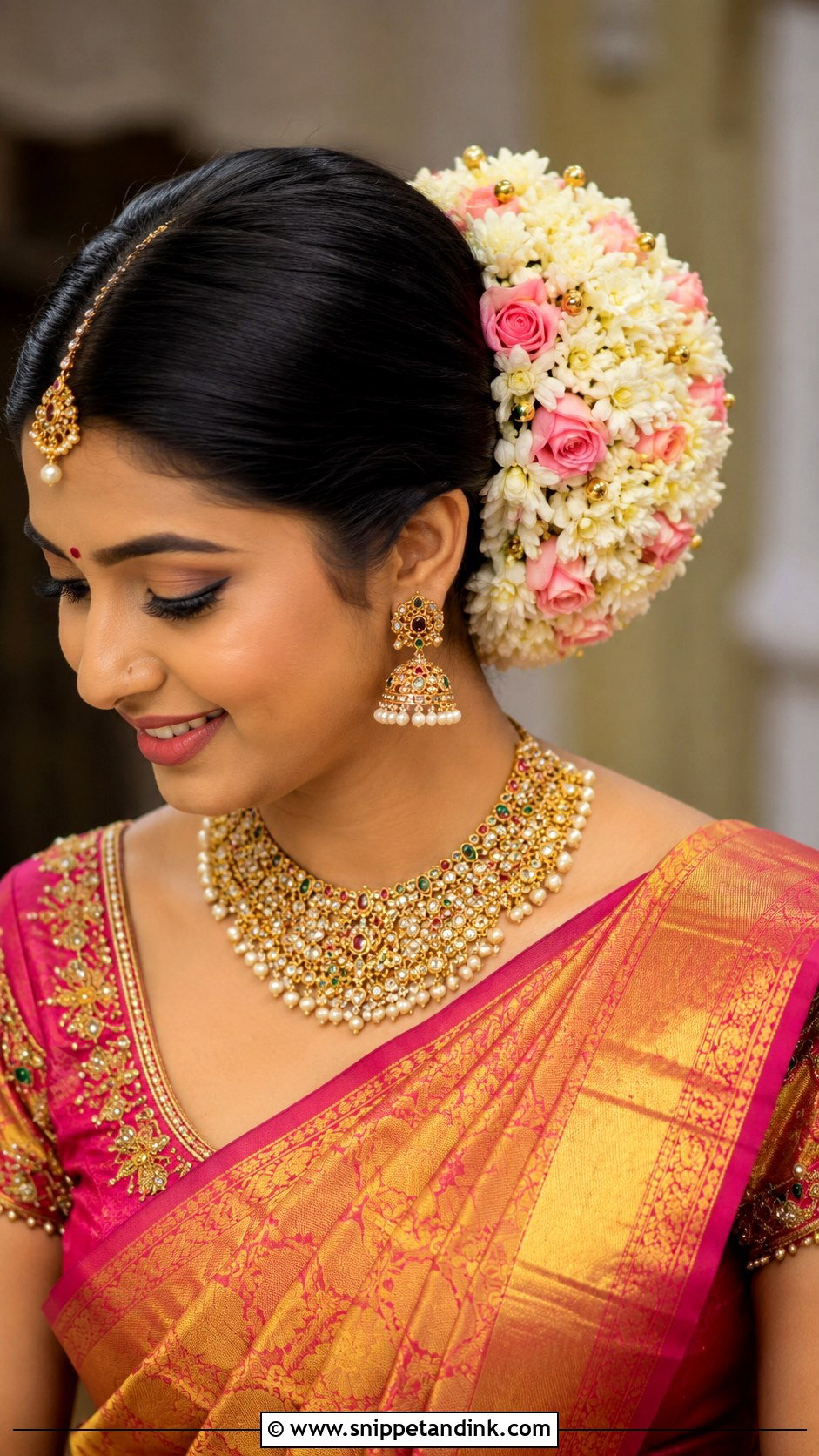
When the flowers are meant to be the main feature, I cover or border the bun completely with jasmine, roses, orchids or a mix that picks up the saree colours. Daylight ceremonies show the colours at their brightest. It is also a good answer for brides who don’t have the hair for a long braid. The thing to manage is balance: a very floral bun needs a sleek front and restrained jewellery, or the whole head starts to look crowded.
11. South Indian Bridal Half Up Hairstyle
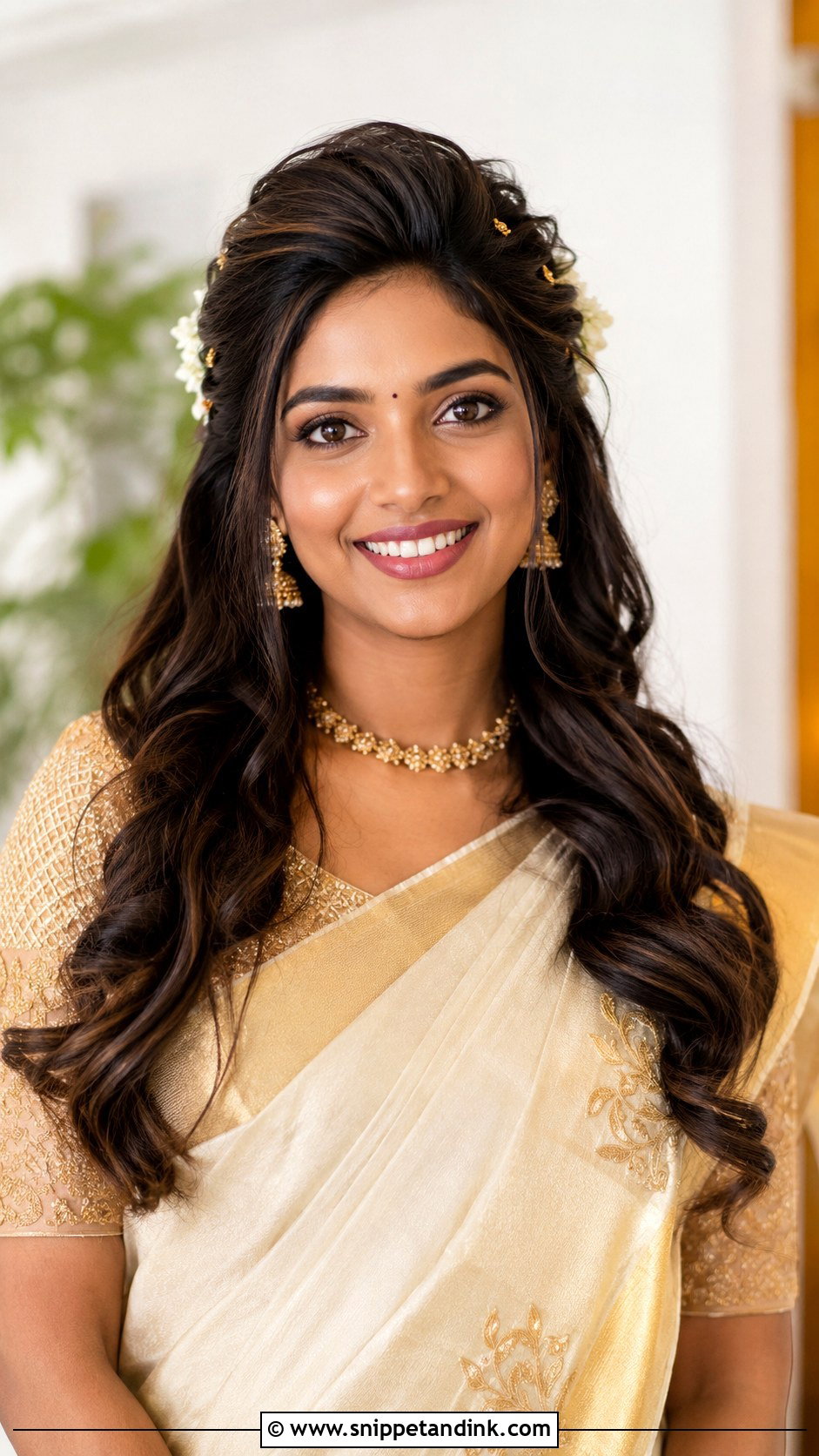
For receptions or pre-wedding events, half up gives a softer look with movement. I pin the top section back with some volume and leave the rest in waves or curls, then add jasmine strings, small gold pins or a fine hair chain. It is less traditional than a jada, though it still sits well with a saree or lehenga. The face stays open, which helps in close-ups. On very fine hair the pinned section can drop by evening, so I back-comb lightly at the base before pinning.
12. South Indian Bridal Loose Curls
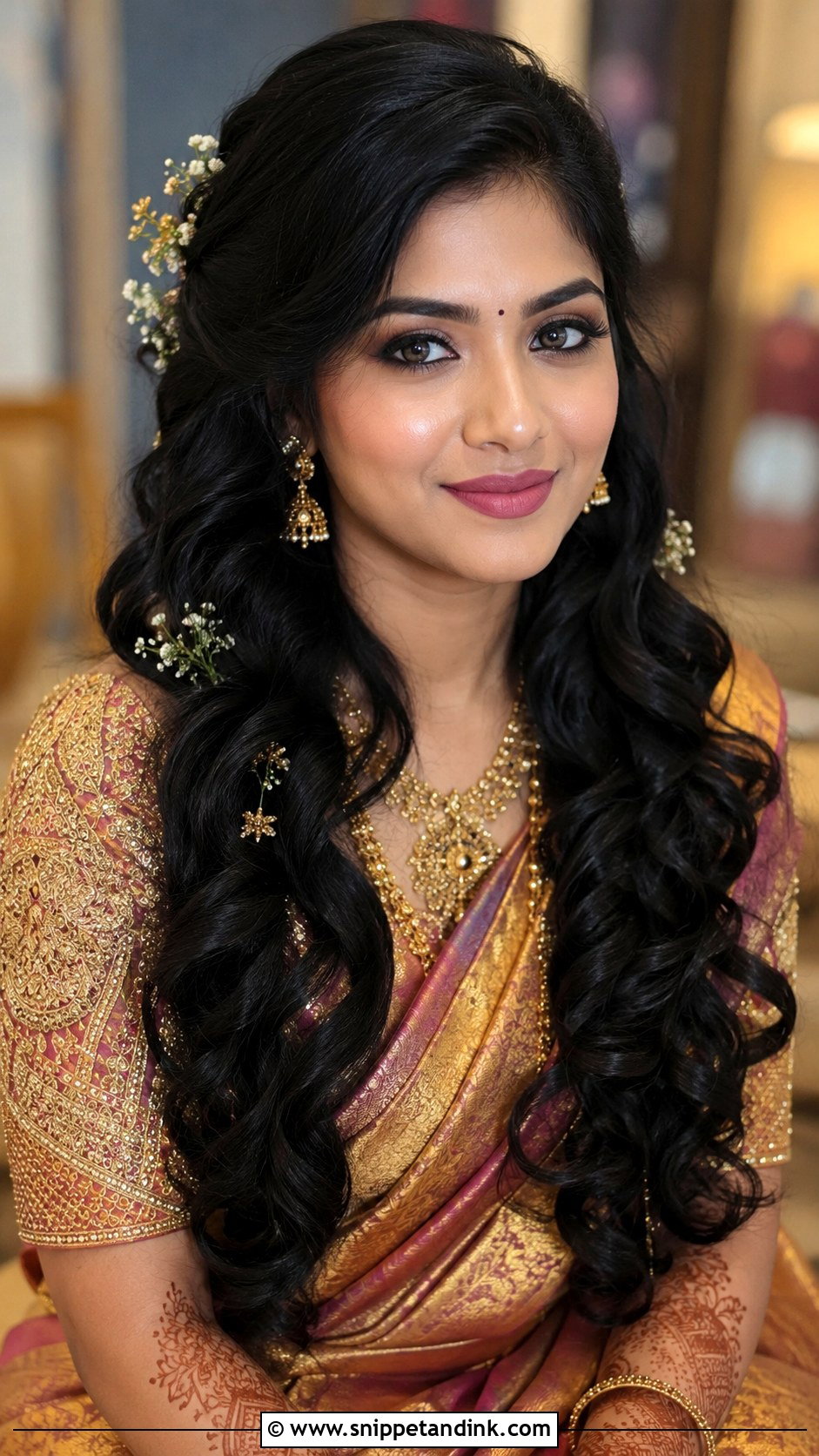
South Indian bridal loose curls are usually what I suggest for a glamorous reception. I curl the hair into soft waves or polished ringlets, then finish with a centre or side part or a pinned crown. Jasmine accents, gold pins or a small maang tikka keep a traditional thread through the look. Humidity is the real enemy here. I set each curl and let it cool pinned up before brushing it out, and a strong-hold spray goes on in layers, not all at the end.
13. South Indian Bridal Messy Bun
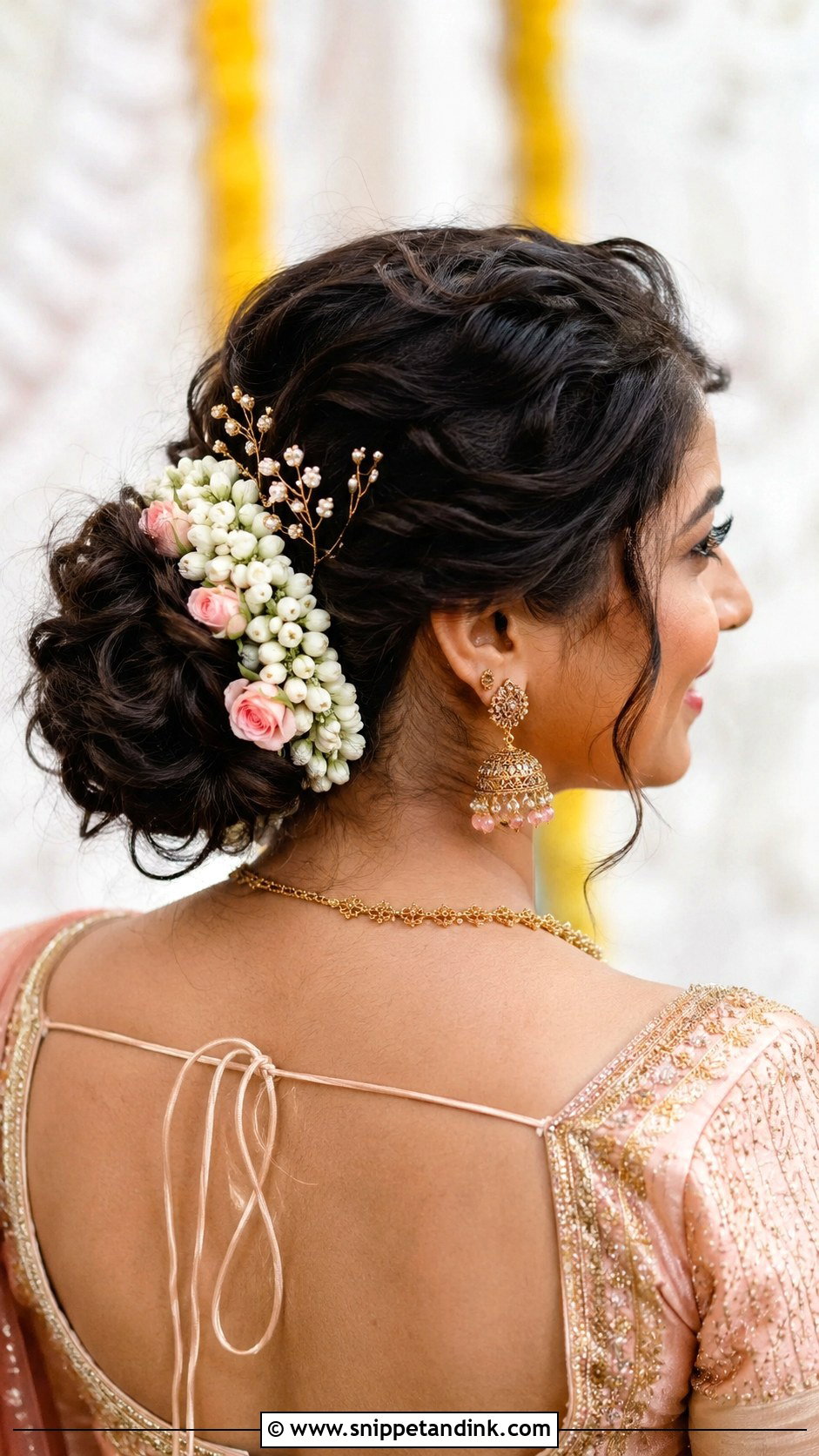
A messy bun is not the same as a careless one. I build gentle volume and soft texture, pull out a few controlled face-framing pieces, then add jasmine gajra, roses or gold pins around the bun. Evening events, receptions and engagements are where it fits. Every loose piece should be placed on purpose and pinned underneath, otherwise it drifts into an unfinished look by the third hour of photos. On very straight hair I curl the lengths first so the texture actually holds.
14. South Indian Bridal Braid With Roses
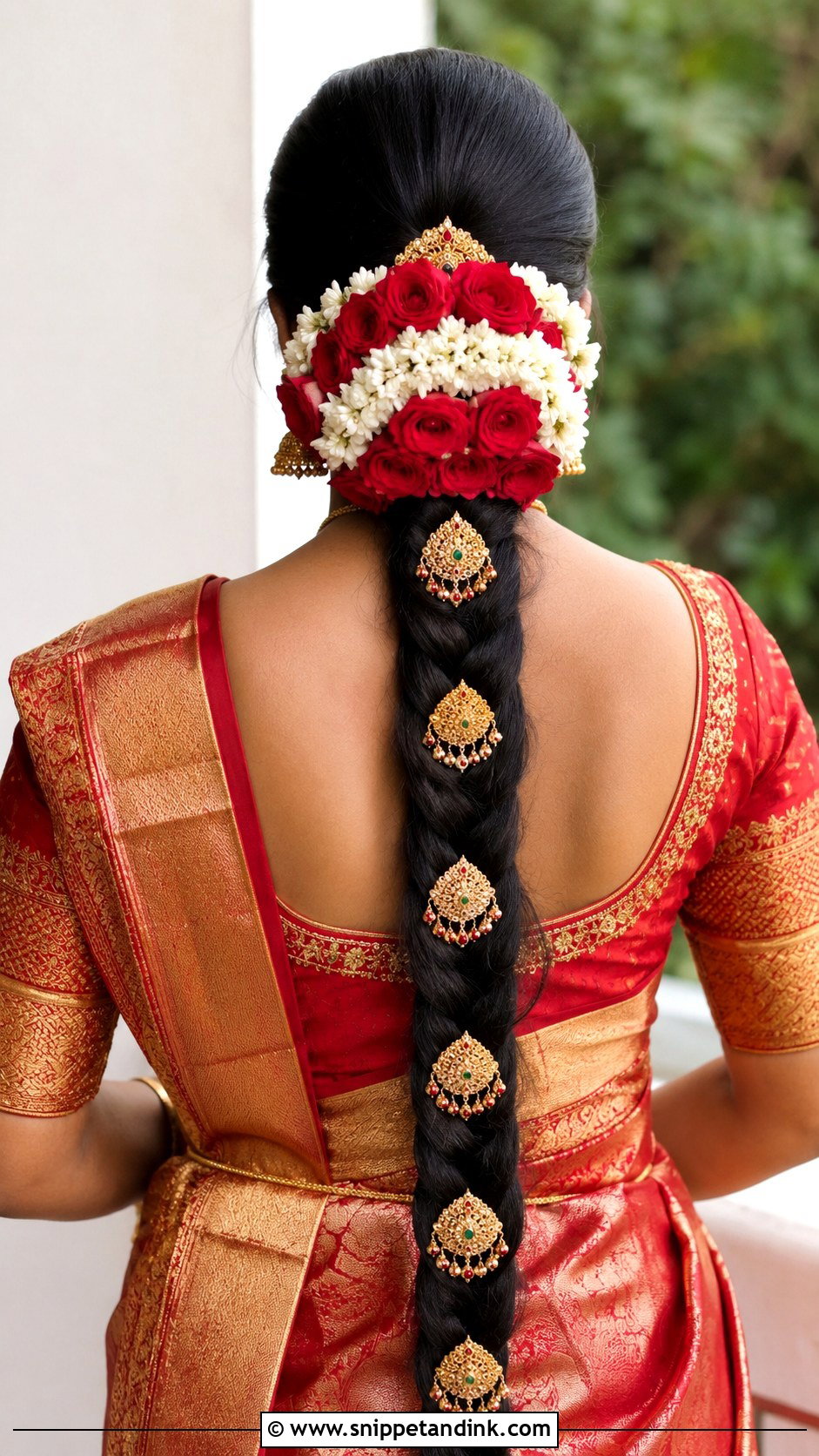
Red, pink or peach roses with jasmine is the classic South Indian pairing, and it brings real colour to the braid. I can cover the braid fully, decorate it in sections, or finish with rose clusters near the bun and the end. Red, green, gold and magenta silks all suit it, and it ties in easily with the bouquet or mandap flowers. Firm, freshly opened roses are a must. Soft ones bruise under the pins, and the brown edges show by the end of the ceremony.
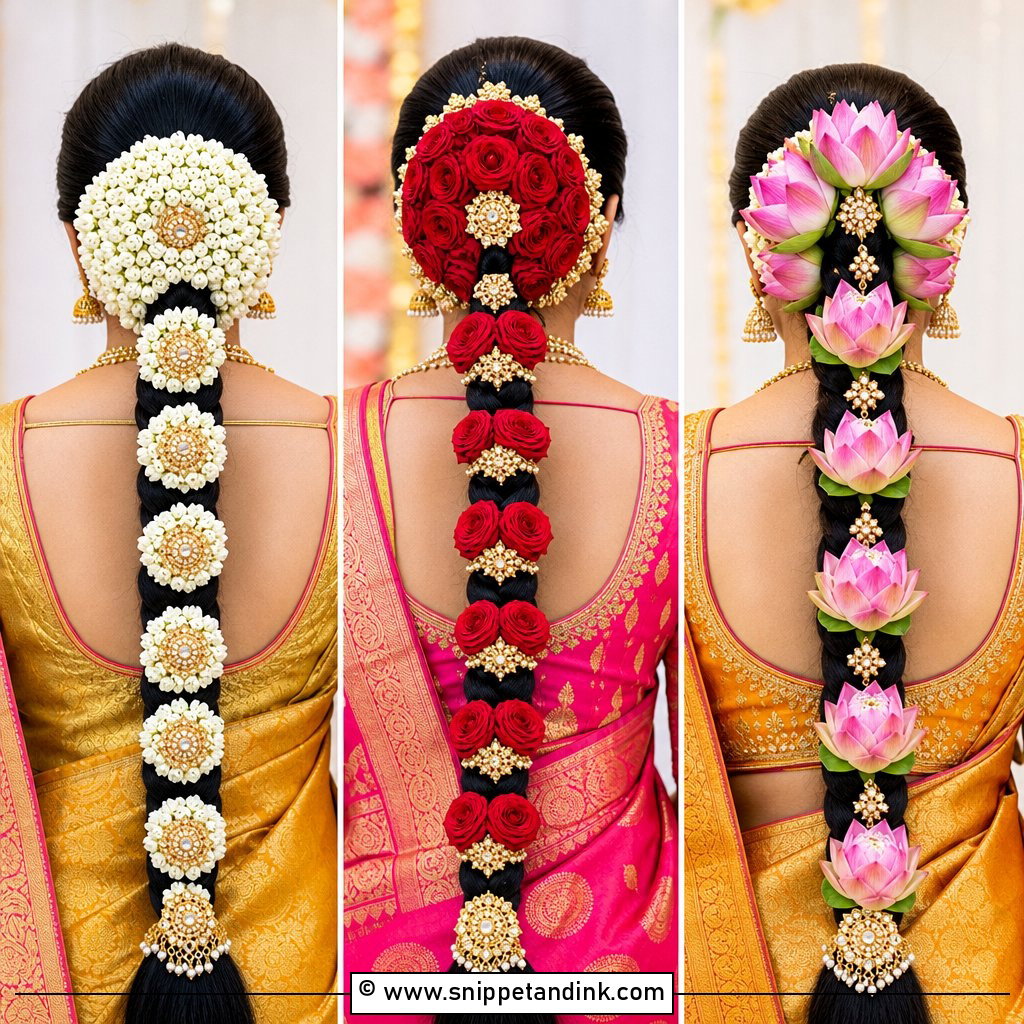
15. South Indian Bridal Reception Hairstyle
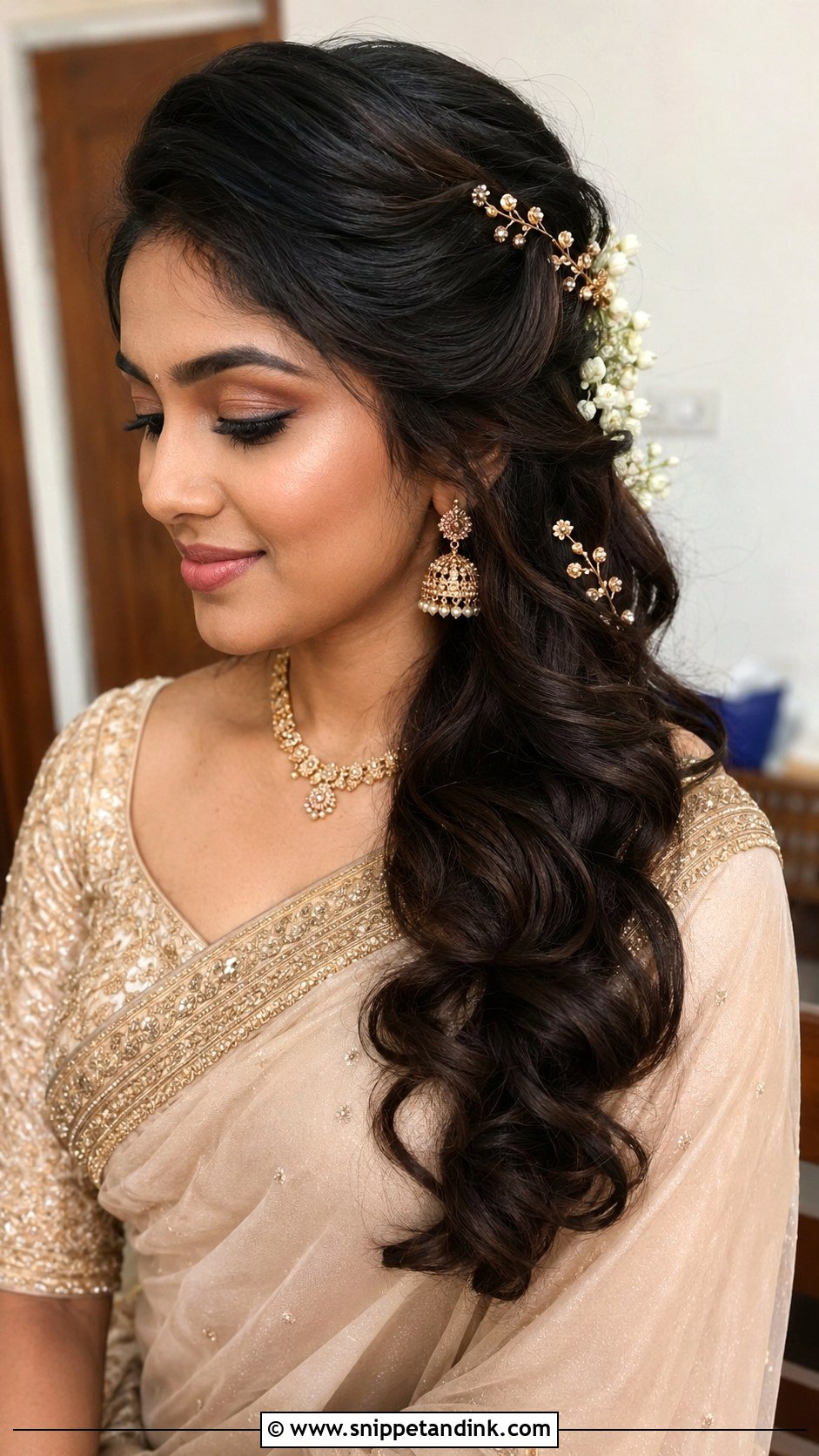
After a long ceremony, the reception is when brides usually let their personal style through. Soft curls, a side braid, a textured bun or half up with good accessories are the usual picks, and jasmine, gold clips, pearls or temple pins keep a South Indian thread. Comfort matters now; the bride has often been in hair for twelve hours or more. Reception lighting and close-up portraits show every pin and stray curl, so I always leave time to fully restyle rather than just add flowers to the morning look.
Coastal Humidity, Sweat and Curls That Drop by Evening
Humid air is why so many South Indian brides stay with braids and buns, and it’s a sensible instinct. Curls and blow-dried volume absorb moisture and fall, wavy hair frizzes, and the hairline gets damp under a tikka and heavy lights. A firmly braided style barely notices the weather.
If you want loose hair for the reception anyway, these are the steps that give it the best chance:
- Start on completely dry hair. Even slight dampness at the roots undoes a curl within an hour.
- Curl in small sections and pin each one up while it cools, then brush out just before you leave.
- Spray in light layers as I go rather than one heavy coat at the end, which turns stiff and flakes.
- Keep a small comb, a few pins and blotting papers with someone in the family for the hairline during photos.
- If the venue is outdoors and the air is heavy, consider a soft side braid or half up instead. You’ll still have movement without the risk of flat curls.
Which Ceremony Is Your Hair Really Built For?
A traditional jada with flowers and gold will suit one bride perfectly and feel like a costume on another. A polished bun, soft curls or a modern reception style can mean just as much. I start every consultation with the schedule, the weather and the hair you actually have, then look at the saree and jewellery. Plan the hair as part of the whole outfit, not as a separate detail. Fresh flowers, strong pins, well-matched extensions and an honest trial matter far more than any single photo you bring along.
You'll Like These Ideas:






Leave a Reply