
Baroque bridal style borrows from seventeenth and early eighteenth-century court dress: corset bodices, sculpted skirts, brocade, heavy lace, pearls, gold thread, long sleeves and sweeping trains. Done well, it looks regal rather than dated. Done badly, it looks like a costume hire. The difference is almost always restraint. When I style an ornate gown, I pick the one or two details that carry the dress and quiet everything around them, from the earrings to the hair. Below are 25 Baroque-inspired dresses, each with what I’d watch for when you try it on.
Brocade and Beading Weigh More Than the Hanger Suggests
Ornate gowns are heavy. A full brocade ball gown with its petticoat, or a densely beaded sheath, can weigh several kilos, and you carry that all day. Where the weight hangs makes the difference. A well-built gown has an internal waist stay, a strong ribbon fastened around your waist inside the dress, so the skirt rests on your hips instead of dragging from your shoulders.
My first try-on checks for a heavy gown
- Walk ten steps and turn. If the skirt keeps swinging after you stop, it’s heavier than it looks.
- Sit on a hard chair for five minutes and notice where the boning presses on ribs or hips.
- Lift your arms as if hugging someone taller than you, and watch whether the neckline shifts.
- Step up onto a stair. Altar steps and kerbs are where heavy hems trip people.
- Ask to see the inside. No waist stay and thin straps means the gown will hang off your shoulders by evening.
None of this rules a gown out. It simply tells your seamstress what needs reinforcing.
1. Baroque Ball Gown Wedding Dress
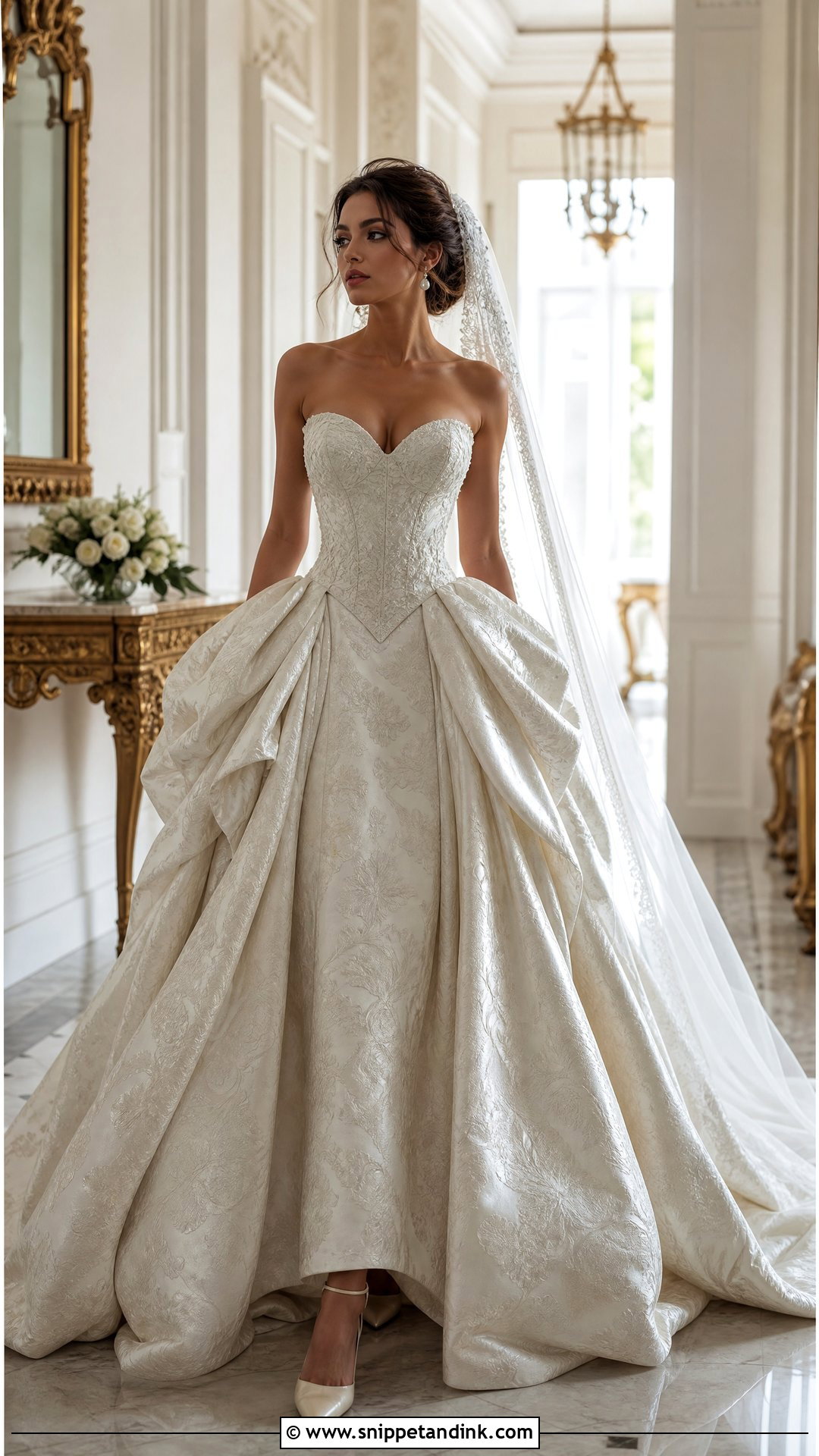
For a grand entrance, the ball gown is the obvious route, and the bodice decides whether it works. A structured corset bodice has to carry the full skirt, so I check that the boning sits flat on the ribs and doesn’t bow out when the bride bends. Brocade, jacquard, mikado or layered satin hold the volume best, and ornate floral patterns, pearl beading or metallic thread mean you barely need accessories. A sweetheart or square neckline balances the width of the skirt. A long veil, pearl drops, pointed satin heels and a soft bouquet of ivory roses or cream peonies are enough.
2. Baroque Corset Wedding Dress
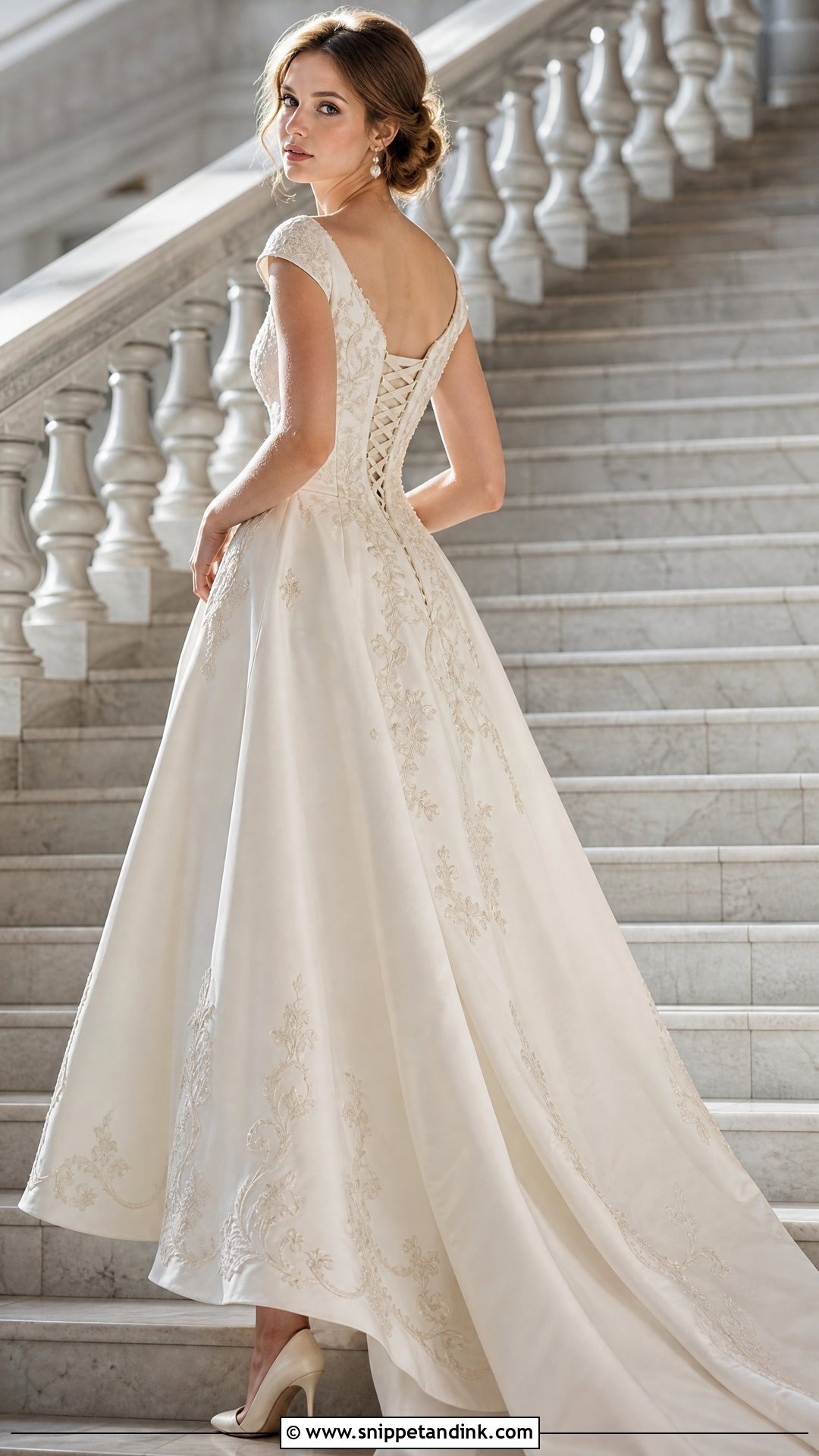
The corset is the backbone of this whole style, and it can be shown off with exposed boning, a lace overlay or full embroidery. Pair it with a full skirt for drama, an A-line for ease, or a slim satin skirt for something leaner. I like lace-up backs on corset gowns for a practical reason: they can be tightened or loosened a little on the morning if your body has changed since the last fitting. A delicate veil, sculptural pearl earrings and simple heels finish it. With a heavily worked bodice, leave the necklace off.
3. Baroque Lace Wedding Dress
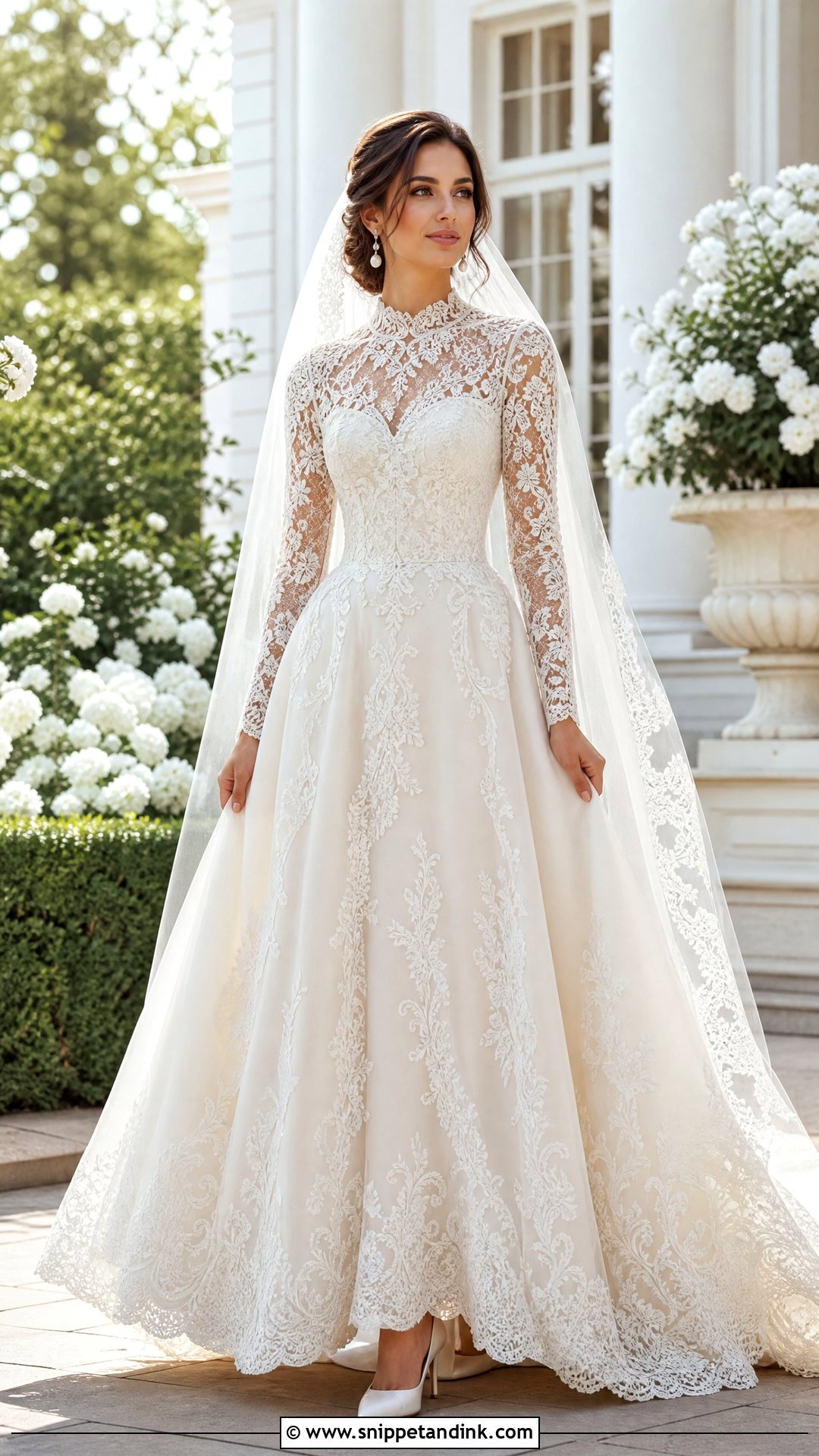
Scale is what makes lace look Baroque. Large floral motifs, scrolls and heavy vintage-style embroidery read as old-world, while tiny fine lace reads as delicate and modern. Long lace sleeves suit cooler months and formal venues. I usually put this kind of lace on a fitted bodice with an A-line skirt, which shapes the waist without the stiffness of a full corset. Pearl earrings, a sheer veil and ivory pumps keep the focus on the pattern, and a low bun or soft waves leave the lace at the shoulders on show.
4. Baroque Gold Embroidery Wedding Dress
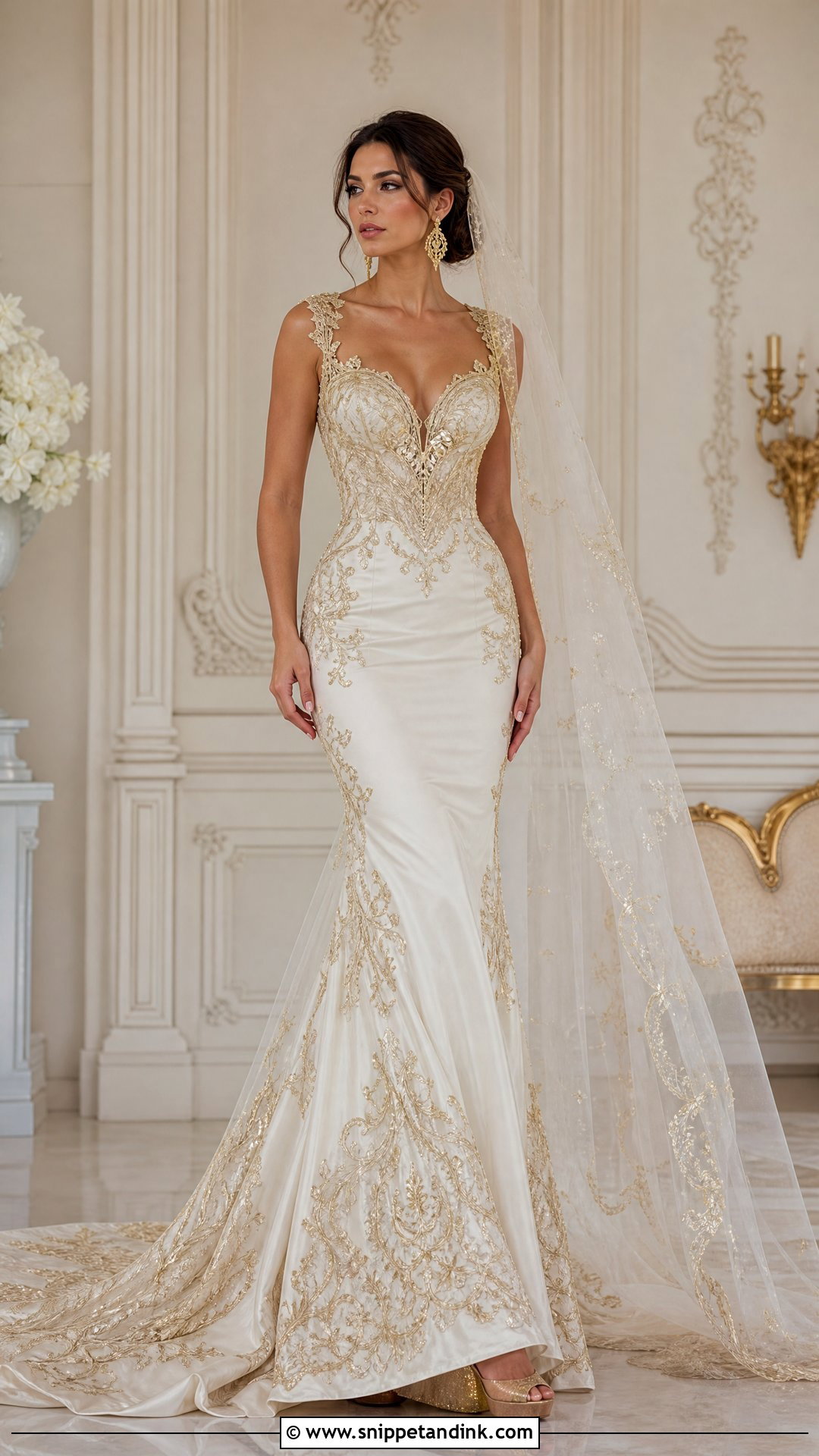
Gold thread warms up a bridal gown more than any other detail. A gold embroidery wedding dress can carry the pattern on the bodice, sleeves, hem or train, and it catches candlelight wonderfully. The base colour matters. Ivory, champagne or a soft nude lining keeps gold looking rich, whereas stark white can make it look brassy. Choose a structured bodice and a flowing skirt so the embroidery stays the focus, then add gold-toned earrings, a plain veil and champagne heels. After that, stop adding shine.
5. Baroque Long Sleeve Wedding Dress
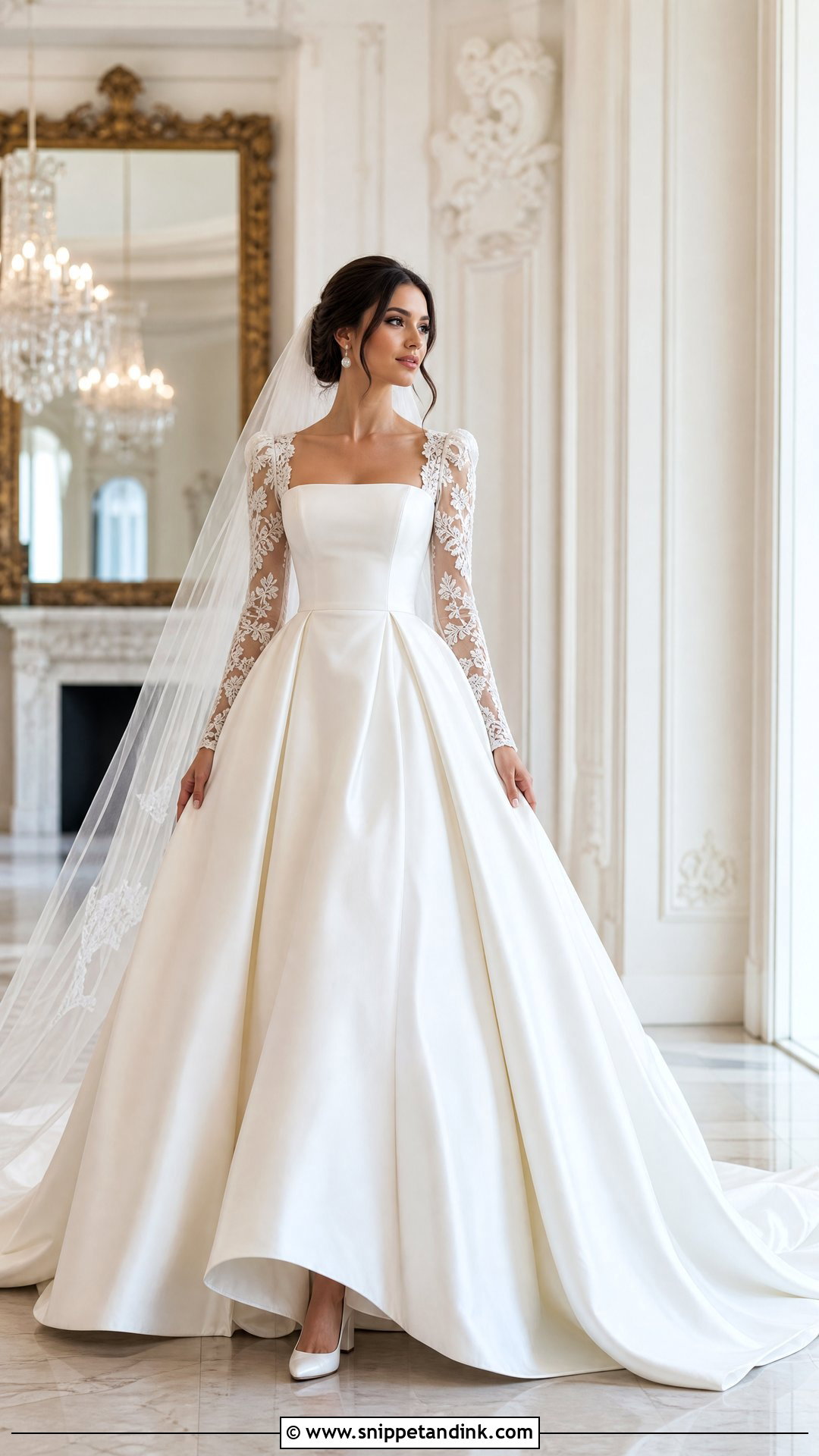
Sleeves change the character of a Baroque gown more than almost any other choice. Sheer lace is soft, fitted satin looks severe, puffed organza feels editorial, and embroidered tulle sits somewhere between them. High, square and off-the-shoulder necklines all take a long sleeve. Before ordering, I have brides lift their arms over their heads in the sample, because a fitted sleeve set into a tight armhole can stop you hugging anyone properly. Add a long veil and closed-toe heels, and leave bracelets off so the cuff detail stays clear.
6. Baroque Off Shoulder Wedding Dress
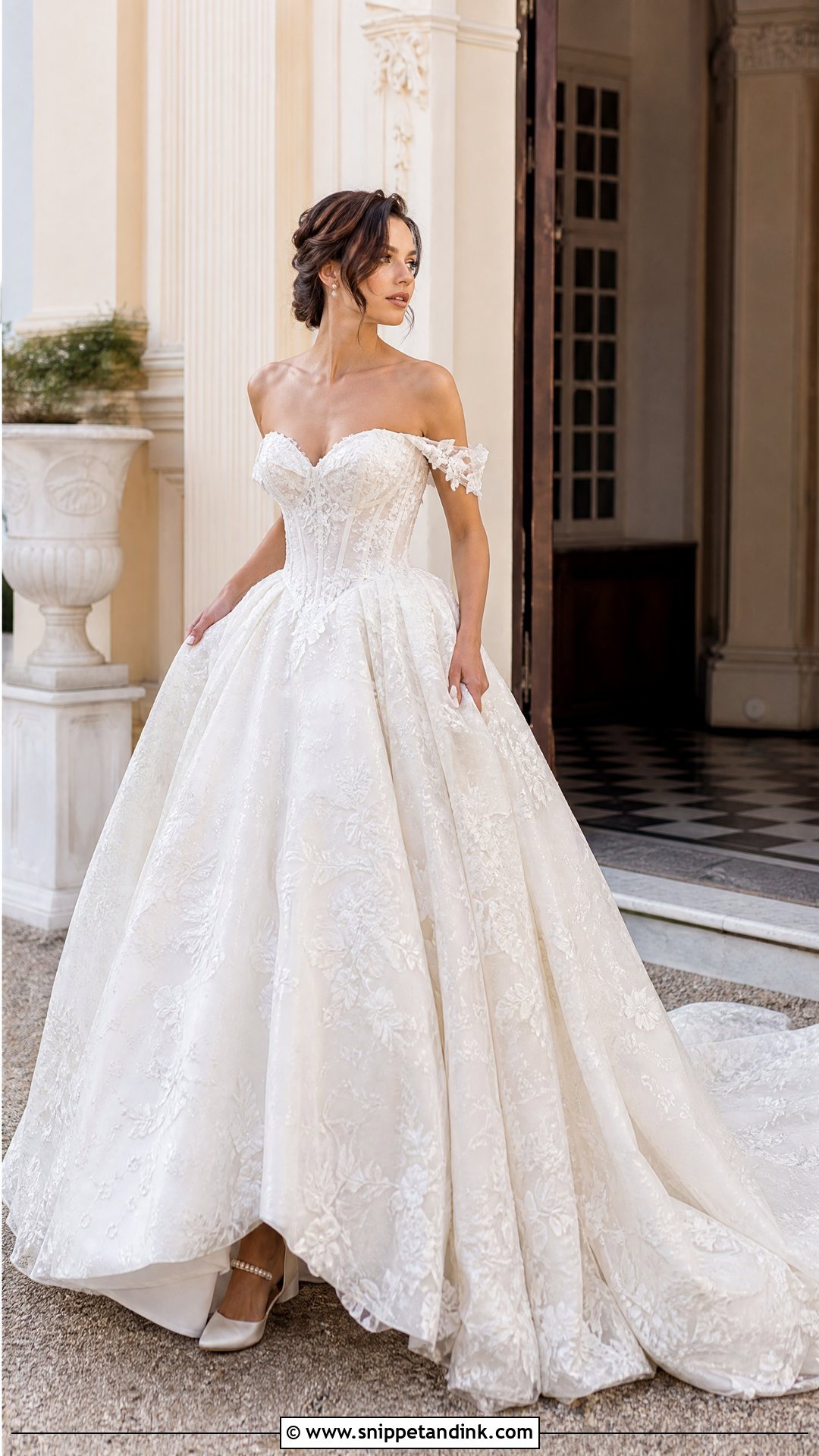
An off-shoulder line softens all that ornament around the face. It sits well on a corset bodice with lace appliqué and either a full or fitted skirt, in embroidered tulle, satin or brocade. The collarbones become the jewelry, so pearl studs are plenty. The practical issue is staying power. An off-shoulder band needs to be anchored to the boned bodice, otherwise the weight of a heavy skirt drags it down through the evening. A soft updo, a cathedral veil if the train is long, and ivory satin pumps or embellished heels finish it for a formal indoor reception.
7. Baroque High Neck Wedding Dress
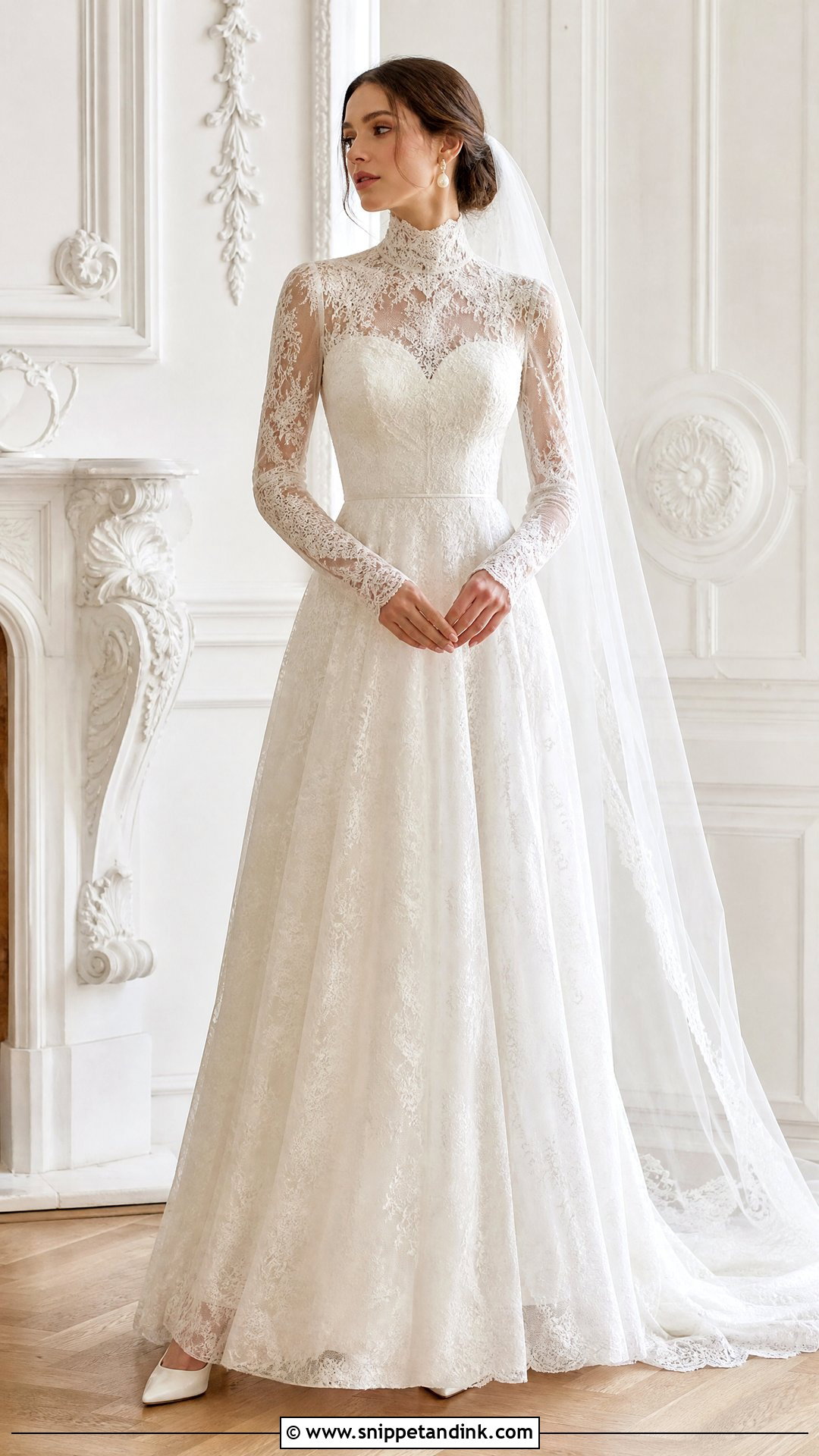
Coverage and impact aren’t opposites. A high neck in sheer lace, with embroidered sleeves, pearl buttons and a fitted bodice, has as much presence as any plunging gown. A slim skirt gives a statuesque line; a full one goes royal. With the neck covered, skip the necklace and wear pearl or crystal earrings, and put the hair up in a sleek bun or braided updo so the collar isn’t hidden. I place the veil comb lower on the head with this neckline, so the tulle falls behind the collar instead of crushing it.
8. Baroque Brocade Wedding Dress
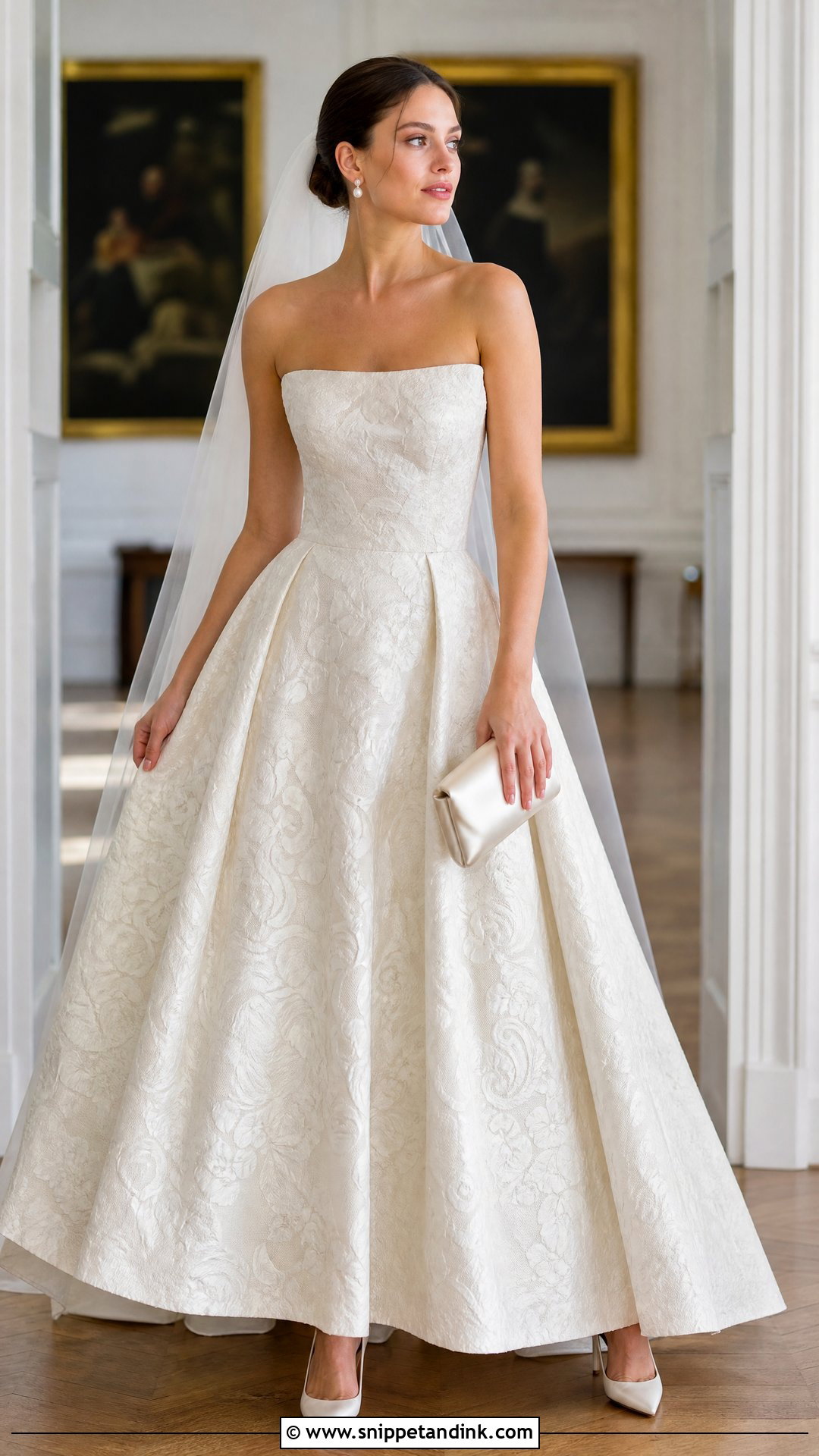
Brocade is the most direct way into this theme. The pattern is woven into the cloth with raised threads, so you get depth without any beading at all. Ivory-on-ivory is classic; champagne, silver or pale gold reads richer. Because brocade is stiff, it holds a ball gown or A-line shape on its own, but it also creases sharply where you sit, so have it steamed at the venue rather than before the car journey. Pearl earrings, a satin clutch and plain heels are enough. With bold brocade, pick a plain veil, since lace on top just gets busy.
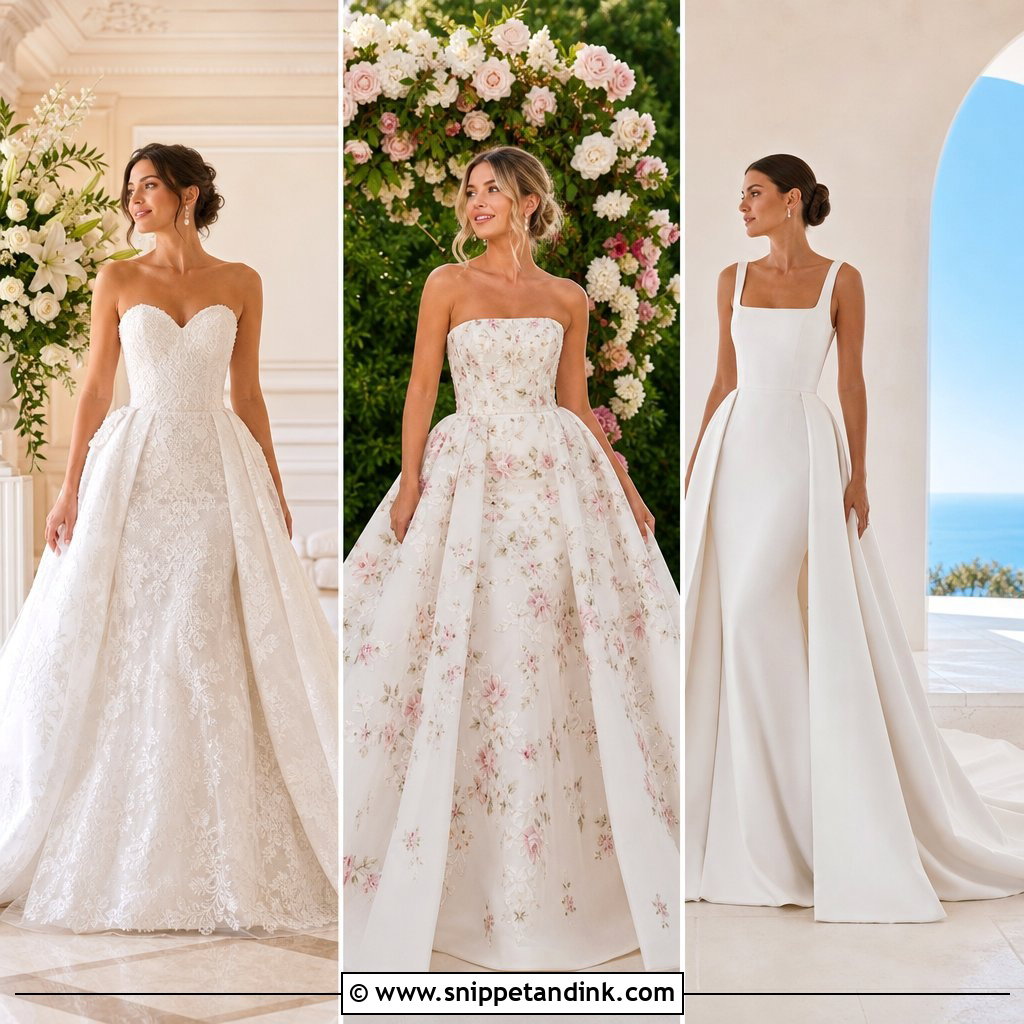
9. Baroque Jacquard Wedding Dress
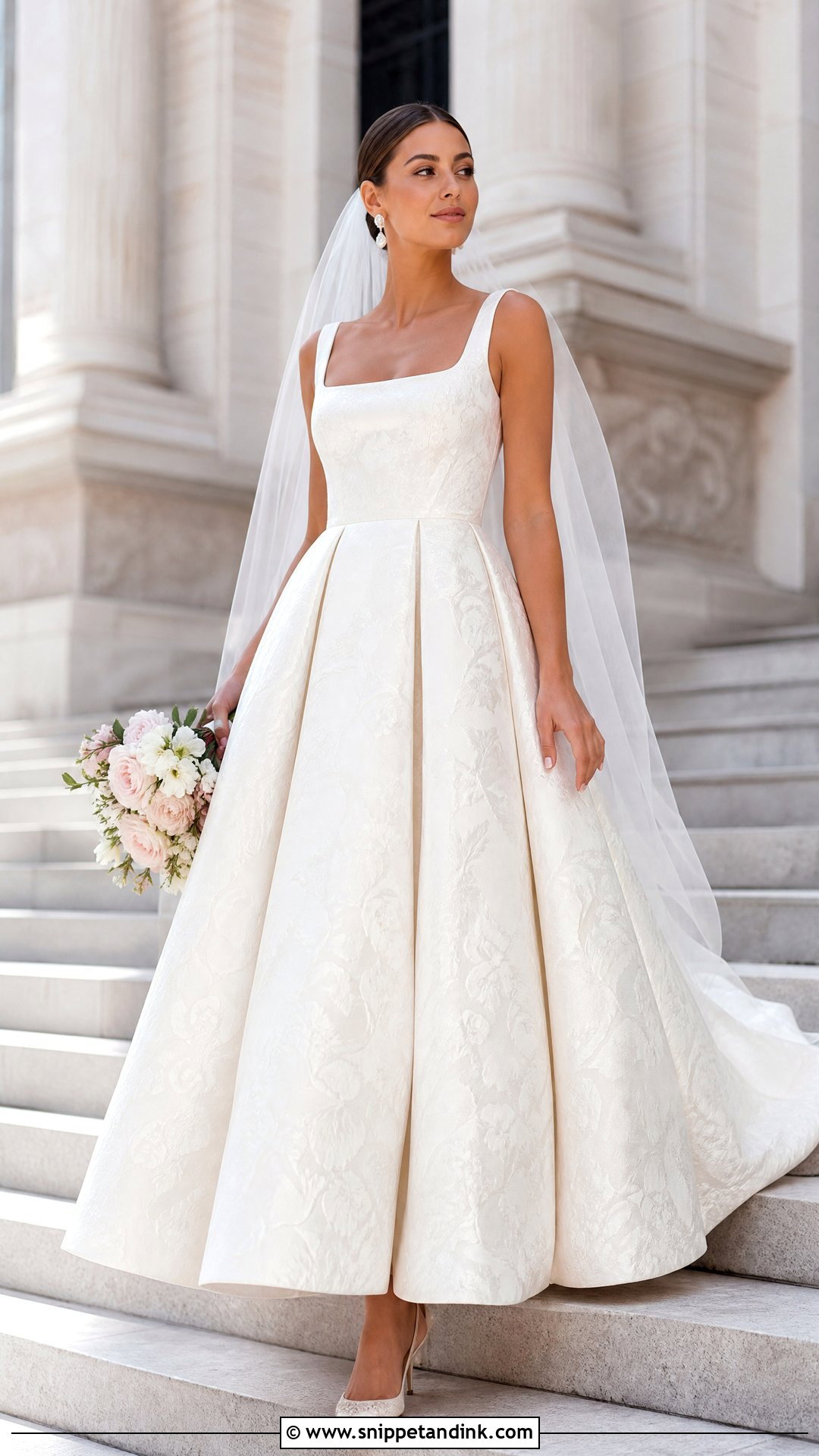
I think of jacquard as brocade’s lighter cousin. The floral, vine, damask or scroll pattern is woven in more subtly, and the cloth is often softer and easier to wear for hours than an embellished gown. A strapless bodice over a full skirt looks sharp; a square-neck A-line looks more classic. Pearl earrings, sleek heels and a structured veil keep it clean. Because the pattern lives in the weave, it shifts as light moves across it, which suits brides who like detail but not sparkle.
10. Baroque Pearl Wedding Dress
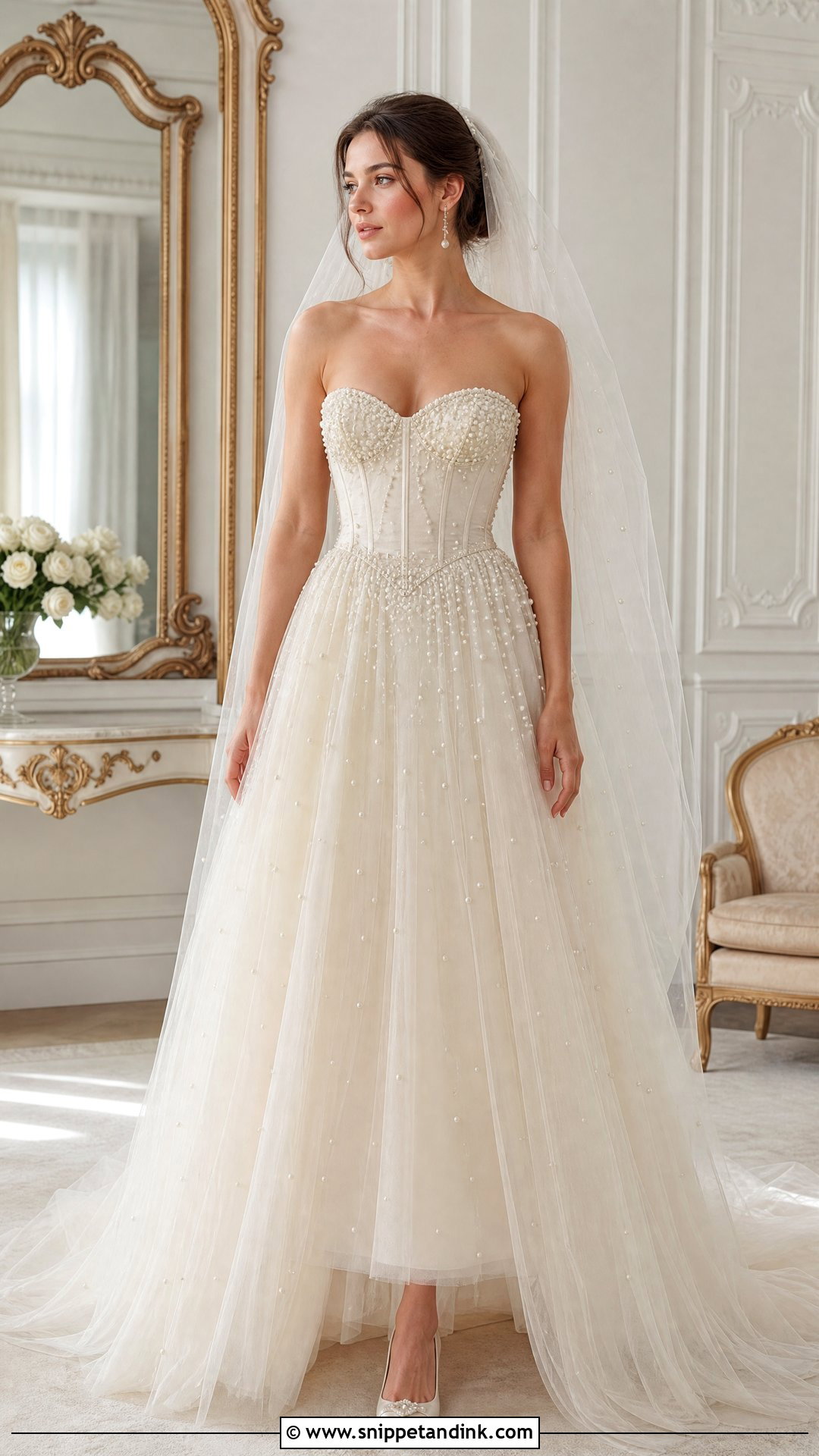
Pearls can be scattered over tulle, sewn into lace, run along the bodice seams or used as buttons down the back. Count those buttons, by the way. A long row of tiny pearl buttons takes a while to fasten, so give whoever is dressing you time, or ask for a hidden zip underneath. Ivory fabric and a clean silhouette show pearls best, and a pearl-detailed corset over a soft A-line skirt balances structure with softness. Pearl drops, a sheer veil and simple satin shoes finish it. A bold necklace would only fight the bodice.
11. Baroque Beaded Wedding Dress
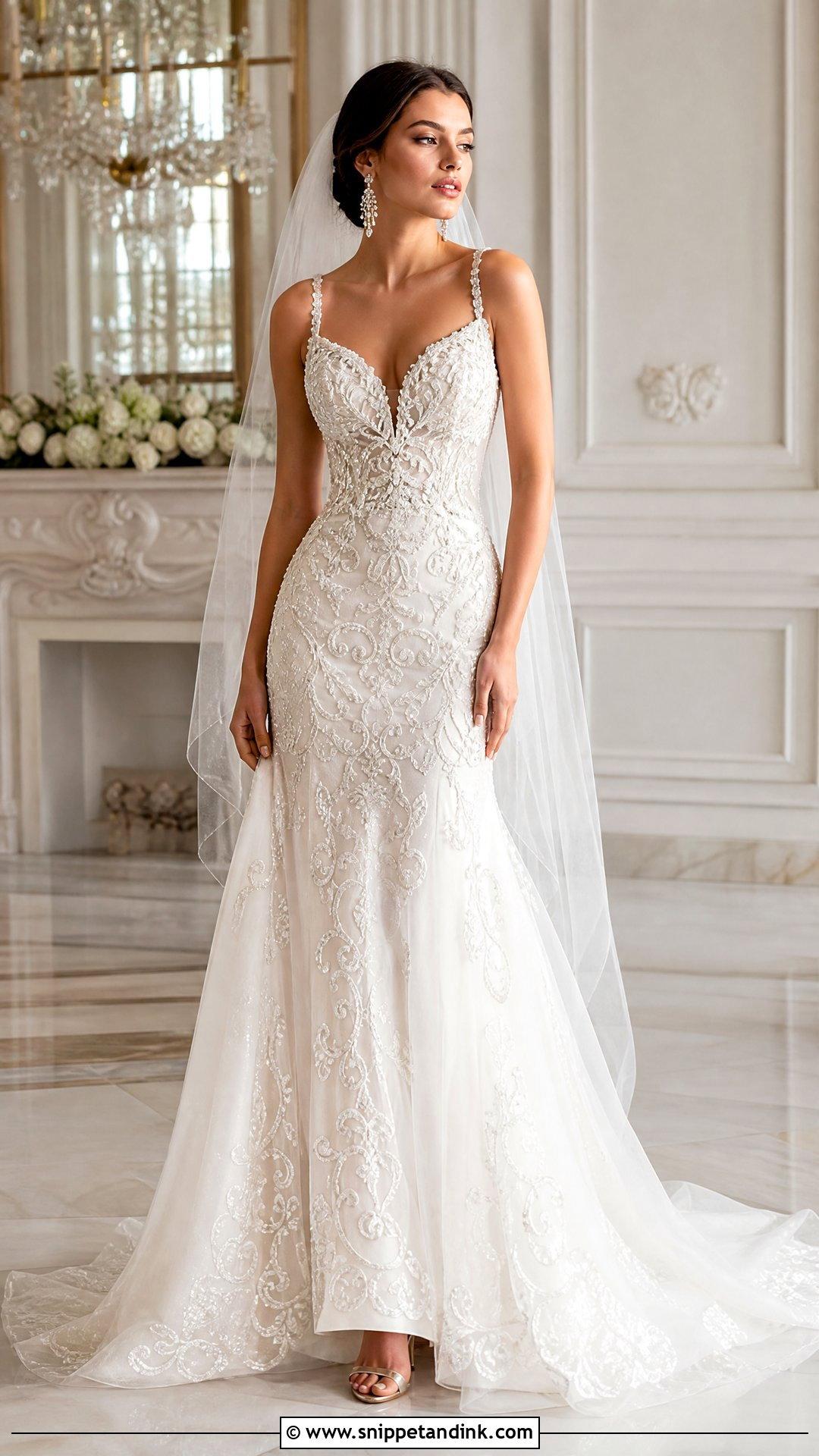
Beading looks Baroque when it follows a design: scrolls, vines, medallions or symmetrical motifs rather than scattered glitter. A fitted bodice with a flowing skirt is the easier wear, while an allover beaded sheath is more glamorous and noticeably heavier. Heavy beadwork pulls on seams, so at the first fitting I look inside the gown for a waist stay and strong straps carrying the load. Crystal or pearl earrings, metallic heels and a simple veil complete it. Have the hem set precisely, since a beaded hem that brushes the floor wears through quickly.
12. Baroque Satin Wedding Dress
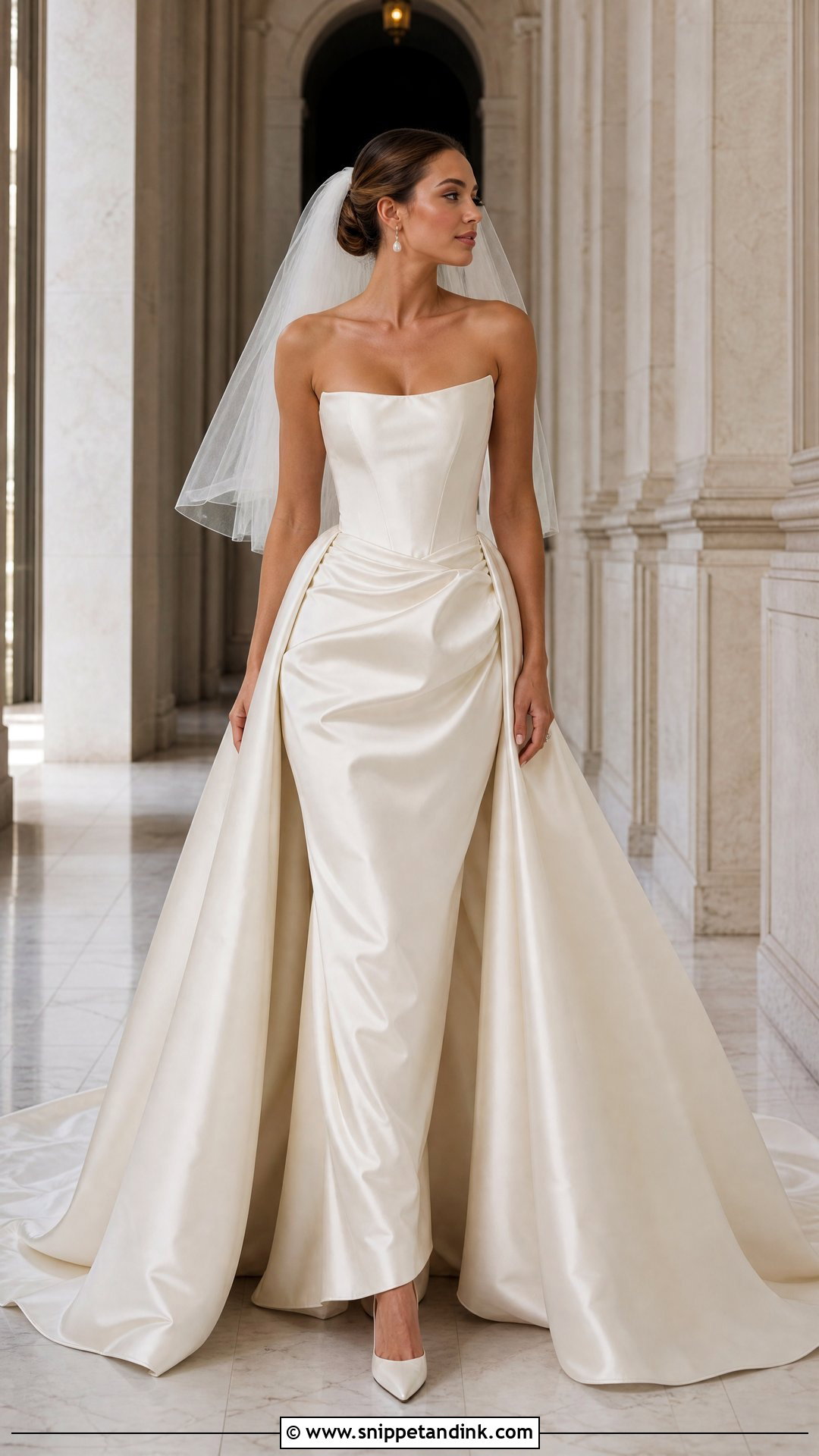
Satin puts all the drama into the cut. Its smooth sheen suits structured gowns, draped bodices, basque waists and sculpted skirts, and a corset top, ornate buttons, a long train or detachable puff sleeves push it toward Baroque. Weight is the thing to ask about. Heavy duchess satin holds a sculpted shape, while thinner satin shows every seam and every crease. Pearl earrings, a dramatic veil, pointed heels and a polished bun keep the outfit sleek.
13. Baroque Basque Waist Wedding Dress
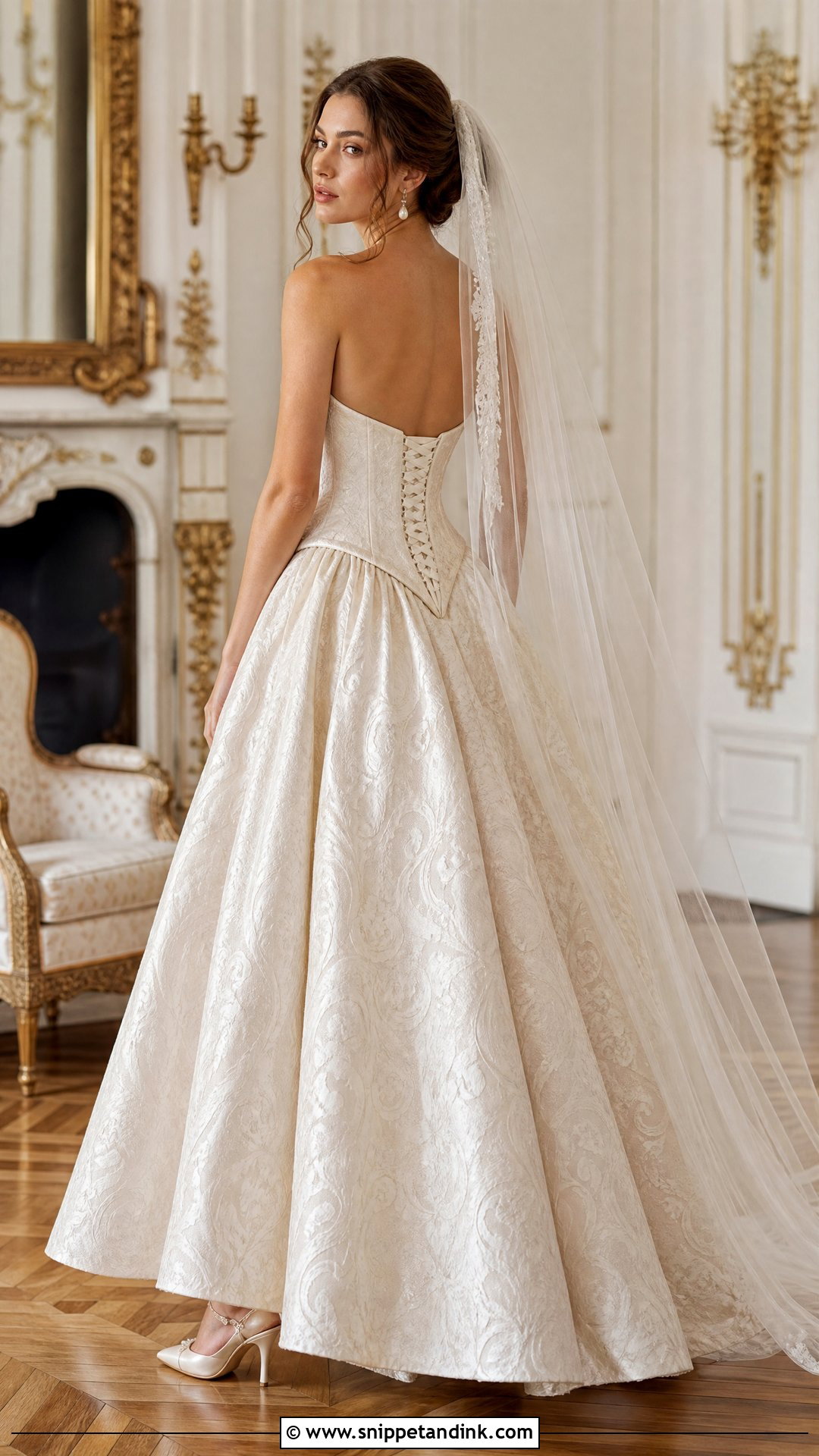
The basque waist wedding dress gets its shape from a waistline that dips into a V at the front. That point lengthens the torso and gives a full skirt a more sculpted line, especially on corset bodices with brocade or lace appliqué, and it flatters a shorter waist. Watch the point itself at fittings: it should sit centred and flat, and if the bodice is a touch too long it flips up when you sit. Wear a long veil, pearl earrings and heels in the gown’s undertone. A lace-up back pushes it historical; a plain neckline keeps it modern.
14. Baroque Square Neck Wedding Dress
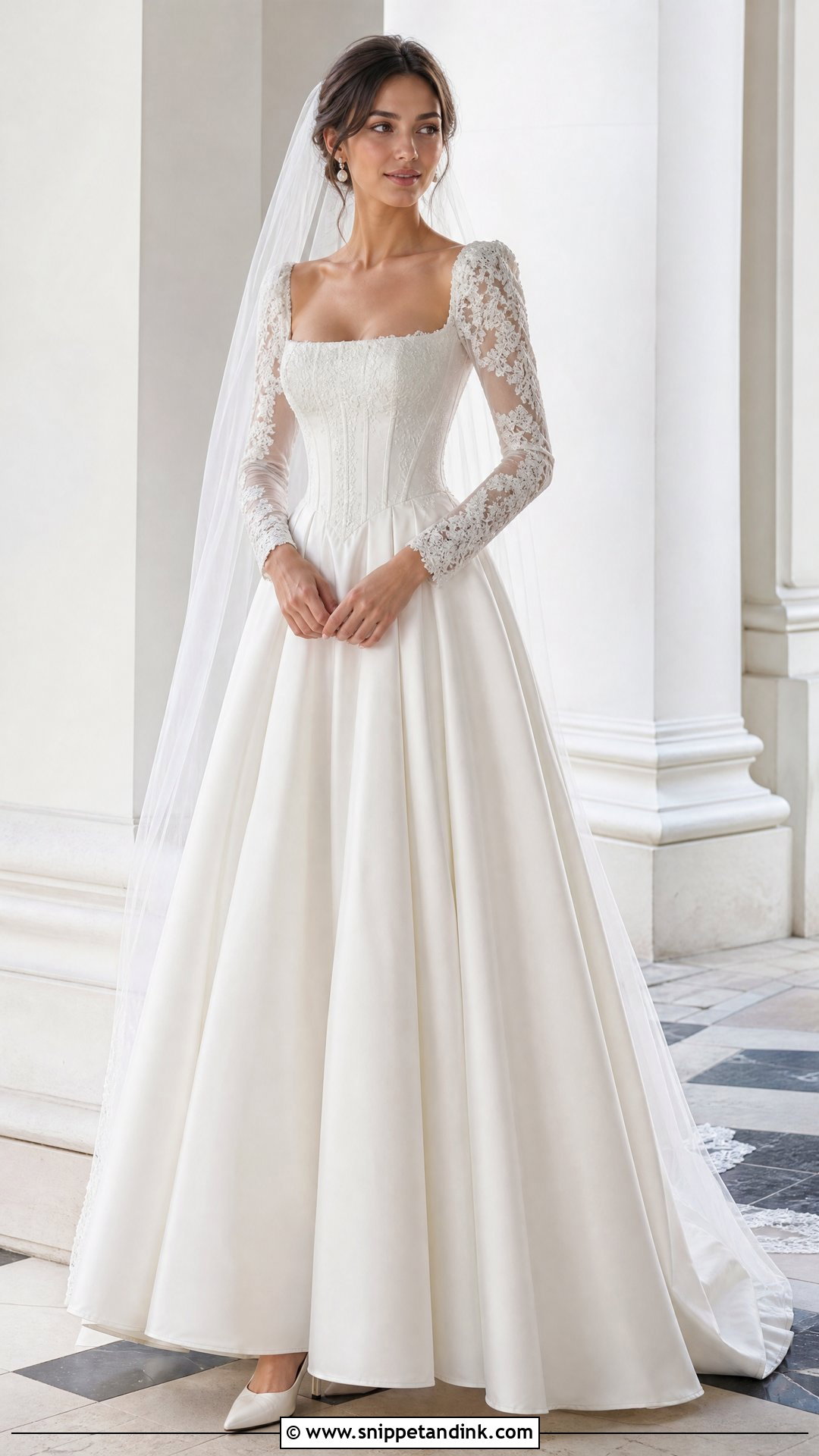
A square neckline has the most historical feel of any shape here, and it frames the collarbones with a crisp edge. It sits well with long sleeves, corset seams, lace appliqué or a full jacquard skirt. Brides who feel exposed in a sweetheart are often comfortable in a square neck. Have the corners checked at fittings, because a neckline cut too wide gapes when you lean forward to sign the register. Pearl earrings, a soft veil and satin pumps finish it, with a low bun or smooth waves so the embroidery isn’t covered.
15. Baroque Black Wedding Dress
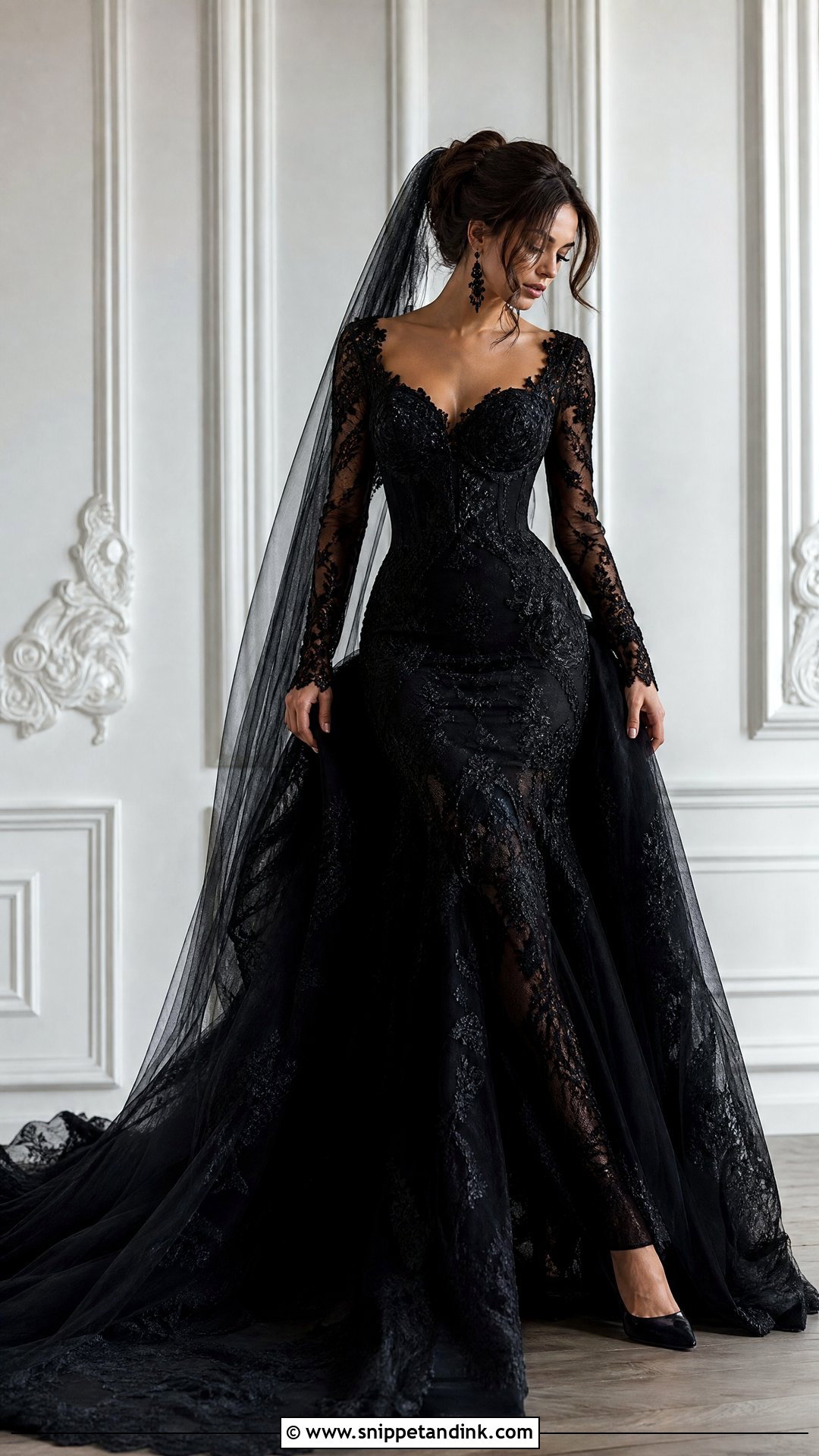
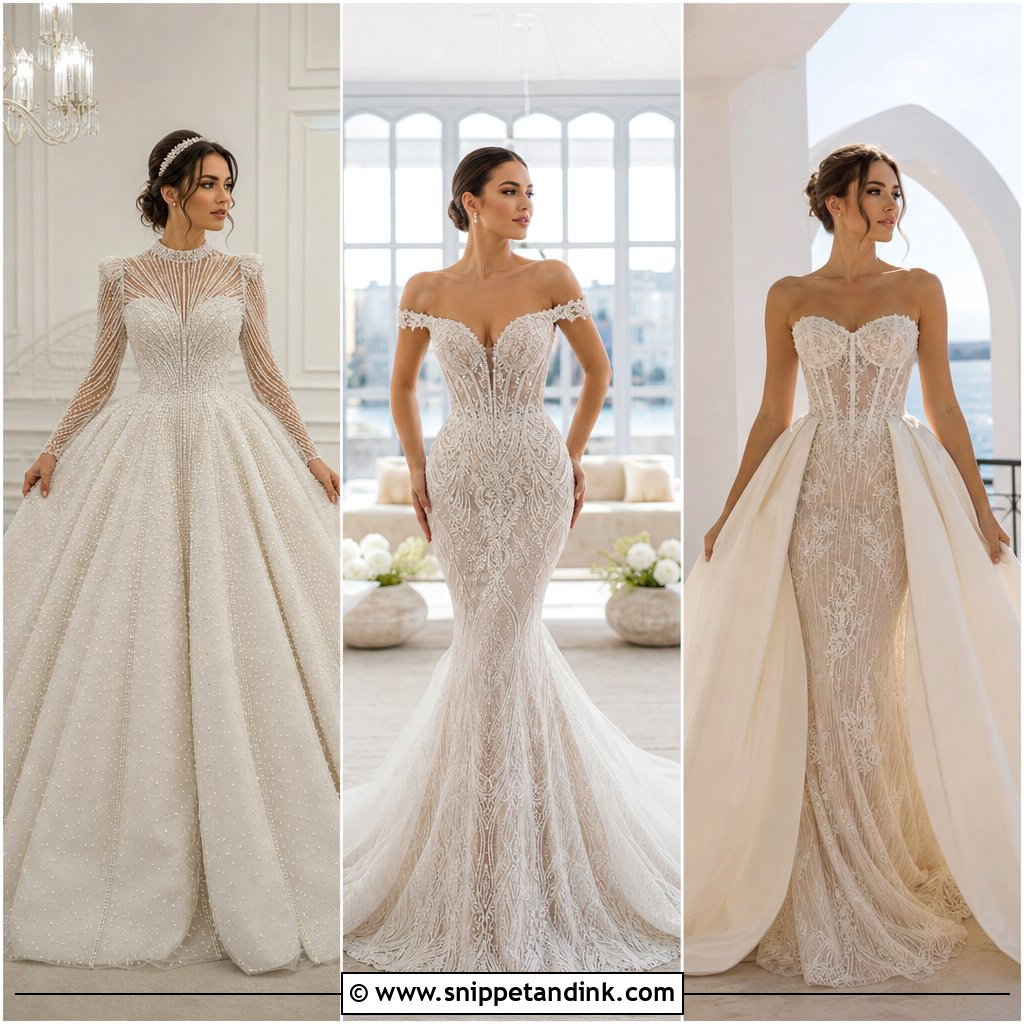
Black is a bold choice and a valid one, a nontraditional bridal statement that doesn’t need to try hard. Black lace, velvet, satin or brocade all suit the Baroque mood. To keep it reading as bridal rather than evening wear, I lean on wedding-gown details: a corset bodice, sheer sleeves, pearl accents, a sweeping train. Ivory embroidery on black softens it; gold makes it regal. Black or metallic heels, a dark veil and sculptural earrings work, with an ivory or soft neutral bouquet that won’t vanish against the dress. Tell your photographer in advance, since lace detail on black is easily lost in the shadows.
16. Baroque Champagne Wedding Dress
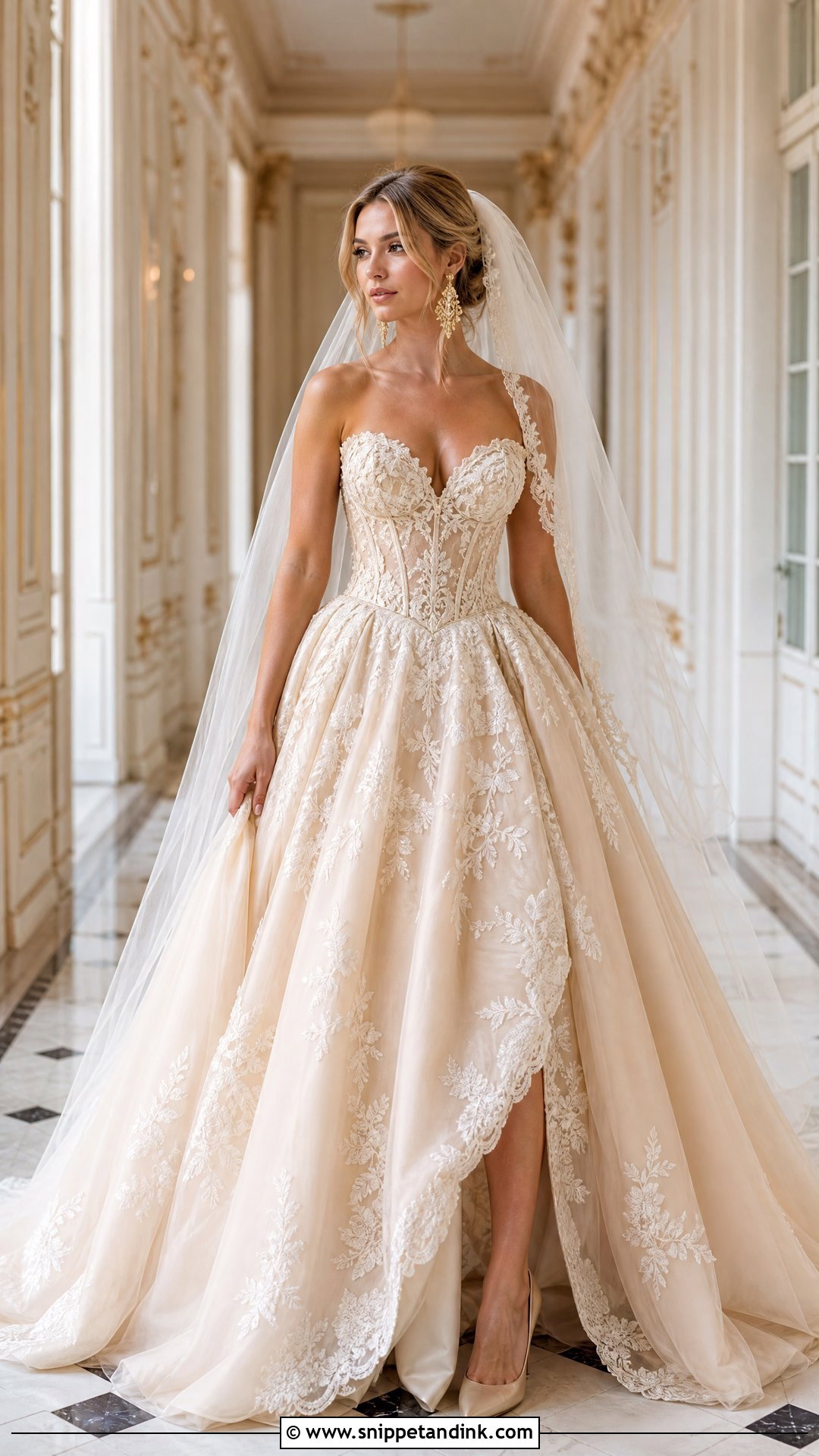
Champagne is kinder than stark white to most skin tones, and it makes ornament look warmer. It pairs well with gold embroidery, ivory lace, pearl beading and antique-style appliqué, and a champagne ball gown or A-line with a corset bodice feels rich but wearable. I always look at champagne fabric in both daylight and indoor light before committing, because some shades turn pink and some turn grey depending on the room. Gold earrings, nude or champagne heels and a sheer ivory veil complete it. If the fabric already shimmers, keep accessories matte or pearl.
17. Baroque Floral Wedding Dress
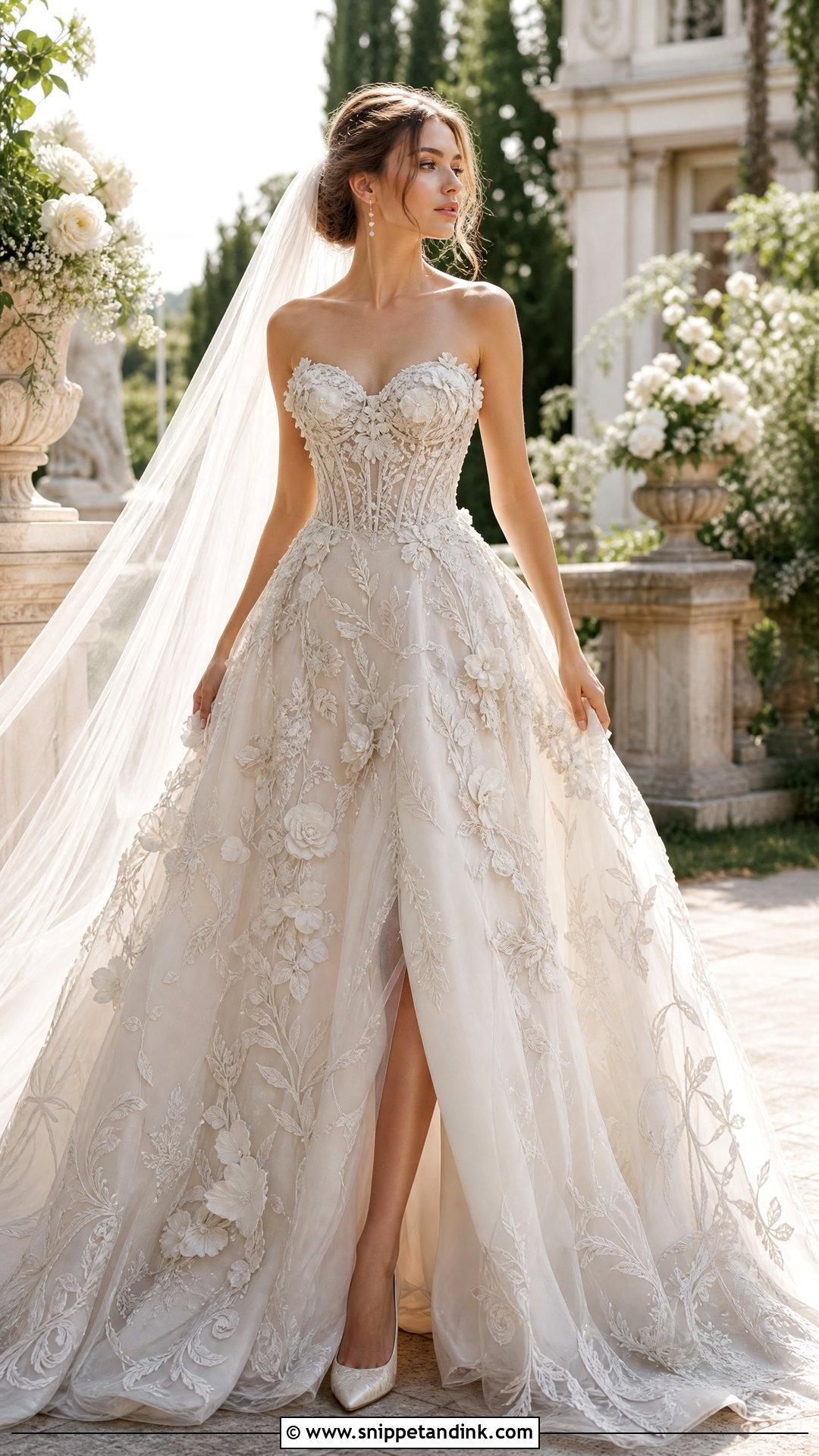
Floral detail has to be raised and worked to read as Baroque; a flat print looks like a summer dress. Look for large embroidered flowers, raised appliqués, metallic thread or floral brocade, either across the whole gown or concentrated on the bodice and train. A fitted corset over a soft full skirt gives the flowers room. Delicate pearl earrings, a clean veil and ivory heels keep the rest quiet. Ask your florist to keep the bouquet in the same soft tones so it doesn’t compete with the embroidery. Garden venues and historic estates suit it.
18. Baroque Ruffle Wedding Dress
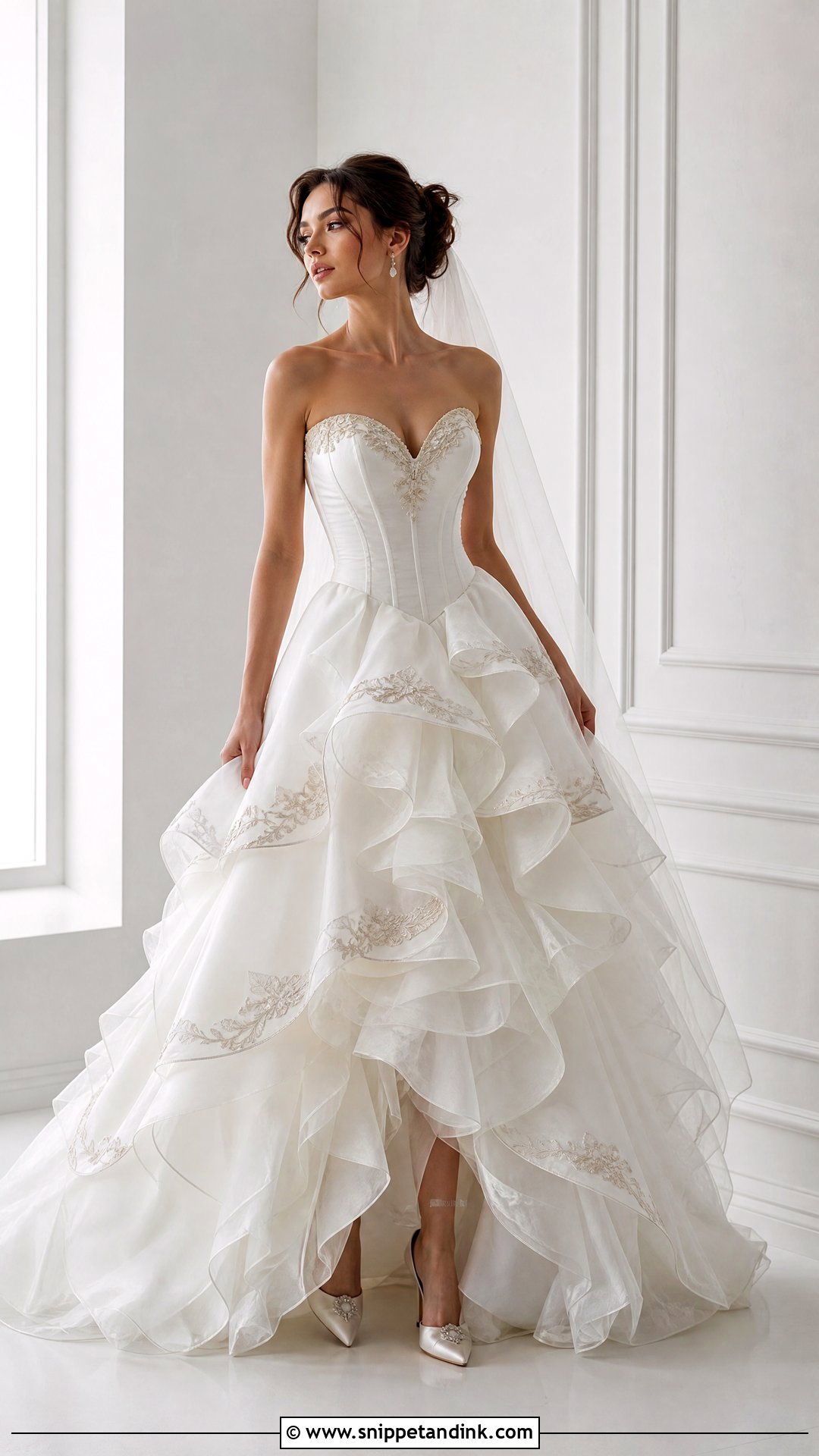
Ruffles in this style should be layered and deliberate, never frothy. They can sit on the skirt, sleeves, neckline or train. Organza, tulle and silk faille all hold a crisp edge, while softer fabrics go limp by mid-afternoon. A corset bodice anchors the softness. Simple earrings, satin heels and a plain veil are all it needs. More layers also means more width, so think about the top table and the doorways before you choose the fullest version.
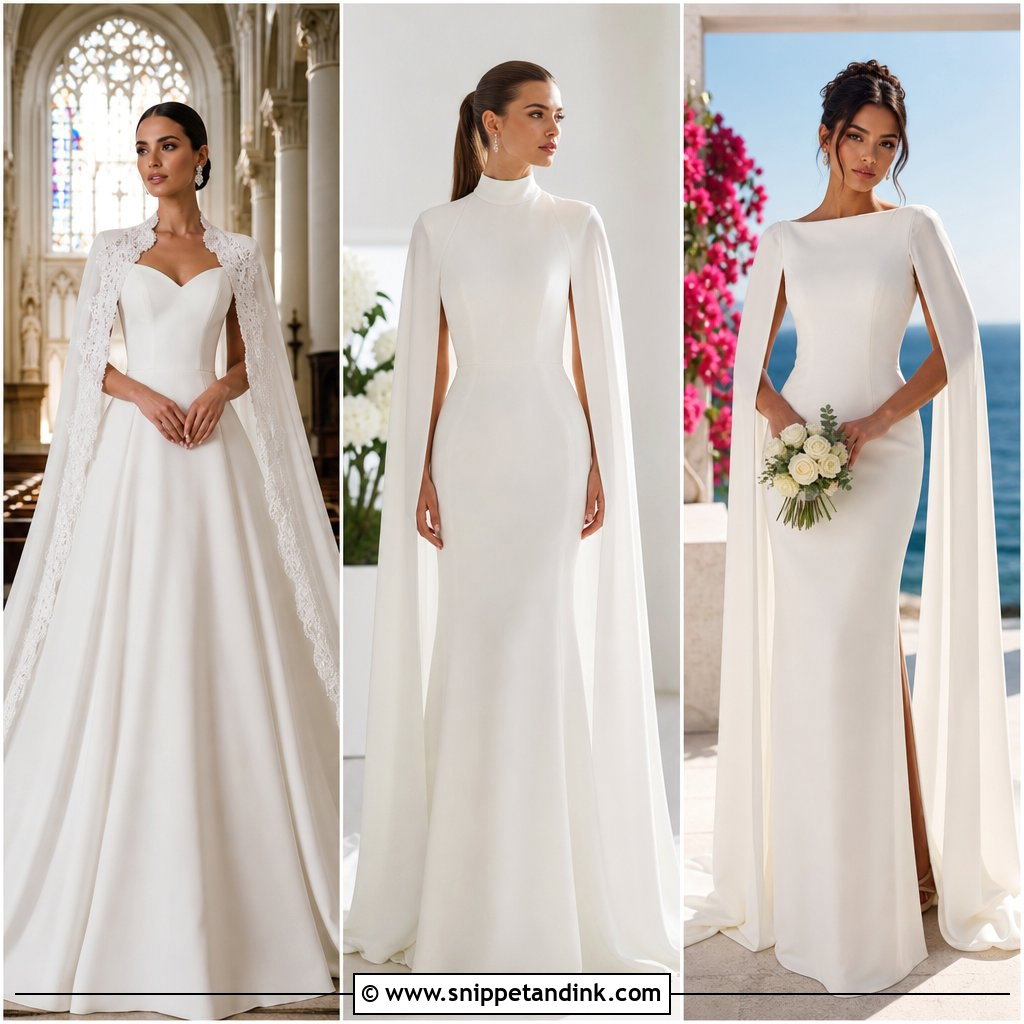
19. Baroque Cape Wedding Dress
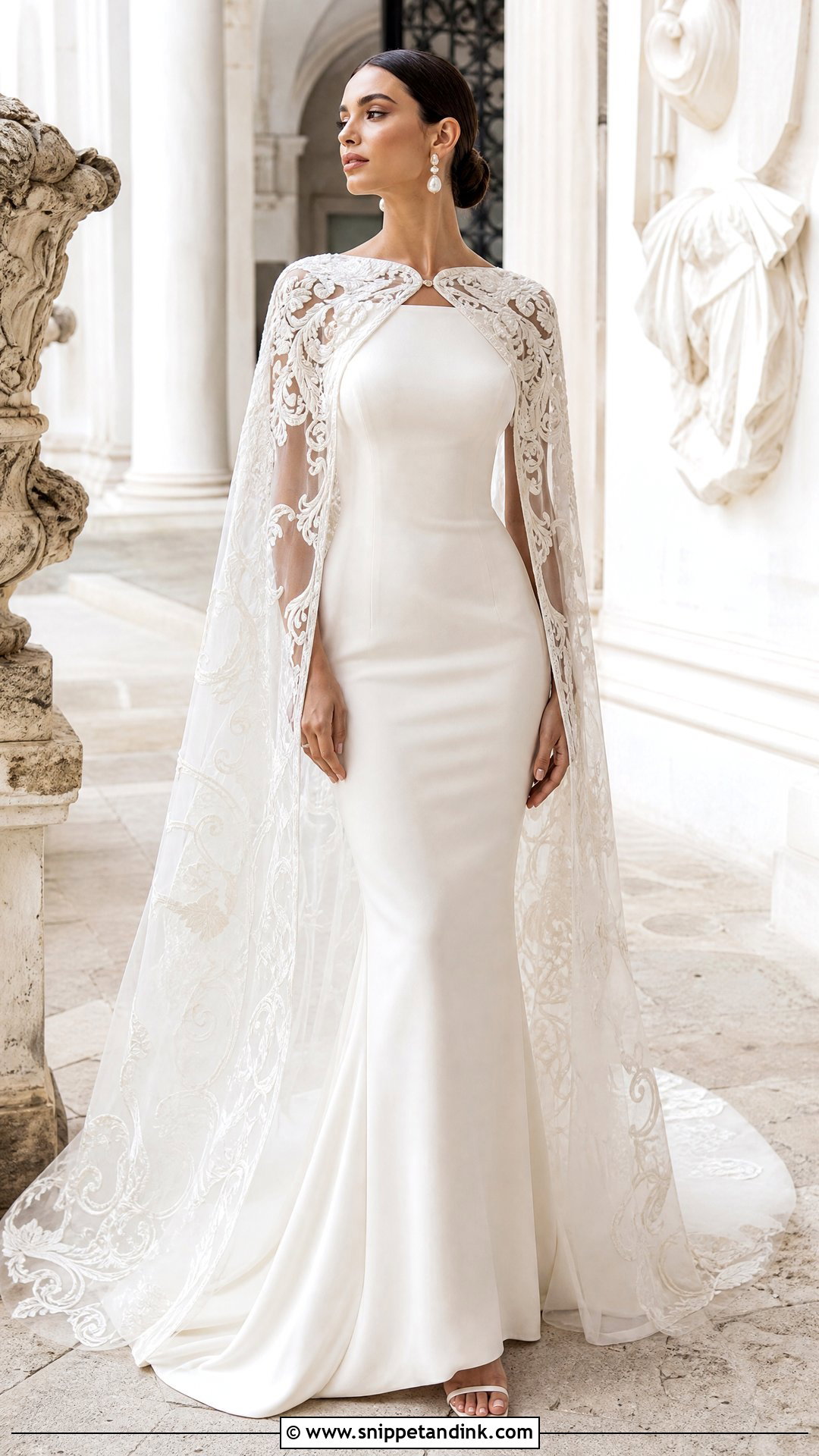
A cape can do the job of a veil and adds a grand line from the shoulders. Sheer tulle, lace, embroidered organza or satin with ornate trim all work, and it sits best over a fitted gown, a corset dress or clean satin. I prefer capes that attach at the shoulder seams with hidden snaps. One tied at the throat pulls backward and tightens every time you sit on it. Pearl earrings, a low bun and elegant heels are enough, and an embroidered cape wants a plainer gown underneath.

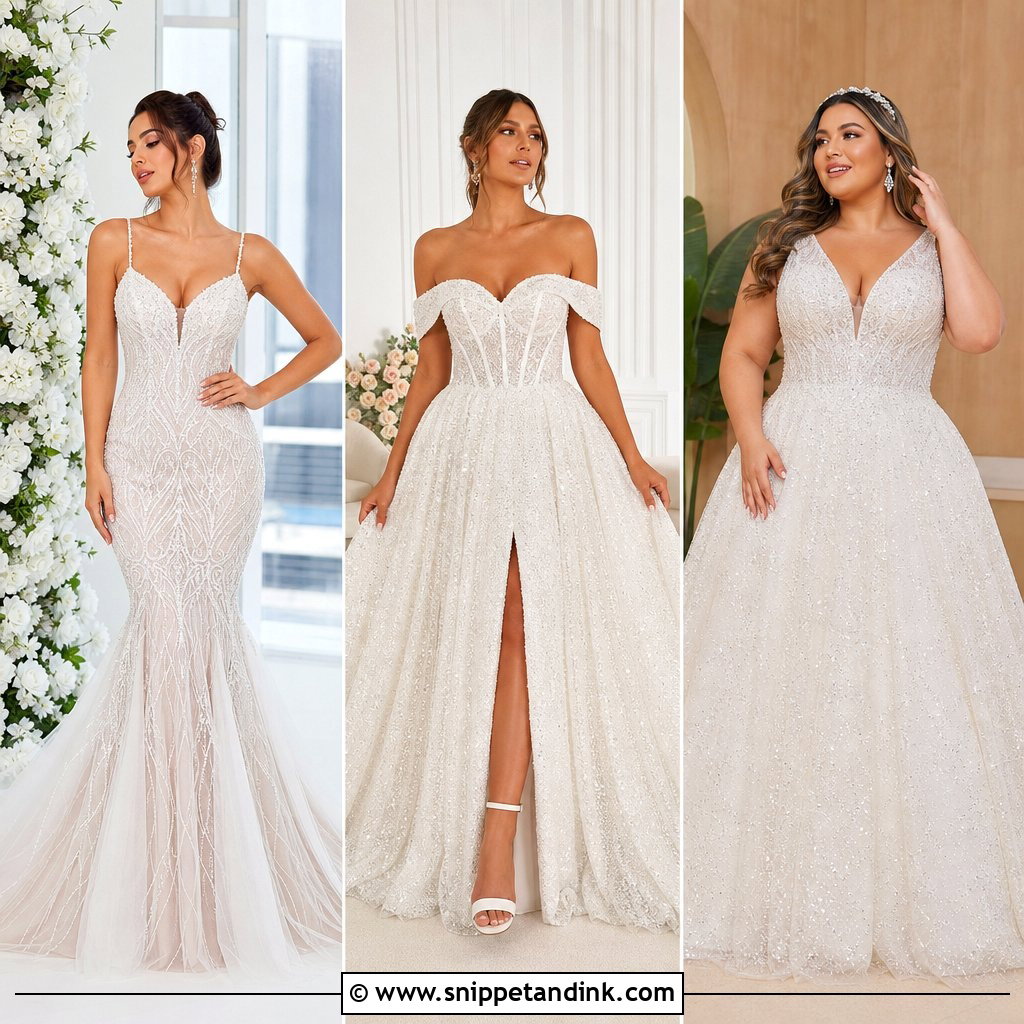
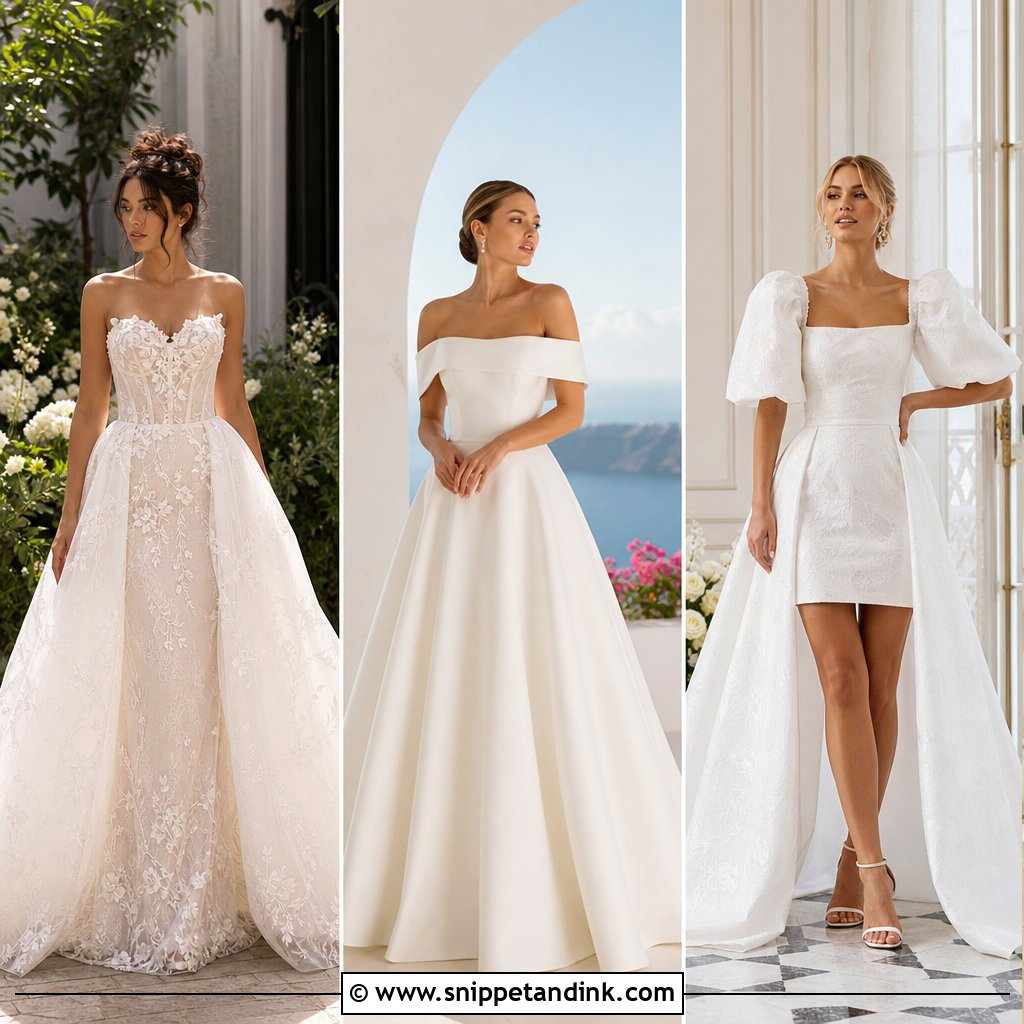
20. Baroque Detachable Sleeve Wedding Dress
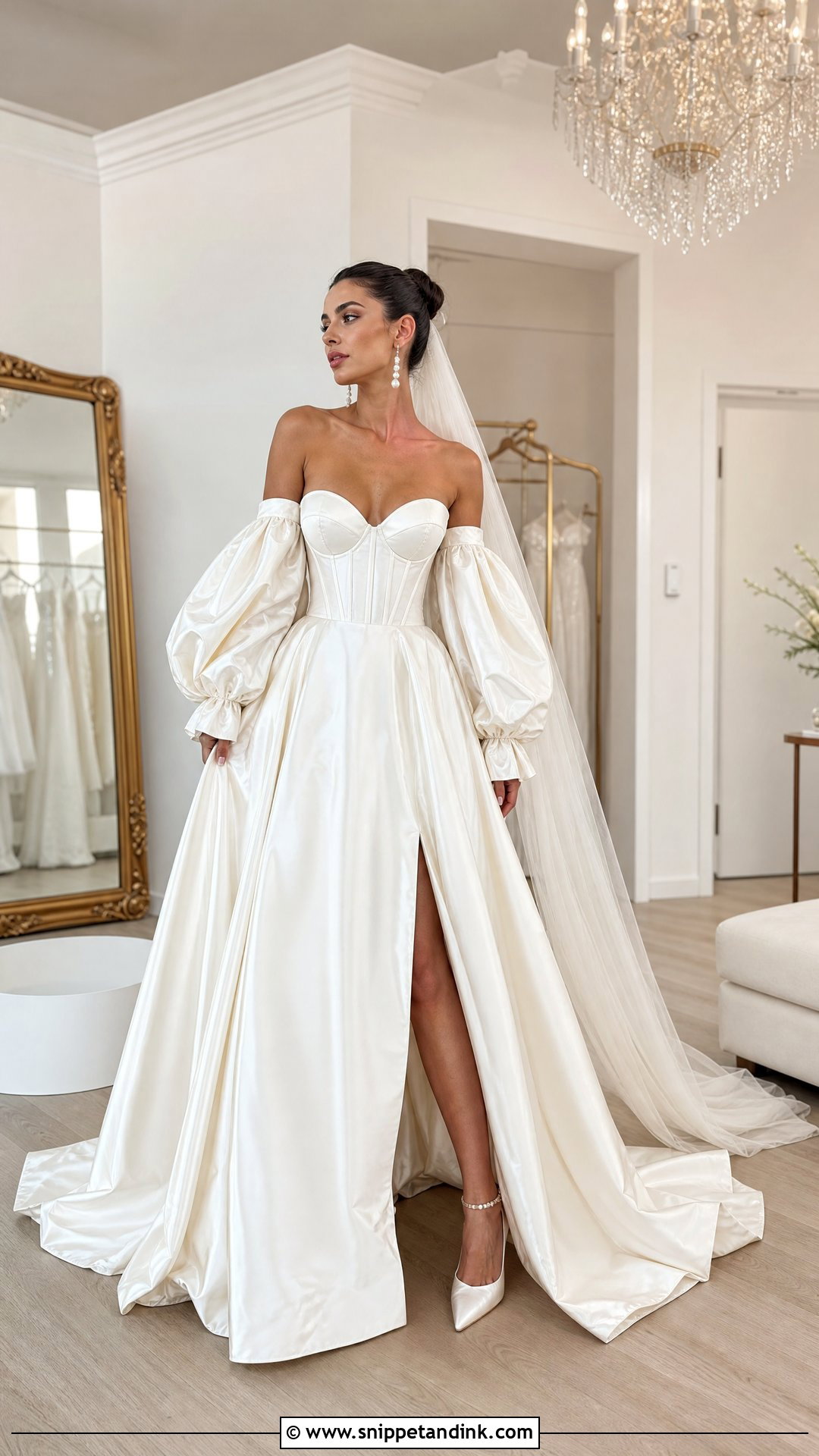
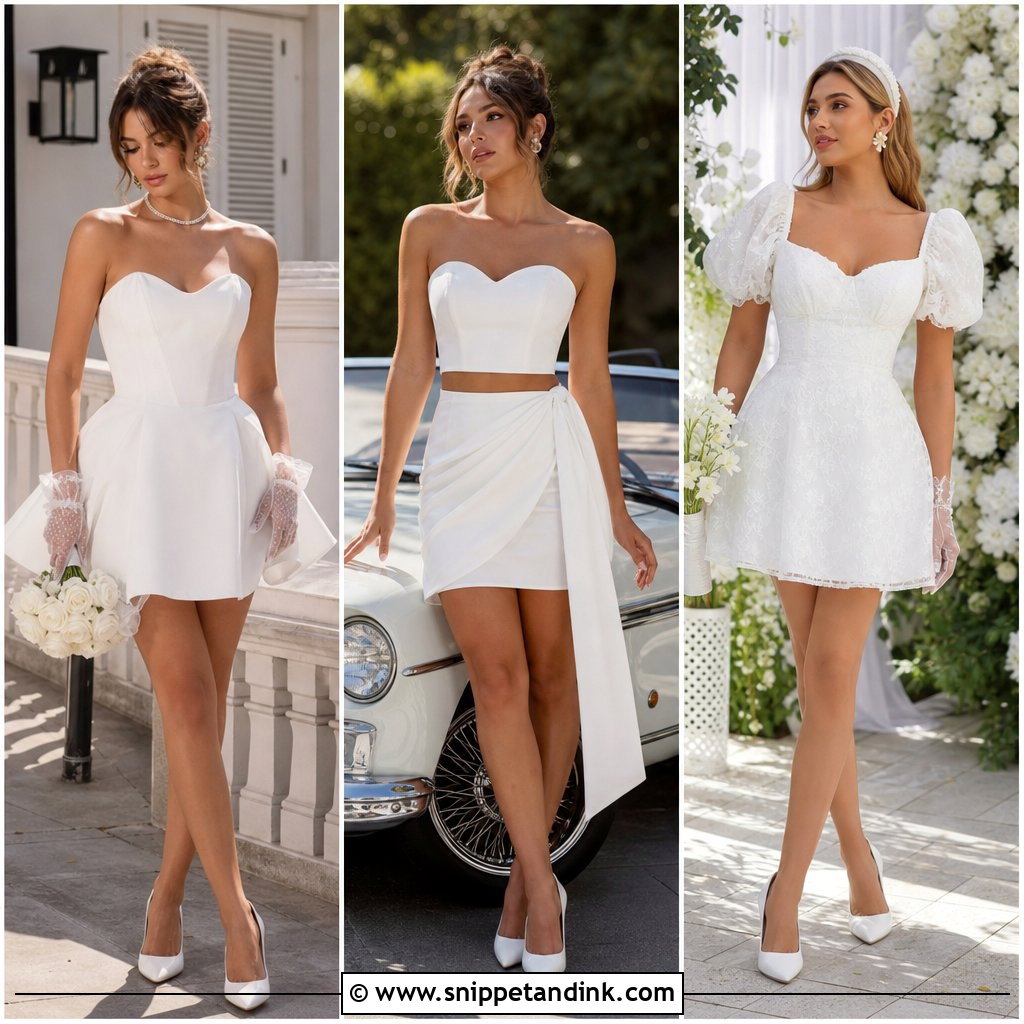
Detachable sleeves solve the classic problem with ornate gowns: dramatic for the ceremony, restrictive on the dance floor. Puff sleeves, lace sleeves, sheer embroidered sleeves or draped off-shoulder sleeves all fit the mood over a corset bodice, basque waist or full skirt. Match the fabric tone and detail exactly, or they look borrowed from another dress. Practise taking them off and putting them back on before the day, because tiny loops and buttons are fiddly with nervous hands. Pearl earrings, a long veil and satin heels finish it.
21. Baroque Tulle Wedding Dress
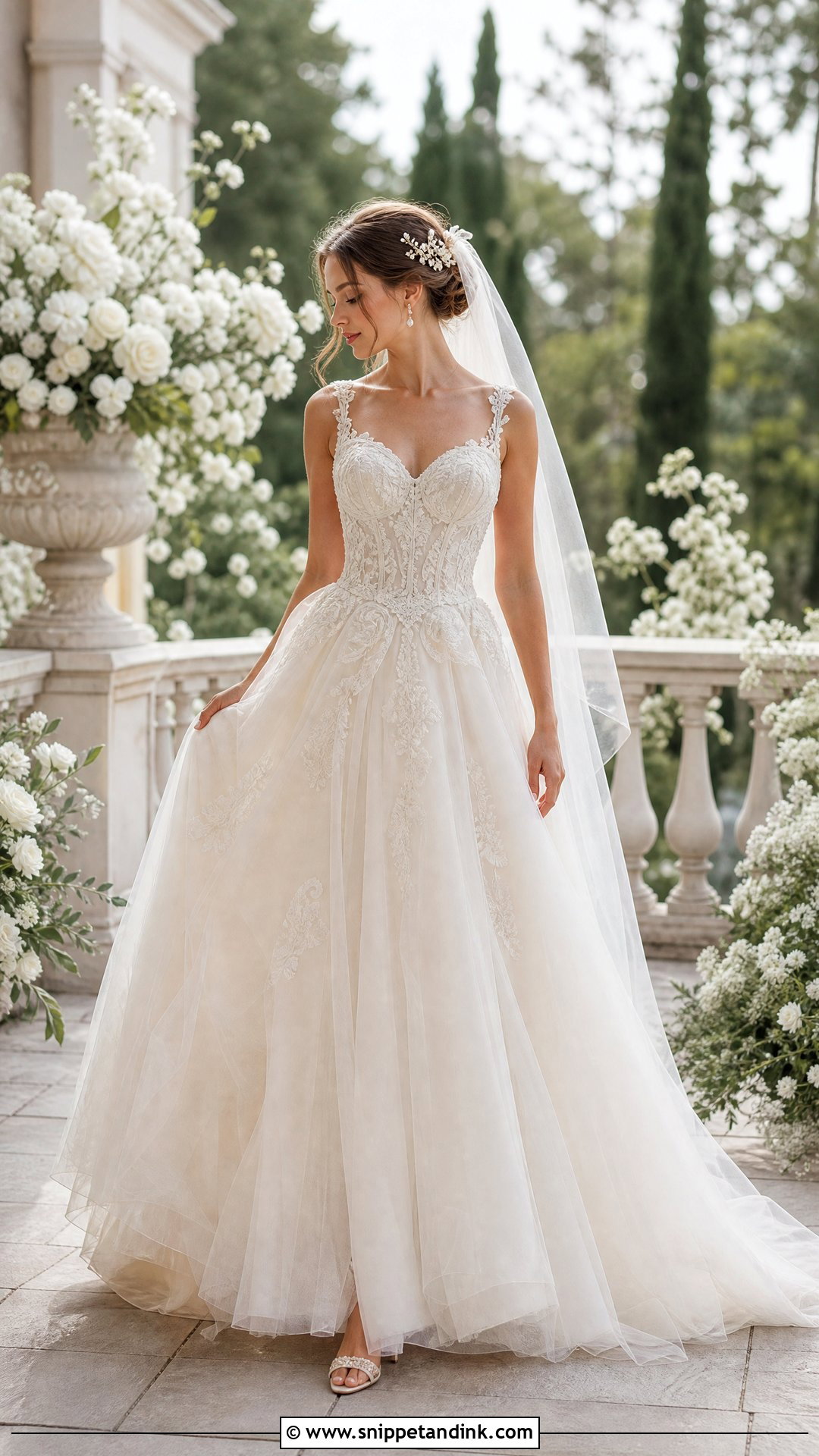
Tulle gives volume without weight, which is welcome in a style that otherwise gets heavy. Embroidered appliqué, pearl details, corset construction or lace over the bodice push it toward Baroque, and a nude or champagne lining underneath makes the pattern show up more clearly in photos. Being airy, tulle can take a slightly stronger accessory than other gowns here, such as a pearl headband or ornate comb. Watch your rings and bracelets, though; prongs catch tulle and pull threads in seconds.
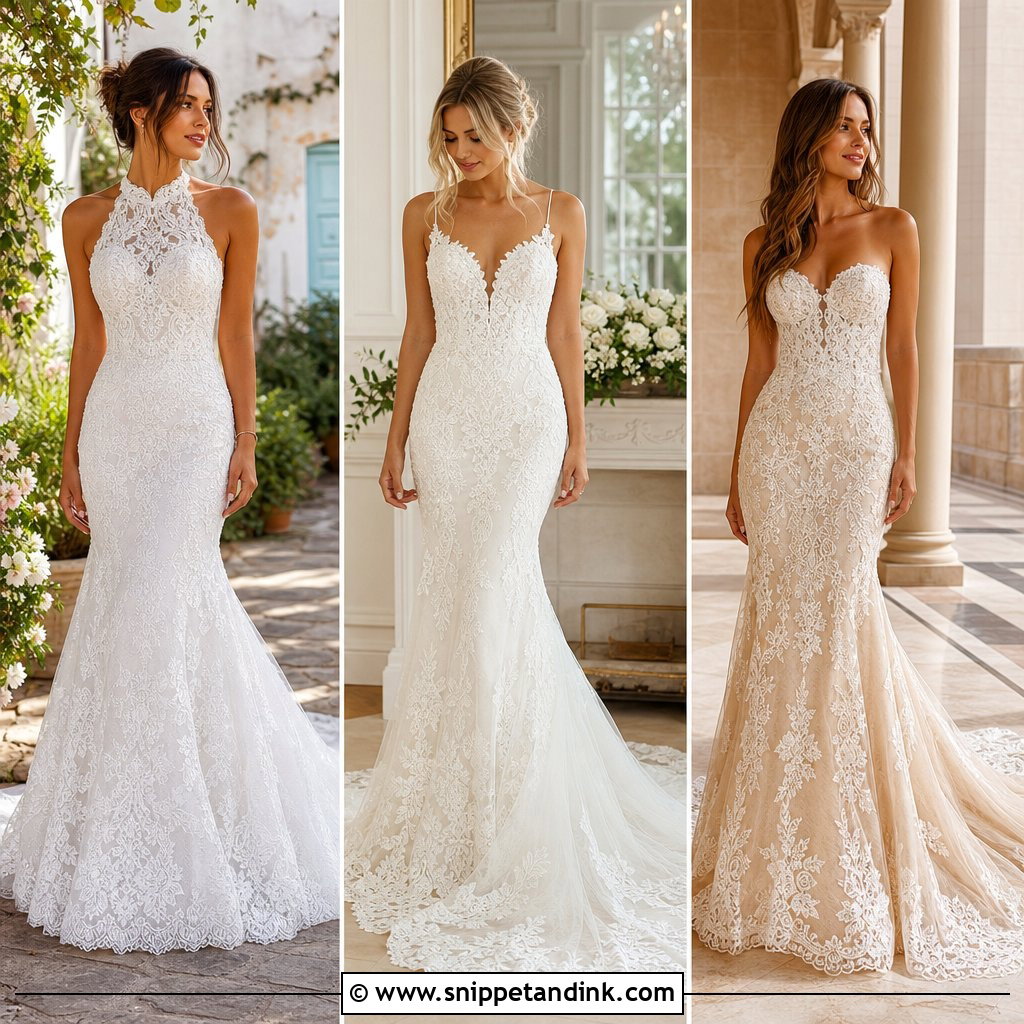
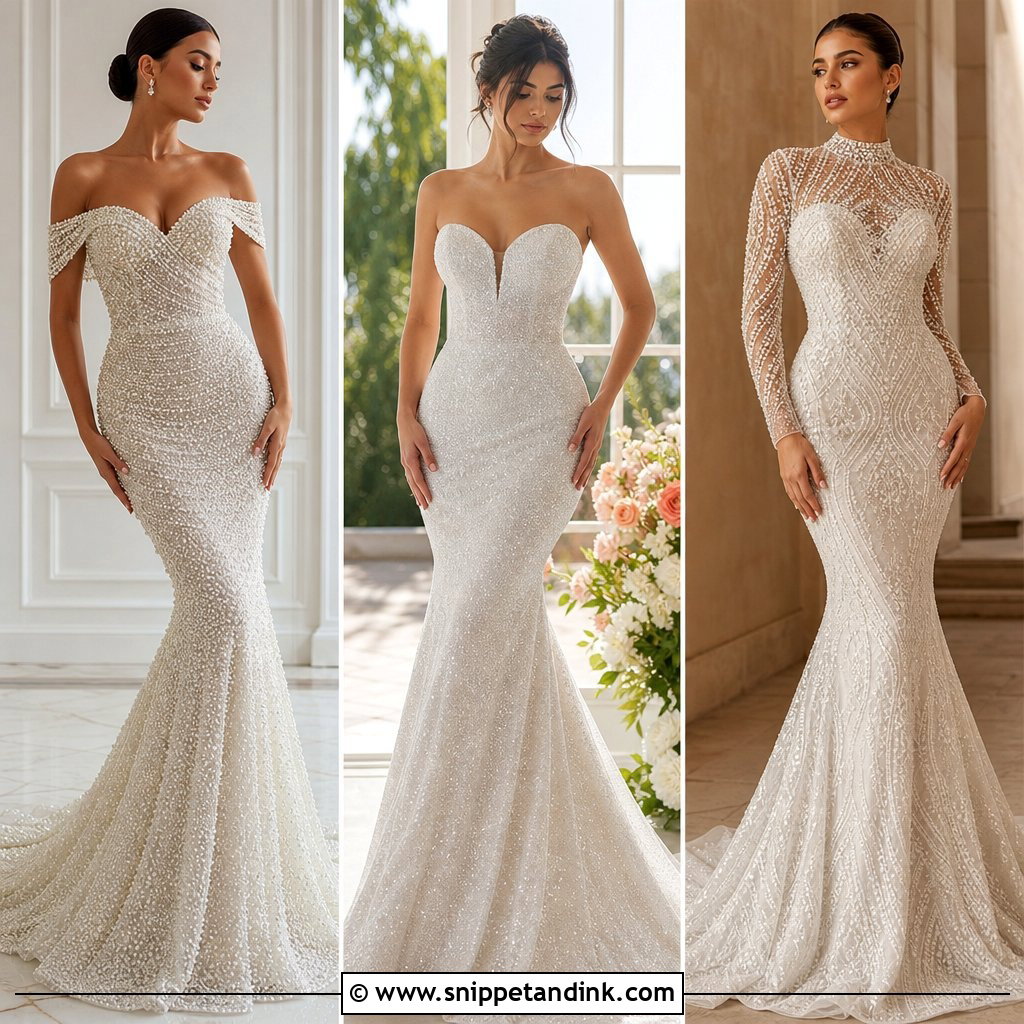
22. Baroque Mermaid Wedding Dress
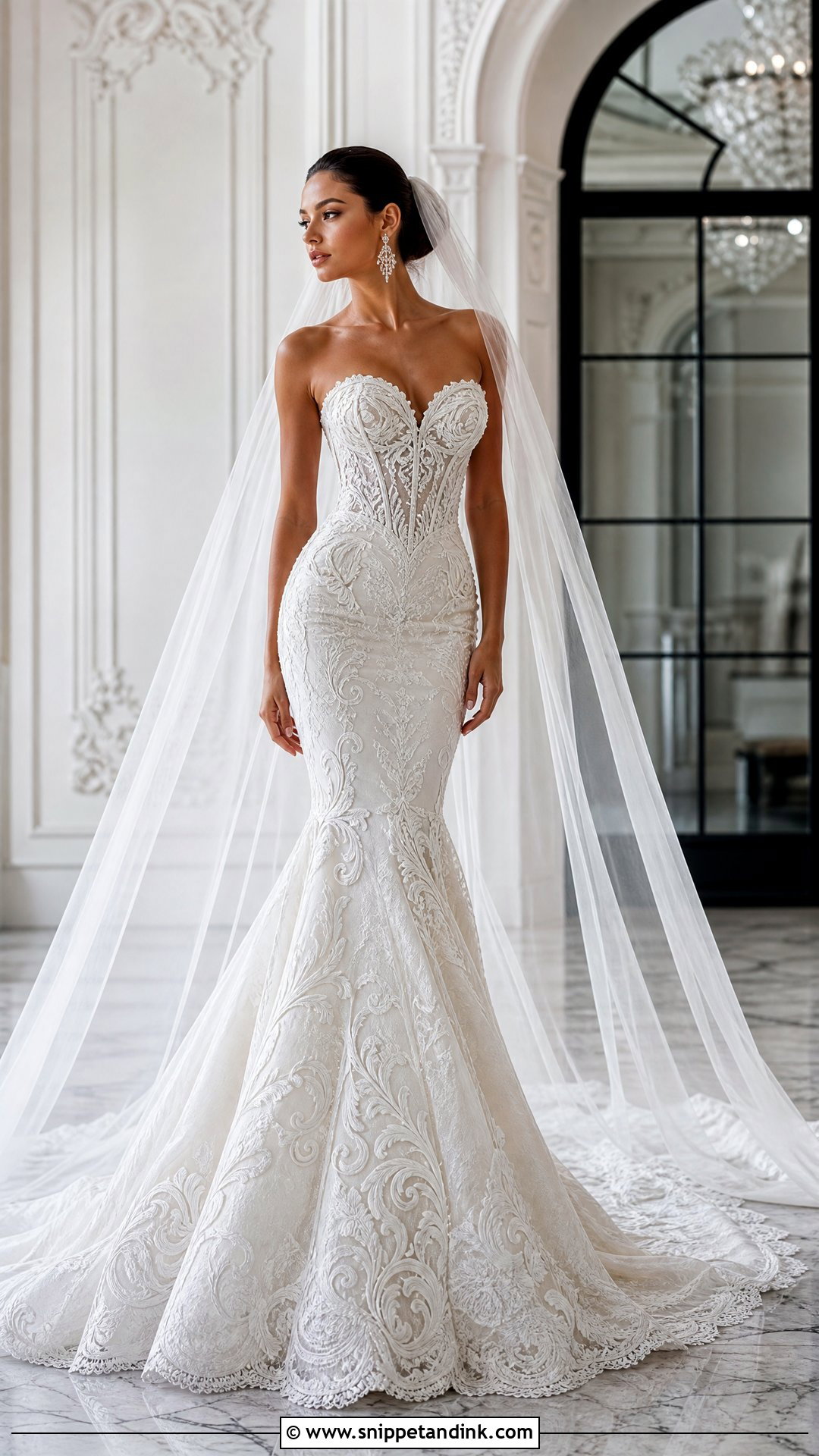
The mermaid is the most demanding silhouette in the group. It fits through the bodice and hips, then flares at the knee or lower thigh, and ornate lace, beading or scroll embroidery follows those lines closely. A corset top adds support and defines the hourglass. Practise stairs and sitting before you commit, since a low flare shortens your stride and heavy embellishment makes that worse. Drop earrings, sleek heels and a long veil balance it. With a heavily worked train, keep the bouquet small and skip large hair pieces.
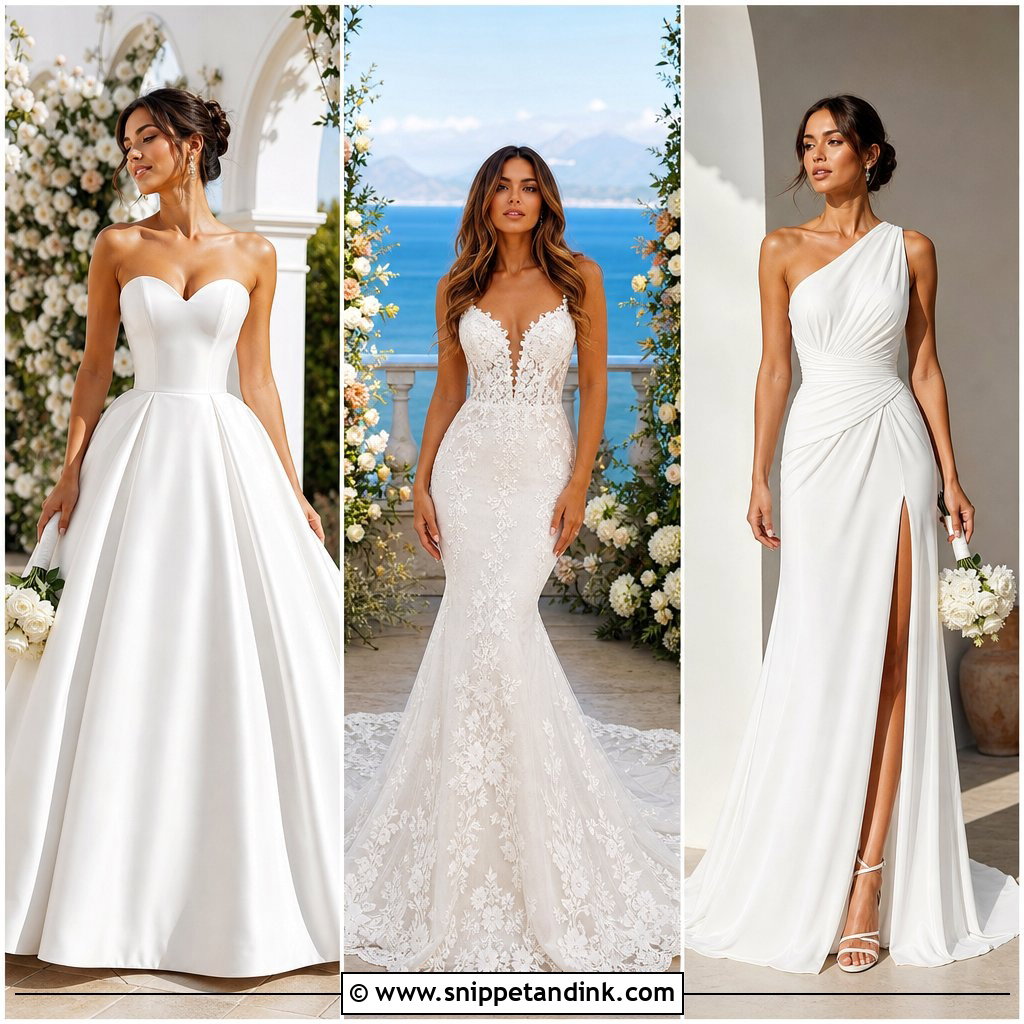
23. Baroque A Line Wedding Dress
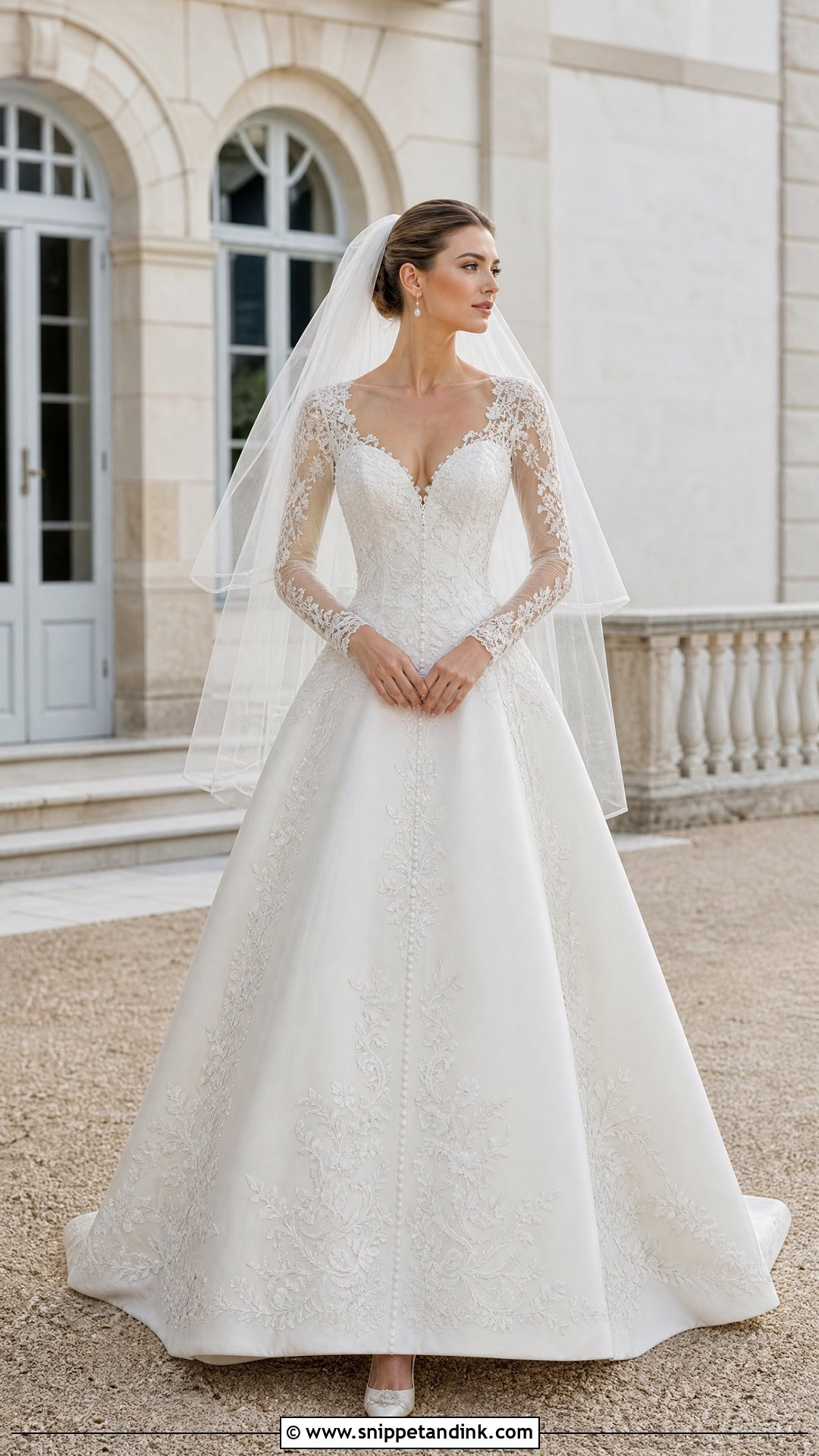
If you want Baroque detail without carrying a ball gown all day, start here. The A-line shapes the waist and flows over the hips, and the ornament comes from lace sleeves, brocade, pearl buttons or embroidered vines. It reads formal without the weight, and it’s usually the easiest of these shapes to dance in. A medium or long veil, pearl earrings and classic bridal shoes suit it. A soft half-up style keeps it romantic rather than strict.
24. Baroque Minimal Wedding Dress
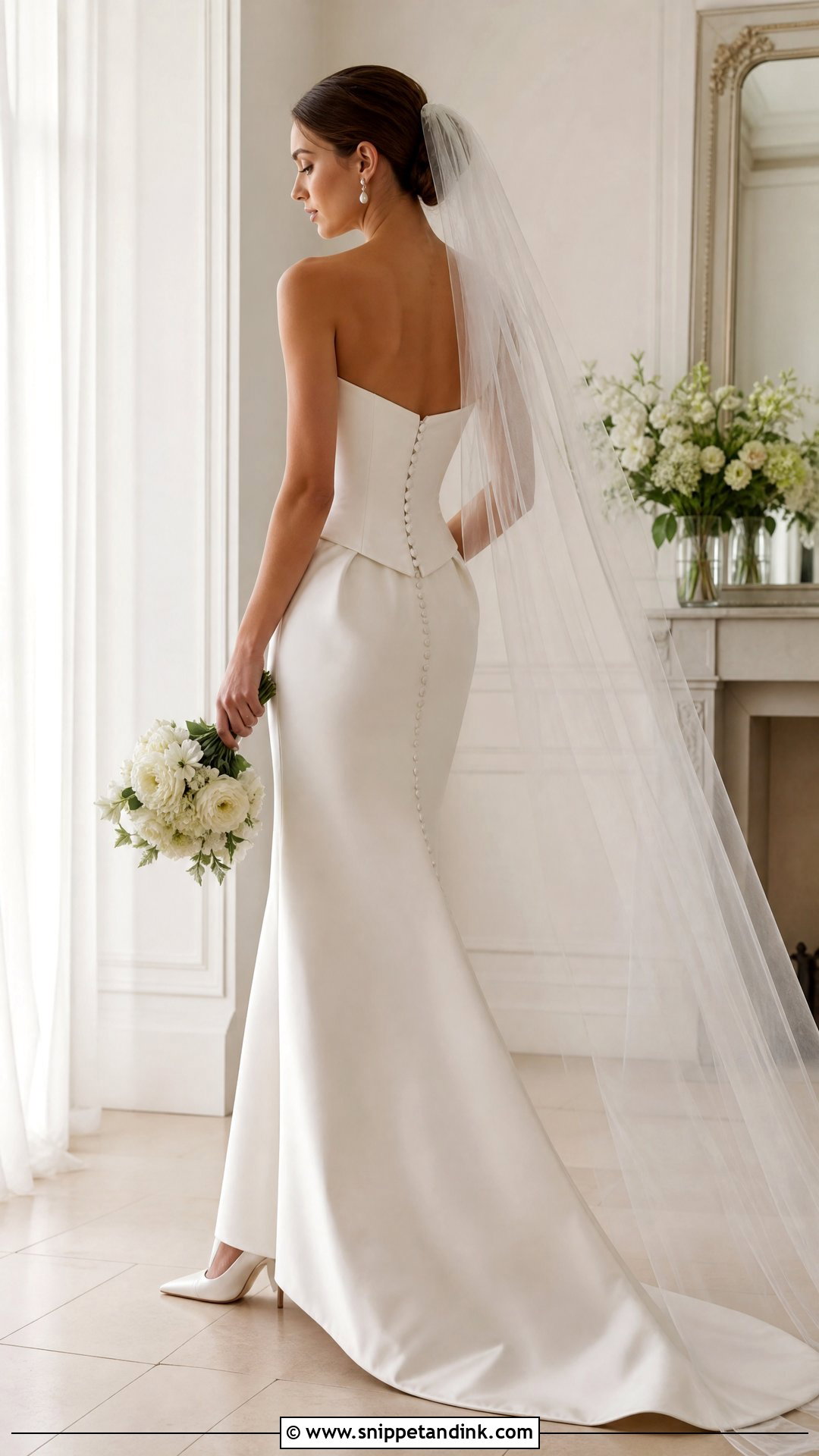
Minimal Baroque means choosing one strong feature and letting it work alone: a sculpted corset, a deep basque waist, rich jacquard, or a line of ornate buttons down the back of a plain satin or mikado gown. The structure carries the regal feeling. When there’s only one detail, it has to be executed perfectly, so that seam, button row or waist point gets more of my attention at fittings than anything else. Pearl earrings, a sleek veil, pointed heels and a simple bouquet finish it.
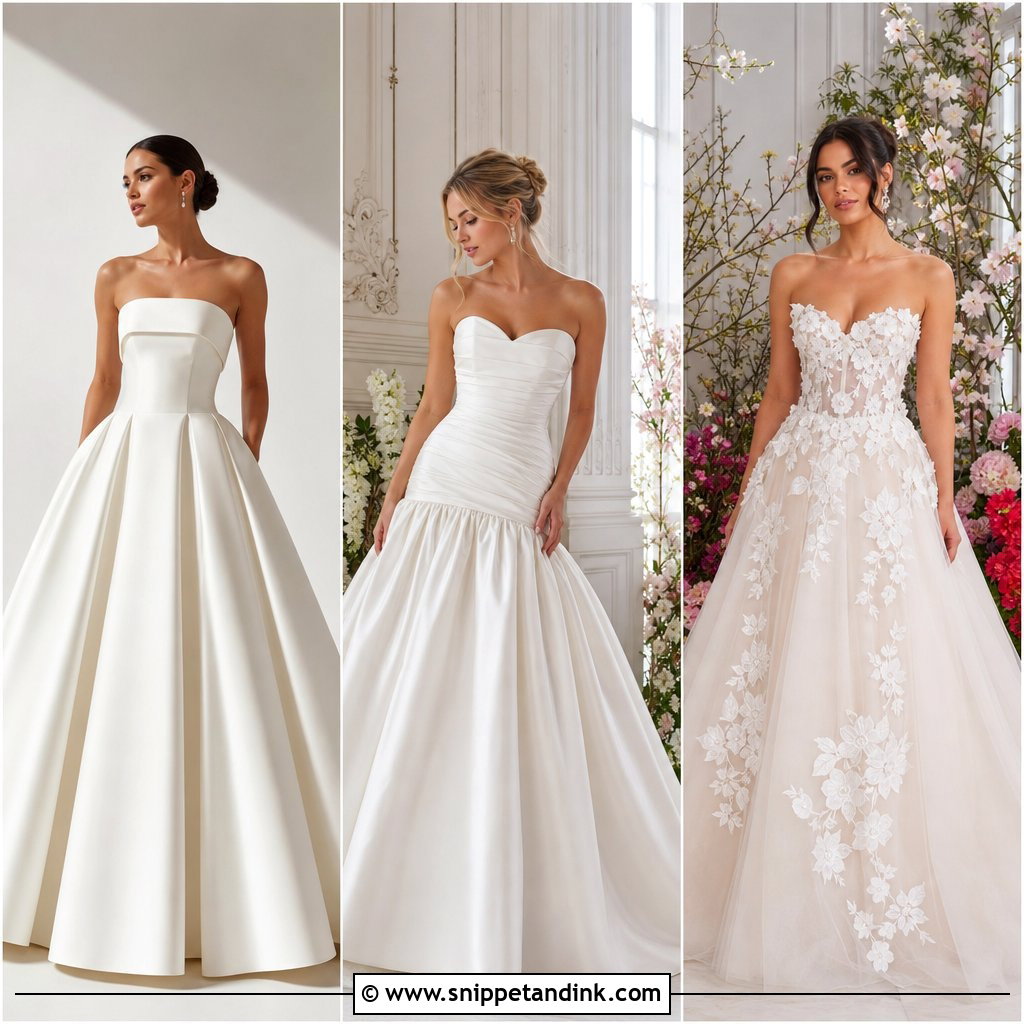

25. Baroque Plus Size Wedding Dress
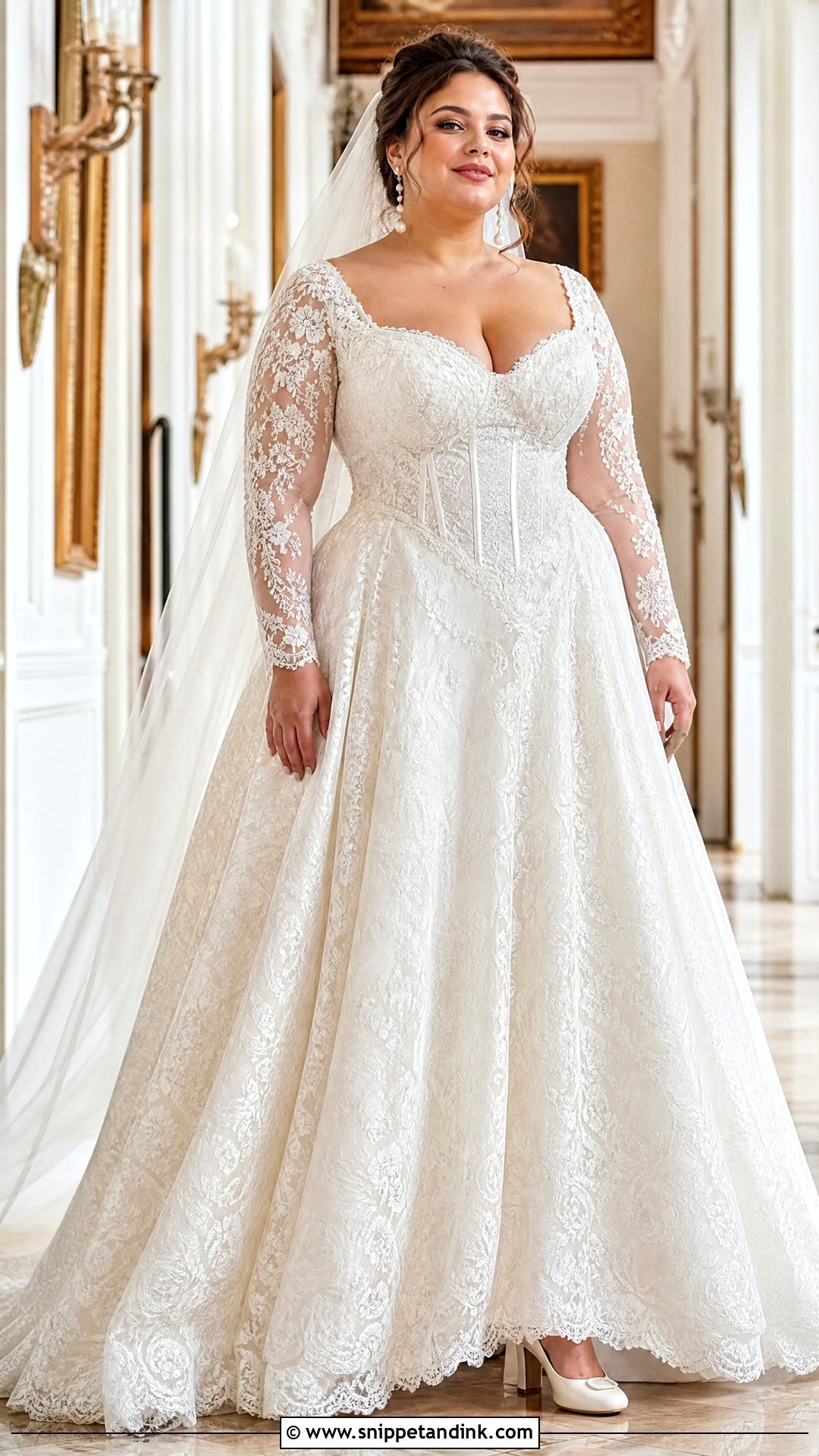
Support comes first in a plus size Baroque gown, ornament second. Strong corsetry, wide straps, a secure lace-up back or a built-in inner corset help the gown sit comfortably through a long day. A-line, ball gown and basque waist shapes all define the waist well, and rich lace, brocade, pearl details or embroidered sleeves bring in the period mood without costing comfort. Scale the accessories to the gown with pearl drops, a long veil and stable block or platform heels. My test is simple. Can you breathe, eat and dance in it?
Corsetry and Hand Embroidery Need a Longer Runway
Ornate gowns are rarely bought off the rail. Made-to-order dresses usually take several months to arrive, and hand-embroidered or heavily beaded ones tend to sit at the long end of that range, so I suggest ordering nine to twelve months out where you can. Timings vary between makers and shops, so get the expected delivery date in writing.
Fittings for a structured bodice
Plan on two or three fittings, with the last one close to the wedding. A corset bodice is fitted to the body you have that month, so any change afterwards shows straight away as gaping or pressure. Embroidery also limits alterations. Plain seams are easy to take in, but letting a gown out across a beaded panel means unpicking and re-stitching the pattern, which takes real time.
Hair and veil around an ornate back
Many of these gowns save their best work for the back: buttons, lacing, a basque point or embroidery running onto the train. I set the veil comb under a low bun so the tulle falls sheer over the detail instead of bunching at the shoulders, and I’d pick a plain-edged veil for a heavily worked back. Show your hairstylist a photo of the back of the dress, not just the front.
Where Ornament Stops and Costume Begins
Baroque bridal style comes down to rich detail held in check by good structure. You can go bold with a brocade ball gown, a dramatic corset, black lace or a gold-embroidered train, or keep it softer with pearl tulle, square-neck satin or a minimal basque waist. Your comfort, venue and body shape will narrow the list quickly. Pick one or two strong period details and let everything else stay calm. That restraint is what separates a gown that looks regal from one that looks borrowed from a theatre.
You'll Like These Ideas:


Leave a Reply