
Price tags don’t make a gown look rich. Fabric weight, the boning you never see, and a fit that stops the bodice gaping when you breathe do far more. I’ve pulled together twenty complete looks below, from duchess satin ball gowns to plain silk columns and heavily beaded lace, and for each one I’ve added the veil, jewelry, shoes and flowers I’d put with it, plus the fitting checks I’d make before anyone signs off. Some suit a ballroom, some a garden, and a few will need more alteration time than you’d expect.
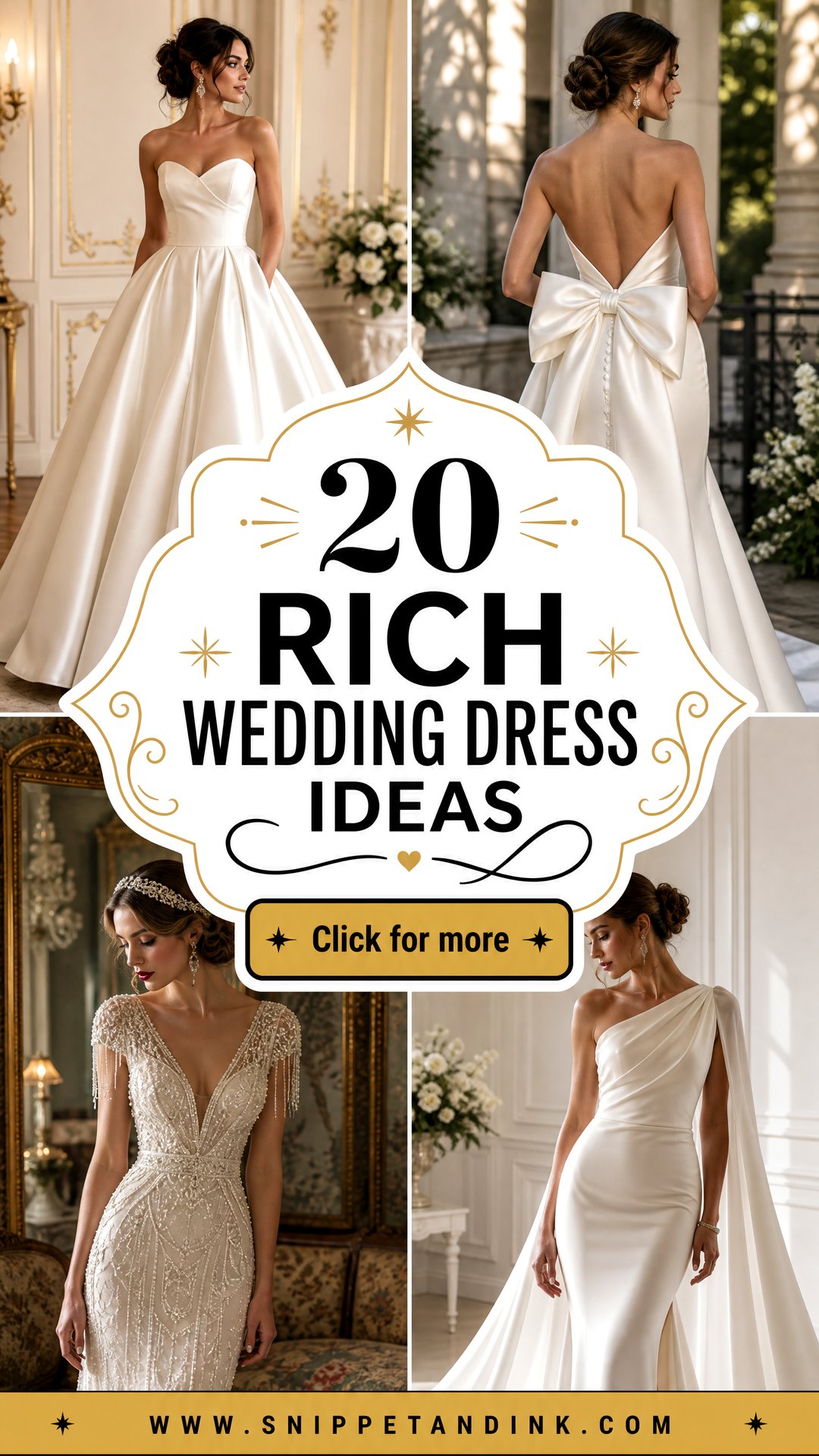
What Makes a Gown Look Expensive Up Close
In a bridal salon I judge a dress from the inside before I look at the front. The richest-looking gowns share a few things that have nothing to do with sparkle, and you can check them yourself in a fitting room.
- Fabric weight: pinch the skirt. Good satin and Mikado feel dense and spring back; thin satin wrinkles in your fist and reflects light in patches.
- Inner structure: look for boning in channels, a waist stay and a full lining. These hold the bodice so the outer fabric lies flat.
- Seams and lace: on lace gowns, see whether motifs are matched across seams or cut straight through. Matched work is a sign of care.
- Hem and length: a hem that just clears the floor in your shoes looks tailored. One that pools or bunches looks borrowed.
Then do the movement test. Sit, lift your arms and walk a few steps. If the bodice shifts or the neckline gapes, ask whether it can be fixed in alterations. Some things can, like taking in the side seams. A bodice that’s too short for your torso usually can’t.
1. Satin Ball Gown Wedding Dress
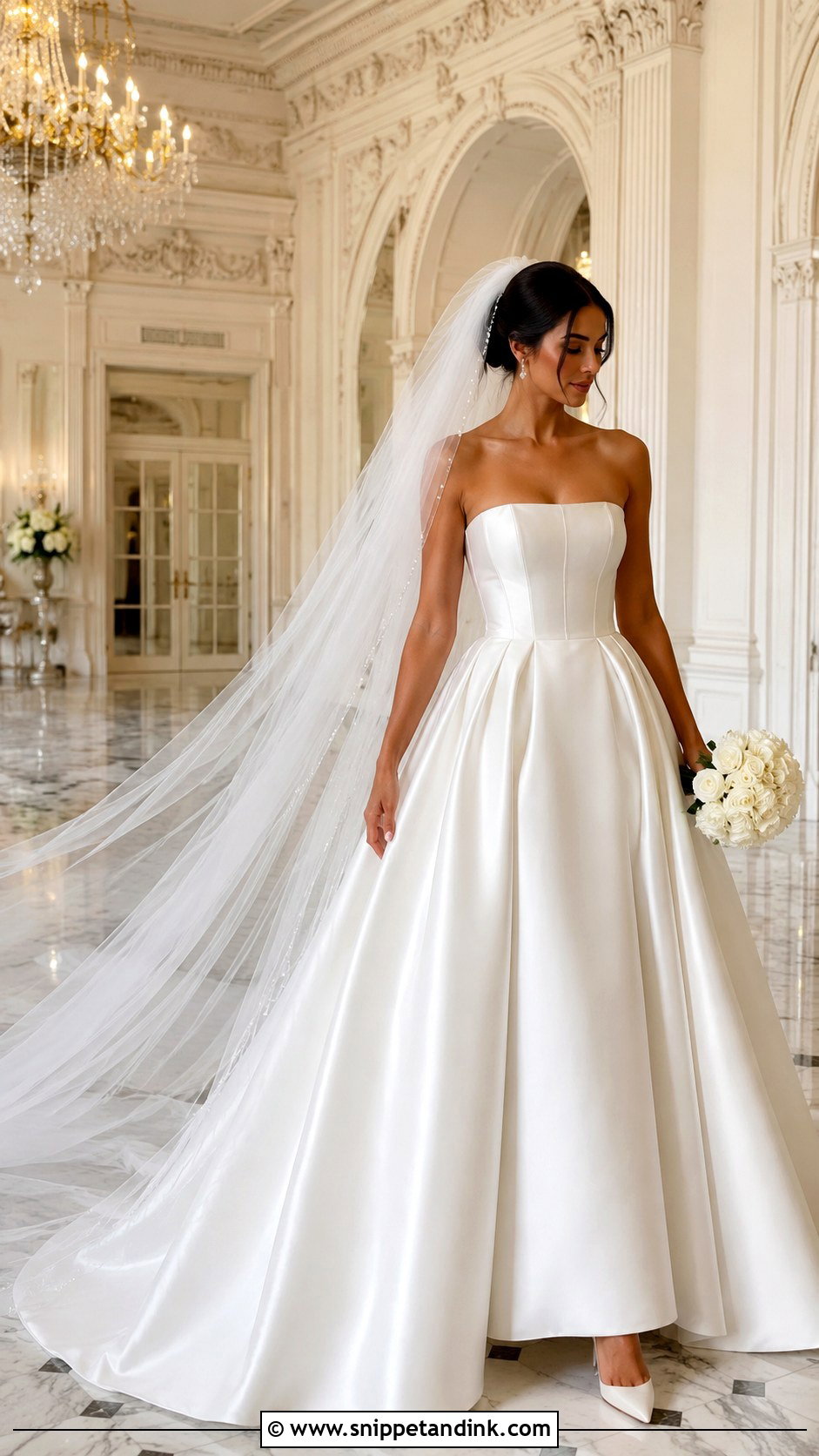
Duchess satin and Mikado both have enough body to hold a full skirt without a stack of petticoats, which is why a ball gown in either fabric looks grand with almost no decoration. A strapless neckline keeps it formal; off-the-shoulder softens the frame around your face. I’d add a cathedral veil, pearl drops, pointed satin pumps and a tight posy of white roses or callas. The catch with smooth satin is that it shows everything. A seam pulled a few millimetres off line will catch the light, so I always ask the seamstress to check the bodice support, the hem and the bustle points with you seated as well as standing.
2. Pearl Corset Wedding Dress
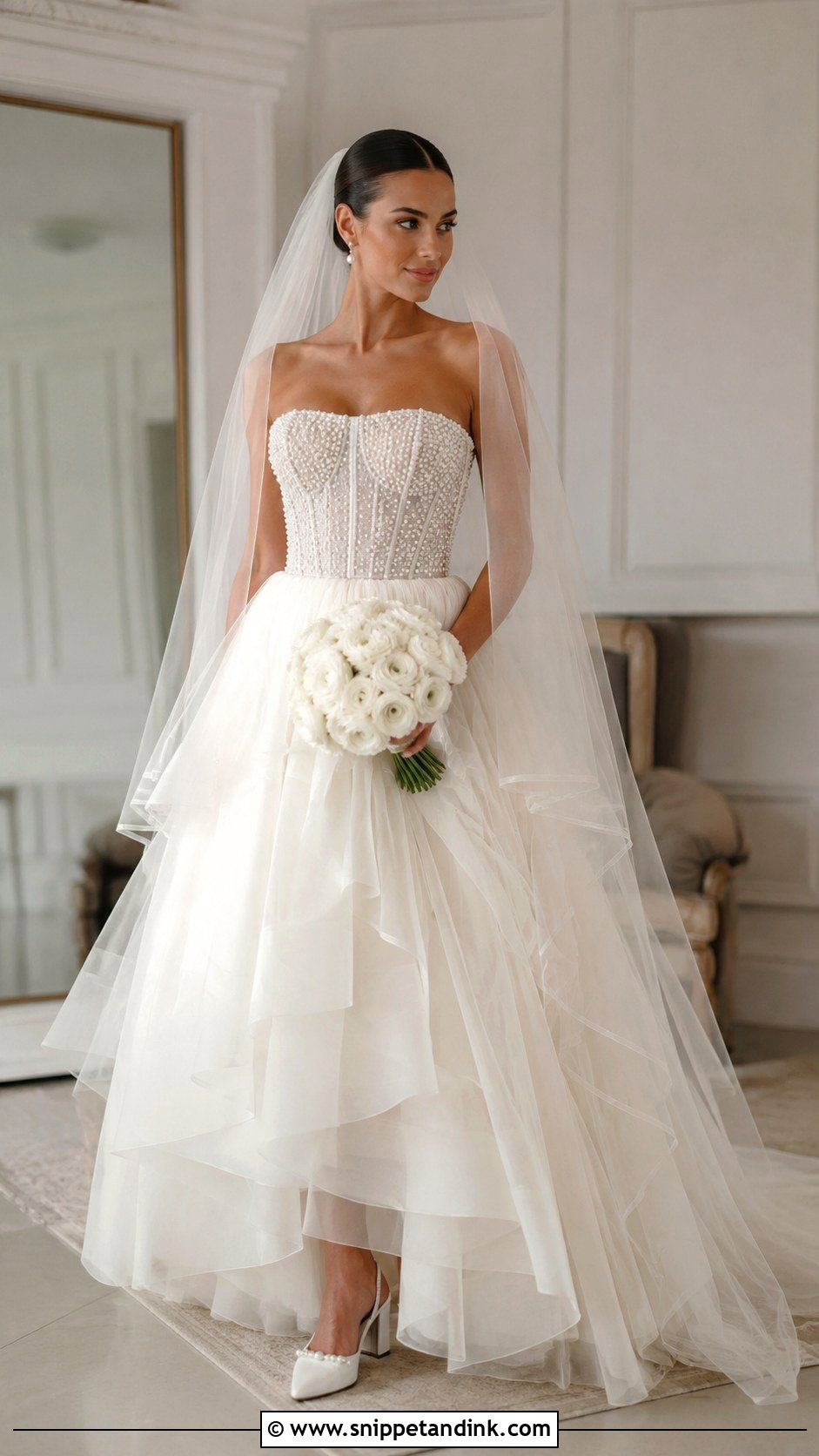
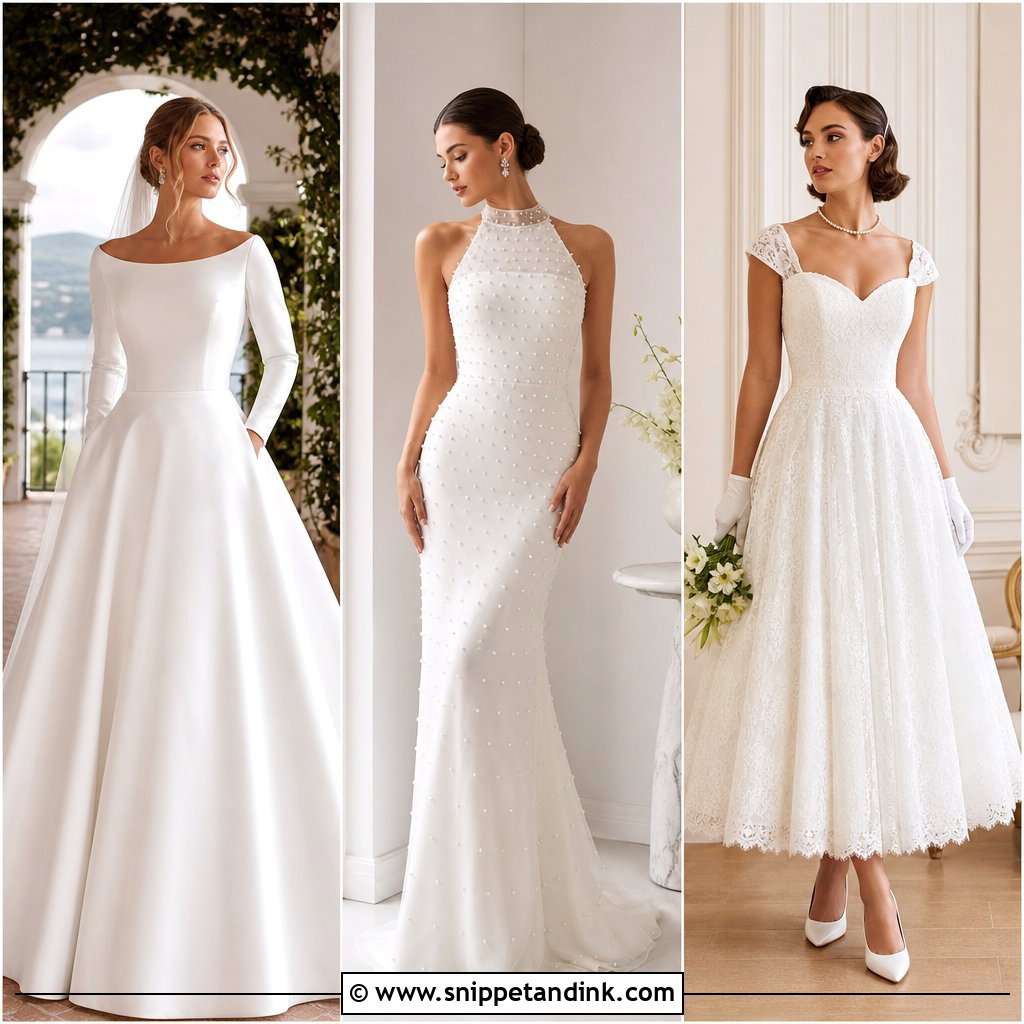
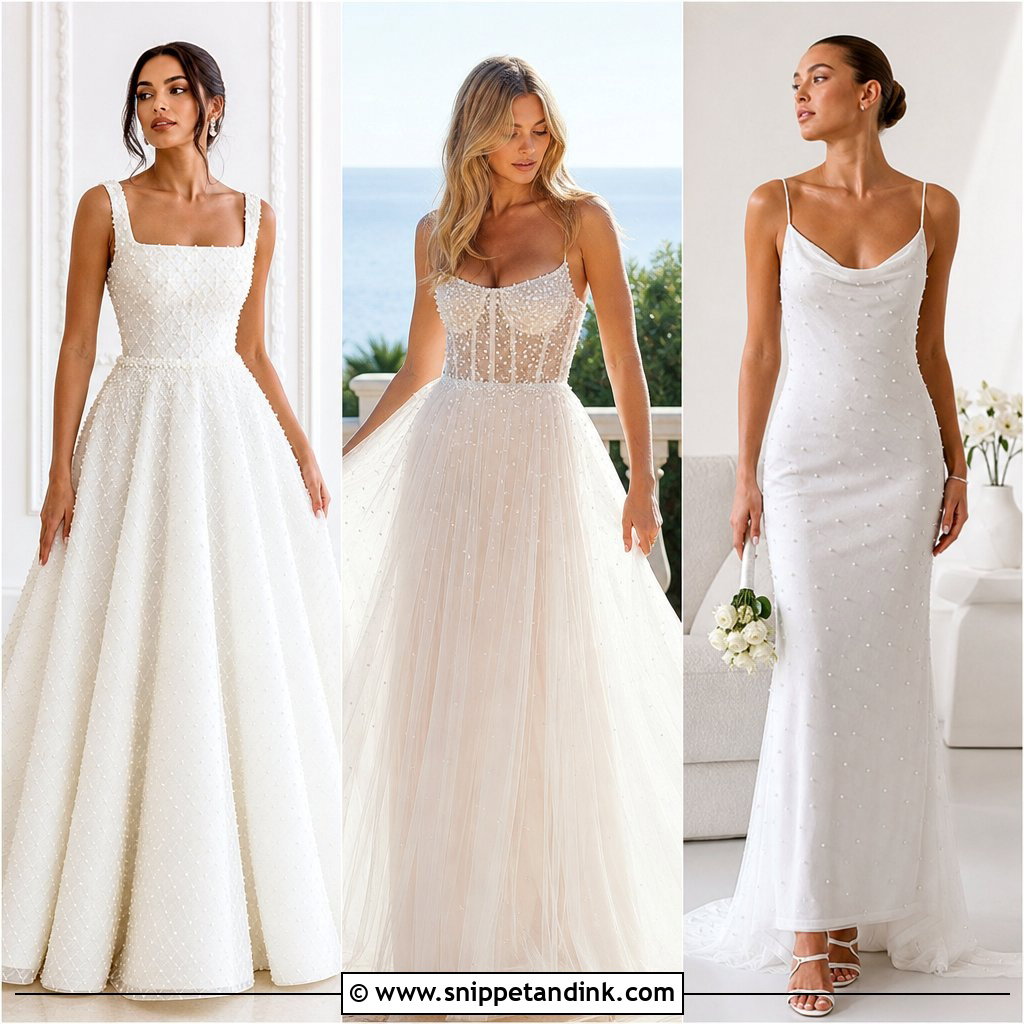
Seed pearls scattered over a corset bodice add texture you notice up close without shouting from across the room. Look for beaded straps or graduated pearl embroidery, then keep the skirt plain satin or layered tulle. Pearl studs, a sleek low bun, a sheer fingertip veil, block-heel ivory pumps and white ranunculus finish it. When I fit these, I run a hand inside the bodice: if the boning channels aren’t fully lined, they rub by the third hour. Detachable pearl-trimmed sleeves are an easy way to add coverage for a church ceremony, and with this much going on at the bodice, I’d skip the necklace.
3. Basque Waist Ball Gown Wedding Dress
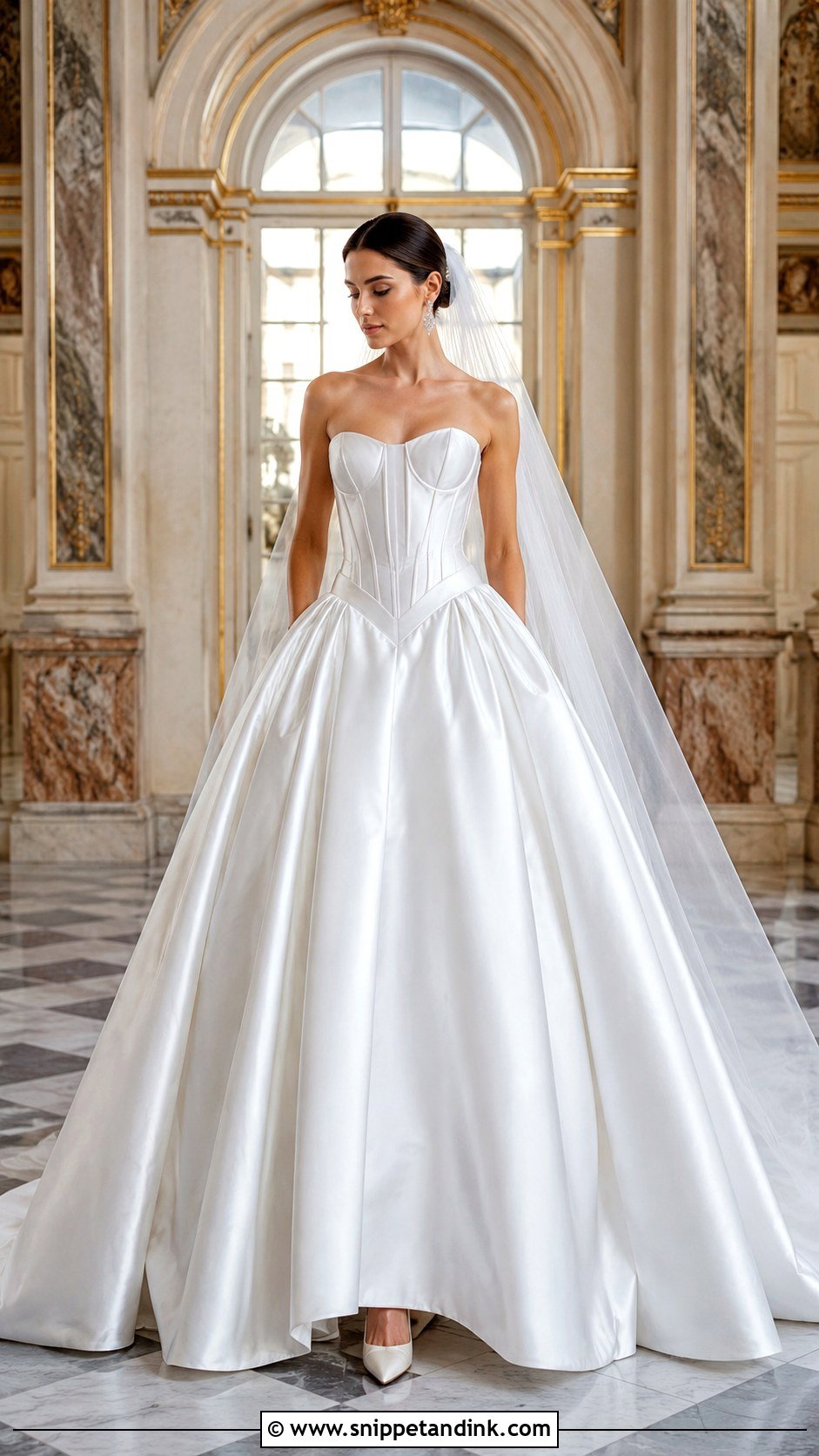
The dropped V of a Basque waist ball gown lengthens the torso before the skirt opens out, and it reads as properly regal in a ballroom, historic house or grand hotel. Satin gives a clean line; lace over tulle feels more romantic. I’d style it with a long plain veil, crystal earrings, pointed pumps, a structured white bouquet and an updo so the waist point stays visible. That point is also the fitting risk. If the bodice is even slightly long for you, it digs in when you sit. Sit, stand and walk in it at every fitting, and check that the skirt joins below the point smoothly, with no lumpy gathers.
4. Long Sleeve Lace Wedding Dress
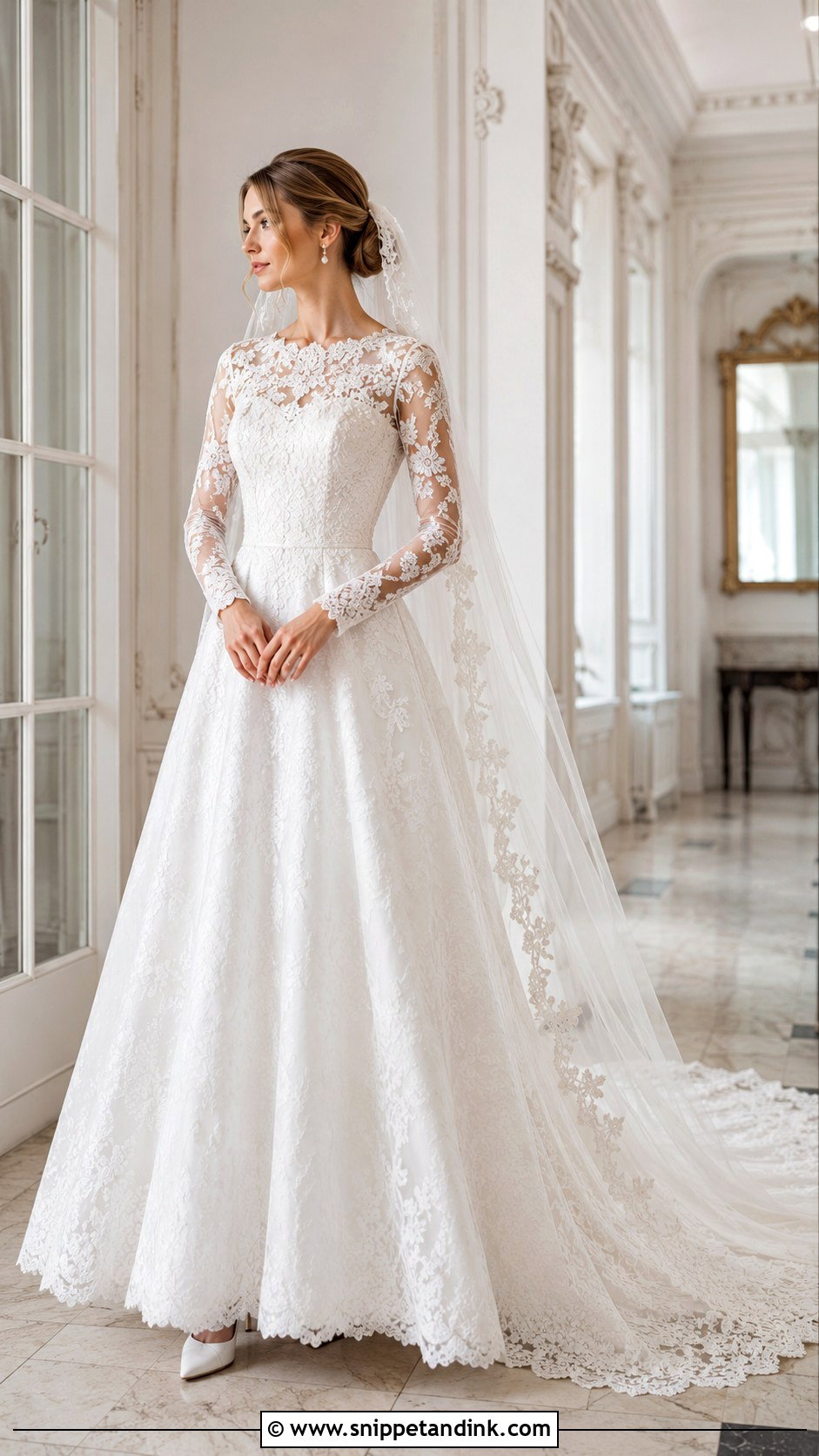
Long lace sleeves need more room than they look like they do. I ask every bride to hug someone and lift her arms over her head at the fitting, because a sleeve cut snug at the bicep will tear at the underarm seam during the first dance. Choose an A-line or soft ball gown with a lined bodice, sleeves ending neatly at the wrist, scalloped cuffs, covered buttons and a chapel train. Pearl earrings, closed-toe pumps and a cathedral veil edged in matching lace sit well with it, along with a loose chignon. Garden roses suit an estate or ballroom, and for a cold day an ivory wrap covers the outdoor portraits.
5. Off The Shoulder Satin Wedding Dress
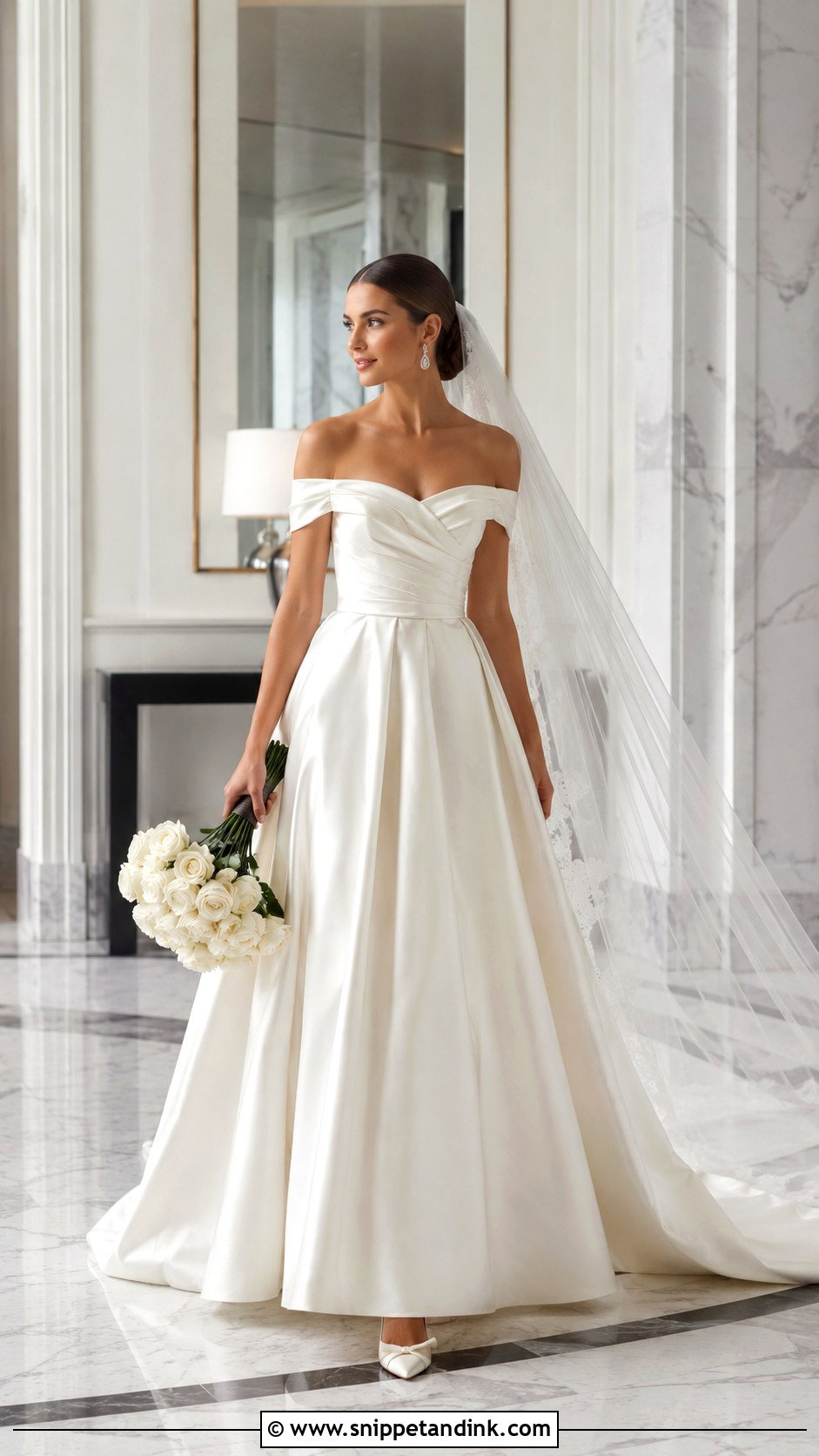
An off-the-shoulder satin neckline only works if it stays put. The folded band should sit on the upper arm and be anchored to a corseted bodice underneath, so it isn’t the band doing the holding. Satin with some weight in the skirt moves better here than a thin, shiny polyester. I’d wear it with a sheer cathedral veil, teardrop earrings, low satin heels, a polished bun and soft makeup, carrying long-stem white roses or a compact orchid bouquet. At the fitting, raise both arms and sit down. If you have to hitch it up afterwards, the bodice needs taking in, not the sleeves.
6. Crystal Beaded Mermaid Wedding Dress
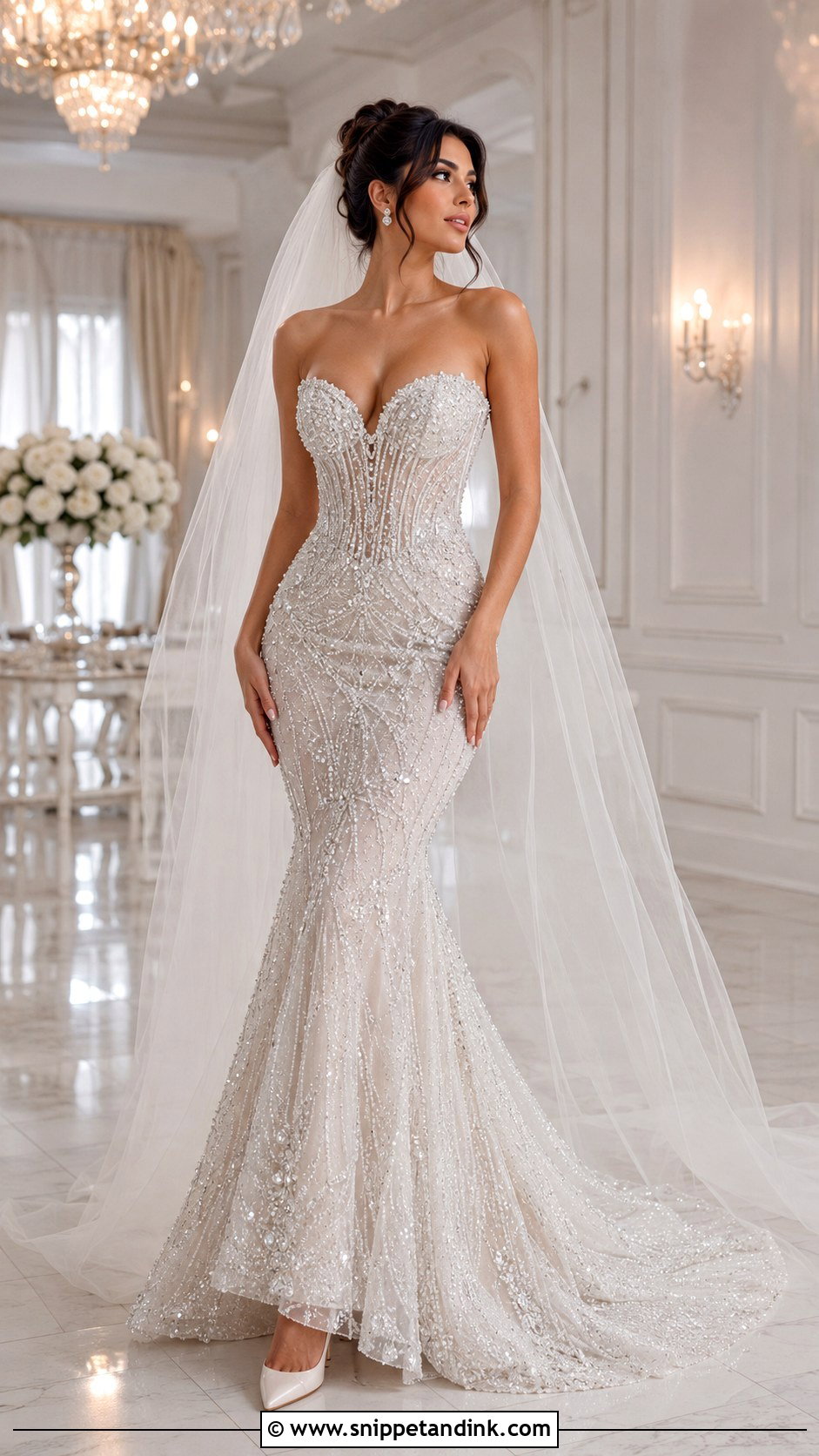
Crystal beading on a mermaid cut is full glamour, so everything around it should be quiet: a plain tulle veil, pointed pumps, crystal studs and one fine bracelet, with a sleek bun or smooth Hollywood waves. White orchids in a restrained shape keep the bouquet from fighting the bodice. Heavily beaded fabric is weighty, and on a fitted hip that weight drags the bustle hooks down by evening. I’d ask for the bustle to be attached to the lining with reinforcing tape, check the underarms for scratchy bead edges, and make sure the flare starts low enough that you can take a full walking stride.
7. Silk Column Wedding Dress
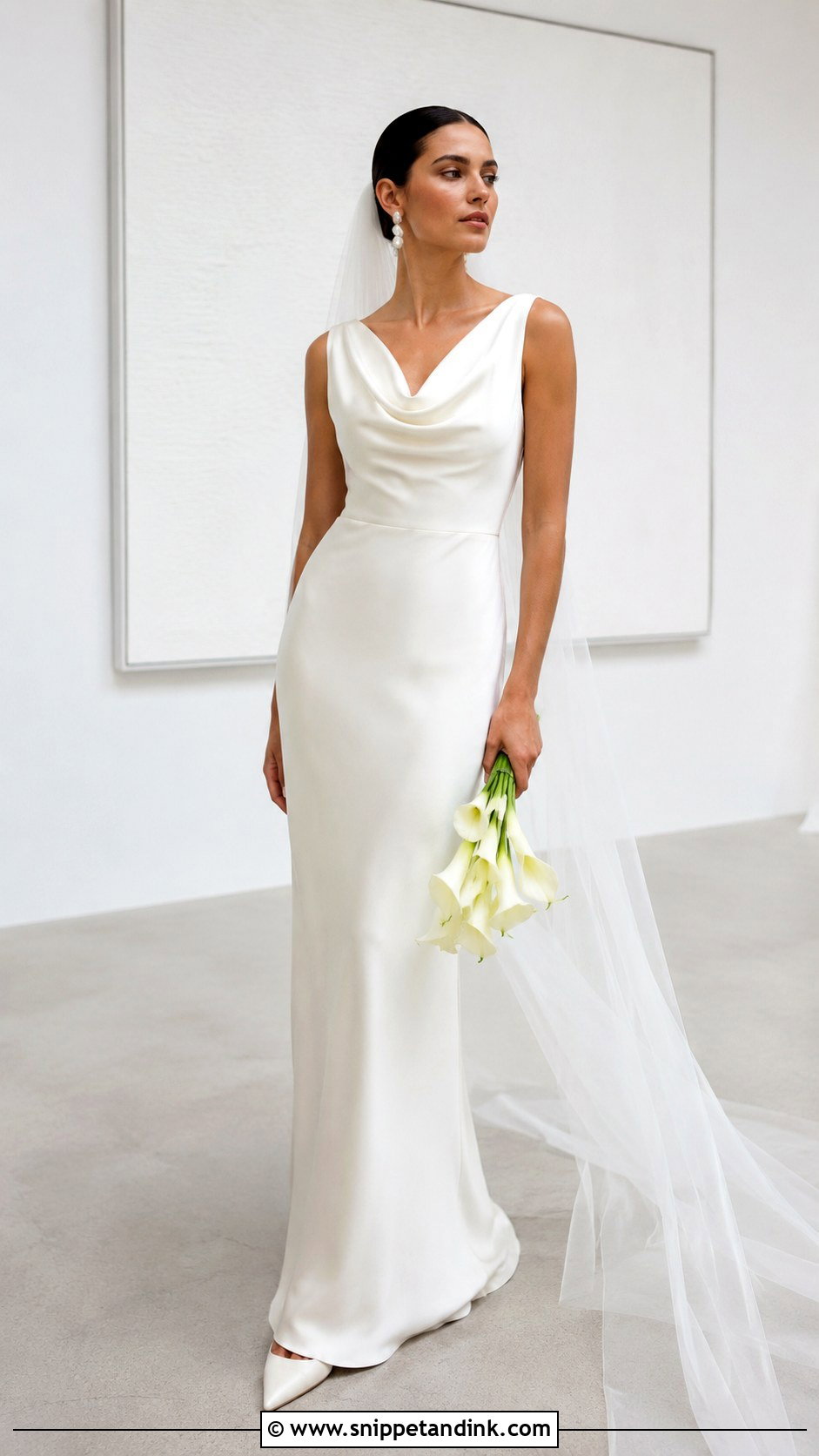
A silk column proves how far plain fabric can go. Heavyweight silk satin with a draped neckline, a shaped waist and a straight floor-length skirt should skim the body, not cling to it. Style it with a long sheer veil, sculptural pearl earrings, sleek pointed heels, a smooth low bun and a single variety of flower, tulips or callas. I’m strict about underwear with this one: bias-cut or close-fitting silk shows every line, so bring the exact pieces you’ll wear to every fitting. For more drama at the ceremony, a removable cape or overskirt works, and once it comes off the column dances easily.
8. 3D Floral Wedding Dress
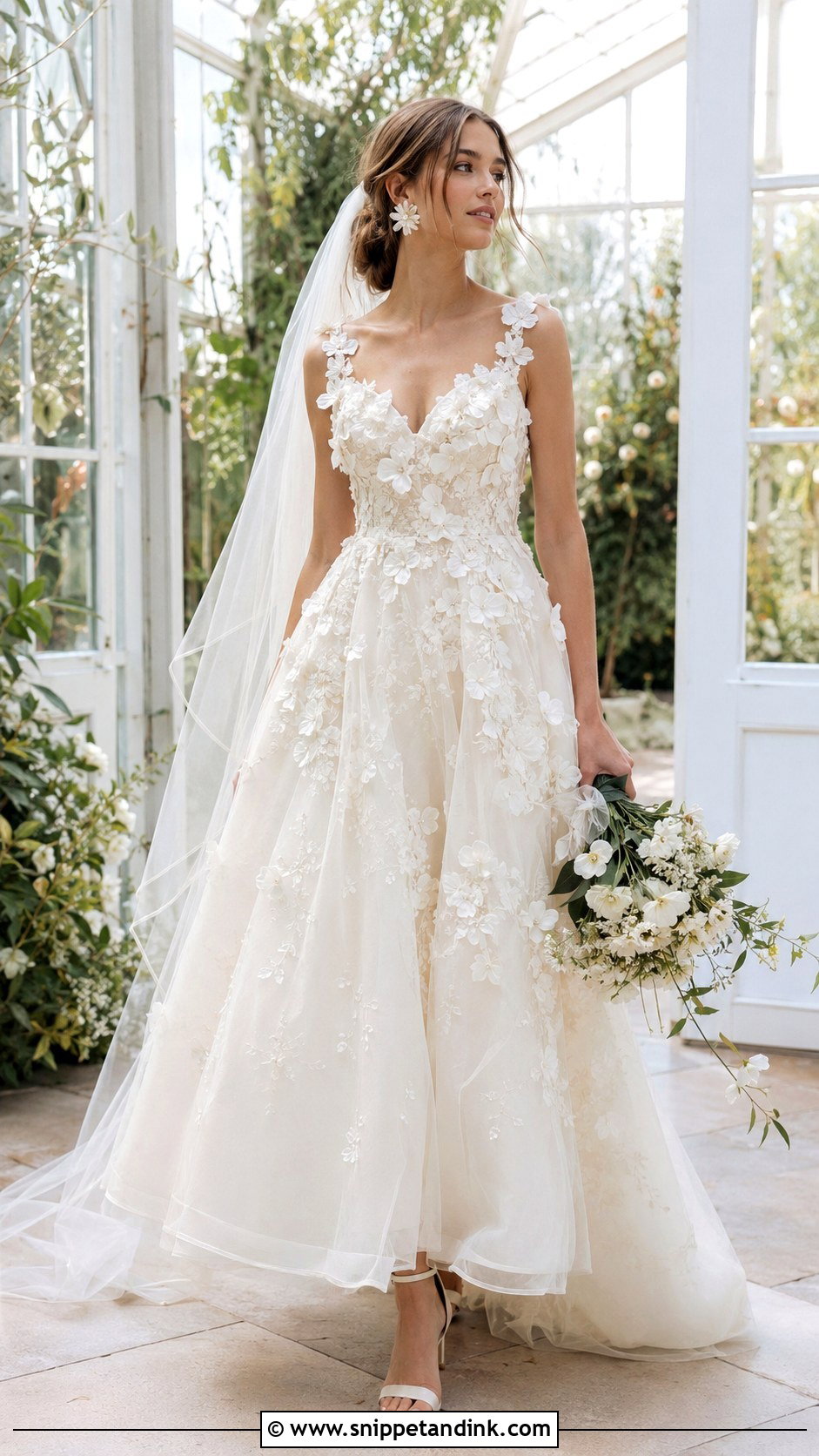
Three-dimensional flowers look richest when they’re clustered on the bodice and thin out as they travel down the skirt, so the shape of the gown still shows. Pair it with a raw-edge veil, small floral earrings, ivory ankle-strap heels and a soft updo with a few loose pieces. For the bouquet, echo the appliqué flowers rather than copying them exactly. I always check where the petals sit near the inner arm and the waist. Stiff appliqués scratch skin and snag the veil, and a stylist can sometimes move one or two before the hem is done.
9. Square Neck Satin Wedding Dress
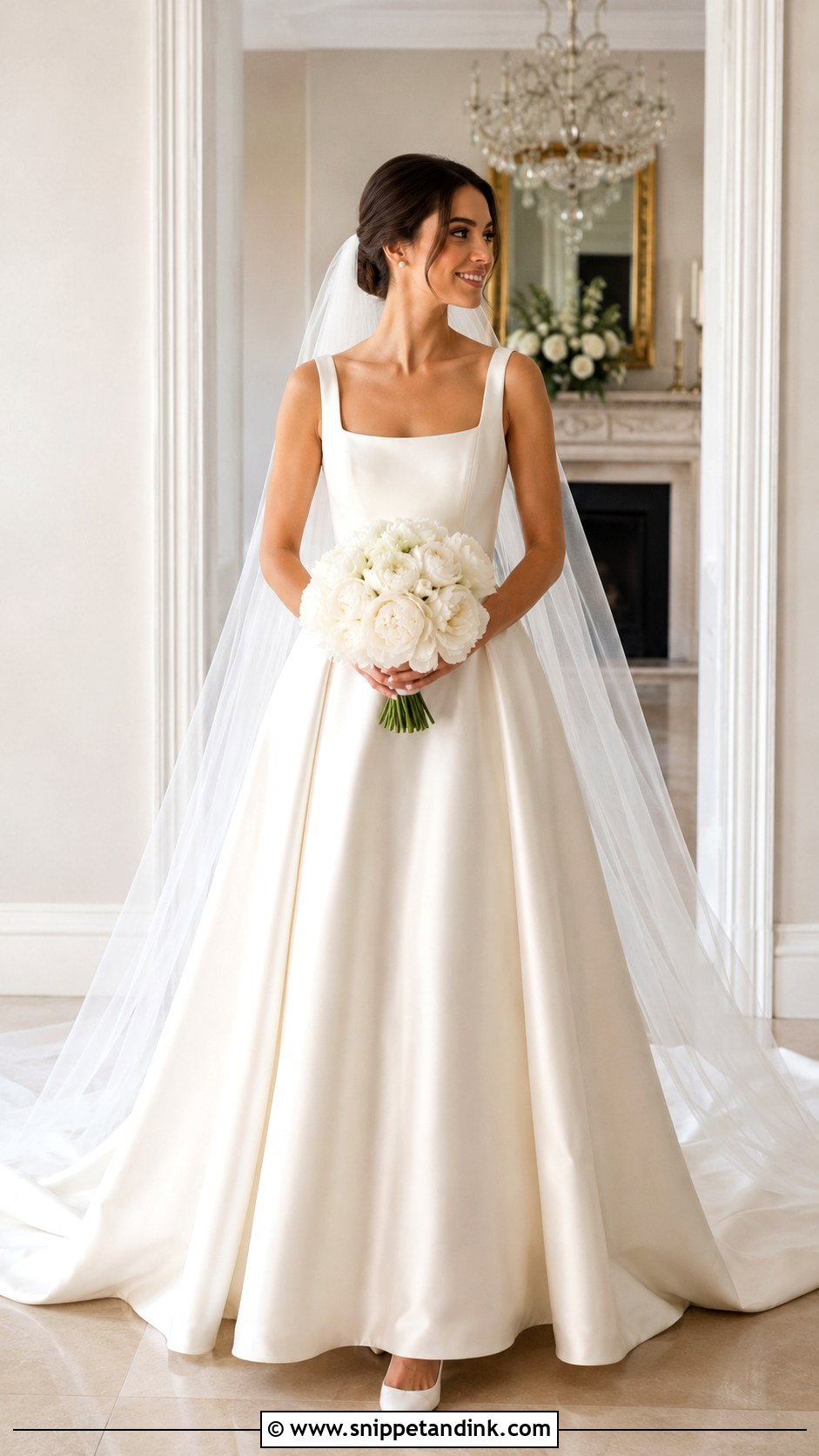
A square neckline looks stately on a satin dress but only if the fabric is heavy enough to keep the top edge straight. In thin satin, the corners fold in at the bust after an hour of wear. Wide straps, a fitted bodice and an A-line or full skirt suit it. I’d add a cathedral veil, pearl or diamond-style studs, pointed ivory pumps, a centre-parted low bun and a rounded bouquet of peonies or roses. Fitted sleeves can be added without breaking the line. The real work is at the shoulders: the straps must lie flat and the neckline must stay level when you walk, which usually means the straps are shortened, not the bodice.
10. High Neck Embroidered Wedding Dress
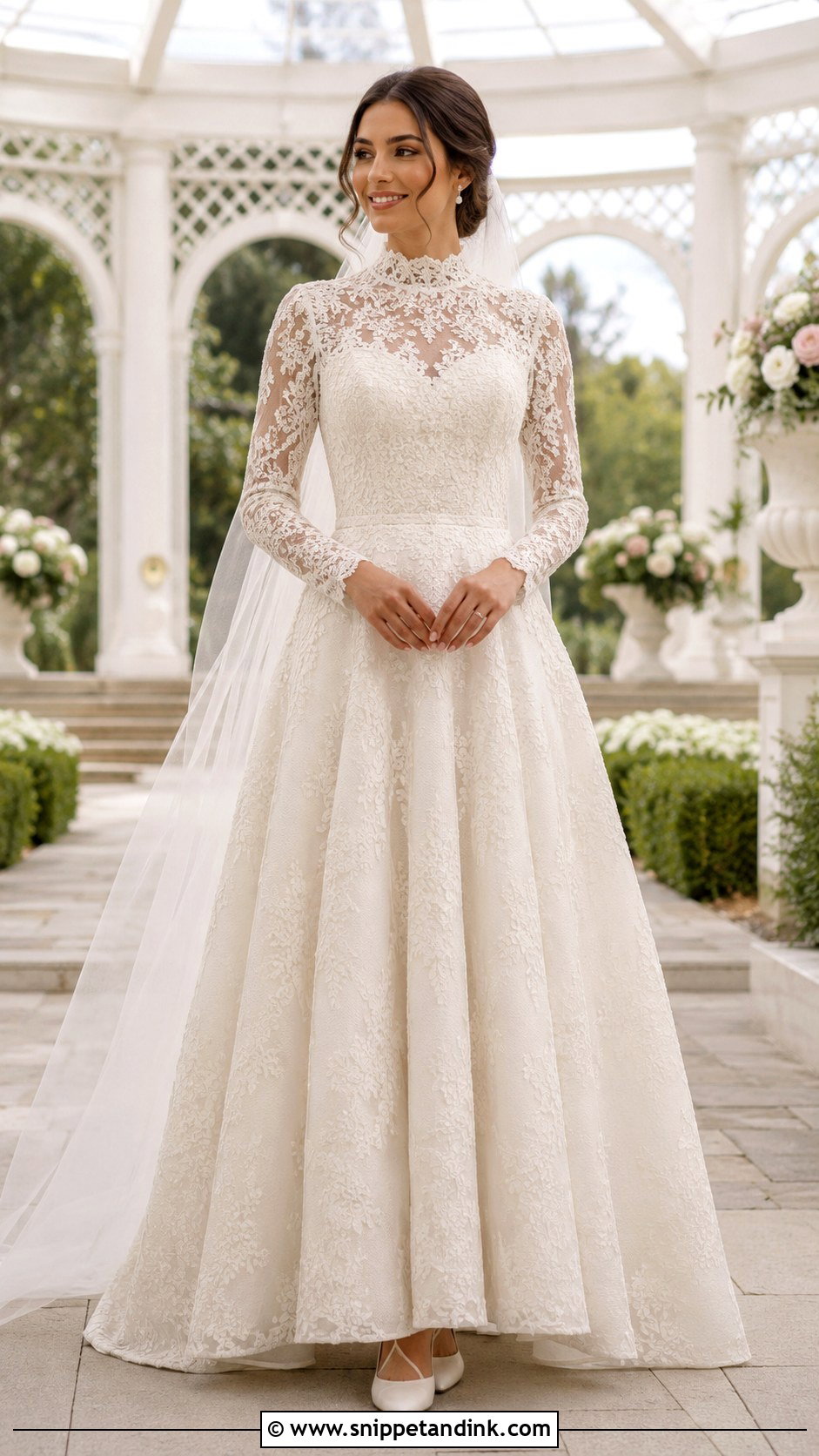
High necks give coverage and texture at once, and an illusion neckline with fine floral embroidery is the softest way to do it. Fitted sleeves, a gently defined waist and a smooth A-line skirt keep the top half from looking busy. I’d attach the veil below the hairstyle, not on the crown, so the embroidery at the back of the neck isn’t hidden. Small pearls, a neat bun, closed-toe kitten heels and a loosely gathered bouquet finish it. Turn your head side to side at the fitting; illusion mesh that’s cut tight at the throat itches all evening. If the embroidery is beaded, choose a veil with a plain cut edge so it doesn’t snag.
11. Bow Back Wedding Dress
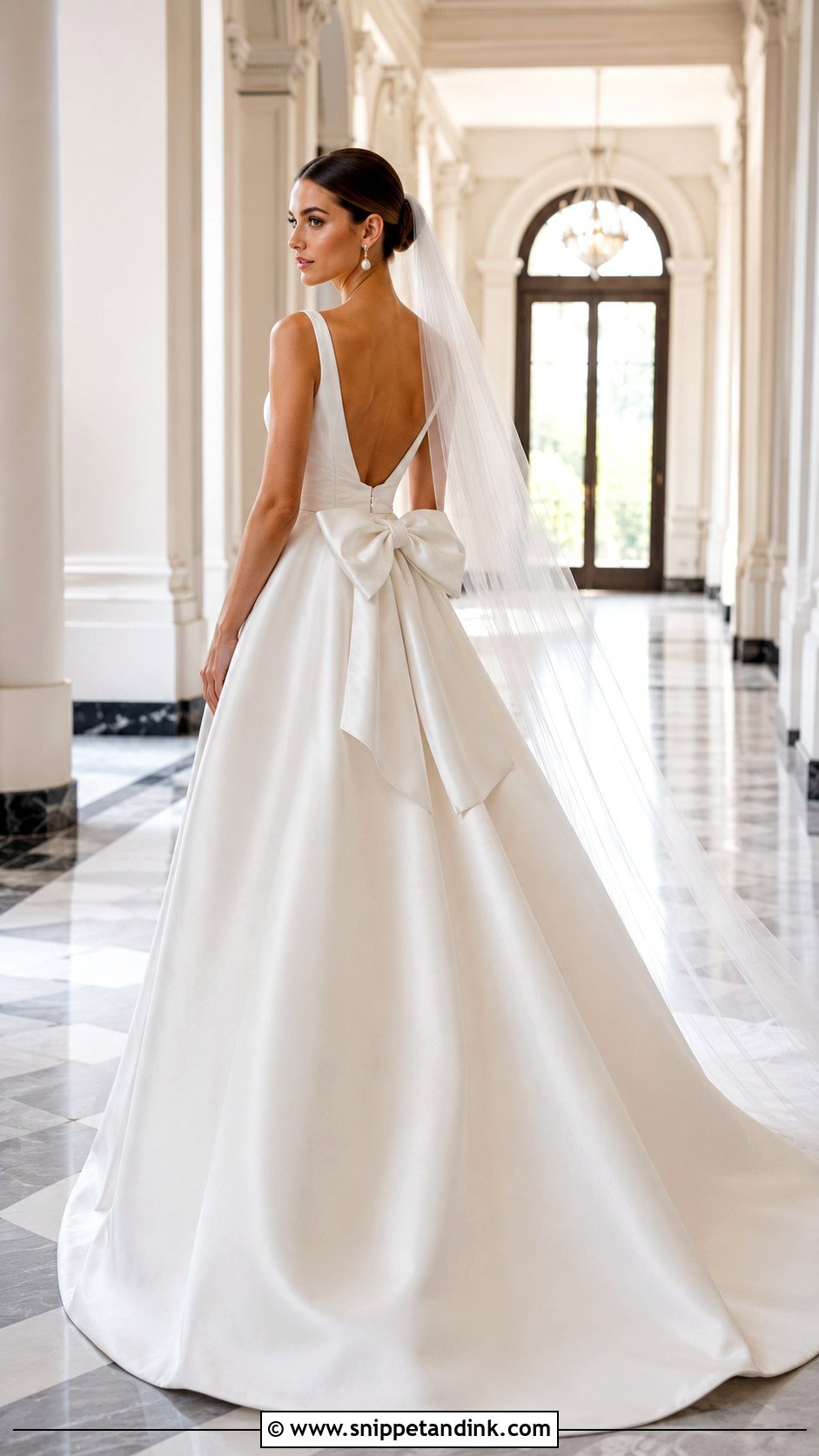
Most of the ceremony is spent with your back to the guests, which is why an oversized bow at the waist earns its place. Keep the front of the satin or silk A-line plain, choose a low or square back, and pin your hair up so nothing covers the bow. A sheer cathedral veil that comes off after the ceremony, pearl earrings, classic pumps and a compact bouquet with little trailing greenery complete it. A structured bow is heavier than it looks. I’d ask for it to be detachable and fastened to the waist seam with hooks, because a bow sewn only to the outer fabric slowly tips and pulls the waistband down.
12. Cape Sleeve Wedding Dress
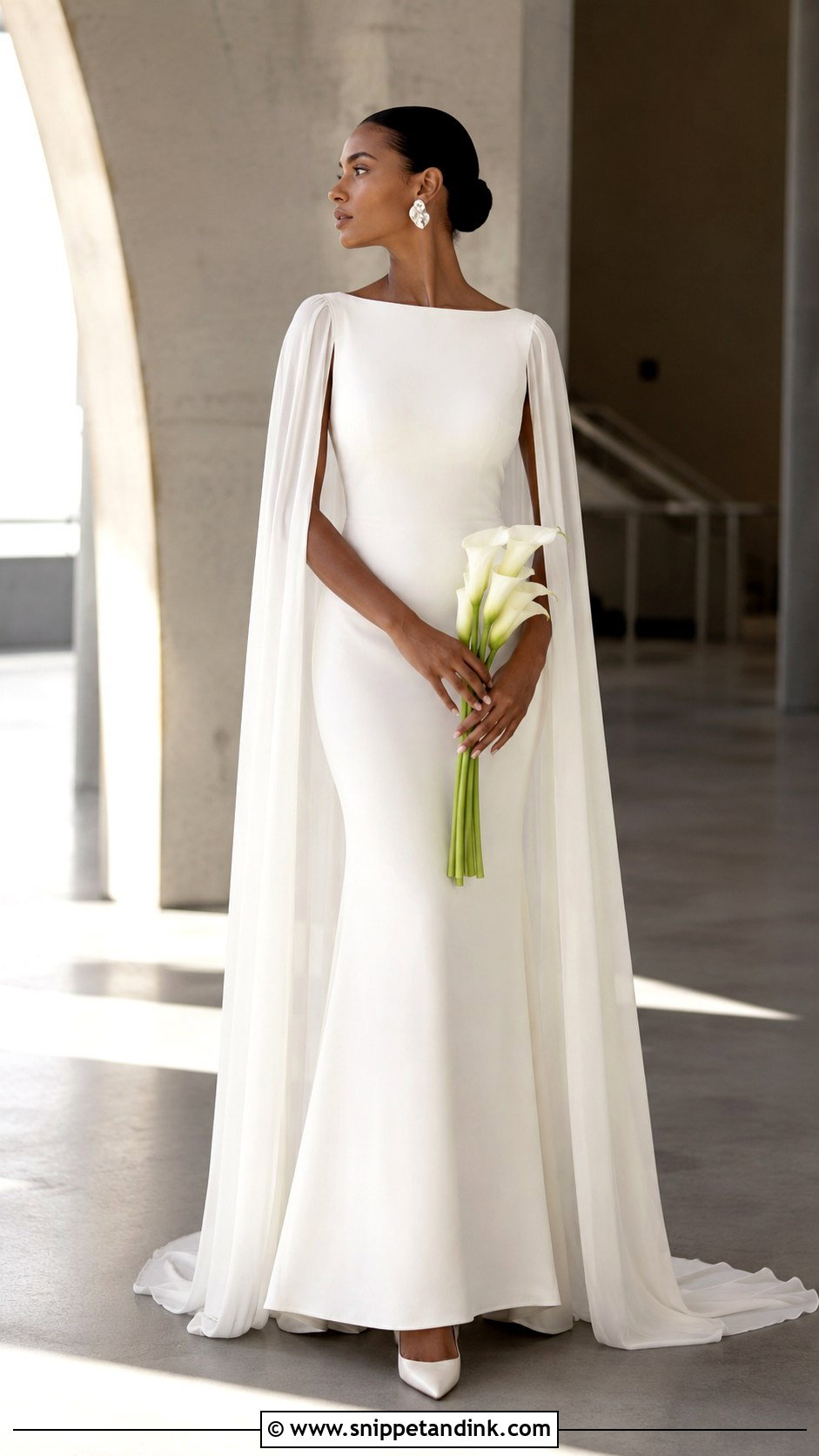
Cape sleeves add movement, not decoration, which makes them a good pick for a bride who dislikes beading. Choose a fitted crepe gown, a satin column or a slim A-line with chiffon or tulle panels falling from the shoulder, and let the cape stand in for a veil or sit under a small hairpiece. Sculptural earrings, pointed pumps and callas suit the clean line, with hair in a low bun or smooth ponytail. I’d keep the cape ending at or just short of the train, since extra length gets trodden on. Ask the tailor to secure the attachment points and test them with your arms forward, as if you’re hugging someone.
13. Gold Embroidered Wedding Dress
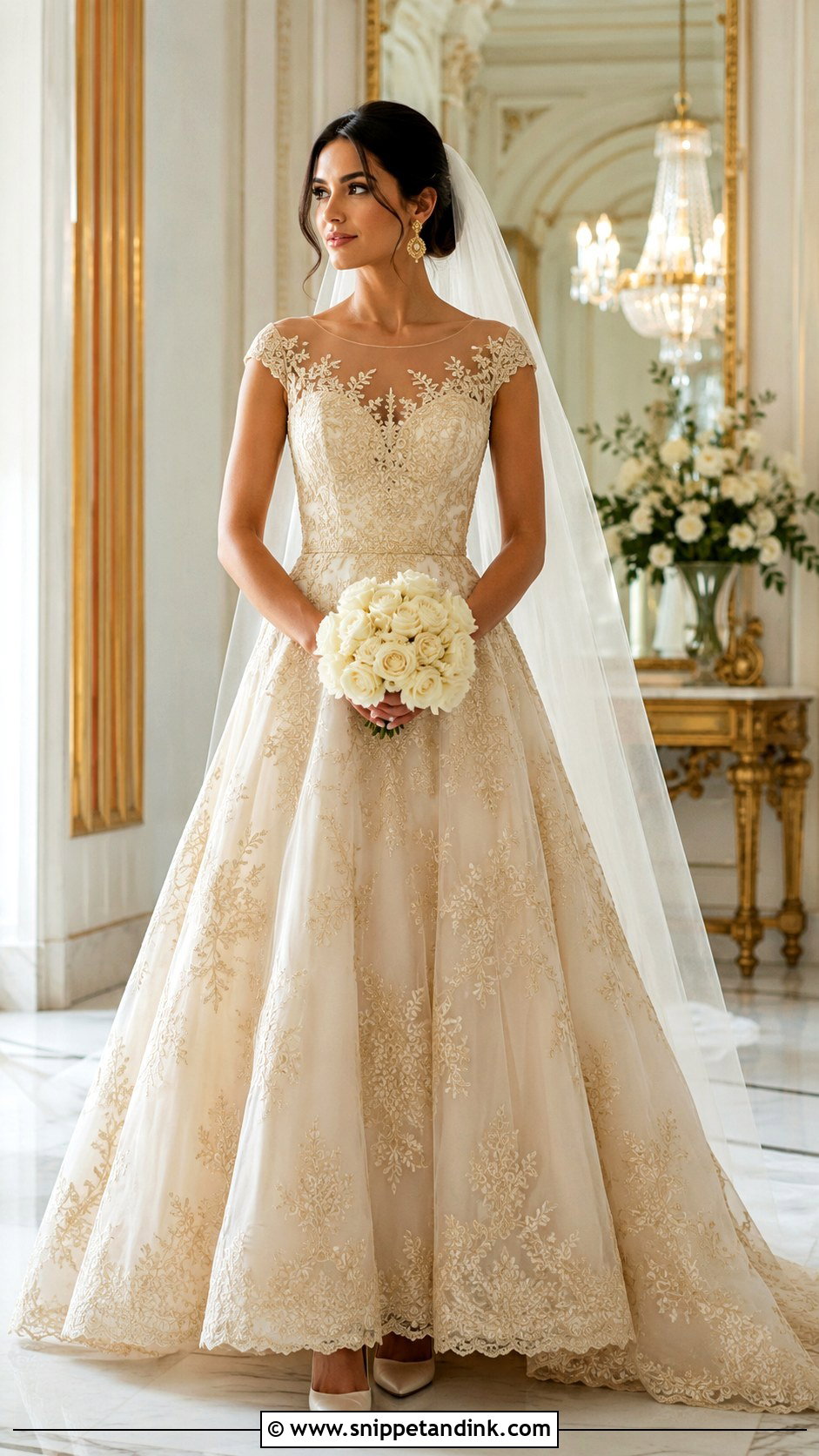
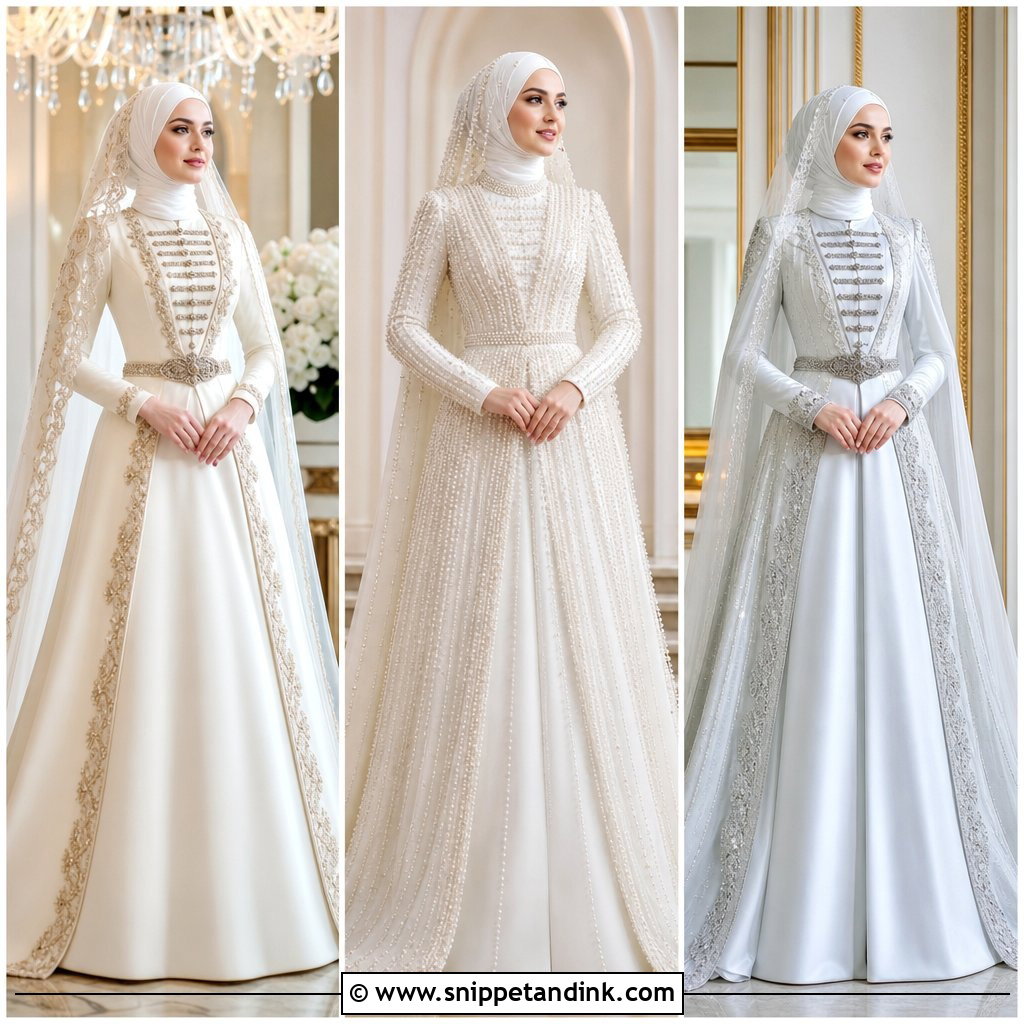
Gold thread on ivory warms the whole look, and a champagne lining behind it makes the embroidery easier to see. Keep the metallic work around the bodice, waist and train, and pair it with gold-toned earrings, neutral satin pumps and a plain ivory veil. A low textured bun and softly luminous makeup suit the warmer palette, as do cream roses or white orchids. I’d hold back on extra metallic accessories. Before you buy, look at the dress by a window and again under warm indoor bulbs: metallic thread can turn brassy and costume-like under some lighting, and you want to see that in the shop rather than in your photographs.
14. Cathedral Train Wedding Dress
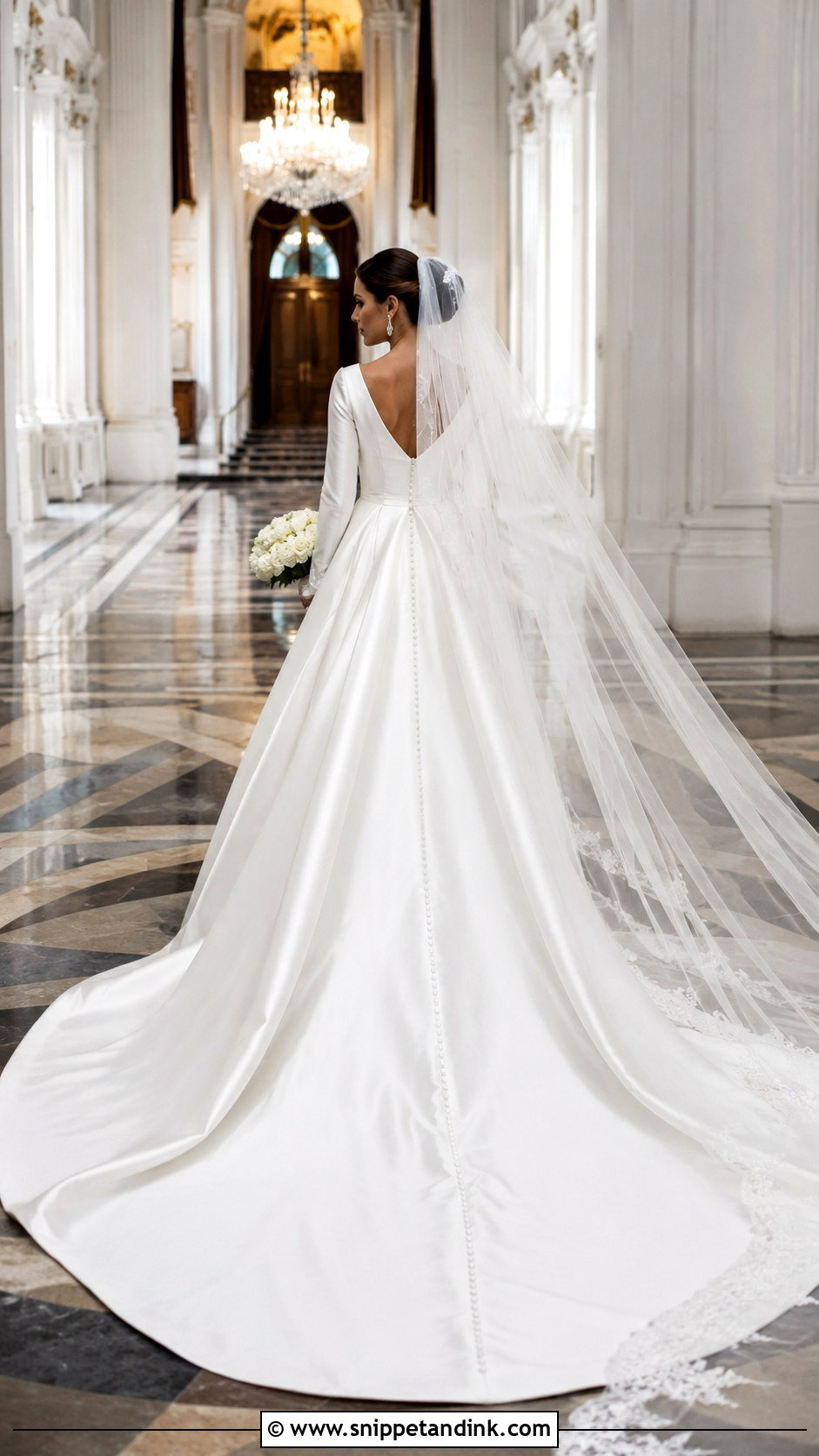
A cathedral train turns even a plain gown ceremonial, but it is also the one feature that needs a plan. Structured satin A-lines, fitted lace and classic ball gowns all carry one well; style it with a matching-length veil, small earrings, comfortable closed-toe heels and a moderately sized bouquet that doesn’t hide the bodice. Then think practically. A cathedral train usually needs a multi-point bustle, and I’d have your maid of honour come to the final fitting to learn the hooks, since a bustle gets done in a hurry between the ceremony and the first dance. Practise turning and climbing steps beforehand, and decide whether you’ll kick the train behind you or have it carried.


15. Pleated Organza Wedding Dress
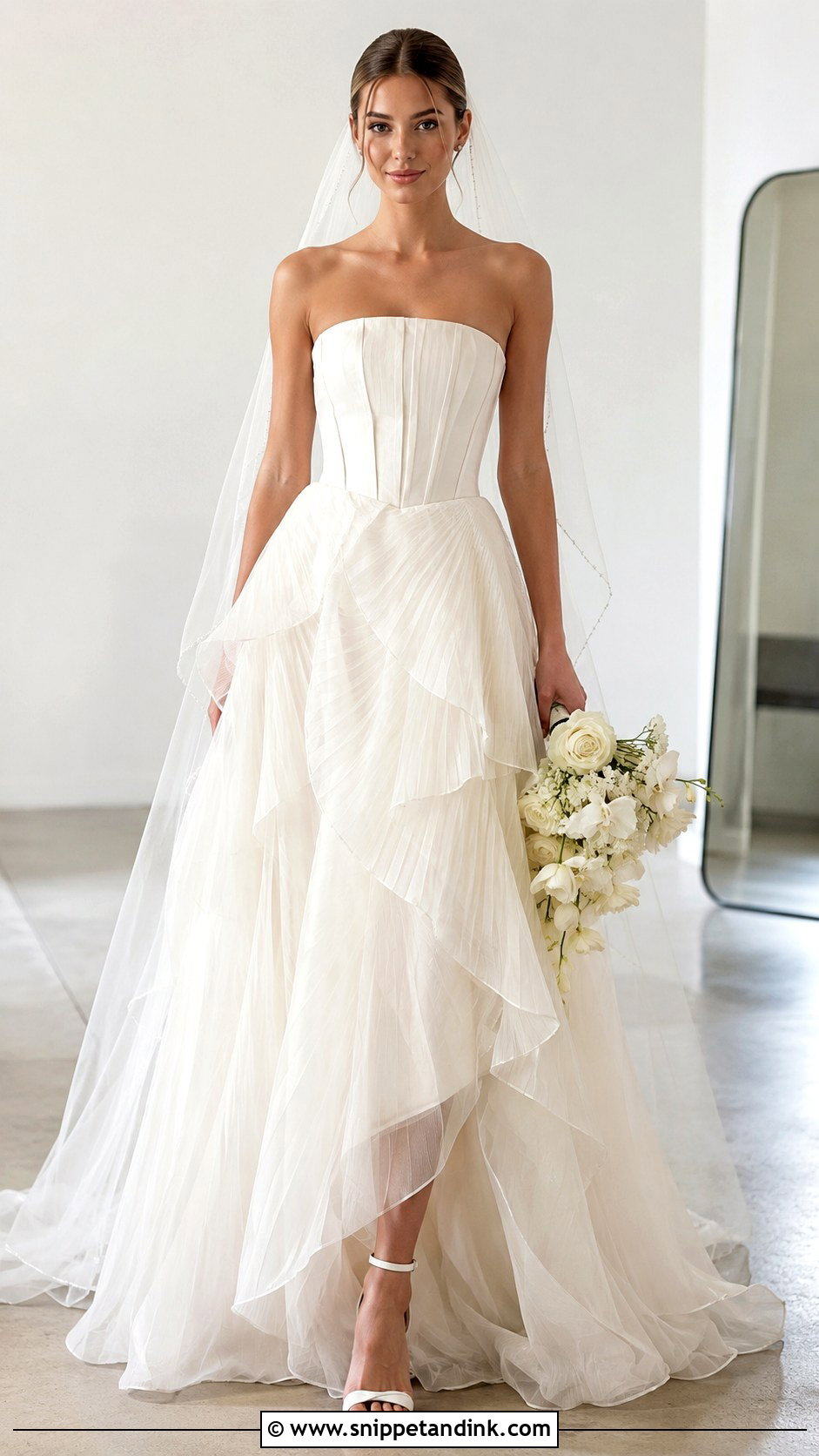
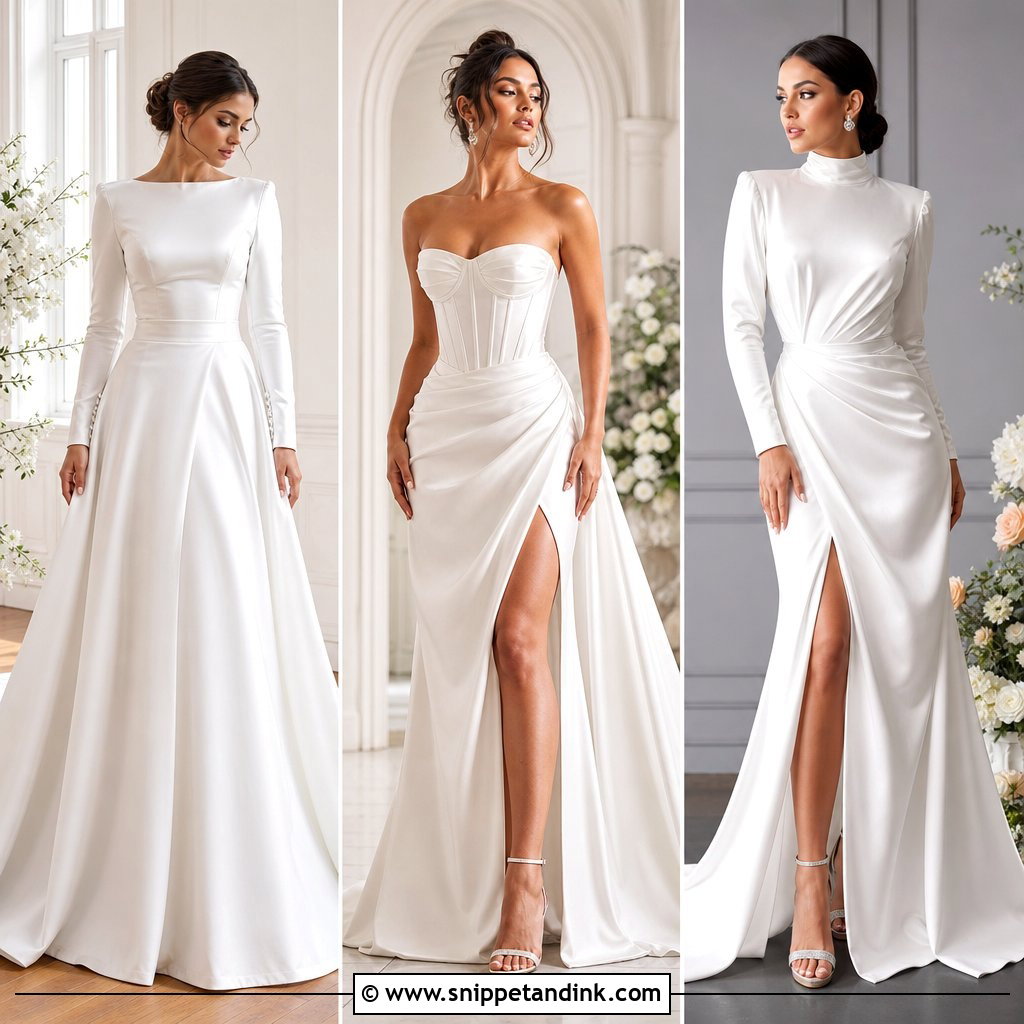
Pleated organza holds shape without the weight of beading, so the skirt looks full but moves lightly. A structured strapless or one-shoulder bodice and a horsehair-trimmed hem keep the pleats crisp. Crystal studs, a plain fingertip veil, delicate ankle-strap heels, a soft bun or side-parted waves and a bouquet of sweet peas and roses suit it. I wouldn’t add a decorated belt here, because it breaks the pleat lines. Sit down at the fitting and stand up again: organza creases where it folds, and the pleats should fall back into place. Hang it in a breathable bag until the day, never folded in a box.
16. Vintage Beaded Wedding Dress
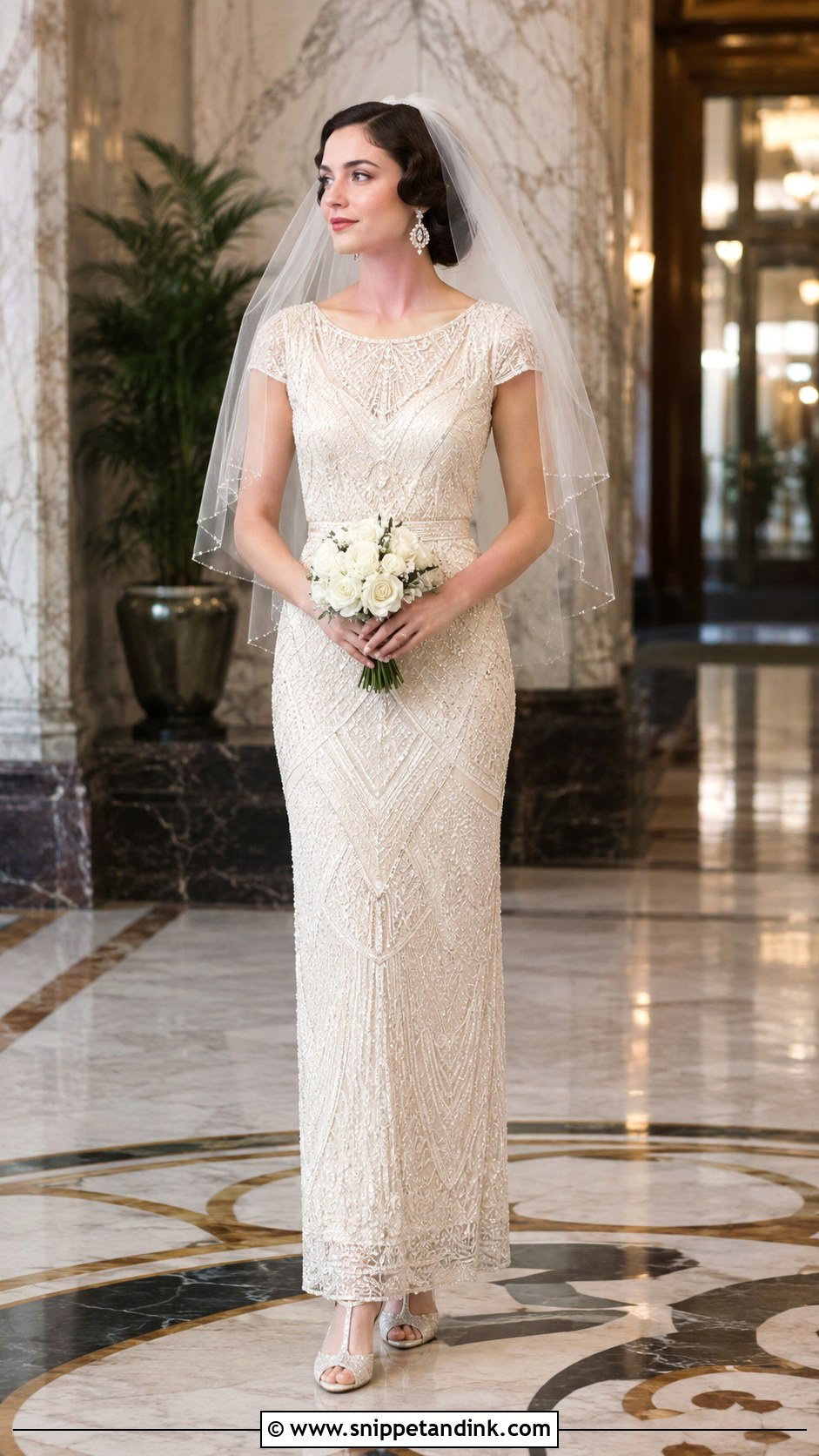
Vintage beadwork tends to be geometric, and on an ivory sheath or soft A-line with cap sleeves it gives an old-world look without heavy volume. I’d choose tonal beads over bright silver, which looks harsh in flash photography. Art Deco earrings, a fingertip veil, T-strap heels and finger waves or a smooth chignon carry the period feel; a small bouquet of white roses suits it. Fully beaded gowns can weigh several kilos, and that weight hangs from the shoulders. Check that the straps and waist carry it comfortably, and look inside for loose threads, because one broken thread can drop a whole row of beads on the dance floor.
17. One Shoulder Wedding Dress
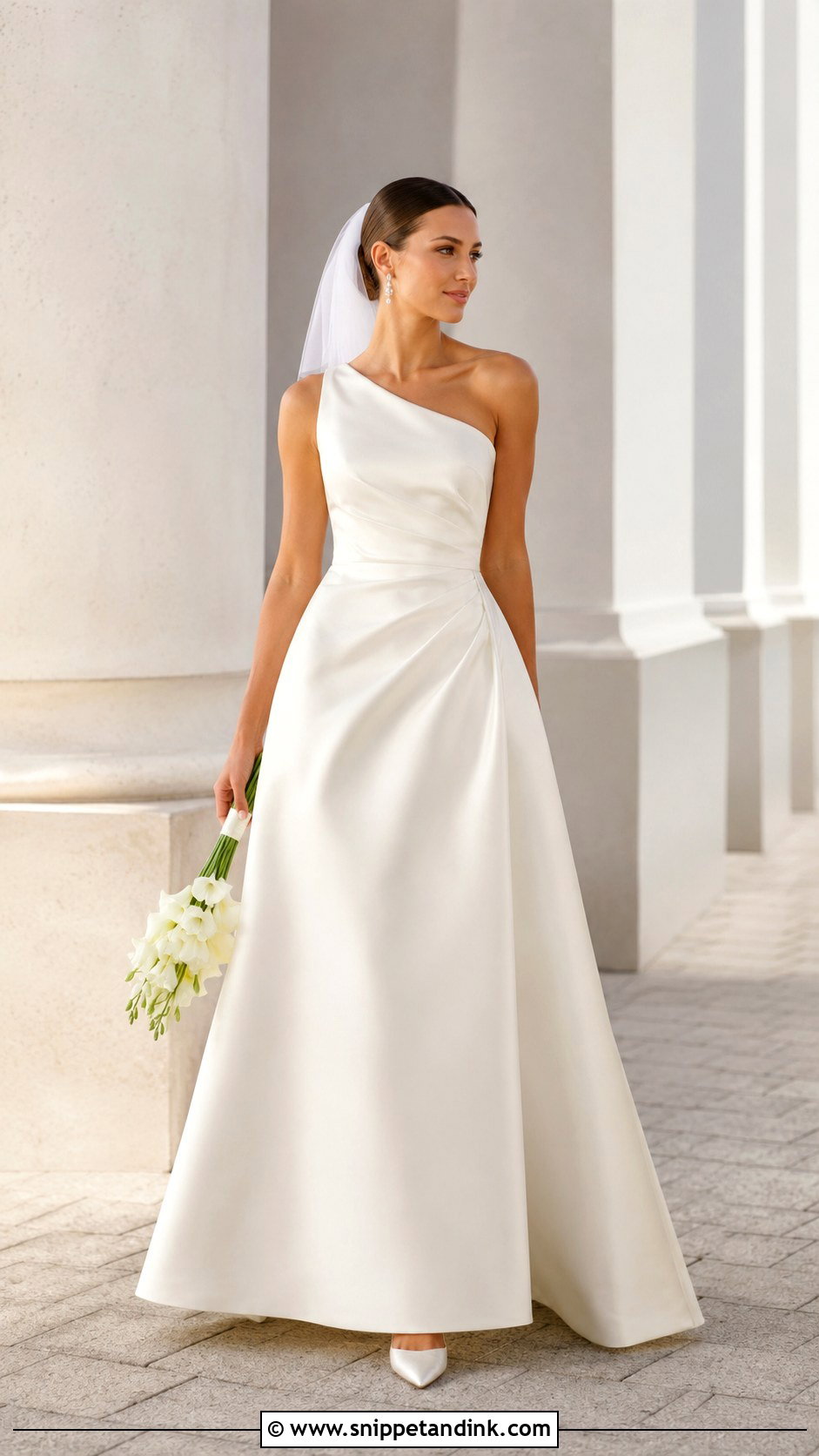
A one-shoulder wedding dress looks architectural in structured satin, crepe or Mikado, with a clean A-line or column skirt. A draped shoulder panel softens it; a fitted bodice keeps it sharp. Skip the necklace. One statement earring or a pair of small crystal drops is plenty, along with pointed pumps, a short veil tucked under a sleek bun and a long, narrow bouquet. My main check is internal support. The single strap should be doing very little; boning and a waist stay should hold the bodice, or the open side will slide down every time you raise your glass. Dance in it at the fitting to be sure.
18. Lace Appliqué A Line Wedding Dress
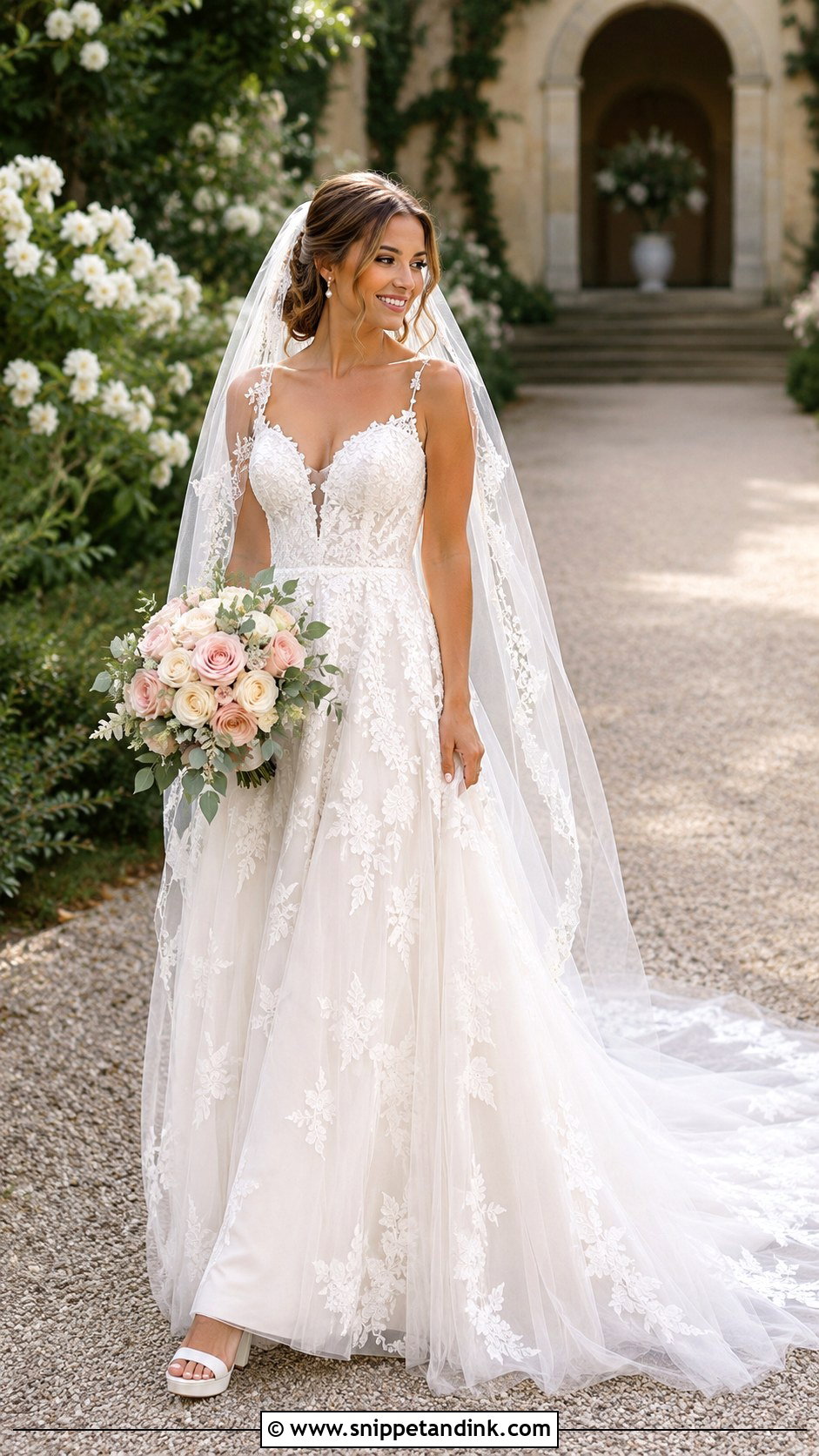
Lace appliqué on an A-line is romantic and forgiving, and a chapel train keeps it formal without being hard to manage. Look for supportive straps and motifs that carry naturally onto a tulle or satin skirt. A lace-edged veil, pearl earrings, ivory block heels, a low braided bun and garden roses with restrained greenery suit the mood. Watch the seams. When a dress is taken in, appliqués often end up chopped at the side seams, and a good seamstress will lift and reposition them so the pattern still flows around your body. Ask about that at the first fitting, because it adds time.
19. Satin Wedding Dress With Gloves
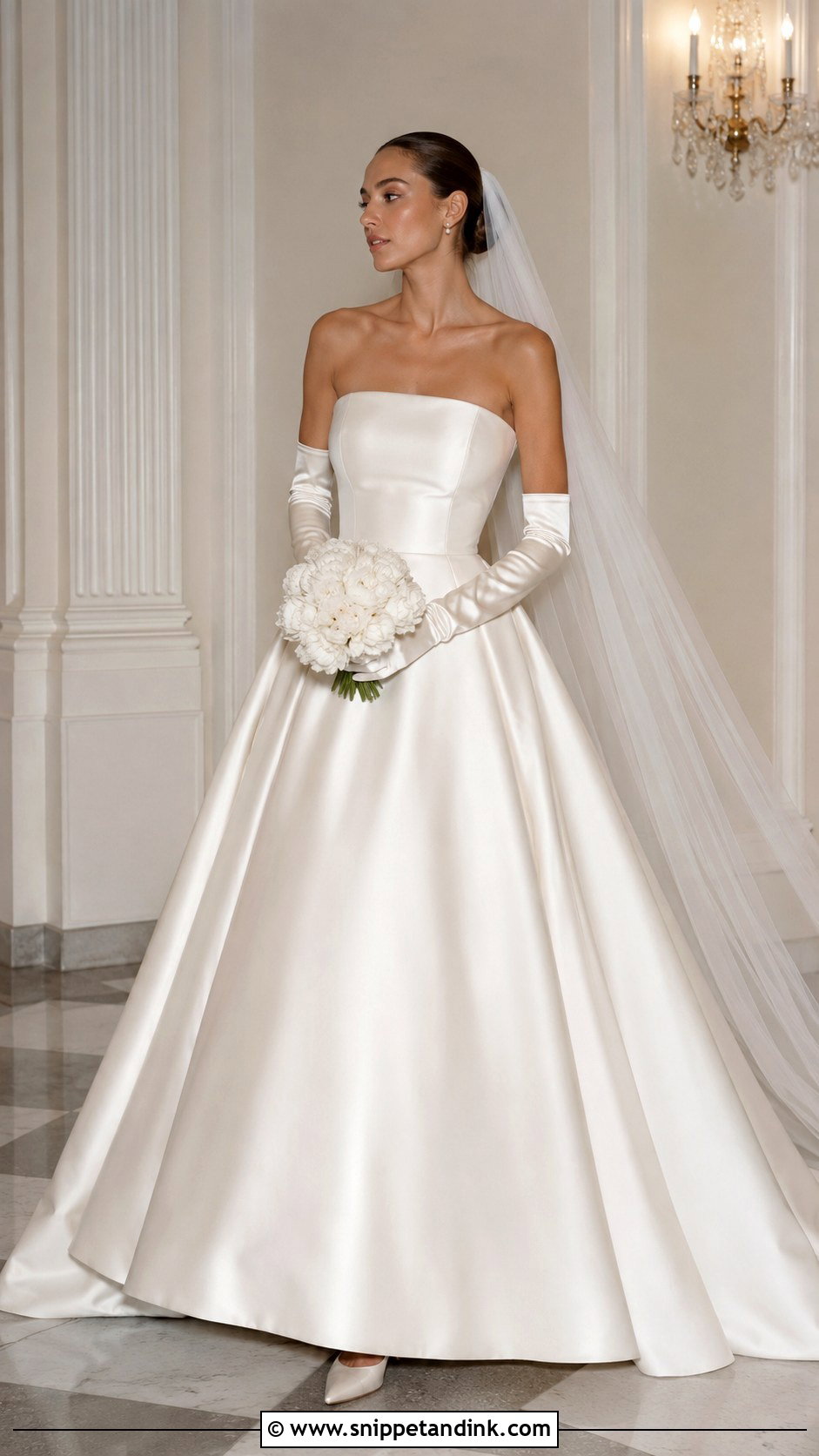
Opera gloves make a plain satin dress feel instantly formal, whether that’s a strapless ball gown, a fitted column or a clean A-line. Match the colour closely; a bright white glove against an ivory gown looks grey in photographs. Pearl studs, pointed pumps, a sheer veil with no ornate border, a high bun or French twist and a small bouquet keep the gloves the focus. The practical bit catches people out. Practise with the ring: many brides slit the ring-finger seam or slip the left glove off for the vows. Plan to take them off for dinner.
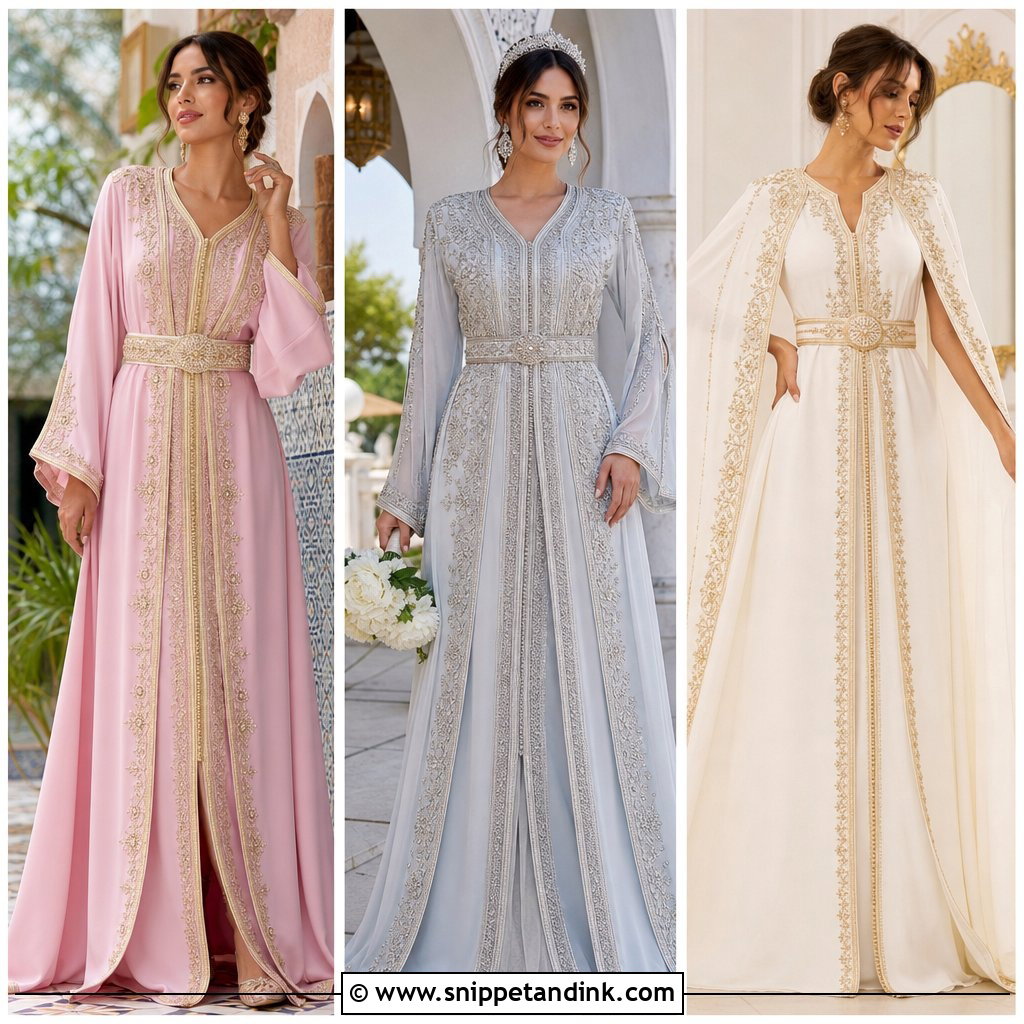

20. Detachable Overskirt Wedding Dress
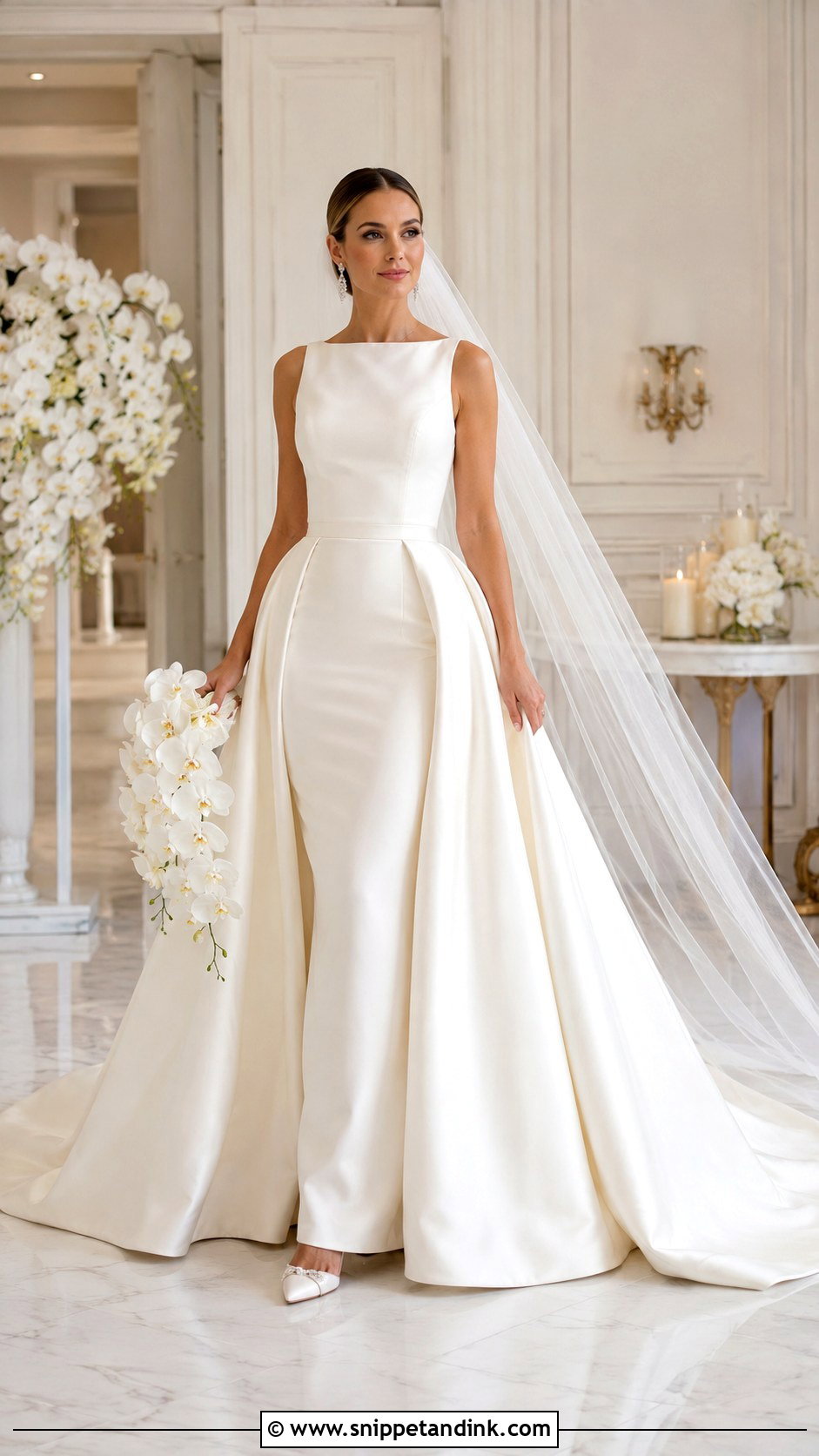
An overskirt gives you two looks without a second dress. Start with a fitted crepe, lace or satin gown and add a full tulle or structured satin layer for the ceremony, with a chapel or cathedral train if you want it. Style the formal version with a long veil, crystal earrings and pointed heels, then switch to a statement hair accessory or bold earrings once the overskirt and veil come off. I’d test the change at a fitting and time it. The waistband has to close with no gap at the hooks, and the person helping you should practise once, so the change takes minutes rather than half the cocktail hour.
Structured Gowns Need More Alteration Weeks Than You Think
Corsets, beaded bodices and long trains add fitting time. I’d order a made-to-order gown roughly nine months to a year ahead, because many take several months to arrive, and plan for the first fitting around eight to ten weeks before the wedding. Expect two or three appointments, sometimes more if appliqués need repositioning or a bustle has several points.
Bring the same shoes and underwear every time. Changing heel height after the hem is cut is the most common reason a train trips a bride on the day.
After the Wedding: Storing Satin, Silk and Beadwork
Have the dress cleaned within a few weeks. Sugar from champagne or cake can dry invisible and then turn brown months later. Point out every stain to the cleaner, including the hem.
- Store it flat in acid-free tissue and an archival box, or hanging in a breathable cotton bag. Plastic traps moisture.
- Never hang a heavy beaded or ball gown by its shoulders for months; the weight stretches the bodice. Use the inner hanging loops or store it flat.
- Keep it in a cool, dark cupboard, away from attics and basements where heat and damp yellow silk.
If you plan to sell it, keep the bustle notes and any spare buttons or beads from the alterations with the dress.
A Rich Look Comes Down to Fit, Fabric and Restraint
Satin, pearls, corsetry, embroidery and long trains all add impact, but only when the fit underneath is right and the accessories step back. Before you decide, try each dress with the shoes and underwear you’ll actually wear, sit in it, walk in it and lift your arms. Leave enough time for alterations, especially on structured gowns. Then pick the one you forget you’re wearing after five minutes, and build the veil, jewelry and flowers around it.
You'll Like These Ideas:




Leave a Reply