
Sparkle is the easiest thing to fall for in a bridal salon and the hardest to judge there. Shop lighting is bright and even, and almost any beaded gown glows under it. Crystal beading, rhinestone details, pearl-and-crystal mixes, sculpted corsets and sheer beaded sleeves are everywhere right now, and they look very different under a church’s dim light or a hot July sun. When I dress a bride in an embellished gown, I care about three things beyond the shine: how much the dress weighs, where the beading sits against her skin, and how it behaves when she moves. Below are 25 directions, from full princess gowns to a plain satin dress with a single crystal edge, with my notes on each.
Crystals, Rhinestones and Sequins Are Not the Same Thing
Shop descriptions use “diamond” loosely, and it almost never means real stones. What’s actually on the dress decides how it catches light, how heavy it feels and how it survives cleaning, so I always ask what the sparkle is made of before anything else.
- Cut glass or crystal beads: faceted, so they throw sharp points of light. They’re heavier than plastic and give the deepest sparkle under warm lighting.
- Rhinestones: flat-backed stones, either sewn through small holes or set in metal claws, or simply glued. Sewn and claw-set stones last; glued ones can come off with friction or heat.
- Sequins: light and flexible, with a softer, all-over shimmer. They can scratch the inner arm if the edges are rough.
- Seed beads and pearls: mostly texture rather than flash. Great for adding detail without a lot of shine.
Turn the bodice lining back and look at the stitching. Even rows of thread through each bead mean they’ll hold. Hard, shiny dots of adhesive mean you should handle the dress more carefully and ask your cleaner about it later.
1. Diamond Ball Gown Wedding Dress
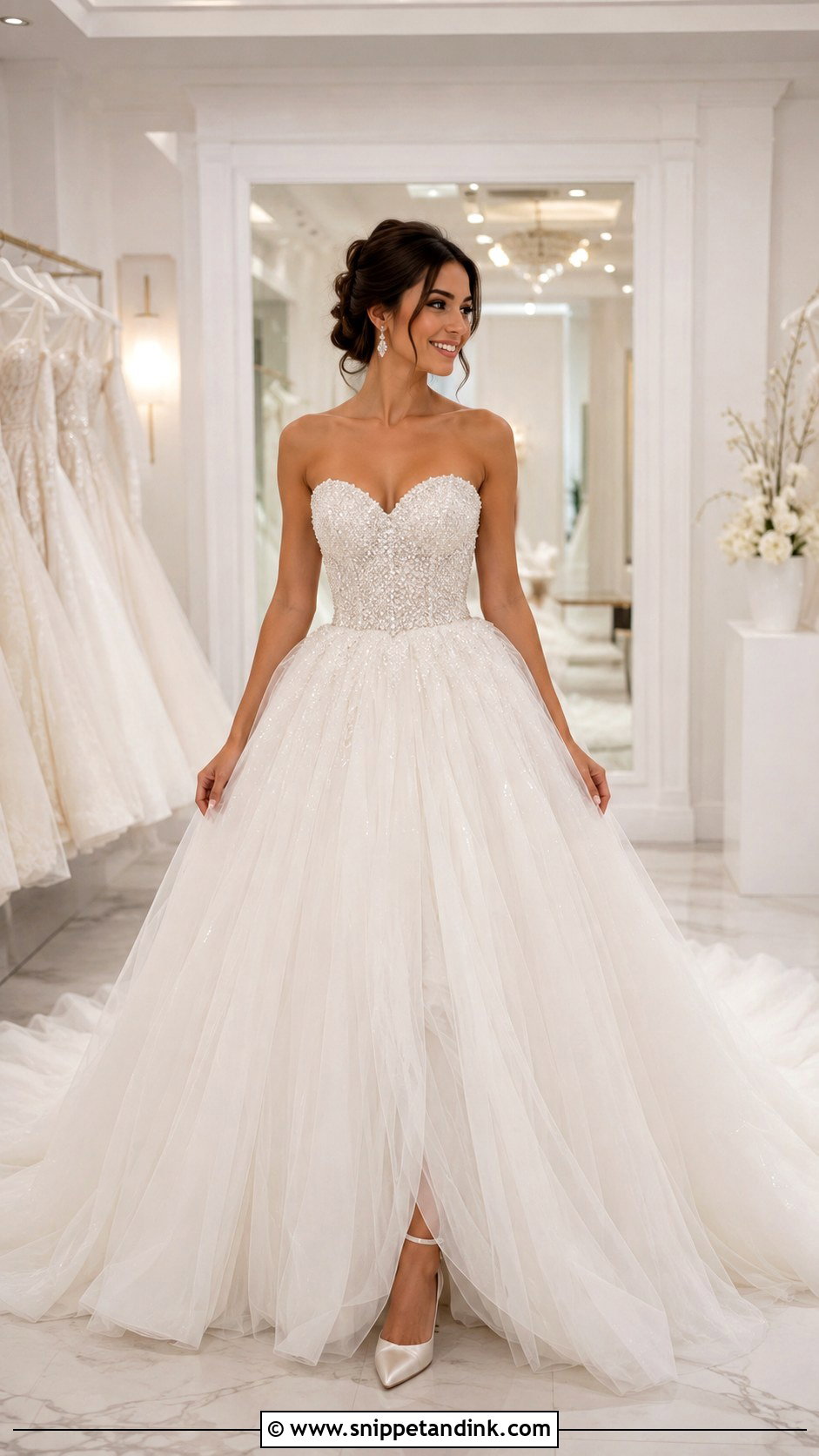
The ball gown makes the biggest entrance, and it’s also where weight creeps up fastest. A fitted bodice, layered skirt and crystals across neckline, waist and train can add up to a dress you feel on your shoulders by the speeches. My usual fix is to keep the dense beading on the bodice and scatter crystals more loosely through tulle layers below. You still get light from every layer, without the drag. Strapless or off-the-shoulder necklines balance the skirt. Crystal drops, a simple veil and satin heels finish it, and ballrooms and grand hotels with warm evening light show it at its best.
2. Diamond Mermaid Wedding Dress
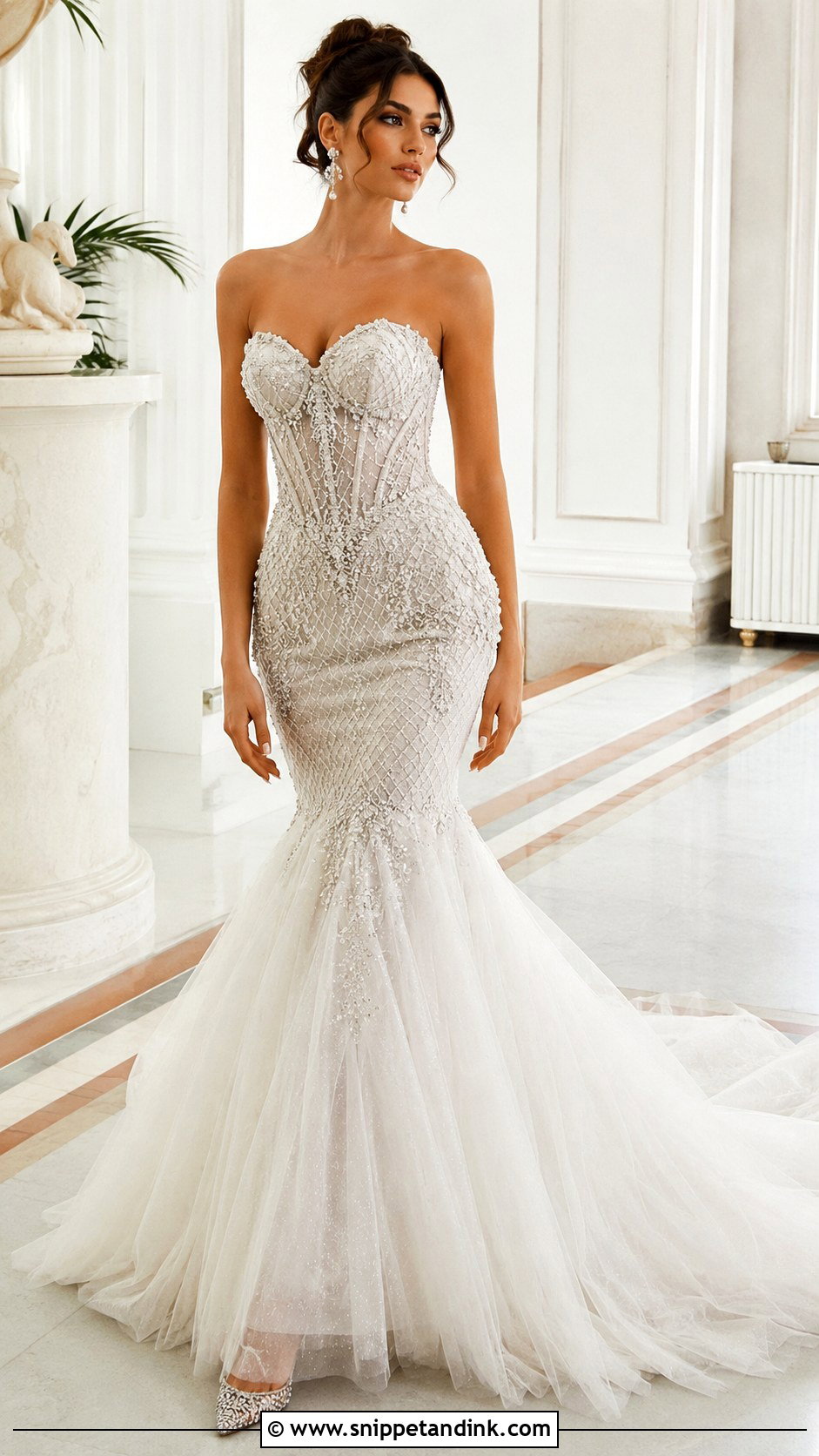
A diamond mermaid wedding dress fits close through the hips and flares near the knee, and crystal embroidery along the seams traces that curve. Before you commit, sit down in it. Beading over the hip and thigh pulls tight when you sit, and stiff appliqué can press into the skin through a long dinner. A sweetheart neckline with a structured corset reads modern; long illusion sleeves with small rhinestones add coverage. The dress already says plenty, so a smooth low bun, pearl-and-crystal earrings and pointed heels are enough.
3. Diamond A Line Wedding Dress
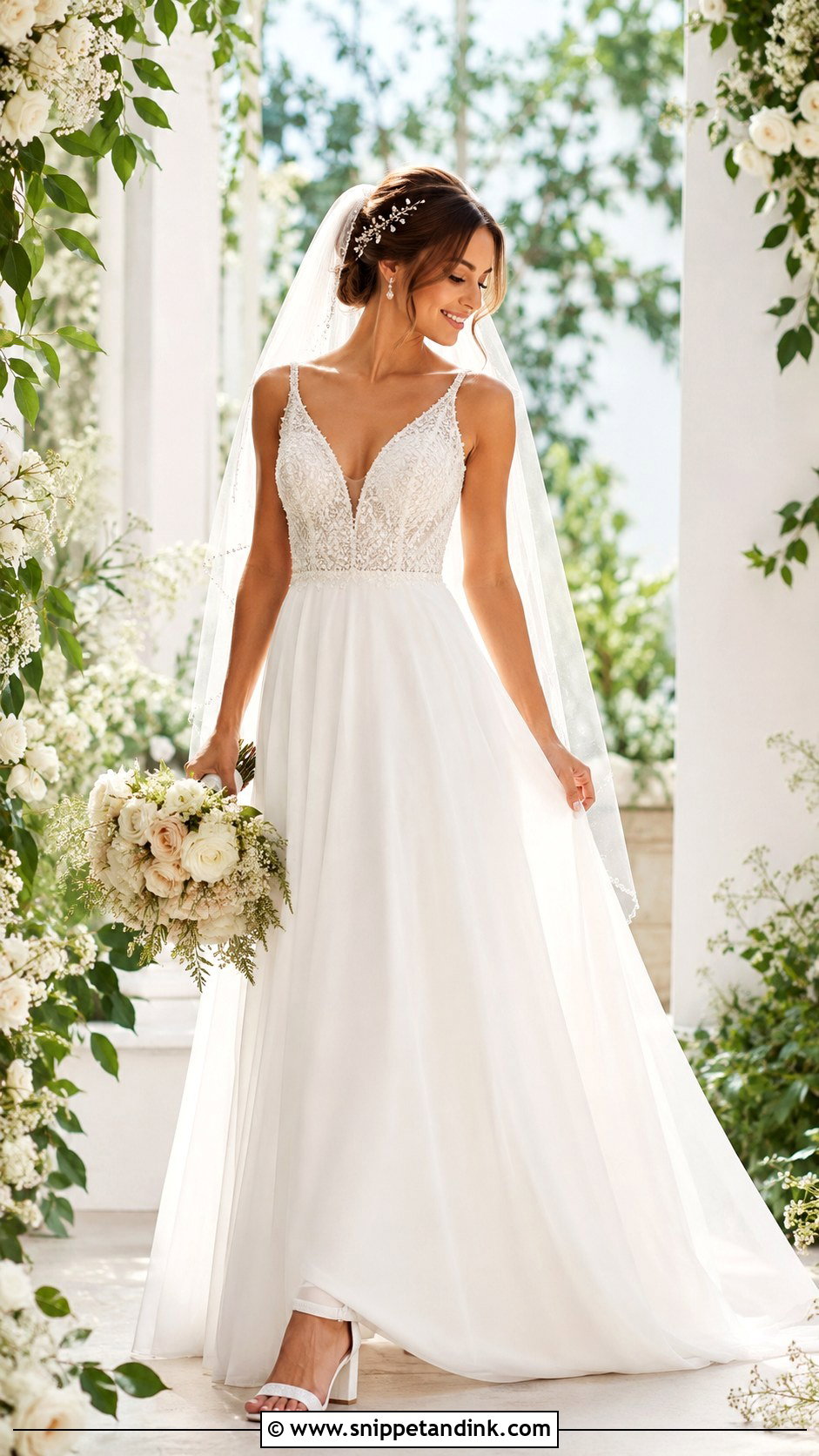
An A-line fits through the bodice and falls away from the waist, which leaves room to walk, dance and pose without fighting the dress. For sparkle, I like beading concentrated on the bodice that thins out into the skirt. It keeps the weight up high, where the bodice structure can carry it, and draws the eye to your face. Floral crystal lace, a soft V-neck or an illusion back all suit it. Add a fingertip veil, a few crystal hair pins and block heels. Of everything here, this one asks the least of you over a ten-hour day.
4. Diamond Corset Wedding Dress
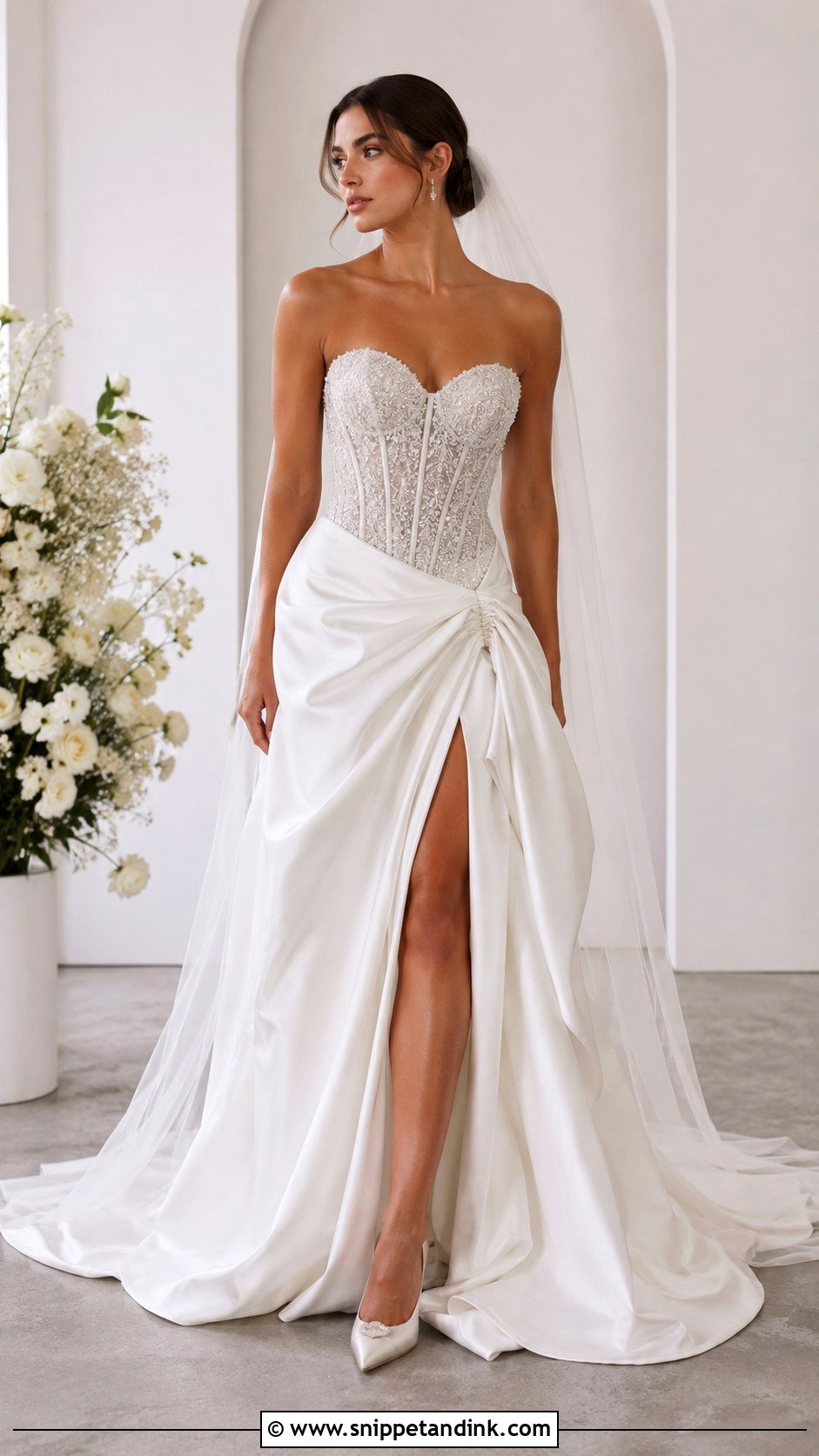
Crystals placed along a corset’s boning lines, neckline and cups catch light exactly where the structure is, so the shape of the bodice reads clearly from across the room. That’s my favourite use of sparkle on a corset. The corset carries weight well, which means a full tulle, slim satin or fitted crepe skirt can all sit under it. For a softer version, look for illusion mesh with fine beading; for a bolder one, a basque waist and a long train. Keep the earrings clean and the veil soft, so the bodice stays in charge.
5. Diamond Lace Wedding Dress
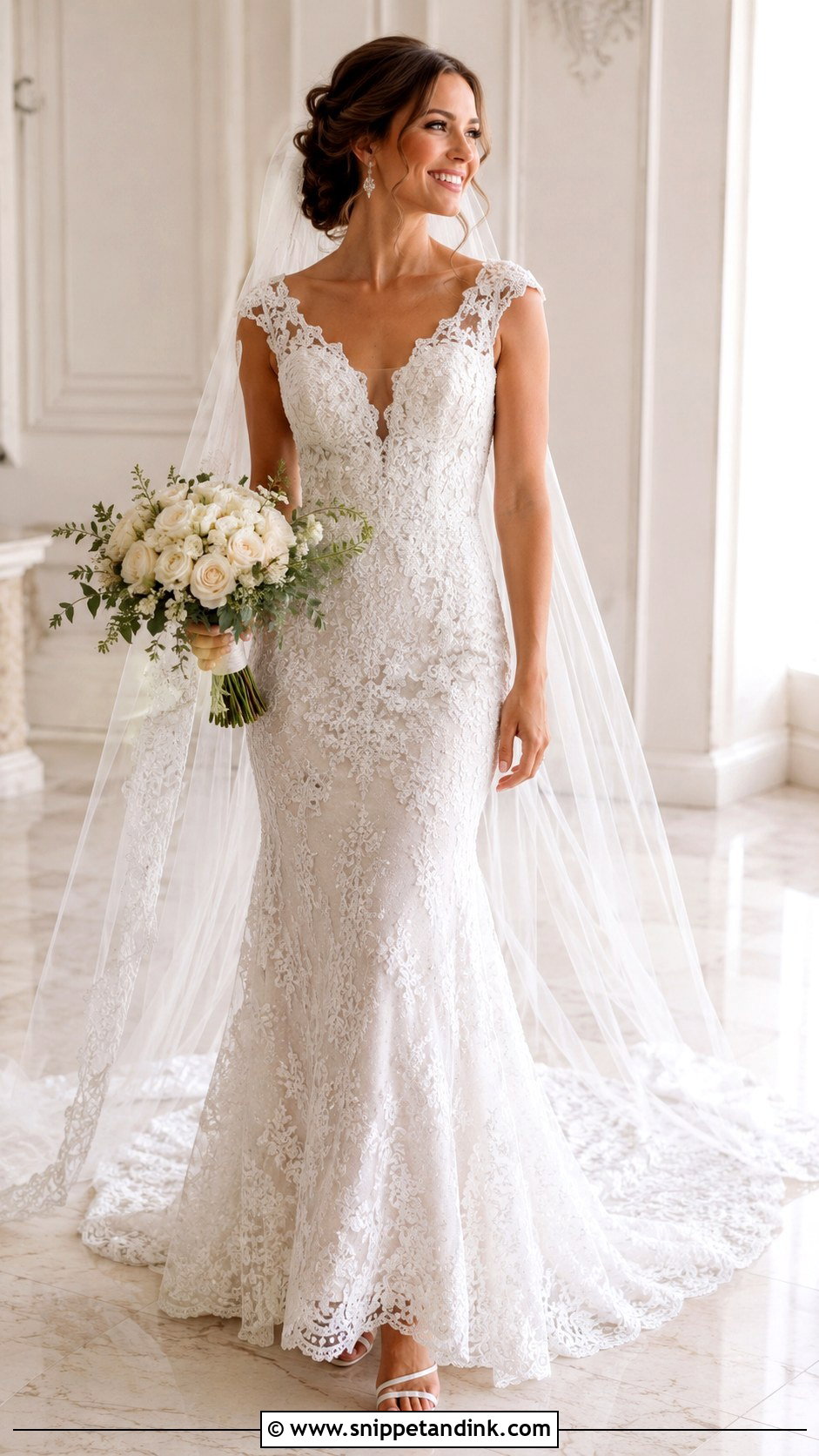
Crystals and rhinestones stitched along floral lace vines give lace a brightness it doesn’t have on its own. The quality question is how they’re attached. On good bridal lace, each bead is hand-sewn to the motif; on cheaper versions, stones are glued over the top and can pop off when the lace flexes. Turn a sleeve inside out and you’ll usually see which it is. Fitted lace reads classic, A-line lace more relaxed, and scalloped edges with covered buttons lean vintage. Delicate jewellery and a sheer veil with a little sparkle are plenty.
6. Diamond Satin Wedding Dress
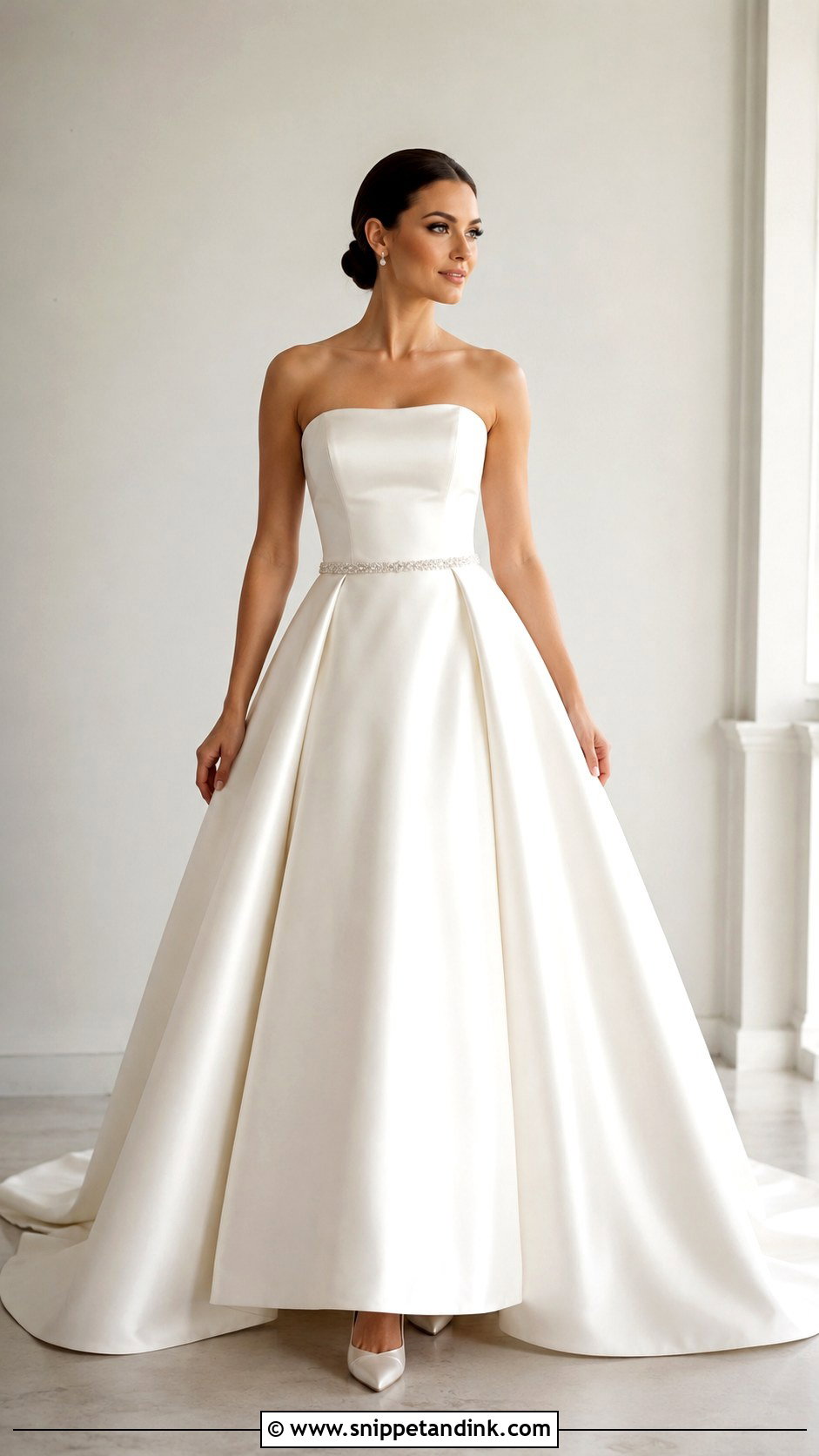
Satin already reflects light, so a small amount of crystal looks rich against it. A ball gown with a crystal belt, a strapless dress with a rhinestone neckline, a column gown with beaded straps: in each, the sparkle sits in one controlled place. One thing to check is the satin’s weight. Lightweight satin puckers under a heavy beaded belt, while duchess or mikado satin holds it flat. Satin pumps, a structured veil and polished hair go with it. This is the route I suggest to brides who like shine but want to look like themselves in photos in twenty years.
7. Diamond Tulle Wedding Dress
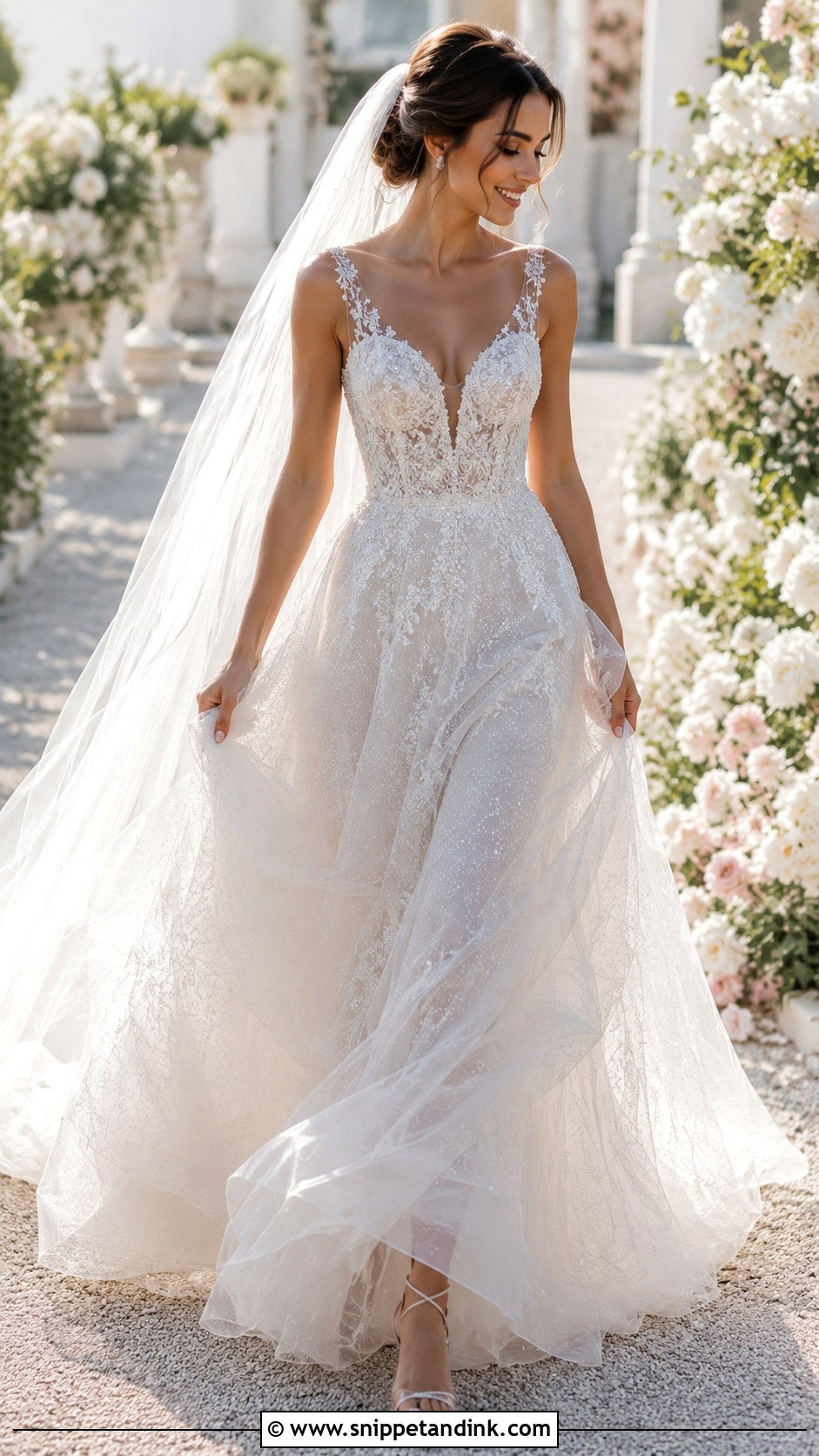
Tulle is light enough that a scatter of tiny crystals looks almost as if it’s floating, which is the whole charm here. Layered skirts, detachable overskirts and long trains all work. Be aware that tulle and loose crystals both snag. Bracelets, lace sleeves on your bridesmaids and Velcro on a photographer’s bag can all catch, and a pulled tulle thread runs. A beaded lace bodice over a plain sparkle tulle skirt adds dimension without doubling the snag risk. Soft waves and very small jewellery suit it, and it’s most at home in garden venues and bright indoor rooms.
8. Diamond Long Sleeve Wedding Dress
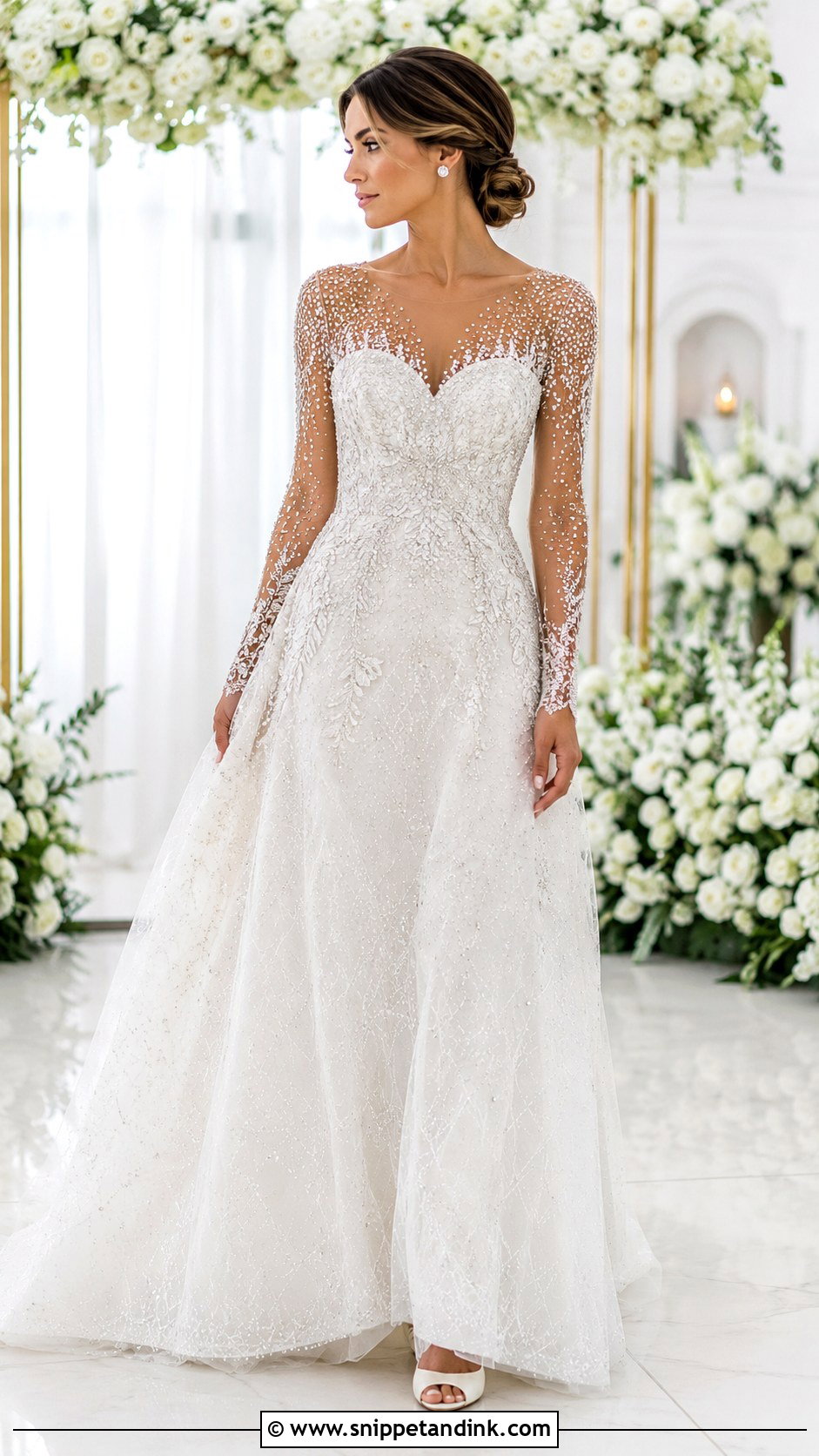
Long sleeves in sheer mesh with crystal embroidery, fitted lace with rhinestones, or smooth crepe with beaded cuffs give you coverage without heaviness. The cuff is where I’d look hardest. Beads at the wrist rub against everything you touch: tablecloths, the bouquet stems, your partner’s sleeve. Flat-sewn crystals hold up better there than raised clusters. A fitted bodice and fuller skirt look classic; a sheath with sparkling sleeves is more modern. If the sleeves are busy, keep the neckline plain and wear a neat updo so the arm detail can be seen.
9. Diamond Off Shoulder Wedding Dress
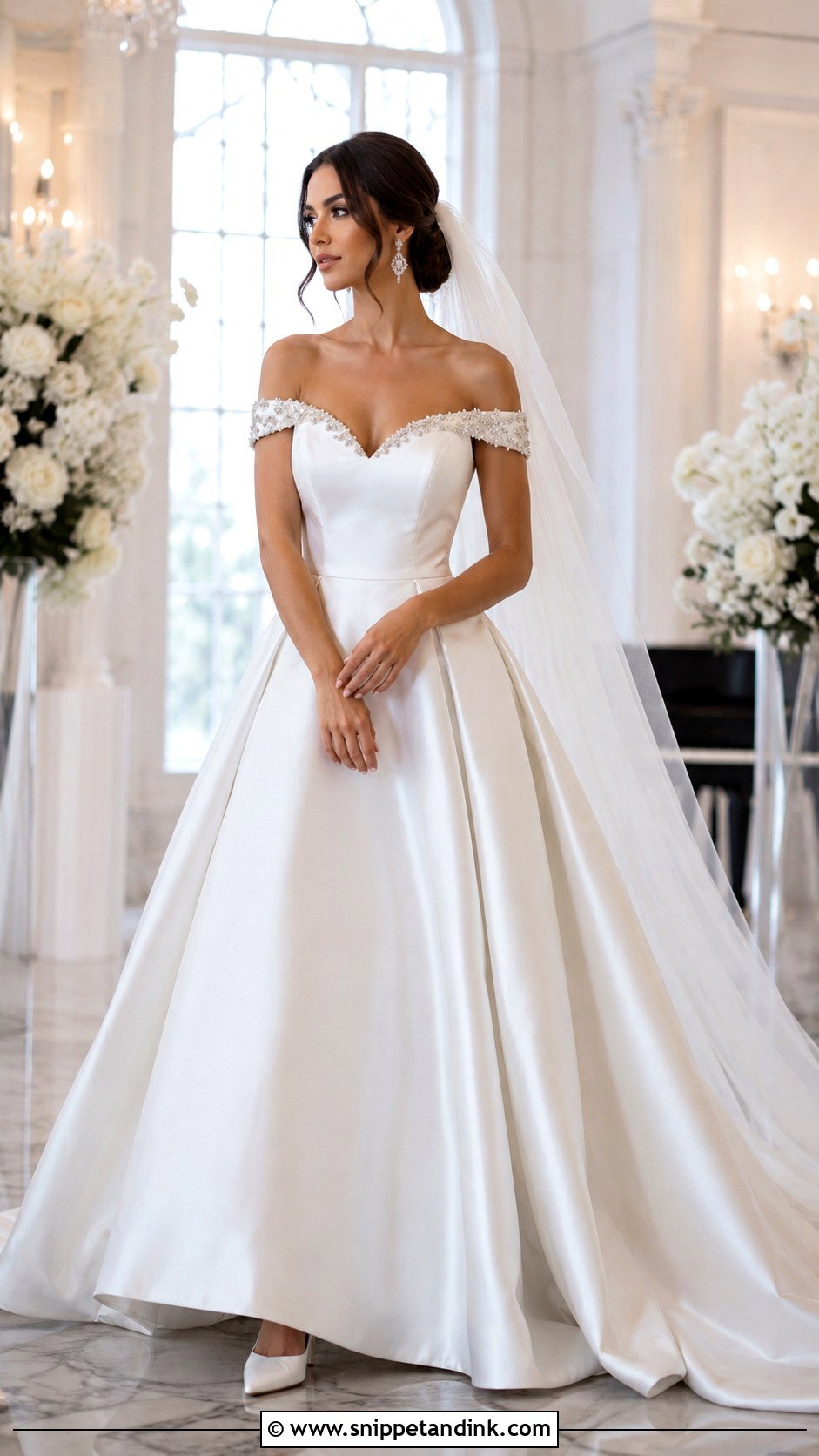
An off-shoulder neckline frames the collarbone, and a line of crystal beading along that edge pulls the eye up to your face. That makes it one of the most flattering places to put sparkle. Check that the beaded edge isn’t stiff enough to dig into the top of your arm when you lift it. Ivory satin with a crystal-trimmed fold-over neckline reads classic; lace sleeves with scattered rhinestones add more shine. Leave the neck bare, wear drop earrings, and choose a smooth veil. It sits well on ball gown, A-line and mermaid shapes.
10. Diamond Strapless Wedding Dress
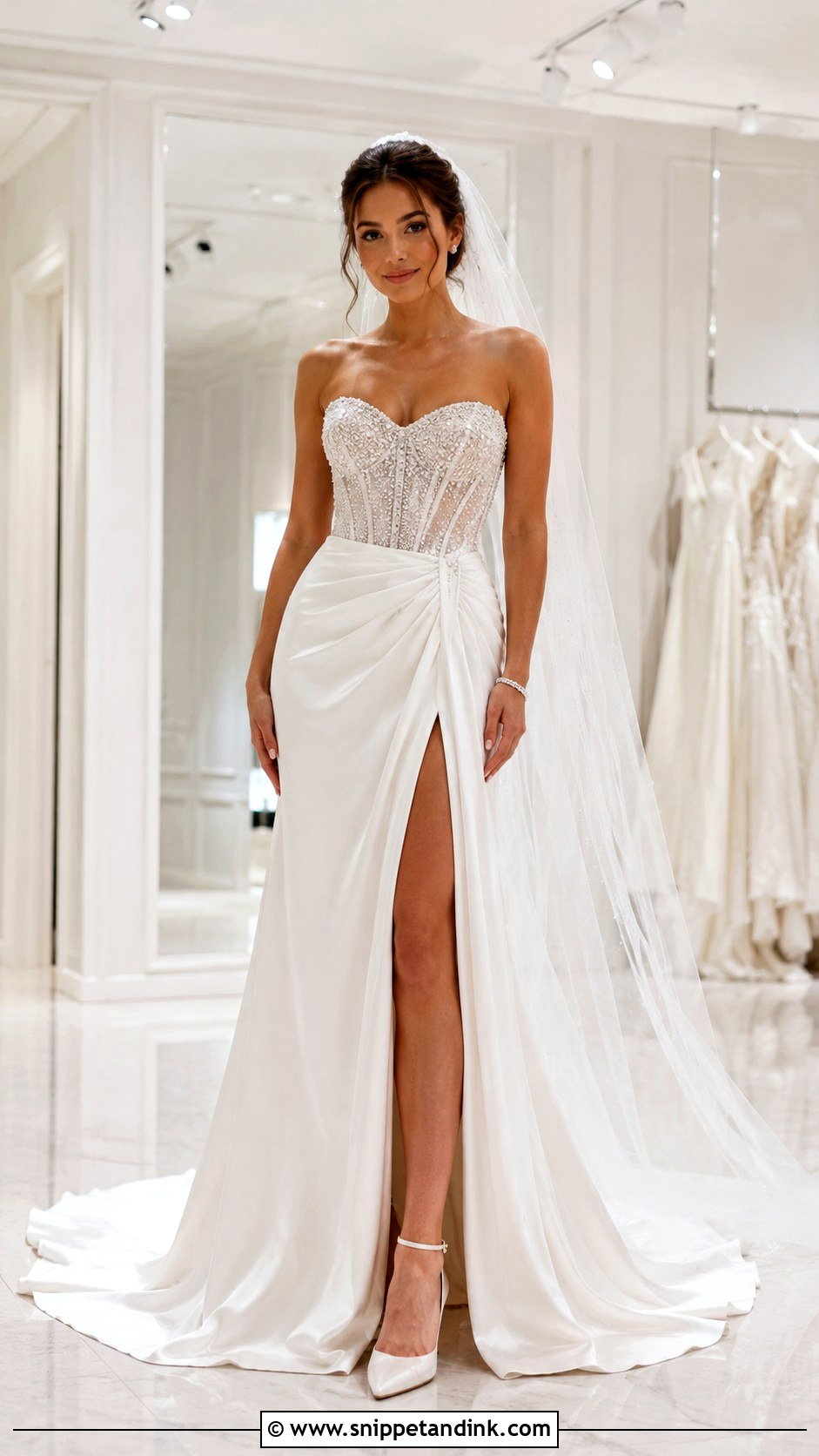
Strapless gowns are the easiest to personalise, because the open neckline leaves space for jewellery. A corset bodice with crystal appliqué goes glamorous; a satin dress with a crystal belt stays classic. The one rule I won’t bend: an embellished skirt needs real support inside the bodice. Heavy beading below the waist pulls a strapless top down all day, and you’ll spend the reception tugging it up. A straight neckline reads modern, a sweetheart softer. Add a securely anchored veil and a bracelet if you want more sparkle.
11. Diamond Sheath Wedding Dress
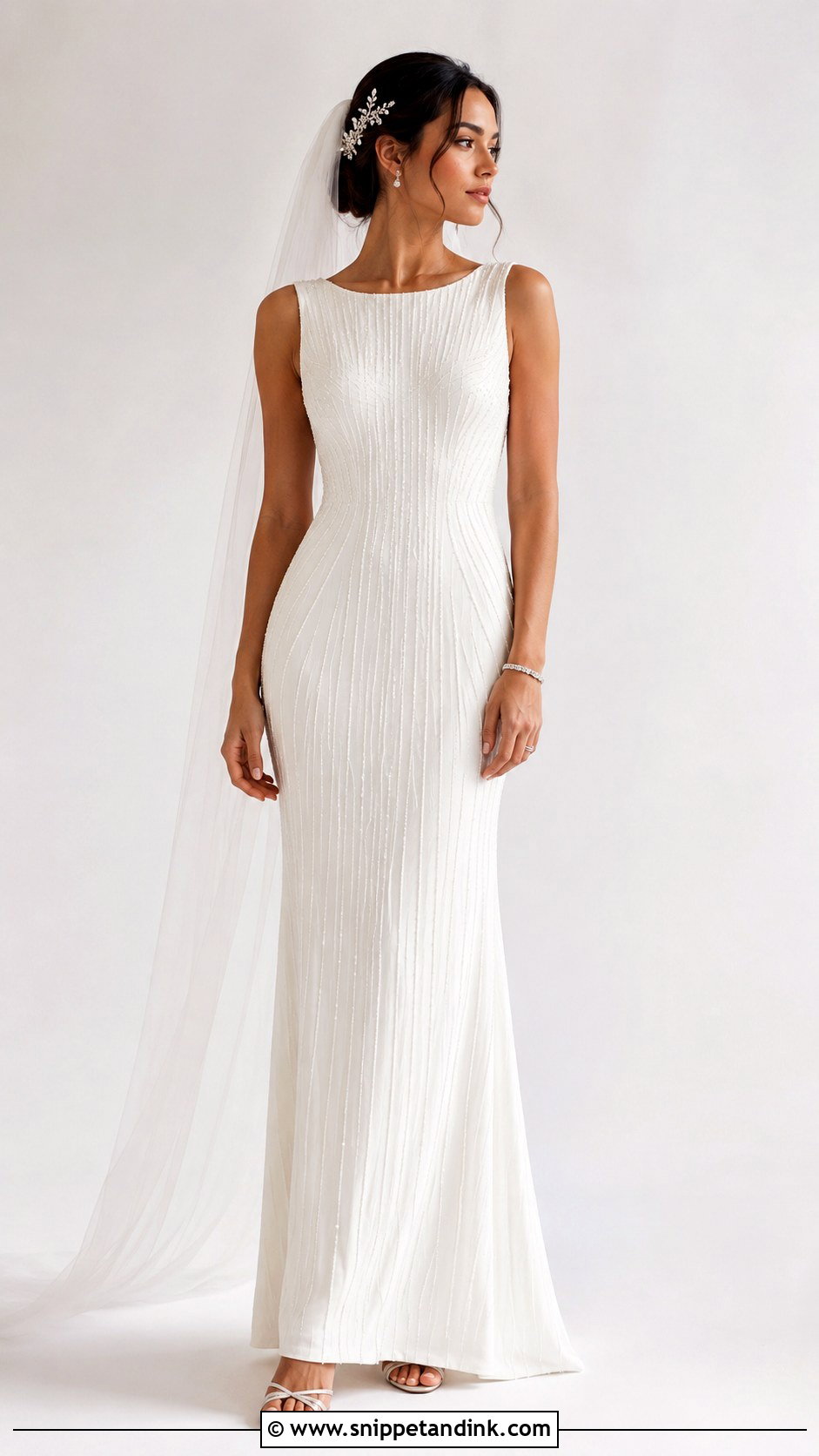
A sheath falls close to the body without a big skirt, so it’s light and easy to move in. Diamond beading in vertical lines or thin floral trails adds length, which is useful on a slim silhouette. The thing sheaths don’t forgive is uneven weight. If beading is heavier on one side or at the hem, the dress hangs slightly off, and you’ll see it in every full-length photo. Crepe, satin or lightly beaded mesh all work. Add slim heels, a simple veil and a small crystal comb. It’s an easy fit for smaller venues and city weddings.
12. Diamond Fit And Flare Wedding Dress
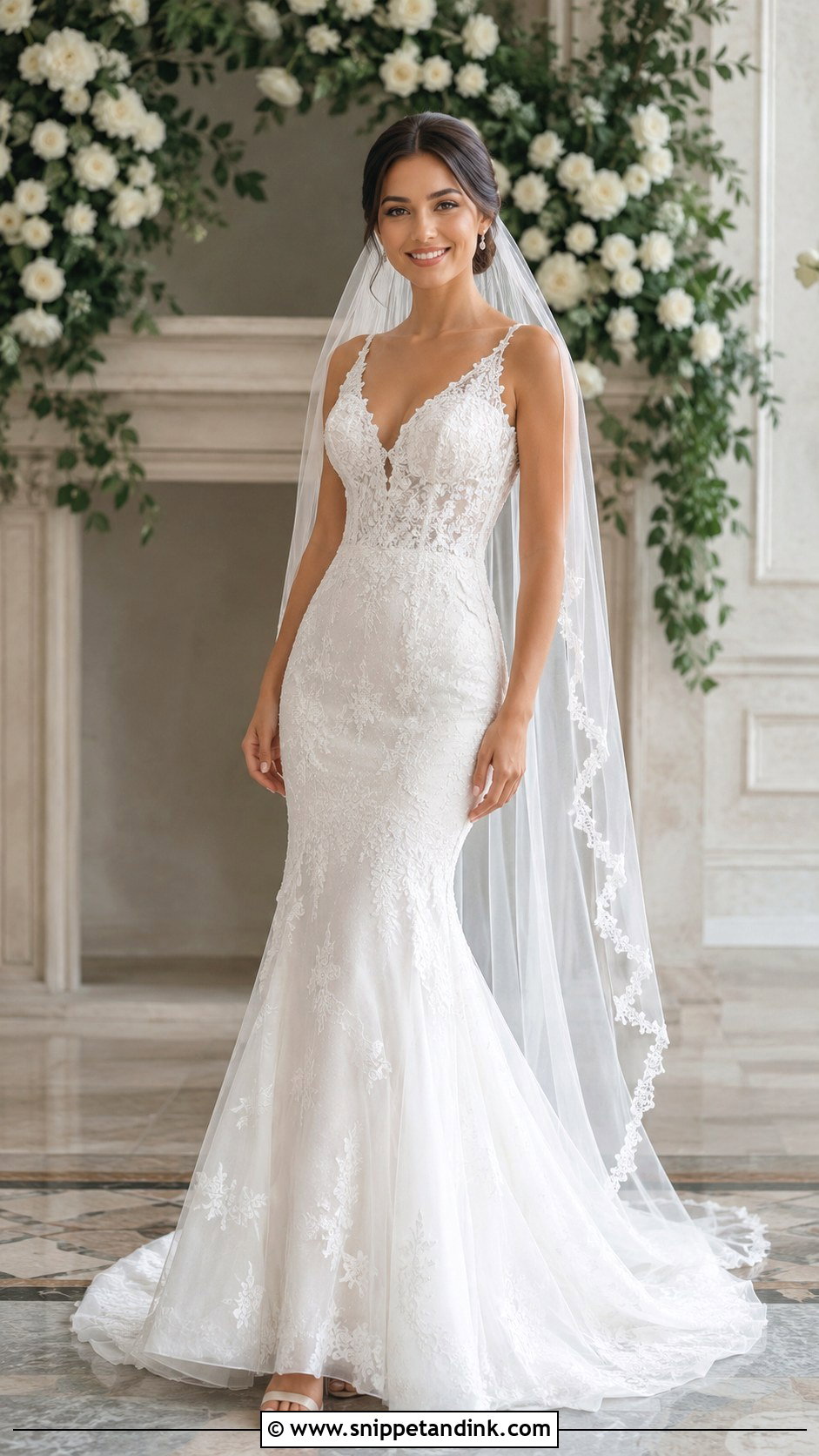
Fit and flare hugs the bodice and hips but opens earlier than a mermaid, so walking and stairs are much easier. Crystal lace over the bodice defines the waist, and a light scatter on the skirt catches movement as you walk. Cap sleeves, a V-neck or an illusion back all suit it. I often point brides who love the mermaid shape but worry about sitting toward this one instead, since the earlier flare gives the knees room. Medium heels, a fingertip veil and simple earrings keep it polished.
13. Diamond Princess Wedding Dress
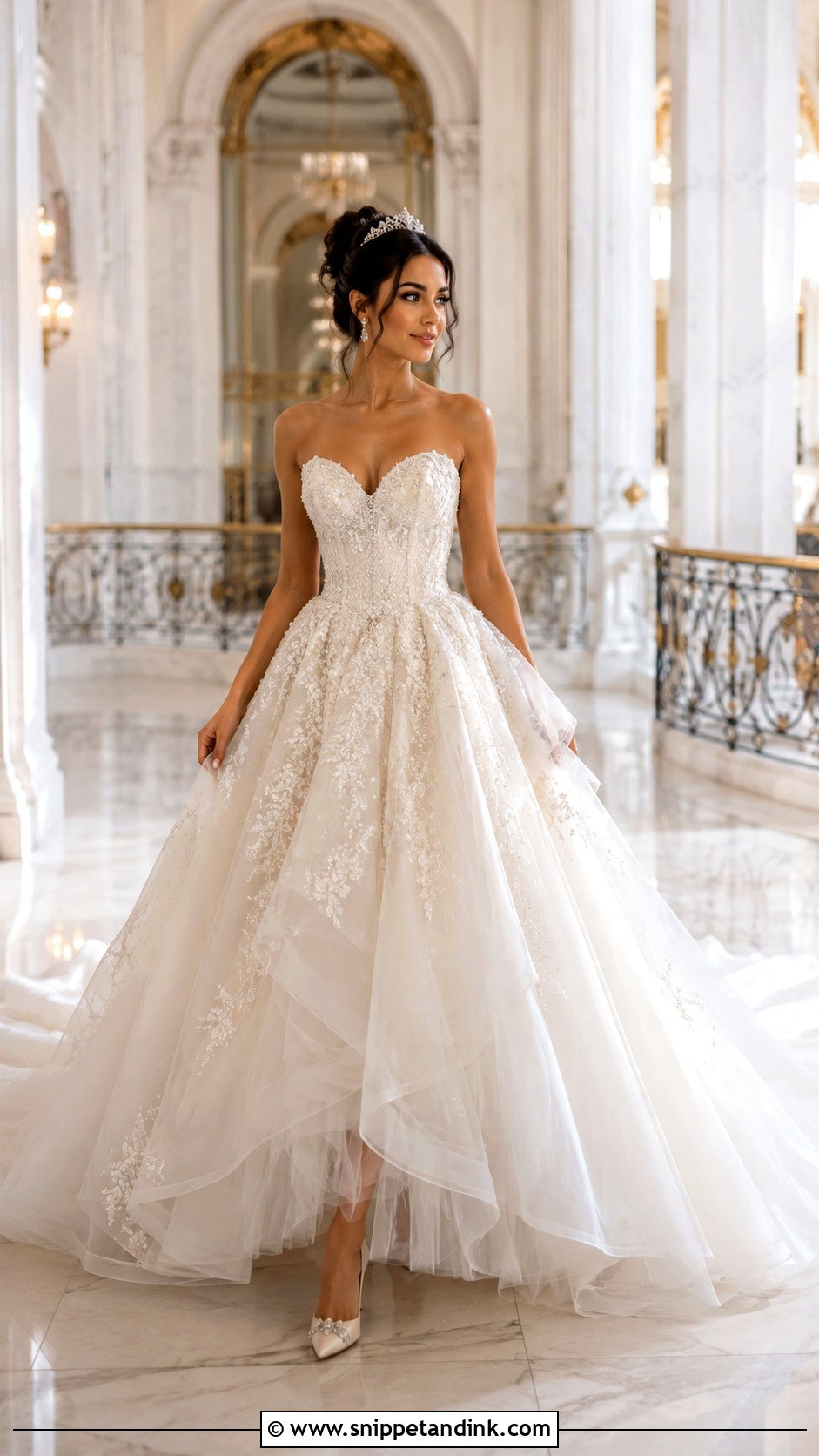
The princess look is a fitted bodice, defined waist and a wide skirt with sparkle that reads from the back row. The risk is that it tips into costume. Soft silver beading, clear stones and pearl accents look refined; large coloured or iridescent stones usually don’t. A sweetheart neckline and layered tulle give the classic princess shape, and a long train with beaded appliqué adds drama. Wear shoes you can stand in for hours, because the skirt hides your feet anyway. If you want a tiara, pick a slim one that sits low on the head.
14. Diamond Illusion Neckline Wedding Dress
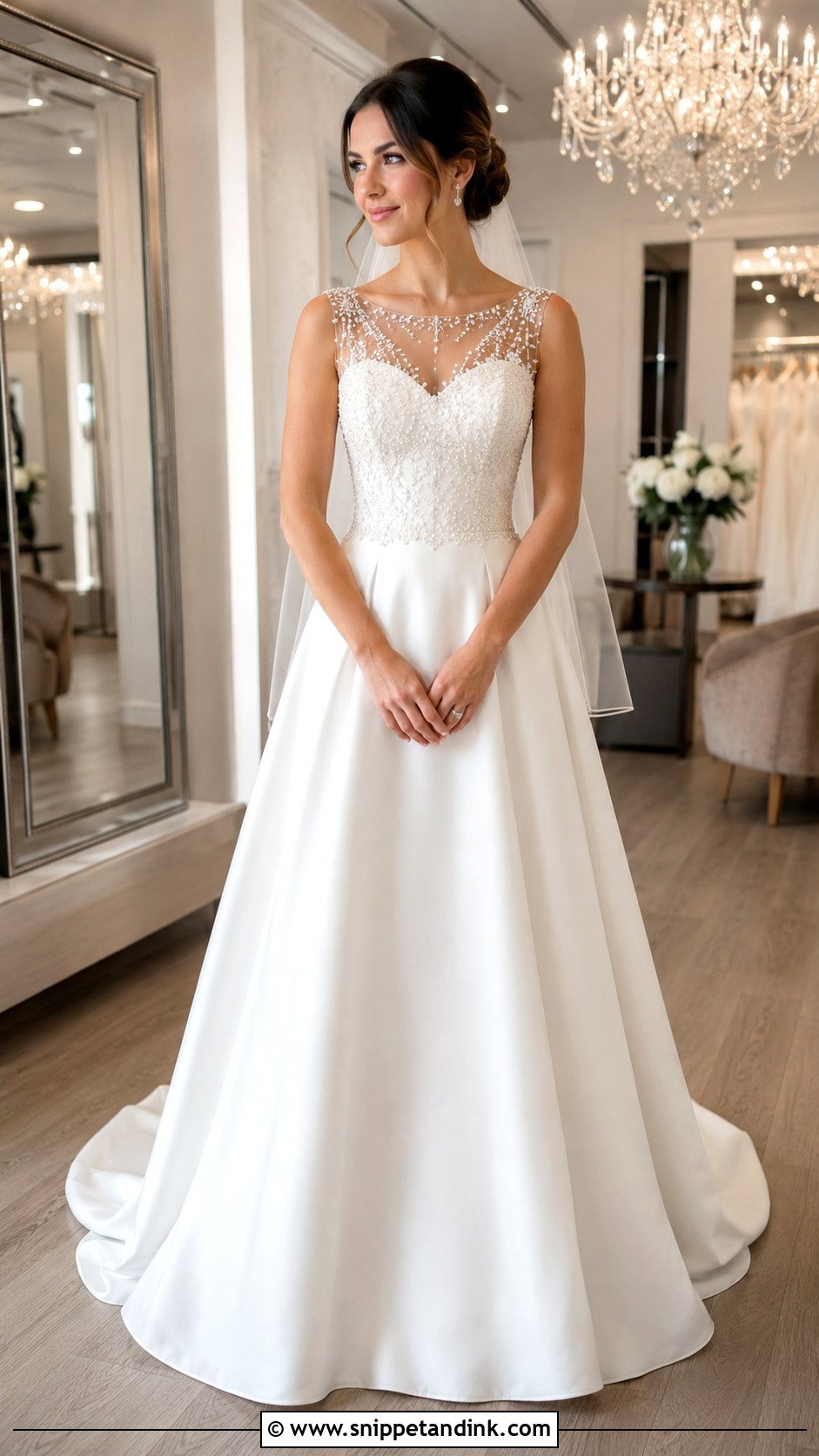
With an illusion neckline, crystals are stitched onto sheer mesh so they appear to float on the chest, shoulders or upper back. It’s how you get a low or detailed look while the bodice stays secure underneath. The mesh tone matters more than people think, since a mismatched nude shows up as a visible line in flash photography. Ask to see swatches against your skin. Tiny crystals with floral embroidery read delicate; geometric beading or a high neck reads bold. An updo keeps the neckline in view, with simple earrings and a plain veil.

15. Diamond Back Wedding Dress
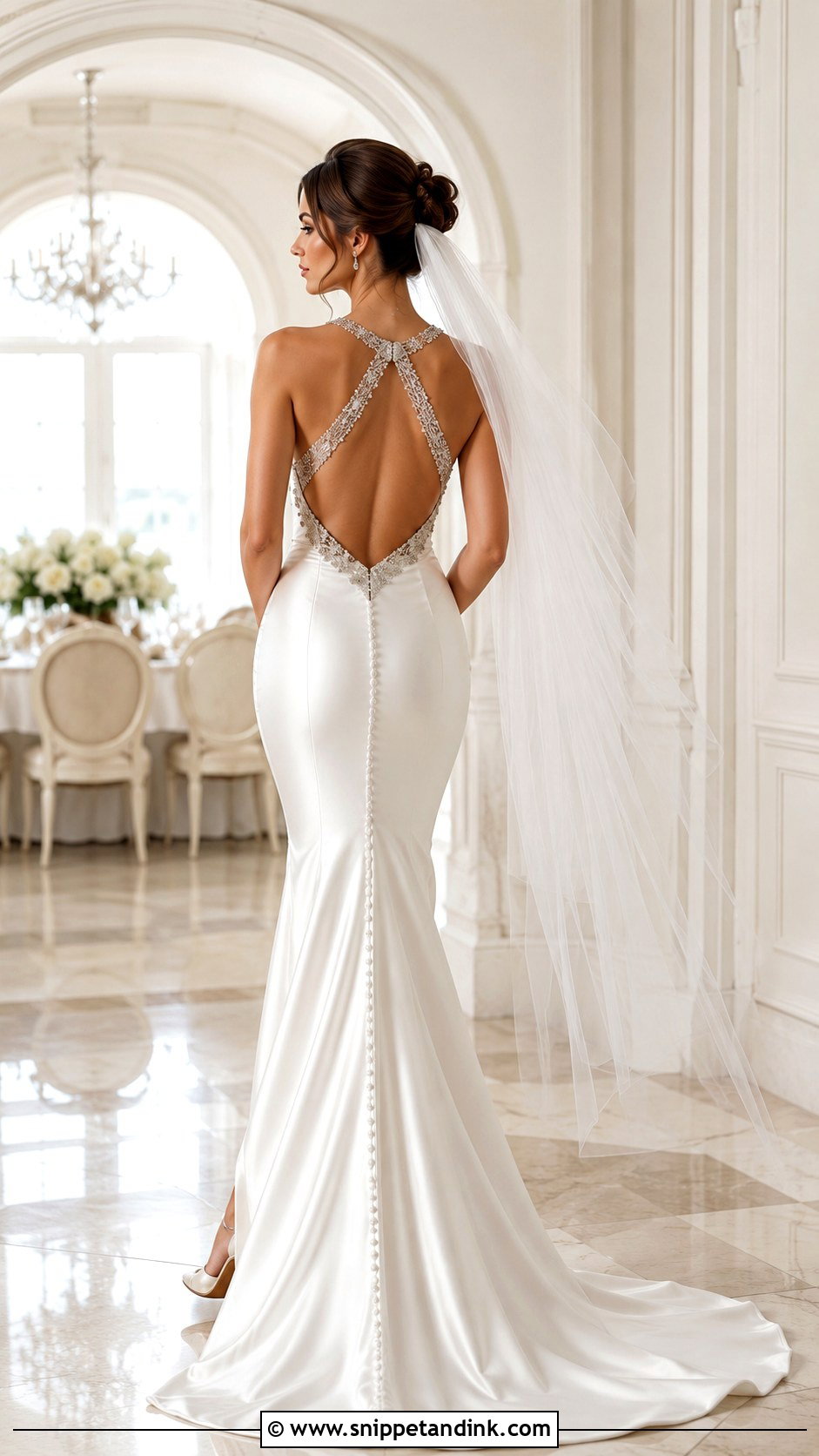
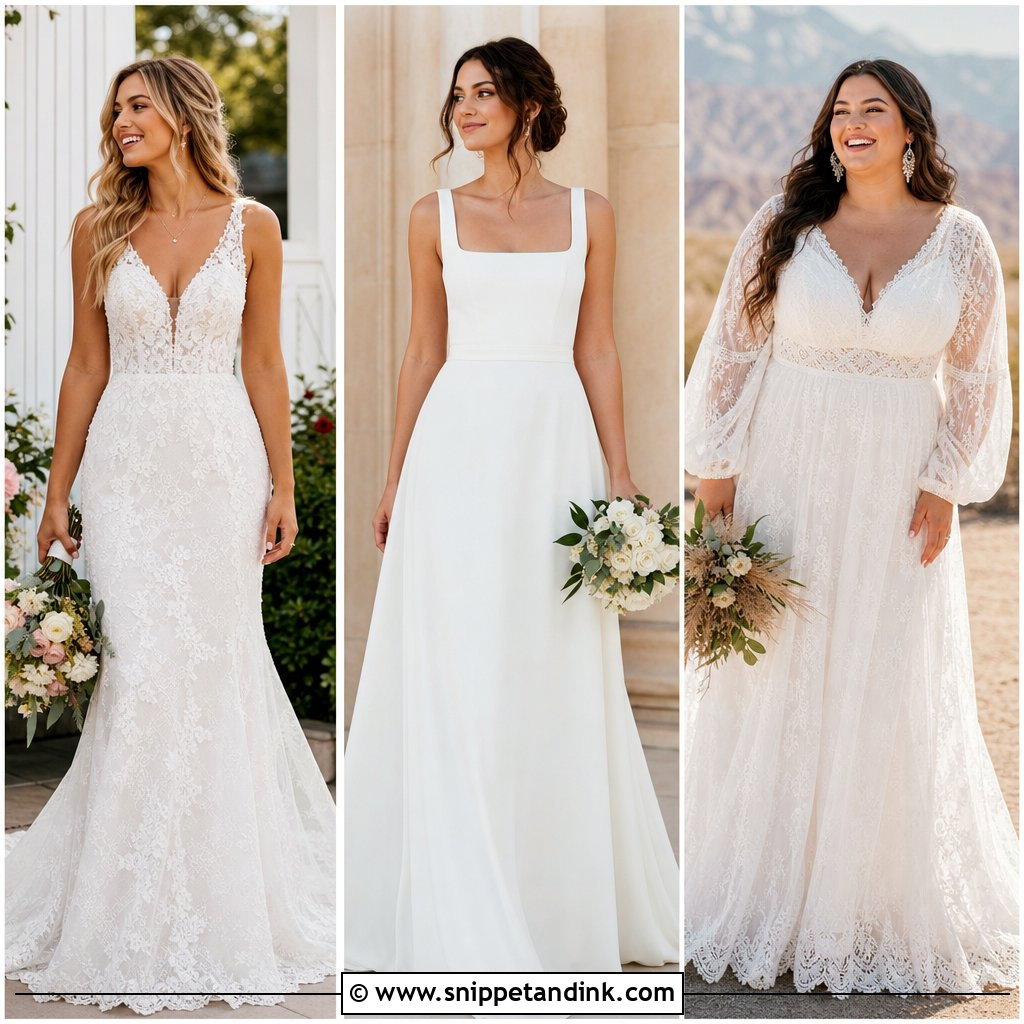
A crystal-detailed back is what guests see for most of the ceremony, so it pays to get it right. Crystal buttons, a beaded illusion back, rhinestone straps or an open back framed in sparkle all work, best on a plain crepe or satin gown where the back can stand alone. A low back needs a well-built internal structure; without it, the bodice gapes when you lean forward to sign the register. Wear your hair up or swept to one side, and choose a sheer veil that lets the back show through.
16. Diamond High Neck Wedding Dress
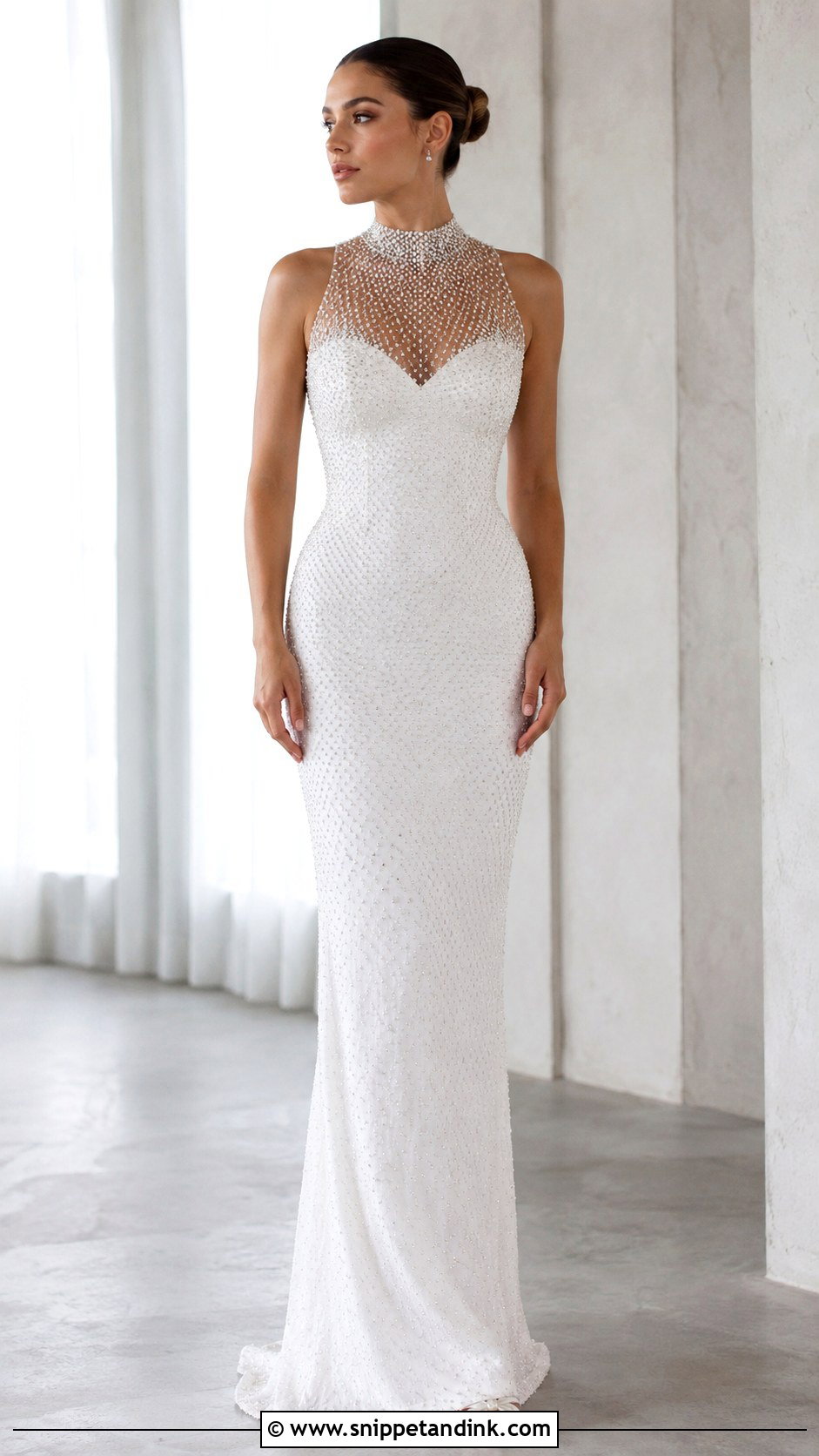
A high neckline brings crystal right up near the face, which lights it in photos the way a necklace would. Sheer illusion, lace or satin with a beaded collar can all carry it. Test turning your head. A stiff beaded collar can press under the jaw, and you’ll be turning to look at your partner, your guests and your photographer all day. It pairs well with a fitted bodice and slim skirt, though an A-line works too. Skip the necklace, keep the earrings small, and wear a sleek bun or low ponytail.
17. Diamond Cape Wedding Dress
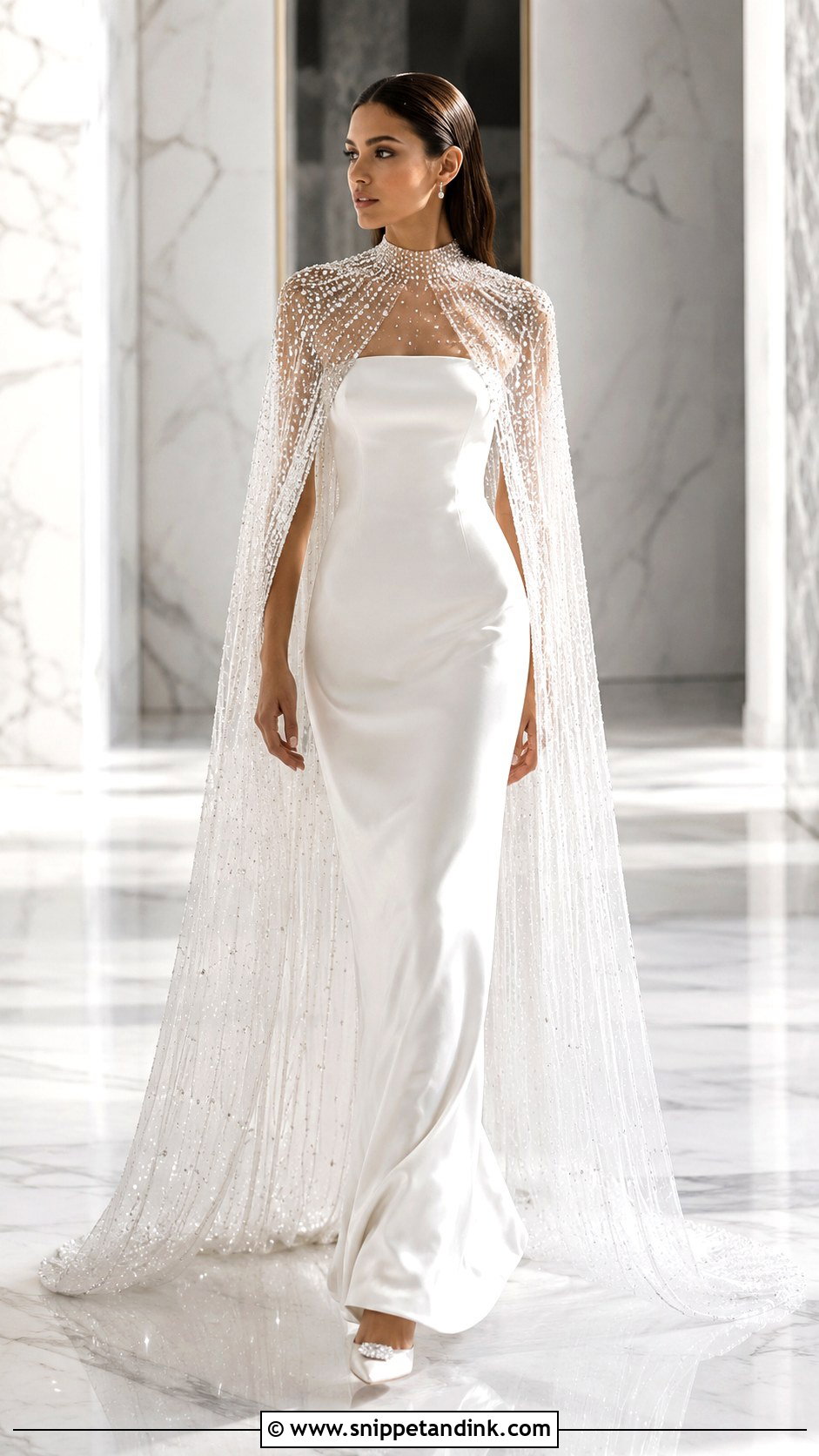
A cape gives you movement and drama without a veil. Sheer tulle, soft organza or light netting with crystals along the shoulders and hem catches light as you walk, and most capes come off for the reception. Underneath, wear something plain, like a satin column or fitted crepe. Watch the shoulder attachment. A crystal-heavy hem pulls the cape backward, and if it’s only fastened at the neck, it can tug at your throat. I prefer capes anchored at the shoulder seams. Clean heels and very little jewellery let the cape lead.
18. Diamond Detachable Skirt Wedding Dress
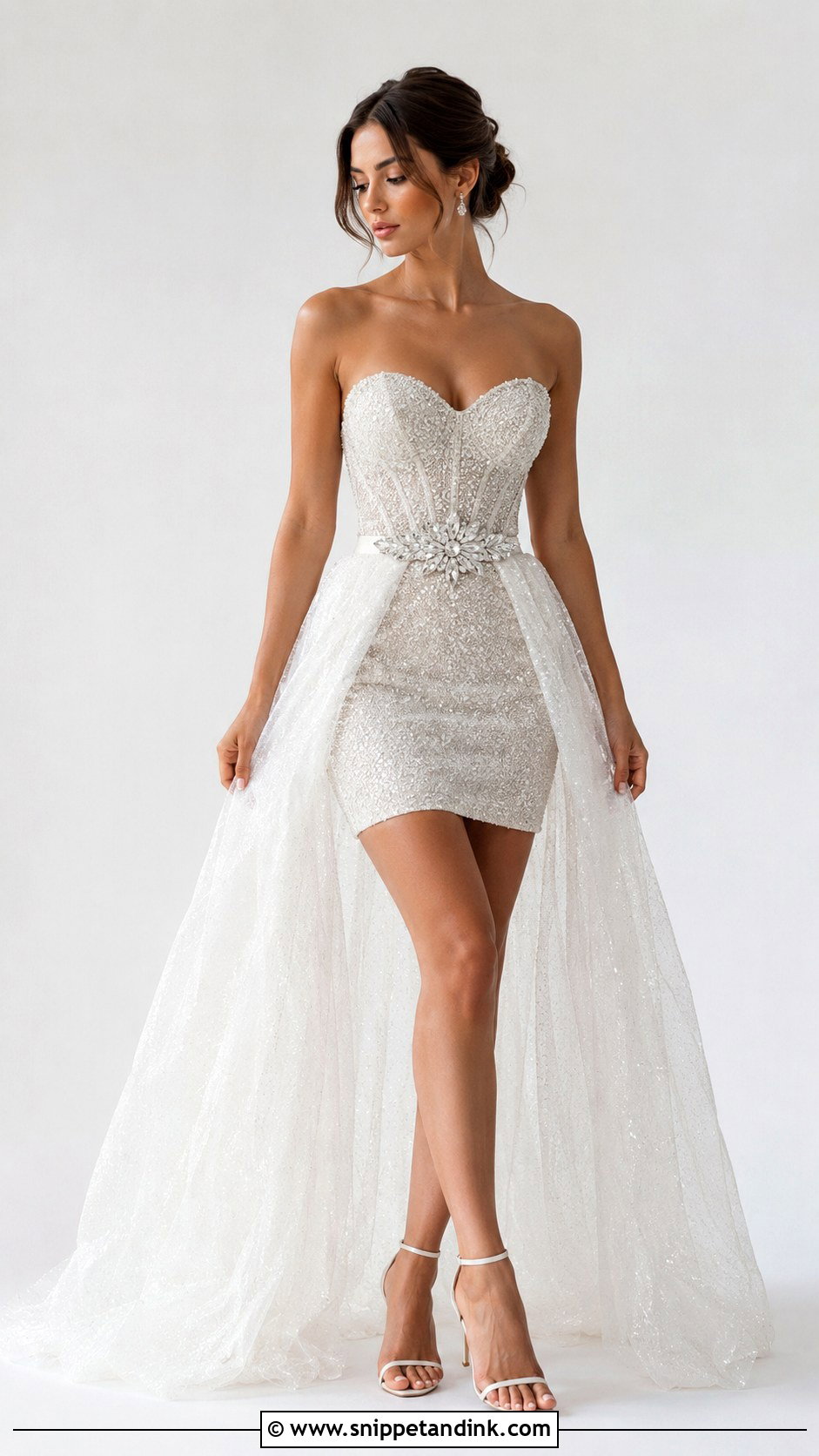
A detachable overskirt gives you a full ceremony gown with sparkle and a train, then a fitted gown, mini or sheath for the reception. It’s one of the most practical options here. The join is everything. A tulle skirt with scattered crystals or a satin overskirt with a beaded waist should sit flat and not twist as you walk; I ask brides to walk briskly at the fitting to check. Choose one pair of heels and jewellery that suit both versions, so the change only takes a minute.
19. Diamond Reception Wedding Dress
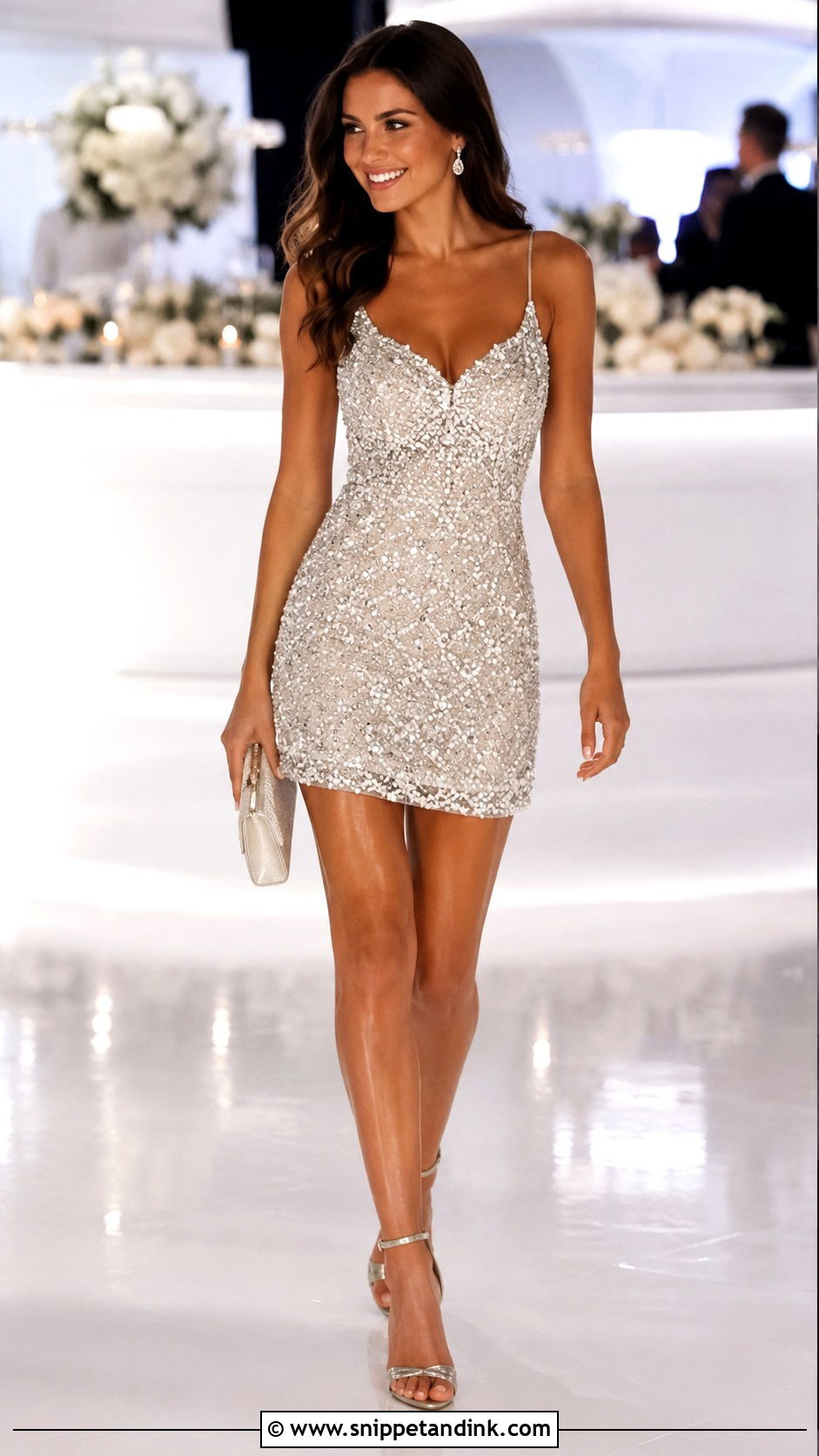
A reception dress lets you dance freely. A short crystal dress, beaded midi, mini with rhinestone straps or a column gown all work, and they’re usually much lighter than the ceremony gown. Full sequin or bead coverage gets warm under dance-floor lights, so check whether the lining breathes. If the dress is embellished all over, keep accessories quiet and wear shoes you can actually move in for hours. A ponytail, soft waves or a sleek bun suit it, and it shows a different, looser side of your style.

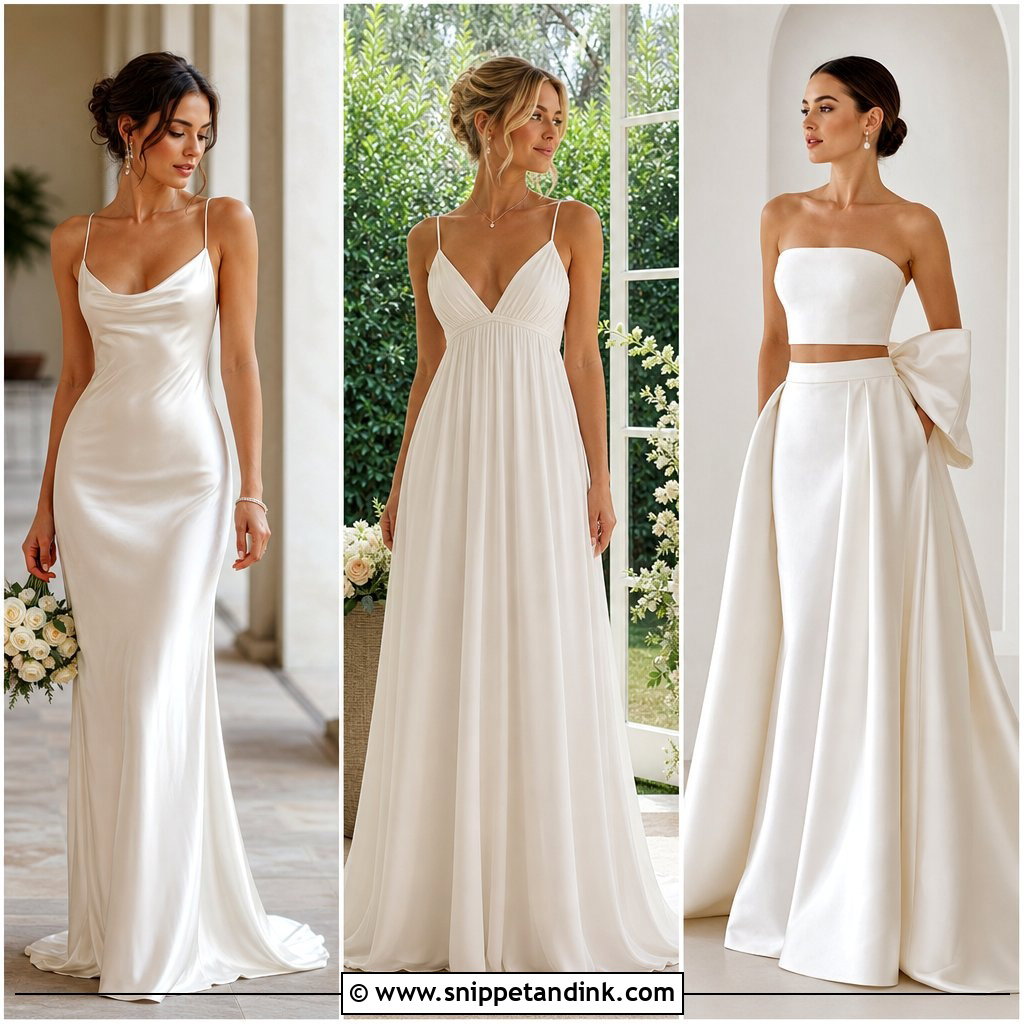
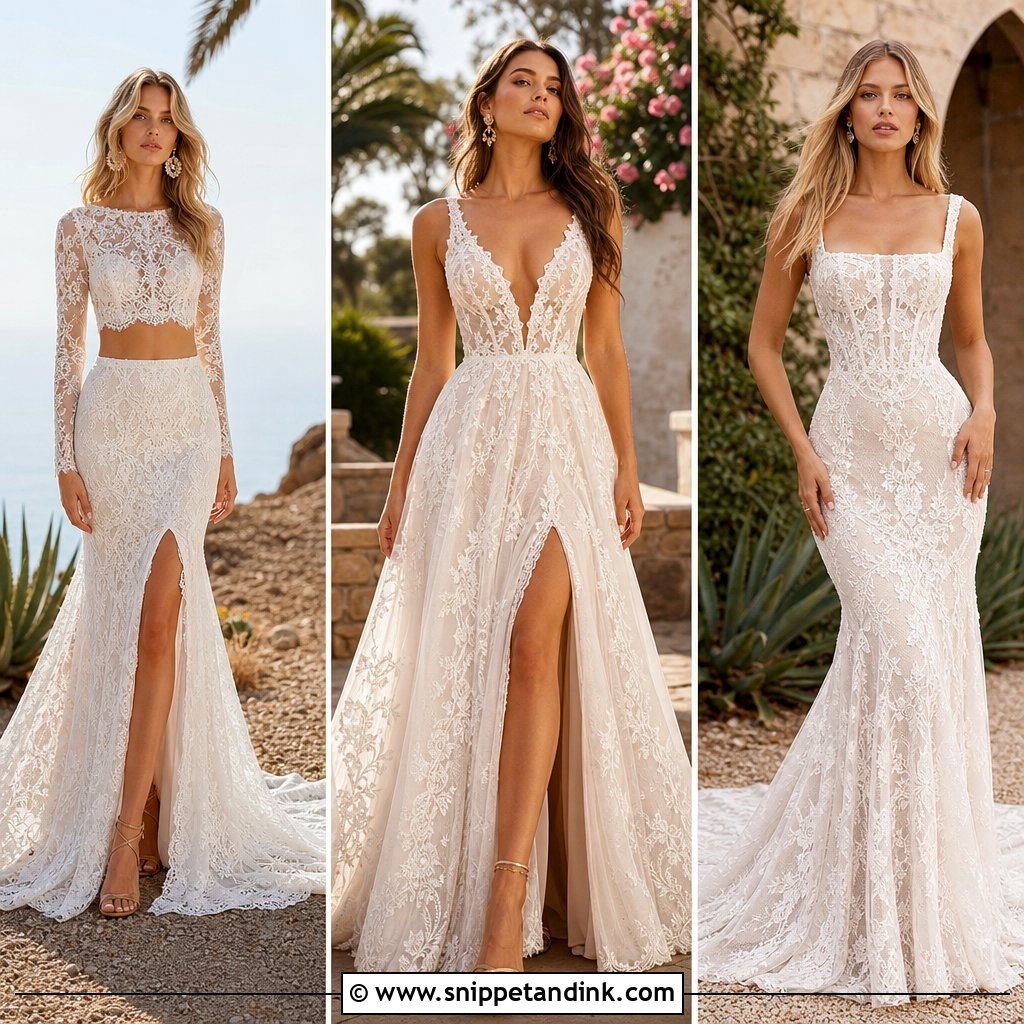

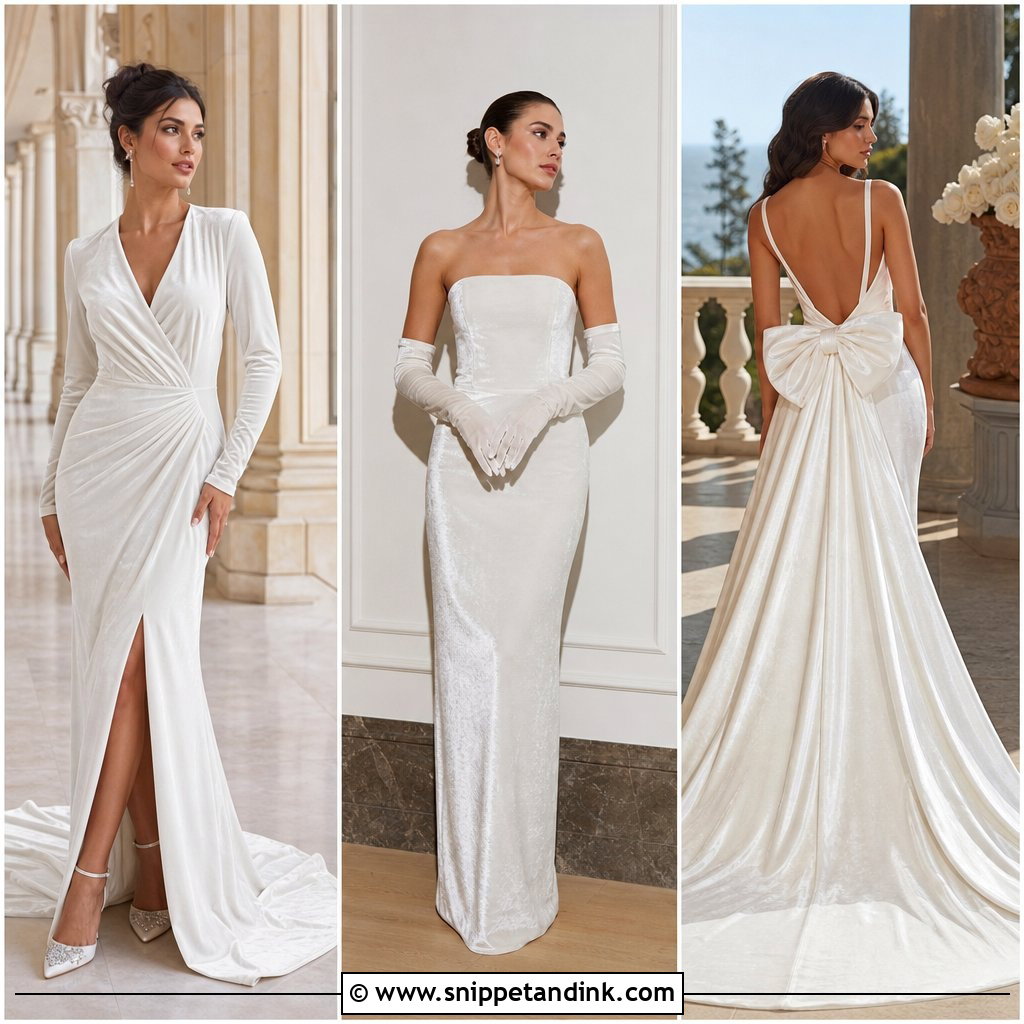
20. Diamond Plus Size Wedding Dress
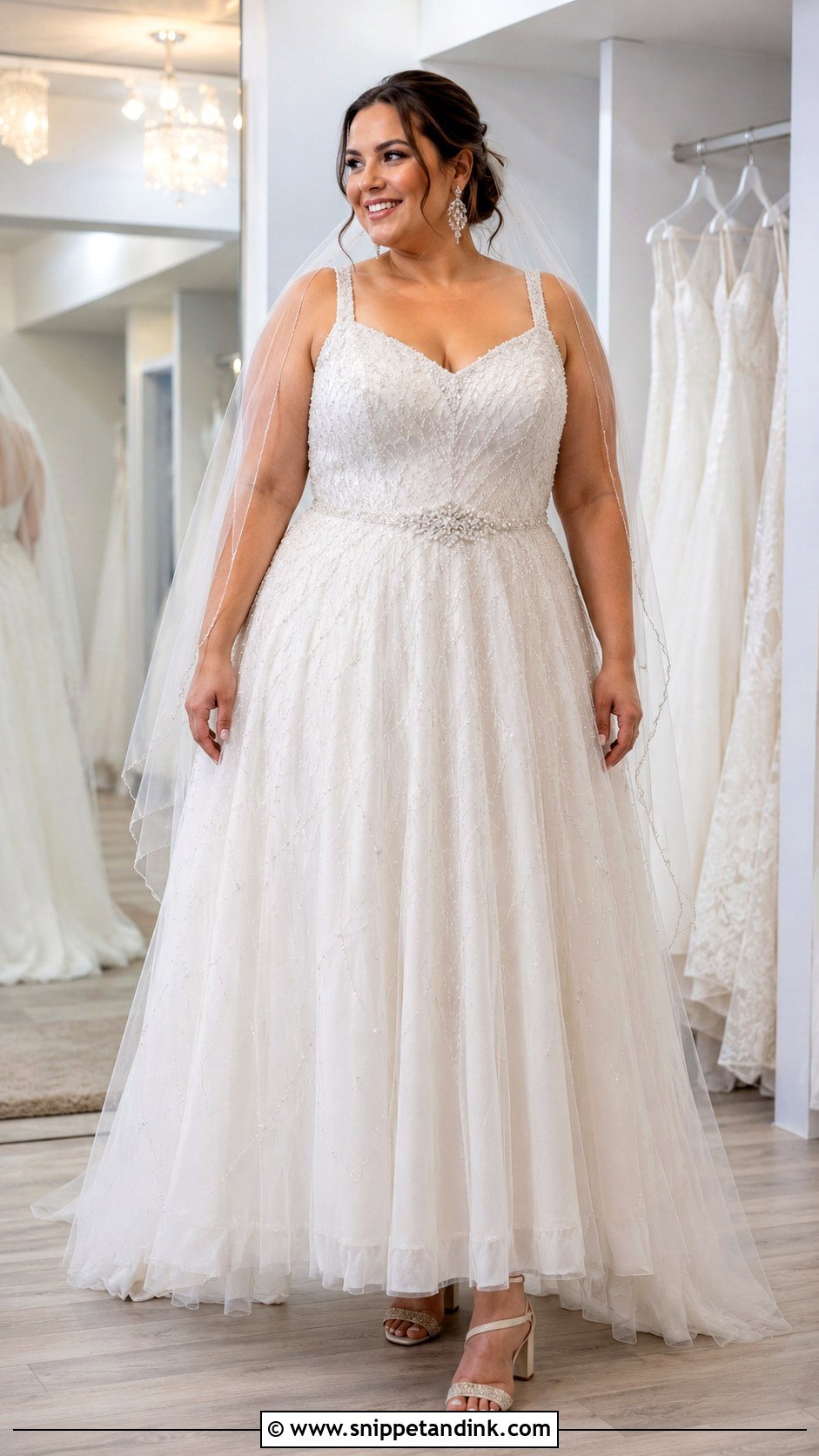
For a plus-size bride, support comes first and sparkle second. I look for a structured bodice, proper cups, secure straps and a waist seam that sits where your natural waist is, not where a sample size puts it. Then use the beading to frame what you love: the neckline, the waist, the sleeves or the train. An A-line is a safe base, and fit and flare can create real shape with good tailoring. Don’t add sparkle just because it’s in fashion. A good seamstress can adjust straps, hem, bustle and bodice so the gown feels made for you.
21. Diamond Petite Wedding Dress
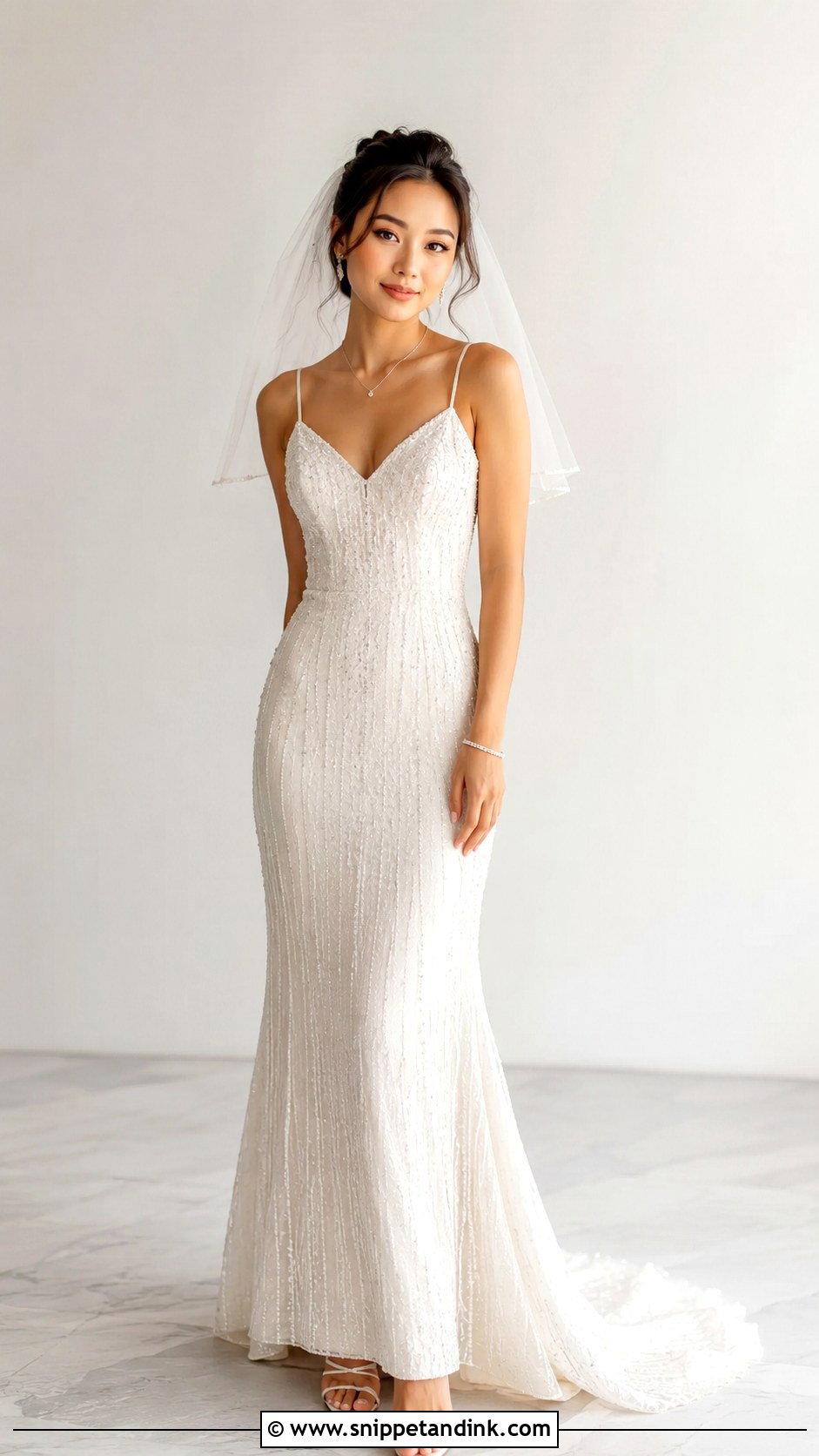
On a petite frame, heavy beading and a big skirt can take over, so I start with slim A-line, sheath, fit and flare or soft column shapes. Vertical beading, narrow crystal straps and a clean waistline add length. A short train still looks bridal without bulk. If you love ball gowns, look for lighter tulle and a clearly defined bodice. Nude or ivory heels, a shorter veil and small jewellery keep proportions balanced. Hemming a beaded gown means removing and restitching crystals along the new edge, so leave extra time for it.
22. Diamond Vintage Wedding Dress
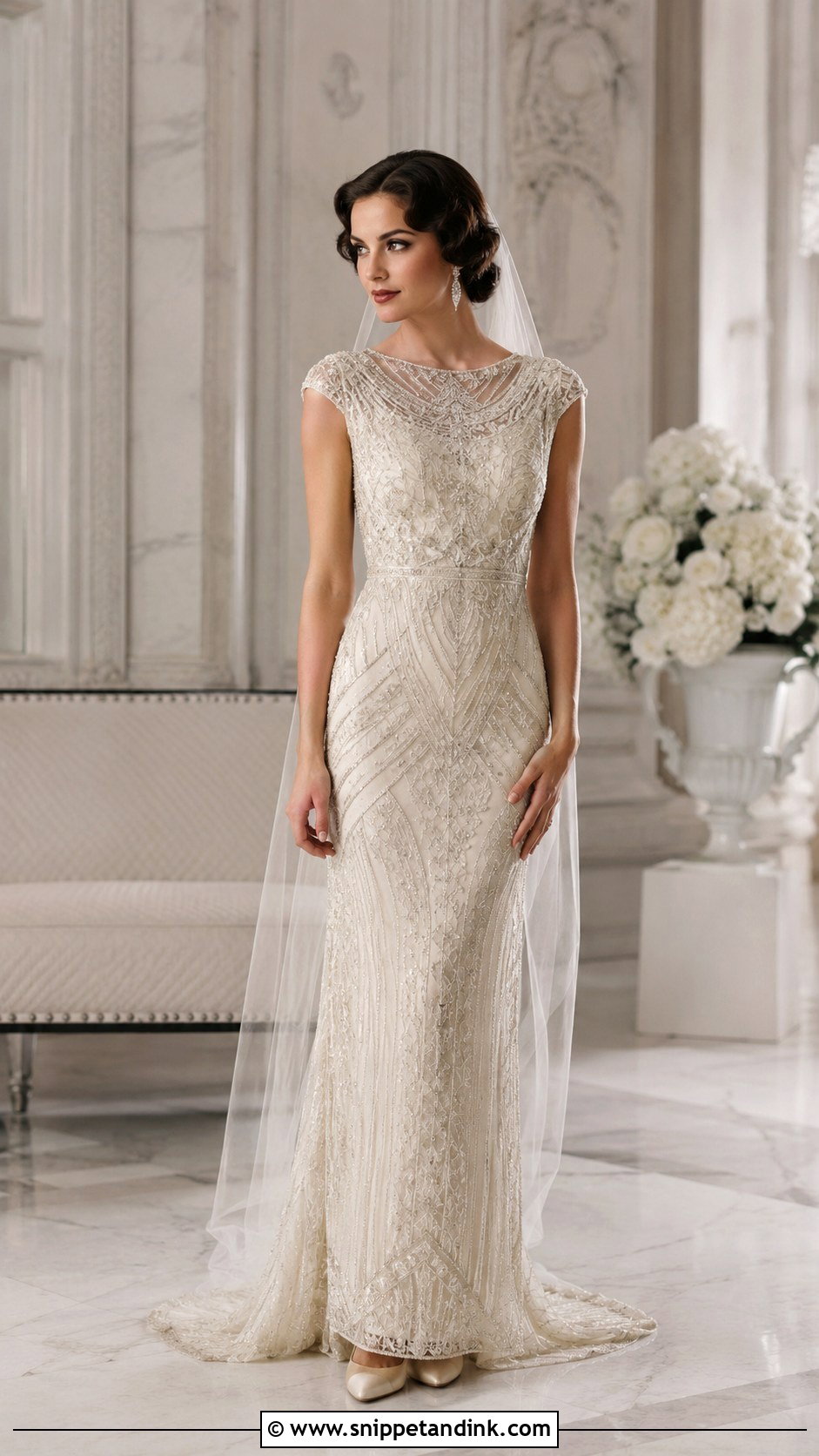
Vintage sparkle draws on old-Hollywood shine, Art Deco patterns and heirloom details. Geometric crystal beading, pearls, scalloped edges, cap sleeves and a column cut all fit. Champagne, ivory and soft blush warm up the sparkle and make it look older and richer. Real 1920s-style beaded gowns are heavy for their size, so if you’re wearing a true vintage piece, have the beading checked for loose threads before any alterations. Vintage-style earrings, satin shoes and a soft veil are enough; let the beading carry the story.
23. Diamond Boho Wedding Dress
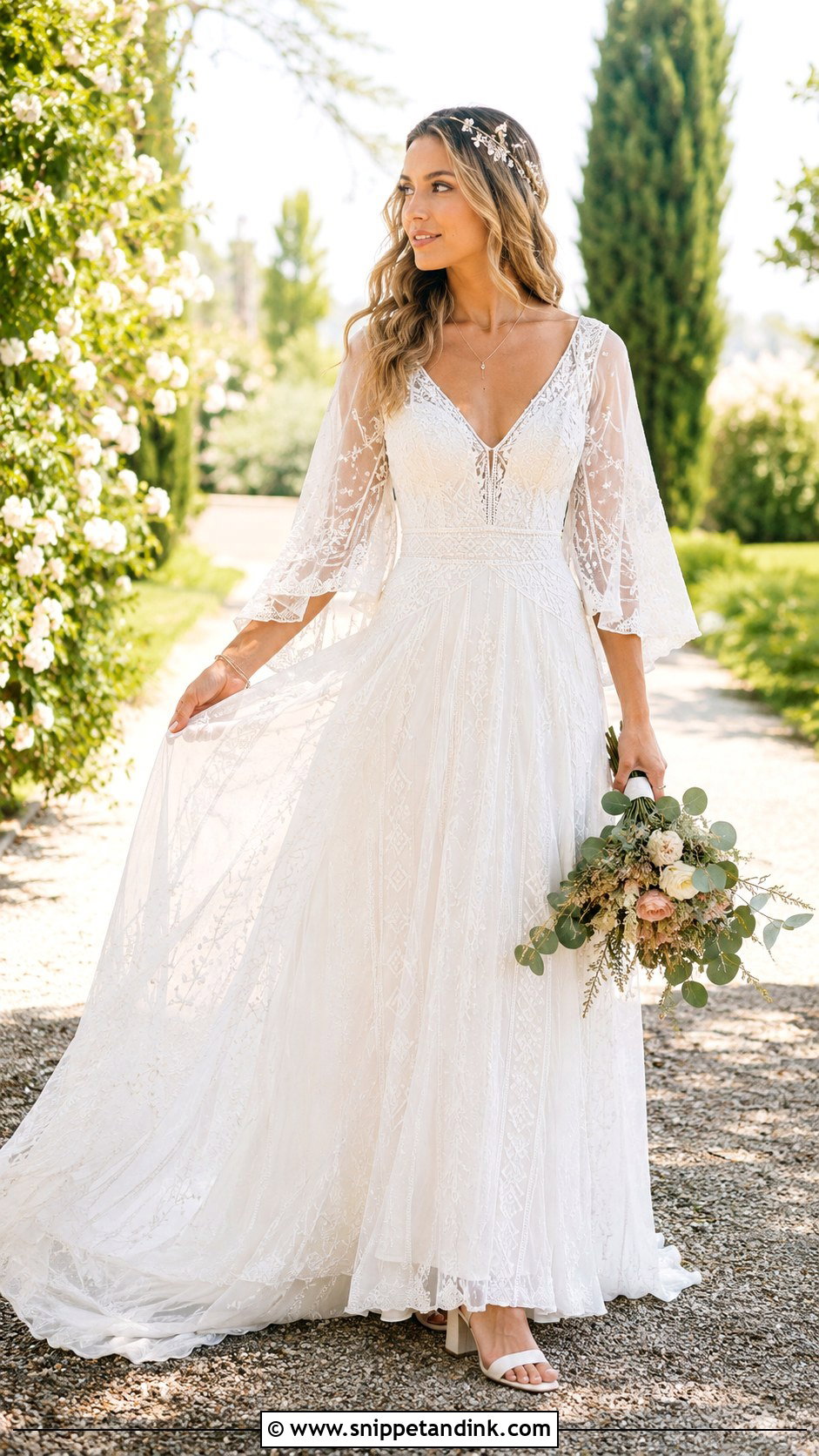
For a boho bride, the shimmer should look worked into the fabric, not placed on top of it. Fine crystal embroidery, light beading, airy sleeves and flowing fabrics do that; big rhinestones don’t. A-line lace, soft sheaths and tulle skirts all suit, and Bell sleeves, floral lace and a low illusion back add personality. Outdoors, think about the hem. Crystals at the bottom of a flowing skirt pick up dust and grass, so I’d keep the beading above the knee. Loose waves, a simple hair vine and sandals or block heels fit desert, beach and relaxed outdoor receptions.
24. Diamond Minimal Wedding Dress
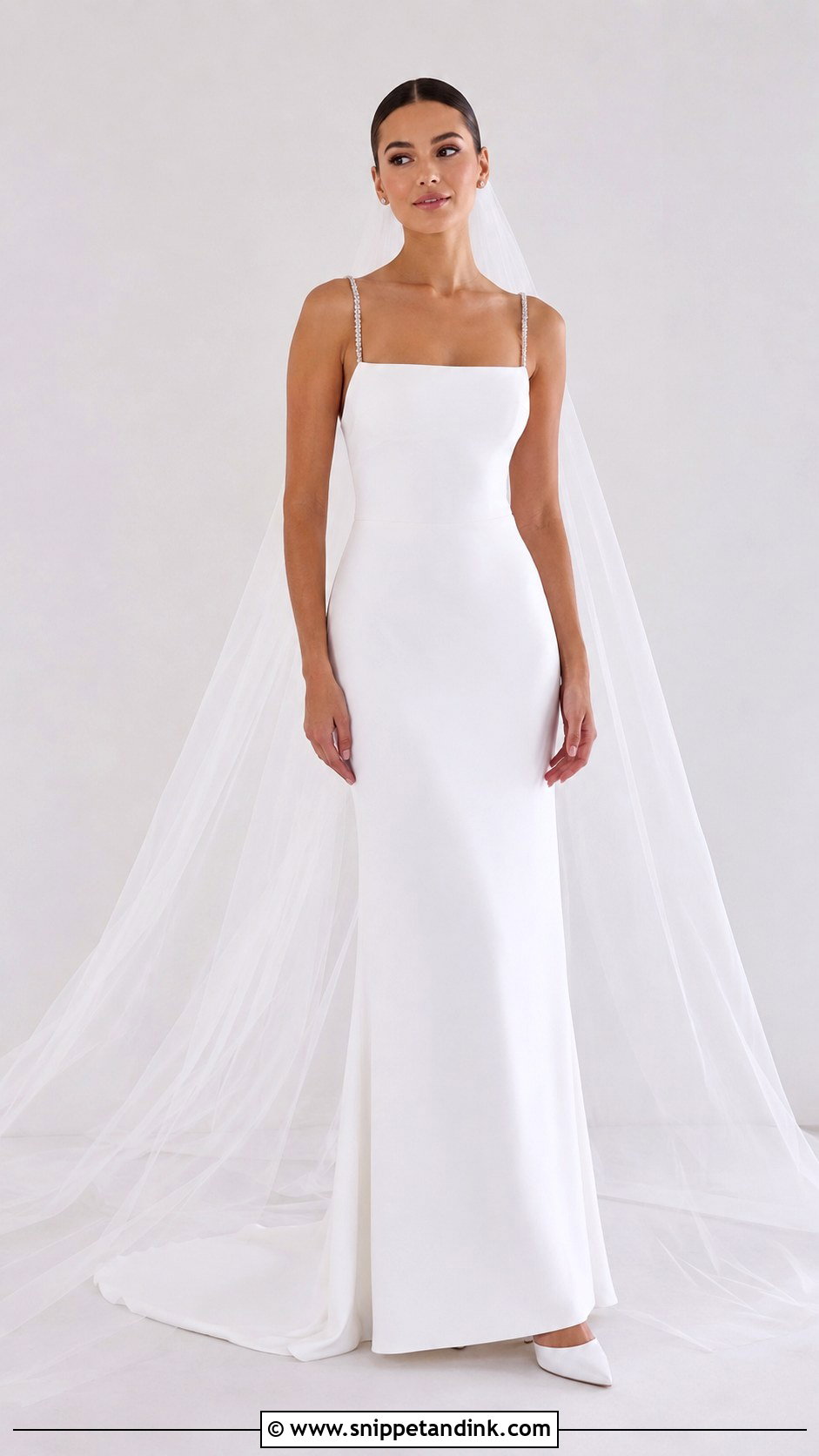
One sparkling detail on a plain dress can do more than a fully beaded gown. A crepe gown with crystal straps, a satin slip with a jewelled neckline or a column with a beaded waist gives the eye one place to land. With so little decoration, fabric and tailoring are exposed, so I’d spend your budget there. A cheap crepe shows every seam. Small studs, a smooth veil and pointed satin heels finish it, for a quieter kind of luxury without volume.
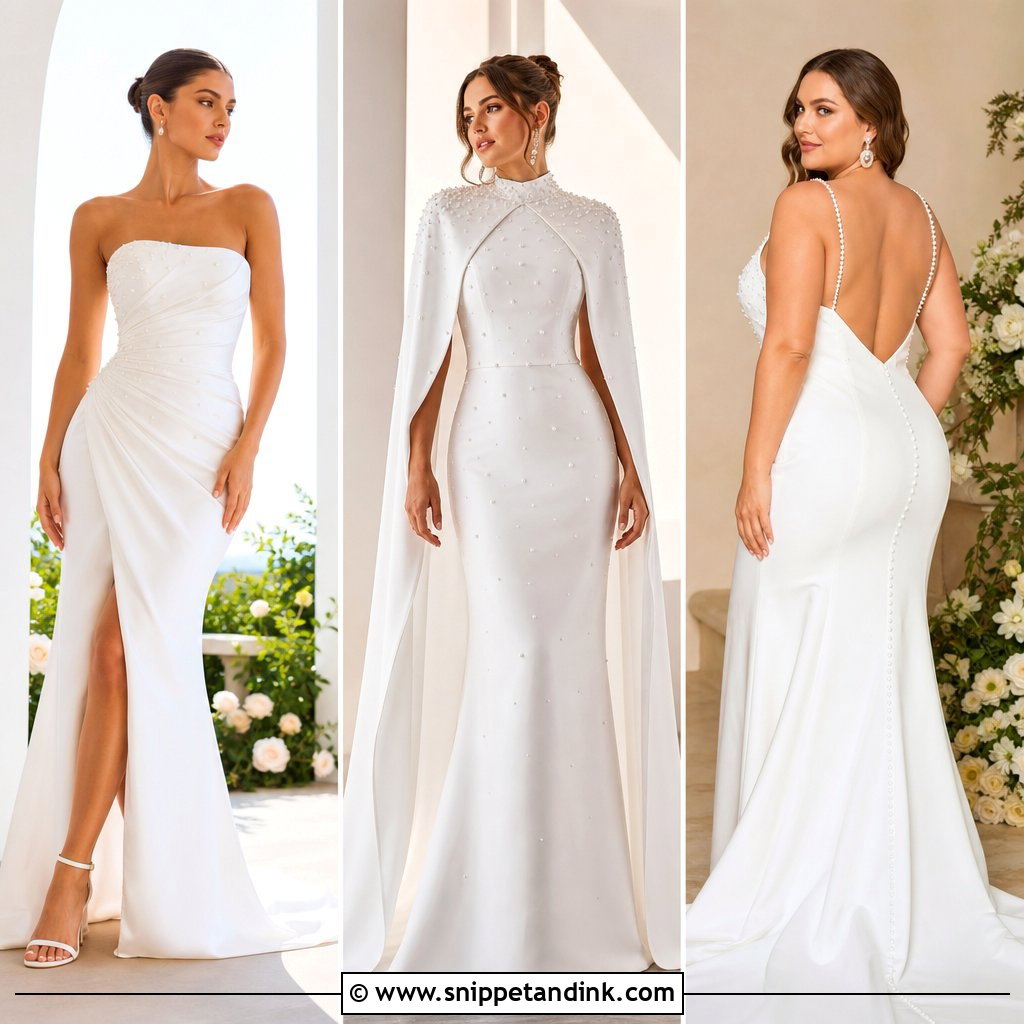
25. Diamond Train Wedding Dress
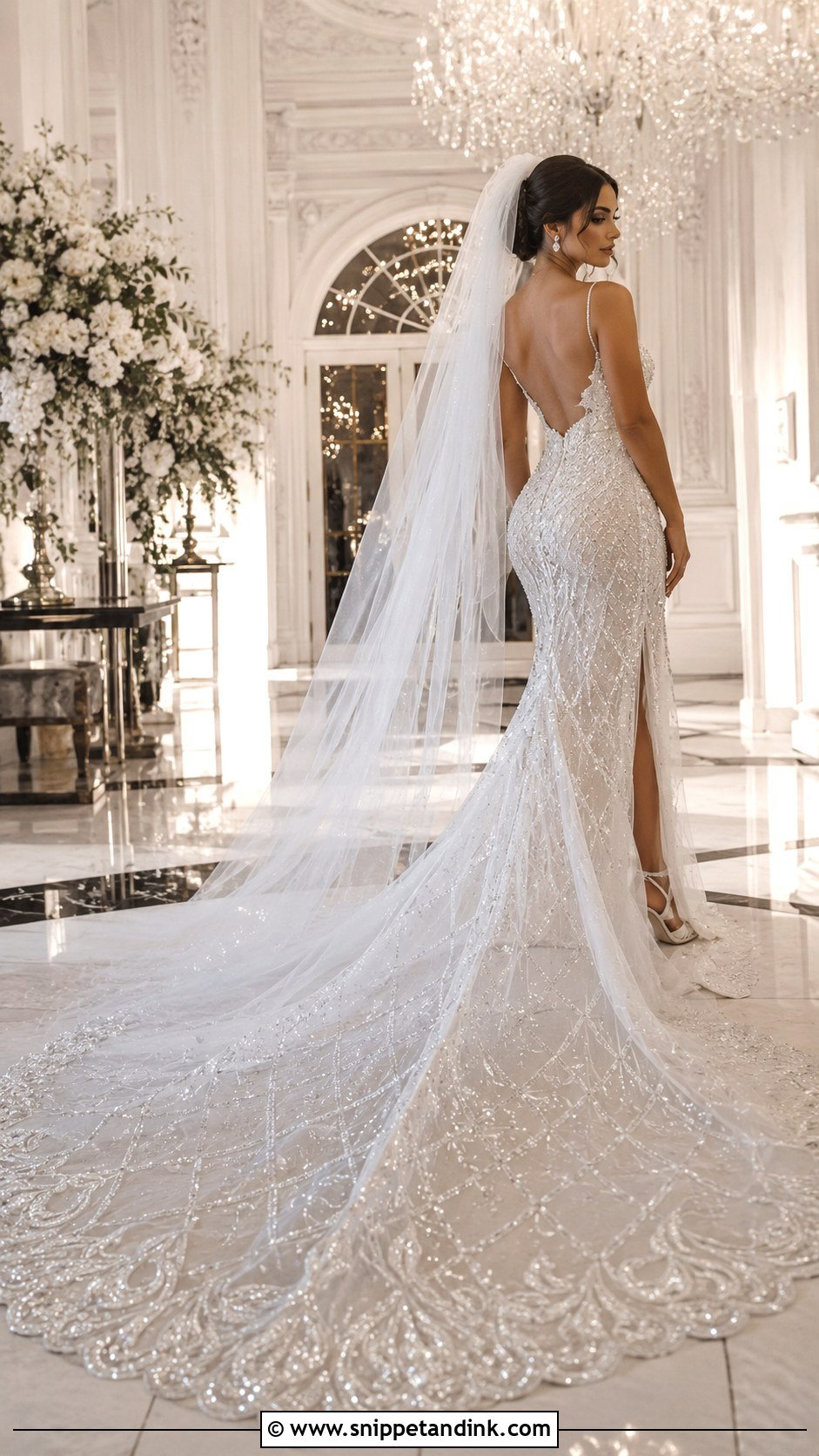
A crystal-scattered train, beaded lace edging or shimmering appliqué makes the walk up the aisle a moment of its own, and adds depth in photos from behind. A fitted bodice with a long train reads dramatic; an A-line with a sparkling train softer. Ask how it bustles before you buy. Beaded trains are heavy, and a bustle with too few points tears at the attachment by mid-evening. If both back and train are detailed, keep the veil plain or end it above the beading so you can see what you paid for.
Why Alterations on a Beaded Gown Take Longer
On a plain gown, taking in a side seam is quick. On a beaded one, the seamstress first has to unpick the beading along the seam, make the change, then restitch every crystal by hand so the pattern meets again. Hems work the same way. That’s why embellished gowns often cost more to alter, though how much varies a lot by seamstress and how dense the work is. I’d book the first alterations appointment around two to three months before the wedding and expect at least one extra fitting.
Ask the shop for a small bag of spare beads or stones when you buy. If one comes loose on the day, matching it later is far easier with originals.
Will It Scratch Anyone? Test It Before the Wedding
Sparkle has an edge, literally. Put the dress on at your final fitting and spend two minutes doing what you’ll do on the day: hug someone wearing a suit jacket, hold your arms around their back, sit with your arms resting on the side seams, and lift a bouquet to waist height. Rough beading on the inner arm or side bodice shows up as red marks within minutes.
Most fixes are simple. A seamstress can add a soft lining strip under scratchy areas, or swap a few raised stones on the inner arm for flat ones. Lace veils and tulle overskirts are the other things to test, since a crystal edge will catch them every time you turn.
Sparkle That Still Looks Like You at Midnight
The right embellished gown suits your shape, your comfort, your venue and the light you’ll be married in. A full crystal ball gown feels grand; a satin dress with crystal straps feels modern. If you love detail, look at lace, illusion sleeves, a beaded back or a sparkling train. If you prefer restraint, one accent is enough. Whatever you choose, think through weight, movement, alterations and how the beading reads in daylight and candlelight, and you’ll end up with a dress that glows without wearing you.
You'll Like These Ideas:






Leave a Reply