
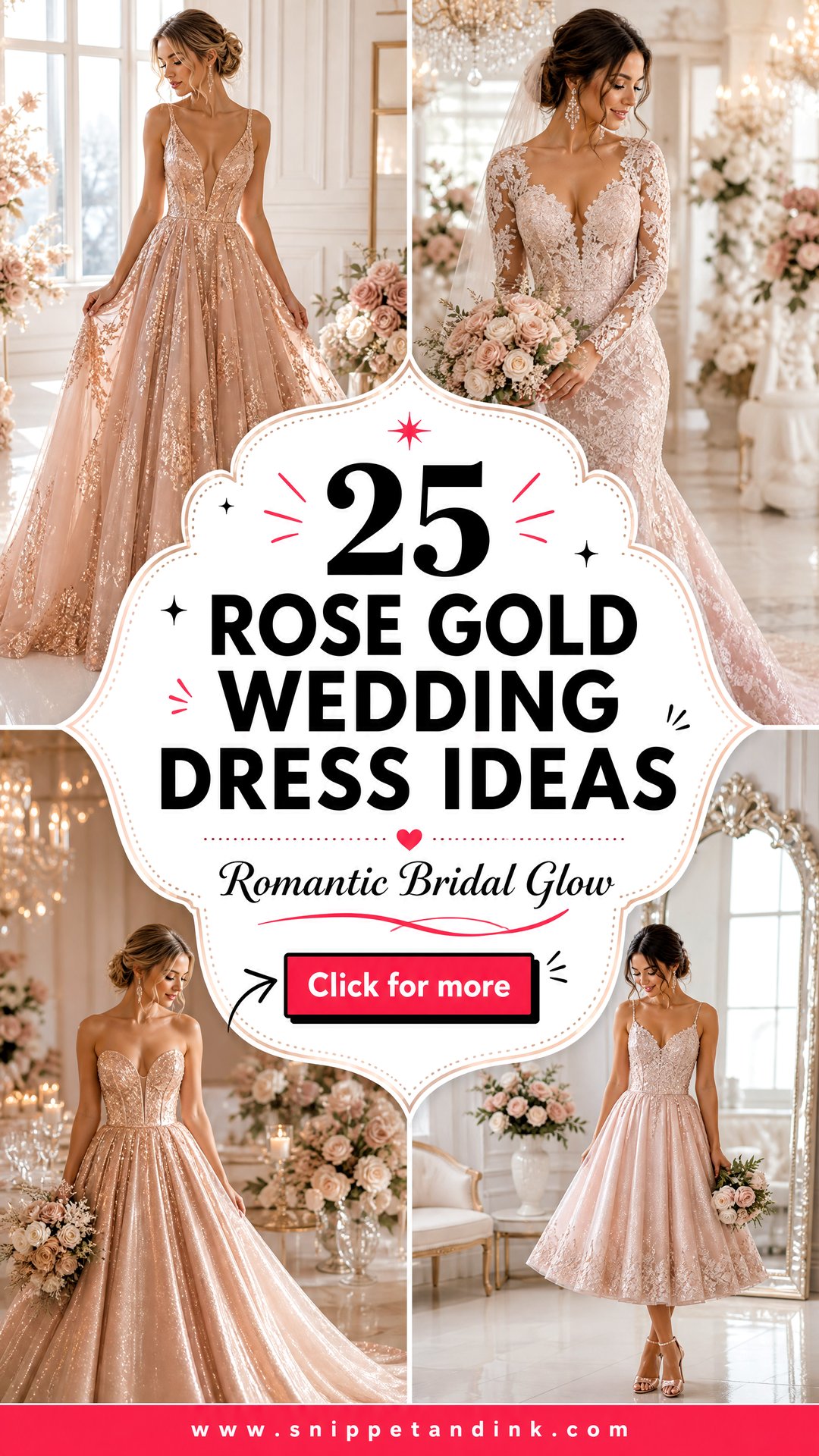
Rose gold is a slippery colour to shop for. On one hanger it reads as blush, on the next it is closer to copper, and a third looks like champagne with a pink cast. That range is exactly why it suits so many brides, but it is also why I never let anyone fall for a rose gold gown from a photo alone. The fabric matters as much as the shade: satin throws the metallic warmth forward, tulle diffuses it, sequins multiply it. Below are twenty-five ways to wear the colour, from full gowns to a single tinted veil, each with the styling I would actually put with it.
Testing Rose Gold Against Your Skin Before You Fall for a Sample
Bridal shop lighting is warm and flattering, and rose gold looks good under almost any warm bulb. The test that matters happens elsewhere. I take the sample, or a fabric swatch, to a window with indirect daylight and hold it right under the chin, because that is the zone the camera sees most.
- Cool or pink-toned skin usually suits the blush and champagne versions; a coppery rose gold can make the face look ruddy beside it.
- Warm, olive and deeper skin tones carry the more metallic, peachier shades well, and very pale blush can look chalky next to them.
- If the shade makes your teeth look yellow or the area under your eyes look grey, it is the wrong rose gold for you, whatever the cut.
- Look at it under warm light too. Evening receptions are lit amber, which pushes rose gold toward orange, so a shade that sits on the pinker side in daylight usually ends the night looking right.
I also ask brides to bring a photo of their ring or jewelry to the appointment. Rose gold metal and rose gold fabric rarely match exactly, and it is easier to choose a gown that sits near your ring than to hunt for earrings later.
1. Rose Gold Ball Gown Wedding Dress
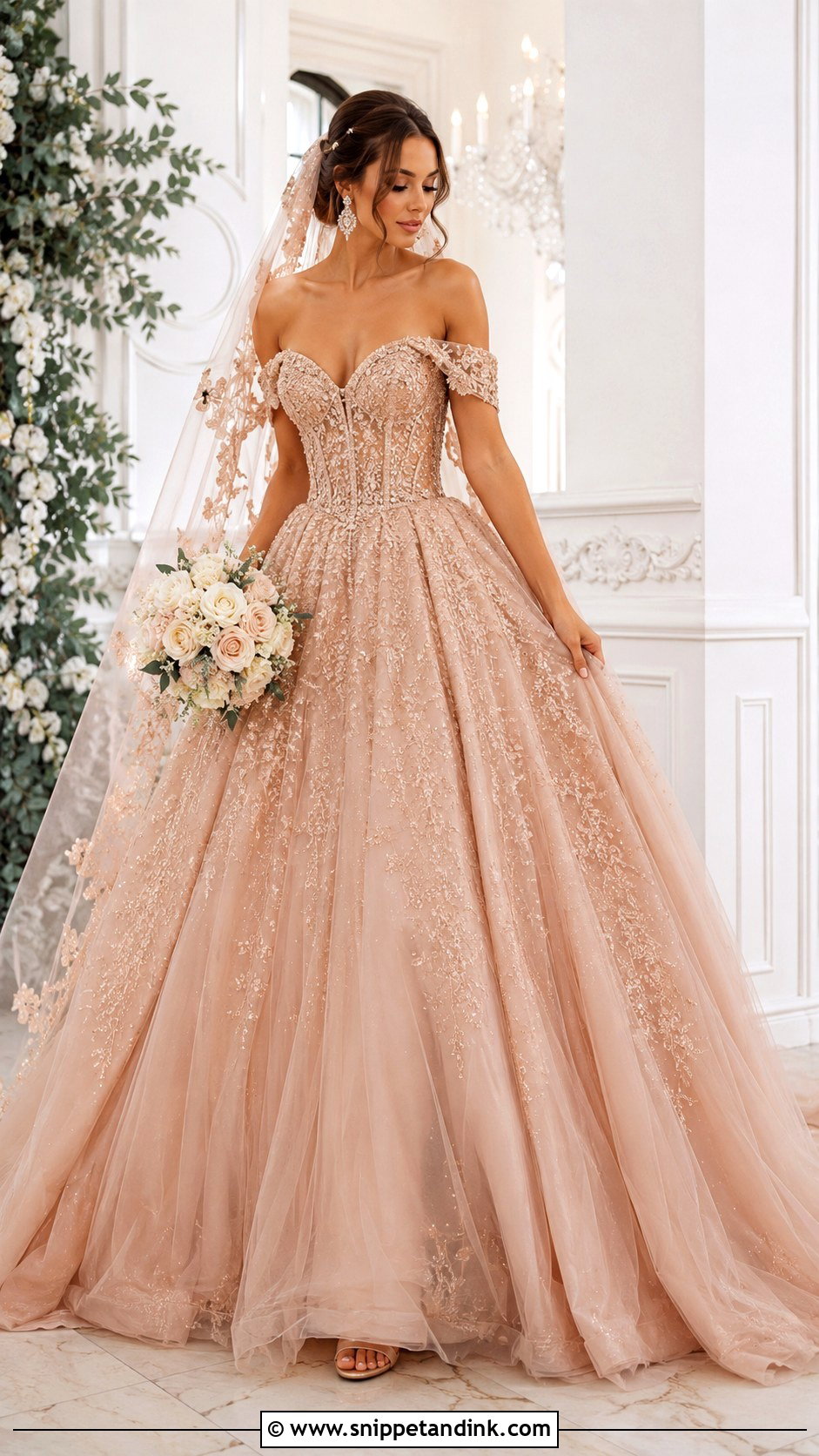
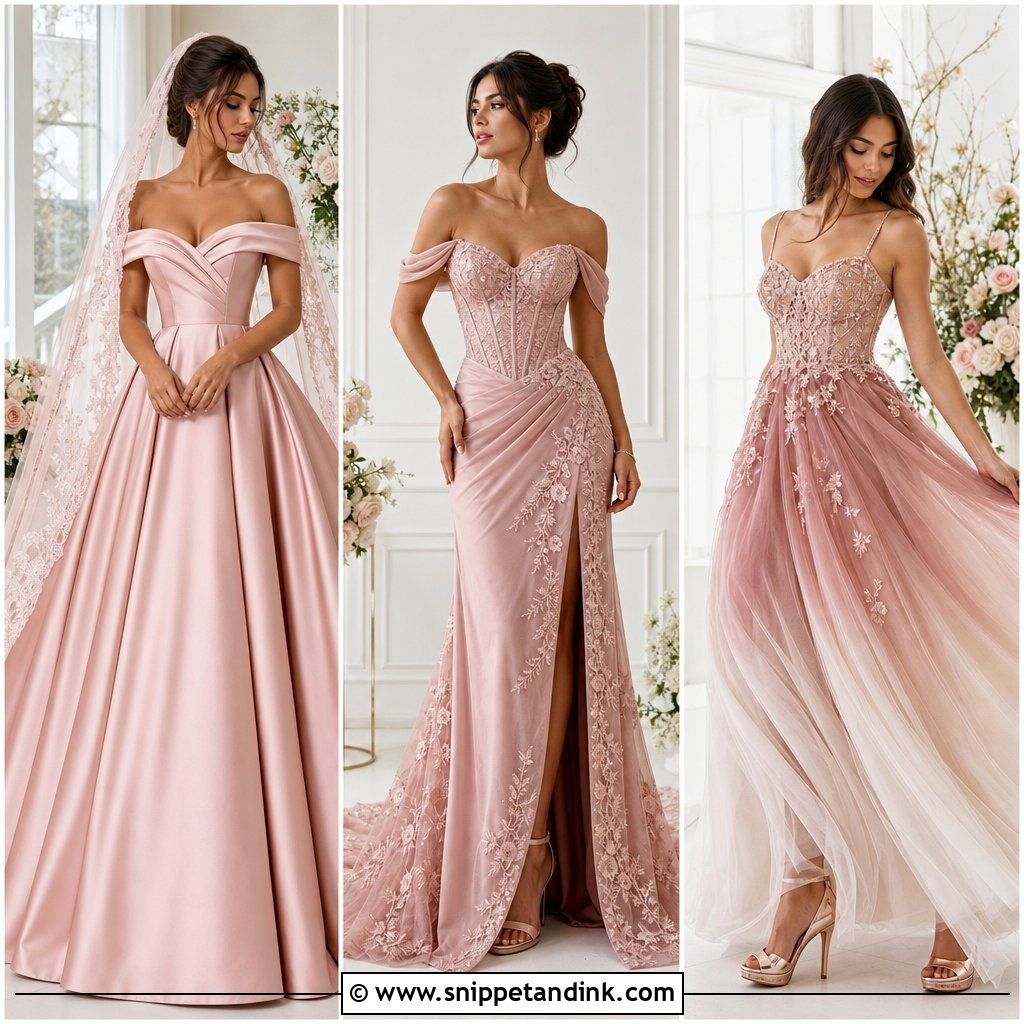
A rose gold ball gown gives you the full bridal volume with colour doing the softening instead of bright white. I look for a tulle or organza skirt over a structured bodice, because layered tulle in this shade builds depth as the layers stack, while a single layer can look thin and pinkish. Pair it with a cathedral veil edged in a fine metallic thread, crystal drops and pointed champagne satin heels. The thing I check first is the weight of the skirt: a heavy gown in a grand hotel ballroom is fine, but in a garden with stairs it gets tiring by the second hour. Keep the flowers in ivory, blush and muted peach so the bouquet does not fight the dress.
2. Rose Gold Mermaid Wedding Dress
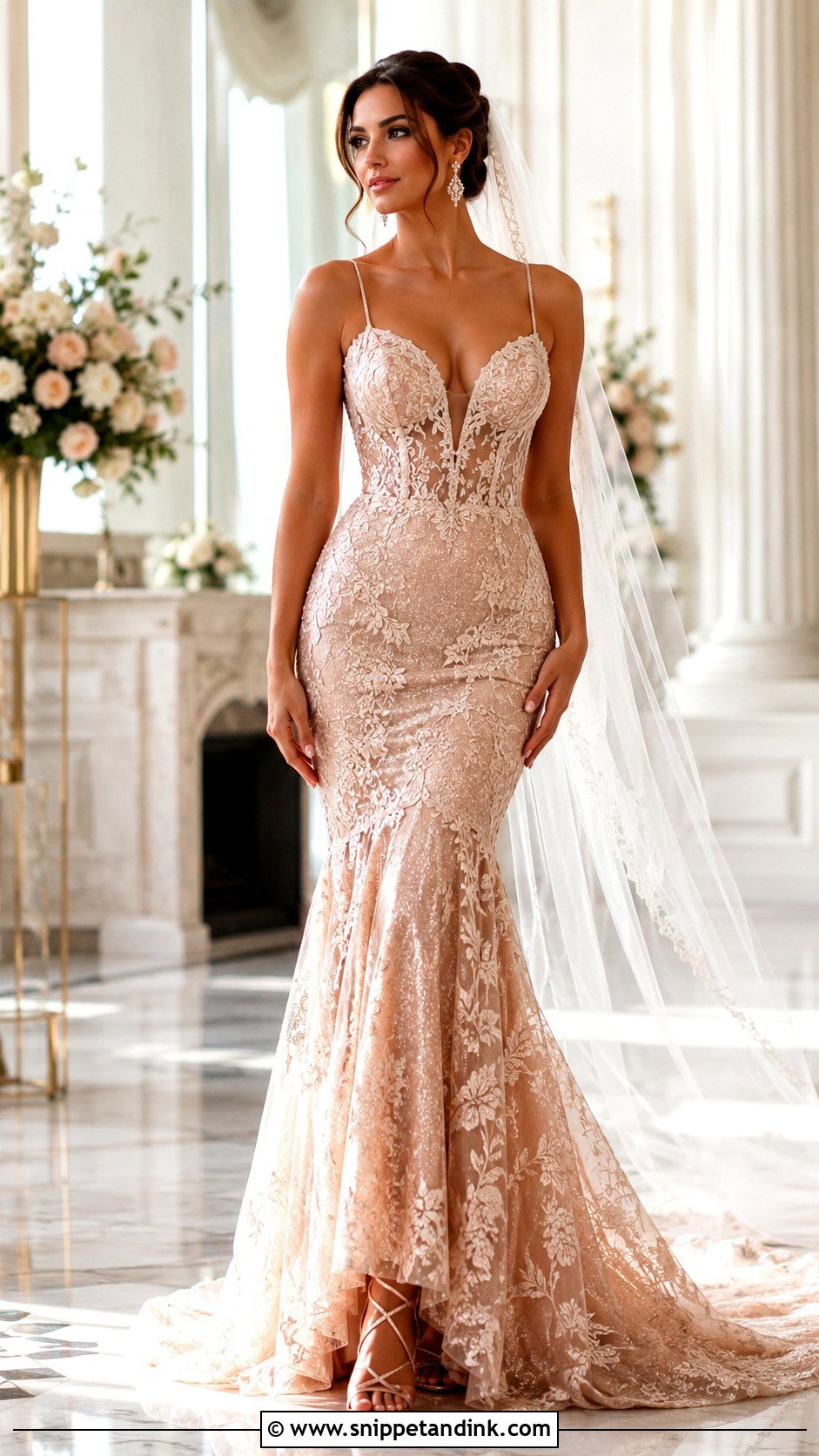
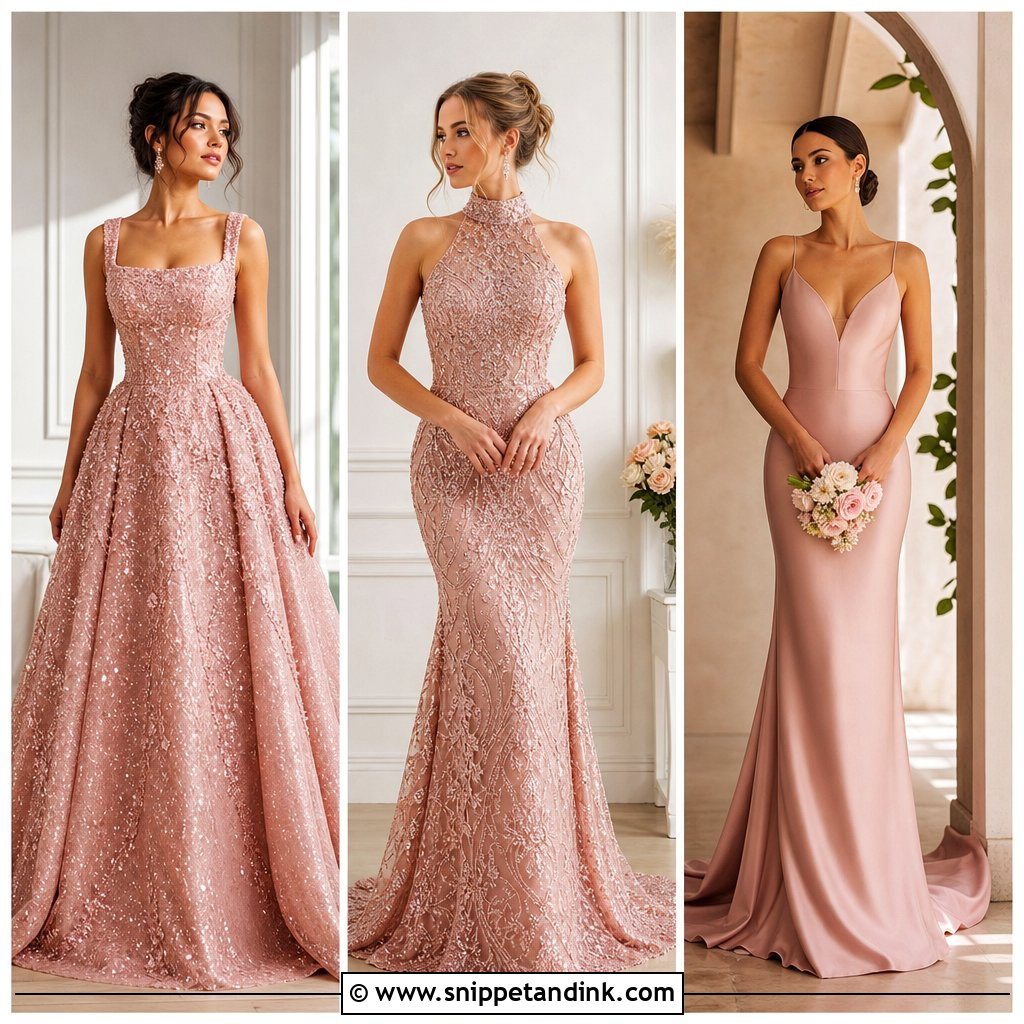
The mermaid cut is where rose gold gets dramatic. The colour follows every contour through the hips, so the fit has to be close and smooth or any pulling shows as a shine line. I always have brides sit, climb a step and walk in the sample, because a flare that starts too low makes all three harder. Lace or beaded tulle forgives more than satin here. Style it with sleek waves, a long veil set low at the crown and fine rose gold jewelry, then let strappy metallic heels and a quiet bouquet of ivory roses do the rest. It belongs in a ballroom or a modern indoor space rather than on grass.
3. Rose Gold A Line Wedding Dress
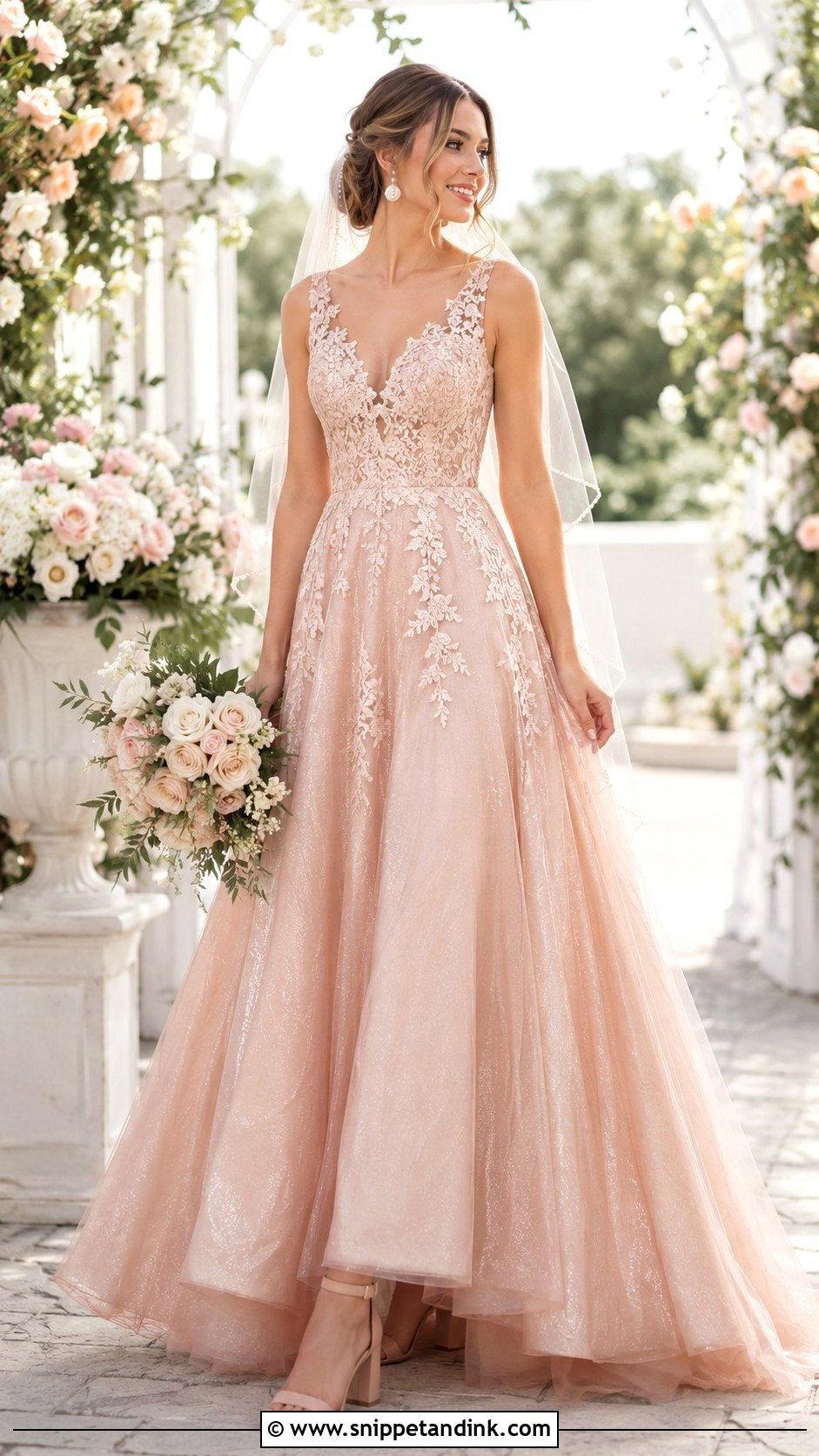
If you are new to wearing colour, start with the A-line. The fitted bodice and gradual skirt suit most figures, and the shape does not make the shade do all the work. Rose gold tulle or floral lace with a gentle sheen is the easiest version to live in. I usually put a fingertip veil with it, since anything longer starts to hide the colour you chose. Add pearl earrings, a slim bracelet and block heels in blush or champagne, which matter more than people think at a garden or estate venue where stilettos sink.
4. Rose Gold Lace Wedding Dress
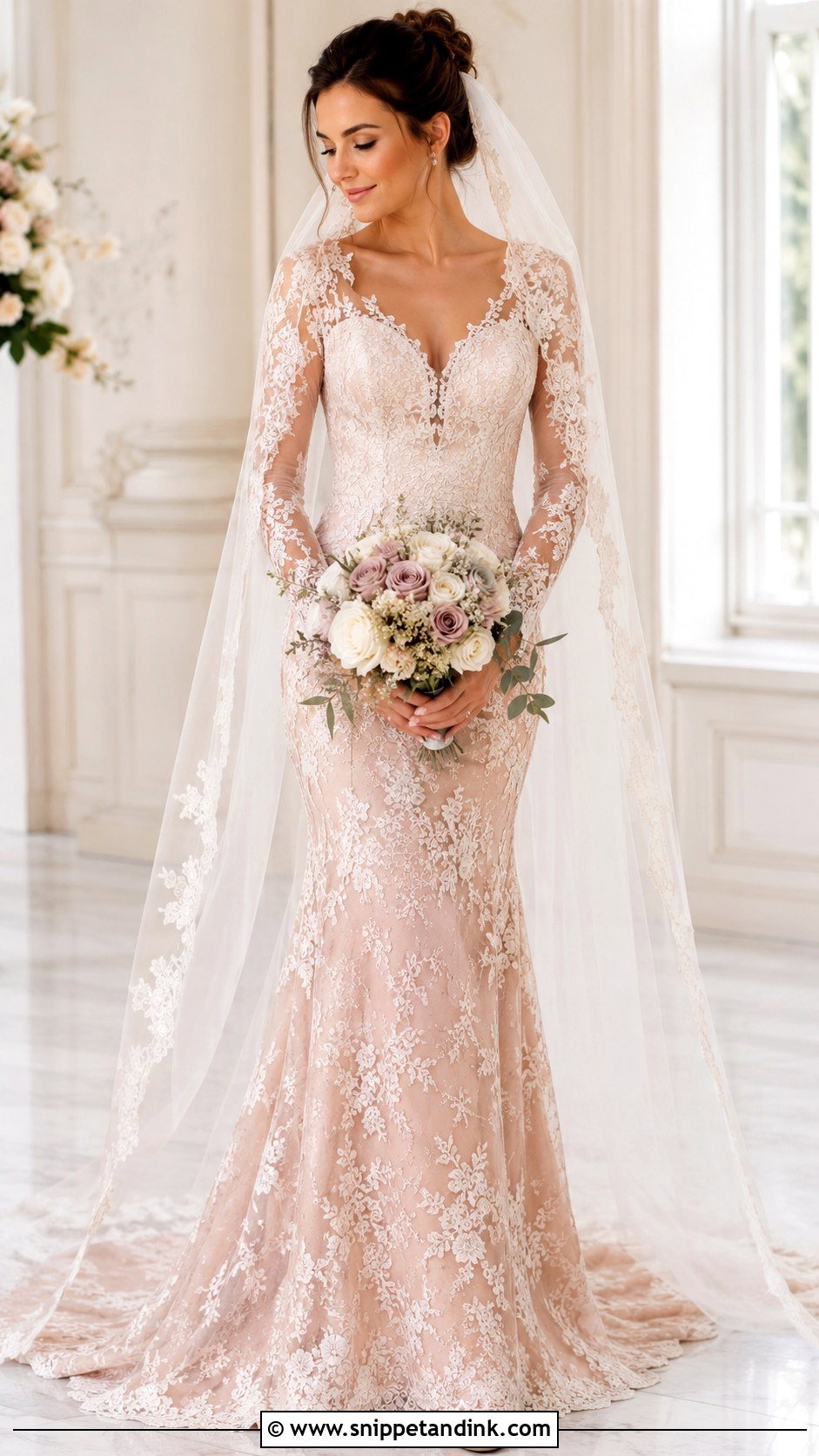
Lace over a blush or champagne lining is my favourite way to show rose gold without any shine at all. The lining is the real colour decision: I hold two or three lining swatches behind the same lace at an appointment, because a peachier lining warms the whole dress and a cooler pink makes it read more modern. Long sleeves, a sweetheart neckline or an illusion bodice all sit well with this. Keep the rest quiet: pearl studs, a low bun, a veil with a few scattered lace motifs and nude heels. It leans vintage without looking costume.
5. Rose Gold Sequin Wedding Dress
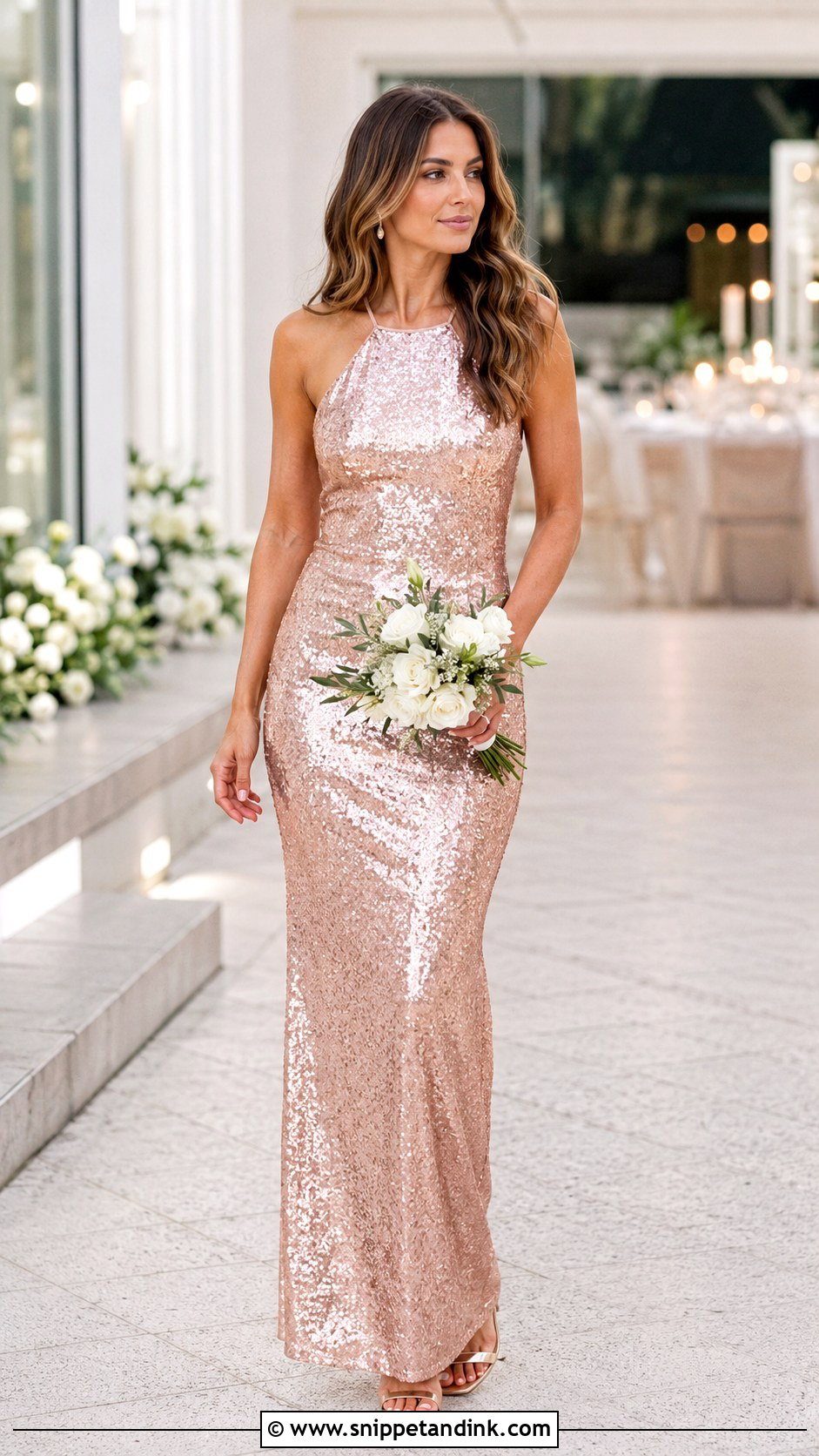
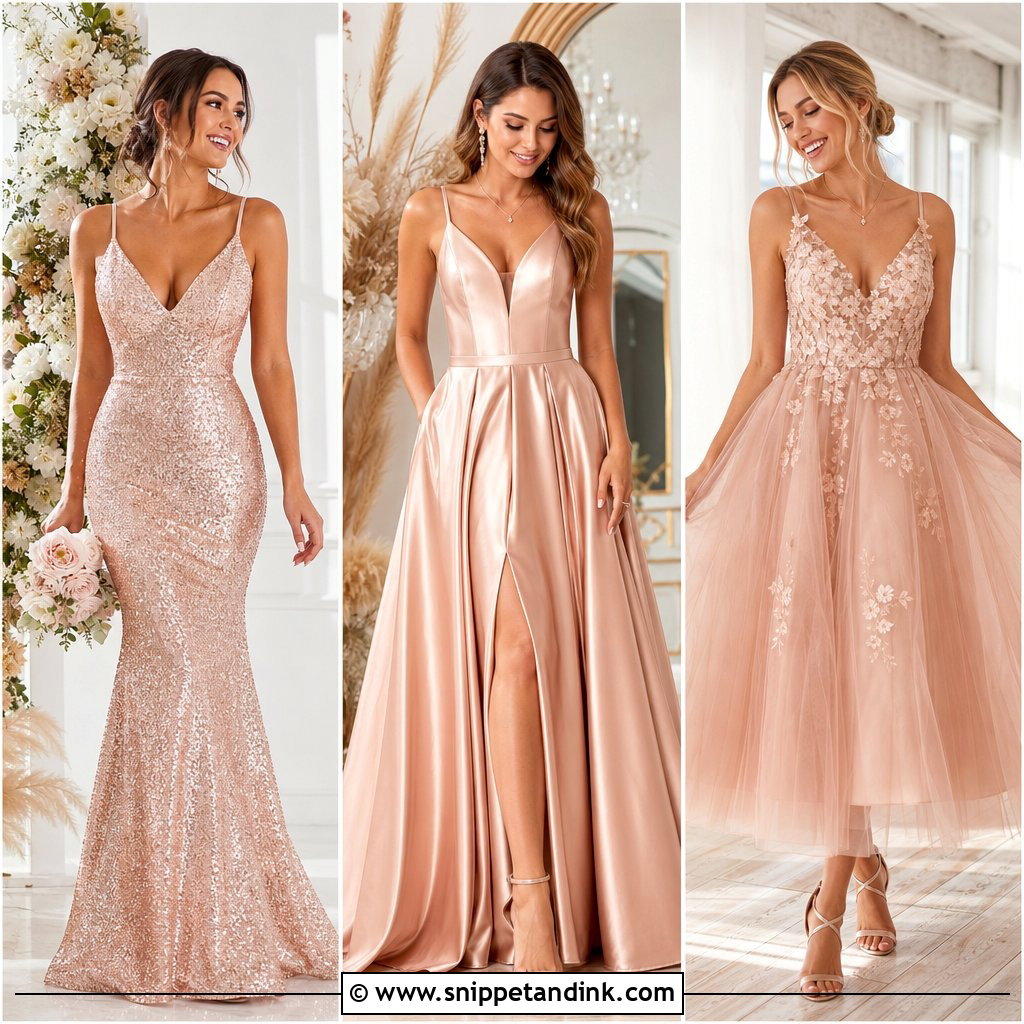
Sequins in rose gold are bright, so size matters. Tiny allover sequins give a shimmer that settles in photos; oversized paillettes can bounce flash straight back into the lens. A column or sheath shape suits this fabric because the fabric is already the event. One practical note I always give: sequined bodices can scratch the inside of your arms over a long evening, so check where the seams sit and ask whether the inner arm can be lined. Simple metallic heels, minimal earrings, a sleek clutch and no veil, or a plain one, keep it from tipping over. Ideal for evening and rooftop receptions.
6. Rose Gold Satin Wedding Dress
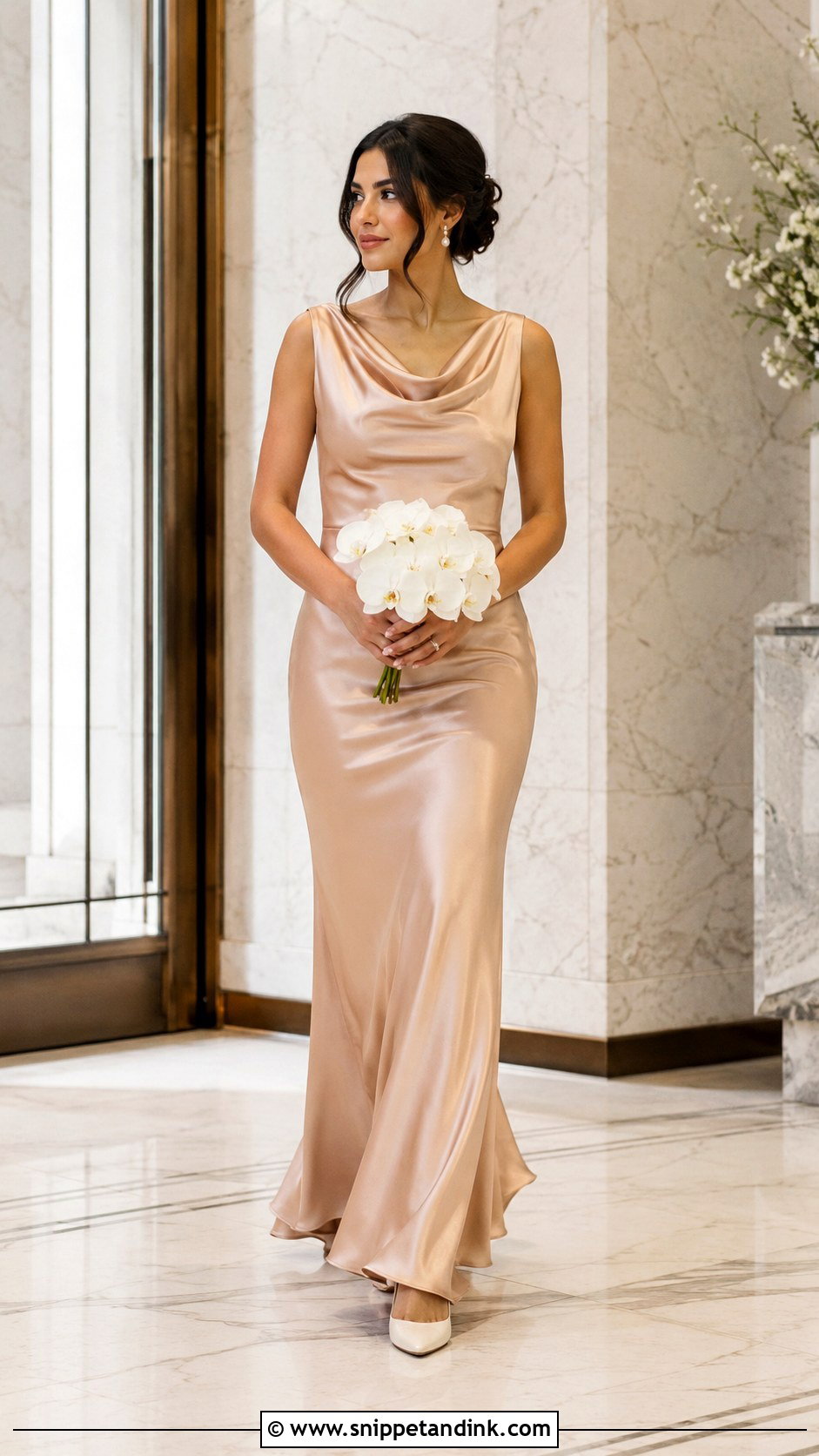
Satin is the most honest fabric for this colour, because it shows the true rose gold tone with nothing filtering it. It also shows everything else. Heavier duchess satin holds a structured bodice and resists creasing; thin charmeuse in a bias cut moves well but marks the moment you sit, and those creases catch the light. I tell brides to sit in the sample for a full minute and stand up before deciding. Pearl or crystal earrings, closed-toe pumps and a sleek veil are plenty. Ivory orchids, roses or ranunculus keep the bouquet from competing with the glow of the fabric.
7. Rose Gold Tulle Wedding Dress
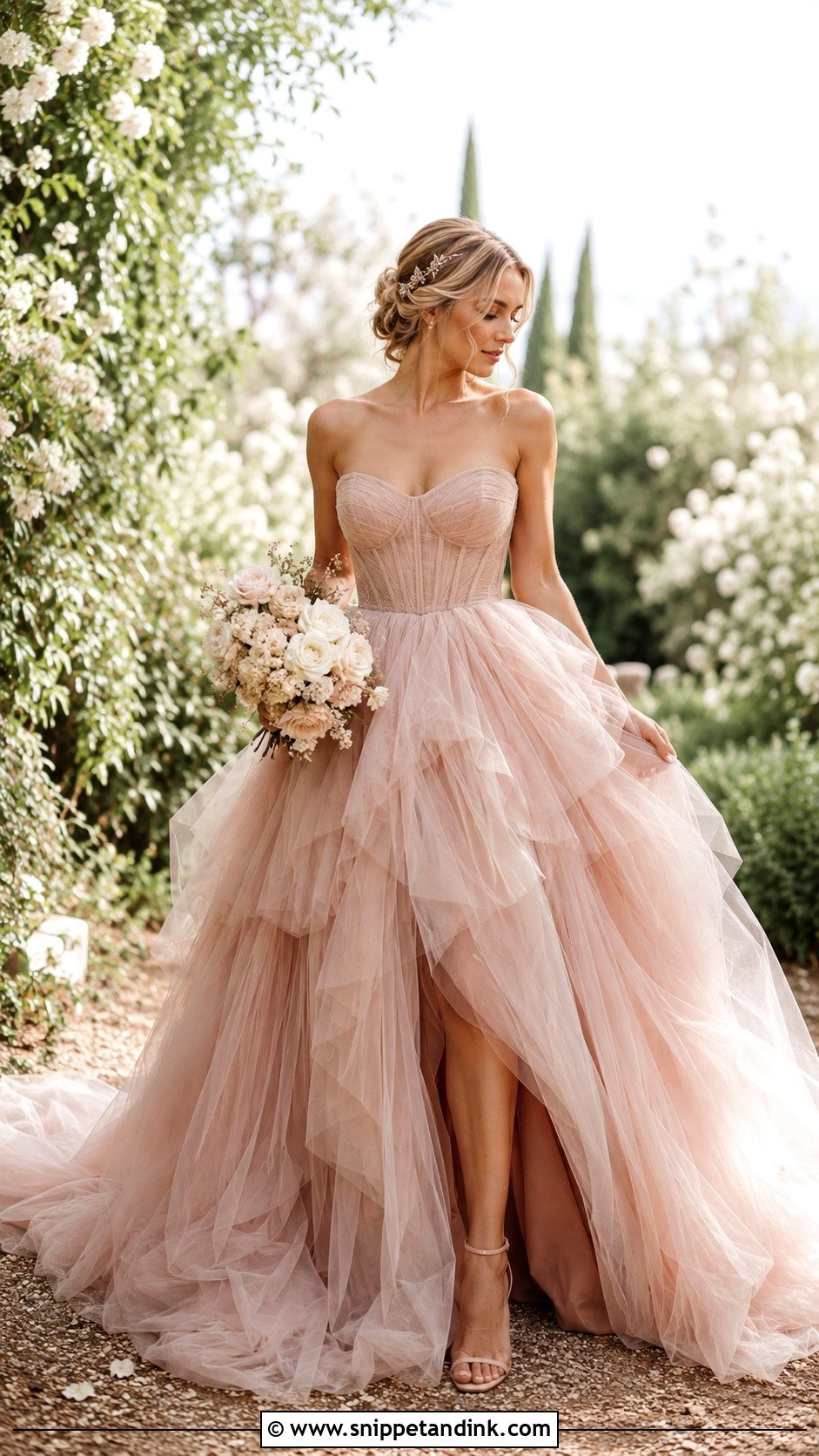
Tulle is how you get rose gold to look airy. Several layers over a blush or pale nude underlayer create depth, and the colour shifts slightly as the layers move. A corset bodice or off-shoulder neckline with a few floral appliqués keeps it romantic. My one caution: tulle catches on everything, from rough stone steps to bracelet clasps, so I steer brides toward smooth jewelry and away from chunky crystal cuffs. Barely-there heels, a soft veil and small crystal pins in the hair, plus a bouquet trailing ribbon, suit garden ceremonies and outdoor receptions.
8. Rose Gold Off Shoulder Wedding Dress
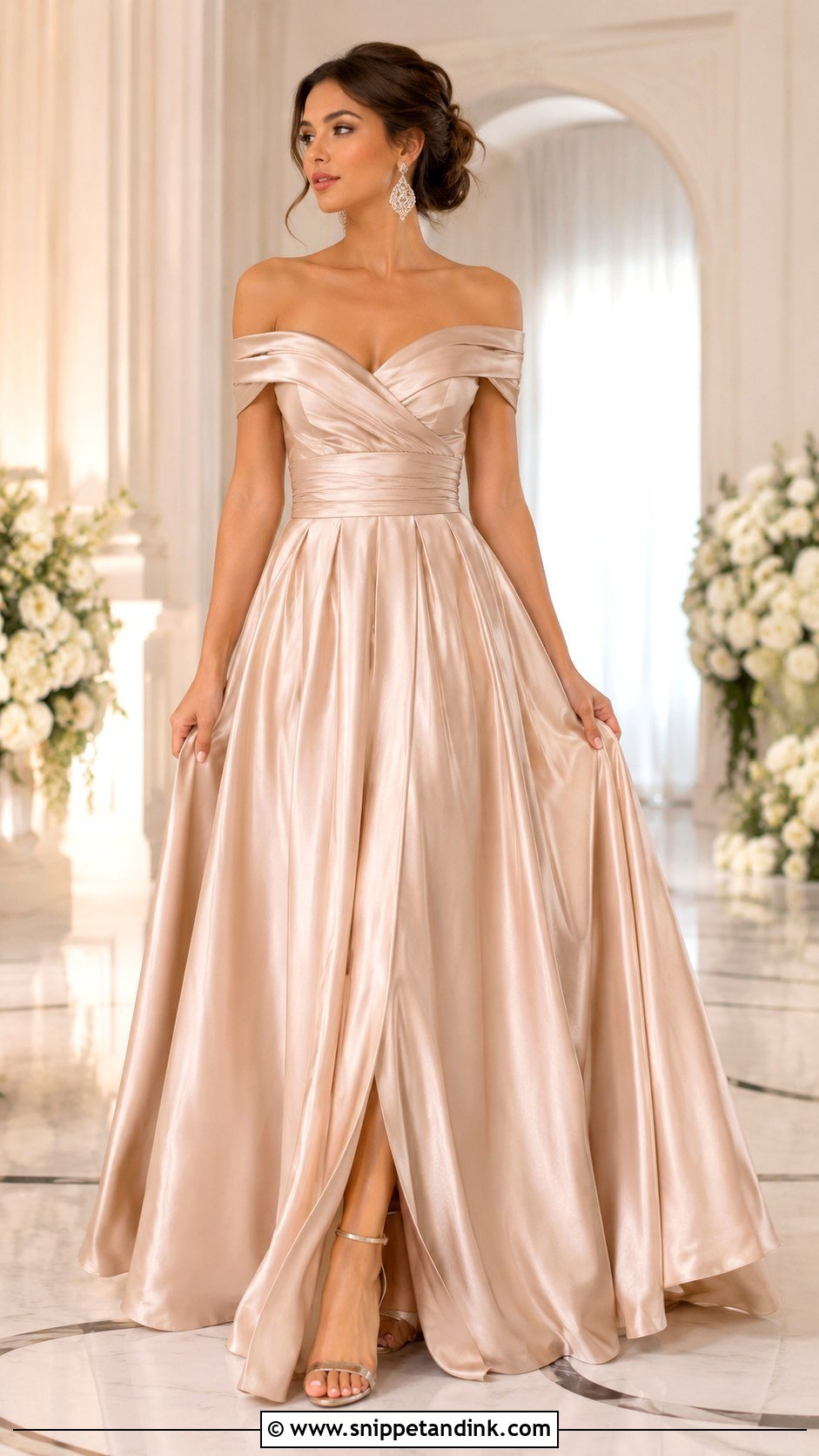
An off-shoulder neckline turns the shoulders and collarbone into the frame for the colour. It works in satin, lace, tulle or beaded fabric, but the fit of the band across the upper arm is what I check first, since a band that is too tight restricts lifting your arms and one that is too loose slides down by the first dance. With a plain neckline you can wear a fine necklace; with any detail, swap it for earrings. A soft updo keeps the shoulders clear. Champagne heels and a light veil finish it. Best in warm weather, when bare shoulders are comfortable.
9. Rose Gold Long Sleeve Wedding Dress
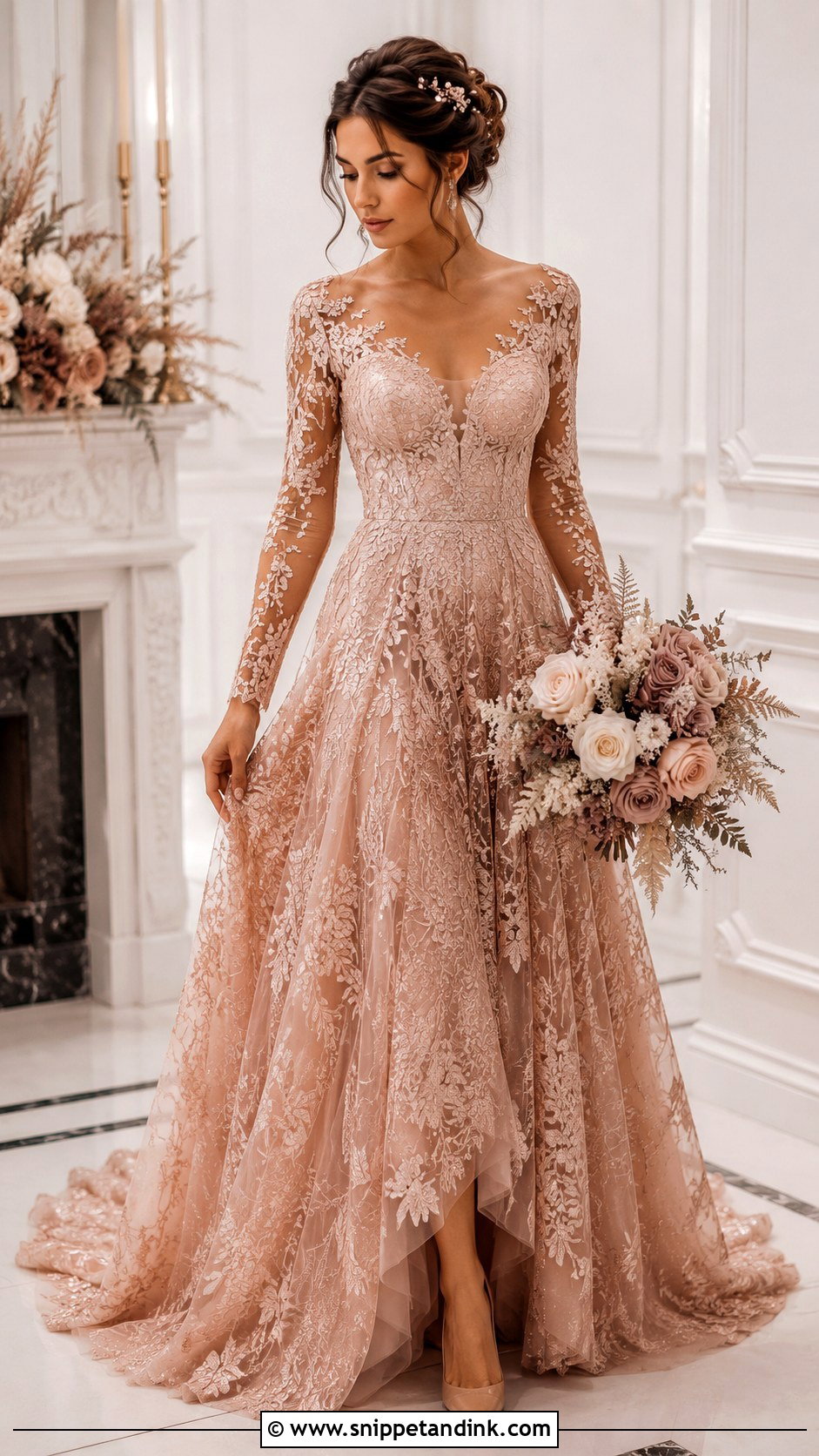
A rose gold long sleeve wedding dress is my usual suggestion for autumn and winter brides who still want warmth in the colour. Sheer lace, beaded illusion or satin bishop sleeves all work, and the pink cast stops full coverage from looking heavy. Have your seamstress check the sleeve length with your arms bent, because a sleeve that is perfect when straight will ride up when you hold the bouquet. A low bun with pearl pins, pointed nude or champagne heels and a simple veil suit detailed sleeves. Mauve and pale blush flowers carry the colour into a cooler season.
10. Rose Gold Strapless Wedding Dress
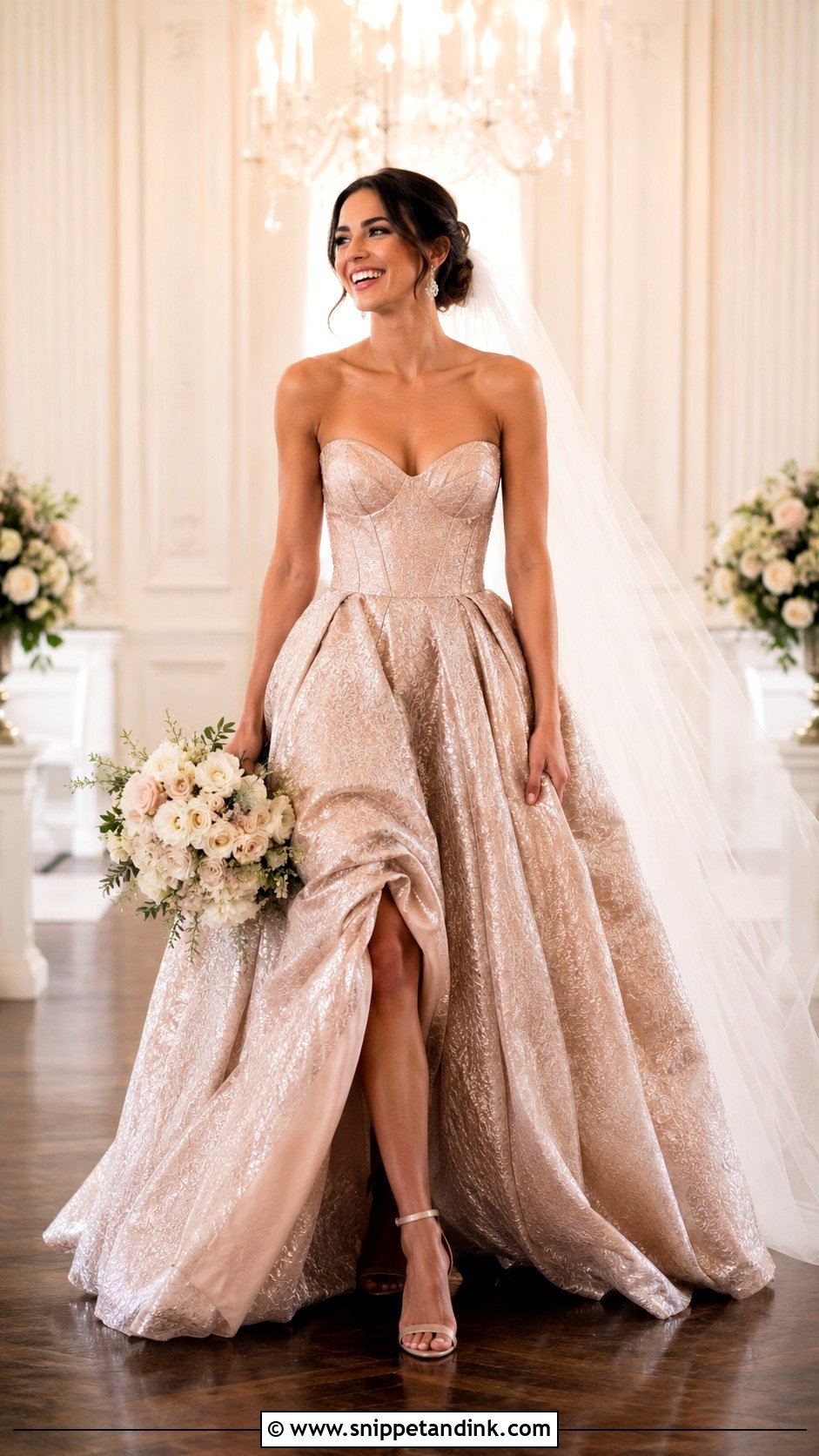
Strapless puts all the attention on the colour and the silhouette, which means the bodice has to stay put on its own. I want internal boning and a grip band at the waist before I recommend one, and I ask brides to hug someone and raise both arms at the fitting. A straight neckline looks more modern; a sweetheart, softer. Choose one piece of jewelry, a delicate necklace or drop earrings, not both. Soft curls, a smooth bun or half-up all work, and a long veil adds ceremony drama you can take off for the reception.
11. Rose Gold Corset Wedding Dress
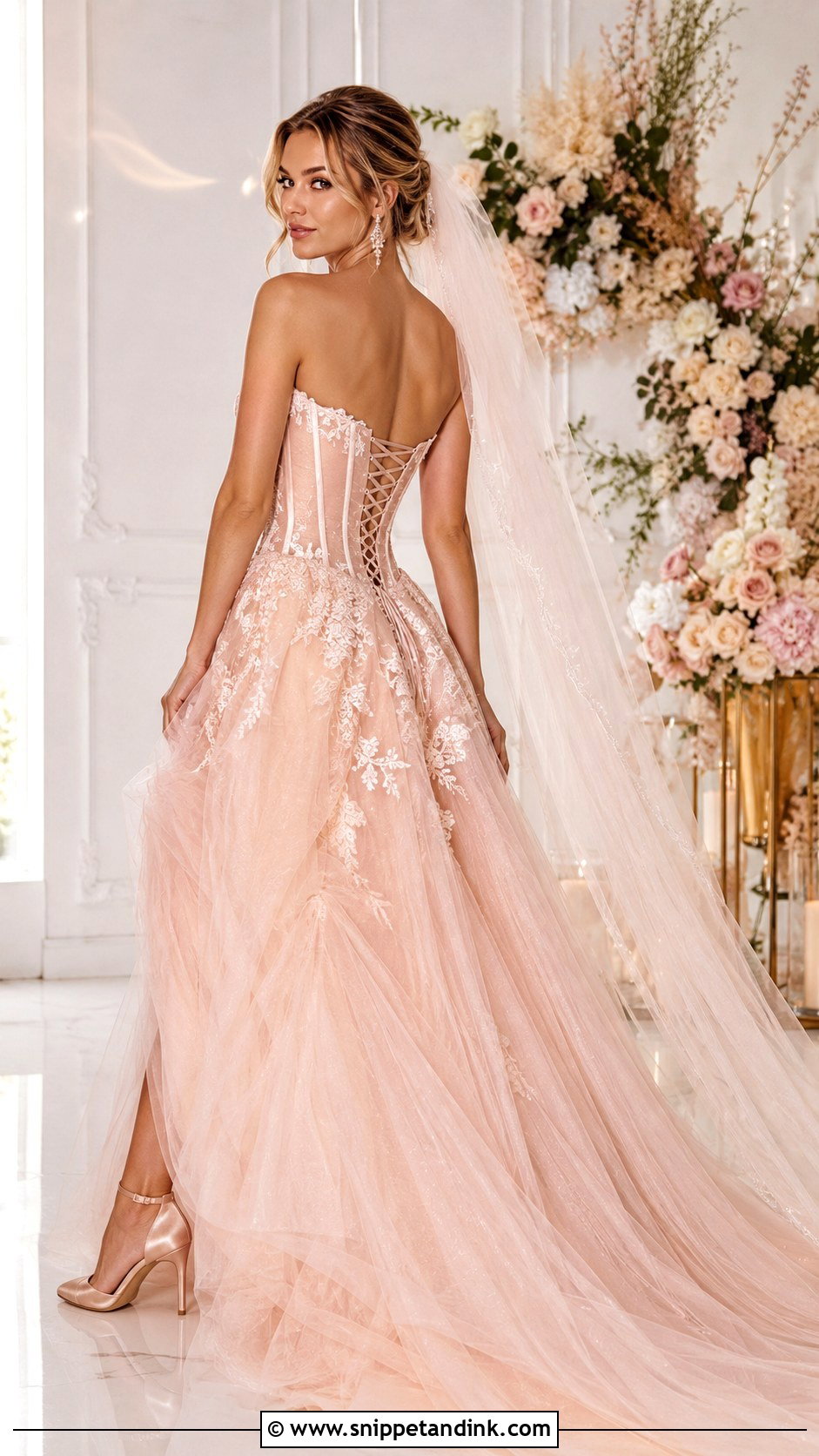
A corset bodice gives the clearest waist definition of any style here. Look for exposed boning, a lace-up back or a sheer corset bodice over a soft lining, then decide between tulle for movement or satin for a cleaner line. The shade matters more on this style than any other: a strongly metallic rose gold over visible boning can look like lingerie, so I lean toward softer, pinker versions. Small crystal earrings, a fine bracelet, satin heels and a raw-edge veil keep it current. A lace-up back also gives you a little room to adjust if your weight shifts before the wedding.
12. Rose Gold Embroidered Wedding Dress
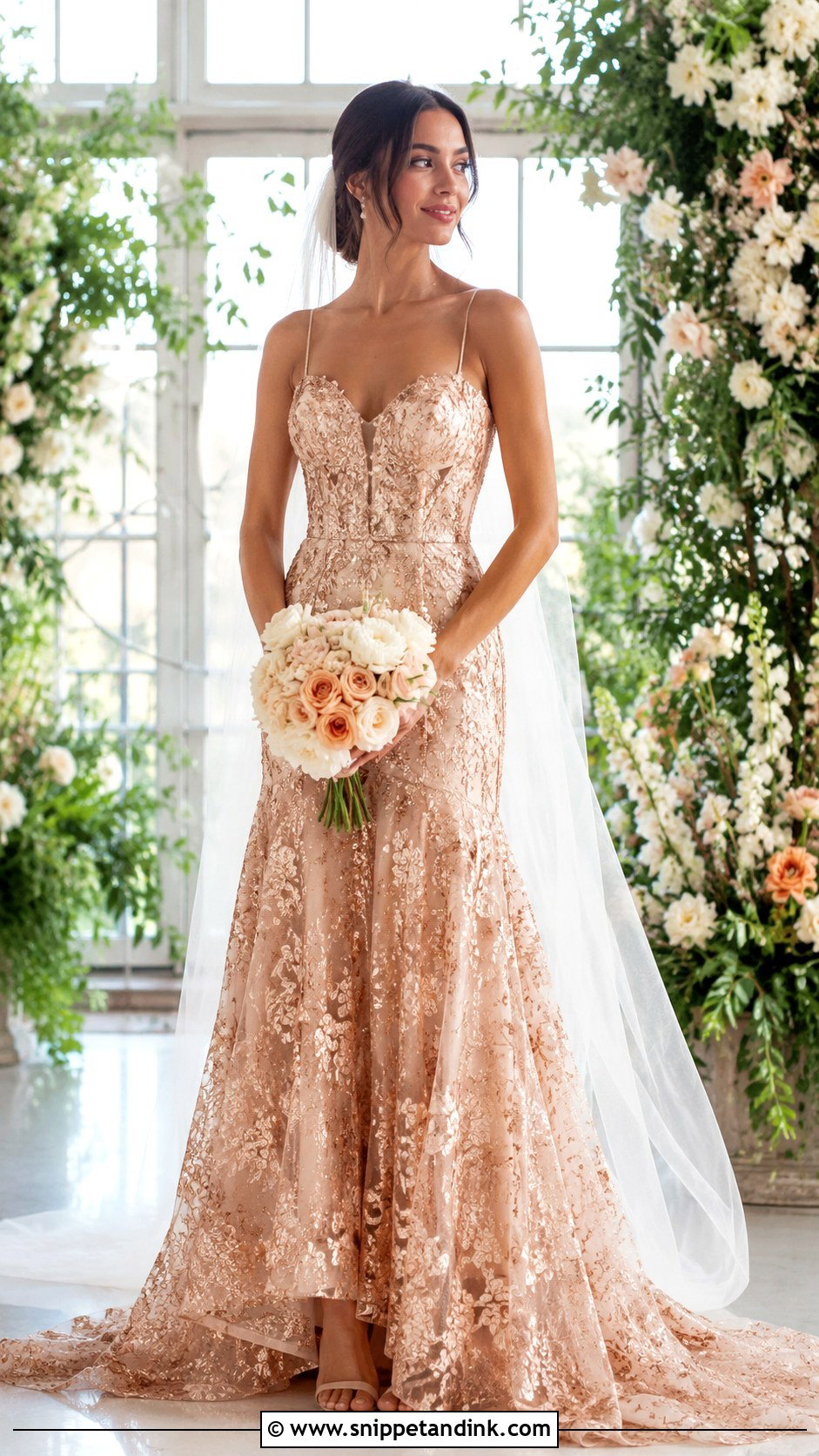
Embroidery is how you get detail without sparkle. Floral motifs, metallic threadwork or beaded vines over a blush or nude base add texture you notice up close. I check the reverse side of embroidered panels at fittings, because loose threads and knots inside can rub the skin over a full day. The embroidery should be clear from a few steps away but not crowd the bodice. Pair it with simple earrings, a soft veil and shoes matched to the gown’s undertone, plus a loose updo. A bouquet of ivory roses, pale peach blooms and muted greenery echoes the stitching.
13. Rose Gold Beaded Wedding Dress
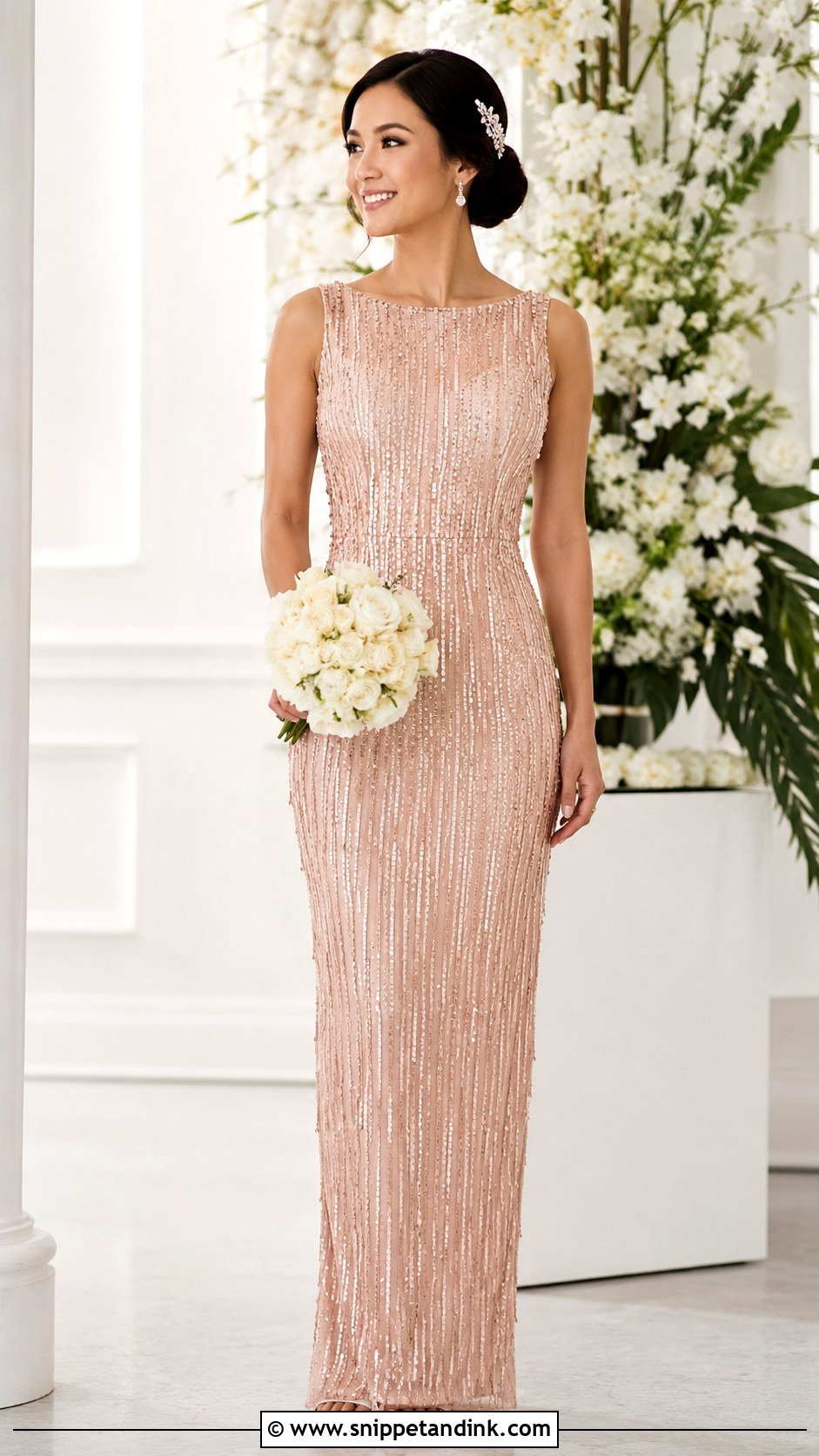
Beadwork carries rose gold with a vintage, almost deco feel. Vertical beading lengthens; floral beading softens. A sheath or fit-and-flare lets the work show without adding bulk. Expect weight: a heavily beaded gown can feel very different after five hours, so I always ask brides to wear the sample for longer than a quick twirl. Add a small hair comb and understated earrings, and if the bodice is busy, go veil-free for the reception. Formal evening weddings and art deco venues suit it best.
14. Rose Gold Champagne Wedding Dress
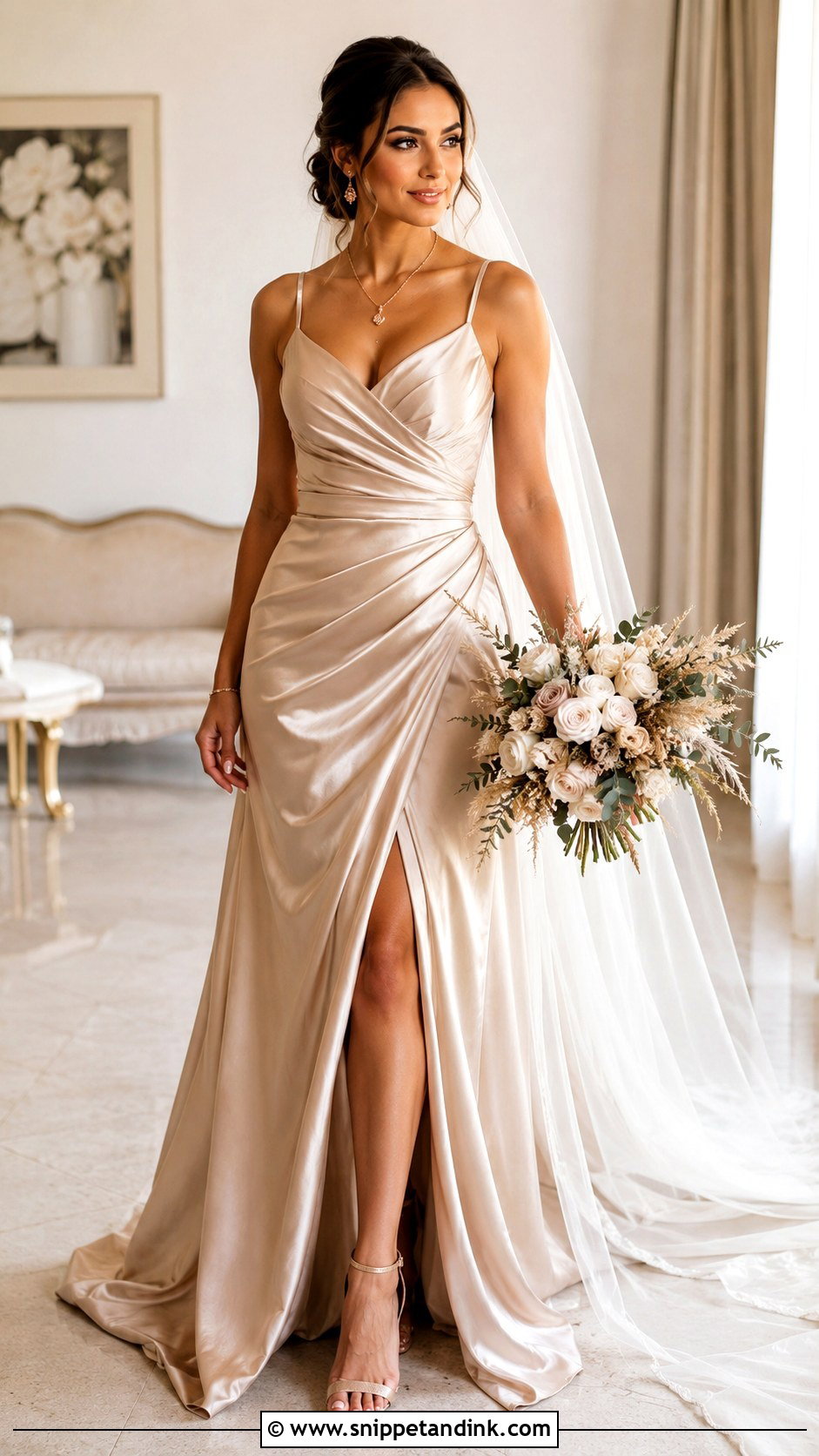
Champagne-based rose gold is the gentlest step away from ivory, and the easiest to style. The champagne pulls the metallic pink back toward traditional bridal tones, so ivory flowers, nude heels and rose gold jewelry all sit together without effort. Satin, crepe, tulle or lace all suit it. An ivory veil gives a quiet contrast against the dress instead of clashing, which surprises a lot of brides. This is the shade I suggest to anyone worried that colour will date their photos, because it reads warm in daylight rather than obviously pink.
15. Rose Gold Blush Wedding Dress
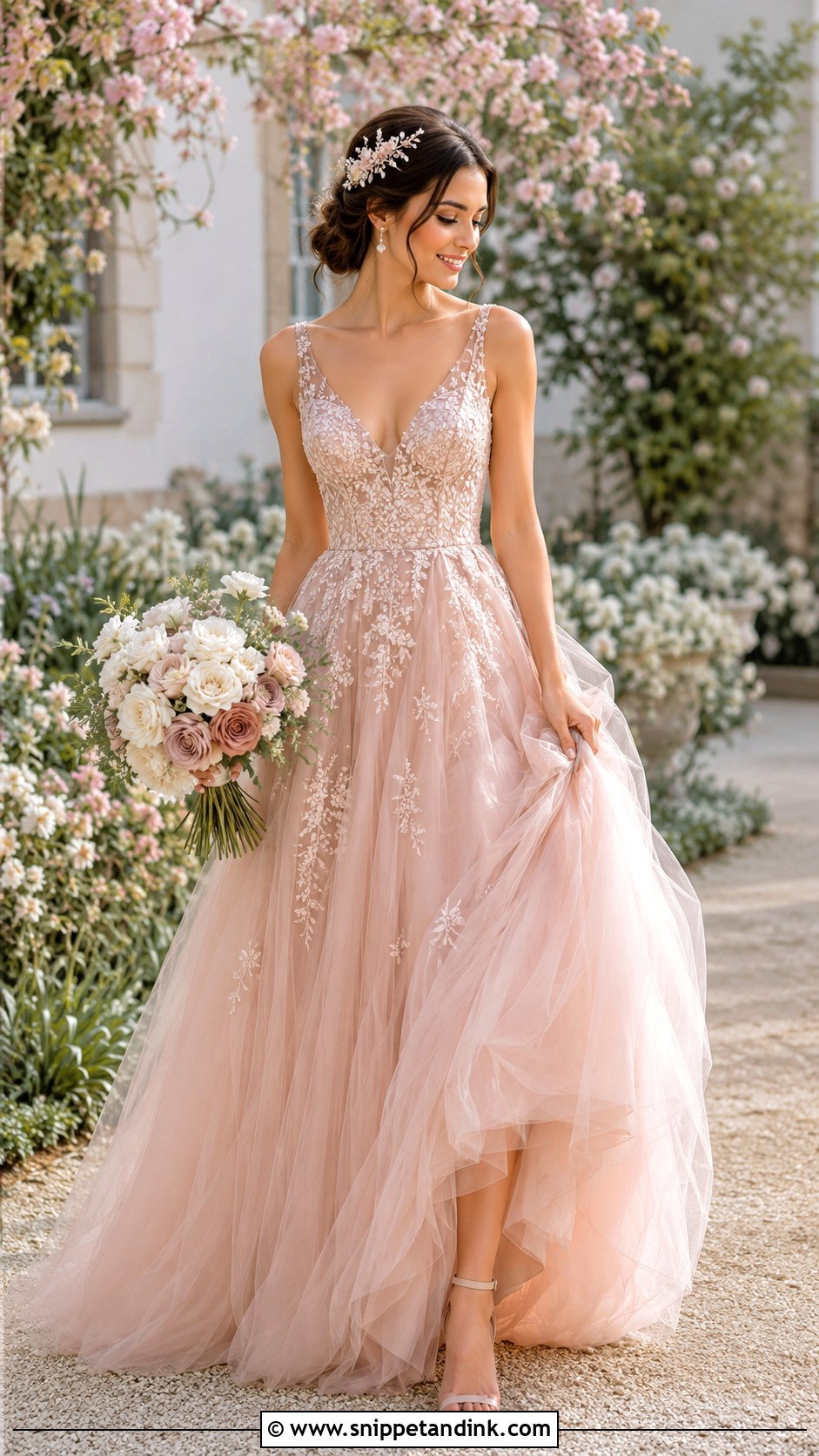
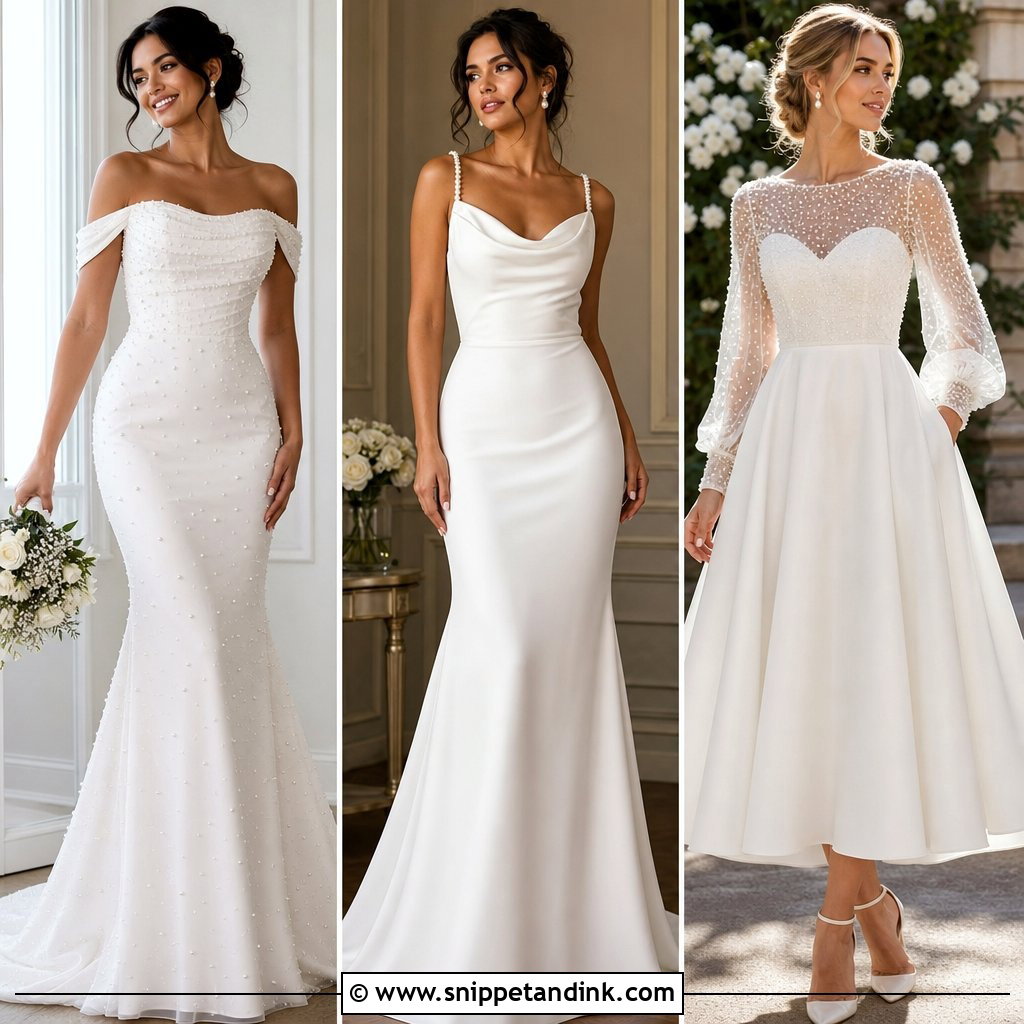
The blush version is the least metallic of the family. That softness flatters fair and cool skin especially, though on very pale complexions it can wash out near the face, which is why I like a slightly deeper pink at the bodice in those cases. A tulle ball gown, lace A-line or satin fit-and-flare all work. Style it with pearl earrings, a floral hair comb and blush heels, and bring ivory, dusty rose and pale peach into the bouquet. It is a more bridal take than a simple pink dress, and right at home at a spring garden ceremony.
16. Rose Gold Floral Wedding Dress
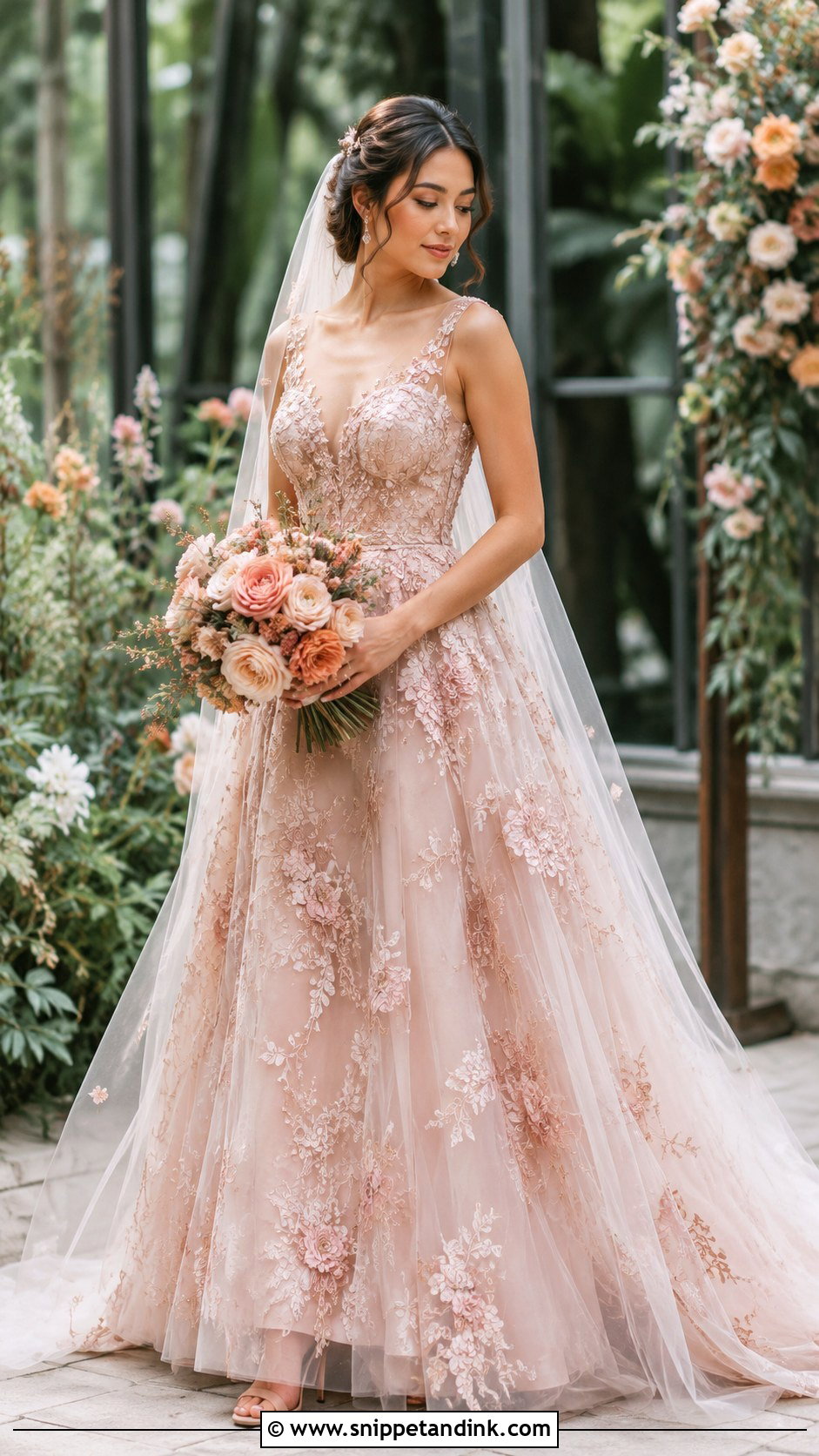
Floral detail on rose gold can go sweet very quickly, so I keep it refined: appliqués placed with gaps between them, embroidered blooms, or printed organza with a muted pattern. A fitted bodice and flowing skirt keep it bridal. Coordinate the bouquet without copying the dress; if the gown has roses, I would choose ranunculus, blush garden roses and soft coral flowers instead. Delicate earrings, low heels and a veil with a few small floral accents finish it. Botanical venues and warm-weather ceremonies are its natural setting.
17. Rose Gold Plus Size Wedding Dress
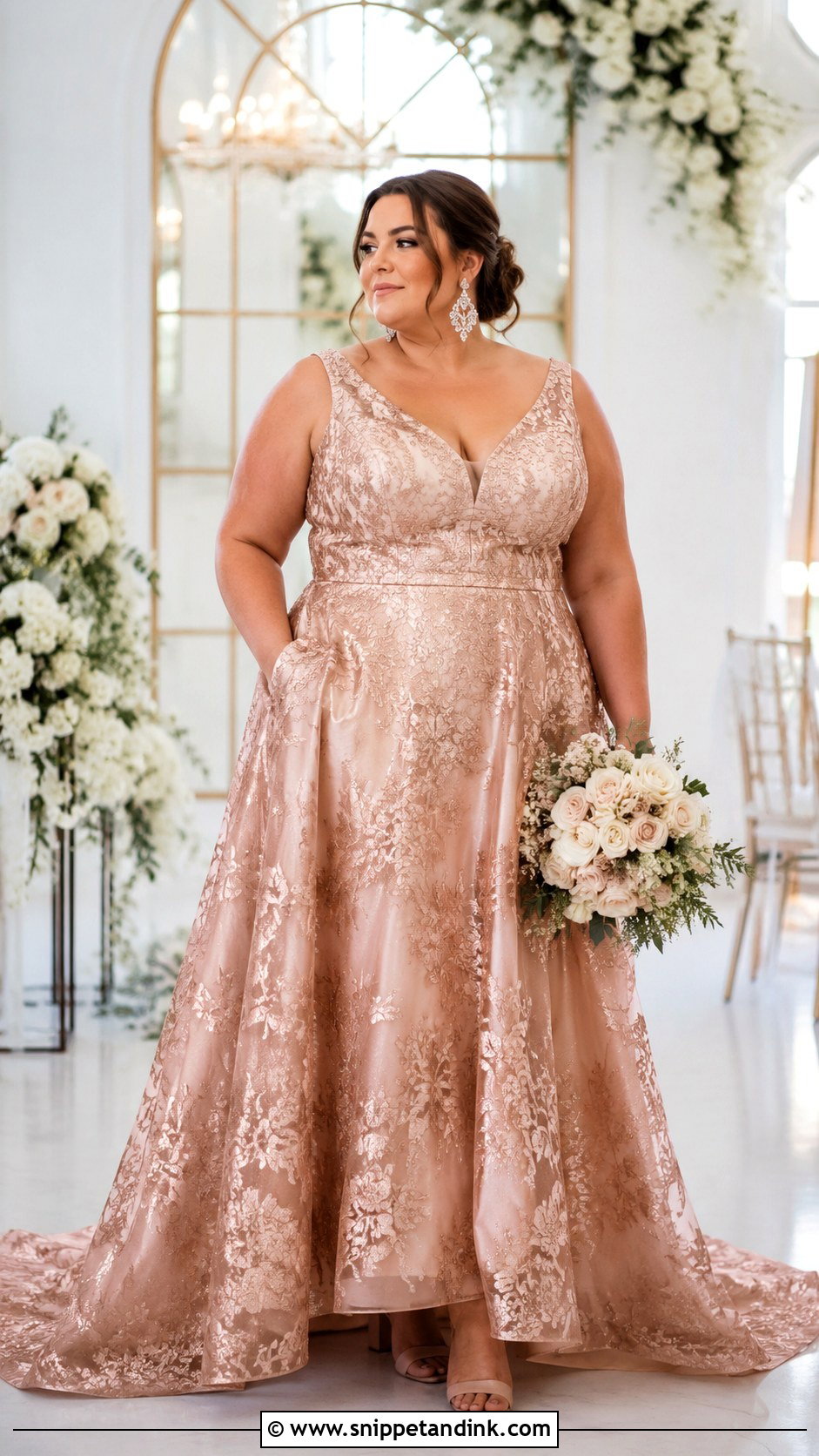
For plus size brides in rose gold, support and lining come before anything else. A-line gowns, structured ball gowns, corset bodices and wrap-inspired shapes all work, but I look first at the inner construction: a built-in bra or boning, a quality lining and fabric with enough weight to skim rather than cling. Rose gold layered over champagne or blush creates depth without harsh contrast, which is kinder than a single shiny layer. Comfortable block heels, statement earrings and a veil sized to the skirt balance the look. The right gown lets you move freely and stop thinking about the dress after the first hour.
18. Rose Gold Petite Wedding Dress
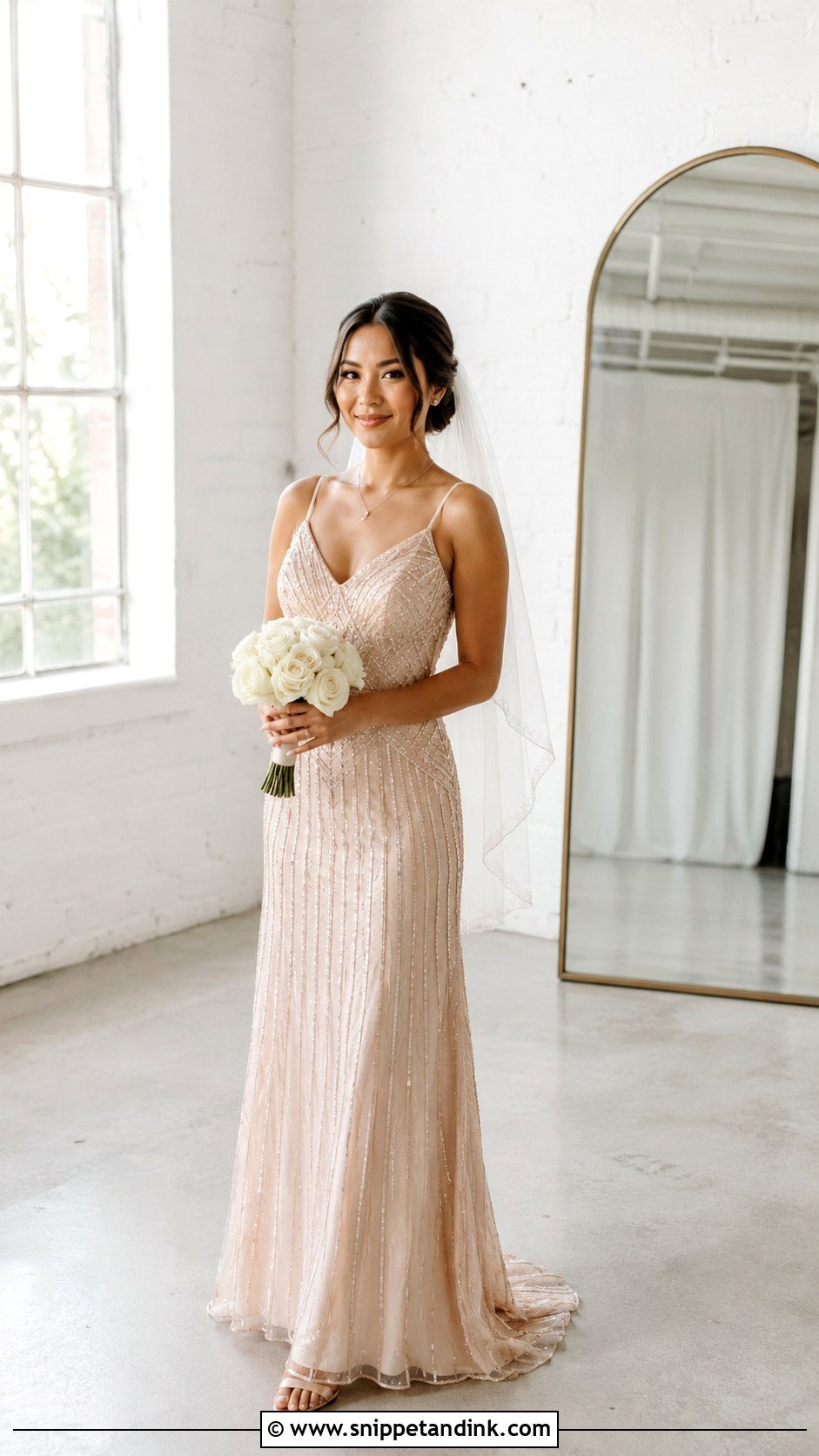
Petite brides need proportion more than a particular style. Vertical beading, a slightly raised waist, a slim A-line or a clean sheath all add length; big volume swallows a small frame unless the skirt is tailored carefully. Nude or champagne heels extend the leg line because they blend with the gown. I keep everything else scaled down too: a shorter veil, fine jewelry and a small bouquet. Rose gold satin, fine lace or lightly shimmering tulle all suit a petite figure as long as the detail stays small.
19. Rose Gold Beach Wedding Dress
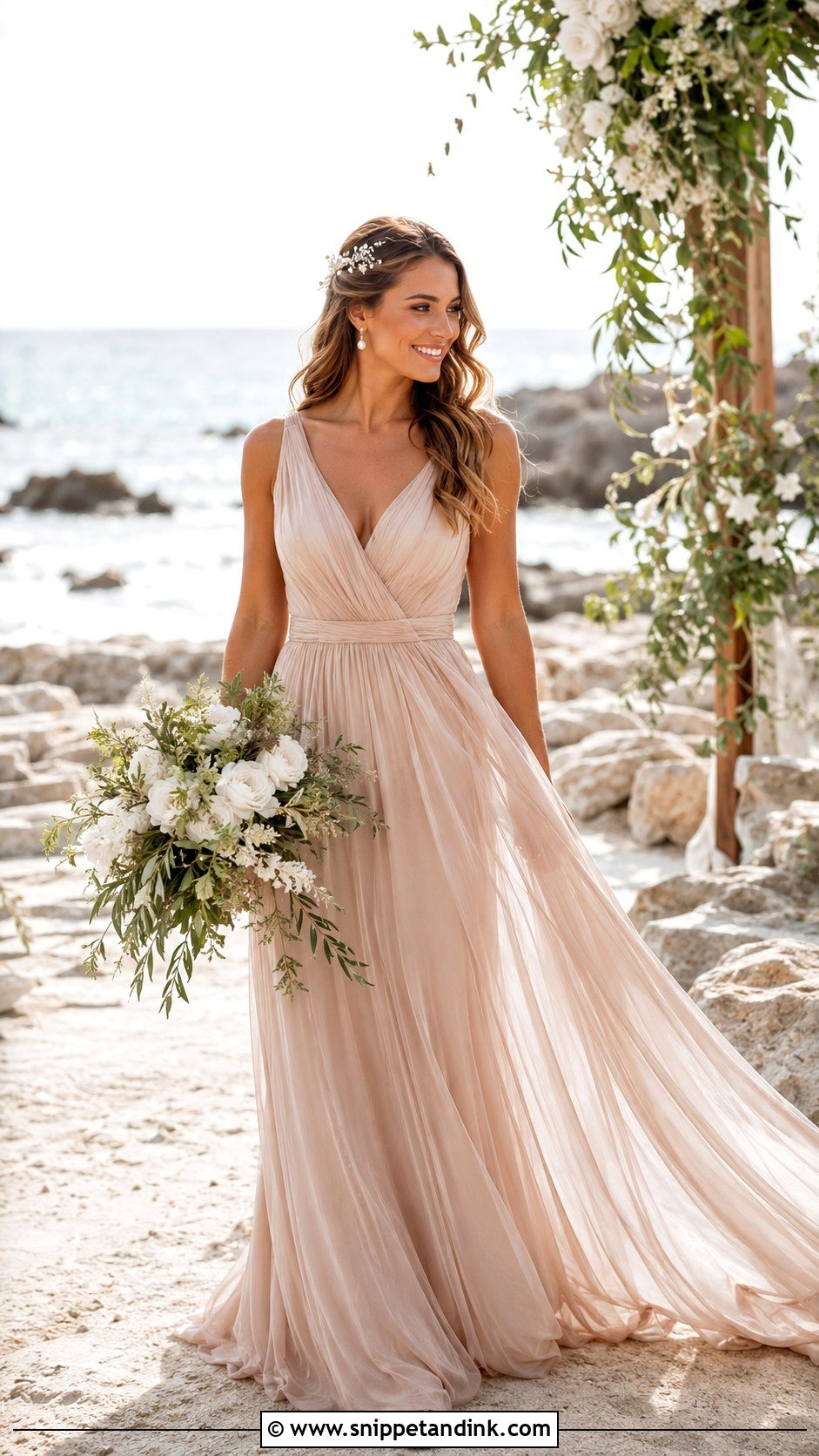
On a beach, fabric choice outweighs everything. Chiffon, soft tulle or lightweight satin breathe in heat; heavy lining and boning do not. A flowy A-line dress, slip-style gown or soft halter suits the setting. Wind is the real enemy of a veil by the water, so I usually swap it for a comb or floral pins. Flat sandals, pearl earrings and loose waves keep it relaxed. Have the hem taken up a touch more than usual, because wet sand at the hem darkens the rose gold and shows in every shot.
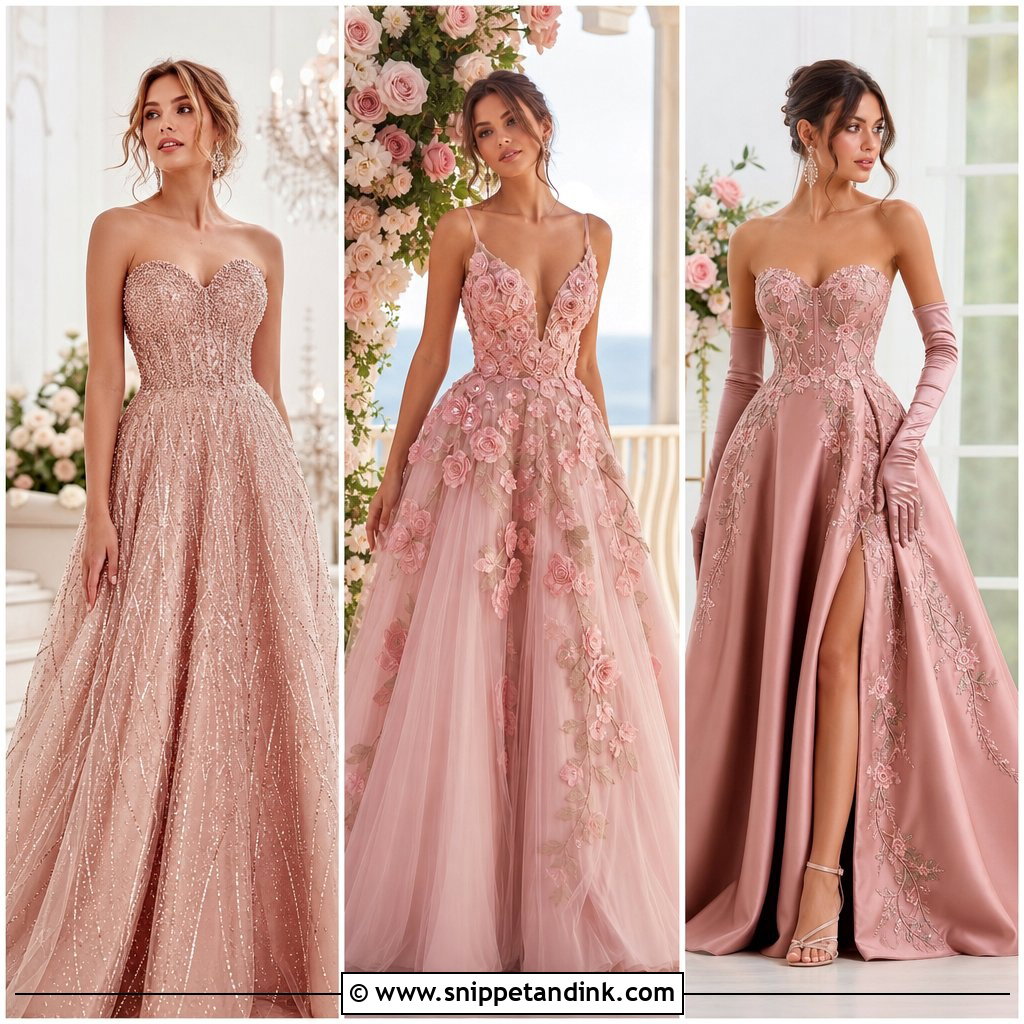
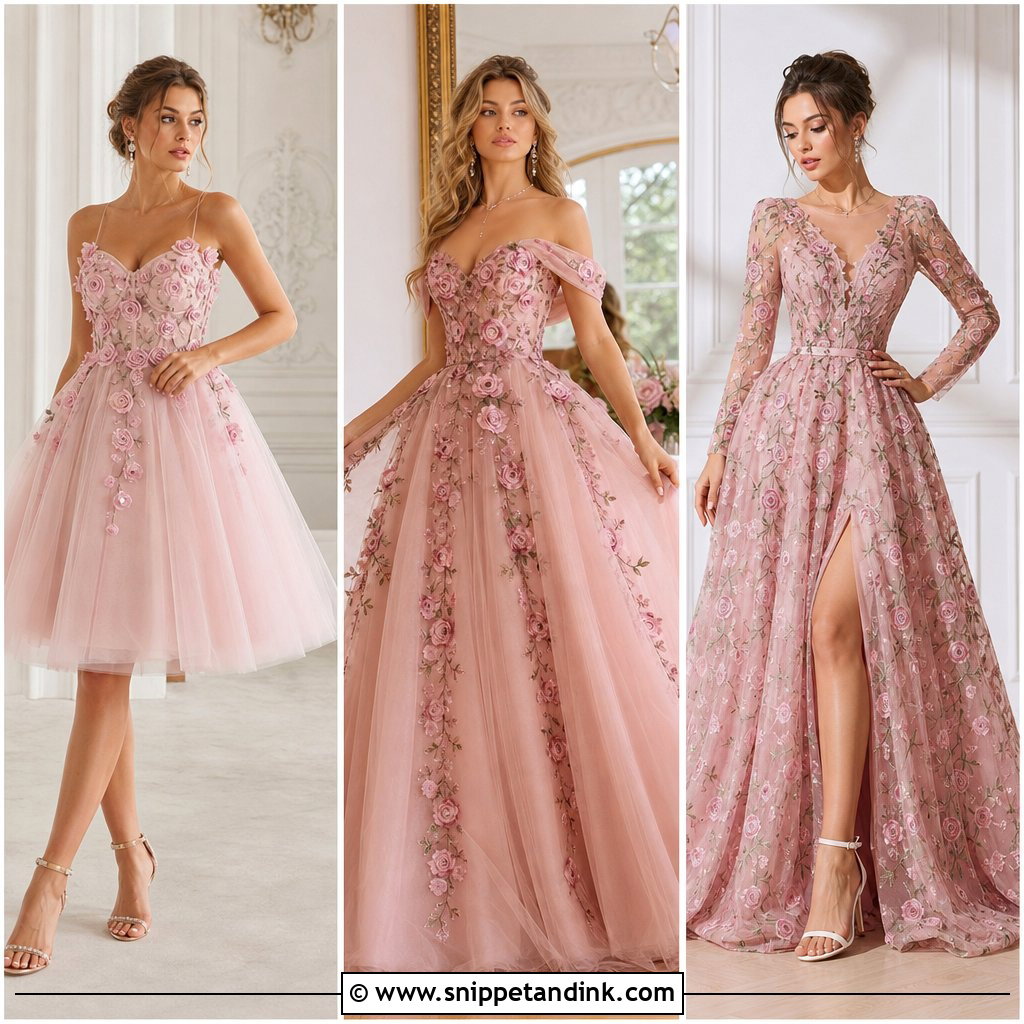

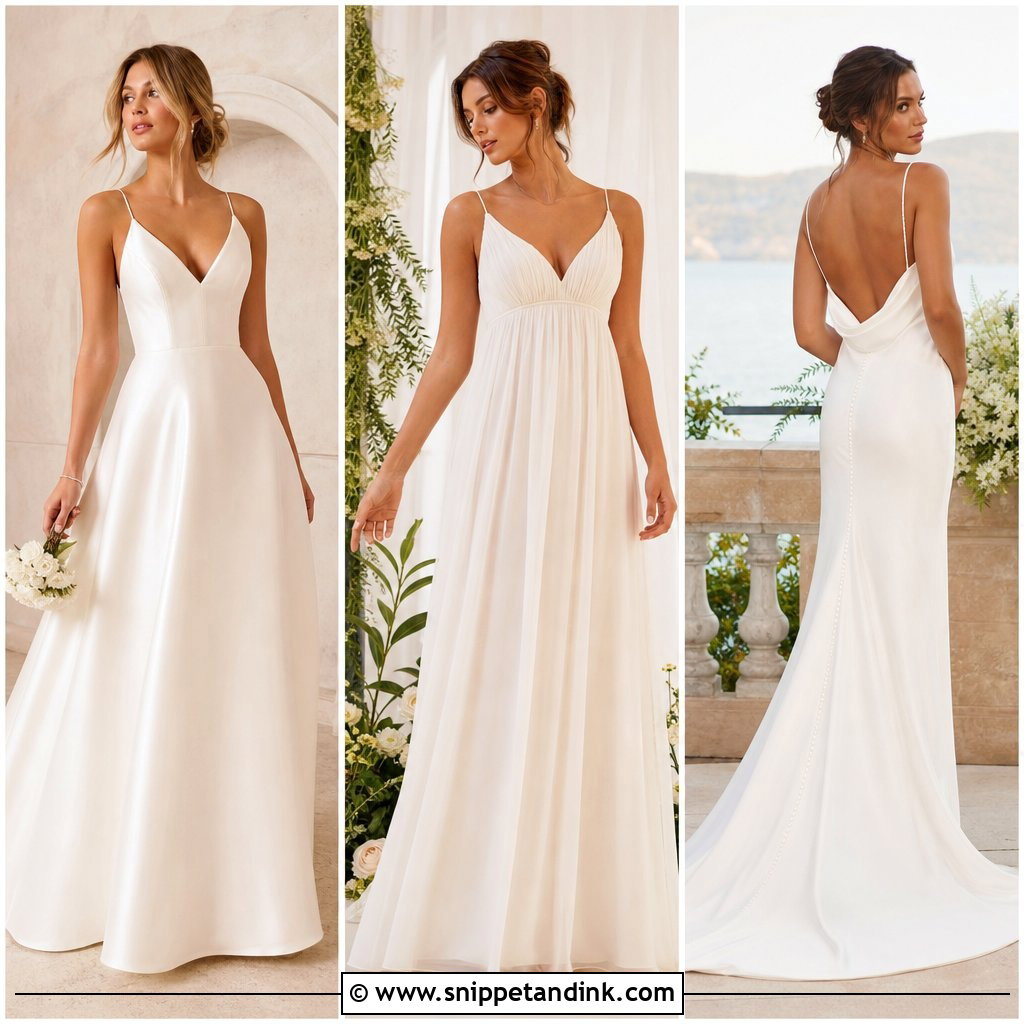
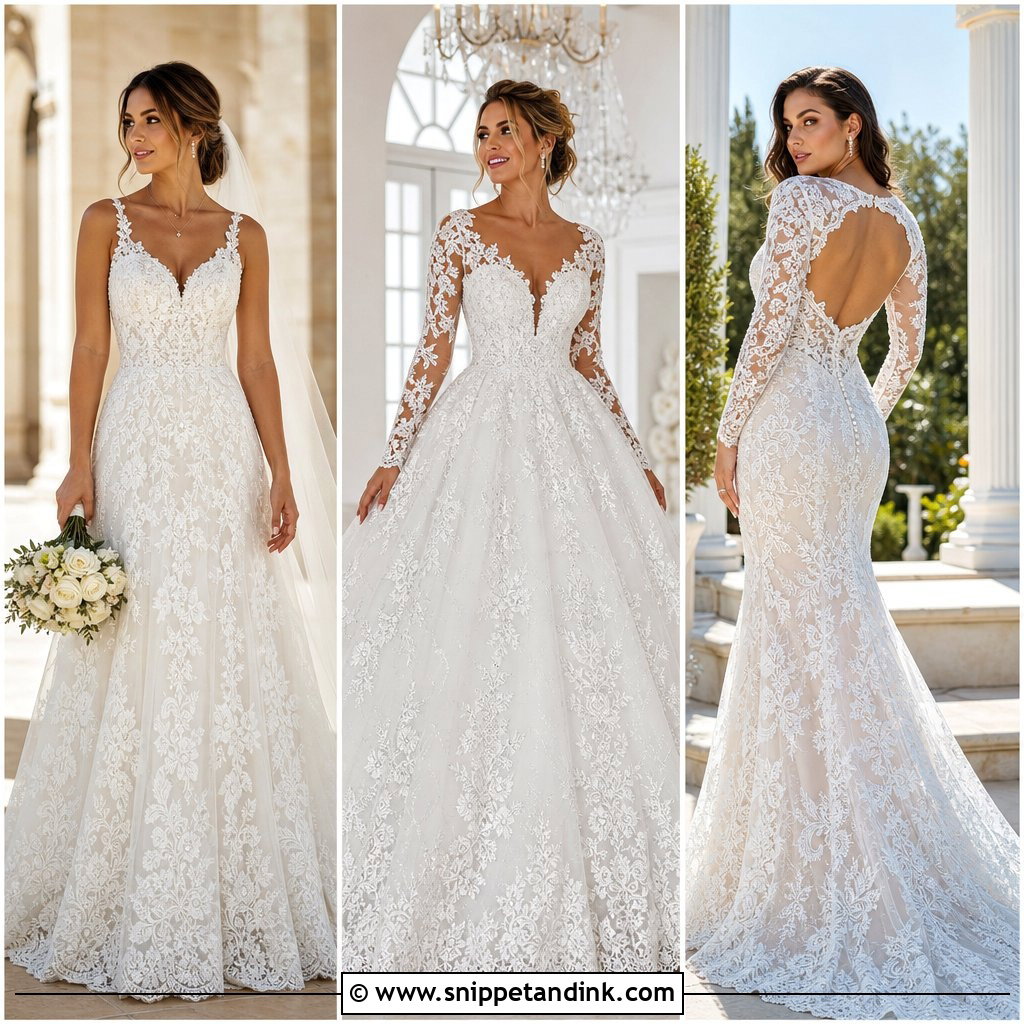
20. Rose Gold Courthouse Wedding Dress
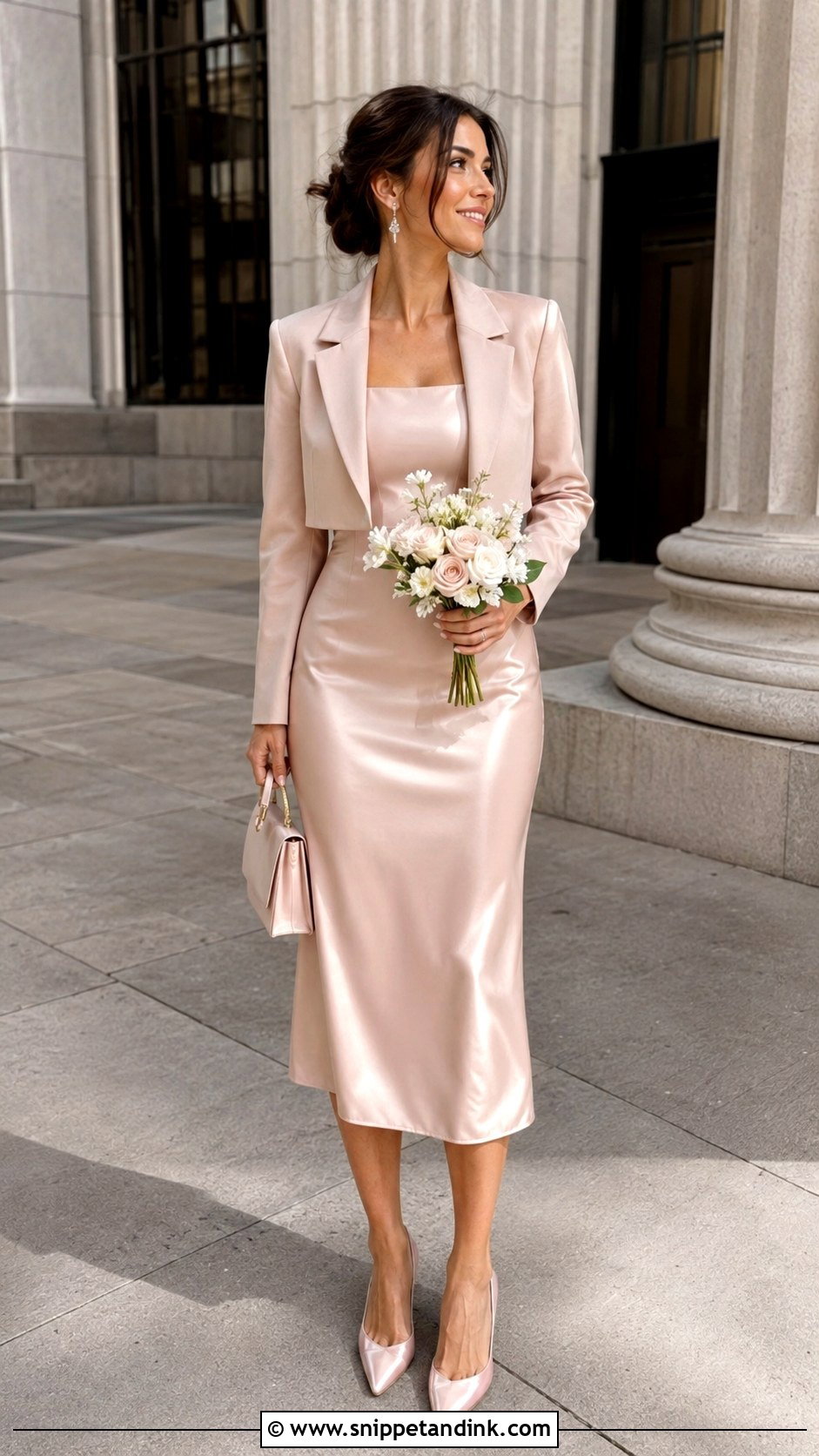
A rose gold courthouse wedding dress works best as a midi, a tailored satin dress or a clean column. It should look finished in a small room and on city steps, which is why I like pointed pumps, a structured mini bag and a cropped jacket or blazer for cooler days. Keep hair sleek in a bun, waves or a smooth ponytail. A small ivory and blush posy is enough flower. The upside here is that you can wear it again, so choose a cut you would put on for a dinner out.
21. Rose Gold Reception Wedding Dress
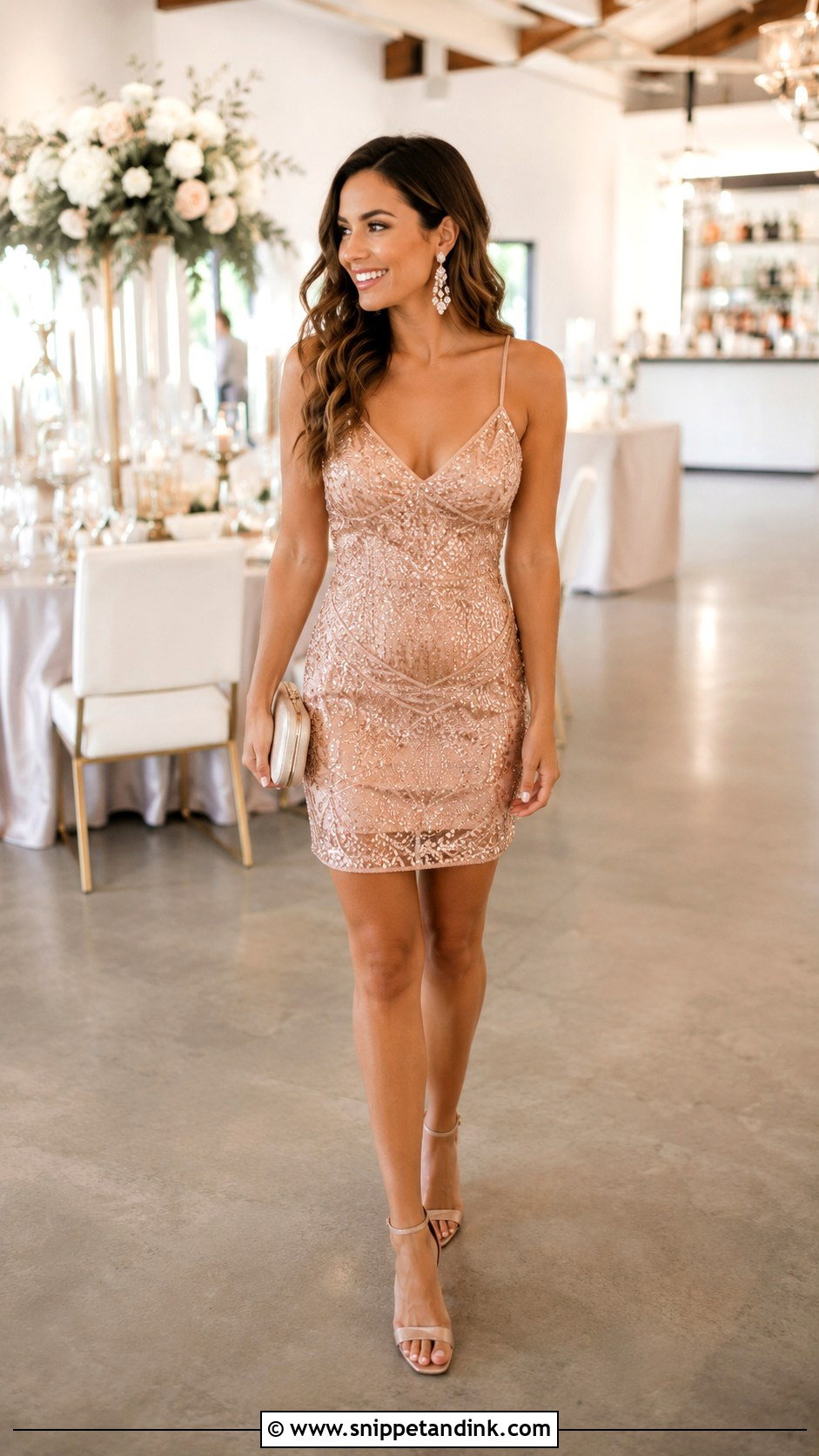
A reception change is where rose gold gets to be playful. A shorter dress, a slip gown, a feather-trimmed hem or a beaded mini all keep the outfit bridal while freeing you to dance. If your ceremony gown is ivory, this gives you a clear second look in the photos. I tell brides to keep the hairstyle the same, or loosen it slightly, because a full restyle eats twenty or thirty minutes you will want at the party. Comfortable heels, sparkling earrings and a small clutch are all you need.
22. Rose Gold Tea Length Wedding Dress
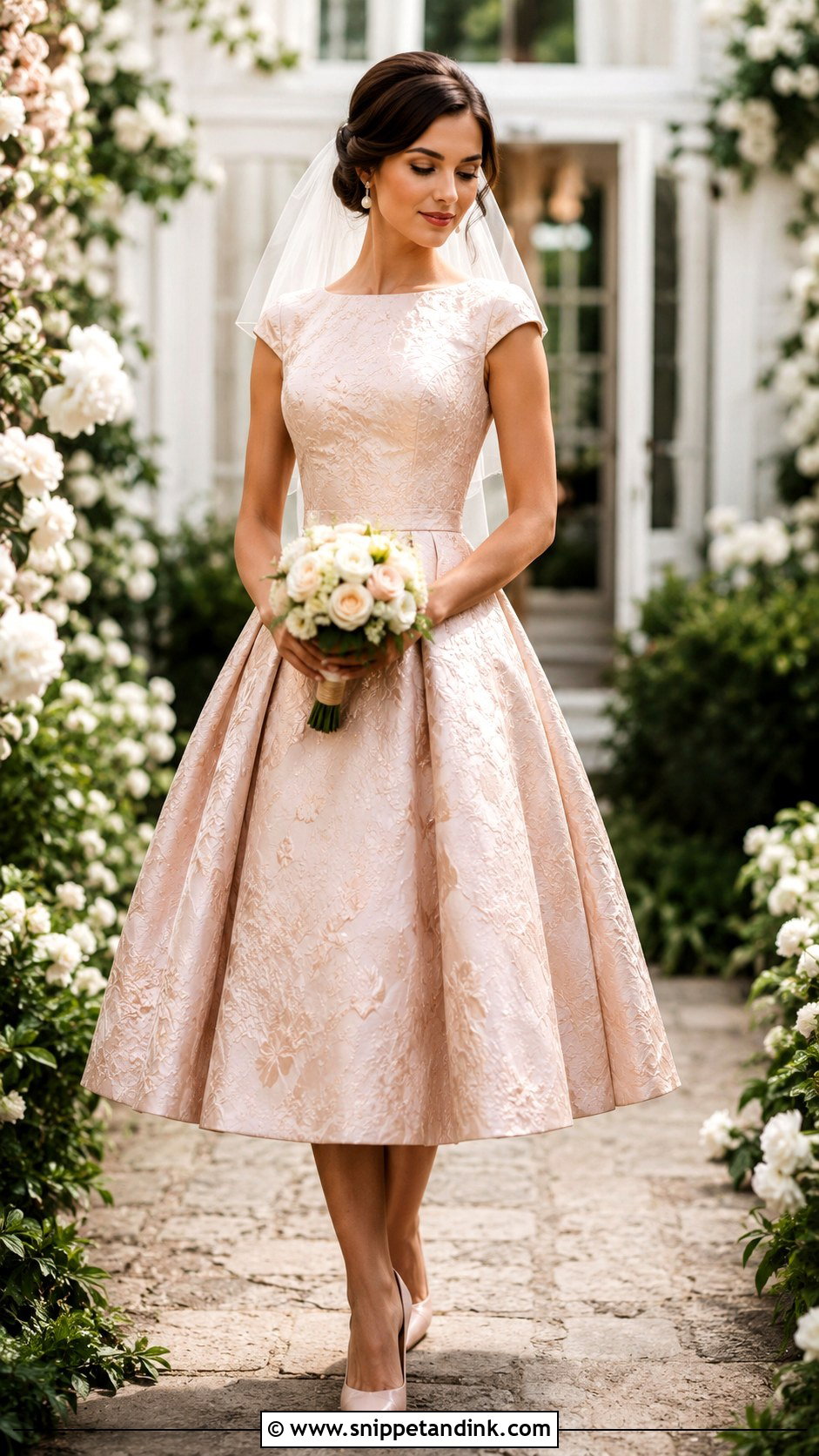
Tea length sits between the knee and ankle and puts your shoes on show, so choose them as carefully as the dress. Satin or tulle with a fitted bodice and softly flared skirt is the classic version. I check the hem length with the exact heels you will wear, since an inch of heel changes where the hem falls on the leg. Pointed pumps, pearl earrings and a short veil or bow accessory give it a fifties feel. Smaller weddings and garden venues suit this practical length, and rose gold keeps it from looking like a retro costume.
23. Rose Gold Two Piece Wedding Dress
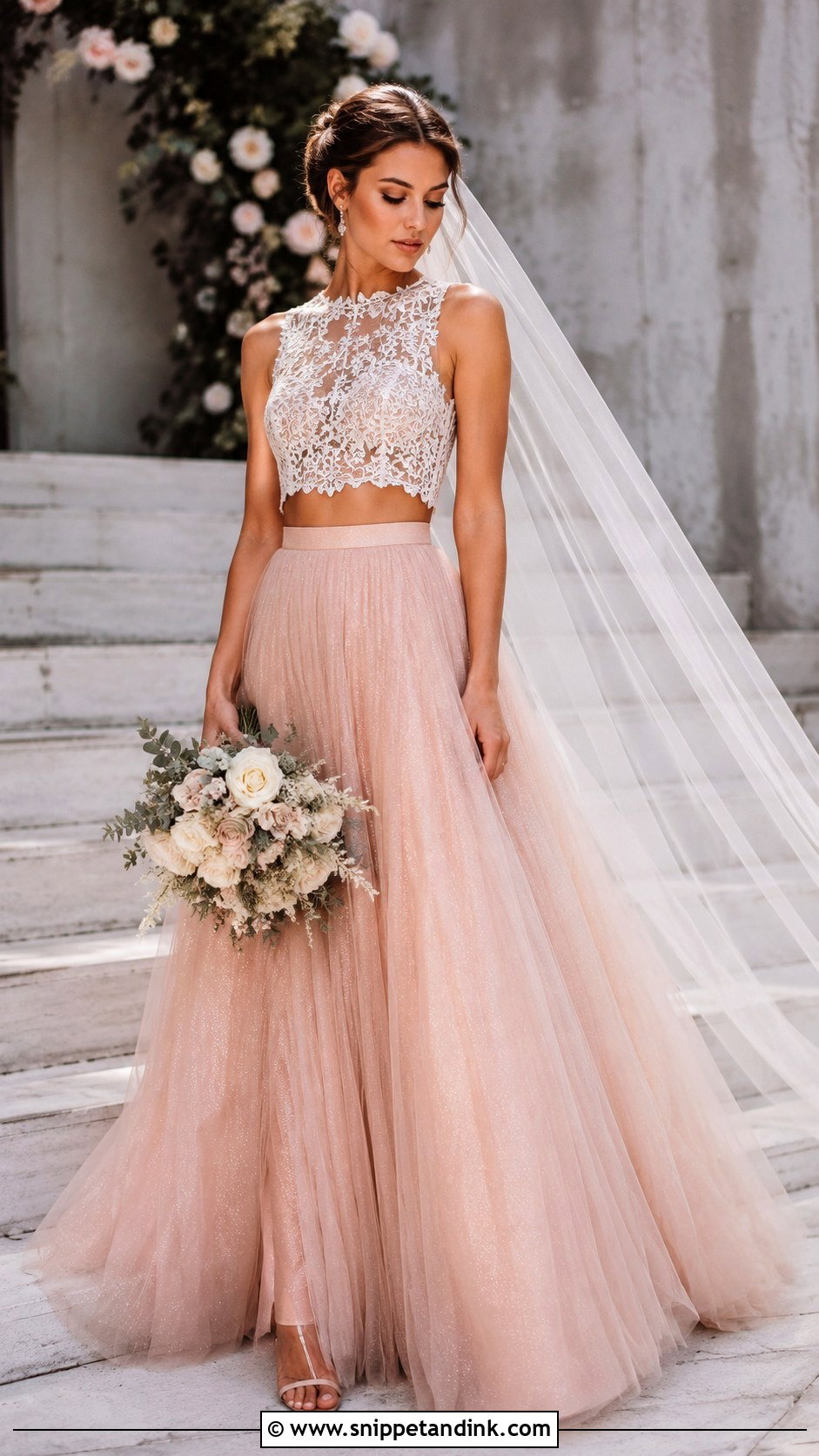
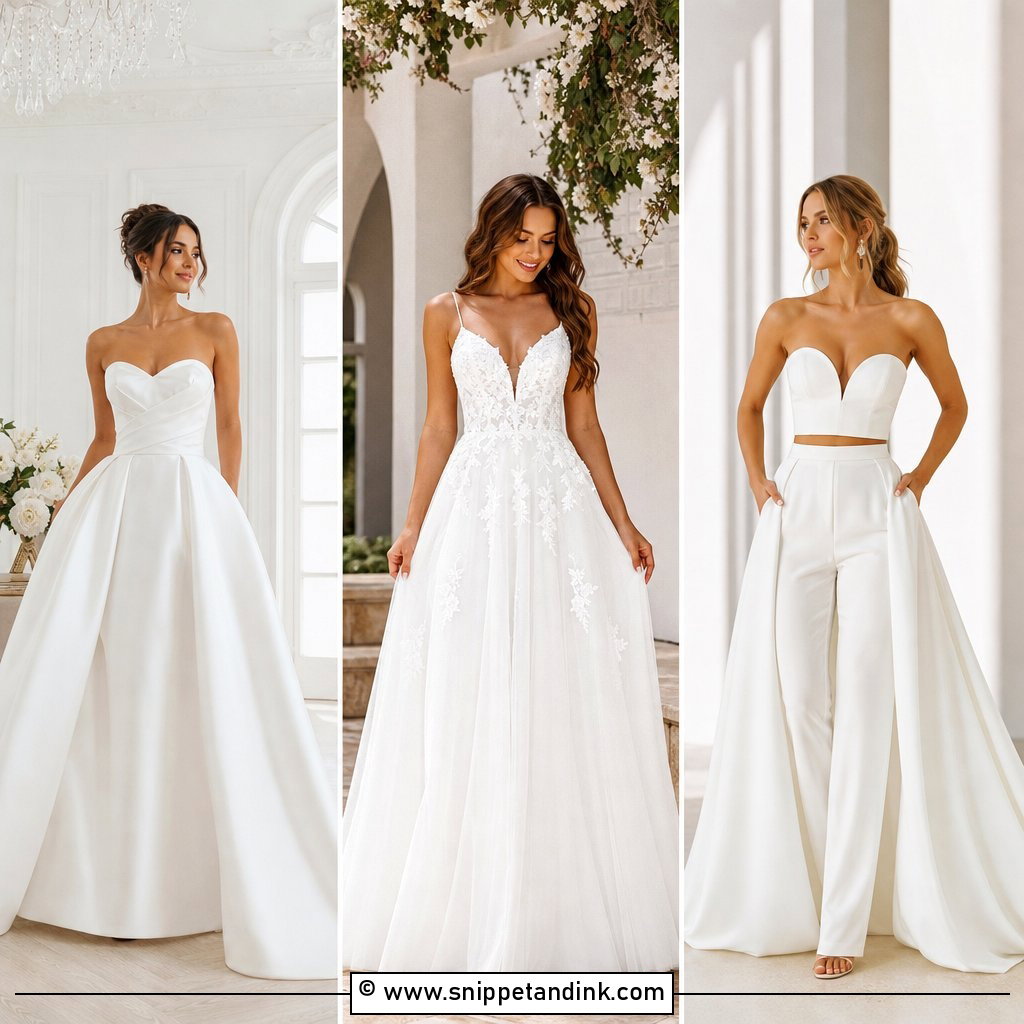
Separates give the most styling freedom. A cropped lace top with a high-waisted tulle skirt, or a satin bodice with a flowing skirt, keeps the colour consistent while the split feels fresh. The pitfall is undertone: two pieces from different fabrics can dye to slightly different rose golds, and that mismatch shows in daylight. I always hold the top and skirt together by a window before committing. Simple heels, fine earrings and a sleek veil are enough. The bonus is that you can wear the top or skirt again later.
24. Rose Gold High Low Wedding Dress
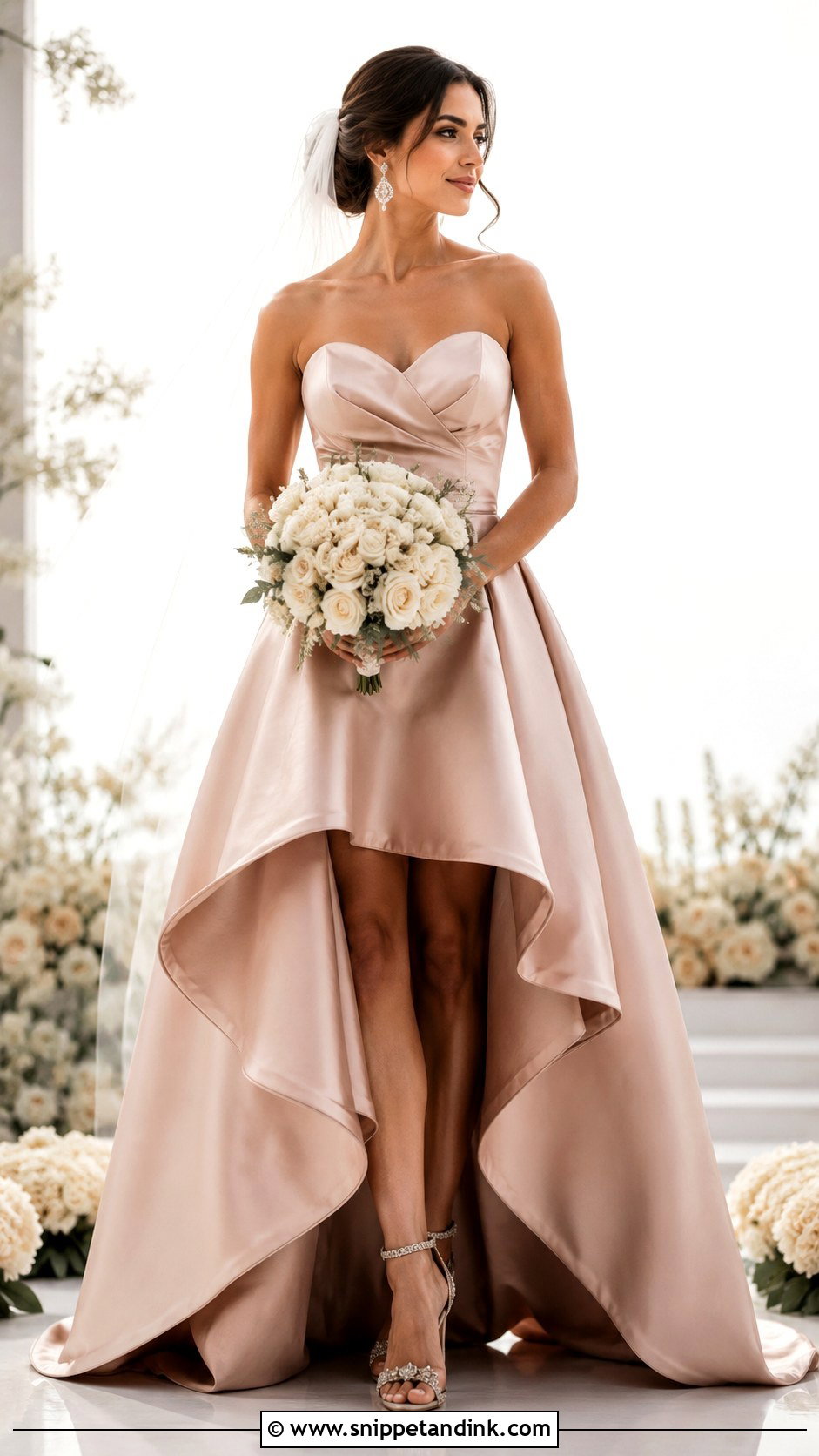
High-low hems show off the shoes and swing as you walk. The shorter front reads playful; the longer back keeps the bridal line. Soft tulle, satin or organza all move well. One thing I check is the transition at the side seams, because a steep curve can look unfinished if the hem is not weighted or faced properly. Choose embellished heels, a simple veil and earrings that match the gown’s shine, and keep the bouquet medium-sized so it does not hide the front. Outdoor ceremonies and modern receptions suit it.


25. Rose Gold Veil Wedding Dress
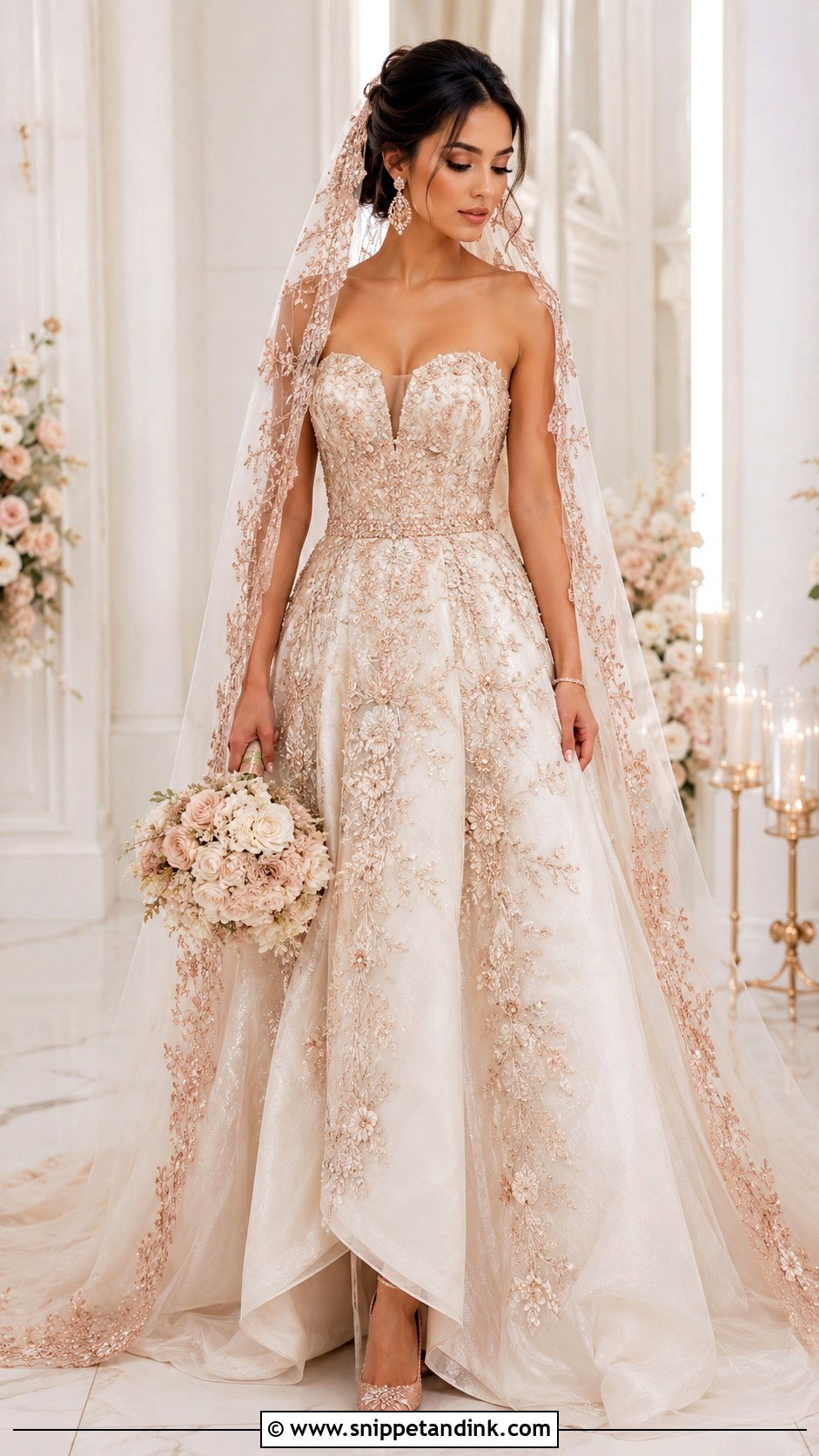
Not ready for a full rose gold gown? Put the colour in the veil. Start with an ivory, blush or champagne dress and add a veil with rose gold embroidery, metallic edging or a fine shimmer. This is the lowest-risk way to try the colour, and it is the option I suggest most often to brides who already love a traditional dress. Rose gold earrings, matching heels and a fine bracelet tie it together, and a soft blush and ivory bouquet finishes it. Ask to see the veil against the actual dress, because metallic thread can look brassy over pure white.
Alterations on Sequins, Beading and Metallic Satin
Coloured and embellished fabrics are slower to alter than plain ivory crepe, and that changes your timeline. A seamstress taking in a sequined bodice has to remove the sequins along the seam, sew, then hand-stitch them back, so allow for three fittings and start roughly two to three months before the wedding. Metallic satin is less forgiving still, because needle holes from an earlier fitting can show once the fabric is let out.
Questions I bring to the first fitting
- Is there spare fabric or trim from the manufacturer for patching the hem or bustle?
- Can the bustle points be hidden under beadwork so they do not show on the back?
- Will the lining be dyed to match, or is it ivory? An ivory lining peeking at the hem makes rose gold look grubby.
- How will the hem be finished if I change shoe height?
After the Wedding: Cleaning a Metallic Gown
Metallic threads and sequins do not like heat or harsh solvents, so tell the cleaner exactly what the gown is made of and point out any stains before they start. Sugary drinks dry clear but turn brown with time, so get the dress in within a few weeks. For storage, skip the plastic garment bag. I fold gowns in acid-free tissue in a breathable box or cotton bag, kept somewhere cool and dark, since light fades a coloured dress unevenly and humidity tarnishes metallic thread.
Undertone Decides More Than the Silhouette Does
Every dress above can be cut in a dozen shapes, but what makes rose gold work on you is the undertone: pinker, peachier, or closer to champagne. Get that right in daylight and under warm evening light, then choose the fabric that behaves best for your venue and the hours you will spend in it. Ball gown or courthouse midi, sequins or plain satin, the colour should look like it belongs to you rather than to a trend, and that comes from trying it on, sitting in it and seeing it beside your skin.
You'll Like These Ideas:


Leave a Reply