
Dressing a pregnant bride means fitting a body that will keep changing between the first appointment and the aisle. That’s the real challenge, not style. A good wedding dress for a pregnant bride gives the bump room, supports a bust that may have grown a cup size or more, and breathes. Empire waists, soft A-lines, wrap shapes, stretch lace, chiffon, tulle and lace-up backs all help because they can adjust late. You can still wear romantic lace, sleek satin, boho sleeves or a modern courthouse look. Here are 25 bridal outfits, each with the comfort detail I’d check first.
Ordering a Gown for the Body You’ll Have on the Day
The hardest part of maternity bridal is timing. You’re often ordering months ahead for a shape that doesn’t exist yet. Here’s how I handle it.
- Tell the boutique how many weeks along you’ll be on the wedding day. Many maternity bridal lines size by that, not by today’s measurements.
- Choose a gown with built-in adjustability: a lace-up or corset back, stretch panels, a wrap front or generous seam allowances.
- Book the final fitting as late as your seamstress will allow, ideally a week or two before the wedding.
- If you’re marrying in the third trimester, consider a ready-to-wear gown bought closer to the date rather than a made-to-order one.
I always tell brides to expect the bust to change as much as the belly. A bodice that fits perfectly in the second trimester can be tight a month later, so leave room there first.
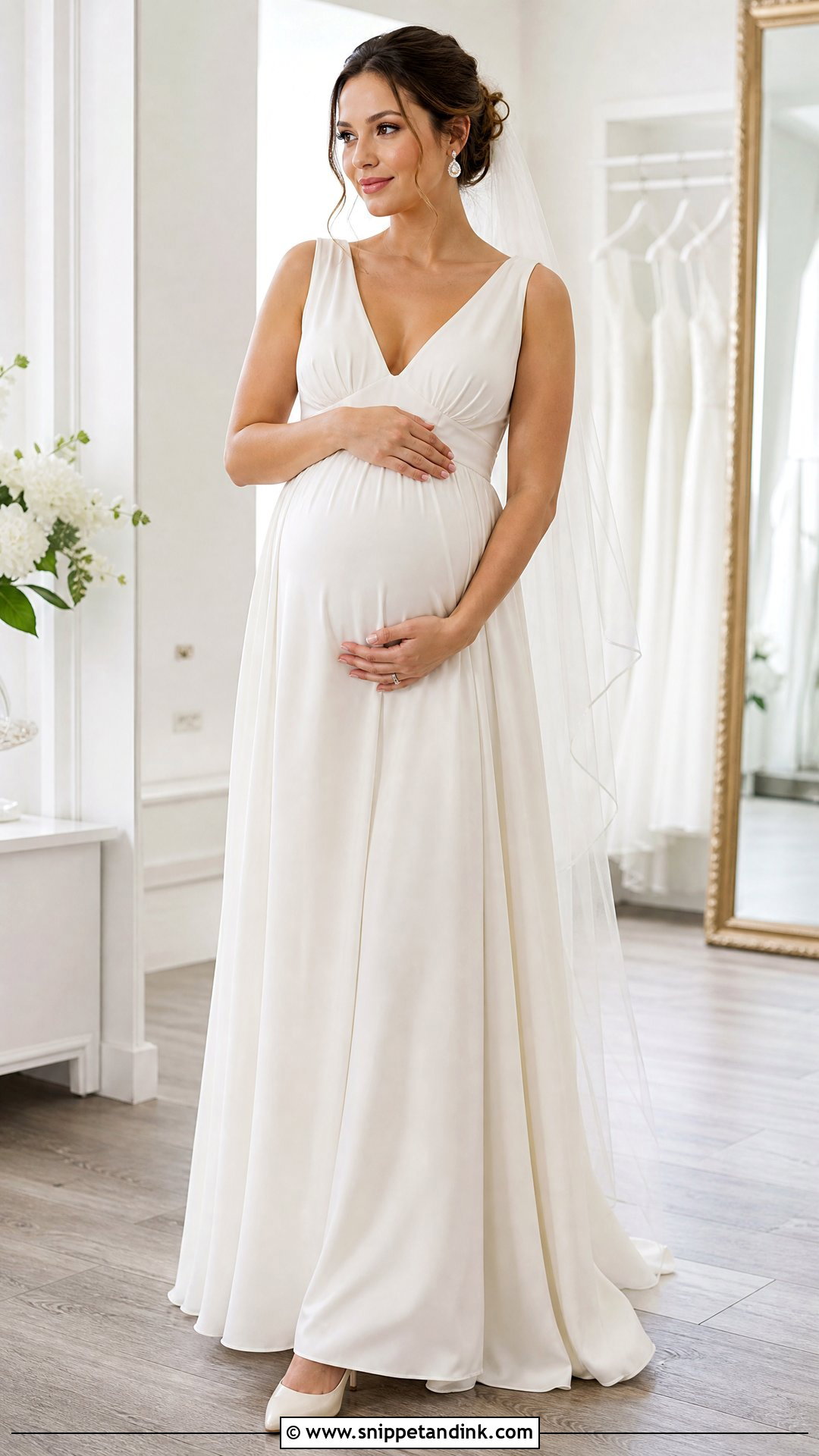
1. Empire Waist Maternity Wedding Dress
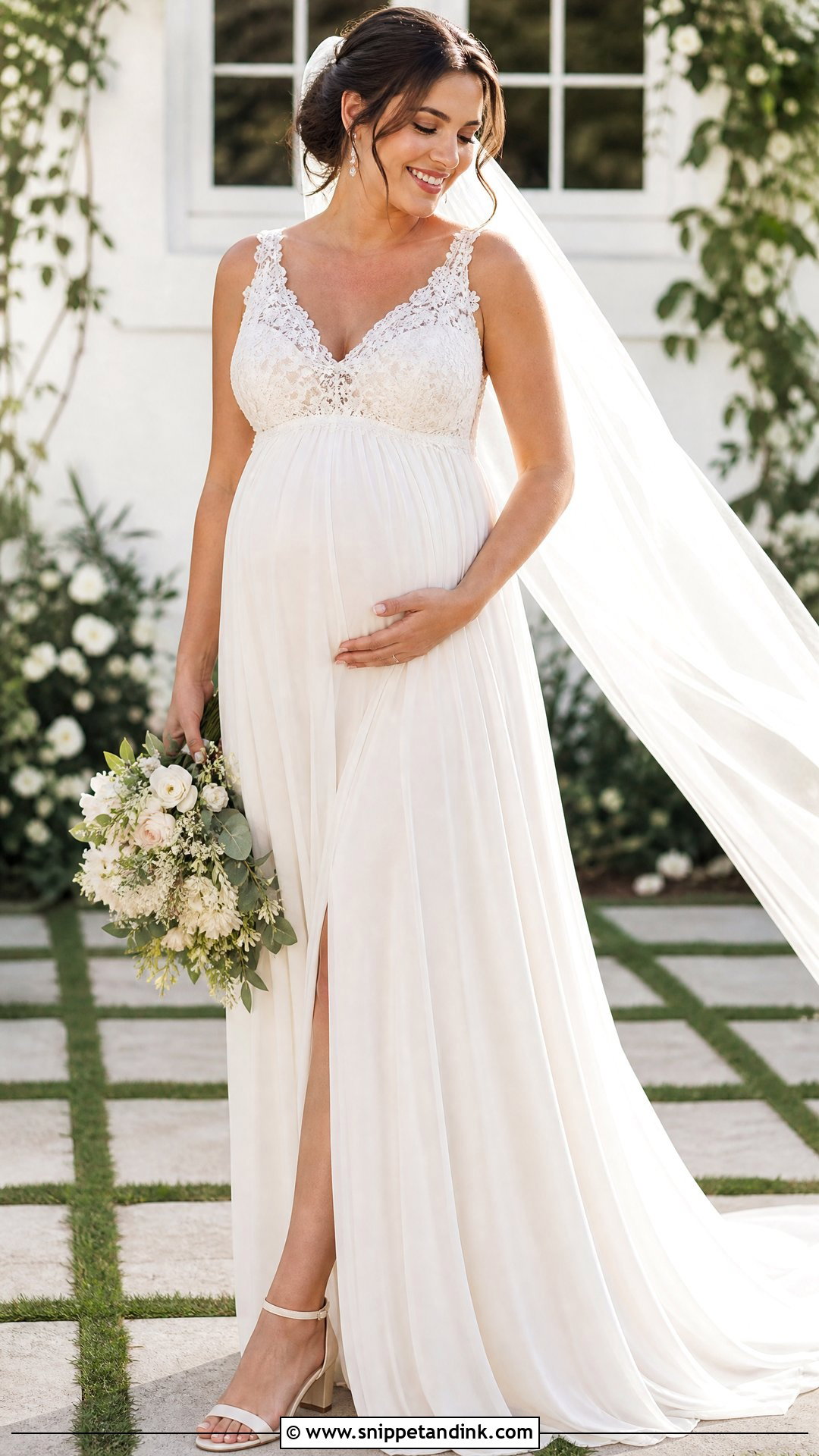
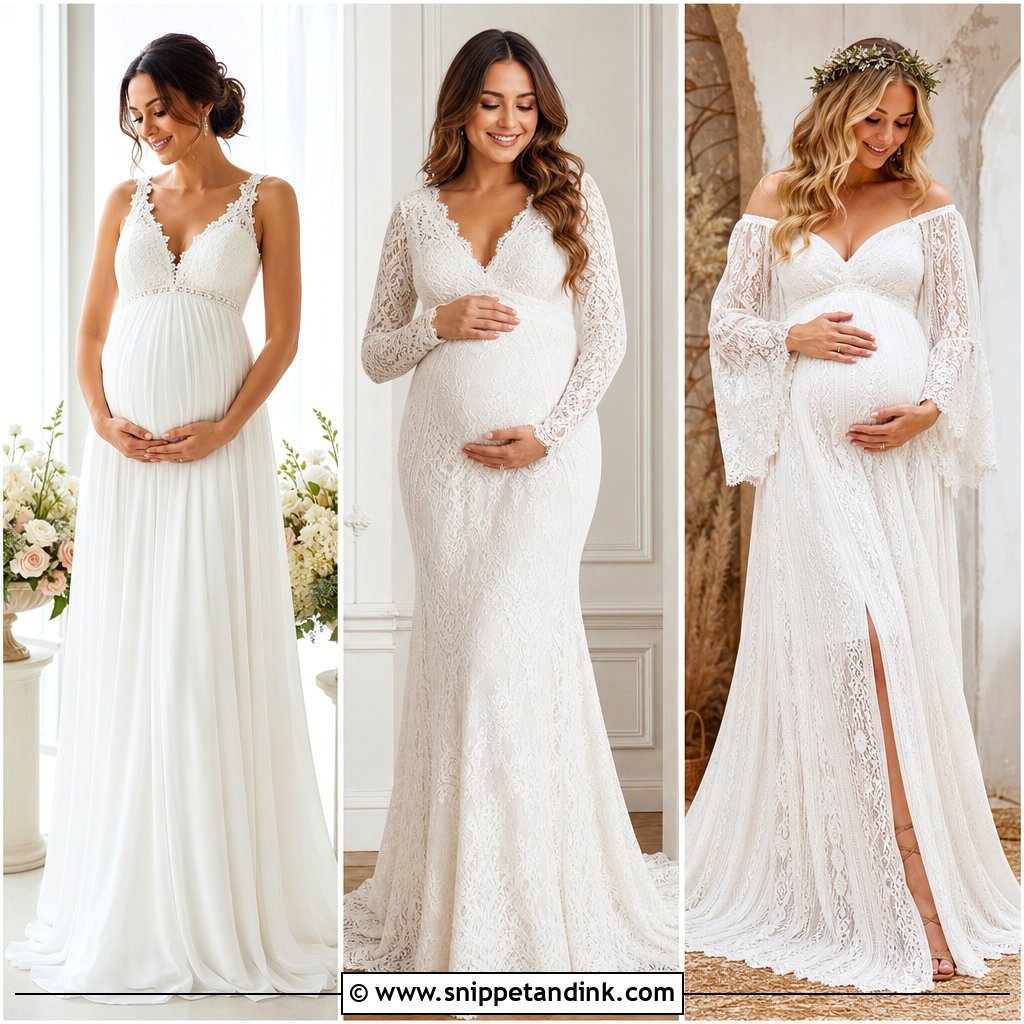
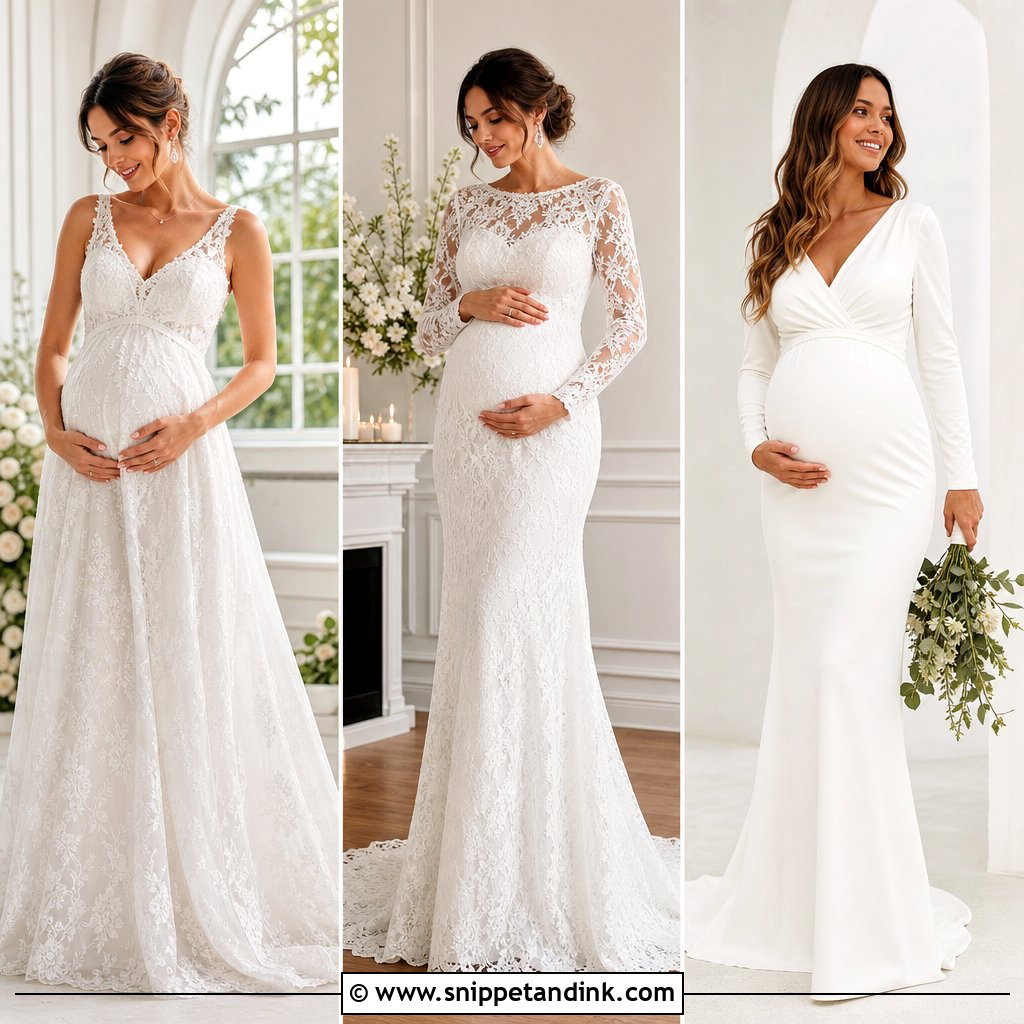
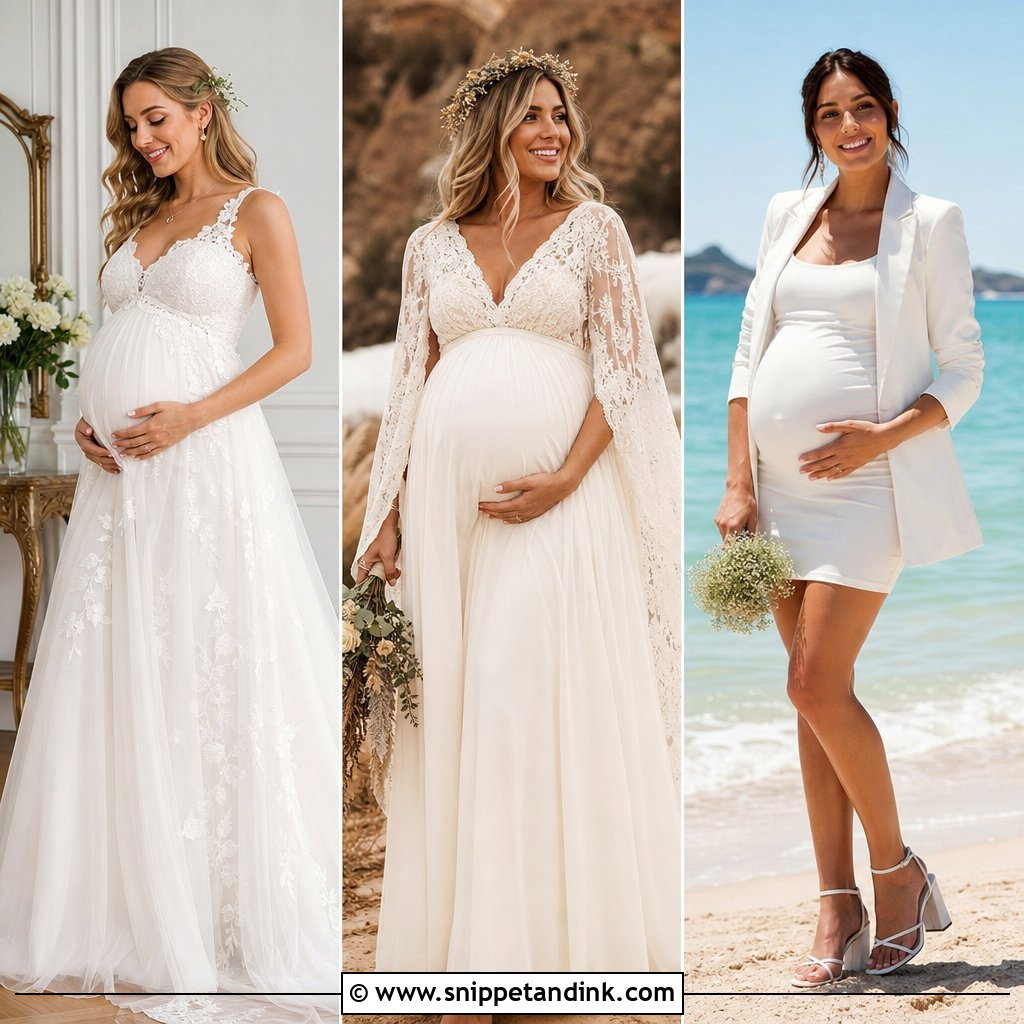
The empire waist is where I start with most pregnant brides, because the seam sits under the bust instead of across the belly. Nothing presses on the bump. A soft chiffon skirt falls over it without clinging, and a lace bodice keeps the detail near your face. It suits nearly every trimester. If the wedding is still months away, ask for a lace-up back or a hidden stretch panel so the bodice can grow with you.
2. A Line Maternity Wedding Dress
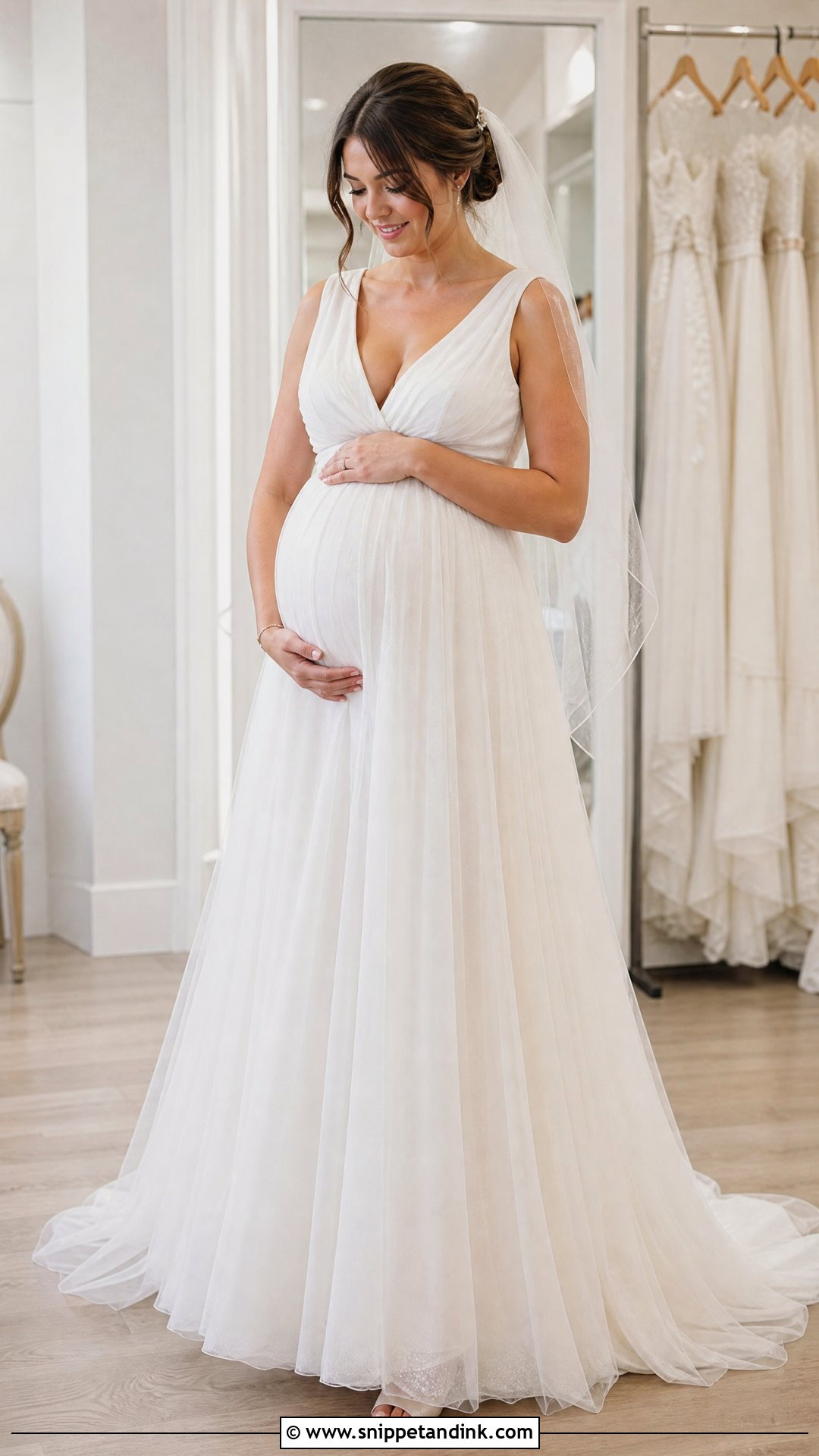
A-lines give a traditional bridal shape with room to sit, walk and dance. The skirt widens from a raised waist and glides over the bump and hips. Tulle, organza and crepe all move easily. A V-neck lengthens the torso, and thicker straps carry a fuller bust better than spaghetti straps. In the second or third trimester, I leave extra room in the bust and plan for the seamstress to take it in at the final fitting rather than let it out.
3. Chiffon Maternity Wedding Dress
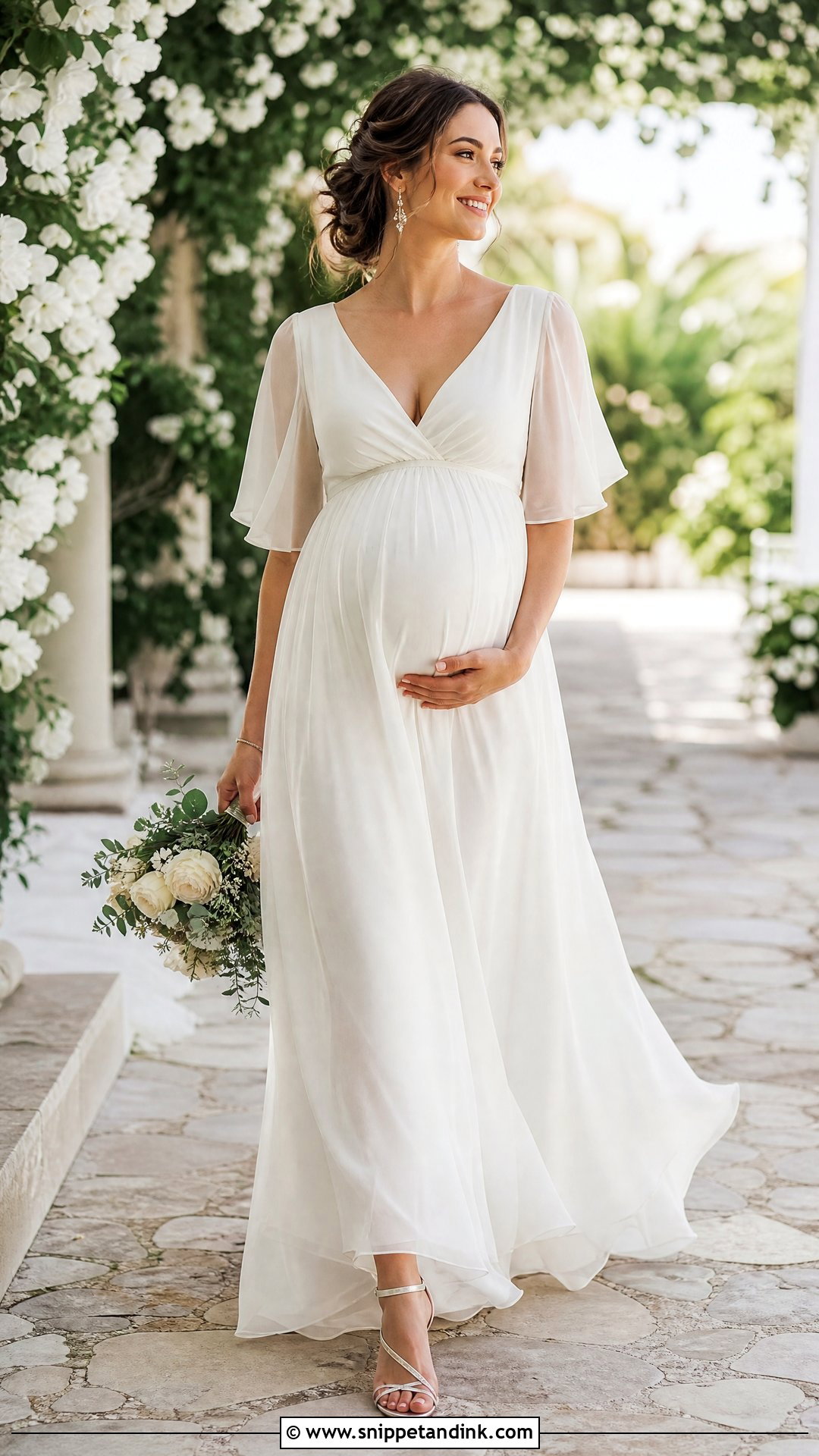
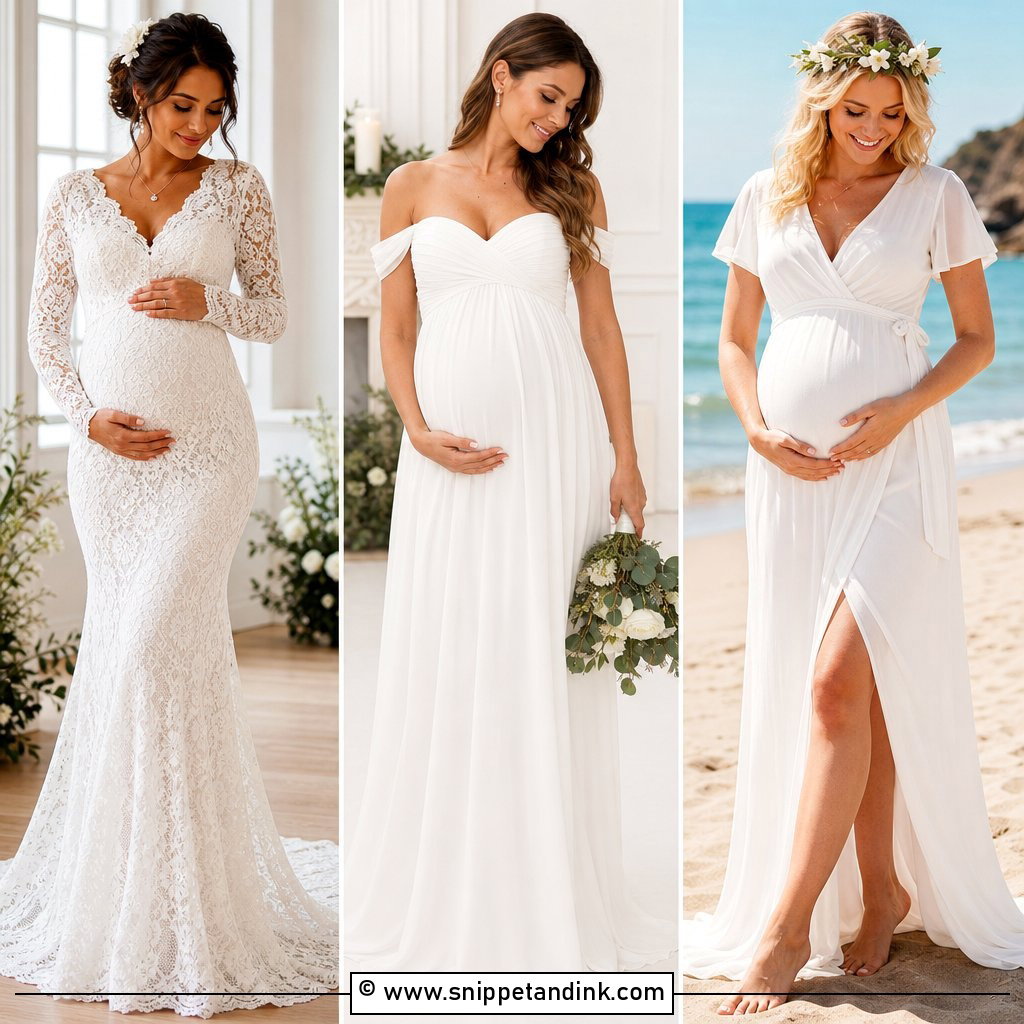
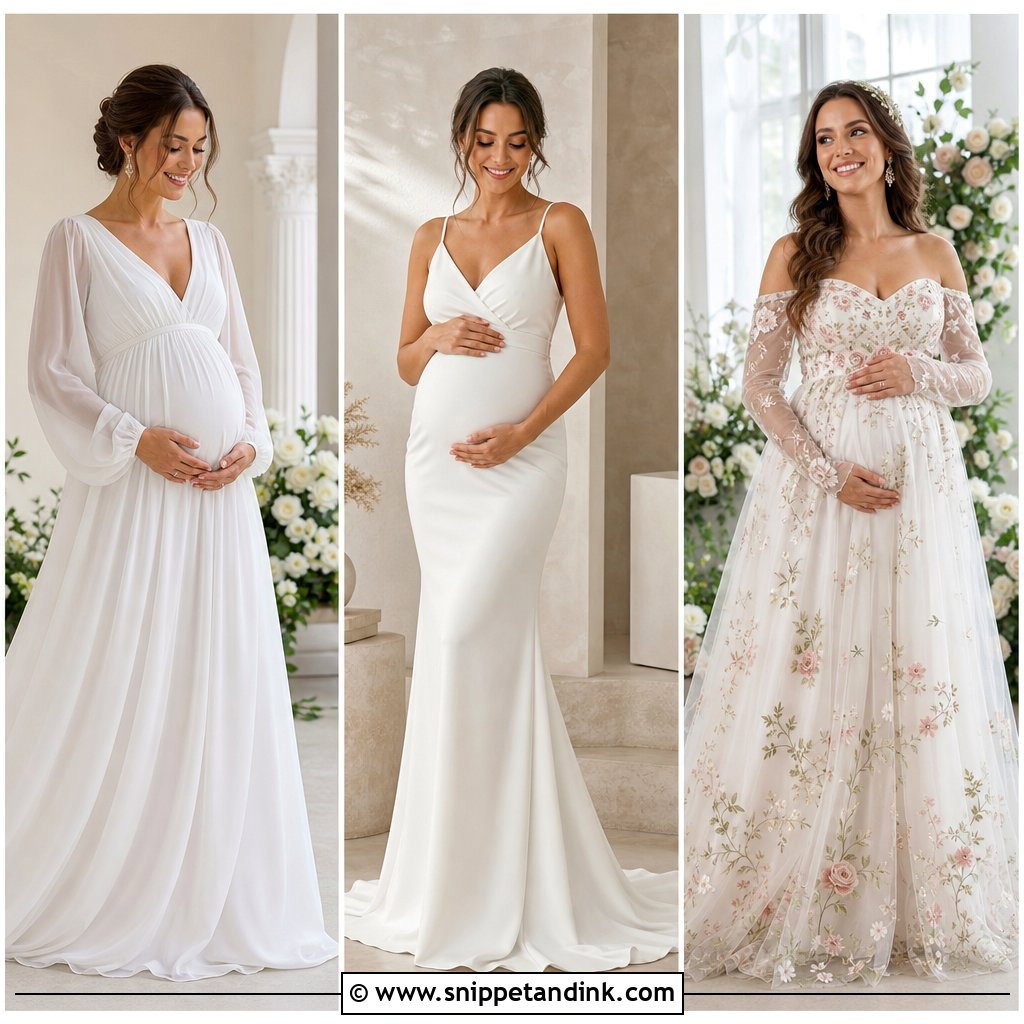
Warm weather and outdoor weddings are where chiffon earns its place. It barely weighs anything, and it moves softly with each step. A gathered bust, empire waist and flowing skirt give a balanced line. Pregnancy often makes brides run warmer than usual, so I pay attention to the lining as much as the chiffon: a breathable lining matters more than the outer fabric. Sheer sleeves add coverage without heat.
4. Lace Maternity Wedding Dress
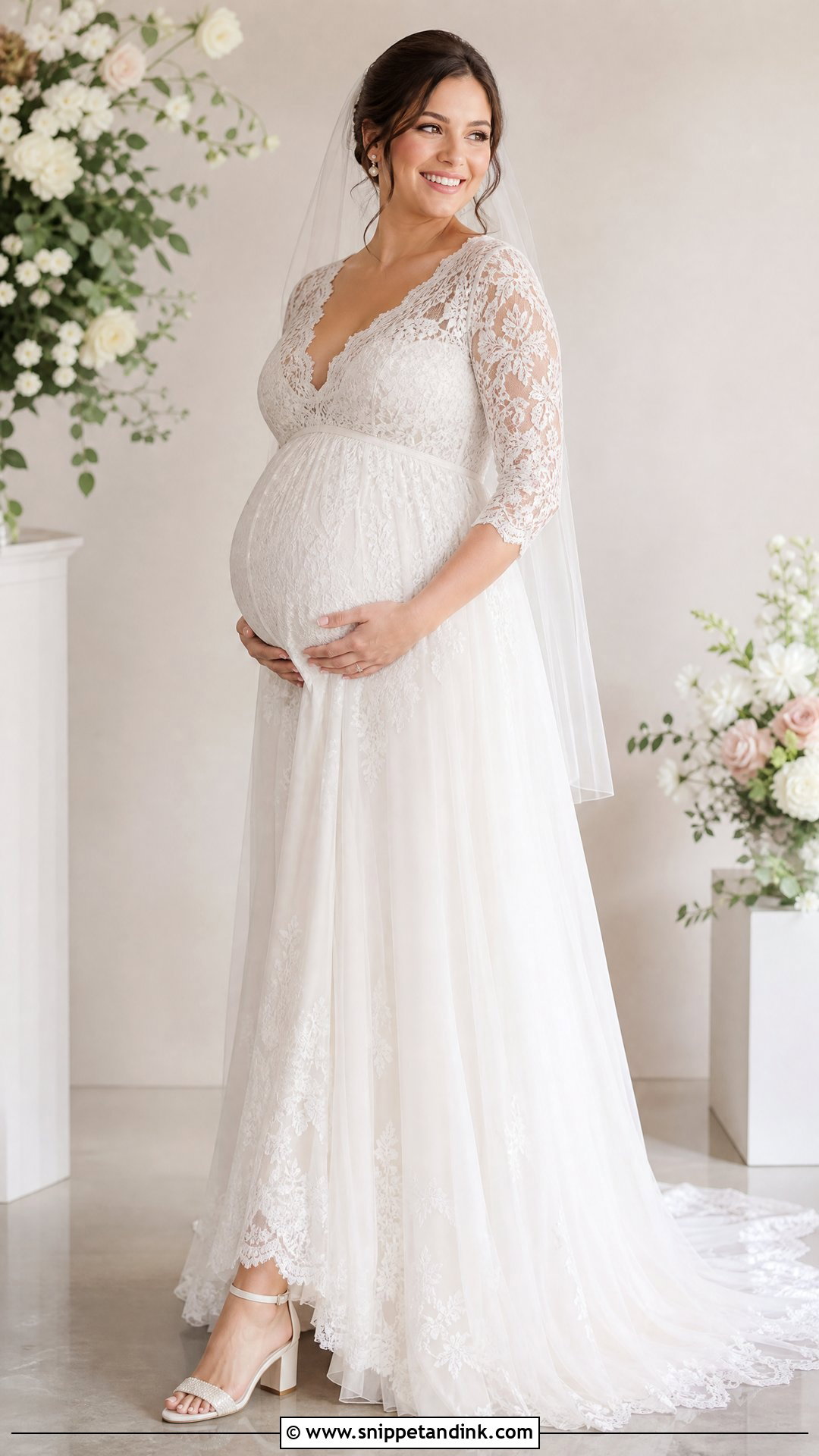
Lace works in pregnancy when it can stretch. Stretch lace, or lace laid over a flexible lining, moves with your body instead of pressing into it. A lace bodice with a flowy skirt is usually easier to wear than fitted lace head to toe. Stiff waist seams are what I avoid most; a design that opens below the bust keeps you comfortable while seated through dinner.
5. Long Sleeve Maternity Wedding Dress
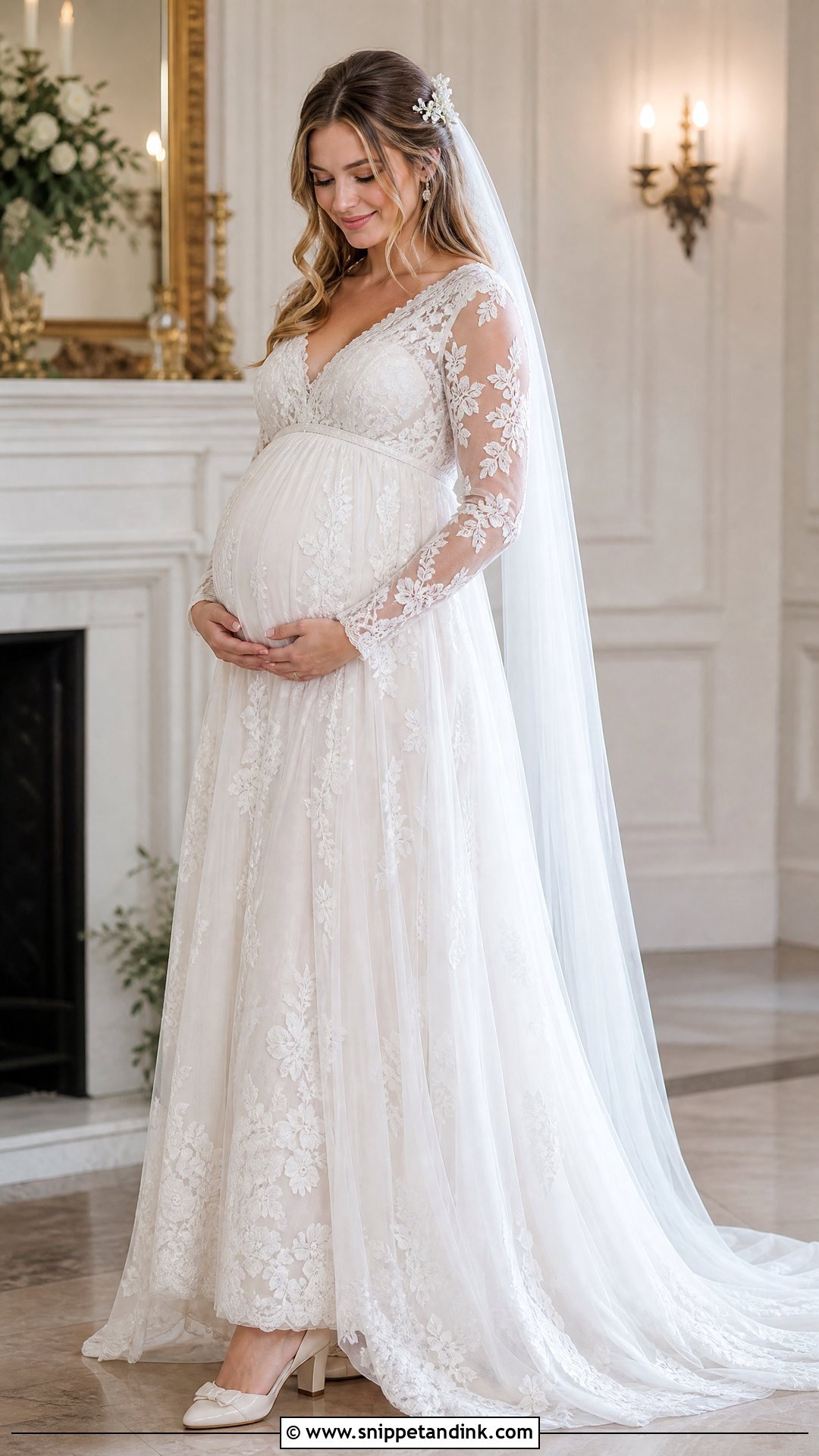
Long sleeves suit cooler months and brides who want coverage. Soft lace, sheer tulle and light crepe all work, as long as nothing grips the upper arm, shoulders or bust. Arms often swell slightly in later pregnancy, so I size fitted sleeves with a little ease. An empire or A-line skirt balances the look, and a long-sleeve bodice can feel more secure if your bust has changed. Choose a breathable lining so you don’t overheat.
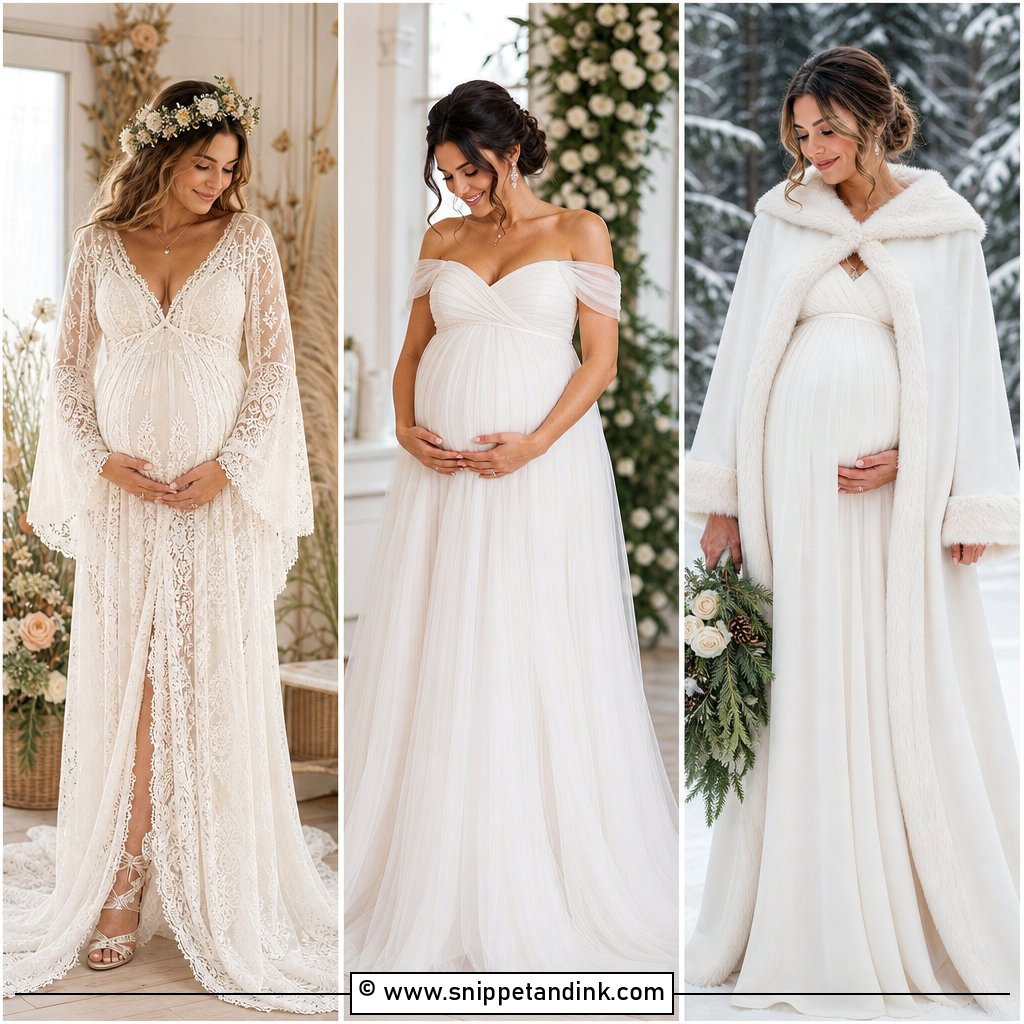
6. Off Shoulder Maternity Wedding Dress
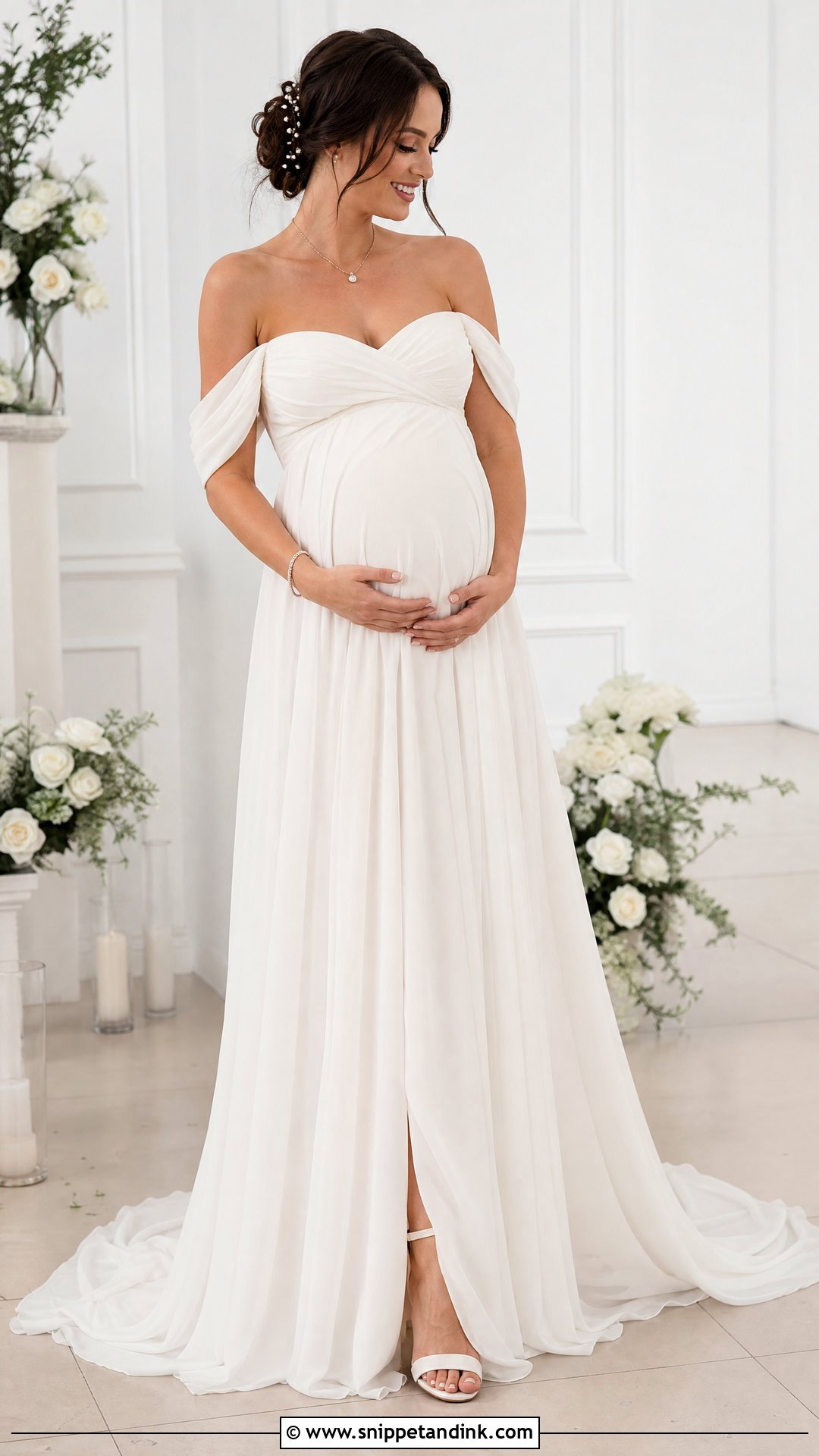
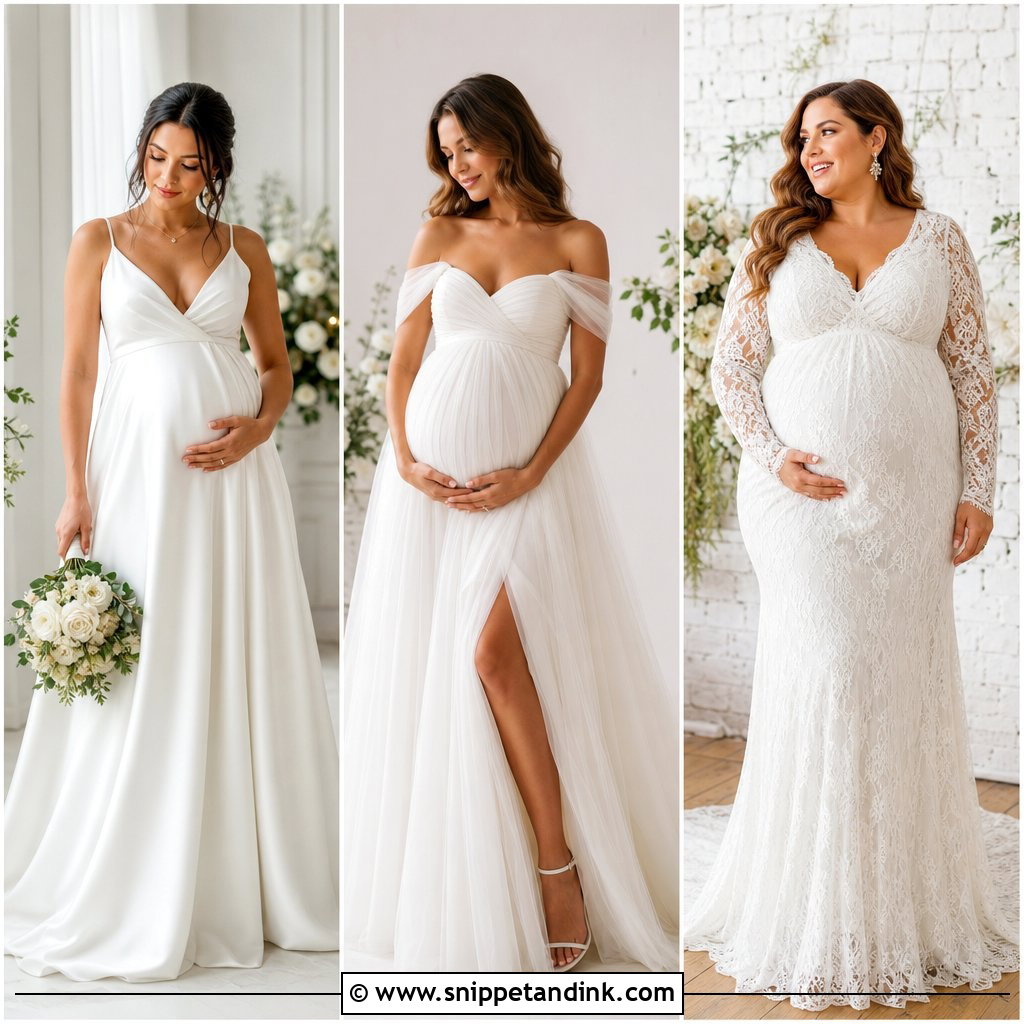
Off-shoulder necklines show the collarbone and shoulders gracefully. The bodice needs gentle stretch or soft inner support that doesn’t squeeze the bump, and a flowing A-line or empire skirt keeps it easy to wear. Draped tulle sleeves feel romantic without fuss. At fittings, raise your arms and sit down. If the sleeves pull the bodice down when you do, they need anchoring before the day.
7. V Neck Maternity Wedding Dress
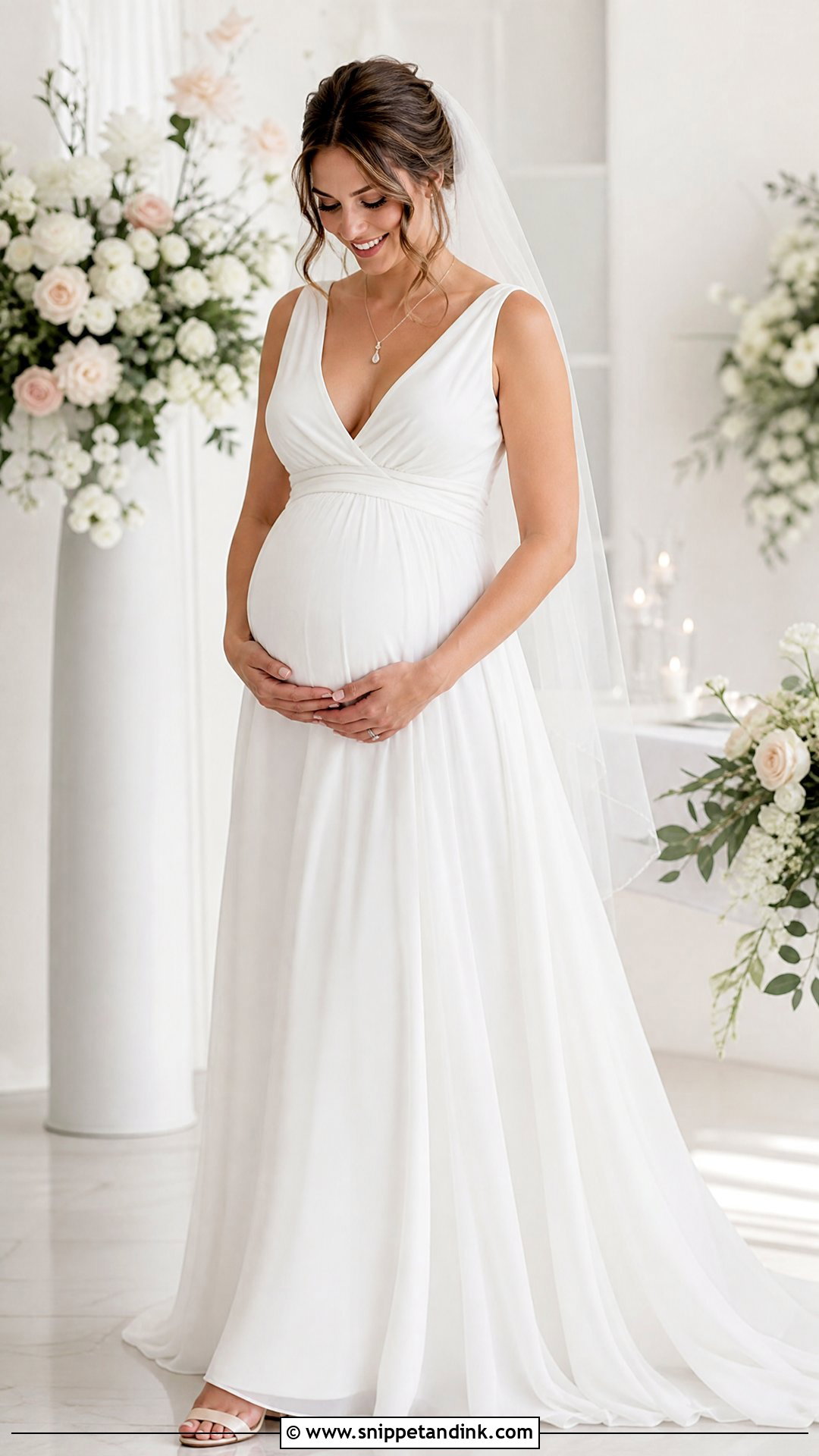
V-necks lengthen the upper body and balance a growing bump, and they’re forgiving when your bust size is still changing. They feel open without looking bare. Wider straps add support; a sheer panel adds security if the V sits lower than you’d like. Crepe or satin gives a clean result, chiffon or lace a softer one. A pendant necklace sits naturally in the V.
8. Wrap Maternity Wedding Dress
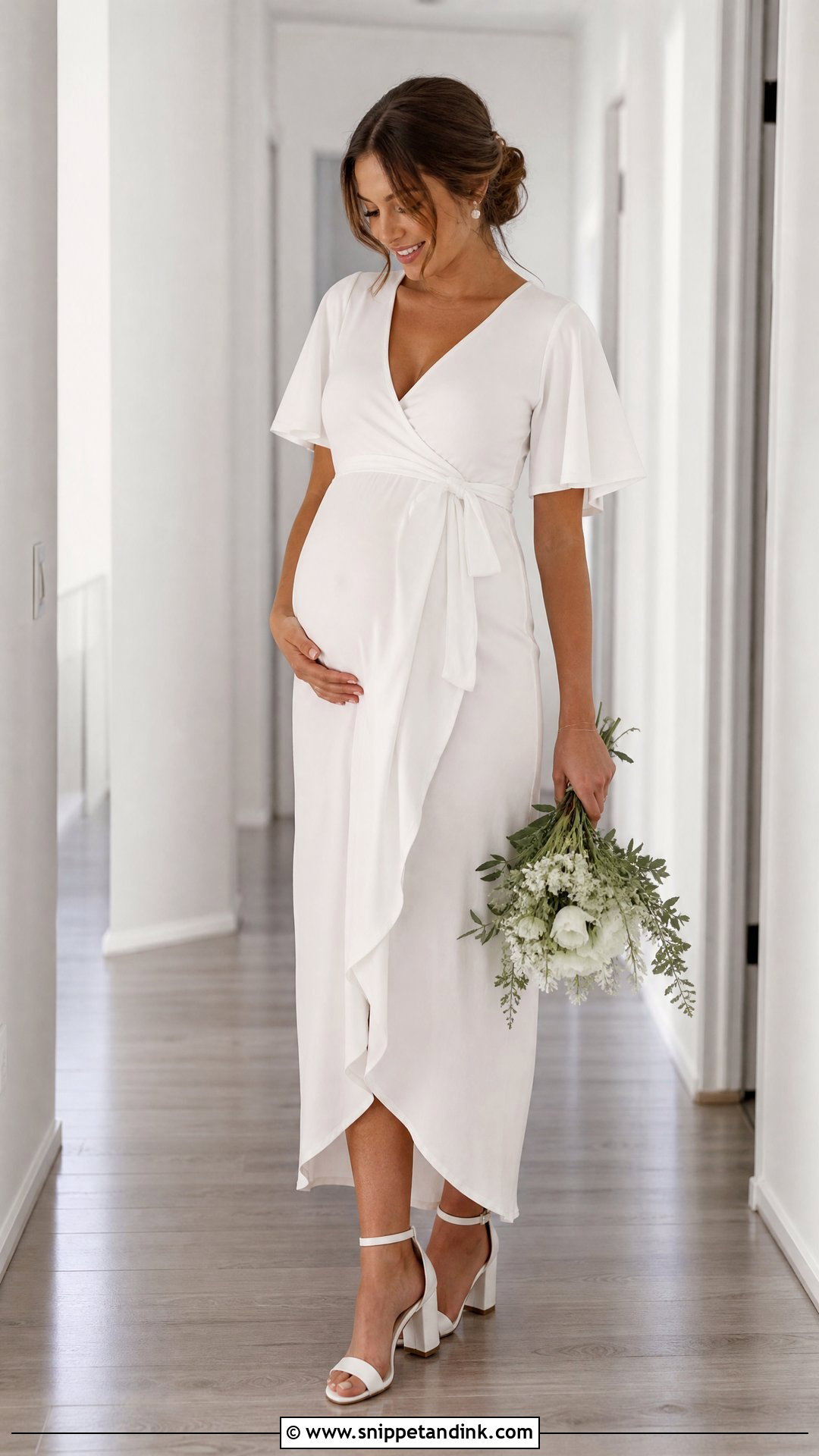
Of all the shapes here, a wrap adjusts most easily as the bump grows, which is why I recommend it to brides ordering late or marrying close to their due date. The diagonal line across the torso is flattering. Look for a bridal version in chiffon, crepe or soft satin with a secure inner tie as well as the outer sash; an outer sash alone loosens by the evening. Flutter sleeves feel relaxed, long sleeves more formal.
9. Simple Crepe Maternity Wedding Dress
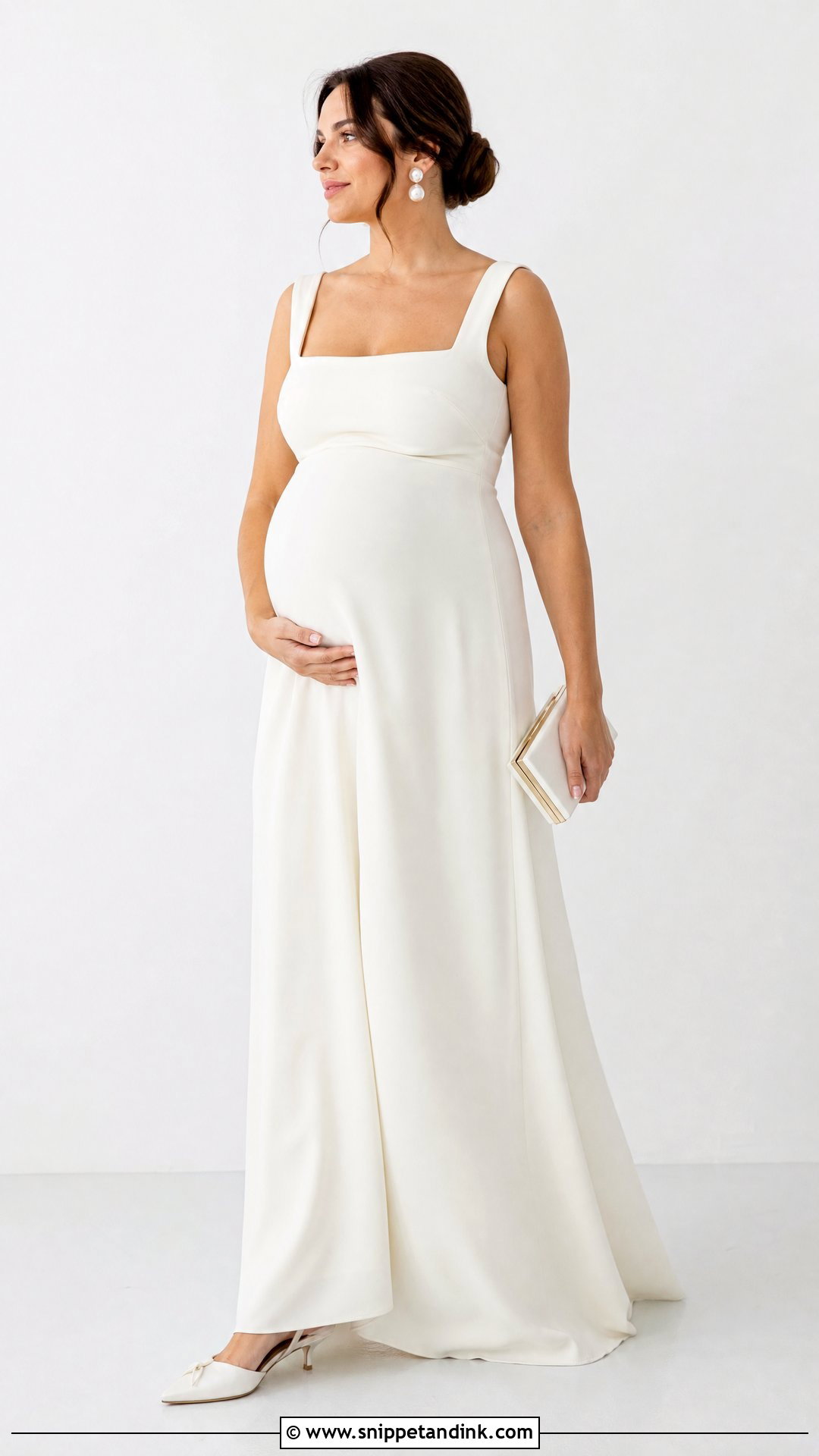
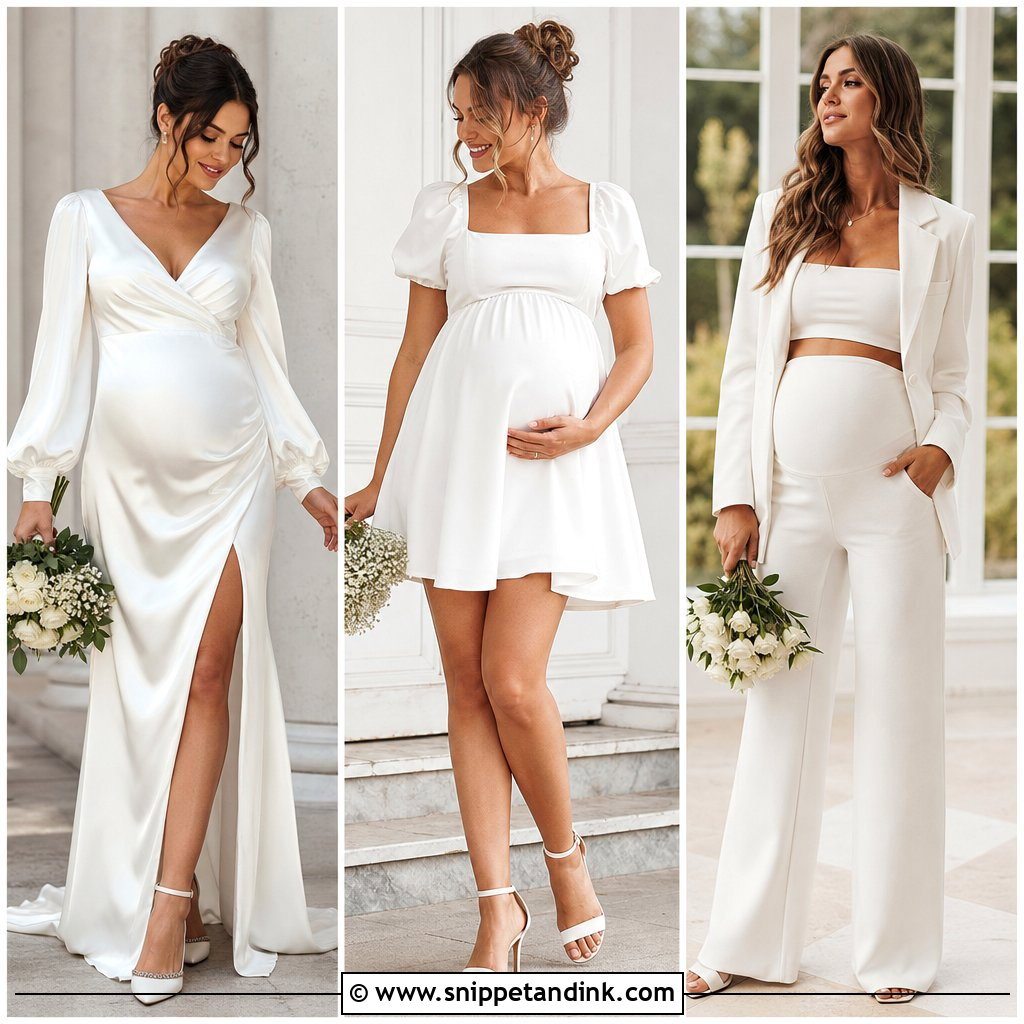
Clean lines and modern style come through in plain crepe. It has enough weight to look polished, but crepe shows tension, so any pull across the bump is visible straight away. I choose an empire seam, a soft A-line or a relaxed column with real room at the belly, and check it from the side. Square, V or bateau necklines keep it classic. It suits city weddings and courthouse ceremonies.
10. Satin Maternity Wedding Dress
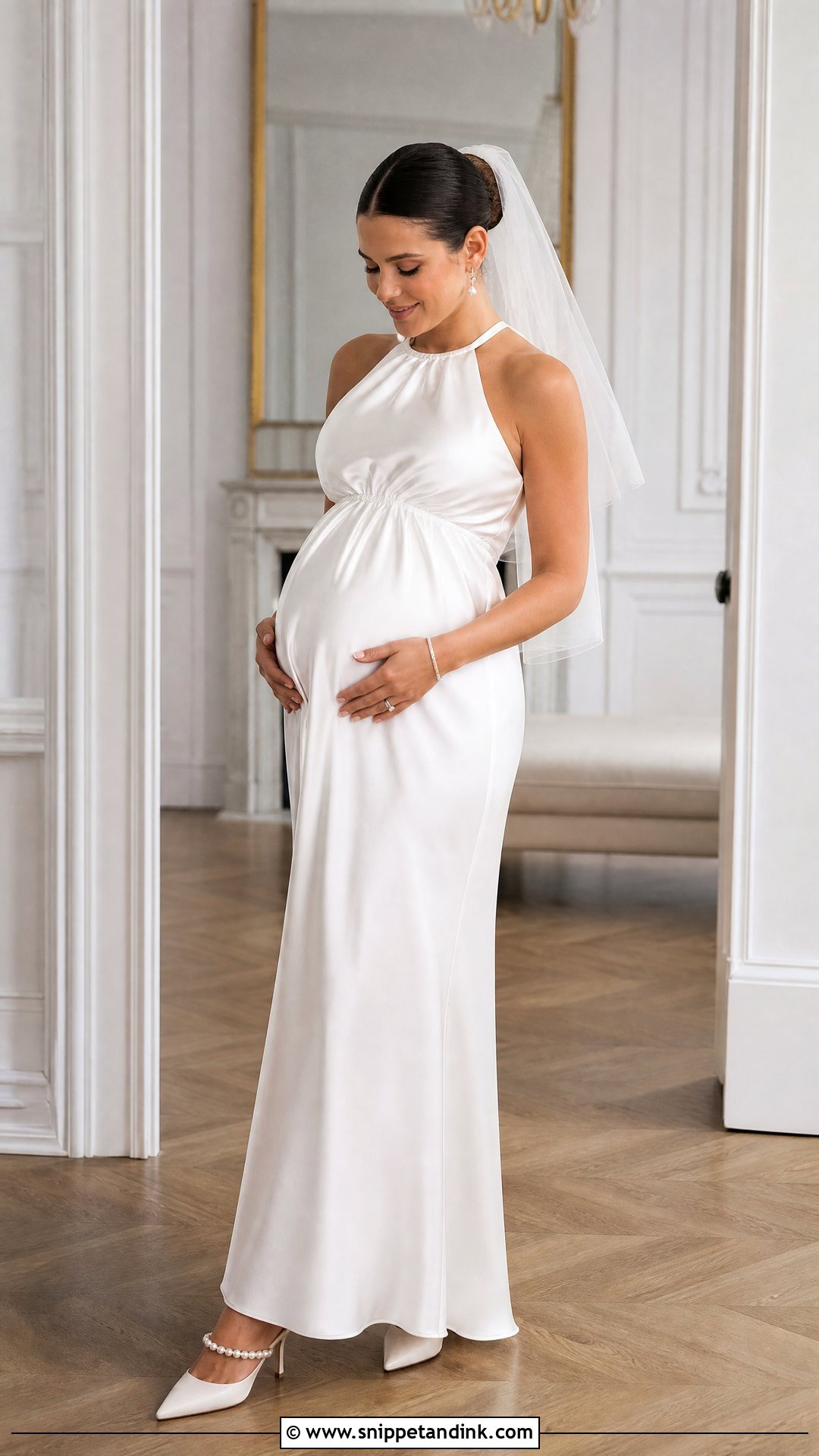
Satin glows without embellishment. For pregnancy, choose soft satin over stiff duchess types, since it moves and drapes over the bump instead of standing away from it. A high waist, gentle draping or gathers at the bust give space. Because satin shows every pull, schedule your final fitting as close to the wedding as the seamstress allows; a fit done six weeks out will likely be tight on the day.
11. Boho Maternity Wedding Dress
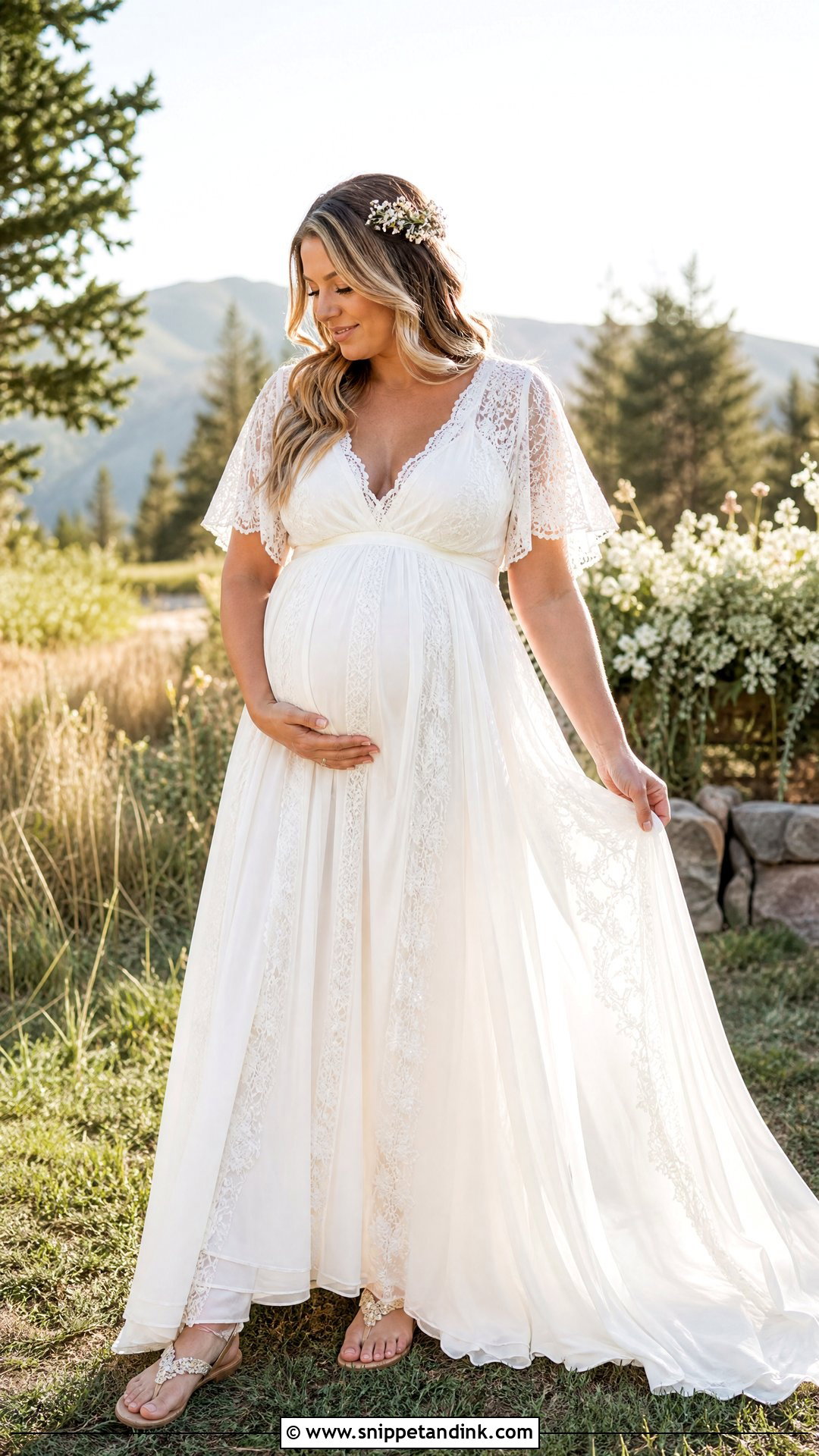
A boho maternity wedding dress is relaxed and easy to wear: soft lace, flowing chiffon, flutter sleeves and a skirt that moves around the bump. It’s at home outdoors and on beaches. An empire or loose A-line keeps it graceful rather than oversized. Crochet-style lace and soft tiers add texture. Flat bridal sandals and loose waves fit the mood, so keep accessories light.
12. Beach Maternity Wedding Dress
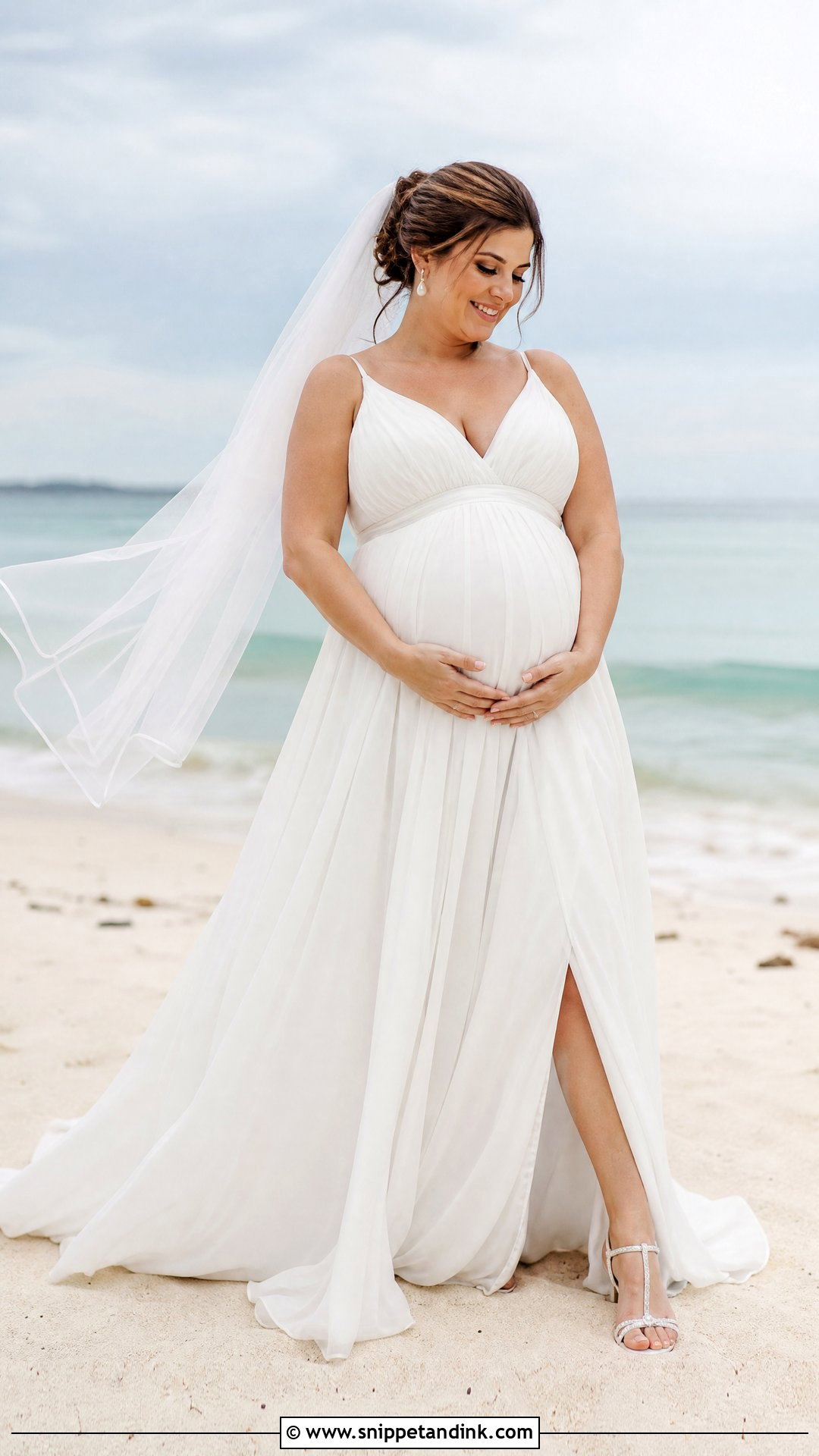
Beaches call for something light and breathable. Chiffon, soft tulle and light lace beat heavy satin or a stiff ball gown. An empire waist, flowing skirt and secure straps keep you comfortable in the breeze. Skip the train or keep it short near the water, since a wet hem gets heavy. Flat sandals beat heels on sand, and they’re kinder to swollen feet in the heat.
13. Courthouse Maternity Wedding Dress
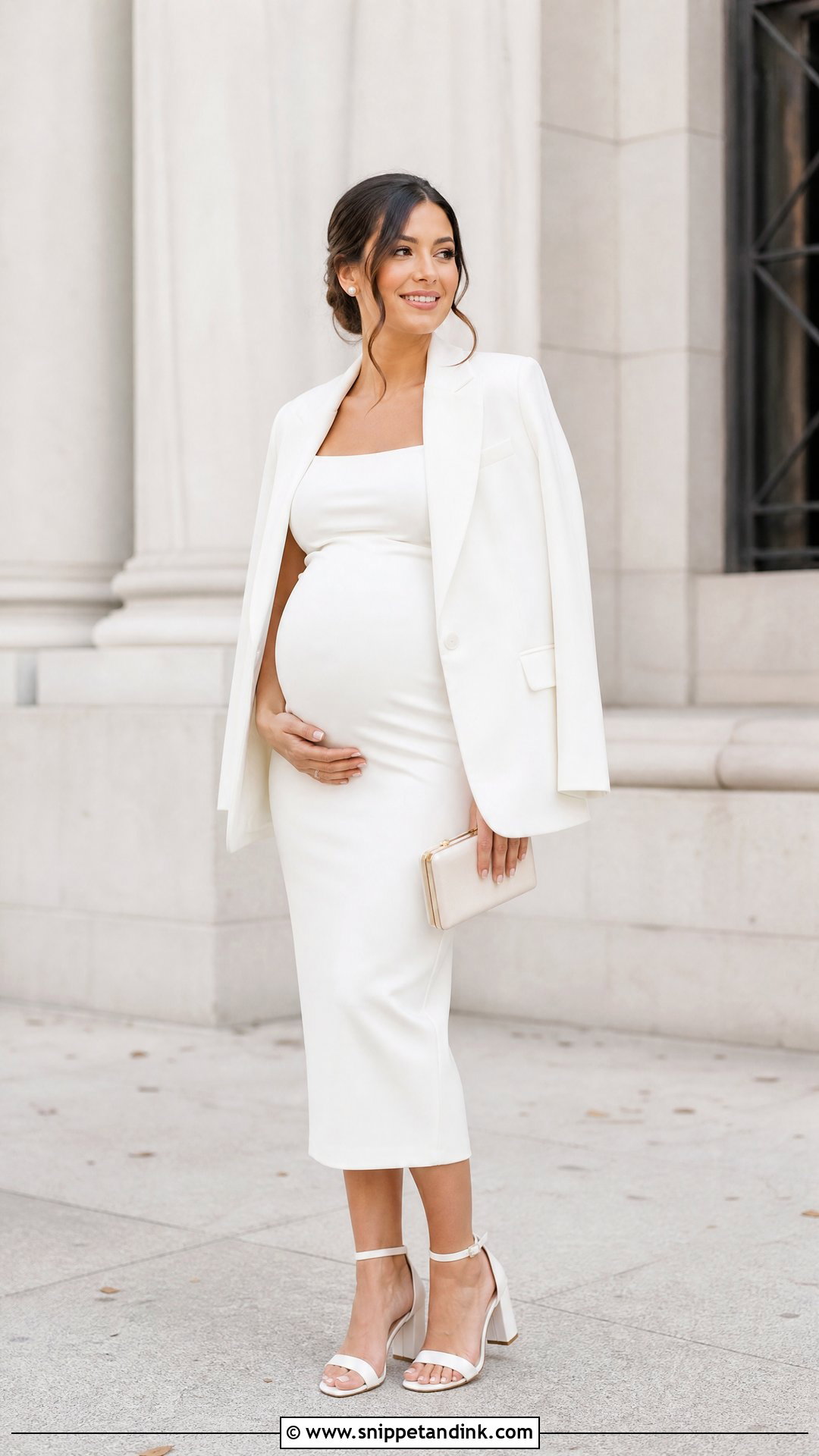
Courthouse dresses can be simple, chic and easy to move in. A knee-length, midi or relaxed column in stretch crepe, soft satin or lined lace keeps it low stress. A blazer over the top adds structure and is easy to take off when you warm up. It’s usually affordable and easy to alter. Keep the waist loose, as you’ll be sitting through paperwork and waiting rooms.
14. Plus Size Maternity Wedding Dress
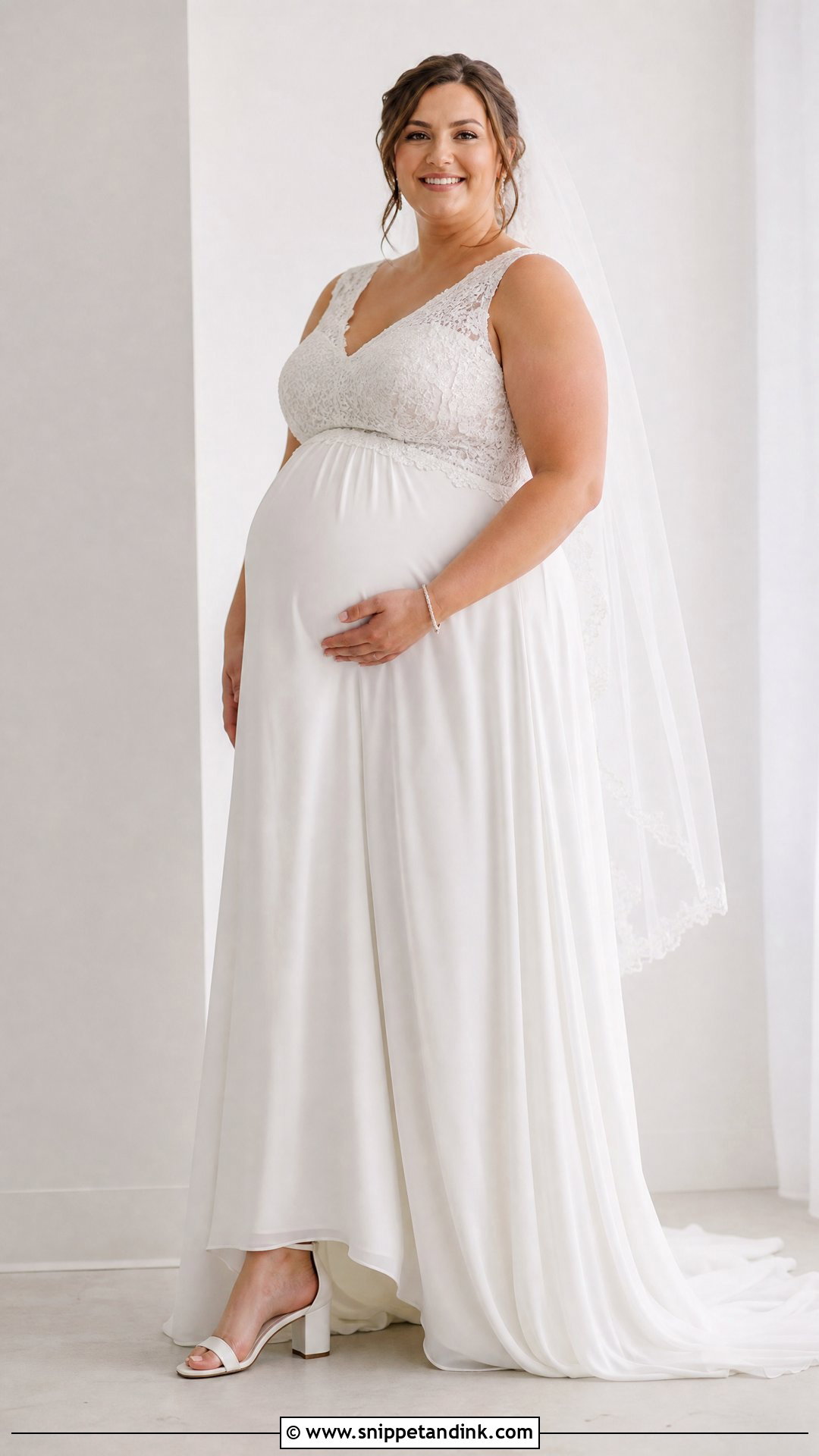
Bust support and room for the bump are the two jobs a plus-size maternity gown has to do. Empire and A-line shapes are usually easiest to fit. I look for wide straps, built-in cups and a breathable lining that doesn’t dig in. A lace bodice over a chiffon skirt works well. Wear the supportive bra you’ll marry in to every fitting. The aim isn’t to hide your body; it’s a dress that fits the shape you have now.
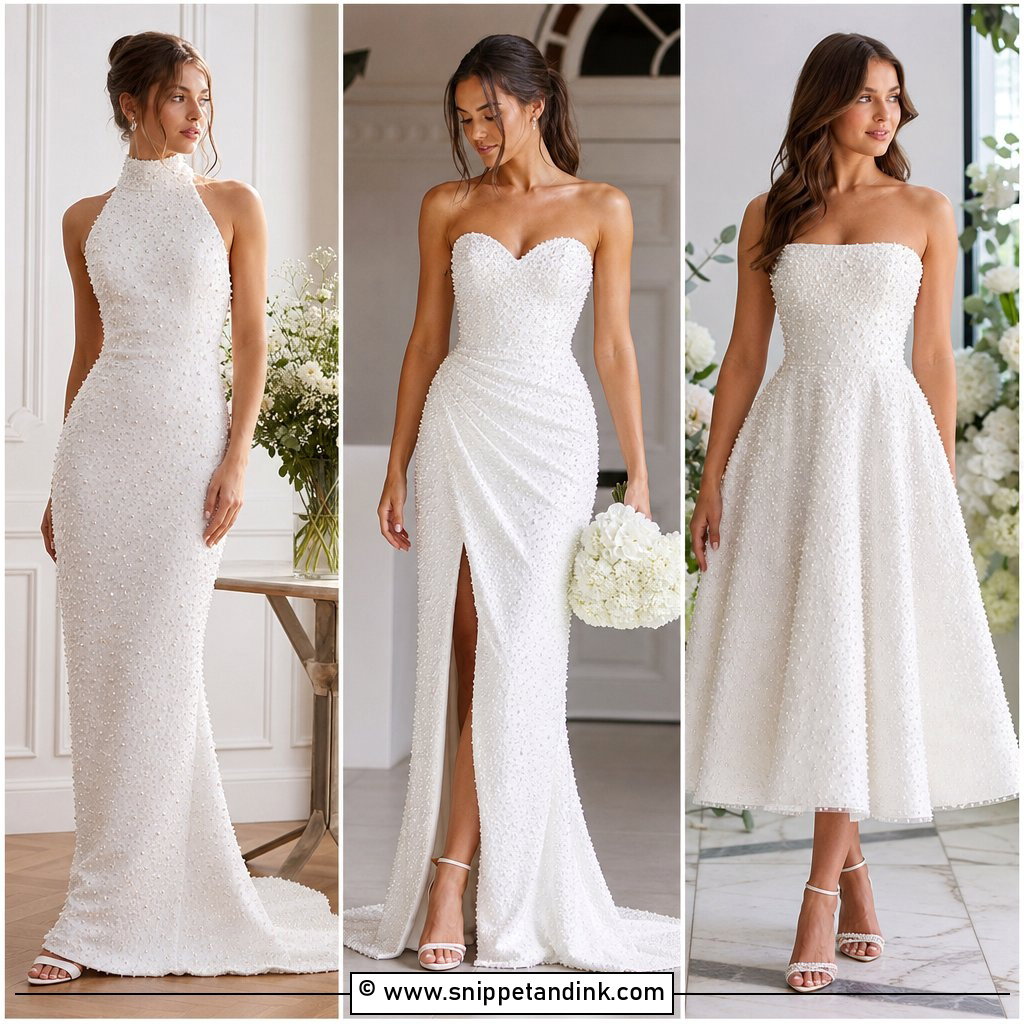
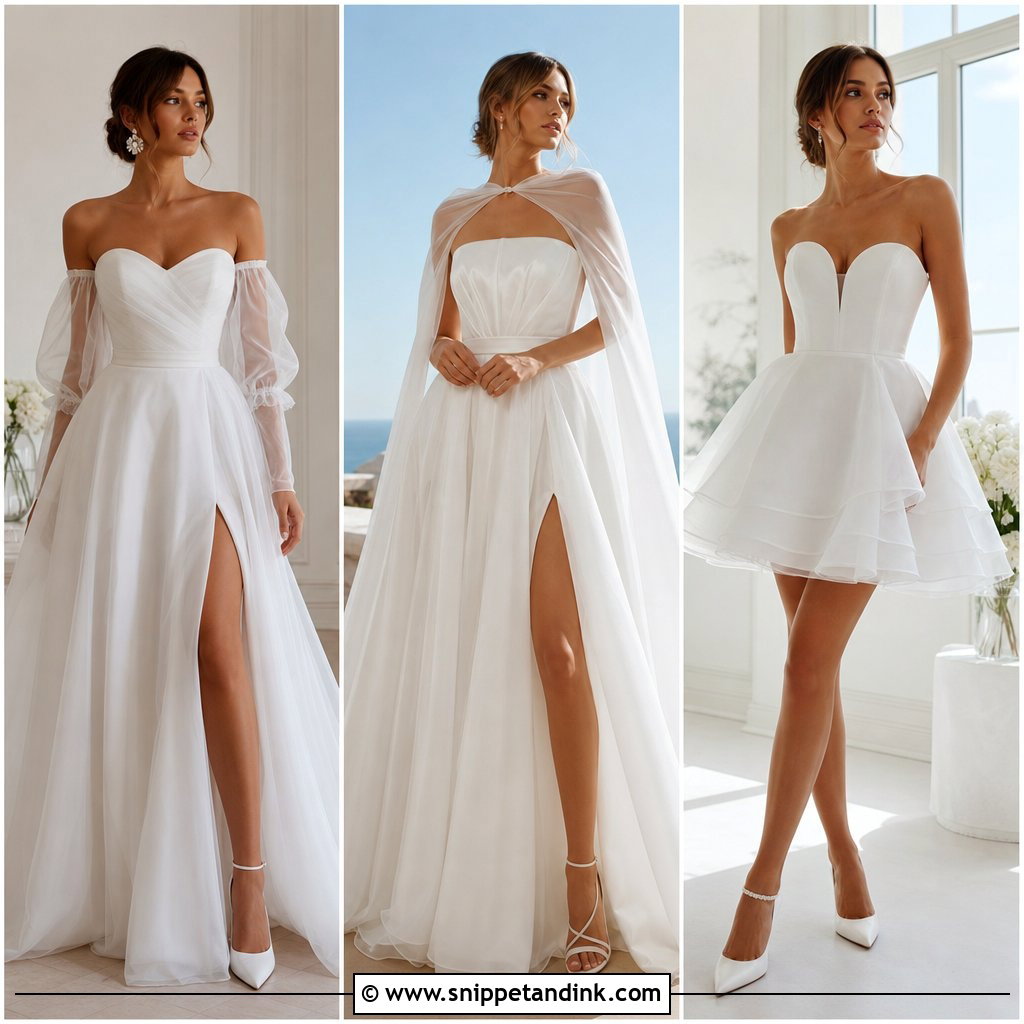
15. Petite Maternity Wedding Dress
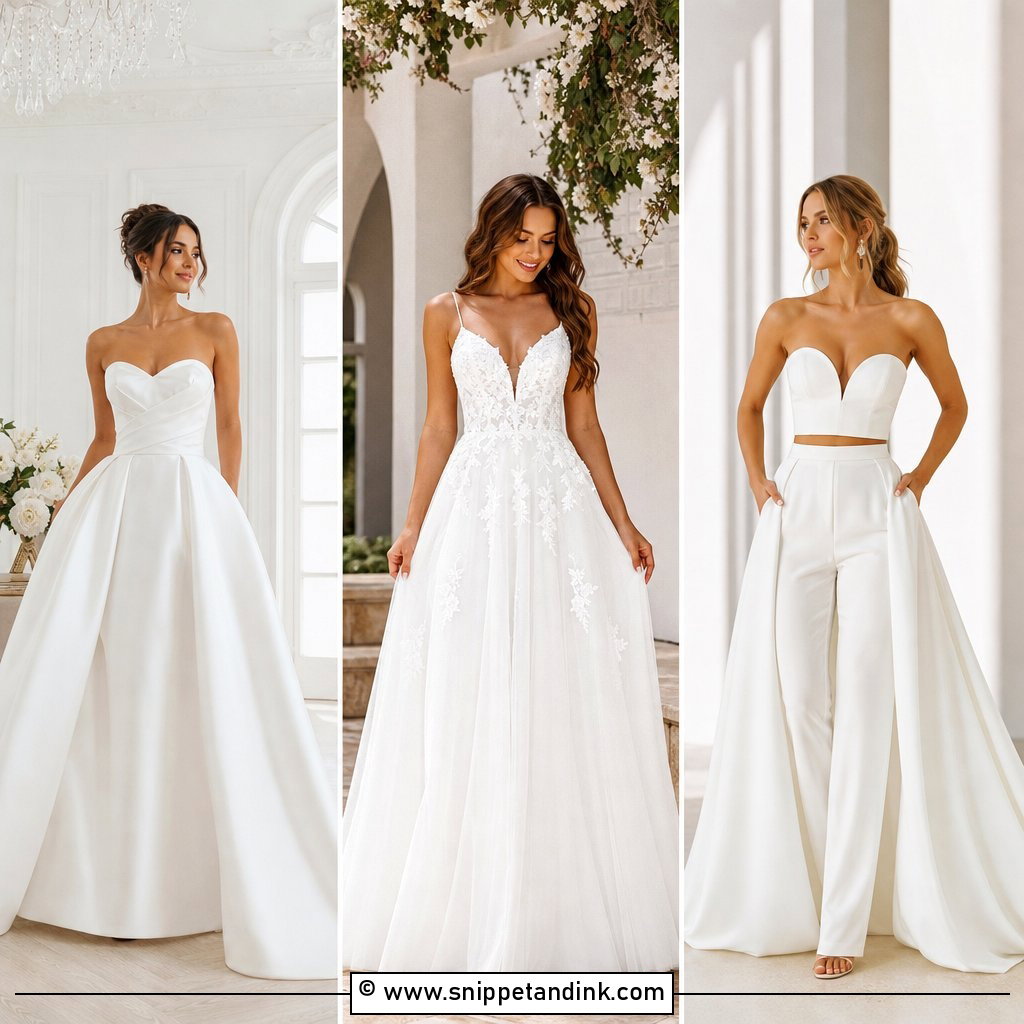
On a petite frame I want length and room at the same time. A high waistline, a V-neck and a smooth skirt make the body look longer. Too much volume can swamp you, so choose soft chiffon, crepe or light tulle. Keep detail high, lace at the bodice or shoulders, so the eye travels up. Hemming matters too: a floor-length skirt should be taken up in your actual wedding shoes, since a bump changes where the front hem falls.
16. Maternity Wedding Dress With Sleeves
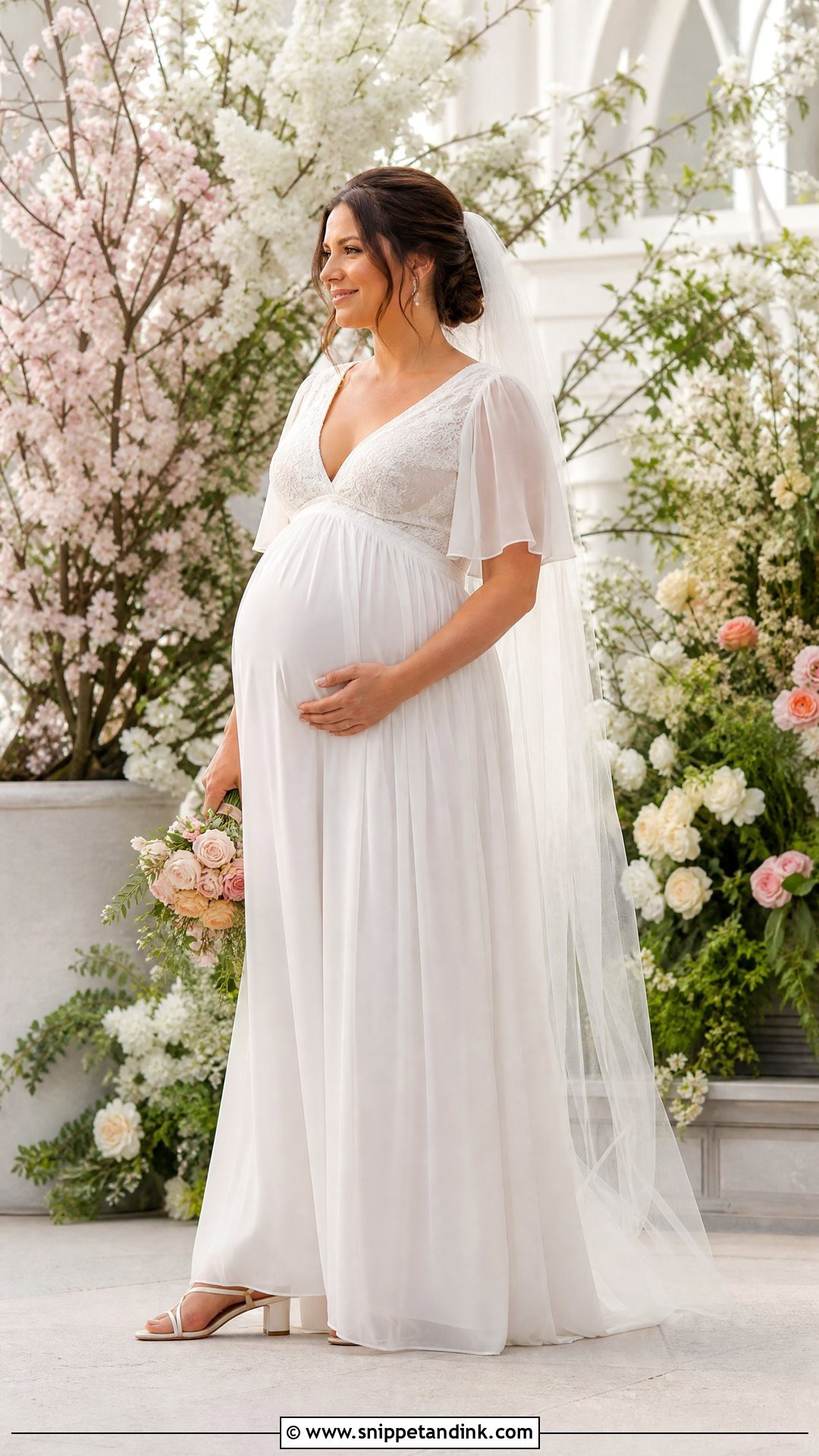
Sleeves give coverage and softness. Flutter, bishop, cap and sheer lace sleeves each change the mood. On a maternity wedding dress with sleeves, the best ones allow movement and don’t pull across the shoulders or bust. Pair them with a waistline above the bump and a flowing skirt. They also mean you need fewer accessories. In warm seasons, choose a sheer or light sleeve fabric.
17. Maternity Wedding Dress With Train
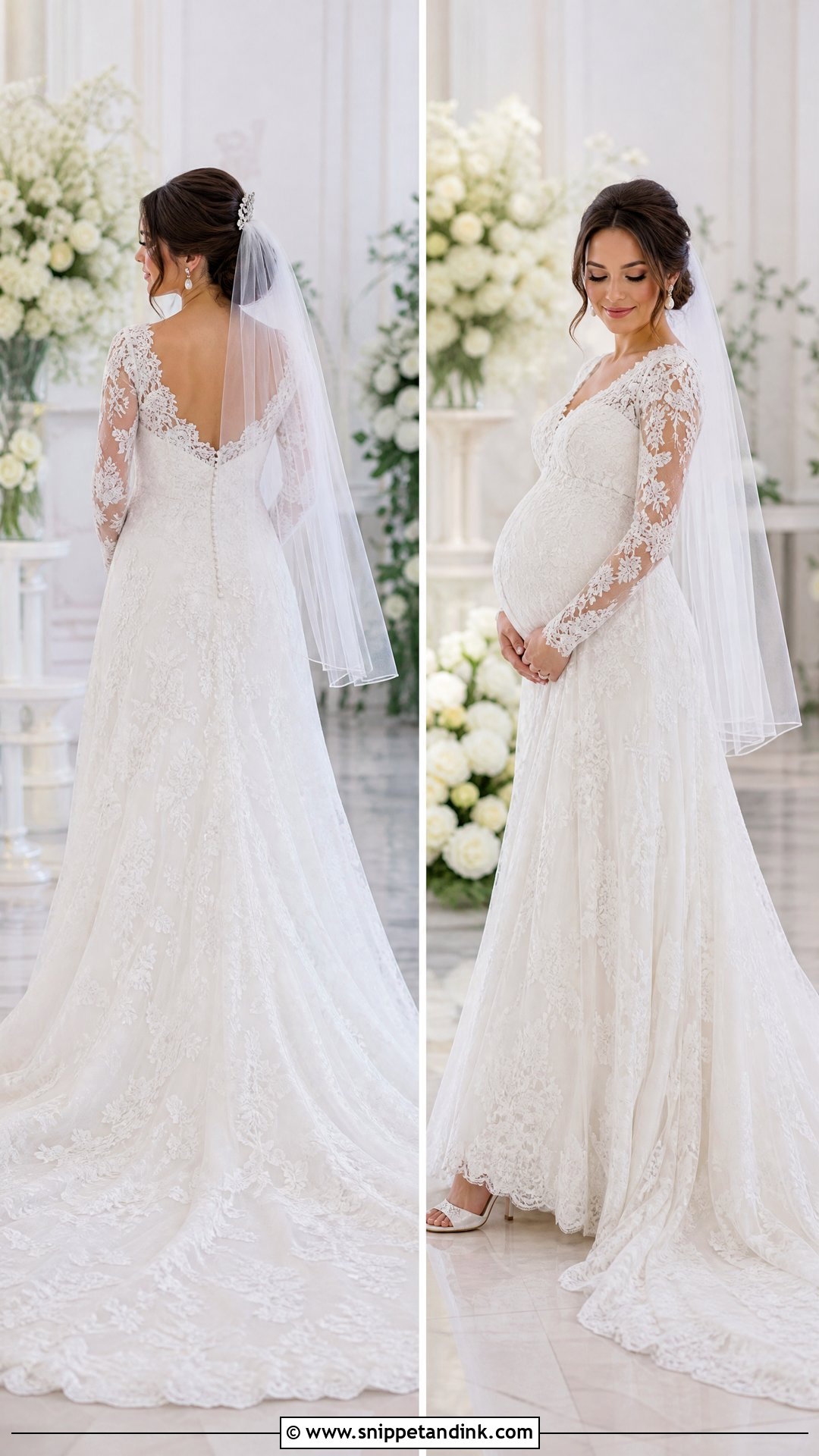
A train is possible as long as the gown stays light. I’d pick a chapel or sweep train over a long dramatic one; weight behind you pulls on the lower back, which already carries extra strain in pregnancy. An empire chiffon gown, lace A-line or crepe dress with a detachable train all work. The train should fall from the skirt, not drag from the waist. Plan a simple bustle for the reception.
18. Tulle Maternity Wedding Dress
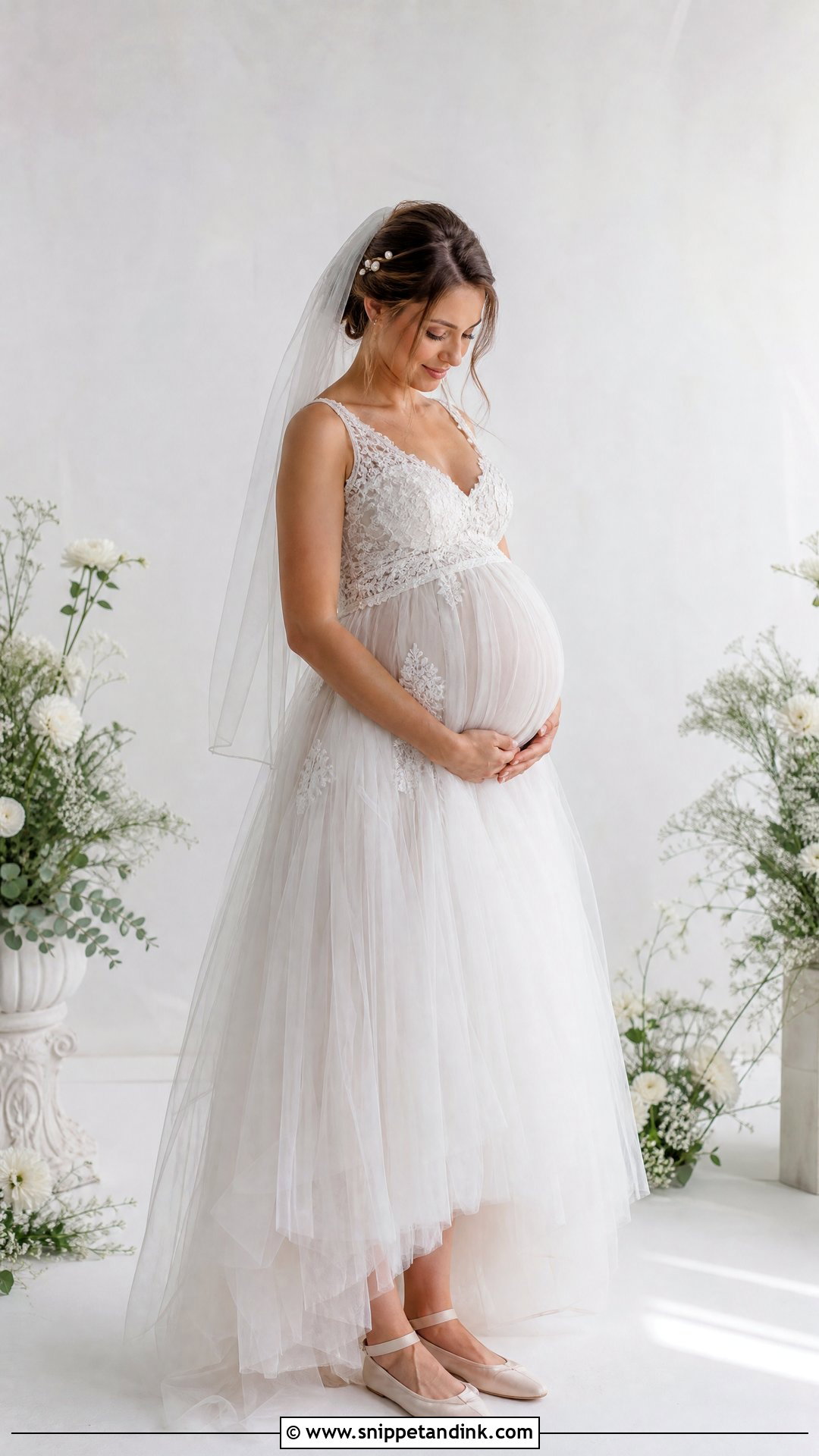
Tulle floats over the bump without needing a stiff shape. Choose a gown with a smooth lining, because tulle against bare skin gets itchy over a long day. A lace bodice with an empire waist and tulle skirt is a flattering combination. For more volume, add soft layers rather than a heavy crinoline. Ballet flats and pearl pins suit the softness.
19. Floral Lace Maternity Wedding Dress
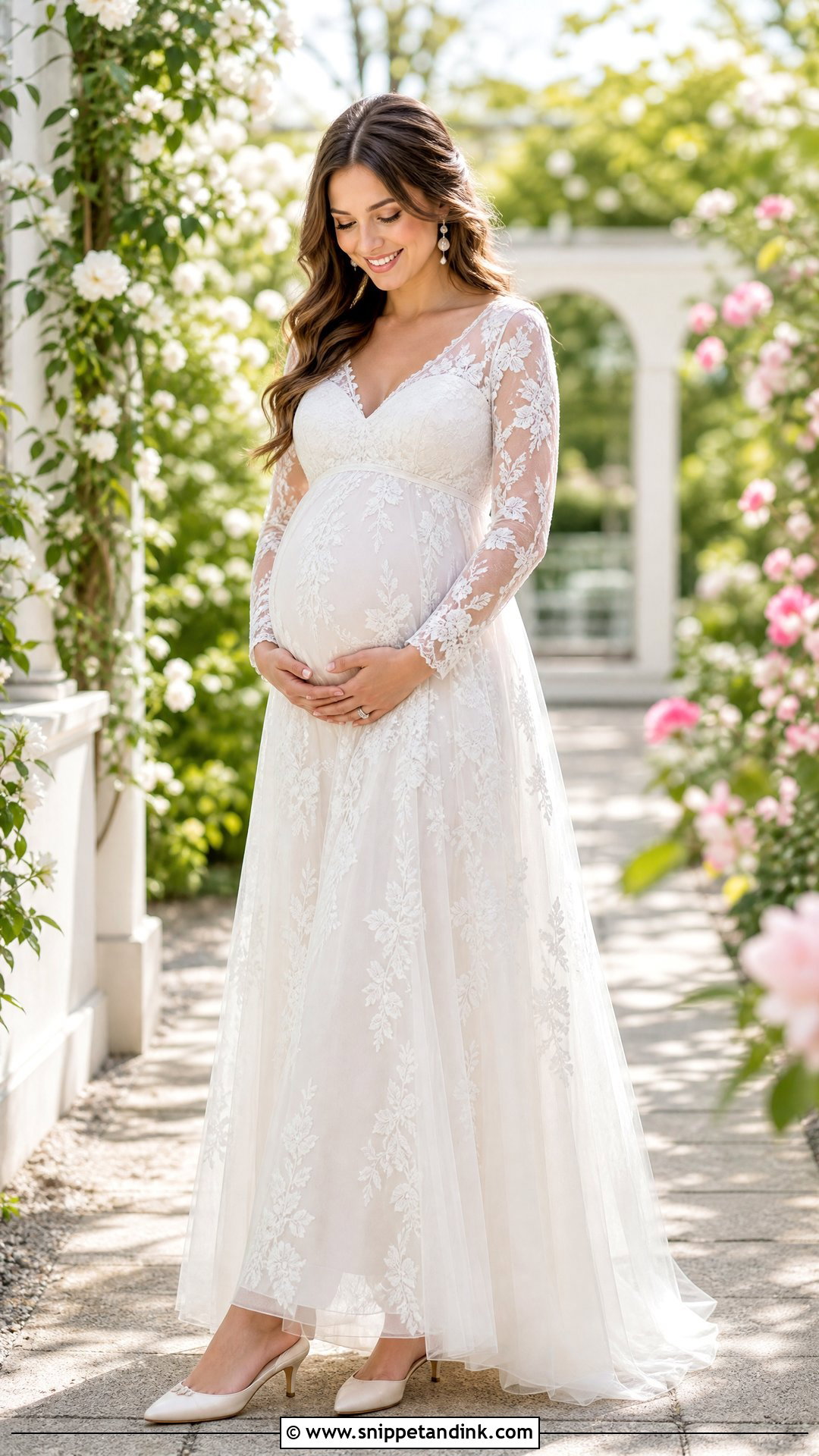
Floral lace brings romance on its own, so accessories can stay quiet. Large florals look modern; small patterns feel traditional. I like lace kept to the bodice, sleeves or upper skirt so it doesn’t pull across the belly, and an empire or soft A-line gives the bump room. Check that the lining stretches or fits generously at bust and belly. It’s pretty in spring and summer, and works year-round with the right sleeve.
20. High Neck Maternity Wedding Dress
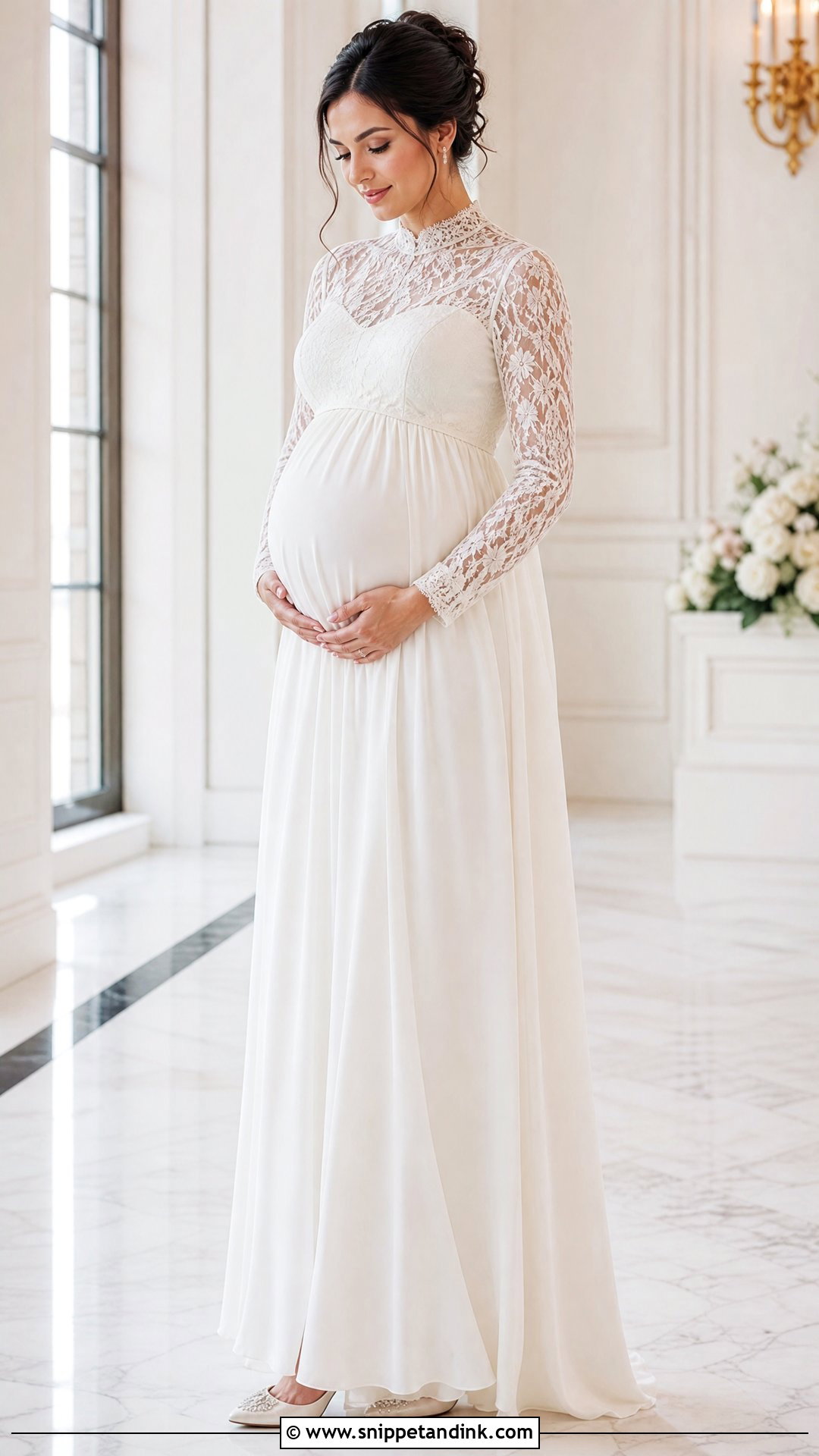
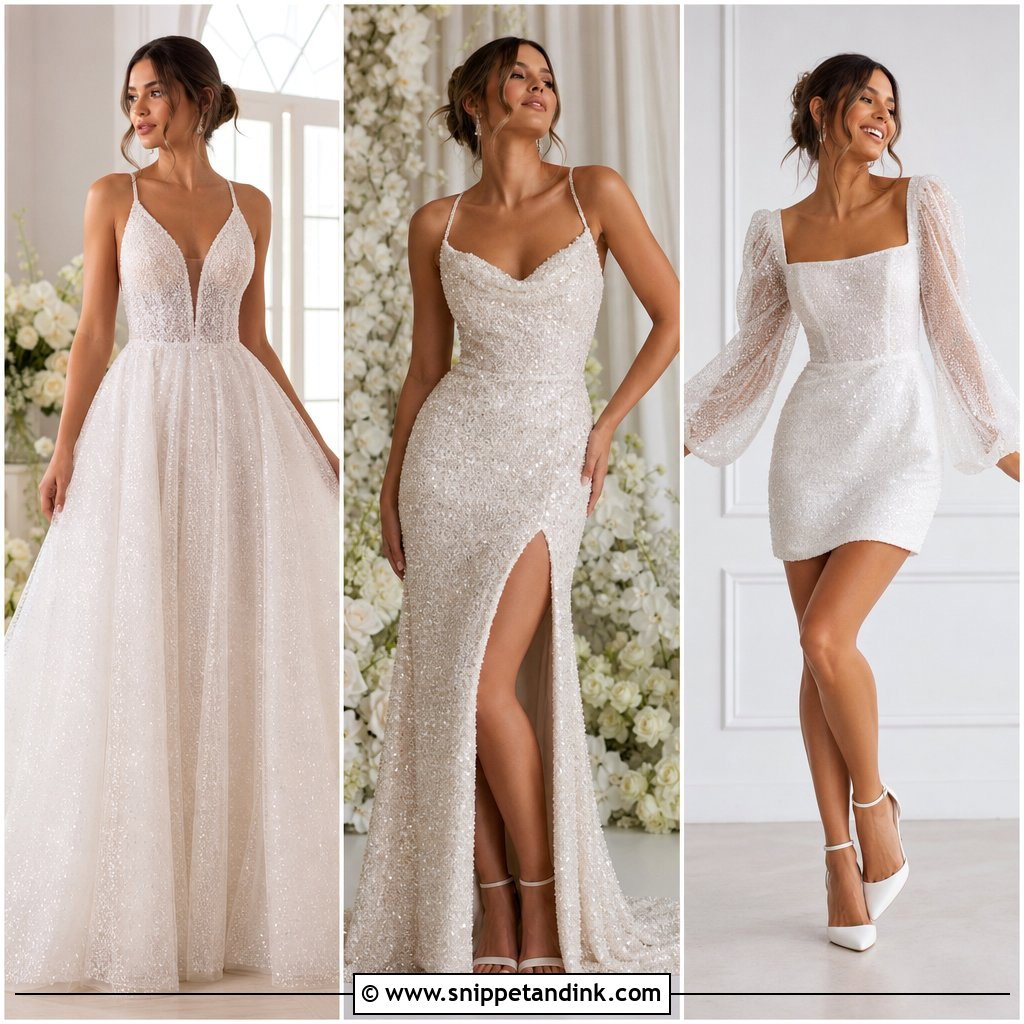
High necks look modest and refined. Since the neckline already adds coverage, keep the skirt soft. Sheer lace, tulle or light crepe at the neck stops it feeling heavy, and an empire waist keeps the line comfortable. If your bust has grown, check the bodice for pulling across the chest; with a high neck, any strain shows as horizontal creases. An updo and small earrings keep the focus on the neckline.
21. Strapless Maternity Wedding Dress
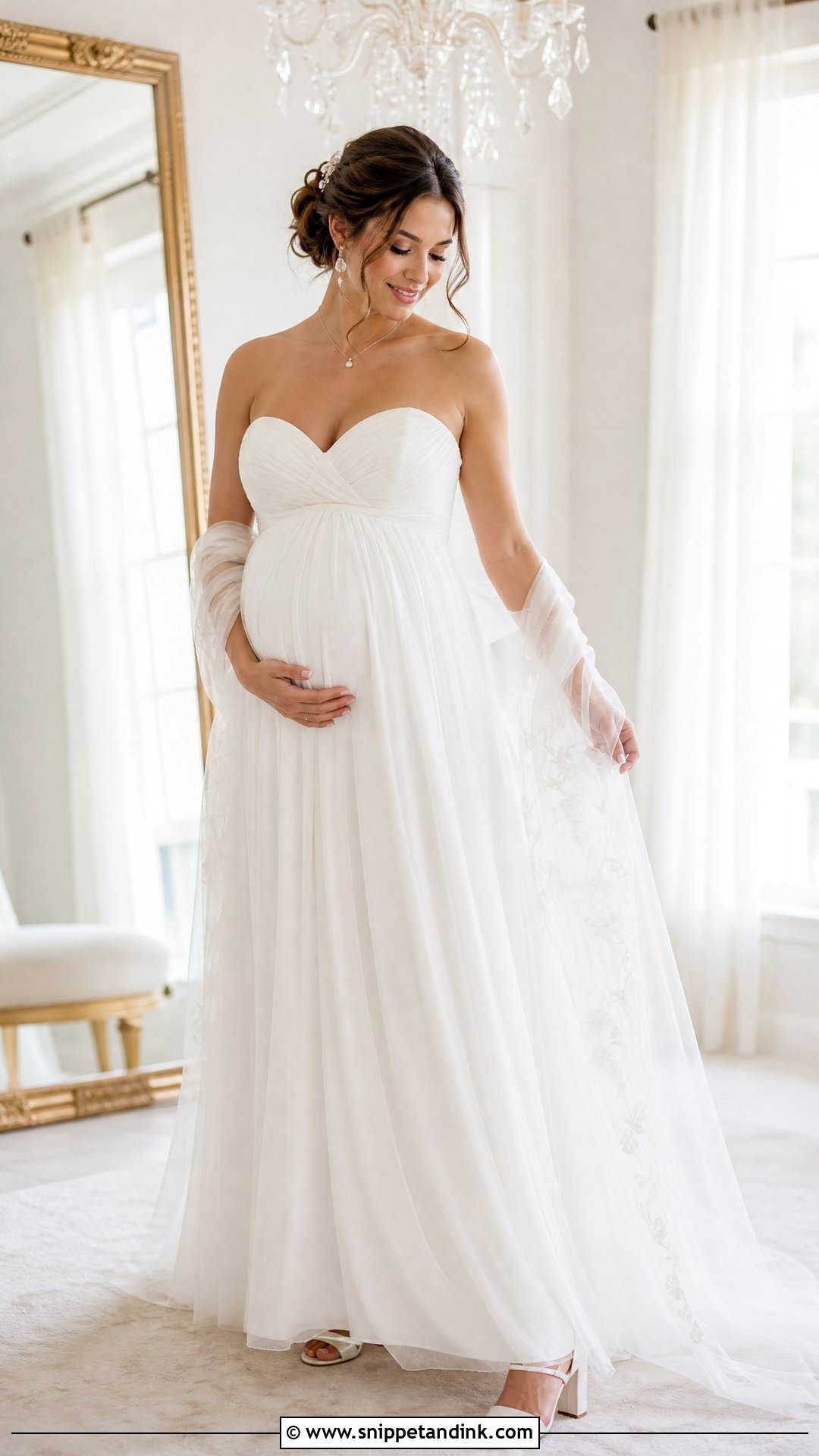
Strapless can work in pregnancy with the right support, but it’s the style I’m most cautious about. The bust can change quickly in the final weeks, so the bodice needs flexible structure, secure cups and seam allowance for alterations. A sweetheart neckline softens the shape. If you want coverage, add a removable tulle wrap or bridal capelet. At fittings, sit, move and breathe deeply; secure is the goal, tight is not.
22. Short Maternity Wedding Dress
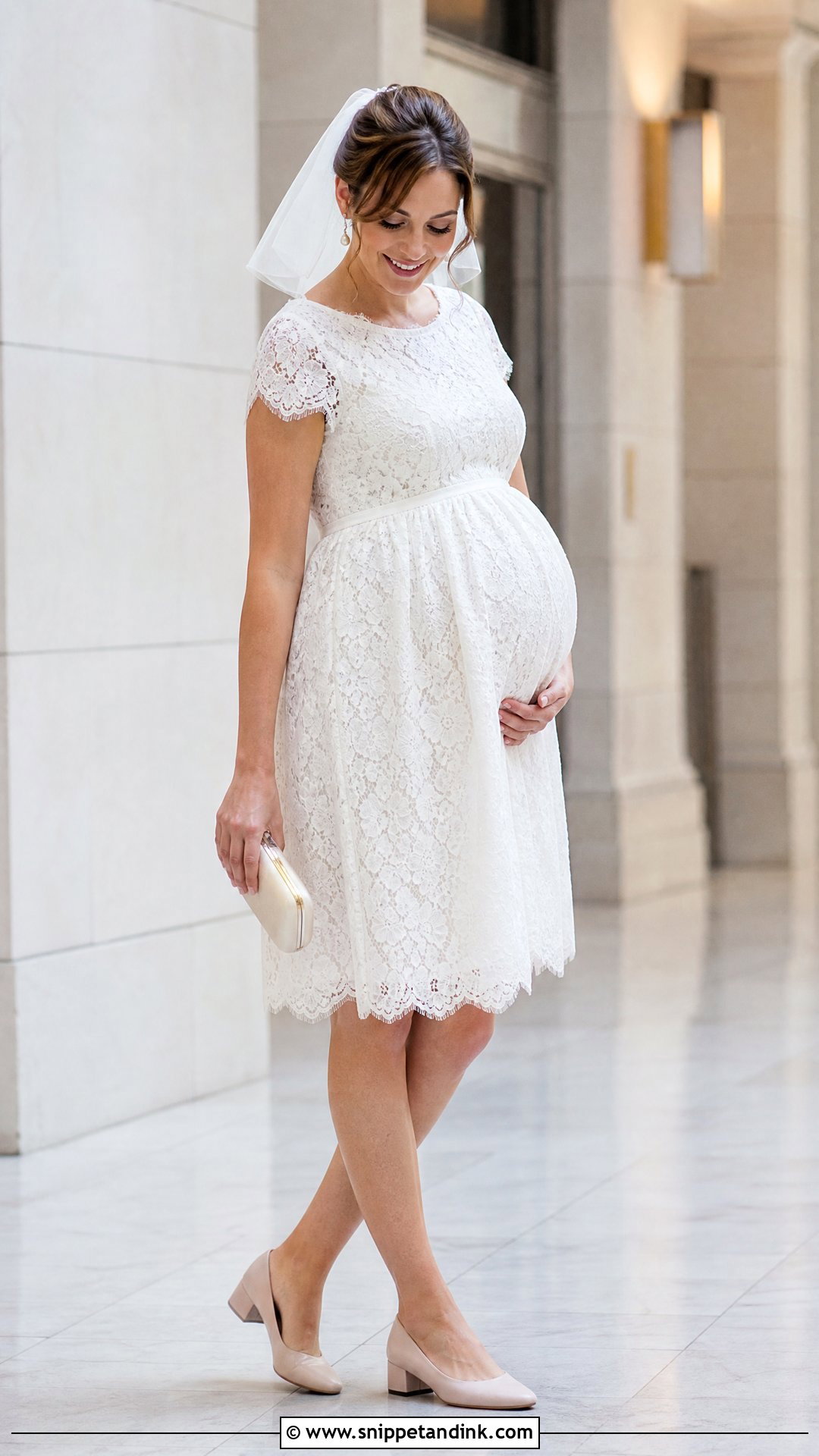
Short dresses are practical and playful for courthouses, elopements and casual receptions. A knee-length or tea-length cut gives freedom to move. A high waist, wrap shape or swing silhouette leaves room for the bump. They’re also easier to alter than floor-length gowns. If your ankles swell, avoid shoe straps that dig in, and pick shoes with a little room, as feet often swell more by evening.
23. Maternity Wedding Jumpsuit
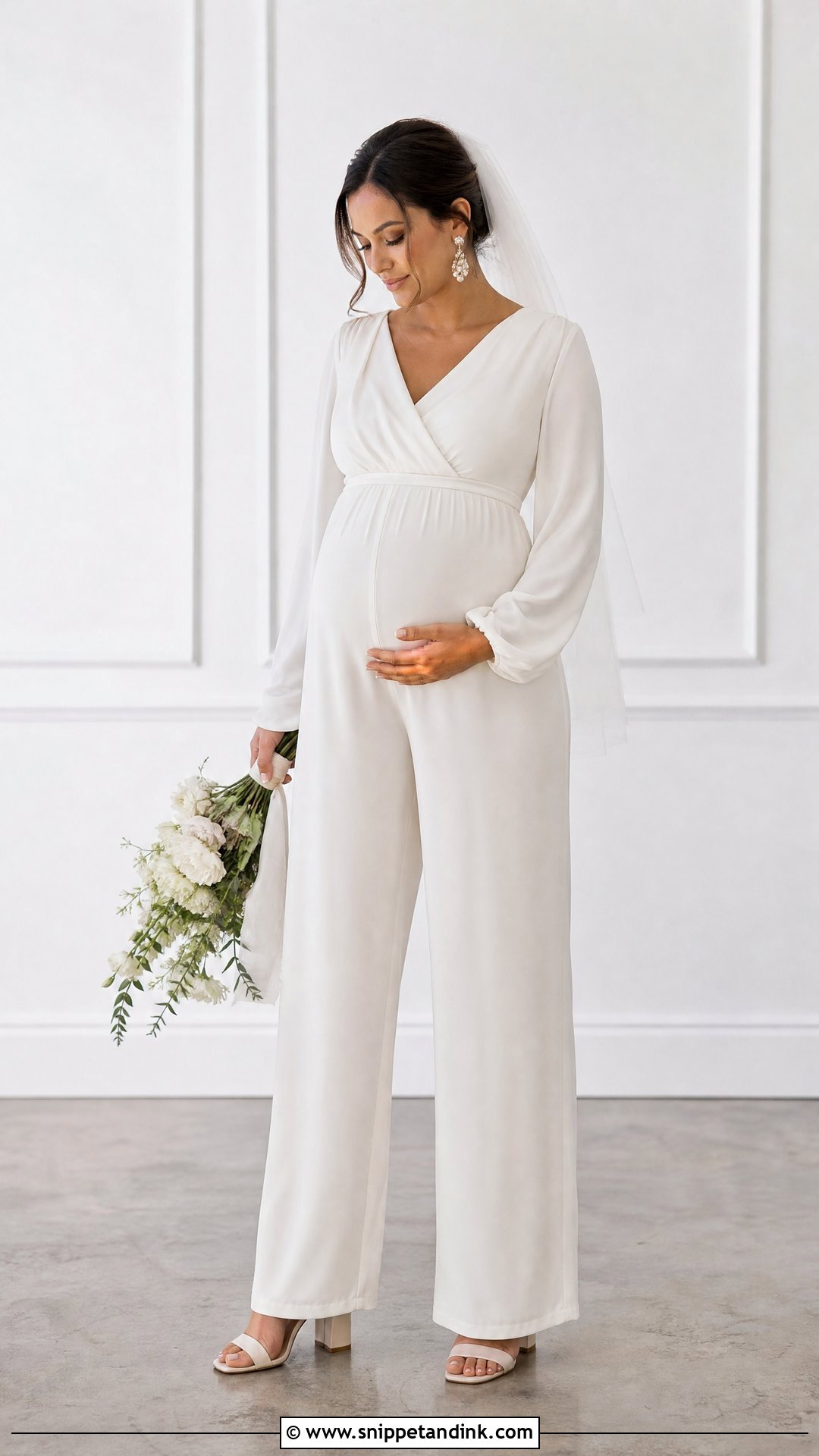
A jumpsuit suits brides who don’t want a gown. Look for a wrap bodice, empire seam or wide-leg trousers that drape from above the bump, in soft crepe or stretch satin. Practicality matters here: check how you get in and out of it, since bathroom trips in a one-piece can be awkward. A side zip or front wrap helps. A relaxed, tailored fit looks more elegant than a clingy one.
24. Maternity Wedding Dress With Cape
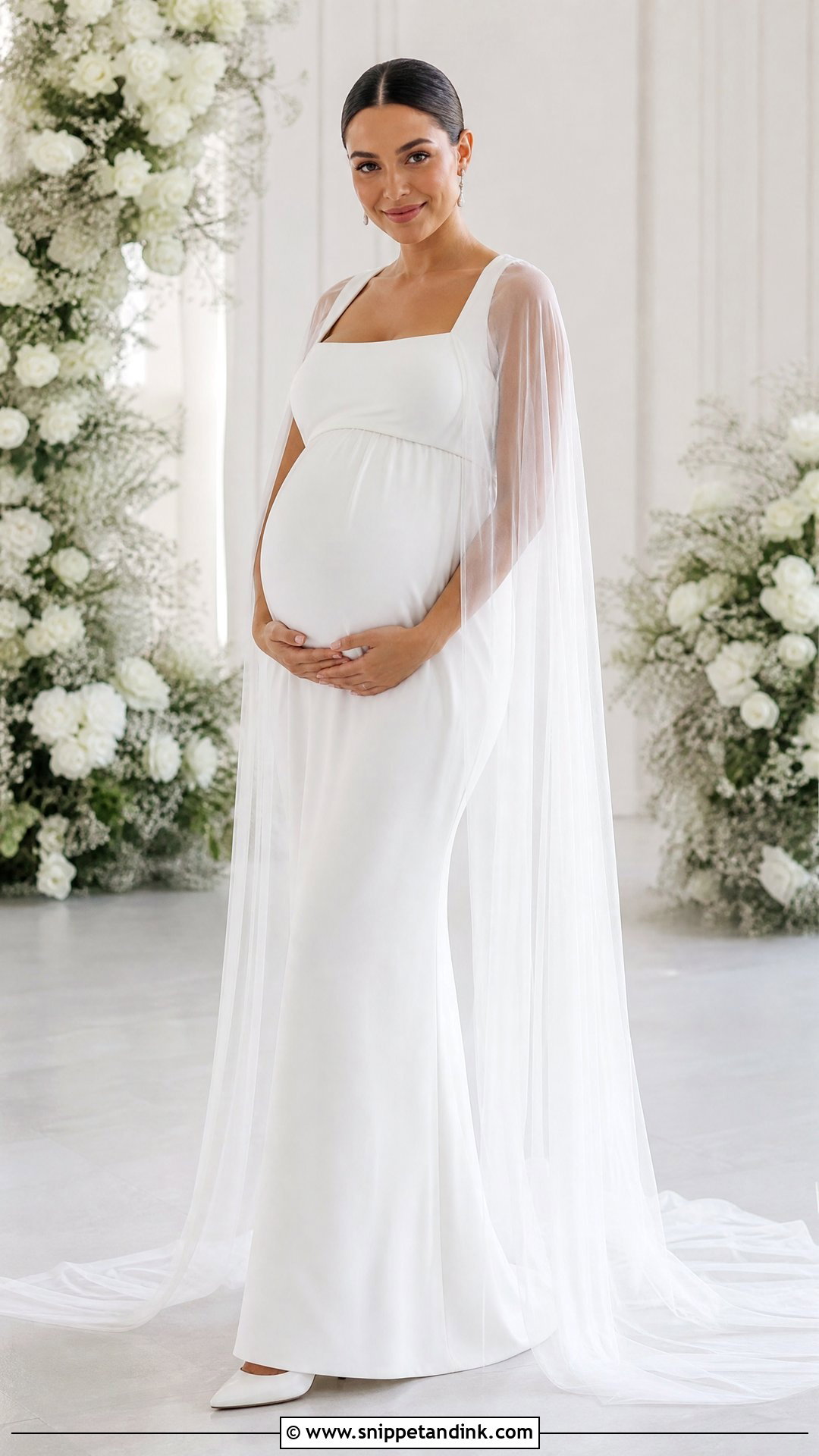
A cape adds drama without a heavy train or fitted sleeves. A sheer tulle cape, lace capelet or detachable shoulder cape over a simple crepe or chiffon gown gives coverage for the ceremony and comes off for the party. The base dress should have a smooth empire waist or A-line that lets the bump breathe. Keep the cape light so it moves with you.
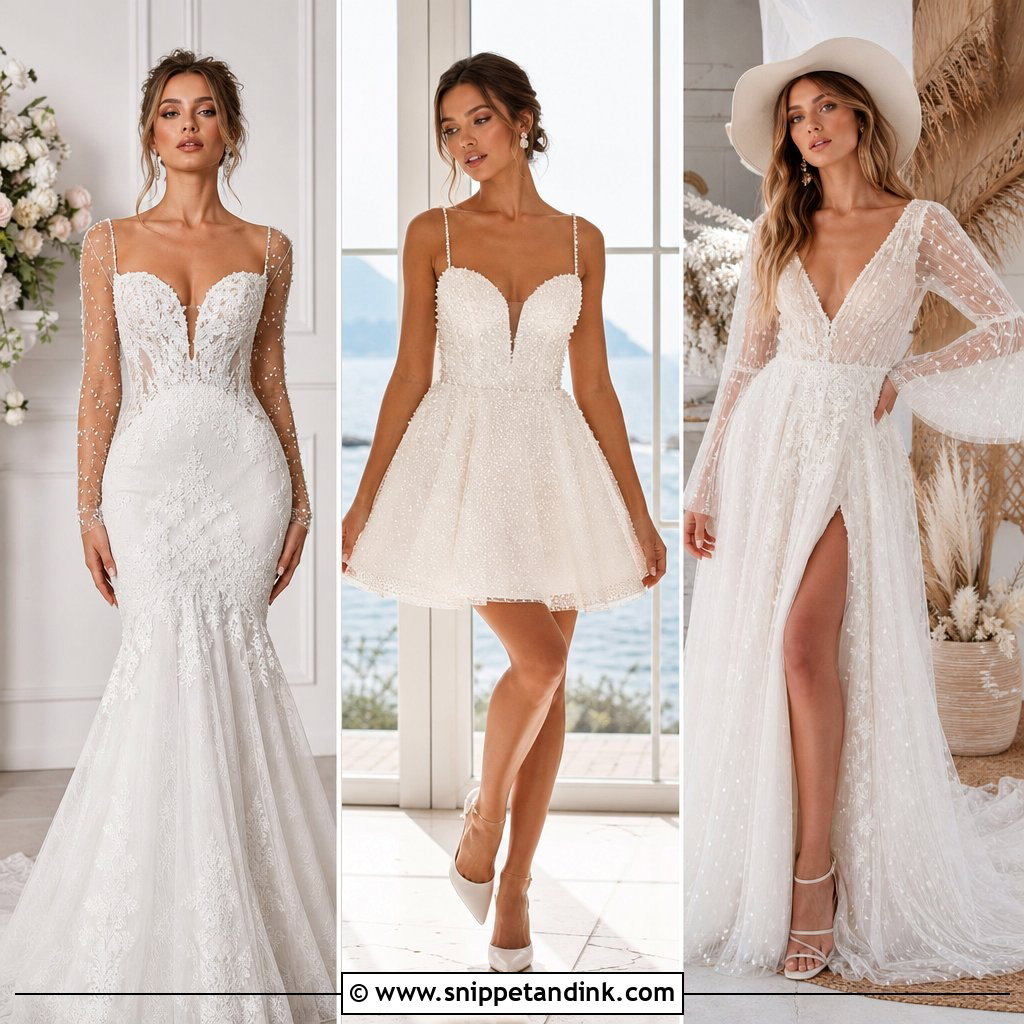
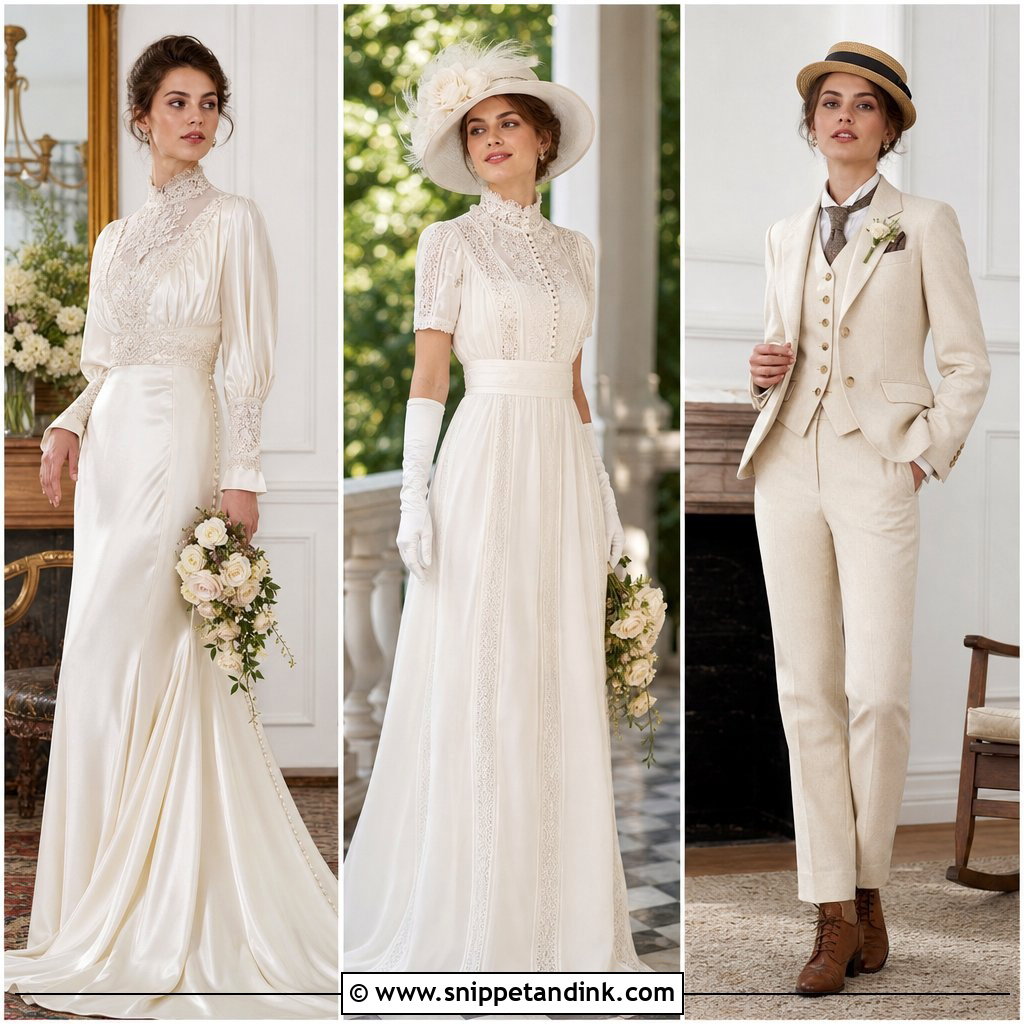

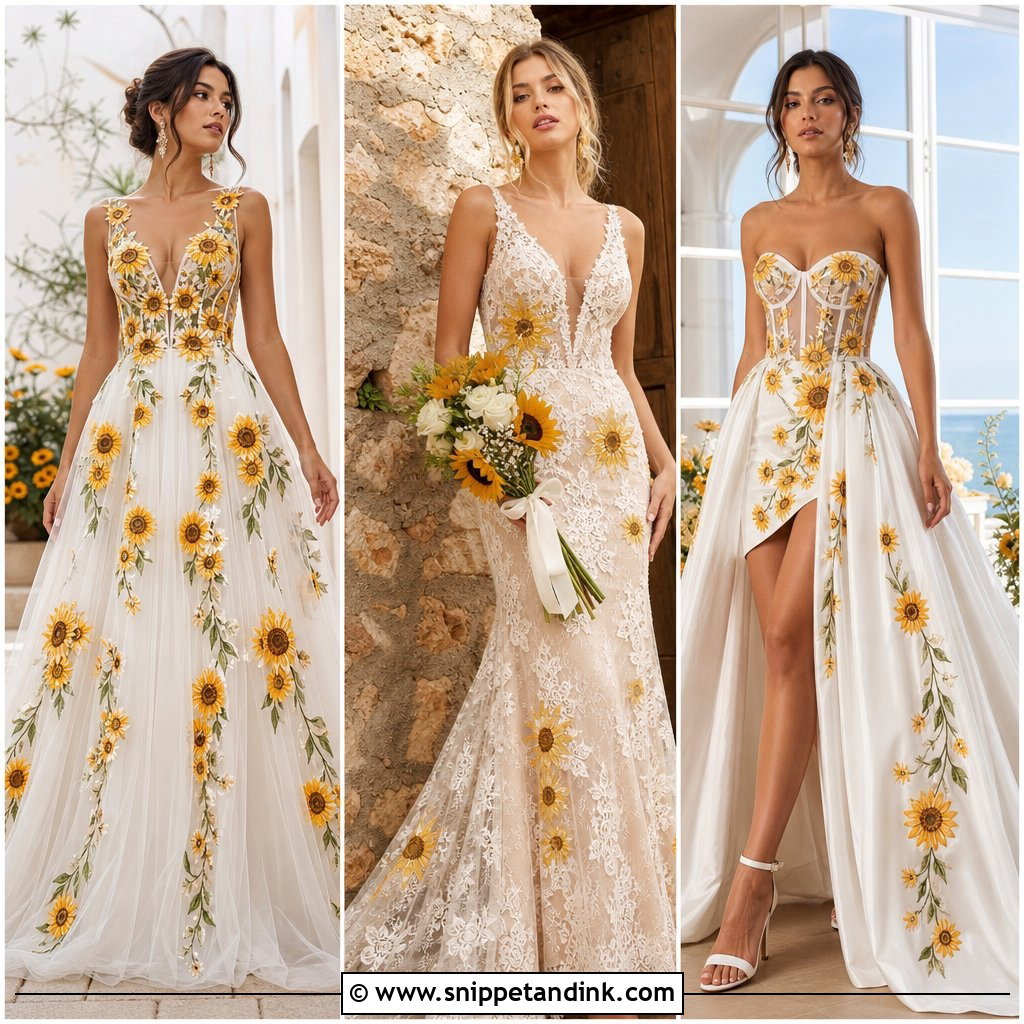
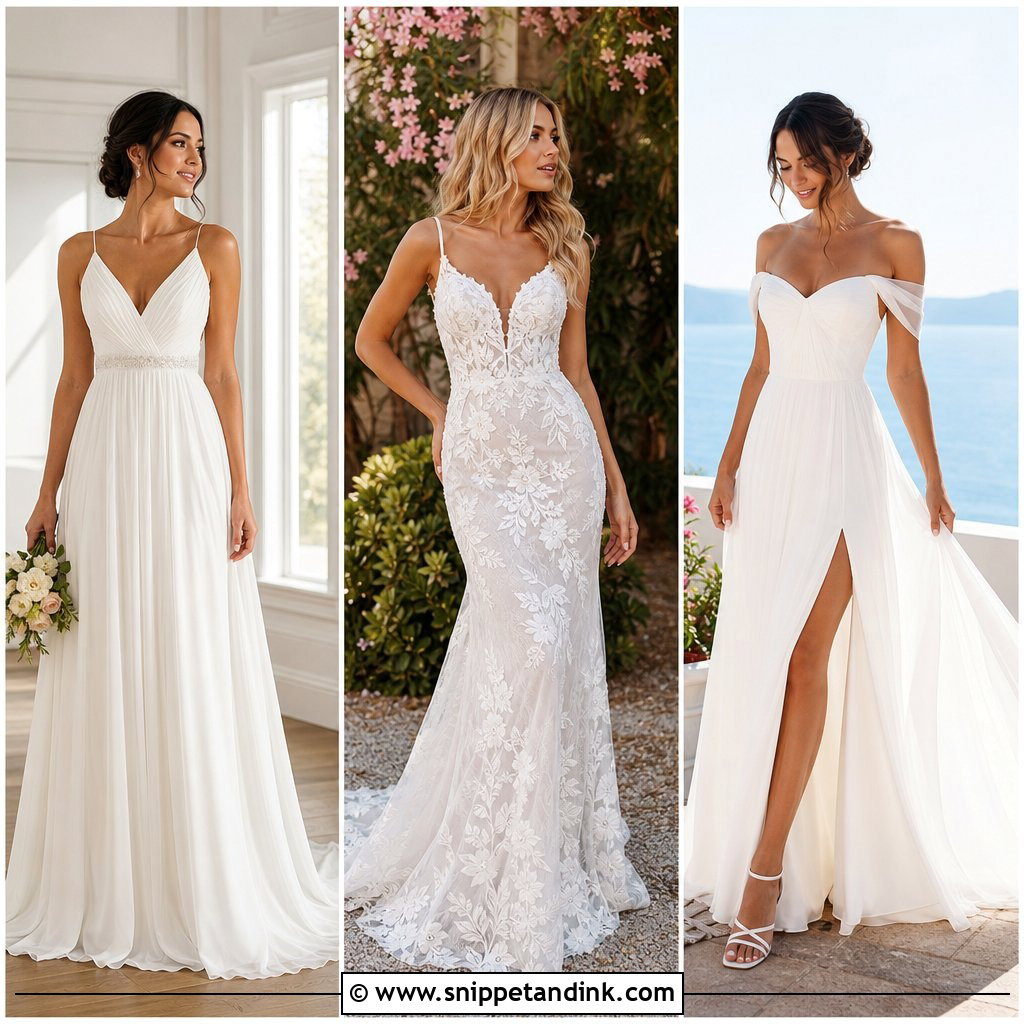
25. Winter Maternity Wedding Dress
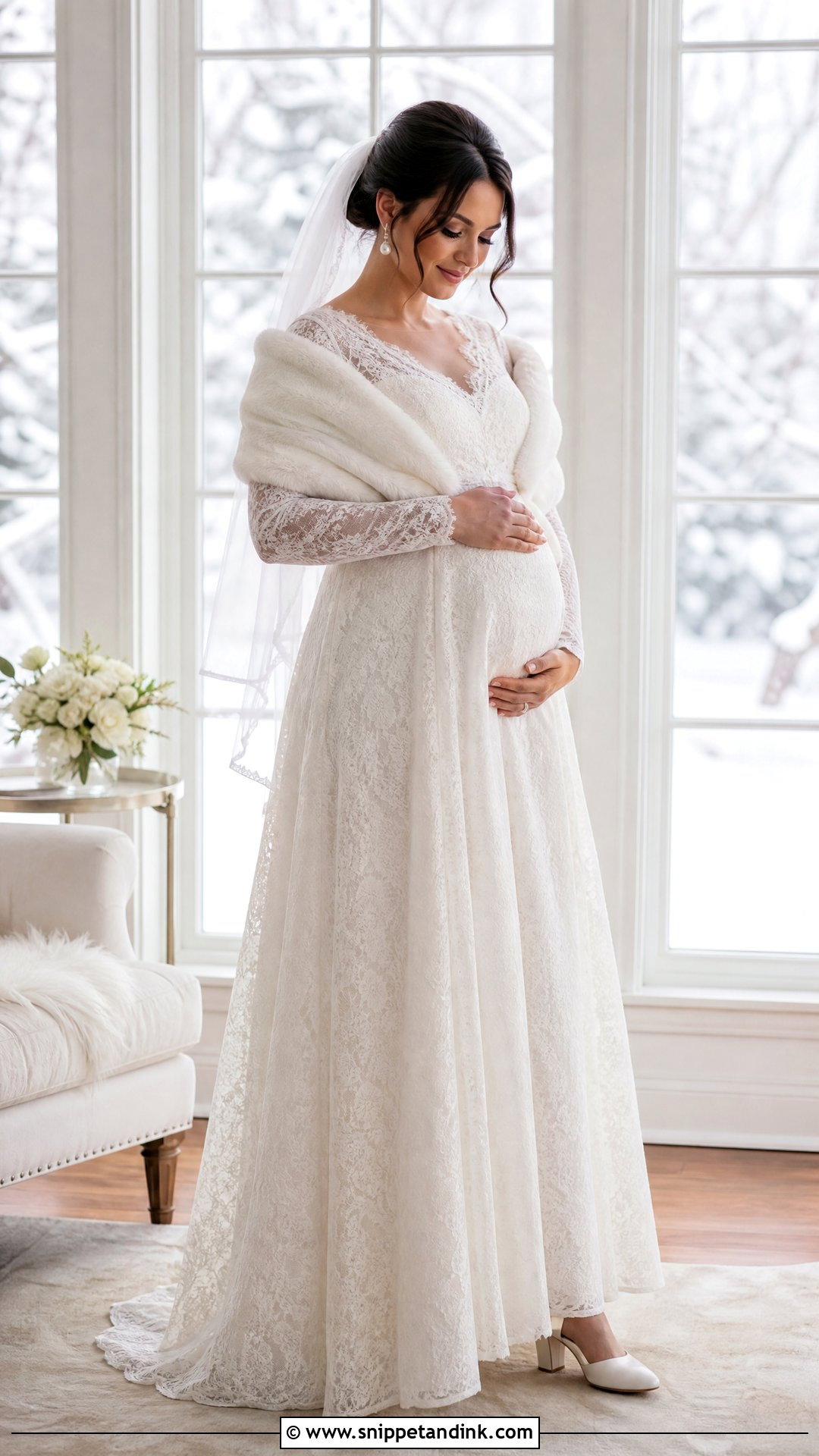
Warmth and comfort drive a winter maternity wedding dress. Long sleeves, heavier crepe, soft satin and lined lace all work over an empire or A-line skirt. Add a faux fur wrap, bridal coat or soft cape for outdoor photos. Closed-toe block heels or embellished flats are easier than sandals. Heated venues swing from cold to hot, so use layers you can remove.
How the Dress Should Feel at Hour Eight, Not Minute One
A fitting-room mirror shows you minute one. A wedding day is ten or twelve hours of standing, sitting, hugging and eating. Pregnancy makes that longer day matter more.
Feet, heat and bathroom trips
Feet commonly swell as the day goes on, so I suggest a half-size of room in the shoes or a second pair of flats tucked under the table. Most pregnant brides also run warmer, which is why breathable linings and removable layers come up again and again in this list. And you’ll likely visit the bathroom more often than usual. Practice with your maid of honor holding the skirt, and pick a gown you can manage with one helper.
Seating and rest
Ask your planner for a chair near you during portraits and the receiving line. If your gown has any boning, it should run along the bodice and stop above the bump, never across it. Wear the dress at home for an hour before the wedding if your boutique permits. Anything that pinches by then will be uncomfortable by the speeches, and there’s still time to have it adjusted. Bring a light cardigan or wrap as well, for the moments when a cool venue catches you between dances.
Room to Grow, and Room to Dance
Getting married while pregnant means celebrating two big moments at once, and the dress shouldn’t make you feel squeezed or limited. Prioritize soft fabrics, flexible seams, supportive necklines, adjustable backs and shoes you can stand in. Lace, chiffon, satin, sleeves, a short dress or a jumpsuit can all be right. Save the shapes that feel like you, then talk about timing and alterations with your boutique early, before the dates get tight.
You'll Like These Ideas:


Leave a Reply