
Sleeves are the part of a gown I spend the most fitting time on, because an arm has to bend, reach and hug in a way a skirt never does. Done well, a sleeve adds coverage and shape and quietly changes the mood of the dress. The choice is far wider than traditional lace now: sleek crepe, satin, organza, tulle, beading, puff and bishop shapes, detachable pieces, cape sleeves and sheer details. Your venue, the season and how much you want to move will narrow it fast. Below are twenty-five sleeve styles, each with the fit point or styling call I’d make if you were standing in front of me.
Where a Sleeve Should End on Your Arm
Sleeve length changes how long your arms, torso and even your neck look. I pin sleeves at different points during a try-on before a bride chooses, because the difference of a few inches is easy to see in a mirror and hard to imagine from a photo.
- Cap or short sleeve: should end just past the fullest part of the upper arm. Ending exactly at the widest point makes the arm look wider.
- Elbow length: draws the eye to the waist, which helps if your waist is your favorite feature.
- Three-quarter: shows the wrist, so it suits petite brides and anyone wearing a statement bracelet.
- Full length: should end at the wrist bone or slightly over the hand. Too short and it looks outgrown; too long and it hides your rings.
Fit matters as much as length. The armhole should sit high and close to the body; a low armhole looks roomier but actually restricts reaching up, because the whole bodice lifts with your arm.
1. Long Sleeve Lace Wedding Dress
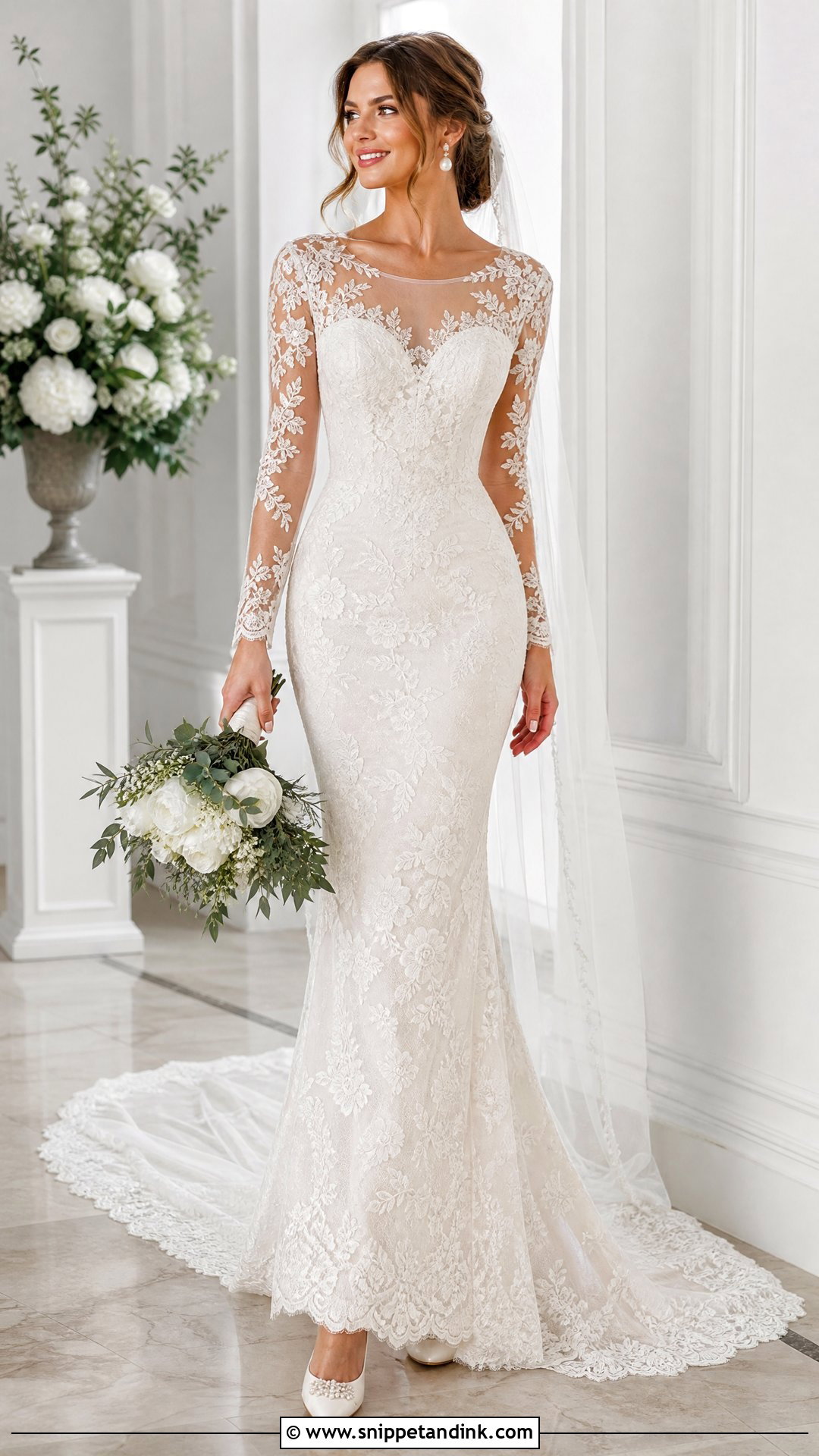
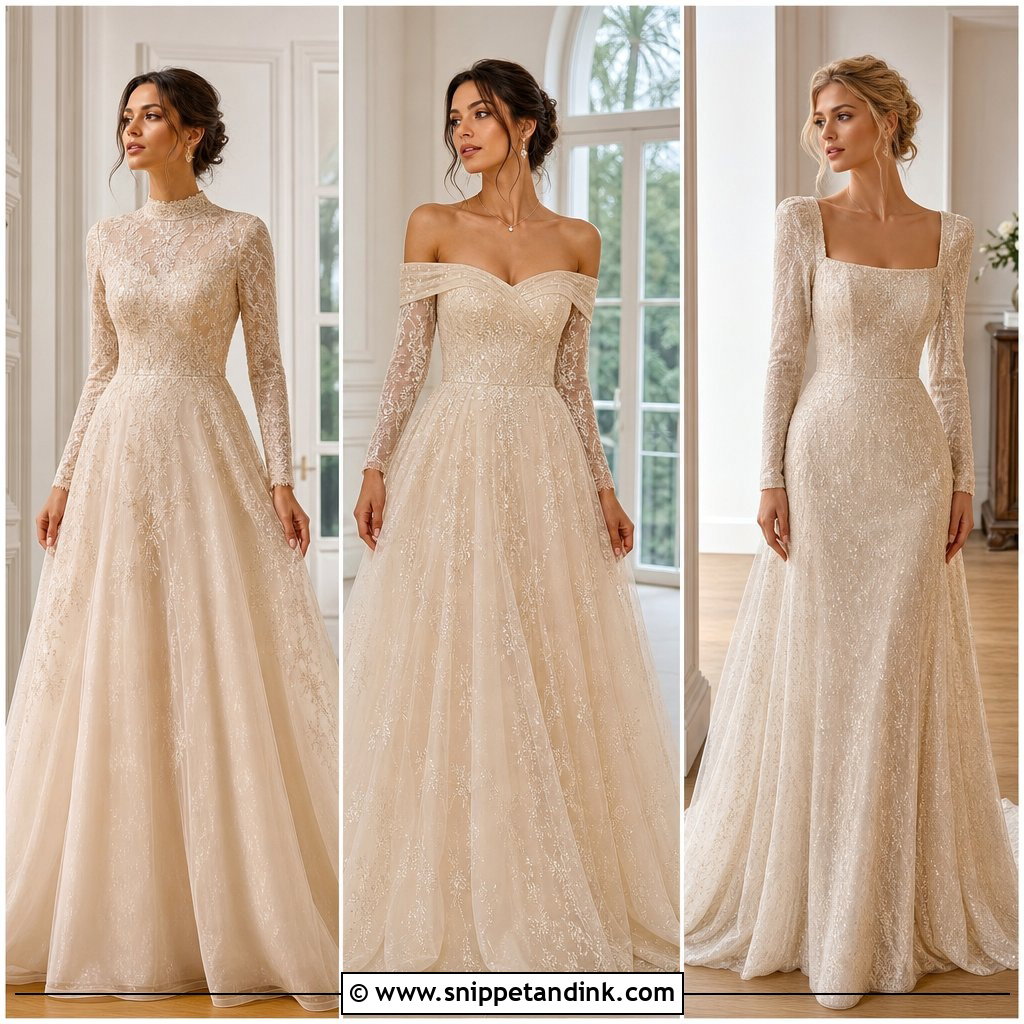
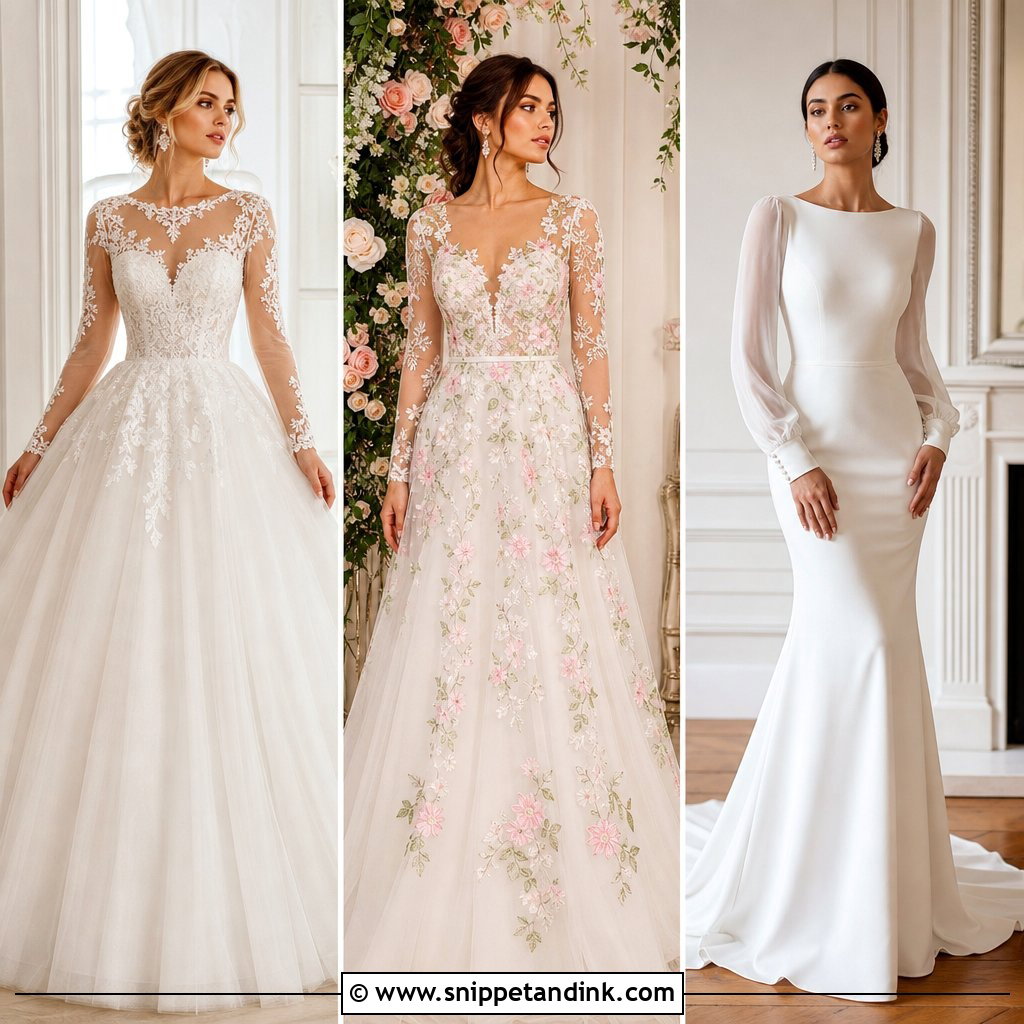
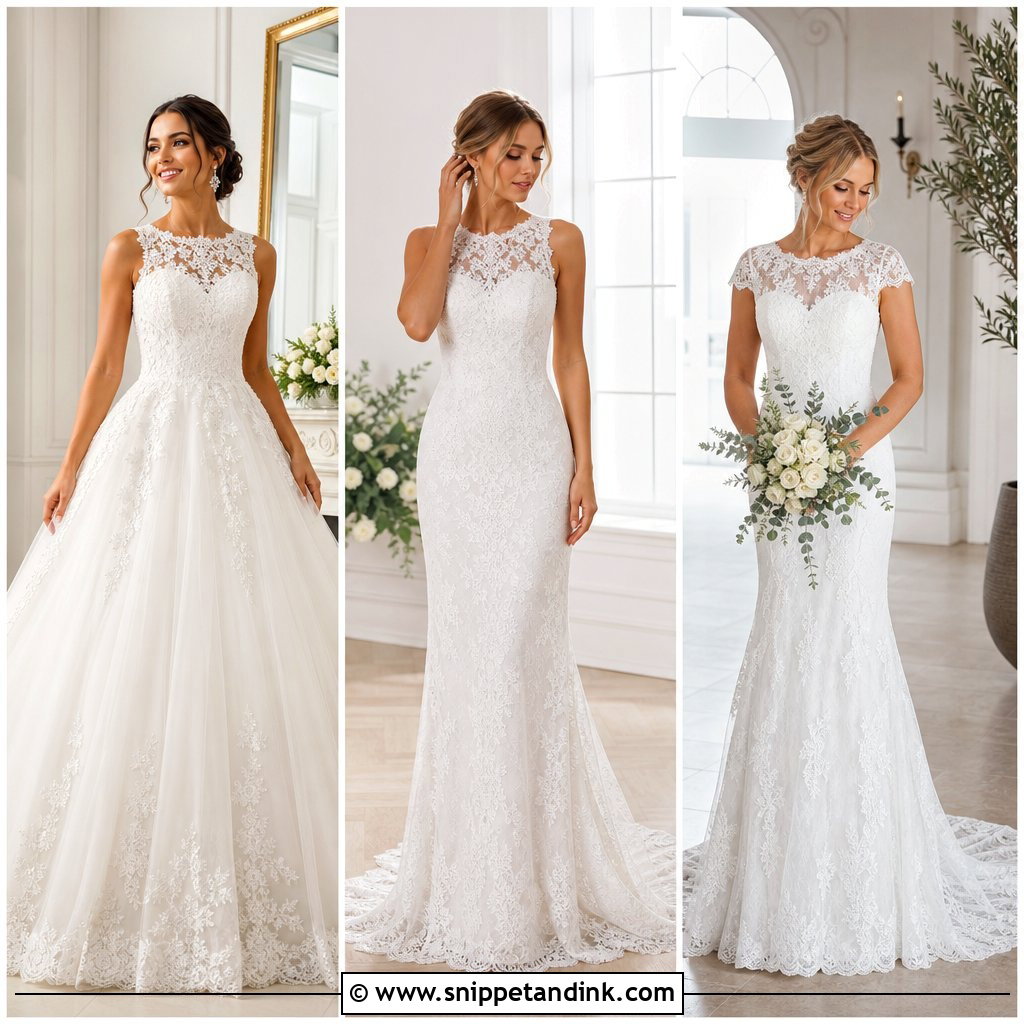
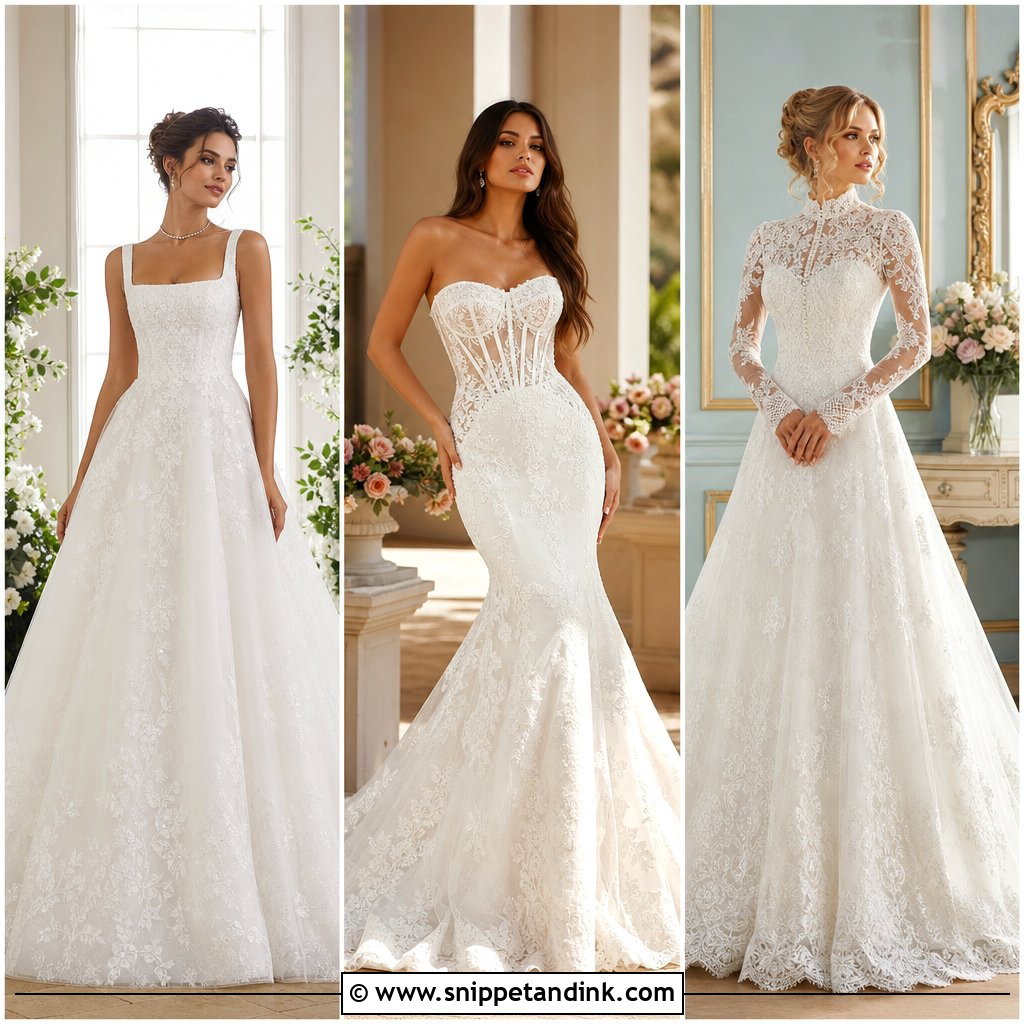
Long lace sleeves carry the pattern from bodice to wrist, so the lace placement matters more than the lace itself. I check that the motifs are mirrored on both arms; a mismatched sleeve is the first thing a photographer’s close-up reveals. The look works on a fitted gown, an A-line or a classic ball gown. Lined sleeves give more coverage, illusion lace feels lighter. Keep styling to pearl earrings, a low bun and a simple veil, and save it for a formal or cool-weather ceremony, since lined lace is warm.
2. Satin Wedding Dress With Long Sleeves
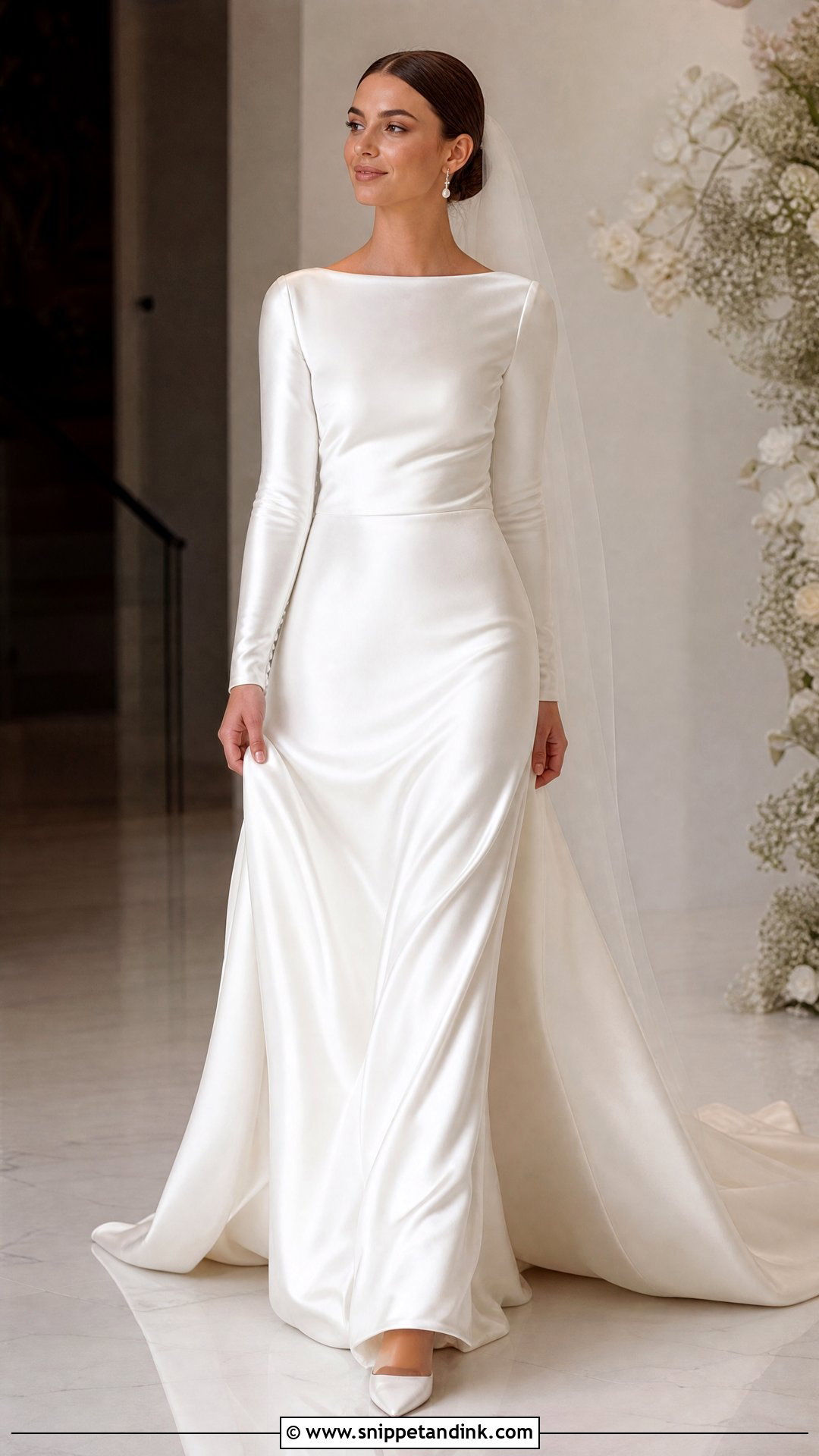
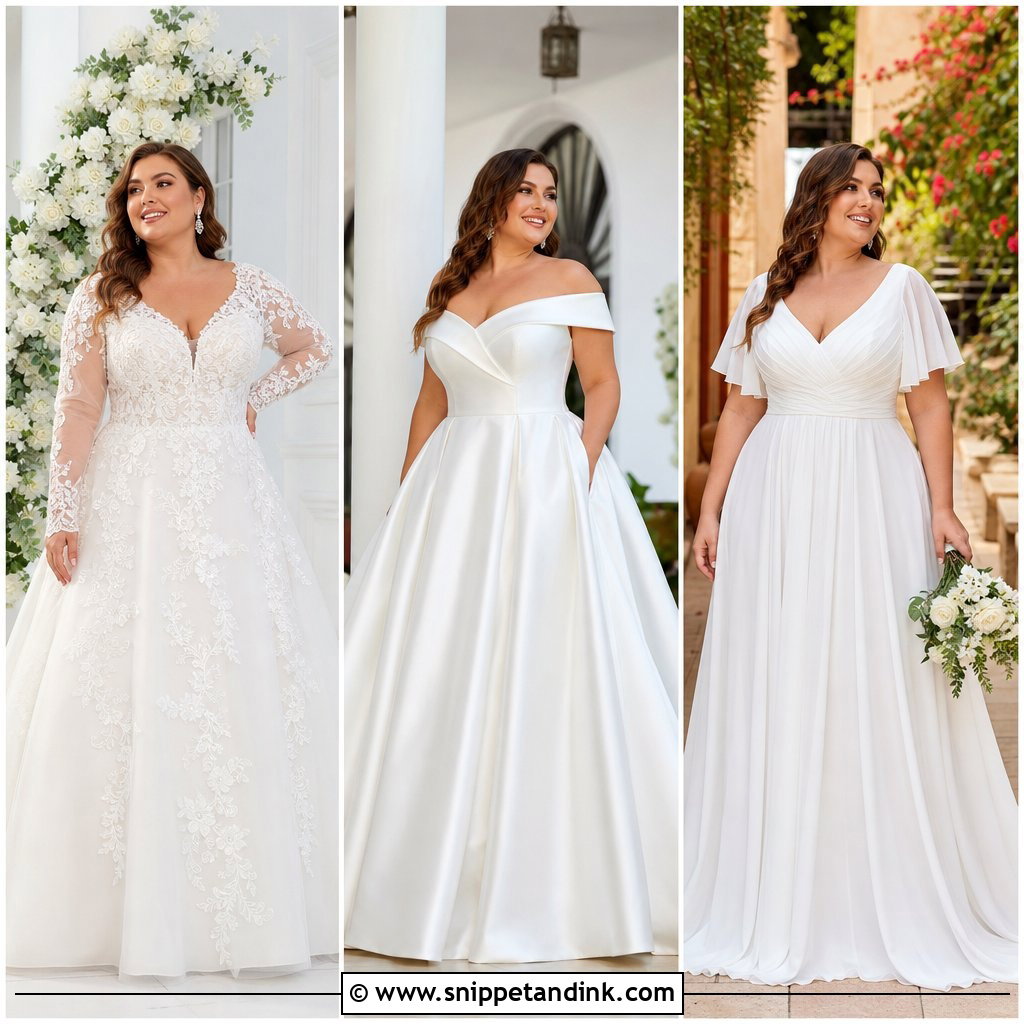
Satin sleeves are unforgiving at the elbow. Cut too slim, they wrinkle into horizontal creases every time you bend your arm, and those creases show in photos. I ask for a touch more ease through the forearm than brides expect. With that sorted, a fitted bodice, slim sleeves and a flowing skirt look regal; a column cut is more modern. Pointed heels, a sleek veil and crystal or pearl studs are enough. If there are buttons at the cuffs or down the back, wear an updo so they show.
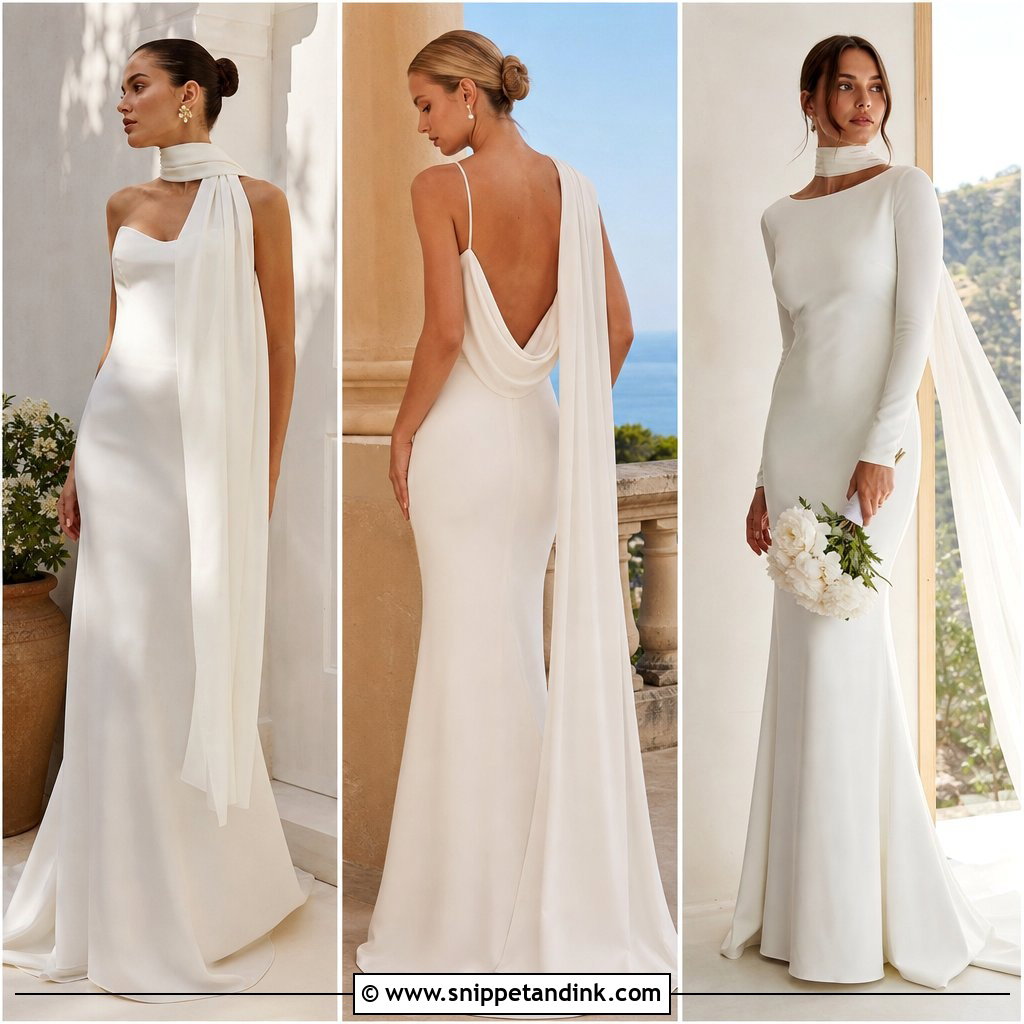
3. Crepe Wedding Dress With Sleeves
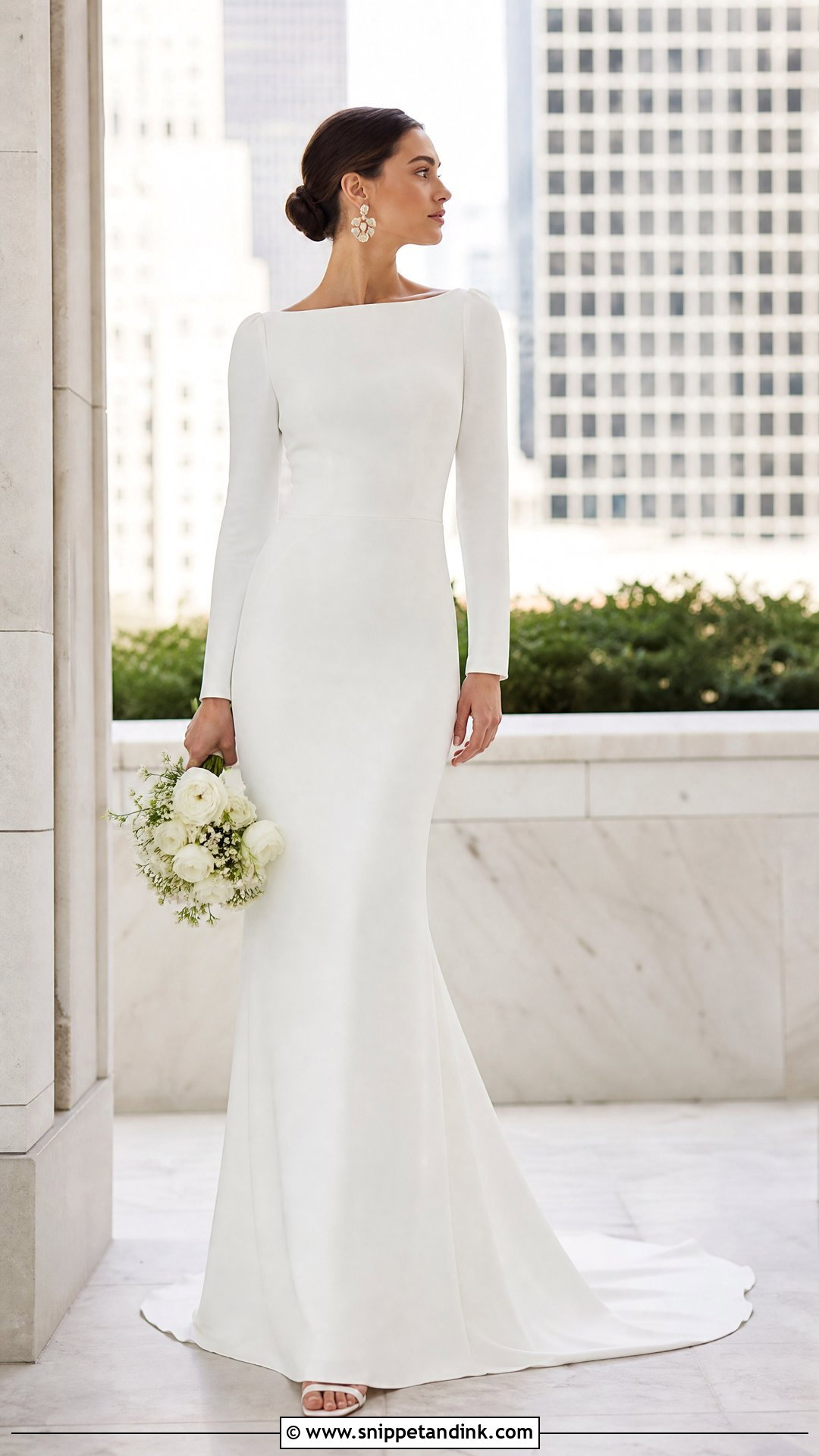
Crepe has a matte, dense hand that skims rather than clings, which is why I reach for it when a bride asks for clean lines. It’s simple fabric, so every alteration shows: a sleeve that twists even slightly will pull a diagonal line across the forearm. Get the sleeve set straight first, then think about the neckline, high, square or with an open back. Minimal jewelry, a sculptural bun and sleek heels finish it. I recommend it for city weddings and modern venues.
4. Ball Gown Wedding Dress With Sleeves
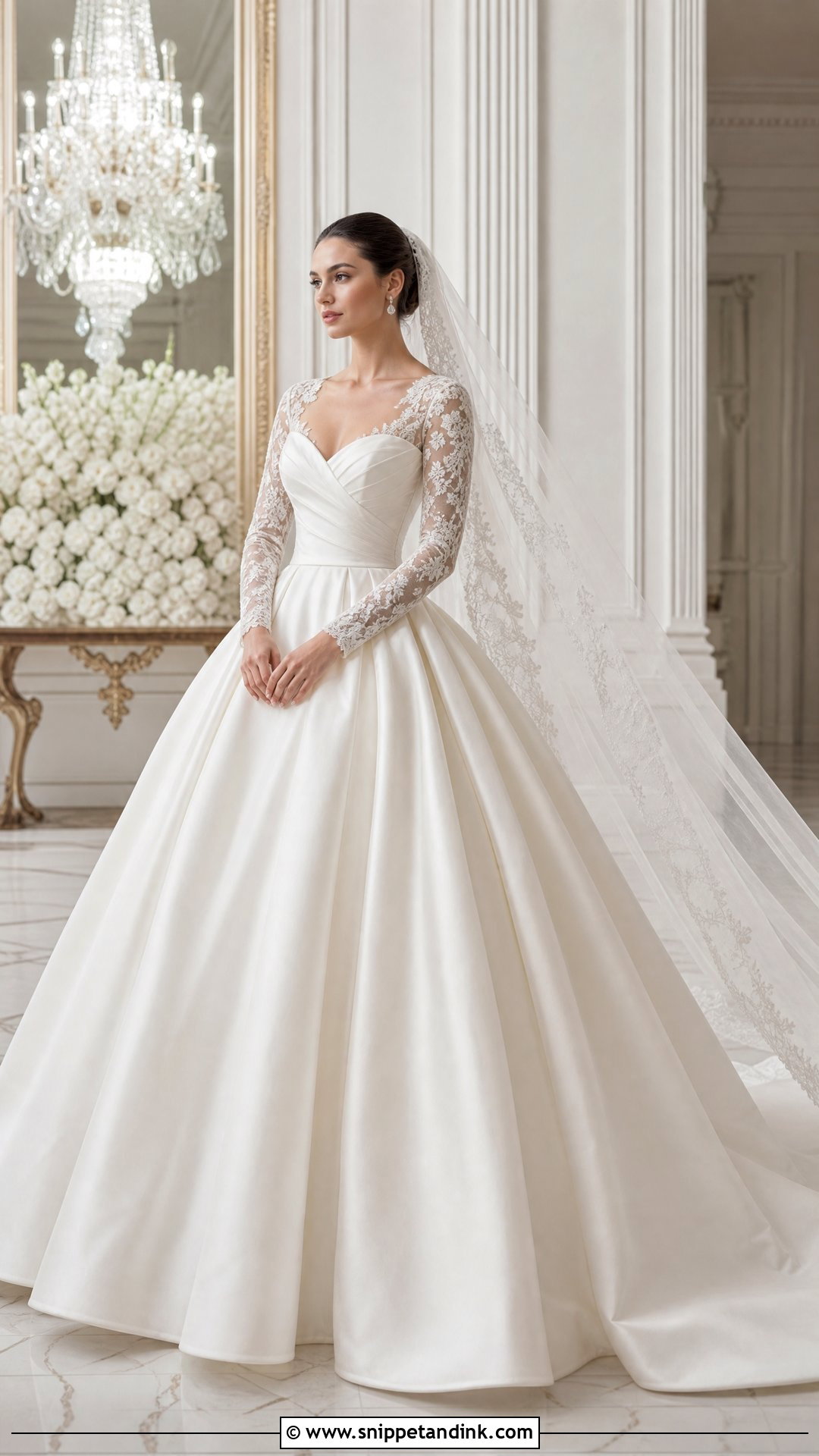
Volume below needs weight above, and that’s what sleeves do for a ball gown. Lace sleeves soften it, satin sleeves feel royal, sheer tulle keeps the top half light. My concern with this combination is total weight; a full skirt plus long sleeves can be exhausting by evening, so I look for a defined waist and a bodice with real internal support that carries the skirt. Cathedral veil, drop earrings and comfortable pumps under the skirt. Grand venues and winter dates suit it best.
5. A Line Wedding Dress With Sleeves
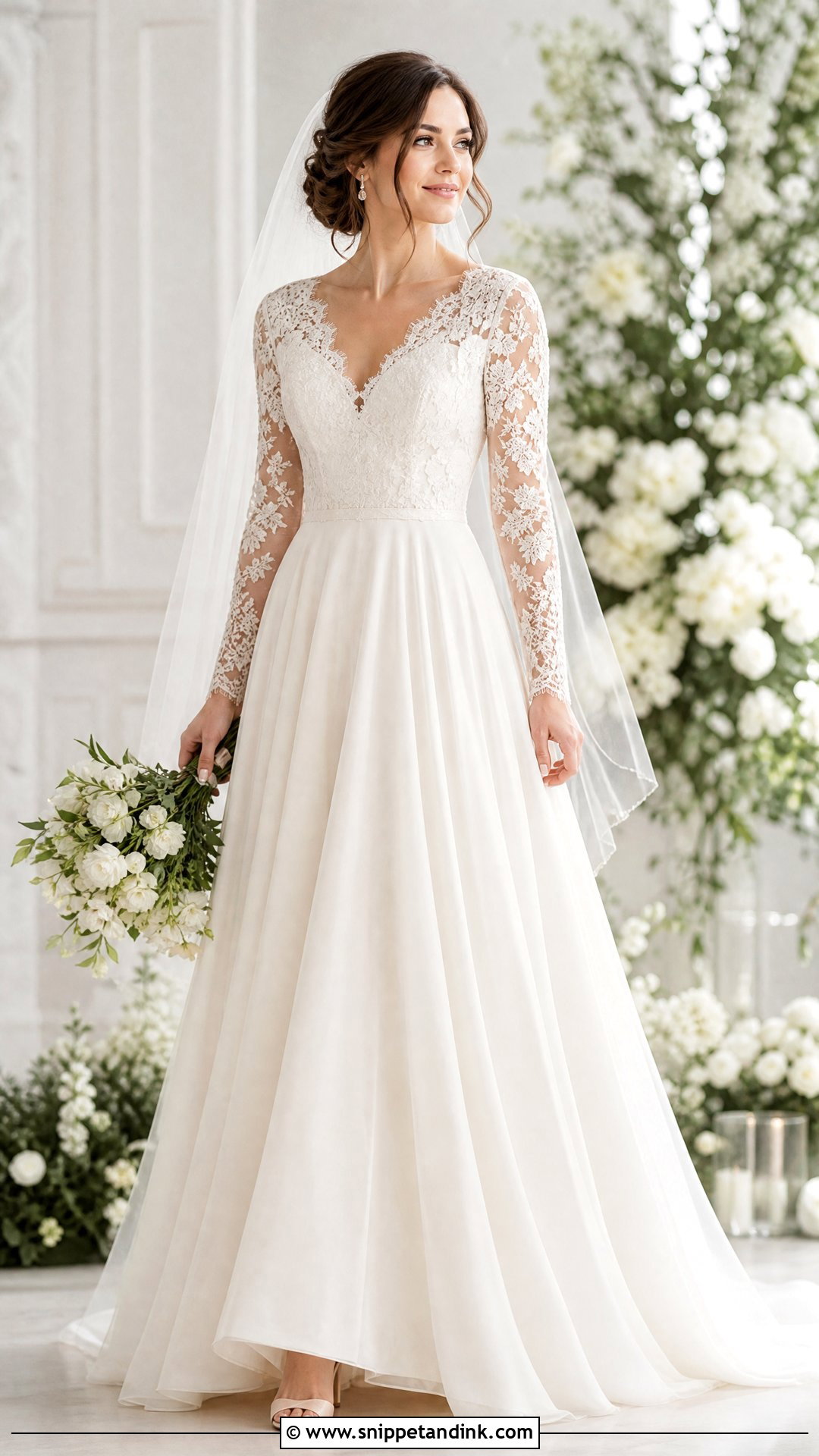
An A-line is the shape I suggest when a bride isn’t sure, because it works on most bodies and lets you sit and dance. The skirt widens gently from the waist, no hoop needed. Sleeves in lace, chiffon, tulle or crepe all balance it. Fabric sets the mood: satin reads formal, chiffon soft, lace romantic. Pair with a soft veil, block heels you can stand in for hours, and small jewelry.
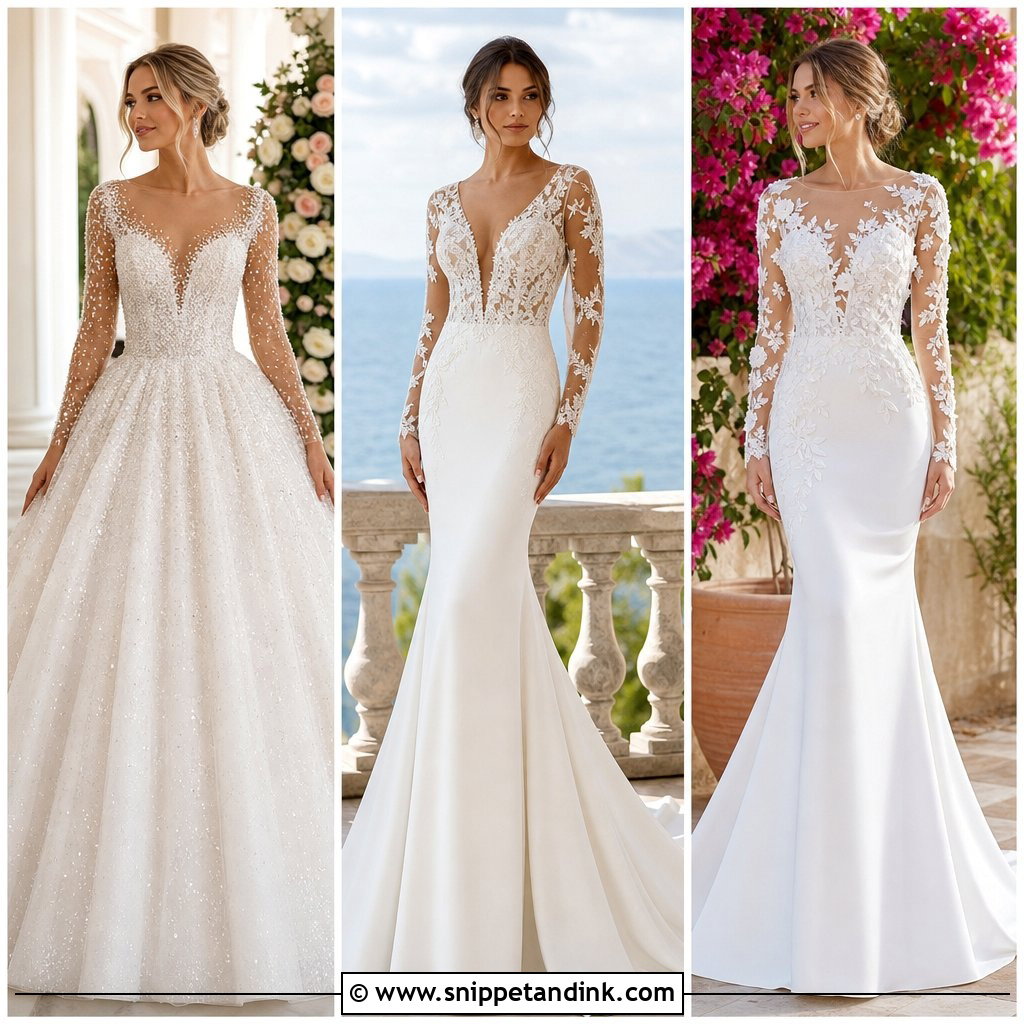
6. Mermaid Wedding Dress With Sleeves
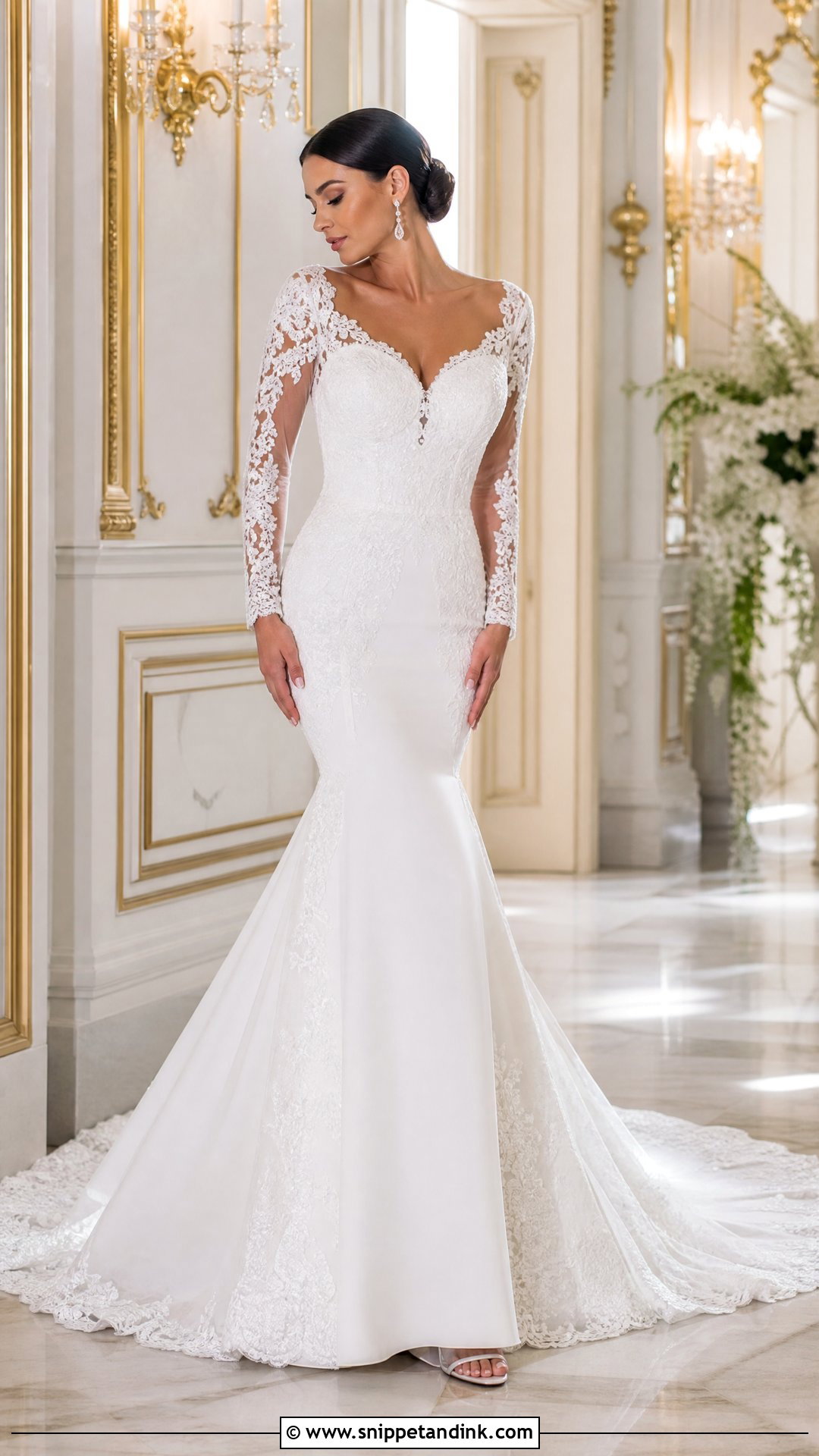
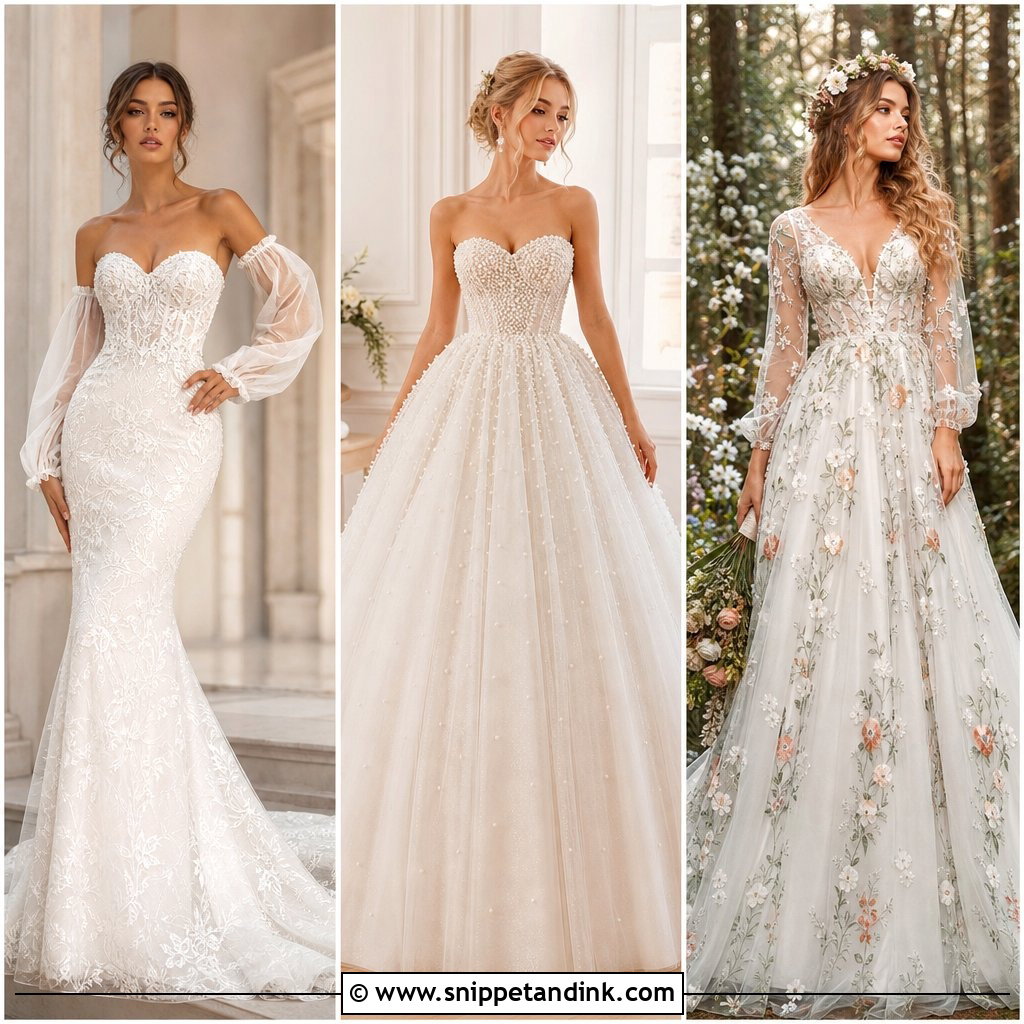
A mermaid wedding dress with sleeves covers the arms and sculpts the hips, so the eye runs the full length of the body. Because the silhouette is fitted head to knee, the sleeves need stretch or extra ease or you’ll feel bound from shoulder to calf. Stretch crepe, lace and satin hold the shape best. A sweetheart, bateau or illusion neckline balances it. Keep the hair smooth and the earrings modest so the outline does the talking. I’d test walking on stairs before committing.
7. High Neck Wedding Dress With Long Sleeves
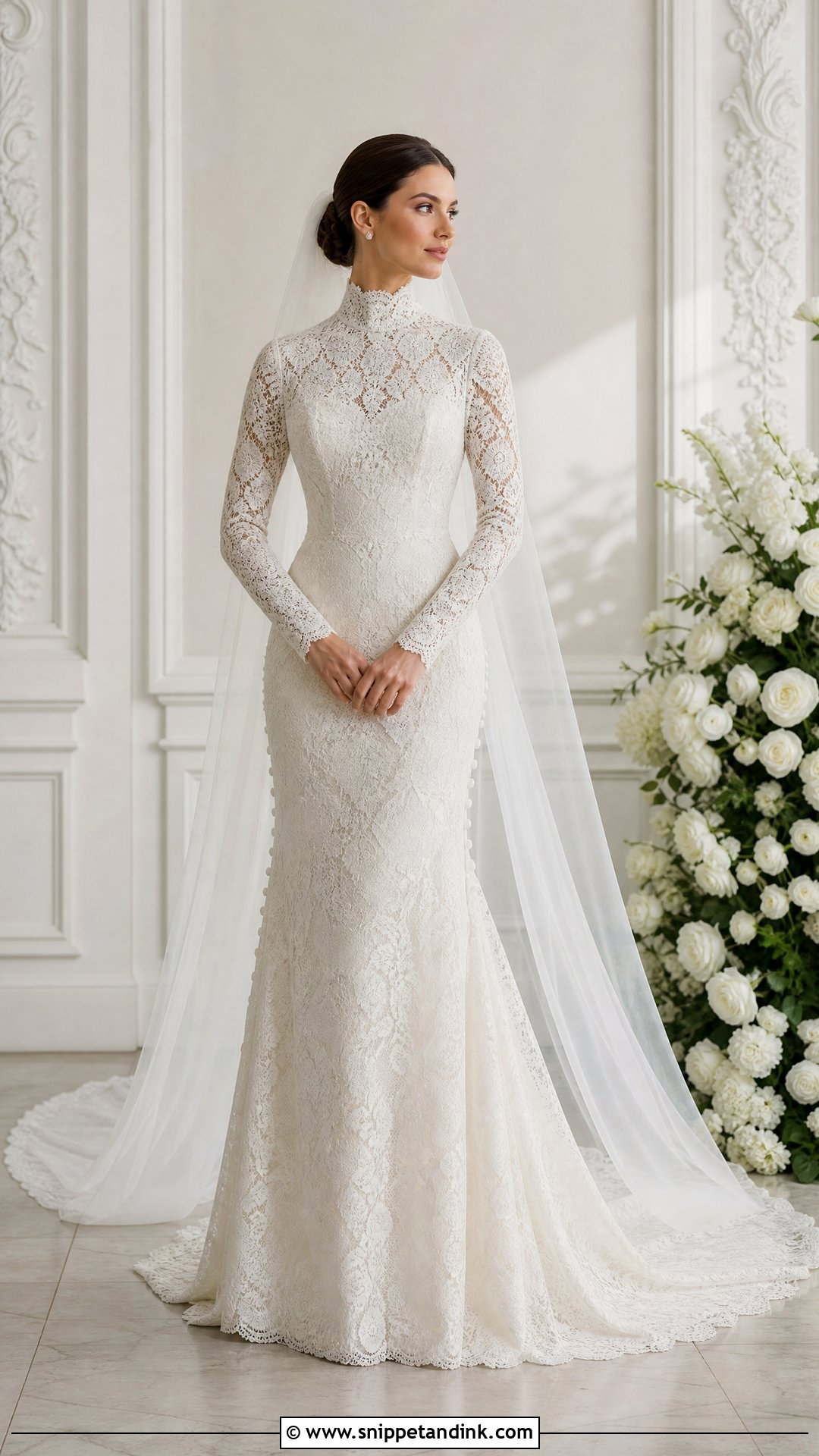
A high neck and long sleeves together put all the attention on your face and hands. That’s useful to know: your manicure and your earrings will be in nearly every close shot. Lace, crepe and sheer embroidery all suit it. Skip the necklace. A neat bun or soft updo keeps the collar clear, since loose hair catches on a high neckline. It reads vintage, modern or regal depending on fabric, and it suits anyone after modest coverage with structure.
8. Off Shoulder Wedding Dress With Sleeves
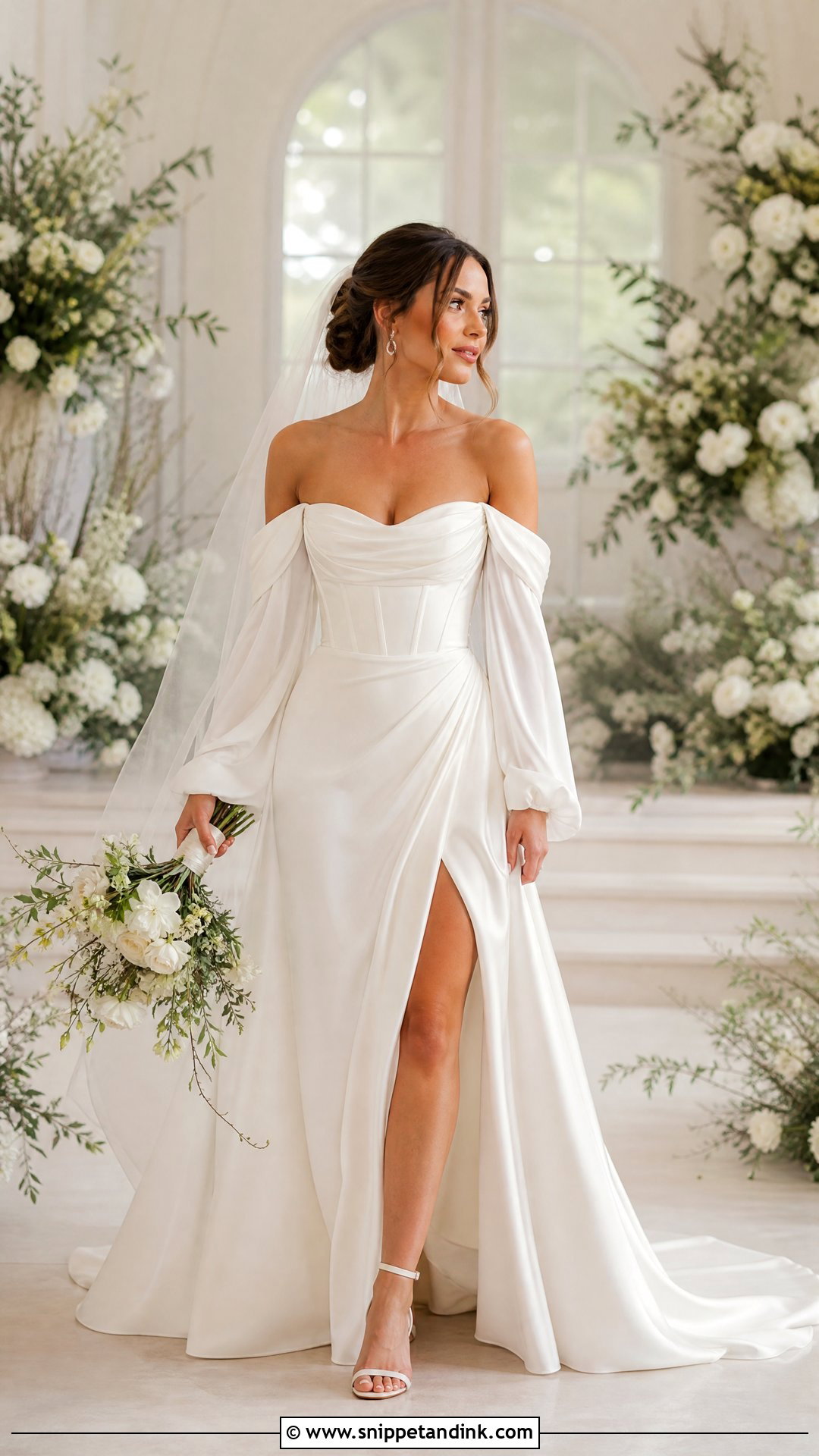
Off-shoulder sleeves sit on the upper arm, which means they restrict how high you can lift it. I make brides try a full hug and a bouquet toss in the fitting room; if the sleeve band cuts in, it needs loosening or a little elastic. The look itself shows the collarbone while covering the arm. Sleeves can be fitted, draped, puffed or sheer. Bare chest with statement earrings usually beats a necklace here.
9. Square Neck Wedding Dress With Sleeves
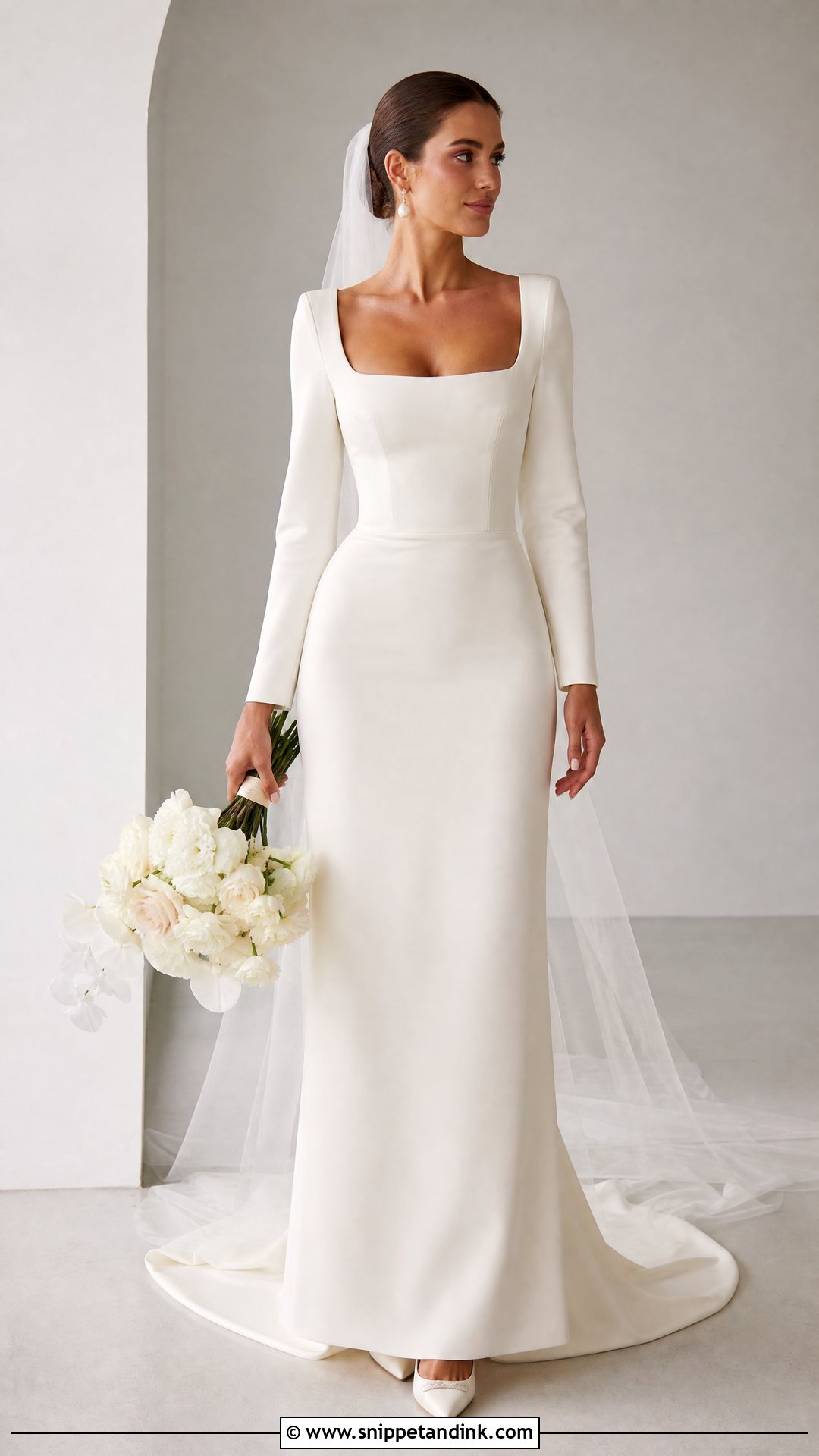
A square neck with sleeves frames the collarbone and gives the upper body structure. Satin, crepe, lace and mikado all hold the corners. Watch where the sleeve meets the neckline: the corner of the square should line up with the shoulder seam, and a misaligned seam makes the neckline look lopsided. Pearl studs, pointed heels, a smooth veil and an updo that keeps the line visible are enough. It reads polished without feeling stiff.
10. V Neck Wedding Dress With Sleeves
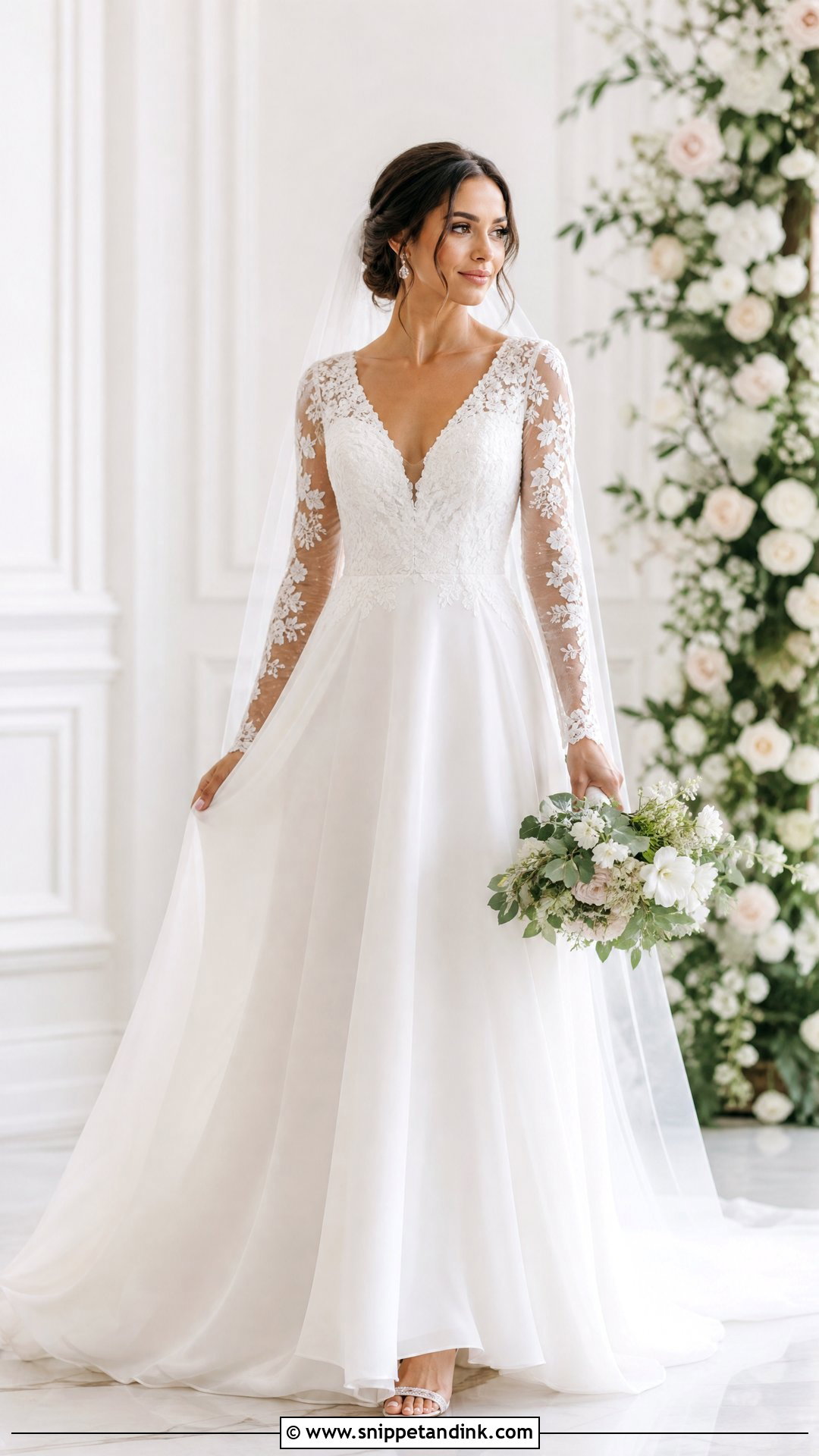
The V lengthens the torso and opens the chest while the sleeves keep the arms covered, which is a balance most figures wear well. Lace sleeves feel romantic; crepe ones look sleek. I add a pendant only when the neckline is completely plain, otherwise drop earrings. If the V is deep, I’ll suggest a clear mesh panel or fashion tape, because a plunge plus a bouquet held at the chest can gape when you lean forward. A flowing veil and soft curls suit it.
11. Illusion Sleeve Wedding Dress
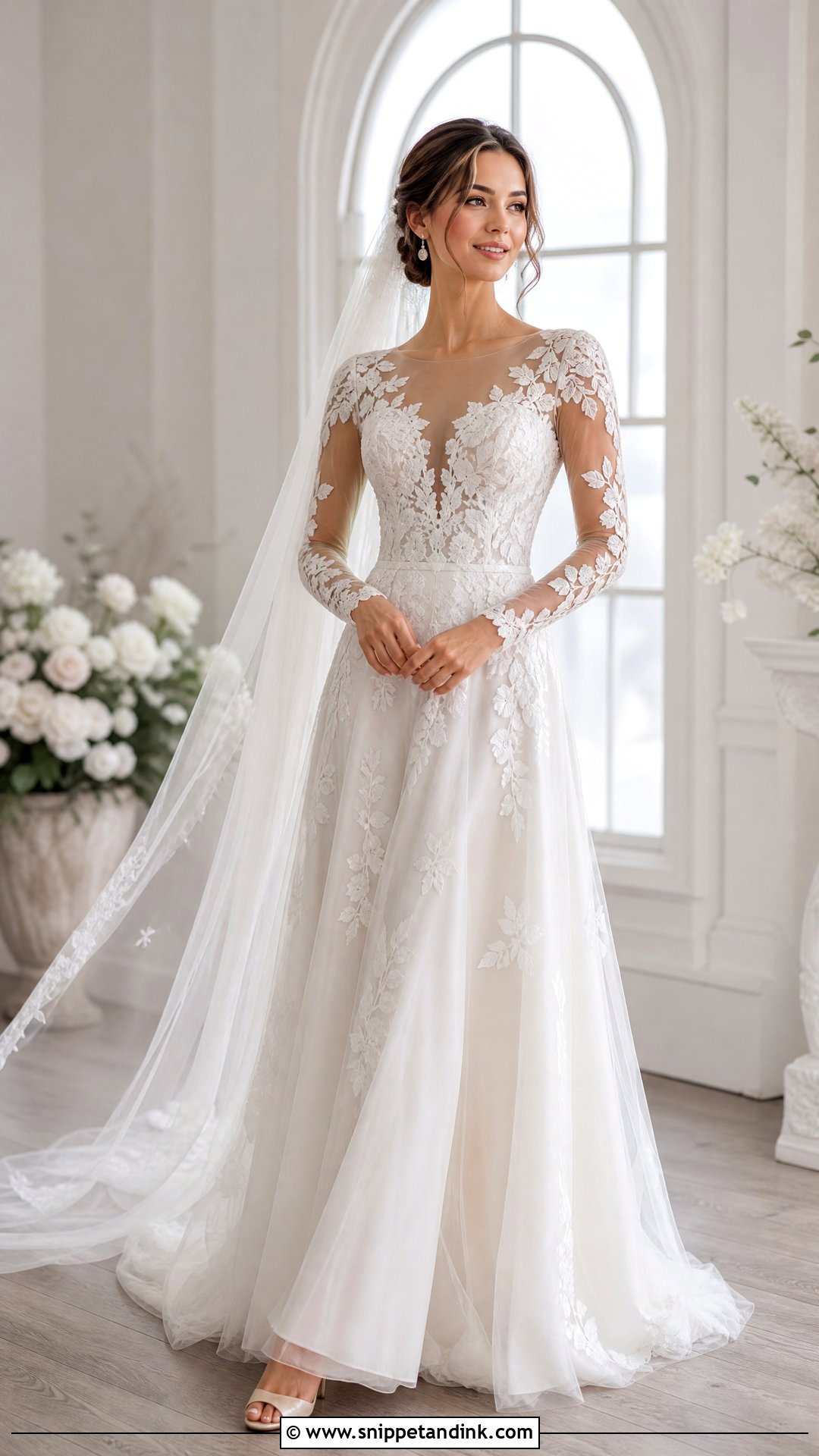
Illusion sleeves put lace, beading or embroidery on sheer tulle or mesh so the detail seems to float on the skin. They’re my usual answer when a bride wants arm coverage in warm weather. The mesh color is the critical detail: it should match your skin tone closely, or it reads as a grey film in photos. Match your accessories to the detail level. Heavy beading means almost no jewelry; soft lace can take pearls.
12. Detachable Sleeve Wedding Dress
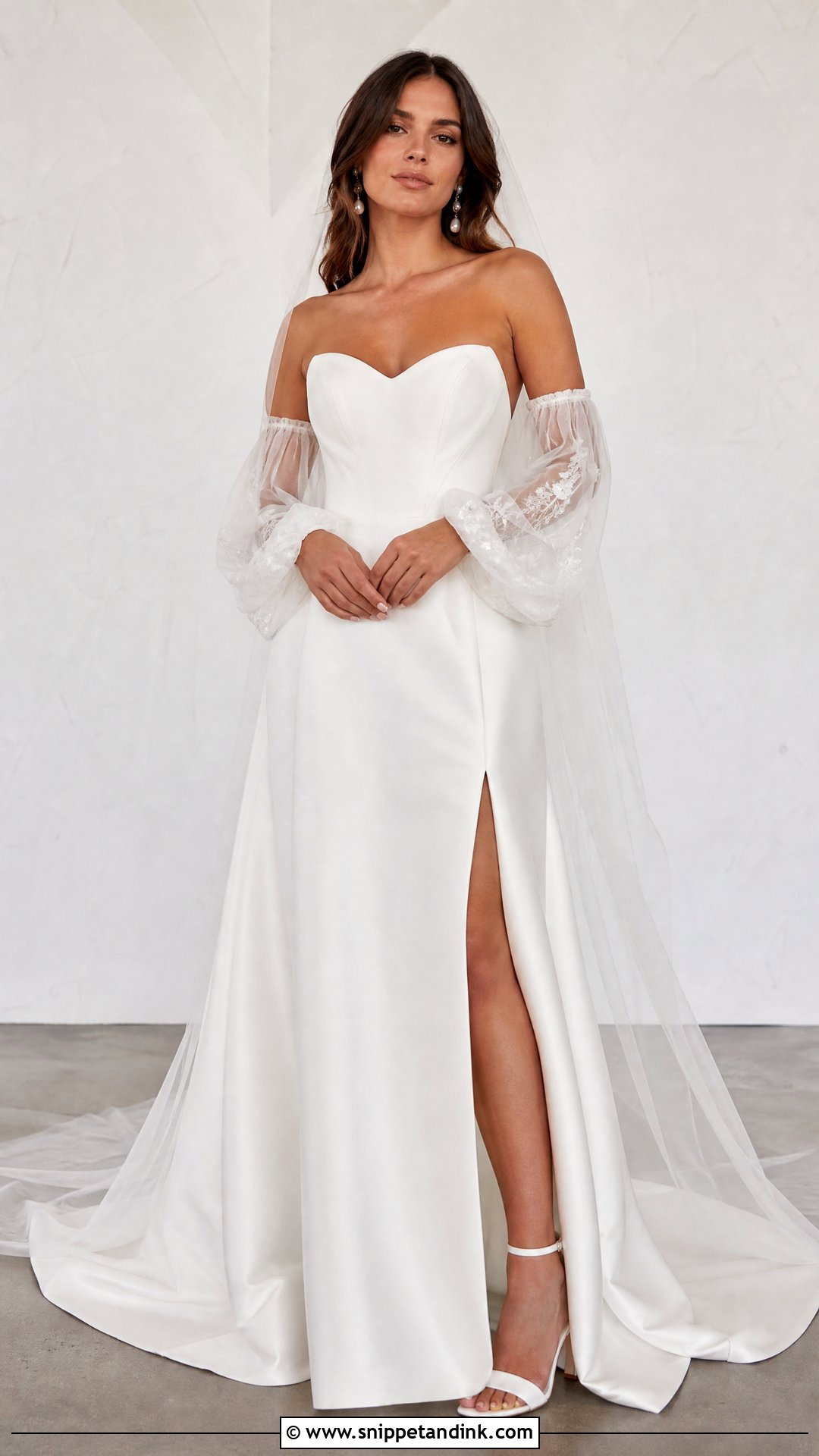
Detachable sleeves give you a covered ceremony look and a lighter reception without a second dress. They work on crepe sheaths, satin ball gowns, lace dresses and corset styles. I insist they’re cut from the same fabric lot as the gown, because satin from a different bolt can be a shade off. Ask how they attach: hidden snaps or hooks are quicker for the switch than ties. Veil and earrings for the ceremony, something simpler after.
13. Puff Sleeve Wedding Dress
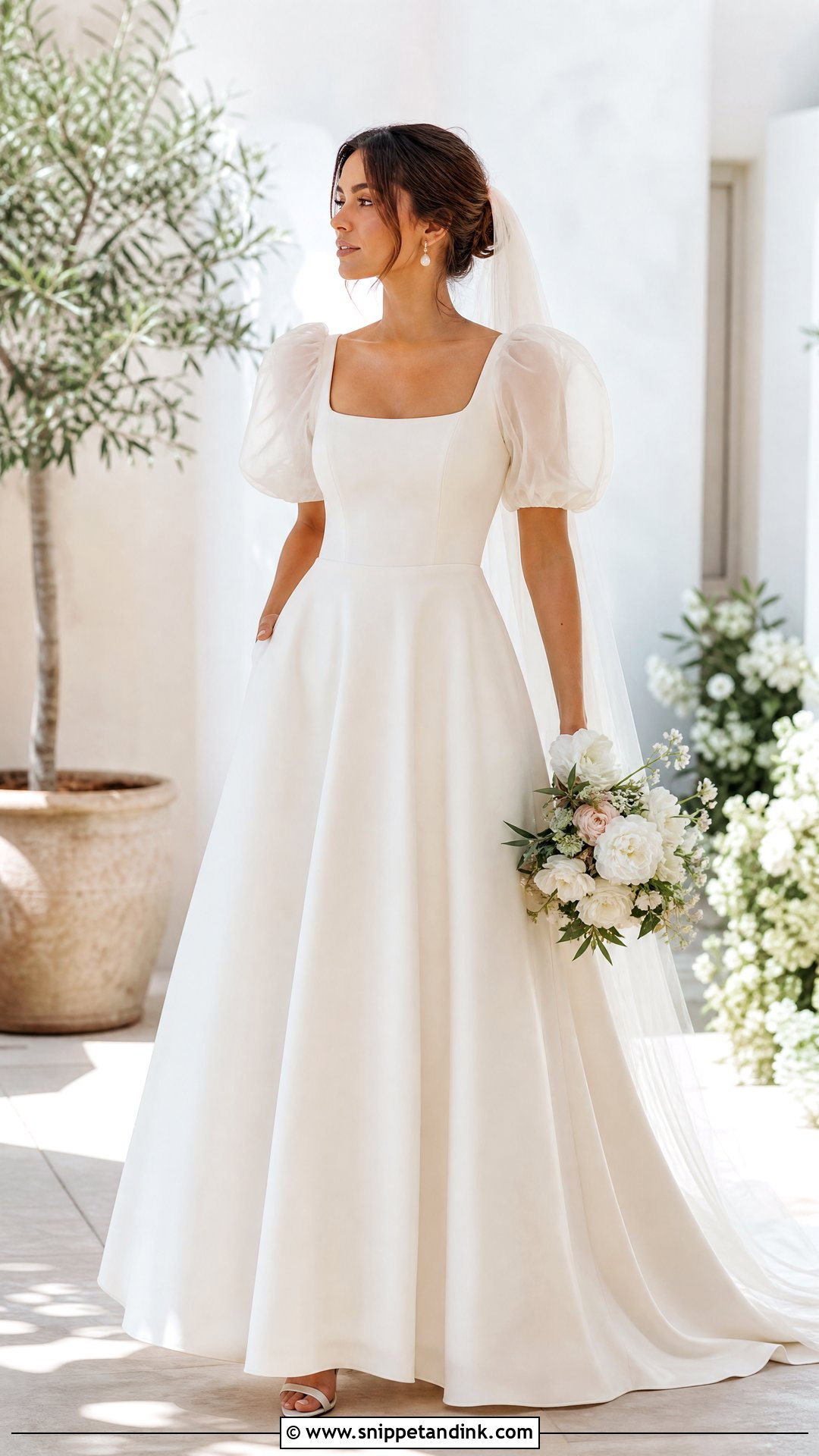
Puff sleeves bring volume to the shoulder, so everything else needs restraint. They hold their shape best in organza, tulle, satin or a crisp lightweight lace; soft chiffon puffs collapse by mid-afternoon. A fitted bodice and an A-line or full skirt balance the top. Keep the veil clean, the earrings small and the hair soft. One fitting check: make sure the puff sits at the shoulder point and not halfway down the arm, or it widens you instead of framing you.
14. Bishop Sleeve Wedding Dress
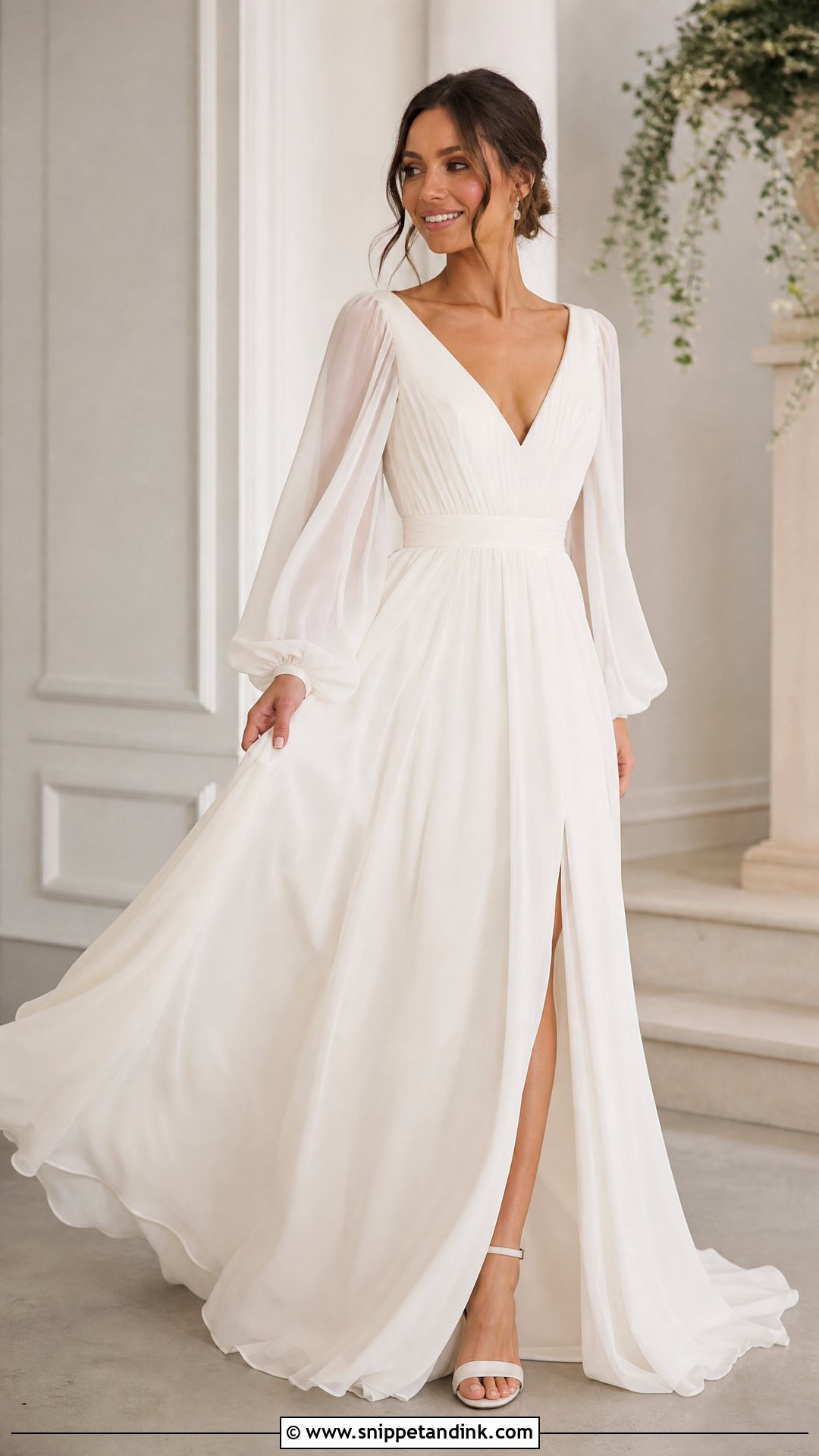
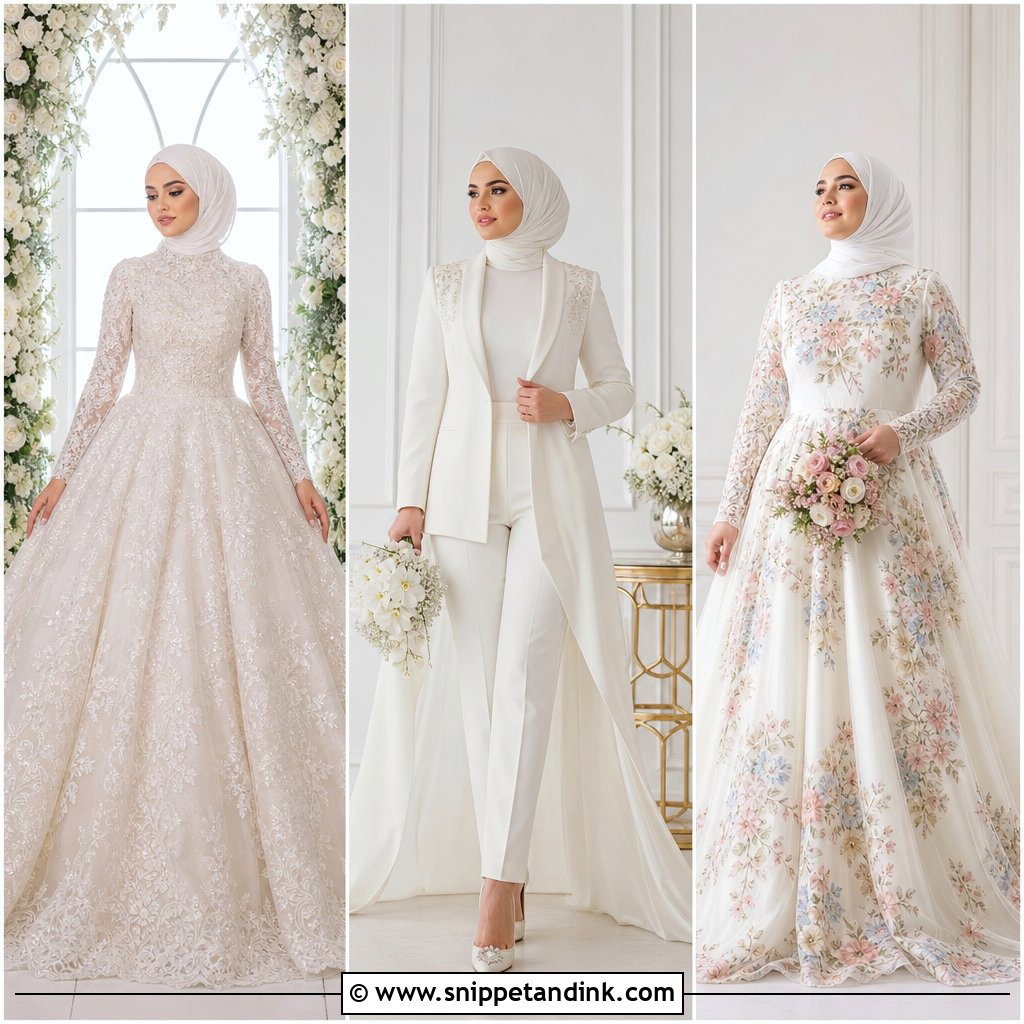
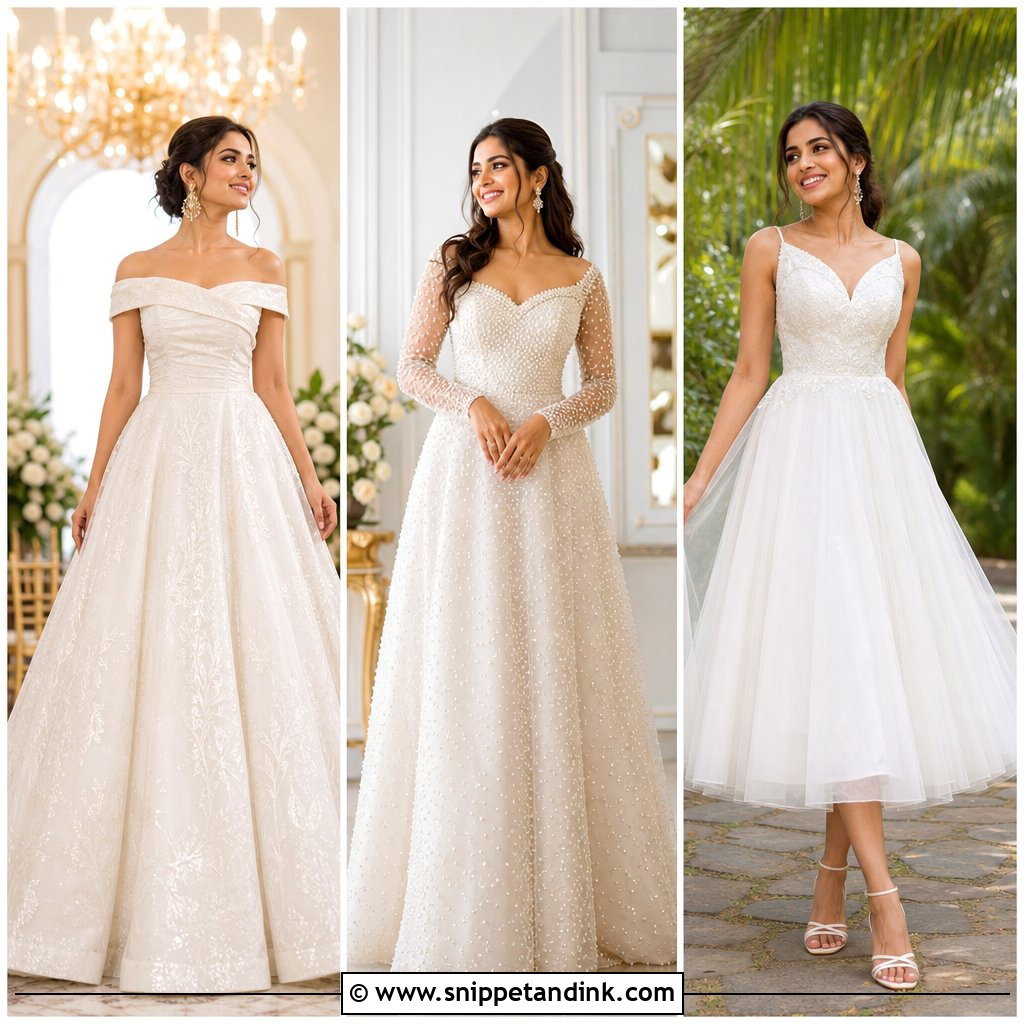
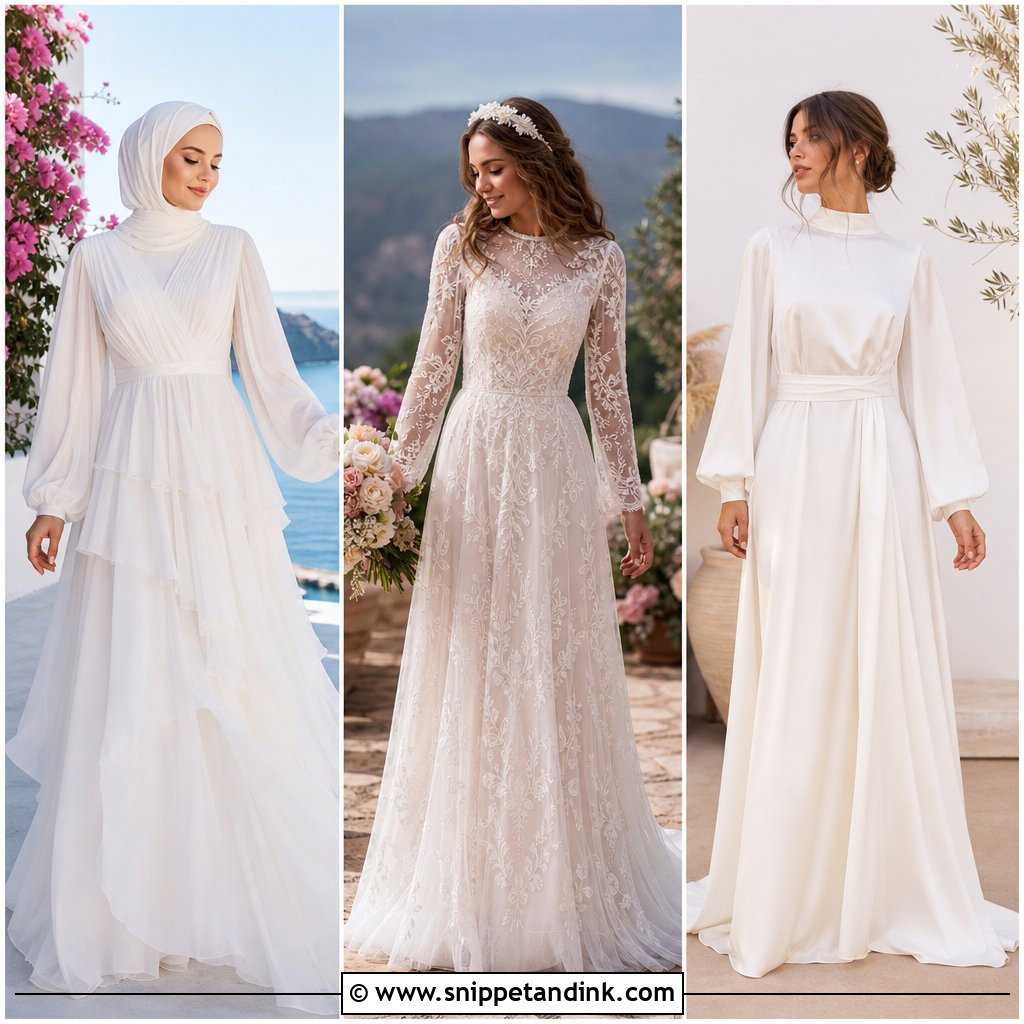
A bishop sleeve wedding dress balloons through the forearm and gathers into a cuff at the wrist. It moves softly and isn’t tight, which makes it one of the more comfortable sleeves to wear all day. Chiffon, organza, lace and lightweight crepe drape well. The cuff should close snugly enough that the sleeve doesn’t slide down over your hand when you hold the bouquet. A simple veil, delicate earrings and a low bun or loose waves suit outdoor and relaxed formal settings.
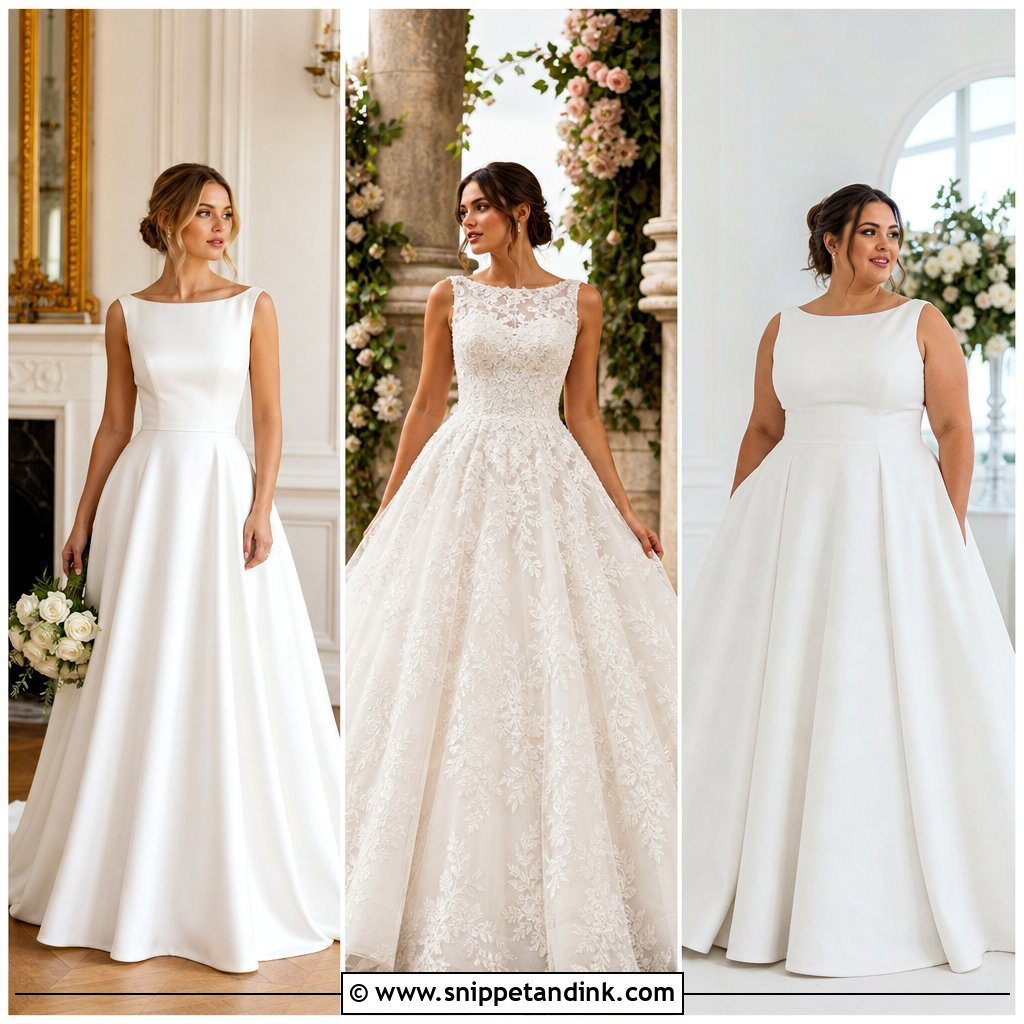
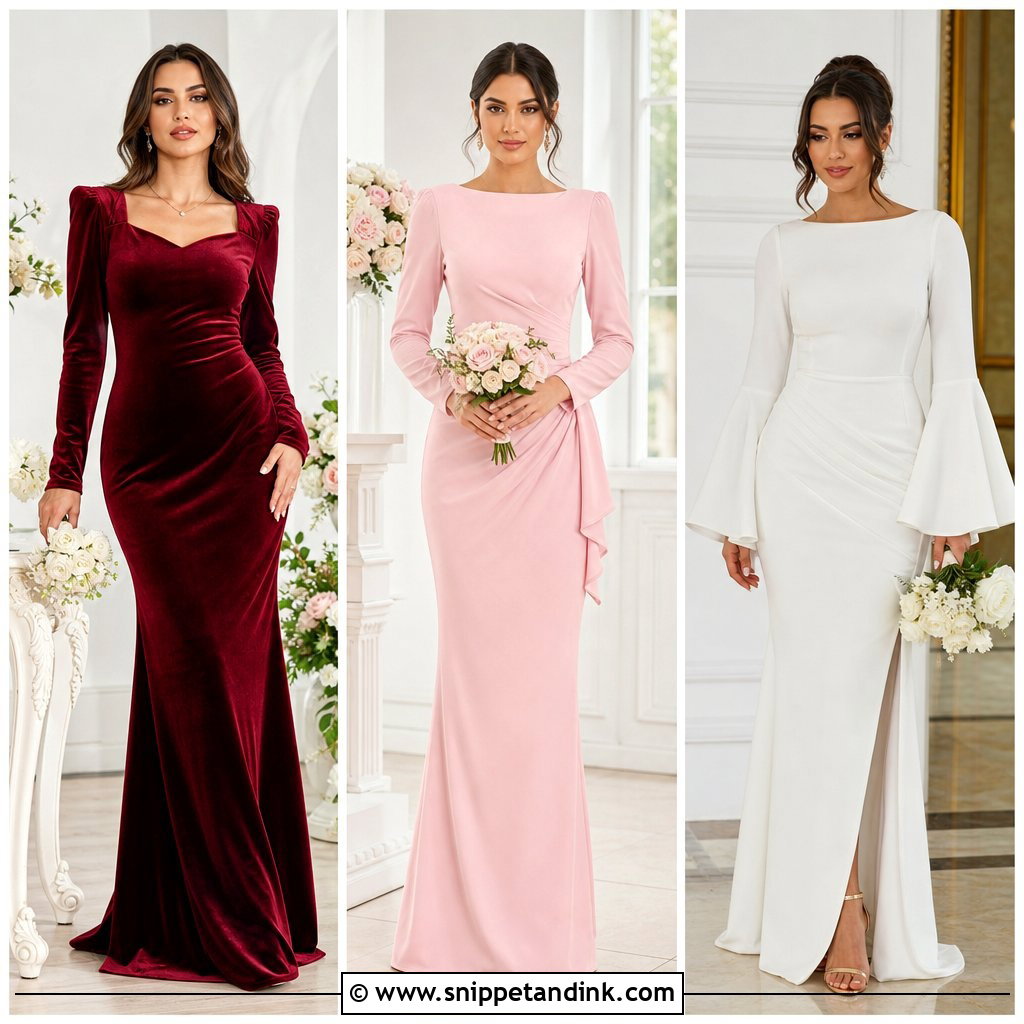
15. Bell Sleeve Wedding Dress
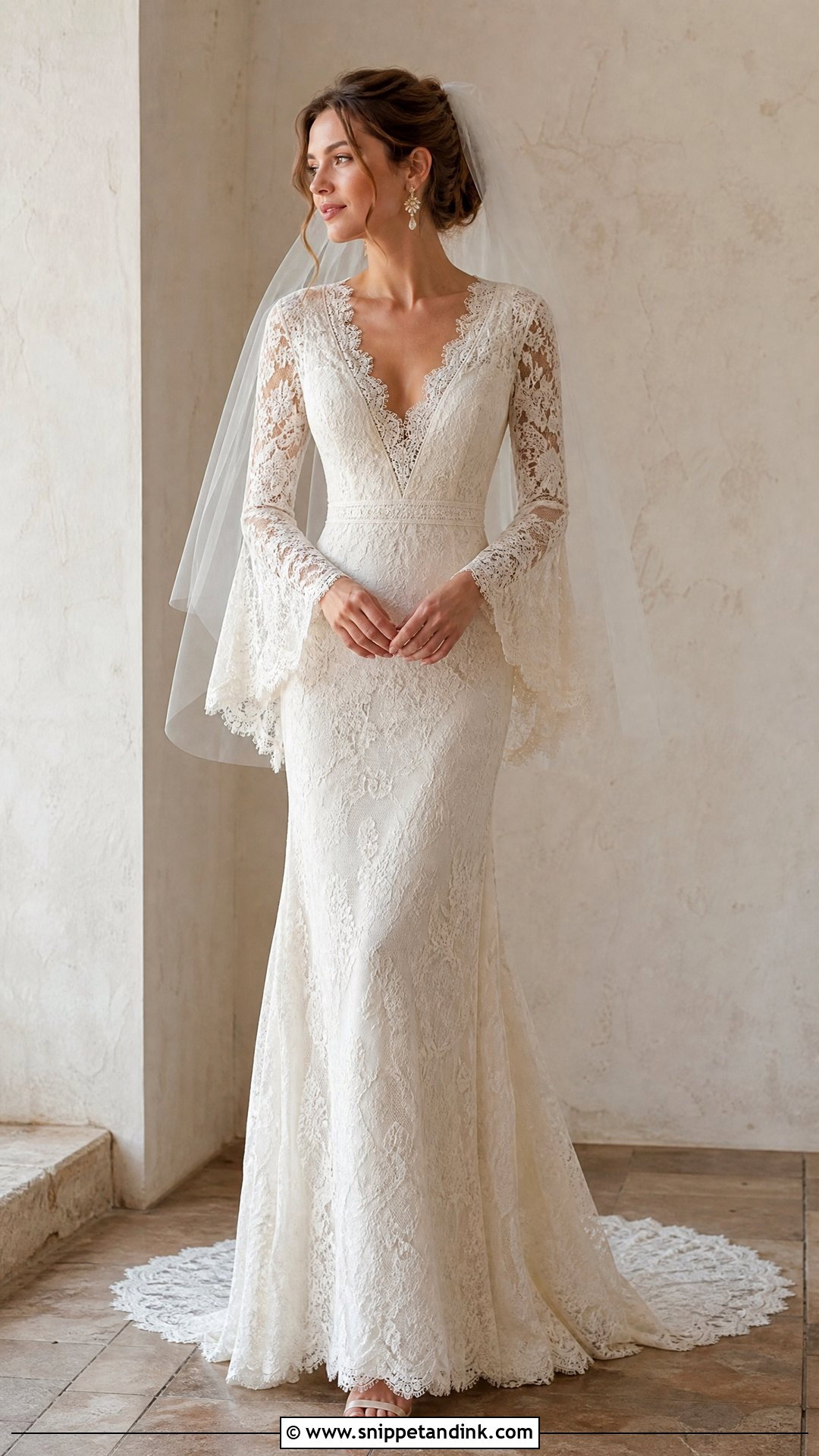
Bell sleeves widen toward the wrist, and they swing every time you move your arm. That’s the charm and the hazard: they’ll drag through cake icing or catch a candle if you’re not careful, which I mention to every bride who picks them. Lace, chiffon and crepe all work. A slim skirt makes the bell look modern, an A-line more romantic. Skip bracelets, keep the earrings simple and add a soft veil.
16. Cape Sleeve Wedding Dress
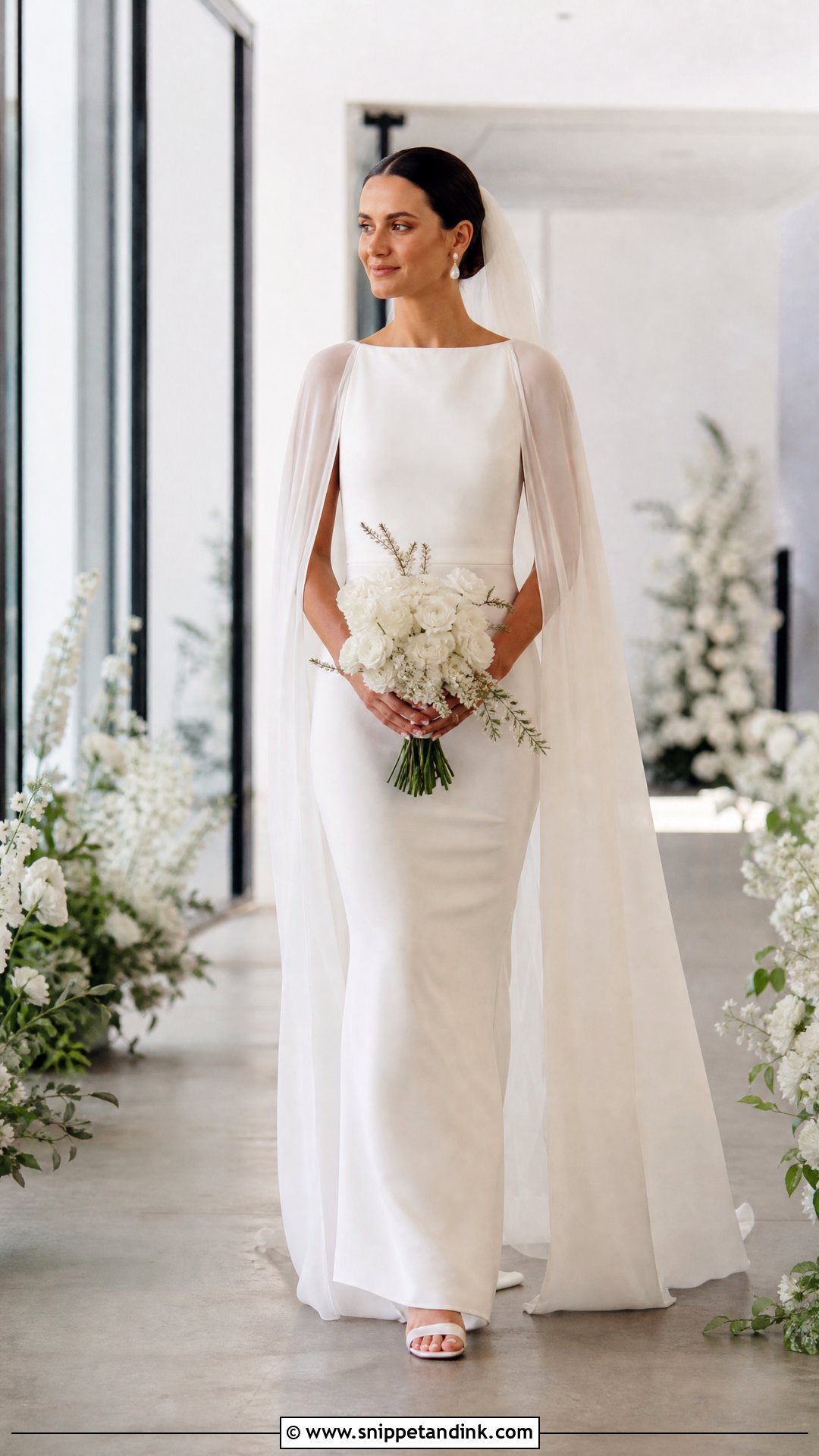
Cape sleeves fall loose from the shoulder or upper arm, so you get movement and coverage without anything tight around the arm. Chiffon, tulle, organza and sheer lace are the right weights. I pair them with slim gowns, since the sleeve already provides the drama a full skirt would. Sleek heels, simple earrings and a clean hairstyle. Outdoors, a light breeze will lift them in photos; a strong wind will put them across your face, so plan portraits with your back to it.
17. Beaded Sleeve Wedding Dress
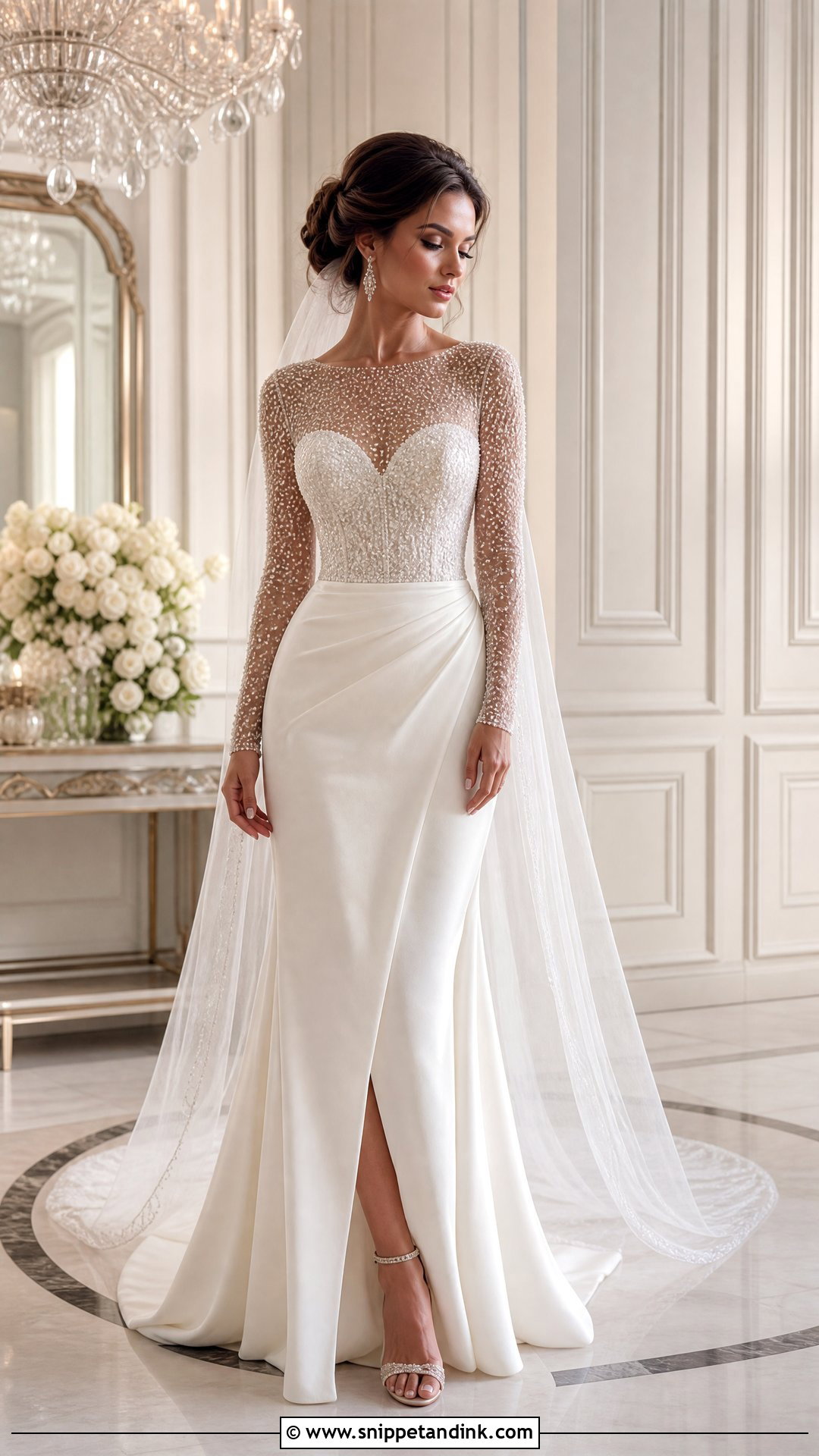
Beaded sleeves are heavy at the wrist, and that weight pulls the shoulder seam down by evening if the sleeve isn’t anchored well. I check the shoulder seam at the final fitting with the bride’s arms hanging naturally. Beading can be fine on sheer tulle or dense with pearls and crystals. If the sleeves are ornate, keep the skirt simple; if the whole gown is embellished, keep accessories almost absent. Evening venues with warm light show it best.
18. Short Sleeve Wedding Dress
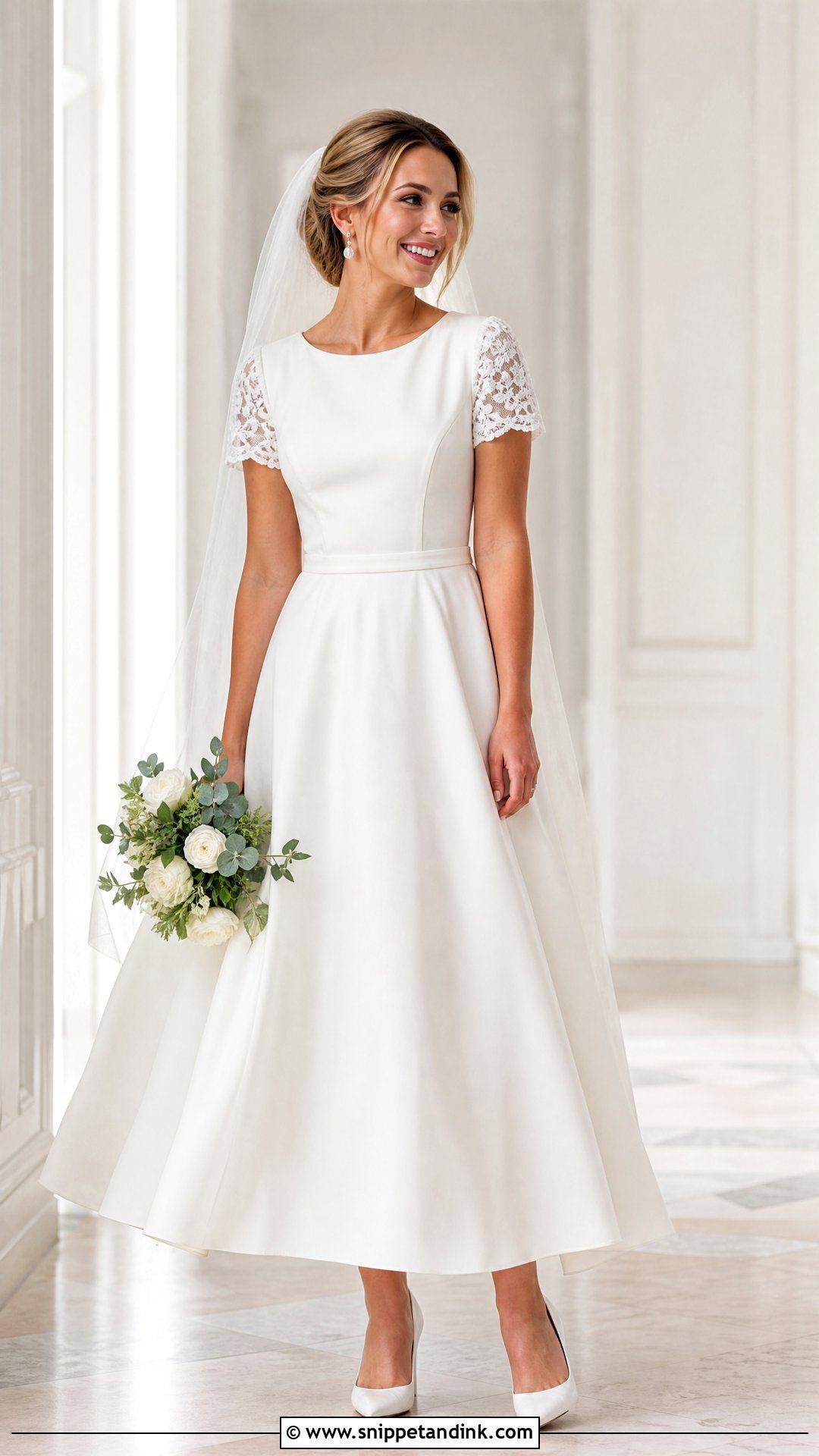
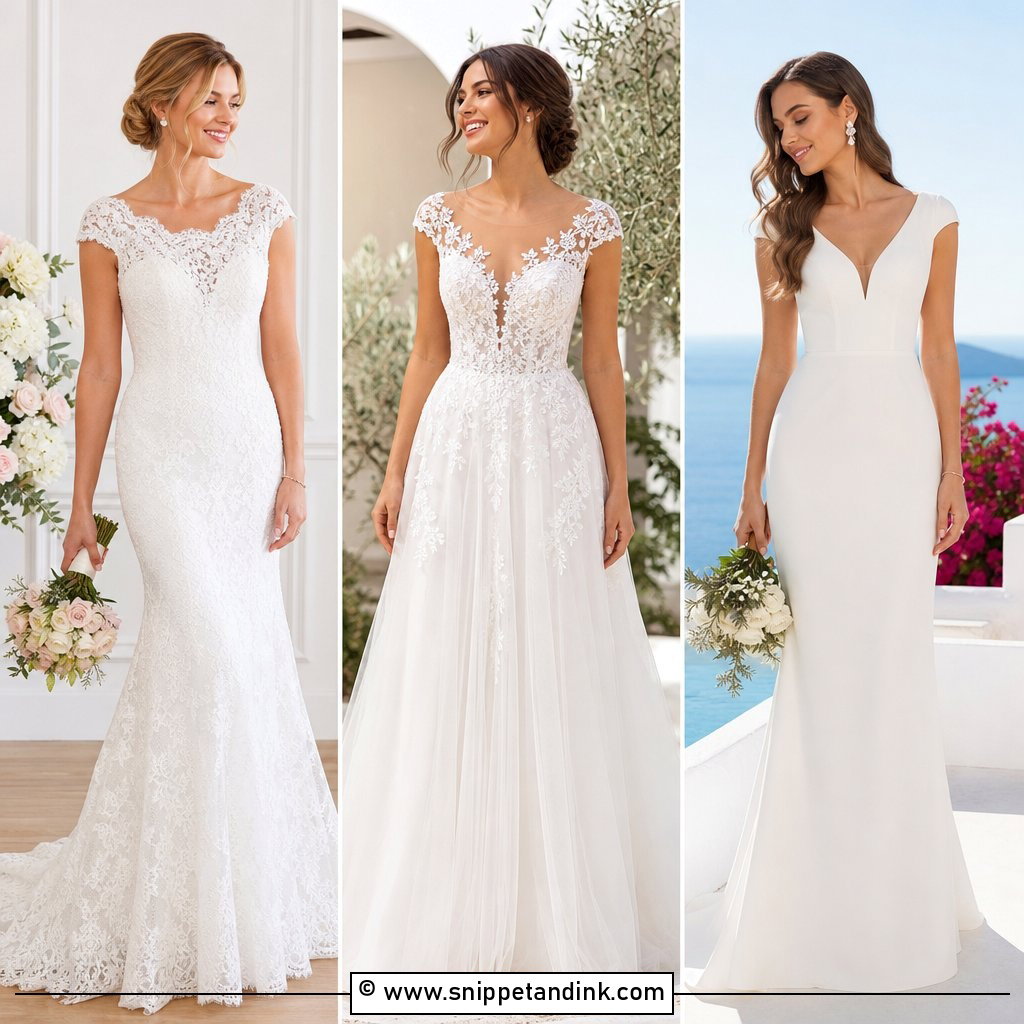
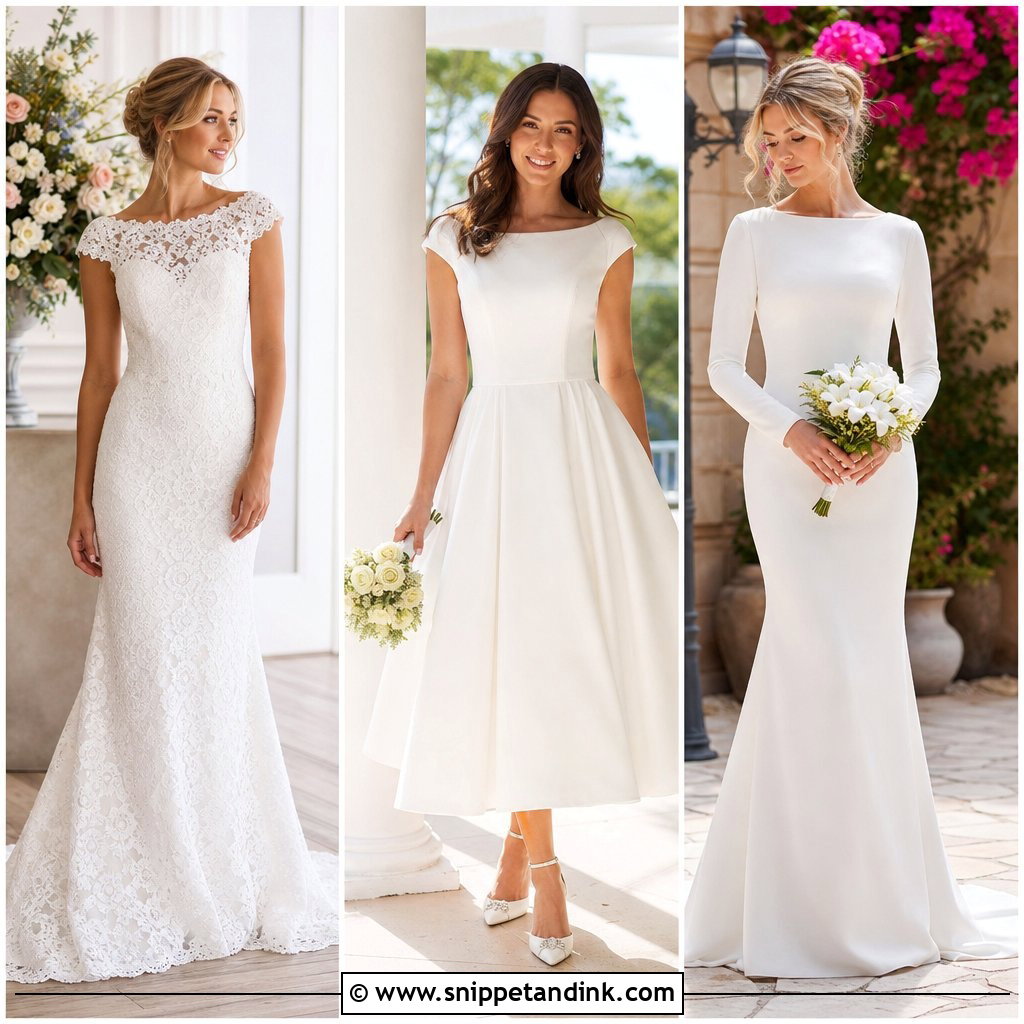
Short sleeves give light coverage without the heat of a long sleeve, which is why I suggest them for spring and summer. Lace, satin, puffed, cap or structured shapes all work, and they pair with an A-line, a tea-length hem or a simple column. Arm movement is easy, so they suit brides planning a lot of dancing. Classic heels, pearl earrings and a light veil. A cap sleeve should finish just past the widest point of the upper arm, not at it.
19. Three Quarter Sleeve Wedding Dress
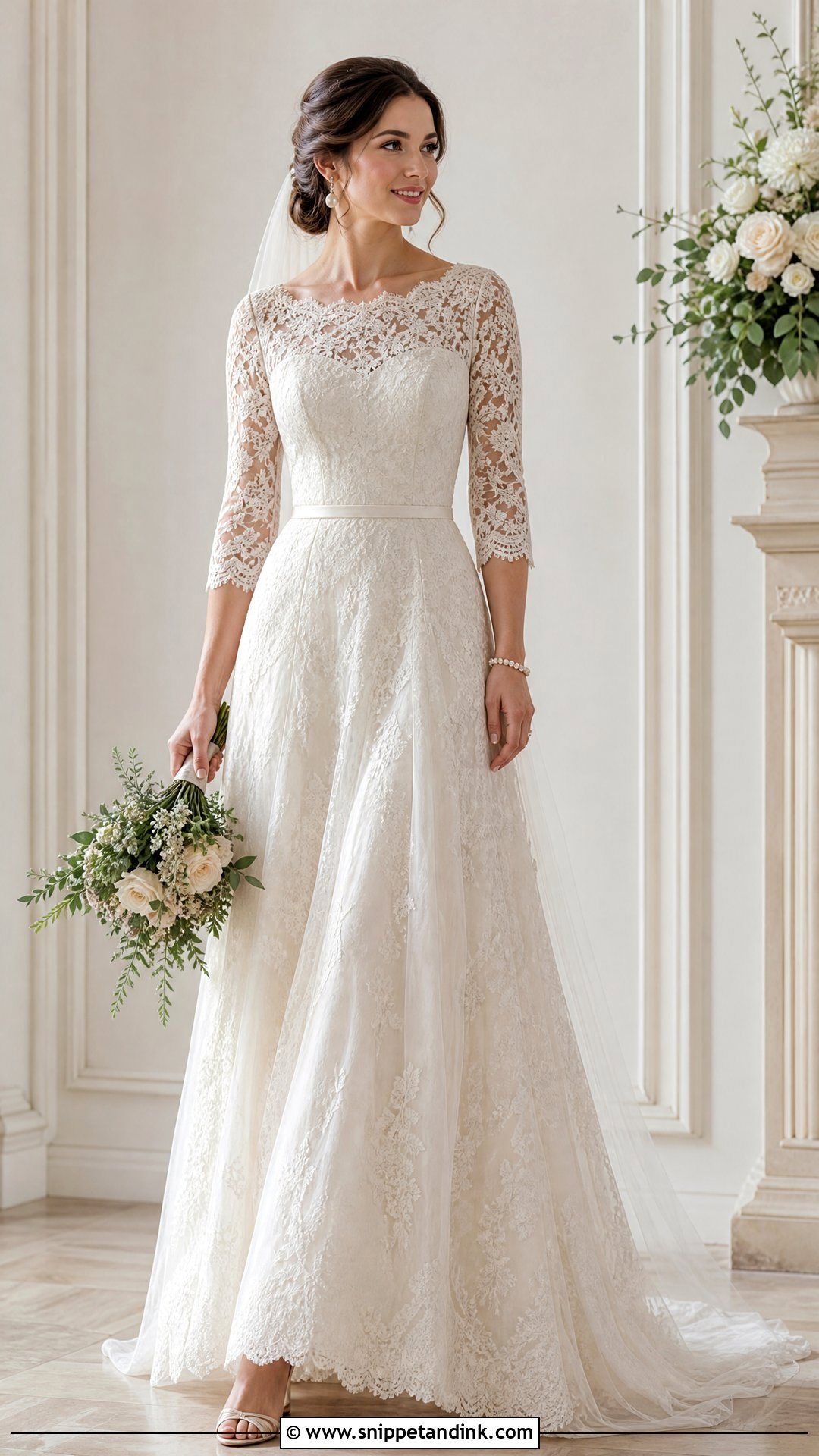
Three-quarter sleeves end below the elbow, which leaves the wrists and hands free for rings, bracelets and the bouquet. Lace, crepe, satin and chiffon all suit. I like it with a defined waist and a clean neckline. Add a bracelet only if the sleeve is plain. It’s a sleeve you can wear in most seasons, and it avoids the problem of a long cuff getting into everything at dinner.
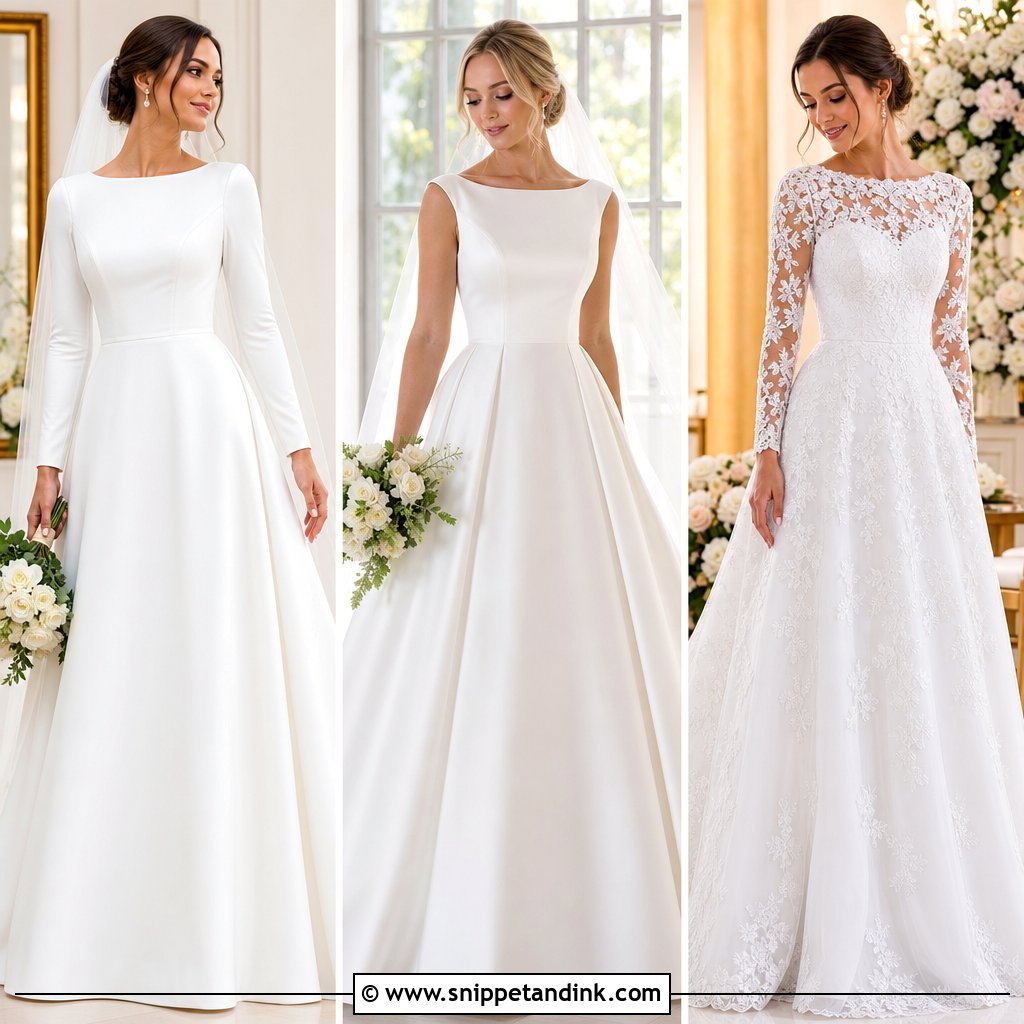
20. Floral Lace Wedding Dress With Sleeves
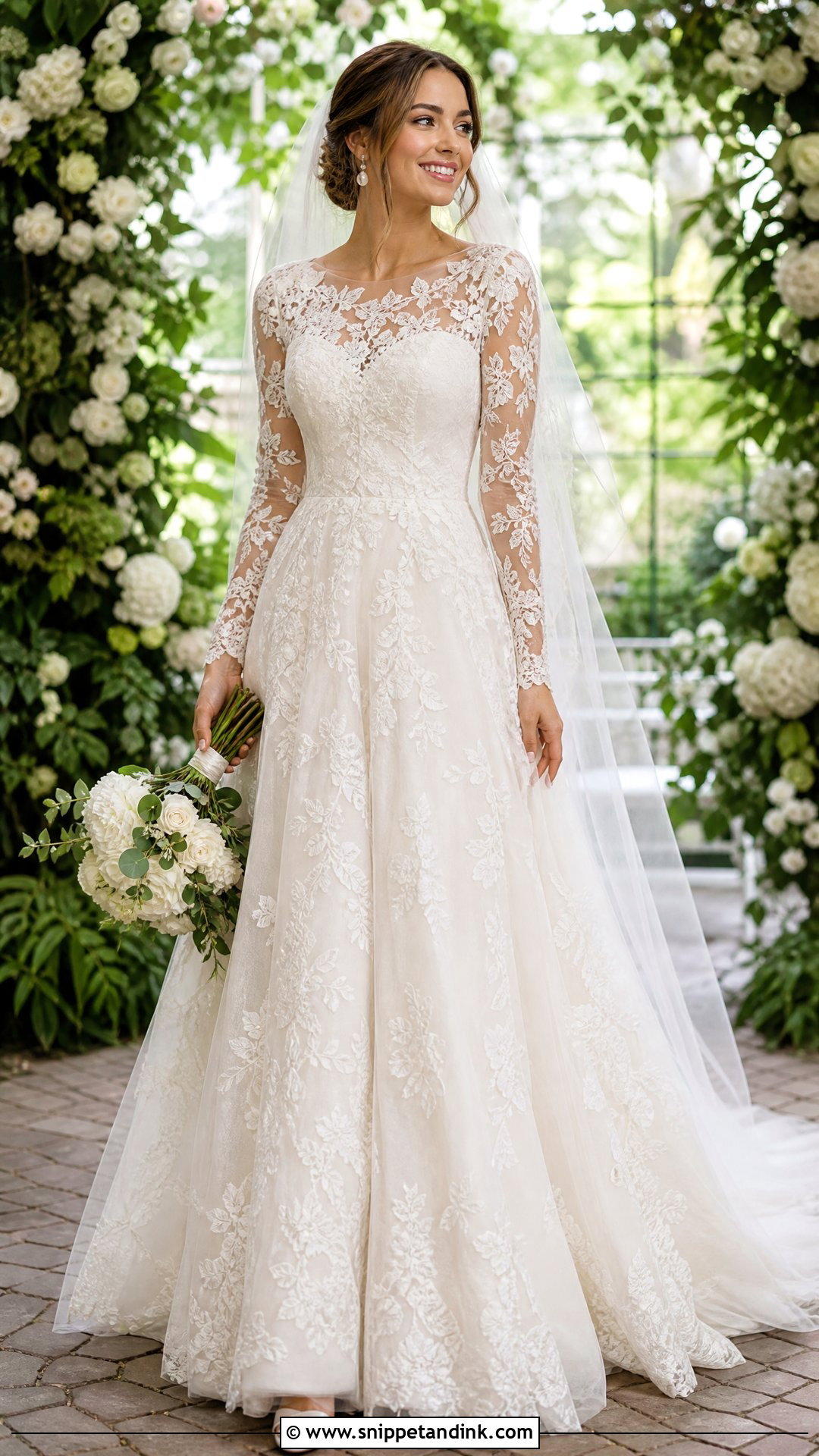
With floral lace sleeves, the pattern runs from bodice to arm and feels complete. The scale of the lace matters: big, open florals look modern, small dense ones read more delicate. I look at how the lace was cut at the shoulder; good makers place a full motif there rather than slicing a flower in half. An A-line, a fitted cut or a light train all suit. Pearl earrings, soft waves and a plain veil, and no heavy jewelry fighting the pattern.
21. Plain Wedding Dress With Sleeves
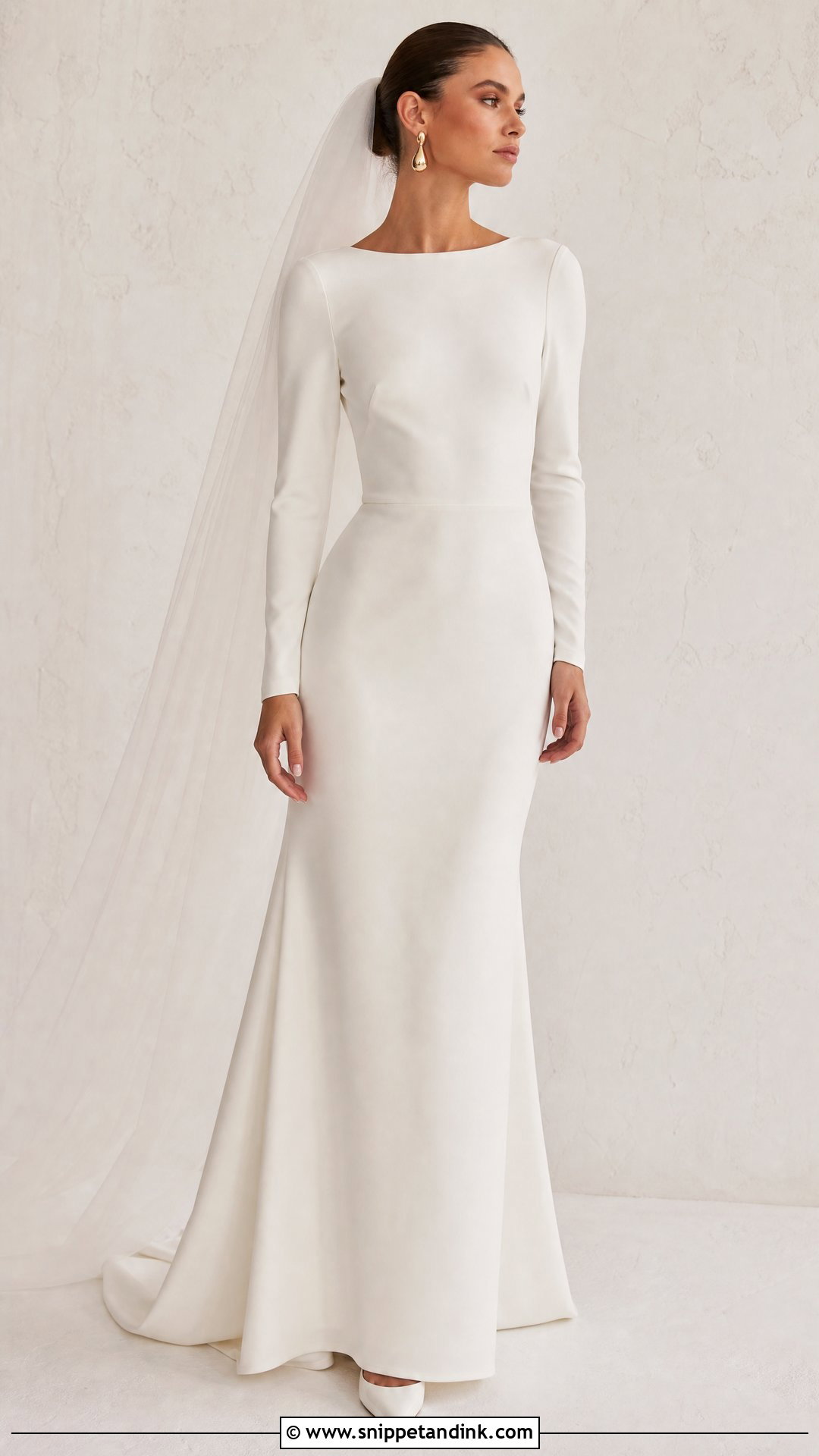
A plain sleeved gown relies entirely on cut, and I think it’s one of the most striking choices when the fit is right. Crepe, satin and mikado hold their shape. Since there’s no lace or beading to hide anything, the shoulders, waist and sleeves have to fit smoothly, and I’d budget for an extra fitting. The upside is room for bolder accessories: sculptural earrings, a long veil or a polished bun.
22. Vintage Wedding Dress With Sleeves
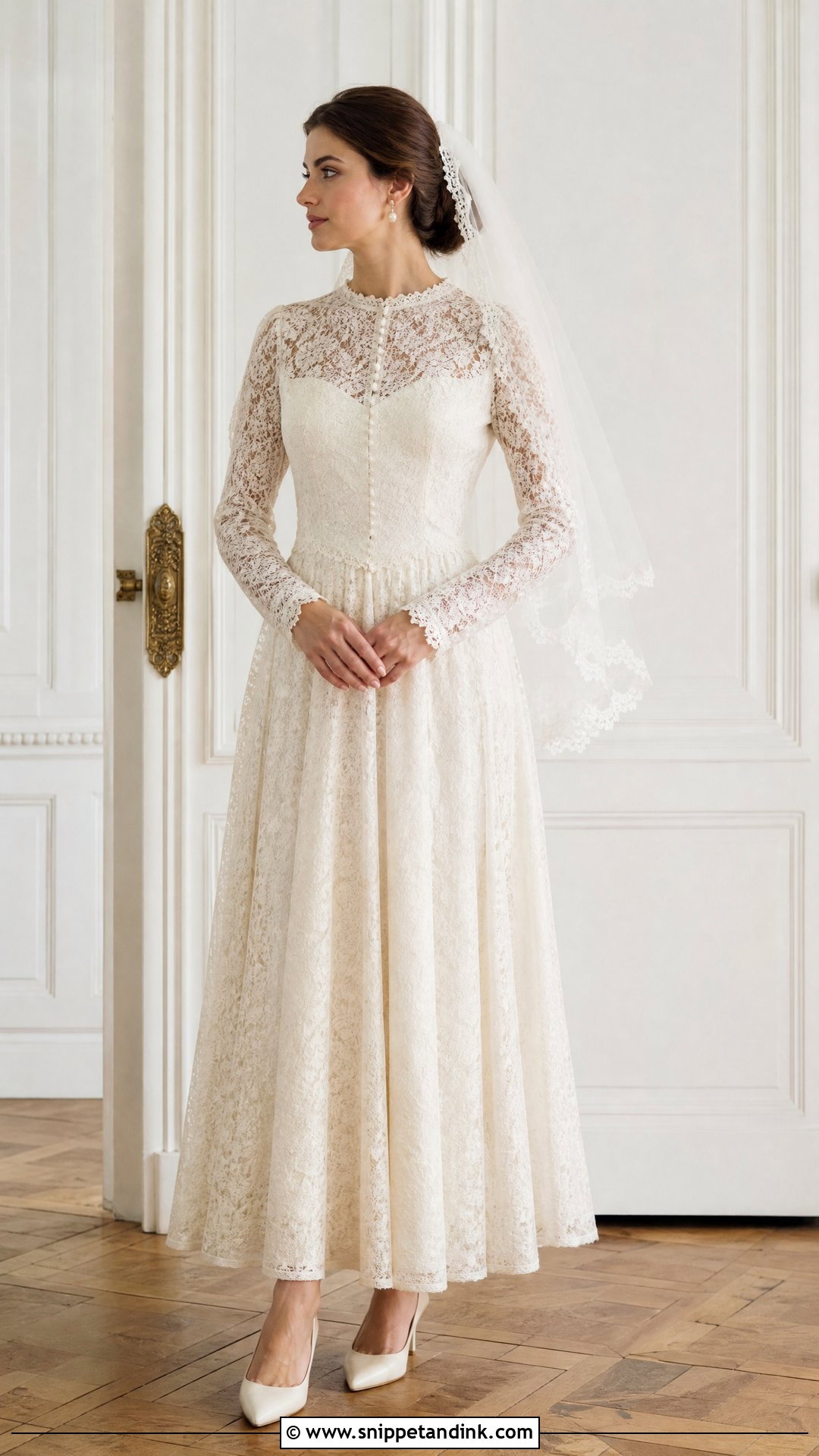
Vintage sleeve details include lace cuffs, high necklines, covered buttons, soft puffs and fine embroidery. The trick is one or two of these, not all of them, or it starts to look like a period costume. If it’s a true vintage gown, I check the fabric at the underarm first; old silk weakens there and may need reinforcing before alterations. Classic heels, pearls and a veil sized to the dress. Soft waves or a neat updo suit it.
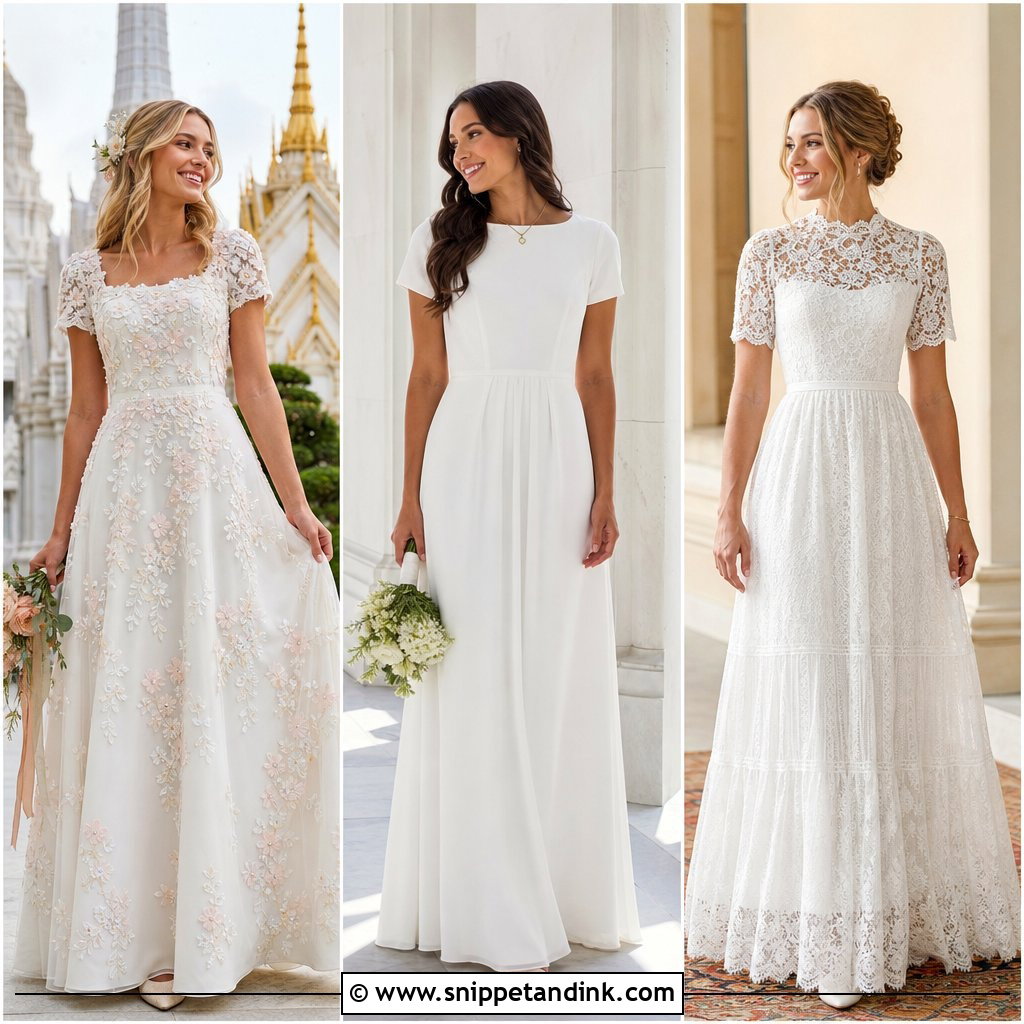
23. Modest Wedding Dress With Sleeves
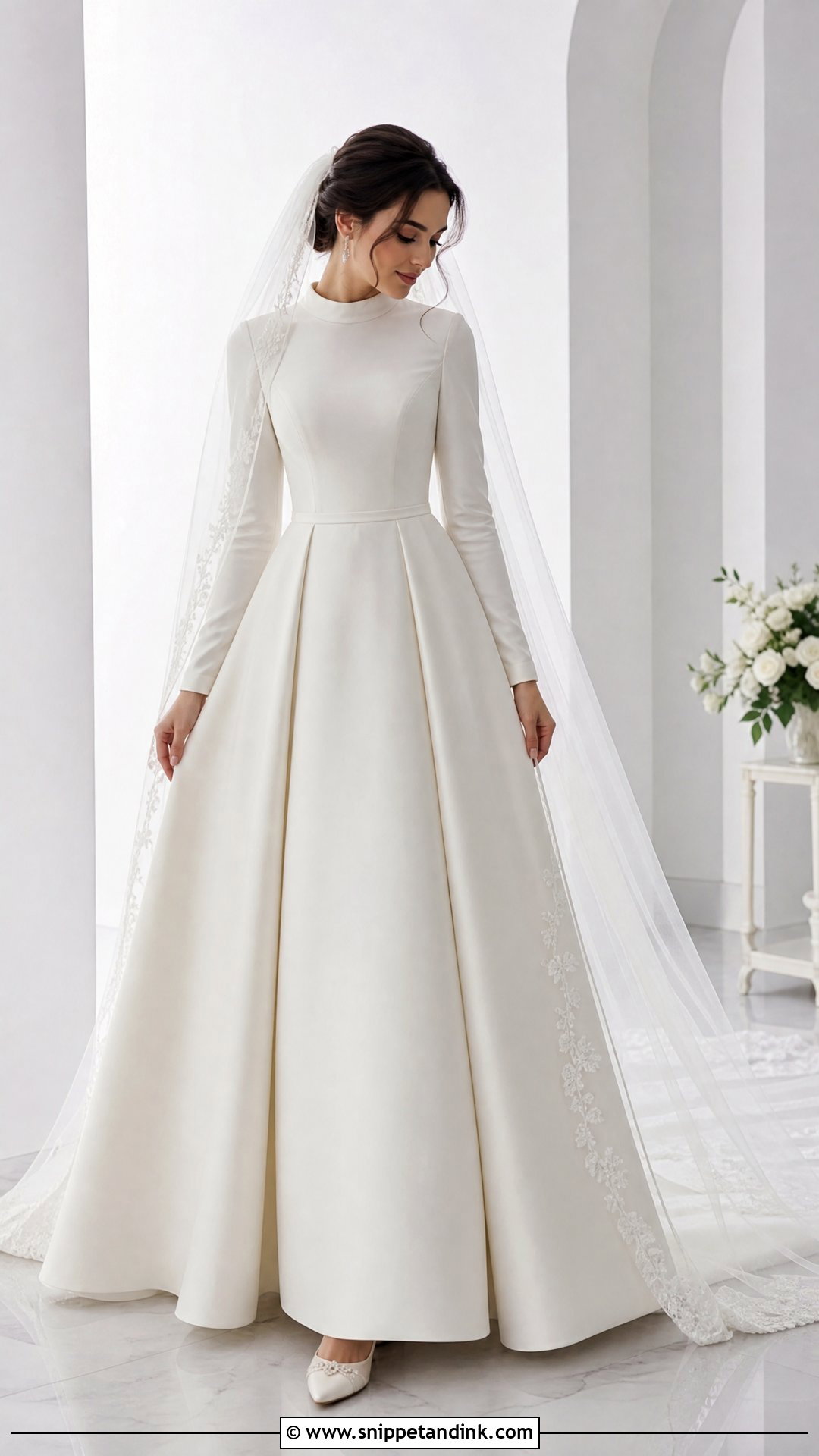
Modest gowns need structure more than decoration. I look for a lined bodice, full sleeves, a higher neckline and a skirt with real shape, usually an A-line or a ball gown. Lace appliqué, satin sheen, covered buttons and soft pleats add interest without exposure. Make sure the sleeves are lined in an opaque fabric if full coverage matters to you; some sleeves sold as covered are only sheer tulle. Veil, closed-toe heels and small earrings.
24. Winter Wedding Dress With Sleeves
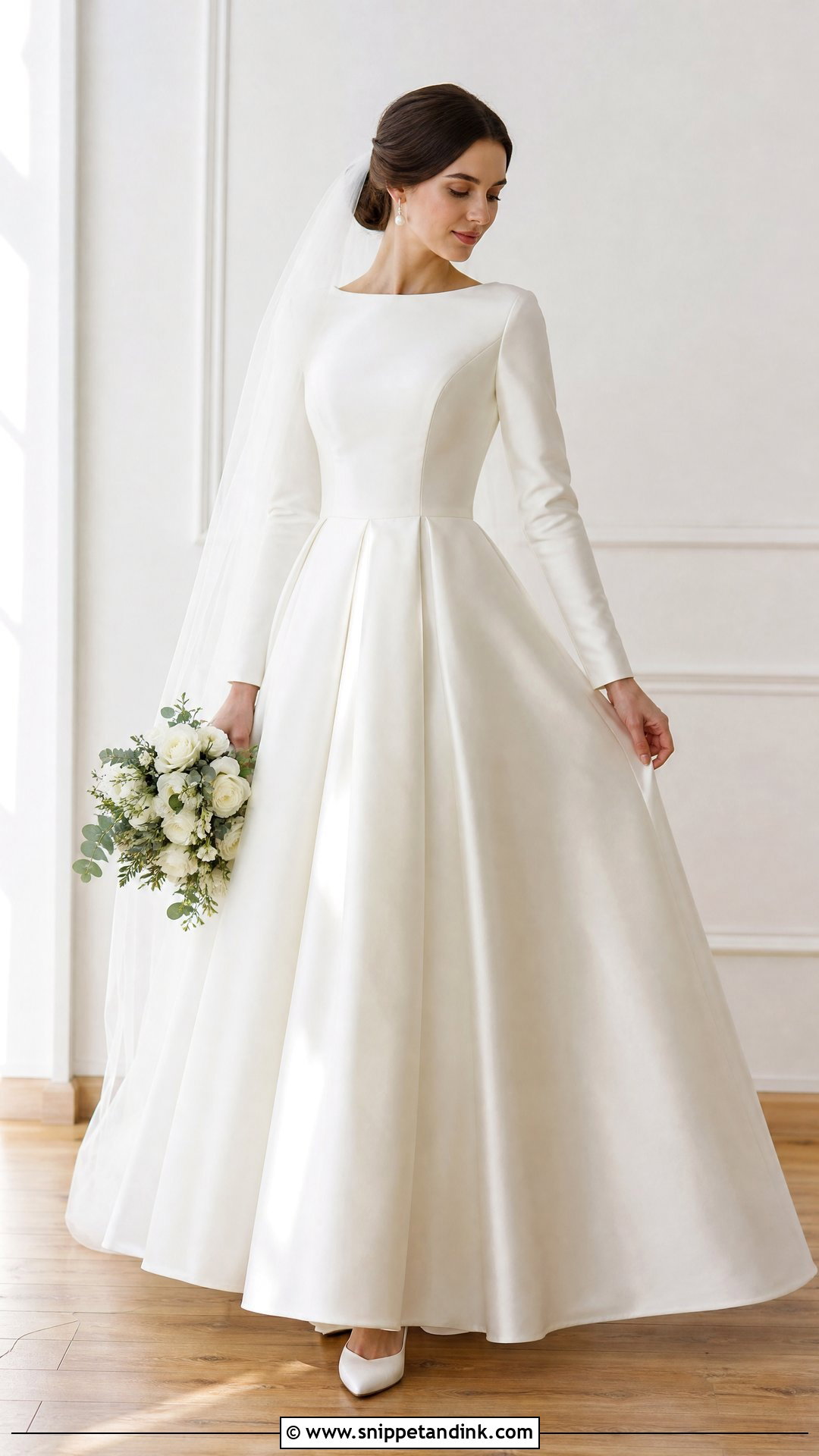
In winter, long sleeves are practical, but they won’t keep you warm outdoors on their own. Satin, crepe, mikado and heavier lace are the right weights for cold weather. A full skirt, a high neck or lined sleeves can make the dress feel seasonal. For outdoor photos, I keep a bridal coat or wrap ready and take it off only for the shot. Closed-toe heels, pearl earrings and a long veil.

25. Beach Wedding Dress With Sleeves
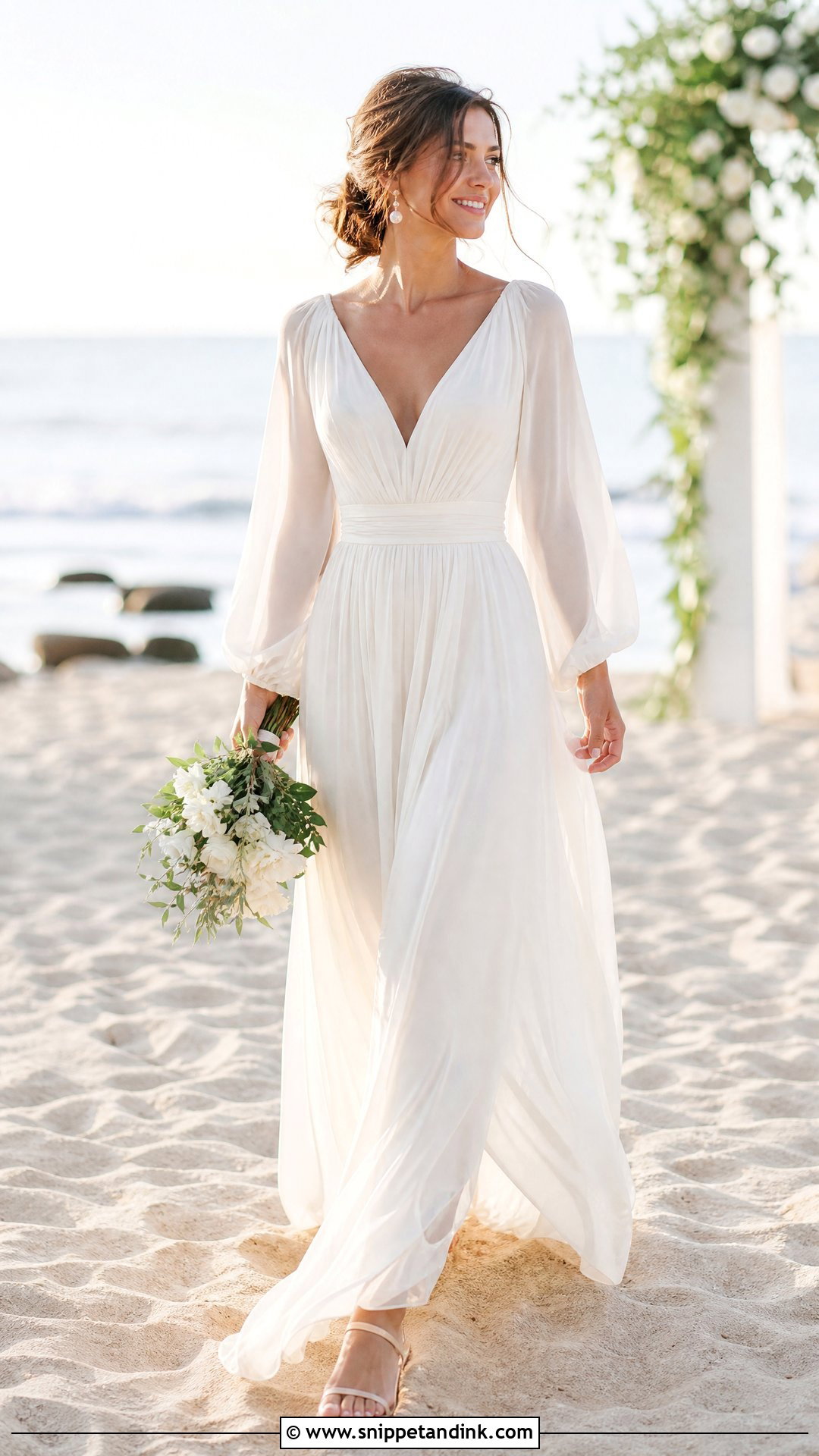
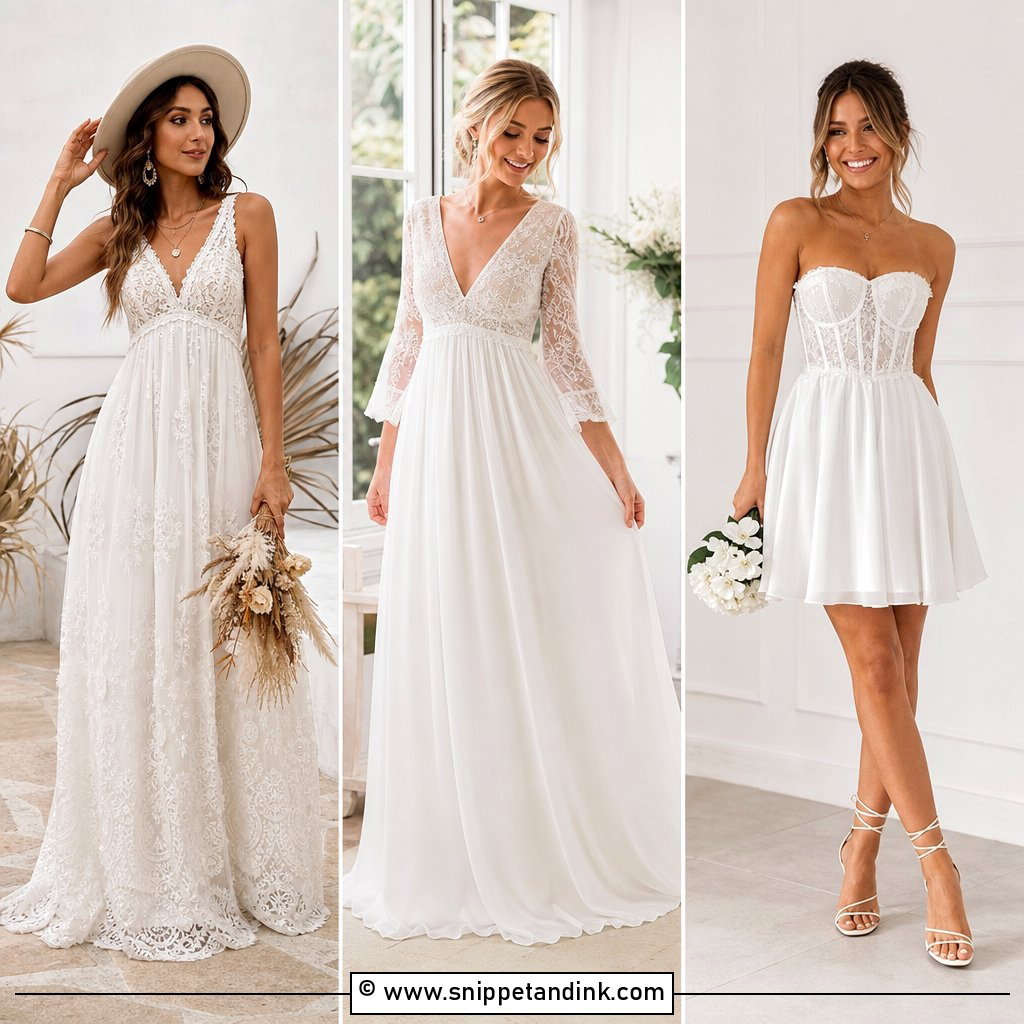
Near the water, weight and heat are the problems. Chiffon, tulle, lace and light crepe breathe; satin and mikado won’t. Sheer long sleeves, flutter sleeves or loose bishop sleeves give coverage while letting air through. A flowing A-line or relaxed column moves on sand better than a full skirt, which collects it. I’d hem the dress an inch shorter than usual, since sandals or bare feet sit lower than heels. Soft waves, minimal jewelry and natural makeup.
Adding Sleeves to a Gown That Came Without Them
Plenty of brides fall for a strapless or thin-strap gown and then want coverage. A skilled bridal seamstress can add sleeves, but it isn’t a quick job. I tell brides to raise it at the very first fitting, because matching fabric may need to be ordered from the designer, and that can take weeks.
The options, from easiest to most involved:
- Detachable sleeves or a sheer bolero, made separately, so the gown itself isn’t cut.
- Off-shoulder straps or flutter sleeves sewn to the existing bodice edge.
- Full set-in sleeves with an illusion yoke, which means rebuilding part of the bodice and usually costs the most.
Sleeves in hot weather
If you want sleeves for a summer wedding, choose unlined tulle, chiffon or open lace, and avoid polyester satin, which traps heat. I also suggest a quick test: wear the dress for half an hour at a fitting with the heating on. If you’re warm in a boutique, you’ll be uncomfortable at an outdoor ceremony.
Sweat shows first under the arm, especially on silk and satin. For any sleeved gown worn in warm weather, I have small removable dress shields stitched into the underarm at the final fitting. They’re invisible from outside, they protect the fabric, and they come out before the gown goes to the cleaner. Ask your seamstress about them; it’s a ten-minute job.
Which Sleeve Passes the Hug Test?
Sleeves can read classic, modern, romantic, modest or dramatic depending on fabric, neckline and silhouette. The right one moves with your arms and suits your ceremony. Lace softens, satin polishes, crepe sharpens and sheer sleeves lighten. Detachable sleeves give you two looks; puff, bishop and cape sleeves make a stronger fashion point. Try the shortlist on and hug someone in each. The sleeve that still feels right after that is usually the one.
You'll Like These Ideas:



Leave a Reply