
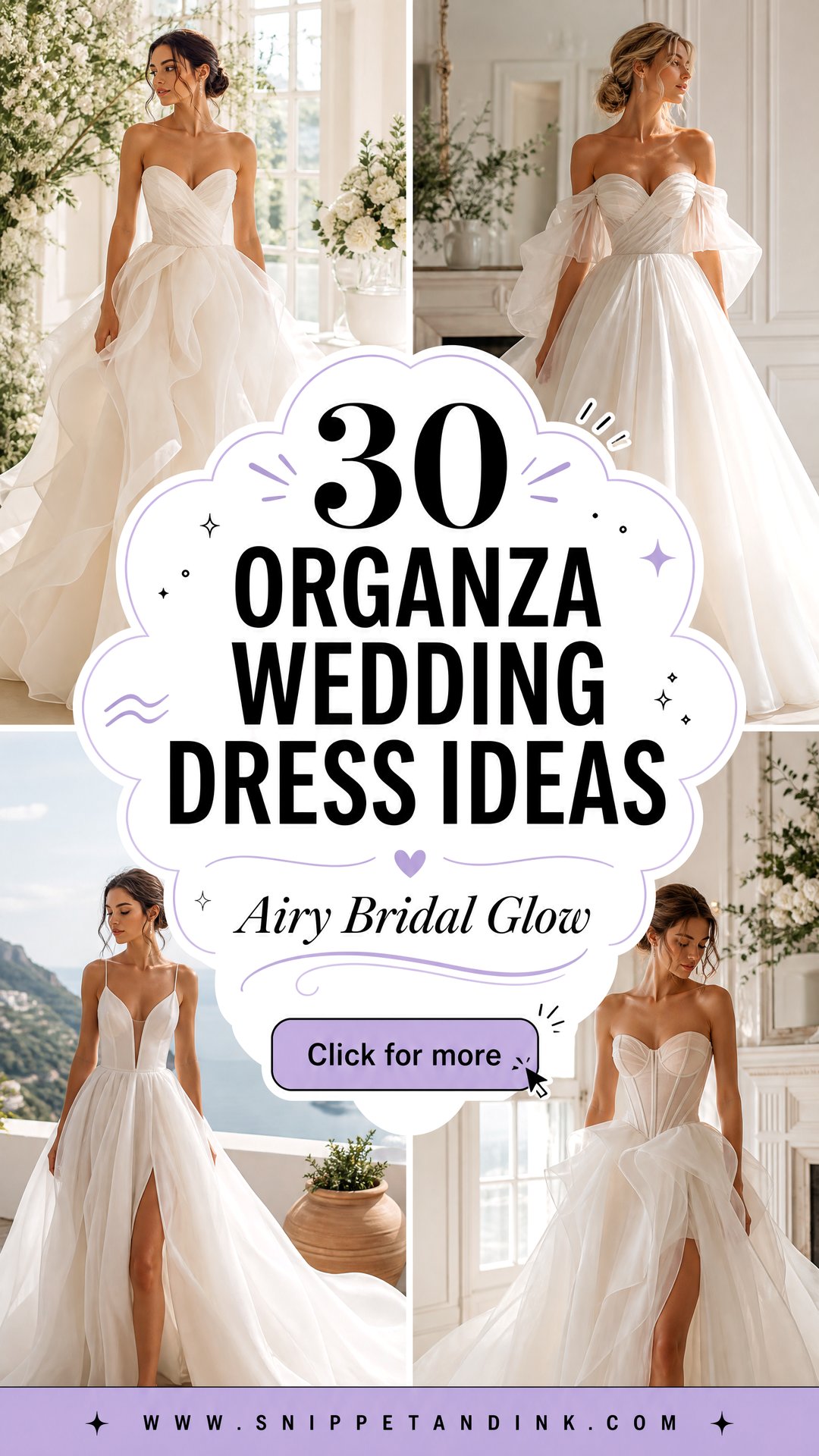
Organza is a sheer, tightly woven fabric made from highly twisted yarn, and that twist is what gives it its crispness. It holds a shape without much weight, which is why bridal designers use it for big skirts that still feel light to wear. It also creases, catches on rough edges and shows every water mark, so I always talk brides through how it behaves before they fall for it. Below are thirty organza gowns, from full ball gowns and soft sleeves to short reception dresses, with what I’d pair with each and what to watch for at fittings.
Silk Organza Versus Polyester, Felt in the Hand
Bridal organza comes in two main versions, and the label doesn’t always make it obvious. I ask every bride to hold both side by side before deciding, because they behave differently all day.
- Silk organza is softer, more matte and more breathable. It moves gently, but it creases more easily and costs more. Water can leave marks on it.
- Polyester organza is stiffer, holds sculpted shapes longer and resists creasing better. It’s usually cheaper and can look shinier under flash. It also traps more heat on a warm day.
- Many gowns mix both: polyester for structure underneath, silk for the outer layer.
For a hot outdoor wedding, I’d lean toward silk or a lighter blend. For a dramatic shape that has to hold up for twelve hours in air conditioning, polyester often does the job better.
1. Organza Ball Gown Wedding Dress
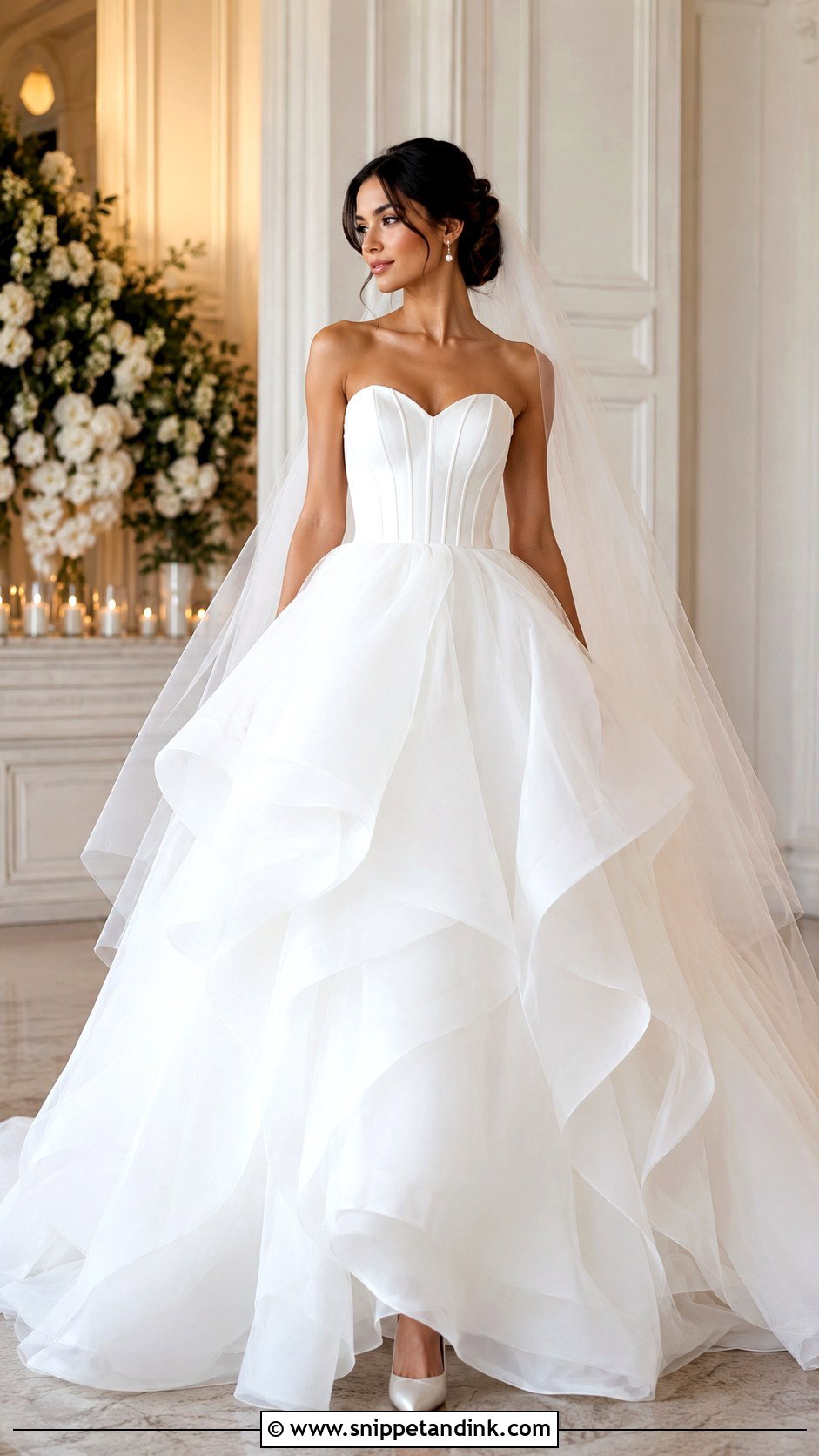
Organza gives a ball gown its volume with far less weight than satin, so you can wear a big skirt for hours without your waist aching. The skirt usually needs a light petticoat underneath to hold the full shape, so try the dress on with the actual underskirt at fittings. A fitted bodice with a scoop, straight or sweetheart neckline balances the fullness. Pearl studs, a smooth updo and satin or crystal heels keep it clean. A sheer organza veil echoes the skirt’s texture for a formal indoor wedding.
2. Organza A Line Wedding Dress
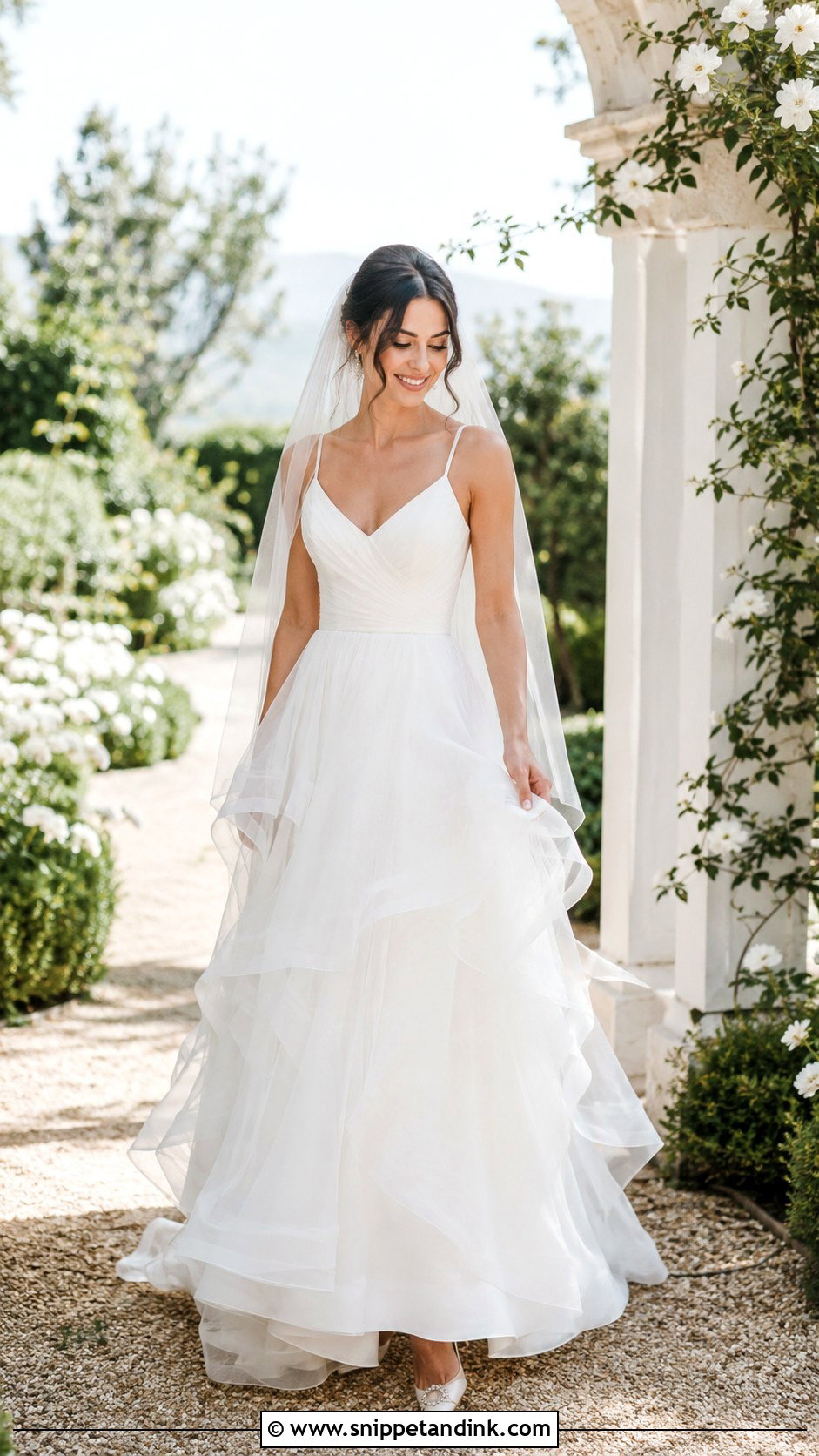
An organza A-line defines the waist and then skims away from the body, so it suits most frames. Layered organza moves softly without collapsing, which is the main advantage over chiffon in this shape. A structured bodice gives support. One thing I check is the hem: organza can be finished with a horsehair braid that stiffens and lifts the edge, and it changes how the skirt swings. Pointed heels, a fine bracelet and a fingertip veil suit garden, hotel and outdoor venues alike.
3. Strapless Organza Wedding Dress
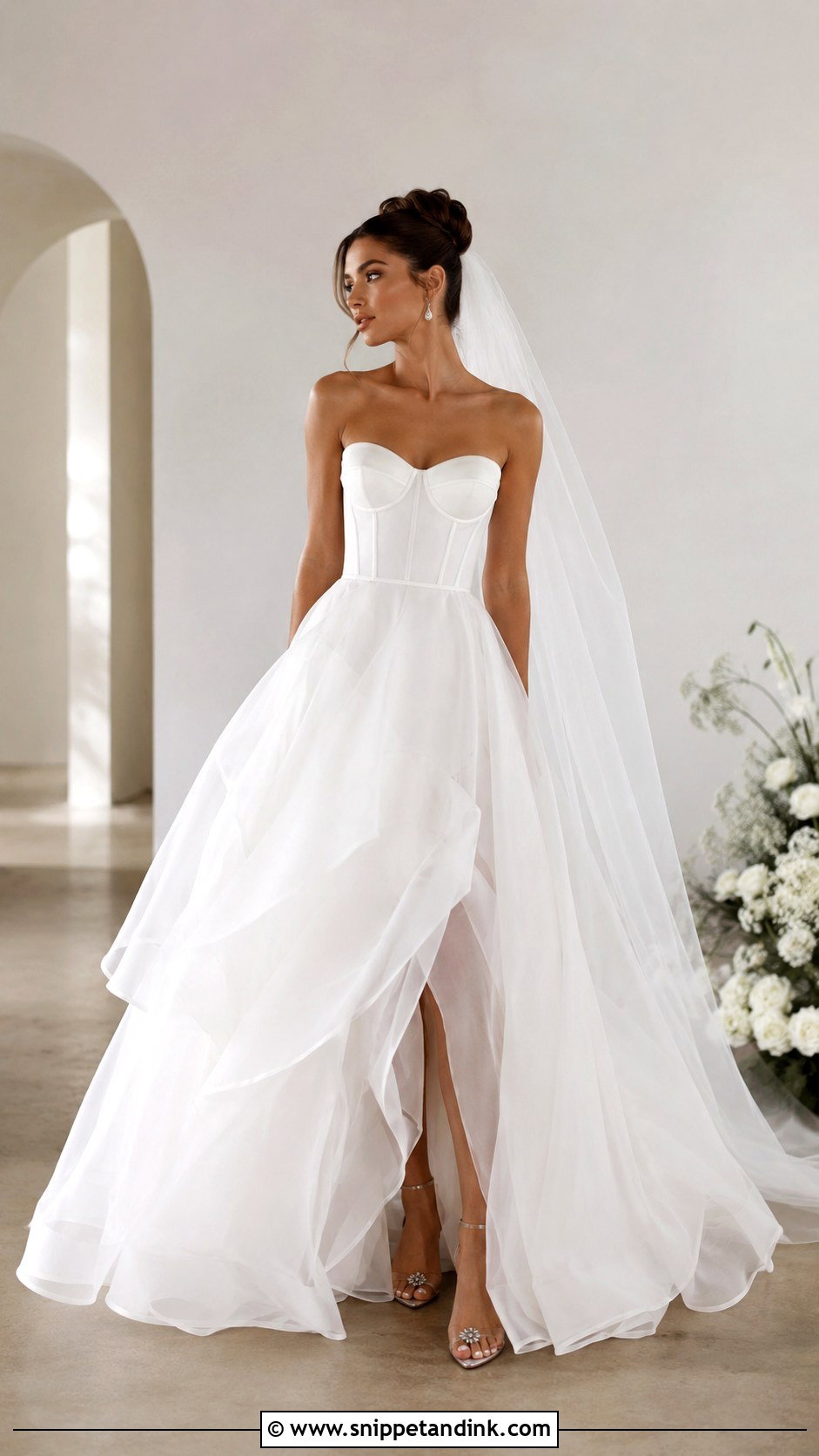
A strapless organza gown keeps the attention on the shoulders and collarbones, with the skirt adding volume below. A corset-style bodice helps hold up a fuller skirt, since a strapless top carries the skirt’s weight entirely from the waist. Drop earrings, a sleek bun and barely-there heels keep it uncluttered. If the evening turns cool, detachable organza sleeves or a sheer wrap add coverage without changing the dress.
4. Off Shoulder Organza Wedding Dress
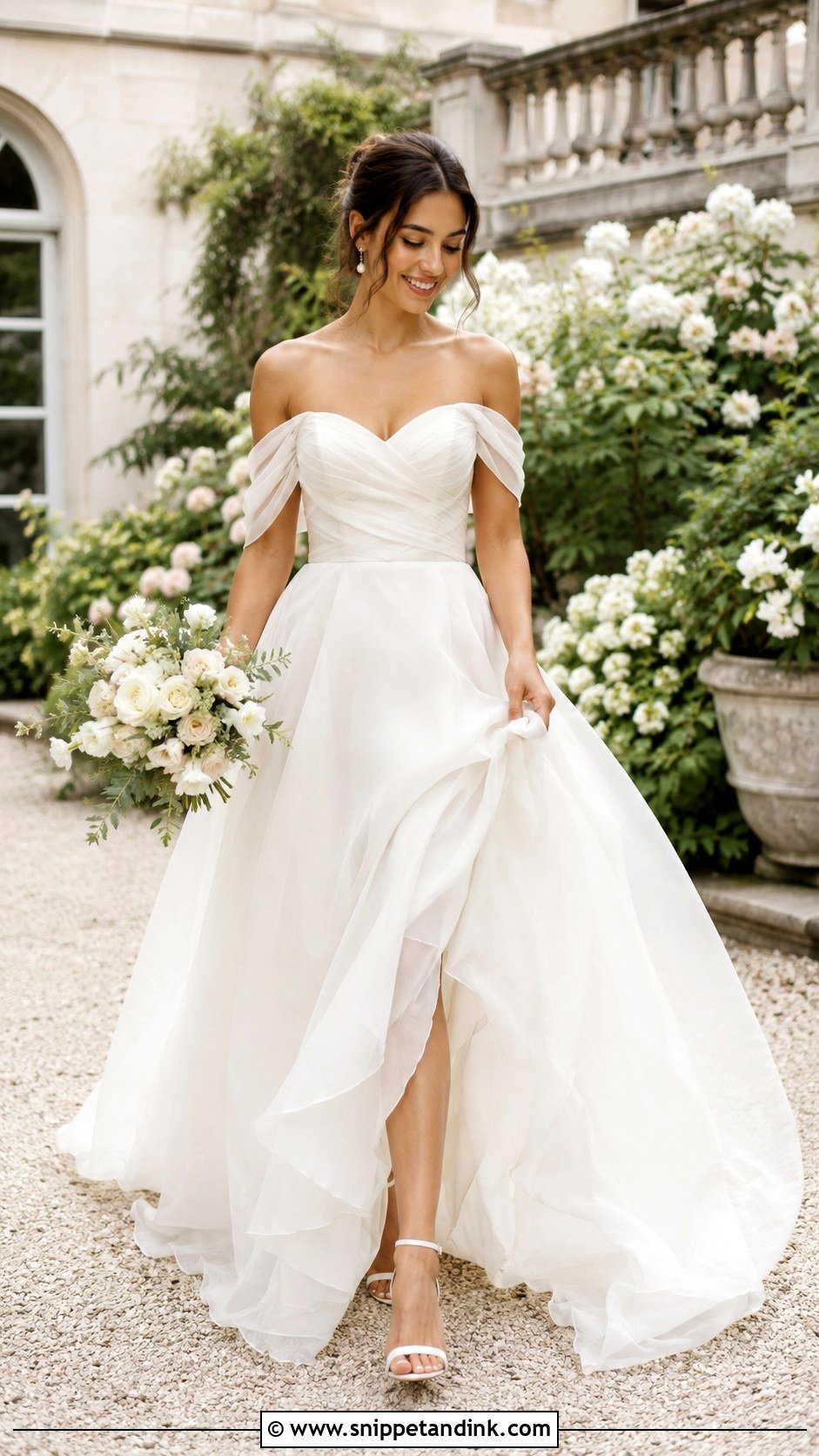
Off shoulder organza sleeves, whether folded, draped or lightly puffed, hold their shape on their own because the fabric is crisp. The catch is that the bands can feel stiff against the upper arm, so check you can raise your arms and hug comfortably. A fitted waist and flowing skirt balance the neckline. A low chignon, pearl earrings and ivory heels suit garden, estate and coastal weddings in spring and summer.
5. Long Sleeve Organza Wedding Dress
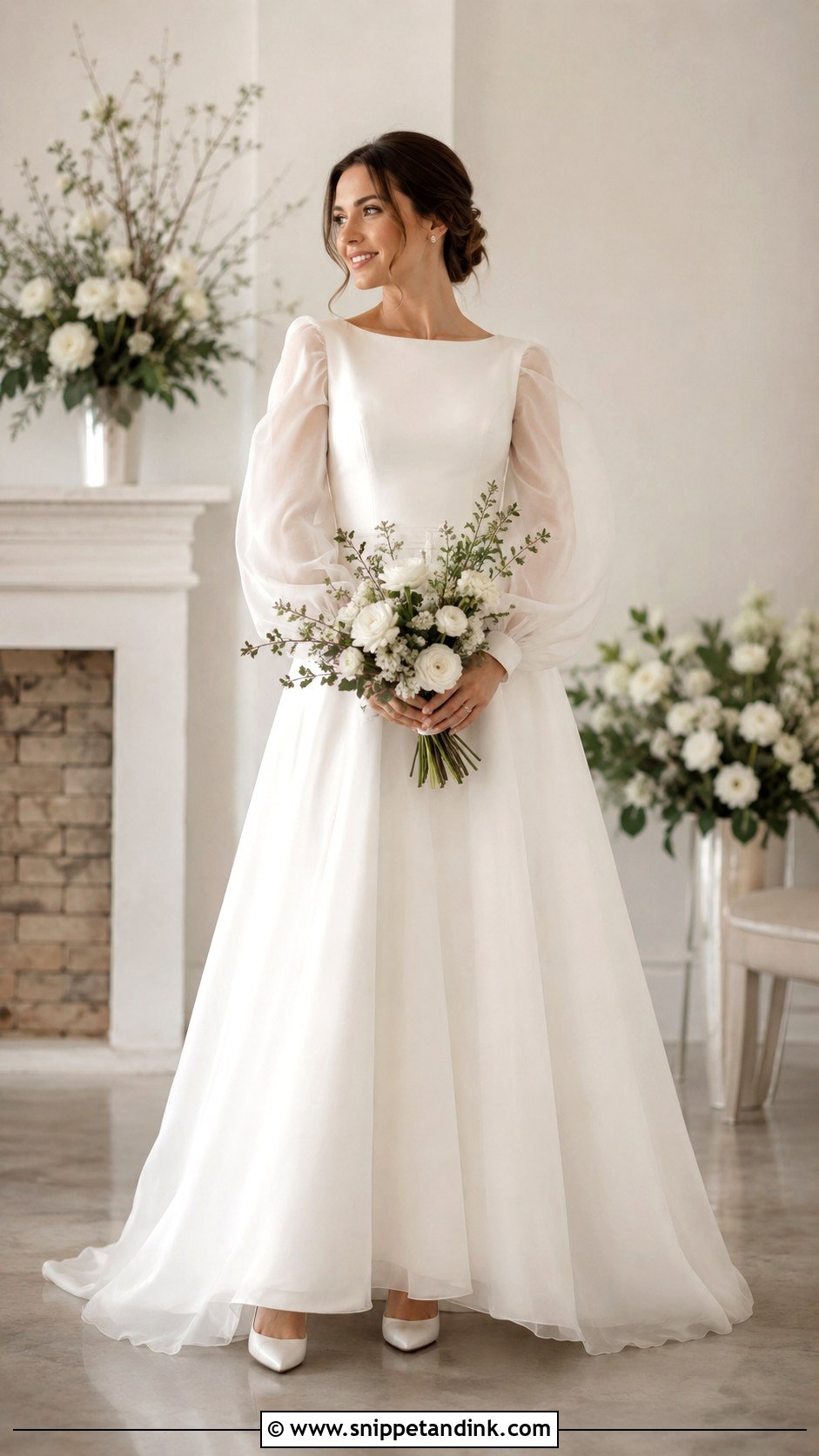
Sheer organza sleeves give coverage without much warmth, which is why they work across seasons. Bishop sleeves gather at the cuff and billow; slim sheer sleeves look sharper. Organza sleeves are stiffer than chiffon or tulle ones, so they don’t cling to the arm, which some brides love and some find a little boxy. Keep the skirt clean, the heels closed-toe and the jewelry refined. A smooth veil or simple comb suits it in autumn, winter or early spring.
6. Floral Organza Wedding Dress
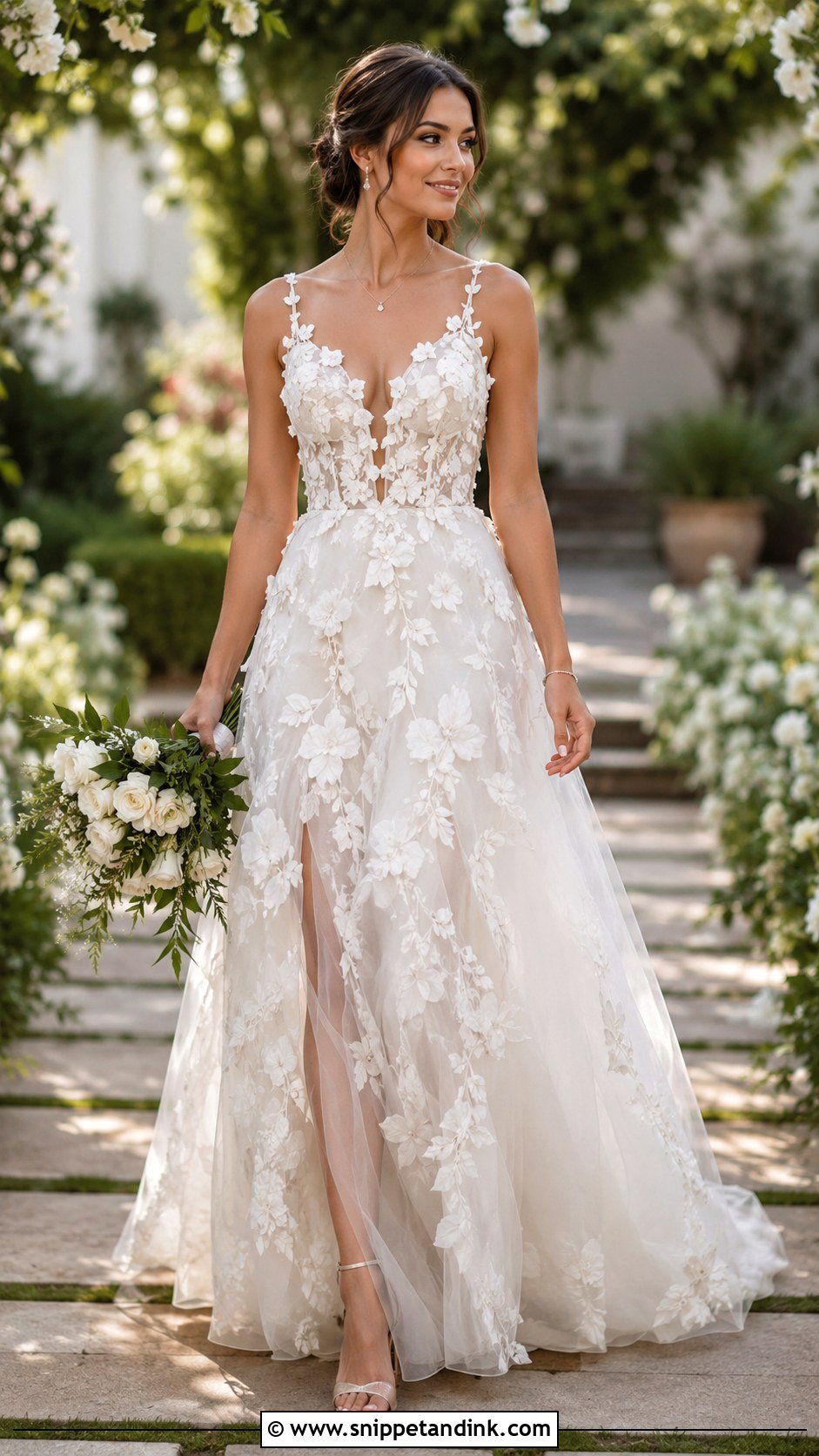
Flowers on organza can be appliqué, embroidery, print or cut petals layered across the bodice and skirt. Because the base is sheer, appliqués look as if they float, which gives real depth in photos. Raised petals can catch on bouquet wires and jewelry, so choose smooth earrings. Soft waves and neutral heels suit outdoor and spring weddings. If the floral work is bold, skip heavy jewelry and finish with a plain veil.
7. Simple Organza Wedding Dress
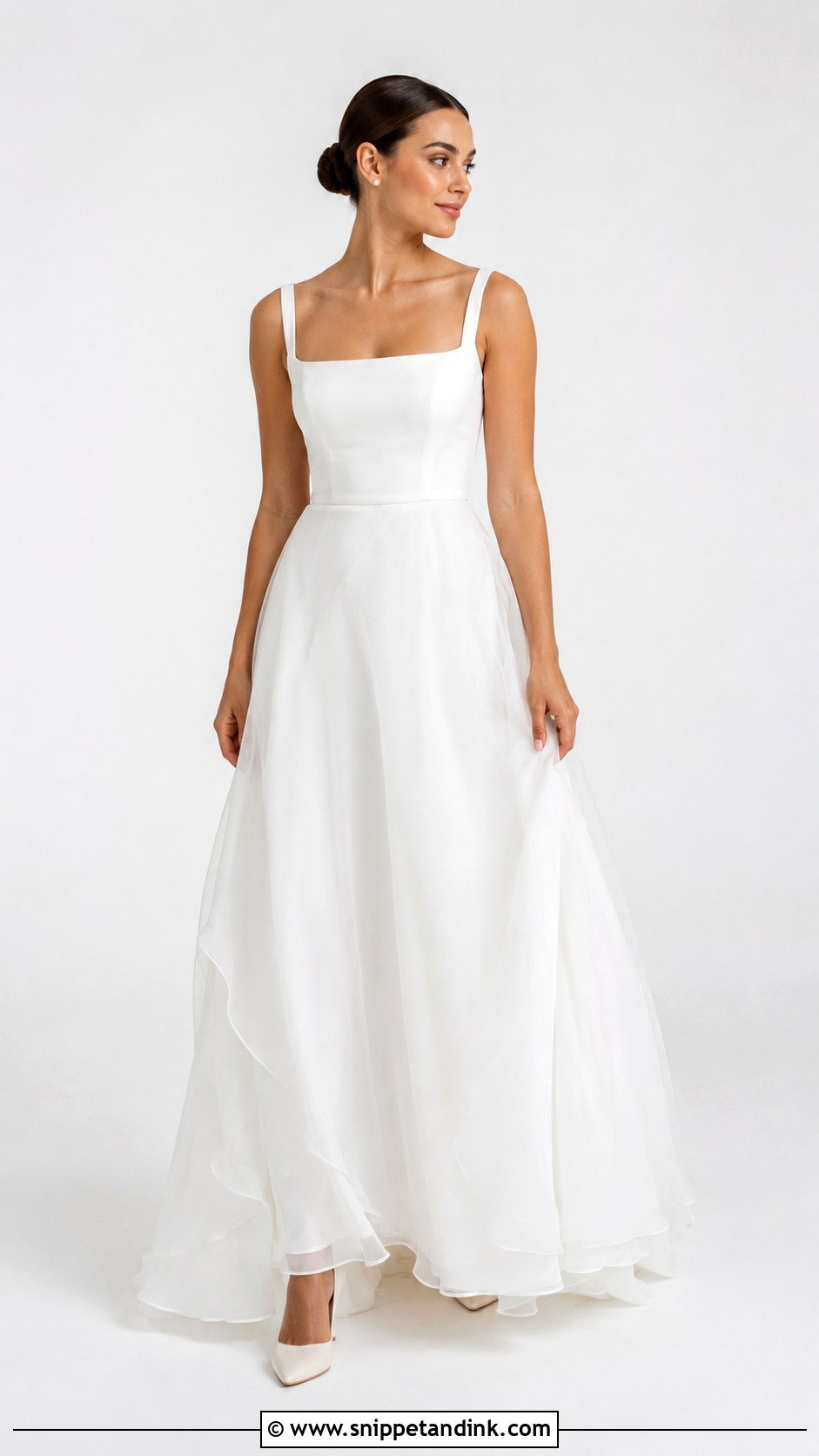
A plain organza dress relies on clean seams and a softly layered skirt. Organza seams are hard to hide, since the fabric is sheer, so look closely at how the inside is finished; neat French seams look tidy even when light shines through. A square, bateau or straight neckline gives a modern finish. Pearl studs, low heels and a neat bun or blowout suit courthouse ceremonies and intimate weddings.
8. Organza Mermaid Wedding Dress
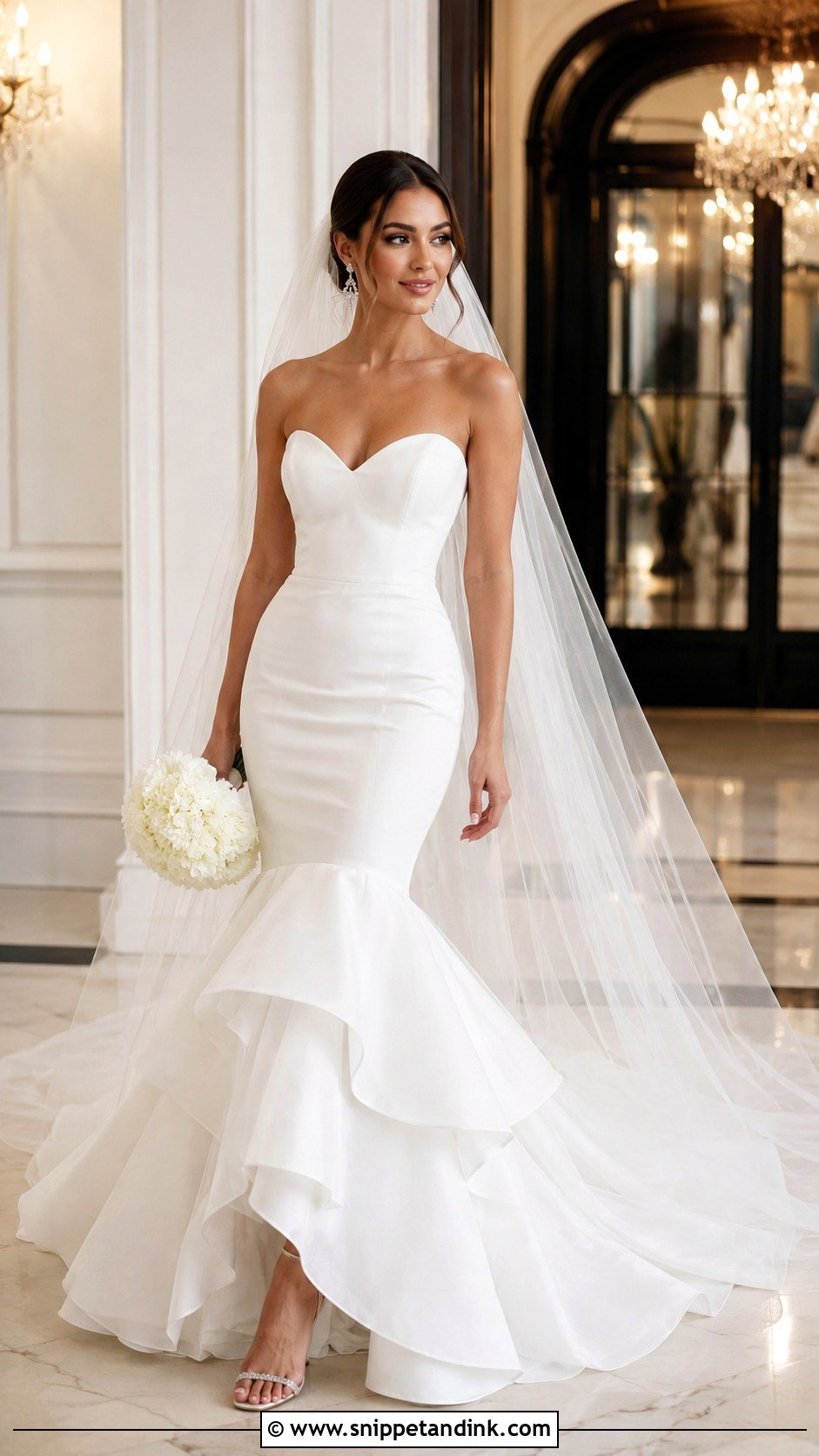
An organza mermaid stays close through the bodice and hips, then flares below the knee in a soft, light ruffle instead of a heavy satin one. The fitted part is usually made in a firmer fabric with organza only at the flare, so check how the two meet; an awkward seam line shows. A strapless or off shoulder neckline suits it. Walk in it before buying, since a high flare point limits your stride. Statement earrings, sleek heels and a long veil suit a formal evening wedding.
9. Organza Fit And Flare Wedding Dress
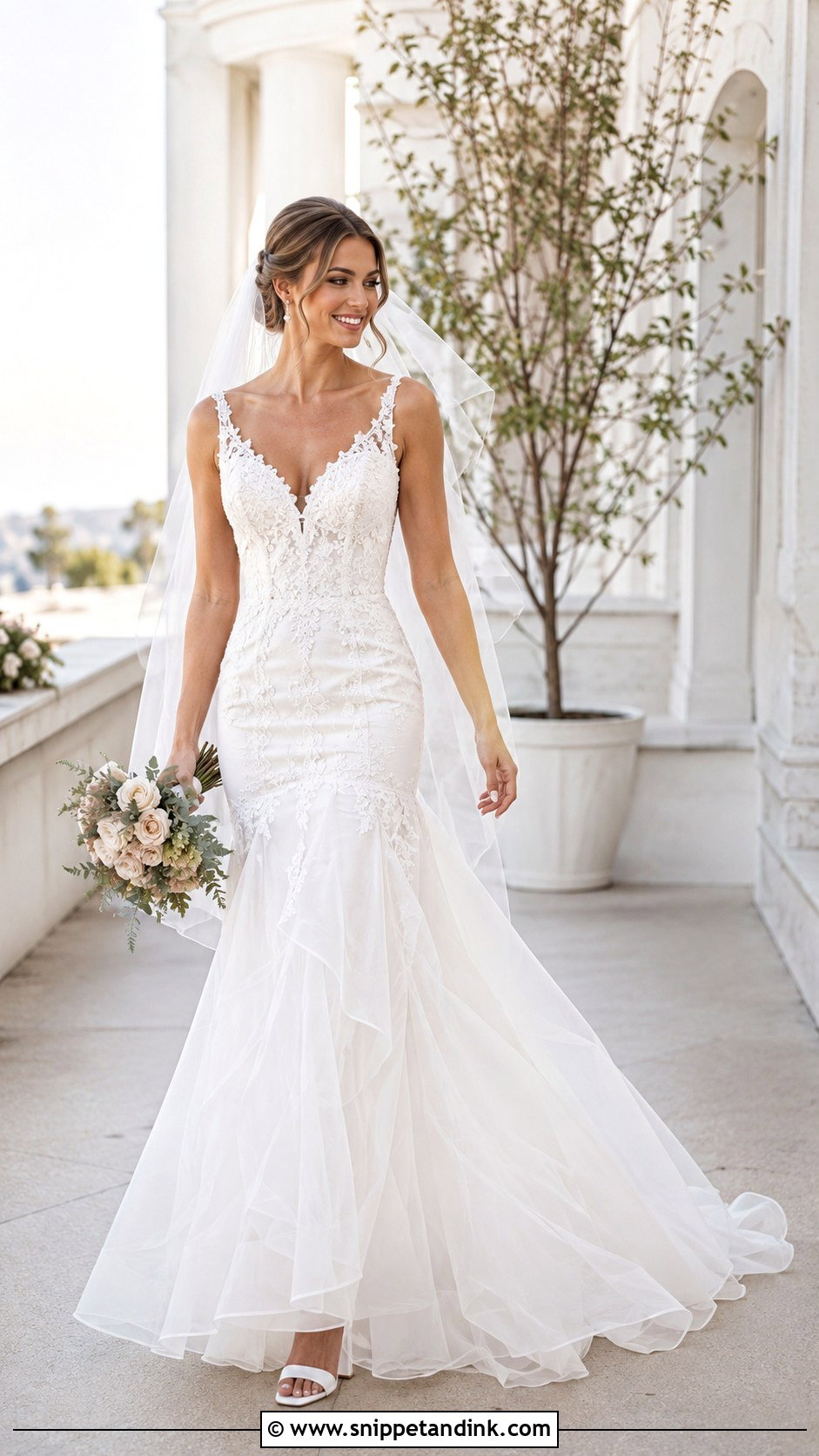
A fit and flare is gentler than a mermaid: it hugs the bodice and waist, then opens gradually, so walking and sitting are easier. Organza keeps the skirt light. Look for soft ruching, floral appliqués, or a clean corset bodice. On grass, block heels stop you sinking; indoors, sleek pumps work. A medium veil keeps the proportions balanced.
10. Organza Wedding Dress With Bow
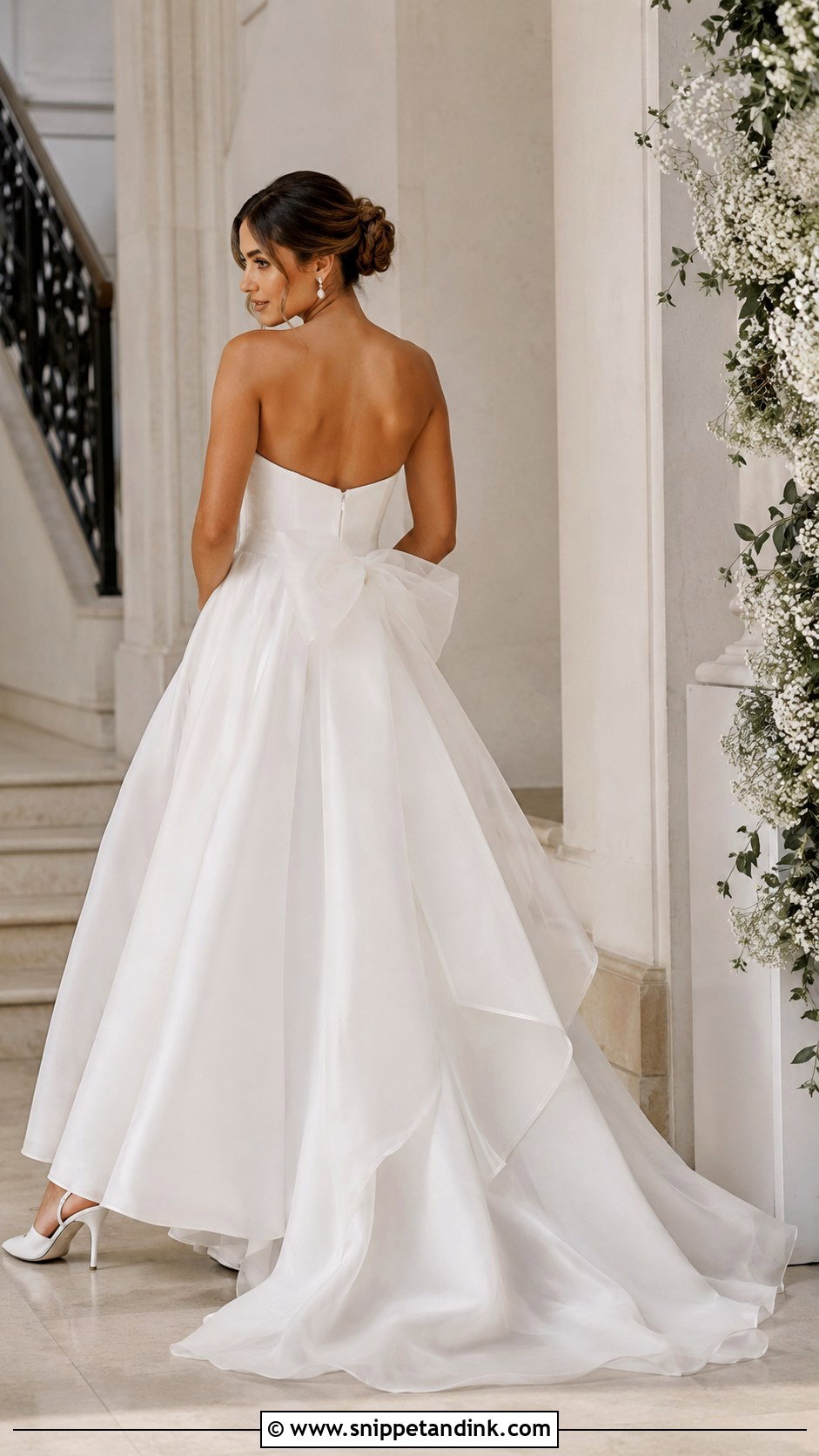
Organza holds a bow’s shape crisply, where softer fabrics would droop by evening. The bow can sit at the back waist, on the shoulder, across the bodice or as a detachable train detail. A back bow gets crushed when you sit, so ask whether it’s interfaced and practise sitting slightly forward. Keep everything else simple: smooth hair, soft makeup and classic heels. It will show in nearly every aisle and portrait shot from behind.
11. Organza Wedding Dress With Ruffle Skirt
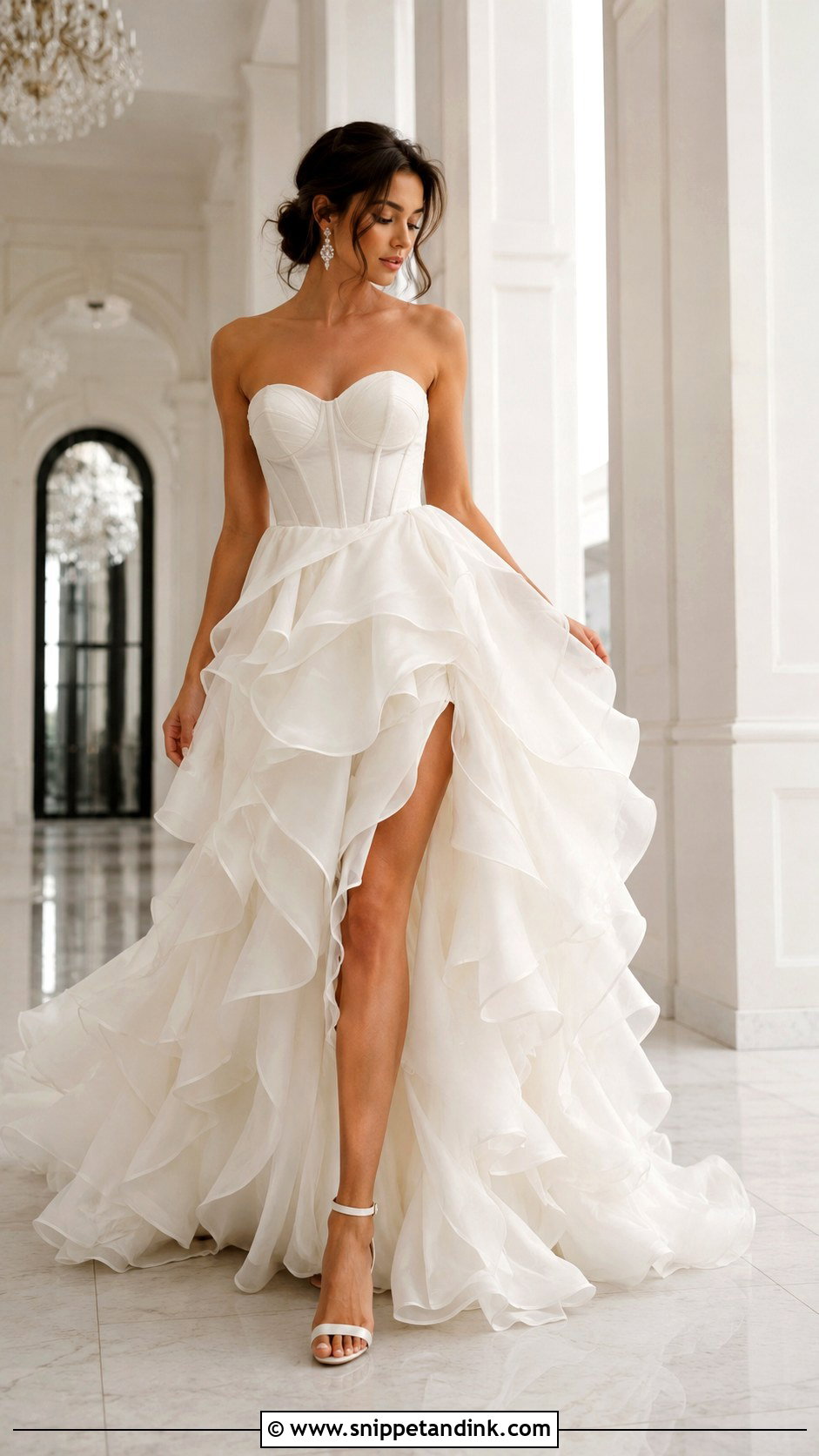
Organza ruffles hold their shape, so even many layers feel light rather than bulky. Soft cascading ruffles feel romantic; structured ones look more fashion-led. Balance the skirt with a simple bodice, like a strapless corset or clean scoop neck. Ruffle edges are where organza frays and snags first, so check they’re finished neatly. Minimal jewelry, elegant heels and a plain veil let the skirt move without competition.
12. Organza Wedding Dress With Corset Bodice
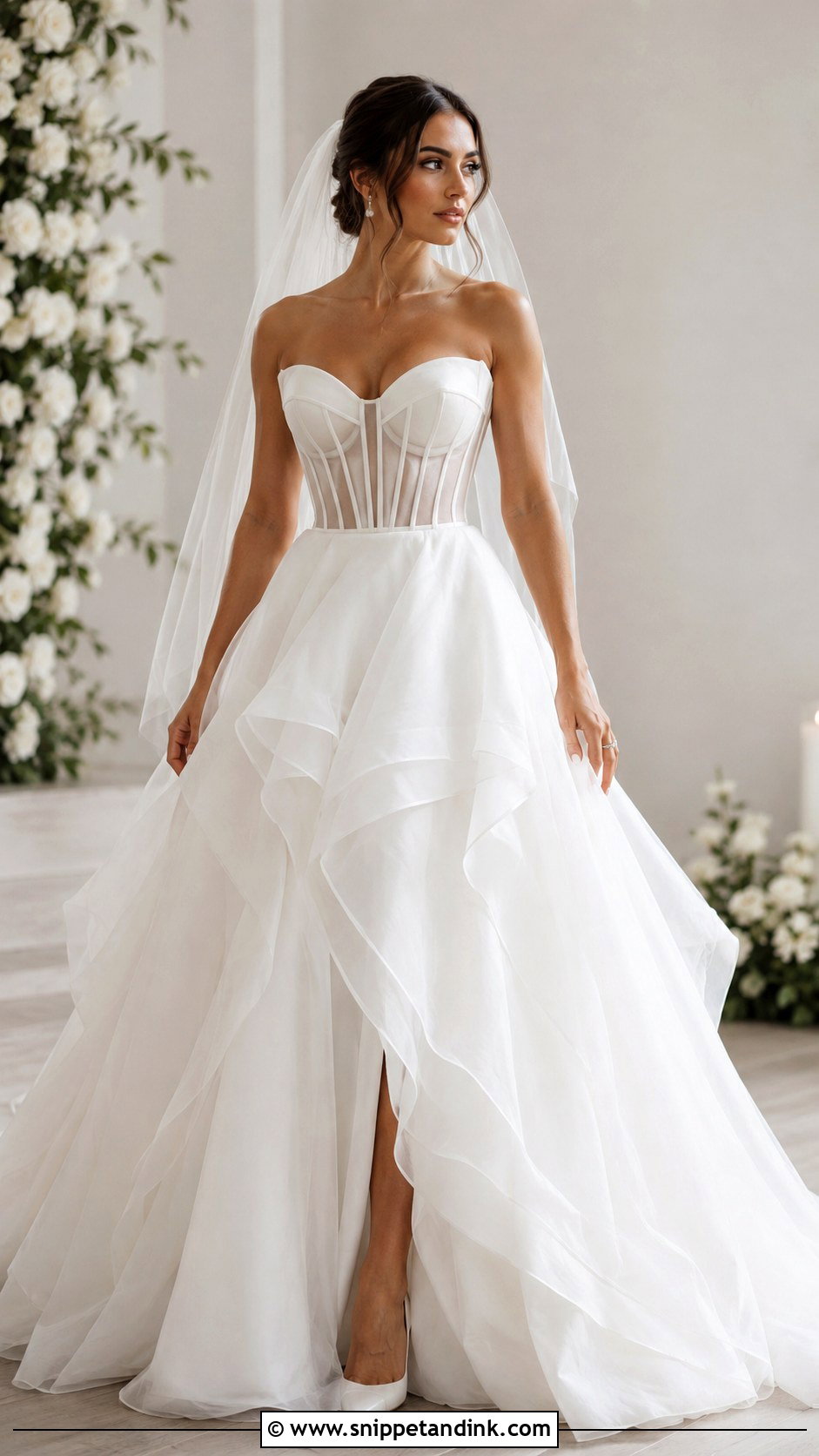
A corset bodice supports a full organza skirt and defines the waist. Exposed boning looks modern; covered boning looks classic. Corsets should be laced snug, not tight, so you can eat, sit and breathe for a full day. A full A-line or ball gown skirt balances the fitted top. Delicate earrings, a soft updo and ivory heels suit it for outdoor ceremonies or formal receptions.
13. Square Neck Organza Wedding Dress
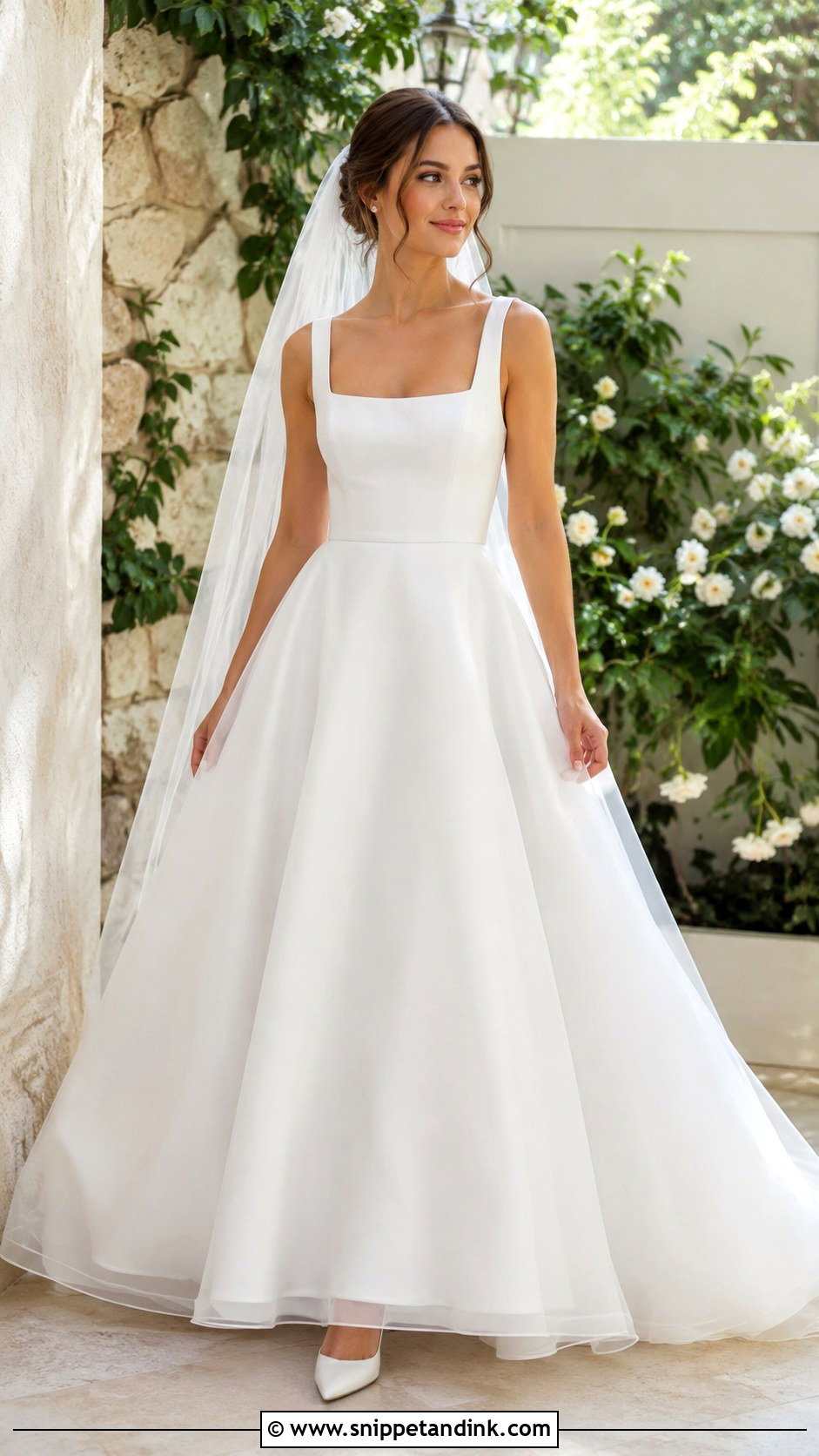
A square neckline frames the collarbones in a straight line and adds structure above a full organza skirt. It works with straps, cap sleeves or long sheer sleeves. I watch the corners of the neckline at fittings; if they bow outward when you breathe in, the bodice needs taking in. Pearl earrings, a smooth veil and pointed heels suit formal, garden or daytime weddings.
14. Sweetheart Organza Wedding Dress
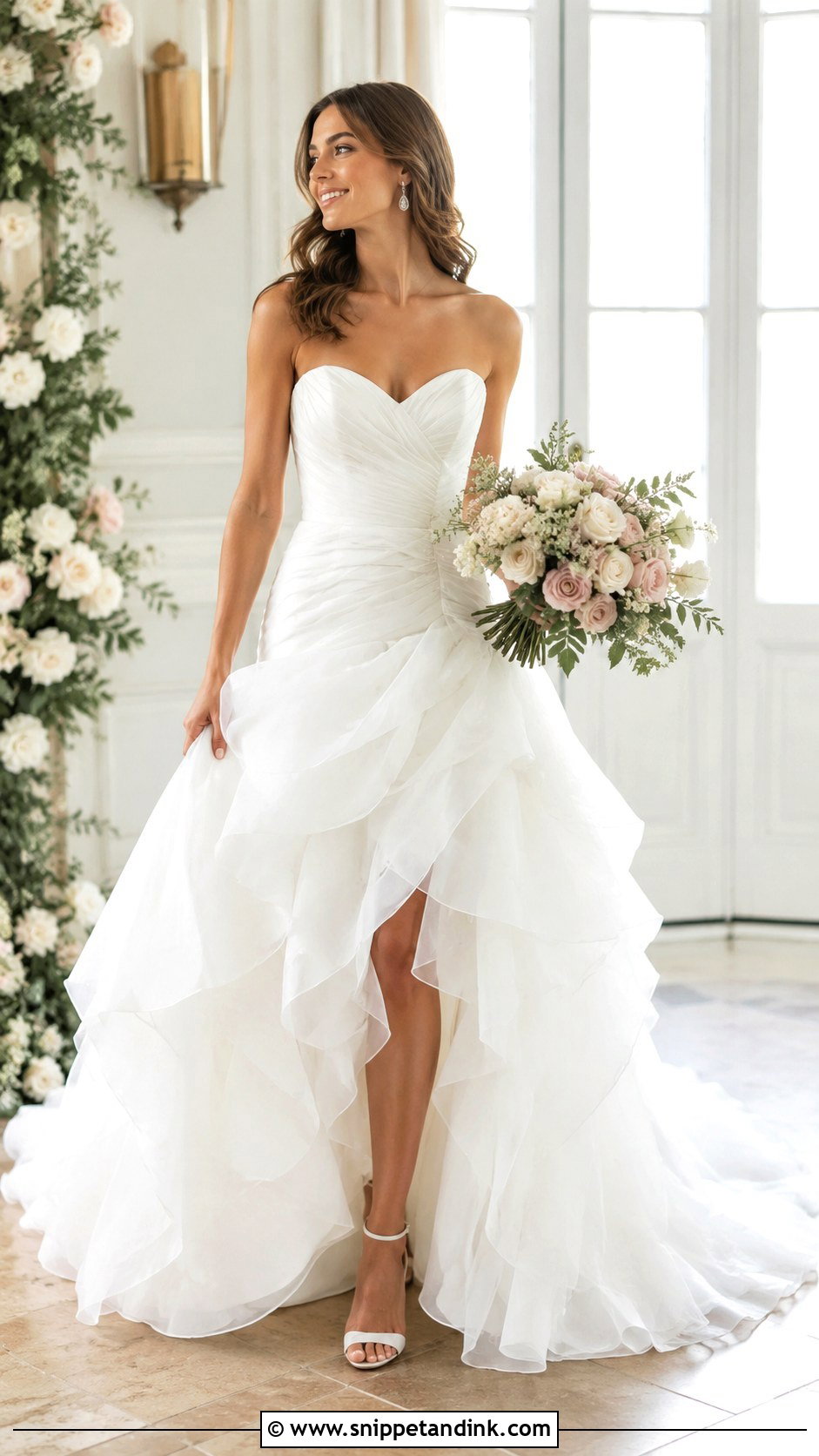
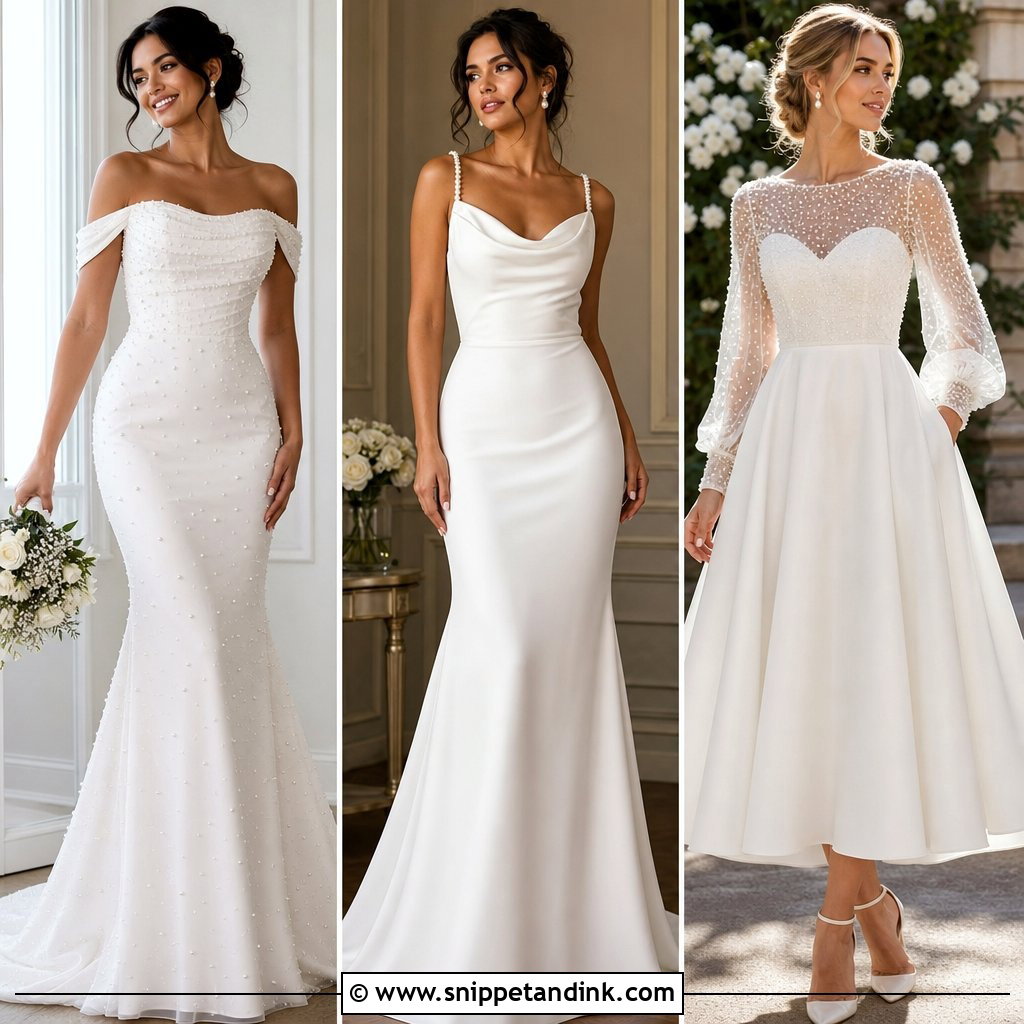
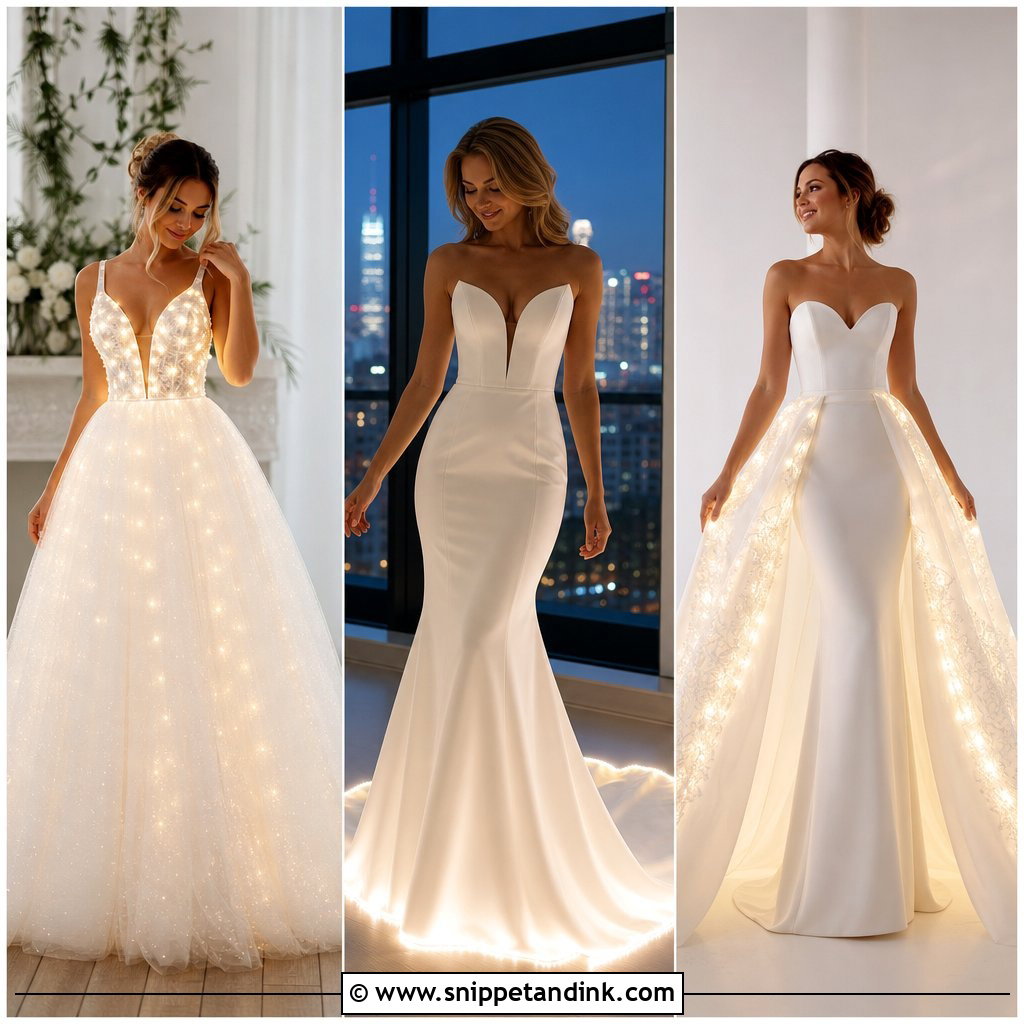
A sweetheart organza wedding dress pairs a curved bodice with a light skirt, which draws the eye up to the face. Strapless sweetheart necklines need firm internal structure to stay in place, so test it by leaning forward and raising your arms. Sheer straps or detachable sleeves add support. Soft curls, small drop earrings and classic heels suit gardens, ballrooms and bright indoor venues.
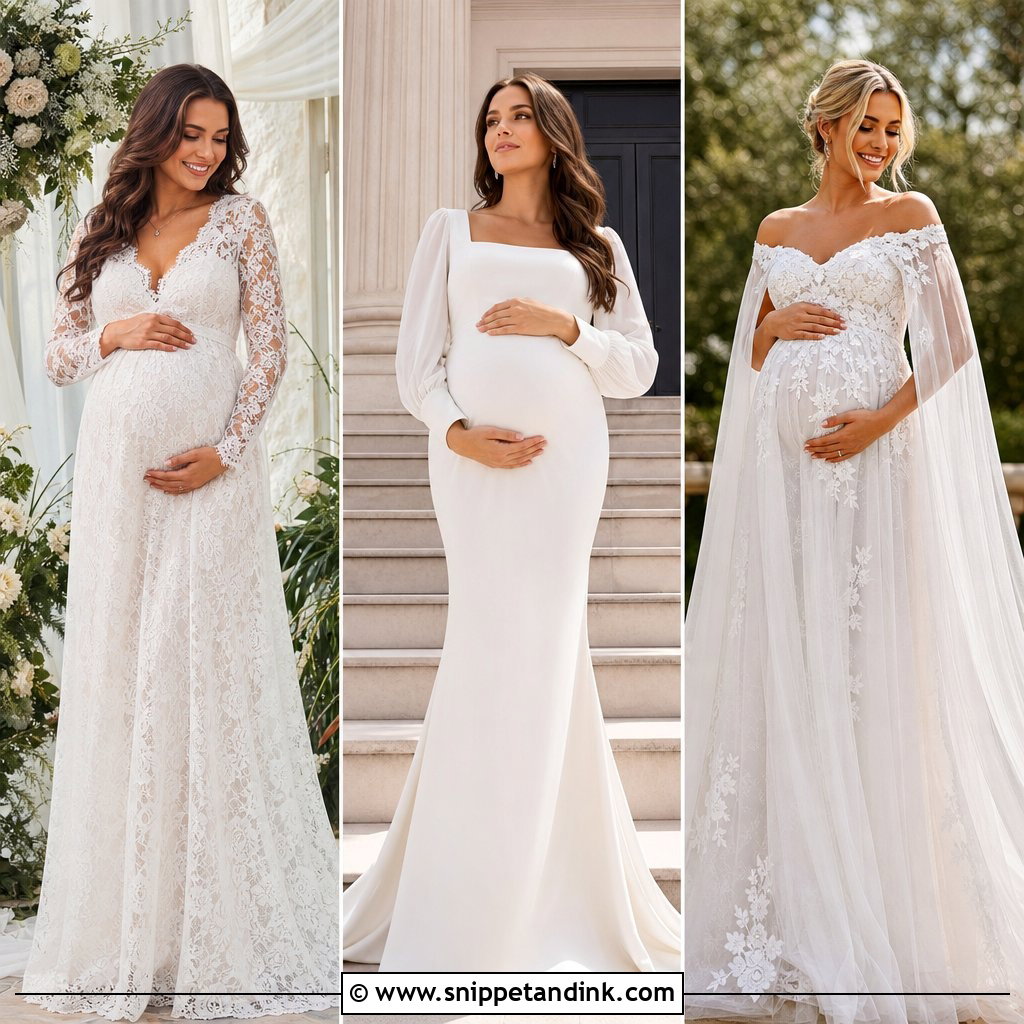
15. High Neck Organza Wedding Dress
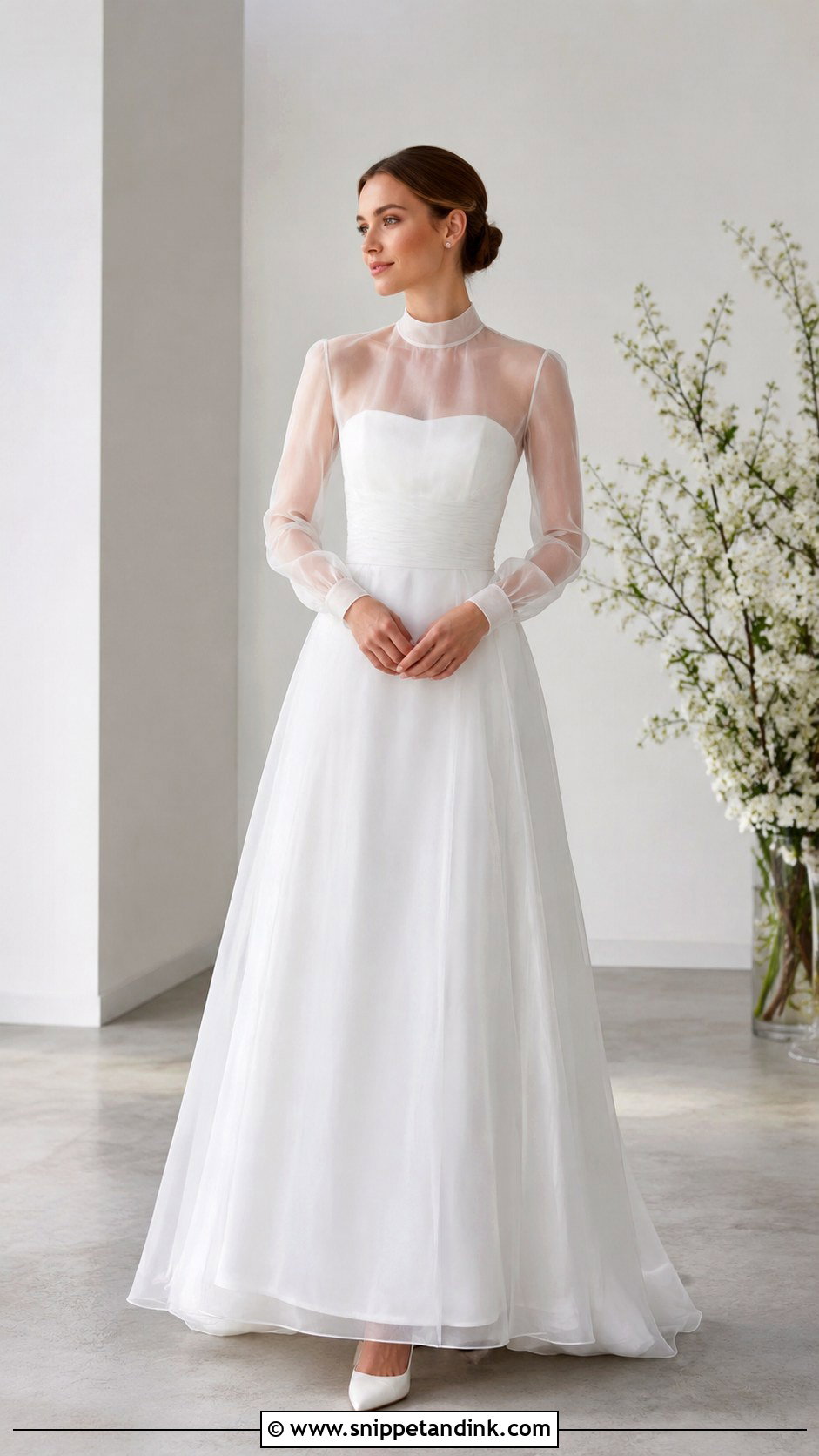
Sheer organza at the neck gives coverage without heat. A clean bodice, slim sleeves or a flowing A-line skirt suit the high neckline. Because organza is crisp, a high collar can stand slightly away from the neck rather than lying flat, so check it at a fitting with your head turned. Small earrings, no necklace and a sleek bun or low twist keep the line clear. Satin pumps and a simple veil finish it.
16. Organza Wedding Dress With Detachable Sleeves
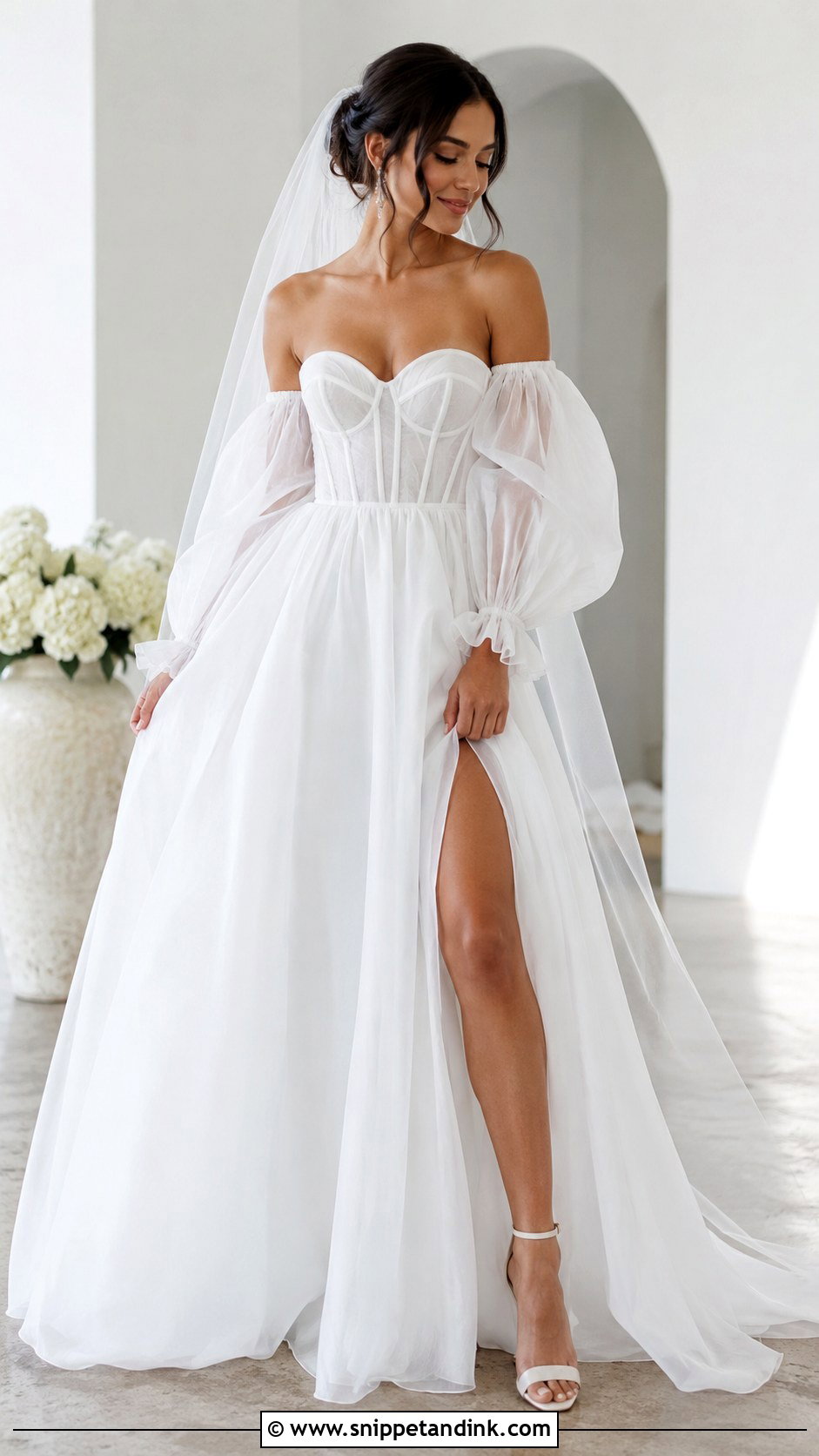
Detachable organza sleeves give you a covered look for the ceremony and a lighter one for dancing. They can be puffed, draped, off shoulder or fitted. A strapless or corset gown is the best base. Ask how they attach: elastic, hooks or ties each feel different, and some slip down during the evening. Clean heels, soft jewelry and a plain veil keep the textures from piling up.
17. Organza Wedding Dress With Cape
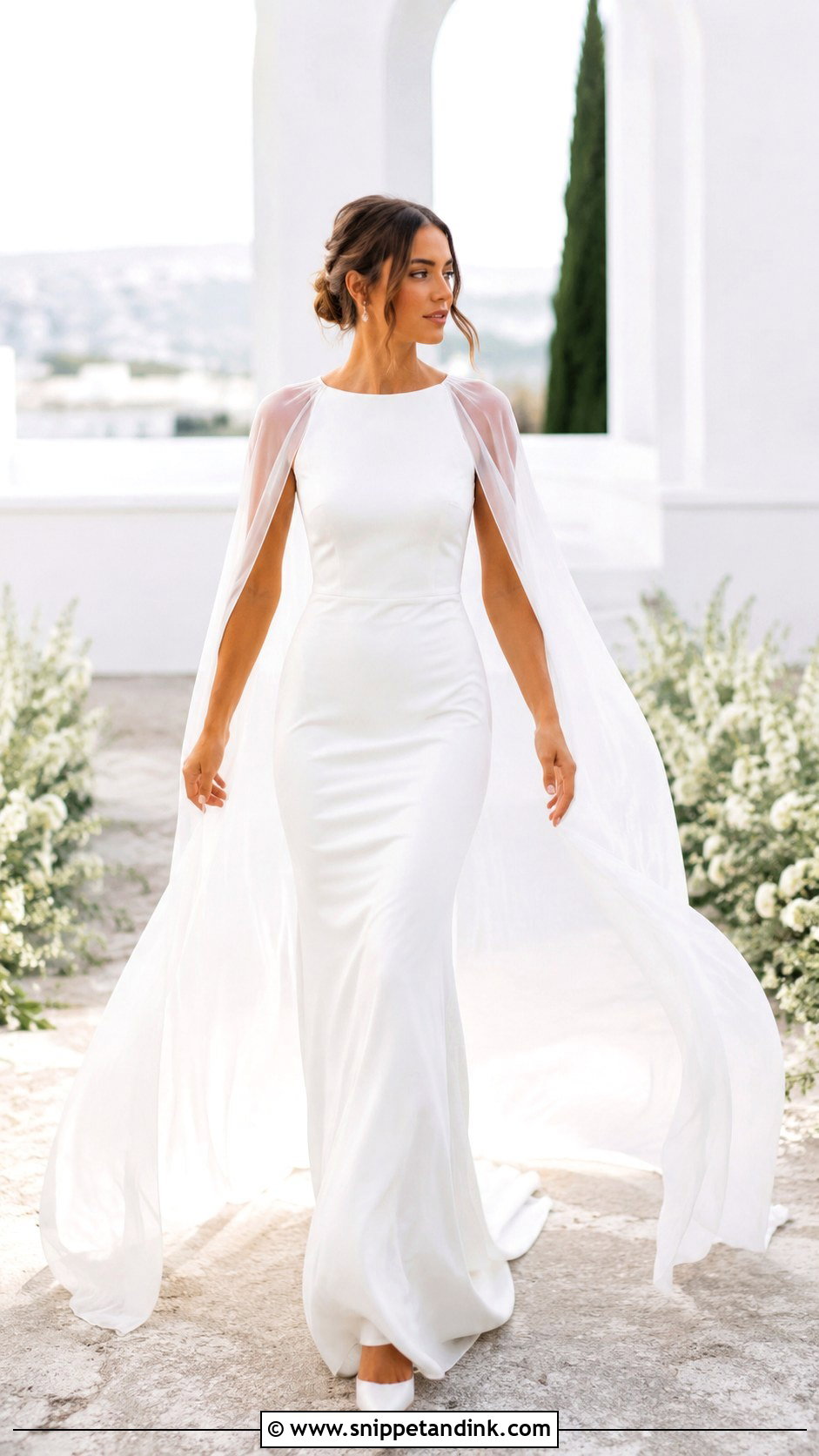
An organza cape gives the drama of a long train without the weight trailing behind you. It can fall from the shoulders, attach at the neckline or sit as a sheer overlay. Wind lifts organza capes easily outdoors, so ask whether it can be weighted or pinned at the back. A clean A-line, sheath or strapless gown underneath lets it flow. Minimal earrings, elegant heels and a smooth hairstyle finish it.
18. Tea Length Organza Wedding Dress
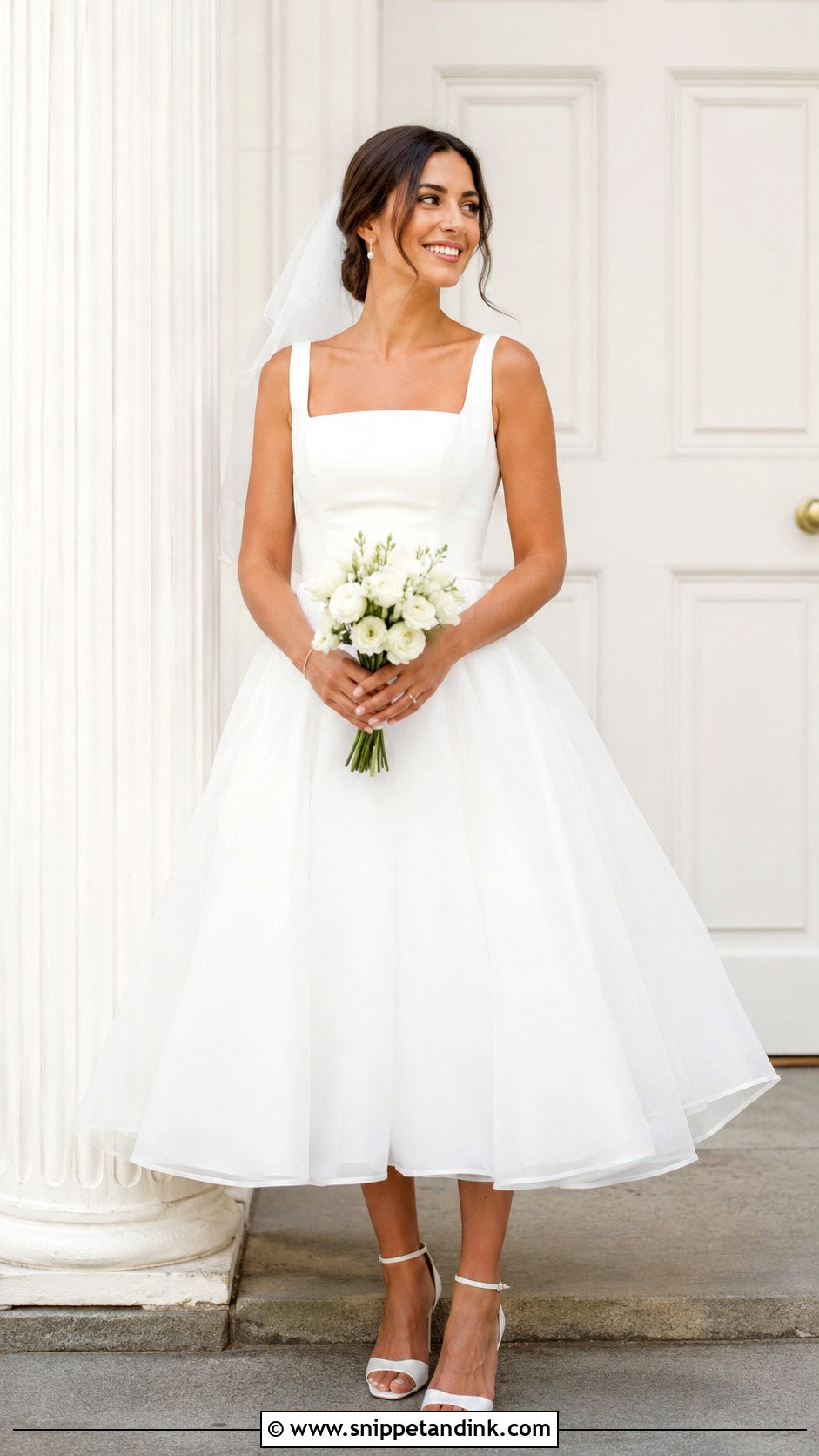
A tea length organza wedding dress falls between knee and ankle, and organza gives the short skirt enough body to stand away from the legs. That shape has a 1950s feel without tipping into costume when the fit is modern. Pointed pumps, ankle-strap heels or embellished flats all work, since your shoes will show. A short veil, pearl earrings and a soft bun suit courthouse weddings, garden parties and second looks.
19. Short Organza Wedding Dress
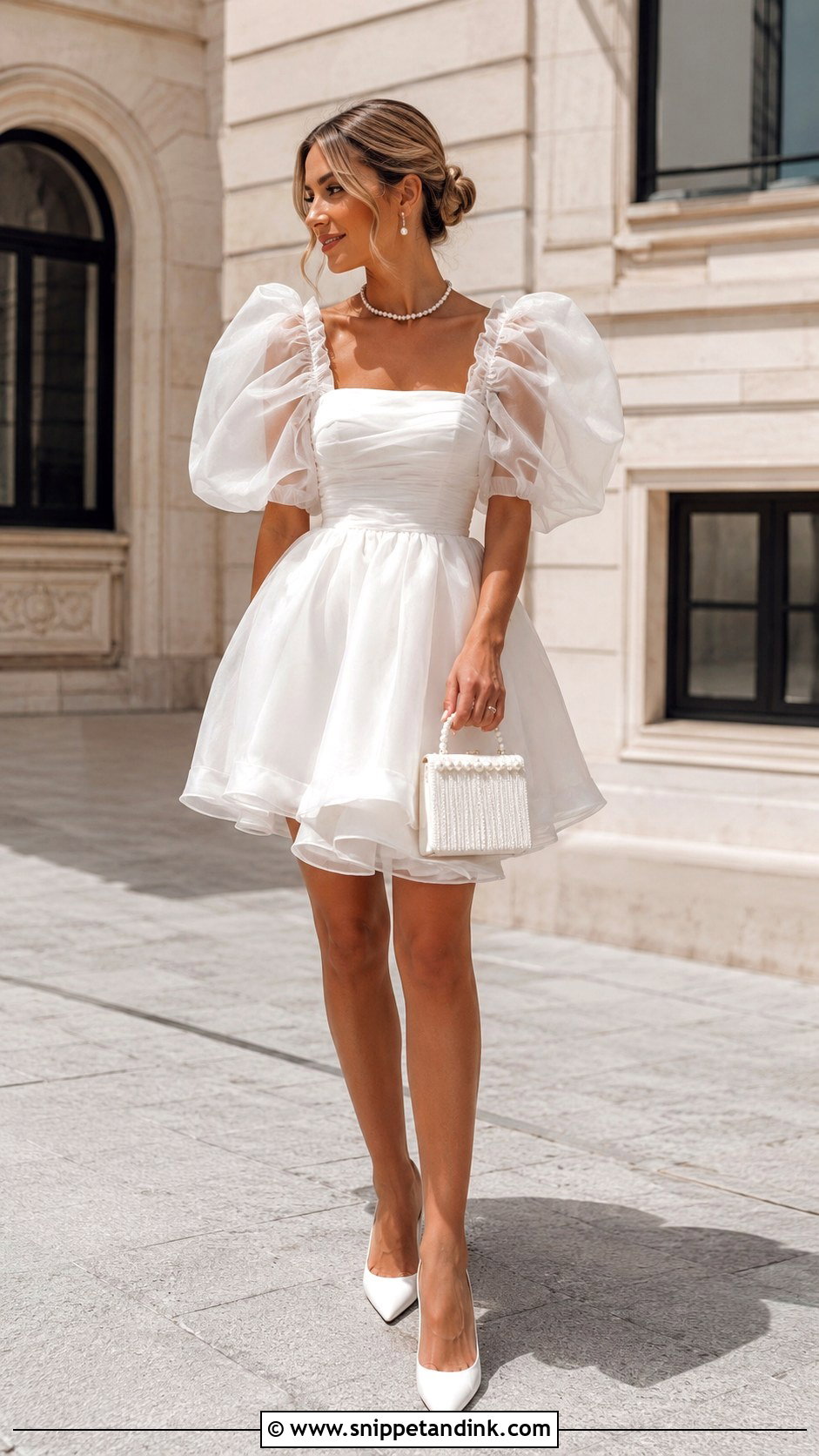
A short organza dress keeps all the fabric’s structure in a lighter, more playful outfit. A fitted bodice, puff sleeves or a square neckline suit it. White heels, pearl accessories and a small structured bag finish the look. It works for courthouse ceremonies, reception changes and warm-weather weddings. A short veil or hair bow keeps it bridal.
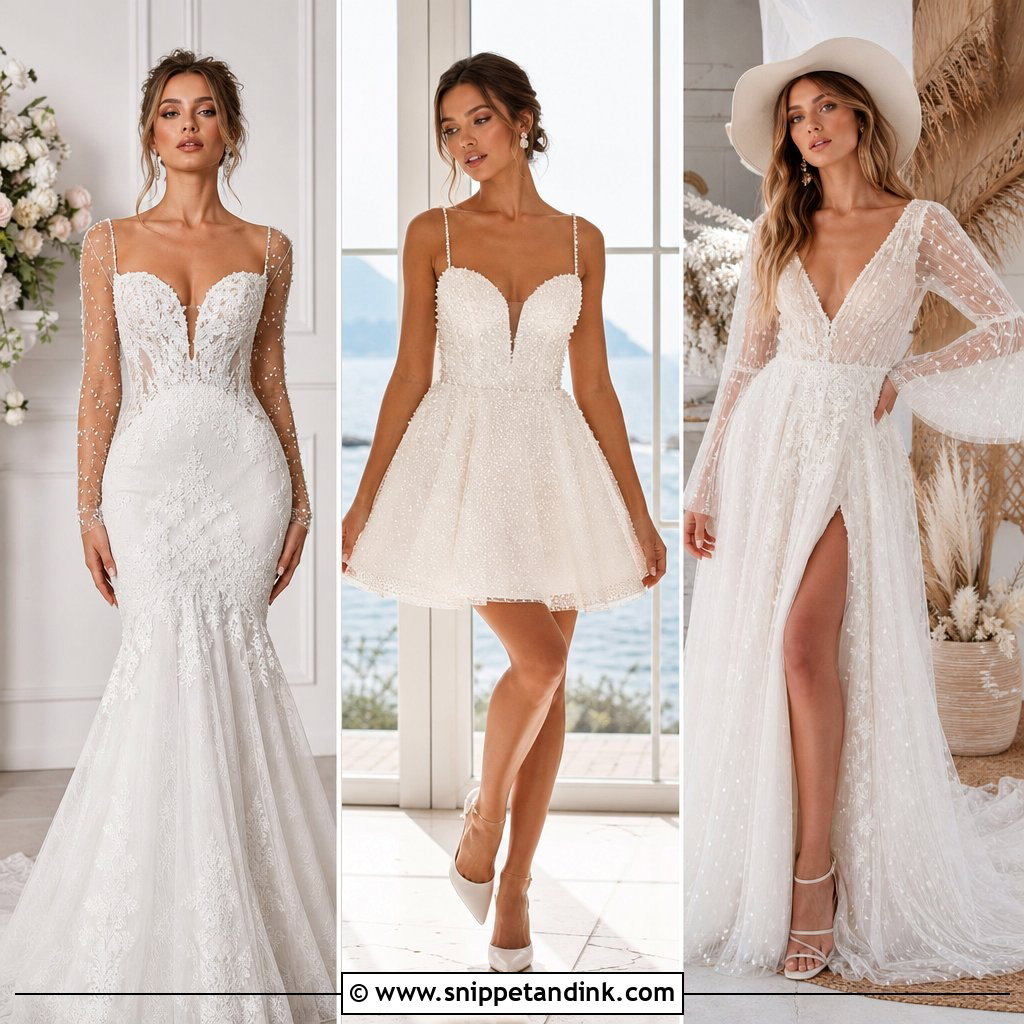




20. Organza Wedding Dress With Slit
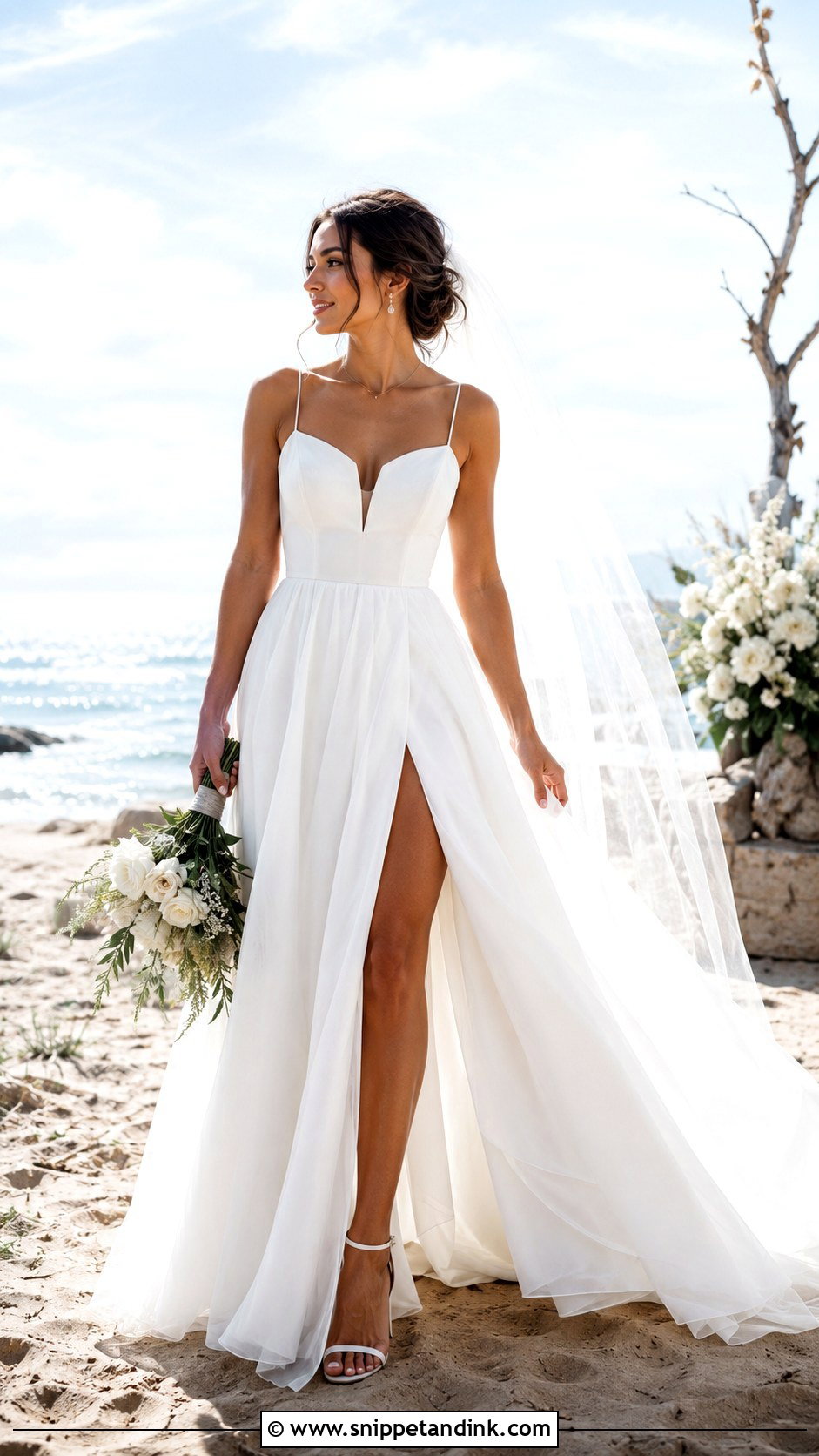
A slit in an organza skirt makes walking easier and shows your shoes. Organza is stiff enough that a slit can gape open more than it would in chiffon, so check the height while you sit, walk and climb a step. A fitted bodice, clean neckline and simple jewelry balance it. Comfortable, polished heels suit beach, destination and modern venues.
21. Layered Organza Wedding Dress
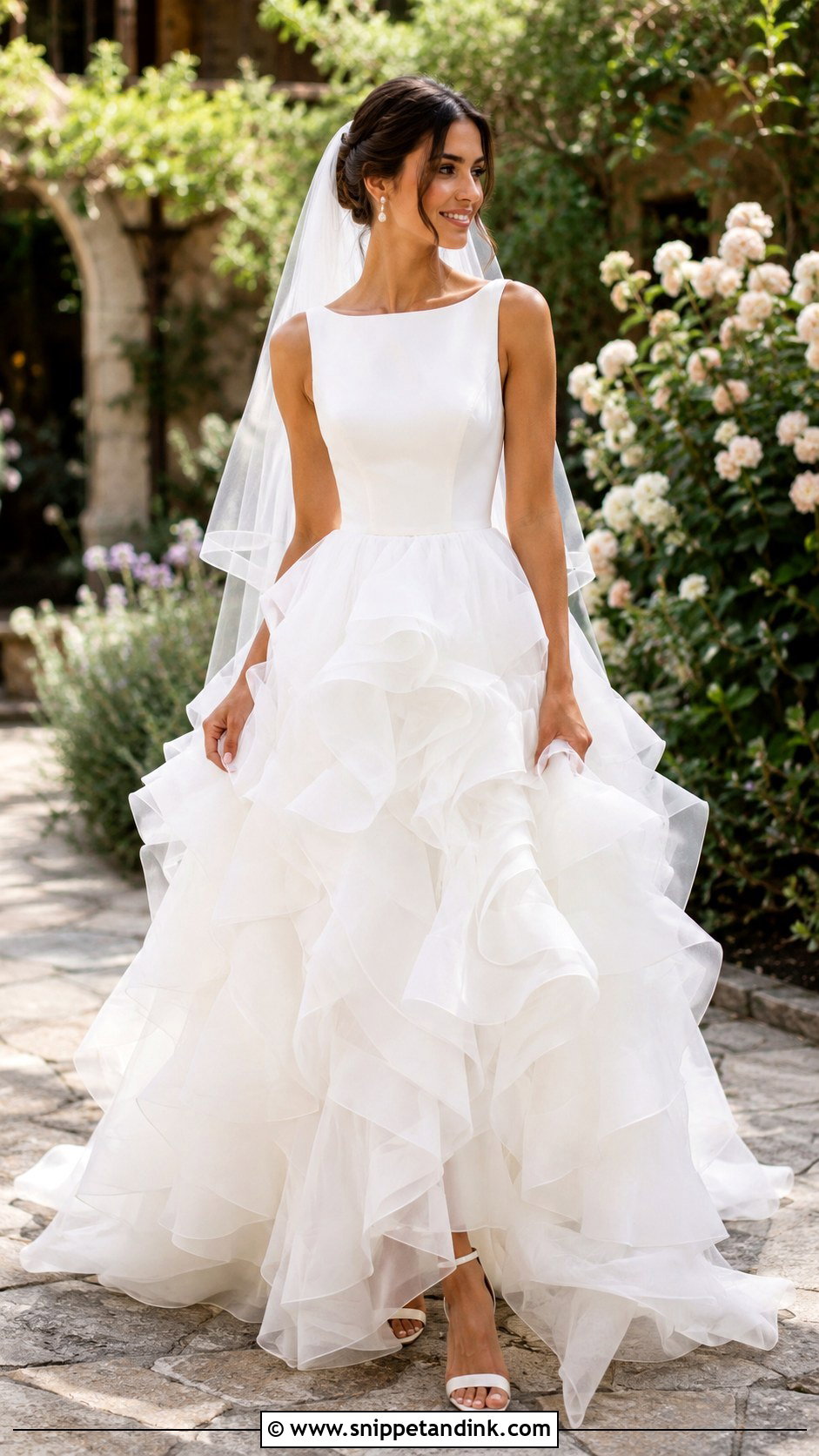
Layering sheer organza builds a cloud-like skirt, and the overlapping layers create depth and soft shadow. A-line, ball gown and soft sheath shapes all suit it. A clean bodice keeps the layers from looking overwhelming. More layers mean more weight and warmth, so ask how many there are if your wedding is in high summer. Delicate earrings, a simple veil and comfortable heels finish it, and outdoor light shows the layers best.
22. Pleated Organza Wedding Dress
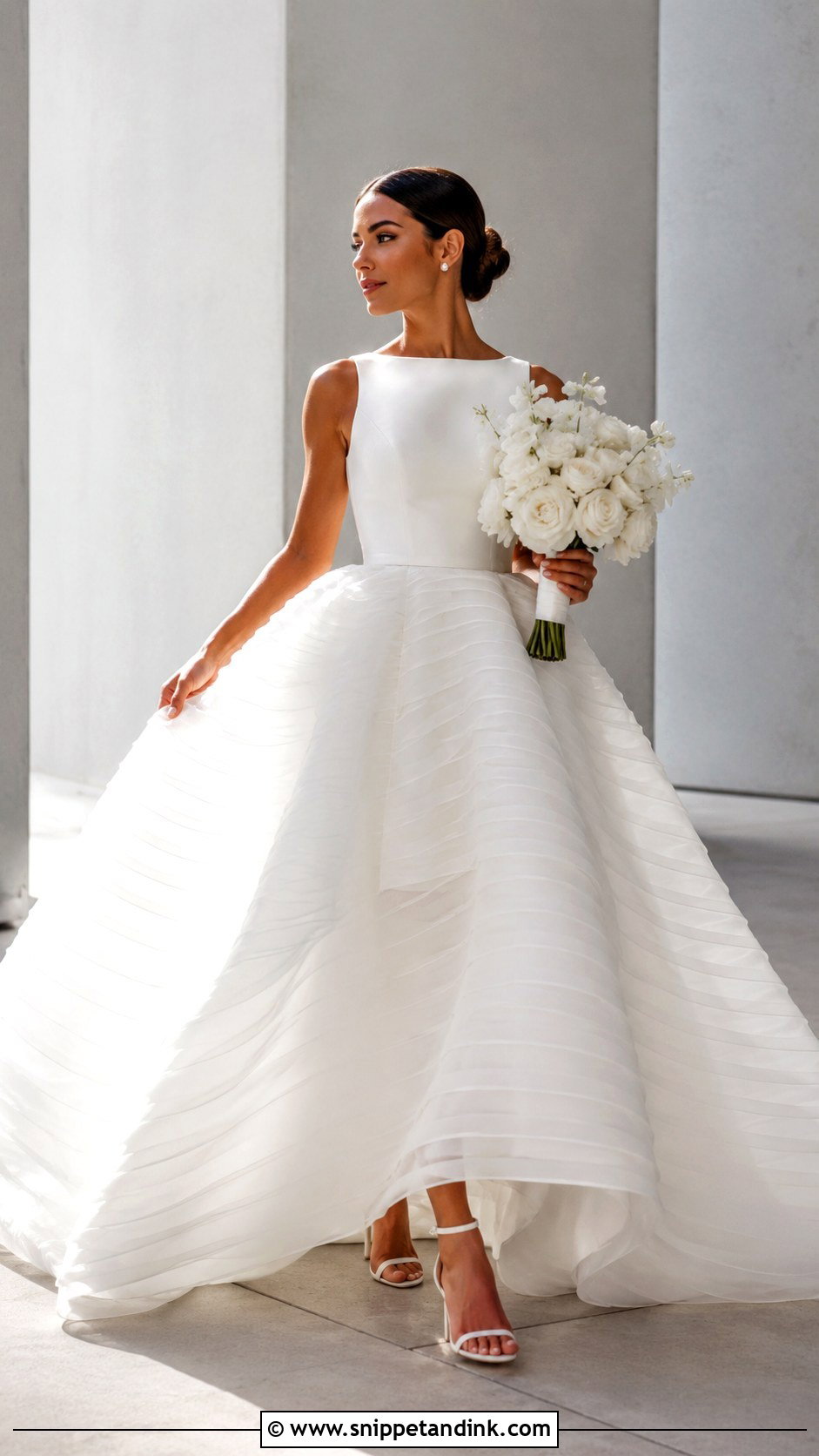
Pleats give organza structure and dimension on skirts, bodices, sleeves and overlays. A pleated skirt looks architectural but still moves as you walk. Pleats in organza can crush if you sit on them for a long time, so plan the car journey with the skirt spread out. Smooth heels, small earrings and a neat hairstyle suit modern venues and city weddings.
23. Printed Organza Wedding Dress
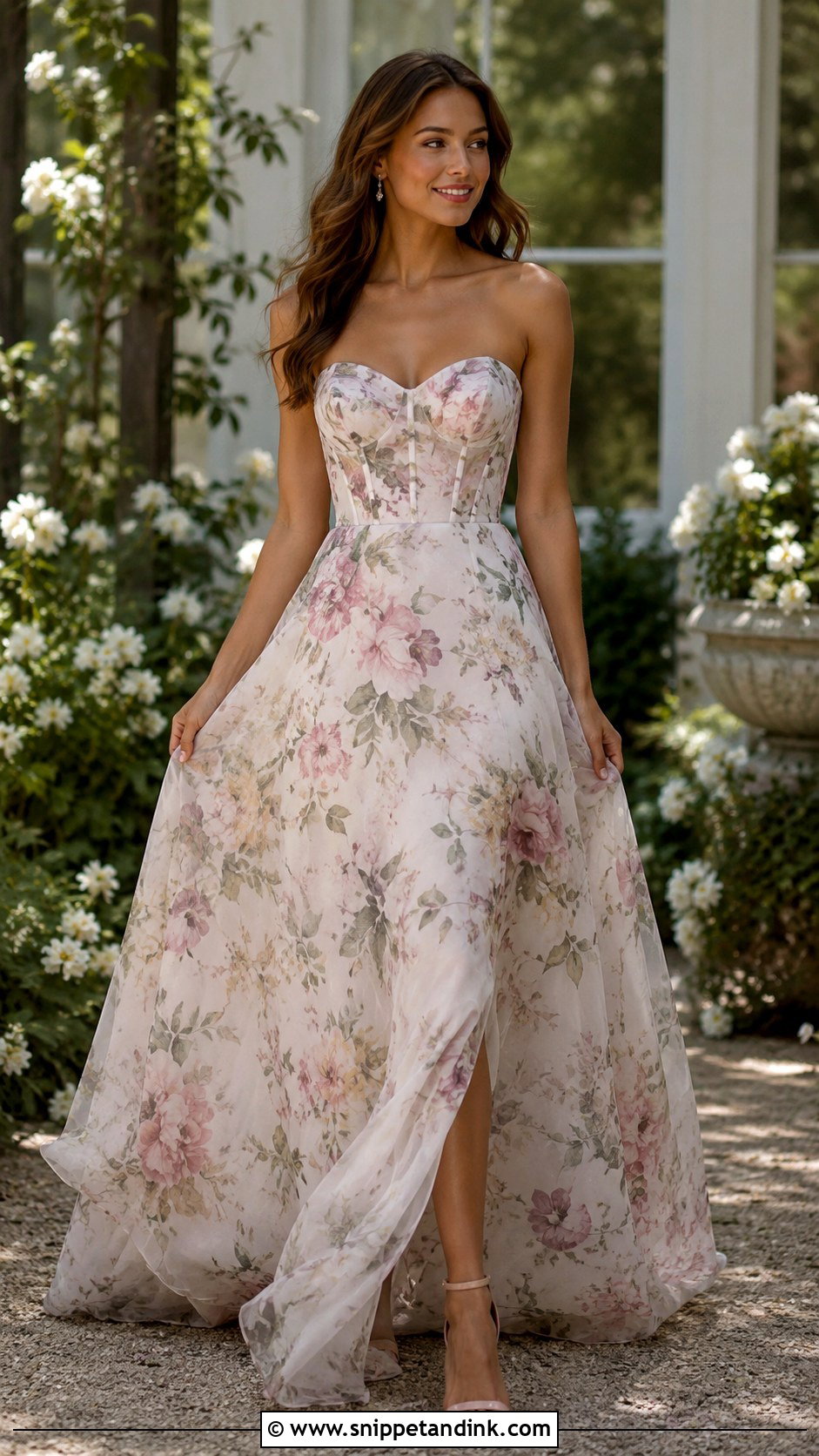
Printed organza layers colour on a sheer base, so prints look soft rather than flat. Florals are most common; watercolour patterns, pale vines and botanical designs also suit it. Pale colours will look less dated in photos years from now. Simple heels, small earrings and a plain veil, or none, keep it from looking busy. It suits garden weddings and spring or summer ceremonies.
24. Embroidered Organza Wedding Dress
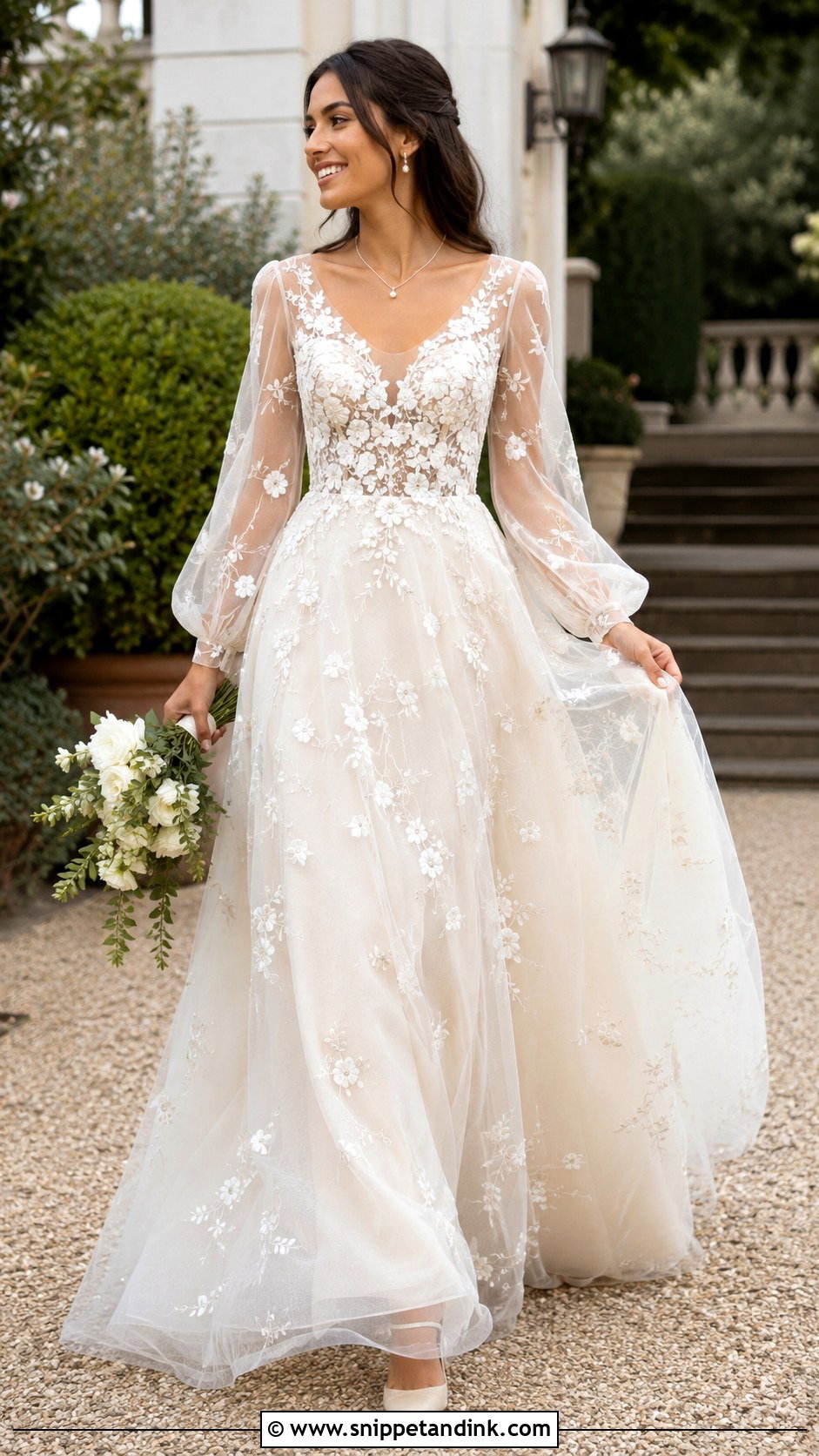
Embroidery on organza looks as though it floats, because the base is translucent. It can cover the bodice, sleeves, hem or the whole gown. Floral and vine patterns feel romantic; geometric embroidery looks modern. Dense embroidery adds weight and stiffness, so check that sleeves still bend and the skirt still moves. Simple heels, a smooth veil and delicate jewelry let the handwork stand out.




25. Minimal Organza Wedding Dress
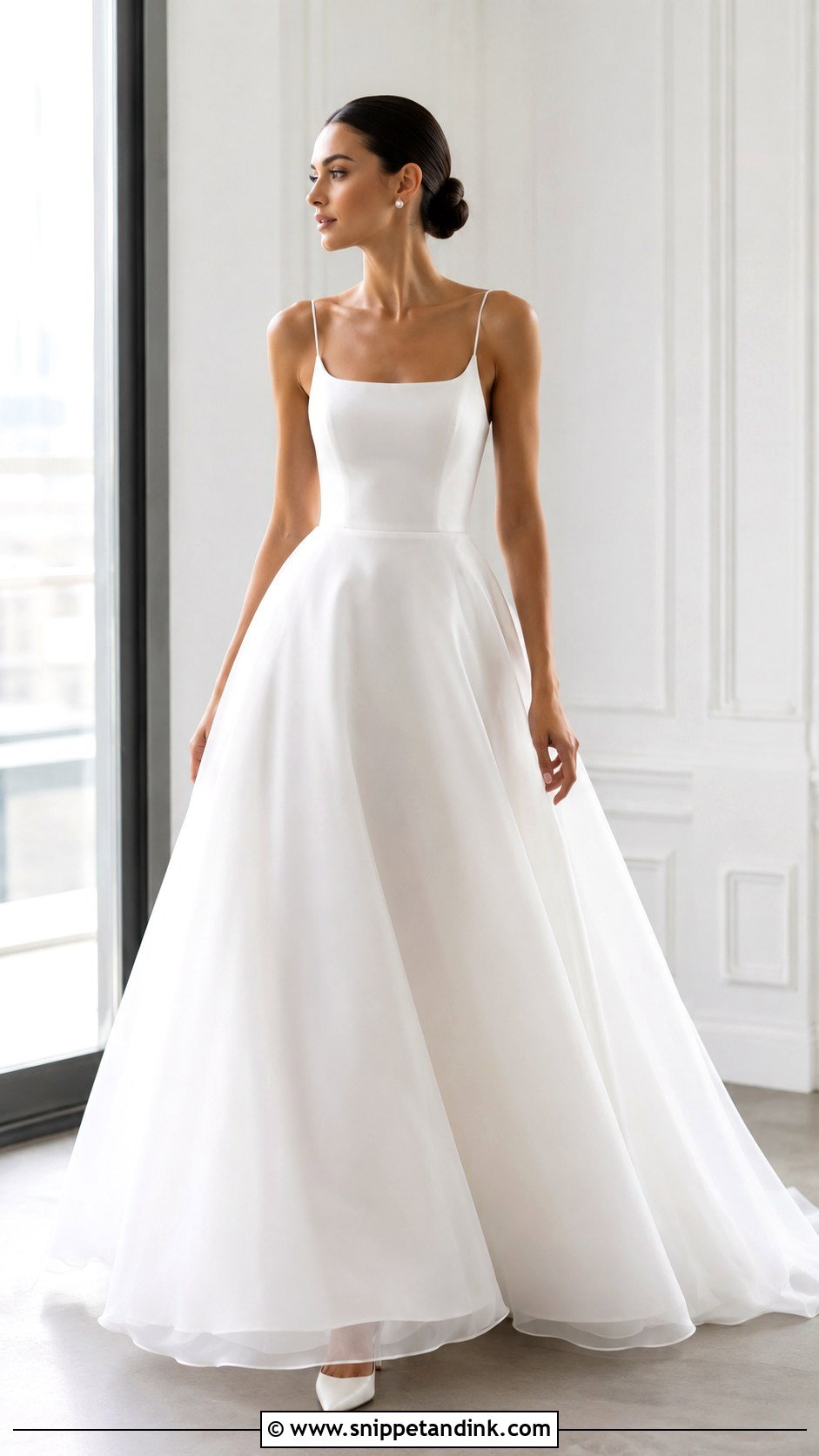
A minimal organza dress uses the fabric’s natural body for shape, with smooth bodices, simple straps and no embellishment. The fit has to be precise because nothing distracts from it. Sleek pumps, pearl studs and a low bun suit city, rooftop and courthouse weddings. A dramatic veil is the one place to add impact without cluttering the gown.
26. Basque Waist Organza Wedding Dress
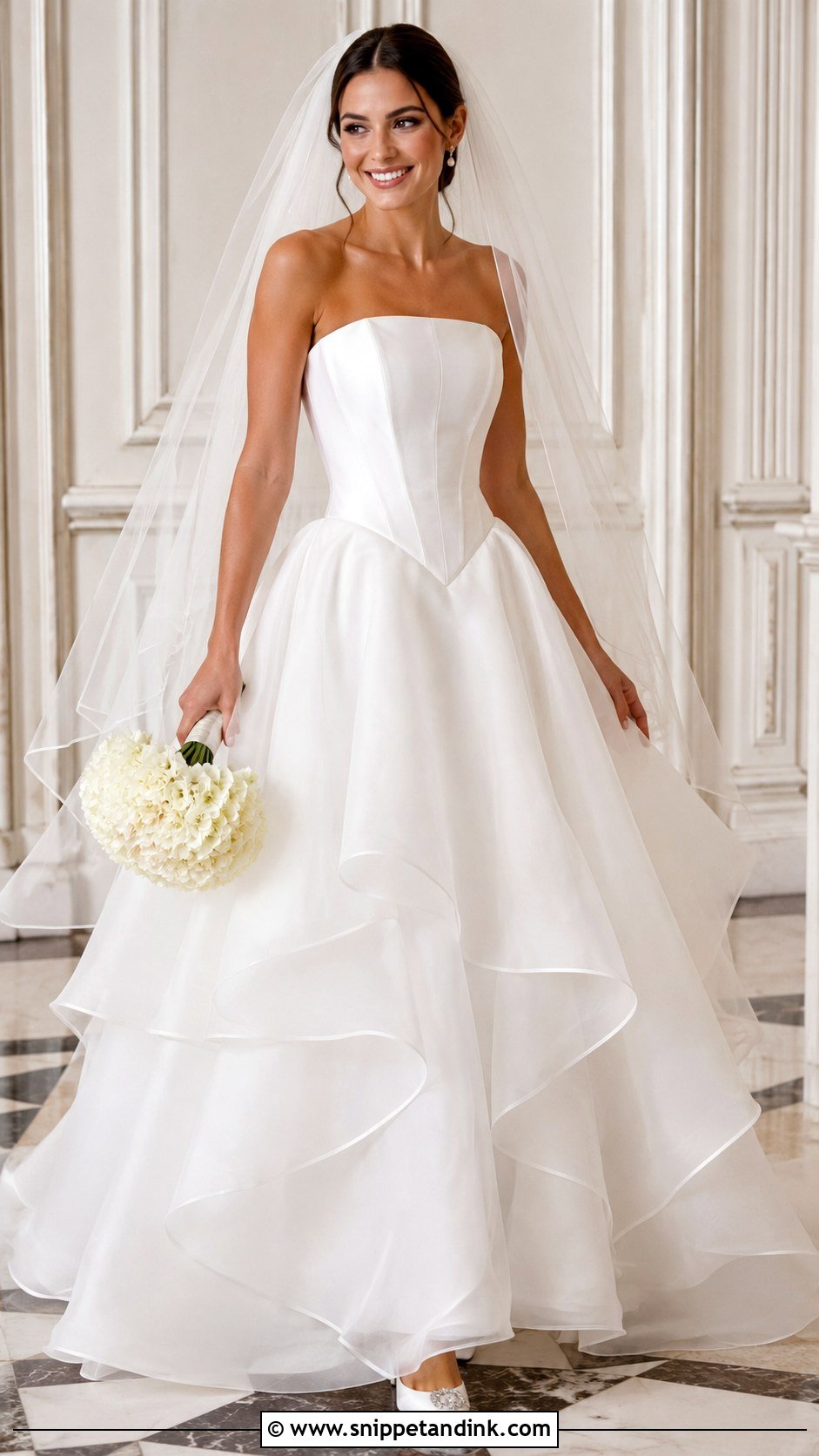
A basque waist organza wedding dress dips into a V below the natural waist, which lengthens the torso before the skirt opens. It pairs best with a full organza skirt. The point of the V needs to sit centred, so check it in a full-length mirror at every fitting. Strapless, square neck or off shoulder bodices all suit it. Pearl earrings, satin heels and a soft veil fit a formal venue.
27. Drop Waist Organza Wedding Dress
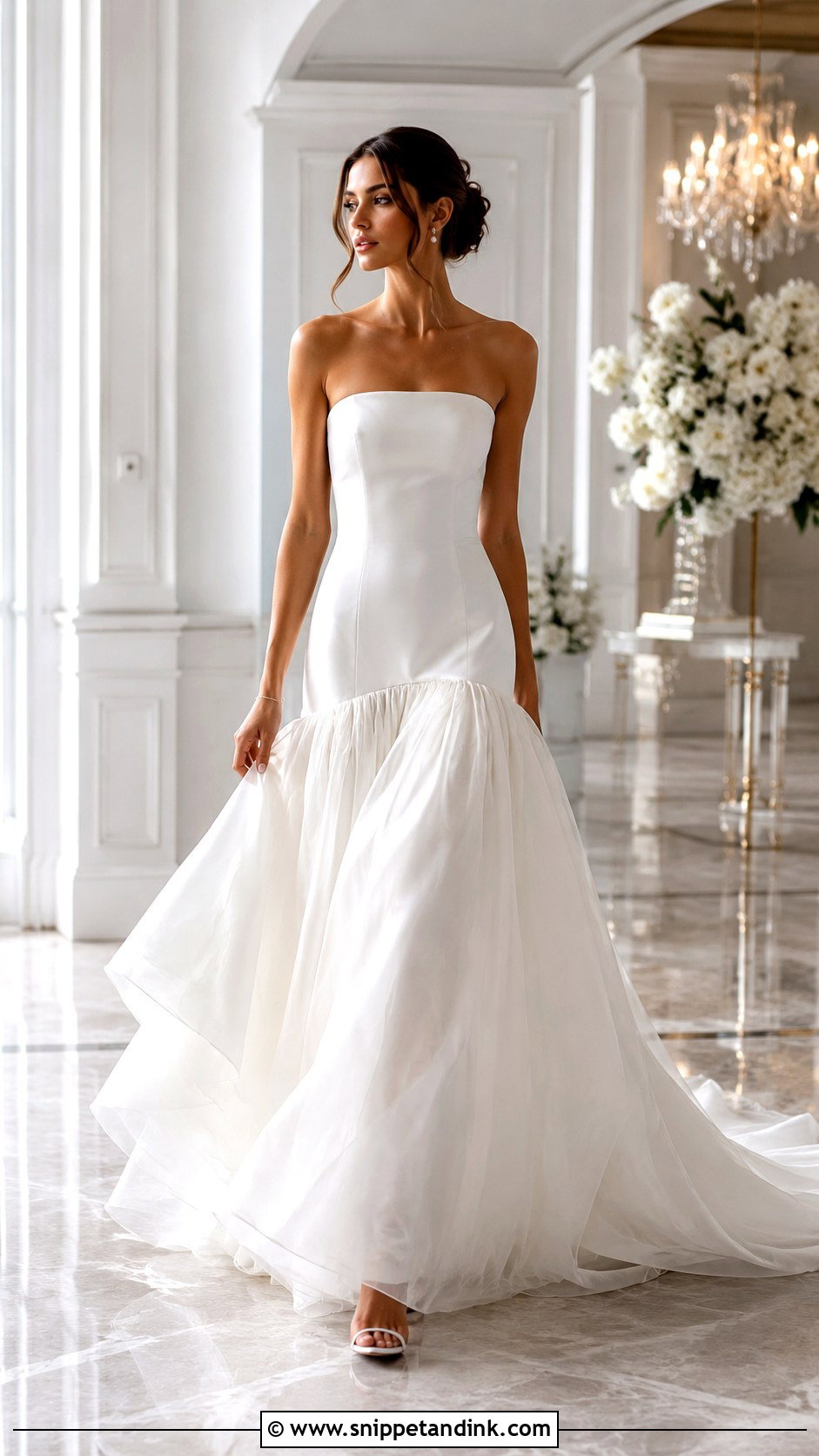
A drop waist moves the seam below the natural waist, creating a longer torso and a smooth transition into the skirt. Organza keeps the skirt light. This silhouette depends on careful tailoring, since a drop waist that sits too low shortens the legs. Sleek heels, a clean veil and minimal jewelry suit formal weddings and polished venues.
28. Asymmetrical Organza Wedding Dress
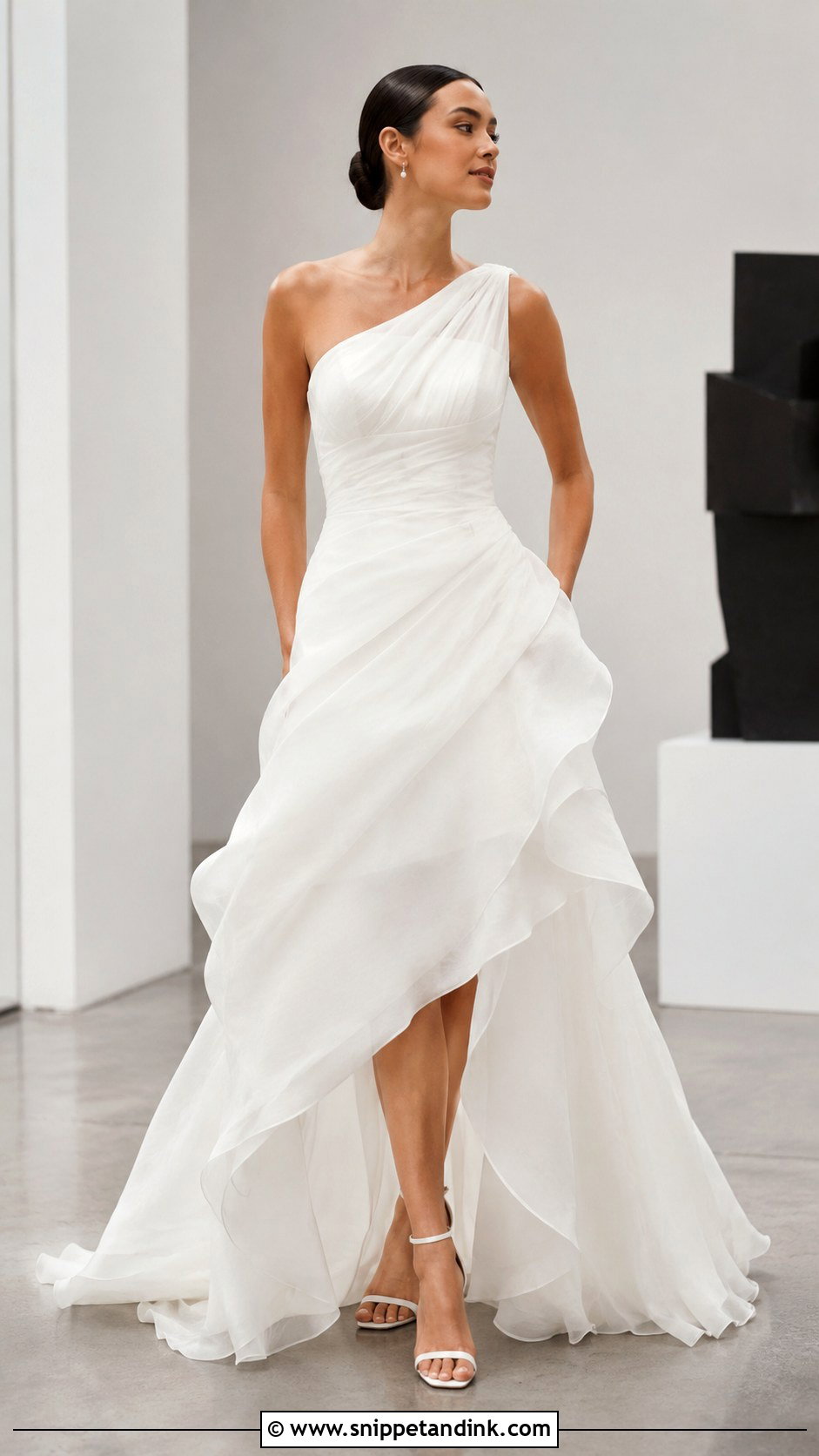
Asymmetry on organza can be a single shoulder, angled draping, a high-low hem or uneven ruffles. The fabric’s crispness keeps asymmetric shapes defined. One-shoulder styles need a secure fit so the bodice doesn’t slide toward the open side; ask about internal grip tape. Clean heels, small earrings and sleek hair suit modern hotels and outdoor ceremonies.
29. Organza Wedding Dress With Train
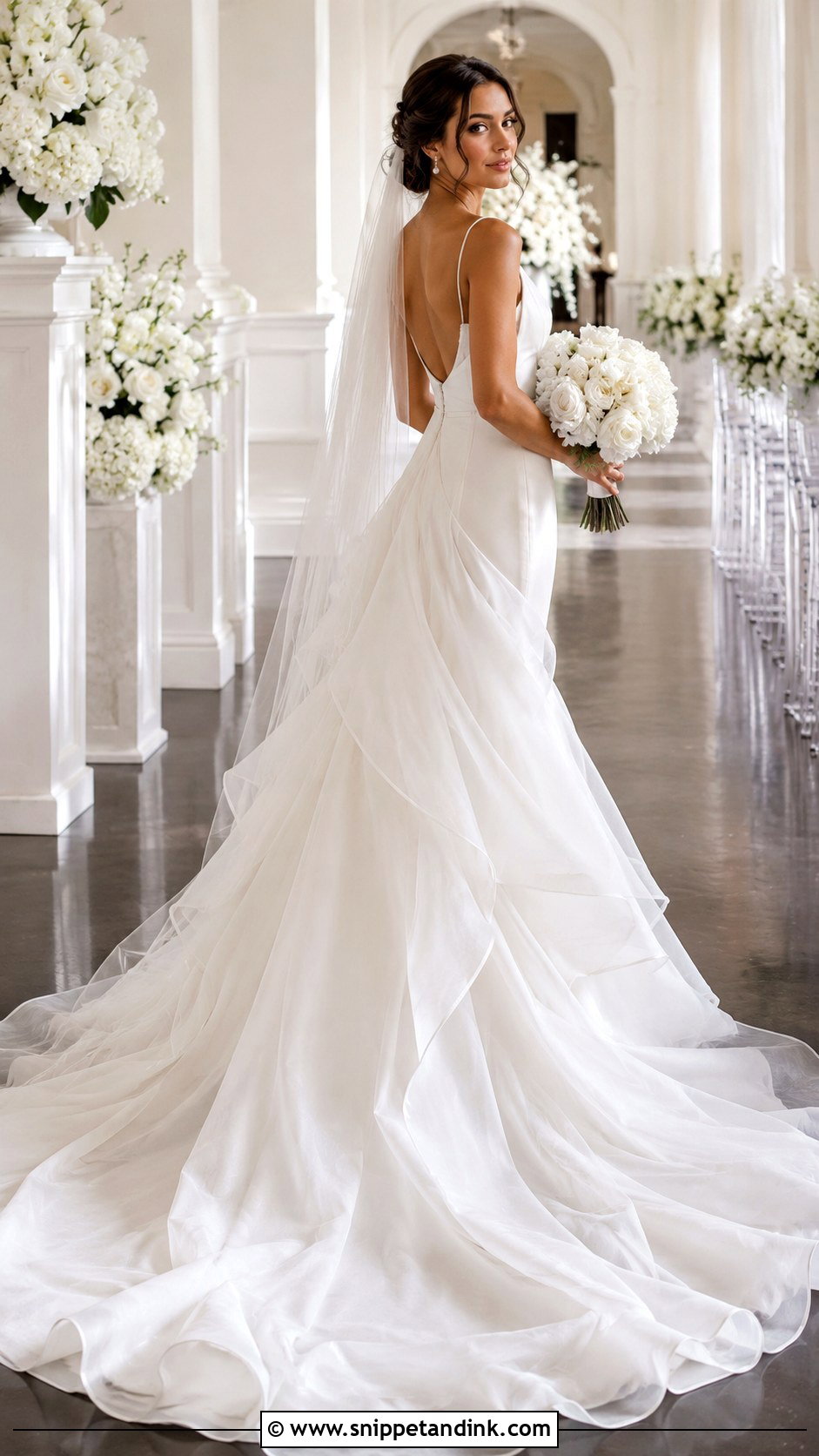
An organza train gives you length and volume without dragging much weight behind you. It can be flowing, layered, ruffled or structured. Organza trains snag on rough floors, gravel and stone steps, so ask about the venue’s floors and have someone ready to lift it. Plan the bustle early. Secure heels, a simple veil and understated jewelry finish it, and it shows best from behind.
30. Organza Wedding Dress With Veil
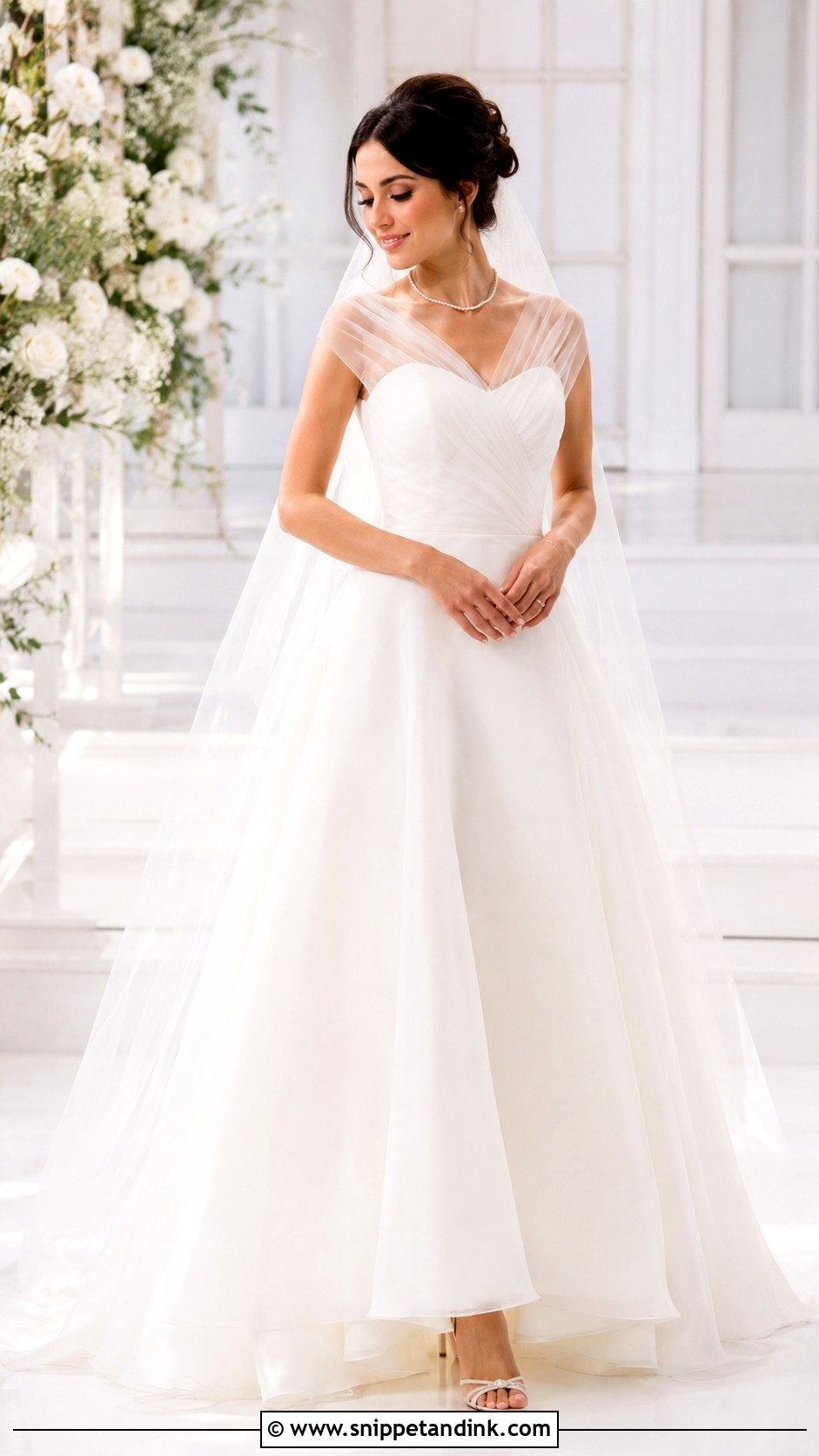
An organza veil matched to an organza gown keeps the textures consistent. It can be short, fingertip, chapel or cathedral length. Organza veils stand away from the head more than tulle ones, which gives volume but also catches wind. A plain organza veil suits floral, embroidered or ruffled gowns; a minimal dress can take a veil with a subtle edge. Your hairstylist needs to anchor it firmly.
How Organza Behaves in Wind, Sun and Camera Flash
Because organza is light and stiff at the same time, a breeze catches it like a sail. On a clifftop or a beach, a full organza skirt and veil will lift and swing far more than satin would. Some brides love the movement in photos; others spend the ceremony holding their skirt down. If your venue is exposed, ask your seamstress about a slightly weighted hem and have your veil anchored low.
In strong midday sun, sheer layers can let light through and show the outline of your legs, so check the skirt against a bright window at a fitting. Under flash, polyester organza can pick up a sheen that silk doesn’t. Neither is a reason to avoid the fabric, but both are worth seeing before the day rather than in the gallery afterwards.
The Morning Steam, the Car and the Chair
Organza creases, and those creases show. Most of them happen in transit and while sitting, and most can be fixed with a little planning.
Steam the dress on the morning with a hand steamer, holding it a little away from the fabric and keeping it moving. Use distilled water if you can, since tap water can spit and leave marks on silk organza. Never put a hot iron directly on organza; it can melt polyester and leave a shine on silk. Test on a hidden seam allowance first.
In the car, sit on the bodice end of the skirt and spread the rest across the seat. At the reception, gather the skirt to one side before you sit rather than sitting straight down on it. After the wedding, have it cleaned by a specialist who handles bridal fabrics, then store it in a breathable cotton bag, not plastic, away from sunlight.
Organza Rewards a Little Planning on the Morning
Organza gives structure and lightness at once, whether it’s a grand ball gown, a simple A-line, a floral gown or a short dress. It suits formal venues, outdoor ceremonies and small weddings. The right one depends on your comfort, venue, season and the shape you feel most like yourself in. Try your shoes, veil and underskirt with the gown before the final fitting, and plan who will steam it on the morning.
You'll Like These Ideas:



Leave a Reply