
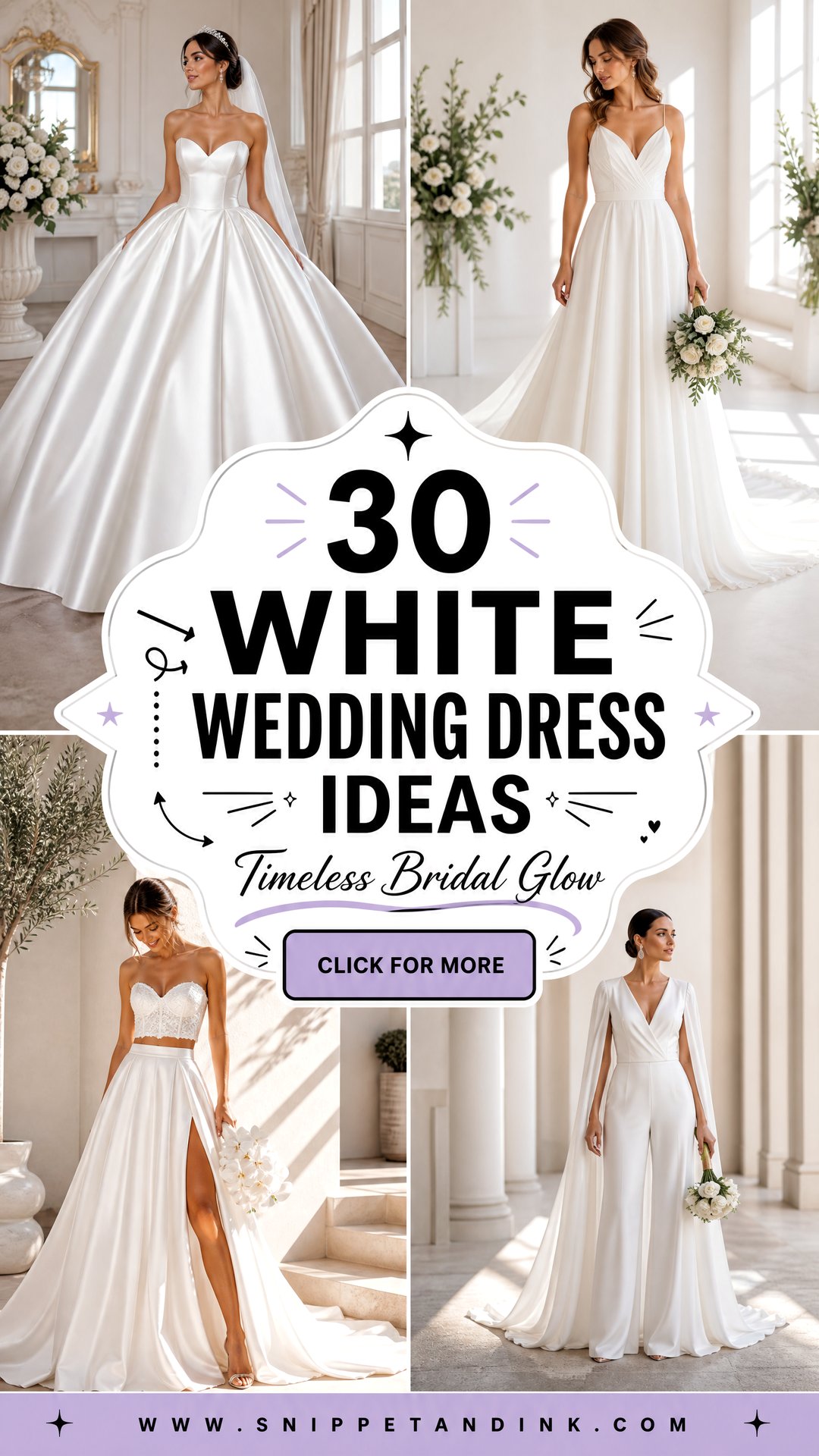
Brides now pick a white dress the way they’d pick a coat for a long trip: for the venue, the season and how it feels at hour eight, not only in the mirror. In appointments I see everything from a plain satin column with pearl earrings to lace sleeves, a dramatic overskirt, a short reception dress and sharp bridal suits, and lace, sculpted bodices, basque waists, bows and second looks are all being asked for right now. The test I give every dress is simple. Can you sit, walk and hug in it, and does it still look like you in photos? Below are thirty directions, with what I check when a bride steps into each one.
Not Every White Is the Same White
Brides often come in asking for white and leave in ivory without realizing it. Bridal white is a family of shades, and the label changes from one designer and one fabric to the next, so I always judge it on the body rather than by name.
- Bright or optic white is bleached to its coolest point. It looks crisp on deep and olive skin, but on fair skin it can make the face look ruddy, and in some photos it drifts slightly blue.
- Soft or natural white carries the faintest warmth. It’s the safe middle that suits most skin tones and most lighting.
- Ivory is warmer still and reads creamy next to a bright white. It flatters fair and pink-toned skin and looks especially rich in satin and silk.
- Champagne or blush underlays sit beneath white lace or tulle and add warmth from inside, which reads as white from a distance and tinted up close.
Two habits save trouble. Look at the dress near a window as well as under the shop lights, and order the veil in the same shade from the same maker, because a bright white veil over an ivory gown makes the dress look yellow in every photo.
1. White Lace Wedding Dress
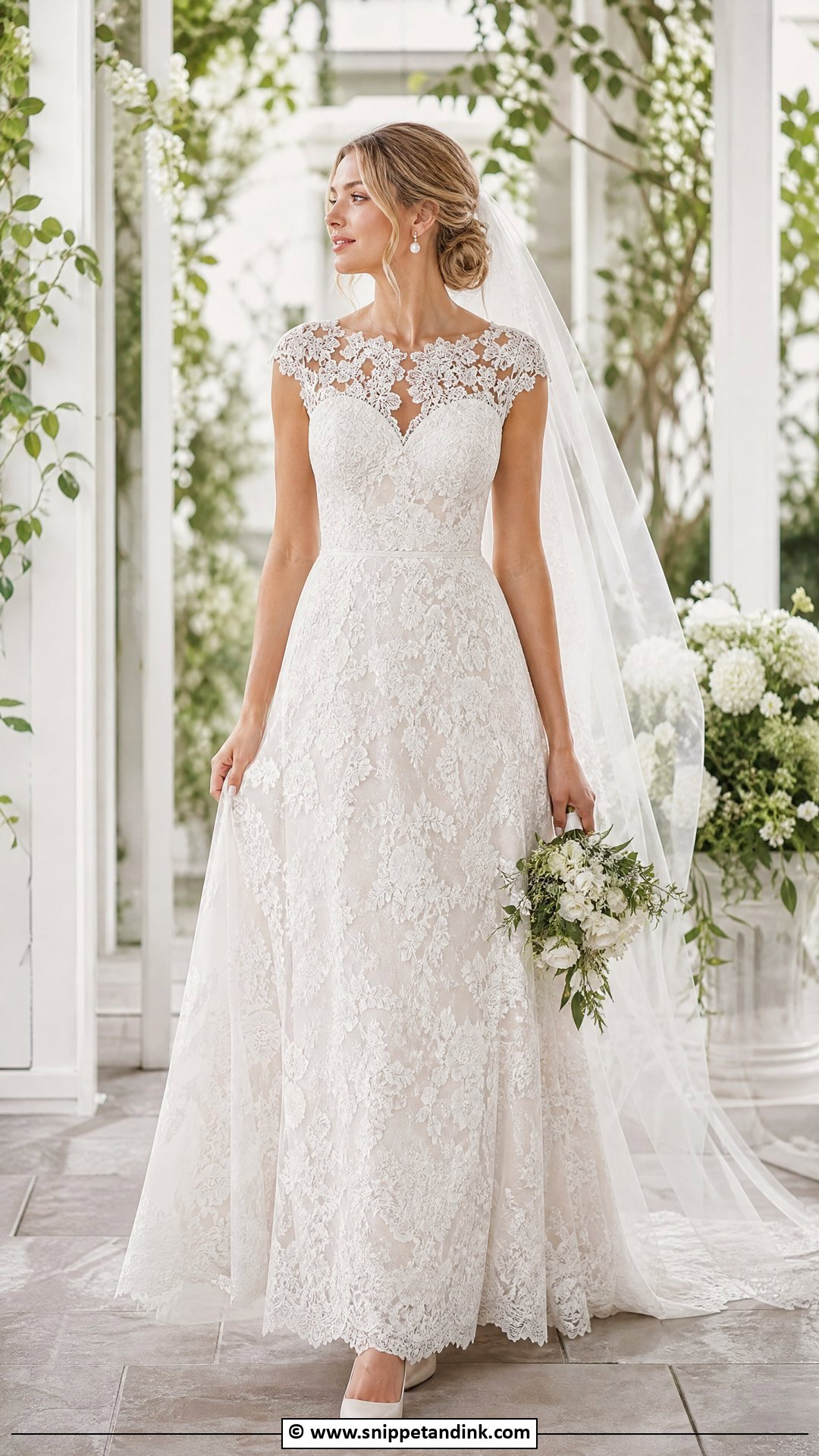
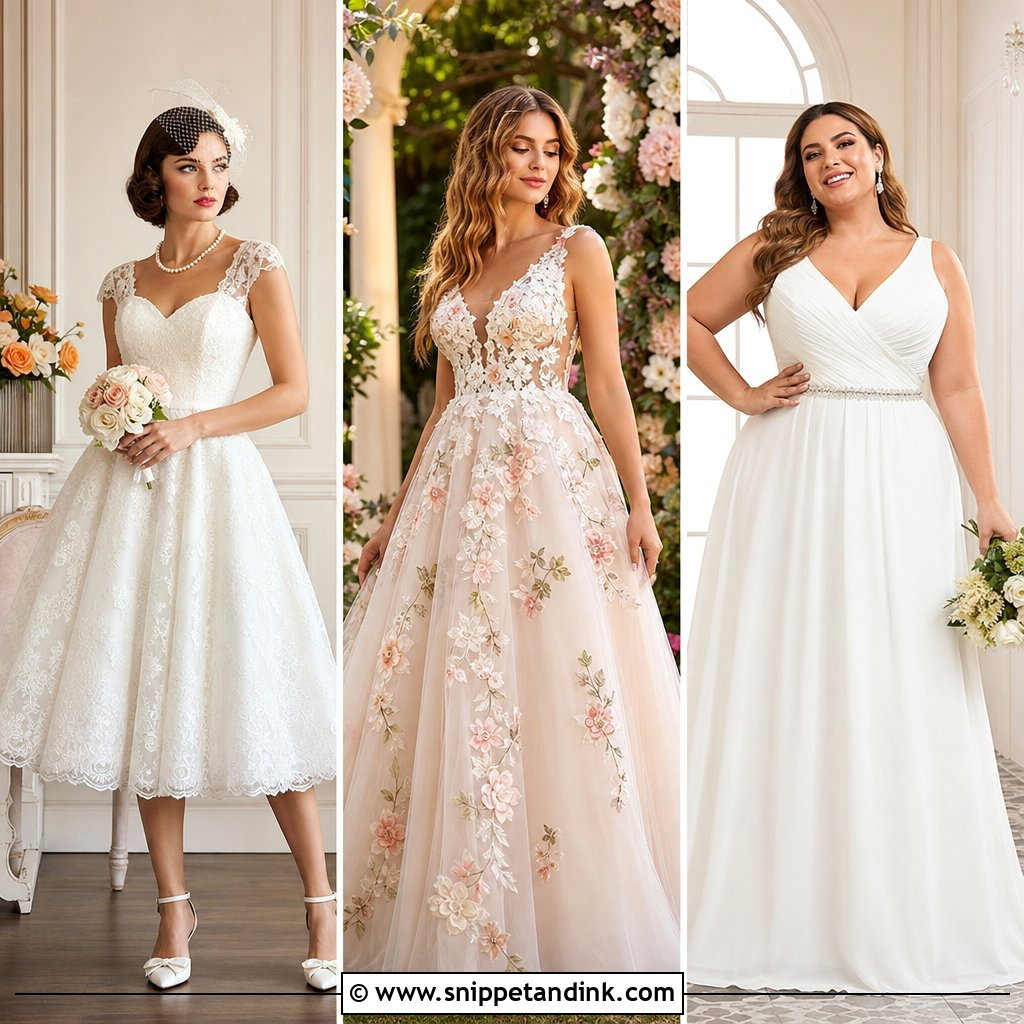
Lace stays romantic without dating a dress when it matches the setting. Soft floral lace suits a garden, corded lace has a raised outline that holds up in close-ups, and allover lace is the classic. A fitted bodice into a flowing skirt defines the waist on most figures. At fittings I check where the motifs land on the bust and hips, because a good seamstress can shift appliqués so a flower doesn’t sit somewhere awkward. Pearl drops, a simple veil and ivory heels; skip jewelry with long sleeves, and in summer go sleeveless with a scalloped neckline and ankle-strap sandals.
2. White Satin Ball Gown Wedding Dress
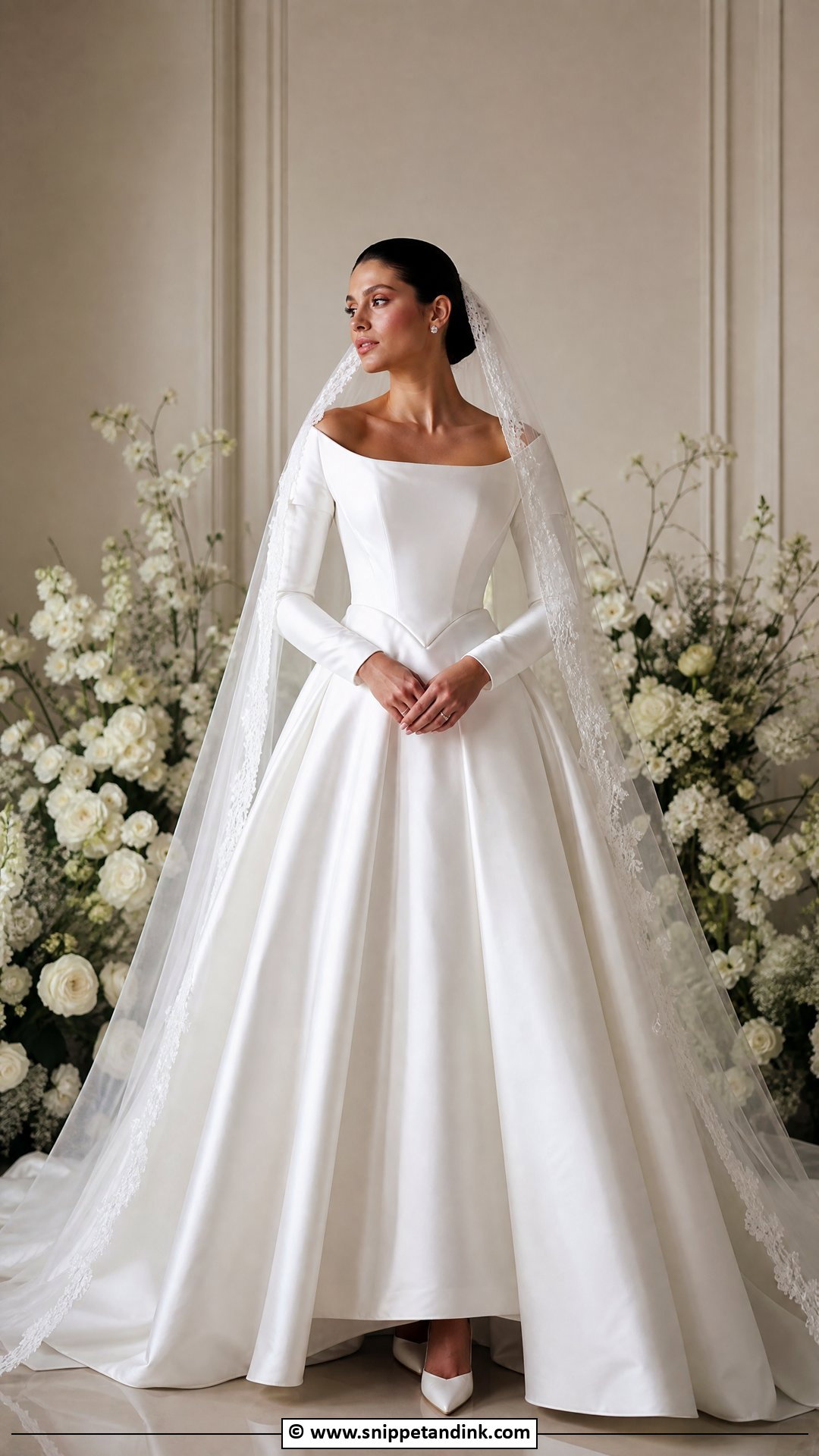
Satin catches more light than any other bridal fabric, so a ball gown in it reads formal from across a ballroom. What makes it wearable is the inside: a structured bodice with boning and a waist stay carries the skirt’s weight, so the bride isn’t hitching it up all day. Strapless is the classic neckline, and off-the-shoulder softens it. Add a cathedral veil, crystal studs and pointed satin pumps, then a sleek low bun or soft waves to balance the volume. Plan the bustle early too, since a full satin train needs one for the reception.
3. White Mermaid Wedding Dress
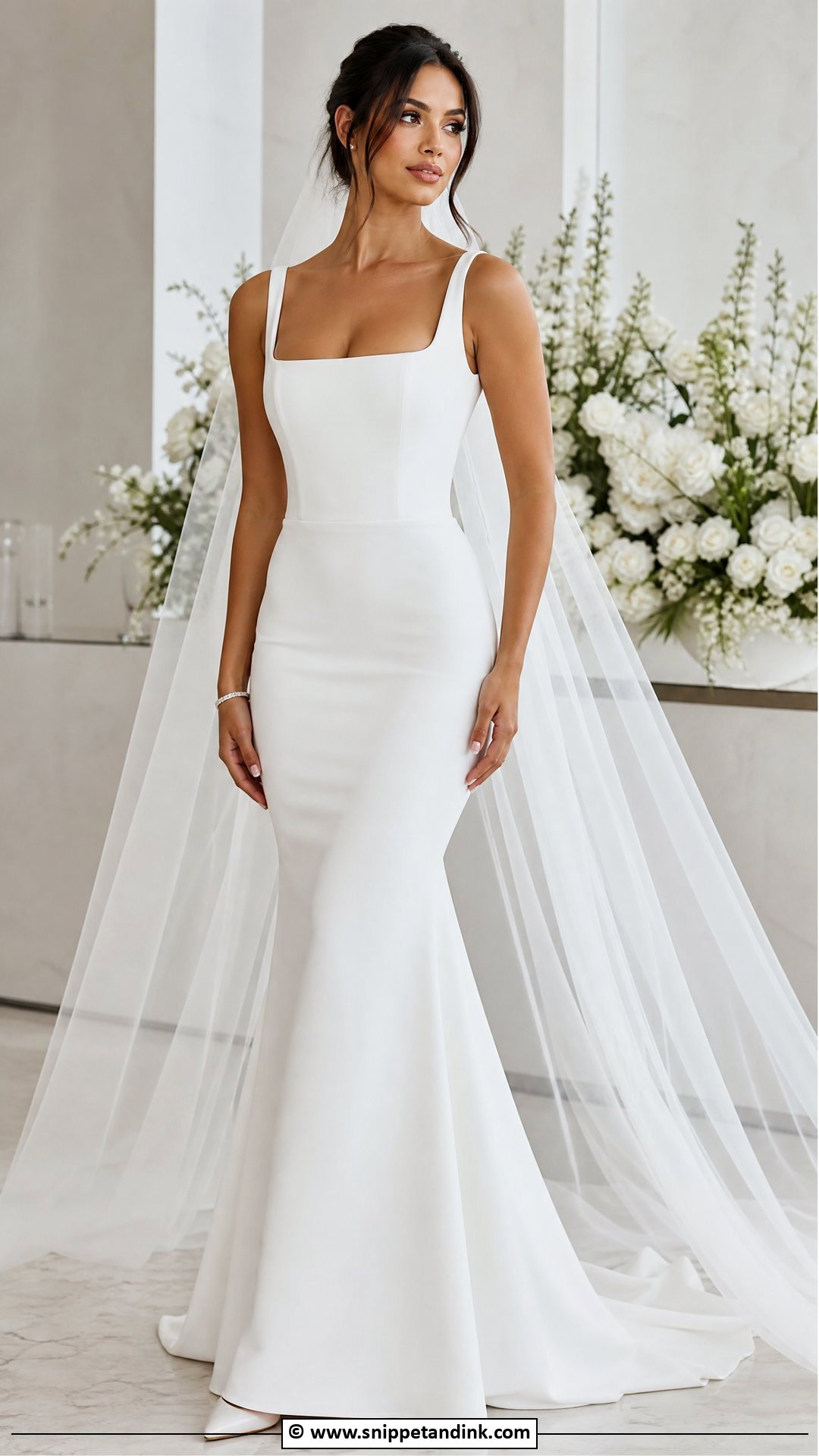
A mermaid is fitted through the bodice, waist, hips and thighs before it flares, and where that flare starts decides how you’ll move. A flare at the knee is the most dramatic and the hardest to walk and sit in; a trumpet opening mid-thigh is kinder. I always have brides climb a step and sit on a chair in the sample. Stretch crepe gives the most ease, while satin and lace hold the shape more firmly. Long veil for the ceremony, removed for the reception, with comfortable shoes, a simple bracelet and sleek earrings.
4. White A Line Wedding Dress
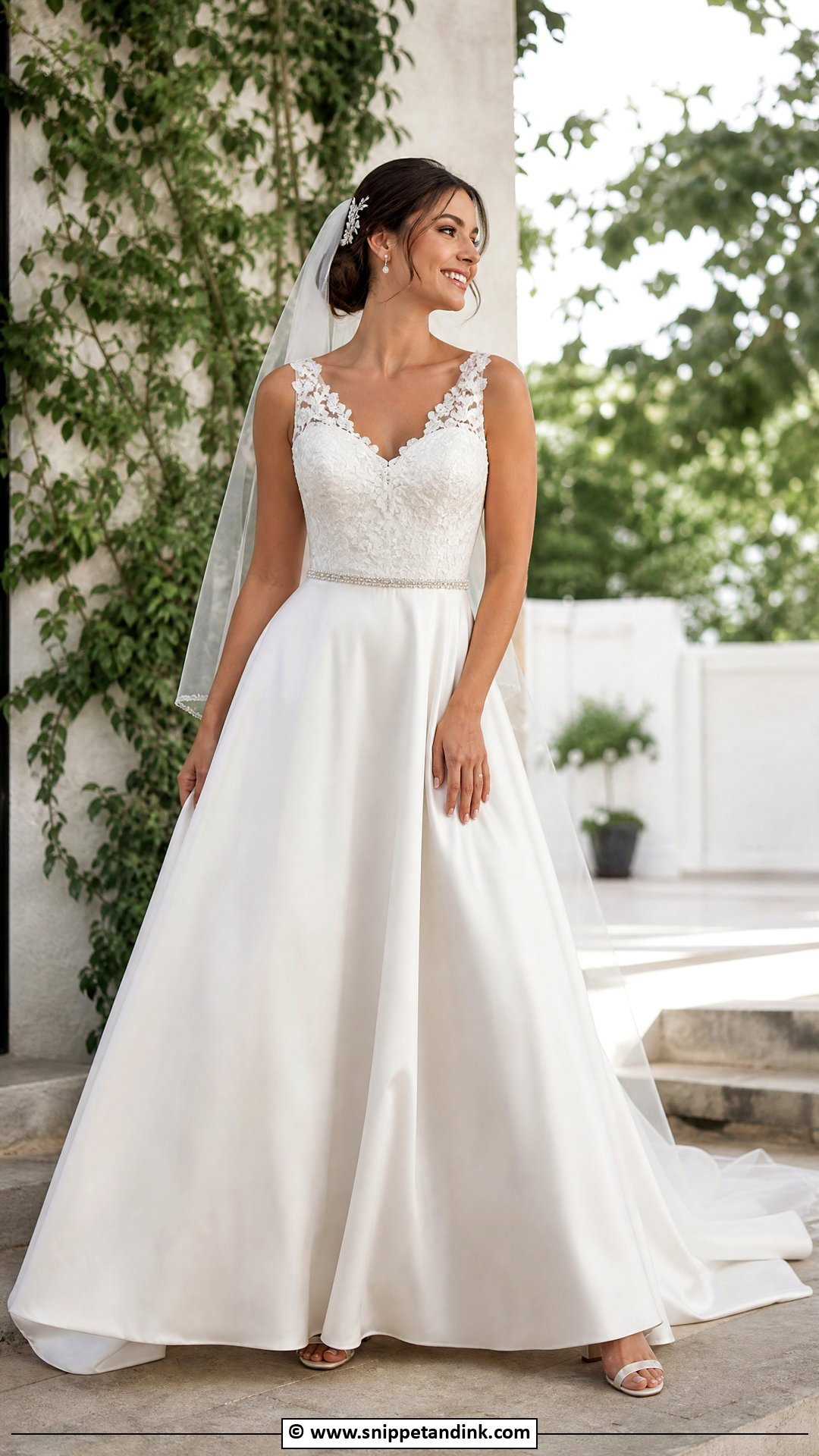
When a bride doesn’t know where to start, I put her in an A-line first. It fits at the top and skims away from the waist, showing shape without gripping, and it’s the cut people forget they’re wearing ten hours in. A lace bodice on a tulle skirt reads traditional; plain satin reads modern. A medium-length veil, block heels for grass and a small pearl comb. For more waist definition, look for seaming, a basque waist or a slim bridal belt.
5. White Strapless Wedding Dress
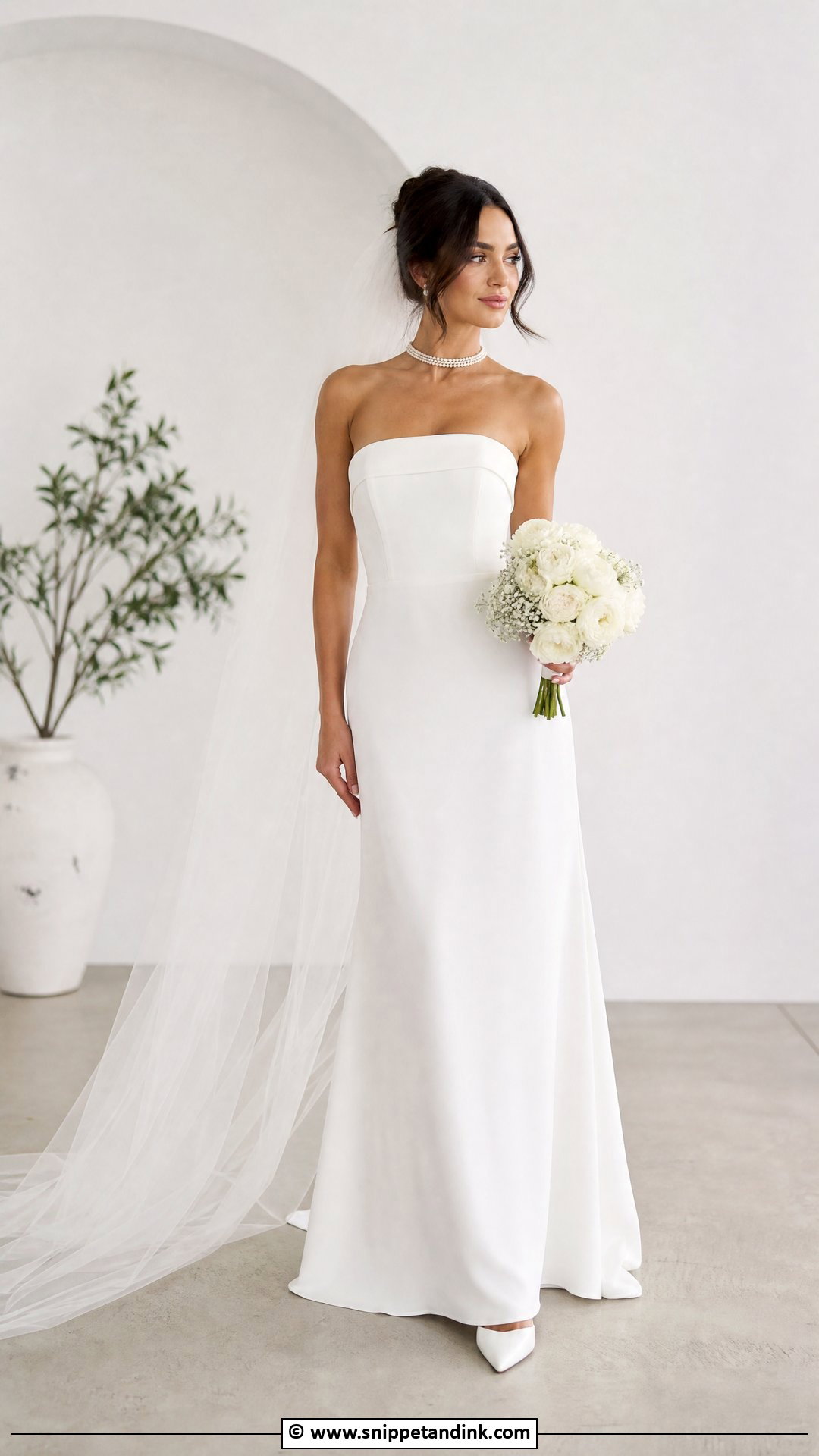
Fit decides a strapless dress. A properly built bodice stays up because of internal boning and a snug waist, not because the bride keeps tugging the top edge, so I’d rather take in the waist than the neckline. A straight neckline looks modern, a sweetheart romantic, a pointed one sharper. Pair it with a statement veil, a pearl choker or long gloves if you want detail near the face, and satin pumps or minimal sandals to suit the venue. With a smooth bun and glowing makeup, it never looks plain.
6. White Long Sleeve Wedding Dress
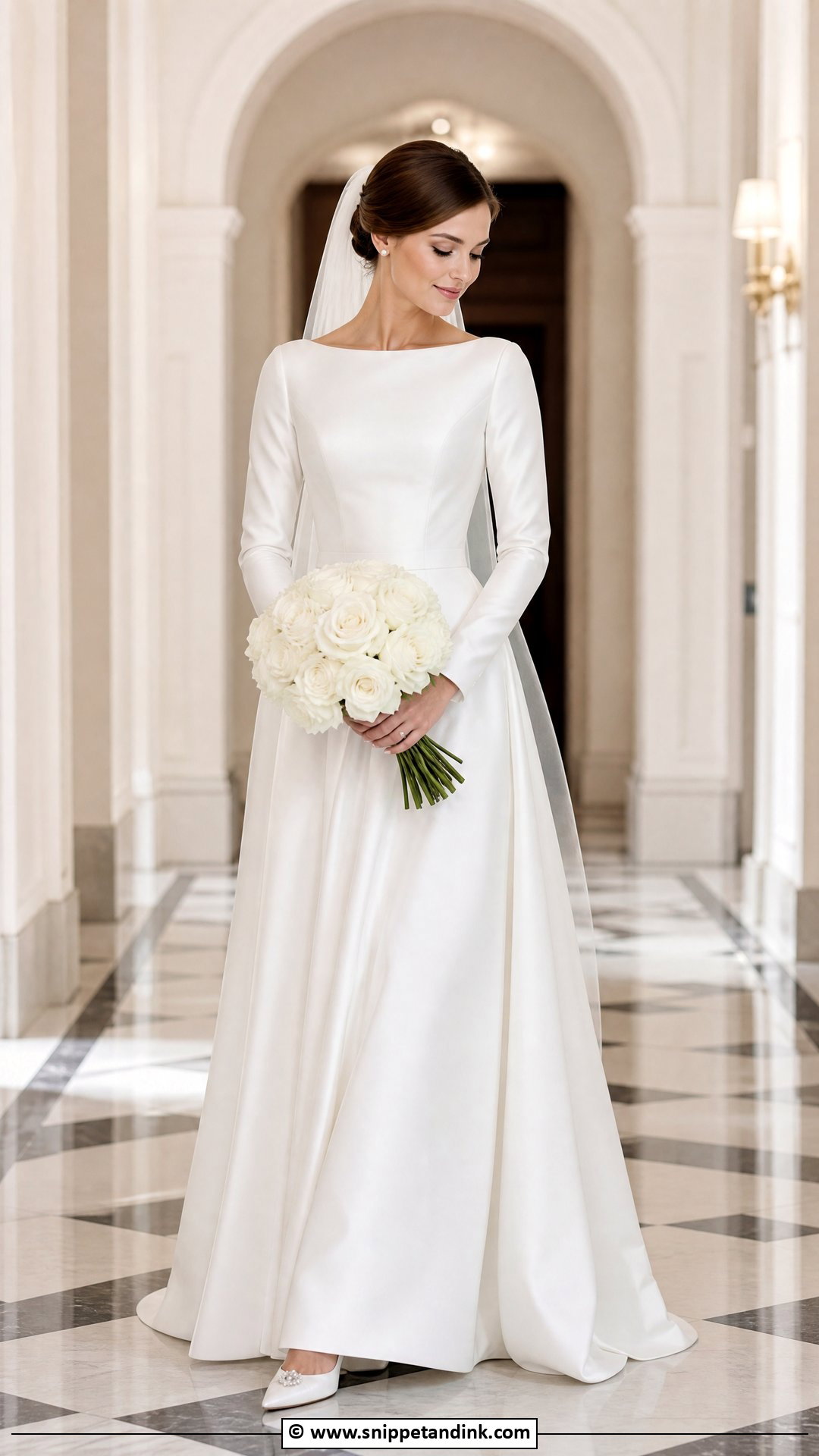
Sleeves change a dress more than people expect. Sheer lace softens it, satin looks sleek, puffs turn it vintage and fitted crepe reads modern. The check I never skip is arms raised: sleeves set tight and low stop a bride hugging anyone or lifting a glass, and the whole bodice lifts with them. It’s a strong pick for cooler seasons, formal venues and anyone wanting coverage. Closed-toe heels, pearl studs and a low veil tucked under the hairstyle, with no heavy bracelets fighting detailed cuffs.
7. White Off Shoulder Wedding Dress
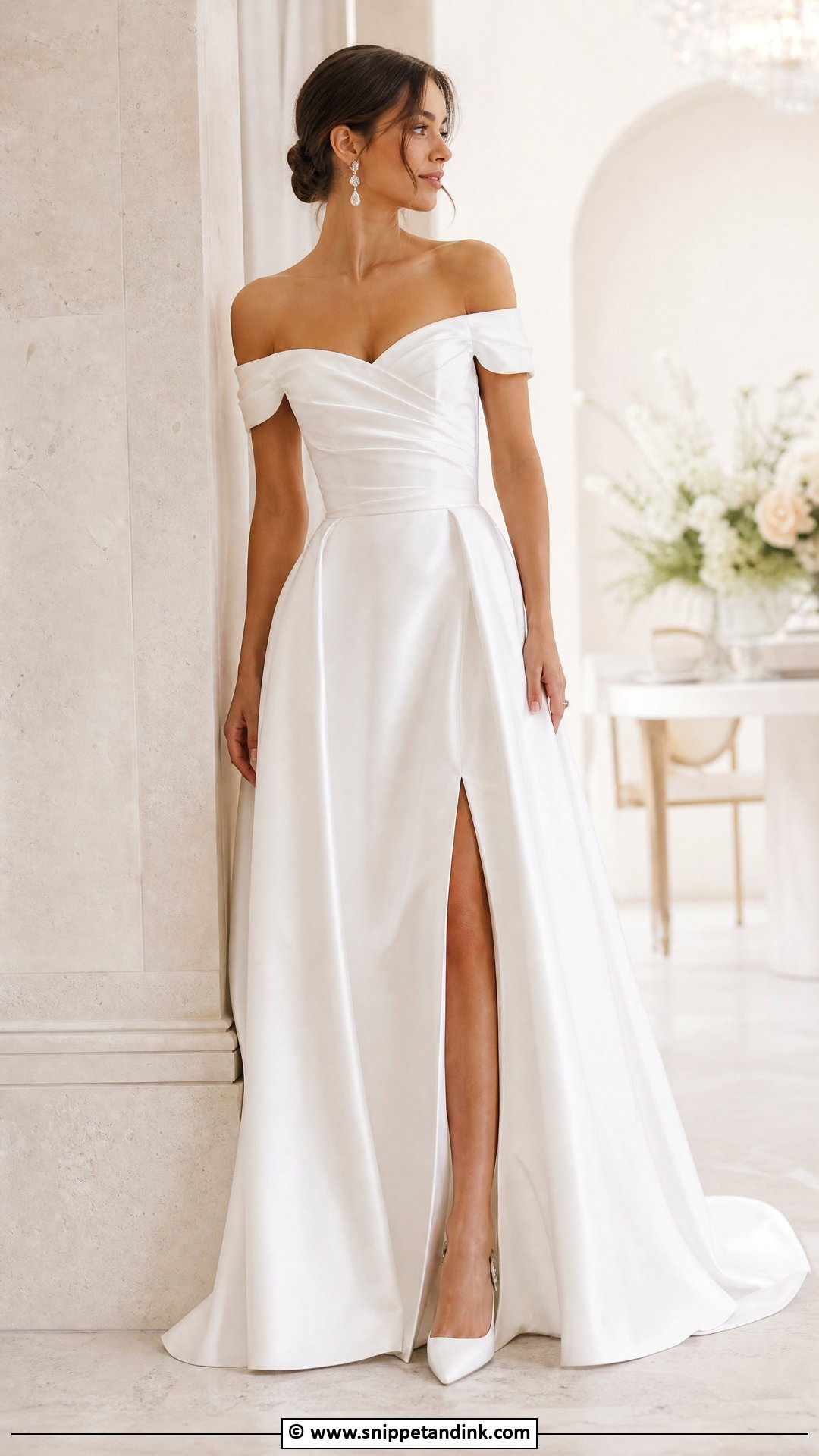
An off-shoulder neckline frames the collarbones and works in satin, lace, mikado and crepe, either structured or relaxed. On an A-line skirt it feels classic; on a mermaid it turns dramatic. The catch is your arms, because the band sits on the upper arm and limits how high you can reach. If you plan to dance a lot, I’d ask whether the sleeves can be set on elastic or made detachable for the reception. No necklace, just drop earrings, a soft updo and pointed heels.
8. White Minimalist Wedding Dress
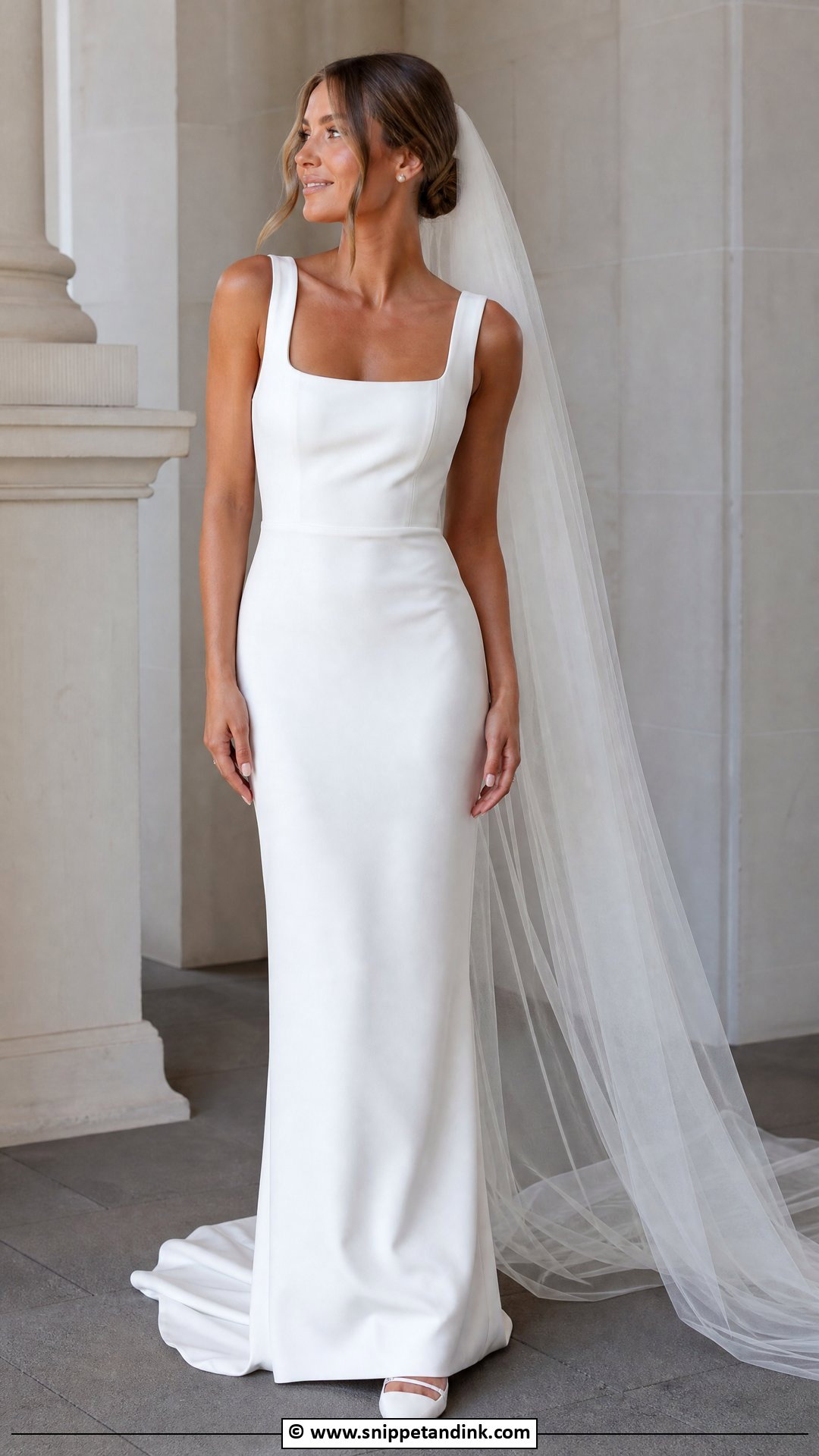
With no embellishment to hide behind, a minimalist dress lives or dies by fabric and tailoring. A crepe column, satin slip or square-neck dress only looks sharp if the seams lie flat and the hem sits exactly at the floor in your shoes. Under bright light I look for underwear lines and puckered zips before anything else. Pearl studs, a sleek veil and refined heels, with a low bun or smooth blowout. Then choose one standout: a deep back, a long train or a sculptural neckline.
9. White Princess Wedding Dress
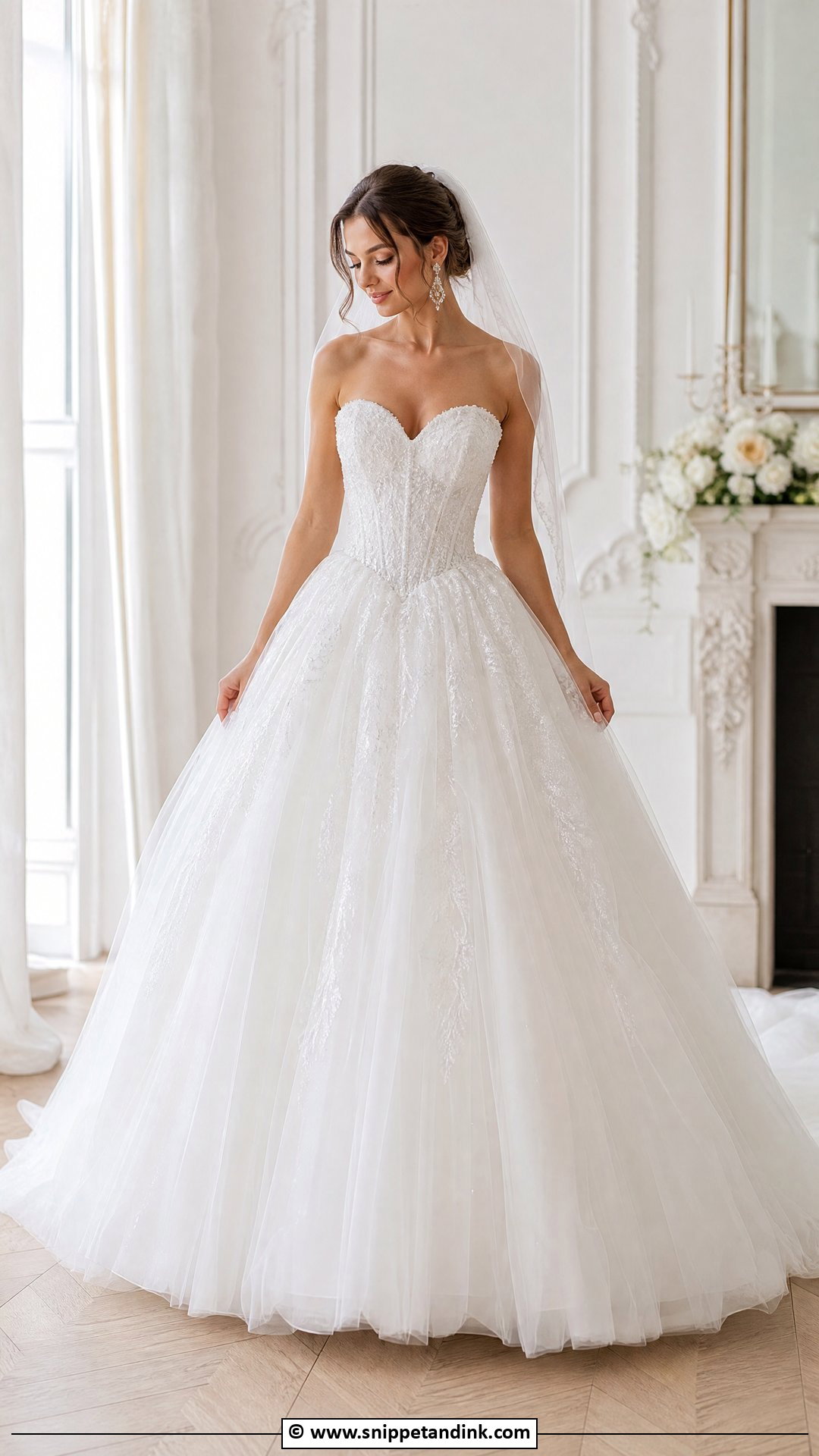
The princess look is a fitted bodice, full skirt, a little sparkle and a soft veil. Tulle, organza and lace give volume without much weight, and organza holds its shape more crisply than tulle. A sweetheart or scoop neck keeps it romantic, and thin straps help carry a heavy skirt. To stop it tipping into costume, I ask brides to pick one main detail, embroidery or shimmer or a bow, rather than stacking all three. Crystal earrings, a tiara-style piece and comfortable heels hidden under the skirt.
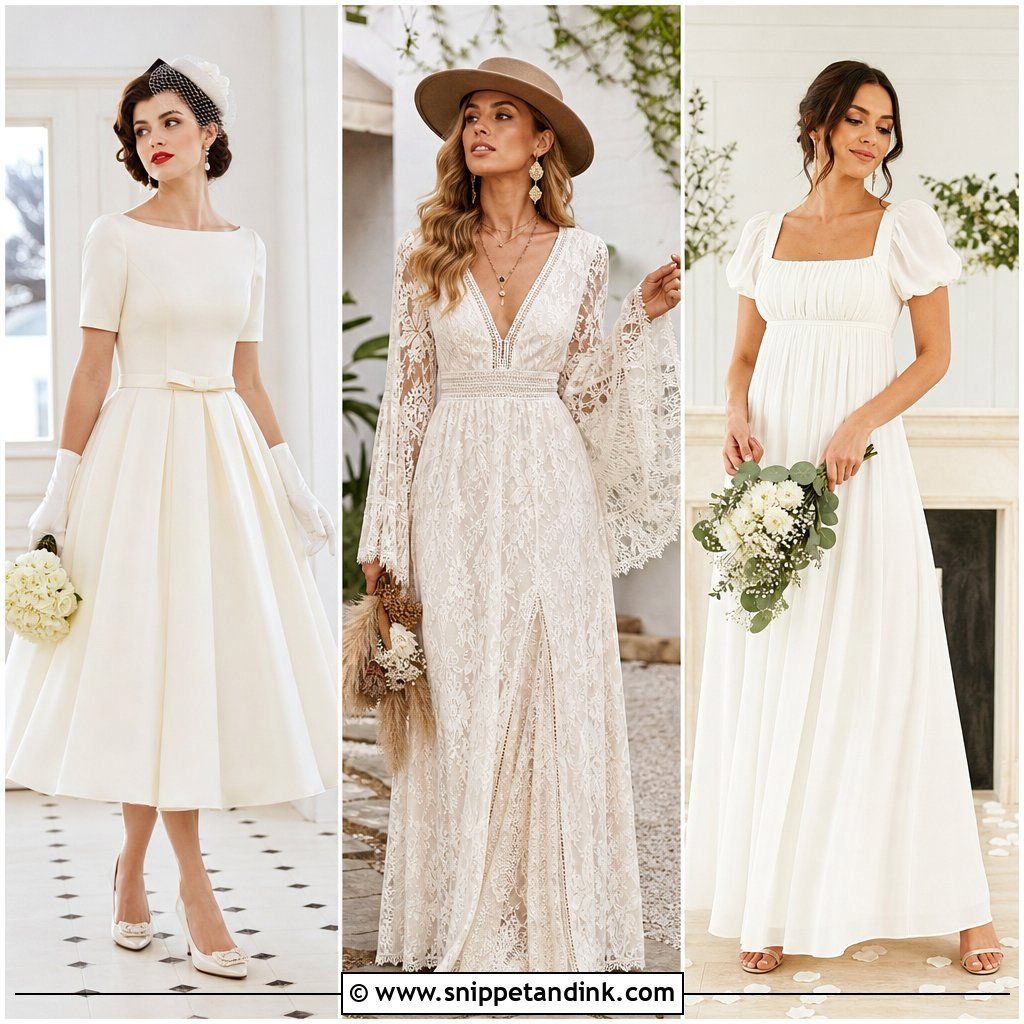
10. White Boho Wedding Dress
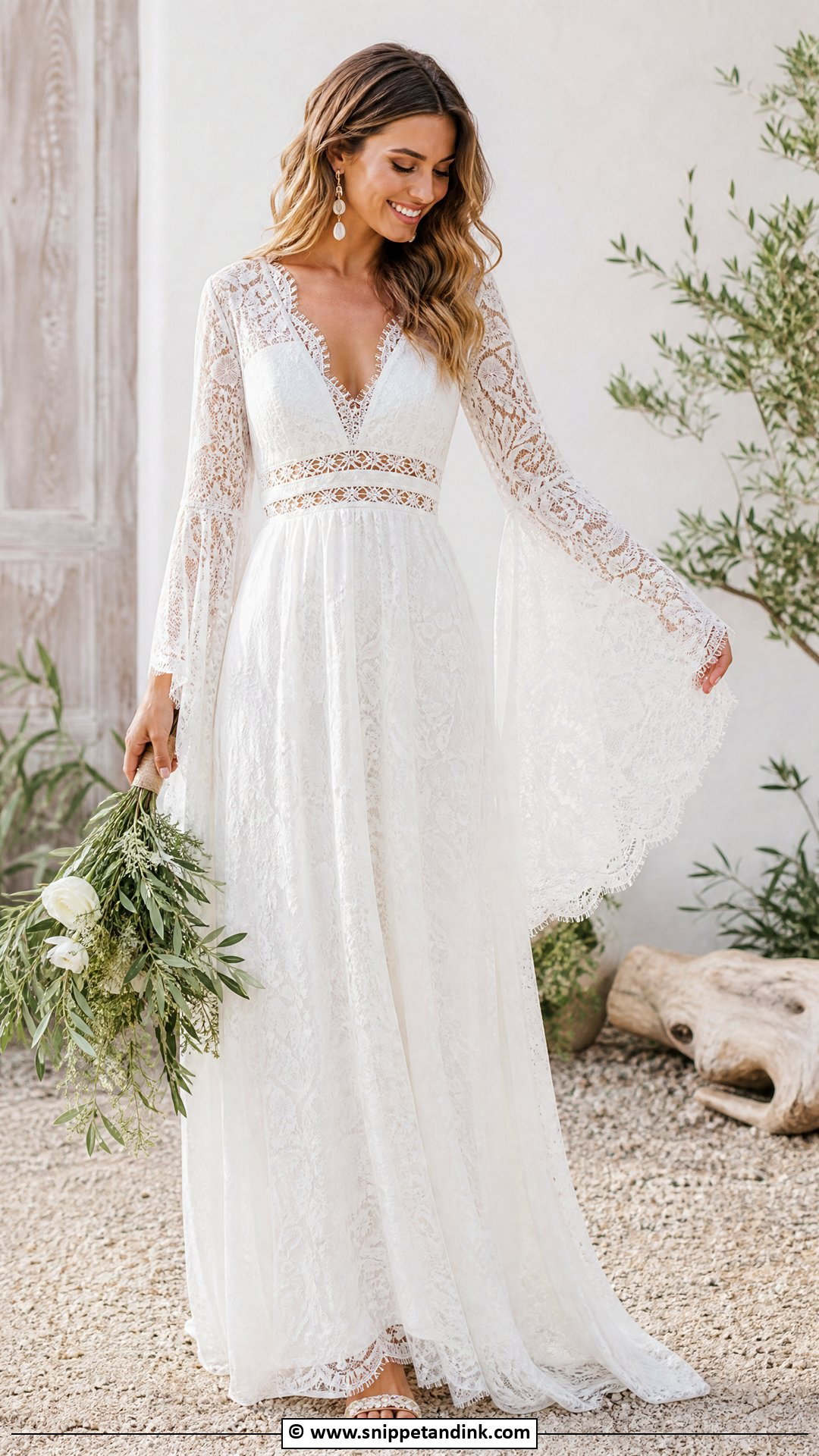
Boho dresses belong at relaxed outdoor and beach weddings: soft lace, flowing sleeves, light chiffon, crochet-style texture or an empire waist. Relaxed still needs fitting, though. A boho dress that’s too big just looks borrowed. Loose waves, fine earrings and flat sandals or low block heels finish it. Fresh flower crowns can wilt in heat by the first dance, so I often suggest a simple veil or hair vine instead, and breathable linings help in warm weather.
11. White Beach Wedding Dress
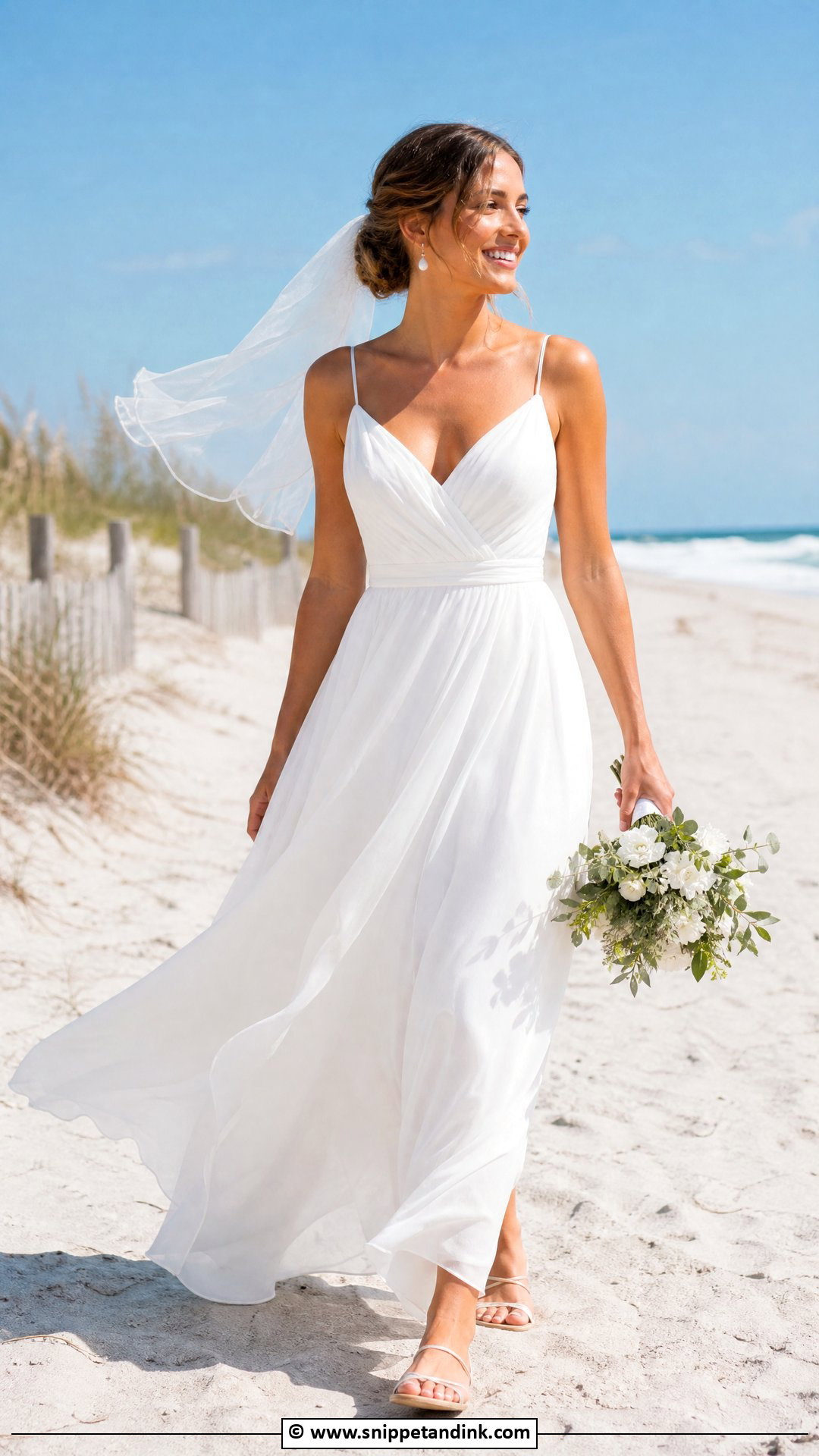
Sand is the real judge of a beach dress. Heavy trains drag and collect it, and stiff fabrics fight the wind, so chiffon, soft tulle, light crepe or silk-like satin in an A-line, slip or relaxed sheath work best. I hem these a touch shorter than a ballroom gown because brides walk in flats or barefoot. Flat sandals, pearl earrings and a wind-proof low bun or braid. A short veil or sheer cape gives movement, whereas a cathedral veil turns into a sail.
12. White Courthouse Wedding Dress
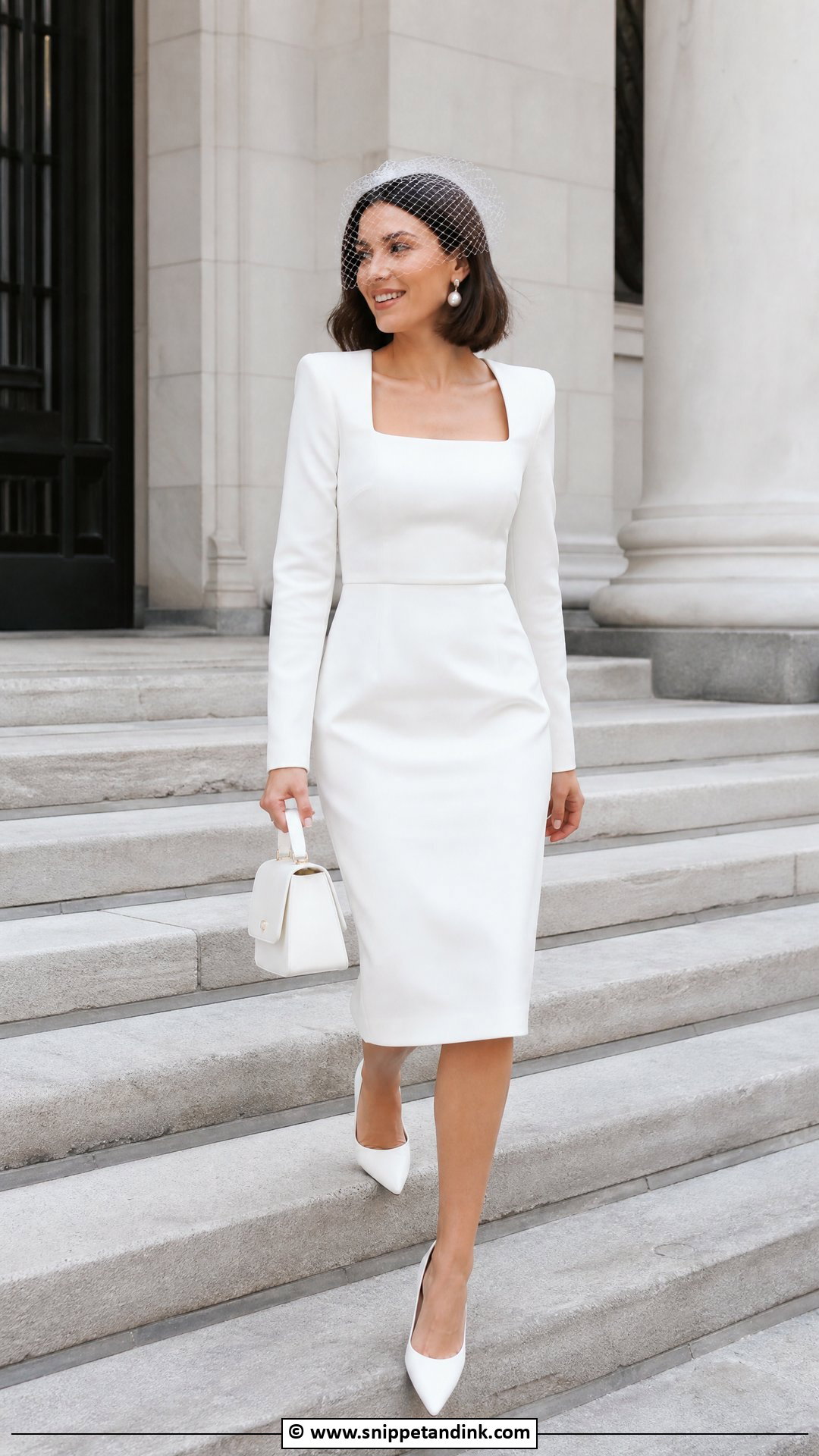
A white courthouse wedding dress has to look sharp under office lighting and in a quick phone photo on the steps. A midi, tailored mini, sleek column or white blazer dress all work, depending on how formal you want the day. Courthouse settings are plain, so tailoring shows: shoulders that fit and a hem at the right length matter more than any embellishment. Pointed pumps, a structured bag, small pearl or gold earrings and a birdcage veil or bow for the bridal note.
13. White Tea Length Wedding Dress
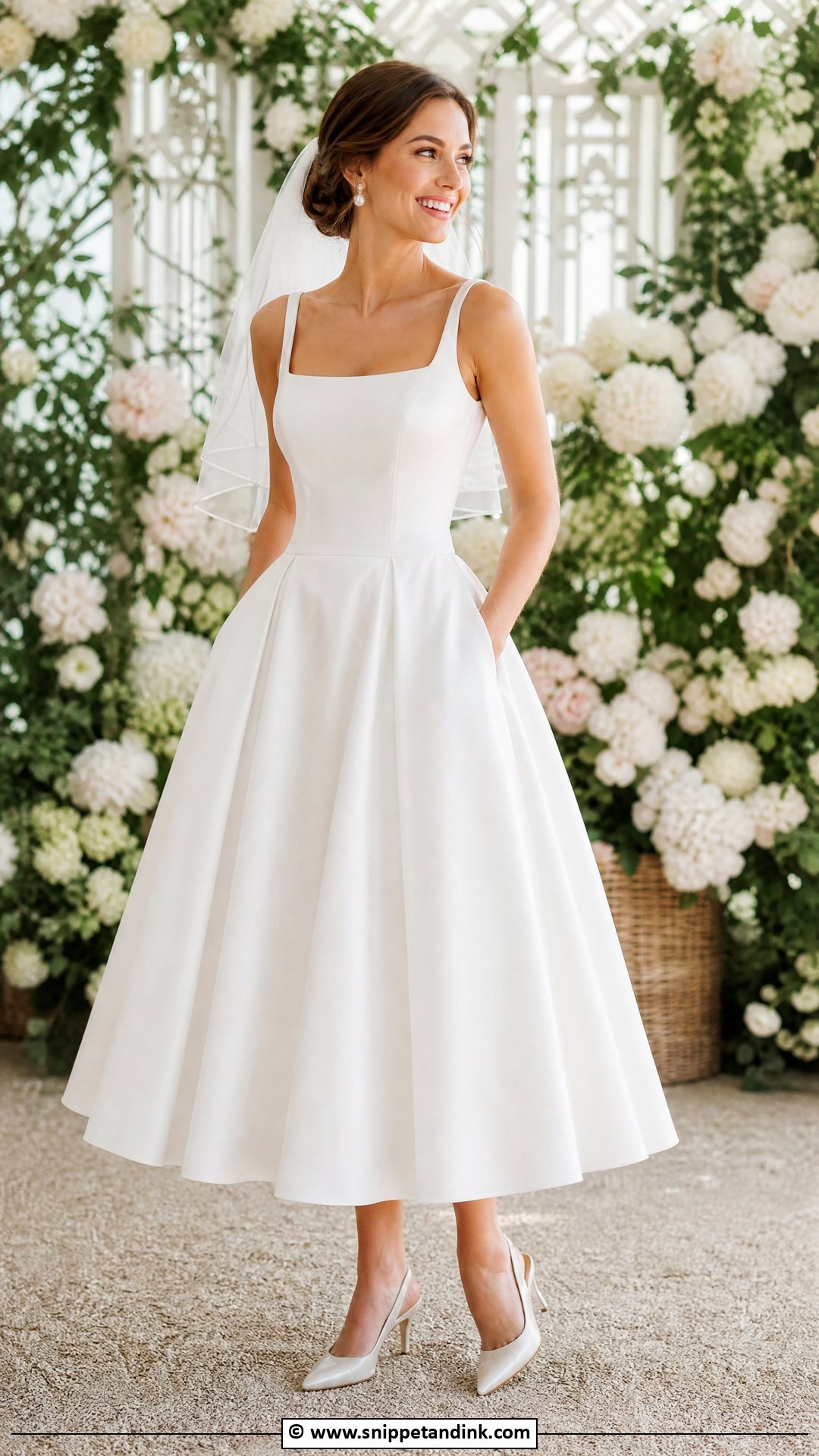
Tea length lands between knee and ankle, which makes the shoes part of the outfit. A fitted bodice and full skirt has a 1950s feel, while a tea-length sheath is more modern. I’d put real money into the shoes here, pointed pumps, slingbacks or embellished flats, and have the hem marked while wearing them, because a centimeter changes the proportion. Pearl earrings with a short veil or soft headband. It doubles easily as a second look for the reception.
14. White Mini Wedding Dress
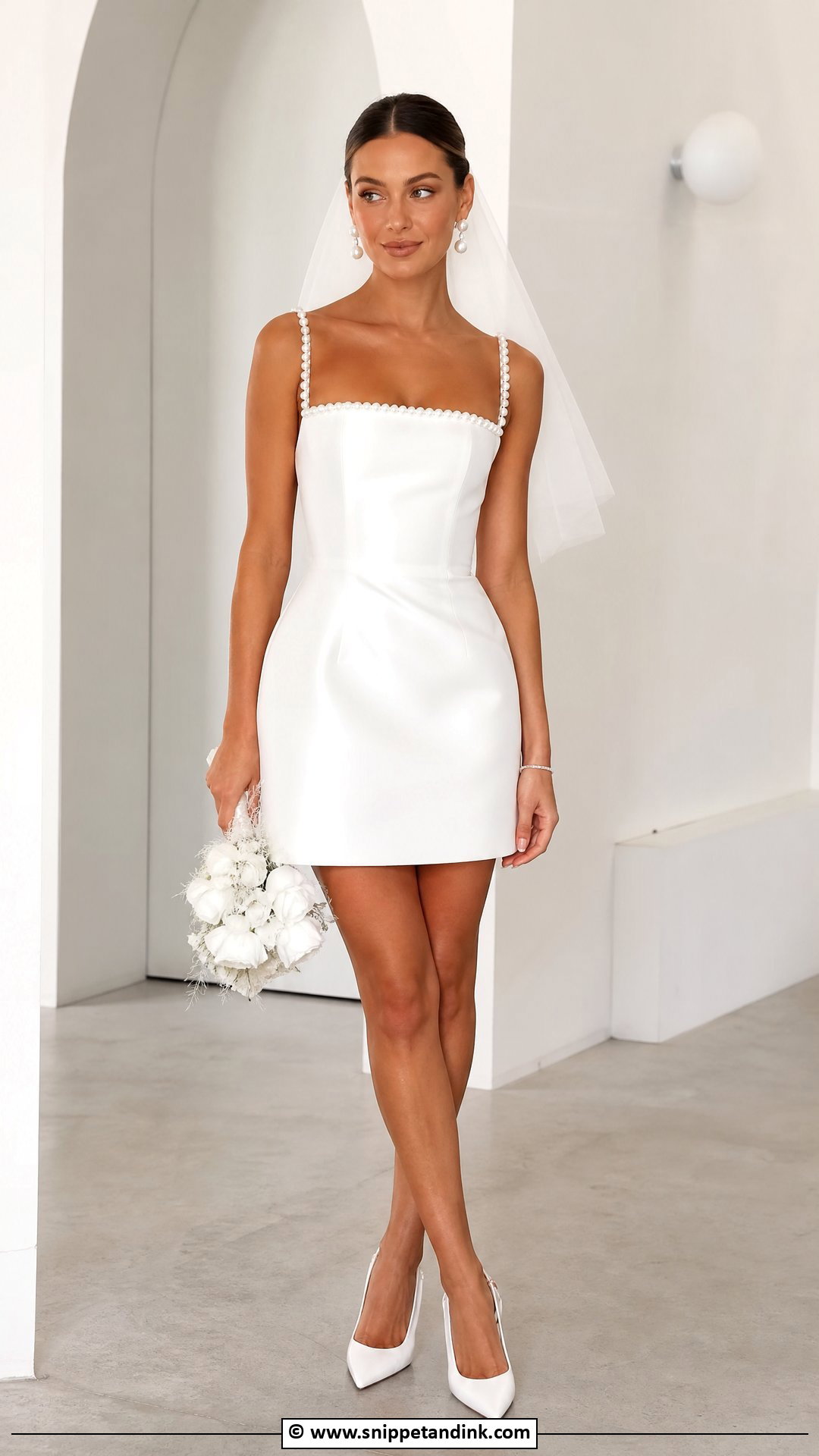
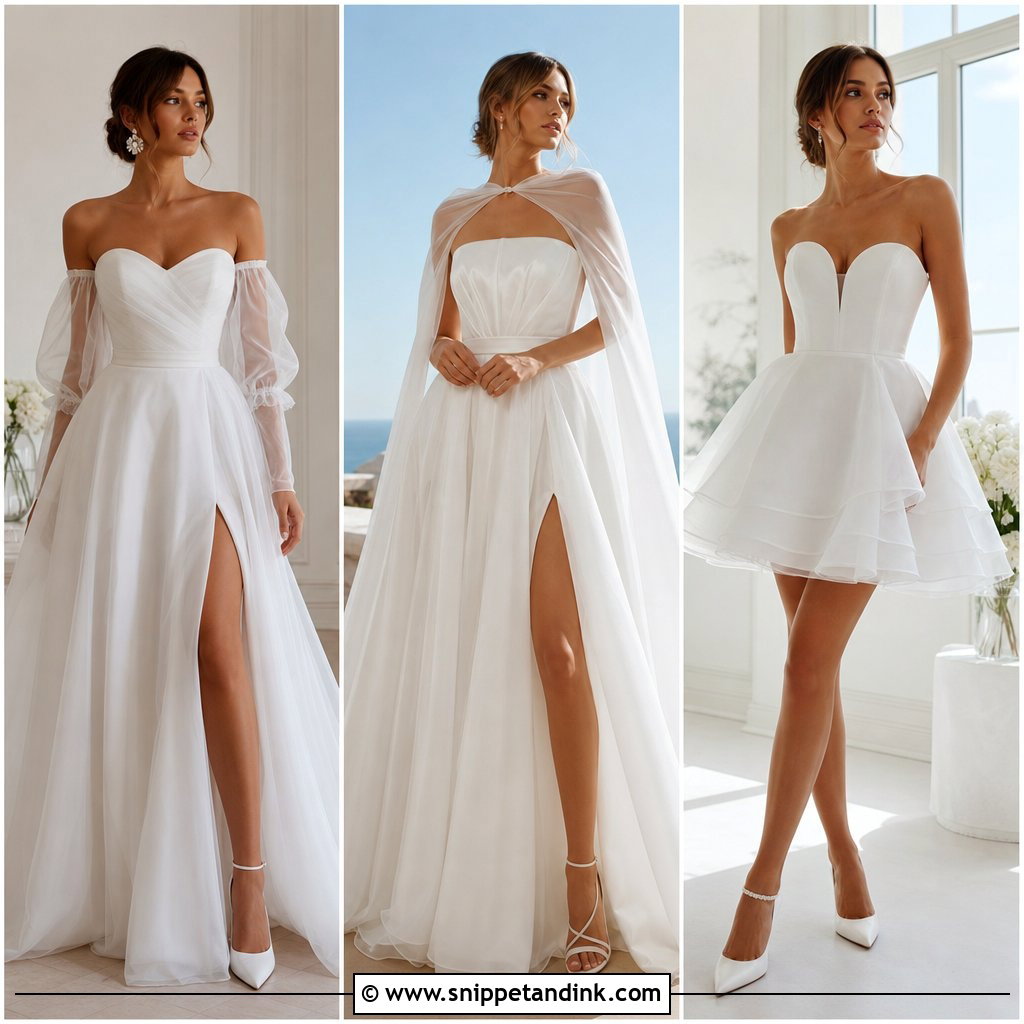
A white mini wedding dress works for a reception, an after-party, a courthouse ceremony or an elopement. Detail is what makes a mini read bridal rather than party: satin, pearl trim, bows, feathers, lace sleeves or a structured bodice. If the hem is short, I balance it with a little more coverage up top. Slingbacks, a small veil, statement earrings and sheer tights in cold months. Sit down in it in front of a mirror before buying, because minis ride up more than you’d think.


15. White Slip Wedding Dress
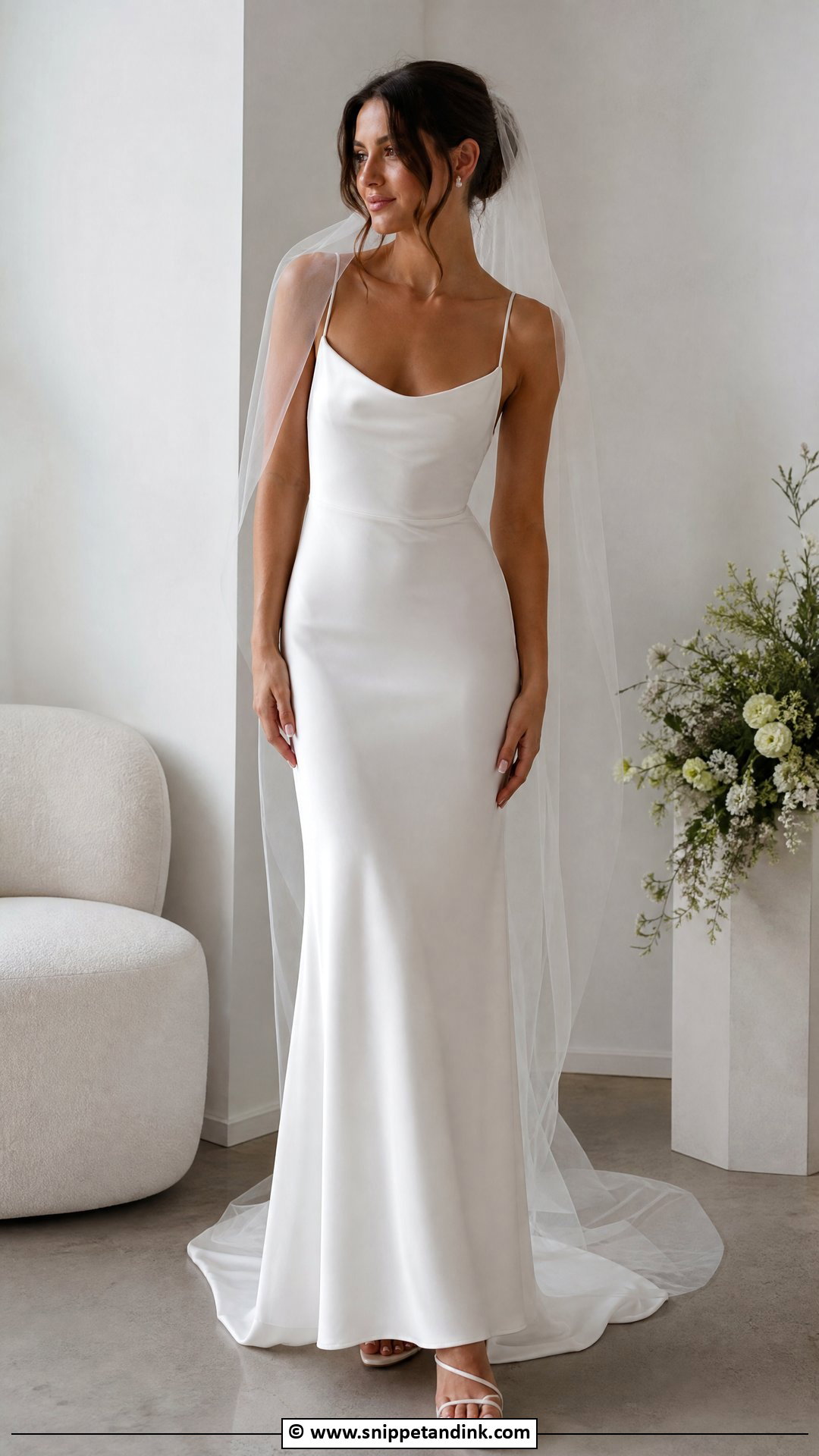
The slip is the 90s bridal look: thin straps, a fluid skirt and a body-skimming shape in silk, satin or charmeuse. It is also the least forgiving dress here. Bias-cut charmeuse shows every line underneath, so undergarments get settled before the first fitting, not after it. Strappy sandals, pearl studs and a sheer veil, with a cropped jacket, long gloves or a lace topper for coverage. It suits small and destination weddings where guests see the fabric up close.
16. White Basque Waist Wedding Dress
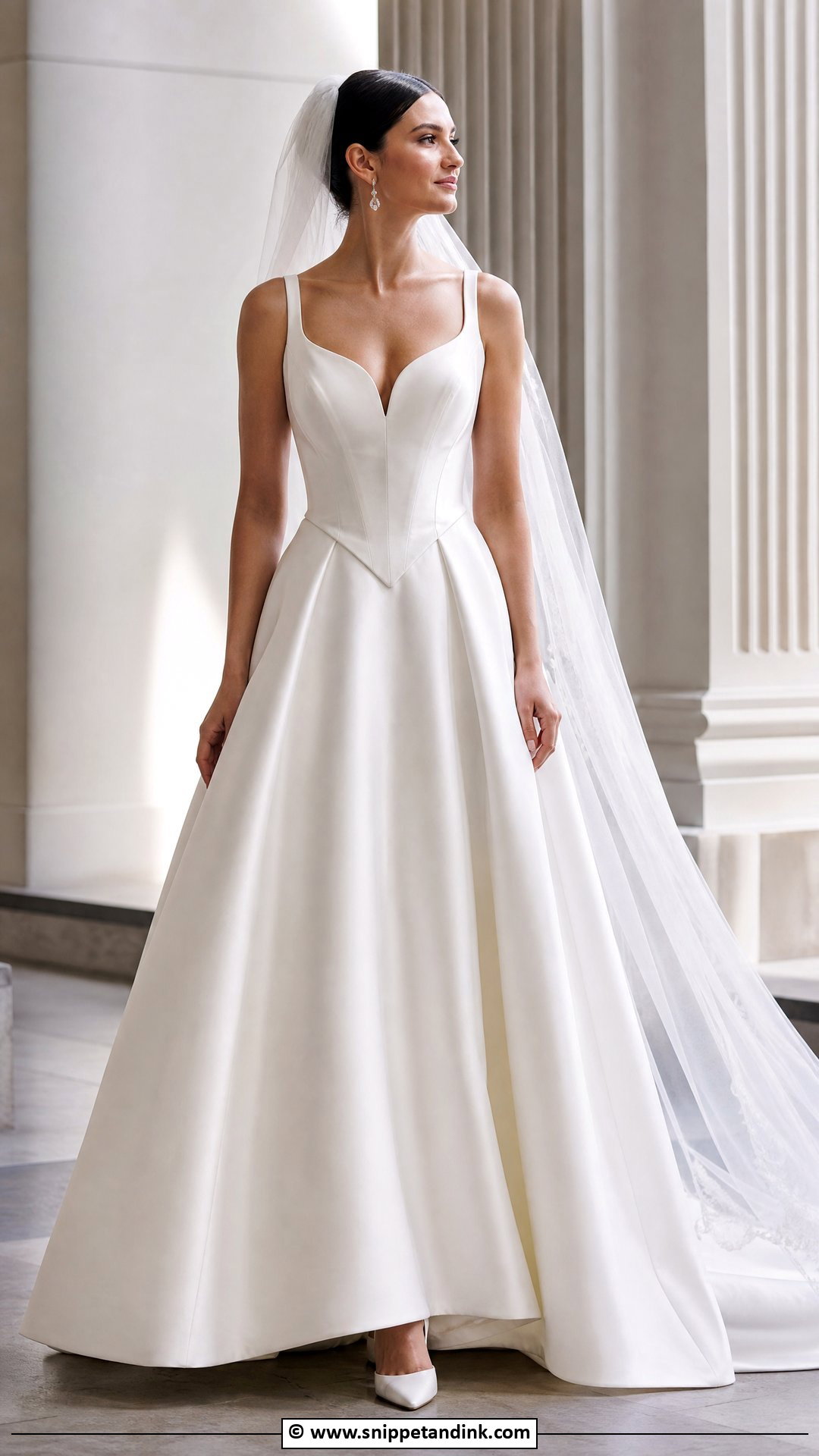
A basque waist dips into a soft V at the front, which lengthens the torso, and it’s most striking with a full skirt and structured bodice. Depth is the thing to watch. On a short torso a deep basque can cut the body in half, so I move the point up or down during fittings until the proportions settle. Satin, tulle and lace all suit it. Long veil, classic pumps, delicate earrings, and no bulky belt over the waist detail.
17. White Square Neck Wedding Dress
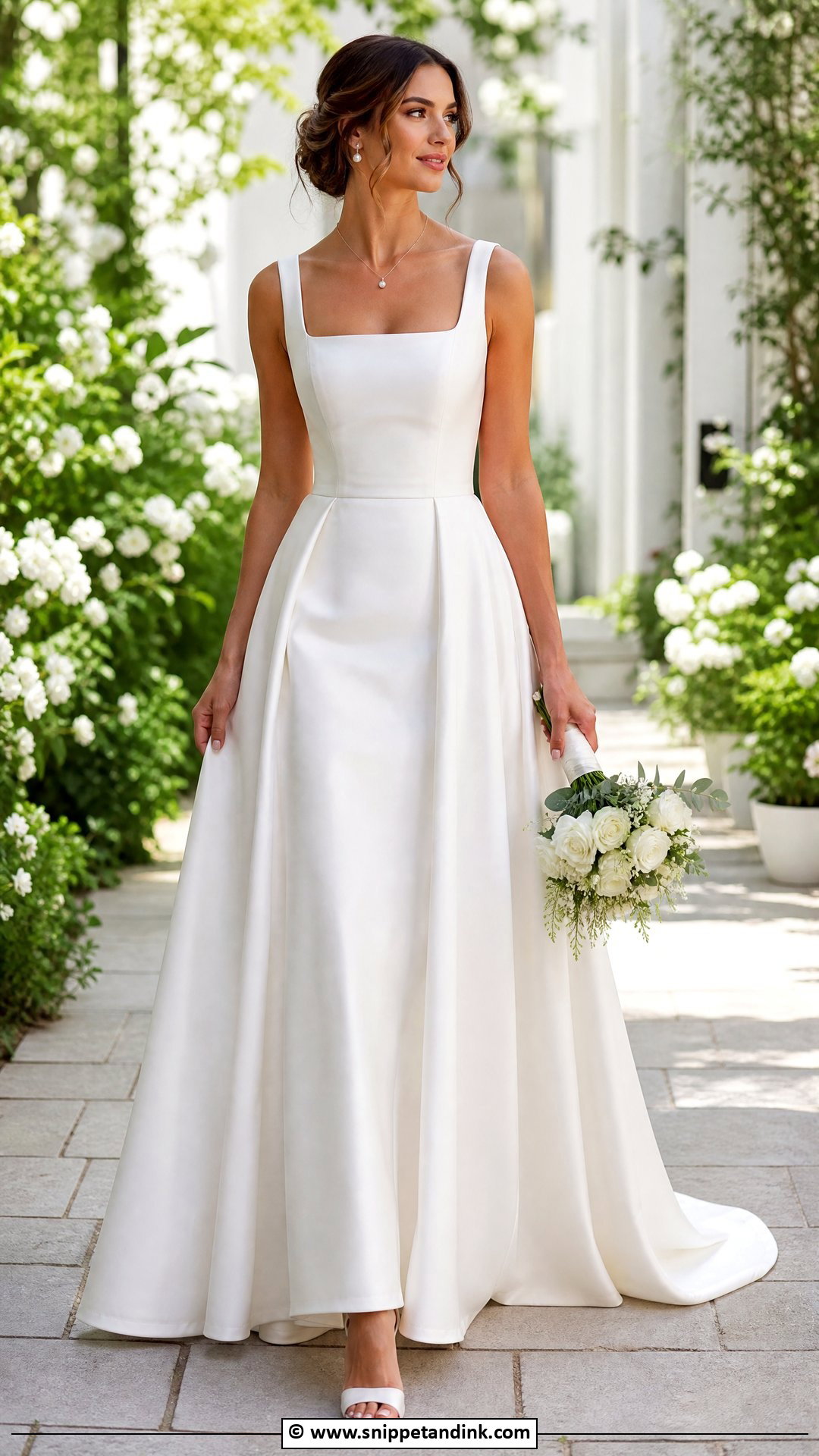
A square neck frames the collarbone and gives a slightly vintage line without feeling trendy. It works with straps, long sleeves or a fitted bodice, polished in satin and softer in lace. With a fuller bust I go for wider straps, because a square neck on thin straps tends to gape at the corners. Thin straps are fine on a smaller frame. Add a simple necklace, pearl earrings and a low veil.
18. White Halter Wedding Dress
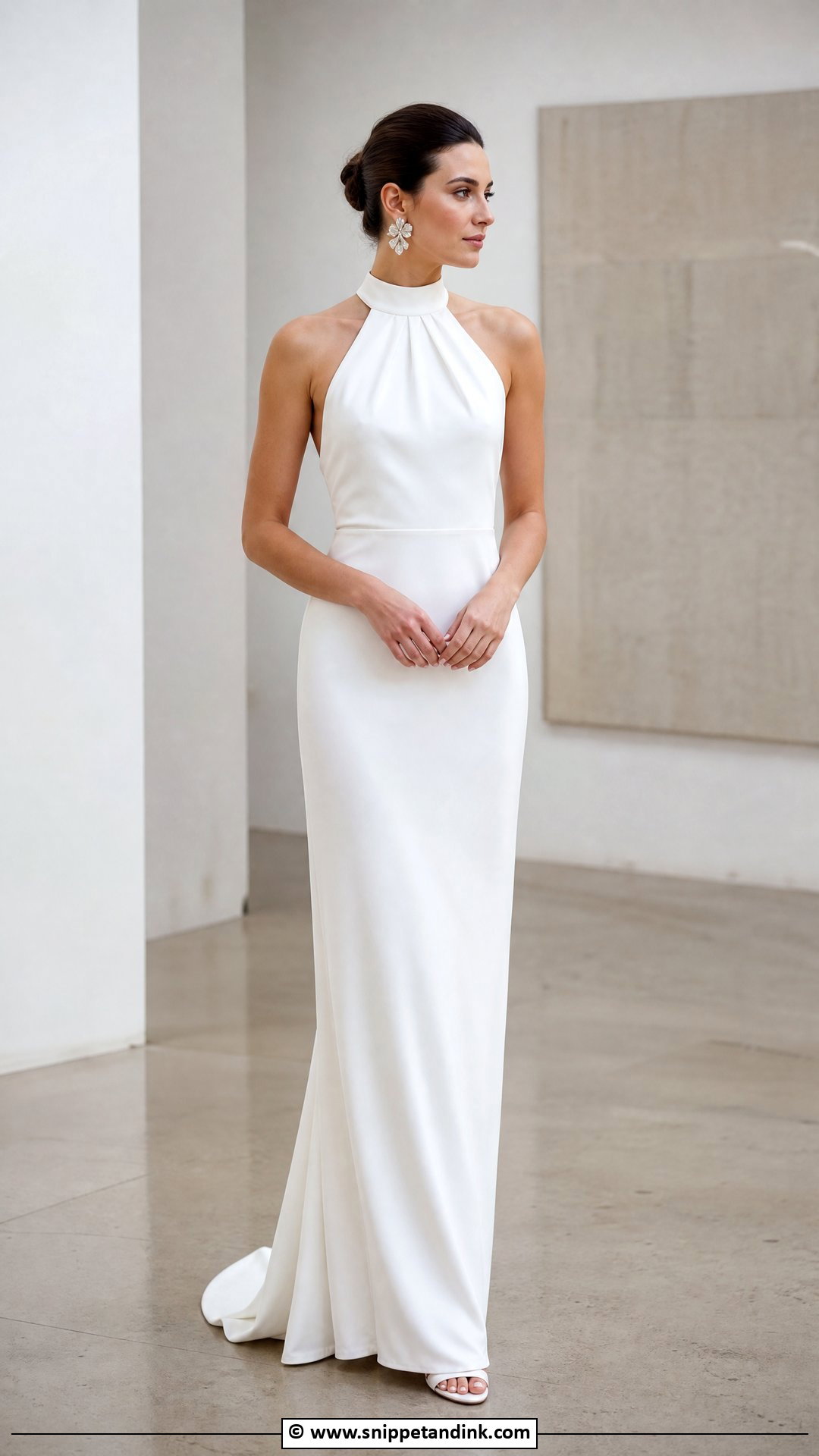
A halter draws the eye to the shoulders and lengthens the upper body. High-neck versions feel modern, draped ones more relaxed, and both suit satin, crepe and silk-like fabrics at warm-weather or city weddings. Two things I watch: the neck strap can drag over a long day, so I check how it feels after an hour, and a regular bra is usually out, so support has to be built in. Clean updo, statement earrings and minimal heels, no necklace. The back view is often the best part of this one.
19. White Backless Wedding Dress
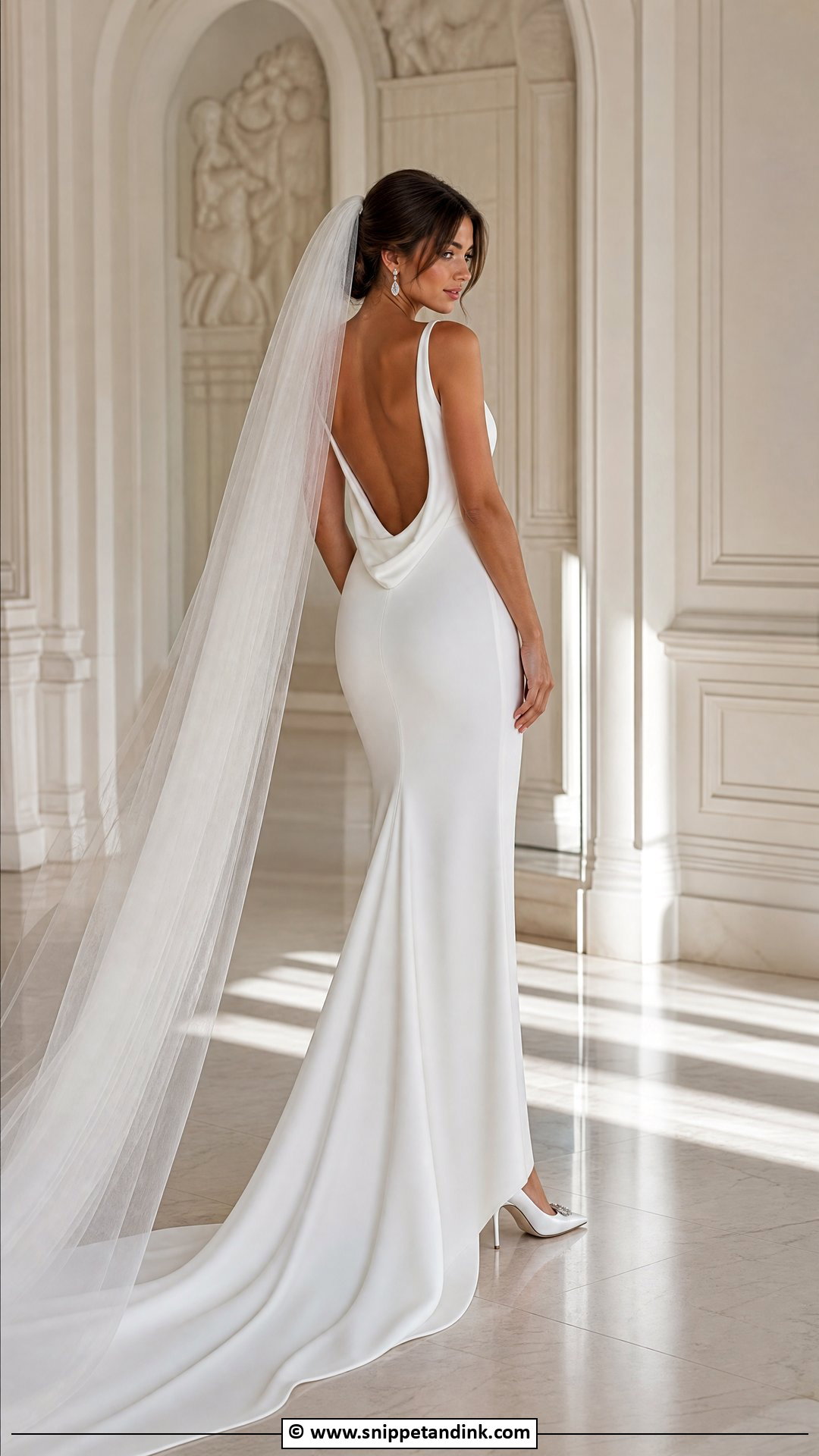
From the front a backless gown can look plain. From the back it’s the moment. Choose a low scoop, an open V or a lace-trimmed back depending on comfort. I sort undergarments early, because a deep back usually means sewn-in cups or a low-back adhesive option, and either one has to be in place before the final fitting. Long veil for the ceremony, off for the reception, then a low bun or side-swept waves and delicate jewelry.


20. White Bow Wedding Dress
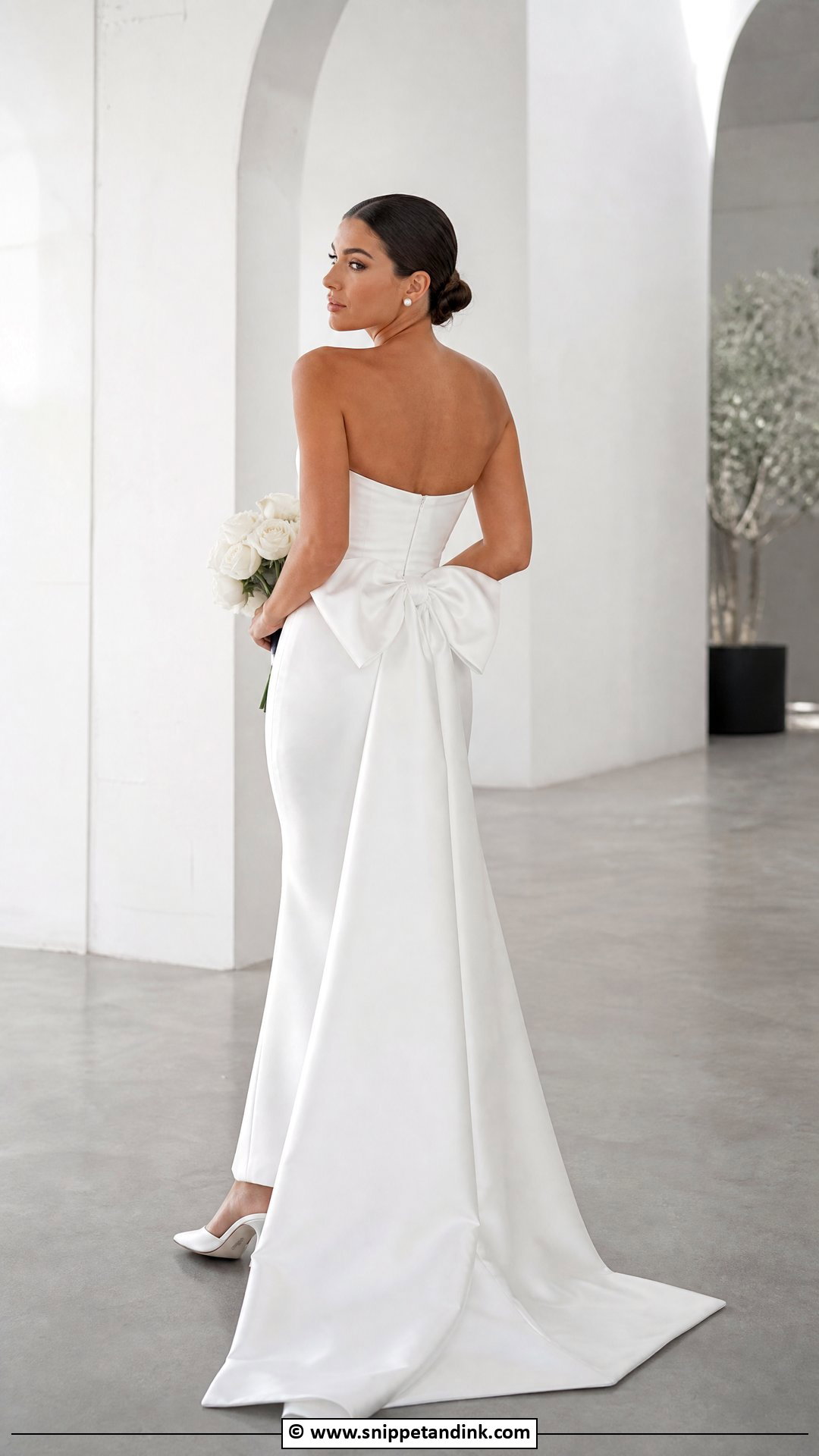
Placement decides a bow’s mood: back waist, shoulder, neckline or train. A large back bow on a plain satin gown adds drama without beading, while a small shoulder bow is softer. Big bows crush when you lean back in a dinner chair, so I ask the bridal shop whether it’s detachable for the reception or stiffened enough to recover. Clean heels, pearl studs and a smooth hairstyle, with nothing else competing near the bow.
21. White Tulle Wedding Dress
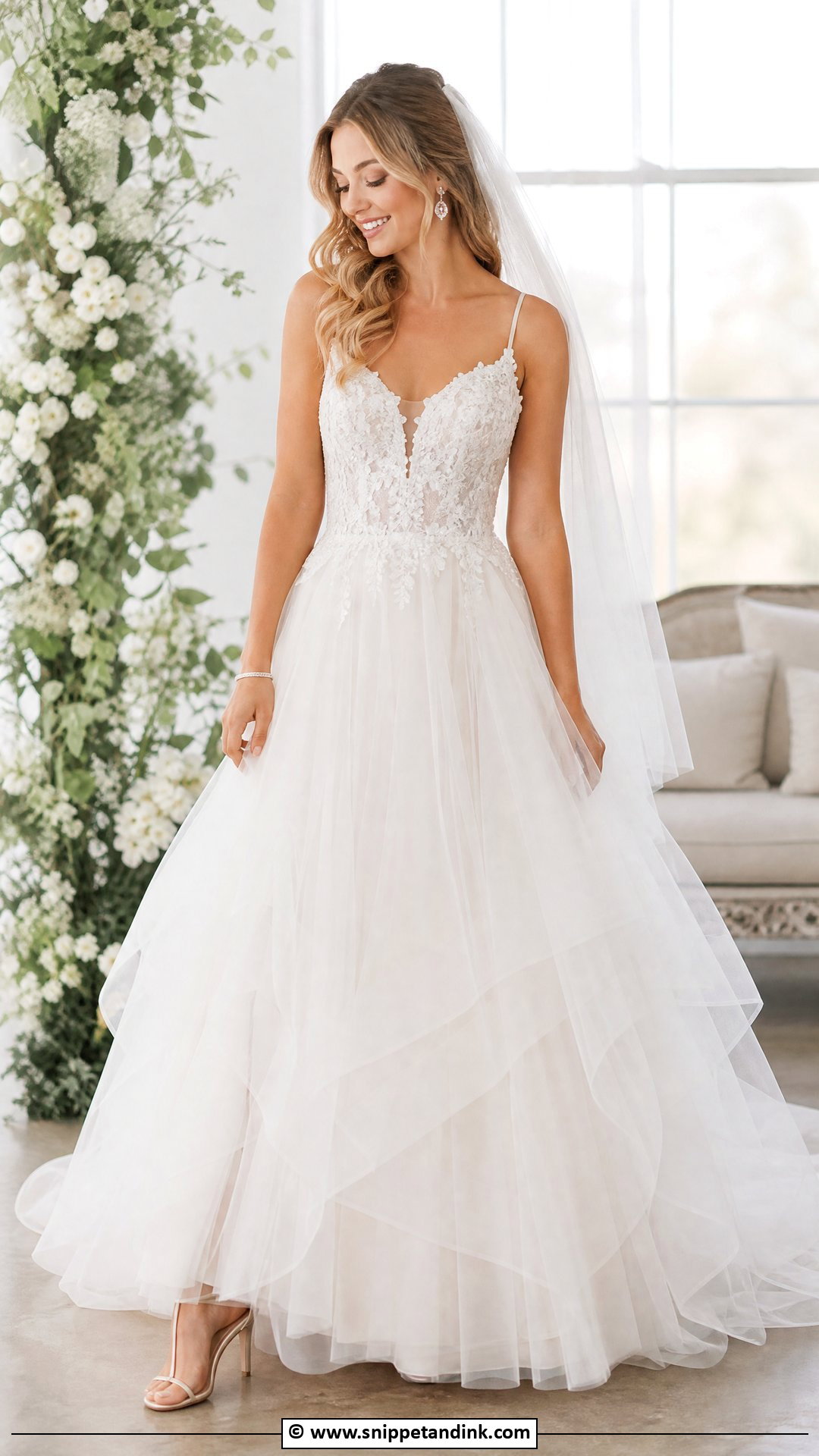
Tulle is airy and moves well, especially in light layers rather than stiff volume. An A-line in tulle suits most venues; a tulle ball gown is formal. It catches on everything, so when I fit it I look at the shoe buckles and the bouquet stems too. Embroidered flowers, scattered pearls or a sheer bodice add texture. Soft curls, a simple veil, dainty heels and light accessories keep it floating.
22. White Crepe Wedding Dress
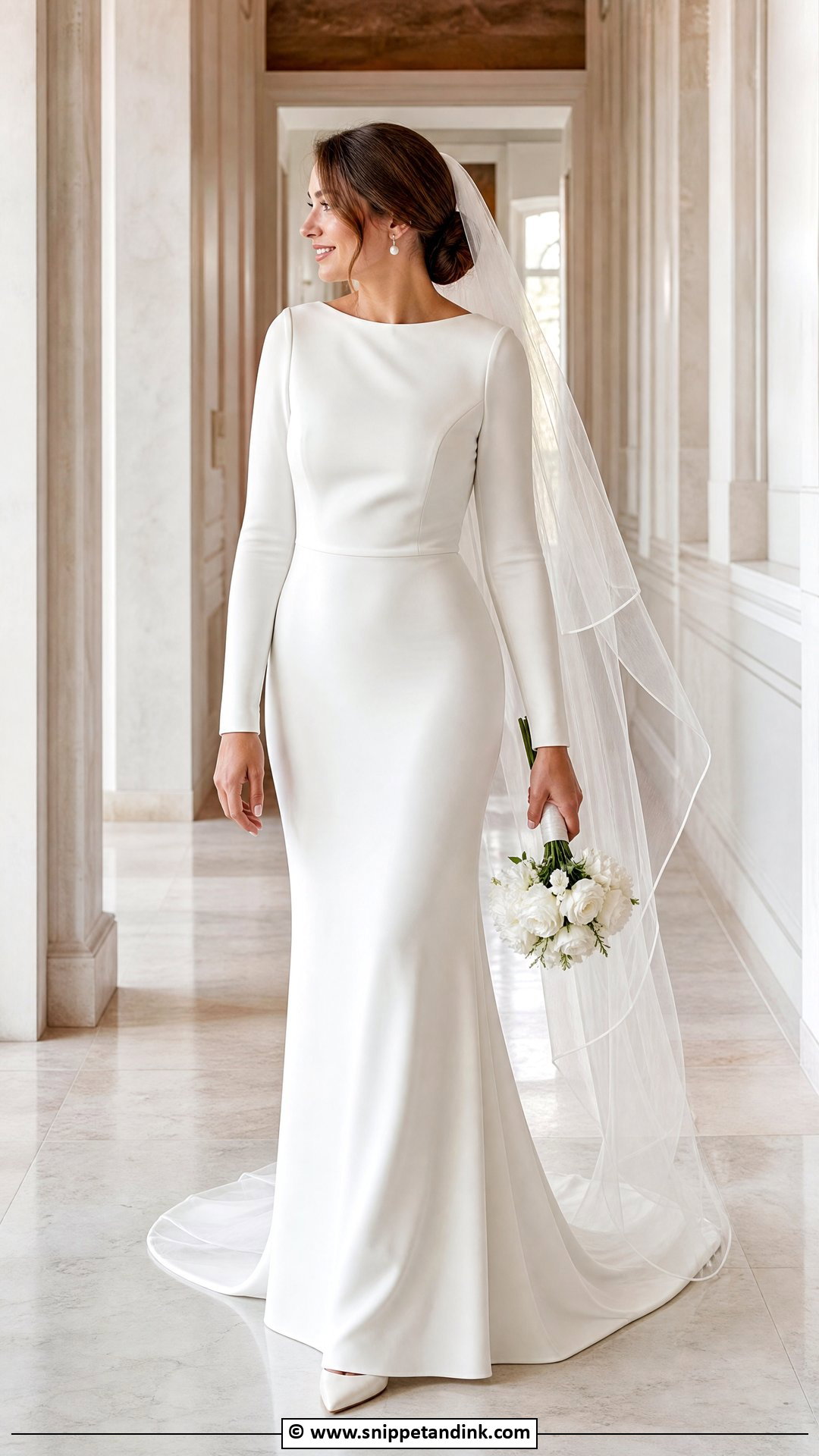
A white crepe wedding dress has enough weight to skim the body without shine, which is why it suits minimal gowns, sheaths and fitted shapes. Crepe also hides the creases of sitting better than satin. Long sleeves look polished; strapless looks sleek. Pointed pumps, pearl earrings and a clean veil, plus a dramatic train or open back if you want a single statement. All of its structure lives in the seams, so this is not the dress to hand to a cheap alterations shop.
23. White Embroidered Wedding Dress
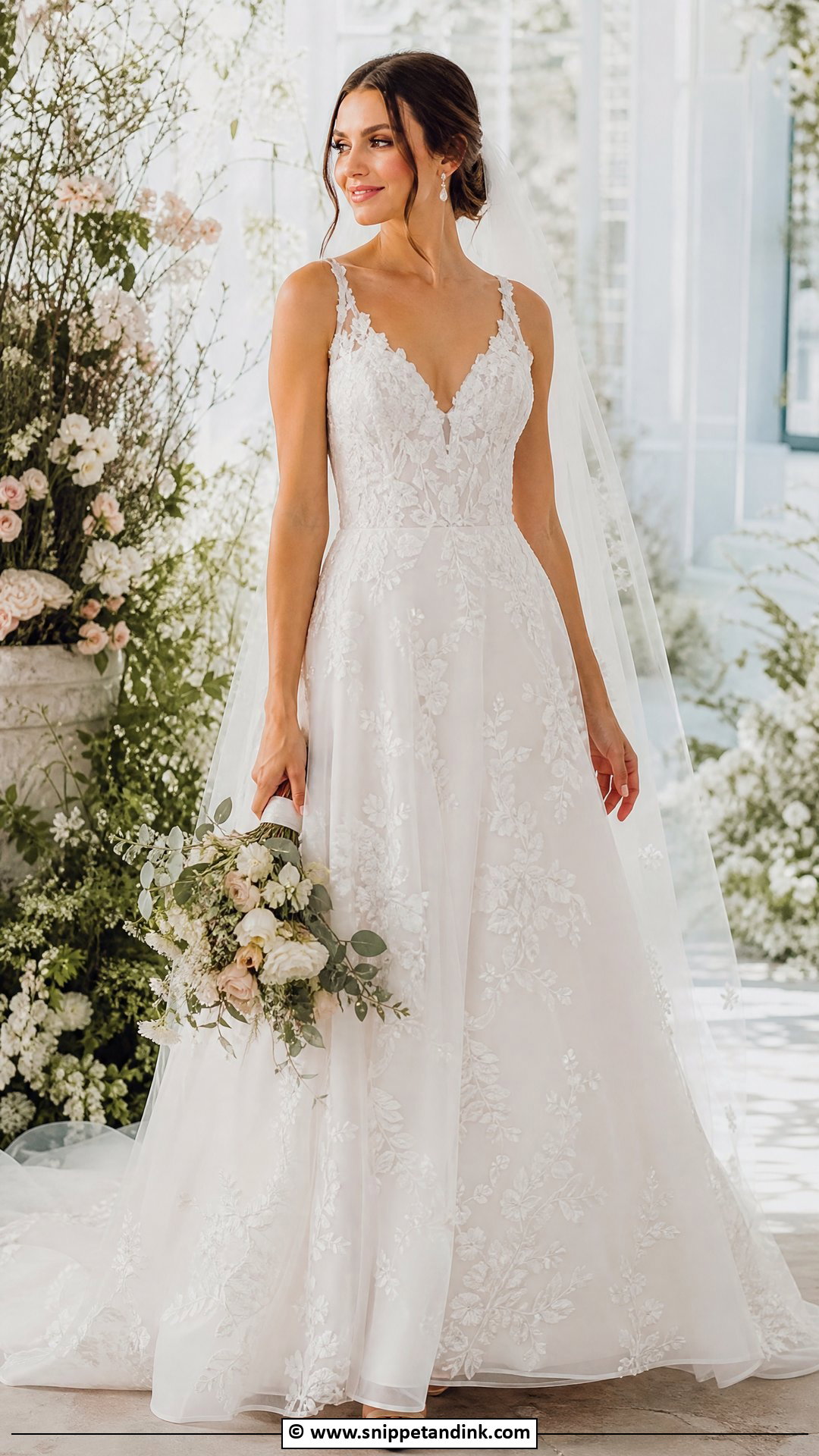
Embroidery adds texture you mostly see up close. Floral is the popular choice; white-on-white stays subtle, and raised appliqué gives more depth. An embroidered skirt under a plain bodice feels balanced, allover embroidery more ornate. In the sample, I turn the bodice inside out: loose threads or scratchy backing against bare skin get uncomfortable by evening, and a soft lining fixes that. Simple earrings, a sheer veil and neutral heels, with nothing fighting the pattern.
24. White High Neck Wedding Dress
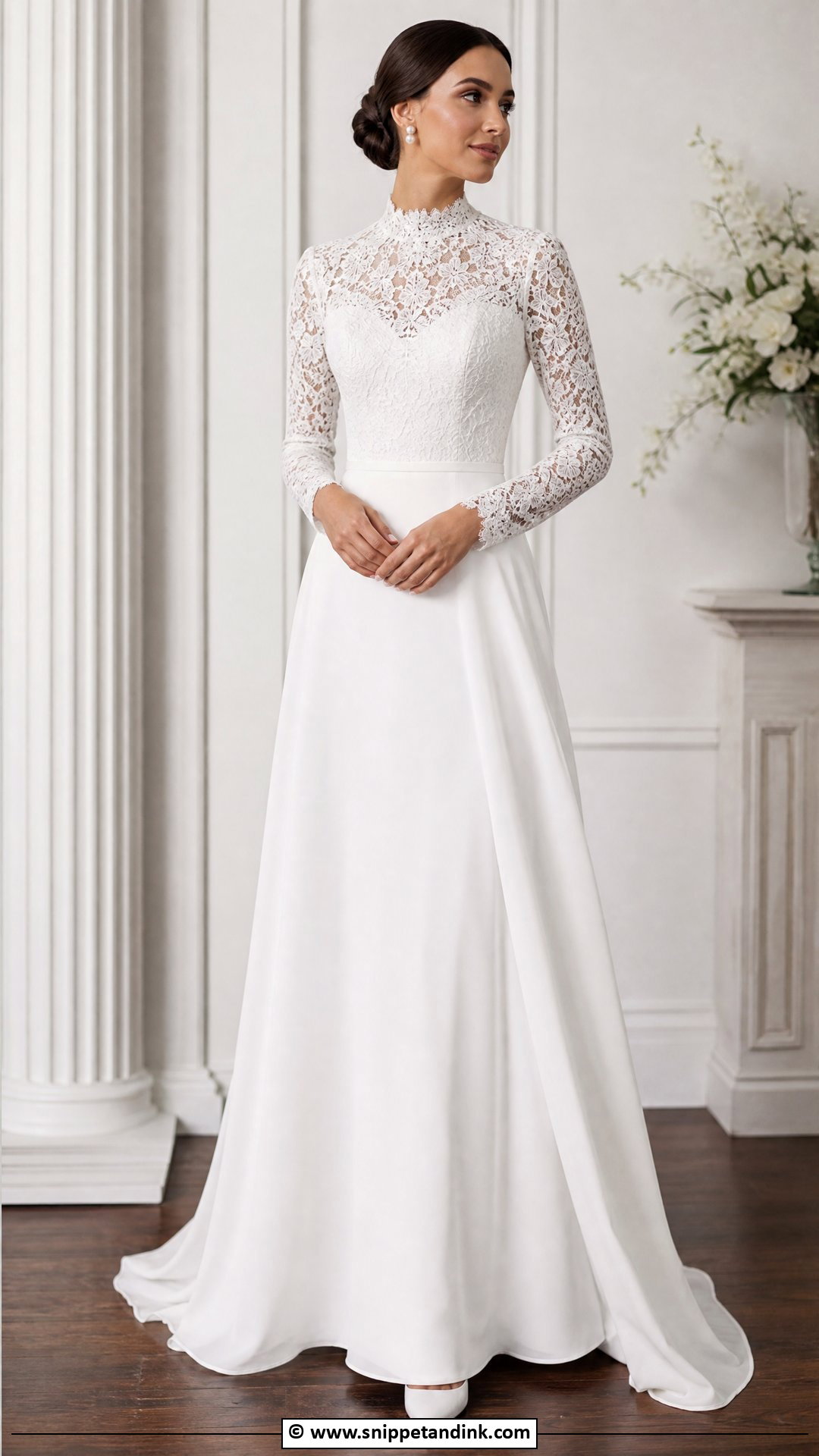
A high neck works in lace, crepe, satin and sheer illusion fabric, with lace leaning vintage and crepe looking architectural. Because it covers the neck, I keep hair up or sleek and let earrings do the talking, never a necklace. Illusion mesh needs matching to skin tone in daylight, otherwise it shows as a visible band in photos. An open back or fitted waist balances the coverage.

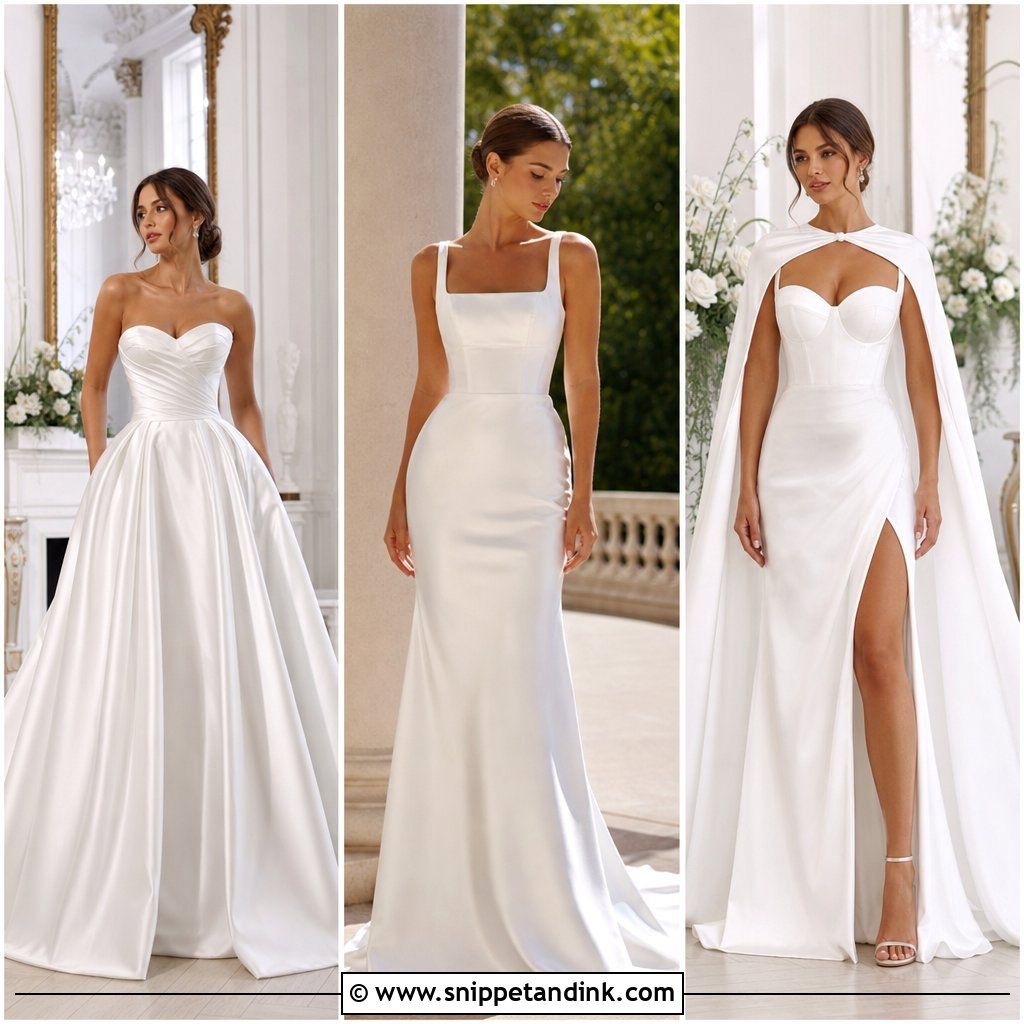
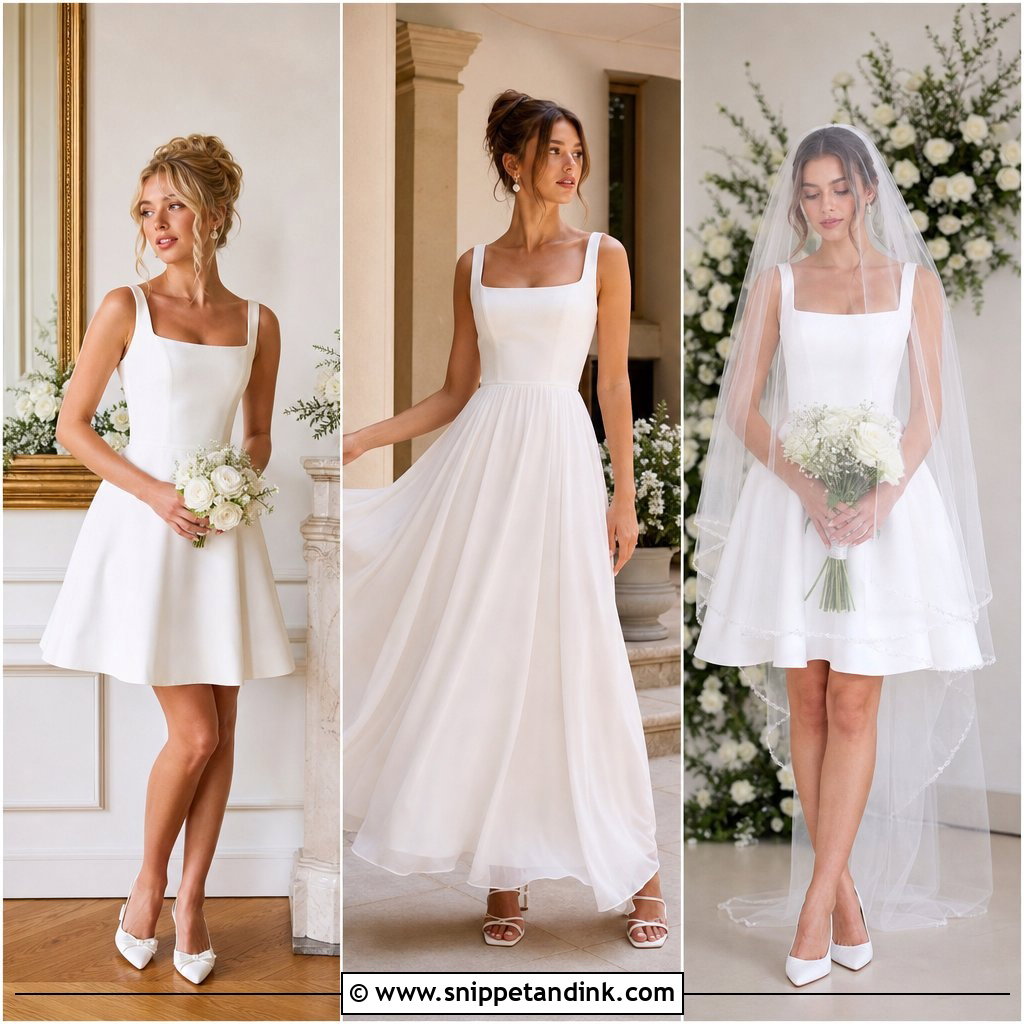
25. White Corset Wedding Dress
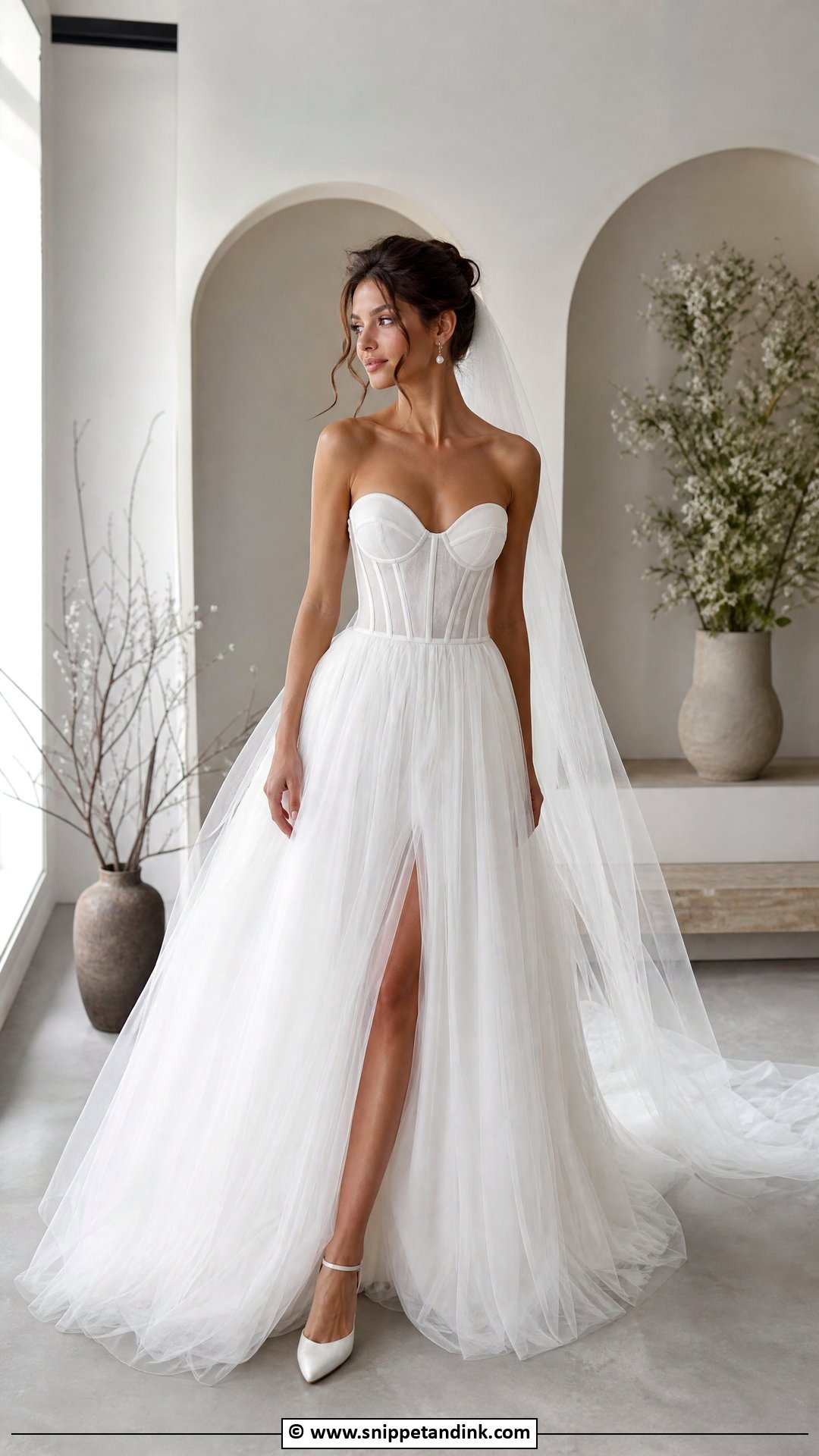
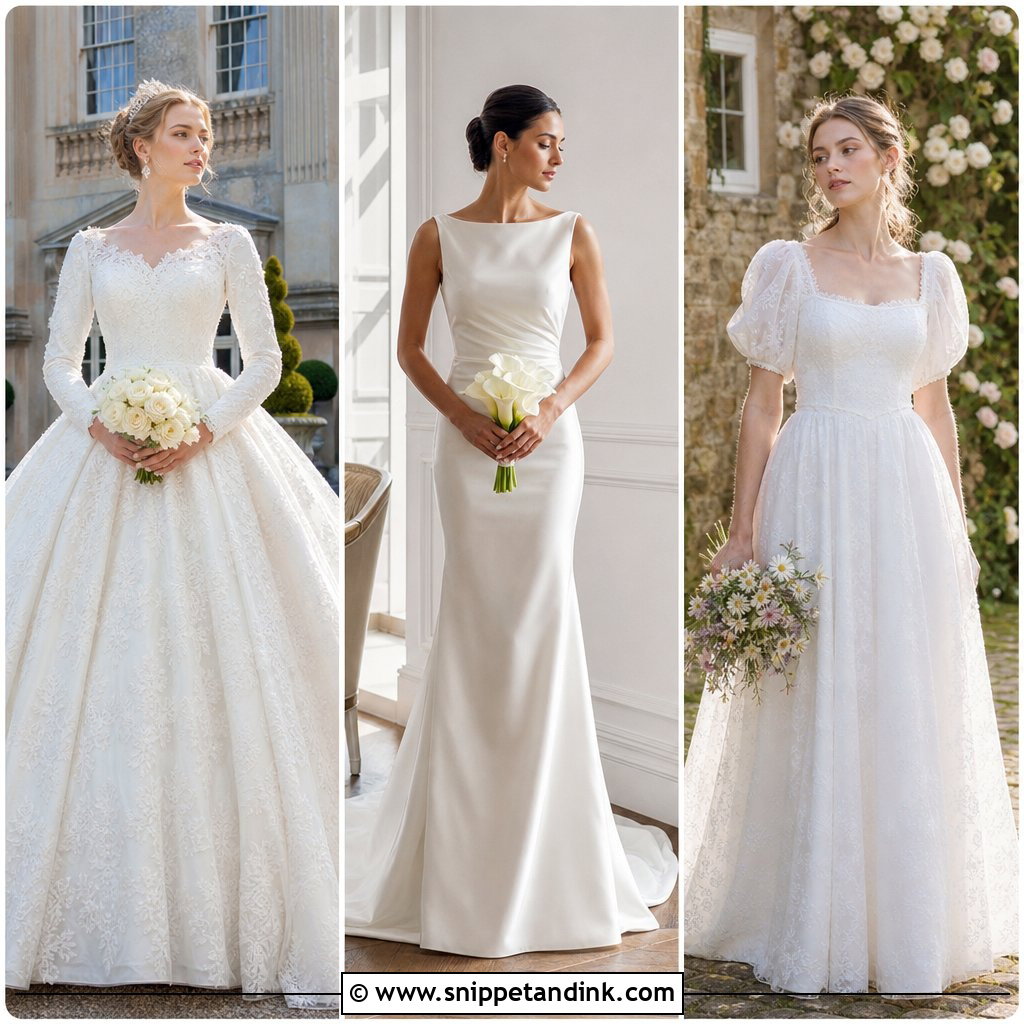
A corset bodice gives structure and a defined waist. Visible boning over a tulle skirt reads fashion-forward; a satin corset gown is more classic. Comfort is the whole point. I have brides sit down and eat a snack in the sample, because a bodice that only works standing will be miserable by dinner. Long veil, soft earrings, heels that match the formality, and simple accessories if the seams are strong.
26. White Two Piece Wedding Dress
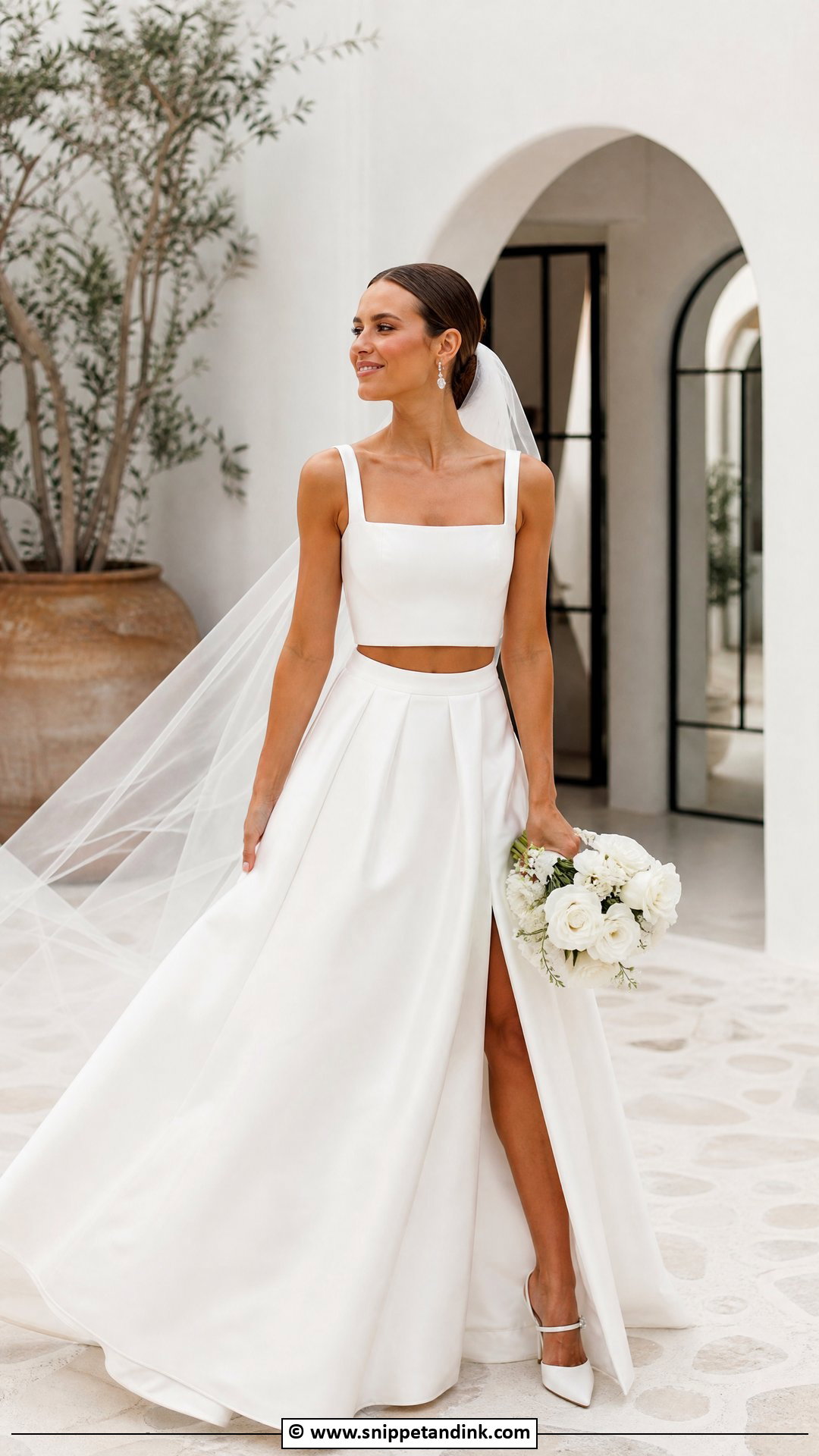
Separates give flexibility: a crop top with a full skirt, a lace top over satin, or a structured bodice with a column skirt. Whites vary from fabric to fabric, so I compare both pieces in daylight and under flash, since lace and satin rarely match exactly. Decide the gap at the waist during a fitting, because it changes when you sit. Simple heels, pearl earrings and a veil that ties the two pieces together.
27. White Jumpsuit Wedding Dress
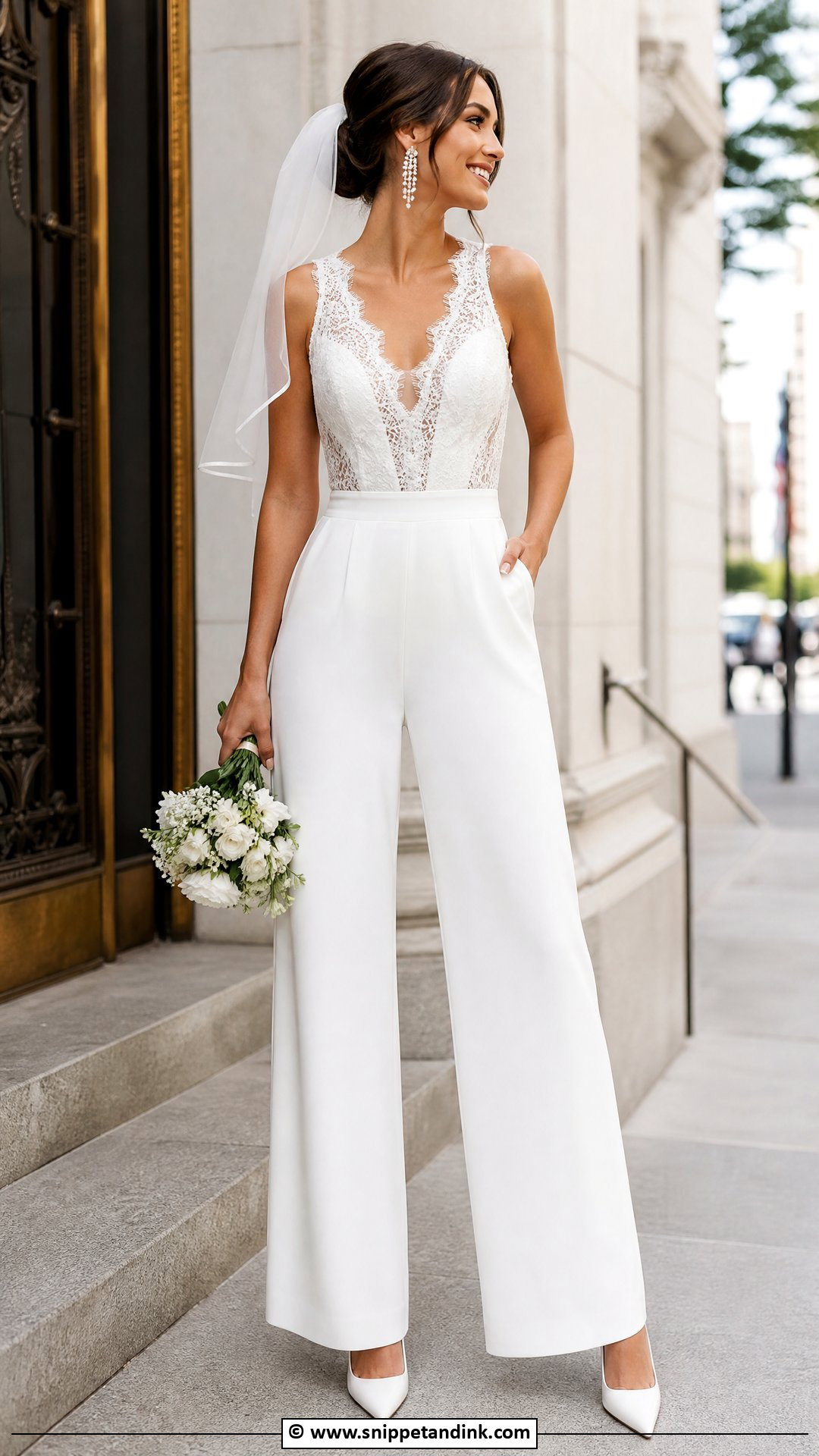
A white bridal jumpsuit suits courthouse weddings, rehearsal dinners, receptions and second looks. Wide-leg and tailored is the polished version, lace the romantic one, cape sleeves the dramatic one. Fit is everything at the waist, inseam and shoulder, and I have the bride squat and climb stairs, because a short rise pulls. Pointed heels, a sleek clutch and statement earrings, with a short veil, pearl headband or detachable overskirt for the bridal touch.
28. White Bridal Suit Wedding Dress
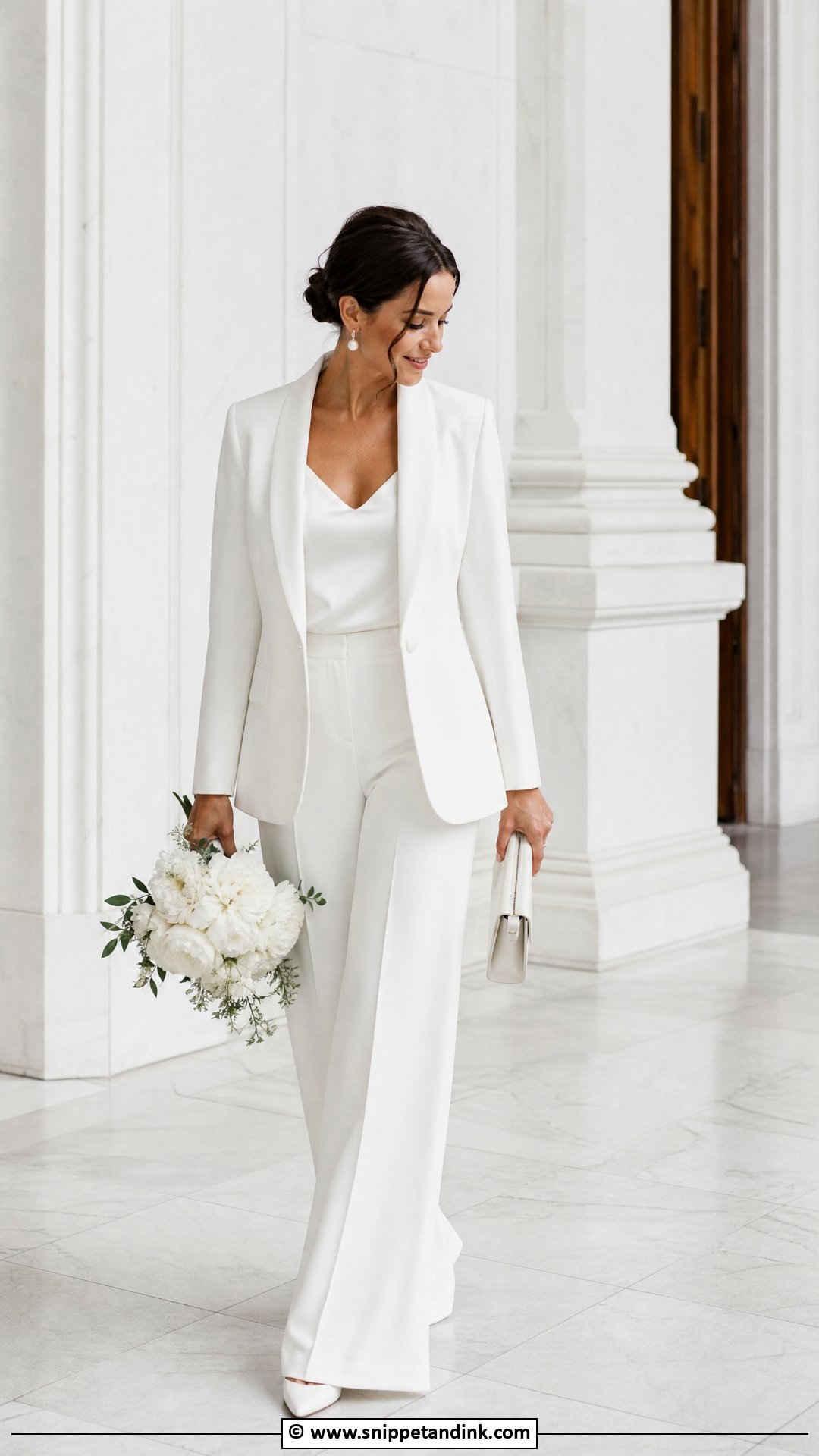
A white bridal suit is the sharp alternative to a gown: a fitted blazer with wide-leg trousers, a longline jacket with slim pants, or double-breasted. Shoulders are the hardest part to alter, so I buy for the shoulder and tailor everything else. Underneath, a silk camisole, lace bustier or bodysuit; then pointed pumps, pearl earrings, a structured clutch and a birdcage veil or sleek ponytail. White trousers show everything, so a lined pair is worth paying extra for.
29. White Reception Wedding Dress
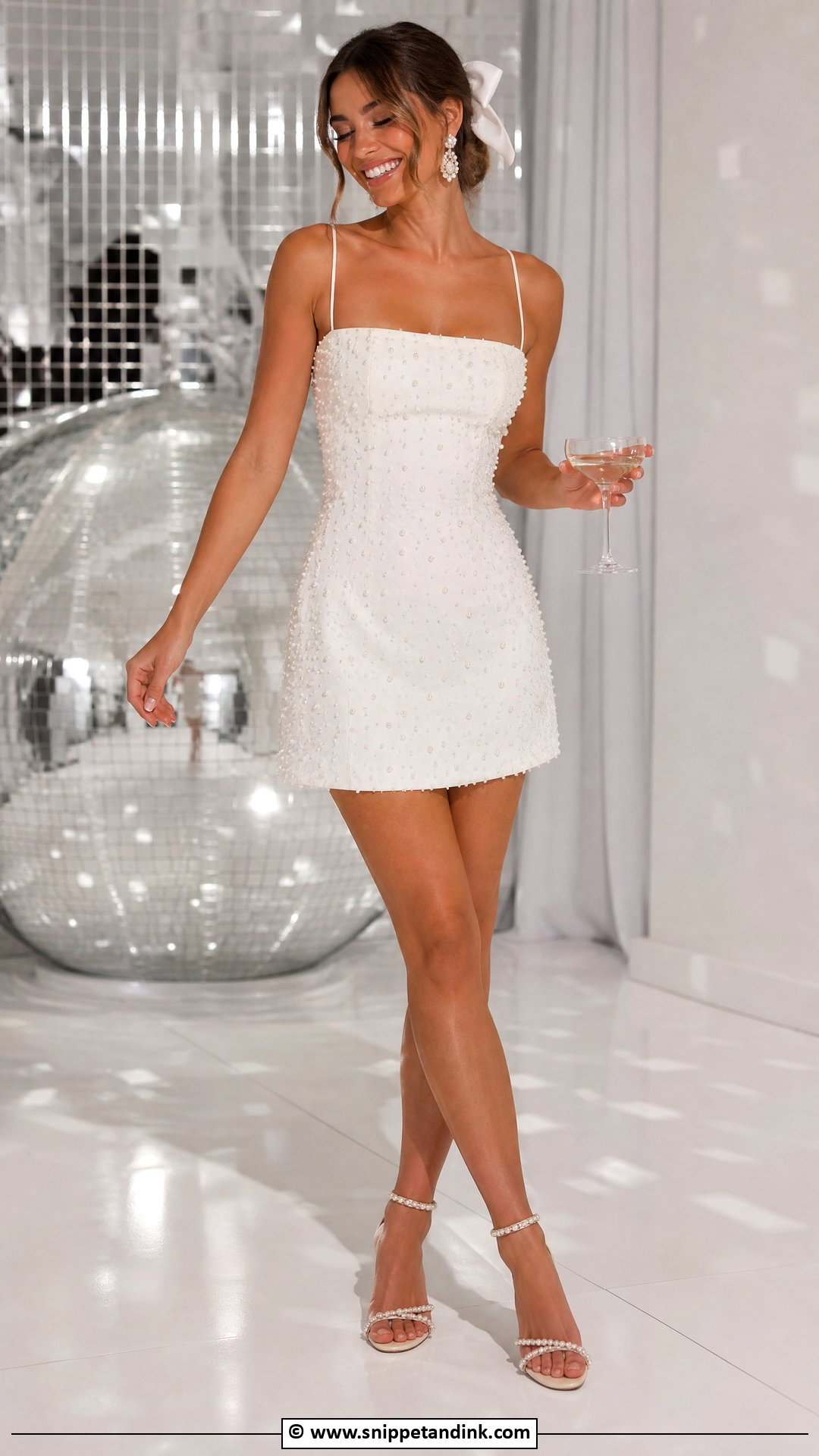
A reception dress should move more easily than the ceremony gown and still look bridal. Minis, tea lengths, slips and fitted columns are the usual picks, finished with pearls, bows, fringe, lace or a little sparkle. I plan the change itself: where it happens, who helps with the closures, and roughly fifteen minutes away from guests. Comfortable heels or embellished flats, and a short veil, hair bow or statement earrings to refresh the look.
30. White Plus Size Wedding Dress
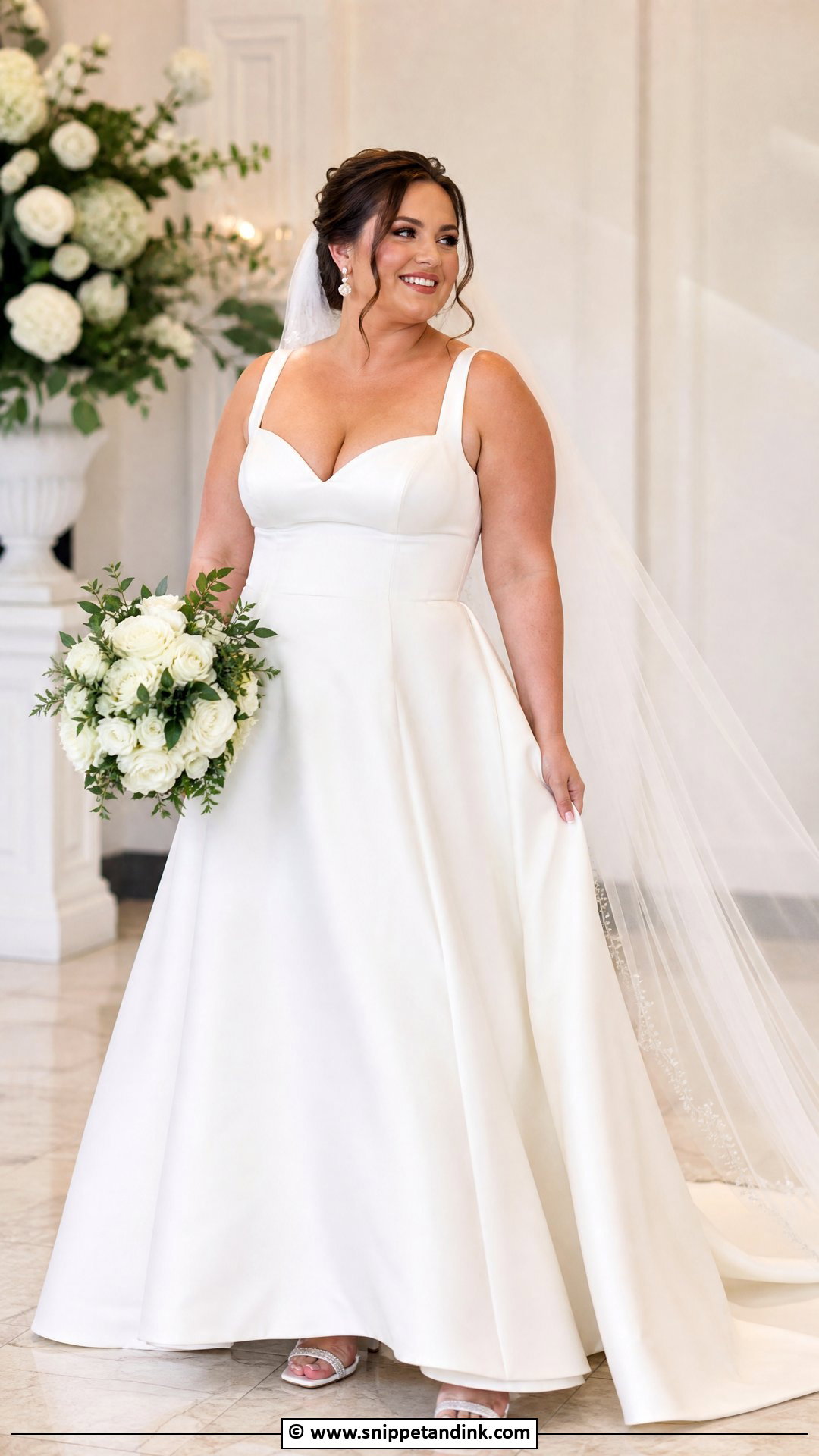
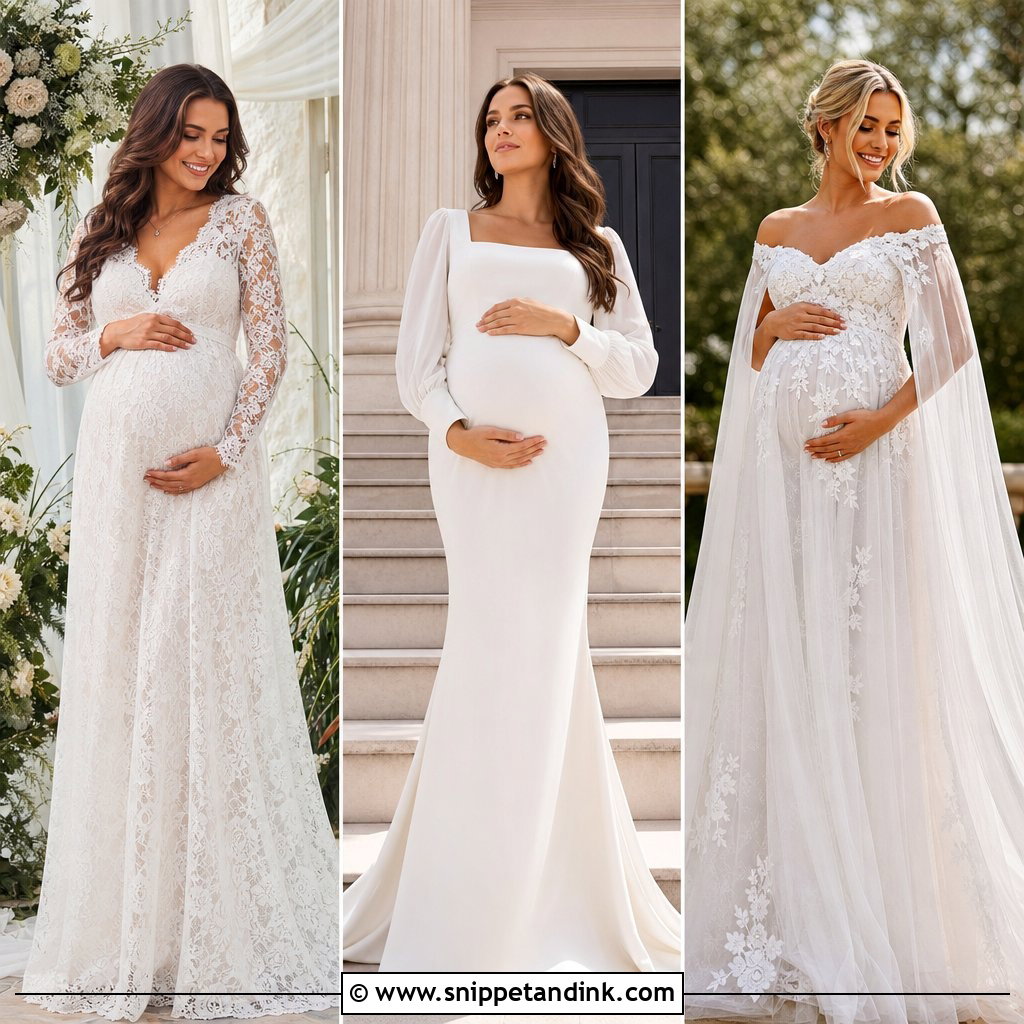
A white plus size wedding dress comes down to fit, support and the shape you love. A-lines, corset bodices, wrap shapes, ball gowns and fitted crepe all work when tailored well, and fabrics that hold their shape, satin, mikado, crepe or layered tulle, feel better than thin ones that cling. I look at support first: wide straps, a structured bodice and built-in cups. It’s also worth asking a shop which sample sizes it carries before booking, since trying on a sample close to your size tells you far more. Choose earrings that suit the neckline, a veil that suits the train and shoes you can stand in all day.
A Fitting Calendar Working Back From the Wedding
Most stress about the dress is really stress about time. Timelines vary by designer and by shop, so ask for theirs in writing, but this is roughly how I plan it.
- Start trying on nine to twelve months out. Many made-to-order gowns take several months to arrive, and some take longer.
- Book the first alterations appointment for around two to three months before the wedding. Most dresses need two or three fittings.
- Bring your actual shoes and undergarments to every fitting. A different heel height changes the hem, and different shapewear changes the bodice.
- Hold the final fitting two to three weeks out, and bring the person who will bustle the dress so they can practise it there.
When the Party Ends, the Dress Still Needs You
The day after the wedding is when dresses get ruined quietly. Champagne, cake icing and sweat often leave no visible mark at first, but the sugars oxidize and turn into brown stains months later, so I tell brides to get the dress to a cleaner who handles wedding gowns within a few weeks.
For storage, take it out of the plastic bag it came home in, since plastic traps moisture. Acid-free tissue and an acid-free box, or a breathable cotton garment bag, kept somewhere cool, dark and dry is what I recommend. Skip the attic and the basement. Heavily beaded dresses are better folded flat in a box than hung, because their weight stretches the shoulders over time.
Trust the Mirror Over the Trend Report
A white dress can be classic, modern, romantic or pared back depending on its silhouette, fabric and styling. Weigh the venue, the season, how it moves and how you’ll feel at the end of the night before anything on a trend list. Lace, a satin ball gown, a mini, a suit or a beach slip all work when the details are chosen on purpose and the accessories support the dress instead of competing with it. The right one is the dress you forget you’re wearing by the first dance.
You'll Like These Ideas:



Leave a Reply