
The ceremony asks you to stand still and look composed; the sangeet asks you to dance, sit on low seating, hug half the family and get pulled on stage at least once. I dress for that. The outfits that do well are the lighter ones: lehengas with less can-can, sharara sets, pre-draped sarees, Anarkalis, gowns, cape sets and Indo-western pieces. Breathable fabric and a secured dupatta matter as much as the embroidery. Below are 25 complete looks for brides, sisters, cousins, mothers and guests, with notes on where each one tends to go wrong.
Off the Rack or Stitched to Measure? Timing Both
Most sangeet outfit problems I’m called in to fix come from running out of time, not from a bad design. Work backward from the event date.
Made-to-measure outfits
Custom embroidered lehengas and shararas usually need several weeks to a few months, depending on the work and the designer’s season. Ask for the delivery date in writing and plan a fitting at least two weeks before the sangeet, so there’s time for a second round of changes. Bring the shoes and the undergarments you’ll actually wear to every fitting; a blouse fitted over a different bra will sit differently on the night.
Ready-made outfits
Off-the-rack pieces are almost always cut for a standard figure, so expect alterations to the blouse and the length at the very least. Tailors are busiest in wedding season and can take two to three weeks, so buy early. Check the seam allowance inside the blouse before you pay: if there’s barely any extra fabric, the blouse can’t be let out later.
- Ask whether the dupatta has finished edges; raw edges fray after one evening of pinning.
- Check that hooks and the dori at the back are sewn on firmly, since they take the most strain when you dance.
- Look at the lining: a soft cotton or silk lining is far more comfortable than polyester for several hours.
1. Sangeet Lehenga Dress
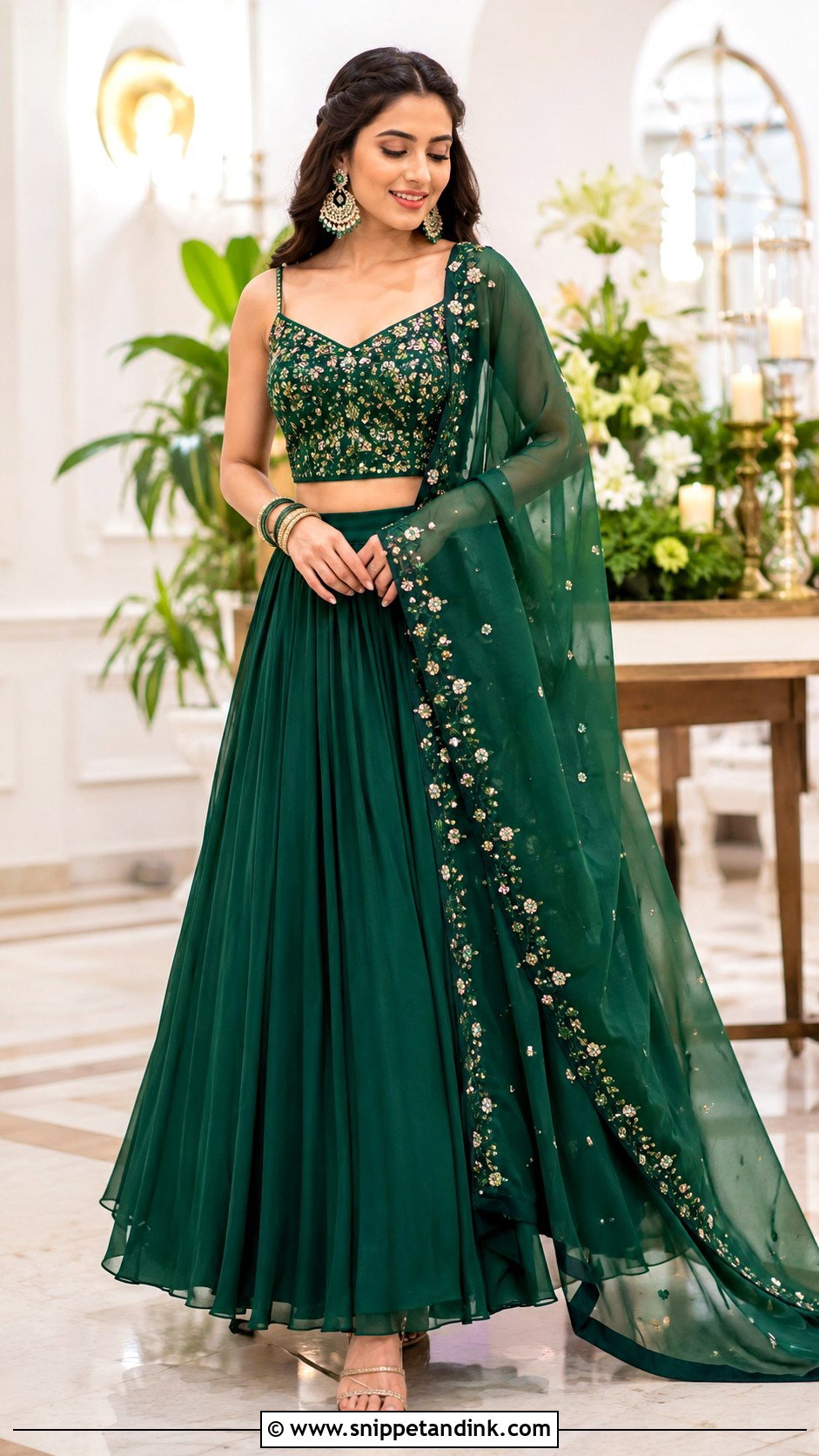
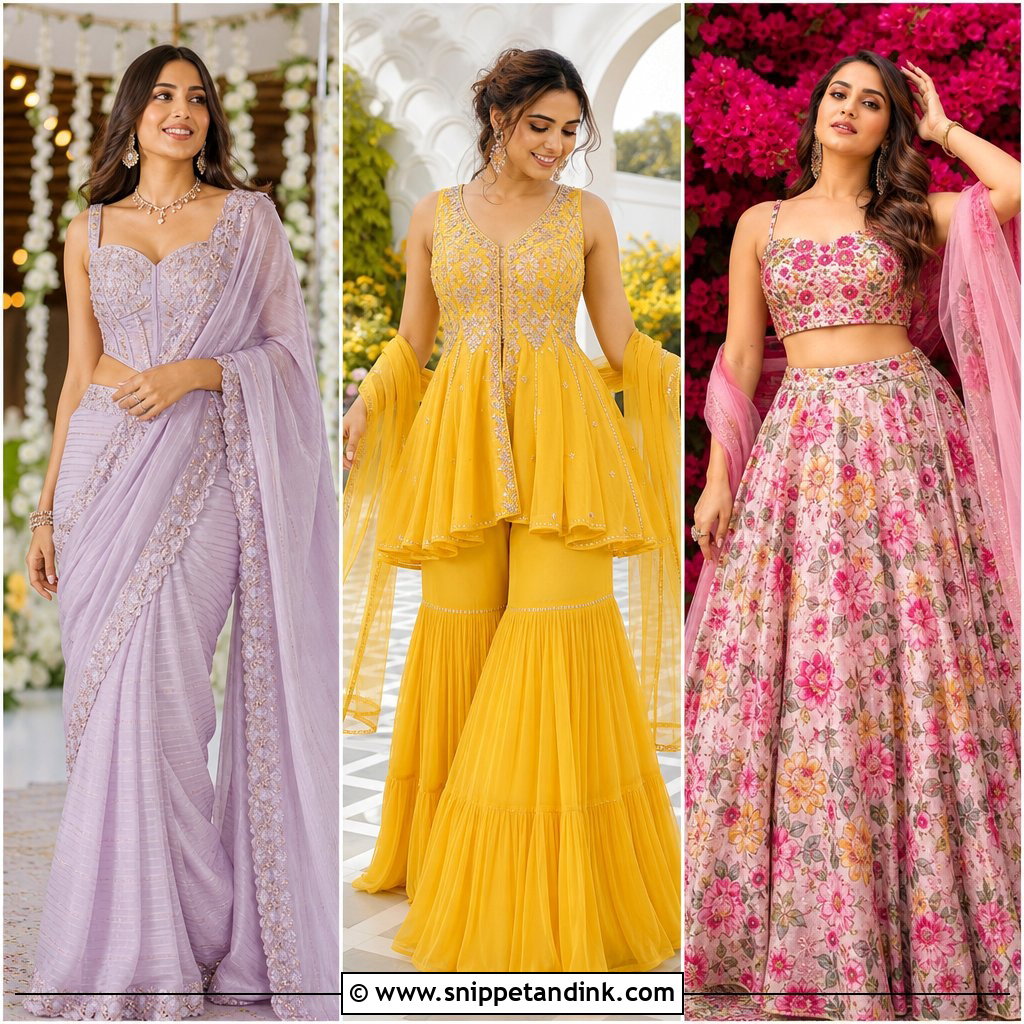
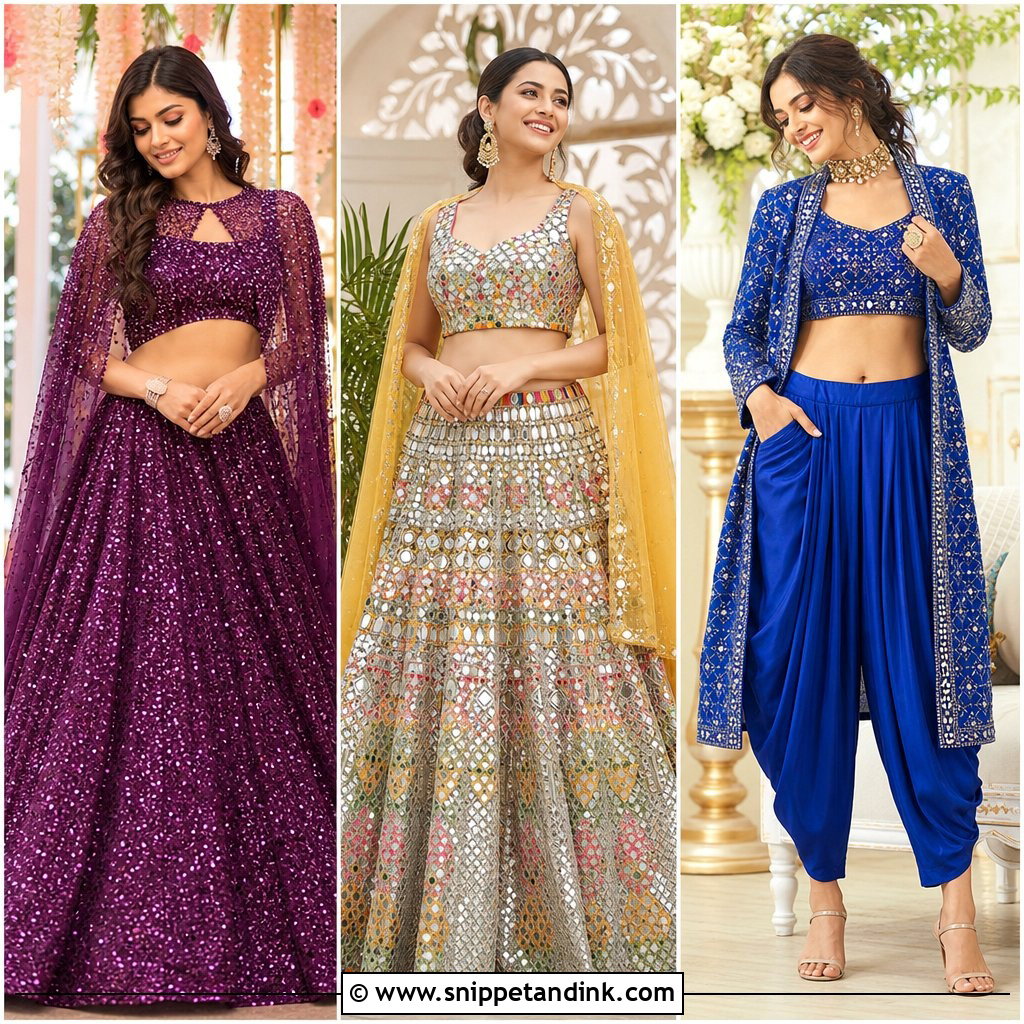
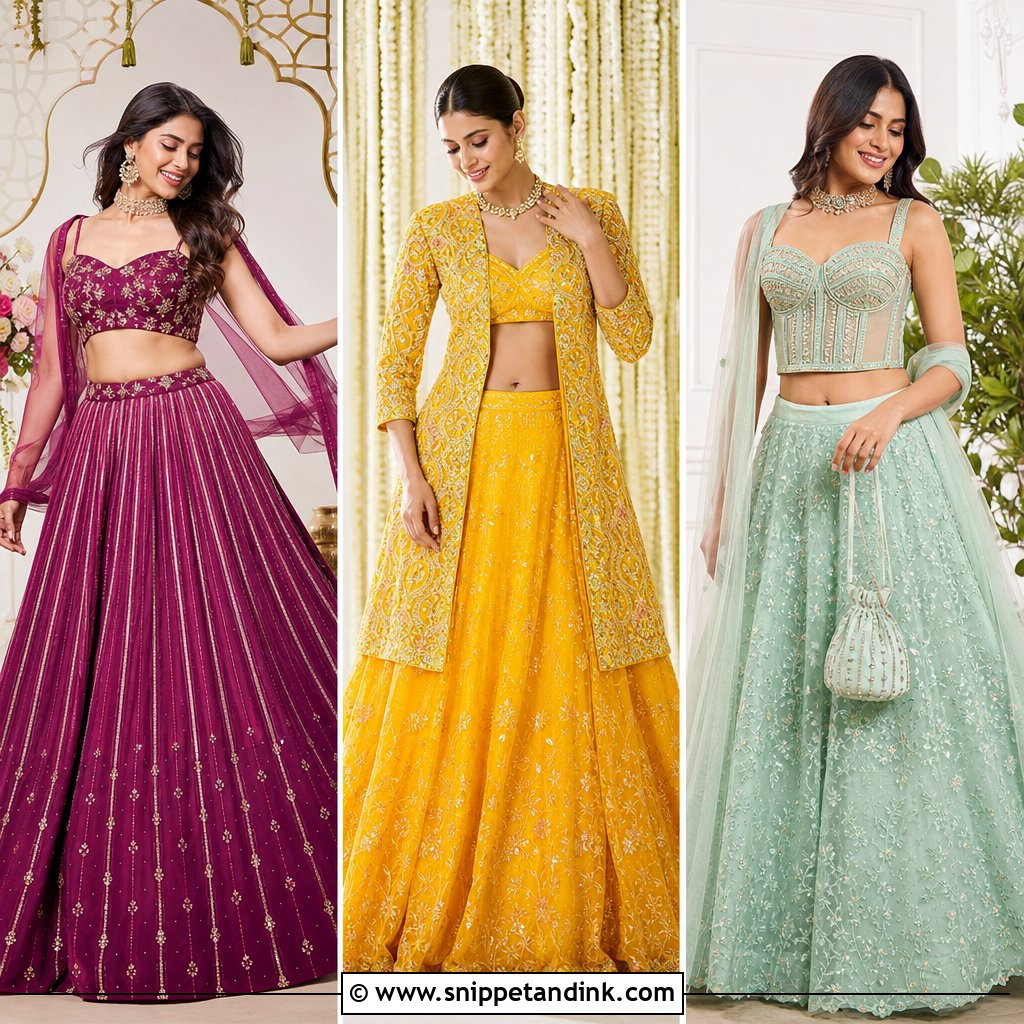
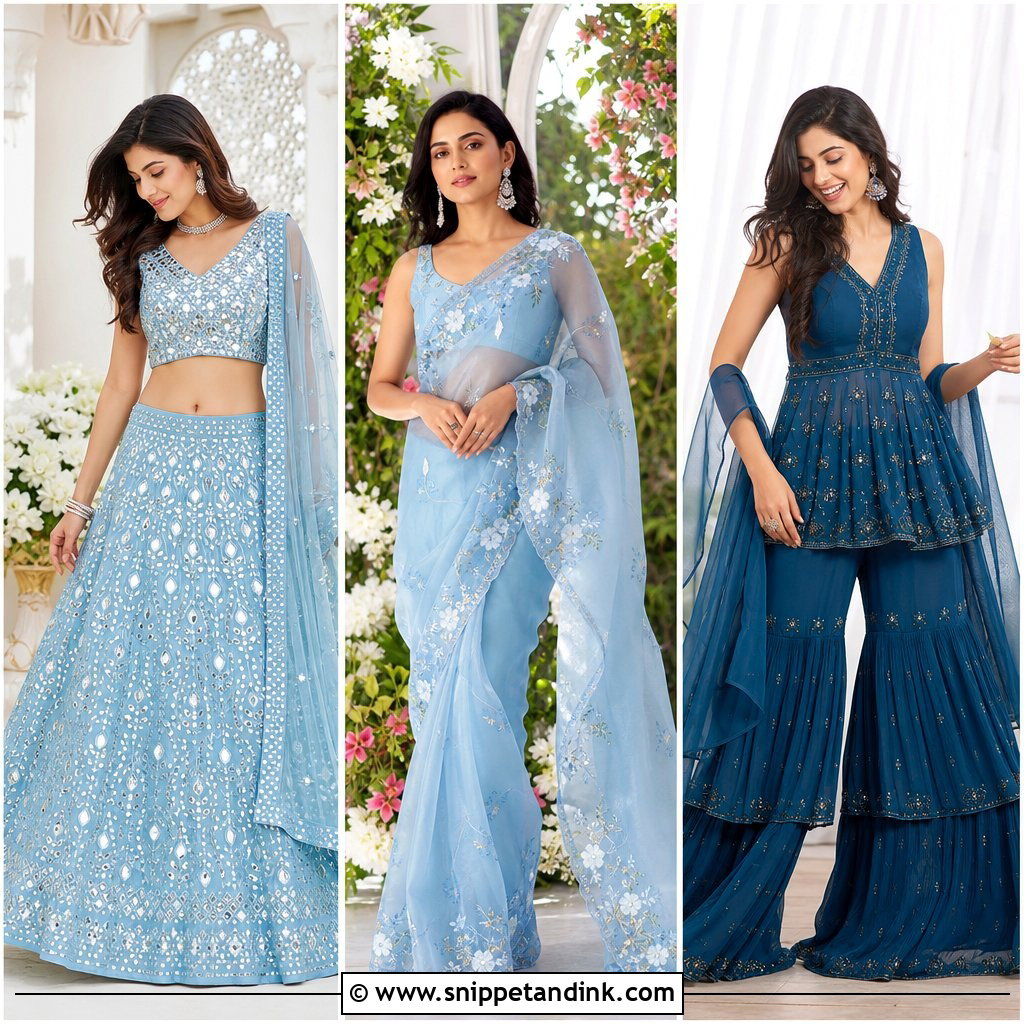
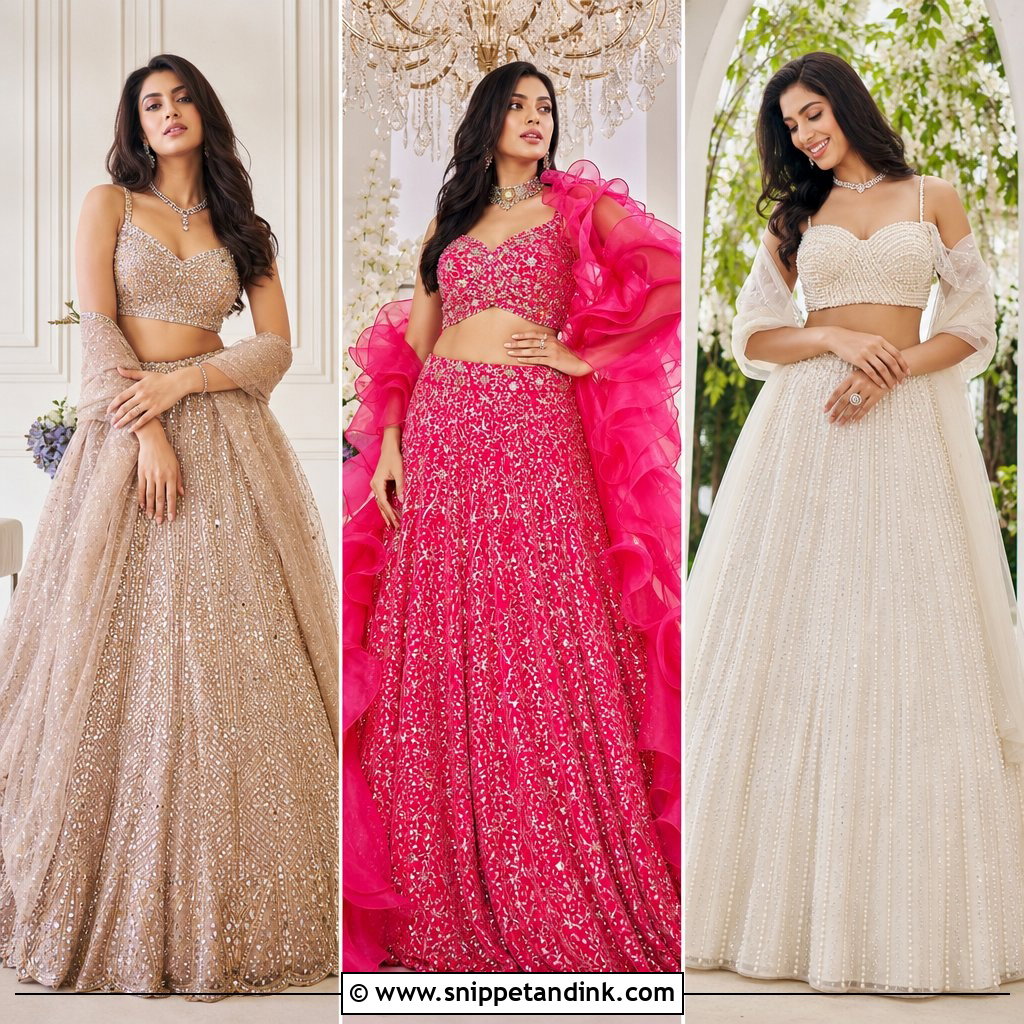
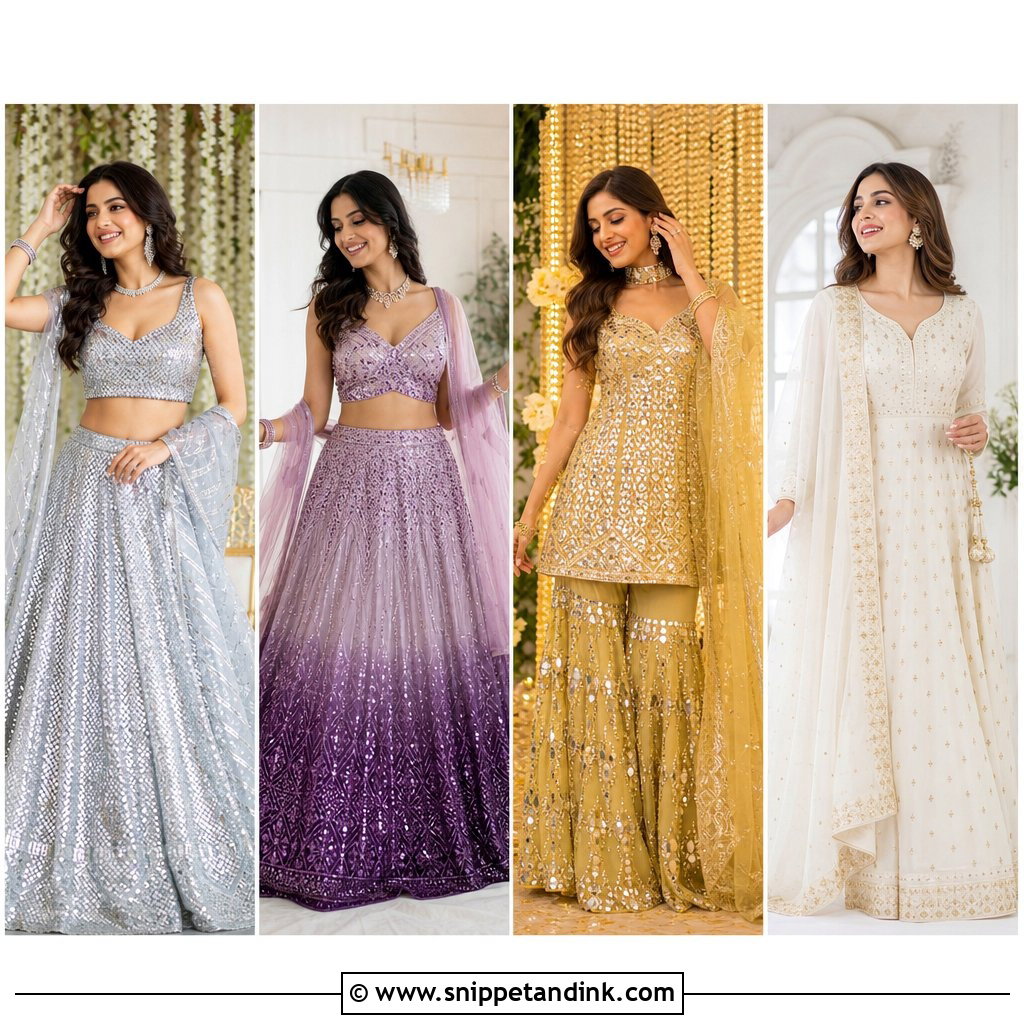
A lehenga is the default for good reason, but the sangeet version should be lighter than anything you’d wear to the ceremony. Georgette, organza or a silk blend gives enough flare without the weight of heavy raw silk. Mirror work and small bead details catch stage lights well. Pin the dupatta at one shoulder and wear block heels or platforms. Guests can stay with jewel tones or pastels; a bride can push the colour or put the sparkle into a statement blouse.
2. Sangeet Sharara Dress
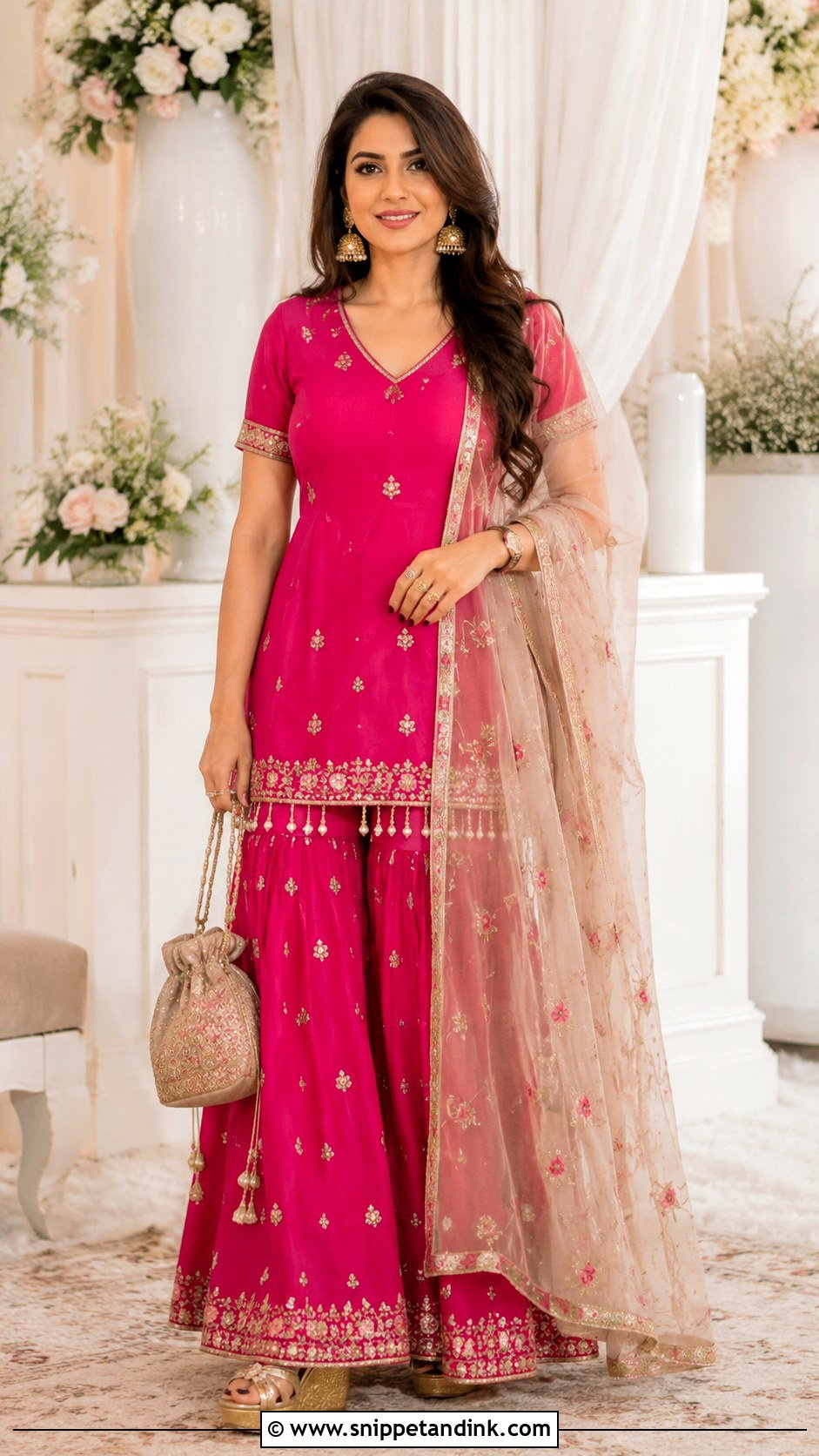
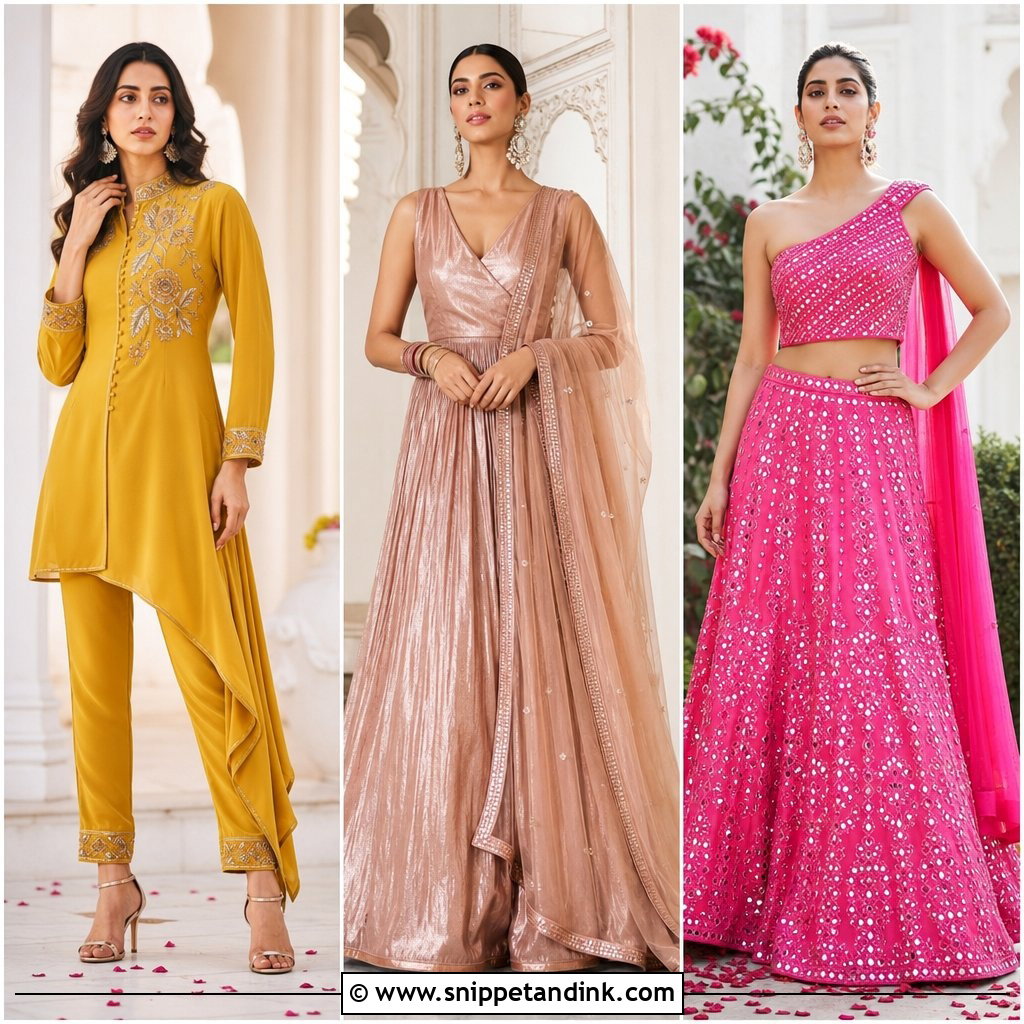
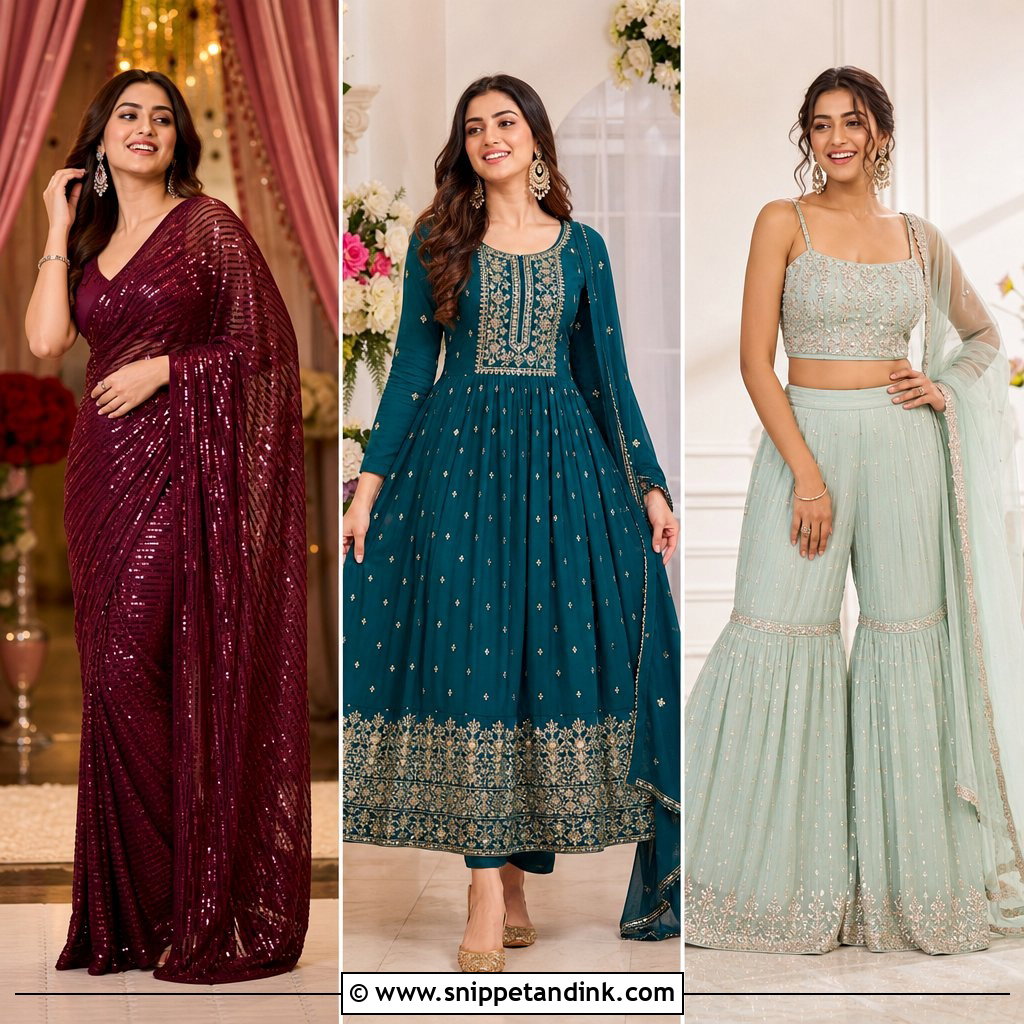
Wide-leg pants that swing like a skirt are the reason so many dancers I dress end up in shararas. A short kurti or peplum balances all that volume below, and chiffon or crepe keeps the set airy. Gota patti borders add festive weight without making the pants heavy, because the metallic ribbon is light compared with stone work. Jhumkas, a few bangles and wedges are all it needs. Ask for the hem to finish just above the floor with your shoes on.
3. Sangeet Anarkali Dress
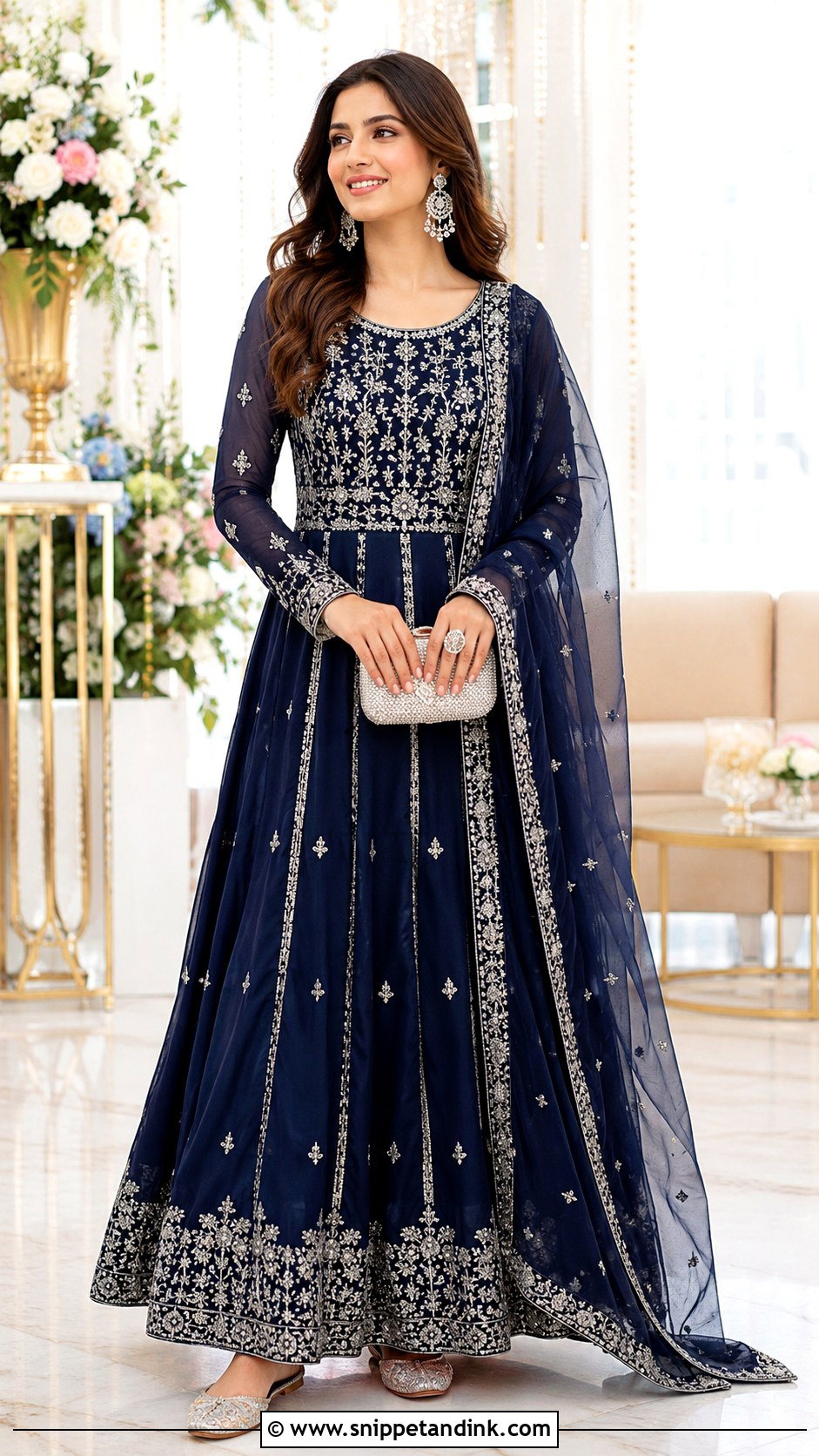
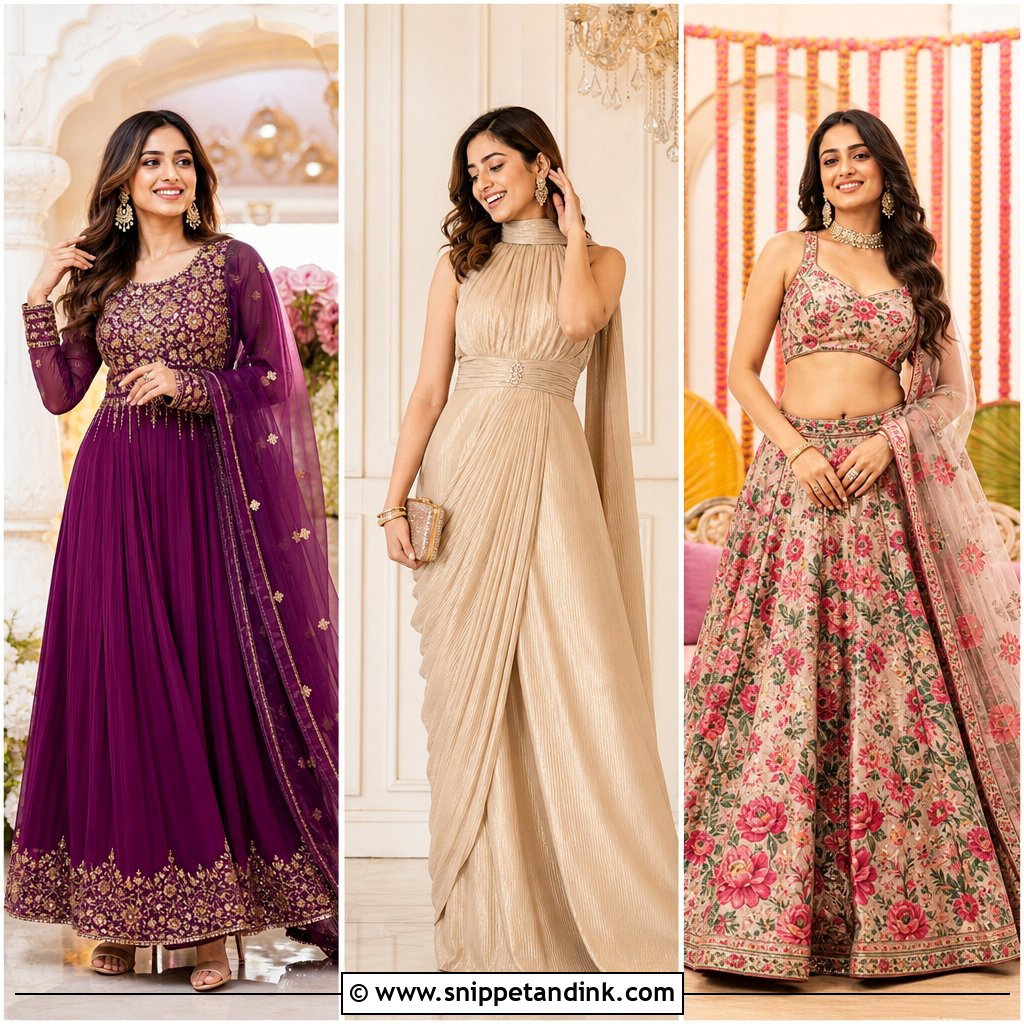
Coverage and a good twirl together: that’s what an Anarkali gives, and why mothers and older sisters often prefer it. The fitted bodice and flare suit many body shapes, and there’s no midriff to think about. A calf-length cut is noticeably easier to dance in than floor-length, which can wrap your legs during fast turns. Keep the embroidery to neckline, sleeves and hem. Embellished flats or wedges and statement earrings finish it.
4. Sangeet Saree Dress
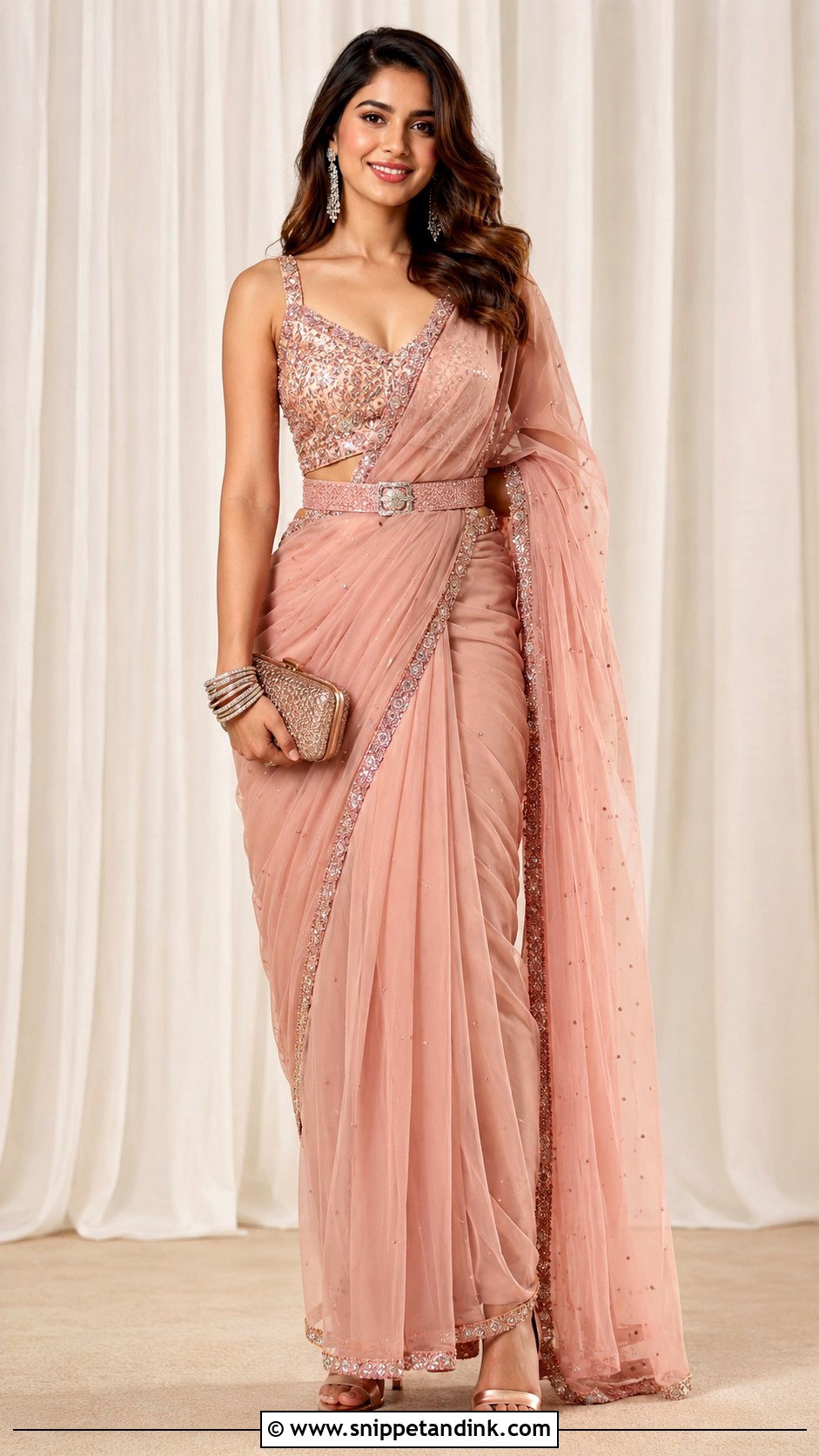
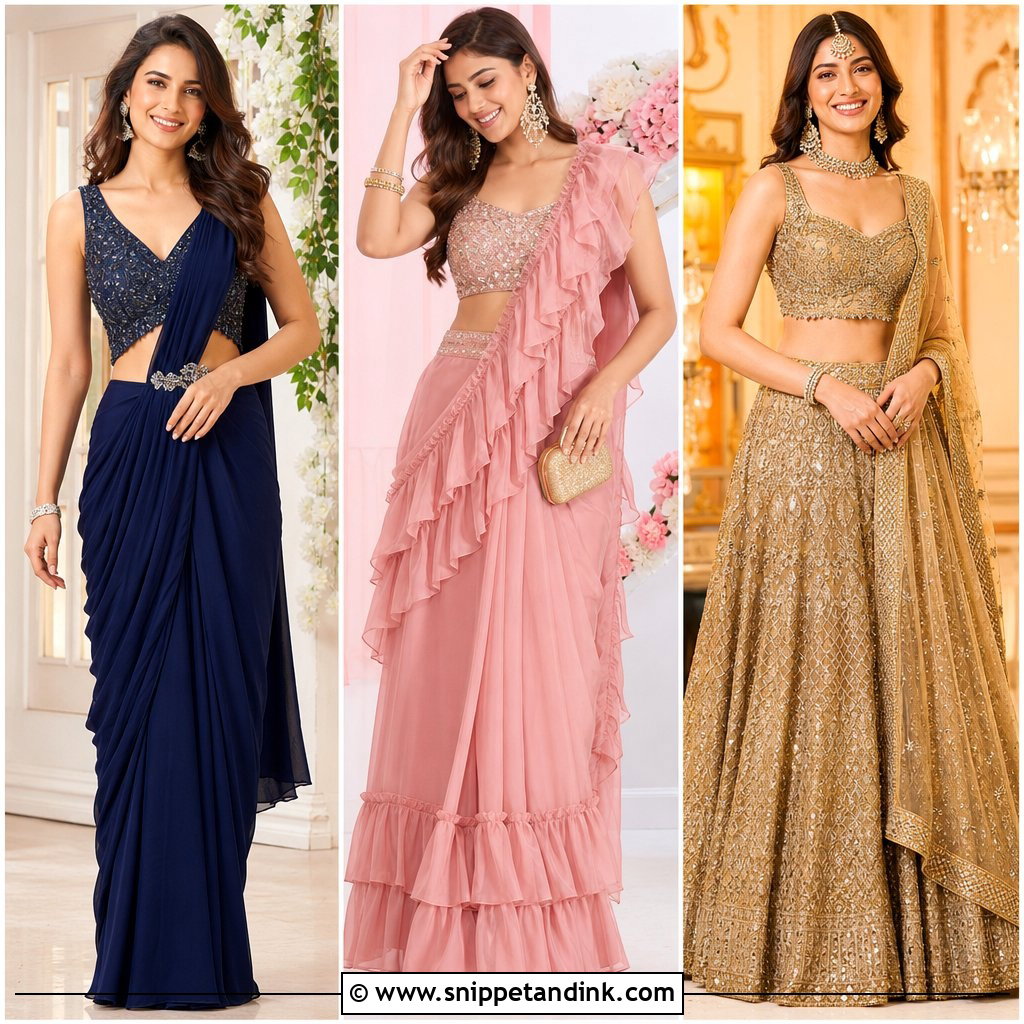
A regular hand-draped saree can come loose by the second song, so for a sangeet I usually suggest a pre-pleated or pre-stitched one. Chiffon and georgette move easily; sequin fabric looks festive but adds weight at the pallu, which pulls on the shoulder. A belt at the waist holds everything in place. Choose the blouse by how much movement you’ll do: halters and corsets stay put better than off-shoulder styles. It suits guests and close family equally well.
5. Sangeet Gown Dress
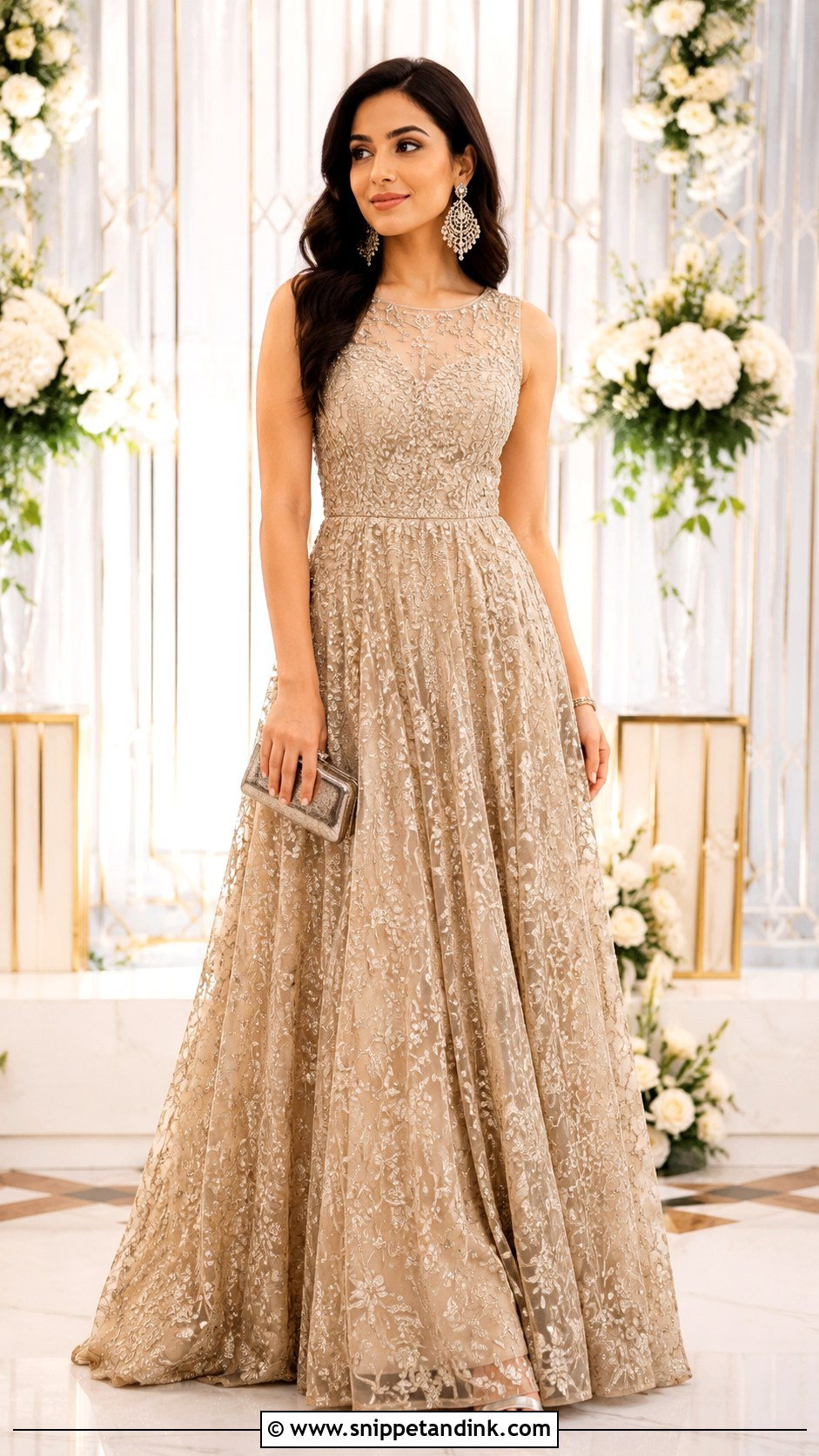
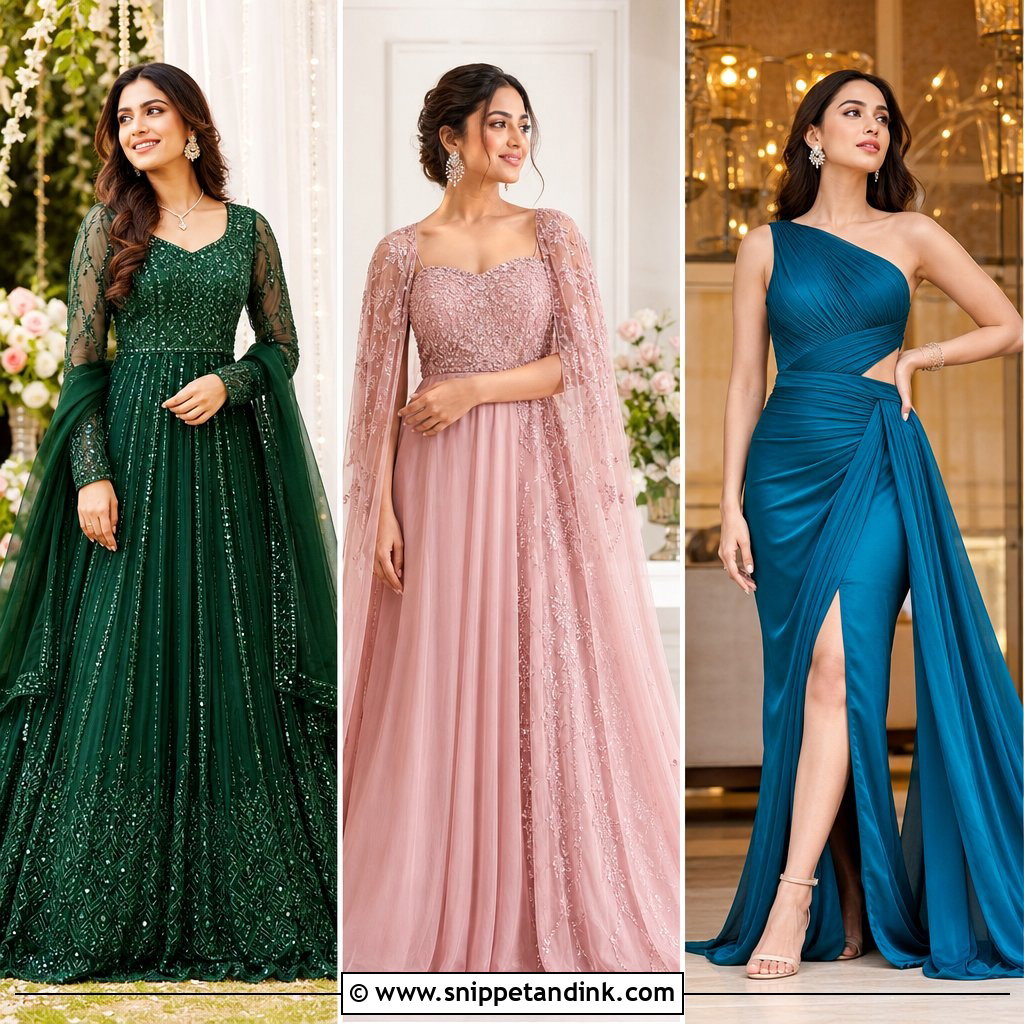
Gowns remove the two things that annoy most people at a sangeet, a dupatta to manage and a heavy skirt to carry. A-line and empire-waist shapes are the comfortable ones; a tight fit-and-flare looks sharp but restricts your stride. Indian embroidery or cape sleeves keep it connected to the event. Brides can go metallic or emerald; guests can keep it to subtle shimmer. It belongs at a cocktail-style sangeet more than a traditional family one.
6. Sangeet Indo Western Dress
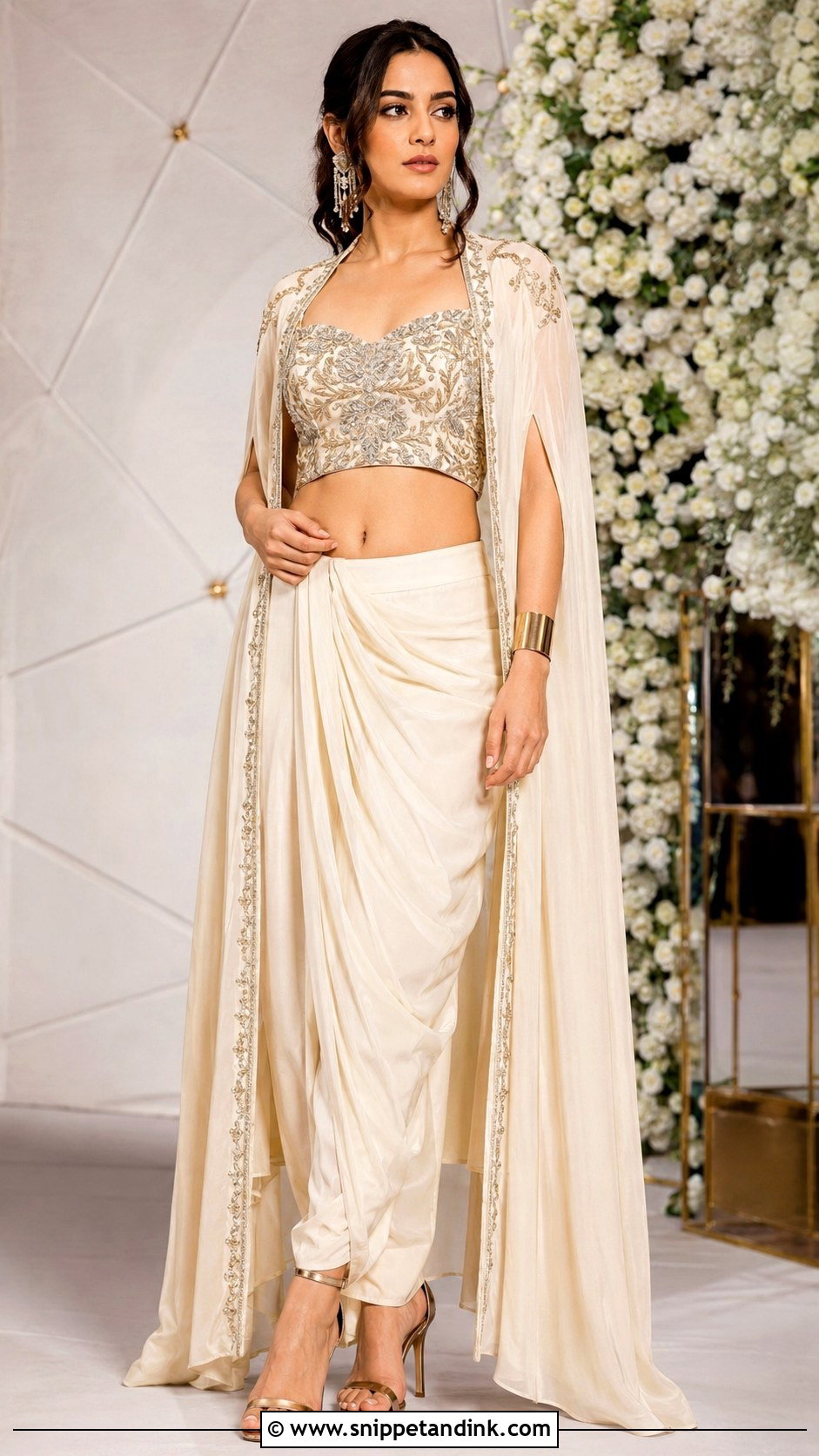
A sangeet Indo western dress gives you more freedom to move than anything with a long skirt. Dhoti pants with a crop top, a draped skirt with a structured blouse, or a long jacket over a jumpsuit all work. The risk is looking underdressed next to embroidered lehengas, so I add rich colour, mirror work or embroidered panels and proper jewelry. It suits bridesmaids and cousins who are doing the big group number.
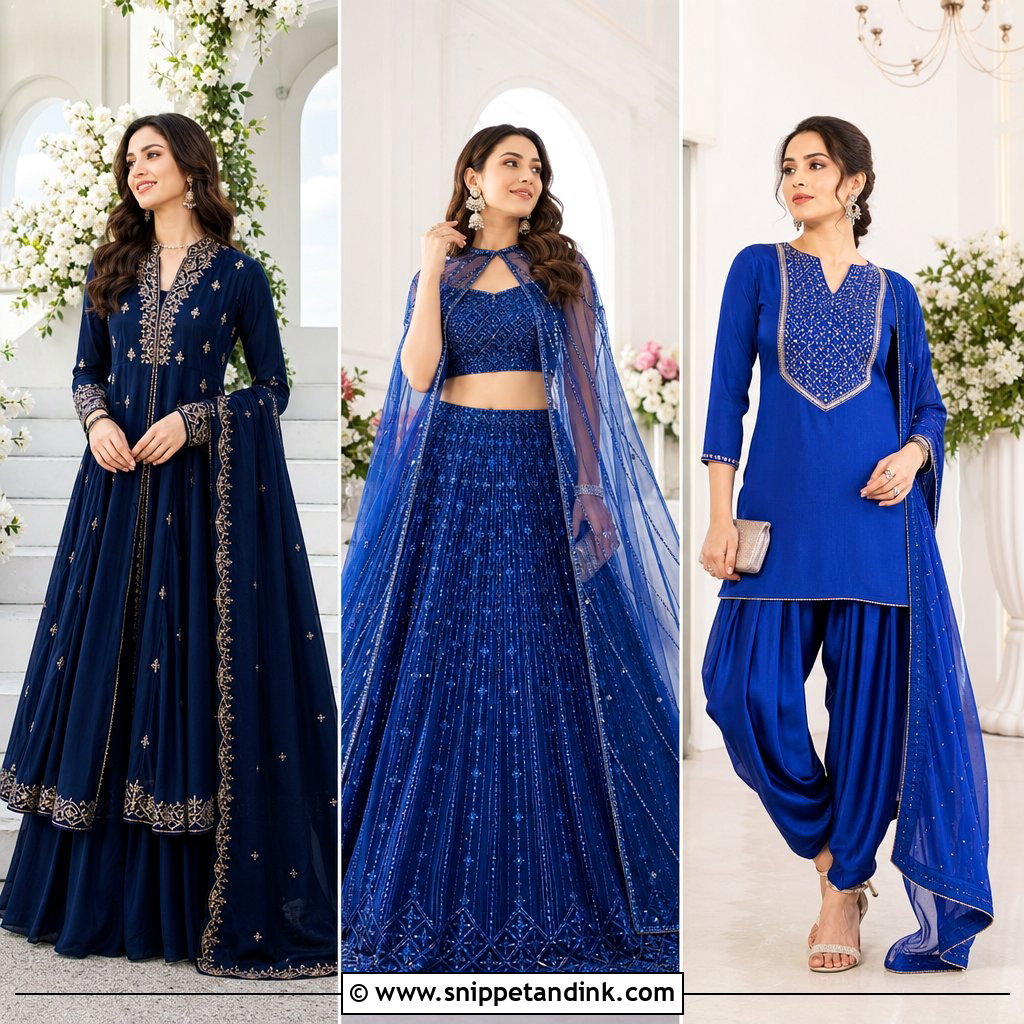
7. Sangeet Cape Lehenga Dress
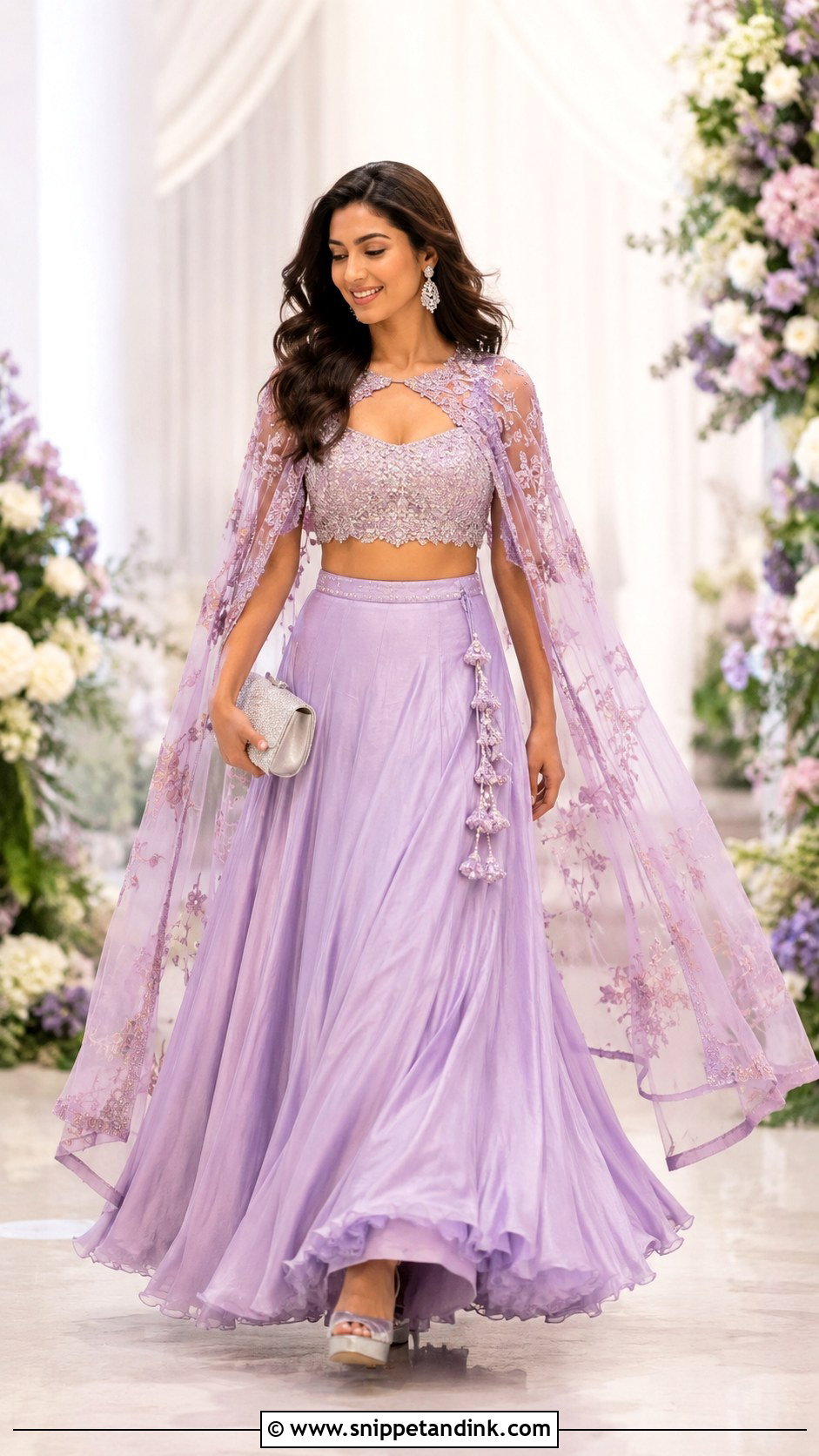
Capes stay where you put them, which a dupatta never does. A sheer embroidered cape over the shoulders gives movement in photos and needs no pinning. The balance I watch: if the skirt has sequins or heavy embroidery, the cape should be lighter, otherwise the whole look gets busy. With a worked cape, I skip the necklace entirely. Soft waves or a sleek bun and a clutch finish it.
8. Sangeet Pre Draped Saree Dress
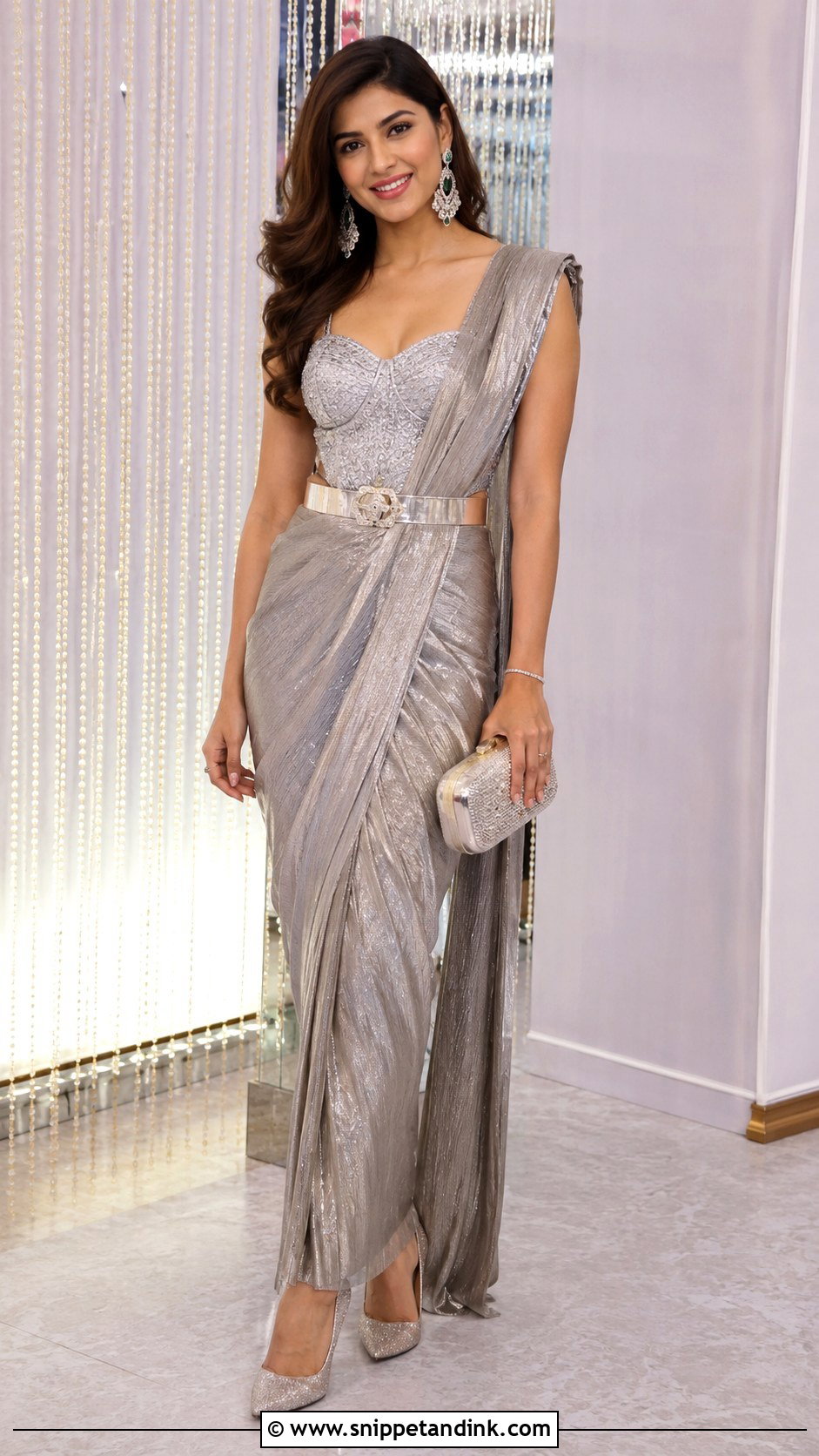
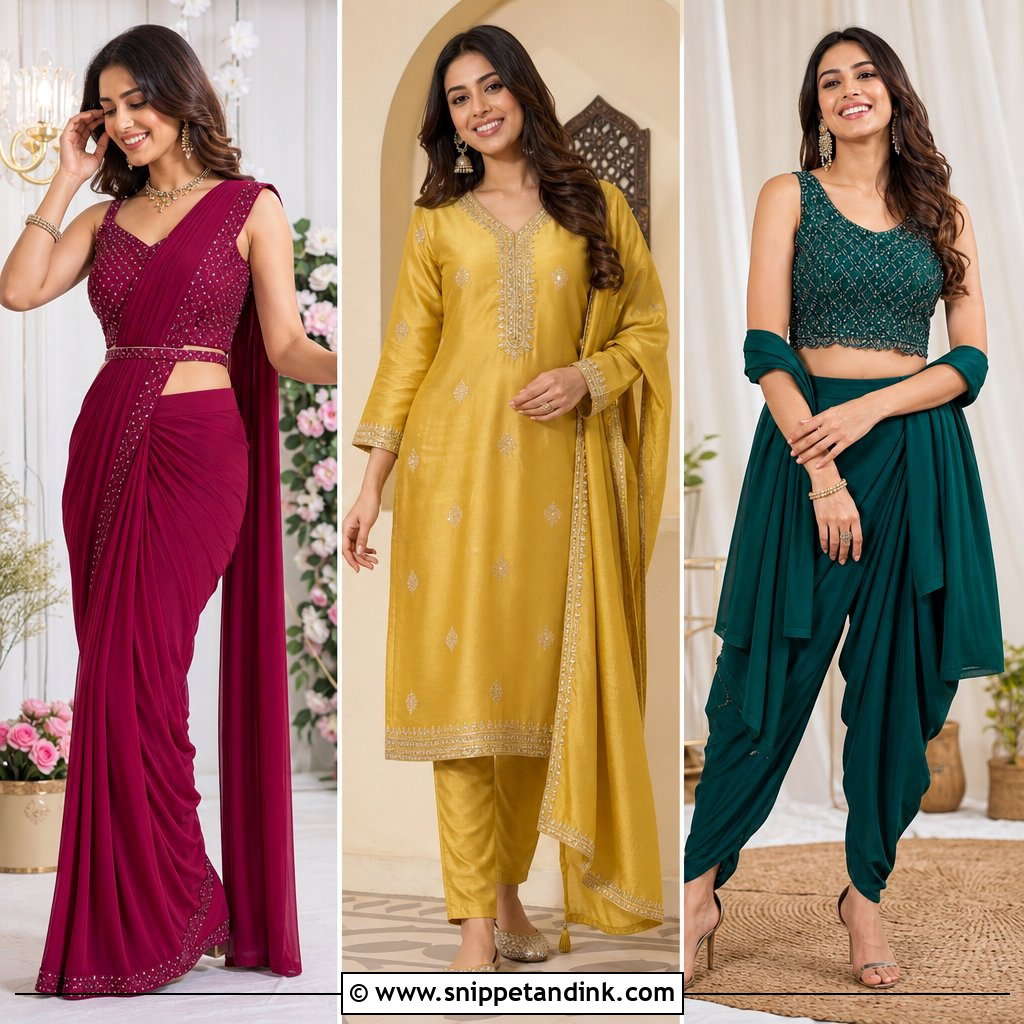
Pleats that stay stitched and a pallu that can’t slide off: that’s the case for a pre-draped saree at a dancing event. Many come with a skirt-style base, which makes them as quick to put on as a lehenga. Crepe and georgette hang cleanly; satin wrinkles where you sit. I’d pair it with a statement blouse and a thin belt. It’s a good pick for bridesmaids, sisters, cousins, and guests who want a saree without anyone having to drape them at the venue.
9. Sangeet Jacket Lehenga Dress
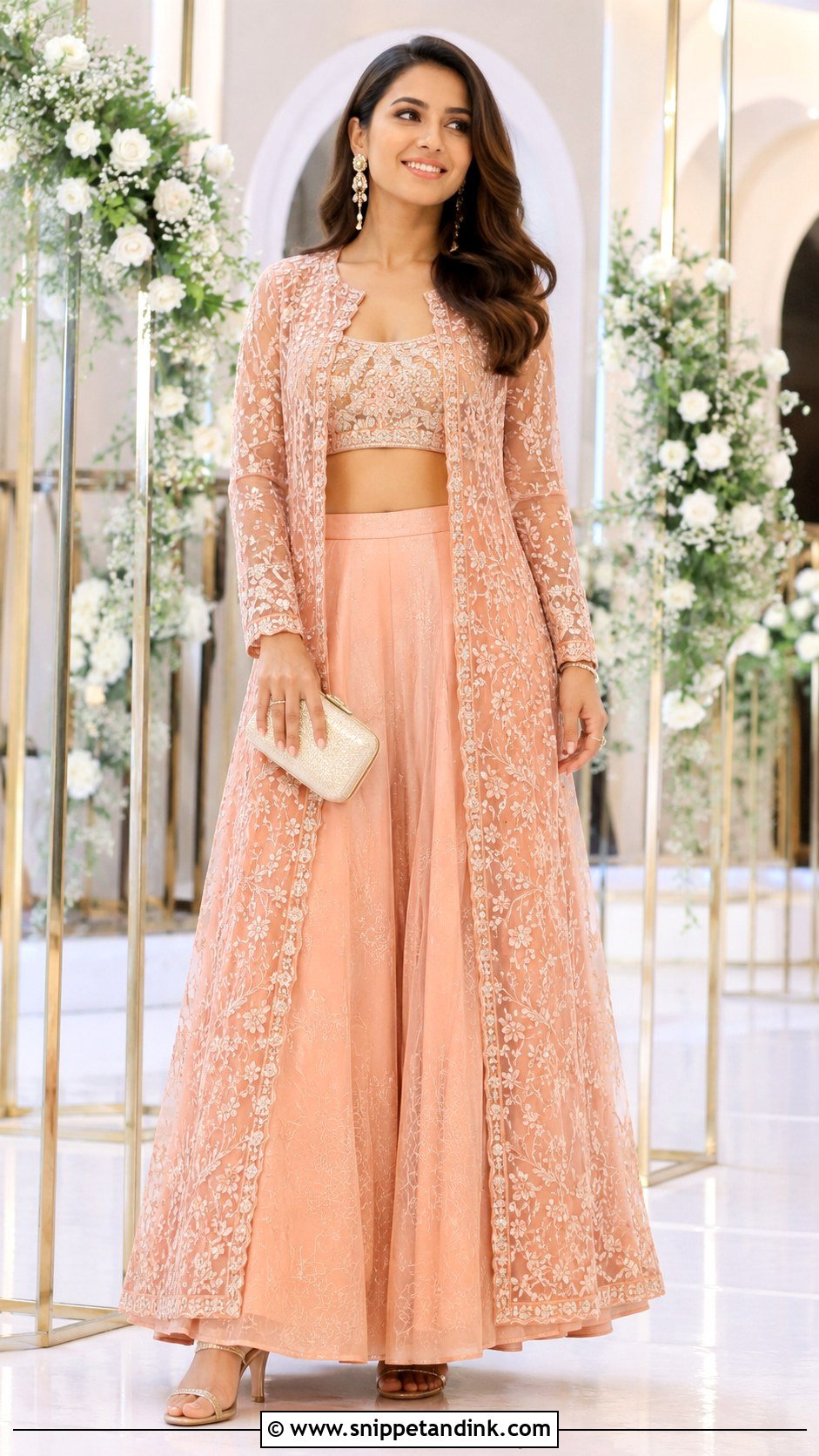
For a cooler venue or a more modest look, a jacket lehenga is the outfit I’d reach for. The jacket replaces the dupatta, adding structure and coverage. Sheer jackets look soft; heavily embellished ones look regal but get warm. Keep the skirt flowy to balance the top. If the jacket neckline is worked, skip the necklace and let earrings do the job.
10. Sangeet Peplum Sharara Dress
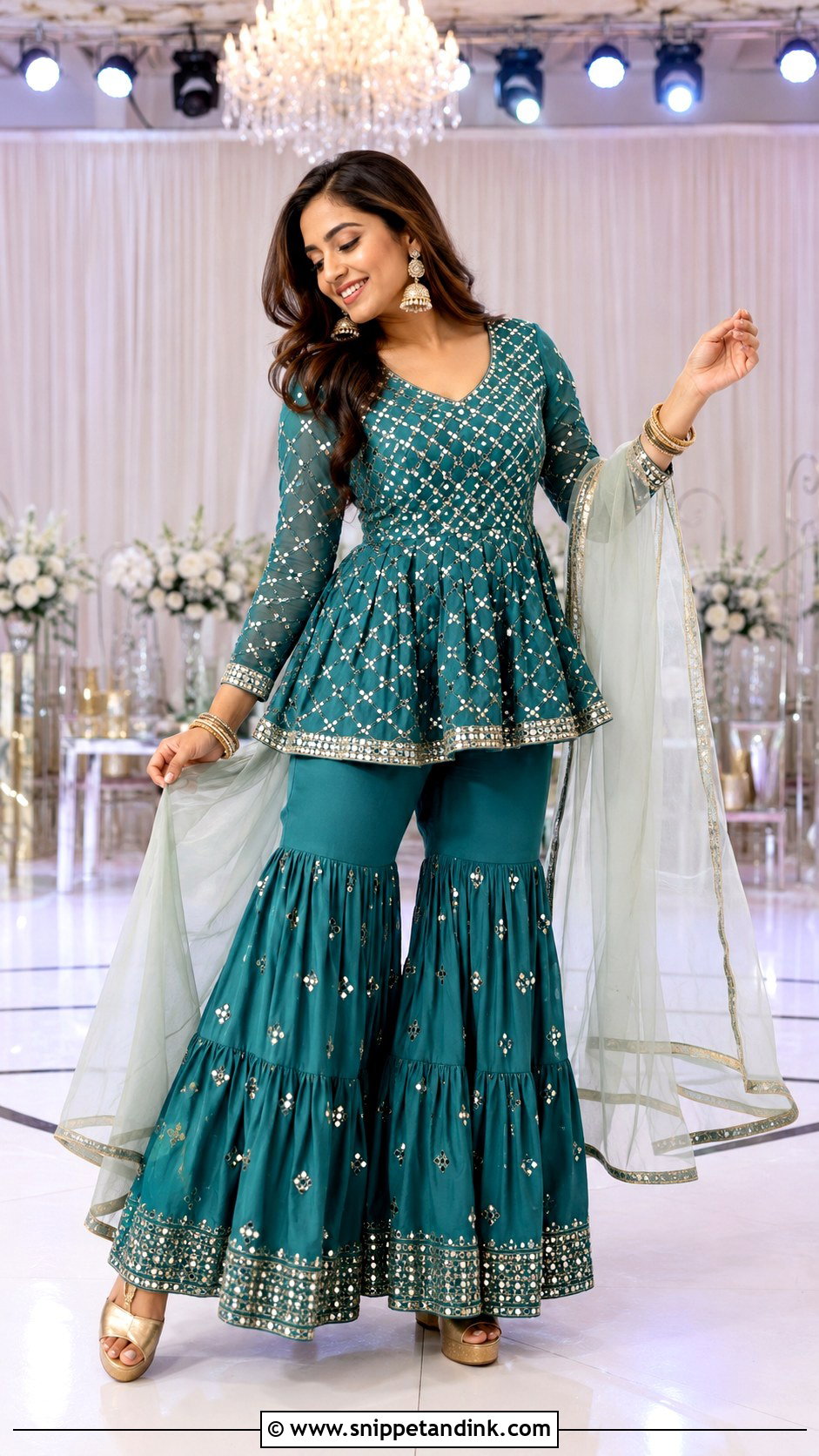
The peplum flares over the hips and the sharara takes over below, so you get shape at the waist and comfort everywhere else. A peplum with mirror work or a scalloped hem gives enough detail on its own. I check the peplum length on the person: too long and it cuts the leg line, too short and it looks like a blouse. A light dupatta pinned to one shoulder, block heels and a potli bag finish it.
11. Sangeet Sequin Saree Dress
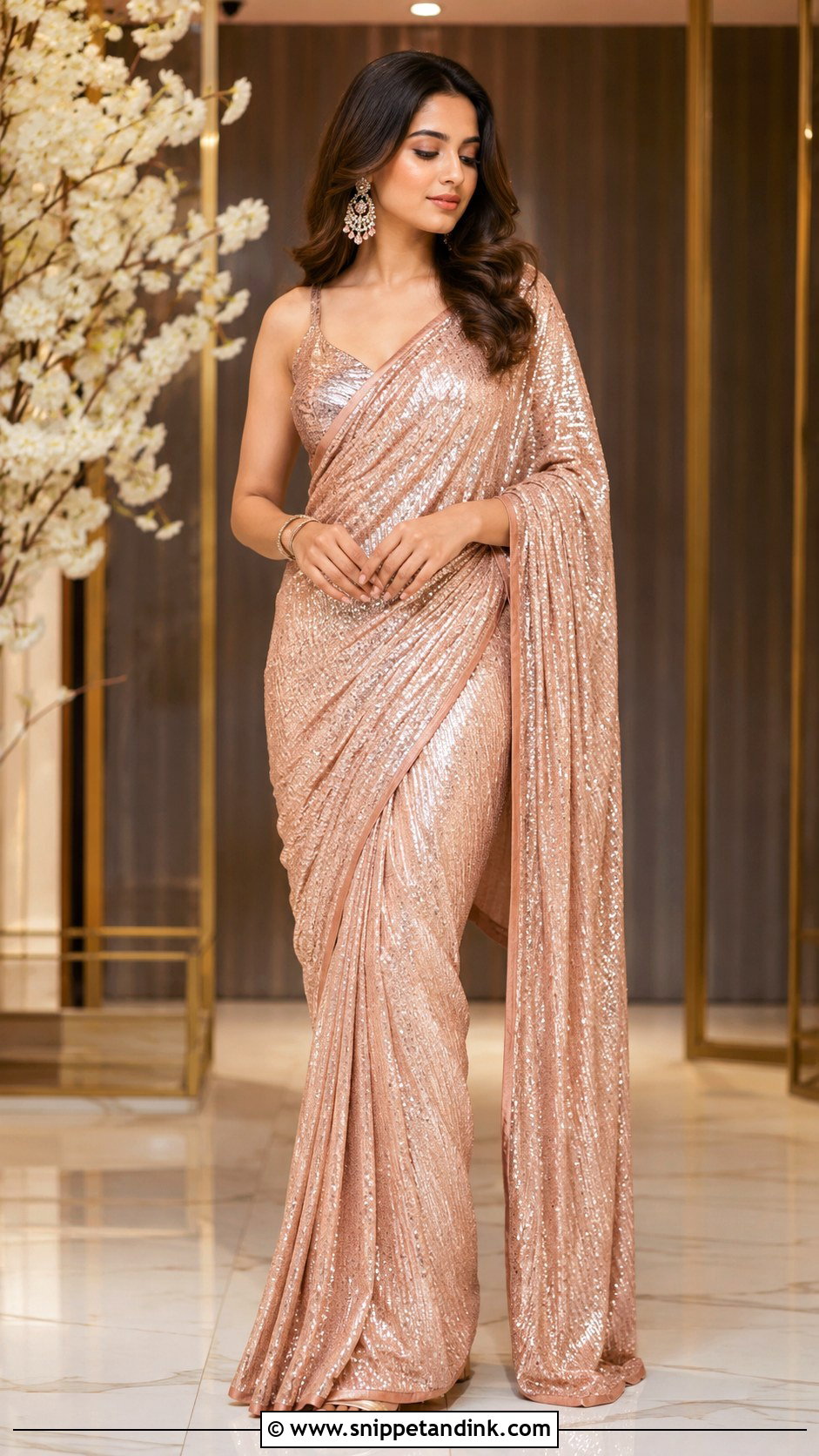
Sequins do the jewelry’s job under dance-floor lights, so a sequin saree needs very little else. Pick a lightweight base, because sequin fabric gains weight quickly and the pallu can drag on your shoulder. A plain blouse looks sleek; a corset looks more modern. Pin the drape or add a thin belt. Silver and navy are strong at night. Wear stable heels, since the extra weight at the hem makes wobbly shoes harder to manage.
12. Sangeet Mirror Work Lehenga Dress
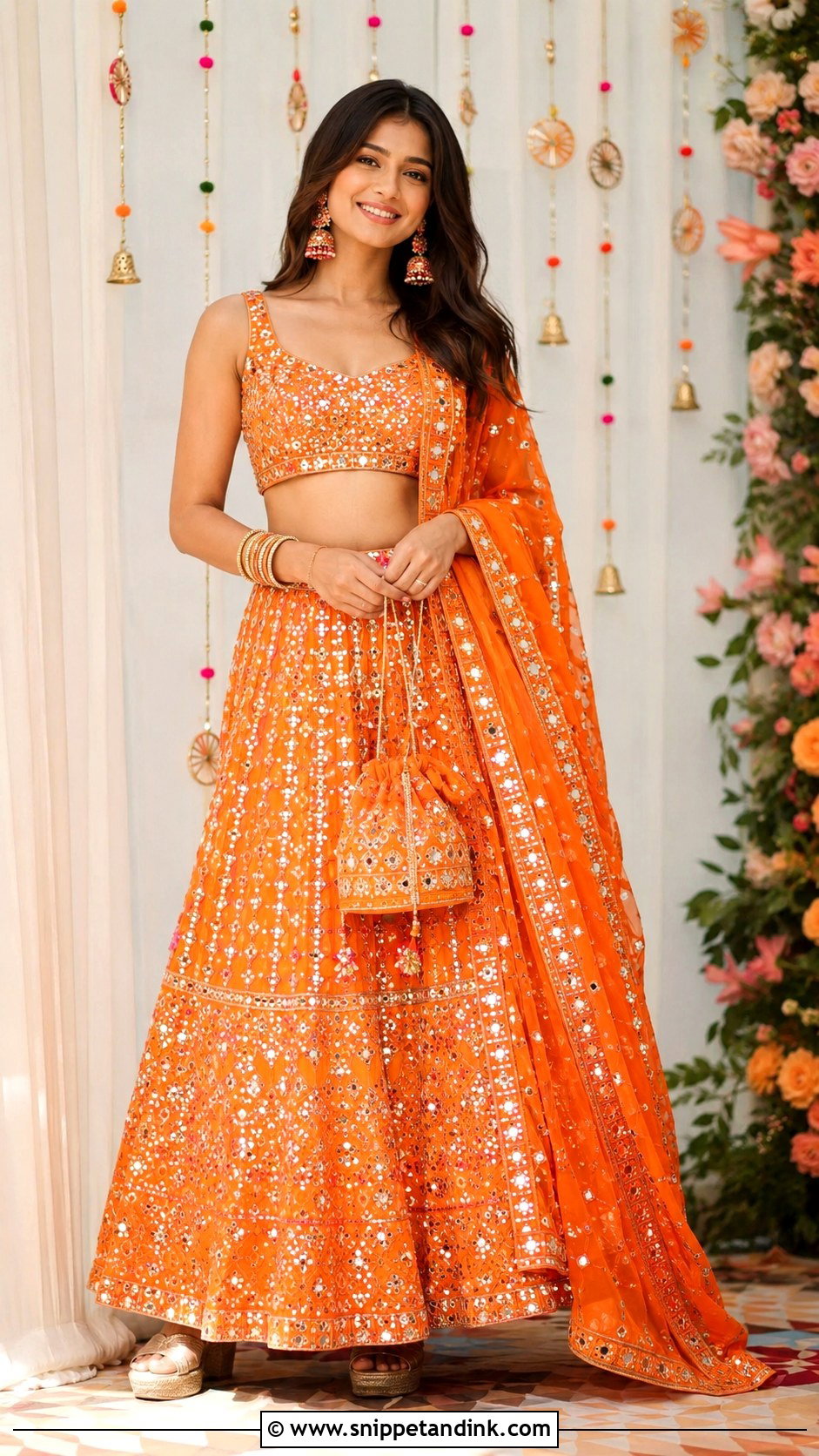
Mirror work brings energy, and the smaller the mirrors, the easier the outfit is to wear. Fully mirrored skirts look joyful on a bride or close family member, but they’re heavier and the edges can catch on a neighbour’s dupatta in a crowded dance floor. Fuchsia, orange and turquoise suit the mood. Pin a light dupatta firmly and choose juttis or block heels so you can dance on uneven stage boards.
13. Sangeet Ruffle Saree Dress
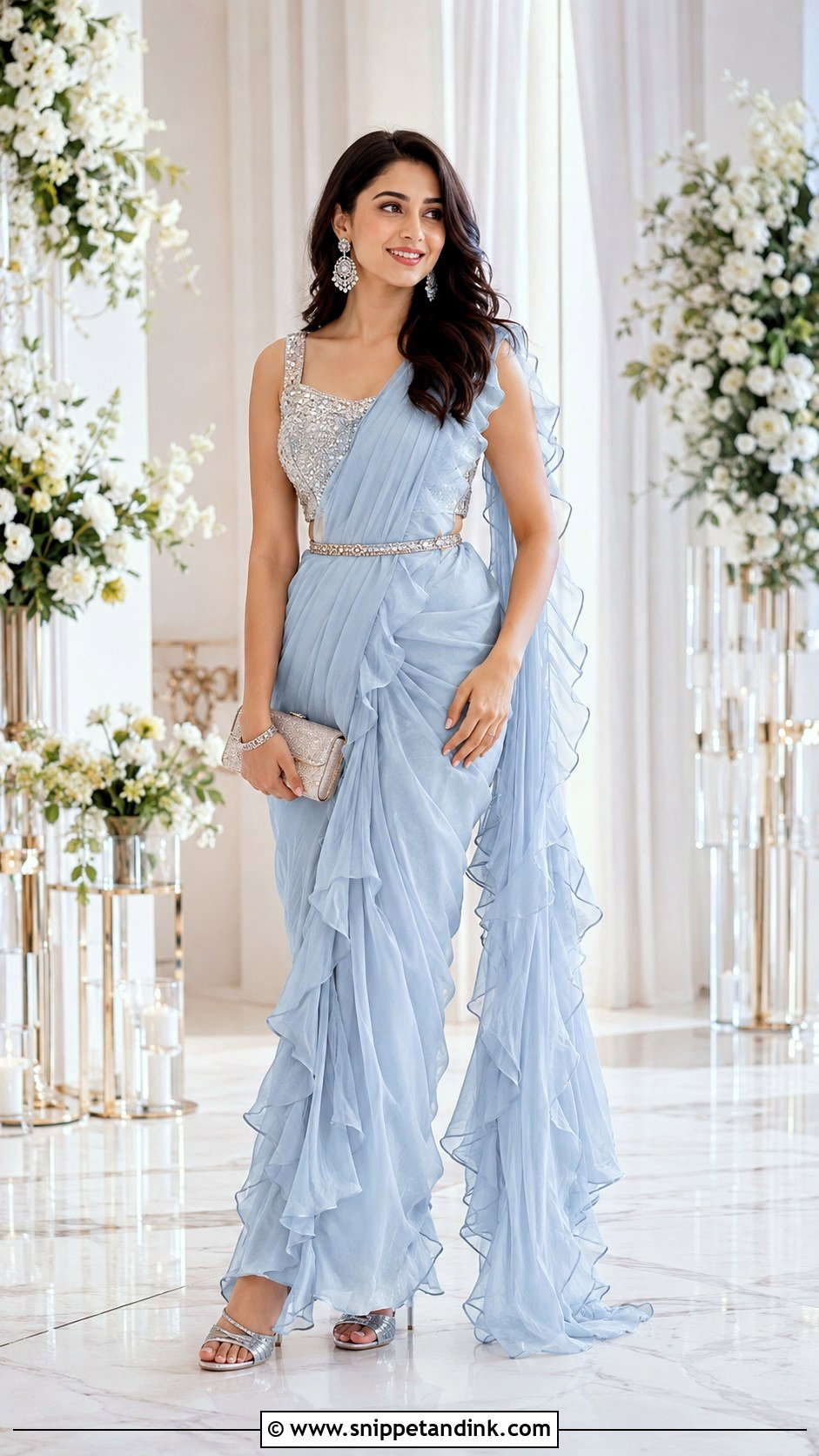
Ruffles add volume to the pallu or hem, so keep the blouse fitted and clean to balance them. Georgette and chiffon ruffles stay airy; organza ruffles hold shape but can feel scratchy on bare arms. A sleeveless or embellished blouse makes it evening-ready, and a belt keeps the drape secure. It’s a stylish, easy outfit for guests and bridesmaids, as long as the bottom ruffle sits clear of your shoes.
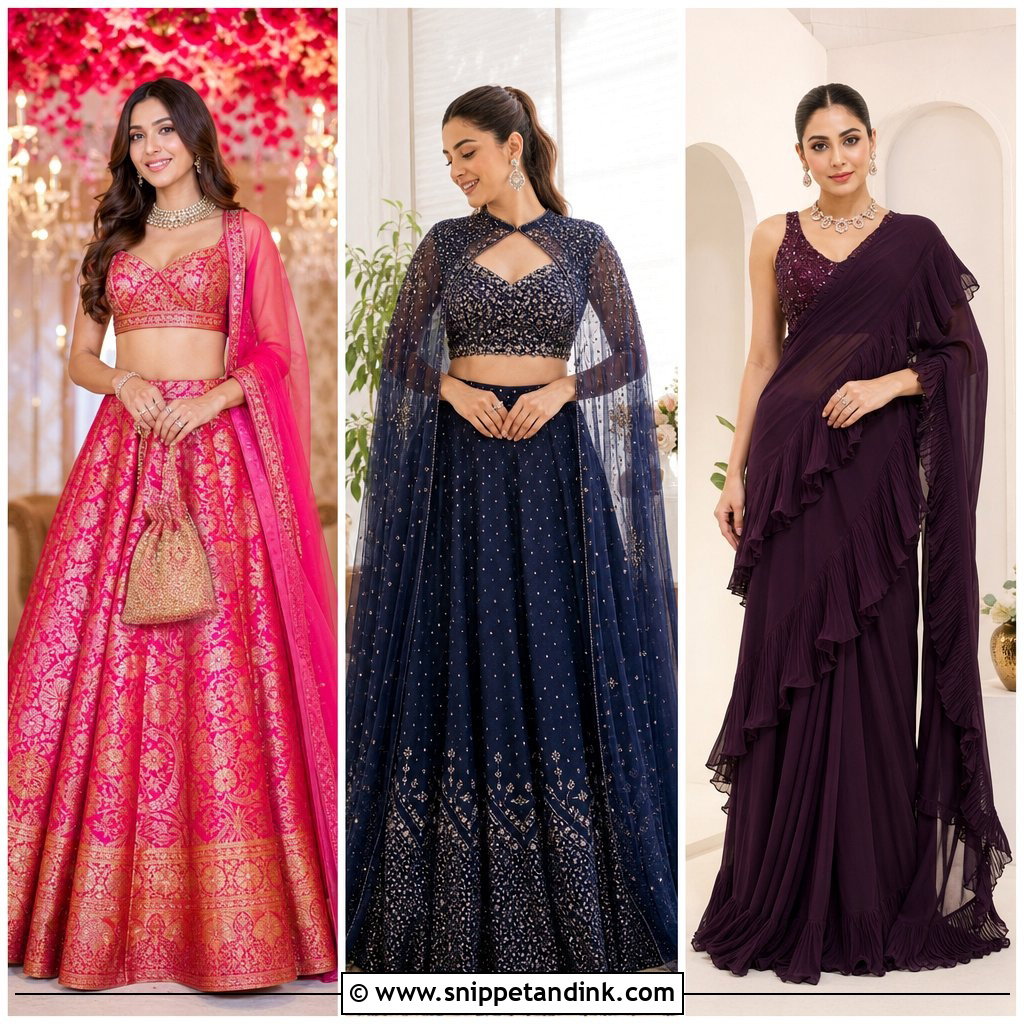
14. Sangeet Velvet Lehenga Dress
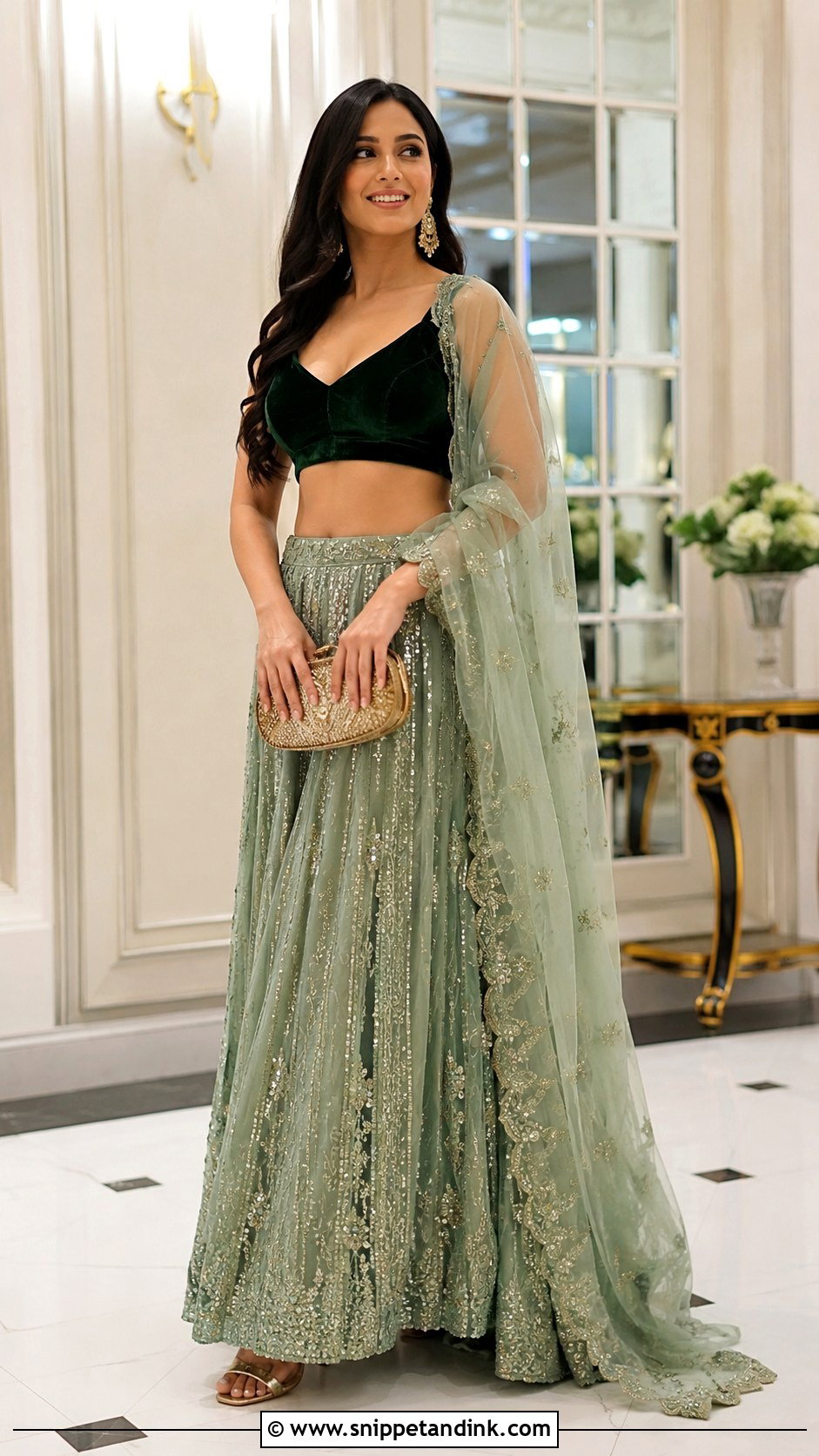
Velvet is for cool evenings and indoor venues. The pile deepens colour on its own, so a burgundy, navy or plum velvet skirt looks rich with very little embroidery. It is also warm and heavy, so for performers I prefer a velvet blouse with a georgette lehenga. Avoid stacking heavy layers if you’ll be dancing. A net dupatta keeps the top half light, and statement earrings do the rest.
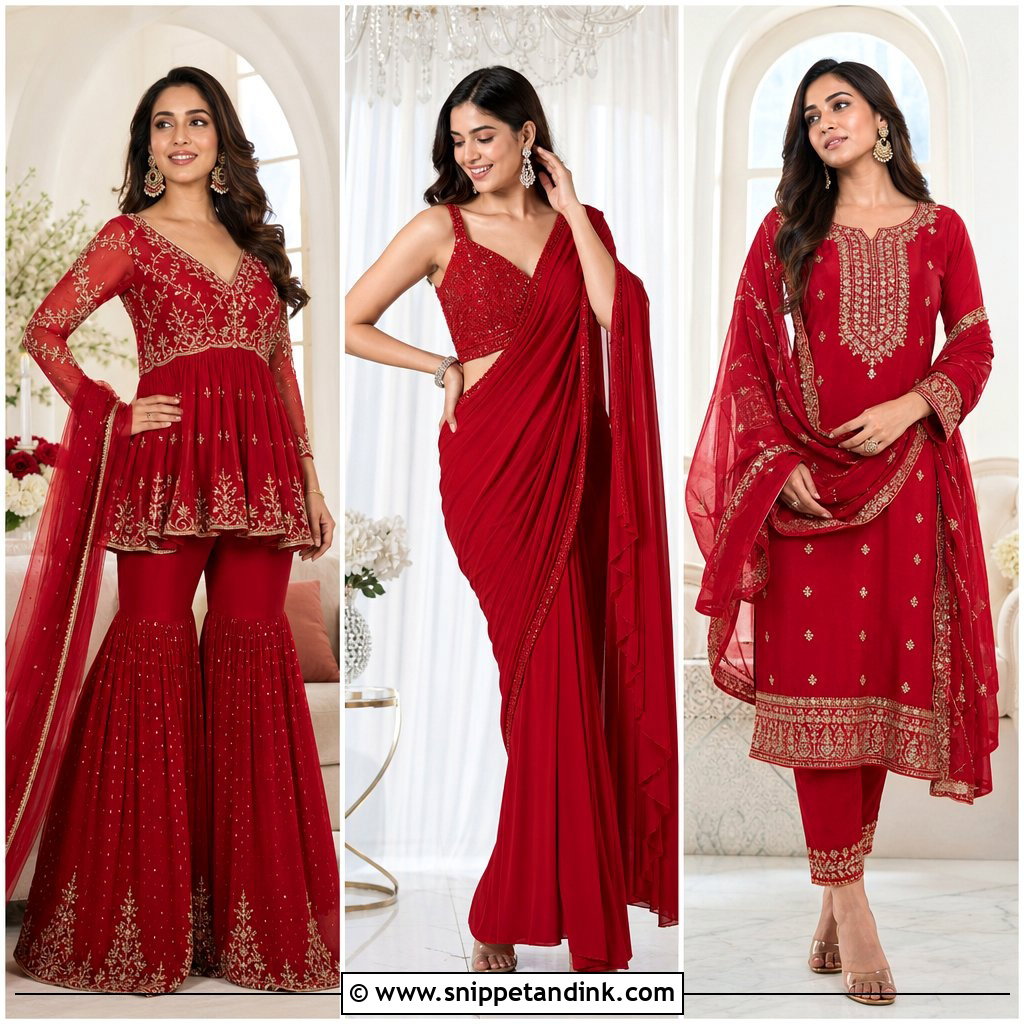
15. Sangeet Palazzo Suit Dress
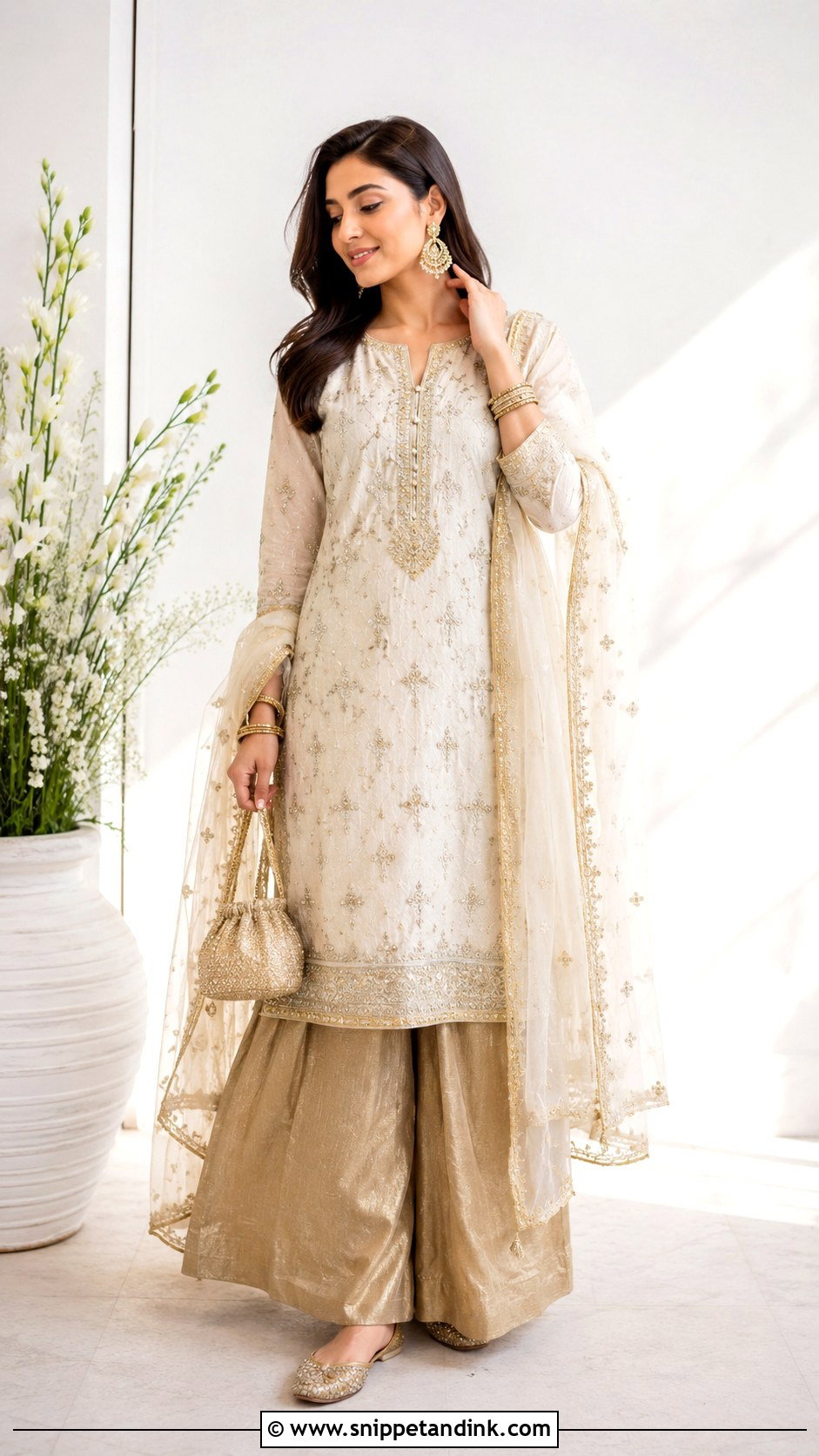
Palazzos give you the most movement for the least effort. Pair them with a straight kurta, short kurti, or embroidered tunic, and add silk or brocade detail so it looks wedding-ready rather than everyday. A sheer dupatta with border work makes it more formal. It’s the most practical choice for guests who want coverage or who simply don’t want to manage a lehenga. Embellished flats are fine here; nobody expects heels with palazzos.
16. Sangeet Crop Top Skirt Dress
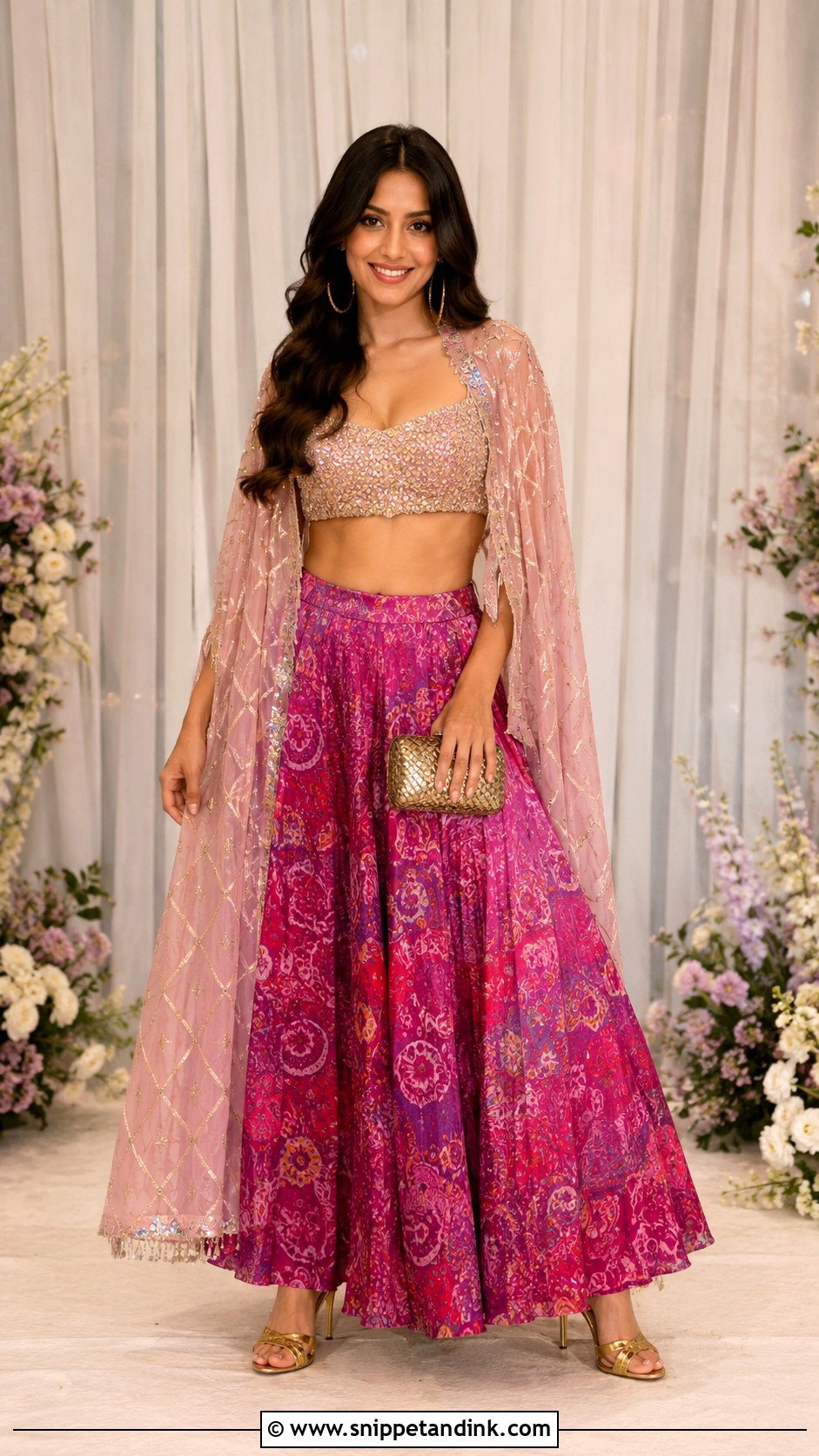
A crop top and skirt is a lehenga, minus the commitment. The skirt can be pleated, embroidered or printed; the top can be plain or heavily worked, but not both. Add a cape or jacket for coverage. Avoid heavy can-can if you plan to dance, because it pushes the skirt out and makes turning harder. It suits bridesmaids and younger guests who want something less traditional.
17. Sangeet Dhoti Pants Dress
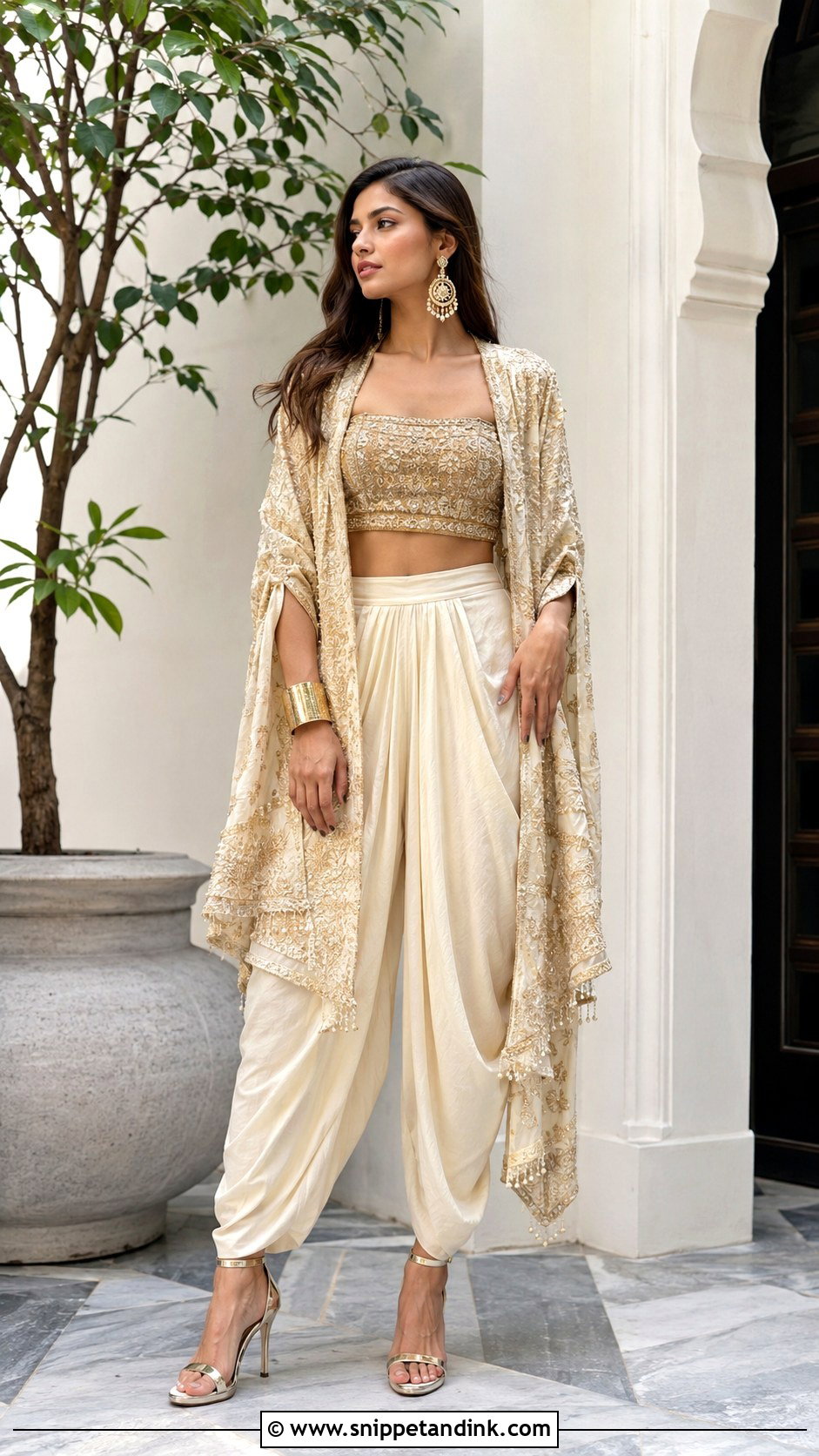
Dhoti pants have structure but plenty of room, so they handle choreography and long dance sessions well. Pair them with an embroidered crop top, a cape blouse or a draped jacket. Silk blends and crepe keep the pants polished. I check that the drape doesn’t hang so low it looks sloppy in seated photos. Statement earrings and heels make it festive.
18. Sangeet Chikankari Lehenga Dress
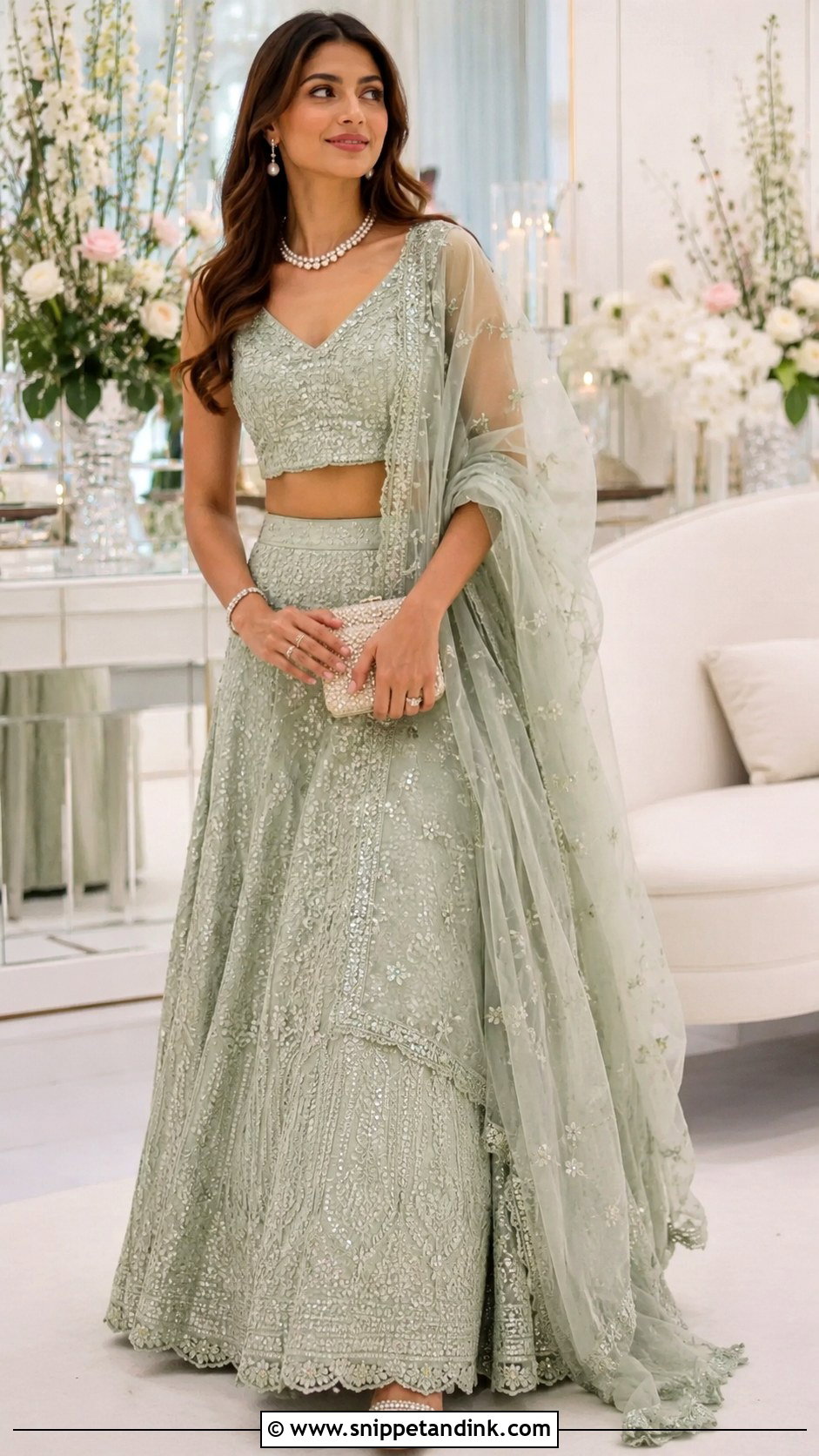
Chikankari is hand embroidery done mostly in white thread on fine fabric, which makes it soft and light but quiet under evening lights. For a sangeet I’d choose a version with mukaish, sequins or pearls worked in, so it doesn’t vanish after sunset. Ivory, sage and powder blue suit it. Pearl or kundan jewelry and soft makeup match the mood. It’s at its best for daytime-to-evening events and destination weddings in warm weather.
19. Sangeet Banarasi Lehenga Dress
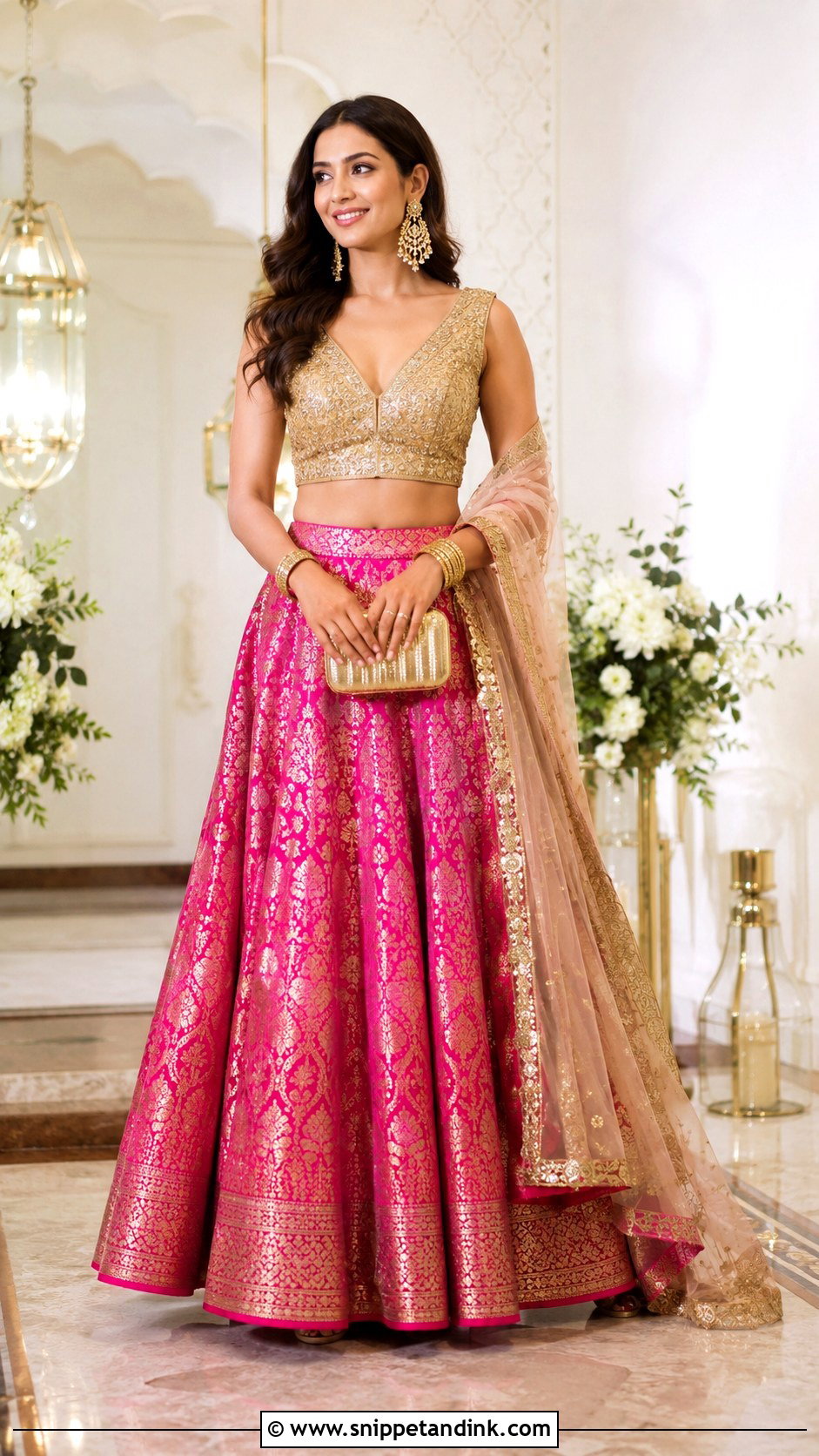
A Banarasi weave is rich enough to stand alone, so I keep the blouse modern (square neck or sleeveless) to stop the outfit looking dated. The fabric is heavier than net or georgette, which is fine for close family who’ll be greeting more than dancing. Jewel tones and deep pinks with gold zari look festive. A light dupatta keeps it manageable. Traditional earrings and a structured clutch suit it.
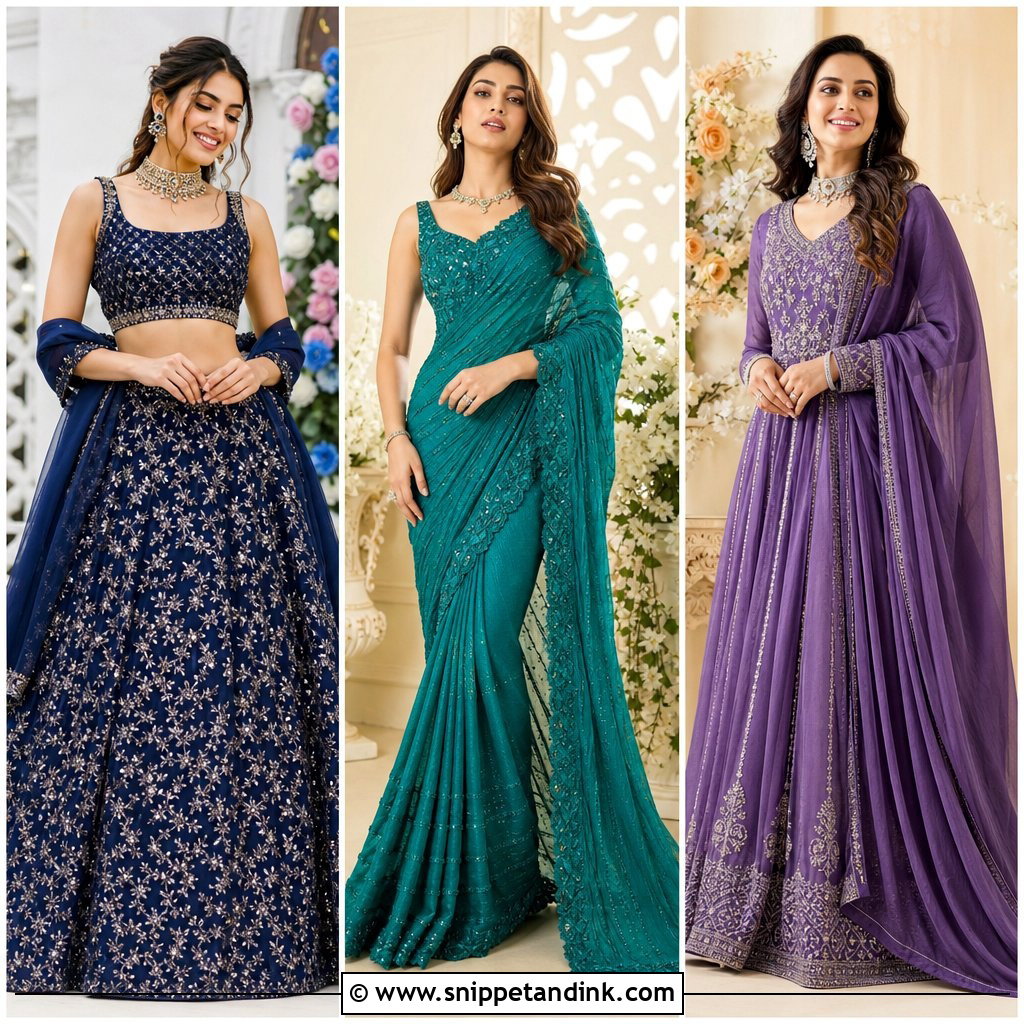
20. Sangeet Printed Lehenga Dress
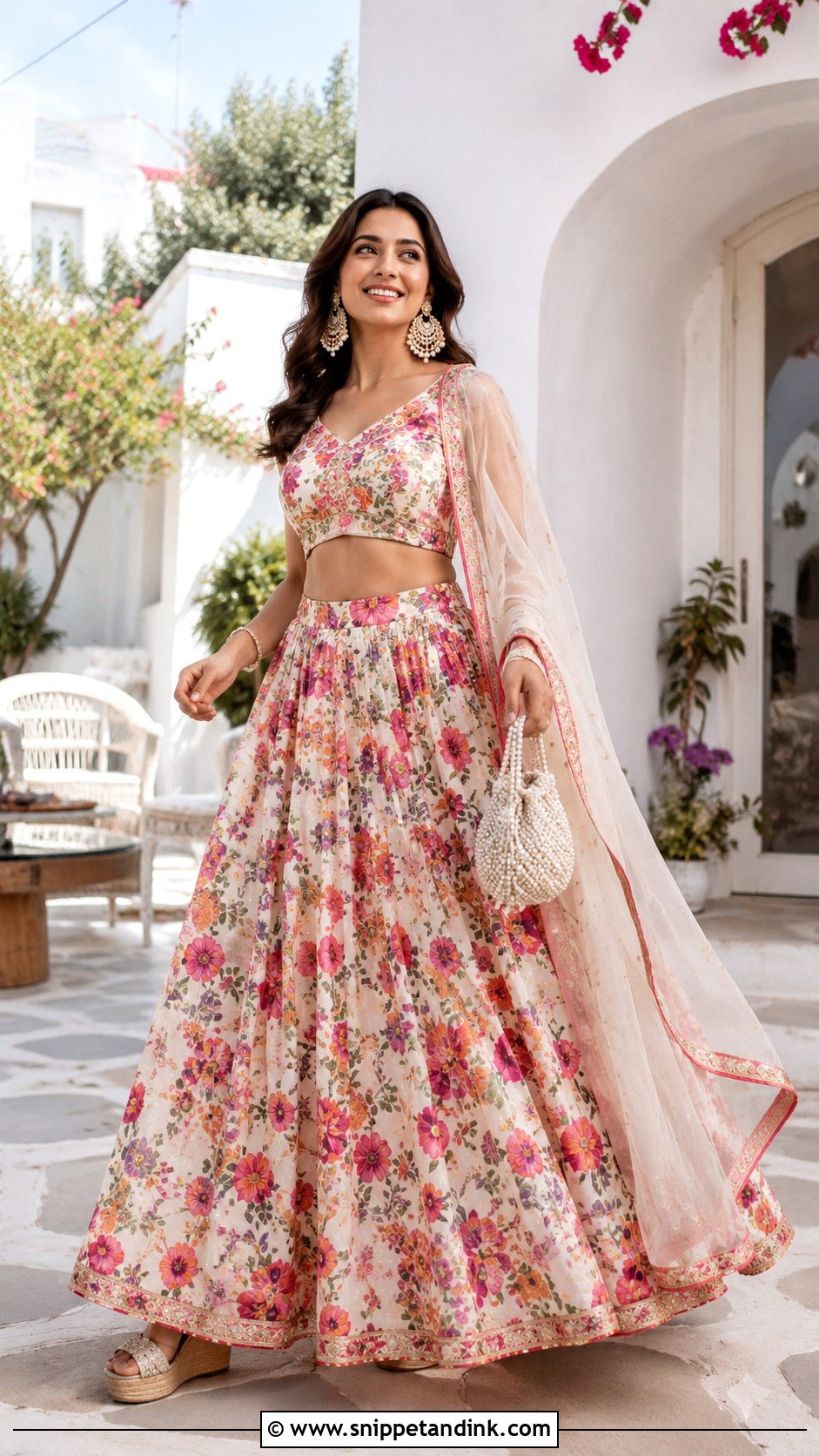
Prints carry colour without embellishment weight, so a printed lehenga is easy to wear for hours and easy to rewear. Bandhani and leheriya feel traditional; geometric and abstract prints feel modern. If the print is bold, keep jewelry minimal; if it’s soft, a statement earring works. It suits outdoor and destination sangeets. At a very grand evening event, though, a print alone can look underdressed next to embroidery.
21. Sangeet Fusion Jumpsuit Dress
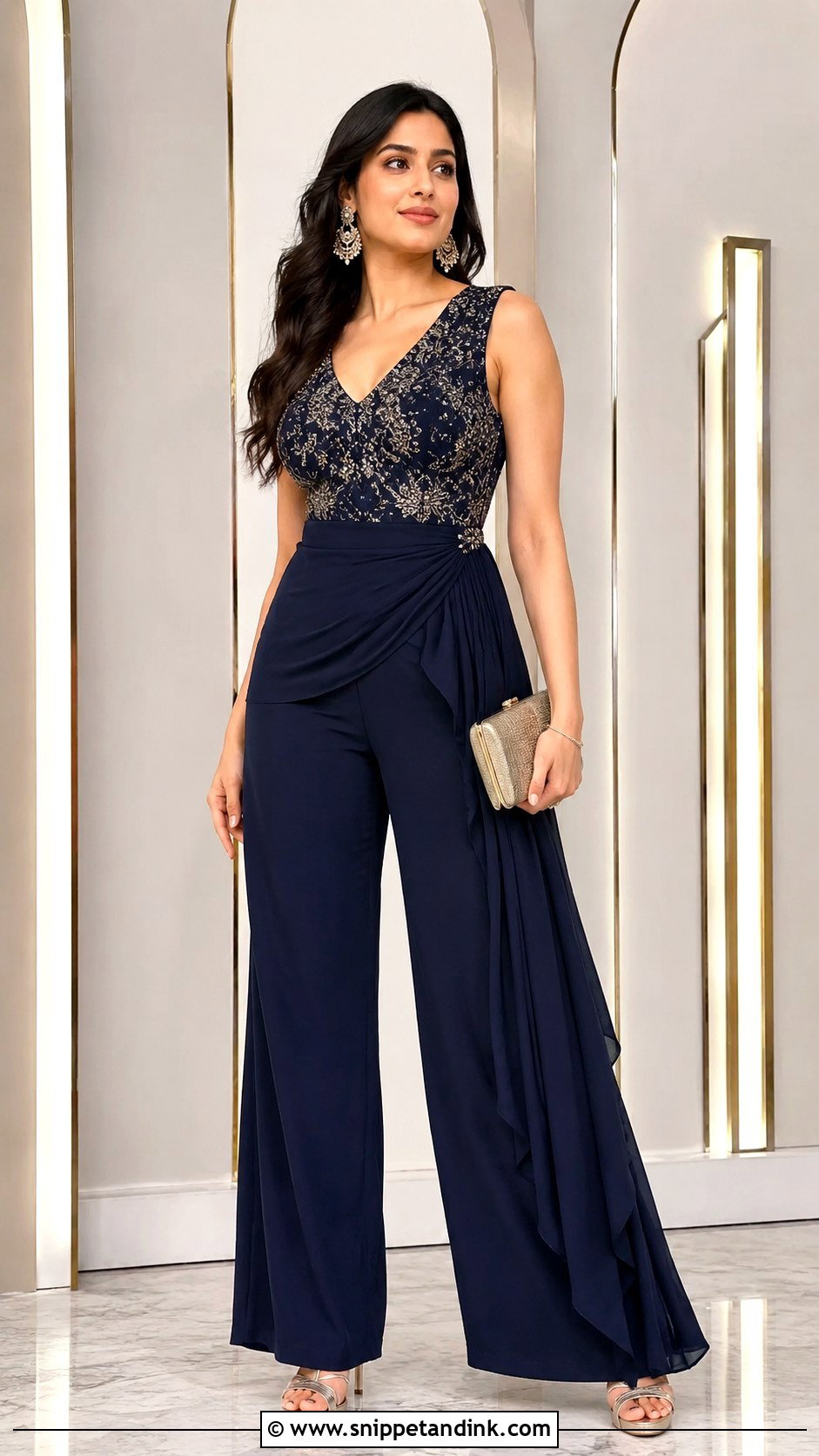
A fusion jumpsuit is the low-maintenance option: one piece, nothing to pin, nothing to step on. Look for draped panels, cape sleeves or an attached dupatta to make it wedding-appropriate. A wide leg gives the flow of a gown while you move freely. A belt defines the waist. Do a sitting test at the fitting, because jumpsuits that are short in the body pull uncomfortably once you sit down.
22. Sangeet Corset Lehenga Dress
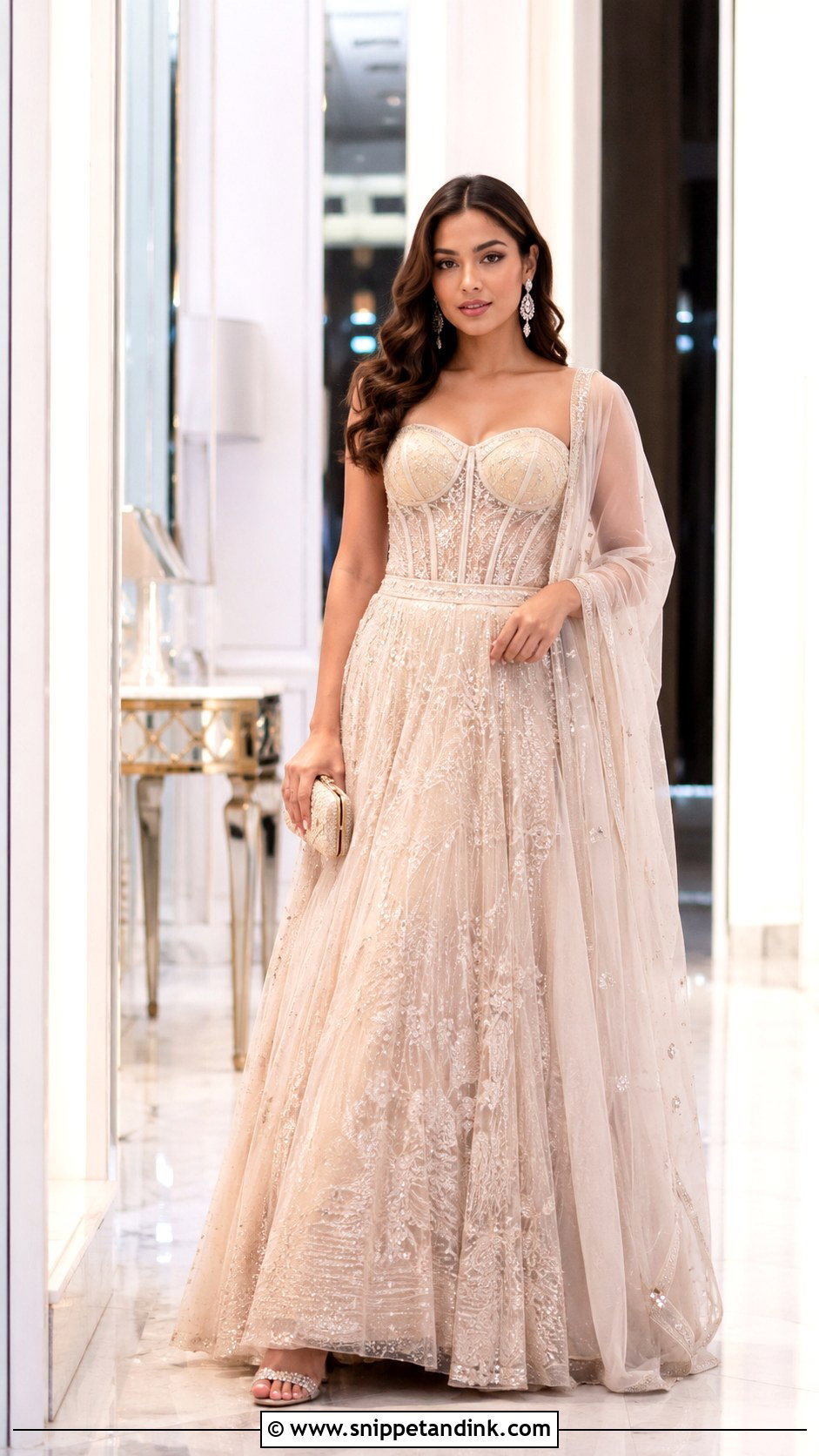
A corset blouse gives shape and support, and the lehenga skirt brings the movement. The fit decides everything: you should be able to sit, breathe deeply and raise your arms without the boning digging in. Tulle or georgette skirts keep the look light. Brides can go heavy on shimmer; guests should keep the embellishment softer. Add a sheer dupatta or jacket for coverage if the family prefers it.
23. Sangeet Kurta Skirt Dress
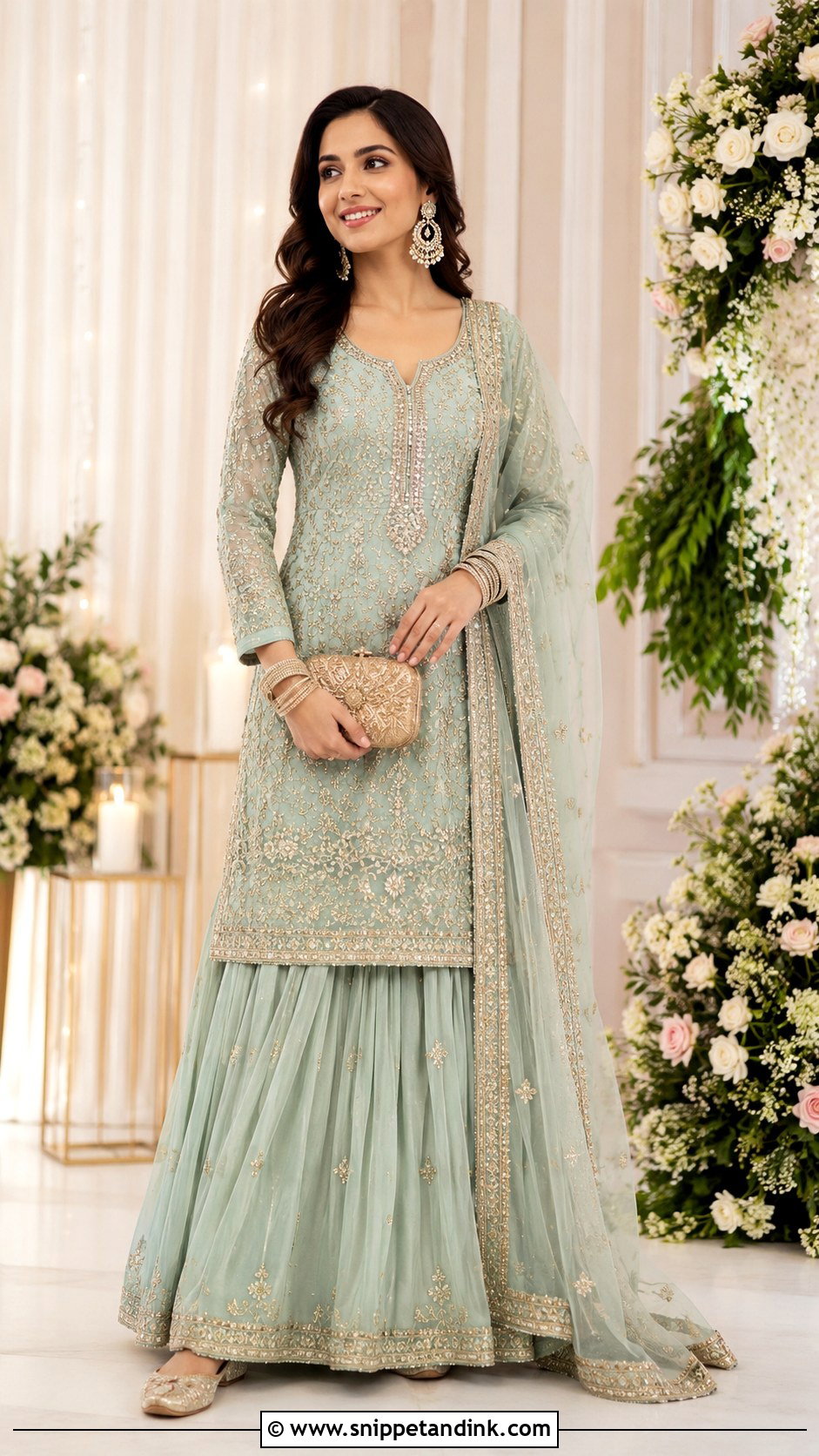
A kurta and skirt gives a lehenga’s skirt with a more relaxed top, which is why mothers and aunts often prefer it. An embroidered kurta, a flowing skirt and a border dupatta are all it takes. Silk and brocade touches make it wedding-ready. The kurta length matters: hip length shows more of the skirt, knee length looks more traditional. Flats or heels both work.
24. Sangeet Mermaid Lehenga Dress
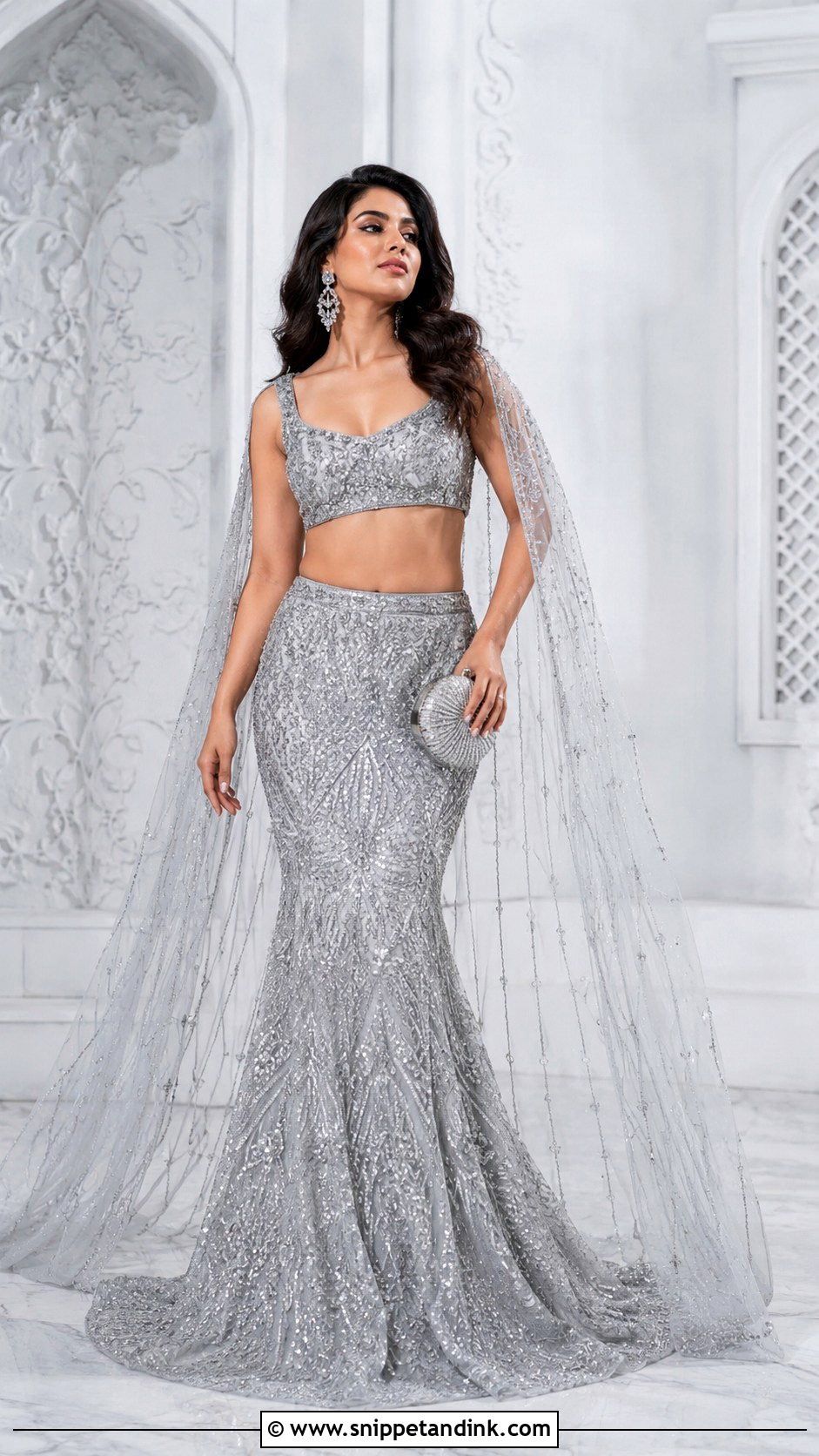
The mermaid lehenga fits close through the hips and flares low, so it looks sculpted in photos but limits your stride. Comfort is the deciding factor. I only recommend it with some stretch in the fabric and a flare that starts at the knee, not the calf. Sequins and beadwork suit the evening. It’s for brides or guests who’ll be posing more than dancing; for big choreography, pick a circular lehenga instead.
25. Sangeet Co Ord Set Dress
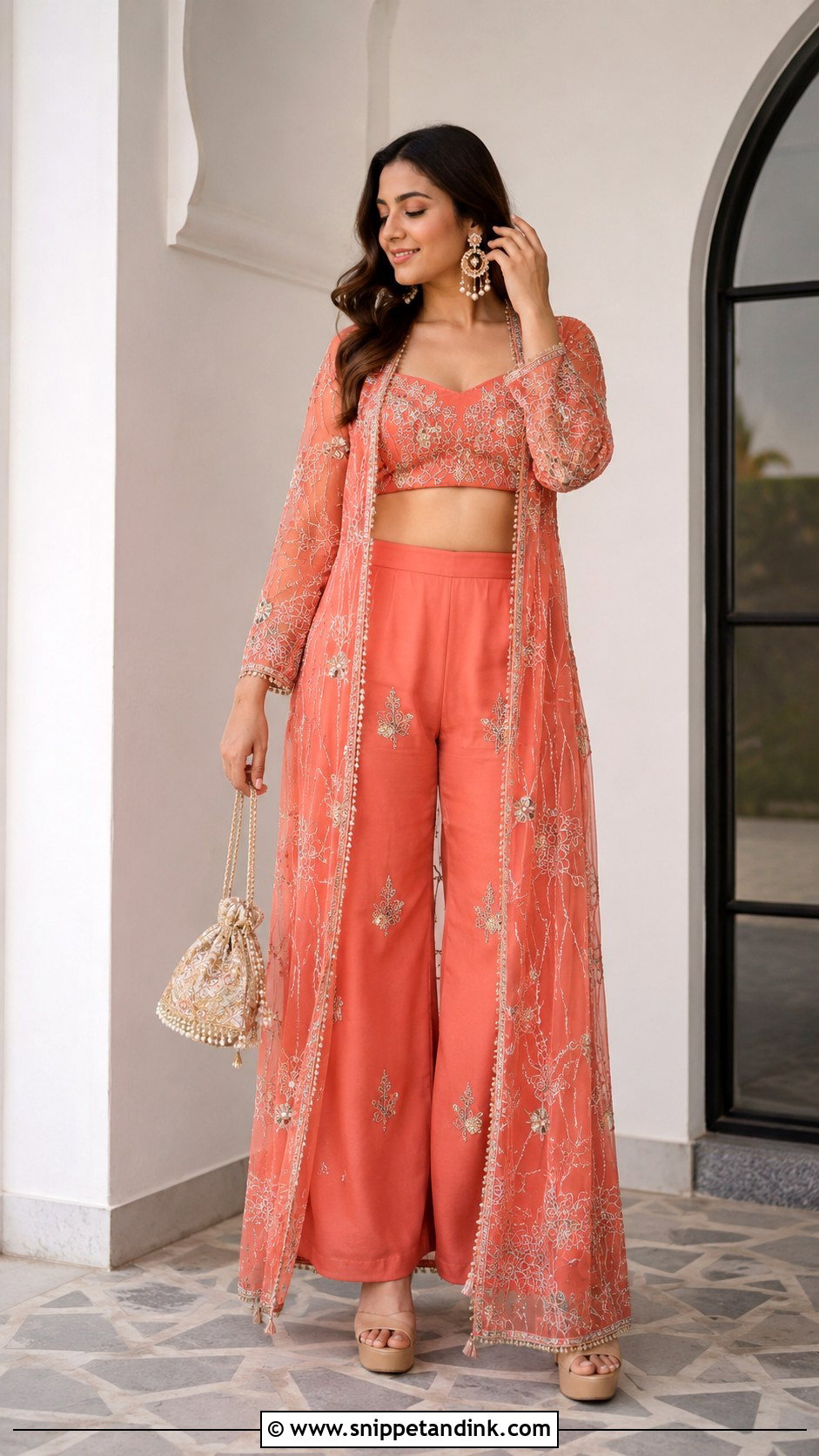
Co-ord sets look festive and still come apart for later wear. A matching crop top and skirt, embroidered blouse and pants, or kurta and palazzo all work. Rich fabric, mirror work or sequin accents make them special enough for a sangeet. Add a cape or long jacket if you want more drama. They’re comfortable for dancing and very easy to pack.
When Something Snaps Halfway Through the Night
At almost every sangeet, something gives. A blouse hook pulls loose, a dupatta pin opens, a heel strap breaks on the stage. None of it is a disaster if someone has a small kit and knows the quick fix.
- Blouse hook gone: close the gap with two small safety pins from the inside, pinned vertically so they lie flat.
- Loose sequins or mirrors: snip the hanging thread rather than pulling it, because pulling unravels the whole row.
- Dupatta slipping: re-pin through the blouse strap, not just the fabric, so the weight hangs from something solid.
- Hem coming down: fashion tape holds for the rest of the night; a needle and matching thread is better if there’s a quiet room.
- Spilled drink: blot with a dry tissue and leave it. Rubbing spreads the stain and can lift dye from embroidered thread.
Give the kit to a sister or friend rather than carrying it yourself. The person in the outfit is the last one who should be digging through a clutch for pins in the middle of a performance.
Light Fabric, a Pinned Drape and Shoes You Trust
Three things decide whether a sangeet outfit works: whether you can move in it, whether it stays in place, and whether it feels festive enough for the room. Lehengas, shararas, sarees, gowns, Anarkalis, jumpsuits and Indo-western sets all pass when the fabric is light and the styling is secure. Match colours to the event mood, wear shoes you can stand in for hours and keep jewelry in proportion to the outfit’s detail.
You'll Like These Ideas:


Leave a Reply